
Tag: Organic Matcha
Sugar Free Energy Drinks: Health Risks & Natural Boosts

You know the moment. It's 2.45 pm, your focus has fallen apart, and your to-do list still looks far too long. You want something fast, cold, convenient, and preferably “better” than a sugary soft drink.
That's where sugar free energy drinks often step in. They promise alertness without the sugar hit, which sounds like a smart compromise. For plenty of Australians, that feels like a practical middle ground between health goals and real-life fatigue.
The bigger question isn't just whether they contain sugar. It's whether they're the kind of energy support you want to build into your day. If you care about clean ingredients, steady focus, and how a drink fits into your overall wellness routine, the label matters a lot more than the front of the can.
Why We Reach For Sugar Free Energy Drinks
Consumers don't choose a sugar free energy drink because they love ingredient panels. They choose one because they're tired and need help now. The school pick-up run is coming. The gym session still has to happen. The late afternoon meeting needs a switched-on brain.
That demand makes sense in Australia, where sugar reduction has become a major consumer health priority. A 2023/24 Australian Health Survey analysis reported that 82.3% of adults were either overweight or obese, and public-health guidance continues to emphasise lowering free-sugar intake, which has encouraged demand for low- and zero-sugar beverages, including sugar-free energy drinks, as noted in this Australian sugar reduction market overview.
The appeal feels logical
A sugar free can seems to solve two problems at once:
- You want energy: You need to feel more awake, sharper, or more motivated.
- You want less sugar: You're trying to avoid the heavy sweetness and extra kilojoules of regular soft drinks.
- You want convenience: It's already chilled, portable, and easy to grab from a servo, gym fridge, or convenience store.
That's why these drinks have become so normal. They fit busy routines. They also fit the language many people already use around food and drink choices, such as “low sugar”, “light”, “zero”, and “better for me”.
A useful mindset: choosing a sugar free energy drink isn't automatically a “good” or “bad” decision. It's usually a tired person trying to make the least messy choice available.
Where people often get confused
The phrase sugar free can sound healthier than it really is. It tells you one thing only. There's no sugar, or very little. It doesn't tell you how much caffeine is in the can, what sweeteners create the taste, or whether the drink supports steady energy or merely pushes stimulation harder.
That's the part worth slowing down for. If your real goal is better focus, better stamina, or fewer crashes, sugar is only one piece of the picture. The rest sits in the ingredients list, the caffeine load, and how your body responds to that formula over time.
Decoding the Ingredients Label
Turn the can around and most sugar free energy drinks start to look less mysterious. They're usually built like a formula. One ingredient creates the lift, another replaces sugar's sweetness, and the rest shape taste, shelf life, and product identity.

Caffeine is the engine
The main functional effect of sugar-free energy drinks comes from caffeine, not carbohydrate energy. A benchmark example is Red Bull Sugarfree, which provides 80 mg caffeine per 8.4 fl oz can and uses non-sugar sweeteners, as shown in this sugar free energy drink caffeine chart.
That matters because many people still think “energy” means calories. In these drinks, it usually doesn't. The lift is primarily stimulant-driven. In simple terms, the drink isn't fuelling you the way food does. It's nudging your nervous system to feel more alert.
If you want a broader sense of how tea compares, Jeeves & Jericho's guide to tea caffeine is a handy reference because it helps put canned energy drinks and tea-based options in context.
Sweeteners do the taste work
When sugar is removed, something else has to carry sweetness. In many conventional products, that means high-intensity sweeteners such as sucralose, acesulfame-K, or aspartame. These ingredients are potent, so manufacturers can create a sweet flavour without adding sugar.
Readers often get tripped up here. If a can says zero sugar, it may still taste extremely sweet. That sweetness doesn't come from nowhere. It comes from the sweetener system chosen by the brand.
The rest of the formula
Other common additions may include taurine, acids for tartness, flavourings, preservatives, colours, and B vitamins. You don't need to panic when you see a long list, but you do want to recognise the job each part is doing.
A simple way to read the label is to ask:
- What wakes me up here? Usually caffeine.
- What makes it sweet? Sugar alternative sweeteners.
- What shapes flavour and shelf life? Acids, flavours, preservatives, colours.
Think of the can like a recipe designed for stimulation first, then sweetness, then flavour polish.
Why Australian labels matter
In Australia, caffeine in formulated caffeinated beverages is regulated under FSANZ and is generally capped at 320 mg/L, with warning statements and advisory labelling required, according to this summary of the Australian regulatory framework.
That visibility is useful. It means shoppers can compare products more clearly than many realise. Instead of trusting the front label, check the back for caffeine per serve, ingredient order, and sweetener type. That's where the full story sits.
Health and Safety Considerations
A sugar free energy drink can be legal, common, and easy to buy, while still being something you should use thoughtfully. The main concerns usually come down to how your body handles concentrated stimulation, especially if you drink them regularly, drink them late in the day, or already feel run down.
Australian rules help here. Under FSANZ, formulated caffeinated beverages must carry warning statements, which makes it easier to recognise that these aren't ordinary soft drinks. They're high-caffeine products with a specific purpose and a specific risk profile.
What high stimulation can feel like
For some people, the effect is simple. More alertness, more drive, more focus. For others, it can tip quickly into feeling wired, tense, restless, or flat once the initial lift wears off.
Common practical issues include:
- Sleep disruption: Even an afternoon can may interfere with how easily you wind down later.
- Jitters or anxiety: Some people are more sensitive to caffeine than they realise.
- Stacking habits: One caffeinated drink can easily turn into several sources across a day.
That's one reason gentler drinks appeal to many wellness-minded readers. If you've ever wondered whether fermented drinks fit your routine differently, this guide on whether kombucha has caffeine gives useful context without treating every caffeinated drink as the same.
Where the sugar free label can mislead
The absence of sugar may make a drink feel cleaner than it is. But a zero-sugar label doesn't automatically answer other questions people care about, such as ingredient quality, gut comfort, aftertaste, or whether the drink supports stable energy habits.
Artificially sweetened products may not affect everyone the same way. Some people tolerate them well. Others notice digestive discomfort, a lingering chemical sweetness, or a stronger appetite for sweet flavours afterwards. That response can be highly individual, which is why blanket claims usually aren't helpful.
If a drink leaves you more edgy than energised, your body is already giving you useful feedback.
A steady-energy lens is often better
A practical health question is not “Can I drink this?” It's “How often does this help me feel and function well?” If the answer is only occasional, that tells you a lot. If the answer is “I need this every day just to get through”, that's often a sign to look upstream at sleep, meals, hydration, and a more natural energy source.
How to Choose a Better Energy Source
If you do buy energy drinks, the smartest move is to stop treating sugar free as the main decision point. It's only one filter. A better filter is this: what kind of energy does the drink create, and what ingredients does it rely on to get there?

Start with the sweetener system
One of the most important distinctions is that sugar-free does not mean naturally sweetened. Australian buyers should separate products that use high-intensity artificial sweeteners such as sucralose and aspartame from those using plant-derived systems like stevia or monk fruit, as explained in this guide to zero sugar naturally sweetened energy drinks.
That's not just a technical detail. It changes taste, aftertaste, ingredient perception, and how the product fits into a wellness-focused lifestyle or retail range.
What to check before you buy
Use this quick scan when comparing drinks:
- Caffeine source: Is it coming from a plant-based ingredient such as tea, or does the product centre on a more aggressively engineered energy profile?
- Sweetness style: Does it rely on artificial sweeteners, or is there a cleaner-label approach?
- Ingredient recognisability: Can you identify most of what you're drinking?
- Use case: Is this for occasional convenience, or something you want as part of your everyday routine?
Simple buying rule: don't stop at “zero sugar”. Read until you understand what replaced the sugar and what's creating the boost.
Energy drink comparison
| Feature | Conventional Sugar-Free Energy Drink | Organic Matcha | Sugar-Free Kombucha |
|---|---|---|---|
| Main energy feel | Fast, stimulant-led | Smoother, tea-based lift | Light, refreshing pick-me-up |
| Sweetness style | Often very sweet despite no sugar | Usually unsweetened unless you add something | Depends on recipe, often lighter and less intense |
| Ingredient perception | Often highly formulated | Minimal and recognisable | Fermented and food-like |
| Best for | Convenience and immediate alertness | Focused work, morning rituals, café drinks | Refreshment, lighter afternoons, social sipping |
| Wellness fit | Mixed, depends on formula | Strong fit for clean-energy routines | Strong fit for low-sugar lifestyle routines |
Better doesn't always mean perfect
Not everyone wants the same thing from a drink. Some people want intensity. Others want consistency. If you care about natural ingredients, your “better” option is usually the one that gives enough lift without pulling you into the cycle of over-stimulation and rebound fatigue.
Embracing Natural Alternatives for Clean Energy
The most useful reframe is this: you don't just need less sugar. You need a better relationship with energy. That usually means choosing drinks that feel more like nourishment and less like a shortcut.

Why matcha feels different
Matcha often appeals to people who say coffee is too harsh and energy drinks feel too synthetic. It's still caffeinated, but the experience is usually described as steadier and more centred. That's one reason it has become a favourite in wellness spaces, home routines, and cafés that want a premium non-alcoholic pick-me-up.
Many readers also prefer the ritual. Whisking a bowl, making an iced matcha, or ordering a well-made latte slows the process down. You're not just cracking open a can because you've hit a wall. You're choosing a drink with a calmer energy identity.
Why kombucha fills a different gap
Sugar-free or very low-sugar kombucha doesn't play the same role as a classic energy drink, and that's exactly why it can be so helpful. It's refreshing, grown-up in flavour, and often feels easier to include in daily life when you want something interesting without the heaviness of a soft drink.
For many people, kombucha works best in moments when they're not desperate for a jolt. They want a clean fridge option, a smarter afternoon drink, or a non-alcoholic choice that still feels special.
Natural alternatives often work better because they support a routine. They're easier to come back to without feeling like you're pushing your body too hard.
Clean energy works best when it's enjoyable
If a healthier option tastes flat or feels punishing, it won't stick. Natural drinks win when they're pleasant to reach for. That might mean a bright iced matcha with citrus, a crisp kombucha over ice, or a sparkling tea-based drink served in a proper glass instead of consumed on autopilot.
For a broader look at this category, this guide to natural energy drinks in Australia is a useful next read.
A quick visual can help if you're comparing options for your own routine or for a café menu:
What superior really means
Natural alternatives aren't “superior” because they're trendy. They're superior when they help you feel better supported, less rattled, and more aligned with the way you want to live. For some people, that means replacing every canned energy drink. For others, it means saving them for rare situations and building the week around matcha, tea, kombucha, water, meals, and sleep.
That shift is small on paper. In practice, it changes a lot.
Simple Recipes and Smart Café Menu Ideas
Natural energy options become much easier to choose when they're delicious. The best ideas are simple enough for home, but polished enough that a café could serve them without fuss.

Two easy at-home swaps
1. Iced matcha lime cooler
Whisk matcha with a small amount of water until smooth. Pour over ice, top with cold water or sparkling water, then add a squeeze of lime. If you like a softer edge, add a little stevia or a splash of your preferred milk.
2. Kombucha mint spritzer
Fill a glass with ice, crushed mint, and cucumber or lime slices. Add sugar-free kombucha and finish with sparkling water for a lighter, longer drink. It feels fresh, not forced.
A smart recipe swap should be easier than a servo run. If it takes too much effort, most people won't keep doing it.
Café menu ideas that feel current
Hospitality venues don't need to mimic convenience-store energy drinks to meet demand for functional beverages. A cleaner menu can feel more premium.
Try ideas like:
- Matcha bar: Offer ceremonial-style matcha, iced matcha, and a clean matcha latte.
- Functional fizz section: List kombucha serves with garnishes such as ginger, mint, citrus, or berries.
- Afternoon focus drinks: Build a short menu around tea-based sparkling drinks instead of ultra-sweet canned stimulants.
Why this works in hospitality
Guests increasingly want drinks that feel intentional. They want flavour, lower sugar, and something they can enjoy at lunch, after Pilates, in a work meeting, or during a dry month without feeling like they've chosen the boring option.
For cafés, the opportunity isn't to copy the energy drink aisle. It's to offer a more refined answer to the same need: focus, uplift, and refreshment.
Guidance for Retailers and Wellness Professionals
Retailers and practitioners can help people make better choices by changing the frame. Don't merchandise or discuss these drinks only as “low sugar”. Position them around clean energy, ingredient quality, and everyday suitability.
For retailers
A strong shelf set tells a story. Group matcha, kombucha, sparkling tea, and other low-sugar functional drinks together so shoppers can compare them as alternatives to conventional energy cans, not as unrelated categories.
Helpful shelf messaging can focus on:
- Ingredient transparency: recognisable ingredients and clearer label reading
- Occasion-based choice: workday focus, post-gym refreshment, alcohol-free social options
- Taste expectation: less syrupy, more adult flavour profiles
Retailers building healthier beverage ranges may also find practical ideas in this guide to non-alcoholic café menus.
For wellness professionals
Clients often don't need a lecture. They need a replacement that feels realistic. If someone relies on sugar free energy drinks every afternoon, a better first step may be a chilled matcha, a kombucha-based spritz, or a clearer caffeine routine rather than an all-or-nothing ban.
Better habits usually stick when they still feel satisfying, social, and easy to repeat.
The most effective guidance is simple. Help people move from reactive stimulation to supportive routines.
The Final Sip Choosing Wellness Over a Quick Fix
Sugar free energy drinks make sense on busy days. They're convenient, widely available, and often seem like the healthier option beside full-sugar alternatives. But sugar-free isn't the same as balanced, and a zero-sugar label doesn't guarantee the kind of energy many seek.
If your goal is steadier focus, cleaner ingredients, and a more natural rhythm, matcha and kombucha are worth serious attention. Real wellness usually comes from supporting the body, not just pushing it harder for another few hours.
If you're ready to move from quick-fix stimulation to cleaner daily rituals, explore Pep Tea for organic matcha and sugar-free kombucha made for a more natural kind of energy.
Uji Matcha Latte: Your Authentic Recipe (Hot & Iced)

You're probably here because you've had one of those matcha lattes that looked stunning but tasted flat, gritty, or oddly sweet. Then you try making one at home, and it turns into a clumpy green milk drink that feels nothing like what a good café serves.
A proper uji matcha latte is different. It should taste smooth, creamy, fresh, and softly vegetal, with a clean finish rather than a harsh one. When the matcha is good and the method is right, you don't need to hide it under heaps of sugar or syrup.
At PepTea, we love teaching this drink because it sits right at the intersection of craft and everyday comfort. You can make it in a home kitchen before work, or build it into a polished café menu. The secret isn't complexity. It's understanding the ingredient, then treating it with care.
What Makes an Uji Matcha Latte Special
The first thing to know is that Uji isn't just a flavour label. It refers to a famous tea-producing area in Japan, and that place name carries real weight in tea.
In Australian cafés, “uji matcha latte” often signals something more refined than a standard matcha drink. It suggests provenance, not just colour. That matters because matcha buyers are often trying to work out whether they're paying for true quality or just attractive branding.
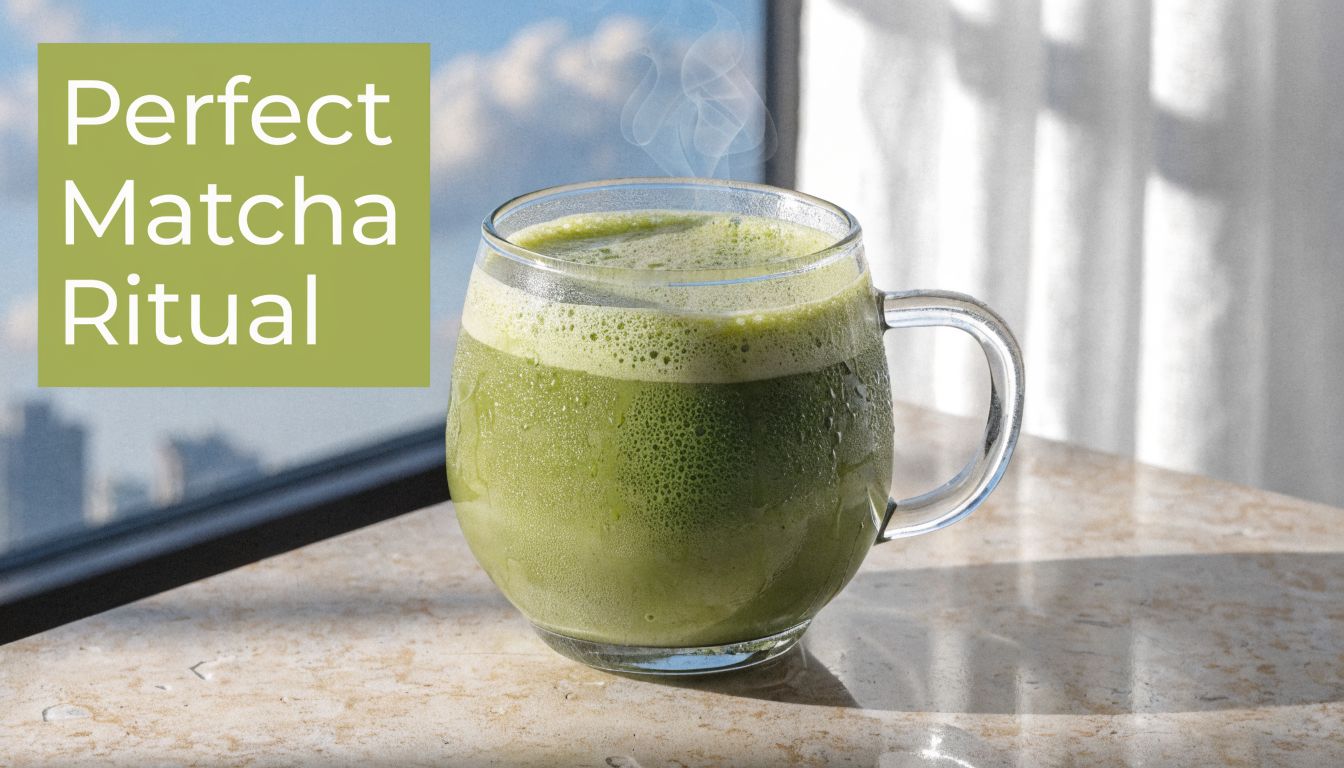
Why Uji carries so much prestige
Uji's reputation as Japan's premier tea region dates back to the Kamakura period (1185–1333), and by the 16th century Uji tea masters had developed the shaded cultivation method that became the origin of modern ceremonial matcha, according to Nippon's history of Uji tea.
That history still shapes what drinkers expect today. When you order an uji matcha latte, you're not just ordering something green and milky. You're buying into a long tradition of tea cultivation and preparation that helped define what premium matcha is meant to be.
Uji matters because it gives the drink a story, a standard, and a point of reference. That's why the name feels different on a café menu.
What that means for Australian drinkers
For home brewers, Uji gives you a useful benchmark. If a powder is sold as Uji-origin, you can start asking sharper questions about colour, texture, taste, and how the drink is built.
For café owners, it helps frame the latte as a premium tea beverage rather than a generic sweetened mix. That's especially useful when customers are looking for cleaner energy options and are comparing matcha with coffee. If you're exploring that broader shift, this guide to Peak Performance coffee alternatives is a helpful companion read.
If you want to start with an origin-specific powder, one practical place to begin is Uji matcha powder from PepTea.
Selecting the Right Uji Matcha Grade
A great latte starts before the kettle goes on. It starts when you choose the powder.
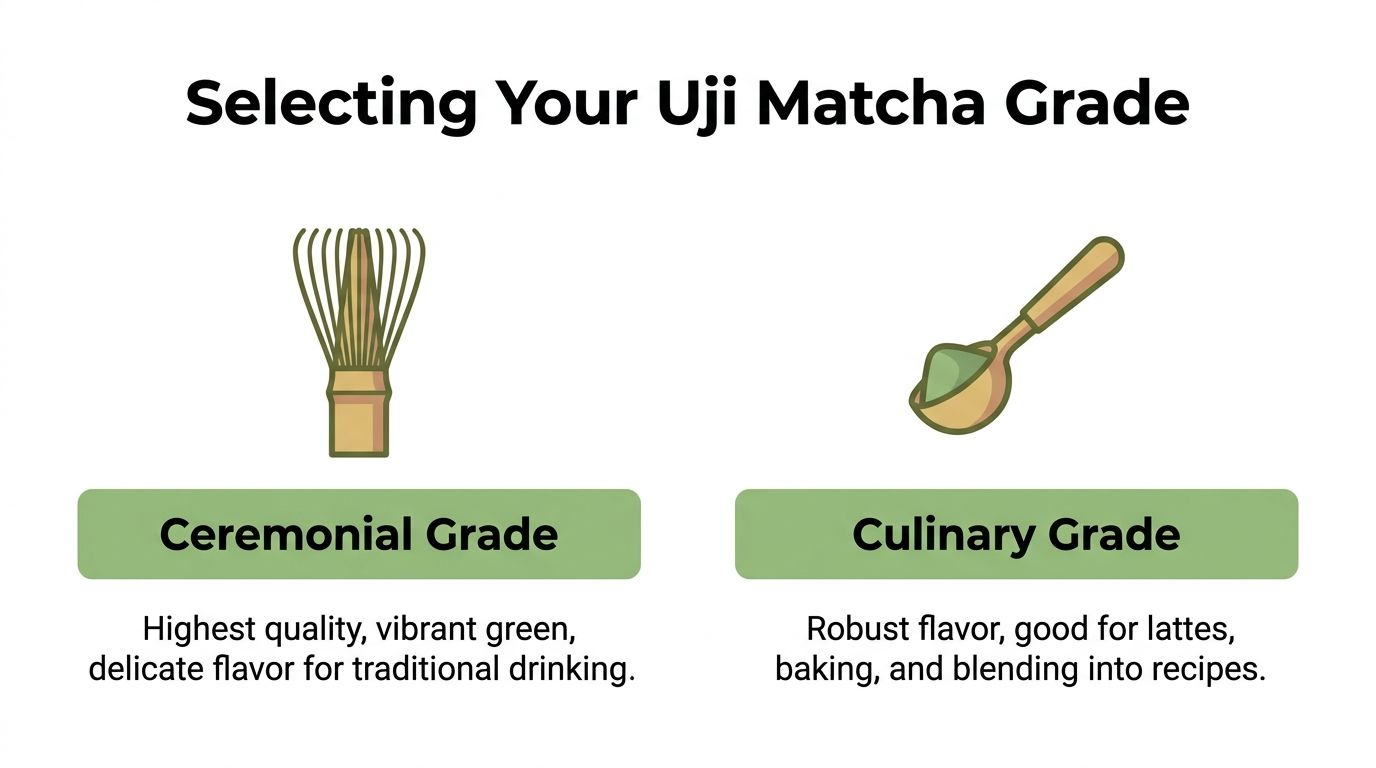
Many people get stuck on one phrase: ceremonial grade. It sounds reassuring, but it doesn't tell you everything you need to know. For Australian consumers, the more useful test is whether the matcha has the right colour, texture, purity, and value per serve.
What to judge instead of the label
A practical rule from the Australian buying angle is this: a premium Uji matcha for lattes should be judged on its vibrant colour, fine texture, and grams-per-serve value, not just a ceremonial label. It's also important to check whether the product is 100% pure matcha, because many options on the market are sweetened pre-mixes, as noted by Chicago Tea House's Uji matcha product guidance.
That point clears up a common confusion. A sweetened mix can still look nice in a tin or on a shelf, but it behaves differently in the cup. It can taste flatter, dissolve differently, and make it harder to control sweetness.
Ceremonial or culinary for a latte
Both grades can have a place. What matters is your goal.
| Grade | Best fit | What to expect |
|---|---|---|
| Ceremonial grade | Straight drinking, premium lattes, minimal sweetener | Softer flavour, brighter colour, finer finish |
| Culinary grade | Baking, smoothies, blended recipes, stronger latte style | More robust taste, usually better when mixed with other ingredients |
For a café-style uji matcha latte where the tea still needs to shine through milk, a better-quality ceremonial or latte-friendly premium blend is usually easier to work with. You'll spend less time trying to correct bitterness with sweetener.
A simple buying checklist
When you're standing in an aisle or comparing tins online, check these first:
- Colour first: Look for a lively green rather than a dull, brownish, or yellow-leaning tone.
- Texture matters: Fine powder should look silky, not coarse.
- Ingredient list: If it isn't pure matcha, it's a different product.
- Serving logic: Think in grams per serve, not just pack size.
- Origin claim: “Uji” should mean more than a decorative word on the front label.
Buying shortcut: If a product leans heavily on marketing terms but doesn't help you judge purity, colour, or serve size, keep looking.
If you'd like a clearer breakdown of how different styles are used, PepTea's guide to different grades of matcha is useful for comparing what suits lattes versus traditional bowls.
Mastering the Hot Uji Matcha Latte
Technique is where most home-made matcha lattes go wrong. Not because people are careless, but because matcha responds badly to shortcuts. If you stir powder straight into a full mug of hot milk, you usually get lumps, uneven flavour, and a muddy finish.
The better approach is to build the drink in stages.
Start with the paste, not the milk
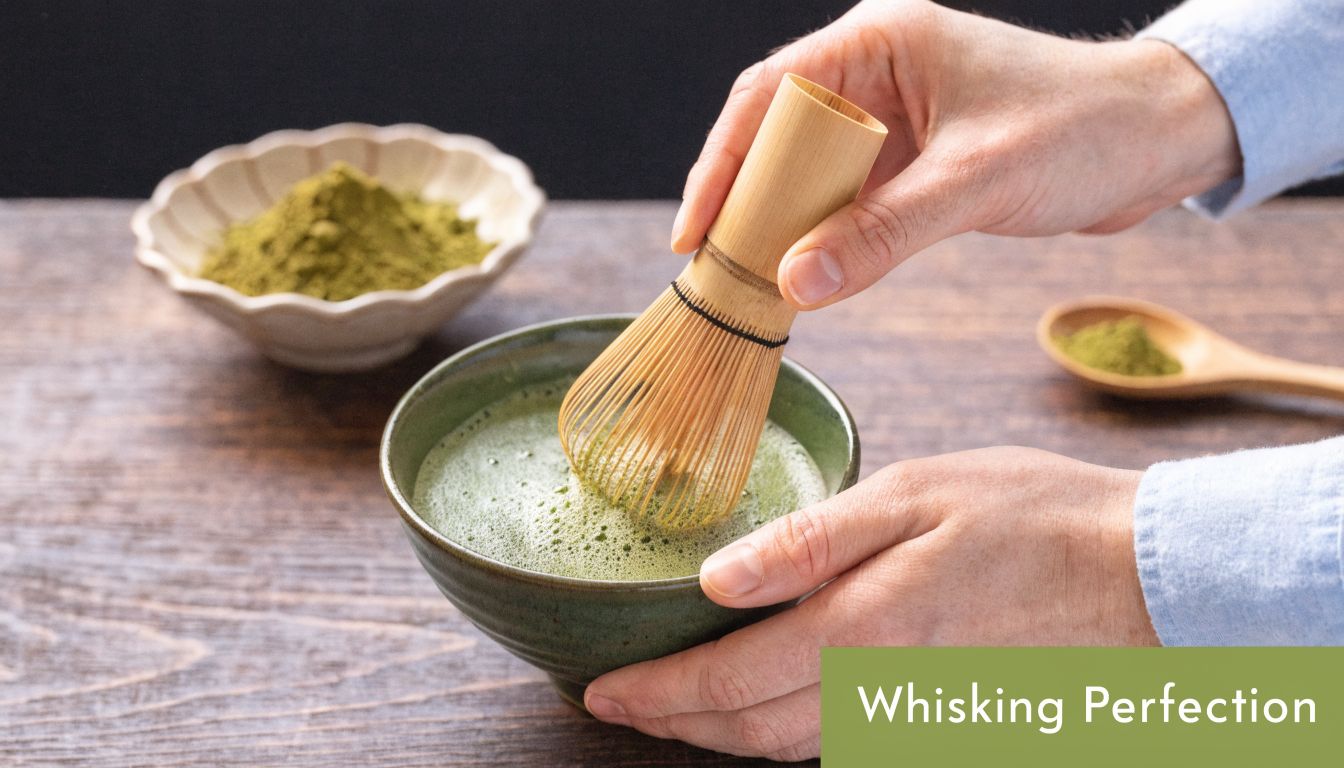
For a smooth uji matcha latte, whisk 2 teaspoons of sifted matcha with a small amount of room-temperature water to make a paste. Then add water at 75–85°C and whisk in an M or W pattern for 15–30 seconds. This is the technique recommended in Uji Matcha Tea's preparation guide.
That method does two important jobs. First, it hydrates the powder evenly so you don't get dry clumps. Second, it builds the fine foam that makes the drink feel creamy before the milk even goes in.
Why temperature changes the whole drink
A lot of people assume hotter water equals better dissolving. With matcha, that's not the goal. Boiling water can flatten the flavour and push the drink toward bitterness.
The sweet spot is warm enough to disperse the powder, but gentle enough to protect the character of the tea. If your latte has ever tasted sharp, scorched, or dull, temperature is often the first thing to check.
Practical rule: If you wouldn't sip the water comfortably, it's probably too hot for premium matcha.
Whisking for texture, not ceremony alone
A bamboo chasen isn't just a traditional accessory. It helps create the tiny bubbles that give matcha a soft, even texture.
Move the whisk briskly in a loose M or W motion rather than stirring in circles. Circular stirring tends to push the powder around the bowl. The faster patterned motion suspends it and creates that fine surface froth you see in a well-made café cup.
If you want to see the motion in action, this quick demonstration helps:
Bringing in the milk properly
Once the matcha base is smooth, heat your milk separately and keep it below a boil. You're aiming for warm, silky milk, not scorched milk.
Here's the part many people skip. Don't pour cold milk into the bowl and hope the whisk fixes everything. Build the tea base first, then pour the warm milk in a steady stream. If you're frothing milk, keep the foam soft and fine so it supports the matcha rather than burying it.
A reliable workflow looks like this:
- Sift the matcha into a bowl or wide cup.
- Add a small splash of room-temperature water and mix into a smooth paste.
- Pour in hot water within the recommended range and whisk briskly until lightly foamy.
- Warm the milk separately until hot but not boiling.
- Combine gently and taste before adding anything extra.
For readers who want to improve their whisking technique specifically, this PepTea how-to on whisking matcha is a practical reference.
Your Guide to a Refreshing Iced Matcha Latte
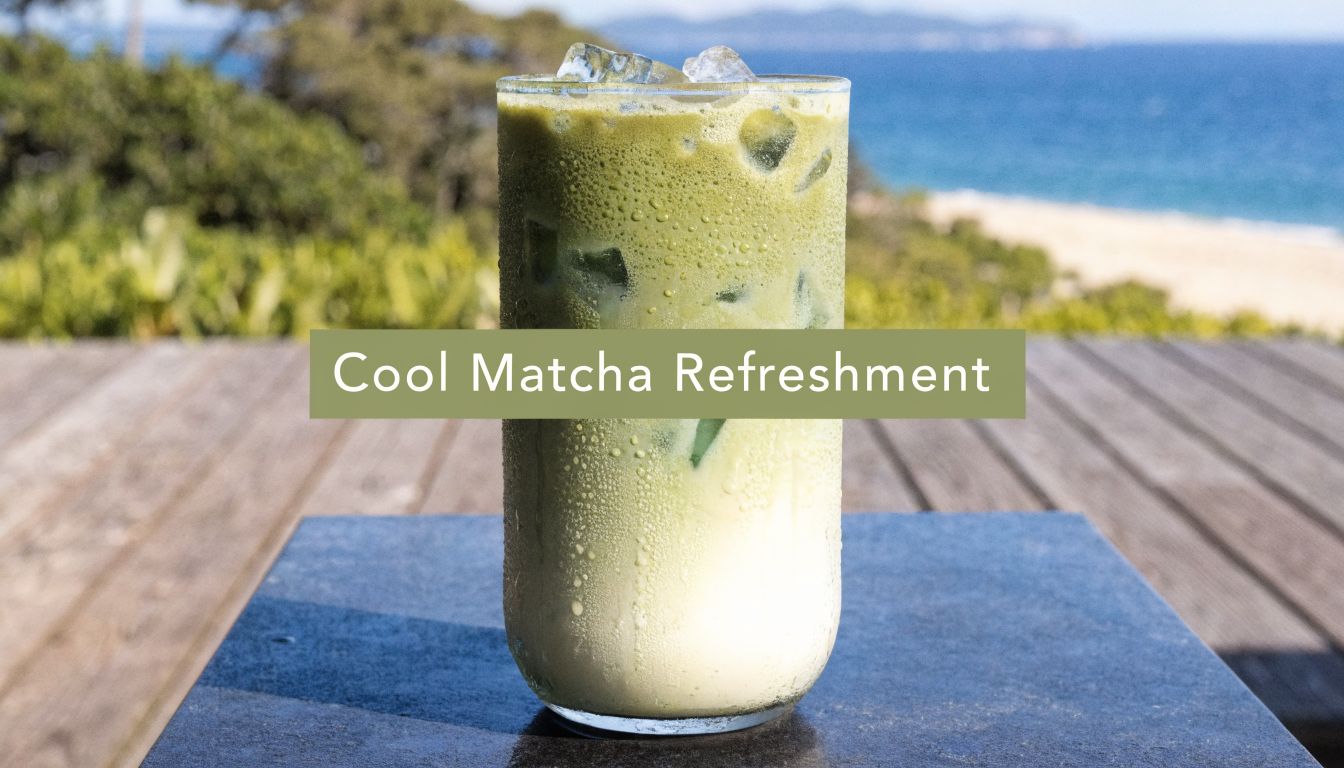
An iced uji matcha latte isn't just the hot version poured over ice. Cold drinks magnify flaws. If the powder isn't properly dispersed, you'll notice grit straight away.
That's why the best iced version starts with a concentrated matcha base.
Build the matcha shot first
Sift your matcha, add a small amount of water, and work it into a smooth paste before adding more liquid. This matters even more for iced drinks because cold milk won't help dissolve stubborn clumps.
If you like a layered café look, make the matcha base separately and pour it over milk and ice at the end. The result looks polished, but it also gives you more control over flavour.
Sweeten at the right moment
For a smooth hot or iced uji matcha latte, add any sweetener after whisking the matcha into a paste but before adding the bulk of the liquid, which helps it dissolve fully and prevents crystallisation in iced drinks, as explained in Ocha & Co's matcha latte method.
That one detail saves a lot of frustration. If you add sweetener too late, especially in a cold drink, it can sit at the bottom or throw off the texture.
An easy assembly method
Try this order for a cleaner result:
- First the glass: Fill it with ice.
- Then the milk: Add your dairy or plant milk.
- Next the matcha base: Pour slowly over the top for a layered look.
- Final adjustment: Stir just before drinking so the flavour is even.
A good iced matcha latte should taste crisp and creamy at the same time, not watery, chalky, or syrupy.
Pro Tips and Healthy Variations
Once your basic method is sound, small adjustments make a big difference. These refinements ensure an everyday uji matcha latte becomes your version of the drink.
Fixing the most common problems
If your latte tastes bitter, the issue is often heat or powder quality rather than matcha itself.
If it's lumpy, the fix is usually mechanical. Sift first, make a paste, then whisk properly. Most texture problems begin before the milk goes in.
A quick troubleshooting list helps:
- Bitter cup: Check whether your water was too hot or your powder too rough.
- Flat flavour: Use less sweetener so the tea can still come through.
- Gritty finish: Sift the powder and spend longer on the paste stage.
- Weak colour: Review the quality of the matcha itself before changing the recipe.
Choosing milk for flavour and texture
Different milks push the latte in different directions.
Oat milk often gives a rounder, creamier feel. Almond milk can make the drink lighter and a little nuttier. Soy can hold its structure well in a café setting. Dairy gives a familiar richness, but it can also soften some of the tea's sharper edges.
The best milk is the one that lets the matcha remain recognisable. If the milk completely dominates, the tea disappears.
Keeping it sugar-free or lower sugar
Health-conscious Australian drinkers often get more selective. If you've bought a good Uji powder, you may not need much sweetener at all.
Try these approaches:
- Go unsweetened first: Taste the latte before adding anything.
- Use a small amount only if needed: A light touch keeps the tea present.
- Avoid pre-mixes: They remove your control over sweetness and flavour balance.
For café service, consistency matters as much as flavour. Standardise your scoop, whisking time, and milk pour. If you're batching for busy periods, keep the matcha base fresh and don't let it sit too long before service.
Some venues also use commercial blending tools for fast cold drinks and menu variations. If that's relevant to your setup, Vitamix blenders for hospitality are worth reviewing alongside your tea tools.
One practical option for Australian buyers looking for an origin-led powder is Pep Tea's Uji matcha range, particularly when you want a format suitable for controlled latte prep rather than a sugary shortcut.
Your Uji Matcha Latte Questions Answered
How should I store matcha powder?
Keep it sealed, dry, and away from heat, light, and moisture. Matcha is delicate. Once opened, good storage helps preserve colour and aroma.
Can I make an uji matcha latte without a bamboo whisk?
Yes, though a chasen gives the nicest texture. If you don't have one, use a small handheld frother or shake the matcha paste and water in a tightly sealed jar before adding milk. The key is still the same. Break up the powder fully before the main liquid goes in.
Is café matcha always better than homemade?
Not always. A café can still use a sweetened pre-mix or poor technique. At home, you often get a better result when you start with pure matcha and pay attention to temperature and whisking.
What should a good uji matcha latte taste like?
Smooth, fresh, creamy, and balanced. You should notice the tea, not just milk or sweetness.
If you'd like to put this into practice, explore Pep Tea for organic matcha options, brewing guides, and everyday ideas for making café-style matcha at home or on your menu.
Caffeine in Matcha Latte: How It Compares

A typical matcha latte contains around 60 to 70 mg of caffeine, which is similar to a single espresso shot, but it often feels very different in the body. That’s because matcha brings caffeine together with L-theanine, a naturally occurring amino acid that many tea drinkers describe as producing calmer, steadier energy.
If you’re reading this with a warm green latte in hand, or you’re wondering whether matcha will wake you up the way coffee does, you’re asking the right question. People often hear that matcha has caffeine, then stop there. But the more useful question is not just how much caffeine is in matcha latte, but what kind of energy does it create.
That’s where matcha gets interesting. The number matters, of course. So does the scoop size, the grade, and the way the drink is made. But the main reason so many people swap their flat white for a matcha latte is the feeling that follows: alert, focused, and less rattled.
What’s Really Inside Your Favourite Green Latte
For a lot of people, a matcha latte starts as a simple habit. You whisk the powder, pour in warm milk, watch that bright green colour bloom, and take the first sip expecting something cosy but useful. Then, somewhere between your second mouthful and the start of your workday, the question pops up. How much caffeine is in this?
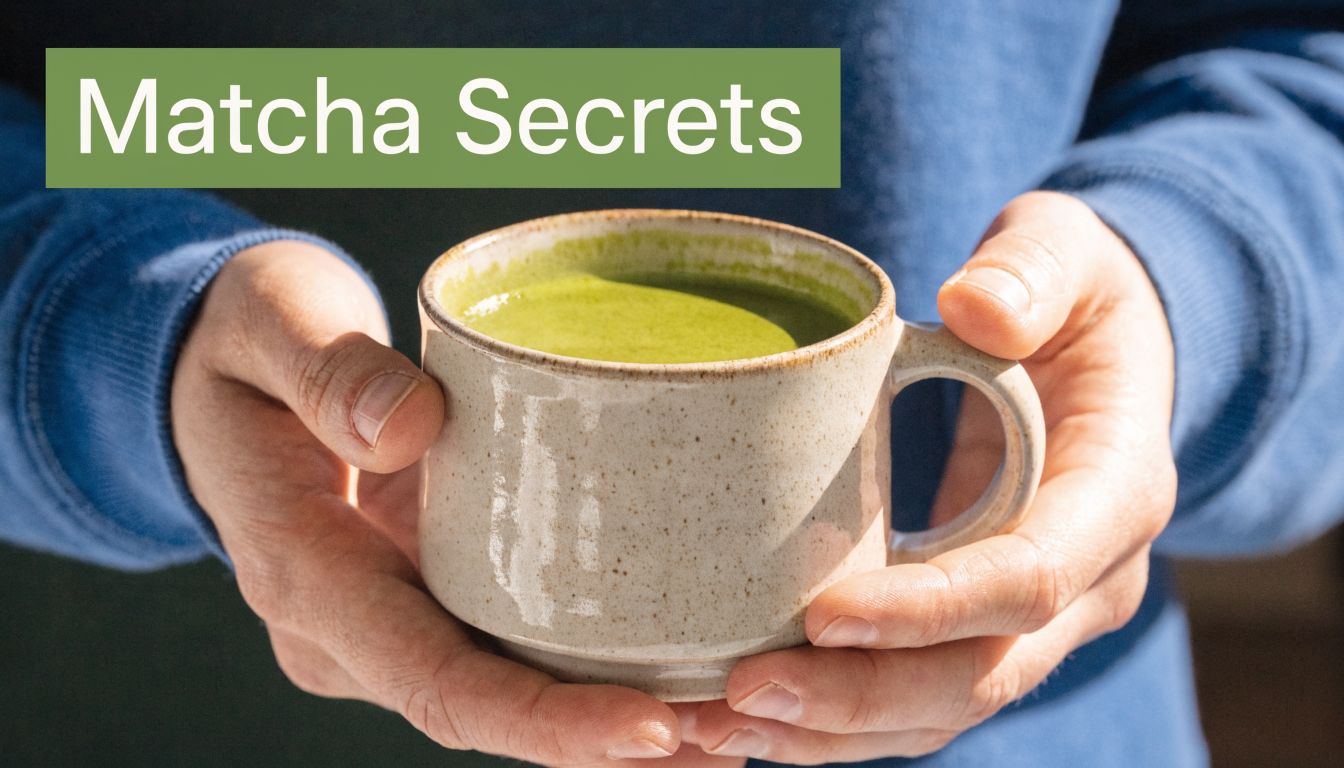
The short version is that matcha sits in a very comfortable middle ground. It’s not caffeine-free, and it’s not pretending to be. But it also isn’t just coffee in green clothing.
More than a trendy café drink
A matcha latte gives you caffeine from powdered green tea leaves that are whisked directly into water and milk. Because you consume the whole leaf, you’re getting a different experience from a standard brewed tea.
That’s why matcha often appeals to people who want energy without feeling pushed around by it. If you’re interested in the broader wellness side of green tea, this guide on how to unlock real green tea benefits is a useful companion read.
Matcha isn’t only about stimulation. For many people, it becomes part of a steadier morning rhythm.
Why people get confused
There are three common reasons readers feel unsure about caffeine in matcha latte:
- It’s tea, so people assume it must be low in caffeine. Matcha usually contains more caffeine than regular green tea because you consume the leaf itself.
- It feels smoother than coffee. That can make some people think it contains less caffeine than it has.
- Not every café uses the same amount of matcha powder. One latte can feel gentle, while another can feel surprisingly strong.
The confusion makes sense. Matcha is both simple and nuanced. It’s just powdered tea, yes. But once you look at serving size, preparation style, and L-theanine, the picture becomes much clearer.
How Much Caffeine is in a Typical Matcha Latte
If you want a direct answer, here it is. A standard matcha latte serving contains between 60 and 70 mg of caffeine, which is comparable to a single espresso shot at about 63 mg. An 8-ounce brewed coffee averages 95 mg, so matcha usually lands below a full cup of coffee while still delivering a noticeable lift, according to this breakdown of matcha latte caffeine content.
That single comparison already clears up a big misconception. Matcha is not “basically caffeine-free tea”. It has enough caffeine to matter.
Why matcha contains more caffeine than regular green tea
The key difference is how you consume it.
With regular green tea, the leaves steep in water and are then removed. With matcha, the leaves are stone-ground into a fine powder and whisked straight into the drink. You consume the entire leaf rather than only the brewed liquid.
That’s why matcha has a stronger caffeine profile than ordinary green tea. In the same source above, matcha is described as having a caffeine density of around 32 mg per gram, which helps explain why even a modest scoop can create a meaningful effect.
A quick comparison
| Drink | Typical caffeine amount |
|---|---|
| Matcha latte | 60 to 70 mg |
| Single espresso shot | About 63 mg |
| Brewed coffee, 8 oz | Average 95 mg |
This table helps answer the practical underlying question. Will a matcha latte wake me up? Yes, usually. Will it hit exactly like coffee? Not necessarily.
Practical rule: If one espresso feels fine for you, a standard matcha latte is usually in familiar territory.
What that means in daily life
For many drinkers, this places matcha in a sweet spot:
- Strong enough for a morning start
- Moderate enough for people who find coffee too intense
- Flexible enough to work as a late-morning or early-afternoon drink
If you’ve ever had a coffee that made your thoughts race faster than your to-do list, matcha can feel more organised. Not weaker. Just more even.
That’s the part numbers alone can’t capture. Two drinks can have similar caffeine amounts and still create very different experiences once they reach your body.
Why Not All Matcha Lattes Are Created Equal
Order a matcha latte at two different cafés and you might get two completely different caffeine experiences. One feels soft and steady. Another feels almost as punchy as coffee. That isn’t your imagination. It usually comes down to dose, preparation style, and grade.
According to this guide to how much caffeine is in a matcha latte, the caffeine in a matcha latte can range from 38 mg using 1 gram of powder to over 128 mg using 4 grams for a thick Koicha style. The same source notes that the U.S. FDA recommends a maximum daily caffeine intake of 400 mg for healthy adults, so two strong matcha lattes can get surprisingly close to that mark.
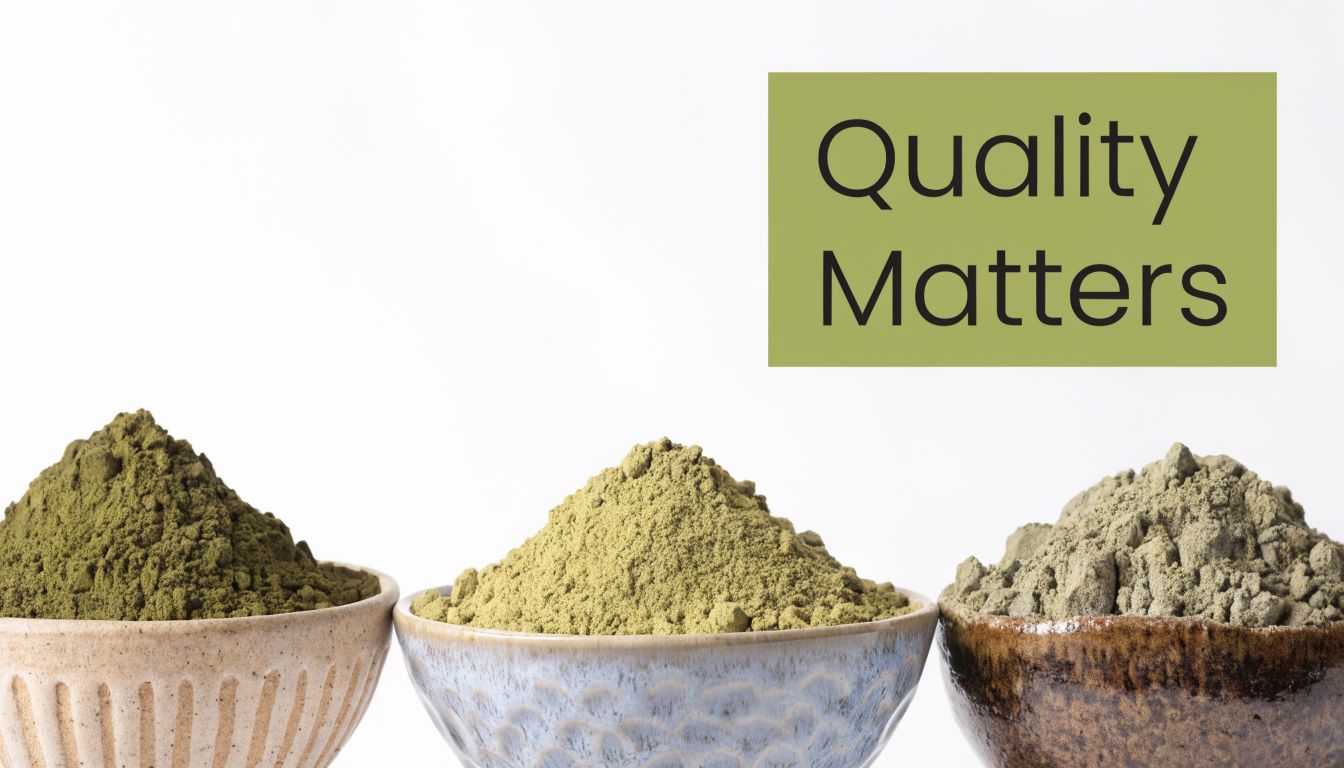
Scoop size changes everything
This is the biggest variable.
A lighter home-made latte with a small scoop can sit at the gentler end. A café that uses a generous hand, or offers an extra-strong serve, can push the caffeine much higher. Traditional preparation styles show this clearly:
- Usucha uses a lighter amount of powder and creates a thinner tea
- Koicha uses more powder and creates a thicker, more concentrated drink
If you’re trying to control caffeine in matcha latte, the amount of powder matters more than almost anything else.
Grade affects the experience too
Not all matcha powders are interchangeable. Ceremonial and culinary grades are made for different purposes, and they can lead to different drinking experiences.
Culinary matcha is often chosen for smoothies, baking, or sweeter lattes. Ceremonial matcha is typically selected when flavour, texture, and the overall tea experience matter more. If you want a clear overview of those distinctions, this guide on different grades of matcha is a handy reference.
Milk changes texture, not total caffeine
People often assume a milkier latte must contain less caffeine. That’s not automatically true.
If the same amount of matcha powder goes into the cup, the total caffeine stays the same. More milk can soften the flavour and make the drink feel gentler, but it doesn’t remove caffeine. What changes is concentration per sip, not the total amount in the mug.
If you want a milder caffeine experience, use less matcha powder. Don’t rely on extra milk to do the job for you.
Sustained Energy Without the Jitters The L-Theanine Effect
Matcha, in fact, stops being just another caffeinated drink and becomes something more interesting. Two drinks can contain caffeine, but they don’t have to feel the same. Matcha’s personality comes from the company its caffeine keeps.

The key companion is L-theanine. According to this article on whether matcha latte has caffeine, the unique energy profile of matcha comes from its L-theanine-to-caffeine ratio. The same source notes that ceremonial grade matcha, made from shade-grown leaves, has higher concentrations of both compounds and delivers a different, often better, cognitive effect than the same amount of caffeine from lower-grade matcha. It also explains that the shade-growing process boosts both L-theanine and chlorophyll.
What calm energy actually feels like
“Calm alertness” can sound a bit fluffy until you’ve felt it yourself.
In real life, it often means:
- you feel switched on, but not edgy
- your concentration feels more settled
- your energy doesn’t arrive with the same harsh spike some people get from coffee
That doesn’t mean matcha is sleepy, weak, or muted. It means the stimulation can feel smoother and more anchored.
Why grade matters more than people expect
This is one of the most overlooked parts of the conversation. If two drinks contain similar caffeine, many people assume they’ll perform the same. But with matcha, grade changes the feel.
Ceremonial-grade matcha is usually prized for a softer taste, a cleaner finish, and a more refined energy profile. That matters if you drink matcha for focus, work, study, or a steady start to the day. If you’d like to explore a product made with that premium style in mind, this Uji matcha powder is a relevant example of the type of matcha many drinkers choose for a smoother daily ritual.
Here’s a helpful visual explainer if you’d like to see the topic discussed in a simple format.
Why shade-growing matters
Shade-growing changes the leaf before it ever becomes powder. That farming method is a big reason premium matcha feels different from standard powdered green tea.
For the person drinking it, this matters less as a farming trivia fact and more as a practical buying clue. If your goal is not just “caffeine” but focused, composed energy, the quality of the leaf matters.
The smartest way to think about matcha isn’t “How much caffeine can I get?” It’s “What kind of energy do I want from this cup?”
Matcha Latte vs Coffee Which Morning Ritual is Right for You
Coffee and matcha can both earn a place in a morning routine. They do different jobs for different people. If you love the speed and boldness of coffee, there’s nothing wrong with that. If you want a gentler ramp into the day, matcha often suits that role beautifully.
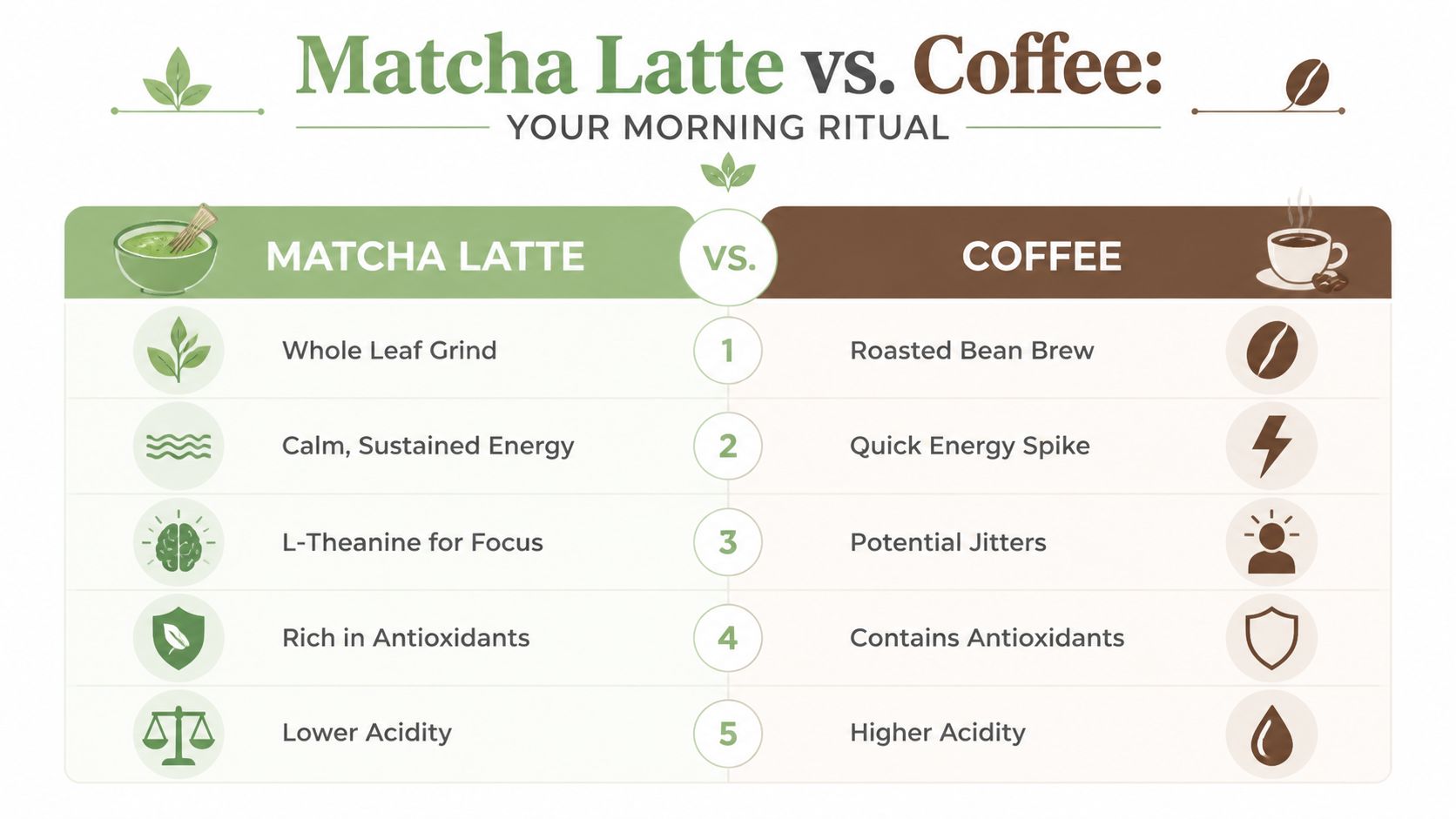
Side by side in daily life
| Matcha latte | Coffee | |
|---|---|---|
| Base ingredient | Whole leaf powder whisked into the drink | Brewed roasted beans |
| Energy feel | Smoother, more sustained for many drinkers | Faster, sharper lift |
| Focus style | Often described as calm and clear | Often described as direct and intense |
| Acidity | Commonly chosen by people seeking a gentler option | Can feel harsher for some drinkers |
| Ritual | Slower, whisked, more deliberate | Quick, familiar, highly flexible |
Choose matcha if this sounds like you
- You want steady focus for writing, studying, or desk work
- You enjoy the ritual of making a drink, not just grabbing one
- You find coffee a bit abrupt in the way it lands
Choose coffee if this sounds like you
Some people prefer the directness of coffee. It’s fast, familiar, and easy to prepare in many ways. If you’re building a better home coffee routine rather than replacing it, Brewssels' tips for home brewers are worth a read.
The better question isn’t which is healthier
The better question is: How do I want to feel after I drink it?
Coffee often shines when you want immediate alertness and a bolder flavour. Matcha often shines when you want focus with a little more composure. Some people even keep both in their week and use them differently. Coffee for early starts. Matcha for deep work, afternoons, or days when they want less friction in their nervous system.
How to Customise the Caffeine in Your Matcha Latte
The best part of making matcha at home is control. You don’t have to accept whatever scoop a café happens to use that day. You can build a latte that suits your morning, your tolerance, and your schedule.
If you want less caffeine
Start by reducing the amount of matcha powder, not by diluting the drink endlessly.
A few practical ways to bring the intensity down:
Use a smaller scoop
A lighter serve gives you a softer lift and a milder flavour.Make it later in the day with a gentler hand
Many people prefer a less concentrated afternoon latte.Choose a larger cup with more milk
This won’t reduce total caffeine if the powder amount stays the same, but it can make the drink feel softer and easier to sip slowly.
For a lighter afternoon cup, think of matcha as seasoning. A little less powder can completely change the mood of the drink.
If you want more lift
If you’re moving from coffee and want your latte to feel more substantial, there are cleaner ways to do that than adding sweeteners or syrups.
Try these adjustments:
- Increase the powder gradually so you can feel the difference without overshooting
- Use a high-quality matcha if you care about smoother focus, not just stronger flavour
- Keep the recipe simple so the tea stays central
A simple home method
Here’s a straightforward matcha latte routine that is generally effective:
- Sift your matcha powder into a bowl or mug
- Add a small amount of warm water
- Whisk until smooth
- Pour in your warmed milk of choice
- Taste before sweetening
This method gives you a clean base. From there, you can adjust the powder amount up or down depending on the result you want.
Match your drink to the moment
Different moments call for different matcha styles:
| Time of day | Best approach |
|---|---|
| Morning | A fuller serve for a stronger, focused start |
| Mid-morning | Standard latte strength |
| Afternoon | Lighter scoop for a softer lift |
| Evening | Many people prefer to skip it or make it very light |
The smartest routine is the one you can repeat comfortably. Matcha doesn’t need to be intense to be useful.
Finding Your Perfect Matcha Moment
The most helpful thing to remember is that caffeine in matcha latte isn’t a single fixed number or a one-size-fits-all experience. A typical cup sits in a moderate range, but the real story is how that caffeine behaves once it’s paired with L-theanine and shaped by the quality of the leaf.
That’s why matcha can feel so different from coffee even when the caffeine amount looks familiar on paper. The energy often feels steadier. The ritual feels calmer. And with a bit of practice, you can tailor the drink to suit your day instead of letting the drink dictate it.
Some people want a focused start before work. Others want a gentler afternoon pick-me-up. Matcha can do both, provided you choose the right powder, the right scoop, and the right moment.
If you’ve only thought about matcha as a green version of a café latte, there’s a lot more to enjoy. Done well, it becomes less about chasing stimulation and more about building a daily rhythm that feels good to live with.
Your Matcha Caffeine Questions Answered
Is it okay to drink a matcha latte every day
For many adults, a daily matcha latte can fit comfortably into a balanced routine. The main thing to watch is your total caffeine intake across the day, especially if you also drink coffee, energy drinks, cola, or pre-workout products.
Can milk reduce the caffeine in matcha latte
No. Milk changes flavour, body, and texture, but it doesn’t remove the caffeine already present in the matcha powder. If you want less caffeine, use less powder.
Who should be more careful with matcha caffeine
Anyone who is sensitive to caffeine should pay closer attention to scoop size and timing. The same goes for people who already consume several caffeinated drinks per day. If you know your body doesn’t love caffeine late in the day, matcha deserves the same respect as coffee.
When should I drink matcha if I’m worried about sleep
Earlier is usually better. Many people enjoy matcha in the morning or early afternoon and avoid it later on. Your own tolerance matters, so it’s worth paying attention to how your body responds rather than copying someone else’s routine.
How can I tell if I’m using too much matcha
If your latte tastes overly intense, feels heavier than you expected, or leaves you more stimulated than you wanted, the simplest fix is to reduce the powder next time. This is especially common for beginners.
Is there a guide to safe daily intake
If you want a more detailed look at serving amounts and sensible daily use, this article on how many cups of matcha tea powder are safe per day is a practical place to start.
If you’re ready to find a smoother kind of energy, explore Pep Tea for premium organic matcha and everyday tea rituals that feel good to come back to.
Difference Between Matcha Green Tea and Green Tea Explained
You’re probably here because you’ve stared at a café menu or a shelf of tea tins and thought, hang on, aren’t matcha and green tea basically the same thing?
They do come from the same plant, Camellia sinensis. That’s where the confusion starts. But in the cup, they’re very different. They look different, taste different, feel different, and suit different moments in your day.
For a health-conscious Australian, the difference between matcha green tea and green tea matters because it changes what you drink. One is a leaf infusion. The other is the whole leaf, finely ground and whisked in. That one shift affects flavour, texture, caffeine feel, and how concentrated the tea compounds are.
Matcha or Green Tea Which One Is for You
You see it all the time now. One person orders a clean, grassy green tea. The next goes for an oat matcha latte with bright green foam on top. Both choices sound wholesome. Both are tea. But they’re not interchangeable.

Why so many people mix them up
The labels don’t help. “Matcha green tea” makes it sound like matcha is a stronger green tea. In one sense, yes, it is green tea. In another sense, no, it’s a completely different drinking experience.
Regular green tea is usually made by steeping leaves in hot water, then removing the leaves before drinking. Matcha is made by whisking powdered tea into water, so you consume the leaf itself.
That means the difference between matcha green tea and green tea isn’t just about taste. It affects body, intensity, and how the tea feels in real life.
Why this matters in Australia
Australians have become far more curious about functional drinks, especially drinks that fit a mindful routine, a café menu, or a lower-sugar lifestyle. Matcha has moved well beyond niche tea circles. According to Medical News Today’s summary of Australian market figures, organic matcha imports grew 42% annually from 2021 to 2025, and demand has been linked to matcha’s 3 to 10 times higher L-theanine and caffeine synergy.
That rise makes sense. Plenty of people want energy, but not the sharp edge they often associate with coffee. Others just want a drink that feels more intentional than a soft drink or another flat white.
Practical rule: Choose green tea when you want something light and easy. Choose matcha when you want more presence in the cup.
The short answer
If you like delicate, refreshing tea you can sip with little fuss, regular green tea may suit you better.
If you want a richer drink with a fuller mouthfeel and a more concentrated profile, matcha is usually the better fit.
A few quick examples make it easier:
- Morning desk drink. Green tea feels clean and gentle. Matcha feels more substantial.
- Café latte. Matcha works naturally because it has enough body to stand up to milk.
- Mindful tea ritual. Matcha turns preparation into part of the experience.
- Simple afternoon cup. Green tea wins for ease.
Matcha vs Green Tea at a Glance
Some readers want the quick version before diving deeper. Here it is.
| Feature | Matcha Green Tea | Regular Green Tea |
|---|---|---|
| Form | Fine powder made from tea leaves | Whole or cut leaves |
| How you drink it | Whisked into water or milk, leaf included | Steeped in water, leaves removed |
| Cultivation style | Traditionally shade-grown before harvest | Typically grown in direct sunlight |
| Processing | Steamed, dried, then stone-ground | Steamed or heated, rolled, dried |
| Texture | Creamy, full-bodied, suspended in liquid | Light, clear, more delicate |
| Flavour | Umami, savoury, rich, sometimes naturally sweet | Fresh, grassy, vegetal, sometimes brisk |
| Caffeine feel | More pronounced, often steadier in feel | Gentler lift |
| L-theanine | Higher | Lower |
| Antioxidant concentration | More concentrated | Less concentrated |
| Best for | Lattes, whisked tea, smoothies, baking, focused routines | Everyday sipping, iced tea, traditional brewing |
That’s the bird’s-eye view. The rest comes down to how the tea is grown, made, and enjoyed.
From Farm to Cup How Cultivation Creates Two Teas
The most useful place to start is the farm. Matcha and green tea begin with the same plant, but growers treat those leaves differently long before they reach your kitchen.

The key split happens before harvest
For matcha, tea plants are shade-grown before harvest. The verified material notes a traditional shading period of 20 to 30 days before picking, which is one reason matcha develops its vivid colour and distinctive amino acid profile. Green tea, by contrast, is generally grown in direct sunlight.
That one farming decision changes a lot.
Shade-growing encourages the leaf to develop differently. The result is usually a deeper green colour and a softer, more savoury character. Sun-grown green tea tends to give a brighter, brisker, more straightforward leaf character.
Processing turns one plant into two very different drinks
After harvest, regular green tea leaves are typically heated to stop oxidation, then shaped and dried. When you brew that tea, water extracts flavour and some compounds from the leaf. The leaf itself stays behind.
Matcha follows another path. Leaves intended for matcha are prepared for grinding into a very fine powder. Once powdered, the tea no longer needs steeping in the usual sense. You whisk it into liquid and drink everything.
If you want to see how that traditional process works in more detail, this guide on how matcha tea is made is a useful visual reference.
Why the same plant can taste so different
Much like herbs in cooking, a whole sprig infused into broth gives one result. Grinding the herb and blending it directly through a sauce gives another. Tea behaves in a similar way.
Green tea is extraction. Matcha is incorporation.
That’s why matcha often feels denser and more rounded, while green tea feels clearer and lighter.
The biggest misunderstanding is thinking matcha is just green tea in powder form. It’s a different agricultural and processing tradition, not just a different package.
A short visual helps bring that farm-to-cup difference to life:
Craft matters more than most people realise
This is also why quality varies so much. With green tea, brewing technique often makes the biggest difference at home. With matcha, cultivation, leaf selection, and grinding quality all show up very clearly in the final bowl or latte.
A poor green tea may taste flat or harsh.
A poor matcha is even easier to spot. It can look dull, taste rough, and leave a chalky finish rather than a smooth one.
Here’s the simple takeaway:
- Green tea rewards good brewing.
- Matcha rewards both good farming and good preparation.
- Both depend on freshness and careful handling.
A World of Difference in Flavour and Texture
The first sip tells the story faster than any label can.
Green tea usually arrives as a clear liquor with a light body. Matcha arrives suspended in the liquid itself, often opaque, with a soft foam on top if it’s whisked well. Even before you taste them, they signal different expectations.

What green tea tastes like
Regular green tea is usually lighter, cleaner, and more transparent in flavour. Depending on style, it can lean grassy, vegetal, soft, sweet, or slightly brisk. It often feels refreshing rather than enveloping.
That’s why many people find it easy to drink through the day. It doesn’t dominate your palate. It lifts it.
If you’re new to tea, green tea is often easier to understand straight away. It tastes like an infusion because that’s exactly what it is.
What matcha tastes like
Matcha is more concentrated and more textured. Good matcha often carries umami, which is the savoury depth people also notice in foods like mushrooms, broth, or parmesan. It may also show gentle sweetness, fresh vegetal notes, and a creamy finish.
The texture matters as much as the flavour. Because the powder stays in the cup, matcha has body. Even made with water alone, it can feel almost velvety.
That’s why matcha lattes work so well. Milk doesn’t wash it out in the same way it would with many delicate green teas.
A simple way to picture the difference
If green tea is like a clear vegetable broth, matcha is more like a blended soup. Both come from similar ingredients. One is light and infused. The other feels complete and integrated.
That comparison isn’t perfect, but it helps explain why people react so differently to them.
Some people say they “don’t like green tea” and then love matcha. Others adore green tea and find matcha too intense at first. That’s normal.
Where beginners often get stuck
A lot of people try one poor-quality matcha and assume all matcha tastes bitter. Usually, bitterness comes from one of three things:
- Low-grade powder that lacks sweetness and smoothness
- Water that’s too hot, which roughens the flavour
- Too much powder for the amount of liquid
Green tea has its own trap. Over-steeping can make it taste sharp or drying, which leads people to think green tea is naturally bitter when preparation is the issue.
Which one feels more “refreshing”
For pure refreshment, green tea usually wins. It’s lighter, less dense, and often easier to drink in larger cups.
For satisfaction and presence, matcha usually wins. It feels more like a beverage with weight and personality.
That difference between matcha green tea and green tea is one reason people keep both in the cupboard. They suit different moods.
The Nutritional Powerhouse Caffeine L-Theanine and EGCg
A lot of Australians first notice the nutrition difference at 10 am, not on a label. One tea leaves you feeling lightly refreshed and ready for another sip later. The other can feel closer to a steady, more deliberate kind of energy, the sort of cup that replaces a second coffee rather than sitting beside it.
That difference starts with concentration. Matcha is made to be consumed as a fine powder, so you drink the leaf itself. Regular green tea is infused in water, then the leaves are removed. For a health-conscious drinker or a café owner choosing what belongs on the menu, that changes the nutritional impact in a very practical way.
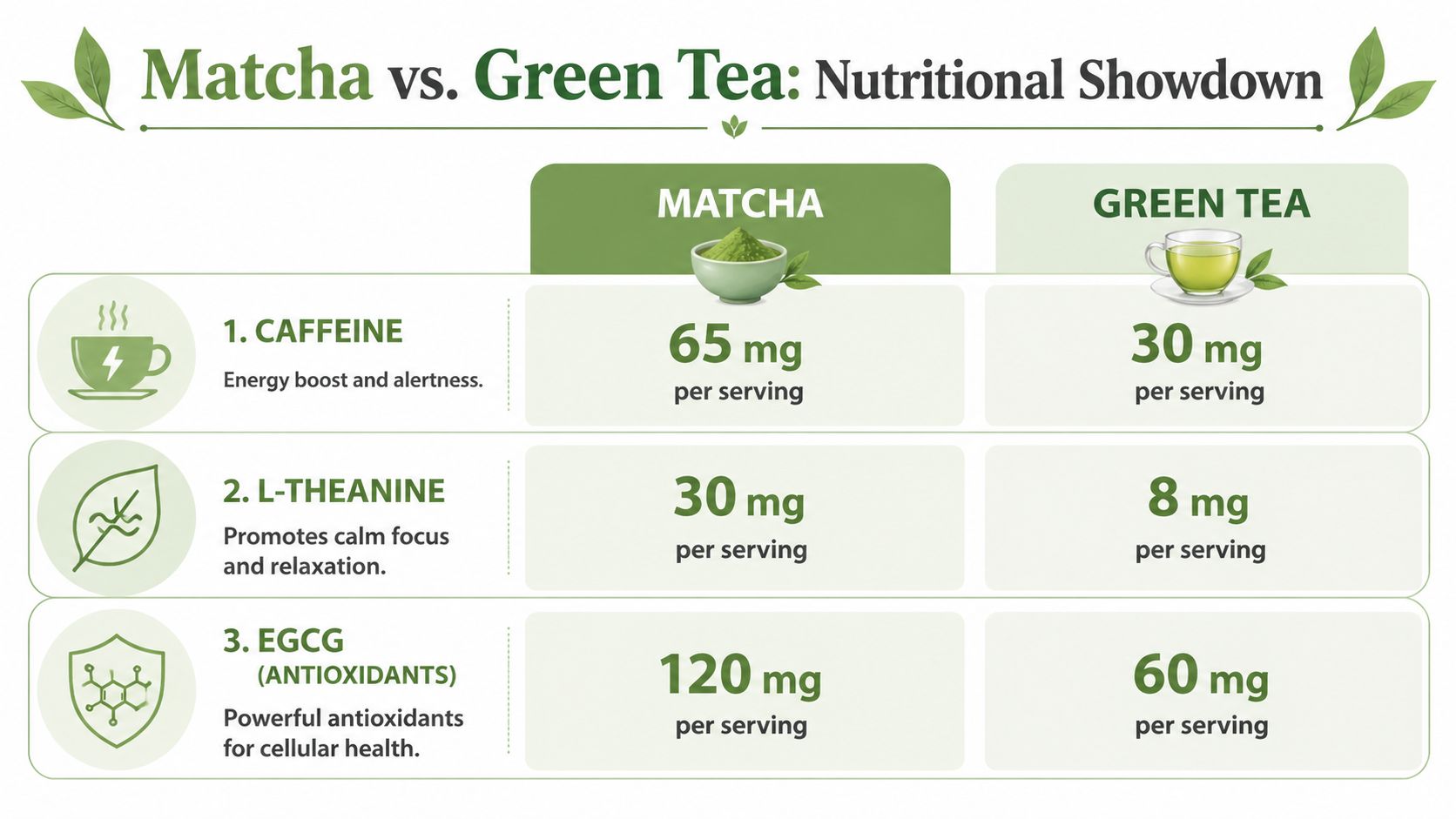
If you want a broader explanation of why powdered tea is so concentrated, this guide to matcha tea powder as a powerhouse of antioxidants adds useful context.
Caffeine feels different in the cup, not just on paper
The amount of caffeine matters, but the way it lands matters more for daily life. The Mayo Clinic’s guide to caffeine content notes that green tea often sits in a lower caffeine range than coffee, while matcha is commonly experienced as the stronger of the two tea options because more of the leaf ends up in the drink.
That helps explain a pattern many tea drinkers recognise straight away.
Green tea often gives a gentle lift. It can suit an afternoon cup, a lighter start to the day, or a pot shared with food.
Matcha usually feels fuller and more sustained. For plenty of people, especially those trying to swap out one coffee, it delivers calm focus rather than a quick spike.
L-theanine helps explain that steady feeling
L-theanine is one of tea’s most interesting compounds because it changes the experience of caffeine. Instead of feeling sharp or jittery, the stimulation can seem more even and settled.
Matcha is often prized for that effect because shade-growing tends to preserve more amino acids, including L-theanine, before the leaves are stone-ground into powder. Premium organic matcha also tends to show this balance more clearly. You taste it, but you also feel it. The energy is less like flicking on a bright fluorescent light and more like opening the blinds on a clear morning.
Green tea contains L-theanine too. The experience is lighter because the brew is less concentrated.
A practical way to choose: If you want a tea that supports your day without being overpowering, green tea is often enough. If you want a more intentional ritual with stronger, steadier energy, matcha is usually the better fit.
EGCg is one reason matcha has such a strong wellness reputation
EGCg, short for epigallocatechin gallate, is one of the catechins most closely associated with tea’s antioxidant profile. You do not need to remember the full name. What matters is what it represents. It is one of the compounds behind tea’s reputation as a health-supportive drink.
Earlier research frequently cited in tea writing has found much higher EGCg levels in matcha than in standard brewed green tea, and that lines up with the basic logic of whole-leaf consumption. If you consume the leaf rather than steeping and removing it, you usually get more of what the leaf contains.
For café customers, that can be the difference between choosing a pleasant green tea and choosing a drink marketed as a functional daily ritual. For a buyer focused on quality, it is also why sourcing matters so much. Clean, carefully grown matcha gives you a better shot at the sweetness, colour, and nutritional density people are looking for.
What this means in real life
People do not choose tea because they love acronyms. They choose tea because they want a certain feeling and a certain role in their day.
Here is the practical translation:
- Green tea suits people who want a lighter daily habit and a softer caffeine effect.
- Matcha suits people who want more from a single serve, both in presence and concentration.
- Caffeine plus L-theanine is why matcha often works well as a coffee alternative.
- Higher antioxidant concentration is part of why matcha appeals to wellness-focused drinkers and premium cafés.
Regular green tea still has plenty going for it. It is refreshing, versatile, and easier for some people to drink more often.
But from a nutrition perspective, matcha is the more concentrated option. That is the key difference, and it is why one person swears by a bright bowl of organic matcha for morning focus while another is perfectly happy with a clean, gentle cup of sencha after lunch.
How to Prepare Use and Enjoy Them
Preparation is where the choice becomes real.
A rushed weekday morning in Melbourne calls for something different from a slow Sunday breakfast or a busy café service. Green tea usually suits the quick, quiet cup. Matcha asks for a little more involvement, but it gives you a drink with more presence, more texture, and more room to play.
How to make regular green tea
Green tea rewards a light touch. Water that is too hot or a steep that runs too long can flatten the fresh, grassy notes and pull out more bitterness than you want.
A simple method works well:
- Heat water to below boiling, usually around 70 to 80°C for many green teas
- Steep briefly, often 1 to 3 minutes depending on the leaf style
- Taste and adjust because a delicate sencha and a rolled gunpowder tea behave quite differently
- Use clean-tasting water so the tea stays bright rather than muddy
That is part of green tea’s charm. It fits easily into everyday life. Brew a cup with breakfast, pour it over ice for the afternoon, or serve it alongside food where you want something refreshing rather than heavy.
How to make matcha without overcomplicating it
Matcha is still simple. It just uses a different kind of simplicity.
Instead of extracting flavour from leaves and then removing them, you are mixing the tea itself into the drink. It works a bit like cocoa in hot chocolate. If the powder is clumpy, the texture suffers. If it is whisked properly, the cup feels smooth, creamy, and lively.
Start here:
- Sift a small amount of matcha into a bowl or sturdy cup.
- Add a splash of hot water, not boiling.
- Whisk briskly until the surface looks smooth and lightly foamy.
- Drink it straight, or add more water for a longer cup.
- Add warm milk if you want a matcha latte.
If you want help with the texture, PepTea’s guide on how to whisk matcha properly shows the technique clearly.
Where each tea works best
The easiest kitchen rule is this. Green tea is better for steeping. Matcha is better for mixing.
That one distinction explains a lot.
Matcha suits smoothies, yoghurt, chia puddings, baking, iced lattes, and desserts because the powder becomes part of the final texture and flavour. In a café, that makes it easy to build a recognisable menu item with consistent colour and a fuller mouthfeel.
Green tea plays a quieter role. It shines in syrups, jellies, poaching liquids, cold brews, and delicate desserts where you want a cleaner, lighter tea note without changing the texture too much.
Buying well in Australia
For Australian shoppers and café owners, preparation starts before the kettle goes on. It starts with what you buy.
With matcha especially, quality is easy to see in the cup. Better matcha tends to whisk more smoothly, taste sweeter, and show a brighter green colour. Lower-grade powder can turn dull, chalky, or harsh quite quickly. Organic claims also deserve a closer look. The Australian Certified Organic certification requirements explain what certified organic products must meet in the Australian market, which is far more useful than relying on vague front-label language.
For a home drinker, that means checking origin, grade, and certification before you click buy. For a café owner, it means choosing a tea that performs consistently across straight matcha, lattes, and iced drinks.
Storage matters more than many people expect
Both teas prefer the same basics. Keep them away from heat, light, moisture, and air.
Matcha is less forgiving because it is finely ground. More surface area means it can lose freshness faster, especially once opened. Store it tightly sealed in a cool, dark place and buy amounts you will use while the colour and flavour are still lively.
Green tea also benefits from careful storage, but it usually gives you a bit more breathing room.
Which Tea Is Right for You A Recommendation Guide
No tea wins for everyone. The right choice depends on what you want the drink to do in your day.
If you want calm, focused energy
Matcha is usually the stronger fit. Its fuller body and more concentrated profile suit people who want one cup to feel meaningful. It often appeals to people replacing a second coffee or looking for a more deliberate morning ritual.
If you like the idea of tea that feels functional, structured, and a bit more substantial, start with matcha.
If you want an easy everyday sipper
Green tea is hard to beat. It’s lighter, quicker to prepare, and easier to drink across the day. If you want something fresh and unfussy, regular green tea often makes more sense than matcha.
This is also the better choice for someone who enjoys tea in the traditional “put the kettle on” sense.
If you’re a home barista or cook
Matcha opens more doors.
It works in lattes, smoothies, baking, chilled drinks, and desserts because the powder becomes part of the final texture. If you like experimenting in the kitchen, matcha gives you more creative range.
Green tea still has a place, but more as a subtle ingredient than a centrepiece.
If you run a café
Matcha gives you a drink with clear menu identity. Customers recognise it, it works beautifully in hot and iced formats, and it fits the shift toward more mindful non-alcoholic and lower-sugar options.
Green tea belongs on menus too, especially for guests who want a straightforward brewed tea. But matcha usually carries more visual impact and more customisation potential.
If your priority is ritual, body, and concentrated character, choose matcha. If your priority is ease, delicacy, and repeat cups, choose green tea.
If you’re still torn
Keep both.
That’s the most practical answer for many people. Use green tea for easy daytime sipping. Reach for matcha when you want more focus, more flavour depth, or a café-style drink at home.
Frequently Asked Questions
Can I substitute matcha for green tea in recipes
Sometimes, but not directly. Matcha is a powder, so it changes colour, flavour intensity, and texture. Green tea leaves are better when you want to infuse liquid and then strain. Matcha is better when you want the tea itself blended through the recipe.
Is one better for weight-related goals
Both teas contain catechins, and matcha is the more concentrated option. That said, it’s best to think of both as supportive drinks within a healthy routine, not as shortcuts. If you want the strongest tea concentration from one serve, matcha is usually the pick.
Why is matcha more expensive than green tea
Because it asks more of the grower and producer. The leaves are grown differently, handled differently, and ground into a fine powder rather than dried for brewing. That extra work shows up in the final price.
Can I drink matcha or green tea every day
Many people do. The main thing to watch is your caffeine comfort level. Green tea is usually gentler. Matcha is more concentrated, so it’s smart to notice how you feel and time your cups accordingly.
Which tastes better for beginners
Usually green tea, because it’s lighter and easier to understand on the first sip. But if you already enjoy savoury depth, creamy drinks, or café lattes, you may prefer matcha right away.
If you’d like to explore premium organic options for both everyday rituals and café-style drinks at home, have a look at Pep Tea. We offer organic matcha, practical brewing guides, and Australian-made kombucha for people who want clean, enjoyable functional drinks without the fluff.
Uji Matcha Powder: A Definitive Explainer for Australians

The first time you whisk a proper bowl of Uji matcha, the aroma hits before the taste does. It smells green, soft, almost creamy, and you realise very quickly that this isn’t just “green tea powder”.
What is Uji Matcha Powder Really?
Uji matcha powder comes from Uji, near Kyoto in Japan, a place long associated with some of the country’s most prized tea. When people talk about Uji matcha with a bit of reverence, they’re usually responding to two things at once. The first is flavour. The second is history.
Matcha itself is powdered green tea, but uji matcha powder is a more specific category. It refers to matcha connected to the Uji region and its tea-making traditions. That matters because place affects taste, texture, aroma, and the way the tea feels in your daily routine.
A lot of confusion starts here. People often assume all matcha is basically the same, just sold at different prices. It isn’t.
Why it’s different from ordinary green tea powder
Regular green tea is usually steeped, then removed from the cup. With matcha, you consume the powdered leaf itself. That creates a fuller flavour and a more concentrated drinking experience.
Uji matcha also carries a very particular identity. It’s linked to long-established cultivation and processing methods, including shading and stone-grinding, which help create the vivid colour and smooth texture many tea drinkers look for.
A simple way to think about it: matcha is a category, but Uji is a place with a reputation. Not every matcha offers the same depth, softness, or finish in the bowl.
For Australians, this matters because matcha often sits at the crossroads of taste and wellness. Some people come to it for a café-style latte at home. Others want a cleaner-feeling ritual than their usual coffee. Others are curious about antioxidants, L-theanine, and calm focus.
If you’re new to the category, a helpful starting point is this guide on what matcha powder is. It clears up the basics before you start comparing grades, origins, and brewing styles.
What people usually get wrong
Three myths show up again and again:
- “All bright green powders are matcha.” Some powders are milled green tea, not true matcha in the traditional sense.
- “The stronger the bitterness, the better the tea.” Good matcha can have structure and character, but harsh bitterness usually isn’t the goal.
- “It’s only for tea ceremony.” Uji matcha can be whisked traditionally, but it also works beautifully in lattes, smoothies, and cooking.
At its best, uji matcha powder is both ancient and practical. It belongs in a tea bowl, but it also belongs in a modern Australian kitchen.
The 800-Year-Old Secret of Uji's Terroir
A tea region earns trust the way a family recipe earns loyalty. By getting the small things right for a very long time.
Uji’s name carries that kind of weight. Tea has been cultivated there since the late 12th century, and over hundreds of years growers refined methods that suited the area’s hills, rivers, mist, and seasonal rhythm. That long memory matters. It helps explain why Uji is still the benchmark many tea drinkers use when they want matcha with depth, softness, and a clean finish.

Why terroir matters in tea
Terroir is the taste of place.
In wine, people talk about soil, slope, sun, and climate. Tea works the same way, but with an added human layer. Farming knowledge passed down across generations shapes the result just as much as weather and geography do. In Uji, that means local conditions and local craft have grown together for roughly 800 years.
For matcha drinkers, terroir shows up in the bowl, not in an abstract concept. You notice it in aroma first. Fresh, green, slightly sweet. Then in texture. Fine, creamy, almost velvety if the powder is well made. Then in flavour, where good Uji matcha often brings a savoury umami note, gentle sweetness, and less of the rough edge that can make lower-grade powders feel aggressive.
That matters for Australians using matcha as part of a daily wellness routine. If you want sustained energy rather than a jittery spike, flavour is not separate from function. A smoother, more balanced matcha is easier to enjoy consistently, whether you whisk it traditionally or add it to your morning latte.
Why Uji became a name people trust
Uji’s prestige grew because tea growers, tea masters, and buyers kept returning to the same conclusion. Tea from this region tasted refined and reliable.
By the Edo period, Uji had become strongly associated with high-quality Japanese tea, especially for people seeking a more polished drinking experience. That reputation still shapes the market today. You can see it in how often Uji is used as the reference point for premium matcha, and in how carefully serious buyers check origin before they buy.
This is also where confusion can creep in. "Uji-style" and "matcha from Japan" do not always mean the same thing as authentic Uji matcha. If you want to understand how origin connects to production quality, this guide to how matcha tea is made helps link what happens in the field to what ends up in your cup.
The place behind the flavour
A good Uji matcha often shows its origin in a few clear ways:
- Umami that feels deep and savoury, not harsh
- A softer finish that leaves the palate clean
- A vivid green colour that reflects careful growing and handling
- A creamy mouthfeel that makes daily drinking more pleasurable
Those qualities are not just for tea ceremony. They matter in ordinary life. A smoother matcha is easier to drink straight, easier to blend into a clean breakfast routine, and easier to return to every day if you are replacing part of your coffee habit with something calmer.
For Australian buyers, that practical side is worth keeping in mind. The best Uji matcha brings together tradition and usefulness. It carries centuries of craft, but it also fits neatly into modern goals like better focus, less sugar, cleaner ingredients, and a morning ritual that feels grounding. Brands that clearly state origin and offer organic options, including carefully sourced selections such as Pep Tea’s, make that choice much easier.
From Shaded Leaf to Stone-Ground Powder
A bright bowl of Uji matcha can look simple on the breakfast bench. Water, powder, whisk, done. Yet that soft green foam begins weeks earlier in the field, then passes through a series of careful steps that shape how the tea smells, tastes, and feels in your mouth.
Authentic uji matcha powder is made with restraint at every stage. The goal is not speed. The goal is to protect what is delicate in the leaf so it reaches your cup with its sweetness, colour, and creamy texture intact.
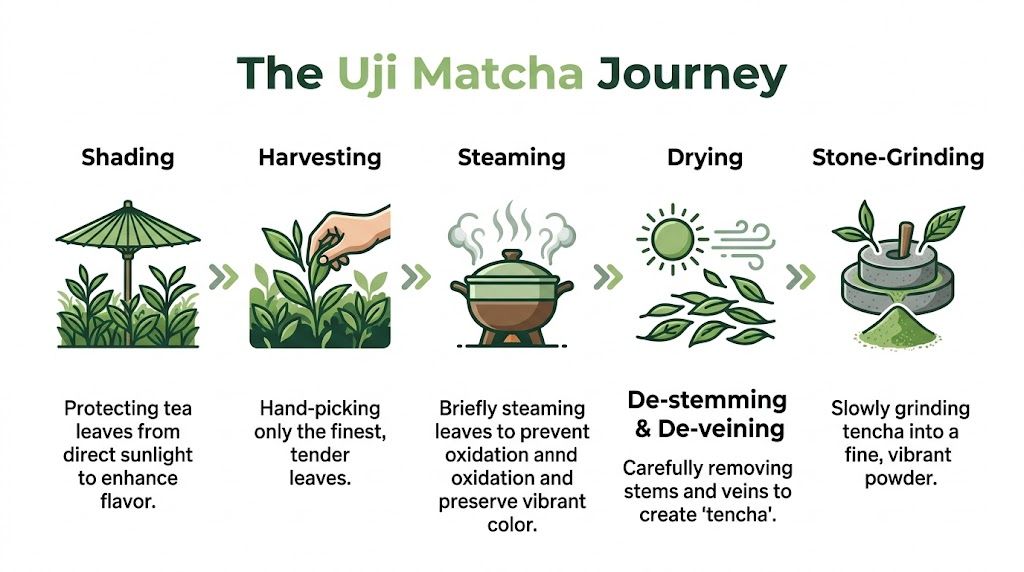
The craft in six practical steps
Price starts to make more sense once you see how much handling happens before the tea is ever packed into a tin.
The plants are shaded
Several weeks before harvest, growers reduce the amount of sunlight reaching the tea bushes. This slows photosynthesis and changes the leaf’s chemistry. The result is a leaf that tends to taste sweeter, more savoury, and less sharp.Tender leaves are harvested
The youngest, most suitable leaves are selected for matcha production. This is one reason fine matcha feels more refined than everyday green tea.The leaves are steamed
Steaming stops oxidation soon after picking. That helps hold onto the fresh green character and keeps the flavour from drifting into duller, flatter notes.The material is dried
For matcha, the leaves are dried without the rolling used for many other Japanese green teas. That difference matters because it prepares the leaf for the next stage.Stems and veins are removed
What remains is called tencha. Tencha is the clean, leafier material used to make matcha, and removing the tougher parts helps create a softer texture and cleaner finish.Tencha is stone-ground
The dried tencha is milled into an extremely fine powder. If you want a clear visual guide to the full process, this explanation of how matcha tea is made connects each production step to what you notice in the bowl.
Why stone-grinding changes the result
Stone-grinding works like using a very slow, careful hand in the kitchen instead of a fast industrial blade. The aim is a fine powder with a silky feel, not a rough grind that drinks chalky or hits the palate too hard.
This slower method also reflects a real supply constraint. As noted in the Sazen Tea discussion already cited, strong demand has put pressure on Uji’s tencha supply. That matters for Australian buyers because authentic Uji matcha is not an unlimited commodity. It is a specialised product built from skilled farming and limited raw material.
Traditional processing does not guarantee a wonderful matcha on its own. Poor leaf in a stone mill stays poor leaf. But careful shading, steaming, sorting, and grinding give excellent tea the best chance to show its full character.
What this means in the cup
Production choices become sensory clues once you start drinking matcha regularly.
- Colour looks brighter and fresher
- Aroma feels greener and sweeter, with less dull hay-like character
- Texture lands finer on the tongue, closer to cream than grit
- Foam whisks up more evenly
- Taste feels rounder, with umami and gentle sweetness instead of a hard, bitter edge
For anyone in Australia building a cleaner morning routine, those details are practical, not decorative. A smoother matcha is easier to drink with just water, easier to enjoy without loads of sugar, and easier to keep as a steady daily habit. That is where centuries of Uji craft meet modern wellness. You get a ritual that feels grounded, plus energy that arrives with more calm than a rushed second coffee.
Drink slowly and pay attention to the finish. Better matcha usually feels composed from first sip to last, with no dusty coarseness interrupting the experience.
Decoding the Grades Ceremonial vs Culinary Matcha
The most common matcha mistake is simple. People buy one tin and expect it to suit every use.
Then the results feel confusing. A beautiful drinking matcha disappears under milk and honey, while a stronger kitchen-grade powder can taste sharp if you whisk it with water on its own. The problem is not that one is “real” matcha and the other is inferior. The problem is fit.
Ceremonial grade is made for the bowl. Culinary grade is made for the recipe.
That distinction helps Australian buyers a lot, especially if your first experience with matcha came through a café latte. A latte can make almost any matcha seem pleasant. Plain matcha is less forgiving, so the grade matters more.
Ceremonial vs. Culinary Uji Matcha at a Glance
| Attribute | Ceremonial Grade Matcha | Culinary Grade Matcha |
|---|---|---|
| Best use | Whisked with water, minimal additions | Lattes, smoothies, baking, desserts, cooking |
| Flavour | Smoother, softer, more umami-led | Bolder, more assertive, better for blending |
| Colour | More vibrant green | Can be slightly deeper or less vivid |
| Texture | Silky and refined | Still fine, but made for mixing into recipes |
| Price logic | You’re paying for drinking quality | You’re paying for versatility and value |
How the difference shows up in real life
Ceremonial matcha aims for harmony. You notice sweetness, savoury depth, and a soft finish that invites slow sipping. It suits a quiet morning ritual, especially if you want a cleaner start to the day without loading your cup with sugar or syrups.
Culinary matcha has a different job. It needs enough presence to stay noticeable beside oat milk, banana, vanilla, cacao, or flour. In that setting, a firmer flavour is useful, much like a spice blend that still tastes vivid after cooking.
Neither grade is automatically the smarter buy. The better choice is the one that matches your routine.
How to choose without overthinking it
If you want one clear rule, start with how you drink it most often.
- Morning bowl with water only. Choose ceremonial.
- Daily latte at home. Choose culinary.
- Smoothies, baking, protein balls, or desserts. Choose culinary.
- Both pure tea and lattes. Keep one of each if your budget allows.
A practical guide to different grades of matcha can help you compare options before buying, especially if you are trying to balance flavour, budget, and wellness goals.
What to look for in each grade
For ceremonial grade, look for ease and composure in the cup. It should whisk well, smell fresh, and taste pleasant without milk covering roughness. If plain water leaves the matcha feeling flat, harsh, or overly astringent, it is probably not the right pick for sipping.
For culinary grade, strength is not a flaw. It is part of the design. You want a matcha that keeps its green tea character once it meets milk, fruit, or sweetener.
A helpful test is to ask one direct question. Does this powder taste good in the way I plan to use it?
That mindset saves money and disappointment. It also helps turn matcha into a steady daily habit, whether your goal is a traditional bowl before work or a clean afternoon latte that feels energising without the heaviness of a sugary café drink.
The Science of Calm Energy and Radiant Health
Many people start drinking uji matcha powder because they want energy. They stay with it because the feeling is different.
Coffee often arrives fast and loudly. Matcha tends to feel steadier. That doesn’t mean it’s magically better for everyone, but it does help explain why so many people describe it as clean, focused, and easier to live with day after day.
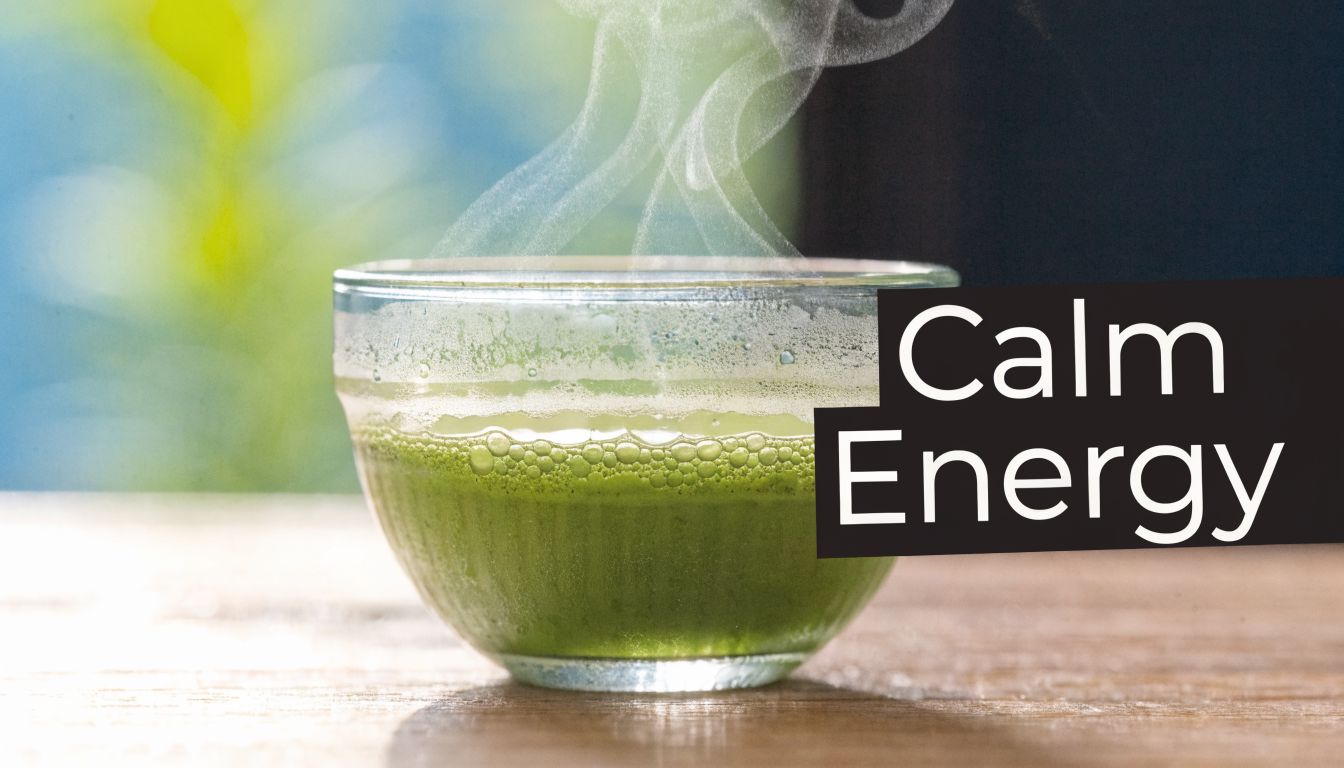
Why matcha feels different from a standard caffeine hit
A key reason is the combination of caffeine and L-theanine. According to this explanation of Uji matcha and L-theanine, Uji matcha’s shade-growing process can increase L-theanine concentration by up to 137% compared to sun-grown tea. The same source notes that this pairing is associated with improved physical performance and cognitive function by increasing alpha wave activity linked with calm alertness.
In plain language, that means matcha doesn’t deliver caffeine on its own. It brings it together with a compound that helps soften the edge.
What L-theanine actually does
L-theanine sounds technical, but the effect is easy to understand. It’s one reason many matcha drinkers say they feel more composed than buzzy.
Consider it this way:
- Caffeine helps you feel switched on
- L-theanine helps that alertness feel smoother
- Together they can create a more even experience
That’s especially appealing if regular coffee leaves you scattered, jittery, or flat later in the day.
Matcha’s appeal isn’t only about stimulation. It’s about the quality of attention it can support.
Where EGCg fits in
You’ll also hear about EGCg, one of matcha’s best-known antioxidant compounds. For many wellness-minded drinkers, that’s part of the draw. Matcha isn’t just a warm drink. It’s a whole-leaf tea that brings together plant compounds people actively seek out in a daily routine.
It’s best to stay realistic here. Matcha isn’t a cure-all, and it shouldn’t be treated like medicine. But as a regular beverage, it can fit neatly into a pattern of mindful choices around energy, focus, and less sugary drinking habits.
The benefits people notice in real life
Individuals typically don’t sit around thinking about alpha waves. They notice practical things instead.
Common reasons people keep matcha in the pantry include:
- A gentler start to the morning
- A focused afternoon ritual
- A café-style drink without relying on syrups
- A wellness habit that feels enjoyable rather than strict
For some, the ritual matters as much as the chemistry. Measuring, sifting, whisking, and drinking slowly can create a pause in the day that coffee sometimes doesn’t.
That combination of sensory pleasure and functional appeal is why Uji matcha has such staying power. It tastes good, it feels good, and it suits a lot of modern routines without asking you to become a tea purist.
Your Guide to Brewing the Perfect Cup
The first time many people make matcha at home, the result can be a surprise. You open a beautiful tin of Uji matcha, whisk it up, take a sip, and instead of sweet green depth, you get lumps, bitterness, or a flat latte that tastes more like warm milk than tea.
That usually comes down to method, not the matcha itself.
A good bowl of matcha is a bit like cooking with a premium olive oil. Small handling choices change what you taste. Water temperature, sifting, and whisking all shape whether the cup feels creamy, lively, and gently energising, or rough and disappointing.
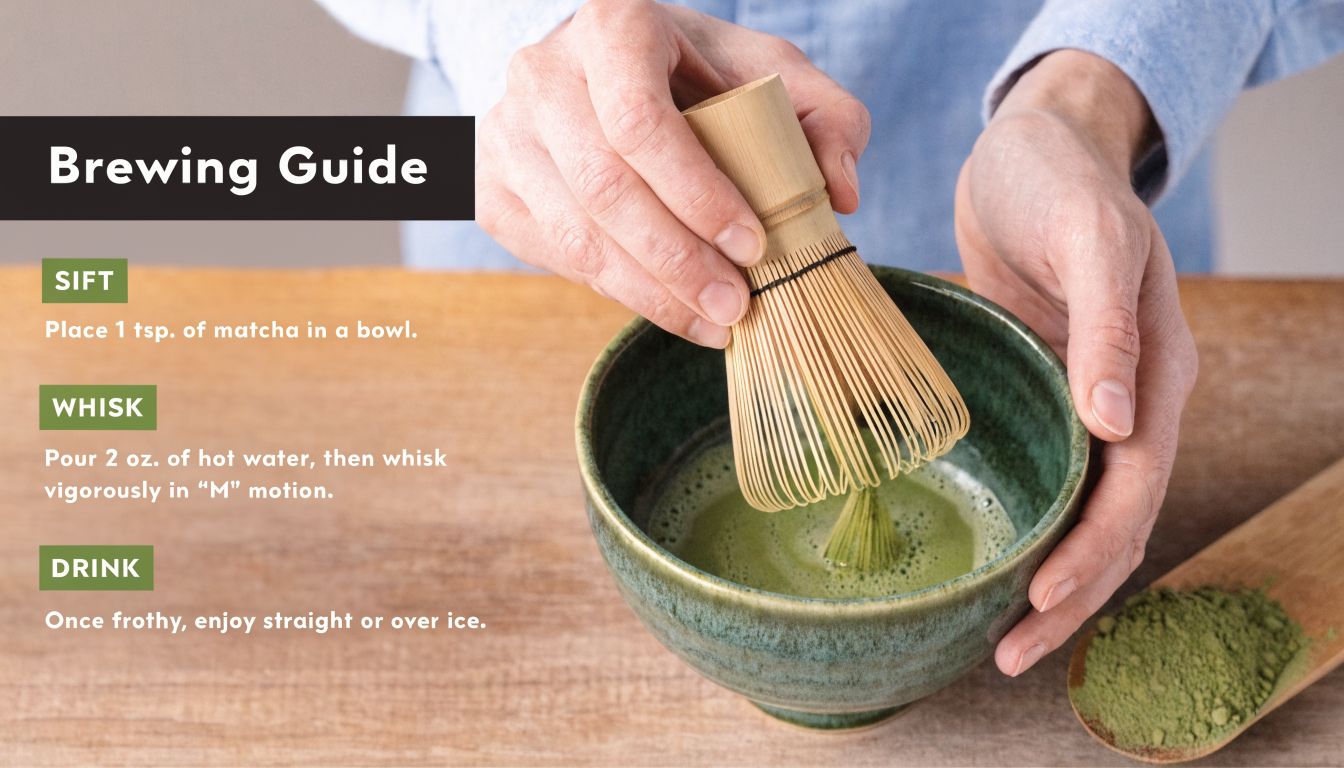
Traditional whisked matcha
If you want to understand Uji matcha properly, start with it on its own. This style lets you notice the creamy texture, the fresh aroma, and the gentle savoury sweetness that can get lost in milk.
What you’ll need
- A bowl large enough to whisk comfortably
- A bamboo whisk
- A small sieve
- Matcha powder
- Hot water, not boiling
Step by step
Warm the bowl
Swirl a little hot water in the bowl, then tip it out. This helps keep the temperature steady and makes whisking easier.Sift the powder
Matcha clumps easily because it is so fine. Sifting separates the powder so it blends more evenly with water.Add a small amount of water first
A splash is enough. Stir it into a smooth paste so you do not have dry pockets hiding at the bottom.Add more hot water
Water around 80°C usually gives a sweeter, rounder result. Boiling water can push the tea toward bitterness and bury the softer notes that make Uji matcha special.Whisk briskly
Use quick wrist movements until a light froth forms on the surface. You are aiming for a smooth suspension of tea in water, not heavy foam like a cappuccino.
Practical rule: If your matcha tastes harsh, check the water temperature first.
A simple home matcha latte
For plenty of Australians, a latte is the easiest way to turn matcha into a daily wellness habit. It fits the café rhythm many people already enjoy, but it can offer a steadier kind of lift for mornings and mid-afternoons.
Start with sifted matcha in a mug or bowl. Add a little hot water and whisk or stir until smooth. Then heat your milk separately and pour it in.
Dairy milk, oat milk, and soy can all work well. Oat milk is often the easiest starting point because its mild sweetness softens matcha’s savoury edge without covering up the tea completely.
If your latte tastes weak, the tea-to-milk ratio is usually the issue. Matcha should still be clearly present. You want harmony, not a green-coloured milk drink.
Here’s a visual guide if you like watching the whisking motion before trying it yourself:
Troubleshooting common problems
A disappointing cup does not always mean you bought the wrong matcha. Preparation errors are far more common, especially at the start.
Lumps in the drink
Sift the powder before adding water, and make a paste first.Too bitter
Let freshly boiled water cool a little before using it.Weak flavour in a latte
Add more matcha or reduce the amount of milk.No froth
Use a wider bowl and whisk with faster, lighter wrist movement.
A few habits that improve every cup
The ritual does not need to be formal to feel grounding. A few simple habits can turn matcha from an occasional experiment into a clean, enjoyable part of everyday life.
- Keep your tools dry before adding powder
- Use fresh matcha rather than a tin that has been open too long
- Start small and adjust the strength to your taste
- Drink it soon after whisking for the best aroma and texture
Once the method clicks, making matcha stops feeling fussy. It becomes a small daily reset, one that tastes good and sits neatly alongside a healthier, more intentional routine.
Exploring Matcha Beyond the Teacup
One of the best things about uji matcha powder is that it isn’t limited to a bowl and whisk. Once you understand its flavour, you start seeing it as an ingredient, not just a drink.
That opens up a lot of possibilities for Australian kitchens, especially if you enjoy café-style drinks, low-fuss baking, or simple ways to make everyday food feel more interesting.
Cold drinks for warm afternoons
On a hot day, matcha becomes something else entirely. Whisk it with a little warm water first, then pour it over ice and milk for an iced latte.
If you want something more breakfast-like, blend matcha into a smoothie with milk, yoghurt, banana, or a mild fruit that won’t drown out the tea. The key is balance. Matcha has a savoury side, so it usually works better with creamy ingredients than with very sharp citrus.
Baking that still tastes like matcha
Culinary matcha shines here. It brings colour, aroma, and a gentle bitterness that can stop sweets from feeling one-note.
Good starting points include:
- Shortbread or biscuits, where butter carries the tea flavour well
- Simple cakes or muffins, especially with vanilla or white chocolate
- Yoghurt bowls and chia puddings, where a spoonful can change the whole profile
- Ice cream or nice cream, for a softer dessert-style expression
A common mistake is using too little. If you want visible colour and a recognisable matcha flavour, be confident enough with the quantity that the tea doesn’t disappear behind sugar and flour.
Matcha works best in recipes where there’s room for its grassy, umami character to remain noticeable.
Savoury uses that surprise people
Matcha gets underrated in this aspect. Used carefully, it can add depth to savoury dishes.
Try whisking a small amount into a salad dressing with oil and a mild acid. Or stir a pinch into a sauce where you want a subtle green, savoury note. Some cooks also dust it lightly over vegetables or use it in seasoning blends.
The trick is restraint. Matcha is concentrated. A little can lift a dish, while too much can flatten it into bitterness.
A pantry ingredient, not just a wellness trend
When people only think of matcha as a health drink, they miss half the fun. It can become part of your broader food routine.
One day it’s a morning latte. Another day it’s folded through a biscuit dough. Another day it adds a fresh edge to a dressing for lunch. That kind of versatility is what makes culinary-grade matcha especially useful. It earns its place in the cupboard because it does more than one thing well.
How to Store and Buy Authentic Uji Matcha
Good matcha is delicate. Light, heat, air, and moisture all work against it. If you’ve ever opened an old tin and found the colour duller and the aroma flatter, that’s usually storage talking.
Buying well matters. Storing well matters just as much.
How to store it once opened
The goal is to protect freshness for as long as possible.
- Keep it sealed tightly after each use
- Store it away from heat and light
- Avoid moisture from steamy kitchens or wet scoops
- Use a clean, dry spoon every time
If you refrigerate matcha, keep it sealed well so it doesn’t absorb odours. Before opening a chilled tin, let it come to room temperature so condensation doesn’t settle into the powder.
What authenticity looks like in practice
You don’t need to be a tea judge to shop more confidently. You just need a few filters.
Look for:
- Clear origin information that names Uji or Kyoto, Japan
- A vibrant green colour rather than swampy or brownish tones
- A fresh aroma that smells lively, not stale
- Organic certification, if that matters to your buying standards
- A seller who explains grade and intended use clearly
If a product description is vague, that’s useful information in itself. Good tea usually comes with good traceability.
Buying for your actual routine
A lot of buyers overpay because they purchase the most premium-sounding option without thinking about use. If you mostly make lattes and smoothies, choose a matcha suited to that. If you love whisking plain tea, spend more on a finer drinking grade.
Cafés and retailers think this way too. If you work in hospitality and want to better understand how product quality, brand trust, and education influence buyer decisions, this Food & Beverage Marketing Guide offers a useful commercial lens.
A final buyer checklist
Before you click “add to cart”, pause and ask:
- Is the origin clearly stated?
- Is the grade appropriate for how I’ll use it?
- Does the colour suggest freshness?
- Does the brand explain the tea in plain, specific language?
- Will I realistically finish it while it’s still tasting its best?
Those questions protect you from a lot of disappointing purchases. They also help you appreciate why authentic uji matcha powder earns such loyalty among people who care about flavour, ritual, and a cleaner kind of daily energy.
If you’re ready to put this into practice, explore Pep Tea for organic matcha options suited to everyday whisking, café-style lattes, and creative kitchen use.
Mastering Making Matcha Tea At Home

You’re probably here because you’ve had one of two matcha moments.
The first is the café one. You order a beautiful bright green bowl or latte, take a sip, and wonder why it tastes smooth, creamy and clean there, yet muddy or bitter when you try making matcha tea at home.
The second is the wellness one. You want something that feels steadier than coffee, more intentional than a quick tea bag, and a little more special than another rushed morning drink.
Good news. Matcha isn’t hard. It is precise.
Small details make the difference between a sweet, rounded cup and one that tastes flat or sharp. That’s why matcha feels like both an art and a science. The ritual matters, but technique matters just as much.
Beyond the Green Powder The Art of Making Matcha
A lot of people first meet matcha through a latte. That makes sense in Australia, where café culture shapes what ends up in our kitchens. But once you start making matcha tea properly, it stops feeling like a trend and starts feeling like a practice.
The appeal isn’t just flavour. It’s the kind of energy matcha offers. Many tea drinkers reach for it because it supports a calmer, more focused feeling, which is why matcha has become part of so many wellness routines.
That local interest isn’t imagined. In Australia, matcha imports from Japan increased by over 150% between 2018 and 2023, and café adoption of matcha lattes rose 78% in Sydney and Melbourne venues by 2022, according to this overview of the global matcha tea industry.
Those numbers line up with what’s happening on the ground. More cafés are serving matcha. More people want to make it at home. More shoppers are learning that not all green powder is the same.
Practical rule: Great matcha is less about fancy gear and more about doing a few simple things properly.
That starts with understanding what matcha is meant to be. It isn’t brewed like ordinary leaf tea. You’re whisking powdered tea directly into water, so every choice matters. The powder quality, the water temperature, the bowl shape, the whisking motion, even whether you sift first.
When people struggle with matcha, it usually isn’t because they’re bad at it. It’s because nobody showed them the small mechanics that change the result.
If you want the full background on sourcing and production, how matcha tea is made is worth reading before you buy your next tin. Knowing how it gets from leaf to stone-ground powder helps you understand why fresh, well-handled matcha behaves so differently in the bowl.
Making matcha tea well is a skill. The nice part is that it’s a very learnable one.
Gathering Your Tools and Choosing Your Matcha
Before the water goes on, set yourself up properly. Matcha rewards preparation. A little order at the start makes the whole process smoother.
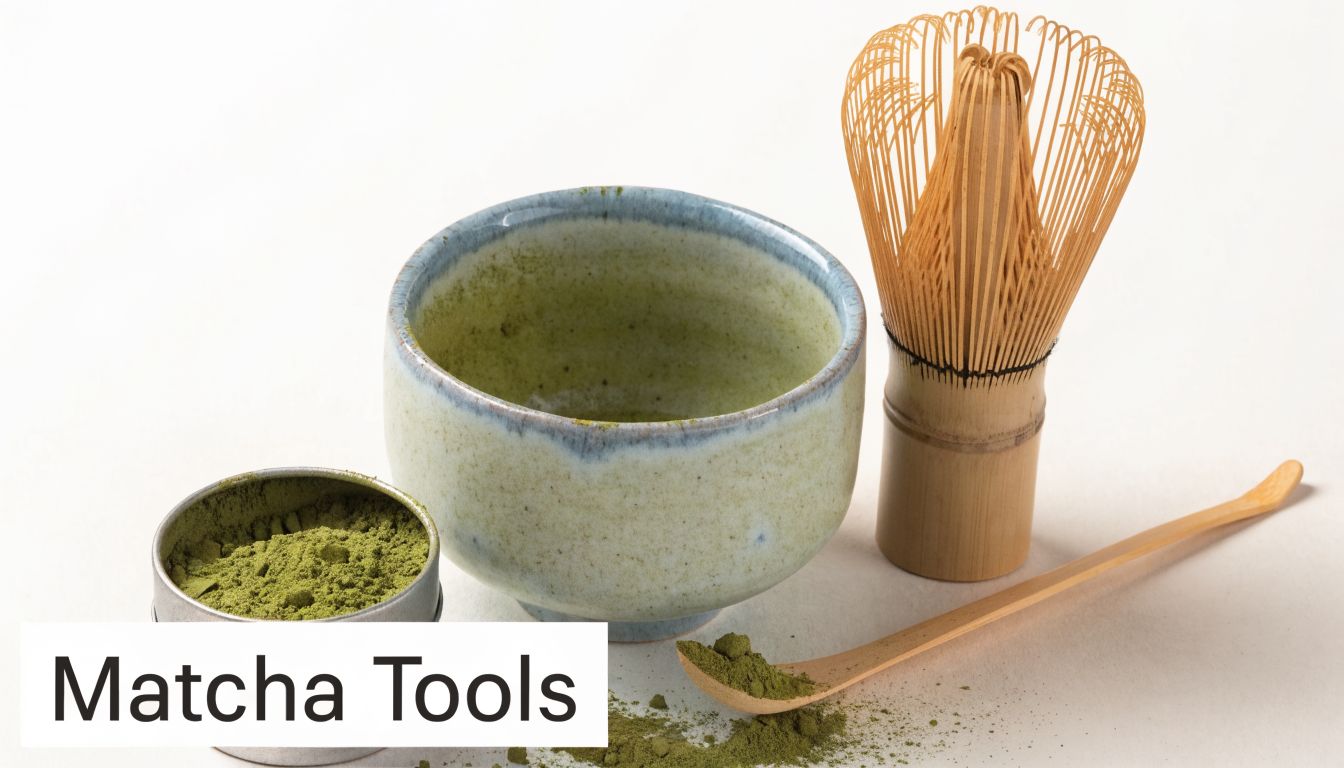
The classic tools and what each one does
The traditional setup is simple.
- Chawan: This is the bowl. Its wide shape gives you room to whisk properly and helps the foam form instead of splashing up the sides.
- Chasen: The bamboo whisk. This is the tool that transforms matcha and water into a smooth suspension rather than a gritty drink.
- Chashaku: The bamboo scoop. It helps with consistent portioning and makes the ritual feel more deliberate.
- Fine sieve: Not always included in a starter set, but essential if you want a smooth cup.
- Kettle and thermometer: Useful because water temperature is one of the most important variables.
A good bowl and whisk do most of the heavy lifting. If you only invest in two things, make them those.
What to use if you don’t have traditional gear
You do not need a formal tea setup to start making matcha tea at home.
A small cereal bowl can stand in for a chawan. A kitchen sieve works well for sifting. If you don’t own a chasen yet, a handheld milk frother is the most practical substitute for lattes and casual home use.
That said, alternatives do change the experience.
A bamboo whisk gives you more control in a traditional bowl of matcha. It creates a finer foam and lets you feel the texture changing as you whisk. A milk frother is convenient, but it can over-aerate or create larger bubbles, especially in a narrow mug.
If you want ritual and texture, use a chasen. If you want speed on a weekday morning, use what gets you drinking good matcha consistently.
Ceremonial and culinary grade are not interchangeable
At this stage, many people waste good powder, or judge matcha unfairly.
Ceremonial-grade matcha is best for drinking with water. It should taste softer, cleaner and more nuanced on its own. When you’re preparing usucha or koicha, this is the right place to spend more.
Culinary-grade matcha is better for recipes where it has support. Think lattes, smoothies, baking, overnight oats or energy balls. It’s designed to hold its character when mixed with milk, fruit, sweeteners or fats.
Here’s the easiest way to decide.
| Use | Best matcha choice | Why |
|---|---|---|
| Traditional bowl with water | Ceremonial grade | The flavour has nothing to hide behind |
| Hot latte | Culinary or robust ceremonial | Milk softens edges and changes the balance |
| Iced latte | Culinary grade | Cold drinks often need a stronger flavour presence |
| Smoothies and baking | Culinary grade | Better value and more assertive character |
If you’re still comparing options, this guide to different grades of matcha helps clarify what each grade is for and what to look for before buying.
What quality looks like before you even taste it
You can spot a lot from the tin.
Look for:
- Colour: A lively green is a good sign. Dull, khaki or yellow-green powder often signals age, oxidation or lower drinking quality.
- Texture: Good matcha should feel very fine, almost silky.
- Aroma: Fresh matcha smells green, soft and slightly sweet. If it smells stale or dusty, it probably tastes that way too.
- Behaviour in water: Better matcha incorporates more willingly and tastes more balanced.
A simple home setup that works
If you’re building a practical home station, keep it modest:
- One bowl you enjoy using
- One bamboo whisk
- One sieve
- One matcha for drinking
- One matcha for lattes and recipes
That setup covers nearly all common preparations. You don’t need a collection. You need tools that suit the way you drink matcha.
Mastering the Ceremonial Brew for a Mindful Moment
The most satisfying bowl of matcha is often the simplest one. No milk. No sweetener. Just powder, water, air, and a few minutes of attention.
Traditional usucha, or thin matcha, is the ideal style for beginners. It teaches you what matcha tastes like and makes every later drink better, including lattes.
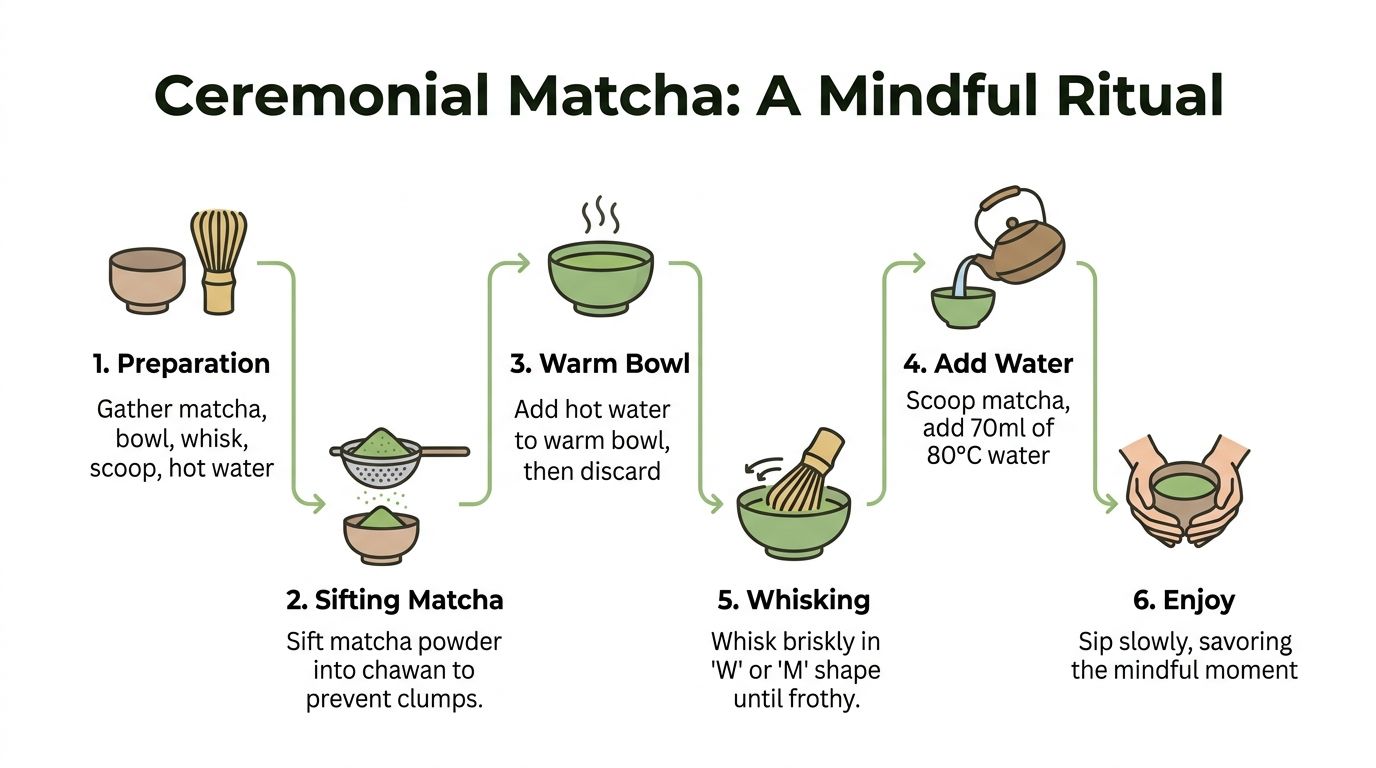
Start with warmth and order
Warm the bowl first. Add a little hot water, swirl it around, and let the whisk soften briefly in the bowl. Then tip the water out and dry the bowl.
That little preparation step matters. A warm bowl helps the powder disperse more evenly and makes the ritual feel settled from the first movement.
Sift your matcha into the bowl. For usucha, use 1 to 2 teaspoons, or 2 to 4 grams, and pass it through a fine mesh sieve. The reason is simple. Matcha clumps easily, and once wet, those clumps are harder to break apart cleanly.
According to this usucha preparation guide, the usual method starts by sifting 1 to 2 teaspoons (2 to 4g) of ceremonial-grade matcha into a preheated bowl before adding water.
The water matters more than people think
Most bad homemade matcha comes down to one problem. The water is too hot.
For usucha, use water at 70 to 80°C. That same guide notes that 70 to 80°C is the critical range, and that overheating can degrade beneficial compounds and create bitterness.
If you’ve just boiled the kettle, let it sit briefly before pouring. If you own a temperature-control kettle, use it. If you don’t, make a habit of slowing down rather than pouring straight off the boil.
Here’s a practical ratio that works well for a bowl of usucha:
- 2 to 4g matcha
- 60ml warm water to begin
- More hot water if you want a longer, lighter bowl
You’re not trying to drown the powder. You’re trying to suspend it smoothly.
Water that’s too hot makes matcha taste harsher than it is. People often blame the powder when the kettle is the real problem.
Whisk for foam, not force
Once the water is in, start by gently combining the powder and water so there are no dry pockets. Then whisk briskly with the chasen in a zigzag M or W motion.
Don’t stir in circles. Circular stirring blends, but it doesn’t create the same fine foam.
The same usucha source notes that whisking vigorously for 30 to 45 seconds is key to building a creamy froth layer over 2mm thick. That foam isn’t just for looks. It changes how the liquid feels on the palate and gives the bowl a softer first sip.
A few technique notes help:
- Use your wrist, not your whole arm
- Keep the whisk tips near the surface once the mixture is combined
- Finish with a gentle sweep to tidy larger bubbles
- Drink promptly while the texture is lively
The finished bowl should look vibrant, lightly glossy and topped with fine foam rather than big soap-like bubbles.
Taste it before changing it
Sip before you decide it needs sweetener.
Well-made ceremonial matcha should have a balance of green freshness, slight savoury depth, gentle bitterness and a round finish. If it’s aggressively bitter, something usually went wrong in preparation.
Common causes include:
| Result in the bowl | Likely cause | What to change |
|---|---|---|
| Sharp bitterness | Water too hot | Lower the temperature |
| Gritty texture | Powder not sifted well | Sift before whisking |
| Flat or weak flavour | Too much water | Use less water first |
| No foam | Poor whisking motion | Use a fast zigzag movement |
Turn it into a quiet ritual
One reason people stick with matcha is that the process slows them down in a useful way. There’s enough technique to hold your attention, but not so much that it becomes fussy.
If you enjoy pairing your tea with a few minutes of breathing or stillness, these simple meditation techniques are an easy companion resource. Matcha and a short mindful pause work well together because both ask you to pay attention to small things.
The best ceremonial bowl isn’t the one that looks perfect. It’s the one that makes you slow down enough to notice it.
For enthusiasts who want to try koicha
Koicha is thick matcha. It’s richer, denser and far less forgiving than usucha.
The method changes noticeably. The verified preparation guidance for koicha calls for 4g (2 tsp) of sifted matcha with 30ml of 75°C water, then slow kneading rather than vigorous whisking, as outlined in this koicha technique guide.
A few distinctions matter:
- Texture: Koicha should be glossy and thick, more like a smooth paste than a frothy tea.
- Movement: You knead and press with the whisk rather than beating air into the bowl.
- Powder quality: Koicha demands excellent matcha. Lower grades become unpleasant quickly.
- Serving style: It’s sipped slowly in small amounts.
If usucha is your daily practice, koicha is your deep dive. Start there only after you can make a balanced bowl of thin tea without guessing.
Creating the Perfect Matcha Latte and Iced Drinks
A good matcha latte should still taste like matcha. Too many homemade versions end up as sweet milk with a green tint.
The fix is straightforward. Build a proper matcha base first, then add milk.
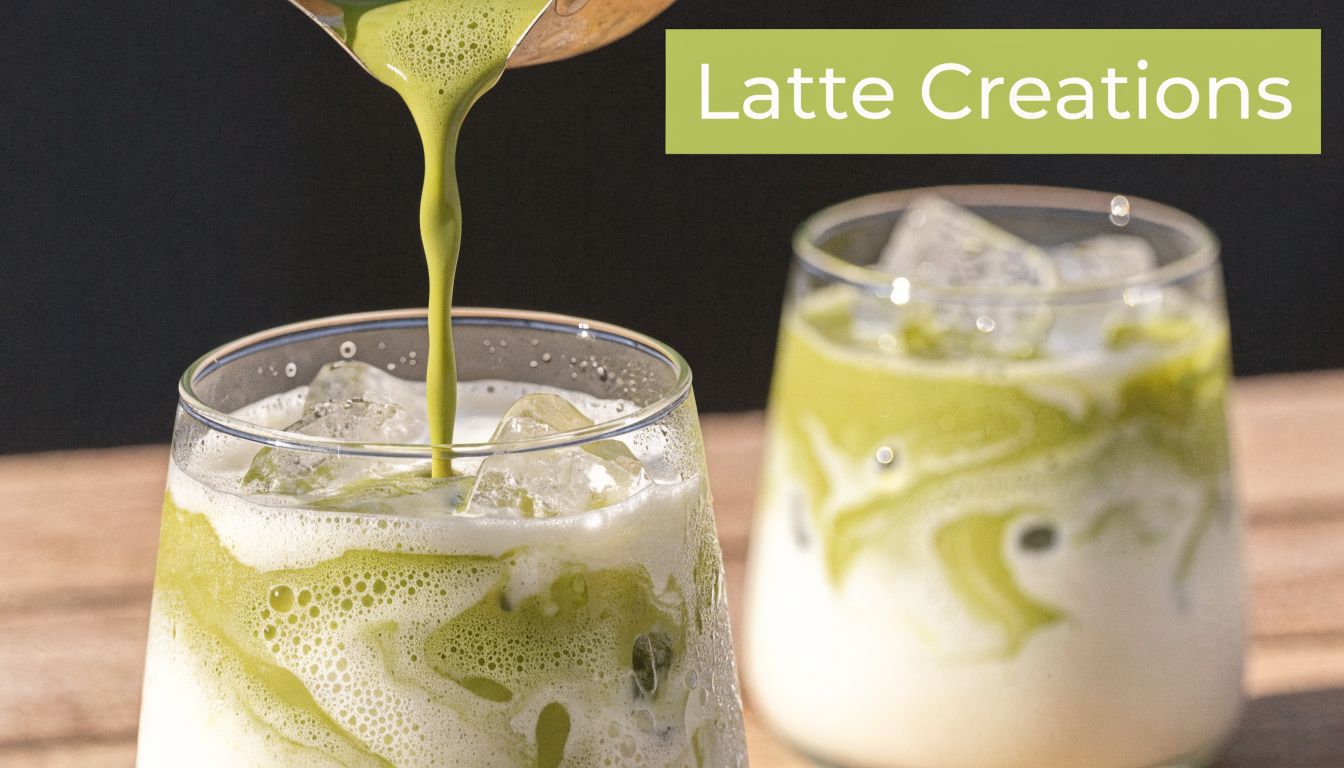
The hot latte method that stays smooth
Start with sifted matcha in a bowl or cup. Add a small amount of hot water, just enough to make a smooth paste. Whisk or froth until there are no lumps.
Then add warm or steamed milk.
That order matters. If you dump powder straight into a full cup of milk, it tends to float, clump or leave sediment at the bottom. A concentrate-first method gives you colour, flavour and a much cleaner texture.
A practical home formula looks like this:
- Use culinary-grade matcha for everyday lattes
- Make a smooth paste with a little hot water
- Add your preferred milk
- Sweeten lightly only if needed
Which milk works best
Different milks change the drink more than people expect.
Oat milk gives body and softness. It’s often the easiest route to a café-style texture.
Soy milk has enough protein to foam well and gives a more structured finish.
Almond milk can taste lighter and nuttier, though some versions split more easily.
Dairy milk creates richness, but it can mute delicate matcha if you use too much.
For café service, consistency matters as much as flavour. Whatever milk you use, keep it stable across drinks so the matcha behaves predictably from one cup to the next.
Iced matcha needs a stronger base
Cold dulls flavour. That’s why an iced matcha latte usually needs a slightly bolder concentrate than a hot one.
Make the matcha base first, let it smooth out completely, then pour it over ice and cold milk. If you build it directly in the glass without dissolving the powder, you’ll often get clumps stuck to the ice or streaks of unmixed powder.
If you want a fuller method with serving ideas, how to make iced matcha latte is a useful reference.
For anyone experimenting beyond the classic version, this Strawberry Matcha Latte is a good example of how fruit can work when the layers are kept clean and the matcha base is made properly first.
Here’s a quick visual if you like seeing the pour and texture in action.
What works in cafés and what doesn’t
For home drinkers, making one latte at a time is fine. For cafés, speed changes the approach.
What works:
- Batching a matcha concentrate for short service windows
- Sifting powder in advance for rush periods
- Training staff to dissolve matcha before milk is added
- Using the same cup size and milk ratio every time
What doesn’t:
- Scooping matcha straight into cold milk
- Relying on vigorous shaking to fix poor mixing
- Using boiling water for the base
- Over-sweetening low-quality powder to hide bitterness
In latte prep, smoothness starts before milk enters the cup. If the concentrate is rough, the finished drink will be rough too.
Keep the flavour in balance
The best latte still lets you taste the tea.
If you need lots of syrup to enjoy it, the issue may be the matcha choice, the water temperature, or the ratio. Start by correcting those before adding more sweetness.
That’s the trick to making matcha tea in modern café form. Respect the original ingredient even when the drink is casual.
Troubleshooting and Storing Your Matcha for Lasting Freshness
Most matcha problems look mysterious but aren’t. The bowl tells you what went wrong if you know what to watch for.
Why your matcha tastes bitter
People often assume bitterness means they bought the wrong powder. Sometimes that’s true. More often, the water was too hot or the ratio was off.
If your matcha tastes harsh, check three things first:
- Water temperature: Boiling water is a common culprit.
- Powder amount: Too much matcha in too little water can create an unpleasantly dense bowl.
- Drink style: A powder suited to lattes may taste rough when prepared with just water.
A bitter bowl is often a preparation problem before it’s a product problem.
Why it’s clumpy or gritty
Clumps come from moisture, static, storage conditions, or skipping the sieve.
The quickest fix is also the simplest. Sift every time. It takes seconds and improves texture immediately.
If your matcha still feels gritty after whisking, the powder may already have absorbed some moisture in storage. That’s common in humid kitchens.
Why it won’t froth
No foam usually comes down to one of four issues:
| Problem | Likely reason | Better move |
|---|---|---|
| Flat surface | Stirring instead of whisking | Use a quick zigzag motion |
| Large bubbles only | Whisking too high or too slowly | Keep whisk tips near the surface |
| Thin weak foam | Too much water too early | Start with less |
| Poor texture overall | Old or poorly stored matcha | Open a fresher tin |
Storage matters more in Australia
A common assumption is that preparation gets all the attention and storage barely matters. In practice, storage can ruin excellent matcha before you even whisk it.
Verified guidance notes that matcha oxidises when exposed to light and air, and that for warm, humid climates like many parts of Australia, it should be kept in an airtight, opaque container in the refrigerator to preserve flavour and antioxidant quality, as explained in this storage advice on common matcha mistakes.
A good Australian storage routine
This works well for most homes and hospitality settings:
- Keep it sealed tight: Air is one of the fastest ways to dull aroma and colour.
- Use an opaque container: Light exposure gradually strips away freshness.
- Store in the fridge: Especially helpful in warm or humid conditions.
- Avoid steam zones: Don’t keep matcha above the kettle or near the dishwasher.
- Open only when needed: Repeated warm-air exposure shortens the life of the powder.
Fresh matcha smells alive when you open the container. If the aroma has almost disappeared, the cup usually has too.
If you refrigerate matcha, let the container come closer to room temperature before opening. That reduces the chance of condensation settling into the powder.
Expanding Your Matcha Horizons Beyond the Tea Bowl
Once you can make a clean bowl and a reliable latte, matcha becomes much more than a drink. It turns into a flexible pantry ingredient.
That’s where culinary-grade matcha earns its keep. You can use it often, generously, and without feeling like you’re wasting a tea meant for quiet sipping.
Easy ways to use matcha daily
Some of the best uses are the least complicated.
- Morning smoothie: Blend matcha with banana, yoghurt or plant milk, and a handful of ice.
- Overnight oats: Stir a little into your oat mixture for a greener, more savoury breakfast profile.
- Yoghurt bowl: Mix a small amount with honey or yoghurt, then top with fruit and seeds.
- Baking: Add it to cookies, muffins, bliss balls or pancake batter.
- No-bake snacks: Matcha works well in coconut-based bites and cashew slices.
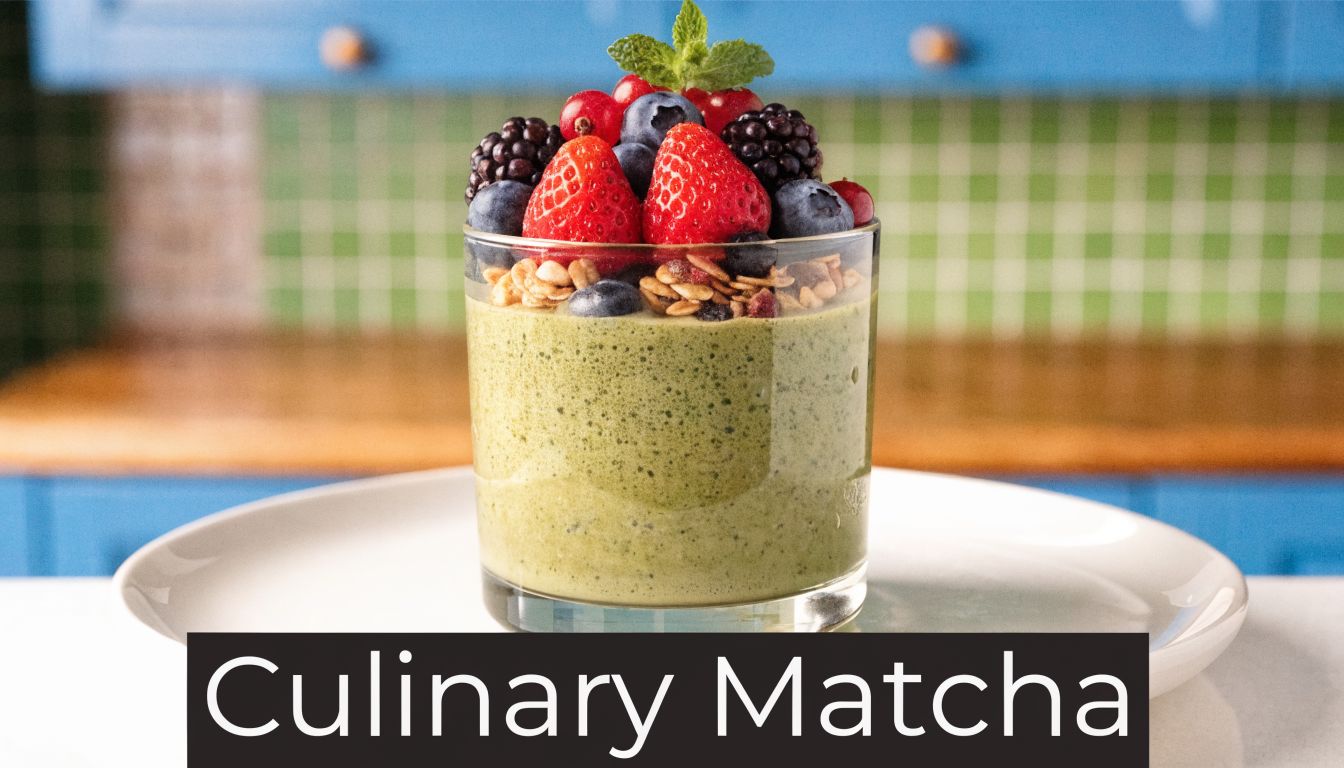
The main rule is balance. Matcha has a distinct green, slightly savoury personality. Pair it with ingredients that support that rather than bury it.
Matcha works best when the format suits the grade
A lot of disappointment comes from using one type of matcha for everything.
Use ceremonial matcha when you want the tea to stand alone. Use culinary matcha when other ingredients are involved. That simple decision makes recipes cleaner and more cost-effective.
A thoughtful matcha and kombucha pairing
For wellness-focused drinkers, one of the more interesting ideas is pairing matcha with kombucha.
The verified brief notes that combining matcha with kombucha is an emerging trend in functional beverages and that the pairing brings together matcha’s L-Theanine for calm focus with kombucha’s probiotics for gut health, while also pointing out that existing online guidance on this combination is still limited.
That makes sense from a practical point of view. Matcha offers depth and structure. Kombucha adds acidity, lift and fermentation character.
A simple way to explore the pairing at home is to whisk a small, smooth matcha concentrate first, let it cool slightly, then add it to a glass with ice and a plain or gently flavoured kombucha. You want the tea integrated, not dumped in dry.
A few trade-offs matter:
- Acidity changes flavour perception: Kombucha can sharpen matcha’s edges.
- Sweetness level matters: A drier kombucha tends to let the tea show through more clearly.
- Texture needs care: If the matcha isn’t mixed smoothly first, the drink can feel chalky.
Matcha and kombucha can complement each other nicely, but only when each one still tastes like itself.
For cafés, this pairing opens up non-alcoholic menu ideas that feel more thoughtful than another sugary spritz. For home drinkers, it’s a good reminder that making matcha tea well gives you a base for far more than the traditional bowl.
Your Questions About Making Matcha Answered
Do I need a bamboo whisk to make matcha?
No, but it helps. A chasen is still the best tool for traditional matcha because it disperses the powder gently and creates fine foam. If you’re making lattes, a handheld milk frother is a practical substitute. A standard spoon is the least effective option because it tends to leave clumps behind.
Why isn’t my homemade matcha as bright green as the café version?
Usually it’s one of three things. The matcha may be older, the grade may be better suited to recipes than straight drinking, or your ratio may be too diluted. Lighting also changes what you see in the cup or glass, especially with iced drinks.
Is matcha better than coffee?
That depends on what you want from it. Coffee is direct and punchy. Matcha tends to feel steadier and more ritualistic. Many people prefer matcha when they want a calmer kind of focus and a slower start to the day.
Can I make matcha without sweetener?
Absolutely. In fact, learning to enjoy it unsweetened is one of the best ways to judge powder quality and improve your technique. If it tastes unpleasant without sweetener, fix the preparation before assuming the drink always needs sugar.
Should I use ceremonial matcha in a latte?
You can, but it isn’t always necessary. For everyday lattes, a good culinary-grade matcha often makes more sense. Save ceremonial-grade powder for bowls where you want to taste the tea on its own.
Can I prepare matcha in advance?
You can make a short-term concentrate for convenience, especially for lattes, but freshly whisked matcha always has the best texture. If you’re drinking it as a bowl of tea, make it and drink it straight away.
If you’re ready to put this into practice, explore Pep Tea for premium organic matcha and Australian-made sugar-free organic kombucha. Whether you want a ceremonial bowl, a café-style iced latte, or a more functional daily ritual, we’ve got the ingredients to help you make it well.
How to Whisk Matcha for the Perfect Frothy Cup in 2026

Ever had that moment? The matcha you make at home is a bit… clumpy. A little gritty. But the one at your favourite Aussie café is perfectly smooth, with a beautiful layer of foam on top. The difference isn't just the tea; it's the technique. The secret to unlocking that creamy texture and rich, umami flavour is all in the whisk.
Proper whisking is what separates a good matcha from a truly great one. It aerates the powder, suspends it in the water, and creates the delicate froth that defines the entire experience. This guide will show you exactly how to do it.
Why Proper Whisking Is the Key to Great Matcha
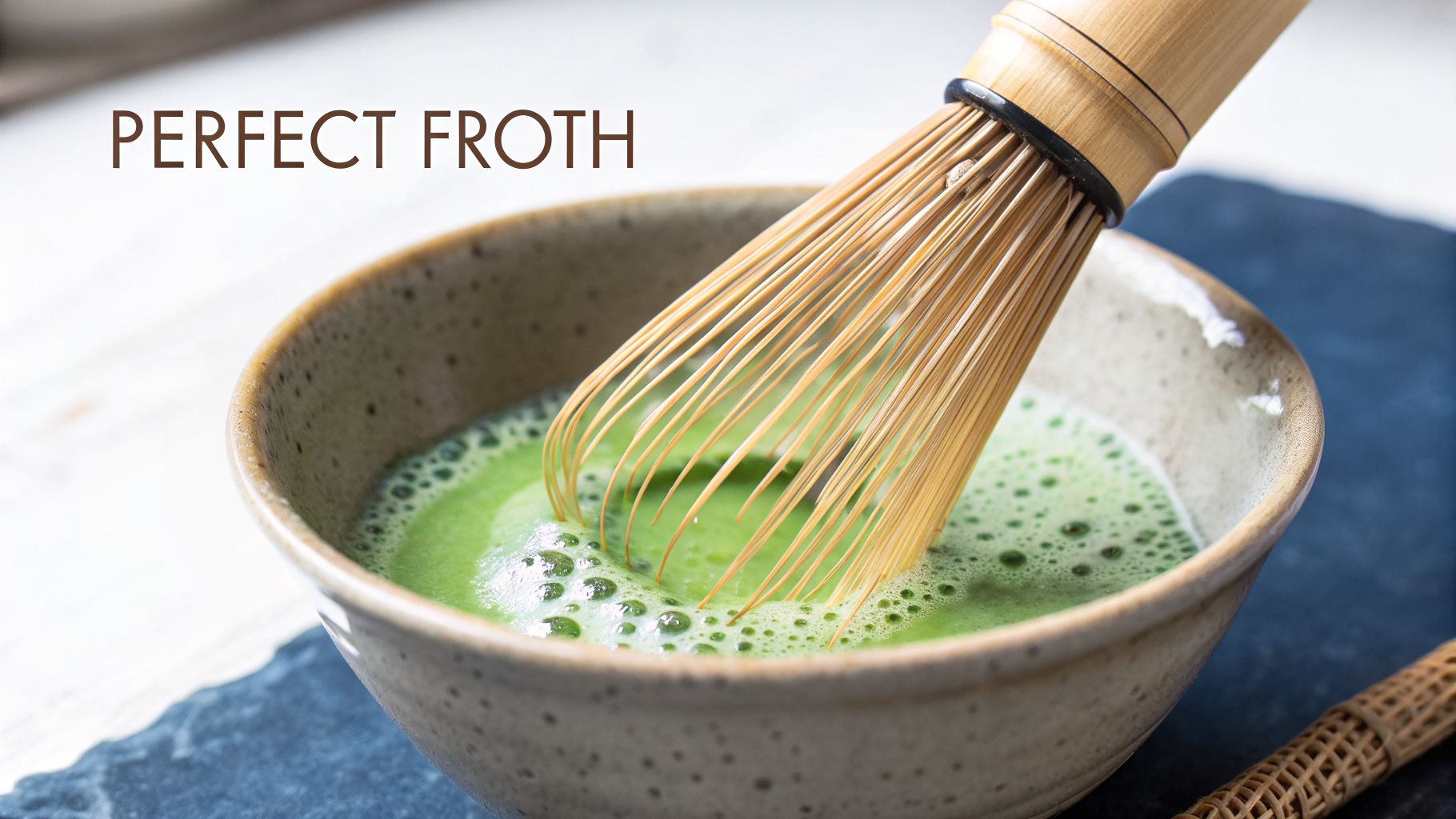
Learning how to whisk matcha correctly is more than just mixing tea and water. It’s a foundational skill that completely transforms the drink, turning a high-quality powder into something genuinely exceptional. This isn't just for a traditional Japanese tea ceremony; it’s just as vital for your daily ritual at home in Australia.
When you whisk vigorously, you’re not just stirring. You're forcing the fine, stone-ground tea particles into suspension, distributing them evenly throughout the water. Without this, the matcha powder quickly settles, leaving you with a gritty sediment at the bottom and a watery, unsatisfying drink. A good whisk ensures every single sip is consistently smooth and full-bodied.
Unlocking Flavour and Texture
The rapid motion of a traditional bamboo whisk, known as a chasen, whips thousands of tiny air bubbles into the liquid. This aeration is what creates that signature layer of creamy microfoam on top.
This delicate foam serves a few crucial purposes:
- Softens Bitterness: The foam mellows any inherent sharpness in the tea, allowing the naturally sweet and savoury umami notes to come forward.
- Creates a Creamy Mouthfeel: It gives the matcha a velvety, almost latte-like texture, even when it's made with nothing but water.
- Enhances Aroma: The froth helps release the fresh, vegetal aroma of the matcha, making it a full sensory experience.
Whisking isn't just a step; it's the bridge between a simple powder and a complex, rewarding experience. It’s what makes our Pep Tea organic ceremonial matcha truly shine, ensuring you enjoy the full depth of its flavour and health benefits.
This guide will take you beyond basic stirring. We'll get into the specific motions and tips needed to achieve that perfect, café-quality froth. We'll cover the tools, techniques, and nuances that will get you whisking correctly from your very first try, turning your kitchen into your new favourite matcha spot.
Gathering Your Essential Matcha Toolkit
You might be tempted to grab a fork or your electric milk frother, and look, we get it. It seems like an easy shortcut. But if you want to make an authentic, genuinely delicious bowl of matcha, using the right tools isn't just for show—it's the first step that actually matters.
Preparing matcha is as much about the process as the final drink. The tools were designed for a reason, and they work. It's like drinking good wine from a proper glass versus a coffee mug; the vessel itself fundamentally changes the experience.
The one tool you simply can’t skip is the traditional bamboo whisk, or chasen. This isn't just any whisk. Its dozens of fine, flexible tines are perfectly engineered to do three things at once: break up any stubborn clumps, aerate the tea, and suspend the fine powder evenly throughout the water.
A metal whisk, on the other hand, often imparts a faint metallic taste that clashes with the matcha's delicate flavour. Its rigid tines just can't produce that same creamy, micro-fine froth. The chasen works with the tea, not against it, coaxing out the best texture and taste.
Choosing the Right Chasen
Not all bamboo whisks are the same. You'll see them categorised by the number of prongs (or tines) they have, and this detail isn't just for tea ceremony masters; it directly affects the kind of matcha you can make.
- 80-Prong Chasen: This is your perfect daily workhorse. It has the ideal density and flexibility to whip up a beautiful, frothy foam for usucha (thin tea)—the light, everyday style of matcha most of us drink.
- 100 to 120-Prong Chasen: With more tines, this whisk is much denser. It's designed to create an exceptionally fine, silky foam, making it the go-to for koicha (thick tea). This style has a consistency almost like warm honey, and achieving that level of smoothness is impossible without a denser whisk.
The art of hand-carving a chasen from a single piece of bamboo has a deep history, stretching back to Japan's Muromachi period (1336-1568). It's a tradition born from centuries of perfecting the tea ceremony, and we get to bring that same craftsmanship right into our modern Aussie kitchens.
Completing Your Matcha Set
While the chasen is the hero, a couple of other pieces make the whole process smoother and more consistent.
First is the chawan, or matcha bowl. Its wide, flat bottom is a key design feature. This specific shape gives you the space you need to whisk vigorously in that essential 'W' or 'M' pattern, helping you build a rich froth without splashing tea all over your counter.
Then there’s the chashaku, a simple and surprisingly elegant bamboo scoop. It’s carved to measure out the perfect amount of matcha powder—roughly one gram—for a single serving. Using it takes the guesswork out of your ratios, so you get a consistent bowl every single time.
Having these three items on hand turns making tea from a chore into a mindful ritual. If you want to start with a beautifully curated setup, a complete matcha tea set available in Australia is a brilliant way to get everything you need in one go.
Mastering the Usucha Whisking Technique
Usucha, or 'thin tea', is the matcha you'll likely come back to every day. It’s light, vibrant, and crowned with a delicate layer of foam. Getting this right is the foundation of a great matcha practice, whether at home or in your café, and it's much simpler than it looks once you understand the rhythm.
The journey to a perfect bowl starts before any powder even hits the ceramic. First, prepare your tools. Soaking the tines of your bamboo whisk (the chasen) in warm water for a minute or two is a small ritual that pays off. This simple act 'blooms' the bamboo, making it soft and pliable, which is exactly what you want to prevent the delicate tines from snapping during the vigorous whisking to come.
This visual guide shows the essential trio for your daily matcha ritual.
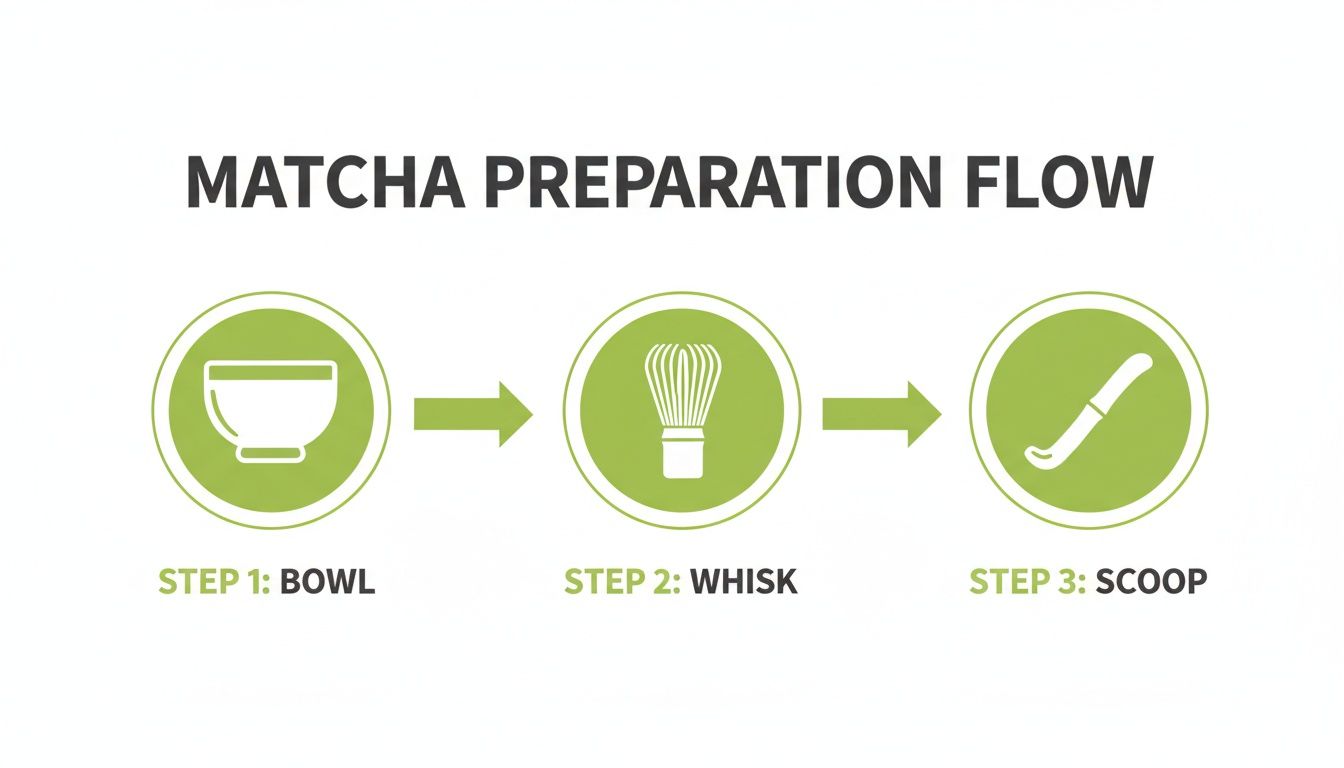
Here you can see how the wide matcha bowl (chawan), the multi-pronged bamboo whisk (chasen), and the traditional scoop (chashaku) work in concert to create the perfect cup.
The Non-Negotiable Sifting Step
Next is the single most important—and most often skipped—step: sifting. Using a small, fine-mesh sieve, press your matcha powder into a warmed bowl. This isn't just for show. It breaks up the tiny clumps that naturally form from static and humidity, guaranteeing a silky-smooth texture and preventing those bitter, undissolved pockets from ruining your drink.
For a classic bowl of usucha, the ratio is key. We find the sweet spot is two scoops from your chashaku, which is about half a teaspoon (roughly 1-2 grams) of a quality organic ceremonial grade matcha. Add this to about 60-80ml of hot water.
And on that note, temperature is everything. Aim for water around 70-80°C. Anything hotter, especially boiling water at 100°C, will scorch the delicate tea leaves. You'll taste it immediately as bitterness, and you'll lose many of the beneficial compounds like antioxidants.
The Whisking Motion
Now for the main event. Hold the chasen lightly from the top, keeping your wrist loose and relaxed. All the power should come from your wrist, not your arm.
- Make a Paste: Start by gently stirring to combine the sifted matcha and water. You're aiming for a smooth, uniform paste with no dry spots.
- Whisk Vigorously: Lift the whisk just off the bottom of the bowl and start a rapid back-and-forth motion. Trace a 'W' or 'M' shape across the bowl, fast enough to hear a soft 'swooshing' sound.
- Build the Froth: Keep this brisk movement going for about 20-30 seconds. You'll see a beautiful layer of tiny, delicate bubbles form—this is the coveted microfoam that defines a good usucha.
- Finish with Grace: Once you have a thick, even froth, slow down your whisking. As a final touch, gently draw the whisk up through the centre of the foam to create a small peak.
Usucha vs Koicha Whisking At a Glance
While usucha is your daily go-to, koicha ('thick tea') is a different experience entirely—a thick, intense, and deeply ceremonial preparation. Understanding the difference in technique is crucial.
| Attribute | Usucha (Thin Tea) | Koicha (Thick Tea) |
|---|---|---|
| Consistency | Light and frothy, like a latte | Thick and viscous, like warm honey |
| Matcha Ratio | 1-2g matcha to 60-80ml water | 3-4g matcha to 30-40ml water |
| Whisking Motion | Rapid 'W' or 'M' zig-zag | Slow, deliberate kneading motion |
| Flavour Profile | Bright, fresh, slightly sweet | Intense, rich, deep umami |
| Occasion | Daily enjoyment, lattes, café service | Special occasions, formal tea ceremonies |
Koicha requires a much slower, more deliberate hand to blend the higher concentration of matcha into a smooth, thick liquid. Usucha, on the other hand, is all about aerating the tea to create that signature froth.
Your usucha is now ready to be savoured directly from the bowl. Once you’ve nailed this technique, you have the perfect base for all sorts of other creations. For a refreshing twist on a warm day, you might want to check out our guide on how to make a delicious iced matcha latte.
Moving On to Koicha: The Ultimate Matcha Experience
So, you’ve mastered the art of a frothy, vibrant bowl of usucha. You know the right temperature, the right ratios, and the right wrist action. If you’re starting to feel the pull towards something deeper, it’s time to talk about koicha, or 'thick tea'.
This isn’t just another way to make matcha. It’s a completely different encounter with the tea itself. Traditionally reserved for formal Japanese tea ceremonies, koicha is a profound, intense, and deeply savoury ritual.
Forget the foam. With koicha, the goal is a smooth, viscous liquid with the consistency of molten dark chocolate. It’s a preparation designed to showcase the full spectrum of a tea’s character, highlighting its most complex, umami-rich notes.
Making the switch requires a serious change in your ratios. For koicha, you’ll be using roughly double the matcha powder and half the water you’d use for usucha. This high concentration means there’s nowhere for a low-quality tea to hide; any hint of bitterness or imperfection will be front and centre.
The Koicha Kneading Motion
The whisking technique is also a world away from the rapid ‘W’ or ‘M’ motions of usucha. Here, you’ll adopt a slow, deliberate kneading action.
- Start by gently folding your sifted matcha into the small amount of hot water.
- Slowly and methodically move the chasen through the bowl, using gentle circular and back-and-forth patterns.
- Think of it as ‘kneading’ the powder and water together. You’re pressing and coaxing them into a single, perfectly blended substance.
This patient process creates a glossy, smooth paste without a single clump. It’s a meditative technique that demands focus and a far gentler touch.
Koicha isn’t just a drink; it's an experience. It demands the best from your tea and your technique, rewarding you with an intensity of flavour that a thin preparation simply can't match.
For this, a chasen with a high prong count is almost a necessity. One with 100 or 120 tines is ideal, as the dense bristles are much more effective at smoothly blending the thick mixture and creating that signature glossy sheen.
Perfecting Your Koicha Technique
Ready to try? You’ll want a wide chawan (tea bowl) to give you room to work.
Measure out 4 grams of a premium-grade powder—something like our Pep Tea Imperial Organic Matcha is perfect for this. Add just 30ml of 80°C water. Now, begin to gently knead the mixture with your chasen for about 50 strokes, until a thick, uniform paste forms.
The emulsification you achieve here is key. Proper preparation is what allows you to taste the full, unadulterated character of an exceptional tea, delivering a potent, well-blended synergy of L-Theanine and antioxidants for that signature clean energy without the crash.
When you’re ready for a koicha that truly sings, using a top-tier powder isn't just a recommendation—it’s essential. We strongly suggest exploring our Imperial Organic Matcha Japanese Ceremonial Grade for this special ritual.
Troubleshooting Your Common Matcha Problems
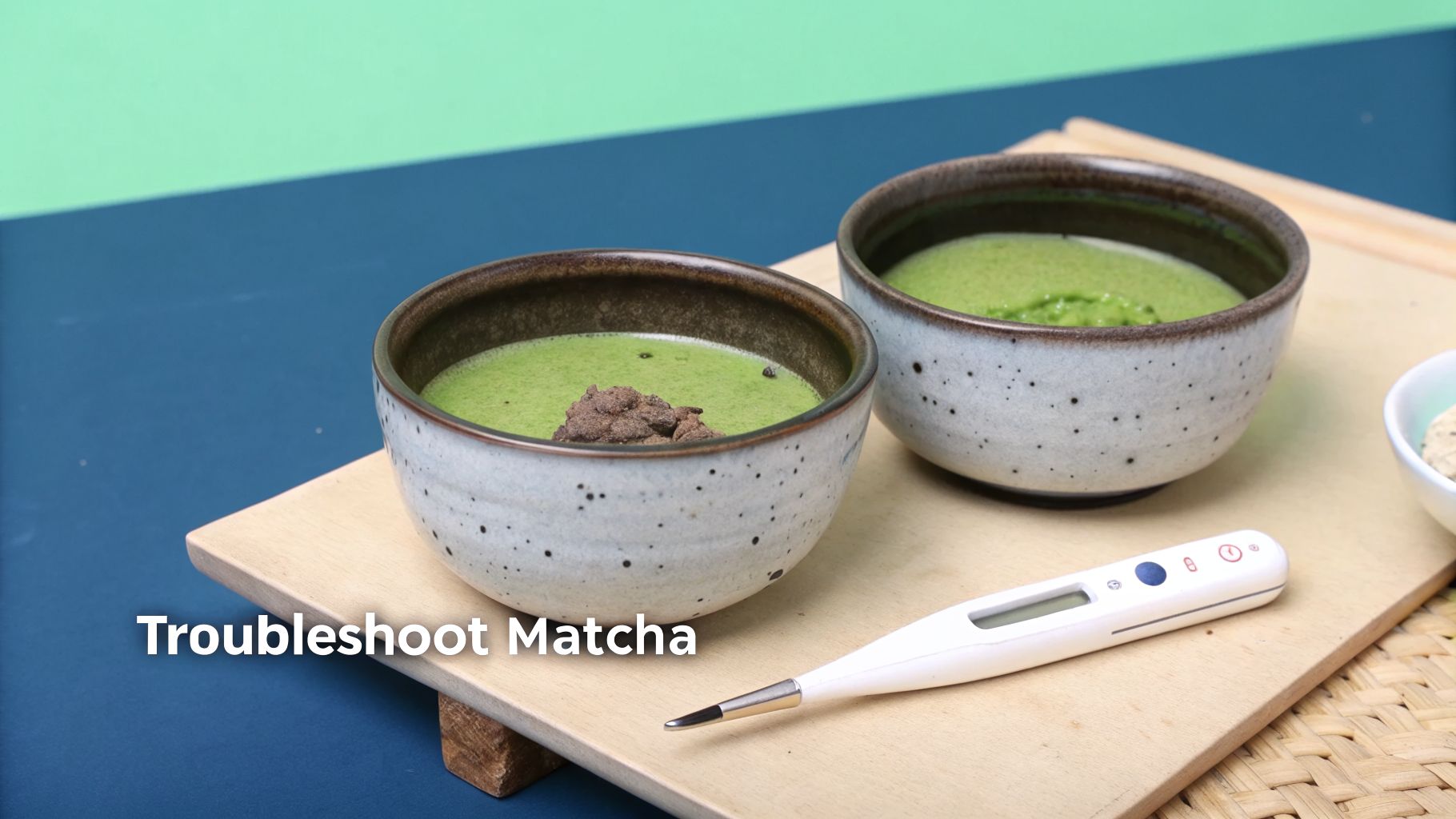
Even when you follow the steps, some days a bowl of matcha just doesn’t come together. Don’t worry, it happens to everyone. A few small adjustments are usually all it takes to turn a frustrating cup into a perfect one.
Let’s walk through the most common issues we see, both in busy Aussie cafés and for home baristas. Mastering these quick fixes is the key to a consistently great brew.
Why Is My Matcha Lumpy?
There’s nothing worse than a sip of matcha ruined by a gritty, undissolved clump of powder. If this is happening, the fix is almost always the same: you need to sift your matcha.
Matcha powder is so incredibly fine that it loves to clump, thanks to static and humidity. No amount of whisking will reliably break up those dense little pockets once water is added.
Pushing the powder through a fine-mesh sieve before you add water is non-negotiable. This one simple step guarantees a silky-smooth foundation every single time.
Why Does My Matcha Taste Bitter?
If your matcha has a harsh, bitter, or almost burnt taste, the culprit is almost certainly your water temperature. This is the single most common mistake people make.
Matcha is delicate. Water that’s too hot—anything boiling or even just over 80°C—will scorch the leaves. This completely changes the chemistry of the tea, destroying the amino acids (like L-theanine, which provides that calm-alert feeling) and releasing a flood of bitter tannins.
The Fix: Always let your boiled water cool for a few minutes before pouring. Better yet, use a temperature-controlled kettle set between 70-80°C. This simple change is what protects the matcha’s delicate sweet and umami notes.
Why Won’t My Matcha Froth?
Struggling to build that signature layer of creamy microfoam? A few things could be going on, and they’re all easy to solve once you know what to look for.
Freshness is Everything: Matcha has a short shelf life once the tin is opened. Old, oxidised powder will look duller and simply won’t froth well. Always use fresh, high-quality matcha and store it in an airtight container in the fridge.
Water Quality Matters: Very hard or very soft water can sometimes interfere with froth formation. If you’ve tried everything else, switching to filtered water might just be the ticket.
Revisit Your Technique: A weak froth often comes down to the whisking motion. You need a fast, energetic M- or W-shaped pattern that comes from the wrist, not a slow stirring motion from your arm. Make sure you’re using a wide-bottomed bowl that gives your chasen enough room to move, and whisk vigorously for a solid 20-30 seconds.
Your Matcha Whisking Questions Answered
We get a lot of questions at Pep Tea about getting the whisking technique just right. It’s the part of the process where things can go wrong, but it’s also where the real magic happens.
Here are the answers to the most common issues we hear about from our Australian customers, designed to help you perfect your daily ritual.
Can I Use a Milk Frother to Whisk Matcha?
Yes, a handheld electric frother is a popular shortcut, especially if you’re making a matcha latte. It's fast, and it certainly creates foam.
But here’s the trade-off: a frother tends to create large, airy bubbles and doesn't suspend the matcha particles as evenly as a traditional bamboo chasen. The texture just isn’t the same.
For a pure matcha experience with water, the chasen is non-negotiable. It creates a far smoother, more integrated emulsion. For lattes, where milk can mask textural imperfections, a frother is a perfectly fine substitute when you're short on time.
Why Is My Matcha Not Frothing?
If you’re struggling to get that beautiful, creamy layer of foam, a few things could be at play. First, check your water temperature. Anything over 80°C will kill the froth before it even forms and scorch the tea, making it taste bitter.
Second, freshness is everything. Old or low-grade matcha loses its vibrancy and its ability to foam well. You need fresh, high-quality ceremonial grade matcha for the best results. It's just not a process you can fake with inferior powder.
Finally, look at your technique. You need a rapid 'W' or 'M' motion, driven from the wrist, not the arm, in a wide bowl. Also, make sure your chasen is in good shape and has been soaked in warm water before you start. This makes the bamboo pliable and far more effective.
Remember: Great froth comes from the combination of fresh matcha, the right temperature, and vigorous wrist action. If one of those elements is missing, the foam will suffer.
How Do I Clean and Care For My Bamboo Whisk?
Proper care for your chasen is simple, but it makes a huge difference to its lifespan. After whisking, rinse it immediately under warm running water. Never use soap—it will get into the bamboo and taint every bowl of matcha you make from then on.
Next, just whisk it in a clean bowl of fresh, warm water to work out any remaining residue from the tines.
To dry it, the best method by far is to place it on a kusenaoshi (a ceramic whisk holder). This is what helps it maintain its signature tulip shape and allows air to circulate evenly. If you don't have a holder, stand it upright on its handle and let it air dry completely before putting it away. Proper drying is the key to preventing mould.
What Is the Best Water Temperature for Matcha?
The ideal water temperature for whisking matcha is between 70°C and 80°C. Using boiling water is probably the single most common mistake people make, and it’s the number one reason they experience bitterness.
Water that's too hot literally scorches the delicate tea powder. This process destroys beneficial compounds like L-theanine (the compound responsible for that calm-alert feeling) and releases a flood of tannins, resulting in a harsh, astringent flavour.
If you don't have a temperature-controlled kettle, there's an easy fix. Simply boil your water, then let it sit and cool for about two to three minutes before pouring it over your matcha. This simple pause makes a world of difference.
Ready to put your new whisking skills to the test? With Pep Tea, you get premium, organic matcha that delivers on flavour and quality every time.
Explore our range of ceremonial and culinary grade organic matcha today.
Natural Energy Drinks: Your Guide to a Jitter-Free Boost in 2026

When you hear the term ‘natural energy drink’, what comes to mind? It’s not just another buzzword. We're talking about beverages that get their kick from whole-food ingredients like tea leaves, fruits, and fermented cultures, steering clear of the synthetic caffeine and sugar dumps that define conventional options.
The goal here is a gentler, more sustained kind of energy—one that works with your body, not against it. It’s the difference between a steady climb and a spike followed by a crash. As an Australian brand passionate about wellness, we at PepTea believe in harnessing the power of nature for vitality.
The Rise of Natural Energy Drinks in Australia

Have you ever glanced at the ingredient list on a typical energy drink and felt a bit uneasy? You’re not alone. A growing number of health-conscious Australians are walking away from the synthetic jolts and sugar-loaded formulas that once dominated the market. They're looking for a cleaner, more wholesome way to boost their vitality, and this shift is fundamentally reshaping what we choose to drink.
This movement isn't just about avoiding the bad stuff; it's about actively choosing the good. It’s about picking ingredients you can actually recognise—things sourced from nature that support your body's rhythm. Think of it like swapping highly processed fast food for a nourishing, thoughtfully prepared meal. Both might fill you up, but only one genuinely contributes to your long-term well-being.
A Growing Appetite For Wellness
The numbers tell the same story. In Australia, the market for healthy, functional drinks is seeing serious growth. Projections show the market value is set to climb from USD 70.11 million in 2026 to an estimated USD 130.89 million by 2033. Low-sugar and sugar-free options are driving this charge, which is a clear signal that Aussies are demanding smarter choices. You can explore the full market analysis of these trends to see just how deep this shift runs.
At the heart of this wellness wave are two standout beverages that have been around for centuries, long before the first neon-coloured can hit the shelves:
- Organic Matcha: A vibrant, stone-ground green tea from Japan, prized for its ability to deliver a unique state of calm alertness.
- Authentic Kombucha: A bubbly, fermented tea—like the ones we brew in our own Hunter Valley, NSW—packed with probiotics to support gut health.
We believe that what you drink should be a source of nourishment, not just a quick fix. As a family-owned Australian brand, we’re passionate about creating transparent, organic drinks that genuinely support an active and healthy lifestyle.
To understand the difference, it helps to see the two categories side-by-side. One relies on a blunt-force approach, the other on a more nuanced, whole-body effect.
Natural Energy Drinks vs Conventional Energy Drinks At A Glance
Here’s a simple breakdown of what sets these two beverage types apart.
| Feature | Natural Energy Drinks (e.g., Matcha, Kombucha) | Conventional Energy Drinks |
|---|---|---|
| Energy Source | Naturally occurring caffeine from tea leaves, plus other beneficial compounds. | Synthetic caffeine, often in high doses. |
| Sweeteners | Minimal raw cane sugar (for fermentation), fruit juices, or natural sweeteners like monk fruit. Many, like our kombucha, are completely sugar-free. | High-fructose corn syrup, sucrose, or artificial sweeteners (aspartame, sucralose). |
| Energy Delivery | Sustained release; compounds like L-Theanine in matcha create a calm, focused energy without a crash. | Rapid spike and crash; the combination of high sugar and synthetic caffeine causes a sharp jolt followed by a steep drop. |
| Additional Benefits | Rich in antioxidants, probiotics (in kombucha), vitamins, and minerals from whole-food sources. | Generally offer little to no nutritional value beyond the energy spike. Often contain artificial colours and flavours. |
| Ingredient Transparency | Simple, recognisable ingredient lists (e.g., water, organic tea, SCOBY, real fruit). | Long, complex lists with synthetic vitamins, taurine, glucuronolactone, and various preservatives. |
| Health Impact | May support gut health, provide antioxidant benefits, and promote sustained mental focus. | Linked to heart palpitations, anxiety, insomnia, and digestive issues due to high caffeine and sugar content. |
As you can see, the difference isn't just about flavour—it's about the fundamental mechanism. Natural energy drinks provide a gentle lift that helps you power through your day without the dreaded ‘crash and burn’ cycle.
Throughout this guide, we'll unpack exactly how these clean, functional beverages work and show you what to look for when choosing the best one for your needs.
The Science of Clean Energy With Organic Matcha
When we talk about natural energy drinks, one name keeps coming up for its unique, balanced power: Japanese organic Matcha. It’s not tea in the way you might think of it. Matcha isn’t an infusion from a tea bag; it’s the entire tea leaf, meticulously shade-grown, harvested, and stone-ground into a powder so vibrant it’s almost electric.
This process is what separates Matcha from everything else. Because you consume the whole leaf, you get 100% of its nutritional payload—a full spectrum of vitamins, minerals, and of course, its famous antioxidants. It’s the difference between drinking the juice from a squeezed orange and eating the whole fruit.
The Magic of Caffeine and L-Theanine
What truly defines Matcha as a source of 'clean energy' is the way its caffeine works with an amino acid called L-theanine. This is the secret. Coffee gives you a sharp, hard hit of energy from caffeine alone, but Matcha delivers something far more sophisticated.
L-theanine is known for promoting a feeling of relaxation and cutting through stress without making you tired. When it partners with caffeine, you get a remarkable synergy: a state often described as ‘calm alertness’. The result is a sustained lift in energy and focus, but completely without the jitters, anxiety, or the inevitable crash that follows coffee and conventional energy drinks.
Think of it like this: coffee is a sprinter, all explosive speed and a quick finish. Matcha is a marathon runner, providing steady, consistent energy that keeps you focused and enduring for the long haul.
This unique biochemical partnership is precisely why Zen monks have used Matcha for centuries to stay sharp during long periods of meditation. It just works.
The Antioxidant Superstar EGCg
Beyond the clean energy, Matcha is loaded with a specific class of antioxidants called catechins. The most powerful and plentiful of these is epigallocatechin gallate (EGCg).
This is the compound celebrated for its role in supporting a healthy metabolism and defending cells against oxidative stress. And because you’re drinking the entire leaf, the concentration of EGCg you get from Matcha is off the charts—up to 137 times more than what you'd find in a standard cup of brewed green tea. You can learn more about how Matcha tea powder is a powerhouse of antioxidants in our detailed article. This incredible antioxidant density is a huge part of what makes Matcha one of the ultimate natural energy drinks.
Choosing The Right Matcha For You
Not all Matcha is created equal. Understanding the grades is the key to getting the experience you’re after. You'll mainly see two types: Ceremonial and Culinary.
Ceremonial Grade: This is the absolute best, made from the youngest, most tender tea leaves. It has a brilliant green colour, a silky-fine texture, and a smooth, slightly sweet flavour with zero bitterness. It’s made to be prepared traditionally—just whisked with hot water—for a pure, unadulterated Matcha experience.
Culinary Grade: Still a high-quality product, culinary Matcha is produced from leaves that are a little older. This gives it a stronger, more robust flavour that can be slightly bitter. That boldness is exactly what makes it perfect for mixing into other ingredients; its flavour holds its own in lattes, smoothies, baking, and even savoury recipes.
At PepTea, our focus is on sourcing only the finest certified organic Matcha from Japan. We make sure that whether you’re whisking up a traditional tea or adding a powerful boost to your morning smoothie, you’re using a pure, authentic product. This commitment to quality is what unlocks the true science of clean energy found in every single scoop.
The Gut-Energy Connection with Authentic Kombucha
If matcha is all about clean, focused energy for the mind, kombucha is its counterpart for the body, working its magic from the inside out.
Many of us don’t realise just how closely our gut health is tied to our daily vitality. When your digestive system is balanced and happy, it becomes far more efficient at absorbing nutrients and even producing certain vitamins. The result? Better, more sustained energy levels throughout the day.
This is precisely where authentic kombucha shines. It's so much more than a fizzy, refreshing drink; it’s a living beverage, teeming with beneficial microorganisms. Think of it as actively tending to your body's internal garden. By introducing a diverse range of probiotics, you’re helping create a thriving gut environment that underpins your overall well-being.
The Art and Science of Fermentation
So, what is kombucha, really? At its heart, the process is beautifully simple. It all begins with sweetened organic tea. To this, a special culture of bacteria and yeast—known as a SCOBY (Symbiotic Culture Of Bacteria and Yeast)—is added.
The SCOBY is the engine room of the whole operation. It gets to work consuming most of the sugar in the tea, transforming the liquid through fermentation.
This transformation is what creates a host of beneficial compounds:
- Live Probiotics: These are the "good" bacteria that help bring balance to your gut microbiome.
- Organic Acids: Compounds like acetic acid and gluconic acid give kombucha its signature tangy flavour and may support various bodily functions.
- B Vitamins: The fermentation process naturally produces B vitamins, which are crucial for converting the food we eat into energy.
At PepTea, we brew our kombucha the traditional way in the scenic Hunter Valley, NSW. We stick to real, organic ingredients and allow the fermentation to complete naturally. This patience results in a genuine, sugar-free organic kombucha that’s truly alive with goodness.
The following diagram shows the traditional process behind another of our favourite natural energy sources, matcha, from leaf to powder.

It’s this simple, careful process of transforming whole tea leaves into a fine powder that ensures you get all of matcha’s potent benefits.
Avoiding "Cowboy Kombucha"
As kombucha’s popularity has exploded, the market has been flooded with products that simply don’t live up to the promise. We call these "cowboy kombuchas." They’re often mass-produced, pasteurised (which kills the all-important live probiotics), or loaded with sugar and artificial flavours to hide a poor-quality brew.
A true, living kombucha needs to be handled with care. That’s why we operate from a purpose-built, HACCP-accredited brewery. This international standard for food safety guarantees every bottle of PepTea Kombucha is not only effective but also completely safe.
This stands in stark contrast to the broader soft drink manufacturing scene in Australia, which saw a 1.9% CAGR from 2021-2026. While this growth included a pivot towards so-called functional beverages, it’s crucial for people to know what separates a genuinely healthy option from a cleverly marketed one.
With non-alcoholic drinks surging, it’s clear that consumers, particularly urban millennials, are actively seeking out authentic products with real benefits.
Choosing a properly brewed kombucha means you’re getting a drink that actively supports the gut-energy connection. It’s a delicious, bubbly way to nourish your body and boost your vitality, turning the simple act of hydration into a meaningful step toward better health.
You can learn more about the benefits of kombucha and what really makes an authentic brew in our dedicated guide.
How to Choose a High-Quality Natural Energy Drink
Navigating the wellness aisle can feel like a minefield. With so many drinks shouting 'natural' or 'healthy' from their labels, how do you tell the genuinely good stuff from the clever marketing?
The secret is to ignore the flashy promises on the front and become an expert at reading the fine print on the back. A truly clean, high-quality natural energy drink becomes obvious once you know the few key things to look for.
Your Label-Reading Checklist
When you pick up a bottle, flip it over. The best options will tick all these boxes, giving you confidence that you’re buying something that actually supports your health.
Look for 'Certified Organic': This isn't just a buzzword. A certification from a trusted body like Australian Certified Organic (ACO) is your guarantee the ingredients were grown without synthetic pesticides or fertilisers. It’s a non-negotiable sign of purity and quality.
Check the Sugar Content: Be ruthless here. You want to see explicit claims like "no added sugar" or "sugar-free". Many drinks use fruit juice concentrates to sweeten their products, which can still pack a surprising sugar punch. A genuinely low-sugar option won't hide its numbers.
Scan for Real Ingredients: Is the list full of things like "organic tea leaves," "fresh ginger," or "mango puree"? Or does it hide behind "natural flavours"? That term is often a smokescreen for a whole host of processed additives. Always prioritise drinks that get their flavour and function from whole, recognisable foods.
Red Flags to Watch Out For
Just as important as knowing what to look for is knowing what to run from. Certain ingredients and label tricks can completely undermine the health benefits you’re after.
A high-quality natural energy drink should energise you through nourishment, not by tricking your body with synthetic inputs or hidden sugars. If the ingredient list is long and complicated, it's usually a warning sign.
Be wary of artificial preservatives. A living drink like kombucha belongs in the fridge, not sitting on a warm shelf for months. The need for refrigeration is often the best sign you’re getting an authentic, unpasteurised product that’s teeming with live cultures. To get a better handle on how this works, it’s worth understanding prebiotics and probiotics for gut health.
The Non-Negotiable Standard of Safety
Finally, a top-tier brand doesn't mess around with safety. Look for mentions of quality control standards like HACCP accreditation. This internationally recognised system (Hazard Analysis Critical Control Point) ensures food safety from the farm to the finished bottle.
For us at PepTea, these aren’t just guidelines; they are our founding principles. Our kombucha is proudly brewed in our HACCP-accredited, purpose-built facility right here in the Hunter Valley. It’s Australian-made, certified organic, and authentically fermented to be completely sugar-free.
The same rigour applies to our other products. When it comes to matcha, for instance, understanding the difference between grades is everything. You can discover more about Matcha grade and quality over on our blog. By holding ourselves to these benchmarks, we hope to give you the tools to make better choices for your own health.
Integrating Natural Energy Into Your Daily Routine

Bringing natural energy drinks into your daily rhythm isn't about overhauling your life. It's about making small, deliberate upgrades that feel good.
Think of it as a simple swap. Whether you’re at home looking to start your morning right, or a café owner wanting to give your customers something genuinely better, drinks like authentic kombucha and organic matcha slot right into your existing habits. This isn't about forcing down a "health drink." It's about finding clean, vibrant energy in a form you actually look forward to.
Here’s how to make it work.
For Your Morning Ritual at Home
Trading your standard coffee or sugary juice for a natural alternative can set the tone for your whole day. It's a simple change with a noticeable impact. Here are two remarkably easy ways to begin.
1. The 2-Minute Matcha Latte
This is the perfect introduction to matcha's unique 'calm-alert' energy. It’s creamy, satisfying, and quick. All you need is our PepTea Culinary Grade Organic Matcha, your milk of choice, and a sweetener if you like.
- Step 1: Sift 1 teaspoon of matcha into a mug. This simple step prevents clumps and ensures a smooth finish.
- Step 2: Pour in about 60ml of hot (not boiling) water. Whisk it hard until it's frothy and combined. A bamboo whisk is traditional, but a small milk frother does the job beautifully.
- Step 3: Heat and froth 180ml of your preferred milk—oat and almond work particularly well—and pour it into the matcha. Sweeten to your taste.
2. The Green Energy Smoothie
When you need nutrients and energy on the go, a matcha smoothie is your answer. It's a breakfast and a boost in one glass.
- Step 1: In your blender, toss 1 frozen banana, a big handful of spinach, 1 teaspoon of culinary matcha, and 250ml of water or coconut water.
- Step 2: For more staying power, add a scoop of protein powder or a tablespoon of chia seeds.
- Step 3: Blend until it's completely smooth. Drink it right away.
For the Forward-Thinking Australian Café
If you're in the hospitality game, the shift towards natural energy drinks is an opportunity you can’t ignore. The demand for healthier, functional options is no longer a niche—it’s a mainstream movement.
Australia’s consumption of sports and energy drinks is set to hit 232.0 million litres by 2034. The real story is where that growth is coming from: Aussies are actively looking for clean, sustainable alternatives. You can read more on the expanding Australian sports and energy drinks market here.
Upgrading your menu is about offering smarter choices that meet modern customer values. A well-crafted non-alcoholic drink isn't just a placeholder; it's a profitable, sophisticated beverage that people will come back for.
Here are a few ways to bring this to your menu:
The Elevated Non-Alcoholic: Use a crisp, sugar-free PepTea Organic Kombucha as a base for premium mixers. A "Kombucha Spritz"—a splash of our Ginger or Mango kombucha with fresh mint and a lime wedge—feels special, looks great, and is incredibly simple to execute.
A Better Post-Mix Alternative: Ditch the sugary soft drinks. Offering bottled kombucha is a straightforward, high-margin swap that speaks directly to health-aware customers seeking low-sugar, gut-friendly options. It’s a premium experience they will pay for.
Functional Lattes & Smoothies: A classic Matcha Latte made with high-quality culinary matcha is a must-have for any serious coffee menu. Go one step further and design a signature "Energy Smoothie" with matcha, fruit, and seeds. Market it for what it is: a clean vitality boost.
These aren't just new drinks. They are a way to offer a genuine wellness experience, giving your customers another reason to choose you.
Answering Your Questions About Natural Energy Drinks
When it comes to clean energy, the details matter. The shift toward natural alternatives like matcha and kombucha is exciting, but it naturally comes with questions. We’ve heard them all, and we've put together some straight answers to the most common ones.
Think of this as a no-nonsense guide. We want you to feel completely confident about what you’re putting in your body and why it’s a smarter choice. Let’s get into it.
How Much Caffeine Is in Matcha and Kombucha Compared to Coffee?
This is the big one, and the answer is more interesting than just a simple number. It’s not just about how much caffeine, but how it works with other compounds.
Matcha: A standard serve of matcha (about one teaspoon) has roughly 30–70mg of caffeine. That’s quite a bit less than your average cup of coffee, which often clocks in at over 100mg. But the real story is L-theanine, an amino acid unique to matcha that works with caffeine to create a state of calm focus. It's the reason you get a smooth, sustained lift without the jitters or the dreaded afternoon crash.
Kombucha: Our kombucha, on the other hand, is a genuinely low-caffeine drink, with less than 10mg per serving. The SCOBY (the culture of bacteria and yeast) actually consumes most of the tea’s original caffeine during fermentation. This makes it a perfect choice for a gentle, anytime boost.
Are Natural Energy Drinks Safe to Drink Every Day?
For most people, absolutely. When we talk about high-quality, certified organic matcha or our authentic, sugar-free kombucha, we’re talking about simple, whole-food ingredients. This is a world away from the synthetic chemicals and sugars found in conventional energy drinks.
As with anything, it’s about listening to your body and finding a balance that works for you. A daily matcha latte or a refreshing kombucha can be a fantastic part of a healthy routine, giving you a natural way to support your energy levels.
Is Matcha Really Better Than Green Tea Bags?
Yes, and the difference is huge. It all comes down to what you’re actually consuming.
When you drink matcha, you are consuming the entire stone-ground tea leaf, which has been dissolved into the water. This means you get 100% of its antioxidants, vitamins, and minerals. Nothing is left behind.
Brewed green tea is just an infusion. You’re only drinking the compounds that leach out of the leaf into the water. Most of the good stuff, including a huge portion of the powerful antioxidant EGCg, never makes it out of the tea bag. Matcha is, without question, a more potent and beneficial experience.
Embrace Clean Energy For a Healthier Lifestyle
Making the shift to natural energy drinks is about more than just swapping one can for another. It’s a conscious decision to move away from the synthetic jolts and inevitable sugar crashes that leave you feeling worse than when you started. It’s about choosing beverages that work with your body, not against it.
We’ve seen how the calm, focused alertness from organic matcha and the gut-friendly power of authentic kombucha offer a different kind of energy. These drinks teach us that a real lift doesn’t come from a lab, but from nature. Once you understand that, you can see past the marketing hype and pick drinks that genuinely contribute to your wellbeing.
From a Quick Fix to a Daily Ritual
Embracing this change is simpler than it sounds. It’s about building small, positive habits that stack up over time, creating a foundation for a more vibrant, energetic life.
- Start Your Day Clean: Swap your usual morning coffee for a matcha latte or a vibrant green smoothie. That one small change can set a different, more positive tone for the rest of your day.
- Rethink Your Afternoon Boost: When the 3 pm slump hits, instead of reaching for another coffee or a sugary snack, try a cold, refreshing kombucha. It offers a gentle lift while also doing some good for your gut.
- Focus on Whole Foods: Truly clean energy is part of a bigger picture. To get the most out of this shift, it's worth exploring the broader context by understanding clean eating principles.
We hope this guide has inspired you to move beyond temporary fixes and embrace beverages that genuinely nourish your body. This isn't just about a drink; it's about a healthier and more mindful way of living.
This is your invitation to explore a world of energy that’s better for your body and mind, one delicious sip at a time.
We invite you to explore this healthier world of energy, starting with PepTea’s premium organic matcha and Australian-brewed sugar-free kombucha.
How to Make an Iced Matcha Latte Like a Pro Barista

Making a refreshing iced matcha latte at home is surprisingly simple. At its core, you just whisk high-quality matcha powder into a smooth paste with warm water, then pour it over ice and your milk of choice. But the real secret to a café-quality drink—one that’s vibrant and creamy, not clumpy and bitter—is all in the technique and the quality of your ingredients.
Crafting the Perfect Iced Matcha Latte at Home

Forget paying top dollar for inconsistent café lattes. We're here to show you how to create a bright, creamy, and perfectly balanced iced matcha latte right in your own kitchen. This isn't just about stirring some green powder into milk; it's about mastering a few simple details that make all the difference, giving you a delicious and healthy drink every time.
Why Make Your Own Iced Matcha Latte?
When you take control of the process, you guarantee a better drink. Every single time. You get to choose the quality of your ingredients and dial in the flavour exactly how you like it. Plus, there are some pretty great benefits that align with a healthy, wellness-focused lifestyle.
- Customisable Sweetness: So many café versions are just loaded with sugar. At home, you control everything. Use a touch of honey or maple syrup, or have it completely unsweetened to let the matcha’s real flavour shine through.
- Better Quality Ingredients: This is a big one. You can choose a premium organic matcha, which has a much more robust flavour and is packed with antioxidants for clean, sustained energy. The difference in taste and health benefits is immediately noticeable.
- Cost-Effective: A daily café run adds up fast. Making your own is significantly cheaper in the long run. A single tin of quality matcha will see you through dozens of delicious lattes.
The real beauty of a homemade iced matcha latte is in the ritual itself. Taking a few minutes to mindfully whisk that vibrant green powder creates a moment of calm before you even take the first sip.
We’ll guide you through choosing the right ingredients and mastering the whisk, ensuring a silky-smooth, flavourful latte every single time. It's fascinating to see how a few delicate leaves become the powder for your drink, a process you can learn more about by understanding how Matcha tea is made.
Whether you're a long-time matcha lover or just starting out, this guide will give you the confidence to whip up a refreshing drink that’s packed with the clean, sustained energy of premium organic matcha. Let's make your homemade iced matcha latte the best you've ever had.
A great iced matcha latte isn’t about a complicated recipe. It’s about the ingredients. Get these three things right, and the final drink will come together beautifully, giving you that perfect balance of earthy flavour, creamy texture, and vibrant colour you’d expect from a top-tier Australian café.
Your Matcha Grade Makes All the Difference
This is the most important decision you’ll make. The dusty, bitter green powder from the back of the supermarket shelf just won’t cut it here. For a latte with a rich, balanced flavour that doesn’t get lost behind milk and ice, you need a high-quality powder designed for the job.
But not all high-quality matcha is right for a latte. It comes down to choosing between two main grades: Ceremonial and Culinary.
Matcha Grade Guide for Your Latte
Picking the right matcha can feel confusing, but for a latte, the choice is actually quite straightforward. This table breaks down what you need to know.
| Matcha Grade | Best Use | Flavour Profile | Colour | Why It Works |
|---|---|---|---|---|
| Ceremonial Grade | Drunk on its own with water | Delicate, subtle, sweet, umami-rich | Bright, almost neon green | Its nuanced flavour is prized for traditional tea ceremonies but gets completely lost when mixed with milk and sweeteners. |
| Culinary Grade | Lattes, smoothies, baking, cooking | Bolder, more robust, slightly astringent | Deeper, more forest green | It's specifically designed with an assertive flavour that punches through the creaminess of milk, ensuring the matcha taste remains the star. |
For an iced matcha latte, a premium culinary grade matcha is your secret weapon. It has the strength to stand up to other ingredients without tasting bitter.
A high-quality culinary grade, like our PepTea Organic Matcha, delivers that robust flavour you’re looking for. It’s stone-ground from certified organic Japanese leaves, giving you that vibrant green colour and a smooth finish, every time.
Choosing the Right Milk for the Job
The milk you pick has a massive impact on the latte’s final texture and taste. There’s no single "best" option; it’s all about the experience you want to create.
- Full-Cream Dairy Milk: This is the classic for a reason. It delivers a rich, velvety creaminess and has a natural sweetness that complements matcha perfectly.
- Oat Milk: The café favourite. Oat milk is famously creamy and creates a luxurious mouthfeel very similar to dairy. Its neutral, slightly sweet flavour really lets the matcha shine.
- Almond Milk: A lighter, more refreshing choice. It’s less creamy than oat or dairy, resulting in a less decadent latte with a subtle nutty background note.
- Soy Milk: Another fantastic plant-based option. Soy is creamy and has a distinct flavour of its own that pairs surprisingly well with matcha’s earthiness.
The incredible rise of matcha lattes isn't just a fleeting trend. Urban Australia's café culture has embraced them completely, with specialty cafes seeing a 28% year-over-year surge in major cities. This growth, detailed in recent Asia-Pacific matcha market research, is all about premium organic matcha becoming the hero of the iced drink menu.
Using Sweeteners to Enhance, Not Overpower
Even if you prefer a clean, low-sugar drink, a little sweetness can work wonders by rounding out matcha’s complex, earthy notes. The goal is to complement, not to mask.
Natural sweeteners are your best bet. A small drizzle of honey or maple syrup harmonises beautifully with the matcha. Just remember to start small—you can always add another drop, but you can’t take it away. Building your latte from a foundation of quality is what makes it a delicious, guilt-free treat.
How to Prepare a Perfectly Smooth Matcha Paste
If you've ever had a gritty, lumpy homemade iced matcha latte, you know the disappointment. The secret to that smooth, vibrant, café-quality drink isn't complicated, but it all comes down to one crucial step: how you prepare the matcha itself.
Get this first step right, and everything else falls into place. You need to create a smooth, silky paste that will dissolve completely into your milk. This is often called "blooming" the matcha, a process that wakes up the powder, unlocking its full colour and deep, earthy flavour. If you're interested in the food science behind it, this article on what does bloom mean in cooking is a great read.
It all starts with just a few simple building blocks.

Think of these as the foundation: quality matcha, your milk of choice, and a touch of sweetener if you like. That's all it takes.
The Traditional Method Using a Bamboo Whisk
For the most authentic experience, a bamboo whisk (known as a chasen) is the tool for the job. Its fine, flexible prongs are perfectly designed to break up clumps and aerate the tea, creating a beautiful, delicate froth.
Here’s the method that has been used for centuries:
- First, always sift your matcha. Use a small, fine-mesh sieve to sift 1-2 teaspoons of matcha powder directly into a small bowl. This is the single most important thing you can do to prevent lumps. Don't skip it.
- Next, add a splash of warm water. Pour about 60ml (2 ounces) of warm—not boiling—water over the powder. The perfect temperature is around 80°C. If the water is too hot, it will scorch the delicate tea leaves, leaving you with a bitter taste.
- Now, whisk. The technique is key. Move the chasen back and forth in a quick ‘W’ or ‘M’ motion. Forget stirring in circles; you need vigorous, zig-zag movements for about 20-30 seconds. You’ll know you’re done when all the powder has dissolved and a fine layer of foam has formed on the surface.
The goal is a smooth, vibrant green paste with a consistency like thin paint. This concentrated shot is what will mix perfectly into your cold milk and ice, no clumps in sight.
The Modern Shaker Jar Hack
Don't have a bamboo whisk? No worries. A simple shaker bottle or even a small jar with a tight-fitting lid is a brilliant, low-fuss alternative that works surprisingly well. It’s our go-to method when we’re in a hurry or away from our kitchen.
Just add your sifted matcha powder and the same 60ml of warm water to the jar, seal it up tight, and shake it like you mean it for about 30 seconds.
The agitation inside the jar does an excellent job of breaking down the powder, leaving you with a frothy, perfectly mixed matcha shot that’s ready for your latte. It's incredibly convenient and proof that you don't need all the traditional gear to make a seriously good iced matcha at home.
Right, you've got your perfectly smooth matcha paste. The hard part is over. Now for the fun bit: putting it all together to create that beautiful, layered latte you see in good cafés.
This is the easiest step, but a little bit of technique is what makes it look like a pro made it.

First up, grab your favourite tall glass. Getting the café feel at home often comes down to little details like glassware. If you’re curious about what works best, there are some great guides on choosing the best smoothie cups that will do the job perfectly.
Fill that glass all the way to the top with ice. This isn’t just for keeping it cold; the ice is what will help you create those distinct, flowing layers.
Building Your Latte Layers
Pour in your milk—whether that’s creamy oat or full-cream dairy—but be sure to leave about two or three centimetres of space at the top. This is crucial for giving you enough room for the main event without making a mess.
Now for the final touch. Slowly pour your vibrant green matcha paste directly over the ice.
Pro Tip: Don't just pour it anywhere. Aim for one of the larger ice cubes near the top of the glass. When the matcha hits the cold surface of the ice, it will disperse gently and cascade down through the milk, creating that stunning, marbled effect that looks so good.
Before you dive in, give it all a gentle stir with a long spoon or straw. You’ll see the rich, earthy matcha swirl into the creamy milk, creating a drink that’s perfectly balanced.
It's this exact drink that’s seen some serious growth in popularity. Projections show the Australian matcha latte powder market is set to jump from $33.215 million to $76.59 million in sales.
It just goes to show how much Aussies are embracing matcha, especially in a refreshing iced latte. If you’re looking for more ideas, you can check out our other guide on how to make the perfect matcha latte, which covers both hot and cold versions.
Creative Twists on Your Iced Matcha Latte
Once you’ve nailed the classic recipe, your kitchen officially becomes your own private matcha bar. This is where the real fun begins. It’s your chance to get creative, personalise your drink, and discover flavour combinations you won’t find in just any café.
The beauty of a homemade iced matcha latte is that it’s a perfect blank canvas. Let’s explore a few simple but brilliant ways to add your own signature touch.
Fruity and Refreshing Matcha Variations
Adding fruit is a fantastic way to introduce natural sweetness and a vibrant, seasonal twist, especially during the warmer months here in Australia. It’s all about creating a balance where the fruit complements the matcha, not overpowers it.
A few ideas to get you started:
- Strawberry or Mango Matcha Latte: Muddle a few fresh strawberries or a spoonful of mango purée at the bottom of your glass before adding ice. The sweetness of the fruit pairs beautifully with matcha's earthy notes, creating a layered drink that’s both gorgeous and delicious.
- A Hint of Mint or Vanilla: For something more subtle, try a single drop of pure vanilla extract or muddle a few fresh mint leaves with your sweetener. A vanilla matcha latte is creamy and comforting, while mint adds an incredibly refreshing, cool finish.
The key is to start small. You can always add more flavour, but you can’t take it away. A little bit of fruit purée or a single drop of extract is often all you need to completely transform your drink.
The Ultimate PepTea Innovation: The Matcha Kombucha Fizz
Here’s a unique recipe we absolutely love—one that combines the benefits of two of our favourite organic drinks. This is the perfect way to add a probiotic-rich, gut-friendly boost to your afternoon pick-me-up.
This twist creates a lively, effervescent drink that is wonderfully complex and refreshing. The sharp, spicy notes from the ginger in the kombucha cut through the creaminess of the latte, creating a truly unique flavour experience.
To make it, simply prepare your iced matcha latte as you normally would, but leave about an inch of space at the top of your glass. Then, top it off with a generous splash of our PepTea Ginger or Lime & Ginger organic kombucha.
You’ll see it fizz up instantly, creating a beautiful, frothy head. It’s an exciting, modern take on the iced matcha latte that’s as good for your gut as it is for your tastebuds. For more inspiration on chilled drinks, our simple iced matcha tea recipe provides another great starting point.
Troubleshooting Common Matcha Latte Problems
So, you’ve followed the steps, but your iced matcha latte just isn’t quite right. It happens. Most of the time, a disappointing matcha comes down to a few small, easily corrected details. Let’s walk through the common culprits and how to fix them.
A lumpy or gritty texture is the most frequent complaint, and the fix is always at the very beginning. Always sift your matcha powder through a fine-mesh sieve before you add a drop of water. This single step is the difference between a chalky drink and a silky-smooth one. It’s non-negotiable.
Why Does My Matcha Taste Bitter?
A harsh, bitter aftertaste is a dead giveaway that something went wrong. It almost always points to one of two things: the water was too hot, or the matcha itself is poor quality.
If you’re using boiling water to make your matcha paste, you’re scorching the delicate tea leaves. That’s what brings out those unpleasant, bitter flavours. The ideal temperature is around 80°C. No temperature-controlled kettle? No problem. Just boil the water and let it cool for a minute or two before pouring.
The other factor is quality. Low-grade matcha powder often has a dull, yellowish-green colour and a naturally bitter profile. For a clean, rich flavour, you need to start with a vibrant, high-quality culinary grade matcha. There’s simply no substitute.
Solving Weak or Watery Lattes
Does your drink taste more like faintly green milk than a proper matcha latte? The problem is almost certainly your ratio. You’re just not using enough matcha.
A good starting point is one to two teaspoons of matcha per 250ml of milk. Don’t be afraid to add more if you want a bolder, more robust flavour that can stand up to the milk and ice. You’re in control here, so find the balance that you love.
There’s a reason so many people are trying to perfect this at home. The popularity of iced matcha lattes has exploded, with Australia's matcha market soaring to over $54 million in revenue by 2024. It’s become the go-to summer drink in cafes nationwide, a clear sign that Aussies are embracing healthier, antioxidant-rich alternatives. You can read more about this shift by exploring the local matcha boom.
Common Iced Matcha Latte Questions
Even a straightforward recipe can leave you with a few questions. Making a great iced matcha latte at home is mostly about technique, and a few small adjustments can make all the difference. Here are the answers to the questions we get asked most often.
Can I Make an Iced Matcha Latte Without a Whisk?
You absolutely can. While a traditional bamboo whisk (chasen) is designed for the job, it’s not the only way to get a clump-free paste. A simple shaker jar or a blender works just as well.
Just add your sifted matcha and a little warm water, seal the lid, and shake it like you mean it for about 30 seconds. A handheld milk frother is another fantastic alternative for whipping the matcha and water into a smooth, vibrant slurry.
Is Matcha a Better Choice Than Coffee for Anxiety?
Many people report that matcha gives them a "calmer" energy boost compared to coffee. This difference often comes down to L-theanine, an amino acid found in matcha that is thought to promote a sense of relaxed focus.
It works with the caffeine, not against it, helping to smooth out the typical jitters, spike, and crash that some people get from a strong coffee. You get the alertness, but it feels more sustained and level.
How Much Matcha Should I Actually Use?
A good starting point for a balanced latte is one to two teaspoons of matcha for every 250ml of milk. This gives you a noticeable but not overpowering matcha flavour.
That said, the "perfect" ratio is entirely personal. If you love a stronger, more earthy and intense matcha hit, don’t be afraid to add a little more. Start with one teaspoon, taste it, and adjust your next one until you land on a ratio you love.
If you’re making your latte ahead of time, just be aware that the matcha will naturally settle at the bottom. Store it in the fridge (without ice) and just give it a good shake or stir right before you pour and drink.
Ready to create your own vibrant, antioxidant-rich latte? PepTea is an Australian-owned company dedicated to bringing you the best. We offer premium, stone-ground organic culinary matcha that delivers exceptional flavour and colour every time. Explore our range and taste the difference quality makes.
What’s The Difference Between Organic Matcha and Regular Matcha

Matcha green tea has become one of the most popular drinks in the world due to its many health benefits. However, not all matcha is created equal, and it all comes down to the way it is grown and produced. So, what’s the difference? This article will explore the differences between organic matcha and regular matcha and help you decide which type of matcha is right for you.
What is Matcha Green Tea?
First, let’s define what matcha tea is. Matcha is a type of powdered green tea that is rich in antioxidants and is traditionally used in Japanese tea ceremonies. Organic matcha and regular matcha are both made of the same ingredients, but the difference lies in how they are grown and processed.
Regular matcha tea is grown with pesticides, herbicides, and fertilizers that contain harmful chemicals that can affect your health. It is grown quickly to maximise yield, but the quality of the tea is compromised, resulting in higher levels of toxins and a more bitter taste. Regular matcha also often contains additives and preservatives to enhance its flavour and appearance.
Is Organic Matcha Better than Regular Matcha?
Organic matcha tea is grown without pesticides, herbicides, or other harmful chemicals. This means that the leaves are grown naturally and only fertilized with natural compounds like compost and manure. It is also processed differently, going through a simpler and more traditional process that avoids any additives.
Owing to these slower, more traditional, processes it also has a superior taste compared to regular matcha, with a sweet and delicate flavour that is smooth and creamy. Regular matcha, on the other hand, can have a more bitter taste and a grainy texture due to inferior processing methods.
The health benefits of organic matcha are numerous. It is rich in antioxidants, and is also a natural detoxifier, helping to flush out toxins from the body and improve overall health. Regular matcha, on the other hand, may contain more toxins that can be harmful to the body over time
What is organic matcha green tea good for?
Organic matcha green tea is packed with antioxidants, specifically catechins, which are known for their disease-fighting properties and can help reduce free radicals in the body. The high concentration of the antioxidant EGCG has been linked to heart health, a healthy metabolism, and anti-ageing effects.
Furthermore, it also contains the amino acid L-Theanine, which promotes relaxation and stress relief without inducing drowsiness. This blend of energy and calmness makes it a superior choice for mental clarity and focus.
Find out more about the benefits of green tea in both matcha and kombucha
Is it OK to drink matcha every day?
Yes, it is perfectly fine to drink matcha every day. In fact, doing so can provide a host of health benefits. However, as with all things, moderation is key so it’s always a good idea to consult with a healthcare professional if you have any concerns.
How do you know if matcha is organic?
To ascertain if your matcha is organic, first, look for certification labels on the packaging. In the United States, the USDA Organic label signifies that the product meets stringent organic farming standards. For products outside of the U.S., look for similar organic certification labels applicable to that region, such as the EU Organic Farming symbol for European products, or the Australian Certified Organic label in Australia.
Additionally, check the ingredient list for any additives or artificial flavour enhancers. True organic matcha should only contain one ingredient: green tea.
Lastly, consider the colour and taste. Organic matcha tea tends to have a vibrant green colour and a sweet, mild flavour compared to the bitter taste and dull colour of non-organic varieties.
Is organic matcha worth it?
Yes, it is absolutely worth it. While it might come with a slightly higher price tag, the health benefits, superior flavour, and peace of mind of knowing you’re consuming a cleaner product make it a worthwhile investment.
As we have seen, the difference between organic matcha and regular matcha lies in the way they are grown and processed, which can have an impact on their flavour. Organic matcha is grown and processed naturally, free from pesticides, herbicides, and harmful chemicals. It also has a sweeter and more delicate taste than regular matcha. Regular matcha, on the other hand, is often grown with harmful chemicals, which can result in a more bitter and grainy taste.
Therefore, organic matcha powder is the sensible choice as it may provide more health benefits and a superior taste. So, the next time you’re looking for matcha, be sure to choose organic japanese matcha for your daily dose of antioxidants and superior taste.
Explore our range of organic matcha green tea powder
This article was reproduced on this site with permission from operafoods.com.au the “Organic Matcha Tea Importers”.
See original article:- What’s The Difference Between Organic Matcha and Regular Matcha