
Tag: australian organic tea
What Is Organic Green Tea: Benefits & How It’s Grown
You've probably seen a tea packet labelled organic and thought, “Great, that means no pesticides.” That's part of the story, but it's not the whole story. If you've ever wondered what is organic green tea, the answer starts much earlier than the cup in your hand. It starts with how the tea plant is grown, how the soil is treated, how the product is certified, and how accurately it's presented to you.
That matters because green tea already carries a strong wellness reputation. Organic green tea adds another layer. It connects farming practice, product integrity, and the daily ritual of choosing something clean and considered. In Australia, that question is especially useful because many teas are imported, and shoppers are often left to sort through a mix of genuine certification, vague “natural” language, and premium-looking packaging.
Green tea itself comes from Camellia sinensis leaves that are minimally processed. That lighter processing helps preserve more of the tea's catechins than black tea, and EGCG is the best-known catechin linked to green tea's antioxidant reputation, as outlined in this organic green tea market overview. The same source notes that Australia's tea market was valued at about USD 650.3 million in 2024 and is projected to reach about USD 913.8 million by 2030, which helps explain why wellness-led tea formats continue to attract attention in cafés, retail, and home routines.
An Introduction to Organic Green Tea
Organic green tea is green tea grown according to organic farming standards. In simple terms, that means growers use methods designed to work with natural systems rather than relying on synthetic agricultural inputs. The tea is still green tea. It still comes from the same plant. What changes is the farming approach behind it.
That distinction clears up a common confusion. Some people assume “organic” describes a different species of tea or a stronger health effect on its own. It doesn't. Organic tells you about how the tea was produced. Green tea tells you what the tea is.
A farm-first way of thinking
Organic tea production is rooted in a bigger idea than just avoiding certain sprays. It treats the tea garden as an ecosystem. Healthy soil, balanced plant life, careful cultivation, and traceable handling all matter.
Organic is best understood as a farming standard, not a flavour note and not a magic health shortcut.
For tea drinkers, that makes the label more meaningful. It points to production choices that many people prefer for environmental, ethical, and personal reasons. It also helps explain why two teas that both say “green tea” on the front can represent very different growing systems.
Why Australians often get stuck on the label
Australian shoppers often face an extra layer of uncertainty because many premium green teas, including Japanese styles, are imported. That's why it helps to understand both the tea itself and the certification around it. If you'd like a broader grounding in tea before getting into organic specifics, this guide on the story of tea is a helpful place to start.
By the end of this guide, you'll know what organic really means in practice, how it compares with conventional green tea, which compounds make green tea so valued, and how to brew it in a way that does the leaf justice.
What Organic Really Means for Your Tea
When people say organic tea is “pesticide-free”, they usually mean well. But that shorthand is too narrow. Organic is a full production system. It covers how the land is managed, how crops are supported, how inputs are controlled, and how the final product earns the right to carry an organic claim.
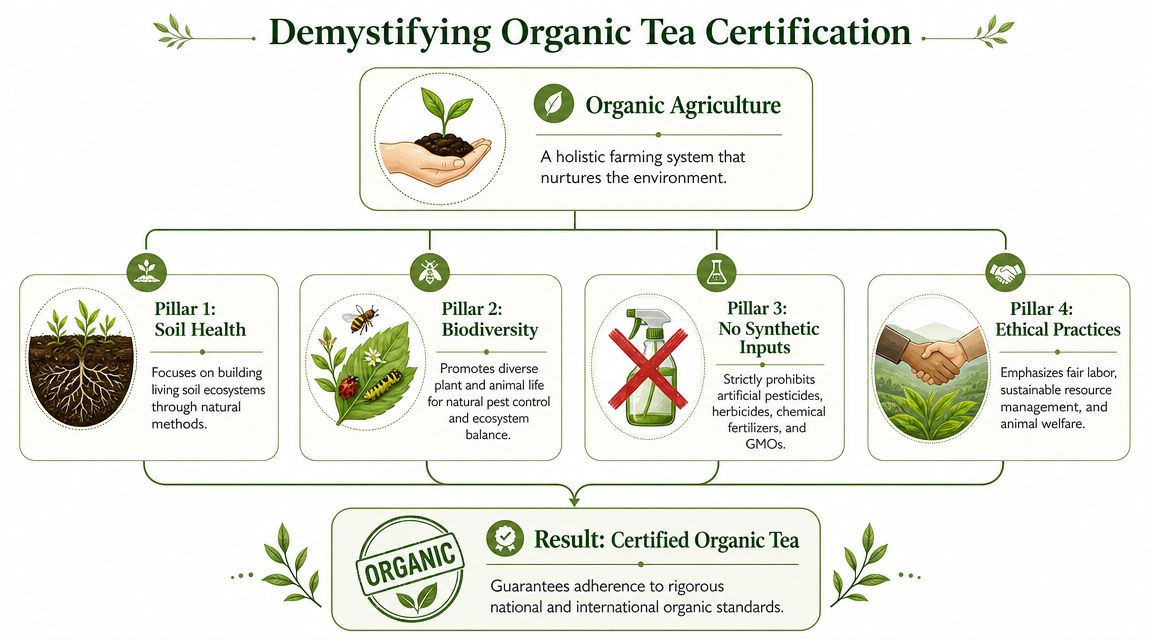
The four ideas behind organic farming
Organic tea farming usually rests on a few core principles:
- Living soil matters. Growers focus on building fertile, active soil rather than treating soil as a neutral base that holds the plant upright.
- Biodiversity helps. A healthier farm environment can support balance between plants, insects, and surrounding ecology.
- Synthetic inputs are restricted. The system is built around avoiding artificial pesticides, herbicides, and chemical fertilisers.
- The process must be verified. A tea isn't organic because the packaging looks earthy or the brand uses words like pure, natural, or clean.
That last point is the one many shoppers miss.
What verification looks like in Australia
In Australia, practical trust comes from certification and compliance, not marketing language. That's why this matters so much for tea buyers. The article discussing organic green tea and certification in the Australian context notes that the Australian organic market was valued at about A$2.59 billion in 2023, while consumer understanding of certification remains uneven, which is exactly why shoppers need to know how to confirm a tea is organic in this Australia-focused discussion of organic verification.
Here's what to look for when you pick up a tea:
- A recognised certification mark on the pack, rather than vague wellness wording.
- Clear origin information, especially if the tea is imported.
- Specific organic language that suggests formal certification rather than loose branding.
- Retail transparency, where the seller explains what standard the tea meets.
Practical rule: If a tea says “natural” but doesn't clearly show how its organic claim is verified, treat it as unproven until you can confirm more.
Imported tea can absolutely be organic. That includes Japanese green tea and matcha. What matters is whether the product has been certified to an accepted standard and marketed in line with Australian requirements. If you want a tea-specific breakdown, this article on the difference between regular and organic matcha adds useful context.
Organic as part of a wider lifestyle choice
For many people, choosing organic tea also fits into a broader low-waste, lower-impact way of living. If that's part of your thinking, this guide on how to start your zero waste journey is a practical companion read.
Organic Versus Conventional Green Tea
Organic and conventional green tea can both taste good. Both come from the same tea plant. The difference lies in how the crop is grown and managed, and that can shape how people think about quality, environmental impact, and value.
A balanced comparison helps here. This isn't about turning conventional tea into a villain. It's about understanding trade-offs clearly enough to make your own call.
Organic vs. Conventional Green Tea at a Glance
| Attribute | Organic Green Tea | Conventional Green Tea |
|---|---|---|
| Farming approach | Grown under organic standards with a focus on ecological balance | Grown using conventional agricultural methods |
| Soil management | Emphasises soil health and natural fertility practices | May rely more heavily on synthetic fertilisers |
| Pest and weed control | Uses organic-compliant methods | May use synthetic pesticides or herbicides |
| Certification | Requires formal certification to support the claim | Not sold as organic unless certified |
| Shopper confidence | Easier to assess when certification marks are clear | Depends more on brand transparency and sourcing detail |
| Environmental approach | Often chosen by people seeking lower-impact farming systems | Can vary widely by producer |
| Flavour experience | Often described as clean, bright, and expressive of origin | Can also be enjoyable, though farming style varies |
| Price | Often priced at a premium because of production and certification requirements | Often available at a wider range of price points |
Where the difference is most practical
The decision often comes down to priorities.
If you care most about certification-backed farming standards, organic will usually appeal more. If your priority is finding a tea you enjoy at an accessible price, conventional tea may still suit you. Plenty of tea drinkers move between both categories depending on the style, source, and budget.
One useful way to think about it is this. Organic tea asks you to pay attention to the system behind the leaf, not just the final beverage. That often resonates with people who already care about ingredients, traceability, and farming methods in the rest of their food.
Why growing method can affect perceived quality
Tea is sensitive. Soil condition, water, climate, leaf handling, and processing all influence what ends up in your cup. The growing method is only one part of that picture, but it does shape how many people evaluate quality.
If you're interested in the broader farming conversation, this piece on how to compare organic vs chemical fertilizers gives useful background on why growers and consumers view these systems differently.
A higher price doesn't automatically mean a better tea. But a certified organic tea gives you a clearer explanation of what you're paying for.
The Wellness Compounds in Every Sip
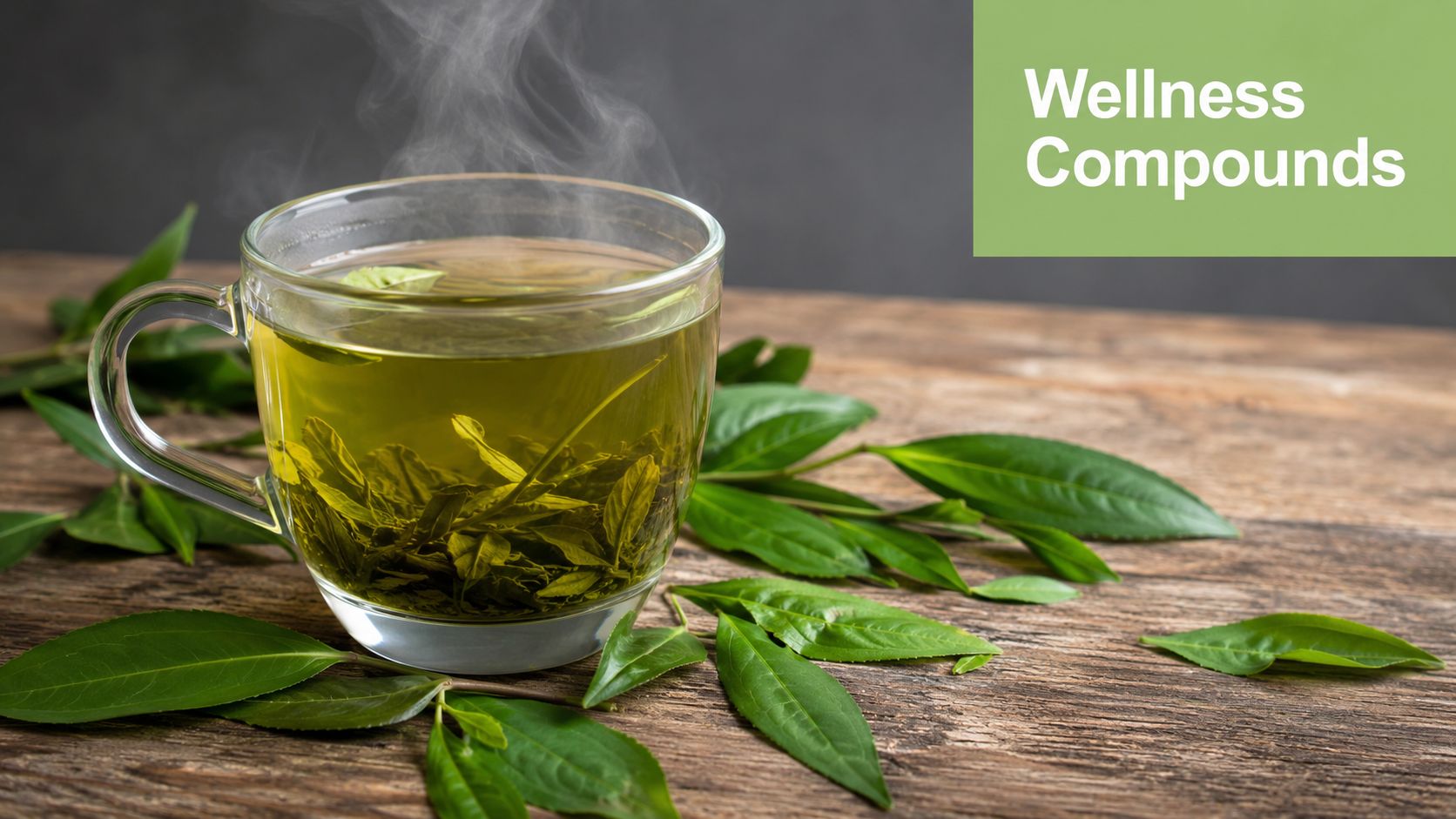
Green tea's wellness reputation starts with what is inside the leaf. Organic certification matters for how the tea is grown, handled, and verified, especially under Australian organic standards, but the compounds people care about come from the tea plant itself. What organic can do is give you more confidence in the growing system behind those compounds, which matters if you want a cleaner, more traceable daily habit.
Polyphenols and catechins
Green tea is rich in polyphenols, a broad group of plant compounds linked to its antioxidant profile. A review of green tea bioactives and brewing conditions explains that these compounds make up a large share of the leaf and notes that green tea contains thousands of naturally occurring bioactive substances.
Within that group, catechins are the stars. EGCG gets the most attention because it is one of the best-studied catechins in green tea. If the tea leaf were a small orchestra, catechins would be the instruments you hear most clearly in the final performance. They shape much of what people mean when they talk about green tea as a wellness drink.
That does not mean every cup feels the same. Leaf quality, freshness, and preparation all affect what reaches your mug.
L-theanine and calm alertness
Green tea also contains L-theanine, an amino acid that helps explain why tea feels different from coffee for many drinkers. The combination of L-theanine and caffeine often creates a gentler sense of alertness, more like a steady tide than a sudden wave.
This is one reason green tea fits so well into everyday routines. A morning cup can help you settle into work. An afternoon brew can feel refreshing without the sharp edge some people notice from stronger caffeinated drinks.
Organic farming does not create L-theanine or catechins. The plant does that naturally. In practical terms, organic certification in Australia gives you a checked and documented production system, which can make it easier to choose tea with the level of traceability and ingredient confidence many wellness-focused drinkers want.
Brewing changes what you get from the cup
Brewing is where leaf chemistry becomes a real-life experience. Water that is too hot can push green tea toward bitterness, while a gentler temperature usually gives you a smoother cup with better balance. As noted earlier in that same preparation review, moderate brewing temperatures and a short steep help extract beneficial compounds without making the tea harsh.
A simple way to picture it is cooking vegetables. Too little heat and you do not get the best texture or flavour. Too much heat and the result turns dull or unpleasant. Green tea works in a similar way.
If you want to put that into practice, starting with a quality loose-leaf option makes a noticeable difference. PepTea's guide to the best organic green tea loose leaf is a useful place to compare styles that suit everyday brewing.
Here's a short visual explainer if you want to see green tea compounds discussed in a more accessible format.
Green tea works best as a daily ritual, not as a miracle product. Its value comes from consistent enjoyment, good brewing, and leaves from a source you trust.
Your Guide to Popular Organic Green Teas
Walk into a good tea shop and you'll quickly learn that green tea isn't one thing. It's a family of styles. Two of the most useful examples are Sencha and Matcha. They show how processing changes not just flavour, but the whole drinking experience.
Sencha for a fresh everyday cup
Sencha is the classic daily green tea for many drinkers. You brew the leaves in water, let them steep, and then remove them. The result is usually light to medium-bodied, grassy, fresh, and gently savoury.
It suits the kind of moment where you want a clean, uncomplicated cup. Mid-morning at your desk. A quiet reset after lunch. A teapot shared with someone who's curious about green tea but not ready for anything too intense.
Matcha for the whole-leaf experience
Matcha is different from almost every other tea because you don't steep and strain it. You whisk the powdered tea directly into water, so you consume the whole leaf.
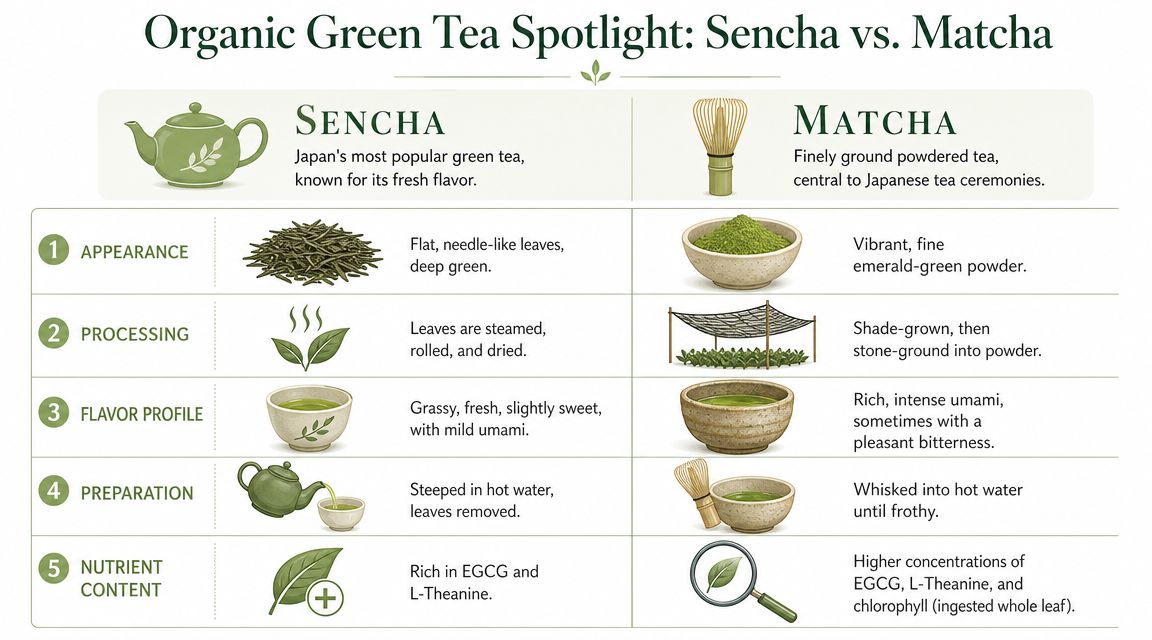
That changes texture, flavour, and intensity. Matcha tends to feel richer, creamier, and more concentrated than a standard leaf brew. The source used in this article notes that a standard cup of brewed green tea can provide 178 to 823 mg of catechins, while products like Matcha that use the entire leaf offer a more concentrated source of those compounds in this green tea overview.
If Sencha feels like a clear, bright conversation, Matcha feels like the full orchestra.
Choosing by mood and use
A simple way to choose:
- Pick Sencha when you want a classic steeped tea with lift and freshness.
- Choose Matcha when you want a fuller texture, a more immersive tea ritual, or a tea that works beautifully in lattes and recipes.
- Use high-quality green tea in other formats if you enjoy wellness drinks beyond the teacup. Green tea is also the traditional base for kombucha, which is one reason it appears so often in functional beverage spaces.
If you want to keep exploring styles beyond these two, this guide to the best organic green tea loose leaf is a useful next read.
Bringing Green Tea Into Your Daily Routine
Knowing what organic green tea is helps. Knowing how to buy, brew, and store it makes the difference between a tea you admire on the shelf and one you enjoy every day.
How to buy with confidence
Look for three things first:
- Certification you can identify. Don't rely on soft words like pure or natural.
- Clear origin details. Tea that tells you where it comes from usually gives you more confidence than tea with a vague back label.
- Fresh-looking leaf or powder. Matcha should look vividly green rather than dull or khaki. Loose green tea should look lively, not tired and dusty.
The one golden brewing rule
Don't pour boiling water straight onto green tea.
Green tea is delicate. If the water is too hot, bitterness can jump forward and flatten the sweeter, softer notes in the cup. Use water that's hot but not aggressively boiling, and give the tea enough time to open without overdoing it.
A simple routine works well:
- Heat your water.
- Let it cool slightly if it has just boiled.
- Brew gently rather than aggressively.
- Taste and adjust next time.
How to store it so it stays good
Tea hates three things: air, heat, and light.
Store green tea in an airtight, opaque container somewhere cool and dry. Keep it away from the stove, sunny windows, and constantly opened pantry spots. Matcha is especially sensitive, so freshness matters even more.
Buy the best tea you can, then protect it properly. Poor storage can undo the care taken in growing and processing it.
Your Organic Green Tea Questions Answered
Can I drink organic green tea every day
For many people, yes. Organic green tea can sit comfortably in a daily routine, much like a regular walk or a bowl of oats. The practical question is not only whether it is organic, but whether the tea suits your body, your caffeine tolerance, and the way you drink it.
With green tea, the key is paying attention to how your body responds. A lighter sencha in the morning may feel very different from a strong matcha in the afternoon. If you are pregnant, managing a health condition, or taking medication, check with a qualified health professional before making it an everyday habit.
Does organic green tea have less caffeine than coffee
Usually, green tea contains less caffeine per cup than coffee, but the experience is often different for another reason too. Green tea also contains L-theanine, an amino acid that can soften the sharper edge people sometimes feel from coffee.
That is why one cup of green tea may feel steadier, while coffee can feel more abrupt. Brewing style matters here. A longer steep, more leaf, or a bowl of matcha can all change the caffeine level in your cup.
Is organic green tea better for the environment
In Australia, organic means more than a nice label on the front of the pack. It points to a certified farming system with rules around synthetic chemicals, soil care, and production methods. For a tea drinker, that matters because the standard connects what happens on the farm to what ends up in your cup.
A healthier farming system can support better soil structure, more balanced growing conditions, and cleaner handling practices. Organic certification does not guarantee that every tea will taste the same or that every farm operates identically. It does give you clearer proof that the grower has met a recognised standard rather than relying on vague claims like natural or clean.
That clarity is a big part of quality.
Organic green tea is best understood through four parts: plant, place, processing, and certification. The leaf is still green tea, but the organic standard asks more of the producer and gives the buyer more confidence in return.
If you're ready to turn that knowledge into a daily ritual, explore Pep Tea for premium organic Matcha and Australian-brewed organic kombucha made for clean flavour, steady energy, and everyday wellness.