
Tag: making matcha tea
Mastering Making Matcha Tea At Home

You’re probably here because you’ve had one of two matcha moments.
The first is the café one. You order a beautiful bright green bowl or latte, take a sip, and wonder why it tastes smooth, creamy and clean there, yet muddy or bitter when you try making matcha tea at home.
The second is the wellness one. You want something that feels steadier than coffee, more intentional than a quick tea bag, and a little more special than another rushed morning drink.
Good news. Matcha isn’t hard. It is precise.
Small details make the difference between a sweet, rounded cup and one that tastes flat or sharp. That’s why matcha feels like both an art and a science. The ritual matters, but technique matters just as much.
Beyond the Green Powder The Art of Making Matcha
A lot of people first meet matcha through a latte. That makes sense in Australia, where café culture shapes what ends up in our kitchens. But once you start making matcha tea properly, it stops feeling like a trend and starts feeling like a practice.
The appeal isn’t just flavour. It’s the kind of energy matcha offers. Many tea drinkers reach for it because it supports a calmer, more focused feeling, which is why matcha has become part of so many wellness routines.
That local interest isn’t imagined. In Australia, matcha imports from Japan increased by over 150% between 2018 and 2023, and café adoption of matcha lattes rose 78% in Sydney and Melbourne venues by 2022, according to this overview of the global matcha tea industry.
Those numbers line up with what’s happening on the ground. More cafés are serving matcha. More people want to make it at home. More shoppers are learning that not all green powder is the same.
Practical rule: Great matcha is less about fancy gear and more about doing a few simple things properly.
That starts with understanding what matcha is meant to be. It isn’t brewed like ordinary leaf tea. You’re whisking powdered tea directly into water, so every choice matters. The powder quality, the water temperature, the bowl shape, the whisking motion, even whether you sift first.
When people struggle with matcha, it usually isn’t because they’re bad at it. It’s because nobody showed them the small mechanics that change the result.
If you want the full background on sourcing and production, how matcha tea is made is worth reading before you buy your next tin. Knowing how it gets from leaf to stone-ground powder helps you understand why fresh, well-handled matcha behaves so differently in the bowl.
Making matcha tea well is a skill. The nice part is that it’s a very learnable one.
Gathering Your Tools and Choosing Your Matcha
Before the water goes on, set yourself up properly. Matcha rewards preparation. A little order at the start makes the whole process smoother.
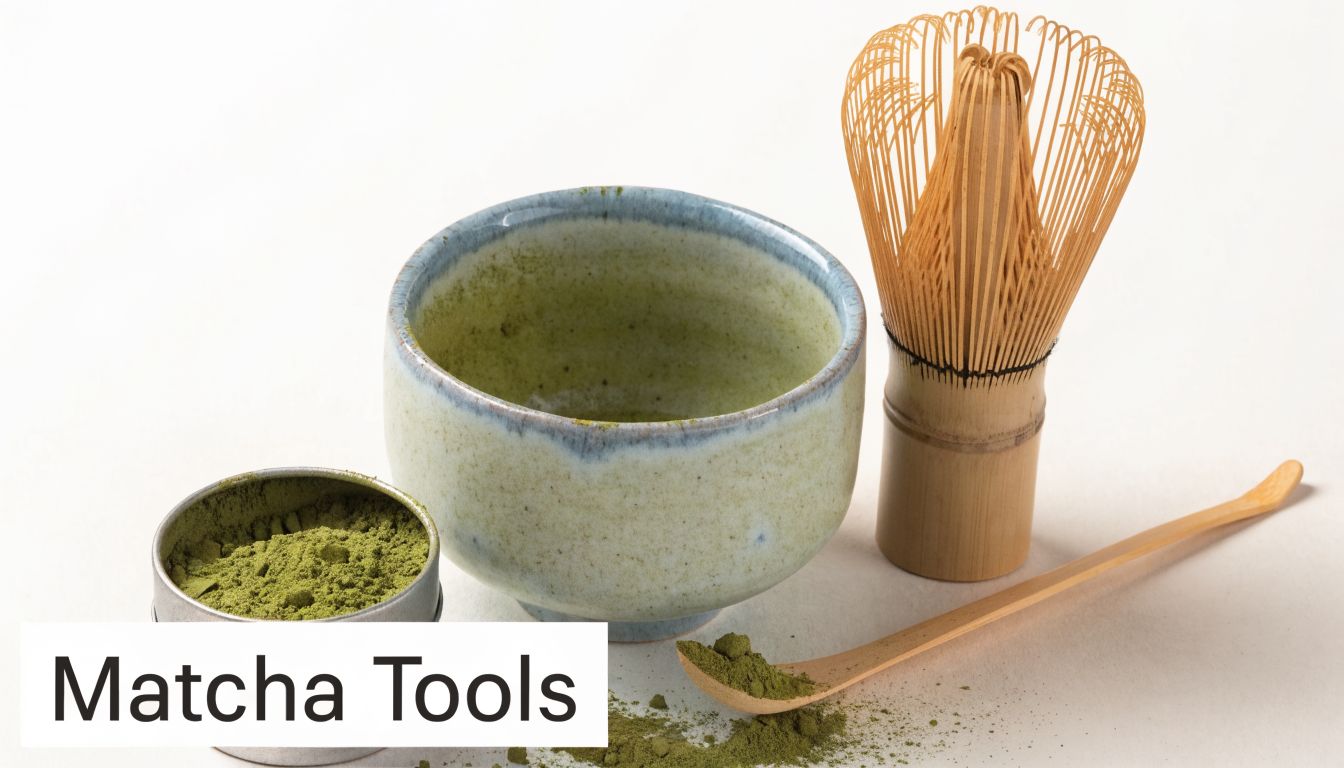
The classic tools and what each one does
The traditional setup is simple.
- Chawan: This is the bowl. Its wide shape gives you room to whisk properly and helps the foam form instead of splashing up the sides.
- Chasen: The bamboo whisk. This is the tool that transforms matcha and water into a smooth suspension rather than a gritty drink.
- Chashaku: The bamboo scoop. It helps with consistent portioning and makes the ritual feel more deliberate.
- Fine sieve: Not always included in a starter set, but essential if you want a smooth cup.
- Kettle and thermometer: Useful because water temperature is one of the most important variables.
A good bowl and whisk do most of the heavy lifting. If you only invest in two things, make them those.
What to use if you don’t have traditional gear
You do not need a formal tea setup to start making matcha tea at home.
A small cereal bowl can stand in for a chawan. A kitchen sieve works well for sifting. If you don’t own a chasen yet, a handheld milk frother is the most practical substitute for lattes and casual home use.
That said, alternatives do change the experience.
A bamboo whisk gives you more control in a traditional bowl of matcha. It creates a finer foam and lets you feel the texture changing as you whisk. A milk frother is convenient, but it can over-aerate or create larger bubbles, especially in a narrow mug.
If you want ritual and texture, use a chasen. If you want speed on a weekday morning, use what gets you drinking good matcha consistently.
Ceremonial and culinary grade are not interchangeable
At this stage, many people waste good powder, or judge matcha unfairly.
Ceremonial-grade matcha is best for drinking with water. It should taste softer, cleaner and more nuanced on its own. When you’re preparing usucha or koicha, this is the right place to spend more.
Culinary-grade matcha is better for recipes where it has support. Think lattes, smoothies, baking, overnight oats or energy balls. It’s designed to hold its character when mixed with milk, fruit, sweeteners or fats.
Here’s the easiest way to decide.
| Use | Best matcha choice | Why |
|---|---|---|
| Traditional bowl with water | Ceremonial grade | The flavour has nothing to hide behind |
| Hot latte | Culinary or robust ceremonial | Milk softens edges and changes the balance |
| Iced latte | Culinary grade | Cold drinks often need a stronger flavour presence |
| Smoothies and baking | Culinary grade | Better value and more assertive character |
If you’re still comparing options, this guide to different grades of matcha helps clarify what each grade is for and what to look for before buying.
What quality looks like before you even taste it
You can spot a lot from the tin.
Look for:
- Colour: A lively green is a good sign. Dull, khaki or yellow-green powder often signals age, oxidation or lower drinking quality.
- Texture: Good matcha should feel very fine, almost silky.
- Aroma: Fresh matcha smells green, soft and slightly sweet. If it smells stale or dusty, it probably tastes that way too.
- Behaviour in water: Better matcha incorporates more willingly and tastes more balanced.
A simple home setup that works
If you’re building a practical home station, keep it modest:
- One bowl you enjoy using
- One bamboo whisk
- One sieve
- One matcha for drinking
- One matcha for lattes and recipes
That setup covers nearly all common preparations. You don’t need a collection. You need tools that suit the way you drink matcha.
Mastering the Ceremonial Brew for a Mindful Moment
The most satisfying bowl of matcha is often the simplest one. No milk. No sweetener. Just powder, water, air, and a few minutes of attention.
Traditional usucha, or thin matcha, is the ideal style for beginners. It teaches you what matcha tastes like and makes every later drink better, including lattes.
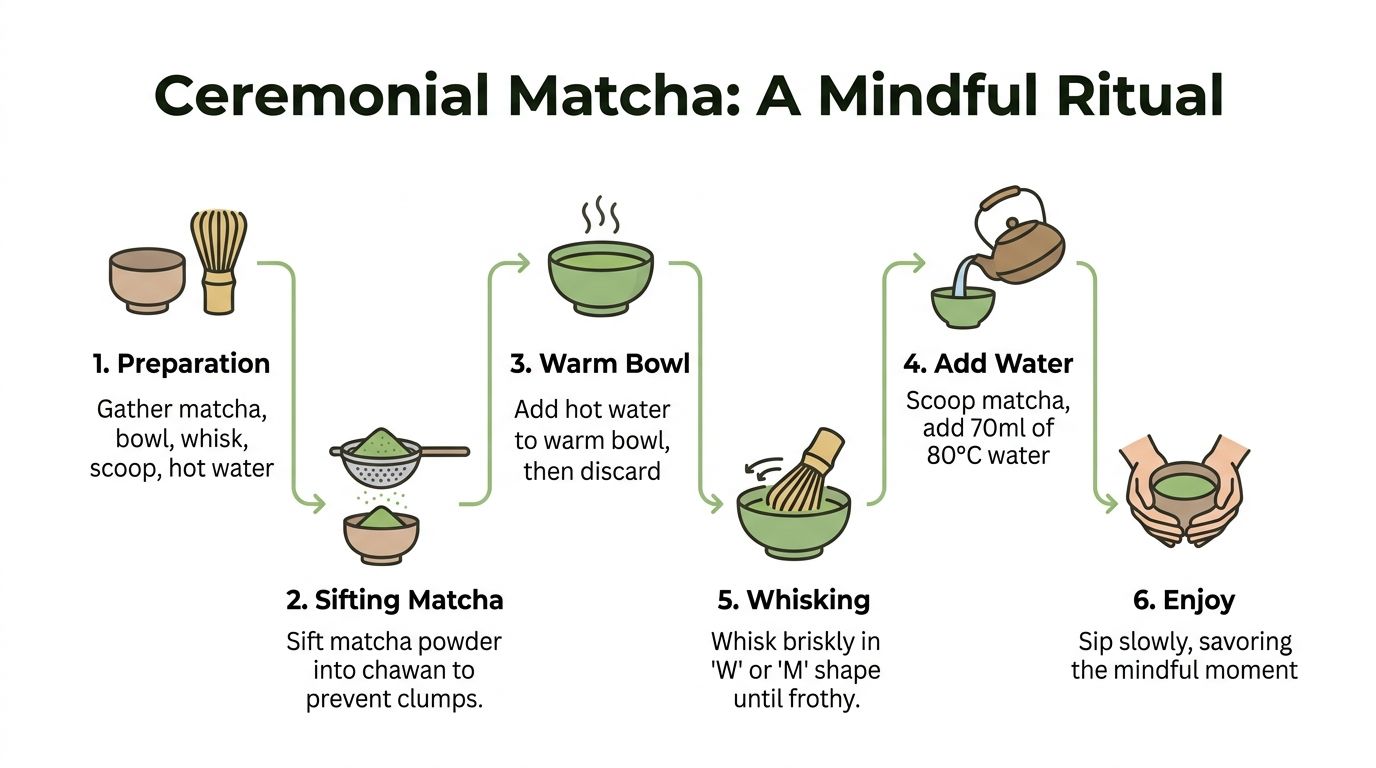
Start with warmth and order
Warm the bowl first. Add a little hot water, swirl it around, and let the whisk soften briefly in the bowl. Then tip the water out and dry the bowl.
That little preparation step matters. A warm bowl helps the powder disperse more evenly and makes the ritual feel settled from the first movement.
Sift your matcha into the bowl. For usucha, use 1 to 2 teaspoons, or 2 to 4 grams, and pass it through a fine mesh sieve. The reason is simple. Matcha clumps easily, and once wet, those clumps are harder to break apart cleanly.
According to this usucha preparation guide, the usual method starts by sifting 1 to 2 teaspoons (2 to 4g) of ceremonial-grade matcha into a preheated bowl before adding water.
The water matters more than people think
Most bad homemade matcha comes down to one problem. The water is too hot.
For usucha, use water at 70 to 80°C. That same guide notes that 70 to 80°C is the critical range, and that overheating can degrade beneficial compounds and create bitterness.
If you’ve just boiled the kettle, let it sit briefly before pouring. If you own a temperature-control kettle, use it. If you don’t, make a habit of slowing down rather than pouring straight off the boil.
Here’s a practical ratio that works well for a bowl of usucha:
- 2 to 4g matcha
- 60ml warm water to begin
- More hot water if you want a longer, lighter bowl
You’re not trying to drown the powder. You’re trying to suspend it smoothly.
Water that’s too hot makes matcha taste harsher than it is. People often blame the powder when the kettle is the real problem.
Whisk for foam, not force
Once the water is in, start by gently combining the powder and water so there are no dry pockets. Then whisk briskly with the chasen in a zigzag M or W motion.
Don’t stir in circles. Circular stirring blends, but it doesn’t create the same fine foam.
The same usucha source notes that whisking vigorously for 30 to 45 seconds is key to building a creamy froth layer over 2mm thick. That foam isn’t just for looks. It changes how the liquid feels on the palate and gives the bowl a softer first sip.
A few technique notes help:
- Use your wrist, not your whole arm
- Keep the whisk tips near the surface once the mixture is combined
- Finish with a gentle sweep to tidy larger bubbles
- Drink promptly while the texture is lively
The finished bowl should look vibrant, lightly glossy and topped with fine foam rather than big soap-like bubbles.
Taste it before changing it
Sip before you decide it needs sweetener.
Well-made ceremonial matcha should have a balance of green freshness, slight savoury depth, gentle bitterness and a round finish. If it’s aggressively bitter, something usually went wrong in preparation.
Common causes include:
| Result in the bowl | Likely cause | What to change |
|---|---|---|
| Sharp bitterness | Water too hot | Lower the temperature |
| Gritty texture | Powder not sifted well | Sift before whisking |
| Flat or weak flavour | Too much water | Use less water first |
| No foam | Poor whisking motion | Use a fast zigzag movement |
Turn it into a quiet ritual
One reason people stick with matcha is that the process slows them down in a useful way. There’s enough technique to hold your attention, but not so much that it becomes fussy.
If you enjoy pairing your tea with a few minutes of breathing or stillness, these simple meditation techniques are an easy companion resource. Matcha and a short mindful pause work well together because both ask you to pay attention to small things.
The best ceremonial bowl isn’t the one that looks perfect. It’s the one that makes you slow down enough to notice it.
For enthusiasts who want to try koicha
Koicha is thick matcha. It’s richer, denser and far less forgiving than usucha.
The method changes noticeably. The verified preparation guidance for koicha calls for 4g (2 tsp) of sifted matcha with 30ml of 75°C water, then slow kneading rather than vigorous whisking, as outlined in this koicha technique guide.
A few distinctions matter:
- Texture: Koicha should be glossy and thick, more like a smooth paste than a frothy tea.
- Movement: You knead and press with the whisk rather than beating air into the bowl.
- Powder quality: Koicha demands excellent matcha. Lower grades become unpleasant quickly.
- Serving style: It’s sipped slowly in small amounts.
If usucha is your daily practice, koicha is your deep dive. Start there only after you can make a balanced bowl of thin tea without guessing.
Creating the Perfect Matcha Latte and Iced Drinks
A good matcha latte should still taste like matcha. Too many homemade versions end up as sweet milk with a green tint.
The fix is straightforward. Build a proper matcha base first, then add milk.
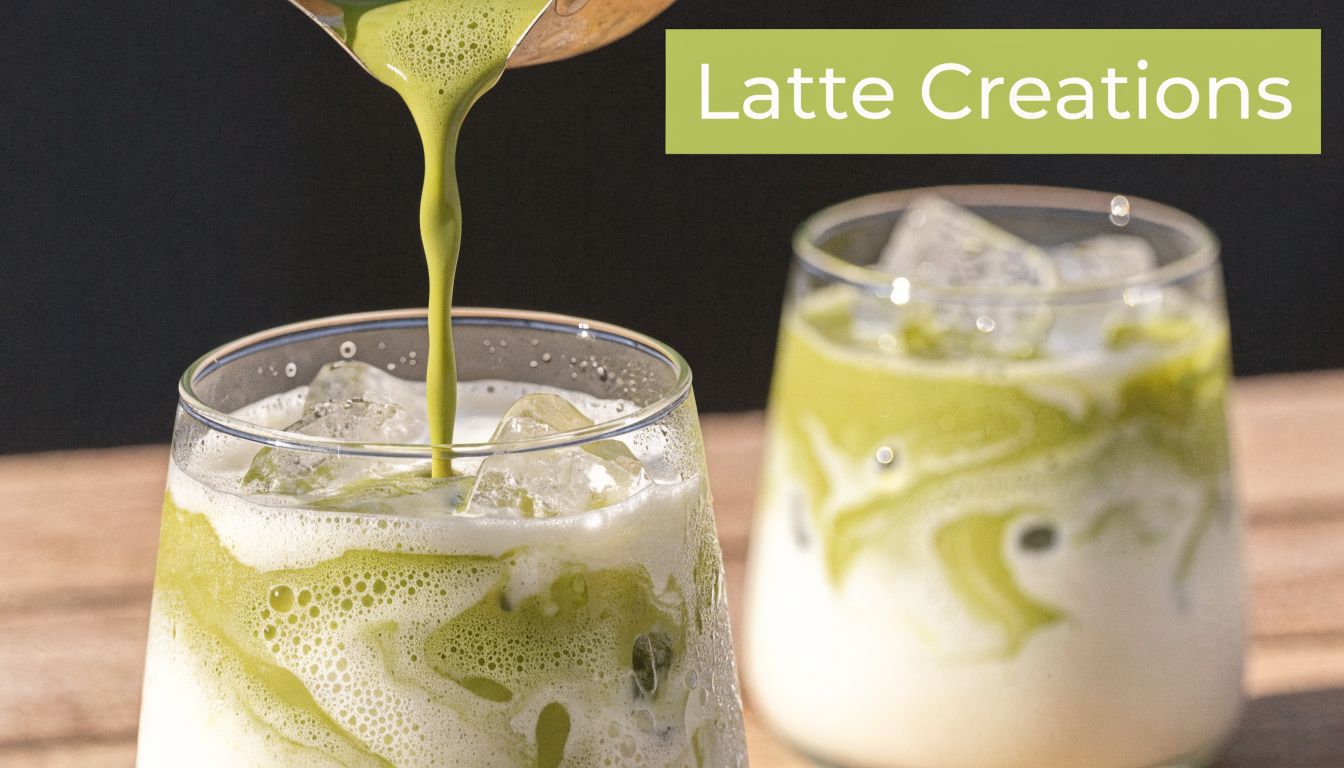
The hot latte method that stays smooth
Start with sifted matcha in a bowl or cup. Add a small amount of hot water, just enough to make a smooth paste. Whisk or froth until there are no lumps.
Then add warm or steamed milk.
That order matters. If you dump powder straight into a full cup of milk, it tends to float, clump or leave sediment at the bottom. A concentrate-first method gives you colour, flavour and a much cleaner texture.
A practical home formula looks like this:
- Use culinary-grade matcha for everyday lattes
- Make a smooth paste with a little hot water
- Add your preferred milk
- Sweeten lightly only if needed
Which milk works best
Different milks change the drink more than people expect.
Oat milk gives body and softness. It’s often the easiest route to a café-style texture.
Soy milk has enough protein to foam well and gives a more structured finish.
Almond milk can taste lighter and nuttier, though some versions split more easily.
Dairy milk creates richness, but it can mute delicate matcha if you use too much.
For café service, consistency matters as much as flavour. Whatever milk you use, keep it stable across drinks so the matcha behaves predictably from one cup to the next.
Iced matcha needs a stronger base
Cold dulls flavour. That’s why an iced matcha latte usually needs a slightly bolder concentrate than a hot one.
Make the matcha base first, let it smooth out completely, then pour it over ice and cold milk. If you build it directly in the glass without dissolving the powder, you’ll often get clumps stuck to the ice or streaks of unmixed powder.
If you want a fuller method with serving ideas, how to make iced matcha latte is a useful reference.
For anyone experimenting beyond the classic version, this Strawberry Matcha Latte is a good example of how fruit can work when the layers are kept clean and the matcha base is made properly first.
Here’s a quick visual if you like seeing the pour and texture in action.
What works in cafés and what doesn’t
For home drinkers, making one latte at a time is fine. For cafés, speed changes the approach.
What works:
- Batching a matcha concentrate for short service windows
- Sifting powder in advance for rush periods
- Training staff to dissolve matcha before milk is added
- Using the same cup size and milk ratio every time
What doesn’t:
- Scooping matcha straight into cold milk
- Relying on vigorous shaking to fix poor mixing
- Using boiling water for the base
- Over-sweetening low-quality powder to hide bitterness
In latte prep, smoothness starts before milk enters the cup. If the concentrate is rough, the finished drink will be rough too.
Keep the flavour in balance
The best latte still lets you taste the tea.
If you need lots of syrup to enjoy it, the issue may be the matcha choice, the water temperature, or the ratio. Start by correcting those before adding more sweetness.
That’s the trick to making matcha tea in modern café form. Respect the original ingredient even when the drink is casual.
Troubleshooting and Storing Your Matcha for Lasting Freshness
Most matcha problems look mysterious but aren’t. The bowl tells you what went wrong if you know what to watch for.
Why your matcha tastes bitter
People often assume bitterness means they bought the wrong powder. Sometimes that’s true. More often, the water was too hot or the ratio was off.
If your matcha tastes harsh, check three things first:
- Water temperature: Boiling water is a common culprit.
- Powder amount: Too much matcha in too little water can create an unpleasantly dense bowl.
- Drink style: A powder suited to lattes may taste rough when prepared with just water.
A bitter bowl is often a preparation problem before it’s a product problem.
Why it’s clumpy or gritty
Clumps come from moisture, static, storage conditions, or skipping the sieve.
The quickest fix is also the simplest. Sift every time. It takes seconds and improves texture immediately.
If your matcha still feels gritty after whisking, the powder may already have absorbed some moisture in storage. That’s common in humid kitchens.
Why it won’t froth
No foam usually comes down to one of four issues:
| Problem | Likely reason | Better move |
|---|---|---|
| Flat surface | Stirring instead of whisking | Use a quick zigzag motion |
| Large bubbles only | Whisking too high or too slowly | Keep whisk tips near the surface |
| Thin weak foam | Too much water too early | Start with less |
| Poor texture overall | Old or poorly stored matcha | Open a fresher tin |
Storage matters more in Australia
A common assumption is that preparation gets all the attention and storage barely matters. In practice, storage can ruin excellent matcha before you even whisk it.
Verified guidance notes that matcha oxidises when exposed to light and air, and that for warm, humid climates like many parts of Australia, it should be kept in an airtight, opaque container in the refrigerator to preserve flavour and antioxidant quality, as explained in this storage advice on common matcha mistakes.
A good Australian storage routine
This works well for most homes and hospitality settings:
- Keep it sealed tight: Air is one of the fastest ways to dull aroma and colour.
- Use an opaque container: Light exposure gradually strips away freshness.
- Store in the fridge: Especially helpful in warm or humid conditions.
- Avoid steam zones: Don’t keep matcha above the kettle or near the dishwasher.
- Open only when needed: Repeated warm-air exposure shortens the life of the powder.
Fresh matcha smells alive when you open the container. If the aroma has almost disappeared, the cup usually has too.
If you refrigerate matcha, let the container come closer to room temperature before opening. That reduces the chance of condensation settling into the powder.
Expanding Your Matcha Horizons Beyond the Tea Bowl
Once you can make a clean bowl and a reliable latte, matcha becomes much more than a drink. It turns into a flexible pantry ingredient.
That’s where culinary-grade matcha earns its keep. You can use it often, generously, and without feeling like you’re wasting a tea meant for quiet sipping.
Easy ways to use matcha daily
Some of the best uses are the least complicated.
- Morning smoothie: Blend matcha with banana, yoghurt or plant milk, and a handful of ice.
- Overnight oats: Stir a little into your oat mixture for a greener, more savoury breakfast profile.
- Yoghurt bowl: Mix a small amount with honey or yoghurt, then top with fruit and seeds.
- Baking: Add it to cookies, muffins, bliss balls or pancake batter.
- No-bake snacks: Matcha works well in coconut-based bites and cashew slices.
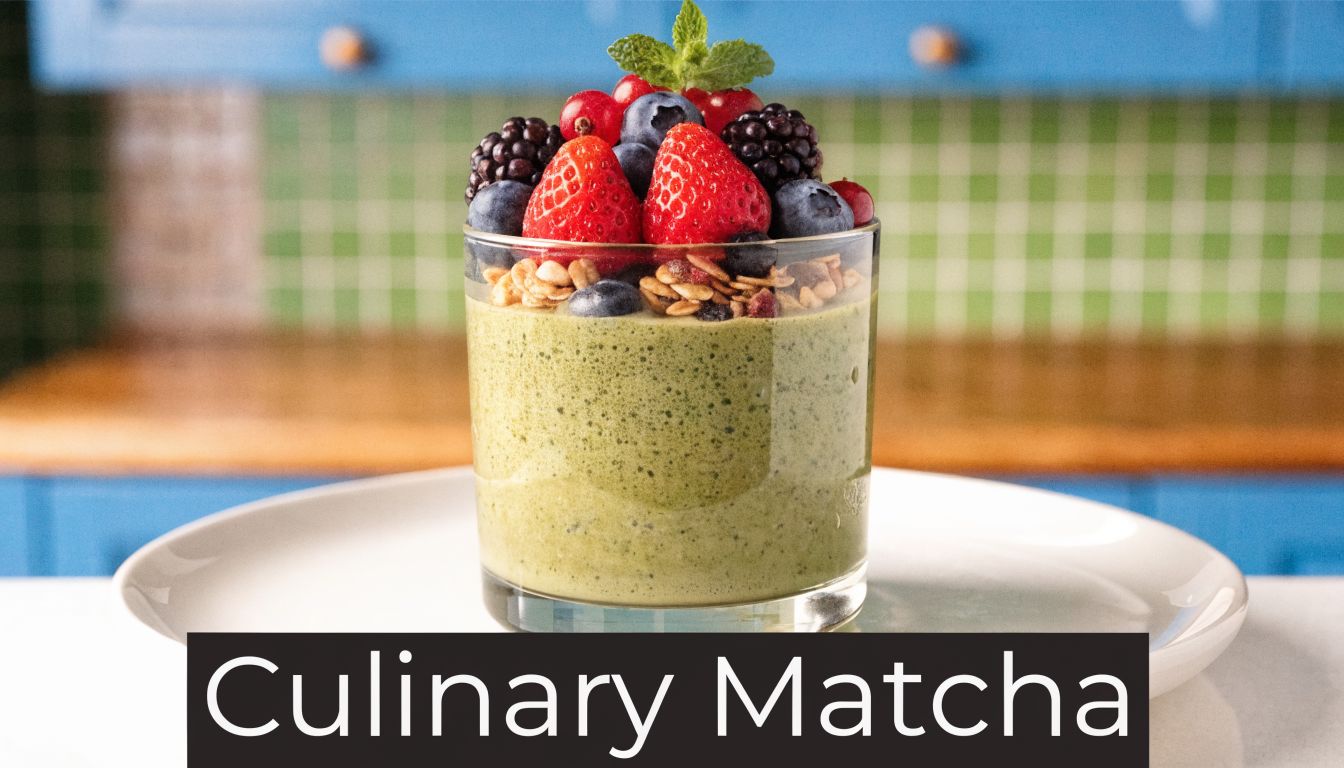
The main rule is balance. Matcha has a distinct green, slightly savoury personality. Pair it with ingredients that support that rather than bury it.
Matcha works best when the format suits the grade
A lot of disappointment comes from using one type of matcha for everything.
Use ceremonial matcha when you want the tea to stand alone. Use culinary matcha when other ingredients are involved. That simple decision makes recipes cleaner and more cost-effective.
A thoughtful matcha and kombucha pairing
For wellness-focused drinkers, one of the more interesting ideas is pairing matcha with kombucha.
The verified brief notes that combining matcha with kombucha is an emerging trend in functional beverages and that the pairing brings together matcha’s L-Theanine for calm focus with kombucha’s probiotics for gut health, while also pointing out that existing online guidance on this combination is still limited.
That makes sense from a practical point of view. Matcha offers depth and structure. Kombucha adds acidity, lift and fermentation character.
A simple way to explore the pairing at home is to whisk a small, smooth matcha concentrate first, let it cool slightly, then add it to a glass with ice and a plain or gently flavoured kombucha. You want the tea integrated, not dumped in dry.
A few trade-offs matter:
- Acidity changes flavour perception: Kombucha can sharpen matcha’s edges.
- Sweetness level matters: A drier kombucha tends to let the tea show through more clearly.
- Texture needs care: If the matcha isn’t mixed smoothly first, the drink can feel chalky.
Matcha and kombucha can complement each other nicely, but only when each one still tastes like itself.
For cafés, this pairing opens up non-alcoholic menu ideas that feel more thoughtful than another sugary spritz. For home drinkers, it’s a good reminder that making matcha tea well gives you a base for far more than the traditional bowl.
Your Questions About Making Matcha Answered
Do I need a bamboo whisk to make matcha?
No, but it helps. A chasen is still the best tool for traditional matcha because it disperses the powder gently and creates fine foam. If you’re making lattes, a handheld milk frother is a practical substitute. A standard spoon is the least effective option because it tends to leave clumps behind.
Why isn’t my homemade matcha as bright green as the café version?
Usually it’s one of three things. The matcha may be older, the grade may be better suited to recipes than straight drinking, or your ratio may be too diluted. Lighting also changes what you see in the cup or glass, especially with iced drinks.
Is matcha better than coffee?
That depends on what you want from it. Coffee is direct and punchy. Matcha tends to feel steadier and more ritualistic. Many people prefer matcha when they want a calmer kind of focus and a slower start to the day.
Can I make matcha without sweetener?
Absolutely. In fact, learning to enjoy it unsweetened is one of the best ways to judge powder quality and improve your technique. If it tastes unpleasant without sweetener, fix the preparation before assuming the drink always needs sugar.
Should I use ceremonial matcha in a latte?
You can, but it isn’t always necessary. For everyday lattes, a good culinary-grade matcha often makes more sense. Save ceremonial-grade powder for bowls where you want to taste the tea on its own.
Can I prepare matcha in advance?
You can make a short-term concentrate for convenience, especially for lattes, but freshly whisked matcha always has the best texture. If you’re drinking it as a bowl of tea, make it and drink it straight away.
If you’re ready to put this into practice, explore Pep Tea for premium organic matcha and Australian-made sugar-free organic kombucha. Whether you want a ceremonial bowl, a café-style iced latte, or a more functional daily ritual, we’ve got the ingredients to help you make it well.