
Tag: matcha caffeine
Is Matcha Green Tea Latte Good for You? a Real Look

A matcha green tea latte can be a healthy everyday drink or a sugar bomb in disguise, depending almost entirely on how it's prepared. A standard iced serving sold in Australia contains 240 kJ, 28 g of carbohydrate, 26 g of sugar, and 75 mg of caffeine, while an unsweetened preparation can look very different.
So, is matcha green tea latte good for you? The honest answer isn't a simple yes or no. Matcha powder, milk, sweeteners, serving size, and brewing strength all shape what ends up in your cup. The same vivid green drink can support a lower-sugar routine when whisked with unsweetened milk, or become closer to a sweet café treat when made with syrup, sweetened powder, and a large milk base.
A tea professional would start with the ingredient system, not the marketing around the word “matcha”. Let's look at what changes the experience, from whole-leaf processing and caffeine to powder quality, milk choice, and the sweetener hiding in many café recipes.
What Makes a Matcha Latte Different From Your Usual Coffee
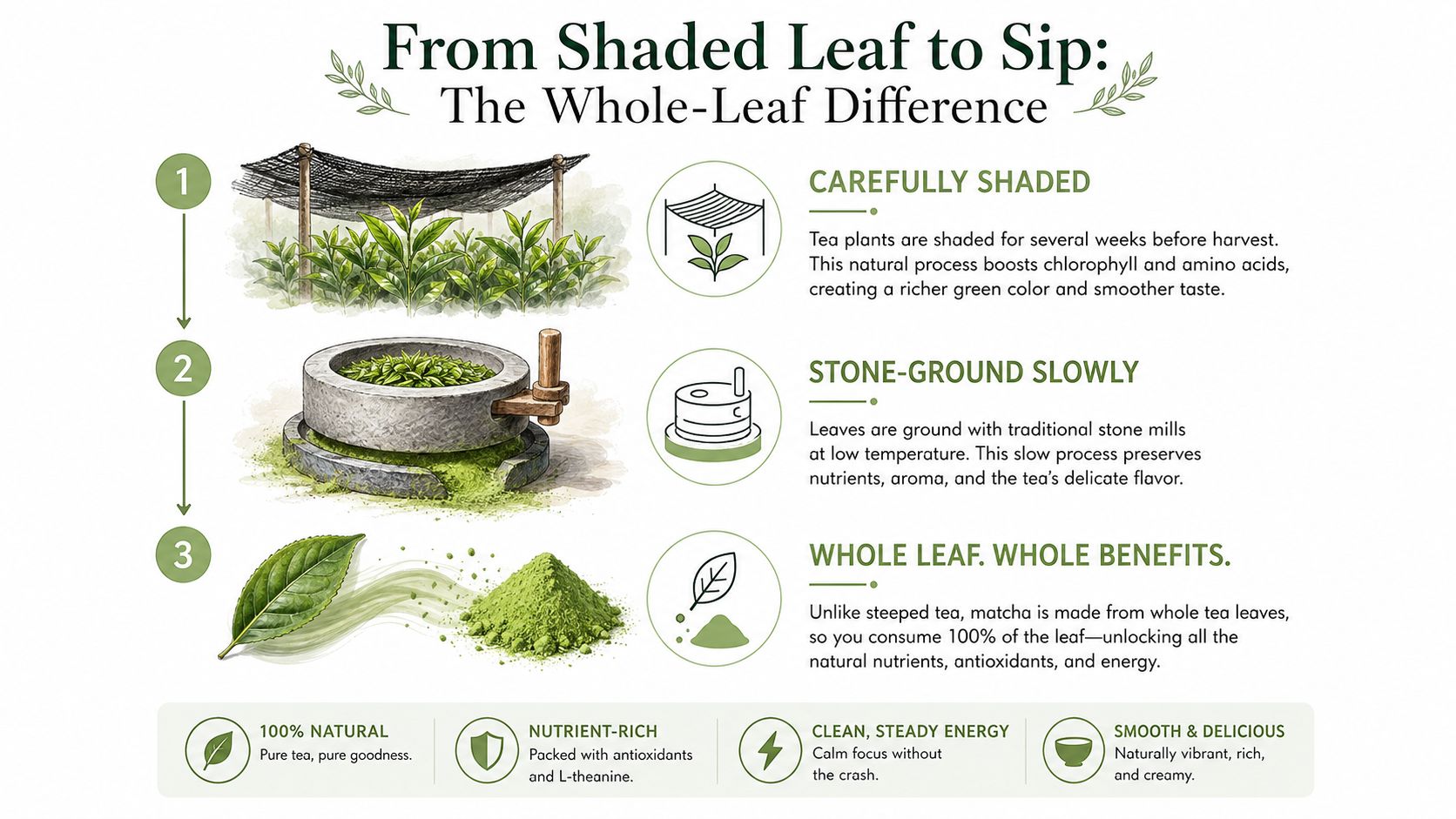
Matcha starts with a different physical format from both steeped green tea and brewed coffee. Producers shade tea plants before harvest, then process the leaves and grind them into a fine powder. When you drink matcha, you consume the powdered leaf rather than drinking water that has passed over or through the leaves.
That distinction matters because the whole leaf brings along its naturally occurring polyphenols, catechins, chlorophyll, caffeine, and amino acids. Published analyses report total polyphenols in matcha at 169–273 mg GAE/g and caffeine at 18.9–44.4 mg/g. You can read the compositional analysis in this peer-reviewed matcha study.
The taste is part of the quality signal
Good matcha usually has an earthy, savoury umami character, with gentle vegetal sweetness and a rounded finish. Coffee offers roasted aromas and bitterness, while steeped green tea tends to taste lighter because the leaf remains outside the cup.
A harsh or dusty flavour doesn't automatically mean matcha is unsafe, but it can indicate a powder that needs help from sugar or flavouring. Culinary matcha has a stronger flavour profile designed to work in baking, smoothies, and other recipes. Ceremonial-style matcha is generally selected for drinking, where colour, aroma, texture, and balance are easier to notice.
Practical rule: Judge the latte by three levers, powder grade, milk choice, and sweetener load. Those choices often matter more than the word “matcha” on the menu.
Antioxidants and L-Theanine Inside a Genuine Matcha Powder
Matcha is often discussed as an antioxidant-rich tea because the whole powdered leaf remains in the drink. Its catechins include EGCG, a compound associated with antioxidant activity, along with other plant compounds such as rutin, quercetin, and chlorophyll. Australian nutrition guidance describes EGCG as being investigated for antioxidative, antiviral, anti-inflammatory, anti-obesity, and hypolipidemic effects, while also stressing that more research is needed for most health conditions. The same guidance discusses a commonly recommended green tea intake of 2 to 3 cups daily, providing about 240 to 320 mg of polyphenols. You can explore that cautious overview in Australian green tea nutrition guidance.
The important distinction is exposure, not magic. A steeped tea infusion extracts some compounds into water, while matcha leaves the finely ground leaf in the cup. That can make matcha more concentrated, but it also means the amount of powder used and the quality of the product matter.
Why L-Theanine feels different
L-Theanine is an amino acid naturally present in tea. Matcha drinkers often describe the combination of caffeine and L-Theanine as calm focus, but individual responses vary. It shouldn't be treated as a guarantee against jitters, anxiety, or an afternoon energy dip.
Water temperature also affects flavour. Boiling water can make matcha taste more bitter and less smooth, encouraging people to add more sweetener. A gentler approach helps preserve the drink's delicate texture and allows the umami character to remain noticeable.
| Compound | Matcha Latte Serve | Steeped Green Tea |
|---|---|---|
| Catechins and other polyphenols | Whole powdered leaf is consumed, so the drink may provide a concentrated amount | Compounds are extracted into the infusion, with the leaves discarded |
| Caffeine | A moderate stimulant dose, shaped by the powder amount | Lower concentration varies with tea and brewing |
| L-Theanine | Naturally present in the leaf powder | Present in green tea infusion |
| Chlorophyll | Consumed with the powdered leaf | Less directly consumed because leaves are removed |
For readers interested in the relationship between this amino acid and matcha, PepTea explains L-Theanine in matcha green tea. The sensible conclusion is that matcha may contribute useful plant compounds, but it isn't a cure-all. A low-sugar recipe lets those qualities remain part of a balanced beverage rather than burying them under sweetness.
Caffeine Compared With Coffee, Black Tea, and Green Tea
Is matcha closer to green tea or coffee for caffeine? It depends on the powder amount, milk, and serving size. Australian reporting places a 250-millilitre cup of matcha at about 60–75 mg of caffeine, compared with about 24–45 mg for green tea and about 100 mg for coffee in the same volume. These figures are summarised in Australian reporting on matcha and coffee caffeine.
Black tea also varies. The Australian Institute of Sport lists green tea at about 30–50 mg per 250 mL cup and black tea at 25–110 mg per 250 mL cup. The range makes the drink name an incomplete guide. Powder grade and quantity, cup size, and the recipe all shape the final caffeine dose. A further benchmark appears in this Australian matcha caffeine reference.
What changes the caffeine in your cup
A small homemade latte using a modest amount of powder will usually contain less caffeine than a large café drink made with a generous scoop. Milk changes texture and flavour, not the caffeine from the matcha itself. A second caffeinated drink later in the day also adds to your overall intake.
Some people experience matcha as a steadier lift than coffee. The tea's natural combination of caffeine and L-Theanine may contribute to that impression, but it does not remove caffeine's effects. If you are prone to palpitations, anxiety, disrupted sleep, or caffeine headaches, choose the powder amount and timing with care.
A useful comparison: Matcha often sits between ordinary green tea and coffee for common serving sizes. “Natural” describes the source, not an absence of stimulant effects.
The Sugar Question Most Matcha Latte Advice Skips Over
The most important question may be what else is in the cup. A matcha latte made with unsweetened powder and plain milk is a different beverage from one made with flavoured syrup, vanilla sauce, sweetened milk, or condensed milk.
An Australian standard iced matcha green tea latte provides 26 g of sugar and 28 g of carbohydrate per serving, alongside 75 mg of caffeine and 240 kJ. Those figures come directly from the Australian product nutrition information for an iced matcha latte. The matcha may still contribute catechins, but the added ingredients change the overall nutritional picture.
Read the order as an ingredient list
Cafés often use sugar to soften bitterness, especially when the powder is culinary grade or when the drink is served cold. The common additions include:
- Flavoured syrups: Vanilla, caramel, or other syrups can make the latte taste more like a dessert.
- Sweetened powders: Some commercial matcha blends contain sugar before the powder reaches the shaker.
- Honey or maple syrup: These may sound more natural, but they still add free sugar.
- Condensed milk: This creates a rich texture and pronounced sweetness, but it can substantially increase the sugar content.
| Drink Preparation (Large/16 oz) | Approx. Added Sugar | % of WHO Daily Free-Sugar Limit (25 g) |
|---|---|---|
| Unsweetened matcha with unsweetened milk | No added sugar from the recipe | Not applicable |
| Sweetened café-style matcha | Varies by powder, syrup, and milk | Check the café nutrition panel |
| Standard iced Australian café example | 26 g total sugar per serving | Compare with the 25 g reference limit, noting that total sugar isn't automatically the same as added sugar |
The table needs a careful reading. The Australian product figure is total sugar, so it shouldn't be relabelled as added sugar without a full ingredient breakdown. It still demonstrates why a reader should ask whether the café uses sweetened matcha or milk. For a practical recipe without added sugar, see PepTea's guide to making a sugar-free matcha latte.
An unsweetened Australian matcha latte blend can list only 0.2 g of sugars per serving while still containing caffeine, showing that the ingredient system, not matcha powder alone, determines whether the drink is low sugar. Naturally occurring lactose in dairy milk isn't the same as added sucrose from syrup, so you don't need to demonise milk or sweetness. You need to know which type you're drinking and how much has been added.
Milk Choices and a Simple Home Method for a Healthier Cup
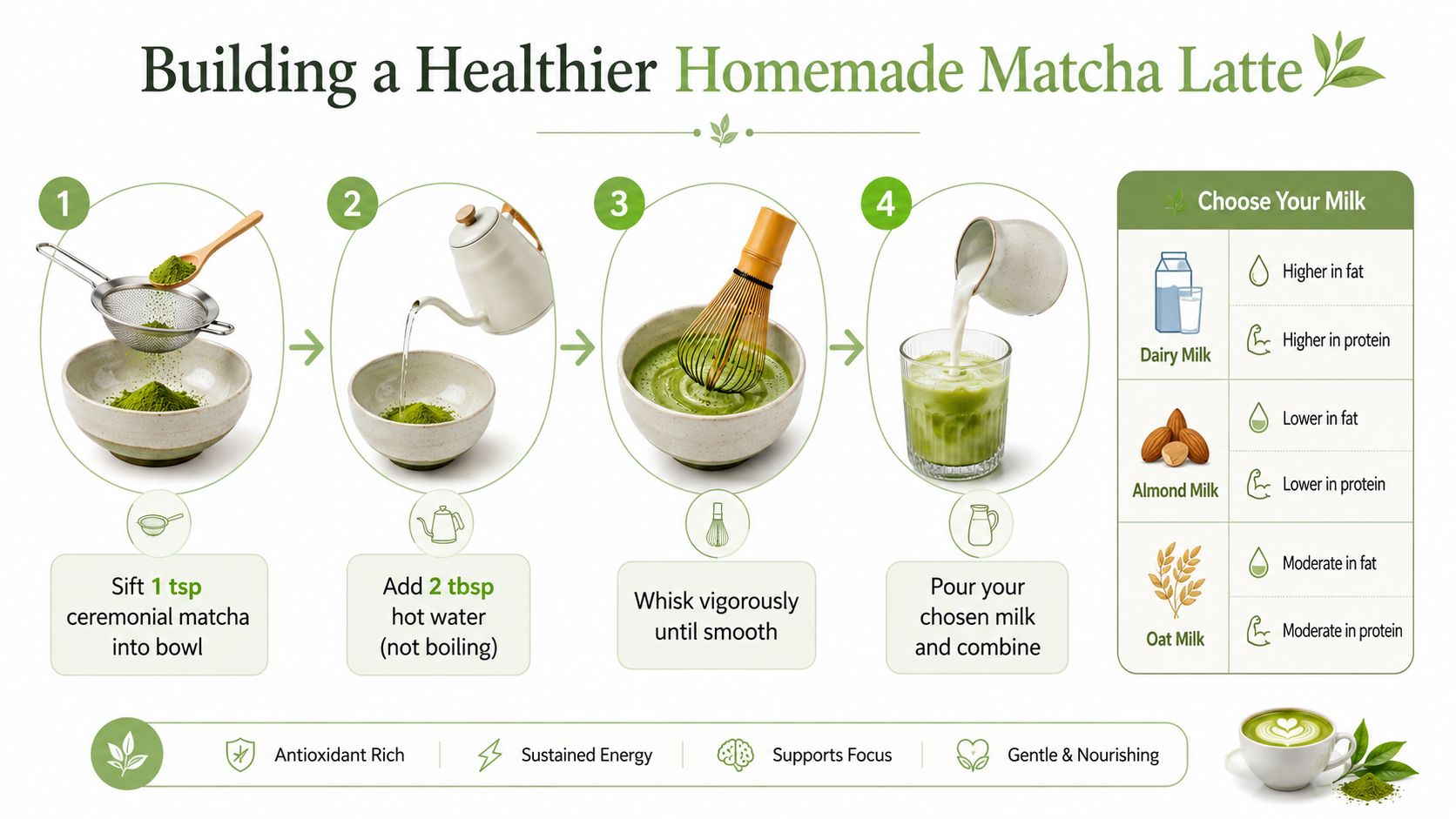
Milk changes more than the colour of a matcha latte. It affects body, foam, flavour, protein, fat, and any sugar already present in the carton. Dairy milk usually provides a familiar creamy texture and useful protein, while skim milk creates a lighter drink. Soy milk can foam well and brings plant protein, whereas almond milk is lighter and often less creamy.
Oat milk gives a naturally soft, sweet flavour, but barista-style versions can contain added oils and sweeteners. Coconut milk contributes a distinctive richness, while almond and coconut options may provide less protein than dairy or soy. Always check the ingredient panel, especially for “barista” blends, because recipes differ between brands.
A reliable home method
- Sift the powder. Use 1–2 g of ceremonial-grade matcha to remove clumps and create a smoother texture.
- Add hot water. Pour in 60 mL of hot water below 80°C, then whisk until the powder forms a smooth, lightly frothy suspension.
- Warm the milk. Heat 200–220 mL of your chosen milk separately. Don't boil it, as overheating can flatten the flavour.
- Combine gently. Pour the milk into the whisked matcha and taste before sweetening.
- Adjust only if needed. Unsweetened vanilla can add aroma without much sweetness. If you prefer maple syrup, start with half a teaspoon and see whether you still taste the tea.
The water temperature is a practical quality control step. Very hot water can intensify bitterness, which often leads to a heavier pour of syrup. Unsweetened milk also keeps the drink closer to the whole-leaf tea you intended to enjoy.
If you're developing café recipes or preparing a menu, a clear visual recipe card can help staff and customers understand the ingredients. Resources designed to boost conversions with food templates can also make preparation instructions easier to present.
For a more detailed home version, use PepTea's matcha green tea latte recipe.
Who Should Adjust Their Matcha Latte Habits
Who benefits from adjusting a matcha latte habit? The answer depends on three levers: how much powder is in the cup, when you drink it, and how much caffeine you consume from other sources. Pregnancy, childhood, and caffeine sensitivity call for more careful choices than a general wellness label suggests.
Pregnancy and breastfeeding
Australian guidance commonly uses a 200 mg daily limit during pregnancy, counting caffeine from coffee, tea, cola, energy drinks, chocolate, and supplements. A typical 250 mL matcha cup contains about 60–75 mg, so one latte earlier in the day may fit for many people, provided the rest of the day's intake is included. As noted earlier, matcha caffeine can vary with the amount and preparation of powder.
Personal circumstances still matter. Ask your midwife, doctor, or pharmacist for advice, especially if you have a pregnancy complication or medication concern. A smaller, unsweetened latte with food is easier to account for than a large, heavily sweetened café drink.
Children and teenagers
Matcha contains caffeine, so it is not the same as a caffeine-free green drink. Young children generally do not need caffeinated beverages, while adolescents should keep intake modest, particularly when a café latte also carries substantial sugar.
A warm milk drink without matcha can preserve the café ritual without adding caffeine. For a child, a sweetened matcha latte fits better as an occasional treat than as a daily wellness drink.
Caffeine-sensitive adults
If coffee causes a racing heart, nervousness, headaches, or poor sleep, begin with less matcha powder. A smaller cup, food alongside the drink, and a morning serving make your response easier to observe.
People with palpitations or relevant medical conditions should discuss caffeine with a healthcare professional. Matcha's plant origin does not remove the need to consider individual tolerance, medications, and health conditions.
Late-day drinkers
Caffeine may affect sleep even without a strong feeling of stimulation. If an evening latte keeps you awake, move it earlier, reduce the powder, or choose a caffeine-free drink. Keeping matcha to the morning or early afternoon, then watching your sleep, gives you a more useful answer than assuming every cup has a “smooth” effect.
| Audience | Daily Caffeine Ceiling | Suggested Matcha Latte Approach | Best Drinking Window |
|---|---|---|---|
| Pregnant people | 200 mg per day across all sources | Count every caffeinated drink and discuss personal advice with a clinician | Morning, preferably with food |
| Children | No general daily matcha habit recommended | Choose caffeine-free alternatives | Not applicable |
| Caffeine-sensitive adults | Individual tolerance matters | Use less powder and a smaller serving | Early day |
| Late-day drinkers | Individual sleep response matters | Avoid evening servings if sleep changes | Morning or early afternoon |
Key Takeaways and Common Questions About Matcha Lattes
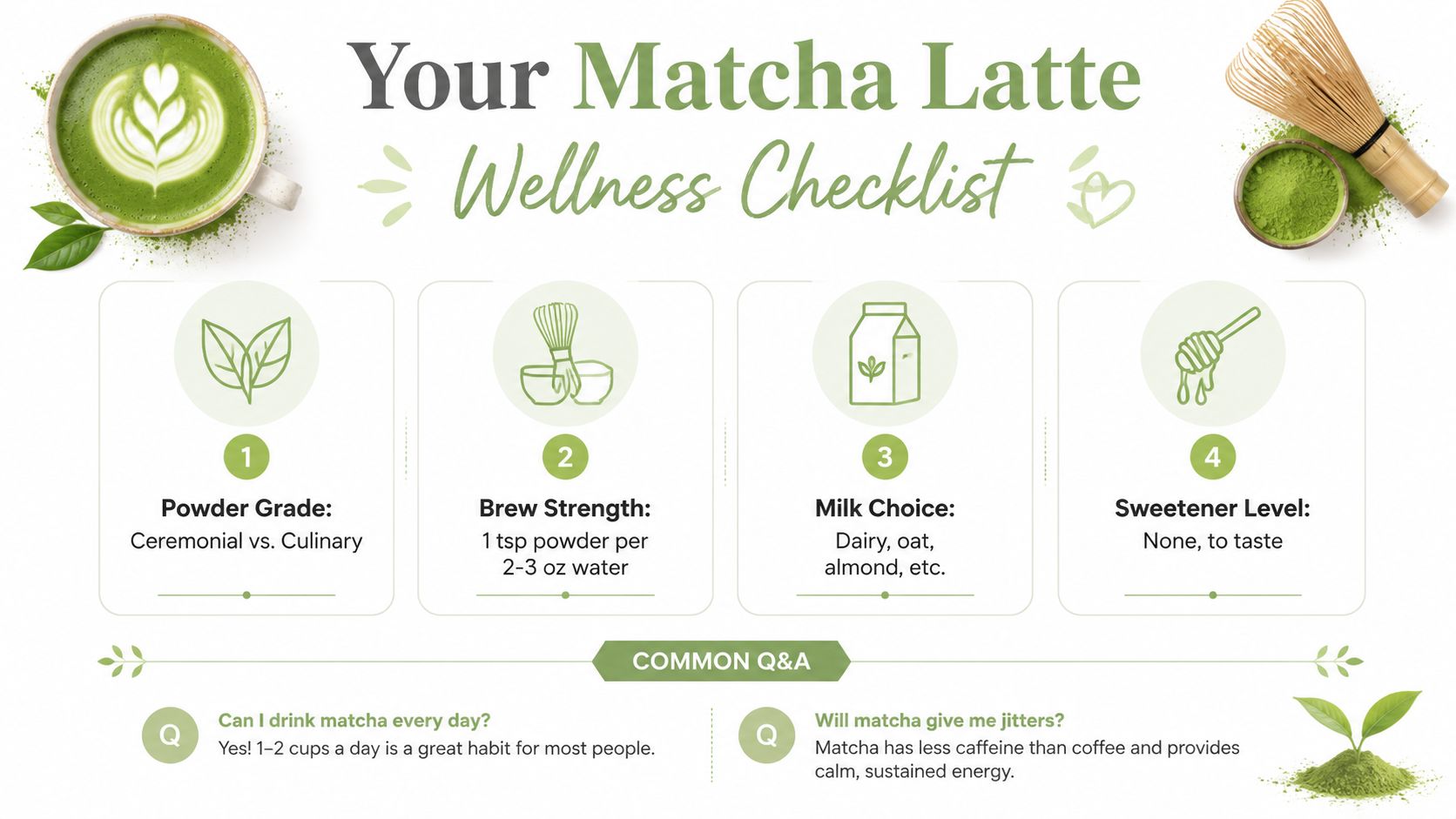
A good answer to “is matcha green tea latte good for you” comes down to four checks:
- Powder grade: Use a drinking-grade powder when you want a smooth latte, and reserve culinary powder for recipes where stronger flavour will be balanced.
- Brew strength: More powder means more caffeine and more concentrated leaf compounds.
- Milk choice: Select dairy or plant milk according to your protein, texture, allergy, and sugar preferences.
- Sweetener level: Start without added sugar, then add the smallest amount that makes the drink enjoyable.
Can a matcha latte help with weight management?
Matcha shouldn't be marketed as a weight-loss treatment. Its catechins and caffeine make it a functional beverage, but the latte can become energy-dense when you add syrup, sweetened milk, or condensed milk. The practical move is to reduce added sugar and treat matcha as one part of an overall eating pattern.
How often can I drink one?
A moderate routine may suit many adults, but there isn't one universal serving limit that works for everyone. Count the caffeine from your entire day, pay attention to sleep and anxiety, and reduce the amount if your body signals that the drink is too strong.
Does an iced matcha latte have the same benefits?
Cold preparation doesn't remove the powdered leaf, so an iced drink can still provide matcha's characteristic plant compounds. The bigger issue is the recipe. Ice, unsweetened milk, and plain matcha create a different drink from a sweetened café blend with syrup.
Should leftover matcha be refrigerated?
Matcha is sensitive to air, light, heat, and moisture. Store the powder sealed in a cool, dry, dark place and use clean, dry utensils. A prepared latte is best consumed fresh, particularly if it contains milk, rather than left sitting for long periods.
Pep Tea offers organic Japanese matcha for drinking and cooking, along with practical guidance for preparing lower-sugar lattes at home. Visit Pep Tea to explore the matcha range and choose a powder that suits your preferred cup.
Organic Green Tea Caffeine: A 2026 Guide to Calm Energy

You're probably here because you've had that exact moment at the kettle. Coffee feels a bit too intense. Herbal tea feels too sleepy. Green tea seems like the sensible middle ground, but then the question kicks in. Does organic green tea have caffeine, and if it does, how much are you really drinking?
That uncertainty is completely fair. A lot of people choose green tea because they want a gentler kind of energy, then realise they're not quite sure whether they've picked a low-caffeine drink, a moderate one, or something stronger than expected. That's especially true once matcha enters the conversation, because not all green tea behaves the same way in the cup.
More Than Just a Morning Ritual
A friend might swap their second flat white for green tea and say they want a “cleaner buzz”. What they usually mean is simple. They want to feel awake without feeling rattled. They want focus without the sharp edge. They want energy that fits into a normal day, not a spike that sends them looking for another drink an hour later.
That's where organic green tea caffeine gets interesting.
The first thing to clear up is the myth that green tea is caffeine-free. It isn't. Green tea comes from Camellia sinensis, the same tea plant family that naturally contains caffeine. So when you choose organic green tea, you're not choosing a caffeine-free option. You're choosing a tea with naturally occurring caffeine, and the way that caffeine feels can be quite different from coffee.
For readers comparing products and labels, resources like Nutrition Geeks on Herbalife green tea can be useful for seeing how often people ask the same question in different forms: is it energising, is it mild, and how does it fit into a health-focused routine?
If you're newer to the category, our guide to what organic green tea is helps explain why farming method, leaf quality, and style all shape the final experience in your cup.
Green tea isn't something to fear. It's something to understand.
That's the key shift. Once you stop treating caffeine like a mystery ingredient and start seeing it as part of the tea's natural chemistry, your choices get easier. A light brewed cup, a concentrated bowl of matcha, and a fermented tea drink can all sit under the green tea umbrella, but they won't affect you in exactly the same way.
Some people want a gentle lift while they answer emails. Others want the calm concentration that helps with study, creative work, or a long morning without snacking. The useful question isn't only “how much caffeine is in it?” It's also “what kind of energy do I want?”
How Much Caffeine Is in Your Favourite Green Tea
Let's start with the clearest anchor point. A typical 8-ounce, or about 250 mL, cup of green tea contains roughly 20 to 50 mg of caffeine, according to this green tea caffeine reference. That same source notes that 2 cups may provide about 40 to 100 mg of caffeine.
That gives you a practical baseline for organic green tea caffeine in a standard brewed cup.
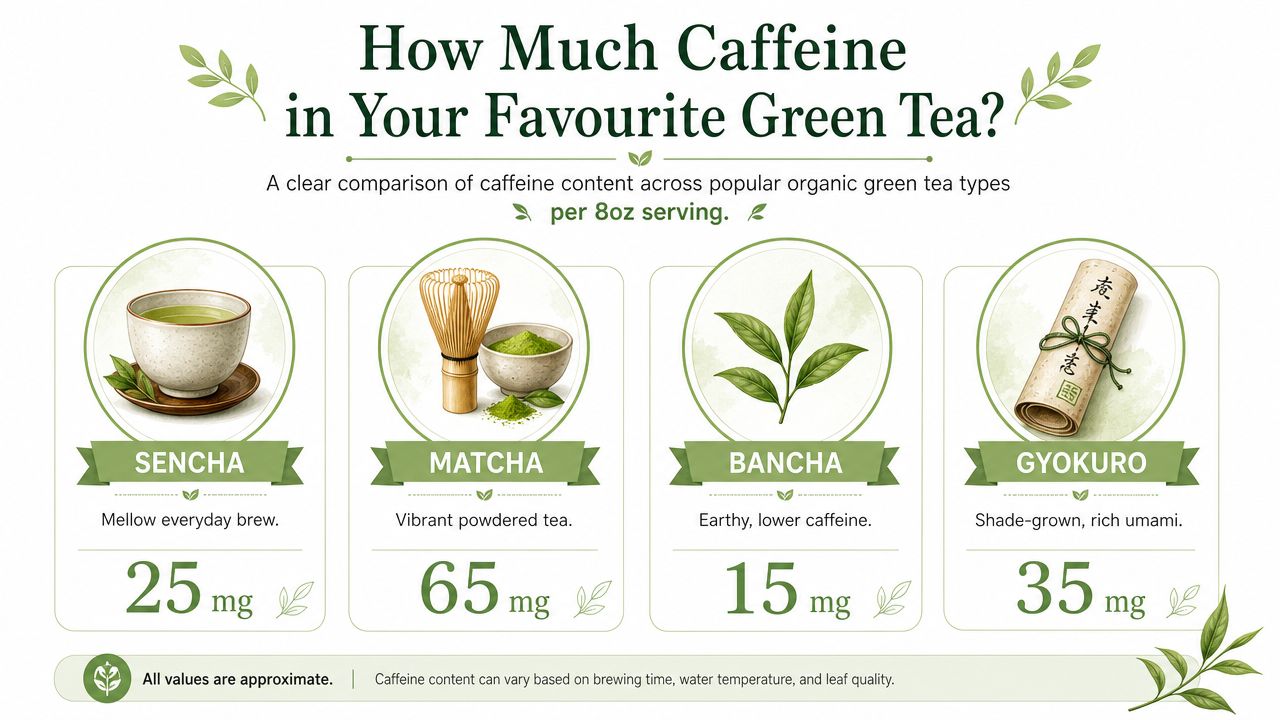
Caffeine content at a glance
| Beverage | Typical Serving Size | Average Caffeine (mg) |
|---|---|---|
| Brewed green tea | 250 mL | 20 to 50 |
| Two cups of brewed green tea | 500 mL total | 40 to 100 |
| Matcha | Varies by preparation | Often feels stronger than brewed green tea because you consume the whole leaf |
| Black tea | Typical cup | Usually stronger than many green teas qualitatively |
| Coffee | Typical cup | Usually higher than green tea qualitatively |
Why one green tea can feel stronger than another
The numbers above are only the start. Two drinks can both be called green tea and still deliver a very different experience.
Brewed loose leaf or tea bag green tea works by extraction. Water pulls caffeine out of the leaves. If the brew is short and gentle, less comes out. If it's hotter and longer, more comes out.
Matcha is different because you whisk powdered tea into water and drink the leaf itself. You're not steeping and discarding leaves. You're consuming the whole tea. That's why many people notice matcha feels more concentrated, especially in a latte or a traditional bowl.
If you want a more detailed breakdown of how matcha compares in everyday drinks, this article on caffeine in a matcha latte is a useful next read.
A simple way to think about it
Think of brewed green tea like making vegetable stock. You're pulling flavour and compounds out of the ingredient into water.
Matcha is more like blending the whole vegetable into the soup. Nothing gets left behind.
Quick takeaway: “Green tea” is one category, not one caffeine level.
That's where readers often get tripped up. They ask for one answer, but the answer depends on form. A light sencha, a strong gyokuro, and a matcha latte can all sit in the same family while feeling very different in your body.
The practical lesson is this. If you're trying to manage your daily intake, don't stop at the word green tea on the label. Ask what kind of green tea it is, how it's prepared, and how much leaf you're consuming.
Factors That Influence Caffeine Levels
Organic green tea caffeine is not one fixed number. It behaves more like the final strength of a soup. The leaves set the starting point, and your brewing choices decide how much ends up in the cup.

That matters because two cups of green tea can look similar and feel completely different. One may give you a calm, steady lift. Another may feel much stronger. The difference often starts long before the water touches the leaf.
Tea varietal and growing conditions
Some teas are naturally set up for a stronger effect. Shade-grown green teas are a classic example. When the plant grows with less sunlight, its chemistry shifts. The flavour often becomes sweeter and richer, and the stimulating effect can feel more noticeable too.
That helps explain why matcha and gyokuro often feel more intense than a lighter everyday sencha. The plant's environment shapes the cup from the very beginning. If you want a broader background on how green tea compounds vary across products, VitzAi's guide to green tea is a helpful reference.
Leaf age and processing
Young leaves usually create a brighter, more lively brew. Older leaves often taste softer and tend to feel gentler.
Processing changes things again. Whole leaves release compounds more gradually. Broken leaves and finely milled tea expose more surface area to water, so extraction happens faster. That is one reason powdered teas can feel stronger even before you change the amount you use.
Preparation method
Form matters.
A loose leaf green tea gives water access to the leaf for a limited time, then you remove the leaves. Powdered tea works differently because the tea stays in the bowl or cup. You drink what was whisked in.
That difference helps explain why one organic green tea feels light and easy, while another creates a deeper, more sustained lift. It is not only about caffeine on paper. It is about how much of the leaf ends up in your body and how quickly it gets there.
Brewing technique
This is the part you can control most easily at home.
Small brewing changes can noticeably change the character of your tea, including how strong the energy feels. Hotter water pulls compounds out faster. A longer steep gives the water more time to extract caffeine. A finer leaf also speeds things up because more of the leaf is exposed.
If you want a gentler cup, start here:
- Use slightly cooler water for a softer extraction
- Shorten the steep time if your tea feels too strong
- Use less leaf when you want lighter energy
- Choose whole leaf tea over powder when you want more control
If you want more lift without jumping straight to coffee, do the opposite in small steps. Increase the leaf a little. Steep a bit longer. Keep notes for a few days. Tea responds well to small adjustments, and your body usually does too.
If a café green tea feels punchier than the one you make at home, the water temperature, leaf quantity, and steep time are often the reason.
The useful takeaway is simple. Caffeine in green tea is partly built into the leaf, but a big part of your experience comes from preparation. That gives you room to shape not just how much energy you get, but the quality of that energy as well.
Why Green Tea Energy Feels Different
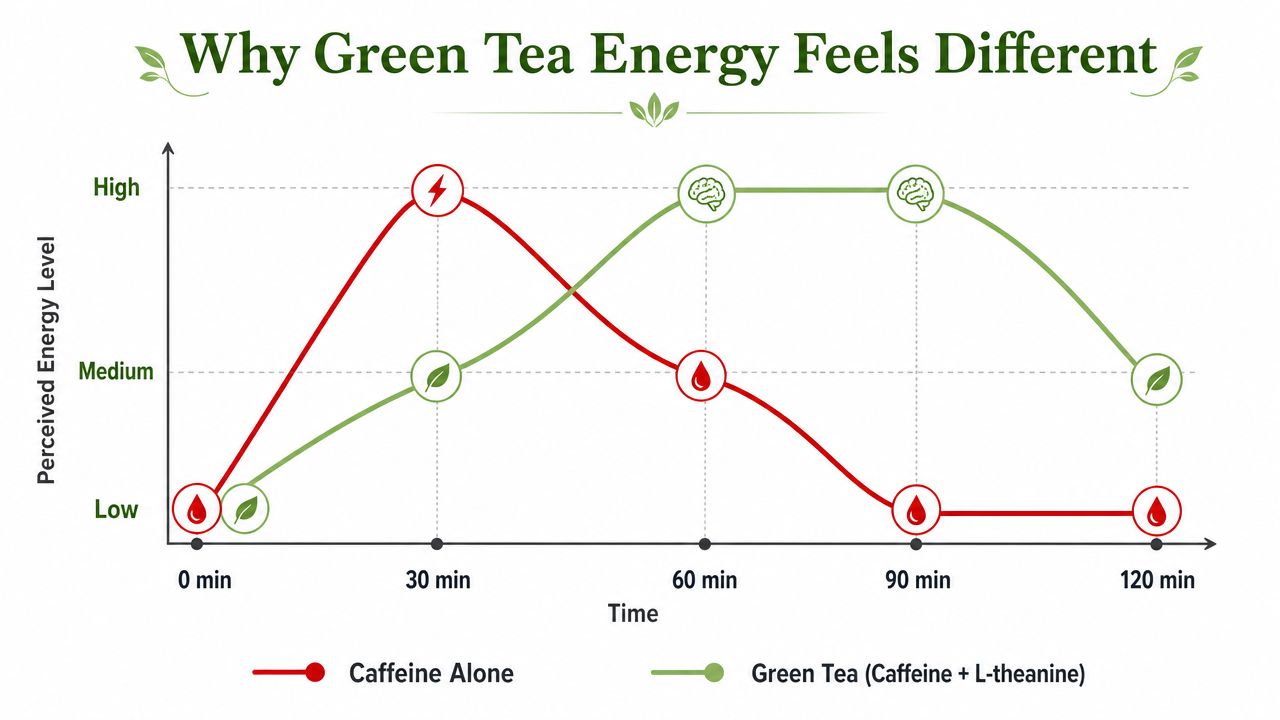
If coffee sometimes feels like someone switched the lights on too fast, green tea often feels more like opening the blinds.
That difference isn't just in your imagination. Green tea contains caffeine, but it also contains L-theanine, and the pairing matters. A scientific review of green tea notes that caffeine is one of its major bioactive compounds, typically making up about 2 to 5% of dry leaf weight, and that green tea's natural combination with L-theanine is known for a smoother, more sustained stimulant effect than coffee in tea science discussions, as outlined in this review on green tea chemistry and effects.
Caffeine with company
Caffeine on its own can feel abrupt for some people. Green tea rarely delivers it in isolation. L-theanine is an amino acid naturally found in tea, and it changes the character of the experience.
A simple way to picture it is this:
- Coffee-style stimulation: often feels fast and sharp
- Green tea stimulation: often feels steadier and more even
- Matcha in particular: can feel focused rather than frantic
That doesn't mean everyone reacts the same way. Bodies differ. Meals matter. Sleep matters. Your own sensitivity matters. But this pairing helps explain why many green tea drinkers describe the effect as calm alertness rather than a jolt.
Why matcha often stands out
Owing to their specific properties, shade-grown green teas earn their reputation. In high-quality matcha, you're not just getting caffeine. You're also getting the tea's broader chemistry in a concentrated form because the whole powdered leaf goes into the bowl.
For readers who want another plain-English overview, VitzAi's guide to green tea is a handy supplementary read on how people frame green tea's effects in wellness contexts.
What many people are chasing isn't more energy. It's steadier energy.
That's why green tea has become such a natural fit for workdays, study sessions, mindful routines, and afternoons when coffee feels like too much. The goal isn't to be overstimulated. It's to feel switched on and still like yourself.
The practical feeling in real life
You notice this most in ordinary moments.
A cup of coffee can be perfect before a rushed morning commute. Green tea often suits the kind of focus that asks for patience. Writing, reading, planning, designing, or working through a long list without feeling jagged.
That's also why people who once thought all caffeine was basically the same often end up surprised by tea. The quantity matters, yes. The quality of the experience matters just as much.
Brewing and Recipes to Customise Your Caffeine
You wake up wanting clarity, not a racing heart. On another day, you want a bit more lift to get through a long morning. Green tea can do both, because brewing changes the result in the cup.

A useful way to see it is this. Tea leaves are like ingredients in a slow release recipe. Water temperature, steep time, and leaf amount decide how much caffeine and flavour you pull out. Change those three levers, and you change the kind of energy you get.
Hotter water and longer steeping usually pull out more. Cooler water and shorter steeping usually keep things lighter and softer. Matcha sits in its own category because you drink the whole powdered leaf, so the experience is often fuller and more concentrated.
The main brewing levers
If you want more control, start here.
- For a gentler cup: use cooler water and steep for less time
- For more lift: use a little more leaf or let it steep longer
- For a stronger, steadier option: choose matcha instead of infused leaves
- For late afternoon: make a smaller serving or brew it lighter
That last point helps many caffeine-sensitive drinkers. You do not need to give up green tea. You often just need to change the extraction.
Low-caffeine cold brew green tea
Cold brew is one of the easiest ways to soften both flavour and stimulation. It works well when you want green tea's fresh character without a sharper edge.
- Add green tea leaves to cool water.
- Place it in the fridge.
- Strain once the flavour tastes right to you.
- Serve over ice with lemon, mint, or plain.
Why does this feel different? Cool water extracts more slowly, so the cup often tastes smoother and lighter than a hot, long steep. For many people, that makes it a smart afternoon option.
A low-caffeine tea routine comes from adjusting the brew, not settling for a dull cup.
Matcha latte for calm focus
A matcha latte solves a different problem. It suits mornings when you want stronger focus and a more sustained sense of energy. Because the whole leaf is whisked into the drink, the effect can feel more direct than standard brewed green tea.
Start small if you are still learning your tolerance. A modest scoop of matcha in milk can give you a more controlled experience than making it too strong and hoping for the best. Pep Tea's organic matcha range fits that approach well because you can easily scale the amount up or down.
A simple method looks like this:
- Sift matcha into a bowl or cup.
- Add a small amount of warm water.
- Whisk until smooth.
- Pour over warm or cold milk.
- Taste before adding any sweetener.
If you want a cold version, this guide on how to make an iced matcha latte shows the process clearly.
Here's a quick visual if you prefer to watch the process first.
The practical lesson is simple. Green tea is not one fixed caffeine experience. A cool, delicate brew can give you a lighter kind of alertness. A matcha latte can give you a fuller, steadier push. Once you know how to brew for the feeling you want, caffeine stops being a mystery and starts becoming a tool.
Finding Your Perfect Green Tea Moment
The most helpful way to think about organic green tea caffeine is not “is it high or low?” It's “when does this version fit my day?”
A brisk morning often suits a more concentrated green tea choice. If you want presence, focus, and a sense of momentum, matcha makes sense. It feels intentional. You prepare it, whisk it, and drink something that asks you to slow down just enough before the day speeds up.
Midday is usually where a standard brewed green tea shines. It can lift you without making lunch feel too heavy or the afternoon feel too wired. This is the point in the day where many people discover why green tea remains such a reliable habit. It's supportive rather than dramatic.
Later on, many drinkers prefer a lighter hand. That might mean a shorter steep, cooler preparation, or a smaller serve. If you're someone who notices caffeine easily, that adjustment matters.
A simple way to choose
- Need sharper focus for work or study: choose matcha
- Want a balanced daily cup: choose brewed green tea
- Feeling caffeine-sensitive today: brew lighter, cooler, or shorter
- Trying to build a sustainable routine: match the tea style to the moment, not just the mood
What matters most
You don't need to memorise every tea style to make a smart choice. You just need to remember three things.
First, green tea does contain caffeine. Second, the amount and feel depend on the leaf and the method. Third, the best tea is the one that gives you energy you enjoy living with.
That's why this conversation matters. Not because caffeine is something to obsess over, but because understanding it helps you choose with confidence. When you know how green tea works, you can use it more thoughtfully and get more out of every cup.
If you'd like to explore organic matcha and other functional tea options for your own routine, have a look at Pep Tea. We share practical guides, recipes, and product information to help you find a green tea rhythm that feels steady, enjoyable, and easy to keep.
Caffeine in Matcha Latte: How It Compares
A typical matcha latte contains around 60 to 70 mg of caffeine, which is similar to a single espresso shot, but it often feels very different in the body. That’s because matcha brings caffeine together with L-theanine, a naturally occurring amino acid that many tea drinkers describe as producing calmer, steadier energy.
If you’re reading this with a warm green latte in hand, or you’re wondering whether matcha will wake you up the way coffee does, you’re asking the right question. People often hear that matcha has caffeine, then stop there. But the more useful question is not just how much caffeine is in matcha latte, but what kind of energy does it create.
That’s where matcha gets interesting. The number matters, of course. So does the scoop size, the grade, and the way the drink is made. But the main reason so many people swap their flat white for a matcha latte is the feeling that follows: alert, focused, and less rattled.
What’s Really Inside Your Favourite Green Latte
For a lot of people, a matcha latte starts as a simple habit. You whisk the powder, pour in warm milk, watch that bright green colour bloom, and take the first sip expecting something cosy but useful. Then, somewhere between your second mouthful and the start of your workday, the question pops up. How much caffeine is in this?
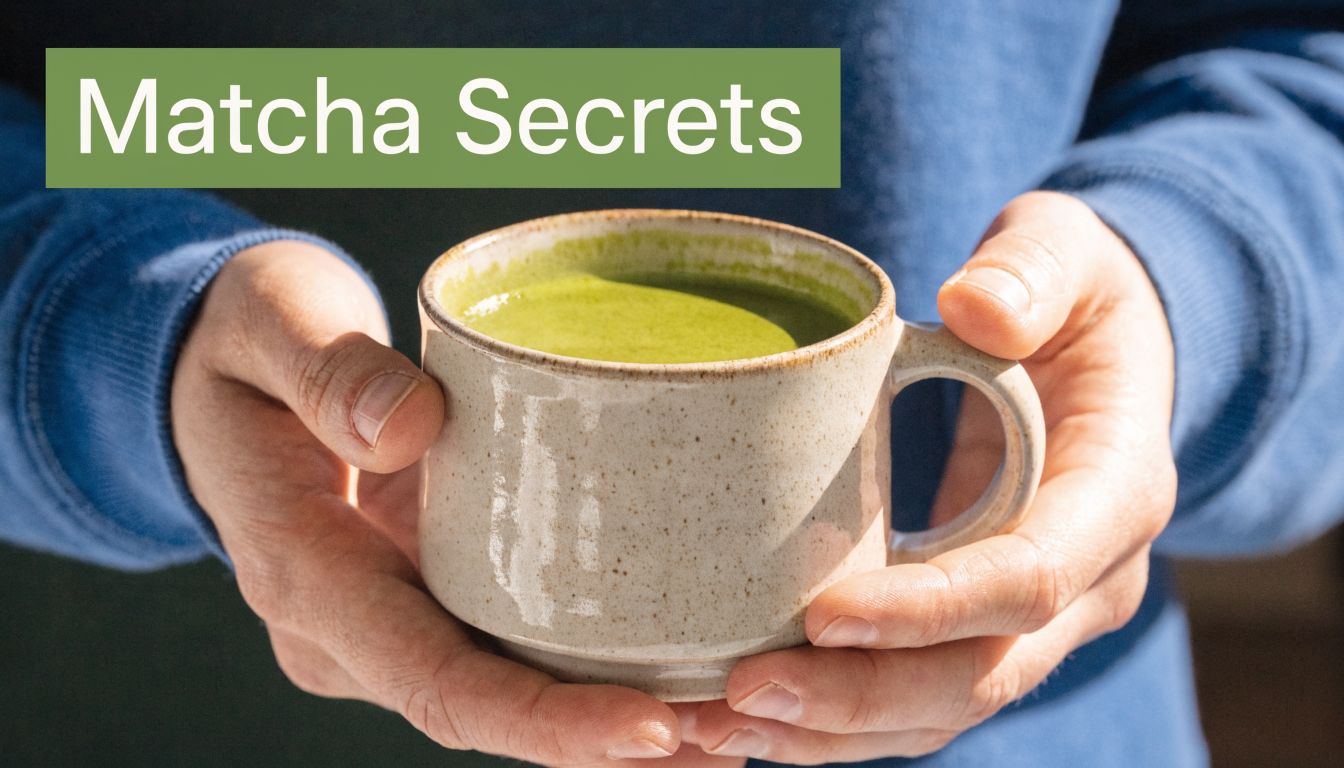
The short version is that matcha sits in a very comfortable middle ground. It’s not caffeine-free, and it’s not pretending to be. But it also isn’t just coffee in green clothing.
More than a trendy café drink
A matcha latte gives you caffeine from powdered green tea leaves that are whisked directly into water and milk. Because you consume the whole leaf, you’re getting a different experience from a standard brewed tea.
That’s why matcha often appeals to people who want energy without feeling pushed around by it. If you’re interested in the broader wellness side of green tea, this guide on how to unlock real green tea benefits is a useful companion read.
Matcha isn’t only about stimulation. For many people, it becomes part of a steadier morning rhythm.
Why people get confused
There are three common reasons readers feel unsure about caffeine in matcha latte:
- It’s tea, so people assume it must be low in caffeine. Matcha usually contains more caffeine than regular green tea because you consume the leaf itself.
- It feels smoother than coffee. That can make some people think it contains less caffeine than it has.
- Not every café uses the same amount of matcha powder. One latte can feel gentle, while another can feel surprisingly strong.
The confusion makes sense. Matcha is both simple and nuanced. It’s just powdered tea, yes. But once you look at serving size, preparation style, and L-theanine, the picture becomes much clearer.
How Much Caffeine is in a Typical Matcha Latte
If you want a direct answer, here it is. A standard matcha latte serving contains between 60 and 70 mg of caffeine, which is comparable to a single espresso shot at about 63 mg. An 8-ounce brewed coffee averages 95 mg, so matcha usually lands below a full cup of coffee while still delivering a noticeable lift, according to this breakdown of matcha latte caffeine content.
That single comparison already clears up a big misconception. Matcha is not “basically caffeine-free tea”. It has enough caffeine to matter.
Why matcha contains more caffeine than regular green tea
The key difference is how you consume it.
With regular green tea, the leaves steep in water and are then removed. With matcha, the leaves are stone-ground into a fine powder and whisked straight into the drink. You consume the entire leaf rather than only the brewed liquid.
That’s why matcha has a stronger caffeine profile than ordinary green tea. In the same source above, matcha is described as having a caffeine density of around 32 mg per gram, which helps explain why even a modest scoop can create a meaningful effect.
A quick comparison
| Drink | Typical caffeine amount |
|---|---|
| Matcha latte | 60 to 70 mg |
| Single espresso shot | About 63 mg |
| Brewed coffee, 8 oz | Average 95 mg |
This table helps answer the practical underlying question. Will a matcha latte wake me up? Yes, usually. Will it hit exactly like coffee? Not necessarily.
Practical rule: If one espresso feels fine for you, a standard matcha latte is usually in familiar territory.
What that means in daily life
For many drinkers, this places matcha in a sweet spot:
- Strong enough for a morning start
- Moderate enough for people who find coffee too intense
- Flexible enough to work as a late-morning or early-afternoon drink
If you’ve ever had a coffee that made your thoughts race faster than your to-do list, matcha can feel more organised. Not weaker. Just more even.
That’s the part numbers alone can’t capture. Two drinks can have similar caffeine amounts and still create very different experiences once they reach your body.
Why Not All Matcha Lattes Are Created Equal
Order a matcha latte at two different cafés and you might get two completely different caffeine experiences. One feels soft and steady. Another feels almost as punchy as coffee. That isn’t your imagination. It usually comes down to dose, preparation style, and grade.
According to this guide to how much caffeine is in a matcha latte, the caffeine in a matcha latte can range from 38 mg using 1 gram of powder to over 128 mg using 4 grams for a thick Koicha style. The same source notes that the U.S. FDA recommends a maximum daily caffeine intake of 400 mg for healthy adults, so two strong matcha lattes can get surprisingly close to that mark.
Scoop size changes everything
This is the biggest variable.
A lighter home-made latte with a small scoop can sit at the gentler end. A café that uses a generous hand, or offers an extra-strong serve, can push the caffeine much higher. Traditional preparation styles show this clearly:
- Usucha uses a lighter amount of powder and creates a thinner tea
- Koicha uses more powder and creates a thicker, more concentrated drink
If you’re trying to control caffeine in matcha latte, the amount of powder matters more than almost anything else.
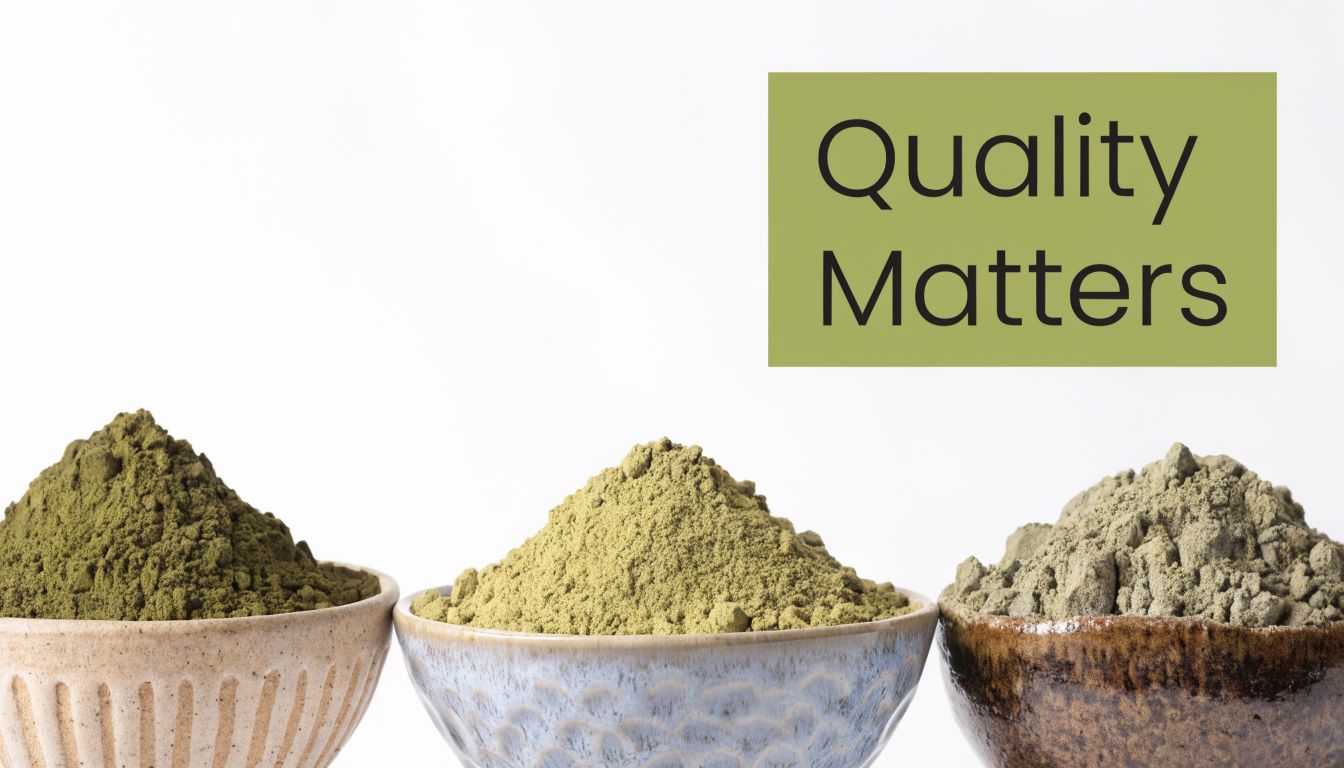
Grade affects the experience too
Not all matcha powders are interchangeable. Ceremonial and culinary grades are made for different purposes, and they can lead to different drinking experiences.
Culinary matcha is often chosen for smoothies, baking, or sweeter lattes. Ceremonial matcha is typically selected when flavour, texture, and the overall tea experience matter more. If you want a clear overview of those distinctions, this guide on different grades of matcha is a handy reference.
Milk changes texture, not total caffeine
People often assume a milkier latte must contain less caffeine. That’s not automatically true.
If the same amount of matcha powder goes into the cup, the total caffeine stays the same. More milk can soften the flavour and make the drink feel gentler, but it doesn’t remove caffeine. What changes is concentration per sip, not the total amount in the mug.
If you want a milder caffeine experience, use less matcha powder. Don’t rely on extra milk to do the job for you.
Sustained Energy Without the Jitters The L-Theanine Effect
Matcha, in fact, stops being just another caffeinated drink and becomes something more interesting. Two drinks can contain caffeine, but they don’t have to feel the same. Matcha’s personality comes from the company its caffeine keeps.

The key companion is L-theanine. According to this article on whether matcha latte has caffeine, the unique energy profile of matcha comes from its L-theanine-to-caffeine ratio. The same source notes that ceremonial grade matcha, made from shade-grown leaves, has higher concentrations of both compounds and delivers a different, often better, cognitive effect than the same amount of caffeine from lower-grade matcha. It also explains that the shade-growing process boosts both L-theanine and chlorophyll.
What calm energy actually feels like
“Calm alertness” can sound a bit fluffy until you’ve felt it yourself.
In real life, it often means:
- you feel switched on, but not edgy
- your concentration feels more settled
- your energy doesn’t arrive with the same harsh spike some people get from coffee
That doesn’t mean matcha is sleepy, weak, or muted. It means the stimulation can feel smoother and more anchored.
Why grade matters more than people expect
This is one of the most overlooked parts of the conversation. If two drinks contain similar caffeine, many people assume they’ll perform the same. But with matcha, grade changes the feel.
Ceremonial-grade matcha is usually prized for a softer taste, a cleaner finish, and a more refined energy profile. That matters if you drink matcha for focus, work, study, or a steady start to the day. If you’d like to explore a product made with that premium style in mind, this Uji matcha powder is a relevant example of the type of matcha many drinkers choose for a smoother daily ritual.
Here’s a helpful visual explainer if you’d like to see the topic discussed in a simple format.
Why shade-growing matters
Shade-growing changes the leaf before it ever becomes powder. That farming method is a big reason premium matcha feels different from standard powdered green tea.
For the person drinking it, this matters less as a farming trivia fact and more as a practical buying clue. If your goal is not just “caffeine” but focused, composed energy, the quality of the leaf matters.
The smartest way to think about matcha isn’t “How much caffeine can I get?” It’s “What kind of energy do I want from this cup?”
Matcha Latte vs Coffee Which Morning Ritual is Right for You
Coffee and matcha can both earn a place in a morning routine. They do different jobs for different people. If you love the speed and boldness of coffee, there’s nothing wrong with that. If you want a gentler ramp into the day, matcha often suits that role beautifully.
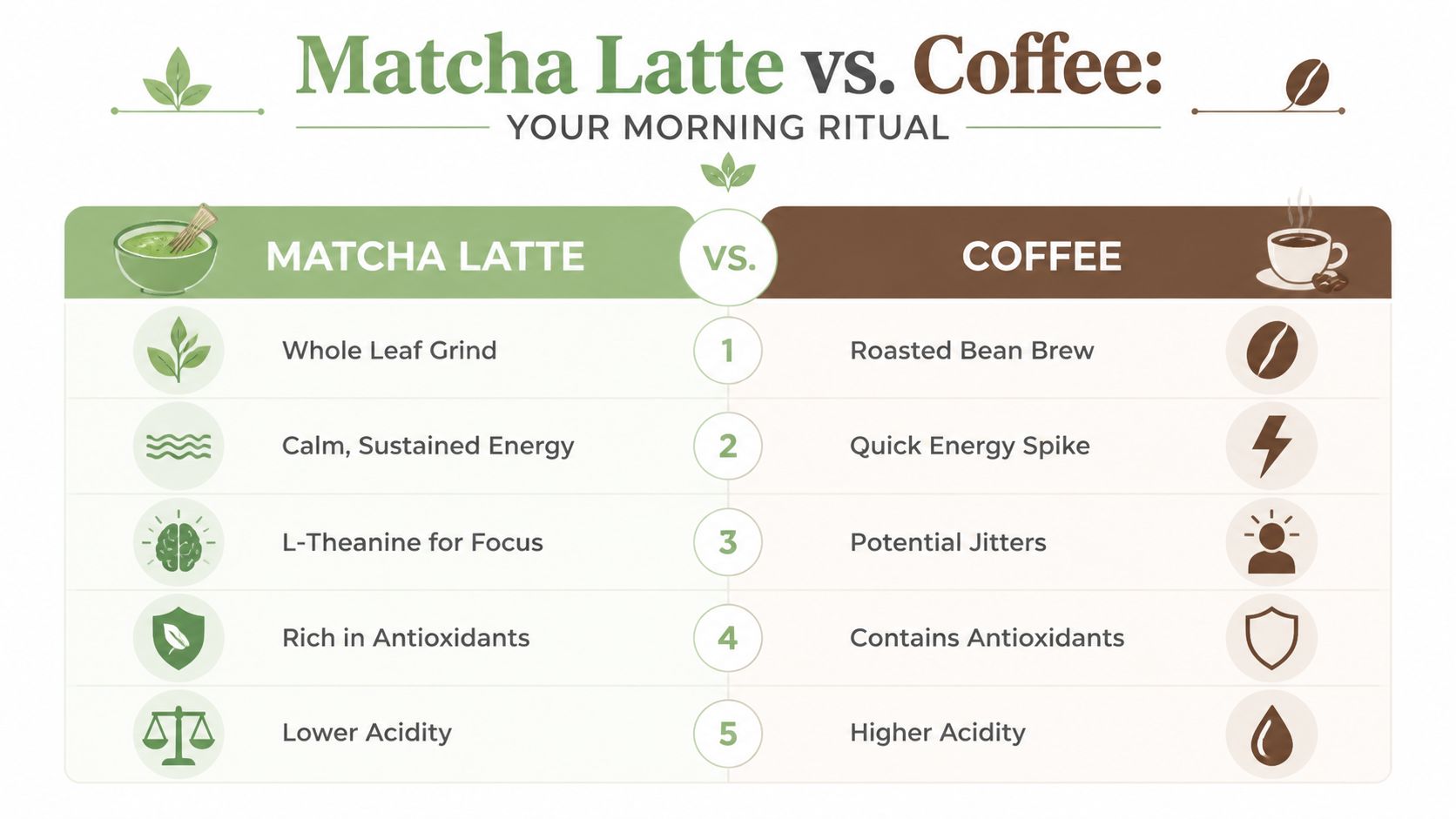
Side by side in daily life
| Matcha latte | Coffee | |
|---|---|---|
| Base ingredient | Whole leaf powder whisked into the drink | Brewed roasted beans |
| Energy feel | Smoother, more sustained for many drinkers | Faster, sharper lift |
| Focus style | Often described as calm and clear | Often described as direct and intense |
| Acidity | Commonly chosen by people seeking a gentler option | Can feel harsher for some drinkers |
| Ritual | Slower, whisked, more deliberate | Quick, familiar, highly flexible |
Choose matcha if this sounds like you
- You want steady focus for writing, studying, or desk work
- You enjoy the ritual of making a drink, not just grabbing one
- You find coffee a bit abrupt in the way it lands
Choose coffee if this sounds like you
Some people prefer the directness of coffee. It’s fast, familiar, and easy to prepare in many ways. If you’re building a better home coffee routine rather than replacing it, Brewssels' tips for home brewers are worth a read.
The better question isn’t which is healthier
The better question is: How do I want to feel after I drink it?
Coffee often shines when you want immediate alertness and a bolder flavour. Matcha often shines when you want focus with a little more composure. Some people even keep both in their week and use them differently. Coffee for early starts. Matcha for deep work, afternoons, or days when they want less friction in their nervous system.
How to Customise the Caffeine in Your Matcha Latte
The best part of making matcha at home is control. You don’t have to accept whatever scoop a café happens to use that day. You can build a latte that suits your morning, your tolerance, and your schedule.
If you want less caffeine
Start by reducing the amount of matcha powder, not by diluting the drink endlessly.
A few practical ways to bring the intensity down:
Use a smaller scoop
A lighter serve gives you a softer lift and a milder flavour.Make it later in the day with a gentler hand
Many people prefer a less concentrated afternoon latte.Choose a larger cup with more milk
This won’t reduce total caffeine if the powder amount stays the same, but it can make the drink feel softer and easier to sip slowly.
For a lighter afternoon cup, think of matcha as seasoning. A little less powder can completely change the mood of the drink.
If you want more lift
If you’re moving from coffee and want your latte to feel more substantial, there are cleaner ways to do that than adding sweeteners or syrups.
Try these adjustments:
- Increase the powder gradually so you can feel the difference without overshooting
- Use a high-quality matcha if you care about smoother focus, not just stronger flavour
- Keep the recipe simple so the tea stays central
A simple home method
Here’s a straightforward matcha latte routine that is generally effective:
- Sift your matcha powder into a bowl or mug
- Add a small amount of warm water
- Whisk until smooth
- Pour in your warmed milk of choice
- Taste before sweetening
This method gives you a clean base. From there, you can adjust the powder amount up or down depending on the result you want.
Match your drink to the moment
Different moments call for different matcha styles:
| Time of day | Best approach |
|---|---|
| Morning | A fuller serve for a stronger, focused start |
| Mid-morning | Standard latte strength |
| Afternoon | Lighter scoop for a softer lift |
| Evening | Many people prefer to skip it or make it very light |
The smartest routine is the one you can repeat comfortably. Matcha doesn’t need to be intense to be useful.
Finding Your Perfect Matcha Moment
The most helpful thing to remember is that caffeine in matcha latte isn’t a single fixed number or a one-size-fits-all experience. A typical cup sits in a moderate range, but the real story is how that caffeine behaves once it’s paired with L-theanine and shaped by the quality of the leaf.
That’s why matcha can feel so different from coffee even when the caffeine amount looks familiar on paper. The energy often feels steadier. The ritual feels calmer. And with a bit of practice, you can tailor the drink to suit your day instead of letting the drink dictate it.
Some people want a focused start before work. Others want a gentler afternoon pick-me-up. Matcha can do both, provided you choose the right powder, the right scoop, and the right moment.
If you’ve only thought about matcha as a green version of a café latte, there’s a lot more to enjoy. Done well, it becomes less about chasing stimulation and more about building a daily rhythm that feels good to live with.
Your Matcha Caffeine Questions Answered
Is it okay to drink a matcha latte every day
For many adults, a daily matcha latte can fit comfortably into a balanced routine. The main thing to watch is your total caffeine intake across the day, especially if you also drink coffee, energy drinks, cola, or pre-workout products.
Can milk reduce the caffeine in matcha latte
No. Milk changes flavour, body, and texture, but it doesn’t remove the caffeine already present in the matcha powder. If you want less caffeine, use less powder.
Who should be more careful with matcha caffeine
Anyone who is sensitive to caffeine should pay closer attention to scoop size and timing. The same goes for people who already consume several caffeinated drinks per day. If you know your body doesn’t love caffeine late in the day, matcha deserves the same respect as coffee.
When should I drink matcha if I’m worried about sleep
Earlier is usually better. Many people enjoy matcha in the morning or early afternoon and avoid it later on. Your own tolerance matters, so it’s worth paying attention to how your body responds rather than copying someone else’s routine.
How can I tell if I’m using too much matcha
If your latte tastes overly intense, feels heavier than you expected, or leaves you more stimulated than you wanted, the simplest fix is to reduce the powder next time. This is especially common for beginners.
Is there a guide to safe daily intake
If you want a more detailed look at serving amounts and sensible daily use, this article on how many cups of matcha tea powder are safe per day is a practical place to start.
If you’re ready to find a smoother kind of energy, explore Pep Tea for premium organic matcha and everyday tea rituals that feel good to come back to.