
Tag: kombucha australia
Natural Focus Enhancers Your Guide to Better Concentration

It's 3 p.m. and your brain has gone missing. You've answered emails, jumped between tabs, maybe had one coffee too many, and now you're staring at your screen reading the same sentence over and over.
That moment is exactly why more Australians are looking for natural focus enhancers. Not magic pills. Not extreme hacks. Just practical ways to feel more alert, more steady, and less wrung out by the usual cycle of caffeine spikes and afternoon crashes.
For many people, better concentration starts with a simple shift in thinking. Focus isn't only about pushing harder. It's also about working with your body, your energy, your food, and your daily habits. Functional drinks like matcha and kombucha fit into that picture because they can support a calmer, more sustainable rhythm.
Beyond the Coffee Crash Why Natural Focus Is Trending
The appeal of natural focus is easy to understand. Individuals typically don't want more jitteriness. They want to feel switched on without feeling frazzled.
Coffee can absolutely have a place, but it's often used as a rescue tool instead of part of a balanced routine. That's when the pattern gets messy. One cup becomes two. Two becomes a late-afternoon top-up. Then sleep takes a hit, and the next morning starts with even less energy.

Why more Australians are looking for gentler support
This shift isn't just anecdotal. In 2025, the Australia cognitive health supplements market reached AUD 306.83 million and is projected to grow at a 7.70% CAGR to AUD 644.25 million by 2035, reflecting stronger demand for natural brain support and focus-enhancing ingredients such as Omega-3, Ginkgo Biloba, L-Theanine in matcha, and probiotic-rich kombucha, according to Expert Market Research's Australia cognitive health supplements market report.
That matters because it shows a broader behaviour change. People aren't only chasing stimulation. They're looking for support that feels more sustainable, more everyday, and easier to build into a normal routine.
A lot of that interest comes down to convenience. A morning matcha, an afternoon kombucha, a better lunch, a screen break, and a decent bedtime routine feel realistic. They also fit naturally into home life, café culture, and the way many Australians already think about wellness.
What natural focus enhancers really are
The phrase sounds more technical than it needs to be. In plain language, natural focus enhancers are foods, drinks, herbs, nutrients, and habits that may support concentration and mental clarity without relying on harsh quick fixes.
That can include:
- Functional beverages like matcha and kombucha
- Plant-based herbs often associated with focus support
- Daily habits such as hydration, sleep, movement, and mindfulness
- Nutrient-dense foods that help your brain do its job properly
Better focus usually isn't one dramatic change. It's a handful of smarter choices repeated often enough to matter.
That's also why the trend has staying power. It's not built on intensity. It's built on routines people can keep.
How Your Brain Finds and Loses Focus
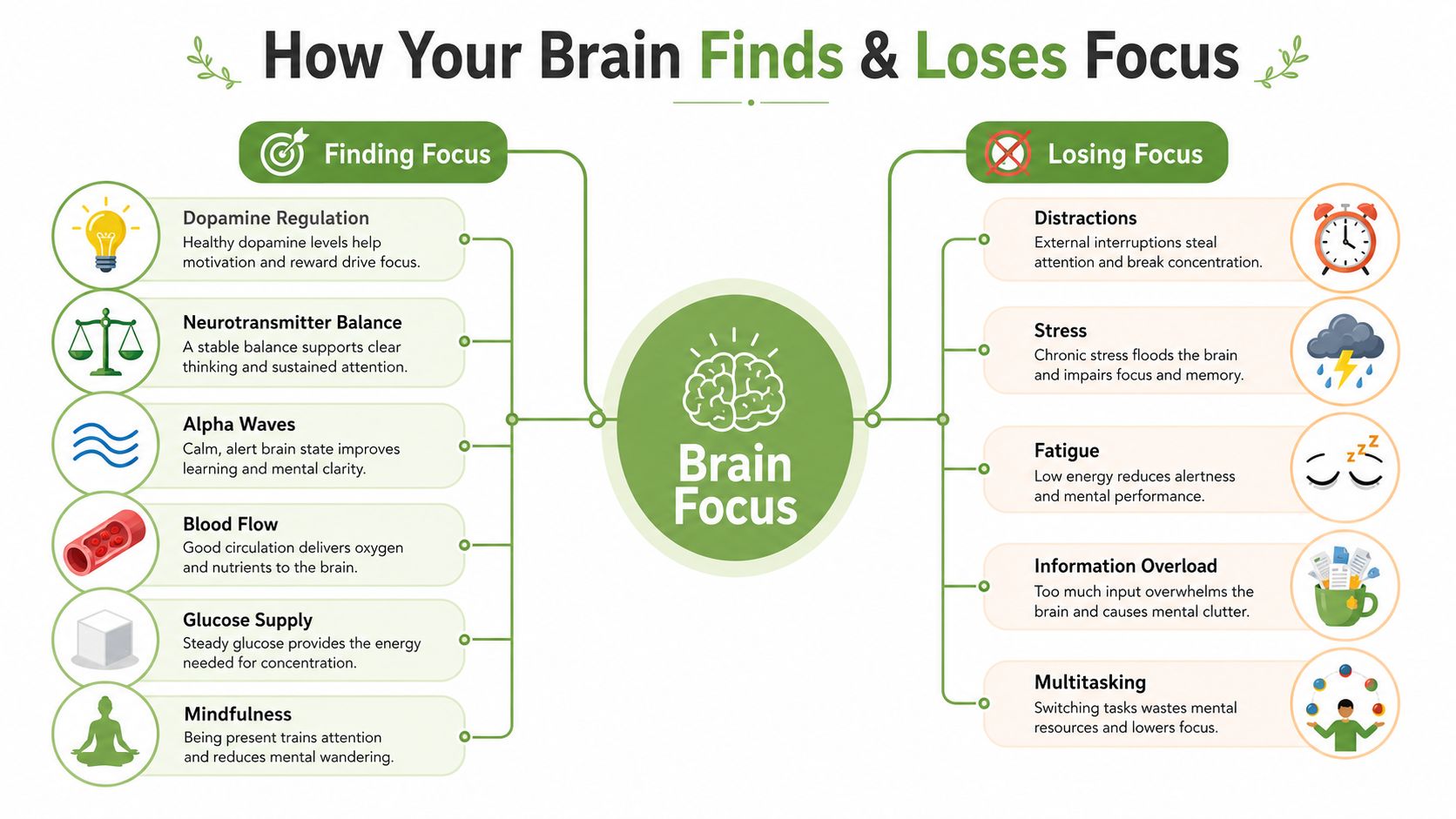
Focus can feel mysterious, but the basics are surprisingly straightforward. Your brain needs the right signals, enough fuel, and fewer interruptions.
When those pieces line up, concentrating feels smooth. When they don't, even simple tasks can feel oddly hard.
Your brain uses messengers and fuel
Think of attention like a worksite. Messages need to get to the right place, workers need energy, and too much noise slows everything down.
Some of that communication happens through neurotransmitters. You don't need to memorise the science names to understand the idea. These chemical messengers help your brain shift into alertness, motivation, learning, and memory. If the signals are steady, your mind feels more organised. If they're off, you may feel scattered or flat.
Your brain also needs a reliable energy supply. That doesn't mean sugar hits all day. It means consistent nourishment, enough fluids, and enough rest so your body isn't running in survival mode.
Why brain fog shows up
Brain fog isn't a formal diagnosis people use in everyday life, but it's a useful description. It often feels like mental static. You know what you want to do, but your thoughts don't quite click into gear.
Common triggers include:
- Poor sleep that leaves your attention blunted
- Stress overload that keeps your mind in reactive mode
- Constant switching between tasks, apps, and notifications
- Skipping meals or eating in a way that leaves energy uneven
- Mental fatigue after long stretches with no proper break
Quick check: if you're distracted all day, the problem isn't always lack of willpower. Sometimes your environment is set up to fragment your attention.
If distraction is a recurring issue, Chronoid's guide to focus is a useful read because it breaks down how everyday habits and digital interruptions can gradually drain concentration.
Focus is easier when friction is lower
People often assume concentration is just about discipline. Usually, it's also about design.
A few examples make this clearer:
- One tab open beats ten tabs open. Your brain handles fewer competing cues.
- A short walk can reset attention. Movement helps interrupt mental buildup.
- A calm drink ritual can improve transition. Preparing a matcha or pouring a kombucha can create a clear pause between tasks.
That last point matters more than it sounds. Rituals help the brain recognise context. When you repeat a simple pattern before focused work, your mind starts to associate that pattern with concentration.
The Pillars of Natural Focus Enhancement
Natural focus works best when you stop treating it like a single ingredient problem. Combining a few supports often yields better results than expecting one product to do everything.
Three pillars matter most. Nutrients and herbs. Functional beverages. Lifestyle habits.
Pillar one includes nutrients and herbs
Supplement use is already mainstream in Australia. According to the Australian Bureau of Statistics, 33.6% of Australians aged 2 years and over took a dietary supplement in 2023, representing 8.5 million people. Herbal supplements made up 4.5% of all supplement use, and adult females were more likely than males to take dietary supplements, at 43.7% versus 30.8%, according to the ABS dietary supplements release.
That doesn't mean every supplement is right for every person. It does show that many Australians already include some form of nutritional support in their routine.
Here's a simple comparison of common herbs often mentioned in conversations about natural focus enhancers.
| Herb | Primary Benefit | Best For |
|---|---|---|
| Bacopa monnieri | Traditionally used in wellness routines linked with memory and learning support | People looking for a plant-based option as part of a broader routine |
| Ginkgo biloba | Commonly used in brain-health product categories for mental clarity support | People interested in classic herbal formulations |
| L-Theanine from matcha | Often associated with calm alertness | People who want focus without a wired feeling |
The best takeaway here is caution plus context. Herbs may have a place, but they make more sense when paired with consistent sleep, good food, and sensible daily habits.
Pillar two is functional beverages
Drinks are often the easiest place to start because they slot into routines you already have. You're already reaching for something in the morning and again in the afternoon.
Matcha brings a more deliberate kind of energy than many people expect. Kombucha offers a refreshing alternative when you want something light, grown-up, and less sugary than many mainstream drinks. If you want a deeper look at how fermented tea fits into a wellness routine, this guide on the benefits of kombucha is a practical starting point.
Pillar three is lifestyle strategy
This pillar gets less hype, but it's often the one that changes the most.
- Sleep first: Deep focus is much harder when you're chronically tired.
- Hydrate early: Mild dehydration can leave you feeling dull and unfocused.
- Reduce switching: Batch similar tasks instead of bouncing between everything.
- Add a reset habit: A brief breathing practice or walk can help more than another snack.
- Use mindfulness well: If you're curious about making attention training more practical, this article on transform your focus with meditation offers useful ideas without making it feel abstract.
A strong focus routine is usually simple enough to repeat on a busy Wednesday, not just on a perfect Sunday.
Spotlight on Matcha and Kombucha for Focus
Some functional drinks get attention because they're trendy. Matcha and kombucha stand out because they're practical, versatile, and easy to build into real life.
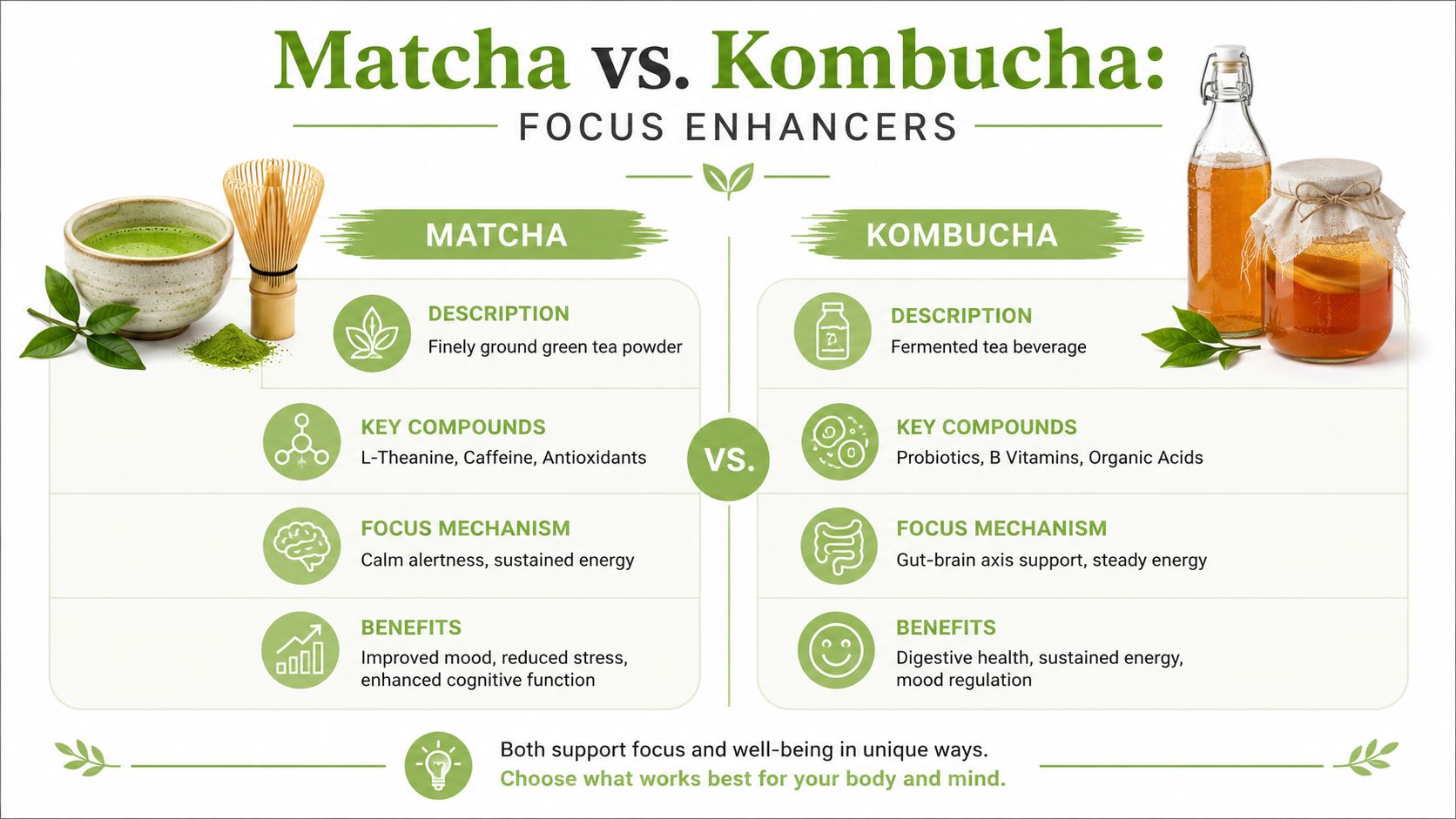
They also support focus in different ways. Matcha is about calm energy and mental steadiness. Kombucha is often part of a wider gut-friendly routine that can help you feel lighter and more balanced through the day.
Why matcha feels different from coffee
Matcha is finely ground green tea, so you're consuming the leaf rather than steeping it and discarding it. That gives it a distinctive nutritional profile and a more layered effect.
One reason people like it for focus is the pairing of naturally occurring caffeine with L-Theanine. In everyday terms, that combination is often associated with alertness that feels smoother and less abrupt than coffee alone. Many people describe it as calm focus rather than nervous energy.
There's also the antioxidant side. Matcha contains 137 times more EGCG than standard steeped green tea, with a typical cup providing 100 to 200 mg of EGCG depending on quality and preparation, according to Tea Vision's overview of matcha health benefits.
That doesn't mean every green drink on the shelf is equal. Quality, preparation, and ingredient integrity all matter. If you've ever wondered why one matcha tastes smooth and another tastes harsh, the answer often comes back to grade, origin, and how it was handled.
For a closer look at how this compares with your usual café order, this guide to caffeine in matcha latte helps explain why the experience can feel steadier.
A short visual can help make that difference easier to picture:
How kombucha fits the focus conversation
Kombucha doesn't work like matcha, and that's exactly why it belongs in the same conversation.
It's a fermented tea beverage, and properly brewed kombucha contains live cultures and fermentation-derived compounds that many people enjoy as part of a gut-conscious lifestyle. When people talk about the gut-brain axis, they mean the ongoing relationship between digestive health and how you feel mentally and emotionally.
Kombucha isn't a caffeine substitute in the same way matcha can be. It's more useful as a reset drink. Something crisp, grown-up, and supportive when you want to move away from soft drinks, overly sweet options, or another heavy coffee.
Why quality changes the experience
A lot of confusion often stems from such details. Not all matcha is vibrant, fresh, or pleasant to drink. Not all kombucha is properly fermented, balanced, or low in sugar.
If you're using these drinks for focus support, quality matters because the goal isn't just to consume a category. It's to choose something you'll enjoy enough to use consistently.
A few practical signs to look for:
- For matcha: bright colour, fine texture, clean taste, and no stale smell
- For kombucha: proper fermentation, balanced flavour, and an ingredient list without unnecessary extras
- For both: organic sourcing and transparency around how the product is made
The best functional drink is the one that fits your day, tastes good, and doesn't leave you feeling worse an hour later.
A Practical Guide to Your Daily Focus Ritual
Knowing what supports focus is one thing. Using it well is another.
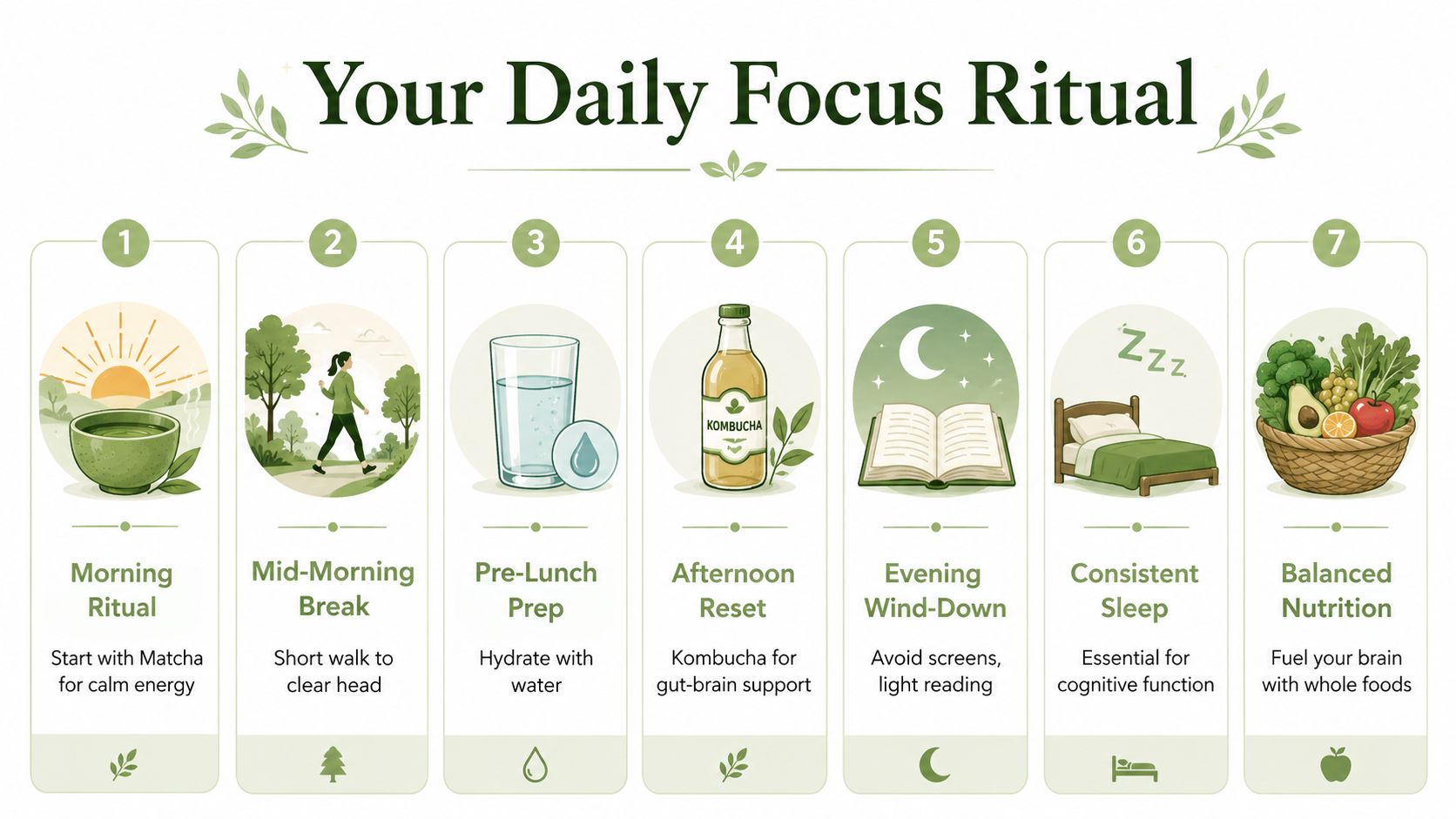
The easiest approach is to match the drink or habit to the type of work and energy dip you're dealing with. You don't need a complicated protocol. You need a rhythm you can repeat.
A simple day that supports concentration
A practical routine might look like this:
Morning deep work
Have matcha before writing, planning, studying, or creative work. Many people find it suits tasks that need steady concentration rather than frantic speed.Mid-morning reset
Step away from the screen. Even a brief walk or stretch can cut through mental stickiness.Lunch that doesn't flatten you
Aim for a balanced meal instead of something that leaves you sleepy and searching for sugar.Afternoon support
Reach for kombucha when the slump hits and you want something refreshing without going back into the coffee loop.Evening wind-down
Protect sleep. Better focus tomorrow starts tonight.
Two easy drink ideas to try
You don't need barista-level skill to make this work at home.
Quick ceremonial-style matcha
- Use quality powder: Start with a small spoonful of matcha in a bowl or mug.
- Add a little water first: Use warm, not boiling, water.
- Whisk until smooth: A bamboo whisk is ideal, but any small whisk helps.
- Top up and drink straight: This is great when you want a cleaner, more direct matcha experience.
Simple kombucha spritzer
- Pour over ice: Start with chilled kombucha.
- Add sparkling water: This lightens the flavour and makes it extra refreshing.
- Finish with citrus or mint: A slice of lime or a few mint leaves lifts it nicely.
- Serve in a wine glass if you like: It feels more special and works well for non-alcoholic entertaining.
A practical matcha latte approach
If straight matcha feels too intense at first, a latte is often the easiest entry point.
- Whisk the matcha first: Get rid of clumps before adding milk.
- Choose your milk well: Dairy, oat, almond, and soy all create slightly different textures.
- Keep sweeteners modest: If you add sweetness, use just enough to round out the flavour.
- Use it intentionally: A matcha latte works well before a long meeting block or focused admin session.
Good menu ideas for cafés and hospitality venues
For cafés, bars, and wellness-led venues, these drinks make sense because they meet several customer needs at once. They feel premium, non-alcoholic, and functional without being preachy.
Offerings that fit well include:
- Ceremonial matcha serve: For customers who want a traditional tea moment
- Iced matcha latte: A familiar gateway drink
- Kombucha by the bottle or glass: Easy, low-fuss, and versatile
- Kombucha spritzers: Great for brunch and alcohol-free menus
- Matcha baking and smoothie additions: Useful for broader café menu development
A drink doesn't need to promise everything. It just needs to earn a regular place in someone's day.
Building a Smarter and More Sustainable Focus
Often, what's required isn't more stimulation. It's better structure.
That's the core value of natural focus enhancers. They shift the conversation away from chasing instant intensity and towards creating conditions where concentration comes more easily. Better drinks help. Better sleep helps. Better timing helps. Together, they're more useful than any single shortcut.
A realistic first week
If you're new to this, keep the first step small.
Try this for one week:
- Swap your second coffee for matcha on the days you need clear, steady work time
- Use kombucha in the afternoon instead of reaching for a sugary soft drink
- Create one screen-free break during the middle of your day
- Keep your evening calmer so the next day starts with more in the tank
That's enough to notice patterns. You may realise your energy drop is really a hydration issue. Or that your best thinking happens when you front-load focused work and stop treating every notification like an emergency.
Think in routines, not rescues
The smartest focus plan is the one you can maintain when life is busy, the kids are loud, and your inbox is feral.
Natural support works best when it becomes ordinary. A morning ritual. A better afternoon option. A few habits that lower mental friction. If you're interested in the wider shift towards drinks that do more than just taste good, this piece on functional beverage trends adds useful context.
Better concentration rarely arrives all at once. It builds when your daily choices stop fighting your brain.
If you'd like to explore functional drinks that fit naturally into a more focused routine, Pep Tea offers premium organic Japanese matcha and Australian-brewed sugar-free organic kombucha. Browse the range, read the education guides, and find a calm, practical way to support your day.
Antioxidant Tea Benefits: Boost Wellness with PepTea
That 3 pm moment is familiar. You've had lunch, your focus has drifted, and you want something that feels better than another coffee or a sugary drink. You're not chasing a miracle. You just want a daily habit that tastes good, supports your health, and fits real life in Australia.
Tea often enters that conversation because people know it contains antioxidants. The problem is that most advice stops there. It says tea is “good for you” without explaining what antioxidants do, why Matcha keeps coming up in wellness circles, or why your brewing method can change what ends up in your cup.
That's where antioxidant tea benefits become much more practical than they first sound. Its value isn't just that tea contains protective compounds. It's that some teas deliver them more reliably, some preparation methods protect them better, and some compounds work together in ways that help you feel the difference day to day.
For many people, that means two standout options. Matcha gives you a concentrated whole-leaf green tea experience, while Kombucha offers a different path, combining tea's natural compounds with fermentation and live cultures. They're not the same drink, and they don't play the same role. That's exactly why understanding both can help you build a smarter routine.
Your Daily Wellness Upgrade Starts Here
A lot of healthy habits fail because they ask too much. Complicated meal plans, expensive powders, rigid routines are often abandoned. A cup of tea is different because it's already part of everyday life. You're not adding a whole new identity. You're making a better choice inside a habit you already have.
That's why antioxidant tea benefits matter in such a practical way. If you already reach for something warm in the morning or something refreshing in the afternoon, tea can turn that moment into a small act of support for your body. Not with hype, and not with extreme promises. Just with compounds that help protect your cells from everyday stress.
Why people start looking for better drinks
Usually it begins with one of these moments:
- The coffee crash: You want energy, but not the shaky feeling that can come with overdoing caffeine.
- The sugar rethink: Soft drinks and sweet café options don't feel great when you're trying to clean up your routine.
- The wellness upgrade: You want something simple that may support immunity, focus, and long-term health.
That's where tea earns its place. Green tea, Matcha, and Kombucha all bring something useful to the table, but they don't all work in the same way.
Some drinks give you a quick hit. Tea tends to reward consistency instead.
A more useful way to think about tea
Instead of asking, “Is tea healthy?”, ask better questions:
- Which tea gives me the most antioxidants in a normal serve?
- How much does preparation affect the result?
- Do I want calm focus, gut support, or both at different times of day?
Those questions lead to better choices than generic wellness claims ever will. They also clear up a lot of confusion. Matcha isn't just green tea with better marketing. Kombucha isn't just fizzy tea in a pretty bottle. Each has a different role, and once you understand that, it becomes much easier to use them well.
Understanding Antioxidants and Free Radicals
Your body is constantly dealing with wear and tear. Pollution, UV exposure, stress, and normal metabolism all create unstable molecules called free radicals. When too many of them build up, they can damage cells. That process is called oxidative stress.
A simple way to picture it is a car left out in the weather. Over time, metal starts to rust. Your cells don't rust, of course, but oxidative stress creates a similar kind of gradual damage. That's why people often connect antioxidants with healthy ageing and general resilience.
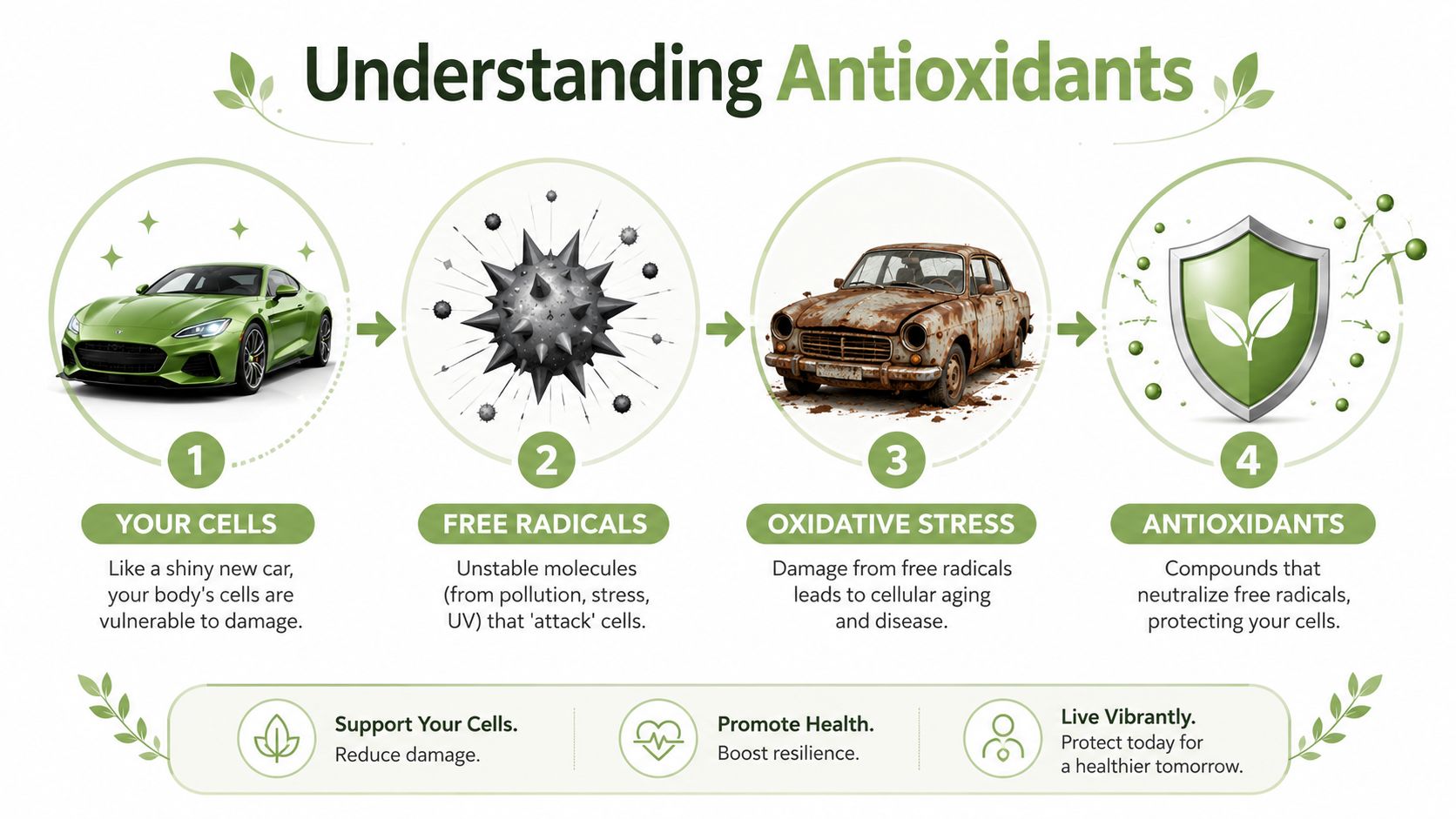
What antioxidants actually do
Antioxidants help neutralise free radicals before they can cause as much damage. You can think of them as part of your body's defence team. They don't make you invincible, and they don't replace the basics like sleep, food, and exercise, but they can support the system.
Tea is especially known for a group of antioxidants called polyphenols. In green tea and Matcha, one of the best-known is EGCG, short for epigallocatechin gallate. It's the compound that gets a lot of attention because it's strongly associated with many of tea's protective qualities.
Why EGCG gets so much attention
EGCG matters because it's one of the standout catechins in green tea. In organic Matcha green tea, EGCG accounts for 60% of all catechins, which is part of what gives Matcha its unusually concentrated antioxidant profile, as noted by Pep Tea's explanation of Matcha catechins.
That's also why people often get confused when they compare “green tea” as a broad category with Matcha specifically. Not all green tea experiences are equal. The type of tea, the grade, and the way you prepare it all affect what you consume.
Practical rule: Antioxidants are only useful if they survive the trip from the leaf into your cup.
Where this matters in daily life
Antioxidants aren't just an abstract science topic. They're part of why people choose tea when they want to support:
- Cell protection: helpful when everyday life includes stress, sun, and pollution
- Skin support: especially relevant in Australia, where UV exposure is part of life
- General wellness: a daily drink can become one small, repeatable habit that supports the bigger picture
Once you understand the free radical versus antioxidant story, tea starts making more sense. The next step is looking at why Matcha sits in a category of its own.
Matcha The Ultimate Antioxidant Powerhouse
Most green tea is brewed, then the leaves are discarded. Matcha works differently. The leaf is ground into a fine powder, whisked into water, and consumed whole. That single difference changes everything.
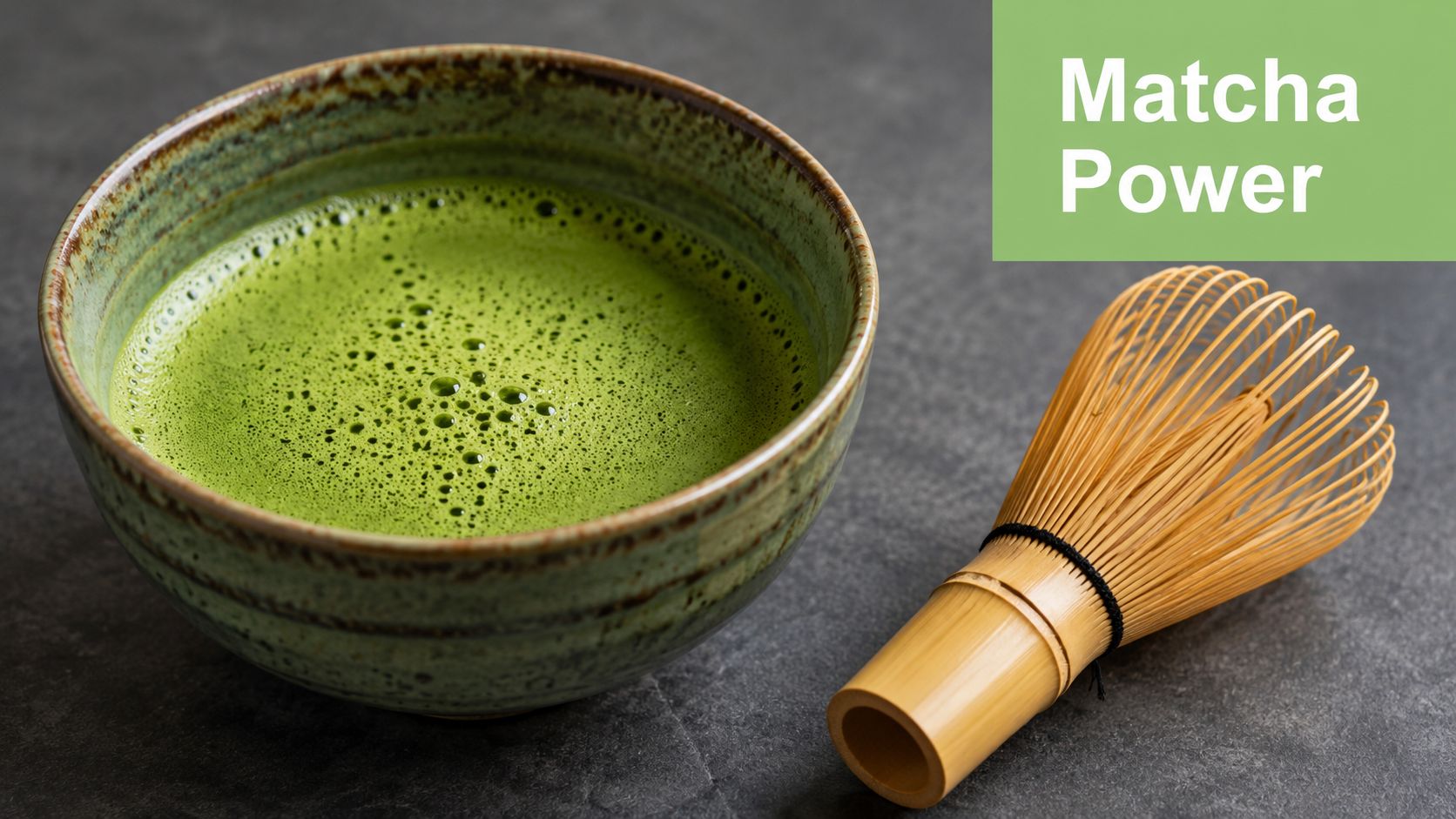
Because you're drinking the whole leaf, Matcha delivers a far more concentrated intake of tea compounds than a standard infusion. That's why it has such a strong reputation among people looking for antioxidant tea benefits that feel substantial rather than token.
Why Matcha delivers more per serve
The most direct comparison is this. Matcha tea powder possesses 137 times more antioxidant catechins than regularly brewed green tea, due to whole-leaf consumption, according to this Cleveland Clinic-cited social post on Matcha catechins.
That doesn't mean every cup of steeped green tea is worthless. It means Matcha is a much more concentrated delivery system.
Here's the practical difference:
- Steeped green tea: some compounds move from the leaf into the water
- Matcha: you consume the leaf itself
- Result: less is left behind, and more reaches you
The antioxidant profile people are really chasing
One reason Matcha is so popular is its high EGCG concentration. Beyond general antioxidant support, the verified data around Matcha points to several areas people care about in real life, including immune support, protection from oxidative stress, and support for metabolism.
A related detail helps make that more concrete. One gram of premium stone-ground organic Matcha contains approximately 30–35 mg of EGCG, according to Matcha.com's overview of catechins and EGCG. That gives you a sense of why even a small serve can feel meaningful within a daily routine.
For a deeper look at the whole antioxidant story, this overview of Matcha as an antioxidant powerhouse is a useful reference.
Why quality and preparation still matter
Not all Matcha is used the same way. Ceremonial styles are usually chosen for straight drinking, while culinary styles suit lattes, smoothies, and baking. Both can be antioxidant-rich, but flavour and texture shape how you will enjoy them.
This quick visual guide is helpful if you're still learning the ritual side of Matcha preparation.
Good Matcha should make healthy habits easier to repeat. If it's unpleasant, most people won't stick with it.
That's the hidden reason Matcha works so well for many Australians. It can slot into a morning ritual, an afternoon reset, or a café order without needing a full lifestyle overhaul.
Kombucha A Fermented Twist on Antioxidant Benefits
Kombucha starts in a very different place. Instead of offering the concentrated whole-leaf intensity of Matcha, it begins as brewed tea and then goes through fermentation. That process changes the drink's character completely.
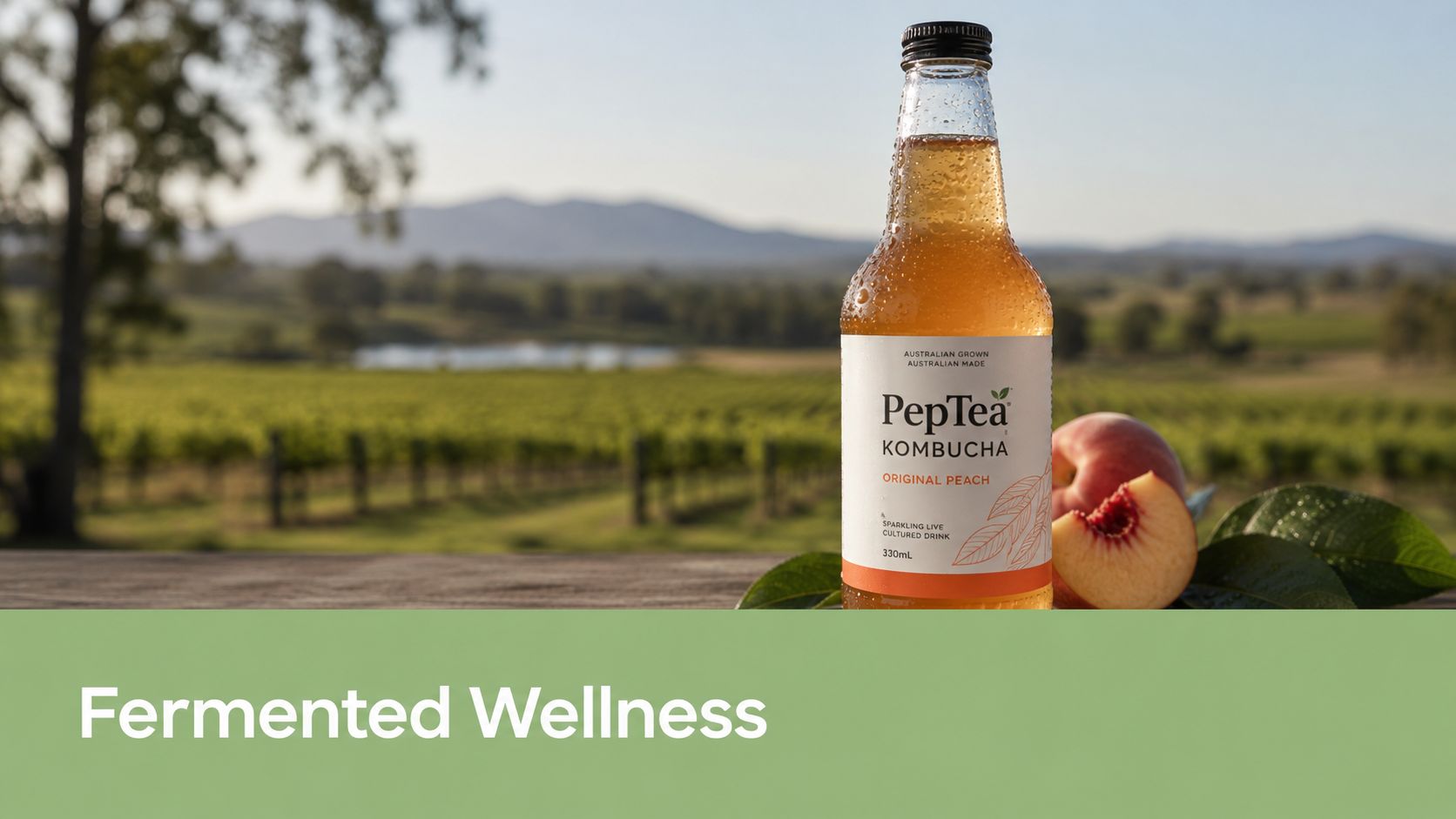
What you get at the end is less about delivering the biggest possible antioxidant hit and more about creating a functional drink with a different set of strengths. For people trying to move away from sugary soft drinks or alcohol-heavy routines, that matters.
Matcha and Kombucha serve different jobs
The easiest way to compare them is by role.
| Drink | Best known for | Practical use |
|---|---|---|
| Matcha | Concentrated tea antioxidants and calm energy | Morning focus, lattes, smoothies, mindful rituals |
| Kombucha | Fermented tea with live cultures and refreshing acidity | Soft drink swap, alcohol alternative, gut-friendly refreshment |
Kombucha still starts with tea, so it carries some of tea's original antioxidant heritage. Fermentation then adds another layer through live cultures and the tangy, complex flavour people either fall in love with immediately or learn to appreciate over time.
Why Kombucha appeals to health-conscious drinkers
Many people don't need every drink to be a super-concentrated wellness tool. Sometimes they need a better replacement for what they'd otherwise drink.
That's where Kombucha shines:
- It feels social: served cold, fizzy, and satisfying
- It can support gut-friendly routines: because live fermentation is part of the appeal
- It helps with sugar reduction: especially for people trying to replace sweet beverages with something cleaner
For Australian households and cafés, that makes Kombucha practical. It works in the fridge at home, on a café menu, or as a non-alcoholic option that still feels grown-up.
Kombucha isn't trying to be Matcha. Its strength is that it solves a different problem.
If you want a deeper look at fermentation, live cultures, and what separates properly brewed Kombucha from gimmicky versions, this guide to the benefits of Kombucha is worth reading.
How to Maximise Your Antioxidant Intake from Tea
A common assumption trips people up. If tea contains antioxidants, then any green tea, brewed any old way, should deliver roughly the same benefit. It doesn't work like that.
With steeped tea, the result in your mug depends on preparation. Water that's too hot, steeping that runs too long, or inconsistent home brewing can change how much of those delicate compounds you get. That's one reason there's often a gap between tea's potential on paper and the cup people drink every day.
Brewing method changes the outcome
One of the most useful reminders comes from population-level data. A PeerJ analysis of 410,000 people found tea reduces dementia risk by up to 29%, but only when consumed optimally, at 2–4 cups per day and the correct temperature, as summarised in Tea Esk's discussion of antioxidant-rich teas.
The big lesson isn't just the dementia finding. It's that how you drink tea matters.
Matcha vs Steeped Green Tea Antioxidant Delivery
| Attribute | Matcha (e.g., PepTea Organic Matcha) | Standard Steeped Green Tea |
|---|---|---|
| How you consume it | Whole leaf in powdered form | Water infused with leaves |
| Antioxidant delivery | More direct and consistent | More dependent on brewing variables |
| Preparation risk | Lower loss from leaf disposal | Greater chance of reduced catechin retention if brewed poorly |
| Best use case | Reliable daily antioxidant intake | Lighter tea ritual with more variation cup to cup |
How to get more from your tea routine
If your goal is antioxidant tea benefits, a few habits help:
- Choose the right tea for the job. Matcha is the more reliable option when you want concentrated delivery.
- Respect temperature. Very hot water can work against delicate compounds in steeped green tea.
- Don't overbrew. Stronger doesn't always mean better.
- Build repeatable habits. The best tea routine is the one you can maintain.
That reliability is part of Matcha's appeal. Because the powder stays in the bowl and then in the drink, you remove much of the guesswork that comes with brewing leaves.
The hidden gap most people miss
People often read about the benefits of green tea and assume they're automatically getting them. In reality, there can be a big difference between “contains antioxidants” and “delivers antioxidants well in everyday use”.
That's why a carefully prepared Matcha can be such a smart choice for home baristas, busy professionals, and café drinkers who want fewer variables and more consistency.
The Secret Synergy of L-Theanine and Clean Energy
Matcha's appeal isn't only about antioxidants. The experience people love most is often the way it helps them feel. Alert, but not frantic. Focused, but not edgy. That's where L-theanine enters the picture.
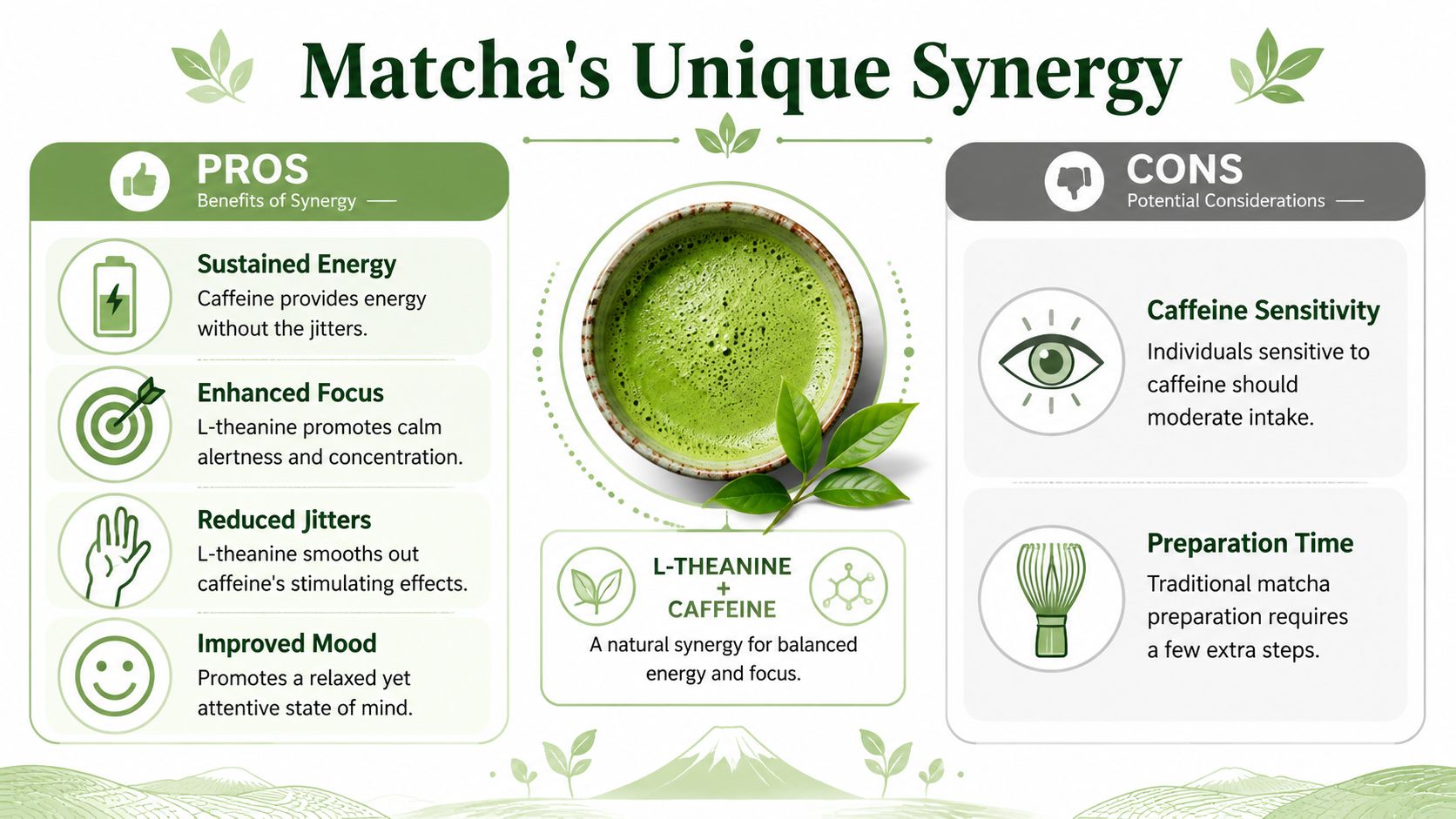
L-theanine is a naturally occurring compound in tea. In Matcha, it works alongside caffeine in a way that many people find smoother than coffee. Instead of a sharp spike, the effect is often described as calm alertness.
What L-theanine contributes
According to Australian Tea Masters' discussion of tea's health benefits, research shows L-theanine boosts GABA, serotonin, and dopamine, reducing anxiety and improving concentration, and its neuroprotective effects complement catechins to protect against cognitive decline.
That sentence explains a lot of the Matcha experience in one go. You're not only getting tea antioxidants. You're also getting a compound that helps smooth the mental side of stimulation.
For many people, that means:
- Steadier focus for desk work or study
- A calmer energy curve than they get from coffee
- A more balanced drink for busy mornings
Why this synergy matters more than caffeine alone
Caffeine on its own can be useful, but it isn't always kind. Some people get the jitters, some get a fast rise and crash, and others feel tense rather than productive. Matcha has a different reputation because of the way its compounds work together.
That synergy is one reason many people prefer a bowl of Matcha before:
- work that needs sustained concentration
- a slower start to the morning
- an afternoon reset that doesn't wreck sleep as badly as a late coffee might
If you're curious about a high-quality option designed for this kind of everyday ritual, Uji Matcha powder is a relevant place to explore.
The most interesting thing about Matcha isn't just that it contains caffeine. It's that the rest of the leaf changes how that caffeine feels.
A smarter way to think about energy
Plenty of drinks promise energy. Fewer help you stay organised, settled, and mentally clear. That's the difference people often notice when they switch from quick-fix beverages to Matcha.
It turns “energy” from a buzzword into something more useful. You can still get a lift, but it's paired with compounds that support composure and attention, which is exactly what many health-conscious Australians are after.
Your Daily Guide to Antioxidant-Rich Teas
The best antioxidant routine is one you'll keep. It doesn't need to be elaborate. It needs to suit your schedule, your taste, and the kind of support you want from a drink.
Simple ways to use Matcha across the day
If you enjoy a slower morning, whisk Matcha with warm water and drink it plain. If you prefer something creamier, use it in a latte. If you're making smoothies or baking, a stronger culinary style usually makes more sense than using your nicest ceremonial powder.
That distinction is practical, not precious. Culinary-grade organic Matcha contains an average EGCG concentration of 50.53 ± 2.41 mg/g, while ceremonial-grade organic Matcha contains 56.57 ± 2.19 mg/g, according to this published comparison of organic Matcha grades. Both are potent. The right choice depends more on how you'll use it than on chasing tiny differences.
A realistic routine for home and café life
Try this approach:
- Morning: plain Matcha for a focused start
- Midday: iced Matcha latte if you want something more substantial
- Afternoon: Kombucha instead of a soft drink or overly sweet café option
- Weekend: use culinary Matcha in smoothies, pancakes, or yoghurt bowls
For cafés, the same logic applies. Keep straight Matcha for customers who enjoy the ritual, use culinary Matcha for lattes and recipes, and offer Kombucha as a polished non-alcoholic fridge or menu option.
Keep it easy enough to repeat
You don't need to optimise every sip. You just need to avoid the obvious mistakes and choose drinks that fit your actual life. Matcha is ideal when you want concentrated antioxidant support and cleaner focus. Kombucha makes sense when you want something cold, fermented, and more social.
Both can help replace habits that don't serve you well.
A healthy drink earns its place when it becomes the option you reach for without having to think twice.
Tea works best this way. Not as a miracle cure, but as a steady, enjoyable part of a better routine.
If you're ready to turn these ideas into something practical, explore Pep Tea for premium organic Japanese Matcha and Australian-brewed sugar-free organic Kombucha. It's a great place to compare ceremonial and culinary Matcha, discover Kombucha flavours for everyday drinking, and find options suited to home routines, cafés, and wholesale needs.
Your Guide to Fermentation: How to Make Kombucha Scoby

You've probably done it yourself. You crack open a really good bottle of kombucha, take that first tart, lively sip, and think, “How on earth do they make this at home?”
Then someone mentions a SCOBY and suddenly it all sounds a bit strange. A floating blob in sweet tea? It doesn't exactly scream “refreshing kitchen project”.
But once you understand what's happening, making your own SCOBY feels far less mysterious. It's the living starter culture that helps turn sweet tea into real kombucha. If you want to avoid rough, inconsistent “cowboy kombucha” and brew with a bit more care, learning how to make kombucha SCOBY properly is one of the best places to begin.
The Magic Behind the Brew
A few years back in the Hunter, a customer asked me why one kombucha tasted clean and balanced while another tasted flat, sharp, or just plain odd. The answer usually comes back to the culture. A healthy brew starts with a healthy starter.
That's what a SCOBY is all about. The term stands for symbiotic culture of bacteria and yeast, but in everyday brewing talk, people often mean the soft pellicle that forms on top. It might look unusual at first, yet it's the heart of authentic kombucha brewing.
The good news is that you don't need a laboratory or fancy gear. You need clean equipment, decent tea, the right starter liquid, and patience. That's it. Once you understand the rhythm of the ferment, it becomes a very satisfying kitchen craft.
A good SCOBY isn't magic. It's the result of warmth, clean handling, and giving the microbes the conditions they need.
Tea matters more than many beginners realise. Kombucha isn't made from flavoured water with a culture tossed in at the end. The tea is part of the feed. If you want the deeper reason kombucha depends on real tea in the first place, Pep Tea explains it well in this guide on why kombucha needs tea.
Once that clicks, the whole process starts to make sense. You're not growing a weird kitchen science experiment. You're building a living starter for future brews.
Gathering Your Supplies and Starter Liquid
Before you brew anything, get your setup organised. That alone prevents a lot of beginner mistakes.
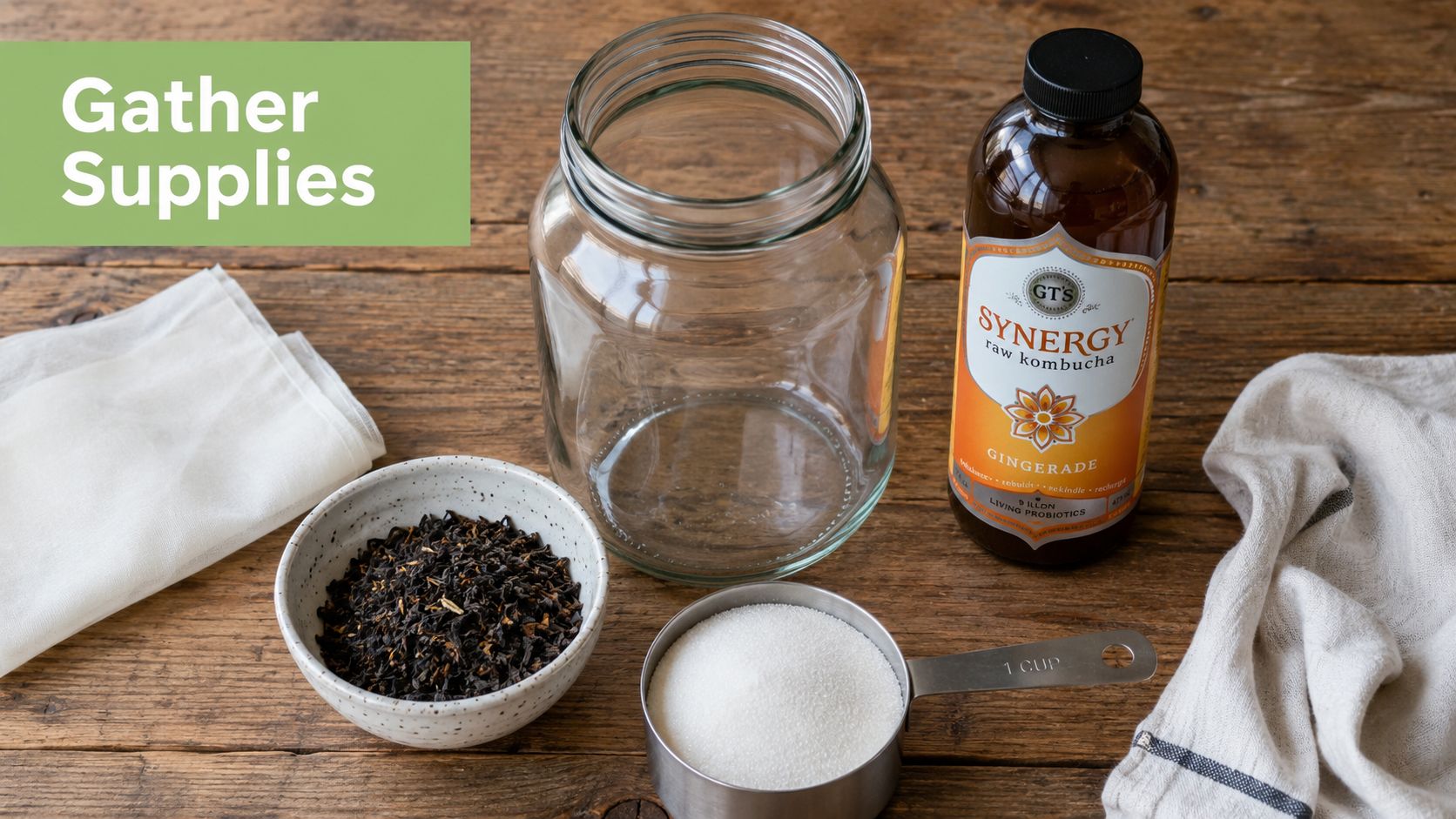
What you need on the bench
Keep it simple:
- A glass jar. Glass is non-reactive and easy to keep clean.
- A breathable cover such as clean cloth or a paper coffee filter.
- A rubber band to secure the cover.
- Water for brewing the tea.
- Tea to feed the culture.
- Sugar because the microbes need it as food.
- Starter liquid from raw, unpasteurised kombucha or an existing kombucha culture.
If you want everything in one place, a kombucha tea kit can be one practical option, especially if you'd rather skip the hunt for bits and pieces around the kitchen.
The base recipe that keeps things reliable
A standard kombucha base uses about 5 g of tea and 50 g of sucrose per 1 litre of water, according to the American Homebrewers Association kombucha guide. That balance matters because it gives the bacteria and yeast enough fuel without making the brew unnecessarily complicated.
If you're making a SCOBY from scratch, that same source notes it can take up to a month to grow a usable pellicle, although warmer conditions can speed things up.
Choosing the tea
For a first SCOBY, stick to plain tea. Black tea is the classic choice. Plain green tea can also be used, but beginners usually get the most predictable results by keeping the ingredients basic and clean.
Look for tea without added oils, heavy flavourings, or extras. The more straightforward the input, the easier it is to tell whether the ferment is healthy.
Choosing the starter liquid
You've got two common paths:
Use raw, unpasteurised kombucha
Pick one with visible sediment or “floaties” if possible. That sediment is often a good sign that live culture is still present.Use starter from an existing brew
If a friend brews kombucha successfully, some mature starter liquid from their jar can give you a stronger beginning.
A starter culture works best when it acidifies the batch early. That lowers the chance that unwanted microbes get comfortable before your kombucha culture does.
Practical rule: Your starter liquid should be live and unpasteurised. If it's been heat treated, it won't give you the same foundation.
A note on ingredients and patience
People often ask whether fancy sugars or unusual teas make a better SCOBY. Usually, they just make troubleshooting harder. If your goal is to learn how to make kombucha SCOBY with confidence, plain tea, sugar, water, and a strong starter are the safest route.
Your Step-by-Step Brewing Guide
The process itself is straightforward. What matters is doing the simple things carefully.
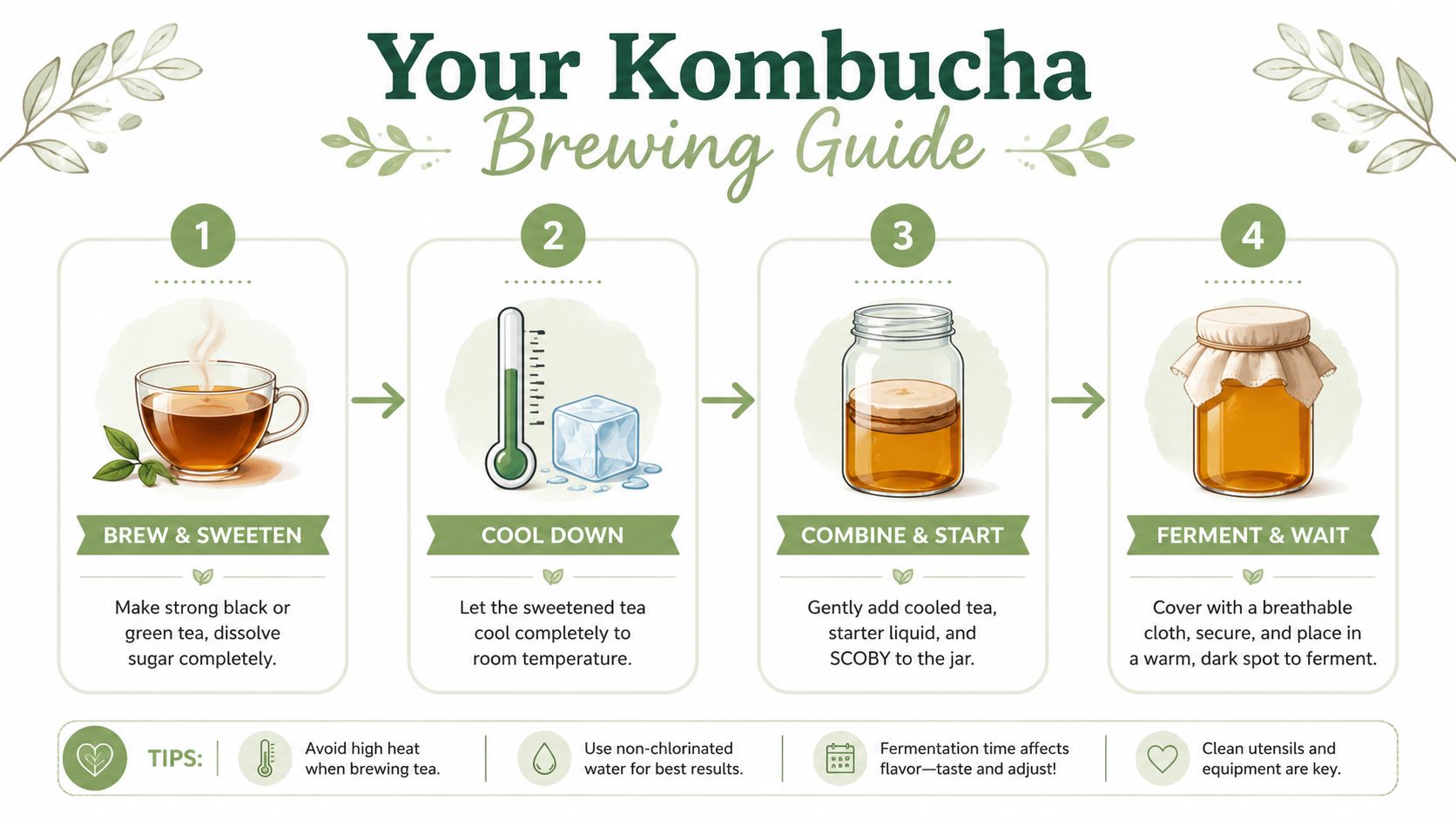
Brew the sweet tea properly
Start by making a strong sweet tea. Dissolve the sugar fully while the tea is still hot. You don't want gritty sugar sitting at the bottom of the jar.
A simple way to think about it is this: the tea feeds the culture, and the sugar feeds the microbes that will build the new pellicle.
Cool it before you add the culture
This is the step people rush, and it's one of the easiest ways to ruin a batch.
For SCOBY growth, fermentation is best kept in a stable 21 to 27 °C range, and a new pellicle can form in 10 to 12 days in those conditions. Before adding the live culture, the sweet tea should be cooled to below 32 °C, as explained in this Brod and Taylor SCOBY guide.
If you enjoy the science behind it, this overview of food safety and bacteria temperature gives useful background on why temperature control changes microbial behaviour so much.
Hot tea can damage the live microbes. Let it cool first, even if you're in a hurry.
Add the starter and set up the jar
Once the tea is cool:
- Pour the sweet tea into your clean glass jar
- Add the starter liquid
- Cover the jar with breathable cloth
- Secure it firmly with a rubber band
Don't screw on an airtight lid. Kombucha culture needs oxygen while the pellicle forms.
Here's a quick visual walkthrough if you like seeing the process in action.
Find the right spot in an Australian home
Where you leave the jar matters almost as much as what's in it.
In warmer parts of NSW or Queensland, a sheltered pantry can often stay in a useful range for fermentation. In southern winters, indoor temperatures can dip enough to slow things down noticeably. The culture will still work, but you may need more patience and a steadier location.
A good spot is:
- Warm but not hot
- Out of direct sunlight
- Undisturbed
- Away from fruit bowls, rubbish bins, and busy splash zones in the kitchen
What not to fiddle with
Once the jar is covered and parked, leave it alone. Don't keep lifting the cloth. Don't swirl it for fun. Don't move it from bench to pantry to windowsill because you're second-guessing yourself.
A forming SCOBY often starts as a thin film. If you keep disturbing the surface, that early layer struggles to knit itself together.
Is It Ready? Monitoring Your SCOBY's Growth
A new brewer usually gets nervous around day three or four. Nothing dramatic seems to be happening, so the temptation is to poke, tilt, and inspect. Resist that urge.

What healthy growth looks like
A normal SCOBY often begins as a thin, pale film across the surface. At first it may look patchy, translucent, or slightly uneven. That's fine.
As time passes, it usually becomes more solid and more opaque. You may also notice:
- Small bubbles trapped under the surface
- Brown stringy bits hanging below, which are often yeast
- An off-white or beige disc gradually covering more of the jar
These signs can look odd if you've never brewed before, but they're commonly part of a healthy ferment.
The benchmark that matters
A SCOBY is ready for brewing when it reaches about 1/4 inch (6 mm) thick and becomes opaque. In Australian summer conditions, that often happens in 10 to 14 days, while cooler winter conditions in southern regions can push the process to 21 days or more.
That's the point where guesswork stops. You're not looking for beauty. You're looking for a culture with enough body to handle the next batch confidently.
If the top layer is still very thin and transparent, give it more time.
If you want to monitor more closely
Visual checks are usually enough, but some brewers like extra reassurance. A digital pH meter can help you track acidity more consistently, especially if you're learning your kitchen's fermentation rhythm. Pep Tea offers a digital pH meter for that purpose.
A quick readiness table
| Sign | What it usually means |
|---|---|
| Thin clear film | Early pellicle formation |
| Opaque, thicker top | Culture is maturing well |
| Around 1/4 inch or 6 mm thick | Ready for brewing |
| Brown strands below | Often normal yeast activity |
A SCOBY doesn't need to be perfectly round, smooth, or pretty. Some of the strongest ones look a bit rustic.
Troubleshooting Common SCOBY Problems
Beginners often get spooked. A strange shape is usually normal. Fuzzy growth is not.

Normal doesn't always look pretty
A healthy SCOBY can be lumpy, uneven, or full of bubbles. It can grow off-centre. It can have brown strings, creamy patches, or layers that look a bit like wet paper.
That's why appearance alone can mislead new brewers. “Ugly” isn't the same as unsafe.
Signs you should discard the batch
Some signs are clear warnings. If you see fuzzy black or green spots, discard the batch. If it smells like rotten fruit, discard it. Those are contamination signs, not a quirky stage of fermentation.
A healthy SCOBY should form a firm, pale, gelatinous disc. If parts still look paper-thin, it may just need longer.
The safety checks that matter most
A few rules make a big difference:
- Keep the vessel breathable. It should be covered with cloth or a paper filter, not sealed shut.
- Aim for an acidic start. Reaching pH below 4.5 is important for mould prevention.
- Use live starter liquid. Pasteurised starter won't protect the batch the same way.
- Clean carefully. Vinegar is commonly preferred for sanitising brewing gear because soap residue can interfere with the culture.
One important warning is worth repeating clearly. Sealing the jar airtight is a major error. A breathable cover matters because an airtight vessel can ruin about 25% of batches by inhibiting the aerobic yeast phase.
Dry, fuzzy growth on top is mould. Smooth film, bubbles, and brown strands are usually part of kombucha doing its job.
A simple normal versus problem table
| What you see | What to think |
|---|---|
| Smooth off-white layer | Usually healthy |
| Brown stringy sediment | Usually normal yeast |
| Bubbles under the pellicle | Usually normal |
| Dry fuzzy green or black patches | Discard the batch |
| Rotten smell | Discard the batch |
Two common beginner mistakes
Using soap carelessly
Soap sounds harmless, but residue can hang around on jars and tools. If you clean with soap, rinse extremely well. Many brewers prefer vinegar for final sanitising because it's simpler and doesn't leave the same concern behind.
Treating the jar like a project to supervise
A SCOBY likes stability. If you keep checking it every few hours, moving it around, or changing its home, you make life harder for the culture. Warm, covered, steady, and untouched is the rhythm you want.
Your First Brew and SCOBY FAQs
Once your SCOBY is thick enough and healthy, you're ready to start your first proper kombucha batch. Use the new SCOBY along with some of the mature liquid as starter for fresh sweet tea. That starter liquid matters just as much as the pellicle.
For a home brewer, that's where the fun really starts. For a café, it's where consistency starts to matter. If you're trialling kombucha for a menu, small controlled batches are the smart way to begin so you can learn how your space behaves before scaling anything up.
Common questions new brewers ask
Can a SCOBY sink or float sideways
Yes. That's normal. A healthy SCOBY can float, sink, tilt, or drift partway through the brew.
Can I use herbal tea
For your first few brews, it's better to stick with plain tea. Herbal blends can make fermentation less predictable, especially when you're still learning what a healthy culture looks like.
Can I swap the sugar
You can experiment later, but plain sugar keeps things simple at the start. When you're learning how to make kombucha SCOBY, consistency beats novelty.
What do I do with extra SCOBYs
Store them in a jar with enough finished kombucha to keep them submerged. Brewers often call this a “SCOBY hotel”. It's handy if your culture keeps producing new layers or you want a backup.
Do I need a perfect-looking SCOBY
No. You need a healthy one. Thickness, opacity, smell, and absence of mould matter far more than appearance.
What should it smell like
Think tart, vinegary, and pleasantly fermented. If the smell turns foul or rotten, trust your nose and don't use it.
Making your own SCOBY teaches you a lot about fermentation. Mostly, it teaches patience. Give the culture the right ingredients, the right temperature, and a peaceful corner of the kitchen, and it will usually meet you halfway.
If you enjoy learning the careful, clean side of fermentation, have a look at Pep Tea for more kombucha and tea education, along with organic products that fit naturally into an Australian wellness routine.
Functional Beverage Trends: Top Innovations for 2026

Beyond the Buzz: Real Trends Shaping What We Drink
The phrase functional beverage trends gets thrown around so often that it can start to mean everything and nothing at once. A powder gets added, a bold claim lands on the can, and suddenly it's positioned as the future of wellness. In practice, that's not what separates a drink people try once from a drink they build into daily life.
The strongest shift heading into 2026 is simpler than the hype cycle suggests. Australians are choosing drinks with a clearer job to do. They want calm energy, better hydration, lower sugar, gut-friendly options, and ingredients they can recognise. They also want labels and claims that hold up under scrutiny, especially in a local market where compliant wording matters as much as flavour.
That lines up with broader category movement. Food Navigator reported that market research valued the global functional drinks market at about USD 149 billion in 2025, with a projected CAGR of 8.9% to nearly USD 250 billion by 2030, while noting that Australian category tracking points to growing demand for wellness-oriented drinks with clearer health positioning and lower sugar in this functional drinks market report.
For us at Pep Tea, that isn't a new idea. It's been the baseline from the start. Real organic Matcha. Properly brewed Kombucha. No hiding behind vague “wellness” language when quality, sourcing, fermentation, and taste should do the heavy lifting. If you're a consumer, café owner, or hospitality buyer, these are the trends worth acting on.
1. Adaptogenic & Nootropic Blends
Adaptogen and nootropic drinks are moving into everyday café language. You'll now see mushrooms, roots, and botanical add-ins pitched around focus, balance, and calm. The opportunity is real, but so is the risk of cluttered menus and loose claims.

What tends to work in Australia is restraint. A good base drink still has to taste good without a lecture attached. If a venue adds lion's mane to a latte, or reishi to a cacao blend, the drink needs one primary promise customers can understand fast. “Calm focus” lands better than a five-ingredient wellness stack with murky intent.
What actually lands on menu
Matcha is one of the best base formats for this trend because it already carries a clean energy story. It doesn't need to be overbuilt. In many cafés, the smartest move is a short line-up:
- Pure option: Organic ceremonial Matcha for customers who want the cleanest expression.
- Focus option: Matcha paired with one complementary mushroom or botanical.
- Evening option: A lower-caffeine botanical latte instead of forcing matcha into every daypart.
The trade-off is operational. Every extra powder adds training, stock management, and inconsistency risk. Café owners often underestimate how quickly a “wellness menu” turns into a messy bench and a confused team.
Practical rule: If staff can't explain why an ingredient is in the drink in one sentence, it probably shouldn't be on the menu.
For home use, the same applies. Start with high-quality Matcha and add one extra element only if it improves the ritual or flavour. Better ingredients usually beat bigger ingredient lists.
2. Radical Transparency in Probiotics & Gut Health
“Gut health” still pulls attention, but vague probiotic language doesn't cut it anymore. Shoppers are getting better at spotting the difference between properly fermented Kombucha and a sweet fizzy drink wearing health-food branding.
In Australia, that matters because compliant claims are a real issue, not a branding detail. Industry commentary has pointed out that local brands often face a gap between trendy wellness messaging and what can be supported under Australian rules, especially for drinks positioned around mood, gut health, focus, or energy in this analysis of functional beverage claim challenges.
What transparency looks like in real life
For consumers, transparency starts with basic questions. Was it properly fermented? Is it low in sugar because the fermentation process did the work, or because sweetness was manipulated later? Does the brand explain what the drink is, instead of just selling a vibe?
For cafés and retailers, brand selection is key. If you're stocking Kombucha, choose producers that are open about process and quality. Drinks positioned as healthy probiotic drinks should earn that trust through clarity, not buzzwords.
A practical benchmark is Pep Tea's style of Kombucha. Australian-brewed, organic, sugar-free, and built around real fermentation rather than a soft-drink shortcut. That sort of product makes service easier because staff can talk about what the drink is with confidence.
Customers don't need a microbiology lesson. They do need a reason to believe the bottle is more than flavoured fizz.
What doesn't work is overclaiming. “Supports digestion” is a very different tone from promising life-changing results. The best gut-health brands stay credible by staying specific and measured.
3. Clean Energy & Active Lifestyle Integration
The energy category is getting cleaned up. More Australians want a lift they can fit into a workday, gym session, school run, or long afternoon without feeling rattled afterward. That's why matcha keeps gaining ground as a practical energy drink, not just a café trend.
Independent market commentary has highlighted that Australian shoppers are increasingly choosing beverages for specific benefits such as energy, digestion, and mental wellbeing, with functional drinks becoming part of everyday routines rather than staying trapped in sport or supplement culture in this functional beverage market overview.
Better energy for real routines
This trend works best when the drink already fits a habit. A morning Matcha latte, an iced Matcha before a workout, or a Kombucha after lunch all make sense because they replace something people already drink.
For café owners, “clean energy” only works if the menu language is clear:
- Morning crowd: Offer a straight ceremonial Matcha and a Matcha latte.
- Fitness crowd: Position matcha as a smoother option for pre-training focus.
- Afternoon crowd: Use lighter serves and less sweetness so the drink feels refreshing, not heavy.
For consumers, choosing the best green tea for energy usually comes down to quality and preparation. Low-grade matcha with loads of syrup defeats the whole point. A clean whisked Matcha or an unsweetened iced version is where this trend delivers.
I've found cafés get the best repeat orders when they stop trying to mimic energy drinks and let Matcha be Matcha. The bright flavour, the colour, and the calmer feel are already the selling points.
4. Sophisticated Non-Alcoholic Mixology
Non-alcoholic menus have grown up. People still want complexity, bitterness, acidity, aroma, and proper presentation. They just don't always want alcohol in the glass.

Kombucha and Matcha both slot naturally into this shift. Kombucha brings acidity and fermentation character. Matcha brings bitterness, savoury depth, and colour. Used well, they help bars and cafés build drinks that feel adult and intentional rather than sugary and apologetic.
What makes a non-alc drink feel premium
The drinks that work usually borrow structure from classic cocktails. A ginger or lime-forward Kombucha can stand in for sparkle and acid. Matcha can replace part of the bitter backbone in a spritz-style serve or tea-based cooler. Herbs, citrus peel, and proper glassware do the rest.
What fails is trying to cover weak ingredients with garnish theatre. If the base liquid isn't good, the mocktail won't be either. That's why real Kombucha matters. It gives the drink shape.
For venues wanting ideas that customers will order, fruity and non-alcoholic kombucha cocktails are a strong starting point because they build on flavour pairings people already understand.
Here's a quick visual on where this trend is heading in service style and presentation.
A simple example for hospitality is a Ginger Kombucha serve with rosemary, citrus twist, and chilled stemware. It takes almost no extra labour, but it looks and drinks like a considered menu item. That's the sweet spot.
5. Zero-Sugar & Naturally Sweetened
Low sugar used to sound impressive on its own. Now people read the label more closely. They want to know what created the sweetness, what replaced the sugar, and whether the drink still tastes balanced without becoming weirdly artificial.

This is one of the clearest functional beverage trends in Australia because the wider category is already moving toward better-for-you drinks with stronger low-sugar positioning, as noted earlier. The takeaway for buyers is simple. “Healthier” means very little if the ingredient panel tells another story.
Sugar reduction that still tastes good
The hard part is flavour. Plenty of drinks remove sugar but strip out pleasure at the same time. The best products solve that with process and ingredient quality.
Kombucha is a strong example. A properly fermented sugar-free Kombucha can keep acidity, complexity, and refreshment without tasting flat. Pep Tea's organic Kombucha fits that benchmark because the drink is brewed for a clean result rather than relying on a heavy-handed sweetener profile.
For cafés, zero-sugar options also make menu design easier:
- Pair with food: Less sweet drinks work better across breakfast and lunch menus.
- Reduce fatigue: Staff don't need to explain why a “healthy” drink tastes like dessert.
- Broaden appeal: Customers avoiding alcohol, soft drinks, or sugary juices all have a place to land.
The strongest zero-sugar drinks don't taste like a compromise. They taste deliberate.
At home, this trend is worth acting on by checking what you reach for at 3 pm. If it's a soft drink or sweet iced coffee out of habit, a crisp Kombucha or an unsweetened iced Matcha can shift the whole routine.
6. Ready-to-Drink RTD Matcha
RTD Matcha is a convenience play, but convenience alone won't keep it growing. People have become more selective. If a bottle says matcha, they expect it to taste like matcha, not like vanilla syrup with a green tint.
That's where a lot of RTD products still miss. They chase shelf appeal first and tea quality second. For Australian consumers, the better direction is obvious. Fewer additives, cleaner flavour, lower sugar, and a real connection to the tea itself.
Convenience without losing integrity
There's a genuine place for grab-and-go Matcha. Not everyone has time to sift, whisk, and warm water between meetings or school drop-off. RTD formats can make sense for offices, gyms, independent grocers, and café fridges, but only if they preserve what makes Matcha worthwhile.
A good RTD Matcha should still feel vegetal, fresh, and lightly creamy if milk is involved. It shouldn't lean on excessive sweetness to hide poor powder quality. Consequently, understanding the differences between ceremonial-grade and culinary-grade matters. A café might use culinary Matcha for blended drinks and reserve ceremonial Matcha for premium serves, but both still need to be good.
For operators, the RTD trade-off is margin versus theatre. Bottled Matcha is fast and consistent. Fresh-whisked Matcha has more ceremony and often more perceived value. Many venues will do best with both. Grab-and-go in the fridge, and a made-to-order Matcha menu for customers who want the full experience.
If Pep Tea ever sets the benchmark here, it should be the same rule we apply to every category. The format can change. The integrity can't.
7. Gut-Mind Connection and Beverages for Mood
This is one of the more interesting shifts because people aren't separating physical wellness from mental wellbeing as neatly as they used to. They're looking for drinks that support how they feel, not just how they fuel.
Industry commentary for 2025 noted rising demand for gut-friendly drinks with prebiotic and probiotic ingredients, with launches in markets including Australia and Japan increasingly carrying digestive health claims. The same commentary also pointed to a global functional beverage estimate of USD 151.80 billion in 2025, with a forecast to reach USD 239.95 billion by 2031, implying a 7.93% CAGR from 2026 to 2031 in this functional beverage trends update.
Why mood-friendly drinks are getting traction
In practical terms, people understand “calm focus” and “settled stomach” far better than abstract wellness language. That's why Matcha and Kombucha sit so neatly in this space. Matcha already has a reputation for smoother, steadier energy. Kombucha already fits the digestive wellness conversation.
The key is not to oversell either one. A drink can be part of a better routine without becoming a miracle product. For consumers, that might mean replacing a jittery second coffee with Matcha, or swapping a sugary afternoon drink for Kombucha. For cafés, it means writing menus that sound grounded and believable.
A good example is a simple iced ceremonial Matcha promoted as a clean option for focus, or a sugar-free Kombucha listed as a refreshing fermented drink for customers who want something lighter. That tone respects both the product and the customer.
Mood-supportive beverage marketing works best when it sounds like a daily habit, not a medical promise.
8. Sustainable & Ethical Sourcing Story
People don't just want functional drinks. They want to feel good about the chain of decisions behind them. Where was the tea grown? How was it handled? Who made the drink locally? Was the product built with care or just assembled for trend appeal?
This matters even more in premium categories because the sourcing story is part of the quality story. With Matcha, origin and grade aren't decorative details. They shape flavour, colour, texture, and trust. With Kombucha, local brewing and disciplined production matter because “craft” can mean excellence or inconsistency depending on who's doing the work.
The sourcing story has to be real
Australian consumers have become very good at sniffing out vague ethical language. A brand that says it values sustainability but won't explain packaging, sourcing, or production choices feels flimsy fast.
What tends to resonate is specificity:
- Japanese organic Matcha: Clear origin and grade information.
- Australian-brewed Kombucha: Local production with a visible standard.
- Clean ingredient panel: No need to hide behind marketing fog.
Pep Tea has a natural advantage here because the story is grounded in actual product decisions. Organic Japanese Matcha. Kombucha brewed in the Hunter Valley, NSW. Australian ownership. Those details help cafés and retailers sell with confidence because they're concrete.
For hospitality, this trend isn't only moral. It's commercial. Staff can tell a short, credible story tableside. Customers remember that. A sourced-well product also tends to hold its flavour standard better, which matters more than any sustainability slogan.
9. Culinary Crossover with Matcha and Kombucha as Ingredients
One of the smartest shifts in functional drinks is that they're no longer trapped in the cup. Matcha and Kombucha are becoming pantry ingredients, and that opens up more occasions to use them without inventing a whole new ritual.
For home cooks, Matcha already makes sense in baking, smoothies, overnight oats, and desserts. For cafés, it lifts everything from muffins to soft serve to glaze. Kombucha has a different strength. Its acidity and fermented edge make it useful in dressings, marinades, shrubs, and low-sugar syrups.
Ingredient use creates repeat value
This trend matters because it deepens product relevance. A customer who buys Matcha only for weekend lattes might buy it more often once they start using it in bliss balls, cheesecake filling, or pancake batter. A venue that pours Kombucha by the glass might also use it in a non-alc spritz, salad dressing, or seasonal granita.
Some practical combinations work especially well:
- Ceremonial Matcha: Best for straight tea and cleaner iced drinks.
- Culinary Matcha: Better for baking, smoothies, and kitchen prep.
- Ginger or Lime Kombucha: Great in vinaigrettes, mocktail bases, and marinades.
What doesn't work is forcing “functional” into dishes that don't need it. A fluorescent green cake with weak flavour is still a weak cake. Quality ingredient, appropriate use, and proper balance matter more than trend-chasing.
If you run a café, this is one of the easiest ways to extend a premium product across the menu without adding another supplier. One excellent Matcha can support drinks, cabinet food, and seasonal specials.
10. Functional Hydration with Benefits
Hydration has become more layered. People still want refreshment first, but they also want the drink to do a little more. Maybe that means antioxidants, maybe it means a lower-sugar format, maybe it means a cleaner alternative to neon sports drinks.
This trend works best when the beverage still behaves like a thirst-quencher. If a “hydration” drink feels syrupy, medicinal, or overloaded with claims, people won't come back to it. That's why tea-based and fermented drinks have an edge. They can feel light, adult, and useful without trying too hard.
Everyday hydration is replacing occasion-only wellness
For consumers, the practical move is to think beyond workouts. Functional hydration can sit at a desk, in a lunchbox, in the car, or beside a meal. An iced Matcha with no heavy sweetener can refresh and sharpen attention. A crisp sugar-free Kombucha can replace soft drink at lunch without feeling punitive.
For cafés and foodservice, this creates room for a broader cold-drinks strategy. Sparkling water still belongs. So do premium mixers and mineral waters. If you're building a more thoughtful drinks fridge or table service list, it's worth including premium hydration options like explore Lurisia at IFM Gourmet alongside Kombucha and Matcha-based serves.

A key trade-off here is simplicity. A good hydration menu doesn't need ten fortified beverages. It needs a few excellent options with clear roles. Sparkling mineral water. Unsweetened iced Matcha. Proper Kombucha. That's enough to cover most modern drinking occasions well.
Top 10 Functional Beverage Trends Comparison
For Australian consumers and venue operators, the best trend is not the flashiest one. It is the one you can explain in ten seconds, source reliably, price properly, and serve again next week without quality slipping. That is why authentic Matcha and properly fermented Kombucha remain useful benchmarks. They make it easier to sort real function from marketing noise.
| Trend | Implementation Complexity 🔄 | Resource Requirements ⚡ | Expected Outcomes 📊 | Ideal Use Cases 💡 | Key Advantages ⭐ |
|---|---|---|---|---|---|
| Adaptogenic & Nootropic Blends | 🔄 Moderate, formulation, dosing and regulatory controls | ⚡ Medium, certified adaptogens, quality testing, staff education | 📊 Stronger perceived focus and stress-support appeal, with premium pricing potential | 💡 Premium cafés, wellness retail, limited-edition launches | ⭐ Clear point of difference, especially when paired with quality Matcha |
| Radical Transparency in Probiotics & Gut Health | 🔄 High, strain identification, CFU tracking, cold chain and quality control | ⚡ High, lab testing, refrigerated logistics, documentation | 📊 More trust, clearer claims, better repeat purchase potential | 💡 Refrigerated retail, educational marketing, health-focused outlets | ⭐ Credibility and authenticity, especially for serious Kombucha brands |
| Clean Energy & Active Lifestyle Integration | 🔄 Low to moderate, mainly positioning with minor reformulation if needed | ⚡ Low, existing Matcha or Kombucha range, simple partnerships | 📊 Better appeal for active daytime occasions and steady everyday use | 💡 Gyms, sports events, fitness retail, pre or post-training rituals | ⭐ Natural sustained energy from Matcha, without the rough energy-drink feel |
| Premium Non-Alcoholic Mixology | 🔄 Moderate, recipe development and staff training | ⚡ Medium, product samples, venue training, hospitality partnerships | 📊 Higher-margin venue sales and stronger presence in bars and restaurants | 💡 Bars, restaurants, events, signature mocktails and spritzes | ⭐ Strong mixability, layered flavour, and access to premium hospitality |
| Zero-Sugar & Naturally Sweetened | 🔄 Low, maintain flavour balance, fermentation standards and transparent labelling | ⚡ Low, mostly clear messaging with minimal reformulation | 📊 Broad appeal and easier health positioning | 💡 Health-focused retail, sugar-conscious shoppers, café fridges | ⭐ Strong core differentiator, especially when the sugar-free claim is genuine |
| Ready-to-Drink (RTD) Matcha | 🔄 Moderate, packaging, shelf-stability and distribution setup | ⚡ Medium, bottling or canning, packaging, supply chain support | 📊 More grab-and-go sales and broader retail reach | 💡 Convenience retail, cafés with bottled options, office fridges | ⭐ Builds on Matcha expertise and creates an extra convenience-led revenue stream |
| Gut-Mind Connection: Beverages for Mood | 🔄 Moderate, compliant claims and customer education | ⚡ Medium, research-based messaging, content creation, staff training | 📊 Stronger emotional connection and more repeat interest | 💡 Wellness subscriptions, mental wellbeing campaigns, premium retail | ⭐ Integrated story connecting gut health, mood and focus without overclaiming |
| Sustainable & Ethical Sourcing Story | 🔄 Low to moderate, traceability systems and clear storytelling | ⚡ Medium, certifications, audits, supplier documentation, content production | 📊 Increased trust and stronger willingness to pay for quality | 💡 Premium retail, conscious consumers, hospitality menus with provenance cues | ⭐ Authentic sourcing story that supports premium pricing if the product quality matches |
| Culinary Crossover: Matcha & Kombucha as Ingredients | 🔄 Low, recipe development and simple collaborations | ⚡ Low, chef partnerships, recipe cards, menu testing | 📊 More usage occasions and greater volume per customer | 💡 Foodservice, recipe-led retail, bakery and brunch menus | ⭐ Versatility that turns these drinks into ingredients, not just finished products |
| Functional Hydration with Benefits | 🔄 Low, mostly positioning with optional formulation tweaks | ⚡ Medium, marketing support and possible electrolyte inputs | 📊 Wider appeal across everyday drinking occasions | 💡 Office, summer promotions, lunch trade, all-day café fridges | ⭐ Broader hydration appeal with a cleaner wellness angle |
A practical read on this table is simple. High-complexity trends can build trust and margin, but they demand discipline. Lower-complexity trends move faster, yet they only work if the base product is already good. Pep Tea sets the right benchmark here. Start with ingredient integrity, then add a function people can feel and understand.
For café owners, the strongest options are usually RTD Matcha, zero-sugar serves, premium alcohol-free drinks, and culinary crossover applications. They are easier to train, easier to merchandise, and easier to sell in busy Australian service environments. For consumers, the safer bet is similar. Choose products with clear ingredients, believable benefits, and flavour you would still want even without the wellness claim.
Putting Function into Practice: Your Next Sip
The most useful functional beverage trends aren't the loudest ones. They're the ones that fit real Australian habits and hold up once the marketing fades. People want drinks that feel better to live with. Less sugar, clearer benefits, stronger ingredient integrity, and more versatility across home, café, and hospitality settings.
That's why Matcha and Kombucha keep showing up in serious conversations about the future of drinks. They aren't novelty formats. They're adaptable, recognisable, and capable of delivering exactly what many people are after right now. Matcha fits the clean-energy conversation beautifully when it's high quality and prepared properly. Kombucha fits the gut-health and non-alcoholic conversation when it's properly fermented and balanced, not dressed up as a health halo product.
For consumers, the practical move is to simplify. Don't chase every new powder or trending botanical. Start with drinks that already make sense in your routine. A morning Matcha instead of a second coffee. A sugar-free Kombucha in place of soft drink. An iced tea-based option in the afternoon that doesn't leave you flat. Good routines beat exotic ingredient lists every time.
For café owners and hospitality operators, the same principle applies. Build a drinks range that your staff can explain, your customers can understand, and your kitchen can execute consistently. The strongest menu usually isn't the biggest one. It's the one with a few high-quality functional options that each do a clear job. One premium Matcha line. One or two excellent Kombucha flavours. A couple of well-built non-alcoholic serves. That's often enough to feel current without becoming chaotic.
There's also a bigger strategic lesson in all of this. Australian buyers are becoming more literate. They're reading labels, questioning claims, and rewarding brands that act like grown-ups. That means quality isn't just a nice-to-have. It's the filter people use to separate products with staying power from products built for a short trend cycle.
Pep Tea is a strong benchmark because it reflects what these trends look like when they're done properly. Organic Japanese Matcha with real quality behind it. Australian-brewed sugar-free organic Kombucha made in the Hunter Valley. Clean flavour, clear purpose, and none of the wellness theatre that gets in the way of trust.
The future of drinking looks intentional. It also looks more enjoyable. That's the part worth keeping.
If you're ready to bring these functional beverage trends into your daily routine or your café menu, explore Pep Tea for premium organic Matcha, Australian-made sugar-free Kombucha, and practical guidance on choosing drinks that earn their place in the fridge, on the shelf, or behind the bar.
Wild Berry Kombucha: A Guide to Flavour & Benefits

You're probably standing in front of a fridge at the supermarket or café, wanting something cold and satisfying that doesn't feel like a sugar bomb. Water feels a bit flat. Soft drink feels like a step backwards. Juice can be heavier than you want. Then you spot a bottle labelled wild berry kombucha and pause.
It sounds healthy. It looks lively. But the questions come quickly. Is it low in sugar? Is it just flavoured fizz with a wellness label? Why does it taste tart instead of sweet? And what does “naturally fermented” really mean?
Those are fair questions. Around the Hunter Valley, where we are serious about proper brewing, this is the sort of drink that gets misunderstood all the time. A well-made wild berry kombucha isn't trying to be a lolly-water soft drink with a fancy label. It's a fermented tea drink with fruit character, bright acidity, and a much cleaner drinking experience.
The Australian market has also made this category more interesting. Brands are positioning wild berry kombucha as a low-sugar functional beverage, not a dessert-style indulgence. If you follow how food and beverage teams build products and bring them to market, these kinds of category shifts are also visible in broader industry examples such as Beacon Recruitment food and beverage success stories, where product positioning and consumer expectations shape what ends up on shelves and menus.
An Introduction to Your New Favourite Drink
You grab a chilled bottle on a warm afternoon, hoping for something with flavour that still feels light. That is the moment wild berry kombucha starts to make sense.
For Australian drinkers, especially anyone trying to cut back on sugary soft drinks, wild berry kombucha sits in a very useful middle ground. It has the lift of a sparkling drink, the fruit character people enjoy, and the sharper, cleaner finish that comes from real fermentation. Around the Hunter Valley, that difference matters. A properly brewed kombucha is built from tea first, then shaped by culture, time, and fruit notes. It is not berry-flavoured soda wearing a health halo.
The point that causes the most confusion is sugar.
Many bottles on the shelf use similar words, but they are not made in the same way. In authentically brewed kombucha, sugar is added at the start because the culture needs fuel, much like yeast needs sugar to turn grape juice into wine. During fermentation, much of that sugar is transformed into acids and other compounds that give kombucha its tart, brisk character. That is why some lower-sugar Australian options, including brands such as PepTea, drink drier and less sweet than juice-heavy alternatives.
This is also why a “no sugar” or low-sugar promise can be true in a brewed kombucha and still sound odd at first glance. The sugar goes in as part of the process, not as a promise that the final drink will taste sweet. If a product leans heavily on fruit juice, concentrates, or sweeteners for its final flavour, you are often getting a very different drink from one that has been fermented properly and finished with restraint.
That distinction shapes the whole category. Product teams across food and drink spend a lot of time working out how to meet changing expectations around flavour, health, and convenience, which you can also see in Beacon Recruitment food and beverage success stories.
Why people get confused
Two bottles can both say kombucha and deliver completely different experiences.
One will taste crisp, tangy, and light because fermentation still leads the flavour. Another will come across more like sparkling berry juice because sweetness leads instead. The label may look similar, but the drinking experience is not.
A simple way to judge it is this. Authentic wild berry kombucha should taste like brewed tea and fermentation with berry notes layered over the top. If it tastes like cordial with bubbles, the fruit is probably doing more work than the ferment.
What makes it appealing
People usually come to wild berry kombucha for a few clear reasons:
- They want a soft drink alternative that feels more refreshing than syrupy.
- They want a lower-sugar option without giving up flavour.
- They want an alcohol-free drink that still feels interesting and grown-up.
A good bottle delivers on all three. It is lively without being cloying, fruity without becoming confectionery-sweet, and better suited to everyday drinking than many standard berry beverages.
Defining the Flavour of Wild Berry Kombucha
You crack open a chilled bottle on a hot Hunter Valley afternoon, expecting something like berry soft drink. The first sip usually says otherwise. Wild berry kombucha is lighter, drier, and more layered, with fruit on the nose and a brewed tang underneath.

What it usually tastes like
A good wild berry kombucha tends to arrive in three stages rather than one big sugary hit.
| Layer | What you notice | Why it matters |
|---|---|---|
| Fermented tea base | Tart, crisp, lightly acidic | This gives kombucha structure and keeps it refreshing |
| Berry aroma | Notes that suggest raspberry, blueberry, blackberry, or strawberry | This makes the drink smell inviting before it tastes sweet |
| Natural fizz | Fine bubbles and a dry finish | This keeps the palate clean instead of sticky |
That order matters. In a properly brewed kombucha, the tea and fermentation set the frame, and the berries colour it in. It works a bit like adding fresh fruit to sparkling water instead of pouring cordial into soda. You still get berry character, but the drink stays bright and adult rather than lolly-like.
Why "wild berry" can taste very different from one bottle to another
Many Australian shoppers get tripped up on this point. "Wild berry" sounds clear enough, yet one brand may taste close to a lightly tart fermented tea, while another drinks more like sparkling juice with a kombucha badge on it.
The difference usually comes down to what is doing the heavy lifting. If fermentation leads, you notice tang, dryness, and a clean finish. If fruit juice or added sweeteners lead, the berry flavour becomes rounder, fuller, and more obviously sweet.
That is also why a "no sugar" claim can seem confusing at first. Kombucha starts life with sweet tea because the culture needs fuel. After fermentation, a well-brewed bottle can finish much lower in sugar than a juice-heavy alternative. So the flavour cue to watch for is not intense sweetness. It is balance.
The flavour profile to look for
If you want authentic wild berry kombucha, look for these signs in the glass:
- A tart opening, not a syrupy one
- Berry aroma that smells fresh or jammy without tasting sugary
- A tea-like backbone that gives the drink shape
- A clean, dry finish that invites another sip
A sweeter product can still be enjoyable, of course. It is a different style. For readers comparing berry-led options, Pep Tea's Raspberry Lemonade Kombucha is a useful example of how fruit character can stay lively while the fermented profile still shows through.
What the ingredient list can tell you
Labels often reveal the drinking experience before you open the bottle. A shorter, tea-first ingredient list usually points to a more traditional kombucha profile. A formula built around fruit concentrates, sweeteners, or flavour-heavy additions often pushes the drink closer to soft drink territory.
For Australian buyers, this matters because "better-for-you" claims can sit on both styles. One bottle may be authentically brewed and low in sugar because fermentation has done the work. Another may rely more heavily on flavour additions to create a berry impression while still tasting sweet.
A simple test helps. If you can picture the drink alongside a meal, in a wine glass, or as an afternoon refresher without palate fatigue, it is probably a true kombucha-style flavour. If it reads more like dessert in a bottle, the berry is likely overpowering the brew.
The best wild berry kombucha tastes like fermented tea first, berry second, and sweetness a distant third.
The Magic of Fermentation and Its Health Benefits
Much of the confusion surrounding wild berry kombucha begins with a single fair question. If brewers use sugar at the start of the process, how can some bottles end up very low in sugar, or even make a "no sugar" claim?
The answer sits in the ferment, not the flavouring.

What fermentation actually does
Kombucha starts as sweet tea because the culture needs fuel. Yeast and bacteria use that sugar during fermentation, much like a sourdough starter uses flour. The starting ingredient matters, but what the microbes do with it matters more.
A review on kombucha fermentation and bioactive compounds explains the basic sequence. Yeast split sucrose into simpler sugars and convert them into ethanol. Acetic acid bacteria then turn that ethanol into organic acids, including acetic acid, which lowers the pH and creates kombucha's bright, tangy edge.
That is why properly brewed kombucha tastes dry, tart, and tea-led rather than like cordial.
Why the sugar question trips people up
Shoppers often look at kombucha the way they look at soft drink. They assume sweetness in the recipe means sweetness in the bottle. Fermentation changes that equation.
In a genuine brew, sugar is part of the process first and part of the flavour second. If fermentation is allowed to do its work, much of that starting sugar is transformed. If a product relies heavily on juice, concentrates, or added sweeteners after brewing, the final drink can taste fuller, softer, and much sweeter, even if it still sits in the kombucha section.
That distinction matters in Australia, where "better-for-you" messaging appears on both traditional and fruit-heavy styles. An authentically brewed, low-sugar kombucha such as PepTea's approach is built around fermentation doing the heavy lifting. A sweeter, juice-led option may still be pleasant, but it is offering a different drinking experience.
What fermentation adds beyond lower sugar
Fermentation does more than trim sweetness. It builds the structure of the drink.
You can taste that in a good wild berry kombucha. The berry notes sit on top, while the ferment gives shape underneath. It works like the frame of a house. You may notice the paint first, but the frame is what holds everything together.
That ferment-driven structure usually shows up as:
- Organic acids that bring tang, freshness, and a cleaner finish
- Live cultures that make kombucha part of the broader functional beverage category
- Tea-derived compounds that remain in the brew when real black or green tea is used as the base
For a practical overview of these ideas, Pep Tea's guide to the benefits of kombucha is a useful companion.
Brewer's note: In a well-made wild berry kombucha, fruit gives the first impression. Fermentation gives the drink its identity.
What about caffeine
Wild berry kombucha usually suits people who want a lighter lift than coffee. Because it is brewed from tea, it still contains some caffeine, but the effect is generally gentler than a full cup of coffee or a sugary energy drink.
Remedy notes the caffeine content of its Wild Berry Kombucha on the brand's product page, which helps explain why many drinkers find kombucha better suited to an afternoon refreshment than a hard caffeine hit.
Health benefits in plain language
Kombucha is not a cure-all, and it should not be sold that way. Its value is much more practical.
For many Australian drinkers, the primary benefit is that a properly fermented kombucha can replace sweeter drinks without feeling like a compromise. You still get flavour, acidity, aroma, and a bit of ceremony in the glass. You are not just giving something up. You are choosing a drink with more character and, in many cases, less sugar.
That is the true magic of fermentation. It turns sweet tea into something sharper, drier, and more interesting, which is exactly why wild berry kombucha can feel both indulgent and sensible at the same time.
How to Serve and Pair Wild Berry Kombucha

You pull a cold bottle from the fridge on a hot Hunter Valley afternoon, pour it over ice, and suddenly the whole drink makes more sense. The berry aroma rises first. Then the tart, dry finish comes through, which is exactly why a properly brewed wild berry kombucha behaves more like a food-friendly spritz than a soft drink.
The easiest way to enjoy it
Start simple. Chill the bottle well, pour into a glass, and add ice only if you want a lighter, longer serve.
A glass does more than make it look nicer. It lets the aroma open up, softens the first hit of acidity, and shows you the bubble size. Fine bubbles usually feel more elegant on the palate, while a straight-from-the-bottle sip can hide some of the drink's detail.
If you are trying to understand the "no sugar" promise that appears on some Australian kombuchas, tasting it this way helps. An authentically fermented, low-sugar kombucha often finishes drier and cleaner. A sweeter, juice-heavy version usually lands more like a sparkling berry drink. Both can taste good, but they are not doing the same job at the table.
Why it works so well with food
Wild berry kombucha pairs well with food for the same reason a squeeze of lemon improves grilled fish. Acidity sharpens flavour and resets the palate between bites.
That makes it especially handy with foods that are creamy, salty, or a little rich. The berry note adds fragrance, while the fermented edge keeps the drink from feeling sticky or heavy. In a well-brewed bottle, the fruit is the welcome. The fermentation is the structure.
Try it with:
- Goat's cheese salad, where the tartness cuts through the creaminess.
- Grilled chicken or fish, where the berry note adds freshness without extra sweetness.
- Charcuterie or savoury nibbles, because each sip cleans the palate.
- A creamy dessert, if you want contrast instead of matching sweetness.
This is also where label reading matters in real life. A lower-sugar kombucha can sit beside food much like a dry cider or a light spritz. A kombucha with more added juice tends to behave more like a soft drink, which can crowd the food rather than refresh the palate.
A simple mocktail idea
One of my favourite warm-weather serves is built for balance, not sugar:
- Wild berry kombucha
- Sparkling mineral water
- Fresh lime
- Mint
Build it in a tall glass with ice and keep the garnish restrained. Too many extras can bury the fermented berry character that makes the drink interesting in the first place.
If you want more ideas, Pep Tea's guide to fruity and non-alcoholic kombucha cocktails shows how kombucha can work as a mixer without turning into a syrupy mocktail.
For visual inspiration, this short video is a handy starting point.
Serve it cold, keep the extras light, and let the tart berry profile do the work.
Café and entertaining use
For cafés and hospitality venues, wild berry kombucha earns its place beside sparkling water, tonic, and alcohol-free spritzes. It feels grown-up in the glass and does not need much dressing up.
At home, it fills the same gap. You get something social, flavourful, and satisfying without reaching straight for a sweet soft drink. That is a big part of its appeal in Australia, where plenty of drinkers want refreshment with a bit more craft behind it.
How to Choose and Store the Best Kombucha
You are standing in the drinks aisle, looking at two bottles that both say wild berry kombucha. One is sharply brewed, light, and low in sugar. The other drinks more like diluted berry juice with a kombucha label on the front. The difference usually shows up on the back of the bottle.

Read the nutrition panel first
Start with sugar. In Australia, “no sugar” can sound too good to be true until you understand how kombucha is made. Sugar goes into the brew at the start as food for the culture. During fermentation, the yeast and bacteria use much of that sugar and turn it into acids and other compounds that give kombucha its tang and structure.
That is why two berry kombuchas can taste similar at first sip but have very different nutrition panels. One may be fully fermented and left relatively dry. Another may have fruit juice or other sweet ingredients added later to build a softer, sweeter profile.
A front label can tell a nice story. The panel tells you what ended up in the bottle.
Then check the ingredient list
The ingredient list helps you answer a simple question. Are you buying fermented tea with berry flavour, or a berry drink with a little kombucha added?
A good label-reading habit is to look for the base first, then the extras. Tea, culture, and natural flavouring or fruit components suggest a brew-led product. If juice concentrates or sweeteners play a large role, the drink may still be pleasant, but it sits closer to a soft drink style.
Pep Tea is one Australian option in this category. The brand describes its kombucha as Australian made, organic, and sugar-free. That makes it a useful reference point when you compare bottles side by side with sweeter, juice-heavier alternatives.
Shopping rule: Buy the ingredient panel first, then decide whether the marketing matches it.
Storage matters more than people think
Kombucha is a living, acidic drink. It behaves more like a fresh fermented food than a shelf-stable fizzy drink.
Cold storage slows change. Heat speeds it up. Leave a bottle warm for too long and the flavour can drift, with berry notes fading while sharper vinegary notes become more obvious. If a bottle has been shaken around in the car or stored poorly, open it slowly over the sink or outdoors. You may get more fizz than expected.
Keep these habits in mind:
- Keep it refrigerated to protect flavour and keep fermentation activity steadier.
- Avoid long periods in the heat especially in an Australian summer, where a hot boot or pantry can change the drink quickly.
- Open with care if the bottle feels very firm or has been jostled.
- Drink it within the best-before period for the cleanest balance of fruit aroma, acidity, and sparkle.
A quick buying checklist
| Check | What you want |
|---|---|
| Sugar result | A genuinely low-sugar or sugar-free outcome, not just a healthy-sounding front label |
| Base ingredients | Tea, kombucha culture, and a clear flavouring approach |
| Sweetness source | Minimal added juice or sweeteners if you want a truer fermented style |
| Storage advice | Clear refrigerated handling |
The best wild berry kombucha tastes honest. You should get fermented tea first, berry character second, and sweetness kept in check rather than used as a disguise.
Start Your Wild Berry Kombucha Journey Today
Wild berry kombucha makes sense once you stop judging it like a soft drink. It isn't supposed to be syrupy, simple, or one-note. It's supposed to be crisp, tart, fruity, and refreshing in a way that comes from fermentation rather than a heavy hand with sugar.
That's also why the Australian context matters. “No sugar” can sound suspicious until you understand the brew itself. The sugar starts as fuel for the culture. In a properly fermented kombucha, that fuel is transformed. What's left is a drink with structure, sparkle, and a much lighter feel than many berry beverages on the shelf.
The takeaway worth remembering
If you remember only a few things, make them these:
- Fermentation explains the flavour
- The label explains the honesty
- Cold storage protects the quality
- Berry aroma should support the brew, not hide it
For brands, cafés, and educators, presentation matters too. If you ever create visual content around drinks, recipes, or product storytelling, tools like the cinematic AI video generator by LunaBloom can be useful for turning flavour ideas into clear visual content without losing that artisanal feel.
Wild berry kombucha is one of the easiest ways to move toward a better-for-you beverage habit without giving up enjoyment. It has enough personality to feel special and enough restraint to fit everyday life. That's a rare balance, and it's a big part of why so many Australians keep coming back to it.
If you'd like to explore Australian-made organic kombucha and premium tea with a wellness focus, visit Pep Tea. You'll find sugar-free kombucha, matcha, and practical guidance to help you choose drinks that fit everyday life without the sugar overload.
Top 7 Australian Healthy Non Alcoholic Drinks 2026

What do you want your drink to do for you?
That question cuts through a lot of the noise around healthy non alcoholic drinks. “Alcohol-free” or “low sugar” is a start, but it does not tell you whether a drink will give you steady energy for a busy morning, sit comfortably after lunch, support hydration after training, or feel polished enough to pour at dinner instead of another sweet mocktail.
That functional lens matters in Australia, where drink choices are getting more intentional. Shoppers are checking sugar, ingredients, caffeine source, and whether a product earns a repeat buy. Café owners are weighing that same balance from the other side of the counter. Shelf life, consistency, margin, and whether a drink fits breakfast service, the 3 pm slump, or an alcohol-free evening crowd all matter.
So this guide is built around benefit first, brand second.
You’ll see options grouped by what they help with, such as gut health, clean energy, relaxation, and smarter hydration, along with simple ways to serve them at home or in a café. That makes it easier to choose well. A matcha for focus plays a different role from a kombucha with lunch, and a quality sparkling mixer belongs in a different conversation again.
Pep Tea is a good example of that benefit-led approach. Its range sits neatly in two useful lanes: matcha for calm, steady energy, and kombucha for a lighter, gut-friendly option. If you want a clearer sense of why kombucha has become part of that conversation, this guide to kombucha as a natural and organic health drink is a helpful place to start.
There’s also room for context. A clean electrolyte drink can be the smarter pick after heat, travel, or training, while a fermented tea, nootropic-style brew, or unsweetened sparkling option may suit the rest of the day better.
The seven brands below are worth knowing because each fills a different job well, and that is what makes a healthy drink useful.
1. Pep Tea
What do you need from a healthy non-alcoholic drink. Steady energy, better gut support, or something a café can serve without fuss? Pep Tea stands out because it answers those jobs clearly instead of padding the range with products that do not add much.
Pep Tea focuses on two functional lanes that matter in real life. Organic matcha for clean, sustained energy. Sugar-free organic kombucha for a lighter fermented drink that suits lunch, afternoon refreshment, or an alcohol-free evening option.
Best for energy and gut support
The matcha side is useful if coffee hits too hard or drops off too fast. Good organic Japanese matcha usually gives a smoother flavour, a finer texture, and a more stable drinking experience than lower-grade powders. That matters at home, where poor matcha can turn bitter fast, and in cafés, where it needs to whisk cleanly, hold up in milk, and still taste good iced.
The appeal is not just the caffeine. Matcha also contains naturally occurring L-theanine, which is why many people reach for it when they want focus without the edgy feeling that can come with strong coffee.
Pep Tea’s kombucha solves a different problem.
It is brewed in a HACCP-accredited, purpose-built brewery in NSW, and that production standard matters. Kombucha is one of those categories where quality control shows up in the glass. If a batch is too vinegary, too sweet, or too yeasty, it stops being an easy daily choice and starts feeling like a gamble. For regular drinkers, and especially for venues, consistency makes it easier to build a genuine habit around the product.
Pep Tea keeps the style clean and approachable. The kombucha is raw, living, sugar-free, and made with a lighter finish and low sediment, so it pours well and drinks neatly straight from the bottle. That gives it broader use than many funkier small-batch kombuchas, which can be interesting once but harder to serve every day.
For anyone choosing by function first, Pep Tea covers three practical roles well:
- Clean energy: Organic matcha for straight prep, iced drinks, smoothies, and baking
- Gut-friendly refreshment: Raw organic kombucha with live cultures and a drier, lighter profile
- Hospitality service: A format that works for cafés, bars, and fridges without feeling too niche
Simple ways to use it
At home, matcha earns its place because it is flexible. Whisk it hot for a morning ritual, shake it over ice with milk for the afternoon, or add a small amount to yoghurt, oats, or smoothie blends when you want flavour and lift without extra sweetness.
A simple café-friendly matcha build is 1 teaspoon matcha, a splash of 70 to 80 degree water, whisked smooth, then topped with your milk of choice. Serve it hot, or pour it over ice. If you run a venue, keep the recipe tight and train staff on water temperature. Burnt matcha tastes flat and grassy, and customers notice.
Kombucha works well with food and in low-effort alcohol-free serves. Pour it into a wine glass with a strip of grapefruit peel and a sprig of mint, or serve it long over ice with cucumber for a sharper lunch pairing. If you want more background on the category, Pep Tea’s article on kombucha as a natural and organic health drink is a practical starting point.
Why café owners rate it
Pep Tea is easy to slot into a menu because each product has a clear job. Matcha covers hot drinks, iced drinks, smoothie add-ons, and occasional dessert use. Kombucha gives you a sugar-free fridge option that feels more considered than standard soft drink and more accessible than heavily functional wellness products.
There are trade-offs. Pep Tea is not the cheapest option on the shelf, and a specialist range gives you less category breadth than a brand that also sells sodas, shots, or mixers. But that narrower focus is part of the strength. The products feel built for repeat use, not just first-try curiosity.
For Australian homes and venues that want one brand to cover calm energy in the morning and a polished fermented option later in the day, Pep Tea makes a strong case.
2. Remedy Drinks
Remedy Drinks suits people who want a healthier fridge without turning the whole shop into a research project. The range is wide, but it still feels coherent. Kombucha for gut-friendly fizz, wellness shots for quick intensity, prebiotic soft drinks for an easy soft-drink swap, plus ginger beer and switchel for people who want more bite.
That breadth matters because this article is not just a brand roundup. It is a practical guide to what each drink is good for. Remedy is the brand I’d place in the “variety across functions” category. It gives you options for different moments of the day and different drinkers in the same home or venue.
Best for broad range and convenience
Remedy has done a smart job of bringing functional drinks into the everyday Australian fridge. Its kombucha is long fermented, and the brand is clear about keeping the final product non-alcoholic. For anyone cutting back on booze, that clarity helps. For café owners, it also makes staff training simpler because the product story is easy to explain at the counter.
The practical win is choice without clutter. You can offer a kombucha to customers who want something tangy and food-friendly, a prebiotic soda to customers who want a sweeter, softer serve, and a shot for the grab-and-go crowd. One supplier can cover several use cases.
At home, that same range makes it easier to match the drink to the benefit you want.
Use Remedy kombucha when the goal is a sharper, fermented option with lunch. Serve it cold in a wine glass with ice and a wedge of lime if you want it to feel more considered than a standard can from the fridge. Use the prebiotic sodas when you want a lower-sugar social drink that still feels familiar. Wellness shots fit a different job entirely. They are about convenience and intensity, not slow sipping.
Remedy works well for people who want function without fuss. You can choose by mood, flavour, or occasion and still stay inside one brand.
Where it shines and where it doesn’t
For cafés, Remedy is handy because it gives you several menu roles in one range. Kombucha can sit beside salads, toasties, and lighter brunch dishes. Prebiotic sodas suit customers who do not want the acidity of kombucha. Shots can live in the fridge near the till for a simple upsell.
A few trade-offs matter:
- Strong point: The range covers multiple functional categories, so it is easier to test what your customers reorder.
- Good for mixed households and venues: One person can want kombucha, another can want a soda-style drink, and both can find something suitable.
- Possible downside: Sweetener choices are polarising. If you are sensitive to stevia or erythritol, you may notice the finish.
- Operational issue: Popular flavours can disappear from shelves, which makes menu consistency harder if you rely on one or two specific SKUs.
If you run a venue, start with one fermented option and one softer soda-style option rather than bringing in the full range at once. That gives you cleaner sales data and less fridge sprawl. If your menu already leans premium tea and a more focused wellness angle, Pep Tea will still feel tighter. If you want broader functional coverage with easy retail familiarity, Remedy earns its place.
3. Nexba

Want a healthy non alcoholic drink that keeps sugar at zero without dropping back to plain water? Nexba has carved out that niche well.
This brand is less about tea ritual or fermentation character and more about solving a practical problem. You want something cold, sweet, easy to grab, and lighter nutritionally than standard soft drink. For that job, Nexba makes sense.
Best for strict sugar-free shopping
Nexba’s sweetener profile is the whole story. It uses erythritol and stevia, which gives the drinks sweetness without sugar, but also creates a flavour finish that people tend to either accept quickly or notice straight away. I always tell people to decide with their palate, not the front label.
Its kombucha line includes added probiotics, which puts it in the gut-health conversation, although the drinking experience is still closer to a modern functional soft drink than a small-batch fermented brew. If gut support is your main goal, it helps to understand what actually supports good gut health day to day rather than assuming every kombucha serves the same purpose.
For home use, Nexba is handy in the fridge when you want a sweet drink without the sugar hit. For cafés, it suits venues that get clear demand for no-sugar options, especially in gyms, wellness studios, hospital kiosks, and grab-and-go cabinets where customers are making quick decisions.
Key trade-offs to consider
Nexba is strongest when sugar reduction is the first priority. It is less convincing if you care most about layered flavour, food pairing, or a more natural finish in the glass.
A simple way to use it:
- Choose Nexba if your main goal is cutting sugar while keeping a familiar soft-drink style experience.
- Leave it out if you dislike stevia or want drinks with more fermentation character, tea tannin, or subtlety.
- Stock it in cafés if customers regularly ask for sugar-free cans and you need a reliable retail-style option.
- Pair it carefully on menus. It works better with fast, casual items than with a refined tea program or produce-led brunch menu.
If you want to serve the same functional benefit in a more crafted format, a house-made iced herbal tea can do a better job at the table. A simple example is chilled peppermint and lemongrass tea with fresh lime and soda. It gives customers refreshment and complexity without relying on sweeteners. That is the sort of gap Pep Tea can fill more naturally in a café setting.
Nexba works best when the brief is specific. Reduce sugar. Keep flavour familiar. Make the choice easy. On those terms, it does the job well.
4. Lo Bros
Want a healthier drink that still feels familiar in the hand? Lo Bros does that job well. It sits in the middle ground between kombucha drinkers who want a bit of function and soft-drink drinkers who still want easy, recognisable flavour.
That middle category matters. Plenty of people are happy to try healthier non alcoholic drinks, but they do not want to jump straight from cola or lemonade to plain soda water or a sharply sour ferment. Lo Bros makes that transition easier because the range covers both kombucha and soda-style options.
Best for the transition from soft drink to functional drinks
Lo Bros is a useful pick for households, shared office fridges, and cafés serving mixed crowds. One customer wants kombucha with a bit of tang and live-culture appeal. Another wants a raspberry or cola-style can that feels lighter than mainstream soft drink. This brand can serve both without forcing a venue into one health angle.
For café owners, that split is practical. The kombucha line can sit with salads, grain bowls, and lighter brunch items. The soda-style line is easier to sell with toasties, burgers, or kids' menu add-ons when someone wants a better fridge choice without too much explanation.
If gut health is part of the brief, keep expectations realistic. Fermented drinks can be one useful piece of the puzzle, but they are not a shortcut. Pep Tea’s guide to building good gut health habits gives the wider context, which matters more than treating any single bottle as a fix.
What the flavour trade-off looks like
Lo Bros works best for drinkers who want a softer entry point into the category. The kombucha is generally more approachable than highly vinegary styles, and the soda range keeps flavours accessible for people who still enjoy a treat.
There is a trade-off. Some lower-sugar products rely on sweeteners such as stevia or erythritol, and that finish is not for everyone. If you are sensitive to that cooling note or lingering sweetness, taste before you commit to a full case for home or retail.
A simple way to use Lo Bros:
- Choose it if you want an organic-leaning drink with familiar flavour cues and lower sugar than mainstream soft drink.
- Skip it if sweetener aftertaste bothers you more than sugar content does.
- Stock it in cafés if your fridge has to serve both wellness-minded regulars and customers who just want an easy cold drink.
- Use it as a bridge product. It helps customers move toward kombucha, tea, or other functional drinks without too much flavour shock.
For people making drinks at home, the same benefit can be recreated in a more whole-food way. Try chilled hibiscus tea with blood orange, a squeeze of lemon, and sparkling water. You get bright flavour, gentle tartness, and a more café-style finish without relying on a packaged soda profile.
Lo Bros earns its place because it solves a real problem. It helps people shift their habits gradually, which is often how healthier drinking routines stick.
5. StrangeLove
If your priority is sophistication rather than probiotics or tea ceremony, StrangeLove deserves a look. This is one of the strongest Australian options for people who want an adult-style soda with proper flavour structure.
It’s especially handy for dinner tables, zero-proof serves, and cafés that want something a bit more polished than standard fridge drinks. Yuzu, Lime & Jalapeño, Very Mandarin, Lemon Squash. These are flavour ideas built more like mixers than wellness tonics.
Best for premium zero-proof serves
StrangeLove’s Lo-Cal line aims for lower sugar without leaning on artificial sweeteners. That’s a meaningful difference. Plenty of people want less sugar, but they don’t want the taste profile that often comes with stevia or sugar alcohols.
In practical terms, this makes StrangeLove easier to use in food settings. It works with snacks, lunch dishes, cheese boards, and alcohol-free cocktails because the flavours stay crisp and culinary rather than candy-like.
A good zero-proof drink should still feel intentional in a wine glass or highball. StrangeLove gets that part right.
Where it fits in a healthy rotation
I wouldn’t call StrangeLove the most functional option on this list if your main goal is gut health or steady energy. It’s not trying to be matcha or kombucha. It’s a premium soft-drink and mixer brand with a cleaner feel than mainstream alternatives.
That’s still valuable. Healthy non alcoholic drinks aren’t only about probiotics or antioxidants. Sometimes the healthiest choice is picking a lower-sugar, better-made drink that helps you skip alcohol or a heavy soft drink.
A few real-world trade-offs:
- Best use case: Restaurants, entertaining, and alcohol-free mixed drinks.
- Flavour advantage: More complex and food-friendly than many low-calorie sodas.
- Limitation: Some cane sugar remains, so it won’t suit shoppers chasing strict no-sugar options.
- Budget note: It sits at a more premium price point than mainstream supermarket soft drinks.
If you want your fridge stocked for hosting, StrangeLove earns its place. If you want a daily gut-health staple, another brand will be more relevant.
6. CAPI
CAPI is the practical operator’s pick. It may not get the same wellness buzz as matcha or kombucha brands, but it solves a very real need. Clean, easy, widely available drinks that don’t overcomplicate things.
That matters more than people admit. Not every café, office, or household wants fermentation, added sweeteners, or niche flavour profiles. Sometimes you just want sparkling mineral water, a quality mixer, or a lightly flavoured soda that feels better than the average servo option.
Best for simple, clean hydration
CAPI’s portfolio covers mineral waters, tonics, fruit sodas, and lower-sugar options. It’s one of the easiest Australian brands to source nationally, which makes life simpler for hospitality teams. Reordering is easier. Guests recognise it. Staff already know how to use it.
For healthy non alcoholic drinks, CAPI’s value is less about “function” and more about restraint. It doesn’t try to turn every drink into a wellness statement. That can be refreshing.
A venue owner can use CAPI to build out:
- Straight hydration options for people who want fizz without sugar.
- Premium mixers for alcohol-free spritzes and classic-style serves.
- Low-fuss fridge stock that doesn’t need explanation from staff.
The trade-off with broad distribution
The downside of a broad, mainstream-adjacent range is that not every product sits in the same health lane. Some flavoured sodas still contain sugar, so label checking matters. The brand site also doesn’t function like a detailed direct-to-consumer wellness store, which means pricing and availability usually depend on retailers or wholesalers.
Still, CAPI does an important job. It gives you a reliable floor. If your goal is to upgrade from sugary soft drink or cheap mixer without entering specialist territory, it’s a sensible choice.
For cafés and bars, that reliability is often more useful than novelty. A product that’s easy to source and easy to pour can outperform a more fashionable bottle that’s inconsistent or hard to restock.
7. DASH Water
DASH Water is the minimalist’s option. No sugar, no sweeteners, no calories, and no attempt to taste like a soft drink. If most flavoured beverages feel too loud or too fake to you, DASH is probably your style.
The flavour profile is subtle. That’s either the whole appeal or the reason you’ll move on quickly. There isn’t much middle ground.
Best for people who want the cleanest possible profile
DASH uses infused sparkling water and leans into a sustainability angle through its use of imperfect fruit. That story gives it more personality than a generic sparkling water brand, but the main reason to buy it is the ingredient simplicity.
For guests who are strict about avoiding sweeteners, that matters. So does the fact that DASH can work as a very light mixer without loading a serve with sugar or syrupy flavour.
There’s also a useful overlap here with people trying to move away from conventional soft drinks altogether. Pep Tea’s piece on healthy soda drinks is relevant if you’re weighing up sparkling water against lower-sugar sodas and fermented alternatives.
Less flavour isn’t a flaw when the job is refreshment. DASH works best ice-cold, with food, or in a simple alcohol-free mixed drink.
Who will love it and who won’t
DASH shines in hot weather, at desks, with lunch, or as a clean base in a zero-proof highball. It’s less convincing when someone wants indulgence, sweetness, or a stronger flavour hit.
That makes the trade-off simple:
- Great for: Sweetener avoiders, light drinkers, and minimalist fridges.
- Not ideal for: Anyone expecting the impact of soda, kombucha, or juice-style drinks.
- Best use: Everyday sparkling hydration and clean alcohol-free mixing.
As a category, lightly flavoured sparkling waters have helped broaden the healthy non alcoholic drinks conversation. They prove that “healthy” doesn’t always have to mean functional ingredients or fermentation. Sometimes it just means a cleaner habit.
Top 7 Healthy Non-Alcoholic Drinks Comparison
| Product | Implementation complexity 🔄 | Resource requirements ⚡ | Expected outcomes ⭐📊 | Ideal use cases 💡 | Key advantages ⭐ |
|---|---|---|---|---|---|
| Pep Tea | 🔄 Medium, refrigerated kombucha + matcha prep training | ⚡ Medium, cold storage, barista equipment, AUS supply chain | ⭐📊 Premium health positioning; repeat sales and cross‑use across menus | 💡 Specialty cafés, health retailers, NA cocktail/mocktail programs | ⭐ Certified‑organic + HACCP kombucha, high‑EGCg matcha, educational content |
| Remedy Drinks | 🔄 Low, ready SKUs with some refrigerated SKUs | ⚡ Low, flexible pack formats, nationwide shipping & subscriptions | ⭐📊 Reliable fermented offering with alcohol testing assurance | 💡 Cafés, retailers, direct‑to‑consumer subscriptions | ⭐ Long fermentation + batch alcohol testing; broad functional range |
| Nexba | 🔄 Low, shelf SKUs, simple stocking | ⚡ Low, widely available (Amazon AU) and shelf‑stable options | ⭐📊 Strong zero‑sugar performance; diabetic‑friendly menu fit | 💡 Low‑sugar menus, supermarkets, online retail | ⭐ Clear nutrition/CFU disclosure; consistent sugar‑free lineup |
| Lo Bros | 🔄 Medium, living kombucha handling + soda SKUs | ⚡ Medium, organic sourcing and refrigerated storage for kombucha | ⭐📊 Organic positioning attracts health‑focused shoppers | 💡 Organic grocers, NA bars, cafés seeking organic options | ⭐ Certified‑organic kombucha + lower‑sugar 'Not Soda' range |
| StrangeLove | 🔄 Low, standard soda stocking and service | ⚡ Low, no special handling; premium price point | ⭐📊 Enhances premium/culinary NA cocktail menus | 💡 Upscale bars, zero‑proof cocktail programs, premium retail | ⭐ Culinary‑driven flavours; avoids artificial sweeteners |
| CAPI | 🔄 Low, simple distribution and restocking | ⚡ Low, broad retail availability, minimal handling | ⭐📊 Reliable hydration/mixer option with high availability | 💡 Hospitality mixers, supermarkets, convenience retailers | ⭐ Wide national distribution; clean‑label mineral waters & mixers |
| DASH Water | 🔄 Low, sparkling water stocking | ⚡ Low, shelf/refrigerated as standard; strong sustainability story | ⭐📊 Clean‑label zero‑calorie option appealing to eco‑conscious guests | 💡 Low‑calorie mixers, sustainable venues, health‑focused retail | ⭐ Zero sugar/sweeteners/calories; uses 'wonky' fruit to reduce waste |
Find Your Perfect Healthy Sip
Healthy non alcoholic drinks have become much more interesting because they now solve different jobs. Some support a calm, focused morning. Some help replace the sugary afternoon pick-me-up. Some give you a proper grown-up drink when you don’t feel like alcohol. That’s a much better way to shop than lumping everything into one vague “better-for-you” bucket.
If your main goal is clean energy, matcha stands out. It has ritual, versatility, and a more measured feel than coffee for a lot of people. Premium organic matcha also tends to reward good preparation. You can whisk it traditionally, shake it over ice, blend it into smoothies, or build it into café menus without losing what makes it appealing in the first place.
If gut-friendly refreshment matters more, kombucha is still one of the most useful categories to explore. In Australia, safety and quality matter here. One of the more overlooked issues with fermented drinks is that home-brewed kombucha can drift beyond non-alcoholic expectations if it isn’t properly monitored. A 2025 FSANZ-related summary noted concerns around alcohol levels in some kombuchas and highlighted the importance of pH and fermentation control in the Australian context, particularly for home brews and secondary fermentation, as outlined in this discussion of kombucha regulation and safety in Australia. That’s one reason properly produced commercial kombucha can be the better everyday choice for many people.
For hosting and cafés, premium sodas and sparkling waters deserve more respect than they usually get. A well-made lower-sugar soda or subtle sparkling water can be exactly right when you want something clean, social, and easy to pair with food. Not every healthy choice has to carry a probiotic story or a wellness buzzword.
There’s also a wider culture shift behind all of this. Australians are clearly paying more attention to what they drink, not only what they eat. The move away from heavy soft drink habits and automatic alcohol consumption has created room for drinks that are more thoughtful, more functional, and more enjoyable.
My practical advice is simple. Pick one drink for each part of your week. A matcha for mornings. A kombucha for afternoons or light meals. A sparkling water or premium soda for hosting. That’s a realistic way to build better habits without expecting one miracle product to do everything.
If you run a café or food business, think the same way. Don’t just add a random non-alcoholic option and hope it sells. Stock by occasion. Give customers a clean energy drink, a gut-friendly fermented option, and a polished social serve. That’s how a menu starts to feel current rather than token.
Pep Tea is a strong place to start because the range is grounded in quality, clarity, and practical use. The organic matcha covers energy and ritual. The sugar-free kombucha covers refreshment, function, and menu versatility. Both feel at home in a wellness routine, but neither is so niche that they’re hard to enjoy.
Ready to lift your drinks rotation? Explore our premium organic Pep Tea Matcha and sugar-free Kombucha to see how much difference good ingredients and careful production can make.
If you’re after healthy non alcoholic drinks that taste good and fit real life, explore Pep Tea. You’ll find premium organic matcha for calm, sustained energy and sugar-free organic kombucha brewed in NSW for a crisp, gut-friendly alternative to soft drink or alcohol.
Top Healthy Soda Drinks in Australia 2026

The drinks fridge can feel like a quiz you did not study for.
You want something fizzy, refreshing, and a bit more exciting than plain water. But every can seems to promise something different. Low sugar. Natural. Gut-friendly. Botanical. Functional. Clean. Better-for-you. It is no wonder so many Australians stand there reading labels for far longer than they planned.
That confusion is why healthy soda drinks have become such a big topic. People are not just trying to cut back. They are trying to find drinks that fit how they want to live, whether that means less sugar, more natural ingredients, support for digestion, or a smarter alcohol-free option for home and café menus.
Some healthy soda drinks do live up to the name. Others are just regular soft drinks wearing wellness language. Knowing the difference matters.
The Search for Healthy Soda Drinks in Australia
A common scene goes like this. You pop into the supermarket for a few basics, wander past the beverage aisle, and spot a full shelf of colourful cans calling themselves healthier choices. One says it has botanicals. Another says it contains live cultures. A third shouts sugar-free in giant letters. You pick one up, turn it over, squint at the ingredients, and wonder if any of these drinks are good choices.
That moment says a lot about how Australian drinking habits are changing.
Sugary soft drinks are losing ground. In Australia, per capita sugary soft drink consumption has significantly declined over the past decade. At the same time, the healthy soda category grew 28% year-on-year in 2024 and captured 15% of the non-alcoholic beverage market, according to Mintel’s referenced market summary.
That shift makes sense. Australians still enjoy fizz. They just want more from it.
What people usually mean by healthy soda drinks
Most shoppers are not looking for a miracle drink. They are looking for a better swap.
They usually mean a fizzy drink that is:
- Lower in sugar than traditional soft drink
- Made with ingredients they recognise
- Less artificial in flavour and colour
- Possibly functional, with things like probiotics, tea compounds, herbs, or fruit-based ingredients
That sounds straightforward, but the category is broad. Kombucha sits in it. So do sparkling waters, modern low-sugar sodas, and newer tea-based sparkling drinks.
A healthy soda drink is not just “less bad”. The stronger options are built with a clear purpose, such as lower sugar, cleaner ingredients, or a functional benefit that makes sense.
Why the category feels so messy
The word “healthy” is not a regulated shortcut for quality. One brand may use it to mean low sugar. Another may use it to mean natural flavours. Another may use it to mean it contains a functional ingredient in small amounts.
That is where many people get stuck. Fizzy water with lemon essence is one thing. A live kombucha is another. A sweetened “better-for-you” cola is another again.
The good news is that once you know what to look for, the shelf gets much easier to read.
What Makes a Soda Drink Healthy
A healthy soda drink does not need to be perfect. It does need to be honest.
If you want a straightforward way to judge a drink, three markers help most. Start with sugar. Then check the ingredients. Then ask whether the drink offers any function beyond taste.
Start with sugar
Sugar is where the biggest difference usually sits between traditional soft drinks and better choices.
The Australian Dietary Guidelines recommend limiting free sugars, yet traditional soft drinks can contribute a significant number of calories daily. In contrast, a University of Sydney trial found that daily consumption of a low-sugar kombucha lowered fasting blood sugar by 12% over 8 weeks in prediabetic participants, according to the referenced source provided for this claim here.
That does not mean every low-sugar fizzy drink is automatically healthy. It does mean sugar deserves to be the first thing you check.
A drink can look fresh and modern on the front, but if it still relies on a heavy sugar load, it is not much of a step forward.
Look for clean, understandable ingredients
The second test is the ingredient list.
A stronger healthy soda drink tends to keep things relatively straightforward. Think brewed tea, fruit extracts, botanicals, juice in modest amounts, live cultures, or natural acids used for flavour and balance.
A weaker one often leans on a long list of flavour systems, colourings, and vague claims that sound wholesome without telling you much.
Ask what the drink is doing
Readers often get confused about this.
Not every healthy soda drink needs to deliver a functional benefit. Plain sparkling water can still be a good choice. But if a product presents itself as a wellness drink, it should give you a clear reason why.
That “why” usually falls into one of these buckets:
Supports sugar reduction
Some drinks help replace a regular soft drink habit with something lighter and less sweet.Offers a food-based function
Fermented drinks may contain live cultures. Tea-based drinks may bring plant compounds naturally found in tea.Fits a broader routine
A good healthy soda can work as an afternoon pick-me-up, an alcohol alternative, or a café option that feels grown-up rather than childish.
If the benefit is hard to explain in one plain sentence, the claim is probably doing more work than the drink itself.
A quick mental checklist
When you pick up a can or bottle, ask:
- Is the sugar level clearly lower than regular soft drink?
- Can I recognise most of the ingredients?
- Does the product make one clear, believable promise?
- Would I still drink it if the label design were less flashy?
Healthy does not have to mean joyless
This is worth saying because many people assume a “healthy” option must taste thin, medicinal, or disappointing.
It does not.
The best healthy soda drinks keep the pleasure of fizz. They just move away from the old formula of high sugar and artificial flavour. That can mean tart fermented notes, crisp citrus, ginger heat, herbal freshness, or the grassy brightness of green tea.
A healthy soda should feel like an upgrade, not a punishment.
Exploring the Best Healthy Soda Categories
Not all healthy soda drinks are trying to do the same job. Some are for hydration. Some are for flavour. Some are chosen for gut health interest. Others are there to replace a sweet soft drink habit without feeling boring.
That is why categories matter more than hype.
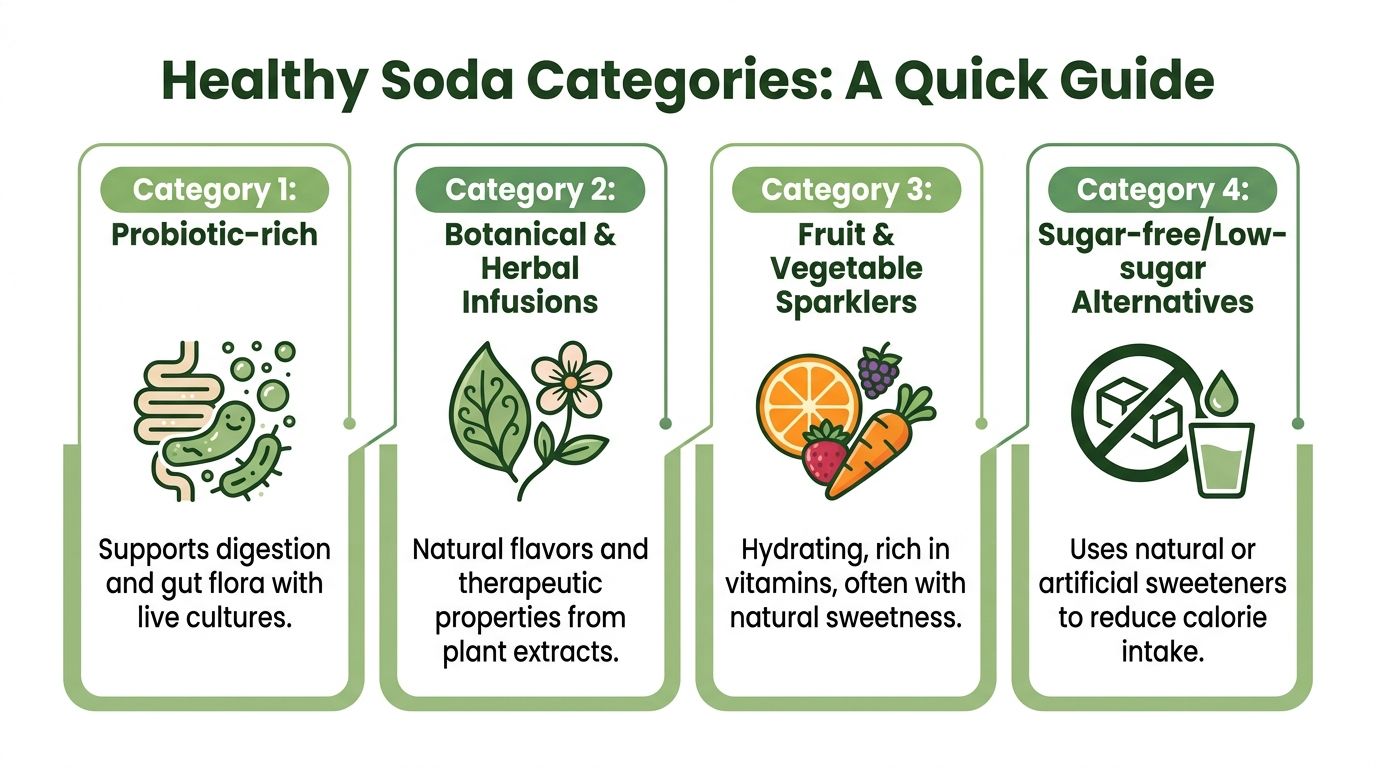
Kombucha
Kombucha sits closest to the “functional fizz” idea many people have in mind.
It is a fermented tea drink, usually lightly tart, lightly sparkling, and more layered in flavour than standard soft drink. Depending on how it is brewed, it can lean gingery, citrusy, appley, floral, or tea-forward.
People often get tripped up by one question. Is all kombucha the same? Not at all.
Some are clean and dry. Some are sweet and juicy. Some are raw and alive. Some are more like soft drink with a kombucha label attached.
Best for: people who want a grown-up soft drink alternative, an alcohol-free option with character, or a fermented drink with live culture interest.
Sparkling water and naturally infused sparkling water
This category is the most basic.
Plain sparkling water gives you fizz without sweetness. Naturally infused sparkling waters add a hint of citrus, berry, cucumber, or botanical flavour. They work well for people who mostly want refreshment and a break from sugary drinks.
The main thing to remember is that these drinks are often the least complex. That is not a flaw. It is the point.
They are ideal when you want:
- Clean refreshment
- No heavy sweetness
- A mixer for meals or mocktails
- An easy fridge staple
Modern low-sugar sodas
This category tries to recreate the fun of classic soft drink with a lighter nutritional profile.
You will often see flavours inspired by cola, lemon squash, ginger beer, orange, or creamy soda styles. Some use alternative sweeteners. Some use fruit and botanicals. Some sit somewhere in the middle.
This is often the easiest entry point for people who still want a familiar soft drink feel.
The challenge is quality variation. One low-sugar soda may taste balanced and clean. Another may have a strange aftertaste or rely too heavily on sweetener technology rather than ingredients.
If you enjoy ginger-led flavours, this no sugar ginger beer style option shows how a classic soft drink profile can be reworked in a lighter direction without losing personality.
Matcha and tea-based sparklers
This is still a smaller corner of the category, but it is one of the most interesting.
Tea-based sparkling drinks can offer:
- More adult flavour profiles
- Natural bitterness or tannin for structure
- A more refined alternative to sweet soft drink
- A bridge between café culture and functional beverages
Matcha sparklers, in particular, appeal to people who want something energising but not heavy. The flavour is fresh, grassy, and slightly creamy when prepared well. For some people, it is an instant favourite. For others, it takes a sip or two to understand.
A side-by-side view
| Category | What it tastes like | Why people choose it | Best moment |
|---|---|---|---|
| Kombucha | Tart, layered, lightly fermented | Interested in live cultures and complex flavour | Lunch, mocktails, alcohol-free evening drink |
| Sparkling water | Crisp, clean, minimal | Wants fizz without sweetness | All day, hydration, meal pairing |
| Low-sugar soda | Familiar soft drink style | Cutting back without giving up classic soda feel | Afternoon treat, family fridge |
| Tea-based sparkler | Botanical, bright, more adult | Wants flavour plus a tea-based identity | Morning, café menu, mindful energy |
Which category suits you best
If you love traditional soft drink and want the easiest swap, start with low-sugar soda.
If you are over sweet drinks altogether, sparkling water may suit you better.
If you enjoy bolder flavour and are curious about fermentation, kombucha is often the most rewarding category.
If you already love green tea, iced tea, or café-style drinks, tea-based sparklers can feel like a natural next step.
The best healthy soda drink is the one you will enjoy often enough to replace the habit you are trying to move away from.
Health Benefits of Probiotics and Antioxidants
Two words come up constantly in this space: probiotics and antioxidants. They sound scientific, and they are, but the basic ideas are straightforward.
One is about the living ecosystem in your gut. The other is about plant compounds that help protect cells from everyday stress.
Probiotics and gut health
Your digestive system is home to a huge community of microbes. People often call it the gut microbiome.
A clear way to think about it is as a garden. Different microbes play different roles. Some help maintain balance. Some help break down parts of food. Some are associated with a healthier gut environment when they are present in the right mix.
A 2023 CSIRO study on Australian adults found that daily consumption of organic kombucha with more than 10^8 CFU/ml probiotics led to a 28% increase in beneficial Bifidobacterium in the gut and improved markers of colonic barrier integrity after four weeks, compared to regular soda, according to the source provided here.
That is useful because it moves kombucha beyond vague wellness language. It points to a measurable difference in the gut environment when a properly brewed product is used instead of a regular soft drink.
People often mix up probiotics and prebiotics, so if you want a plain-English explainer, this guide on what are prebiotics and probiotics is a handy starting point.
Why “live cultures” is not just marketing language
A live fermented drink is different from a flavoured fizzy drink that borrows the kombucha aesthetic.
What matters is whether the product still contains viable cultures in a meaningful way. That depends on how it was brewed, handled, and packaged.
For everyday drinkers, the practical takeaway is clear. If you want probiotic interest, choose drinks that take fermentation seriously and are clear about what is in the bottle.
A fermented drink is not automatically useful just because it tastes tangy. The brewing and culture quality matter.
Antioxidants and matcha
Antioxidants are compounds found in many plant foods and drinks. Tea is one of the best-known examples.
Their job is often described as helping the body deal with oxidative stress. If that phrase sounds abstract, think of it as everyday wear and tear that happens as part of normal life. Plant compounds can help your body manage that background load.
Matcha is especially interesting because you consume the whole powdered tea leaf rather than just drinking an infusion and discarding the leaves. That gives matcha its dense flavour, vivid green colour, and strong identity compared with many other tea drinks.
Why matcha feels different from many energy drinks
People often ask whether tea-based fizzy drinks are meant to “wake you up” the way a standard energy drink does.
Usually, that is not the appeal.
Matcha-based drinks are often chosen because they feel steadier and more grounded. The experience is less about a jolt and more about alertness with a smoother edge. The taste also tends to signal something very different from mainstream energy drinks. It feels cleaner, less syrupy, and more connected to actual tea.
The antioxidant side of matcha adds to that appeal. It gives the drink a genuine food-based identity rather than just a laboratory-style formula.
Where these benefits fit in real life
For many, healthy soda drinks are not the whole answer to wellness. They are one small lever.
They can help when you want to:
- Replace a daily soft drink habit
- Choose a more interesting alcohol-free option
- Build a café or home fridge around smarter choices
- Pick drinks with ingredients that make sense
That is the value of probiotics and antioxidants in this category. They turn fizz from an empty extra into something with a clearer role.
How to Read Drink Labels Like an Expert
Front-of-pack wording is designed to catch your eye, not to answer your questions.
If you want to judge healthy soda drinks properly, the back of the can does the talking. The ingredient list and nutrition panel tell you far more than words like natural, wellness, functional, or guilt-free ever will.
What to look for first
Start with the shortest route to clarity.
Sugar position on the panel
Look at the sugar content early, before you read the brand story. If a product is pitched as a healthy swap, the sugar number should support that claim.Recognisable ingredients
Brewed tea, fruit juice, herbs, spices, botanical extracts, live cultures, and sparkling water are easier to understand than a long chain of additives.Specificity
Clear wording is a good sign. If a drink says fermented tea, matcha, ginger juice, or live cultures, you know more than if it hides behind broad flavour language.
Ingredients that deserve a second look
Some ingredients are not automatically bad. They deserve attention.
Traditional colas contain phosphoric acid at 300 to 400mg/L, and a long-term University of Sydney study linked higher intake to 14% lower bone mineral density in adolescents. The same study noted 9% higher bone density in consumers of matcha-based drinks, which contain EGCg, according to the provided source here.
That does not mean one occasional cola is a crisis. It does mean ingredient type matters, especially if a drink is part of your regular routine.
A simple label-reading checklist
Look for these signs
Low sugar intent
The product should clearly fit a lower-sugar approach, not just a smaller serve trick.A believable product identity
If it is a kombucha, you should see signs of fermentation and culture. If it is a tea sparkler, tea should feel central.Less clutter
A shorter, cleaner list often makes it easier to understand what you are drinking.
Be cautious about these
Halo words without detail
“Natural flavours” is common, but on its own it does not tell you much.Health language doing all the work
If every claim sits on the front and very little substance appears on the back, be sceptical.Products that imitate wellness branding
Pastel cans and botanical illustrations can make a drink look cleaner than it really is.
The best label readers do one thing differently. They ignore the front until the back has earned their trust.
What about certifications and compliance
For shoppers, certifications can help signal manufacturing standards or ingredient choices, but they are not a replacement for reading the panel.
For businesses launching their own beverage, label compliance gets much more technical. If that side interests you, this guide on mastering supplement label requirements is useful for understanding how detailed product labelling can become in adjacent wellness categories.
A quick aisle test you can use today
Pick up two drinks that both call themselves healthy. Compare only three things:
- The sugar panel
- The first five ingredients
- Whether the product benefit is clear and believable
That comparison usually tells you enough to make a smarter choice without overthinking it.
Easy DIY Healthy Sodas and Mixers to Make at Home
Making your own healthy soda drinks at home is one of the easiest ways to understand the category properly.
You start noticing what each ingredient contributes. Fizz gives lift. Citrus adds brightness. Tea brings structure. Kombucha adds tang and complexity. Once you play with that balance, ready-to-drink labels make much more sense too.
For a quick visual guide and a bit of inspiration, this video is a good place to start.
Matcha sparkler
This one is clean, lively, and ideal when plain sparkling water feels too plain.
You’ll need
- Culinary-grade matcha
- Cold water
- Sparkling water
- Fresh lime
- Ice
- Optional mint leaves
How to make it
- Sift a small spoonful of matcha into a glass or shaker.
- Add a little cold water and mix until smooth.
- Fill a glass with ice.
- Pour in the matcha mixture.
- Top with sparkling water.
- Finish with a squeeze of lime.
The flavour should be brisk and refreshing, not overly bitter. If it tastes sharp, use a bit more water next time. If it feels too plain, add extra lime or a bruised mint leaf.
Kombucha mocktail
A good kombucha makes an excellent mixer because it already brings acidity, fizz, and depth.
You’ll need
- A ginger-forward or citrusy kombucha
- Lots of ice
- Fresh cucumber or lime
- A sprig of rosemary or mint
- Optional splash of chilled soda water
How to make it
- Fill a tall glass with ice.
- Add a few slices of cucumber or a wedge of lime.
- Pour in the kombucha slowly.
- Add soda water if you want a lighter finish.
- Garnish with rosemary or mint.
If you enjoy vinegar-based flavour profiles in this category, apple cider vinegar soda ideas can give you another direction to explore.
Homemade healthy soda drinks work best when you keep them straightforward. One fizz element, one hero flavour, one fresh accent.
Small tweaks that make a big difference
If you like sweeter drinks
Use naturally sweeter ingredients such as ripe citrus, a little fruit purée, or a softer kombucha flavour. Avoid throwing everything in at once.
If you want more complexity
Add herbs. Mint, basil, and rosemary all change the drink without making it heavy.
If you are serving guests
Use proper glassware and plenty of ice. Healthy soda drinks feel more satisfying when they look intentional.
A Guide for Australian Cafés and Retailers
Healthy soda drinks are not just a home-fridge trend. They make strong commercial sense for cafés, delis, health food stores, and hospitality venues building out non-alcoholic options.
Customers now expect more than one token alcohol-free drink and a fridge full of standard soft drinks. They want options that feel current, thoughtful, and worth paying for.
Why careful sourcing matters
This category rewards quality, but it also punishments shortcuts.
With Australian kombucha sales up 28% in 2025, buyers have more options to choose from. At the same time, a 2025 Choice Australia test found 60% of supermarket kombuchas fail to meet probiotic claims, according to the provided source here.
That matters for cafés and retailers because your staff may describe a product as “good for gut health” because the packaging suggests it. If the live culture side is weak, the product can disappoint informed customers.
Strong menu fits for healthy soda drinks
Healthy soda drinks work especially well in venues that already care about coffee, tea, brunch, or wellness-led food.
Good placements include:
- Fridge retail near takeaway coffee
- Non-alcoholic pairing menus
- Mocktail lists
- Afternoon café pick-me-ups
- Health food and premium grocer shelves
What staff should be able to explain
Your team does not need to sound like food scientists. They do need to explain the difference between categories in plain language.
A staff member should be comfortable saying:
- This one is fermented and more tart
- This one is tea-based
- This one is low sugar and refreshing
- This one works well as a mixer
That kind of clarity builds trust.
The fastest way to lose credibility in this category is to treat every fizzy wellness drink as interchangeable.
Building the range with intention
A smart range usually balances three roles:
- Easy entry products for mainstream customers
- Functional options for ingredient-conscious shoppers
- Premium adult flavours for hospitality and gifting
If you are reviewing your broader merchandising and menu growth approach, these strategies for growing retail sales offer useful retail thinking that can be applied beyond beverages too.
For Australian businesses, local supply, consistent quality, and clear product education often matter as much as flavour. A healthy soda drink sells best when the person stocking it understands what makes it different.
Your Next Sip Can Be a Healthy One
Healthy soda drinks are easier to choose once you stop listening to front-label buzzwords and start looking for substance. Lower sugar matters. Clear ingredients matter. Function matters when a brand claims it.
The best option is not the trendiest can. It is the drink that fits your taste, supports your routine, and makes replacing old habits feel easy. Whether you lean towards kombucha, sparkling water, low-sugar soda, or a matcha-based sparkler, a better fizzy drink is absolutely possible.
If you want a good place to start, explore Pep Tea for Australian-made organic kombucha and premium matcha. We focus on clean flavour, low-sugar choices, and real tea craft, so your next fizzy ritual can feel both enjoyable and well chosen.
Natural Energy Drinks: Your Guide to a Jitter-Free Boost in 2026

When you hear the term ‘natural energy drink’, what comes to mind? It’s not just another buzzword. We're talking about beverages that get their kick from whole-food ingredients like tea leaves, fruits, and fermented cultures, steering clear of the synthetic caffeine and sugar dumps that define conventional options.
The goal here is a gentler, more sustained kind of energy—one that works with your body, not against it. It’s the difference between a steady climb and a spike followed by a crash. As an Australian brand passionate about wellness, we at PepTea believe in harnessing the power of nature for vitality.
The Rise of Natural Energy Drinks in Australia

Have you ever glanced at the ingredient list on a typical energy drink and felt a bit uneasy? You’re not alone. A growing number of health-conscious Australians are walking away from the synthetic jolts and sugar-loaded formulas that once dominated the market. They're looking for a cleaner, more wholesome way to boost their vitality, and this shift is fundamentally reshaping what we choose to drink.
This movement isn't just about avoiding the bad stuff; it's about actively choosing the good. It’s about picking ingredients you can actually recognise—things sourced from nature that support your body's rhythm. Think of it like swapping highly processed fast food for a nourishing, thoughtfully prepared meal. Both might fill you up, but only one genuinely contributes to your long-term well-being.
A Growing Appetite For Wellness
The numbers tell the same story. In Australia, the market for healthy, functional drinks is seeing serious growth. Projections show the market value is set to climb from USD 70.11 million in 2026 to an estimated USD 130.89 million by 2033. Low-sugar and sugar-free options are driving this charge, which is a clear signal that Aussies are demanding smarter choices. You can explore the full market analysis of these trends to see just how deep this shift runs.
At the heart of this wellness wave are two standout beverages that have been around for centuries, long before the first neon-coloured can hit the shelves:
- Organic Matcha: A vibrant, stone-ground green tea from Japan, prized for its ability to deliver a unique state of calm alertness.
- Authentic Kombucha: A bubbly, fermented tea—like the ones we brew in our own Hunter Valley, NSW—packed with probiotics to support gut health.
We believe that what you drink should be a source of nourishment, not just a quick fix. As a family-owned Australian brand, we’re passionate about creating transparent, organic drinks that genuinely support an active and healthy lifestyle.
To understand the difference, it helps to see the two categories side-by-side. One relies on a blunt-force approach, the other on a more nuanced, whole-body effect.
Natural Energy Drinks vs Conventional Energy Drinks At A Glance
Here’s a simple breakdown of what sets these two beverage types apart.
| Feature | Natural Energy Drinks (e.g., Matcha, Kombucha) | Conventional Energy Drinks |
|---|---|---|
| Energy Source | Naturally occurring caffeine from tea leaves, plus other beneficial compounds. | Synthetic caffeine, often in high doses. |
| Sweeteners | Minimal raw cane sugar (for fermentation), fruit juices, or natural sweeteners like monk fruit. Many, like our kombucha, are completely sugar-free. | High-fructose corn syrup, sucrose, or artificial sweeteners (aspartame, sucralose). |
| Energy Delivery | Sustained release; compounds like L-Theanine in matcha create a calm, focused energy without a crash. | Rapid spike and crash; the combination of high sugar and synthetic caffeine causes a sharp jolt followed by a steep drop. |
| Additional Benefits | Rich in antioxidants, probiotics (in kombucha), vitamins, and minerals from whole-food sources. | Generally offer little to no nutritional value beyond the energy spike. Often contain artificial colours and flavours. |
| Ingredient Transparency | Simple, recognisable ingredient lists (e.g., water, organic tea, SCOBY, real fruit). | Long, complex lists with synthetic vitamins, taurine, glucuronolactone, and various preservatives. |
| Health Impact | May support gut health, provide antioxidant benefits, and promote sustained mental focus. | Linked to heart palpitations, anxiety, insomnia, and digestive issues due to high caffeine and sugar content. |
As you can see, the difference isn't just about flavour—it's about the fundamental mechanism. Natural energy drinks provide a gentle lift that helps you power through your day without the dreaded ‘crash and burn’ cycle.
Throughout this guide, we'll unpack exactly how these clean, functional beverages work and show you what to look for when choosing the best one for your needs.
The Science of Clean Energy With Organic Matcha
When we talk about natural energy drinks, one name keeps coming up for its unique, balanced power: Japanese organic Matcha. It’s not tea in the way you might think of it. Matcha isn’t an infusion from a tea bag; it’s the entire tea leaf, meticulously shade-grown, harvested, and stone-ground into a powder so vibrant it’s almost electric.
This process is what separates Matcha from everything else. Because you consume the whole leaf, you get 100% of its nutritional payload—a full spectrum of vitamins, minerals, and of course, its famous antioxidants. It’s the difference between drinking the juice from a squeezed orange and eating the whole fruit.
The Magic of Caffeine and L-Theanine
What truly defines Matcha as a source of 'clean energy' is the way its caffeine works with an amino acid called L-theanine. This is the secret. Coffee gives you a sharp, hard hit of energy from caffeine alone, but Matcha delivers something far more sophisticated.
L-theanine is known for promoting a feeling of relaxation and cutting through stress without making you tired. When it partners with caffeine, you get a remarkable synergy: a state often described as ‘calm alertness’. The result is a sustained lift in energy and focus, but completely without the jitters, anxiety, or the inevitable crash that follows coffee and conventional energy drinks.
Think of it like this: coffee is a sprinter, all explosive speed and a quick finish. Matcha is a marathon runner, providing steady, consistent energy that keeps you focused and enduring for the long haul.
This unique biochemical partnership is precisely why Zen monks have used Matcha for centuries to stay sharp during long periods of meditation. It just works.
The Antioxidant Superstar EGCg
Beyond the clean energy, Matcha is loaded with a specific class of antioxidants called catechins. The most powerful and plentiful of these is epigallocatechin gallate (EGCg).
This is the compound celebrated for its role in supporting a healthy metabolism and defending cells against oxidative stress. And because you’re drinking the entire leaf, the concentration of EGCg you get from Matcha is off the charts—up to 137 times more than what you'd find in a standard cup of brewed green tea. You can learn more about how Matcha tea powder is a powerhouse of antioxidants in our detailed article. This incredible antioxidant density is a huge part of what makes Matcha one of the ultimate natural energy drinks.
Choosing The Right Matcha For You
Not all Matcha is created equal. Understanding the grades is the key to getting the experience you’re after. You'll mainly see two types: Ceremonial and Culinary.
Ceremonial Grade: This is the absolute best, made from the youngest, most tender tea leaves. It has a brilliant green colour, a silky-fine texture, and a smooth, slightly sweet flavour with zero bitterness. It’s made to be prepared traditionally—just whisked with hot water—for a pure, unadulterated Matcha experience.
Culinary Grade: Still a high-quality product, culinary Matcha is produced from leaves that are a little older. This gives it a stronger, more robust flavour that can be slightly bitter. That boldness is exactly what makes it perfect for mixing into other ingredients; its flavour holds its own in lattes, smoothies, baking, and even savoury recipes.
At PepTea, our focus is on sourcing only the finest certified organic Matcha from Japan. We make sure that whether you’re whisking up a traditional tea or adding a powerful boost to your morning smoothie, you’re using a pure, authentic product. This commitment to quality is what unlocks the true science of clean energy found in every single scoop.
The Gut-Energy Connection with Authentic Kombucha
If matcha is all about clean, focused energy for the mind, kombucha is its counterpart for the body, working its magic from the inside out.
Many of us don’t realise just how closely our gut health is tied to our daily vitality. When your digestive system is balanced and happy, it becomes far more efficient at absorbing nutrients and even producing certain vitamins. The result? Better, more sustained energy levels throughout the day.
This is precisely where authentic kombucha shines. It's so much more than a fizzy, refreshing drink; it’s a living beverage, teeming with beneficial microorganisms. Think of it as actively tending to your body's internal garden. By introducing a diverse range of probiotics, you’re helping create a thriving gut environment that underpins your overall well-being.
The Art and Science of Fermentation
So, what is kombucha, really? At its heart, the process is beautifully simple. It all begins with sweetened organic tea. To this, a special culture of bacteria and yeast—known as a SCOBY (Symbiotic Culture Of Bacteria and Yeast)—is added.
The SCOBY is the engine room of the whole operation. It gets to work consuming most of the sugar in the tea, transforming the liquid through fermentation.
This transformation is what creates a host of beneficial compounds:
- Live Probiotics: These are the "good" bacteria that help bring balance to your gut microbiome.
- Organic Acids: Compounds like acetic acid and gluconic acid give kombucha its signature tangy flavour and may support various bodily functions.
- B Vitamins: The fermentation process naturally produces B vitamins, which are crucial for converting the food we eat into energy.
At PepTea, we brew our kombucha the traditional way in the scenic Hunter Valley, NSW. We stick to real, organic ingredients and allow the fermentation to complete naturally. This patience results in a genuine, sugar-free organic kombucha that’s truly alive with goodness.
The following diagram shows the traditional process behind another of our favourite natural energy sources, matcha, from leaf to powder.

It’s this simple, careful process of transforming whole tea leaves into a fine powder that ensures you get all of matcha’s potent benefits.
Avoiding "Cowboy Kombucha"
As kombucha’s popularity has exploded, the market has been flooded with products that simply don’t live up to the promise. We call these "cowboy kombuchas." They’re often mass-produced, pasteurised (which kills the all-important live probiotics), or loaded with sugar and artificial flavours to hide a poor-quality brew.
A true, living kombucha needs to be handled with care. That’s why we operate from a purpose-built, HACCP-accredited brewery. This international standard for food safety guarantees every bottle of PepTea Kombucha is not only effective but also completely safe.
This stands in stark contrast to the broader soft drink manufacturing scene in Australia, which saw a 1.9% CAGR from 2021-2026. While this growth included a pivot towards so-called functional beverages, it’s crucial for people to know what separates a genuinely healthy option from a cleverly marketed one.
With non-alcoholic drinks surging, it’s clear that consumers, particularly urban millennials, are actively seeking out authentic products with real benefits.
Choosing a properly brewed kombucha means you’re getting a drink that actively supports the gut-energy connection. It’s a delicious, bubbly way to nourish your body and boost your vitality, turning the simple act of hydration into a meaningful step toward better health.
You can learn more about the benefits of kombucha and what really makes an authentic brew in our dedicated guide.
How to Choose a High-Quality Natural Energy Drink
Navigating the wellness aisle can feel like a minefield. With so many drinks shouting 'natural' or 'healthy' from their labels, how do you tell the genuinely good stuff from the clever marketing?
The secret is to ignore the flashy promises on the front and become an expert at reading the fine print on the back. A truly clean, high-quality natural energy drink becomes obvious once you know the few key things to look for.
Your Label-Reading Checklist
When you pick up a bottle, flip it over. The best options will tick all these boxes, giving you confidence that you’re buying something that actually supports your health.
Look for 'Certified Organic': This isn't just a buzzword. A certification from a trusted body like Australian Certified Organic (ACO) is your guarantee the ingredients were grown without synthetic pesticides or fertilisers. It’s a non-negotiable sign of purity and quality.
Check the Sugar Content: Be ruthless here. You want to see explicit claims like "no added sugar" or "sugar-free". Many drinks use fruit juice concentrates to sweeten their products, which can still pack a surprising sugar punch. A genuinely low-sugar option won't hide its numbers.
Scan for Real Ingredients: Is the list full of things like "organic tea leaves," "fresh ginger," or "mango puree"? Or does it hide behind "natural flavours"? That term is often a smokescreen for a whole host of processed additives. Always prioritise drinks that get their flavour and function from whole, recognisable foods.
Red Flags to Watch Out For
Just as important as knowing what to look for is knowing what to run from. Certain ingredients and label tricks can completely undermine the health benefits you’re after.
A high-quality natural energy drink should energise you through nourishment, not by tricking your body with synthetic inputs or hidden sugars. If the ingredient list is long and complicated, it's usually a warning sign.
Be wary of artificial preservatives. A living drink like kombucha belongs in the fridge, not sitting on a warm shelf for months. The need for refrigeration is often the best sign you’re getting an authentic, unpasteurised product that’s teeming with live cultures. To get a better handle on how this works, it’s worth understanding prebiotics and probiotics for gut health.
The Non-Negotiable Standard of Safety
Finally, a top-tier brand doesn't mess around with safety. Look for mentions of quality control standards like HACCP accreditation. This internationally recognised system (Hazard Analysis Critical Control Point) ensures food safety from the farm to the finished bottle.
For us at PepTea, these aren’t just guidelines; they are our founding principles. Our kombucha is proudly brewed in our HACCP-accredited, purpose-built facility right here in the Hunter Valley. It’s Australian-made, certified organic, and authentically fermented to be completely sugar-free.
The same rigour applies to our other products. When it comes to matcha, for instance, understanding the difference between grades is everything. You can discover more about Matcha grade and quality over on our blog. By holding ourselves to these benchmarks, we hope to give you the tools to make better choices for your own health.
Integrating Natural Energy Into Your Daily Routine

Bringing natural energy drinks into your daily rhythm isn't about overhauling your life. It's about making small, deliberate upgrades that feel good.
Think of it as a simple swap. Whether you’re at home looking to start your morning right, or a café owner wanting to give your customers something genuinely better, drinks like authentic kombucha and organic matcha slot right into your existing habits. This isn't about forcing down a "health drink." It's about finding clean, vibrant energy in a form you actually look forward to.
Here’s how to make it work.
For Your Morning Ritual at Home
Trading your standard coffee or sugary juice for a natural alternative can set the tone for your whole day. It's a simple change with a noticeable impact. Here are two remarkably easy ways to begin.
1. The 2-Minute Matcha Latte
This is the perfect introduction to matcha's unique 'calm-alert' energy. It’s creamy, satisfying, and quick. All you need is our PepTea Culinary Grade Organic Matcha, your milk of choice, and a sweetener if you like.
- Step 1: Sift 1 teaspoon of matcha into a mug. This simple step prevents clumps and ensures a smooth finish.
- Step 2: Pour in about 60ml of hot (not boiling) water. Whisk it hard until it's frothy and combined. A bamboo whisk is traditional, but a small milk frother does the job beautifully.
- Step 3: Heat and froth 180ml of your preferred milk—oat and almond work particularly well—and pour it into the matcha. Sweeten to your taste.
2. The Green Energy Smoothie
When you need nutrients and energy on the go, a matcha smoothie is your answer. It's a breakfast and a boost in one glass.
- Step 1: In your blender, toss 1 frozen banana, a big handful of spinach, 1 teaspoon of culinary matcha, and 250ml of water or coconut water.
- Step 2: For more staying power, add a scoop of protein powder or a tablespoon of chia seeds.
- Step 3: Blend until it's completely smooth. Drink it right away.
For the Forward-Thinking Australian Café
If you're in the hospitality game, the shift towards natural energy drinks is an opportunity you can’t ignore. The demand for healthier, functional options is no longer a niche—it’s a mainstream movement.
Australia’s consumption of sports and energy drinks is set to hit 232.0 million litres by 2034. The real story is where that growth is coming from: Aussies are actively looking for clean, sustainable alternatives. You can read more on the expanding Australian sports and energy drinks market here.
Upgrading your menu is about offering smarter choices that meet modern customer values. A well-crafted non-alcoholic drink isn't just a placeholder; it's a profitable, sophisticated beverage that people will come back for.
Here are a few ways to bring this to your menu:
The Elevated Non-Alcoholic: Use a crisp, sugar-free PepTea Organic Kombucha as a base for premium mixers. A "Kombucha Spritz"—a splash of our Ginger or Mango kombucha with fresh mint and a lime wedge—feels special, looks great, and is incredibly simple to execute.
A Better Post-Mix Alternative: Ditch the sugary soft drinks. Offering bottled kombucha is a straightforward, high-margin swap that speaks directly to health-aware customers seeking low-sugar, gut-friendly options. It’s a premium experience they will pay for.
Functional Lattes & Smoothies: A classic Matcha Latte made with high-quality culinary matcha is a must-have for any serious coffee menu. Go one step further and design a signature "Energy Smoothie" with matcha, fruit, and seeds. Market it for what it is: a clean vitality boost.
These aren't just new drinks. They are a way to offer a genuine wellness experience, giving your customers another reason to choose you.
Answering Your Questions About Natural Energy Drinks
When it comes to clean energy, the details matter. The shift toward natural alternatives like matcha and kombucha is exciting, but it naturally comes with questions. We’ve heard them all, and we've put together some straight answers to the most common ones.
Think of this as a no-nonsense guide. We want you to feel completely confident about what you’re putting in your body and why it’s a smarter choice. Let’s get into it.
How Much Caffeine Is in Matcha and Kombucha Compared to Coffee?
This is the big one, and the answer is more interesting than just a simple number. It’s not just about how much caffeine, but how it works with other compounds.
Matcha: A standard serve of matcha (about one teaspoon) has roughly 30–70mg of caffeine. That’s quite a bit less than your average cup of coffee, which often clocks in at over 100mg. But the real story is L-theanine, an amino acid unique to matcha that works with caffeine to create a state of calm focus. It's the reason you get a smooth, sustained lift without the jitters or the dreaded afternoon crash.
Kombucha: Our kombucha, on the other hand, is a genuinely low-caffeine drink, with less than 10mg per serving. The SCOBY (the culture of bacteria and yeast) actually consumes most of the tea’s original caffeine during fermentation. This makes it a perfect choice for a gentle, anytime boost.
Are Natural Energy Drinks Safe to Drink Every Day?
For most people, absolutely. When we talk about high-quality, certified organic matcha or our authentic, sugar-free kombucha, we’re talking about simple, whole-food ingredients. This is a world away from the synthetic chemicals and sugars found in conventional energy drinks.
As with anything, it’s about listening to your body and finding a balance that works for you. A daily matcha latte or a refreshing kombucha can be a fantastic part of a healthy routine, giving you a natural way to support your energy levels.
Is Matcha Really Better Than Green Tea Bags?
Yes, and the difference is huge. It all comes down to what you’re actually consuming.
When you drink matcha, you are consuming the entire stone-ground tea leaf, which has been dissolved into the water. This means you get 100% of its antioxidants, vitamins, and minerals. Nothing is left behind.
Brewed green tea is just an infusion. You’re only drinking the compounds that leach out of the leaf into the water. Most of the good stuff, including a huge portion of the powerful antioxidant EGCg, never makes it out of the tea bag. Matcha is, without question, a more potent and beneficial experience.
Embrace Clean Energy For a Healthier Lifestyle
Making the shift to natural energy drinks is about more than just swapping one can for another. It’s a conscious decision to move away from the synthetic jolts and inevitable sugar crashes that leave you feeling worse than when you started. It’s about choosing beverages that work with your body, not against it.
We’ve seen how the calm, focused alertness from organic matcha and the gut-friendly power of authentic kombucha offer a different kind of energy. These drinks teach us that a real lift doesn’t come from a lab, but from nature. Once you understand that, you can see past the marketing hype and pick drinks that genuinely contribute to your wellbeing.
From a Quick Fix to a Daily Ritual
Embracing this change is simpler than it sounds. It’s about building small, positive habits that stack up over time, creating a foundation for a more vibrant, energetic life.
- Start Your Day Clean: Swap your usual morning coffee for a matcha latte or a vibrant green smoothie. That one small change can set a different, more positive tone for the rest of your day.
- Rethink Your Afternoon Boost: When the 3 pm slump hits, instead of reaching for another coffee or a sugary snack, try a cold, refreshing kombucha. It offers a gentle lift while also doing some good for your gut.
- Focus on Whole Foods: Truly clean energy is part of a bigger picture. To get the most out of this shift, it's worth exploring the broader context by understanding clean eating principles.
We hope this guide has inspired you to move beyond temporary fixes and embrace beverages that genuinely nourish your body. This isn't just about a drink; it's about a healthier and more mindful way of living.
This is your invitation to explore a world of energy that’s better for your body and mind, one delicious sip at a time.
We invite you to explore this healthier world of energy, starting with PepTea’s premium organic matcha and Australian-brewed sugar-free kombucha.