
Difference Between Matcha Green Tea and Green Tea Explained
You’re probably here because you’ve stared at a café menu or a shelf of tea tins and thought, hang on, aren’t matcha and green tea basically the same thing?
They do come from the same plant, Camellia sinensis. That’s where the confusion starts. But in the cup, they’re very different. They look different, taste different, feel different, and suit different moments in your day.
For a health-conscious Australian, the difference between matcha green tea and green tea matters because it changes what you drink. One is a leaf infusion. The other is the whole leaf, finely ground and whisked in. That one shift affects flavour, texture, caffeine feel, and how concentrated the tea compounds are.
Matcha or Green Tea Which One Is for You
You see it all the time now. One person orders a clean, grassy green tea. The next goes for an oat matcha latte with bright green foam on top. Both choices sound wholesome. Both are tea. But they’re not interchangeable.

Why so many people mix them up
The labels don’t help. “Matcha green tea” makes it sound like matcha is a stronger green tea. In one sense, yes, it is green tea. In another sense, no, it’s a completely different drinking experience.
Regular green tea is usually made by steeping leaves in hot water, then removing the leaves before drinking. Matcha is made by whisking powdered tea into water, so you consume the leaf itself.
That means the difference between matcha green tea and green tea isn’t just about taste. It affects body, intensity, and how the tea feels in real life.
Why this matters in Australia
Australians have become far more curious about functional drinks, especially drinks that fit a mindful routine, a café menu, or a lower-sugar lifestyle. Matcha has moved well beyond niche tea circles. According to Medical News Today’s summary of Australian market figures, organic matcha imports grew 42% annually from 2021 to 2025, and demand has been linked to matcha’s 3 to 10 times higher L-theanine and caffeine synergy.
That rise makes sense. Plenty of people want energy, but not the sharp edge they often associate with coffee. Others just want a drink that feels more intentional than a soft drink or another flat white.
Practical rule: Choose green tea when you want something light and easy. Choose matcha when you want more presence in the cup.
The short answer
If you like delicate, refreshing tea you can sip with little fuss, regular green tea may suit you better.
If you want a richer drink with a fuller mouthfeel and a more concentrated profile, matcha is usually the better fit.
A few quick examples make it easier:
- Morning desk drink. Green tea feels clean and gentle. Matcha feels more substantial.
- Café latte. Matcha works naturally because it has enough body to stand up to milk.
- Mindful tea ritual. Matcha turns preparation into part of the experience.
- Simple afternoon cup. Green tea wins for ease.
Matcha vs Green Tea at a Glance
Some readers want the quick version before diving deeper. Here it is.
| Feature | Matcha Green Tea | Regular Green Tea |
|---|---|---|
| Form | Fine powder made from tea leaves | Whole or cut leaves |
| How you drink it | Whisked into water or milk, leaf included | Steeped in water, leaves removed |
| Cultivation style | Traditionally shade-grown before harvest | Typically grown in direct sunlight |
| Processing | Steamed, dried, then stone-ground | Steamed or heated, rolled, dried |
| Texture | Creamy, full-bodied, suspended in liquid | Light, clear, more delicate |
| Flavour | Umami, savoury, rich, sometimes naturally sweet | Fresh, grassy, vegetal, sometimes brisk |
| Caffeine feel | More pronounced, often steadier in feel | Gentler lift |
| L-theanine | Higher | Lower |
| Antioxidant concentration | More concentrated | Less concentrated |
| Best for | Lattes, whisked tea, smoothies, baking, focused routines | Everyday sipping, iced tea, traditional brewing |
That’s the bird’s-eye view. The rest comes down to how the tea is grown, made, and enjoyed.
From Farm to Cup How Cultivation Creates Two Teas
The most useful place to start is the farm. Matcha and green tea begin with the same plant, but growers treat those leaves differently long before they reach your kitchen.
The key split happens before harvest
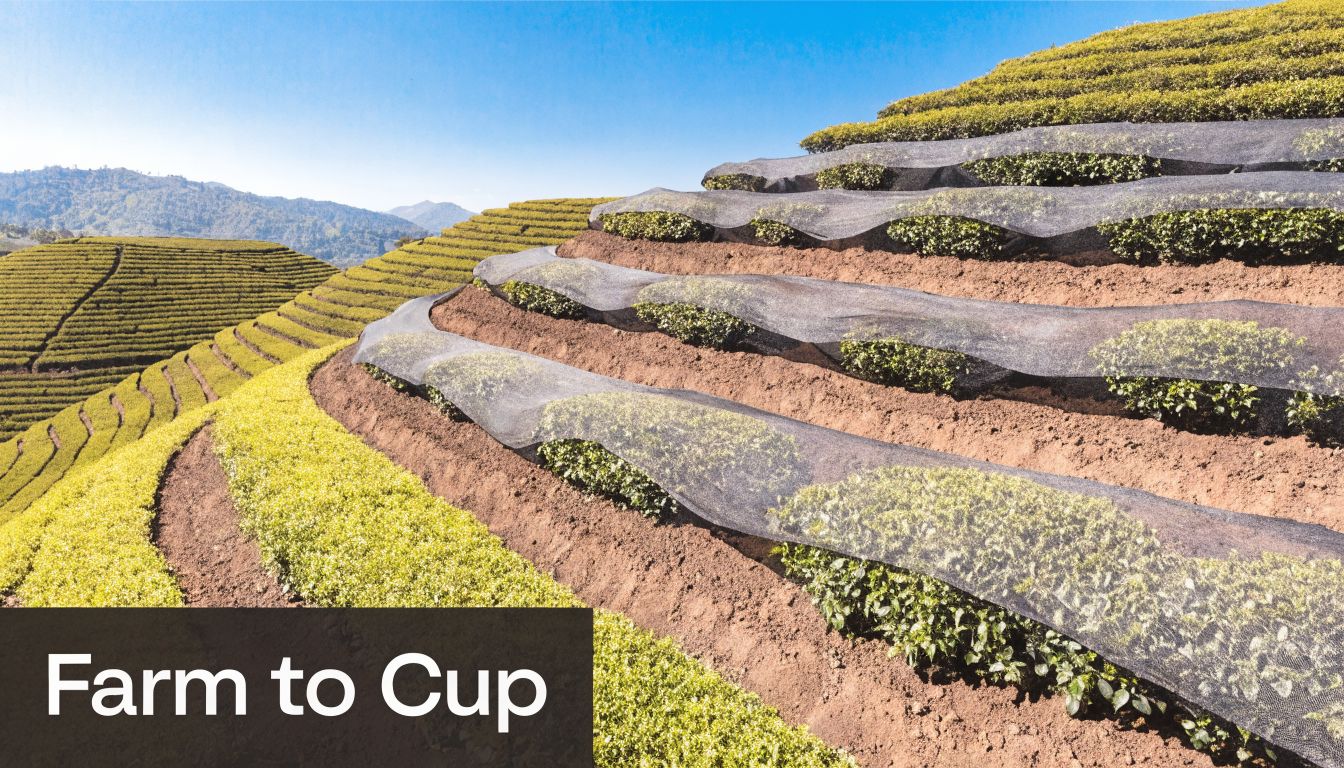
For matcha, tea plants are shade-grown before harvest. The verified material notes a traditional shading period of 20 to 30 days before picking, which is one reason matcha develops its vivid colour and distinctive amino acid profile. Green tea, by contrast, is generally grown in direct sunlight.
That one farming decision changes a lot.
Shade-growing encourages the leaf to develop differently. The result is usually a deeper green colour and a softer, more savoury character. Sun-grown green tea tends to give a brighter, brisker, more straightforward leaf character.
Processing turns one plant into two very different drinks
After harvest, regular green tea leaves are typically heated to stop oxidation, then shaped and dried. When you brew that tea, water extracts flavour and some compounds from the leaf. The leaf itself stays behind.
Matcha follows another path. Leaves intended for matcha are prepared for grinding into a very fine powder. Once powdered, the tea no longer needs steeping in the usual sense. You whisk it into liquid and drink everything.
If you want to see how that traditional process works in more detail, this guide on how matcha tea is made is a useful visual reference.
Why the same plant can taste so different
Much like herbs in cooking, a whole sprig infused into broth gives one result. Grinding the herb and blending it directly through a sauce gives another. Tea behaves in a similar way.
Green tea is extraction. Matcha is incorporation.
That’s why matcha often feels denser and more rounded, while green tea feels clearer and lighter.
The biggest misunderstanding is thinking matcha is just green tea in powder form. It’s a different agricultural and processing tradition, not just a different package.
A short visual helps bring that farm-to-cup difference to life:
Craft matters more than most people realise
This is also why quality varies so much. With green tea, brewing technique often makes the biggest difference at home. With matcha, cultivation, leaf selection, and grinding quality all show up very clearly in the final bowl or latte.
A poor green tea may taste flat or harsh.
A poor matcha is even easier to spot. It can look dull, taste rough, and leave a chalky finish rather than a smooth one.
Here’s the simple takeaway:
- Green tea rewards good brewing.
- Matcha rewards both good farming and good preparation.
- Both depend on freshness and careful handling.
A World of Difference in Flavour and Texture
The first sip tells the story faster than any label can.
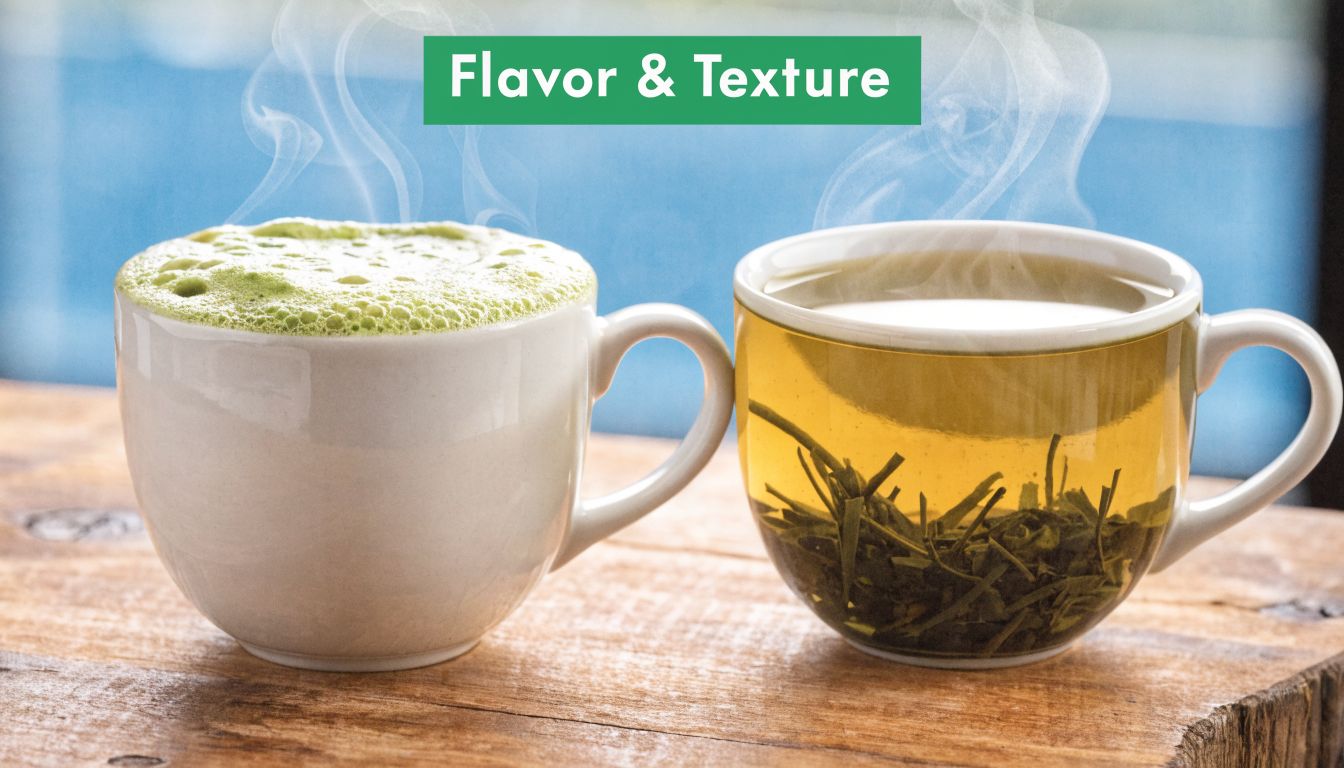
Green tea usually arrives as a clear liquor with a light body. Matcha arrives suspended in the liquid itself, often opaque, with a soft foam on top if it’s whisked well. Even before you taste them, they signal different expectations.
What green tea tastes like
Regular green tea is usually lighter, cleaner, and more transparent in flavour. Depending on style, it can lean grassy, vegetal, soft, sweet, or slightly brisk. It often feels refreshing rather than enveloping.
That’s why many people find it easy to drink through the day. It doesn’t dominate your palate. It lifts it.
If you’re new to tea, green tea is often easier to understand straight away. It tastes like an infusion because that’s exactly what it is.
What matcha tastes like
Matcha is more concentrated and more textured. Good matcha often carries umami, which is the savoury depth people also notice in foods like mushrooms, broth, or parmesan. It may also show gentle sweetness, fresh vegetal notes, and a creamy finish.
The texture matters as much as the flavour. Because the powder stays in the cup, matcha has body. Even made with water alone, it can feel almost velvety.
That’s why matcha lattes work so well. Milk doesn’t wash it out in the same way it would with many delicate green teas.
A simple way to picture the difference
If green tea is like a clear vegetable broth, matcha is more like a blended soup. Both come from similar ingredients. One is light and infused. The other feels complete and integrated.
That comparison isn’t perfect, but it helps explain why people react so differently to them.
Some people say they “don’t like green tea” and then love matcha. Others adore green tea and find matcha too intense at first. That’s normal.
Where beginners often get stuck
A lot of people try one poor-quality matcha and assume all matcha tastes bitter. Usually, bitterness comes from one of three things:
- Low-grade powder that lacks sweetness and smoothness
- Water that’s too hot, which roughens the flavour
- Too much powder for the amount of liquid
Green tea has its own trap. Over-steeping can make it taste sharp or drying, which leads people to think green tea is naturally bitter when preparation is the issue.
Which one feels more “refreshing”
For pure refreshment, green tea usually wins. It’s lighter, less dense, and often easier to drink in larger cups.
For satisfaction and presence, matcha usually wins. It feels more like a beverage with weight and personality.
That difference between matcha green tea and green tea is one reason people keep both in the cupboard. They suit different moods.
The Nutritional Powerhouse Caffeine L-Theanine and EGCg
A lot of Australians first notice the nutrition difference at 10 am, not on a label. One tea leaves you feeling lightly refreshed and ready for another sip later. The other can feel closer to a steady, more deliberate kind of energy, the sort of cup that replaces a second coffee rather than sitting beside it.
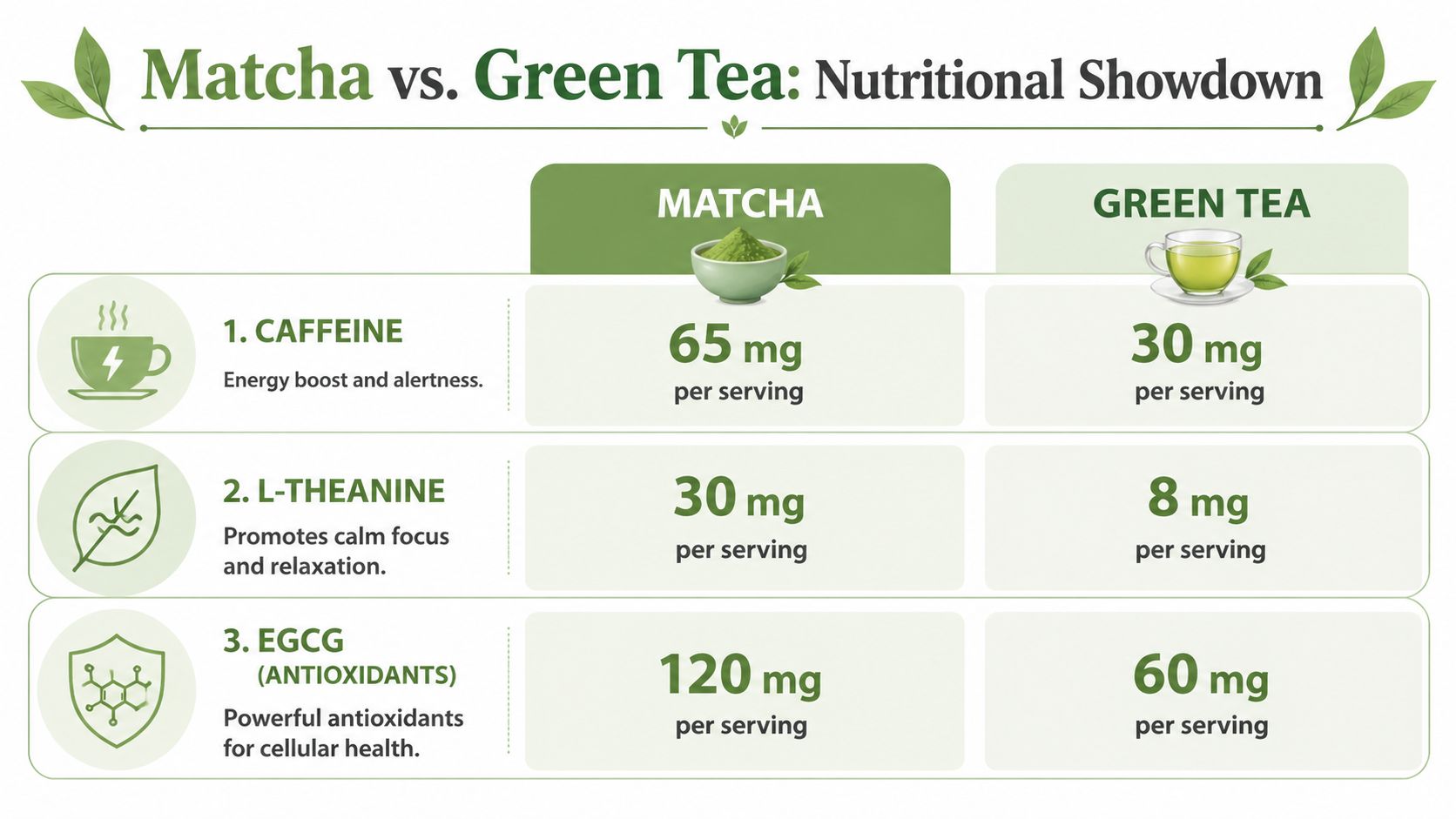
That difference starts with concentration. Matcha is made to be consumed as a fine powder, so you drink the leaf itself. Regular green tea is infused in water, then the leaves are removed. For a health-conscious drinker or a café owner choosing what belongs on the menu, that changes the nutritional impact in a very practical way.
If you want a broader explanation of why powdered tea is so concentrated, this guide to matcha tea powder as a powerhouse of antioxidants adds useful context.
Caffeine feels different in the cup, not just on paper
The amount of caffeine matters, but the way it lands matters more for daily life. The Mayo Clinic’s guide to caffeine content notes that green tea often sits in a lower caffeine range than coffee, while matcha is commonly experienced as the stronger of the two tea options because more of the leaf ends up in the drink.
That helps explain a pattern many tea drinkers recognise straight away.
Green tea often gives a gentle lift. It can suit an afternoon cup, a lighter start to the day, or a pot shared with food.
Matcha usually feels fuller and more sustained. For plenty of people, especially those trying to swap out one coffee, it delivers calm focus rather than a quick spike.
L-theanine helps explain that steady feeling
L-theanine is one of tea’s most interesting compounds because it changes the experience of caffeine. Instead of feeling sharp or jittery, the stimulation can seem more even and settled.
Matcha is often prized for that effect because shade-growing tends to preserve more amino acids, including L-theanine, before the leaves are stone-ground into powder. Premium organic matcha also tends to show this balance more clearly. You taste it, but you also feel it. The energy is less like flicking on a bright fluorescent light and more like opening the blinds on a clear morning.
Green tea contains L-theanine too. The experience is lighter because the brew is less concentrated.
A practical way to choose: If you want a tea that supports your day without being overpowering, green tea is often enough. If you want a more intentional ritual with stronger, steadier energy, matcha is usually the better fit.
EGCg is one reason matcha has such a strong wellness reputation
EGCg, short for epigallocatechin gallate, is one of the catechins most closely associated with tea’s antioxidant profile. You do not need to remember the full name. What matters is what it represents. It is one of the compounds behind tea’s reputation as a health-supportive drink.
Earlier research frequently cited in tea writing has found much higher EGCg levels in matcha than in standard brewed green tea, and that lines up with the basic logic of whole-leaf consumption. If you consume the leaf rather than steeping and removing it, you usually get more of what the leaf contains.
For café customers, that can be the difference between choosing a pleasant green tea and choosing a drink marketed as a functional daily ritual. For a buyer focused on quality, it is also why sourcing matters so much. Clean, carefully grown matcha gives you a better shot at the sweetness, colour, and nutritional density people are looking for.
What this means in real life
People do not choose tea because they love acronyms. They choose tea because they want a certain feeling and a certain role in their day.
Here is the practical translation:
- Green tea suits people who want a lighter daily habit and a softer caffeine effect.
- Matcha suits people who want more from a single serve, both in presence and concentration.
- Caffeine plus L-theanine is why matcha often works well as a coffee alternative.
- Higher antioxidant concentration is part of why matcha appeals to wellness-focused drinkers and premium cafés.
Regular green tea still has plenty going for it. It is refreshing, versatile, and easier for some people to drink more often.
But from a nutrition perspective, matcha is the more concentrated option. That is the key difference, and it is why one person swears by a bright bowl of organic matcha for morning focus while another is perfectly happy with a clean, gentle cup of sencha after lunch.
How to Prepare Use and Enjoy Them
Preparation is where the choice becomes real.
A rushed weekday morning in Melbourne calls for something different from a slow Sunday breakfast or a busy café service. Green tea usually suits the quick, quiet cup. Matcha asks for a little more involvement, but it gives you a drink with more presence, more texture, and more room to play.
How to make regular green tea
Green tea rewards a light touch. Water that is too hot or a steep that runs too long can flatten the fresh, grassy notes and pull out more bitterness than you want.
A simple method works well:
- Heat water to below boiling, usually around 70 to 80°C for many green teas
- Steep briefly, often 1 to 3 minutes depending on the leaf style
- Taste and adjust because a delicate sencha and a rolled gunpowder tea behave quite differently
- Use clean-tasting water so the tea stays bright rather than muddy
That is part of green tea’s charm. It fits easily into everyday life. Brew a cup with breakfast, pour it over ice for the afternoon, or serve it alongside food where you want something refreshing rather than heavy.
How to make matcha without overcomplicating it
Matcha is still simple. It just uses a different kind of simplicity.
Instead of extracting flavour from leaves and then removing them, you are mixing the tea itself into the drink. It works a bit like cocoa in hot chocolate. If the powder is clumpy, the texture suffers. If it is whisked properly, the cup feels smooth, creamy, and lively.
Start here:
- Sift a small amount of matcha into a bowl or sturdy cup.
- Add a splash of hot water, not boiling.
- Whisk briskly until the surface looks smooth and lightly foamy.
- Drink it straight, or add more water for a longer cup.
- Add warm milk if you want a matcha latte.
If you want help with the texture, PepTea’s guide on how to whisk matcha properly shows the technique clearly.
Where each tea works best
The easiest kitchen rule is this. Green tea is better for steeping. Matcha is better for mixing.
That one distinction explains a lot.
Matcha suits smoothies, yoghurt, chia puddings, baking, iced lattes, and desserts because the powder becomes part of the final texture and flavour. In a café, that makes it easy to build a recognisable menu item with consistent colour and a fuller mouthfeel.
Green tea plays a quieter role. It shines in syrups, jellies, poaching liquids, cold brews, and delicate desserts where you want a cleaner, lighter tea note without changing the texture too much.
Buying well in Australia
For Australian shoppers and café owners, preparation starts before the kettle goes on. It starts with what you buy.
With matcha especially, quality is easy to see in the cup. Better matcha tends to whisk more smoothly, taste sweeter, and show a brighter green colour. Lower-grade powder can turn dull, chalky, or harsh quite quickly. Organic claims also deserve a closer look. The Australian Certified Organic certification requirements explain what certified organic products must meet in the Australian market, which is far more useful than relying on vague front-label language.
For a home drinker, that means checking origin, grade, and certification before you click buy. For a café owner, it means choosing a tea that performs consistently across straight matcha, lattes, and iced drinks.
Storage matters more than many people expect
Both teas prefer the same basics. Keep them away from heat, light, moisture, and air.
Matcha is less forgiving because it is finely ground. More surface area means it can lose freshness faster, especially once opened. Store it tightly sealed in a cool, dark place and buy amounts you will use while the colour and flavour are still lively.
Green tea also benefits from careful storage, but it usually gives you a bit more breathing room.
Which Tea Is Right for You A Recommendation Guide
No tea wins for everyone. The right choice depends on what you want the drink to do in your day.
If you want calm, focused energy
Matcha is usually the stronger fit. Its fuller body and more concentrated profile suit people who want one cup to feel meaningful. It often appeals to people replacing a second coffee or looking for a more deliberate morning ritual.
If you like the idea of tea that feels functional, structured, and a bit more substantial, start with matcha.
If you want an easy everyday sipper
Green tea is hard to beat. It’s lighter, quicker to prepare, and easier to drink across the day. If you want something fresh and unfussy, regular green tea often makes more sense than matcha.
This is also the better choice for someone who enjoys tea in the traditional “put the kettle on” sense.
If you’re a home barista or cook
Matcha opens more doors.
It works in lattes, smoothies, baking, chilled drinks, and desserts because the powder becomes part of the final texture. If you like experimenting in the kitchen, matcha gives you more creative range.
Green tea still has a place, but more as a subtle ingredient than a centrepiece.
If you run a café
Matcha gives you a drink with clear menu identity. Customers recognise it, it works beautifully in hot and iced formats, and it fits the shift toward more mindful non-alcoholic and lower-sugar options.
Green tea belongs on menus too, especially for guests who want a straightforward brewed tea. But matcha usually carries more visual impact and more customisation potential.
If your priority is ritual, body, and concentrated character, choose matcha. If your priority is ease, delicacy, and repeat cups, choose green tea.
If you’re still torn
Keep both.
That’s the most practical answer for many people. Use green tea for easy daytime sipping. Reach for matcha when you want more focus, more flavour depth, or a café-style drink at home.
Frequently Asked Questions
Can I substitute matcha for green tea in recipes
Sometimes, but not directly. Matcha is a powder, so it changes colour, flavour intensity, and texture. Green tea leaves are better when you want to infuse liquid and then strain. Matcha is better when you want the tea itself blended through the recipe.
Is one better for weight-related goals
Both teas contain catechins, and matcha is the more concentrated option. That said, it’s best to think of both as supportive drinks within a healthy routine, not as shortcuts. If you want the strongest tea concentration from one serve, matcha is usually the pick.
Why is matcha more expensive than green tea
Because it asks more of the grower and producer. The leaves are grown differently, handled differently, and ground into a fine powder rather than dried for brewing. That extra work shows up in the final price.
Can I drink matcha or green tea every day
Many people do. The main thing to watch is your caffeine comfort level. Green tea is usually gentler. Matcha is more concentrated, so it’s smart to notice how you feel and time your cups accordingly.
Which tastes better for beginners
Usually green tea, because it’s lighter and easier to understand on the first sip. But if you already enjoy savoury depth, creamy drinks, or café lattes, you may prefer matcha right away.
If you’d like to explore premium organic options for both everyday rituals and café-style drinks at home, have a look at Pep Tea. We offer organic matcha, practical brewing guides, and Australian-made kombucha for people who want clean, enjoyable functional drinks without the fluff.