
Tag: australian tea
Hojicha Tea Caffeine: A Guide for Sensitive Australians
Have you ever chosen hojicha for an evening drink, then wondered whether “low caffeine” really means caffeine-free? That distinction matters, especially if you're sensitive to stimulants, serving tea to children, or replacing coffee or matcha in an Australian café.
Hojocha is a roasted Japanese green tea with a warm, nutty flavour and a naturally lower caffeine level than many unroasted teas. But the amount in your cup depends on the tea, the format, the serving size and the way you brew it. The most useful question isn't just whether hojicha contains caffeine. It's how much caffeine your particular preparation delivers.
How Much Caffeine Is Actually in Hojicha
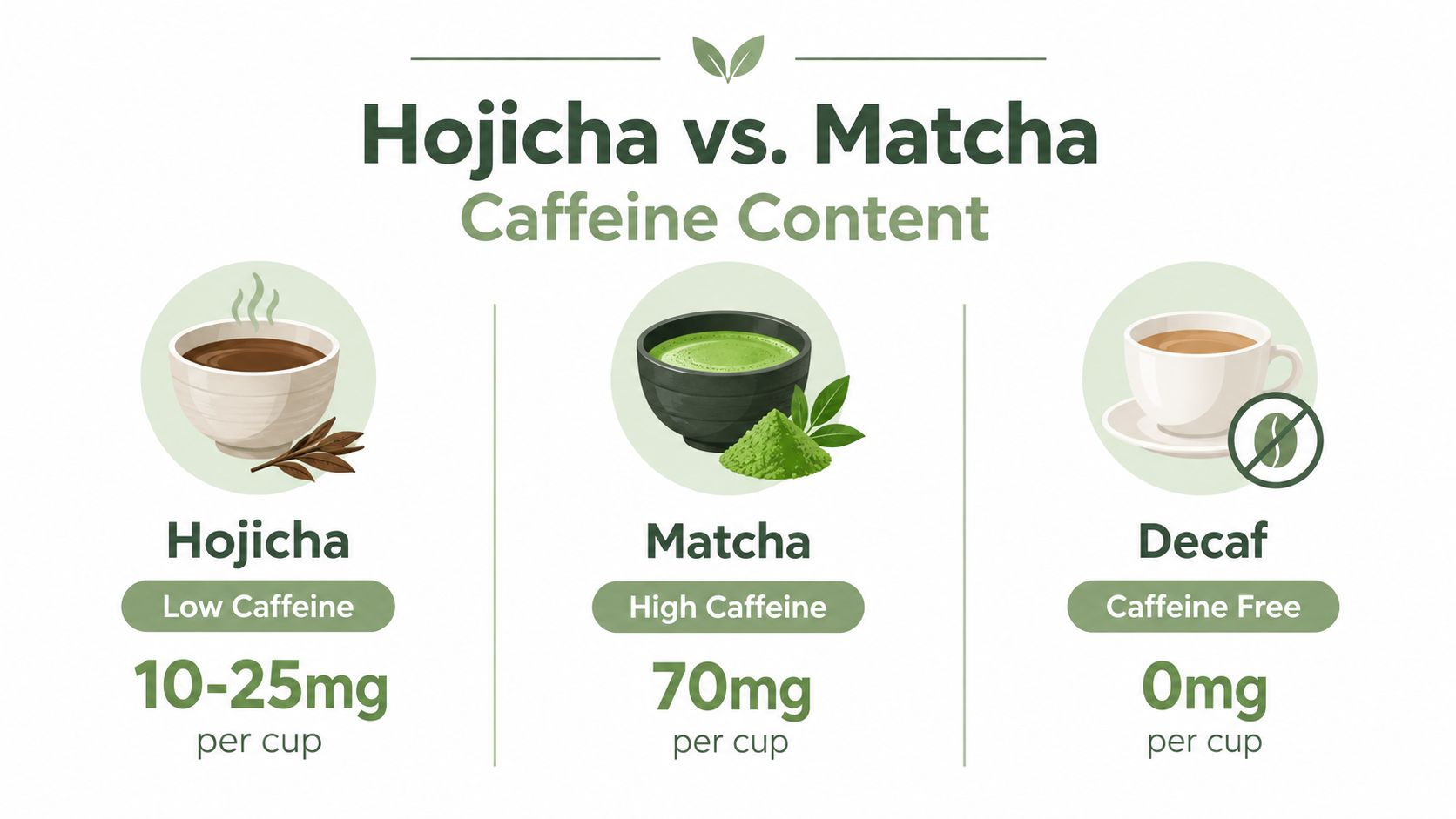
Could a roasted tea contain caffeine without delivering the same lift as green tea or matcha? Australian-facing tea information places hojicha at about 7.7 mg of caffeine per cup, compared with around 20 mg in regular green tea. That makes hojicha a lower-caffeine choice, rather than a caffeine-free one. Pep Tea's guide to caffeine content in green tea provides broader context on differences between green tea varieties.
Australian products show why the number on your own cup may vary. One canned hojicha drink lists 7 mg of caffeine per 750 ml bottle. An Australian tea reference also explains that caffeine depends on the tea type, the proportion of leaves to stems, and brew strength. A loose-leaf infusion and a powdered hojicha drink therefore should not be treated as identical servings.
A practical comparison
| Tea type | Average caffeine per cup |
|---|---|
| Hojicha | About 7.7 mg, Australian tea reference |
| Regular green tea | Around 20 mg |
| Tea benchmark | About 27 mg per 250 ml cup, Australian Sports Commission |
| Green tea benchmark | 30–50 mg |
| Matcha | Around 60–70 mg per serve, Australian comparison |
The table is a guide, not a guarantee for every packet or café preparation. Hojicha powder can provide around 20–25 mg per standard serve, according to an Australian tea product guide, because you consume the powdered leaf instead of steeping and discarding it. People who are sensitive to stimulants may also find decaf and sleep sensitivity relevant when choosing an evening drink.
Why Hojicha Contains Less Caffeine Than Matcha
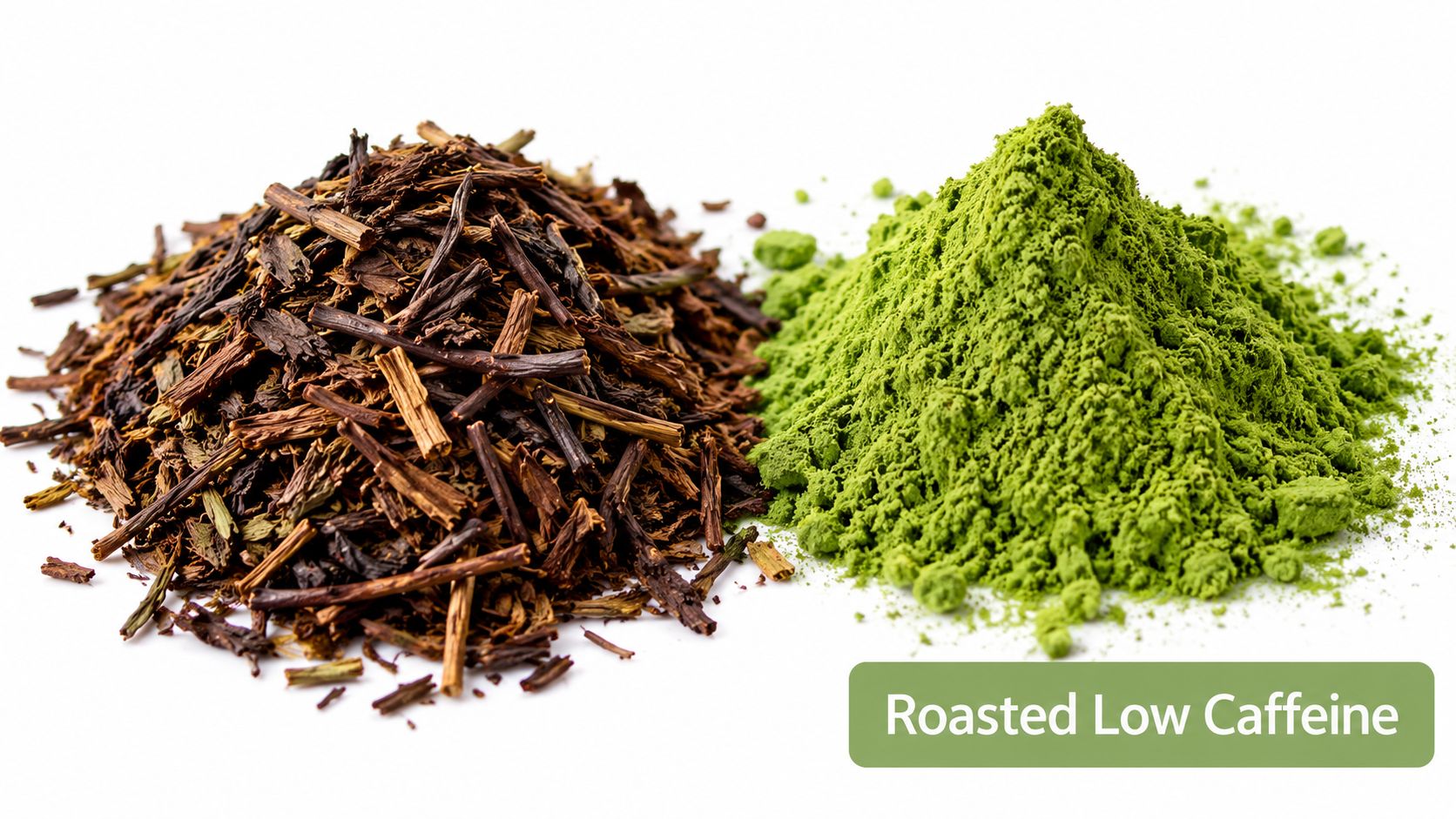
Why does hojicha usually feel gentler than matcha? The answer begins with how each tea is processed and consumed. Matcha is made from tea leaves that are processed and stone-ground into a fine powder, so you drink the whole leaf. Hojicha takes a different route: its leaves or stems are roasted, creating its brown colour, toasted aroma and mellow flavour.
Roasting reshapes the cup as well as the colour. Heat reduces some compounds linked with green tea's fresh, grassy character, while the roasted notes bring flavours closer to toasted grain, nuts and light caramel. This contributes to hojicha's lower stimulant load, although it remains a low-caffeine tea rather than a caffeine-free one.
One tea family, two distinct experiences
Matcha and hojicha can both suit lattes, yet they offer different flavour and caffeine profiles:
- Matcha: Fresh, grassy and umami-rich, with a more noticeable caffeine presence because the powdered leaf is consumed.
- Hojicha leaf: Smooth, roasted and lighter-bodied, with caffeine shaped by the plant material and brewing method.
- Hojicha powder: Creamier and more concentrated than a loose-leaf infusion, so it can contain more caffeine than a lightly brewed cup.
To compare matcha and coffee, it helps to remember that matcha is a whole-leaf drink. Hojicha has its own identity, built around roasting, toasted flavour and a gentler cup, rather than being merely weak matcha.
A morning matcha may suit focused work or a pre-activity routine. Roasted hojicha can feel more comfortable after lunch or alongside dessert, especially for people who find green tea too bitter or grassy. Its rounded flavour often needs less adjustment for drinkers who prefer mellow, nutty notes.
This distinction matters when choosing Japanese tea for home or a café menu. Pep Tea's guide to how matcha tea is made explains matcha's processing, while hojicha is defined by the later roasting stage. The result is low caffeine, not zero caffeine, with the final amount still shaped by the tea material and preparation.
The Science Behind Roasting and Caffeine Reduction
It's common to hear that roasting “burns off” the caffeine in hojicha. That wording is too simple. A 2025 peer-reviewed review explains that heat decomposes amino acids and catechins in hojicha, while caffeine is reduced only slightly through sublimation rather than being completely broken down. In plain language, some caffeine may be lost during roasting, but the roasting process doesn't guarantee a caffeine-free tea. Read the review's discussion of hojicha chemistry.
Sublimation describes a substance moving from a solid state directly into a gas under suitable conditions. In tea roasting, this helps explain why some caffeine can leave with the heat. It doesn't tell us that every batch loses the same amount, because the final cup also depends on the starting material and extraction.
Why the figures vary
Hojicha may be made from different parts of the tea plant, including leaves and stems. Producers also use different roast profiles, and consumers prepare the tea in different ways. A light loose-leaf infusion and a concentrated powder whisked into milk shouldn't be expected to deliver the same caffeine level.
The apparent contradiction between “roasting reduces caffeine” and “hojicha still contains caffeine” disappears once you separate reduction from elimination. Roasting lowers the amount compared with some unroasted green teas, but it doesn't create a guaranteed zero-caffeine beverage.
The useful label is low-caffeine, not caffeine-free.
This distinction matters in Australian hospitality. A menu can describe hojicha as a low-caffeine alternative, but staff shouldn't promise that it contains no caffeine unless a specific product has been tested and labelled accordingly. For sensitive customers, the responsible approach is to explain the format and preparation, then allow the customer to choose.
Factors That Influence Caffeine in Your Cup
Caffeine extraction isn't fixed from one hojicha preparation to the next. The tea's leaf or powder format, the amount used, water conditions and brewing time all influence what reaches the cup. Australian product information makes the same practical point by linking caffeine variation to tea type, leaf ratio and brew strength.
Leaf or powder makes the biggest practical difference
Loose-leaf hojicha is steeped and then removed. Powdered hojicha remains in the drink, so the full measured portion is consumed. An Australian product guide places a standard serve of hojicha powder at around 20–25 mg of caffeine, while an Australian tea reference gives an average cup of steeped hojicha at about 7.7 mg. Those values aren't contradictory. They describe different preparations.
If you're particularly sensitive, start with loose leaf rather than powder. A brewed infusion usually gives you more control over the tea quantity and the strength of the final drink.
Adjust the brew deliberately
Use these levers to make a gentler cup:
- Use less tea. Reducing the leaf-to-water ratio reduces the amount available for extraction. For powder, measure a smaller portion rather than treating a full latte serve as the default.
- Shorten the steep. A brief infusion generally extracts less caffeine than a long, concentrated brew. Taste the tea early and stop when the roast character is present but not heavy.
- Choose a lighter preparation. A large mug made with a modest amount of leaf can taste comforting without becoming intensely concentrated.
- Avoid assuming colour tells the whole story. Hojicha's brown liquor reflects roasting, not a precise caffeine reading. A dark-looking cup isn't automatically high in caffeine, and a pale cup isn't automatically caffeine-free.
- Read the product information. If a manufacturer provides a caffeine value for a bottle or powder serve, use that figure for the product you are drinking.
Water temperature also affects extraction, although the relationship isn't a simple home formula. Rather than chasing a precise caffeine calculation, keep your method consistent. Use the same tea amount, water volume and steeping approach whenever you want a repeatable result.
For cafés, record the recipe for each hojicha drink. A powder latte and a loose-leaf pot should have separate preparation notes, because customers may interpret “hojicha” as one standard beverage even when the café is serving very different formats.
Preparing Low-Caffeine Hojicha at Home
A lighter hojicha infusion is simple to make, and you don't need complicated equipment. The aim is to keep the roasted aroma while avoiding an unnecessarily concentrated serve.
A gentle loose-leaf method
- Measure a modest amount of loose-leaf hojicha. Use less tea than you would for a strong pot, particularly if you're drinking it late in the day.
- Warm your teapot or cup. This helps the infusion stay pleasant without relying on an oversized tea dose.
- Add hot water and steep briefly. Start with a short brewing time, then taste. If the flavour is too light, extend the next infusion slightly rather than making the first cup very strong.
- Remove the leaves promptly. Don't leave the tea sitting in the pot while you drink, as continued extraction changes the strength.
- Serve plain or with milk. Hojicha's toasted flavour can stand on its own, and a splash of milk turns it into a softer after-dinner drink without needing sugar.
Some tea drinkers use a quick first rinse, then discard that liquid before making the main infusion. This may remove some readily soluble material, but it isn't a guaranteed way to remove caffeine. Treat it as a flavour and preparation preference, not a caffeine-free shortcut.
Serving it for others
For a family gathering or café service, prepare a lighter pot rather than assuming everyone wants a concentrated cup. Keep the leaf amount modest, avoid extended holding time and tell guests that hojicha is low in caffeine, not caffeine-free. If you're using powder, offer a smaller portion for people who want a milder drink.
That transparency is especially helpful for children and caffeine-sensitive adults. It also makes the tea easier to enjoy as a warm alternative to coffee, without turning a comforting ritual into a precise calculation.
Hojicha in Your Daily Wellness Routine
Hojicha fits naturally into a balanced Australian wellness routine because it offers roasted comfort with less caffeine than many standard green tea preparations. The caffeine is still present, so people who are highly sensitive should consider their total intake and personal response.
Australian food guidance explains that naturally caffeinated foods such as tea are exempt from added-caffeine labelling rules. It also says there's no recognised health-based guidance value for caffeine, while noting that about 3 mg per kilogram of body weight per day in children has previously been linked by FSANZ with increased anxiety. See the Australian food authority's caffeine guidance.

For a broader look at flavour, preparation and everyday uses, explore Pep Tea's guide to hojicha tea benefits. Choose loose leaf when you want a lighter infusion, and treat powder as a more concentrated format. Pep Tea offers organic tea products alongside its Australian-brewed, sugar-free organic kombucha from the Hunter Valley, NSW, giving health-conscious drinkers options for warm and chilled routines.
Explore Pep Tea for organic tea options and Australian-brewed sugar-free kombucha, then choose a hojicha preparation that suits your flavour preferences and caffeine sensitivity. If you're a café or hospitality buyer, contact Pep Tea about practical beverage options for a thoughtful, low-sugar menu.
Mate Drink Australia: Sourcing, Brewing, and Serving

You're standing in a café queue in Melbourne or Newcastle, and the person ahead of you orders a mate drink instead of another flat white. At home, it might be the same feeling when you've got a pantry full of tea, coffee, and sparkling water, but you still want something with a cleaner lift and a bit of ritual. That's where mate drink Australia has started to feel less like a niche import and more like a practical everyday choice.
For a lot of Australians, mate sits in an interesting middle ground. It keeps the social warmth of tea, the alertness people want from caffeine, and the lower-sugar, functional appeal that fits modern café menus and home routines. Australia's mate market is still small, but it's moving quickly, with projections from Future Market Insights showing USD 13.2 million in 2025 and USD 37.7 million by 2035, alongside forecast growth of 11.1% CAGR over the period and 10.5% in H1 2025 and 11.9% in H2 2025 (Future Market Insights).
That matters because Australia is already shifting towards drinks that do more than just quench thirst. The ABS reported 191.2 million litres of pure alcohol were available for consumption in 2017–18, equal to 9.51 litres per person (ABS). DrinkWise also found that, comparing 2007 vs 2017, Australians were generally drinking less frequently, with just under two thirds of drinkers having no more than two standard drinks on a typical drinking day (ABS). In that kind of market, a caffeine drink that can show up in cafés, fridges, and lunch breaks makes sense.
Why Mate Is Capturing Australian Attention
A barista pours a sample into a takeaway cup, and the customer asks the same question that comes up everywhere from inner-city cafés to suburban kitchens, “Is this like tea, or is it going to hit me like coffee?” That question explains why mate drink Australia is getting attention. People want something familiar enough to trust, but different enough to feel useful.
The drink fits a changing occasion
Mate fits a space Australians already recognise. It can replace a morning coffee, sit beside a pastry in a café, or take the place of a sugary energy drink when someone wants focus without heavy sweetness. Future Market Insights' projection for the Australian market suggests that demand is moving beyond curiosity and into repeat purchase territory, especially in wellness-led food and beverage settings (Future Market Insights).
That shift also lines up with a broader preference for lower-alcohol and non-alcoholic options. When people want a social drink that still feels adult and functional, mate can fill part of that gap. It is not pretending to be wine or beer, it gives cafés and households another option that feels more purposeful than soft drink.
Practical rule: if the customer wants ritual, caffeine, and less sugar, mate is an easy beverage to explain without overselling it.
It's familiar, but not boring
Australian drinkers already know tea. They already know caffeine. Mate appeals because it sits between those worlds and still feels a little different. That novelty matters, especially in cafés where the menu needs to offer something customers will remember and mention to a friend.
For business owners, that same novelty can work as a low-friction way to broaden a drinks list. A mate option does not need to replace coffee or kombucha. It can give the menu another lane for people who want a warm, energising, less sugary drink. If you are comparing how mate fits into modern beverage ranges, our functional beverage trends page is a useful place to look at the broader category.
Australian taste is moving toward practical wellness
The best mate conversations in Australia rarely start with tradition alone. They start with questions about how it tastes, when to drink it, and whether it suits a workday. That is the right frame. Mate has staying power here because it is useful, not because it is fashionable for a week. Temperature and dose are key safety levers, especially for people who are trying mate for the first time and want a steady, comfortable experience rather than a sharp caffeine spike.
Understanding Mate Origins and Health Benefits
Yerba mate comes from Ilex paraguariensis, a South American plant whose dried leaves are brewed and shared in a gourd with a metal straw called a bombilla. SBS Food describes that traditional preparation clearly. The method matters because mate is not just another flavoured tea, it carries a social ritual with it (SBS Food).
What Australian drinkers need to know first
The first thing many people in Australia want to know is simple, mate is naturally caffeinated. Product guidance from Tea Tonic places brewed yerba mate at around 70-85 mg per 240 mL cup or about 78 mg per 150 mL cup (Tea Tonic). National Geographic also notes that mate contains roughly 80 mg caffeine per cup, which puts it in the same general conversation as coffee, not herbal tea (National Geographic).
That is where confusion often starts. Mate is often described as “smoother” than coffee, but smoother does not mean weak. It means the experience can feel less sharp to some drinkers, especially when brewed well and served at a sensible strength. For people who want alertness without the feel of a heavy espresso hit, mate deserves proper attention.
The bioactive profile is part of the appeal
National Geographic also notes that yerba mate contains caffeine, theobromine, and theophylline (National Geographic). That combination helps explain why some people experience it as a steadier functional drink rather than a purely jarring stimulant. In plain terms, there is more going on than just “tea with caffeine”.
The practical value in Australia is easy to see. Office workers replacing multiple coffees, café customers avoiding sugary energy drinks, and people who want a gentler afternoon option all ask the same thing in different words. They want a drink that supports alertness without becoming a habit they regret later in the day. For that reason, mate fits the gap between cultural authenticity and the convenience people now expect in Australian homes and cafés.
Temperature and dose are the real safety levers
Mayo Clinic warns that the dose and temperature matter more than the label itself. Long-term intake of about 1-2 L/day has been associated with higher risks of several cancers, and hot mate above 65 °C has been classified by IARC as probably carcinogenic because very hot beverages can damage the esophagus (Mayo Clinic). In Australian cafés, the practical response is straightforward, keep serving temperatures sensible and avoid treating mate as an all-day litre-by-litre drink.
Serve it warm, not scalding, and keep the serving size sensible. That is the easy hospitality rule.
Brewing Methods for Australian Kitchens and Cafés
Australian kitchens don't all look the same. Some people have a kettle, a mug, and five quiet minutes before work. Others are running a busy café and need a drink that can be explained, made consistently, and served without fuss. Mate can work in both settings if the brewing method suits the occasion.
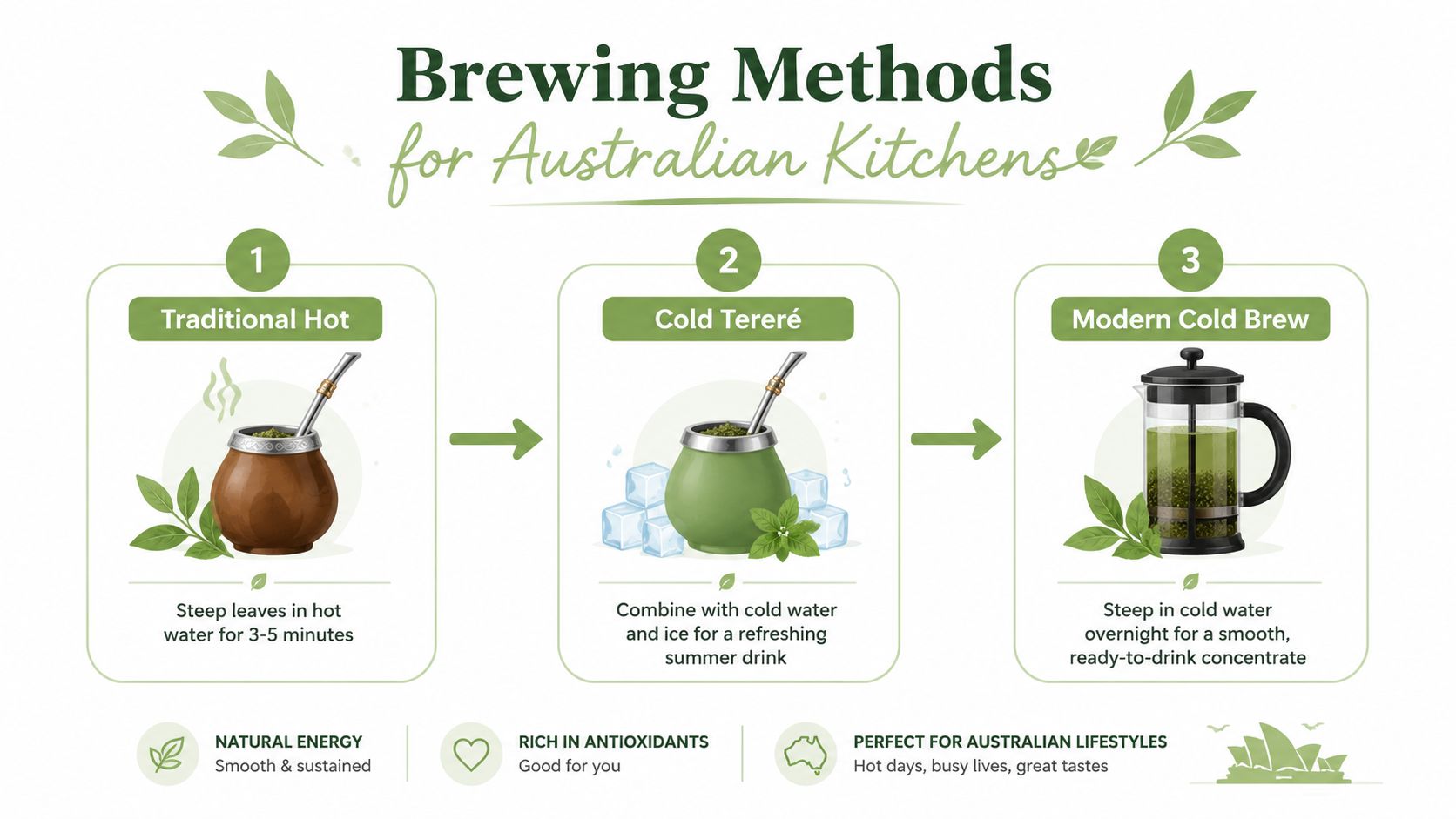
Traditional hot mate for slower moments
Traditional hot mate is the best place to start if someone wants the full ritual. Use a gourd, add the leaves, and pour in hot water that's hot but not harsh. If the water is too aggressive, the drink turns bitter and the first sip can scare people off.
For home drinkers, that means paying attention to the pour rather than rushing it. A well-made cup should feel balanced, not burnt. If you've ever oversteeped green tea, the same mistake applies here.
Cold tereré for summer
Cold tereré suits Australian heat better than many people expect. It's the summer version of mate, especially useful when a customer wants refreshment instead of a hot cup. Cold water, ice, and a clean mate blend are enough to make it feel crisp rather than heavy.
This format works well in coastal cafés and anywhere customers ask for something lighter in the afternoon. It's also easier to explain to people who don't want a strong hot drink in January. The cold version keeps the flavour, but the experience becomes more like a refreshing iced tea.
Modern cold brew for cafés and busy households
Cold brew mate is the most flexible option for modern service. Steep it overnight in cold water, then serve it as a concentrate, over ice, or as a base for a latte-style drink. That approach gives cafés more consistency and helps households batch-prep a couple of servings for the next day.
For busy operators, a cold-brew format reduces pressure during rush periods. It also gives staff a simple way to answer the customer who wants something new, but not complicated. If you're building a menu with ready-to-serve formats in mind, our cold brew tea concentrate page is a useful reference point.
Keep the technique clean
Bitterness usually comes from sloppy technique, not from the drink itself. Too much heat, too much leaf, or too long a steep will flatten the flavour. Clean water, reasonable timing, and a calm pour do more for the cup than fancy equipment ever will.
Finding Quality Organic Mate Suppliers in Australia
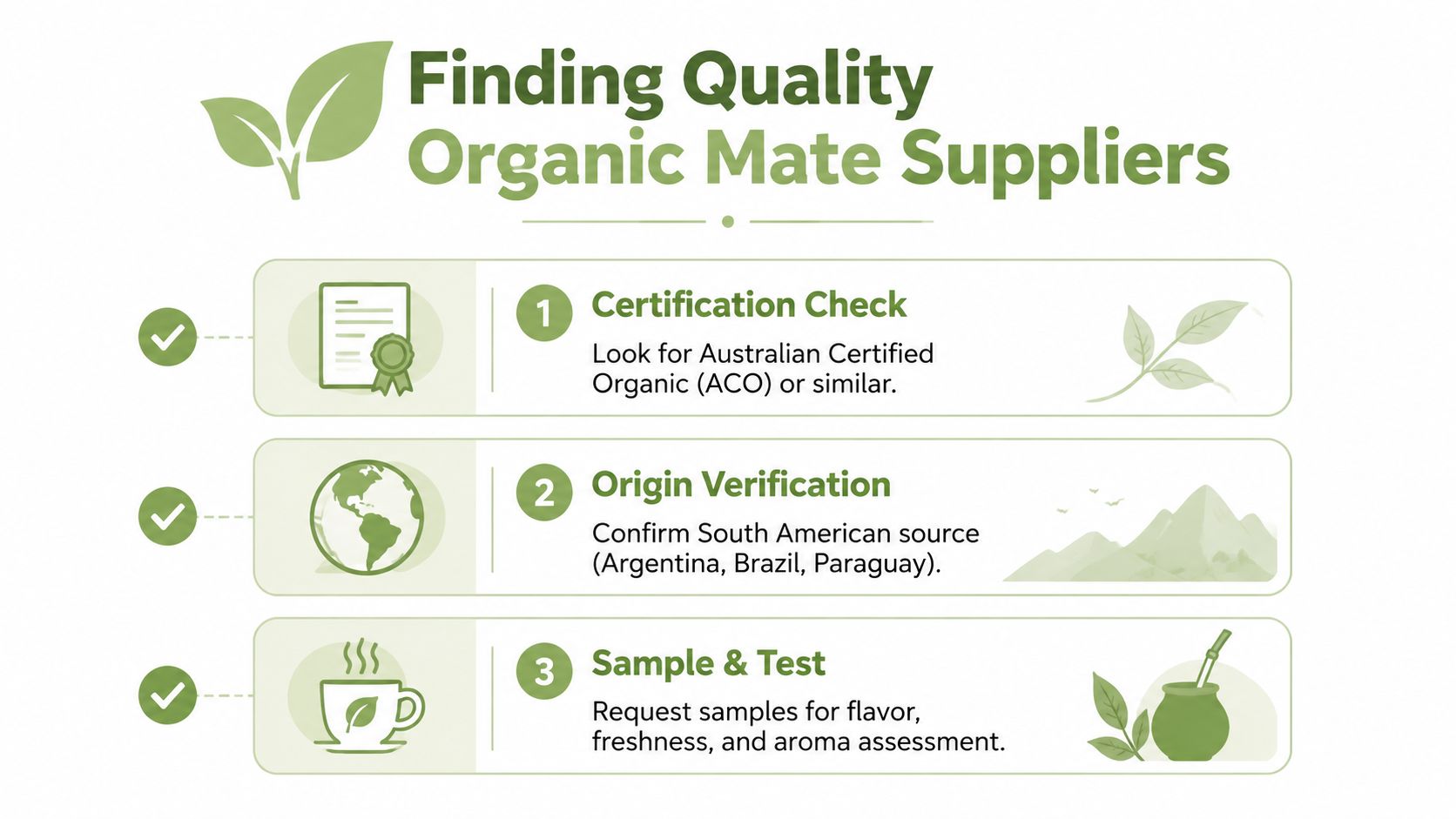
Australia's mate shelves can look busy, but not every packet tells you much. A good supplier should make it easy to see where the leaves come from, how they're handled, and whether the product suits home brewing or café use. That's the true test, not a flashy label.
Start with certification and origin
Organic certification is the first filter. If a supplier can't clearly show how the mate is certified, that's a sign to keep looking. For businesses, certification matters even more because customers increasingly expect transparency around what they're drinking.
Origin matters too. South American mate traditions are rooted in Argentina, Brazil, and Paraguay, so suppliers should be able to tell you where their product comes from and how it's sourced. If that information is vague, freshness and consistency are harder to trust.
A supplier should also explain whether the mate is designed for traditional brewing, café service, or cold-brew applications. That difference affects flavour and performance. A home buyer wants something forgiving. A café needs something that behaves the same way every day.
Ask for a sample before you commit to bulk. Fresh aroma and clean flavour tell you more than a polished product page.
Read the product description like a buyer, not a browser
Descriptive words are not enough. “Premium” and “authentic” don't tell you much unless the supplier backs them with handling details, freshness indicators, and clear ingredient information. The better brands usually answer questions before you ask them.
Watch for these practical signs:
- Clear source information, so you know the mate isn't being sold as something generic.
- Fresh packaging cues, because stale mate can taste flat and dusty.
- Usage guidance, since good suppliers explain whether the blend suits hot cups, cold brew, or café service.
- Responsive sample access, which is especially useful for hospitality buyers making a menu decision.
Local buyers should think beyond the packet
If you're buying for a household, the question is whether the flavour matches how often you'll drink it. If you're buying for a venue, the question is whether the supplier can support repeat orders and stable stock. Those are different decisions, and the best supplier will understand both.
For businesses comparing certified organic options and wanting a deeper compliance lens, our organic certification Australia page is a sensible place to start.
Integrating Mate Into Australian Café and Bar Menus
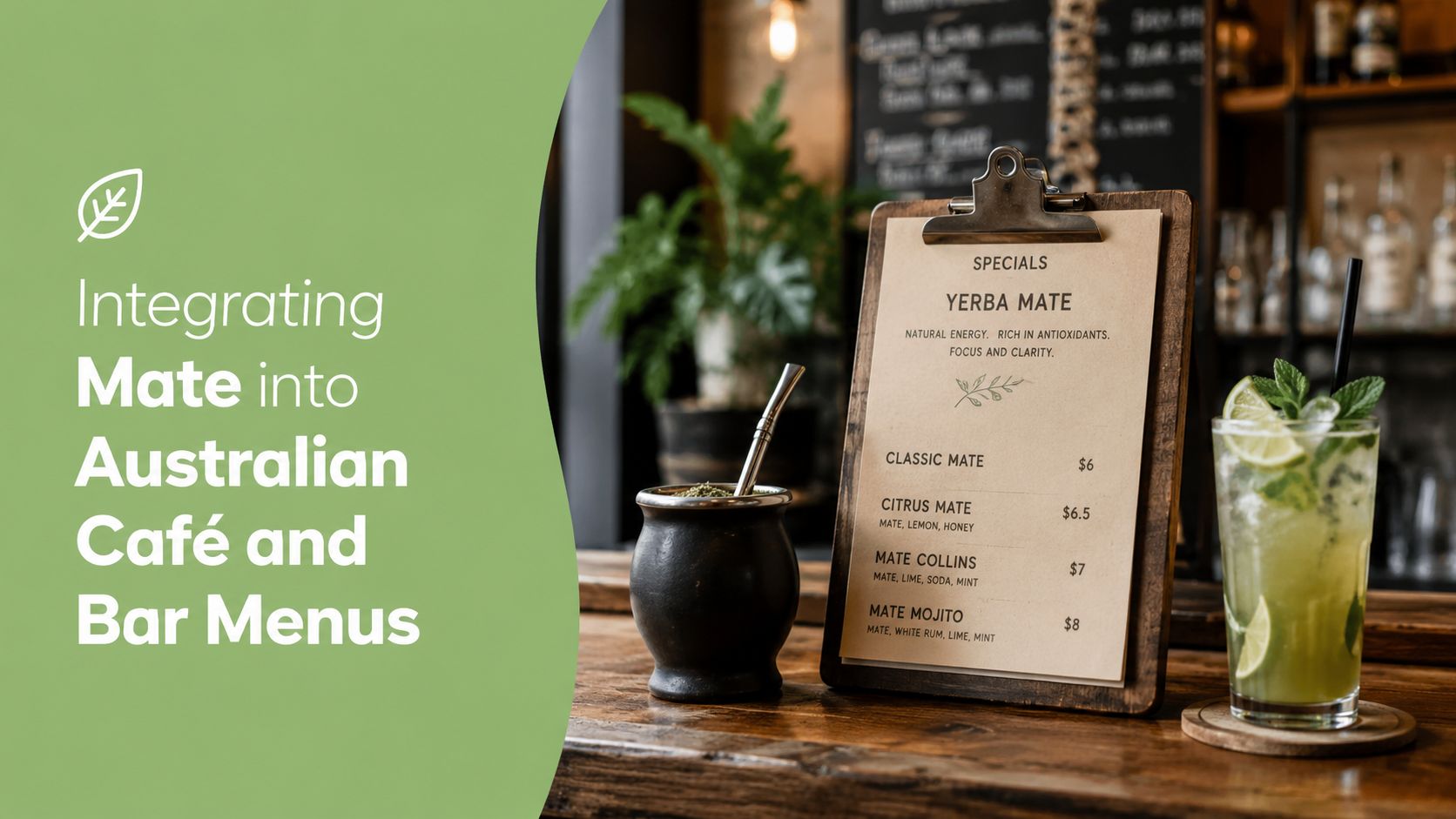
Mate belongs on modern Australian menus for the same reason cold brew coffee and kombucha do. Customers want drinks that feel considered, not generic. A mate line can sit neatly between coffee, tea, and non-alcoholic specials without forcing the venue into a full category rethink.
Start with three menu formats
The easiest way to introduce mate is to keep the menu short and clear. A mate latte gives regular coffee drinkers a familiar format. A sparkling mate cooler suits afternoon service and non-alcoholic requests. A mate mocktail can sit in the same section as premium zero-proof drinks, especially in venues that already sell premium soft drinks.
Each format solves a different customer need. The latte is for comfort and routine, the cooler is for refreshment, and the mocktail is for occasion. That makes mate much easier to sell than a beverage that tries to do everything at once.
Staff language matters more than fancy garnish
A drink only sells if staff can describe it without hesitation. “It's a caffeinated South American leaf drink with a smooth, tea-like flavour” is more useful than a vague wellness pitch. Customers in Australia usually respond better to concrete language than to claims that sound borrowed from a supplement ad.
Keep the explanation simple. People buy the drink they can understand in one sentence.
That also helps when customers are deciding between mate and coffee. If they know mate is a functional option with a distinct flavour, they can place it in their own routine. Café staff don't need to over-educate. They just need to be clear.
Position it where the customer already looks
Mate works well beside iced teas, speciality sodas, and alcohol-free drinks. In a bar setting, it can be framed as a composed, adult beverage rather than a health drink in disguise. In a café, it can sit near lattes or seasonal specials, depending on whether the house style is more classic or more experimental.
Pep Tea also supplies a mate tea blend made from yerba mate, which can be used in the same sort of menu thinking as other functional beverages. The point isn't to force one format. It's to give customers a clean, repeatable option that fits your service style.
Presentation should match the promise
If a menu item is meant to feel fresh, serve it that way. Clear glass, ice, citrus, and restrained garnish often work better than overbuilding the drink. Mate already has an identity, so the presentation should support it rather than bury it under extras.
Purchasing and Storage Best Practices
Australian heat can flatten flavours fast, especially if mate is left in flimsy packaging or opened and forgotten in a cupboard. Buying well is only half the job. Storing it properly is what keeps the drink bright enough to be worth making again tomorrow.
Buy for your actual drinking pattern
Households often overbuy. A café can do the same thing if it gets caught up in the idea of a new menu item before checking turnover. Mate is a product you want to move at a pace that matches its freshness and your service rhythm.
Choose a quantity that suits how often you'll brew it. If you drink it a couple of times a week, a modest bag makes more sense than a large bulk order. If you're serving it commercially, establish a rotation system so older stock gets used first.
Packaging and storage should protect aroma
Look for packaging that keeps out light, air, and moisture. Once mate is opened, reseal it tightly and keep it away from the stove, dishwasher heat, or any warm shelf above a kettle. Those are the places where Australian kitchens ruin good tea.
A dry pantry is better than a sunny counter every time. If the mate smells dull, dusty, or flat, it's usually telling you it has lost some of its character. Fresh mate should still smell alive when you open the bag.
Fresh and aged are not the same experience
Some mate is intended to taste more full-bodied and earthy, while fresher lots can feel greener and brighter. Neither is automatically wrong. The key is matching the style to your own taste, or to what your café customers expect when they order.
For commercial buyers, consistency matters more than chasing novelty. A regular house style makes staff training easier and reduces customer confusion. That's why storing and rotating stock carefully pays off, even for a small venue.
Navigating Australian Regulatory and Labeling Requirements
Mate sits inside a broader Australian drinks market that takes labeling seriously. Caffeine disclosure, ingredient transparency, and responsible marketing all matter because customers deserve to know what they're buying. For businesses, that's not just a legal issue, it's a trust issue.
What to look for on the label
If a mate product is being sold in Australia, the label should tell you enough to understand the contents, origin, and intended use. The more clearly a brand explains serving size, ingredient list, and caffeine-related information, the easier it is for customers to make a sensible choice. That's especially important for people who are sensitive to stimulants.
Health claims need care. A product can be positioned as functional or traditional without slipping into medical promises. That line matters for anyone selling mate in a café, retail shelf, or online store.
Certification and compliance go together
Organic claims should be backed by a credible certification pathway, not just a green design and a leafy logo. If a supplier says the mate is organic, ask how that status is verified and whether the paperwork matches the label. You don't need a compliance degree to ask good questions.
For a broader plain-English breakdown of packaging and label rules, AUSFF's complete labeling guide is a useful reference. It's especially handy for small business owners who want a quick overview before printing menus or product tags.
Venues need simple service rules
Hospitality teams should also think about responsible service in practical terms. That means staff know what the drink contains, whether it's served hot or cold, and how to answer a customer who asks about caffeine. Allergen disclosure still matters if a mate drink is blended with milk, syrups, or other menu ingredients.
Compliance feels less intimidating when it's built into the workflow. A good label, a clear menu description, and a consistent recipe are often enough to keep things simple for staff and reassuring for customers.
Where to Buy Mate Across Australia
Finding mate in Australia is much easier now than it used to be, but the best place to buy depends on what you need. Home drinkers often want convenience and a fair price. Café owners need reliability, wholesale access, and equipment that won't become a headache after the first order.
Start with the channel that suits your purpose
Online specialty retailers are the easiest option if you want variety and delivery. Health food stores and specialty grocers can be handy if you want to see the pack before you buy, though stock can be patchy. For traditional equipment like a bombilla and gourd, specialist tea stores and imported beverage sections are usually the better bet than mainstream supermarkets.
If you're buying for a venue, direct-from-supplier relationships often make more sense. That's where you can ask about repeat supply, menu support, and order minimums without having to work around retail packaging. It also helps if you want a consistent product for cold brew, café service, or a drink list built around non-alcoholic options.
Regional buyers need a bit more planning
City customers usually have more choice. Regional and remote buyers often need to plan around shipping times and stock rotation, especially in hotter months. That makes it worth buying from a supplier that clearly explains dispatch, packaging, and how the product holds up in transit.
If you're outside a major city, don't settle for the first listing you find. Look for suppliers that answer product questions clearly and ship regularly across Australia. That usually tells you more about reliability than the prettiest online storefront.
Match the shop to the drink style
Traditional mate drinkers may prefer a loose-leaf product and the right brewing gear. Café owners may want a format that's easier to portion and explain to staff. Retail buyers might want a compact pack they can store properly and use without special equipment.
The right choice is usually the one that fits your routine, not the one that looks the most authentic in a photo. If you want to explore premium organic tea and functional drink options in one place, Pep Tea has a range built for Australian homes and hospitality settings.
If you're ready to bring mate into your kitchen, café, or menu, Pep Tea can help with practical, organic options that suit Australian routines. Explore our range at Pep Tea, and choose the format that fits the way you drink and serve mate.
Green Tea Australia Brands a Shopper’s Guide for 2026

You're probably here because you've stood in front of a supermarket shelf, opened five browser tabs, and realised that “green tea” in Australia can mean very different things. One box says organic. Another says matcha. Another looks healthy but is packed like a soft drink. Then there are imported tins, local blends, tea bags, loose leaf, sparkling cans, probiotic bottles, and labels full of wellness language that don't always tell you much.
That confusion makes sense. The Australian green tea aisle has become more crowded, and shoppers are paying closer attention because they want drinks that feel lighter, cleaner, and more purposeful. Interest isn't niche anymore. In Australia, the organic green tea market reached a retail value between AUD 180 million and AUD 250 million in 2025, with health-conscious consumers driving a significant portion of demand, according to IndexBox's Australia organic green tea market analysis.
A good guide to Green Tea Australia brands shouldn't just hand you a list of names. It should help you recognise quality markers, understand what type of green tea suits your day, and know when a label is saying something meaningful versus sounding impressive.
Navigating the World of Australian Green Tea
A lot of Australians start with the same assumption. Green tea is green tea, so choosing one brand should be simple.
Then the practical choices show up.
You might buy tea bags for convenience, then notice a bright tin of Japanese matcha beside them. A café menu offers a matcha latte. The fridge section has kombucha made from green tea. A wellness shop stocks loose-leaf sencha and premium powders with very different prices. Suddenly you're not comparing one product type. You're comparing several categories that all sit under the same broad umbrella.
Why the category feels crowded
Part of the confusion comes from the fact that these products solve different problems.
- Tea bags suit quick weekday brewing.
- Loose-leaf green tea suits people who care about flavour and ritual.
- Matcha appeals to anyone chasing a more concentrated, versatile green tea experience.
- Kombucha attracts drinkers who want something cold, lively, and a bit more social.
That's why brand lists alone often fall short. A “best brands” roundup can lump very different products together without explaining what you are purchasing.
Green tea isn't one single shopping decision. It's a category of formats, origins, and processing styles.
Start with your real goal
Before you compare labels, ask a simpler question. What do you want this green tea to do in your life?
Maybe you want a calm morning drink instead of another coffee. Maybe you want a low-sugar fridge staple. Maybe you're after a ceremonial matcha for whisking, or a culinary powder for smoothies and baking. Some shoppers want local brewing and traceable production. Others care most about organic certification and clean ingredients.
Once you know your goal, the shelf makes more sense. You stop asking, “Which brand is best?” and start asking better questions.
- Is this for sipping hot or cold?
- Do I want convenience or a ritual?
- Am I paying for better leaf quality, better processing, or just better packaging?
- Is the “organic” claim supported?
Those questions turn a confusing category into an organised one.
How to Read a Green Tea Label Like an Expert
A strong green tea label should help you trust the product. If it leaves you guessing, that's already useful information.
Check the certification first
The word organic gets used loosely. That's one of the biggest traps in this category.
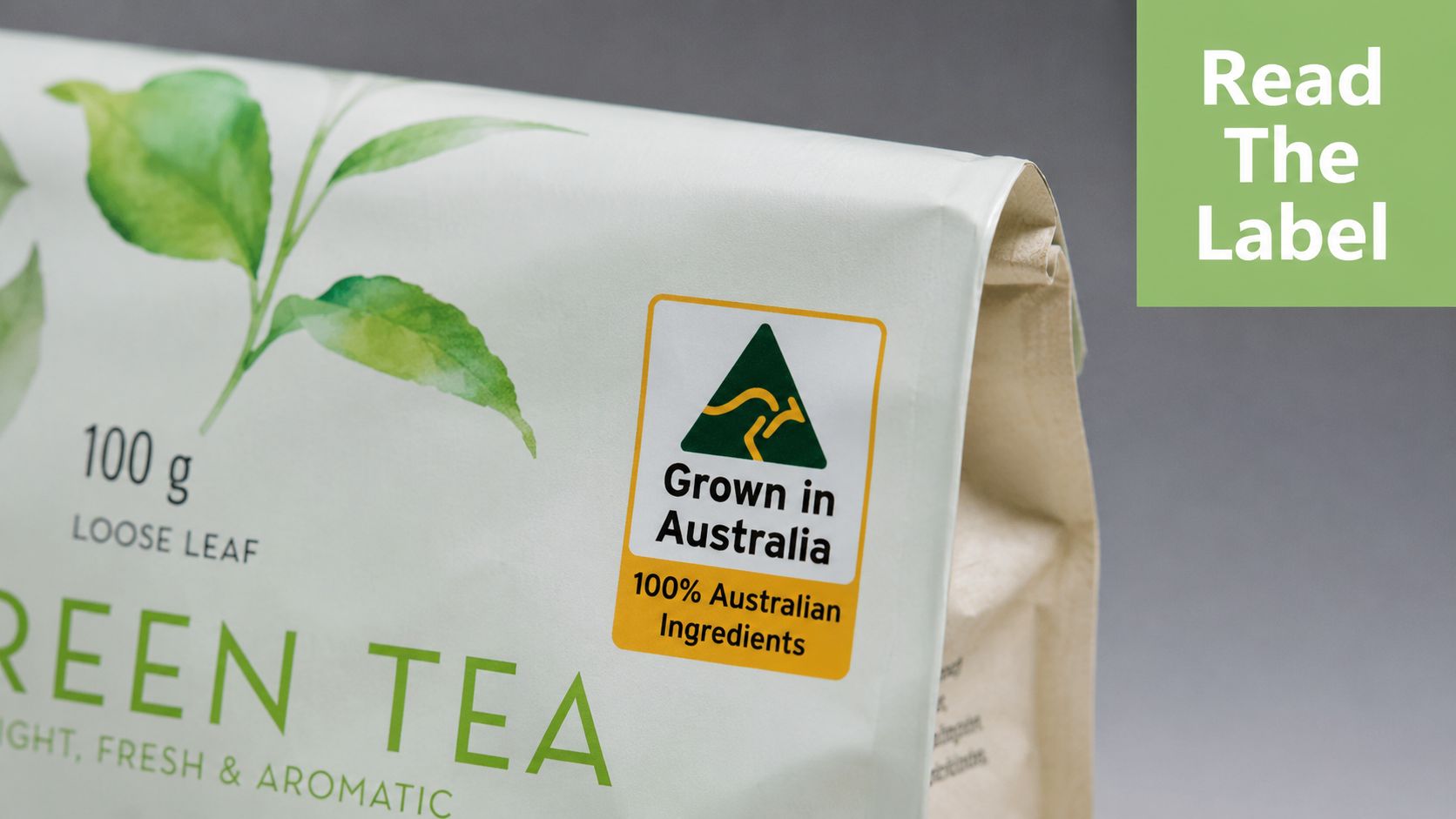
Consumers are often misled by brands using “organic” without third-party validation, and shoppers should look for recognised certification marks such as ACCOA, as noted in this discussion of organic certification literacy in Australia. If the front of pack says organic but the label gives you no certifier, no mark, and no traceable standard, pause before you buy.
A quick way to build confidence is to learn what recognised standards look like and what they cover. A practical starting point is this guide to organic certification standards, which helps decode what a certification is meant to signal.
Look for origin, not just branding
A polished brand name doesn't tell you where the tea comes from. Origin matters because it often shapes flavour, processing style, and buyer expectations.
If a product is Japanese green tea or Japanese matcha, the label should make that clear. If it's Australian grown, that should also be visible and specific. “Packed in Australia” is not the same thing as “grown in Australia”. Shoppers often miss that distinction.
Here's a useful way to read that part of the pack:
Find the country of origin
Don't stop at the front label. Check the side or back panel.Notice whether the tea is grown, packed, blended, or brewed locally
Those are different claims.See if the origin matches the product type
For example, many premium matcha products highlight Japanese sourcing because that's central to the style and processing.
Scan for processing clues
Processing changes the final cup more than many people realise.
A tea bag often contains finely cut leaf for speed and consistency. Loose-leaf tea tends to show more of the leaf itself. Matcha is powdered whole leaf. Kombucha is brewed and fermented. Each format needs a different label lens.
Look for clues such as:
Leaf form
Whole leaf, loose leaf, powder, or brewed beverage.Intended use
Drinking straight, lattes, recipes, or ready-to-drink refreshment.Storage guidance
This can hint at freshness sensitivity, especially with powdered green tea.
Practical rule: If a pack makes a premium claim, it should also give you premium detail.
Know what vague language sounds like
Some wording looks reassuring but says very little.
“Natural”, “clean”, “premium”, and “wellness” aren't useless words, but they aren't proof of quality on their own. Treat them as supporting language, not deciding factors. The details that count are the certifier, origin, ingredients, and processing information.
That's when Green Tea Australia brands become easier to sort. You stop buying the prettiest pack and start buying the clearest one.
The Four Faces of Green Tea in Australia
Not every green tea belongs in the same routine. The easiest way to cut through the noise is to separate the category into its main formats and compare them by use.
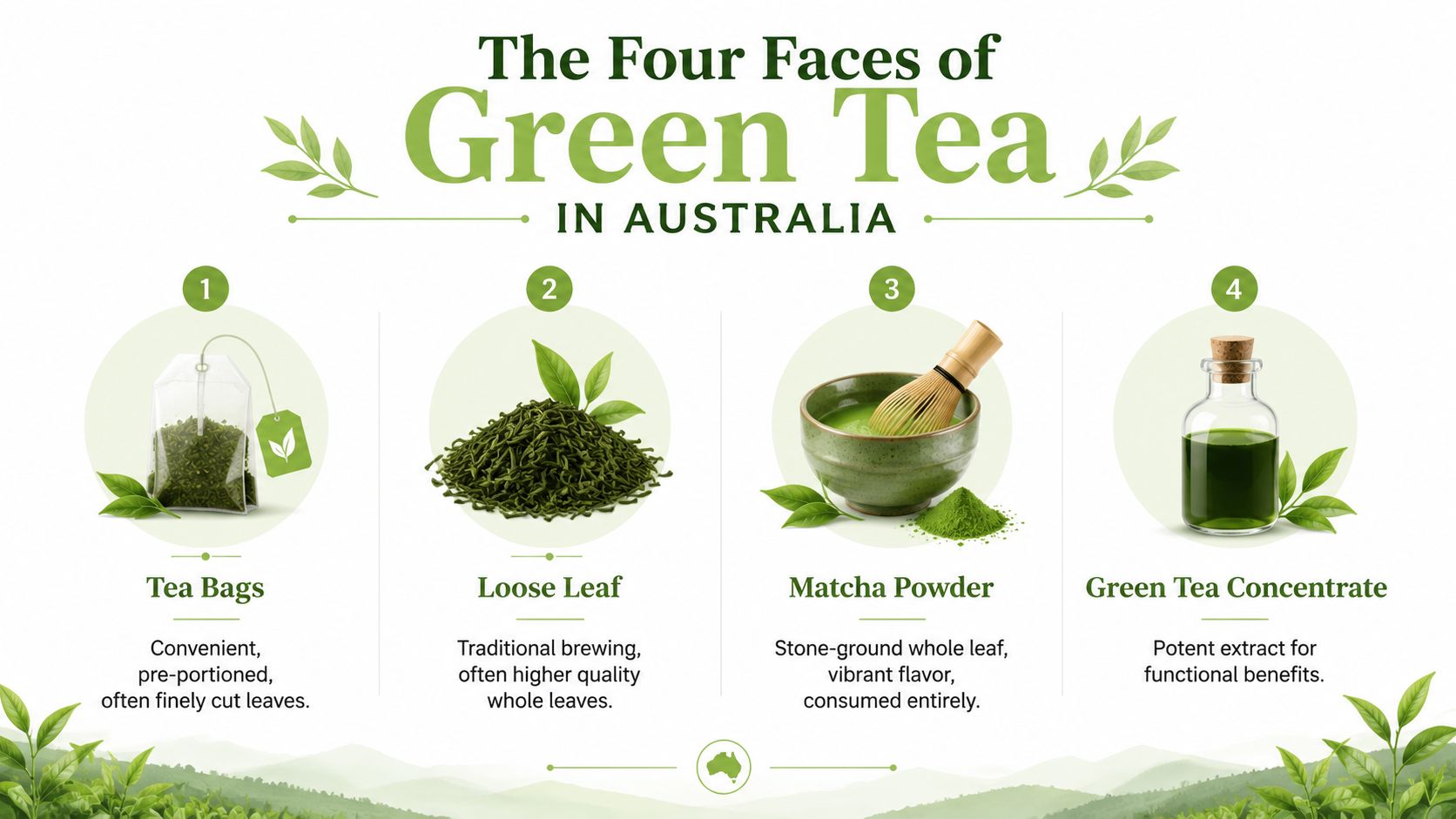
Convenience still drives a lot of buying. In Australia, green tea bags hold a 45.9% market share in 2025, while premium varieties like matcha are seeing rapid adoption because of their antioxidant appeal and versatility in drinks and recipes, according to IMARC's Australia green tea market overview.
Tea bags
Tea bags are the familiar entry point. They're easy, portable, and forgiving.
They suit office kitchens, rushed mornings, and anyone who wants a quick cup without measuring or equipment. The trade-off is that the experience can be simpler in flavour and less expressive than whole-leaf formats.
Loose-leaf green tea
Loose leaf asks for a bit more attention, but it often rewards you with a more nuanced cup.
You can usually see the leaf, adjust the strength, and pay attention to aroma in a way that tea bags don't always allow. It's a good fit if you enjoy the brewing ritual and want your daily tea to feel more intentional.
Matcha powder
Matcha changes the equation because you consume the powdered leaf rather than steeping and discarding it.
That's one reason people see it differently from a standard brewed green tea. It also moves well across routines. Some drink it whisked with water, others build lattes, smoothies, iced drinks, or baking recipes around it.
If you want green tea as both a drink and an ingredient, matcha opens more doors than bags or loose leaf.
Kombucha made from green tea
Kombucha belongs to the same conversation, but it solves a different need.
It's for people who want a chilled, fermented, ready-to-drink option with more lift and personality than plain water. It can work as an alcohol alternative, an afternoon fridge drink, or a café menu option that feels adult without being heavy.
Green Tea Forms at a Glance
| Format | Preparation | Key Benefit | Best For |
|---|---|---|---|
| Tea bags | Steep in hot water | Convenience | Busy mornings, work, travel |
| Loose leaf | Brew with infuser or pot | Better flavour control | Tea drinkers who enjoy ritual |
| Matcha | Whisk powder with water or milk | Whole-leaf versatility | Lattes, focused mornings, recipes |
| Kombucha | Ready to drink cold | Fermented, refreshing format | Gut-friendly routines, alcohol-free swaps |
How to choose the right one for your day
A helpful way to shop is to stop thinking in terms of “best” and think in terms of “best fit”.
For speed
Tea bags are hard to beat.For flavour exploration
Loose leaf gives you more to notice.For a wellness ritual with culinary flexibility
Matcha makes the strongest case.For a fridge staple
Kombucha offers convenience with a more social feel.
Some households keep more than one format on hand. That isn't indecisive. It's practical. A weekday desk drawer and a Sunday morning kitchen bench don't need the same thing.
Why categories matter more than brand popularity
Shoppers often search for Green Tea Australia brands as if every product competes on one shared scale. It doesn't work that way.
A strong tea bag brand may not be the best matcha source. A beautiful matcha label may tell you nothing about kombucha quality. A local brand may be excellent at brewing beverages but not focused on loose leaf at all.
Once you separate the category into formats, comparing brands gets much cleaner. You compare tea bags with tea bags, matcha with matcha, and kombucha with kombucha. That's when quality markers start to stand out.
A Deeper Dive into Matcha's Magic
Matcha is one of the few drinks that can feel both grounding and energising at the same time. That's why people often try it once out of curiosity, then keep coming back for the effect as much as the flavour.
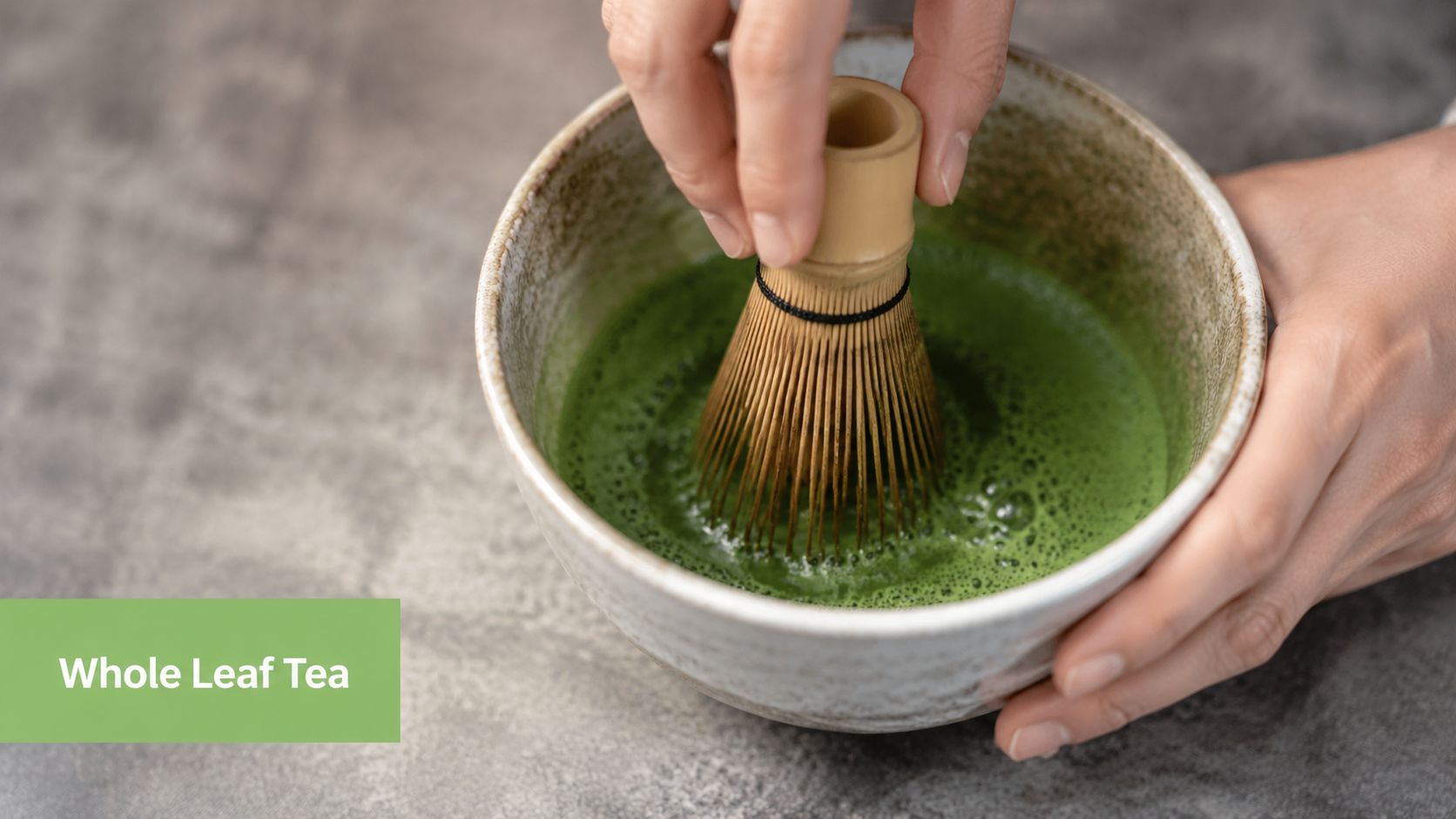
Why matcha feels different
The biggest shift is simple. You're not just infusing water with leaves. You're consuming the powdered leaf itself.
That changes how people use it and how they talk about quality. Colour, texture, aroma, and smoothness matter a lot. A vibrant green powder with a fine texture usually signals more care in cultivation and processing than a dull, khaki-looking powder that tastes flat or harsh.
Shade-grown ceremonial-grade matcha contains higher levels of L-theanine, which moderates caffeine absorption and can produce a sense of calm focus without the sharper spike and crash people often associate with other stimulants, according to this matcha quality and comparison guide.
Ceremonial and culinary in plain English
These labels confuse plenty of shoppers because they sound formal and absolute. In practice, they're more useful as buying cues than fixed rules.
Ceremonial matcha
Best suited to whisking with water when you want the powder itself to shine.Culinary matcha
Better suited to lattes, smoothies, baking, desserts, and recipes where matcha shares the stage with other ingredients.
If you want help choosing between them, this breakdown of different grades of matcha is a practical reference.
What to look for in a good tin or pouch
A shopper doesn't need to be a tea master to make a smart choice. A few sensory checks go a long way.
Colour matters
Look for a lively green rather than a brownish or yellowed powder.Texture tells a story
A fine, soft powder tends to whisk more smoothly.Smell is part of quality
Fresh matcha should smell alive, not stale.Use case should match the label
Don't pay for a premium drinking powder if you only want it for banana bread or protein smoothies.
A quick visual guide can help if you're learning the whisking basics:
Good matcha should make sense on the palate and on the label. If the flavour, colour, and product description don't line up, keep looking.
A simple way to use it daily
Try one teaspoon sifted into a bowl, add a small amount of hot water that isn't boiling, then whisk until frothy. From there, you can drink it straight or pour it over warm or iced milk for a latte.
That flexibility is a big part of matcha's appeal. It isn't locked into one ritual. It can be traditional at 7 am and playful by 3 pm.
Understanding Real Australian Kombucha
Kombucha often gets treated like a trendy flavoured drink with a healthy halo. That misses the point.
Real kombucha starts with tea, live cultures, and fermentation. The result should taste alive, not just sweet and fizzy. When shoppers realise that, they start reading kombucha labels very differently.
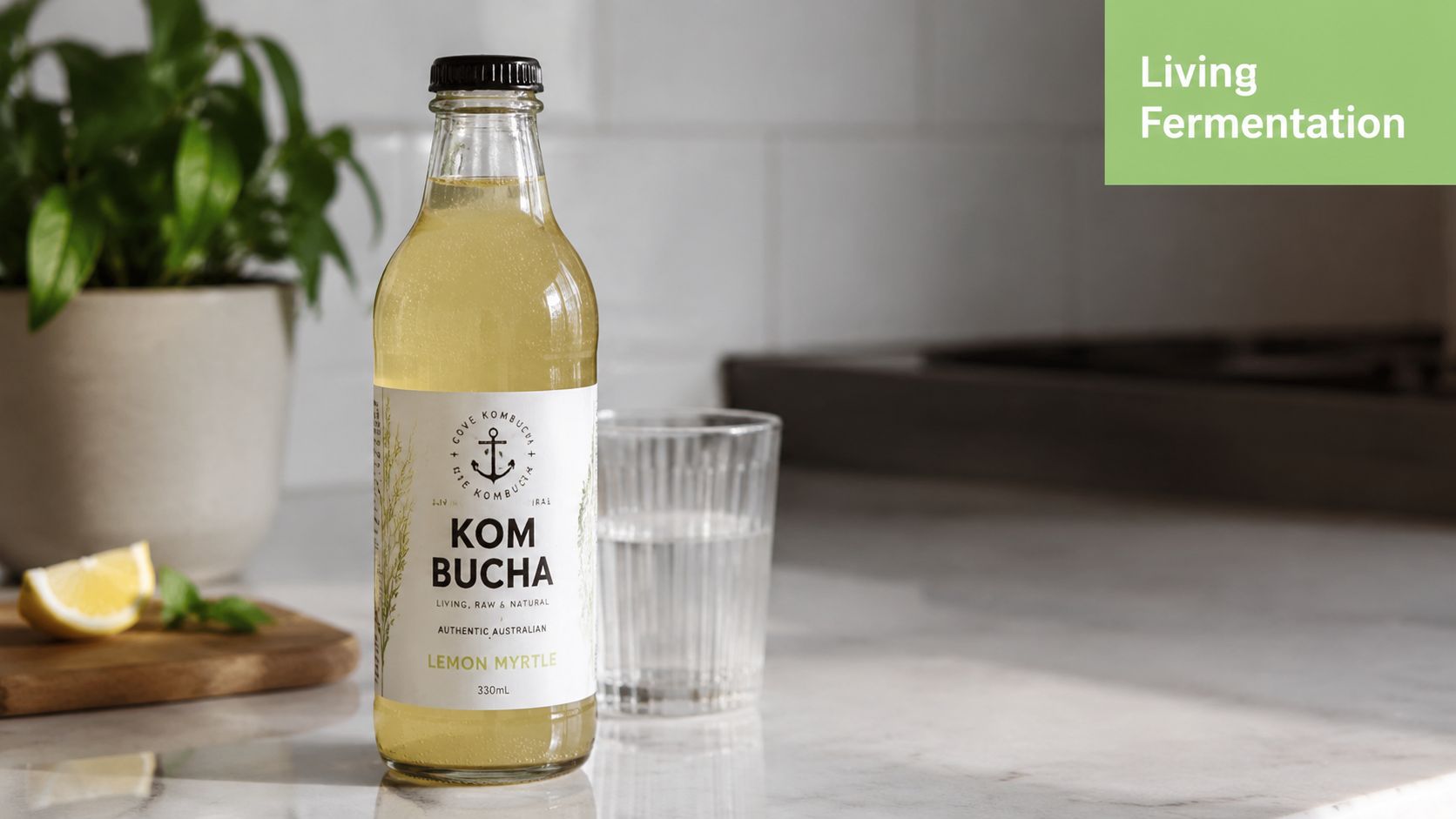
Not all kombucha is doing the same job
Some drinks borrow kombucha language but don't give you the same experience as a properly fermented product. They may lean heavily on sweetness, flavouring, or shelf-friendly positioning while giving the fermentation side far less importance than the front label suggests.
That's why it helps to ask a few direct questions:
- Was it properly fermented?
- Does the brand talk clearly about live cultures?
- Is it built as a low-sugar or sugar-free option?
- Is the producer transparent about where and how it's brewed?
What real fermentation adds
A proper kombucha process starts with brewed tea and a SCOBY, then time does the work. During fermentation, the drink develops its tang, complexity, and living character.
When a kombucha is made with care, people often describe it as cleaner, drier, and more grown-up than a soft drink. That matters in homes and cafés alike. It gives you a cold drink option that feels functional rather than sugary.
A kombucha shouldn't taste like soft drink wearing a wellness label.
Why local brewing matters
Australian shoppers often care where a product is made, especially in categories tied to freshness, trust, and food standards.
Pep Tea's organic kombucha is made in a HACCP-accredited brewery in the Hunter Valley, NSW, using organic green tea and live cultures to create a probiotic-rich, sugar-free beverage, according to Opera Foods' Pep Tea brand profile. That kind of production detail matters because it tells you the kombucha isn't just branded well. It's brewed with a clear standard behind it.
If you want a better feel for what separates properly fermented kombucha from shortcut versions, this guide to real raw organics kombucha is worth reading.
Easy ways to enjoy it
Kombucha doesn't need a complicated ritual.
Some people keep it simple and pour it over ice with lunch. Others use it as a non-alcoholic alternative in the evening. Cafés can also use it to build sharper, lighter drinks without relying on sugary mixers.
A few practical ideas:
Midday fridge pick-me-up
Serve cold on its own.Alcohol-free spritz substitute
Pour into a wine glass with ice and citrus.Café menu option
Pair it with clean food, brunch dishes, or wellness-focused menus.
Real kombucha earns its place when the label, flavour, and fermentation story all line up.
Creating Your Daily Green Tea Ritual
A good green tea habit doesn't need to look polished or complicated. It just needs to fit your real day.
Build around moments, not rules
If mornings are rushed, keep tea bags or ready-to-drink kombucha where you'll reach for them. If you like a slower start, use loose leaf or whisked matcha and let the preparation become part of the ritual.
A simple routine might look like this:
Morning focus
Make a matcha with hot water, or turn it into an iced latte if coffee feels too heavy.Midday reset
Brew loose-leaf green tea for a cleaner lunch drink.Afternoon swap
Reach for kombucha instead of a sugary soft drink.
Keep one easy recipe in rotation
If you're new to matcha, start with a basic latte.
Sift your matcha into a bowl or mug, add a small splash of hot water, whisk until smooth, then top with warm or iced milk. Once that feels easy, use culinary matcha in smoothies, bliss balls, yoghurt, or baking. It's one of the simplest ways to make green tea part of your kitchen rather than just your mug.
Make quality the habit
The most useful thing you can do is stay curious about what you're buying. Read the label. Check the certification. Notice the origin. Match the product type to the way you live.
That's the lesson behind sorting through Green Tea Australia brands. Buy with a bit more literacy and a bit less guesswork, and the whole category becomes more enjoyable.
If you'd like to put that knowledge into practice, explore Pep Tea for premium organic matcha and Australian-brewed sugar-free kombucha. It's a simple place to start if you want certified quality, clean flavour, and a greener daily ritual that feels easy to keep.
The Real Organic Tea Benefits: A Complete Australian Guide
You're probably here because tea has become more than just a hot drink. It's your morning reset, your afternoon swap for another coffee, or the one thing that helps you slow down for five minutes between work, family, training, and everything else life throws at you.
That's where the conversation around organic tea benefits gets interesting. For many Australians, organic starts as a safety question. Fewer chemicals. Cleaner farming. Better peace of mind. But once you dig deeper, organic tea isn't only about what's missing. It's also about what stays intact in the leaf, in the brew, and in the flavour.
A well-grown organic tea can offer a cleaner cup, a more expressive taste, and a more functional daily ritual. That matters even more with high-performance teas like Japanese matcha and properly fermented kombucha, where quality shows up in every sip.
More Than a Buzzword The Real Meaning of Organic Tea
A lot of people start with tea because they want one of three things. Calm. Energy. Comfort. Sometimes all three at once.
You swap a sugary drink for green tea because you want something lighter. You try matcha because coffee feels too sharp. You reach for kombucha because your body wants something refreshing that doesn't feel heavy. Then the label catches your eye. Organic. It sounds good, but what does it really change?
Organic changes the whole experience
Organic tea isn't just conventional tea with nicer branding. It reflects a different growing philosophy. In practical terms, it means the tea is produced without the synthetic inputs many people are trying to avoid in the rest of their food and drink choices.
That matters because tea is an ingredient you often consume daily. If something is part of your routine every morning or every afternoon, the quality of that product matters more than it does with an occasional treat.
For readers who want to understand the farming side in plain English, it helps to look at organic tea farming practices in Australia.
Organic tea feels different because it asks a better question. Not just “does this taste nice?” but “what kind of cup am I inviting into my body every day?”
Why people notice the difference
Organic tea isn't first noticed in a lab report. It's noticed in the cup.
A vibrant matcha tastes cleaner and more rounded. A carefully brewed kombucha tastes alive, bright, and balanced rather than loud or syrupy. Even a simple loose-leaf green tea can feel fresher and more expressive when the leaf has been handled with care from the start.
Three organic tea benefits often stand out quickly:
- Cleaner everyday drinking because many health-conscious tea drinkers want to reduce routine exposure to synthetic agricultural chemicals.
- Better functional potential because the natural compounds in tea are the reason many people drink it for wellness in the first place.
- Richer flavour because quality farming and careful processing tend to reward your palate, not just your principles.
That's why organic isn't a restriction. It's a filter. It helps you choose tea that supports the way you want to feel.
Why Organic Certification Matters for Your Tea
The word “organic” gets thrown around so often that it can lose meaning. In tea, certification matters because it gives the word substance.
What certified organic actually signals
When tea is certified organic, it isn't just marketed as natural or clean. It's grown and handled according to standards that limit or prohibit a range of synthetic agricultural and processing inputs.
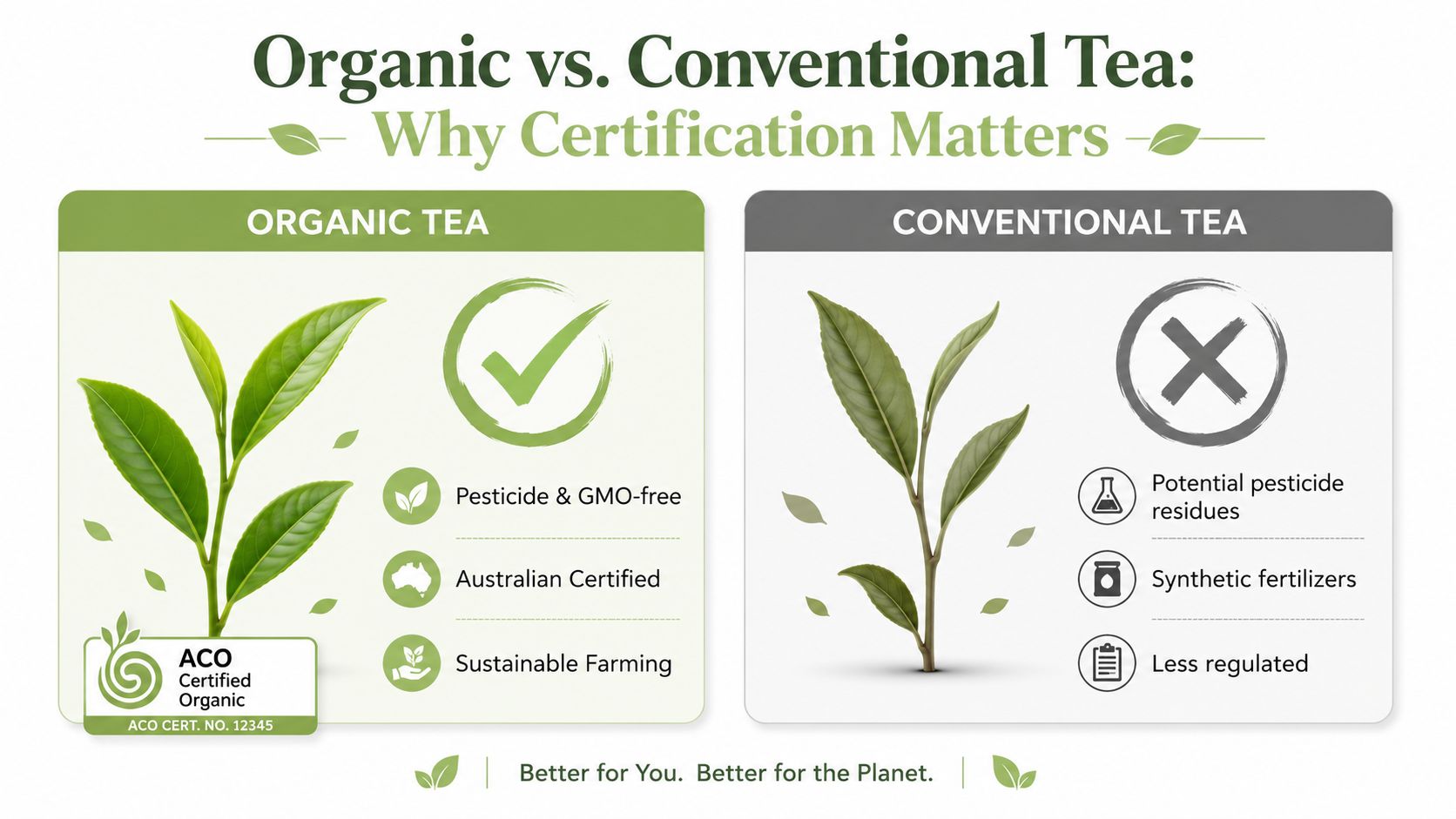
In Australia, that distinction matters. Organic tea is distinguished from conventional tea by its significantly lower levels of harmful chemical residues, as organic farming prohibits the use of synthetic pesticides, herbicides, chemical fertilizers, GMOs, preservatives, and fungicides, resulting in a safer product for consumers concerned about chemical exposure, as outlined in this explanation of organic vs conventional tea.
If you want a practical overview of what local certification means, this guide to organic tea certification in Australia is a useful place to start.
Why lower residue matters in a daily ritual
Tea often feels harmless because it's simple. Water, leaves, cup. But that simplicity is exactly why sourcing matters.
If you drink tea every day, you're not making a one-off choice. You're building a repeated habit. For many people, that's why organic tea benefits feel especially relevant here. A cleaner agricultural approach supports a cleaner daily routine.
Here's a simple comparison:
| Tea type | What the growing approach focuses on | What many drinkers value |
|---|---|---|
| Organic tea | Avoiding synthetic pesticides, herbicides, chemical fertilisers, GMOs, preservatives, and fungicides | A cleaner cup and confidence in how the tea was produced |
| Conventional tea | Standard agricultural methods that may include synthetic inputs | Wider availability, but with fewer assurances about residue levels |
Certification protects more than the absence of chemicals
The best way to think about organic certification is that it protects the integrity of the tea. It's not just about what's left out. It's also about what the plant is allowed to express.
That can shape:
- Leaf quality through gentler, more considered growing systems
- Flavour clarity because the cup isn't competing with a rougher profile
- Functional value because tea drinkers often choose green tea, matcha, and kombucha for their natural compounds, not just their taste
Practical rule: If you're drinking tea for wellness, don't treat sourcing as an afterthought. The benefit starts long before the kettle boils.
The Science-Backed Health Benefits of Organic Tea
Tea's reputation for wellness doesn't come out of nowhere. Its natural compounds, especially catechins and polyphenols, are where the primary interest lies, known for their antioxidant activity.
What antioxidants are doing in simple terms
Oxidative stress sounds technical, but the idea is straightforward. Your body deals with ongoing wear and tear from normal metabolism and from daily life. Antioxidants help counter some of that stress.
Tea naturally contains compounds that support this process. That's one reason it keeps showing up in discussions about long-term wellbeing, especially for people trying to make better everyday choices rather than chasing quick fixes.
A useful way to think about tea is this: it's a small habit with a cumulative effect. One cup won't transform your health overnight. But a good routine can support the bigger picture.
What the research on green tea shows
The strongest evidence in the material available here relates to green tea. According to Harvard's overview of tea and health, regular consumption of green tea is linked to a 14% reduced risk of stroke in individuals drinking 2–3 cups daily, and a 20% reduced risk for those consuming 4 or more cups, based on a 13-year cohort study of 82,369 Japanese men and women.
That matters because it gives the conversation some grounding. Tea isn't only associated with a pleasant ritual. It's also linked with meaningful health outcomes in large population studies.
The same source also describes broader links between tea intake and cardiovascular health, including observational findings around heart disease, stroke, and type 2 diabetes. That doesn't make tea a treatment, but it does support the idea that tea can be part of a smart, steady lifestyle pattern.
Why organic can strengthen the value of that habit
Many readers get confused because the research often focuses on tea itself, especially green tea. So where does “organic” fit in?
Organic doesn't create catechins and polyphenols from scratch. Tea naturally has them. What organic farming may do, based on the verified material available, is help preserve the tea's natural integrity by avoiding synthetic residues that many health-conscious consumers would rather not bring into a wellness routine.
That means the habit becomes more coherent. If you're drinking tea because you want something clean, supportive, and functional, organic aligns the farming method with the reason you're drinking it.
A simple way to use that in daily life:
- Choose tea you'll drink consistently. Daily habits matter more than occasional bursts of enthusiasm.
- Keep it unsweetened when possible. Let the leaf do the work.
- Treat tea as support, not magic. It works best alongside sleep, food, movement, and stress management.
Tea fits best in a wellness routine when it replaces something less helpful, not when it's expected to do everything on its own.
Focus and Energy The Organic Matcha Advantage
If green tea is a strong all-rounder, matcha is the concentrated version of that story. It's one of the clearest examples of why organic tea benefits can feel more noticeable in real life.
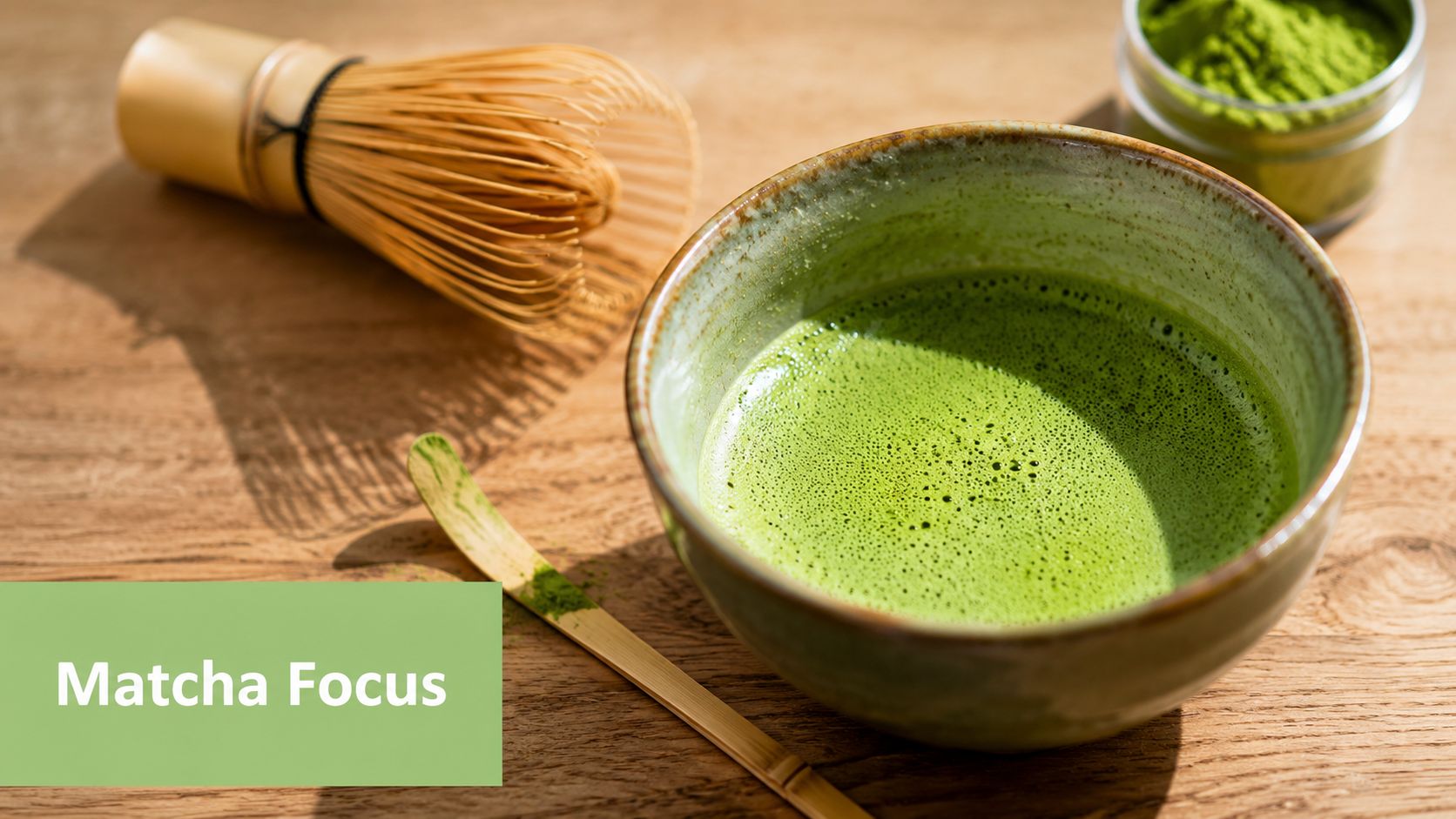
Why matcha feels different from regular green tea
With brewed green tea, you steep the leaves and drink the infusion. With matcha, you whisk the stone-ground leaf into water and consume the whole thing.
That changes the experience. It's one reason matcha drinkers often describe the effect as steadier and more immersive. You're not just tasting tea. You're taking in the finely milled leaf itself.
According to this review of EGCG and antioxidants in matcha, matcha contains approximately 100–200 mg of EGCG per cup, with EGCG comprising 50–60% of total catechins, whereas regular brewed green tea delivers only 30–400 µmol TE/g in antioxidant activity compared to matcha's 1,300–1,600 µmol TE/g.
That's a big reason matcha has become such a favourite for people chasing functional drinks with substance.
Calm focus, not chaotic stimulation
Many Australians come to matcha because coffee stops working for them the way it used to. The first cup is fine. The second pushes them into jitters, irritability, or an afternoon slump.
Matcha tends to appeal to a different goal. People want energy, but they also want clarity. They want alertness without feeling scattered. Readers often associate this with the combination of tea caffeine and naturally occurring L-theanine in matcha, which is why matcha has developed a reputation for calmer focus.
That doesn't mean every matcha delivers the same experience. Grade, freshness, origin, and processing all matter. A vibrant Japanese organic matcha is usually smoother, sweeter, and easier to drink than dull, stale powder that tastes flat or bitter.
What to look for in a quality matcha
A quick checklist helps:
- Colour should look bright and lively rather than khaki or brownish.
- Texture should feel fine and soft, not gritty.
- Taste should be fresh, rounded, and pleasantly vegetal, not harsh.
- Origin and production matter, especially if you care about both flavour and farming standards.
For a simple visual on preparation, this video is a good reference point:
When matcha makes the most sense
Matcha works especially well when you want a beverage that supports performance without feeling aggressive.
It suits:
| Moment | Why matcha fits |
|---|---|
| Morning start | It gives your day a more deliberate pace than rushing into another coffee |
| Pre-work focus | Many people like it before writing, planning, or study sessions |
| Afternoon reset | It can feel cleaner than reaching for sweets or another strong caffeine hit |
A good matcha doesn't just wake you up. It helps you stay with what you're doing.
Gut Health and Vitality The Power of Real Organic Kombucha
Kombucha can be one of the most misunderstood drinks in the wellness space. Some bottles are carefully fermented and alive with character. Others taste like soft drink wearing a health halo.
That difference matters if you care about organic tea benefits beyond buzzwords.
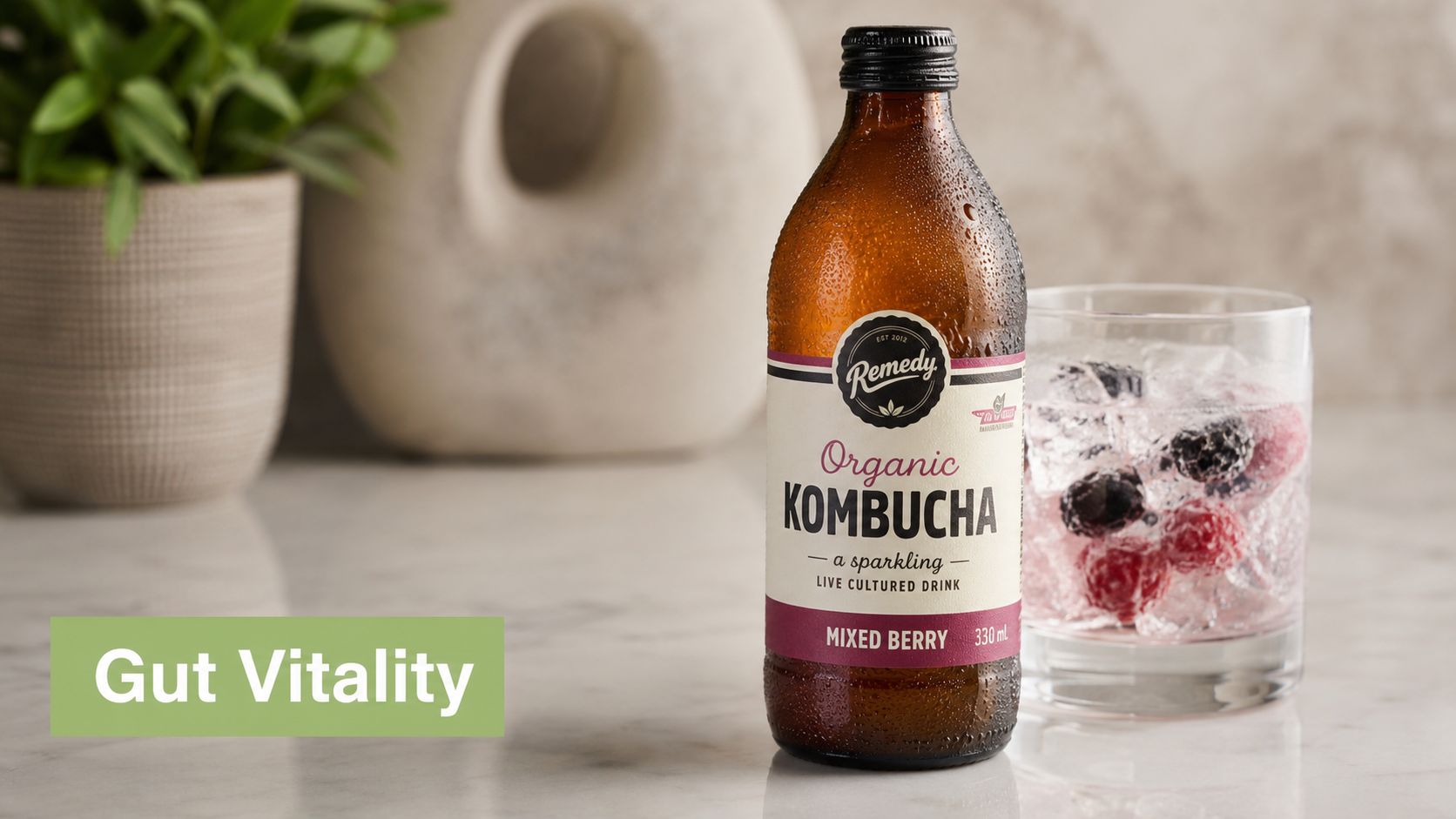
Real kombucha starts with real tea
Authentic kombucha begins with brewed tea, culture, and time. The process transforms the original sweetened tea into something tangy, layered, and much lighter than many people expect.
For readers who are trying to understand what separates proper fermentation from shortcuts, this guide to real raw organic kombucha explains the distinction well.
When kombucha is made with organic tea, the starting point already aligns with a cleaner product philosophy. That won't automatically make every bottle excellent, but it does set a stronger foundation.
Why fermentation quality matters
People often assume kombucha is healthy just because it's called kombucha. That's where things get messy.
Some products lean heavily on flavourings, sweetness, or marketing language. A properly fermented kombucha, by contrast, earns its place through the brewing process itself. If you're drinking it for gut-friendly potential and as an alternative to sugary beverages, the details matter.
A useful way to compare them:
- Properly fermented kombucha often tastes tart, refreshing, and balanced. It feels like a brewed beverage.
- Mass-market imitation styles can taste flat, overly sweet, or more like flavoured soda.
The best kombucha doesn't try to hide fermentation. It lets fermentation create the flavour.
Where kombucha fits in daily life
Kombucha is often less about one dramatic health promise and more about replacing less helpful habits.
It can work well for people who want:
- A low-sugar alternative to soft drinks or sweet mixers
- A grown-up non-alcoholic option that still feels interesting
- A refreshing fridge staple that supports a more mindful routine
This is also where Australian-made kombucha has a special appeal. Local brewing, especially when done carefully, gives drinkers a product that feels close to home and easier to trust. For cafés, it also creates a stronger menu story. Customers increasingly want non-alcoholic drinks that feel thoughtful rather than like an afterthought.
A note on flavour and function
Good kombucha should taste like something you'd want to drink even if health benefits were never mentioned. Ginger, lime and ginger, or mango styles can all work beautifully when they're built on a genuine fermented base rather than sugar and flavour alone.
That's the heart of the argument for real organic kombucha. If the tea is well sourced and the fermentation is done properly, the drink becomes more than a trend. It becomes a practical, enjoyable part of modern Australian drinking habits.
How to Use Organic Tea at Home and in Your Café
The easiest way to enjoy organic tea benefits is to make them routine. You don't need a complicated wellness plan. You need a few reliable ways to use tea that fit your day.
Simple ideas for home

Try these:
Ceremonial-style matcha
Sift your matcha into a bowl, add a little warm water, then whisk until smooth and frothy. Keep the flavour front and centre. No sweetener needed if the powder is good.Quick matcha latte
Make a smooth matcha base first, then add your preferred milk hot or cold. If you like a softer flavour, this is often the easiest daily entry point.Kombucha mocktail
Pour chilled kombucha over ice with fresh citrus or mint. It gives you the ritual of a mixed drink without the heaviness.
A practical reason to keep green tea in rotation
One reason many people stay committed to green tea and matcha is that the habit is easy to repeat. There's also a strong wellness argument for doing so. According to this article on tea as a health drink, organic green tea including matcha delivers a bioactive dose of EGCg that directly inhibits reactive oxygen species, with a 2020 Australian Curtin University study quantifying that consuming three cups daily reduces the likelihood of developing prostate and ovarian cancer by neutralizing free radicals that damage DNA.
That doesn't mean everyone needs three cups every day. It does show why regular use, rather than occasional novelty, is where tea becomes meaningful.
Smart menu ideas for cafés
For cafés and hospitality venues, organic tea can do more than fill a menu gap. It can shape a more modern drinks offer.
Consider adding:
| Menu idea | Why customers respond |
|---|---|
| Straight matcha | It suits customers who want a clean, premium hot drink |
| Iced matcha latte | It appeals to regular café traffic looking for a coffee alternative |
| Kombucha by the bottle or glass | It gives non-alcoholic drinkers something with personality |
| Seasonal mocktails using kombucha | It helps venues build a wellness-friendly drinks list |
For home drinkers and cafés alike, the key is consistency. Keep the ingredients clean. Keep the preparation simple. Let the tea do the heavy lifting.
Your Organic Tea Questions Answered
Is organic tea automatically safer in every way?
It's safer in one important sense. Organic certification helps reduce exposure to synthetic agricultural chemicals. But it doesn't answer every sourcing question.
According to this explanation of what to look for when buying organic tea wholesale, while organic certification ensures tea avoids pesticides, it doesn't automatically screen for soil-derived heavy metals, and no recent 2024–2025 Australian report compares heavy metal levels in imported organic versus conventional matcha. If you drink matcha daily, it's reasonable to care about origin, supplier transparency, and testing standards.
Is matcha stronger than regular green tea?
Functionally, yes, many people experience it that way. You're consuming the whole powdered leaf, so the experience is more concentrated than a standard brewed green tea. That's part of why matcha often feels more substantial and more sustaining.
Can I drink organic tea every day?
For most adults, tea works best as a daily habit rather than an occasional health kick. The main questions are your caffeine sensitivity, the type of tea you choose, and whether it fits the rest of your routine.
What about pregnancy or medication interactions?
If you're pregnant, breastfeeding, managing a health condition, or taking medication, it's smart to check with your doctor before making tea, matcha, or kombucha a bigger part of your routine. Tea can be wonderfully supportive, but personal advice matters.
Is organic kombucha always low in sugar?
Not always. “Organic” and “low sugar” aren't the same thing. Read the label, pay attention to the fermentation style, and choose a product that aligns with why you're drinking it.
If you're ready to turn all of this into an everyday ritual, explore Pep Tea for premium organic matcha and Australian-brewed sugar-free organic kombucha. It's a simple way to bring cleaner flavour, functional benefits, and a more enjoyable wellness routine into your day.
Best Organic Green Tea Loose Leaf: An Australian Guide

You're probably here because you've stood in front of a shelf, or scrolled through page after page online, and seen every tea described as premium, pure, clean, ceremonial, artisan, or wellness-focused. It sounds impressive until you realise none of those words tells you whether the tea will taste good, brew well, or feel worth the money.
That's where the search for the best organic green tea loose leaf often gets stuck. The assumption is that the answer is a single brand name. In practice, the better answer is a skill set. Once you know what to look for, you stop buying on buzzwords and start buying with confidence.
In Australia, that matters even more because tea buyers are seeing more specialty options, more imported styles, and more health-led marketing than ever before. The good news is that quality leaves clues. You can spot them in the leaf itself, in the label, in the way the tea is stored, and in how it behaves in the cup.
Your Guide to Choosing Quality Green Tea
A friend once asked me why one loose-leaf green tea felt refined and smooth, while another tasted flat and sharp even though both were sold as organic. The answer had nothing to do with flashy packaging. It came down to what was inside the pouch, and whether the seller gave enough real information to support the claims.
Australian tea buying has moved well beyond basic supermarket tea bags. In Your Guide to Choosing Quality Green Tea, the key shift is understanding that loose-leaf sits in a more specialist part of the market, where buyers are encouraged to look for whole leaves, freshness, and less processing rather than treating tea like a generic pantry item. That pattern is reflected in guidance around premium and specialty tea, which treats loose-leaf green tea as a craft beverage rather than a commodity, with whole leaves valued because they preserve more aroma and are generally less processed (retailer guidance on organic loose-leaf green tea).
Stop chasing the word best
The word best causes most of the confusion.
For one person, the best organic green tea loose leaf is a soft, sweet Japanese-style green for a quiet morning cup. For another, it's a sturdier tea that can hold up in an iced drink or a café batch brew. If you don't separate quality from personal preference, every purchase feels like guesswork.
What to focus on first
Start with three practical questions:
- Is it verifiable? Organic claims should be supported by proper certification, not just earthy packaging.
- Can you assess the leaf? Whole, intact leaves usually tell you more than the marketing on the front.
- Does it suit your use? A tea for slow sipping is not always the same tea you'd use for a chilled wellness drink.
The smartest tea buyers don't memorise brand rankings. They learn to read the leaf, the label, and the brewing behaviour.
That's the ultimate goal. Not to copy someone else's favourites, but to become the person who can tell quality for yourself.
What Really Defines Quality in Organic Green Tea
When people talk about quality in green tea, they often jump straight to flavour. Flavour matters, of course, but it's only the final result. The deeper story starts with the leaf itself, how intact it is, how it was processed, and whether it matches the way you plan to use it.
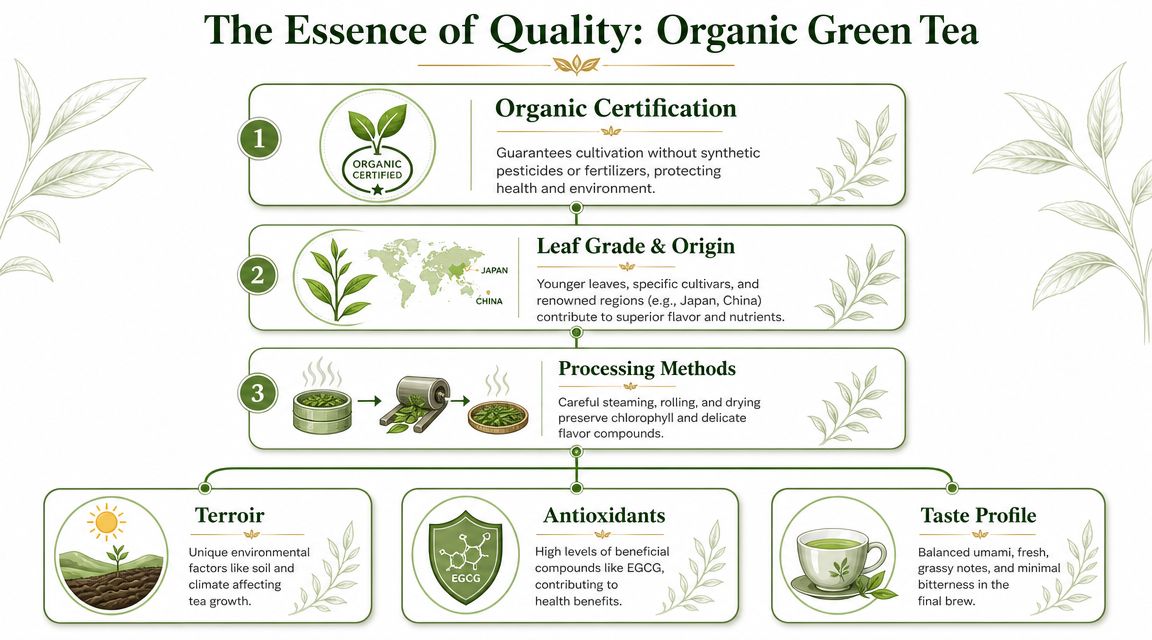
Why whole leaves matter
Green tea isn't just dried plant material. Its quality is tied to delicate compounds that can be lost or damaged when the leaf is heavily broken, handled roughly, or poorly stored.
A strong technical benchmark comes from research showing that green tea leaves contain polyphenols at about 25 to 35% of dry weight, with catechins making up roughly 70% of total polyphenols, and EGCG standing out as the most prominent catechin behind many of green tea's antioxidant effects. The same research also notes that loose-leaf tea with larger, intact leaves generally preserves more of these compounds than more heavily broken material (green tea polyphenol and catechin data).
That sounds scientific, but the buying takeaway is simple. If the leaf has been reduced to tiny fragments, you're often looking at a tea that has lost some of the elegance people expect from a good green tea.
Quality is not one thing
A lot of buyers assume quality can be ranked on a single ladder. It can't. Good green tea is really a combination of factors working together.
Here's a simple way to look at it:
| Quality signal | What it tells you | Why it matters |
|---|---|---|
| Leaf integrity | Whether the leaves are whole or broken | Whole leaves usually brew with more nuance |
| Processing care | How gently the tea was handled after harvest | Better handling protects flavour and freshness |
| Intended use | Whether the tea suits your drinking style | A tea can be high quality and still wrong for your purpose |
Many guides often fall short. They tell you what's expensive, but not what's suitable.
The best tea depends on the job
A lighter, sweeter green tea often suits a calm-focus cup, especially when you want softness and delicacy. A more full-bodied loose-leaf style can make more sense for iced tea, blending, or higher-volume brewing where you need the flavour to hold its shape.
That difference becomes much clearer when you compare classic loose-leaf green tea to powdered tea styles. If you want a clean explanation of how leaf tea and matcha behave differently, Pep Tea's guide on the difference between matcha, green tea and green tea forms is a useful reference.
Practical rule: Don't ask only “Is this a good tea?” Ask “Is this a good tea for the way I drink tea?”
That small shift saves people from buying lovely leaves for the wrong purpose, then blaming the tea when the result disappoints.
Decoding Labels and Certifications in Australia
Marketing myths need a firm reality check. Plenty of tea packs use natural-looking colours, minimalist design, and words like clean or pure. None of that proves the tea is organically certified, traceable, or handled with proper food-safety discipline.
What organic should mean in Australia
In the Australian market, the strongest starting point for organic credibility is the Australian Organic Standard (AS 6000:2015). It functions as the main benchmark for products sold as organic, and equivalency arrangements with markets such as Japan and the EU make it a useful proxy for traceability and clean-label assurance for both consumers and cafés.
If you're buying the best organic green tea loose leaf, this matters because certification gives you something firmer than brand storytelling. It tells you the product is being assessed against a recognised organic standard, not just wrapped in wellness language.
What the label does not tell you
This is the part many shoppers miss. Organic is not the same as fully explained food safety.
A tea can be organic and still leave important buyer questions unanswered if the brand says nothing about testing, sourcing transparency, or packaging protection. That's why careful shoppers increasingly ask for more than a certification badge.
Look for signs that a brand can clearly explain:
- Origin traceability such as where the tea was grown and packed
- Batch testing transparency around residues or contaminants
- Protective packaging that helps reduce exposure to moisture, odours, and handling issues
- Storage guidance so the tea stays stable after purchase
How origin shapes flavour
Origin doesn't just sound romantic. It helps you predict taste.
Japanese green teas are often associated with fresh, grassy, marine, or umami-leaning notes. Many Chinese green teas can lean nuttier, toastier, or earthier depending on style and processing. Neither is automatically better. They serve different palates.
If you know you dislike sharp grassy notes, buying blindly from a style known for that profile won't make much sense. If you love a clean savoury finish, that same profile might be exactly what you want.
A better label-reading checklist
When you pick up a tea, run through this short filter:
Check the organic claim
Look for actual certification language, not just nature-inspired branding.Check the origin detail
Country of origin should be clear enough to help you understand likely flavour.Check whether the brand explains quality control
If testing and traceability are never mentioned, ask.Check the packaging format
Good tea deserves packaging that protects it from light, air, and contamination.
Organic status is a strong foundation. It isn't the whole story.
That's the myth worth dropping. The best tea brands don't ask you to trust the label alone. They give you enough information to judge the tea properly.
A Sensory Guide to Judging Loose Leaf Tea
The fastest way to get better at buying tea is to use your senses before you ever boil water. A good dry-leaf check can save you from dull, stale, or badly handled tea, even when the front label looks convincing.
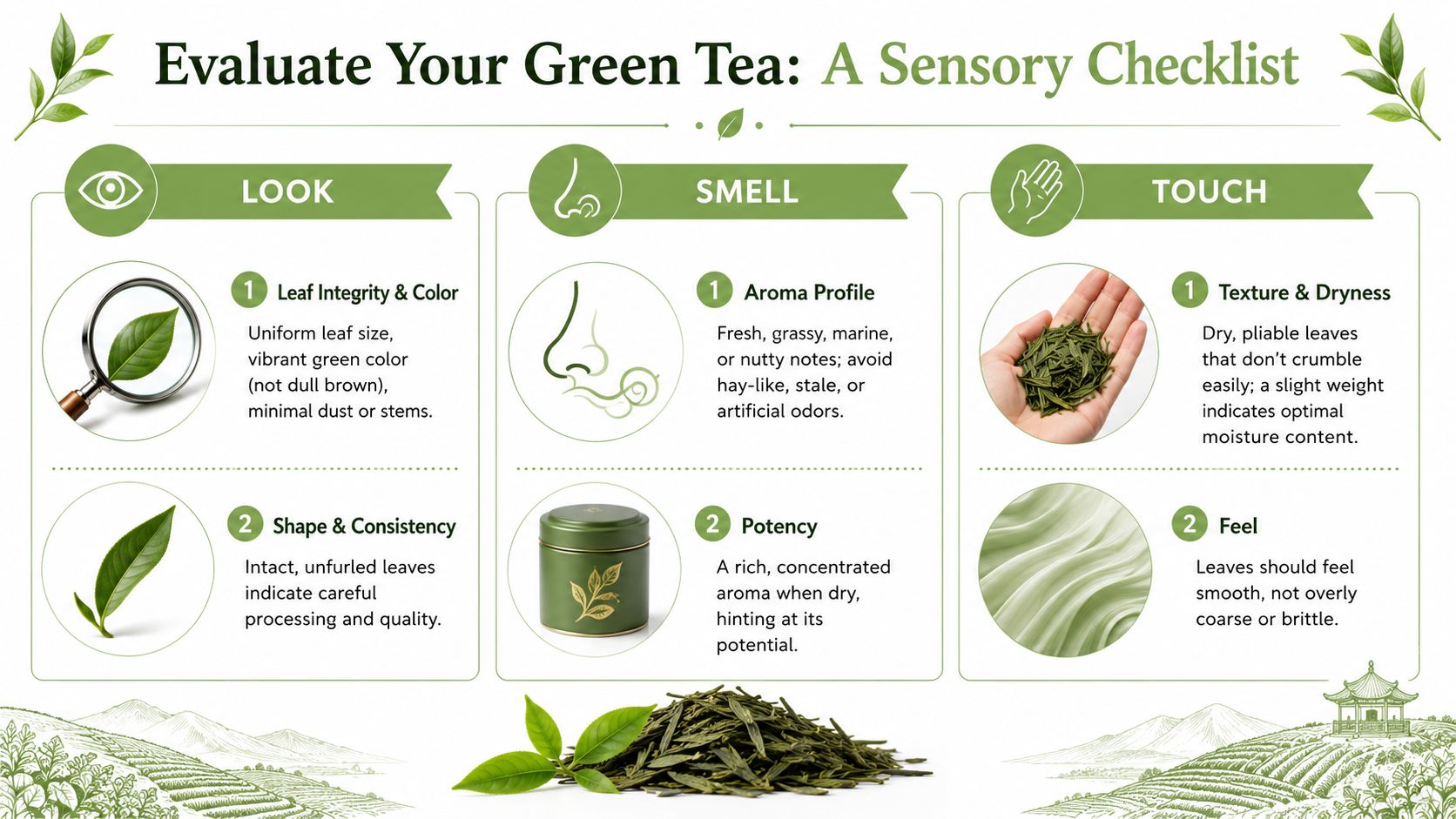
Look first
Dry leaf appearance tells you a lot.
A quality loose-leaf green tea usually looks intentional. The leaves should have a reasonably consistent size and shape for the style. You don't want a bag full of dust, excessive stem, or random crushed fragments unless the style itself naturally runs smaller.
Pay attention to colour too. Green tea should look alive, not tired. Dull brownish tones can point to age, poor storage, or rough handling.
Smell second
Open the pouch or tin and breathe in gently. You're looking for a fresh aroma that fits the style.
That might mean grassy, sweet, marine, nutty, or softly vegetal. What you don't want is a stale hay-like smell, no aroma at all, or anything that feels artificially perfumed.
Aroma isn't just a luxury detail. It often tells you whether the tea still has its freshness.
Touch third
If you can handle the leaf, touch helps confirm what your eyes already suspected.
The leaves should feel dry but not frail. You don't want them disintegrating the second you rub them between your fingers. Well-kept tea feels light and structured, not damp, limp, or oddly brittle from mishandling.
Match the tea to the moment
Many buying guides act as if one green tea can do every job. That's rarely true. The more useful approach is to choose by use case.
Guidance around green tea styles suggests a better match-up: lighter, sweeter shaded leaves suit calm-focus drinks, while more full-bodied loose-leaf styles suit batch brewing, café service, or iced tea preparation (practical style matching for green tea use cases).
That means your sensory check should include a practical question. Does this leaf look delicate and refined, or sturdy and adaptable?
A simple shop test
Use this mini checklist:
- Leaf looks clean with minimal dust and obvious breakage
- Aroma smells fresh and style-appropriate
- Colour looks lively rather than faded
- Texture feels intact not crumbly
- Leaf style matches use such as hot sipping, iced tea, or café brewing
If the dry leaf already looks tired, the brewed cup usually won't rescue it.
That one rule will stop a surprising number of disappointing purchases.
Brewing for Flavour Not Bitterness
A lot of people think they dislike green tea when they've really just been brewing it too hot and too long. Good leaves can turn harsh very quickly if you treat them like black tea.
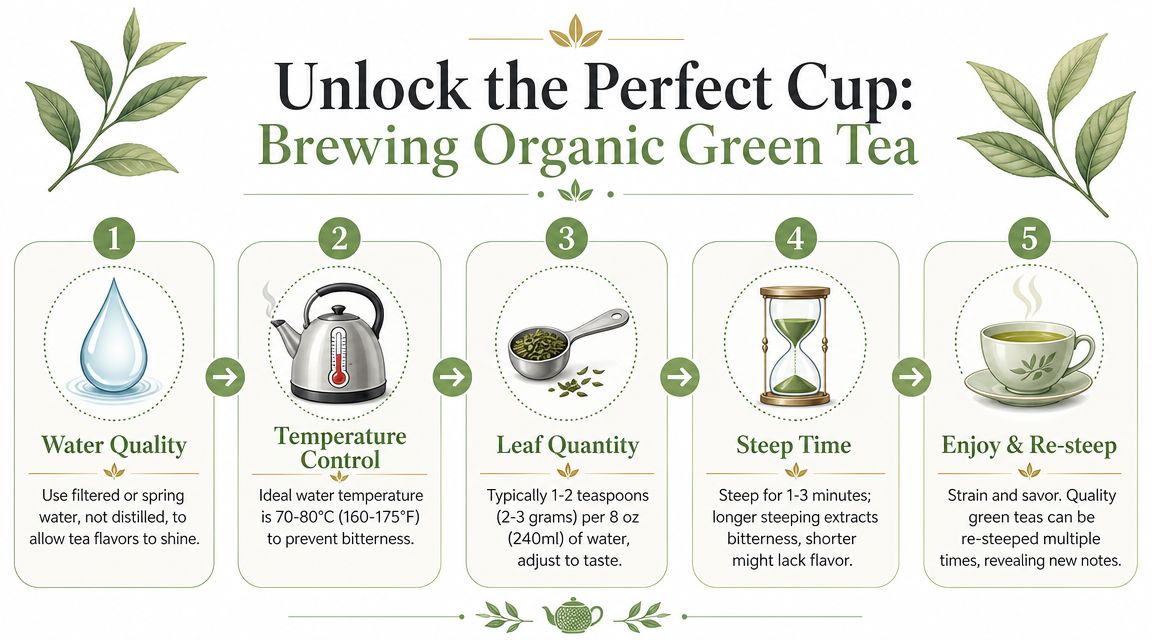
Green tea needs a gentler hand, much like cooking something delicate. You wouldn't blast a fine piece of fish the way you'd boil potatoes. Tea works the same way. Too much heat pulls out bitterness before the pleasant flavours have room to shine.
Start cooler and shorter
Premium brewing guidance in Australia commonly points to cooler water and short steeps of 1 to 2 minutes for delicate green teas, specifically to avoid bitterness and bring out better flavour (Australian brewing guidance for loose-leaf green tea).
That's the easiest habit shift to make if your cups keep turning astringent.
If you want more control over that process, a kettle with adjustable settings helps a lot. Something like an electric tea kettle with temperature control makes it easier to repeat the same result instead of guessing every time.
A practical brewing method
Try this simple starting routine:
Warm your teapot or cup first
A quick rinse with warm water helps stabilise the brew.Use cooler water
Boiling water is usually too aggressive for delicate green tea.Keep the first steep short
Start around the lower end and adjust from there.Taste and refine
If the cup seems thin, add a little time next round. If it bites, reduce heat or steeping time.
Here's a visual guide you can use as a quick refresher while brewing:
Common mistakes that ruin good tea
| Mistake | What happens |
|---|---|
| Water too hot | The cup turns bitter and rough |
| Steeping too long | The finish gets astringent |
| Too much leaf without adjustment | The tea can feel heavy or sharp |
| Ignoring the tea style | Delicate teas get overpowered |
Green tea usually needs restraint, not force.
Once you get that, the whole category changes. Suddenly the sweetness, softness, and layered aroma that people talk about emerge in your cup.
Storing and Using Your Tea Beyond the Cup
You can buy beautiful tea and still ruin it at home with poor storage. Green tea is especially sensitive to light, air, moisture, heat, and strong smells from nearby foods.
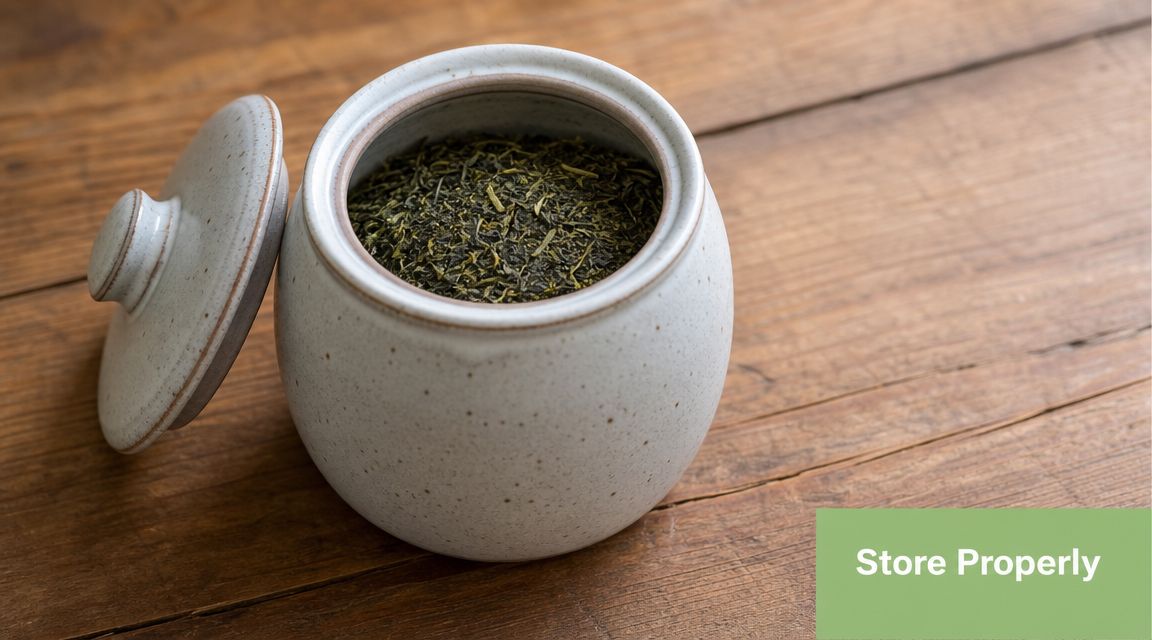
How to store it properly
Keep your tea in an airtight, opaque container and place it somewhere cool, dry, and away from direct sun. Don't store it beside spices, coffee, or anything strongly aromatic. Tea absorbs odours more easily than many people realise.
A simple metal tin or well-sealed pouch stored in a cupboard usually does the job well. The goal is to protect the leaf from the things that flatten its aroma and make the cup taste dull before its time.
Ways to use it outside a teapot
Loose-leaf green tea is more versatile than people think. Once you know how it tastes on its own, you can start using it in simple food and drink ideas.
Here are a few easy options:
- Cold infusions for a gentler iced tea with less harshness
- Tea syrups for desserts or alcohol-free café drinks
- Smoothie additions where brewed tea replaces part of the liquid
- Citrus pairings for a brighter, fresher profile
If you like that citrus direction, an option such as organic green tea with lemon shows how green tea can move from a straight brew into a more everyday wellness drink style.
Think of tea as an ingredient
Many home drinkers level up when they stop treating tea as a single-use beverage and start treating it as a pantry ingredient.
Brewed green tea can work in iced drinks, light jellies, poached fruit liquids, and simple mocktail bases. Delicate teas shine in cleaner recipes. More full-bodied loose-leaf styles tend to cope better with sweeteners, citrus, and chilled serving.
Your Journey to the Perfect Cup
Finding the best organic green tea loose leaf isn't about memorising a top-ten list. It's about knowing how to read quality with your own eyes, nose, hands, and palate.
The strongest buyers look for real organic credibility, clear traceability, and leaves that show care before they ever hit the cup. They don't confuse fancy wording with proof. They don't assume expensive means suitable. And they know that brewing can either reveal quality or bury it.
That's good news, because it means you don't need to be a tea snob to buy well. You just need a few reliable habits. Check the certification. Look at the leaf. Trust your senses. Brew gently. Store it properly. Match the style to the way you drink tea.
Once you start doing that, tea shopping gets much less confusing and much more enjoyable. You stop hoping for a good cup and start creating one on purpose.
If you'd like a practical place to continue, Pep Tea offers an Australian starting point for people who care about organic tea, clean flavour, and straightforward education around matcha, green tea, and functional drinks.
7 Healthy Green Tea Drinks for 2026

Looking for a healthy drink that tastes good and fits real life in Australia? That's where most advice falls short. People hear “green tea” and think of one plain hot cup, when the better question is which format gives you the benefits you want without piling on sugar, syrup, or fluff.
Healthy green tea drinks now cover a much wider range than traditional brewed tea. You've got whisked matcha for calm energy, unsweetened bottled green tea for grab-and-go convenience, and kombucha for a fizzy option that can fit a low-sugar routine. In Australia, tea is already part of everyday life. The CSIRO and ABS National Nutrition and Physical Activity Survey found tea was one of the most commonly consumed non-alcoholic beverages, with about 42% of adults drinking tea on the survey day, which helps explain why green tea-based drinks slot so naturally into daily habits (Harvard Nutrition Source tea overview).
This guide gets straight to the drinks and ingredients worth knowing. Some are ready to drink. Some are pantry staples that let you make better café-style drinks at home. All are useful if you're trying to choose healthy green tea drinks with a more practical, low-sugar lens.
1. Pep Tea

Want one Australian brand that helps you cover both sides of the green tea habit? Pep Tea is a useful place to start because it spans two very different needs. It offers premium organic Japanese matcha for home preparation and Australian-brewed sugar-free organic kombucha for fridge-ready convenience.
That split matters. A lot of shoppers lump all green tea drinks together, then wonder why one feels like a morning ritual and another works better as a cold afternoon pick-me-up. Matcha and kombucha come from green tea, but they play different roles in real life.
Pep Tea's matcha suits the part of your routine where you want focus, flavour, and a bit of intention. You whisk it with water, blend it into a smoothie, or turn it into an iced latte at home. Its kombucha suits the moments when you want something already made, lightly tangy, and easy to grab from the fridge or pack into an esky.
Why it stands out
The brand is strongest when you look at it through a practical health lens. Its matcha is stone-ground and organic, which matters because matcha gives you the whole tea leaf in powdered form rather than a brewed infusion alone. That is part of why people interested in antioxidants, calm focus, and steadier energy often start with matcha. If you are comparing formats for green tea drinks that may support weight goals, matcha is often the ingredient-style option, while kombucha is the ready-to-drink option.
Its kombucha range fills a different gap. Pep Tea brews raw, living kombucha in NSW with organic green tea and live cultures, and the sugar-free approach makes it easier to keep your drink choice aligned with a low-sugar routine. That is useful if you like the idea of kombucha but do not want something that tastes like soft drink wearing a health halo.
A simple way to choose between the two is this:
Practical rule: Pick matcha when you want a warm or iced green tea ritual. Pick kombucha when you want cold refreshment with fizz and no prep.
A few strengths and trade-offs are worth knowing before you buy:
- Best for versatility: The matcha can be whisked traditionally, added to smoothies, used in lattes, or mixed into baking.
- Best for low-sugar routines: The sugar-free kombucha gives you a fizzy option without pushing you back toward sweet drinks.
- Best for beginners: The brand's education and recipe content helps new matcha drinkers learn how to use the product well.
- Possible drawback: Public pricing and full product range details are not always the first thing you see, so cafés or wholesale buyers may need to enquire directly.
- Possible drawback: Matcha is more concentrated than standard brewed green tea, so caffeine-sensitive drinkers may do better with smaller serves.
When to choose it
Pep Tea makes the most sense if you do not want to choose between ingredient quality and convenience. That is the Australian angle here. Some people want a pantry staple they can use for better homemade drinks. Others want a ready-made bottle or can that fits work, errands, beach days, or alcohol-free catch-ups. Pep Tea speaks to both.
It also fits a broader shift in the Australian tea market, where buyers increasingly look for low-sugar, functional drinks framed around routine use rather than old-fashioned tea ceremony language. This trend is reflected in the Statista tea market outlook.
For cafés and retailers, the lesson is fairly simple. Clear language such as sugar-free, organic, calm focus, and clean refreshment usually makes more sense to customers than vague wellness hype.
2. ITO EN Oi Ocha Unsweetened Green Tea (AU)

Sometimes the healthiest choice is the least complicated one. ITO EN Oi Ocha Unsweetened Green Tea is exactly that kind of drink. It's bottled brewed green tea with no sweetener profile to decode and no dessert-like flavouring trying to make it feel more indulgent than it is.
That makes it a handy benchmark. If you're ever unsure whether a green tea drink is healthy, compare it to an unsweetened bottled tea like this. It gives you the familiar brewed tea experience in a convenient format, which is ideal for work bags, lunch runs, or the car.
Who it suits best
This is a great pick for people who want healthy green tea drinks without turning the drink into a snack. It also suits anyone trying to understand whether they enjoy green tea itself, rather than milk, syrups, or fruit flavourings wrapped around it.
Harvard's health guidance is useful here. Green tea is most helpful when it replaces sugary beverages, not when it becomes a sweetened café-style drink. That's a practical lens worth keeping in mind if you're exploring the best green tea for weight loss, because “green tea” on a label doesn't automatically mean low sugar or a better everyday choice.
Unsweetened brewed green tea is often the cleanest baseline. Everything else should earn its place from there.
A few things to like:
- Simple ingredient profile: No added sweeteners means fewer surprises.
- Easy format: Good for people who won't reliably brew tea at home.
- Traditional flavour: Best for drinkers who want something crisp and tea-forward.
The main downside is also the point. It's plain. If you want flavoured drinks, creamy texture, or a functional twist like probiotics, this won't scratch that itch. It also mostly comes in PET bottles, which won't suit every shopper.
3. East Forged Nitro Cold-Brew Australian Green Tea & Pitaya

East Forged Nitro Cold-Brew Australian Green Tea & Pitaya feels more like a modern fridge-can drink than a traditional tea. That's the appeal. It uses Australian-grown green tea, cold-brewed and infused with nitrogen for a creamy, microfoam texture, but without tipping into a sugary energy-drink vibe.
If you like sparkling water, nitro coffee, or adult-style canned refreshers, this is one of the more interesting healthy green tea drinks on the Australian market. The pitaya note gives it a point of difference, but the product still reads as restrained rather than flashy.
Why the format matters
Cold brew changes the experience. Instead of the brisk edge you sometimes get from hot brewed green tea served cold later, nitro cold brew feels softer and smoother in the mouth. That can make green tea more approachable for people who think they don't like it.
This sort of product also lines up with a bigger shift in the category. Green tea demand has expanded through premium and fortified formats, while buyers increasingly look for healthier alternatives to sugary drinks. The broader category direction described in the Mordor Intelligence green tea market report helps explain why a product like this has room to stand out.
- Best feature: Nitro gives it a creamy texture without milk.
- Best use case: Great straight from the can, especially chilled.
- Best fit: Sugar-conscious drinkers who want convenience and novelty.
The trade-off is choice. It's a more niche product with a narrower flavour lane, so it won't be as easy to find as supermarket kombucha or classic bottled tea. Still, for people bored by standard RTD tea, this is a fun upgrade.
4. Remedy Drinks Organic Kombucha (AU)
Remedy Drinks Organic Kombucha is one of the easiest kombuchas to find around Australia. For many people, that accessibility matters more than perfection. If a drink is available at the local supermarket, servo fridge, or convenience stop, it has a much better chance of becoming part of a regular low-sugar swap.
Remedy brews with organic green and black tea and keeps live cultures in the finished drink. It's a kombucha first, not a straight green tea, so think of it as a fizzy functional alternative when you want something more lively than still tea.
A realistic kombucha pick
Kombucha often gets marketed as if all bottles are equally wholesome, and that's where people can get confused. The practical question isn't whether kombucha sounds healthy. It's whether the final product fits your own preferences around sweetness, ingredients, and everyday use.
Remedy is transparent about its tea base and fermentation approach, which is helpful. If you're comparing options in the broader world of healthy probiotic drinks, that transparency makes shopping easier, especially for consumers who want live cultures without the heavy sugar hit they associate with some chilled drinks.
A kombucha can be a smart low-sugar choice, but it still won't behave like plain brewed green tea. Treat it as its own category.
A few clear pros and cons:
- Big advantage: Widely available in major Australian retail channels.
- Big advantage: Organic credentials and kombucha-specific identity are easy to understand.
- Potential drawback: Some products use erythritol or stevia, and not everyone enjoys that taste.
- Potential drawback: Flavoured kombucha is more layered than plain tea, so purists may prefer a simpler green tea drink.
For people moving away from soft drink or alcohol, Remedy is a practical stepping stone.
5. Lo Bros Kombucha (AU)

Lo Bros Kombucha leans a little more into flavour variety, which makes it a good option for drinkers who want healthy green tea drinks that feel fun rather than austere. It uses an organic black and green tea base and then layers in fruit and botanicals across different SKUs.
That means the experience is less about tasting the tea clearly and more about choosing a flavour mood. For some people, that's a plus. It's easier to reach for a kombucha habitually if the drink feels satisfying and social.
Where it fits in a healthy routine
Lo Bros works well for the afternoon can slot. It's the sort of drink you might choose instead of a soft drink with lunch, instead of a mid-arvo snack run, or as a non-alcoholic option when everyone else opens something fizzy.
The strongest use case is variety. If plain bottled green tea feels too minimalist and matcha feels too involved, kombucha with broader flavour options can be the middle ground. You still get a tea-based beverage, but in a more playful package.
Here's the balanced take:
- Why people like it: The flavour range keeps things interesting.
- Why shoppers choose it: National supermarket availability makes repeat buying easy.
- What to watch: Some SKUs use erythritol or stevia, and ingredient lists vary.
- What it isn't: It isn't a pure brewed green tea experience.
Lo Bros is best for people who care about low sugar but still want a drink that feels more like a treat than a ritual.
6. Matcha Maiden Organic Matcha Powder (AU)

If you want to make healthy green tea drinks at home without going deep into specialist tea culture, Matcha Maiden Organic Matcha Powder is a friendly entry point. It's an Australian brand offering organic Japanese matcha in several sizes, so it suits both the curious beginner and the regular latte maker.
The appeal here is usability. Some matcha brands feel intimidating if you're not already whisking daily. Matcha Maiden is more accessible. You can use it for straight matcha, iced drinks, smoothies, and recipe work without feeling like you're “wasting” a precious tin.
Good for everyday experimenting
This is the kind of matcha that makes sense if you're still figuring out how you like your drink. Maybe you want a classic bowl one day, an iced oat matcha the next, and a smoothie the day after that. Flexible powder is what lets healthy green tea drinks become practical rather than aspirational.
If you're new to prep, Pep Tea's guide to making matcha tea is worth a read because the technique matters. A quick sift, the right water temperature, and proper whisking can change the drink from flat and clumpy to smooth and bright.
Good matcha habits matter more than fancy gear. Start with fresh powder, don't scorch it with boiling water, and whisk properly.
A few honest notes:
- Best for value-minded drinkers: Multiple pack sizes make daily use easier.
- Best for recipes: Suitable for lattes, smoothies, and baked goods.
- Possible limitation: If you're chasing a highly refined ceremonial experience, specialist tea houses may offer a more nuanced cup.
For a lot of households and cafés, though, this level of accessibility is exactly the point.
7. Love Tea Organic Green Teas and Matcha (AU)

Love Tea organic green teas and matcha are a good reminder that healthy green tea drinks don't always need to come chilled, canned, or café-styled. Sometimes the best option is a reliable organic tea range you can brew at home or serve in a venue with confidence.
Love Tea offers variety across green tea styles, including Australian Sencha, jasmine green tea, Moroccan mint, and matcha. That's useful for people who don't want to commit to one format only. You can keep a straightforward daily green tea in the cupboard and still have a matcha tin for more focused mornings.
Best for tea drinkers who want range
This range suits households and hospitality venues that want choice. A café can offer a cleaner, classic brewed green tea alongside milk-based matcha drinks. A home drinker can switch between plain green tea on one day and a more involved whisked drink on another.
That flexibility matters because not all evidence around “functional” green tea products is equally strong. Consumer coverage often oversimplifies the category, but the most established evidence still points most clearly to traditional brewed tea, with benefits described more modestly than many marketing headlines suggest. That nuance is reflected in News-Medical's discussion of why green tea shows the strongest health benefits.
For practical buying, that means:
- Choose brewed tea if you want the most straightforward everyday option.
- Choose matcha if you value ritual, texture, and a more concentrated tea experience.
- Choose by use case rather than hype.
Love Tea is especially handy for people who want to stay close to traditional tea drinking while still having matcha in the mix.
7-Brand Healthy Green Tea Drinks Comparison
| Product | 🔄 Implementation Complexity | 💡 Resource Requirements | ⭐ Expected Outcomes | 📊 Ideal Use Cases | ⚡ Key Advantages |
|---|---|---|---|---|---|
| Pep Tea | High, HACCP kombucha brewing + stone‑ground matcha processing | Certified organic tea supply, brewery/SCOBY management, education content, wholesale channels | High antioxidant matcha (EGCg, L‑Theanine); probiotic, sugar‑free kombucha | Home baristas, cafés, specialty retailers, wellness professionals | Certified organic + HACCP production; dual matcha & kombucha range; strong educational support |
| ITO EN Oi Ocha Unsweetened (AU) | Low–Moderate, large‑scale brewing and bottling | Consistent tea sourcing, bottling/PET supply, national distribution | Authentic unsweetened green tea flavour; 0 sugar | Everyday RTD consumers, grocery retail, on‑the‑go refreshment | Reliable, authentic taste; wide retail availability |
| East Forged Nitro Cold‑Brew | Moderate, cold‑brew + nitrogen infusion and canning | Local green tea, nitro infusion equipment, small‑batch canning | Creamy nitro texture, very low sugar, low caffeine | Sugar‑conscious RTD shoppers, niche cafés, DTC customers | Distinctive nitro mouthfeel; clean label |
| Remedy Drinks – Organic Kombucha | High, long fermentation with live culture retention | Organic tea bases, fermentation facilities, large‑scale distribution | Live cultures with minimal residual sugar; finished "no sugar" claims | Mass retail buyers, mainstream probiotic seekers | Market leader with nationwide retail presence; transparent process |
| Lo Bros Kombucha | High, fermented and flavoured kombucha production | Organic tea, flavourings, production to supermarket scale | Varied flavours with low sugar and live cultures | Supermarket shoppers, flavored kombucha consumers | Broad flavour range; strong supermarket availability |
| Matcha Maiden – Organic Matcha Powder | Low–Moderate, sourcing, grinding and packaging | Japanese Uji/Kyoto matcha supply, packing lines, wholesale/retail channels | Organic matcha suitable for daily lattes/recipes; consistent quality for price | Home and café matcha preparation, bulk buyers | Clear pricing, bundle deals, multiple pack sizes for daily use |
| Love Tea – Organic Green Teas & Matcha | Low, hand‑packing and multiple formats | Certified organic tea sourcing, local packing in Victoria, retail networks | Wide variety of organic green teas and matcha; reliable supply | Brew‑at‑home users, hospitality menus, cafés | Diverse formats (loose, bags, canisters); local packing and competitive pricing |
Choosing Your Perfect Green Tea Ritual
The best healthy green tea drinks aren't all trying to do the same job. That's the main thing to remember. A bottled unsweetened green tea is built for convenience. A matcha powder is built for ritual, flexibility, and a more concentrated tea experience. A kombucha is built for refreshment, fizz, and an easy low-sugar swap when you want something more social or snack-like.
That difference matters even more in Australia, where the sugar question is hard to ignore. The Australian Bureau of Statistics reports that 31.7% of Australians lived with obesity in 2022, and the National Diabetes Services Scheme notes that over 1.5 million Australians are registered with diabetes, which is a useful reminder to look closely at what's in a green-tea-based drink before assuming it's automatically healthy (Harvard green tea healthy habit article). A matcha latte with sweetener, a bottled green tea drink, and an unsweetened brewed tea can sit very differently in your day.
If you're choosing for everyday wellness, start simple. Unsweetened brewed green tea is a strong baseline. Matcha is excellent when you want calm energy, a richer tea flavour, and more room to create hot or iced drinks at home. Kombucha can be a smart fridge staple when you're after a tea-based alternative to soft drink or alcohol, especially if you prefer a lower-sugar style and enjoy live cultures.
For cafés, retailers, and hospitality buyers, the same logic applies. People don't just want “wellness” on the label. They want drinks that fit real moments. Morning focus. Afternoon refreshment. A smarter non-alcoholic option. A low-sugar choice that still feels enjoyable. The winning menu or shelf mix usually includes more than one format.
Pep Tea is particularly strong if you want both ends of that spectrum from one Australian brand. You can explore premium organic matcha for your home or venue, or keep things easy with sugar-free organic kombucha brewed here in NSW. Either way, choosing thoughtfully makes healthy green tea drinks much more than a trend. It turns them into a routine you'll keep.
If you're ready to build a better daily drink ritual, explore Pep Tea for premium organic matcha and Australian-brewed sugar-free kombucha. Whether you're whisking at home, upgrading your café menu, or just trying to swap sugary drinks for something cleaner, we've got options that make wellness feel easy and enjoyable.
Difference Between Matcha Green Tea and Green Tea Explained
You’re probably here because you’ve stared at a café menu or a shelf of tea tins and thought, hang on, aren’t matcha and green tea basically the same thing?
They do come from the same plant, Camellia sinensis. That’s where the confusion starts. But in the cup, they’re very different. They look different, taste different, feel different, and suit different moments in your day.
For a health-conscious Australian, the difference between matcha green tea and green tea matters because it changes what you drink. One is a leaf infusion. The other is the whole leaf, finely ground and whisked in. That one shift affects flavour, texture, caffeine feel, and how concentrated the tea compounds are.
Matcha or Green Tea Which One Is for You
You see it all the time now. One person orders a clean, grassy green tea. The next goes for an oat matcha latte with bright green foam on top. Both choices sound wholesome. Both are tea. But they’re not interchangeable.
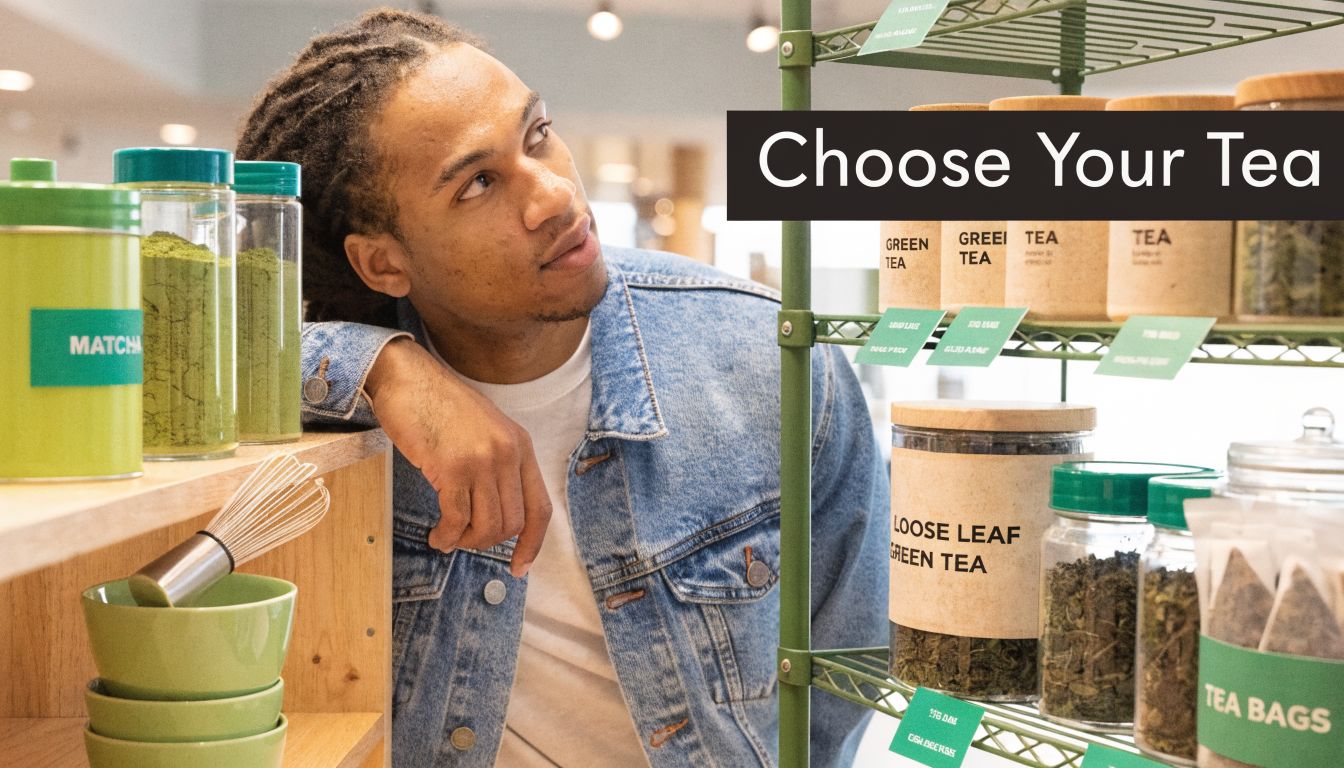
Why so many people mix them up
The labels don’t help. “Matcha green tea” makes it sound like matcha is a stronger green tea. In one sense, yes, it is green tea. In another sense, no, it’s a completely different drinking experience.
Regular green tea is usually made by steeping leaves in hot water, then removing the leaves before drinking. Matcha is made by whisking powdered tea into water, so you consume the leaf itself.
That means the difference between matcha green tea and green tea isn’t just about taste. It affects body, intensity, and how the tea feels in real life.
Why this matters in Australia
Australians have become far more curious about functional drinks, especially drinks that fit a mindful routine, a café menu, or a lower-sugar lifestyle. Matcha has moved well beyond niche tea circles. According to Medical News Today’s summary of Australian market figures, organic matcha imports grew 42% annually from 2021 to 2025, and demand has been linked to matcha’s 3 to 10 times higher L-theanine and caffeine synergy.
That rise makes sense. Plenty of people want energy, but not the sharp edge they often associate with coffee. Others just want a drink that feels more intentional than a soft drink or another flat white.
Practical rule: Choose green tea when you want something light and easy. Choose matcha when you want more presence in the cup.
The short answer
If you like delicate, refreshing tea you can sip with little fuss, regular green tea may suit you better.
If you want a richer drink with a fuller mouthfeel and a more concentrated profile, matcha is usually the better fit.
A few quick examples make it easier:
- Morning desk drink. Green tea feels clean and gentle. Matcha feels more substantial.
- Café latte. Matcha works naturally because it has enough body to stand up to milk.
- Mindful tea ritual. Matcha turns preparation into part of the experience.
- Simple afternoon cup. Green tea wins for ease.
Matcha vs Green Tea at a Glance
Some readers want the quick version before diving deeper. Here it is.
| Feature | Matcha Green Tea | Regular Green Tea |
|---|---|---|
| Form | Fine powder made from tea leaves | Whole or cut leaves |
| How you drink it | Whisked into water or milk, leaf included | Steeped in water, leaves removed |
| Cultivation style | Traditionally shade-grown before harvest | Typically grown in direct sunlight |
| Processing | Steamed, dried, then stone-ground | Steamed or heated, rolled, dried |
| Texture | Creamy, full-bodied, suspended in liquid | Light, clear, more delicate |
| Flavour | Umami, savoury, rich, sometimes naturally sweet | Fresh, grassy, vegetal, sometimes brisk |
| Caffeine feel | More pronounced, often steadier in feel | Gentler lift |
| L-theanine | Higher | Lower |
| Antioxidant concentration | More concentrated | Less concentrated |
| Best for | Lattes, whisked tea, smoothies, baking, focused routines | Everyday sipping, iced tea, traditional brewing |
That’s the bird’s-eye view. The rest comes down to how the tea is grown, made, and enjoyed.
From Farm to Cup How Cultivation Creates Two Teas
The most useful place to start is the farm. Matcha and green tea begin with the same plant, but growers treat those leaves differently long before they reach your kitchen.

The key split happens before harvest
For matcha, tea plants are shade-grown before harvest. The verified material notes a traditional shading period of 20 to 30 days before picking, which is one reason matcha develops its vivid colour and distinctive amino acid profile. Green tea, by contrast, is generally grown in direct sunlight.
That one farming decision changes a lot.
Shade-growing encourages the leaf to develop differently. The result is usually a deeper green colour and a softer, more savoury character. Sun-grown green tea tends to give a brighter, brisker, more straightforward leaf character.
Processing turns one plant into two very different drinks
After harvest, regular green tea leaves are typically heated to stop oxidation, then shaped and dried. When you brew that tea, water extracts flavour and some compounds from the leaf. The leaf itself stays behind.
Matcha follows another path. Leaves intended for matcha are prepared for grinding into a very fine powder. Once powdered, the tea no longer needs steeping in the usual sense. You whisk it into liquid and drink everything.
If you want to see how that traditional process works in more detail, this guide on how matcha tea is made is a useful visual reference.
Why the same plant can taste so different
Much like herbs in cooking, a whole sprig infused into broth gives one result. Grinding the herb and blending it directly through a sauce gives another. Tea behaves in a similar way.
Green tea is extraction. Matcha is incorporation.
That’s why matcha often feels denser and more rounded, while green tea feels clearer and lighter.
The biggest misunderstanding is thinking matcha is just green tea in powder form. It’s a different agricultural and processing tradition, not just a different package.
A short visual helps bring that farm-to-cup difference to life:
Craft matters more than most people realise
This is also why quality varies so much. With green tea, brewing technique often makes the biggest difference at home. With matcha, cultivation, leaf selection, and grinding quality all show up very clearly in the final bowl or latte.
A poor green tea may taste flat or harsh.
A poor matcha is even easier to spot. It can look dull, taste rough, and leave a chalky finish rather than a smooth one.
Here’s the simple takeaway:
- Green tea rewards good brewing.
- Matcha rewards both good farming and good preparation.
- Both depend on freshness and careful handling.
A World of Difference in Flavour and Texture
The first sip tells the story faster than any label can.
Green tea usually arrives as a clear liquor with a light body. Matcha arrives suspended in the liquid itself, often opaque, with a soft foam on top if it’s whisked well. Even before you taste them, they signal different expectations.
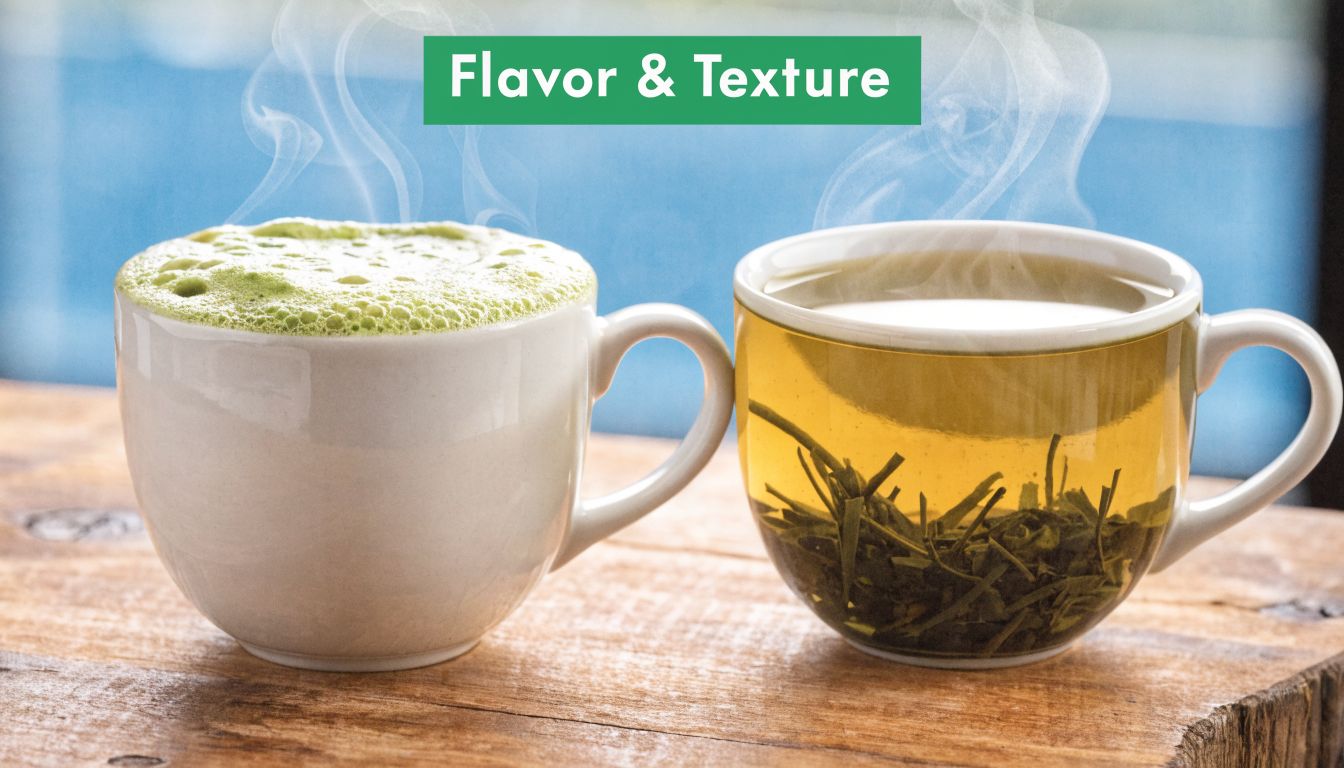
What green tea tastes like
Regular green tea is usually lighter, cleaner, and more transparent in flavour. Depending on style, it can lean grassy, vegetal, soft, sweet, or slightly brisk. It often feels refreshing rather than enveloping.
That’s why many people find it easy to drink through the day. It doesn’t dominate your palate. It lifts it.
If you’re new to tea, green tea is often easier to understand straight away. It tastes like an infusion because that’s exactly what it is.
What matcha tastes like
Matcha is more concentrated and more textured. Good matcha often carries umami, which is the savoury depth people also notice in foods like mushrooms, broth, or parmesan. It may also show gentle sweetness, fresh vegetal notes, and a creamy finish.
The texture matters as much as the flavour. Because the powder stays in the cup, matcha has body. Even made with water alone, it can feel almost velvety.
That’s why matcha lattes work so well. Milk doesn’t wash it out in the same way it would with many delicate green teas.
A simple way to picture the difference
If green tea is like a clear vegetable broth, matcha is more like a blended soup. Both come from similar ingredients. One is light and infused. The other feels complete and integrated.
That comparison isn’t perfect, but it helps explain why people react so differently to them.
Some people say they “don’t like green tea” and then love matcha. Others adore green tea and find matcha too intense at first. That’s normal.
Where beginners often get stuck
A lot of people try one poor-quality matcha and assume all matcha tastes bitter. Usually, bitterness comes from one of three things:
- Low-grade powder that lacks sweetness and smoothness
- Water that’s too hot, which roughens the flavour
- Too much powder for the amount of liquid
Green tea has its own trap. Over-steeping can make it taste sharp or drying, which leads people to think green tea is naturally bitter when preparation is the issue.
Which one feels more “refreshing”
For pure refreshment, green tea usually wins. It’s lighter, less dense, and often easier to drink in larger cups.
For satisfaction and presence, matcha usually wins. It feels more like a beverage with weight and personality.
That difference between matcha green tea and green tea is one reason people keep both in the cupboard. They suit different moods.
The Nutritional Powerhouse Caffeine L-Theanine and EGCg
A lot of Australians first notice the nutrition difference at 10 am, not on a label. One tea leaves you feeling lightly refreshed and ready for another sip later. The other can feel closer to a steady, more deliberate kind of energy, the sort of cup that replaces a second coffee rather than sitting beside it.
That difference starts with concentration. Matcha is made to be consumed as a fine powder, so you drink the leaf itself. Regular green tea is infused in water, then the leaves are removed. For a health-conscious drinker or a café owner choosing what belongs on the menu, that changes the nutritional impact in a very practical way.
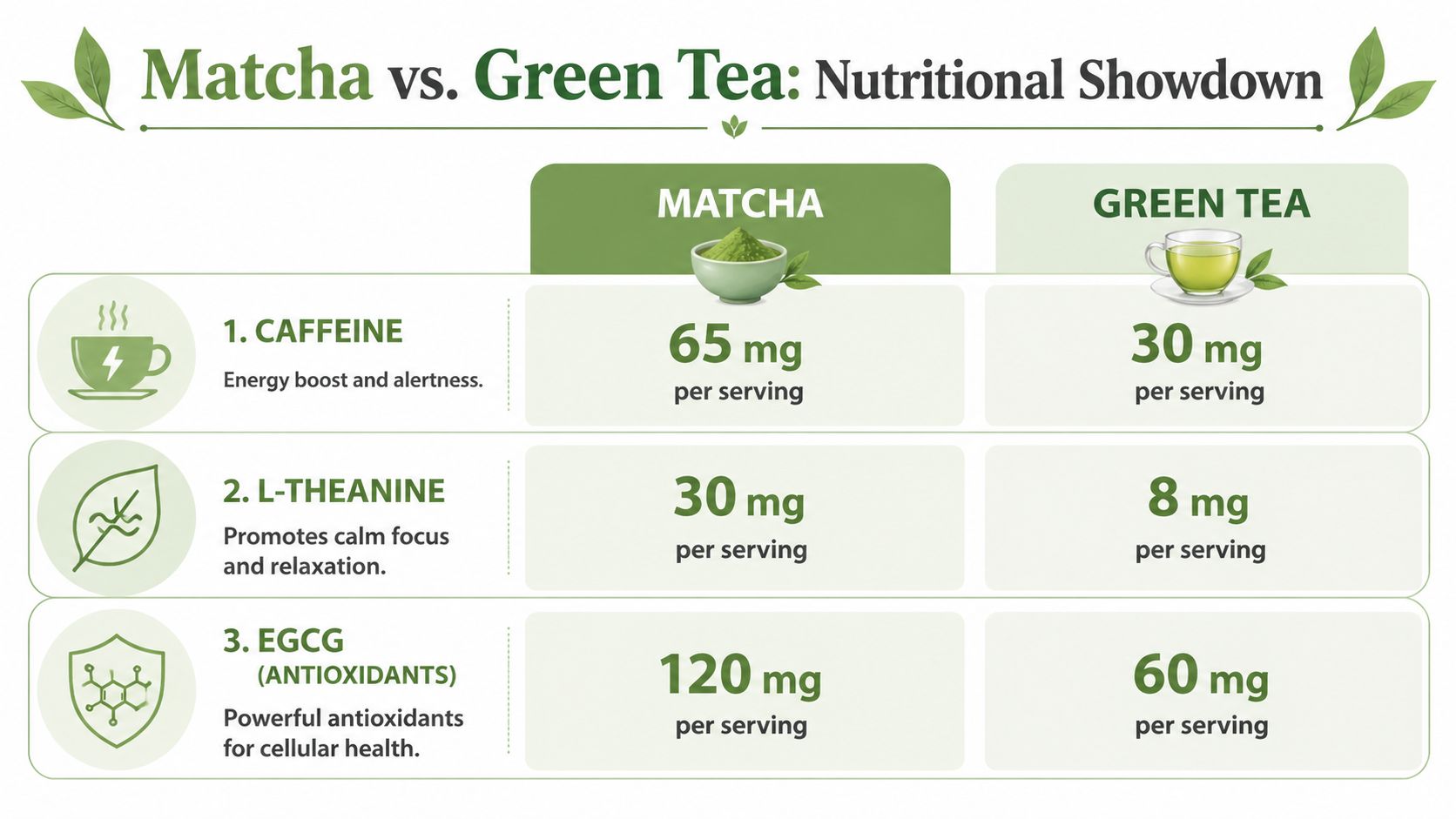
If you want a broader explanation of why powdered tea is so concentrated, this guide to matcha tea powder as a powerhouse of antioxidants adds useful context.
Caffeine feels different in the cup, not just on paper
The amount of caffeine matters, but the way it lands matters more for daily life. The Mayo Clinic’s guide to caffeine content notes that green tea often sits in a lower caffeine range than coffee, while matcha is commonly experienced as the stronger of the two tea options because more of the leaf ends up in the drink.
That helps explain a pattern many tea drinkers recognise straight away.
Green tea often gives a gentle lift. It can suit an afternoon cup, a lighter start to the day, or a pot shared with food.
Matcha usually feels fuller and more sustained. For plenty of people, especially those trying to swap out one coffee, it delivers calm focus rather than a quick spike.
L-theanine helps explain that steady feeling
L-theanine is one of tea’s most interesting compounds because it changes the experience of caffeine. Instead of feeling sharp or jittery, the stimulation can seem more even and settled.
Matcha is often prized for that effect because shade-growing tends to preserve more amino acids, including L-theanine, before the leaves are stone-ground into powder. Premium organic matcha also tends to show this balance more clearly. You taste it, but you also feel it. The energy is less like flicking on a bright fluorescent light and more like opening the blinds on a clear morning.
Green tea contains L-theanine too. The experience is lighter because the brew is less concentrated.
A practical way to choose: If you want a tea that supports your day without being overpowering, green tea is often enough. If you want a more intentional ritual with stronger, steadier energy, matcha is usually the better fit.
EGCg is one reason matcha has such a strong wellness reputation
EGCg, short for epigallocatechin gallate, is one of the catechins most closely associated with tea’s antioxidant profile. You do not need to remember the full name. What matters is what it represents. It is one of the compounds behind tea’s reputation as a health-supportive drink.
Earlier research frequently cited in tea writing has found much higher EGCg levels in matcha than in standard brewed green tea, and that lines up with the basic logic of whole-leaf consumption. If you consume the leaf rather than steeping and removing it, you usually get more of what the leaf contains.
For café customers, that can be the difference between choosing a pleasant green tea and choosing a drink marketed as a functional daily ritual. For a buyer focused on quality, it is also why sourcing matters so much. Clean, carefully grown matcha gives you a better shot at the sweetness, colour, and nutritional density people are looking for.
What this means in real life
People do not choose tea because they love acronyms. They choose tea because they want a certain feeling and a certain role in their day.
Here is the practical translation:
- Green tea suits people who want a lighter daily habit and a softer caffeine effect.
- Matcha suits people who want more from a single serve, both in presence and concentration.
- Caffeine plus L-theanine is why matcha often works well as a coffee alternative.
- Higher antioxidant concentration is part of why matcha appeals to wellness-focused drinkers and premium cafés.
Regular green tea still has plenty going for it. It is refreshing, versatile, and easier for some people to drink more often.
But from a nutrition perspective, matcha is the more concentrated option. That is the key difference, and it is why one person swears by a bright bowl of organic matcha for morning focus while another is perfectly happy with a clean, gentle cup of sencha after lunch.
How to Prepare Use and Enjoy Them
Preparation is where the choice becomes real.
A rushed weekday morning in Melbourne calls for something different from a slow Sunday breakfast or a busy café service. Green tea usually suits the quick, quiet cup. Matcha asks for a little more involvement, but it gives you a drink with more presence, more texture, and more room to play.
How to make regular green tea
Green tea rewards a light touch. Water that is too hot or a steep that runs too long can flatten the fresh, grassy notes and pull out more bitterness than you want.
A simple method works well:
- Heat water to below boiling, usually around 70 to 80°C for many green teas
- Steep briefly, often 1 to 3 minutes depending on the leaf style
- Taste and adjust because a delicate sencha and a rolled gunpowder tea behave quite differently
- Use clean-tasting water so the tea stays bright rather than muddy
That is part of green tea’s charm. It fits easily into everyday life. Brew a cup with breakfast, pour it over ice for the afternoon, or serve it alongside food where you want something refreshing rather than heavy.
How to make matcha without overcomplicating it
Matcha is still simple. It just uses a different kind of simplicity.
Instead of extracting flavour from leaves and then removing them, you are mixing the tea itself into the drink. It works a bit like cocoa in hot chocolate. If the powder is clumpy, the texture suffers. If it is whisked properly, the cup feels smooth, creamy, and lively.
Start here:
- Sift a small amount of matcha into a bowl or sturdy cup.
- Add a splash of hot water, not boiling.
- Whisk briskly until the surface looks smooth and lightly foamy.
- Drink it straight, or add more water for a longer cup.
- Add warm milk if you want a matcha latte.
If you want help with the texture, PepTea’s guide on how to whisk matcha properly shows the technique clearly.
Where each tea works best
The easiest kitchen rule is this. Green tea is better for steeping. Matcha is better for mixing.
That one distinction explains a lot.
Matcha suits smoothies, yoghurt, chia puddings, baking, iced lattes, and desserts because the powder becomes part of the final texture and flavour. In a café, that makes it easy to build a recognisable menu item with consistent colour and a fuller mouthfeel.
Green tea plays a quieter role. It shines in syrups, jellies, poaching liquids, cold brews, and delicate desserts where you want a cleaner, lighter tea note without changing the texture too much.
Buying well in Australia
For Australian shoppers and café owners, preparation starts before the kettle goes on. It starts with what you buy.
With matcha especially, quality is easy to see in the cup. Better matcha tends to whisk more smoothly, taste sweeter, and show a brighter green colour. Lower-grade powder can turn dull, chalky, or harsh quite quickly. Organic claims also deserve a closer look. The Australian Certified Organic certification requirements explain what certified organic products must meet in the Australian market, which is far more useful than relying on vague front-label language.
For a home drinker, that means checking origin, grade, and certification before you click buy. For a café owner, it means choosing a tea that performs consistently across straight matcha, lattes, and iced drinks.
Storage matters more than many people expect
Both teas prefer the same basics. Keep them away from heat, light, moisture, and air.
Matcha is less forgiving because it is finely ground. More surface area means it can lose freshness faster, especially once opened. Store it tightly sealed in a cool, dark place and buy amounts you will use while the colour and flavour are still lively.
Green tea also benefits from careful storage, but it usually gives you a bit more breathing room.
Which Tea Is Right for You A Recommendation Guide
No tea wins for everyone. The right choice depends on what you want the drink to do in your day.
If you want calm, focused energy
Matcha is usually the stronger fit. Its fuller body and more concentrated profile suit people who want one cup to feel meaningful. It often appeals to people replacing a second coffee or looking for a more deliberate morning ritual.
If you like the idea of tea that feels functional, structured, and a bit more substantial, start with matcha.
If you want an easy everyday sipper
Green tea is hard to beat. It’s lighter, quicker to prepare, and easier to drink across the day. If you want something fresh and unfussy, regular green tea often makes more sense than matcha.
This is also the better choice for someone who enjoys tea in the traditional “put the kettle on” sense.
If you’re a home barista or cook
Matcha opens more doors.
It works in lattes, smoothies, baking, chilled drinks, and desserts because the powder becomes part of the final texture. If you like experimenting in the kitchen, matcha gives you more creative range.
Green tea still has a place, but more as a subtle ingredient than a centrepiece.
If you run a café
Matcha gives you a drink with clear menu identity. Customers recognise it, it works beautifully in hot and iced formats, and it fits the shift toward more mindful non-alcoholic and lower-sugar options.
Green tea belongs on menus too, especially for guests who want a straightforward brewed tea. But matcha usually carries more visual impact and more customisation potential.
If your priority is ritual, body, and concentrated character, choose matcha. If your priority is ease, delicacy, and repeat cups, choose green tea.
If you’re still torn
Keep both.
That’s the most practical answer for many people. Use green tea for easy daytime sipping. Reach for matcha when you want more focus, more flavour depth, or a café-style drink at home.
Frequently Asked Questions
Can I substitute matcha for green tea in recipes
Sometimes, but not directly. Matcha is a powder, so it changes colour, flavour intensity, and texture. Green tea leaves are better when you want to infuse liquid and then strain. Matcha is better when you want the tea itself blended through the recipe.
Is one better for weight-related goals
Both teas contain catechins, and matcha is the more concentrated option. That said, it’s best to think of both as supportive drinks within a healthy routine, not as shortcuts. If you want the strongest tea concentration from one serve, matcha is usually the pick.
Why is matcha more expensive than green tea
Because it asks more of the grower and producer. The leaves are grown differently, handled differently, and ground into a fine powder rather than dried for brewing. That extra work shows up in the final price.
Can I drink matcha or green tea every day
Many people do. The main thing to watch is your caffeine comfort level. Green tea is usually gentler. Matcha is more concentrated, so it’s smart to notice how you feel and time your cups accordingly.
Which tastes better for beginners
Usually green tea, because it’s lighter and easier to understand on the first sip. But if you already enjoy savoury depth, creamy drinks, or café lattes, you may prefer matcha right away.
If you’d like to explore premium organic options for both everyday rituals and café-style drinks at home, have a look at Pep Tea. We offer organic matcha, practical brewing guides, and Australian-made kombucha for people who want clean, enjoyable functional drinks without the fluff.