
Tag: matcha vs green tea
Is Matcha Powder Good for You Benefits and Risks
Asking if matcha powder is good for you is really asking a more useful question. Is it a smart daily drink, or just another wellness trend with a green halo?
That gap matters. Plenty of articles talk about antioxidants, then stop there. But if you're deciding whether to whisk matcha at home, order a matcha latte at your local café, or swap part of your coffee routine, you need more than a glowing summary. You need a balanced answer that includes benefits, caffeine load, quality, and how much you're really drinking.
In Australia, matcha has moved well beyond niche tea shelves. It's in smoothie bars, bakery recipes, iced lattes, and office kitchen cupboards. Some people love it for a calmer kind of energy. Others are curious because coffee feels too sharp, or because they want something that fits a more mindful routine.
At Pep Tea, we look at matcha through an Australian everyday lens. Not as a miracle powder, and not as something to fear. Just as a dose-dependent functional beverage. That means the effects depend on the amount, the quality, and the person drinking it.
A simple example shows why this matters. One person has a small traditional serve in the morning and feels clear and settled. Another adds multiple large matcha drinks on top of coffee, pre-workout, and an afternoon cola, then wonders why sleep goes sideways. Same ingredient. Very different outcome.
Bottom line early: matcha powder can be a very good choice for many people, but it isn't automatically better in every amount, at every time of day, for every body.
Introduction Is Matcha Powder Good for You Today
You wake up, feel a bit flat, and stare at the usual choice. Coffee again, or something else. Maybe you've seen matcha on a café menu, maybe a friend swears by it, or maybe you've bought a tin and it's been sitting in the pantry waiting for the “right” moment.
That's where you are. Not trying to become tea purists. Just trying to work out if matcha powder is good for you in real life.
Why the question keeps coming up
The usual answer sounds simple. Matcha is rich in antioxidants, so yes, it's healthy. But that skips over the parts that affect your day. How does it feel compared with coffee? Is more always better? Does quality matter? What about caffeine sensitivity, anxiety, late afternoon drinks, or pregnancy?
Those are practical questions, especially in Australia where matcha now sits somewhere between wellness ritual and daily café order.
For some people, matcha becomes their morning focus drink. For others, it's better as an occasional latte, a baking ingredient, or a lighter alternative on days when coffee feels too intense. There isn't one universal answer, and that's a good thing. It means your decision can be based on how matcha works for your routine, not on hype.
A balanced way to think about it
The useful way to judge matcha isn't “good” or “bad”. It's closer to this:
- What it is: a concentrated green tea powder
- What it may support: antioxidants, alertness, and a calmer style of focus
- What needs care: serving size, caffeine stacking, and product quality
- Who should be more cautious: people sensitive to caffeine, those using it late in the day, and anyone managing medication or health concerns
Some drinks are mostly flavour. Matcha is flavour plus function, which is exactly why dose and quality matter.
If you've been wondering whether matcha deserves a place in your routine, the answer sits in those details.
What Matcha Powder Is and Why Whole Leaf Matters
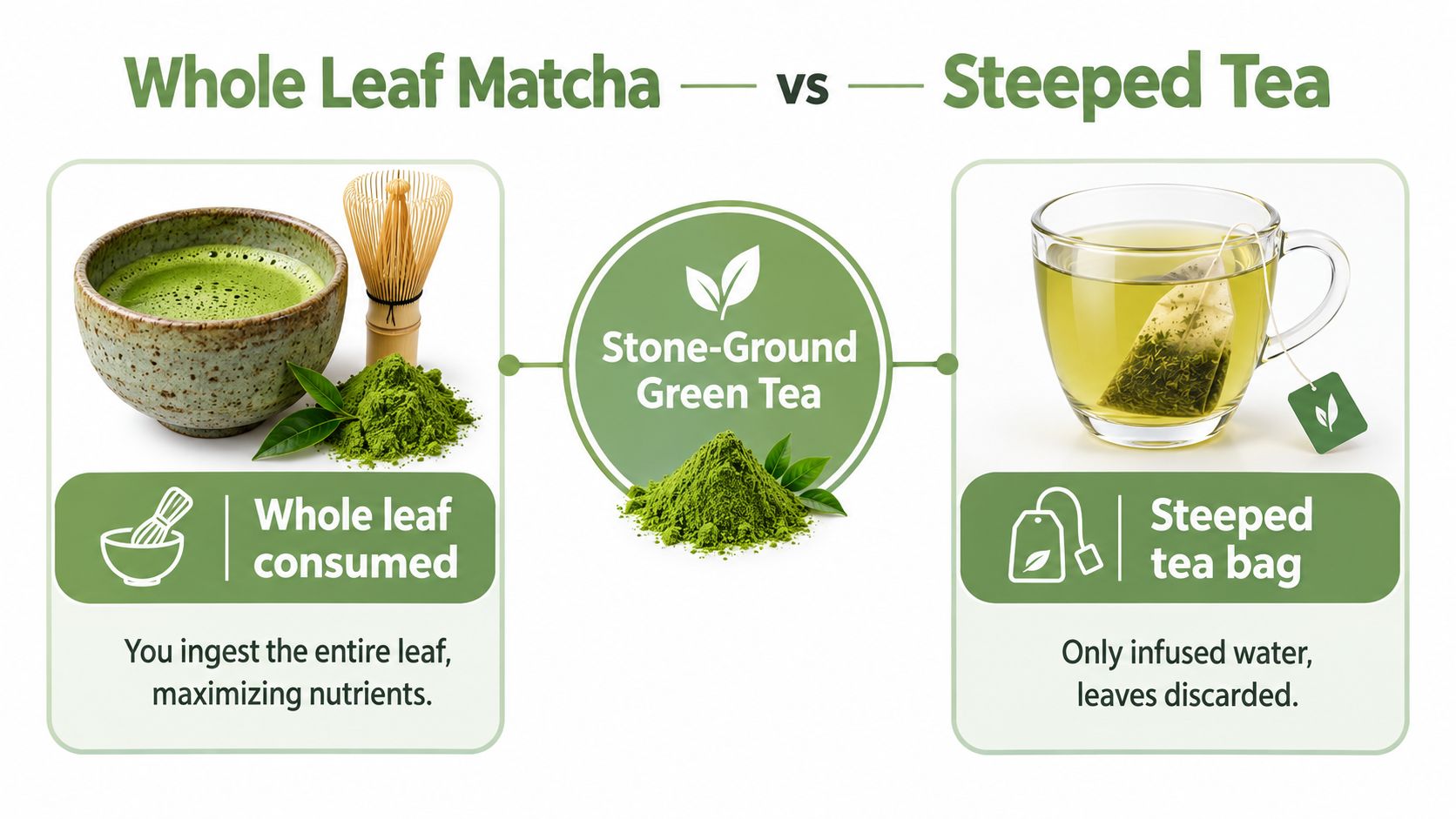
Matcha starts with green tea leaves, but it behaves differently in the cup because the leaves are finely ground and consumed, not steeped and discarded. That changes the dose you get from each serve.
Whole leaf versus infused water
A regular green tea works a bit like soaking herbs in hot water. You collect some flavour and some plant compounds, then the leaves stay behind. Matcha works more like stirring very fine leaf powder through the drink, so the leaf ends up in your body rather than in the bin.
That whole-leaf format is the reason matcha is better understood as a functional beverage with a clearer dose-response effect. If you use more powder, you usually take in more of the compounds naturally present in the leaf, including catechins and amino acids. A review from Western Sydney University also notes that matcha contains notable levels of L-theanine, one of the compounds linked with its smoother feel compared with coffee (Western Sydney University review on matcha chemistry).
This is the practical difference that matters day to day.
With tea bags, people often focus on brew time. With matcha, the bigger variable is how much powder you scoop.
Why serving size matters more than steeping
Once matcha is whisked into water, you are mostly mixing it evenly through the drink rather than pulling compounds out over several minutes. That means a stronger matcha usually comes from using more powder, not from waiting longer.
A few small details shape the experience:
- More powder raises the dose: that can mean more flavour intensity, but also more caffeine and more of the leaf's active compounds
- Whisking affects texture: it helps the powder stay suspended and makes the drink feel smoother
- Water temperature affects taste: very hot water can make matcha taste harsher, while slightly cooler water is often softer and less bitter
For Australian drinkers, this is a useful reset. Matcha is not just “green tea in another form”. It is closer to a measured serve, which is why portion size matters if you want the benefits without overdoing the caffeine.
Ceremonial and culinary matcha
You will also see different grades, and they are not just marketing labels. They point to different uses.
| Type | Best use | What to expect |
|---|---|---|
| Ceremonial grade | Straight matcha with water | Smoother, more delicate flavour |
| Culinary grade | Lattes, smoothies, baking | Stronger taste that stands up to milk and other ingredients |
If you plan to drink matcha plain, ceremonial grade is usually the easier entry point because the flavour is less aggressive. If you are blending it into a smoothie or making an iced latte, culinary grade often makes more sense and can be better value.
If you want a simple primer on grades, preparation, and how matcha is made, Pep Tea's guide on what matcha powder is gives a clear overview.
Antioxidants EGCg and the Calm Focus Combination
Why do some people describe matcha as focused energy rather than just a caffeine hit?
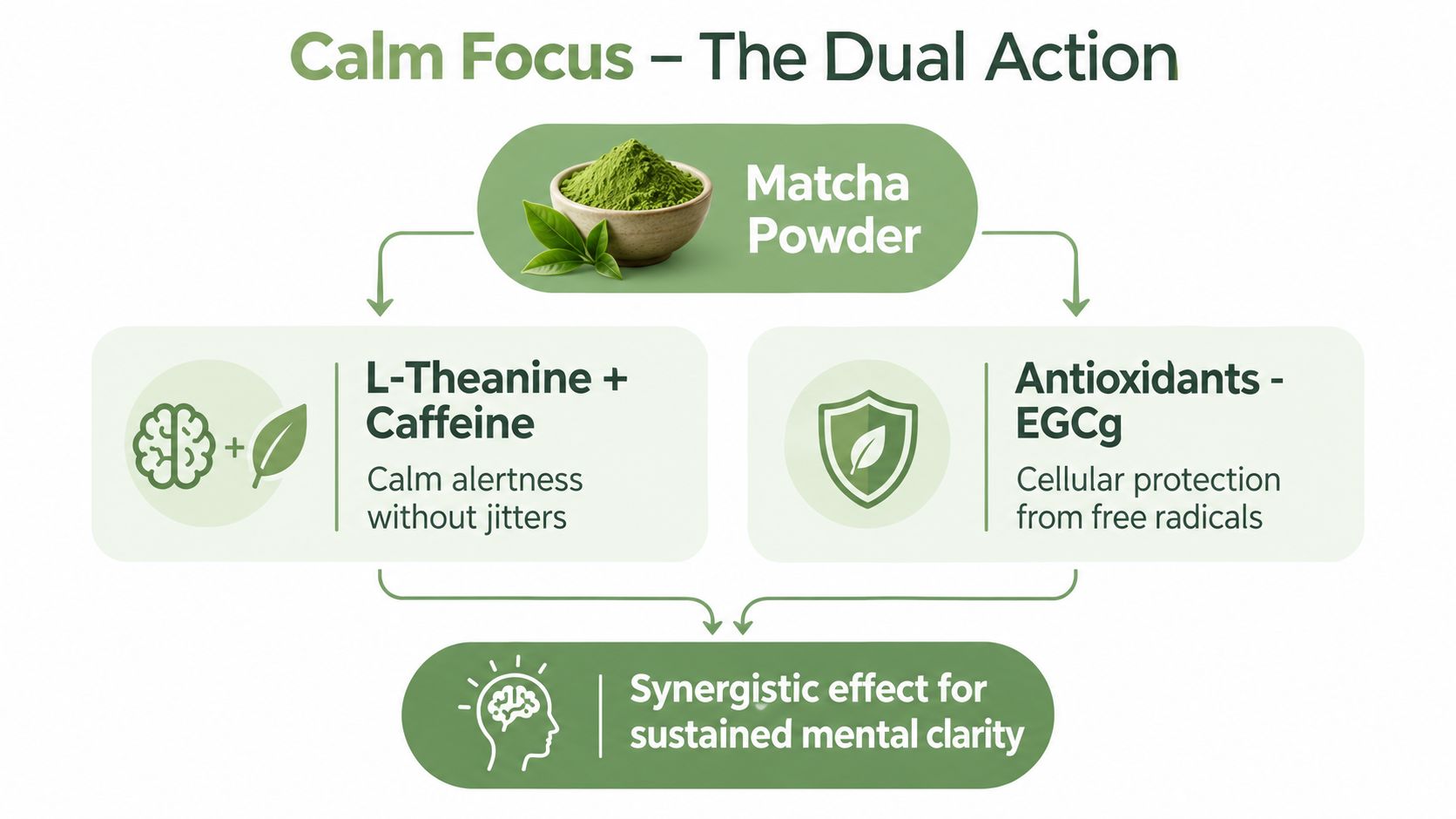
A big part of the answer sits in the mix of compounds you drink together. Matcha contains antioxidants, caffeine, and L-theanine in the same cup. That combination helps explain why matcha is often discussed as a functional beverage, not a green drink.
Why antioxidants matter here
Antioxidants help the body manage oxidative stress. A simple way to picture that is everyday cellular wear and tear from normal metabolism, exercise, sunlight, pollution, and other exposures.
Matcha gets attention because it is especially rich in tea polyphenols. A peer-reviewed review published in 2020 described matcha as having very high antioxidant potential among tea types, linked to compounds such as rutin, polyphenols, and vitamin C, with the whole-leaf format playing a clear role (peer-reviewed review of matcha antioxidant potential).
Another review of matcha composition reported a high overall polyphenol content, which helps explain why matcha is often seen as more concentrated than standard steeped green tea (review of matcha composition and polyphenols).
That said, more is not automatically better. A larger scoop gives you a larger dose of helpful compounds, but it also raises caffeine. For everyday use, that dose trade-off matters more than antioxidant buzzwords.
Where EGCg fits
EGCg is one of the main catechins in green tea and matcha. If antioxidants are the broad category, EGCg is one of the better-known members inside it.
You do not need to memorise tea chemistry to use matcha well. It helps to know that catechins such as EGCg are part of what gives matcha its functional reputation. If you want the plain-English version, Pep Tea has a short guide on what EGCg is.
Why the effect can feel steadier than coffee
The other half of the story is L-theanine with caffeine.
Coffee is mostly discussed in terms of caffeine dose. Matcha is different because the caffeine arrives alongside L-theanine, an amino acid naturally present in tea. That pairing is often described as a calmer kind of alertness, more like a steady rise than a sharp spike.
Human research has linked matcha and its tea compounds with modest support for attention, memory, and stress response in some settings, which fits the way many people describe the experience in real life (review of tea compounds, cognition and stress-related effects).
The practical takeaway is simple. Matcha can be useful for calm focus, but the effect is dose-dependent. A moderate serve may feel smooth and clear. A heavy serve can push the caffeine side harder, especially if you are sensitive or already drinking coffee the same day.
Potential Benefits for Focus Metabolism and Recovery
A good way to judge matcha is to ask a practical question. What job do you want it to do?
For some people, that job is steadier concentration through a few hours of work. For others, it is a gentler pre-walk or pre-gym drink that does not feel as heavy as a large coffee. That is the useful frame here. Matcha is not one thing. It works more like a functional beverage with different effects at different serves.

Focus and stress support
The clearest everyday benefit is usually mental performance.
Research on tea compounds suggests matcha may support attention, working memory, and stress response in some settings. That fits how many people describe it in real life. Less jitter, more settled concentration, especially when the serve is moderate and the rest of the day is not already loaded with caffeine.
That effect has limits. Matcha will not carry poor sleep, missed meals, or an overloaded schedule. But it can be a helpful nudge, a bit like turning the lights up in a room that is already tidy rather than trying to clean the whole house.
Cardiovascular support sits in the background
Some of matcha's plant compounds are also studied for broader cardiometabolic effects. Earlier evidence on green tea catechins has linked them with modest improvements in markers such as blood pressure and LDL cholesterol in some groups, especially where baseline risk is higher (green tea catechins and cardiometabolic markers).
That is interesting, but it helps to keep the scale realistic. Matcha is a daily habit, not a rescue remedy. If you drink it, the long-term value is more likely to come from consistent use within an already healthy routine.
What about metabolism and recovery?
Marketing often runs ahead of reality. Matcha can fit a training or weight-management routine, but dose and context matter more than bold claims.
A smaller serve may suit someone who wants a light lift before movement without tipping into that wired feeling. A stronger serve may feel fine for one person and too much for another, especially if coffee is also in the mix.
Recovery is similar. Matcha contains compounds linked with antioxidant activity, so it can make sense as part of a routine that already includes enough food, fluids, and rest. It is support around the edges, not the main driver.
A simple way to use it is this:
- For desk focus: use matcha as a measured caffeine option when you want calm alertness rather than a sharp spike.
- For movement: try it before a walk, yoga session, or workout if you prefer something lighter than coffee.
- For recovery routines: treat it like one useful piece alongside sleep, protein, hydration, and overall diet quality.
The practical takeaway for Australian readers is simple. Matcha can be good for you when the serve matches the job. More powder is not automatically better. It just means a bigger dose of caffeine and tea compounds, which may help, feel neutral, or push too far depending on the person.
How Much Matcha to Use and When to Enjoy It
How much matcha is useful before a helpful drink turns into more caffeine than you meant to have?
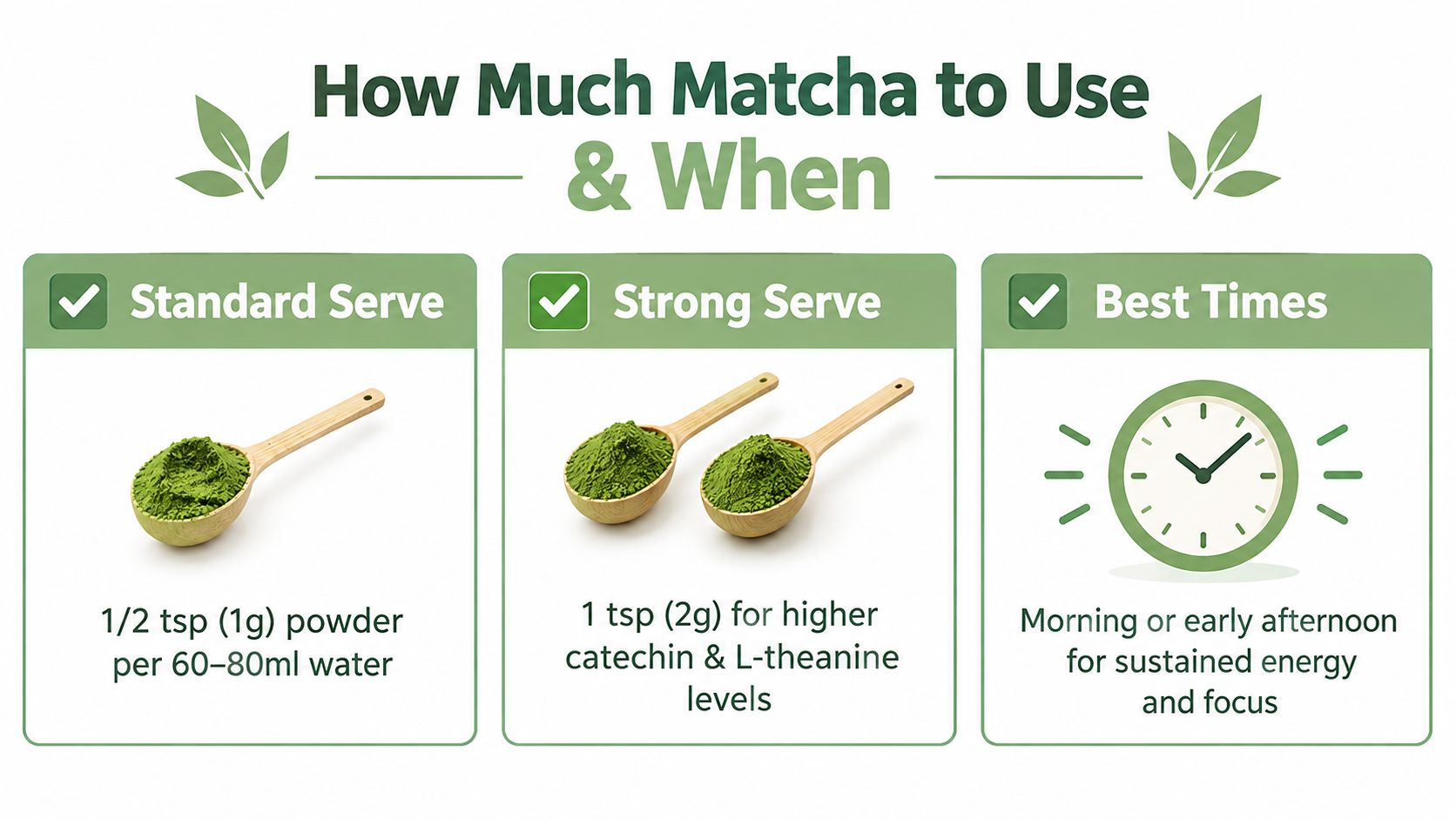
Matcha works best as a dose-based drink. A little more powder does not just make it taste stronger. It also raises your intake of caffeine and plant compounds. That can be useful if you want a steadier lift, but it can also tip into feeling too full-on, especially if coffee or an energy drink is already part of your day.
A simple place to start
If you are new to matcha, start smaller than you think.
| Serve style | Powder amount | Best for |
|---|---|---|
| Starter serve | about half a teaspoon | New drinkers, lighter morning drink |
| Fuller serve | about one teaspoon | Lattes, stronger flavour, more noticeable effect |
Half a teaspoon is often enough to learn how your body responds. One teaspoon suits people who already know they tolerate caffeine well, or who are using matcha in a latte where milk softens the flavour.
The easiest way to picture it is by job. A lighter serve suits a quiet work morning. A fuller serve suits a longer study block or a pre-walk drink. More powder is not automatically more benefit. It is a bigger dose.
The best time depends on your caffeine window
Matcha can feel smoother than coffee for some people, but smoother does not mean caffeine-free. The Australian government's Food Standards Australia New Zealand explains that caffeine can be present naturally in foods and drinks such as tea and coffee, which is a good reminder to count matcha as part of your total daily intake, not as a separate category (FSANZ guidance on caffeine in food).
For many adults, these timing patterns are practical:
- Morning: often the easiest fit for focus
- Early afternoon: may still work if caffeine does not affect your sleep
- Late afternoon or evening: more likely to linger, especially if you are sensitive
- On top of coffee, cola, pre-workout, or energy drinks: easier to overdo than people expect
That last point catches a lot of people out. Matcha is rarely the whole issue. The problem is the stack.
If you are sensitive, make a few small adjustments
Start with food in your stomach, a smaller serve, and no second caffeinated drink straight after. That simple combo helps you notice what matcha itself feels like.
A few situations call for extra care:
- If you are caffeine-sensitive: begin with about half a teaspoon
- If you feel jittery easily: avoid pairing matcha with coffee on the same morning
- If sleep is light or easily disrupted: keep it to earlier in the day
- If you are pregnant or managing a health condition: check with your clinician before making it a daily habit
If you want a more detailed serving guide, Pep Tea's article on how many cups of matcha tea powder are safe per day gives a useful overview.
If you'd rather watch a simple preparation method before experimenting at home, this short guide is useful:
Easy ways to use it without drifting into oversized serves
Preparation style changes the experience, but the powder amount still matters.
- Whisked matcha with water keeps the serve obvious and the flavour clear.
- An iced latte can be a nice middle ground if you want something softer than coffee.
- Smoothies or baking work well with culinary grade matcha, but it helps to measure rather than free-pour.
One factual option in this space is Pep Tea Organic Matcha Japanese Imperial Tea Powder, which is sold for home use in Australia alongside premium and culinary-style applications. The more useful question is whether the matcha clearly states origin, grade, and intended use so you can match the dose to the moment.
Choosing Quality Matcha and Understanding Safety in Australia
A lot of matcha advice stops at colour and flavour. That's only half the picture. Because you consume the whole leaf, quality and safety checks matter more than many shoppers realise.
Quality clues that actually help
Some signs are sensory, and they're useful.
- Colour: good matcha is usually vivid green rather than dull or khaki.
- Aroma: look for fresh, grassy, soft notes rather than stale or dusty smells.
- Texture: the powder should feel fine, not gritty.
- Taste fit: ceremonial styles tend to suit straight drinking, while culinary styles are more at home in lattes and recipes.
Organic Japanese sourcing is often a strong starting point, especially if the seller is clear about grade, origin, and handling.
Why safety deserves more attention
Independent Australian coverage has pointed out a question most benefits articles miss. Since matcha is whole-leaf, consumers may want to know whether it has been tested for lead, cadmium, arsenic, mercury, pesticide residues, and radioactive cesium.
An Australian product-testing page reported low or nondetect results for several contaminants, including arsenic below 0.05 mg/kg, cadmium at 0.015–0.02 mg/kg, lead about 0.08–0.089 mg/kg, and mercury below detection, which shows the kind of information a serious buyer may want to see from a seller (Australian discussion of matcha purity testing and contaminant checks).
Organic certification matters, but it isn't the same thing as seeing actual contaminant testing.
What to look for before you buy
If you're shopping for yourself or for a café menu, use a short filter:
| Check | Why it matters |
|---|---|
| Origin stated clearly | Helps you judge transparency |
| Grade matched to use | Better flavour and less waste |
| Lab testing discussed | More confidence around contaminants |
| Handling and storage explained | Better freshness and consistency |
Australian buyers often assume a “healthy” product has already answered these questions. Sometimes it has. Sometimes it hasn't. Asking is reasonable.
One final note. In Australia, kombucha is treated as a traditional food rather than a therapeutic good, and FSANZ doesn't require pre-approval or special manufacturing controls beyond the general legal requirement that food be safe and suitable (CHOICE article discussing kombucha and Australian food regulation). Matcha sits in that same everyday food world for most shoppers. It still pays to choose brands that are transparent about sourcing and handling rather than relying on wellness language alone.
Making Matcha Work for Your Wellness Routine
So, is matcha powder good for you?
For many people, yes. High-quality matcha in sensible amounts can be a useful daily drink, especially if you want antioxidants, a calmer style of alertness, and something more versatile than a standard coffee run. It can fit into a simple morning ritual, an iced afternoon drink, or recipes such as smoothies and baking.
The key is to treat matcha as a functional beverage, not a magic one. Start with a modest serve. Pay attention to how you feel. Notice whether it suits your body better with food, earlier in the day, or on days when you skip other caffeine.
A simple way to begin
If you're curious but unsure, keep it easy:
- Try one small morning serve for several days rather than changing everything at once.
- Choose the right grade for how you'll use it.
- Keep an eye on total caffeine if you also drink coffee or energy drinks.
- Prioritise quality and transparency over flashy claims.
That balanced approach usually tells you more than any trend piece can. If matcha leaves you feeling steady and clear, it may earn a regular place in your routine. If it doesn't, that's useful too.
At home, many people like to keep both a ceremonial-style matcha for whisking and a culinary matcha for lattes or baking. Some also rotate with other functional drinks, including sugar-free kombucha, when they want something cold, fermented, and low in sugar instead of another caffeinated option.
If you'd like to try matcha with that balanced approach in mind, Pep Tea offers organic Japanese matcha options for both straight drinking and everyday recipes, plus Australian-brewed sugar-free organic kombucha from the Hunter Valley, NSW. Have a look if you want a cleaner starting point for building a calm-energy routine at home, in your café, or across a broader low-sugar drinks range.
Difference Between Matcha Green Tea and Green Tea Explained
You’re probably here because you’ve stared at a café menu or a shelf of tea tins and thought, hang on, aren’t matcha and green tea basically the same thing?
They do come from the same plant, Camellia sinensis. That’s where the confusion starts. But in the cup, they’re very different. They look different, taste different, feel different, and suit different moments in your day.
For a health-conscious Australian, the difference between matcha green tea and green tea matters because it changes what you drink. One is a leaf infusion. The other is the whole leaf, finely ground and whisked in. That one shift affects flavour, texture, caffeine feel, and how concentrated the tea compounds are.
Matcha or Green Tea Which One Is for You
You see it all the time now. One person orders a clean, grassy green tea. The next goes for an oat matcha latte with bright green foam on top. Both choices sound wholesome. Both are tea. But they’re not interchangeable.

Why so many people mix them up
The labels don’t help. “Matcha green tea” makes it sound like matcha is a stronger green tea. In one sense, yes, it is green tea. In another sense, no, it’s a completely different drinking experience.
Regular green tea is usually made by steeping leaves in hot water, then removing the leaves before drinking. Matcha is made by whisking powdered tea into water, so you consume the leaf itself.
That means the difference between matcha green tea and green tea isn’t just about taste. It affects body, intensity, and how the tea feels in real life.
Why this matters in Australia
Australians have become far more curious about functional drinks, especially drinks that fit a mindful routine, a café menu, or a lower-sugar lifestyle. Matcha has moved well beyond niche tea circles. According to Medical News Today’s summary of Australian market figures, organic matcha imports grew 42% annually from 2021 to 2025, and demand has been linked to matcha’s 3 to 10 times higher L-theanine and caffeine synergy.
That rise makes sense. Plenty of people want energy, but not the sharp edge they often associate with coffee. Others just want a drink that feels more intentional than a soft drink or another flat white.
Practical rule: Choose green tea when you want something light and easy. Choose matcha when you want more presence in the cup.
The short answer
If you like delicate, refreshing tea you can sip with little fuss, regular green tea may suit you better.
If you want a richer drink with a fuller mouthfeel and a more concentrated profile, matcha is usually the better fit.
A few quick examples make it easier:
- Morning desk drink. Green tea feels clean and gentle. Matcha feels more substantial.
- Café latte. Matcha works naturally because it has enough body to stand up to milk.
- Mindful tea ritual. Matcha turns preparation into part of the experience.
- Simple afternoon cup. Green tea wins for ease.
Matcha vs Green Tea at a Glance
Some readers want the quick version before diving deeper. Here it is.
| Feature | Matcha Green Tea | Regular Green Tea |
|---|---|---|
| Form | Fine powder made from tea leaves | Whole or cut leaves |
| How you drink it | Whisked into water or milk, leaf included | Steeped in water, leaves removed |
| Cultivation style | Traditionally shade-grown before harvest | Typically grown in direct sunlight |
| Processing | Steamed, dried, then stone-ground | Steamed or heated, rolled, dried |
| Texture | Creamy, full-bodied, suspended in liquid | Light, clear, more delicate |
| Flavour | Umami, savoury, rich, sometimes naturally sweet | Fresh, grassy, vegetal, sometimes brisk |
| Caffeine feel | More pronounced, often steadier in feel | Gentler lift |
| L-theanine | Higher | Lower |
| Antioxidant concentration | More concentrated | Less concentrated |
| Best for | Lattes, whisked tea, smoothies, baking, focused routines | Everyday sipping, iced tea, traditional brewing |
That’s the bird’s-eye view. The rest comes down to how the tea is grown, made, and enjoyed.
From Farm to Cup How Cultivation Creates Two Teas
The most useful place to start is the farm. Matcha and green tea begin with the same plant, but growers treat those leaves differently long before they reach your kitchen.
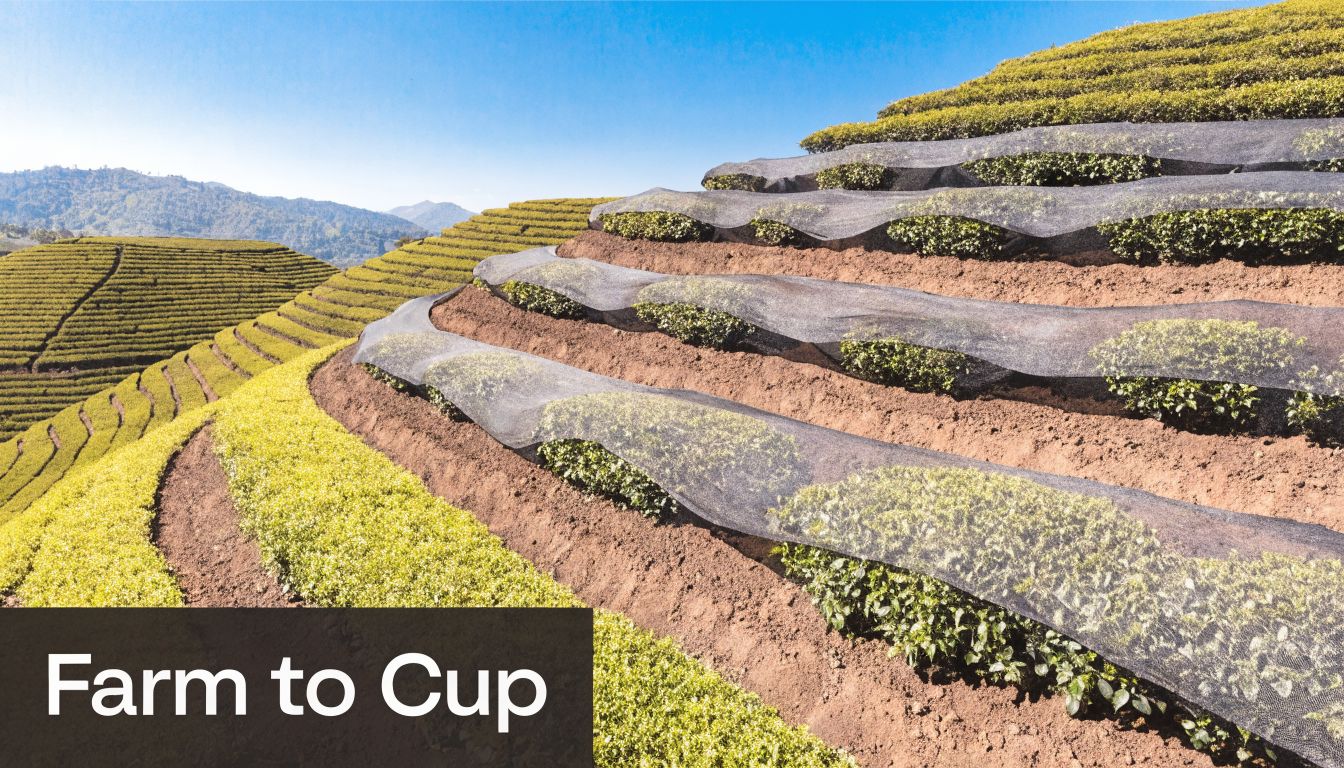
The key split happens before harvest
For matcha, tea plants are shade-grown before harvest. The verified material notes a traditional shading period of 20 to 30 days before picking, which is one reason matcha develops its vivid colour and distinctive amino acid profile. Green tea, by contrast, is generally grown in direct sunlight.
That one farming decision changes a lot.
Shade-growing encourages the leaf to develop differently. The result is usually a deeper green colour and a softer, more savoury character. Sun-grown green tea tends to give a brighter, brisker, more straightforward leaf character.
Processing turns one plant into two very different drinks
After harvest, regular green tea leaves are typically heated to stop oxidation, then shaped and dried. When you brew that tea, water extracts flavour and some compounds from the leaf. The leaf itself stays behind.
Matcha follows another path. Leaves intended for matcha are prepared for grinding into a very fine powder. Once powdered, the tea no longer needs steeping in the usual sense. You whisk it into liquid and drink everything.
If you want to see how that traditional process works in more detail, this guide on how matcha tea is made is a useful visual reference.
Why the same plant can taste so different
Much like herbs in cooking, a whole sprig infused into broth gives one result. Grinding the herb and blending it directly through a sauce gives another. Tea behaves in a similar way.
Green tea is extraction. Matcha is incorporation.
That’s why matcha often feels denser and more rounded, while green tea feels clearer and lighter.
The biggest misunderstanding is thinking matcha is just green tea in powder form. It’s a different agricultural and processing tradition, not just a different package.
A short visual helps bring that farm-to-cup difference to life:
Craft matters more than most people realise
This is also why quality varies so much. With green tea, brewing technique often makes the biggest difference at home. With matcha, cultivation, leaf selection, and grinding quality all show up very clearly in the final bowl or latte.
A poor green tea may taste flat or harsh.
A poor matcha is even easier to spot. It can look dull, taste rough, and leave a chalky finish rather than a smooth one.
Here’s the simple takeaway:
- Green tea rewards good brewing.
- Matcha rewards both good farming and good preparation.
- Both depend on freshness and careful handling.
A World of Difference in Flavour and Texture
The first sip tells the story faster than any label can.
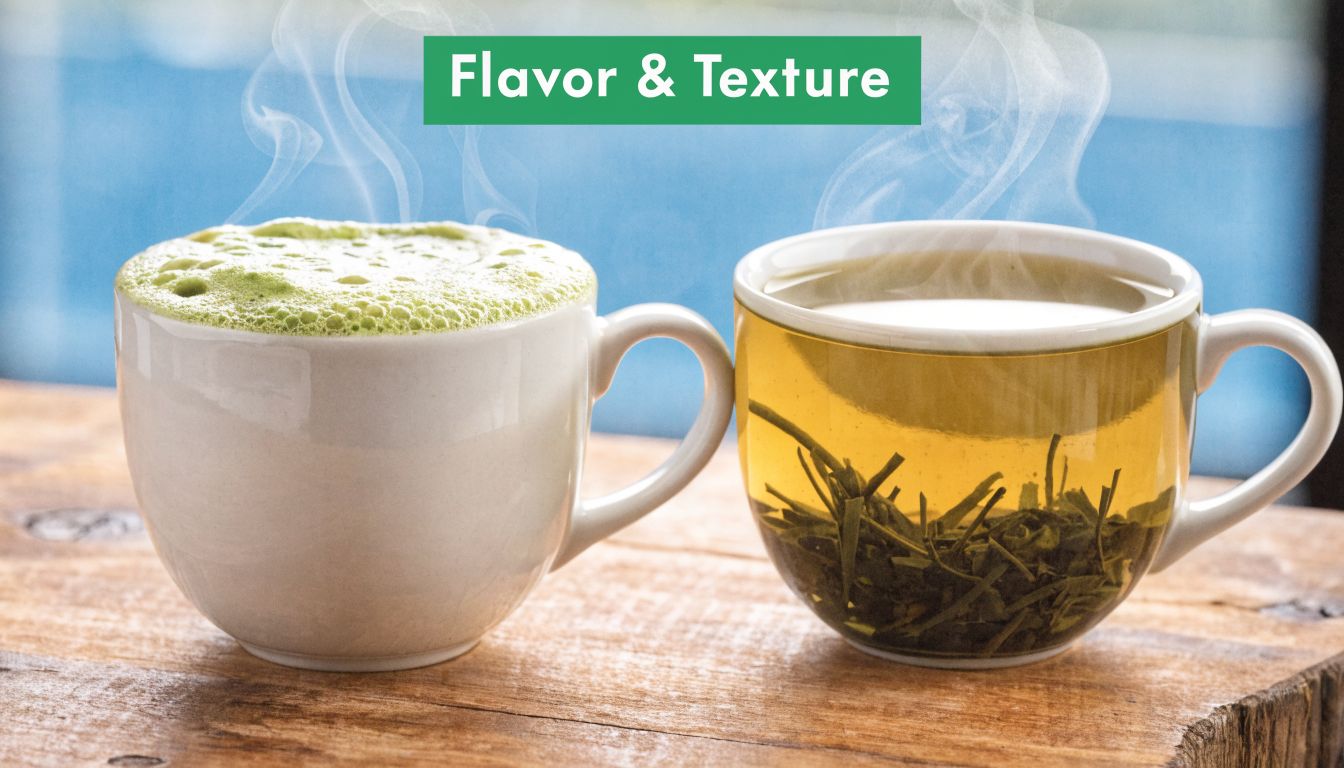
Green tea usually arrives as a clear liquor with a light body. Matcha arrives suspended in the liquid itself, often opaque, with a soft foam on top if it’s whisked well. Even before you taste them, they signal different expectations.
What green tea tastes like
Regular green tea is usually lighter, cleaner, and more transparent in flavour. Depending on style, it can lean grassy, vegetal, soft, sweet, or slightly brisk. It often feels refreshing rather than enveloping.
That’s why many people find it easy to drink through the day. It doesn’t dominate your palate. It lifts it.
If you’re new to tea, green tea is often easier to understand straight away. It tastes like an infusion because that’s exactly what it is.
What matcha tastes like
Matcha is more concentrated and more textured. Good matcha often carries umami, which is the savoury depth people also notice in foods like mushrooms, broth, or parmesan. It may also show gentle sweetness, fresh vegetal notes, and a creamy finish.
The texture matters as much as the flavour. Because the powder stays in the cup, matcha has body. Even made with water alone, it can feel almost velvety.
That’s why matcha lattes work so well. Milk doesn’t wash it out in the same way it would with many delicate green teas.
A simple way to picture the difference
If green tea is like a clear vegetable broth, matcha is more like a blended soup. Both come from similar ingredients. One is light and infused. The other feels complete and integrated.
That comparison isn’t perfect, but it helps explain why people react so differently to them.
Some people say they “don’t like green tea” and then love matcha. Others adore green tea and find matcha too intense at first. That’s normal.
Where beginners often get stuck
A lot of people try one poor-quality matcha and assume all matcha tastes bitter. Usually, bitterness comes from one of three things:
- Low-grade powder that lacks sweetness and smoothness
- Water that’s too hot, which roughens the flavour
- Too much powder for the amount of liquid
Green tea has its own trap. Over-steeping can make it taste sharp or drying, which leads people to think green tea is naturally bitter when preparation is the issue.
Which one feels more “refreshing”
For pure refreshment, green tea usually wins. It’s lighter, less dense, and often easier to drink in larger cups.
For satisfaction and presence, matcha usually wins. It feels more like a beverage with weight and personality.
That difference between matcha green tea and green tea is one reason people keep both in the cupboard. They suit different moods.
The Nutritional Powerhouse Caffeine L-Theanine and EGCg
A lot of Australians first notice the nutrition difference at 10 am, not on a label. One tea leaves you feeling lightly refreshed and ready for another sip later. The other can feel closer to a steady, more deliberate kind of energy, the sort of cup that replaces a second coffee rather than sitting beside it.
That difference starts with concentration. Matcha is made to be consumed as a fine powder, so you drink the leaf itself. Regular green tea is infused in water, then the leaves are removed. For a health-conscious drinker or a café owner choosing what belongs on the menu, that changes the nutritional impact in a very practical way.
If you want a broader explanation of why powdered tea is so concentrated, this guide to matcha tea powder as a powerhouse of antioxidants adds useful context.
Caffeine feels different in the cup, not just on paper
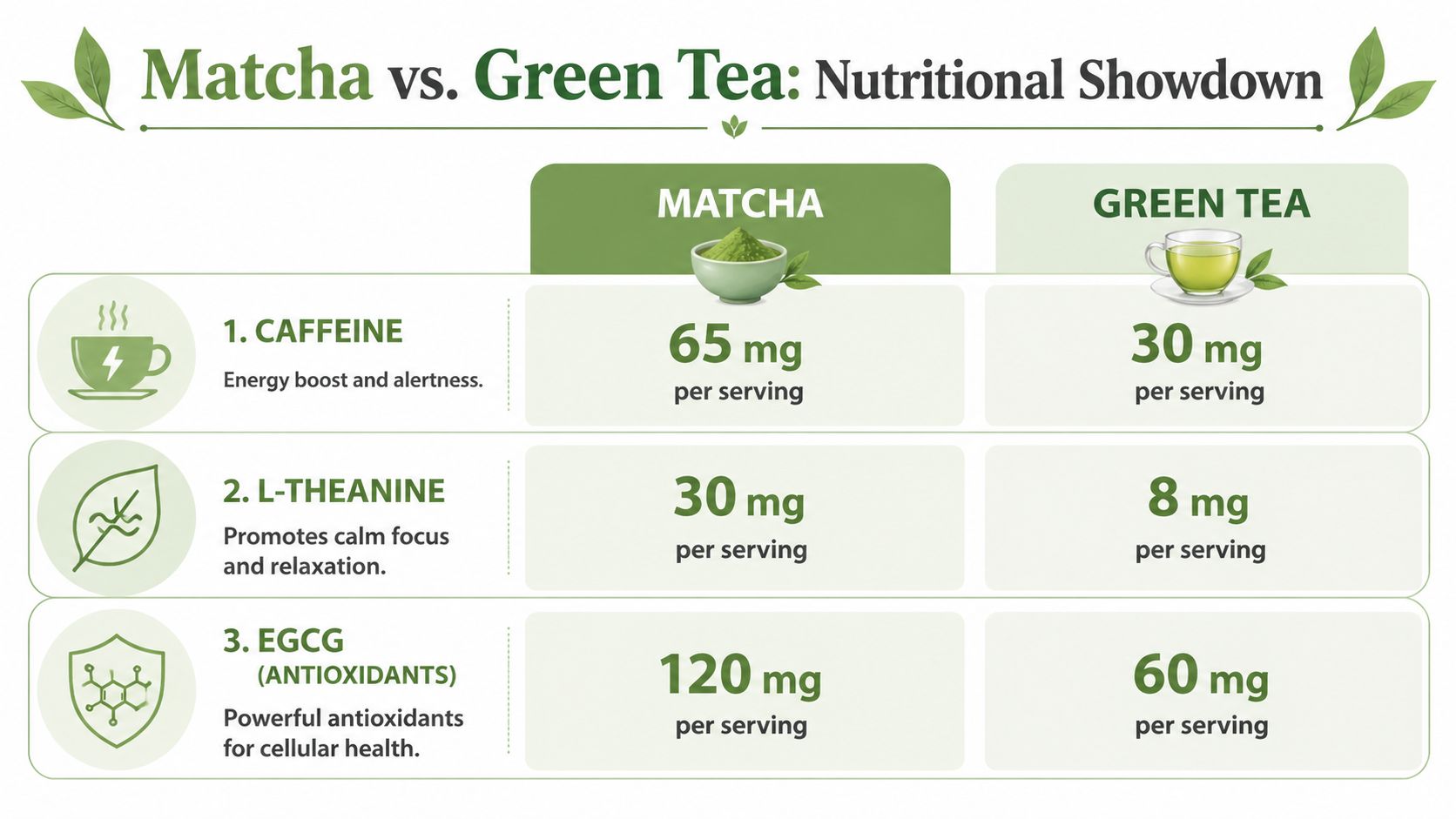
The amount of caffeine matters, but the way it lands matters more for daily life. The Mayo Clinic’s guide to caffeine content notes that green tea often sits in a lower caffeine range than coffee, while matcha is commonly experienced as the stronger of the two tea options because more of the leaf ends up in the drink.
That helps explain a pattern many tea drinkers recognise straight away.
Green tea often gives a gentle lift. It can suit an afternoon cup, a lighter start to the day, or a pot shared with food.
Matcha usually feels fuller and more sustained. For plenty of people, especially those trying to swap out one coffee, it delivers calm focus rather than a quick spike.
L-theanine helps explain that steady feeling
L-theanine is one of tea’s most interesting compounds because it changes the experience of caffeine. Instead of feeling sharp or jittery, the stimulation can seem more even and settled.
Matcha is often prized for that effect because shade-growing tends to preserve more amino acids, including L-theanine, before the leaves are stone-ground into powder. Premium organic matcha also tends to show this balance more clearly. You taste it, but you also feel it. The energy is less like flicking on a bright fluorescent light and more like opening the blinds on a clear morning.
Green tea contains L-theanine too. The experience is lighter because the brew is less concentrated.
A practical way to choose: If you want a tea that supports your day without being overpowering, green tea is often enough. If you want a more intentional ritual with stronger, steadier energy, matcha is usually the better fit.
EGCg is one reason matcha has such a strong wellness reputation
EGCg, short for epigallocatechin gallate, is one of the catechins most closely associated with tea’s antioxidant profile. You do not need to remember the full name. What matters is what it represents. It is one of the compounds behind tea’s reputation as a health-supportive drink.
Earlier research frequently cited in tea writing has found much higher EGCg levels in matcha than in standard brewed green tea, and that lines up with the basic logic of whole-leaf consumption. If you consume the leaf rather than steeping and removing it, you usually get more of what the leaf contains.
For café customers, that can be the difference between choosing a pleasant green tea and choosing a drink marketed as a functional daily ritual. For a buyer focused on quality, it is also why sourcing matters so much. Clean, carefully grown matcha gives you a better shot at the sweetness, colour, and nutritional density people are looking for.
What this means in real life
People do not choose tea because they love acronyms. They choose tea because they want a certain feeling and a certain role in their day.
Here is the practical translation:
- Green tea suits people who want a lighter daily habit and a softer caffeine effect.
- Matcha suits people who want more from a single serve, both in presence and concentration.
- Caffeine plus L-theanine is why matcha often works well as a coffee alternative.
- Higher antioxidant concentration is part of why matcha appeals to wellness-focused drinkers and premium cafés.
Regular green tea still has plenty going for it. It is refreshing, versatile, and easier for some people to drink more often.
But from a nutrition perspective, matcha is the more concentrated option. That is the key difference, and it is why one person swears by a bright bowl of organic matcha for morning focus while another is perfectly happy with a clean, gentle cup of sencha after lunch.
How to Prepare Use and Enjoy Them
Preparation is where the choice becomes real.
A rushed weekday morning in Melbourne calls for something different from a slow Sunday breakfast or a busy café service. Green tea usually suits the quick, quiet cup. Matcha asks for a little more involvement, but it gives you a drink with more presence, more texture, and more room to play.
How to make regular green tea
Green tea rewards a light touch. Water that is too hot or a steep that runs too long can flatten the fresh, grassy notes and pull out more bitterness than you want.
A simple method works well:
- Heat water to below boiling, usually around 70 to 80°C for many green teas
- Steep briefly, often 1 to 3 minutes depending on the leaf style
- Taste and adjust because a delicate sencha and a rolled gunpowder tea behave quite differently
- Use clean-tasting water so the tea stays bright rather than muddy
That is part of green tea’s charm. It fits easily into everyday life. Brew a cup with breakfast, pour it over ice for the afternoon, or serve it alongside food where you want something refreshing rather than heavy.
How to make matcha without overcomplicating it
Matcha is still simple. It just uses a different kind of simplicity.
Instead of extracting flavour from leaves and then removing them, you are mixing the tea itself into the drink. It works a bit like cocoa in hot chocolate. If the powder is clumpy, the texture suffers. If it is whisked properly, the cup feels smooth, creamy, and lively.
Start here:
- Sift a small amount of matcha into a bowl or sturdy cup.
- Add a splash of hot water, not boiling.
- Whisk briskly until the surface looks smooth and lightly foamy.
- Drink it straight, or add more water for a longer cup.
- Add warm milk if you want a matcha latte.
If you want help with the texture, PepTea’s guide on how to whisk matcha properly shows the technique clearly.
Where each tea works best
The easiest kitchen rule is this. Green tea is better for steeping. Matcha is better for mixing.
That one distinction explains a lot.
Matcha suits smoothies, yoghurt, chia puddings, baking, iced lattes, and desserts because the powder becomes part of the final texture and flavour. In a café, that makes it easy to build a recognisable menu item with consistent colour and a fuller mouthfeel.
Green tea plays a quieter role. It shines in syrups, jellies, poaching liquids, cold brews, and delicate desserts where you want a cleaner, lighter tea note without changing the texture too much.
Buying well in Australia
For Australian shoppers and café owners, preparation starts before the kettle goes on. It starts with what you buy.
With matcha especially, quality is easy to see in the cup. Better matcha tends to whisk more smoothly, taste sweeter, and show a brighter green colour. Lower-grade powder can turn dull, chalky, or harsh quite quickly. Organic claims also deserve a closer look. The Australian Certified Organic certification requirements explain what certified organic products must meet in the Australian market, which is far more useful than relying on vague front-label language.
For a home drinker, that means checking origin, grade, and certification before you click buy. For a café owner, it means choosing a tea that performs consistently across straight matcha, lattes, and iced drinks.
Storage matters more than many people expect
Both teas prefer the same basics. Keep them away from heat, light, moisture, and air.
Matcha is less forgiving because it is finely ground. More surface area means it can lose freshness faster, especially once opened. Store it tightly sealed in a cool, dark place and buy amounts you will use while the colour and flavour are still lively.
Green tea also benefits from careful storage, but it usually gives you a bit more breathing room.
Which Tea Is Right for You A Recommendation Guide
No tea wins for everyone. The right choice depends on what you want the drink to do in your day.
If you want calm, focused energy
Matcha is usually the stronger fit. Its fuller body and more concentrated profile suit people who want one cup to feel meaningful. It often appeals to people replacing a second coffee or looking for a more deliberate morning ritual.
If you like the idea of tea that feels functional, structured, and a bit more substantial, start with matcha.
If you want an easy everyday sipper
Green tea is hard to beat. It’s lighter, quicker to prepare, and easier to drink across the day. If you want something fresh and unfussy, regular green tea often makes more sense than matcha.
This is also the better choice for someone who enjoys tea in the traditional “put the kettle on” sense.
If you’re a home barista or cook
Matcha opens more doors.
It works in lattes, smoothies, baking, chilled drinks, and desserts because the powder becomes part of the final texture. If you like experimenting in the kitchen, matcha gives you more creative range.
Green tea still has a place, but more as a subtle ingredient than a centrepiece.
If you run a café
Matcha gives you a drink with clear menu identity. Customers recognise it, it works beautifully in hot and iced formats, and it fits the shift toward more mindful non-alcoholic and lower-sugar options.
Green tea belongs on menus too, especially for guests who want a straightforward brewed tea. But matcha usually carries more visual impact and more customisation potential.
If your priority is ritual, body, and concentrated character, choose matcha. If your priority is ease, delicacy, and repeat cups, choose green tea.
If you’re still torn
Keep both.
That’s the most practical answer for many people. Use green tea for easy daytime sipping. Reach for matcha when you want more focus, more flavour depth, or a café-style drink at home.
Frequently Asked Questions
Can I substitute matcha for green tea in recipes
Sometimes, but not directly. Matcha is a powder, so it changes colour, flavour intensity, and texture. Green tea leaves are better when you want to infuse liquid and then strain. Matcha is better when you want the tea itself blended through the recipe.
Is one better for weight-related goals
Both teas contain catechins, and matcha is the more concentrated option. That said, it’s best to think of both as supportive drinks within a healthy routine, not as shortcuts. If you want the strongest tea concentration from one serve, matcha is usually the pick.
Why is matcha more expensive than green tea
Because it asks more of the grower and producer. The leaves are grown differently, handled differently, and ground into a fine powder rather than dried for brewing. That extra work shows up in the final price.
Can I drink matcha or green tea every day
Many people do. The main thing to watch is your caffeine comfort level. Green tea is usually gentler. Matcha is more concentrated, so it’s smart to notice how you feel and time your cups accordingly.
Which tastes better for beginners
Usually green tea, because it’s lighter and easier to understand on the first sip. But if you already enjoy savoury depth, creamy drinks, or café lattes, you may prefer matcha right away.
If you’d like to explore premium organic options for both everyday rituals and café-style drinks at home, have a look at Pep Tea. We offer organic matcha, practical brewing guides, and Australian-made kombucha for people who want clean, enjoyable functional drinks without the fluff.