
Tag: Pep Tea
What Is L-Theanine: Your Guide to Calm Focus & Sleep
L-theanine is a natural amino acid found almost exclusively in tea, and it's the reason a good cup can feel calm and alert at the same time. In brewed tea, you'll usually get only 5.8 to 32 mg per 200 mL from 3 g of dried leaves, while clinical studies often use 200 mg or more per day, so the experience in your mug is usually gentler than in a supplement. If you've ever wanted clearer focus without the coffee crash, you're in the right place.
Tea lovers often talk about that smooth, settled feeling after a proper matcha or green tea, and there's real chemistry behind it. L-theanine sits right at the intersection of everyday brewing and modern wellness, which is why it keeps turning up in conversations about concentration, sleep support, and stress-aware routines. If you also like comparing tea nutrients, our guide to the benefits of magnesium and L-theanine is a useful companion read, especially if you're curious about how different calming ingredients fit together in real life. For matcha drinkers, our Uji Matcha Powder page is a handy example of how this tea amino acid shows up in premium tea rather than as a synthetic add-on.
Your Guide to the 'Calm Alertness' Amino Acid
You know that feeling when you want to think clearly, but you don't want the wired edge that coffee can bring. That's the exact gap L-theanine fills for many tea drinkers. It's a tea amino acid, not a stimulant, and it's one of the main reasons tea can feel different from other caffeinated drinks.
In simple terms, what is L-theanine? It's a naturally occurring compound in Camellia sinensis, the tea plant, and it's part of what gives high-quality tea its smooth, rounded character. A 2024 review notes that white, green, oolong, and black teas typically contain 0.9% to 3.1% of leaf dry weight, with brewed tea from 3 g of dried leaves providing about 5.8 to 32 mg per 200 mL. The same review also notes that L-theanine can make up up to 50% of total amino acids in tea leaves, which helps explain why the tea leaf itself matters so much. PubMed review on tea composition and L-theanine
Why tea feels different from a supplement
Tea gives you a food-first experience. The theanine arrives alongside other tea compounds, so the cup feels like part of a ritual, not just a dose. That matters for people who want a calmer kind of focus without turning every wellness choice into a pill routine.
Practical rule: if you're after the tea experience, start with the cup, not the capsule.
That's also why this ingredient shows up so often in matcha conversations. Matcha uses the whole leaf, so the theanine conversation becomes much more relevant than it is with many ordinary tea bags. It's a good fit for people who want their morning drink to support a smoother mental rhythm.
A broader look at tea and wellness can also be useful when you're comparing calming ingredients, and the organic matcha brewing approach makes more sense once you understand that theanine is part of the leaf itself, not an added flavour trick. The more you understand the leaf, the more sense your cup makes.
How L-Theanine Actually Works in Your Brain
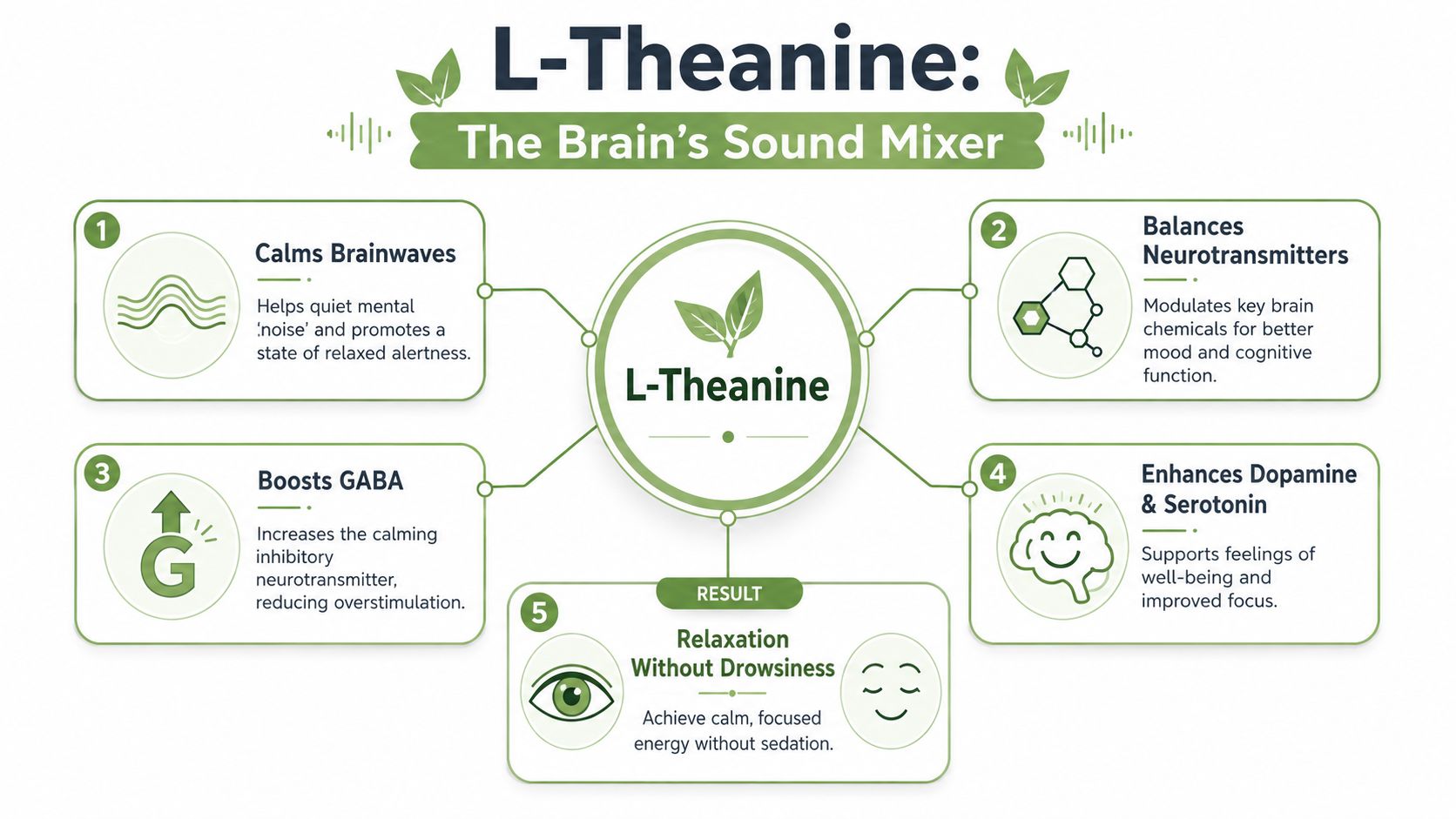
Think of L-theanine like a volume dial for mental noise. It doesn't switch your brain off, and it doesn't force sleepiness. Instead, it seems to help your mind settle into a state that feels more organised, less cluttered, and easier to work with.
A calmer signal, not a blanker mind
The often-used shorthand is that L-theanine supports alpha brain wave activity, which is the pattern many people associate with relaxed alertness. That's why tea can feel mentally bright without feeling harsh. In plain language, it helps take the edge off mental overdrive so your attention has a better chance of sticking.
It also interacts with key neurotransmitter systems that shape mood and alertness, including GABA, serotonin, and dopamine. You don't need a neuroscience degree to use that information well. Just remember that this compound isn't trying to sedate you, it's trying to make your brain feel less overclocked.
Simple takeaway: L-theanine doesn't erase thoughts, it lowers the background static.
That's why many people describe tea as the drink they reach for when they need to write, read, or think through a tricky problem without feeling scattered. If overthinking tends to hijack your day, a good companion resource is coping with overthinking and anxiety, because the mental state people want from tea is often the same one they're trying to rebuild elsewhere.
For readers who like a more structured look at functional ingredients, the idea of natural focus enhancers fits well with tea. The internal logic is simple, a tea amino acid helps shift the feel of the drink from merely caffeinated to more balanced. That's a big reason matcha keeps a loyal following among people who want sharpness with a softer landing.
The Evidence-Backed Benefits of L-Theanine

L-theanine gets attention for three reasons that matter in daily life, relaxation, focus, and sleep support. Research summaries consistently describe it that way, and they also note that it may promote relaxation without sedation and may enhance attention when paired with caffeine. That pairing matters because tea, especially matcha, naturally gives you both ingredients in one cup. WebMD overview of theanine uses and risks
Relaxation without feeling knocked out
This is the part most tea drinkers notice first. L-theanine is associated with a calmer internal pace, but not the heavy feeling you'd expect from something sedating. That makes it easier to use during the day, at work, or before a busy afternoon.
Focus that feels smoother
Caffeine can sharpen attention, but it can also make some people feel jumpy. Tea changes that equation because L-theanine is naturally part of the mix. The result many people describe is cleaner focus with fewer rough edges, especially in matcha-based drinks where the whole leaf is involved.
Sleep support that starts earlier in the day
L-theanine isn't a sleeping pill. What it may do is reduce the mental churn that keeps people awake when they're tired but overstimulated. A 2025 systematic review of sleep trials found 13 eligible studies involving 550 participants, used 50 to 900 mg/day, and reported sleep benefits in 9 of the 13 trials, with the strongest effects at 200 mg/day or higher. The same review says studies using up to 250 mg daily reported mostly minimal adverse effects. 2025 systematic review of sleep trials
For people who get stuck replaying the day at night, that distinction matters. You're not chasing unconsciousness, you're trying to quiet the mental static enough for sleep to arrive naturally. If that sounds familiar, a broader read on organic green tea caffeine can help you compare how tea energy differs from coffee energy in practice.
Finding L-Theanine in Your Daily Brew
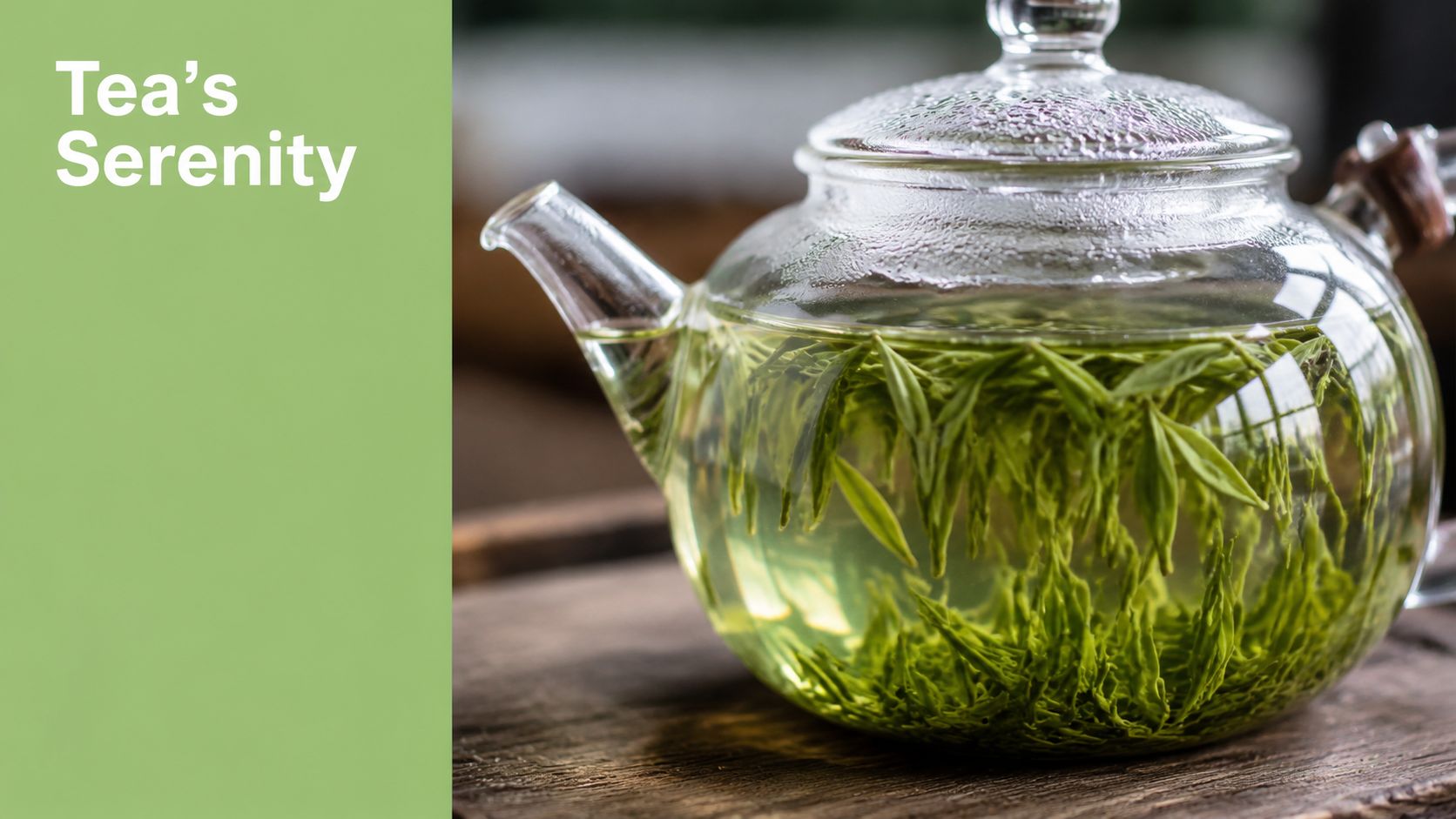
If you want L-theanine in a form your body already recognises, tea is the obvious place to look. It appears in all Camellia sinensis teas, but the amount shifts with leaf type, growing method, and preparation. That's why two cups of tea can feel noticeably different even when they're both “green tea”.
Why matcha often stands out
A peer-reviewed review reports that among Japanese teas, gyokuro and matcha contain more L-theanine than sencha, and it identifies L-theanine as a bioactive compound in tea that may influence brain function under stress. That makes matcha especially relevant for people who want a richer, smoother tea experience with a stronger functional profile than standard brewed tea often delivers. Review on Japanese tea composition
The reason is easy to grasp. Matcha is made from the whole leaf, so you're not just drinking flavour, you're consuming the leaf material itself. That gives it a different relationship with both taste and function than a light tea infusion.
What this means in a real cup
A 250 mL cup of green tea provides only about 8 to 30 mg of L-theanine, while many clinical studies use 200 mg or more per day in supplement form. That comparison shows why a standard brew feels subtle, and why matcha tends to feel more substantial. News-Medical summary of green tea L-theanine amounts
Useful rule of thumb: tea is usually a gentle source of theanine, while supplement research often works at much higher levels.
For Australian tea drinkers, that's the practical takeaway. If your goal is a daily calming ritual, a well-made matcha or green tea can be enough. If your goal is to mirror clinical research, the cup and the capsule are not the same thing, and it helps to understand that before you set expectations.
Safe Dosages and What to Expect
A lot of confusion around L-theanine comes from people comparing a cup of tea with a supplement study and expecting the same result. That's not how it works. A daily brew usually gives you a modest amount, while clinical research often uses higher, more concentrated doses.
Tea amounts versus study amounts
A brewed cup gives you a small-to-moderate exposure, not a strong pharmacological hit. The tea-based range above, roughly 5.8 to 32 mg per 200 mL, is very different from the 200 mg/day or higher used in many trials. That gap is why tea feels like a steady ritual and supplements feel more direct.
Safety data in the reviewed sleep literature is also reassuring. The 2025 systematic review found sleep benefits in trials using 50 to 900 mg/day, and studies using up to 250 mg daily reported mostly minimal adverse effects. 2025 sleep review
What to expect from tea, not capsules
If you're drinking matcha or green tea, the likely experience is a gentle shift rather than a dramatic one. You may feel more settled, less frazzled, and better able to keep your attention on one thing. That's a realistic goal for a beverage.
Practical rule: judge tea by consistency and feel, not by chasing a supplement-style effect from one cup.
Mainstream consumer health guidance also treats the long-term picture cautiously, noting that the ingredient isn't a primary treatment and that short-term tolerability is better established than long-term safety. That's a sensible way to think about it, because tea is part of an everyday pattern, not a cure-all. For people who want to reduce uncertainty in the evening, pairing tea knowledge with a broader routine around lighting, screens, and wind-down habits often makes more difference than chasing a bigger dose.
Bringing L-Theanine into Your Routine with Pep Tea

A good L-theanine routine starts with the kind of drink you'll enjoy every day. For a quiet morning, whisking a bowl of matcha gives you a more complete tea experience than a rushed, bitter brew. For a smoother afternoon, the same ingredient can work beautifully in a latte or a blended drink.
Easy ways to use it at home
A simple matcha latte works well when you want calm energy without a heavy feel. Whisk 1 to 2 teaspoons of matcha with a small splash of warm water until smooth, then add steamed milk or a plant-based alternative. If you like a lighter result, keep the sweetness low and let the tea flavour stay front and centre.
Culinary-grade matcha also fits into smoothies, yoghurt bowls, and baking. That's useful if you want the tea flavour without making another hot drink. The point is to make the ingredient part of a habit, not a project.
What cafés can do with it
Cafés can build simple menu ideas around the same logic. A signature Zen Latte or a low-sugar iced matcha drink gives customers a clear, functional option without leaning on hype. Sugar-free kombucha also works well as a non-alcoholic base when a venue wants something refreshing, adult, and lighter than soft drink.
If you're comparing product formats, here's the simplest way to think about them.
- Ceremonial matcha: best for a clean, traditional cup with the most refined flavour.
- Culinary matcha: better for lattes, smoothies, and kitchen use.
- Sugar-free kombucha: a useful café option when customers want a fermented drink with a crisp finish.
That mix gives both home drinkers and cafés a practical way to use tea in real routines, not just in wellness marketing.
When to Speak with a Health Professional
L-theanine from tea can be a lovely part of a daily routine, but it isn't a replacement for treatment. If anxiety, insomnia, or low mood are persistent, a doctor or registered dietitian is the right place to start. That matters even more if you're already taking medication, are pregnant or breastfeeding, or have an ongoing health condition.
A tea habit can support wellbeing, but it shouldn't be used to mask symptoms that deserve proper care. If you're thinking about a supplement rather than tea, it's smart to ask a professional about dose, timing, and possible interactions first. A simple conversation can save a lot of guesswork.
Pep Tea offers premium organic matcha and sugar-free kombucha for Australians who want clean, functional drinks with real care behind them. If this guide has helped you understand what L-theanine is, visit Pep Tea to explore matcha options that fit a calmer, more focused daily ritual.
Matcha Energy vs Coffee: An Australian Guide for 2026
You know the moment. The alarm goes off, you're half awake, and your hand reaches for the same first fix, coffee, before your brain has fully clocked in. For a lot of Australians, that ritual feels essential, but a key question is whether it's giving you the kind of energy you truly desire, fast, frantic, steady, or somewhere in between.
Matcha energy vs coffee isn't really a contest about which drink is “better” in the abstract. It's a practical choice about how you want to feel at 8 am, 3 pm, or before a long stretch of focus work. Coffee and matcha can both be part of a healthy routine, but they don't deliver energy in the same way, and that difference is more significant than commonly understood.
| Drink | Typical caffeine in Australia | Energy feel | Best fit |
|---|---|---|---|
| Coffee | About 95 mg per cup | Quicker, sharper lift | Fast starts, short bursts, when you want a stronger hit |
| Matcha | About 60 to 75 mg per similar serving | Smoother, steadier alertness | Calm focus, gentler energy, longer work blocks |
The Morning Ritual Reimagined
The coffee machine clicks on, the kettle boils, and before the day has even started, you've already decided what sort of pace you're setting. That's the power of habit, it's not just about caffeine, it's about identity, comfort, and routine. For many people, coffee says “wake up now”, while matcha says “start well”.
The Australian conversation around these drinks has shifted because people are asking better questions. They're not only asking how much stimulation they'll get, they're asking how it will feel, how long it will last, and whether it fits work, exercise, or a calmer morning rhythm. That's why matcha energy vs coffee has become such a useful comparison for health-conscious readers.
Coffee still has its place, especially if you want a quick jolt. But matcha has moved from a niche tea-culture product into a mainstream café ingredient, and that shift has been driven by Australians looking for a more considered kind of energy, one that feels useful rather than relentless.
Practical rule: If your morning needs speed, coffee is usually the simpler answer. If you want steadier focus without feeling wired, matcha deserves a look.
That's the basic frame for the rest of the discussion. It's not about crowning a winner. It's about matching the drink to the moment.
The Caffeine Showdown How They Deliver Energy

The numbers matter, but so does the format
Australian reporting puts a typical coffee at about 95 mg of caffeine per cup, while matcha generally lands at about 60 to 75 mg per similar serving ABC News Australia. That sounds like a simple win for coffee if you only care about raw dose, but the serving format changes the experience a lot.
Matcha is also more variable than many people expect. One Australian explainer notes it can range from 38 to 176 mg of caffeine per cup depending on how it's prepared, while another Australian source still places it around 60 to 75 mg per serving Nine Kitchen. That's the key point, dose control matters. A café-style latte, a strong whisked serve, and a lighter home brew won't all feel the same.
Why the energy feels different
Coffee tends to feel like a quicker rise. Matcha tends to feel more measured because the caffeine comes packaged with other plant compounds, and Australian coverage says the leaves are shaded for three to four weeks before harvest, a step that raises caffeine and antioxidant levels and helps explain the steadier alertness people often describe ABC News Australia.
That's why people often describe coffee as a rocket launch and matcha as a steady climb. The base ingredient isn't the whole story. The way it's grown, processed, and served shapes the experience, and that's exactly why a standard caffeine chart doesn't tell the full story.
For readers comparing their own routines, a practical place to start is this internal guide on caffeine in matcha latte. It helps make the serving-size question less vague, which is where a lot of confusion starts.
Beyond Caffeine The L-Theanine Difference
What L-theanine changes
L-theanine is the reason matcha feels different from plain caffeine. Australian coverage increasingly frames matcha as a functional alternative to coffee because of its L-theanine content, which is associated with calm alertness and a slower-release energy that feels more sustained Matcha Society Australia. In simple terms, caffeine helps you switch on, while L-theanine helps the signal feel less jagged.
That doesn't mean matcha is sedating. It means the alertness can feel cleaner, with less of the edgy, buzzy quality some people get from stronger coffee. For professionals who need to stay mentally switched on without feeling scattered, a useful deep dive is the role of L-theanine for professionals, which explains why this compound gets so much attention in focus-oriented routines.
Why people describe it as calmer
The easiest way to think about it is this. Coffee can feel like a sudden push, while matcha often feels like a smoother lane change. The energy is still there, but it tends to suit tasks where you want attention, patience, and a steady temperament rather than a rapid surge.
Matcha is often chosen not because it is “stronger”, but because the kind of alertness feels more manageable.
For some people, that's the difference between powering through a meeting and feeling like the meeting is powering through them. If you're comparing product styles, the internal guide on Uji matcha powder is a useful reference point for understanding quality and flavour differences without getting lost in jargon.
A Comparison of Antioxidants and Nutrients
Whole leaf versus infusion
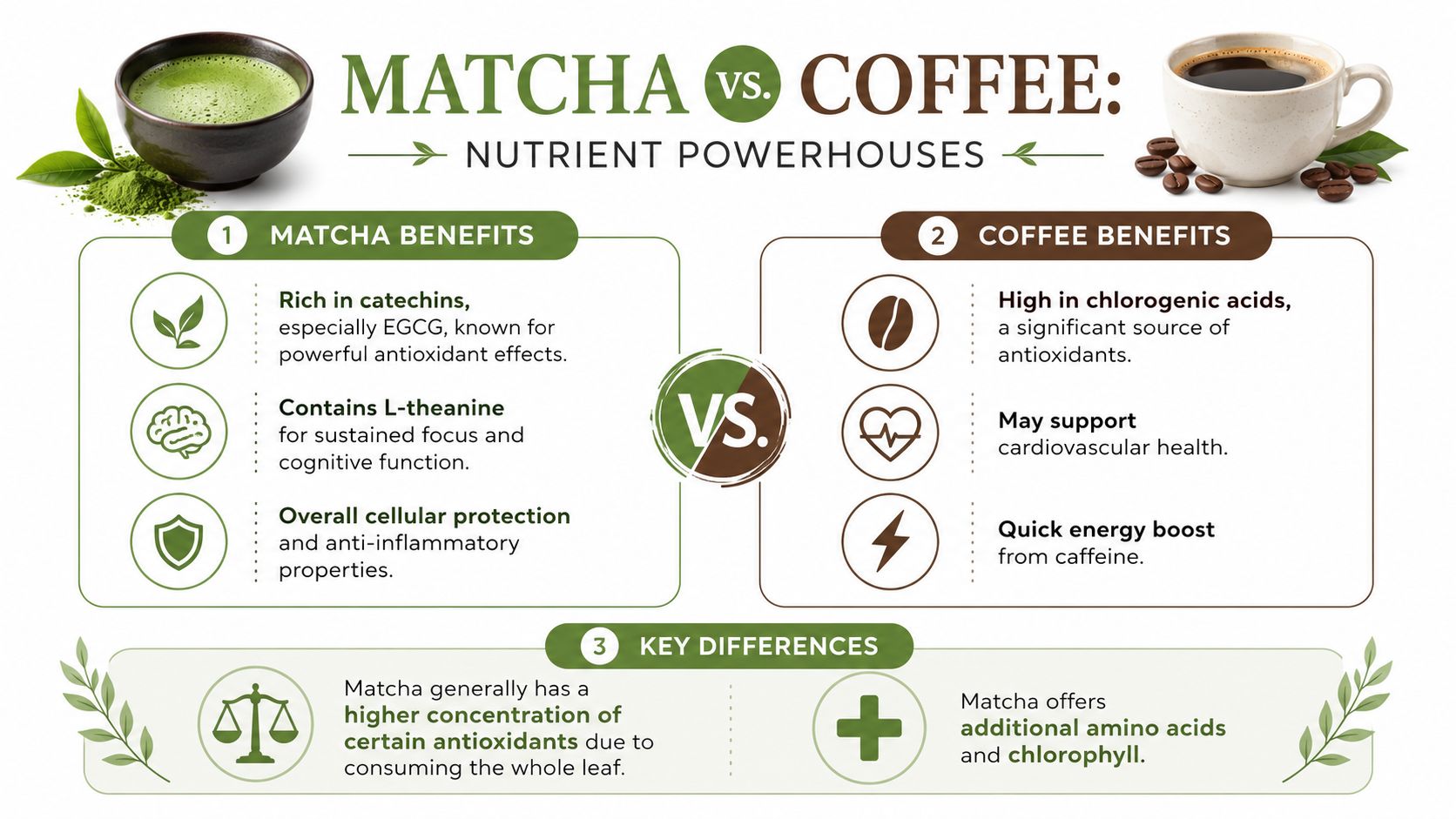
Matcha has a nutritional advantage that comes from a simple mechanism, you consume the whole tea leaf as powder rather than steeping and discarding it. Australian sources highlight its higher polyphenol and antioxidant density for that reason, and name compounds such as catechins, polyphenols, flavonoids, and EGCG as central to its functional profile Deakin University.
That whole-leaf approach is why matcha is often talked about as a concentrated source of functional compounds. A 2023 review found matcha contains a high concentration of bioactive compounds, especially polyphenols, flavonoids, phenolic acids, carotenoids, and vitamins, and another review concluded that matcha infusions have the highest antioxidant potential among tea types PMC review. A separate review also notes matcha's high catechin levels and strong antioxidant activity in experimental contexts PMC review.
What that means in plain English
This doesn't make matcha a miracle drink, and it shouldn't be treated like medicine. It does mean the drink carries more of the plant with it, so the cup is doing more than just delivering caffeine. That's why people interested in clean energy, gut-friendly routines, and antioxidant-rich beverages often gravitate towards it.
Coffee has its own strengths, and many Australians love it for flavour and a sharper lift. But if your idea of a good daily drink includes energy plus plant compounds, matcha fits that brief more naturally because the leaf itself is part of the drink.
Simple takeaway: coffee is mainly about the brewed bean, matcha is about the whole leaf. That difference shapes both the taste and the functional profile.
When to Choose Matcha and When to Choose Coffee
Match the drink to the job
The best choice depends on what your day needs. Australian commentary says coffee is often preferable for a fast caffeine hit, while matcha suits people who want smoother, sustained energy for calm-focus occasions, such as afternoon work or when they're more sensitive to caffeine AGFG.
That makes the decision easier if you stop asking “which is healthier?” and start asking “what am I trying to do right now?”. A hard training session, a sleepy school run, a creative block, a long spreadsheet session, and a late afternoon meeting all ask for different energy profiles.
A practical decision guide
- Choose coffee for speed: If you need to feel switched on quickly, coffee is the more direct option.
- Choose matcha for sustained focus: If the workday is long and you want fewer jagged peaks, matcha fits better.
- Choose matcha for afternoon use: If the 3 pm slump hits hard, matcha often feels more manageable than a stronger coffee.
- Choose coffee if you like intensity: Some people prefer the stronger, bolder lift and don't mind the sharper edges.
A useful way to think about it is quality of energy, not just quantity. Some tasks need a burst, others need consistency. If you're about to lift heavy at the gym, coffee may make sense. If you're settling in for writing, client work, or study, matcha often feels like the better tool.
The primary advantage here is strategic use. You don't have to pick a side forever. You can choose based on the moment, your caffeine tolerance, and how you want the rest of the day to unfold.
How to Choose and Prepare Quality Matcha
What quality looks like
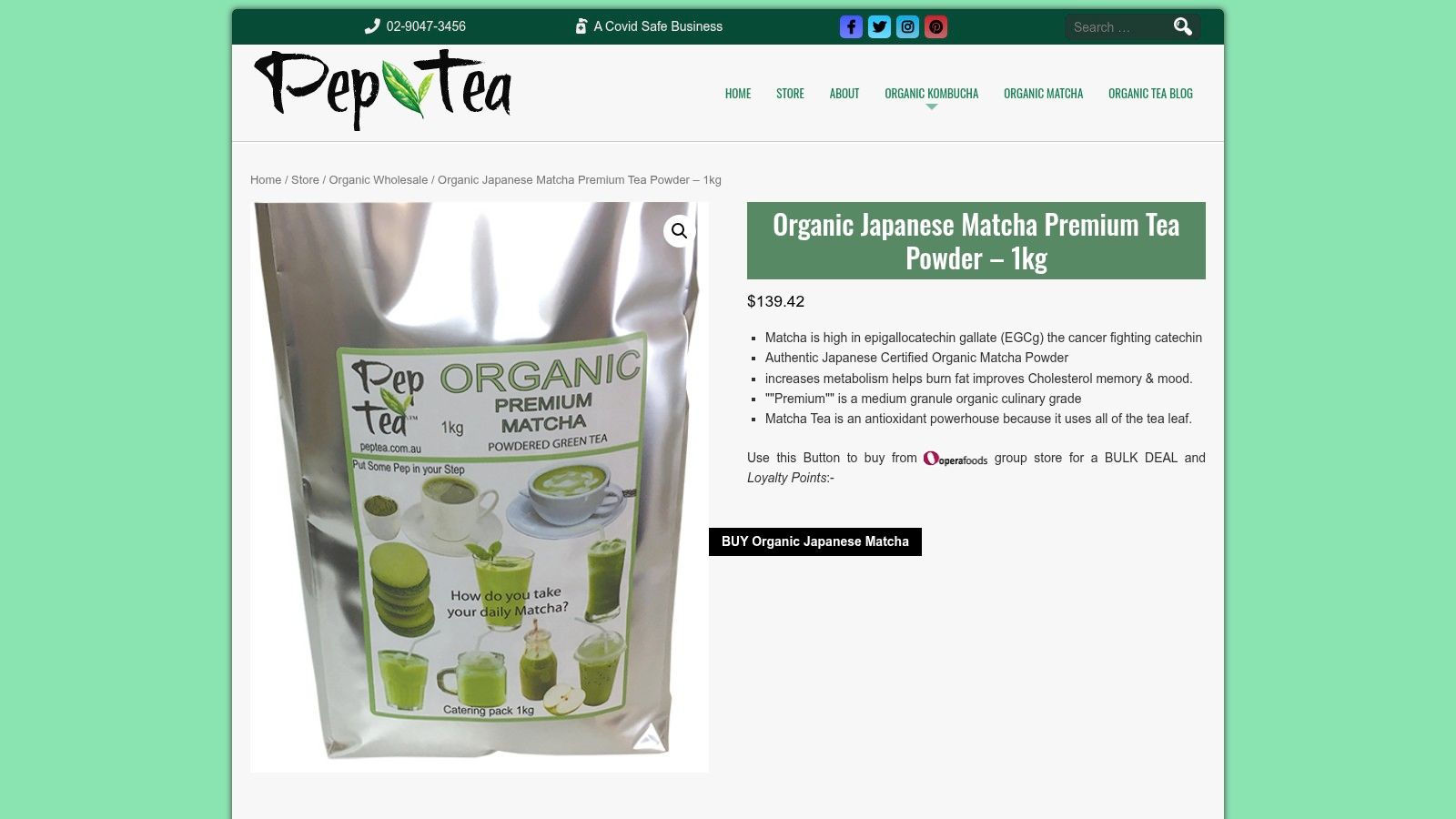
Good matcha should taste vibrant, not dull or dusty. Ceremonial-grade matcha is usually the better choice for drinking straight or in a simple latte, while culinary-grade matcha is better suited to baking, smoothies, and recipes where other ingredients soften the flavour. That distinction matters because not all green powder behaves the same in the cup.
Pep Tea's premium Japanese matcha is certified organic by the Japanese Ministry of Agriculture and grown in southern Japan, which gives Australian buyers a clear provenance and certification claim to look for in an authentic product Pep Tea product page. If you want a straightforward brewing reference, the internal guide on making matcha tea is a handy starting point.
A simple home latte method
- Sift the matcha so it doesn't clump.
- Whisk with a small amount of hot, not boiling, water until smooth and frothy.
- Add milk of choice, then stir through.
- Taste before sweetening, because a good matcha should already have enough flavour to stand on its own.
A good latte doesn't need to be complicated. The fewer barriers there are, the more likely you are to use matcha consistently instead of treating it like a special-occasion ingredient.
A video can help make the whisking rhythm feel less intimidating.
The Verdict Your Personal Energy Prescription
The cleanest summary is simple. Coffee is the faster, sharper option. Matcha is the steadier, calmer option. Neither drink wins every situation, because your body, schedule, and sensitivity to caffeine all change the equation.
If you care most about speed, coffee makes sense. If you care most about feeling alert without a hard edge, matcha usually fits better. If you're trying to build a healthier routine around everyday choices, quality matters too, which is why it's worth checking labels and provenance the same way you might when you find pesticide-free food.
The most useful mindset is to treat energy like a tool, not a personality trait. Some days call for intensity, others call for steadiness. Once you start choosing with intention, the question stops being “coffee or matcha?” and becomes “what kind of energy does this moment need?”
A CTA for Pep Tea. If you're ready to explore calmer, cleaner energy for your own routine, take a look at Pep Tea's organic matcha range and see which style fits your mornings, your afternoons, and the way you like to feel.
Best Matcha Whisk Australia: Your Guide to a Perfect Brew

You've probably had this happen. You buy a good-looking tin of matcha, heat the water carefully, stir it with a spoon or frother, and still end up with a drink that's clumpy on top, gritty underneath, and a bit more bitter than the café version you were hoping for.
That frustration usually isn't about enthusiasm. It's about the tool.
For many Australians getting into matcha at home, the powder gets all the attention while the whisk gets treated like an optional extra. It isn't. If you want smooth texture, fine foam, and that rounded, creamy feel that makes matcha so satisfying, the whisk matters just as much as the bowl and the tea itself.
That's why a proper guide to Matcha Whisk Australia shoppers can use needs to go beyond generic advice. Australian buyers face a few very real questions. Which whisk is worth buying locally? What should you look for in bamboo? How do you stop it drying out and cracking in our climate? And if you run a café, how do you make quality feel consistent from cup to cup?
The Secret to Perfect Matcha Is in the Whisk
A lot of first-time matcha drinkers assume the difference between a flat home-made cup and a silky café bowl comes down to expensive powder alone. Sometimes it does. Often, though, the missing piece is the chasen, the traditional bamboo matcha whisk.
If you've been stirring matcha with a teaspoon, shaking it in a jar, or blitzing it with a kitchen frother, you've probably seen the same pattern. The powder doesn't fully disperse. The top looks bubbly rather than creamy. The taste lands sharper than expected. You're drinking matcha, but not the version the tea was designed to become.
That matters more now because matcha isn't a niche drink in Australia anymore. The Australian matcha tea market recorded a 14.94% compound annual growth rate from 2020 to 2024, with the market reaching US$35.4 million in 2024. That growth reflects a broader shift towards healthier, premium beverages.
Why the whisk changes everything
A proper bamboo whisk doesn't just mix powder and water. It suspends the matcha evenly, breaks up tiny clumps, and introduces air in a controlled way. That's what gives you the light froth and smoother mouthfeel people associate with a well-made bowl.
Without that whisking action, the drink often tastes harsher than it should.
A good bowl of matcha should feel soft and lively, not chalky and aggressive.
A familiar Australian scenario
Think about the home cook in Adelaide making a morning matcha before work, or the latte lover in Brisbane trying to recreate their favourite café order on a Sunday. They're not short on interest. They're short on practical guidance.
That's where the chasen comes in. Once you understand what it does and how to choose one for Australian conditions, matcha gets a lot easier. And a lot more enjoyable.
Understanding the Traditional Matcha Whisk or Chasen
The chasen is a purpose-built tool. It isn't a decorative extra and it isn't interchangeable with every whisk-shaped gadget in your kitchen. Traditional versions are made from a single piece of bamboo, carefully cut and shaped into a cluster of fine tines.
At first glance, it looks delicate. In use, it's surprisingly intelligent design.
What the parts do
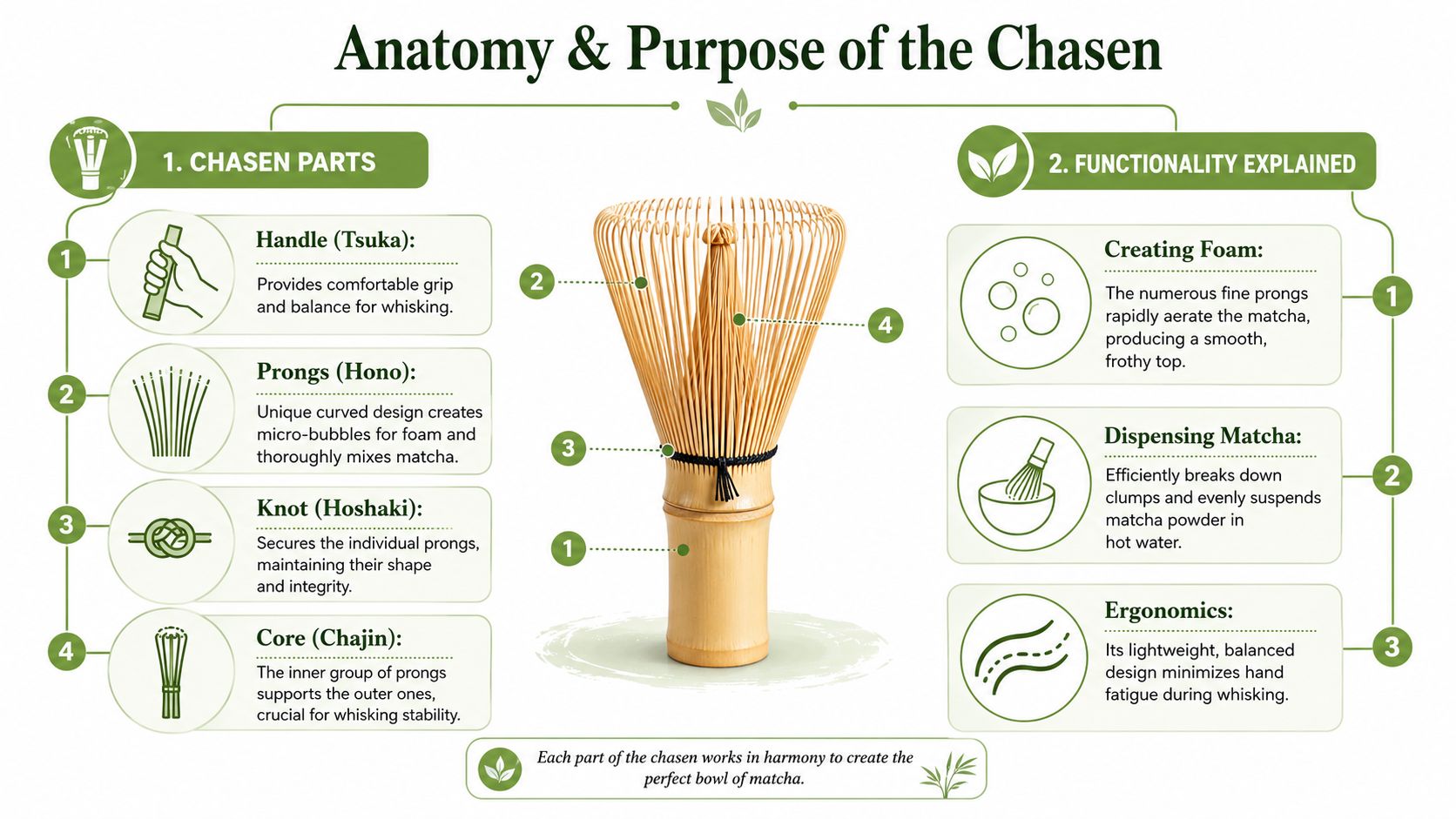
A chasen has a few key parts working together:
- Handle helps you grip the whisk lightly without squeezing too hard.
- Outer tines do most of the aerating and surface agitation.
- Inner tines support the structure and help move the liquid evenly.
- Central knot keeps the carved sections organised and stable.
This shape is why matcha preparation looks different from ordinary stirring. You're not trying to beat cream or whip egg whites. You're trying to create a fine suspension of tea particles in water.
Why tine count matters
A high-quality bamboo chasen features 64 to 100 precisely shaved tines with an optimal spring effect. That design is critical for effective aeration and for creating nano-foam, which helps prevent bitterness by properly emulsifying polyphenols.
That last part confuses a lot of beginners, so here's the plain-English version. Better whisking doesn't magically change your matcha into a different product. It helps the tea disperse more evenly, which improves texture and softens the drinking experience.
Why bamboo works better than rigid alternatives
Bamboo has a natural flexibility that matters during whisking. The tines should spring back slightly as they move through the liquid. If they're too stiff, they don't glide well. If they're too thin or badly cut, they snap early.
That's also why a real chasen behaves differently from a metal balloon whisk or silicone tool. Those may mix liquid, but they don't create the same microfoam or fine texture.
Practical rule: If your matcha whisk feels more like a kitchen utensil than a tea tool, it probably won't give you the result you want.
The real job of a chasen
The chasen does three jobs at once:
- Breaks up clumps so dry powder doesn't sit on the surface.
- Suspends the tea so each sip tastes balanced.
- Creates foam that adds body and visual lift.
That combination is why matcha prepared with a proper whisk feels calmer, smoother, and more complete. If you're serious about matcha in an Australian home kitchen or café, this is the tool that makes the ritual work.
How to Choose the Right Matcha Whisk in Australia
Buying a chasen sounds simple until you start shopping. Then you'll see bamboo whisks with different tine counts, different finishes, different prices, and plenty of listings that tell you almost nothing useful.
The best choice depends on how you drink matcha. A person making a quiet morning bowl of ceremonial-grade tea has different needs from someone preparing iced lattes most days.
Start with the whisk itself
When you compare options, check the basics first:
- Tine shape: Look for evenly cut, curved prongs rather than rough, blunt ends.
- Spring and flexibility: The whisk should feel light and responsive, not brittle.
- Material quality: Natural bamboo should look clean and well-finished, not splintered.
- Intended use: Some whisks suit thinner matcha better, while others handle thicker preparation styles more comfortably.
If you're new to matcha, a versatile bamboo whisk is usually the safest place to begin.
Matcha whisk vs alternatives comparison
| Tool | Foam Quality | Authenticity | Best For | Price Range (AUD) |
|---|---|---|---|---|
| Bamboo chasen | Fine, creamy foam with proper technique | Traditional | Ceremonial matcha, home ritual, café-quality texture | Varies by maker and build quality |
| Electric frother | Fast, but foam is often larger and less refined | Low | Quick matcha lattes and busy mornings | Varies |
| Metal kitchen whisk | Limited for matcha | Low | Emergency use only | Varies |
| Silicone whisk | Gentle mixing, less effective for classic foam | Low | Casual latte prep | Varies |
A traditional chasen wins on texture and drinking experience. An electric frother can still be useful for lattes, especially if speed matters more than ritual, but it won't feel or perform quite the same way in a bowl of ceremonial matcha.
Buying locally or ordering from overseas
Australian shoppers usually weigh two routes. Local specialist stores are easier for shipping, returns, and product support. Overseas ordering can offer a wider range, but delivery times and product consistency can be harder to judge from a screen.
If you want a bundled beginner option, a matcha tea set in Australia can make sense because it removes the guesswork around matching bowl, whisk, and basic accessories.
Here's what to watch for either way:
- Clear product photos: You want to see the tines properly, not just packaging.
- Specific descriptions: Vague listings usually hide poor craftsmanship.
- Australian conditions: This matters more than many buyers realise. A whisk that travels and then sits in a dry kitchen still needs proper care.
- Use case honesty: A decent seller should help you choose between ceremonial prep and everyday latte use.
Don't buy on looks alone
Some whisks look attractive online but feel lifeless in the hand. Others are packed in polished gift boxes yet arrive with tines that are too stiff or too fragile. A good chasen should be functional first.
If your goal is proper matcha, buy the whisk that gives you control, not the one with the prettiest listing.
Master the Art of Whisking Matcha
Choosing a whisk is only half the job. Significant improvement happens when your technique catches up.
Many people whisk matcha like they're stirring soup. That's why the foam stays flat or disappears quickly. The movement should be light, quick, and focused near the surface.
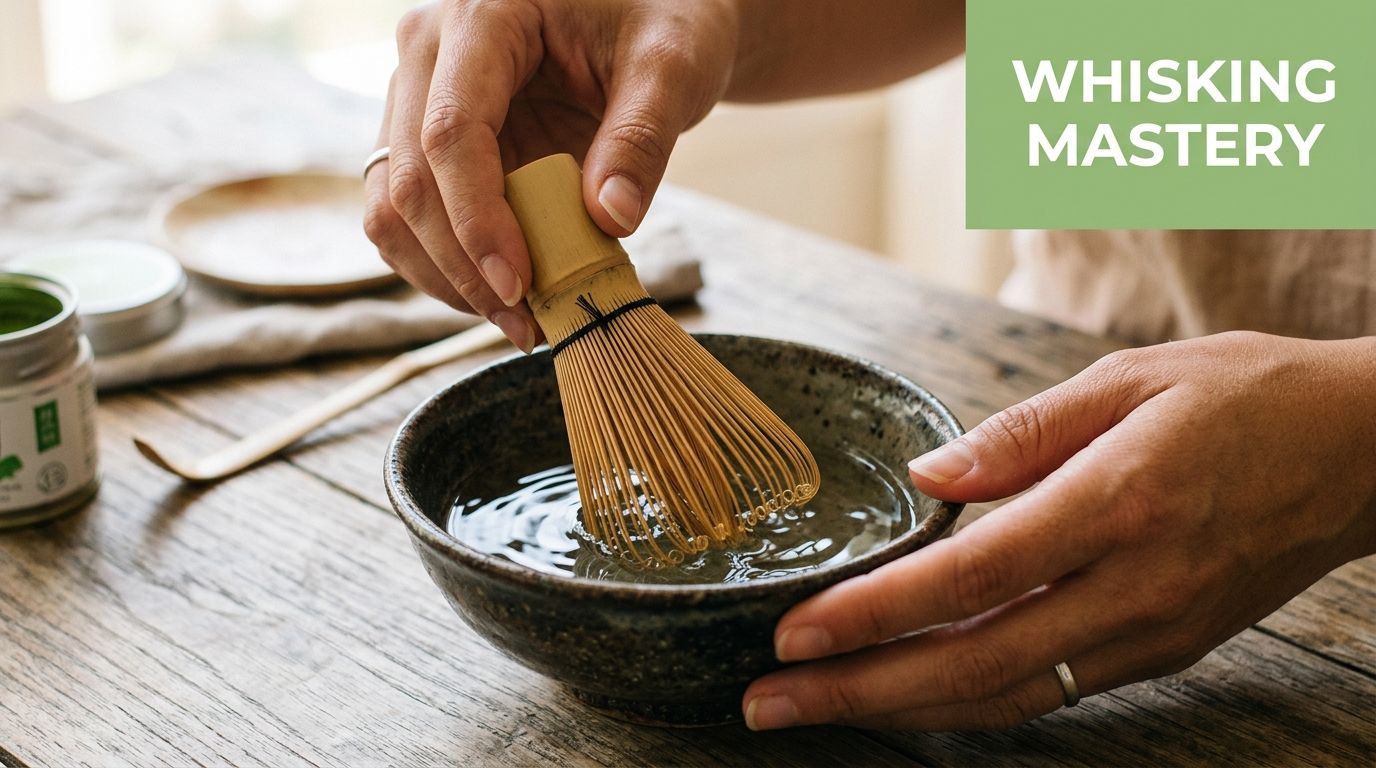
Step one matters more than people think
A bamboo chasen should be preconditioned in warm water at about 80°C for 3 to 5 minutes. This softens the tines, improves flexibility, and helps prevent fracture during the rapid W-shaped whisking motion used to create dense microfoam.
Don't skip that because you're in a rush. Dry bamboo is far more likely to split under pressure.
A simple whisking method that works
Use this sequence when you're learning:
Warm the bowl first
Swirl a little warm water through your bowl, then empty it. This takes the chill off the ceramic.Add your sifted matcha
Sifting helps remove clumps before they become a problem in the bowl.Make a loose paste
Add a small amount of warm water and gently work the powder into a smooth base.Whisk in a W motion
Once more water is added, move the chasen quickly in a loose W or zigzag pattern near the surface. Don't stir in circles.Finish lightly
When a fine foam forms, ease off and lift the whisk gently.
What good whisking looks like
You're aiming for a surface that looks soft and even, with tiny bubbles rather than a few large ones. The texture should feel smooth when you drink it, not grainy.
If you want to watch the movement before trying it, this short demonstration is a useful visual guide.
Matcha, water, and practice
The whisk can only do so much if the tea itself is poor quality. If you're comparing different ceremonial options for practice bowls, AQEEK ceremonial grade matcha is one example of a product worth studying for texture and preparation style.
For a more detailed walkthrough with visuals and technique notes, Pep Tea also has a practical guide on how to whisk matcha.
Keep the whisk tips active near the top of the liquid. If you press hard into the bottom of the bowl, you'll mix the tea but lose the foam.
Proper Care to Make Your Matcha Whisk Last
A chasen is small, but it asks for respect. If you treat it like a dry cupboard tool, it won't last long, especially in many Australian homes where indoor air can be harsh on bamboo.
That's the part generic matcha advice often misses. The whisk doesn't just need cleaning. It needs the right storage conditions.
Why Australian homes can be hard on bamboo
According to ABC reporting on Australia's matcha boom and supply pressure, a common failure point for matcha whisks in Australia is tine breakage due to the arid climate and low indoor humidity, and standard guides often miss the need for high-moisture storage to stop bamboo becoming brittle.
That rings true for a lot of kitchens. If your whisk sits beside a sunny window, near a heater, or in a very dry cupboard, the bamboo can lose flexibility faster than you'd expect.

A care routine worth following
After each use, keep it simple:
Rinse with warm water only
Soap can linger in the bamboo and affect future bowls.Shake off excess water gently
Don't slam it against the sink or squeeze the tines.Let it dry properly
Airflow matters. Damp, cramped storage can distort the shape.Store with moisture awareness
In dry Australian conditions, avoid leaving it in places that pull more moisture from the bamboo.
Why a whisk stand helps
A whisk stand isn't just a neat accessory. It supports the shape of the tines as they dry and helps the whisk keep its open form. That means better airflow, a more consistent profile, and less stress on the bamboo over time.
If you use matcha regularly, a matcha whisk stand is a practical companion rather than a decorative extra.
Signs your whisk needs replacing
A whisk won't last forever. Replace it when:
- Several tines have snapped
- The shape stays collapsed after drying
- Whisking no longer creates good foam
- The bamboo shows obvious cracking
Bamboo performs well when it's used and cared for like a tea tool, not forgotten in a drawer like cutlery.
The goal isn't to keep a chasen forever. It's to help it age well enough to keep giving you smooth, satisfying bowls for as long as possible.
A Guide for Australian Cafés and Hospitality
For cafés, the whisk isn't just about tradition. It's part of product consistency.
When a customer pays for a premium matcha drink, they notice the finish. They might not name the tool, but they'll notice whether the latte looks silky, whether the tea is blended evenly, and whether the texture feels deliberate rather than rushed.
In Sydney and Melbourne cafés, matcha lattes are priced between US$6 and US$8, with pricing pressure linked to a global shortage that became acute in Australia in 2024. That makes preparation quality commercially relevant. If matcha is a premium menu item, the method has to support the price.
What matters in service
A café team should think about:
Durability in daily use
Fast service puts more stress on bamboo than occasional home use.Staff training
A good whisk still needs correct movement and handling.Menu fit
Ceremonial bowls, hot lattes, and iced drinks may call for slightly different workflows.Supplier reliability
Consistency matters when stock conditions are already tight.

For hospitality operators, that usually means buying tools and tea from suppliers who understand Australian service conditions, not just traditional presentation. It also means keeping backup whisks on hand and replacing worn ones before customer experience drops.
If your venue is expanding its non-alcoholic or wellness-focused menu, matcha can be a strong fit. The tool quality behind it needs to match the menu positioning.
Your Matcha Whisk Questions Answered
Can I use a metal kitchen whisk for matcha
You can, but it's a compromise. A metal whisk may mix the liquid, yet it doesn't create the same refined foam or texture as a bamboo chasen. If you care about proper mouthfeel, use the right tool.
Is an electric frother bad for matcha
Not necessarily. It's useful for quick lattes. It just produces a different result from a chasen, especially if you're preparing ceremonial-style matcha in a bowl.
How do I know if my whisk is good quality
Check the bamboo finish, the evenness of the tines, and how the whisk feels after soaking. A quality whisk should open slightly, move lightly, and recover its shape well with proper drying.
Why does my whisk keep breaking
In Australia, dry indoor air is often part of the problem. If the bamboo loses too much moisture, the tines become brittle. Pre-soaking before use and storing thoughtfully can make a real difference.
Is an expensive chasen always better
Not always. Price can reflect craftsmanship, materials, and import costs, but the best whisk for you is the one that suits your matcha habits and is cared for properly.
Do I need a whisk stand
You don't strictly need one, but it helps preserve the shape of the whisk and supports more even drying. If you drink matcha often, it's a smart addition.
Can I use the same whisk for matcha lattes and ceremonial matcha
Yes, many people do. Just rinse it well after use and handle it gently. If you prepare matcha often, you may eventually prefer separate tools for different routines.
If you're building a better matcha routine at home or sourcing for a café, Pep Tea is a useful place to explore premium organic matcha, practical accessories, and Australian-focused guidance. We're based in NSW and focus on authentic, approachable tea education, so you can make cleaner, smoother matcha with confidence.
A Guide to Australian Tea Brands for 2026

You're probably here because you've stood in a supermarket aisle, scanned a café menu, or opened an online tea store and thought, when did tea get this complicated?
It used to feel simple. Black tea bags for the morning, maybe peppermint at night, and that was about it. Now the Australian shelf is full of loose-leaf blends, organic herbal infusions, ceremonial matcha, sparkling kombucha, wellness teas, local brands, imported brands, and products that call themselves Australian without making it obvious what that means.
That mix is exciting, but it can also be a bit murky. If you care about flavour, ingredients, where a product comes from, and how it fits into a healthier routine, you need more than a list of brand names. You need a way to judge quality for yourself.
Welcome to the New World of Australian Tea
Australian tea brands aren't one neat category anymore. They sit across a few different worlds at once.
Some brands still focus on the everyday cuppa. Think supermarket black tea bags, familiar blends, fast brewing, low fuss. Others lean into loose-leaf tea, premium botanicals, or small-batch blending. Then there's the newer functional side of the market, where matcha, herbal wellness blends, and kombucha have become part of how people think about energy, digestion, sugar reduction, and mindful drinking.
That's where many people get confused. They compare products that aren't really trying to do the same job.
A plain breakfast teabag is built for convenience. A ceremonial matcha is built for whisking and drinking on its own. A culinary matcha is meant for lattes, smoothies, and baking. A properly fermented kombucha belongs in a different conversation again, because it's a brewed drink rather than a leaf you steep in a mug.
Why tea shopping feels harder now
The challenge isn't just choice. It's language.
You'll see words like organic, premium, Australian-owned, Australian-made, stone-ground, live cultures, and functional. Some of these terms matter a lot. Some are useful only if the brand explains them properly.
A good tea label should answer basic questions clearly. What is it, where is it from, and why is it made this way?
If a tea brand can't explain those points in plain English, it becomes hard to know whether you're paying for actual quality or just attractive packaging.
A better way to think about Australian tea brands
Instead of asking, “Which brand is best?”, ask these questions:
- What am I buying it for: daily convenience, calm focus, a café-style drink at home, a soft drink alternative, or something to serve guests?
- What does the label tell me: ingredients, origin, certifications, sugar level, brewing style?
- Is the product honest about what it is: Australian-owned, Australian-brewed, imported leaf, local packing, or all of the above?
That mindset makes the tea world much easier to understand. Once you know how to read the category, you can choose what suits your taste, routine, and budget without getting lost in the marketing.
The Modern Australian Tea Landscape
Tea in Australia still has a strong everyday base, but the category is changing shape. The easiest way to understand Australian tea brands today is to stop thinking of tea as one thing.
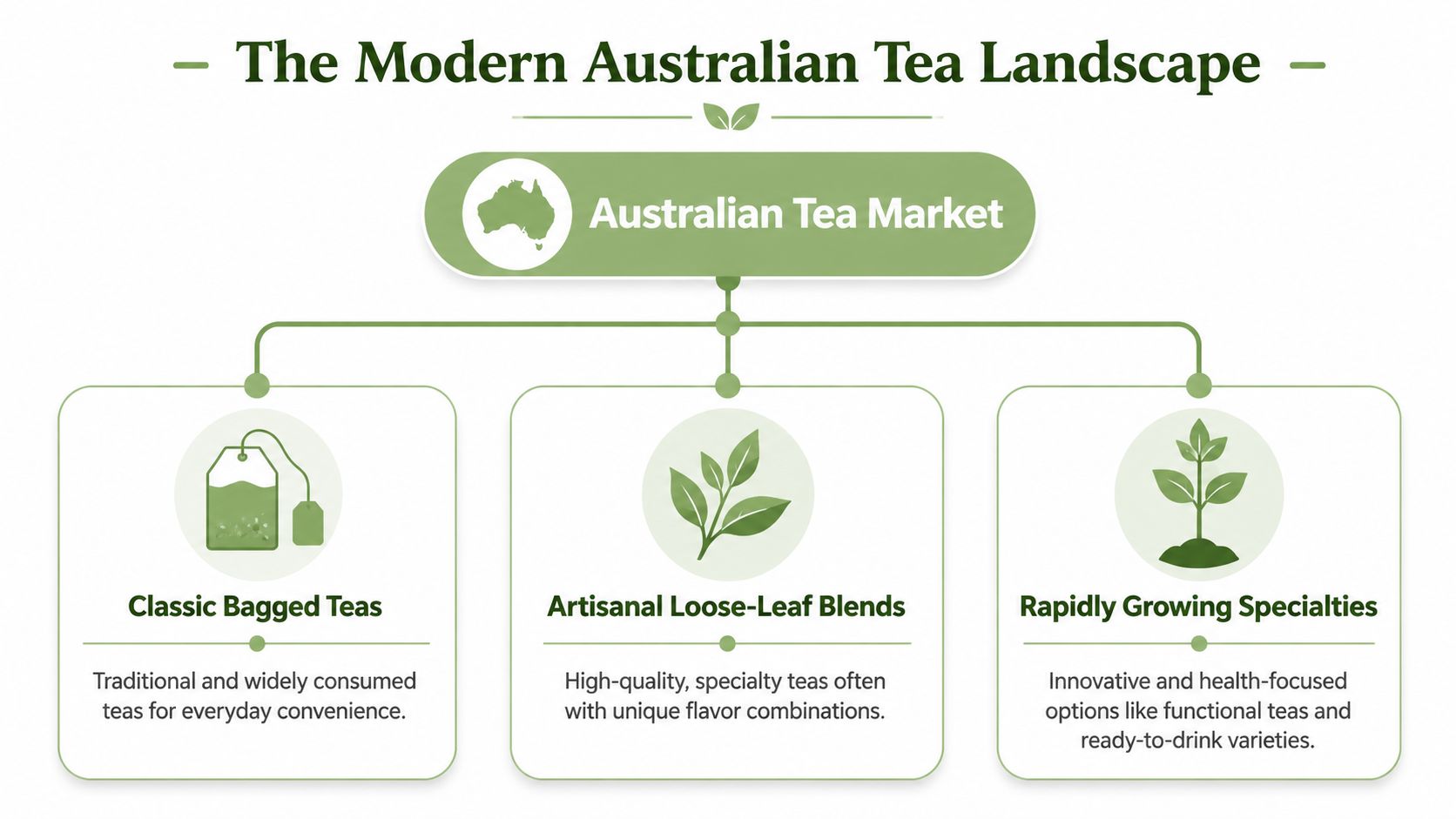
Three big parts of the market
You can picture the market in three broad groups:
| Category | What it usually includes | What buyers tend to want |
|---|---|---|
| Classic bagged teas | Black tea, English Breakfast, Earl Grey, common herbal bags | Convenience, price, consistency |
| Artisanal loose-leaf blends | Loose-leaf black, green, oolong, floral and botanical blends | Flavour, ritual, freshness |
| Rapidly growing specialties | Matcha, functional teas, ready-to-drink kombucha | Wellness, low sugar choices, café-style experience |
These groups overlap, but they solve different needs. That's why comparing a commodity teabag to a ceremonial matcha powder usually leads nowhere. They aren't competing on the same terms.
Why specialty tea keeps gaining attention
Australia's tea market was estimated at USD 535.1 million in 2025 and is forecast to reach USD 780.6 million by 2034, with growth tied to stronger demand for health-focused beverages such as organic and specialty teas, according to IMARC's Australia tea market outlook. That matters because it shows the shift isn't just about novelty. Buyers are moving toward products that feel more purposeful.
Some people want tea with a cleaner ingredient story. Others want premium café drinks at home. Many are trying to cut back on sugary drinks, or they want an afternoon option that feels lighter than coffee.
The old centre and the new edge
The traditional market hasn't disappeared. It still shapes how tea is sold, especially in supermarkets. But newer categories are changing expectations around flavour, origin, and quality cues.
A shopper who once bought one box of standard tea bags may now keep several products at home:
- A black tea for routine
- An evening herbal for winding down
- A matcha for lattes or focused work sessions
- A kombucha in the fridge as a low-sugar alternative to soft drink
That's also why content around functional beverage trends in Australia has become more useful for tea drinkers. Tea now sits inside a wider wellness and café culture conversation, not just the old “hot drink” category.
Australian tea brands now compete on purpose as much as flavour. Buyers want to know what a product fits into, not just what it tastes like.
A Closer Look at Matcha and Kombucha
Two products confuse people more than almost anything else in tea. Matcha and kombucha both sit inside the modern tea scene, but they work in completely different ways.
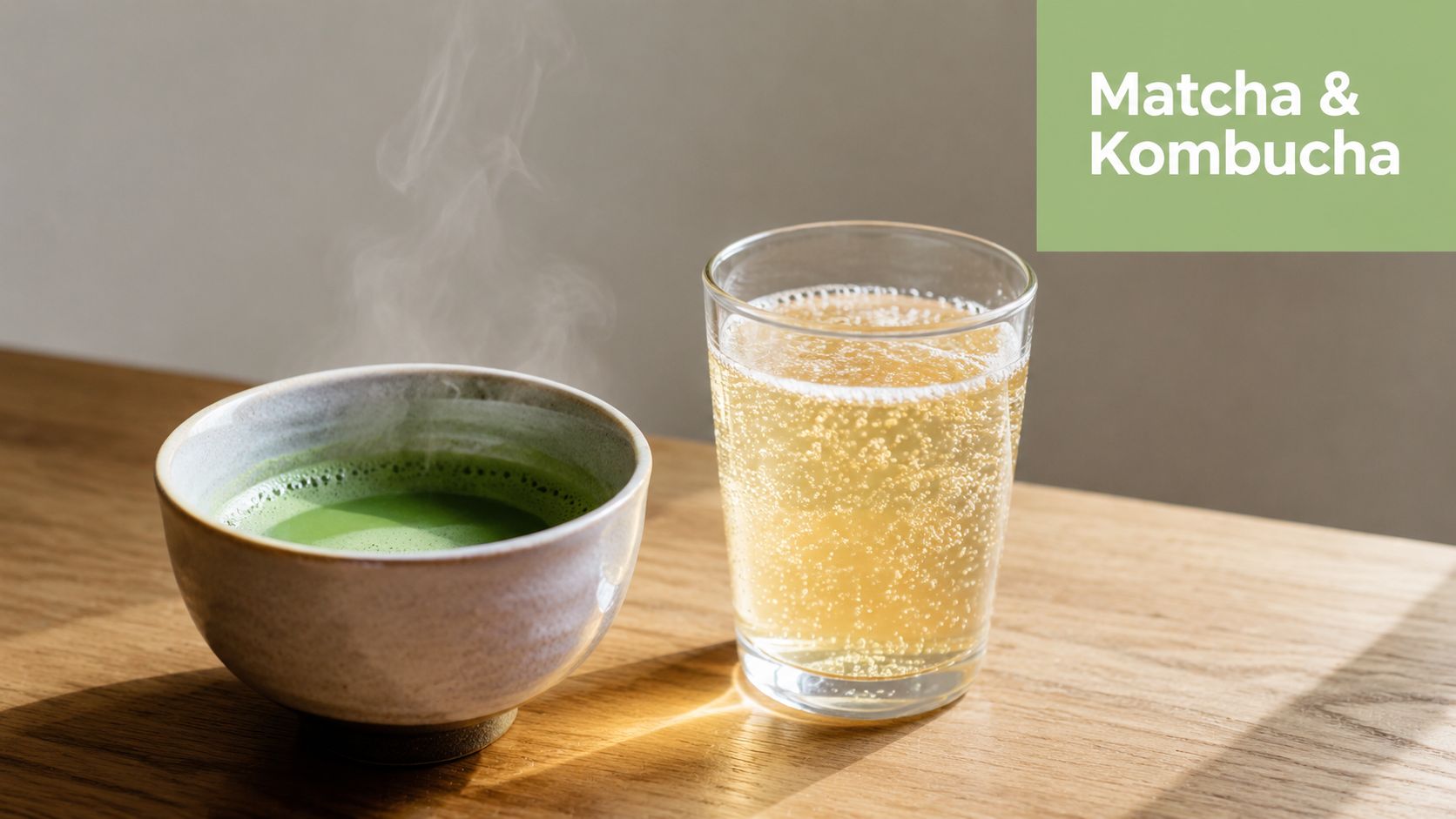
Matcha is not just powdered green tea
Matcha is made from green tea leaves that are processed into a very fine powder. Instead of steeping leaves and throwing them away, you whisk the powder into water and drink the whole leaf. That changes both the texture and the experience.
Good matcha usually looks bright and fresh rather than dull and khaki. It should smell clean, vegetal, and lively. When whisked well, it forms a smooth layer of foam.
Two terms matter most when you shop:
- Ceremonial grade means a matcha intended for drinking directly, often with water.
- Culinary grade means a matcha intended for recipes like lattes, smoothies, baking, or desserts.
Neither grade is “better” in every situation. They're just suited to different jobs.
How to choose the right matcha
If you're new to it, use this simple guide:
- For straight matcha: choose ceremonial grade. You'll notice flavour and texture more clearly.
- For lattes: culinary grade often gives you better value and enough strength to stand up to milk.
- For baking: use culinary grade, because subtle flavour notes get lost once you add other ingredients.
If you'd like a practical look at processing and what affects the final powder, Pep Tea has a useful guide on how matcha tea is made.
Practical rule: Buy matcha based on how you'll use it, not on which label sounds fancier.
Kombucha is tea transformed by fermentation
Kombucha starts as brewed tea, then goes through fermentation with a culture of yeast and bacteria. That's why it tastes different from iced tea. It's lightly tangy, often gently sparkling, and can range from crisp to complex depending on ingredients and brewing style.
People often hear the word fermentation and assume it's mysterious. It isn't. In simple terms, fermentation is a controlled process where the culture interacts with the brewed tea and sugars over time, changing the flavour and producing the tart, lively character kombucha is known for.
Quality matters here because not every kombucha on shelf gives the same experience. Some products lean heavily on sweetness or flavouring. Others put the brewing process at the centre.
What to look for in real kombucha
A well-made kombucha should be clear about a few things:
- Whether it's properly fermented
- Whether it contains artificial additives
- Whether the sugar level suits your preference
- Whether the ingredients list is simple and recognisable
If you want to see kombucha explained visually, this short video is a handy starting point.
Why these two products matter in Australian tea brands
Matcha and kombucha show how broad the tea category has become. One is rooted in traditional tea craft. The other is a modern fermented drink built from tea. Both appeal to people looking for something more intentional than a standard teabag.
They also teach an important buying lesson. A premium tea product should be able to explain its process plainly. If a brand can't clearly tell you what grade of matcha you're buying or how its kombucha is brewed, that's a sign to slow down and look closer.
Beyond the Label What Quality Really Looks Like
A lot of Australian tea brands look polished. That doesn't mean they're all equally transparent.
The tricky part is that “Australian” can mean several different things. A brand might be Australian-owned. It might be blended here. It might be packed here. It might brew here. Or it might use imported tea leaf and rely on Australian branding to do most of the talking.
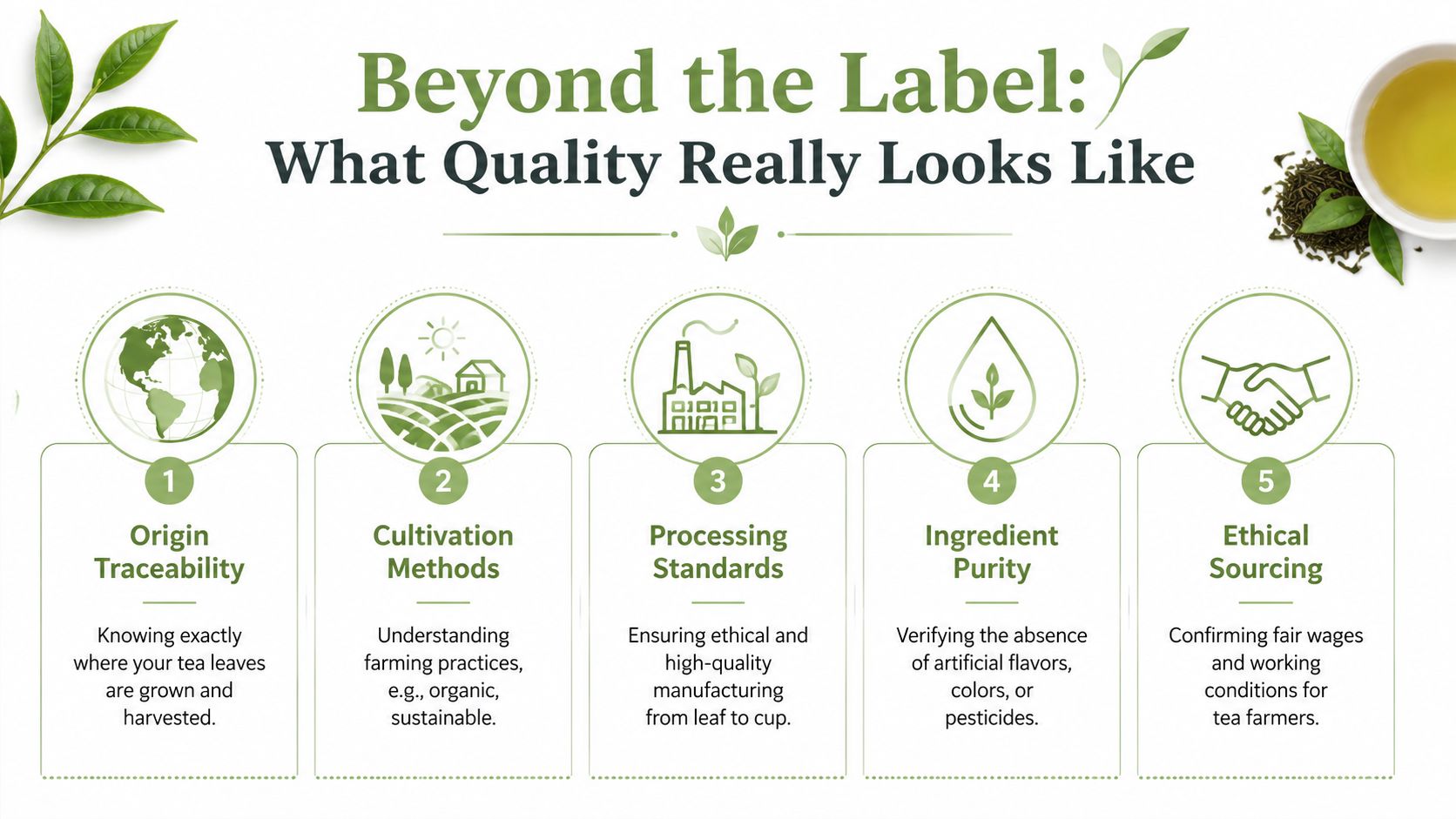
The question many shoppers don't ask
A useful industry reminder is this: local tea production in Australia is limited and expensive, so an Australian tea brand may not be using Australian-grown leaf at all. The more practical test is whether the brand gives clear information about country of origin, leaf grade, and traceability, because “organic” or “Australian” branding on its own doesn't guarantee quality, as discussed in this sourcing-focused review on Australian tea origin.
That's not a criticism of imported tea. Some of the world's finest tea comes from overseas, and certain products should come from their place of origin. Japanese matcha is the obvious example. The point is honesty.
Five signs a tea brand is taking quality seriously
Here's a checklist worth using whenever you compare products.
- Origin is stated clearly. You should be able to tell where the tea leaf was grown, not just where the packet was designed or filled.
- The ingredient list is clean. If it's a tea, you want to recognise what's in it. If it's kombucha, you want the ingredients to make sense for a fermented tea drink.
- The product tells you what kind of tea it is. Matcha grade, loose-leaf style, herbal blend ingredients, and processing details all help.
- Certification has context. Organic certification is useful, but it tells you about standards, not flavour. Pep Tea's overview of organic certification standards is a good example of the sort of clarity shoppers should expect from any tea brand.
- The brand explains processing, not just branding. Stone-ground. Blended. Brewed. Fermented. Packed. Those words should mean something concrete.
Australian-made versus Australian-grown
Readers often get tripped up here, so let's make it plain.
| Label claim | What it may mean | What to ask next |
|---|---|---|
| Australian-owned | The business is local | Where is the tea leaf from? |
| Australian-made | The product was made or brewed here | Are the ingredients local or imported? |
| Packed in Australia | Final packaging happened here | Where was it grown and processed? |
| Australian-grown | The leaf itself was grown here | Which region and what variety? |
Don't stop at the front label. The back panel usually tells you whether the brand is being genuinely transparent.
Quality is about fit, not snobbery
It's easy to think “premium” just means expensive. In tea, real quality is more practical than that. It means the product is suitable for its purpose, handled carefully, and described accurately.
A humble everyday teabag can still be decent if it's fresh and balanced. A ceremonial matcha can be poor if it tastes flat and muddy. An organic claim can be meaningful, but it isn't a shortcut around bad sourcing or weak processing.
That's why smart buyers learn to separate branding cues from quality cues. One looks nice on the shelf. The other tells you what's in the cup.
Choosing Australian Tea Brands for Your Home
Home shopping is where all of this becomes real. Consumers aren't standing in a specialty tea studio asking about harvest style. They're in a supermarket, browsing online, or adding one or two products to a grocery order.
That context matters. Australia's tea market is valued at $1.2 billion, and most spending on packaged tea happens in supermarkets, where major brands dominate and some products cost about 5 cents per teabag, according to World Tea News on Australian tea trends. That creates a very clear split between cheap everyday tea and the more specialised products people buy for flavour, quality, or a specific routine.
Shop by purpose, not by hype
If you want your tea cupboard to be more useful, buy for real situations.
- For a simple daily cuppa: choose a tea you'll make every day. There's no point buying precious leaf if you only want speed before work.
- For clean, focused energy: an organic matcha can make more sense than another ordinary green tea bag, especially if you enjoy lattes or a morning whisking ritual.
- For a fridge staple: kombucha suits people who want something cold, crisp, and less sweet than soft drink.
- For evenings: keep a calming herbal option separate from your caffeinated teas so you're not reaching for the wrong thing at night.
A quick home-buyer checklist
Use this before you click add to cart.
- Read the product type first. Is it loose leaf, bagged tea, matcha powder, or fermented ready-to-drink tea?
- Check origin and ingredients. If a brand hides them, move on.
- Match the product to your habit. Don't buy ceremonial matcha if you only bake. Don't buy a sweet fizzy drink if you wanted a cleaner kombucha.
- Start small. One quality product you'll use beats a cupboard full of “wellness” purchases you forget about.
If you're comparing matcha options specifically, this guide on best matcha powder in Australia is helpful because it focuses on how buyers can judge colour, use case, and label detail rather than chasing trend language.
One practical example
If your goal is a better afternoon drink at home, you might keep one matcha for lattes and one kombucha in the fridge for days when you want something cold instead. That's a more realistic setup than trying to make one product do everything.
Pep Tea, for example, offers Japanese organic matcha and Australian-brewed sugar-free organic kombucha, which makes it a straightforward option for households that want one powdered tea for whisking or recipes and one ready-to-drink fermented tea for the fridge.
Partnering with Tea Suppliers for Your Café
Cafés don't buy tea the same way households do. A home buyer can forgive inconsistency. A venue can't.
Staff need products that are easy to prepare correctly, stable on the menu, and clear enough to explain in one sentence to a customer who's deciding between an oat flat white, an iced matcha, and a non-alcoholic afternoon drink.

Why tea now deserves menu attention
The hospitality opportunity is bigger than the old tea pot on the side of the menu. Australia's tea market is seeing strong growth in functional and organic segments, with a projected 5.1% CAGR, driven by demand for low-sugar, additive-free, and health-supportive teas, according to Research and Markets on the Australian tea market.
For cafés, that translates into a simple commercial question. Are you giving customers better non-coffee choices, or only the bare minimum?
What café owners should look for in a tea supplier
A strong supplier relationship usually comes down to four things.
- Consistency in the cup. Your matcha should whisk the same way each shift. Your kombucha should pour and taste as expected.
- Clear product positioning. Staff should know whether a matcha is best for straight service or lattes, and how to describe a kombucha without confusion.
- Menu relevance. Organic, low-sugar, and additive-free cues matter more when customers are actively looking for lighter or more functional drinks.
- Operational ease. Products need to fit service speed, storage, and training reality.
Menu ideas that fit the current market
A tea program doesn't have to be huge to be effective.
| Drink style | Why it works in a café |
|---|---|
| Matcha latte | Familiar enough for broad appeal, distinct enough to feel premium |
| Iced matcha | Visual, refreshing, and easy to position as a coffee alternative |
| Kombucha by the bottle or glass | Gives customers a cold, alcohol-free option with personality |
| Loose-leaf pot service | Lifts the perception of tea beyond the standard tea bag |
A café doesn't need dozens of tea SKUs. It needs a small range that staff can serve confidently and customers can understand quickly.
Tea suppliers should make your menu clearer
The best supplier isn't just selling product. They're making your menu easier to execute.
If a supplier can't explain sourcing, preparation, flavour profile, and the right use case for each tea, your team ends up doing the guesswork. That usually leads to uneven drinks and weak menu language. In a café setting, clarity is part of quality.
Your Journey into Australian Tea Starts Here
The Australian tea scene is broader, more interesting, and more demanding than it used to be. That's a good thing. It means you've got more ways to find a tea that suits your taste, routine, and values.
It also means labels need a closer look.
The most useful way to judge Australian tea brands isn't by logo, trendiness, or whether the packet feels expensive. It's by asking clear questions. Where is it from? What kind of tea is it? How is it processed? Does the product fit the way you drink tea?
That's especially important now that tea includes more than the old familiar box of black bags. Matcha asks you to think about grade and preparation. Kombucha asks you to think about fermentation and ingredients. “Australian” asks you to think about ownership, brewing, packing, and origin as separate ideas.
Once you understand those distinctions, the category becomes much easier to enjoy. You stop buying vague promises and start choosing with confidence.
And that's the true pleasure of tea. Not just drinking it, but recognising what makes one product thoughtful, honest, and worth bringing into your daily life.
If you'd like to put that knowledge into practice, explore Pep Tea for organic matcha and Australian-brewed sugar-free kombucha, along with practical guides that help you choose, prepare, and enjoy tea with more confidence.
Organic Green Tea Caffeine: A 2026 Guide to Calm Energy

You're probably here because you've had that exact moment at the kettle. Coffee feels a bit too intense. Herbal tea feels too sleepy. Green tea seems like the sensible middle ground, but then the question kicks in. Does organic green tea have caffeine, and if it does, how much are you really drinking?
That uncertainty is completely fair. A lot of people choose green tea because they want a gentler kind of energy, then realise they're not quite sure whether they've picked a low-caffeine drink, a moderate one, or something stronger than expected. That's especially true once matcha enters the conversation, because not all green tea behaves the same way in the cup.
More Than Just a Morning Ritual
A friend might swap their second flat white for green tea and say they want a “cleaner buzz”. What they usually mean is simple. They want to feel awake without feeling rattled. They want focus without the sharp edge. They want energy that fits into a normal day, not a spike that sends them looking for another drink an hour later.
That's where organic green tea caffeine gets interesting.
The first thing to clear up is the myth that green tea is caffeine-free. It isn't. Green tea comes from Camellia sinensis, the same tea plant family that naturally contains caffeine. So when you choose organic green tea, you're not choosing a caffeine-free option. You're choosing a tea with naturally occurring caffeine, and the way that caffeine feels can be quite different from coffee.
For readers comparing products and labels, resources like Nutrition Geeks on Herbalife green tea can be useful for seeing how often people ask the same question in different forms: is it energising, is it mild, and how does it fit into a health-focused routine?
If you're newer to the category, our guide to what organic green tea is helps explain why farming method, leaf quality, and style all shape the final experience in your cup.
Green tea isn't something to fear. It's something to understand.
That's the key shift. Once you stop treating caffeine like a mystery ingredient and start seeing it as part of the tea's natural chemistry, your choices get easier. A light brewed cup, a concentrated bowl of matcha, and a fermented tea drink can all sit under the green tea umbrella, but they won't affect you in exactly the same way.
Some people want a gentle lift while they answer emails. Others want the calm concentration that helps with study, creative work, or a long morning without snacking. The useful question isn't only “how much caffeine is in it?” It's also “what kind of energy do I want?”
How Much Caffeine Is in Your Favourite Green Tea
Let's start with the clearest anchor point. A typical 8-ounce, or about 250 mL, cup of green tea contains roughly 20 to 50 mg of caffeine, according to this green tea caffeine reference. That same source notes that 2 cups may provide about 40 to 100 mg of caffeine.
That gives you a practical baseline for organic green tea caffeine in a standard brewed cup.
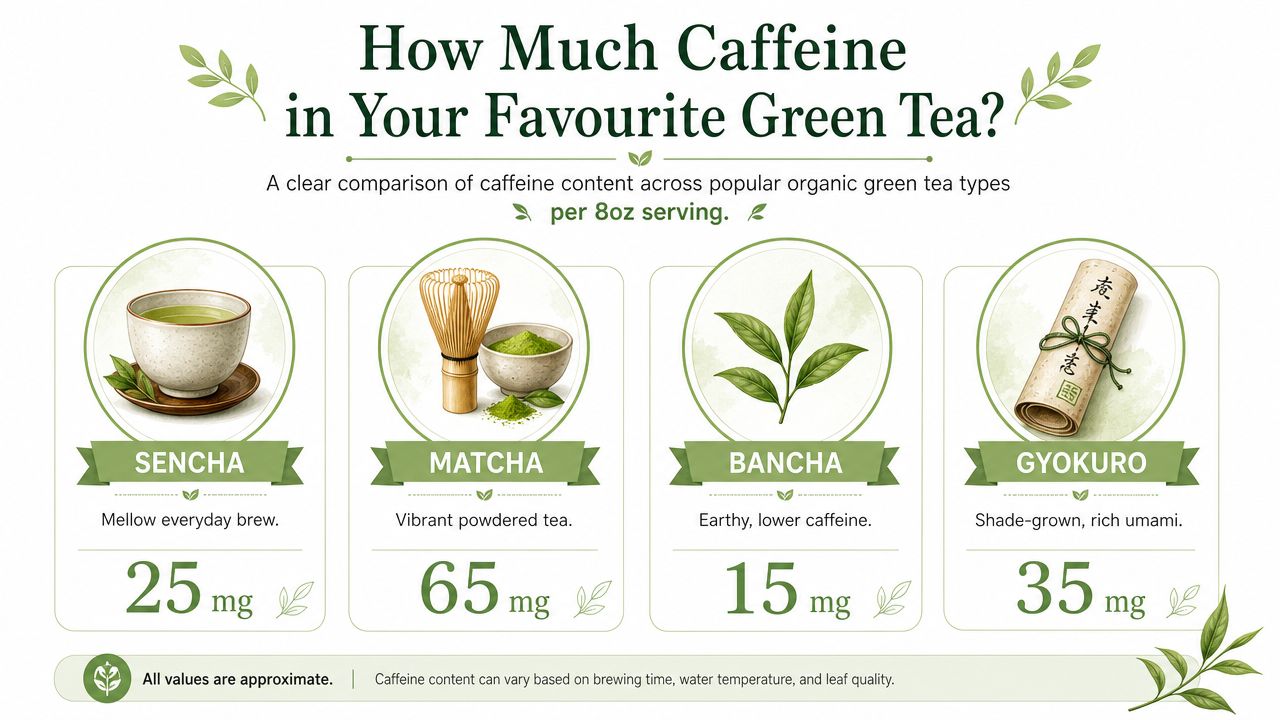
Caffeine content at a glance
| Beverage | Typical Serving Size | Average Caffeine (mg) |
|---|---|---|
| Brewed green tea | 250 mL | 20 to 50 |
| Two cups of brewed green tea | 500 mL total | 40 to 100 |
| Matcha | Varies by preparation | Often feels stronger than brewed green tea because you consume the whole leaf |
| Black tea | Typical cup | Usually stronger than many green teas qualitatively |
| Coffee | Typical cup | Usually higher than green tea qualitatively |
Why one green tea can feel stronger than another
The numbers above are only the start. Two drinks can both be called green tea and still deliver a very different experience.
Brewed loose leaf or tea bag green tea works by extraction. Water pulls caffeine out of the leaves. If the brew is short and gentle, less comes out. If it's hotter and longer, more comes out.
Matcha is different because you whisk powdered tea into water and drink the leaf itself. You're not steeping and discarding leaves. You're consuming the whole tea. That's why many people notice matcha feels more concentrated, especially in a latte or a traditional bowl.
If you want a more detailed breakdown of how matcha compares in everyday drinks, this article on caffeine in a matcha latte is a useful next read.
A simple way to think about it
Think of brewed green tea like making vegetable stock. You're pulling flavour and compounds out of the ingredient into water.
Matcha is more like blending the whole vegetable into the soup. Nothing gets left behind.
Quick takeaway: “Green tea” is one category, not one caffeine level.
That's where readers often get tripped up. They ask for one answer, but the answer depends on form. A light sencha, a strong gyokuro, and a matcha latte can all sit in the same family while feeling very different in your body.
The practical lesson is this. If you're trying to manage your daily intake, don't stop at the word green tea on the label. Ask what kind of green tea it is, how it's prepared, and how much leaf you're consuming.
Factors That Influence Caffeine Levels
Organic green tea caffeine is not one fixed number. It behaves more like the final strength of a soup. The leaves set the starting point, and your brewing choices decide how much ends up in the cup.
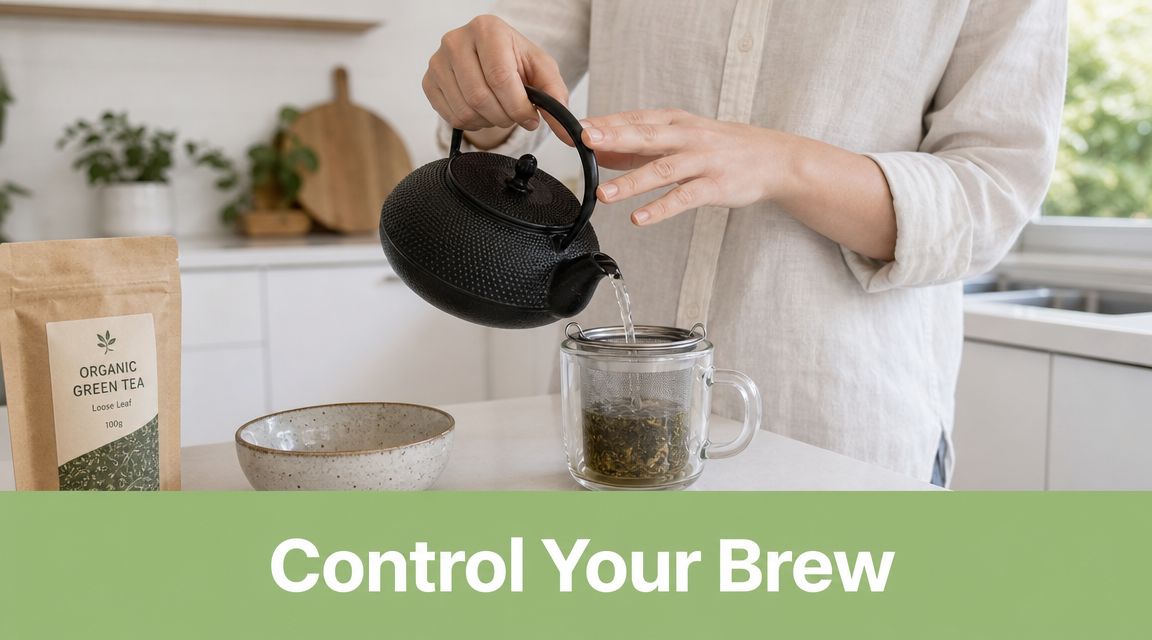
That matters because two cups of green tea can look similar and feel completely different. One may give you a calm, steady lift. Another may feel much stronger. The difference often starts long before the water touches the leaf.
Tea varietal and growing conditions
Some teas are naturally set up for a stronger effect. Shade-grown green teas are a classic example. When the plant grows with less sunlight, its chemistry shifts. The flavour often becomes sweeter and richer, and the stimulating effect can feel more noticeable too.
That helps explain why matcha and gyokuro often feel more intense than a lighter everyday sencha. The plant's environment shapes the cup from the very beginning. If you want a broader background on how green tea compounds vary across products, VitzAi's guide to green tea is a helpful reference.
Leaf age and processing
Young leaves usually create a brighter, more lively brew. Older leaves often taste softer and tend to feel gentler.
Processing changes things again. Whole leaves release compounds more gradually. Broken leaves and finely milled tea expose more surface area to water, so extraction happens faster. That is one reason powdered teas can feel stronger even before you change the amount you use.
Preparation method
Form matters.
A loose leaf green tea gives water access to the leaf for a limited time, then you remove the leaves. Powdered tea works differently because the tea stays in the bowl or cup. You drink what was whisked in.
That difference helps explain why one organic green tea feels light and easy, while another creates a deeper, more sustained lift. It is not only about caffeine on paper. It is about how much of the leaf ends up in your body and how quickly it gets there.
Brewing technique
This is the part you can control most easily at home.
Small brewing changes can noticeably change the character of your tea, including how strong the energy feels. Hotter water pulls compounds out faster. A longer steep gives the water more time to extract caffeine. A finer leaf also speeds things up because more of the leaf is exposed.
If you want a gentler cup, start here:
- Use slightly cooler water for a softer extraction
- Shorten the steep time if your tea feels too strong
- Use less leaf when you want lighter energy
- Choose whole leaf tea over powder when you want more control
If you want more lift without jumping straight to coffee, do the opposite in small steps. Increase the leaf a little. Steep a bit longer. Keep notes for a few days. Tea responds well to small adjustments, and your body usually does too.
If a café green tea feels punchier than the one you make at home, the water temperature, leaf quantity, and steep time are often the reason.
The useful takeaway is simple. Caffeine in green tea is partly built into the leaf, but a big part of your experience comes from preparation. That gives you room to shape not just how much energy you get, but the quality of that energy as well.
Why Green Tea Energy Feels Different
If coffee sometimes feels like someone switched the lights on too fast, green tea often feels more like opening the blinds.
That difference isn't just in your imagination. Green tea contains caffeine, but it also contains L-theanine, and the pairing matters. A scientific review of green tea notes that caffeine is one of its major bioactive compounds, typically making up about 2 to 5% of dry leaf weight, and that green tea's natural combination with L-theanine is known for a smoother, more sustained stimulant effect than coffee in tea science discussions, as outlined in this review on green tea chemistry and effects.
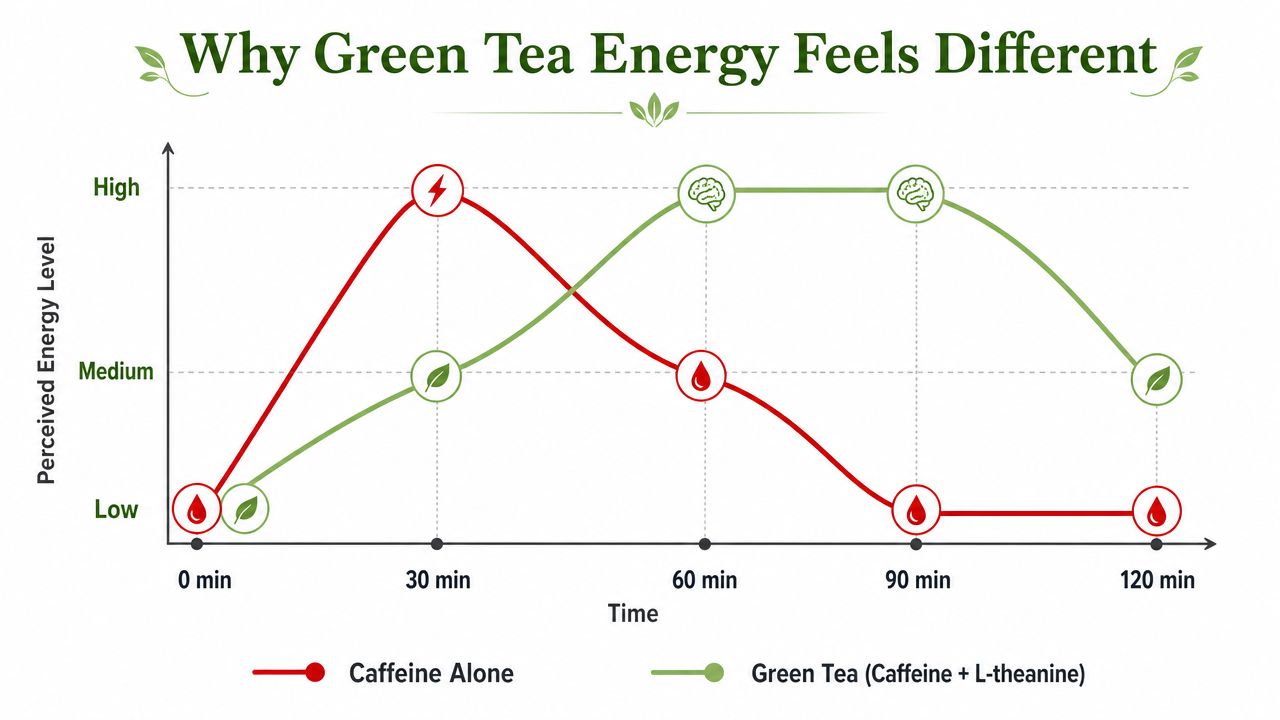
Caffeine with company
Caffeine on its own can feel abrupt for some people. Green tea rarely delivers it in isolation. L-theanine is an amino acid naturally found in tea, and it changes the character of the experience.
A simple way to picture it is this:
- Coffee-style stimulation: often feels fast and sharp
- Green tea stimulation: often feels steadier and more even
- Matcha in particular: can feel focused rather than frantic
That doesn't mean everyone reacts the same way. Bodies differ. Meals matter. Sleep matters. Your own sensitivity matters. But this pairing helps explain why many green tea drinkers describe the effect as calm alertness rather than a jolt.
Why matcha often stands out
Owing to their specific properties, shade-grown green teas earn their reputation. In high-quality matcha, you're not just getting caffeine. You're also getting the tea's broader chemistry in a concentrated form because the whole powdered leaf goes into the bowl.
For readers who want another plain-English overview, VitzAi's guide to green tea is a handy supplementary read on how people frame green tea's effects in wellness contexts.
What many people are chasing isn't more energy. It's steadier energy.
That's why green tea has become such a natural fit for workdays, study sessions, mindful routines, and afternoons when coffee feels like too much. The goal isn't to be overstimulated. It's to feel switched on and still like yourself.
The practical feeling in real life
You notice this most in ordinary moments.
A cup of coffee can be perfect before a rushed morning commute. Green tea often suits the kind of focus that asks for patience. Writing, reading, planning, designing, or working through a long list without feeling jagged.
That's also why people who once thought all caffeine was basically the same often end up surprised by tea. The quantity matters, yes. The quality of the experience matters just as much.
Brewing and Recipes to Customise Your Caffeine
You wake up wanting clarity, not a racing heart. On another day, you want a bit more lift to get through a long morning. Green tea can do both, because brewing changes the result in the cup.

A useful way to see it is this. Tea leaves are like ingredients in a slow release recipe. Water temperature, steep time, and leaf amount decide how much caffeine and flavour you pull out. Change those three levers, and you change the kind of energy you get.
Hotter water and longer steeping usually pull out more. Cooler water and shorter steeping usually keep things lighter and softer. Matcha sits in its own category because you drink the whole powdered leaf, so the experience is often fuller and more concentrated.
The main brewing levers
If you want more control, start here.
- For a gentler cup: use cooler water and steep for less time
- For more lift: use a little more leaf or let it steep longer
- For a stronger, steadier option: choose matcha instead of infused leaves
- For late afternoon: make a smaller serving or brew it lighter
That last point helps many caffeine-sensitive drinkers. You do not need to give up green tea. You often just need to change the extraction.
Low-caffeine cold brew green tea
Cold brew is one of the easiest ways to soften both flavour and stimulation. It works well when you want green tea's fresh character without a sharper edge.
- Add green tea leaves to cool water.
- Place it in the fridge.
- Strain once the flavour tastes right to you.
- Serve over ice with lemon, mint, or plain.
Why does this feel different? Cool water extracts more slowly, so the cup often tastes smoother and lighter than a hot, long steep. For many people, that makes it a smart afternoon option.
A low-caffeine tea routine comes from adjusting the brew, not settling for a dull cup.
Matcha latte for calm focus
A matcha latte solves a different problem. It suits mornings when you want stronger focus and a more sustained sense of energy. Because the whole leaf is whisked into the drink, the effect can feel more direct than standard brewed green tea.
Start small if you are still learning your tolerance. A modest scoop of matcha in milk can give you a more controlled experience than making it too strong and hoping for the best. Pep Tea's organic matcha range fits that approach well because you can easily scale the amount up or down.
A simple method looks like this:
- Sift matcha into a bowl or cup.
- Add a small amount of warm water.
- Whisk until smooth.
- Pour over warm or cold milk.
- Taste before adding any sweetener.
If you want a cold version, this guide on how to make an iced matcha latte shows the process clearly.
Here's a quick visual if you prefer to watch the process first.
The practical lesson is simple. Green tea is not one fixed caffeine experience. A cool, delicate brew can give you a lighter kind of alertness. A matcha latte can give you a fuller, steadier push. Once you know how to brew for the feeling you want, caffeine stops being a mystery and starts becoming a tool.
Finding Your Perfect Green Tea Moment
The most helpful way to think about organic green tea caffeine is not “is it high or low?” It's “when does this version fit my day?”
A brisk morning often suits a more concentrated green tea choice. If you want presence, focus, and a sense of momentum, matcha makes sense. It feels intentional. You prepare it, whisk it, and drink something that asks you to slow down just enough before the day speeds up.
Midday is usually where a standard brewed green tea shines. It can lift you without making lunch feel too heavy or the afternoon feel too wired. This is the point in the day where many people discover why green tea remains such a reliable habit. It's supportive rather than dramatic.
Later on, many drinkers prefer a lighter hand. That might mean a shorter steep, cooler preparation, or a smaller serve. If you're someone who notices caffeine easily, that adjustment matters.
A simple way to choose
- Need sharper focus for work or study: choose matcha
- Want a balanced daily cup: choose brewed green tea
- Feeling caffeine-sensitive today: brew lighter, cooler, or shorter
- Trying to build a sustainable routine: match the tea style to the moment, not just the mood
What matters most
You don't need to memorise every tea style to make a smart choice. You just need to remember three things.
First, green tea does contain caffeine. Second, the amount and feel depend on the leaf and the method. Third, the best tea is the one that gives you energy you enjoy living with.
That's why this conversation matters. Not because caffeine is something to obsess over, but because understanding it helps you choose with confidence. When you know how green tea works, you can use it more thoughtfully and get more out of every cup.
If you'd like to explore organic matcha and other functional tea options for your own routine, have a look at Pep Tea. We share practical guides, recipes, and product information to help you find a green tea rhythm that feels steady, enjoyable, and easy to keep.
Organic Green Tea Price: An Australian Guide for 2026
You're in the tea aisle, or staring at an online store, and two products seem to promise the same thing. Both say organic. Both say green tea. One looks fairly affordable. The other feels surprisingly expensive.
That's a common challenge.
The organic green tea price in Australia can feel inconsistent until you stop looking only at the shelf tag and start asking better questions. What format is it in. Where was it grown. How was it processed. Is it meant for an everyday mug, a café menu, or a more premium wellness ritual?
For Australian shoppers and hospitality buyers, that difference matters. Organic tea doesn't usually sit in the same pricing world as bulk commodity tea. It moves through a more premium import and retail chain, and that pushes up the final shelf price. For context, Selina Wamucii notes projected U.S. wholesale green tea prices in 2026 at US$2.69 to US$4.71 per kg, while the average declared value for all imported organic teas was already US$10.18 per kilo in 2014. That gap helps explain why organic green tea often lands in the premium beverage category rather than the bargain pantry staple category.
If you're new to the category, it helps to start with the basics of what organic green tea means. Once you understand that, the price starts to make more sense.
Decoding the Organic Green Tea Price Tag
A lot of price confusion starts because shoppers compare unlike products as if they're identical.
A box of tea bags, a pouch of loose leaf, and a tin of matcha can all be sold as organic green tea. But they're built for different jobs. One is about convenience. One is about flavour and brewing control. One is a concentrated powdered tea used for whisking, lattes, or recipes.
Why two organic teas can cost very different amounts
The price tag isn't random. It usually reflects a mix of things happening before the tea ever reaches an Australian shelf:
- Certification requirements that add cost to farming, auditing, and handling
- Import and freight realities that matter more in Australia than in larger production markets
- Processing differences such as whole-leaf handling versus fine powder production
- Retail positioning where some teas are sold as everyday staples and others as premium wellness products
That's why a higher price doesn't always mean “overpriced”. Sometimes it means the tea sits in a more demanding supply chain.
Simple rule: Don't compare tea by package price alone. Compare it by format, purpose, and cost per cup.
What most buyers actually want to know
Home drinkers usually want to know, “Is this good value for my daily routine?”
Café owners ask a different question. “Can I serve this confidently, price it properly, and make the quality obvious to customers?”
Both questions are smart. Both depend on moving past the headline price and into the value of the serve.
Australian Price Ranges A Quick Benchmark
You are standing in an Australian supermarket or reviewing a supplier catalogue for your café. One organic green tea is under $10. Another is over $30. A matcha tin costs more again. The fast conclusion is often “one is cheap and one is expensive.” A better question is, “What does each serve cost, and what do I get from that serve?”
That shift matters because shelf price works like the sticker price on a car. It tells you the upfront number, but not how far it will take you.
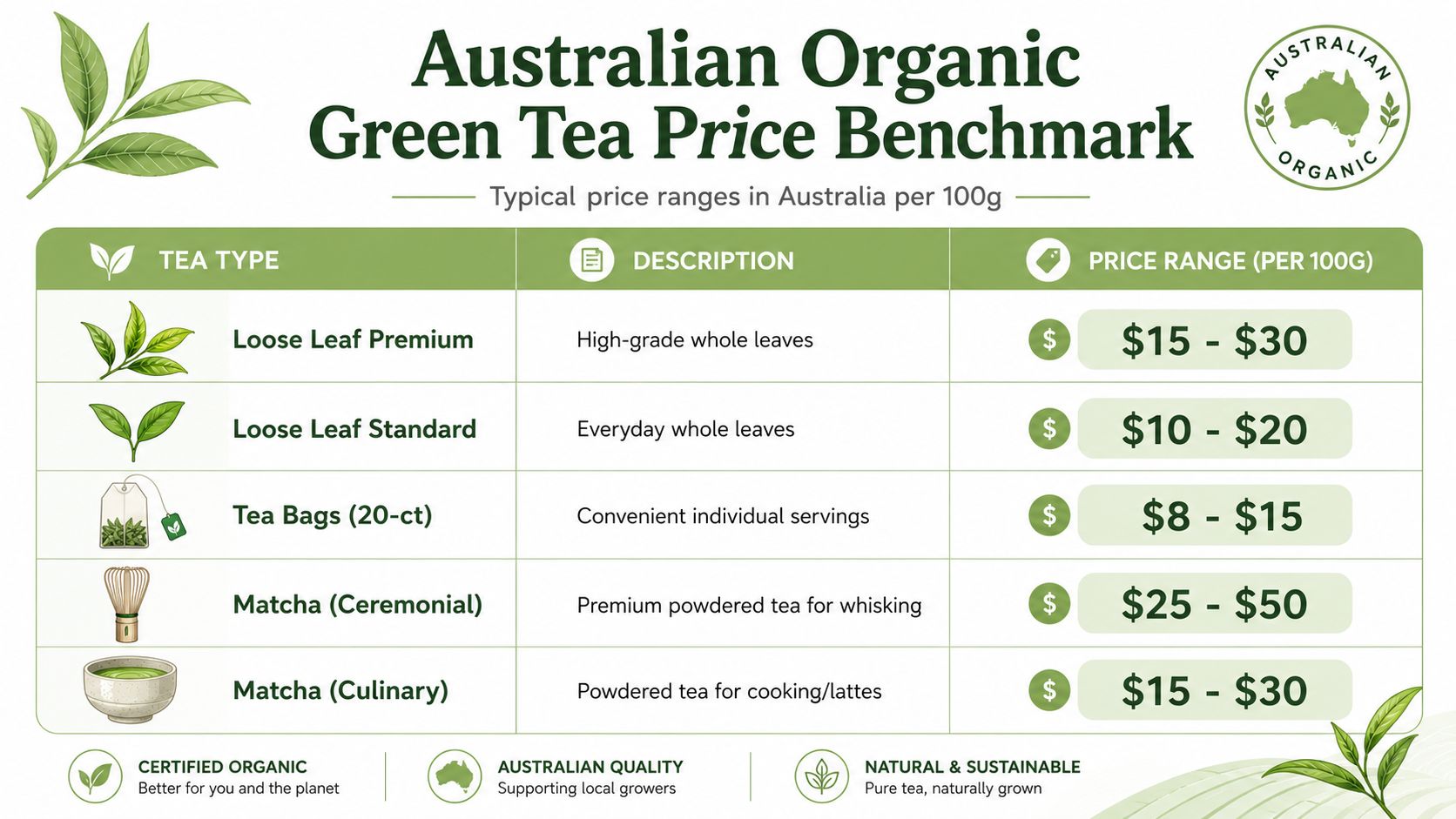
Typical Organic Green Tea Price in Australia 2026
| Tea Format | Typical Price Range (AUD) | Estimated Cost Per Serve (AUD) |
|---|---|---|
| Tea Bags (20-ct) | $8 to $15 | About $0.40 to $0.75 per bag |
| Loose Leaf Standard | $10 to $20 per 100 g | Depends on scoop size and whether you re-steep |
| Loose Leaf Premium | $15 to $30 per 100 g | Depends on scoop size and whether you re-steep |
| Matcha Culinary | $15 to $30 per 100 g | Depends on recipe and serving size |
| Matcha Ceremonial | $25 to $50 per 100 g | Depends on whisking portion |
These ranges give you a rough Australian benchmark. They are most useful as a sorting tool, not a verdict on quality. Supermarket tea, specialty tea, hospitality supply packs, and imported premium products can all sit in different parts of the range.
Why this benchmark can still confuse buyers
Two products can share a similar pack price and deliver very different value per cup.
A 20-bag box gives you a clear serve count, which makes it easy for home drinkers. Loose leaf is less obvious because one person uses 2 grams, another uses 3 grams, and some teas handle a second infusion well. Matcha complicates it again. A small tin may look expensive, but the serve cost can make sense if you are using measured portions for straight tea, lattes, or desserts.
For café owners, this is the same logic used in any sensible menu costing exercise. If you already know how to price products for profit, tea should be treated the same way. You price the serve, not just the bag or tin.
A better benchmark asks two questions at once. What does one serve cost, and what quality, consistency, and experience does that serve create?
How to read the table like a smart buyer
Start with the format that fits the job.
Tea bags usually offer the clearest labour-saving value. They suit fast home routines, office kitchens, and some casual service settings where speed matters more than brewing control.
Loose leaf often gives stronger value for flavour-focused drinkers and cafés that want more control over strength, aroma, and presentation. The upfront pack price may sit above tea bags, but the cost per serve can be competitive.
Matcha usually asks for the highest upfront spend. That does not automatically make it poor value. In Australia, it can make good sense for buyers who want a concentrated product for whisked servings, premium lattes, or menu versatility.
A quick rule of thumb
Use package price to place the product in a rough bracket. Use cost per serve to judge affordability. Use value per serve to decide whether it deserves a place in your kitchen or on your menu.
Key Factors Driving the Cost of Organic Tea
Price becomes much easier to understand once you look at what sits behind it.
In Australia, shelf pricing is heavily shaped by costs that pass through the supply chain. Fortune Business Insights notes that food and non-alcoholic beverage inflation is a key retail driver, which helps explain why freight, certification, and smaller-batch sourcing can lift the final organic tea price. So when a premium organic tea costs more, it isn't automatically a branding trick. There are often real cost layers underneath it.
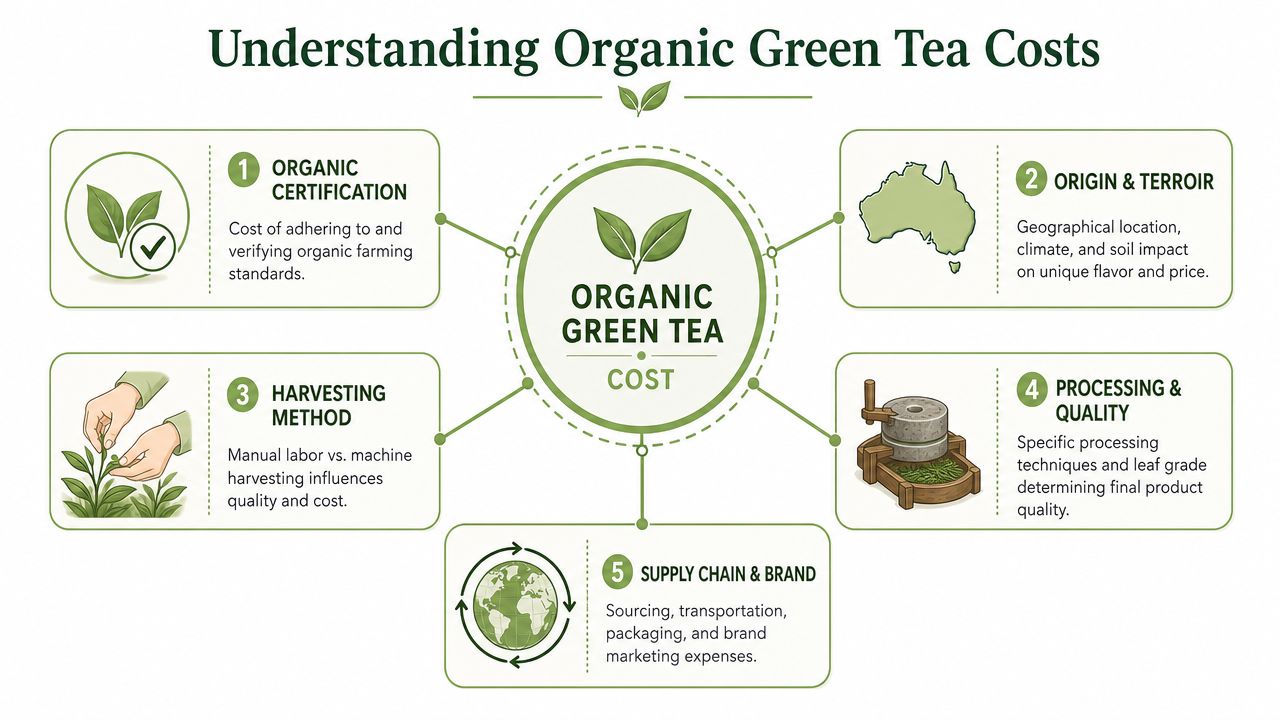
Certification adds more than a logo
Organic certification is one of the first things buyers notice, but often the least understood.
That certification usually means documented production standards, handling controls, and verification processes. Those steps take time, admin, and oversight. By the time the tea reaches Australia, that work is already part of the cost base.
Origin changes both flavour and price
Tea from a recognised tea-growing region can command a stronger price because buyers expect a particular flavour profile, processing style, and consistency.
That doesn't mean only one country can make good tea. It means provenance matters. In premium tea, origin functions a bit like it does in olive oil or coffee. People aren't only buying the ingredient. They're buying a particular result in the cup.
Harvest and processing matter more than most people realise
A tea that's carefully handled will usually cost more than a tea produced for volume.
Some green teas are made for straightforward daily drinking. Others involve more selective harvesting, more controlled processing, or extra labour after picking. Matcha is a strong example. Powdered tea isn't just “green tea ground up” in the casual sense. The path from leaf to fine powder is part of why it occupies a different pricing tier.
Grade and intended use shape value
Not every green tea is trying to do the same job.
- Tea bags suit speed and consistency
- Loose leaf suits flavour, aroma, and brewing flexibility
- Culinary matcha is better suited to lattes, smoothies, and cooking
- Ceremonial matcha is usually chosen for straight preparation and a cleaner tasting experience
If you're a retailer or café operator, it helps to think about the same pricing logic used in other product categories. This practical guide on how to price products for profit is useful because it frames cost, positioning, and margin in a way that fits specialty beverage ranges too.
The fairest way to judge tea price is to ask whether the product is well priced for its purpose, not whether it's the cheapest option on the page.
How to Calculate Your True Cost Per Serve
Buyers often look at the total price first. Smart buyers look at the cost per serve.
That small shift changes everything. A pack that seems expensive can be reasonable once you divide it by the number of useful cups it produces. On the other hand, a cheap-looking product can be poor value if it makes weak tea or disappears quickly.
The simple formula
Use this:
Total price ÷ number of servings = cost per serve
That's it.
If the number of servings isn't listed clearly, estimate it from the pack format and how you prepare your tea. A tea bag is usually one serve. Loose leaf depends on how much you scoop. Matcha depends on whether you're whisking a bowl, making a latte, or adding it to a recipe.

What this looks like in practice
Take a tea bag product first. If a pack costs $10 and gives you 50 cups, your cost per serve is $0.20.
Now compare that with a premium powdered tea. The upfront spend may feel much higher, but it's also serving a different purpose. A matcha bought for focused morning use, café lattes, or recipe work shouldn't be judged like a basic teabag for the office kitchen.
Here's the question: What are you asking that serve to do?
- Daily hydration drink. You'll probably prioritise lower cost and convenience.
- Flavour-focused tea break. You may prefer loose leaf and accept a moderate lift in cost.
- Functional or premium drink. You may decide a higher per-serve cost is worthwhile.
Why businesses should care too
Cafés already know ingredient cost isn't the whole story. They track menu pricing, waste, and customer value over time.
That's why it's useful to borrow thinking from adjacent parts of business. Even though it's about marketing, this guide on how to measure customer acquisition is a good reminder that one headline number rarely tells the full story. Tea buying works similarly. Shelf cost matters, but the better metric is what each serve contributes to value, experience, and repeat purchase.
Comparing Value Matcha vs Loose Leaf vs Tea Bags
A $12 box of tea bags and a $30 tin of matcha can sit on the same shelf, yet they are not competing in the same job.
That is the mistake many buyers make. They compare pack price first, then assume the cheaper product is the better deal. Tea works more like kitchen equipment than stationery. A paring knife, chef's knife, and blender all help you prepare food, but you would not judge them by asking which one is cheapest per item. Green tea formats work the same way. Each one creates value in a different way, and the smart comparison is cost per serve matched to purpose per serve.
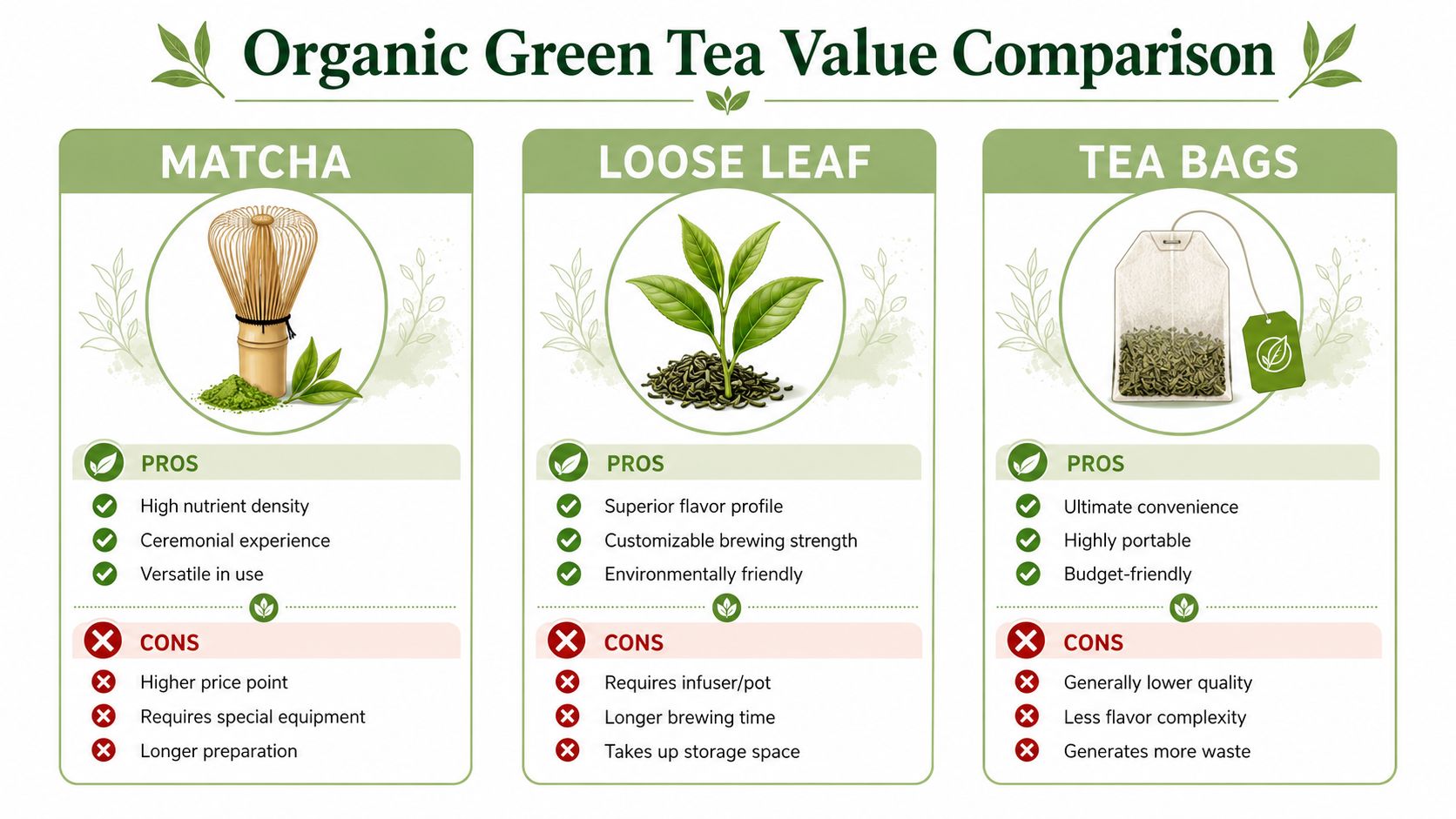
Tea bags for convenience
Tea bags usually win on routine.
If you want a fast, tidy cup before work, for staff rooms, hotel breakfast stations, or self-serve café setups, tea bags often deliver the lowest friction. The flavour may be simpler and your brewing control is limited, but the value is in reliability. Little mess. Little training. Little guesswork.
For many Australian households and venues, that matters more than nuance in the cup.
Loose leaf for flavour and brewing control
Loose leaf often gives the strongest middle ground.
You pay more attention, but you usually get more say in the final result. Water temperature, steep time, and leaf quantity all shape the cup. That flexibility suits home drinkers who care about aroma and texture, and it suits cafés that want a more premium pot or cup without stepping into matcha preparation.
The key value question is simple. Will the person making it use that extra control well? If yes, loose leaf can feel far better value than tea bags, even if the shelf price is higher.
Matcha for intensity, versatility, and premium positioning
Matcha sits in its own lane because you consume the whole leaf in powdered form rather than infusing and discarding it. That changes both use and perceived value.
A serve of matcha may cost more, but it can also do more. It can be whisked as a straight tea, built into a latte, blended into smoothies, or used in baking. For a café owner, that opens menu possibilities. For a home buyer, it may replace a café-bought drink habit rather than a basic green tea habit. If you want a clearer breakdown of format and use, this guide on the difference between matcha green tea and green tea explains the distinction well.
That is why matcha should not be judged against tea bags alone. It is often closer to a specialty ingredient than an everyday pantry staple.
A better way to compare value
Use a three-part test.
Ask what one serve costs, what one serve requires, and what one serve gives back.
- Tea bags usually offer the lowest effort per cup and the most predictable routine value.
- Loose leaf usually offers better flavour per cup when the drinker is willing to brew with care.
- Matcha usually offers the highest versatility and premium potential, especially for lattes, wellness menus, and intentional daily rituals.
For home drinkers, the best-value format is the one you will enjoy and use consistently.
For cafés, the best-value format is the one that fits your service model, staff skill, and menu pricing. A tea bag can be profitable because it is fast. A loose leaf tea can be profitable because it improves the customer experience. A matcha can be profitable because customers accept a higher menu price for it.
Good value comes from fit. Tea bags suit speed, loose leaf suits flavour, and matcha suits a more purposeful, premium serve.
Where ready-to-drink value fits
Ready-to-drink products belong to a separate value category.
Organic kombucha, for example, removes the brewing step completely. Its appeal comes from convenience, refrigeration, and a different drinking occasion. That does not make it better than green tea. It means the buyer is paying for immediate service and a different customer expectation, which can be useful in hospitality settings.
Smart Buying Tips for Home and Hospitality
Paying more only makes sense when you know what you're paying for.
Australian buyers are balancing two instincts at once. They're careful with everyday spend, but they'll still pay a premium for products that feel better, cleaner, or more purposeful. That tension is especially clear in premium wellness beverages, where buyers want proof of value, not just a nice story.
For home drinkers
A smart purchase starts before checkout.
- Read the format properly. Don't compare tea bags, loose leaf, and matcha as if they're equivalent.
- Check the origin and grade. A premium tea should tell you enough about what it is and how to use it.
- Buy for your real habit. If you drink tea absent-mindedly at your desk, convenience may matter more than prestige.
- Think in servings. A more expensive tea can still be sensible if each cup delivers what you want.
If you shop online, browsing a specialist range of organic green tea in Australia can make comparison easier because format and purpose are usually clearer than they are on crowded marketplace pages.
For cafés and hospitality venues
Hospitality buyers need a slightly different lens. You're not just buying tea. You're building a menu.
A premium green tea or matcha offer can work well when it gives customers a distinct reason to choose your venue. That might be a more refined hot tea option, a stronger matcha latte program, or a non-alcoholic drinks list that feels current and health aware.
Consider these checkpoints:
Match product to menu role
Culinary matcha may suit lattes and kitchen use. Loose leaf may suit pot service. Tea bags may suit speed-led operations.Make the value visible
If customers are paying more, provenance and preparation should be clear on the menu and in service.Watch wastage
A premium ingredient only works commercially when staff use it consistently.Offer contrast
A café menu is stronger when it includes both accessible options and one or two more distinctive premium choices.
For hospitality, “worth the price” usually means the product helps the menu feel sharper, not simply cheaper to pour.
A practical mindset for both groups
The best buyer isn't the one who always spends least. It's the one who spends in the right place.
If you want a quick office tea, don't overbuy. If you care about flavour, ritual, or a premium café drink at home, don't underbuy and then wonder why the experience feels flat.
Finding Quality That Fits Your Budget
There isn't one correct organic green tea price.
There's only the right price for the job you need the tea to do. Tea bags can be good value when convenience matters. Loose leaf can be the better buy when flavour and brewing control matter more. Matcha can justify a higher upfront spend when you want a more premium or functional serve.
That's the key shift. Don't ask only, “Why is this tea so expensive?” Ask, “What am I getting in each cup?”
When you judge organic tea by format, purpose, and cost per serve, the market becomes far easier to understand. You stop comparing everything against the cheapest box on the shelf and start choosing with more confidence.
Frequently Asked Questions
Is organic green tea always more expensive than regular green tea
Often, yes. Organic tea usually carries extra certification, sourcing, and supply-chain costs. But “more expensive” doesn't always mean poor value. If the tea is better suited to your needs, the higher price can still make sense.
What's the difference between organic and certified organic
In practical buying terms, certified organic gives you more confidence because it points to a verified standard rather than a vague marketing phrase. If the label isn't clear, it's worth reading more closely before you compare price.
Why does matcha cost more than tea bags
Because it's a different format with a different use case. Matcha is a powdered tea used for whisking, lattes, and recipes, and buyers often treat it as a premium ingredient rather than a basic pantry tea.
Is loose leaf better value than tea bags
Sometimes. Loose leaf can offer better flavour and more flexibility, but only if you enjoy brewing it. If convenience wins every morning, the tea bag may be the better value for your lifestyle.
How should cafés choose between matcha, loose leaf, and tea bags
Start with the menu. Tea bags suit speed, loose leaf suits table service and flavour-led offers, and matcha suits premium drinks. Buy according to service style, staff capability, and what your customers expect.
Does expensive tea always mean better tea
No. A higher price should come with a clearer reason. Better origin information, stronger processing standards, a more suitable grade, or a format that matches how you'll use it.
If you're ready to choose more confidently, explore Pep Tea for premium organic matcha, Australian-brewed sugar-free organic kombucha, and practical guidance that helps you understand what you're buying, not just what you're paying.
Qi Organic Green Tea Detox Coles: Benefits, Price &
You're probably standing in the tea aisle, phone in hand, typing Qi Organic Green Tea Detox Coles because the box sounds promising but the wording is a bit slippery. “Detox” can mean anything from a simple herbal tea to a product that implies far more than it can reasonably deliver.
That confusion is fair. A tea can be pleasant, useful, and worth buying without being a miracle reset for your body. The trick is knowing what you're getting, what the ingredients are there for, and how it compares with other wellness drinks Australians reach for when they want something functional and low-fuss.
Your Guide to Qi Organic Green Tea Detox
You are in the supermarket tea aisle after work, looking for something that feels a bit kinder than another coffee and more purposeful than plain tea. A box labelled organic, green tea, and detox naturally catches your eye because it suggests a simple health habit, not a full lifestyle overhaul.
That appeal makes sense. Australian shoppers often use teas like this as a small daily ritual. The organic label can signal cleaner sourcing, while the word detox hints at support for a lighter, fresher routine. The catch is that those two ideas are not the same thing, and many people blur them together.
Why this tea gets attention
Qi Organic Green Tea Detox sits in a familiar wellness category. It offers a convenient tea-bag format, an organic positioning, and a name that suggests more function than a standard green tea. For plenty of shoppers, that is enough to earn a place in the trolley.
The better question is what kind of function you are buying.
A detox-style tea usually works best as a supportive beverage category. It can be part of a routine that feels calm, warm, and a little more intentional. It does not replace sleep, hydration, balanced meals, movement, or the normal work your liver and kidneys already do.
That distinction matters because it helps you shop more clearly. If you want a pleasant organic green tea blend, Qi may suit that role well. If you want stronger functional value, it helps to compare it with other wellness options Australians are choosing, especially high-quality Matcha for concentrated antioxidants and Kombucha for live probiotics.
If you want a clearer foundation before judging any product in this category, this guide to organic green tea basics explains what the label does, and does not, tell you.
What to expect from the product
Keep the product in the right mental category and it becomes easier to assess.
- An easy daily habit. Tea bags are convenient, familiar, and low effort.
- A flavoured green tea experience. You are choosing a wellness blend, not a pure ceremonial tea.
- A gentle sense of support. The benefit is usually about routine, taste, and light functional ingredients rather than a dramatic result.
That is also where this article takes a wider view. Qi is a useful case study because it shows how many wellness teas are marketed in Australia. Some are built around comfort and broad wellness language. Others, such as Matcha and Kombucha, tend to offer a more defined functional profile. Understanding that spectrum helps you choose a tea for what it does, not just what the front of the box suggests.
What Is Inside a Bag of Qi Detox Tea
The Australian version of Qi Detox Green Tea is sold as an organic blend with ingredients such as green tea, dandelion root, milk thistle, ginger, and peppermint, according to the Qi Tea Australia product listing. Read that list as a clue to the product's real identity. It's a herbal green tea blend first, and a “detox” tea second.
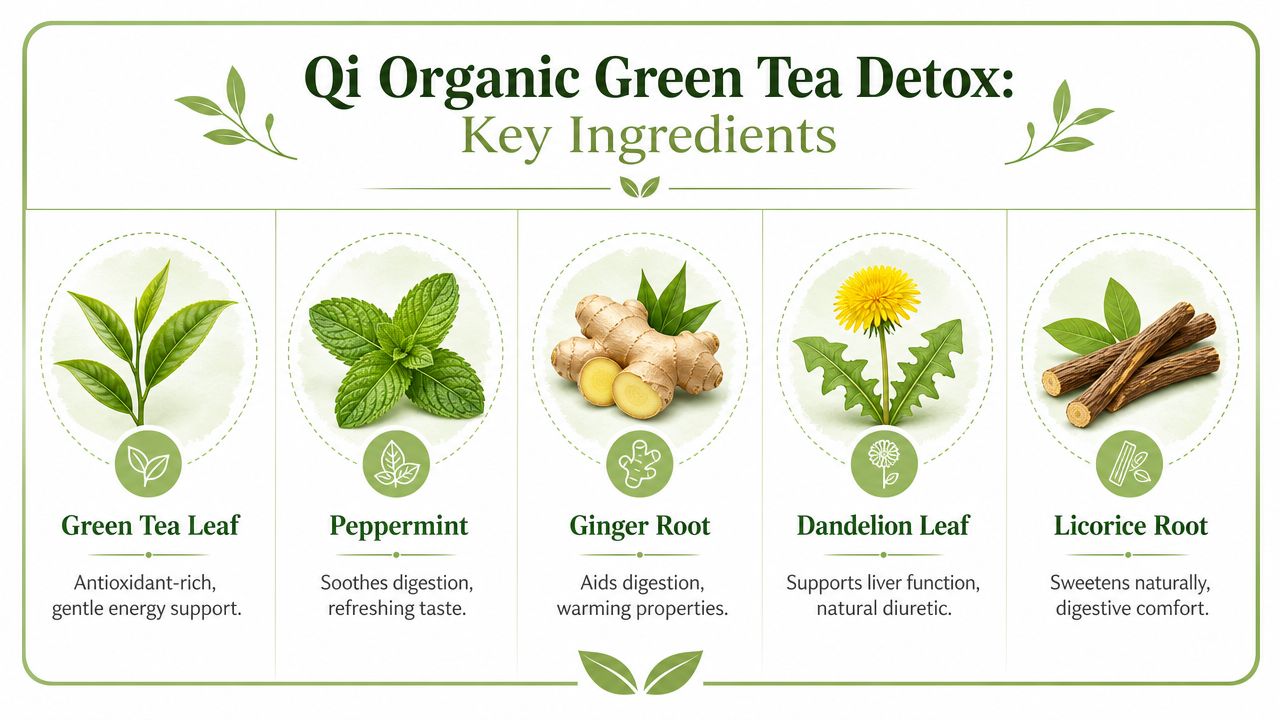
The ingredient lineup in plain English
Each ingredient contributes something different to the cup.
- Green tea: This is the caffeinated base. It gives the blend its tea character and a lighter lift than coffee.
- Peppermint: Often what makes a blend feel fresh and easier to drink, especially if plain green tea tastes grassy to you.
- Ginger: Adds warmth and a bit of spice. Many people choose ginger-forward teas when they want something settling after meals.
- Dandelion root: Frequently included in detox-style products because it has a long wellness tradition in herbal blends.
- Milk thistle: Another herb commonly associated with liver-support language in wellness marketing.
Where readers often get confused
The ingredients sound impressive, so it's easy to assume the tea must “detox” the body in a direct, measurable way. That leap is where marketing often outruns clarity.
Australian dietary guidance takes a more grounded view. The Australian Dietary Guidelines emphasise eating patterns built around whole foods and water rather than “detox” products as a health reset, which is why it's more accurate to see this tea as part of a wellness routine, not a physiological clean-out.
Practical rule: If a tea says “detox”, ask what you can clearly point to in the cup. Flavour? A bit of caffeine? Herbs traditionally used in wellness blends? Those are fair answers. Grand body-reset promises aren't.
What the tea can realistically offer
A fair way to think about Qi Detox Tea is this:
| What it likely does | What it doesn't automatically mean |
|---|---|
| Gives you a warm, low-sugar drink option | That your body needs a special tea to detox |
| Adds herbal flavour beyond plain green tea | That the herbs create a dramatic measurable result |
| May suit a mindful daily routine | That it replaces healthy food, water, or rest |
That's not a criticism. It's just a clearer framing. For plenty of people, a pleasant organic herbal green tea is exactly what they want.
Finding Qi Tea at Coles A Shoppers Checklist
You are in Coles, trying to spot a wellness tea before the trolley keeps moving. The easiest mistake is looking in the wrong place. Qi Organic Green Tea Detox is usually stocked with standard tea products, not with refrigerated health drinks or vitamin-style supplements.
What to check on the shelf
Start with the green tea and herbal blend area. Qi is generally sold in a boxed tea-bag format, so you are looking for a pantry tea, not a ready-to-drink product.
A practical shelf check helps:
- Pack format: Look for a 25 tea bag, 40 g box.
- Aisle placement: Check beside green tea, peppermint, and other wellness blends.
- Price benchmark: Expect a mid-range supermarket tea price rather than a premium speciality-tea price.
- Label wording: Scan for “detox”, “organic”, and the Qi brand name on the front of the box.
That price position matters because it tells you what kind of product you are buying. A grocery-shelf detox tea is usually built for convenience and everyday sipping. More concentrated wellness formats, such as quality matcha powder or live kombucha, often aim for a different functional role. Matcha gives you the whole tea leaf in powdered form, which changes the antioxidant story. Kombucha brings fermentation into the picture, which is a different category again.
If you are trying to trim the grocery budget, Cashback Australia's Coles gift card tips can be handy for routine pantry buys.
How to brew it so it tastes better
A harsh cup can make any tea seem worse than it is. Green tea works a bit like spinach in a frypan. Too much heat for too long, and the pleasant notes get lost.
Use a gentler method:
- Boil the kettle, then let the water cool slightly before pouring.
- Steep for a shorter time first and taste early.
- Remove the bag once the flavour is clean and light, rather than pushing for maximum strength.
- Add lemon or mint if you want a fresher finish.
That approach gives you a fairer read on the tea itself.
If you end up enjoying lighter tea flavours, it can also help to use them in food and cold drinks rather than forcing a very strong hot brew every time. Something simple like these easy matcha muffins for a tea-time snack shows how wellness teas can fit into everyday routines in a more useful way than detox marketing alone.
If the first cup tastes bitter, adjust the water temperature and steep time before you judge the blend.
Creative Recipes Beyond the Hot Cup
Qi Detox Tea works best for many people when it stops feeling like a “health task” and starts acting like a flexible base for drinks you enjoy. A box in the pantry goes further when you use it cold as well as hot.
Qi detox iced tea
Brew a strong cup, let it cool, then pour it over ice with lemon and mint. The peppermint and ginger notes usually come forward more clearly when it's chilled.
A simple method:
- Brew stronger than usual: Use less water so the flavour doesn't disappear over ice.
- Cool fully: Warm tea melts the ice and waters itself down.
- Finish fresh: Add lemon slices and a few mint leaves.
This is a nice afternoon option if you want something cleaner-tasting than cordial or juice.
Easy wellness spritzer
For a lighter mocktail feel, use cooled tea as the base and top it with sparkling water. Add cucumber for a crisp finish or a slice of ginger if you want more bite.
You can also pair a tea-based drink with something simple from the kitchen if you enjoy wellness-style recipes. For example, these matcha muffins make an easy snack alongside an iced tea or spritzer.
Cold tea drinks work well because they shift the experience from “herbal remedy” to “refreshing everyday beverage”.
Qi Detox Tea vs Matcha and Kombucha
The best way to judge Qi Detox Tea is to place it on a broader wellness spectrum. It isn't trying to be everything. It's a gentle herbal green tea blend. The more useful question is whether that matches your goal.
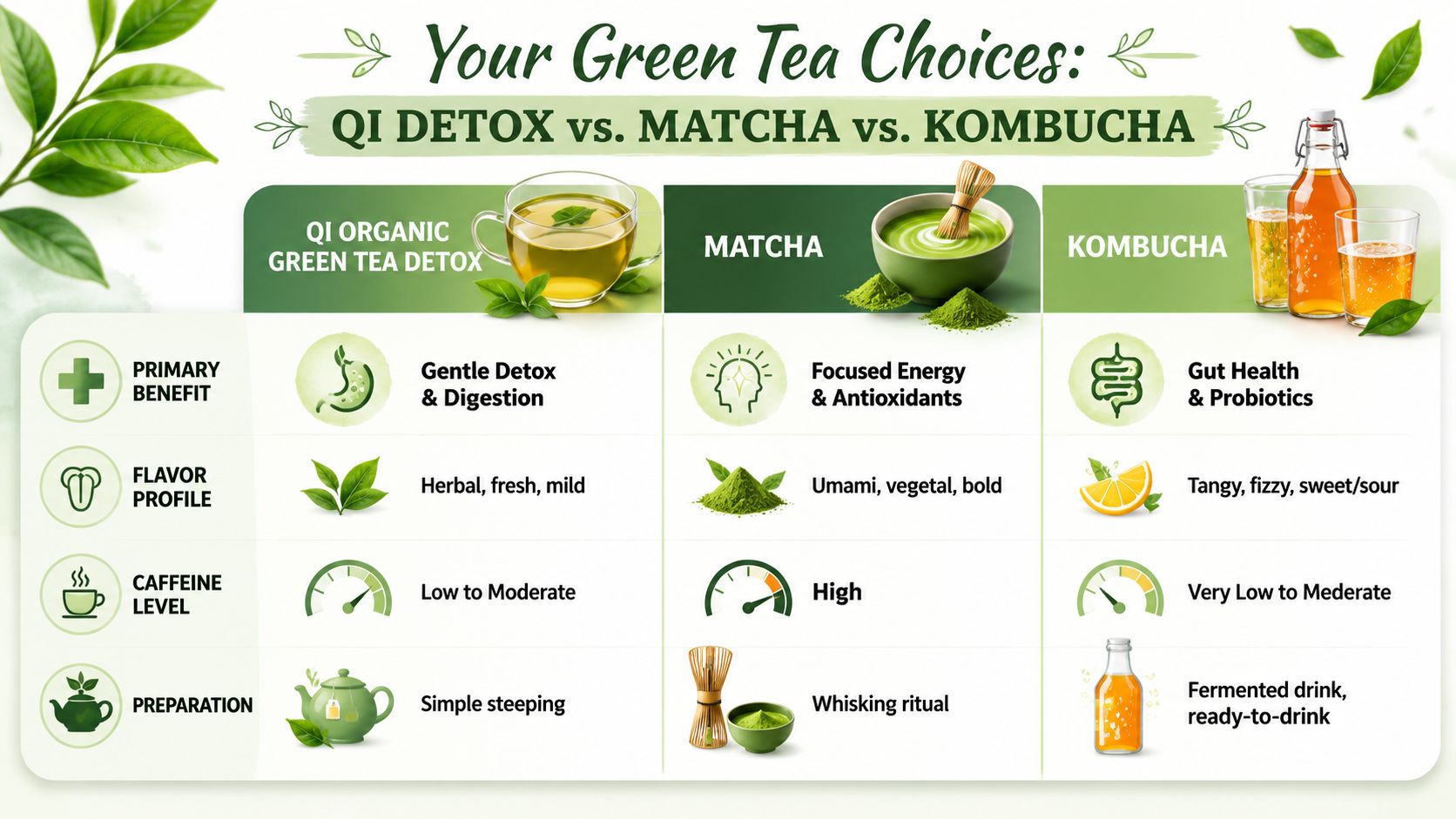
Qi Detox Tea as the entry point
Qi sits in the category of approachable supermarket wellness teas. It's easy to brew, easy to understand, and easy to fit into a routine. If you want a warm cup with herbal character and a lighter tea feel, it makes sense.
Its limitation is also clear. The “detox” part is more marketing language than precise functional language.
The product discussion around Qi Detox Tea raises this exact issue. The measurable outcome of detox claims is less clear, while high-quality organic matcha delivers a verifiable high dose of EGCg antioxidants, and properly brewed kombucha provides live probiotics for gut health, as noted in the Qi product comparison discussion from Qi Teas UK.
Where matcha differs
Matcha is still green tea, but it's a very different experience from a tea bag blend. You whisk the powder into water, so you consume the tea rather than just steeping leaves and removing them.
That matters because people who choose matcha are usually after something more specific:
- A fuller green tea profile
- A more focused ritual
- A clear antioxidant story
If you want a sharper explanation of how these green tea formats differ, this guide on the difference between matcha, green tea and green tea blends is worth reading.
Here's a helpful visual explainer on matcha preparation and use:
Where kombucha differs
Kombucha isn't a tea bag at all. It's a ready-to-drink fermented tea. People usually choose it for a different reason entirely. They want a cold, refreshing drink with a more distinct functional identity than a “detox” blend offers.
That makes kombucha appealing if your main aim is:
| Beverage | Best fit for |
|---|---|
| Qi Detox Tea | A warm herbal green tea routine |
| Matcha | A stronger antioxidant-focused tea ritual |
| Kombucha | A fizzy, probiotic-oriented alternative to soft drinks |
A useful way to choose is to ask what benefit feels most concrete to you. Gentle herbal tea enjoyment, antioxidant-rich green tea, or a probiotic drink for gut-focused routines.
None of these is automatically “better” in every situation. They solve different beverage needs.
The Final Sip Which Wellness Tea Is Right for You
You came here for a practical answer about Qi Organic Green Tea Detox Coles. Here it is.
The best choice depends on the job you want the drink to do. A tea can be pleasant without offering a sharply defined functional benefit, and that distinction helps cut through a lot of wellness marketing.
Qi Organic Green Tea Detox suits people who want an easy supermarket option for a warm daily cup. The appeal is convenience and flavour balance. You get a familiar tea ritual with a mix of green tea and herbs, without needing special preparation or a bigger budget.
Matcha makes more sense if you want your green tea to feel purposeful, not just comforting. Because you consume the whole tea leaf in powdered form, the experience is usually chosen for its stronger antioxidant story and more intentional ritual. It is a bit like the difference between adding herbs to a meal and eating the main ingredient itself. Both have a place, but they do not do the same job.
Kombucha is often the better fit for people who are not really after a hot tea at all. They want a cold, refreshing option with a clearer gut-health identity, especially if they are trying to swap out soft drinks for something with a probiotic angle.
So the question is not, “Which tea is best?” It is, “Which benefit do I want every day?” If the answer is a simple herbal green tea habit, Qi is a fair pick. If the answer is antioxidants with more intensity, or probiotics in a ready-to-drink format, high-quality matcha and kombucha usually offer a more defined functional direction.
If you'd like to explore wellness drinks with a more defined functional focus, have a look at Pep Tea for organic matcha and Australian-brewed organic kombucha.
Uji Matcha Latte: Your Authentic Recipe (Hot & Iced)

You're probably here because you've had one of those matcha lattes that looked stunning but tasted flat, gritty, or oddly sweet. Then you try making one at home, and it turns into a clumpy green milk drink that feels nothing like what a good café serves.
A proper uji matcha latte is different. It should taste smooth, creamy, fresh, and softly vegetal, with a clean finish rather than a harsh one. When the matcha is good and the method is right, you don't need to hide it under heaps of sugar or syrup.
At PepTea, we love teaching this drink because it sits right at the intersection of craft and everyday comfort. You can make it in a home kitchen before work, or build it into a polished café menu. The secret isn't complexity. It's understanding the ingredient, then treating it with care.
What Makes an Uji Matcha Latte Special
The first thing to know is that Uji isn't just a flavour label. It refers to a famous tea-producing area in Japan, and that place name carries real weight in tea.
In Australian cafés, “uji matcha latte” often signals something more refined than a standard matcha drink. It suggests provenance, not just colour. That matters because matcha buyers are often trying to work out whether they're paying for true quality or just attractive branding.
Why Uji carries so much prestige
Uji's reputation as Japan's premier tea region dates back to the Kamakura period (1185–1333), and by the 16th century Uji tea masters had developed the shaded cultivation method that became the origin of modern ceremonial matcha, according to Nippon's history of Uji tea.
That history still shapes what drinkers expect today. When you order an uji matcha latte, you're not just ordering something green and milky. You're buying into a long tradition of tea cultivation and preparation that helped define what premium matcha is meant to be.
Uji matters because it gives the drink a story, a standard, and a point of reference. That's why the name feels different on a café menu.
What that means for Australian drinkers
For home brewers, Uji gives you a useful benchmark. If a powder is sold as Uji-origin, you can start asking sharper questions about colour, texture, taste, and how the drink is built.
For café owners, it helps frame the latte as a premium tea beverage rather than a generic sweetened mix. That's especially useful when customers are looking for cleaner energy options and are comparing matcha with coffee. If you're exploring that broader shift, this guide to Peak Performance coffee alternatives is a helpful companion read.
If you want to start with an origin-specific powder, one practical place to begin is Uji matcha powder from PepTea.
Selecting the Right Uji Matcha Grade
A great latte starts before the kettle goes on. It starts when you choose the powder.
Many people get stuck on one phrase: ceremonial grade. It sounds reassuring, but it doesn't tell you everything you need to know. For Australian consumers, the more useful test is whether the matcha has the right colour, texture, purity, and value per serve.
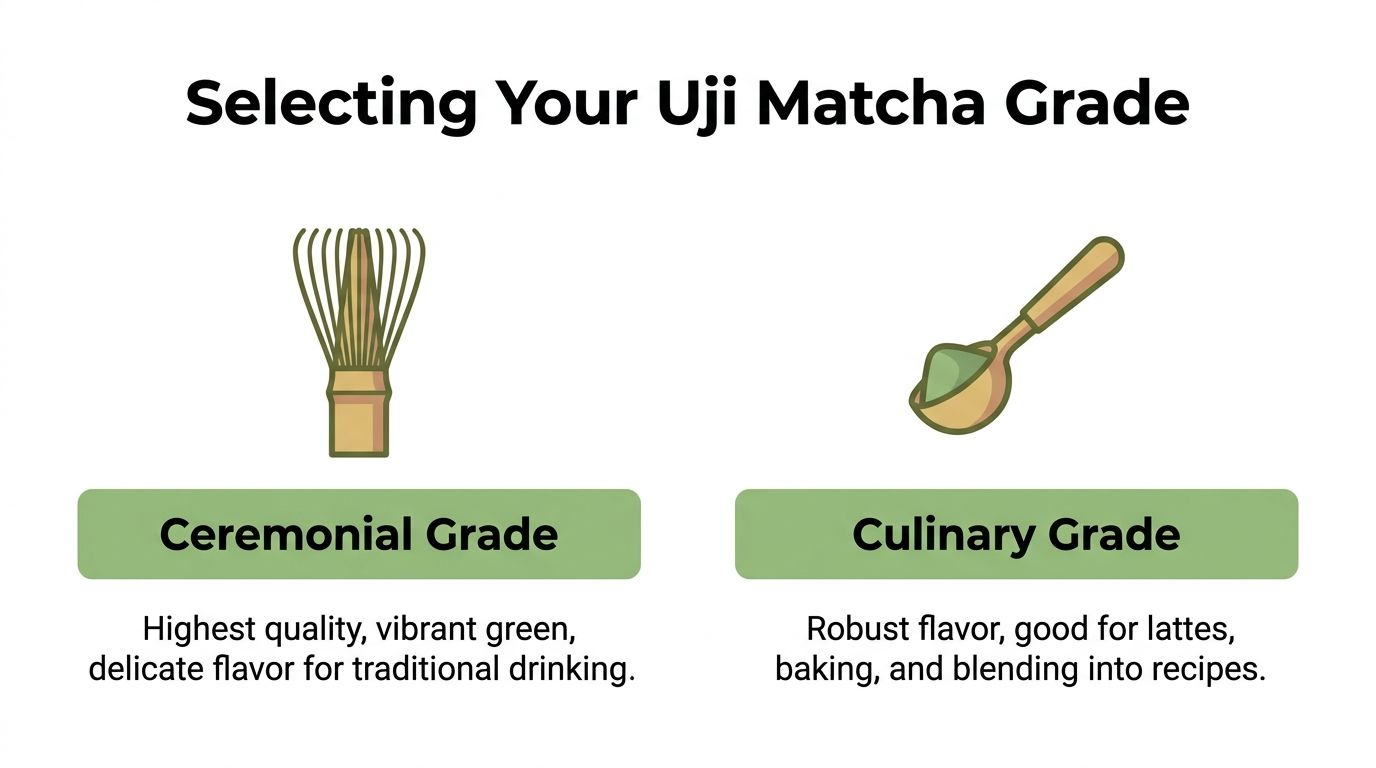
What to judge instead of the label
A practical rule from the Australian buying angle is this: a premium Uji matcha for lattes should be judged on its vibrant colour, fine texture, and grams-per-serve value, not just a ceremonial label. It's also important to check whether the product is 100% pure matcha, because many options on the market are sweetened pre-mixes, as noted by Chicago Tea House's Uji matcha product guidance.
That point clears up a common confusion. A sweetened mix can still look nice in a tin or on a shelf, but it behaves differently in the cup. It can taste flatter, dissolve differently, and make it harder to control sweetness.
Ceremonial or culinary for a latte
Both grades can have a place. What matters is your goal.
| Grade | Best fit | What to expect |
|---|---|---|
| Ceremonial grade | Straight drinking, premium lattes, minimal sweetener | Softer flavour, brighter colour, finer finish |
| Culinary grade | Baking, smoothies, blended recipes, stronger latte style | More robust taste, usually better when mixed with other ingredients |
For a café-style uji matcha latte where the tea still needs to shine through milk, a better-quality ceremonial or latte-friendly premium blend is usually easier to work with. You'll spend less time trying to correct bitterness with sweetener.
A simple buying checklist
When you're standing in an aisle or comparing tins online, check these first:
- Colour first: Look for a lively green rather than a dull, brownish, or yellow-leaning tone.
- Texture matters: Fine powder should look silky, not coarse.
- Ingredient list: If it isn't pure matcha, it's a different product.
- Serving logic: Think in grams per serve, not just pack size.
- Origin claim: “Uji” should mean more than a decorative word on the front label.
Buying shortcut: If a product leans heavily on marketing terms but doesn't help you judge purity, colour, or serve size, keep looking.
If you'd like a clearer breakdown of how different styles are used, PepTea's guide to different grades of matcha is useful for comparing what suits lattes versus traditional bowls.
Mastering the Hot Uji Matcha Latte
Technique is where most home-made matcha lattes go wrong. Not because people are careless, but because matcha responds badly to shortcuts. If you stir powder straight into a full mug of hot milk, you usually get lumps, uneven flavour, and a muddy finish.
The better approach is to build the drink in stages.
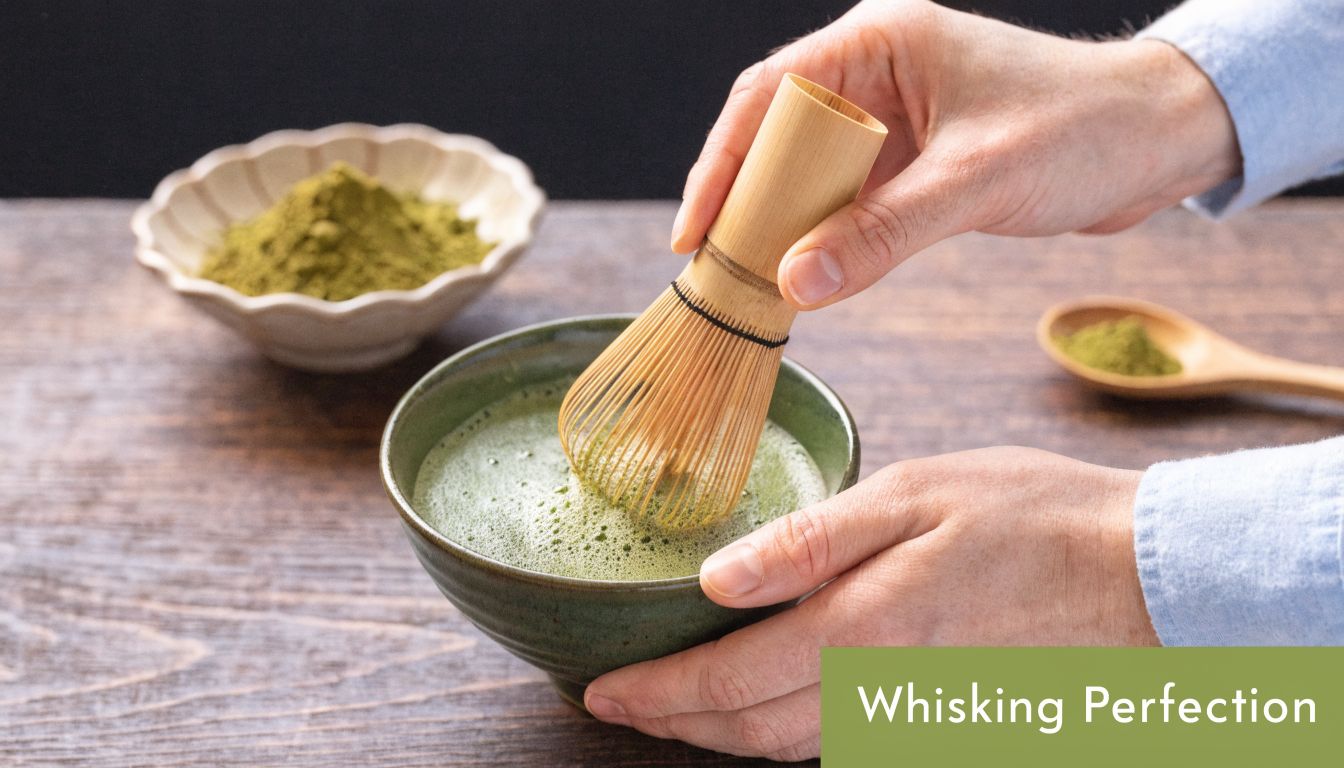
Start with the paste, not the milk
For a smooth uji matcha latte, whisk 2 teaspoons of sifted matcha with a small amount of room-temperature water to make a paste. Then add water at 75–85°C and whisk in an M or W pattern for 15–30 seconds. This is the technique recommended in Uji Matcha Tea's preparation guide.
That method does two important jobs. First, it hydrates the powder evenly so you don't get dry clumps. Second, it builds the fine foam that makes the drink feel creamy before the milk even goes in.
Why temperature changes the whole drink
A lot of people assume hotter water equals better dissolving. With matcha, that's not the goal. Boiling water can flatten the flavour and push the drink toward bitterness.
The sweet spot is warm enough to disperse the powder, but gentle enough to protect the character of the tea. If your latte has ever tasted sharp, scorched, or dull, temperature is often the first thing to check.
Practical rule: If you wouldn't sip the water comfortably, it's probably too hot for premium matcha.
Whisking for texture, not ceremony alone
A bamboo chasen isn't just a traditional accessory. It helps create the tiny bubbles that give matcha a soft, even texture.
Move the whisk briskly in a loose M or W motion rather than stirring in circles. Circular stirring tends to push the powder around the bowl. The faster patterned motion suspends it and creates that fine surface froth you see in a well-made café cup.
If you want to see the motion in action, this quick demonstration helps:
Bringing in the milk properly
Once the matcha base is smooth, heat your milk separately and keep it below a boil. You're aiming for warm, silky milk, not scorched milk.
Here's the part many people skip. Don't pour cold milk into the bowl and hope the whisk fixes everything. Build the tea base first, then pour the warm milk in a steady stream. If you're frothing milk, keep the foam soft and fine so it supports the matcha rather than burying it.
A reliable workflow looks like this:
- Sift the matcha into a bowl or wide cup.
- Add a small splash of room-temperature water and mix into a smooth paste.
- Pour in hot water within the recommended range and whisk briskly until lightly foamy.
- Warm the milk separately until hot but not boiling.
- Combine gently and taste before adding anything extra.
For readers who want to improve their whisking technique specifically, this PepTea how-to on whisking matcha is a practical reference.
Your Guide to a Refreshing Iced Matcha Latte
An iced uji matcha latte isn't just the hot version poured over ice. Cold drinks magnify flaws. If the powder isn't properly dispersed, you'll notice grit straight away.
That's why the best iced version starts with a concentrated matcha base.

Build the matcha shot first
Sift your matcha, add a small amount of water, and work it into a smooth paste before adding more liquid. This matters even more for iced drinks because cold milk won't help dissolve stubborn clumps.
If you like a layered café look, make the matcha base separately and pour it over milk and ice at the end. The result looks polished, but it also gives you more control over flavour.
Sweeten at the right moment
For a smooth hot or iced uji matcha latte, add any sweetener after whisking the matcha into a paste but before adding the bulk of the liquid, which helps it dissolve fully and prevents crystallisation in iced drinks, as explained in Ocha & Co's matcha latte method.
That one detail saves a lot of frustration. If you add sweetener too late, especially in a cold drink, it can sit at the bottom or throw off the texture.
An easy assembly method
Try this order for a cleaner result:
- First the glass: Fill it with ice.
- Then the milk: Add your dairy or plant milk.
- Next the matcha base: Pour slowly over the top for a layered look.
- Final adjustment: Stir just before drinking so the flavour is even.
A good iced matcha latte should taste crisp and creamy at the same time, not watery, chalky, or syrupy.
Pro Tips and Healthy Variations
Once your basic method is sound, small adjustments make a big difference. These refinements ensure an everyday uji matcha latte becomes your version of the drink.
Fixing the most common problems
If your latte tastes bitter, the issue is often heat or powder quality rather than matcha itself.
If it's lumpy, the fix is usually mechanical. Sift first, make a paste, then whisk properly. Most texture problems begin before the milk goes in.
A quick troubleshooting list helps:
- Bitter cup: Check whether your water was too hot or your powder too rough.
- Flat flavour: Use less sweetener so the tea can still come through.
- Gritty finish: Sift the powder and spend longer on the paste stage.
- Weak colour: Review the quality of the matcha itself before changing the recipe.
Choosing milk for flavour and texture
Different milks push the latte in different directions.
Oat milk often gives a rounder, creamier feel. Almond milk can make the drink lighter and a little nuttier. Soy can hold its structure well in a café setting. Dairy gives a familiar richness, but it can also soften some of the tea's sharper edges.
The best milk is the one that lets the matcha remain recognisable. If the milk completely dominates, the tea disappears.
Keeping it sugar-free or lower sugar
Health-conscious Australian drinkers often get more selective. If you've bought a good Uji powder, you may not need much sweetener at all.
Try these approaches:
- Go unsweetened first: Taste the latte before adding anything.
- Use a small amount only if needed: A light touch keeps the tea present.
- Avoid pre-mixes: They remove your control over sweetness and flavour balance.
For café service, consistency matters as much as flavour. Standardise your scoop, whisking time, and milk pour. If you're batching for busy periods, keep the matcha base fresh and don't let it sit too long before service.
Some venues also use commercial blending tools for fast cold drinks and menu variations. If that's relevant to your setup, Vitamix blenders for hospitality are worth reviewing alongside your tea tools.
One practical option for Australian buyers looking for an origin-led powder is Pep Tea's Uji matcha range, particularly when you want a format suitable for controlled latte prep rather than a sugary shortcut.
Your Uji Matcha Latte Questions Answered
How should I store matcha powder?
Keep it sealed, dry, and away from heat, light, and moisture. Matcha is delicate. Once opened, good storage helps preserve colour and aroma.
Can I make an uji matcha latte without a bamboo whisk?
Yes, though a chasen gives the nicest texture. If you don't have one, use a small handheld frother or shake the matcha paste and water in a tightly sealed jar before adding milk. The key is still the same. Break up the powder fully before the main liquid goes in.
Is café matcha always better than homemade?
Not always. A café can still use a sweetened pre-mix or poor technique. At home, you often get a better result when you start with pure matcha and pay attention to temperature and whisking.
What should a good uji matcha latte taste like?
Smooth, fresh, creamy, and balanced. You should notice the tea, not just milk or sweetness.
If you'd like to put this into practice, explore Pep Tea for organic matcha options, brewing guides, and everyday ideas for making café-style matcha at home or on your menu.
Best Green Tea Capsules for Weight Loss: A 2026 AU Guide
If you're looking at green tea capsules because you want a simple, natural push with weight management, that's a fair question. Many individuals aren't chasing a miracle. They want something practical that fits a busy week, doesn't feel extreme, and won't undo their efforts with food, exercise, and sleep.
Green tea capsules do have a place. Some extracts are concentrated, some are poorly labelled, and some are much better than others. But capsules also raise a bigger question. Is isolating one compound the best long-term strategy, or does a whole-food tea ritual give you broader support that feels easier to stick with?
Searching for a Natural Edge in Weight Wellness
A lot of Australians start in the same place. You're standing in the supplement aisle, or comparing bottles online, and nearly every label seems to promise metabolism support, fat burning, or appetite help. Green tea capsules often sound more trustworthy than louder weight loss products because green tea already has a healthy reputation.
That instinct makes sense. Green tea is familiar, plant-based, and less intimidating than heavily marketed stimulants. But the label can still be confusing. One bottle lists total extract, another lists catechins, another mentions EGCG, and another hides everything inside a “blend”.
Finding a capsule is not the primary challenge. The difficulty lies in determining if the supplement is high-quality, whether it suits your specific needs, and if it supports habits you can realistically maintain.
Good weight wellness usually comes from stacking small decisions that you can repeat, not from finding one heroic product.
That wider view matters. Weight support is rarely just about one supplement. It's usually tied to movement, sleep, meal quality, stress, and consistency. If you want a thoughtful read on improving health span through lifestyle choices, that broader lens is worth your time.
Understanding Green Tea's Link to Weight Management
Green tea gets linked with weight management because it contains catechins, a group of natural plant compounds. The one you'll see most often on labels is EGCG, short for epigallocatechin gallate. If you've ever wondered why some products list EGCG in milligrams instead of just saying “green tea extract”, this is the reason. EGCG is one of the main compounds people are trying to measure.

What EGCG is thought to do
In simple terms, green tea compounds may help your body use energy a bit more efficiently. You'll often hear words like thermogenesis and fat oxidation. They sound technical, but the core idea is straightforward.
- Thermogenesis means your body is producing heat as it uses energy.
- Fat oxidation means your body is using fat as a fuel source.
- Metabolic support means those processes may get a gentle nudge, especially when green tea is paired with healthy habits.
That doesn't turn green tea into a magic pill. It means the compounds may support processes your body already has.
What one clinical trial found
A 2015 randomised controlled trial involving women with central obesity found that a high dose of green tea extract, 856.8 mg EGCG daily, taken for 12 weeks, led to a statistically significant weight loss of 1.1 kg, plus reductions in BMI and waist circumference, with no side effects reported.
That result is useful for two reasons. First, it shows why researchers focus on specific EGCG amounts rather than vague extract claims. Second, it reinforces that the effect is modest, not dramatic. That's exactly how green tea should be viewed. As support, not rescue.
Why labels can be misleading
Two bottles can both say “green tea”, but deliver very different amounts of the compounds people care about. One might contain a concentrated extract. Another might contain a lower-strength powder with a much smaller active dose.
If you want a broader look at how green tea differs from matcha and why that matters nutritionally, this guide on the benefits of matcha green tea is a helpful companion.
Practical rule: If a label doesn't clearly tell you how much EGCG you're getting, it's hard to judge whether the product is likely to be meaningful.
How to Choose the Best Green Tea Capsules in Australia
If you're comparing the best green tea capsules for weight loss, don't start with branding. Start with the label. The most important question is not “How many capsules are in the bottle?” It's “What exactly is in each serve?”
A useful market comparison found that some higher-strength products available in Australia, such as Zenwise, provide 363 mg of EGCG per 725 mg serving, while some other local brands average 240 mg. The key lesson from that comparison is simple. Check the EGCG amount itself, not just the total extract on the front of the bottle, as noted in this Australian-market comparison of green tea extracts.
| Feature | What to Look For | Red Flag |
|---|---|---|
| EGCG content | A clearly stated EGCG amount per serve | Only “green tea extract” listed with no EGCG detail |
| Standardisation | A label that explains the extract is standardised | Vague wording with no active compound breakdown |
| Serving size | A practical daily serve you can understand easily | Tiny print or confusing multi-capsule maths |
| Caffeine | Transparent caffeine information, especially if you're sensitive | No mention of caffeine at all |
| Purity | Clear manufacturing and quality details | Buzzwords without any testing or compliance detail |
| Ingredients | Short, readable ingredient list | “Proprietary blend” or filler-heavy formula |
Read the active ingredient panel first
Many shoppers make the same mistake. They look at the biggest number on the bottle. A capsule can sound impressive because it contains hundreds of milligrams of “extract”, but that doesn't tell you how much EGCG is inside it.
A stronger label usually gives you more than one layer of information:
- Total extract amount
- Catechin or polyphenol detail
- EGCG amount
- Caffeine amount
If those details are missing, you're buying with very little context.
Watch for the wording that hides the truth
“Proprietary blend” is one of the least helpful phrases in the supplement world. It can make a formula sound advanced while telling you almost nothing. If a company won't disclose the key active amount, you can't compare it properly with another product.
Also be careful with labels that lean hard on vague phrases such as natural metabolism support or antioxidant complex but don't explain the actual dose.
Think about your own tolerance
A capsule that looks strong on paper may not suit you if you're sensitive to caffeine or if concentrated extracts tend to upset your stomach. That doesn't mean the product is bad. It means the “best” option is always partly personal.
Some people do fine with capsules taken alongside food. Others notice they feel edgy, nauseous, or too wired. A good product should be transparent enough that you can predict that risk before you buy.
The best label is the one that lets you make an informed decision without guessing.
A quick buyer checklist
Before you buy, ask these questions:
- Does the label state EGCG in milligrams?
- Is the extract standardised, or is it just loosely described?
- Can you see the caffeine content?
- Are the other ingredients minimal and clearly named?
- Does the brand give you confidence about quality and compliance in Australia?
That checklist won't guarantee results, but it will help you avoid weak or opaque products.
A Word of Caution Safety and Side Effects
Green tea is natural. Concentrated green tea extract is still something to treat carefully.
Capsules can be more intense than a normal cup of tea because they deliver a concentrated amount in a small serve. For some people, that's convenient. For others, it's where problems start. The most common issues are fairly predictable: jitteriness, sleep disruption, nausea, or a generally unsettled stomach. If you already react strongly to coffee, pre-workouts, or energy drinks, it makes sense to be cautious here too.
When extra care makes sense
Some readers should slow down and get professional advice before trying any green tea extract capsule.
- If you take regular medication, ask your GP or pharmacist whether a green tea extract could interfere.
- If you have a history of liver concerns, don't assume a herbal product is automatically low risk.
- If you're pregnant, breastfeeding, or highly caffeine sensitive, a capsule may be less suitable than a gentler food-based option.
A safer way to approach extracts
Start with the smallest sensible serve on the label, not the most aggressive routine you can tolerate. Take it with food unless the packaging clearly advises otherwise. Stop if you feel unwell.
If a supplement makes you feel shaky, nauseous, or off, that's useful feedback. You don't need to “push through” because it's marketed as natural.
This is also where whole-food forms of tea often feel easier. A cup or bowl of tea gives you a more gradual experience. The ritual slows you down, and the dose is easier to manage than swallowing a concentrated extract and hoping it suits you.
Beyond the Capsule The Case for Whole-Food Matcha
Capsules isolate. Matcha nourishes more broadly.
That's the biggest shift in perspective. A green tea capsule usually focuses attention on one target compound, often EGCG. Matcha is different because it's the whole tea leaf, finely stone-ground into powder. When you drink it, you're consuming the leaf itself rather than an isolated extract.
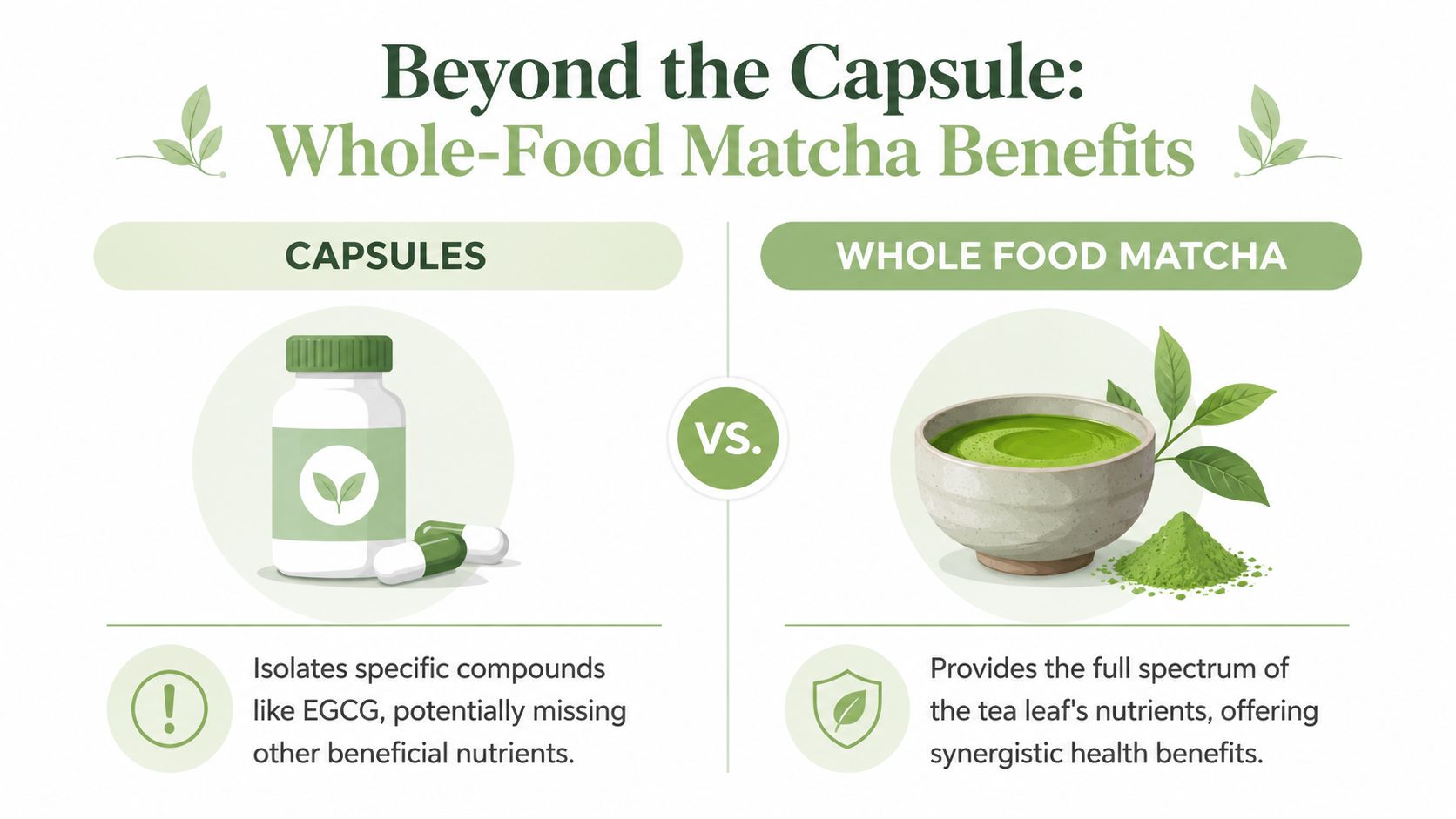
Why whole-food form matters
A capsule can be useful if your only goal is concentrated intake. But a whole-food approach offers a wider nutritional picture.
With matcha, you're not just chasing EGCG. You're also getting naturally occurring compounds that help shape the overall experience, including L-theanine. That matters because many people want energy support without feeling overstimulated.
Here's the practical difference:
- A capsule is often about dose concentration
- Matcha is about compound synergy
- A tea ritual supports daily consistency
- Whole-food intake tends to feel more connected to meals, hydration, and routine
The calm-focus factor
One reason matcha has such loyal followers is that it feels different from harsher stimulants. Many tea drinkers describe it as cleaner and steadier. That's one reason whole-leaf green tea traditions have lasted so long. The experience isn't just about “fat burning”. It's about alertness, satisfaction, and rhythm.
This can matter more than people expect. Weight wellness gets easier when your routine feels good enough to repeat. If your support tool feels clinical, inconvenient, or irritating on the stomach, you're less likely to stick with it.
Matcha fits a long-game mindset
The best green tea capsules for weight loss may help some people. But “best” depends on what problem you're trying to solve.
If you want the most concentrated extract, capsules may win that comparison. If you want a habit that supports energy, focus, mindful eating, and a more enjoyable relationship with wellness, whole-food matcha is often the stronger option.
A good starting point is understanding exactly what matcha powder is and how it differs from standard green tea products.
Whole-food choices often do more than deliver an active compound. They help build a routine that people can live with.
Your Daily Wellness Ritual with Matcha and Kombucha
Many individuals do not struggle because they lack information. They struggle because their day gets busy, cravings hit, and healthy choices need to be simple. That's where a tea-based ritual can help.
A capsule asks for compliance. A ritual invites participation.

Morning
Start the day with matcha instead of reaching straight for something harsher or sweeter. Whisked matcha gives you a deliberate pause before the day speeds up. That small action can shape what happens next. You're more likely to eat breakfast mindfully, less likely to chase quick sugar, and more likely to notice your hunger properly.
Some people prefer it straight. Others like it as an iced matcha or a lighter latte. If you want ideas you can use during the week, these matcha drink recipes for weight loss make the habit feel more practical.
Afternoon
The afternoon slump is where many routines fall apart. Energy dips, concentration drops, and sugary snacks start looking reasonable. A chilled kombucha can be a smart swap here because it gives you flavour, fizz, and a more intentional break from the desk or kitchen bench.
For many people, that matters as much as the ingredients. Replacing a soft drink or mindless snack with something refreshing can change the pattern of the whole afternoon.
Why this pairing works well
Matcha and kombucha do different jobs in a routine.
- Matcha in the morning suits focus and a steady start.
- Kombucha in the afternoon can replace sweeter drinks and make healthier choices feel less restrictive.
- Together, they support a more food-based, habit-friendly approach.
This doesn't need to become a strict protocol. Keep it simple. Use the parts that make your day easier.
A wellness ritual works best when it feels enjoyable enough to keep doing on ordinary Tuesdays, not just on highly motivated Mondays.
Frequently Asked Questions
| Question | Answer |
|---|---|
| Are green tea capsules better than drinking green tea? | Not automatically. Capsules can offer concentrated EGCG, but whole-food tea can be easier to tolerate and easier to build into a long-term routine. |
| What should I check on a capsule label first? | Start with the stated EGCG amount. Then look for standardisation, caffeine details, and clear ingredient disclosure. |
| Do green tea capsules work on their own? | It's better to think of them as support, not a standalone fix. Habits around food, movement, sleep, and consistency still do the heavy lifting. |
| Is matcha a good alternative if I don't want capsules? | Yes. Matcha gives you the whole tea leaf rather than an isolated extract, which many people prefer for a broader wellness approach. |
| Can green tea capsules cause side effects? | They can. Some people notice jitters, stomach upset, or sleep issues, especially with concentrated products or if they're caffeine sensitive. |
| Is kombucha useful in a weight wellness routine? | It can be a practical replacement for sugary drinks and can make healthier choices feel more satisfying. The main benefit is often behavioural and routine-based. |
If you'd rather build a sustainable tea ritual than rely only on capsules, explore Pep Tea for premium organic matcha and Australian-brewed sugar-free kombucha. It's a simple place to start if you want clean energy, better daily habits, and a more whole-food approach to wellness.
Crafting Delicious Chocolate Matcha Tea
Somewhere between your usual morning coffee and your evening hot chocolate, there’s a drink that feels a bit more balanced. Chocolate matcha tea has that cosy, chocolatey comfort people crave, but it also brings the grassy depth and focused lift that make matcha so distinctive.
It’s also one of those drinks that can go badly wrong if the method is fuzzy. Too hot, and the matcha turns flat or bitter. Too much chocolate, and the tea disappears. Not enough whisking, and you get green lumps floating around in an otherwise lovely cup.
The good news is that making a smooth, café-worthy version at home isn’t difficult once you understand the few details that matter. If you’re a home drinker, a health-conscious café owner, or curious about how to make chocolate and matcha work together, this guide will help you build the drink properly from the ground up.
The Perfect Fusion of Flavour and Wellness
Chocolate matcha tea works because it plays with contrast. Matcha brings earthy, fresh, slightly savoury notes. Chocolate adds roundness, softness, and richness. When the two are in balance, the result tastes layered rather than heavy.
That balance is why the drink appeals to two very different moods at once. It can feel indulgent, like a treat you’d order on a rainy afternoon. It can also feel purposeful, especially when you want a warm drink that supports focus without feeling overblown or sugary.
Why matcha changes the character of a chocolate drink
A standard hot chocolate leans sweet and creamy. Matcha shifts the centre of gravity. It adds structure, colour, and a gentle vegetal edge that stops the drink from becoming cloying.
That’s especially useful if you prefer functional beverages over dessert-style drinks. Instead of tasting like melted confectionery, a well-made chocolate matcha tea tastes more adult and more nuanced.
Chocolate softens matcha’s grassy edge, and matcha sharpens chocolate’s sweetness. That’s why the pairing can feel both comforting and clean.
There’s also a long tradition behind matcha that gives this modern drink more depth than a passing trend. In the 12th century, monk Eisai brought powdered green tea from China to Japan, promoting it as a medicinal aid for monks enduring long meditation sessions due to its combination of caffeine for alertness and L-theanine for calm focus, as noted in this history of matcha and its role in focused energy.
Why wellness-minded drinkers are drawn to it
People often get confused here and assume “healthy” means austere. It doesn’t. A chocolate matcha tea can still feel lush while giving you more control over ingredients than many café drinks.
You can choose:
- The sweetness level so it suits your taste, rather than relying on pre-sweetened powders
- The milk style whether you want dairy, oat, almond, or another option
- The chocolate source from cacao powder to dark chocolate to white chocolate
- The matcha grade depending on whether you want a smoother or bolder finish
That ingredient control matters if you care about clean labels, lower sugar choices, or just a better-tasting cup.
If you’d like a broader grounding in why matcha has become such a staple in modern wellness routines, this guide to the benefits of matcha green tea is a helpful next read.
Choosing Your Core Ingredients and Tools
The best chocolate matcha tea starts before the kettle goes on. Most disappointing cups come down to one of three things. Low-quality matcha, overly sweet chocolate, or skipping the basic tools that create a smooth texture.
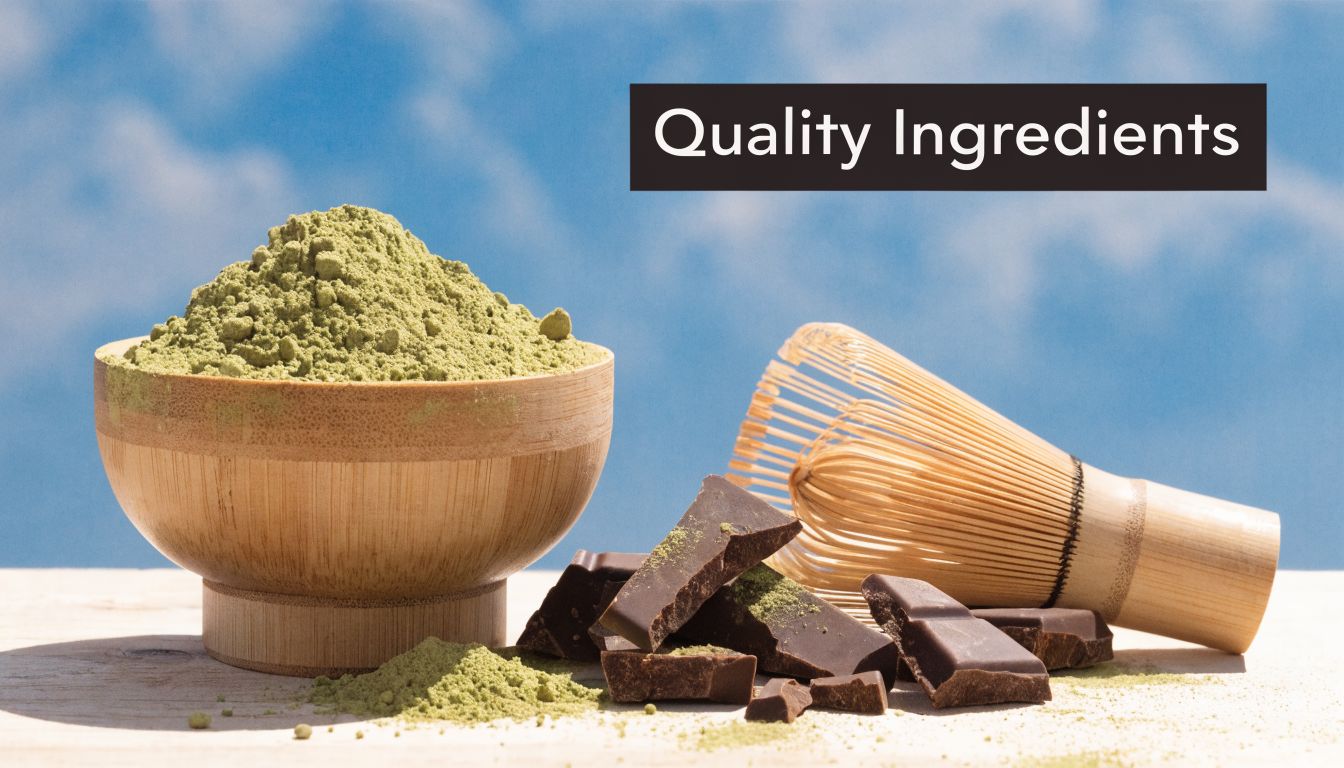
Matcha grade matters more than people expect
For straight drinking with water, ceremonial grade is usually the more delicate and refined choice. For chocolate matcha tea, culinary grade matcha often makes more sense because it has enough presence to stand up to cacao and milk.
That doesn’t mean any cheap powder will do. You still want matcha that looks vibrant, smells fresh, and blends cleanly. Dull olive powder often tastes flat or harsh in milk-based drinks.
If you’re making a menu decision for a café, culinary grade is also practical because it performs well across hot drinks, iced drinks, and blended recipes.
Picking the chocolate without losing the tea
Chocolate choice shapes the whole drink. White chocolate gives creaminess and lets the green tea shine. Dark chocolate makes the cup deeper and more bittersweet. Cacao powder gives you the most control over sweetness.
One very useful benchmark comes from this guide on making matcha chocolate with the right white chocolate balance, which notes that for the best flavour, high-quality white chocolate should have a sugar content below 30%, and that the optimal matcha-to-chocolate ratio is typically between 1:5 and 1:8 by weight so the matcha’s umami notes aren’t buried.
If you use drinking chocolate or hot chocolate blends, ingredient lists matter. Some are heavy on sugar and light on cocoa, which can make the final cup muddy. If you want a clearer sense of how these products differ, this explainer on understanding hot chocolate drinking powders is worth a look.
Milk, sweetness, and flavour support
Different milks change the drink in different ways.
- Dairy milk gives a rounded, classic café texture
- Oat milk usually creates the creamiest vegan version
- Almond milk makes a lighter cup with a nuttier finish
- Soy milk can work well when you want more body than almond offers
For sweetening, keep it simple. Honey, maple syrup, or a sugar-free sweetener can all work, but start small. Matcha and chocolate are both assertive ingredients, so a little sweetener often goes further than expected.
Practical rule: If you can taste only sweetness, the chocolate matcha tea isn’t balanced yet.
The tools that make the biggest difference
You don’t need a huge setup, but a few basics are essential for texture:
- Fine-mesh sifter to break up clumps before whisking
- Bamboo whisk or small handheld whisk to disperse the matcha properly
- Heatproof bowl or mug for making a smooth paste
- Milk jug or saucepan for controlled heating
- Teaspoon or digital scale for consistency
A frother can help, but it doesn’t replace sifting. That’s where many clumpy drinks begin.
Master Recipe The Classic Hot Chocolate Matcha Latte
A great hot chocolate matcha latte isn’t made by dumping everything into one mug and hoping for the best. The smoothest version is built in layers. First the powders are prepared, then a paste, then warm milk is added gradually.
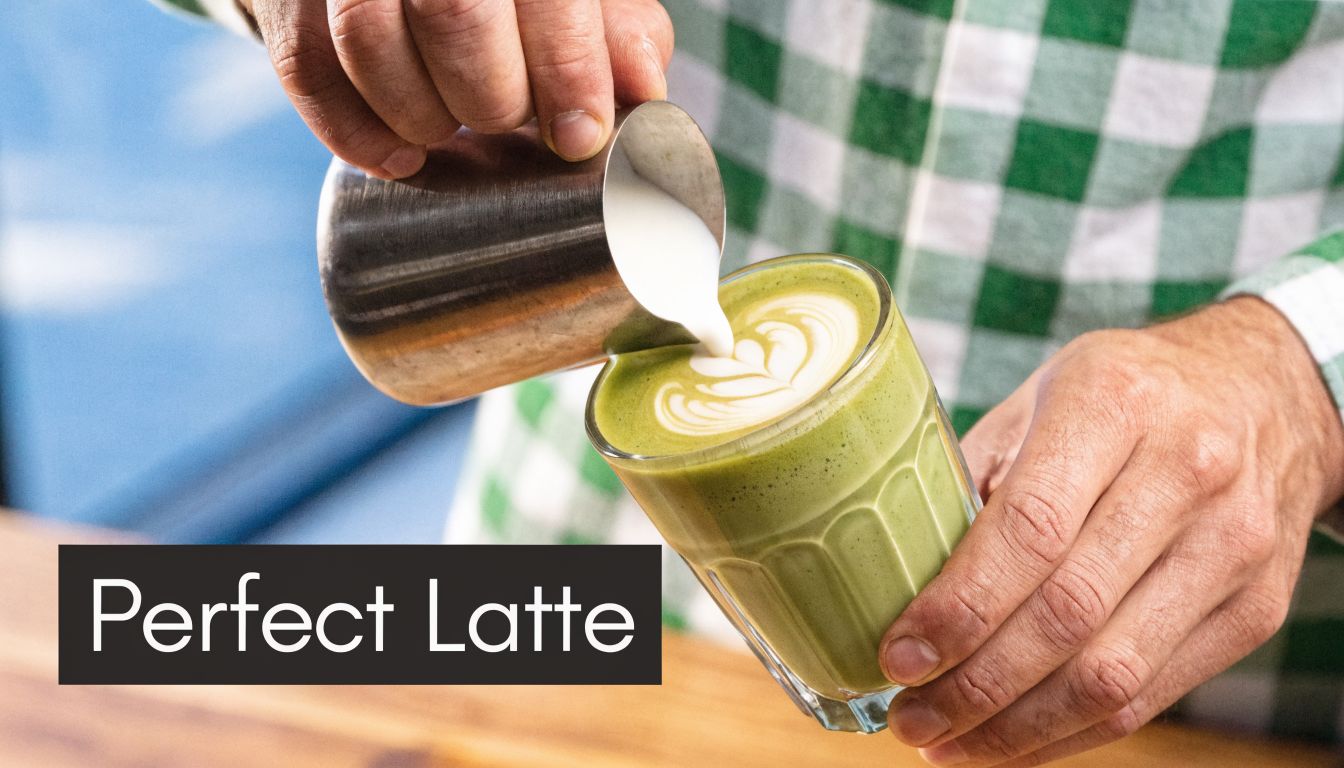
A reliable recipe for one mug
Use this as your base recipe:
- 1 to 2 teaspoons matcha
- 1 to 2 teaspoons cacao powder or finely chopped chocolate
- A small amount of hot water
- 1 cup milk of choice
- Sweetener to taste
- Optional pinch of sea salt or a little vanilla
If you’re using white chocolate instead of cacao powder, melt it into the milk gently rather than trying to whisk chunks into the cup.
The method that prevents clumps
The most important technical detail is temperature. To preserve matcha’s delicate flavour and nutrients, heat your liquid to 70 to 80°C (160 to 175°F), sift the matcha first, then use vigorous M or W whisking motions for 15 to 60 seconds for a smooth consistency, according to this guide on preparing matcha without damaging flavour.
Follow these steps:
Sift the matcha and cacao
Add both to a bowl or wide mug through a fine sieve. This tiny step saves a lot of frustration later.
Make a paste
Add a small splash of hot water. Whisk until it forms a glossy paste with no dry pockets. If it looks grainy here, it’ll stay grainy in the final drink.
Warm the milk gently
Heat your milk so it’s hot but not boiling. If you’re using white chocolate, melt it into the milk slowly while stirring.
Combine in stages
Pour a little warm milk into the paste first and whisk again. Then add the rest. This staged approach keeps the texture silky.
Taste and adjust
Add sweetener, vanilla, or a tiny pinch of salt if needed. Salt can sharpen chocolate flavour without making the drink salty.
Common mistakes and easy fixes
People often think the issue is the recipe, when it’s usually the sequence.
| Problem | Likely cause | Simple fix |
|---|---|---|
| Clumps | Matcha wasn’t sifted | Sift before any liquid touches it |
| Grainy texture | Paste wasn’t whisked enough | Whisk longer before adding milk |
| Bitter finish | Liquid was too hot | Keep milk below boiling |
| Weak matcha flavour | Too much chocolate or sweetener | Reduce chocolate and retaste |
A visual walkthrough can help if you’re more of a watch-and-copy learner.
Easy adaptations for different drinkers
A vegan version is simple. Oat milk is often the easiest choice because it stays creamy and supports both chocolate and matcha well. Almond milk works too, but the result is lighter.
For a sugar-free style, use unsweetened cacao and a sugar-free sweetener you already enjoy in hot drinks. The goal isn’t to mimic a confectionery drink. It’s to let the chocolate and tea still taste like themselves.
If you want to refine your matcha technique beyond this recipe, this guide on how to make a matcha latte is a useful companion.
If your first mug tastes a little too earthy or a little too rich, that’s normal. Small adjustments in chocolate, sweetness, and milk make a much bigger difference than changing everything at once.
Creative Variations for Every Occasion
Once the hot version is working, chocolate matcha tea becomes a very flexible base. It can be refreshing, dessert-like, more coffee-friendly, or even sparkling depending on the occasion.
One reason people enjoy experimenting with matcha in drinks is that you’re consuming the whole leaf powder. This article on historical facts about matcha and antioxidant density notes that whole-leaf matcha can deliver up to 137 times more antioxidants, specifically EGCg, than traditionally steeped green tea, which helps explain why it’s become popular in functional beverages.

Iced chocolate matcha latte for warm afternoons
This is the version to make when you want something café-style and cooling without reaching for a standard iced coffee.
Start by preparing a concentrated paste with sifted matcha, cacao, and a little hot water. Let it cool slightly. Fill a tall glass with ice, add cold milk, then pour the matcha-chocolate mixture over the top.
For the cleanest layers, use cold milk and cooled concentrate. If you pour hot mixture straight onto ice, the drink can dilute too quickly.
Try serving it with:
- Oat milk for a creamy, mellow finish
- Almond milk for a lighter style
- A dusting of cacao on top for a more dessert-like look
Matcha mocha for coffee lovers
Some people don’t want to choose between espresso and matcha. Fair enough. A matcha mocha gives you roasted coffee notes, chocolate depth, and that recognisable green tea edge in one cup.
Build the chocolate matcha base first, then add a freshly pulled shot of espresso before topping with warm milk. Stir gently, taste, then adjust sweetness only if needed. Espresso already brings bitterness, so this version usually needs less cacao than the classic latte.
This variation works best when none of the elements dominate. You should taste coffee, chocolate, and matcha separately, then together.
If you’re serving this in a café, it helps to describe it clearly on the menu. People ordering matcha mochas are often curious, but they want to know whether the drink leans more coffee-forward or tea-forward.
Chocolate matcha kombucha fusion for a lighter, sparkling serve
This one surprises people. It’s not a latte at all. It’s brighter, more grown-up, and ideal for alcohol-free menus or brunch-style drinks.
The easiest method is to make a small, smooth matcha-cacao concentrate first. Cool it fully. Pour it into a glass with ice, add a splash of your preferred milk if you want softness, then top gently with plain or ginger-forward kombucha. Stir lightly rather than aggressively so you keep the sparkle.
A few flavour directions work especially well here:
| Style | What it tastes like | Best moment |
|---|---|---|
| Ginger chocolate matcha spritz | Lively, zesty, lightly earthy | Mid-afternoon pick-me-up |
| Lime-cacao matcha cooler | Sharper and more refreshing | Warm-weather brunch |
| Vanilla chocolate matcha fizz | Softer and rounder | Alcohol-free evening serve |
Small custom touches that make a big difference
You don’t need a complicated recipe to make these drinks feel special.
- Add cinnamon if you want warmth without extra sweetness
- Use orange zest for a bright finish with dark chocolate versions
- Blend with ice when you want a frappe-style drink
- Top with shaved dark chocolate for a more premium presentation
Chocolate matcha tea is at its best when it suits the moment. Hot and quiet in the morning. Iced and quick in the afternoon. Sparkling and polished when guests are over.
For Café Owners and Home Baristas Menu Inspiration
Chocolate matcha tea can earn its place on a menu because it solves a real problem. Not every customer wants coffee, and not every non-coffee option feels premium. This category gives you something distinctive that still feels familiar enough to order.
For cafés, the appeal is range. One base idea can become a hot signature drink, an iced afternoon option, a seasonal special, or a non-alcoholic spritz. For home baristas, it’s a way to serve something memorable without needing a full commercial setup.
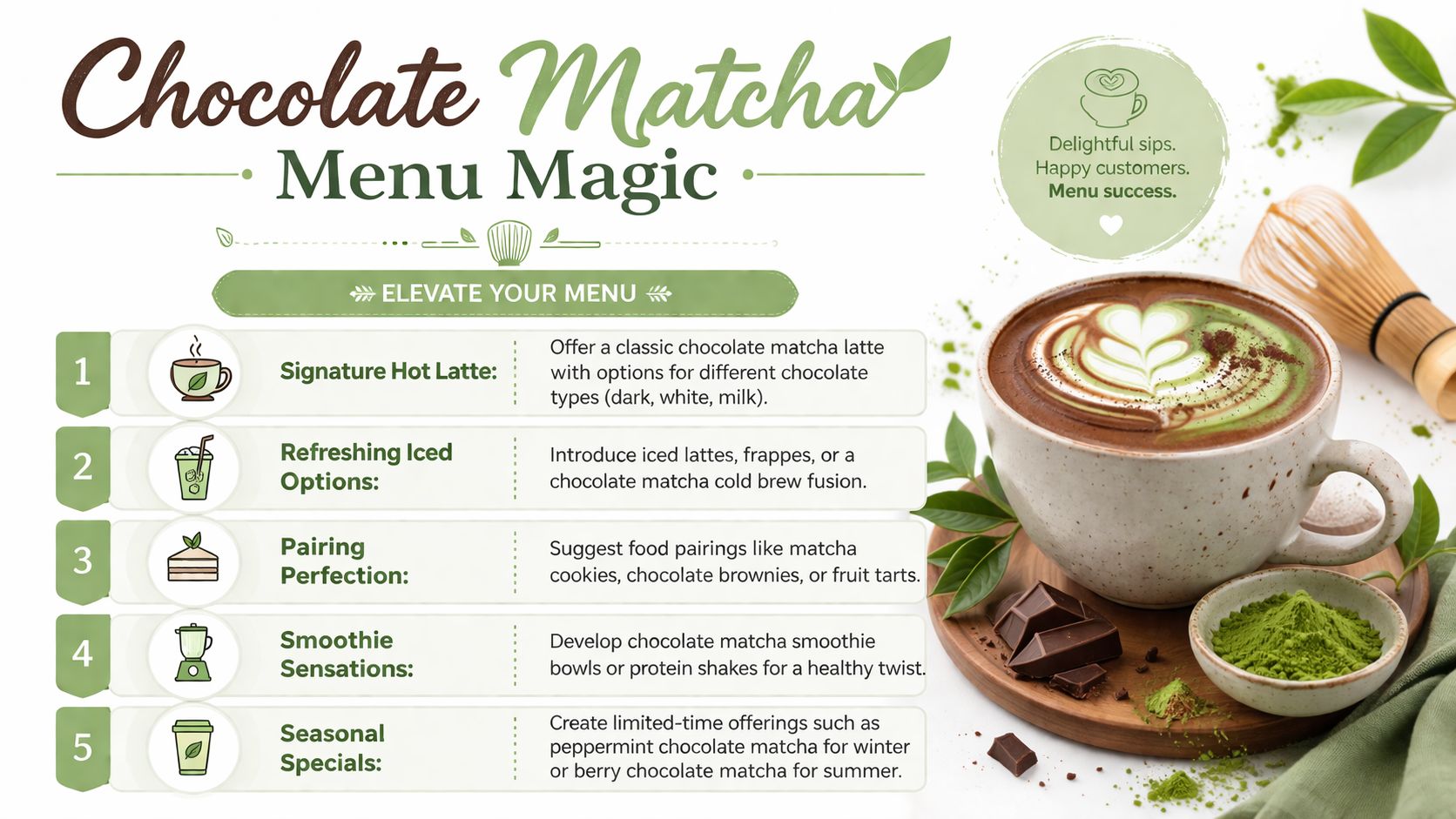
Flavour pairing ideas that sell the drink
Some pairings make the drink easier to understand at a glance. Customers may hesitate at “chocolate matcha tea” if they can’t picture the flavour. Add a familiar note, and the concept becomes easier to order.
| Pairing | Flavour Profile | Serving Suggestion |
|---|---|---|
| Raspberry | Tart, bright, lifts chocolate sweetness | Iced latte with berry garnish |
| Mint | Cool and clean against rich cacao | Winter hot special |
| Orange zest | Fragrant and slightly bitter | Dark chocolate version |
| Vanilla | Softens grassy notes | House hot latte |
| Sea salt | Sharpens chocolate depth | White chocolate matcha drink |
Menu ideas for cafés and hosts
A few naming ideas can make a menu feel more polished:
- Zen Cacao for a classic hot chocolate matcha latte
- Green Mocha for the espresso version
- Matcha Cloud for a lighter iced serve
- Probiotic Sparkler for a kombucha-based option
- Winter Mint Matcha for a seasonal feature
Presentation matters too. Clear glass works beautifully for iced versions because the colour contrast does some of the selling for you. For hot drinks, a matte cup and a neat dusting of cacao can give the drink a more premium feel.
Quality and compliance are part of the product
For Australian businesses, ingredient sourcing isn’t only about flavour. It’s also about trust and safety. This article on FSANZ standards and the risks of non-compliant imported tea powders notes that sourcing ingredients that meet FSANZ standards is critical, and that non-compliant imported tea powders can face seizure due to contamination risks.
That matters for cafés building a serious beverage program. If you’re serving matcha, you need consistency in flavour, colour, and documentation. A drink can’t become a signature item if supply or quality is unpredictable.
Menu mindset: The best-selling speciality drinks are usually the ones staff can describe in one sentence and make consistently during a busy service.
For home baristas, the same principle still applies in a smaller way. Better ingredients simplify the process. Better tools improve consistency. If you want to tighten your setup, a few dedicated matcha tea accessories can make whisking and serving much easier.
Frequently Asked Questions About Chocolate Matcha
Why is my chocolate matcha tea clumpy
Clumps usually start with dry powder hitting liquid too fast. Sift your matcha first, sift cacao too if you’re using it, then whisk with a small amount of hot water to form a smooth paste before adding milk.
If you skip the paste stage, even a strong frother may not rescue the texture.
Why does my drink taste bitter
There are a few possible causes. The liquid may have been too hot, the matcha may be low quality, or the chocolate-to-matcha balance may be off.
Bitterness can also show up when a dark chocolate version has too little milk or sweetener. Adjust one thing at a time so you can tell what helped.
Can I make it ahead of time
Yes, but the best results come from preparing part of it rather than the whole drink. You can make a matcha-chocolate concentrate in advance, keep it chilled, and then combine it with hot or cold milk when you’re ready to serve.
If the mixture settles in the fridge, whisk or shake it again before pouring.
What’s the best milk for chocolate matcha tea
That depends on the style you want. Dairy milk gives a classic, rounded texture. Oat milk is often the easiest plant-based option for a creamy cup. Almond milk creates a lighter drink with a slightly nuttier finish.
If you’re testing for a café menu, try the recipe with at least two milks. Some customers want dairy-free, but they still expect a full-bodied result.
Is chocolate matcha tea healthy
It can fit well into a wellness-focused routine, especially when you use quality matcha, choose your sweetener carefully, and avoid overly sugary chocolate blends. Matcha is valued for antioxidants and for the calm-focus combination often associated with caffeine and L-theanine.
The final nutritional profile depends heavily on your ingredients. A lightly sweetened oat milk version will feel very different from one made with lots of white chocolate syrup.
When’s the best time to drink it
Many people enjoy it in the morning or early afternoon when they want a gentler, more mindful alternative to another coffee. A hot version suits slower mornings. An iced version works well as a warm-weather afternoon drink.
If you’re sensitive to caffeine later in the day, keep that in mind and enjoy it earlier.
If you’re ready to try chocolate matcha tea with premium organic ingredients, explore Pep Tea for Australian matcha, kombucha, and tea essentials that make these recipes easier to get right.