
Tag: matcha vs coffee
Does Matcha Tea Have Caffeine? Amounts and Effects
Yes, matcha tea does have caffeine, and a typical Australian 250 mL serving is commonly estimated at approximately 60–75 mg. That amount isn't fixed, because the quantity of powder and the final serving size can materially change what ends up in your cup. If you've ever ordered a matcha latte thinking its smooth flavour meant it must be barely caffeinated, you're not alone. Taste is a poor guide to dose, and that misunderstanding is worth unpacking carefully.
Does Matcha Tea Have Caffeine
You are at a café counter, you want something gentler than coffee, and you choose the green drink because it tastes earthy, creamy and calm. It's an understandable choice, but the question people type into search engines as matcha tea have caffeine has a plain answer. Yes, matcha contains naturally occurring caffeine from the tea leaf itself.
Flavour doesn't reveal that fact. A matcha latte can taste softer and less bitter than coffee while still delivering a meaningful amount of caffeine, because milk, sweetness and the savoury character of the powder change perception rather than chemistry. A strong, powder-heavy serve can also take you well past the typical benchmark mentioned above.
Why the Smooth Taste Misleads People
Like cordial strength hidden by ice, a drink can taste milder when diluted or creamy, yet the amount of the active ingredient depends on what was put in at the start. With matcha, that starting point is the powder quantity.
- Flavour intensity: A grassy, bold taste suggests more powder, but it can't tell you a milligram figure.
- Milk and sweeteners: These soften bitterness and texture, they don't remove caffeine.
- Cup size: A larger drink may contain a second portion of powder, not just extra liquid.
A calm taste is not the same thing as a low caffeine dose.
What Determines Your Answer
Two questions matter more than the menu name. How much powder did the maker use, and how large is the finished drink? Once you know those basics, the rest of the picture becomes easier to judge, from how caffeine enters the leaf to why matcha can feel different from coffee for some people. Keep both questions in mind whenever you're comparing a home bowl with a café latte, because the word matcha describes an ingredient, not a standardised dose.
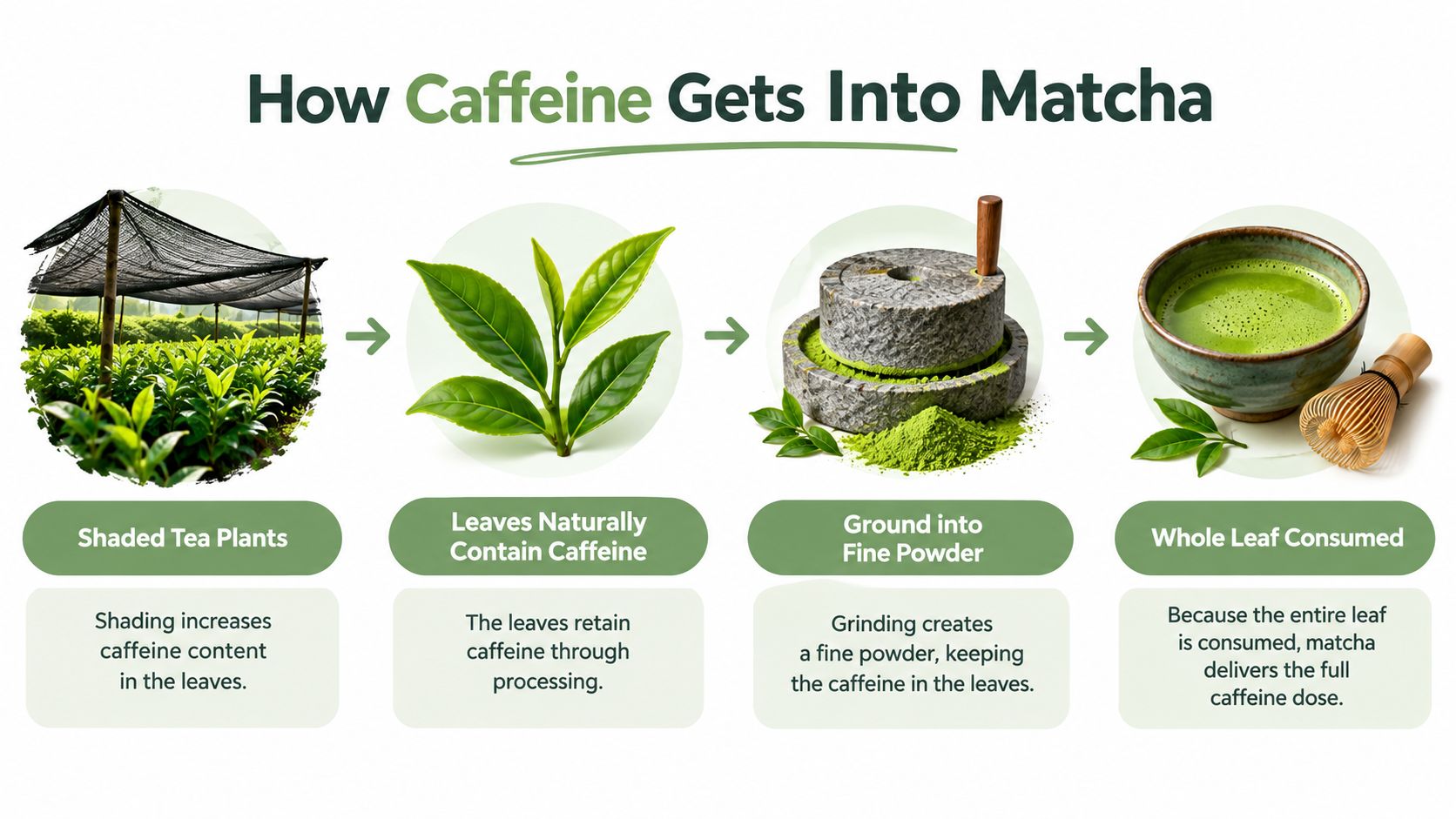
How Caffeine Gets Into Matcha
Matcha begins as Camellia sinensis, the same tea species used for green and black tea, so caffeine is already in the leaf before processing. The key difference is what happens to that leaf before it reaches your bowl.
For matcha, growers shade the plants in the weeks before harvest, then dry the leaves and mill them into powder, a production path Australian pharmacology expert Treasure McGuire of Bond University has described in ABC reporting. Shade changes how the leaf develops and helps create the dried leaf called tencha used for milling. Once ground, the leaf is no longer a filter you remove; it becomes the drink itself.
Steeping Compared With Whisking
A brewed cup works like a rinse: water pulls soluble compounds out, then the spent leaf stays behind. Matcha works more like blending spinach into a smoothie. Fine particles stay suspended, so you swallow leaf material along with the liquid.
That single difference explains why drink strength and caffeine dose are separate ideas. A delicate-looking bowl can still carry a substantial serve if it was made with a heavy scoop, while a bold grassy taste may come from cultivar or freshness rather than extra caffeine.
What Colour and Texture Cannot Tell You
Greenness signals style, not milligrams. Particle size, powder mass, water volume and dilution shape what ends up in the cup, and two drinks with a similar jade colour can behave differently once prepared.
The controllable part is the scoop. Measure powder the same way each time, watch one café preparation before copying it, then adjust by recipe instead of guessing from taste. Any softer feel has more to do with the rest of the leaf chemistry than with caffeine vanishing.
Matcha Compared With Other Caffeinated Drinks
A fair comparison starts with equal volume, then treats the result as a benchmark rather than a guarantee. As noted earlier, Treasure McGuire reported roughly 60 to 75 mg for a 250 mL matcha serving, placing it between brewed green tea and coffee at the same volume. The useful lesson is simple: cup strength describes taste and body, while caffeine dose describes how much leaf material and extract reached your mug.
| Drink | Approximate caffeine per 250 mL | How to interpret it |
|---|---|---|
| Matcha | 60 to 75 mg | Generally above brewed green tea because powdered leaf is consumed |
| Brewed green tea | 24 to 45 mg | Steeped and strained, so only extracted compounds remain |
| Black tea | 45 to 75 mg | Can overlap with matcha depending on brewing strength |
| Coffee | around 100 mg | Usually above a typical matcha serving at this volume |
Reading the Table Sensibly
Matcha often surprises people because it looks gentler than espresso yet usually sits above a strained green tea. It can touch black tea territory at the upper end, while a standard café coffee commonly remains higher. A calm way to read it is to see matcha as a middle lane: steady enough to notice, rarely the heaviest option in the room.
The edges blur once recipes leave the lab. Extra espresso, a longer extraction or a larger cup lifts the coffee side. A heaped scoop or a double matcha lifts the tea side. Milk stretches volume and softens bitterness, although the caffeine from the powder is still present; syrup changes sweetness more than dose.
If your real choice is between a morning flat white and a matcha latte, our guide to matcha energy compared with coffee looks at how the two tend to feel over a few hours. Let the table set the expectation, then let your usual order adjust it.
Compare the actual serving in front of you before trusting the reputation of the drink.
A pale bowl can still be brisk, and a milky latte can be gentler than its colour suggests. That is why dose and strength deserve separate labels: one is measured in milligrams, the other is judged by aroma, bitterness and texture.
Why Your Matcha Serving Can Differ
Two people can both say they had a matcha this morning and receive materially different caffeine doses. The main reason is powder mass, because more finely ground leaf means more of the compounds naturally present in that leaf. Final drink volume matters too, but mainly because larger café drinks often use more powder rather than more water or milk.
Independent Australian guidance cited a wider range of roughly 38–176 mg depending on whether a recipe used half to one teaspoon of powder, as discussed in Australian guidance on matcha latte caffeine ranges. That broad spread is exactly why a single universal number can mislead. A strong café latte can approach coffee-level caffeine, while a lightly prepared home drink may contain far less.
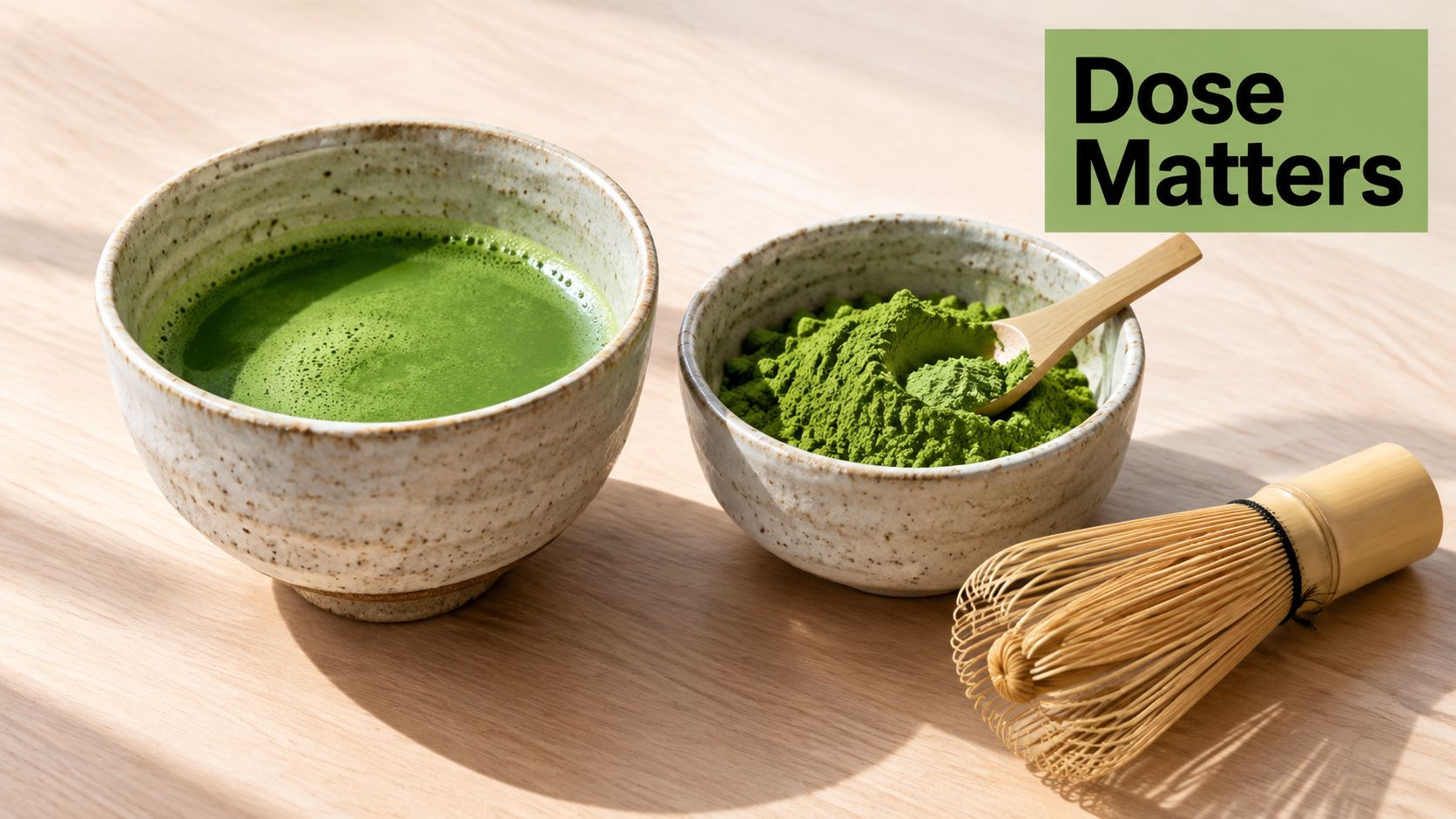
This is the point where looking at the powder itself is more informative than looking at the finished colour.
The Variables Behind Your Cup
- Powder amount: The clearest lever you can measure at home or ask about at a café.
- Number of servings whisked together: A double portion in one cup doubles down on the leaf material, even if the cup size barely changes.
- Dilution: Extra milk or water can make flavour seem milder without reducing the powder already added.
- Cultivar and harvest: Growing conditions influence the leaf before production, so powders aren't identical.
- Preparation conditions: Serving mass and method affect what you consume.
Food Standards Australia New Zealand reported Australian tea caffeine concentrations spanning approximately 0–90 mg per 100 g in FSANZ dietary intake assessment material. The lesson is practical rather than technical. Without knowing the recipe, you can't calculate an exact dose from taste, colour or whether the tin says ceremonial or culinary.
Grade names also cause confusion. Ceremonial and culinary describe intended uses and flavour profiles, they're not caffeine labels with a guaranteed figure. Ask your café how much powder goes into a regular and a large, and at home, use the same scoop for a week so your own routine becomes predictable. Predictability beats guessing by sip.
How Caffeine and L-Theanine Work Together
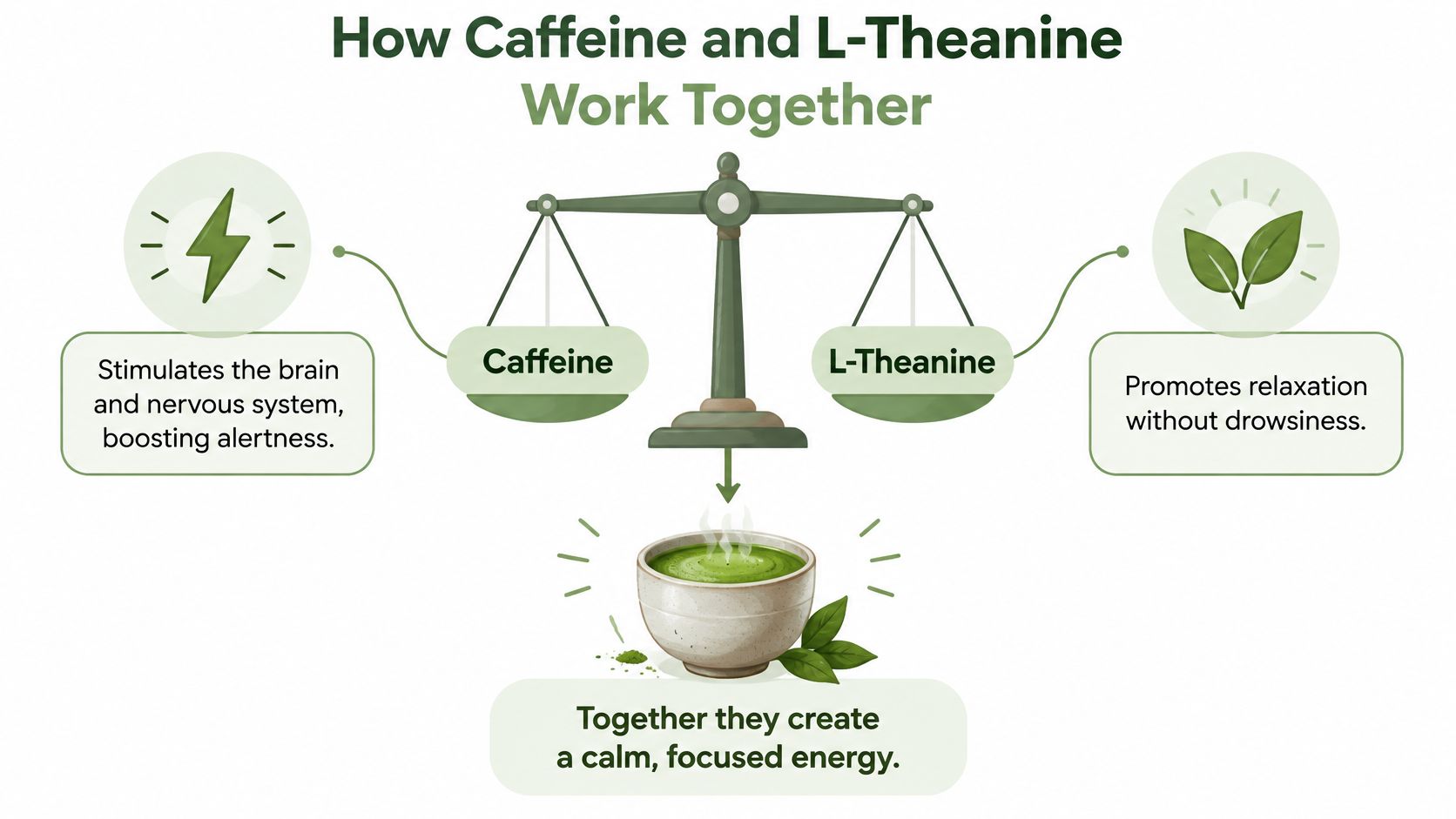
Matcha contains caffeine alongside L-theanine, an amino acid naturally present in tea. Healthdirect describes caffeine as a stimulant affecting the brain and nervous system in Healthdirect caffeine guidance for Australian consumers. That stimulant effect is the alertness side of the experience, while L-theanine is part of why drinkers often describe matcha differently from coffee alone.
This concept visual shows the pairing as a balance rather than a contest between stimulation and calm.
A Simple Balance Analogy
Picture caffeine as the accelerator and L-theanine as a steadier hand on the steering wheel. Many people describe the combination as calmer, smoother or more focused than coffee, but that description is an individual experience, not a guaranteed outcome. How much caffeine is present, when you drink it and how sensitive you are still matter.
For readers who want a plain explanation of the amino acid itself, our page on what L-theanine is and where it occurs gives useful background. A complementary consumer resource is NZ Supps on L-theanine, which discusses the common description of L-theanine smoothing the feel of caffeine. Treat those descriptions as context for the experience, not proof that the caffeine has disappeared.
The short video below is a helpful visual pause point before you think about your own response to a serving.
What Calm Focus Does Not Mean
L-theanine doesn't make matcha caffeine-free, and it doesn't neutralise caffeine in the cup. Someone who feels jittery after coffee may still react to a strong matcha, particularly on an empty stomach or after other caffeinated drinks. Someone else may feel steady after the same bowl.
Pay attention to your own pattern over several days rather than judging from one café order. Note the powder amount if you know it, the time of day and what else you'd consumed. That small record tells you more than a promise that matcha always feels calm.
A Practical Caffeine and Matcha Routine
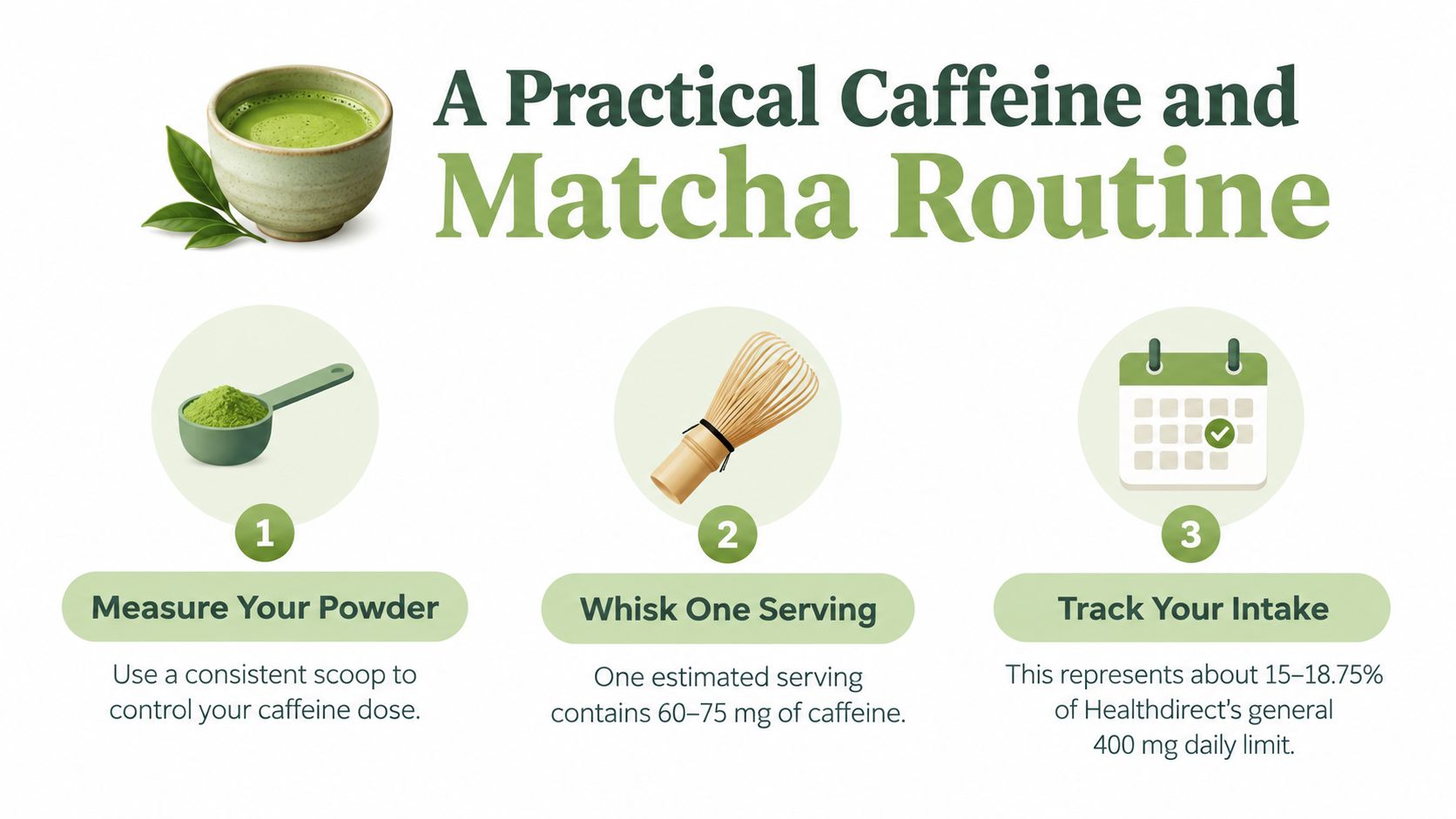
A routine works when you count matcha as part of your whole day, not as a separate wellness category. Using the Healthdirect reference discussed earlier, one estimated matcha serving represents about 15–18.75% of the 400 mg general daily amount for healthy adults. Two servings provide approximately 120–150 mg, or 30–37.5%, so the contribution grows quickly once coffee, black tea, cola, chocolate or energy drinks join the picture.
This routine visual reduces the maths to three habits you can repeat without turning breakfast into a spreadsheet exercise.
Build the Routine Around the Day
- Choose the moment first: Decide whether you want alertness for morning work, study or exercise, then place matcha there deliberately.
- Measure the powder: Use a consistent scoop at home, adjust gradually, and avoid changing powder amount and cup size on the same day.
- Add up other sources: Count the flat white, afternoon cola or chocolate alongside matcha instead of treating tea as an exception.
- Check your response: Note sleep, restlessness and focus, then reduce the powder or move the drink earlier if the pattern doesn't suit you.
Two Servings, Two Different Decisions
A lightly prepared home bowl may fit comfortably into a morning where you've had no coffee. A larger café latte, especially one made with extra powder, needs more deliberate accounting because the benchmark serving no longer describes it well. Four estimated servings could reach roughly 240–300 mg, leaving only 100–160 mg before the general adult benchmark, based on the Healthdirect reference already cited above.
Don't stack a large matcha automatically on top of another large caffeine source and call it gentle because it's green.
Timing is personal. Healthdirect notes individual responses depend on amount and timing, so a late afternoon matcha that suits one person may disturb another person's evening. Start with a measured morning serving, keep the rest of the day visible, and adjust from evidence about your own body rather than chasing a guaranteed energy curve.
Matcha Caffeine Safety for Sensitive Drinkers
Natural doesn't mean inactive. Caffeine from tea is still pharmacologically active caffeine, and Food Standards Australia New Zealand identifies it as naturally occurring in tea with a long history as a mild stimulant in FSANZ consumer guidance on caffeine. The plant origin explains where it comes from, it doesn't remove the need for moderation.
FSANZ also states there's no recognised health-based Acceptable Daily Intake for caffeine, while its expert review found evidence of increased anxiety in children at approximately 3 mg per kilogram of body weight per day, in the same consumer guidance linked above. That uncertainty is a reason to use ranges and context carefully, especially for children, adolescents, pregnant and lactating women and caffeine-sensitive consumers.
Australian Thresholds Worth Knowing
- Healthy adults: FSANZ consumer guidance sets intake at no more than 400 mg per day and no more than 200 mg in one serving, according to FSANZ guidance on caffeine powders and high caffeine foods.
- Pregnant and breastfeeding people: The same guidance advises staying at or below 200 mg per day.
- People under 18: FSANZ uses a single-serving threshold of no more than 3 mg per kilogram of body weight, illustrated as 120 mg for a 40 kg child.
A standard estimated serving would equal 1.5–1.875 mg/kg for a 40 kg child, based on the serving estimate used earlier, but a stronger preparation could approach or exceed that child's single-serving threshold. Child-sized on the menu refers to cup volume, not necessarily powder quantity. Parents and cafés should ask about the recipe rather than assuming a small green drink is low in caffeine.
Where Caution Belongs
If you're pregnant, our resource on matcha during pregnancy is a more specific starting point, alongside advice from your own clinician. People taking medicines affected by stimulants, adolescents and anyone who notices anxiety, sleep disruption or palpitations after caffeine should use more conservative, clinician-informed limits. General thresholds aren't personalised medical advice.
Energy drink rules shouldn't be used to guess a matcha dose either, since formulated caffeinated beverages have their own regulatory labelling framework. Ordinary tea products may not provide an equivalent per-serve figure on the pack. State the powder amount, count total exposure from all sources and don't imply that naturally occurring caffeine has no effect.
Choosing Matcha for Your Energy Routine
A good choice comes from answering three questions together. How much caffeine is your recipe likely to contain, what else have you consumed today, and how do you usually respond to caffeine? Those answers matter more than labelling matcha healthy or unsafe in the abstract.
A lighter serving may suit a gentler routine, particularly if you've already had coffee or you know late caffeine affects your sleep. A powder-heavy latte can still have a place, perhaps earlier in the day, but it deserves honest accounting. Pairing your drink with a satisfying breakfast is also sensible planning, and this guide on what to eat to avoid the crash offers food-focused ideas for steadier mornings.
Ceremonial and culinary aren't caffeine categories, and L-theanine doesn't remove the need for moderation. At Pep Tea, we supply premium Japanese organic matcha as one option for readers who want a measured home ritual and clear preparation at home. Choose the grade for its intended use, measure the powder for your needs, and let your own response guide whether matcha belongs in your morning, your pre-workout window or only occasionally.
If you'd like to put a measured matcha routine into practice, explore the organic matcha range and sugar-free organic kombucha brewed for Australian households and cafés at Pep Tea. You'll find Japanese matcha for whisking, lattes and baking, plus education to help you prepare each serving with confidence.
Matcha Latte Benefits: What the Science Actually Says

The most popular advice about matcha latte benefits is also the least precise: “It's a healthier coffee.” Sometimes that's a reasonable swap. Sometimes it's a large, sweetened café drink with a wellness halo and only a modest amount of matcha.
The useful question isn't whether matcha is healthy in isolation. It's what's in the beverage you're drinking, including the matcha dose, grade, milk, sweeteners, preparation and serving size. The evidence supports promising benefits from matcha's catechins, caffeine and L-theanine, but human trials are still limited, and a latte isn't automatically equivalent to plain matcha whisked with water.
Why a Matcha Latte Is Not the Same as Matcha Tea
A traditional bowl of matcha and a café latte share the same powdered tea, but they're different drinks. A café latte is usually built around steamed milk, sometimes sweetened, with a relatively small amount of powder. That changes the concentration of the compounds people associate with matcha, as well as the drink's energy and sugar content.
Matcha itself is made by consuming the whole tea leaf rather than steeping leaves and discarding them. Research cited in Australian university material reports that catechins can make up up to 30% of green tea leaf dry weight, while EGCG can account for up to 60% of total catechins (matcha chemistry research). That makes matcha a concentrated source of tea compounds, but the amount in your cup still depends on how much powder you use.
The four questions that matter
When I assess a matcha latte, I look at four things:
- Dose: How many grams of matcha went into the cup?
- Grade: Is it a fresh, vibrant powder intended for drinking, or a more assertive culinary powder intended for blended recipes?
- Preparation: Was the matcha properly sifted and whisked, or stirred into hot milk?
- Add-ins: Is the drink unsweetened, lightly sweetened, or built around syrup and flavoured powder?
An Australian café benchmark places mainstream matcha drinks at roughly 56–81 mg of caffeine per serve (Starbucks Australia Matcha Misu Latte). That's enough to make the drink stimulating, while generally sitting below a standard coffee. It doesn't tell us the exact catechin or L-theanine content, though, because recipes and powder doses vary.
A practical rule: Treat “matcha latte” as a recipe, not a health category. The ingredients and proportions decide whether it's a functional everyday drink or an occasional sweet treat.
The rest of the answer comes down to how those four variables affect the beverage as served. Matcha may support alertness and provide concentrated bioactive compounds, but those advantages can be diluted by a low powder dose or offset by a heavily sweetened recipe.
What Counts as a Quality Matcha Latte
A quality matcha latte starts with a powder that tastes good enough to drink without hiding it under syrup. Ceremonial-grade matcha is generally made from tender, carefully processed leaves and is valued for its smooth texture, bright colour and savoury sweetness. Culinary-grade matcha is more intense and often more astringent, which makes it useful in baking, smoothies and strongly flavoured drinks.
Both are matcha. The label alone doesn't prove a specific health outcome, and “ceremonial” isn't a universal medical or nutritional standard. For a daily latte, choose a powder with clear Japanese sourcing, a vivid green appearance, fine texture and a fresh harvest or packaging date where available.
Prepare the powder before adding milk
Water that's too hot can make matcha taste harsh. For a smoother drink, use water around 70–80 °C, sift the powder, add a small amount of water and whisk until it becomes a lump-free paste. Then add warmed milk.
This method distributes the powder through the drink instead of leaving clumps floating on top. It also gives you more control over bitterness, which is especially helpful when using a higher-quality powder with delicate grassy and umami notes.
A traditional serving can use more matcha than a typical café recipe. Australian-style guidance commonly describes a serving of about 2 g of powder, with around 60–70 mg of caffeine (Australian matcha serving guide). The caffeine figure is a useful practical benchmark, but it will vary with the tea and dose.
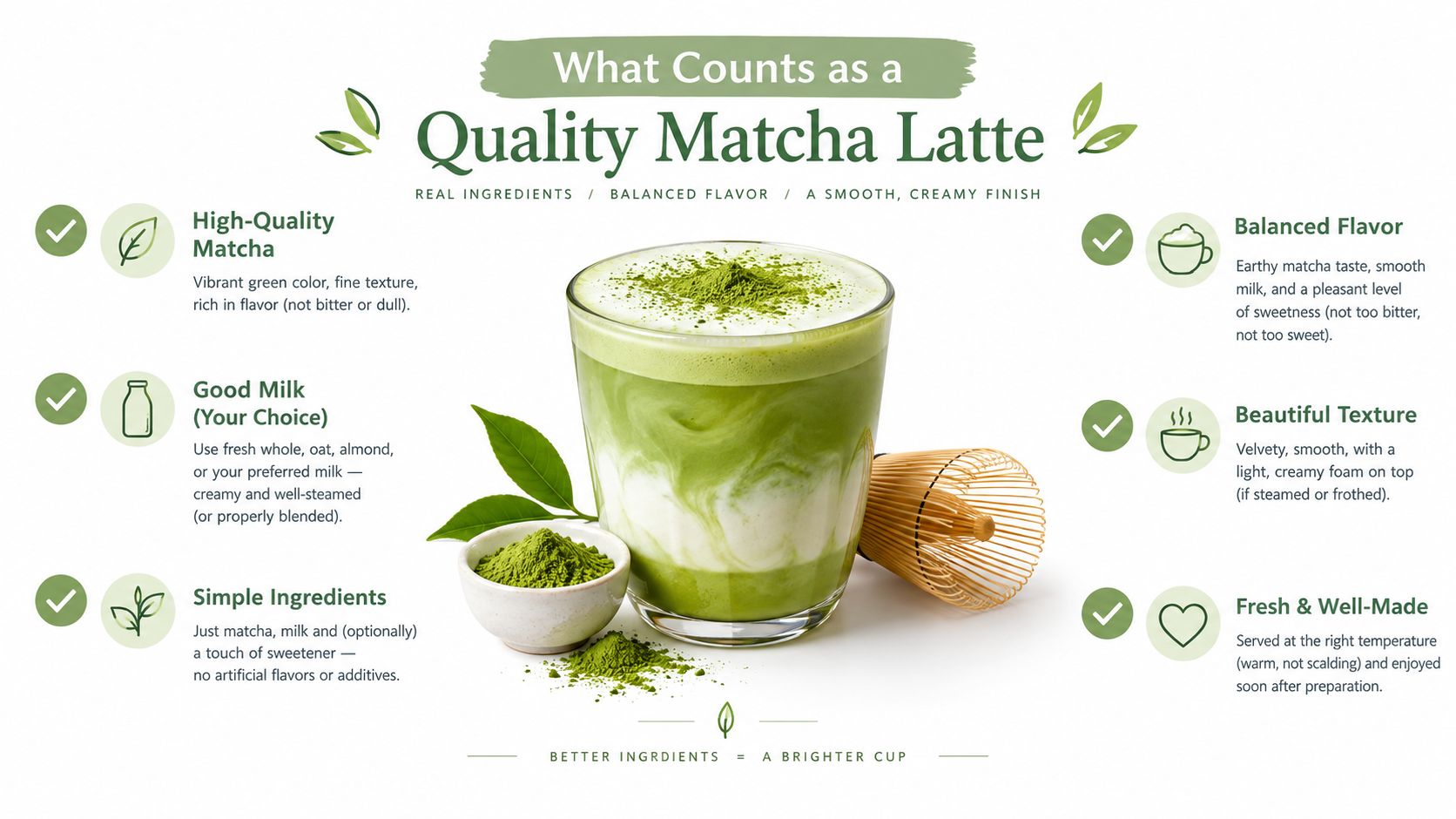
A simple quality checklist
Look for:
- Matcha as the main ingredient, rather than a sweetened “matcha-flavoured” blend.
- Bright green colour, not a dull or brownish appearance.
- Fine, smooth powder, which whiskes more evenly.
- Transparent sourcing, ideally identifying where the tea was grown and processed.
- A recipe you can taste, with little or no syrup needed.
The latte format can still be a good way to enjoy matcha. It just needs enough real powder and not so many additions that the tea becomes decoration.
Antioxidant Power and EGCg Concentration
Matcha's antioxidant reputation rests mainly on catechins, a group of tea polyphenols. The best-known member is epigallocatechin gallate, usually written as EGCG or EGCg. These compounds show antioxidant activity in laboratory tests, but chemical activity in a controlled experiment does not establish a specific health benefit for people drinking a matcha latte.
The whole-leaf format changes the comparison with steeped tea. Because the powdered leaf is consumed rather than removed after brewing, matcha can provide more catechins. One Australian source reports that a standard serving may contain about two to three times the catechins of a cup of steeped green tea. An Australian product laboratory report measured total catechins at 65,200 μg/g and EGCG at 56,000 μg/g (Australian matcha catechin analysis). These are measurements from tested products, not a guarantee for every powder sold in Australia.
Growing conditions also affect matcha's chemistry. Shading before harvest changes the balance of compounds in the plant, including chlorophyll and L-theanine. A 2020 analysis measured matcha's fibre, vitamin C, caffeine, chlorophyll, phenolics and antioxidant activity, showing that its composition extends beyond colour and flavour (2020 matcha composition analysis).
What the measurements can and can't tell you
Tests such as ORAC and DPPH measure chemical activity under controlled conditions. They cannot show that a matcha latte will prevent disease, repair cellular damage or create a noticeable change in how you feel. A high catechin reading is evidence about composition, not proof of an outcome.
Human trials provide a more relevant test. An Australian systematic review screened 122,429 records and identified only 8 randomised controlled trials. Those trials reported significant reductions in body weight, body mass index and blood pressure, plus improvements in plasma cholesterol and lipids, with all reported results at p<0.05 (Australian systematic review of green tea catechins). The review concluded that supplementation in the range of 300–1500 mg per day may help reduce anthropometric and cardiovascular biomarkers in people with obesity and people with type 2 diabetes.
That range describes supplementation, not a café recipe. Extracts and concentrated preparations may contain far more catechins than the amount in a served latte. For a plain-language explanation of what EGCg is and why it matters, Pep Tea provides a useful chemistry overview.
The practical comparison is straightforward. Matcha's whole-leaf format can increase catechin exposure, while the actual amount still depends on the powder dose, product and preparation.
| Source | Serving Size | EGCg (mg) | Total Catechins (mg) | Notes |
|---|---|---|---|---|
| Matcha | Varies by powder dose | Product-dependent | Product-dependent | Whole-leaf powder is consumed |
| Steeped green tea | Varies by tea and brewing | Product-dependent | Product-dependent | Leaves are removed after brewing |
| Green tea catechin preparation | Research-dependent | Research-dependent | 300–1500 mg/day supplementation range | This range comes from the Australian systematic review, not a standard latte |
The matcha powder supplies the catechins, so its grade and dose matter when assessing the finished drink. The latte format changes the serving context, which is why ingredient-level antioxidant claims need to be read alongside the actual recipe.
Sustained Energy From Caffeine and L-Theanine
A matcha latte's most credible everyday benefit is its caffeine, not a guaranteed wellness effect. It can provide moderate stimulation with a smoother feel than some coffee drinks, partly because matcha supplies caffeine alongside L-theanine.
Caffeine supports alertness through the brain's adenosine signalling. L-theanine is an amino acid found naturally in tea, and technical reviews link the caffeine and L-theanine combination with smoother cognitive performance than caffeine alone (technical review of matcha composition and effects). The pairing may help explain why some drinkers experience focused attention rather than a pronounced buzz. Individual responses still vary, and the latte format can change the overall experience.
A useful benchmark
One clinical review cited a daily intake of about 2.07 g of matcha providing 72.5 mg of caffeine, 50.3 mg of theanine and 171.0 mg of catechins (technical review of matcha composition and effects). That is a research benchmark, not a fixed amount for every scoop or café recipe.
A mainstream Australian matcha drink can provide roughly 56–81 mg caffeine per serve (Australian café matcha caffeine benchmark). This generally places matcha above a typical brewed green tea and below a standard coffee, although the comparison depends on preparation. More powder or a larger café serve increases the total caffeine.
Milk does not remove caffeine. It can make a large latte taste and feel gentler because the caffeine is spread through more liquid, while the drink may still contain more caffeine than expected.
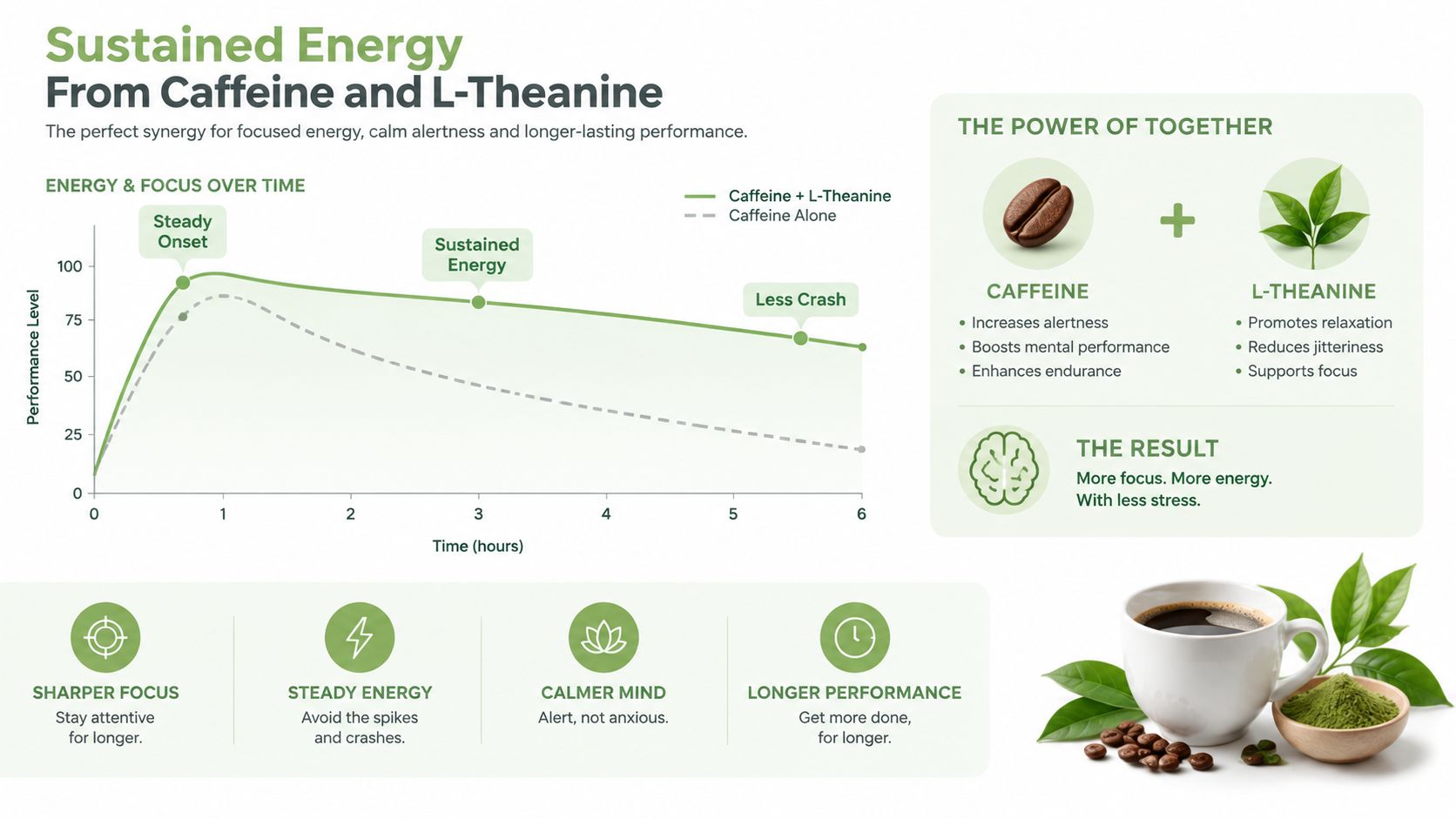
How to use the lift well
Choose an earlier serving if caffeine affects your sleep. A matcha latte may also suit a focused work period or exercise session, particularly when it replaces a sweeter drink or a stronger caffeine hit.
Food can make the experience feel gentler by slowing digestion, but it does not cancel caffeine. Include coffee, black tea, cola, energy drinks and chocolate when considering your overall intake.
Calm focus still contains caffeine. If you are caffeine-sensitive, L-theanine may change the drink's feel, but it cannot guarantee good sleep after a late serve.
Matcha grade does not set a fixed caffeine level. Dose, leaf material, harvest and preparation all influence the finished cup. Pep Tea explains the relationship between matcha, green tea and L-theanine in its educational resource.
Metabolic and Cognitive Benefits in Human Trials
Matcha's metabolic and cognitive claims need a clear distinction between plausible mechanisms and measured human outcomes. Catechins may affect pathways associated with cardiovascular markers, while caffeine and L-theanine may support alertness. Those possibilities do not show that a sweetened latte causes weight loss, removes anxiety or improves sleep.
An Australian review of green tea catechin trials reported improvements in body measurements, blood pressure, cholesterol and lipids among the small group of randomised studies. Its conclusion about 300–1500 mg per day referred to catechin supplementation in relevant populations, not to every café latte. As noted earlier, the amount of matcha in a served drink can differ substantially from a research dose.
What researchers measured in people
Australian-facing coverage of a 2023 review describes only five experimental studies in which matcha was given to people, generally at doses around 2–4 g per day (Australian-facing summary of matcha research). The findings were mixed. Some studies reported lower stress and anxiety, better memory or cognition, and improved sleep in older adults. Other results showed little sleep effect in younger adults, no mood effect, and no additional weight-loss benefit in people with obesity.
This evidence supports continued interest in matcha, while leaving its clinical role uncertain. A trial serving of plain matcha is not interchangeable with a large latte containing milk and syrup.
| Claim | Evidence | Typical Result |
|---|---|---|
| Better alertness | Caffeine and L-theanine have a plausible combined effect | May support attention and calm wakefulness |
| Cardiovascular markers | Green tea catechin trials reported improvements in several markers | Promising, but not proof that a latte prevents disease |
| Weight loss | Human matcha evidence is limited and mixed | No reliable standalone weight-loss result |
| Anxiety reduction | Some experimental findings point to lower stress or anxiety | Inconsistent and dependent on the person and dose |
| Sleep improvement | Results differ between groups | Not a dependable sleep aid |
The research base is generally small or short, and many preparations do not resemble a milk-based café drink. Milk changes the recipe, while syrup changes its nutritional profile, so ingredient-level claims cannot automatically be transferred to the beverage as served.
Matcha may fit a heart-conscious, balanced lifestyle and may help some people with attention. It isn't proven to replace sleep, movement, medical treatment or a nutritious eating pattern.
How Milk, Sugar and Serving Size Change the Equation
The latte format changes more than taste. Milk adds volume, protein and energy, while sweeteners can turn a low-sugar tea into a dessert-style drink. The result may still be enjoyable, but its overall nutritional profile is no longer represented by the matcha powder alone.
Research and commentary on matcha often focus on the leaf's catechins, caffeine and L-theanine. Café buyers experience the whole recipe. A small unsweetened home latte and a large syrup-based café drink may share a name while delivering very different amounts of matcha, sugar and milk.
Milk isn't the main concern, sugar is
Milk proteins may interact with tea catechins, and the effect on antioxidant absorption remains debated. Human results don't support a simple rule that dairy cancels matcha's benefits, so there's no need to avoid milk automatically.
Sweetener deserves more attention. Honey, vanilla syrup and pre-sweetened powders can shift the drink away from the low-sugar profile people expect from plain matcha. If you're buying a drink, ask whether the café uses pure matcha powder or a flavoured blend, then request no syrup or a reduced amount if that suits your palate.
For people planning drinks around travel, ingredient labels and serving choices are easier to manage with practical resources such as this guide to practical nutrition for travelers.
Choose the format that matches your goal
| Situation | Better choice | Why |
|---|---|---|
| Hot at home | Pure matcha, water and warmed unsweetened milk | You control dose and sweetness |
| Iced at home | Whisk matcha with a little water before adding cold milk | Reduces clumps and keeps the flavour clear |
| Café order | Ask for pure matcha and no syrup | Separates the tea from the dessert-style additions |
| Flavoured baking or smoothies | Culinary-grade matcha | Stronger flavour works with other ingredients |
A “matcha-flavoured” powder may contain little real matcha and can be dominated by sugar or other ingredients. Read the label rather than relying on the green colour.
For a controlled home version, follow Pep Tea's method for making a sugar-free matcha latte. The key idea is simple: keep the matcha real, keep the powder dose sensible and let sweetness be optional.
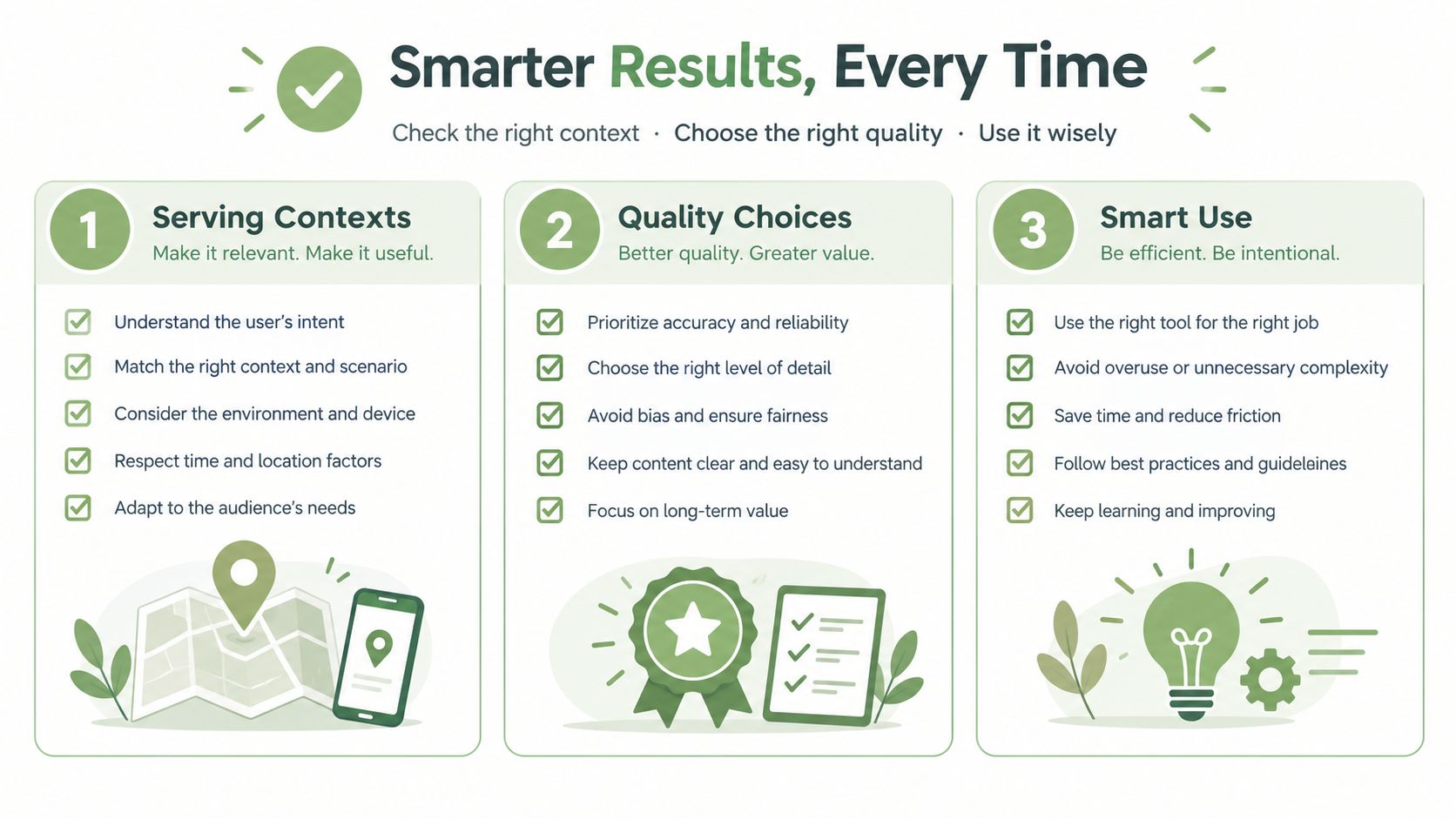
Serving Contexts, Quality Choices and Smart Use
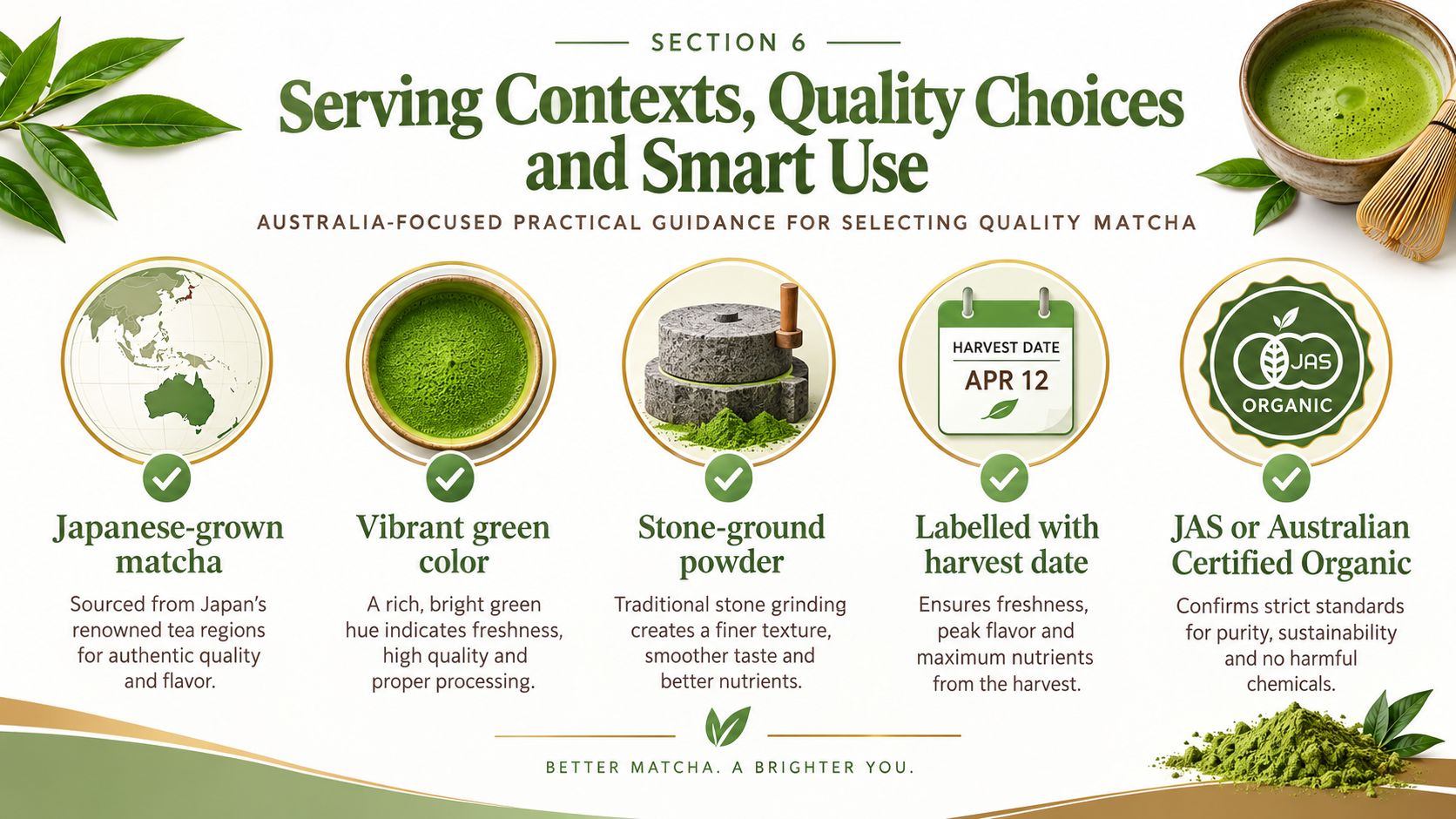
A useful matcha latte starts with buying decisions, not health promises. Choose Japanese-grown matcha from a supplier that identifies the product clearly, look for a vibrant green colour, and favour powder that's stone-ground and fresh. Organic certification, such as JAS or Australian Certified Organic certification, can also help shoppers assess production standards.
For a daily latte, a pleasant drinking-grade powder makes sense because flavour determines whether you'll keep using it. Reserve culinary grade for smoothies, baking and recipes where matcha is combined with fruit, yoghurt or other assertive flavours.
A dependable home method
For a 200–250 mL serve, start with 1–2 g of matcha, whisk it with about 60 mL of water at 80 °C, then add warmed milk. These quantities are a practical recipe framework, not a guarantee of a particular caffeine or catechin content.
Morning is the easiest timing. A pre-workout latte can be a coffee alternative, while sleep-sensitive drinkers may prefer to avoid matcha after 2 pm. Anyone who notices anxiety, palpitations or disrupted sleep should reduce the dose or stop and discuss persistent symptoms with a qualified health professional.
People who are pregnant, take blood thinners or iron supplements, or manage anxiety should be especially cautious with caffeine and tea compounds. Keep to one small serve unless a doctor or pharmacist advises otherwise, and consider the timing of matcha around iron supplements or meals.
What to ask at a café
Ask:
- Is the drink made with pure matcha?
- How much powder goes into the cup?
- Does the powder already contain sugar?
- Can you make it without syrup?
- Can I choose a smaller size?
At home, keep a fine sieve, a bamboo whisk or handheld frother, a small bowl and a reliable way to judge water temperature. If you're helping a remote team explore café culture, a guide to latte tasting for remote managers offers useful ideas for comparing preparation and flavour, even though the same tasting approach can be adapted to matcha.
Pep Tea offers organic Japanese matcha alongside Australian-brewed, sugar-free organic kombucha made in the Hunter Valley, NSW. If you want to compare clean, low-sugar beverage options, visit Pep Tea to explore the range and choose a matcha suited to your preferred latte style.
Matcha Green Tea L Theanine: Benefits for Calm Focus
Matcha contains naturally occurring L-theanine, an amino acid that, paired with caffeine, is associated with calm alertness. However, a typical 2 g serve delivers far less L-theanine than the 200–400 mg/day doses used in clinical sleep and anxiety studies, so the experience depends heavily on grade, shading, and dose.
Have you ever wondered whether matcha's famous “energy without the jitters” reputation comes from the drink itself, or from a much larger dose of purified L-theanine than your cup can realistically provide? That distinction matters. Matcha green tea L-theanine is a useful food-and-beverage story, but it isn't the same thing as taking a controlled supplement.
Matcha can still be a pleasant source of caffeine, amino acids and antioxidant compounds. The sensible question is not whether it's a magic calm-focus drink. It's what a particular serve contains, how you prepare it, and what the human evidence can tell us.
Why Everyone Is Talking About Matcha and L-Theanine
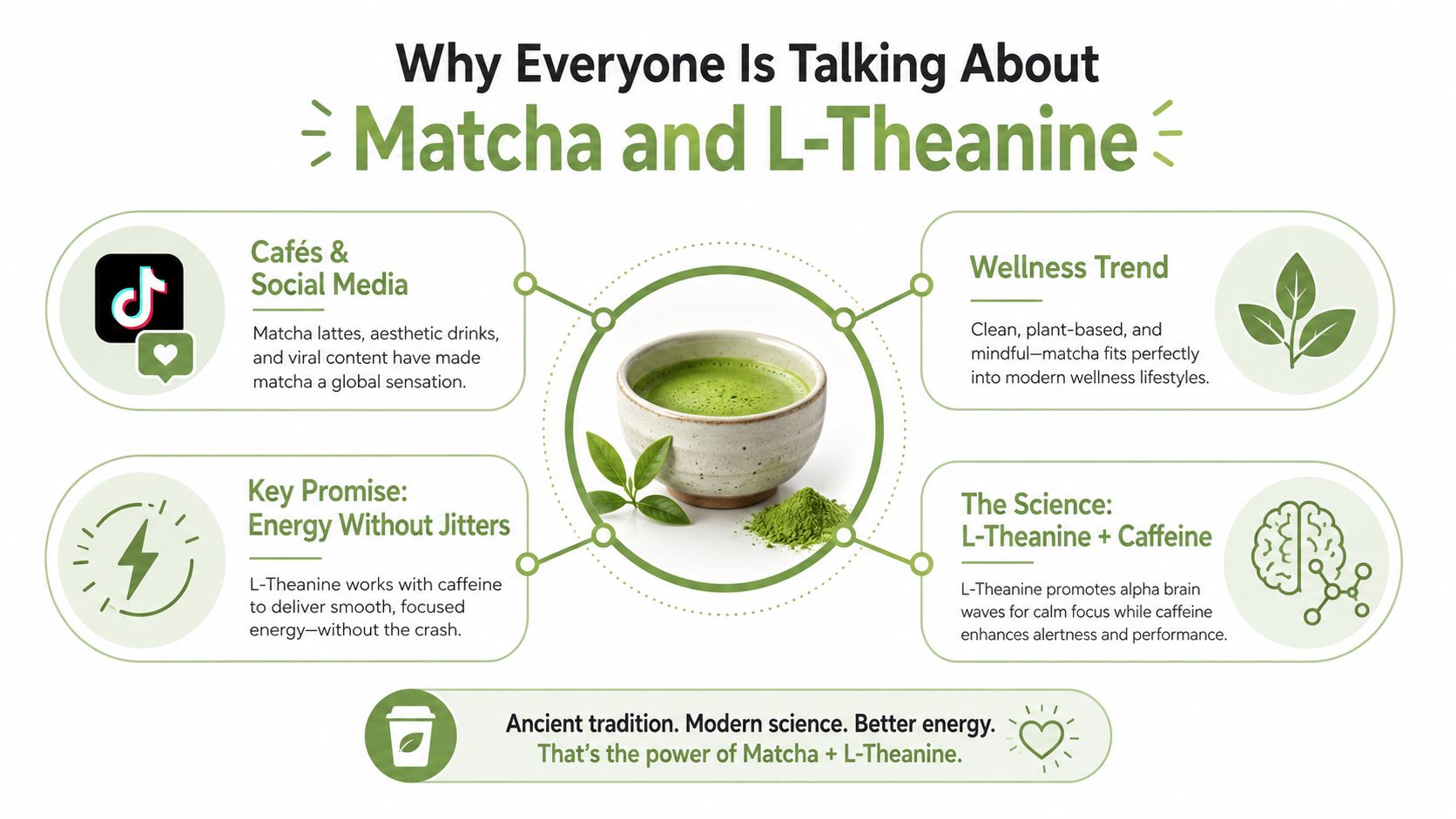
Matcha has moved from specialist tea counters into cafés, wellness shelves and social feeds. The usual promise is familiar: smooth energy, better concentration and fewer sharp edges than coffee. The compound most often placed at the centre of that story is L-theanine, an amino acid naturally found in the leaves of the tea plant, Camellia sinensis.
At a chemical level, L-theanine is one of the compounds that contributes to tea's savoury, rounded character. It helps explain why some green teas taste brothy or umami rather than just bitter. Tea plants produce it as part of their natural chemistry, and shading the plants changes the balance of compounds inside the leaf.
That's why marketers talk about L-theanine whenever matcha appears in a conversation about focus. The drink combines the amino acid with caffeine, so people often describe the result as alert but less edgy than a strongly caffeinated drink. Human research has examined isolated L-theanine in stressful conditions, with a systematic review identifying 9 peer-reviewed randomised controlled trials and concluding that 200–400 mg per day may help reduce stress and anxiety in people exposed to stress, while also noting that larger and longer studies are needed. Read the systematic review on L-theanine and stress
The molecule behind the message
The important catch is dose. A clinical study of isolated L-theanine doesn't automatically prove that a café latte produces the same effect. Matcha is a whole-leaf beverage matrix, containing caffeine, polyphenols, flavour compounds and amino acids in proportions that vary between products.
So, when you see matcha green tea L-theanine described as a calm-focus solution, read the phrase carefully. It points to a plausible combination, not a guaranteed outcome. Explore PepTea's matcha education and products to see how the ingredient fits into a broader tea ritual.
What Matcha Actually Is and Why Its Chemistry Differs
Matcha isn't just green tea brewed more strongly. With ordinary loose-leaf green tea, hot water draws compounds out of the leaves, and you usually discard the leaves. With matcha, you drink finely stone-ground leaf powder, so the preparation includes the leaf itself.
The difference begins in the field. Matcha plants are shade-grown before harvest. A useful café analogy is to think of the leaves as wearing sunscreen. With less direct sunlight, the plant's chemistry shifts, supporting more chlorophyll and preserving more amino-acid character, including L-theanine. The leaves also retain caffeine, which is why matcha can feel more concentrated than a typical green-tea infusion.
Ceremonial and culinary grades
Ceremonial-grade matcha is generally selected for drinking. It tends to have a brighter colour, finer texture and more delicate balance, so whisking it with water can produce a clean, rounded cup. Culinary-grade matcha is designed to hold its flavour in foods such as smoothies, cakes, sauces and ice cream, where milk, fruit, sugar or other ingredients compete with the tea.
Those labels describe intended use more than they guarantee a precise L-theanine amount. A higher price, vivid colour or ceremonial wording cannot replace a product-specific lab result. Shading, cultivar, harvest conditions, processing and storage all influence the finished powder.
Stone-grinding matters because it turns the prepared leaf into a fine powder rather than an infusion. That gives matcha its dense texture and concentrated flavour, but it doesn't create a fixed dose of L-theanine. Two powders can look similar while delivering different amounts per gram.
A useful mental model: matcha is a concentrated leaf preparation, not a standardised L-theanine capsule.
That distinction also explains why matcha can taste both rich and slightly bitter. L-theanine contributes savoury softness, while caffeine and polyphenols add bitterness and astringency. The balance depends on the leaf and on your brewing technique.
How L-Theanine and Caffeine Create Calm Focus
The phrase calm focus describes a combined experience, not a single switch in the brain. Caffeine supports alertness, while L-theanine has been studied for its relationship with relaxation and stress responses. Researchers have also examined L-theanine in relation to alpha brain-wave activity, GABA and other neurotransmitter systems, but these mechanisms shouldn't be treated as proof that every matcha drink produces a predictable mental state.
A helpful analogy is lighting. Caffeine alone can feel like a bright strobe for some people, especially when taken quickly or on an empty stomach. L-theanine may make the experience feel more like a steady LED bulb, where alertness remains present without the same sense of sharp stimulation. That analogy is useful, but individual responses still vary.
What the evidence can and cannot show
Human evidence is strongest for isolated L-theanine doses, particularly in the 200–400 mg/day range discussed in the systematic review of stress and anxiety trials. Typical matcha beverages usually contain much less, so it would be a mistake to copy a supplement claim directly onto a teaspoon of powder.
L-theanine also isn't a sedative in the usual sense. A person may feel less tense while staying awake, but that doesn't mean matcha will treat anxiety, insomnia or a medical condition. Caffeine can also work against relaxation if the serving is large, the drink is consumed late, or the drinker is especially sensitive.
The caffeine-to-theanine relationship is central to the way matcha is marketed. An Australian matcha education source describes matcha caffeine as being absorbed and released slowly over 6–8 hours, and positions L-theanine as part of the drink's smoother focus profile. That is a useful description of the product narrative, but it shouldn't be read as a guarantee for every person or every preparation. Read Australian matcha guidance on caffeine and L-theanine
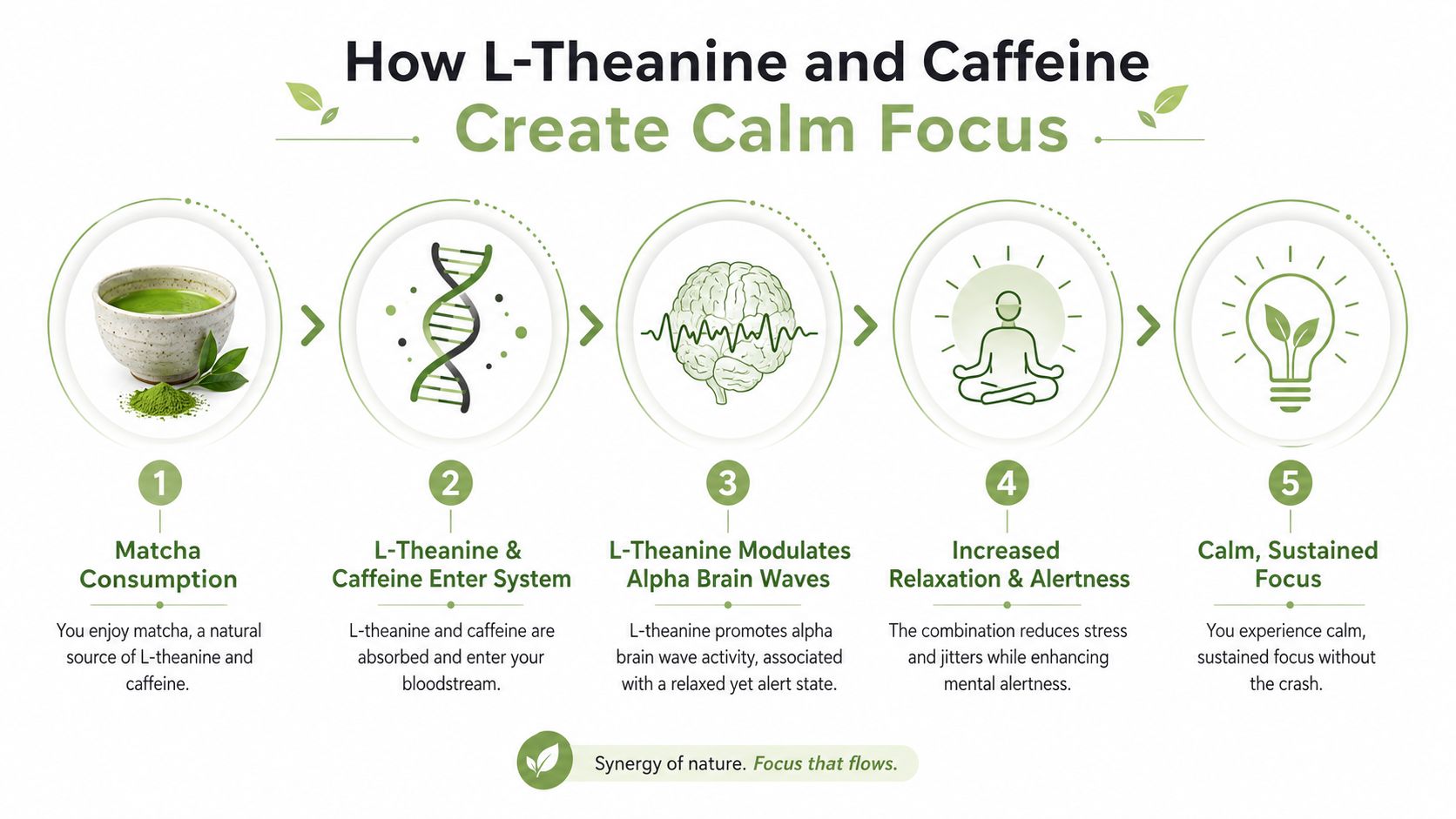
For a visual explanation of the calm-focus idea, this video provides an accessible introduction:
If you'd like the chemistry explained in more detail, learn what L-theanine is before deciding how much weight to give the claim. The honest summary is simple: matcha may feel smoother than some caffeinated drinks, but it isn't a guaranteed focus pill.
Matcha Versus Other Teas and Supplements on L-Theanine
How much L-theanine does matcha provide compared with ordinary tea or a supplement? The answer depends on both the product and the form being compared.
One Australian lab-tested matcha product contained 21.3 mg of L-theanine per gram and 33.3 mg of caffeine per gram. The cited averages across 36 commercial green teas were lower, at 6.46 mg of theanine per gram and 16.28 mg of caffeine per gram. View the Australian matcha potency results
| Source | Typical L-theanine per gram | Typical caffeine per gram | Notes |
|---|---|---|---|
| Lab-tested Australian matcha product | 21.3 mg | 33.3 mg | Product-specific laboratory result |
| Cited mean across commercial green teas | 6.46 mg | 16.28 mg | Mean across 36 commercial teas |
| Isolated L-theanine used in human research | 200–400 mg/day | Not applicable | Clinical dose range, not a tea measurement |
The difference comes partly from preparation. Matcha contains powdered whole leaf, while a standard green-tea infusion contains only the compounds that move into the water. Even so, the higher concentration in this tested product does not make an ordinary matcha serving equivalent to the isolated amounts used in supplement research.
Oolong and black tea cannot be assigned one fixed L-theanine value. Cultivar, harvest, oxidation, processing and brewing can all alter the final cup. Saying that green tea generally contains more may offer a rough direction, but it cannot replace analysis of the specific tea.
Why supplements are a different category
An L-theanine supplement is built around a stated amount of one compound. Matcha is a food with naturally variable composition, and it brings caffeine plus other tea constituents along with the L-theanine. The result is a beverage with taste, texture and a whole-leaf ritual, rather than a precisely controlled research dose.
The choice depends on the goal. Matcha suits someone who wants L-theanine as part of a drink and daily routine. A supplement suits someone who needs clearer control over the amount. Neither format automatically delivers the same experience or evidence base as the other.
The Dose Reality Most Articles Skip Over
How much L-theanine does a normal cup of matcha provide? The answer depends on the powder and serving size, so the word matcha alone cannot predict a clinical dose.
An Australian nutrition panel listing 180 mg of L-theanine per 100 g works out to about 7.2 mg in a 4 g serve. That example shows why labels matter: products can differ substantially in composition. Review the Australian nutrition panel example
The same arithmetic helps put supplement claims in perspective. A serving may contribute L-theanine as part of a drink, but it does not automatically deliver the isolated amounts used in research. A larger serve could move the beverage closer to those research doses, while also increasing caffeine intake. The result is less like taking a measured tablet and more like eating a food whose ingredients arrive together.
Caffeine is the main reason dose comparisons need care. Matcha supplies L-theanine alongside caffeine and other tea compounds, so increasing the powder changes more than one variable. Someone who wants a predictable L-theanine amount may find a supplement easier to measure. Someone who values flavour, texture and a daily ritual may prefer matcha, accepting that its composition varies.
Dose matters more than the word “matcha”. Check the powder's serving size, L-theanine information and caffeine content before assuming your cup mirrors a clinical trial.
There is no universal cup count that suits everyone. Body size, caffeine sensitivity, preparation strength, timing and other sources of caffeine all affect the experience. For practical guidance on serving amounts and personal tolerance, read this guide to how many cups of matcha powder may be suitable per day. Anyone who is pregnant, taking medication, managing a health condition or unusually sensitive to caffeine should discuss regular use with a qualified health professional.
What the 2026 Australian Research Is Telling Us
Australia's L-theanine research is becoming more practical, but it hasn't settled the question of what an everyday matcha latte does for everyone. An Australian clinical trial registered in 2026 for the THESleep project recruited 60 healthy adults aged 18–65 with mild to moderate sleep disturbances. The design included 4 arms, testing 100 mg, 200 mg and 400 mg of L-theanine or placebo over 14 days, following a 7-day baseline. Review the Australian THESleep trial record
That design is valuable because it tests several defined doses against placebo. It also highlights the translation problem. Participants receive a measured amount of isolated L-theanine, while a matcha drink contains a variable amount of L-theanine alongside caffeine and other compounds.
What this means for a real kitchen
The evidence supports caution rather than cynicism. Matcha may fit comfortably into a morning routine for someone who enjoys its flavour and tolerates caffeine. It shouldn't be described as a sleep treatment, a sedative or a substitute for professional care.
Timing becomes especially important. A morning serve may suit focus, while an afternoon or evening serve could be less comfortable for someone whose sleep is caffeine-sensitive. Food, hydration, regular movement and a consistent sleep routine remain more reliable foundations than trying to push a beverage towards a supplement dose.
Local research also shows why Australian readers deserve more than imported wellness slogans. The science is developing, and carefully controlled trials are useful, but a trial of purified L-theanine doesn't erase the variability of matcha powder.
Practical Ways to Get the Most From Matcha's L-Theanine
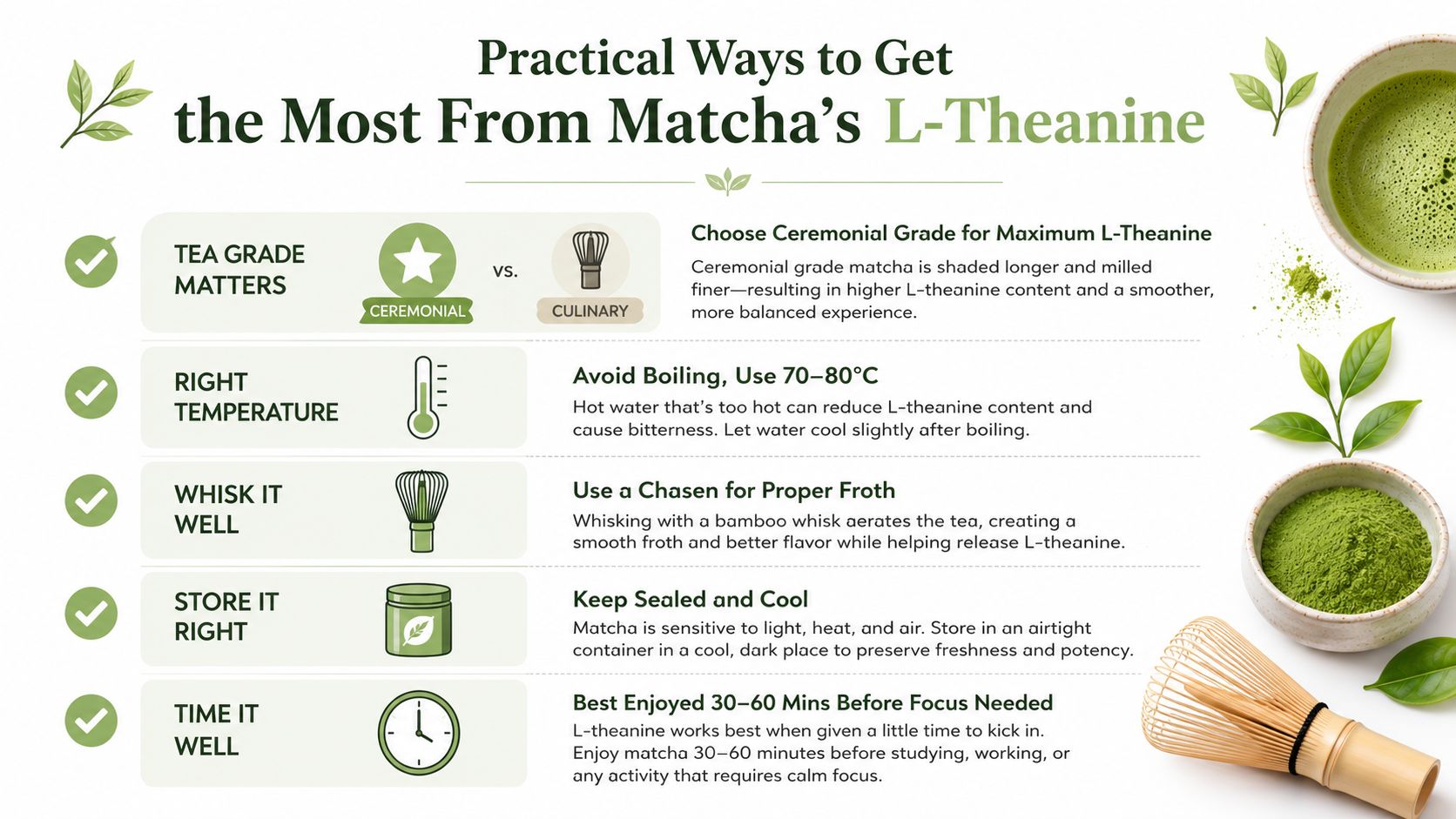
How can you make matcha's L-theanine useful without treating the powder like a supplement? Start with a drink you can prepare and tolerate regularly. A smooth ceremonial-grade powder generally suits plain drinking, while culinary-grade matcha works well in smoothies, baking or ice cream, where its stronger tea flavour can balance other ingredients.
Brewing changes the cup's flavour more predictably than its exact L-theanine content. Use warm rather than boiling water, sift the powder if it clumps, then whisk with a bamboo chasen or small electric frother until evenly mixed. Very hot water can make matcha taste harsh. A cooler approach improves the drinking experience, but it does not create more L-theanine.
A practical serving guide
The earlier Australian lab results are useful for understanding the relationship between powder, caffeine and L-theanine. They should guide preparation, not encourage chasing a supplement-style dose. Begin with a modest amount, especially if you are sensitive to caffeine, and adjust only after noticing how the drink feels.
For steadier flavour, dissolve the powder in a small amount of warm water first, then add more water or milk. Drinking it with breakfast may feel more comfortable than taking concentrated caffeine on an empty stomach. A latte can also spread the flavour through a larger drink, although it does not change the powder's measured L-theanine content.
Matcha values vary between products. One Australian nutrition panel reported a much smaller amount of L-theanine for a larger serve than the lab-tested product discussed earlier. Grade, sourcing, storage and testing can all affect what reaches the cup, so a package label is more useful than assuming every matcha has the same chemistry.
Four questions to ask before brewing
Should I drink matcha before sleep? If caffeine disrupts your sleep, late-day matcha may be a poor fit, whatever its L-theanine content. Research on isolated L-theanine does not establish that an ordinary matcha beverage improves sleep.
Does lower-temperature water preserve more L-theanine? It can produce a smoother, less bitter cup. It cannot turn a small beverage serving into a clinical dose.
Can I combine matcha with coffee? You can, but both drinks contribute caffeine. If you feel wired, reduce one drink first rather than trying to offset it with extra L-theanine.
What should I pair with matcha? Breakfast with protein, fibre and carbohydrates may feel steadier than concentrated caffeine on an empty stomach. That is a practical eating choice, not proof that food changes L-theanine absorption.
Answers to Common Matcha and L-Theanine Questions
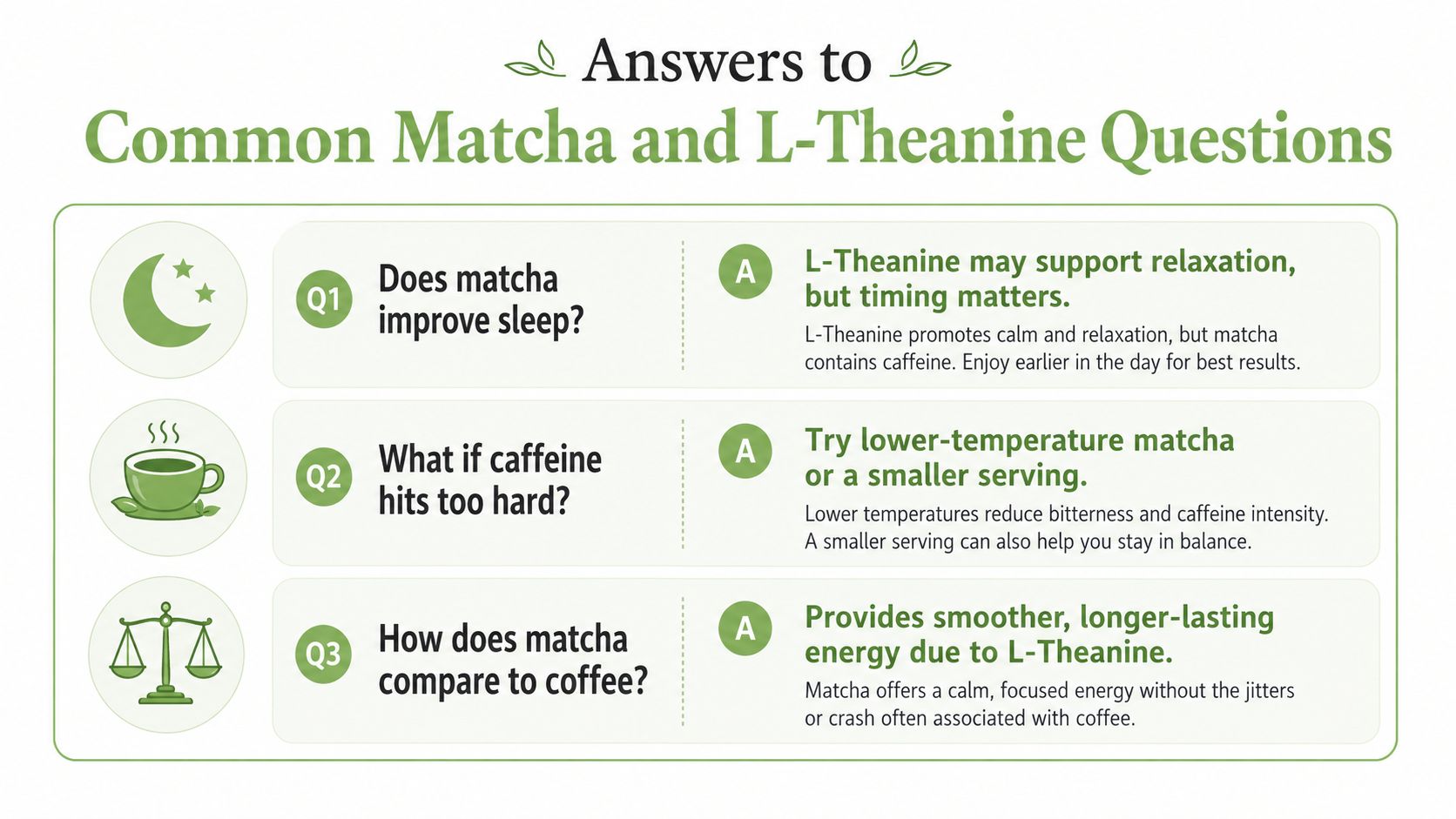
Does matcha improve sleep?
Matcha contains L-theanine, and human research on isolated L-theanine has examined stress, anxiety and sleep-related outcomes. Matcha also contains caffeine, so a late serve may make sleep harder for caffeine-sensitive people. The evidence doesn't justify calling ordinary matcha a sleep treatment.
Is L-theanine in matcha enough to make a difference?
It may contribute to the drink's character and to an individual's experience of calm alertness. However, the studied isolated range of 200–400 mg/day is much higher than the amount supplied by many beverage serves, so you shouldn't assume that matcha reproduces a supplement result.
What if caffeine hits me too hard?
Use a smaller serve and drink it earlier in the day. You can also make a latte with less powder, eat beforehand and avoid stacking the drink with coffee until you know how your body responds.
How does matcha compare with an L-theanine capsule for studying?
Matcha gives you a beverage ritual, caffeine and a variable amount of L-theanine. A capsule gives you a stated amount of isolated L-theanine, which is closer to the format used in clinical research. Neither option guarantees better concentration, and sleep, stress, food and study conditions still matter.
Is daily matcha sensible?
For many adults, a modest morning matcha can be a reasonable beverage habit if they tolerate caffeine. Sensible use means treating matcha as part of a balanced routine, not increasing the powder aggressively to chase a supplement-style effect.
Does matcha have benefits beyond L-theanine?
Matcha is also a concentrated source of plant compounds. A 2020 analysis indexed in PubMed reported phenolic measurements of 169–273 mg gallic acid equivalents per gram and flavonoid measurements of 99–139 mg rutin equivalents per gram in matcha fractions, supporting its description as a concentrated source of antioxidant compounds. Read the PubMed analysis of matcha phenolics and flavonoids
Does matcha contain more L-theanine than regular green tea?
A tested Australian matcha product reported a higher L-theanine density than the cited mean across commercial green teas. The comparison is useful, but it doesn't mean every matcha powder has the same composition or that every brewed cup reaches a particular threshold.
The most useful mantra is matcha is a low-to-moderate L-theanine habit, not a stand-alone focus drug. It contains L-theanine and can provide more of it per gram than the cited green-tea average, but beverage servings remain far below many isolated supplement doses. Australian research is helping close the local evidence gap, while also showing why dose and study design matter.
For readers who want to make the ritual part of their day, Pep Tea offers organically grown Japanese matcha, including premium ceremonial-grade and culinary-style options for drinking and recipes. Visit Pep Tea to explore the organic matcha range and choose a powder that suits your serving style, caffeine tolerance and everyday routine.
What Are Energy Shots? Ingredients, Safety & Alternatives

Energy shots are small, highly concentrated drinks designed to deliver a rapid and intense boost of energy and alertness. A commonly cited energy shot format is 60 mL, and one factsheet describes these products as concentrated forms that can contain 200 mg of caffeine plus ingredients such as taurine, D-glucuronolactone, and inosite per unit.
You probably know the moment. It's mid-afternoon, your brain goes foggy, your to-do list still looks far too long, and grabbing something quick feels easier than slowing down and asking why your energy fell off in the first place.
That's why energy shots appeal to so many people. They're tiny, portable, and built around speed. No large can, no sipping, no waiting. Just a fast hit of stimulation in a small bottle you can keep in a bag, glovebox, gym locker, or desk drawer.
But small doesn't mean simple.
When people ask what are energy shots, they're usually asking a few different things at once. What's in them? How are they different from an energy drink or coffee? Do they work? And are they something you should use regularly, or only occasionally?
The answer sits somewhere between convenience and caution. Energy shots can be useful as a short-term tool, but they're not the same thing as building steady daily energy. For that, it usually makes more sense to look at sleep, food, hydration, movement, and gentler functional drinks that support focus without turning your afternoon into a spike-and-slump cycle.
That Sudden Need for a Boost
At 3 p.m., a lot of people don't want a wellness lecture. They want to feel awake enough to finish work, make the school pick-up, get through training, or survive the drive home.
That's where energy shots fit. They're sold as the fastest answer to a tired brain and heavy eyelids. In Australia, that promise lands in a market that keeps expanding. The broader energy drink market reached $1.39 billion in 2024 and is projected to reach $1.94 billion by 2030, with demand tied to portability and on-the-go convenience, according to TechSci Research's Australia energy drinks market overview.
Why the format feels so appealing
A shot is easy to understand emotionally, even before you read the label:
- It's tiny: You can take it in seconds.
- It feels efficient: There's no large drink to carry around.
- It signals urgency: The whole design says “instant effect”.
- It fits modern routines: Commutes, shift work, study sessions, and busy parenting all reward convenience.
That's why students, tradies, office workers, travellers, and gym-goers often see them as a practical quick fix.
Energy shots aren't really sold as drinks in the everyday sense. They're sold as solutions to a moment of fatigue.
The real question behind the purchase
Energy shots aren't typically purchased for their taste. They are bought because performance is desired, fast. The tiny bottle suggests precision and power. It looks more potent than a standard can, and in many cases, that's exactly the point.
Still, there's a difference between temporarily overriding tiredness and supporting real energy.
That distinction matters. If you're reaching for high-intensity stimulants every day, the shot may be masking a bigger issue such as poor sleep, inconsistent meals, dehydration, or simple overwork. That doesn't make the product evil. It just means it should be understood for what it is: a short-term intervention, not a long-term energy strategy.
The Anatomy of an Energy Shot
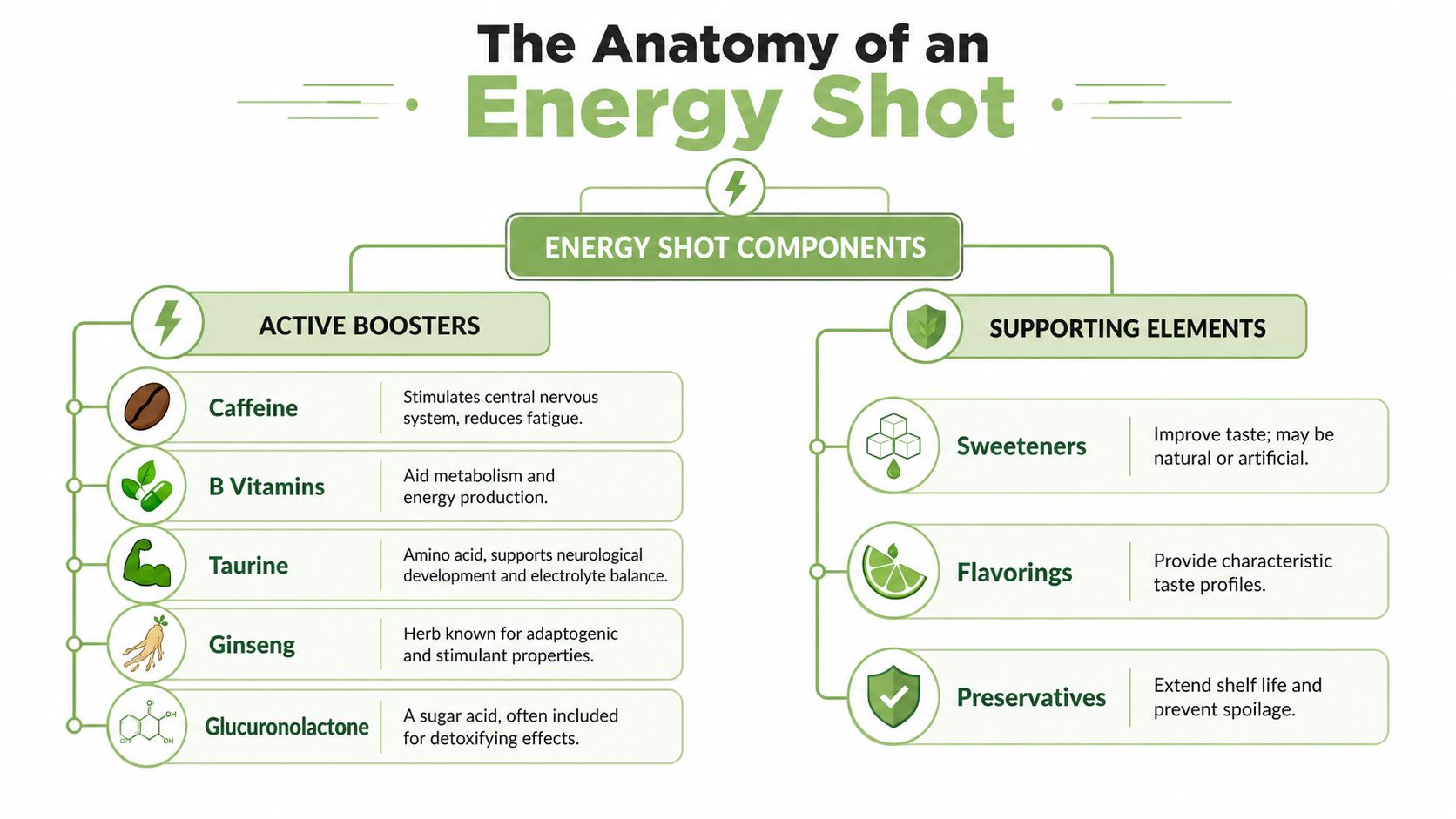
The effect of an energy shot usually comes down to a small group of ingredients, and caffeine does most of the heavy lifting.
That matters because the label can look busy. A tiny bottle may list amino acids, vitamins, plant extracts, flavours, and sweeteners, which can make it seem like every ingredient is pushing your energy higher at once. In practice, the short-term lift typically noticed is mainly stimulant-driven.
A typical formula often includes:
- Caffeine: The main stimulant. This is usually the ingredient responsible for the alert, switched-on feeling.
- Taurine: Common in energy products and often paired with caffeine.
- B vitamins: Included because they help normal energy metabolism, but they do not create an instant buzz on their own.
- Glucuronolactone: Another ingredient frequently used in concentrated energy formulas.
- Sweeteners and flavourings: Added to make a strong, compact product easier to swallow.
- Herbal extras: Some brands include ginseng or other plant extracts to round out the formula.
What the label can make easy to misunderstand
A lot of people read an ingredient panel and assume every added nutrient contributes to the same immediate effect. Energy shots do not really work that way.
Caffeine stimulates the central nervous system and can temporarily reduce the feeling of fatigue. B vitamins play a different role. They help the body process energy from food, but if your body already has enough, adding more in a shot does not automatically create a stronger surge in the moment.
A simple way to read the bottle is to separate stimulation from nourishment. One gives a short burst of alertness. The other supports the systems that produce energy over time. They can appear in the same product, but they are not the same job.
If tiredness keeps showing up, nutrient status may be part of the picture. In that case, a stimulant can cover the feeling without addressing the reason. For readers who want a clearer explanation of one common fatigue-related nutrient, OneTwenty's preventive B12 insights are useful background.
Practical rule: If a bottle promises energy, ask whether it is offering a stimulant effect, nutritional support, or both.
Why the small size changes the experience
The ingredient list is only part of the story. The format changes the experience too.
Drinking a coffee or a full can takes time. A shot is over in seconds. That compressed delivery can make the effect feel more intense, much like swallowing a concentrated syrup instead of sipping a tea. The formula may be familiar, but the pace of intake is different, and your body feels that difference.
This is why energy shots sit in a very specific category. They are high-intensity, short-term tools. They can be useful in a pinch, but they are not a balanced daily energy plan. If you are already looking for sugar free energy drinks that feel less harsh, you are already asking the better question, which is not just “How fast can I get a boost?” but “What kind of energy support can I live with day after day?”
That is where natural functional drinks start to make more sense for regular use. Matcha offers caffeine with L-theanine, which many people find steadier. Kombucha usually plays a different role again, supporting refreshment and routine rather than delivering a synthetic jolt. Energy shots have their place, but their anatomy tells you exactly what that place is. Short-term stimulation, packed into a tiny bottle.
The Jolt and the Inevitable Crash
The first part often feels impressive.
You take a shot in the car before a late appointment, outside the gym after a long workday, or at your desk before a meeting you need to be sharp for. Not long after, the fog starts to lift. You feel more switched on. Your thoughts seem faster. The tiredness moves into the background for a while.
What the experience can feel like
For many people, the arc goes something like this:
- Fast lift: Alertness kicks up quickly.
- Sharper focus: You feel more capable, more awake, sometimes more confident.
- Peak window: This is the “I'm back” phase people buy the product for.
- Drop-off: The stimulation fades, and the body often reminds you it was tired to begin with.
The tricky part is that the rebound doesn't always feel gentle. Some people describe it as flatness, irritability, restlessness, or a heavier fatigue than before.
Why the rebound can hit hard
An energy shot can temporarily cover up exhaustion, but it doesn't replace sleep, food, hydration, or recovery. If those foundations are weak, the lift may feel dramatic because you were already running low.
Then the contrast kicks in.
A caffeine crash often feels worse when the shot was used to push through a problem the body was already signalling clearly.
That's one reason many people start looking for a different kind of support. If you're trying to move away from harsh stimulants and sugary pick-me-ups, our guide to sugar-free energy drinks looks at lower-sugar options and what to watch for when comparing products.
The bigger lesson is simple. A fast boost can be handy in a pinch. It's a poor substitute for a daily routine that protects your energy.
Energy Shots vs Drinks vs Coffee
People often lump all caffeinated options together, but they behave differently in real life. Volume, concentration, sugar, and drinking speed all shape the experience.
An energy shot is built for intensity. A canned energy drink is often part stimulant, part soft drink. Coffee sits in a different cultural lane again. Matcha belongs in the same broad conversation about energy, but the feel is usually steadier and less abrupt.
The main point of difference
A shot gives you very little volume and a lot of intent. There's no ritual. You're not there for flavour or comfort. You're there for effect.
By contrast, coffee is often slower and more habitual. An energy drink may be consumed over a longer stretch, especially in social or work settings. Matcha tends to suit people who want alertness with a calmer rhythm.
For readers comparing tea-based energy more closely, this explainer on caffeine in a matcha latte is helpful because the experience of caffeine in matcha often feels different from the hit people expect from shots or canned stimulants.
Energy Boost Comparison
| Beverage | Typical Volume | Avg. Caffeine | Sugar Content | Energy Profile |
|---|---|---|---|---|
| Energy shot | Small, concentrated serve | Can be high per serve in a very small volume | Varies by brand, often low or sugar-free | Fast, intense, short-term |
| Energy drink | Larger can or bottle | Varies by product | Often sweet, though sugar-free options are common | Noticeable lift, often more gradual than a shot |
| Coffee | Cup-sized serve | Varies by brew style | Usually low unless sugar or syrups are added | Familiar, direct caffeine effect |
| Matcha | Tea or latte serve | Moderate and naturally paired with tea compounds | Depends on preparation | Smoother, more sustained, calmer focus |
Why matcha belongs in this comparison
Matcha isn't an energy shot replacement in the exact same way a spare tyre replaces a tyre. It's a different approach.
If your goal is “I need something right now or I won't function”, a shot is designed for that. If your goal is “I want energy I can live with every day”, matcha usually makes more sense because it encourages a steadier pattern rather than a rush.
Safety Risks and Australian Regulations
A tiny bottle can hide a very strong dose.
That is the first safety problem with energy shots. People often judge strength by size, but these products work more like a concentrate than a regular drink. You can swallow a full serve in seconds, which leaves less room to notice how your body is reacting before the stimulant load has already landed.
For someone who is tired, underfed, stressed, or dehydrated, that can be a rough combination. Common short-term effects include jitters, nausea, a racing feeling, anxiety, trouble settling down later, and a general sense that the body has been pushed harder than it wanted.
What Australian rules say
In Australia, caffeinated energy drinks sit under a defined regulatory framework. Food Standards Australia New Zealand sets compositional rules for formulated caffeinated beverages and requires advisory statements on products in that category.
The catch is that not every small stimulant product is sold in exactly the same category. Some concentrated products may be marketed in ways that make the label feel more like a supplement than a standard beverage. For shoppers, that creates confusion. Two products can sit in a similar part of the store and look like they do the same job, while the rules around them are not identical.
That matters because people often assume "energy product" means one consistent set of safeguards. It does not always work that neatly in practice.
Why labelling matters
Small packaging can create a false sense of safety. Potency and volume are not the same thing.
Australian industry guidance explains that regulated energy drinks must carry advisory labels under the FSANZ framework, as outlined in the Australian Beverages Council's summary of the FSANZ framework. The practical lesson is simple. Read the label slowly, check the serving size, and notice whether the product expects you to treat one bottle as one serve or more than one.
That habit becomes even more useful if you are comparing highly processed stimulants with gentler options such as natural energy drinks for steady daily use. The goal is not just to get through the next hour. It is to choose an energy source your body can tolerate well over time.
Who should be especially cautious
Some people should avoid energy shots altogether, or speak with a health professional first.
- Children and teenagers: Concentrated stimulant products are a poor fit for developing bodies.
- Pregnant women: Advisory warnings exist because caffeine intake deserves extra care during pregnancy.
- People sensitive to caffeine: A small serve can still feel intense.
- People with heart symptoms, high anxiety, or panic tendencies: Fast, concentrated stimulation can aggravate those problems.
- Anyone mixing caffeine with alcohol or other stimulants: It becomes harder to judge what the body is responding to, and easier to overdo it.
If tiredness is showing up often, the better question may be why your energy keeps dropping in the first place. BionicGym's guide to managing fatigue is a useful read for that bigger picture.
Energy shots have a place as a short-term tool. They are less suitable as a daily energy strategy.
Smarter Energy Through Natural Alternatives
For daily life, I'm far more interested in sustainable energy than dramatic energy. What's often needed isn't a bigger jolt, but a steadier system.
That's where natural functional drinks can help, especially when they're part of a broader routine built on sleep, hydration, balanced meals, and realistic pacing.
Why matcha feels different
Matcha is still a caffeinated option, but it usually creates a different experience from a synthetic-feeling shot. One key reason is its composition. In matcha green tea, 60% of the total catechins are EGCg, and this antioxidant profile, together with L-theanine, contributes to matcha's distinctive benefits and more sustained energy release, as explained in Pep Tea's guide to matcha benefits and EGCg.
In practical terms, many people describe matcha energy as more even and more focused. Less “go hard now”. More “I can think clearly and keep going”.
That makes it useful for:
- Morning work blocks
- Study sessions
- Pre-walk or pre-yoga routines
- An afternoon reset that doesn't feel chaotic
Kombucha and the broader wellness picture
Kombucha sits in a different lane again. It isn't usually chosen for a hard stimulant effect. People tend to reach for it because they want a refreshing, lower-sugar functional drink that fits a healthier routine.
A properly brewed, sugar-free kombucha can support that sense of better daily habits. It won't mimic the punch of a concentrated shot, and that's exactly the point. It can be part of a pattern that feels cleaner, lighter, and easier to repeat.
If you're building a more balanced approach to alertness, BionicGym's guide to managing fatigue is a useful resource because it treats tiredness as something to manage from multiple angles rather than something to override.
One practical place to start is with natural energy drinks, including tea-based options and fermented drinks that suit a more measured rhythm.
A short visual guide can help if you're curious about making matcha part of your routine:
One simple way to think about it
Energy shots ask, “How fast can I feel different?”
Natural options ask, “How do I want to feel through the whole day?”
That second question usually leads to better choices.
Choosing Your Energy Boost Responsibly
Good energy decisions usually happen before you're desperate.
If you're already wrecked, stressed, and running on fumes, you'll grab whatever promises the fastest fix. That's human. But a little planning changes everything. It helps you choose based on how you want to function, not just how tired you feel in the moment.
A practical filter for better choices
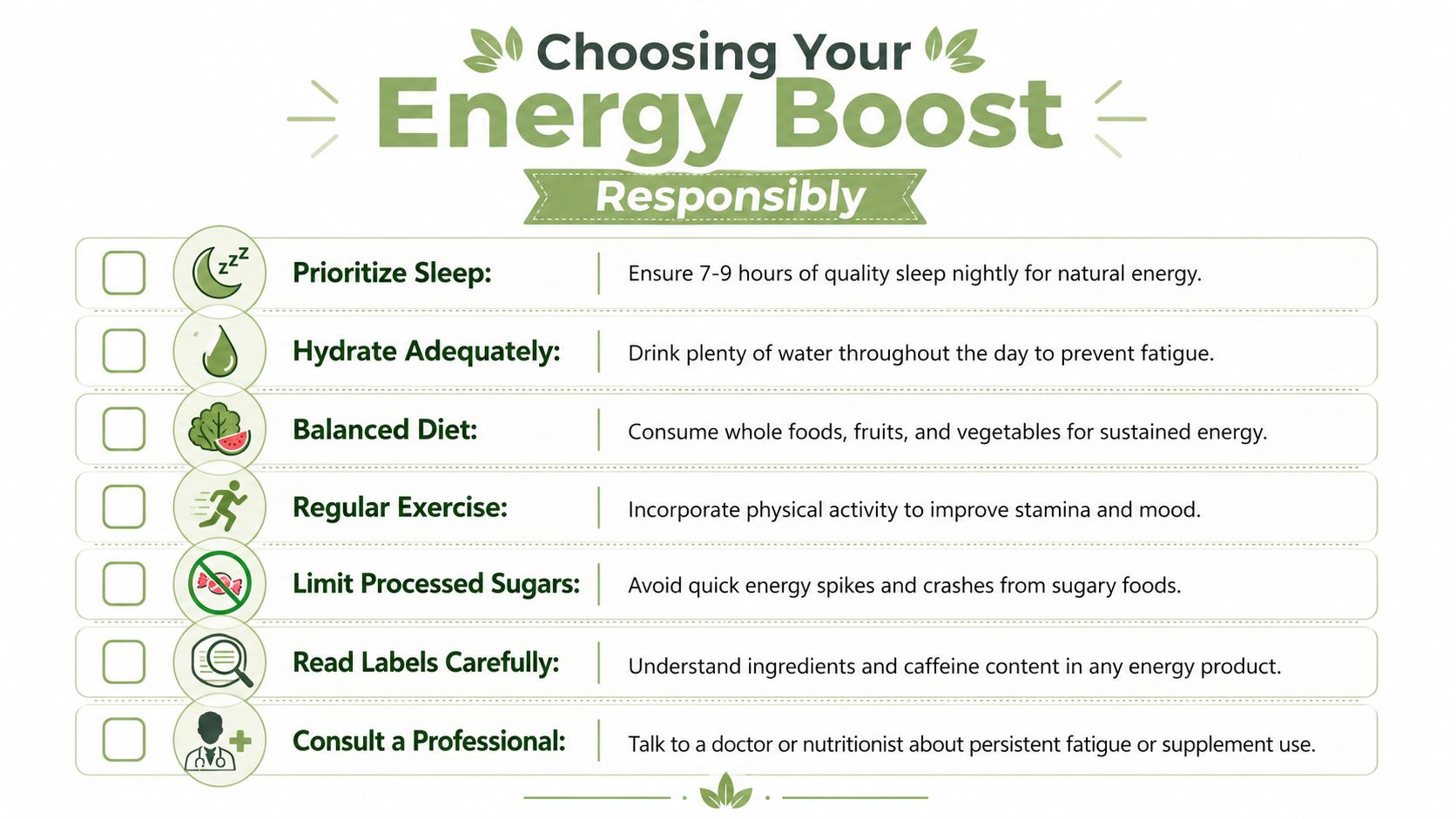
Use this checklist before you buy any energy product:
- Read the full label: Look for caffeine content, sweeteners, and how many serves are really in the container.
- Choose lower-sugar options where possible: In Australia, sugar-free energy drinks now make up 39.87% of total sales, showing a strong shift toward wellness-focused functional drinks, according to this Australian energy drinks trend summary.
- Don't stack stimulants: A shot plus strong coffee plus pre-workout can get messy fast.
- Avoid mixing with alcohol: Stimulants can blur your sense of how affected you are.
- Treat persistent fatigue as a signal: If you're exhausted all the time, the answer may not be a stronger product.
The long-term view matters more
The healthiest energy strategy usually looks a bit boring on paper. Regular sleep. Real meals. Water. Movement. A caffeine source that doesn't leave you rattled. But boring often works better than dramatic.
That principle shows up in other health-focused settings too. For gyms and wellness businesses, education around habits often creates more value than quick-fix products, which is part of what this article on boosting gym revenue through coaching gets right.
Choose products that fit your body and routine, not just your emergency moments.
If you do use an energy shot, keep it occasional and deliberate. If you want energy you can live with every day, natural options such as matcha or kombucha tend to support a more balanced relationship with focus, appetite, mood, and routine. Pep Tea offers one example through its organic Japanese matcha and Australian-brewed sugar-free organic kombucha, both designed for people who want functional drinks without relying on the harshest end of the category.
If you're ready to move from quick fixes to steadier daily energy, explore Pep Tea for organic matcha and sugar-free organic kombucha made for a more balanced Australian wellness routine.
Caffeine in Matcha Latte: How It Compares
A typical matcha latte contains around 60 to 70 mg of caffeine, which is similar to a single espresso shot, but it often feels very different in the body. That’s because matcha brings caffeine together with L-theanine, a naturally occurring amino acid that many tea drinkers describe as producing calmer, steadier energy.
If you’re reading this with a warm green latte in hand, or you’re wondering whether matcha will wake you up the way coffee does, you’re asking the right question. People often hear that matcha has caffeine, then stop there. But the more useful question is not just how much caffeine is in matcha latte, but what kind of energy does it create.
That’s where matcha gets interesting. The number matters, of course. So does the scoop size, the grade, and the way the drink is made. But the main reason so many people swap their flat white for a matcha latte is the feeling that follows: alert, focused, and less rattled.
What’s Really Inside Your Favourite Green Latte
For a lot of people, a matcha latte starts as a simple habit. You whisk the powder, pour in warm milk, watch that bright green colour bloom, and take the first sip expecting something cosy but useful. Then, somewhere between your second mouthful and the start of your workday, the question pops up. How much caffeine is in this?
The short version is that matcha sits in a very comfortable middle ground. It’s not caffeine-free, and it’s not pretending to be. But it also isn’t just coffee in green clothing.
More than a trendy café drink
A matcha latte gives you caffeine from powdered green tea leaves that are whisked directly into water and milk. Because you consume the whole leaf, you’re getting a different experience from a standard brewed tea.
That’s why matcha often appeals to people who want energy without feeling pushed around by it. If you’re interested in the broader wellness side of green tea, this guide on how to unlock real green tea benefits is a useful companion read.
Matcha isn’t only about stimulation. For many people, it becomes part of a steadier morning rhythm.
Why people get confused
There are three common reasons readers feel unsure about caffeine in matcha latte:
- It’s tea, so people assume it must be low in caffeine. Matcha usually contains more caffeine than regular green tea because you consume the leaf itself.
- It feels smoother than coffee. That can make some people think it contains less caffeine than it has.
- Not every café uses the same amount of matcha powder. One latte can feel gentle, while another can feel surprisingly strong.
The confusion makes sense. Matcha is both simple and nuanced. It’s just powdered tea, yes. But once you look at serving size, preparation style, and L-theanine, the picture becomes much clearer.
How Much Caffeine is in a Typical Matcha Latte
If you want a direct answer, here it is. A standard matcha latte serving contains between 60 and 70 mg of caffeine, which is comparable to a single espresso shot at about 63 mg. An 8-ounce brewed coffee averages 95 mg, so matcha usually lands below a full cup of coffee while still delivering a noticeable lift, according to this breakdown of matcha latte caffeine content.
That single comparison already clears up a big misconception. Matcha is not “basically caffeine-free tea”. It has enough caffeine to matter.
Why matcha contains more caffeine than regular green tea
The key difference is how you consume it.
With regular green tea, the leaves steep in water and are then removed. With matcha, the leaves are stone-ground into a fine powder and whisked straight into the drink. You consume the entire leaf rather than only the brewed liquid.
That’s why matcha has a stronger caffeine profile than ordinary green tea. In the same source above, matcha is described as having a caffeine density of around 32 mg per gram, which helps explain why even a modest scoop can create a meaningful effect.
A quick comparison
| Drink | Typical caffeine amount |
|---|---|
| Matcha latte | 60 to 70 mg |
| Single espresso shot | About 63 mg |
| Brewed coffee, 8 oz | Average 95 mg |
This table helps answer the practical underlying question. Will a matcha latte wake me up? Yes, usually. Will it hit exactly like coffee? Not necessarily.
Practical rule: If one espresso feels fine for you, a standard matcha latte is usually in familiar territory.
What that means in daily life
For many drinkers, this places matcha in a sweet spot:
- Strong enough for a morning start
- Moderate enough for people who find coffee too intense
- Flexible enough to work as a late-morning or early-afternoon drink
If you’ve ever had a coffee that made your thoughts race faster than your to-do list, matcha can feel more organised. Not weaker. Just more even.
That’s the part numbers alone can’t capture. Two drinks can have similar caffeine amounts and still create very different experiences once they reach your body.
Why Not All Matcha Lattes Are Created Equal
Order a matcha latte at two different cafés and you might get two completely different caffeine experiences. One feels soft and steady. Another feels almost as punchy as coffee. That isn’t your imagination. It usually comes down to dose, preparation style, and grade.
According to this guide to how much caffeine is in a matcha latte, the caffeine in a matcha latte can range from 38 mg using 1 gram of powder to over 128 mg using 4 grams for a thick Koicha style. The same source notes that the U.S. FDA recommends a maximum daily caffeine intake of 400 mg for healthy adults, so two strong matcha lattes can get surprisingly close to that mark.
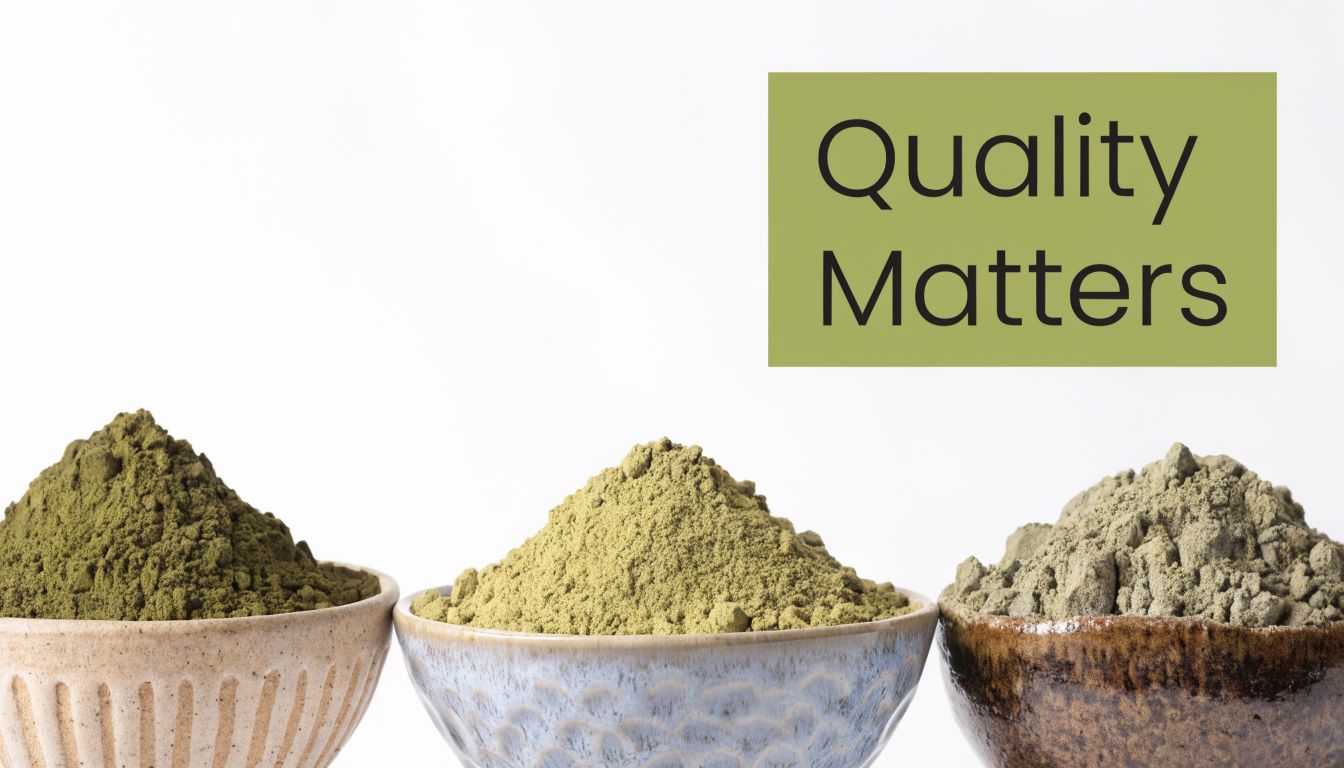
Scoop size changes everything
This is the biggest variable.
A lighter home-made latte with a small scoop can sit at the gentler end. A café that uses a generous hand, or offers an extra-strong serve, can push the caffeine much higher. Traditional preparation styles show this clearly:
- Usucha uses a lighter amount of powder and creates a thinner tea
- Koicha uses more powder and creates a thicker, more concentrated drink
If you’re trying to control caffeine in matcha latte, the amount of powder matters more than almost anything else.
Grade affects the experience too
Not all matcha powders are interchangeable. Ceremonial and culinary grades are made for different purposes, and they can lead to different drinking experiences.
Culinary matcha is often chosen for smoothies, baking, or sweeter lattes. Ceremonial matcha is typically selected when flavour, texture, and the overall tea experience matter more. If you want a clear overview of those distinctions, this guide on different grades of matcha is a handy reference.
Milk changes texture, not total caffeine
People often assume a milkier latte must contain less caffeine. That’s not automatically true.
If the same amount of matcha powder goes into the cup, the total caffeine stays the same. More milk can soften the flavour and make the drink feel gentler, but it doesn’t remove caffeine. What changes is concentration per sip, not the total amount in the mug.
If you want a milder caffeine experience, use less matcha powder. Don’t rely on extra milk to do the job for you.
Sustained Energy Without the Jitters The L-Theanine Effect
Matcha, in fact, stops being just another caffeinated drink and becomes something more interesting. Two drinks can contain caffeine, but they don’t have to feel the same. Matcha’s personality comes from the company its caffeine keeps.

The key companion is L-theanine. According to this article on whether matcha latte has caffeine, the unique energy profile of matcha comes from its L-theanine-to-caffeine ratio. The same source notes that ceremonial grade matcha, made from shade-grown leaves, has higher concentrations of both compounds and delivers a different, often better, cognitive effect than the same amount of caffeine from lower-grade matcha. It also explains that the shade-growing process boosts both L-theanine and chlorophyll.
What calm energy actually feels like
“Calm alertness” can sound a bit fluffy until you’ve felt it yourself.
In real life, it often means:
- you feel switched on, but not edgy
- your concentration feels more settled
- your energy doesn’t arrive with the same harsh spike some people get from coffee
That doesn’t mean matcha is sleepy, weak, or muted. It means the stimulation can feel smoother and more anchored.
Why grade matters more than people expect
This is one of the most overlooked parts of the conversation. If two drinks contain similar caffeine, many people assume they’ll perform the same. But with matcha, grade changes the feel.
Ceremonial-grade matcha is usually prized for a softer taste, a cleaner finish, and a more refined energy profile. That matters if you drink matcha for focus, work, study, or a steady start to the day. If you’d like to explore a product made with that premium style in mind, this Uji matcha powder is a relevant example of the type of matcha many drinkers choose for a smoother daily ritual.
Here’s a helpful visual explainer if you’d like to see the topic discussed in a simple format.
Why shade-growing matters
Shade-growing changes the leaf before it ever becomes powder. That farming method is a big reason premium matcha feels different from standard powdered green tea.
For the person drinking it, this matters less as a farming trivia fact and more as a practical buying clue. If your goal is not just “caffeine” but focused, composed energy, the quality of the leaf matters.
The smartest way to think about matcha isn’t “How much caffeine can I get?” It’s “What kind of energy do I want from this cup?”
Matcha Latte vs Coffee Which Morning Ritual is Right for You
Coffee and matcha can both earn a place in a morning routine. They do different jobs for different people. If you love the speed and boldness of coffee, there’s nothing wrong with that. If you want a gentler ramp into the day, matcha often suits that role beautifully.
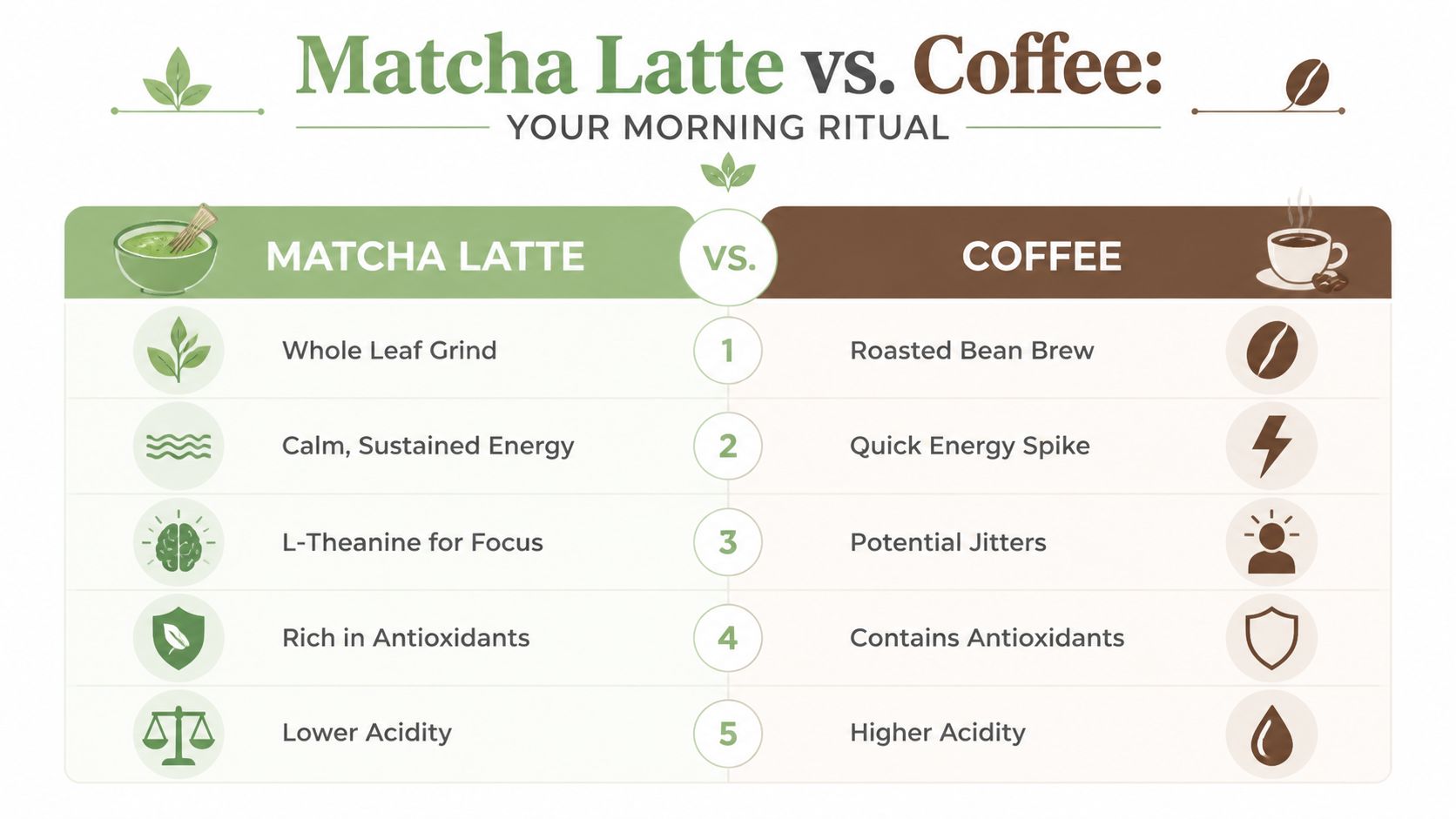
Side by side in daily life
| Matcha latte | Coffee | |
|---|---|---|
| Base ingredient | Whole leaf powder whisked into the drink | Brewed roasted beans |
| Energy feel | Smoother, more sustained for many drinkers | Faster, sharper lift |
| Focus style | Often described as calm and clear | Often described as direct and intense |
| Acidity | Commonly chosen by people seeking a gentler option | Can feel harsher for some drinkers |
| Ritual | Slower, whisked, more deliberate | Quick, familiar, highly flexible |
Choose matcha if this sounds like you
- You want steady focus for writing, studying, or desk work
- You enjoy the ritual of making a drink, not just grabbing one
- You find coffee a bit abrupt in the way it lands
Choose coffee if this sounds like you
Some people prefer the directness of coffee. It’s fast, familiar, and easy to prepare in many ways. If you’re building a better home coffee routine rather than replacing it, Brewssels' tips for home brewers are worth a read.
The better question isn’t which is healthier
The better question is: How do I want to feel after I drink it?
Coffee often shines when you want immediate alertness and a bolder flavour. Matcha often shines when you want focus with a little more composure. Some people even keep both in their week and use them differently. Coffee for early starts. Matcha for deep work, afternoons, or days when they want less friction in their nervous system.
How to Customise the Caffeine in Your Matcha Latte
The best part of making matcha at home is control. You don’t have to accept whatever scoop a café happens to use that day. You can build a latte that suits your morning, your tolerance, and your schedule.
If you want less caffeine
Start by reducing the amount of matcha powder, not by diluting the drink endlessly.
A few practical ways to bring the intensity down:
Use a smaller scoop
A lighter serve gives you a softer lift and a milder flavour.Make it later in the day with a gentler hand
Many people prefer a less concentrated afternoon latte.Choose a larger cup with more milk
This won’t reduce total caffeine if the powder amount stays the same, but it can make the drink feel softer and easier to sip slowly.
For a lighter afternoon cup, think of matcha as seasoning. A little less powder can completely change the mood of the drink.
If you want more lift
If you’re moving from coffee and want your latte to feel more substantial, there are cleaner ways to do that than adding sweeteners or syrups.
Try these adjustments:
- Increase the powder gradually so you can feel the difference without overshooting
- Use a high-quality matcha if you care about smoother focus, not just stronger flavour
- Keep the recipe simple so the tea stays central
A simple home method
Here’s a straightforward matcha latte routine that is generally effective:
- Sift your matcha powder into a bowl or mug
- Add a small amount of warm water
- Whisk until smooth
- Pour in your warmed milk of choice
- Taste before sweetening
This method gives you a clean base. From there, you can adjust the powder amount up or down depending on the result you want.
Match your drink to the moment
Different moments call for different matcha styles:
| Time of day | Best approach |
|---|---|
| Morning | A fuller serve for a stronger, focused start |
| Mid-morning | Standard latte strength |
| Afternoon | Lighter scoop for a softer lift |
| Evening | Many people prefer to skip it or make it very light |
The smartest routine is the one you can repeat comfortably. Matcha doesn’t need to be intense to be useful.
Finding Your Perfect Matcha Moment
The most helpful thing to remember is that caffeine in matcha latte isn’t a single fixed number or a one-size-fits-all experience. A typical cup sits in a moderate range, but the real story is how that caffeine behaves once it’s paired with L-theanine and shaped by the quality of the leaf.
That’s why matcha can feel so different from coffee even when the caffeine amount looks familiar on paper. The energy often feels steadier. The ritual feels calmer. And with a bit of practice, you can tailor the drink to suit your day instead of letting the drink dictate it.
Some people want a focused start before work. Others want a gentler afternoon pick-me-up. Matcha can do both, provided you choose the right powder, the right scoop, and the right moment.
If you’ve only thought about matcha as a green version of a café latte, there’s a lot more to enjoy. Done well, it becomes less about chasing stimulation and more about building a daily rhythm that feels good to live with.
Your Matcha Caffeine Questions Answered
Is it okay to drink a matcha latte every day
For many adults, a daily matcha latte can fit comfortably into a balanced routine. The main thing to watch is your total caffeine intake across the day, especially if you also drink coffee, energy drinks, cola, or pre-workout products.
Can milk reduce the caffeine in matcha latte
No. Milk changes flavour, body, and texture, but it doesn’t remove the caffeine already present in the matcha powder. If you want less caffeine, use less powder.
Who should be more careful with matcha caffeine
Anyone who is sensitive to caffeine should pay closer attention to scoop size and timing. The same goes for people who already consume several caffeinated drinks per day. If you know your body doesn’t love caffeine late in the day, matcha deserves the same respect as coffee.
When should I drink matcha if I’m worried about sleep
Earlier is usually better. Many people enjoy matcha in the morning or early afternoon and avoid it later on. Your own tolerance matters, so it’s worth paying attention to how your body responds rather than copying someone else’s routine.
How can I tell if I’m using too much matcha
If your latte tastes overly intense, feels heavier than you expected, or leaves you more stimulated than you wanted, the simplest fix is to reduce the powder next time. This is especially common for beginners.
Is there a guide to safe daily intake
If you want a more detailed look at serving amounts and sensible daily use, this article on how many cups of matcha tea powder are safe per day is a practical place to start.
If you’re ready to find a smoother kind of energy, explore Pep Tea for premium organic matcha and everyday tea rituals that feel good to come back to.