
Category: Learn About Tea
Matcha Bowl Set: The Complete Buyer’s and Brewing Guide
You've got a bag of matcha, a favourite mug, and the hope that this cup will finally taste like the café version you keep thinking about. Then the powder clumps, the surface stays flat, and the first sip lands bitter instead of smooth. That frustration usually isn't about the matcha alone, it's about the vessel and the tools.
A proper matcha bowl set changes the whole experience because it gives the whisk room to move, the powder room to disperse, and the drink room to foam. In Japan, the matcha bowl, or chawan, has deep roots in tea culture, with traditions commonly traced to the 9th century in the Heian period and, in later tea-ceremony practice, to the 12th century when Zen monks helped popularise powdered tea in Japan what is a matcha bowl. That history matters, but the practical point matters even more, a good bowl is a working tool, not just a pretty object.
Australian cafés have pushed expectations higher. People now want matcha that looks clean, tastes balanced, and feels consistent from one serve to the next. That's exactly where the right bowl geometry and whisk compatibility make the biggest difference.
Why Your Regular Mug Is Failing Your Matcha
The common beginner move is easy to spot. Someone grabs a regular mug, adds matcha, pours in hot water, and stirs with a spoon or a small whisk. The cup often ends up patchy, the flavour turns harsh, and dry powder clings to the sides.
The problem starts with shape
A regular mug is too narrow for proper whisking. The bamboo whisk, or chasen, needs room to sweep across the surface and break up clumps, and a cramped vessel cuts that motion short before it can do its job. A wider, rounded bowl gives the whisk clearance, which helps create the fine foam people expect from well-made matcha.
Practical rule: if the whisk keeps hitting the sides, the vessel is working against you.
The second issue is aeration. Matcha is a suspended powder, so it needs more than a quick stir. The bowl's open profile supports the whisking pattern that lifts, disperses, and froths the tea properly. Without that movement, sediment settles at the bottom and the first sip tastes uneven.
Temperature adds a third layer. Matcha is delicate, and a bowl designed for the job makes it easier to keep the drink in the right range instead of rushing the process. That matters in home kitchens, and it matters just as much in busy Australian cafés, where every cup needs to look and taste consistent.
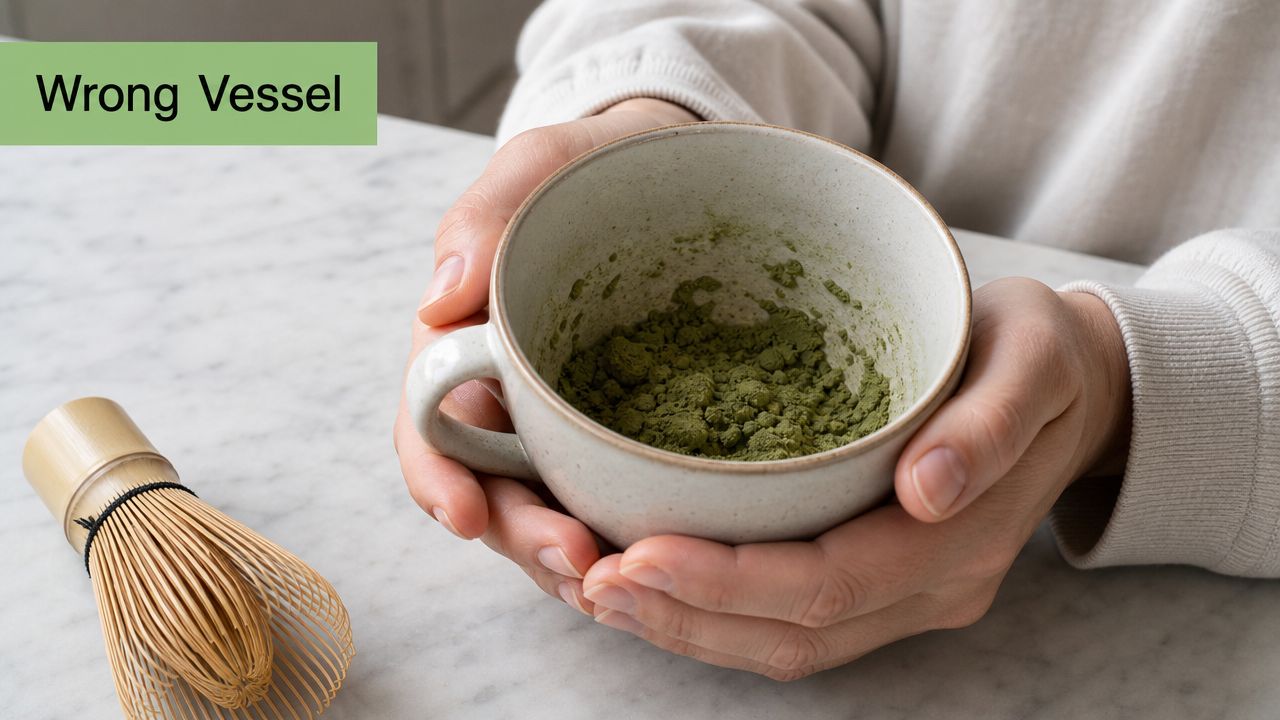
The takeaway is straightforward. A matcha bowl set is not about ceremony for ceremony's sake. It solves the basic mechanics that make matcha pleasant to drink, and that is why serious home drinkers and café operators keep coming back to the proper tools.
Components of a Matcha Bowl Set
A good matcha bowl set works like a small prep station. Each piece has a different job, and the fit between them matters more than the display shelf version of the set. In an Australian home kitchen, or behind a café bench during a morning rush, that fit is what makes the results repeatable.
The core tools and what they do
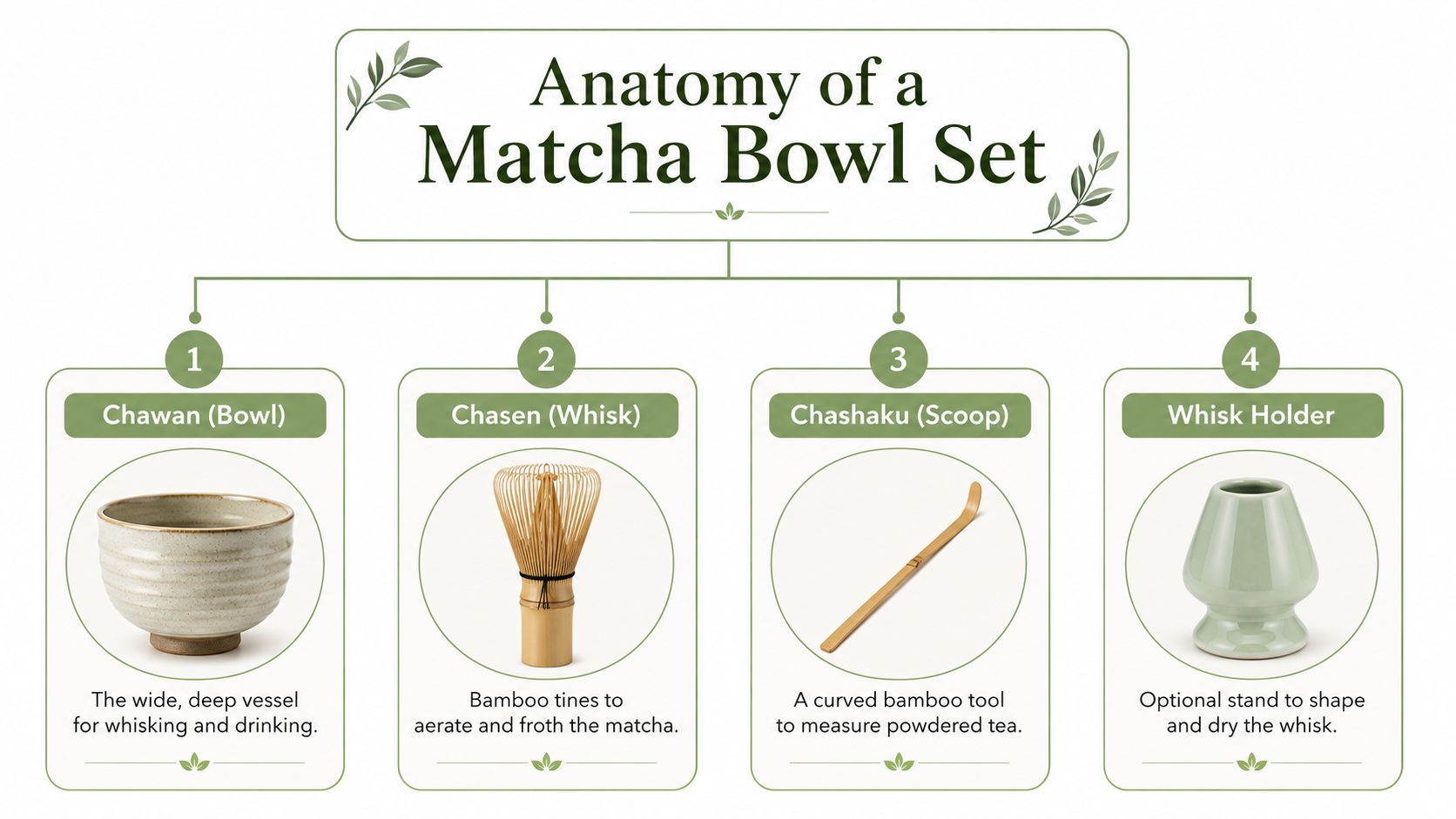
A chawan is the bowl itself. Its wide, rounded shape gives the whisk room to move, so the tea and water can stay in motion instead of collecting in one tight spot. That geometry is the practical reason a proper bowl outperforms a random ceramic bowl from the cupboard.
A chasen is the bamboo whisk. Its flexible tines whip air into the tea and create the light foam people expect from well-made matcha. A spoon can stir the liquid, but it cannot make the same texture because it does not sweep the surface in the same way.
A chashaku is the curved bamboo scoop. The scoop looks simple, yet it matters because dosing changes the feel of the drink very quickly. Too much matcha in a small bowl can leave you with a dense, bitter cup that is hard to smooth out, especially if you are making drinks one after another.
A whisk holder is optional, but it helps keep the whisk in shape as it dries. For anyone who uses the set often, it gives the tines a proper resting place instead of leaving them bent or splayed in a drawer.
If you want to compare the usual accessories before buying, the matcha tea accessories collection at PepTea is a practical reference point for seeing how the tools relate to one another.
The set works best as a system, not as a pile of separate items.
The same idea carries into the kitchen. Matcha sits comfortably alongside authentic Japanese home cooking recipes, especially when you are building a routine around simple preparation and consistent flavour.
The common mistake is treating the bowl as the only part that matters. The bowl sets the shape of the work, but the whisk, scoop, and holder are what make the process reliable. When the pieces match the task, the tea is easier to prepare well, whether you are making one cup at home or repeating the same method for customers in a café.
Choosing the Right Materials and Sizes
A matcha bowl can look beautiful on the shelf and still be awkward in the hand. The key test is whether it supports steady whisking, comfortable pouring, and repeatable results for the way you brew at home or serve in a café. For Australian buyers, those practical details usually matter more than surface style.
Material trade-offs that affect everyday use
Ceramic is the most familiar option. It usually feels stable in the hand and suits the rounded shape that matcha needs. Porcelain can feel smoother and lighter, while glass shows the colour of the tea clearly, but can feel less forgiving in a busy kitchen.
| Matcha Bowl Materials Comparison | Heat Retention | Durability | Best For |
|---|---|---|---|
| Ceramic | Good warmth and a solid hand feel | Generally sturdy, but can chip if knocked | Home use, café service, everyday matcha |
| Porcelain | Even, clean finish | Can be strong, but still needs careful handling | Presentation-focused serving |
| Glass | Lower heat feel and more visual clarity | More fragile in active kitchens | Display use and occasional home brewing |
The best material depends on where the bowl will live. A café bench, a home cupboard, and a gift box all call for different priorities. Choose based on your actual brewing routine, then check whether the bowl is easy to clean, easy to store, and able to handle a busy morning rush without feeling delicate. If you are comparing options across a wider set of tools, the matcha tea accessories range is a useful way to see how the bowl fits with the whisk and scoop.
Why size and rim width matter
A standard matcha bowl is typically 400 to 500 mL, with a rim around 4.5 to 5.5 inches, or roughly 12 to 15 cm, in diameter what is a matcha bowl. That size gives the whisk enough room to move without splashing. A bowl that is too narrow makes the whisk collide with the sides, which breaks the foam and slows you down. A wider opening gives the tines space to work, which is helpful whether you are making a single bowl at home or repeating the same method for customers in a café. As noted earlier, the bowl is built for small, precise servings where whisking and foam formation matter more than volume.
For a deeper practical view of how bowl shape supports daily tea routines, the material and sizing advice in the same matcha bowl set category is worth comparing with the way you already make drinks at home. If your routine leans toward pantry-friendly meals as well, the same logic applies to tools used across authentic Japanese home cooking recipes.
Buy for the way you brew, not for the most beautiful shelf photo.
Handmade pieces can be lovely, especially if you enjoy ritual and presentation. Mass-produced bowls can be more practical for cafés, shared kitchens, or anyone who needs stackability and predictable cleaning. A handmade bowl may suit the quiet pace of home preparation, while a sturdier, more uniform piece often works better where cups are made back to back. The right answer is the one that matches your usage, not the one that looks aspirational on day one.
Mastering the Basic Whisking Technique
A good matcha cup starts with the whisk, the bowl, and the water working together. In an Australian kitchen or café bench, the goal is repeatable texture, not a lucky first try.
The preparation flow
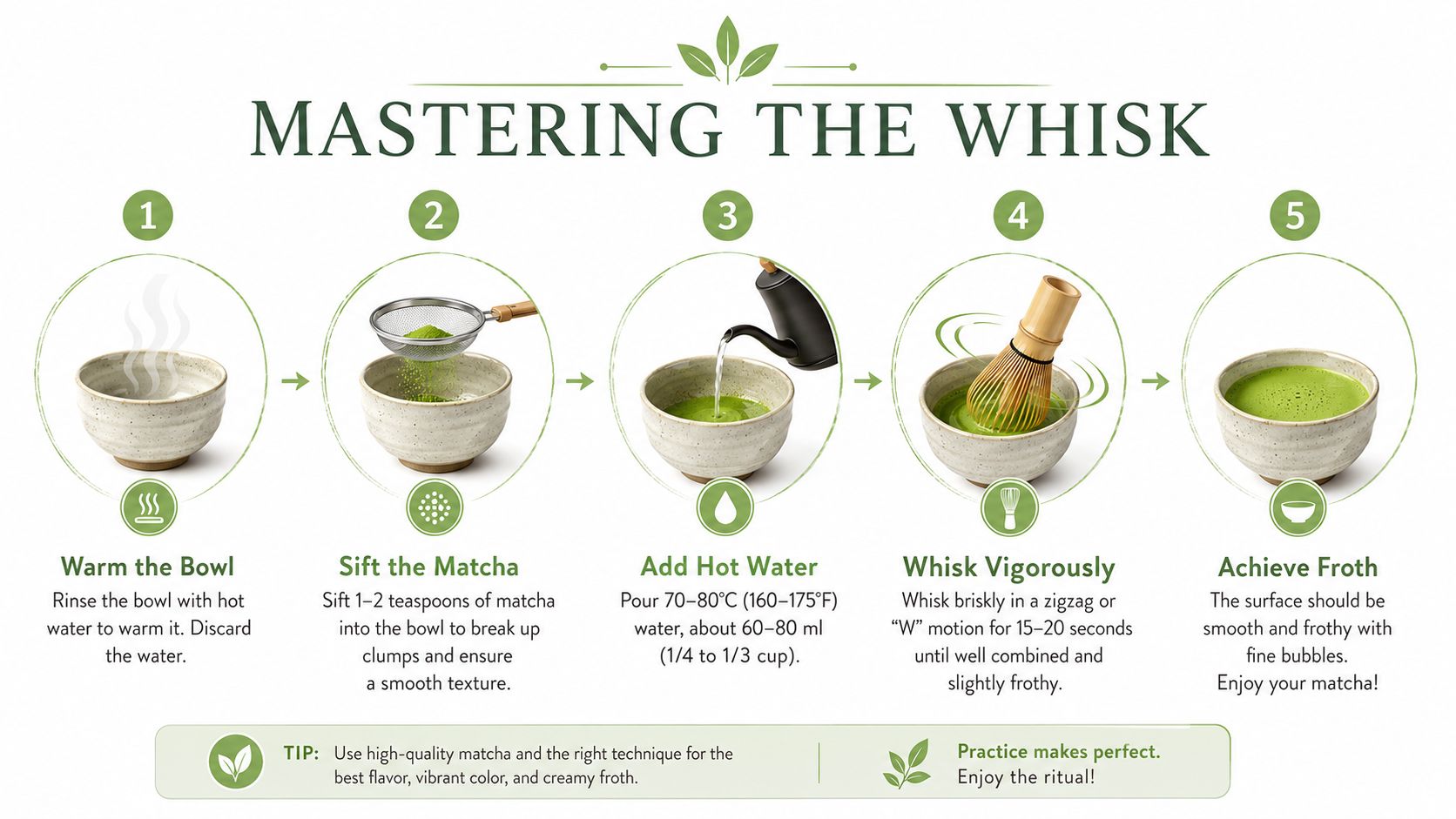
Warm the bowl first. A pre-warmed vessel gives you a more settled working surface, and it helps the whole process feel under control.
Sift 1 to 2 g of matcha into the bowl next. Matcha is a fine powder, so it clumps easily, much like cocoa left untouched in a dry tin. Sifting gives the whisk less work to do and helps the drink finish smoother.
Add 60 to 80 mL of water at 60 to 70°C. Water that is too hot can push the flavour into a sharper, harsher place, especially if you are still learning how much pressure your whisk needs. The cooler range helps keep the taste cleaner.
Whisk in a W-shaped motion for 10 to 15 seconds. Use quick, light movements rather than force. The bamboo tines need space to move across the bowl, and a well-shaped bowl keeps them from scraping the sides, which helps build a more even foam.
If you want to see the motion before trying it yourself, the tutorial at how to whisk matcha shows the W-shaped whisking pattern at a steady pace, so you can match the rhythm while you practise.
Common mistakes and quick fixes
- If the tea looks grainy: you probably skipped sifting or stopped whisking too soon.
- If it tastes bitter: the water may have been too hot, or the matcha dose may be too heavy.
- If the surface stays flat: the bowl may be too narrow, or the whisk motion may be too circular.
- If it splashes out: the vessel is likely too small for the movement you are using.
A lot of beginners stir matcha like instant coffee. That approach leaves clumps behind and gives you weak foam. The whisk needs room, the bowl needs clearance, and the tea needs a short, decisive burst of motion.
For a fuller walkthrough of hand position and rhythm, the guide on how to whisk matcha is a practical companion. That same method also holds up when you are making drinks for guests or refining café service, because it gives you texture you can repeat instead of guessing from cup to cup.
Picking the Perfect Set for Your Situation
The best set for one person isn't always the best set for another. A home drinker, a café operator, and a gift buyer each care about different things, and the smartest purchase reflects that.
For home baristas
If you're making matcha most mornings, choose a set that's easy to clean and forgiving while you learn. A medium-sized bowl with a comfortable grip and a whisk that feels flexible is usually a better choice than an ornate showpiece. Storage matters too, especially in smaller kitchens where stackability can be a real bonus.
For café operators
Cafés need repeatable texture, fast cleaning, and a bowl that can handle frequent use. Durability matters more than decorative detailing, and the bowl should sit steadily on a bench during service. Whisk compatibility is essential, because the wrong bowl slows down preparation and makes foam quality less consistent across multiple serves.
For gift buyers
Presentation counts here. A set that arrives neatly packaged, looks polished, and includes a short guide for use tends to feel more complete. The recipient shouldn't have to guess which tool does what.
The best gift set is the one that helps someone make a good cup on the first try.
A simple way to think about it is this:
- Home use: prioritise easy cleaning and a bowl that feels comfortable in the hand.
- Café use: prioritise durability, consistency, and whisk clearance.
- Gifting: prioritise presentation, clear components, and user-friendly guidance.
If you're shopping for home use, it's easy to overbuy on extras you won't touch. If you're buying for a café, it's just as easy to under-invest and end up replacing tools too soon. A balanced matcha bowl set saves more time than it costs because it matches the job in front of you.
Caring for Your Matcha Tools
Bamboo and ceramic both last longer when you treat them gently. The maintenance routine is simple, and it pays off quickly because the tools stay usable and look better for longer.
A routine that actually fits real life
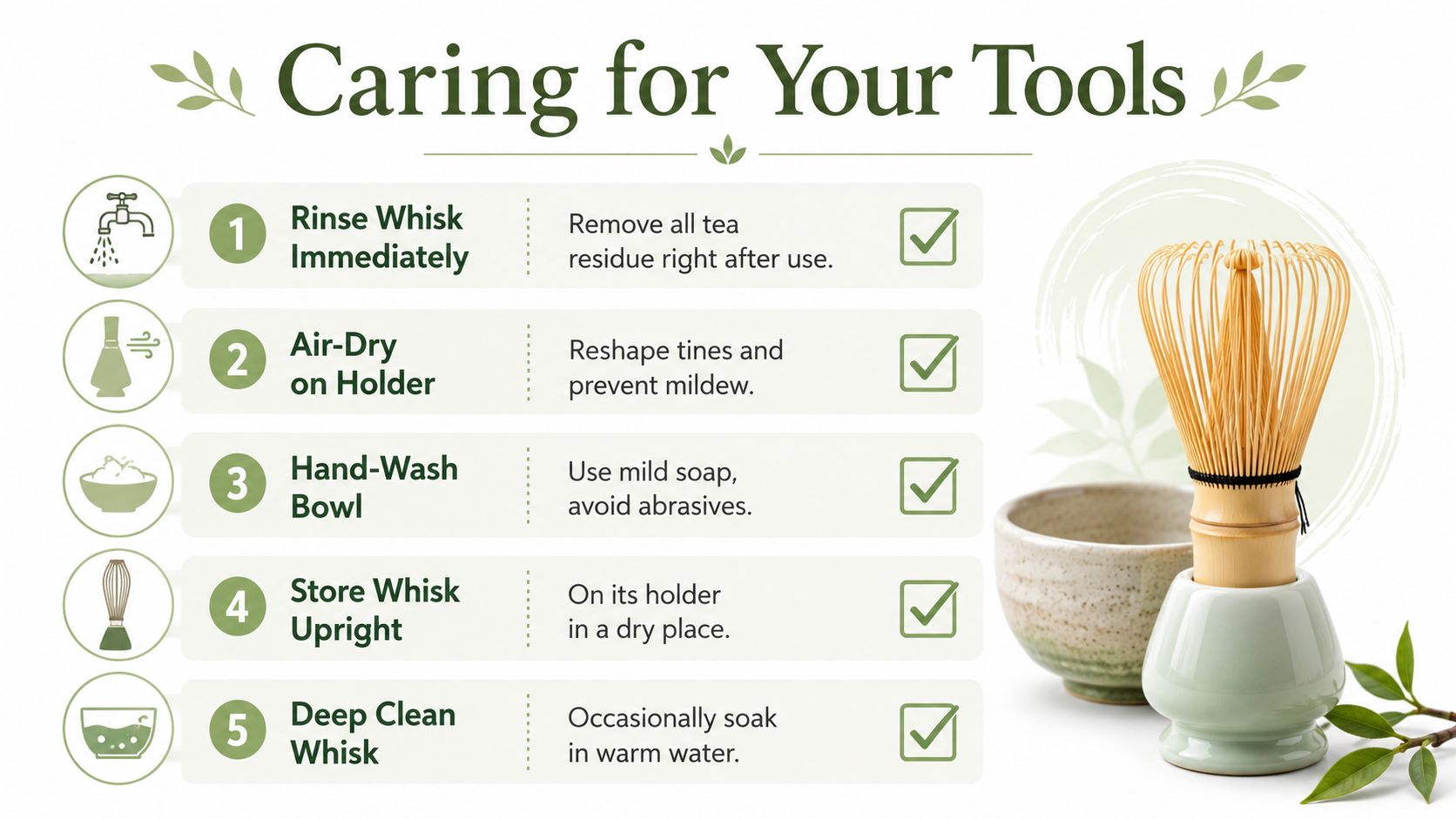
Rinse the whisk right after use. Matcha dries fast, and once it sets into the tines, it becomes harder to remove without bending them. Let the whisk air-dry on a holder so the shape stays open instead of collapsing inward.
Wash the bowl by hand with mild soap and a soft sponge. Abrasive pads can dull the finish and make stains more obvious over time. For stubborn residue, warm water and a little patience usually do the job without damaging the surface.
Store the whisk upright in a dry place. Bamboo doesn't like being left damp, especially in humid conditions. In Australian homes, that matters in summer, when moisture can linger longer than you expect.
For a practical storage option, a dedicated matcha whisk stand like the one at PepTea helps the tines keep their shape between uses.
Signs it's time to replace a tool
- Bent whisk tines that no longer spring back properly.
- Persistent staining or odour that survives normal cleaning.
- Chipped bowl edges that make the vessel awkward or unsafe to use.
- Loose or splintering bamboo that no longer feels comfortable in the hand.
The point of good care is not perfection, it's longevity. A few deliberate habits take less time than replacing damaged tools, and they help your set stay ready for daily brewing instead of becoming a drawer of half-used accessories.
Creative Recipes Using Your Matcha Set
A good bowl set earns its place because it's useful beyond the classic hot serve. The same whisking technique gives you a better base for iced drinks, blended drinks, and even baking.
Three easy ways to use it
For an iced matcha latte, whisk matcha with a small amount of warm water first, then pour it over ice and top with milk. Starting with a smooth matcha base matters because the cold drink won't hide clumps later. The bowl helps you build that base properly instead of relying on a spoon and hoping for the best.
For a matcha smoothie, whisk the powder with water first before blending it with fruit, yoghurt, or milk. That tiny prep step improves dispersion and keeps the colour and flavour more even through the drink.
For matcha baking, sift the powder before adding it to batter. The bowl and whisk help you break it down first, which gives cakes, biscuits, and slice batter a cleaner flavour and more even colour.
PepTea's organic matcha works well as a base here because a consistent powder makes the result easier to repeat. That matters whether you're making one serve for yourself or scaling a recipe for a small café menu.
Good matcha prep is a foundation, not a finish line.
If you're entertaining, just keep the same ratios and multiply the servings. A proper bowl set gives you a dependable starting point, which is exactly what you want when drinks need to come out looking and tasting the same.
Your Next Steps to Better Matcha
The right decision comes down to four things, bowl geometry, whisk compatibility, technique, and whether the set fits the way you drink matcha. Once those pieces line up, the drink gets easier to prepare and more satisfying to serve.
If you're starting from scratch, choose a bowl with enough width for the whisk to move freely, a bamboo whisk that feels flexible in hand, and a scoop that helps you keep the dose consistent. If you already own a bowl but keep getting clumps or weak foam, the problem is usually not the powder alone. It's often the vessel, the motion, or the way the tools fit together.
For home drinkers, the safest upgrade is usually a practical, easy-care set that removes friction from the morning routine. For cafés, the better move is durability and consistency, because those two things affect every cup that leaves the bench. For gifts, look for clear presentation and tools that help the recipient succeed quickly.
A matcha bowl set doesn't need to be complicated to be effective. Once you understand what each piece is doing, you can make better matcha with less guesswork and more confidence. Explore Pep Tea's organic matcha range and the matching tools that help turn a powder into a proper cup.
A CTA for Pep Tea.
Glass Kettle Temperature Control for Better Tea
You've probably had that cup of green tea that should've been fresh, sweet, and clean, but instead landed sharp, grassy, and a bit unforgiving. That's usually not the leaf's fault. More often, it's the water, and with delicate teas and matcha, temperature is the difference between a silky cup and a bitter one.
A glass kettle temperature control setup turns that difference into something you can steer. Instead of guessing, waiting, or repeatedly overshooting the boil, you choose the heat that suits the drink in front of you. That matters whether you're whisking matcha at home, making back-to-back cups in a café, or just trying to stop your “healthy” tea habit from tasting harsh.
The Bitter Cup Problem and Why Temperature Matters
The common mistake is simple. Water boils, the kettle clicks off, and the leaves get whatever comes out next. For sturdy black tea, that can be fine. For green tea, white tea, and especially matcha, it's often too aggressive.
Why boiling water can flatten a good tea
Boiling water pulls flavour out fast, but fast isn't always kind. With more delicate teas, too much heat can bring out the bitter side of the leaf before the sweeter and more savoury notes have a chance to show up. That's why a cup made with lower-temperature water often tastes rounder, softer, and cleaner.
Matcha is a good example because you're not steeping a leaf, you're suspending finely milled tea in the water itself. PepTea's own organic Matcha range is a natural example of a tea that rewards gentle handling, since the aim is smooth texture and balanced flavour, not a harsh blast of heat.
Practical rule: if the tea tastes bitter before it tastes fragrant, the water was probably too hot for that style.
A lot of people think “hotter” means “better extraction”, but the real goal is the right extraction. With a glass kettle temperature control model, the difference isn't academic, it's right there in the cup. If you've ever made a second cup that tasted worse because you guessed the cooling time, you already know why precision matters.
For a simple starting point, it helps to look at the kettle as a flavour tool, not just a water heater. If you want a deeper dive into suitable gear, you can check the dedicated electric tea kettle with temperature control page as a reference point for the kind of setup tea drinkers often look for.
What Temperature Control Actually Means on a Glass Kettle
Temperature control means the kettle doesn't just race to a boil and stop. It lets you choose a setpoint, then uses heat, sensors, and a controller to stop at that target instead of overshooting it. That's the key difference between “hot water” and “the right water”.
On-off switch versus dimmer switch
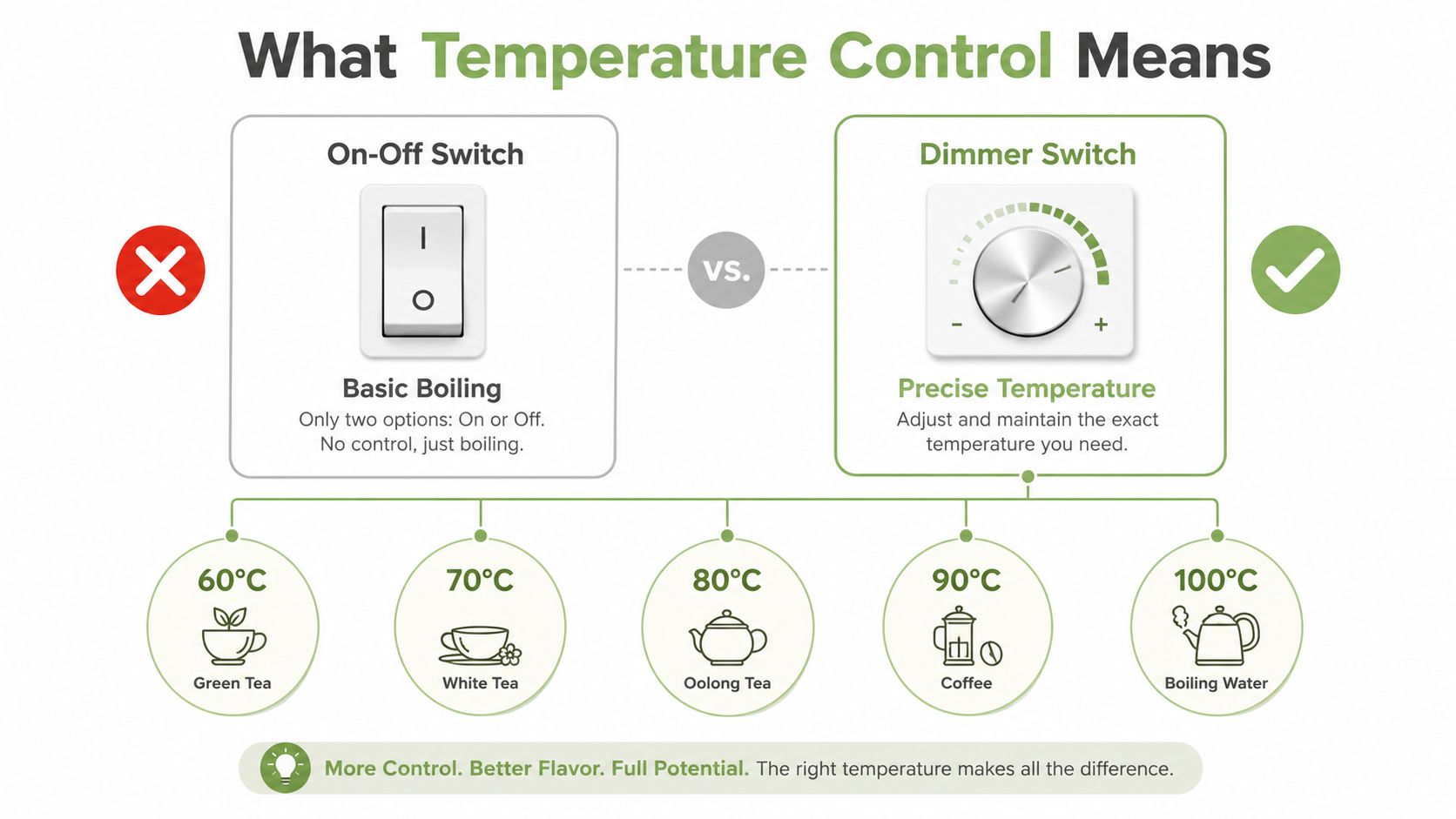
The easiest way to think about it is this. A basic kettle behaves like an on-off wall switch, it's either heating or not heating. A precision kettle behaves more like a dimmer switch, where you choose the level you want instead of jumping straight to full blast.
That's also why product pages often mention preset temperatures, keep-warm, hold mode, or auto shut-off. Presets are the quick buttons, keep-warm means the kettle tries to stay near the chosen setting, and auto shut-off means it stops once the target is reached. A basic electric kettle usually shuts off when water reaches 212°F / 100°C through an internal thermostat or steam-activated switch, which is the core principle behind automatic shutoff in many kettles, as discussed in an engineering thread on how electric kettles trigger shutoff.
What the buttons usually mean
A glass kettle with precision control often gives you familiar targets like 60°C, 70°C, 80°C, 90°C, and 100°C. One glass-kettle manual lists exactly those setpoints, which makes the choice much easier for tea drinkers who don't want to think in theory every morning. It also shows how the machine handles timing, heating automatically after selection and switching off when the job is done, which removes a lot of human error. You can see a similar preset-style approach in the manual for a glass kettle with listed targets of 60°C, 70°C, 80°C, 90°C, and 100°C at this instruction guide.
A stovetop glass kettle is different. There, the brewer manages the heat, then uses a thermometer or timing method to hit the target manually. That's useful to know because not every “glass kettle” listing means the same thing.
If you see keep-warm, read the temperature list carefully. It usually means holding one or a few chosen settings, not every possible number.
How Modern Glass Kettles Actually Hit and Hold a Temperature
The story starts well before smart kitchen gear. The modern electric kettle is commonly traced to 1922, while earlier electric kettles date to 1891, which shows the long gap between a first electric model and a safer, more practical version for everyday use, as noted in this historical overview. That history matters because the whole idea of modern temperature control came from the move away from simple boil-only behaviour.
What the thermostat is doing
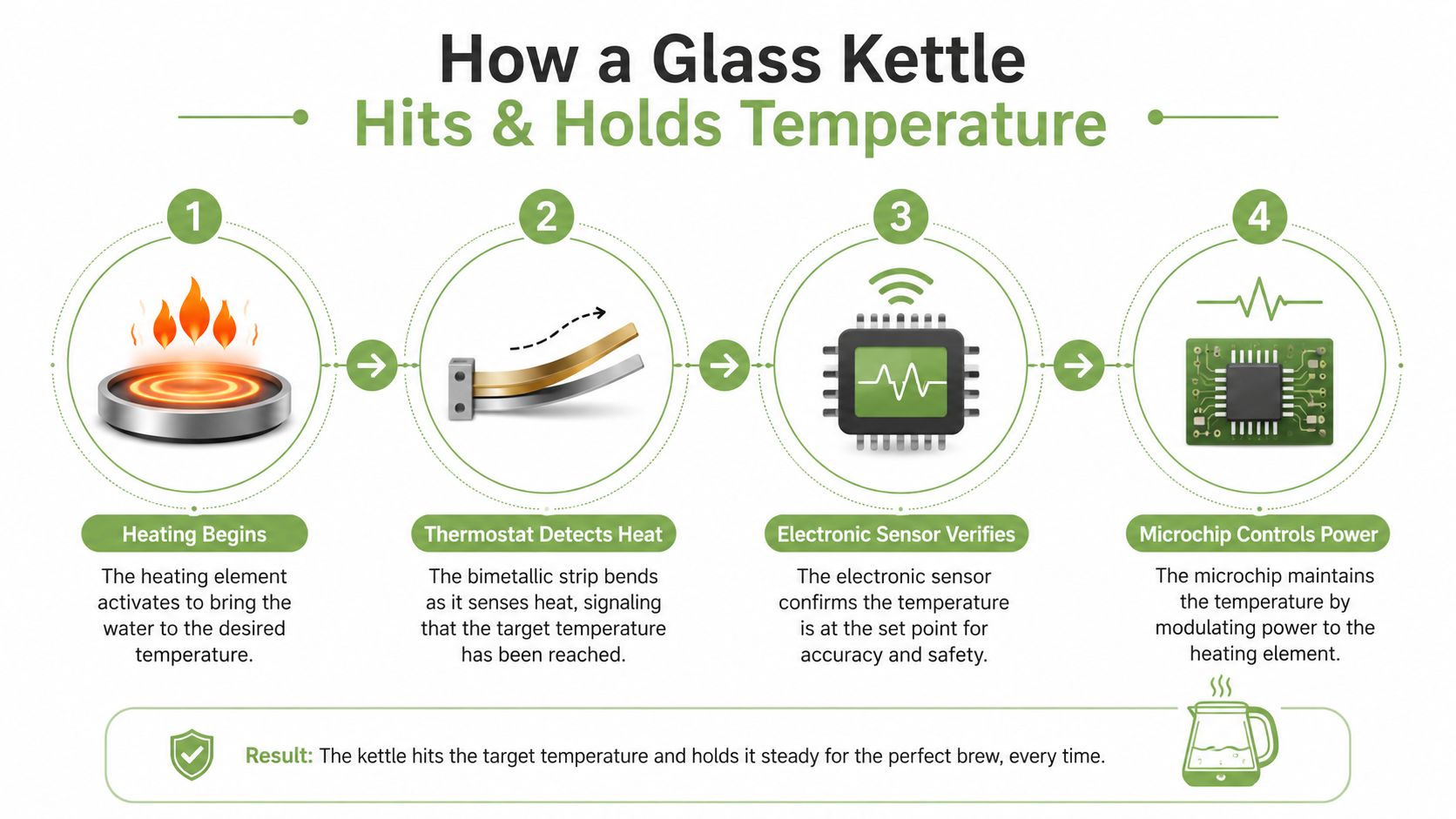
Early temperature-controlled kettles used bimetallic thermostats. In plain English, that means a heat-sensitive part bends as the water warms up, and once the target temperature is reached, it cuts power to the heating element. The kettle doesn't need to “think”, it just responds to heat in a predictable way.
Later versions add electronic sensors and a controller. The sensor measures water temperature, the controller compares that reading with your selected setpoint, and heating stops when the target is reached. If the kettle has a hold function, the system may reheat after the temperature falls below the chosen point. A general explanation of this sensor-and-controller approach appears in this temperature-control guide.
Why placement and keep-warm matter
Sensor placement matters because heat doesn't spread evenly in every kettle body. A sensor near the base can react quickly, but it may also be more sensitive to thermal lag or local hotspots if the design isn't well tuned. That's one reason two kettles can both advertise “variable temperature” and still feel different in the cup.
Keep-warm modes are useful, but they're not always universal across every setting. One glass-kettle manual says keep-warm only operates at 160°F, 175°F, 185°F, and 195°F, and the kettle reheats when sensed temperature falls below the setpoint, which is a good reminder that holding performance is often more limited than marketing copy suggests. You can see that behaviour in this glass kettle manual.
For buyers comparing models, a precision-focused option such as the Fellow Stagg EKG electric kettle shows why people pay attention to controls, not just looks. The point isn't shiny hardware, it's whether the kettle can land on the number you picked.
Matching Temperature to Tea Type
Tea gets easier when you stop asking, “How hot should the water be?” and start asking, “What am I making?” Different leaves respond to heat differently, and the same kettle can handle all of them if you choose the right setting.
Ideal water temperatures by tea style
| Tea Type | Target Temperature | Steep Time | Too-Hot Result |
|---|---|---|---|
| Japanese green tea | 70°C to 80°C | Brief steeping | More bitterness, less sweetness |
| Matcha | About 70°C to 80°C, using cooled water | Whisk immediately | Harsh flavour, duller texture |
| White tea | 75°C to 85°C | Gentle steeping | Reduced delicacy, sharper edges |
| Oolong | 85°C to 95°C | Moderate steeping | Can taste thinner than intended |
| Black tea | Near boiling | Short to moderate steeping | Less extraction if too cool |
| Pu-erh | Near boiling | Short to moderate steeping | Can seem flat if underheated |
The reason is chemical, but it's easy to feel in practice. Hotter water pulls out more of the compounds that can create bitterness, while cooler water gives the sweeter and more umami side of the leaf more room to show up. That's why green tea and matcha are usually treated more gently than black tea.
A simple tea-by-tea mindset
Japanese green tea is usually happiest in the lower range because it's easy to overdo. White tea likes warmth, but not force. Oolong sits in the middle, and darker teas are the ones that usually welcome a proper boil.
Matcha deserves special care because you're tasting the whole tea, not a leaf left behind in a strainer. A well-handled cup should taste smooth, not scorched. That's one reason gentle water handling matters so much for ceremonial-grade organic Matcha.
Useful shortcut: if a tea tastes oddly dry or harsh, try dropping the water temperature before changing anything else.
A glass kettle temperature control unit makes those adjustments much easier because the same appliance can move between styles without guesswork. That's handy at home, and even more useful in a café where one person might want green tea, another wants black tea, and someone else wants matcha in the same service run.
Three Practical Ways to Reach Your Target Temperature
There's more than one way to get good water, and the best method depends on your setup. A precise kettle is the simplest route, but a thermometer or a timing trick can still give you good results if you stay consistent.
The three methods side by side
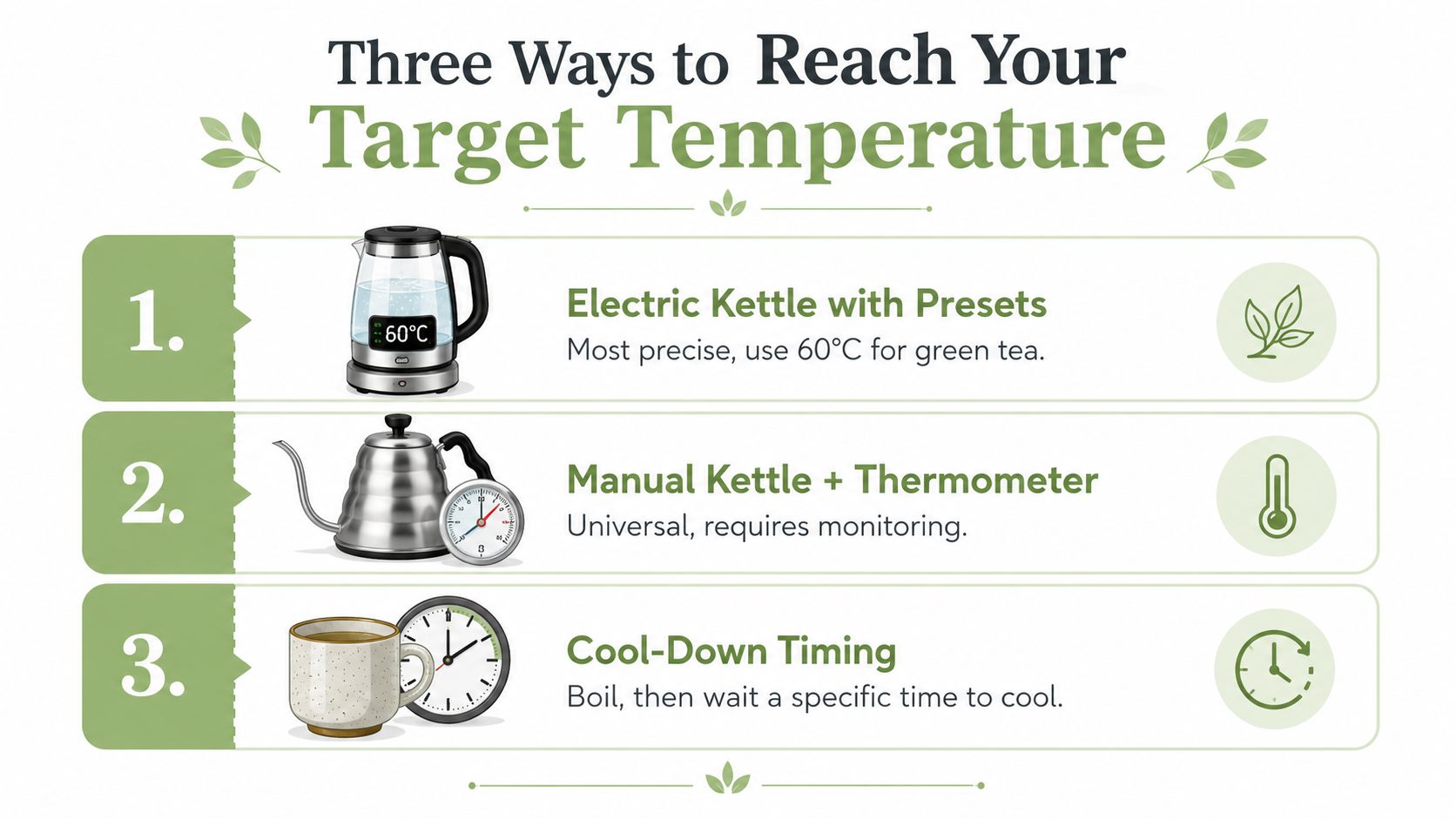
Electric kettle with presets. A precision glass kettle with buttons for 60°C, 70°C, 80°C, 90°C, and 100°C is the most direct option. You press the setting, wait, and pour once it finishes. That's the least fiddly approach for anyone making tea daily.
Manual kettle plus thermometer. This works well on a stovetop or with any plain kettle. Heat the water, check the temperature with a probe thermometer, then take it off the heat or let it cool a little if it runs hot. It takes more attention, but it's universal.
Boil, then wait. If you've got no gear at hand, boil the water and let it sit briefly before pouring. The exact cooling time depends on your kettle, room temperature, and water volume, so this is more of a practical habit than a strict formula. In a busy café or event setting, that kind of timing often works best when it's written into a simple service routine.
Choosing the method that fits your day
If you brew the same tea most mornings, presets remove friction. If you switch between drinks and only have basic tools, a thermometer gives you more control. If you're teaching staff or organising service across a team, a clear process matters even more than the device itself, and a centralised event management platform can be a useful way to keep timings, run sheets, and drink prep notes in one place.
Best takeaway: the right method is the one you'll use consistently, not the one that sounds the most technical.
Accuracy, Keep-Warm, and the Price Trap
A pricier kettle doesn't automatically mean a more accurate one. That's the trap. Some models look premium, have glowing buttons, and still drift enough to make repeated cups taste different from one another.
What to test before you trust the label
The key question is not whether a kettle says variable temperature, but whether it lands close to the chosen setting and stays there after repeated use. An independent buying guide for glass electric kettles highlights a useful benchmark: variable-temp kettles should ideally stay within about ±1.5°C at 80°C; larger errors can point to poor calibration and uneven brewing results, according to this buyer's guide.
That's especially relevant for lower-temp drinks, where a small miss can change flavour more than you might expect. If a kettle overshoots badly, your green tea may taste sharper than intended. If it undershoots, a bold tea may seem flat.
Keep-warm isn't the same as precision
Keep-warm can be handy, but only if it behaves predictably. Some kettles only hold at a few settings rather than the whole range, so a menu with several tea styles can expose the limits quickly. That matters in home service, but it matters even more in cafés where one kettle may need to support several different drinks in a row.
For comparison shopping, the electric kettle Australia page is a useful place to think through what features matter for real brewing habits. A good-looking kettle is nice. A kettle that consistently holds the number you asked for is better.
If you're testing a kettle in person, check whether the water tastes the same on the first cup and the third cup. Inconsistent flavour usually means inconsistent temperature control.
Safety, Cleaning, and Care for a Glass Kettle
Glass looks lovely, but it asks for a bit more care than stainless steel. The upside is obvious, you can see the water level and spot buildup early. The trade-off is that glass doesn't forgive rough handling.
A simple care routine
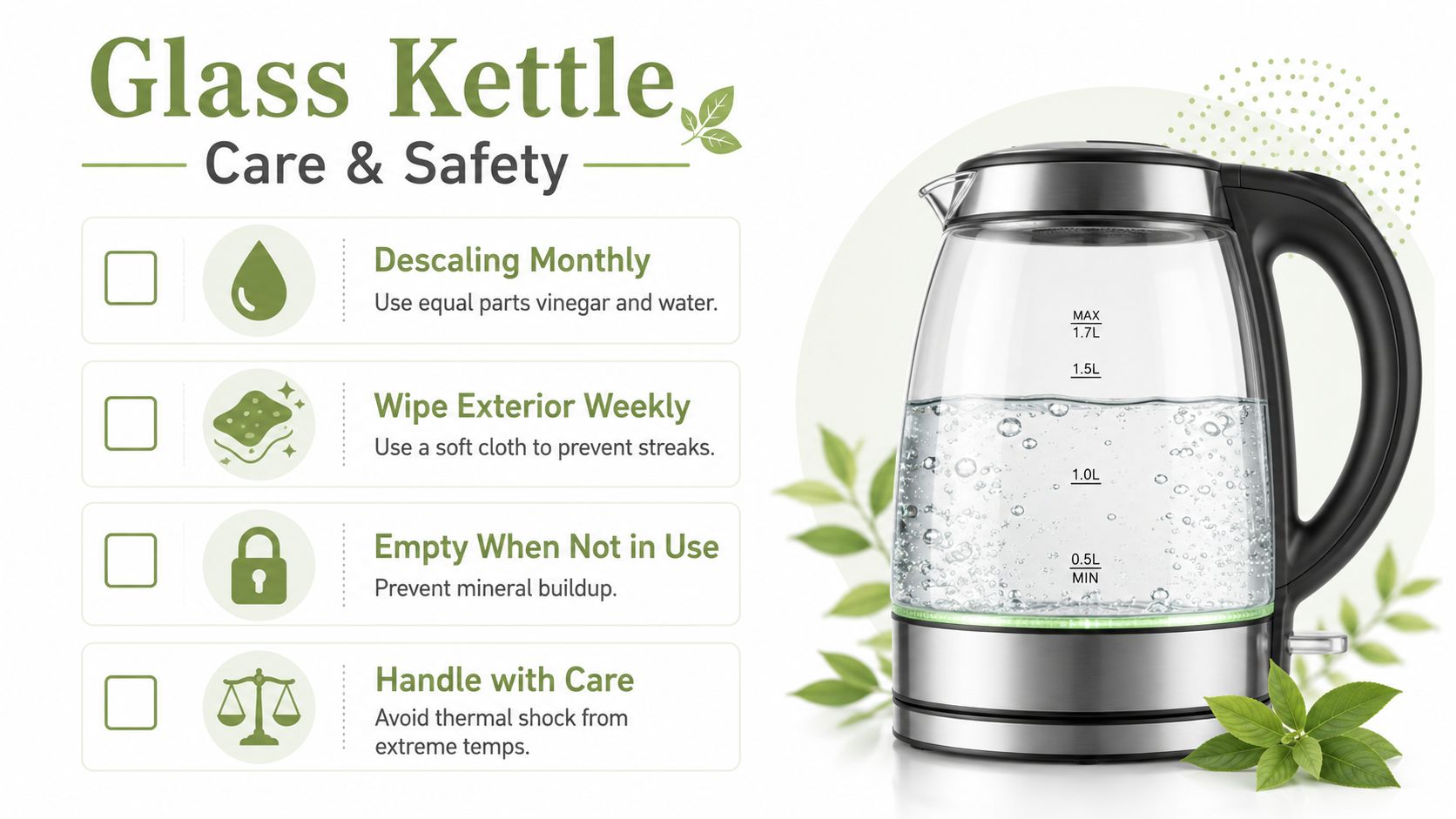
- Descale regularly: use a mild descaling routine with citric acid or vinegar and water, especially in hard-water areas.
- Wipe the body gently: a soft cloth keeps the glass clear without scratching.
- Empty stale water: leaving water sitting around invites mineral buildup and stale flavour.
- Avoid thermal shock: don't pour cold water into a hot glass kettle body.
A good habit for both homes and cafés is to treat the kettle as a brewing surface, not just a container. Residue builds up on the element and in the spout, and that can affect taste before it affects appearance.
The mistake that hurts both taste and gear
Running the kettle dry, or repeatedly reboiling the same water, is a fast way to weaken flavour and wear the element.
That advice sounds boring until you taste the difference. Fresh water gives you cleaner extraction, and a kettle that's cleaned and handled well will usually feel more reliable over time.
Check the cord, the base, and the lid if the kettle lives in a busy space. In home kitchens, that's a monthly glance. In hospitality, it should be part of normal close-down and opening checks.
Quick Answers for Common Glass Kettle Questions
Is it safe to leave a glass kettle on keep-warm?
Usually, yes, if the model is designed for it and you're using the correct setting. The better question is whether the keep-warm function holds your chosen temperature consistently enough for the drink you're making.
Does reboiling water change the taste?
It can. Repeated heating often makes people notice a flatter or less fresh flavour, especially in delicate teas where water quality and temperature are already doing a lot of the work.
How often should I descale in Australia?
There isn't one universal schedule, because water hardness varies. In harder-water areas, a regular cleaning habit matters more than waiting until the kettle looks obviously scaled.
Can a stovetop glass kettle match electric precision?
It can get close with a thermometer and good attention, but it takes more hands-on control. Electric presets are still easier for repeatable tea brewing.
What setting should I use for matcha?
A cooler setting around the green-tea range is usually a better starting point than boiling water. Matcha responds best when the water is gentle, not punishing.
If you want better tea at home, start with the water before you start changing the leaves. Then match the kettle to the drink, keep it clean, and choose a setting with intent instead of habit. Explore the Pep Tea range at Pep Tea if you're ready to pair precise water handling with organic Matcha or sugar-free organic Kombucha that fits a cleaner daily routine.
Your 2026 Guide to the Best Matcha Cake Brisbane

You're standing in a Brisbane café, staring at a green slice of cake and wondering if it's real matcha or just a pretty sponge with colouring. That hesitation makes sense. matcha cake Brisbane searches have surged because matcha is no longer a niche order, it's now part of the city's everyday café language, but the quality gap is still wide.
The tricky part is that a cake can look right and still miss the mark completely. It might taste flat, look unnaturally bright, or feel like the matcha was added for branding rather than flavour. For Brisbane diners, the key question isn't just where to buy it, it's how to tell when a cake is worth the price.
The Search for Brisbane's Perfect Matcha Cake
Brisbane's matcha scene has grown into something far more visible than a passing trend. That matters, because once an ingredient becomes mainstream, the market fills with both thoughtful, high-quality versions and quick opportunistic ones. A recent Australian consumer panel analysis found matcha was up 53% year-on-year nationally, with the ingredient sitting at 3.58% social share and still described as “emerging” (Tastewise).
That trend shows up in menus across the city too. Iced matcha lattes now appear at major chains including McDonald's, Krispy Kreme, Starbucks, Rashays, and Chatime, and Brisbane prices in that dataset ranged from $6.30 to $18.95 (Tastewise). When an ingredient moves from specialty cafés into chain menus, dessert makers usually follow, because customers start recognising the flavour and expecting it in more formats.
Practical rule: if a city already accepts matcha as a menu flavour, cakes and pastries usually follow the drink trend.
The problem is that popularity doesn't guarantee quality. Brisbane coverage has been rich on where to find matcha, but much thinner on whether the boom is still backed by good ingredients, especially in desserts (Torrens University). That gap is exactly where smart buyers get an advantage, because a great matcha cake should taste balanced, aromatic, and fresh, not just look green.
Not All Matcha Is Created Equal
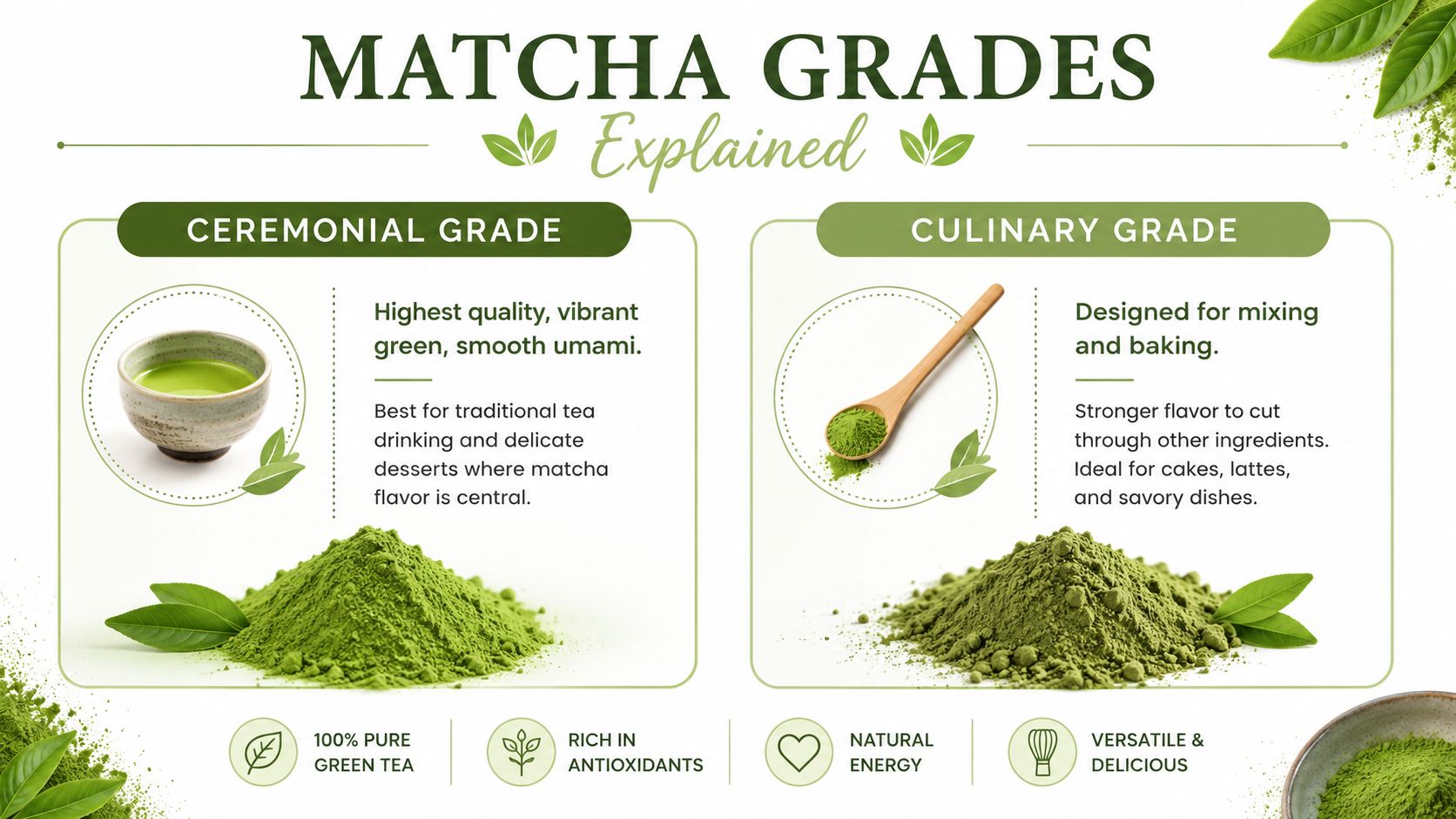
A good matcha cake starts with the right grade of powder, a distinction that often confuses many buyers. Ceremonial grade is the high-end powder people usually drink on its own, while culinary grade is built for baking and mixing. The simplest way to think about it is like cooking wine versus a fine bottle you'd pour into a glass, one is made to shine in a dish, the other is made to be savoured directly.
The reason this distinction matters in cake is flavour structure. Baking dilutes and reshapes ingredients, so a matcha that's lovely in a bowl can disappear in batter, while a culinary grade designed for mixing can hold its own through flour, eggs, and butter. That's also why the best matcha cakes tend to show a natural green colour rather than a pale, dull, or artificially bright one.
A good café menu usually gives clues if you know what to look for. A cake made with stronger culinary matcha often tastes more rounded and less sugary, while a weak one can taste mostly like vanilla sponge with a faint grassy note. When the powder is high quality, the colour is more even and the finish feels cleaner rather than bitter or dusty.
| Feature | Ceremonial Grade Matcha | Culinary Grade Matcha (High Quality) | Best For |
|---|---|---|---|
| Flavour | Smooth, delicate, umami-rich | Stronger, more robust | Drinking, delicate desserts |
| Colour | Vibrant natural green | Good green colour, slightly less delicate | Cakes, lattes, baked goods |
| Texture | Fine and refined | Designed to mix well | Whisking, batter, sauces |
| Best use case | Traditional tea preparation | Baking and recipes | Matcha cake, café drinks, desserts |
If you're shopping or ordering, ask one simple question, what grade of matcha is in the cake? If the answer is vague, that's usually a sign the product is built for appearance first.
Learn more about different grades of matcha
Where to Find Great Matcha Cake in Brisbane
Brisbane's matcha market is now broad enough that you can start your search in several parts of the city instead of chasing one hidden specialty spot. Dedicated outlets across Teneriffe, the CBD, and Sunnybank show how far the flavour has moved into the mainstream, while chain cafés have made matcha familiar to casual drinkers too (The Urban List). That broader awareness helps dessert menus, because customers already know what matcha should taste like.
The best way to judge a café is to look at how seriously it treats matcha across the menu. A venue that serves it as a throwaway novelty will usually lean on colour and sweetness. A place that treats it as a core flavour tends to show more restraint, with better balance, cleaner colour, and a more deliberate texture.
A useful buying cue: the strongest café cakes usually sit in places that already serve matcha regularly, not just once as a special.
Price can also reveal positioning. Brisbane sources note drinks ranging from $4.50 to $18.95, with dedicated tea houses like Sinmei Tea pricing cakes around A$6 to A$7 and specialty items such as a lava cake at A$20 (The Urban List; Sinmei Tea at Scrumptious Reads). Those numbers don't tell you quality by themselves, but they do show that Brisbane already accepts a premium tier for matcha products.
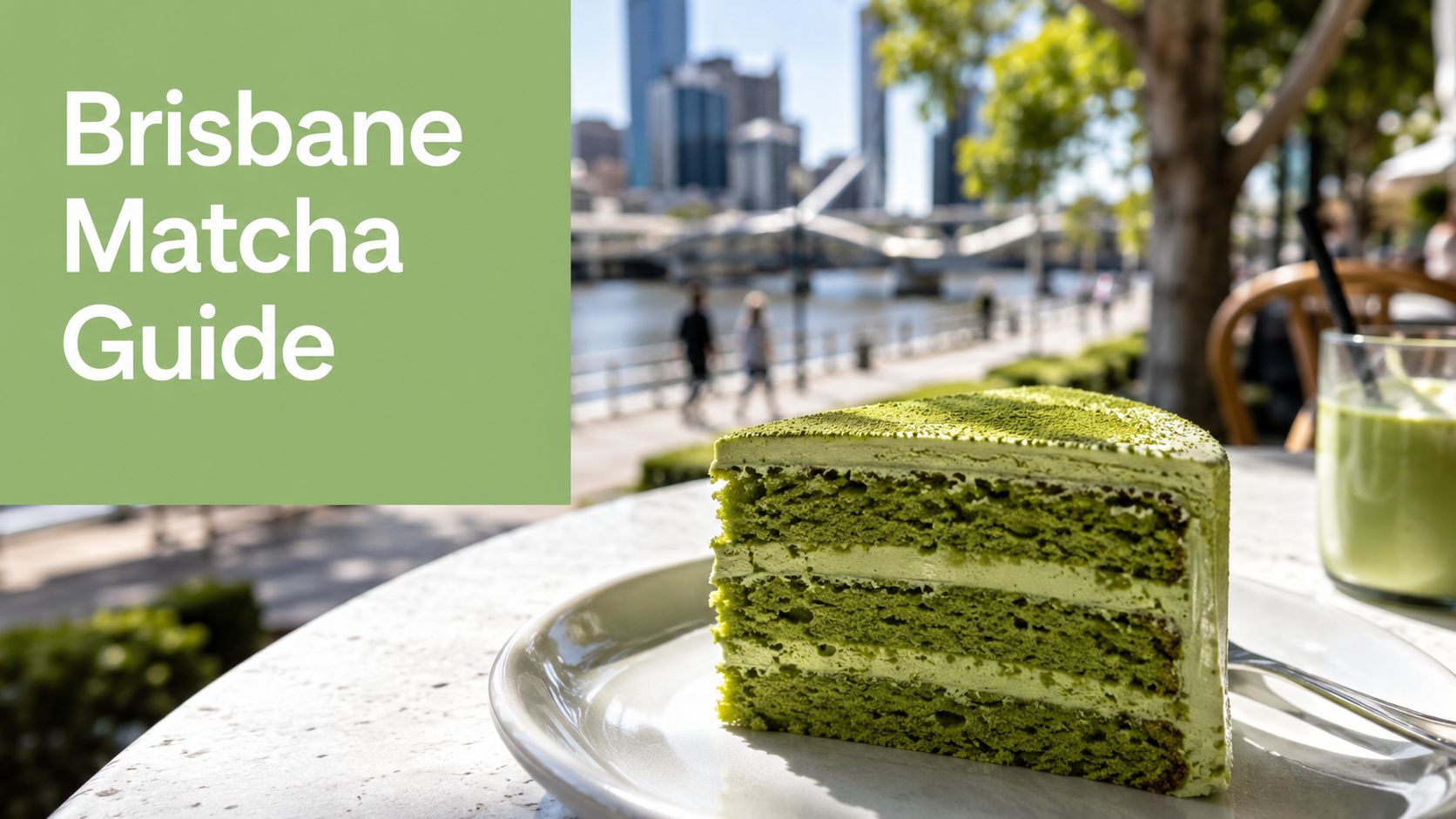
For Brisbane buyers, the smartest approach is to compare three things at once, flavour depth, colour consistency, and how the cake sits in the venue's broader dessert offer. If a café is already comfortable charging premium prices for matcha drinks, its cake is more likely to be made with intention. If you're after a starting point, look around the CBD for specialist tea houses, then check Brisbane suburbs with established dessert culture like Teneriffe and Sunnybank.
Bake Your Own with Our Pep Tea Matcha Recipe
Baking your own cake removes the guesswork. You choose the powder, control the colour, and decide whether the result tastes fresh or merely decorative. That's especially useful if you've been disappointed by cakes that look promising but collapse into sweetness once you take a bite.
The key technique comes before the oven
Matcha cake is sensitive to temperature and dispersion. One tested method bakes at 162°C and heats milk only to 82 to 85°C, which helps preserve colour, while another Australian recipe uses 180°C and stresses whipping eggs and sugar until the mixture triples in volume before folding in the dry ingredients (Texanerin; Zen Green Tea). The logic is simple, lower liquid temperature and solid aeration help reduce clumping, protect the green tone, and keep the crumb finer.
A practical home method looks like this:
- Sift the matcha first. This breaks up soft lumps before they meet liquid.
- Warm the milk carefully. Body-temperature milk can help matcha disperse more evenly, while some tested cakes heat milk to 82 to 85°C for colour control (Zen Green Tea; Texanerin).
- Pre-slurry the powder. Mix matcha with a little warm liquid before it goes into batter, because warm liquid improves solubilisation and helps prevent bitter specks (Zen Green Tea).
- Whisk for structure. If the method uses eggs and sugar, beat until the mixture is visibly lighter and expanded.
- Fold gently. Once the dry ingredients go in, keep mixing light so the batter stays airy.
If you want a beginner-friendly foundation for the sponge side of baking, the Just Cook It simple baking guide is a handy companion. It won't teach matcha nuance, but it does help with the basic rhythm of mixing, baking, and cooling.
Practical rule: if your batter contains visible green flecks, the matcha probably wasn't dispersed well enough before baking.
A simple matcha cake base
Use a light sponge or chiffon style, because those styles let matcha remain the star. Keep the sugar moderate, use a good culinary matcha, and don't overdo the add-ins. A thick frosting can drown the flavour before it reaches the palate.
For a recipe that keeps the ingredient quality front and centre, see our baking with matcha and beyond guide.
Once the cake is out of the oven, let it cool properly before slicing. Matcha colour looks strongest when the crumb is settled, not steaming hot, and the flavour usually tastes cleaner the next day.
Perfect Pairings and Smart Storage Tips
Matcha cake tastes best when the plate doesn't fight the flavour. Fresh berries, a light spoonful of cream, or a fine dusting of extra matcha all work because they add contrast without overwhelming the tea note. If the cake is already rich, keep the garnish simple and let the green tea character stay in charge.
A cold, crisp drink can make a slice feel lighter. That's one reason a sugar-free organic kombucha pairs so naturally with matcha cake, the brightness cuts through richness while keeping the overall experience clean and refreshing. If you're storing leftovers for later, keep the cake covered, refrigerate it if the filling is dairy-heavy, and bring it back to a cool room temperature before serving so the texture softens again.
For shelf-life questions, the most useful habit is to treat matcha cake like a fresh tea dessert rather than a long-life bakery item. The colour fades faster when it sits uncovered, and the crumb dries out quickly if air reaches it. This shelf-life guide is a practical reference if you want to keep the slice tasting close to day one.
A Note for Brisbane Cafés and Retailers
Brisbane diners have already accepted matcha as a premium café flavour, which means cafés and dessert bars have a clear opportunity to build trust with better ingredients. When customers can already buy matcha drinks across mainstream chains and specialist venues, a cake made with high-quality matcha becomes a visible quality signal, not just another dessert on the cabinet. That's especially important in a market where people are starting to ask whether the product is authentic or just aesthetic.
For café owners, the commercial case is straightforward. A well-made matcha cake can justify a premium price point because it gives customers a taste difference they can notice, cleaner bitterness, better colour, and a more layered finish. It also helps with repeat business, since people remember a dessert that tastes balanced rather than sugary and generic.

If you're planning a dessert offer for a café, market stall, or food truck, pairing a premium cake with a practical payment setup matters too. A resource like POS integration for food truck owners is useful when you're building a smoother service flow around specialty desserts and drinks.
The simplest strategy is also the strongest one, make the ingredient quality obvious. Use a matcha that delivers colour, aroma, and consistency, then serve the cake in a way that makes those qualities easy to notice. If Brisbane is already paying attention to matcha, the venues that respect the ingredient will stand out fastest.
If you're ready to bake, stock, or serve better matcha desserts in Brisbane, explore Pep Tea for premium organic matcha and sugar-free kombucha that fit café menus, wholesale kitchens, and home baking alike.
Matcha Energy vs Coffee: An Australian Guide for 2026
You know the moment. The alarm goes off, you're half awake, and your hand reaches for the same first fix, coffee, before your brain has fully clocked in. For a lot of Australians, that ritual feels essential, but a key question is whether it's giving you the kind of energy you truly desire, fast, frantic, steady, or somewhere in between.
Matcha energy vs coffee isn't really a contest about which drink is “better” in the abstract. It's a practical choice about how you want to feel at 8 am, 3 pm, or before a long stretch of focus work. Coffee and matcha can both be part of a healthy routine, but they don't deliver energy in the same way, and that difference is more significant than commonly understood.
| Drink | Typical caffeine in Australia | Energy feel | Best fit |
|---|---|---|---|
| Coffee | About 95 mg per cup | Quicker, sharper lift | Fast starts, short bursts, when you want a stronger hit |
| Matcha | About 60 to 75 mg per similar serving | Smoother, steadier alertness | Calm focus, gentler energy, longer work blocks |
The Morning Ritual Reimagined
The coffee machine clicks on, the kettle boils, and before the day has even started, you've already decided what sort of pace you're setting. That's the power of habit, it's not just about caffeine, it's about identity, comfort, and routine. For many people, coffee says “wake up now”, while matcha says “start well”.
The Australian conversation around these drinks has shifted because people are asking better questions. They're not only asking how much stimulation they'll get, they're asking how it will feel, how long it will last, and whether it fits work, exercise, or a calmer morning rhythm. That's why matcha energy vs coffee has become such a useful comparison for health-conscious readers.
Coffee still has its place, especially if you want a quick jolt. But matcha has moved from a niche tea-culture product into a mainstream café ingredient, and that shift has been driven by Australians looking for a more considered kind of energy, one that feels useful rather than relentless.
Practical rule: If your morning needs speed, coffee is usually the simpler answer. If you want steadier focus without feeling wired, matcha deserves a look.
That's the basic frame for the rest of the discussion. It's not about crowning a winner. It's about matching the drink to the moment.
The Caffeine Showdown How They Deliver Energy

The numbers matter, but so does the format
Australian reporting puts a typical coffee at about 95 mg of caffeine per cup, while matcha generally lands at about 60 to 75 mg per similar serving ABC News Australia. That sounds like a simple win for coffee if you only care about raw dose, but the serving format changes the experience a lot.
Matcha is also more variable than many people expect. One Australian explainer notes it can range from 38 to 176 mg of caffeine per cup depending on how it's prepared, while another Australian source still places it around 60 to 75 mg per serving Nine Kitchen. That's the key point, dose control matters. A café-style latte, a strong whisked serve, and a lighter home brew won't all feel the same.
Why the energy feels different
Coffee tends to feel like a quicker rise. Matcha tends to feel more measured because the caffeine comes packaged with other plant compounds, and Australian coverage says the leaves are shaded for three to four weeks before harvest, a step that raises caffeine and antioxidant levels and helps explain the steadier alertness people often describe ABC News Australia.
That's why people often describe coffee as a rocket launch and matcha as a steady climb. The base ingredient isn't the whole story. The way it's grown, processed, and served shapes the experience, and that's exactly why a standard caffeine chart doesn't tell the full story.
For readers comparing their own routines, a practical place to start is this internal guide on caffeine in matcha latte. It helps make the serving-size question less vague, which is where a lot of confusion starts.
Beyond Caffeine The L-Theanine Difference
What L-theanine changes
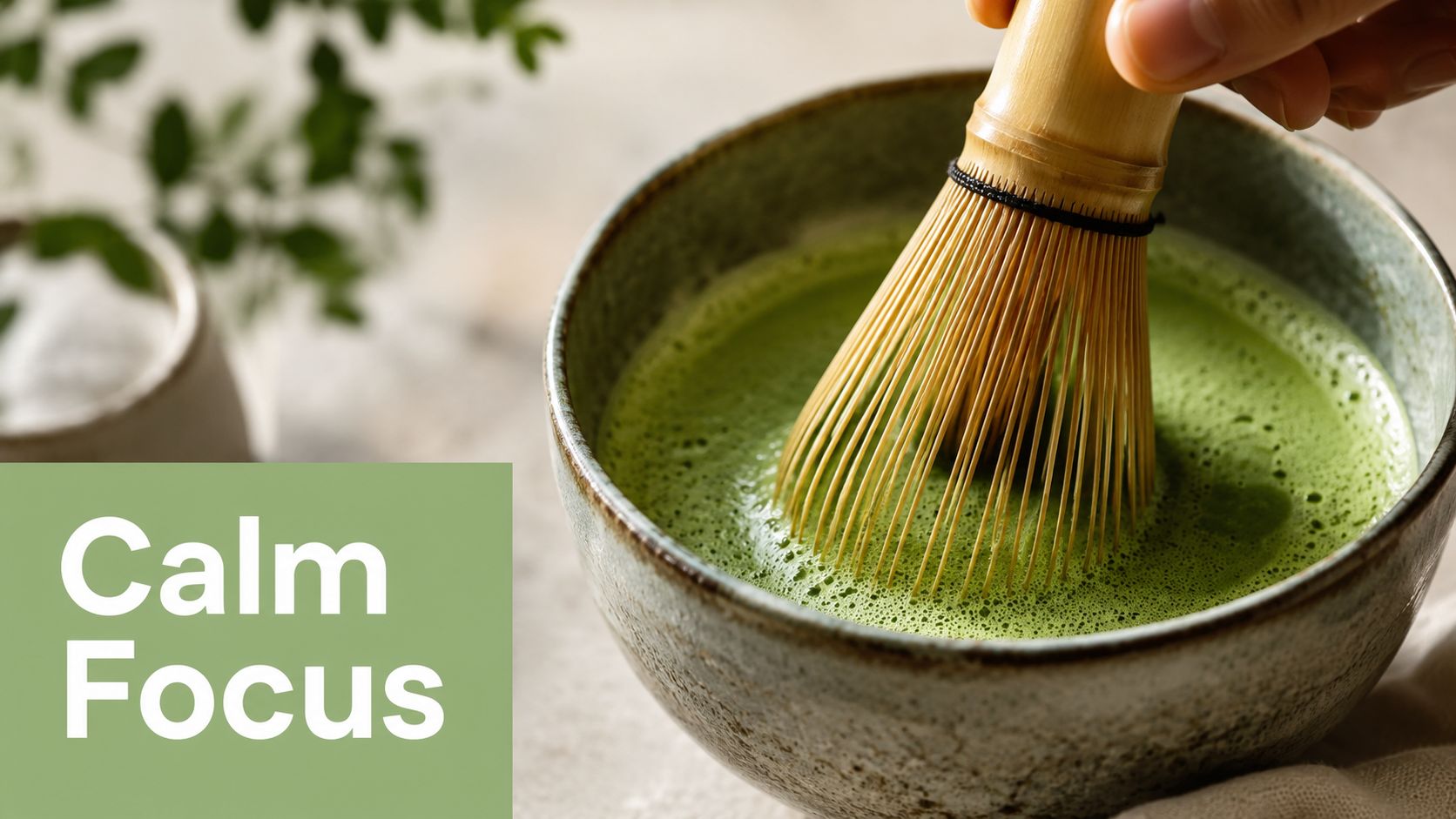
L-theanine is the reason matcha feels different from plain caffeine. Australian coverage increasingly frames matcha as a functional alternative to coffee because of its L-theanine content, which is associated with calm alertness and a slower-release energy that feels more sustained Matcha Society Australia. In simple terms, caffeine helps you switch on, while L-theanine helps the signal feel less jagged.
That doesn't mean matcha is sedating. It means the alertness can feel cleaner, with less of the edgy, buzzy quality some people get from stronger coffee. For professionals who need to stay mentally switched on without feeling scattered, a useful deep dive is the role of L-theanine for professionals, which explains why this compound gets so much attention in focus-oriented routines.
Why people describe it as calmer
The easiest way to think about it is this. Coffee can feel like a sudden push, while matcha often feels like a smoother lane change. The energy is still there, but it tends to suit tasks where you want attention, patience, and a steady temperament rather than a rapid surge.
Matcha is often chosen not because it is “stronger”, but because the kind of alertness feels more manageable.
For some people, that's the difference between powering through a meeting and feeling like the meeting is powering through them. If you're comparing product styles, the internal guide on Uji matcha powder is a useful reference point for understanding quality and flavour differences without getting lost in jargon.
A Comparison of Antioxidants and Nutrients
Whole leaf versus infusion
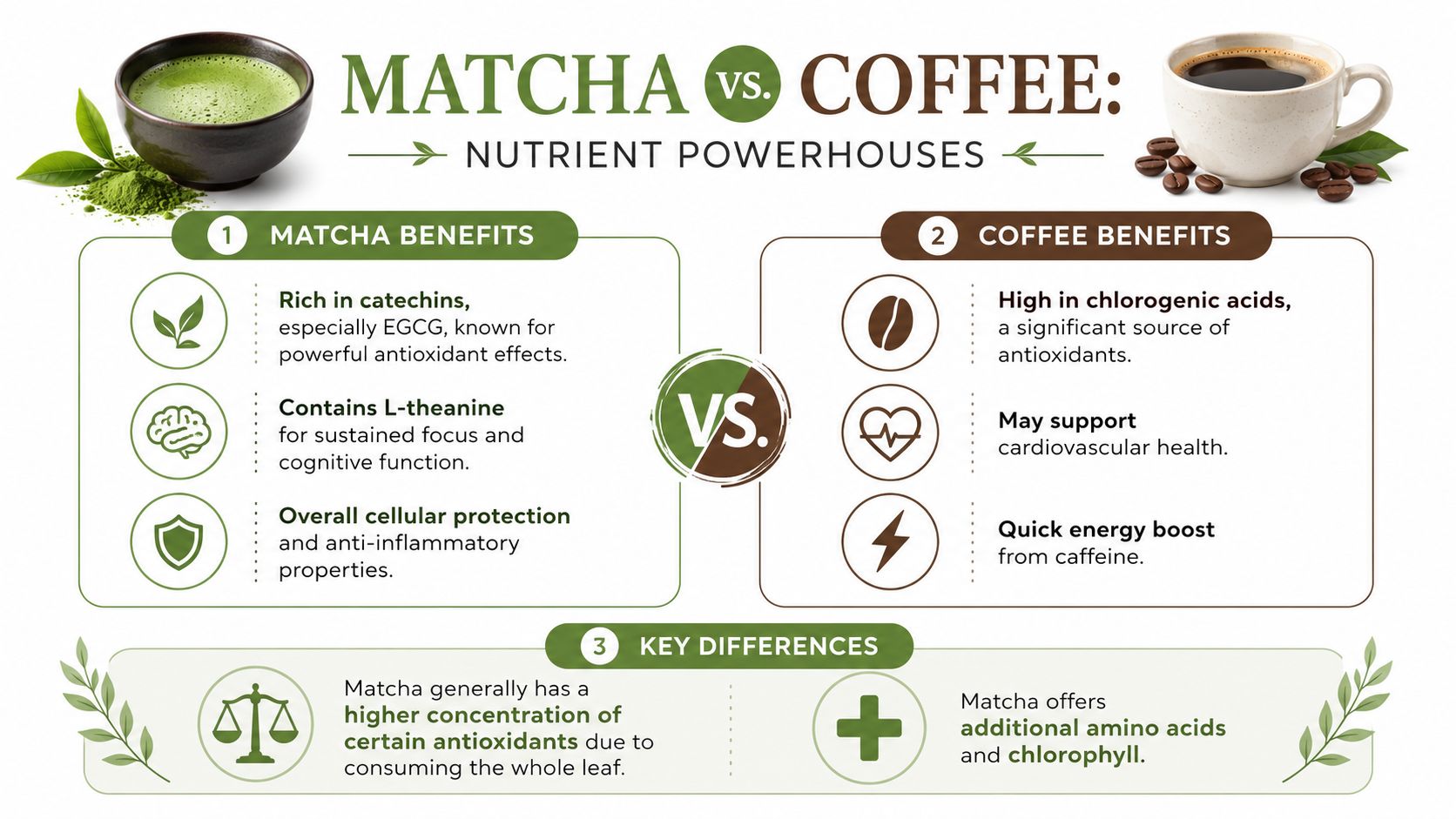
Matcha has a nutritional advantage that comes from a simple mechanism, you consume the whole tea leaf as powder rather than steeping and discarding it. Australian sources highlight its higher polyphenol and antioxidant density for that reason, and name compounds such as catechins, polyphenols, flavonoids, and EGCG as central to its functional profile Deakin University.
That whole-leaf approach is why matcha is often talked about as a concentrated source of functional compounds. A 2023 review found matcha contains a high concentration of bioactive compounds, especially polyphenols, flavonoids, phenolic acids, carotenoids, and vitamins, and another review concluded that matcha infusions have the highest antioxidant potential among tea types PMC review. A separate review also notes matcha's high catechin levels and strong antioxidant activity in experimental contexts PMC review.
What that means in plain English
This doesn't make matcha a miracle drink, and it shouldn't be treated like medicine. It does mean the drink carries more of the plant with it, so the cup is doing more than just delivering caffeine. That's why people interested in clean energy, gut-friendly routines, and antioxidant-rich beverages often gravitate towards it.
Coffee has its own strengths, and many Australians love it for flavour and a sharper lift. But if your idea of a good daily drink includes energy plus plant compounds, matcha fits that brief more naturally because the leaf itself is part of the drink.
Simple takeaway: coffee is mainly about the brewed bean, matcha is about the whole leaf. That difference shapes both the taste and the functional profile.
When to Choose Matcha and When to Choose Coffee
Match the drink to the job
The best choice depends on what your day needs. Australian commentary says coffee is often preferable for a fast caffeine hit, while matcha suits people who want smoother, sustained energy for calm-focus occasions, such as afternoon work or when they're more sensitive to caffeine AGFG.
That makes the decision easier if you stop asking “which is healthier?” and start asking “what am I trying to do right now?”. A hard training session, a sleepy school run, a creative block, a long spreadsheet session, and a late afternoon meeting all ask for different energy profiles.
A practical decision guide
- Choose coffee for speed: If you need to feel switched on quickly, coffee is the more direct option.
- Choose matcha for sustained focus: If the workday is long and you want fewer jagged peaks, matcha fits better.
- Choose matcha for afternoon use: If the 3 pm slump hits hard, matcha often feels more manageable than a stronger coffee.
- Choose coffee if you like intensity: Some people prefer the stronger, bolder lift and don't mind the sharper edges.
A useful way to think about it is quality of energy, not just quantity. Some tasks need a burst, others need consistency. If you're about to lift heavy at the gym, coffee may make sense. If you're settling in for writing, client work, or study, matcha often feels like the better tool.
The primary advantage here is strategic use. You don't have to pick a side forever. You can choose based on the moment, your caffeine tolerance, and how you want the rest of the day to unfold.
How to Choose and Prepare Quality Matcha
What quality looks like
Good matcha should taste vibrant, not dull or dusty. Ceremonial-grade matcha is usually the better choice for drinking straight or in a simple latte, while culinary-grade matcha is better suited to baking, smoothies, and recipes where other ingredients soften the flavour. That distinction matters because not all green powder behaves the same in the cup.
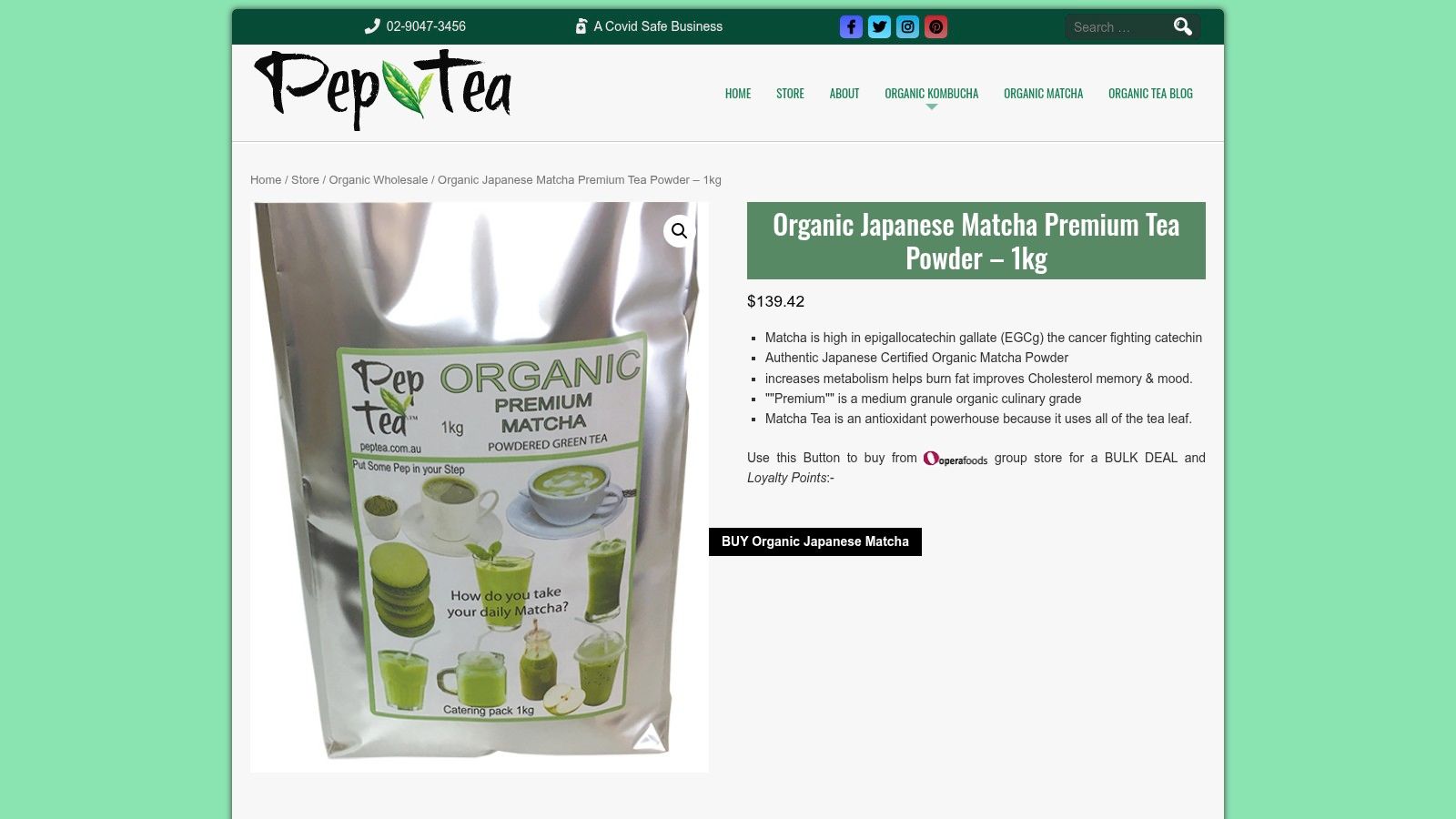
Pep Tea's premium Japanese matcha is certified organic by the Japanese Ministry of Agriculture and grown in southern Japan, which gives Australian buyers a clear provenance and certification claim to look for in an authentic product Pep Tea product page. If you want a straightforward brewing reference, the internal guide on making matcha tea is a handy starting point.
A simple home latte method
- Sift the matcha so it doesn't clump.
- Whisk with a small amount of hot, not boiling, water until smooth and frothy.
- Add milk of choice, then stir through.
- Taste before sweetening, because a good matcha should already have enough flavour to stand on its own.
A good latte doesn't need to be complicated. The fewer barriers there are, the more likely you are to use matcha consistently instead of treating it like a special-occasion ingredient.
A video can help make the whisking rhythm feel less intimidating.
The Verdict Your Personal Energy Prescription
The cleanest summary is simple. Coffee is the faster, sharper option. Matcha is the steadier, calmer option. Neither drink wins every situation, because your body, schedule, and sensitivity to caffeine all change the equation.
If you care most about speed, coffee makes sense. If you care most about feeling alert without a hard edge, matcha usually fits better. If you're trying to build a healthier routine around everyday choices, quality matters too, which is why it's worth checking labels and provenance the same way you might when you find pesticide-free food.
The most useful mindset is to treat energy like a tool, not a personality trait. Some days call for intensity, others call for steadiness. Once you start choosing with intention, the question stops being “coffee or matcha?” and becomes “what kind of energy does this moment need?”
A CTA for Pep Tea. If you're ready to explore calmer, cleaner energy for your own routine, take a look at Pep Tea's organic matcha range and see which style fits your mornings, your afternoons, and the way you like to feel.
Green Tea Australia Brands a Shopper’s Guide for 2026

You're probably here because you've stood in front of a supermarket shelf, opened five browser tabs, and realised that “green tea” in Australia can mean very different things. One box says organic. Another says matcha. Another looks healthy but is packed like a soft drink. Then there are imported tins, local blends, tea bags, loose leaf, sparkling cans, probiotic bottles, and labels full of wellness language that don't always tell you much.
That confusion makes sense. The Australian green tea aisle has become more crowded, and shoppers are paying closer attention because they want drinks that feel lighter, cleaner, and more purposeful. Interest isn't niche anymore. In Australia, the organic green tea market reached a retail value between AUD 180 million and AUD 250 million in 2025, with health-conscious consumers driving a significant portion of demand, according to IndexBox's Australia organic green tea market analysis.
A good guide to Green Tea Australia brands shouldn't just hand you a list of names. It should help you recognise quality markers, understand what type of green tea suits your day, and know when a label is saying something meaningful versus sounding impressive.
Navigating the World of Australian Green Tea
A lot of Australians start with the same assumption. Green tea is green tea, so choosing one brand should be simple.
Then the practical choices show up.
You might buy tea bags for convenience, then notice a bright tin of Japanese matcha beside them. A café menu offers a matcha latte. The fridge section has kombucha made from green tea. A wellness shop stocks loose-leaf sencha and premium powders with very different prices. Suddenly you're not comparing one product type. You're comparing several categories that all sit under the same broad umbrella.
Why the category feels crowded
Part of the confusion comes from the fact that these products solve different problems.
- Tea bags suit quick weekday brewing.
- Loose-leaf green tea suits people who care about flavour and ritual.
- Matcha appeals to anyone chasing a more concentrated, versatile green tea experience.
- Kombucha attracts drinkers who want something cold, lively, and a bit more social.
That's why brand lists alone often fall short. A “best brands” roundup can lump very different products together without explaining what you are purchasing.
Green tea isn't one single shopping decision. It's a category of formats, origins, and processing styles.
Start with your real goal
Before you compare labels, ask a simpler question. What do you want this green tea to do in your life?
Maybe you want a calm morning drink instead of another coffee. Maybe you want a low-sugar fridge staple. Maybe you're after a ceremonial matcha for whisking, or a culinary powder for smoothies and baking. Some shoppers want local brewing and traceable production. Others care most about organic certification and clean ingredients.
Once you know your goal, the shelf makes more sense. You stop asking, “Which brand is best?” and start asking better questions.
- Is this for sipping hot or cold?
- Do I want convenience or a ritual?
- Am I paying for better leaf quality, better processing, or just better packaging?
- Is the “organic” claim supported?
Those questions turn a confusing category into an organised one.
How to Read a Green Tea Label Like an Expert
A strong green tea label should help you trust the product. If it leaves you guessing, that's already useful information.
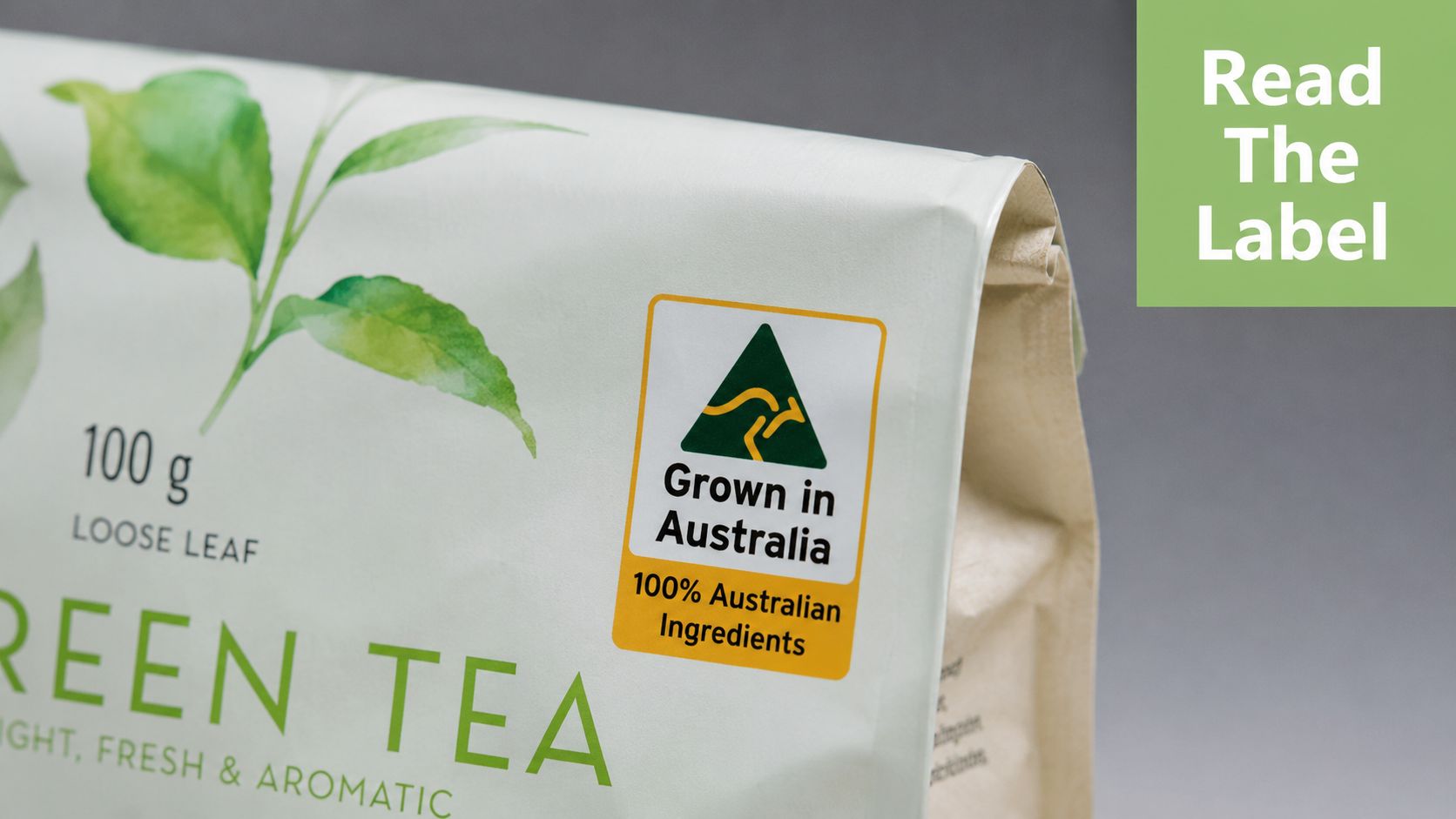
Check the certification first
The word organic gets used loosely. That's one of the biggest traps in this category.
Consumers are often misled by brands using “organic” without third-party validation, and shoppers should look for recognised certification marks such as ACCOA, as noted in this discussion of organic certification literacy in Australia. If the front of pack says organic but the label gives you no certifier, no mark, and no traceable standard, pause before you buy.
A quick way to build confidence is to learn what recognised standards look like and what they cover. A practical starting point is this guide to organic certification standards, which helps decode what a certification is meant to signal.
Look for origin, not just branding
A polished brand name doesn't tell you where the tea comes from. Origin matters because it often shapes flavour, processing style, and buyer expectations.
If a product is Japanese green tea or Japanese matcha, the label should make that clear. If it's Australian grown, that should also be visible and specific. “Packed in Australia” is not the same thing as “grown in Australia”. Shoppers often miss that distinction.
Here's a useful way to read that part of the pack:
Find the country of origin
Don't stop at the front label. Check the side or back panel.Notice whether the tea is grown, packed, blended, or brewed locally
Those are different claims.See if the origin matches the product type
For example, many premium matcha products highlight Japanese sourcing because that's central to the style and processing.
Scan for processing clues
Processing changes the final cup more than many people realise.
A tea bag often contains finely cut leaf for speed and consistency. Loose-leaf tea tends to show more of the leaf itself. Matcha is powdered whole leaf. Kombucha is brewed and fermented. Each format needs a different label lens.
Look for clues such as:
Leaf form
Whole leaf, loose leaf, powder, or brewed beverage.Intended use
Drinking straight, lattes, recipes, or ready-to-drink refreshment.Storage guidance
This can hint at freshness sensitivity, especially with powdered green tea.
Practical rule: If a pack makes a premium claim, it should also give you premium detail.
Know what vague language sounds like
Some wording looks reassuring but says very little.
“Natural”, “clean”, “premium”, and “wellness” aren't useless words, but they aren't proof of quality on their own. Treat them as supporting language, not deciding factors. The details that count are the certifier, origin, ingredients, and processing information.
That's when Green Tea Australia brands become easier to sort. You stop buying the prettiest pack and start buying the clearest one.
The Four Faces of Green Tea in Australia
Not every green tea belongs in the same routine. The easiest way to cut through the noise is to separate the category into its main formats and compare them by use.
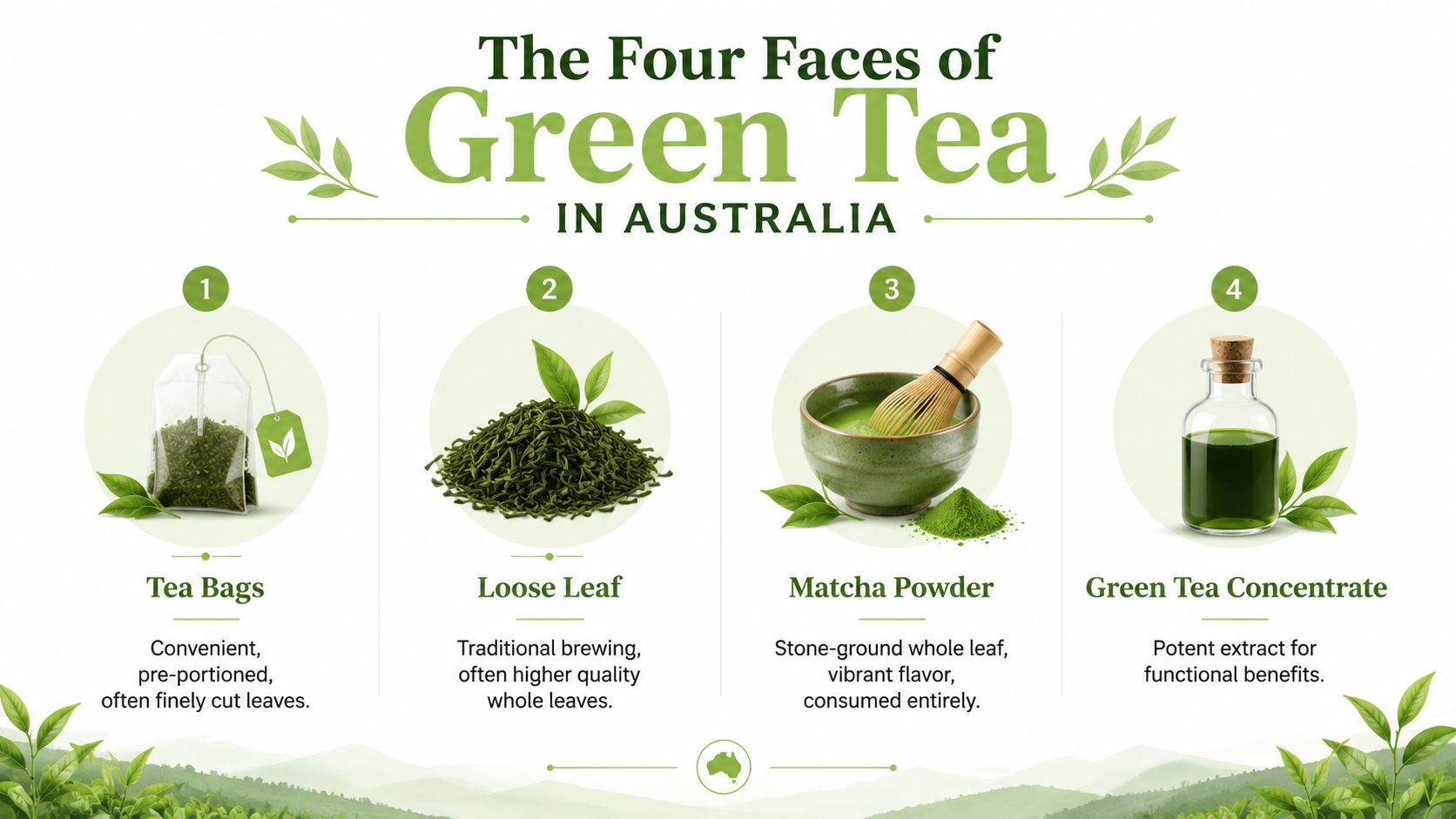
Convenience still drives a lot of buying. In Australia, green tea bags hold a 45.9% market share in 2025, while premium varieties like matcha are seeing rapid adoption because of their antioxidant appeal and versatility in drinks and recipes, according to IMARC's Australia green tea market overview.
Tea bags
Tea bags are the familiar entry point. They're easy, portable, and forgiving.
They suit office kitchens, rushed mornings, and anyone who wants a quick cup without measuring or equipment. The trade-off is that the experience can be simpler in flavour and less expressive than whole-leaf formats.
Loose-leaf green tea
Loose leaf asks for a bit more attention, but it often rewards you with a more nuanced cup.
You can usually see the leaf, adjust the strength, and pay attention to aroma in a way that tea bags don't always allow. It's a good fit if you enjoy the brewing ritual and want your daily tea to feel more intentional.
Matcha powder
Matcha changes the equation because you consume the powdered leaf rather than steeping and discarding it.
That's one reason people see it differently from a standard brewed green tea. It also moves well across routines. Some drink it whisked with water, others build lattes, smoothies, iced drinks, or baking recipes around it.
If you want green tea as both a drink and an ingredient, matcha opens more doors than bags or loose leaf.
Kombucha made from green tea
Kombucha belongs to the same conversation, but it solves a different need.
It's for people who want a chilled, fermented, ready-to-drink option with more lift and personality than plain water. It can work as an alcohol alternative, an afternoon fridge drink, or a café menu option that feels adult without being heavy.
Green Tea Forms at a Glance
| Format | Preparation | Key Benefit | Best For |
|---|---|---|---|
| Tea bags | Steep in hot water | Convenience | Busy mornings, work, travel |
| Loose leaf | Brew with infuser or pot | Better flavour control | Tea drinkers who enjoy ritual |
| Matcha | Whisk powder with water or milk | Whole-leaf versatility | Lattes, focused mornings, recipes |
| Kombucha | Ready to drink cold | Fermented, refreshing format | Gut-friendly routines, alcohol-free swaps |
How to choose the right one for your day
A helpful way to shop is to stop thinking in terms of “best” and think in terms of “best fit”.
For speed
Tea bags are hard to beat.For flavour exploration
Loose leaf gives you more to notice.For a wellness ritual with culinary flexibility
Matcha makes the strongest case.For a fridge staple
Kombucha offers convenience with a more social feel.
Some households keep more than one format on hand. That isn't indecisive. It's practical. A weekday desk drawer and a Sunday morning kitchen bench don't need the same thing.
Why categories matter more than brand popularity
Shoppers often search for Green Tea Australia brands as if every product competes on one shared scale. It doesn't work that way.
A strong tea bag brand may not be the best matcha source. A beautiful matcha label may tell you nothing about kombucha quality. A local brand may be excellent at brewing beverages but not focused on loose leaf at all.
Once you separate the category into formats, comparing brands gets much cleaner. You compare tea bags with tea bags, matcha with matcha, and kombucha with kombucha. That's when quality markers start to stand out.
A Deeper Dive into Matcha's Magic
Matcha is one of the few drinks that can feel both grounding and energising at the same time. That's why people often try it once out of curiosity, then keep coming back for the effect as much as the flavour.
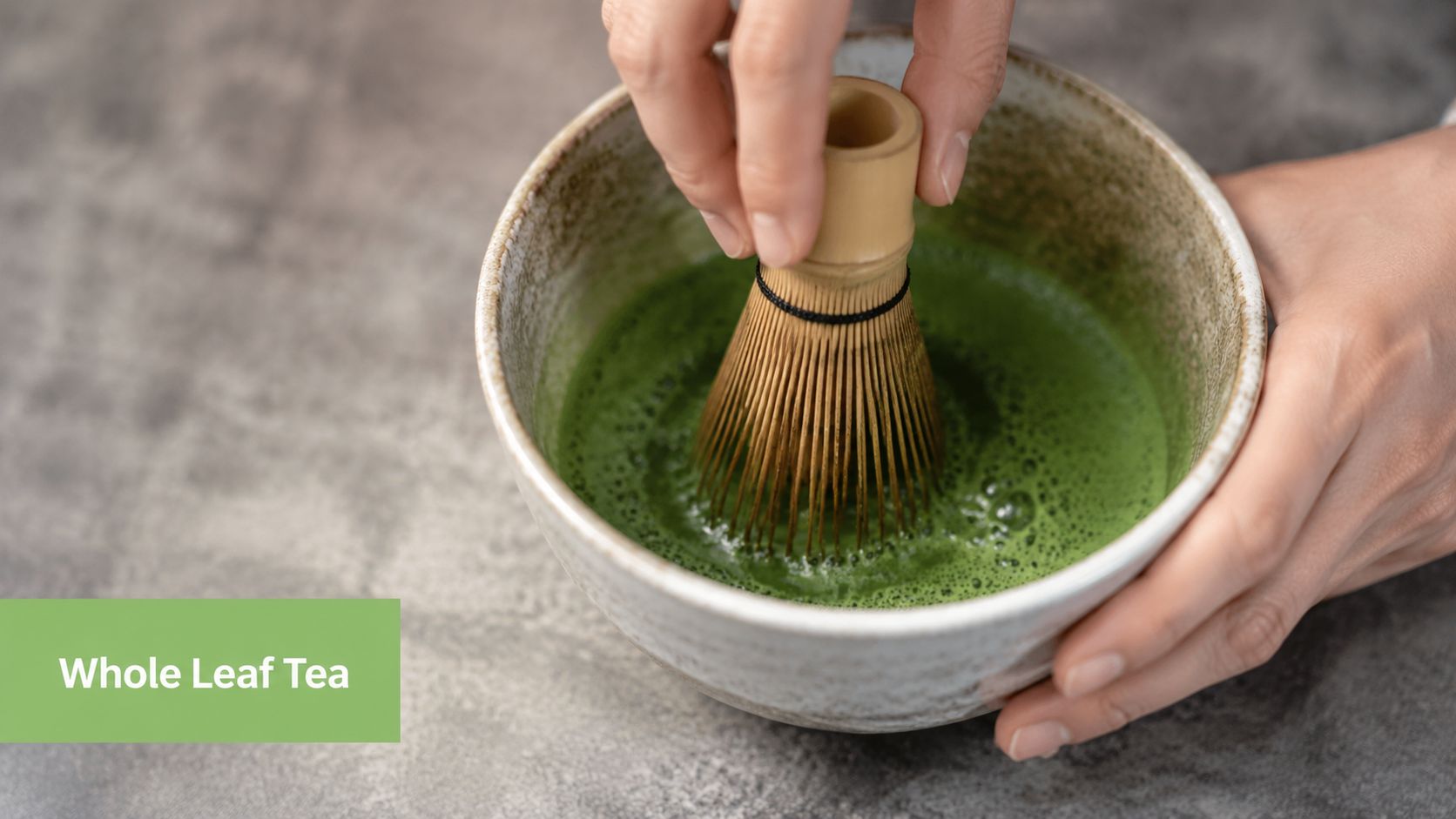
Why matcha feels different
The biggest shift is simple. You're not just infusing water with leaves. You're consuming the powdered leaf itself.
That changes how people use it and how they talk about quality. Colour, texture, aroma, and smoothness matter a lot. A vibrant green powder with a fine texture usually signals more care in cultivation and processing than a dull, khaki-looking powder that tastes flat or harsh.
Shade-grown ceremonial-grade matcha contains higher levels of L-theanine, which moderates caffeine absorption and can produce a sense of calm focus without the sharper spike and crash people often associate with other stimulants, according to this matcha quality and comparison guide.
Ceremonial and culinary in plain English
These labels confuse plenty of shoppers because they sound formal and absolute. In practice, they're more useful as buying cues than fixed rules.
Ceremonial matcha
Best suited to whisking with water when you want the powder itself to shine.Culinary matcha
Better suited to lattes, smoothies, baking, desserts, and recipes where matcha shares the stage with other ingredients.
If you want help choosing between them, this breakdown of different grades of matcha is a practical reference.
What to look for in a good tin or pouch
A shopper doesn't need to be a tea master to make a smart choice. A few sensory checks go a long way.
Colour matters
Look for a lively green rather than a brownish or yellowed powder.Texture tells a story
A fine, soft powder tends to whisk more smoothly.Smell is part of quality
Fresh matcha should smell alive, not stale.Use case should match the label
Don't pay for a premium drinking powder if you only want it for banana bread or protein smoothies.
A quick visual guide can help if you're learning the whisking basics:
Good matcha should make sense on the palate and on the label. If the flavour, colour, and product description don't line up, keep looking.
A simple way to use it daily
Try one teaspoon sifted into a bowl, add a small amount of hot water that isn't boiling, then whisk until frothy. From there, you can drink it straight or pour it over warm or iced milk for a latte.
That flexibility is a big part of matcha's appeal. It isn't locked into one ritual. It can be traditional at 7 am and playful by 3 pm.
Understanding Real Australian Kombucha
Kombucha often gets treated like a trendy flavoured drink with a healthy halo. That misses the point.
Real kombucha starts with tea, live cultures, and fermentation. The result should taste alive, not just sweet and fizzy. When shoppers realise that, they start reading kombucha labels very differently.
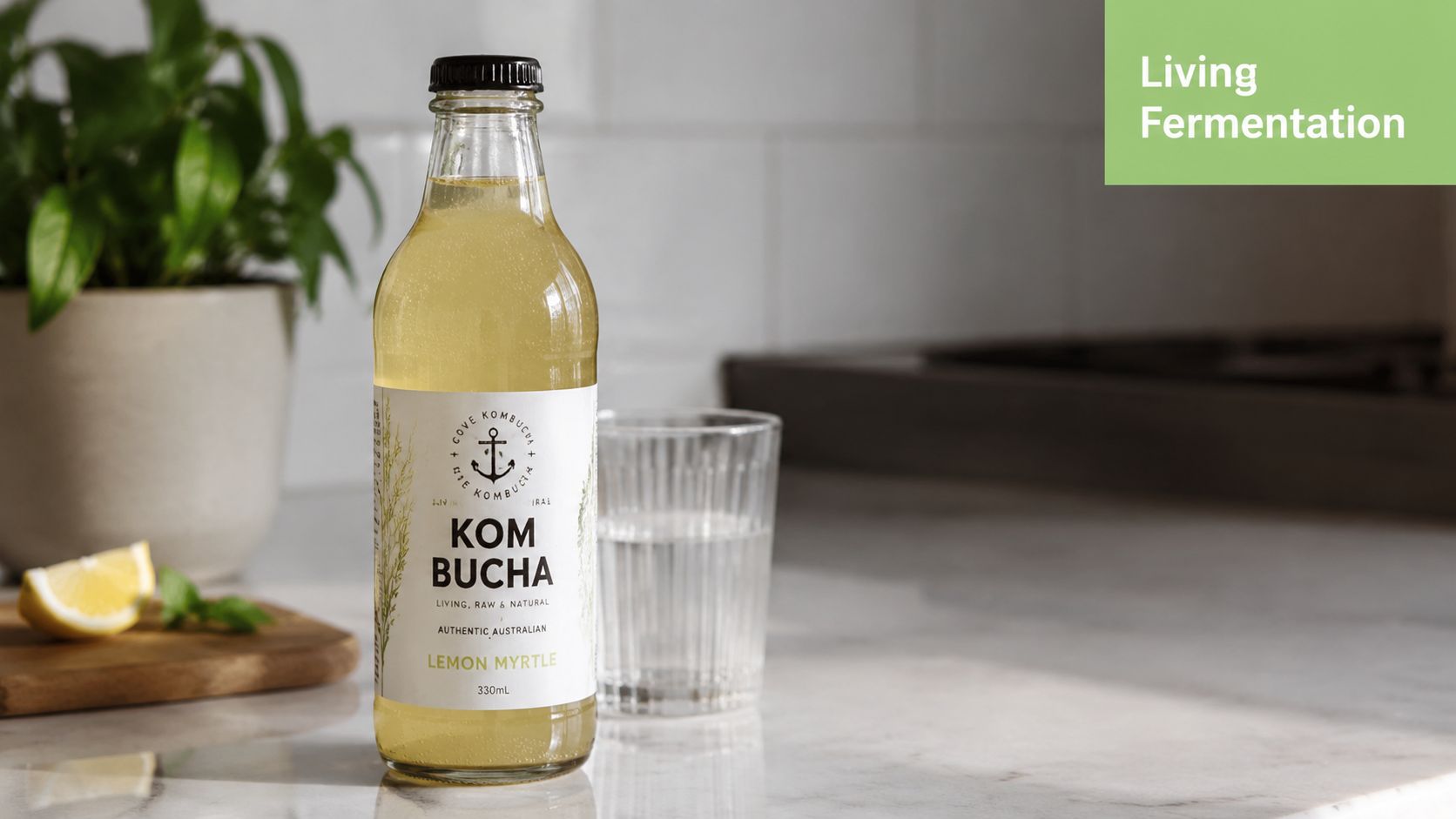
Not all kombucha is doing the same job
Some drinks borrow kombucha language but don't give you the same experience as a properly fermented product. They may lean heavily on sweetness, flavouring, or shelf-friendly positioning while giving the fermentation side far less importance than the front label suggests.
That's why it helps to ask a few direct questions:
- Was it properly fermented?
- Does the brand talk clearly about live cultures?
- Is it built as a low-sugar or sugar-free option?
- Is the producer transparent about where and how it's brewed?
What real fermentation adds
A proper kombucha process starts with brewed tea and a SCOBY, then time does the work. During fermentation, the drink develops its tang, complexity, and living character.
When a kombucha is made with care, people often describe it as cleaner, drier, and more grown-up than a soft drink. That matters in homes and cafés alike. It gives you a cold drink option that feels functional rather than sugary.
A kombucha shouldn't taste like soft drink wearing a wellness label.
Why local brewing matters
Australian shoppers often care where a product is made, especially in categories tied to freshness, trust, and food standards.
Pep Tea's organic kombucha is made in a HACCP-accredited brewery in the Hunter Valley, NSW, using organic green tea and live cultures to create a probiotic-rich, sugar-free beverage, according to Opera Foods' Pep Tea brand profile. That kind of production detail matters because it tells you the kombucha isn't just branded well. It's brewed with a clear standard behind it.
If you want a better feel for what separates properly fermented kombucha from shortcut versions, this guide to real raw organics kombucha is worth reading.
Easy ways to enjoy it
Kombucha doesn't need a complicated ritual.
Some people keep it simple and pour it over ice with lunch. Others use it as a non-alcoholic alternative in the evening. Cafés can also use it to build sharper, lighter drinks without relying on sugary mixers.
A few practical ideas:
Midday fridge pick-me-up
Serve cold on its own.Alcohol-free spritz substitute
Pour into a wine glass with ice and citrus.Café menu option
Pair it with clean food, brunch dishes, or wellness-focused menus.
Real kombucha earns its place when the label, flavour, and fermentation story all line up.
Creating Your Daily Green Tea Ritual
A good green tea habit doesn't need to look polished or complicated. It just needs to fit your real day.
Build around moments, not rules
If mornings are rushed, keep tea bags or ready-to-drink kombucha where you'll reach for them. If you like a slower start, use loose leaf or whisked matcha and let the preparation become part of the ritual.
A simple routine might look like this:
Morning focus
Make a matcha with hot water, or turn it into an iced latte if coffee feels too heavy.Midday reset
Brew loose-leaf green tea for a cleaner lunch drink.Afternoon swap
Reach for kombucha instead of a sugary soft drink.
Keep one easy recipe in rotation
If you're new to matcha, start with a basic latte.
Sift your matcha into a bowl or mug, add a small splash of hot water, whisk until smooth, then top with warm or iced milk. Once that feels easy, use culinary matcha in smoothies, bliss balls, yoghurt, or baking. It's one of the simplest ways to make green tea part of your kitchen rather than just your mug.
Make quality the habit
The most useful thing you can do is stay curious about what you're buying. Read the label. Check the certification. Notice the origin. Match the product type to the way you live.
That's the lesson behind sorting through Green Tea Australia brands. Buy with a bit more literacy and a bit less guesswork, and the whole category becomes more enjoyable.
If you'd like to put that knowledge into practice, explore Pep Tea for premium organic matcha and Australian-brewed sugar-free kombucha. It's a simple place to start if you want certified quality, clean flavour, and a greener daily ritual that feels easy to keep.
Matcha Love Energy Guide for Smooth Sustained Focus
A bowl of matcha can deliver a sustained energy lift for 4–6 hours through the interaction between natural caffeine and L-theanine, rather than the quick rise and fall many people know from coffee, as noted in this Australian matcha caffeine explainer. That single detail changes how a lot of people think about tea.
For plenty of Australians, the usual weekday rhythm is familiar. Coffee on the way to work. Another one mid-morning. Maybe a third before the afternoon meeting, school pick-up, gym session, or café shift. The problem isn't always getting energy. It's keeping it steady.
That's where Matcha Love Energy makes sense as more than a catchy phrase. It describes the kind of energy people are chasing: focused, smoother, and easier to live with. Not buzzy. Not shaky. Not a hard crash an hour later.
A home drinker might want better concentration for a long day at a desk. A café customer may want a greener alternative to a flat white. A hospitality venue might need a non-alcoholic menu option that feels functional as well as premium. Matcha sits neatly in all three worlds.
Introduction to Matcha Love Energy
Matcha love energy starts with a simple shift in mindset. Instead of asking, “How do I wake up faster?” it asks, “How do I stay switched on without feeling rattled?”
That difference matters in everyday life. Think about the person who starts strong at 8 am, loses steam before lunch, then reaches for something sweet or another caffeine hit just to get through the afternoon. Matcha appeals because it tends to support a more even experience, which is why it keeps showing up in morning rituals, iced lattes, workout routines, and café menus across Australia.
Why matcha feels different
The reason many beginners get confused is that matcha still contains caffeine, so they expect it to behave exactly like coffee. It doesn't. The experience is often described as calmer and more organised.
That's because matcha isn't just “green coffee”. It's a powdered tea with a distinct composition, and the way those compounds work together changes how the energy feels.
Matcha isn't about maximum intensity. It's about usable energy you can actually work, study, train, or socialise with.
What people usually want to know first
Most readers come to this topic with a few practical questions:
- How long does matcha energy last? People want to know if it can carry them through a work block or long shift.
- Will it make me jittery? This is often the deciding factor for anyone who has had a rough time with strong coffee or energy drinks.
- How much should I use? Too little can feel underwhelming. Too much can ruin flavour and make the ritual less enjoyable.
- Can I do more than drink it plain? Yes. Matcha works in lattes, cold drinks, snacks, and even café-ready mocktails.
The useful part of matcha love energy is that it's both scientific and practical. You can understand the chemistry, then turn around and use that knowledge in a whisked bowl, an iced latte, or a café menu special.
Understanding the Science Behind Matcha Energy
The easiest way to understand matcha energy is to stop thinking about caffeine as a solo act.
In matcha, caffeine works alongside L-theanine, an amino acid that changes the feel of stimulation. According to Vybey's Australian guide to matcha and caffeine, matcha delivers a sustained energy lift lasting 4–6 hours due to the synergistic interaction between its natural caffeine and L-Theanine, which helps counter the jittery effects often associated with coffee.
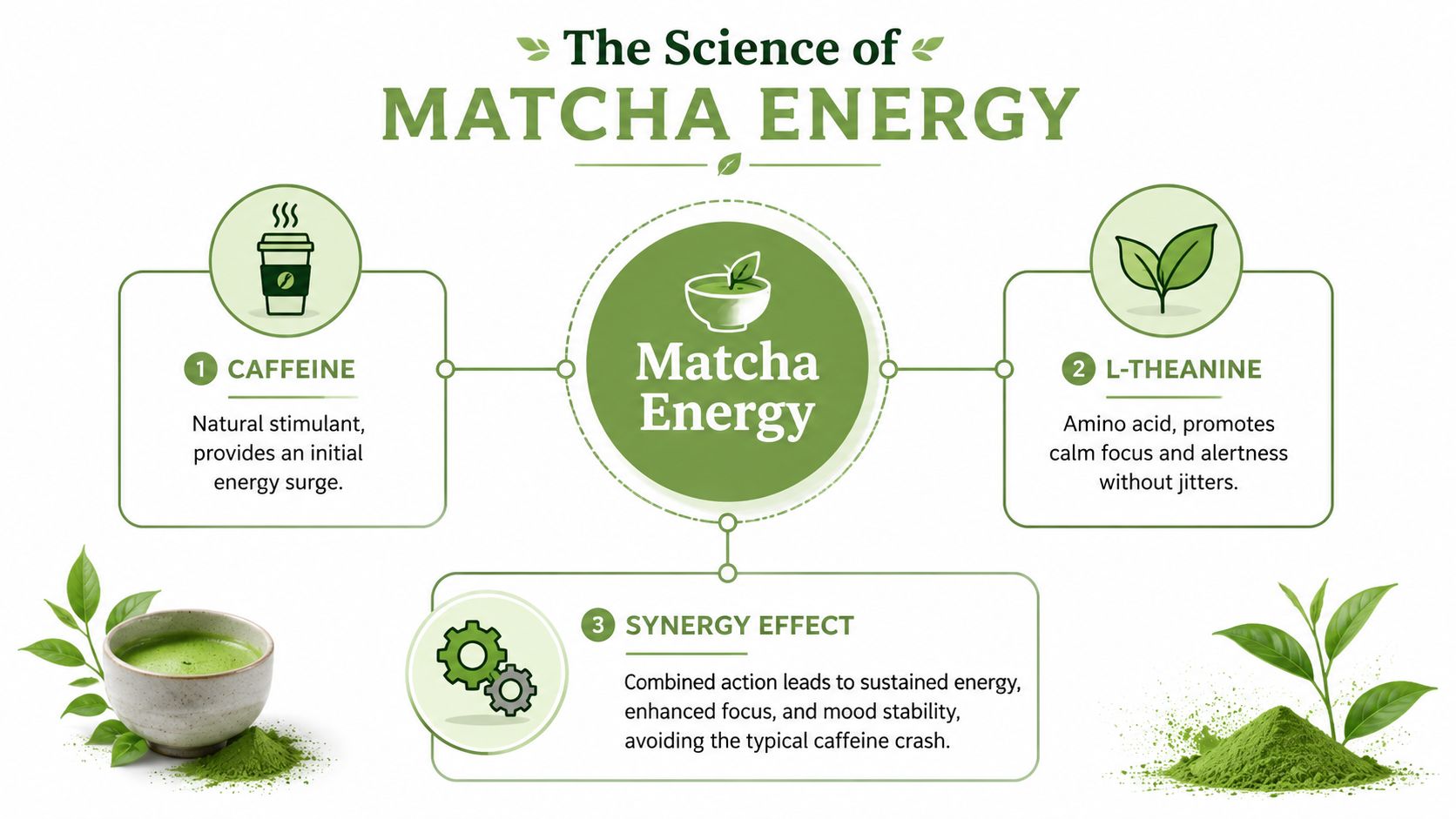
Caffeine gives the lift
Caffeine is the part that is widely understood. It helps you feel more awake, more alert, and more ready to act.
If matcha only contained caffeine, the story would be much simpler. It would just be another stimulant. But matcha is more layered than that.
L-theanine changes the texture of energy
L-theanine is what makes beginners pause and say, “This feels different.”
Matcha acts as a built-in counterbalance. Instead of your energy rushing upward all at once, L-theanine helps smooth the experience so your focus feels steadier. Coffee can feel like flipping on a bright light, while matcha often feels more like a gradual sunrise.
Australian clinical discussion cited by MedReport's article on the science behind matcha notes that matcha contains roughly 20–30 mg of L-Theanine per gram and 30–40 mg of caffeine per gram, with that combination linked to improved vigilance and reaction time while reducing jittery overstimulation compared with coffee.
Practical rule: If coffee makes you feel alert but scattered, matcha may suit you because the goal isn't just wakefulness. It's calmer concentration.
For readers who want a simple breakdown of how this translates into everyday drinks, this guide to caffeine in a matcha latte is useful context.
EGCG matters too
Matcha energy isn't only about stimulation. It also comes with compounds people often associate with overall wellness, especially EGCG, a well-known catechin.
A review published on PMC notes that polyphenols can account for up to 30% of matcha's dry weight, and EGCG makes up about 50–60% of total catechins. In practical terms, that means a small serving of matcha carries a meaningful concentration of tea compounds in a compact form.
Why this matters in real life
Matcha love energy becomes easier to apply. The point isn't to memorise biochemistry. The point is to know why a bowl of matcha may feel better suited to:
- Focused desk work
- Study sessions
- Longer creative tasks
- Pre-meeting concentration
- A calmer alternative to a second or third coffee
If you've ever felt “awake but not productive”, you already understand the difference. Matcha's appeal is that it may support alertness without tipping so easily into that noisy, over-caffeinated state.
Benefits Compared to Coffee and Energy Drinks
One rarely chooses matcha in a vacuum. It's chosen as an alternative to something already in the routine, typically coffee or an energy drink.
That comparison is where matcha love energy becomes much clearer.
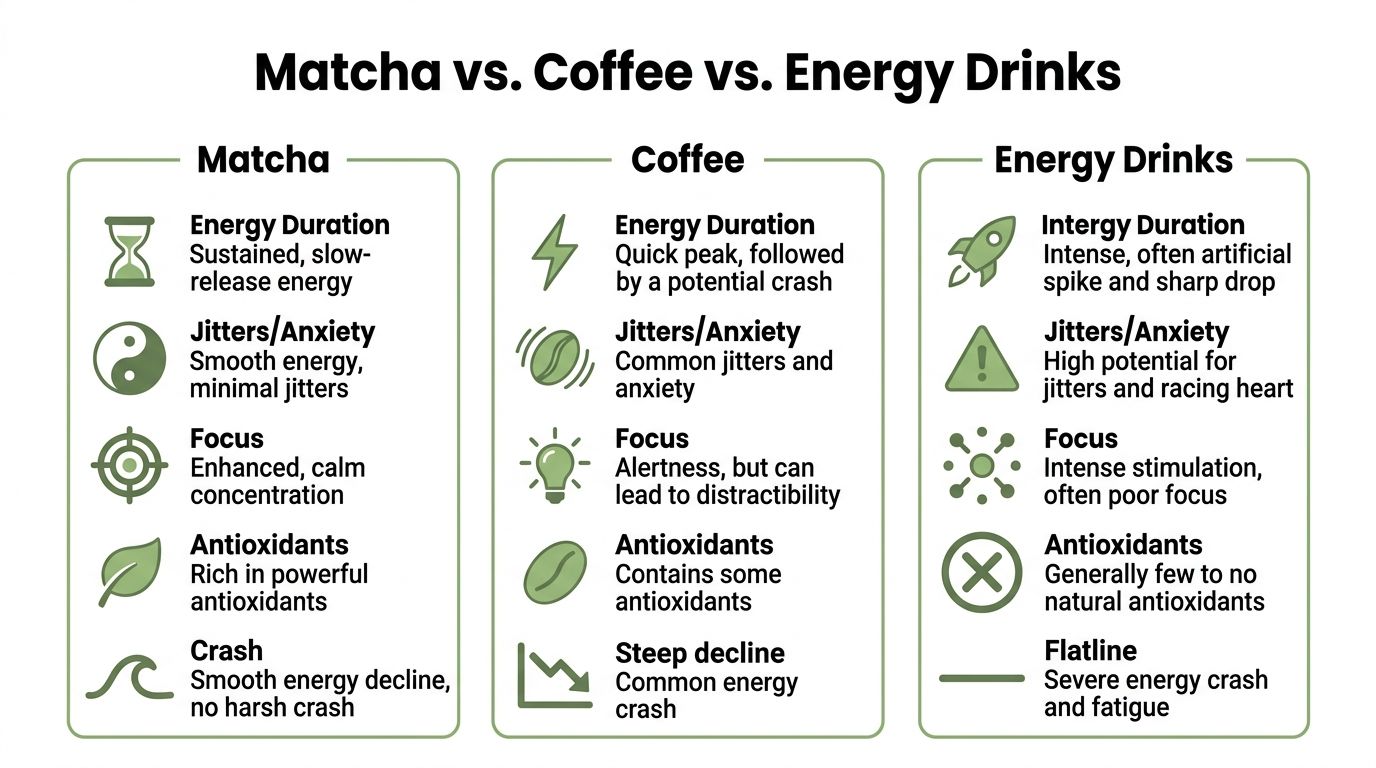
A quick side by side view
| Drink | Energy feel | Focus style | Antioxidant angle | Common downside |
|---|---|---|---|---|
| Matcha | More gradual and steady | Calm, centred | Strong catechin content | Can taste grassy if brewed badly |
| Coffee | Fast and obvious | Sharp at first | Some antioxidants | Can feel spiky or jittery |
| Energy drinks | Intense, often aggressive | Can feel scattered | Usually not the reason people choose them | Hard drop-off for some drinkers |
This table is simplified, but it matches how many people describe the experience.
Matcha has a broader wellness profile
One reason matcha stands apart is that people aren't only drinking it for stimulation. They're also drawn to the tea compounds it naturally contains.
According to Kitchen by Nine, matcha contains approximately 60% epigallocatechin gallate (EGCG) and delivers nearly double the vitamin C content found in other green teas. That helps explain why matcha often sits in a different category from a standard caffeine hit.
Coffee drinkers usually compare flavour, strength, and roast. Matcha drinkers often talk about energy, ritual, antioxidants, and how they feel a few hours later.
Coffee isn't the enemy, but it is different
Coffee has plenty going for it. It's familiar, fast, and ingrained in Australian café culture. But for people who feel anxious, overstimulated, or peaky on coffee, the experience can be hard to manage.
If you want to understand how coffee styles themselves differ, this guide on compare filter coffee and espresso is a handy reference because brew method changes intensity, flavour, and pace of drinking.
Some people don't need less caffeine. They need a different caffeine experience.
That's often where matcha enters the picture.
Energy drinks solve one problem and create another
Energy drinks are usually chosen for speed and convenience. They can make sense in a rush, but they rarely offer the same sense of ritual, ingredient simplicity, or tea-based identity that draws people to matcha.
For a lot of health-conscious drinkers, energy drinks also feel disconnected from the rest of a wellness routine. Matcha fits more naturally beside breakfast, a pre-walk drink, a work session, or an afternoon reset.
A few practical decision points help:
- Choose matcha if you want a calmer rhythm and enjoy the ritual of preparation.
- Choose coffee if you want familiar flavour and immediate punch.
- Choose an energy drink only if speed matters more to you than ritual, ingredient profile, or a gentler feel.
The keyword in matcha love energy is love, and that matters. People tend to stick with matcha not just because it works, but because the drink itself feels better to live with.
Brewing and Dosing Guide for Optimal Energy
Brewing matcha well isn't complicated, but small details make a big difference. Bad matcha technique usually creates two problems at once. It tastes rough, and the whole experience feels less balanced.
The first fix is temperature. The second is dose.
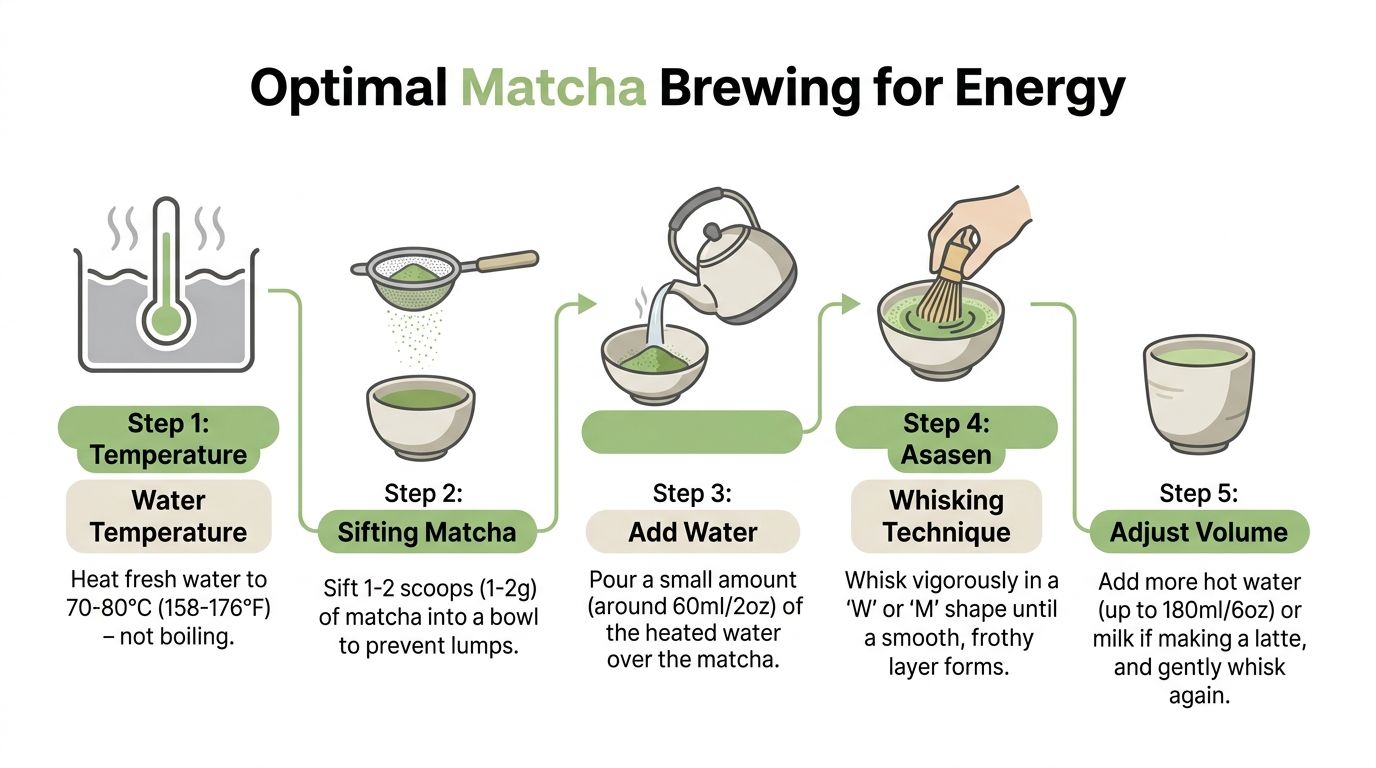
Start with the right basic method
A simple bowl is enough. You don't need a perfect tea ceremony set to make good matcha at home.
- Heat fresh water to 70–80°C. Water that's too hot can make matcha taste bitter.
- Sift 1–2g of matcha into a bowl. Sifting helps break up clumps before they hit the water.
- Add a small amount of water first. Around 60 ml is enough to create a smooth base.
- Whisk briskly in a W or M shape. Aim for a light froth rather than heavy foam.
- Top up with more water or milk. You can take it to about 180 ml depending on how strong you like it.
If you want to see the movement, this whisking demo is helpful:
For a closer walk-through of technique, this how to whisk matcha guide is a practical reference.
How much matcha should you use
A common beginner mistake is assuming more powder automatically means better energy. Usually it just means stronger flavour and less balance.
According to Matcha.com's overview of catechins and EGCG in matcha, one standard serving of premium stone-ground Japanese matcha (1g) contains approximately 30–35mg of EGCG, with total EGCG ranging from 50–110mg per gram depending on grade and cultivar.
That makes a good starting point:
- For a lighter daily bowl use 1g
- For a stronger morning serve or latte use 2g
- If you're sensitive to caffeine stay at the lower end and drink it earlier in the day
Ceremonial style or latte style
The brew style changes the experience as much as the dose.
| Style | Best for | Texture | Flavour |
|---|---|---|---|
| Traditional bowl | Morning focus, tea ritual | Light and frothy | Clean, grassy, more direct |
| Matcha latte | New drinkers, afternoon comfort | Creamier | Softer and rounder |
| Iced matcha | Warm weather, on-the-go energy | Refreshing | Crisp and bright |
If matcha tastes harsh, don't assume you dislike matcha. Lower the water temperature first, then check your dose.
A simple timing approach
Matcha often works well when you want energy that matches a task rather than a rush. Good moments include the start of focused work, the hour before a workout, or an afternoon period when coffee would feel too heavy.
Keep the method simple. Measure carefully. Give yourself a few days to notice how your own body responds. Matcha rewards consistency more than intensity.
Recipe Inspirations with Matcha for Everyday Energy
Once you understand the flavour and feel of matcha, it stops being “just tea powder” and starts becoming a very flexible ingredient.
That's where matcha love energy becomes fun. You can shape it around the day instead of forcing yourself into one fixed routine.
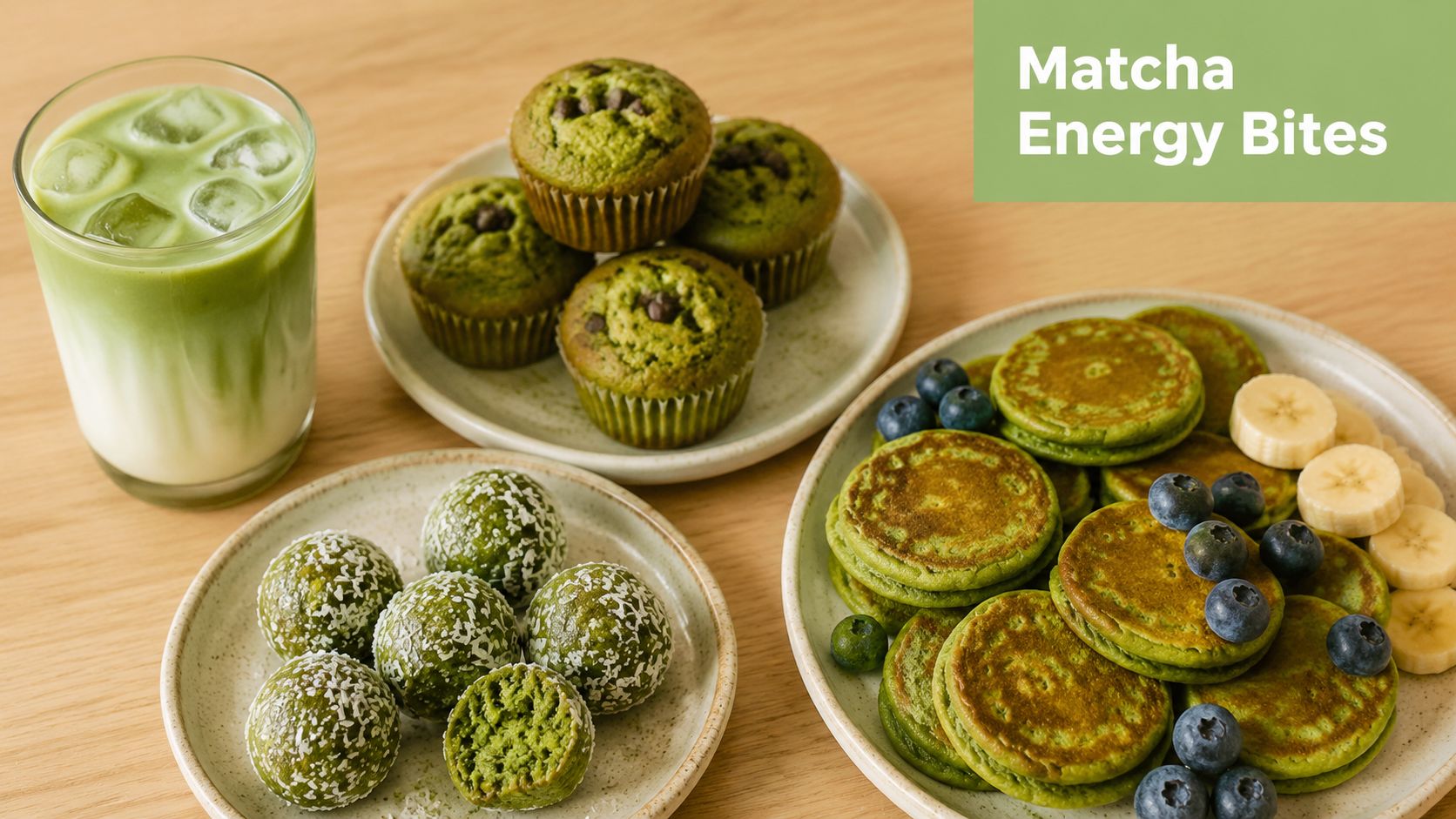
The easiest everyday options
The most useful recipes are usually the least complicated.
Classic hot matcha latte
This is often the best entry point for beginners who find straight matcha too grassy.
What you need
- 1 to 2g matcha
- a small splash of warm water
- your preferred milk
- optional cinnamon or vanilla
How to make it
Whisk the matcha with a little warm water until smooth. Heat and froth the milk separately, then combine. If you like a sweeter style, use a small amount of your preferred sweetener rather than loading it up.
Iced matcha shaker
This suits warm weather, busy mornings, and people who don't own a whisk.
What you need
- 1 to 2g matcha
- cold water
- ice
- optional milk
Shake hard until the powder disperses, then pour over ice. It's fast and easy, which matters when a habit needs to fit real life.
Matcha in snacks and quick bakes
Matcha works best in recipes where its flavour can stay present without becoming too dominant.
A few reliable ideas:
- Matcha overnight oats for a make-ahead breakfast with a gentle lift
- Matcha yoghurt bowl with fruit for a lighter morning option
- Matcha pancakes when you want weekend comfort with a fresh green note
- Matcha energy bites for afternoon snacking. A good place to start is this matcha energy balls recipe
Pairing matcha with kombucha
This is a gap most beginner guides skip, and it's one of the most interesting directions for Australian cafés and home drinkers.
Matcha and kombucha can work together because they bring different strengths. Matcha offers calm-focus energy. Kombucha brings acidity, lift, and a fermented flavour edge that can make non-alcoholic drinks feel more grown-up.
Try these combinations:
Matcha and ginger kombucha mocktail
Use a small chilled matcha shot as the base, then top with ginger kombucha over ice. The earthiness of matcha and the spice of ginger sit well together.Citrus matcha spritz
Build a light matcha base, add ice, then finish with a lime-forward kombucha. This suits a daytime menu or a low-sugar social drink.Layered green cooler
Pour cold whisked matcha first, then slowly add kombucha so the drink keeps visual separation for a few minutes before stirring.
A good matcha recipe doesn't hide the tea. It gives the tea a better setting.
How to match the recipe to the moment
Not every format suits every part of the day.
| Moment | Good matcha format | Why it works |
|---|---|---|
| Early morning | Straight bowl or hot latte | Feels grounding and organised |
| Late morning | Iced matcha | Refreshing without feeling heavy |
| Afternoon slump | Matcha snack or latte | More satisfying than another plain coffee |
| Social, non-alcoholic occasion | Matcha kombucha mocktail | Functional but still feels special |
The more useful way to think about recipes is not “What can I put matcha in?” but “What kind of energy do I want right now?” That question leads to better choices and better flavour.
Safety and Contraindications to Consider
One common myth is that matcha is automatically gentle for everyone because it's tea. That isn't quite right. Matcha may feel steadier than coffee for many people, but it still contains caffeine and active compounds, so personal tolerance matters.
Australian clinical discussion referenced by MedReport notes that the combination of L-Theanine at 20–30 mg per gram and caffeine at 30–40 mg per gram can support vigilance and reaction time while reducing jittery overstimulation compared with coffee. That helps explain why some people tolerate matcha better, but “better tolerated” doesn't mean “risk free for every person in every context”.
Who should take extra care
A cautious approach makes sense if you:
- Are sensitive to caffeine and already react strongly to tea, coffee, or cola
- Are pregnant or breastfeeding and have been advised to watch caffeine intake
- Take medication where caffeine or concentrated tea products may be relevant
- Have a medical condition affected by stimulants or dietary changes
A sensible approach for beginners
If you're new to matcha, start small and pay attention to timing. A lighter serve earlier in the day is usually the easiest place to begin.
Watch for your own signals:
- trouble sleeping
- feeling overstimulated
- stomach discomfort
- using matcha on top of several other caffeinated drinks
If your body says “too much”, listen to that before blaming the ingredient.
Good café and retail practice
If you serve or recommend matcha professionally, keep the language responsible. Say it may support calm focus. Don't promise medical outcomes. Don't assume every customer wants the same strength.
That balanced approach builds trust. It also makes matcha more approachable for people who are curious but cautious.
How Cafés and Retailers Can Feature Matcha Energy
Matcha belongs on more Australian menus than it currently appears on, not because it's trendy, but because it solves a real menu problem. Customers want functional non-alcoholic options that feel premium, modern, and easy to understand.
There's also a clear gap in hospitality-specific evidence. As noted in Tea & Coffee Trade Journal's coverage of the matcha love energy niche, AU-specific data is lacking on how L-Theanine's sustained release affects shift workers in hospitality, even though that group often wants reliable energy without a harsh crash.
Menu ideas that make sense
A café doesn't need a huge matcha program to do this well. It needs a few drinks and food pairings that are easy for staff to repeat.
Consider a compact line-up:
- Signature matcha latte with a clean, unsweet style and an optional flavoured version
- Iced matcha spritz for warmer months and grab-and-go trade
- Matcha kombucha mocktail for afternoon and early evening non-alcoholic menus
- Matcha snack pairing such as an energy ball, muffin, or light cake
How to present it so people order it
Customers often hesitate when they don't know what matcha will taste like. Staff language matters.
Use plain menu wording:
- smooth energy
- calm focus
- earthy green tea flavour
- great hot or iced
For takeaway service, presentation also helps. Cup choice affects heat retention, appearance, and the overall impression of quality. If you're refining the serve format, this guide to selecting the right tea cups is a useful operational reference.
Retail shelf and staff training tips
Retailers and cafés both benefit from the same rule. Don't overcomplicate the story.
Train staff to explain:
- what matcha is
- why it feels different from coffee
- how to prepare it without bitterness
- which customers might prefer ceremonial style versus latte style
A good display or menu card can also connect matcha to broader non-alcoholic and wellness habits. Customers who are reducing sugar, rethinking alcohol, or looking for a more measured caffeine ritual are often already open to the category. They just need a clear invitation.
Conclusion and Next Steps
Matcha love energy makes sense because it joins two things people rarely get at once. Useful alertness and a calmer feel. For many drinkers, that combination is the primary attraction.
A better brew, a sensible dose, and the right format for the time of day can make matcha much more enjoyable. It also opens up strong possibilities for cafés, retailers, and non-alcoholic menus that want something functional and premium without sounding gimmicky.
If you're curious, start simple. Try a well-made bowl, an iced latte, or a matcha-based snack and notice how the experience fits your day.
If you'd like to put this into practice, explore Pep Tea for premium organic matcha and sugar-free organic kombucha made for everyday rituals, café menus, and clean Australian wellness routines.
Green Tea Energy Powder: A Guide to Matcha’s Calm Boost
You're probably reading this in one of two moments. It's either early morning and you want energy that won't leave you rattled by mid-morning, or it's the middle of the afternoon and your brain has gone foggy while your to-do list hasn't.
That's where green tea energy powder enters the conversation. For many Australians, the interest isn't just about caffeine anymore. It's about finding something steadier, gentler, and easier to build into a daily routine. Matcha often sits at the centre of that shift because it offers more than a quick jolt. It brings ritual, flavour, and a different kind of focus.
Tea is still a smaller part of everyday beverage intake than water and coffee in Australia, but it remains part of the daily mix. In 2023, Australians consumed an average of 1,926 grams of non-alcoholic beverages per day, with tea at 153 grams, coffee and substitutes at 191 grams, and water at 1,352 grams, according to the Australian Bureau of Statistics food and nutrition release.
What matters more than the headline trend is the reason people keep returning to matcha. It feels cleaner. It fits a smoothie, a latte, or a quiet tea bowl. And when it's high quality, it can become one of the easiest swaps in a wellness routine.
The Search for a Smarter Energy Boost
The true desire isn't for ‘more energy' in the abstract. Instead, individuals want to get through a meeting without zoning out. They want to train after work without reaching for a sugary can. They want morning focus without the shaky hands that can come with too much coffee.
That's why matcha has become such an appealing option in the green tea energy powder category. It sits in the middle ground between comfort and function. You still get a proper drink, not a pill or an artificial pre-workout. But you also get compounds that many people associate with focus, steadier alertness, and a more balanced lift.
The broader Australian market reflects that interest. The Australian green tea market was valued at USD 319.0 million in 2025 and is projected to reach USD 521.6 million by 2034, with a 5.41% compound annual growth rate from 2026 to 2034, according to IMARC Group's Australia green tea market analysis. That same analysis notes that powder forms remain highly relevant in the extract segment, and that green tea's functional benefits are helping drive demand across beverages, supplements, and café applications.
Why people move away from harsher energy options
Some people are tired of the crash. Others want fewer additives.
A good matcha can feel more grounded because it belongs to a familiar food culture. You whisk it with water, blend it with milk, or stir it into breakfast. That changes the whole experience. It becomes part of your day rather than a rescue mission.
Matcha suits people who want energy with a bit more control. Not flat. Not frantic. Just more even.
Where confusion starts
The phrase green tea energy powder sounds simple, but it covers very different products:
- Whole-leaf matcha used in drinks and recipes
- General green tea powders that may vary in quality and processing
- Concentrated green tea extracts sold in capsules or formulation powders
Those aren't interchangeable. The benefits, taste, use, and safety profile can differ quite a bit. That distinction matters more than most labels make clear.
What Exactly Is Green Tea Energy Powder
When people talk about premium green tea energy powder, they're usually talking about matcha. Matcha is a finely ground powder made from green tea leaves, traditionally shade-grown before harvest and then milled into a soft powder.
That whole-leaf format changes everything. Instead of steeping leaves in water and discarding them, you consume the leaf itself. The result is a drink with a fuller flavour, deeper colour, and a very different nutritional profile from standard tea bags.
Matcha isn't just “green tea in powder form”
Regular green tea and matcha come from the same plant, but they're not handled the same way. Matcha is grown and prepared for powder use. The leaf is selected, processed, and ground with drinking in mind.
That's why authentic matcha tends to have:
- A brighter green colour from careful growing and processing
- A finer texture that whisks into water rather than floating in gritty clumps
- A fuller taste with grassy, savoury, and sometimes creamy notes
If a powder looks dull, tastes flat, or feels sandy, you're usually dealing with lower quality leaf, rougher milling, or a product designed more for blending than for drinking straight.
Whole-leaf powder versus concentrated extract
This is the distinction many guides skip, and it's the one worth understanding clearly.
Whole-leaf matcha is a food. You prepare it as a drink or use it in recipes.
Green tea extract powder is a concentrated ingredient, often standardised for compounds such as EGCG. In the Australian nutraceutical market, green tea extract powder for energy formulations is typically standardised to 50% to 70% EGCG, while certified organic matcha contains about 5% to 10% total polyphenols. That means the extract can be 5 to 14 times more concentrated in bioactive catechins per gram, according to Elchemy's analysis of green tea extract powder.
That same source notes that standardised extracts can more strongly inhibit COMT and are associated with an increase in 24-hour energy expenditure by 4% to 5%. Useful in some formulation contexts, yes. But very different from whisking up a bowl of matcha at home.
A simple way to think about it
Use this rule of thumb:
| Product type | Best thought of as | Typical use |
|---|---|---|
| Matcha | A whole-food tea powder | Lattes, tea, smoothies, baking |
| Green tea extract | A concentrated functional ingredient | Supplements or specialised formulations |
Practical rule: If you want a daily green tea energy powder for drinking, start with whole-leaf matcha, not a concentrated extract.
The Science of Calm and Sustained Energy
The reason matcha feels different from coffee isn't just marketing language. It comes down to the relationship between naturally occurring caffeine and L-theanine.
A single 2g serving of Australian-grade shade-grown matcha powder contains approximately 60 to 70 mg of caffeine, paired with L-theanine, according to Asian Pantry's matcha guide. That same source explains that L-theanine is linked with “calm alertness” through its effect on alpha-wave activity in the brain.
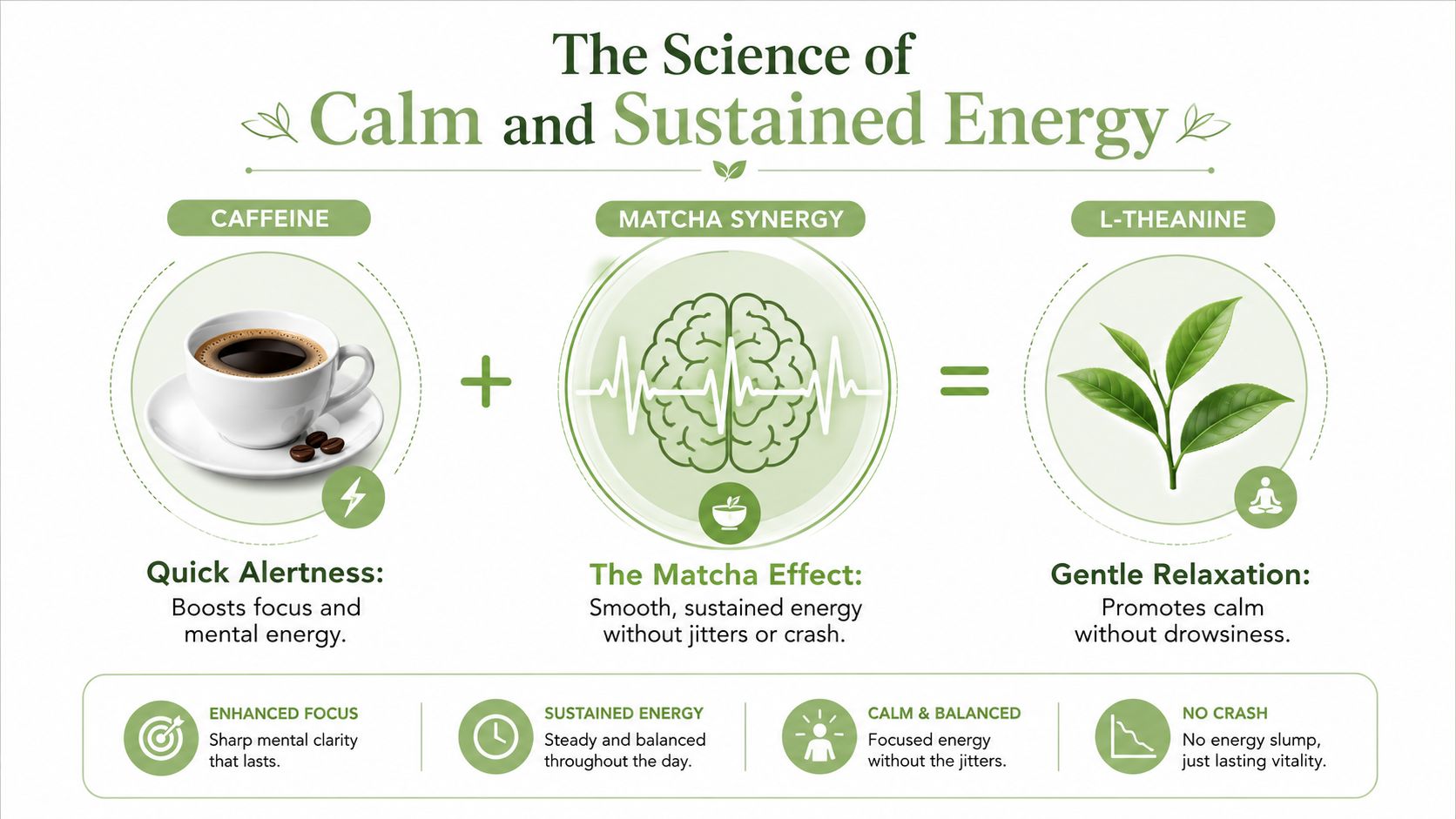
Why the pairing matters
Caffeine on its own often feels sharp. For some people, that's exactly what they want. For others, it can tip into jitteriness, tension, or a rapid rise and fall in energy.
Matcha behaves differently because the caffeine doesn't arrive alone. L-theanine changes the feel of the experience. Instead of a jagged spike, many drinkers describe a smoother curve. Focus comes on, but the body feels more settled.
Another source on matcha notes that L-theanine may modulate caffeine absorption to support a sustained energy release over 4 to 6 hours, while also supporting attention, reaction time, and memory in study settings, as described on Zen Green Tea's matcha information page.
Coffee versus matcha in plain language
This isn't about declaring one winner. It's about choosing the right tool.
- Coffee often suits moments when you want a quick, obvious lift.
- Matcha tends to suit work that needs steadiness, such as writing, study, long meetings, or travel days.
If coffee feels like a bright overhead light, matcha feels more like daylight through a window. You're awake, but not overwhelmed.
For readers who want a closer look at how this compares in a latte format, this guide on caffeine in a matcha latte is a helpful next step.
What “calm alertness” actually feels like
People sometimes expect matcha to hit like an energy drink and then assume it isn't working when it feels subtler. That's a misunderstanding.
The point isn't a dramatic rush. The point is usability.
It's the kind of energy that lets you keep going without feeling pushed around by it.
That makes matcha especially useful for mornings when you need concentration, or afternoons when you want to reset without wrecking your evening sleep rhythm.
More Than Just a Buzz Exploring the Health Benefits
A lot of people come to green tea energy powder for one simple reason. They want energy that feels usable. What often surprises them is that good matcha can offer more than that, because you are drinking finely ground whole tea leaf rather than a stripped-down stimulant or a concentrated extract.
That distinction matters. Whole-leaf matcha brings caffeine, L-theanine, catechins, and other plant compounds together in their natural mix. Extract products are different. They can be far more concentrated, and they do not always behave in the body the same way a traditional tea does. If we want an honest view of benefits, we have to keep those two categories separate.
One of the compounds people talk about most is EGCG, a catechin found in green tea. According to Matcha Direct Kyoto's guide to EGCG and catechins in matcha, matcha is particularly rich in catechins because you consume the whole powdered leaf.
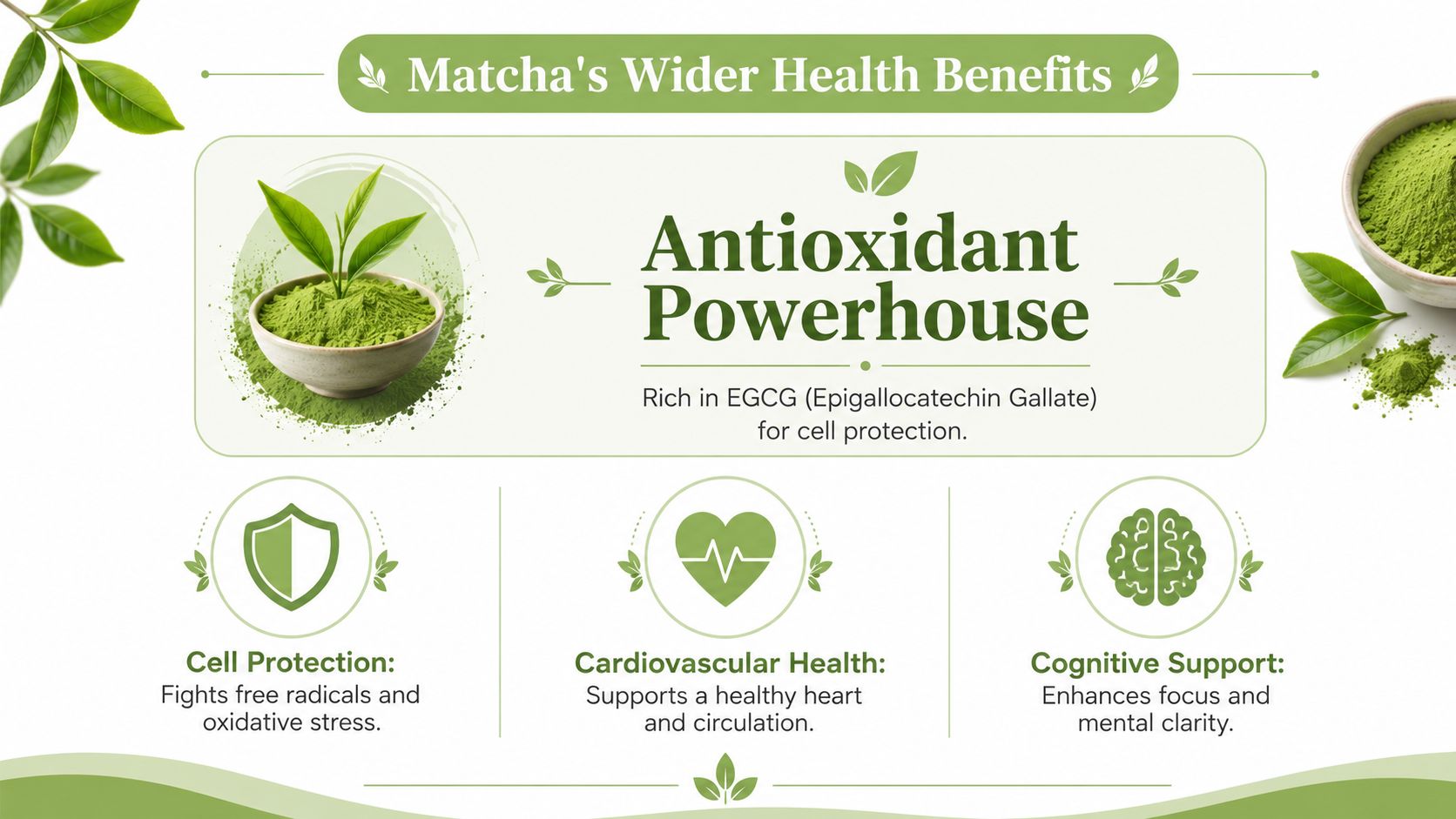
Antioxidant support
Catechins act a bit like the plant's built-in defence system, and when we drink matcha, we take in those compounds as part of the leaf itself. Researchers continue to study EGCG and related catechins for their role in helping the body manage oxidative stress, which is one reason matcha has earned its healthy reputation.
That said, matcha is still a food, not a cure-all.
The useful way to look at it is this. A daily cup can be part of a well-rounded routine, especially if it replaces drinks loaded with sugar or leaves you feeling rattled.
Benefits that may reach beyond energy
Green tea has also been studied for heart and metabolic health. A review published in Molecules on green tea catechins examines evidence linking these compounds with effects on lipid metabolism, glucose regulation, and cardiovascular function.
That does not mean every cup produces a dramatic result you can feel by lunchtime. It means regular green tea intake may support health in slower, background ways, much like exercise or sleep habits do. Subtle does not mean unimportant.
Why whole-leaf matcha deserves its own category
Wellness content often gets blurry. A headline about "green tea benefits" may be referring to brewed tea, whole-leaf matcha, or isolated green tea extract. Those are related, but they are not interchangeable.
Matcha works more like eating the whole orange instead of taking a heavily concentrated shot of one compound from the peel. You get the broader package, in a traditional food form, with effects that tend to be gentler and easier to use day to day. If you want help preparing it properly so taste and texture don't put you off, our guide to making matcha tea at home is a good place to start.
A better way to frame the benefits
Matcha can support health in a few layers at once:
- Immediate support: steady, workable energy for mornings or long focus blocks
- Nutritional support: catechins and other tea compounds that may contribute to long-term wellbeing
- Habit support: an easier swap for harsher, sweeter, or more processed energy options
That third layer is often the one people underestimate. Sometimes the benefit comes from the compounds in the cup. Sometimes it comes from what the cup replaces.
Your Practical Guide to Using Matcha Daily
The easiest way to make matcha stick is to stop treating it like a complicated wellness project. It's just a powder with a few very useful jobs. It can wake you up, slot into breakfast, or become your café-style afternoon drink at home.
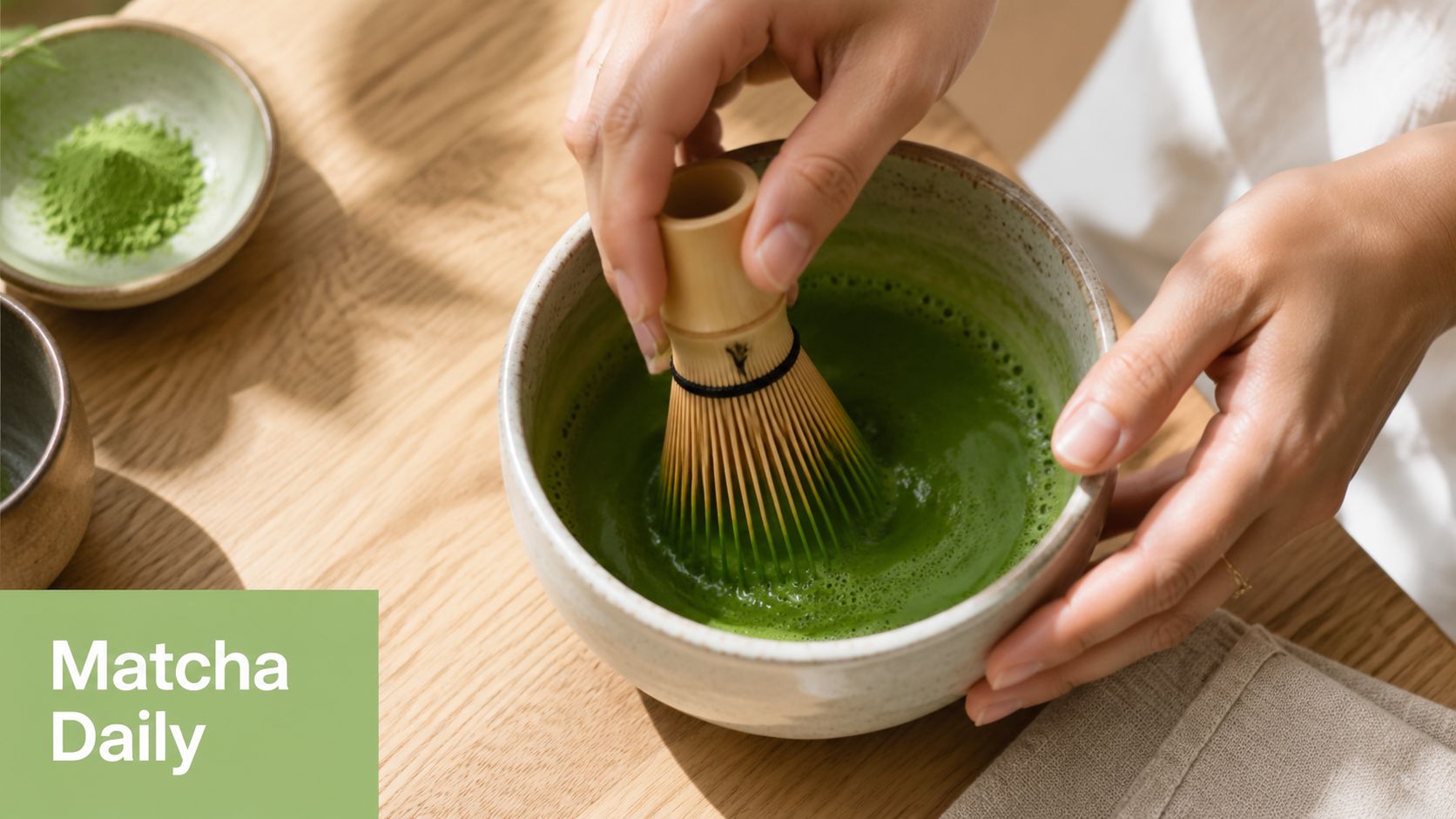
Start small and pay attention
If you're new to green tea energy powder, begin with a modest serve and notice how you feel. Matcha is generally gentler than many energy products, but it still contains caffeine.
A simple approach works well:
- Begin with a small amount if you're caffeine-sensitive
- Use it earlier in the day while you learn your ideal timing
- Keep the rest of the recipe plain at first so you can taste the matcha itself
A simple hot matcha latte
This is the most accessible entry point.
- Sift your matcha into a bowl or mug to avoid clumps.
- Add a small amount of warm water.
- Whisk until smooth and lightly frothy.
- Top with warmed milk of your choice.
- Leave it unsweetened at first, then adjust only if needed.
Ceremonial-style powders usually shine with fewer extras. If you're making a stronger latte or adding spices, a culinary-style powder often works better.
An iced version for warm Australian afternoons
Iced matcha is brilliant when you want refreshment as much as energy.
Try this method:
- Whisk matcha with a little water until smooth
- Fill a glass with ice
- Add cold milk
- Pour the matcha over the top
- Stir just before drinking
The colour alone makes it feel like a café order.
For a visual walkthrough, this guide on making matcha tea is useful if you want to refine your whisking and water technique.
Matcha in smoothies and baking
You don't have to drink it traditionally every day. Matcha works beautifully in food.
A few easy uses:
- Morning smoothie: Blend matcha with banana, yoghurt, oats, and milk.
- Yoghurt bowl: Stir a little through yoghurt for a grassy, creamy note.
- Baking: Add it to muffins, pancakes, or bliss balls for colour and earthiness.
Here's a quick video if you want to see the basics in action before trying your own routine.
Best times to use it
Matcha's personality suits certain moments better than others.
| Time of day | Why it works well |
|---|---|
| Morning | A gentler start than heavier caffeine options |
| Mid-afternoon | Useful when you want focus without feeling overcooked |
| Before quiet exercise | Often suits walking, yoga, or longer sessions that need steadiness |
A daily matcha habit works best when it feels easy. Pick one time, one recipe, and repeat it until it becomes automatic.
How to Choose a High Quality Green Tea Powder
Not all green tea energy powder deserves space in your pantry. Some powders are vibrant, smooth, and fresh. Others are bitter, dull, and disappointing before the first sip is finished.
The quickest way to buy better is to focus on a handful of quality markers rather than marketing noise.
Look at grade, colour, and texture
For drinking, many people prefer ceremonial-grade matcha because it's made to stand on its own with water or milk. Culinary-grade matcha is often the better fit for baking, smoothies, and stronger flavoured recipes.
Use your senses too:
- Colour matters: A lively green tone usually signals better handling and fresher leaf.
- Texture matters: Fine powder should feel soft, not gritty.
- Taste matters: Good matcha can be grassy and savoury, but it shouldn't taste harsh for the sake of it.
Origin and certification matter
Japan remains the benchmark many buyers look for, especially when they care about traditional production and consistency. Organic certification also matters because matcha is consumed as the whole leaf rather than infused and discarded.
Pep Tea's organic Japanese Matcha is certified by the Japanese Ministry of Agriculture, which validates its organic status and confirms it is grown without synthetic pesticides or fertilisers in southern Japan's tea-growing regions, as shown on the Pep Tea Organic Japanese Matcha product page.
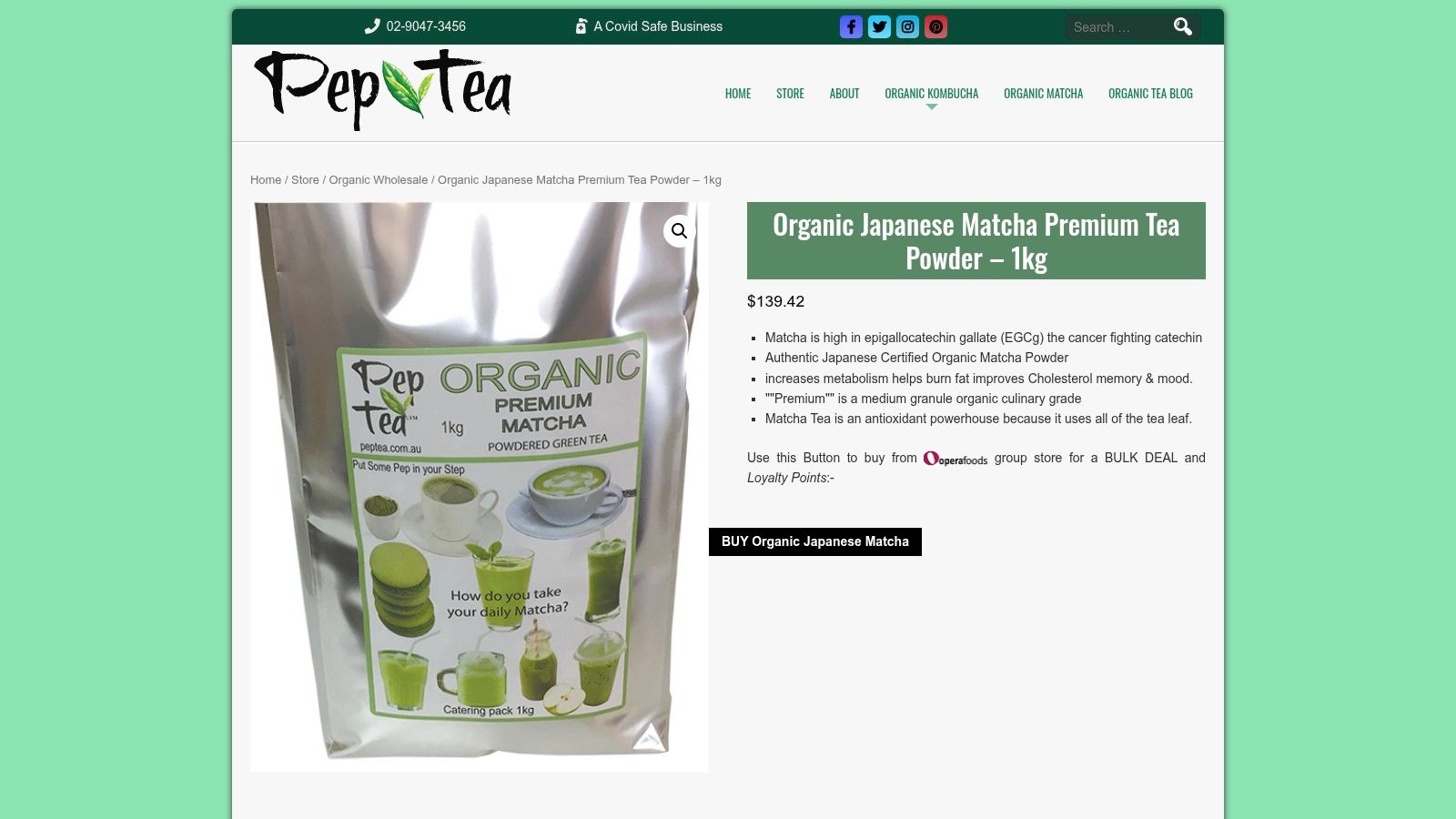
A buyer's checklist
If you're choosing for home or for a café, ask these questions:
- Is it from Japan? Specific origin tends to be a good sign.
- Is the intended use clear? Drinking matcha and cooking matcha don't have to be the same product.
- Is it certified organic? That's especially valuable with whole-leaf powders.
- Does the seller explain the grade? If the description is vague, quality often is too.
For a clearer breakdown of styles and uses, this guide to different grades of matcha can help you match the powder to the job.
Buy for purpose. If you want a clean daily drink, prioritise freshness, origin, and drinkability over flashy claims.
Common Questions on Matcha Safety and Efficacy
People often assume all green tea powders are equally safe because they're all “natural”. That's where things get murky.
Is matcha safe to drink every day
Drinking whole-leaf matcha as a beverage is a different situation from taking high-dose green tea extract supplements. That difference matters. Reporting covered by ABC Science on green tea extract and liver risk documents multiple cases in which green tea extract supplements were linked to acute liver damage and jaundice requiring hospitalisation. Brewed tea isn't typically associated with that same risk in the same way.
That doesn't mean more matcha is always better. It means whole-leaf matcha and concentrated extract pills shouldn't be treated as the same thing.
Is matcha good pre-workout
Sometimes. It depends on the workout.
If you want calm focus for walking, long sessions, yoga, or general training, matcha can fit beautifully. If you want a rapid, punchy lift for sprinting or heavy lifting, it may feel too gentle. Coverage on matcha green tea powder and caffeine timing points to the slower, steadier profile that many people like for focus, but that same profile may not suit fast-twitch performance demands.
What's the smartest takeaway
Use matcha as a beverage, not as a shortcut.
Choose high-quality whole-leaf powder. Start modestly. Notice how your body responds. And be cautious around concentrated extract products that promise a lot in very small servings.
If you'd like to try a cleaner daily tea ritual, explore Pep Tea for premium organic Japanese matcha and Australian-brewed sugar-free organic kombucha. Whether you're whisking a morning bowl, making a latte at home, or adding a functional option to your café menu, we're here to help you choose well and enjoy it properly.
Best Kombucha Recipe AU: Brew Your Own in 2026

You're probably here because you've bought kombucha from the fridge at the shops, looked at the price, then looked at a few online recipes and thought, “That seems simple enough.” Then the confusion starts. One guide says leave it out for a week. Another says two weeks. Another was clearly written for a kitchen that doesn't swing between a sticky Hunter summer and a frosty inland morning.
That's where most Australian brewers get tripped up. Kombucha isn't hard, but it is local. A brew that behaves beautifully in a mild climate can turn sharp fast in a hot kitchen, or sit there looking sleepy through a southern winter. A good kombucha recipe AU needs to respect the basics of fermentation and the conditions within Australian homes and cafés.
The good news is that once you understand the rhythm, kombucha becomes one of the most satisfying things to make. You start with tea, sugar, a SCOBY, and patience. You finish with a tangy, living drink that suits everything from an afternoon reset to a non-alcoholic dinner pour. Done properly, it's also a far cry from overly sweet, fizzy drinks pretending to be fermented.
Brewing Your Own Kombucha in Australia
A lot of first-time brewers in Australia run into the same problem. They follow a generic recipe word for word, pop the jar on the bench, and expect the same result as the person who wrote it. But a brew in coastal Queensland won't move at the same pace as one in regional Victoria, and a Hunter Valley kitchen in January behaves very differently from the same kitchen in July.
That's why I always treat kombucha as part recipe, part observation. The ingredients matter, but so does your weather, your bench spot, and how warm the room stays overnight. If you want a kombucha recipe AU that works, the aim isn't blind precision. It's learning what a healthy ferment looks, smells, and tastes like in your own home.
Why local conditions matter
Australian brewers deal with real temperature swings. In warm weather, kombucha can race ahead, becoming tart before you expect it. In cooler weather, the same brew can take its time and leave you wondering whether anything is happening at all.
That can be frustrating at first, but it's also part of the appeal. Kombucha brewing teaches you to work with the season rather than against it. Summer rewards close attention. Winter rewards patience.
Practical rule: The calendar helps, but your palate decides. Kombucha is ready when it tastes like kombucha, not when a random internet recipe says it should.
What makes a good brew worth it
When kombucha is brewed well, the trade-off is obvious. You give up convenience, but you gain control. You decide how tart it gets, whether it stays plain or picks up ginger and lime, and whether the final drink stays crisp and dry or carries a little fruit sweetness from bottling.
A few reasons home brewers stick with it:
- You control the flavour: Brew it lighter and fresher, or let it go further for more bite.
- You control the sweetness: The first ferment changes sweet tea into something tangy and far less sugary in taste.
- You learn fast: One or two batches usually teaches more than hours of reading.
There's also a simple pleasure in lifting the cloth, checking the surface, and tasting a brew that's slowly transforming. Once that clicks, kombucha stops feeling like a trendy kitchen project and starts feeling like part of the household.
Your Essential Kombucha Brewing Toolkit
Before you brew, get your setup sorted. Most problems in kombucha start long before fermentation. They begin with the wrong vessel, weak starter, poor airflow, or equipment that makes consistency harder than it needs to be.
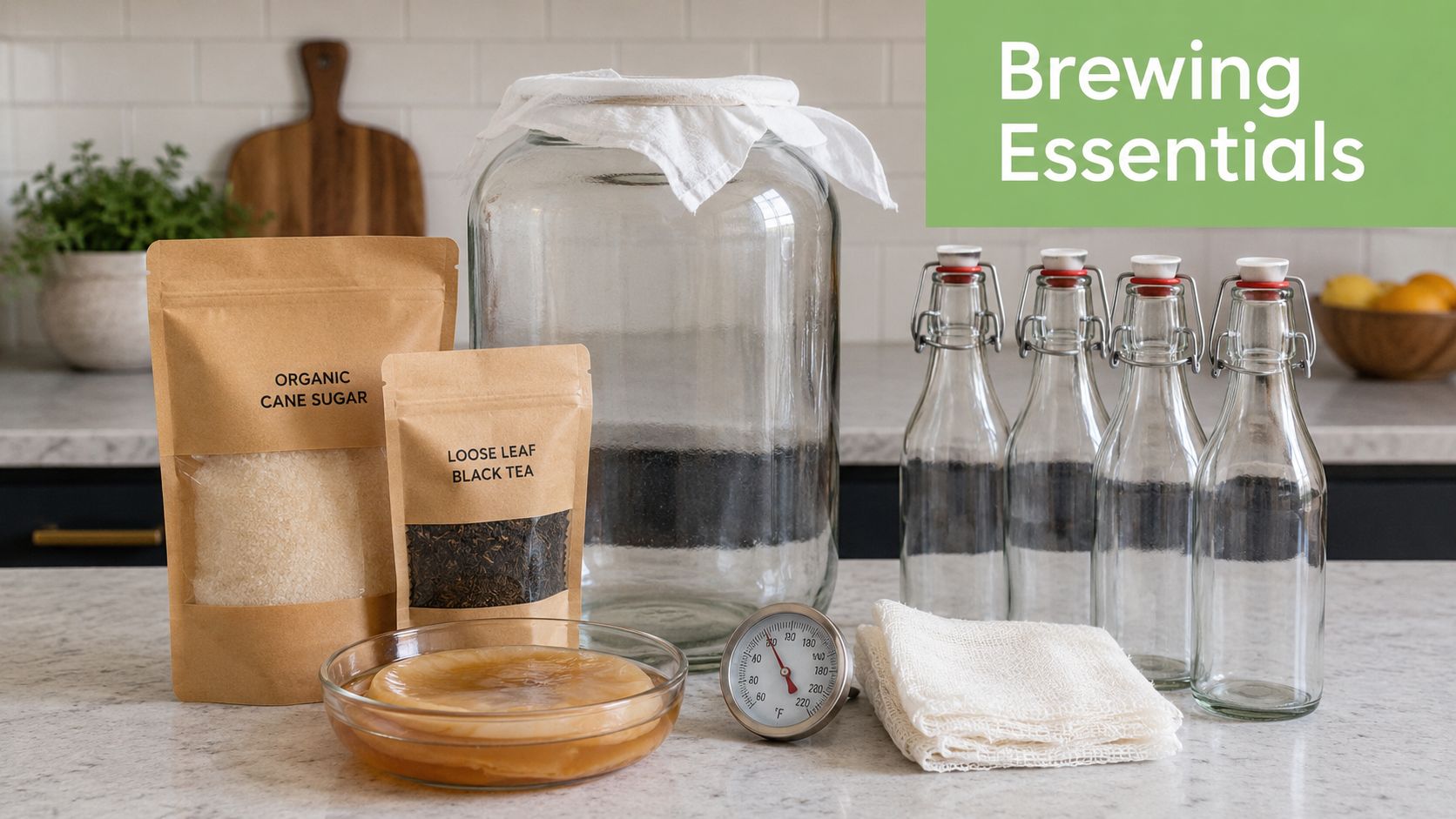
The true essentials
These are the items I'd call essential for a reliable kombucha recipe AU:
- A glass brewing jar: Glass is the easiest option to keep clean, monitor, and reuse. You can see the surface clearly, which matters when checking for normal SCOBY growth versus anything suspicious.
- A breathable cover and band: A clean cloth or screen cover lets the brew breathe while keeping dust and insects out.
- Tea: Black or green tea works well for home brewing. Keep it simple and avoid heavily flavoured blends while you're learning.
- Plain sugar: White or raw sugar works. In kombucha, sugar is fuel first. Fancy alternatives sound appealing, but consistency matters more than novelty.
- A healthy SCOBY and starter liquid: This is the engine room of the batch.
- Clean bottles for the second ferment: Use bottles designed to hold pressure if you want fizz.
If you want a straightforward starting point, a Pep Tea kombucha tea kit makes the setup easier because it removes some of the guesswork around matching ingredients and basic gear.
Why each piece matters
A healthy SCOBY doesn't need to look beautiful. It needs to look alive and active. New brewers often panic because the culture can be uneven, pale, wrinkled, or layered. That's normal. What matters more is whether your starter liquid smells sharp and pleasantly acidic, and whether the ferment environment stays clean and airy.
The brewing vessel matters more than people realise too. Bigger isn't always better. A manageable jar makes tasting, moving, and temperature control easier. If you're thinking about larger-volume setups for home or café prep, it's worth reading MODERN LYFE on food grade storage to understand what food-safe storage means before you scale.
Keep your first batch boring on purpose. Simple tea, simple sugar, simple vessel. The exciting part comes later, once your base brew is dependable.
Nice-to-haves that help
Not essential, but very useful:
| Item | Why it helps |
|---|---|
| A funnel | Cleaner transfers into bottles |
| A tasting glass | Lets you sample without fuss |
| A jug for mixing tea | Makes cooling and pouring easier |
| Extra jar for spare cultures | Handy if you want to keep backup SCOBYs |
Sourcing in Australia without overcomplicating it
You can often get a SCOBY from a friend who brews regularly, from a brewing supplier, or through a well-reviewed kit. The best source is usually the one that gives you an active culture with enough starter liquid to acidify the batch from day one.
Avoid cutting corners with random substitutes. A weak culture or poor starter is one of the fastest ways to end up with a stalled brew.
The First Fermentation Perfecting Your Base Brew
A Hunter Valley kitchen in January can hit kombucha hard by lunchtime. The same recipe that cruises along in Newcastle in spring can turn sharp far too quickly in a hot inland room, while a Melbourne winter batch may sit there tasting like sweet tea for days. That is why first fermentation needs a season-aware plan, not just a number on a recipe card.
Get this stage right and the rest of the process stays simple. A clean, well-acidified base brew gives you better flavour, steadier carbonation later, and far fewer surprises.
A reliable starting formula for home brewers is plain black or green tea, white sugar, and enough mature starter liquid to acidify the fresh sweet tea from the beginning. Food Standards Australia New Zealand advises keeping kombucha acidic enough to control unwanted microbes, and notes that finished kombucha is typically a low-pH product (FSANZ kombucha assessment). If you want to understand the culture itself a bit better, this guide on how to make a kombucha SCOBY gives useful background.
The method that works
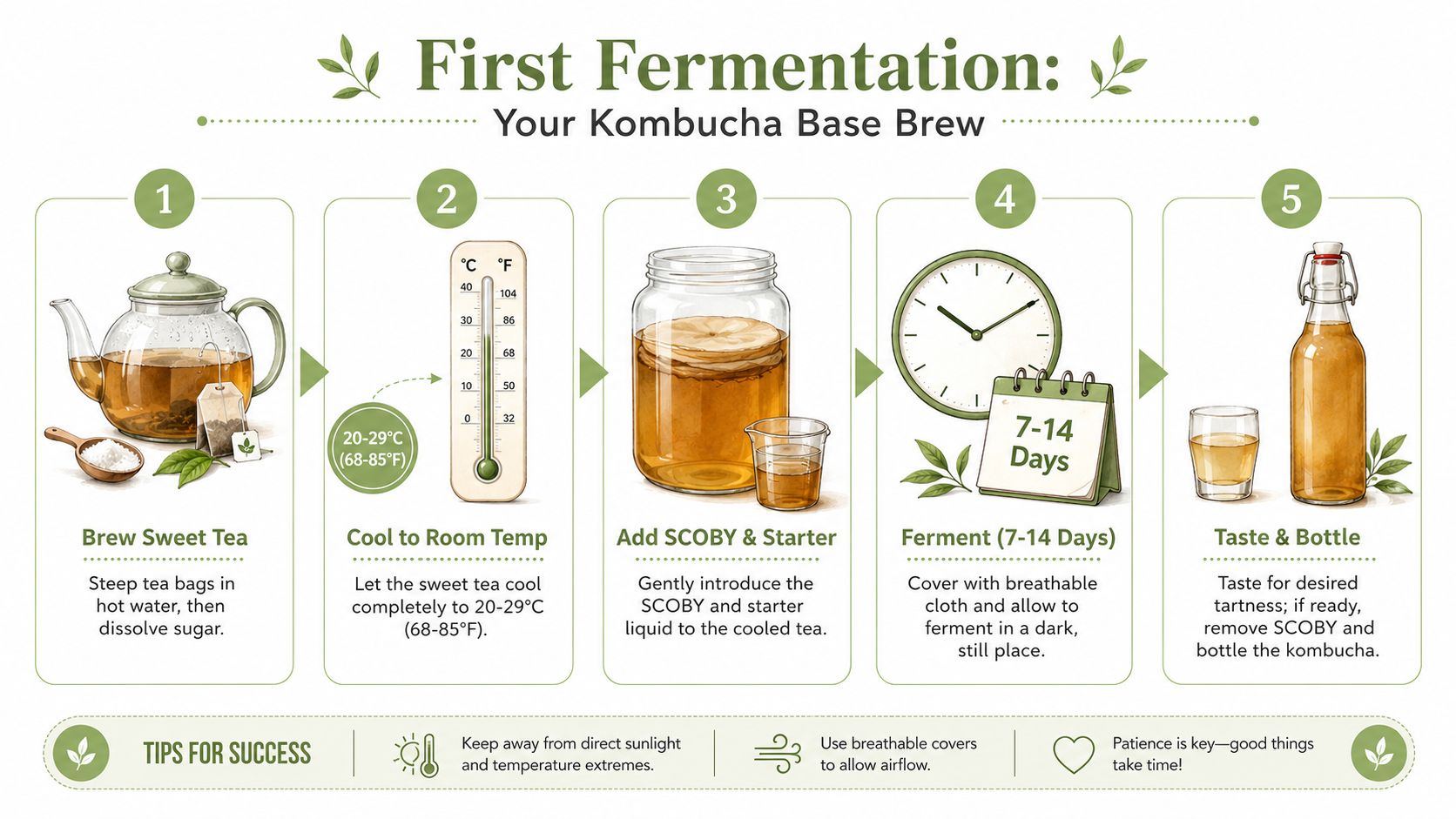
Brew the sweet tea
Steep the tea properly, then dissolve the sugar while the liquid is still hot. Fully dissolved sugar gives the culture even access to food and helps the batch ferment more predictably.Cool the tea fully
Add the culture only once the tea is at room temperature. The National Center for Home Food Preservation advises cooling sweet tea before adding starter culture so you do not stress or damage the microbes that drive fermentation (NCHFP kombucha guidance).Add starter liquid first, then the SCOBY
The starter liquid does more for safety than the pellicle itself because it drops the pH straight away. If the SCOBY sinks, tilts, or folds, leave it alone. A new layer usually forms on top anyway.Cover with cloth and give it air
Kombucha ferments best with airflow and protection from insects and dust. Don't seal the jar for first fermentation, and don't tuck it into a stuffy cupboard. The yeasts and bacteria behave differently in the presence of oxygen, and it helps to learn about bacterial types on BacteriaFAQ.com.
Timing in Australian kitchens
Australian conditions change the plan.
In a warm Queensland or Northern Rivers kitchen, the brew may move quickly and taste ready much earlier than a US or UK recipe suggests. In a cool Canberra or Tasmanian winter kitchen, it can take much longer to lose that obvious sweet-tea character. The practical answer is to use temperature and taste together.
The Kombucha Brewers International homebrewing guidance recommends fermenting in a warm room-temperature range and tasting regularly rather than relying on a fixed calendar (Kombucha Brewers International brewing basics). That matches what experienced brewers see here. Summer heat speeds acid production, but the trade-off is a narrower window between balanced and too sharp. Cooler weather often gives a rounder flavour, but you need patience and a stable spot away from cold overnight swings.
In the Hunter, I start tasting earlier in summer and later in winter. That one habit prevents a lot of disappointing batches.
Hot weather shortens the margin for error. Cold weather lengthens the wait.
Your palate determines the finish line
Time gets you in the right zone. Taste decides whether the batch is ready.
A young brew still reads as sweet tea with a bit of tang. A finished first ferment tastes bright, lightly acidic, and less obviously tea-like. If it is still cloying, leave it. If it has moved into hard vinegar territory, it has gone past the softer drinking style that suits most home brews.
Use this quick check:
| What you taste | What it means |
|---|---|
| Clearly sweet tea | Leave it longer |
| Pleasantly tart with a little sweetness | Good bottling point |
| Sharp, dry, strongly vinegary | Better for a stronger style, or reserve some as starter for the next batch |
A pH strip can help confirm you are in a safe acidic range, but flavour still matters. A batch can read acidic enough and still taste unbalanced if it has raced in high heat.
This short video gives a useful visual reference for the full process if you like seeing the steps before trying them.
A note on flavour versus speed
Australian brewers deal with this trade-off all the time. Faster fermentation gives you quicker turnaround, which is handy for a busy household or a café prep cycle. Slower fermentation usually produces a softer, more integrated flavour, but only if the brew stays warm enough to keep progressing cleanly.
So aim for control, not speed. A steady ferment nearly always tastes better than one that was pushed by a hot afternoon and forgotten overnight.
Adding Fizz and Flavour with a Second Fermentation
A lot of Australian brewers get caught here. The base brew tastes right, the bottles go on the bench, then a 32°C afternoon rolls through and the batch is flat one day or trying to climb out of the bottle the next. Second fermentation is where local conditions matter most.

This stage does two jobs. It builds carbonation in a sealed bottle, and it lets you layer in flavour. The yeast uses the available sugars, whether they come from the kombucha itself or from fruit, juice, or a little extra sweetener. More sugar usually means more fizz, but it also narrows your margin for error.
How to bottle for fizz
Strain if you want a cleaner pour, or leave the yeast and fine sediment in if you want stronger carbonation. Both approaches work. A clearer bottle looks better and tastes tidier. A less-filtered bottle often carbonates faster.
Use pressure-rated swing-top bottles or brewing bottles, and leave a little headspace rather than filling to the brim. The NSW Food Authority advice on kombucha is a good reference for safe handling and storage, especially if you are brewing regularly at home or for service.
Then leave the bottles at room temperature and check them according to the season. In a warm Hunter summer kitchen, second ferment can move quickly. In a cold southern house in winter, it can take several days longer and the flavour often stays brighter and more defined.
A practical guide:
- Hot weather, above about 28°C: check after 24 hours
- Mild weather: check after 2 days
- Cool weather: expect a slower build and allow extra time
I prefer to refrigerate as soon as the bottle has the fizz I want. That keeps the flavour closer to where I intended it, instead of letting the acidity keep pushing upward.
Flavour ideas that suit Australian palates
Keep flavouring simple at first. One strong ingredient or two complementary ones is easier to control than a crowded mix.
A few combinations that work well:
- Ginger and lime: sharp, fresh, and reliable in warm weather
- Mango: rounder and softer, but usually faster to carbonate if the fruit is very ripe
- Lemon and native mint: clean and bright, especially for a drier style
- Passionfruit: aromatic and popular, though the seeds can make a lively bottle harder to open neatly
For most home batches, a small amount of juice, fruit pulp, or finely chopped flavouring is enough. Heavy additions can muddy the tea character and push pressure up fast. That trade-off matters in Australia, where kitchen temperatures can swing hard between morning and afternoon.
Safety note: Pressure-safe bottles are necessary. Decorative glass is not designed for active secondary fermentation.
Pressure builds fast in warm Australian homes
Second ferment is the step I watch most closely. A bottle left too long in a hot room can go from pleasantly fizzy to over-pressurised in very little time, especially with sweet fruit like mango, pineapple, or grapes. The Kombucha Brewers International guide to carbonating kombucha explains why sealed-bottle fermentation needs careful bottle choice and temperature awareness.
Use these habits:
- Bottle only when first ferment is ready: too much residual sugar makes pressure harder to predict
- Keep flavour additions modest: more fruit means more fuel for yeast
- Check earlier in hot weather: tropical and inland summer conditions speed everything up
- Chill before opening: cold liquid holds carbonation better and reduces gushers
- Open over the sink: even experienced brewers do this
If you want big sparkle, accept that you need closer monitoring. If you want calmer, more controlled bottles, use less fruit, bottle a little drier, and refrigerate earlier. That is the second-ferment trade-off. More fizz often costs you a bit of flavour precision and a lot more attention.
Troubleshooting Common Kombucha Brewing Problems
A batch can look rough on day five in Newcastle, race ahead on day three in Brisbane, then crawl in a cold Ballarat kitchen. That does not always mean something has gone wrong. It usually means the brew is responding to temperature, airflow, tea strength, or timing.
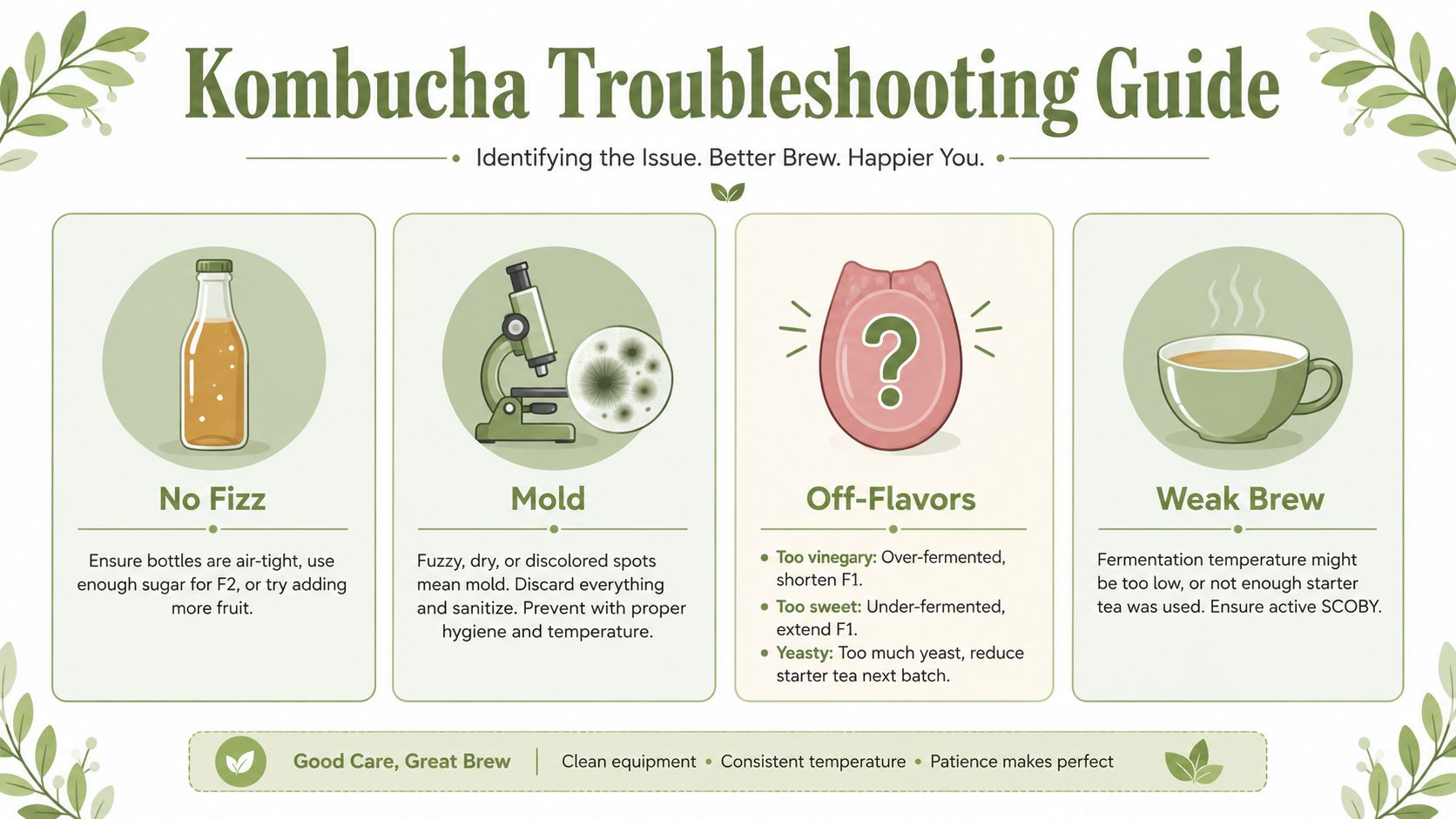
The useful skill is reading the signs early. Good troubleshooting is less about rescuing a bad batch and more about knowing what to leave alone, what to adjust next time, and when to throw a batch out for safety.
Mould or normal SCOBY growth
Healthy kombucha can look odd. New SCOBY growth is often pale, translucent, rippled, stringy, or full of brown yeast trails. Those textures can be completely normal, especially when temperatures swing between day and night.
Mould looks different. It is dry, fuzzy, and raised above the surface. White, green, blue, or black fuzzy patches are a discard signal. Do not skim it off and keep brewing. Tip the batch out and clean the vessel well.
In my experience, mould usually shows up after one of three mistakes. The tea went onto the culture too warm, the starter liquid was too weak to acidify the batch properly, or the brew sat in a stressed environment such as a stuffy cupboard or a very cold room. Hot weather creates one set of problems in Australia, but winter can also slow acid production enough to leave the surface vulnerable.
Too sour, too sweet, or just dull
Flavour faults are usually fixable, and they often come back to timing.
| Problem | Likely cause | Best fix |
|---|---|---|
| Too sour | First ferment ran too long, often in warm weather | Shorten the ferment next batch and taste earlier |
| Too sweet | Brew was bottled before acids had time to develop | Give first ferment more time and keep notes on temperature |
| Flat flavour | Tea was too weak, sugar balance was off, or culture was sluggish | Brew a stronger base tea and refresh the culture with a healthy starter batch |
If the brew still tastes mostly like sweet tea, wait and taste again the next day. If it has gone sharp and thin, you waited too long for the style you wanted.
That trade-off matters. A faster ferment in a hot Australian kitchen gets you acidity quickly, but flavour can become one-dimensional if you let it run unchecked. A slower ferment often builds better balance, but it asks for patience and a stable spot in the house.
No fizz after bottling
Low carbonation usually starts before the bottles are capped. The first ferment may have been bottled too early, the yeast may have been sluggish, or the room may have been too cool to finish the job.
Check the practical points first:
- Use bottles with a proper seal
- Bottle when the kombucha tastes finished, not sugary
- Keep some yeast in suspension instead of pouring only clear liquid
- Give bottles more time in cooler weather
- Refrigerate once the carbonation is where you want it
Cold conditions across southern Australia can make brewers think second ferment has failed when it is just slow. Tropical and inland summer conditions create the opposite problem. Pressure rises fast, so check bottles sooner. If you need a clearer plan for chilling and holding finished bottles safely, this guide on how to store kombucha after brewing is useful.
Looking after the SCOBY long term
A reliable culture likes consistency. Keep a backup jar with enough mature kombucha to cover the culture fully. Brewers call it a SCOBY hotel, but the principle is simple. Clean jar, acidic liquid, stable conditions, and no direct sun.
A few habits make a real difference over months of brewing:
- Do not pour hot tea onto the culture
- Do not let starter liquid get too weak
- Do not change tea, sugar, jar size, and timing all at once
- Do keep notes through the seasons
That last point matters more in Australia than many recipe guides admit. Summer brewing in the Top End, coastal Queensland, Sydney, or the Hunter is not the same job as brewing through a Melbourne winter. Adjust one variable at a time, taste often, and let the season tell you how quickly the batch wants to move.
Storing Serving and Sharing Your Kombucha
A good brew deserves a proper finish. Too many people spend all their energy on fermentation, then leave bottled kombucha sitting around too long on the bench or serve it without thinking about how flavour changes after bottling.
Refrigeration is part of the process, not an afterthought. Once your second ferment has the fizz you want, chill it. Cold storage slows the activity inside the bottle and helps hold flavour and carbonation in a more stable place. If you want a more detailed rundown, this guide on how to store kombucha is worth bookmarking.
How to serve it well
Kombucha is more versatile than many people give it credit for. It doesn't have to be an occasional wellness drink pulled from the back of the fridge.
A few serving ideas that work well in Australian homes:
- Straight from the fridge in a wine glass: Especially for drier batches with ginger or citrus.
- Over ice on a hot arvo: Clean, refreshing, and easy.
- As a non-alcoholic dinner pour: Works well when you want something with acidity and structure.
- As a mixer: Particularly good with fresh citrus, herbs, and soda for café-style mocktails.
Well-made kombucha has enough character to stand in for soft drink, mixer, or a light aperitif-style serve.
Why cafés should take it seriously
For cafés and hospitality venues, house kombucha can add real depth to a non-alcoholic menu. It signals care, freshness, and a more thoughtful alternative to standard sugary drinks. The challenge isn't demand. The challenge is consistency.
If you're brewing at larger volume, batch control matters. So does food safety. Clear cleaning procedures, a repeatable recipe, and proper cold storage are what separate a polished kombucha program from a risky one. If a venue wants the appeal of live fermented drinks without that operational load, buying from a trusted Australian producer is often the smarter move.
Serving kombucha well is really about respect for the brew. Fermentation makes it interesting. Storage and presentation make it enjoyable.
If you'd rather enjoy expertly made organic kombucha than brew every batch yourself, explore Pep Tea for Australian-brewed sugar-free organic kombucha and premium organic matcha from the Hunter Valley team behind the brand.
Best Green Tea for Weight Loss: Reddit’s Top Picks 2026
Reddit loves a shortcut. Search for the best green tea for weight loss Reddit threads and you'll see the same pattern again and again: one person swears green tea “worked”, another says it did nothing, and a third drops a study result with no context at all.
The problem usually isn't the tea. It's the confusion.
Some posts talk about brewed tea. Others are really talking about concentrated extracts. Some people are drinking low-grade bagged tea with breakfast and expecting supplement-like results. Others have stumbled onto the one form that makes the whole conversation more practical: matcha.
If you want a clear answer, you need two things. First, a realistic idea of what green tea can and can't do for weight management. Second, a way to separate forum folklore from advice that makes sense in daily Australian life.
Sorting Through the Reddit Tea Leaves
Reddit can be useful because it shows what real people try, what habits they stick to, and where they get stuck. It's often more honest than polished wellness marketing. But it also bundles together half-remembered studies, personal anecdotes, supplement advice, and café drink recommendations as if they all mean the same thing.
That's why best green tea for weight loss Reddit is a trickier search than it looks. Many threads compare apples with oranges. A capsule gets discussed next to a teabag. A sugary bottled “green tea” drink gets lumped in with plain sencha or matcha. Then readers are left wondering why their results feel underwhelming.
Why Reddit advice feels so mixed
A few patterns show up often:
- People confuse product types. Brewed green tea, powdered matcha, and green tea extract are not the same experience.
- Users report different routines. Someone drinking one weak cup at night is not following the same approach as someone using matcha before training.
- Taste affects consistency. If the tea is bitter, stale, or chalky, many won't maintain the habit.
If you use Reddit for research, it helps to get better at finding niche communities and older discussions instead of relying on whatever appears first. This guide on how to search for subreddits effectively is handy if you want to dig into tea, weight management, fitness, or Australian wellness threads with more intent.
Reddit is best used as a clue board, not a final verdict.
The practical lens that matters
Green tea isn't a magic fat-loss button on its own. It's a support habit. It may help a bit with metabolism, routine, energy, and drink choices, especially if it replaces higher-calorie beverages. But the type of green tea matters more than most threads admit.
That's where the conversation becomes much more useful. Once you stop asking “does green tea work?” and start asking “which green tea form gives me the most from a normal daily drink?”, the answer gets clearer.
The Science Behind Green Tea and Weight Management
Green tea gets its reputation from a small team of natural compounds working together, not from one miracle ingredient. The two names that matter most here are EGCG and caffeine.
Think of them as a metabolic support team. Caffeine gives the system a push. EGCG helps that push last longer by affecting the way the body handles norepinephrine, a hormone involved in breaking down fat.

What thermogenesis actually means
You'll often see the word thermogenesis in green tea discussions. In plain language, it means your body burning energy to produce heat. It's one of the reasons people connect green tea with metabolism support.
That doesn't mean you drink tea and suddenly melt body fat. It means certain compounds may help nudge the body toward using energy a bit more actively, especially when they're paired with movement and a generally organised routine.
The most useful numbers to know
One of the clearest practical points is timing. Clinical studies show that people can increase fat-burning potential by 17% when taking green tea extract before physical exercise, and daily consumption can contribute to an extra 75 to 100 calories per day even at rest, according to Foober's summary of green tea for weight loss.
That's why some people feel green tea “works best” when they use it around exercise instead of treating it like a random afternoon beverage.
A simple way to view it:
| Compound | Everyday role | Why people care |
|---|---|---|
| Caffeine | Helps with alertness and energy | May support exercise drive and thermogenesis |
| EGCG | A catechin found in green tea | Helps support fat oxidation pathways |
| Together | Work in synergy | More useful than either one in isolation |
What this means in real life
If you're walking the dog before work, heading to the gym after lunch, or trying to stop reaching for sugary drinks during the afternoon slump, green tea may fit well because it supports a routine you can repeat.
Practical rule: Green tea works better as a repeatable habit than as a one-off “fat burner”.
That's also why quality matters so much. Once you understand that the effect depends on the compounds you consume, the next question becomes obvious: which green tea gives you the most of them in a normal cup?
What Reddit Gets Right and Wrong About Green Tea
Reddit gets one big thing right. Green tea is not a magic solution. The more grounded posters usually say the same thing: if your sleep is poor, your meals are chaotic, and your total intake is too high, tea won't fix that.
That part is sensible.
Where the threads often go sideways is in the jump from “green tea may help” to “any green tea drink should deliver study-like results.” That's where expectations get distorted.
The extract versus beverage gap
A lot of Reddit comments cite research based on concentrated green tea extracts, sometimes around 500 mg daily, and then assume an ordinary mug of brewed tea will behave the same way. That's not how real-world use works.
Healthline notes this gap clearly in its discussion of green tea and weight loss. Threads often repeat extract-based findings without distinguishing them from brewed tea, while the beverage itself has a more modest effect of burning only 60 to 80 extra calories per day in those discussions, which leaves readers expecting more than a regular cup can deliver. You can read that context in Healthline's green tea and weight loss article.
What Reddit usually gets right
The strongest community advice tends to sound less exciting and more useful:
- Consistency matters. A daily habit beats a “detox week”.
- Unsweetened is the point. Loading green tea with sugar changes the whole equation.
- Exercise helps the tea help you. People often notice better results when tea is part of an active routine.
- Taste decides adherence. If you dread the flavour, you'll quit.
What Reddit often misses
The biggest blind spot is concentration. Not all green tea formats deliver the same amount of the compounds people are chasing.
A supermarket teabag can still be a decent choice over soft drink or juice. But if someone is searching for the best green tea for weight loss Reddit because they want the most practical benefit from a beverage, “any green tea” is too vague to be useful.
Community wisdom is helpful when it tells you what people can stick with. It becomes unhelpful when it skips the difference between a brewed drink and a concentrated extract.
That missing detail is exactly why matcha keeps showing up as the smarter answer.
Why Matcha Is the Smartest Choice for Weight Loss
Matcha changes the conversation because it solves the concentration problem better than standard brewed tea.
With regular green tea, you steep the leaves and throw them away. With matcha, the leaves are stone-ground into a fine powder and whisked into water, so you consume the whole leaf. That means you're not just extracting some compounds. You're taking in the lot.

The whole-leaf advantage
This is the reason matcha sits at the top of so many serious green tea discussions. According to this Australian matcha and green tea breakdown, matcha contains up to 137 times more antioxidants than standard brewed green teas because you consume 100% of the leaf, including its caffeine, amino acids, and catechins such as EGCG.
That doesn't mean every scoop of matcha guarantees weight loss. It means matcha gives you a far stronger nutritional delivery system than a standard infusion.
Why this matters more than hype
If brewed tea is the lighter version of the idea, matcha is the more complete one. It's the closest natural beverage format to the stronger effects people often expect after reading extract-based claims online.
Here's a quick comparison:
| Feature | Standard green tea | Matcha |
|---|---|---|
| How it's used | Leaves steeped, then discarded | Powder whisked and consumed |
| What you ingest | Partial extraction | Whole leaf |
| Compound density | Lower | Higher |
| Practical fit for weight goals | Supportive | More strategic |
For readers who want more detail on why whole-leaf powder matters, this piece on matcha tea powder as a powerhouse of antioxidants is a useful deep dive.
A grounded verdict
If someone asked me for the simplest answer to the Reddit question, it would be this:
- If you want a gentle daily tea habit, standard green tea can still support your routine.
- If you want the smartest beverage choice for weight management support, matcha is the stronger option.
- If your goal is realistic progress, matcha still works best alongside food quality, movement, and sleep.
That's why matcha isn't just trendy. It's logically the most efficient green tea format for people who want more from the cup itself.
Your Actionable Guide to Using Green Tea Effectively
Knowing that matcha is the strongest practical option is helpful. Knowing how to use it well is what makes the habit stick.

Start with a routine you'll actually keep
You don't need a perfect Japanese tea ceremony in your kitchen before 7 am. You need a repeatable pattern.
A practical matcha routine often looks like this:
- Use a small amount first. Start with 1 to 2 teaspoons of matcha powder. That amount lines up with a review noting participants commonly consumed around 2 to 4 g of matcha per day, equivalent to 1 to 2 teaspoons, in human studies discussed by In the Cove's review of matcha health benefits.
- Keep the water hot, not boiling. Very hot water can make matcha taste harsh.
- Whisk well. A fork works in a pinch if you don't have a bamboo whisk.
- Drink it plain first. Learn the flavour before turning it into a sweet café-style drink.
Timing makes a difference
Many people leave easy gains on the table. The synergy between caffeine and EGCG may increase fat-burning potential by up to 17% when consumed about 1.5 hours before a workout, according to Foober's guide on the best green tea for weight loss.
So if you train after work, don't have your matcha randomly at breakfast and hope for the same effect. Use it with some intention.
A pre-workout matcha can make more sense than an end-of-day cup, especially if your goal is metabolic support rather than a cosy ritual.
For easy ways to build that into daily life, this collection of matcha drink recipes for weight loss gives practical ideas without making things complicated.
A quick video can also help if you're more of a visual learner:
Simple ways to use matcha in Australia
You don't have to drink it the same way every day. Try:
- Morning bowl at home. Fast, unsweetened, and easy before work.
- Iced matcha after a walk. Great in warmer weather.
- Smoothie add-in. Handy if you already blend breakfast.
- Light matcha latte. Better kept low in sugar if weight management is the goal.
Common mistakes to avoid
- Adding lots of sweetener. That can undo the benefit of choosing tea in the first place.
- Buying poor-quality powder. If it tastes swampy and bitter, consistency will suffer.
- Expecting dramatic change from one serve. Matcha supports a system. It doesn't replace one.
Beyond the Tea Cup Exploring Kombucha
Weight management isn't only about what speeds metabolism a bit. It's also about the drinks you stop having.
That's where kombucha enters the picture. A properly fermented kombucha gives you a more interesting, adult-feeling alternative to sugary soft drinks or overly sweet mixers, and that swap can support a cleaner routine over time.

Why kombucha fits the same mindset
People who care about green tea for weight goals are usually trying to do a few things at once:
- Lower sugar intake
- Choose more functional drinks
- Support gut health
- Avoid the crash that comes with heavily sweetened beverages
Kombucha fits that broader lifestyle neatly when it's genuinely fermented and not dressed up like a health drink while behaving like cordial.
A useful complementary habit
Matcha and kombucha do different jobs. Matcha suits mornings, focus, and workout timing. Kombucha works well as a fridge staple when you want something fizzy without reverting to soft drink habits.
If you're interested in how fermentation, live cultures, and lower-sugar choices fit into a wellness routine, this guide on the benefits of kombucha is a practical read.
The smartest drink strategy usually isn't one hero beverage. It's having better options ready for different moments of the day.
Your Simple Green Tea Plan for Wellness
If you've made it this far, the answer to the Reddit question is much less messy.
Green tea can support weight management. It just needs honest expectations. A cup won't override everything else, but the right format can absolutely be a better choice than a weak, sugary, or inconsistent routine.
The simplest framework to remember
- Choose matcha first. It's the most efficient green tea format for people who want more from the drink itself.
- Use timing well. If exercise is part of your week, place your matcha before it rather than treating it as random background tea.
- Stay realistic. Green tea supports a healthy pattern. It doesn't replace that pattern.
- Upgrade your drink choices overall. Kombucha and unsweetened tea can help reduce reliance on sugar-heavy options.
One reason matcha stays at the top of this conversation is its thermogenic profile. A study in the American Journal of Clinical Nutrition found that consuming matcha can increase thermogenesis from a typical 8 to 10% to 35 to 43% of daily energy expenditure, as summarised in this article on matcha health benefits.
Build the tea habit into your full routine
Tea works best when it's part of a bigger system. That might mean walking most days, planning simple protein-rich meals, keeping sweet drinks out of the trolley, and having matcha or kombucha ready at home. If you want a practical way to organise the food side of that routine, this guide on using PlateBird for meal planning is worth a look.
A key lesson from Reddit is useful once you clean it up: people do best when they pick a habit they can repeat. For green tea, the repeatable, high-value option is matcha.
If you're ready to turn that knowledge into a daily ritual, explore Pep Tea for premium organic matcha and Australian-made sugar-free kombucha that fit naturally into a cleaner wellness routine.
The Real Organic Tea Benefits: A Complete Australian Guide

You're probably here because tea has become more than just a hot drink. It's your morning reset, your afternoon swap for another coffee, or the one thing that helps you slow down for five minutes between work, family, training, and everything else life throws at you.
That's where the conversation around organic tea benefits gets interesting. For many Australians, organic starts as a safety question. Fewer chemicals. Cleaner farming. Better peace of mind. But once you dig deeper, organic tea isn't only about what's missing. It's also about what stays intact in the leaf, in the brew, and in the flavour.
A well-grown organic tea can offer a cleaner cup, a more expressive taste, and a more functional daily ritual. That matters even more with high-performance teas like Japanese matcha and properly fermented kombucha, where quality shows up in every sip.
More Than a Buzzword The Real Meaning of Organic Tea
A lot of people start with tea because they want one of three things. Calm. Energy. Comfort. Sometimes all three at once.
You swap a sugary drink for green tea because you want something lighter. You try matcha because coffee feels too sharp. You reach for kombucha because your body wants something refreshing that doesn't feel heavy. Then the label catches your eye. Organic. It sounds good, but what does it really change?
Organic changes the whole experience
Organic tea isn't just conventional tea with nicer branding. It reflects a different growing philosophy. In practical terms, it means the tea is produced without the synthetic inputs many people are trying to avoid in the rest of their food and drink choices.
That matters because tea is an ingredient you often consume daily. If something is part of your routine every morning or every afternoon, the quality of that product matters more than it does with an occasional treat.
For readers who want to understand the farming side in plain English, it helps to look at organic tea farming practices in Australia.
Organic tea feels different because it asks a better question. Not just “does this taste nice?” but “what kind of cup am I inviting into my body every day?”
Why people notice the difference
Organic tea isn't first noticed in a lab report. It's noticed in the cup.
A vibrant matcha tastes cleaner and more rounded. A carefully brewed kombucha tastes alive, bright, and balanced rather than loud or syrupy. Even a simple loose-leaf green tea can feel fresher and more expressive when the leaf has been handled with care from the start.
Three organic tea benefits often stand out quickly:
- Cleaner everyday drinking because many health-conscious tea drinkers want to reduce routine exposure to synthetic agricultural chemicals.
- Better functional potential because the natural compounds in tea are the reason many people drink it for wellness in the first place.
- Richer flavour because quality farming and careful processing tend to reward your palate, not just your principles.
That's why organic isn't a restriction. It's a filter. It helps you choose tea that supports the way you want to feel.
Why Organic Certification Matters for Your Tea
The word “organic” gets thrown around so often that it can lose meaning. In tea, certification matters because it gives the word substance.
What certified organic actually signals
When tea is certified organic, it isn't just marketed as natural or clean. It's grown and handled according to standards that limit or prohibit a range of synthetic agricultural and processing inputs.
In Australia, that distinction matters. Organic tea is distinguished from conventional tea by its significantly lower levels of harmful chemical residues, as organic farming prohibits the use of synthetic pesticides, herbicides, chemical fertilizers, GMOs, preservatives, and fungicides, resulting in a safer product for consumers concerned about chemical exposure, as outlined in this explanation of organic vs conventional tea.
If you want a practical overview of what local certification means, this guide to organic tea certification in Australia is a useful place to start.
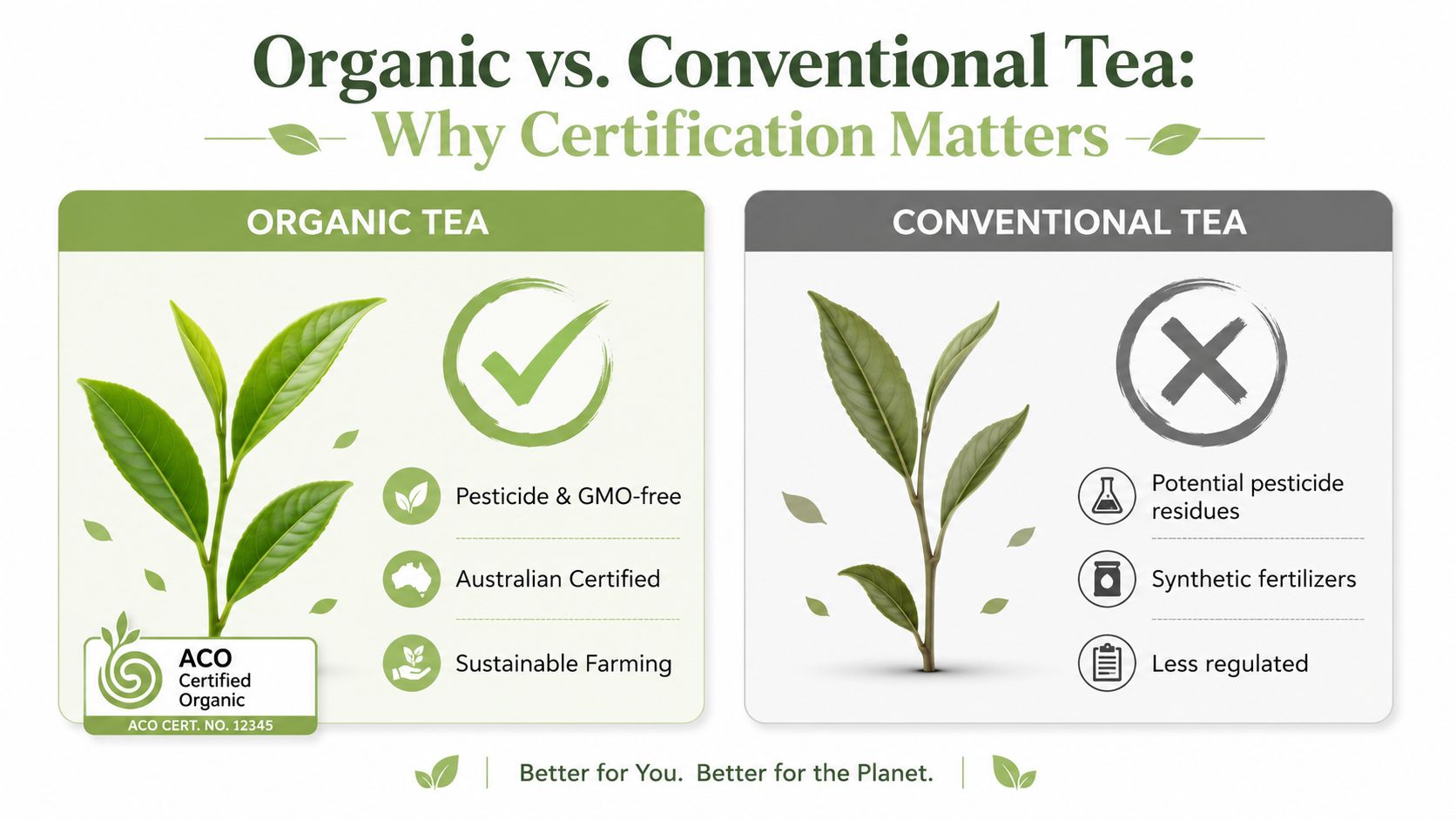
Why lower residue matters in a daily ritual
Tea often feels harmless because it's simple. Water, leaves, cup. But that simplicity is exactly why sourcing matters.
If you drink tea every day, you're not making a one-off choice. You're building a repeated habit. For many people, that's why organic tea benefits feel especially relevant here. A cleaner agricultural approach supports a cleaner daily routine.
Here's a simple comparison:
| Tea type | What the growing approach focuses on | What many drinkers value |
|---|---|---|
| Organic tea | Avoiding synthetic pesticides, herbicides, chemical fertilisers, GMOs, preservatives, and fungicides | A cleaner cup and confidence in how the tea was produced |
| Conventional tea | Standard agricultural methods that may include synthetic inputs | Wider availability, but with fewer assurances about residue levels |
Certification protects more than the absence of chemicals
The best way to think about organic certification is that it protects the integrity of the tea. It's not just about what's left out. It's also about what the plant is allowed to express.
That can shape:
- Leaf quality through gentler, more considered growing systems
- Flavour clarity because the cup isn't competing with a rougher profile
- Functional value because tea drinkers often choose green tea, matcha, and kombucha for their natural compounds, not just their taste
Practical rule: If you're drinking tea for wellness, don't treat sourcing as an afterthought. The benefit starts long before the kettle boils.
The Science-Backed Health Benefits of Organic Tea
Tea's reputation for wellness doesn't come out of nowhere. Its natural compounds, especially catechins and polyphenols, are where the primary interest lies, known for their antioxidant activity.
What antioxidants are doing in simple terms
Oxidative stress sounds technical, but the idea is straightforward. Your body deals with ongoing wear and tear from normal metabolism and from daily life. Antioxidants help counter some of that stress.
Tea naturally contains compounds that support this process. That's one reason it keeps showing up in discussions about long-term wellbeing, especially for people trying to make better everyday choices rather than chasing quick fixes.
A useful way to think about tea is this: it's a small habit with a cumulative effect. One cup won't transform your health overnight. But a good routine can support the bigger picture.
What the research on green tea shows
The strongest evidence in the material available here relates to green tea. According to Harvard's overview of tea and health, regular consumption of green tea is linked to a 14% reduced risk of stroke in individuals drinking 2–3 cups daily, and a 20% reduced risk for those consuming 4 or more cups, based on a 13-year cohort study of 82,369 Japanese men and women.
That matters because it gives the conversation some grounding. Tea isn't only associated with a pleasant ritual. It's also linked with meaningful health outcomes in large population studies.
The same source also describes broader links between tea intake and cardiovascular health, including observational findings around heart disease, stroke, and type 2 diabetes. That doesn't make tea a treatment, but it does support the idea that tea can be part of a smart, steady lifestyle pattern.
Why organic can strengthen the value of that habit
Many readers get confused because the research often focuses on tea itself, especially green tea. So where does “organic” fit in?
Organic doesn't create catechins and polyphenols from scratch. Tea naturally has them. What organic farming may do, based on the verified material available, is help preserve the tea's natural integrity by avoiding synthetic residues that many health-conscious consumers would rather not bring into a wellness routine.
That means the habit becomes more coherent. If you're drinking tea because you want something clean, supportive, and functional, organic aligns the farming method with the reason you're drinking it.
A simple way to use that in daily life:
- Choose tea you'll drink consistently. Daily habits matter more than occasional bursts of enthusiasm.
- Keep it unsweetened when possible. Let the leaf do the work.
- Treat tea as support, not magic. It works best alongside sleep, food, movement, and stress management.
Tea fits best in a wellness routine when it replaces something less helpful, not when it's expected to do everything on its own.
Focus and Energy The Organic Matcha Advantage
If green tea is a strong all-rounder, matcha is the concentrated version of that story. It's one of the clearest examples of why organic tea benefits can feel more noticeable in real life.
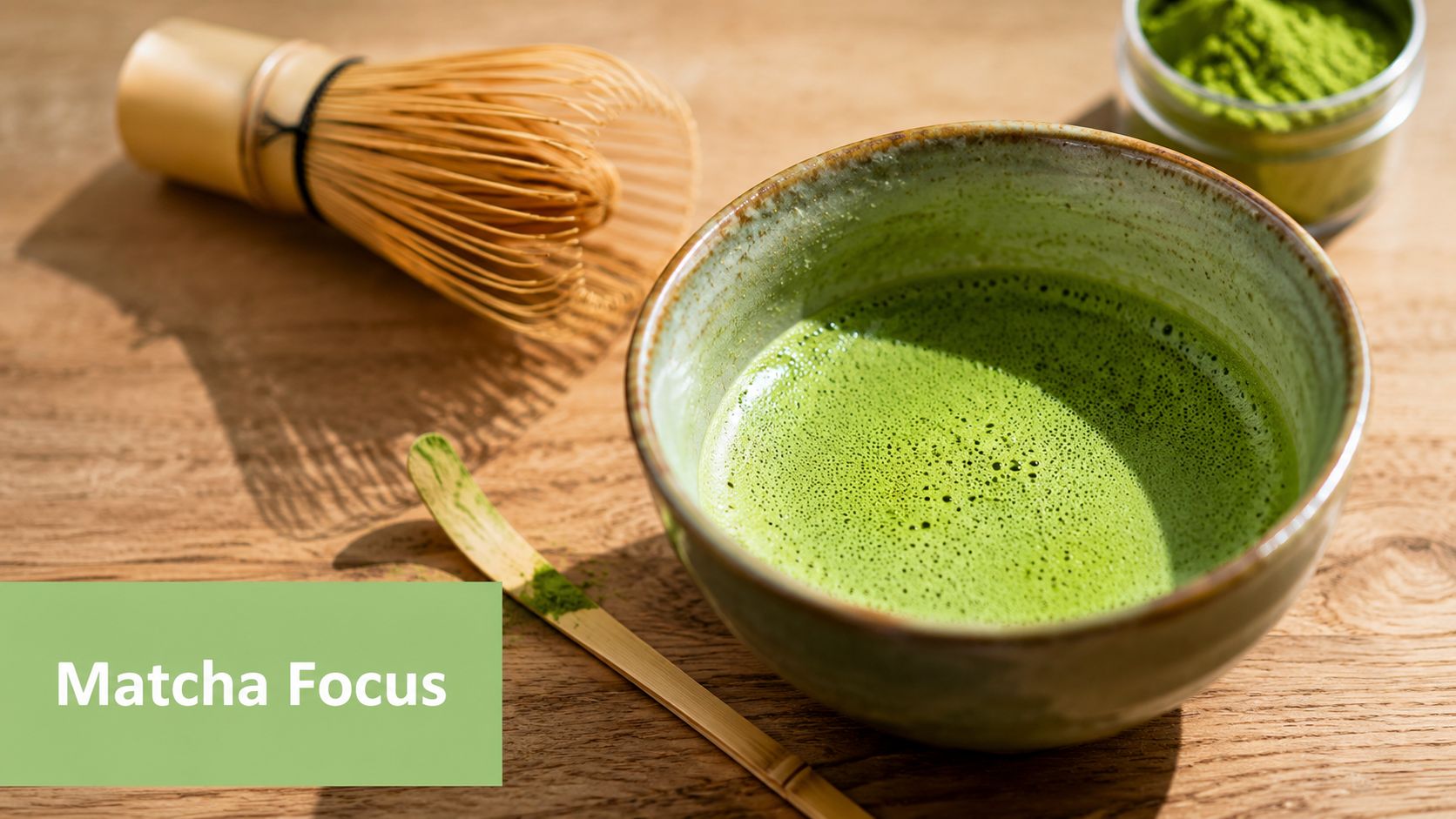
Why matcha feels different from regular green tea
With brewed green tea, you steep the leaves and drink the infusion. With matcha, you whisk the stone-ground leaf into water and consume the whole thing.
That changes the experience. It's one reason matcha drinkers often describe the effect as steadier and more immersive. You're not just tasting tea. You're taking in the finely milled leaf itself.
According to this review of EGCG and antioxidants in matcha, matcha contains approximately 100–200 mg of EGCG per cup, with EGCG comprising 50–60% of total catechins, whereas regular brewed green tea delivers only 30–400 µmol TE/g in antioxidant activity compared to matcha's 1,300–1,600 µmol TE/g.
That's a big reason matcha has become such a favourite for people chasing functional drinks with substance.
Calm focus, not chaotic stimulation
Many Australians come to matcha because coffee stops working for them the way it used to. The first cup is fine. The second pushes them into jitters, irritability, or an afternoon slump.
Matcha tends to appeal to a different goal. People want energy, but they also want clarity. They want alertness without feeling scattered. Readers often associate this with the combination of tea caffeine and naturally occurring L-theanine in matcha, which is why matcha has developed a reputation for calmer focus.
That doesn't mean every matcha delivers the same experience. Grade, freshness, origin, and processing all matter. A vibrant Japanese organic matcha is usually smoother, sweeter, and easier to drink than dull, stale powder that tastes flat or bitter.
What to look for in a quality matcha
A quick checklist helps:
- Colour should look bright and lively rather than khaki or brownish.
- Texture should feel fine and soft, not gritty.
- Taste should be fresh, rounded, and pleasantly vegetal, not harsh.
- Origin and production matter, especially if you care about both flavour and farming standards.
For a simple visual on preparation, this video is a good reference point:
When matcha makes the most sense
Matcha works especially well when you want a beverage that supports performance without feeling aggressive.
It suits:
| Moment | Why matcha fits |
|---|---|
| Morning start | It gives your day a more deliberate pace than rushing into another coffee |
| Pre-work focus | Many people like it before writing, planning, or study sessions |
| Afternoon reset | It can feel cleaner than reaching for sweets or another strong caffeine hit |
A good matcha doesn't just wake you up. It helps you stay with what you're doing.
Gut Health and Vitality The Power of Real Organic Kombucha
Kombucha can be one of the most misunderstood drinks in the wellness space. Some bottles are carefully fermented and alive with character. Others taste like soft drink wearing a health halo.
That difference matters if you care about organic tea benefits beyond buzzwords.
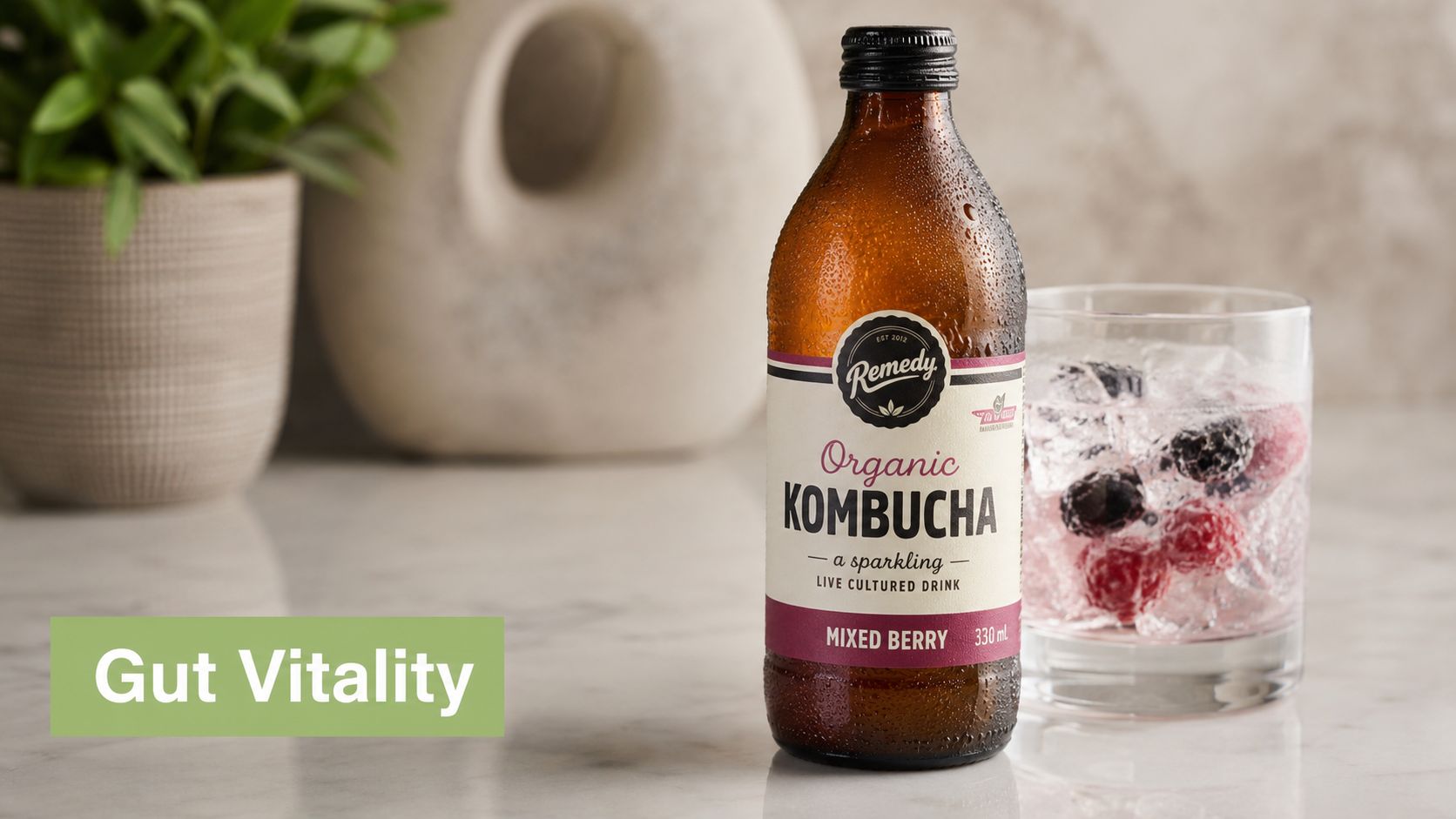
Real kombucha starts with real tea
Authentic kombucha begins with brewed tea, culture, and time. The process transforms the original sweetened tea into something tangy, layered, and much lighter than many people expect.
For readers who are trying to understand what separates proper fermentation from shortcuts, this guide to real raw organic kombucha explains the distinction well.
When kombucha is made with organic tea, the starting point already aligns with a cleaner product philosophy. That won't automatically make every bottle excellent, but it does set a stronger foundation.
Why fermentation quality matters
People often assume kombucha is healthy just because it's called kombucha. That's where things get messy.
Some products lean heavily on flavourings, sweetness, or marketing language. A properly fermented kombucha, by contrast, earns its place through the brewing process itself. If you're drinking it for gut-friendly potential and as an alternative to sugary beverages, the details matter.
A useful way to compare them:
- Properly fermented kombucha often tastes tart, refreshing, and balanced. It feels like a brewed beverage.
- Mass-market imitation styles can taste flat, overly sweet, or more like flavoured soda.
The best kombucha doesn't try to hide fermentation. It lets fermentation create the flavour.
Where kombucha fits in daily life
Kombucha is often less about one dramatic health promise and more about replacing less helpful habits.
It can work well for people who want:
- A low-sugar alternative to soft drinks or sweet mixers
- A grown-up non-alcoholic option that still feels interesting
- A refreshing fridge staple that supports a more mindful routine
This is also where Australian-made kombucha has a special appeal. Local brewing, especially when done carefully, gives drinkers a product that feels close to home and easier to trust. For cafés, it also creates a stronger menu story. Customers increasingly want non-alcoholic drinks that feel thoughtful rather than like an afterthought.
A note on flavour and function
Good kombucha should taste like something you'd want to drink even if health benefits were never mentioned. Ginger, lime and ginger, or mango styles can all work beautifully when they're built on a genuine fermented base rather than sugar and flavour alone.
That's the heart of the argument for real organic kombucha. If the tea is well sourced and the fermentation is done properly, the drink becomes more than a trend. It becomes a practical, enjoyable part of modern Australian drinking habits.
How to Use Organic Tea at Home and in Your Café
The easiest way to enjoy organic tea benefits is to make them routine. You don't need a complicated wellness plan. You need a few reliable ways to use tea that fit your day.
Simple ideas for home

Try these:
Ceremonial-style matcha
Sift your matcha into a bowl, add a little warm water, then whisk until smooth and frothy. Keep the flavour front and centre. No sweetener needed if the powder is good.Quick matcha latte
Make a smooth matcha base first, then add your preferred milk hot or cold. If you like a softer flavour, this is often the easiest daily entry point.Kombucha mocktail
Pour chilled kombucha over ice with fresh citrus or mint. It gives you the ritual of a mixed drink without the heaviness.
A practical reason to keep green tea in rotation
One reason many people stay committed to green tea and matcha is that the habit is easy to repeat. There's also a strong wellness argument for doing so. According to this article on tea as a health drink, organic green tea including matcha delivers a bioactive dose of EGCg that directly inhibits reactive oxygen species, with a 2020 Australian Curtin University study quantifying that consuming three cups daily reduces the likelihood of developing prostate and ovarian cancer by neutralizing free radicals that damage DNA.
That doesn't mean everyone needs three cups every day. It does show why regular use, rather than occasional novelty, is where tea becomes meaningful.
Smart menu ideas for cafés
For cafés and hospitality venues, organic tea can do more than fill a menu gap. It can shape a more modern drinks offer.
Consider adding:
| Menu idea | Why customers respond |
|---|---|
| Straight matcha | It suits customers who want a clean, premium hot drink |
| Iced matcha latte | It appeals to regular café traffic looking for a coffee alternative |
| Kombucha by the bottle or glass | It gives non-alcoholic drinkers something with personality |
| Seasonal mocktails using kombucha | It helps venues build a wellness-friendly drinks list |
For home drinkers and cafés alike, the key is consistency. Keep the ingredients clean. Keep the preparation simple. Let the tea do the heavy lifting.
Your Organic Tea Questions Answered
Is organic tea automatically safer in every way?
It's safer in one important sense. Organic certification helps reduce exposure to synthetic agricultural chemicals. But it doesn't answer every sourcing question.
According to this explanation of what to look for when buying organic tea wholesale, while organic certification ensures tea avoids pesticides, it doesn't automatically screen for soil-derived heavy metals, and no recent 2024–2025 Australian report compares heavy metal levels in imported organic versus conventional matcha. If you drink matcha daily, it's reasonable to care about origin, supplier transparency, and testing standards.
Is matcha stronger than regular green tea?
Functionally, yes, many people experience it that way. You're consuming the whole powdered leaf, so the experience is more concentrated than a standard brewed green tea. That's part of why matcha often feels more substantial and more sustaining.
Can I drink organic tea every day?
For most adults, tea works best as a daily habit rather than an occasional health kick. The main questions are your caffeine sensitivity, the type of tea you choose, and whether it fits the rest of your routine.
What about pregnancy or medication interactions?
If you're pregnant, breastfeeding, managing a health condition, or taking medication, it's smart to check with your doctor before making tea, matcha, or kombucha a bigger part of your routine. Tea can be wonderfully supportive, but personal advice matters.
Is organic kombucha always low in sugar?
Not always. “Organic” and “low sugar” aren't the same thing. Read the label, pay attention to the fermentation style, and choose a product that aligns with why you're drinking it.
If you're ready to turn all of this into an everyday ritual, explore Pep Tea for premium organic matcha and Australian-brewed sugar-free organic kombucha. It's a simple way to bring cleaner flavour, functional benefits, and a more enjoyable wellness routine into your day.