
Tag: gut health
Probiotic Strains Explained: A Practical Guide
Shop for a probiotic the way you'd shop for a bottle of sparkling water, looking for the word itself and assuming the rest is detail. That's the part worth challenging, because “probiotic” is not one thing, and the same label can hide very different organisms, doses, storage needs, and outcomes. If you've ever stood at a market stall or café fridge wondering why one ferment feels steady and another feels like marketing noise, the answer usually lives at strain level, not species level.
In Australia, that distinction matters even more because probiotic effects are strain-specific rather than species-specific, and listed medicines must hold evidence for every indication made on label under the TGA framework (NIH Probiotics Health Professional Fact Sheet). That's the difference between a vague wellness promise and a product that's been framed around evidence. For a plain-English overview of the basics, PepTea's guide to What are Prebiotics and Probiotics? is a useful starting point.
If you want a deeper rabbit hole, the long-form Dr. Stephen Langer probiotic review is a handy reminder that even multi-strain formulas still need to be read carefully, not just admired for a big label. The point here is simple. Once you understand strains, you stop asking, “Is this probiotic good?” and start asking, “Which organism is this, what does it do, and is it the right fit for me?”
Why Strain Matters More Than the Word Probiotic
A probiotic label can look reassuring without telling you much at all. The word probiotic is a broad category, while the behaviour sits at the strain level, the individual microbe with its own evidence, survival quirks, and effects. A jar that says “Lactobacillus” alone is like a market stall saying “apple” without telling you whether you're holding a Granny Smith, Pink Lady, or something else entirely.
That distinction matters in Australia because the TGA expects evidence to line up with the claims on the label. A probiotic product is not just a generic wellness bucket, it is a specific product with specific evidence requirements, and the NIH Probiotics Health Professional Fact Sheet makes the same point about strain-specific effects. Two products can both wear the probiotic badge and still behave very differently in the body.
Why the label can't do all the work
The same species can produce different outcomes depending on the strain. That is why consumers get confused when one product is praised for gut support and another, with a similar-sounding name, does not have the same backing. The evidence base does not treat all probiotic names as equal, and that matters whether you are reading a capsule label or checking a fermented drink in a café fridge.
For a plain-English starting point on the basic terms, PepTea's guide to What are Prebiotics and Probiotics? gives a useful overview before you start comparing products on the shelf.
A long-form Dr. Stephen Langer probiotic review is a good reminder that even multi-strain formulas still need careful reading, not just a glance at the front of the packet. The point is simple. Once you understand strains, you stop asking whether a probiotic is good in the abstract and start asking which organism it is, what it is meant to do, and whether it is the right fit for you.
Practical rule: if the strain is not named, you are not really evaluating a probiotic, you are evaluating a vague claim.
The Taxonomy Ladder From Genus to Strain
Think of probiotic naming like a family tree at a community market. Genus is the surname, species is the given name, and strain is the exact person you mean. If you only know the surname, you've narrowed things down a bit. If you know the full name and the unique identifier, you can start matching it to a real evidence trail.
Genus, species, strain in plain English
Take a label such as Lactobacillus rhamnosus GG. Lactobacillus is the genus, the broad family. rhamnosus is the species, the narrower grouping. GG is the strain designation, the part that links the product to specific research and product performance.
That little suffix is not decorative. It tells you the microbe isn't just “a Lactobacillus”, it's a particular version with its own documented characteristics. On Australian shelves, labels may shorten or stylise the name, but the useful version is the one that keeps the strain visible. If you can't see the strain, you can't match the product to the evidence.

What to look for on the pack
A good label usually gives you a clear chain of identity. Look for:
- Full name: genus, species, and strain where possible.
- Exact strain code: letters or numbers after the species name.
- Matching documentation: the same strain name should appear in product literature or supplier material.
- Realistic wording: claims that sound broad and universal should make you pause.
The name on the pack should be specific enough that someone else could identify the same organism.
That's the simplest way to separate a serious probiotic from a loose marketing label. Once you learn to read the naming ladder, the rest of the bottle starts making much more sense.
The Four Groups You Will Meet
On Australian shelves, in yoghurt cabinets, and in kombucha brewing rooms, you keep meeting the same broad cast of characters. They are not all bacteria, and they do not all behave the same way. What matters is what they do, how they survive, and whether the label tells you enough to judge them properly.

The familiar bacterial groups
Lactobacillus is the name many people recognise first. It is widely used in fermented foods and often turns up in products pitched around digestive or general wellness support. Bifidobacterium is another common group, often associated with the gut environment and seen in some dairy-based ferments. Both groups matter because they are among the names shoppers encounter, not just the names researchers talk about.
The important part is that these are broad groups, not single answers. A label that says one genus without a strain still leaves you guessing about the actual organism. That is why the naming ladder from the previous section matters so much in real life.
Yeast, not bacteria
Saccharomyces boulardii gets its own mention because it is a yeast, not a bacterium. That sounds like a technicality, but it changes how you think about the product. It reminds you that “probiotic” is a functional category, not a single microbial species family.
Kombucha cultures are a mixed crew
Kombucha is different again. A well-made brew usually involves a mixed culture of yeasts and acetic acid bacteria, working together through fermentation. That is part of why kombucha behaves differently from a capsule or a yoghurt pot, and why storage, acidity, and process control matter so much in a bottled drink.
For a broader take on how fermented products are described in PepTea's education content, the article on postbiotics and beneficial bacteria is a useful companion piece. For a closer look at how web teams handle linked content without sending people into broken paths, the Speculation Rules API docs offer a practical reference point. The takeaway here is simple. The group tells you the rough family, but the strain and the process tell you how the product is likely to behave.
What the Evidence Shows by Condition
Probiotics rarely give the same answer across every use case. The evidence shifts by condition, by strain, and by whether the product was tested in a real human trial. A serious label should prompt a simpler question, “What has this exact strain been studied for?” rather than “Is probiotic good for everything?”
Some areas have stronger support than others. The clinical review cited in the brief notes evidence for preventing or treating necrotizing enterocolitis, infantile colic, Helicobacter pylori infection, and irritable bowel syndrome, while also saying further studies are needed to identify which strain or strains are most effective (PubMed review on probiotic evidence). That is a sensible way to set expectations. Useful in some cases, still uncertain in others.
Evidence is not evenly spread
A strain can perform differently from a close cousin, and that is where shoppers get tripped up. A review of 228 trials found strong preventive evidence in many tested probiotic types and significant treatment evidence in many others, but the effect still varied by strain and condition (PMC review). One example from that review showed recurrent antibiotic-associated diarrhoea was much lower for one L. casei strain than another, which is a good reminder that the strain label can change the story.
| Condition | Typical strain type | Evidence strength | Australian consumer note |
|---|---|---|---|
| Infant gut conditions | Specific tested strains | Some evidence | Don't assume every baby product works the same way |
| IBS | Specific tested strains | Some evidence | Look for strain names, not just “digestive support” |
| H. pylori support | Specific tested strains | Some evidence | This is not a general gut-health claim |
| General immunity | Mixed strains | Less consistent | Broad marketing often runs ahead of the data |
Read claims as carefully as ingredients
A product can make biological sense and still be the wrong pick for your needs. A label that promises immunity in broad terms deserves more caution than one that names the organism and the condition it was tested against.
For anyone who likes a useful technical sidebar, the Speculation Rules API docs show how structured systems depend on precise rules, not loose assumptions. Probiotic reading works the same way. Specific claim, specific strain, specific evidence.
For a closer look at how fermented products are described in PepTea's education content, the article on postbiotics and beneficial bacteria is a useful companion piece.
How to Read a Probiotic or Kombucha Label
A credible label should answer four basic questions straight away. If it doesn't, you're doing the guessing for the brand, and that's not a fair deal.

The four things to check first
- Full strain name: genus, species, and strain code should be visible.
- Dose at end of shelf life: the label should tell you whether the count is meant to last to the best-before date, not just at manufacture.
- Storage instructions: refrigeration, light protection, or other handling notes should be clear.
- Sugar or carbohydrate content: especially important for kombucha and other fermented drinks.
If a bottle leans on a phrase like “billions of cultures” without naming the strain, that's not enough. A big number sounds impressive, but it doesn't tell you whether the microbe survives, whether it matches any evidence, or whether it's suitable for your needs.
What “naturally fermented” can hide
“Live cultures” is another phrase that needs context. In a kombucha, live microbes may be present, but the mix, viability, and final balance depend on the brew, the storage, and the bottle's age. That's where transparent producers stand out, because they show their work instead of hiding behind a wellness adjective.
PepTea's Australian-brewed sugar-free kombucha is a practical example of the kind of label clarity I trust, because the focus is on documented fermentation rather than fuzzy “health halo” language. That doesn't make it magical. It just makes it easier to read.
Shopping test: if you can't tell what the organism is, how much is there, and how it's been kept alive, keep looking.
That's the label literacy habit worth building. Once you have it, a fridge door full of fermented drinks starts looking a lot less mysterious.
Dosing, Storage and the Kombucha Question
Dosing in probiotic products isn't a “more is better” game. The right amount depends on the strain, the condition, and whether the product has stayed viable long enough to reach you in useful shape. That's why storage isn't a side note, it's part of the product.
Why storage changes the result
Heat, light, and time all work against living cultures. A drink that's been sitting warm in transit may still taste fine, but that doesn't tell you much about whether the microbes remain at an efficacious dose. For fermented drinks, refrigeration and shelf-life handling become part of the purchase decision, not just part of the back-label fine print.
The kombucha question comes up a lot at markets. Are the cultures still alive when you drink it? Sometimes yes, sometimes less so, and sometimes the point is less about a huge live count and more about the overall fermentation profile. A bottle with gentle sediment isn't automatically faulty, it often just signals that the drink has kept some of its living character.
Reading the bottle like a brewer
A few practical habits help:
- Check the best-before date and ask whether the product is intended to stay potent to that point.
- Look for storage guidance that makes sense for a live fermented drink.
- Watch the sugar story, because kombucha can range from very dry to quite sweet depending on the process.
- Ask how the product is brewed, especially if the label uses broad phrases like “raw” or “live”.
For home storage questions, PepTea's guide on how to store kombucha covers the practical handling side in a way that matches what brewers worry about, not just what labels say.
The short version is this. If you're buying kombucha for the living cultures, the bottle, the fridge, and the date all matter together. If those three don't line up, the microbes may not either.
Safety, Contraindications and Who Should Be Cautious
Most probiotics are generally regarded as safe for healthy people, but “natural” does not mean universal. That is where many quick explainers stop too soon, because they talk about possible benefits and leave out the people who should pause and get advice first.
When caution matters
The literature warns that immunocompromised patients and other medically vulnerable groups need extra care, along with people who have certain severe underlying conditions and some central venous catheters (PMC safety review). Premature infants also belong in a group where product choice should be clinician-led, not kitchen-counterled. The point is not fear, it is matching the organism to the person.
Life stage changes the conversation
Pregnancy, older age, and medically complex situations deserve a slower read of the label. A strain that seems sensible for a healthy adult may not suit someone with a fragile immune system or a specific clinical situation. A five-minute conversation with a GP can be smarter than a month of guesswork.
Practical rule: if you are managing a health condition, treating a child, or taking a probiotic after a hospital stay, ask before you assume.
Shelf stability and clinical evidence also matter together. The same review notes gaps in long-term validation, industrial stability data, and commercial evidence for newer probiotic categories, which means not every product on sale has the same level of backing. A product can sound gentle and still be poorly matched to your situation.
That is the mature way to think about probiotics. Respect the promise, but respect the person using it even more.
Choosing and Using Probiotic Drinks in Real Life
For home drinkers, the best filter is simple. Look for the full strain name, a clear storage cue, and a label that doesn't hide behind vague language. Ignore the packaging noise if it can't tell you what organism is inside, how it's meant to stay viable, and how much sugar you're drinking.
Three ways to decide faster
- Home drinkers: choose products you can store properly and use consistently, instead of buying whatever has the loudest wellness claim.
- Cafés and hospitality buyers: talk about refreshment, fermentation, and sugar content with care, because that's honest and useful without overclaiming health effects.
- Retailers: keep an eye on cold chain, stock rotation, and supplier documentation so you're not asking customers to trust a label you haven't checked yourself.
For cafés, kombucha also works well as a menu category because it gives guests a non-alcoholic, lower-sugar option with a clear point of difference. For specialty retail, the big win is transparency. The better the supplier documentation, the easier it is to stock a product with confidence.
PepTea's organic kombucha range fits that practical standard because it's brewed in Australia, sugar-free, and built around fermentation you can discuss without leaning on hype. If you want a clean example of how this topic looks in real life, start there.
PepTea makes Australian-brewed, sugar-free organic kombucha and premium organic matcha for people who want flavour, transparency, and a more thoughtful daily ritual. If you're comparing probiotic drinks or building a café menu with honest fermentation stories, take a look at Pep Tea and explore what clear labelling and careful brewing look like in practice.
The Real Organic Tea Benefits: A Complete Australian Guide
You're probably here because tea has become more than just a hot drink. It's your morning reset, your afternoon swap for another coffee, or the one thing that helps you slow down for five minutes between work, family, training, and everything else life throws at you.
That's where the conversation around organic tea benefits gets interesting. For many Australians, organic starts as a safety question. Fewer chemicals. Cleaner farming. Better peace of mind. But once you dig deeper, organic tea isn't only about what's missing. It's also about what stays intact in the leaf, in the brew, and in the flavour.
A well-grown organic tea can offer a cleaner cup, a more expressive taste, and a more functional daily ritual. That matters even more with high-performance teas like Japanese matcha and properly fermented kombucha, where quality shows up in every sip.
More Than a Buzzword The Real Meaning of Organic Tea
A lot of people start with tea because they want one of three things. Calm. Energy. Comfort. Sometimes all three at once.
You swap a sugary drink for green tea because you want something lighter. You try matcha because coffee feels too sharp. You reach for kombucha because your body wants something refreshing that doesn't feel heavy. Then the label catches your eye. Organic. It sounds good, but what does it really change?
Organic changes the whole experience
Organic tea isn't just conventional tea with nicer branding. It reflects a different growing philosophy. In practical terms, it means the tea is produced without the synthetic inputs many people are trying to avoid in the rest of their food and drink choices.
That matters because tea is an ingredient you often consume daily. If something is part of your routine every morning or every afternoon, the quality of that product matters more than it does with an occasional treat.
For readers who want to understand the farming side in plain English, it helps to look at organic tea farming practices in Australia.
Organic tea feels different because it asks a better question. Not just “does this taste nice?” but “what kind of cup am I inviting into my body every day?”
Why people notice the difference
Organic tea isn't first noticed in a lab report. It's noticed in the cup.
A vibrant matcha tastes cleaner and more rounded. A carefully brewed kombucha tastes alive, bright, and balanced rather than loud or syrupy. Even a simple loose-leaf green tea can feel fresher and more expressive when the leaf has been handled with care from the start.
Three organic tea benefits often stand out quickly:
- Cleaner everyday drinking because many health-conscious tea drinkers want to reduce routine exposure to synthetic agricultural chemicals.
- Better functional potential because the natural compounds in tea are the reason many people drink it for wellness in the first place.
- Richer flavour because quality farming and careful processing tend to reward your palate, not just your principles.
That's why organic isn't a restriction. It's a filter. It helps you choose tea that supports the way you want to feel.
Why Organic Certification Matters for Your Tea
The word “organic” gets thrown around so often that it can lose meaning. In tea, certification matters because it gives the word substance.
What certified organic actually signals
When tea is certified organic, it isn't just marketed as natural or clean. It's grown and handled according to standards that limit or prohibit a range of synthetic agricultural and processing inputs.
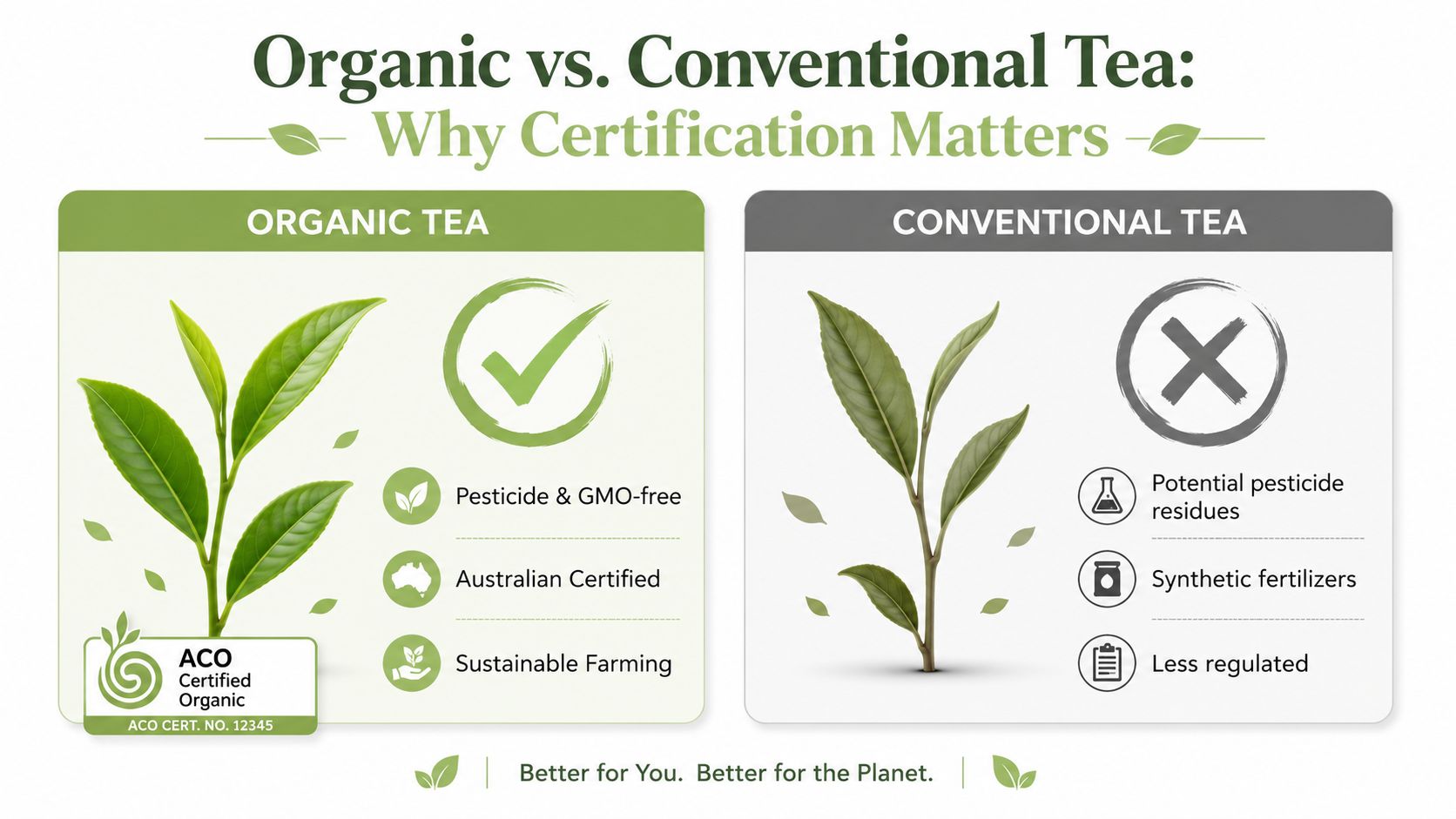
In Australia, that distinction matters. Organic tea is distinguished from conventional tea by its significantly lower levels of harmful chemical residues, as organic farming prohibits the use of synthetic pesticides, herbicides, chemical fertilizers, GMOs, preservatives, and fungicides, resulting in a safer product for consumers concerned about chemical exposure, as outlined in this explanation of organic vs conventional tea.
If you want a practical overview of what local certification means, this guide to organic tea certification in Australia is a useful place to start.
Why lower residue matters in a daily ritual
Tea often feels harmless because it's simple. Water, leaves, cup. But that simplicity is exactly why sourcing matters.
If you drink tea every day, you're not making a one-off choice. You're building a repeated habit. For many people, that's why organic tea benefits feel especially relevant here. A cleaner agricultural approach supports a cleaner daily routine.
Here's a simple comparison:
| Tea type | What the growing approach focuses on | What many drinkers value |
|---|---|---|
| Organic tea | Avoiding synthetic pesticides, herbicides, chemical fertilisers, GMOs, preservatives, and fungicides | A cleaner cup and confidence in how the tea was produced |
| Conventional tea | Standard agricultural methods that may include synthetic inputs | Wider availability, but with fewer assurances about residue levels |
Certification protects more than the absence of chemicals
The best way to think about organic certification is that it protects the integrity of the tea. It's not just about what's left out. It's also about what the plant is allowed to express.
That can shape:
- Leaf quality through gentler, more considered growing systems
- Flavour clarity because the cup isn't competing with a rougher profile
- Functional value because tea drinkers often choose green tea, matcha, and kombucha for their natural compounds, not just their taste
Practical rule: If you're drinking tea for wellness, don't treat sourcing as an afterthought. The benefit starts long before the kettle boils.
The Science-Backed Health Benefits of Organic Tea
Tea's reputation for wellness doesn't come out of nowhere. Its natural compounds, especially catechins and polyphenols, are where the primary interest lies, known for their antioxidant activity.
What antioxidants are doing in simple terms
Oxidative stress sounds technical, but the idea is straightforward. Your body deals with ongoing wear and tear from normal metabolism and from daily life. Antioxidants help counter some of that stress.
Tea naturally contains compounds that support this process. That's one reason it keeps showing up in discussions about long-term wellbeing, especially for people trying to make better everyday choices rather than chasing quick fixes.
A useful way to think about tea is this: it's a small habit with a cumulative effect. One cup won't transform your health overnight. But a good routine can support the bigger picture.
What the research on green tea shows
The strongest evidence in the material available here relates to green tea. According to Harvard's overview of tea and health, regular consumption of green tea is linked to a 14% reduced risk of stroke in individuals drinking 2–3 cups daily, and a 20% reduced risk for those consuming 4 or more cups, based on a 13-year cohort study of 82,369 Japanese men and women.
That matters because it gives the conversation some grounding. Tea isn't only associated with a pleasant ritual. It's also linked with meaningful health outcomes in large population studies.
The same source also describes broader links between tea intake and cardiovascular health, including observational findings around heart disease, stroke, and type 2 diabetes. That doesn't make tea a treatment, but it does support the idea that tea can be part of a smart, steady lifestyle pattern.
Why organic can strengthen the value of that habit
Many readers get confused because the research often focuses on tea itself, especially green tea. So where does “organic” fit in?
Organic doesn't create catechins and polyphenols from scratch. Tea naturally has them. What organic farming may do, based on the verified material available, is help preserve the tea's natural integrity by avoiding synthetic residues that many health-conscious consumers would rather not bring into a wellness routine.
That means the habit becomes more coherent. If you're drinking tea because you want something clean, supportive, and functional, organic aligns the farming method with the reason you're drinking it.
A simple way to use that in daily life:
- Choose tea you'll drink consistently. Daily habits matter more than occasional bursts of enthusiasm.
- Keep it unsweetened when possible. Let the leaf do the work.
- Treat tea as support, not magic. It works best alongside sleep, food, movement, and stress management.
Tea fits best in a wellness routine when it replaces something less helpful, not when it's expected to do everything on its own.
Focus and Energy The Organic Matcha Advantage
If green tea is a strong all-rounder, matcha is the concentrated version of that story. It's one of the clearest examples of why organic tea benefits can feel more noticeable in real life.
Why matcha feels different from regular green tea
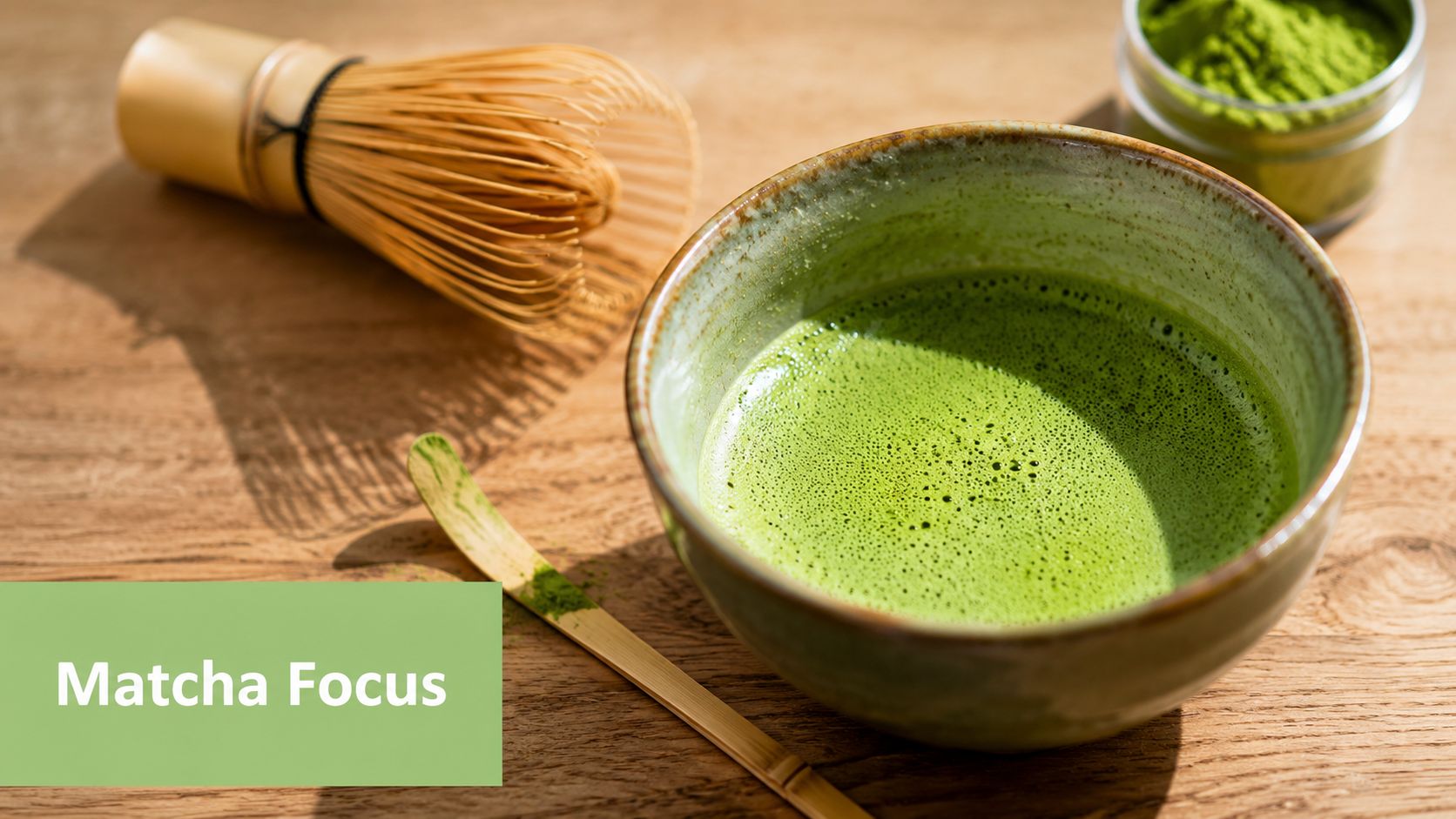
With brewed green tea, you steep the leaves and drink the infusion. With matcha, you whisk the stone-ground leaf into water and consume the whole thing.
That changes the experience. It's one reason matcha drinkers often describe the effect as steadier and more immersive. You're not just tasting tea. You're taking in the finely milled leaf itself.
According to this review of EGCG and antioxidants in matcha, matcha contains approximately 100–200 mg of EGCG per cup, with EGCG comprising 50–60% of total catechins, whereas regular brewed green tea delivers only 30–400 µmol TE/g in antioxidant activity compared to matcha's 1,300–1,600 µmol TE/g.
That's a big reason matcha has become such a favourite for people chasing functional drinks with substance.
Calm focus, not chaotic stimulation
Many Australians come to matcha because coffee stops working for them the way it used to. The first cup is fine. The second pushes them into jitters, irritability, or an afternoon slump.
Matcha tends to appeal to a different goal. People want energy, but they also want clarity. They want alertness without feeling scattered. Readers often associate this with the combination of tea caffeine and naturally occurring L-theanine in matcha, which is why matcha has developed a reputation for calmer focus.
That doesn't mean every matcha delivers the same experience. Grade, freshness, origin, and processing all matter. A vibrant Japanese organic matcha is usually smoother, sweeter, and easier to drink than dull, stale powder that tastes flat or bitter.
What to look for in a quality matcha
A quick checklist helps:
- Colour should look bright and lively rather than khaki or brownish.
- Texture should feel fine and soft, not gritty.
- Taste should be fresh, rounded, and pleasantly vegetal, not harsh.
- Origin and production matter, especially if you care about both flavour and farming standards.
For a simple visual on preparation, this video is a good reference point:
When matcha makes the most sense
Matcha works especially well when you want a beverage that supports performance without feeling aggressive.
It suits:
| Moment | Why matcha fits |
|---|---|
| Morning start | It gives your day a more deliberate pace than rushing into another coffee |
| Pre-work focus | Many people like it before writing, planning, or study sessions |
| Afternoon reset | It can feel cleaner than reaching for sweets or another strong caffeine hit |
A good matcha doesn't just wake you up. It helps you stay with what you're doing.
Gut Health and Vitality The Power of Real Organic Kombucha
Kombucha can be one of the most misunderstood drinks in the wellness space. Some bottles are carefully fermented and alive with character. Others taste like soft drink wearing a health halo.
That difference matters if you care about organic tea benefits beyond buzzwords.
Real kombucha starts with real tea
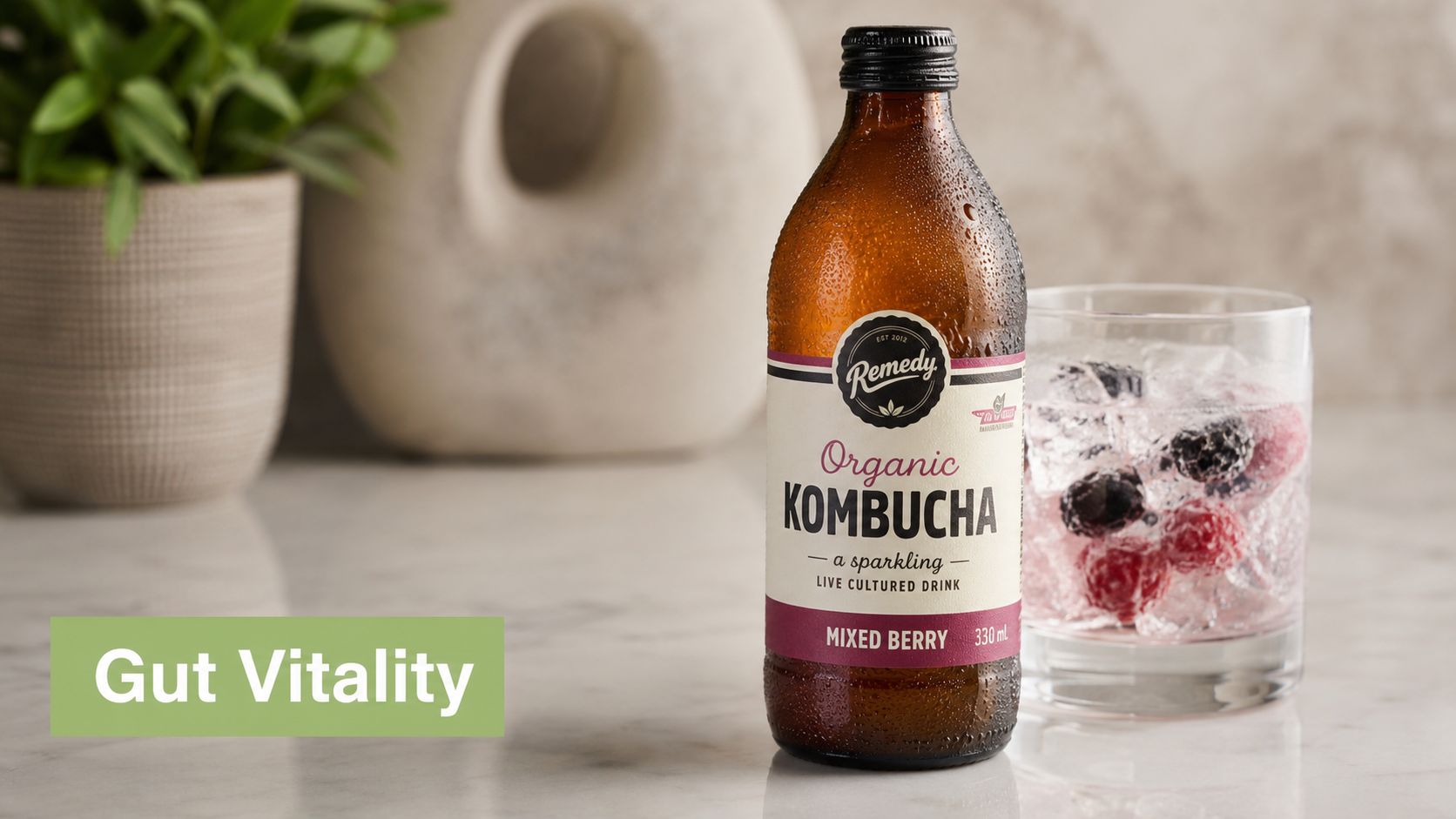
Authentic kombucha begins with brewed tea, culture, and time. The process transforms the original sweetened tea into something tangy, layered, and much lighter than many people expect.
For readers who are trying to understand what separates proper fermentation from shortcuts, this guide to real raw organic kombucha explains the distinction well.
When kombucha is made with organic tea, the starting point already aligns with a cleaner product philosophy. That won't automatically make every bottle excellent, but it does set a stronger foundation.
Why fermentation quality matters
People often assume kombucha is healthy just because it's called kombucha. That's where things get messy.
Some products lean heavily on flavourings, sweetness, or marketing language. A properly fermented kombucha, by contrast, earns its place through the brewing process itself. If you're drinking it for gut-friendly potential and as an alternative to sugary beverages, the details matter.
A useful way to compare them:
- Properly fermented kombucha often tastes tart, refreshing, and balanced. It feels like a brewed beverage.
- Mass-market imitation styles can taste flat, overly sweet, or more like flavoured soda.
The best kombucha doesn't try to hide fermentation. It lets fermentation create the flavour.
Where kombucha fits in daily life
Kombucha is often less about one dramatic health promise and more about replacing less helpful habits.
It can work well for people who want:
- A low-sugar alternative to soft drinks or sweet mixers
- A grown-up non-alcoholic option that still feels interesting
- A refreshing fridge staple that supports a more mindful routine
This is also where Australian-made kombucha has a special appeal. Local brewing, especially when done carefully, gives drinkers a product that feels close to home and easier to trust. For cafés, it also creates a stronger menu story. Customers increasingly want non-alcoholic drinks that feel thoughtful rather than like an afterthought.
A note on flavour and function
Good kombucha should taste like something you'd want to drink even if health benefits were never mentioned. Ginger, lime and ginger, or mango styles can all work beautifully when they're built on a genuine fermented base rather than sugar and flavour alone.
That's the heart of the argument for real organic kombucha. If the tea is well sourced and the fermentation is done properly, the drink becomes more than a trend. It becomes a practical, enjoyable part of modern Australian drinking habits.
How to Use Organic Tea at Home and in Your Café
The easiest way to enjoy organic tea benefits is to make them routine. You don't need a complicated wellness plan. You need a few reliable ways to use tea that fit your day.
Simple ideas for home

Try these:
Ceremonial-style matcha
Sift your matcha into a bowl, add a little warm water, then whisk until smooth and frothy. Keep the flavour front and centre. No sweetener needed if the powder is good.Quick matcha latte
Make a smooth matcha base first, then add your preferred milk hot or cold. If you like a softer flavour, this is often the easiest daily entry point.Kombucha mocktail
Pour chilled kombucha over ice with fresh citrus or mint. It gives you the ritual of a mixed drink without the heaviness.
A practical reason to keep green tea in rotation
One reason many people stay committed to green tea and matcha is that the habit is easy to repeat. There's also a strong wellness argument for doing so. According to this article on tea as a health drink, organic green tea including matcha delivers a bioactive dose of EGCg that directly inhibits reactive oxygen species, with a 2020 Australian Curtin University study quantifying that consuming three cups daily reduces the likelihood of developing prostate and ovarian cancer by neutralizing free radicals that damage DNA.
That doesn't mean everyone needs three cups every day. It does show why regular use, rather than occasional novelty, is where tea becomes meaningful.
Smart menu ideas for cafés
For cafés and hospitality venues, organic tea can do more than fill a menu gap. It can shape a more modern drinks offer.
Consider adding:
| Menu idea | Why customers respond |
|---|---|
| Straight matcha | It suits customers who want a clean, premium hot drink |
| Iced matcha latte | It appeals to regular café traffic looking for a coffee alternative |
| Kombucha by the bottle or glass | It gives non-alcoholic drinkers something with personality |
| Seasonal mocktails using kombucha | It helps venues build a wellness-friendly drinks list |
For home drinkers and cafés alike, the key is consistency. Keep the ingredients clean. Keep the preparation simple. Let the tea do the heavy lifting.
Your Organic Tea Questions Answered
Is organic tea automatically safer in every way?
It's safer in one important sense. Organic certification helps reduce exposure to synthetic agricultural chemicals. But it doesn't answer every sourcing question.
According to this explanation of what to look for when buying organic tea wholesale, while organic certification ensures tea avoids pesticides, it doesn't automatically screen for soil-derived heavy metals, and no recent 2024–2025 Australian report compares heavy metal levels in imported organic versus conventional matcha. If you drink matcha daily, it's reasonable to care about origin, supplier transparency, and testing standards.
Is matcha stronger than regular green tea?
Functionally, yes, many people experience it that way. You're consuming the whole powdered leaf, so the experience is more concentrated than a standard brewed green tea. That's part of why matcha often feels more substantial and more sustaining.
Can I drink organic tea every day?
For most adults, tea works best as a daily habit rather than an occasional health kick. The main questions are your caffeine sensitivity, the type of tea you choose, and whether it fits the rest of your routine.
What about pregnancy or medication interactions?
If you're pregnant, breastfeeding, managing a health condition, or taking medication, it's smart to check with your doctor before making tea, matcha, or kombucha a bigger part of your routine. Tea can be wonderfully supportive, but personal advice matters.
Is organic kombucha always low in sugar?
Not always. “Organic” and “low sugar” aren't the same thing. Read the label, pay attention to the fermentation style, and choose a product that aligns with why you're drinking it.
If you're ready to turn all of this into an everyday ritual, explore Pep Tea for premium organic matcha and Australian-brewed sugar-free organic kombucha. It's a simple way to bring cleaner flavour, functional benefits, and a more enjoyable wellness routine into your day.
Wild Berry Kombucha: A Guide to Flavour & Benefits

You're probably standing in front of a fridge at the supermarket or café, wanting something cold and satisfying that doesn't feel like a sugar bomb. Water feels a bit flat. Soft drink feels like a step backwards. Juice can be heavier than you want. Then you spot a bottle labelled wild berry kombucha and pause.
It sounds healthy. It looks lively. But the questions come quickly. Is it low in sugar? Is it just flavoured fizz with a wellness label? Why does it taste tart instead of sweet? And what does “naturally fermented” really mean?
Those are fair questions. Around the Hunter Valley, where we are serious about proper brewing, this is the sort of drink that gets misunderstood all the time. A well-made wild berry kombucha isn't trying to be a lolly-water soft drink with a fancy label. It's a fermented tea drink with fruit character, bright acidity, and a much cleaner drinking experience.
The Australian market has also made this category more interesting. Brands are positioning wild berry kombucha as a low-sugar functional beverage, not a dessert-style indulgence. If you follow how food and beverage teams build products and bring them to market, these kinds of category shifts are also visible in broader industry examples such as Beacon Recruitment food and beverage success stories, where product positioning and consumer expectations shape what ends up on shelves and menus.
An Introduction to Your New Favourite Drink
You grab a chilled bottle on a warm afternoon, hoping for something with flavour that still feels light. That is the moment wild berry kombucha starts to make sense.
For Australian drinkers, especially anyone trying to cut back on sugary soft drinks, wild berry kombucha sits in a very useful middle ground. It has the lift of a sparkling drink, the fruit character people enjoy, and the sharper, cleaner finish that comes from real fermentation. Around the Hunter Valley, that difference matters. A properly brewed kombucha is built from tea first, then shaped by culture, time, and fruit notes. It is not berry-flavoured soda wearing a health halo.
The point that causes the most confusion is sugar.
Many bottles on the shelf use similar words, but they are not made in the same way. In authentically brewed kombucha, sugar is added at the start because the culture needs fuel, much like yeast needs sugar to turn grape juice into wine. During fermentation, much of that sugar is transformed into acids and other compounds that give kombucha its tart, brisk character. That is why some lower-sugar Australian options, including brands such as PepTea, drink drier and less sweet than juice-heavy alternatives.
This is also why a “no sugar” or low-sugar promise can be true in a brewed kombucha and still sound odd at first glance. The sugar goes in as part of the process, not as a promise that the final drink will taste sweet. If a product leans heavily on fruit juice, concentrates, or sweeteners for its final flavour, you are often getting a very different drink from one that has been fermented properly and finished with restraint.
That distinction shapes the whole category. Product teams across food and drink spend a lot of time working out how to meet changing expectations around flavour, health, and convenience, which you can also see in Beacon Recruitment food and beverage success stories.
Why people get confused
Two bottles can both say kombucha and deliver completely different experiences.
One will taste crisp, tangy, and light because fermentation still leads the flavour. Another will come across more like sparkling berry juice because sweetness leads instead. The label may look similar, but the drinking experience is not.
A simple way to judge it is this. Authentic wild berry kombucha should taste like brewed tea and fermentation with berry notes layered over the top. If it tastes like cordial with bubbles, the fruit is probably doing more work than the ferment.
What makes it appealing
People usually come to wild berry kombucha for a few clear reasons:
- They want a soft drink alternative that feels more refreshing than syrupy.
- They want a lower-sugar option without giving up flavour.
- They want an alcohol-free drink that still feels interesting and grown-up.
A good bottle delivers on all three. It is lively without being cloying, fruity without becoming confectionery-sweet, and better suited to everyday drinking than many standard berry beverages.
Defining the Flavour of Wild Berry Kombucha
You crack open a chilled bottle on a hot Hunter Valley afternoon, expecting something like berry soft drink. The first sip usually says otherwise. Wild berry kombucha is lighter, drier, and more layered, with fruit on the nose and a brewed tang underneath.

What it usually tastes like
A good wild berry kombucha tends to arrive in three stages rather than one big sugary hit.
| Layer | What you notice | Why it matters |
|---|---|---|
| Fermented tea base | Tart, crisp, lightly acidic | This gives kombucha structure and keeps it refreshing |
| Berry aroma | Notes that suggest raspberry, blueberry, blackberry, or strawberry | This makes the drink smell inviting before it tastes sweet |
| Natural fizz | Fine bubbles and a dry finish | This keeps the palate clean instead of sticky |
That order matters. In a properly brewed kombucha, the tea and fermentation set the frame, and the berries colour it in. It works a bit like adding fresh fruit to sparkling water instead of pouring cordial into soda. You still get berry character, but the drink stays bright and adult rather than lolly-like.
Why "wild berry" can taste very different from one bottle to another
Many Australian shoppers get tripped up on this point. "Wild berry" sounds clear enough, yet one brand may taste close to a lightly tart fermented tea, while another drinks more like sparkling juice with a kombucha badge on it.
The difference usually comes down to what is doing the heavy lifting. If fermentation leads, you notice tang, dryness, and a clean finish. If fruit juice or added sweeteners lead, the berry flavour becomes rounder, fuller, and more obviously sweet.
That is also why a "no sugar" claim can seem confusing at first. Kombucha starts life with sweet tea because the culture needs fuel. After fermentation, a well-brewed bottle can finish much lower in sugar than a juice-heavy alternative. So the flavour cue to watch for is not intense sweetness. It is balance.
The flavour profile to look for
If you want authentic wild berry kombucha, look for these signs in the glass:
- A tart opening, not a syrupy one
- Berry aroma that smells fresh or jammy without tasting sugary
- A tea-like backbone that gives the drink shape
- A clean, dry finish that invites another sip
A sweeter product can still be enjoyable, of course. It is a different style. For readers comparing berry-led options, Pep Tea's Raspberry Lemonade Kombucha is a useful example of how fruit character can stay lively while the fermented profile still shows through.
What the ingredient list can tell you
Labels often reveal the drinking experience before you open the bottle. A shorter, tea-first ingredient list usually points to a more traditional kombucha profile. A formula built around fruit concentrates, sweeteners, or flavour-heavy additions often pushes the drink closer to soft drink territory.
For Australian buyers, this matters because "better-for-you" claims can sit on both styles. One bottle may be authentically brewed and low in sugar because fermentation has done the work. Another may rely more heavily on flavour additions to create a berry impression while still tasting sweet.
A simple test helps. If you can picture the drink alongside a meal, in a wine glass, or as an afternoon refresher without palate fatigue, it is probably a true kombucha-style flavour. If it reads more like dessert in a bottle, the berry is likely overpowering the brew.
The best wild berry kombucha tastes like fermented tea first, berry second, and sweetness a distant third.
The Magic of Fermentation and Its Health Benefits
Much of the confusion surrounding wild berry kombucha begins with a single fair question. If brewers use sugar at the start of the process, how can some bottles end up very low in sugar, or even make a "no sugar" claim?
The answer sits in the ferment, not the flavouring.

What fermentation actually does
Kombucha starts as sweet tea because the culture needs fuel. Yeast and bacteria use that sugar during fermentation, much like a sourdough starter uses flour. The starting ingredient matters, but what the microbes do with it matters more.
A review on kombucha fermentation and bioactive compounds explains the basic sequence. Yeast split sucrose into simpler sugars and convert them into ethanol. Acetic acid bacteria then turn that ethanol into organic acids, including acetic acid, which lowers the pH and creates kombucha's bright, tangy edge.
That is why properly brewed kombucha tastes dry, tart, and tea-led rather than like cordial.
Why the sugar question trips people up
Shoppers often look at kombucha the way they look at soft drink. They assume sweetness in the recipe means sweetness in the bottle. Fermentation changes that equation.
In a genuine brew, sugar is part of the process first and part of the flavour second. If fermentation is allowed to do its work, much of that starting sugar is transformed. If a product relies heavily on juice, concentrates, or added sweeteners after brewing, the final drink can taste fuller, softer, and much sweeter, even if it still sits in the kombucha section.
That distinction matters in Australia, where "better-for-you" messaging appears on both traditional and fruit-heavy styles. An authentically brewed, low-sugar kombucha such as PepTea's approach is built around fermentation doing the heavy lifting. A sweeter, juice-led option may still be pleasant, but it is offering a different drinking experience.
What fermentation adds beyond lower sugar
Fermentation does more than trim sweetness. It builds the structure of the drink.
You can taste that in a good wild berry kombucha. The berry notes sit on top, while the ferment gives shape underneath. It works like the frame of a house. You may notice the paint first, but the frame is what holds everything together.
That ferment-driven structure usually shows up as:
- Organic acids that bring tang, freshness, and a cleaner finish
- Live cultures that make kombucha part of the broader functional beverage category
- Tea-derived compounds that remain in the brew when real black or green tea is used as the base
For a practical overview of these ideas, Pep Tea's guide to the benefits of kombucha is a useful companion.
Brewer's note: In a well-made wild berry kombucha, fruit gives the first impression. Fermentation gives the drink its identity.
What about caffeine
Wild berry kombucha usually suits people who want a lighter lift than coffee. Because it is brewed from tea, it still contains some caffeine, but the effect is generally gentler than a full cup of coffee or a sugary energy drink.
Remedy notes the caffeine content of its Wild Berry Kombucha on the brand's product page, which helps explain why many drinkers find kombucha better suited to an afternoon refreshment than a hard caffeine hit.
Health benefits in plain language
Kombucha is not a cure-all, and it should not be sold that way. Its value is much more practical.
For many Australian drinkers, the primary benefit is that a properly fermented kombucha can replace sweeter drinks without feeling like a compromise. You still get flavour, acidity, aroma, and a bit of ceremony in the glass. You are not just giving something up. You are choosing a drink with more character and, in many cases, less sugar.
That is the true magic of fermentation. It turns sweet tea into something sharper, drier, and more interesting, which is exactly why wild berry kombucha can feel both indulgent and sensible at the same time.
How to Serve and Pair Wild Berry Kombucha

You pull a cold bottle from the fridge on a hot Hunter Valley afternoon, pour it over ice, and suddenly the whole drink makes more sense. The berry aroma rises first. Then the tart, dry finish comes through, which is exactly why a properly brewed wild berry kombucha behaves more like a food-friendly spritz than a soft drink.
The easiest way to enjoy it
Start simple. Chill the bottle well, pour into a glass, and add ice only if you want a lighter, longer serve.
A glass does more than make it look nicer. It lets the aroma open up, softens the first hit of acidity, and shows you the bubble size. Fine bubbles usually feel more elegant on the palate, while a straight-from-the-bottle sip can hide some of the drink's detail.
If you are trying to understand the "no sugar" promise that appears on some Australian kombuchas, tasting it this way helps. An authentically fermented, low-sugar kombucha often finishes drier and cleaner. A sweeter, juice-heavy version usually lands more like a sparkling berry drink. Both can taste good, but they are not doing the same job at the table.
Why it works so well with food
Wild berry kombucha pairs well with food for the same reason a squeeze of lemon improves grilled fish. Acidity sharpens flavour and resets the palate between bites.
That makes it especially handy with foods that are creamy, salty, or a little rich. The berry note adds fragrance, while the fermented edge keeps the drink from feeling sticky or heavy. In a well-brewed bottle, the fruit is the welcome. The fermentation is the structure.
Try it with:
- Goat's cheese salad, where the tartness cuts through the creaminess.
- Grilled chicken or fish, where the berry note adds freshness without extra sweetness.
- Charcuterie or savoury nibbles, because each sip cleans the palate.
- A creamy dessert, if you want contrast instead of matching sweetness.
This is also where label reading matters in real life. A lower-sugar kombucha can sit beside food much like a dry cider or a light spritz. A kombucha with more added juice tends to behave more like a soft drink, which can crowd the food rather than refresh the palate.
A simple mocktail idea
One of my favourite warm-weather serves is built for balance, not sugar:
- Wild berry kombucha
- Sparkling mineral water
- Fresh lime
- Mint
Build it in a tall glass with ice and keep the garnish restrained. Too many extras can bury the fermented berry character that makes the drink interesting in the first place.
If you want more ideas, Pep Tea's guide to fruity and non-alcoholic kombucha cocktails shows how kombucha can work as a mixer without turning into a syrupy mocktail.
For visual inspiration, this short video is a handy starting point.
Serve it cold, keep the extras light, and let the tart berry profile do the work.
Café and entertaining use
For cafés and hospitality venues, wild berry kombucha earns its place beside sparkling water, tonic, and alcohol-free spritzes. It feels grown-up in the glass and does not need much dressing up.
At home, it fills the same gap. You get something social, flavourful, and satisfying without reaching straight for a sweet soft drink. That is a big part of its appeal in Australia, where plenty of drinkers want refreshment with a bit more craft behind it.
How to Choose and Store the Best Kombucha
You are standing in the drinks aisle, looking at two bottles that both say wild berry kombucha. One is sharply brewed, light, and low in sugar. The other drinks more like diluted berry juice with a kombucha label on the front. The difference usually shows up on the back of the bottle.

Read the nutrition panel first
Start with sugar. In Australia, “no sugar” can sound too good to be true until you understand how kombucha is made. Sugar goes into the brew at the start as food for the culture. During fermentation, the yeast and bacteria use much of that sugar and turn it into acids and other compounds that give kombucha its tang and structure.
That is why two berry kombuchas can taste similar at first sip but have very different nutrition panels. One may be fully fermented and left relatively dry. Another may have fruit juice or other sweet ingredients added later to build a softer, sweeter profile.
A front label can tell a nice story. The panel tells you what ended up in the bottle.
Then check the ingredient list
The ingredient list helps you answer a simple question. Are you buying fermented tea with berry flavour, or a berry drink with a little kombucha added?
A good label-reading habit is to look for the base first, then the extras. Tea, culture, and natural flavouring or fruit components suggest a brew-led product. If juice concentrates or sweeteners play a large role, the drink may still be pleasant, but it sits closer to a soft drink style.
Pep Tea is one Australian option in this category. The brand describes its kombucha as Australian made, organic, and sugar-free. That makes it a useful reference point when you compare bottles side by side with sweeter, juice-heavier alternatives.
Shopping rule: Buy the ingredient panel first, then decide whether the marketing matches it.
Storage matters more than people think
Kombucha is a living, acidic drink. It behaves more like a fresh fermented food than a shelf-stable fizzy drink.
Cold storage slows change. Heat speeds it up. Leave a bottle warm for too long and the flavour can drift, with berry notes fading while sharper vinegary notes become more obvious. If a bottle has been shaken around in the car or stored poorly, open it slowly over the sink or outdoors. You may get more fizz than expected.
Keep these habits in mind:
- Keep it refrigerated to protect flavour and keep fermentation activity steadier.
- Avoid long periods in the heat especially in an Australian summer, where a hot boot or pantry can change the drink quickly.
- Open with care if the bottle feels very firm or has been jostled.
- Drink it within the best-before period for the cleanest balance of fruit aroma, acidity, and sparkle.
A quick buying checklist
| Check | What you want |
|---|---|
| Sugar result | A genuinely low-sugar or sugar-free outcome, not just a healthy-sounding front label |
| Base ingredients | Tea, kombucha culture, and a clear flavouring approach |
| Sweetness source | Minimal added juice or sweeteners if you want a truer fermented style |
| Storage advice | Clear refrigerated handling |
The best wild berry kombucha tastes honest. You should get fermented tea first, berry character second, and sweetness kept in check rather than used as a disguise.
Start Your Wild Berry Kombucha Journey Today
Wild berry kombucha makes sense once you stop judging it like a soft drink. It isn't supposed to be syrupy, simple, or one-note. It's supposed to be crisp, tart, fruity, and refreshing in a way that comes from fermentation rather than a heavy hand with sugar.
That's also why the Australian context matters. “No sugar” can sound suspicious until you understand the brew itself. The sugar starts as fuel for the culture. In a properly fermented kombucha, that fuel is transformed. What's left is a drink with structure, sparkle, and a much lighter feel than many berry beverages on the shelf.
The takeaway worth remembering
If you remember only a few things, make them these:
- Fermentation explains the flavour
- The label explains the honesty
- Cold storage protects the quality
- Berry aroma should support the brew, not hide it
For brands, cafés, and educators, presentation matters too. If you ever create visual content around drinks, recipes, or product storytelling, tools like the cinematic AI video generator by LunaBloom can be useful for turning flavour ideas into clear visual content without losing that artisanal feel.
Wild berry kombucha is one of the easiest ways to move toward a better-for-you beverage habit without giving up enjoyment. It has enough personality to feel special and enough restraint to fit everyday life. That's a rare balance, and it's a big part of why so many Australians keep coming back to it.
If you'd like to explore Australian-made organic kombucha and premium tea with a wellness focus, visit Pep Tea. You'll find sugar-free kombucha, matcha, and practical guidance to help you choose drinks that fit everyday life without the sugar overload.
Postbiotics: The Real Benefit of Beneficial Bacteria.

We are all by now familiar with the concept of gut health, and the importance of looking after our gut microbiome. We understand that the link between food and health is far from simple and that our health is largely governed by the trillions of bacteria inside us. Most of us are on board with the need to increase our intake of friendly bacteria. Many of us now understand that we also need to feed those bacteria with a fibre-rich diet. But how many of us understand why?
Postbiotics are the real benefit behind those beneficial bacteria.
What Are Postbiotics?
A quick Google search will tell you that postbiotics are a magical supplement that will benefit your health. And whilst this is an interesting area of research with potentially huge implications for medical science, this does not tell us the true story of postbiotics.
Postbiotics are the by-products of microbial digestion. A natural product of fermentation, these are the bioactive compounds that the probiotic bacteria produce. The waste products of bacteria, they provide many benefits to our health.
The elements of the gut microbiome work together and support each other. Before we explore the subject of postbiotics further, here’s a quick recap.
What is the difference between probiotics, prebiotics, synbiotics, and postbiotics?
Understanding the distinctions between prebiotics, probiotics, synbiotics, and postbiotics is key to optimising gut health.
Probiotics are live beneficial bacteria and yeasts that can be ingested through fermented foods or supplements. They populate your gut with good microbes that support digestion and immunity.
Prebiotics, on the other hand, are types of dietary fibre that feed the beneficial bacteria in your gut. They serve as the fuel that helps these helpful microorganisms thrive.
Synbiotics are a combination of prebiotics and probiotics, designed to synergistically enhance the survival and colonization of probiotics in the gut. Think of them as a one-two punch for gut health, providing both the beneficial bacteria and the nutrients they need to flourish.
Postbiotics are the bioactive compounds produced when probiotics break down prebiotics. These non-living byproducts include substances like short-chain fatty acids, peptides, and enzymes, which contribute to gut and overall health by reducing inflammation, enhancing immune function, and supporting digestion.
Each of these components—prebiotics, probiotics, synbiotics, and postbiotics—plays a unique and integral role in maintaining a balanced and healthy gut microbiome.
Read more about prebiotics and probiotics.
How Do Postbiotics Work?
To understand what postbiotics are, and where they are found, we need to think in terms of fermentation. We already know that our food sources of friendly bacteria (probiotics) are found in fermented foods. So let’s start there.
Very simply, fermentation can be thought of as a kind of digestion. The bacteria break down a substance into smaller parts, and as they do this they also produce other substances. These other substances (often considered to be waste products) are known as metabolites.
In the process of fermenting foods, the metabolites produced become part of the end product. Your kefir, kombucha or whatever.
But there is another side to fermentation, and that happens inside the gut. And it is where the real magic begins.
Although the gut microbiome gets busy at the mere idea of food and plays an important role across the entire digestive process, much of the benefit of postbiotics happens in the large intestine, which is where the final journey of food through the digestive tract plays out. It is also where our old friend fibre takes centre stage.
As something that passes through the gut undigested, we have long overlooked the true nutritional value of fibre. However, the rising interest in gut health and the value of eating prebiotic foods has made us aware that fibre does far more than simply keep things moving along. Although to be clear, this does remain a vital part of our digestive health.
So, prebiotics. Insoluble fibre that provides food for our probiotic bacteria. These fibres pass through to the colon largely unchanged. Ready to be fermented. The same rules apply as they did before in our fermented foods. But now they are happening inside our body, where those useful metabolites can do their work directly.
Examples of Postbiotics
The metabolites (postbiotics) produced by your gut flora are not a random free-for-all. Specific probiotic bacteria will produce specific postbiotic compounds. There is some crossover, but for the most part, they all come with specific jobs to do. Some of these are outlined below.
Short Chain Fatty Acids
Short chain fatty acids (SCFAs) are just one type of postbiotic produced during the fermentation of dietary fibres by gut bacteria. Some of the primary SCFAs include acetate, propionate, and butyrate. These compounds are incredibly beneficial to your health and play a variety of roles within your body.
For instance, butyrate is known for its ability to improve gut barrier function and serve as an energy source for colon cells, helping to maintain the integrity of the gut lining. Acetate can influence lipid metabolism and propionate has anti-inflammatory properties and may help regulate glucose homeostasis.
SCFAs also contribute to lowering the pH of the colon, which can inhibit the growth of harmful bacterial pathogens.
Neurotransmitters
Among the neurotransmitters produced in the gut, serotonin is one of the most notable. In fact, about 90% of the body’s serotonin is made in the digestive tract. Serotonin is key for regulating mood and sleep.
Another important neurotransmitter produced in the gut is gamma-aminobutyric acid (GABA), which helps calm nervous activity. GABA can help soothe the nervous system and promote relaxation. Additionally, dopamine, another neurotransmitter that plays a role in motivation and pleasure, is also partially produced in the gut.
Overall, the production of these neurotransmitters by your gut microbiota can profoundly influence your mental health and well-being, showcasing the deep connection between your gut and brain.
Vitamins
Gut bacteria also synthesise essential vitamins. Among these vitamins, Vitamin K is a standout player.
Specifically, Vitamin K2 is produced by gut bacteria and is crucial for blood clotting and bone health.
Additionally, various B vitamins are also synthesized by gut microbiota. For instance, Vitamin B12, which is essential for nerve function and the production of DNA and red blood cells, can be partially produced by gut bacteria. Other B vitamins produced include Biotin (B7), which helps in the metabolism of fats, carbohydrates, and proteins, and Folate (B9), which is crucial for DNA synthesis and repair.
Enzymes
Postbiotic enzymes produced by gut bacteria play various important roles in maintaining health and supporting digestion.
One such enzyme is lactase, which is responsible for breaking down lactose, the sugar found in milk and dairy products.
Lipase is an enzyme produced by gut bacteria that helps digest fats by breaking them down into fatty acids and glycerol, which are easier for your body to absorb.
These are two examples of valuable enzymes produced by the gut bacteria.
Are dead probiotics beneficial?
There is some contention over the fact that not all live bacteria make it to the gut intact. And, in the case of sourdough bread (which is a prebiotic, not a probiotic food) the bacteria do not survive the cooking process. (The pre and postbiotic benefits of sourdough bread are actually quite unique, but that’s another story for a different time.)
Yet these dead bacteria, whole or fragmented, act as food for the live bacteria and create conditions in which the gut bacteria can thrive. They also come under the collective term postbiotics.
Which Foods Are Postbiotics?
To think of postbiotics in terms of foods, or even supplements, is perhaps missing the point. Whilst probiotic food may contain a range of beneficial compounds beyond that of live bacteria, the real magic happens inside of us.
By including a wide range of both probiotic foods (live bacteria) and prebiotic foods (fibre to feed them with) you will unlock the benefits of postbiotics.
‘Wide range’ is the key factor here. The more diverse your diet, the more diverse your microbiome and the specific postbiotics they can produce.
As we have seen, understanding the roles of probiotics, prebiotics, and postbiotics highlights the intricate and fascinating interplay within our gut. While probiotics introduce beneficial bacteria and prebiotics feed these helpful organisms, postbiotics emerge as a valuable byproduct, supporting gut health and overall well-being.
Emphasising a diverse diet rich in various probiotic and prebiotic foods can significantly enhance the diversity of your gut microbiome, ultimately unlocking the myriad benefits of postbiotics. By nurturing this internal ecosystem, you can foster a healthier, more balanced digestive system, contributing to improved health and vitality.
Explore our different flavours of award-winning raw organic kombucha and start your gut health journey today. Or read more in our informative guide to gut health.
This article was reproduced on this site with permission from operafoods.com.au the “Organic Kombucha Supplier”.
See original article:- Postbiotics: The Real Benefit of Beneficial Bacteria
What are Prebiotics and Probiotics?

Prebiotics and probiotics are two critical components of gut health, each with a unique role in supporting our digestive system and overall well-being. Together, they form a synergistic pair known as synbiotics, which effectively support the gut microbiome’s health and functionality. By maintaining a balanced intake of these elements, individuals can foster a healthier gut microbiome, and positively impact their health.
But what are they exactly, and why are they so important to our health and wellbeing?
The Importance of Gut Health
Every day we discover new things about the importance of gut health and how best to nurture it. But why is it so important?
The significance of gut health extends beyond basic digestive functions; it is integral to our immune system, brain health, mood, and even the prevention of chronic diseases. The gut is often seen as the body’s “second brain” because it produces neurotransmitters that affect mood and cognitive functions.
Furthermore, a healthy gut microbiome can strengthen the immune system, reduce inflammation, and provide a barrier against harmful pathogens. With most of the immune system residing in the gut, maintaining its health through a balanced diet rich in prebiotics and probiotics is vital for overall well-being and disease prevention.
Before we explore the synergy between probiotics and prebiotics, and why they are vital for a healthy gut, let’s look at each in turn.
Understanding Prebiotics
What are prebiotics?
Prebiotics are essentially food for the beneficial bacteria residing in our gut. And it all comes down to the one simple thing we seem to have overlooked in recent years. Fibre. In dietary terms, it really is that simple.
In scientific terms, it gets a bit more complex. Prebiotics are non-digestible fibres and compounds that pass through the upper part of the gastrointestinal tract and stimulate the growth and activity of advantageous microbes in the digestive system. Unlike probiotics, which are live beneficial bacteria, prebiotics are the nourishment that helps these good bacteria thrive.
Found in a variety of foods, especially in high-fibre fruits, vegetables, and whole grains, prebiotics play a crucial role in maintaining a healthy gut microbiome by supporting the proliferation of beneficial gut bacteria. Incorporating prebiotic-rich foods into one’s diet is a key strategy for promoting gut health and, by extension, overall wellness.
Sources of prebiotics
Prebiotic-rich foods are a critical component of a diet that supports gut health. Major sources of prebiotics include:
- Chicory Root: Packed with inulin, a powerful prebiotic fibre, chicory root aids in the growth of beneficial gut bacteria.
- Garlic: Acts as a prebiotic by promoting the growth of beneficial Bifidobacteria in the gut. Garlic also prevents disease-promoting bacteria from growing.
- Onions: Rich in inulin and FOS (fructooligosaccharides), onions can help strengthen gut flora, improve immune function, and enhance digestion.
- Leeks: Like garlic and onions, leeks are high in inulin and FOS, providing the gut with beneficial prebiotic fibres.
- Asparagus: Contains inulin, which supports the growth of friendly gut bacteria.
- Bananas: Green (unripe) bananas are high in resistant starch, a prebiotic that improves gut health.
- Barley: A great source of beta-glucan, known to promote the growth of good bacteria in the gut.
- Oats: Rich in beta-glucan soluble fibre, oats help increase beneficial bacteria in the digestive system.
- Apples: Contain pectin, another soluble fibre that boosts the gut microbiome and decreases harmful bacteria.
- Cocoa: Contains flavanols that are prebiotics, fostering the growth of beneficial bacteria in the gut.
Incorporating these prebiotic-rich foods into your diet can significantly impact your gut’s health, fostering a robust and balanced microbiome.
How prebiotics work in the body
Prebiotics work in the body primarily by serving as food for the beneficial bacteria residing in the gut, such as Lactobacillus and Bifidobacterium species. When prebiotic fibre is consumed, it is not digested by the stomach or small intestine. It reaches the colon intact and is fermented by the gut microbiota. This fermentation process produces short-chain fatty acids (SCFAs) like acetate, propionate, and butyrate, which serve several vital functions. They act as energy sources for colon cells, help regulate electrolyte levels, and can strengthen the gut barrier function.
This process promotes a healthy balance of gut bacteria but also contributes to the overall health of the gastrointestinal system, influencing immune function, nutrient absorption, and possibly even the body’s response to stress and mood regulation.
Exploring Probiotics
What are probiotics?
Probiotics are live microorganisms, often referred to as “good” or “beneficial” bacteria, that provide health benefits when consumed in adequate amounts. These benefits are focused on the digestive system, where probiotics help balance the gut microbiome.
This balance is crucial for maintaining digestive health, enhancing immune function, and influencing mood and mental health. Common sources of probiotics include fermented foods such as kombucha, sauerkraut, kimchi, and kefir, as well as dietary supplements.
Like prebiotics, probiotics support the health of the gut flora, but they do so through different mechanisms, adding beneficial bacteria to the gut ecosystem.
Sources of probiotics
Probiotic-rich foods are an integral part of diets worldwide and are known for their beneficial effects on gut health. Here are some major sources of probiotics:
- Yoghurt: One of the most well-known sources, it’s made by fermenting milk with live bacteria cultures.
- Kefir: A fermented dairy product, similar to yoghurt but with a thinner consistency. It is made by fermenting milk with kefir grains.
- Sauerkraut: Fermented cabbage, rich in live cultures, vitamins, and minerals. It’s important to choose raw and unpasteurized sauerkraut to reap the probiotic benefits.
- Kimchi: A spicy Korean side dish, usually made from fermented cabbage and radishes. It contains a variety of probiotic strains, along with vitamins and minerals.
- Miso: A Japanese seasoning produced by fermenting soybeans with salt and a fungus called koji. It’s used in soups and other dishes.
- Pickles: Cucumbers, or other vegetables, that have been pickled in water and salt. Like with sauerkraut, look for pickles that are naturally fermented.
- Kombucha: A tangy, fizzy tea fermented with a symbiotic culture of bacteria and yeast (SCOBY).
Including these foods in your diet can help enhance gut health by increasing the diversity and quantity of beneficial bacteria in the gut microbiome.
Read more about how fermented foods can help promote a healthy gut
How probiotics affect the gut flora
Probiotics exert a beneficial impact on gut flora through several mechanisms.
Firstly, they restore the natural balance of the gut microbiome, especially after it has been disrupted by factors such as antibiotic use, poor diet, or stress. By colonizing the gut, these beneficial bacteria compete with harmful pathogens for nutrients and attachment sites on the intestinal wall, effectively inhibiting the growth of harmful microorganisms.
Additionally, probiotics stimulate the production of short-chain fatty acids (SCFAs), which serve as a food source for gut cells, thus enhancing the integrity of the gut barrier and reducing inflammation. This reinforcement of the gut barrier prevents toxins and harmful bacteria from leaking into the bloodstream, a condition known as “leaky gut,” which can trigger inflammation and immune responses.
Through these actions, probiotics contribute to a healthier, more resilient gut microbiome, laying a foundation for improved overall health.
The Synergy Between Prebiotics and Probiotics
Synbiotics refer to a synergistic blend of prebiotics and probiotics that work together to enhance gut health more effectively than either could alone. The concept of synbiotics underscores the importance of a holistic approach to gut health, where the focus is on creating a conducive environment for beneficial microbes, enhancing their positive impacts on your health.
How prebiotics and probiotics work together
Prebiotics and probiotics work together, enhancing the gut’s overall environment and promoting optimal digestive health. As we have seen, prebiotics, typically non-digestible fibres, serve as food for probiotics, the beneficial bacteria residing in the gut. This relationship ensures that probiotics have the necessary nutrients to thrive and multiply, effectively outcompeting harmful bacteria for space and resources within the gut microbiome.
The symbiotic interaction doesn’t stop at nutrition; it also stimulates the beneficial bacteria to produce even more short-chain fatty acids (SCFAs), crucial for gut health. These SCFAs nourish gut cells but also play a key role in modulating the immune system, reducing inflammation, and enhancing mineral absorption.
Prebiotics can elevate the beneficial effects of probiotics, making the combination of both essential for a balanced, healthy gut flora and, by extension, a robust immune system and improved overall health.
Tips for Maintaining a Balanced Gut Microbiome
Incorporate a diverse range of foods
A varied diet encourages the growth of different types of beneficial bacteria. Aim to include a wide assortment of fruits, vegetables, whole grains, and legumes in your meals.
Eat plenty of fibre-rich foods
Since prebiotics are typically found in fibrous foods, eating plenty of fruits, vegetables, and whole grains can help fuel the beneficial bacteria in your gut.
Include fermented foods in your diet
Fermented foods like yoghurt, kombucha, kefir, sauerkraut, and kimchi are natural sources of probiotics.
Limit the use of antibiotics
Antibiotics can significantly disrupt your gut microbiome. Use them only when necessary and as prescribed by a healthcare provider.
Stay hydrated
Drinking plenty of water is beneficial for the overall health of your gut, as it helps maintain the mucosal lining and supports the growth of beneficial bacteria.
Manage stress
High levels of stress can adversely affect your gut health. Engage in stress-reduction techniques such as meditation, exercise, or yoga.
Get enough sleep
Aim for 7-9 hours of good quality sleep per night to support overall gut health, as sleep deprivation can negatively impact the microbiome.
Exercise regularly
Regular physical activity has been shown to increase both the diversity and number of beneficial gut bacteria.
Avoid excessive alcohol and processed foods
These can alter the balance of your gut microbiome, reducing the number of beneficial bacteria.
In conclusion, maintaining a healthy gut microbiome is vital for overall health and well-being. Incorporating a diverse range of foods, especially those rich in fibre and fermented products, is essential. Whilst the fibre in prebiotic foods and the microbial content of probiotic foods will be of value individually, understanding how they work together could be the key to making lasting changes to your gut health.
Why not get off to a good start with our raw, organic, sugar-free kombucha today? Or find out more about the benefits of kombucha.
This article was reproduced on this site with permission from operafoods.com.au the “Organic Kombucha Supplier”.
See original article:- What are Prebiotics and Probiotics
Our Guide to Good Gut Health
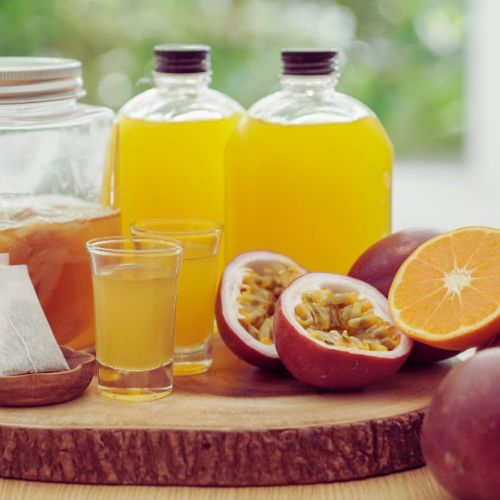
Gut health plays a huge part in our overall health and wellbeing. Rather than a separate nutritional issue, it should underpin our entire approach to healthy eating.
Most of us are increasingly aware of the importance of the gut in both physical and mental wellbeing, and that it has something to do with ‘gut flora’, yet how many of us really understand what it is all about?
This article aims to explain a little of the science behind the whole gut health thing, in order to arrive at a better understanding of just how important it is to our everyday health, and the food choices we make.
What is Gut Health?
The foundation of gut health rests upon healthy eating and making food choices that better support our health. Stress, medication, and our increasingly unnatural diet, have played havoc with our health, our digestion, and our wellbeing. Which, as we know, are all intrinsically linked.
We have become so disassociated from the connection between food, health, and wellbeing, that many of us may not even be aware that things are not as good as they could be. Even those of us who do not suffer from digestive disturbances may never have experienced the difference that a truly healthy gut can make to the way we feel.
Gut health is about far more than simply reducing unpleasant symptoms, and it influences more of the bodies processes than we might realise. So maybe a better question would be; what is the gut?
What is the gut?
The gut is a collection of organs that belong with our digestive system, largely the stomach and the intestines. Yet, the gut is involved in far more than just digestion of the food we eat.
Did you know most of your immune system is housed within the gut, and that it is under the control of the gut microbiome? Not only does the gut flora act as a defence against invaders, it actively controls the behaviour of other immune cells.
Digestion itself plays a huge role in our overall health, in more ways than you may think. We have come to think of nutrition on a very reductionist basis which completely underestimates the complexity of the human body. The simple act of eating dictates every single bodily function, from the smallest chemical reaction to the largest muscle movement.
Let’s take a closer look at the role of the gut in digestion.
Our Digestive System
Our digestion is a complex system of mechanical and biological processes. In simple terms it is there to extract nutrients from the food we eat (and eliminate waste) in order to survive. As well as the mouth, the stomach, and the intestine, it involves other organs such as the liver, kidneys and the pancreas. All of it facilitated by an array of specialist cells, hormones, neurotransmitters, and enzymes. And an army of bacteria, fungi, yeasts, and other assorted microbes.
Digestion begins in the mouth with the process of chewing, via the stomach where food is further broken down. Bacteria are present here in smaller numbers, playing an important protective role as part of the immune system, essentially acting as the guardians at the gate.
The role of the small intestine
From the stomach food enters the small intestine and this is where the microbial action really begins. It is here that most of our nutrients are extracted and absorbed.
The bacteria in the gut assist the digestive enzymes and provide vital protection to the intestinal barrier, making sure that nothing passes into the bloodstream that shouldn’t. They also play a role in keeping it all moving along nicely by supporting the muscular action of the gut wall.
If the small intestine cannot function as well as it should then the body will not be able to uptake all the nutrients it needs. Many of the symptoms of poor gut health show up here; however unconnected those symptoms may seem.
Once food has been processed by the small intestine, what’s left moves into the large intestine; the colon. And this is where the real magic of all those microbes begins.
The importance of the large intestine
The food that ends up here is the food that the small intestine cannot digest (like fibre, for instance). But whilst the small intestine takes all the credit for doing the bulk of the work, the large intestine is much, much, more than merely a disposal chute.
The largest concentration of gut bacteria is found here in the colon. There are trillions of micro organisms in the large intestine and they are responsible for the final stage of digestion that happens here. They take the food that we cannot digest and turn it into many of the vital nutrients that our bodies need. These bacteria do not just breakdown the nutrients within our food, but they produce essential nutrients too.
The Gut Microbiome
The collective term for all these microbes that live in the gut is the gut microbiome. More than just a handful of bacteria that make your tummy happy, it acts as an organ in its own right, playing a part in digestion, hormonal control, the nervous system, and the immune system. It also plays a crucial role in weight management.
Gut Bacteria
Of the microbes that make up the gut microbiome, most of them (but not all) are bacteria. There are in fact more bacteria in the body than there are human cells, and they contribute to anywhere between 1kg and 3kg of our body weight.
The bacteria of the gut microbiome can be grouped into four dominant groups, and within these groups are thousands of different strains and types of bacteria, all with different requirements and doing different jobs. Of the four major groups, two are the most prolific, yet the overall number and their diversity differs from person to person. Not only does this depend on the biological conditions within the body, but it is also thought that we are genetically predisposed to a dominant type.
Whilst there isn’t really such a thing as good and bad bacteria, some are more beneficial than others. When the colonies of bacteria are out of balance, and the less beneficial bacteria are allowed to thrive, this can have a negative impact on our digestive (and overall) health and wellbeing.
How to Improve Gut Health
The aim of improving your gut health is to increase the diversity of the bacteria that make up the gut microbiome, and reset the balance in favour of the beneficial microbes. The best way to do this is to focus your diet around gut friendly foods. That not only means increasing your intake of those foods that support gut health, but also eliminating those that do not.
We will look in more detail at some of the things that can have an adverse affect on your gut health in another article, as well as explore certain foods that you may be best off avoiding; at least for a while.
For now, let’s look at some of the foods that are considered to be gut healthy.
Gut Healthy Foods
Try to eat as wide a range of whole, natural foods as you can. Diversity really is key here. Choose certified organic, and minimal intervention/pesticide free wherever possible. There are also two key topics here that need mentioning; probiotics and prebiotics.
Probiotics are foods that contain beneficial bacteria. By eating these foods on a regular basis, you can introduce these good bacteria into your own gut microbiome in order to increase diversity, and tip the balance in favour of the good guys.
You do however need to make sure that you are taking good care of the newly introduced bacteria so that they can survive and thrive. That’s where prebiotics come in.
Prebiotics are foods that contain the things that beneficial bacteria like to eat. Like soluble fibre, and resistant starch. These come mainly from the indigestible fibre found in the cell walls of certain plants. Raw garlic, onions and leeks are all excellent sources of prebiotics. As are underripe bananas. Sourdough bread, cooked and cooled white potatoes (yum, potato salad) are good sources of resistant starch. Uncooked oats and apples are also good sources, so you have a good excuse to break out the Bircher muesli.
Fermented foods are your go-to-source for all those probiotics that we talked about. Again, eat from as wide a range of these foods as you can. They each have different populations of varying types and strains of bacteria, so the more you can introduce into your own microbiome, the better.
Our organic kombucha is completely sugar-free
Try fermented vegetables such as naturally fermented pickles, kimchi, or if spicy is not your thing then maybe sauerkraut. Both is even better!
Live yoghurt, as well as unpasteurised dairy products, in particular goat or sheep cheese, are also excellent sources of probiotics. Yet another good reason not to eliminate entire food groups unless you have a compelling reason to do so.
Whilst not an actual source of beneficial bacteria, raw apple cider vinegar is thought to help balance gut bacteria and support gut health. You can use it as you would any other vinegar, or drink a small shot each morning.
Our naturally fermented raw apple cider vinegar is 100% certified organic
You will need to eat plenty of prebiotic foods to allow all those beneficial bacteria to thrive. Remember that the two go hand in hand. Not only do you need to introduce as many different strains of good bacteria into your gut, but you need to feed them with prebiotics in order to populate them!
We have plenty of foods to help support your gut health, but why not explore our full range of organic products first?
This article was reproduced on this site with permission from operafoods.com.au the “Organic Grocery Suppliers”.
See original article:- Our Guide to Good Gut Health
Organic Kombucha Tea – Lime & Ginger Boosts your Immune System
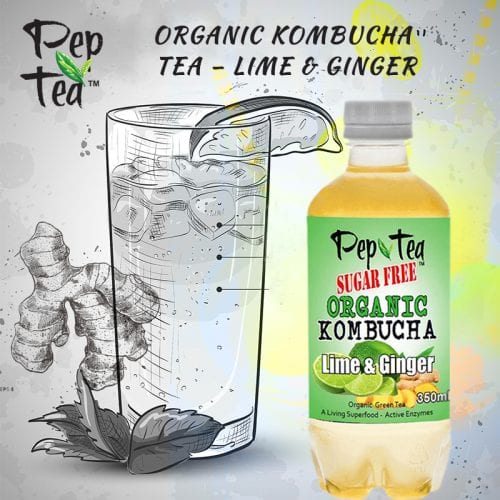
Pep Tea produces great organic matcha powder as well as organic kombucha tea. Organic kombucha tea – Lime and Ginger is very much popular among our superior Sugar Free kumbucha flavours. Organic Kombucha Tea – Lime and Ginger is considered as a healthy tea it is raw and loaded with probiotics and contains no sugar, fat, lactose and other preservatives. It is raw and organic, gluten free and vegan friendly.
Organic kombucha tea-lime and ginger is also low in calorie, carbs and GI. Kombucha is considered as a symbiotic culture of yeast as well as bacteria. Kombucha was first initiated in 221 BC in China. According to a modern science, it contains several health benefits that help to build good gut health. If this magnificent drink is consumed regularly will aid to stabilize gut flora, helps in liver function that will assist an individual’s body to remove toxins and increase the immune system of individuals.