
Tag: green tea australia brands
Green Tea Australia Brands a Shopper’s Guide for 2026

You're probably here because you've stood in front of a supermarket shelf, opened five browser tabs, and realised that “green tea” in Australia can mean very different things. One box says organic. Another says matcha. Another looks healthy but is packed like a soft drink. Then there are imported tins, local blends, tea bags, loose leaf, sparkling cans, probiotic bottles, and labels full of wellness language that don't always tell you much.
That confusion makes sense. The Australian green tea aisle has become more crowded, and shoppers are paying closer attention because they want drinks that feel lighter, cleaner, and more purposeful. Interest isn't niche anymore. In Australia, the organic green tea market reached a retail value between AUD 180 million and AUD 250 million in 2025, with health-conscious consumers driving a significant portion of demand, according to IndexBox's Australia organic green tea market analysis.
A good guide to Green Tea Australia brands shouldn't just hand you a list of names. It should help you recognise quality markers, understand what type of green tea suits your day, and know when a label is saying something meaningful versus sounding impressive.
Navigating the World of Australian Green Tea
A lot of Australians start with the same assumption. Green tea is green tea, so choosing one brand should be simple.
Then the practical choices show up.
You might buy tea bags for convenience, then notice a bright tin of Japanese matcha beside them. A café menu offers a matcha latte. The fridge section has kombucha made from green tea. A wellness shop stocks loose-leaf sencha and premium powders with very different prices. Suddenly you're not comparing one product type. You're comparing several categories that all sit under the same broad umbrella.
Why the category feels crowded
Part of the confusion comes from the fact that these products solve different problems.
- Tea bags suit quick weekday brewing.
- Loose-leaf green tea suits people who care about flavour and ritual.
- Matcha appeals to anyone chasing a more concentrated, versatile green tea experience.
- Kombucha attracts drinkers who want something cold, lively, and a bit more social.
That's why brand lists alone often fall short. A “best brands” roundup can lump very different products together without explaining what you are purchasing.
Green tea isn't one single shopping decision. It's a category of formats, origins, and processing styles.
Start with your real goal
Before you compare labels, ask a simpler question. What do you want this green tea to do in your life?
Maybe you want a calm morning drink instead of another coffee. Maybe you want a low-sugar fridge staple. Maybe you're after a ceremonial matcha for whisking, or a culinary powder for smoothies and baking. Some shoppers want local brewing and traceable production. Others care most about organic certification and clean ingredients.
Once you know your goal, the shelf makes more sense. You stop asking, “Which brand is best?” and start asking better questions.
- Is this for sipping hot or cold?
- Do I want convenience or a ritual?
- Am I paying for better leaf quality, better processing, or just better packaging?
- Is the “organic” claim supported?
Those questions turn a confusing category into an organised one.
How to Read a Green Tea Label Like an Expert
A strong green tea label should help you trust the product. If it leaves you guessing, that's already useful information.
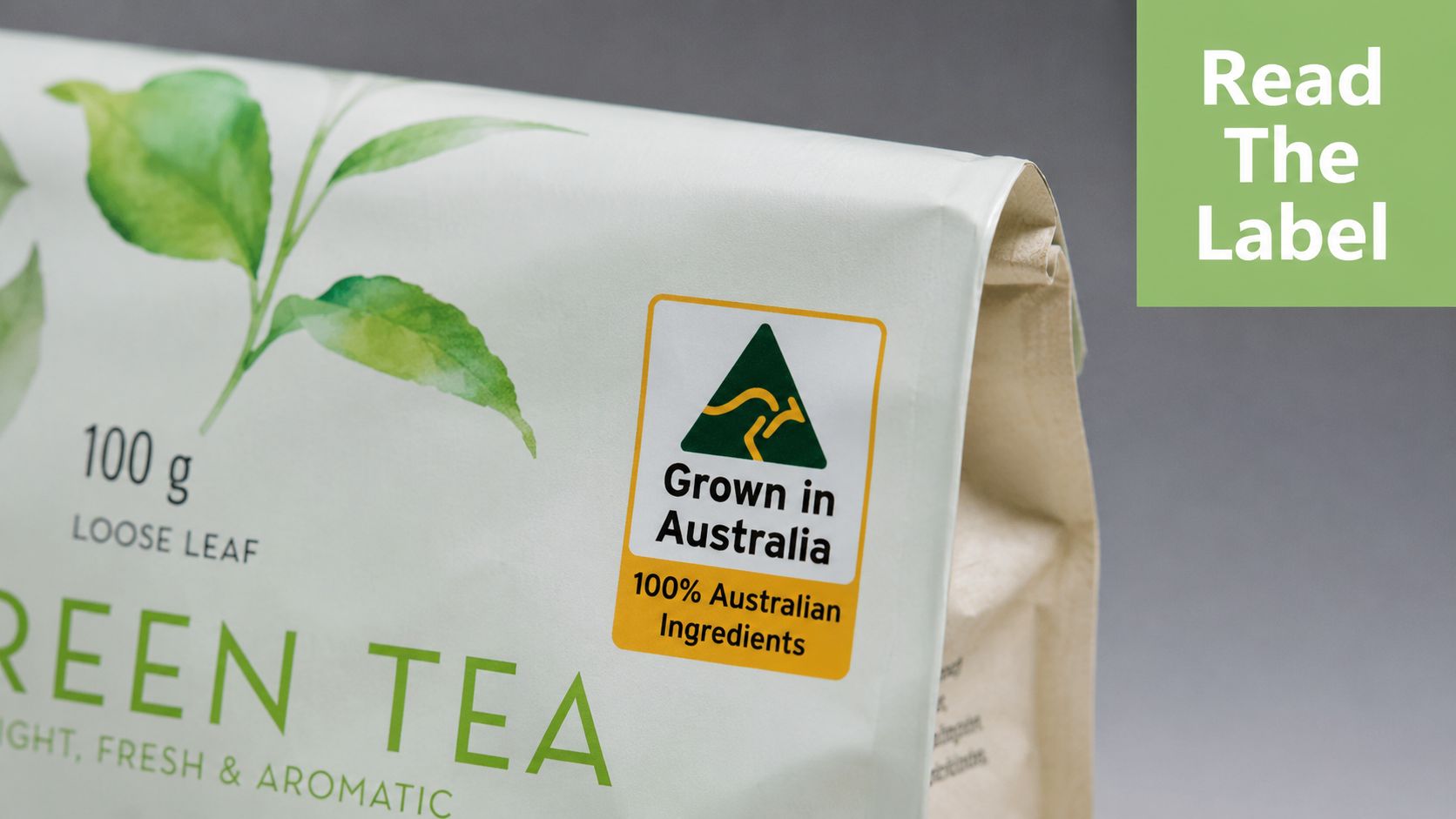
Check the certification first
The word organic gets used loosely. That's one of the biggest traps in this category.
Consumers are often misled by brands using “organic” without third-party validation, and shoppers should look for recognised certification marks such as ACCOA, as noted in this discussion of organic certification literacy in Australia. If the front of pack says organic but the label gives you no certifier, no mark, and no traceable standard, pause before you buy.
A quick way to build confidence is to learn what recognised standards look like and what they cover. A practical starting point is this guide to organic certification standards, which helps decode what a certification is meant to signal.
Look for origin, not just branding
A polished brand name doesn't tell you where the tea comes from. Origin matters because it often shapes flavour, processing style, and buyer expectations.
If a product is Japanese green tea or Japanese matcha, the label should make that clear. If it's Australian grown, that should also be visible and specific. “Packed in Australia” is not the same thing as “grown in Australia”. Shoppers often miss that distinction.
Here's a useful way to read that part of the pack:
Find the country of origin
Don't stop at the front label. Check the side or back panel.Notice whether the tea is grown, packed, blended, or brewed locally
Those are different claims.See if the origin matches the product type
For example, many premium matcha products highlight Japanese sourcing because that's central to the style and processing.
Scan for processing clues
Processing changes the final cup more than many people realise.
A tea bag often contains finely cut leaf for speed and consistency. Loose-leaf tea tends to show more of the leaf itself. Matcha is powdered whole leaf. Kombucha is brewed and fermented. Each format needs a different label lens.
Look for clues such as:
Leaf form
Whole leaf, loose leaf, powder, or brewed beverage.Intended use
Drinking straight, lattes, recipes, or ready-to-drink refreshment.Storage guidance
This can hint at freshness sensitivity, especially with powdered green tea.
Practical rule: If a pack makes a premium claim, it should also give you premium detail.
Know what vague language sounds like
Some wording looks reassuring but says very little.
“Natural”, “clean”, “premium”, and “wellness” aren't useless words, but they aren't proof of quality on their own. Treat them as supporting language, not deciding factors. The details that count are the certifier, origin, ingredients, and processing information.
That's when Green Tea Australia brands become easier to sort. You stop buying the prettiest pack and start buying the clearest one.
The Four Faces of Green Tea in Australia
Not every green tea belongs in the same routine. The easiest way to cut through the noise is to separate the category into its main formats and compare them by use.
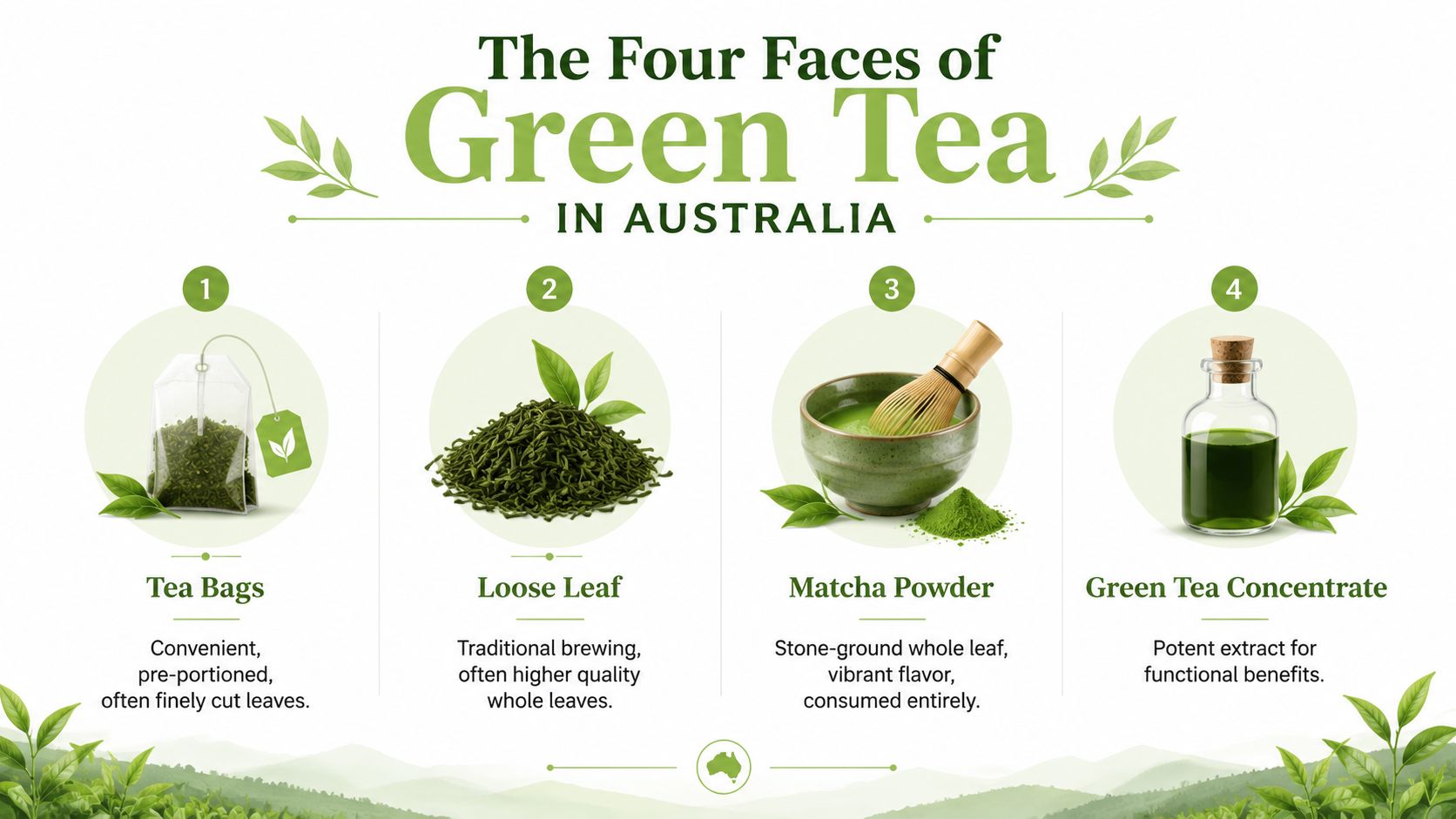
Convenience still drives a lot of buying. In Australia, green tea bags hold a 45.9% market share in 2025, while premium varieties like matcha are seeing rapid adoption because of their antioxidant appeal and versatility in drinks and recipes, according to IMARC's Australia green tea market overview.
Tea bags
Tea bags are the familiar entry point. They're easy, portable, and forgiving.
They suit office kitchens, rushed mornings, and anyone who wants a quick cup without measuring or equipment. The trade-off is that the experience can be simpler in flavour and less expressive than whole-leaf formats.
Loose-leaf green tea
Loose leaf asks for a bit more attention, but it often rewards you with a more nuanced cup.
You can usually see the leaf, adjust the strength, and pay attention to aroma in a way that tea bags don't always allow. It's a good fit if you enjoy the brewing ritual and want your daily tea to feel more intentional.
Matcha powder
Matcha changes the equation because you consume the powdered leaf rather than steeping and discarding it.
That's one reason people see it differently from a standard brewed green tea. It also moves well across routines. Some drink it whisked with water, others build lattes, smoothies, iced drinks, or baking recipes around it.
If you want green tea as both a drink and an ingredient, matcha opens more doors than bags or loose leaf.
Kombucha made from green tea
Kombucha belongs to the same conversation, but it solves a different need.
It's for people who want a chilled, fermented, ready-to-drink option with more lift and personality than plain water. It can work as an alcohol alternative, an afternoon fridge drink, or a café menu option that feels adult without being heavy.
Green Tea Forms at a Glance
| Format | Preparation | Key Benefit | Best For |
|---|---|---|---|
| Tea bags | Steep in hot water | Convenience | Busy mornings, work, travel |
| Loose leaf | Brew with infuser or pot | Better flavour control | Tea drinkers who enjoy ritual |
| Matcha | Whisk powder with water or milk | Whole-leaf versatility | Lattes, focused mornings, recipes |
| Kombucha | Ready to drink cold | Fermented, refreshing format | Gut-friendly routines, alcohol-free swaps |
How to choose the right one for your day
A helpful way to shop is to stop thinking in terms of “best” and think in terms of “best fit”.
For speed
Tea bags are hard to beat.For flavour exploration
Loose leaf gives you more to notice.For a wellness ritual with culinary flexibility
Matcha makes the strongest case.For a fridge staple
Kombucha offers convenience with a more social feel.
Some households keep more than one format on hand. That isn't indecisive. It's practical. A weekday desk drawer and a Sunday morning kitchen bench don't need the same thing.
Why categories matter more than brand popularity
Shoppers often search for Green Tea Australia brands as if every product competes on one shared scale. It doesn't work that way.
A strong tea bag brand may not be the best matcha source. A beautiful matcha label may tell you nothing about kombucha quality. A local brand may be excellent at brewing beverages but not focused on loose leaf at all.
Once you separate the category into formats, comparing brands gets much cleaner. You compare tea bags with tea bags, matcha with matcha, and kombucha with kombucha. That's when quality markers start to stand out.
A Deeper Dive into Matcha's Magic
Matcha is one of the few drinks that can feel both grounding and energising at the same time. That's why people often try it once out of curiosity, then keep coming back for the effect as much as the flavour.
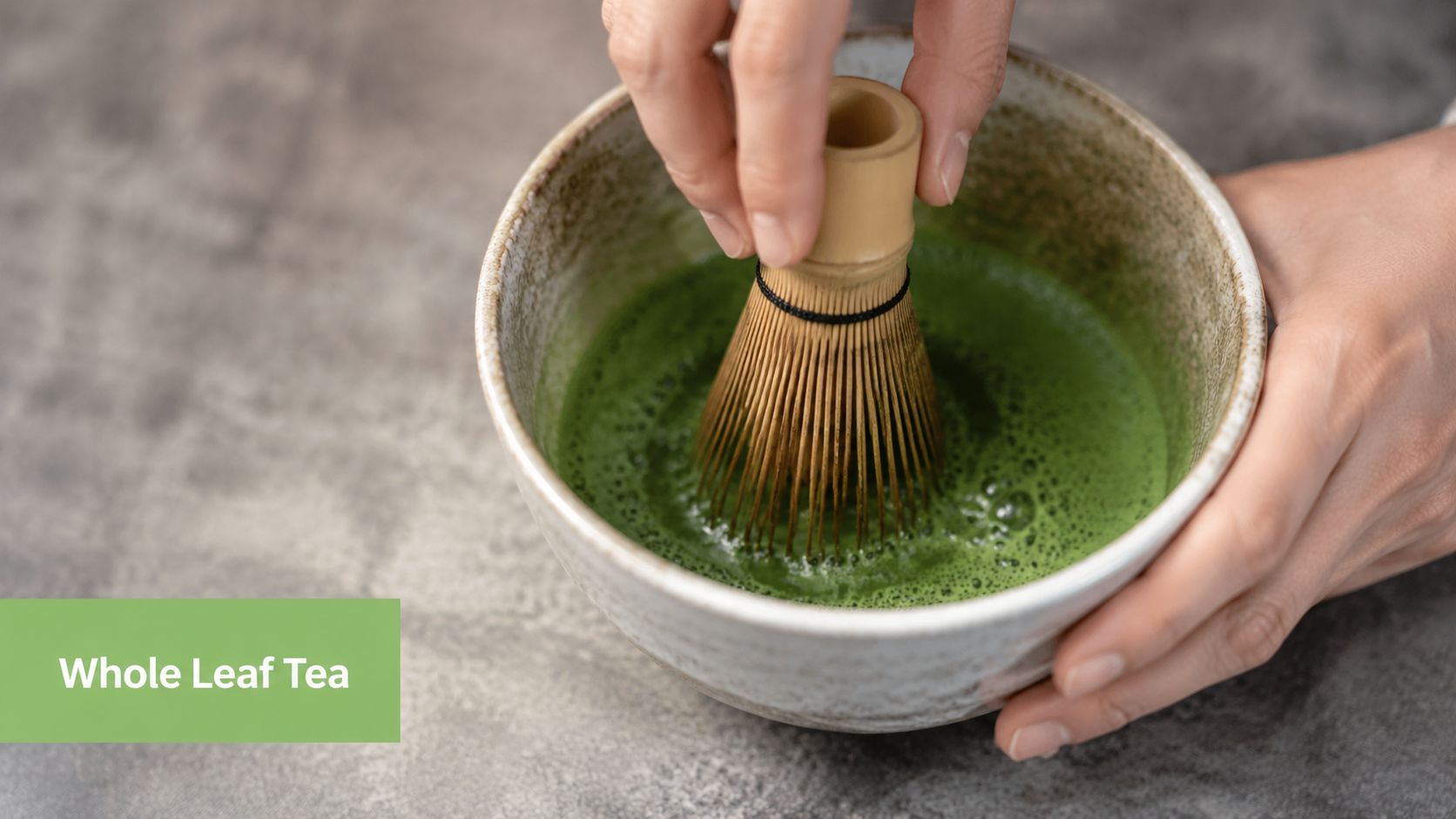
Why matcha feels different
The biggest shift is simple. You're not just infusing water with leaves. You're consuming the powdered leaf itself.
That changes how people use it and how they talk about quality. Colour, texture, aroma, and smoothness matter a lot. A vibrant green powder with a fine texture usually signals more care in cultivation and processing than a dull, khaki-looking powder that tastes flat or harsh.
Shade-grown ceremonial-grade matcha contains higher levels of L-theanine, which moderates caffeine absorption and can produce a sense of calm focus without the sharper spike and crash people often associate with other stimulants, according to this matcha quality and comparison guide.
Ceremonial and culinary in plain English
These labels confuse plenty of shoppers because they sound formal and absolute. In practice, they're more useful as buying cues than fixed rules.
Ceremonial matcha
Best suited to whisking with water when you want the powder itself to shine.Culinary matcha
Better suited to lattes, smoothies, baking, desserts, and recipes where matcha shares the stage with other ingredients.
If you want help choosing between them, this breakdown of different grades of matcha is a practical reference.
What to look for in a good tin or pouch
A shopper doesn't need to be a tea master to make a smart choice. A few sensory checks go a long way.
Colour matters
Look for a lively green rather than a brownish or yellowed powder.Texture tells a story
A fine, soft powder tends to whisk more smoothly.Smell is part of quality
Fresh matcha should smell alive, not stale.Use case should match the label
Don't pay for a premium drinking powder if you only want it for banana bread or protein smoothies.
A quick visual guide can help if you're learning the whisking basics:
Good matcha should make sense on the palate and on the label. If the flavour, colour, and product description don't line up, keep looking.
A simple way to use it daily
Try one teaspoon sifted into a bowl, add a small amount of hot water that isn't boiling, then whisk until frothy. From there, you can drink it straight or pour it over warm or iced milk for a latte.
That flexibility is a big part of matcha's appeal. It isn't locked into one ritual. It can be traditional at 7 am and playful by 3 pm.
Understanding Real Australian Kombucha
Kombucha often gets treated like a trendy flavoured drink with a healthy halo. That misses the point.
Real kombucha starts with tea, live cultures, and fermentation. The result should taste alive, not just sweet and fizzy. When shoppers realise that, they start reading kombucha labels very differently.
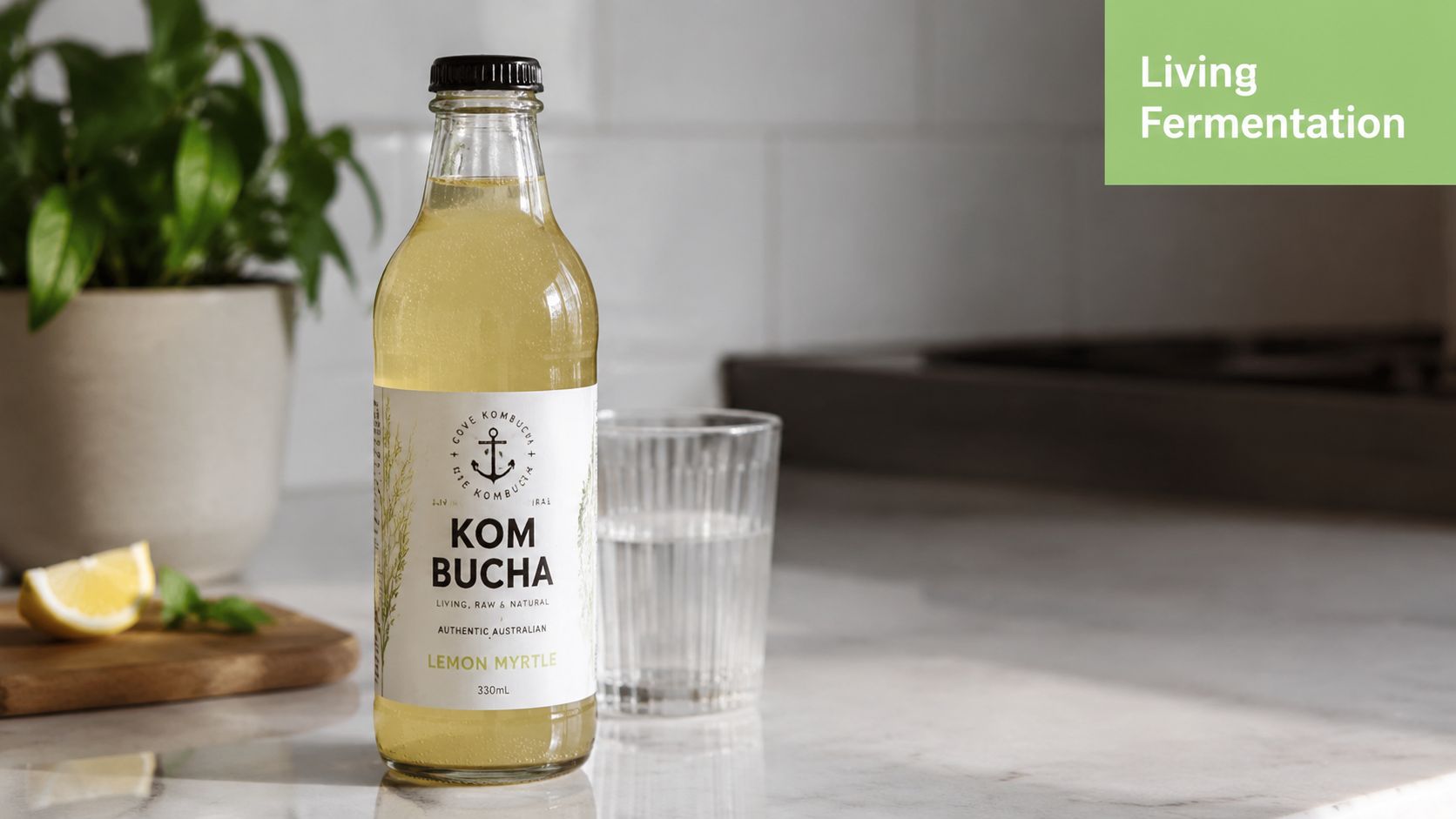
Not all kombucha is doing the same job
Some drinks borrow kombucha language but don't give you the same experience as a properly fermented product. They may lean heavily on sweetness, flavouring, or shelf-friendly positioning while giving the fermentation side far less importance than the front label suggests.
That's why it helps to ask a few direct questions:
- Was it properly fermented?
- Does the brand talk clearly about live cultures?
- Is it built as a low-sugar or sugar-free option?
- Is the producer transparent about where and how it's brewed?
What real fermentation adds
A proper kombucha process starts with brewed tea and a SCOBY, then time does the work. During fermentation, the drink develops its tang, complexity, and living character.
When a kombucha is made with care, people often describe it as cleaner, drier, and more grown-up than a soft drink. That matters in homes and cafés alike. It gives you a cold drink option that feels functional rather than sugary.
A kombucha shouldn't taste like soft drink wearing a wellness label.
Why local brewing matters
Australian shoppers often care where a product is made, especially in categories tied to freshness, trust, and food standards.
Pep Tea's organic kombucha is made in a HACCP-accredited brewery in the Hunter Valley, NSW, using organic green tea and live cultures to create a probiotic-rich, sugar-free beverage, according to Opera Foods' Pep Tea brand profile. That kind of production detail matters because it tells you the kombucha isn't just branded well. It's brewed with a clear standard behind it.
If you want a better feel for what separates properly fermented kombucha from shortcut versions, this guide to real raw organics kombucha is worth reading.
Easy ways to enjoy it
Kombucha doesn't need a complicated ritual.
Some people keep it simple and pour it over ice with lunch. Others use it as a non-alcoholic alternative in the evening. Cafés can also use it to build sharper, lighter drinks without relying on sugary mixers.
A few practical ideas:
Midday fridge pick-me-up
Serve cold on its own.Alcohol-free spritz substitute
Pour into a wine glass with ice and citrus.Café menu option
Pair it with clean food, brunch dishes, or wellness-focused menus.
Real kombucha earns its place when the label, flavour, and fermentation story all line up.
Creating Your Daily Green Tea Ritual
A good green tea habit doesn't need to look polished or complicated. It just needs to fit your real day.
Build around moments, not rules
If mornings are rushed, keep tea bags or ready-to-drink kombucha where you'll reach for them. If you like a slower start, use loose leaf or whisked matcha and let the preparation become part of the ritual.
A simple routine might look like this:
Morning focus
Make a matcha with hot water, or turn it into an iced latte if coffee feels too heavy.Midday reset
Brew loose-leaf green tea for a cleaner lunch drink.Afternoon swap
Reach for kombucha instead of a sugary soft drink.
Keep one easy recipe in rotation
If you're new to matcha, start with a basic latte.
Sift your matcha into a bowl or mug, add a small splash of hot water, whisk until smooth, then top with warm or iced milk. Once that feels easy, use culinary matcha in smoothies, bliss balls, yoghurt, or baking. It's one of the simplest ways to make green tea part of your kitchen rather than just your mug.
Make quality the habit
The most useful thing you can do is stay curious about what you're buying. Read the label. Check the certification. Notice the origin. Match the product type to the way you live.
That's the lesson behind sorting through Green Tea Australia brands. Buy with a bit more literacy and a bit less guesswork, and the whole category becomes more enjoyable.
If you'd like to put that knowledge into practice, explore Pep Tea for premium organic matcha and Australian-brewed sugar-free kombucha. It's a simple place to start if you want certified quality, clean flavour, and a greener daily ritual that feels easy to keep.