
Tag: organic tea benefits
The Real Organic Tea Benefits: A Complete Australian Guide
You're probably here because tea has become more than just a hot drink. It's your morning reset, your afternoon swap for another coffee, or the one thing that helps you slow down for five minutes between work, family, training, and everything else life throws at you.
That's where the conversation around organic tea benefits gets interesting. For many Australians, organic starts as a safety question. Fewer chemicals. Cleaner farming. Better peace of mind. But once you dig deeper, organic tea isn't only about what's missing. It's also about what stays intact in the leaf, in the brew, and in the flavour.
A well-grown organic tea can offer a cleaner cup, a more expressive taste, and a more functional daily ritual. That matters even more with high-performance teas like Japanese matcha and properly fermented kombucha, where quality shows up in every sip.
More Than a Buzzword The Real Meaning of Organic Tea
A lot of people start with tea because they want one of three things. Calm. Energy. Comfort. Sometimes all three at once.
You swap a sugary drink for green tea because you want something lighter. You try matcha because coffee feels too sharp. You reach for kombucha because your body wants something refreshing that doesn't feel heavy. Then the label catches your eye. Organic. It sounds good, but what does it really change?
Organic changes the whole experience
Organic tea isn't just conventional tea with nicer branding. It reflects a different growing philosophy. In practical terms, it means the tea is produced without the synthetic inputs many people are trying to avoid in the rest of their food and drink choices.
That matters because tea is an ingredient you often consume daily. If something is part of your routine every morning or every afternoon, the quality of that product matters more than it does with an occasional treat.
For readers who want to understand the farming side in plain English, it helps to look at organic tea farming practices in Australia.
Organic tea feels different because it asks a better question. Not just “does this taste nice?” but “what kind of cup am I inviting into my body every day?”
Why people notice the difference
Organic tea isn't first noticed in a lab report. It's noticed in the cup.
A vibrant matcha tastes cleaner and more rounded. A carefully brewed kombucha tastes alive, bright, and balanced rather than loud or syrupy. Even a simple loose-leaf green tea can feel fresher and more expressive when the leaf has been handled with care from the start.
Three organic tea benefits often stand out quickly:
- Cleaner everyday drinking because many health-conscious tea drinkers want to reduce routine exposure to synthetic agricultural chemicals.
- Better functional potential because the natural compounds in tea are the reason many people drink it for wellness in the first place.
- Richer flavour because quality farming and careful processing tend to reward your palate, not just your principles.
That's why organic isn't a restriction. It's a filter. It helps you choose tea that supports the way you want to feel.
Why Organic Certification Matters for Your Tea
The word “organic” gets thrown around so often that it can lose meaning. In tea, certification matters because it gives the word substance.
What certified organic actually signals
When tea is certified organic, it isn't just marketed as natural or clean. It's grown and handled according to standards that limit or prohibit a range of synthetic agricultural and processing inputs.
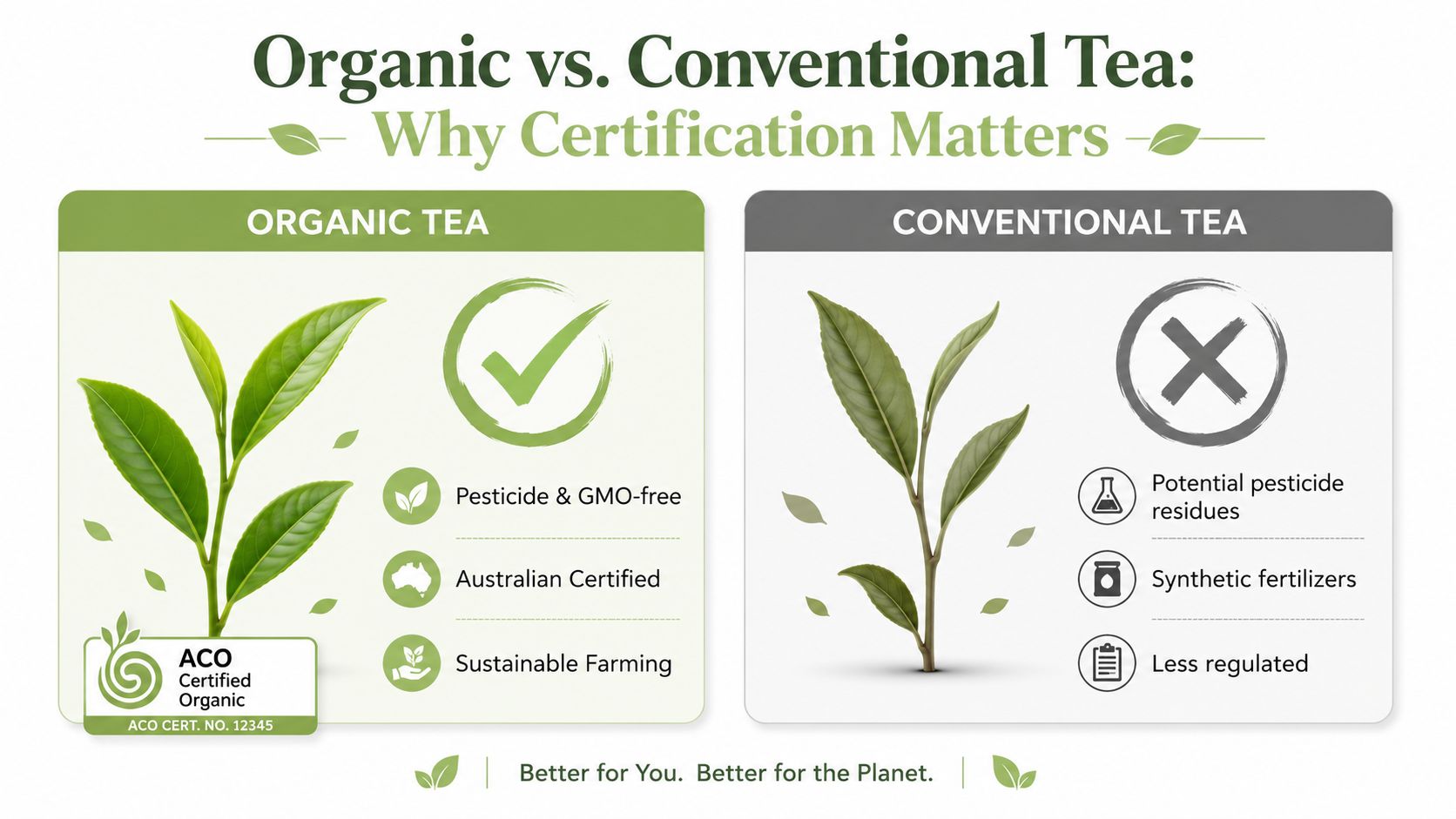
In Australia, that distinction matters. Organic tea is distinguished from conventional tea by its significantly lower levels of harmful chemical residues, as organic farming prohibits the use of synthetic pesticides, herbicides, chemical fertilizers, GMOs, preservatives, and fungicides, resulting in a safer product for consumers concerned about chemical exposure, as outlined in this explanation of organic vs conventional tea.
If you want a practical overview of what local certification means, this guide to organic tea certification in Australia is a useful place to start.
Why lower residue matters in a daily ritual
Tea often feels harmless because it's simple. Water, leaves, cup. But that simplicity is exactly why sourcing matters.
If you drink tea every day, you're not making a one-off choice. You're building a repeated habit. For many people, that's why organic tea benefits feel especially relevant here. A cleaner agricultural approach supports a cleaner daily routine.
Here's a simple comparison:
| Tea type | What the growing approach focuses on | What many drinkers value |
|---|---|---|
| Organic tea | Avoiding synthetic pesticides, herbicides, chemical fertilisers, GMOs, preservatives, and fungicides | A cleaner cup and confidence in how the tea was produced |
| Conventional tea | Standard agricultural methods that may include synthetic inputs | Wider availability, but with fewer assurances about residue levels |
Certification protects more than the absence of chemicals
The best way to think about organic certification is that it protects the integrity of the tea. It's not just about what's left out. It's also about what the plant is allowed to express.
That can shape:
- Leaf quality through gentler, more considered growing systems
- Flavour clarity because the cup isn't competing with a rougher profile
- Functional value because tea drinkers often choose green tea, matcha, and kombucha for their natural compounds, not just their taste
Practical rule: If you're drinking tea for wellness, don't treat sourcing as an afterthought. The benefit starts long before the kettle boils.
The Science-Backed Health Benefits of Organic Tea
Tea's reputation for wellness doesn't come out of nowhere. Its natural compounds, especially catechins and polyphenols, are where the primary interest lies, known for their antioxidant activity.
What antioxidants are doing in simple terms
Oxidative stress sounds technical, but the idea is straightforward. Your body deals with ongoing wear and tear from normal metabolism and from daily life. Antioxidants help counter some of that stress.
Tea naturally contains compounds that support this process. That's one reason it keeps showing up in discussions about long-term wellbeing, especially for people trying to make better everyday choices rather than chasing quick fixes.
A useful way to think about tea is this: it's a small habit with a cumulative effect. One cup won't transform your health overnight. But a good routine can support the bigger picture.
What the research on green tea shows
The strongest evidence in the material available here relates to green tea. According to Harvard's overview of tea and health, regular consumption of green tea is linked to a 14% reduced risk of stroke in individuals drinking 2–3 cups daily, and a 20% reduced risk for those consuming 4 or more cups, based on a 13-year cohort study of 82,369 Japanese men and women.
That matters because it gives the conversation some grounding. Tea isn't only associated with a pleasant ritual. It's also linked with meaningful health outcomes in large population studies.
The same source also describes broader links between tea intake and cardiovascular health, including observational findings around heart disease, stroke, and type 2 diabetes. That doesn't make tea a treatment, but it does support the idea that tea can be part of a smart, steady lifestyle pattern.
Why organic can strengthen the value of that habit
Many readers get confused because the research often focuses on tea itself, especially green tea. So where does “organic” fit in?
Organic doesn't create catechins and polyphenols from scratch. Tea naturally has them. What organic farming may do, based on the verified material available, is help preserve the tea's natural integrity by avoiding synthetic residues that many health-conscious consumers would rather not bring into a wellness routine.
That means the habit becomes more coherent. If you're drinking tea because you want something clean, supportive, and functional, organic aligns the farming method with the reason you're drinking it.
A simple way to use that in daily life:
- Choose tea you'll drink consistently. Daily habits matter more than occasional bursts of enthusiasm.
- Keep it unsweetened when possible. Let the leaf do the work.
- Treat tea as support, not magic. It works best alongside sleep, food, movement, and stress management.
Tea fits best in a wellness routine when it replaces something less helpful, not when it's expected to do everything on its own.
Focus and Energy The Organic Matcha Advantage
If green tea is a strong all-rounder, matcha is the concentrated version of that story. It's one of the clearest examples of why organic tea benefits can feel more noticeable in real life.
Why matcha feels different from regular green tea
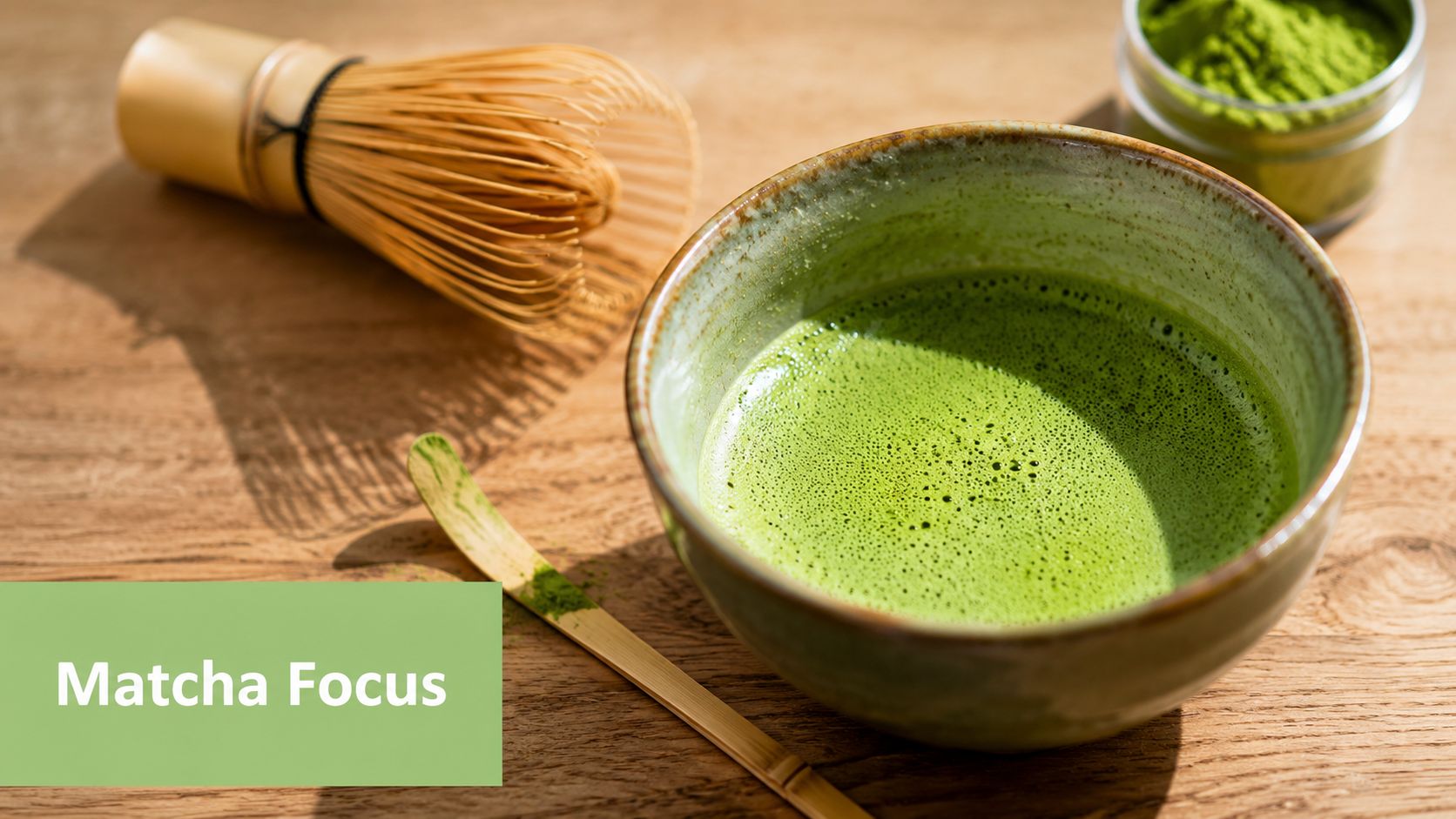
With brewed green tea, you steep the leaves and drink the infusion. With matcha, you whisk the stone-ground leaf into water and consume the whole thing.
That changes the experience. It's one reason matcha drinkers often describe the effect as steadier and more immersive. You're not just tasting tea. You're taking in the finely milled leaf itself.
According to this review of EGCG and antioxidants in matcha, matcha contains approximately 100–200 mg of EGCG per cup, with EGCG comprising 50–60% of total catechins, whereas regular brewed green tea delivers only 30–400 µmol TE/g in antioxidant activity compared to matcha's 1,300–1,600 µmol TE/g.
That's a big reason matcha has become such a favourite for people chasing functional drinks with substance.
Calm focus, not chaotic stimulation
Many Australians come to matcha because coffee stops working for them the way it used to. The first cup is fine. The second pushes them into jitters, irritability, or an afternoon slump.
Matcha tends to appeal to a different goal. People want energy, but they also want clarity. They want alertness without feeling scattered. Readers often associate this with the combination of tea caffeine and naturally occurring L-theanine in matcha, which is why matcha has developed a reputation for calmer focus.
That doesn't mean every matcha delivers the same experience. Grade, freshness, origin, and processing all matter. A vibrant Japanese organic matcha is usually smoother, sweeter, and easier to drink than dull, stale powder that tastes flat or bitter.
What to look for in a quality matcha
A quick checklist helps:
- Colour should look bright and lively rather than khaki or brownish.
- Texture should feel fine and soft, not gritty.
- Taste should be fresh, rounded, and pleasantly vegetal, not harsh.
- Origin and production matter, especially if you care about both flavour and farming standards.
For a simple visual on preparation, this video is a good reference point:
When matcha makes the most sense
Matcha works especially well when you want a beverage that supports performance without feeling aggressive.
It suits:
| Moment | Why matcha fits |
|---|---|
| Morning start | It gives your day a more deliberate pace than rushing into another coffee |
| Pre-work focus | Many people like it before writing, planning, or study sessions |
| Afternoon reset | It can feel cleaner than reaching for sweets or another strong caffeine hit |
A good matcha doesn't just wake you up. It helps you stay with what you're doing.
Gut Health and Vitality The Power of Real Organic Kombucha
Kombucha can be one of the most misunderstood drinks in the wellness space. Some bottles are carefully fermented and alive with character. Others taste like soft drink wearing a health halo.
That difference matters if you care about organic tea benefits beyond buzzwords.
Real kombucha starts with real tea
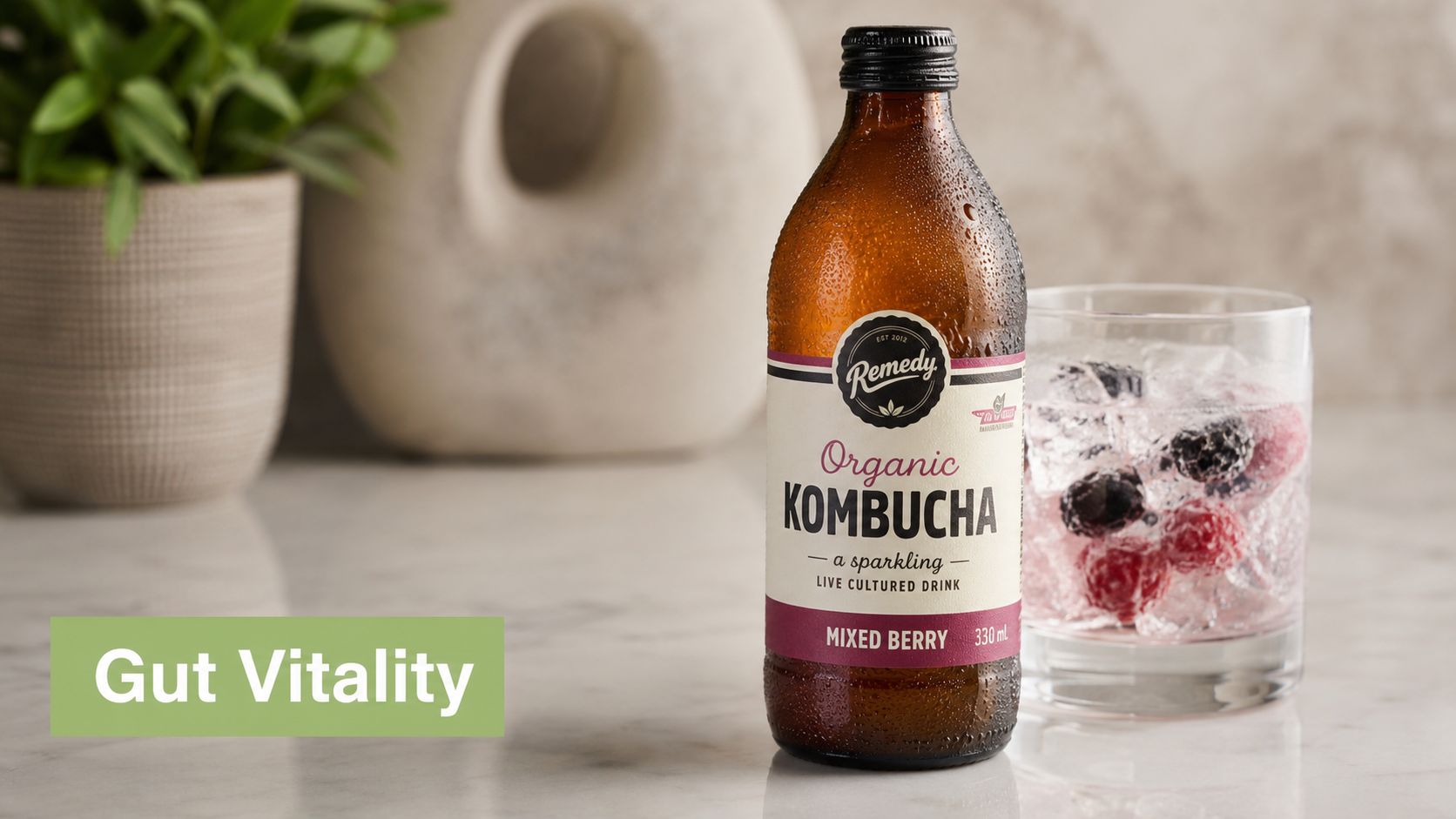
Authentic kombucha begins with brewed tea, culture, and time. The process transforms the original sweetened tea into something tangy, layered, and much lighter than many people expect.
For readers who are trying to understand what separates proper fermentation from shortcuts, this guide to real raw organic kombucha explains the distinction well.
When kombucha is made with organic tea, the starting point already aligns with a cleaner product philosophy. That won't automatically make every bottle excellent, but it does set a stronger foundation.
Why fermentation quality matters
People often assume kombucha is healthy just because it's called kombucha. That's where things get messy.
Some products lean heavily on flavourings, sweetness, or marketing language. A properly fermented kombucha, by contrast, earns its place through the brewing process itself. If you're drinking it for gut-friendly potential and as an alternative to sugary beverages, the details matter.
A useful way to compare them:
- Properly fermented kombucha often tastes tart, refreshing, and balanced. It feels like a brewed beverage.
- Mass-market imitation styles can taste flat, overly sweet, or more like flavoured soda.
The best kombucha doesn't try to hide fermentation. It lets fermentation create the flavour.
Where kombucha fits in daily life
Kombucha is often less about one dramatic health promise and more about replacing less helpful habits.
It can work well for people who want:
- A low-sugar alternative to soft drinks or sweet mixers
- A grown-up non-alcoholic option that still feels interesting
- A refreshing fridge staple that supports a more mindful routine
This is also where Australian-made kombucha has a special appeal. Local brewing, especially when done carefully, gives drinkers a product that feels close to home and easier to trust. For cafés, it also creates a stronger menu story. Customers increasingly want non-alcoholic drinks that feel thoughtful rather than like an afterthought.
A note on flavour and function
Good kombucha should taste like something you'd want to drink even if health benefits were never mentioned. Ginger, lime and ginger, or mango styles can all work beautifully when they're built on a genuine fermented base rather than sugar and flavour alone.
That's the heart of the argument for real organic kombucha. If the tea is well sourced and the fermentation is done properly, the drink becomes more than a trend. It becomes a practical, enjoyable part of modern Australian drinking habits.
How to Use Organic Tea at Home and in Your Café
The easiest way to enjoy organic tea benefits is to make them routine. You don't need a complicated wellness plan. You need a few reliable ways to use tea that fit your day.
Simple ideas for home

Try these:
Ceremonial-style matcha
Sift your matcha into a bowl, add a little warm water, then whisk until smooth and frothy. Keep the flavour front and centre. No sweetener needed if the powder is good.Quick matcha latte
Make a smooth matcha base first, then add your preferred milk hot or cold. If you like a softer flavour, this is often the easiest daily entry point.Kombucha mocktail
Pour chilled kombucha over ice with fresh citrus or mint. It gives you the ritual of a mixed drink without the heaviness.
A practical reason to keep green tea in rotation
One reason many people stay committed to green tea and matcha is that the habit is easy to repeat. There's also a strong wellness argument for doing so. According to this article on tea as a health drink, organic green tea including matcha delivers a bioactive dose of EGCg that directly inhibits reactive oxygen species, with a 2020 Australian Curtin University study quantifying that consuming three cups daily reduces the likelihood of developing prostate and ovarian cancer by neutralizing free radicals that damage DNA.
That doesn't mean everyone needs three cups every day. It does show why regular use, rather than occasional novelty, is where tea becomes meaningful.
Smart menu ideas for cafés
For cafés and hospitality venues, organic tea can do more than fill a menu gap. It can shape a more modern drinks offer.
Consider adding:
| Menu idea | Why customers respond |
|---|---|
| Straight matcha | It suits customers who want a clean, premium hot drink |
| Iced matcha latte | It appeals to regular café traffic looking for a coffee alternative |
| Kombucha by the bottle or glass | It gives non-alcoholic drinkers something with personality |
| Seasonal mocktails using kombucha | It helps venues build a wellness-friendly drinks list |
For home drinkers and cafés alike, the key is consistency. Keep the ingredients clean. Keep the preparation simple. Let the tea do the heavy lifting.
Your Organic Tea Questions Answered
Is organic tea automatically safer in every way?
It's safer in one important sense. Organic certification helps reduce exposure to synthetic agricultural chemicals. But it doesn't answer every sourcing question.
According to this explanation of what to look for when buying organic tea wholesale, while organic certification ensures tea avoids pesticides, it doesn't automatically screen for soil-derived heavy metals, and no recent 2024–2025 Australian report compares heavy metal levels in imported organic versus conventional matcha. If you drink matcha daily, it's reasonable to care about origin, supplier transparency, and testing standards.
Is matcha stronger than regular green tea?
Functionally, yes, many people experience it that way. You're consuming the whole powdered leaf, so the experience is more concentrated than a standard brewed green tea. That's part of why matcha often feels more substantial and more sustaining.
Can I drink organic tea every day?
For most adults, tea works best as a daily habit rather than an occasional health kick. The main questions are your caffeine sensitivity, the type of tea you choose, and whether it fits the rest of your routine.
What about pregnancy or medication interactions?
If you're pregnant, breastfeeding, managing a health condition, or taking medication, it's smart to check with your doctor before making tea, matcha, or kombucha a bigger part of your routine. Tea can be wonderfully supportive, but personal advice matters.
Is organic kombucha always low in sugar?
Not always. “Organic” and “low sugar” aren't the same thing. Read the label, pay attention to the fermentation style, and choose a product that aligns with why you're drinking it.
If you're ready to turn all of this into an everyday ritual, explore Pep Tea for premium organic matcha and Australian-brewed sugar-free organic kombucha. It's a simple way to bring cleaner flavour, functional benefits, and a more enjoyable wellness routine into your day.