
Tag: matcha recipes
Matcha Milk Powder Guide: How to Use It Well
You've probably seen matcha milk powder on a café menu, in a supermarket sachet, or beside the oat milk at home and wondered what you are truly buying. Is it matcha with milk powder, or is it a sweetened latte mix with only a little tea? The answer matters because the ingredient list affects colour, flavour, texture, caffeine, sweetness, and how consistently the drink performs.
Australia's matcha market generated more than A$54 million in revenue in 2024 and is projected to exceed A$81 million by 2030, with powder holding a 55.08% share of revenue in 2024, according to Australian matcha latte powder market reporting. Matcha milk powder is already suited to cafés, retail shelves, home lattes, smoothies, and baking. The practical question is how to choose and use it without sacrificing the character of the tea.
What Matcha Milk Powder Actually Is
Matcha milk powder is a pre-blended drink mix. It usually combines finely ground Japanese green tea with dairy or plant-based milk solids, a sweetener, and functional ingredients that help the powder dissolve, remain stable, or produce foam.
That makes it different from pure matcha. Ceremonial-grade and culinary-grade matcha are generally sold as tea powder, so you add the milk, water, and sweetener separately. A traditional café matcha latte also starts with matcha whisked with water, followed by steamed milk. It isn't the same product as a pre-mixed latte powder.
| Format | Main Ingredients | Prep Method | Typical Use |
|---|---|---|---|
| Matcha milk powder | Matcha, milk solids, sweetener, stabilisers or creamer | Mix with hot or cold liquid, then froth | Fast home drinks, cafés, takeaway menus |
| Pure matcha | Stone-ground tea leaves | Sift and whisk with water, then add milk separately | Traditional tea, controlled lattes, baking |
| Café latte | Pure matcha, water, fresh dairy or plant milk | Whisk matcha, steam or froth milk | Made-to-order café service |
Read the ingredient list before the front label
Australian matcha milk powders commonly contain sugar, dextrose, maltodextrin, skim milk powder, non-dairy creamer, vegetable oil, emulsifiers, and stabilisers. These ingredients aren't automatically a problem. Manufacturers use them to improve shelf stability, reduce clumping, create body, and help the drink froth.
The trade-off is that every added ingredient changes the tea. Sugar can soften bitterness but may dominate delicate umami. Creamer can create a fuller mouthfeel, while dextrin and milk solids may make the drink appear paler or feel chalky if the powder is over-diluted. Excess heat can also affect colour and texture.
Use the guide to what matcha powder is to refresh the distinction between pure matcha and blended products. For a broader look at powdered green tea products, the VitzAi.com green tea powder review offers useful comparison context, although you should still judge any product by its own ingredient panel.
Start with three checks:
- Matcha position: Ingredients are listed from greatest to least amount. Matcha appearing near the beginning generally gives you more confidence that tea is central to the blend.
- Sweetener level: Decide whether you want a ready-sweetened latte or a product that leaves room for your own honey, sugar, or syrup.
- Milk source: Check whether the blend contains skim milk, lactose, plant milk, coconut ingredients, or a non-dairy creamer.
How to Prepare a Matcha Latte With Powder
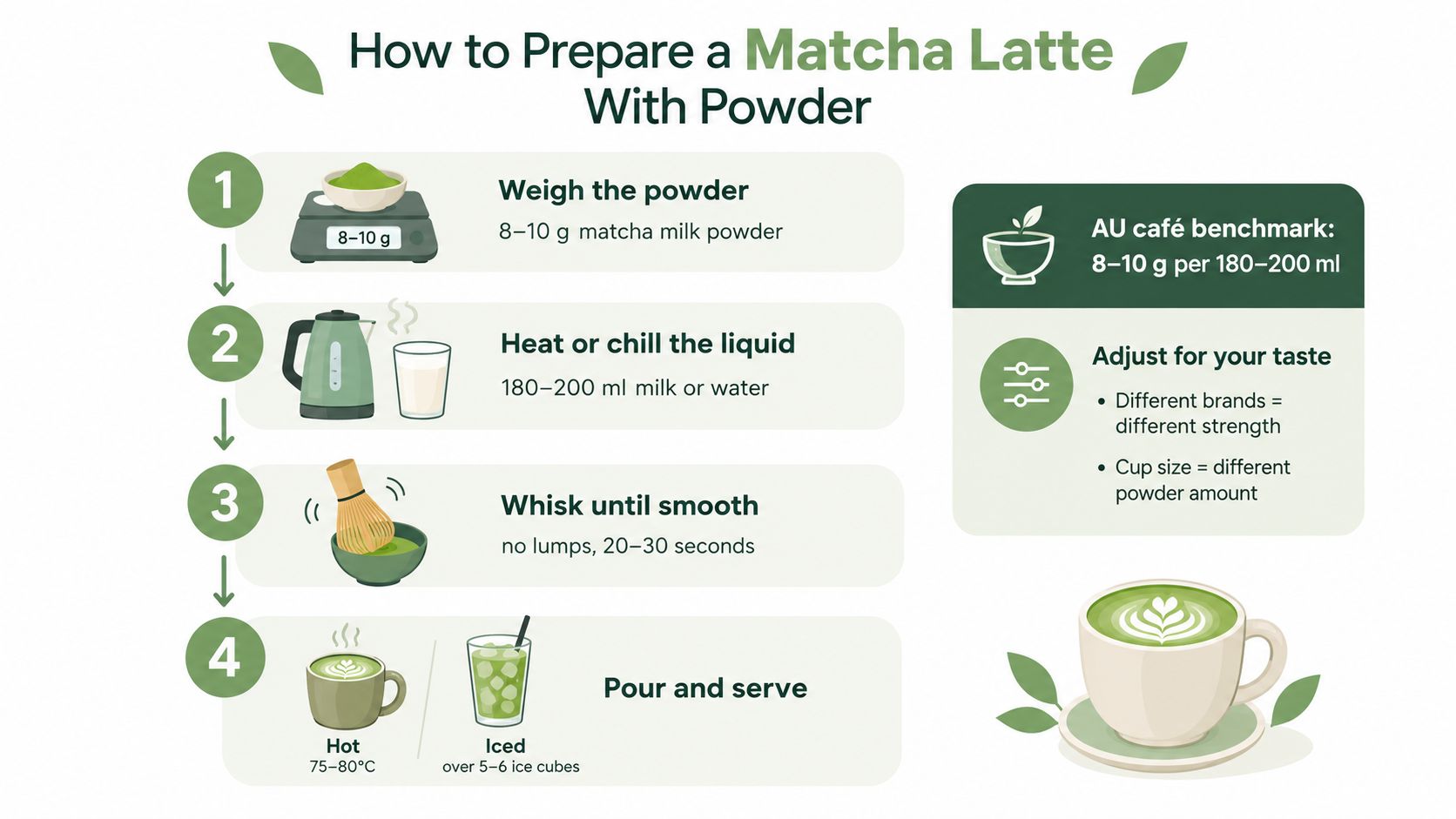
A reliable drink starts with a repeatable dose. An Australian retail benchmark uses 4 g of powder with 200 mL of water for a latte-style preparation, as described in Australian matcha powder market coverage. For café testing, a practical starting point is 8 to 10 g of matcha milk powder per 180 to 200 mL of milk or water, then adjust for the brand's strength, sweetness, and cup size.
Hot preparation
- Measure the powder. Weigh it rather than relying on a heaped spoon. Consistent dosing matters behind a bar and makes home recipes easier to repeat.
- Add a small amount of liquid. Use warm water or milk first and stir it into a smooth paste. This prevents dry pockets from surviving beneath the surface.
- Add the remaining liquid gradually. Water around 75 to 80°C is a useful working range for a hot latte. Very hot liquid can scorch milk solids and make the tea taste harsh.
- Froth until glossy. A steam wand gives the smoothest microfoam, while a handheld frother works well at home. Stop once the drink looks even and lightly aerated.
A sealed jar can replace a whisk for the dissolving stage. Add the powder and liquid, leave enough room for movement, and shake firmly before pouring into a cup. If you're interested in beverage formulation beyond tea, this comparison of high-protein coffee for athletes is a useful reminder that powders need thorough mixing to avoid sediment and uneven texture.
Iced preparation
For an iced matcha latte, dissolve the powder in a small amount of warm water first. Pour that concentrate over cold milk, stir or shake until smooth, and then build the drink over ice. Adding powder directly to cold milk often produces floating specks and stubborn clumps.
Service rule: Taste the liquid before adding ice. If the drink already seems weak, ice will make the problem more obvious.
A quick calibration method is to make one sample at your intended dose and compare its intensity with a single espresso-strength drink. You're not trying to make matcha taste like coffee. You're checking whether the tea still carries through the milk.
For more traditional whisking guidance, see how to make matcha tea from powder.
Choosing the Right Milk for Hot and Iced Drinks
The right milk depends on the drink you want, the equipment available, and the customer you're serving. No single milk performs perfectly in every matcha milk powder recipe.
Full-cream dairy gives a rounded texture and carries sweetness well. It's a dependable choice for a classic hot latte, although low-fat dairy can produce a thinner drink and may make the powder's texture more noticeable.
Oat milk is popular in café service because its mild flavour allows matcha to remain present while its texture usually stretches well under steam. Different brands behave differently, so test the exact product you plan to serve rather than assuming every oat milk will foam identically.
Soy milk can provide substantial body and a stable foam, especially for customers seeking a more protein-rich plant option. Its distinctive flavour can either complement or compete with grassy matcha.
Almond milk produces a lighter drink with a nutty note, but its foam can be less durable. Coconut milk brings a clear tropical character and works especially well with vanilla, mango, lime, or ginger. A coconut-based matcha can be explored through Pep Tea's matcha coconut milk recipe.
| Milk Type | Texture & Body | Froth Stability | Flavour Carry | AU Cost Note |
|---|---|---|---|---|
| Full-cream dairy | Rich and rounded | Reliable when steamed correctly | Carries sweetness and umami | Often a practical café baseline |
| Oat | Creamy and smooth | Generally strong with barista-style products | Mild, allowing matcha to lead | Compare brands before costing a menu |
| Soy | Full and protein-driven | Can produce good foam | More distinctive than oat | Useful for a protein-conscious audience |
| Almond | Light and clean | Usually less durable | Nutty and delicate | Suits lighter drinks and iced formats |
| Coconut | Thick or silky, depending on product | Variable | Tropical and noticeable | Best positioned as a flavoured variation |
Cold drinks need more control
Cold milk dissolves powder more slowly than warm liquid. Make a smooth concentrate first, then add the chilled milk and ice. Avoid filling a glass with ice before mixing, because the drink becomes harder to stir and the extra dilution can flatten the colour.
Customers comparing dairy options may also find this practical guide to calories in one percent milk useful. For cafés, the important point is to list the milk clearly and cost each version separately. Milk choice affects flavour, foam, portion size, and ingredient cost.
Recipe Variations Beyond the Standard Latte
Matcha milk powder works beyond the familiar hot takeaway cup. Because the blend already contains milk solids and sweetener, it can be convenient in recipes where you want tea flavour and body in one scoop.
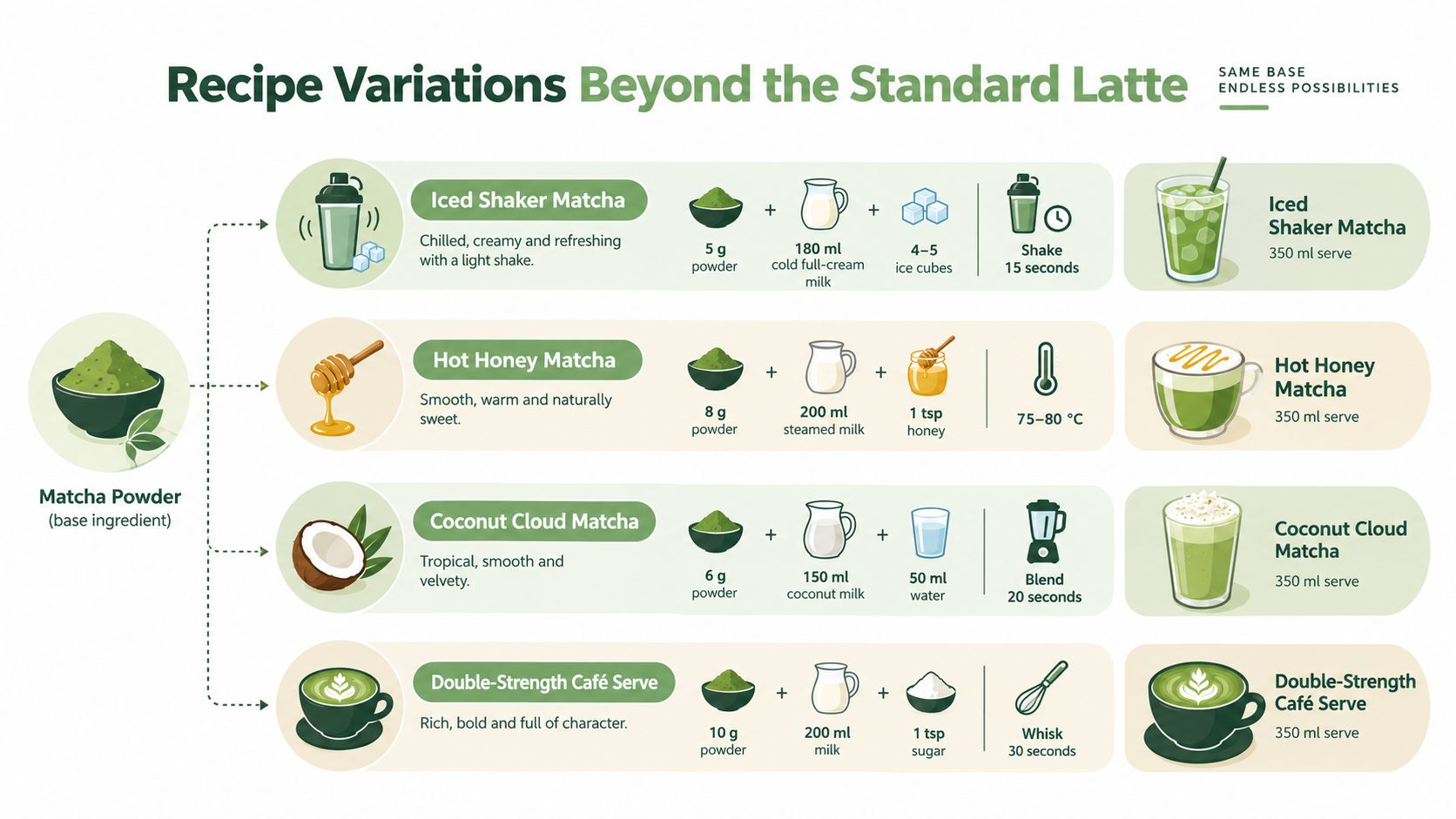
Iced shaker matcha
For a 350 mL serve, combine 5 g matcha milk powder, 180 mL cold full-cream or oat milk, and 60 mL chilled water in a sealed shaker. Add ice and shake hard for 15 seconds. The movement creates a light foam without a steam wand.
Use oat milk for a softer café-style texture, or full-cream dairy for a sweeter, fuller result. If your blend is already sweetened, taste before adding syrup.
Breakfast smoothie
Blend 6 g powder, 150 mL oat milk, one frozen banana, and a spoon of cashew butter. The banana masks some of the grassy character that can appear in a less refined blend, while cashew butter adds richness.
This is a good place for culinary-grade matcha or a latte blend that you wouldn't necessarily drink with water. Keep the mixture cold so the colour stays fresh and the banana remains the dominant texture.
Matcha baking mix
For cookies or a single-serve mug cake, combine 8 g matcha milk powder with 15 g sugar as part of the dry ingredients. Replace a small portion of the flour with the powder and add 20 mL extra milk to protect the crumb from drying.
Check the blend before adding sugar. A pre-sweetened powder may need little or none, particularly in a café recipe where toppings or icing add sweetness later.
Honey and ginger matcha
Warm 200 mL full-cream milk with a slice of bruised ginger. Mix 4 g powder with a small amount of warm water, then add the infused milk and 10 mL honey. Keep the milk warm rather than boiling so the drink stays smooth.
For a plant-based version, oat milk provides gentle sweetness, while coconut milk gives the drink a more obvious tropical direction. Ginger, honey, and coconut can each become strong flavours, so use them as accents rather than allowing them to hide the matcha completely.
Substitutions, Storage, and Shelf Life
A café can run out of a blend without removing matcha from the menu, but the substitute needs to be written down and tested. For one serve, replace 8 g matcha milk powder with 4 g culinary-grade pure matcha, 150 mL milk, 2 g skim milk powder, and 4 g sugar. This recreates some of the body and sweetness, although it won't reproduce the original blend exactly.
At home, a screw-top jar is a practical alternative to a steam wand. Shake the liquid and powder for 20 seconds, open the lid carefully, and pour immediately. Don't use a jar with a damaged seal or fill it completely, because the mixture needs room to move.
| Scenario | Storage Time | Container | Emergency Substitute per Serve |
|---|---|---|---|
| Unopened tin | Up to 12 months from production | Sealed tin, below 25°C, away from light | Use a tested pure-matcha blend if required |
| Opened pouch | 4 to 6 weeks once sealed | Airtight container with desiccant | Pure matcha, milk powder, and sugar formula |
| Café service jar | Rotate using FIFO | Labelled 500 g jar with tight lid | Pre-weighed substitute recipe |
| Home working supply | Use promptly after opening | Original pouch inside an airtight container | Pure matcha prepared separately |
Manage stock before it becomes a menu problem
Australia's Japanese green tea imports reached 195,319 kilograms between January and August 2025, a 131% year-on-year increase, according to reporting on Australia's matcha supply and import growth. That growing demand sits alongside shortages that began in 2024 and worsened through 2025, with tighter supply and record import costs affecting cafés, as reported by the ABC's coverage of matcha shortages and prices.
For a café, sensible controls include:
- Hold a safety stock: Keep roughly four weeks of cover where the product is central to the menu.
- Qualify another supplier: Test a second blend before the first supplier becomes unavailable.
- Avoid single-lane dependence: A product that relies on one import route creates more exposure during shortages.
- Use FIFO: Label the open date and move older stock forward.
- Record the recipe: Staff need the dose, milk volume, temperature, and substitution formula in one place.
Mixed tea products can also fall under different Australian biosecurity conditions. The Australian Government's plant product import guidance explains that tea made purely from Camellia sinensis is considered minimal biosecurity risk, while mixed products may require different conditions. The government also advises that plant-origin tea materials must be thoroughly dried before entry, which matters for blends containing other ingredients.
Why Some Matcha Milk Powders Disappoint
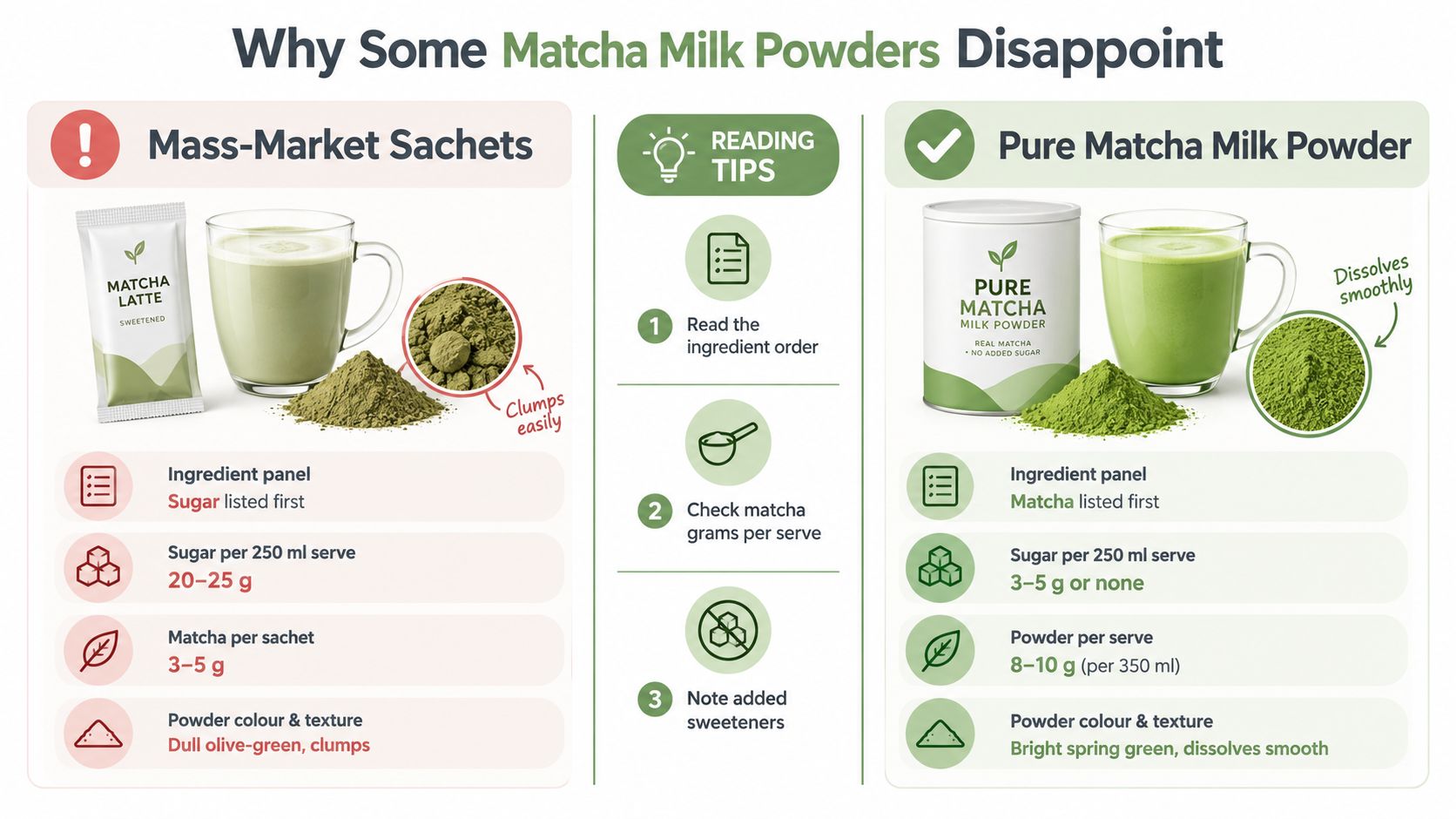
A sweeter powder isn't automatically a better shortcut. Many mass-market sachets are designed to taste immediately pleasant, so sugar, maltodextrin, dextrin, vegetable fat creamer, or other milk-style ingredients can dominate the blend before the tea has a chance to show its colour and savoury character.
The ingredient panel tells you more than the packaging. Some products list sugar or maltodextrin first, followed by creamer and only a small amount of matcha, sometimes below 10%. That can produce a muted olive-green colour, a powdery finish, and a latte that tastes more like sweetened milk than tea.
What the extras change
Sugar reduces perceived bitterness but can make it difficult to control sweetness across hot, iced, and blended drinks. Dextrin can improve powder handling, yet too much may leave a chalky texture. Creaming agents add body, but they can leave a film on cups and make commercial frothers harder to clean.
The tea itself may also feel flat when milk solids coat the palate. You get thickness without much umami, and the bright green colour expected from matcha becomes less convincing.
Label test: Look for matcha high in the ingredient order, check the grams of tea per serve, and identify every added sweetener before you judge value.
Unflavoured blends built around a higher proportion of matcha can give a more defensible café drink, while pure ceremonial-grade matcha gives you maximum control over dosing and sweetness. The trade-off is extra preparation. You'll need to weigh, sift, whisk, and add the milk separately, but you can adjust the drink for each customer and recipe.
For a café, also watch the cleaning burden. A powder that clumps or leaves residue may slow service even when its purchase price appears attractive. A product that dissolves cleanly, tastes balanced, and has a written recipe can cost less operationally than a cheaper blend that needs repeated reworking.
Practical Takeaways and Where to Go Next
The best matcha milk powder is the one that suits the drink you're making. A sweetened blend may be convenient for a quick iced latte, while pure matcha is better when you want control over tea intensity, milk choice, and sugar. Cafés need to judge both sensory quality and service performance.
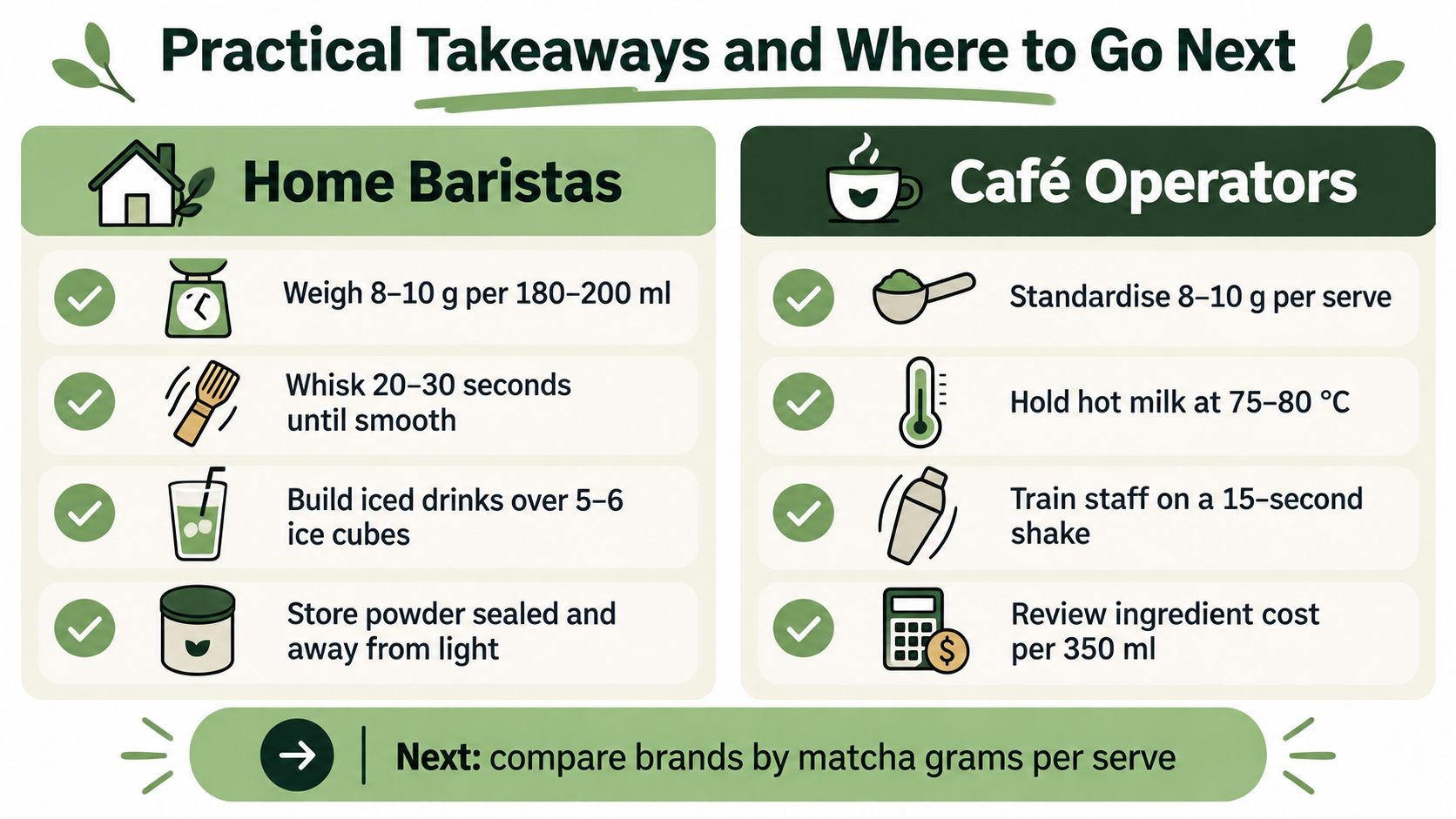
For home baristas
- Weigh the powder: Start with the product's recommended serve, then adjust by taste rather than adding sweetness automatically.
- Use filtered water below 80°C: This helps protect the texture and reduces the harshness associated with overheated liquid.
- Sift before mixing: Sifting breaks up compacted powder and makes a smoother paste.
- Build iced drinks carefully: Mix the concentrate before adding milk and ice.
- Taste it plain first: Assess bitterness, sweetness, and tea strength before adding honey or syrup.
- Store it well: Keep the powder sealed, dry, and away from light.
For café operators
Standardise the recipe by cup size and train staff to use the same dose, liquid volume, and frothing method. Record the cost of the powder, chosen milk, sweetener, and any toppings before setting the menu price.
Keep stock organised with FIFO rotation and a supply buffer. Review the ingredient panel whenever you change supplier, because a substitution can alter sweetness, colour, foam, and customer expectations even when the name on the menu stays the same.
Australia's matcha audience includes traditional tea drinkers, latte customers, home cooks, and people looking for alternatives to heavily sweetened drinks. A clear ingredient list and a consistent recipe help you serve all of them honestly.
If you're ready to compare organic, single-origin, and sugar-free matcha options for home or café use, explore the range from Pep Tea and choose a format that gives you the level of sweetness and control you want.
Pep Tea offers organic Japanese matcha in ceremonial and culinary grades, along with guidance for hot lattes, iced drinks, and baking. Visit Pep Tea to compare matcha options and find a practical fit for your pantry or café menu.
What Is Matcha Green Tea Good for: A Practical Guide

What is matcha green tea good for, really? Is it mainly an antioxidant-rich wellness drink, a gentler coffee alternative, or a vivid green café trend? The most useful answer sits between those ideas. Matcha is a whole-leaf Japanese green tea that can provide calm focus, moderate caffeine and concentrated catechins, but its benefits depend on the serving, the product and how your body responds.
For Australians, matcha makes practical sense as an unsweetened morning drink, an iced café-style latte, a smoothie ingredient or a way to replace a sugary beverage. It isn't a miracle cure, and the evidence for cognitive and metabolic effects is measured rather than dramatic. Used thoughtfully, however, it can become a simple part of an everyday routine.
What Matcha Actually Is and Why It Stands Out
Matcha is made from Camellia sinensis, the same tea plant used for other green, black and white teas. The difference is what happens to the leaf. Producers grow suitable tea bushes under shade, harvest and process the leaves, then grind the prepared leaf into a fine powder. When you drink matcha, you consume that powder rather than removing the leaves after steeping.
That whole-leaf format explains why matcha is often associated with higher antioxidant intake. Standard green tea releases some compounds into water, while the spent leaf is discarded. Matcha keeps the leaf material in the cup, so its catechins, chlorophyll and amino acids remain part of the drink. A review of matcha research describes it as a powdered green tea with particularly high antioxidant potential, and reports that matcha infusions showed the highest antioxidant potential among the tea types considered in that review. A later comparative study reported antioxidant activity 1.2 to 2.5 times higher than standard green tea, depending on the assay used, as outlined in this scientific review of matcha.
Ceremonial and culinary grades
The words ceremonial-grade and culinary-grade describe intended use more than a universal legal standard. Ceremonial matcha is generally selected for drinking with water, where colour, aroma, texture and umami are easy to notice. Culinary matcha is designed to work with milk, yoghurt, fruit, flour and other ingredients, so its stronger flavour can hold its own in recipes.
Neither grade automatically makes a person healthier. A well-made culinary powder can be useful in a latte or smoothie, while a good ceremonial powder is best appreciated whisked with water. The key is to match the product to the way you'll use it.
Practical rule: Choose matcha for the drink or recipe you actually want to make, not for the label alone.
How Matcha Is Grown and Made
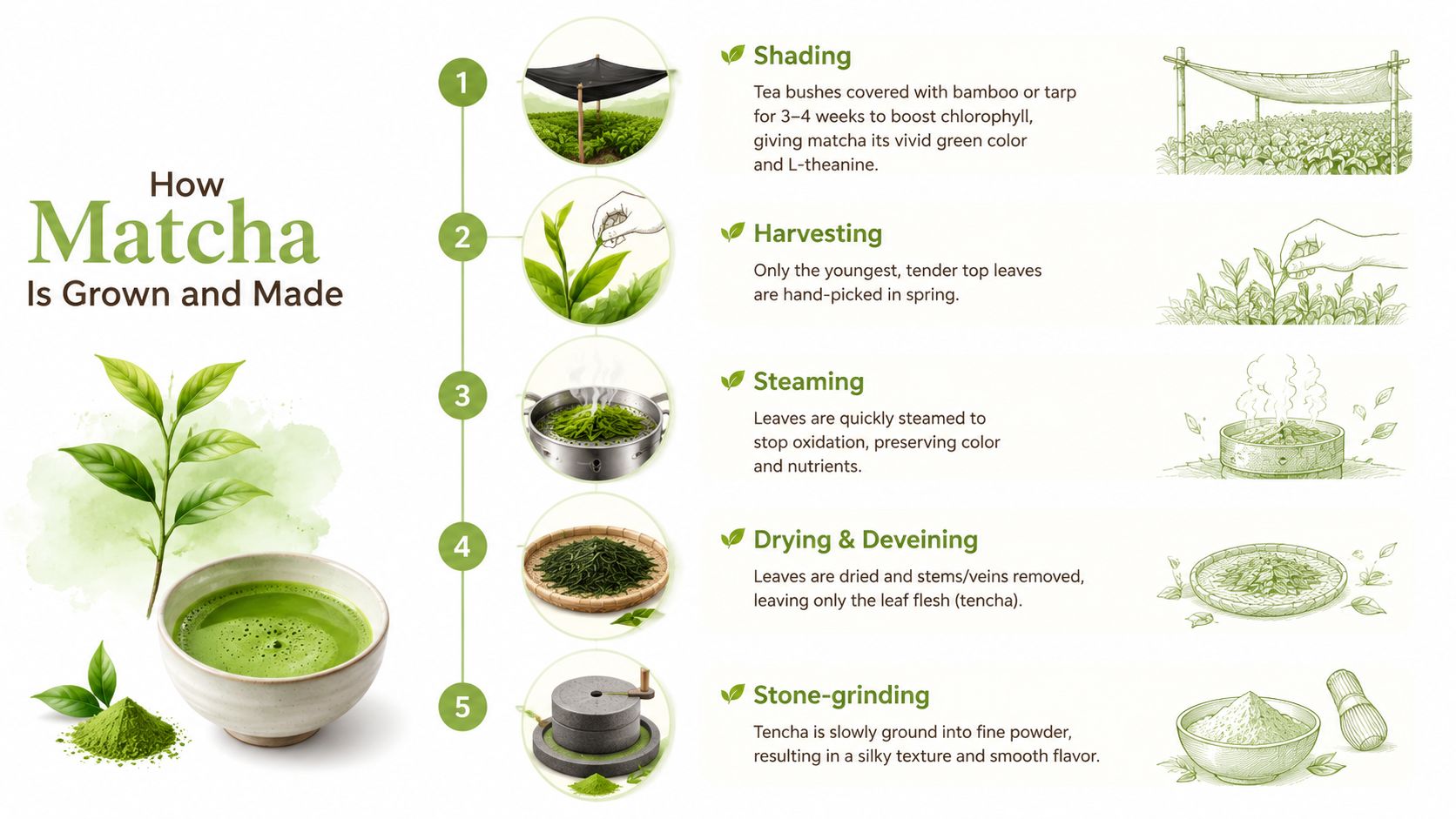
Matcha's flavour and colour begin in the tea field. Producers shade tea bushes from direct sunlight for three to four weeks before harvest, a practice discussed in the research literature on matcha composition. Reduced light supports the vivid green appearance and helps create matcha's rounded, savoury flavour.
The production sequence involves several linked decisions:
- Shading: Covers block direct sunlight before harvest. This encourages chlorophyll and helps preserve the amino-acid profile associated with a smooth, umami character.
- Harvesting: Producers select young leaves and buds. They become the raw material for tencha, the leaf prepared for matcha, rather than sencha, which is commonly brewed and removed.
- Steaming: Japanese tea processing quickly steams the leaves to halt oxidation. This helps retain their green colour and fresh vegetal flavour.
- Drying and deveining: The leaves are dried, then stems and veins are removed. The remaining leaf flesh is called tencha.
- Stone-grinding: Granite mills slowly turn tencha into a fine powder. Properly prepared matcha should feel silky, not gritty.
Why whole-leaf processing matters
Brewing extracts compounds into water, while matcha keeps the processed leaf suspended in the cup. The final composition still varies with tea variety, growing conditions, grade, storage and preparation. That difference matters for Australian drinkers choosing between a straight whisked cup, a café-style latte or a recipe.
You can follow each production stage in PepTea's guide to how matcha tea is made. The process also helps explain flavour differences. Fresh, well-stored matcha may taste sweet, grassy and umami-rich, while older or lower-quality powder can seem flat, dusty or harsh. Choose a grade suited to the drink or recipe you want to make.
The Key Compounds Behind Matcha's Benefits
What makes matcha feel different from ordinary green tea or coffee? Its character comes from three naturally occurring compounds working together: catechins, L-theanine and caffeine. They do not make matcha a medicine. They help explain why a whisked cup can feel alerting while remaining more even for some drinkers than coffee.
Catechins and EGCg
Catechins are plant compounds with antioxidant activity. The best-known catechin in matcha is epigallocatechin gallate, usually shortened to EGCg or EGCG. Because matcha is made from powdered leaf, you consume the leaf rather than only the compounds extracted into water. That makes it a catechin-rich beverage, although the amount varies with the tea, grade, storage and preparation.
Laboratory antioxidant activity is not the same as a predictable health outcome. Human effects depend on serving size, diet, lifestyle and individual biology. Research interest includes cardio-metabolic and cellular protection, but a daily cup should not be presented as disease prevention or a guaranteed way to change body composition.
For a plain-language explanation of this major catechin, see PepTea's guide to what EGCg is.
L-theanine and the feel of focus
L-theanine is an amino acid naturally found in tea. Shading during cultivation and consuming the whole powdered leaf help make it part of a matcha serving, though levels differ between products and preparation methods. Studies examine its relationship with relaxed attention and the way caffeine feels.
A review of randomised clinical trials reported that matcha decreased stress and slightly enhanced attention and memory, with no effect on mood. The finding supports a measured description: matcha may suit focused work for some people, but it is not a guaranteed productivity enhancer.
The practical analogy is a dimmer switch rather than a second engine. Caffeine provides stimulation, while L-theanine may contribute to a calmer experience. Individual responses still vary.
Caffeine and realistic expectations
How much caffeine is in the cup matters to Australian drinkers. A typical serving contains about 60 to 75 mg of caffeine, according to an Australian Broadcasting Corporation explainer cited in the matcha review above. That can suit morning alertness or an afternoon work block, but a café latte may contain a different amount depending on the powder and recipe.
Matcha is not caffeine-free energy. People sensitive to caffeine can still experience restlessness, a racing heart or disrupted sleep, especially with a larger serving or late-day use. Start with a modest serve, check the product guidance, and choose morning or early afternoon if sleep is easily affected. The research overview above gives useful context for how cultivation and processing influence matcha's composition.
Matcha Versus Coffee and Green Tea
Could matcha offer a middle ground between brewed green tea and coffee? In Australian café use, a standard matcha serve is often described as roughly 70 mg of caffeine, while the comparison for coffee is 80 to 100 mg. ABC reporting These amounts change with the powder, recipe and serving size, so treat them as a guide rather than a promise. Some drinkers also prefer matcha because they associate it with less of a coffee crash, although that experience differs between individuals.
The preparation method explains much of the difference. Brewed green tea uses water to draw compounds from the leaves, while matcha mixes powdered leaf into the drink. Matcha therefore provides whole-leaf exposure, including catechins such as EGCg, but the amount still varies by product and preparation.
| Beverage, 1 serve | Caffeine | EGCg catechins | Energy profile | Best time of day |
|---|---|---|---|---|
| Matcha | About 60 to 75 mg, ABC reporting | Varies by product and preparation | Alerting, with L-theanine-associated calm focus | Morning or early afternoon |
| Coffee | About 80 to 100 mg in the Australian comparison | Varies widely | Faster, sharper stimulation for many drinkers | Morning or earlier in the day |
| Steeped green tea | Varies by tea and steeping method | Less whole-leaf exposure than matcha | Lighter, gentler stimulation | Across the day, depending on tolerance |
Choosing by sensitivity
Coffee can feel too stimulating for some people, making matcha a practical café substitution. Choose an unsweetened preparation when you want to avoid added sugar, start with a smaller serve, and watch your own sleep and concentration rather than assuming the same response as another drinker.
Timing also matters. A late espresso may interfere with sleep, whereas an early-afternoon matcha may suit a work routine for some people. That is an individual response, not a universal rule.
Practical Ways to Use Matcha Every Day
Matcha doesn't need to stay inside a traditional tea ceremony. Its powder format makes it useful in drinks, breakfasts, baking and savoury food. The following serving ideas give beginners a clear place to start.
Straight and milky drinks
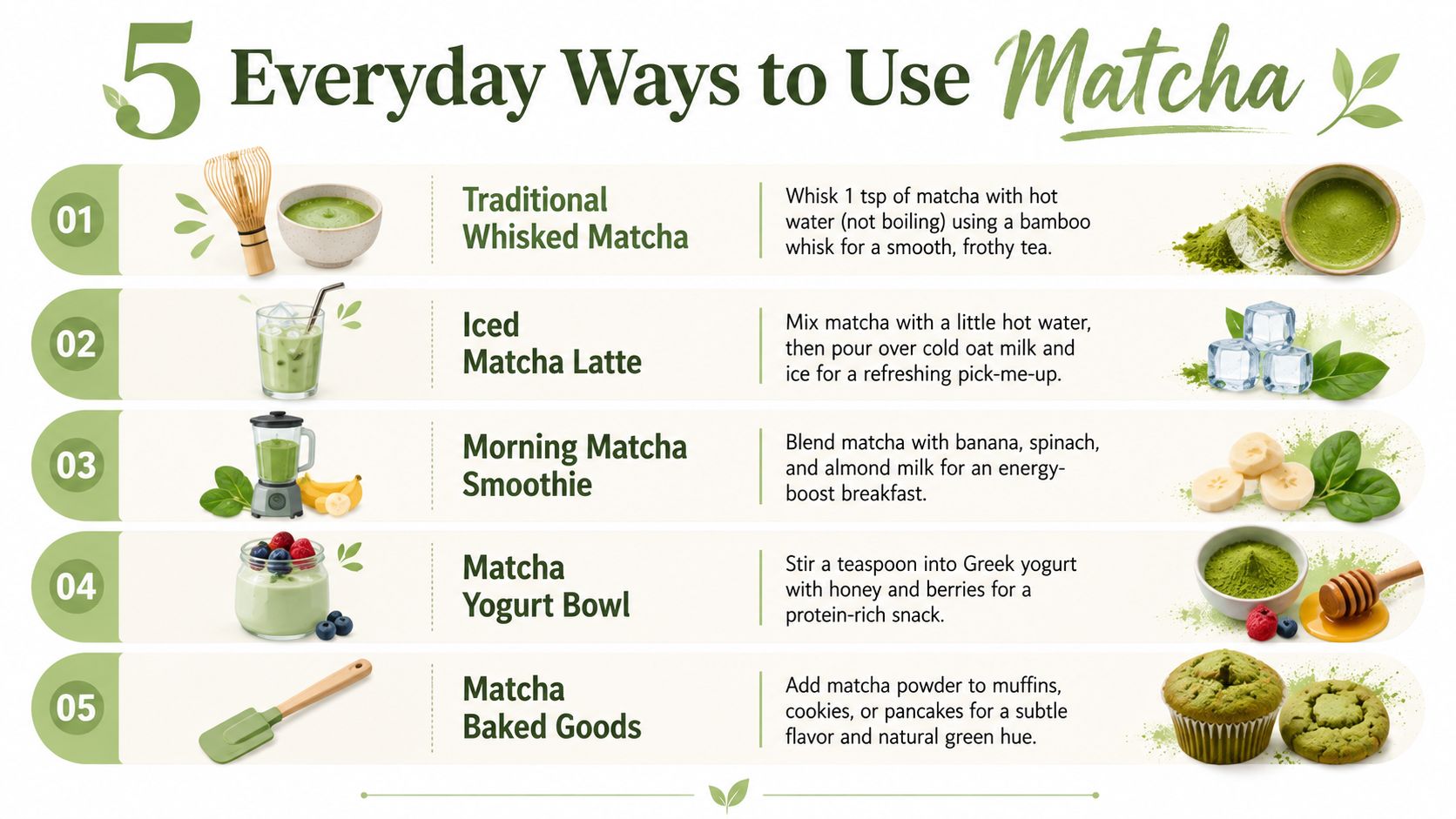
For traditional whisked matcha, sift one teaspoon into a bowl. Add a small amount of hot, not boiling, water and whisk until smooth, then add more water to taste. A bamboo whisk creates the familiar foam, but a small handheld frother can work for an everyday kitchen version.
For an iced oat matcha latte, use two teaspoons of matcha, first mixed with a little hot water to form a smooth paste. Pour it over cold oat milk and ice. Keep the drink unsweetened initially so you can taste the powder's natural balance before deciding whether it needs anything else.
Breakfast and snacks
A morning smoothie can take one and a half teaspoons of matcha with banana, spinach and almond milk. Banana softens matcha's vegetal edge, while the greens make the colour feel at home. Start with less if you're sensitive to bitterness or caffeine.
For a yoghurt bowl, stir a teaspoon through Greek yoghurt, then add berries and a small amount of honey if desired. This is a simple way to use culinary matcha without turning it into a strongly flavoured drink.
Baking and savoury cooking
Culinary matcha works well in blondies, energy balls, muffins, pancakes and ice cream. Sift it with the dry ingredients to reduce lumps, and remember that heat, flour and dairy will soften its flavour.
Savoury uses are less common but worth trying. Mix matcha into salt for roasted vegetables, or add a small amount to a vinaigrette with citrus and olive oil. Use a light hand. Matcha should add freshness and umami, not dominate the dish.
Store opened matcha sealed, protected from heat, light, air and moisture. Refrigeration can help preserve freshness, but let the container come to room temperature before opening so condensation doesn't enter the powder.
How to Choose Quality Organic Matcha
A good matcha announces itself through several sensory cues. Don't rely on a premium-sounding name alone. Terms such as ceremonial and premium aren't universal proof of quality, so inspect the powder and check the supplier's origin and testing information.
Four useful checks
- Colour: Look for a vivid jade-green powder. Yellow or brown tones can indicate older material, oxidation or poor storage.
- Aroma: Fresh matcha should smell grassy and gently sweet. Hay-like, stale or fishy notes are warning signs.
- Texture: The powder should be very fine and talc-like. It should whisk into water smoothly rather than remain sandy or heavily lumpy.
- Taste: A quality drinking matcha tends to have clean umami, mild sweetness and a rounded finish. Aggressive bitterness can point to quality, storage or preparation problems.
Origin matters, too. Japanese regions such as Uji and Nishio are well known for matcha production, but a named origin doesn't replace sensory quality or transparent product information. Look for a clear ingredient list, organic certification where that matters to you, and evidence that the product is matcha rather than a sweetened blend or powder containing fillers.
For Australian shoppers, organic certification can provide useful reassurance about production standards and synthetic pesticide use. Buy a size you can finish while the powder is fresh. Smaller tins are often more practical than a large container that sits open in a warm kitchen for months.
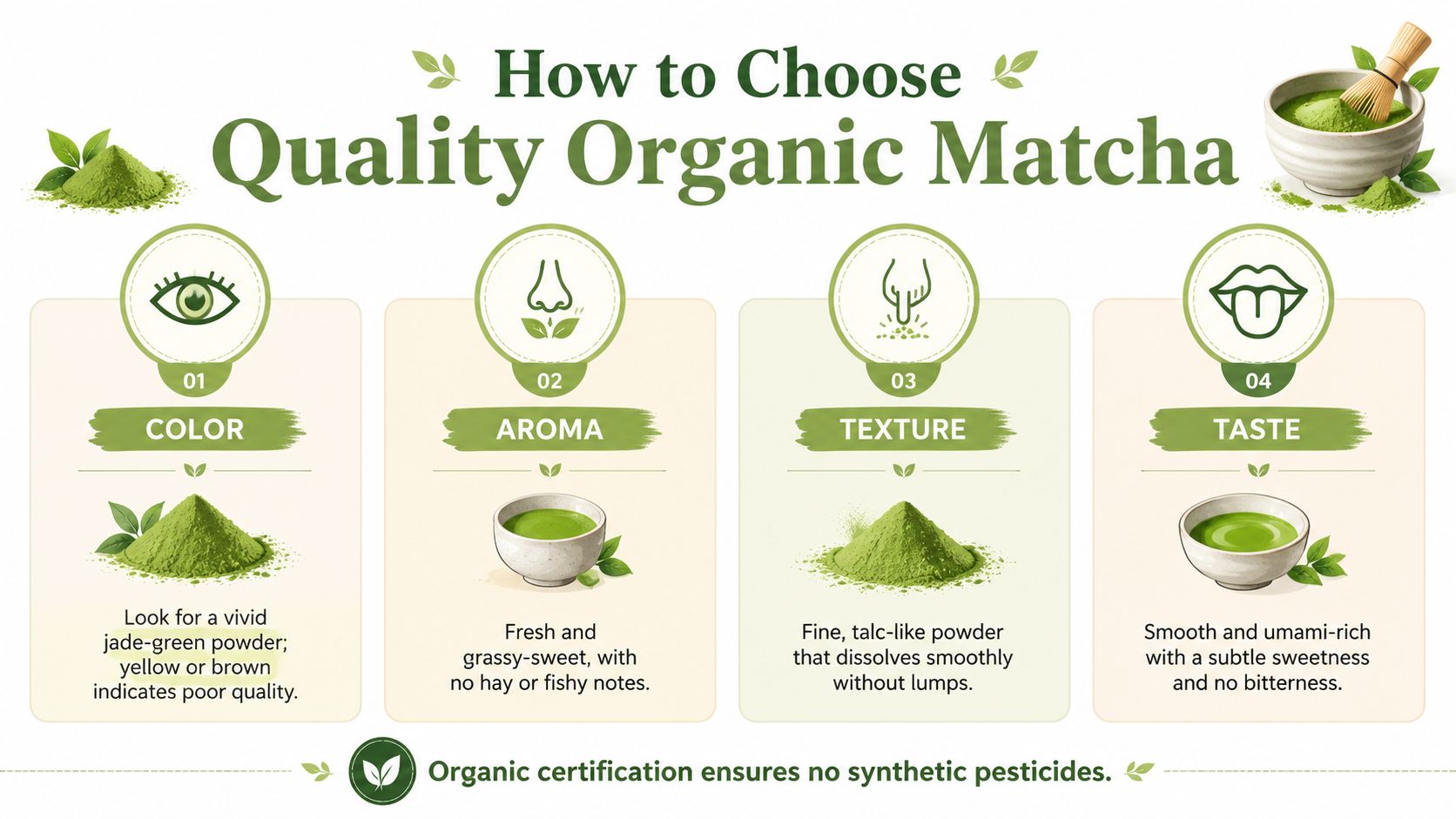
The following visual guide shows how colour, aroma, texture and taste work together:
For a deeper explanation of grades and buying cues, see PepTea's matcha grade and quality guide.
Serving Sizes, Safety, and Common Myths
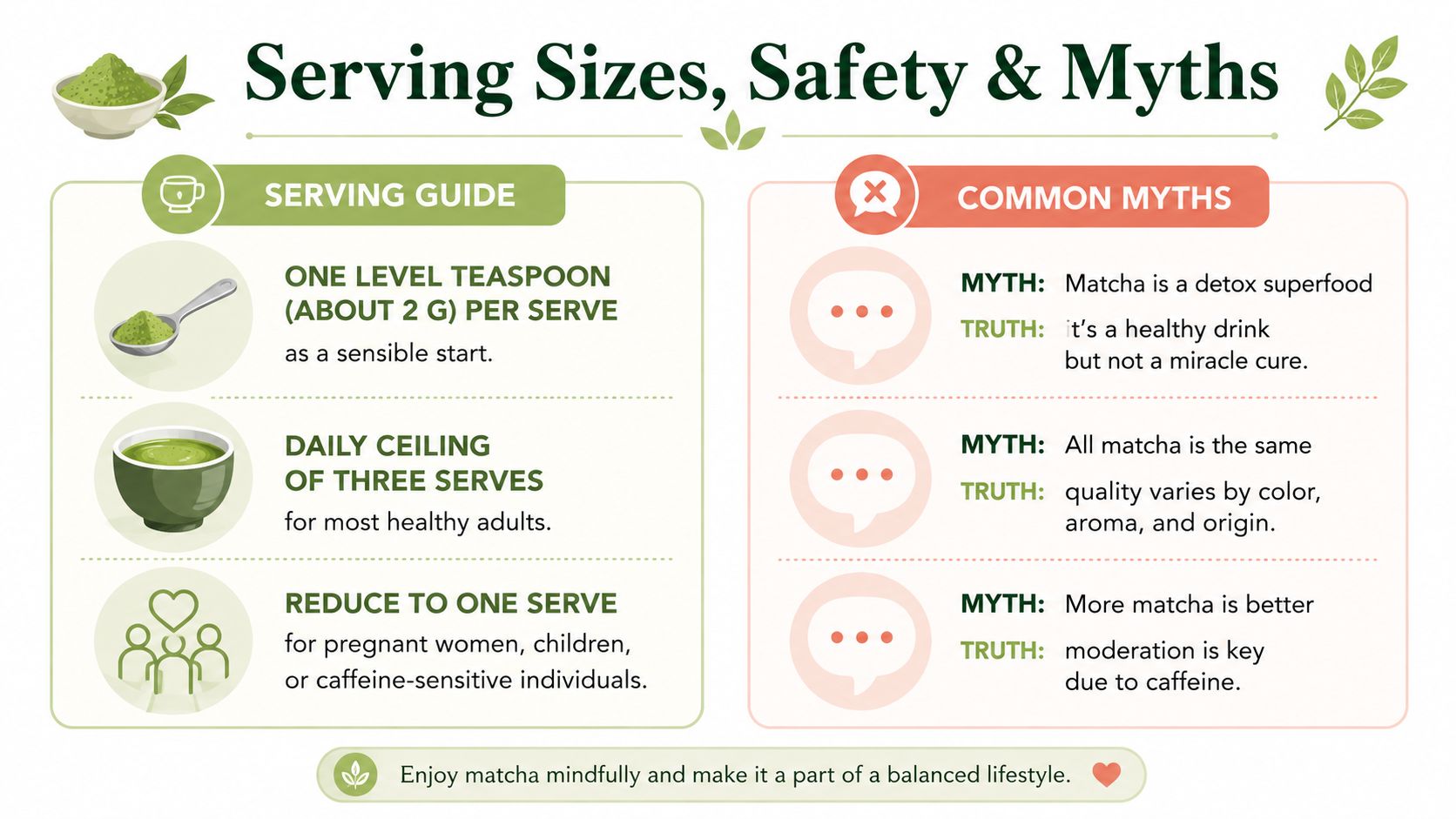
A sensible starting point for many healthy adults is one level teaspoon, about 2 g, per serve. A practical daily ceiling is around three serves for most healthy adults, with less appropriate for pregnant people, children and anyone who is caffeine-sensitive. These are cautious everyday guidelines rather than a substitute for individual medical advice.
Caffeine isn't the only consideration. Tea compounds can affect the absorption of non-haem iron from plant foods, so people managing iron deficiency may want to separate matcha from iron-rich meals and discuss their routine with a healthcare professional. Drinking matcha with food may also feel gentler than taking it on an empty stomach.
What matcha isn't
- Not a detox cure: Matcha is a healthy beverage option, not a miracle treatment.
- Not the same as an extract: Concentrated green tea extracts can deliver far higher doses than a normal drink.
- Not automatically better by grade: Ceremonial grade is generally chosen for straight drinking, but it isn't a guarantee of superior health effects.
- Not unlimited energy: More powder means more caffeine and more catechins, not necessarily more benefit.
The Australian Therapeutic Goods Administration states that rare liver injury cases have been linked to concentrated green tea extracts, while the majority of green tea use, including beverage form, is unlikely to cause harm. That distinction matters. Typical matcha is a food-format drink, whereas capsules and concentrated extracts deserve more caution, particularly if you have a medical condition or take medication.
Bringing Matcha Into Your Routine
The easiest routine is the one you can repeat. Start with one morning matcha in place of a coffee, using a modest serving and no added sugar. Give yourself time to notice the flavour, alertness and effect on sleep before adding another serving.
Keep a small sealed tin beside the kettle, but store it away from heat and direct light. Whisking matcha into hot water is the quickest default. Across the week, you can turn the same powder into an iced oat latte, a smoothie, overnight oats or a yoghurt bowl.
A pre-workout or mid-afternoon serve may suit some adults, but caffeine tolerance varies. If you notice restlessness or disrupted sleep, reduce the amount or move matcha earlier. Pregnant people, children and people taking medication should seek personalised advice before making matcha a daily habit.
Consistency matters more than chasing perfect gram precision. Choose a grade that fits your use, buy a quantity you'll finish while fresh, and treat matcha as one useful beverage within a varied diet rather than as a replacement for proper meals or medical care.
PepTea offers organic Japanese matcha for straight drinking, lattes and cooking, making it a convenient Australian source for readers who want to begin with a clearly defined product and serving style.
Explore the organic matcha range at Pep Tea and choose a powder suited to whisking, lattes or recipes. Start with one simple morning serve, then build your matcha routine around the flavour and caffeine level that work for you.
8 Healthy Drinks to Make at Home or in a Café

Healthy drinks shouldn't be bland, complicated or buried under sweeteners. The best healthy drinks to make fit the moment first, then use ingredients that deliver flavour, texture and a clear purpose. A morning latte needs a smooth finish and dependable energy. A drink for guests needs brightness, fizz and easy batch service.
This collection uses organic Japanese Matcha and properly fermented sugar-free organic Kombucha as practical foundations. Matcha may support calm focus through its naturally occurring L-theanine and caffeine, while Kombucha offers a bright, fermented alternative to soft drinks and alcohol. PepTea's Matcha is sourced from Japan, and its Kombucha is brewed in the Hunter Valley, NSW, using organic tea and live cultures.
You'll find hot and cold options, breakfast recipes, café-friendly serves and drinks for entertaining. Choose by occasion, temperature and serving style, then adjust sweetness and strength to suit your household or customers. If you're researching wider water quality considerations, well water treatment in Kentucky is a separate resource worth exploring.
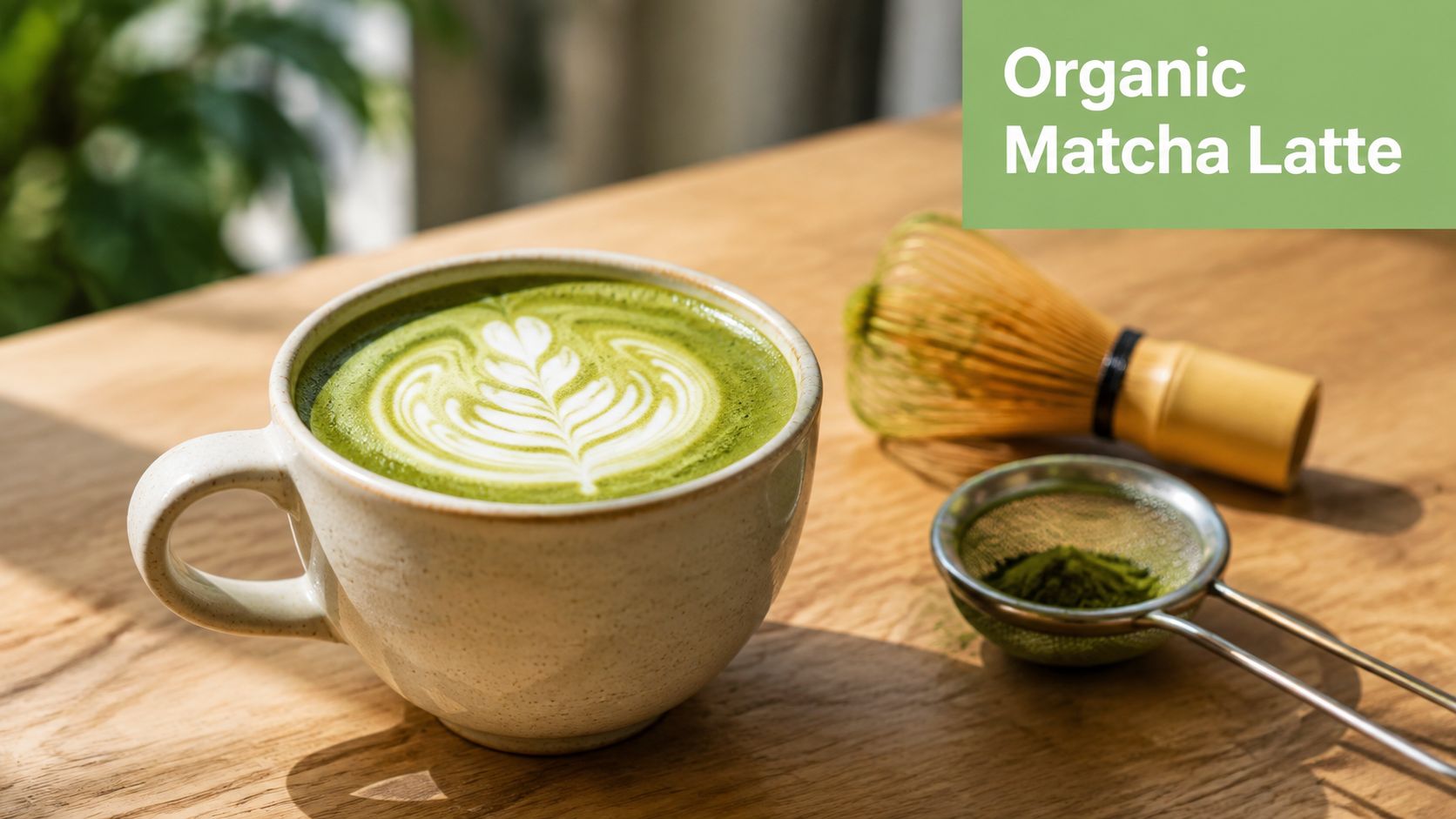
1. Organic Matcha Latte for Smooth Energy
A Matcha latte is one of the most dependable healthy drinks to make at home or serve in a café. It has the comfort of a familiar milk drink, but the flavour is more layered, with fresh, grassy and gently umami notes. Ceremonial-grade Matcha is the natural choice when the tea itself leads the drink, while culinary-grade Matcha is earthier and better suited to recipes where fruit, spices or cocoa are present.
Matcha is consumed as a fine powder rather than infused and discarded, so preparation matters. Sifting removes compacted particles, and whisking creates the smooth texture that separates a polished latte from a gritty one. Matcha contains L-theanine, and an Australian laboratory result cited by Pure Matcha reported 21.3 mg of L-theanine per 1 g serve in its Matcha potency testing. That combination may suit people looking for alertness with a calmer feel, although caffeine sensitivity varies.
A reliable café-style method
Sift Matcha into a bowl, add hot water between 70 and 80°C, and whisk briskly with a bamboo chasen until frothy. Boiling water can make the tea taste harsh and bitter. Warm your preferred milk separately, then pour it gradually into the whisked Matcha rather than shocking the tea with a sudden temperature change.
- For a sugar-free serve: Use naturally creamy oat, dairy or soy milk and let the Matcha's umami flavour carry the drink.
- For café service: Prepare the Matcha base to order and texture the milk separately for a cleaner, more consistent finish.
- For multiple serves: Whisk a larger batch in a jug, but serve it soon after preparation so the flavour stays fresh.
PepTea's guide to caffeine in a Matcha latte is useful when choosing a morning or afternoon serving routine. Start with ceremonial Matcha for a drinking preparation, then reserve culinary Matcha for smoothies, baking and frozen desserts.
2. Iced Matcha Lemonade for Warm Days
Cold Matcha works best when you build contrast. Fresh lemon brings acidity, ice provides refreshment, and a small amount of honey can round out Matcha's green bitterness without turning the drink into a soft drink. The result is bright enough for a summer breakfast, afternoon break or outdoor café menu.
Whisk the Matcha with a small amount of warm water first. This step matters because Matcha doesn't dissolve well when you tip the powder straight into a glass of cold liquid. Add honey while the tea is still warm, then allow the mixture to cool before adding lemon juice and ice. Using room-temperature lemon juice makes it easier to combine and keeps the drink from becoming instantly watery.
For a single glass, combine whisked Matcha, fresh lemon juice, honey to taste and cold water. Shake or stir with ice, then top with sparkling water if you want a lighter, effervescent finish. A pitcher version should be chilled before ice is added, otherwise the ice will melt quickly and flatten the flavour.
Make the texture work
Practical rule: Whisk first, chill second, dilute last.
Freeze some of the prepared Matcha mixture in ice-cube trays for a stronger drink as it melts. You can also prepare lemon juice in advance and refrigerate it for quick assembly. Keep the sweetness restrained. Honey adds flavour, but it still contributes sugar, so the amount should reflect the occasion rather than habit.
For a café menu, describe this as an iced Matcha and lemon drink rather than promising a health outcome. Matcha is widely valued for catechins, including EGCG, and an Australian tea source reports that consuming the whole leaf can provide about two to three times the catechin content of steeped green tea in its explanation of Matcha antioxidants. For a related flavour idea, explore PepTea's organic green tea with lemon, then adapt the profile into a cold Matcha serve.
3. Kombucha and Matcha Green Energy Elixir
Matcha and Kombucha reward careful handling. Matcha supplies concentrated green tea flavour and caffeine, while Kombucha adds acidity, fermentation character and carbonation. The result suits drinkers seeking a lively, lower-sugar alternative to soft drink or an alcoholic serve, provided the sweetness and caffeine fit the occasion.
Whisk the Matcha fully before adding Kombucha. A smooth tea base keeps dry powder from floating in the glass. Let it cool to at least room temperature, pour it into the glass, then add chilled Kombucha slowly down the side. Stir once, gently. Shaking can quickly flatten the carbonation.
PepTea's sugar-free organic Kombucha is brewed in the Hunter Valley, NSW. Its Ginger flavour pairs well with Matcha because the spice gives the green tea a warmer finish. Lime & Ginger creates a sharper, more refreshing drink, while Mango adds roundness and can soften Matcha's savoury edge for new drinkers.
Choose the flavour by service context. Ginger fits a morning ritual, Lime & Ginger suits an afternoon café serve, and Mango works well when the tea needs a gentler introduction.
What to watch when combining live drinks
Authentic Kombucha uses tea, water, sugar and a SCOBY, with some sugar consumed during fermentation. Products still vary considerably. CHOICE notes that low sugar under the Food Standards Code means 2.5 g of sugar or less per 100 mL, while the Kombucha products it reviewed ranged from less than 0.1 g to 3.8 g per 100 mL in its Kombucha review. Read the label rather than assuming every fermented drink is low in sugar.
Serve the elixir immediately for the freshest carbonation. A room-temperature version is possible, but heating Kombucha may reduce some probiotic activity. Those who are sensitive to caffeine, acidity or fermented drinks should begin with a modest serve and assess their response. The earlier Matcha discussion covers the tea's caffeine profile, so this combination is best adjusted through temperature, flavour choice and portion size rather than treated as a guaranteed energy remedy. PepTea's Matcha and Kombucha benefits guide provides further preparation context without presenting the drink as a medical treatment.
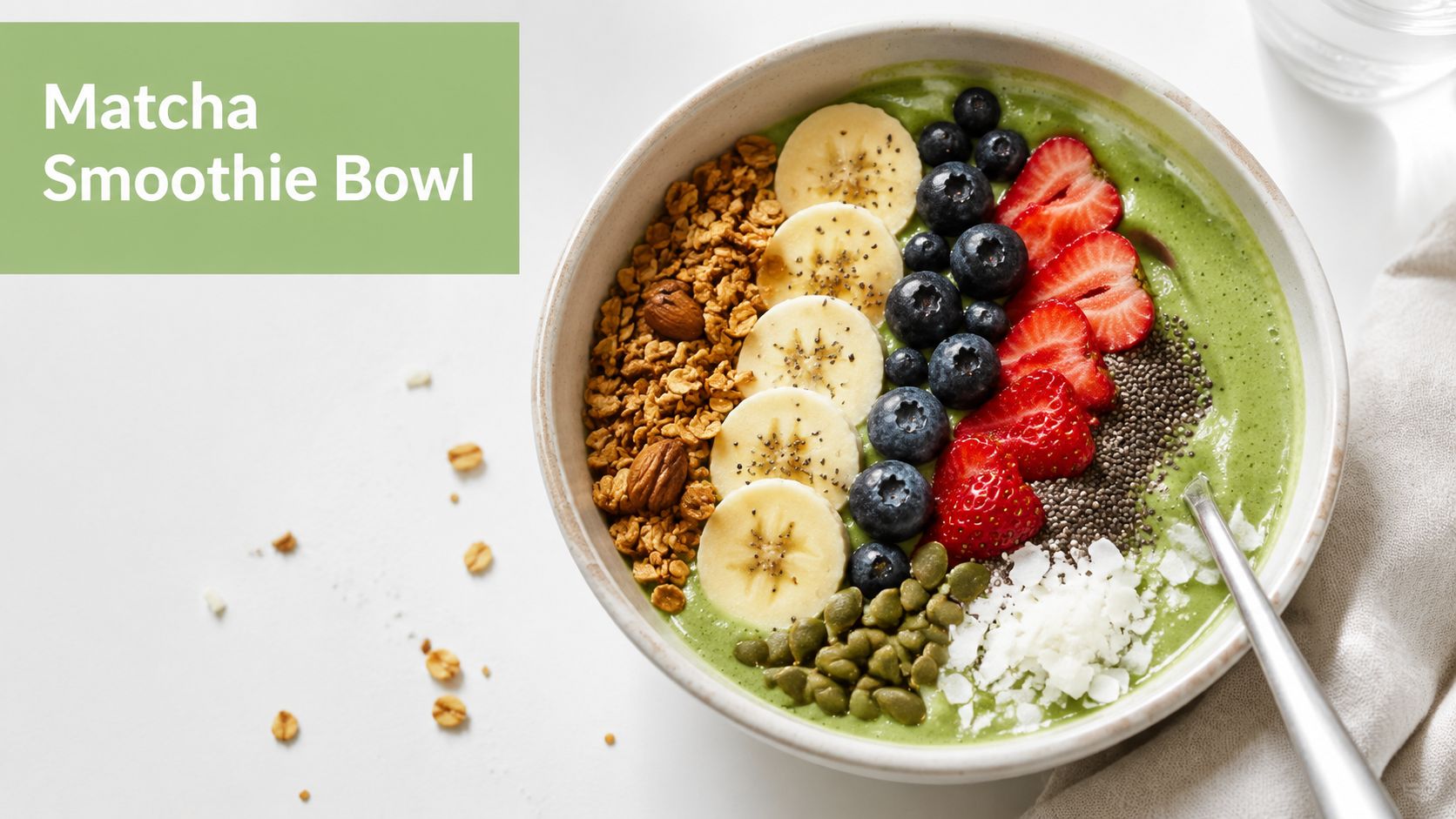
4. Matcha Smoothie Bowl for Breakfast
A smoothie bowl is technically eaten with a spoon, but it belongs on any practical list of healthy drinks to make because the base uses the same blending principles as a drinkable smoothie. The thicker format also gives Matcha room to work alongside banana, yoghurt, berries and seeds instead of competing with them.
Blend frozen banana, Greek yoghurt or a dairy-free alternative, milk and culinary-grade Matcha until thick and smooth. Culinary Matcha is the sensible choice here. Its deeper flavour stands up to fruit and toppings, and using a premium ceremonial powder in a blended breakfast can be unnecessary when the tea isn't the main tasting note.
Freeze sliced banana in a sealed bag the night before. Add only enough milk to help the blender move, because excess liquid turns the bowl into a thin smoothie. Frozen yoghurt cubes can make the base creamier, while protein powder can make it more substantial for a post-training breakfast. If you use collagen peptides, remember that they change the nutritional profile but not the need for a balanced meal overall.
Build toppings that stay on the surface
Arrange granola, fresh berries, coconut, nuts and seeds in separate sections rather than scattering everything at once. This improves texture and keeps softer toppings from disappearing into the base. Prepare dry toppings in small containers if you're assembling breakfast before work.
Matcha's antioxidant profile makes it an appealing ingredient, but a bowl still needs sensible structure. Fruit supplies sweetness, yoghurt can add protein, and seeds contribute texture and fat. Keep added syrups optional. A café can offer the bowl unsweetened, then let customers choose a small drizzle if they want one.
5. Kombucha Immunity Spritzer for Everyday Refreshment
A spritzer turns Kombucha into an easy hospitality format. It looks celebratory, has natural acidity and fizz, and can be built around a small amount of juice or a chilled herbal infusion rather than a large quantity of sweet mixer. That makes it useful for cafés, yoga studios, wellness events and alcohol-free gatherings.
Start with chilled PepTea Ginger or Lime & Ginger Kombucha. Add a modest splash of fresh apple, citrus or another fruit juice, then top with sparkling water. Fresh mint, basil, rosemary or a citrus wheel gives the glass a more finished appearance without needing extra sweetener. A clear tumbler or wine glass lets guests see the colour and carbonation.
For a turmeric variation, brew a mild turmeric infusion, chill it thoroughly and combine it with Lime & Ginger Kombucha and sparkling water. Don't over-steep herbal ingredients. Bitterness becomes more noticeable once acidity and carbonation are added, and no amount of garnish will fully hide an unbalanced base.
Design the serve around the setting
- For mornings: Pair Ginger Kombucha with apple and mint for a soft, familiar flavour.
- For afternoons: Use Lime & Ginger with citrus and sparkling water for a sharper finish.
- For events: Chill the glasses, prepare the non-carbonated ingredients ahead, and add Kombucha just before serving.
- For cafés: List the flavour components clearly so customers can choose a lower-sweetness option with confidence.
The word “immunity” needs care. A spritzer can be refreshing and may contribute tea-derived or fruit-derived compounds, but it won't replace sleep, balanced food or medical care. CSIRO warns that some Kombucha products become high in sugar when manufacturers add fruit juice for flavour and fermentation, so checking the nutrition label is important when choosing a regular drink.
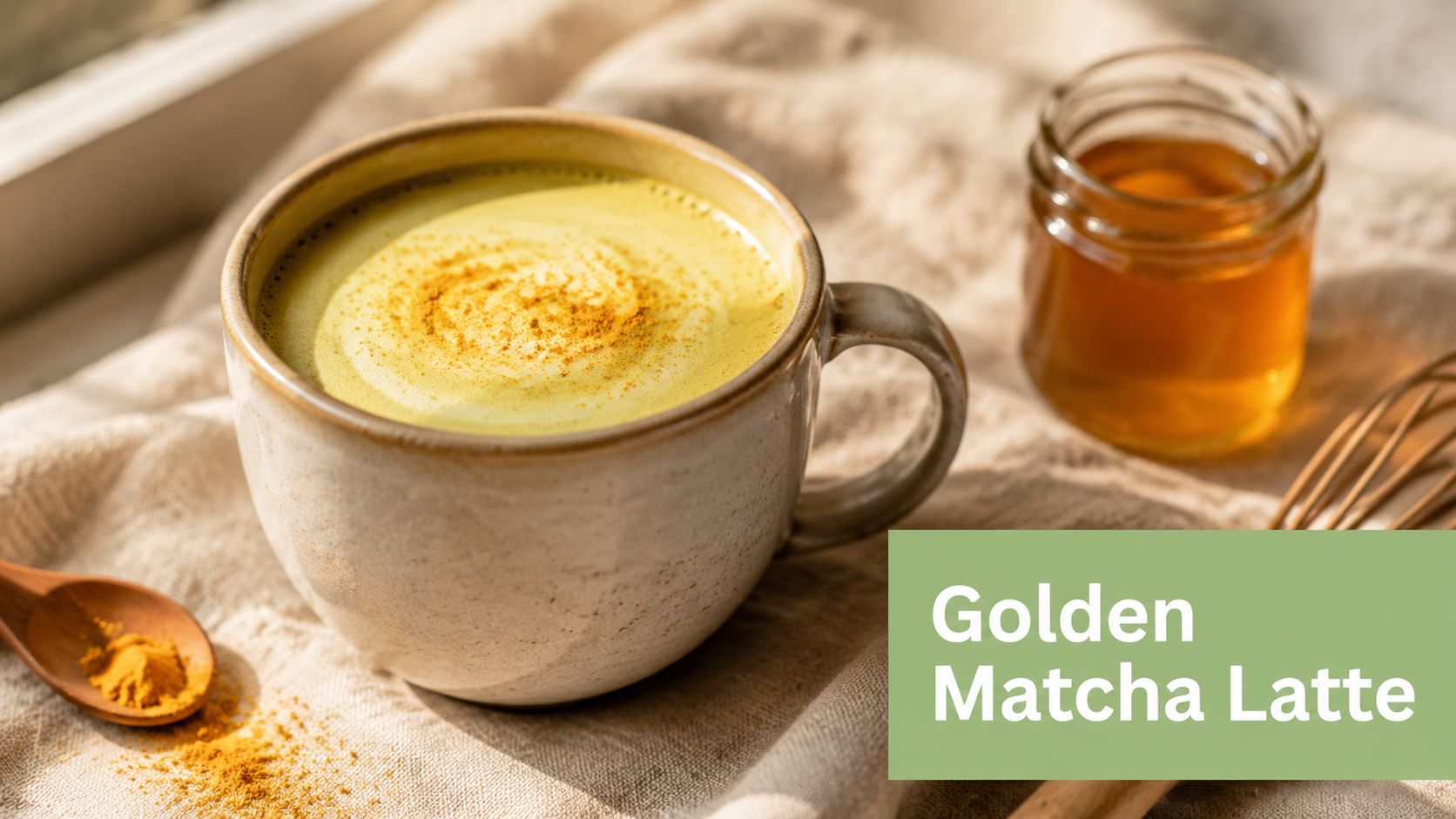
6. Golden Turmeric and Matcha Latte for a Warming Ritual
Turmeric and Matcha create a striking golden-green latte, but the drink succeeds because of balance rather than the colour alone. Turmeric brings earthy spice, Matcha adds vegetal depth, and milk provides the body needed to soften both flavours. Black pepper is traditional in many turmeric preparations, but it isn't a guarantee of a health outcome.
Sift Matcha into a bowl with turmeric, cinnamon and a small pinch of black pepper. Add warm water and whisk until the powders are evenly dispersed. Heat coconut, oat or dairy milk separately, then combine it with the tea mixture. Oat milk often gives a soft foam, coconut milk brings richness, and dairy milk creates a familiar café-style texture.
Fresh grated turmeric can taste livelier than dried powder, though it also creates more preparation and can stain equipment. For busy service, a measured dry spice blend is easier to keep consistent. Store it in an airtight container and make only what you'll use promptly.
Keep the promise modest
Turmeric is often discussed for curcumin and inflammation, but a homemade latte shouldn't be presented as treatment for arthritis, chronic conditions or post-workout injury. People taking medication, managing a health condition or experiencing digestive sensitivity should ask a qualified health professional whether concentrated spices suit them.
Serve this drink as a warming ritual, not a prescription. A little honey can soften the spice, but it's optional. If you want a sugar-free menu option, use a naturally creamy milk and allow cinnamon, pepper and Matcha to provide the aromatic interest.
7. Kombucha Fruit Punch for Gatherings
Fruit punch often becomes unhealthy because the base is sweet juice, cordial or soft drink. Kombucha changes the structure of the drink. It brings acidity and fizz, so you can use fresh fruit, citrus and herbs for flavour while keeping the punch lighter and more complex.
For a large jug, combine chilled PepTea Kombucha with fresh juice, citrus slices and a small amount of honey if needed. Add sparkling water immediately before serving. Ginger Kombucha works with apple, pear, mint and rosemary. Lime & Ginger suits pineapple, cucumber and citrus. Mango can pair with passionfruit, orange and berries.
Avoid assembling the punch too early. Carbonation fades, fruit can become soft, and the acidity may dominate as the drink stands. Keep the juice, garnishes and Kombucha chilled separately for a café or event, then combine shortly before guests arrive.
Make one base serve two audiences
Prepare the main punch without alcohol, then offer spirits separately for guests who want them. This keeps the non-alcoholic option complete rather than treating it as a diluted substitute. It also suits Australian gatherings where some guests may be driving, taking a break from alcohol or looking for something refreshing.
Use a wide glass dispenser or clear jug so the fruit and herbs become part of the presentation. Fresh citrus wheels add aroma, while berries provide colour. Don't rely on large amounts of juice to make the punch attractive. Good Kombucha, fresh garnish and cold service do more for the finished drink.
For a lower-sugar result, choose a Kombucha with a label that supports your intention and keep honey optional. “Sugar-free” is not a reason to ignore flavour balance, and “natural” doesn't automatically mean low sugar. The best punch tastes bright enough that guests don't miss cordial.
8. PepTea Pairing and Serving Guide
The simplest pairing rule is to match the Matcha grade and Kombucha style to the preparation. Ceremonial-grade Matcha is smoother for a whisked latte, straight tea or delicate iced drink. Culinary-grade Matcha is more practical in smoothie bowls, baking and blended recipes where other ingredients provide the structure.
Kombucha belongs in drinks that benefit from acidity and carbonation. Use it in spritzers, punches and the Matcha elixir, but add it late and stir gently. A carbonated drink loses its appeal when it's shaken, and live cultures are best treated as a food ingredient rather than exposed unnecessarily to heat.
For cafés, consistency comes from measuring the tea, controlling water temperature and keeping batch service close to the moment of pouring. For home use, the same principles make the recipes easier to repeat. Garnish with herbs, citrus wheels or edible flowers when presentation matters, but don't let decoration cover a drink that's too sweet, too hot or poorly balanced.
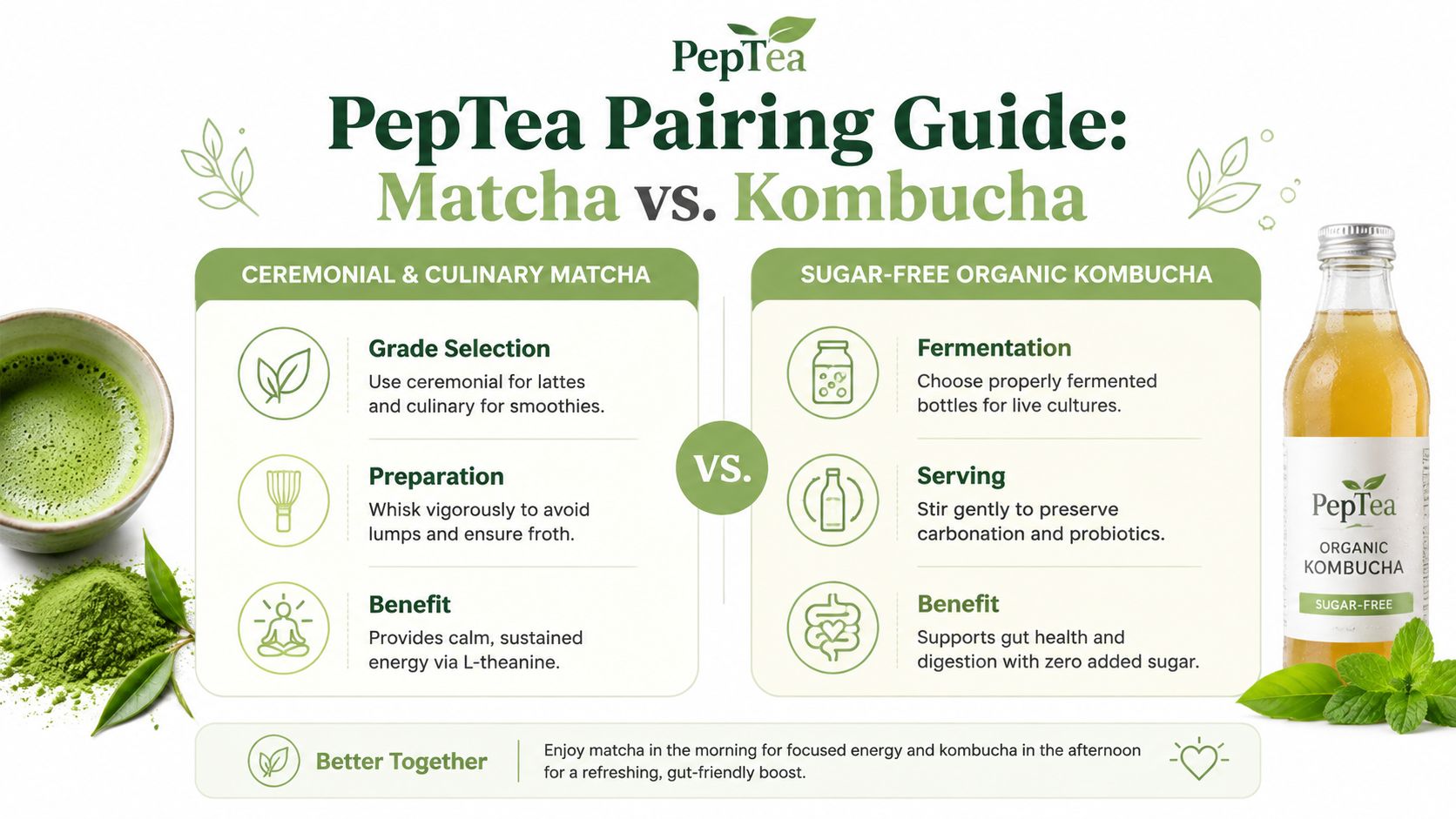
The Australian market gives these ingredients useful context. Food Standards Australia New Zealand found that Kombucha represented 55.2% of 239 fermented soft drink samples in its coordinated survey, and its report identified NSW as the biggest consumer market for fermented beverages, followed closely by Queensland in its fermented beverages outcomes paper. That doesn't make every Kombucha healthy, but it does show why careful product education matters.
8 Healthy Drinks Comparison
| Item | 🔄 Implementation complexity | ⚡ Resources & speed | ⭐ Expected outcomes | 📊 Ideal use cases | 💡 Key advantages / tips |
|---|---|---|---|---|---|
| Organic Matcha Latte – The Smooth Energy Classic | Moderate, requires basic whisking technique (short learning curve) | Minimal equipment (whisk or chasen, bowl, milk steamer optional); ready in <5 min | Calm, sustained focus; high EGCG antioxidant content; smooth mouthfeel | Daily morning ritual, café menu, afternoon energy without sleep disruption | Customisable milk/sweetness; sift Matcha, use 70–80°C water |
| Iced Matcha Lemonade – Refreshing Summer Wellness | Low, whisk then combine and chill | Needs fresh lemon, ice, chilled or sparkling water; pitcher-friendly; ~5–10 min | Refreshing hydration; vitamin C boost; sustained, jitter‑free energy | Summer entertaining, outdoor events, post-workout refresh | Use fresh lemon; batch in pitcher; freeze Matcha cubes to avoid dilution |
| Kombucha + Matcha Green Energy Elixir – Gut Health & Calm Focus | Low, whisk Matcha, then gently combine with Kombucha | Requires sugar‑free Kombucha and ceremonial Matcha; ready ≈3 min | Probiotic support + sustained mental clarity; antioxidant synergy | Gut‑health focus, wellness cafés, pre‑workout or recovery drink | Stir gently to preserve live cultures; serve immediately for fizz |
| Matcha Smoothie Bowl – Creamy, Nutrient-Dense Breakfast | Moderate, whisk then blend; assembly/decoration step | Blender required; frozen banana prep; ~10 min (prep dependent) | Protein-rich, satiating breakfast; sustained energy and digestive fibre | Breakfast, post-workout, meal-prep, Instagram-friendly brunch | Freeze banana ahead; use culinary Matcha to reduce cost; layer toppings for texture |
| Kombucha Immunity Spritzer – Sparkling Wellness Refresh | Low, simple pour-and-gently-stir assembly | Kombucha, fresh juice or herbal infusion, sparkling water; <5 min | Probiotic and immune support; hydrating, low sugar impact | Everyday wellness, hospitality, non‑alcoholic bar menu | Use fresh‑pressed juice/herbal infusions; chill glasses; garnish heavily |
| Golden Turmeric + Matcha Latte – Anti-Inflammatory Wellness Ritual | Moderate, whisking multiple powders; spice balance important | Turmeric, black pepper (essential), Matcha, milk; ready <5 min | Anti‑inflammatory (curcumin) + antioxidant support; calming focus | Inflammation management, recovery rituals, evening wind‑down | Always include black pepper for bioavailability; sift powders before whisking |
| Kombucha Fruit Punch – Probiotic Party Drink for Gatherings | Low–moderate, batch assembly, visual garnish important | Large volumes of Kombucha, fresh juice, pitcher, ice; 5–10 min assembly | Crowd-pleasing probiotic punch; low‑sugar alternative to sweet punches | Parties, gatherings, events, wellness functions | Keep pitcher on ice to preserve carbonation; use frozen fruit cubes |
| PepTea Pairing & Serving Guide – Matcha + Kombucha Essentials | Low, informational; requires following guidelines in practice | Resource: guide/infographic for staff; speeds menu planning and batch prep | Improved pairing choices; consistent service; maximised probiotic & antioxidant benefits | Cafés, events, staff training, menu development | Use ceremonial for lattes, culinary for bowls; assemble shortly before serving; label 'sugar‑free' and 'probiotic' |
Choose Your Next Pour
The right drink depends less on a universal definition of “healthy” and more on what you need the drink to do. For a daily morning ritual, start with a whisked organic Matcha latte. Use ceremonial-grade Matcha, water between 70 and 80°C, and milk that gives you the texture you enjoy. The drink should taste smooth enough that you don't need a heavy syrup to make it appealing.
Choose iced Matcha lemonade when the weather is warm or you're serving a group that prefers a sharper, more refreshing profile. Whisk the tea before chilling, dissolve any honey while the liquid is warm, and add ice only after the flavour is balanced. Matcha ice cubes are a useful practical touch because they protect the drink from becoming weak as they melt.
A smoothie bowl makes more sense at breakfast, especially when you want fruit, yoghurt, seeds and granola alongside the tea. Culinary-grade Matcha is perfectly suited to this setting, and frozen banana gives the base body without requiring a large amount of milk. Keep toppings organised so each spoonful has a mix of creamy, crunchy and fresh elements.
For entertaining, Kombucha spritzers and fruit punch offer the easiest path to a refined non-alcoholic menu. Ginger, Lime & Ginger and Mango each create a different starting point, while fresh juice, citrus and herbs provide the finishing details. Assemble carbonated drinks close to service, because fizz and freshness decline when a batch sits for too long.
The Kombucha and Matcha elixir is the most distinctive option. It may suit someone who enjoys tea's focused energy and Kombucha's bright fermented character, but the combination also requires the most care. Cool the Matcha before adding Kombucha, stir gently and serve promptly. Anyone sensitive to caffeine, acidity or fermented beverages should adjust the strength or choose a different recipe.
Healthy doesn't mean every ingredient suits every person. Check labels, particularly when buying Kombucha, because added juice can increase sugar content. PepTea's own sugar-free organic Kombucha provides a useful starting point for lower-sugar recipes, but your finished drink can still contain sugar from honey, fruit juice or sweetened milk. Treat those ingredients as choices to measure, not automatic additions.
The same applies to Matcha. L-theanine and catechins make it an interesting tea ingredient, and Matcha's caffeine may support alertness, but people respond differently to caffeine and concentrated tea. Keep portions sensible, avoid presenting these drinks as treatments, and seek professional advice if you're pregnant, taking medication or managing a health condition.
For Australian cafés, the opportunity is practical rather than gimmicky. A menu can offer hot and iced Matcha, sugar-free Kombucha spritzers, breakfast bowls and alcohol-free punch while giving customers clear information about flavour, sweetness and caffeine. PepTea's Japanese organic Matcha and Australian-brewed Kombucha from the Hunter Valley, NSW, fit that approach because provenance and preparation are part of the product experience.
Explore the recipes by occasion, then make one small adjustment at a time. Reduce the honey, change the milk, swap Ginger for Lime & Ginger, or serve the same Matcha base hot and iced. The most useful healthy drinks to make are the ones you'll prepare confidently, enjoy regularly and serve wholeheartedly.
PepTea offers organic Japanese Matcha for lattes, smoothies and baking, alongside sugar-free organic Kombucha brewed in the Hunter Valley, NSW. Visit Pep Tea to explore the range, shop Kombucha for home entertaining, or enquire about café and wholesale supply.
Matcha Love Energy Guide for Smooth Sustained Focus
A bowl of matcha can deliver a sustained energy lift for 4–6 hours through the interaction between natural caffeine and L-theanine, rather than the quick rise and fall many people know from coffee, as noted in this Australian matcha caffeine explainer. That single detail changes how a lot of people think about tea.
For plenty of Australians, the usual weekday rhythm is familiar. Coffee on the way to work. Another one mid-morning. Maybe a third before the afternoon meeting, school pick-up, gym session, or café shift. The problem isn't always getting energy. It's keeping it steady.
That's where Matcha Love Energy makes sense as more than a catchy phrase. It describes the kind of energy people are chasing: focused, smoother, and easier to live with. Not buzzy. Not shaky. Not a hard crash an hour later.
A home drinker might want better concentration for a long day at a desk. A café customer may want a greener alternative to a flat white. A hospitality venue might need a non-alcoholic menu option that feels functional as well as premium. Matcha sits neatly in all three worlds.
Introduction to Matcha Love Energy
Matcha love energy starts with a simple shift in mindset. Instead of asking, “How do I wake up faster?” it asks, “How do I stay switched on without feeling rattled?”
That difference matters in everyday life. Think about the person who starts strong at 8 am, loses steam before lunch, then reaches for something sweet or another caffeine hit just to get through the afternoon. Matcha appeals because it tends to support a more even experience, which is why it keeps showing up in morning rituals, iced lattes, workout routines, and café menus across Australia.
Why matcha feels different
The reason many beginners get confused is that matcha still contains caffeine, so they expect it to behave exactly like coffee. It doesn't. The experience is often described as calmer and more organised.
That's because matcha isn't just “green coffee”. It's a powdered tea with a distinct composition, and the way those compounds work together changes how the energy feels.
Matcha isn't about maximum intensity. It's about usable energy you can actually work, study, train, or socialise with.
What people usually want to know first
Most readers come to this topic with a few practical questions:
- How long does matcha energy last? People want to know if it can carry them through a work block or long shift.
- Will it make me jittery? This is often the deciding factor for anyone who has had a rough time with strong coffee or energy drinks.
- How much should I use? Too little can feel underwhelming. Too much can ruin flavour and make the ritual less enjoyable.
- Can I do more than drink it plain? Yes. Matcha works in lattes, cold drinks, snacks, and even café-ready mocktails.
The useful part of matcha love energy is that it's both scientific and practical. You can understand the chemistry, then turn around and use that knowledge in a whisked bowl, an iced latte, or a café menu special.
Understanding the Science Behind Matcha Energy
The easiest way to understand matcha energy is to stop thinking about caffeine as a solo act.
In matcha, caffeine works alongside L-theanine, an amino acid that changes the feel of stimulation. According to Vybey's Australian guide to matcha and caffeine, matcha delivers a sustained energy lift lasting 4–6 hours due to the synergistic interaction between its natural caffeine and L-Theanine, which helps counter the jittery effects often associated with coffee.
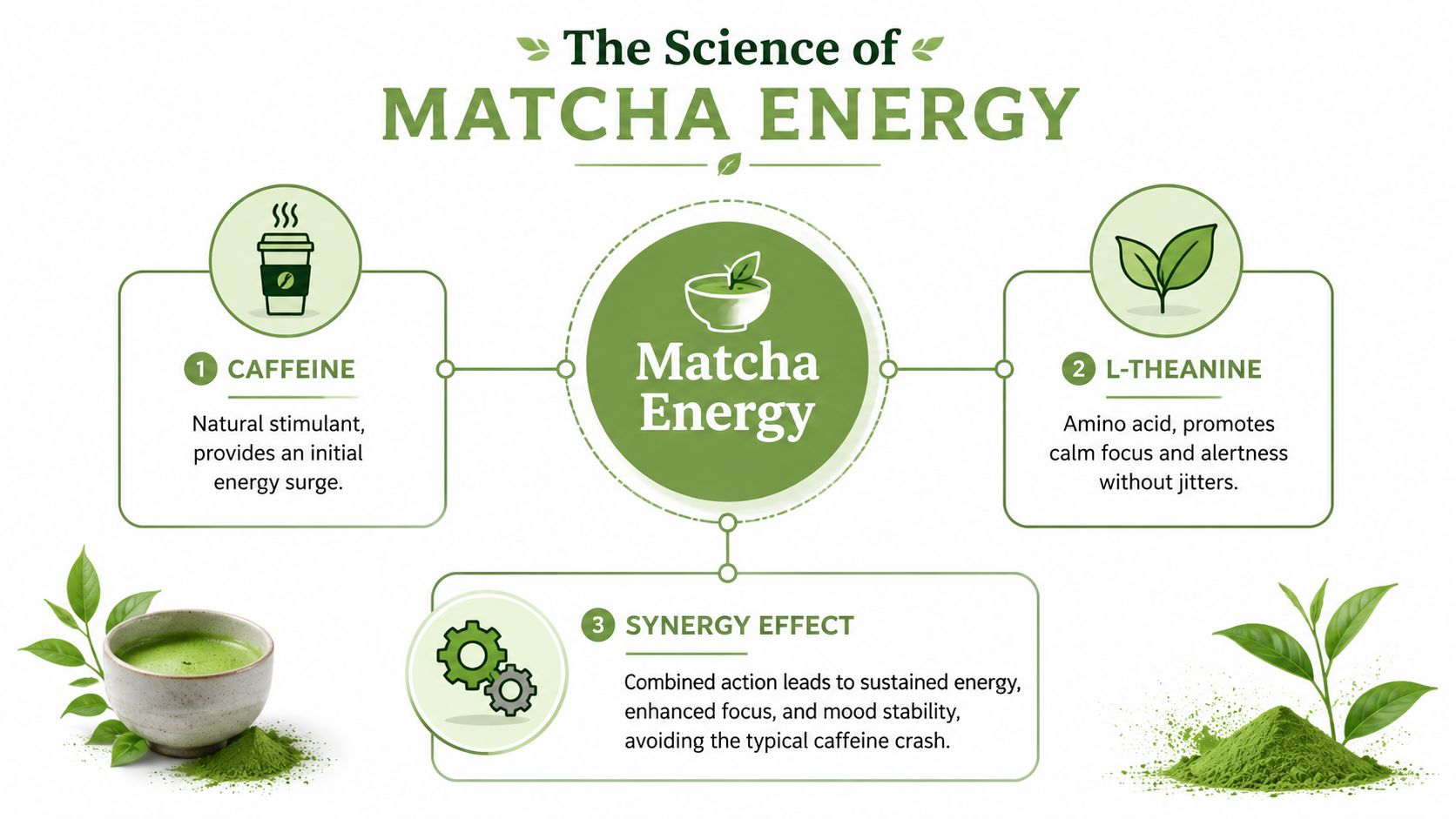
Caffeine gives the lift
Caffeine is the part that is widely understood. It helps you feel more awake, more alert, and more ready to act.
If matcha only contained caffeine, the story would be much simpler. It would just be another stimulant. But matcha is more layered than that.
L-theanine changes the texture of energy
L-theanine is what makes beginners pause and say, “This feels different.”
Matcha acts as a built-in counterbalance. Instead of your energy rushing upward all at once, L-theanine helps smooth the experience so your focus feels steadier. Coffee can feel like flipping on a bright light, while matcha often feels more like a gradual sunrise.
Australian clinical discussion cited by MedReport's article on the science behind matcha notes that matcha contains roughly 20–30 mg of L-Theanine per gram and 30–40 mg of caffeine per gram, with that combination linked to improved vigilance and reaction time while reducing jittery overstimulation compared with coffee.
Practical rule: If coffee makes you feel alert but scattered, matcha may suit you because the goal isn't just wakefulness. It's calmer concentration.
For readers who want a simple breakdown of how this translates into everyday drinks, this guide to caffeine in a matcha latte is useful context.
EGCG matters too
Matcha energy isn't only about stimulation. It also comes with compounds people often associate with overall wellness, especially EGCG, a well-known catechin.
A review published on PMC notes that polyphenols can account for up to 30% of matcha's dry weight, and EGCG makes up about 50–60% of total catechins. In practical terms, that means a small serving of matcha carries a meaningful concentration of tea compounds in a compact form.
Why this matters in real life
Matcha love energy becomes easier to apply. The point isn't to memorise biochemistry. The point is to know why a bowl of matcha may feel better suited to:
- Focused desk work
- Study sessions
- Longer creative tasks
- Pre-meeting concentration
- A calmer alternative to a second or third coffee
If you've ever felt “awake but not productive”, you already understand the difference. Matcha's appeal is that it may support alertness without tipping so easily into that noisy, over-caffeinated state.
Benefits Compared to Coffee and Energy Drinks
One rarely chooses matcha in a vacuum. It's chosen as an alternative to something already in the routine, typically coffee or an energy drink.
That comparison is where matcha love energy becomes much clearer.
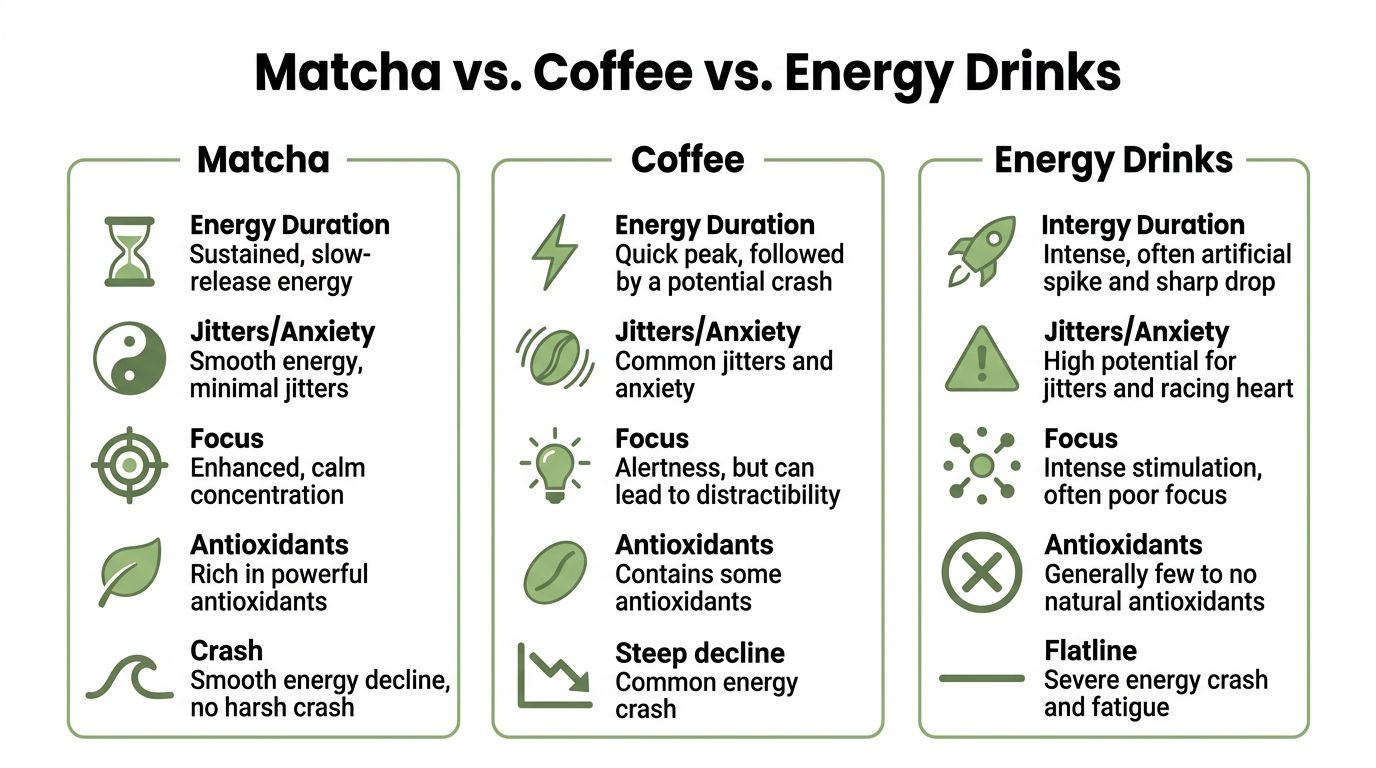
A quick side by side view
| Drink | Energy feel | Focus style | Antioxidant angle | Common downside |
|---|---|---|---|---|
| Matcha | More gradual and steady | Calm, centred | Strong catechin content | Can taste grassy if brewed badly |
| Coffee | Fast and obvious | Sharp at first | Some antioxidants | Can feel spiky or jittery |
| Energy drinks | Intense, often aggressive | Can feel scattered | Usually not the reason people choose them | Hard drop-off for some drinkers |
This table is simplified, but it matches how many people describe the experience.
Matcha has a broader wellness profile
One reason matcha stands apart is that people aren't only drinking it for stimulation. They're also drawn to the tea compounds it naturally contains.
According to Kitchen by Nine, matcha contains approximately 60% epigallocatechin gallate (EGCG) and delivers nearly double the vitamin C content found in other green teas. That helps explain why matcha often sits in a different category from a standard caffeine hit.
Coffee drinkers usually compare flavour, strength, and roast. Matcha drinkers often talk about energy, ritual, antioxidants, and how they feel a few hours later.
Coffee isn't the enemy, but it is different
Coffee has plenty going for it. It's familiar, fast, and ingrained in Australian café culture. But for people who feel anxious, overstimulated, or peaky on coffee, the experience can be hard to manage.
If you want to understand how coffee styles themselves differ, this guide on compare filter coffee and espresso is a handy reference because brew method changes intensity, flavour, and pace of drinking.
Some people don't need less caffeine. They need a different caffeine experience.
That's often where matcha enters the picture.
Energy drinks solve one problem and create another
Energy drinks are usually chosen for speed and convenience. They can make sense in a rush, but they rarely offer the same sense of ritual, ingredient simplicity, or tea-based identity that draws people to matcha.
For a lot of health-conscious drinkers, energy drinks also feel disconnected from the rest of a wellness routine. Matcha fits more naturally beside breakfast, a pre-walk drink, a work session, or an afternoon reset.
A few practical decision points help:
- Choose matcha if you want a calmer rhythm and enjoy the ritual of preparation.
- Choose coffee if you want familiar flavour and immediate punch.
- Choose an energy drink only if speed matters more to you than ritual, ingredient profile, or a gentler feel.
The keyword in matcha love energy is love, and that matters. People tend to stick with matcha not just because it works, but because the drink itself feels better to live with.
Brewing and Dosing Guide for Optimal Energy
Brewing matcha well isn't complicated, but small details make a big difference. Bad matcha technique usually creates two problems at once. It tastes rough, and the whole experience feels less balanced.
The first fix is temperature. The second is dose.
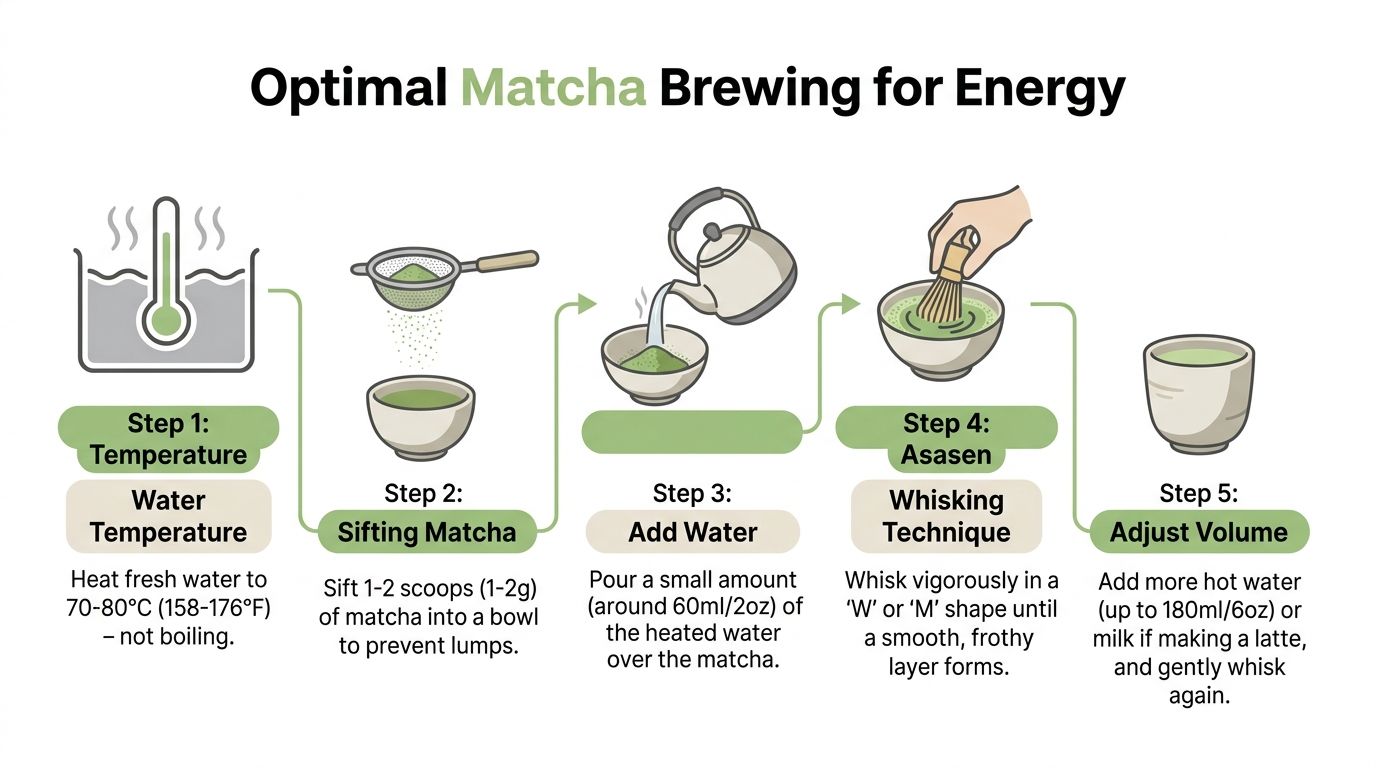
Start with the right basic method
A simple bowl is enough. You don't need a perfect tea ceremony set to make good matcha at home.
- Heat fresh water to 70–80°C. Water that's too hot can make matcha taste bitter.
- Sift 1–2g of matcha into a bowl. Sifting helps break up clumps before they hit the water.
- Add a small amount of water first. Around 60 ml is enough to create a smooth base.
- Whisk briskly in a W or M shape. Aim for a light froth rather than heavy foam.
- Top up with more water or milk. You can take it to about 180 ml depending on how strong you like it.
If you want to see the movement, this whisking demo is helpful:
For a closer walk-through of technique, this how to whisk matcha guide is a practical reference.
How much matcha should you use
A common beginner mistake is assuming more powder automatically means better energy. Usually it just means stronger flavour and less balance.
According to Matcha.com's overview of catechins and EGCG in matcha, one standard serving of premium stone-ground Japanese matcha (1g) contains approximately 30–35mg of EGCG, with total EGCG ranging from 50–110mg per gram depending on grade and cultivar.
That makes a good starting point:
- For a lighter daily bowl use 1g
- For a stronger morning serve or latte use 2g
- If you're sensitive to caffeine stay at the lower end and drink it earlier in the day
Ceremonial style or latte style
The brew style changes the experience as much as the dose.
| Style | Best for | Texture | Flavour |
|---|---|---|---|
| Traditional bowl | Morning focus, tea ritual | Light and frothy | Clean, grassy, more direct |
| Matcha latte | New drinkers, afternoon comfort | Creamier | Softer and rounder |
| Iced matcha | Warm weather, on-the-go energy | Refreshing | Crisp and bright |
If matcha tastes harsh, don't assume you dislike matcha. Lower the water temperature first, then check your dose.
A simple timing approach
Matcha often works well when you want energy that matches a task rather than a rush. Good moments include the start of focused work, the hour before a workout, or an afternoon period when coffee would feel too heavy.
Keep the method simple. Measure carefully. Give yourself a few days to notice how your own body responds. Matcha rewards consistency more than intensity.
Recipe Inspirations with Matcha for Everyday Energy
Once you understand the flavour and feel of matcha, it stops being “just tea powder” and starts becoming a very flexible ingredient.
That's where matcha love energy becomes fun. You can shape it around the day instead of forcing yourself into one fixed routine.
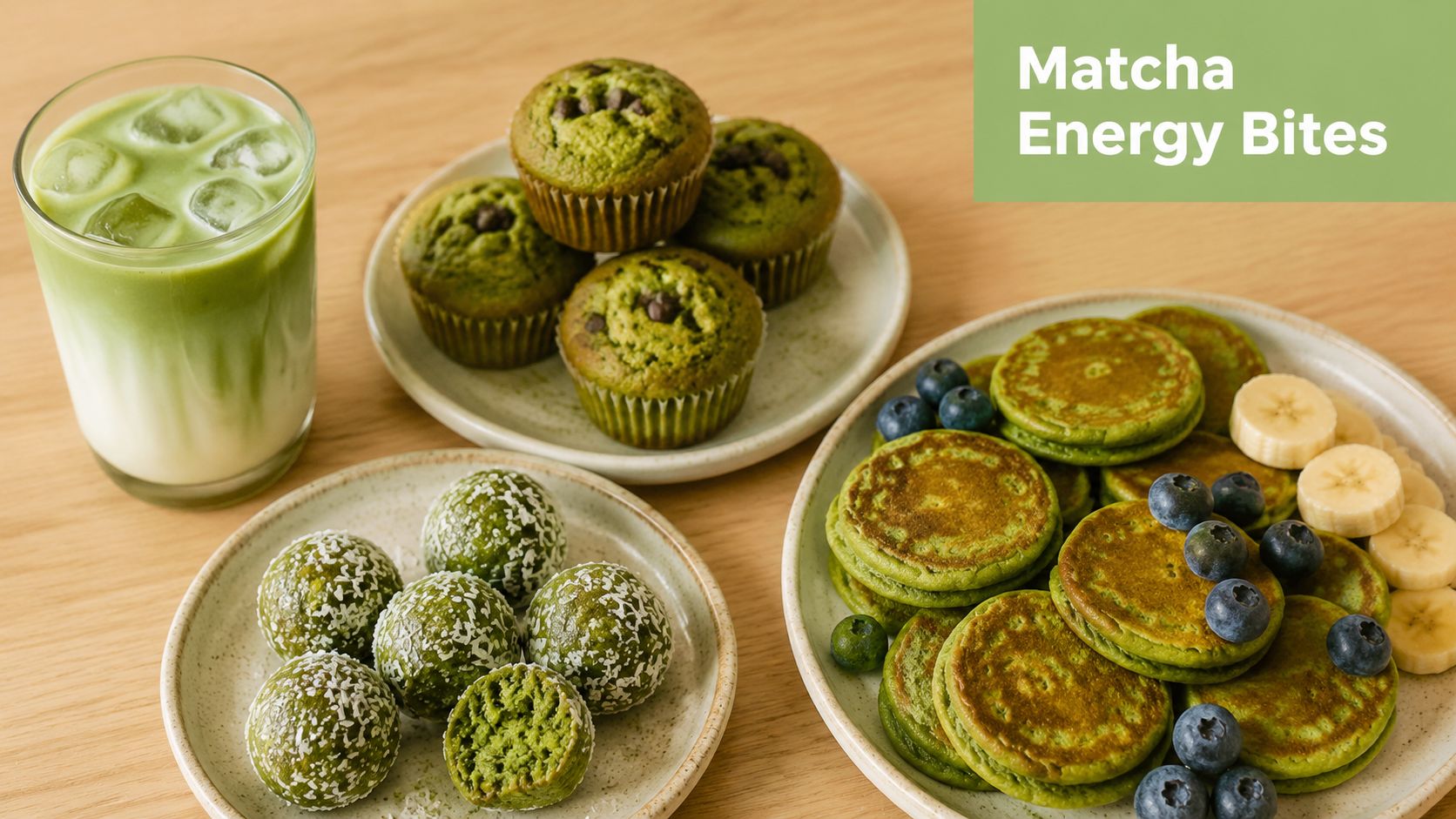
The easiest everyday options
The most useful recipes are usually the least complicated.
Classic hot matcha latte
This is often the best entry point for beginners who find straight matcha too grassy.
What you need
- 1 to 2g matcha
- a small splash of warm water
- your preferred milk
- optional cinnamon or vanilla
How to make it
Whisk the matcha with a little warm water until smooth. Heat and froth the milk separately, then combine. If you like a sweeter style, use a small amount of your preferred sweetener rather than loading it up.
Iced matcha shaker
This suits warm weather, busy mornings, and people who don't own a whisk.
What you need
- 1 to 2g matcha
- cold water
- ice
- optional milk
Shake hard until the powder disperses, then pour over ice. It's fast and easy, which matters when a habit needs to fit real life.
Matcha in snacks and quick bakes
Matcha works best in recipes where its flavour can stay present without becoming too dominant.
A few reliable ideas:
- Matcha overnight oats for a make-ahead breakfast with a gentle lift
- Matcha yoghurt bowl with fruit for a lighter morning option
- Matcha pancakes when you want weekend comfort with a fresh green note
- Matcha energy bites for afternoon snacking. A good place to start is this matcha energy balls recipe
Pairing matcha with kombucha
This is a gap most beginner guides skip, and it's one of the most interesting directions for Australian cafés and home drinkers.
Matcha and kombucha can work together because they bring different strengths. Matcha offers calm-focus energy. Kombucha brings acidity, lift, and a fermented flavour edge that can make non-alcoholic drinks feel more grown-up.
Try these combinations:
Matcha and ginger kombucha mocktail
Use a small chilled matcha shot as the base, then top with ginger kombucha over ice. The earthiness of matcha and the spice of ginger sit well together.Citrus matcha spritz
Build a light matcha base, add ice, then finish with a lime-forward kombucha. This suits a daytime menu or a low-sugar social drink.Layered green cooler
Pour cold whisked matcha first, then slowly add kombucha so the drink keeps visual separation for a few minutes before stirring.
A good matcha recipe doesn't hide the tea. It gives the tea a better setting.
How to match the recipe to the moment
Not every format suits every part of the day.
| Moment | Good matcha format | Why it works |
|---|---|---|
| Early morning | Straight bowl or hot latte | Feels grounding and organised |
| Late morning | Iced matcha | Refreshing without feeling heavy |
| Afternoon slump | Matcha snack or latte | More satisfying than another plain coffee |
| Social, non-alcoholic occasion | Matcha kombucha mocktail | Functional but still feels special |
The more useful way to think about recipes is not “What can I put matcha in?” but “What kind of energy do I want right now?” That question leads to better choices and better flavour.
Safety and Contraindications to Consider
One common myth is that matcha is automatically gentle for everyone because it's tea. That isn't quite right. Matcha may feel steadier than coffee for many people, but it still contains caffeine and active compounds, so personal tolerance matters.
Australian clinical discussion referenced by MedReport notes that the combination of L-Theanine at 20–30 mg per gram and caffeine at 30–40 mg per gram can support vigilance and reaction time while reducing jittery overstimulation compared with coffee. That helps explain why some people tolerate matcha better, but “better tolerated” doesn't mean “risk free for every person in every context”.
Who should take extra care
A cautious approach makes sense if you:
- Are sensitive to caffeine and already react strongly to tea, coffee, or cola
- Are pregnant or breastfeeding and have been advised to watch caffeine intake
- Take medication where caffeine or concentrated tea products may be relevant
- Have a medical condition affected by stimulants or dietary changes
A sensible approach for beginners
If you're new to matcha, start small and pay attention to timing. A lighter serve earlier in the day is usually the easiest place to begin.
Watch for your own signals:
- trouble sleeping
- feeling overstimulated
- stomach discomfort
- using matcha on top of several other caffeinated drinks
If your body says “too much”, listen to that before blaming the ingredient.
Good café and retail practice
If you serve or recommend matcha professionally, keep the language responsible. Say it may support calm focus. Don't promise medical outcomes. Don't assume every customer wants the same strength.
That balanced approach builds trust. It also makes matcha more approachable for people who are curious but cautious.
How Cafés and Retailers Can Feature Matcha Energy
Matcha belongs on more Australian menus than it currently appears on, not because it's trendy, but because it solves a real menu problem. Customers want functional non-alcoholic options that feel premium, modern, and easy to understand.
There's also a clear gap in hospitality-specific evidence. As noted in Tea & Coffee Trade Journal's coverage of the matcha love energy niche, AU-specific data is lacking on how L-Theanine's sustained release affects shift workers in hospitality, even though that group often wants reliable energy without a harsh crash.
Menu ideas that make sense
A café doesn't need a huge matcha program to do this well. It needs a few drinks and food pairings that are easy for staff to repeat.
Consider a compact line-up:
- Signature matcha latte with a clean, unsweet style and an optional flavoured version
- Iced matcha spritz for warmer months and grab-and-go trade
- Matcha kombucha mocktail for afternoon and early evening non-alcoholic menus
- Matcha snack pairing such as an energy ball, muffin, or light cake
How to present it so people order it
Customers often hesitate when they don't know what matcha will taste like. Staff language matters.
Use plain menu wording:
- smooth energy
- calm focus
- earthy green tea flavour
- great hot or iced
For takeaway service, presentation also helps. Cup choice affects heat retention, appearance, and the overall impression of quality. If you're refining the serve format, this guide to selecting the right tea cups is a useful operational reference.
Retail shelf and staff training tips
Retailers and cafés both benefit from the same rule. Don't overcomplicate the story.
Train staff to explain:
- what matcha is
- why it feels different from coffee
- how to prepare it without bitterness
- which customers might prefer ceremonial style versus latte style
A good display or menu card can also connect matcha to broader non-alcoholic and wellness habits. Customers who are reducing sugar, rethinking alcohol, or looking for a more measured caffeine ritual are often already open to the category. They just need a clear invitation.
Conclusion and Next Steps
Matcha love energy makes sense because it joins two things people rarely get at once. Useful alertness and a calmer feel. For many drinkers, that combination is the primary attraction.
A better brew, a sensible dose, and the right format for the time of day can make matcha much more enjoyable. It also opens up strong possibilities for cafés, retailers, and non-alcoholic menus that want something functional and premium without sounding gimmicky.
If you're curious, start simple. Try a well-made bowl, an iced latte, or a matcha-based snack and notice how the experience fits your day.
If you'd like to put this into practice, explore Pep Tea for premium organic matcha and sugar-free organic kombucha made for everyday rituals, café menus, and clean Australian wellness routines.
Top 10 Non Alcoholic Tea Cocktails for 2026

Why settle for a sugary mocktail when tea can do far more?
A well-built tea cocktail works like a chef's seasoning. Tea brings structure, aroma, tannin, freshness, and length, so the drink tastes layered rather than just sweet. That is why non alcoholic tea cocktails have become such a smart choice for Australians who want something refined, achievable at home, and better suited to everyday wellbeing.
Tea also gives you room to adjust the drink with purpose. Matcha can add savoury depth and a gentle, focused lift. Kombucha can add acidity, fizz, and a cultured tang that makes a zero-proof serve feel properly grown-up. Start with quality ingredients and the rest becomes much easier, whether you are mixing one glass at your kitchen bench or planning a batch for busy weekend service.
We are especially fond of recipes built on ceremonial grade green tea and well-made kombucha because they carry flavour without relying on heavy syrups. The result is cleaner, brighter, and more balanced. For many people, that also means an afternoon drink that feels refreshing instead of tiring.
This guide is written for two kinds of tea lovers at once. Home drinkers will get clear recipes and practical tips. Café owners, retailers, and hospitality teams will also find a useful commercial lens in each drink, including scaling ideas, menu pairings, and wholesale potential. That café and retailer angle matters because the best tea cocktails should work both as a lovely one-off serve and as a product worth putting on a menu, a shelf, or a seasonal promotion.
1. Matcha Mint Lemonade Spritzer
A good tea cocktail should wake up your palate, not bury it under sweetness. This one does that beautifully. Ceremonial-grade matcha, fresh mint, lemon juice, and sparkling water create a drink that tastes crisp, green, and clean, with enough lift to feel special on a hot Australian afternoon.
Our favourite base here is ceremonial grade green tea, because it gives you a softer, more elegant finish than lower-grade powders. Matcha also brings functional appeal. A standard 2g serve of ceremonial-grade Japanese organic matcha delivers 100 to 220mg of EGCG, and modern HPLC analyses confirm matcha contains 2 to 3 times more EGCG than steeped green tea, according to matcha EGCG analysis.
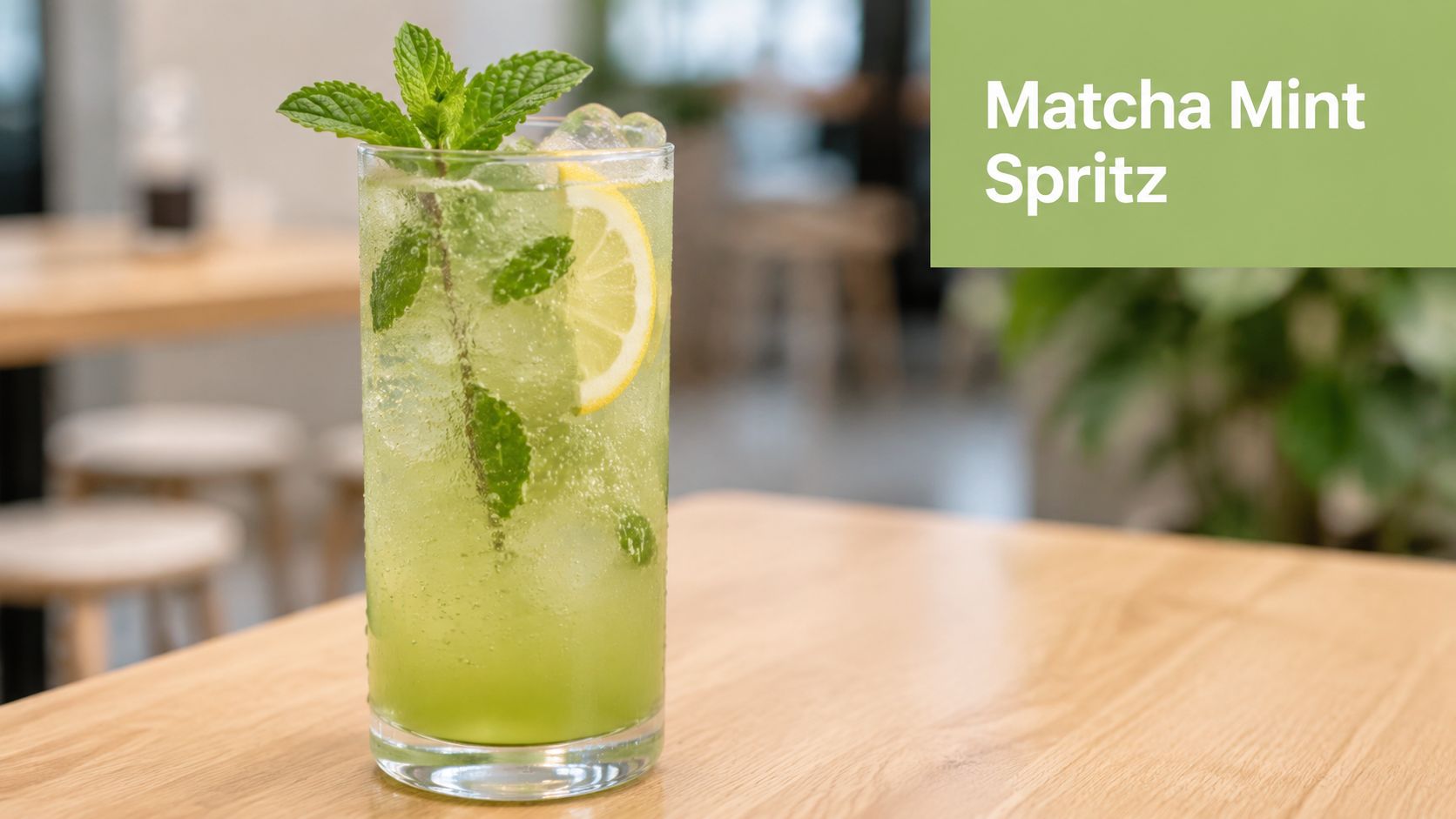
How to make it work
Whisk the matcha first with a small amount of warm water, around 70°C, until it's smooth. Add lemon juice, lightly crushed mint, ice, and top with sparkling water right at the end so the drink keeps its sparkle.
- Use gentle heat: Boiling water flattens matcha's delicate flavour and can push bitterness too far.
- Crush mint lightly: Press the leaves to release oils. Don't mash them into green pulp.
- Chill the glass: A cold glass gives the spritzer a sharper, cleaner finish.
Practical rule: Add sparkling water last and serve immediately. This drink is at its best in the first few minutes.
For cafés, this is an easy seasonal special because the colour sells itself and the ingredients are familiar to customers. For retailers, it's a strong recipe card companion beside ceremonial matcha, especially for shoppers looking to cut back on sugary afternoon drinks.
2. Kombucha Ginger Mocktail with Tea Base
What do you pour when you want the bite and ritual of a proper evening drink, but not the alcohol? This kombucha ginger build answers that beautifully. A light tea base gives structure, ginger brings a slow warming lift, and kombucha adds that bright, lively edge that keeps each sip interesting.
It helps to treat this recipe like a well-balanced vinaigrette. Tea is the body, acid is the spark, ginger is the aromatic top note, and kombucha ties it together with fizz and gentle funk. If the tea is too strong, the drink turns astringent. If the kombucha is too sweet, the finish loses its dry, grown-up feel.
A cleaner, more grown-up pour
Brew a green tea base lightly and chill it fully before mixing. Stir in fresh ginger and a squeeze of citrus, then top with sugar-free kombucha at the last moment. Our Ginger or Lime & Ginger styles are especially good here, and you can explore more serving ideas in our non-alcoholic cocktail mixers collection.
This recipe also suits customers looking for healthy soda alternatives, but it drinks with far more nuance than a standard soft drink swap.
For home makers, keep the tea and ginger base in a bottle in the fridge for two days and finish each glass to order. That tiny extra step preserves the kombucha's fizz and keeps the ginger fresh rather than muddy.
For cafés, this is a smart service drink because the prep is simple and the final assembly feels polished. Batch the chilled tea, citrus, and ginger base, then top with kombucha during service so the drink arrives bright and aromatic. It pairs especially well with savoury brunch dishes, grain bowls, grilled chicken sandwiches, or anything with sesame, miso, or light chilli heat.
For retailers and wholesalers, this recipe does double duty. It works as an easy recipe card beside kombucha and loose leaf tea, and it gives stockists a practical zero-proof menu idea they can scale without specialist bar gear. A venue can pour it by the glass, offer it as part of a wellness lunch special, or adapt it into a seasonal bottled cooler with careful cold-chain handling.
Serve in a tall glass over plenty of ice with a thin slice of ginger or a strip of lime peel. The aroma hits first, and that changes how the whole drink reads on the palate.
3. Iced Matcha Green Tea with Yuzu and Sparkling Water
Could a three-part drink feel as polished as a café spritz? This one can. Iced matcha, yuzu, and sparkling water make a crisp zero-proof serve that tastes clean rather than plain.
The balance is what makes it work. Matcha brings savoury depth and a soft, creamy texture. Yuzu adds a high, fragrant citrus note that sits somewhere between mandarin, grapefruit, and lime. Sparkling water lifts everything so the drink finishes bright instead of dense. If straight matcha has ever felt too grassy, this is a gentler way in.
Use chilled green tea to lengthen the drink without washing it out. It works like adding stock to a sauce instead of plain water. You keep flavour, but gain finesse. A spoonful of our Uji matcha latte powder for smooth iced matcha drinks can also help home makers and venues build a more rounded base with less bitterness.
Why it works for both home makers and menus
Australian diners are asking for zero-proof drinks that feel thoughtful, not like an afterthought, as noted earlier. This recipe answers that demand because it looks refined, tastes adult, and needs very little equipment.
For best results, whisk the matcha with a small amount of cool water first until smooth, then add the chilled tea and yuzu. Pour over plenty of ice and top with sparkling water at the last moment. That final step matters. Carbonation is the top note, and it fades fast if the drink sits.
A few practical uses make this especially handy:
- For home entertaining: Serve in a stemless wine glass or flute-style tumbler with a thin strip of yuzu peel. It feels dinner-party ready without being fussy.
- For cafés: Offer it as a light afternoon refresher with Japanese sandwiches, sashimi-style salads, citrus cakes, or sesame-forward brunch plates.
- For retailers and wholesalers: This is a strong recipe-card drink because it shows matcha beyond lattes. Stockists can demo it in tastings, bottle the still base for fast service, or build a seasonal sparkling tea special around it.
The café and retailer angle is especially useful here. One recipe can teach a home customer how to make a better iced matcha and give a venue a simple, premium non-alcoholic menu item with clear upsell potential. That kind of crossover is rare, and worth using.
4. Matcha Lavender Latte with Honey and Almond Milk
Not every tea cocktail needs fizz. Some are better warm, soft, and aromatic. This matcha lavender latte sits in that category. It's the sort of drink people order when they want a pause, not a rush.
Whisk ceremonial matcha with a little warm water until silky. Separately steep culinary lavender, strain it well, then blend with gently heated almond milk and a touch of honey. The milk rounds out the tea, while the lavender gives a floral note that should sit in the background rather than dominate.
A warm serve with café appeal
Matcha's clean energy lift is one reason this drink has such a loyal audience. L-Theanine helps modulate caffeine release, creating a smoother effect that can last 5 to 6 hours, according to matcha L-Theanine and energy duration details. That makes this a lovely option for afternoons when customers want focus without a jagged coffee spike.
If you want a ready-made starting point for the flavour profile, our Uji Matcha Latte is a handy reference for building a smoother matcha-and-milk serve.
- Steep lavender separately: Don't throw buds straight into the finished drink unless you want bitterness and grit.
- Heat milk gently: Around 60 to 70°C keeps the texture creamy.
- Froth last: A little microfoam makes the drink feel café-quality without extra effort.
For a retailer, this recipe helps move matcha beyond the breakfast routine. For a café, it's an easy upsell beside gluten-free slices, almond croissants, or a simple afternoon tea menu.
5. Kombucha Elderflower Mocktail with Botanical Tea
This is the garden-party serve. Floral, lifted, and elegant. It's one of the best examples of how kombucha can act like a serious mixer rather than a wellness add-on.
Use a delicate botanical tea such as chamomile, jasmine, or rose as the still base. Add a little elderflower cordial, chill thoroughly, and then top with sugar-free kombucha right before serving. Edible flowers make sense here, but balance is essential. You want perfume and brightness, not potpourri.
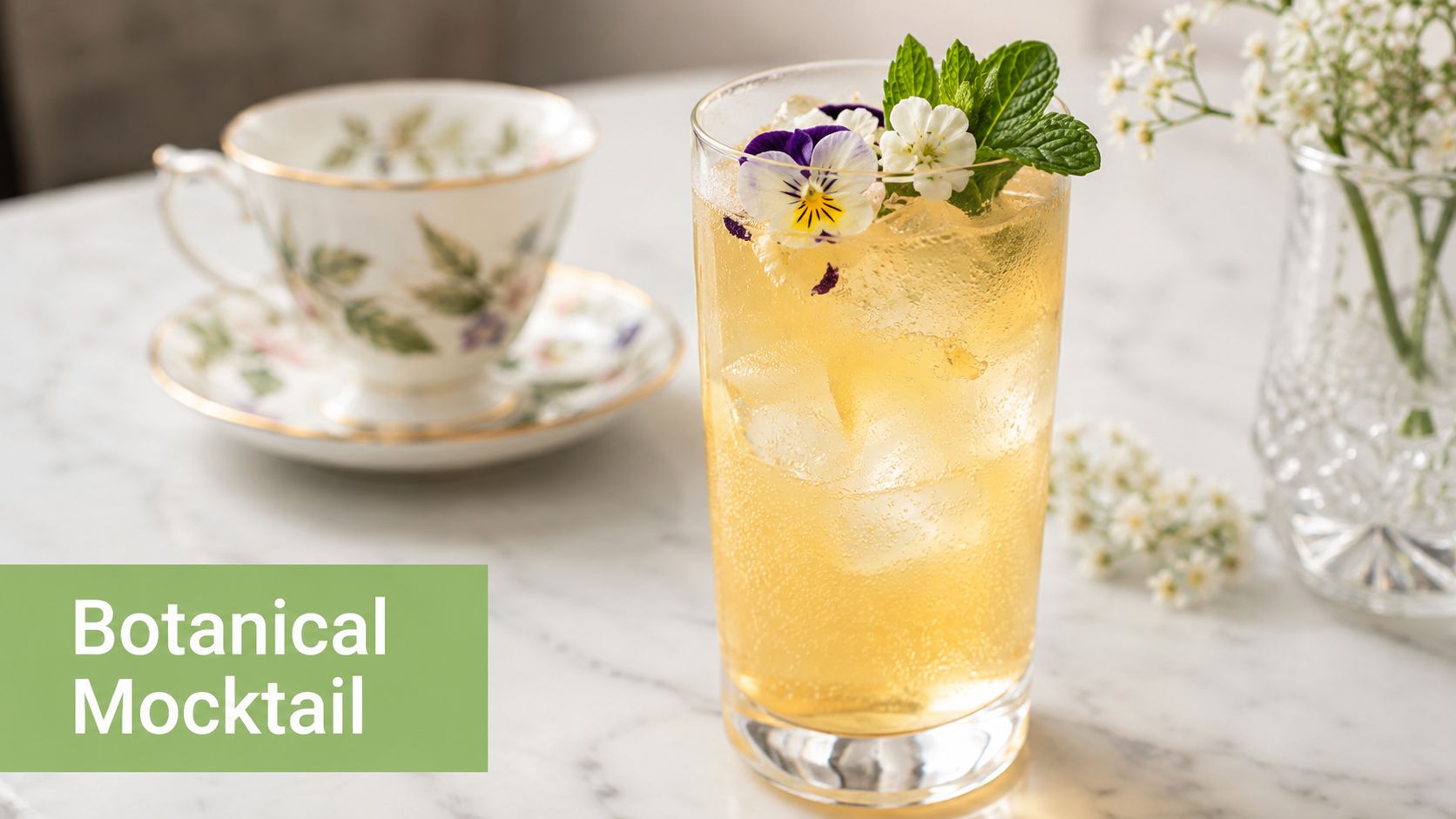
Why cafés are embracing this style
In the Australian hospitality sector, 28% of venues have formally expanded their non-alcoholic cocktail menus since 2023, with kombucha and cold-brew tea-based mocktails showing the highest adoption rate among cafés and bars in Melbourne and Sydney, according to alcohol-free menu growth in Australian venues. This drink fits that shift perfectly because it looks premium and photographs beautifully, yet it's straightforward to build during service.
A practical menu pairing is brunch or high tea. It also works well in event catering, where guests often want something celebratory in a flute or wine glass that isn't alcohol.
Keep the botanical tea light. Delicate flowers disappear if the base is over-brewed and tannic.
For retail shelves, elderflower and kombucha create a strong cross-sell story with entertaining, gifting, and spring-summer hosting.
6. Kombucha Turmeric Wellness Shot with Green Tea
Not every serve needs to mimic a cocktail glass. A wellness shot can still count as one of the most useful non alcoholic tea cocktails if it's layered, intentional, and enjoyable enough to repeat.
This version combines green tea, kombucha, turmeric, and ginger in a short, concentrated pour. The flavour should be bright and earthy, with enough acidity to keep it lively. A tiny pinch of black pepper can help round it out and support absorption of turmeric's key compounds.
Keep fermentation quality in mind
Kombucha quality matters more here because there's nowhere to hide rough edges. Sugar-free organic kombucha brewed in Australia's Hunter Valley can deliver live probiotic cultures with HACCP-accredited consistency at pH 3.2 to 3.6, live culture counts of at least 10^6 CFU/mL, and zero added sugar, according to Hunter Valley kombucha brewing standards. That kind of reliability is exactly what cafés and wellness bars need in a mixer.
If you'd like a broader functional drink idea to pair with this serve, our immune booster drink guide is a useful next stop.
- Use small glasses: This is best as a concise, punchy serve.
- Warm gently if extracting spices: Don't boil kombucha.
- Warn customers about turmeric: It stains benches, aprons, and sometimes smiles.
This style makes sense at smoothie bars, gym cafés, and health-focused retailers that want a grab-and-go recipe built around probiotic and tea ingredients rather than sugary shot formulas.
7. Iced Matcha Collagen Mocktail with Bone Broth
This one won't be for everyone, and that's part of its strength. It speaks directly to the wellness crowd that wants savoury, functional drinks with more substance than fruit juice and ice.
The method matters. Dissolve collagen into warm bone broth, whisk matcha separately, combine them, then chill over ice. A touch of vanilla or almond milk can soften the edges, but don't turn it into dessert. The appeal here is a clean, savoury-meets-green profile.
A niche serve for committed wellness customers
Australian health-conscious consumers aged 25 to 55 are increasingly prioritising sugar-free, probiotic-rich beverages as alternatives to alcohol, and non-alcoholic cocktail menus in Australian cafés grew by 34% between 2022 and 2024, according to functional beverage growth among Australian café menus. While this particular drink is more specialised than a spritz, it suits that broader appetite for functional serves.
For a fitness café, think post-class recovery menu. For a retailer, think recipe content aimed at people already buying collagen, broth, and matcha.
Here's a visual example of a wellness-style preparation approach:
The best commercial use for this drink is as a limited special. It starts conversations, builds authority, and tells customers your menu isn't stuck in the old mocktail mould.
8. Kombucha Passion Fruit Spritzer with Herbal Tea
What do you pour when someone wants a drink that feels festive, refreshing, and a little bit grown-up, without a drop of alcohol? This spritzer answers that beautifully. Passion fruit brings bright perfume and a soft tang. Herbal tea gives the drink its backbone. Kombucha adds that lively, sparkling edge that makes a simple fruit mix feel more like a proper café serve.
The easiest way to balance it is to treat it like building a good fruit tart. You need sweetness, acidity, and structure. Hibiscus gives a sharper, ruby-toned base that suits summer menus. Rooibos is rounder and gentler, which helps if your kombucha is already quite tart. Brew the tea a little stronger than you would for a mug, chill it fully, then top with kombucha just before serving so the fizz stays fresh.
Passion fruit can trip people up here. Too much pulp makes the texture muddy, especially in a tall glass. Strain most of it if you want a cleaner café-style finish, then spoon in a little fresh pulp at the end for aroma and visual appeal. Mint is enough for garnish. A heavy garnish stack only gets in the way of the drink's tropical profile.
A smart crossover serve for home kitchens, cafés, and retail counters
As noted earlier, younger Australian drinkers are helping drive demand for alcohol-free options that still feel social and stylish. This recipe suits that shift because it is easy to love on first sip, yet still has enough tea character to stand apart from standard mocktails.
For cafés and retailers, that makes it useful in more than one setting:
- Summer café special: Serve in a wine glass or large tumbler with crushed ice. It pairs well with prawn rolls, grilled halloumi salads, or passionfruit yoghurt cakes.
- Retail sampling pour: Batch the herbal tea ahead, keep the passion fruit separate, and finish with kombucha to order. Customers can taste the tea base clearly, which is helpful if you also sell the blend loose leaf or wholesale.
- Events and catering: Build it as a low-labour welcome drink. The colour sells it quickly, and the ingredients scale without much fuss.
For wholesale conversations, this recipe is particularly handy. A retailer can stock the herbal tea, a café can feature it as a seasonal spritz, and both can tell a clean story around flavour, low-alcohol socialising, and easy menu application. That bridge between home recipe and commercial serve is where tea does its best work.
9. Matcha Chai Latte with Spiced Milk
If the lavender latte is soft and floral, this one is bold and warming. Matcha and chai shouldn't fight each other. They should layer. The best versions let the spice open first, then the green, slightly savoury matcha note comes through on the finish.
Toast whole spices lightly, steep them properly, strain well, and then combine with smooth matcha paste and warm milk. Honey works nicely if you want a sweeter edge, but keep it restrained.
Better bitterness without relying on syrup
One of the biggest problems in this category is over-sweetness. Existing content often skips the challenge of recreating that bitter-sweet cocktail feel without leaning on syrup, even though 68% of consumers actively seek low-sugar options, according to Australian demand for low-sugar clean-label mixers. Chai spices help solve that problem because cardamom, ginger, cinnamon, and clove build complexity without needing much sugar at all.
A good tea cocktail doesn't need to taste sweet to feel complete. Spice, tannin, aroma, and texture can do the heavy lifting.
For cafés, this makes a strong winter special and pairs naturally with banana bread, spiced biscuits, or oat-based bakery items. For home drinkers, it's a smart evening drink when you want comfort without opening a bottle.
10. Kombucha Blueberry Antioxidant Mocktail with White Tea
This is the jewel-toned showpiece. Blueberries give colour and fruit depth. White tea keeps the structure light and elegant. Kombucha adds acidity and fine fizz, while lemon brightens the whole glass.
Use fresh berries when they're good, or high-quality frozen berries when they're not. Lightly crush or blend, strain if you want a smoother texture, and combine with chilled white tea before topping with kombucha.
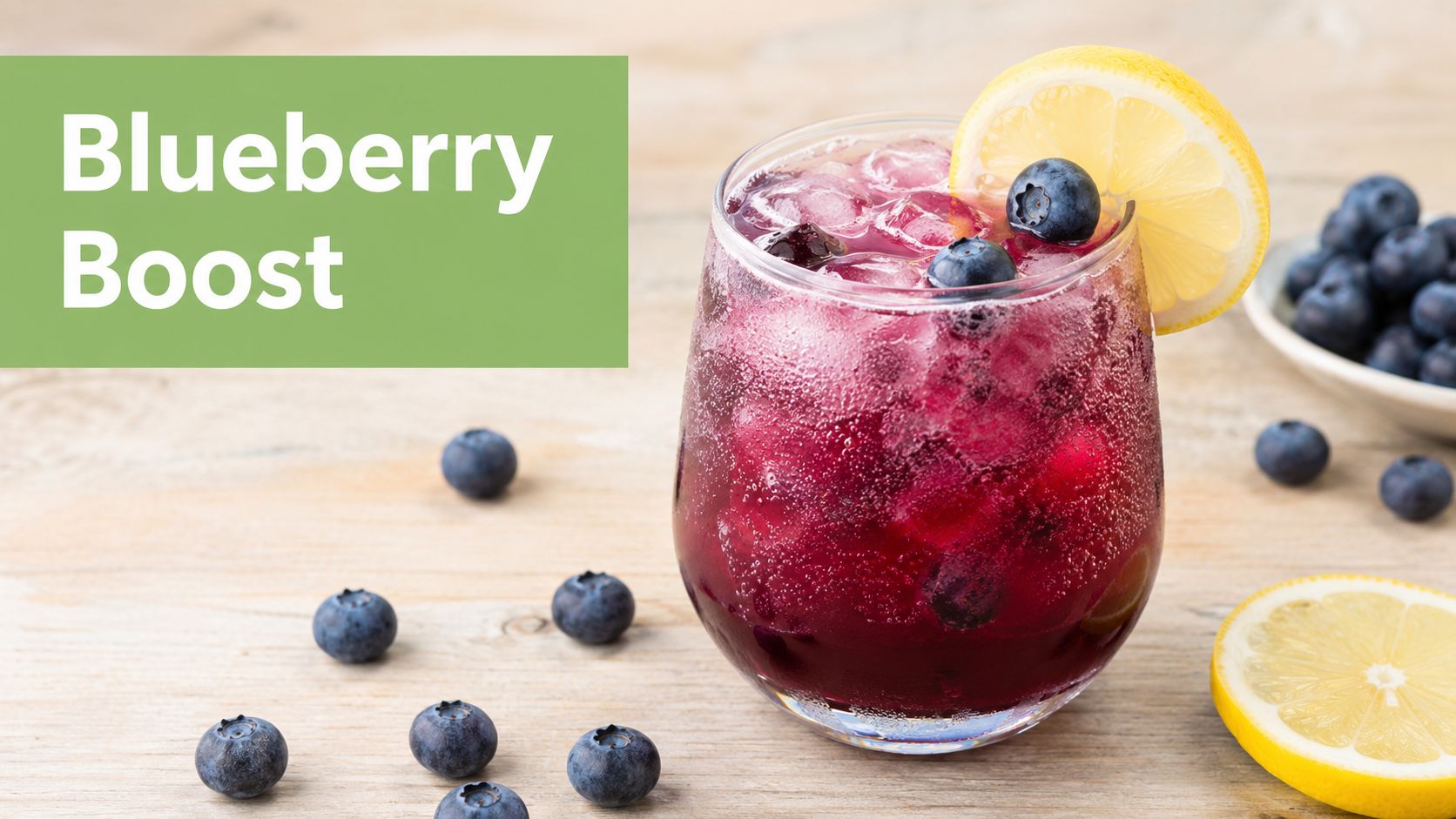
Functional appeal with broad market interest
Australian consumer surveys indicate that 36% of health-conscious adults aged 25 to 40 prefer non-alcoholic tea cocktails with functional ingredients like L-Theanine or probiotics over traditional sugary mocktails, according to ready-to-drink mocktail market analysis. This drink lines up with that preference because it feels indulgent in colour and flavour, while still sitting firmly in the wellness space.
It's especially strong for:
- Upscale cafés: It looks premium with minimal garnish.
- Retail demos: Blueberry and lemon are familiar flavours that make kombucha easier for new customers.
- Brunch venues: It's a natural fit where guests want something celebratory but alcohol-free.
White tea is delicate, so keep the brew gentle. That's what gives this drink its elegance.
Top 10 Non-Alcoholic Tea Cocktails Comparison
| Beverage | Implementation Complexity 🔄 | Resource Requirements ⚡ | Expected Outcomes 📊 | Ideal Use Cases 💡 | Key Advantages ⭐ |
|---|---|---|---|---|---|
| Matcha Mint Lemonade Spritzer | Low, quick whisking technique required | Low, ceremonial matcha (premium), mint, lemon, sparkling water | Refreshing, antioxidant boost, sustained calm energy | Warm afternoons, health-focused café breakfast menus | High antioxidants; L-theanine for calm focus; Instagram-worthy |
| Kombucha Ginger Mocktail with Tea Base | Medium, careful kombucha handling to preserve fizz | Medium, live kombucha, green tea, fresh ginger, chilled storage | Probiotic support, digestive aid, subtle spice complexity | Premium non-alcoholic menus, wellness cafés | Probiotics + antioxidants; low sugar; Australian-made credibility |
| Iced Matcha Green Tea with Yuzu and Sparkling Water | Low–Medium, simple assembly, citrus balance needed | Medium, culinary matcha, yuzu (or substitute), sparkling water | Elegant, antioxidant-rich, sustained energy | Japanese-inspired premium menus, cosmopolitan cafés | Accessible cost (culinary matcha); clean minimalist flavour |
| Matcha Lavender Latte with Honey and Almond Milk | Medium, steeping lavender and milk heating required | Medium, ceremonial matcha, culinary lavender, almond milk, honey | Calming "calm focus", soothing aroma, gentle energy | Afternoon wellness rituals, mindfulness offerings | L-theanine + lavender synergy; comforting, wellness positioning |
| Kombucha Elderflower Mocktail with Botanical Tea | Medium, botanical tea selection and cordial sourcing | Medium, kombucha, elderflower cordial, botanical teas, garnishes | Floral, sophisticated flavour with probiotic benefits | Weddings, premium hospitality, garden events | Elegant, complex flavour; low sugar; premium presentation |
| Kombucha Turmeric Wellness Shot with Green Tea | Medium, concentrated prep and turmeric handling | Low–Medium, kombucha, turmeric (fresh/powder), ginger, green tea | Anti-inflammatory, immune support in small shot format | Wellness shots, fitness routines, daily rituals | Concentrated functional benefits; convenient shot format |
| Iced Matcha Collagen Mocktail with Bone Broth | High, multiple heat/whisking steps, careful integration | High, bone broth, collagen peptides, matcha, vanilla (costly) | Protein-rich recovery, skin and joint support | Fitness-focused cafés, post-workout menus, premium wellness venues | High protein/amino acids; recovery and skin benefits; premium appeal |
| Kombucha Passion Fruit Spritzer with Herbal Tea | Low–Medium, pulping/straining fruit and carbonation timing | Medium, kombucha, fresh passion fruit (seasonal), herbal tea, sparkling water | Tropical, probiotic, visually striking summer beverage | Summer menus, outdoor events, social-media-driven offerings | Exotic tropical flavour; strong visual appeal; low sugar |
| Matcha Chai Latte with Spiced Milk | Medium, spice toasting/steeping plus milk preparation | Medium, ceremonial matcha, chai spices, milk (or plant alternative) | Warming, aromatic, comforting sustained energy | Autumn/winter menus, cosy café specials | Warming spices with L-theanine; versatile milk options; seasonal favourite |
| Kombucha Blueberry Antioxidant Mocktail with White Tea | Medium, berry processing and gentle tea brewing | Medium, kombucha, blueberries (fresh/frozen), white tea, lemon | Triple antioxidant synergy for cognitive and immune support | Antioxidant-focused menus, wellness positioning, premium cafés | Strong antioxidant profile; striking purple colour; probiotic synergy |
Start Your Tea Cocktail Adventure Today
What if your next favourite party drink, café special, or retail-ready wellness serve started with tea instead of spirits?
Non alcoholic tea cocktails work because tea already gives you the structure that many mocktails struggle to find. Matcha brings body and a gentle savoury depth. Kombucha adds acidity, fizz, and complexity. Herbal and botanical teas layer in aroma the same way seasoning finishes a good meal. Once you understand that balance, building a drink feels far less intimidating.
Quality ingredients change the result straight away. At Pep Tea, we focus on organic Japanese Matcha and authentically brewed, sugar-free organic Kombucha because they create a clean, reliable base from the first sip. Our matcha is stone-ground, bright, and easy to whisk into both hot and iced recipes. Our kombucha is brewed in the Hunter Valley, NSW, with real fermentation and live cultures, giving home drinkers a refined mixer and giving cafés and retailers a product that holds up on a menu or shelf.
Tea already has a natural place in everyday Australian drinking habits, as noted earlier. What these recipes do is give tea a more social role. It becomes something you can serve in a wine glass at dinner, batch for brunch, or position as a premium zero-proof option beside cocktails, coffee, and sparkling drinks.
That matters at home and in business.
For home makers, these recipes offer a practical way to create drinks that feel grown-up, nourishing, and achievable without needing specialist bar gear. For cafés, the same recipes can become profitable signatures with small adjustments in batch prep, garnish, and glassware. For retailers, they point to a wider opportunity: ingredient bundles, seasonal gifting, and wellness-focused ranges that help customers recreate the experience at home. That café and retailer perspective is what makes tea cocktails especially useful. One good recipe can move from kitchen bench to menu board to retail display with only a few smart tweaks.
If you are deciding where to begin, match the recipe to the moment. The Matcha Mint Lemonade Spritzer suits warm afternoons and easy entertaining. The Kombucha Elderflower Mocktail fits brunch menus and customers who like floral, lighter serves. The Matcha Chai Latte is a natural winter favourite and works beautifully as a café special or retail-led recipe card feature.
Start with one recipe. Make it once as written, then adjust one element at a time, perhaps a little less sweetness, a brighter citrus note, or a different garnish. That is how confidence builds. Tea cocktails work a bit like cooking with a good base stock. Once the foundation is sound, small changes make a big difference.
If you're ready to make better non alcoholic tea cocktails at home, in your café, or on your retail shelf, explore Pep Tea for premium organic Japanese Matcha, Hunter Valley brewed sugar-free organic Kombucha, and practical recipe inspiration that makes functional drinking feel achievable and delicious.
Matcha Energy Balls Recipe: Healthy No-Bake Snack

Some afternoons call for more than another coffee. You've had lunch, your focus is wobbling, and the snack drawer is full of options that either feel too sweet or leave you flat not long after. That's exactly where a good matcha energy balls recipe earns its place.
These little green bites are practical. They're no-bake, easy to batch, and built from pantry ingredients many health-conscious Australians already keep on hand. When you make them well, they taste softly sweet, slightly earthy, creamy in the middle, and firm enough to grab straight from the fridge on your way out the door.
The Perfect Answer to the 3 PM Slump
Mid-afternoon is where good intentions often fall apart. You want something quick, but you also want it to feel better than a biscuit or another sugary pick-me-up. Matcha energy balls sit nicely in that gap because they're simple to make and easy to keep ready for the week.
In Australia, that style of snack already makes sense in the wider wellness market. The organic sector was estimated at about A$2.3 billion in 2021 and the recipe style leans on familiar pantry staples like dates, almond flour, coconut, seeds, and matcha, which are already popular with health-conscious shoppers in this space, as noted in this organic snack market context.

Why they work so well in real life
A good batch solves several problems at once:
- Fast to grab: They're already portioned, so you don't have to think.
- No-bake and low-fuss: You mix, roll, chill, and you're done.
- Easy to keep consistent: Once you know the texture you're aiming for, they're hard to mess up.
A lot of people start looking for snacks like this when they're trying to cut back on repeated coffee runs. If that's you, this guide to healthy alternatives to coffee for energy is a useful broader read because it looks at other ways people build a steadier routine around energy and focus.
Matcha energy balls aren't just a recipe idea. They're a routine snack, especially when your day is busy and you need something you can eat one-handed.
For readers building a more balanced afternoon ritual, Pep Tea also has a useful roundup of natural energy drinks that pairs well with this kind of snack-first approach.
Choosing the Best Matcha for Your Recipe
The matcha you choose changes everything. Colour, aroma, bitterness, and how clean the finish tastes all show up clearly in a small recipe like this.
For energy balls, the goal isn't delicate tea ceremony flavour. You want a matcha that can hold its own against nuts, coconut, oats, tahini, or dates without disappearing.

Culinary or ceremonial
Here's the simplest way to choose:
- Ceremonial grade: Better suited to whisking with water and drinking on its own, where subtle sweetness and a smoother finish matter most.
- Culinary grade: Better suited to recipes, where the matcha needs enough body and flavour presence to stay noticeable after blending.
That doesn't mean any culinary matcha will do. A poor-quality powder can taste flat, dusty, or overly bitter, and the finished balls will reflect that. Look for a vibrant green colour and a fresh aroma rather than a dull, brown-leaning powder.
What to look for in the bowl
When I'm choosing matcha for recipes, I want three things.
- Strong green colour: This gives the finished balls that fresh, lively look.
- Clean aroma: It should smell grassy and fresh, not stale.
- Balanced flavour: Earthy is good. Harsh bitterness isn't.
If you're still deciding what suits your kitchen, this guide to different grades of matcha helps clarify which type works best for tea, lattes, and baking.
Practical rule: Save your more delicate ceremonial matcha for drinking. Use a high-quality culinary matcha when the recipe includes stronger supporting ingredients.
Why quality matters in a wellness snack
This recipe is meant to be functional, not just pretty. Matcha brings its own flavour profile and is often chosen by people who want a more measured energy option in their day. That's another reason ingredient quality matters. If the matcha is muddy or rough, people tend to compensate with extra sweetener, and that pulls the recipe away from the cleaner, everyday snack many readers want.
Pep Tea's organic culinary matcha is one option in this kind of recipe because it's intended for food and drink use rather than only traditional preparation. In energy balls, that practical distinction matters more than fancy packaging.
The Ultimate Matcha Energy Balls Recipe
This is the version I'd make for a regular weekly batch. It's softly sweet, earthy, lightly nutty, and easy to shape. The key is texture control. If you process too long, the mixture turns heavy and oily. If you stop at the right moment, it rolls beautifully.
A tested workflow is to pulse dry ingredients first, add sticky binders second, and stop blending as soon as the mixture clumps. A standard benchmark is 1 tablespoon per ball, followed by 1 to 2 hours of chilling to set, as described in this tested matcha ball method.

Ingredients
You'll need:
- 1 cup rolled oats
- 1 cup almond meal
- 1/2 cup desiccated coconut, plus extra for coating if you like
- 1 tablespoon matcha powder
- A pinch of salt
- 1 cup soft pitted dates
- 2 tablespoons almond butter or tahini
- 1 teaspoon vanilla extract
- 1 to 2 teaspoons water, only if needed
This style of recipe commonly yields around 18 to 20 balls per batch when rolled at roughly tablespoon size, which makes it ideal for meal prep and café-style display portions.
The mixing method that actually works
Start with the dry ingredients in the food processor. Add the oats, almond meal, coconut, matcha, and salt, then pulse until the mixture looks evenly combined and the oats are broken down. This creates a finer base, which helps the balls hold together without feeling coarse.
Only then add the sticky ingredients. Dates go in next, followed by the almond butter or tahini and vanilla. Pulse in short bursts. Watch closely. You're looking for the stage where the mixture starts to gather and clump against itself.
That's your stop sign.
If you keep going, oils from the nuts and seeds can release too much, and the mixture starts to smear instead of roll.
The right texture is a cohesive, non-sticky paste that forms a ball under gentle hand pressure without coating your palms.
If your dates are a little dry, the mixture may stay crumbly. Add water in very small amounts, starting with 1 teaspoon. If needed, add another small amount. Don't pour freely. Tiny adjustments work better than rescue jobs.
Rolling and chilling
Scoop out portions at about 1 tablespoon each and roll them between your palms. If you want a neat finish, coat some in coconut and leave others plain so you can compare what you prefer.
Once rolled, chill them until firm. Give them 1 to 2 hours in the fridge to set properly. That rest time improves both texture and flavour because the mixture tightens and the matcha settles into the base.
A visual walk-through can help if you like to see the process before you start:
What makes this recipe dependable
This recipe works because each ingredient has a job:
- Oats give body and absorb moisture.
- Almond meal softens the texture and keeps the centre tender.
- Dates bind and sweeten.
- Nut butter or tahini adds richness and helps the mixture hold.
- Matcha brings colour, flavour, and that distinctive tea note.
For more ideas on using matcha in food beyond lattes, Pep Tea's guide to baking with matcha and beyond is a handy next read.
Customise Your Matcha Energy Balls
Not everyone wants the same result from a snack. Some people want less sweetness. Others want more protein, or they need a nut-free version that still tastes good. A basic matcha energy balls recipe becomes much more useful when you can customize it for these different needs.
A lot of recipes in this category lean heavily on dates. That can work well for texture, but it can also push the snack into dessert territory. There's a growing interest in lower-sugar options in Australia, and practical tweaks with ingredients like almond meal or protein powder help answer a more useful question: can these be an everyday functional snack, not just a treat? That's the gap highlighted in this lower-sugar matcha ball discussion.
Matcha Ball Ingredient Swaps
| To Make It… | Swap This Ingredient | With This Alternative | Pro Tip |
|---|---|---|---|
| Lower sugar | Some of the dates | Extra almond meal plus a small amount of tahini | Reduce dates gradually. If the mix turns crumbly, add a tiny splash of water rather than more sweetener. |
| Higher protein | Part of the oat or almond base | Protein powder | Add it in small amounts and check texture early. Protein powders can dry the mix quickly. |
| Nut-free | Almond meal | Oat flour | Oat flour gives a softer bite, so chill well before serving. |
| Nut-free | Almond butter | Sunflower seed butter | Expect a slightly deeper, more savoury flavour. Matcha still comes through nicely. |
| More fibre-forward | Some almond meal | Hemp seeds | Blend well so the texture stays even. |
| Richer and less sweet | Part of the date paste | Tahini | Tahini adds depth, but too much can make the flavour more adult and slightly bitter. |
| Coconut-free | Desiccated coconut | Extra oats or oat flour | Add slowly so the mixture doesn't become too dense. |
What changes when you reduce the dates
Dates do more than sweeten. They also act as the glue. Once you reduce them, texture becomes the main challenge.
If you want a lower-sugar version, the best approach is not to remove them all at once. Pull them back modestly, then rebuild softness with ingredients that add body rather than sweetness. Almond meal, tahini, and a small amount of protein powder can all help, but they need moisture support.
A lower-sugar ball should still feel pliable before chilling. If it feels dry in the processor, it will feel chalky after setting.
Three strong variation ideas
- Everyday lower-sugar version: Use fewer dates and add extra almond meal plus tahini for a less confection-like finish.
- Post-walk protein version: Add protein powder carefully and watch for dryness. This version benefits from a slightly softer mix before chilling.
- Lunchbox-friendly nut-free version: Use oat flour and sunflower seed butter for structure without nuts.
The trick in all three is the same. Adjust slowly and stop as soon as the mixture holds together. That gives you a snack that feels intentional, not improvised.
Pro Tips for Storage Serving and Pairing
A good batch only stays good if you store it properly. Matcha energy balls are at their best when they're cool, firm, and protected from air.
Tested guidance is to store them in an airtight container in the fridge for about a week, or freeze for longer life. That matters even more in Australian conditions, where warmer ambient temperatures can soften the fat phases and make the surface tacky, as noted in this storage guidance for matcha balls.
Storage that protects texture
Use a container with a tight seal and keep the balls in a single layer if possible. If you stack them, a piece of baking paper between layers helps preserve their finish.
If you've made a white chocolate, nut-butter-heavy, or protein-rich variation, colder storage matters even more. Those versions soften faster on the bench.
Fast fixes for common problems
- Too crumbly: Add liquid in very small increments and press a little mixture in your hand before adding more.
- Too wet: Add a spoonful of almond meal or oats and pulse briefly.
- Too oily: You've likely overprocessed it. Chill the mixture, then roll once it firms slightly.
- Too bitter: Use a little less matcha next time or pair it with a richer base like tahini.
Serving ideas that make them feel fresh again
These are easy to eat straight from the fridge, but they're better when paired with something that balances their richness.
Try them with:
- A clean matcha latte: Especially if you've made a lower-sugar batch and want the tea notes to feel more pronounced.
- Plain Greek-style yoghurt: A simple plated snack that feels more substantial.
- A cold kombucha: Ginger or citrus styles work especially well because the acidity cuts through the dense, fudgy texture.
For caffeine-sensitive readers, keep the matcha modest. A batch made with 1 tablespoon of matcha is generally treated as moderate in recipe guidance, and it's sensible to reduce that if you're making these for afternoon snacking or for people who are more sensitive to caffeinated tea ingredients.
Your Matcha Energy Ball Questions Answered
Can I use less matcha?
Yes. If you're sensitive to caffeine or making these for later in the day, use a smaller amount. The flavour will be milder and the colour a little softer, but the recipe still works well.
Can I replace dates with honey or maple syrup?
You can, but the texture changes. Dates provide bulk and binding as well as sweetness. Liquid sweeteners add sweetness without the same body, so you'll usually need more dry absorbent ingredients to keep the mixture rollable.
What's the best protein powder to use?
Choose one with a flavour you already like on its own. Neutral or vanilla styles are usually the easiest fit. Add it gradually because protein powder can dry out the mixture faster than expected.
Why did my energy balls turn oily?
The usual cause is overprocessing. Once the mixture clumps together, stop blending. If you keep going, the oils release and the texture becomes pasty.
Do they need to be refrigerated?
Yes, for the best texture and shape. They're much firmer, cleaner to handle, and more enjoyable cold.
If you'd like to make this matcha energy balls recipe with an organic tea selected for everyday kitchen use, explore Pep Tea for matcha, recipe ideas, and practical guides that fit an Australian wellness routine.
Crafting Delicious Chocolate Matcha Tea

Somewhere between your usual morning coffee and your evening hot chocolate, there’s a drink that feels a bit more balanced. Chocolate matcha tea has that cosy, chocolatey comfort people crave, but it also brings the grassy depth and focused lift that make matcha so distinctive.
It’s also one of those drinks that can go badly wrong if the method is fuzzy. Too hot, and the matcha turns flat or bitter. Too much chocolate, and the tea disappears. Not enough whisking, and you get green lumps floating around in an otherwise lovely cup.
The good news is that making a smooth, café-worthy version at home isn’t difficult once you understand the few details that matter. If you’re a home drinker, a health-conscious café owner, or curious about how to make chocolate and matcha work together, this guide will help you build the drink properly from the ground up.
The Perfect Fusion of Flavour and Wellness
Chocolate matcha tea works because it plays with contrast. Matcha brings earthy, fresh, slightly savoury notes. Chocolate adds roundness, softness, and richness. When the two are in balance, the result tastes layered rather than heavy.
That balance is why the drink appeals to two very different moods at once. It can feel indulgent, like a treat you’d order on a rainy afternoon. It can also feel purposeful, especially when you want a warm drink that supports focus without feeling overblown or sugary.
Why matcha changes the character of a chocolate drink
A standard hot chocolate leans sweet and creamy. Matcha shifts the centre of gravity. It adds structure, colour, and a gentle vegetal edge that stops the drink from becoming cloying.
That’s especially useful if you prefer functional beverages over dessert-style drinks. Instead of tasting like melted confectionery, a well-made chocolate matcha tea tastes more adult and more nuanced.
Chocolate softens matcha’s grassy edge, and matcha sharpens chocolate’s sweetness. That’s why the pairing can feel both comforting and clean.
There’s also a long tradition behind matcha that gives this modern drink more depth than a passing trend. In the 12th century, monk Eisai brought powdered green tea from China to Japan, promoting it as a medicinal aid for monks enduring long meditation sessions due to its combination of caffeine for alertness and L-theanine for calm focus, as noted in this history of matcha and its role in focused energy.
Why wellness-minded drinkers are drawn to it
People often get confused here and assume “healthy” means austere. It doesn’t. A chocolate matcha tea can still feel lush while giving you more control over ingredients than many café drinks.
You can choose:
- The sweetness level so it suits your taste, rather than relying on pre-sweetened powders
- The milk style whether you want dairy, oat, almond, or another option
- The chocolate source from cacao powder to dark chocolate to white chocolate
- The matcha grade depending on whether you want a smoother or bolder finish
That ingredient control matters if you care about clean labels, lower sugar choices, or just a better-tasting cup.
If you’d like a broader grounding in why matcha has become such a staple in modern wellness routines, this guide to the benefits of matcha green tea is a helpful next read.
Choosing Your Core Ingredients and Tools
The best chocolate matcha tea starts before the kettle goes on. Most disappointing cups come down to one of three things. Low-quality matcha, overly sweet chocolate, or skipping the basic tools that create a smooth texture.
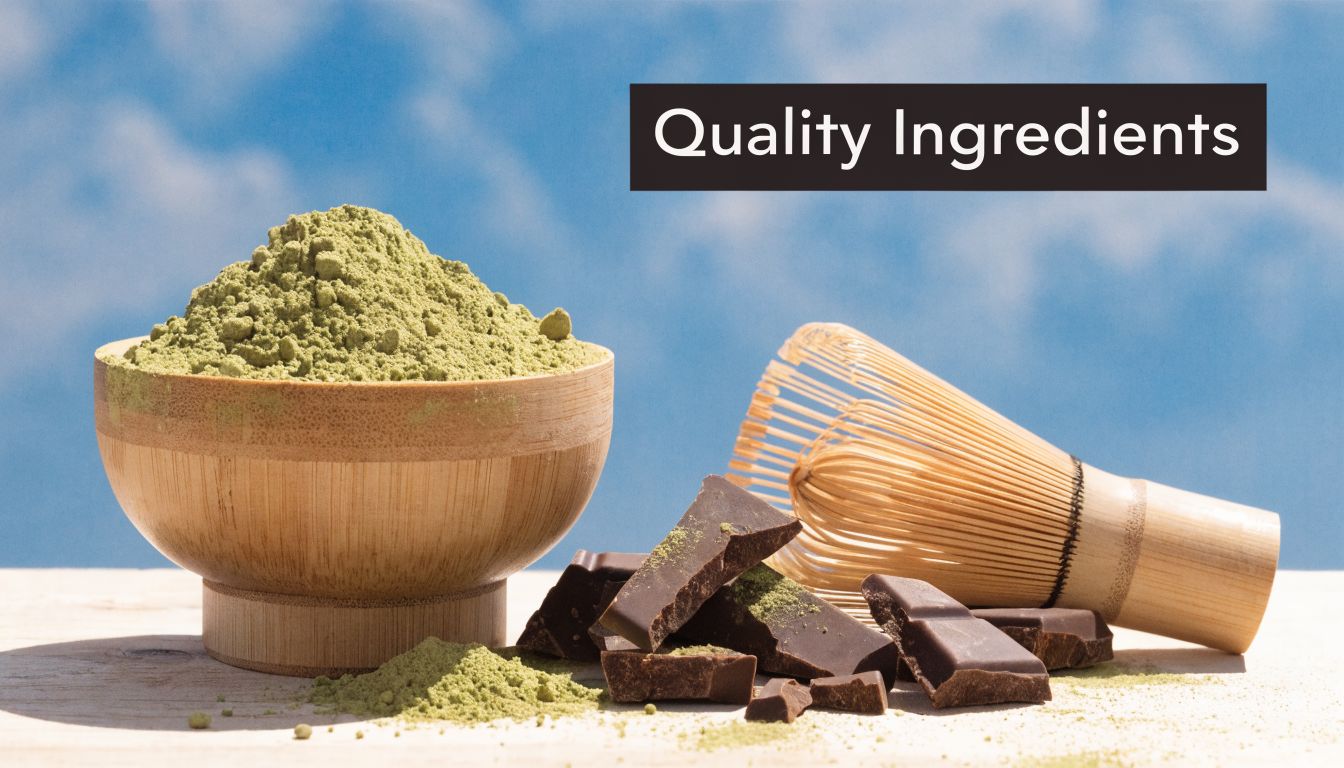
Matcha grade matters more than people expect
For straight drinking with water, ceremonial grade is usually the more delicate and refined choice. For chocolate matcha tea, culinary grade matcha often makes more sense because it has enough presence to stand up to cacao and milk.
That doesn’t mean any cheap powder will do. You still want matcha that looks vibrant, smells fresh, and blends cleanly. Dull olive powder often tastes flat or harsh in milk-based drinks.
If you’re making a menu decision for a café, culinary grade is also practical because it performs well across hot drinks, iced drinks, and blended recipes.
Picking the chocolate without losing the tea
Chocolate choice shapes the whole drink. White chocolate gives creaminess and lets the green tea shine. Dark chocolate makes the cup deeper and more bittersweet. Cacao powder gives you the most control over sweetness.
One very useful benchmark comes from this guide on making matcha chocolate with the right white chocolate balance, which notes that for the best flavour, high-quality white chocolate should have a sugar content below 30%, and that the optimal matcha-to-chocolate ratio is typically between 1:5 and 1:8 by weight so the matcha’s umami notes aren’t buried.
If you use drinking chocolate or hot chocolate blends, ingredient lists matter. Some are heavy on sugar and light on cocoa, which can make the final cup muddy. If you want a clearer sense of how these products differ, this explainer on understanding hot chocolate drinking powders is worth a look.
Milk, sweetness, and flavour support
Different milks change the drink in different ways.
- Dairy milk gives a rounded, classic café texture
- Oat milk usually creates the creamiest vegan version
- Almond milk makes a lighter cup with a nuttier finish
- Soy milk can work well when you want more body than almond offers
For sweetening, keep it simple. Honey, maple syrup, or a sugar-free sweetener can all work, but start small. Matcha and chocolate are both assertive ingredients, so a little sweetener often goes further than expected.
Practical rule: If you can taste only sweetness, the chocolate matcha tea isn’t balanced yet.
The tools that make the biggest difference
You don’t need a huge setup, but a few basics are essential for texture:
- Fine-mesh sifter to break up clumps before whisking
- Bamboo whisk or small handheld whisk to disperse the matcha properly
- Heatproof bowl or mug for making a smooth paste
- Milk jug or saucepan for controlled heating
- Teaspoon or digital scale for consistency
A frother can help, but it doesn’t replace sifting. That’s where many clumpy drinks begin.
Master Recipe The Classic Hot Chocolate Matcha Latte
A great hot chocolate matcha latte isn’t made by dumping everything into one mug and hoping for the best. The smoothest version is built in layers. First the powders are prepared, then a paste, then warm milk is added gradually.
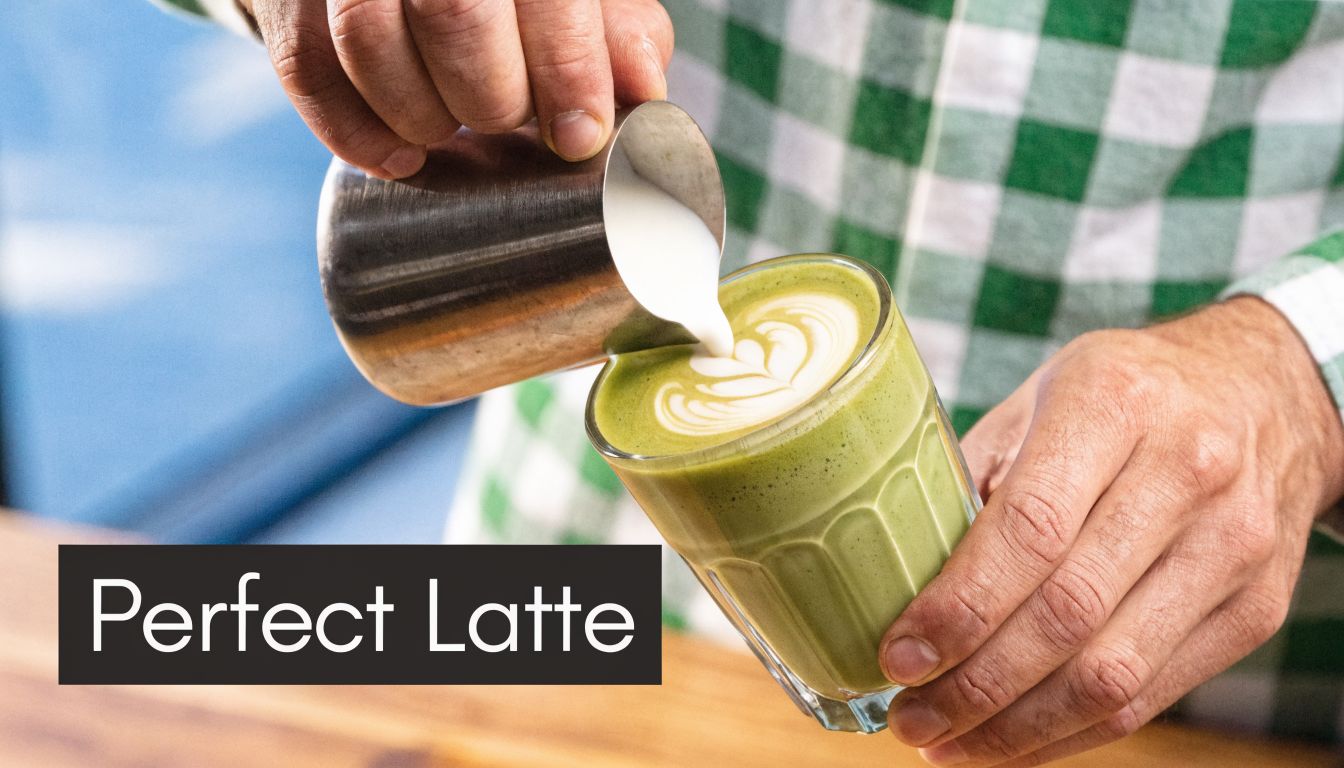
A reliable recipe for one mug
Use this as your base recipe:
- 1 to 2 teaspoons matcha
- 1 to 2 teaspoons cacao powder or finely chopped chocolate
- A small amount of hot water
- 1 cup milk of choice
- Sweetener to taste
- Optional pinch of sea salt or a little vanilla
If you’re using white chocolate instead of cacao powder, melt it into the milk gently rather than trying to whisk chunks into the cup.
The method that prevents clumps
The most important technical detail is temperature. To preserve matcha’s delicate flavour and nutrients, heat your liquid to 70 to 80°C (160 to 175°F), sift the matcha first, then use vigorous M or W whisking motions for 15 to 60 seconds for a smooth consistency, according to this guide on preparing matcha without damaging flavour.
Follow these steps:
Sift the matcha and cacao
Add both to a bowl or wide mug through a fine sieve. This tiny step saves a lot of frustration later.
Make a paste
Add a small splash of hot water. Whisk until it forms a glossy paste with no dry pockets. If it looks grainy here, it’ll stay grainy in the final drink.
Warm the milk gently
Heat your milk so it’s hot but not boiling. If you’re using white chocolate, melt it into the milk slowly while stirring.
Combine in stages
Pour a little warm milk into the paste first and whisk again. Then add the rest. This staged approach keeps the texture silky.
Taste and adjust
Add sweetener, vanilla, or a tiny pinch of salt if needed. Salt can sharpen chocolate flavour without making the drink salty.
Common mistakes and easy fixes
People often think the issue is the recipe, when it’s usually the sequence.
| Problem | Likely cause | Simple fix |
|---|---|---|
| Clumps | Matcha wasn’t sifted | Sift before any liquid touches it |
| Grainy texture | Paste wasn’t whisked enough | Whisk longer before adding milk |
| Bitter finish | Liquid was too hot | Keep milk below boiling |
| Weak matcha flavour | Too much chocolate or sweetener | Reduce chocolate and retaste |
A visual walkthrough can help if you’re more of a watch-and-copy learner.
Easy adaptations for different drinkers
A vegan version is simple. Oat milk is often the easiest choice because it stays creamy and supports both chocolate and matcha well. Almond milk works too, but the result is lighter.
For a sugar-free style, use unsweetened cacao and a sugar-free sweetener you already enjoy in hot drinks. The goal isn’t to mimic a confectionery drink. It’s to let the chocolate and tea still taste like themselves.
If you want to refine your matcha technique beyond this recipe, this guide on how to make a matcha latte is a useful companion.
If your first mug tastes a little too earthy or a little too rich, that’s normal. Small adjustments in chocolate, sweetness, and milk make a much bigger difference than changing everything at once.
Creative Variations for Every Occasion
Once the hot version is working, chocolate matcha tea becomes a very flexible base. It can be refreshing, dessert-like, more coffee-friendly, or even sparkling depending on the occasion.
One reason people enjoy experimenting with matcha in drinks is that you’re consuming the whole leaf powder. This article on historical facts about matcha and antioxidant density notes that whole-leaf matcha can deliver up to 137 times more antioxidants, specifically EGCg, than traditionally steeped green tea, which helps explain why it’s become popular in functional beverages.
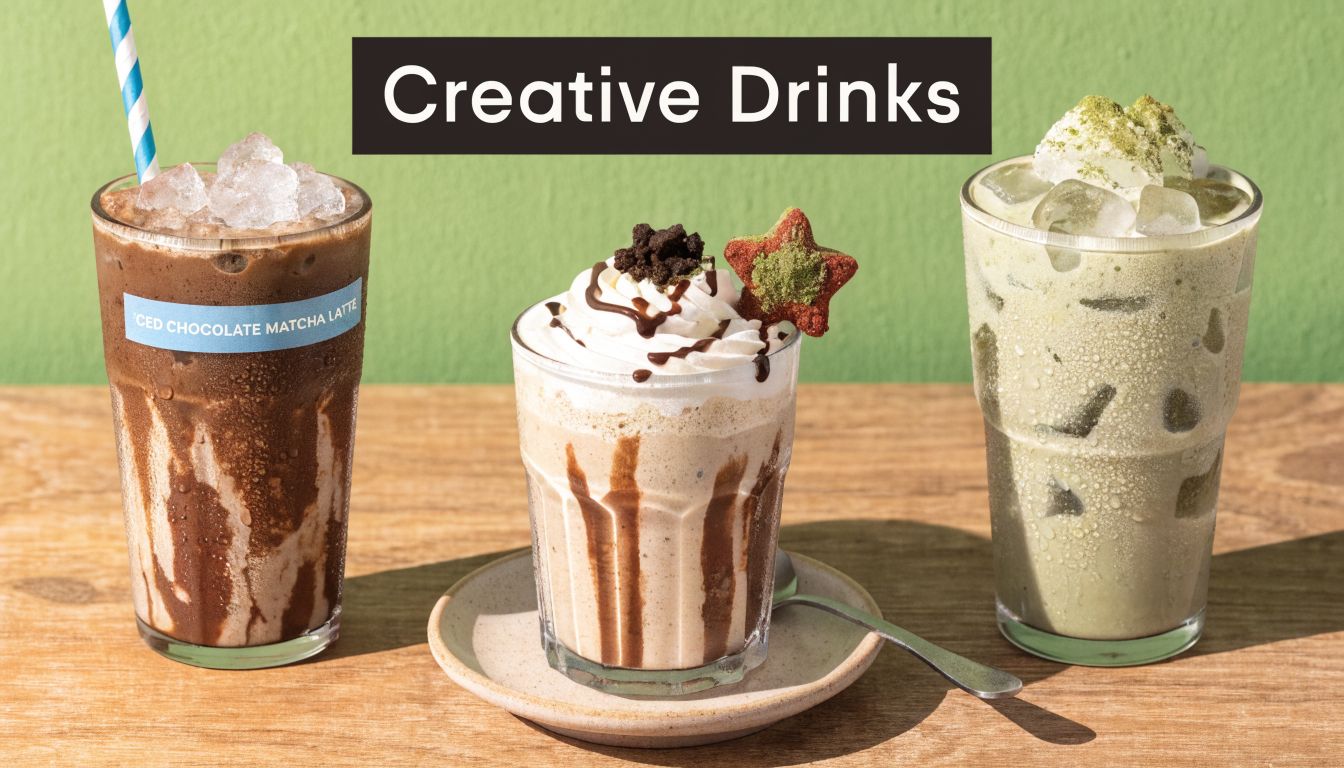
Iced chocolate matcha latte for warm afternoons
This is the version to make when you want something café-style and cooling without reaching for a standard iced coffee.
Start by preparing a concentrated paste with sifted matcha, cacao, and a little hot water. Let it cool slightly. Fill a tall glass with ice, add cold milk, then pour the matcha-chocolate mixture over the top.
For the cleanest layers, use cold milk and cooled concentrate. If you pour hot mixture straight onto ice, the drink can dilute too quickly.
Try serving it with:
- Oat milk for a creamy, mellow finish
- Almond milk for a lighter style
- A dusting of cacao on top for a more dessert-like look
Matcha mocha for coffee lovers
Some people don’t want to choose between espresso and matcha. Fair enough. A matcha mocha gives you roasted coffee notes, chocolate depth, and that recognisable green tea edge in one cup.
Build the chocolate matcha base first, then add a freshly pulled shot of espresso before topping with warm milk. Stir gently, taste, then adjust sweetness only if needed. Espresso already brings bitterness, so this version usually needs less cacao than the classic latte.
This variation works best when none of the elements dominate. You should taste coffee, chocolate, and matcha separately, then together.
If you’re serving this in a café, it helps to describe it clearly on the menu. People ordering matcha mochas are often curious, but they want to know whether the drink leans more coffee-forward or tea-forward.
Chocolate matcha kombucha fusion for a lighter, sparkling serve
This one surprises people. It’s not a latte at all. It’s brighter, more grown-up, and ideal for alcohol-free menus or brunch-style drinks.
The easiest method is to make a small, smooth matcha-cacao concentrate first. Cool it fully. Pour it into a glass with ice, add a splash of your preferred milk if you want softness, then top gently with plain or ginger-forward kombucha. Stir lightly rather than aggressively so you keep the sparkle.
A few flavour directions work especially well here:
| Style | What it tastes like | Best moment |
|---|---|---|
| Ginger chocolate matcha spritz | Lively, zesty, lightly earthy | Mid-afternoon pick-me-up |
| Lime-cacao matcha cooler | Sharper and more refreshing | Warm-weather brunch |
| Vanilla chocolate matcha fizz | Softer and rounder | Alcohol-free evening serve |
Small custom touches that make a big difference
You don’t need a complicated recipe to make these drinks feel special.
- Add cinnamon if you want warmth without extra sweetness
- Use orange zest for a bright finish with dark chocolate versions
- Blend with ice when you want a frappe-style drink
- Top with shaved dark chocolate for a more premium presentation
Chocolate matcha tea is at its best when it suits the moment. Hot and quiet in the morning. Iced and quick in the afternoon. Sparkling and polished when guests are over.
For Café Owners and Home Baristas Menu Inspiration
Chocolate matcha tea can earn its place on a menu because it solves a real problem. Not every customer wants coffee, and not every non-coffee option feels premium. This category gives you something distinctive that still feels familiar enough to order.
For cafés, the appeal is range. One base idea can become a hot signature drink, an iced afternoon option, a seasonal special, or a non-alcoholic spritz. For home baristas, it’s a way to serve something memorable without needing a full commercial setup.
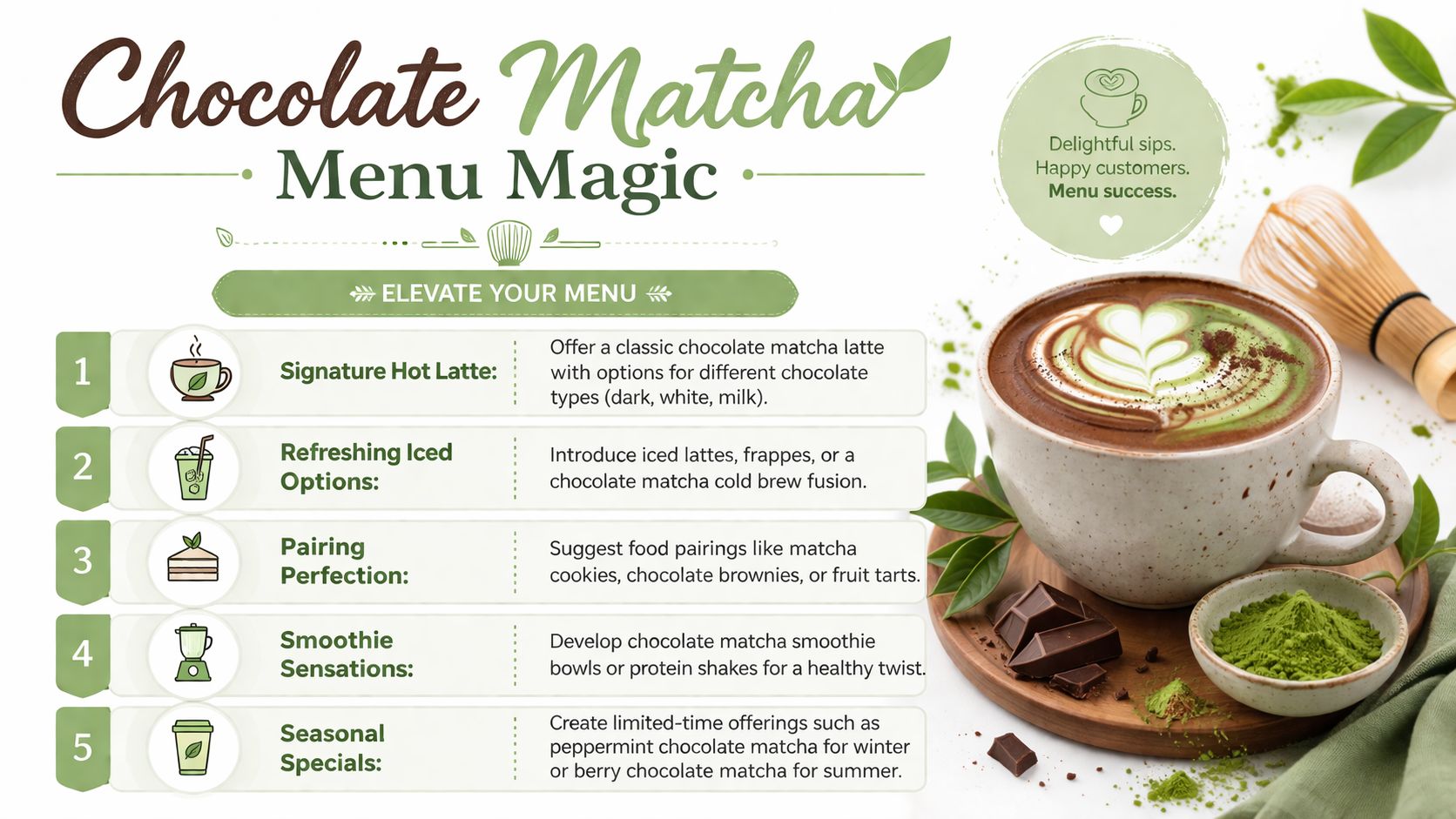
Flavour pairing ideas that sell the drink
Some pairings make the drink easier to understand at a glance. Customers may hesitate at “chocolate matcha tea” if they can’t picture the flavour. Add a familiar note, and the concept becomes easier to order.
| Pairing | Flavour Profile | Serving Suggestion |
|---|---|---|
| Raspberry | Tart, bright, lifts chocolate sweetness | Iced latte with berry garnish |
| Mint | Cool and clean against rich cacao | Winter hot special |
| Orange zest | Fragrant and slightly bitter | Dark chocolate version |
| Vanilla | Softens grassy notes | House hot latte |
| Sea salt | Sharpens chocolate depth | White chocolate matcha drink |
Menu ideas for cafés and hosts
A few naming ideas can make a menu feel more polished:
- Zen Cacao for a classic hot chocolate matcha latte
- Green Mocha for the espresso version
- Matcha Cloud for a lighter iced serve
- Probiotic Sparkler for a kombucha-based option
- Winter Mint Matcha for a seasonal feature
Presentation matters too. Clear glass works beautifully for iced versions because the colour contrast does some of the selling for you. For hot drinks, a matte cup and a neat dusting of cacao can give the drink a more premium feel.
Quality and compliance are part of the product
For Australian businesses, ingredient sourcing isn’t only about flavour. It’s also about trust and safety. This article on FSANZ standards and the risks of non-compliant imported tea powders notes that sourcing ingredients that meet FSANZ standards is critical, and that non-compliant imported tea powders can face seizure due to contamination risks.
That matters for cafés building a serious beverage program. If you’re serving matcha, you need consistency in flavour, colour, and documentation. A drink can’t become a signature item if supply or quality is unpredictable.
Menu mindset: The best-selling speciality drinks are usually the ones staff can describe in one sentence and make consistently during a busy service.
For home baristas, the same principle still applies in a smaller way. Better ingredients simplify the process. Better tools improve consistency. If you want to tighten your setup, a few dedicated matcha tea accessories can make whisking and serving much easier.
Frequently Asked Questions About Chocolate Matcha
Why is my chocolate matcha tea clumpy
Clumps usually start with dry powder hitting liquid too fast. Sift your matcha first, sift cacao too if you’re using it, then whisk with a small amount of hot water to form a smooth paste before adding milk.
If you skip the paste stage, even a strong frother may not rescue the texture.
Why does my drink taste bitter
There are a few possible causes. The liquid may have been too hot, the matcha may be low quality, or the chocolate-to-matcha balance may be off.
Bitterness can also show up when a dark chocolate version has too little milk or sweetener. Adjust one thing at a time so you can tell what helped.
Can I make it ahead of time
Yes, but the best results come from preparing part of it rather than the whole drink. You can make a matcha-chocolate concentrate in advance, keep it chilled, and then combine it with hot or cold milk when you’re ready to serve.
If the mixture settles in the fridge, whisk or shake it again before pouring.
What’s the best milk for chocolate matcha tea
That depends on the style you want. Dairy milk gives a classic, rounded texture. Oat milk is often the easiest plant-based option for a creamy cup. Almond milk creates a lighter drink with a slightly nuttier finish.
If you’re testing for a café menu, try the recipe with at least two milks. Some customers want dairy-free, but they still expect a full-bodied result.
Is chocolate matcha tea healthy
It can fit well into a wellness-focused routine, especially when you use quality matcha, choose your sweetener carefully, and avoid overly sugary chocolate blends. Matcha is valued for antioxidants and for the calm-focus combination often associated with caffeine and L-theanine.
The final nutritional profile depends heavily on your ingredients. A lightly sweetened oat milk version will feel very different from one made with lots of white chocolate syrup.
When’s the best time to drink it
Many people enjoy it in the morning or early afternoon when they want a gentler, more mindful alternative to another coffee. A hot version suits slower mornings. An iced version works well as a warm-weather afternoon drink.
If you’re sensitive to caffeine later in the day, keep that in mind and enjoy it earlier.
If you’re ready to try chocolate matcha tea with premium organic ingredients, explore Pep Tea for Australian matcha, kombucha, and tea essentials that make these recipes easier to get right.
Easy Iced Matcha Recipes You Need to Try

If you love matcha but feel like you’ve reached your limit with the classic iced matcha latte, it’s time to shake things up! Matcha is incredibly versatile, and there are so many exciting ways to enjoy its vibrant flavour and health benefits.
From fruity twists to creamy indulgences, we’re here to share some simple and creative iced matcha recipes that will take your matcha game to the next level. Get ready to refresh your routine with these delicious ideas! From classic lattes to unique twists like dessert-style affogatos, we are sure there’s something for every matcha lover.
But first, let’s keep it old school with the OG iced matcha latte.
Classic Iced Matcha Latte
Start with the timeless recipe that highlights matcha’s unique flavour in all its creamy glory.
Ingredients
- 1–2 tsp high-quality matcha powder
- 2 tbsp hot water (around 80°C; not boiling)
- 1 cup milk or a milk alternative (such as almond, oat, or soy)
- Ice cubes
- Sweetener to taste (honey, agave, or simple syrup)
Instructions
- Sift the matcha powder into a bowl to remove any clumps.
- Add the hot water and whisk using a matcha whisk or electric frother until fully dissolved and frothy.
- Sweeten the mixture if desired, adjusting to your taste.
- Fill a serving glass with ice cubes, then pour the milk over them.
- Gently pour the whisked matcha onto the milk, creating a stunning layered effect.
- Stir gently before sipping and enjoy.
Pro tip: For extra froth, shake the milk in a sealed jar before pouring it over the ice.
Read our step-by-step guide on how to make an iced matcha latte.
Coconut Iced Matcha
Transport yourself to a tropical paradise with this coconut-infused twist on the classic iced matcha.
Ingredients
- 1–2 tsp matcha powder
- 2 tbsp hot water (80°C)
- 1 cup coconut milk
- Sweetener to taste (maple syrup pairs beautifully)
- Ice cubes
Instructions
- Sift and whisk your matcha with hot water until smooth.
- Add the sweetener and mix.
- Fill a glass with ice and pour in the coconut milk.
- Top with the matcha mixture for a tropical green gradient.
This version is naturally creamy from the coconut milk and works wonderfully with a touch of sweetness.
Bonus tip: Garnish with toasted coconut flakes for a decorative touch.
Lemon Mint Iced Matcha Refresher
For those sweltering summer days, this citrusy and herby refresher offers a fresh and clean update.
Ingredients
- 1–2 tsp matcha powder
- 3 tbsp hot water
- 1/2 a lemon, juiced
- Sprigs of fresh mint
- 1 cup sparkling water
- Sweetener (optional)
- Ice cubes
Instructions
- Dissolve the matcha in hot water and allow it to cool slightly.
- Muddle a few mint leaves at the bottom of a tall glass.
- Add ice cubes, lemon juice, and sweetener, if desired.
- Pour the matcha mixture into the glass, then top with sparkling water. Stir gently.
Mint and lemon elevate matcha’s natural grassy flavour for a crisp, effervescent drink.
Pro tip: Freeze mint-and-lemon-infused ice cubes for extra flavour.
Matcha Affogato with Ice Cream
When a drink becomes dessert, you know you’re in for a treat.
Ingredients
- 1–2 tsp matcha powder
- 2 tbsp hot water
- 1 scoop of vanilla, matcha, or coconut ice cream
- Sweetener to taste (optional)
Instructions
- Whisk together matcha powder and hot water until smooth.
- Place a scoop of ice cream in a small bowl or glass.
- Slowly pour the warm matcha mixture over the ice cream and watch it melt into creamy goodness.
This indulgent treat is perfect for after-dinner cravings or an afternoon pick-me-up.
Pro tip: Experiment with different ice cream flavours, like pistachio or white chocolate.
Spiced Iced Matcha Chai
Spiced Iced Matcha Chai
A refreshing blend of bold spices, creamy milk, and earthy matcha, this is an interesting twist on a comforting classic.
Ingredients
- 1 teaspoon matcha powder
- 1/2 cup hot water
- 1/2 cup milk (dairy or plant-based)
- 1/4 teaspoon ground cinnamon
- 1/4 teaspoon ground cardamom
- 1/8 teaspoon ground ginger
- Sweetener to taste (optional)
- Ice cubes
Instructions
- Whisk together matcha powder and hot water until smooth.
- Add cinnamon, cardamom, and ginger to the matcha mixture, stirring until thoroughly combined.
- Fill a glass with ice cubes and pour the spiced matcha blend over the ice.
- Gently pour the milk of your choice into the glass, watching as it swirls and combines.
- Sweeten to taste if desired, give it a gentle stir, and enjoy this refreshing, flavourful drink.
Pro tip: For an extra touch, top with a sprinkle of cinnamon or a dollop of whipped cream!
Iced Matcha Lemonade
Looking for a zesty, invigorating twist on your usual matcha? Iced Matcha Lemonade is the perfect blend of vibrant flavours to energise your day.
Ingredients
- 1 teaspoon matcha powder
- 1/4 cup hot water
- 1/2 cup fresh lemonade
- 1/2 cup cold water
- Ice cubes
- Sweetener of choice (optional)
Instructions
- Whisk the matcha powder and hot water together in a small bowl until smooth and frothy.
- Fill a tall glass with ice cubes.
- Pour the fresh lemonade and cold water into the glass, stirring to combine.
- Slowly pour the prepared matcha over the lemonade mixture, allowing it to create a beautiful layered effect.
- Add sweetener to taste if desired, give it a light stir, and enjoy this cool, tangy twist on matcha.
Pro tip: Garnish with a slice of lemon or a sprig of mint for extra flair!
Tips for Experimenting with Iced Matcha
Feeling creative? Here are some ideas to personalise your matcha drinks even further.
Add fruits
Blend in berries, mango chunks, or pineapple for a fruity spin on iced matcha.
Infuse with spices
Cinnamon, cardamom, or even a pinch of cayenne can add a unique edge.
Try flavoured syrups
Vanilla, caramel, or hazelnut syrups can bring a café feel to your creations.
The beauty of matcha drinks is their adaptability, so don’t be afraid to play with your ingredients and find your signature recipe.
Your Next Matcha Adventure Awaits…
Creating iced matcha at home is simpler than you think, and these recipes offer something for every mood and occasion.
Why not pick up some high-quality matcha to get started? Our organic imperial grade matcha is ideal for blending into drinks.
This article was reproduced on this site with permission from operafoods.com.au the “Matcha Tea Suppliers”.
See original article:- Easy Iced Matcha Recipes You Need to Try
Japanese cotton cheesecake with matcha green tea
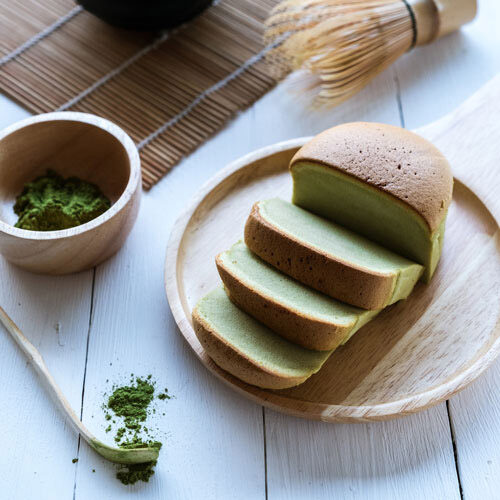
A bit of a baking phenomenon and yet another hit from the ever popular arena of Japanese food, is the Japanese cotton cheesecake. AKA jiggly cake. And yes, it reminds us of a certain Pokemon too…
What is Japanese cheesecake?
Japanese cotton cheesecake is perhaps better known as Jiggly cake. If you have ever seen those YouTube videos of Japanese bakeries, then you will know why. If you haven’t, then we recommend a look as it is a phenomenon best described in motion.
This half sponge/half cheesecake hybrid is made with a mixture of egg yolks, butter, and cream cheese, folded through whipped egg whites and stabilised with cornstarch. At first glance the texture is more superlight sponge than cheesecake, but the eating proves otherwise with the sour flavour notes and oddly creamy texture.
Interestingly, it would seem that the term Jiggly cake describes two kinds of Japanese cakes. The first (and incidentally the star of THOSE videos) is actually a sponge cake known as castella. Said to have been taken to Japan by the Portuguese in the 16th century, castella is a speciality of Nagasaki that CONTAINS NO CHEESE.
The second, the one that does contain cheese and thereby deserves the title of cheesecake is a more recent invention.
Both versions do however jiggle admirably.
What does Japanese cheesecake taste like?
As much about texture as taste, Japanese souffle cheesecake melts in your mouth and is as light as a cloud. Somewhere between spongecake and souffle, it isn’t overly sweet or cloying but you do a get a pleasing lactic tang from the cream cheese.
Is Japanese cheesecake gluten-free?
You could experiment with just using cornflour to make your cheesecake gluten-free, but most recipes also incorporate a little wheat flour to help stabilise the mix.
How to make a Japanese cheesecake
The process is not difficult yet it should not be rushed. It is after all Japanese and relies on focus, precision and due care. It is a little fiddly but the actual bake is quite forgiving so it is difficult to overcook. Do not be disheartened if it shrinks a bit on cooling, especially the first few times.
Cream cheese and butter need to be at room temperature and spreadably soft so they are easy to blend. Egg whites are easier to whip when at room temperature, but the eggs themselves are easier to separate when cold.
You want a cream cheese that is creamy and soft, yet with a good old-fashioned tang.
Matcha green tea Japanese cheesecake recipe
Matcha green tea is the perfect flavouring for a cake like this, with its subtle herbal tones and slightly sour sweetness. Read about the different grades of matcha green tea.
You will need an 8 inch round cake tin.
225g cream cheese, really soft
60g butter, really soft
6 egg yolks
60g sugar
70g flour
3 tbsp cornstarch
2 tsp matcha powder
60ml milk
1 tsp vanilla
1/4 tsp salt
For the meringue
6 egg whites
1/4 tsp cream of tartar
60g sugar
Icing sugar – for dusting
- Preheat the oven to 200C.
- Grease and line your cake tin.
- In a mixing bowl, beat together the butter and cream cheese until smooth.
- Beat in the egg yolks and the sugar.
- Beat in the flour, cornstarch, and matcha powder.
- Add the salt, milk, and vanilla.
- In a separate mixing bowl, whisk the egg whites with the cream of tartar.
- Once they are fluffy, gradually whisk in the sugar until the mixture is smooth, glossy and forms soft peaks. This means that when you pull some of the mix up with a spoon it stands and keeps its shape, but the peaks bend softly at the top.
- Using a large metal spoon carefully fold the egg whites through the cream cheese mix until fully incorporated.
- Pour the batter into your prepared tin.
- Place the tin in a baking tray, and fill with cold water to reach a third of the way up the cake tin.
- Bake for 15 mins at 200C. Turn the oven down to 140C and bake for a further 30 minutes.
- Turn the oven off and leave for a further 30 minutes.
- The test for doneness is the same as a sponge cake. It will spring back when you press the top, and a skewer will come out clean. It is quite forgiving so rather over bake than under.
- After it has sat in the cooling oven for 30 minutes it will be cool enough to tip out onto your hand and then onto a plate.
- Leave to cool completely before dusting with icing sugar and slicing to serve.
Does Japanese cheesecake need to be refrigerated?
Japanese souffle cheesecake can be served whilst still warm from the oven, and will keep for an afternoon out on the kitchen counter at room temperature. After that you will need to keep it in the fridge where it will sit quite happily for up to 5 days. Do keep it covered though so it does not absorb all the flavours of the fridge.
Can you freeze Japanese cotton cheesecake?
You can freeze it too. Either in individual slices or as the whole thing. Wrap in cling film, and then in foil, and freeze for up to 3 months.
Don’t forget to stock up on organic matcha tea online and take advantage of our wholesale prices.
This article was reproduced on this site with permission from operafoods.com.au the “Bulk Suppliers of Organic Asian Groceries”.
See original article:- Japanese Cotton Cheesecake with Matcha Green Tea
Green means glow – with a matcha tea face mask
Green tea has many health benefits. Containing powerful antioxidants, it comes as no surprise that many of these involve our skin.
Many studies suggest that there are benefits to both drinking green tea and applying it topically. Making a matcha tea face mask is the ideal place to begin exploring the benefits of matcha skin care.
Is matcha green tea good for your skin?
Matcha green tea is good for your skin in so many ways. It contains a group of antioxidants known as catechins, more specifically a compound known as EGCG, that are directly involved in cell growth and repair. Green tea also has many anti-inflammatory and anti-microbial properties that can help with hormonal acne. as well as Vitamin B2 for maintaining collagen levels and Vitamin E to nourish and hydrate.
The benefits of a matcha face mask
Many of the benefits of green tea are triggered from within but there are specific benefits to using it directly on the skin.
- Brighten dull skin
- Help retain moisture and hydration
- Fight wrinkles and firm sagging skin
- Work against acne bacteria and reduce sebum production
- Help puffy eyes
- Clearing clogged pores
Make a matcha tea face mask
If you make your own matcha skin mask then you are in full control of the ingredients. Green tea is a big thing in the beauty world but the quality and quantity of active ingredients can vary. Many cosmetic brands contain artificial ingredients and preservatives to extend shelf life. Whilst these may be deemed skin safe what you put on your body is as important as what you put in your body. Thankfully all of our matcha green tea powder is 100% certified organic.
When creating your own DIY beauty products it is just as important to do a patch test. Apply a small amount to the skin on the inside of your elbow to make sure your skin is not sensitive to the ingredients you are using.
The recipe below is for a honey and matcha face mask, because why not harness the healing power of honey too. You could also use natural yoghurt or olive oil. Or just make a paste with plain old water. Whatever suits you.
Recipe for honey and matcha face mask
This makes enough for one faceful, but you could make up more and store it in an airtight container in a cool dark place.
1 tsp matcha green tea powder
1 tbsp raw honey
- Mix the ingredients together well.
- Apply all over the face, avoiding the eyes but covering the skin around the eyes.
- Leave on for 10 to 15 minutes and remove with a warm wet cloth.
Use once a week.
We stock a variety of grades of high quality organic matcha powder. Our green tea powder is also available to buy in bulk online at wholesale prices.
This article was reproduced on this site only with permission from operafoods.com.au the “Gourmet Online Wholesale Grocer”. See original article:- Green Means Glow With a Matcha Tea Face Mask