
Tag: matcha energy vs coffee
Matcha Energy vs Coffee: An Australian Guide for 2026
You know the moment. The alarm goes off, you're half awake, and your hand reaches for the same first fix, coffee, before your brain has fully clocked in. For a lot of Australians, that ritual feels essential, but a key question is whether it's giving you the kind of energy you truly desire, fast, frantic, steady, or somewhere in between.
Matcha energy vs coffee isn't really a contest about which drink is “better” in the abstract. It's a practical choice about how you want to feel at 8 am, 3 pm, or before a long stretch of focus work. Coffee and matcha can both be part of a healthy routine, but they don't deliver energy in the same way, and that difference is more significant than commonly understood.
| Drink | Typical caffeine in Australia | Energy feel | Best fit |
|---|---|---|---|
| Coffee | About 95 mg per cup | Quicker, sharper lift | Fast starts, short bursts, when you want a stronger hit |
| Matcha | About 60 to 75 mg per similar serving | Smoother, steadier alertness | Calm focus, gentler energy, longer work blocks |
The Morning Ritual Reimagined
The coffee machine clicks on, the kettle boils, and before the day has even started, you've already decided what sort of pace you're setting. That's the power of habit, it's not just about caffeine, it's about identity, comfort, and routine. For many people, coffee says “wake up now”, while matcha says “start well”.
The Australian conversation around these drinks has shifted because people are asking better questions. They're not only asking how much stimulation they'll get, they're asking how it will feel, how long it will last, and whether it fits work, exercise, or a calmer morning rhythm. That's why matcha energy vs coffee has become such a useful comparison for health-conscious readers.
Coffee still has its place, especially if you want a quick jolt. But matcha has moved from a niche tea-culture product into a mainstream café ingredient, and that shift has been driven by Australians looking for a more considered kind of energy, one that feels useful rather than relentless.
Practical rule: If your morning needs speed, coffee is usually the simpler answer. If you want steadier focus without feeling wired, matcha deserves a look.
That's the basic frame for the rest of the discussion. It's not about crowning a winner. It's about matching the drink to the moment.
The Caffeine Showdown How They Deliver Energy
The numbers matter, but so does the format
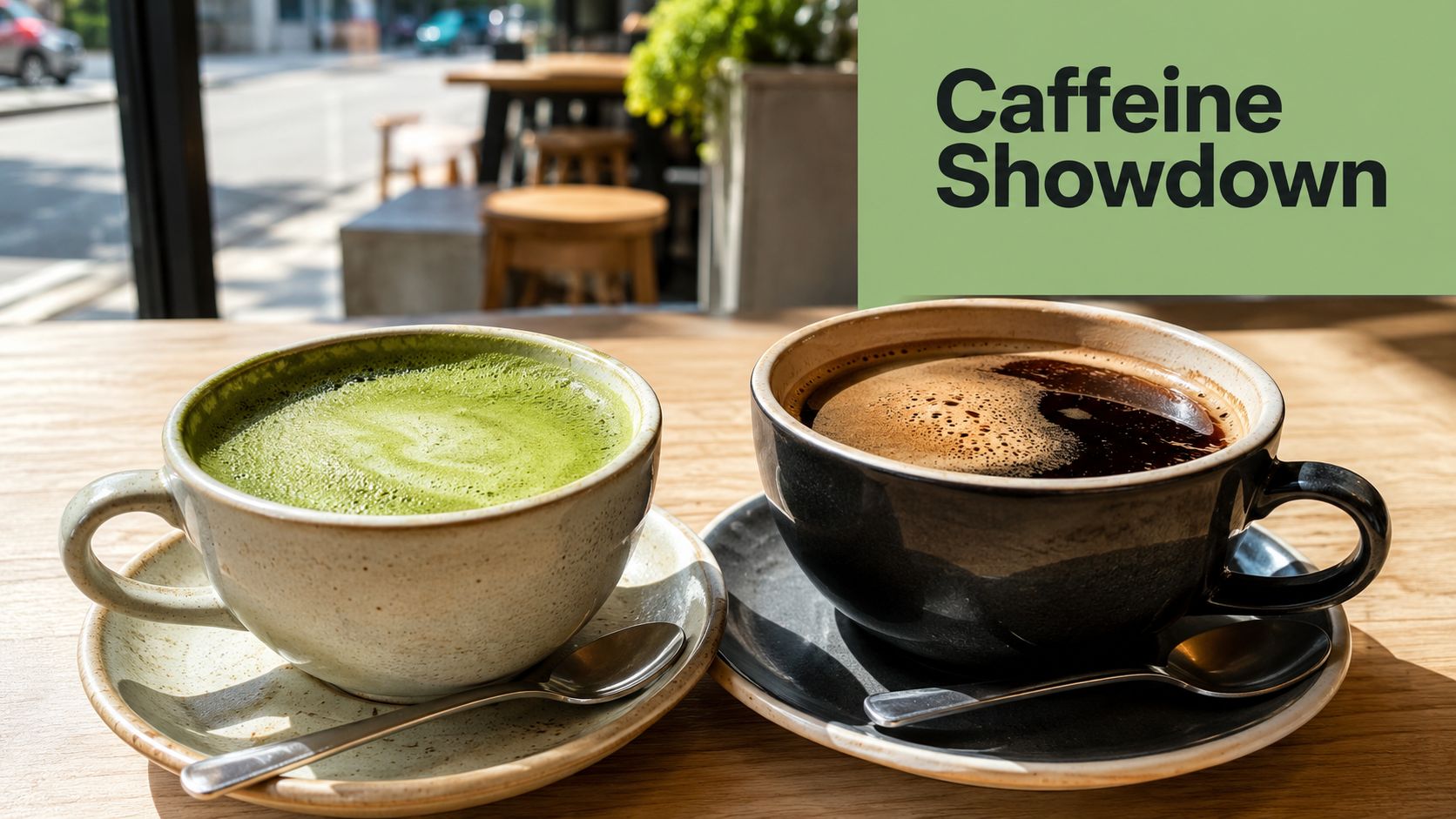
Australian reporting puts a typical coffee at about 95 mg of caffeine per cup, while matcha generally lands at about 60 to 75 mg per similar serving ABC News Australia. That sounds like a simple win for coffee if you only care about raw dose, but the serving format changes the experience a lot.
Matcha is also more variable than many people expect. One Australian explainer notes it can range from 38 to 176 mg of caffeine per cup depending on how it's prepared, while another Australian source still places it around 60 to 75 mg per serving Nine Kitchen. That's the key point, dose control matters. A café-style latte, a strong whisked serve, and a lighter home brew won't all feel the same.
Why the energy feels different
Coffee tends to feel like a quicker rise. Matcha tends to feel more measured because the caffeine comes packaged with other plant compounds, and Australian coverage says the leaves are shaded for three to four weeks before harvest, a step that raises caffeine and antioxidant levels and helps explain the steadier alertness people often describe ABC News Australia.
That's why people often describe coffee as a rocket launch and matcha as a steady climb. The base ingredient isn't the whole story. The way it's grown, processed, and served shapes the experience, and that's exactly why a standard caffeine chart doesn't tell the full story.
For readers comparing their own routines, a practical place to start is this internal guide on caffeine in matcha latte. It helps make the serving-size question less vague, which is where a lot of confusion starts.
Beyond Caffeine The L-Theanine Difference
What L-theanine changes
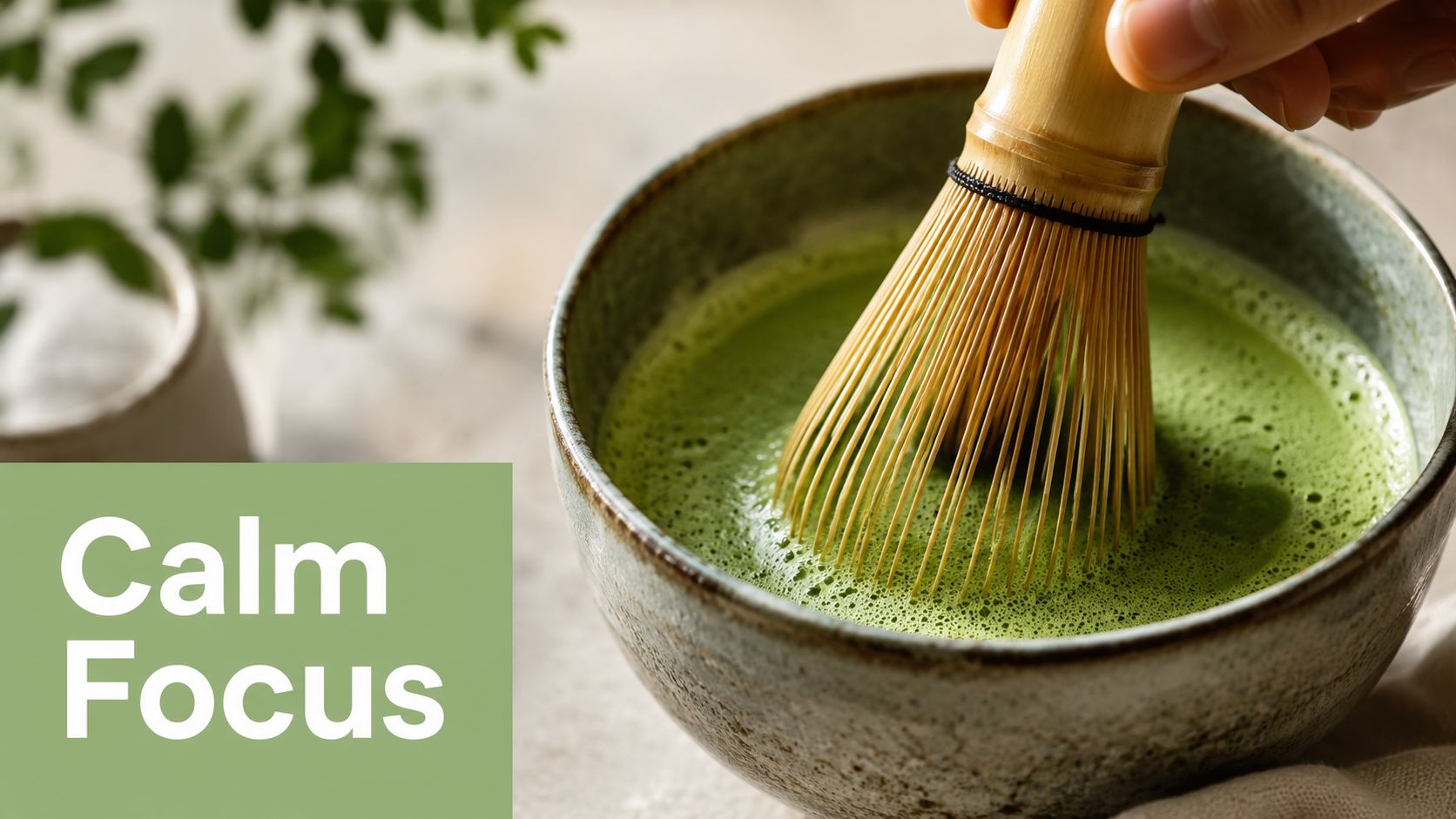
L-theanine is the reason matcha feels different from plain caffeine. Australian coverage increasingly frames matcha as a functional alternative to coffee because of its L-theanine content, which is associated with calm alertness and a slower-release energy that feels more sustained Matcha Society Australia. In simple terms, caffeine helps you switch on, while L-theanine helps the signal feel less jagged.
That doesn't mean matcha is sedating. It means the alertness can feel cleaner, with less of the edgy, buzzy quality some people get from stronger coffee. For professionals who need to stay mentally switched on without feeling scattered, a useful deep dive is the role of L-theanine for professionals, which explains why this compound gets so much attention in focus-oriented routines.
Why people describe it as calmer
The easiest way to think about it is this. Coffee can feel like a sudden push, while matcha often feels like a smoother lane change. The energy is still there, but it tends to suit tasks where you want attention, patience, and a steady temperament rather than a rapid surge.
Matcha is often chosen not because it is “stronger”, but because the kind of alertness feels more manageable.
For some people, that's the difference between powering through a meeting and feeling like the meeting is powering through them. If you're comparing product styles, the internal guide on Uji matcha powder is a useful reference point for understanding quality and flavour differences without getting lost in jargon.
A Comparison of Antioxidants and Nutrients
Whole leaf versus infusion
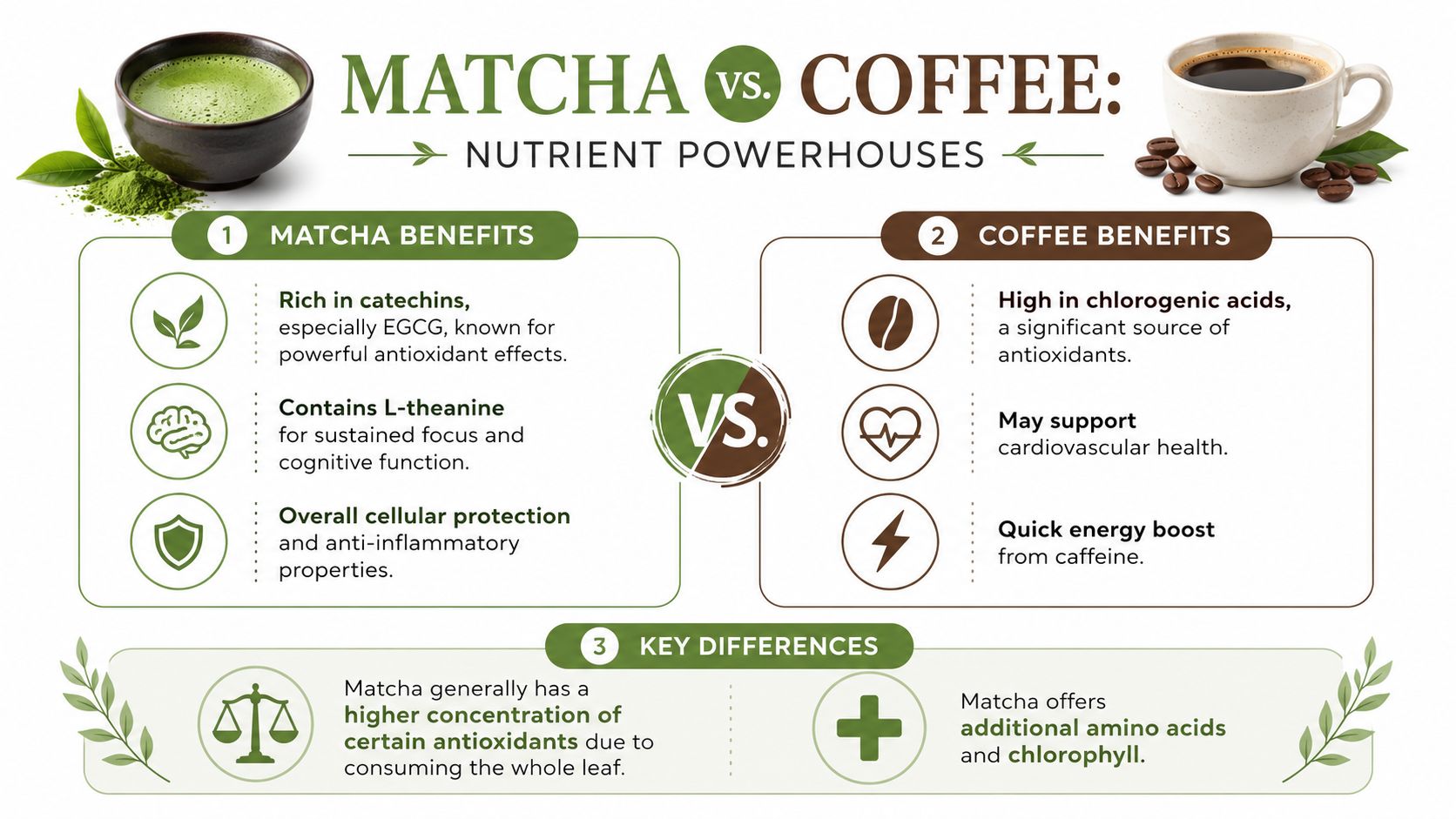
Matcha has a nutritional advantage that comes from a simple mechanism, you consume the whole tea leaf as powder rather than steeping and discarding it. Australian sources highlight its higher polyphenol and antioxidant density for that reason, and name compounds such as catechins, polyphenols, flavonoids, and EGCG as central to its functional profile Deakin University.
That whole-leaf approach is why matcha is often talked about as a concentrated source of functional compounds. A 2023 review found matcha contains a high concentration of bioactive compounds, especially polyphenols, flavonoids, phenolic acids, carotenoids, and vitamins, and another review concluded that matcha infusions have the highest antioxidant potential among tea types PMC review. A separate review also notes matcha's high catechin levels and strong antioxidant activity in experimental contexts PMC review.
What that means in plain English
This doesn't make matcha a miracle drink, and it shouldn't be treated like medicine. It does mean the drink carries more of the plant with it, so the cup is doing more than just delivering caffeine. That's why people interested in clean energy, gut-friendly routines, and antioxidant-rich beverages often gravitate towards it.
Coffee has its own strengths, and many Australians love it for flavour and a sharper lift. But if your idea of a good daily drink includes energy plus plant compounds, matcha fits that brief more naturally because the leaf itself is part of the drink.
Simple takeaway: coffee is mainly about the brewed bean, matcha is about the whole leaf. That difference shapes both the taste and the functional profile.
When to Choose Matcha and When to Choose Coffee
Match the drink to the job
The best choice depends on what your day needs. Australian commentary says coffee is often preferable for a fast caffeine hit, while matcha suits people who want smoother, sustained energy for calm-focus occasions, such as afternoon work or when they're more sensitive to caffeine AGFG.
That makes the decision easier if you stop asking “which is healthier?” and start asking “what am I trying to do right now?”. A hard training session, a sleepy school run, a creative block, a long spreadsheet session, and a late afternoon meeting all ask for different energy profiles.
A practical decision guide
- Choose coffee for speed: If you need to feel switched on quickly, coffee is the more direct option.
- Choose matcha for sustained focus: If the workday is long and you want fewer jagged peaks, matcha fits better.
- Choose matcha for afternoon use: If the 3 pm slump hits hard, matcha often feels more manageable than a stronger coffee.
- Choose coffee if you like intensity: Some people prefer the stronger, bolder lift and don't mind the sharper edges.
A useful way to think about it is quality of energy, not just quantity. Some tasks need a burst, others need consistency. If you're about to lift heavy at the gym, coffee may make sense. If you're settling in for writing, client work, or study, matcha often feels like the better tool.
The primary advantage here is strategic use. You don't have to pick a side forever. You can choose based on the moment, your caffeine tolerance, and how you want the rest of the day to unfold.
How to Choose and Prepare Quality Matcha
What quality looks like
Good matcha should taste vibrant, not dull or dusty. Ceremonial-grade matcha is usually the better choice for drinking straight or in a simple latte, while culinary-grade matcha is better suited to baking, smoothies, and recipes where other ingredients soften the flavour. That distinction matters because not all green powder behaves the same in the cup.
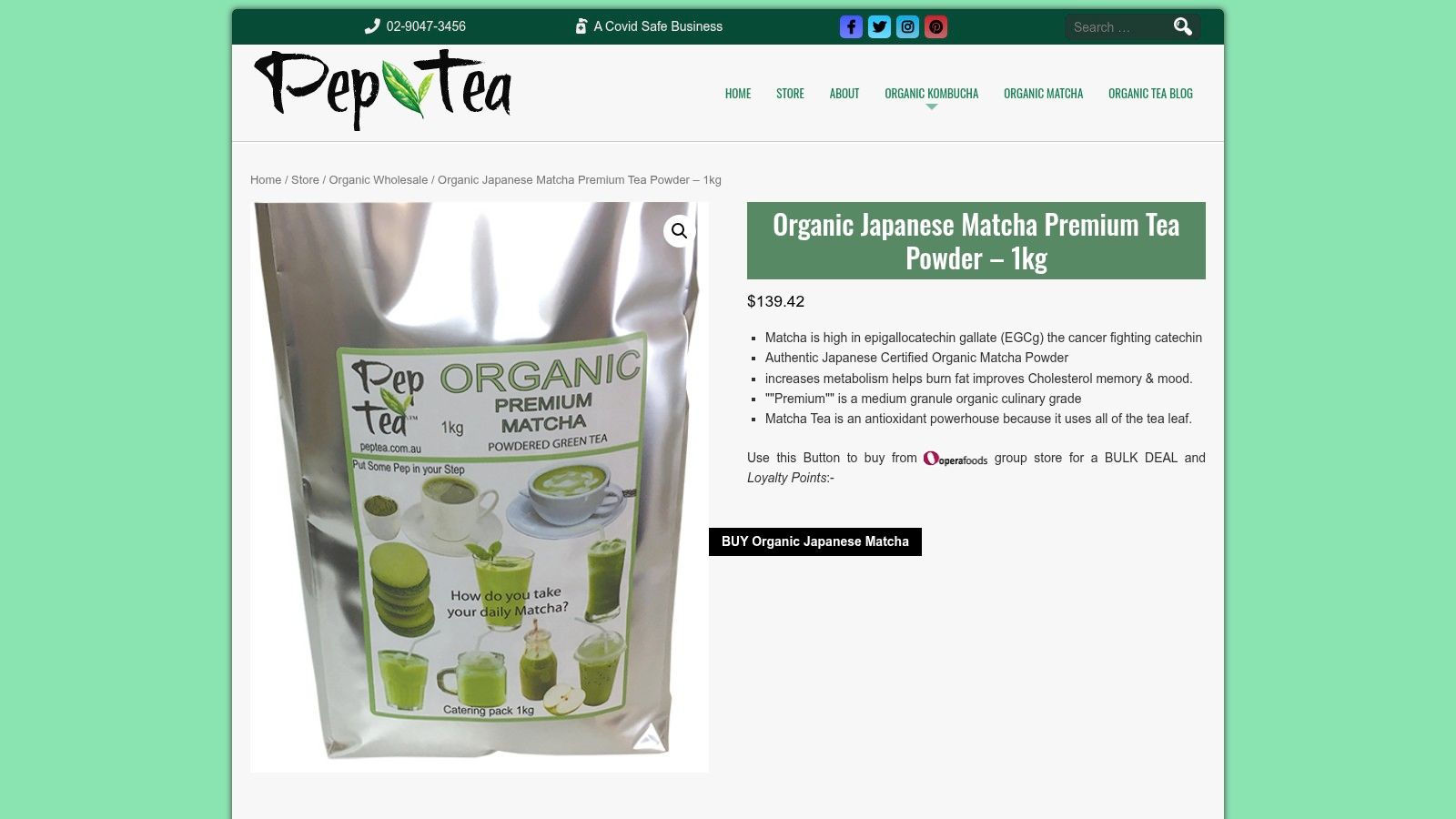
Pep Tea's premium Japanese matcha is certified organic by the Japanese Ministry of Agriculture and grown in southern Japan, which gives Australian buyers a clear provenance and certification claim to look for in an authentic product Pep Tea product page. If you want a straightforward brewing reference, the internal guide on making matcha tea is a handy starting point.
A simple home latte method
- Sift the matcha so it doesn't clump.
- Whisk with a small amount of hot, not boiling, water until smooth and frothy.
- Add milk of choice, then stir through.
- Taste before sweetening, because a good matcha should already have enough flavour to stand on its own.
A good latte doesn't need to be complicated. The fewer barriers there are, the more likely you are to use matcha consistently instead of treating it like a special-occasion ingredient.
A video can help make the whisking rhythm feel less intimidating.
The Verdict Your Personal Energy Prescription
The cleanest summary is simple. Coffee is the faster, sharper option. Matcha is the steadier, calmer option. Neither drink wins every situation, because your body, schedule, and sensitivity to caffeine all change the equation.
If you care most about speed, coffee makes sense. If you care most about feeling alert without a hard edge, matcha usually fits better. If you're trying to build a healthier routine around everyday choices, quality matters too, which is why it's worth checking labels and provenance the same way you might when you find pesticide-free food.
The most useful mindset is to treat energy like a tool, not a personality trait. Some days call for intensity, others call for steadiness. Once you start choosing with intention, the question stops being “coffee or matcha?” and becomes “what kind of energy does this moment need?”
A CTA for Pep Tea. If you're ready to explore calmer, cleaner energy for your own routine, take a look at Pep Tea's organic matcha range and see which style fits your mornings, your afternoons, and the way you like to feel.