
Tag: smooth energy
Matcha Love Energy Guide for Smooth Sustained Focus
A bowl of matcha can deliver a sustained energy lift for 4–6 hours through the interaction between natural caffeine and L-theanine, rather than the quick rise and fall many people know from coffee, as noted in this Australian matcha caffeine explainer. That single detail changes how a lot of people think about tea.
For plenty of Australians, the usual weekday rhythm is familiar. Coffee on the way to work. Another one mid-morning. Maybe a third before the afternoon meeting, school pick-up, gym session, or café shift. The problem isn't always getting energy. It's keeping it steady.
That's where Matcha Love Energy makes sense as more than a catchy phrase. It describes the kind of energy people are chasing: focused, smoother, and easier to live with. Not buzzy. Not shaky. Not a hard crash an hour later.
A home drinker might want better concentration for a long day at a desk. A café customer may want a greener alternative to a flat white. A hospitality venue might need a non-alcoholic menu option that feels functional as well as premium. Matcha sits neatly in all three worlds.
Introduction to Matcha Love Energy
Matcha love energy starts with a simple shift in mindset. Instead of asking, “How do I wake up faster?” it asks, “How do I stay switched on without feeling rattled?”
That difference matters in everyday life. Think about the person who starts strong at 8 am, loses steam before lunch, then reaches for something sweet or another caffeine hit just to get through the afternoon. Matcha appeals because it tends to support a more even experience, which is why it keeps showing up in morning rituals, iced lattes, workout routines, and café menus across Australia.
Why matcha feels different
The reason many beginners get confused is that matcha still contains caffeine, so they expect it to behave exactly like coffee. It doesn't. The experience is often described as calmer and more organised.
That's because matcha isn't just “green coffee”. It's a powdered tea with a distinct composition, and the way those compounds work together changes how the energy feels.
Matcha isn't about maximum intensity. It's about usable energy you can actually work, study, train, or socialise with.
What people usually want to know first
Most readers come to this topic with a few practical questions:
- How long does matcha energy last? People want to know if it can carry them through a work block or long shift.
- Will it make me jittery? This is often the deciding factor for anyone who has had a rough time with strong coffee or energy drinks.
- How much should I use? Too little can feel underwhelming. Too much can ruin flavour and make the ritual less enjoyable.
- Can I do more than drink it plain? Yes. Matcha works in lattes, cold drinks, snacks, and even café-ready mocktails.
The useful part of matcha love energy is that it's both scientific and practical. You can understand the chemistry, then turn around and use that knowledge in a whisked bowl, an iced latte, or a café menu special.
Understanding the Science Behind Matcha Energy
The easiest way to understand matcha energy is to stop thinking about caffeine as a solo act.
In matcha, caffeine works alongside L-theanine, an amino acid that changes the feel of stimulation. According to Vybey's Australian guide to matcha and caffeine, matcha delivers a sustained energy lift lasting 4–6 hours due to the synergistic interaction between its natural caffeine and L-Theanine, which helps counter the jittery effects often associated with coffee.
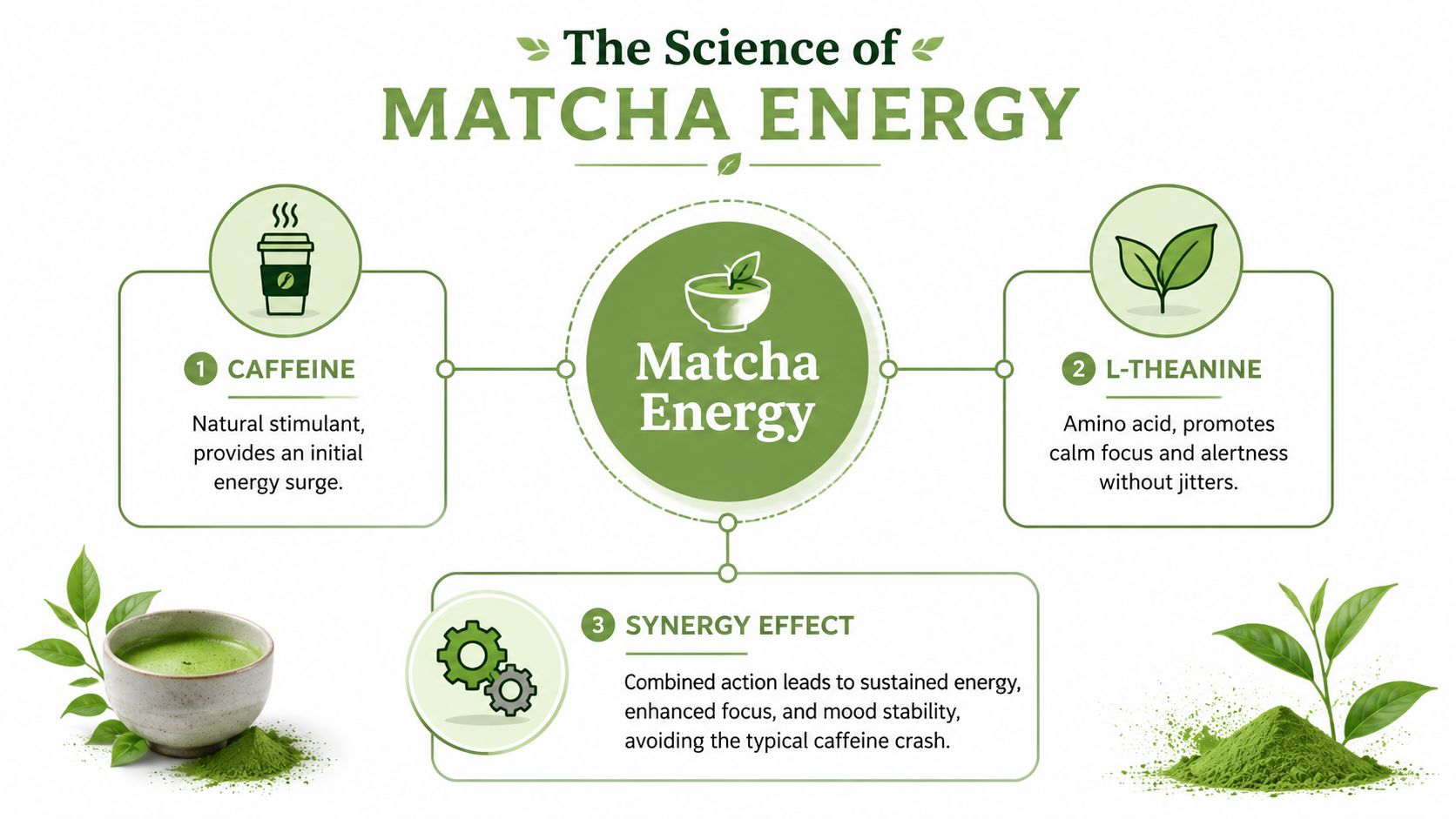
Caffeine gives the lift
Caffeine is the part that is widely understood. It helps you feel more awake, more alert, and more ready to act.
If matcha only contained caffeine, the story would be much simpler. It would just be another stimulant. But matcha is more layered than that.
L-theanine changes the texture of energy
L-theanine is what makes beginners pause and say, “This feels different.”
Matcha acts as a built-in counterbalance. Instead of your energy rushing upward all at once, L-theanine helps smooth the experience so your focus feels steadier. Coffee can feel like flipping on a bright light, while matcha often feels more like a gradual sunrise.
Australian clinical discussion cited by MedReport's article on the science behind matcha notes that matcha contains roughly 20–30 mg of L-Theanine per gram and 30–40 mg of caffeine per gram, with that combination linked to improved vigilance and reaction time while reducing jittery overstimulation compared with coffee.
Practical rule: If coffee makes you feel alert but scattered, matcha may suit you because the goal isn't just wakefulness. It's calmer concentration.
For readers who want a simple breakdown of how this translates into everyday drinks, this guide to caffeine in a matcha latte is useful context.
EGCG matters too
Matcha energy isn't only about stimulation. It also comes with compounds people often associate with overall wellness, especially EGCG, a well-known catechin.
A review published on PMC notes that polyphenols can account for up to 30% of matcha's dry weight, and EGCG makes up about 50–60% of total catechins. In practical terms, that means a small serving of matcha carries a meaningful concentration of tea compounds in a compact form.
Why this matters in real life
Matcha love energy becomes easier to apply. The point isn't to memorise biochemistry. The point is to know why a bowl of matcha may feel better suited to:
- Focused desk work
- Study sessions
- Longer creative tasks
- Pre-meeting concentration
- A calmer alternative to a second or third coffee
If you've ever felt “awake but not productive”, you already understand the difference. Matcha's appeal is that it may support alertness without tipping so easily into that noisy, over-caffeinated state.
Benefits Compared to Coffee and Energy Drinks
One rarely chooses matcha in a vacuum. It's chosen as an alternative to something already in the routine, typically coffee or an energy drink.
That comparison is where matcha love energy becomes much clearer.
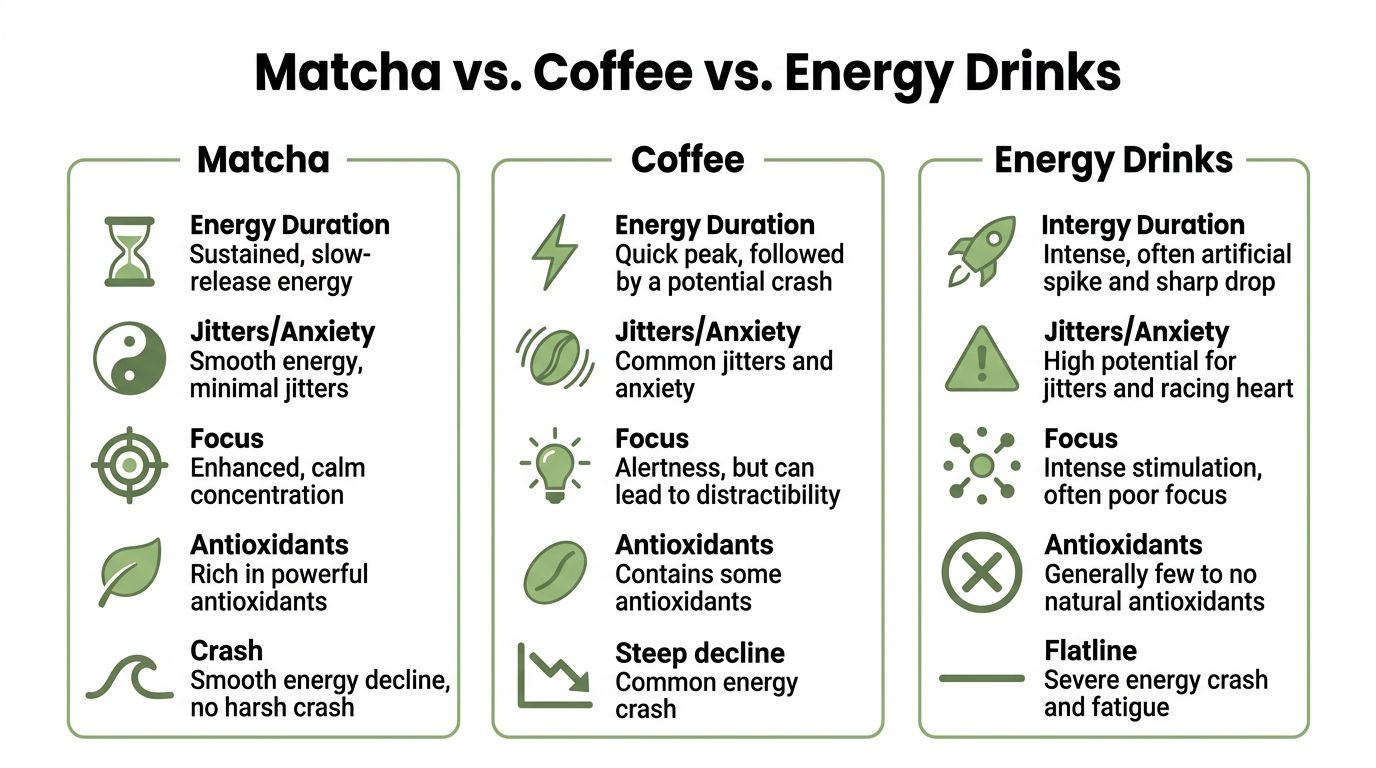
A quick side by side view
| Drink | Energy feel | Focus style | Antioxidant angle | Common downside |
|---|---|---|---|---|
| Matcha | More gradual and steady | Calm, centred | Strong catechin content | Can taste grassy if brewed badly |
| Coffee | Fast and obvious | Sharp at first | Some antioxidants | Can feel spiky or jittery |
| Energy drinks | Intense, often aggressive | Can feel scattered | Usually not the reason people choose them | Hard drop-off for some drinkers |
This table is simplified, but it matches how many people describe the experience.
Matcha has a broader wellness profile
One reason matcha stands apart is that people aren't only drinking it for stimulation. They're also drawn to the tea compounds it naturally contains.
According to Kitchen by Nine, matcha contains approximately 60% epigallocatechin gallate (EGCG) and delivers nearly double the vitamin C content found in other green teas. That helps explain why matcha often sits in a different category from a standard caffeine hit.
Coffee drinkers usually compare flavour, strength, and roast. Matcha drinkers often talk about energy, ritual, antioxidants, and how they feel a few hours later.
Coffee isn't the enemy, but it is different
Coffee has plenty going for it. It's familiar, fast, and ingrained in Australian café culture. But for people who feel anxious, overstimulated, or peaky on coffee, the experience can be hard to manage.
If you want to understand how coffee styles themselves differ, this guide on compare filter coffee and espresso is a handy reference because brew method changes intensity, flavour, and pace of drinking.
Some people don't need less caffeine. They need a different caffeine experience.
That's often where matcha enters the picture.
Energy drinks solve one problem and create another
Energy drinks are usually chosen for speed and convenience. They can make sense in a rush, but they rarely offer the same sense of ritual, ingredient simplicity, or tea-based identity that draws people to matcha.
For a lot of health-conscious drinkers, energy drinks also feel disconnected from the rest of a wellness routine. Matcha fits more naturally beside breakfast, a pre-walk drink, a work session, or an afternoon reset.
A few practical decision points help:
- Choose matcha if you want a calmer rhythm and enjoy the ritual of preparation.
- Choose coffee if you want familiar flavour and immediate punch.
- Choose an energy drink only if speed matters more to you than ritual, ingredient profile, or a gentler feel.
The keyword in matcha love energy is love, and that matters. People tend to stick with matcha not just because it works, but because the drink itself feels better to live with.
Brewing and Dosing Guide for Optimal Energy
Brewing matcha well isn't complicated, but small details make a big difference. Bad matcha technique usually creates two problems at once. It tastes rough, and the whole experience feels less balanced.
The first fix is temperature. The second is dose.
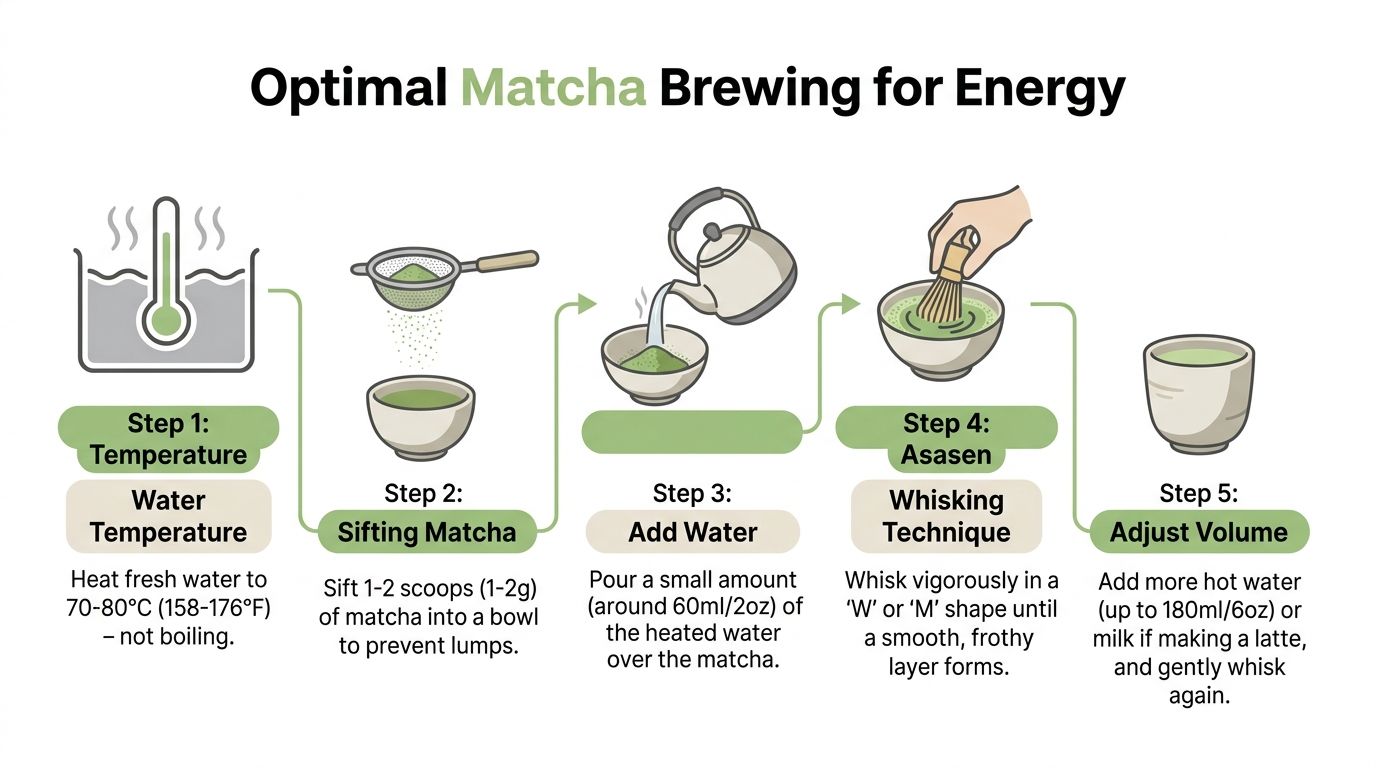
Start with the right basic method
A simple bowl is enough. You don't need a perfect tea ceremony set to make good matcha at home.
- Heat fresh water to 70–80°C. Water that's too hot can make matcha taste bitter.
- Sift 1–2g of matcha into a bowl. Sifting helps break up clumps before they hit the water.
- Add a small amount of water first. Around 60 ml is enough to create a smooth base.
- Whisk briskly in a W or M shape. Aim for a light froth rather than heavy foam.
- Top up with more water or milk. You can take it to about 180 ml depending on how strong you like it.
If you want to see the movement, this whisking demo is helpful:
For a closer walk-through of technique, this how to whisk matcha guide is a practical reference.
How much matcha should you use
A common beginner mistake is assuming more powder automatically means better energy. Usually it just means stronger flavour and less balance.
According to Matcha.com's overview of catechins and EGCG in matcha, one standard serving of premium stone-ground Japanese matcha (1g) contains approximately 30–35mg of EGCG, with total EGCG ranging from 50–110mg per gram depending on grade and cultivar.
That makes a good starting point:
- For a lighter daily bowl use 1g
- For a stronger morning serve or latte use 2g
- If you're sensitive to caffeine stay at the lower end and drink it earlier in the day
Ceremonial style or latte style
The brew style changes the experience as much as the dose.
| Style | Best for | Texture | Flavour |
|---|---|---|---|
| Traditional bowl | Morning focus, tea ritual | Light and frothy | Clean, grassy, more direct |
| Matcha latte | New drinkers, afternoon comfort | Creamier | Softer and rounder |
| Iced matcha | Warm weather, on-the-go energy | Refreshing | Crisp and bright |
If matcha tastes harsh, don't assume you dislike matcha. Lower the water temperature first, then check your dose.
A simple timing approach
Matcha often works well when you want energy that matches a task rather than a rush. Good moments include the start of focused work, the hour before a workout, or an afternoon period when coffee would feel too heavy.
Keep the method simple. Measure carefully. Give yourself a few days to notice how your own body responds. Matcha rewards consistency more than intensity.
Recipe Inspirations with Matcha for Everyday Energy
Once you understand the flavour and feel of matcha, it stops being “just tea powder” and starts becoming a very flexible ingredient.
That's where matcha love energy becomes fun. You can shape it around the day instead of forcing yourself into one fixed routine.
The easiest everyday options
The most useful recipes are usually the least complicated.
Classic hot matcha latte
This is often the best entry point for beginners who find straight matcha too grassy.
What you need
- 1 to 2g matcha
- a small splash of warm water
- your preferred milk
- optional cinnamon or vanilla
How to make it
Whisk the matcha with a little warm water until smooth. Heat and froth the milk separately, then combine. If you like a sweeter style, use a small amount of your preferred sweetener rather than loading it up.
Iced matcha shaker
This suits warm weather, busy mornings, and people who don't own a whisk.
What you need
- 1 to 2g matcha
- cold water
- ice
- optional milk
Shake hard until the powder disperses, then pour over ice. It's fast and easy, which matters when a habit needs to fit real life.
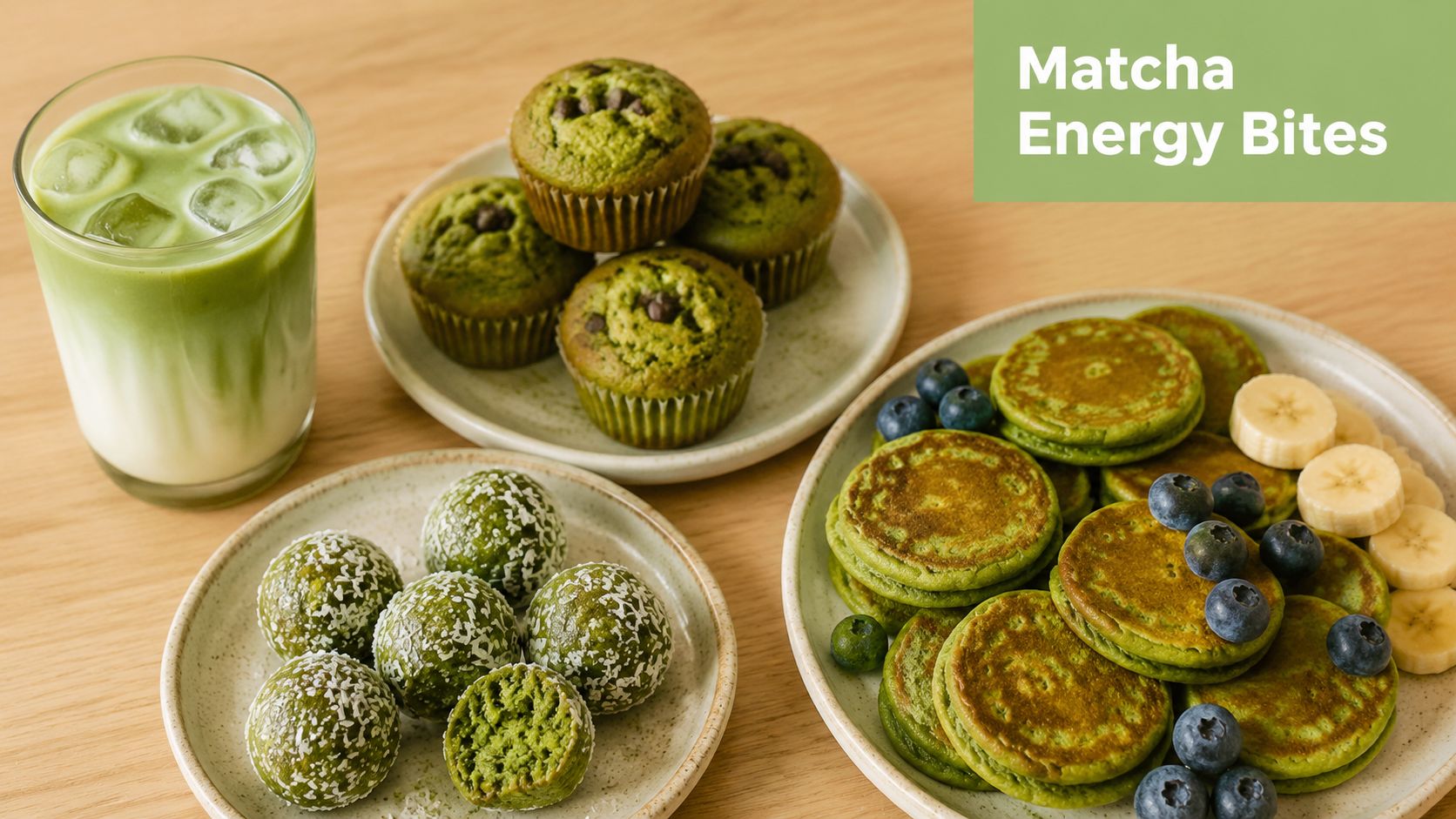
Matcha in snacks and quick bakes
Matcha works best in recipes where its flavour can stay present without becoming too dominant.
A few reliable ideas:
- Matcha overnight oats for a make-ahead breakfast with a gentle lift
- Matcha yoghurt bowl with fruit for a lighter morning option
- Matcha pancakes when you want weekend comfort with a fresh green note
- Matcha energy bites for afternoon snacking. A good place to start is this matcha energy balls recipe
Pairing matcha with kombucha
This is a gap most beginner guides skip, and it's one of the most interesting directions for Australian cafés and home drinkers.
Matcha and kombucha can work together because they bring different strengths. Matcha offers calm-focus energy. Kombucha brings acidity, lift, and a fermented flavour edge that can make non-alcoholic drinks feel more grown-up.
Try these combinations:
Matcha and ginger kombucha mocktail
Use a small chilled matcha shot as the base, then top with ginger kombucha over ice. The earthiness of matcha and the spice of ginger sit well together.Citrus matcha spritz
Build a light matcha base, add ice, then finish with a lime-forward kombucha. This suits a daytime menu or a low-sugar social drink.Layered green cooler
Pour cold whisked matcha first, then slowly add kombucha so the drink keeps visual separation for a few minutes before stirring.
A good matcha recipe doesn't hide the tea. It gives the tea a better setting.
How to match the recipe to the moment
Not every format suits every part of the day.
| Moment | Good matcha format | Why it works |
|---|---|---|
| Early morning | Straight bowl or hot latte | Feels grounding and organised |
| Late morning | Iced matcha | Refreshing without feeling heavy |
| Afternoon slump | Matcha snack or latte | More satisfying than another plain coffee |
| Social, non-alcoholic occasion | Matcha kombucha mocktail | Functional but still feels special |
The more useful way to think about recipes is not “What can I put matcha in?” but “What kind of energy do I want right now?” That question leads to better choices and better flavour.
Safety and Contraindications to Consider
One common myth is that matcha is automatically gentle for everyone because it's tea. That isn't quite right. Matcha may feel steadier than coffee for many people, but it still contains caffeine and active compounds, so personal tolerance matters.
Australian clinical discussion referenced by MedReport notes that the combination of L-Theanine at 20–30 mg per gram and caffeine at 30–40 mg per gram can support vigilance and reaction time while reducing jittery overstimulation compared with coffee. That helps explain why some people tolerate matcha better, but “better tolerated” doesn't mean “risk free for every person in every context”.
Who should take extra care
A cautious approach makes sense if you:
- Are sensitive to caffeine and already react strongly to tea, coffee, or cola
- Are pregnant or breastfeeding and have been advised to watch caffeine intake
- Take medication where caffeine or concentrated tea products may be relevant
- Have a medical condition affected by stimulants or dietary changes
A sensible approach for beginners
If you're new to matcha, start small and pay attention to timing. A lighter serve earlier in the day is usually the easiest place to begin.
Watch for your own signals:
- trouble sleeping
- feeling overstimulated
- stomach discomfort
- using matcha on top of several other caffeinated drinks
If your body says “too much”, listen to that before blaming the ingredient.
Good café and retail practice
If you serve or recommend matcha professionally, keep the language responsible. Say it may support calm focus. Don't promise medical outcomes. Don't assume every customer wants the same strength.
That balanced approach builds trust. It also makes matcha more approachable for people who are curious but cautious.
How Cafés and Retailers Can Feature Matcha Energy
Matcha belongs on more Australian menus than it currently appears on, not because it's trendy, but because it solves a real menu problem. Customers want functional non-alcoholic options that feel premium, modern, and easy to understand.
There's also a clear gap in hospitality-specific evidence. As noted in Tea & Coffee Trade Journal's coverage of the matcha love energy niche, AU-specific data is lacking on how L-Theanine's sustained release affects shift workers in hospitality, even though that group often wants reliable energy without a harsh crash.
Menu ideas that make sense
A café doesn't need a huge matcha program to do this well. It needs a few drinks and food pairings that are easy for staff to repeat.
Consider a compact line-up:
- Signature matcha latte with a clean, unsweet style and an optional flavoured version
- Iced matcha spritz for warmer months and grab-and-go trade
- Matcha kombucha mocktail for afternoon and early evening non-alcoholic menus
- Matcha snack pairing such as an energy ball, muffin, or light cake
How to present it so people order it
Customers often hesitate when they don't know what matcha will taste like. Staff language matters.
Use plain menu wording:
- smooth energy
- calm focus
- earthy green tea flavour
- great hot or iced
For takeaway service, presentation also helps. Cup choice affects heat retention, appearance, and the overall impression of quality. If you're refining the serve format, this guide to selecting the right tea cups is a useful operational reference.
Retail shelf and staff training tips
Retailers and cafés both benefit from the same rule. Don't overcomplicate the story.
Train staff to explain:
- what matcha is
- why it feels different from coffee
- how to prepare it without bitterness
- which customers might prefer ceremonial style versus latte style
A good display or menu card can also connect matcha to broader non-alcoholic and wellness habits. Customers who are reducing sugar, rethinking alcohol, or looking for a more measured caffeine ritual are often already open to the category. They just need a clear invitation.
Conclusion and Next Steps
Matcha love energy makes sense because it joins two things people rarely get at once. Useful alertness and a calmer feel. For many drinkers, that combination is the primary attraction.
A better brew, a sensible dose, and the right format for the time of day can make matcha much more enjoyable. It also opens up strong possibilities for cafés, retailers, and non-alcoholic menus that want something functional and premium without sounding gimmicky.
If you're curious, start simple. Try a well-made bowl, an iced latte, or a matcha-based snack and notice how the experience fits your day.
If you'd like to put this into practice, explore Pep Tea for premium organic matcha and sugar-free organic kombucha made for everyday rituals, café menus, and clean Australian wellness routines.