
Tag: pep tea matcha
7 Healthy Breakfast Beverages to Start Your Day

What's the first thing you drink in the morning, and does it help you start the day well? For many Australians, it's coffee or plain water, but healthy breakfast beverages can do more than wake you up. They can support hydration, sit neatly alongside breakfast, and make it easier to choose foods that leave you feeling steady rather than flat an hour later. Breakfast also tends to contribute a meaningful share of daily energy intake, and beverages often play a noticeable role in that morning routine. If you want a smarter first sip, the best choices are usually simple, low in sugar, and easy to match with food.
This guide goes beyond generic suggestions and looks at specific drink types, because each one does a different job. Matcha can provide calm focus, kombucha can add fermented tang, smoothies can help with fullness, and other options offer hydration or probiotic variety without making breakfast feel heavy. For a practical Australian example, you can find premium matcha with Allied Drinks Systems, and Pep Tea's matcha and caffeine guide is useful if you want to compare it with your usual morning cup. The goal is simple. Choose a drink that fits your routine, tastes good, and supports the way you want to feel through the morning.
1. Organic Matcha Green Tea for Calm, Focused Energy

Matcha is a strong breakfast choice when you want energy without making your morning feel chaotic. It's a finely ground green tea powder, so you consume the whole leaf, not just an infusion. That's part of why premium matcha is so appealing for Australians who want a clean, functional start to the day.
A useful way to think about matcha is as a coffee alternative with a calmer edge. A peer-reviewed review of beverage guidance says caffeine intake should stay below 400 mg per day, and coffee or tea can fit well when you count any added milk or sugar (PMC review). For people who feel jittery after a long black, matcha is often easier to build into breakfast because it's usually taken with milk or water and doesn't need syrup to taste good.
How Aussies can use it in real life
Try it as a simple matcha latte, iced in summer or warm on cooler mornings. Pep Tea's guide on matcha and caffeine helps explain how it compares with a regular latte, which is handy if you're trying to manage your morning routine more deliberately (Pep Tea matcha caffeine guide).
Practical rule: if your breakfast drink needs three sugars to feel enjoyable, it's probably not doing your morning any favours.
For a quality option, Pep Tea's organic Japanese ceremonial-grade and culinary-grade matcha fits the kind of low-sugar, wellness-led breakfast habit many Australians are looking for. If you want a premium supplier outside the cafe cup, you can also find premium matcha with Allied Drinks Systems.
2. Sugar-Free Kombucha for Gut Health

Kombucha suits breakfast when you want something crisp, lightly tangy, and not too sweet. Its fermented tea base gives it a more purposeful feel than a soft drink or juice, which is part of why it has found a place in the broader move toward drinks with clear functional benefits. Market research on gut-health beverages points to steady consumer interest in probiotics and fermentation, and that helps explain why kombucha keeps showing up in morning routines (GMI gut health beverages market).
That interest is not just about flavour. People often choose kombucha because they want a drink that feels lighter than a sugary breakfast beverage and still offers a bit of complexity. The fizz gives it the same kind of wake-up effect you get from sparkling water, but the tea base and fermentation make it feel more layered.
Why sugar-free matters
Sugar control is the part that matters most here. A randomised trial in overweight and obese adults found glucose area-under-the-curve was higher for sugar-sweetened coffee than for water, reduced-energy orange juice, or low-fat milk, and the authors concluded that the lower-sugar options may be better for glucose control (PubMed trial). Kombucha is not a treatment, but the message is clear, the morning drink you choose can shape how much sugar you start the day with.
That is why a sugar-free organic kombucha can fit so neatly into a lower-sugar breakfast habit. Pep Tea's version, brewed in the Hunter Valley, NSW, gives you the tang and fizz without turning breakfast into a sugar hit. For a broader look at fermented drink options and how they fit into a healthy routine, Pep Tea's healthy probiotic drinks guide is a useful place to start.
If you like pairing breakfast drinks with a simple recipe idea, AloeCure's refreshing smoothie guide shows how a fresh, fruit-led drink can stay light while still feeling satisfying.
3. Protein-Rich Smoothies for Satiety

Some mornings need more than a drink. They need a drinkable breakfast that keeps you going until lunch. That's where a protein-rich smoothie earns its place, especially if you're heading to work, school drop-off, or the gym and don't have time for a full sit-down meal.
The key is balance. Australian breakfast guidance emphasises protein, fibre, and healthy fats, and advises pairing drinks with foods like yogurt, nuts, eggs, or whole grains rather than relying on juice or sweetened beverages alone (Alberta Health Services breakfast guide). A smoothie can fit that pattern if you build it around Greek yogurt, milk, soy milk, nut butter, chia seeds, or oats.
A simple make-at-home formula
- Start with protein: Use Greek yogurt, milk, soy milk, or a protein powder you already trust.
- Add fibre: Choose berries, oats, chia seeds, or spinach.
- Include healthy fat: Avocado, nut butter, or seeds help slow digestion.
- Keep sweetness in check: Use fruit for flavour before reaching for honey or syrups.
A good example is a berry smoothie with yogurt, chia, and milk, which feels more like breakfast than a sugary drink. If you want ideas for texture and flavour, AloeCure's smoothie guide shows how a smoothie can be turned into a satisfying morning option.
4. Nutrient-Dense Green Juice for a Vitamin Boost

Green juice has a clear place in the breakfast lineup, but it helps to be honest about what it is and what it isn't. It's a light, hydrating, vegetable-forward drink, not a full breakfast replacement. That makes it a sensible choice for people who want something fresh first thing in the morning, especially if they're planning to eat proper food soon after.
Because it's strained, green juice doesn't give you the same fullness as a smoothie. That matters in the Australian context, where balanced breakfast guidance keeps coming back to whole foods, protein, and fibre rather than liquids alone (BDA healthy breakfast guidance). If you drink green juice on its own, think of it as a supplement to breakfast, not breakfast itself.
Green juice works best when it complements a real meal. If you're still hungry an hour later, that's not a failure of the juice, it's a sign you needed more substance.
A practical version might include cucumber, spinach, celery, lemon, and a little green apple for taste. That gives you a bright morning drink without leaning too hard on sweetness. If you're in a cafe or grocery setting, it's also a good menu item for people who want something lighter than a smoothie but more interesting than plain water.
For Australian buyers, the most useful green juices are the ones with a short ingredient list and no added sugar. Keep it crisp, keep it clean, and pair it with breakfast, not instead of it.
5. Cultured Kefir for Probiotic Diversity

Kefir is one of those breakfast beverages that feels old-school in the best way. It's tangy, cultured, and easy to fit into ordinary routines, which makes it a practical choice for people who want a fermented dairy option with more character than plain milk. If you already eat muesli, oats, or fruit in the morning, kefir can sit alongside them without asking you to change your whole routine.
It also fits the growing interest in foods that do more than just taste nice. Fermented dairy drinks are often chosen for their live cultures and their place in a functional breakfast, and kefir suits that pattern without needing much fuss. That makes it a good option for people who want a drink with a job to do, not just something cold in a glass.
Easy ways to drink it
- Straight from the bottle: A small glass on its own is the simplest option.
- Blended into smoothies: Kefir adds tang and creaminess without much effort.
- Over muesli or oats: It turns breakfast into something richer and more filling.
If you want to make your own cultured drinks, Pep Tea's kefir grains Australia page is a useful place to start. For many households, that can turn kefir from an occasional fridge buy into a regular morning habit.
6. Hot Water with Lemon and Ginger for Gentle Hydration
Need a breakfast drink that feels light, warm, and easy to sip? Hot water with lemon and ginger keeps things simple. It is caffeine-free, gentle on the morning routine, and useful when you wake up feeling flat, have a sensitive stomach, or just want something mild before food.
The appeal is plain, it starts the day with fluid first. That matters because a glass of warm water can be easier to manage than a strong drink first thing, especially if your stomach likes a softer start. For readers comparing dairy free options for Queensland food, this kind of mug also fits neatly into a broader morning routine without adding milk, sugar, or extra richness.
A very simple morning mug
Use hot water, a squeeze of lemon, and a few slices of fresh ginger. Let it sit for a few minutes so the ginger can infuse, then sip it slowly while breakfast is cooking or after your first shower.
The flavour should stay light, not sharp. If you want a little more ginger warmth, add another thin slice next time rather than overloading the mug at the start. That way the drink stays easy to drink and keeps its calm, clearing feeling.
This isn't a meal replacement, and it should not be treated like one. It works more like a gentle bridge between sleep and breakfast, especially for mornings that begin badly with strong coffee on an empty stomach. A few days a week is enough to see whether this simpler habit suits you.
7. Golden Milk for a Cosy, Caffeine-Free Start

Golden milk works well when you want something warm, mild, and comforting without reaching for caffeine. It is usually made with milk and turmeric, then rounded out with ginger, cinnamon, or both. For Australian mornings, it suits a slower start, especially on cooler days when a café-style drink feels nicer than a plain glass of water.
Its appeal is partly about habit. Many people want a morning cup that feels soothing, but not sugary, and golden milk fills that role neatly. A homemade version made with unsweetened milk keeps the drink in breakfast territory rather than dessert territory, and the Harvard Nutrition Source notes the value of limiting added sugar, cream, and whole milk if weight management is a goal (Harvard Nutrition Source).
Build it cleanly
Use dairy milk or a plant milk, then stir in turmeric, a pinch of cinnamon, and a little ginger. If you want to match the needs of different households, there are plenty of dairy free options for Queensland food that work well here too. Some people add black pepper for flavour, but the point is to make a warm mug that feels balanced before the day gets busy.
Golden milk also works like a bridge between waking up and eating breakfast. It can take the edge off a rushed morning, but it should still sit alongside real food rather than replace it. Oats, toast, eggs, or fruit make a better match than treating the drink as a full meal by itself.
7-Point Comparison of Healthy Breakfast Beverages
| Beverage | Implementation Complexity 🔄 | Resource Requirements ⚡ | Expected Outcomes 📊 / ⭐ | Ideal Use Cases 💡 | Key Advantages ⭐ |
|---|---|---|---|---|---|
| Organic Matcha Green Tea for Calm, Focused Energy | 🔄🔄 Moderate, sift & whisk (ceremonial prep) | ⚡⚡ Low, matcha, hot water, whisk | Sustained calm alertness; antioxidant support, ⭐⭐⭐⭐ | Morning focus, coffee alternative, productive work sessions | L-theanine + caffeine balance; high antioxidants |
| Sugar-Free Kombucha for Gut Health | 🔄 Low, ready-to-drink or simple home brew | ⚡⚡ Low–Medium, bottled or SCOBY for brewing | Supports gut microbiome and digestion, ⭐⭐⭐ | Gut-support routine, refreshing low-sugar alternative | Live probiotics and organic acids; low sugar |
| Protein-Rich Smoothies for Satiety | 🔄🔄 Low, blend ingredients | ⚡⚡ Medium, blender, protein powder, perishables | High satiety; balanced macros and nutrients, ⭐⭐⭐⭐ | Breakfast replacement, post-workout, on-the-go meal | Keeps you full; customizable macronutrients |
| Nutrient-Dense Green Juice for a Vitamin Boost | 🔄🔄 Low–Medium, juicer or blending + strain | ⚡⚡ Medium, fresh produce, juicer/blender | Rapid micronutrient delivery; low fiber, ⭐⭐⭐ | Quick vitamin surge, hydration, light-calorie days | Concentrated vitamins and hydration |
| Cultured Kefir for Probiotic Diversity | 🔄 Low, drink straight or use in recipes | ⚡⚡ Low–Medium, store-bought or ferment at home | Broad probiotic diversity; calcium & protein, ⭐⭐⭐⭐ | Gut diversity, smoothie base, cereal topping | Wide range of probiotic strains; versatile use |
| Hot Water with Lemon & Ginger for Gentle Hydration | 🔄 Very low, steep slices in hot water | ⚡⚡⚡ Minimal, lemon, ginger, hot water | Gentle hydration; aids digestion; zero calories, ⭐⭐⭐ | Very gentle mornings, caffeine-free start, digestion prep | Extremely simple, comforting, low-cost |
| Golden Milk (Turmeric Latte) for Anti-Inflammatory Support | 🔄🔄 Low, warm and whisk spices into milk | ⚡⚡ Low, turmeric, milk (or substitute), spices | Anti-inflammatory support; warming ritual, ⭐⭐⭐ | Cozy caffeine-free mornings, anti-inflammatory routine | Curcumin benefits; comforting and nourishing |
Your Perfect Morning Beverage Awaits
A healthy breakfast beverage does not need to be complicated to be useful. The right choice can support hydration, help you keep sugar in check, and make the first part of your day feel more deliberate, whether that means the steady lift of matcha, the tang of kombucha, or a plain cup of hot water with lemon and ginger. The key is to pick a drink that fits your body, your schedule, and the breakfast you plan to eat.
Simple drinks are often the easiest to keep. Familiar options that are lower in sugar and easy to repeat tend to fit better into a morning routine, and health-minded buyers are increasingly looking for drinks with functional benefits and cleaner ingredient lists. That suits a practical Australian approach, where the beverage should support breakfast, not crowd it out.
Start with one small change if you want to improve your morning routine. Swap one sugary drink for a lower-sugar option, add protein to a smoothie, or choose a warm caffeine-free drink a few times a week. Over time, the drink you reach for first can become one of the easiest healthy habits in your day.
Pep Tea offers organic Japanese matcha and Australian-brewed sugar-free kombucha that fit neatly into that kind of routine. They give you a straightforward way to keep your morning drink honest, functional, and easy to enjoy.
Your 2026 Guide to the Best Matcha Cake Brisbane

You're standing in a Brisbane café, staring at a green slice of cake and wondering if it's real matcha or just a pretty sponge with colouring. That hesitation makes sense. matcha cake Brisbane searches have surged because matcha is no longer a niche order, it's now part of the city's everyday café language, but the quality gap is still wide.
The tricky part is that a cake can look right and still miss the mark completely. It might taste flat, look unnaturally bright, or feel like the matcha was added for branding rather than flavour. For Brisbane diners, the key question isn't just where to buy it, it's how to tell when a cake is worth the price.
The Search for Brisbane's Perfect Matcha Cake
Brisbane's matcha scene has grown into something far more visible than a passing trend. That matters, because once an ingredient becomes mainstream, the market fills with both thoughtful, high-quality versions and quick opportunistic ones. A recent Australian consumer panel analysis found matcha was up 53% year-on-year nationally, with the ingredient sitting at 3.58% social share and still described as “emerging” (Tastewise).
That trend shows up in menus across the city too. Iced matcha lattes now appear at major chains including McDonald's, Krispy Kreme, Starbucks, Rashays, and Chatime, and Brisbane prices in that dataset ranged from $6.30 to $18.95 (Tastewise). When an ingredient moves from specialty cafés into chain menus, dessert makers usually follow, because customers start recognising the flavour and expecting it in more formats.
Practical rule: if a city already accepts matcha as a menu flavour, cakes and pastries usually follow the drink trend.
The problem is that popularity doesn't guarantee quality. Brisbane coverage has been rich on where to find matcha, but much thinner on whether the boom is still backed by good ingredients, especially in desserts (Torrens University). That gap is exactly where smart buyers get an advantage, because a great matcha cake should taste balanced, aromatic, and fresh, not just look green.
Not All Matcha Is Created Equal
A good matcha cake starts with the right grade of powder, a distinction that often confuses many buyers. Ceremonial grade is the high-end powder people usually drink on its own, while culinary grade is built for baking and mixing. The simplest way to think about it is like cooking wine versus a fine bottle you'd pour into a glass, one is made to shine in a dish, the other is made to be savoured directly.
The reason this distinction matters in cake is flavour structure. Baking dilutes and reshapes ingredients, so a matcha that's lovely in a bowl can disappear in batter, while a culinary grade designed for mixing can hold its own through flour, eggs, and butter. That's also why the best matcha cakes tend to show a natural green colour rather than a pale, dull, or artificially bright one.
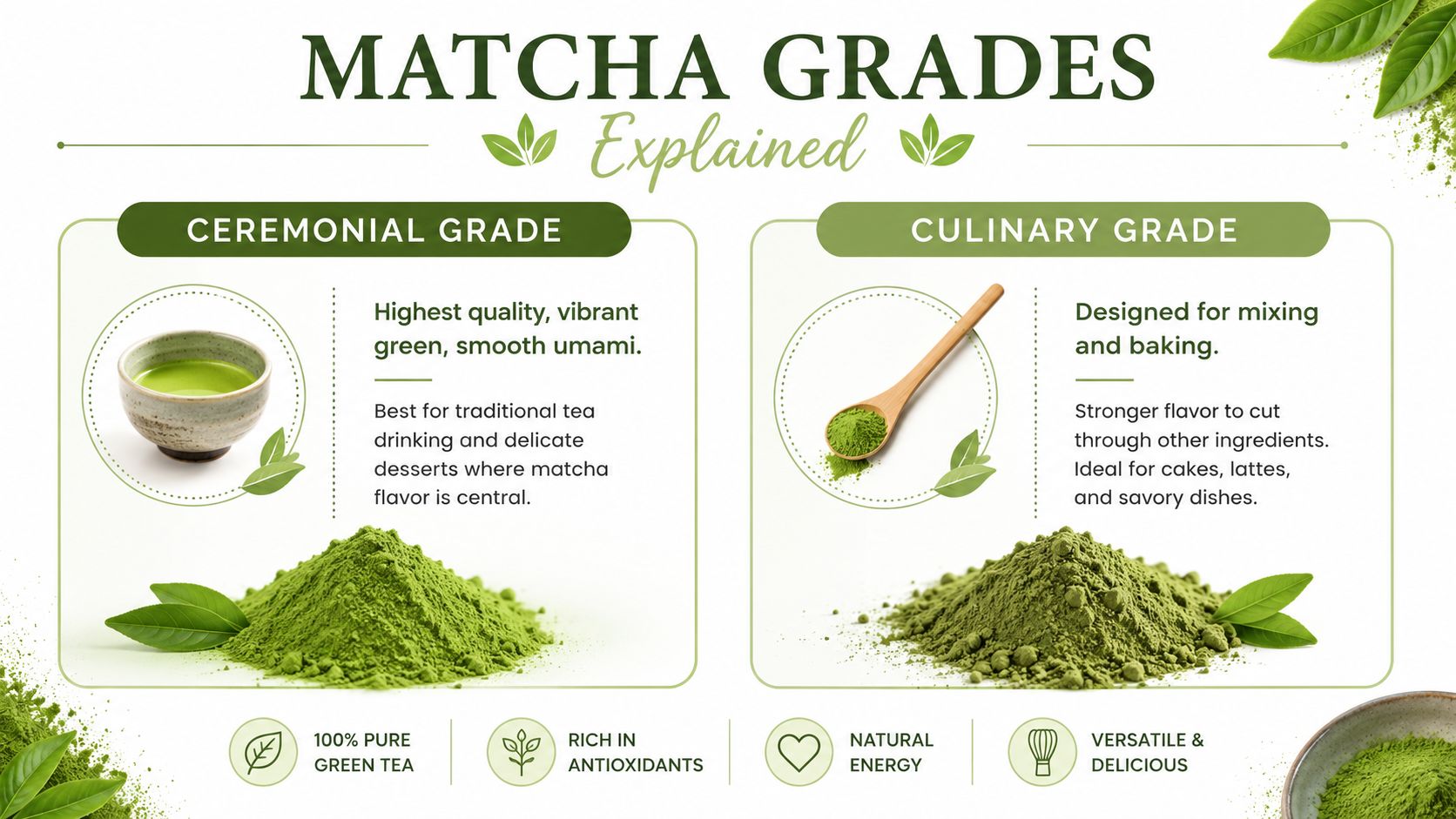
A good café menu usually gives clues if you know what to look for. A cake made with stronger culinary matcha often tastes more rounded and less sugary, while a weak one can taste mostly like vanilla sponge with a faint grassy note. When the powder is high quality, the colour is more even and the finish feels cleaner rather than bitter or dusty.
| Feature | Ceremonial Grade Matcha | Culinary Grade Matcha (High Quality) | Best For |
|---|---|---|---|
| Flavour | Smooth, delicate, umami-rich | Stronger, more robust | Drinking, delicate desserts |
| Colour | Vibrant natural green | Good green colour, slightly less delicate | Cakes, lattes, baked goods |
| Texture | Fine and refined | Designed to mix well | Whisking, batter, sauces |
| Best use case | Traditional tea preparation | Baking and recipes | Matcha cake, café drinks, desserts |
If you're shopping or ordering, ask one simple question, what grade of matcha is in the cake? If the answer is vague, that's usually a sign the product is built for appearance first.
Learn more about different grades of matcha
Where to Find Great Matcha Cake in Brisbane
Brisbane's matcha market is now broad enough that you can start your search in several parts of the city instead of chasing one hidden specialty spot. Dedicated outlets across Teneriffe, the CBD, and Sunnybank show how far the flavour has moved into the mainstream, while chain cafés have made matcha familiar to casual drinkers too (The Urban List). That broader awareness helps dessert menus, because customers already know what matcha should taste like.
The best way to judge a café is to look at how seriously it treats matcha across the menu. A venue that serves it as a throwaway novelty will usually lean on colour and sweetness. A place that treats it as a core flavour tends to show more restraint, with better balance, cleaner colour, and a more deliberate texture.
A useful buying cue: the strongest café cakes usually sit in places that already serve matcha regularly, not just once as a special.
Price can also reveal positioning. Brisbane sources note drinks ranging from $4.50 to $18.95, with dedicated tea houses like Sinmei Tea pricing cakes around A$6 to A$7 and specialty items such as a lava cake at A$20 (The Urban List; Sinmei Tea at Scrumptious Reads). Those numbers don't tell you quality by themselves, but they do show that Brisbane already accepts a premium tier for matcha products.
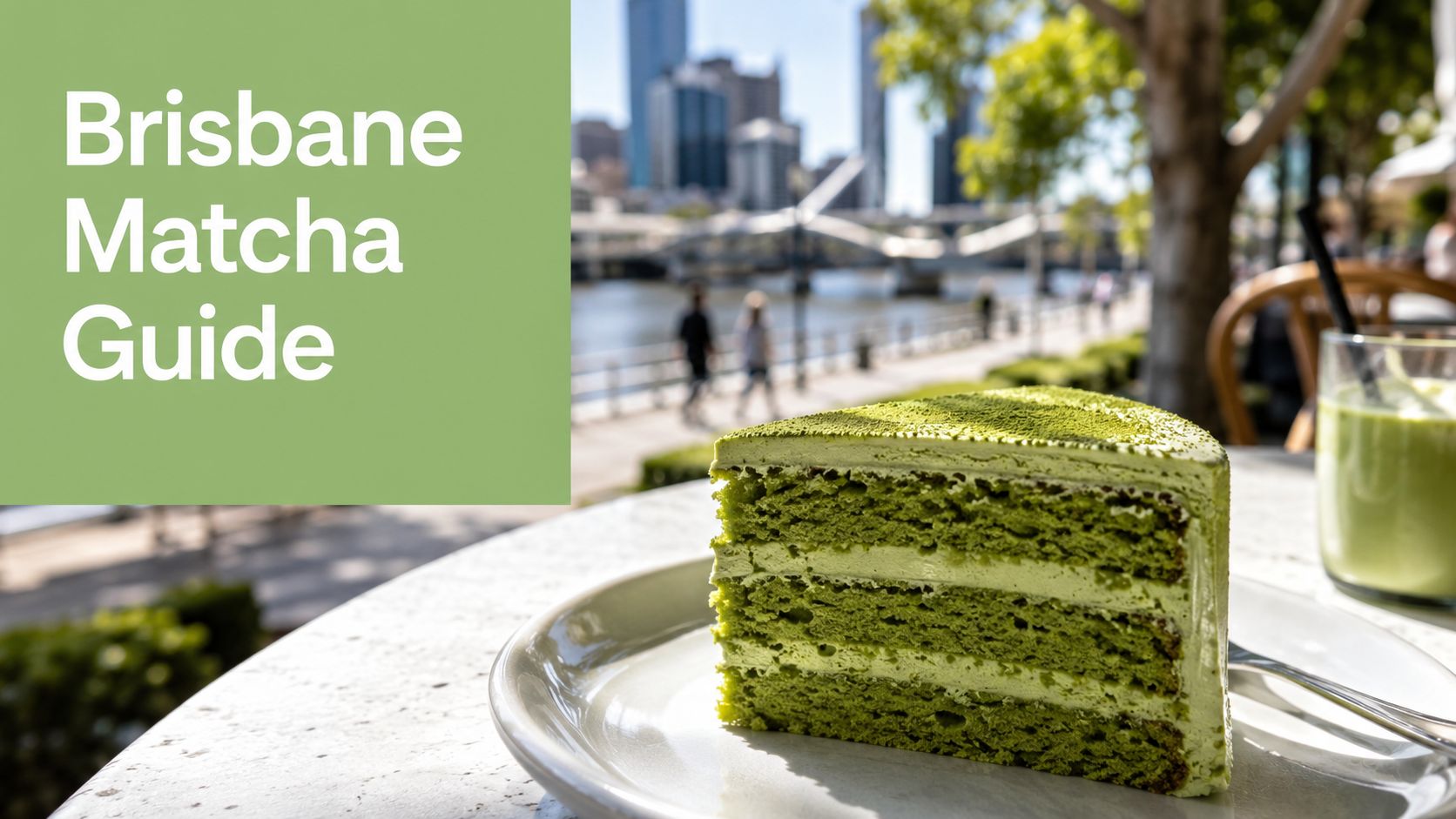
For Brisbane buyers, the smartest approach is to compare three things at once, flavour depth, colour consistency, and how the cake sits in the venue's broader dessert offer. If a café is already comfortable charging premium prices for matcha drinks, its cake is more likely to be made with intention. If you're after a starting point, look around the CBD for specialist tea houses, then check Brisbane suburbs with established dessert culture like Teneriffe and Sunnybank.
Bake Your Own with Our Pep Tea Matcha Recipe
Baking your own cake removes the guesswork. You choose the powder, control the colour, and decide whether the result tastes fresh or merely decorative. That's especially useful if you've been disappointed by cakes that look promising but collapse into sweetness once you take a bite.
The key technique comes before the oven
Matcha cake is sensitive to temperature and dispersion. One tested method bakes at 162°C and heats milk only to 82 to 85°C, which helps preserve colour, while another Australian recipe uses 180°C and stresses whipping eggs and sugar until the mixture triples in volume before folding in the dry ingredients (Texanerin; Zen Green Tea). The logic is simple, lower liquid temperature and solid aeration help reduce clumping, protect the green tone, and keep the crumb finer.
A practical home method looks like this:
- Sift the matcha first. This breaks up soft lumps before they meet liquid.
- Warm the milk carefully. Body-temperature milk can help matcha disperse more evenly, while some tested cakes heat milk to 82 to 85°C for colour control (Zen Green Tea; Texanerin).
- Pre-slurry the powder. Mix matcha with a little warm liquid before it goes into batter, because warm liquid improves solubilisation and helps prevent bitter specks (Zen Green Tea).
- Whisk for structure. If the method uses eggs and sugar, beat until the mixture is visibly lighter and expanded.
- Fold gently. Once the dry ingredients go in, keep mixing light so the batter stays airy.
If you want a beginner-friendly foundation for the sponge side of baking, the Just Cook It simple baking guide is a handy companion. It won't teach matcha nuance, but it does help with the basic rhythm of mixing, baking, and cooling.
Practical rule: if your batter contains visible green flecks, the matcha probably wasn't dispersed well enough before baking.
A simple matcha cake base
Use a light sponge or chiffon style, because those styles let matcha remain the star. Keep the sugar moderate, use a good culinary matcha, and don't overdo the add-ins. A thick frosting can drown the flavour before it reaches the palate.
For a recipe that keeps the ingredient quality front and centre, see our baking with matcha and beyond guide.
Once the cake is out of the oven, let it cool properly before slicing. Matcha colour looks strongest when the crumb is settled, not steaming hot, and the flavour usually tastes cleaner the next day.
Perfect Pairings and Smart Storage Tips
Matcha cake tastes best when the plate doesn't fight the flavour. Fresh berries, a light spoonful of cream, or a fine dusting of extra matcha all work because they add contrast without overwhelming the tea note. If the cake is already rich, keep the garnish simple and let the green tea character stay in charge.
A cold, crisp drink can make a slice feel lighter. That's one reason a sugar-free organic kombucha pairs so naturally with matcha cake, the brightness cuts through richness while keeping the overall experience clean and refreshing. If you're storing leftovers for later, keep the cake covered, refrigerate it if the filling is dairy-heavy, and bring it back to a cool room temperature before serving so the texture softens again.
For shelf-life questions, the most useful habit is to treat matcha cake like a fresh tea dessert rather than a long-life bakery item. The colour fades faster when it sits uncovered, and the crumb dries out quickly if air reaches it. This shelf-life guide is a practical reference if you want to keep the slice tasting close to day one.
A Note for Brisbane Cafés and Retailers
Brisbane diners have already accepted matcha as a premium café flavour, which means cafés and dessert bars have a clear opportunity to build trust with better ingredients. When customers can already buy matcha drinks across mainstream chains and specialist venues, a cake made with high-quality matcha becomes a visible quality signal, not just another dessert on the cabinet. That's especially important in a market where people are starting to ask whether the product is authentic or just aesthetic.
For café owners, the commercial case is straightforward. A well-made matcha cake can justify a premium price point because it gives customers a taste difference they can notice, cleaner bitterness, better colour, and a more layered finish. It also helps with repeat business, since people remember a dessert that tastes balanced rather than sugary and generic.

If you're planning a dessert offer for a café, market stall, or food truck, pairing a premium cake with a practical payment setup matters too. A resource like POS integration for food truck owners is useful when you're building a smoother service flow around specialty desserts and drinks.
The simplest strategy is also the strongest one, make the ingredient quality obvious. Use a matcha that delivers colour, aroma, and consistency, then serve the cake in a way that makes those qualities easy to notice. If Brisbane is already paying attention to matcha, the venues that respect the ingredient will stand out fastest.
If you're ready to bake, stock, or serve better matcha desserts in Brisbane, explore Pep Tea for premium organic matcha and sugar-free kombucha that fit café menus, wholesale kitchens, and home baking alike.
Matcha Energy Balls Recipe: Healthy No-Bake Snack

Some afternoons call for more than another coffee. You've had lunch, your focus is wobbling, and the snack drawer is full of options that either feel too sweet or leave you flat not long after. That's exactly where a good matcha energy balls recipe earns its place.
These little green bites are practical. They're no-bake, easy to batch, and built from pantry ingredients many health-conscious Australians already keep on hand. When you make them well, they taste softly sweet, slightly earthy, creamy in the middle, and firm enough to grab straight from the fridge on your way out the door.
The Perfect Answer to the 3 PM Slump
Mid-afternoon is where good intentions often fall apart. You want something quick, but you also want it to feel better than a biscuit or another sugary pick-me-up. Matcha energy balls sit nicely in that gap because they're simple to make and easy to keep ready for the week.
In Australia, that style of snack already makes sense in the wider wellness market. The organic sector was estimated at about A$2.3 billion in 2021 and the recipe style leans on familiar pantry staples like dates, almond flour, coconut, seeds, and matcha, which are already popular with health-conscious shoppers in this space, as noted in this organic snack market context.

Why they work so well in real life
A good batch solves several problems at once:
- Fast to grab: They're already portioned, so you don't have to think.
- No-bake and low-fuss: You mix, roll, chill, and you're done.
- Easy to keep consistent: Once you know the texture you're aiming for, they're hard to mess up.
A lot of people start looking for snacks like this when they're trying to cut back on repeated coffee runs. If that's you, this guide to healthy alternatives to coffee for energy is a useful broader read because it looks at other ways people build a steadier routine around energy and focus.
Matcha energy balls aren't just a recipe idea. They're a routine snack, especially when your day is busy and you need something you can eat one-handed.
For readers building a more balanced afternoon ritual, Pep Tea also has a useful roundup of natural energy drinks that pairs well with this kind of snack-first approach.
Choosing the Best Matcha for Your Recipe
The matcha you choose changes everything. Colour, aroma, bitterness, and how clean the finish tastes all show up clearly in a small recipe like this.
For energy balls, the goal isn't delicate tea ceremony flavour. You want a matcha that can hold its own against nuts, coconut, oats, tahini, or dates without disappearing.

Culinary or ceremonial
Here's the simplest way to choose:
- Ceremonial grade: Better suited to whisking with water and drinking on its own, where subtle sweetness and a smoother finish matter most.
- Culinary grade: Better suited to recipes, where the matcha needs enough body and flavour presence to stay noticeable after blending.
That doesn't mean any culinary matcha will do. A poor-quality powder can taste flat, dusty, or overly bitter, and the finished balls will reflect that. Look for a vibrant green colour and a fresh aroma rather than a dull, brown-leaning powder.
What to look for in the bowl
When I'm choosing matcha for recipes, I want three things.
- Strong green colour: This gives the finished balls that fresh, lively look.
- Clean aroma: It should smell grassy and fresh, not stale.
- Balanced flavour: Earthy is good. Harsh bitterness isn't.
If you're still deciding what suits your kitchen, this guide to different grades of matcha helps clarify which type works best for tea, lattes, and baking.
Practical rule: Save your more delicate ceremonial matcha for drinking. Use a high-quality culinary matcha when the recipe includes stronger supporting ingredients.
Why quality matters in a wellness snack
This recipe is meant to be functional, not just pretty. Matcha brings its own flavour profile and is often chosen by people who want a more measured energy option in their day. That's another reason ingredient quality matters. If the matcha is muddy or rough, people tend to compensate with extra sweetener, and that pulls the recipe away from the cleaner, everyday snack many readers want.
Pep Tea's organic culinary matcha is one option in this kind of recipe because it's intended for food and drink use rather than only traditional preparation. In energy balls, that practical distinction matters more than fancy packaging.
The Ultimate Matcha Energy Balls Recipe
This is the version I'd make for a regular weekly batch. It's softly sweet, earthy, lightly nutty, and easy to shape. The key is texture control. If you process too long, the mixture turns heavy and oily. If you stop at the right moment, it rolls beautifully.
A tested workflow is to pulse dry ingredients first, add sticky binders second, and stop blending as soon as the mixture clumps. A standard benchmark is 1 tablespoon per ball, followed by 1 to 2 hours of chilling to set, as described in this tested matcha ball method.

Ingredients
You'll need:
- 1 cup rolled oats
- 1 cup almond meal
- 1/2 cup desiccated coconut, plus extra for coating if you like
- 1 tablespoon matcha powder
- A pinch of salt
- 1 cup soft pitted dates
- 2 tablespoons almond butter or tahini
- 1 teaspoon vanilla extract
- 1 to 2 teaspoons water, only if needed
This style of recipe commonly yields around 18 to 20 balls per batch when rolled at roughly tablespoon size, which makes it ideal for meal prep and café-style display portions.
The mixing method that actually works
Start with the dry ingredients in the food processor. Add the oats, almond meal, coconut, matcha, and salt, then pulse until the mixture looks evenly combined and the oats are broken down. This creates a finer base, which helps the balls hold together without feeling coarse.
Only then add the sticky ingredients. Dates go in next, followed by the almond butter or tahini and vanilla. Pulse in short bursts. Watch closely. You're looking for the stage where the mixture starts to gather and clump against itself.
That's your stop sign.
If you keep going, oils from the nuts and seeds can release too much, and the mixture starts to smear instead of roll.
The right texture is a cohesive, non-sticky paste that forms a ball under gentle hand pressure without coating your palms.
If your dates are a little dry, the mixture may stay crumbly. Add water in very small amounts, starting with 1 teaspoon. If needed, add another small amount. Don't pour freely. Tiny adjustments work better than rescue jobs.
Rolling and chilling
Scoop out portions at about 1 tablespoon each and roll them between your palms. If you want a neat finish, coat some in coconut and leave others plain so you can compare what you prefer.
Once rolled, chill them until firm. Give them 1 to 2 hours in the fridge to set properly. That rest time improves both texture and flavour because the mixture tightens and the matcha settles into the base.
A visual walk-through can help if you like to see the process before you start:
What makes this recipe dependable
This recipe works because each ingredient has a job:
- Oats give body and absorb moisture.
- Almond meal softens the texture and keeps the centre tender.
- Dates bind and sweeten.
- Nut butter or tahini adds richness and helps the mixture hold.
- Matcha brings colour, flavour, and that distinctive tea note.
For more ideas on using matcha in food beyond lattes, Pep Tea's guide to baking with matcha and beyond is a handy next read.
Customise Your Matcha Energy Balls
Not everyone wants the same result from a snack. Some people want less sweetness. Others want more protein, or they need a nut-free version that still tastes good. A basic matcha energy balls recipe becomes much more useful when you can customize it for these different needs.
A lot of recipes in this category lean heavily on dates. That can work well for texture, but it can also push the snack into dessert territory. There's a growing interest in lower-sugar options in Australia, and practical tweaks with ingredients like almond meal or protein powder help answer a more useful question: can these be an everyday functional snack, not just a treat? That's the gap highlighted in this lower-sugar matcha ball discussion.
Matcha Ball Ingredient Swaps
| To Make It… | Swap This Ingredient | With This Alternative | Pro Tip |
|---|---|---|---|
| Lower sugar | Some of the dates | Extra almond meal plus a small amount of tahini | Reduce dates gradually. If the mix turns crumbly, add a tiny splash of water rather than more sweetener. |
| Higher protein | Part of the oat or almond base | Protein powder | Add it in small amounts and check texture early. Protein powders can dry the mix quickly. |
| Nut-free | Almond meal | Oat flour | Oat flour gives a softer bite, so chill well before serving. |
| Nut-free | Almond butter | Sunflower seed butter | Expect a slightly deeper, more savoury flavour. Matcha still comes through nicely. |
| More fibre-forward | Some almond meal | Hemp seeds | Blend well so the texture stays even. |
| Richer and less sweet | Part of the date paste | Tahini | Tahini adds depth, but too much can make the flavour more adult and slightly bitter. |
| Coconut-free | Desiccated coconut | Extra oats or oat flour | Add slowly so the mixture doesn't become too dense. |
What changes when you reduce the dates
Dates do more than sweeten. They also act as the glue. Once you reduce them, texture becomes the main challenge.
If you want a lower-sugar version, the best approach is not to remove them all at once. Pull them back modestly, then rebuild softness with ingredients that add body rather than sweetness. Almond meal, tahini, and a small amount of protein powder can all help, but they need moisture support.
A lower-sugar ball should still feel pliable before chilling. If it feels dry in the processor, it will feel chalky after setting.
Three strong variation ideas
- Everyday lower-sugar version: Use fewer dates and add extra almond meal plus tahini for a less confection-like finish.
- Post-walk protein version: Add protein powder carefully and watch for dryness. This version benefits from a slightly softer mix before chilling.
- Lunchbox-friendly nut-free version: Use oat flour and sunflower seed butter for structure without nuts.
The trick in all three is the same. Adjust slowly and stop as soon as the mixture holds together. That gives you a snack that feels intentional, not improvised.
Pro Tips for Storage Serving and Pairing
A good batch only stays good if you store it properly. Matcha energy balls are at their best when they're cool, firm, and protected from air.
Tested guidance is to store them in an airtight container in the fridge for about a week, or freeze for longer life. That matters even more in Australian conditions, where warmer ambient temperatures can soften the fat phases and make the surface tacky, as noted in this storage guidance for matcha balls.
Storage that protects texture
Use a container with a tight seal and keep the balls in a single layer if possible. If you stack them, a piece of baking paper between layers helps preserve their finish.
If you've made a white chocolate, nut-butter-heavy, or protein-rich variation, colder storage matters even more. Those versions soften faster on the bench.
Fast fixes for common problems
- Too crumbly: Add liquid in very small increments and press a little mixture in your hand before adding more.
- Too wet: Add a spoonful of almond meal or oats and pulse briefly.
- Too oily: You've likely overprocessed it. Chill the mixture, then roll once it firms slightly.
- Too bitter: Use a little less matcha next time or pair it with a richer base like tahini.
Serving ideas that make them feel fresh again
These are easy to eat straight from the fridge, but they're better when paired with something that balances their richness.
Try them with:
- A clean matcha latte: Especially if you've made a lower-sugar batch and want the tea notes to feel more pronounced.
- Plain Greek-style yoghurt: A simple plated snack that feels more substantial.
- A cold kombucha: Ginger or citrus styles work especially well because the acidity cuts through the dense, fudgy texture.
For caffeine-sensitive readers, keep the matcha modest. A batch made with 1 tablespoon of matcha is generally treated as moderate in recipe guidance, and it's sensible to reduce that if you're making these for afternoon snacking or for people who are more sensitive to caffeinated tea ingredients.
Your Matcha Energy Ball Questions Answered
Can I use less matcha?
Yes. If you're sensitive to caffeine or making these for later in the day, use a smaller amount. The flavour will be milder and the colour a little softer, but the recipe still works well.
Can I replace dates with honey or maple syrup?
You can, but the texture changes. Dates provide bulk and binding as well as sweetness. Liquid sweeteners add sweetness without the same body, so you'll usually need more dry absorbent ingredients to keep the mixture rollable.
What's the best protein powder to use?
Choose one with a flavour you already like on its own. Neutral or vanilla styles are usually the easiest fit. Add it gradually because protein powder can dry out the mixture faster than expected.
Why did my energy balls turn oily?
The usual cause is overprocessing. Once the mixture clumps together, stop blending. If you keep going, the oils release and the texture becomes pasty.
Do they need to be refrigerated?
Yes, for the best texture and shape. They're much firmer, cleaner to handle, and more enjoyable cold.
If you'd like to make this matcha energy balls recipe with an organic tea selected for everyday kitchen use, explore Pep Tea for matcha, recipe ideas, and practical guides that fit an Australian wellness routine.
Mastering Your T2 Matcha Whisk

You’ve probably done it already. You bought good matcha, poured in hot water, gave it a quick stir with a spoon, and ended up with floating clumps, gritty sips, and a layer of foam that disappeared before you even sat down.
That’s usually the moment people decide matcha is fussy, overrated, or somehow only good when a café makes it.
It is simple. Matcha asks for the right tool. A t2 matcha whisk can change the whole experience because it’s designed for one specific job that a spoon, fork, or shaker can’t quite do in the same way. It doesn’t just mix powder into water. It helps suspend the tea evenly, bring air into the bowl, and create that smooth, creamy top that makes matcha taste fresh instead of flat.
That Perfect Matcha You Deserve is Within Reach
A good bowl of matcha should look lively and bright. It should feel smooth on the palate, not chalky. It should taste rounded, not harsh. If your homemade version keeps missing the mark, that doesn’t mean you’re bad at making tea. It usually means one of three things is off: the water is too hot, the powder wasn’t sifted, or the whisking tool isn’t doing enough.
That’s why the t2 matcha whisk matters. It brings you closer to the ideal result sought when buying premium matcha in the first place. Clean flavour. Fine froth. Fewer clumps. A ritual that feels calm rather than chaotic.
Why the whisk changes everything
The whisk is where technique meets texture. Matcha isn’t like instant drink powder that fully dissolves. It suspends in water. That means the goal isn’t just to stir it in. The goal is to break up tiny clumps and keep the particles moving evenly through the liquid.
When that happens, the bowl tastes softer and more balanced.
A proper whisk also turns preparation into a repeatable habit. Once your hands learn the movement, you stop guessing. You don’t have to overwork the bowl or keep adding more water to fix mistakes. You make a small, smooth concentrate first, then drink it as is or build from there for lattes and iced drinks.
Practical rule: If your matcha tastes bitter and looks lumpy, don’t blame the tea first. Check your whisking method and water temperature.
A traditional tool that still makes sense today
One reason bamboo whisks have lasted so long is that they work. They’re light, flexible, and responsive. You can feel immediately whether the mix is too thick, too dry, or ready. That feedback matters, especially when you’re using better-quality powder.
For many people, the first successful bowl is a surprise. The same matcha suddenly tastes greener, fresher, and more rounded because it was whisked properly.
That’s the skill worth learning. Not because it’s fancy, but because it lets the tea show what it can do.
What is a Matcha Whisk and Why is it Essential
A matcha whisk is a small bamboo tool made specifically for preparing matcha. In Japanese tea culture, it’s called a chasen. It looks delicate, but its shape is highly practical. Those fine bamboo tines are designed to break apart clumps, suspend the powdered tea, and create a light froth across the surface.
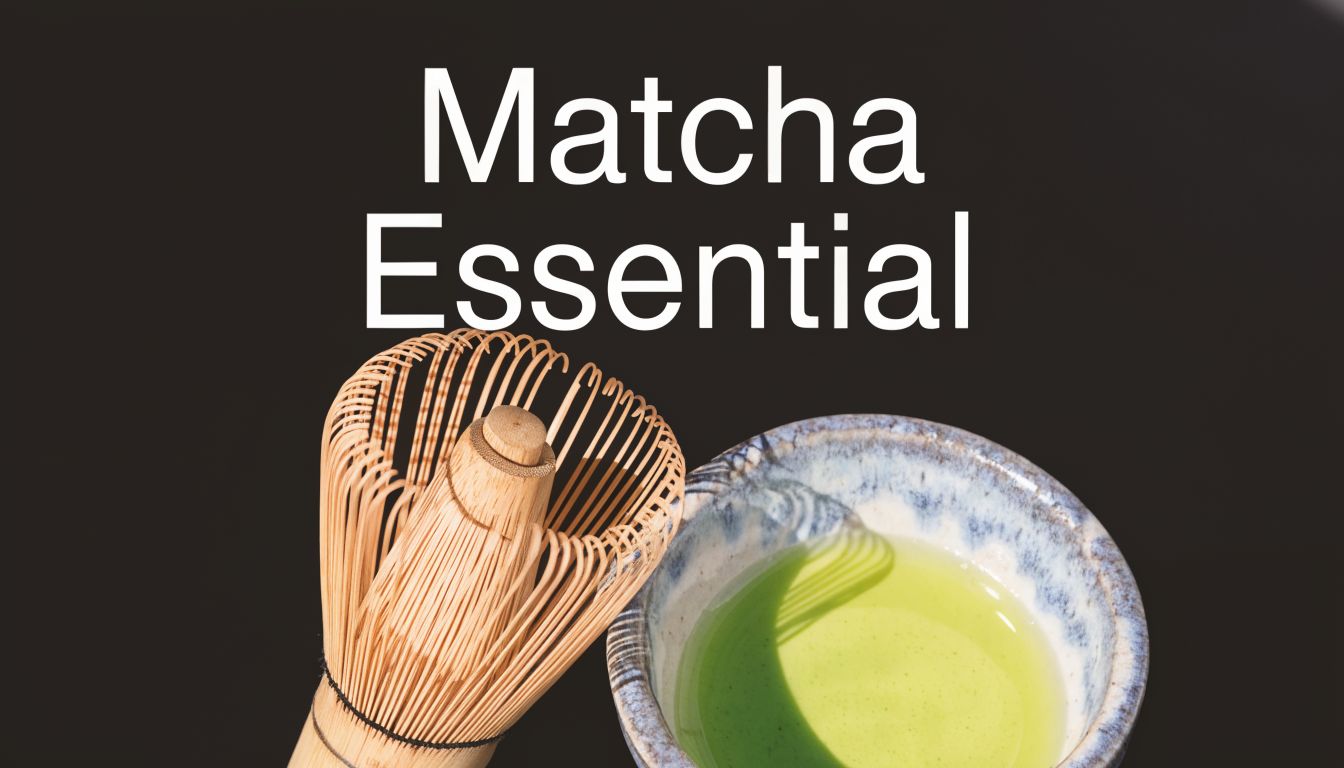
The chasen has real history behind it
The whisk isn’t a trendy add-on. It belongs to a long tea tradition. The traditional matcha whisk, or chasen, dates back to the Muromachi period (1336–1573 AD), and the town of Takayama is still renowned for whisk-making, producing an estimated 90% of traditional chasen according to this history of matcha whisks.
That heritage matters because the design has been refined over centuries for one reason. It works exceptionally well.
You can think of a chasen like an artist’s brush. You could paint a wall with a kitchen sponge, but you wouldn’t expect fine detail. In the same way, you can stir matcha with a spoon, but you shouldn’t expect the texture or finish that a purpose-made whisk can create.
Stirring and whisking are not the same thing
Often, readers get confused, assuming that if the powder looks mostly combined, the job is done. But matcha preparation is less about simple mixing and more about suspension and aeration.
A spoon pushes liquid around the bowl. A bamboo whisk moves quickly through the liquid and creates a very different effect. It breaks apart pockets of powder and lifts air through the tea at the same time. That’s what gives matcha its soft foam and smoother mouthfeel.
Here’s the difference in simple terms:
| Tool | What it usually does | What the cup often feels like |
|---|---|---|
| Spoon | Stirs surface and edges | Clumpy or heavy |
| Fork | Breaks some clumps | Uneven texture |
| Shaker | Blends for convenience | Practical, but less refined |
| Bamboo chasen | Suspends powder and aerates | Smooth, creamy, lively |
Why a whisk matters for premium matcha
Good matcha deserves even preparation. If the powder sits in clumps, some sips taste too strong and others taste watery. That throws off flavour and feel. A whisk helps distribute the tea more evenly, so each sip tastes closer to the one before it.
That’s especially important when you’re working with a ceremonial-style bowl of matcha where there’s nowhere for texture flaws to hide.
A chasen also encourages the right movement. Instead of stirring in circles, you whisk lightly across the surface in quick strokes. That motion creates foam without smashing the whisk down into the bowl.
The whisk isn’t there to make matcha decorative. It’s there to make matcha drinkable in the way it was intended.
What makes the bamboo design so effective
Each tine flexes slightly as you whisk. That flexibility is the secret. Metal tools tend to feel rigid and blunt. Bamboo feels springy. It glides, catches powder, and releases it back into the liquid.
A well-made whisk helps with:
- Clump control by separating fine powder before it settles
- Surface froth by bringing air into the top layer
- Better consistency so the bowl tastes balanced from first sip to last
- A calmer ritual because the motion is quick and intuitive once learned
If you’ve ever wondered why café matcha can taste smoother than what you make at home, the answer often starts here. Not with more ingredients. With better preparation.
Choosing Your Perfect T2 Matcha Whisk
A good whisk choice changes the bowl before you even add water. If your matcha is premium, organic, and finely milled, the whisk you use affects more than froth. It shapes how evenly the powder disperses, how smooth the sip feels, and how consistently you take in the tea’s naturally occurring antioxidants and L-theanine from the first mouthful to the last.
Choose based on how you actually drink matcha
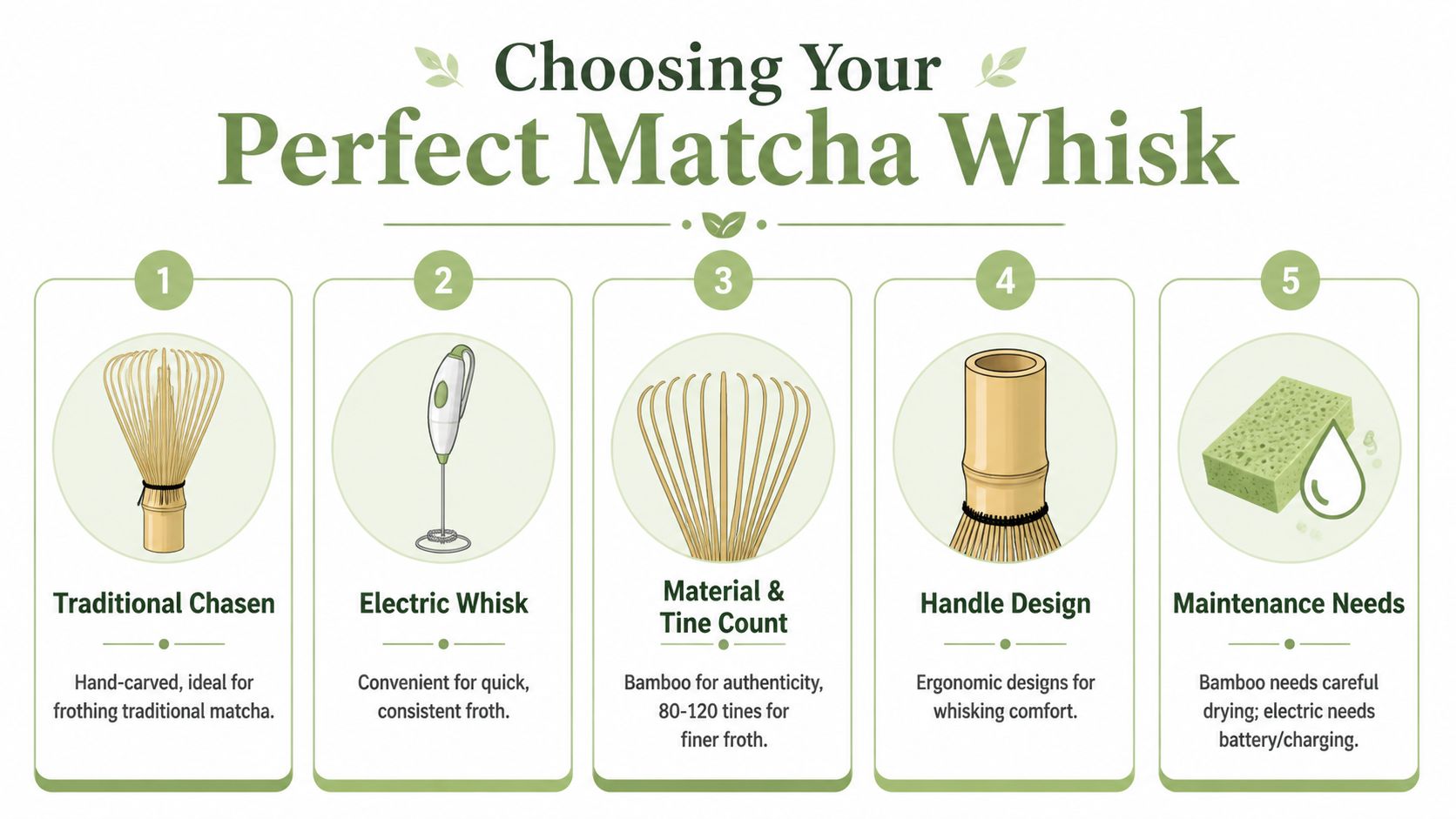
The easiest way to choose a t2 matcha whisk is to start with your routine, not the product name.
If you drink matcha straight from a bowl and care about a fine, creamy top layer, a traditional bamboo whisk makes the most sense. If you usually make a quick morning latte, you may still want bamboo, but you probably need something simple, durable, and easy to repeat half-awake before work.
That distinction matters because whisking is a physical process. Fine bamboo tines separate powder, move water through it, and break up tiny clumps before they become gritty sips. A denser, more delicate whisk usually gives you more control. A simpler everyday whisk often feels easier to live with.
The premium option for a more traditional bowl
The T2 Premium Matcha Whisk suits drinkers who want a closer connection to traditional preparation. More finely cut tines generally create a lighter froth and a more even suspension, which helps ceremonial or premium organic matcha taste softer and more rounded.
That even suspension is not just about texture. Matcha is different from steeped green tea because you consume the leaf itself. If powder settles at the bottom, your bowl becomes uneven. Early sips can taste thin, while the last few turn heavy and intense. A finer whisk helps keep the tea dispersed more consistently, so the compounds naturally present in matcha, including catechins and L-theanine, are carried through the bowl more evenly.
If that sounds technical, here is the practical version. A better whisk can help your good matcha taste more complete.
This style suits you if you enjoy slower preparation, drink matcha with little or no milk, and want the bowl to feel soft rather than bubbly.
The everyday option for regular use
The T2 Everyday Matcha Whisk is the practical middle ground. It gives you the feel of bamboo without asking for a highly ritualised setup each time.
For plenty of Australian households, that is the sweet spot. You can prepare a smooth matcha concentrate in a bowl, pour over milk, and still get better texture than you would from stirring with a spoon. You also keep more control over the first mixing stage, which is where many clumps start.
It is a strong fit for:
- Daily matcha drinkers who want one whisk they'll reach for
- Latte makers who prepare matcha before adding milk or ice
- Beginners who want proper bamboo technique without fuss
- Gift buyers putting together a starter set that feels thoughtful and useful
Where an electric whisk fits
An electric whisk is about convenience. It is handy for iced drinks, quick lattes, or anyone who prefers speed over ritual.
Still, it creates a different result. A bamboo chasen works more like a fine brush, moving through a small pool of water and tea with precision. An electric frother agitates more broadly. That can be useful, but it often makes a larger-bubbled foam rather than the finer top layer many matcha drinkers enjoy.
It is a bit like the difference between whisking sauce by hand and using a powered tool. Both can work, but the texture and feel are not quite the same. The same logic shows up in cooking techniques such as perfecting hollandaise at home, where controlled movement changes the final emulsion.
A simple comparison
| Option | Best for | What it does well |
|---|---|---|
| T2 Premium Matcha Whisk | Traditional bowls, premium matcha, slower rituals | Finer froth, more control, more even suspension |
| T2 Everyday Matcha Whisk | Regular home use, lattes, beginner-friendly prep | Reliable mixing, easy routine, practical daily use |
| Electric whisk | Fast milk drinks, iced matcha, convenience | Speed and minimal effort |
Match the whisk to the tea, then to your kitchen
If you buy high-grade organic matcha for its flavour and wellness benefits, it makes sense to pair it with a whisk that helps the powder disperse properly. If your mornings are rushed, choose the whisk you will reach for consistently. The best tool is the one that turns good intentions into a daily cup.
Australian climate plays a part too. In humid coastal areas, bamboo can soften and warp more easily if it is stored damp. In dry inland areas, tines can become brittle if the whisk is left near heat or direct sun. That means your ideal choice is not only about taste. It is also about whether you are happy to care for bamboo properly.
For readers comparing bowls, scoops, holders, and whisks as one setup, this collection of matcha tea accessories shows how the pieces work together.
Choose the whisk that suits your real routine and your real climate, because that is what helps great matcha stay smooth, balanced, and worth making again tomorrow.
A Step-by-Step Guide to Using Your Matcha Whisk
You’ve bought good matcha, boiled the kettle, and set aside a quiet minute. Then the bowl turns out clumpy, flat, or slightly bitter. That usually comes down to sequence, not effort.
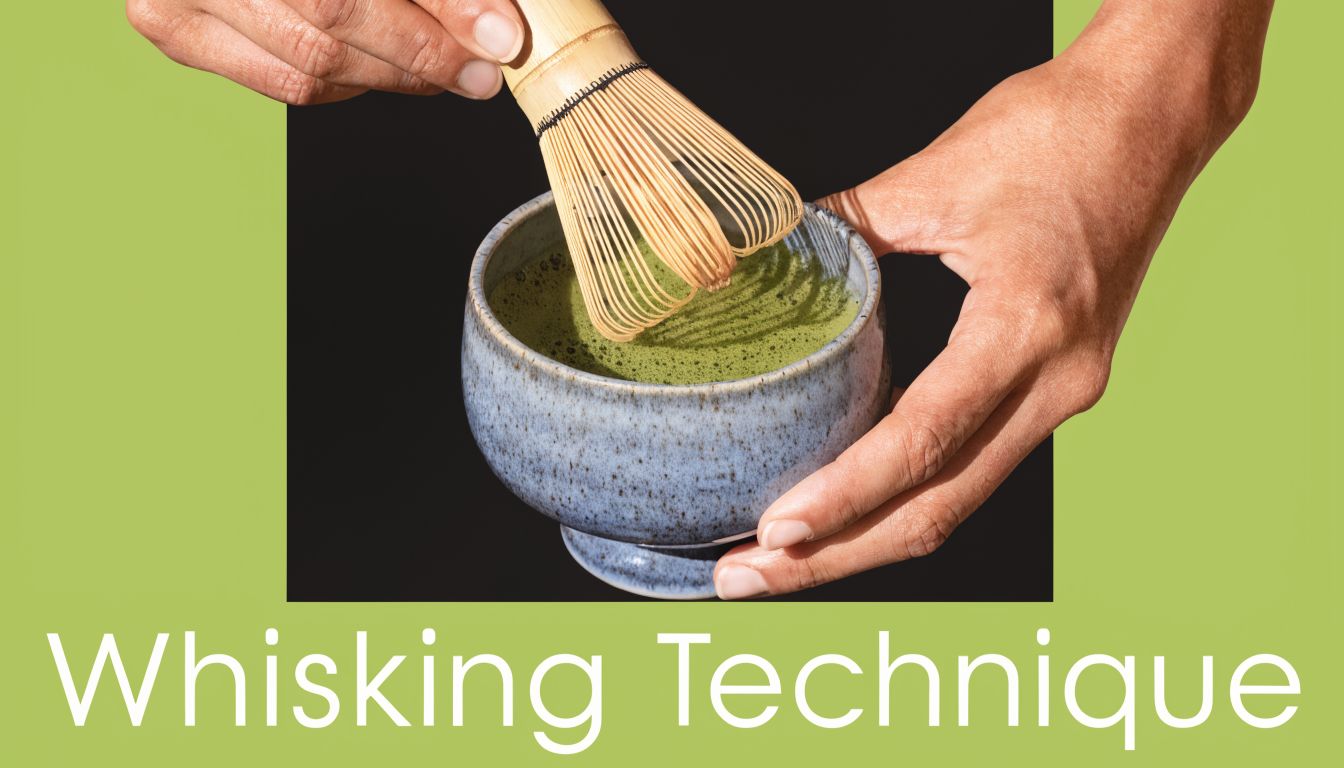
A t2 matcha whisk works a bit like a fine kitchen tool for emulsifying. The quick, light motion breaks up powder evenly, suspends it through the water, and helps create the soft foam that makes matcha taste rounder and smoother. That even suspension also matters for the tea’s wellness appeal, because you are drinking the whole leaf, including the compounds premium organic matcha is prized for, such as antioxidants and L-theanine.
Start with the bowl, the powder, and the whisk
Begin by warming your bowl with hot water, then tip it out and dry it. A warm bowl helps keep the drinking temperature steady, so your matcha does not cool too quickly while you whisk.
Next, soak the whisk briefly in warm water. This softens the bamboo tines so they flex cleanly instead of scraping stiffly across the bowl.
Then sift your matcha into the bowl. This step catches tiny lumps before they become stubborn pockets of dry powder. If you have ever tried to stir flour into liquid after it has already clumped, the same idea applies here.
A reliable setup looks like this:
- Warm the bowl with hot water, then empty and dry it.
- Soak the whisk briefly in warm water.
- Sift the matcha into the bowl.
- Add a small splash of water first to make a smooth base.
- Pour in the remaining water once the paste looks even.
That small splash at the start is one of the biggest difference-makers. It gives you control.
Use warm water and a fast wrist motion
Matcha generally tastes best with warm rather than boiling water. Too much heat can make high-quality powder taste sharper and more bitter, while slightly cooler water keeps the sweetness, umami, and grassy freshness in better balance.
Once the water is in, whisk with your wrist in a quick W or M motion near the surface. Circular stirring tends to chase the powder around the bowl. The zigzag motion spreads it through the water and builds a finer foam.
Keep the whisk low enough to engage the tea, but light enough that the tips are not being pressed into the bottom of the bowl. You are aerating and dispersing, not grinding.
A short whisking session is often enough if your matcha was sifted well and your motion is quick and light. If you want to compare hand position and rhythm, this visual guide on how to whisk matcha is a helpful reference.
What good whisking should feel like
The movement should come mostly from the wrist, not the whole arm. Picture the difference between sketching with a pen and scrubbing a pan. Matcha needs the first kind of motion.
As the liquid smooths out, you can lift the whisk slightly toward the top layer to encourage a soft, creamy froth. The surface should look fine-bubbled rather than coarse and foamy. If the whisk is thudding against the bowl, you are pressing too hard.
This is the point many people miss. Better whisking does more than improve texture. It helps distribute the powder evenly through the water, so each sip is balanced rather than patchy. With premium organic matcha, that means a more consistent cup and a better chance of getting the full benefit of what is already in the leaf.
Watch the process in motion
If you learn best by seeing the hand movement, this demonstration helps make the rhythm much clearer.
Troubleshooting common matcha problems
A few small adjustments solve most issues.
Clumps keep appearing
Sift the powder first, then start with a small amount of water to form a smooth paste before adding the rest.There’s barely any froth
Use faster wrist movement and whisk near the surface once the matcha is fully combined.The matcha tastes bitter
Let the water cool slightly after boiling. Very hot water can flatten sweetness and push bitterness forward.The foam disappears quickly
Keep whisking until the tea is fully suspended. Large bubbles fade fast, but finer foam lasts longer.The texture feels thin or uneven
Check your ratio. Too much water for the amount of matcha can leave the bowl tasting weak and looking flat.
Good whisking is a lot like perfecting hollandaise at home. Small movements, temperature control, and patience matter more than brute force.
Caring For Your Bamboo Whisk in Australia
A bamboo whisk won’t stay springy and clean if it’s treated like an ordinary kitchen utensil. In Australia, that matters even more. Humidity can work against you, especially if your whisk sits damp in a drawer or on a bench with poor airflow.
The cleaning rule is simple
Rinse the whisk soon after use with warm water. Skip detergent. Soap can linger in bamboo and affect the next bowl’s flavour. Gently shake off excess water, then let the whisk dry thoroughly.
A lot of people rush this step. That’s where trouble starts.
Why drying matters more in Australia
In Australia’s humid climates, average relative humidity can exceed 75%, and bamboo kitchen tools are prone to mould. Standard advice to just “air dry” a matcha whisk is often insufficient. Proper care, including ensuring complete dryness before storage, is important for hygiene and can help prolong the whisk’s lifespan, as noted on the T2 Premium Matcha Whisk page.
That’s especially relevant in coastal and subtropical areas where kitchens can stay damp for long stretches.
Use a whisk holder properly
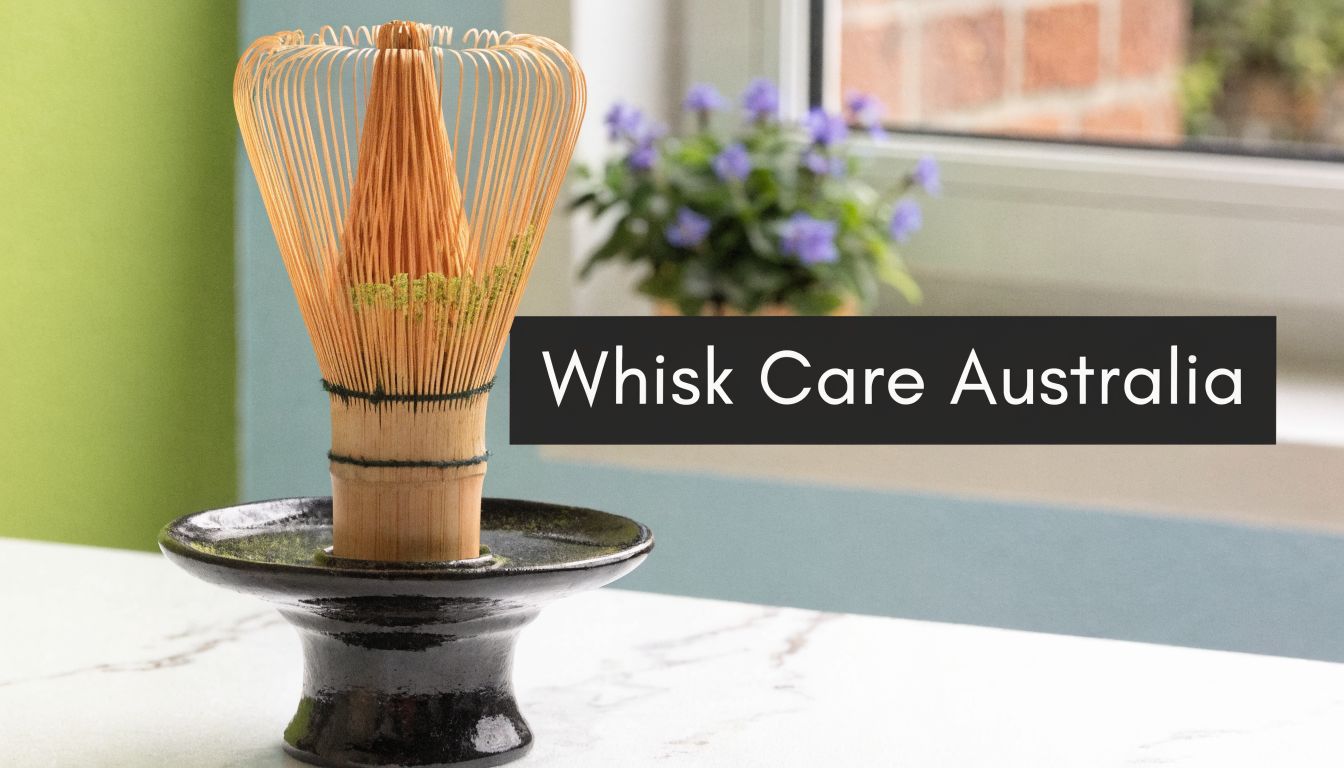
A whisk holder, often called a kusenaoshi, does more than make the setup look neat. It helps the tines keep their shape and improves airflow while the whisk dries. That means less warping, less crowding of the prongs, and a better chance of the whisk staying usable for longer.
If you’ve never used one before, this style of matcha whisk stand shows the kind of support bamboo whisks benefit from after every use.
A realistic care routine for humid homes
You don’t need a complicated system. You do need consistency.
- Rinse immediately so dried matcha doesn’t harden between the tines.
- Let it dry fully in the open rather than putting it away too soon.
- Store it upright on a holder instead of flat in a closed drawer.
- Keep it away from enclosed damp spaces near sinks or dish racks.
- Check it regularly for musty smell, dark spots, or misshapen tines
A bamboo whisk can last well when it’s dried properly. It breaks down much faster when moisture stays trapped inside the prongs.
What not to do
Avoid the dishwasher. Avoid soaking it for long periods. Avoid stuffing it into a cupboard while it’s still damp. And if the whisk starts smelling off or showing signs of mould, retire it.
That might sound strict, but it’s better than using compromised bamboo in your tea every morning. Good care protects flavour, hygiene, and the feel of the whisk in your hand.
Beyond the Bowl Creative Matcha Pairings and Recipes
Once you’ve learned how to whisk matcha properly, you’re not limited to a plain bowl of tea. The same technique can anchor a lot of modern drinks and kitchen rituals. A t2 matcha whisk is just as useful for building a smooth latte base as it is for a traditional bowl.
A better matcha latte starts with a concentrate
A common mistake with lattes is adding matcha straight into a full cup of milk. That usually leads to specks and uneven flavour.
Instead, whisk a small amount of matcha with warm water first until smooth and lightly frothy. Then pour that concentrate into your warm or cold milk. You’ll get cleaner flavour and a much more even colour.
A simple home method:
- Add sifted matcha to a bowl
- Pour in a little warm water
- Whisk until smooth and frothy
- Top with milk of your choice
- Sweeten only if needed
This works well whether you like a straight dairy latte, oat milk, or an iced version over plenty of ice.
The Matcha-bucha Sparkler
If you enjoy functional drinks with a fresh, lively feel, whisked matcha also pairs beautifully with kombucha. The key is to make the matcha base first and then combine it gently.
Try this approach for a Matcha-bucha Sparkler:
- Whisk matcha with a small amount of warm water until smooth.
- Let it cool slightly.
- Pour it over ice in a tall glass.
- Top with chilled kombucha.
- Finish with a citrus twist or a slice of fresh ginger if that suits the flavour.
The result tastes layered and modern. You get the grassy depth of matcha with the brightness and lift of a sparkling fermented drink.
Use a gentle hand when combining matcha and kombucha. The goal is integration, not knocking all the life out of the glass.
Matcha in snacks and simple food prep
Your whisk can also help when matcha heads into food rather than a mug. A quick whisked slurry prevents dry pockets when adding matcha to yoghurt bowls, smoothies, or baking mixes.
That’s particularly useful with culinary-grade matcha, where smooth dispersion matters for both flavour and colour.
A few easy uses:
- Smoothies with banana, spinach, yoghurt, and whisked matcha
- Bliss balls where whisked matcha is folded into the wet mixture first
- Pancake or muffin batter to avoid green streaks and lumps
- Yoghurt bowls with fruit and seeds for a simple afternoon snack
If you’re looking for flavour pairing inspiration outside the tea world, a matcha-flavoured plant-based protein snack can be a handy reference point for how well matcha plays with nuts, mild sweetness, and creamy textures.
Make the ritual fit real life
Not every bowl of matcha needs to be ceremonial. Some mornings, the ritual is the point. Other days, the whisk is just the fastest way to make your drink taste better.
That flexibility is part of the appeal.
One day, your whisk helps build a quiet bowl before work. Another day, it helps make a clean iced latte in two minutes. On the weekend, it might help blend matcha into pancake batter or a smoothie for the family.
Pairing ideas that usually work well
Here are some flavour directions that suit matcha nicely:
| Pairing | Why it works |
|---|---|
| Vanilla | Softens grassy notes |
| Citrus | Brightens the finish |
| Ginger | Adds warmth and lift |
| Oat milk | Supports a creamy body |
| Coconut | Brings roundness to iced drinks |
The point isn’t to cover matcha up. It’s to support what’s already there. A whisk helps you start from a smooth base, and that makes every pairing more successful.
Your Whisk is Your Partner in Wellness
It is 7 am, the house is quiet, and you want a drink that wakes you up without making your mind feel jagged. You scoop out premium organic matcha, add water, and reach for your whisk. That small bamboo tool does more than improve the look of the bowl. It helps the powder disperse properly, so each sip is smoother, more balanced, and more satisfying to drink.
That matters for wellness because matcha is different from steeped green tea. You are drinking the whole leaf in finely milled form, not just an infusion. A good whisking action spreads those tiny particles evenly through the water instead of leaving them clumped at the bottom or stuck in bitter lumps on the surface. In practical terms, that means a more consistent cup and a better experience of what quality matcha offers, including its naturally occurring antioxidants and L-theanine.
The whisk works a bit like a good kitchen tool that brings a sauce together. If the mixture stays uneven, the flavour feels patchy and the texture distracts you. If the mixture becomes fine and airy, everything tastes clearer. Matcha is similar. Proper whisking creates a light foam and an even suspension, which helps the tea feel creamy rather than gritty and lets the sweet, umami, and fresh green notes show up in balance.
There is a body effect here too.
Many tea drinkers choose matcha because it can feel calm and focused at the same time. That reputation is tied to the natural combination of caffeine and L-theanine in the tea. Your whisk does not create those compounds, of course, but it does help you prepare the bowl in a way that makes the whole serving pleasant and complete to consume. If your matcha is poorly mixed, you are more likely to leave sludge behind, rush the process, or cover the taste with too much sweetener. A well-whisked bowl makes it easier to enjoy the tea as it is.
That is one reason the physical ritual matters. The hand motion is quick, but the effect is settling. You warm the bowl, sift the powder, add water at the right temperature, then whisk with purpose. For many people, that sequence becomes a reliable cue to slow the mind for a minute while still making something functional for the day ahead.
In Australian conditions, the care side of wellness matters as much as the whisking side. Bamboo reacts to heat, dryness, and humidity. In a dry inland climate, tines can become brittle if the whisk is stored near a sunny window, a heater, or an air conditioner. In coastal humidity, a whisk put away damp can develop a musty smell or mould. Rinse it with plain water after use, never soap, shake off excess moisture, and let it dry on a whisk holder or stand upright where air can circulate well. A drawer is only suitable once it is fully dry.
A cared-for whisk performs better for longer. The tines stay more evenly spaced, the motion feels springy, and the foam forms with less effort. You can hear the difference sometimes. A healthy whisk glides with a soft brushy sound, while a dry or warped one drags and catches.
So yes, your whisk is a wellness tool. Not because it promises miracles, but because it helps turn premium matcha into a drink your body and senses can enjoy day after day. If your bowls have been tasting flat, gritty, or harsher than expected, the fix may be your technique and whisk care rather than the tea itself.
If you’re ready to upgrade your daily matcha ritual, explore Pep Tea for organic matcha, practical brewing guides, and thoughtfully selected accessories that help you get more from every bowl.
Best Matcha Powder Perth: Where to Buy and How to Use It

You’ve probably seen it already. A bright green iced matcha latte on a café table in Fremantle, a neat little tin on a shelf in Subiaco, or a friend in Perth whisking green powder in a bowl and talking about “calm energy” like they’ve joined a secret club.
Fair question. What is matcha, and where do you find good matcha powder in Perth without wasting money on dull, bitter powder that tastes like lawn clippings?
That confusion is normal. Matcha looks simple, but there’s a big difference between average supermarket powder and a beautifully made Japanese matcha that’s smooth, sweet, fresh, and easy to drink. Once you know what to look for, the whole thing gets much less intimidating.
Matcha also isn’t some passing café fad. In Australia, it’s growing fast. The Australian Matcha Tea Market is projected to expand from USD 340 million in 2025 to USD 790 million by 2031, with a compound annual growth rate of 14.8%, according to Mobility Foresights’ Australia matcha tea market outlook. In a city like Perth, that makes sense. We’ve got a strong café culture, a growing interest in functional drinks, and plenty of people looking for something more mindful than another over-extracted coffee.
The easiest way to understand matcha is this. Regular green tea is like making a broth from leaves and then throwing the leaves away. Matcha is different because you drink the whole leaf, finely ground into powder. That’s why quality matters so much. If the leaf is excellent, the cup is excellent. If the leaf is poor, there’s nowhere to hide.
Introduction
Perth is a great place to get into matcha because you can explore it in a few different ways. You can try a latte at a good café, buy a tin from a Japanese grocer or health store, or order from an Australian online supplier and make it at home. Each option suits a different kind of drinker.
For beginners, the biggest hurdle is usually not taste. It’s vocabulary. People throw around terms like ceremonial grade, culinary grade, Uji, stone-ground, organic, umami, and L-theanine as if everyone already knows what they mean.
You don’t need to memorise tea jargon to buy well. You just need a few practical filters.
What most Perth buyers want to know
Some people want a matcha that tastes good with just water. Others only want something for iced lattes, smoothies, or baking. Café owners usually need consistency, reliable supply, and a powder that performs well during a busy service.
Those are different needs, and they call for different products.
Here’s the simple version:
- If you want to sip it straight, look for ceremonial grade.
- If you’re making lattes or baking, culinary grade often makes more sense.
- If freshness matters to you, storage, packaging, and turnover matter almost as much as the tea itself.
- If you live in Perth, climate matters too. Heat and humidity can flatten matcha faster than commonly understood.
Matcha becomes much easier to enjoy when you stop asking for the “best” matcha and start asking for the right matcha for how you’ll use it.
Why people keep coming back to it
A good matcha has a very particular personality. It can taste creamy, grassy, savoury, sweet, and softly bitter all at once. It feels a bit ritualistic without being fussy. And for a lot of people, making it becomes part of the appeal.
That’s why matcha powder perth searches keep growing. People aren’t just looking for a product. They’re looking for a better way to buy, brew, and enjoy it locally.
What Is Matcha and How Is It Made
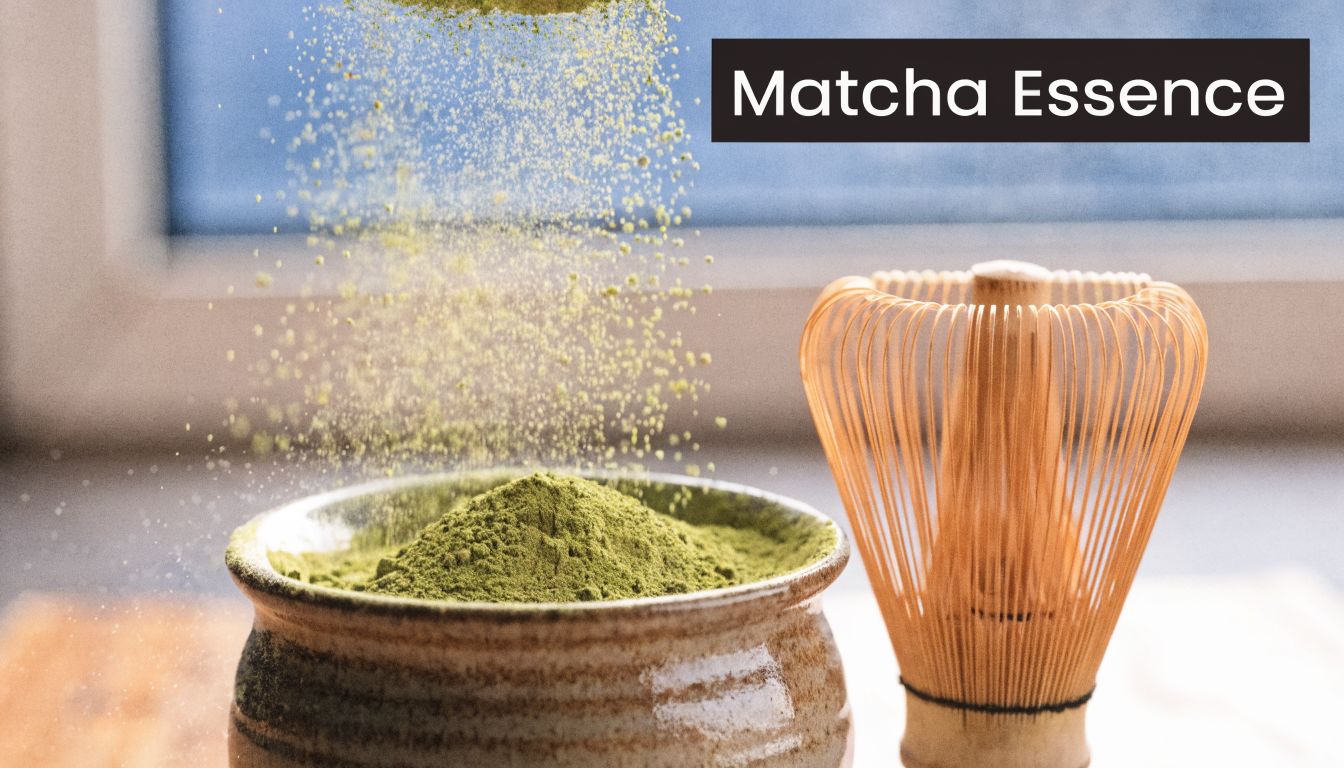
Matcha is a finely ground green tea powder made from specially grown tea leaves. It isn’t the same as standard green tea bags, and it isn’t just green tea that’s been crushed up. The growing and processing are what make it different.
Before harvest, the tea plants used for matcha are shaded. That reduced light changes the leaf. It helps build the vivid green colour people associate with premium matcha and contributes to the soft, savoury depth that good matcha lovers chase.
If you want a more detailed look at the traditional production steps, Pep Tea has a useful guide on how matcha tea is made.
Why matcha tastes different from regular green tea
With standard green tea, you steep the leaves in water and remove them. With matcha, the leaf is ground into powder and whisked directly into the bowl, so you consume the whole thing.
A simple way to think about it is this:
| Drink type | What you consume | What it feels like |
|---|---|---|
| Regular green tea | Water infused by the leaf | Lighter, more delicate |
| Matcha | The actual powdered leaf in suspension | Richer, fuller, more intense |
That’s why matcha has more body in the mouth. It can feel almost creamy even without milk, especially when it’s whisked properly.
What happens after harvesting
After the leaves are picked, they’re steamed, dried, and processed into tencha before being ground into a very fine powder. That fine grind is a huge part of the drinking experience. Better matcha feels soft and silky. Lower-grade powder can taste rough, settle badly, and look flat in colour.
This is also where grade starts to matter in real life, not just on a label.
Good matcha should look alive. If the powder looks tired in the tin, it’ll usually taste tired in the cup.
Ceremonial and culinary start with different goals
People sometimes assume ceremonial grade is always “better” and culinary grade is always “worse”. That’s too simplistic. They’re made for different jobs.
- Ceremonial grade is usually the better fit when you want to drink matcha with water and appreciate its aroma, sweetness, and umami.
- Culinary grade is usually chosen for recipes where milk, fruit, sweeteners, or baking ingredients share the stage.
- Your own taste matters more than prestige. If you only drink iced oat milk matcha, you may not need the gentlest ceremonial powder every day.
A lot of disappointment comes from mismatch, not poor tea. Someone buys ceremonial grade, buries it under syrups and ice, and wonders why it felt expensive. Someone else buys a cooking-grade powder, drinks it straight, and decides matcha isn’t for them.
Choosing Your Matcha Ceremonial vs Culinary Grades
The quickest way to buy better matcha in Perth is to understand grade by use, not by hype.
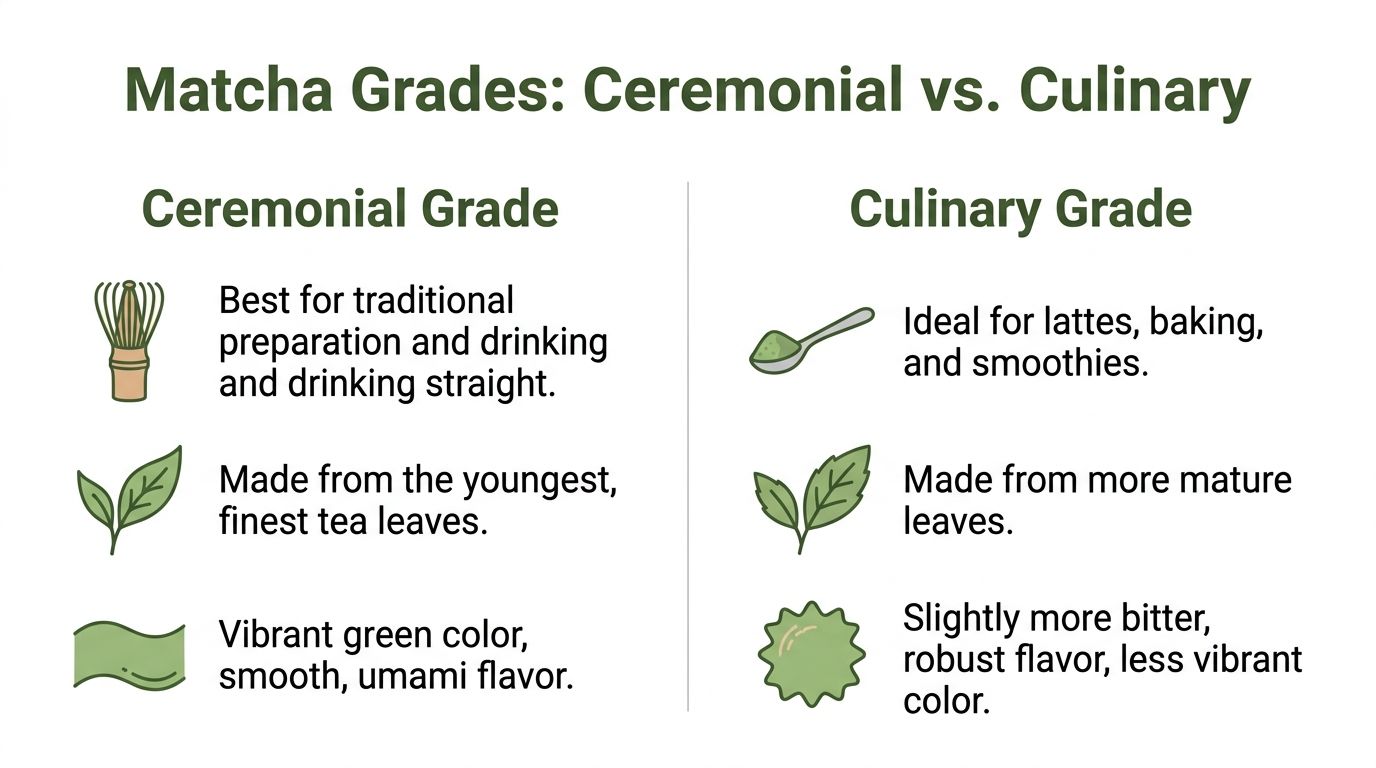
If you want a fuller primer on labels and classifications, this guide to different grades of matcha is a helpful starting point.
Ceremonial grade for drinking
Ceremonial grade is the one people usually picture when they imagine traditional Japanese tea preparation. It’s made to be whisked with water and enjoyed on its own.
You’ll usually notice:
- Brighter colour that leans vivid green rather than olive or khaki
- Softer flavour with sweetness, umami, and only gentle bitterness
- Finer texture that disperses more smoothly
- Cleaner finish that makes straight drinking enjoyable
This is the grade for the person who wants a morning bowl of matcha instead of a latte, or who wants to taste the tea itself rather than the milk around it.
Culinary grade for mixing
Culinary grade has a stronger, punchier profile. That’s not a flaw. It’s useful. In a latte, smoothie, muffin, pancake batter, or protein bowl, a more intense matcha can still come through.
It usually has:
- A firmer bitterness
- A less delicate aroma
- A darker or duller green tone
- A profile that stands up better in recipes
For many Perth households, culinary grade is the everyday workhorse. It’s practical, versatile, and often the better pick if your matcha mostly ends up over ice with milk.
A side by side buying guide
| Feature | Ceremonial grade | Culinary grade |
|---|---|---|
| Best use | Straight drinking, traditional whisking | Lattes, smoothies, baking |
| Colour | Vibrant green | Less vivid green |
| Taste | Smooth, umami, mild sweetness | Stronger, more robust, more bitter |
| Texture | Very fine and silky | Often slightly less refined |
| Who it suits | Tea drinkers who want the leaf to shine | Home cooks and latte lovers |
The texture clue most people miss
One of the most useful quality clues is how finely the powder has been milled. According to Maison Matcha’s ceremonial matcha guide, premium ceremonial matcha’s 800-mesh fineness with a 10 to 20µm particle size supports near-total solubility in lattes, while 500-mesh culinary grades can lead to 30% sediment.
That matters because it changes the whole drinking experience. A smoother powder doesn’t just look prettier in the cup. It feels better, whisks better, and settles less.
Buying rule: If you hate gritty matcha, don’t just ask what grade it is. Ask how fine it is.
How to choose without overthinking it
If you’re standing in a shop or comparing tins online, use this simple checklist.
Start with your main use
Be honest. If you’re making iced lattes every morning, buy for that.Look at colour before claims
A premium-looking label can still hide dull powder.Read the origin
Japanese matcha is often what buyers seek for a more refined cup.Think about value, not status
The “best” matcha is the one that suits your habit and budget.
A practical Perth example
Let’s say you drink one hot matcha on quiet mornings and make a few iced lattes through the week. You don’t need one tin to do everything perfectly.
Some people keep:
- One ceremonial tin for straight drinking
- One culinary tin for milk drinks and recipes
That approach is often more satisfying than trying to force one product into every role.
How to Spot Truly High-Quality Matcha Powder
You don’t need to be a tea master to judge matcha well. You just need to slow down and use your senses. When I’m helping someone choose matcha powder perth options, I tell them to ignore the marketing for a minute and look at what’s in front of them.
The first check is colour. Premium matcha should look fresh and bright, not brownish, swampy, or yellow-green. A flat colour often points to age, lower-grade leaf, or poor storage.
The second check is aroma. Open a fresh tin and you want a smell that feels green, sweet, and clean. It might remind you of fresh-cut grass, spinach, steamed greens, or even a soft creamy note. If it smells dusty, stale, or oddly marine, it’s usually not a good sign.
What quality feels like in the hand and bowl
Texture tells you a lot. Fine matcha should feel almost cloud-like when handled carefully. It shouldn’t feel sandy or coarse.
When whisked, it should form a smooth liquid rather than a stubborn clumpy mess.
A quick sensory checklist helps:
- Colour check. Look for vibrant green rather than dull olive.
- Aroma check. Fresh, grassy, slightly sweet is good.
- Texture check. Silky and fine beats gritty every time.
- Taste check. You want balance. Some pleasant bitterness is fine, but harshness shouldn’t dominate.
Why storage quality matters in Perth
Perth’s climate can be rough on delicate powders, especially if the tin sits in warmth, light, or moisture. This is one of the reasons online buyers should care about packaging and freshness, not just origin.
According to the technical specifications in this organic matcha product document, high-quality matcha powder should have moisture of ≤7% and total ash of ≤8%. The same source notes that in humid conditions, moisture above 7% can accelerate catechin oxidation and reduce EGCg bioavailability by up to 30% within six months.
That sounds technical, but the practical takeaway is simple. Matcha hates heat, light, air, and humidity.
In Perth, a great matcha stored badly can become a disappointing matcha surprisingly quickly.
Buying in person versus buying online
In-store buying has one big advantage. You can sometimes inspect the tin, ask questions, and get a feel for the shop’s standards. That can be excellent in specialist tea shops and selected Japanese grocers.
The challenge is freshness. Shelf time isn’t always obvious, and broad retail environments aren’t always ideal for delicate tea.
Online buying can be the stronger option when the supplier specialises in matcha, turns stock over regularly, and packs it well. That gives you access to a wider range, clearer product detail, and often better insight into origin and grade. For Perth buyers, it also opens up Australian suppliers who focus specifically on organic tea rather than carrying matcha as an afterthought.
Signs that usually point to a poor buy
Not every disappointing matcha is fake. Sometimes it’s just the wrong product for the job. Still, a few warning signs come up again and again:
- No clear origin listed
- Very dull powder colour
- Unsealed or poorly packed product
- Vague claims with no real product detail
- A texture that settles heavily and tastes rough
When people say they “don’t like matcha”, they’ve often just had old or low-quality powder. Fresh, well-made matcha is a very different experience.
Your Local Guide to Buying Matcha Powder in Perth
If you want to buy matcha powder perth locals enjoy using, there are a few sensible paths. Each has strengths, and each suits a different kind of buyer.
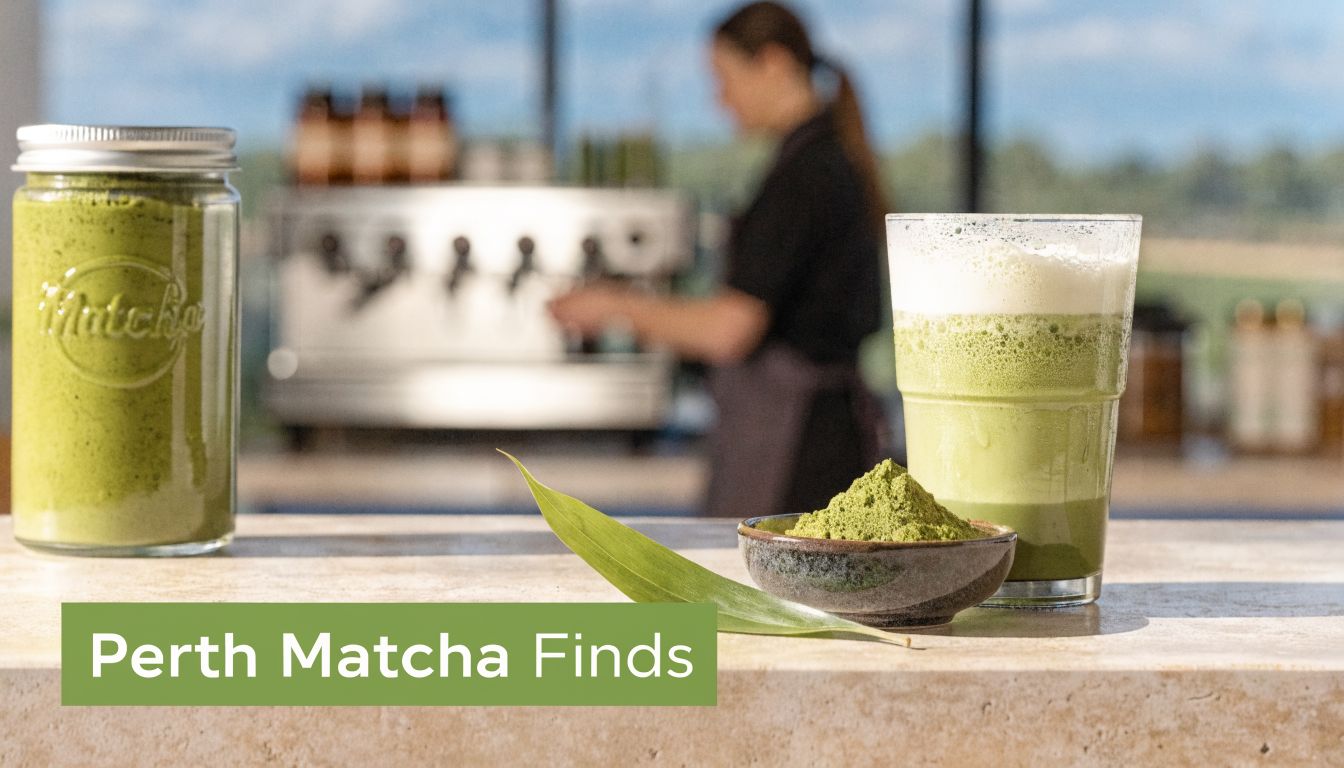
The good news is that access has improved. Australia’s matcha tea imports grew by 62.91% from 2023 to 2024, according to 6Wresearch’s Australia matcha tea market analysis. For Perth buyers, that helps support availability through specialty stores and online retailers serving WA.
Try it first at a good café
If you’re brand new to matcha, tasting a well-made café version can save you from buying blind. A solid matcha latte gives you a reference point for colour, aroma, and balance.
When you order one, pay attention to:
- Colour in the cup. It should look vibrant, not muddy.
- Flavour balance. Milk should soften the tea, not erase it.
- Sweetness level. If it’s extremely sweet, you may not be tasting the matcha clearly.
- Texture. A chalky or gritty latte usually points to poor whisking or lower powder quality.
This is especially useful if you’re unsure whether you enjoy matcha itself or only like sweetened café-style drinks.
Browse retail shelves with care
Health food stores, Japanese grocers, and premium supermarkets can all be worth checking. The benefit is convenience. You can grab a tin the same day and compare options on the shelf.
The downside is that shelf labels rarely tell the full story.
A few questions help:
| What to check | Why it matters |
|---|---|
| Origin listed clearly | Helps you understand what style you’re buying |
| Grade named clearly | Stops you using the wrong matcha for the wrong drink |
| Packaging sealed well | Freshness matters with matcha more than many teas |
| Storage conditions | Heat and light can flatten flavour over time |
Farmers markets and local makers
Markets can be fun if you enjoy discovery. You may come across wellness-focused stalls, Japanese pantry goods, or curated beverage products. Still, this route takes a bit more judgement because presentation and quality aren’t always the same thing.
If you buy from a market stall, ask direct questions about origin, grade, and how they recommend using it. A good seller should answer easily and specifically.
Why many Perth buyers end up ordering online
For a lot of people, online becomes the easiest long-term option. You can compare grades properly, read descriptions in detail, and keep a favourite on hand without driving all over the city.
Online also suits Perth’s pace. Once you know what you like, a repeat order is easier than hunting from suburb to suburb.
It’s especially helpful if you want:
- A specialist tea supplier rather than a general retailer
- Clear distinction between ceremonial and culinary options
- Better freshness practices and sealed packaging
- Consistent access for home use or café use
Easy ways to use matcha at home
You don’t need a full tea ceremony setup to enjoy matcha. Start with one recipe and make it part of your week.
Iced matcha latte for warm Perth days
You’ll need matcha, a splash of warm water, milk of your choice, and ice.
- Sift a little matcha into a cup or bowl.
- Add a small amount of warm water.
- Whisk until smooth.
- Fill a glass with ice and milk.
- Pour the whisked matcha over the top.
If you want sweetness, keep it light so you can still taste the tea.
A simple iced matcha latte is often the easiest gateway into matcha because it’s familiar, refreshing, and forgiving.
Matcha in breakfast and baking
Culinary matcha works well in smoothies, yoghurt, overnight oats, pancakes, muffins, and energy balls. It adds colour, a gentle earthy note, and a more grown-up flavour than standard sweet breakfast add-ins.
If the taste seems strong at first, reduce the amount and build up slowly. Matcha is one of those ingredients that rewards a light hand.
For Perth Cafés Sourcing Wholesale and Navigating Supply
Perth cafés don’t need another copy-and-paste menu item. They need drinks that fit how people order now. Matcha earns its place because it works across different customer habits. Hot, iced, dairy, oat, coconut, lightly sweetened, unsweetened, straight-up, or layered into a non-alcoholic menu.

The bigger issue is supply. A café can build demand for a great matcha latte, then run into inconsistency if the product changes, disappears, or arrives in uneven quality.
According to ANZ Bluenotes’ reporting on the matcha shortage and supply chain pressure, the 2025 global matcha shortage slashed Japanese yields by 25% and doubled tencha prices, creating import instability for cafés that rely on overseas supply alone. That makes stable Australian supply relationships more valuable for Perth venues.
Why wholesale matcha needs a different buying mindset
Home buyers can experiment. Cafés can’t. A venue needs a powder that performs consistently in service, tastes the same from bag to bag, and suits the drinks that sell.
That usually means thinking about:
- Menu fit. Is your matcha for premium straight service, iced lattes, or both?
- Ease of prep. Can staff whisk it consistently during a rush?
- Milk compatibility. Does it hold its flavour in dairy and alt-milks?
- Supplier reliability. Can you reorder confidently without drama?
For venues building an all-day beverage program, matcha also works well alongside tea, coffee, and no-alcohol options.
Matcha and customer retention
A strong matcha offer can also support repeat visits. People who find a café that makes matcha properly often come back because they know it’s not guaranteed elsewhere.
That’s where broader retention thinking matters too. If you’re refining your drinks program, these Coffee Shop Loyalty Program strategies are useful for turning one-off beverage orders into regular habits.
What to ask a wholesale supplier
Before choosing a wholesale partner, café owners should ask practical questions, not just flavour questions.
Consider asking:
What grade is this designed for?
A latte powder and a straight-drinking powder are not the same thing.How is it packaged for freshness?
Matcha degrades if it’s handled casually.Can we order in bulk consistently?
Reliability matters more than novelty.What support do you offer for menu use?
Good suppliers should help with product fit, not just delivery.
If you’re comparing options for bar service, iced drinks, and kitchen use, Pep Tea offers a relevant bulk option in its bulk buy culinary grade organic matcha.
Cafés don’t just buy matcha. They buy consistency, speed of service, and confidence that the next delivery will taste like the last one.
Essential Tips for Storage and Common Perth FAQs
Once you’ve bought a good matcha, storage is what protects the experience. This part matters more in Perth than many people expect. Heat, light, air, and humidity all work against freshness.
The easiest rule is to treat matcha more like a delicate pantry ingredient than a hardy tea bag. Keep it sealed, keep it shaded, and don’t leave it sitting open while you decide what milk to use.
How to store matcha properly at home
A few habits make a big difference:
- Use an airtight container. Oxygen is not your friend once the package is open.
- Keep it away from light. Opaque packaging helps protect colour and flavour.
- Store it somewhere cool. Many people use the fridge, especially in warmer months.
- Avoid steam and condensation. Don’t open the tin right over a kettle or dishwasher.
If you refrigerate it, let the container sit closed for a moment before opening so you reduce condensation risk.
The clumping problem
Clumps don’t always mean bad matcha. Fine powders naturally compact a bit. The fix is simple.
Use a small sieve and sift the powder before whisking. That one step makes a noticeable difference to texture and saves you from chasing lumps around the bowl.
Sifting is the easiest upgrade most home matcha drinkers can make.
Common Perth questions
Is ceremonial grade worth it for a daily latte
Sometimes yes, often no. If milk is the main event, a good culinary grade usually gives better value. If you love a softer, more refined latte and you’re happy to pay for that nuance, ceremonial can still be lovely.
Where can I buy a bamboo whisk in Perth
Specialty Japanese tea shops and selected kitchenware stores are your best bet. Some online Australian tea retailers also stock whisks, bowls, and sifters. If you’re just getting started, don’t let gear delay you. You can begin with a small whisk or even a jar shake method while you decide whether matcha will become part of your routine.
How do I stop matcha tasting bitter
Usually one of three things has gone wrong. The water is too hot, the powder quality is too low for the way you’re drinking it, or you’ve used too much. Start gentler. Better matcha and cooler water usually solve a lot.
Can I use one matcha for everything
You can, but it’s a compromise. If you drink matcha straight and also bake with it, keeping separate ceremonial and culinary tins is often the more satisfying option.
Why does my matcha lose its bright green colour
That usually points to age, light exposure, heat, or air. Freshness isn’t just about taste. It shows up visually first.
The simplest way to get started
If you’re new, don’t buy a huge amount straight away. Start with a small quantity from a supplier that explains the grade clearly. Make one drink you know you’ll repeat, usually an iced latte or a simple hot whisked matcha.
That’s enough to build confidence. The ritual, the gear, and the more refined taste preferences can come later.
If you’re ready to try premium organic matcha from an Australian specialist, explore Pep Tea. You’ll find quality matcha options for straight drinking, lattes, and everyday use, plus a broader range of clean functional beverages made for Australian homes and cafés.
Unlock the Perfect Matcha Tea Whisk and Bowl

You’re probably here because your matcha looked promising in the tin and disappointing in the bowl. The colour was right. The whisk looked beautiful. Then the drink turned out clumpy, flat, or oddly bitter.
That’s not a matcha problem. It’s usually a matcha tea whisk and bowl problem, or more precisely, a technique problem shaped by the tools in your hands.
A good bowl of matcha isn’t about ceremony for ceremony’s sake. The whisk and bowl exist because matcha is a suspended powder, not a leaf infusion. If the powder isn’t fully dispersed and aerated, the texture suffers first, then the flavour. Once you understand what the whisk is doing, and why the bowl is shaped the way it is, everything gets easier.
The Ritual of Matcha Why Your Whisk and Bowl Matter
It usually starts on a rushed weekday morning. Matcha goes into the nearest mug, hot water follows, a spoon gets a quick spin, and the cup looks dull before you even taste it. Then the first sip lands harsh, powdery, and flatter than the bright, creamy bowl you were hoping for.
A chasen and chawan fix that because they solve a physical problem, not a decorative one.
Matcha is a fine stone-ground powder suspended in water. It does not dissolve the way instant drinks do. To taste sweet, savoury, and smooth, those particles need to be dispersed evenly and lifted with air. A bamboo whisk does that fast without bruising the liquid. A proper bowl gives the whisk the width and curve it needs to move freely.
That matters even more in Australia, where home water can change a bowl more than many people expect. Hard water in some suburbs can mute sweetness and make bitterness show up sooner. A heavy café-style mug also tends to trap your wrist in a tight angle, which leads to stirring instead of whisking. Good tools create better mechanics, and better mechanics create better texture.
These tools shape the cup
The whisk controls agitation. The bowl controls space, temperature, and the way the liquid rolls back on itself as you whisk. That combination is why the same matcha can taste soft and rounded in one vessel, then sharp and grainy in another.
I see this all the time with Australian café drinkers trying to recreate their favourite order at home. They buy better powder, often something clean and vibrant like Pep Tea, but keep using a cereal bowl or coffee mug. The matcha is fine. The setup is fighting the result.
A proper matcha bowl does three jobs at once:
- Creates room for whisking so the tines can travel quickly across the surface without crashing into the sides
- Buffers heat so the water stays closer to the gentle range matcha prefers
- Supports foam formation because the wider base helps build a fine layer of froth instead of a few large bubbles
Practical rule: If your whisk taps the sides every few seconds, your vessel is too narrow.
There is art in this, but there is physics first. Fast wrist movement pulls air into the liquid. The flexible bamboo tines break up clumps and spread the powder through the water. The bowl’s shape lets that motion stay light and efficient. Once those parts work together, flavour opens up. You get more sweetness, less harshness, and a fuller body.
The ritual also changes how you taste. A slower setup gives the powder a fair chance and gives you a moment to notice what is in the bowl. That is part of why matcha has lasted for centuries. For useful context on how this practice developed, Pep Tea’s brief history of matcha tea is a good place to start.
How to Select the Right Matcha Whisk and Bowl
A rushed weekday prep in Melbourne or Sydney usually exposes weak tools fast. The powder may be excellent, the water temperature may be close, but if the whisk is stiff or the bowl is cramped, the texture falls apart before you even taste it.
Good selection starts with your routine. A person making one careful bowl each morning needs a different setup from someone whisking concentrated matcha for iced lattes after lunch. Australian water also changes the equation. In hard-water areas, matcha can show more bitterness and less softness, so a whisk and bowl that help you mix quickly and evenly are worth more than decorative details.

What to look for in a chasen
A chasen is a precision tool, even if it looks simple. The number, spacing, and thinness of the tines all affect how air enters the liquid and how quickly powder disperses. More tines usually give a finer foam with less effort. Slightly thicker, fewer tines often feel steadier when making a stronger bowl or a small paste for latte prep.
Choosing Your Chasen Matcha Whisk
| Tine Count | Best For | Foam Type |
|---|---|---|
| 80 | Daily usucha, beginners, lighter bowls | Soft, light foam |
| Around 100 | Traditional all-round use | Fine, even microfoam |
| 120 | Thicker preparation, richer bowls, concentrated matcha | Denser surface texture |
What matters at purchase:
- Single-piece bamboo construction flexes more naturally and tends to last better than poorly assembled imitations.
- Clean, even tine cuts help the whisk move consistently across the bowl instead of catching and skipping.
- A handle that sits comfortably in the fingers reduces tension in the wrist, which improves your whisking speed and control.
I usually suggest an all-round whisk with about 100 tines for home drinkers. It gives enough finesse for a smooth bowl made with a high-grade matcha such as Pep Tea, but it is still forgiving if your technique is not perfect at 7 am.
What to look for in a chawan
The bowl decides how usable the whisk becomes. For everyday matcha, choose a bowl with a broad base, open top, and enough depth to keep liquid inside while you whisk briskly. Traditional tea bowls often sit in the 12 to 15 cm range across, and that shape works well because it gives the wrist room to move without forcing the whisk into the walls.
Material matters too. Thicker ceramic holds warmth longer, which helps in cooler Australian kitchens and during winter mornings in places like Hobart or Canberra. A thinner bowl responds faster and can feel lighter in the hand, but it loses heat more quickly. If your local tap water runs hard or heavily mineral, a bowl that keeps temperature steady can make the flavour feel rounder and less sharp.
A few practical checks help:
- Flat or gently curved interior makes it easier to break up small clumps.
- Stable foot keeps the bowl from shifting on the bench.
- Comfortable rim improves the drinking experience, especially with straight matcha rather than lattes.
Match your tools to your routine
For straight matcha, go wider and more traditional. For latte prep, choose a bowl with enough room to whisk a smooth concentrate before adding milk. If you drink both, pick the more versatile option rather than building a collection too early.
The best matcha tea whisk and bowl set is the one that lets you repeat good technique on an ordinary Tuesday morning.
There is always a trade-off between delicacy and durability. Fine tines create prettier foam, but they punish rough handling. Heavier bowls feel steady and hold heat well, but they can be less pleasant if you like to cradle the bowl in your hands. Choose the setup that fits your real habit, not the one that only looks good on a shelf.
The Art of Whisking a Perfect Bowl of Matcha
Technique matters more than people expect. A high-quality powder can still turn out gritty if the method is sloppy. A modest bowl can produce a lovely texture if your whisking is organised and deliberate.
The process is simple once the sequence is right.
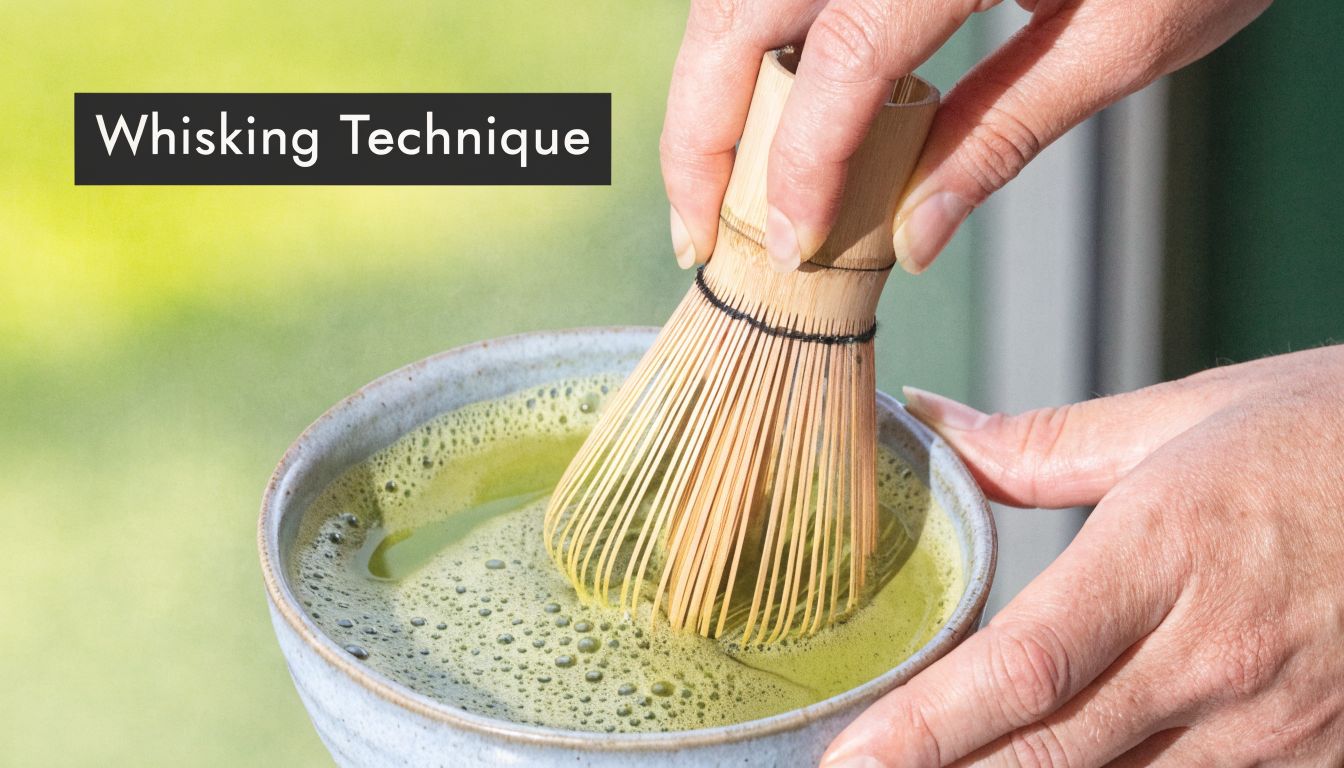
Start by preparing the whisk
Before the matcha touches the bowl, soak the whisk briefly in warm water. This softens the bamboo tines so they open gently and are less likely to snap during use.
A dry whisk is stiff. A softened whisk glides.
The step most people skip
Sift the matcha first. This one action solves an enormous share of home-prep problems.
According to the preparation benchmark cited by Fellow’s matcha set guide, using sifted matcha and 75 to 80°C water achieves a 92% success rate in producing optimal froth, and the vigorous W whisking motion at 200 to 300 strokes per minute is central to building that foam.
Use a fine sieve and press the powder through directly into the bowl. Don’t dump compacted powder into hot water and hope the whisk will rescue it.
A reliable whisking method
Use this sequence when you want a traditional bowl with smooth body and a fine top layer.
Sift the matcha into the bowl
A small mound of fluffy powder is easier to dissolve than compressed clumps.Add hot, not boiling, water
Water in the 75 to 80°C range protects flavour. If it’s too hot, bitterness rises quickly.Begin with slow blending
Use a gentle motion near the base of the bowl to turn the matcha and water into a smooth liquid with no dry pockets.Shift to fast W whisking
Once the powder is dissolved, whisk briskly from the wrist, not the shoulder. The motion should be light, fast, and close to the surface.Stop when the foam looks tight and even
You want fine bubbles, not large froth.
Don’t stir in circles. Circular stirring mixes, but it doesn’t aerate nearly as well.
The physics in plain English
The whisk’s tines break apart tiny clusters of powder while pulling air into the liquid. The bowl’s width gives those movements enough travel to generate a suspended, creamy texture instead of a muddy one.
That’s why the wrist matters. A loose wrist creates speed and lift. A rigid arm creates splashing and uneven mixing.
Here’s a useful visual if you want to watch the motion in real time:
What a finished bowl should look like
A properly whisked bowl should have:
- A smooth body with no visible powder islands
- A fine foam layer rather than big soap-like bubbles
- An even green colour across the surface
- A clean first sip without grit collecting on the tongue
If the bowl tastes grassy but pleasant, you’re close. If it tastes harsh and flat, check water temperature and sifting before blaming the matcha itself.
From Clumps to Flat Foam Troubleshooting Your Technique
You whisk a bowl before work, the colour looks right, but the surface stays flat and the sip turns grainy halfway through. That usually points to a specific fault in the setup, not a mysterious lack of skill.
Matcha is sensitive to small variables. Powder size, bowl shape, whisk flexibility, and local water all change how air and liquid behave in the bowl. In many Australian homes, water straight from the tap carries enough mineral content to affect flavour and tool feel over time, especially compared with the softer water many cafés filter before service.
Persistent clumps usually start before whisking
Clumps form because matcha is hygroscopic. It pulls in moisture from the air, then compresses into little pellets that hot water struggles to break apart. Once those pellets hit the bowl, the outer layer wets first and seals the dry powder inside.
That is why a proper matcha tea sifter matters so much. It separates the powder before water touches it, which gives you a smoother mix and a cleaner texture with less effort from the wrist.
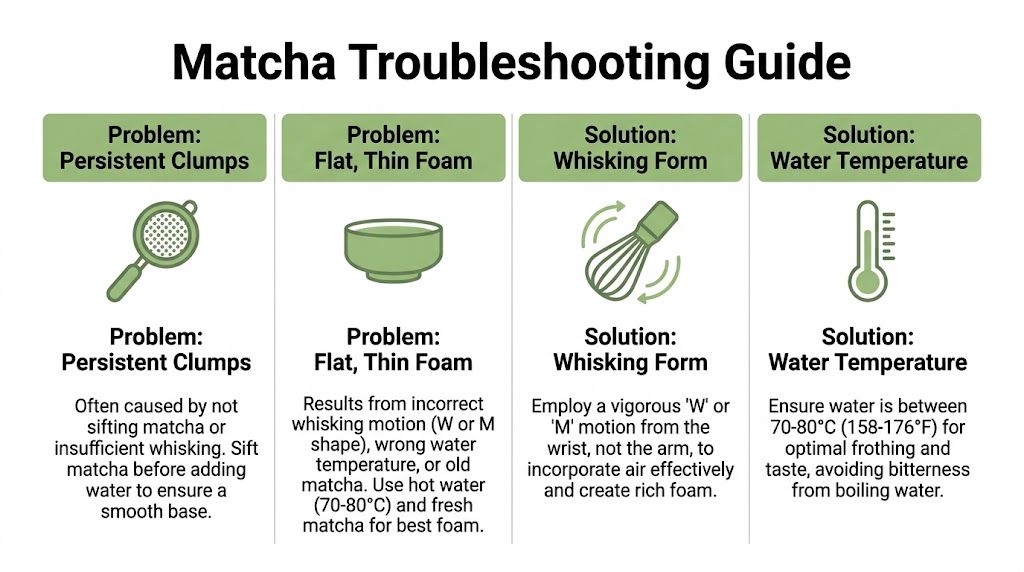
If clumps keep showing up even after sifting, check the age and grade of your matcha. Fresh, finely milled powder disperses far more easily. A clean, vibrant matcha such as Pep Tea’s also gives you a wider margin for error, because the powder itself is milled for a smoother bowl.
Flat foam usually comes from one of three things
Start with the whisk. If the tines feel stiff, stick together, or curl inward, they stop flicking air into the liquid efficiently. Foam depends on many tiny bubbles held in suspension. A tired whisk makes larger bubbles, then those bubbles collapse fast.
Next, check the water. Very hot water weakens sweetness and pushes bitterness forward, but mineral-heavy water can also mute the texture and leave bamboo feeling rough after repeated use.
Then check the bowl. A narrow mug blocks the whisk’s side-to-side travel, so the motion turns into stirring instead of rapid surface aeration. The whisk needs horizontal room to build a tight foam cap.
Quick fixes that usually work
For clumps
Sift into the bowl, add a small splash of water first, and press out any stubborn spots before full whisking.For bitterness
Use water below boiling. If the bowl tastes sharp and hollow, heat is usually the first thing to correct.For weak foam
Inspect the chasen before blaming your technique. Split, brittle, or inward-bent tines cannot trap air properly.For mineral build-up
If your water is hard, rinse the whisk well after each use. An occasional brief soak in warm water with a little white vinegar can loosen residue, followed by a thorough rinse.
When the bowl is the real problem
I see this often with people who start matcha using whatever mug is in the cupboard. The powder can dissolve, but the foam never gets that fine café-style finish because the whisk cannot move freely near the surface.
A wide bowl gives you two advantages at once. It lets the tines travel quickly, and it spreads the liquid into a shallower layer, which makes it easier to pull air through the top. That is the small piece of physics many home brewers miss.
If your motion has improved and your matcha is still coming out thin, change the vessel before changing everything else. Sometimes the best correction is giving the whisk enough room to do its job.
Keeping Your Matcha Whisk and Bowl in Perfect Condition
A bamboo whisk is a working tool. Treat it gently and it rewards you with better texture, cleaner foam, and a more consistent bowl.
The key is speed and simplicity after use.
How to clean the whisk properly
Rinse the whisk under warm water as soon as you finish. Don’t leave matcha drying between the tines, because dried residue makes the whisk stiff and awkward next time.
Skip soap. Bamboo can absorb smell and flavour, and that can end up in the next bowl.
A whisk also dries better when it keeps its natural curve. A matcha whisk stand helps the tines hold their shape while air circulates around them.
How to care for the bowl
The bowl is much easier. Wash it by hand with warm water and a soft cloth, then dry it well before storing. Gentle handling is enough.
A few habits make a real difference:
- Rinse immediately so matcha doesn’t cling to the surface
- Avoid harsh cleaners if you want the bowl’s finish to age well
- Store fully dry to prevent musty cupboard odour
- Keep bamboo out of prolonged soaking because constant saturation weakens it over time
Good maintenance isn’t separate from the ritual. It’s part of the ritual.
When your tools stay clean and correctly shaped, your technique stays reliable. That’s the whole point.
Beyond the Bowl Creative Matcha Recipes
A proper bowl teaches habits that carry into every modern matcha drink Australians make at home. The order stays the same. Sift, add water, whisk smooth, then build the rest around that base.
That matters even more here, because local water can change the result. Softer water often gives a rounder, sweeter bowl, while harder water can make green notes taste sharper, especially once milk or ice enters the mix. Starting with a clean, glossy matcha concentrate gives you more control.
Turn the bowl into a latte base
For a hot latte, whisk a short, strong base in the bowl first. Use less water than for usucha, then whisk until the surface shows a fine foam and the liquid underneath looks fully unified. After that, pour it into warm milk.
This is the part many cafés rush, and the cup shows it. Matcha added straight to milk tends to float, cling to fat, and leave dark specks on the finish. A concentrated base fixes that by hydrating the powder before dilution. Pep Tea’s fine grind makes that step easier, because the particles disperse quickly and stay smoother in the cup.
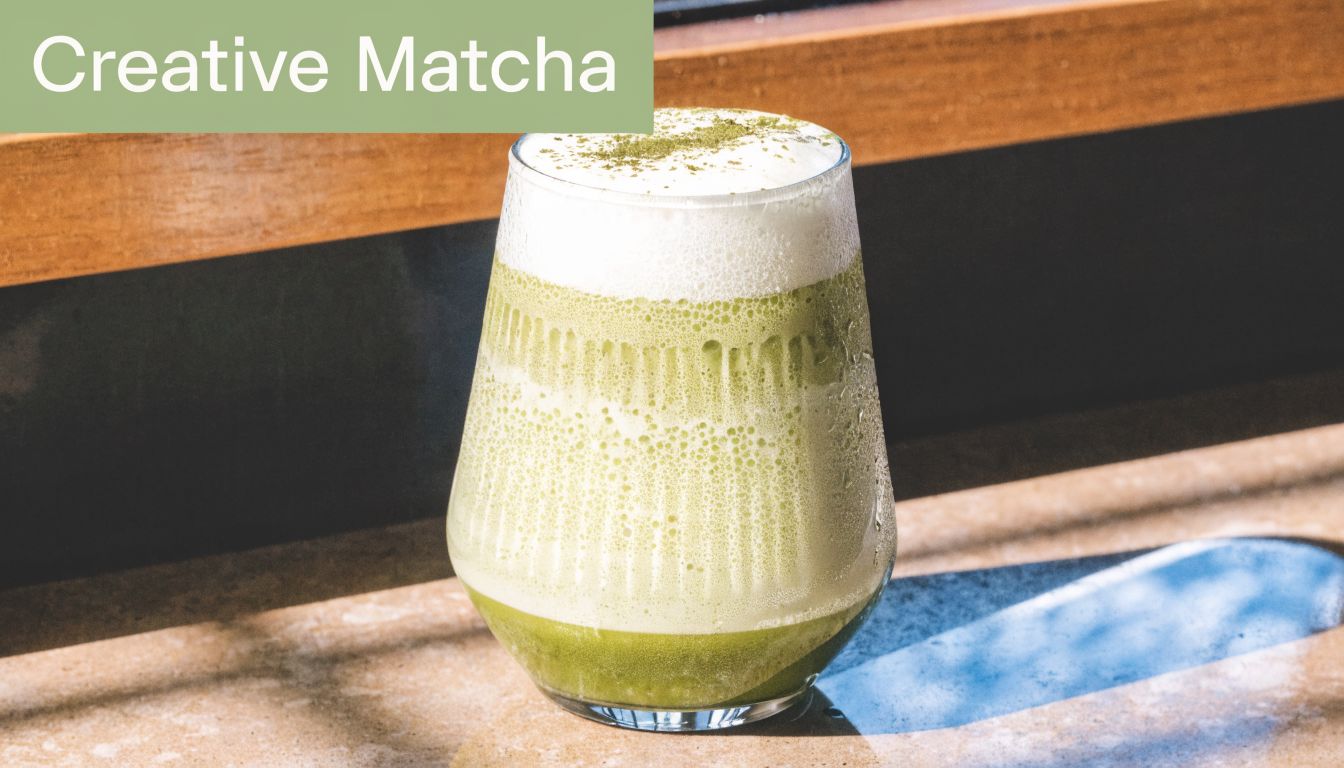
Iced matcha works best when the first step stays traditional
Cold drinks magnify mistakes. Any clump you leave in the bowl becomes more obvious over ice.
Whisk the concentrate with warm water first, then pour it over ice and cold milk. Warm water helps the powder wet evenly. Ice then locks in the texture and keeps the drink bright instead of muddy. If you shake unsifted matcha straight in a jar, you usually get foam on top and sediment underneath, which is a very different drink from a properly built iced matcha.
If you enjoy functional variations, Mushroom Matcha Benefits is a useful read for seeing how matcha is being paired with other wellness ingredients.
Creative recipes that still respect the bowl
A bowl and whisk are not limited to plain matcha. They are the best starting tools for recipes where texture matters.
Try these:
- Iced strawberry matcha. Make the matcha concentrate in the bowl, add strawberry puree to the glass separately, then pour slowly so the layers stay clean.
- Matcha coconut latte. Use coconut milk for body, but keep the matcha base lighter so the drink does not turn heavy or chalky.
- Sparkling matcha tonic. Whisk matcha with a small amount of water until smooth, then top with chilled tonic. The bitterness of tonic can sharpen lower-grade matcha, so this works best with a clean, sweet powder.
- Matcha affogato. Pour a concentrated bowl over vanilla ice cream. The contrast only works if the matcha is smooth and vivid.
Each recipe asks for a different concentration, but the same physics apply. Fine particles need full hydration. Air needs to be introduced in a controlled way. The bowl gives you room to do both before extra ingredients get in the way.
What cafés need to consider
Home drinkers and cafés solve different problems. At home, the goal is pleasure and consistency. In a busy Australian café, speed, staff training, milk workflow, and water filtration all affect the cup.
Many venues now use a hybrid approach. They whisk a proper base for flavour and texture, then adapt the build for service. That trade-off makes sense. Good technique is still good technique, even when the setting is faster and the menu includes iced lattes, strawberry matcha, and seasonal specials.
The bowl remains the quiet advantage. It gives the whisk enough space to move, helps the powder dissolve evenly, and turns recipe experiments into drinks that still taste like real matcha.
Your Matcha Questions Answered
Can I use an electric frother instead of a bamboo whisk
You can. It’s better than using a spoon. But it usually creates larger bubbles and a looser texture.
A bamboo whisk is shaped to produce a finer foam and a smoother mouthfeel. It also gives you more control over how vigorously the matcha is aerated.
Is culinary matcha okay to drink
Yes, especially in lattes, smoothies, and baking. It tends to be stronger and more assertive, which helps it stand up to milk and other ingredients.
For drinking with just water, ceremonial-style matcha is usually the more elegant choice because the flavour is more exposed.
Why does my matcha taste bitter even when I whisk properly
Usually because the water is too hot, or because the powder wasn’t sifted and dissolved cleanly before vigorous whisking. A rough bowl often tastes harsher than a smooth one, even when using the same matcha.
Do I need the bowl, or can I use any cup
Any cup can hold liquid. That’s not the same as helping you make good matcha. A proper bowl gives the whisk room to move, which directly affects texture.
How often should I replace my whisk
Replace it when the tines lose flexibility, begin breaking, or stop producing the texture you expect even with good technique and clean water.
If you’re ready to build a better daily ritual, explore Pep Tea for premium organic matcha, practical accessories, and Australian guidance that makes the process feel approachable rather than fussy.
Best Matcha Tea Set Amazon Picks for 2026

You’ve probably done it already. Typed matcha tea set amazon into the search bar, opened a few listings, then found yourself comparing bowls that all look similar, whisks that all claim to be “traditional”, and kits padded out with extras you may never use.
That confusion is normal.
A matcha set looks simple, but a good one changes how your tea tastes, how easily it froths, and whether you enjoy using it every morning. A poor one can leave you with clumps, a flimsy whisk, and a bowl that feels more decorative than practical. The marketplace is convenient. The hard part is knowing what matters and what is just nice photography.
Matcha is also one of those rituals that feels more complicated online than it is in real life. Once you understand the role of each tool, the whole process becomes calm, quick, and satisfying. That’s when your first bowl stops feeling like a project and starts feeling like a habit you want to keep.
Your Guide to Finding the Perfect Matcha Tea Set on Amazon
You open Amazon for a quick search and suddenly you are comparing twenty near-identical kits before breakfast. One bowl looks elegant but shallow. One whisk seems cheap in the close-up photos. Another set has five accessories, but no clear explanation of what the ceramic or bamboo is like.
That early overwhelm puts many first-time buyers off. It should not.
Buying a matcha set online gets easier once you stop shopping by brand name and start shopping by function. A good set supports the ritual. It gives your whisk room to move, helps you mix the powder properly, and makes the whole process feel simple enough to repeat on a weekday morning. A poor set does the opposite. It turns a calm tea practice into clumps, spills, and frustration.
Demand in Australia is growing, which means marketplace choice keeps expanding. That sounds helpful, but it often creates more noise than clarity. The key question is not which listing has the prettiest photos. It is which set is built from materials that help you prepare matcha well.
That distinction matters because the tools are only half the story. The bowl, whisk, and scoop shape the technique, but the powder decides the flavour, colour, and drinking experience. Even a beautiful set cannot rescue dull, bitter matcha. If you want to understand why some powders taste grassy and sweet while others turn harsh, this guide to the different grades of matcha will help you choose with more confidence.
It helps to borrow the same mindset you would use for everyday ceramics. A plate can look lovely in a product photo and still feel awkward in daily use. The same applies to matcha bowls and accessories, which is why the logic behind choosing a best tableware set applies here too. Good design has to work in the hand, not just on a screen.
You do not need years of tea knowledge to buy well. You need a clear eye for materials, a basic sense of how each tool affects preparation, and the understanding that the finest set still depends on fresh, well-made organic matcha to produce a bowl worth drinking.
Deconstructing the Set What Really Matters in Your Kit
A good matcha set works like a simple kitchen system. Each piece supports one part of the process, and if one tool is poorly made, the whole routine feels harder than it should.
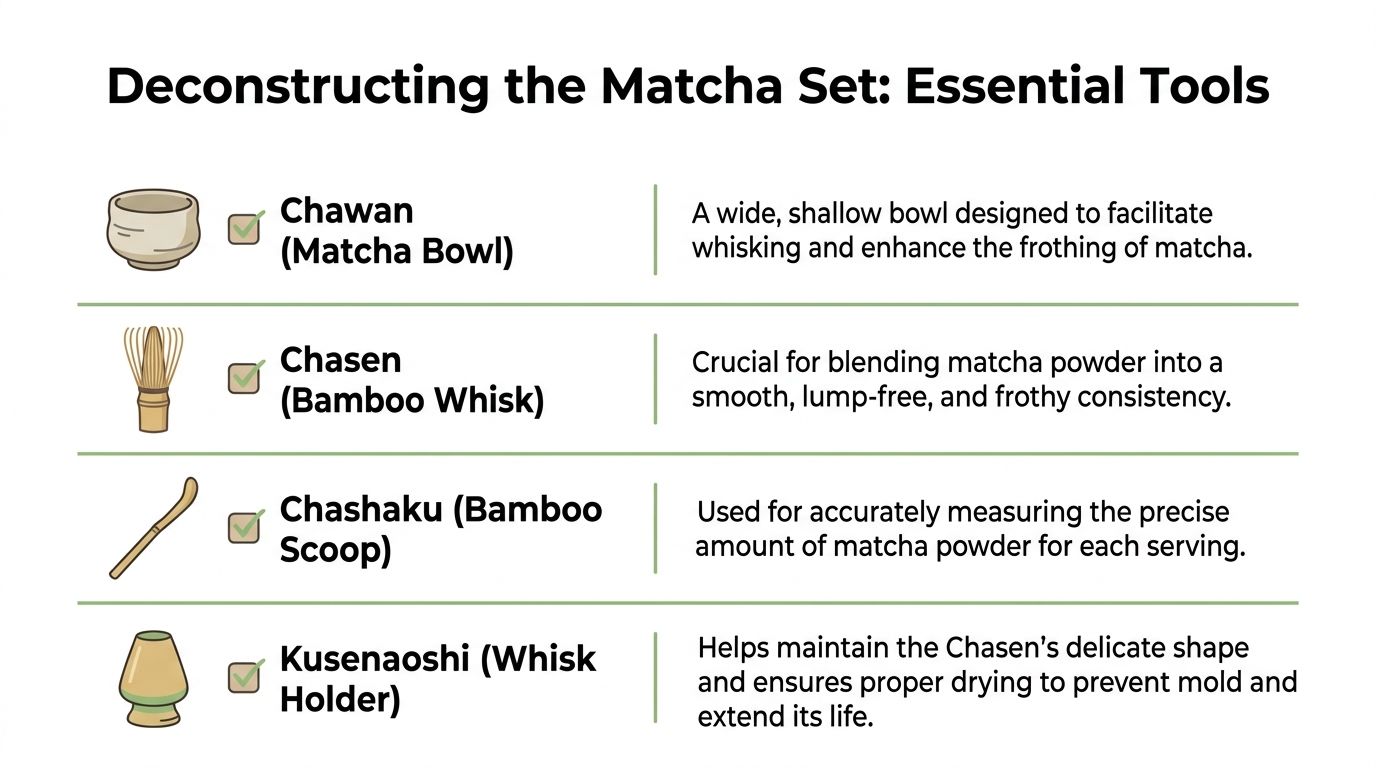
You do not need the biggest kit on Amazon. You need the right core pieces. For most beginners, that means a bowl, a bamboo whisk, a bamboo scoop, and a whisk holder. The bowl gives you space to whisk properly. The whisk breaks up the powder and creates texture. The scoop keeps your portions steady. The holder helps the whisk dry in the shape it was made to keep.
The bowl does more than hold the tea
The chawan, or matcha bowl, shapes the way your whisk moves.
A wide bowl gives your wrist room to make quick zigzag motions across the surface. That motion matters because matcha is suspended in water, not steeped like loose-leaf tea. If the bowl is narrow and steep-sided, your whisk hits the walls, your movement gets cramped, and the tea often ends up with clumps sitting under a thin layer of foam.
Ceramic suits most home buyers well because it has a reassuring weight and helps the bowl feel steady while you whisk. Look for a shape that opens at the top rather than pinching inward. A smooth interior also helps. Tiny ridges or awkward angles can catch the whisk tips and make the whole process feel scratchy.
If aesthetics matter to you, apply the same standard you would use when choosing everyday ceramics. A piece should feel good in the hand as well as look good on the shelf. This guide to the best tableware set explains that balance nicely, and the same logic applies to matcha bowls.
The whisk is the tool that changes the drink
The chasen, or bamboo whisk, has the biggest effect on texture.
A decent whisk separates the powder, blends it with water, and pulls in enough air to create a fine foam. A poor one bends unevenly, sheds splinters, or loses its shape after only a few uses. That difference shows up in the cup straight away. One bowl tastes smooth and creamy. The next tastes gritty, flat, or harsh.
For a first set, check whether the tines look evenly cut and reasonably dense. You do not need to count every tine from a product photo, but you do want a whisk that looks symmetrical and carefully finished. If the bamboo appears thick, rough, or badly spaced, the listing is telling you something.
This is also where people often blame the tools for a flavour problem that starts with the powder. Even a well-shaped whisk cannot make dull matcha taste fresh. If you want to understand how colour, sweetness, and bitterness change from one powder to another, this guide to different grades of matcha will make those differences much clearer. The set helps you prepare matcha properly. The powder decides whether the result is vibrant and pleasant to drink.
The scoop teaches consistency
The chashaku, or bamboo scoop, looks modest, but it solves a beginner problem quickly.
Using a normal teaspoon usually leads to guesswork. One day you add too much and the bowl turns aggressively strong. The next day you add too little and it tastes thin. A scoop gives you a repeatable starting point, which makes it much easier to adjust your recipe with confidence.
It also keeps the ritual cleaner. Matcha is a fine powder, and a purpose-made scoop helps you move it neatly from tin to bowl without the little green cloud that tends to follow a metal spoon.
The whisk holder protects the whisk you paid for
A kusenaoshi, or whisk holder, helps the chasen dry open instead of collapsing inward.
That matters because wet bamboo is delicate. If you rinse the whisk and leave it on its side or tuck it into a drawer, the tines can warp, stick together, or dry in a cramped shape. A holder keeps airflow around the whisk and helps preserve the curve of the tines, which means better whisking over time.
It is a small item, but it saves wear on the part of the set that does the most work.
What to check at a glance
| Tool | What to check | Impact on Your Tea |
|---|---|---|
| Chawan | Wide ceramic bowl with an open shape | Gives your whisk room to move and helps reduce clumping |
| Chasen | Even bamboo tines, neat finish, balanced shape | Blends powder smoothly and creates finer foam |
| Chashaku | Proper bamboo scoop | Keeps portions more consistent from bowl to bowl |
| Kusenaoshi | Included or easy to add | Helps the whisk dry properly and hold its shape |
The easiest way to judge a set is to ask a practical question about each piece. Will this bowl let me whisk freely? Will this whisk stay usable after regular rinsing? Will this scoop help me repeat a recipe I enjoy? Amazon listings can make every set look polished. Materials and function tell the full story.
And once the tools are sorted, the last decision matters just as much. Fresh organic matcha with good colour and a balanced taste will reward every bit of care you put into the set.
A Smart Shopper’s Checklist for Buying on Marketplaces
Buying from a marketplace is convenient. It also asks you to do some quality control yourself.

A good listing tells you what the set is made from, shows the pieces clearly, and gives you enough detail to judge whether the tools are functional. A weak listing leans on buzzwords like “premium” and “Japanese style” without saying much else.
Read reviews like a buyer, not a browser
Don’t stop at star ratings. Open the written reviews and search for the words whisk, crack, mould, splinter, ceramic, and packaging.
You are trying to answer practical questions:
- Did the whisk hold its shape after use
- Did the bowl arrive intact
- Did the glaze or ceramic feel solid
- Did buyers mention poor finishing or rough edges
A lot of marketplace regret comes from buying a lovely-looking set that performs badly.
Check the materials, then check what is missing
A strong listing usually names the bowl material and gives some indication of the whisk style. If the description is vague, that tells you something too.
There is also a safety angle many buyers miss. Analyses of Australian forums have found many discussions about greenwashing and the lack of local FSANZ compliance in imported sets, while some independent tests have shown imported ceramic and tea products can exceed safety limits for heavy metals. That concern is rarely addressed in Amazon reviews. This matters most when you are choosing the parts that touch hot water and the powder you consume.
Key takeaway: Buying the tools on a marketplace can be fine. Be more selective about the matcha itself and where it comes from.
Use a simple marketplace filter
When I help someone choose a first set, I suggest this quick filter:
- Look for clear component photos. You should be able to see the bowl shape, whisk profile, and whether a holder is included.
- Prefer functional descriptions. Specifics beat marketing language.
- Treat missing safety detail as a caution sign. Especially for ceramics and anything sold as “organic” without clear backing.
- Separate the tools from the tea. It often makes sense to buy the set from Amazon and buy the matcha from a trusted Australian supplier.
That final point is important. The set affects technique. The powder affects flavour, colour, aroma, and your overall experience. If you want the convenience of marketplaces but also want to think carefully about how online retail ecosystems differ, this broader comparison of Amazon vs Takealot offers useful context on how marketplace models shape product discovery.
If you’re browsing sets and want a dedicated starting point, this collection is a useful reference: https://peptea.com.au/tag/buy-matcha-set/
Your First Bowl How to Prepare Perfect Matcha at Home
You open the Amazon box, set the bowl on the bench, and suddenly the whole thing feels a little more real. The good news is that your first bowl does not need ceremony-level precision. It needs a few simple habits that help the tea taste clean, smooth, and fresh.
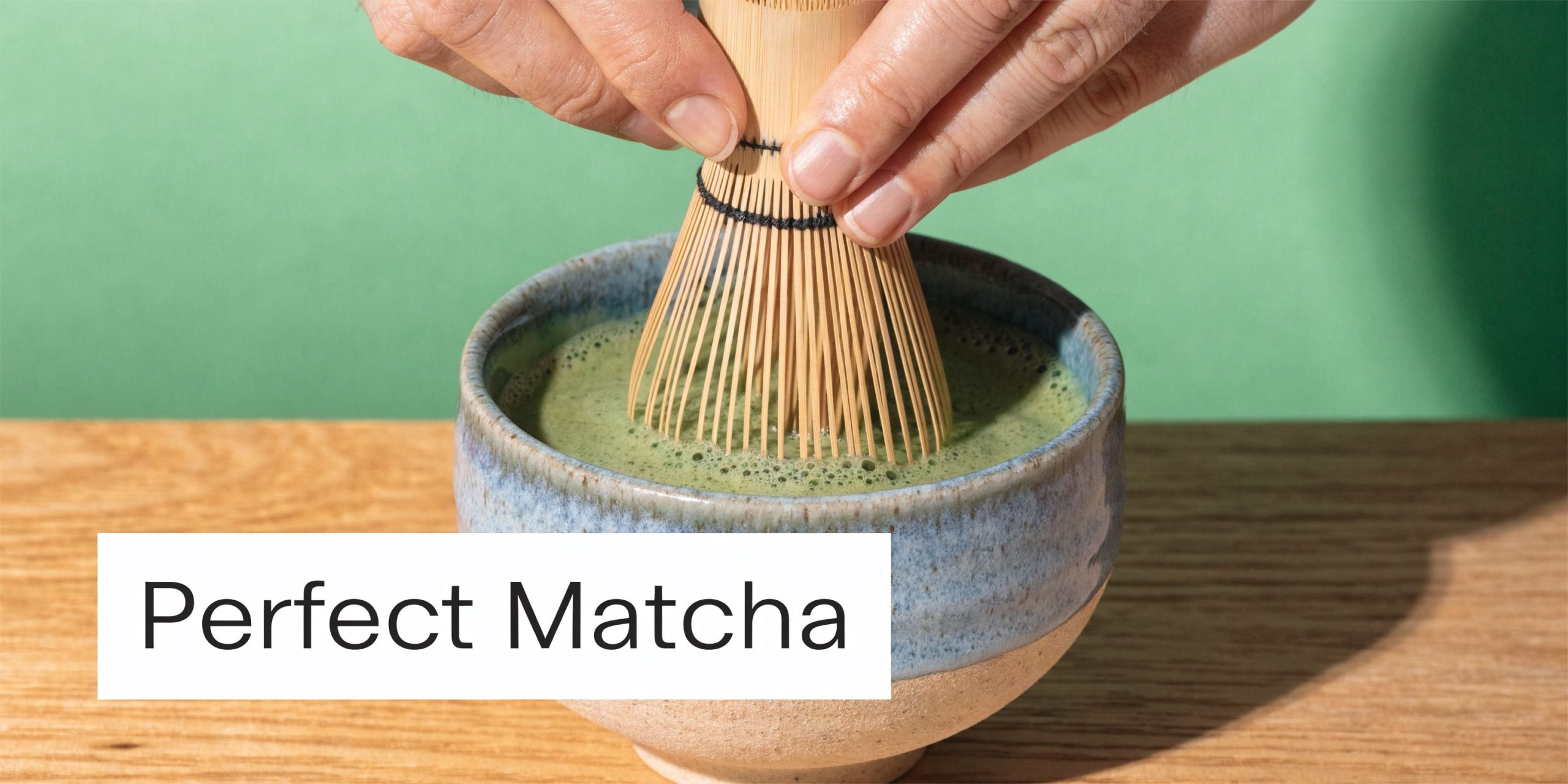
Start by setting up the bowl properly
Warm the bowl with a little hot water, then pour it out and dry the inside. This small step does two useful things. It takes the chill off the ceramic, and it gives you a dry surface for the powder so it does not stick in damp patches.
Then check your water. Matcha is delicate, so boiling water is too aggressive for most powders. Aim for water that is hot but not scorching, around 75 to 80°C. If the tea turns bitter or loses its sweetness, water temperature is often the first thing to correct.
Sift first, then build the bowl
Many first-time drinkers blame themselves when matcha turns lumpy. Usually the problem is much simpler. Powder naturally compresses in the tin, so sifting helps loosen it before whisking.
Here is an easy first-bowl method:
- Add a small amount of matcha to the bowl. Start modestly so you can learn the texture.
- Sift the powder. This breaks up clumps before water goes in.
- Pour in a small splash of hot water. You want enough to whisk, not a full bowl yet.
- Whisk with quick wrist movement. Let the whisk glide across the surface rather than press into the base.
- Add a little more water if needed. Adjust the strength to suit your taste.
That sequence matters. Sifting gives you a smoother starting point. A small amount of water helps the powder disperse evenly before you dilute it further.
Why the whisking motion matters
Circular stirring feels intuitive, but it tends to leave heavier bits sitting at the bottom. Matcha tastes better when the powder stays suspended through the liquid and a light foam forms on top.
Use quick, light strokes in a W or zigzag pattern for about 20 to 30 seconds. The motion works like shaking air into the tea while breaking up any last tiny clumps. If the whisk is scraping hard against the bowl, ease up. The tines should flex and skim, not grind.
If you want a clearer visual before making your first bowl, this guide on how to whisk matcha properly is a helpful companion.
Here’s a visual walkthrough for the home ritual:
Common beginner mistakes, and how to fix them
A disappointing first bowl usually comes down to one of a few simple issues.
- Water is too hot. The flavour turns sharper and less balanced.
- Powder was not sifted. Small clumps survive even energetic whisking.
- Too much water was added at the start. The matcha struggles to blend smoothly.
- The whisk was pushed down instead of moved across the surface. That makes whisking harder and can strain the bamboo.
- The powder itself is low grade or stale. Good technique helps, but it cannot create sweetness, colour, or aroma that is not there in the first place.
That last point is easy to miss on marketplaces. A beautifully photographed set can still produce an average bowl if the tea is dull. The tools shape the process. The matcha shapes the flavour, colour, and how satisfying the drink feels once it reaches your lips.
A simple matcha latte variation
Your set is useful for more than traditional usucha. It also gives you a much better base for a latte than dropping powder straight into milk.
Try it this way:
- Whisk matcha with a small amount of hot water until smooth
- Warm your milk separately
- Pour the milk over the whisked matcha
- Sweeten only if you want to
This works because water hydrates the powder first. Milk alone makes that harder, which is why café-style drinks often turn gritty when made without a bowl and whisk. If you want more tea character, use less milk. If you want a softer cup, add more.
Make the routine simple enough to repeat
A good bowl of matcha is smooth, lively, and pleasant to drink. It does not need to look perfect on day one.
The ritual is valuable because it slows you down for a minute. The tools are valuable because they make that minute easier. And the matcha powder matters most, because fresh organic tea is what gives you the bright colour, gentle sweetness, and clean finish you were hoping for when you bought the set.
Beyond the Bowl Creative Ways to Enjoy Your Matcha
Once you have a set on the bench, it tends to get used for more than one kind of drink. That’s a good thing. Matcha fits into everyday routines far more easily than many people expect.
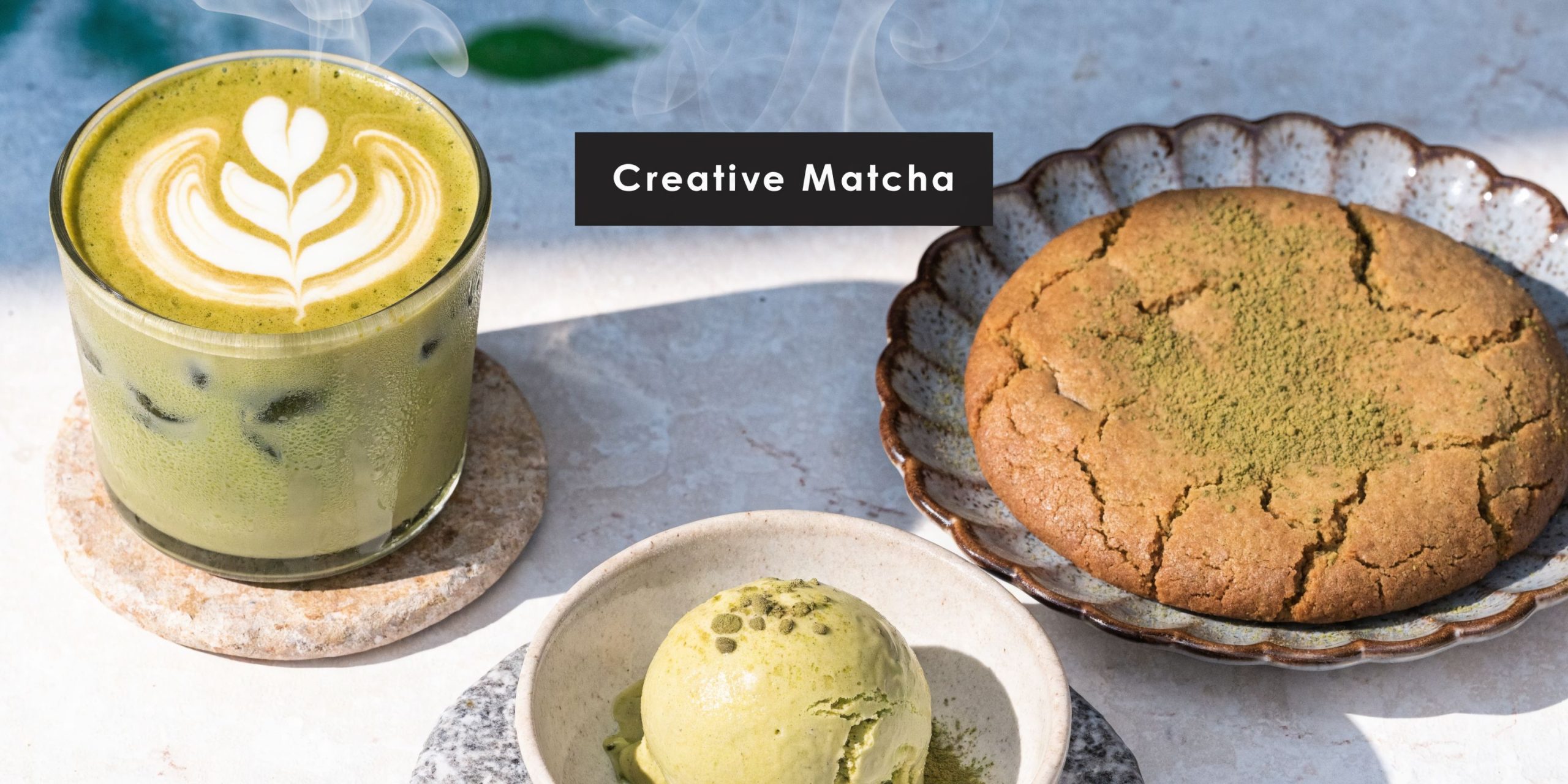
The quick morning option
Some mornings call for the full bowl-and-whisk ritual. Some do not.
On a busy weekday, whisk matcha with a little water in your bowl, then pour it into a glass bottle or travel cup with cold water and ice. Shake and go. You still get a smoother result than trying to stir powder into a bottle from scratch.
A few easy ways to use your kit
Your bowl and whisk are handy beyond plain tea:
- Breakfast smoothie. Whisk matcha with a splash of water first, then blend it with banana, yoghurt, and milk.
- Yoghurt topping. A light dusting adds colour and a gentle grassy note.
- Pre-gym drink. A short, concentrated bowl can slot into a morning routine when coffee feels too heavy.
- Iced latte. Build the smooth matcha base in the bowl, then pour over cold milk and ice.
For cooks, bakers, and the curious
Matcha also works beautifully in simple food ideas at home. Stir it into overnight oats, fold it into chia pudding, or use it in baking where you want colour and a fresh green tea note.
The reason many people stick with matcha once they start is not just taste. It’s flexibility. One tin can move from a quiet bowl in the morning to an afternoon iced latte to a weekend baking project.
Tip: If you’re using matcha in recipes, whisk it with a small amount of liquid first. That gives you a smoother mix and better colour.
A dedicated culinary-style powder is usually the practical choice for recipes because it lets you use matcha more freely in lattes, smoothies, and baking without feeling like every spoonful should be reserved for ceremonial drinking.
Caring for Your Set to Ensure a Lifetime of Tea
A matcha set is easy to care for if you do the small things straight after use.
Look after the whisk first
Rinse the chasen with water as soon as you finish whisking. Don’t use soap. Don’t scrub the tines. Don’t leave dried matcha sitting in the bamboo.
Shake off excess water gently, then place the whisk on its holder to dry. That helps the prongs keep their shape and reduces the chance of mould from trapped moisture.
Keep the bowl simple
The chawan usually only needs warm water and a soft wash. If it has a handcrafted glaze, treat it with the same care you’d give any favourite ceramic bowl. Avoid knocking the rim with the whisk handle or stacking it carelessly in a crowded cupboard.
Build a two-minute habit
The easiest maintenance routine is this:
- Rinse immediately so matcha doesn’t dry onto the bamboo
- Air dry fully before storing
- Use the holder for the whisk rather than laying it flat in a drawer
- Store carefully where the bowl won’t chip
A well-kept set feels better to use, and that matters. Tea habits last when the process stays easy.
Common Questions About Buying and Using Matcha Sets
Is an expensive set worth it
Sometimes yes, often no. Price alone does not guarantee a better bowl. Focus on material quality, bowl shape, and whisk construction rather than luxury packaging or extra pieces you won’t use.
Can I use an electric milk frother instead of a bamboo whisk
You can, especially for lattes. But it creates a different texture. A bamboo whisk gives you finer control and a more even foam in a traditional bowl. A frother is a shortcut, not a full substitute.
What’s the difference between ceremonial and culinary matcha
In simple terms, ceremonial styles are usually chosen for drinking with water, while culinary styles are commonly used in lattes, smoothies, and recipes. The best choice depends on how you plan to use your set day to day.
Are Amazon sets durable enough for a small café
Usually for light use, not always for service speed. Some industry reports indicate that café owners cite frother breakage in high-volume prep as a common issue with consumer-grade sets. Home-use Amazon kits can be great for personal routines, but cafés often need sturdier tools and replaceable parts. If you’re setting up a menu rather than a kitchen shelf, think commercial durability first.
If you’re ready to move from browsing to better brewing, explore Pep Tea for premium organic matcha and practical guidance for home drinkers, cafés, and anyone building a healthier tea ritual in Australia.
How to Make an Iced Matcha Latte Like a Pro Barista

Making a refreshing iced matcha latte at home is surprisingly simple. At its core, you just whisk high-quality matcha powder into a smooth paste with warm water, then pour it over ice and your milk of choice. But the real secret to a café-quality drink—one that’s vibrant and creamy, not clumpy and bitter—is all in the technique and the quality of your ingredients.
Crafting the Perfect Iced Matcha Latte at Home

Forget paying top dollar for inconsistent café lattes. We're here to show you how to create a bright, creamy, and perfectly balanced iced matcha latte right in your own kitchen. This isn't just about stirring some green powder into milk; it's about mastering a few simple details that make all the difference, giving you a delicious and healthy drink every time.
Why Make Your Own Iced Matcha Latte?
When you take control of the process, you guarantee a better drink. Every single time. You get to choose the quality of your ingredients and dial in the flavour exactly how you like it. Plus, there are some pretty great benefits that align with a healthy, wellness-focused lifestyle.
- Customisable Sweetness: So many café versions are just loaded with sugar. At home, you control everything. Use a touch of honey or maple syrup, or have it completely unsweetened to let the matcha’s real flavour shine through.
- Better Quality Ingredients: This is a big one. You can choose a premium organic matcha, which has a much more robust flavour and is packed with antioxidants for clean, sustained energy. The difference in taste and health benefits is immediately noticeable.
- Cost-Effective: A daily café run adds up fast. Making your own is significantly cheaper in the long run. A single tin of quality matcha will see you through dozens of delicious lattes.
The real beauty of a homemade iced matcha latte is in the ritual itself. Taking a few minutes to mindfully whisk that vibrant green powder creates a moment of calm before you even take the first sip.
We’ll guide you through choosing the right ingredients and mastering the whisk, ensuring a silky-smooth, flavourful latte every single time. It's fascinating to see how a few delicate leaves become the powder for your drink, a process you can learn more about by understanding how Matcha tea is made.
Whether you're a long-time matcha lover or just starting out, this guide will give you the confidence to whip up a refreshing drink that’s packed with the clean, sustained energy of premium organic matcha. Let's make your homemade iced matcha latte the best you've ever had.
A great iced matcha latte isn’t about a complicated recipe. It’s about the ingredients. Get these three things right, and the final drink will come together beautifully, giving you that perfect balance of earthy flavour, creamy texture, and vibrant colour you’d expect from a top-tier Australian café.
Your Matcha Grade Makes All the Difference
This is the most important decision you’ll make. The dusty, bitter green powder from the back of the supermarket shelf just won’t cut it here. For a latte with a rich, balanced flavour that doesn’t get lost behind milk and ice, you need a high-quality powder designed for the job.
But not all high-quality matcha is right for a latte. It comes down to choosing between two main grades: Ceremonial and Culinary.
Matcha Grade Guide for Your Latte
Picking the right matcha can feel confusing, but for a latte, the choice is actually quite straightforward. This table breaks down what you need to know.
| Matcha Grade | Best Use | Flavour Profile | Colour | Why It Works |
|---|---|---|---|---|
| Ceremonial Grade | Drunk on its own with water | Delicate, subtle, sweet, umami-rich | Bright, almost neon green | Its nuanced flavour is prized for traditional tea ceremonies but gets completely lost when mixed with milk and sweeteners. |
| Culinary Grade | Lattes, smoothies, baking, cooking | Bolder, more robust, slightly astringent | Deeper, more forest green | It's specifically designed with an assertive flavour that punches through the creaminess of milk, ensuring the matcha taste remains the star. |
For an iced matcha latte, a premium culinary grade matcha is your secret weapon. It has the strength to stand up to other ingredients without tasting bitter.
A high-quality culinary grade, like our PepTea Organic Matcha, delivers that robust flavour you’re looking for. It’s stone-ground from certified organic Japanese leaves, giving you that vibrant green colour and a smooth finish, every time.
Choosing the Right Milk for the Job
The milk you pick has a massive impact on the latte’s final texture and taste. There’s no single "best" option; it’s all about the experience you want to create.
- Full-Cream Dairy Milk: This is the classic for a reason. It delivers a rich, velvety creaminess and has a natural sweetness that complements matcha perfectly.
- Oat Milk: The café favourite. Oat milk is famously creamy and creates a luxurious mouthfeel very similar to dairy. Its neutral, slightly sweet flavour really lets the matcha shine.
- Almond Milk: A lighter, more refreshing choice. It’s less creamy than oat or dairy, resulting in a less decadent latte with a subtle nutty background note.
- Soy Milk: Another fantastic plant-based option. Soy is creamy and has a distinct flavour of its own that pairs surprisingly well with matcha’s earthiness.
The incredible rise of matcha lattes isn't just a fleeting trend. Urban Australia's café culture has embraced them completely, with specialty cafes seeing a 28% year-over-year surge in major cities. This growth, detailed in recent Asia-Pacific matcha market research, is all about premium organic matcha becoming the hero of the iced drink menu.
Using Sweeteners to Enhance, Not Overpower
Even if you prefer a clean, low-sugar drink, a little sweetness can work wonders by rounding out matcha’s complex, earthy notes. The goal is to complement, not to mask.
Natural sweeteners are your best bet. A small drizzle of honey or maple syrup harmonises beautifully with the matcha. Just remember to start small—you can always add another drop, but you can’t take it away. Building your latte from a foundation of quality is what makes it a delicious, guilt-free treat.
How to Prepare a Perfectly Smooth Matcha Paste
If you've ever had a gritty, lumpy homemade iced matcha latte, you know the disappointment. The secret to that smooth, vibrant, café-quality drink isn't complicated, but it all comes down to one crucial step: how you prepare the matcha itself.
Get this first step right, and everything else falls into place. You need to create a smooth, silky paste that will dissolve completely into your milk. This is often called "blooming" the matcha, a process that wakes up the powder, unlocking its full colour and deep, earthy flavour. If you're interested in the food science behind it, this article on what does bloom mean in cooking is a great read.
It all starts with just a few simple building blocks.

Think of these as the foundation: quality matcha, your milk of choice, and a touch of sweetener if you like. That's all it takes.
The Traditional Method Using a Bamboo Whisk
For the most authentic experience, a bamboo whisk (known as a chasen) is the tool for the job. Its fine, flexible prongs are perfectly designed to break up clumps and aerate the tea, creating a beautiful, delicate froth.
Here’s the method that has been used for centuries:
- First, always sift your matcha. Use a small, fine-mesh sieve to sift 1-2 teaspoons of matcha powder directly into a small bowl. This is the single most important thing you can do to prevent lumps. Don't skip it.
- Next, add a splash of warm water. Pour about 60ml (2 ounces) of warm—not boiling—water over the powder. The perfect temperature is around 80°C. If the water is too hot, it will scorch the delicate tea leaves, leaving you with a bitter taste.
- Now, whisk. The technique is key. Move the chasen back and forth in a quick ‘W’ or ‘M’ motion. Forget stirring in circles; you need vigorous, zig-zag movements for about 20-30 seconds. You’ll know you’re done when all the powder has dissolved and a fine layer of foam has formed on the surface.
The goal is a smooth, vibrant green paste with a consistency like thin paint. This concentrated shot is what will mix perfectly into your cold milk and ice, no clumps in sight.
The Modern Shaker Jar Hack
Don't have a bamboo whisk? No worries. A simple shaker bottle or even a small jar with a tight-fitting lid is a brilliant, low-fuss alternative that works surprisingly well. It’s our go-to method when we’re in a hurry or away from our kitchen.
Just add your sifted matcha powder and the same 60ml of warm water to the jar, seal it up tight, and shake it like you mean it for about 30 seconds.
The agitation inside the jar does an excellent job of breaking down the powder, leaving you with a frothy, perfectly mixed matcha shot that’s ready for your latte. It's incredibly convenient and proof that you don't need all the traditional gear to make a seriously good iced matcha at home.
Right, you've got your perfectly smooth matcha paste. The hard part is over. Now for the fun bit: putting it all together to create that beautiful, layered latte you see in good cafés.
This is the easiest step, but a little bit of technique is what makes it look like a pro made it.

First up, grab your favourite tall glass. Getting the café feel at home often comes down to little details like glassware. If you’re curious about what works best, there are some great guides on choosing the best smoothie cups that will do the job perfectly.
Fill that glass all the way to the top with ice. This isn’t just for keeping it cold; the ice is what will help you create those distinct, flowing layers.
Building Your Latte Layers
Pour in your milk—whether that’s creamy oat or full-cream dairy—but be sure to leave about two or three centimetres of space at the top. This is crucial for giving you enough room for the main event without making a mess.
Now for the final touch. Slowly pour your vibrant green matcha paste directly over the ice.
Pro Tip: Don't just pour it anywhere. Aim for one of the larger ice cubes near the top of the glass. When the matcha hits the cold surface of the ice, it will disperse gently and cascade down through the milk, creating that stunning, marbled effect that looks so good.
Before you dive in, give it all a gentle stir with a long spoon or straw. You’ll see the rich, earthy matcha swirl into the creamy milk, creating a drink that’s perfectly balanced.
It's this exact drink that’s seen some serious growth in popularity. Projections show the Australian matcha latte powder market is set to jump from $33.215 million to $76.59 million in sales.
It just goes to show how much Aussies are embracing matcha, especially in a refreshing iced latte. If you’re looking for more ideas, you can check out our other guide on how to make the perfect matcha latte, which covers both hot and cold versions.
Creative Twists on Your Iced Matcha Latte
Once you’ve nailed the classic recipe, your kitchen officially becomes your own private matcha bar. This is where the real fun begins. It’s your chance to get creative, personalise your drink, and discover flavour combinations you won’t find in just any café.
The beauty of a homemade iced matcha latte is that it’s a perfect blank canvas. Let’s explore a few simple but brilliant ways to add your own signature touch.
Fruity and Refreshing Matcha Variations
Adding fruit is a fantastic way to introduce natural sweetness and a vibrant, seasonal twist, especially during the warmer months here in Australia. It’s all about creating a balance where the fruit complements the matcha, not overpowers it.
A few ideas to get you started:
- Strawberry or Mango Matcha Latte: Muddle a few fresh strawberries or a spoonful of mango purée at the bottom of your glass before adding ice. The sweetness of the fruit pairs beautifully with matcha's earthy notes, creating a layered drink that’s both gorgeous and delicious.
- A Hint of Mint or Vanilla: For something more subtle, try a single drop of pure vanilla extract or muddle a few fresh mint leaves with your sweetener. A vanilla matcha latte is creamy and comforting, while mint adds an incredibly refreshing, cool finish.
The key is to start small. You can always add more flavour, but you can’t take it away. A little bit of fruit purée or a single drop of extract is often all you need to completely transform your drink.
The Ultimate PepTea Innovation: The Matcha Kombucha Fizz
Here’s a unique recipe we absolutely love—one that combines the benefits of two of our favourite organic drinks. This is the perfect way to add a probiotic-rich, gut-friendly boost to your afternoon pick-me-up.
This twist creates a lively, effervescent drink that is wonderfully complex and refreshing. The sharp, spicy notes from the ginger in the kombucha cut through the creaminess of the latte, creating a truly unique flavour experience.
To make it, simply prepare your iced matcha latte as you normally would, but leave about an inch of space at the top of your glass. Then, top it off with a generous splash of our PepTea Ginger or Lime & Ginger organic kombucha.
You’ll see it fizz up instantly, creating a beautiful, frothy head. It’s an exciting, modern take on the iced matcha latte that’s as good for your gut as it is for your tastebuds. For more inspiration on chilled drinks, our simple iced matcha tea recipe provides another great starting point.
Troubleshooting Common Matcha Latte Problems
So, you’ve followed the steps, but your iced matcha latte just isn’t quite right. It happens. Most of the time, a disappointing matcha comes down to a few small, easily corrected details. Let’s walk through the common culprits and how to fix them.
A lumpy or gritty texture is the most frequent complaint, and the fix is always at the very beginning. Always sift your matcha powder through a fine-mesh sieve before you add a drop of water. This single step is the difference between a chalky drink and a silky-smooth one. It’s non-negotiable.
Why Does My Matcha Taste Bitter?
A harsh, bitter aftertaste is a dead giveaway that something went wrong. It almost always points to one of two things: the water was too hot, or the matcha itself is poor quality.
If you’re using boiling water to make your matcha paste, you’re scorching the delicate tea leaves. That’s what brings out those unpleasant, bitter flavours. The ideal temperature is around 80°C. No temperature-controlled kettle? No problem. Just boil the water and let it cool for a minute or two before pouring.
The other factor is quality. Low-grade matcha powder often has a dull, yellowish-green colour and a naturally bitter profile. For a clean, rich flavour, you need to start with a vibrant, high-quality culinary grade matcha. There’s simply no substitute.
Solving Weak or Watery Lattes
Does your drink taste more like faintly green milk than a proper matcha latte? The problem is almost certainly your ratio. You’re just not using enough matcha.
A good starting point is one to two teaspoons of matcha per 250ml of milk. Don’t be afraid to add more if you want a bolder, more robust flavour that can stand up to the milk and ice. You’re in control here, so find the balance that you love.
There’s a reason so many people are trying to perfect this at home. The popularity of iced matcha lattes has exploded, with Australia's matcha market soaring to over $54 million in revenue by 2024. It’s become the go-to summer drink in cafes nationwide, a clear sign that Aussies are embracing healthier, antioxidant-rich alternatives. You can read more about this shift by exploring the local matcha boom.
Common Iced Matcha Latte Questions
Even a straightforward recipe can leave you with a few questions. Making a great iced matcha latte at home is mostly about technique, and a few small adjustments can make all the difference. Here are the answers to the questions we get asked most often.
Can I Make an Iced Matcha Latte Without a Whisk?
You absolutely can. While a traditional bamboo whisk (chasen) is designed for the job, it’s not the only way to get a clump-free paste. A simple shaker jar or a blender works just as well.
Just add your sifted matcha and a little warm water, seal the lid, and shake it like you mean it for about 30 seconds. A handheld milk frother is another fantastic alternative for whipping the matcha and water into a smooth, vibrant slurry.
Is Matcha a Better Choice Than Coffee for Anxiety?
Many people report that matcha gives them a "calmer" energy boost compared to coffee. This difference often comes down to L-theanine, an amino acid found in matcha that is thought to promote a sense of relaxed focus.
It works with the caffeine, not against it, helping to smooth out the typical jitters, spike, and crash that some people get from a strong coffee. You get the alertness, but it feels more sustained and level.
How Much Matcha Should I Actually Use?
A good starting point for a balanced latte is one to two teaspoons of matcha for every 250ml of milk. This gives you a noticeable but not overpowering matcha flavour.
That said, the "perfect" ratio is entirely personal. If you love a stronger, more earthy and intense matcha hit, don’t be afraid to add a little more. Start with one teaspoon, taste it, and adjust your next one until you land on a ratio you love.
If you’re making your latte ahead of time, just be aware that the matcha will naturally settle at the bottom. Store it in the fridge (without ice) and just give it a good shake or stir right before you pour and drink.
Ready to create your own vibrant, antioxidant-rich latte? PepTea is an Australian-owned company dedicated to bringing you the best. We offer premium, stone-ground organic culinary matcha that delivers exceptional flavour and colour every time. Explore our range and taste the difference quality makes.