
Category: Learn About Tea
Matcha Bowl Australia: How to Choose, Use and Care

You've sifted your matcha, heated the water and reached for the nearest cereal bowl. A few brisk wrist movements later, green powder is clinging to the sides, water has splashed across the bench and the drink looks flat rather than softly foamed. The problem usually isn't the matcha or the whisk. It's the bowl.
A purpose-built matcha bowl in Australia, traditionally called a chawan, gives the bamboo whisk enough room to move properly. Its shape, base and interior surface all influence how easily you dissolve the powder and create a fine foam. Whether you're making ceremonial matcha at home or building a visible matcha service for an Australian café, the right chawan is a practical brewing tool, not merely a decorative piece.
Why Your Kitchen Bowl Is Failing Your Matcha
The bowl looks harmless on the kitchen bench. It may even seem generous compared with a small teacup. Yet a standard cereal bowl often has a curved base, steep sides and an awkward depth that forces the whisk to work vertically rather than laterally.
That changes the movement. Instead of sweeping freely across the surface, the bamboo whisk catches against the sides or presses into the bottom. Matcha gathers in corners, clumps remain suspended in the water and the whisk can flick liquid over the rim. You end up stirring the powder rather than aerating it.
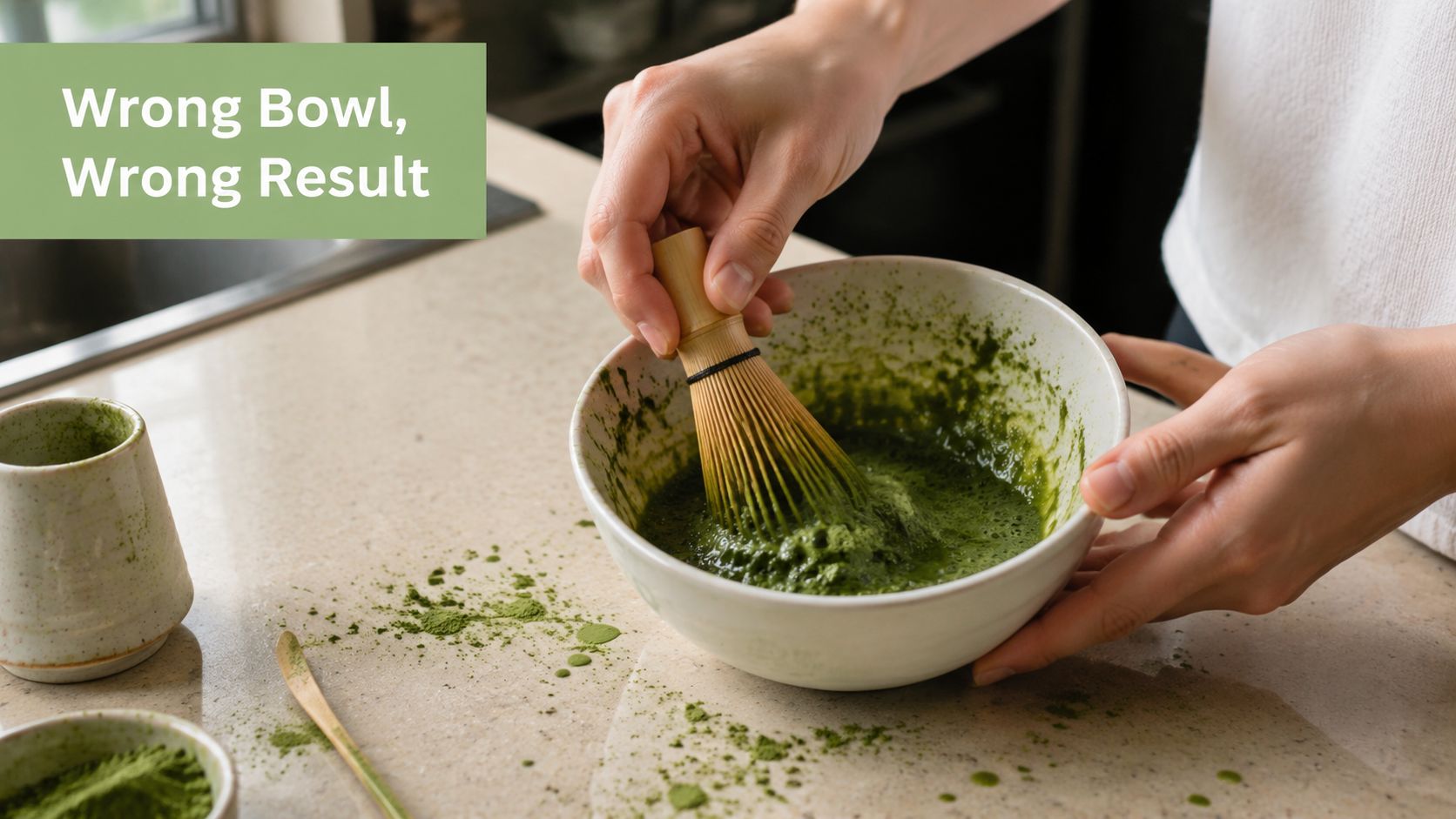
The bowl changes the wrist movement
A chawan is wider and lower, so your whisk can travel from side to side in a quick, controlled motion. Think of the difference between trying to sauté in a narrow saucepan and using a broad chef's pan. Both hold food, but only one gives the utensil enough working space.
The same principle applies to matcha. The bowl lets you keep the whisk near the surface, where the tines can break up powder and pull air through the tea. A stable base also means you can hold the chawan lightly with your non-dominant hand instead of chasing it around the bench.
Practical rule: If your whisk hits the sides before it can move freely, the bowl is working against your technique.
Australian specialty listings commonly describe matcha bowls as wide, shallow chawan forms because the larger diameter gives a bamboo whisk more lateral room. That extra space helps reduce clumping and supports a finer foam layer during rapid mixing, as shown by Australian matcha bowl specifications.
What a Chawan Is and Why Shape Matters
At an Australian café workshop, a chawan earns its place through function as much as tradition. It is the bowl used to prepare and drink matcha, shaped around the movement of a bamboo whisk and the hands holding it. Japanese tea practice gives the vessel cultural meaning, while its geometry solves a practical brewing problem: helping powder, water and air meet evenly.
Start with the rim. A broad opening gives the chasen room for quick, controlled strokes across the surface. A narrow cup restricts the tines, and a deep bowl encourages downward stirring, leaving powder beneath the whisk. The result is closer to mixing than aerating.
The low profile matters too. With a shorter distance between base and rim, you can see the liquid and keep the whisk close to the surface. A chawan works like a chef's pan: it provides useful working space and enough depth for movement. A plate lacks structure, while a cereal bowl often has too much depth for efficient whisk geometry.
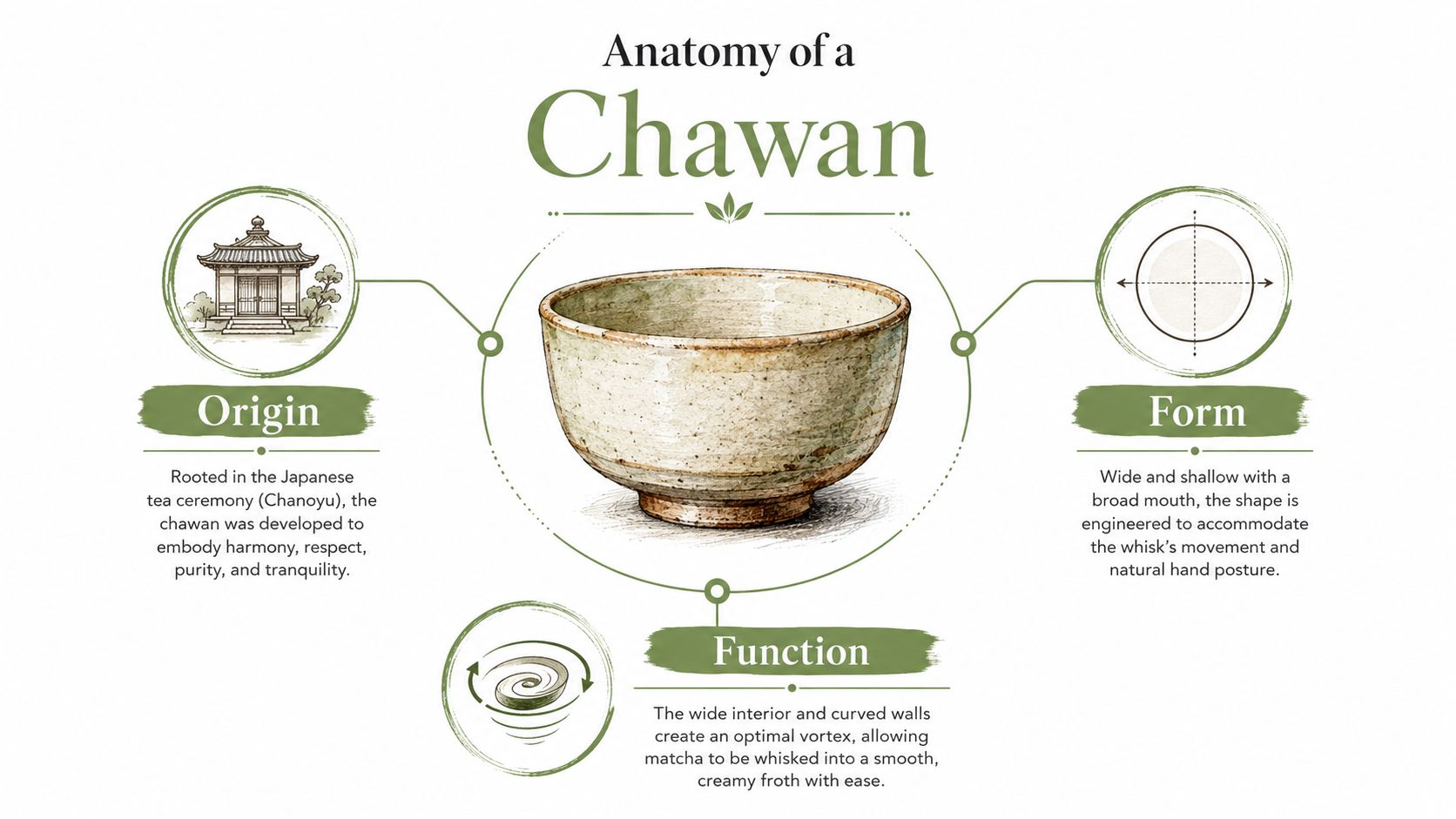
Read the bowl from the outside in
Assess four practical features before choosing a bowl:
- Rim width: The opening should let the whisk move freely without scraping the sides.
- Interior slope: A gently rounded interior guides the whisk from the base up the walls.
- Base stability: A foot or textured underside helps the bowl stay planted during rapid wrist movements.
- Surface character: A consistent ceramic surface gives the whisk predictable drag, making foam control easier.
A perfectly glossy interior is not required. Handcrafted bowls may show subtle glaze or texture variation, which changes how the bamboo tines travel. Excessive roughness can catch the whisk, while moderate resistance can support controlled aeration.
Material also affects café practicality. Ceramic usually feels grounded and durable, while porcelain may offer a smoother, lighter surface. Inspect the interior and base, not only the colour, especially when buying locally made pieces.
A practical chawan matcha bowl should sit comfortably in both hands. You should be able to support it without squeezing, rotate it when needed and drink from it after whisking. The right shape connects Japanese chawan tradition with the efficient workflow of an Australian café.
Comparing Materials, Sizes and Styles for Australian Buyers
In an Australian café, the right matcha bowl must handle quick whisking, repeated washing and steady service. Ceramic and porcelain are the two common choices at specialty retailers. Both tolerate hot water and give the bamboo whisk a dependable surface, while their weight, finish and grip create different working feels.
Ceramic suits buyers who value character and a grounded feel. Australian-made pieces are often individually crafted, so glaze, wall thickness and texture can vary. That variation can add personality, but inspect the foot and interior before buying. A bowl that looks attractive on a shelf may still feel awkward if it rocks or restricts the whisk.
Porcelain generally has a smoother, more even finish and often feels lighter in the hands. It works well for home brewers who want straightforward cleaning and a consistent whisking surface. Handmade ceramic can feel more substantial, and a textured raw base may give better control on a busy café bench.
Shape should match the whisk, not just the drink volume. A broad, gently curved interior gives the bamboo tines room to move from the base up the sides, helping create foam without striking the rim. A compact hand-sized bowl also supports the traditional chawan experience, while remaining practical for Australian café preparation.
Australian examples commonly use a compact format. One listing specifies 125 mm by 65 mm and 250 g, while another gives 140 mm by 75 mm and 490 ml, as shown in local matcha bowl product examples. These dimensions leave space for whisk movement without making the bowl feel like a large serving vessel.
Matcha bowl comparison for Australian buyers
| Type | Material | Typical Size | Best For | Price Tier |
|---|---|---|---|---|
| Simple chawan | Ceramic or porcelain | Compact, hand-sized | Occasional home matcha | Entry-level |
| Everyday handmade bowl | Ceramic with varied glaze | Around 10–14 cm top diameter | Daily home brewing and gifting | Mid-range |
| Artisan chawan | Handcrafted ceramic with distinctive texture | Compact, balanced form | Tea enthusiasts and presentation-led service | Premium |
| Service-focused bowl | Durable ceramic or porcelain | Wide opening with stable base | Café preparation and repeated use | Mid-range to premium |
Match the finish to the workload
For a home ritual, choose a bowl that feels secure in both hands and leaves the whisk unobstructed. Café buyers should give more weight to repeatability. A stable underside, durable body and easy-clean interior support faster service than delicate decoration alone.
Texture can improve grip, yet variation also changes whisk drag. A Sydney-made example describes natural differences in shape, glaze and texture, while another Australian product highlights a textured raw ceramic bottom for added control. These details help buyers assess whether a chawan will suit staff who need consistent whisking throughout service.
How to Choose the Right Matcha Bowl on Any Budget
Price helps narrow the field, but it shouldn't replace a functional check. A low-cost chawan can brew excellent matcha if its opening, base and interior work well. A costly bowl can still disappoint if it's too narrow, unstable or difficult to clean.
Entry-level under $40
Look for a stable base, a durable ceramic body and a top diameter that gives the whisk room. The bowl doesn't need elaborate glaze work. Check that it sits flat on the bench and that the rim won't catch the whisk during a quick sideways movement.
This tier suits someone beginning a morning matcha routine, buying a first bamboo whisk or setting up a simple home station. Spend less attention on decorative details and more on whether the chawan feels secure when you hold it with one hand.
Mid-range from $40 to $80
At this level, you can usually compare finishes more carefully. A 10–14 cm top diameter, comfortable weight and textured underside make a useful combination for regular preparation. Look for a glaze that feels even inside, without sharp points or rough patches that could damage the whisk.
A mid-range handmade bowl may show small differences in colour or shape. That isn't automatically a defect. Australian ceramic makers often treat variation as part of the piece's character, although you should still check that the bowl is stable and free from cracks.
Premium at $80 and above
Premium buying makes sense when the chawan forms part of a daily ritual, a gift or a café's visible preparation service. Consider the maker's materials, the bowl's balance and how confidently you can whisk in it. A premium piece should offer more than an attractive glaze. It should feel deliberate in the hand and remain practical after repeated use.
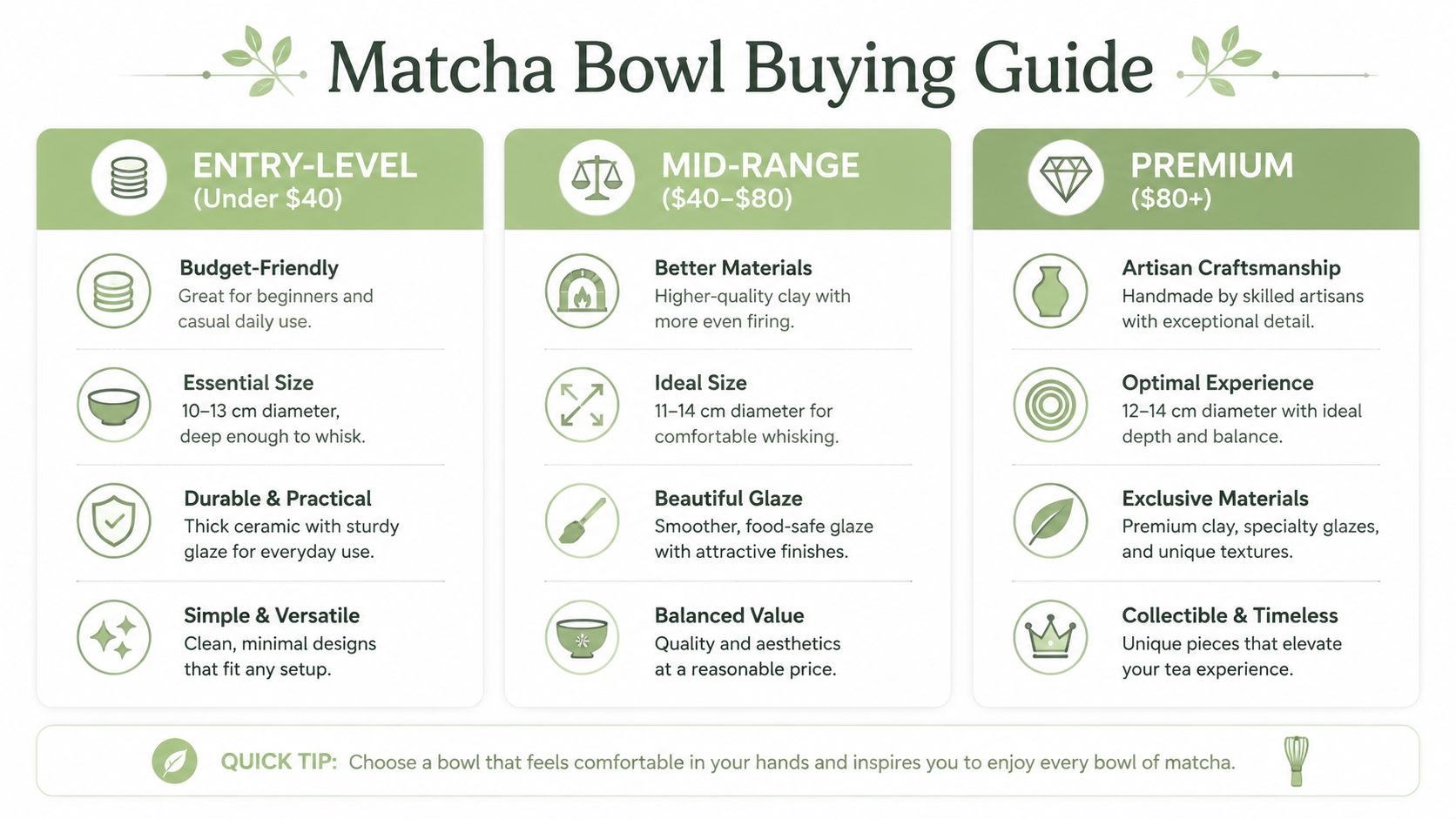
Inspect before you buy
At a pottery market or studio, place the bowl on a flat surface and gently rock it. Run your fingers around the rim, look for hairline cracks and check whether the interior feels suitable for a bamboo whisk. Hold it as though you're preparing tea, not displaying it.
Online, study the listed measurements, base photographs and care instructions. Ask whether the bowl is intended for hot beverages and whether handmade variations are expected. Ethical buying also means supporting makers who clearly describe their materials and production methods, rather than choosing a bowl solely because its styling resembles traditional Japanese pottery.
Whisking Technique and Getting the Perfect Bowl of Matcha
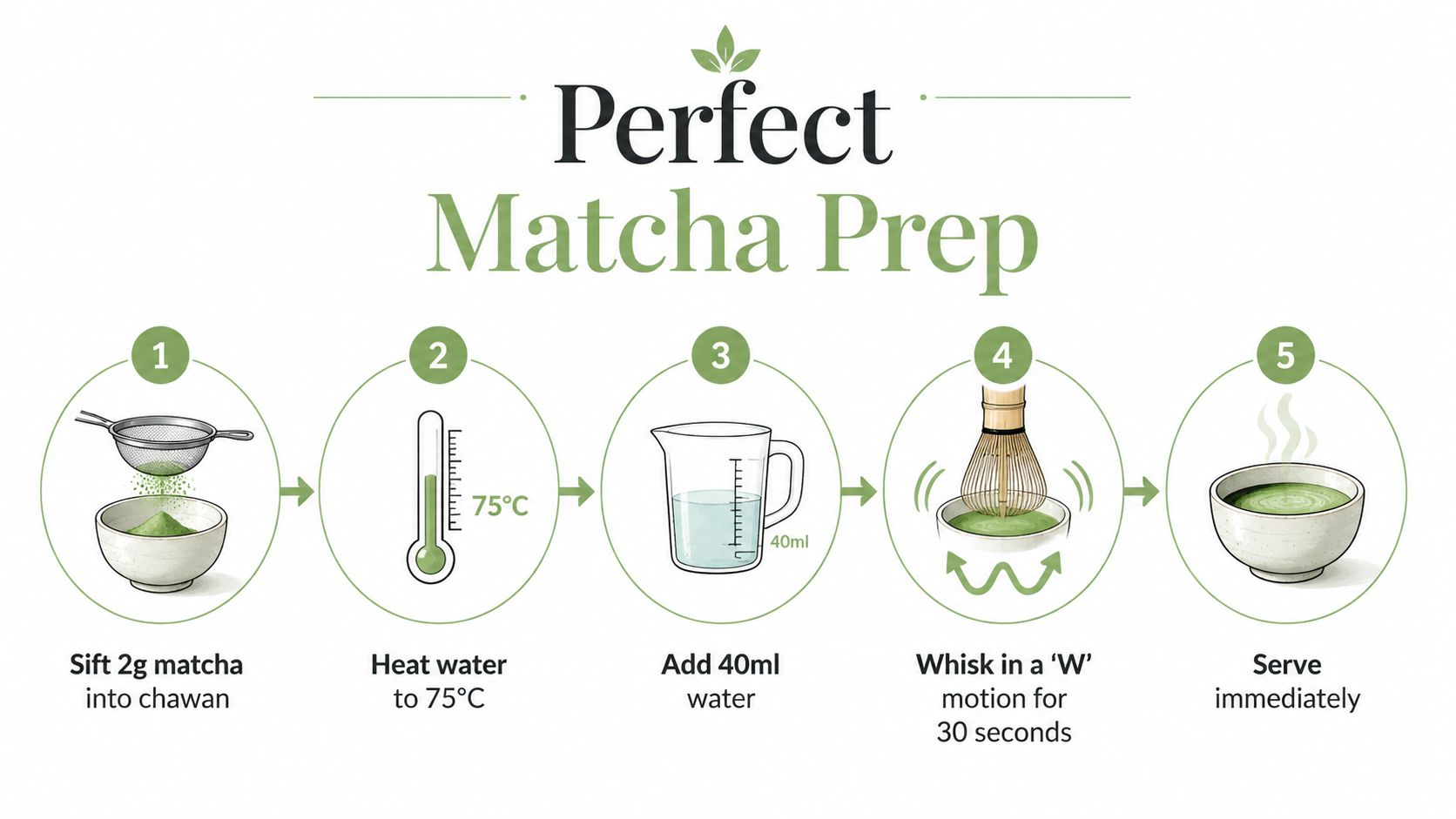
A good chawan gives you the room, but technique still determines the result. For ceremonial-grade matcha, use water at 70–80°C and a 2:1 water-to-matcha ratio. The preparation shown in the guide below uses 2 g of matcha and 40 ml of water, with a whisking time of 30 seconds. These quantities appear in the matcha preparation guide.
Begin by warming the bowl with hot water, then empty and dry it. Sift the matcha directly into the chawan. Sifting breaks apart compacted powder before water arrives, so the whisk has less work to do and the drink develops a smoother texture.
Build the drink in controlled stages
- Add the water gradually. Pour the measured water over the sifted matcha, aiming near the centre rather than against the side of the bowl.
- Start gently. Use the whisk to combine the powder and water without pressing the bamboo tines hard into the base.
- Increase the pace. Move from the wrist in a quick back-and-forth motion, similar to drawing a small W across the surface.
- Finish lightly. Lift the whisk towards the surface for the final moments, then remove it without scraping the bowl.
The wide, shallow shape lets the whisk create a small vortex across the liquid. You're looking for a fine, even foam with no large bubbles. Large bubbles, dry pockets or a gritty base usually point to incomplete mixing, restricted whisk movement or matcha that wasn't sifted.
The video below gives the movement a visual reference. Watch how the hand stays relaxed while the whisk travels quickly near the surface.
For usucha, the lighter traditional style, keep the drink relatively fluid and focus on fine foam. For a latte, prepare a more concentrated matcha base, then combine it with warm or chilled milk. The chawan remains useful because it lets you dissolve the powder first, avoiding green clumps in the finished glass.
Caring for Your Chawan So It Lasts for Years
Treat the chawan as a working ceramic, not an indestructible mixing bowl. Its function depends on an intact rim, a sound base and an interior surface that won't interfere with the whisk.
Before the first use, rinse the bowl with warm water and dry it thoroughly. Some owners like to warm the chawan before brewing, which also gives you a chance to check how it feels in use. Don't pour very hot water into a cold, delicate bowl if the maker's care instructions warn against thermal shock.
Clean the surface gently
After drinking, rinse away remaining matcha before it dries. Use warm water and a soft cloth or sponge. Avoid abrasive pads, which can dull glaze, scratch the surface or catch on textured ceramic.
Unglazed interiors need particular care. Unless the maker specifically recommends detergent, avoid soap on an unglazed surface because porous clay can retain flavours and scents. A glazed interior is generally easier to clean, but it still benefits from prompt rinsing rather than prolonged soaking.
A clean whisking surface is part of the bowl's performance. Care protects the tool you bought, not just its appearance.
Dry the bowl completely before storing it. Turn it upside down on a clean towel only if air can circulate around the rim and base. Moisture trapped beneath a foot ring or in a textured underside can create an unpleasant smell over time.
Prevent chips and stains
Store the chawan where it won't knock against mugs, tins or metal utensils. If you stack ceramics, place a soft separator between them. Matcha residue can leave green or brown marks, but scrubbing aggressively may cause more damage than the stain itself. Start with warm water and a soft cloth, then allow the surface to soak briefly before wiping again.
Inspect the bowl occasionally. Stop using it for hot drinks if you find a crack, a sharp chip on the rim or a base that has become unstable. Those faults can affect safety and make whisking uncomfortable.
Bringing Matcha and Kombucha Together on Australian Café Menus
A chawan can turn matcha preparation into part of the customer experience. Instead of hiding powder and water behind the coffee machine, a café can whisk the drink at the counter, showing the colour, movement and foam before serving it as a hot tea, iced latte or seasonal special.
That ritual pairs naturally with a broader non-alcoholic beverage menu. Ceremonial matcha can provide a calm, freshly prepared option, while sugar-free organic kombucha offers a chilled, fermented alternative for customers who want something bright and refreshing. PepTea's organic ceremonial matcha and Hunter Valley-brewed sugar-free organic kombucha illustrate the type of ingredient quality a venue can seek when building this menu.
Create a simple service pathway
A café might offer a ceremonial matcha served directly from the chawan, followed by a small kombucha tasting as a palate cleanser. Ginger, Lime & Ginger and Mango create different flavour directions, from warming spice to sharper citrus and fruit-led refreshment.
A more adventurous menu could pair matcha with kombucha in a layered or shaken drink. Staff should test the balance carefully, because matcha's savoury bitterness and kombucha's acidity can dominate one another if the proportions aren't considered.
Alcohol labelling also matters for Australian operators. Under FSANZ's Standard 2.6.2, brewed kombucha can contain up to 1.15% alcohol by volume before it is no longer classified as non-alcoholic, and drinks above 0.5% ABV require alcohol-content style labelling under the Food Standards Code, according to FSANZ's fermented soft drinks survey summary.
For venues considering a functional drinks menu, PepTea's immune booster drink offers a relevant point of reference for matcha and kombucha menu development. Operators should verify current product specifications, labelling and service procedures before making nutrition or wellness claims.
Where to Source Matcha Bowls and Premium Matcha in Australia
Australian shoppers have several useful places to begin. Visit local pottery studios and ceramic fairs if you want to hold a chawan, test its balance and inspect the base before buying. Farmers' markets can also connect you with makers who explain the clay, glaze and firing process in person.
Specialty tea retailers and online stores provide a broader selection of Japanese-style bowls, bamboo whisks and matcha grades. Compare measurements rather than relying on product photographs, since scale can be difficult to judge on a screen. For cafés, ask about replacement availability and whether the bowl is suitable for repeated service.
Australian-made ceramics support local makers and may reflect the handling needs of local home users and hospitality teams. Pair the bowl with premium organic Japanese matcha, choosing ceremonial grade for whisked drinking and culinary grade for smoothies, baking or blended recipes. If you're expanding a functional beverage offering, a Hunter Valley-brewed kombucha range can sit alongside matcha without turning the menu into a complicated drinks list.
Whether you choose a simple porcelain bowl or an expressive handmade chawan, prioritise whisk space, a stable base and a surface you can care for properly.
Pep Tea offers premium organic Japanese matcha for traditional whisking, lattes and recipes, along with Australian-brewed sugar-free organic kombucha from the Hunter Valley. Visit Pep Tea to explore the range and find ingredients to pair with your new matcha bowl.
8 Healthy Drinks to Make at Home or in a Café

Healthy drinks shouldn't be bland, complicated or buried under sweeteners. The best healthy drinks to make fit the moment first, then use ingredients that deliver flavour, texture and a clear purpose. A morning latte needs a smooth finish and dependable energy. A drink for guests needs brightness, fizz and easy batch service.
This collection uses organic Japanese Matcha and properly fermented sugar-free organic Kombucha as practical foundations. Matcha may support calm focus through its naturally occurring L-theanine and caffeine, while Kombucha offers a bright, fermented alternative to soft drinks and alcohol. PepTea's Matcha is sourced from Japan, and its Kombucha is brewed in the Hunter Valley, NSW, using organic tea and live cultures.
You'll find hot and cold options, breakfast recipes, café-friendly serves and drinks for entertaining. Choose by occasion, temperature and serving style, then adjust sweetness and strength to suit your household or customers. If you're researching wider water quality considerations, well water treatment in Kentucky is a separate resource worth exploring.
1. Organic Matcha Latte for Smooth Energy
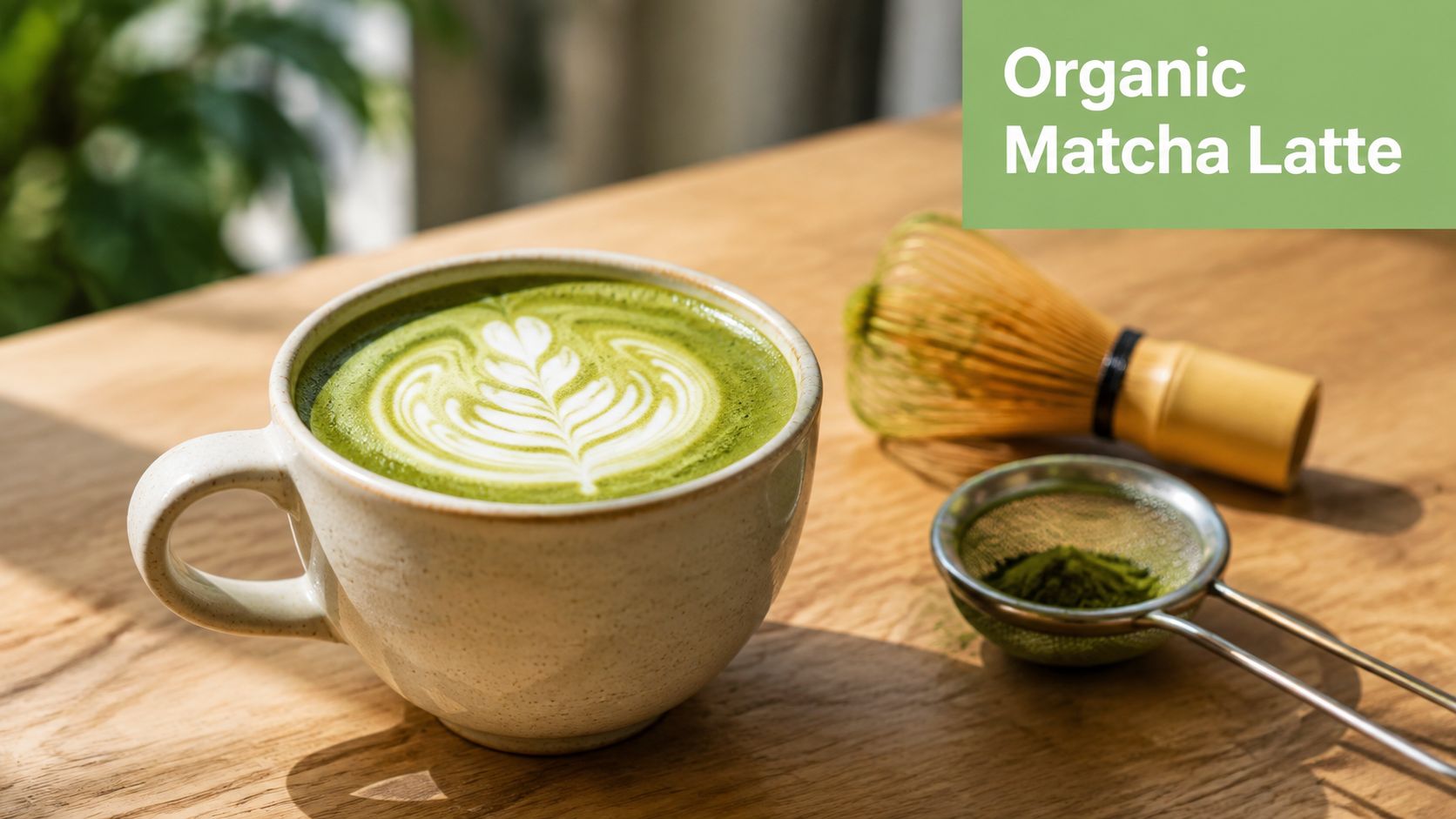
A Matcha latte is one of the most dependable healthy drinks to make at home or serve in a café. It has the comfort of a familiar milk drink, but the flavour is more layered, with fresh, grassy and gently umami notes. Ceremonial-grade Matcha is the natural choice when the tea itself leads the drink, while culinary-grade Matcha is earthier and better suited to recipes where fruit, spices or cocoa are present.
Matcha is consumed as a fine powder rather than infused and discarded, so preparation matters. Sifting removes compacted particles, and whisking creates the smooth texture that separates a polished latte from a gritty one. Matcha contains L-theanine, and an Australian laboratory result cited by Pure Matcha reported 21.3 mg of L-theanine per 1 g serve in its Matcha potency testing. That combination may suit people looking for alertness with a calmer feel, although caffeine sensitivity varies.
A reliable café-style method
Sift Matcha into a bowl, add hot water between 70 and 80°C, and whisk briskly with a bamboo chasen until frothy. Boiling water can make the tea taste harsh and bitter. Warm your preferred milk separately, then pour it gradually into the whisked Matcha rather than shocking the tea with a sudden temperature change.
- For a sugar-free serve: Use naturally creamy oat, dairy or soy milk and let the Matcha's umami flavour carry the drink.
- For café service: Prepare the Matcha base to order and texture the milk separately for a cleaner, more consistent finish.
- For multiple serves: Whisk a larger batch in a jug, but serve it soon after preparation so the flavour stays fresh.
PepTea's guide to caffeine in a Matcha latte is useful when choosing a morning or afternoon serving routine. Start with ceremonial Matcha for a drinking preparation, then reserve culinary Matcha for smoothies, baking and frozen desserts.
2. Iced Matcha Lemonade for Warm Days
Cold Matcha works best when you build contrast. Fresh lemon brings acidity, ice provides refreshment, and a small amount of honey can round out Matcha's green bitterness without turning the drink into a soft drink. The result is bright enough for a summer breakfast, afternoon break or outdoor café menu.
Whisk the Matcha with a small amount of warm water first. This step matters because Matcha doesn't dissolve well when you tip the powder straight into a glass of cold liquid. Add honey while the tea is still warm, then allow the mixture to cool before adding lemon juice and ice. Using room-temperature lemon juice makes it easier to combine and keeps the drink from becoming instantly watery.
For a single glass, combine whisked Matcha, fresh lemon juice, honey to taste and cold water. Shake or stir with ice, then top with sparkling water if you want a lighter, effervescent finish. A pitcher version should be chilled before ice is added, otherwise the ice will melt quickly and flatten the flavour.
Make the texture work
Practical rule: Whisk first, chill second, dilute last.
Freeze some of the prepared Matcha mixture in ice-cube trays for a stronger drink as it melts. You can also prepare lemon juice in advance and refrigerate it for quick assembly. Keep the sweetness restrained. Honey adds flavour, but it still contributes sugar, so the amount should reflect the occasion rather than habit.
For a café menu, describe this as an iced Matcha and lemon drink rather than promising a health outcome. Matcha is widely valued for catechins, including EGCG, and an Australian tea source reports that consuming the whole leaf can provide about two to three times the catechin content of steeped green tea in its explanation of Matcha antioxidants. For a related flavour idea, explore PepTea's organic green tea with lemon, then adapt the profile into a cold Matcha serve.
3. Kombucha and Matcha Green Energy Elixir
Matcha and Kombucha reward careful handling. Matcha supplies concentrated green tea flavour and caffeine, while Kombucha adds acidity, fermentation character and carbonation. The result suits drinkers seeking a lively, lower-sugar alternative to soft drink or an alcoholic serve, provided the sweetness and caffeine fit the occasion.
Whisk the Matcha fully before adding Kombucha. A smooth tea base keeps dry powder from floating in the glass. Let it cool to at least room temperature, pour it into the glass, then add chilled Kombucha slowly down the side. Stir once, gently. Shaking can quickly flatten the carbonation.
PepTea's sugar-free organic Kombucha is brewed in the Hunter Valley, NSW. Its Ginger flavour pairs well with Matcha because the spice gives the green tea a warmer finish. Lime & Ginger creates a sharper, more refreshing drink, while Mango adds roundness and can soften Matcha's savoury edge for new drinkers.
Choose the flavour by service context. Ginger fits a morning ritual, Lime & Ginger suits an afternoon café serve, and Mango works well when the tea needs a gentler introduction.
What to watch when combining live drinks
Authentic Kombucha uses tea, water, sugar and a SCOBY, with some sugar consumed during fermentation. Products still vary considerably. CHOICE notes that low sugar under the Food Standards Code means 2.5 g of sugar or less per 100 mL, while the Kombucha products it reviewed ranged from less than 0.1 g to 3.8 g per 100 mL in its Kombucha review. Read the label rather than assuming every fermented drink is low in sugar.
Serve the elixir immediately for the freshest carbonation. A room-temperature version is possible, but heating Kombucha may reduce some probiotic activity. Those who are sensitive to caffeine, acidity or fermented drinks should begin with a modest serve and assess their response. The earlier Matcha discussion covers the tea's caffeine profile, so this combination is best adjusted through temperature, flavour choice and portion size rather than treated as a guaranteed energy remedy. PepTea's Matcha and Kombucha benefits guide provides further preparation context without presenting the drink as a medical treatment.
4. Matcha Smoothie Bowl for Breakfast
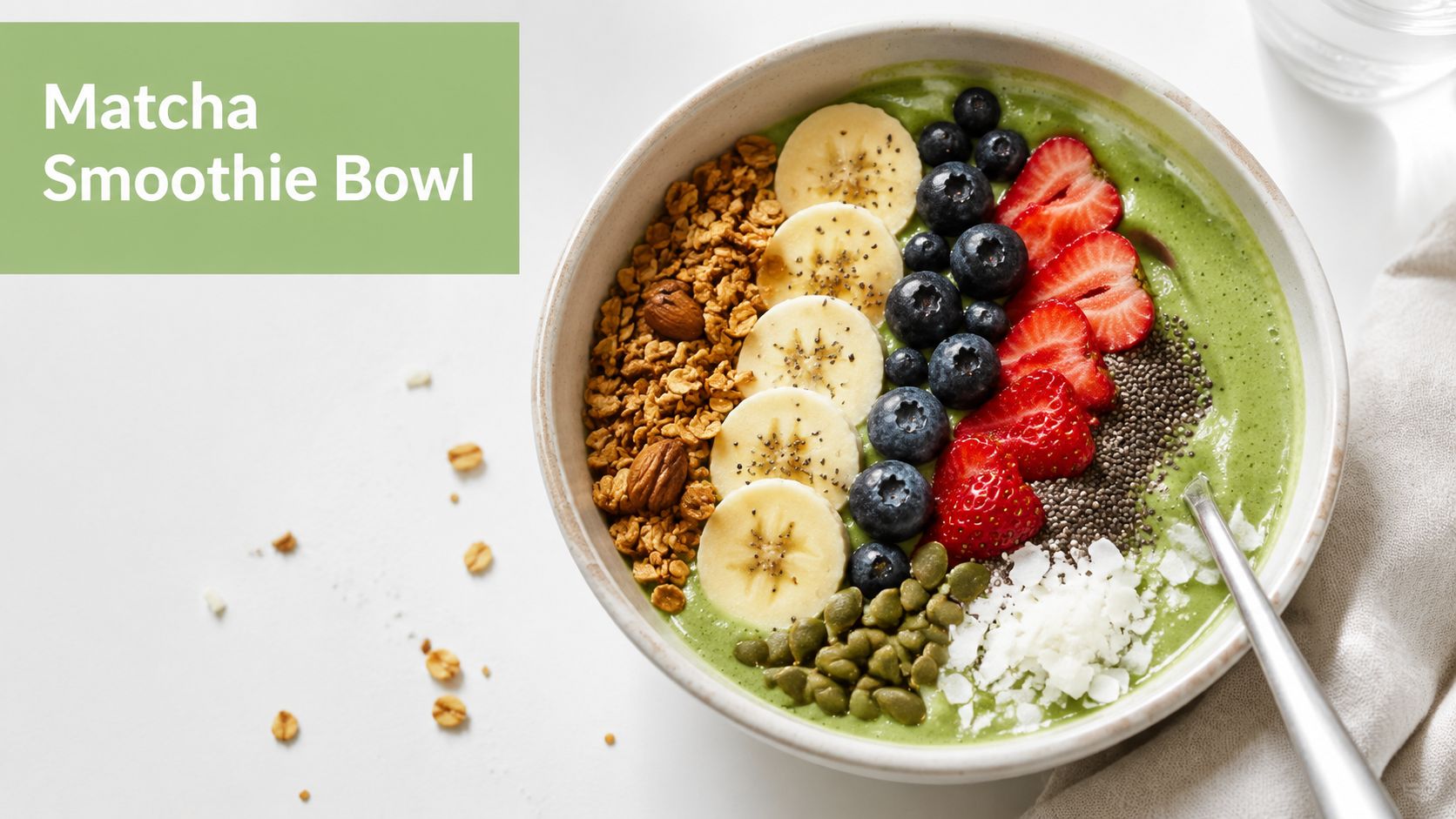
A smoothie bowl is technically eaten with a spoon, but it belongs on any practical list of healthy drinks to make because the base uses the same blending principles as a drinkable smoothie. The thicker format also gives Matcha room to work alongside banana, yoghurt, berries and seeds instead of competing with them.
Blend frozen banana, Greek yoghurt or a dairy-free alternative, milk and culinary-grade Matcha until thick and smooth. Culinary Matcha is the sensible choice here. Its deeper flavour stands up to fruit and toppings, and using a premium ceremonial powder in a blended breakfast can be unnecessary when the tea isn't the main tasting note.
Freeze sliced banana in a sealed bag the night before. Add only enough milk to help the blender move, because excess liquid turns the bowl into a thin smoothie. Frozen yoghurt cubes can make the base creamier, while protein powder can make it more substantial for a post-training breakfast. If you use collagen peptides, remember that they change the nutritional profile but not the need for a balanced meal overall.
Build toppings that stay on the surface
Arrange granola, fresh berries, coconut, nuts and seeds in separate sections rather than scattering everything at once. This improves texture and keeps softer toppings from disappearing into the base. Prepare dry toppings in small containers if you're assembling breakfast before work.
Matcha's antioxidant profile makes it an appealing ingredient, but a bowl still needs sensible structure. Fruit supplies sweetness, yoghurt can add protein, and seeds contribute texture and fat. Keep added syrups optional. A café can offer the bowl unsweetened, then let customers choose a small drizzle if they want one.
5. Kombucha Immunity Spritzer for Everyday Refreshment
A spritzer turns Kombucha into an easy hospitality format. It looks celebratory, has natural acidity and fizz, and can be built around a small amount of juice or a chilled herbal infusion rather than a large quantity of sweet mixer. That makes it useful for cafés, yoga studios, wellness events and alcohol-free gatherings.
Start with chilled PepTea Ginger or Lime & Ginger Kombucha. Add a modest splash of fresh apple, citrus or another fruit juice, then top with sparkling water. Fresh mint, basil, rosemary or a citrus wheel gives the glass a more finished appearance without needing extra sweetener. A clear tumbler or wine glass lets guests see the colour and carbonation.
For a turmeric variation, brew a mild turmeric infusion, chill it thoroughly and combine it with Lime & Ginger Kombucha and sparkling water. Don't over-steep herbal ingredients. Bitterness becomes more noticeable once acidity and carbonation are added, and no amount of garnish will fully hide an unbalanced base.
Design the serve around the setting
- For mornings: Pair Ginger Kombucha with apple and mint for a soft, familiar flavour.
- For afternoons: Use Lime & Ginger with citrus and sparkling water for a sharper finish.
- For events: Chill the glasses, prepare the non-carbonated ingredients ahead, and add Kombucha just before serving.
- For cafés: List the flavour components clearly so customers can choose a lower-sweetness option with confidence.
The word “immunity” needs care. A spritzer can be refreshing and may contribute tea-derived or fruit-derived compounds, but it won't replace sleep, balanced food or medical care. CSIRO warns that some Kombucha products become high in sugar when manufacturers add fruit juice for flavour and fermentation, so checking the nutrition label is important when choosing a regular drink.
6. Golden Turmeric and Matcha Latte for a Warming Ritual
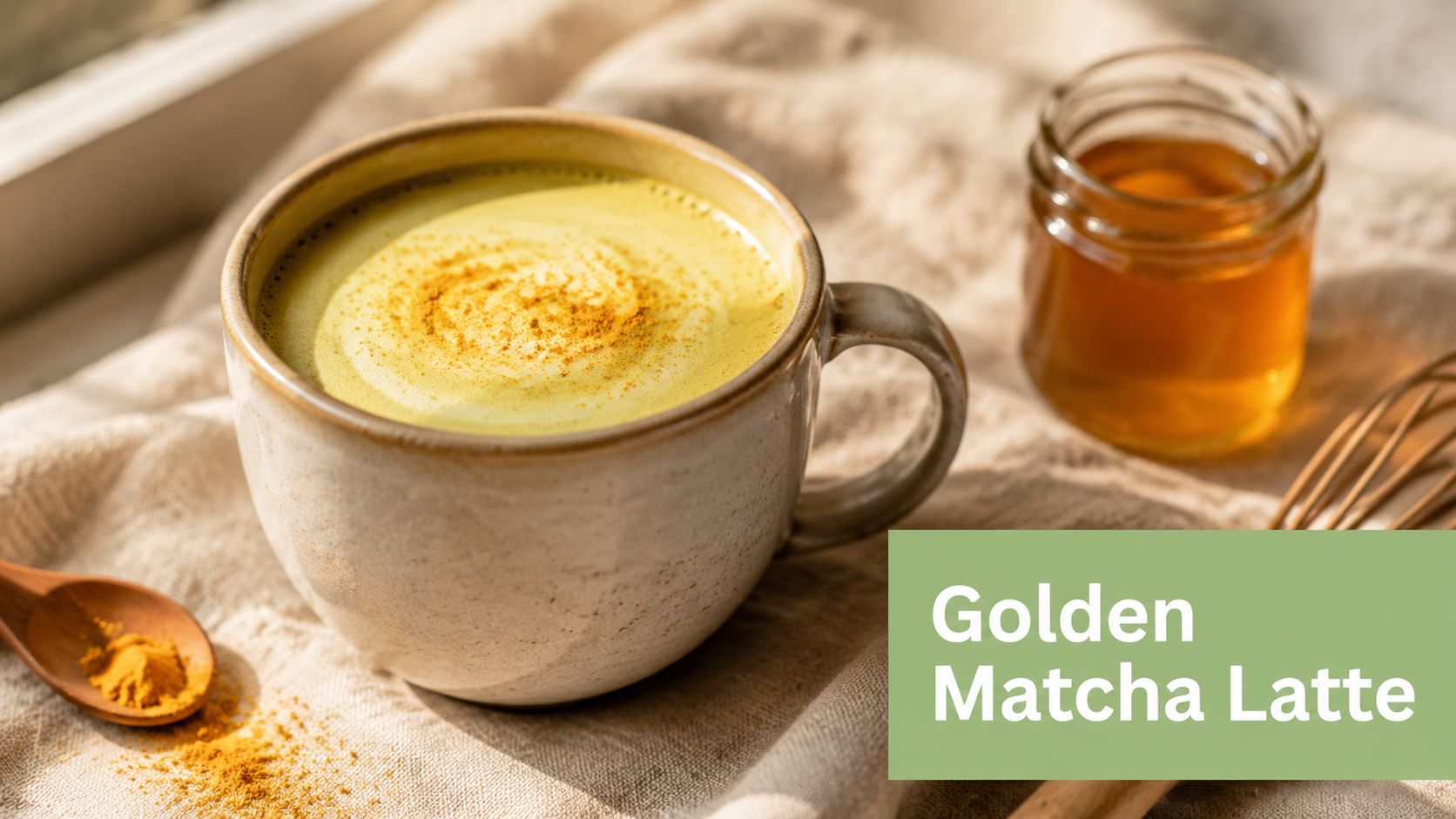
Turmeric and Matcha create a striking golden-green latte, but the drink succeeds because of balance rather than the colour alone. Turmeric brings earthy spice, Matcha adds vegetal depth, and milk provides the body needed to soften both flavours. Black pepper is traditional in many turmeric preparations, but it isn't a guarantee of a health outcome.
Sift Matcha into a bowl with turmeric, cinnamon and a small pinch of black pepper. Add warm water and whisk until the powders are evenly dispersed. Heat coconut, oat or dairy milk separately, then combine it with the tea mixture. Oat milk often gives a soft foam, coconut milk brings richness, and dairy milk creates a familiar café-style texture.
Fresh grated turmeric can taste livelier than dried powder, though it also creates more preparation and can stain equipment. For busy service, a measured dry spice blend is easier to keep consistent. Store it in an airtight container and make only what you'll use promptly.
Keep the promise modest
Turmeric is often discussed for curcumin and inflammation, but a homemade latte shouldn't be presented as treatment for arthritis, chronic conditions or post-workout injury. People taking medication, managing a health condition or experiencing digestive sensitivity should ask a qualified health professional whether concentrated spices suit them.
Serve this drink as a warming ritual, not a prescription. A little honey can soften the spice, but it's optional. If you want a sugar-free menu option, use a naturally creamy milk and allow cinnamon, pepper and Matcha to provide the aromatic interest.
7. Kombucha Fruit Punch for Gatherings
Fruit punch often becomes unhealthy because the base is sweet juice, cordial or soft drink. Kombucha changes the structure of the drink. It brings acidity and fizz, so you can use fresh fruit, citrus and herbs for flavour while keeping the punch lighter and more complex.
For a large jug, combine chilled PepTea Kombucha with fresh juice, citrus slices and a small amount of honey if needed. Add sparkling water immediately before serving. Ginger Kombucha works with apple, pear, mint and rosemary. Lime & Ginger suits pineapple, cucumber and citrus. Mango can pair with passionfruit, orange and berries.
Avoid assembling the punch too early. Carbonation fades, fruit can become soft, and the acidity may dominate as the drink stands. Keep the juice, garnishes and Kombucha chilled separately for a café or event, then combine shortly before guests arrive.
Make one base serve two audiences
Prepare the main punch without alcohol, then offer spirits separately for guests who want them. This keeps the non-alcoholic option complete rather than treating it as a diluted substitute. It also suits Australian gatherings where some guests may be driving, taking a break from alcohol or looking for something refreshing.
Use a wide glass dispenser or clear jug so the fruit and herbs become part of the presentation. Fresh citrus wheels add aroma, while berries provide colour. Don't rely on large amounts of juice to make the punch attractive. Good Kombucha, fresh garnish and cold service do more for the finished drink.
For a lower-sugar result, choose a Kombucha with a label that supports your intention and keep honey optional. “Sugar-free” is not a reason to ignore flavour balance, and “natural” doesn't automatically mean low sugar. The best punch tastes bright enough that guests don't miss cordial.
8. PepTea Pairing and Serving Guide
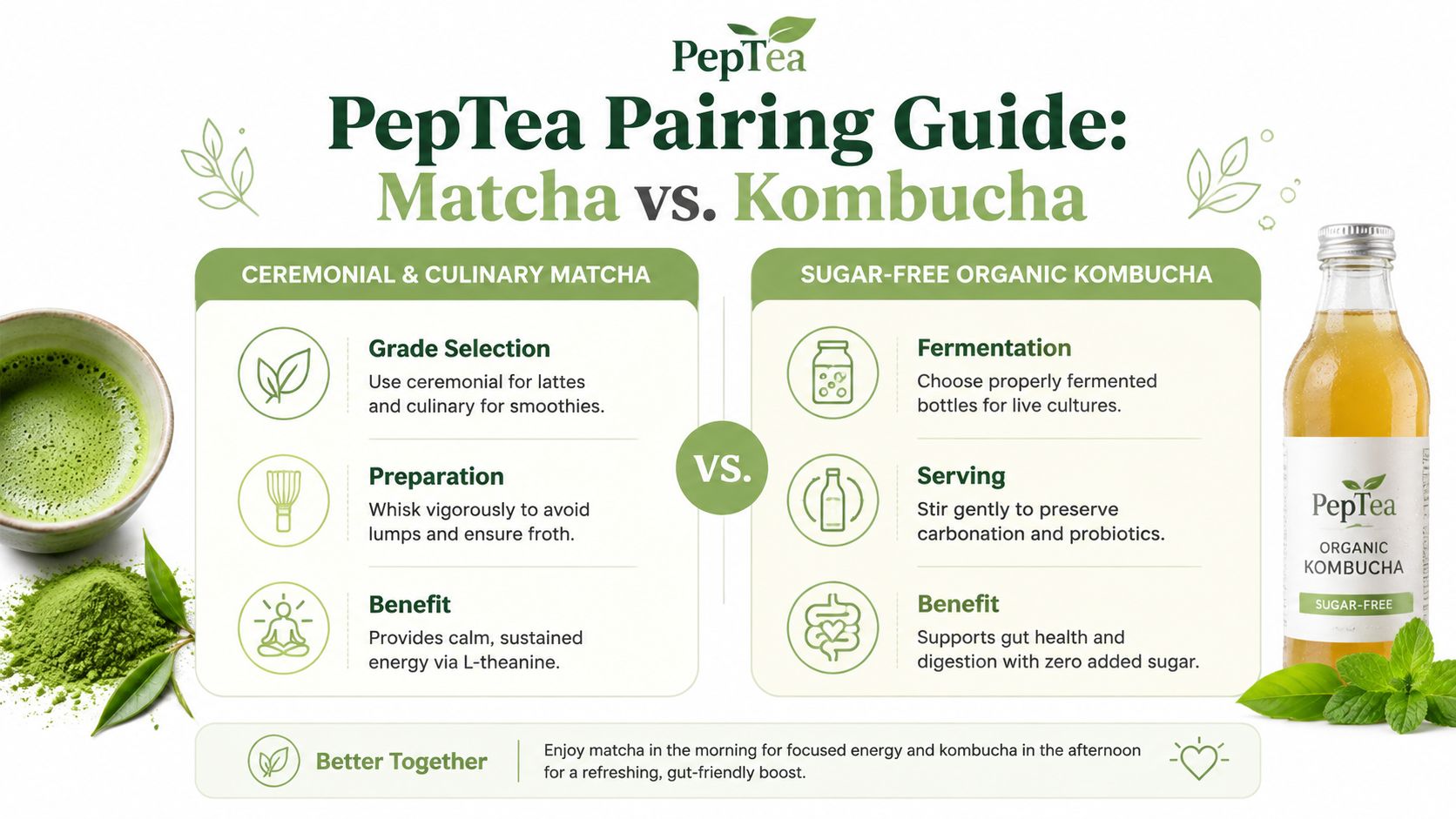
The simplest pairing rule is to match the Matcha grade and Kombucha style to the preparation. Ceremonial-grade Matcha is smoother for a whisked latte, straight tea or delicate iced drink. Culinary-grade Matcha is more practical in smoothie bowls, baking and blended recipes where other ingredients provide the structure.
Kombucha belongs in drinks that benefit from acidity and carbonation. Use it in spritzers, punches and the Matcha elixir, but add it late and stir gently. A carbonated drink loses its appeal when it's shaken, and live cultures are best treated as a food ingredient rather than exposed unnecessarily to heat.
For cafés, consistency comes from measuring the tea, controlling water temperature and keeping batch service close to the moment of pouring. For home use, the same principles make the recipes easier to repeat. Garnish with herbs, citrus wheels or edible flowers when presentation matters, but don't let decoration cover a drink that's too sweet, too hot or poorly balanced.
The Australian market gives these ingredients useful context. Food Standards Australia New Zealand found that Kombucha represented 55.2% of 239 fermented soft drink samples in its coordinated survey, and its report identified NSW as the biggest consumer market for fermented beverages, followed closely by Queensland in its fermented beverages outcomes paper. That doesn't make every Kombucha healthy, but it does show why careful product education matters.
8 Healthy Drinks Comparison
| Item | 🔄 Implementation complexity | ⚡ Resources & speed | ⭐ Expected outcomes | 📊 Ideal use cases | 💡 Key advantages / tips |
|---|---|---|---|---|---|
| Organic Matcha Latte – The Smooth Energy Classic | Moderate, requires basic whisking technique (short learning curve) | Minimal equipment (whisk or chasen, bowl, milk steamer optional); ready in <5 min | Calm, sustained focus; high EGCG antioxidant content; smooth mouthfeel | Daily morning ritual, café menu, afternoon energy without sleep disruption | Customisable milk/sweetness; sift Matcha, use 70–80°C water |
| Iced Matcha Lemonade – Refreshing Summer Wellness | Low, whisk then combine and chill | Needs fresh lemon, ice, chilled or sparkling water; pitcher-friendly; ~5–10 min | Refreshing hydration; vitamin C boost; sustained, jitter‑free energy | Summer entertaining, outdoor events, post-workout refresh | Use fresh lemon; batch in pitcher; freeze Matcha cubes to avoid dilution |
| Kombucha + Matcha Green Energy Elixir – Gut Health & Calm Focus | Low, whisk Matcha, then gently combine with Kombucha | Requires sugar‑free Kombucha and ceremonial Matcha; ready ≈3 min | Probiotic support + sustained mental clarity; antioxidant synergy | Gut‑health focus, wellness cafés, pre‑workout or recovery drink | Stir gently to preserve live cultures; serve immediately for fizz |
| Matcha Smoothie Bowl – Creamy, Nutrient-Dense Breakfast | Moderate, whisk then blend; assembly/decoration step | Blender required; frozen banana prep; ~10 min (prep dependent) | Protein-rich, satiating breakfast; sustained energy and digestive fibre | Breakfast, post-workout, meal-prep, Instagram-friendly brunch | Freeze banana ahead; use culinary Matcha to reduce cost; layer toppings for texture |
| Kombucha Immunity Spritzer – Sparkling Wellness Refresh | Low, simple pour-and-gently-stir assembly | Kombucha, fresh juice or herbal infusion, sparkling water; <5 min | Probiotic and immune support; hydrating, low sugar impact | Everyday wellness, hospitality, non‑alcoholic bar menu | Use fresh‑pressed juice/herbal infusions; chill glasses; garnish heavily |
| Golden Turmeric + Matcha Latte – Anti-Inflammatory Wellness Ritual | Moderate, whisking multiple powders; spice balance important | Turmeric, black pepper (essential), Matcha, milk; ready <5 min | Anti‑inflammatory (curcumin) + antioxidant support; calming focus | Inflammation management, recovery rituals, evening wind‑down | Always include black pepper for bioavailability; sift powders before whisking |
| Kombucha Fruit Punch – Probiotic Party Drink for Gatherings | Low–moderate, batch assembly, visual garnish important | Large volumes of Kombucha, fresh juice, pitcher, ice; 5–10 min assembly | Crowd-pleasing probiotic punch; low‑sugar alternative to sweet punches | Parties, gatherings, events, wellness functions | Keep pitcher on ice to preserve carbonation; use frozen fruit cubes |
| PepTea Pairing & Serving Guide – Matcha + Kombucha Essentials | Low, informational; requires following guidelines in practice | Resource: guide/infographic for staff; speeds menu planning and batch prep | Improved pairing choices; consistent service; maximised probiotic & antioxidant benefits | Cafés, events, staff training, menu development | Use ceremonial for lattes, culinary for bowls; assemble shortly before serving; label 'sugar‑free' and 'probiotic' |
Choose Your Next Pour
The right drink depends less on a universal definition of “healthy” and more on what you need the drink to do. For a daily morning ritual, start with a whisked organic Matcha latte. Use ceremonial-grade Matcha, water between 70 and 80°C, and milk that gives you the texture you enjoy. The drink should taste smooth enough that you don't need a heavy syrup to make it appealing.
Choose iced Matcha lemonade when the weather is warm or you're serving a group that prefers a sharper, more refreshing profile. Whisk the tea before chilling, dissolve any honey while the liquid is warm, and add ice only after the flavour is balanced. Matcha ice cubes are a useful practical touch because they protect the drink from becoming weak as they melt.
A smoothie bowl makes more sense at breakfast, especially when you want fruit, yoghurt, seeds and granola alongside the tea. Culinary-grade Matcha is perfectly suited to this setting, and frozen banana gives the base body without requiring a large amount of milk. Keep toppings organised so each spoonful has a mix of creamy, crunchy and fresh elements.
For entertaining, Kombucha spritzers and fruit punch offer the easiest path to a refined non-alcoholic menu. Ginger, Lime & Ginger and Mango each create a different starting point, while fresh juice, citrus and herbs provide the finishing details. Assemble carbonated drinks close to service, because fizz and freshness decline when a batch sits for too long.
The Kombucha and Matcha elixir is the most distinctive option. It may suit someone who enjoys tea's focused energy and Kombucha's bright fermented character, but the combination also requires the most care. Cool the Matcha before adding Kombucha, stir gently and serve promptly. Anyone sensitive to caffeine, acidity or fermented beverages should adjust the strength or choose a different recipe.
Healthy doesn't mean every ingredient suits every person. Check labels, particularly when buying Kombucha, because added juice can increase sugar content. PepTea's own sugar-free organic Kombucha provides a useful starting point for lower-sugar recipes, but your finished drink can still contain sugar from honey, fruit juice or sweetened milk. Treat those ingredients as choices to measure, not automatic additions.
The same applies to Matcha. L-theanine and catechins make it an interesting tea ingredient, and Matcha's caffeine may support alertness, but people respond differently to caffeine and concentrated tea. Keep portions sensible, avoid presenting these drinks as treatments, and seek professional advice if you're pregnant, taking medication or managing a health condition.
For Australian cafés, the opportunity is practical rather than gimmicky. A menu can offer hot and iced Matcha, sugar-free Kombucha spritzers, breakfast bowls and alcohol-free punch while giving customers clear information about flavour, sweetness and caffeine. PepTea's Japanese organic Matcha and Australian-brewed Kombucha from the Hunter Valley, NSW, fit that approach because provenance and preparation are part of the product experience.
Explore the recipes by occasion, then make one small adjustment at a time. Reduce the honey, change the milk, swap Ginger for Lime & Ginger, or serve the same Matcha base hot and iced. The most useful healthy drinks to make are the ones you'll prepare confidently, enjoy regularly and serve wholeheartedly.
PepTea offers organic Japanese Matcha for lattes, smoothies and baking, alongside sugar-free organic Kombucha brewed in the Hunter Valley, NSW. Visit Pep Tea to explore the range, shop Kombucha for home entertaining, or enquire about café and wholesale supply.
How to Make a Sugar Free Matcha Latte (Complete Guide)

A proper sugar free matcha latte uses 4–5 g of ceremonial-grade matcha, sifted into 40–60 mL of 70–80 °C water, followed by 180–200 mL of frothed milk at around 65 °C. This workflow prevents clumps and bitterness while keeping the drink naturally sugar-free.
You order a matcha latte at your local café, expecting a clean, earthy drink, then notice the sweetness before you notice the tea. That's a common experience. Matcha powder is sometimes blended with sweetened ingredients, and milk products can also add sugar, so a drink that sounds wholesome may not match your intention to reduce sugar.
Australians consumed an average of 43 g of free sugars per person per day in 2023, with most coming from added sugars, according to the Australian Bureau of Statistics food and nutrients data. Sweetened beverages alone supplied an average of 11 g of free sugars per day, about 2.5 teaspoons, and contributed 25.4% of nationally consumed free sugars in 2023, as reported in the ABS sweetened beverages release.
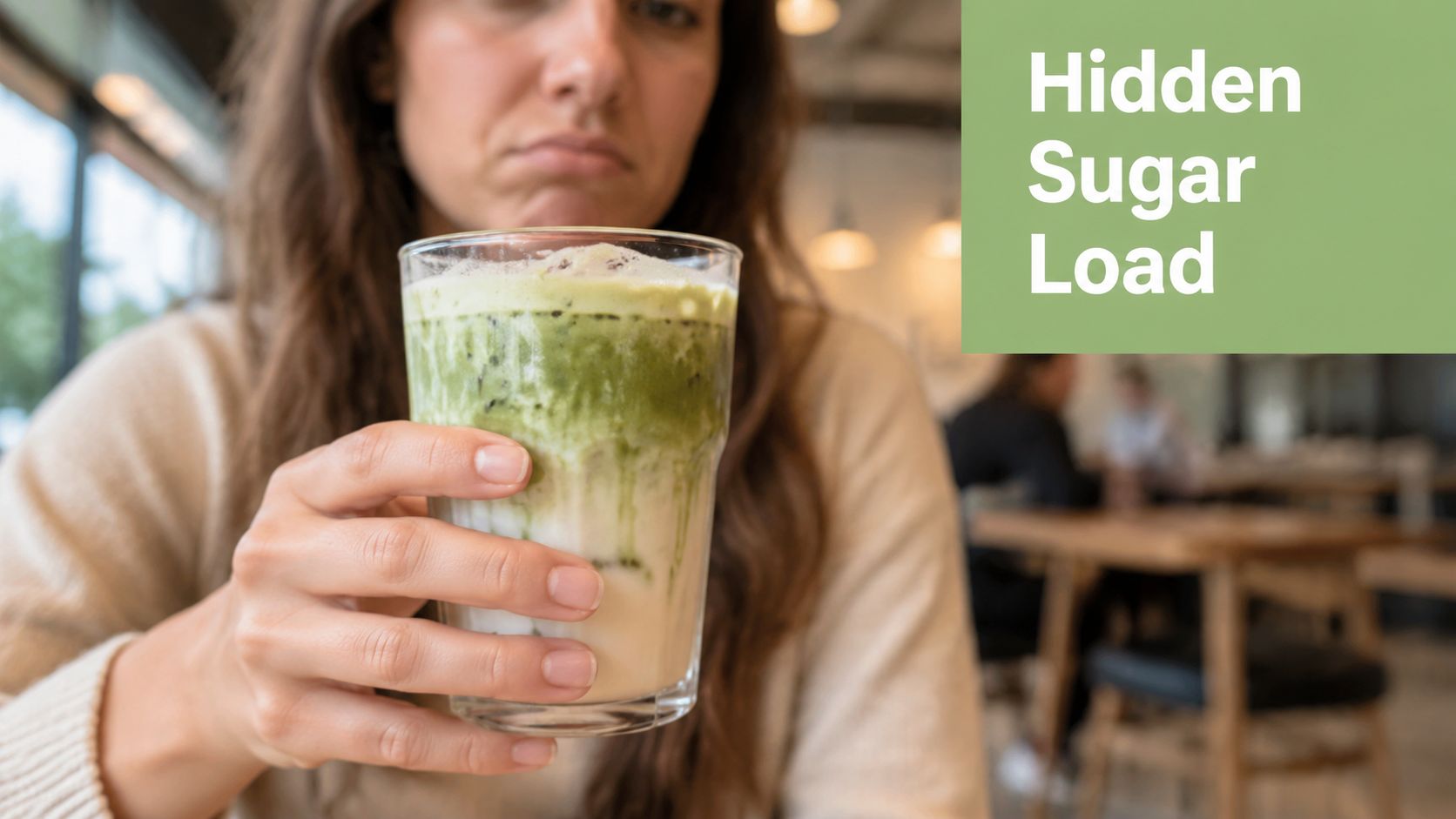
Introduction Why a Sugar Free Matcha Latte Is Worth the Effort
Removing added sugar is only half the job. A sugar free matcha latte still has to taste rounded, creamy and satisfying, otherwise you'll reach for the café version again. The usual failures are predictable: bitter powder, floating clumps, watery plant milk or a sweetness that masks the matcha completely.
The solution is a controlled preparation method rather than a complicated recipe. Use a matcha with enough natural umami to work with milk, disperse it in warm water before adding the milk, and treat temperature as part of the recipe. That gives you a drink with a fresh green flavour instead of a harsh, grassy finish.
Why sugar reduction makes sense
Australia's beverage market has already moved towards lower-sugar formulations. A national analysis found that total sugar content in non-alcoholic beverages fell from 7.5 g per 100 mL in 2015 to 6.2 g per 100 mL in 2019, a 17.1% decrease, while 56% of beverages contained added sugars in 2019. Ready-to-drink coffees were particularly relevant, with added sugar present in 85% of products examined in that study, published in this Australian beverage analysis.
That context gives the sugar free matcha latte a practical place on a home routine or café menu. It offers the ritual and texture of a café drink while allowing you to control the matcha, milk and sweetener instead of accepting a pre-sweetened formula.
The drink can also suit people exploring functional beverages, non-alcoholic café choices or a gentler alternative to heavily sweetened soft drinks. Matcha contains naturally occurring caffeine, so sugar-free preparation doesn't remove the need to think about strength and timing. Taste, sugar content and caffeine dose all deserve attention.
Choosing the Right Matcha for a Sugar Free Latte
The matcha powder determines the starting point for flavour. For a latte, choose ceremonial-grade matcha when you want a smoother, more balanced drink, particularly if you aren't adding sweetener. Culinary-grade matcha has a useful role in baking, smoothies and desserts, but its stronger, more assertive profile can taste rough when mixed with milk.
Look for a vibrant green colour, a fine texture and an aroma that suggests fresh, savoury umami rather than stale hay. Japanese stone-ground matcha is made from finely milled tea leaves, so freshness and storage matter. Keep the pouch sealed, away from heat, light and moisture, and use a clean, dry spoon each time.
For a single latte, measure 4–5 g of matcha. Measuring by weight gives more repeatable results than relying on an unlevel teaspoon, especially when you're serving customers or preparing the same drink every morning.
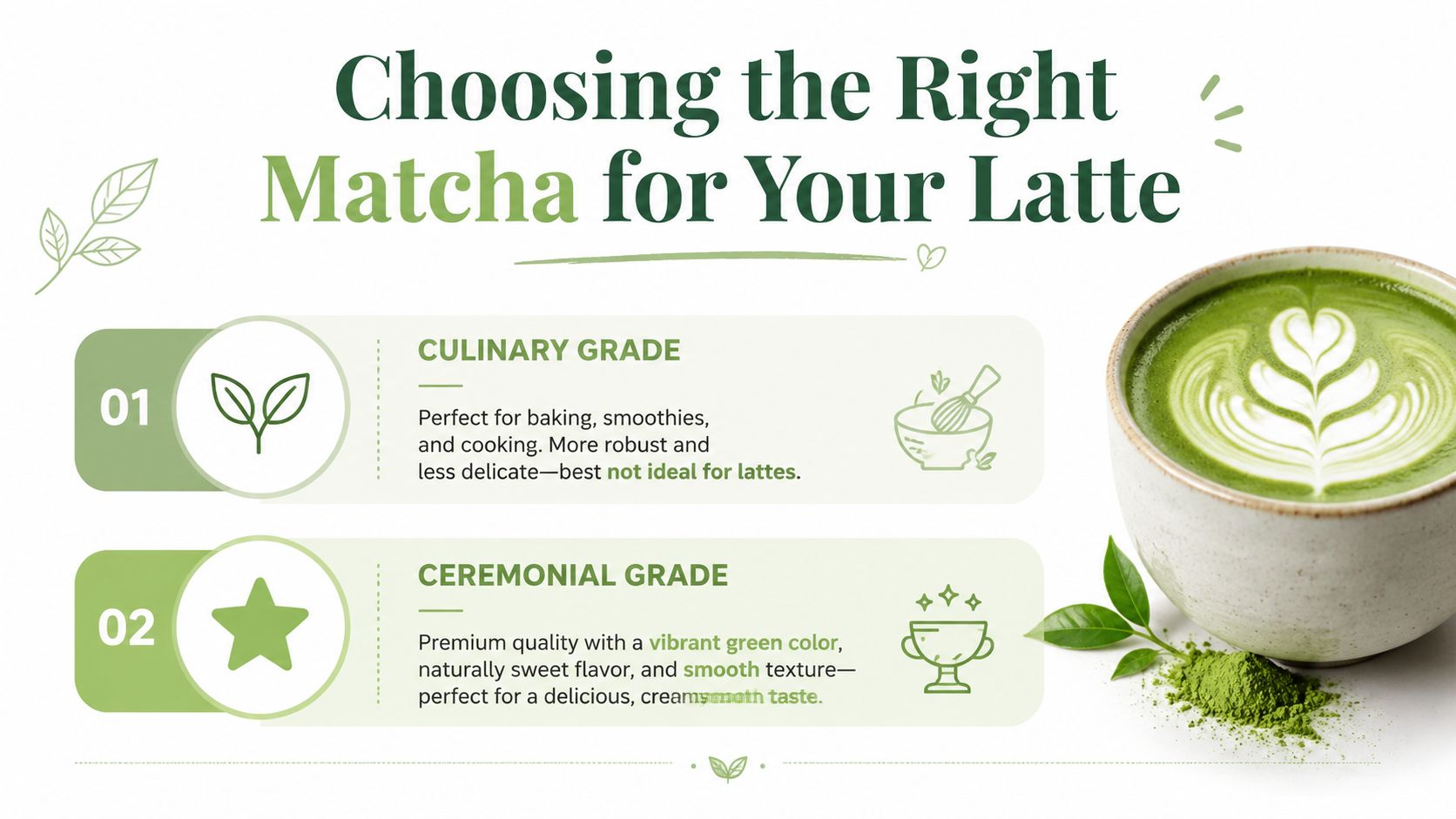
Sifting is part of the recipe
Matcha naturally forms small clumps because the powder is extremely fine and reacts to moisture and static. Put the powder through a fine tea sieve into a bowl before adding water. Skipping this step makes whisking harder and leaves undissolved pockets in the finished latte.
PepTea's guide to matcha grades is useful when deciding whether a powder suits drinking, cooking or both. Whatever brand you choose, don't assume a darker or more bitter powder will create a stronger, better latte. Strength should come from a controlled dose, not from forcing an unsuitable matcha to work.
Barista rule: If the matcha tastes aggressively bitter before milk is added, changing the water temperature and grade will help more than adding extra sweetener.
How to Make a Sugar Free Matcha Latte Hot and Iced Recipes
The hot and iced versions begin with the same matcha concentrate. That's important because milk should never be the first liquid to meet dry matcha. Water gives you the space and movement needed to disperse the powder properly.
Hot recipe
- Sift the matcha. Place 4–5 g of ceremonial-grade matcha in a warm bowl.
- Add warm water. Pour in 40–60 mL of water at 70–80 °C. Water that's boiling or close to boiling can push the flavour towards bitterness.
- Whisk thoroughly. Use a bamboo chasen, small electric frother or handheld whisk until the concentrate looks smooth, with a light foam across the surface.
- Prepare the milk. Heat and froth 180–200 mL of milk to about 65 °C. Aim for glossy microfoam rather than large bubbles.
- Combine slowly. Pour the milk into the matcha concentrate and stir gently. For a layered café appearance, hold back some foam with a spoon and place it on top at the end.
This formula is also a practical starting point for cafés because it creates a clear sequence that staff can repeat during a busy service.
Iced recipe
Prepare the matcha concentrate using the same sifting and whisking steps. Fill a glass with ice, add your chosen cold milk, then pour the matcha over the top and stir gently. Since ice dilutes the drink, keep the concentrate at the more concentrated end of the water range rather than adding extra powder immediately.
For another detailed iced method, follow PepTea's iced matcha latte recipe. It's particularly helpful if you're moving between a home hand frother and a café-style preparation.
A short visual demonstration can make the whisking motion easier to copy:
Sugar Free Sweetener Options That Actually Taste Good
A well-made ceremonial matcha latte may not need sweetener. Milk brings body and a mild natural sweetness, while good matcha contributes umami. If the drink tastes harsh, fix the grade, temperature or dispersion before assuming you need a large amount of sweetener.
If you do want sweetness, add it to the warm matcha concentrate so it dissolves fully. For an iced drink, dissolve the sweetener before adding ice. The right choice depends on whether you prefer a clean finish, a rounded mouthfeel or the closest possible substitute for sugar.
| Sweetener | Taste Profile | Best For |
|---|---|---|
| Stevia | Concentrated sweetness with a possible herbal or bitter finish when overused | Drinkers who want a small amount of plant-derived sweetness |
| Monk fruit extract | Generally clean and rounded, though blends vary | Matcha lattes where you want sweetness without a strong aftertaste |
| Erythritol | Mild sweetness with a cooling sensation | Iced lattes and recipes where easy dissolution matters |
| Allulose | Soft sweetness and a mouthfeel closer to sugar | Café-style formulations where texture is as important as sweetness |
Australian beverage development is increasingly using sweetener systems such as stevia and monk fruit in zero-sugar products, while consumer preference is moving towards lower-sugar drinks. Market reporting cited by the Australian Beverages Council notes that low- and no-sugar drinks represented 55.5% of sales volumes, with zero-sugar soft drink choice at 35% among consumers.
Those figures describe beverage purchasing, not the ideal recipe for every person. A sugar-free label shouldn't become a health halo. Some sweeteners create an aftertaste, and too much of any concentrated sweetener can flatten matcha's delicate aroma. Start with none, taste the finished latte, then adjust in small increments.
Milk and Frothing Techniques for Creamy Texture
Milk choice changes the drink's body, aroma and foam more than many home brewers expect. Whole dairy milk tends to produce rich texture, while oat barista blends are a dependable plant-based choice because they create creamy foam and complement matcha's earthy character. Soy can also perform well because its protein helps support a stable foam.
Coconut milk is less predictable. It can separate during heating and may bring a strong coconut flavour that competes with the tea. If you use it, choose a formulation designed for coffee or frothing rather than assuming every carton will behave the same way.
What good foam looks like
Heat the milk to about 65 °C, then froth until it becomes glossy and integrated. Australian matcha preparation guidance recommends avoiding boiling milk, and a commonly used frothing window is 30–40 seconds for building foam volume. The exact time depends on the tool and milk, so use texture and temperature as your final checks.
A steam wand should introduce air gently at the beginning, then roll the milk into a whirlpool. A handheld electric frother works well at home, while a French press can create foam by pumping warm milk. Neither method should leave a layer of coarse bubbles that collapses immediately.
Texture check: The milk should look like wet paint. If you see stiff bubbles or a skin forming, the milk has probably been overheated or over-aerated.
Pour the milk in a steady stream into the matcha base. Foam that sits separately on top usually means the milk wasn't rolled or the matcha concentrate wasn't mixed smoothly enough. PepTea's matcha whisking guide covers the movement needed to create a fine suspension before milk enters the cup.
Troubleshooting Common Sugar Free Matcha Latte Problems
A sugar free matcha latte can still be unbalanced. Removing sugar exposes preparation mistakes that a sweet syrup might otherwise hide. The most useful troubleshooting approach is to identify whether the problem started with the powder, the water, the milk or the final ratio.
Clumps
Clumps form when dry matcha hits a larger volume of liquid without enough initial movement. Sift first, add the water in the recommended range, and whisk the concentrate before adding milk. If the drink is already made, pass it through a fine mesh sieve and whisk the recovered liquid gently.
Bitterness
Bitter flavour usually points to overheated water or a matcha grade that isn't suited to drinking. Keep the water between 70 and 80 °C, and don't compensate for harshness by adding more powder. A smaller amount of suitable matcha can taste more complete than a larger amount of an overly astringent powder.
Weak flavour and thin texture
A thin latte usually comes from under-frothed milk, a low-body plant milk or too much milk relative to the matcha concentrate. Use an oat barista blend, whole dairy milk or soy, then check whether the milk has a glossy texture before pouring.
There's another trade-off that sugar-free recipes often overlook: caffeine. Australian data puts average adult caffeine intake at about 175 mg per day, while at least 25% of adults consume more than 230 mg per day, according to the Australian caffeine reference. One Australian matcha caffeine reference lists approximately 35–70 mg per 1 teaspoon serve, so a strong latte may matter to people managing anxiety, replacing coffee or protecting sleep.
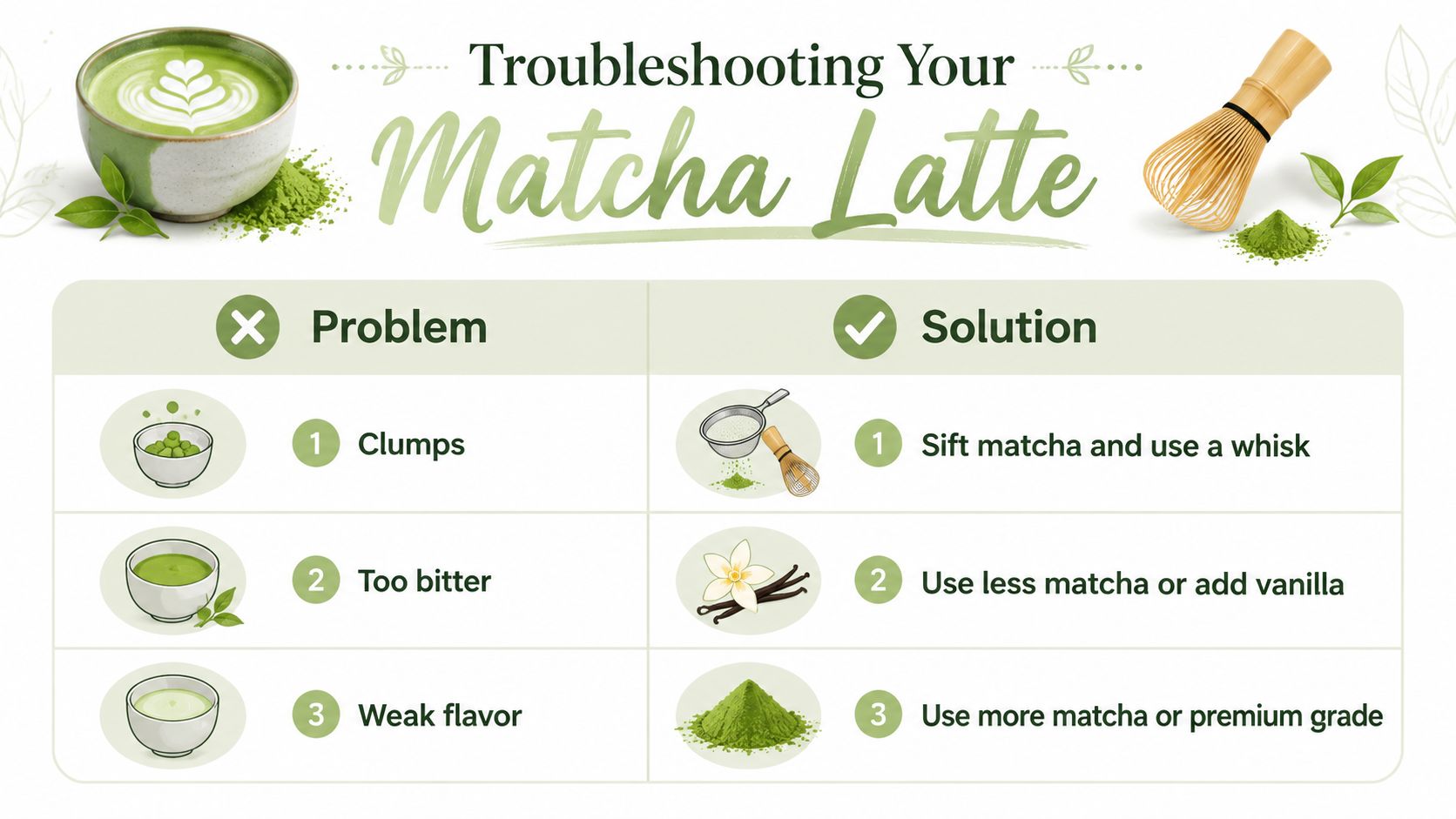
The important distinction: Sugar free doesn't automatically mean suitable for unlimited daily use. Strength, cup size and timing can make caffeine the main consideration.
Café and Hospitality Serving Tips for Sugar Free Matcha Lattes
A café that adds a sugar free matcha latte to its menu needs more than a good recipe. The drink must be easy for staff to reproduce, clear for customers to understand and consistent enough to earn a second order.
Menu wording should describe the experience without making medical promises. Phrases such as ceremonial-grade matcha, no added sugar and sweetened to your preference communicate the important choices. If the recipe includes milk with naturally occurring sugar, avoid implying that every version is chemically sugar-free. In Australia, the Food Standards Code uses 2.5 g of sugar or less per 100 mL as the threshold for describing a drink as low sugar, as explained by CHOICE's Food Standards Code guidance.
Build a repeatable service routine
Train staff to follow the same order every time:
- Sift and dose: Weigh the matcha rather than relying on an inconsistent scoop.
- Pre-dissolve: Use the small water volume first, then whisk until smooth.
- Control heat: Bring milk to approximately 65 °C and stop before it boils.
- Finish deliberately: Combine the liquids smoothly and check the foam before serving.
Clear recipes also help hospitality teams manage substitutions. Record the default dairy option, the preferred oat barista blend and the soy alternative, then note which milks need gentler heating. A customer asking for an iced version should receive the same matcha concentrate logic, not a powder shaken directly into cold milk.
Low- and no-sugar drinks now represent more than half of beverage sales, with 55.5% of sales volumes in the cited Australian market data, and zero-sugar soft drink choice was reported at 35% among consumers in the same market context. These figures support menu experimentation, but they don't replace sensory testing. Taste the drink without sweetener, with a small amount of monk fruit or stevia, and with different milk options before settling on the final menu version.
Make the presentation work
A clear takeaway cup can show the green colour and foam layers, but presentation shouldn't come at the expense of temperature or spill resistance. For iced service, a visible separation between milk and matcha can look attractive before the customer stirs it. For hot service, glossy foam and a clean pour signal care more effectively than excessive garnish.
Cafés can also place the drink beside other functional, non-alcoholic options. PepTea produces sugar-free organic kombucha brewed in the Hunter Valley, NSW, with flavours including Ginger, Lime & Ginger and Mango. Offering a fermented drink alongside matcha gives customers a choice between a creamy tea latte and a bright, refreshing alternative, without relying on high-sugar soft drinks.
For cafés selling beans, tea or recurring pantry products online, a RecurX coffee subscription solution can help organise subscription-style purchasing. The same recurring model can be relevant to cafés and retailers building regular matcha or beverage supply routines, provided the product, delivery schedule and customer expectations are clearly explained.
A successful sugar free matcha latte isn't successful because it carries a fashionable label. It succeeds when the matcha tastes smooth, the milk has proper body and the team can reproduce the result during a busy morning. Start with the measured workflow, taste before sweetening and keep caffeine awareness part of the customer conversation.
PepTea offers organic Japanese matcha for home brewers, matcha enthusiasts and Australian cafés, along with sugar-free organic kombucha brewed in the Hunter Valley, NSW. Visit Pep Tea to explore the matcha range, compare beverage options and find ingredients for a cleaner café-style routine.
Matcha Brewing Temperature: The Complete Guide 2026
Matcha brewing temperature is the detail that most often separates a smooth, savoury cup from one that tastes harsh and grassy. The popular advice to “just use hot water” sounds harmless, but freshly boiled water can overpower the powder before you have a chance to appreciate its sweetness, aroma and umami.
For Australian matcha drinkers, a practical starting point is 70–80°C, with 75°C as a useful default. Australian brewing guidance consistently warns against boiling water, while local brands commonly position 70–80°C as the working range for matcha service and recipe education (Pure Matcha Australia's brewing guide, Hello Matcha Australia's temperature guide). The best target still depends on your matcha grade, whether you're making usucha or a latte, and the mineral character of your water.
The One Rule Most Matcha Drinkers Get Wrong
The rule is not “use hot water.” It is “choose heat for the matcha in front of you.” Near-boiling water is a common kettle habit, but matcha responds differently from loose-leaf tea because the finely ground leaf remains suspended in the cup.
For a practical Australian starting point, keep the water within 70–80°C. Around 75°C often gives a balanced result, while water above 80°C can bring bitter, drying notes forward quickly. The Hello Matcha Australia guide and Matcha What's temperature guide both place matcha brewing in this moderate range.
Practical rule: If your matcha tastes aggressively bitter, adjust the water temperature before blaming the powder.
Lower heat suits delicate ceremonial matcha, especially when you are drinking it straight and want its sweetness and umami to remain clear. A latte or culinary preparation may need slightly more heat, or a stronger brew, so the matcha remains noticeable beside milk and other ingredients. Iced matcha also changes the balance because cold water and ice soften aroma and intensity.
Water chemistry belongs in the decision too. Hard, highly mineralised water can make the cup feel heavier or more astringent. Balanced filtered water often gives the powder a cleaner platform, although extremely soft water may produce a thinner impression.
Use this order when choosing a temperature:
- Grade: delicate ceremonial matcha generally rewards gentler heat; culinary matcha can tolerate more.
- Format: straight whisked matcha, thick matcha, lattes and iced drinks need different levels of intensity.
- Water: mineral content can change perceived bitterness, texture and finish.
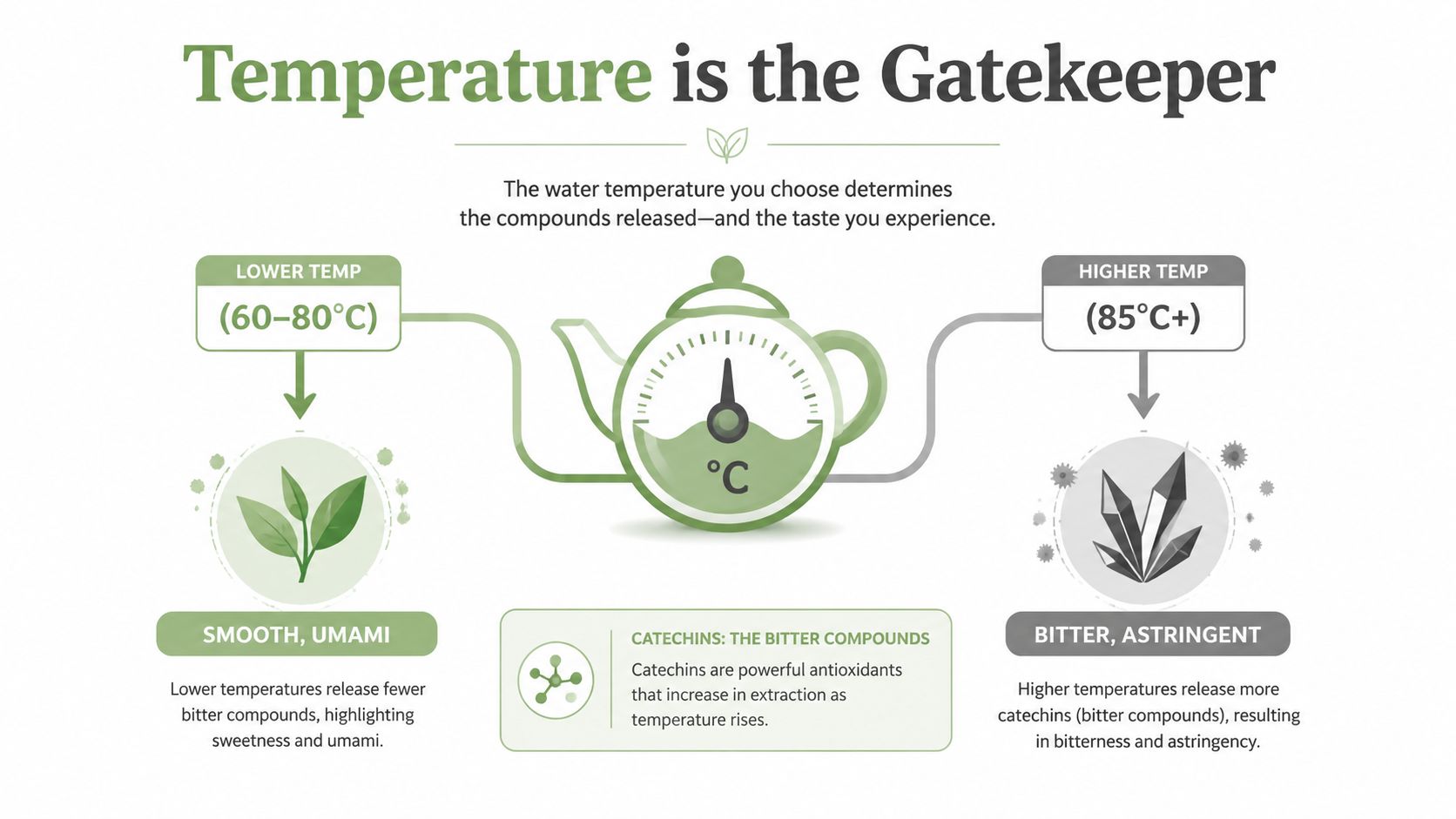
The detail many casual guides skip is the catechin extraction window. Above the ideal range, bitter catechins move into the water faster than the compounds that make matcha taste sweet and mellow. Temperature therefore becomes a control, not a vague warning to avoid boiling water. Set it according to grade, format and water, then adjust by taste.
Why Temperature Changes the Way Matcha Tastes
Think of the matcha powder as a small kitchen with two groups of cooks. The L-theanine and other amino acids are the gentle chefs, bringing sweetness, savoury depth and a calm, rounded character. Catechins are more like impatient outsiders. They rush into the water when the heat rises and can make the drink taste bitter and drying before the softer flavours have time to balance it.
That analogy explains the central brewing principle. Moderate warmth encourages a smoother balance, while higher heat favours faster extraction of bitter catechins. A matcha temperature guide identifies the region above 80°C as the point where catechins extract faster than amino acids, and describes 70–80°C, with 75°C as a default, as a useful balance for flavour and foam formation (Matcha What).
Matcha extracts differently from loose-leaf tea
Loose-leaf tea spends time in water before you strain the leaves. Matcha is already ground, so whisking disperses the particles almost immediately. You're not waiting for water to travel into an intact leaf. You're choosing how forcefully the water draws compounds from a fine powder that remains in the drink.
That's why temperature is such a powerful dial. A long wait won't rescue water that's too hot, and fast whisking won't remove bitterness that high heat has already extracted. Whisking controls suspension and foam. Temperature controls the balance of what comes out first and what becomes dominant.
The practical takeaway
Lower heat tends to preserve sweetness, aroma and umami. Higher heat can create a stronger, more forceful cup, but it also raises the risk of astringency. Australian guidance has settled around 70–80°C because that range gives cafés, retailers and home brewers a repeatable starting point without treating every matcha drink as identical.
The Matcha Temperature Spectrum From 60°C to 85°C
Temperature works best as a decision tool, not a rule to memorise. Start with the matcha's grade, then consider whether you are drinking it straight, whisking a thicker bowl, or adding milk. Water chemistry can shift the result as well.
| Temperature | Dominant flavour | Mouthfeel | Best use |
|---|---|---|---|
| 60–65°C | Gentle sweetness and fresh umami | Soft, delicate and restrained | Delicate ceremonial matcha or a cold-leaning straight drink |
| 65–70°C | Sweet, aromatic and lightly savoury | Smooth with a fine body | Everyday ceremonial usucha |
| 70–80°C | Balanced umami with fuller flavour | Creamier and more rounded | Daily premium matcha, most straight cups and lattes |
| 80–85°C | Bold, deeper and more noticeably astringent | Stronger, firmer and less forgiving | Culinary use or a thick milk-based drink |
The lower bands
Choose 60–65°C when the matcha is delicate and you want freshness, sweetness and umami to lead. The cooler water draws flavour more gently, making it useful for a cold-leaning straight drink too. Dispersion will be slower, so whisk patiently and expect a lighter cup.
At 65–70°C, aroma becomes clearer while the texture remains soft. This is a reliable starting band for ceremonial usucha, especially when the powder is sweet and finely aromatic.
Temperature also affects the catechin extraction window. Cooler water slows the release of these compounds, while hotter water draws them out more quickly. That matters because catechins contribute structure and astringency. Staying in the lower bands gives sweetness and amino-acid richness more room to appear before those firmer notes dominate.
The everyday range
Use 70–80°C for premium matcha that needs more body, a regular straight cup, or a latte base that must remain noticeable beside milk. Begin near the lower end for a delicate powder. Move higher when the flavour feels thin, the drink contains milk, or the matcha is intended for a stronger recipe.
Water can change the result even when the thermometer reading is identical. Strongly mineralised tap water may make the cup taste dull or harder, while filtered water can produce a cleaner impression. The Water Filter Advisor tips provide a practical starting point for assessing household water quality.
The upper boundary
Reserve 80–85°C for culinary matcha, bold recipes and thick milk-based drinks. The added heat produces a firmer, more forceful profile, but it gives delicate straight matcha less room for sweetness and aroma.
Above 85°C, treat the water as too hot for routine brewing. Cool it before whisking. If the cup already tastes sharp, lowering temperature is usually the fastest correction.
Matching Temperature to Matcha Grade and Drink Style
適合的抹茶沖泡溫度,取決於茶粉等級、飲用方式,以及其他材料的味道強度。單獨飲用的 ceremonial matcha 幾乎沒有其他味道遮掩苦味;加入牛奶、水果或甜味劑的 culinary matcha,則需要更有存在感的茶湯。先依格式選擇,再按水質和口感微調。想了解不同等級的特性,可參考 Pep Tea's guide to different grades of matcha。
| Matcha grade | Usucha, thin tea | Koicha, thick tea | Latte or milk drink | Iced or cold brew |
|---|---|---|---|---|
| Ceremonial | 65–75°C | 60–70°C | 70–75°C base | Cool or room-temperature water |
| Premium | 70–75°C | 65–70°C | 70–80°C base | Cool or room-temperature water |
| Culinary | 75–80°C | Not usually the first choice | 80–82°C | Cool or room-temperature water |
| Latte blend | Not usually used alone | Not usually used alone | 82–85°C | Follow the blend's instructions |
Ceremonial matcha
Ceremonial matcha 通常在 65–75°C 最能展現甜味、香氣和鮮味。較低的溫度會放慢兒茶素釋放,讓甜感和胺基酸風味先出現,減少澀味過早主導。Usucha 使用適量茶粉和溫水,重點是打出均勻懸浮的茶液,不必追求大量泡沫。
Koicha 的茶粉比例較高,濃稠度會放大每個味道,因此適合使用 60–70°C 的溫水。以慢慢推揉的方式混合,讓茶液變得順滑,不要像 Usucha 一樣用力打出輕盈泡沫。
Premium matcha
Premium matcha 適合日常清飲,也能支撐拿鐵。單獨飲用時,可從 70–75°C 開始。若加入牛奶後味道變薄,再在這個範圍內提高溫度,讓抹茶保留較清楚的輪廓。
Culinary matcha and latte blends
Culinary matcha 的設計,是在其他材料中仍維持明顯茶味。製作牛奶飲品時,80–82°C 能帶出較強的茶底,牛奶或植物奶則會柔化澀感。Latte blend 若本身風味較集中,可使用 82–85°C,但仍應低於沸點,避免香氣變得粗硬。
冰抹茶的重點不是直接把熱水溫度調低,而是改變混合方法。可用少量冷水或室溫水先將茶粉拌開,再放入密封罐搖勻;也可先製作溫熱濃縮茶液,冷卻後加入冰塊。水質也會改變結果,礦物質較多的水可能令茶湯顯得沉重,過濾水通常能呈現較清晰的味道。
How to Hit the Right Temperature at Home Every Time
You don't need a specialist tea setup to control your matcha brewing temperature. You need a repeatable method and a little consistency. Rank your options by precision, then choose the one you'll use.
Start with boil and rest
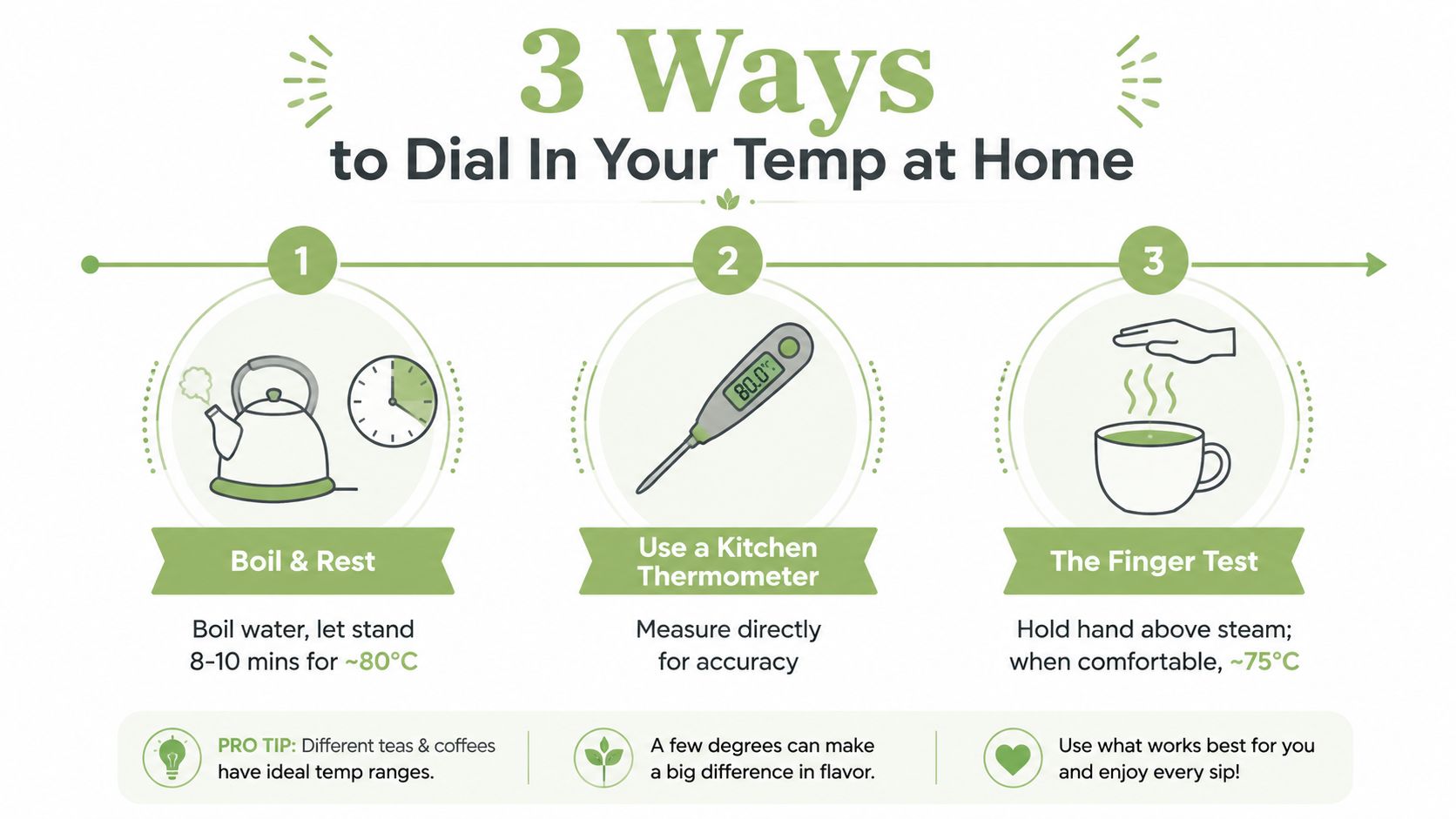
The simplest approach is to boil the water, remove it from the heat and let it cool before pouring. For a practical home routine, time the rest with your phone rather than guessing:
- For about 80°C: let boiled water stand for roughly 8–10 minutes.
- For about 75°C: let it stand for roughly 12 minutes.
- For about 70°C: let it stand for roughly 15 minutes.
These timings are a starting point, not a laboratory guarantee. A small uncovered cup cools faster than a full kettle, and room temperature, vessel shape and altitude can all change the result. If you use the same kettle and cup each day, your timing will become more reliable.
Use direct temperature control
A temperature-controlled kettle is the easiest repeatable option. Set it to your target, then pour into a pre-warmed bowl. A kettle such as the Pep Tea electric tea kettle with temperature control can make this process more straightforward for anyone who prepares matcha regularly.
A kitchen thermometer works too. Measure the water in the vessel you'll pour from, because transferring it between containers changes the temperature. You can also use a thermometer to calibrate your boil-and-rest routine, then return to the timer once you know how your equipment behaves.
Mix hot and cool water
When you don't have a thermometer, mixing boiled water with cool water can bring the blend near the lower end of the useful range. A rough 1:2 or 1:3 ratio of boiling water to cool water can land near 70°C, depending on the starting temperatures and the size of each pour. Add the hot water first, then the cool water, and keep the ratio consistent.
Pre-warm your bowl before whisking. A cold ceramic bowl can pull heat from the brew as soon as the water touches it, so swirl warm water around the bowl, discard it, and dry the inside. Finally, sift the powder and whisk promptly. Temperature control works best when clumps aren't slowing down dispersion.
What Happens When You Brew Too Hot or Too Cold
Water near 85°C can make a matcha latte look bright while leaving the base flat, astringent and sharply green. Milk rounds off some of those edges, yet it cannot fully restore aroma or sweetness once excessive heat has overwhelmed them.
The same powder prepared around 65°C usually gives a rounder, gently sweet cup, with savoury depth that may recall seaweed or broth. Lower heat does not automatically make matcha weak. It slows extraction enough to keep the flavour balanced.
Why the two cups diverge
Temperature changes the order in which compounds move into the water. Above 80°C, catechins extract faster than amino acids, so bitterness and astringency can take the lead, particularly when you drink the matcha without milk. The 70–80°C range is a useful starting point for a balanced cup, but the right choice still depends on the powder, format and water.
A very cool brew creates a different issue. The powder disperses slowly, leaving clumps and visible specks that hold back flavour. Cold matcha can still taste pleasant and refreshing, but thorough shaking or whisking becomes more important, and the result will not resemble a warm bowl.
The catechin window matters when choosing your correction. If heat has pushed bitterness forward, lowering the temperature protects the sweeter, savoury balance. If a cold preparation feels uneven, improve dispersion before assuming the powder needs more heat.
Diagnose the cup before changing the powder
Harsh flavour calls for cooler water first. Thin texture or stubborn clumps point to better sifting and whisking before a large temperature increase. A muted latte usually needs a more concentrated base or a matcha made for milk, not boiling water. Small changes reveal whether temperature, technique or drink style is responsible.
Common Matcha Temperature Myths Worth Forgetting
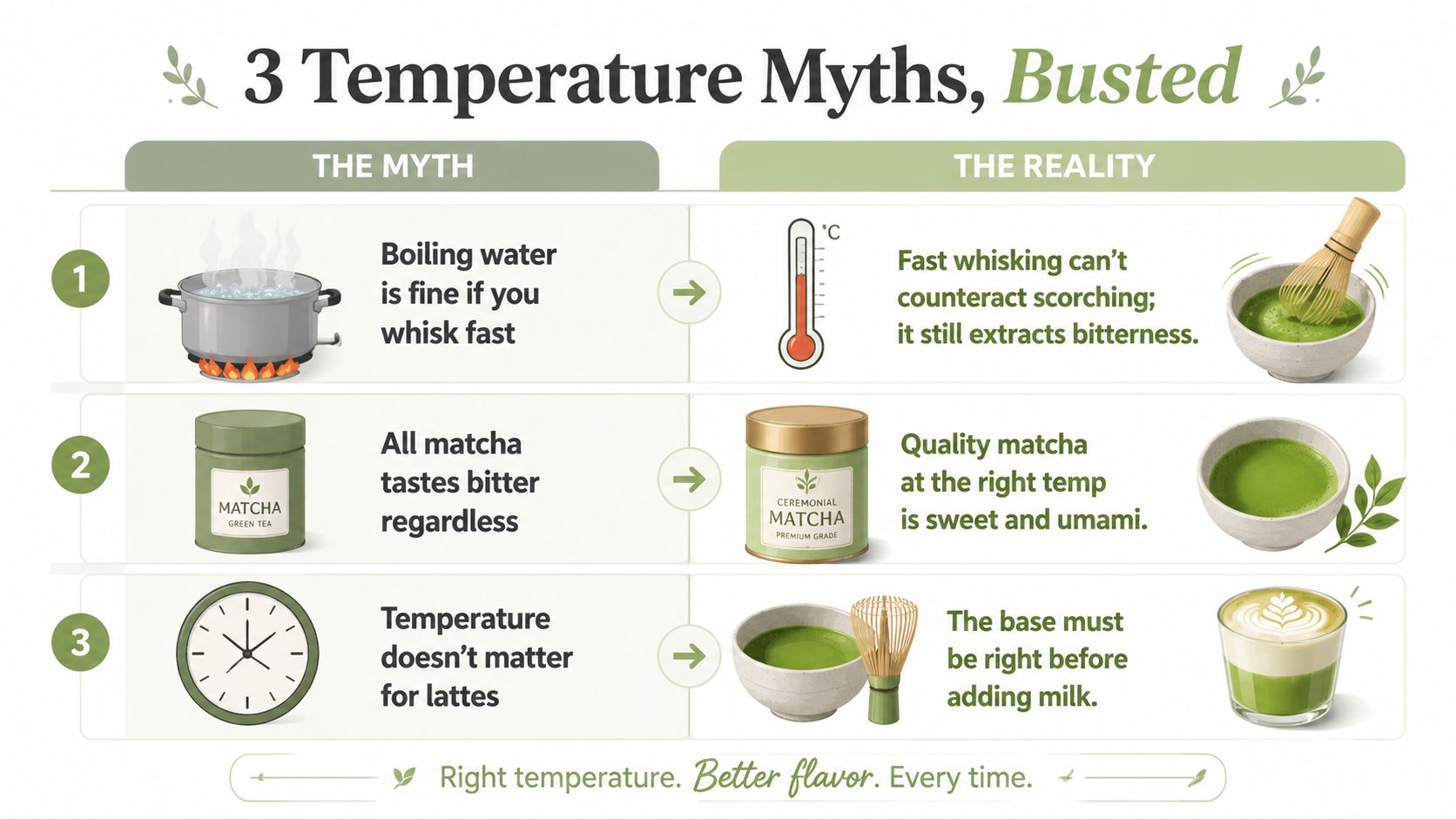
Myth one, boiling water is fine if you whisk fast
Fast whisking can break up clumps and create foam, but it can't reverse what very hot water has already extracted. Australian guidance repeatedly keeps matcha below boiling and generally within 70–80°C, because warmer water tends to increase bitterness while cooler water preserves smoothness (Pure Matcha Australia).
Letting the water cool is the better correction. Whisk with energy, but treat the whisk as a tool for suspension, not a way to cancel excessive heat.
Myth two, all matcha tastes bitter
Bitterness is not automatically a sign that matcha is poor quality. It can come from water that's too hot, a powder that has clumped, or a drink ratio that concentrates more powder than the water and milk can balance.
Prepare a fresh sample at a gentler temperature, sift it and whisk it thoroughly. If the flavour becomes sweeter and more savoury, your original problem was probably preparation rather than an unavoidable characteristic of matcha.
Myth three, cold brew extracts nothing worthwhile
Cold matcha can produce a smooth, refreshing drink with attractive colour and a gentler flavour. It's a different preparation, not a failed hot brew. Cold water changes how quickly compounds disperse and extract, so shaking or blending matters more than leaving powder in a glass.
For an iced drink, make a smooth cold base first, then add chilled water, ice or milk. Don't assume that a drink must be hot to be enjoyable. Test these assumptions in your own kitchen and keep the settings that suit your palate.
Your Quick Reference and Where to Brew Better Matcha
The right temperature is a decision, not a fixed rule. Use the table as a starting point, then adjust for matcha grade, drink format, water and flavour. A repeatable 75°C bowl is more useful than chasing a setting you cannot reproduce.
| Matcha grade or drink style | Target temperature |
|---|---|
| Cold-extracted drink | 60–65°C |
| Ceremonial matcha | 70–75°C |
| Daily premium matcha | 75–80°C |
| Culinary matcha | 80–85°C |
| Matcha latte | 75–80°C base, adjusted to taste |
Use the table as a simple decision tree. Start at 70–80°C for a straight bowl, choosing the lower end for delicate ceremonial matcha and the higher end for fuller daily or culinary powders. For a latte, judge the base before adding milk. If the cup tastes sharp or drying, lower the temperature. If it tastes thin, move slightly higher.
Cold-extracted matcha sits outside the usual hot-brew routine. Cooler water gives a gentler profile, while thorough shaking or whisking helps the powder disperse. Water chemistry matters too: mineral-heavy water can make the cup taste flatter or harsher, so try filtered water before changing the temperature dramatically.
Keep the rest of the process steady. Warm the bowl, sift the powder and whisk until the suspension is smooth. The Pep Tea guide to whisking matcha explains that technique clearly. Record your kettle setting and flavour for a week, and the best range for your matcha will become easier to repeat.
Pep Tea offers organic Japanese matcha in ceremonial and culinary grades for straight bowls, lattes and recipes. Visit Pep Tea to explore options suited to your brewing style.
Chawan Matcha Bowl Guide for Australian Tea Lovers

A common piece of matcha advice is that any bowl will do. Technically, you can mix powdered tea in a mug, but a chawan matcha bowl changes how easily you whisk, how evenly the powder suspends, and how comfortable the preparation feels in your hands. Its broad opening gives a bamboo chasen room to move, while its stable base helps you whisk briskly without chasing the bowl around the bench.
For Australian tea drinkers, that makes the chawan more than a decorative Japanese object. It's a practical preparation tool, a connection to an established ceramic tradition, and an easy way to make a home or café matcha routine feel more intentional. The right choice depends on shape, material, use, care, and the kind of matcha you enjoy.
Why a Chawan Is More Than a Pretty Bowl
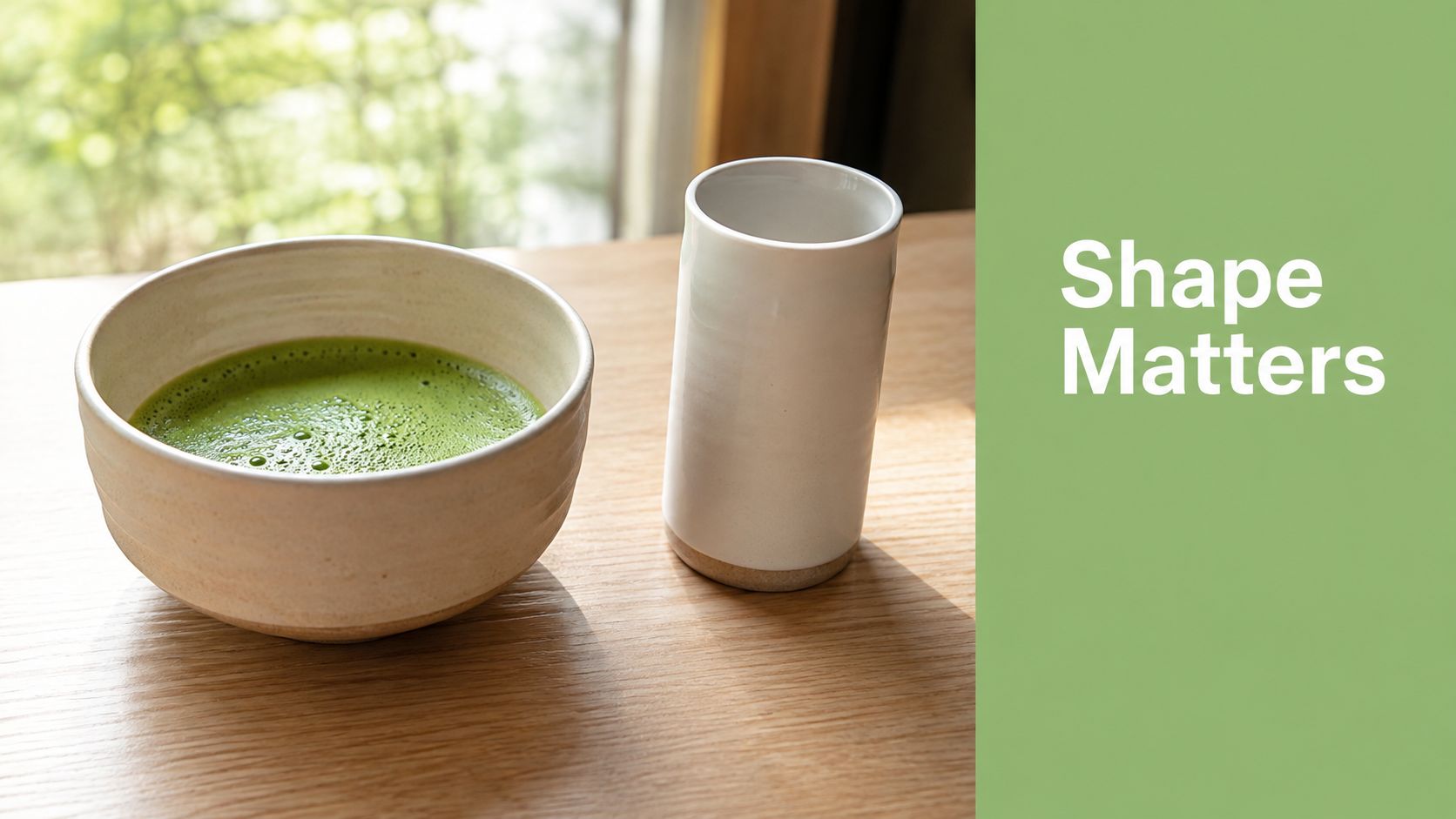
A narrow mug restricts the whisk. Your chasen may catch against the sides, forcing a short stirring motion instead of the quick back-and-forth movement that aerates matcha. A cereal bowl solves the space problem, but its broad, shallow base may not offer the balance, wall angle, or comfortable rim you need for controlled whisking.
A purpose-made chawan matcha bowl usually combines a wide opening, a generous interior floor, and a deep rounded base. Australian retailers commonly describe this geometry as useful because it gives the whisk clearance for proper preparation and helps reduce spills during vigorous whisking, as shown by this Australian chawan product example.
Shape affects the drink
The bowl won't alter the nutritional profile of your matcha. It can, however, affect the mixing experience and finished texture. When the chasen can travel across the base without hitting the wall, you've got a better chance of creating an even suspension and a surface of fine bubbles rather than leaving dry clumps at the bottom.
That distinction matters because matcha isn't steeped and removed like loose-leaf tea. The powdered leaf stays in the drink, so uneven mixing is immediately noticeable in the mouth.
Practical rule: Choose a bowl that lets your whisk move freely before choosing one purely for its colour or glaze.
The rest of your setup matters too. A bamboo whisk, scoop, and whisk holder are commonly sold alongside chawan bowls because the bowl forms part of a matcha preparation system, not an isolated cup, as illustrated by Australian matcha bowl and accessory sets. Once the bowl is roomy and stable, sifting and whisking become simpler, more repeatable tasks.
The History of the Chawan and Tea Ceremony
The chawan's story begins with Chinese tea vessels that reached Japan through Buddhist connections. Over time, Japanese tea drinkers adapted the bowl to local practices, and Zen communities gave tea preparation a more focused place in daily life. The vessel gradually moved from being a practical drinking object to becoming part of a carefully considered encounter between host, guest, tea, and setting.
Early Japanese tea culture valued refined imported ceramics, including glossy Tenmoku ware. The aesthetic later shifted towards bowls with more restrained surfaces and irregular forms. Korean-influenced ceramics, including Ido-style bowls, helped shape the appreciation of rough clay, uneven rims, muted colour, and marks left by the kiln or the maker.
Wabi-cha and the shared bowl
The Art Gallery of South Australia explains that the use of a shared bowl was central to wabi-cha, a tea approach associated with Murata Jukō in the 15th century and later refined by Sen no Rikyū in the 16th century. That history gives the chawan a meaning beyond individual serviceware. The bowl becomes a meeting point, with its imperfections and tactile surface encouraging attention rather than display alone.
For an Australian reader, the documented timeline is especially tangible. The Art Gallery of South Australia identifies “Morning Light” as the only known named historic tea bowl in Australian public collections and dates it to the 17th century, at the Shigaraki kilns near Kyoto. Its curator's insight on the tea bowl “Morning Light” places a specific historic chawan within Australia's public museum record.
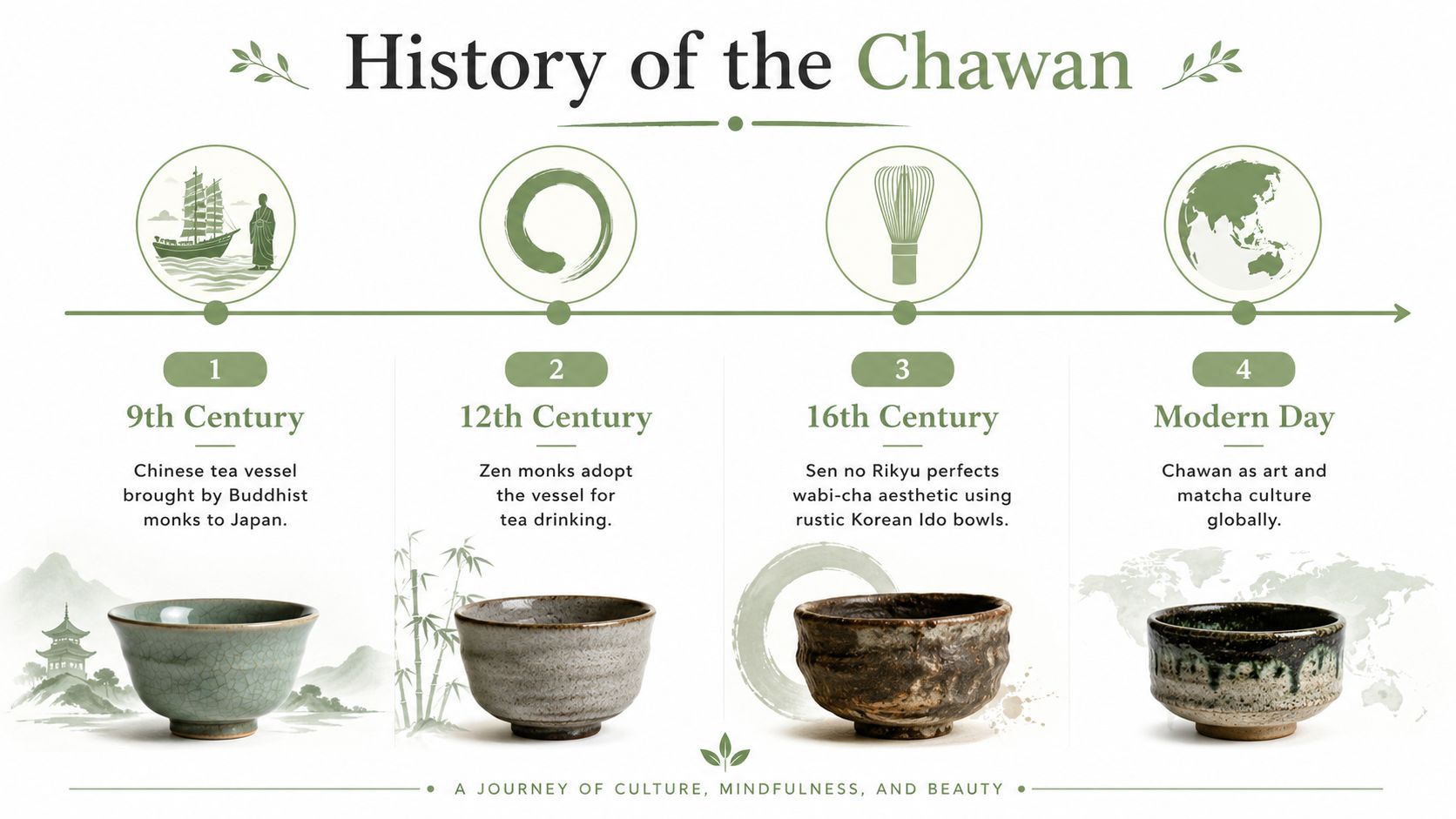
You don't need to perform a formal tea ceremony to appreciate that background. A bowl used for a quiet morning matcha still carries the influence of wabi-cha, where simplicity, presence, and the shared act of drinking matter as much as ornament.
Readers interested in the ritual side can explore Pep Tea's matcha tea ceremony guide for a broader introduction to the practice and its tools.
Styles and Materials You Will See in Australia
Australian buyers will encounter several Japanese ceramic traditions, each with a different balance of texture, weight, glaze, and visual character. Retail descriptions can make these styles sound interchangeable, but they feel quite different in the hand.
Raku bowls are associated with hand-shaped clay and low-fired construction. Their irregular silhouettes and crackled or varied glazes suit drinkers who enjoy a tactile, intimate bowl for slower preparation. Raku is often chosen for special use, although the care requirements depend on the individual piece.
Hagi ware generally has a pale, soft-looking glaze that can absorb small amounts of tea over time. That absorbency is part of its appeal. The bowl can develop a more personal appearance with use, but it also deserves careful rinsing and thorough drying.
Karatsu tends towards understated browns, earthy surfaces, and restrained painted decoration. It's a good fit for someone who wants a traditional feel without a highly dramatic glaze.
Comparing common styles
Mino ware covers a broad family of practical Japanese ceramics. Oribe's green glaze and Shino's creamy surface offer very different looks within the same wider tradition. An Australian source describes a contemporary Mino-ware matcha bowl as sourced from Gifu Prefecture, the origin of Mino ware, and links the tradition to 1,300 years of history in its Australian product description.
Shigaraki is recognised for coarse, earthy clay and natural ash effects created during firing. Its surfaces can look rugged, warm, and distinctly connected to the material itself. The historic Australian example mentioned earlier was made at the Shigaraki kilns, giving this style a direct place in the country's public collection record.
Australian prices vary according to maker, age, provenance, firing method, and whether a piece is imported or locally stocked. Rather than treating a price as proof of quality, inspect the foot, rim, glaze, balance, and care instructions.
| Style | Origin | Typical Price (AUD) | Best For |
|---|---|---|---|
| Raku | Kyoto tradition | Varies by maker and retailer | Special preparation and tactile ritual |
| Hagi | Yamaguchi tradition | Varies by maker and retailer | Drinkers who appreciate evolving glaze character |
| Karatsu | Kyushu tradition | Varies by maker and retailer | Understated everyday ceremony |
| Mino | Gifu Prefecture | Varies by maker and retailer | Practical daily bowls with broad glaze choices |
| Shigaraki | Shiga Prefecture | Varies by maker and retailer | Earthy surfaces and rustic visual character |
Shape, Size, and What Affects Your Matcha
A chawan's shape changes how matcha mixes, foams, and reaches your lips. It is a preparation tool, not just a decorative ceramic bowl. An Australian retail listing commonly shows a chawan close to 12 cm in diameter and 7.2 to 7.5 cm in height. That size offers room for the chasen to move while remaining practical to hold and store.
Capacity gives only part of the picture. A broad interior floor gives the whisk clearance, while the angle of the walls guides water and powder together. A stable base keeps the bowl planted as your other hand supports the body or steadies the rim.
Read the listing beyond millilitres
A thick, rounded rim can feel comfortable when drinking directly from the bowl and gives the pour a little more forgiveness. A sharper rim may appear cleaner but can feel less natural against the lips. Check the foot as well. It should sit securely on a kitchen bench, particularly while you are learning to whisk with a relaxed wrist.
A taller, narrower bowl helps contain splashes and can suit thicker koicha-style preparation, which is worked more slowly. A wider, flatter bowl usually gives more room for usucha, the lighter, frothy matcha commonly prepared at home. The difference is similar to using a narrow saucepan for controlled pouring and a broad pan for easy stirring. The shape changes how freely your tools can move.
| Shape | Diameter (cm) | Height (cm) | Best for |
|---|---|---|---|
| Wide daily chawan | Around 12 | Around 7.2–7.5 | Usucha and general home preparation |
| Taller, narrower bowl | Varies | Higher than a wide daily profile | Thicker matcha and contained whisking |
| Kata-style profile | Varies | Varies | Formal ceremony and traditional presentation |
| Naname-style profile | Varies | Varies | Daily use and easier access for whisking |
| Ōguro-style profile | Varies | Varies | Display or fast café preparation |
Retailers may use these labels differently, so treat them as a starting point. Compare the photographs with the measurements, foot, rim, and interior floor before choosing.
A beautiful bowl becomes inconvenient if your whisk strikes the walls or the base slides across the bench.
Australian kitchens often have limited cupboard space. Measure the shelf where you plan to keep the chawan, including the height needed to lift it out comfortably. A bowl that stays easy to reach is more likely to become part of your routine than one packed away in a high cupboard.
Choosing a Chawan for Ceremony, Daily Use, or Display
The most useful chawan isn't automatically the rarest or most expensive. It's the one that matches how often you'll use it, how carefully you're prepared to clean it, and whether you want the bowl to participate in drinking or sit on a shelf.
A ceremony bowl may be handcrafted, weighty, asymmetrical, and made in a style such as Raku or Hagi-yaki. Those features can make it feel meaningful during formal chado or chanoyu, but they may also require gentler handling. An everyday bowl is usually easier to replace, easier to clean, and less stressful to use for a morning matcha or latte base.
Four filters for a confident choice
- Frequency: Daily drinkers should prioritise balance, a comfortable rim, and manageable cleaning.
- Formality: Choose stronger visual character when the bowl is for guests, seasonal use, or a deliberate ritual.
- Cleaning tolerance: Porous or delicate surfaces need more attention than a sturdy glazed bowl.
- Budget: Australian retail pricing varies widely, so decide what you're comfortable spending before falling for a particular glaze.
Display pieces sit at the opposite end. An ornate bowl or a kintsugi-repaired object may be better appreciated as ceramic art than exposed to repeated hot-water washing. It can still inspire your tea corner without becoming the bowl you use twice a day.
| Use case | Weight | Glaze | Care level |
|---|---|---|---|
| Ceremony | Often weighty | Handcrafted or characterful | High, depending on the piece |
| Daily | Light to moderate | Usually practical and durable | Low to moderate |
| Display | Varies | Ornate, aged, or repaired | Protect from chips and moisture |
A simple starter setup only needs one reliable bowl, a bamboo whisk, a sifter, and matcha. A dedicated matcha bowl set from Pep Tea can suit someone who wants the core pieces together, while a standalone bowl makes more sense if you already own the other tools.
How to Whisk Matcha in a Chawan Like You Mean It
Good whisking starts before the water arrives. Sift 1 to 2 g of matcha into the bowl, then add 60 to 80 ml of hot water just off the boil. The Australian chawan guide linked here recommends a broad bowl because it gives the whisk space to create a fine, even texture, and its matcha whisking instructions provide a useful companion to the routine below.
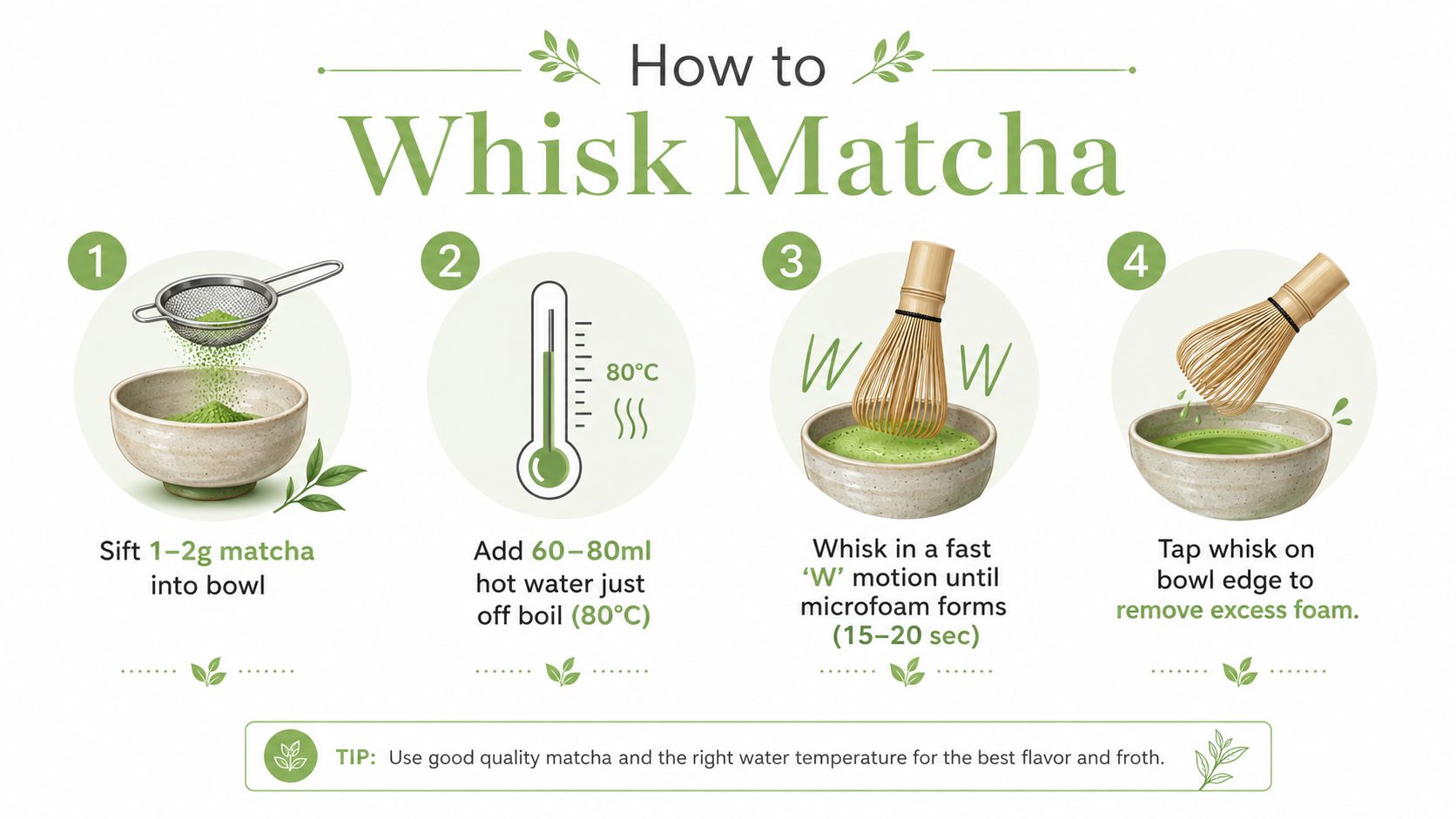
A repeatable whisking method
- Soften the chasen. Rinse the bamboo tips in warm water briefly so they flex rather than snap.
- Sift the powder. Break up clumps before water touches the matcha. This prevents dry pockets that the whisk can't easily dissolve.
- Add the water. Keep the bowl on a stable surface, or tilt it slightly away from you at roughly 45 degrees.
- Whisk briskly. Keep the tips near the base and use a quick W or M motion. As the surface aerates, let the whisk rise slightly without losing control.
- Stop at microfoam. Look for a fine, jade-coloured crema of tiny bubbles. You're not aiming for large latte-style froth.
Here's a visual demonstration of the motion:
Fix the common mistakes
- Pressing too hard: Let the flexible tines work. Force can damage the whisk and flatten your motion.
- Lifting too early: Keep contact near the base while the powder disperses, then lift gradually as bubbles form.
- Using boiling water: Very high heat can make matcha taste harsher and can dull its fresh green character.
- Skipping the sifter: If the powder starts clumped, more whisking won't always rescue the texture.
Before you begin, check three things: the powder is sifted, the water is hot but not boiling, and your wrist is loose enough to move quickly. That short checklist is more useful than chasing a perfect foam pattern.
Caring for Your Chawan So It Lasts for Decades
Rinse the bowl soon after drinking so matcha doesn't dry onto the glaze. Use lukewarm water and a soft cloth or sponge, then turn the bowl upside down to air-dry fully before storing it.
Avoid dishwashers and harsh detergents, particularly with traditional or porous surfaces. Strong cleaning products can affect the glaze, leave unwanted residue, or gradually change the finish that attracted you to the bowl.
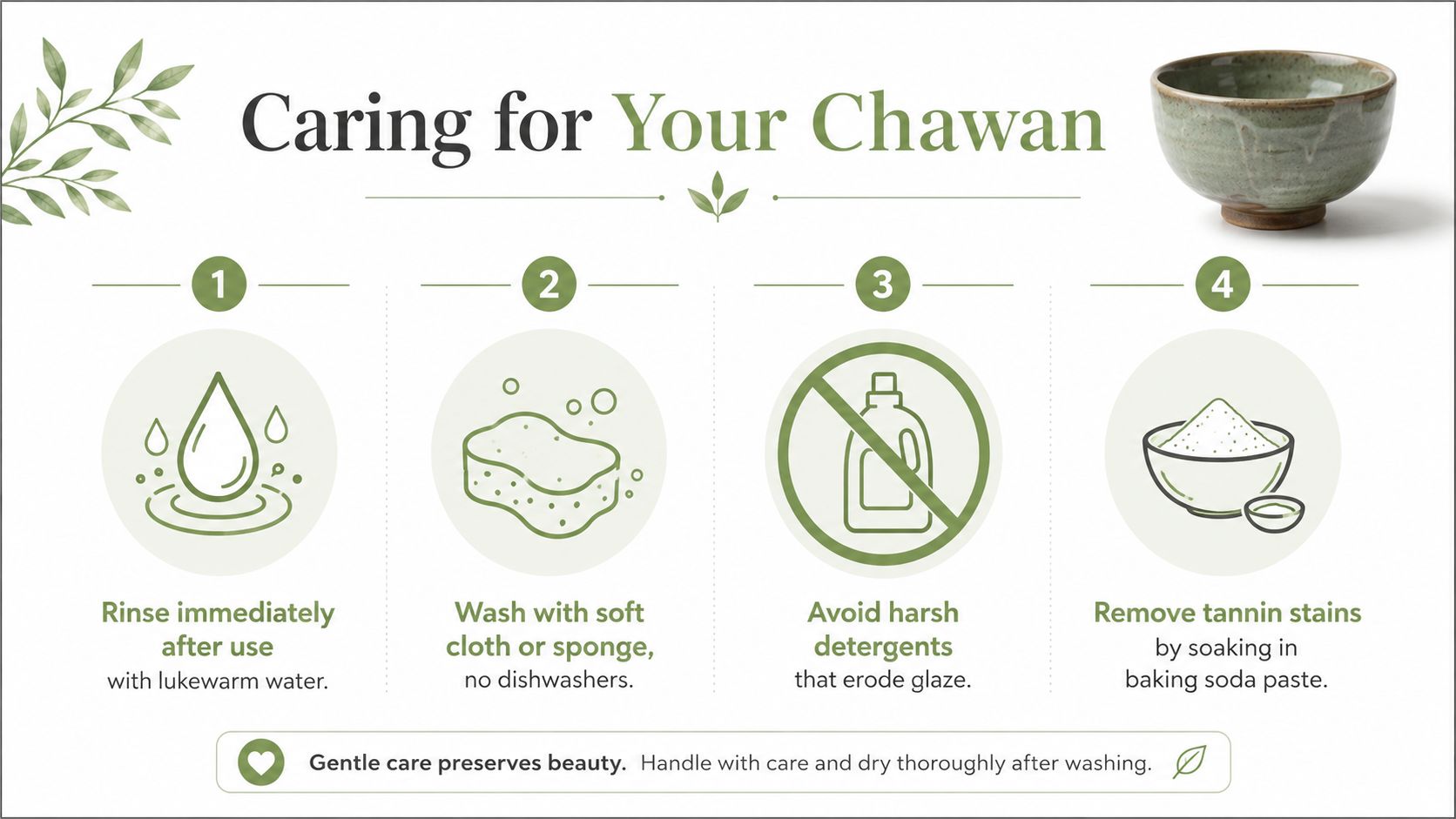
Treat stains and porous clay gently
Raku and unglazed bowls can show tannin marks. A mild paste made from baking soda and water can help lift surface staining, but don't scrub aggressively. Test gently and stop if the finish seems vulnerable.
Hagi-style surfaces need particular attention because their absorbency is part of the material's character. Rinse away residue, dry the bowl upside down, and give it airflow so moisture doesn't remain trapped inside.
Small crazing, kiln marks, and variations in glaze are often normal signs of ceramic making rather than damage. Cracks that affect stability, sharp chips, or leaking should be treated differently. If you're unsure, ask the retailer or maker before using the bowl for hot liquids.
Store a treasured chawan on an open wooden shelf where air can circulate. Felt liners and stacking pads can protect rims, and bowls shouldn't be forced together in a crowded cupboard. Rotating your bowls through the week also gives each piece time to dry completely and helps even out wear.
Bringing It All Together and Where to Go Next
A chawan earns its place through use. Once you have whisked in one regularly, you will notice which parts of the routine feel natural and which create friction. That practical feedback is more useful than choosing a bowl solely for its appearance or following a fixed idea of what a tea setup should look like.
Start with the matcha you want to drink. Pep Tea offers organic Japanese matcha products for a neat drink, a latte, or cooking, so your powder can guide the routine rather than sit apart from it. The bowl then becomes part of a repeatable habit: measure, add water, whisk, and drink while the matcha is fresh.
A good next step is to visit Pep Tea and explore its organic Japanese matcha and matcha accessories. Choose equipment that suits the way you prepare tea in an Australian kitchen, then practise often enough for whisking to become familiar. Confidence comes from repetition, not from owning a perfect collection.
No Sugar Added Juice Explained and Healthier Alternatives

“No sugar added” sounds like the easy answer when you're trying to choose a healthier drink. It isn't. A bottle can contain no added sucrose, syrup or sweetener and still deliver a substantial amount of naturally occurring fruit sugar. The useful question isn't only whether sugar was added. It's how much total sugar is in the drink, how much you'll pour, and what you're replacing.
That distinction matters at the supermarket, in a café and at home. Australian label rules define when a claim can appear, but the front-of-pack wording doesn't automatically tell you that a juice is low sugar or sugar free. Once you know where to look, you can make a faster decision and choose a drink that suits the occasion, whether that's a small juice serve, sparkling water, kombucha or matcha.
The Label That Sounds Healthier Than It Often Is
A 250 mL bottle marked “no sugar added” may still contain around 25 g of total sugar, because the drink can be made entirely from fruit without adding table sugar or syrup. That label describes a processing choice. It doesn't describe the drink's complete sugar load.
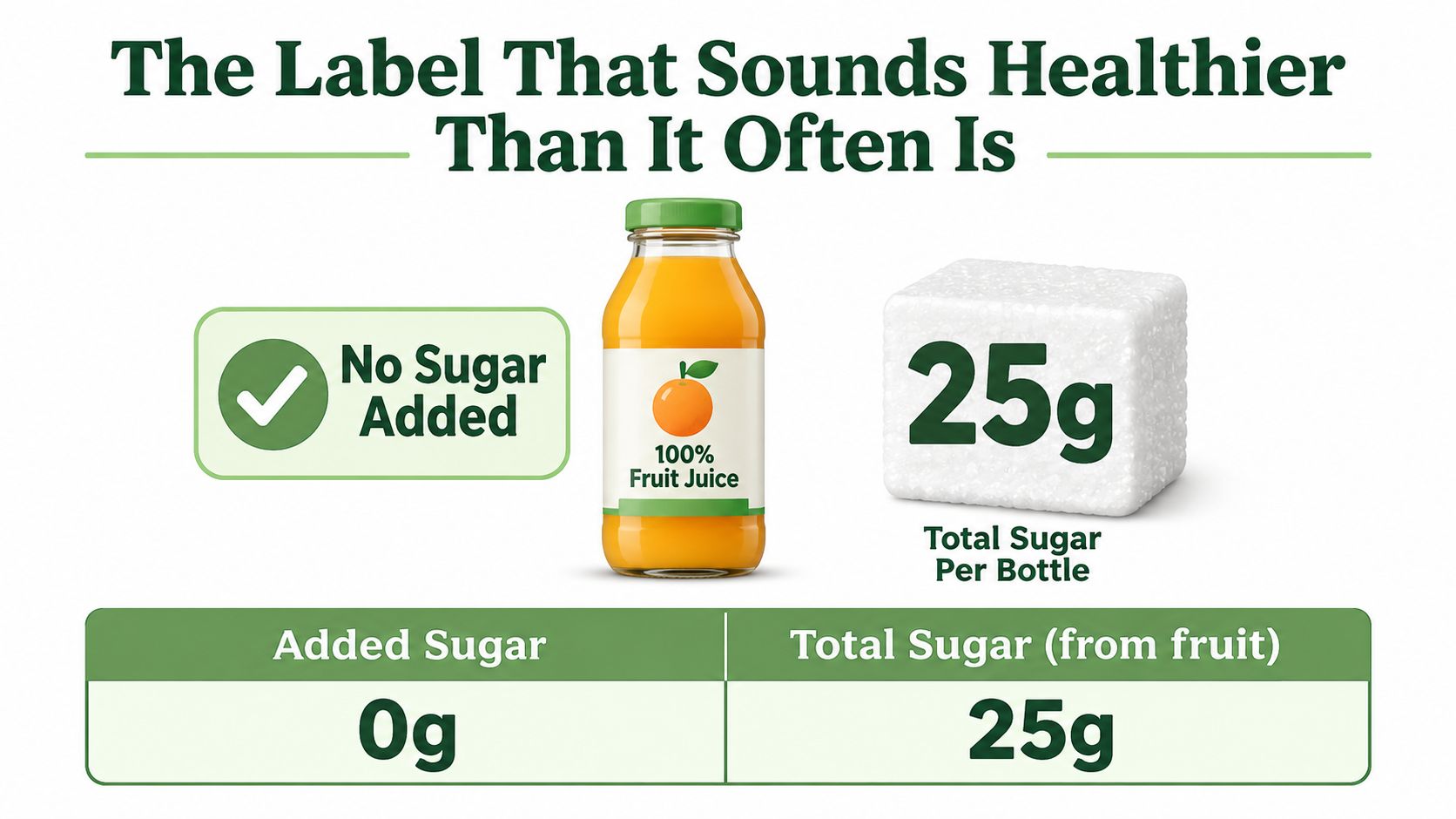
The front badge and the nutrition panel answer different questions
No sugar added juice can contain naturally occurring sugars from the fruit itself. The front claim answers, “Did the manufacturer add sugar as an ingredient?” The Nutrition Information Panel answers the more useful shopping question, “How much total sugar is in this drink?”
A standard Australian industry fact sheet gives an example of around 7 g of sugar in a 125 mL glass of orange juice, and notes that fruit-juice sugar content can vary from 0.5 g to 10 g per 100 g, depending on the fruit variety and harvest time. The Australian Beverages juice fact sheet also highlights that juice sugar is naturally occurring, rather than added during processing.
That still doesn't make the drink equivalent to whole fruit. Juice is easy to drink quickly and usually provides less of the fruit's original structure and chewing experience. A large glass can therefore become a much bigger sugar occasion than a deliberately measured serve.
Practical rule: Treat “no added sugar” as an ingredient claim, not a low-sugar promise.
Why “natural” doesn't mean low sugar
Fruit imagery, words such as “natural” and a clean ingredient list can create a strong wellness impression. Yet a juice may still taste sweet and contain meaningful carbohydrate from concentrated fruit sugars. If you're choosing a drink for everyday hydration, compare it with water or another low-sugar option rather than assuming the claim has settled the question.
The label is still useful if you want to avoid extra sweetness. Just pair it with the total sugars line, the serve size and the amount you're likely to pour.
What Added Sugar Actually Means in Australia
Added sugar is sugar or a sweetening ingredient introduced during production. Naturally occurring sugar was already present in the original food. In fruit juice, that generally means sugars naturally found in the fruit, while added ingredients might include sucrose, syrups, honey or other sweetening materials.
Australian rules make the wording more technical than everyday conversation suggests. A product can carry a no-added-sugar claim only when it contains no added sugars as defined by the Food Standards Code and meets the relevant compositional conditions. The Australian labelling consultation statement explains that the exact food category and ingredient source matter, including how certain concentrated fruit-juice ingredients are treated.
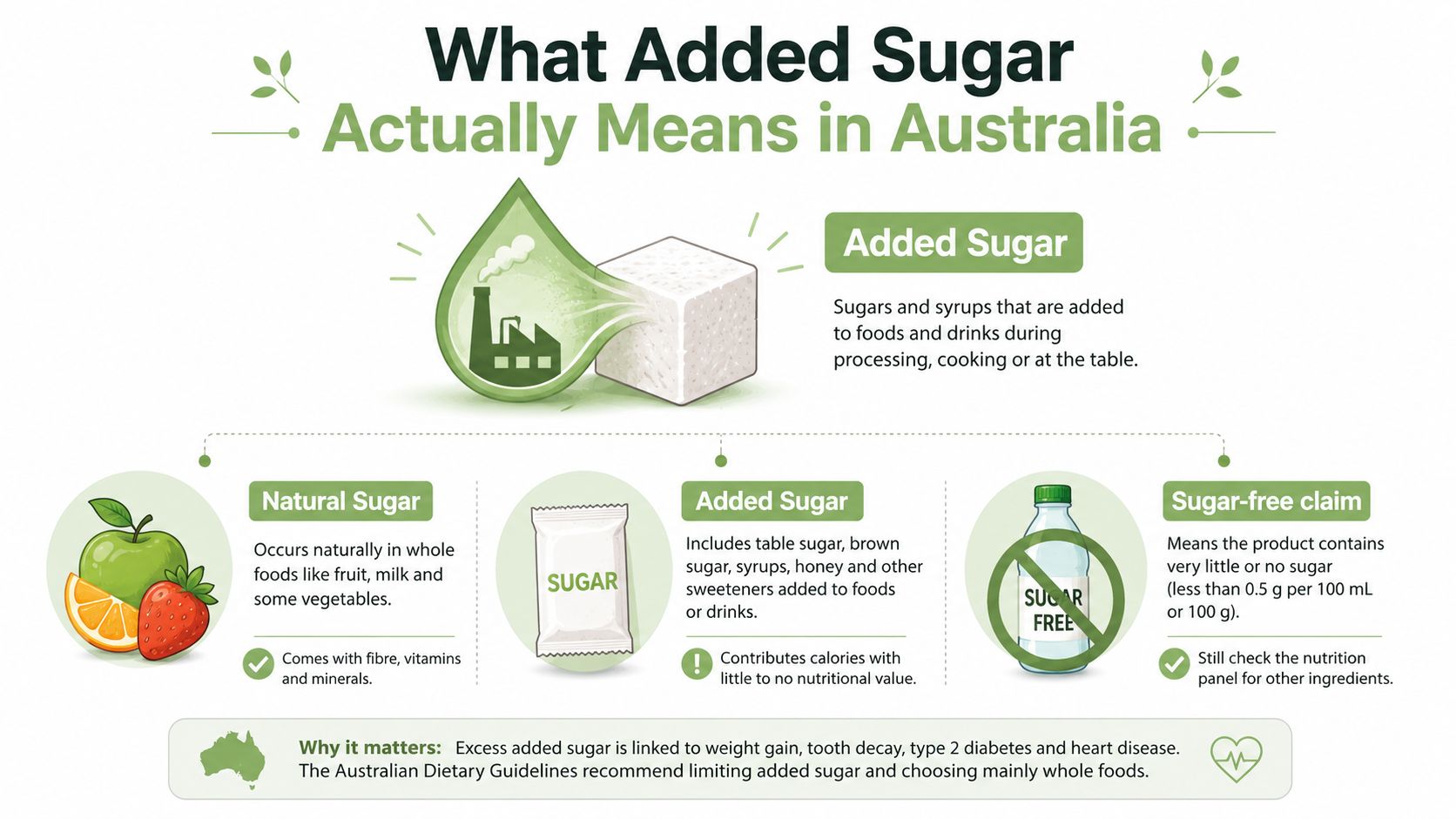
The three label ideas shoppers often mix up
No added sugar means the product meets the relevant rules for excluding added sugars and related sweetening ingredients. It does not mean the product contains no sugar.
Sugar free is a different claim with a much stricter sugar limit. It shouldn't be used as a casual synonym for no added sugar.
Unsweetened also needs careful reading. A drink can have no sweetener added and still contain naturally sweet fruit ingredients. The ingredient list and Nutrition Information Panel provide the context that the front label leaves out.
The Australian thresholds matter
For liquid foods, Australia's current compositional threshold for a low sugar or percentage sugar-free claim is no more than 2.5 g of sugars per 100 mL. Solid foods have a separate threshold of no more than 5 g per 100 g. These are the limits described in the Food Standards labelling regulation statement.
A no-added-sugar claim has its own backstop. Even without added sugar ingredients, a liquid food becomes ineligible when it exceeds 7.5 g of sugars per 100 mL, while a solid food becomes ineligible above 10 g per 100 g, as set out in FSANZ's approval report.pdf).
The practical lesson is simple. No added sugar juice can still contain sugar, and the product category, ingredient source and final concentration all affect what can appear on pack.
Why Shoppers Misread No Sugar Added Juice
The wording is narrow, but shoppers often read it broadly. FSANZ consumer evidence found that people can incorrectly conclude that a product with a no-added-sugar claim contains no sugar at all. In some tests, 17% to 29% of respondents believed such foods had no sugar when no disclaimer was present, according to the FSANZ social science summary.
Juice creates an especially awkward confusion. In one study, 22% to 65% of respondents perceived fruit juice as containing added sugar. That finding shows that people can make opposite mistakes, either assuming no-added-sugar juice contains no sugar or assuming naturally occurring fruit sugar must have been added.
The health halo changes the decision
The words “no” and “sugar” carry a positive emotional signal. Many shoppers then overlook the word “added” and treat the entire phrase as a general health rating. The same FSANZ evidence describes how label context can be insufficient for consumers to judge sugar content accurately.
This can affect behaviour. A shopper might choose juice over sparkling water, pour a larger serve or assume that fruit imagery confirms a low-sugar choice. The claim itself has a defined technical meaning, but the impression around it can be much wider.
Research cited by the Food For Health Alliance found that 92% of Australians surveyed agreed no-added-sugar claims suggest a product is “better for you”. The same source reported that 78.2% of 100% juices in a labelling study carried a no-added-sugar claim, even though the category's mean sugar content was among the highest in the beverage set, surpassed only by soda and energy drinks. The Food For Health Alliance summary explains why policy around these claims remains active.
A front-of-pack claim can be accurate and still be incomplete for the decision you're trying to make.
The correction is straightforward: use the badge to understand added ingredients, then use total sugars and serving volume to judge the drink itself.
How to Read a Juice Label Like a Pro
You don't need to study a carton for ages. A quick label check can tell you whether a no-added-sugar juice suits the moment.
Start with the Nutrition Information Panel
Look for total sugars per 100 mL first. The per-serve figure matters too, but products use different serving sizes, so the 100 mL line gives you a fairer comparison between cartons and bottles.
Then check the serving volume. A 350 mL bottle may list a modest-looking amount per serve while providing much more drink than the serve used for comparison. A 1 L apple juice carton can also encourage generous home pours, especially when the label's front claim attracts attention before anyone checks the panel.
Read the ingredients in order
Ingredients are listed by weight. Look for the fruit source, blends and concentrated fruit juice. Concentrates can contribute sweetness even when the manufacturer hasn't added table sugar.
A high Brix-style cue can also suggest a concentrated, sweet-tasting product, particularly in shelf-stable juice. It isn't a substitute for the Nutrition Information Panel, but it can prompt a closer look.
Use the front-of-pack information as context
Check the Health Star Rating where it appears, but don't let one badge replace the NIP. Product names such as “lightly sweet”, fruit illustrations and wellness language can all shape your first impression without telling you the total sugar in your actual glass.
For a broader explanation of serving sizes, ingredient lists and nutrition panels, PlateBird's guide to food labels is a useful companion resource.
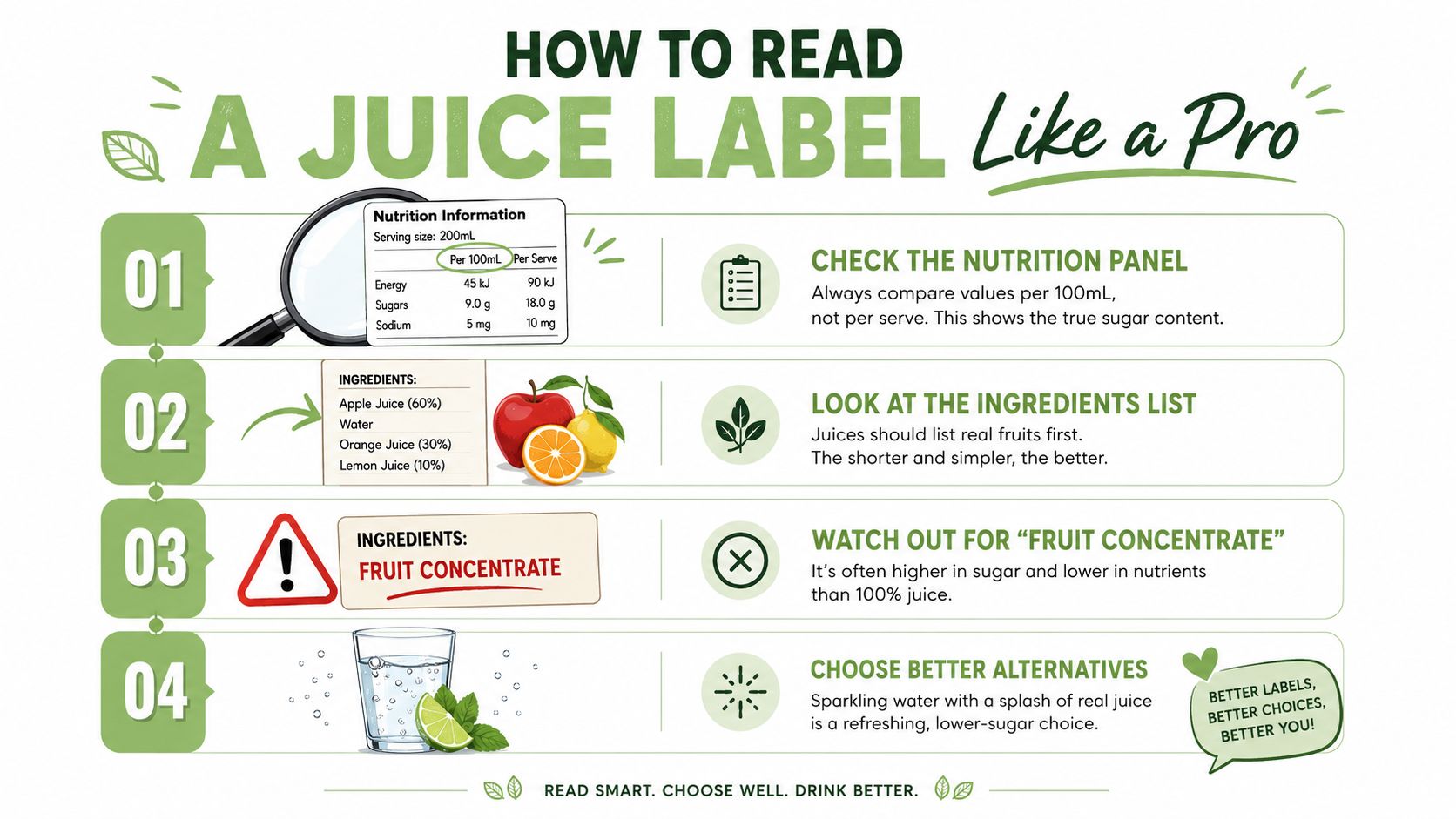
A 60-second habit works well: photograph the label if you're comparing products, read total sugars per 100 mL, scan the ingredient position of concentrated juice, then decide whether you want juice or a different drink. Cafés can use the same process when reviewing a new carton for the drinks fridge.
This sugar-free carbonated drinks range can also help cafés and households compare ready-to-pour alternatives with a juice option.
Juice Compared With Smarter Everyday Drinks
There isn't one universally “best” drink. Juice can be useful in a specific context, while water, kombucha or matcha may fit a different routine. The table below avoids pretending that every product has identical nutrition. Recipes, brands, milk choices and serve sizes vary, so check the individual label.
| Drink | Typical sugar per serve | Calories | Caffeine | Polyphenols | Best time to drink | Typical price per serve in AUD | Verdict |
|---|---|---|---|---|---|---|---|
| Standard orange juice, 250 mL | Check the NIP | Check the product label | Usually none | Present from fruit | With breakfast or when rapid carbohydrate is useful | Varies by venue and product | A measured serve can work when you specifically want fruit carbohydrate |
| No sugar added apple blend | Check the NIP | Check the product label | Usually none | Present from fruit | Occasional flavour-led drink | Varies by venue and product | The claim doesn't remove the need to check total sugars |
| Sparkling water with citrus | Usually no sugar when no sweetener or juice is added | Usually very low when unsweetened | None | Minimal unless herbs or tea are added | Mid-afternoon hydration | Varies by venue and product | A simple everyday swap for people who want fizz |
| Plain dry kombucha | Check the product label | Check the product label | May contain tea-derived caffeine | Tea-derived polyphenols may be present | With lunch or as a soft-drink alternative | Varies by venue and product | Choose a verified low-sugar or sugar-free product and check its label |
| Unsweetened ceremonial-grade matcha with water or unsweetened oat milk | Usually no sugar from matcha itself, milk choice matters | Depends on the serving liquid | Naturally contains caffeine | Rich in tea-derived polyphenols | Morning or an afternoon focus ritual | Varies by venue and product | A sugar-free option when prepared without sweetened milk or syrup |
A standard orange juice serve may make sense after exercise when someone needs readily available carbohydrate. It can also be a reasonable occasional lunchbox addition when the portion is deliberate. It doesn't become low sugar because the fruit is the only sweet source.
Sparkling water is the uncomplicated hydration choice. If you're considering a permanent home setup, this sparkling water tap buyer's guide offers practical buying context.
Kombucha brings acidity and flavour, while matcha creates a tea ritual with naturally occurring caffeine. For more ideas built around low-sugar alternatives, explore these healthy soda drinks. The right choice depends on whether you need hydration, flavour, carbohydrate or a focused morning beverage.
Where No Sugar Added Juice Still Makes Sense
A label-aware approach doesn't require you to ban juice. It means giving the drink a job instead of making it the automatic pour.
In Adelaide, a parent might pack a small 200 mL no-added-sugar grape juice alongside cheese and crackers for an active child. The juice provides fast carbohydrate, while the other foods make the snack more substantial. The parent knows the claim means no added sugar, not no sugar, and keeps the portion intentional.
That's a very different decision from filling a large bottle with juice every day because the front label sounds virtuous. Context and volume change the role of the same product.
A café menu can use juice without making it the default
A Brisbane café owner reworking a brunch menu might keep a 150 mL pressed juice shot as a clean-eating-style upsell. The menu can describe the drink plainly, staff can answer questions about total sugars, and the main beverage list can give customers other choices such as kombucha, a matcha spritzer or filtered coffee.
That approach respects customer preferences without suggesting that pressed fruit juice is sugar free. It also gives the venue a chance to make its wording defensible under Australian food labelling expectations.
Juice can suit athletes needing rapid glucose, older people with limited appetite or someone moving away from full-sugar soft drinks. For another customer, whole fruit, plain water or a sugar-free tea-based drink may be more appropriate.
Menu principle: Keep juice in the toolkit, but don't make “no added sugar” do more work than it can support.
Easy DIY Swaps for Sugar-Savvy Drinkers
Replacing a juice habit works better when the alternative still offers flavour, colour and a small ritual. These three options use ingredients that are easy to find in Australia and can be prepared ahead.
Citrus and herb water
For a simple starting point, combine two parts sparkling or still water with one part sliced citrus and herbs by volume, then chill rather than sweeten. Use lemon, lime, berries and mint, or add finger lime pearls, lemon myrtle or bush mint for a distinctly Australian flavour.
Let the water infuse in the refrigerator, then pour over ice. You're getting aroma and brightness without turning the glass into a fruit-juice serve. If you want more intensity, bruise the herbs gently before adding them.
A controlled kombucha routine
Home fermentation requires care, clean equipment and a reliable recipe. A useful starting framework is a SCOBY with sweetened tea for the first fermentation, followed by a fruit infusion during the second fermentation to create gentle fizz.
The exact sugar consumption and finished sweetness depend on the tea, culture, temperature and fermentation time. Don't assume that “fermented” automatically means sugar free. Taste the finished drink and check a commercial product's nutrition information if you're buying rather than brewing.
Ginger, lime and ginger, or mango can add strong flavour without requiring a large amount of fruit. The result works well in a café-style glass with ice and a citrus garnish.
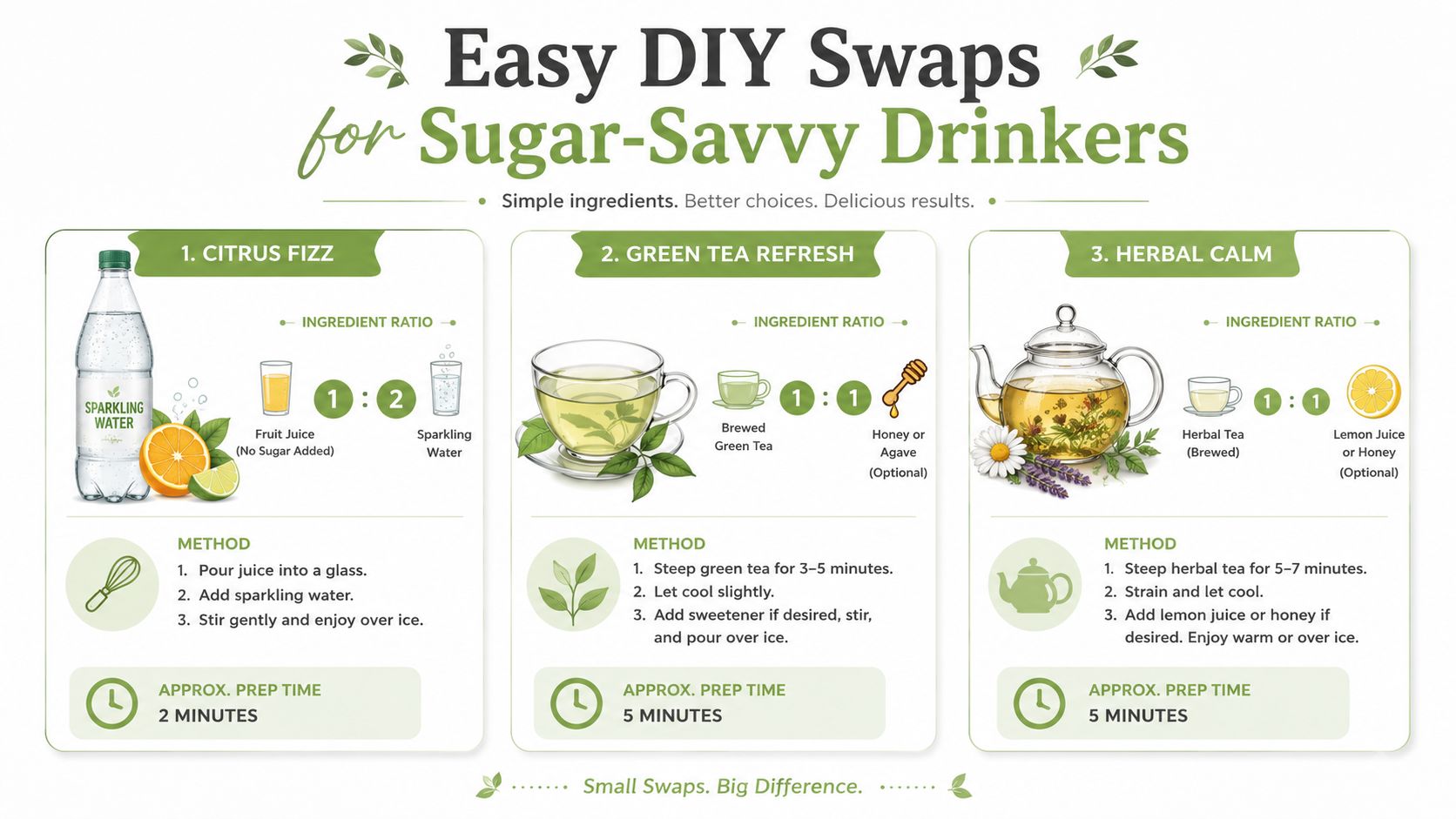
Whisked matcha, hot or iced
Sift ceremonial-grade matcha into a bowl, add a small amount of cool or warm water, whisk until smooth, then top with water or unsweetened oat milk. Serve over ice for a café-style drink, or keep it lightly warmed for a calmer morning routine.
Matcha contains naturally occurring caffeine and tea polyphenols. If you're avoiding fruit-derived sugar, skip sweetened syrups and flavoured milks. Culinary-grade matcha suits smoothies and baking, while ceremonial-grade matcha is designed for drinking.
For another flavour-led alternative, see this apple cider vinegar soda idea, and check the finished ingredients before serving.
Batch-prep citrus water on Sunday, chill tea for matcha, and keep a dependable ready-to-pour option available for busy days. Home brewing can be enjoyable, but it isn't compulsory.
Smarter Sipping Starts With the Label
A good drink decision can take less than a minute. Use this compact checklist before buying a bottle, stocking a café fridge or approving a menu description:
- Read total sugars: Check the NIP per 100 mL first, then look at the stated serving.
- Inspect the ingredients: Note the fruit source, blends and concentrated juice ingredients.
- Separate the claims: No added sugar, low sugar and sugar free have different meanings.
- Question the halo: Natural imagery and a clean front label don't replace nutrition information.
- Match the drink to the occasion: Juice may suit a measured carbohydrate serve, while water, matcha or kombucha may suit everyday sipping.
- Train the team: Café staff should know whether the product contains added sugar, naturally occurring sugar or both, and should avoid calling a no-added-sugar juice “sugar free”.
Venues should also review menu wording and point-of-sale signs. A description such as “fruit juice with no added sugar” is more precise than language that implies the drink is low sugar or suitable for every wellness goal.
The same discipline helps at home. You don't need to fear fruit juice, but you should stop allowing one front-of-pack phrase to make the entire decision. A measured serve, a clear purpose and a quick NIP check will usually tell you more than the badge.
PepTea offers sugar-free organic kombucha and organic matcha as ready-to-use alternatives for people who want the flavour and ritual of a functional drink without brewing, batching or storing a SCOBY. Options such as Ginger and Lime & Ginger can suit a non-alcoholic café menu or a home soft-drink swap, while matcha can be whisked with water or unsweetened milk.
Visit Pep Tea to explore organic Japanese matcha and Australian-brewed sugar-free organic kombucha for more considered alternatives to everyday juice. Choose the drink that fits your routine, check the label, and make your next pour an informed one.
Matcha Green Tea L Theanine: Benefits for Calm Focus

Matcha contains naturally occurring L-theanine, an amino acid that, paired with caffeine, is associated with calm alertness. However, a typical 2 g serve delivers far less L-theanine than the 200–400 mg/day doses used in clinical sleep and anxiety studies, so the experience depends heavily on grade, shading, and dose.
Have you ever wondered whether matcha's famous “energy without the jitters” reputation comes from the drink itself, or from a much larger dose of purified L-theanine than your cup can realistically provide? That distinction matters. Matcha green tea L-theanine is a useful food-and-beverage story, but it isn't the same thing as taking a controlled supplement.
Matcha can still be a pleasant source of caffeine, amino acids and antioxidant compounds. The sensible question is not whether it's a magic calm-focus drink. It's what a particular serve contains, how you prepare it, and what the human evidence can tell us.
Why Everyone Is Talking About Matcha and L-Theanine
Matcha has moved from specialist tea counters into cafés, wellness shelves and social feeds. The usual promise is familiar: smooth energy, better concentration and fewer sharp edges than coffee. The compound most often placed at the centre of that story is L-theanine, an amino acid naturally found in the leaves of the tea plant, Camellia sinensis.
At a chemical level, L-theanine is one of the compounds that contributes to tea's savoury, rounded character. It helps explain why some green teas taste brothy or umami rather than just bitter. Tea plants produce it as part of their natural chemistry, and shading the plants changes the balance of compounds inside the leaf.
That's why marketers talk about L-theanine whenever matcha appears in a conversation about focus. The drink combines the amino acid with caffeine, so people often describe the result as alert but less edgy than a strongly caffeinated drink. Human research has examined isolated L-theanine in stressful conditions, with a systematic review identifying 9 peer-reviewed randomised controlled trials and concluding that 200–400 mg per day may help reduce stress and anxiety in people exposed to stress, while also noting that larger and longer studies are needed. Read the systematic review on L-theanine and stress
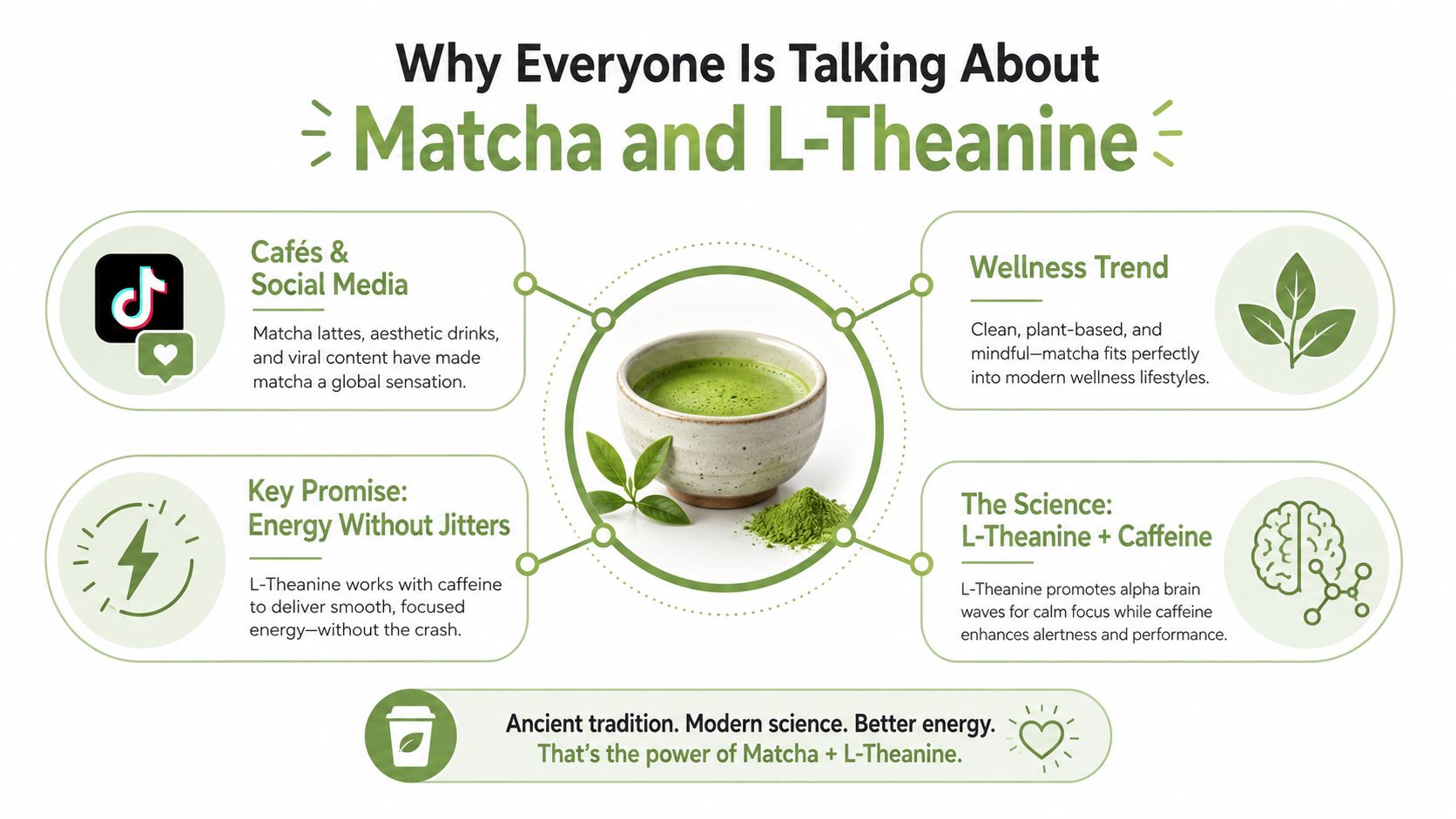
The molecule behind the message
The important catch is dose. A clinical study of isolated L-theanine doesn't automatically prove that a café latte produces the same effect. Matcha is a whole-leaf beverage matrix, containing caffeine, polyphenols, flavour compounds and amino acids in proportions that vary between products.
So, when you see matcha green tea L-theanine described as a calm-focus solution, read the phrase carefully. It points to a plausible combination, not a guaranteed outcome. Explore PepTea's matcha education and products to see how the ingredient fits into a broader tea ritual.
What Matcha Actually Is and Why Its Chemistry Differs
Matcha isn't just green tea brewed more strongly. With ordinary loose-leaf green tea, hot water draws compounds out of the leaves, and you usually discard the leaves. With matcha, you drink finely stone-ground leaf powder, so the preparation includes the leaf itself.
The difference begins in the field. Matcha plants are shade-grown before harvest. A useful café analogy is to think of the leaves as wearing sunscreen. With less direct sunlight, the plant's chemistry shifts, supporting more chlorophyll and preserving more amino-acid character, including L-theanine. The leaves also retain caffeine, which is why matcha can feel more concentrated than a typical green-tea infusion.
Ceremonial and culinary grades
Ceremonial-grade matcha is generally selected for drinking. It tends to have a brighter colour, finer texture and more delicate balance, so whisking it with water can produce a clean, rounded cup. Culinary-grade matcha is designed to hold its flavour in foods such as smoothies, cakes, sauces and ice cream, where milk, fruit, sugar or other ingredients compete with the tea.
Those labels describe intended use more than they guarantee a precise L-theanine amount. A higher price, vivid colour or ceremonial wording cannot replace a product-specific lab result. Shading, cultivar, harvest conditions, processing and storage all influence the finished powder.
Stone-grinding matters because it turns the prepared leaf into a fine powder rather than an infusion. That gives matcha its dense texture and concentrated flavour, but it doesn't create a fixed dose of L-theanine. Two powders can look similar while delivering different amounts per gram.
A useful mental model: matcha is a concentrated leaf preparation, not a standardised L-theanine capsule.
That distinction also explains why matcha can taste both rich and slightly bitter. L-theanine contributes savoury softness, while caffeine and polyphenols add bitterness and astringency. The balance depends on the leaf and on your brewing technique.
How L-Theanine and Caffeine Create Calm Focus
The phrase calm focus describes a combined experience, not a single switch in the brain. Caffeine supports alertness, while L-theanine has been studied for its relationship with relaxation and stress responses. Researchers have also examined L-theanine in relation to alpha brain-wave activity, GABA and other neurotransmitter systems, but these mechanisms shouldn't be treated as proof that every matcha drink produces a predictable mental state.
A helpful analogy is lighting. Caffeine alone can feel like a bright strobe for some people, especially when taken quickly or on an empty stomach. L-theanine may make the experience feel more like a steady LED bulb, where alertness remains present without the same sense of sharp stimulation. That analogy is useful, but individual responses still vary.
What the evidence can and cannot show
Human evidence is strongest for isolated L-theanine doses, particularly in the 200–400 mg/day range discussed in the systematic review of stress and anxiety trials. Typical matcha beverages usually contain much less, so it would be a mistake to copy a supplement claim directly onto a teaspoon of powder.
L-theanine also isn't a sedative in the usual sense. A person may feel less tense while staying awake, but that doesn't mean matcha will treat anxiety, insomnia or a medical condition. Caffeine can also work against relaxation if the serving is large, the drink is consumed late, or the drinker is especially sensitive.
The caffeine-to-theanine relationship is central to the way matcha is marketed. An Australian matcha education source describes matcha caffeine as being absorbed and released slowly over 6–8 hours, and positions L-theanine as part of the drink's smoother focus profile. That is a useful description of the product narrative, but it shouldn't be read as a guarantee for every person or every preparation. Read Australian matcha guidance on caffeine and L-theanine
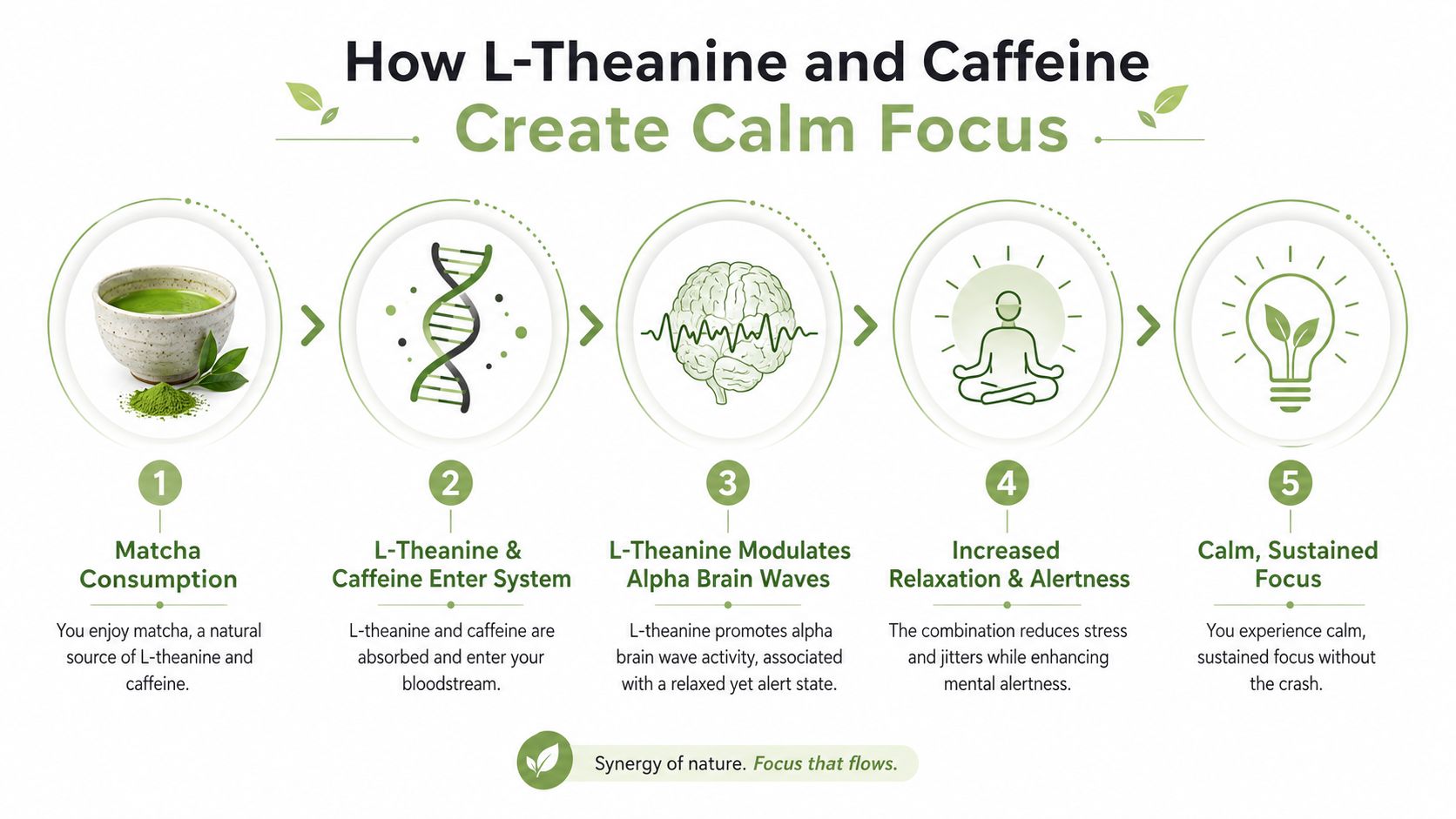
For a visual explanation of the calm-focus idea, this video provides an accessible introduction:
If you'd like the chemistry explained in more detail, learn what L-theanine is before deciding how much weight to give the claim. The honest summary is simple: matcha may feel smoother than some caffeinated drinks, but it isn't a guaranteed focus pill.
Matcha Versus Other Teas and Supplements on L-Theanine
How much L-theanine does matcha provide compared with ordinary tea or a supplement? The answer depends on both the product and the form being compared.
One Australian lab-tested matcha product contained 21.3 mg of L-theanine per gram and 33.3 mg of caffeine per gram. The cited averages across 36 commercial green teas were lower, at 6.46 mg of theanine per gram and 16.28 mg of caffeine per gram. View the Australian matcha potency results
| Source | Typical L-theanine per gram | Typical caffeine per gram | Notes |
|---|---|---|---|
| Lab-tested Australian matcha product | 21.3 mg | 33.3 mg | Product-specific laboratory result |
| Cited mean across commercial green teas | 6.46 mg | 16.28 mg | Mean across 36 commercial teas |
| Isolated L-theanine used in human research | 200–400 mg/day | Not applicable | Clinical dose range, not a tea measurement |
The difference comes partly from preparation. Matcha contains powdered whole leaf, while a standard green-tea infusion contains only the compounds that move into the water. Even so, the higher concentration in this tested product does not make an ordinary matcha serving equivalent to the isolated amounts used in supplement research.
Oolong and black tea cannot be assigned one fixed L-theanine value. Cultivar, harvest, oxidation, processing and brewing can all alter the final cup. Saying that green tea generally contains more may offer a rough direction, but it cannot replace analysis of the specific tea.
Why supplements are a different category
An L-theanine supplement is built around a stated amount of one compound. Matcha is a food with naturally variable composition, and it brings caffeine plus other tea constituents along with the L-theanine. The result is a beverage with taste, texture and a whole-leaf ritual, rather than a precisely controlled research dose.
The choice depends on the goal. Matcha suits someone who wants L-theanine as part of a drink and daily routine. A supplement suits someone who needs clearer control over the amount. Neither format automatically delivers the same experience or evidence base as the other.
The Dose Reality Most Articles Skip Over
How much L-theanine does a normal cup of matcha provide? The answer depends on the powder and serving size, so the word matcha alone cannot predict a clinical dose.
An Australian nutrition panel listing 180 mg of L-theanine per 100 g works out to about 7.2 mg in a 4 g serve. That example shows why labels matter: products can differ substantially in composition. Review the Australian nutrition panel example
The same arithmetic helps put supplement claims in perspective. A serving may contribute L-theanine as part of a drink, but it does not automatically deliver the isolated amounts used in research. A larger serve could move the beverage closer to those research doses, while also increasing caffeine intake. The result is less like taking a measured tablet and more like eating a food whose ingredients arrive together.
Caffeine is the main reason dose comparisons need care. Matcha supplies L-theanine alongside caffeine and other tea compounds, so increasing the powder changes more than one variable. Someone who wants a predictable L-theanine amount may find a supplement easier to measure. Someone who values flavour, texture and a daily ritual may prefer matcha, accepting that its composition varies.
Dose matters more than the word “matcha”. Check the powder's serving size, L-theanine information and caffeine content before assuming your cup mirrors a clinical trial.
There is no universal cup count that suits everyone. Body size, caffeine sensitivity, preparation strength, timing and other sources of caffeine all affect the experience. For practical guidance on serving amounts and personal tolerance, read this guide to how many cups of matcha powder may be suitable per day. Anyone who is pregnant, taking medication, managing a health condition or unusually sensitive to caffeine should discuss regular use with a qualified health professional.
What the 2026 Australian Research Is Telling Us
Australia's L-theanine research is becoming more practical, but it hasn't settled the question of what an everyday matcha latte does for everyone. An Australian clinical trial registered in 2026 for the THESleep project recruited 60 healthy adults aged 18–65 with mild to moderate sleep disturbances. The design included 4 arms, testing 100 mg, 200 mg and 400 mg of L-theanine or placebo over 14 days, following a 7-day baseline. Review the Australian THESleep trial record
That design is valuable because it tests several defined doses against placebo. It also highlights the translation problem. Participants receive a measured amount of isolated L-theanine, while a matcha drink contains a variable amount of L-theanine alongside caffeine and other compounds.
What this means for a real kitchen
The evidence supports caution rather than cynicism. Matcha may fit comfortably into a morning routine for someone who enjoys its flavour and tolerates caffeine. It shouldn't be described as a sleep treatment, a sedative or a substitute for professional care.
Timing becomes especially important. A morning serve may suit focus, while an afternoon or evening serve could be less comfortable for someone whose sleep is caffeine-sensitive. Food, hydration, regular movement and a consistent sleep routine remain more reliable foundations than trying to push a beverage towards a supplement dose.
Local research also shows why Australian readers deserve more than imported wellness slogans. The science is developing, and carefully controlled trials are useful, but a trial of purified L-theanine doesn't erase the variability of matcha powder.
Practical Ways to Get the Most From Matcha's L-Theanine
How can you make matcha's L-theanine useful without treating the powder like a supplement? Start with a drink you can prepare and tolerate regularly. A smooth ceremonial-grade powder generally suits plain drinking, while culinary-grade matcha works well in smoothies, baking or ice cream, where its stronger tea flavour can balance other ingredients.
Brewing changes the cup's flavour more predictably than its exact L-theanine content. Use warm rather than boiling water, sift the powder if it clumps, then whisk with a bamboo chasen or small electric frother until evenly mixed. Very hot water can make matcha taste harsh. A cooler approach improves the drinking experience, but it does not create more L-theanine.
A practical serving guide
The earlier Australian lab results are useful for understanding the relationship between powder, caffeine and L-theanine. They should guide preparation, not encourage chasing a supplement-style dose. Begin with a modest amount, especially if you are sensitive to caffeine, and adjust only after noticing how the drink feels.
For steadier flavour, dissolve the powder in a small amount of warm water first, then add more water or milk. Drinking it with breakfast may feel more comfortable than taking concentrated caffeine on an empty stomach. A latte can also spread the flavour through a larger drink, although it does not change the powder's measured L-theanine content.
Matcha values vary between products. One Australian nutrition panel reported a much smaller amount of L-theanine for a larger serve than the lab-tested product discussed earlier. Grade, sourcing, storage and testing can all affect what reaches the cup, so a package label is more useful than assuming every matcha has the same chemistry.
Four questions to ask before brewing
Should I drink matcha before sleep? If caffeine disrupts your sleep, late-day matcha may be a poor fit, whatever its L-theanine content. Research on isolated L-theanine does not establish that an ordinary matcha beverage improves sleep.
Does lower-temperature water preserve more L-theanine? It can produce a smoother, less bitter cup. It cannot turn a small beverage serving into a clinical dose.
Can I combine matcha with coffee? You can, but both drinks contribute caffeine. If you feel wired, reduce one drink first rather than trying to offset it with extra L-theanine.
What should I pair with matcha? Breakfast with protein, fibre and carbohydrates may feel steadier than concentrated caffeine on an empty stomach. That is a practical eating choice, not proof that food changes L-theanine absorption.
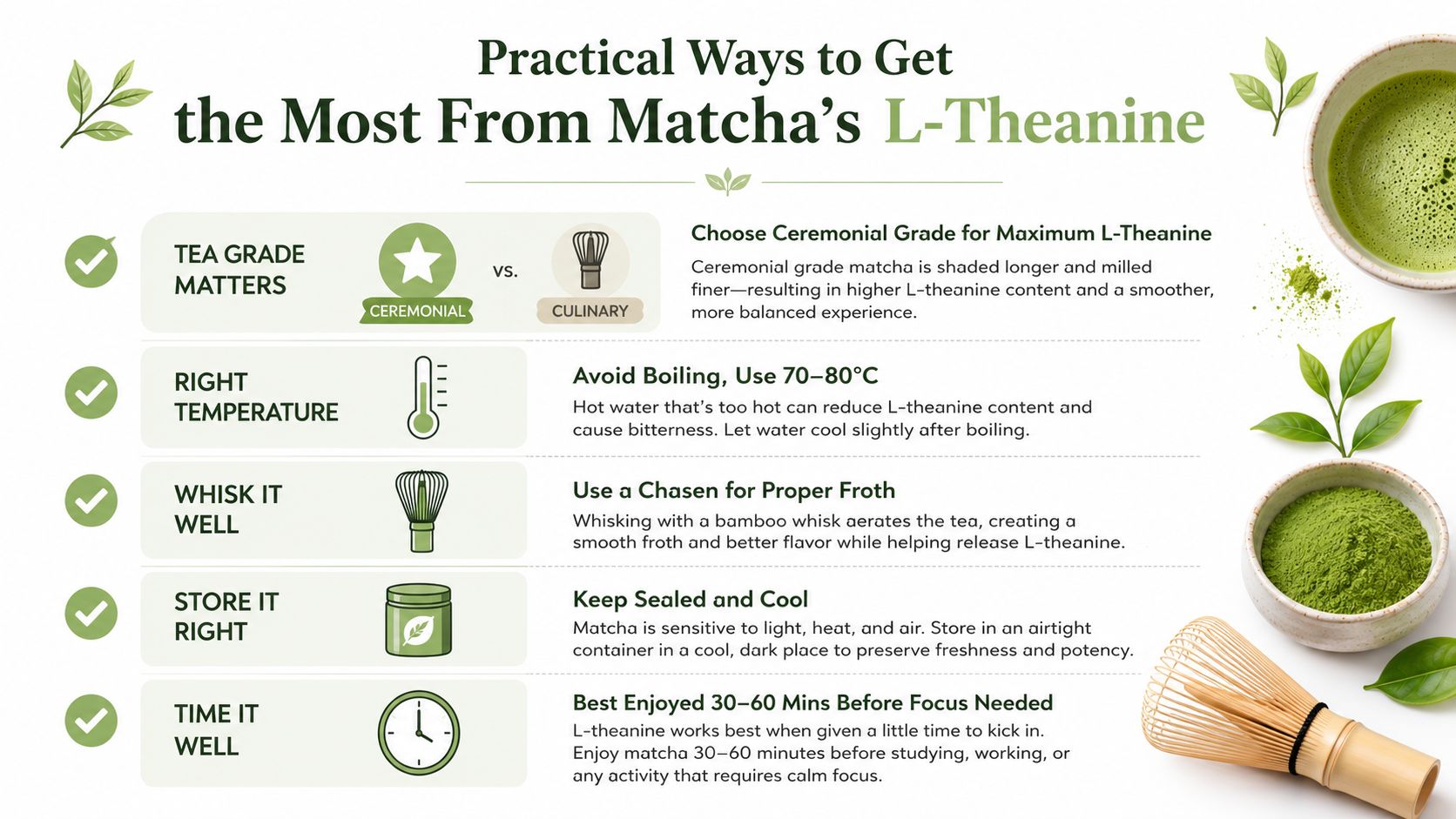
Answers to Common Matcha and L-Theanine Questions
Does matcha improve sleep?
Matcha contains L-theanine, and human research on isolated L-theanine has examined stress, anxiety and sleep-related outcomes. Matcha also contains caffeine, so a late serve may make sleep harder for caffeine-sensitive people. The evidence doesn't justify calling ordinary matcha a sleep treatment.
Is L-theanine in matcha enough to make a difference?
It may contribute to the drink's character and to an individual's experience of calm alertness. However, the studied isolated range of 200–400 mg/day is much higher than the amount supplied by many beverage serves, so you shouldn't assume that matcha reproduces a supplement result.
What if caffeine hits me too hard?
Use a smaller serve and drink it earlier in the day. You can also make a latte with less powder, eat beforehand and avoid stacking the drink with coffee until you know how your body responds.
How does matcha compare with an L-theanine capsule for studying?
Matcha gives you a beverage ritual, caffeine and a variable amount of L-theanine. A capsule gives you a stated amount of isolated L-theanine, which is closer to the format used in clinical research. Neither option guarantees better concentration, and sleep, stress, food and study conditions still matter.
Is daily matcha sensible?
For many adults, a modest morning matcha can be a reasonable beverage habit if they tolerate caffeine. Sensible use means treating matcha as part of a balanced routine, not increasing the powder aggressively to chase a supplement-style effect.
Does matcha have benefits beyond L-theanine?
Matcha is also a concentrated source of plant compounds. A 2020 analysis indexed in PubMed reported phenolic measurements of 169–273 mg gallic acid equivalents per gram and flavonoid measurements of 99–139 mg rutin equivalents per gram in matcha fractions, supporting its description as a concentrated source of antioxidant compounds. Read the PubMed analysis of matcha phenolics and flavonoids
Does matcha contain more L-theanine than regular green tea?
A tested Australian matcha product reported a higher L-theanine density than the cited mean across commercial green teas. The comparison is useful, but it doesn't mean every matcha powder has the same composition or that every brewed cup reaches a particular threshold.
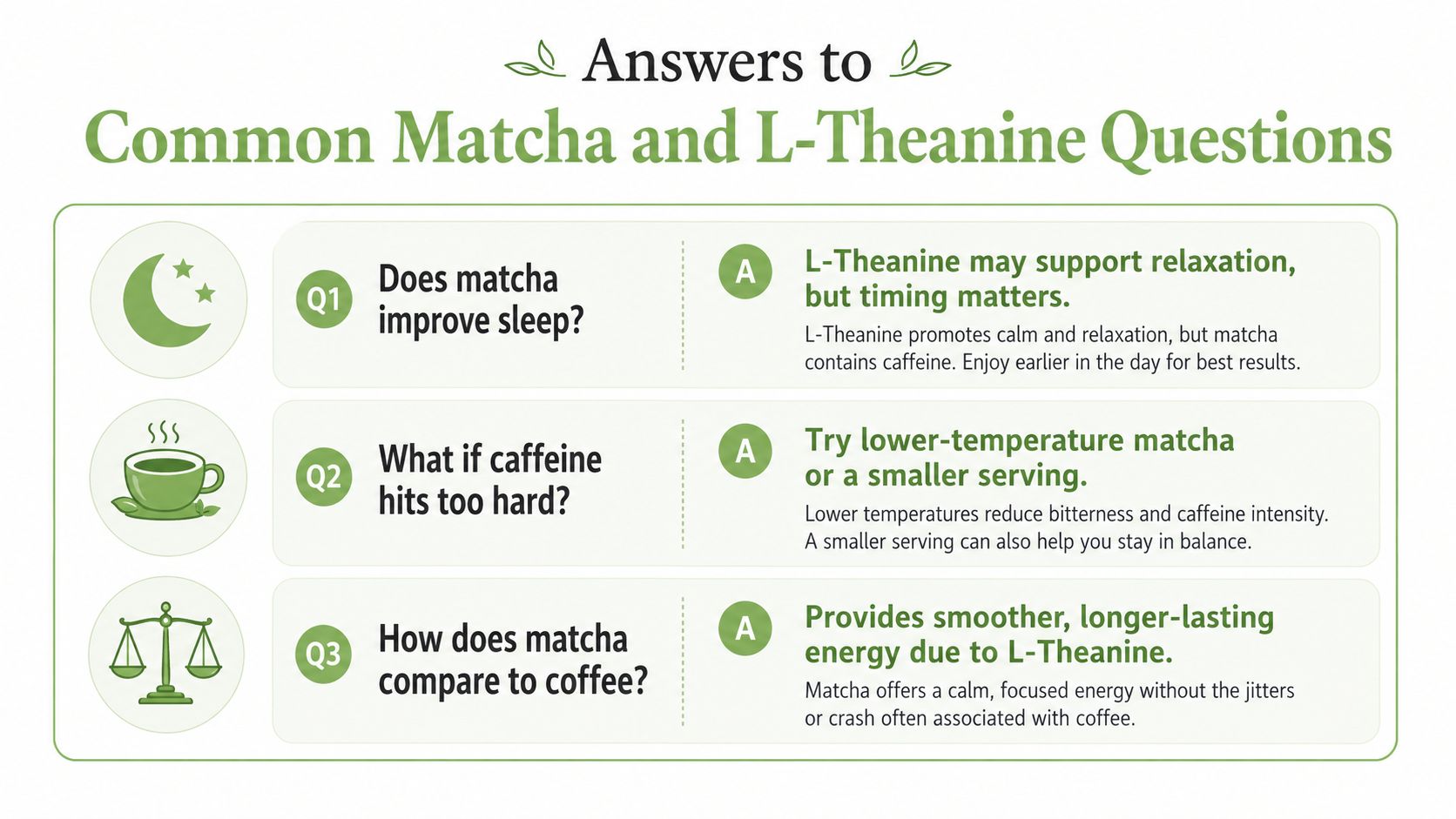
The most useful mantra is matcha is a low-to-moderate L-theanine habit, not a stand-alone focus drug. It contains L-theanine and can provide more of it per gram than the cited green-tea average, but beverage servings remain far below many isolated supplement doses. Australian research is helping close the local evidence gap, while also showing why dose and study design matter.
For readers who want to make the ritual part of their day, Pep Tea offers organically grown Japanese matcha, including premium ceremonial-grade and culinary-style options for drinking and recipes. Visit Pep Tea to explore the organic matcha range and choose a powder that suits your serving style, caffeine tolerance and everyday routine.
Automatic Tea Maker Guide for Australian Homes and Cafés

The most popular advice about an automatic tea maker is also the least useful: buy the most advanced machine you can afford and great tea will follow. It won't. A machine can control water temperature, steeping time and basket movement, but it can't choose the right tea, judge freshness or replace a thoughtful brewing routine.
For some Australian homes, a kettle with temperature control and a timer is the better purchase. For a busy café, office or self-service station, automation may earn its bench space through repeatability and reduced handling. The right decision depends on how often you brew, which teas you use, how much adjustment they need and who'll clean the equipment.
Do You Really Need an Automatic Tea Maker
An automatic tea maker solves a practical problem, not a romantic one. It can heat water to a selected temperature, lower an infuser, lift it at the end of a programmed steep and keep the finished tea warm. That's valuable when several people want the same drink or staff need to repeat a recipe without watching a timer.
At home, the case is less obvious. If you usually make one mug of black tea, a standard kettle and a reliable timer may do everything you need. A temperature-controlled kettle becomes more useful when you switch between green tea, black tea, herbal infusions and delicate organic blends, because each style can need a different approach.
Start with your actual routine
Ask yourself:
- Frequency: Do you brew repeatedly throughout the day, or only occasionally?
- Variety: Do you mostly drink one tea, or change between styles?
- Consistency: Does the same person prepare every cup, or do several users share the equipment?
- Cleaning: Will you rinse the basket and jug after use, even on busy mornings?
- Workflow: Do you enjoy measuring, timing and whisking, or would you rather press a button?
An automatic tea maker makes the strongest argument when consistency matters more than ritual. A café serving a house black tea, an office supplying staff drinks or a household preparing several cups may benefit from programmed brewing. A tea enthusiast who adjusts every infusion by taste may find the machine restrictive.
The appliance market is moving towards more automated, higher-specification formats, including precision temperature control, digital interfaces and automated cleaning. A recent Australian coffee-machine market model describes value growth outpacing unit growth and projects shipments from about 650,000 units in 2025 to 862,000 in 2031, but that evidence comes from coffee machines, not automatic tea makers, so it shouldn't be treated as proof that every tea drinker needs one. The Australian coffee machine market model supports a more careful conclusion: buyers increasingly pay for convenience when it solves a real workflow problem.
Practical rule: Buy automation for repeated work, not because a complicated control panel makes tea sound more serious.
The Surprising Australian History of Automatic Tea Makers
Automatic tea makers aren't a new response to busy mornings. Australia's documented connection with the category reaches back to the pre-war electric-appliance era.
The Museum Victoria collection includes a Goblin automatic tea-maker used in Toorak, Victoria. Its record identifies the appliance as made in England by 1936 or earlier, with later models commonly marketed as “Teasmade”. Independent Australian collection records also trace the electric tea-maker patent line to the early 1930s, including William Hermann Brenner Thornton's 1933 patent, which was sold to the British Vacuum Cleaner and Engineering Co. That company commercialised the Goblin Teasmade. Museum Victoria's Goblin automatic tea-maker record provides a useful local link between an imported appliance and Australian household use.
The early design was straightforward in principle. A timer arranged for water to heat and tea to brew, turning a morning drink into a scheduled domestic task. Wartime interruption affected availability, but the category returned to public attention after the war.
From novelty to household familiarity
The Powerhouse Collection records that Teasmades returned to popularity after wartime interruption. By the late 1960s, about 300,000 units were sold annually in the UK and some Commonwealth countries, according to the collection history. Collections WA's Teasmade record adds that Teasmades peaked during the 1960s and 1970s, declined afterwards and experienced a partial revival in the 2000s as a retro novelty.
That history matters for Australian buyers because it shows the appliance wasn't just a modern gadget invented for digital kitchens. Commonwealth distribution helped move automatic tea-making from a niche invention towards broad household familiarity, even though Australia wasn't necessarily the main manufacturing base.
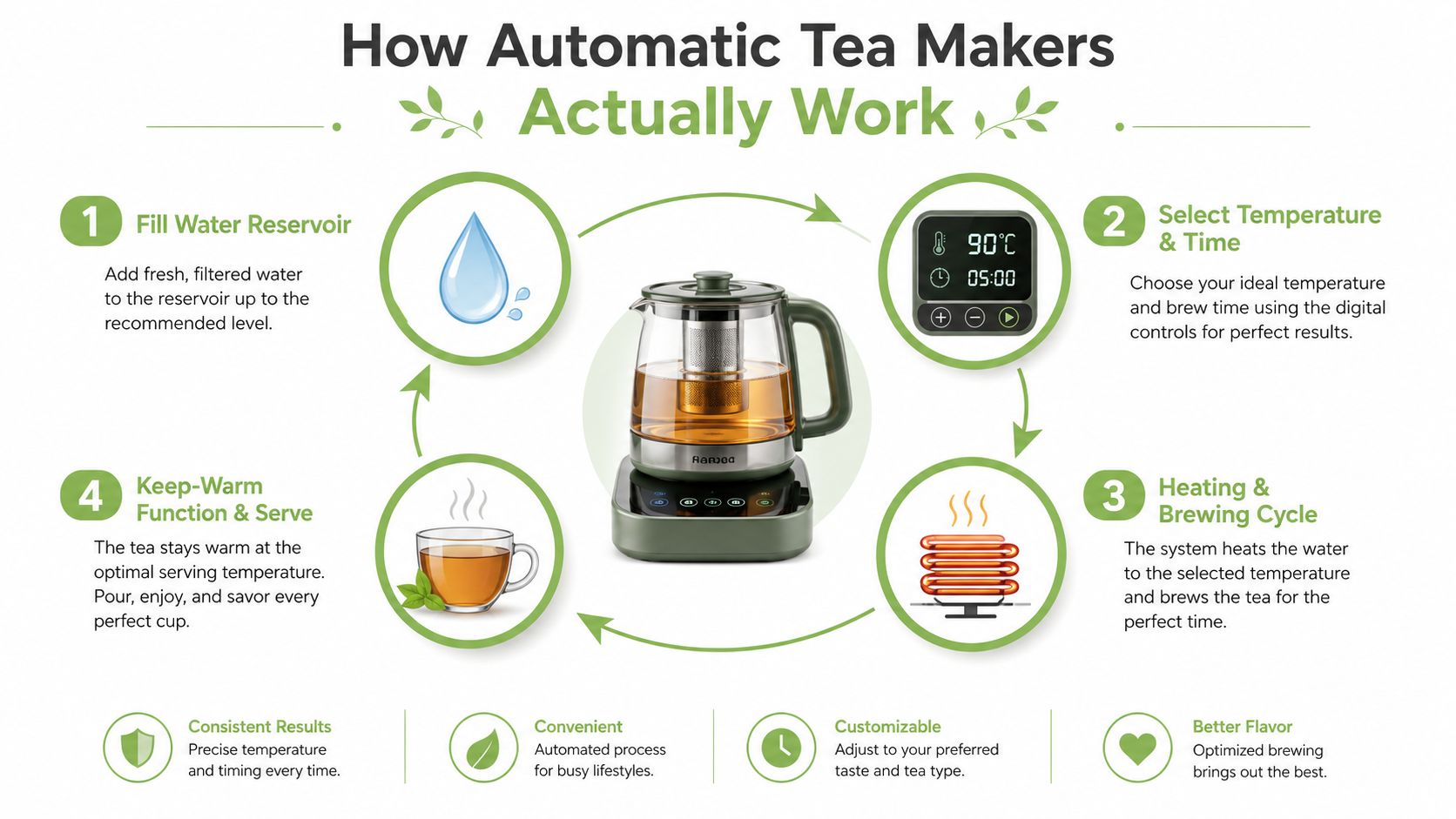
The modern machine adds temperature sensing, programmable steeping and more deliberate control over extraction. The underlying promise remains familiar, but the technology has moved beyond waking someone with a cup of hot tea.
How Automatic Tea Makers Work
An automatic tea maker combines a kettle, timer and infuser in one unit. The heating element raises the water towards the selected temperature, while a sensor checks the water rather than relying only on heating time.
Starting temperature, water volume and the surrounding environment all affect heating speed. A higher wattage rating can shorten the wait, but sensor feedback helps the machine stop at the intended temperature.
Four parts that affect the cup
Heating element: This supplies the energy for heating. More power may produce faster results, but it does not by itself create suitable brewing conditions.
Temperature sensor: The sensor checks the water and helps the controller hold the selected setting. That control is useful when switching between green tea and black tea.
Infuser basket: Loose leaves sit in the basket as water moves around them. With auto-lower and auto-lift functions, the basket enters the water at the beginning and rises when the programmed steep ends.
Keep-warm function: The heater maintains the drink after brewing. This can help an office or café serve several cups from one cycle, although tea can change in flavour if it remains hot for too long.
Australian brewing guidance places green tea around 80–85°C and black tea around 90–95°C. CoffeePlus's Australian tea brewing temperature chart shows why a temperature setting offers more control than a basic “boil” function. Hotter water extracts compounds faster, which can make delicate green tea bitter, while black tea generally suits a higher range.
A programmable basket replaces the hand movement of lifting an infuser. It does not make every tea identical, so tasting and adjustment still matter.
A manual workflow can be just as practical. A French press gives a clear view of the steep, making these french press tea recipe tips useful for comparing hands-on infusion with a programmed cycle. For organic matcha, neither method replaces whisking the powder into a smooth suspension. Kombucha also calls for separate preparation and fermentation control, rather than a hotter or longer tea cycle.
Automation therefore suits repeatable leaf-tea brewing, especially where several servings follow the same recipe. A kettle and infuser may offer better control for small batches or changing teas.
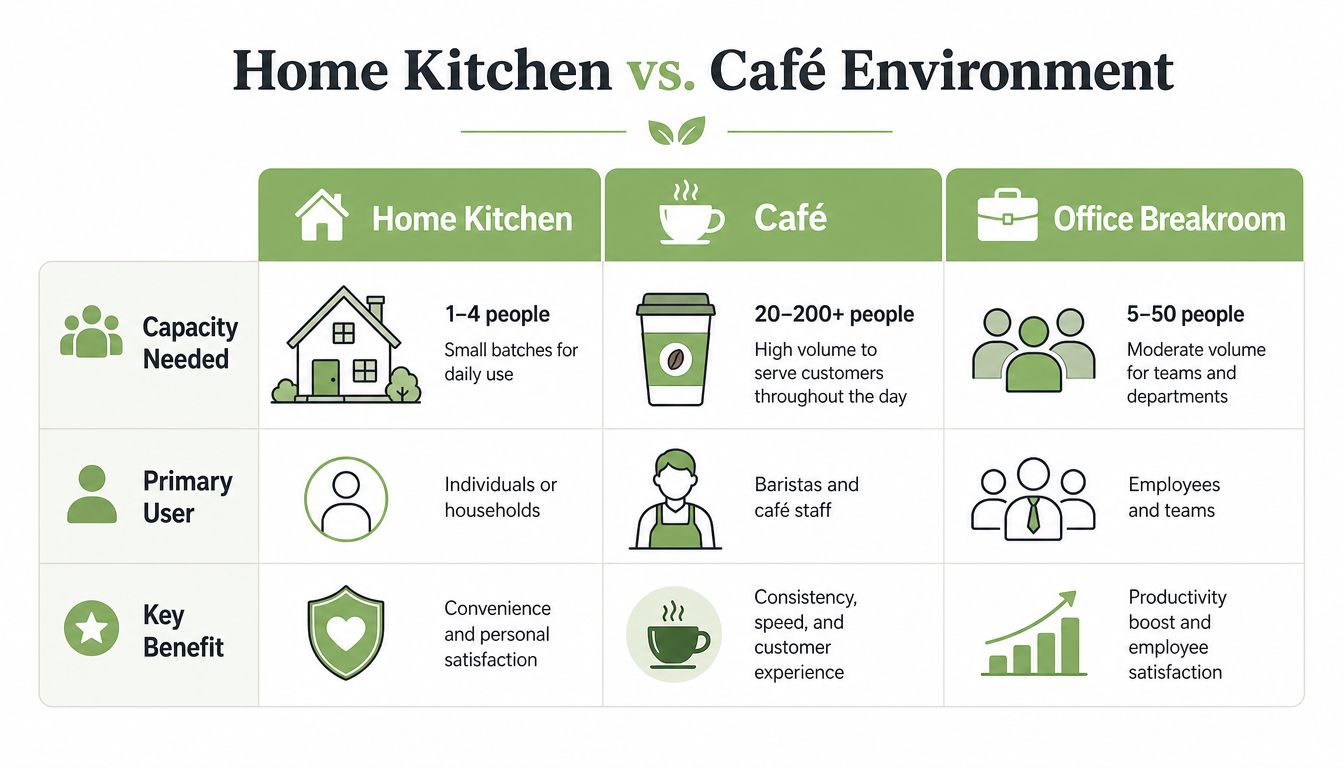
Home Kitchen Versus Café Environment
The same automatic tea maker can feel luxurious at home and inadequate in a café. The difference isn't only capacity. It's the number of people using the machine, the number of tea styles on the menu, the pace of service and the consequences of an inconsistent cup.
Home kitchen
A home user often values flexibility. You might prepare ceremonial matcha in the morning, a green tea later and a herbal infusion at night. An automatic tea maker can simplify water heating, but it won't replace the separate whisking step required for matcha, and a single jug may need careful rinsing between strongly flavoured teas.
A manual kettle and infuser may be the better fit when you enjoy changing variables. You can shorten a steep, add more leaves or pour immediately when the aroma reaches the right point. Automation is more attractive for households that prepare multiple cups, want repeatable temperature settings or dislike monitoring the clock.
Café and hospitality
A café has a stronger operational case. Staff can use programmed settings for a core tea menu, reducing variation between shifts. Portion control and self-service can also matter in hotels, diners and venues operating around the clock. Australian listings already market automated tea solutions to these environments, but the machine still creates work through refilling, rinsing, descaling and checking the basket.
Use automation for repeatability, not for every drink. A specialty tea program may need manual adjustment for delicate leaves, botanical blends or unusual steeping sequences. Before buying, find efficient prep tools and map the full workflow, including storage, cleaning and service space.
Office breakroom
An office sits between the two. Users may want simple operation and predictable results, but they won't always share the same tea preferences or clean equipment carefully. Clear labels, a limited set of presets and an accessible rinse routine can matter more than advanced customisation.
For menu planning, pair the equipment decision with practical café menu ideas. A tea station can support a broader non-alcoholic offering, but only if the chosen drinks match the machine's capacity and cleaning demands.
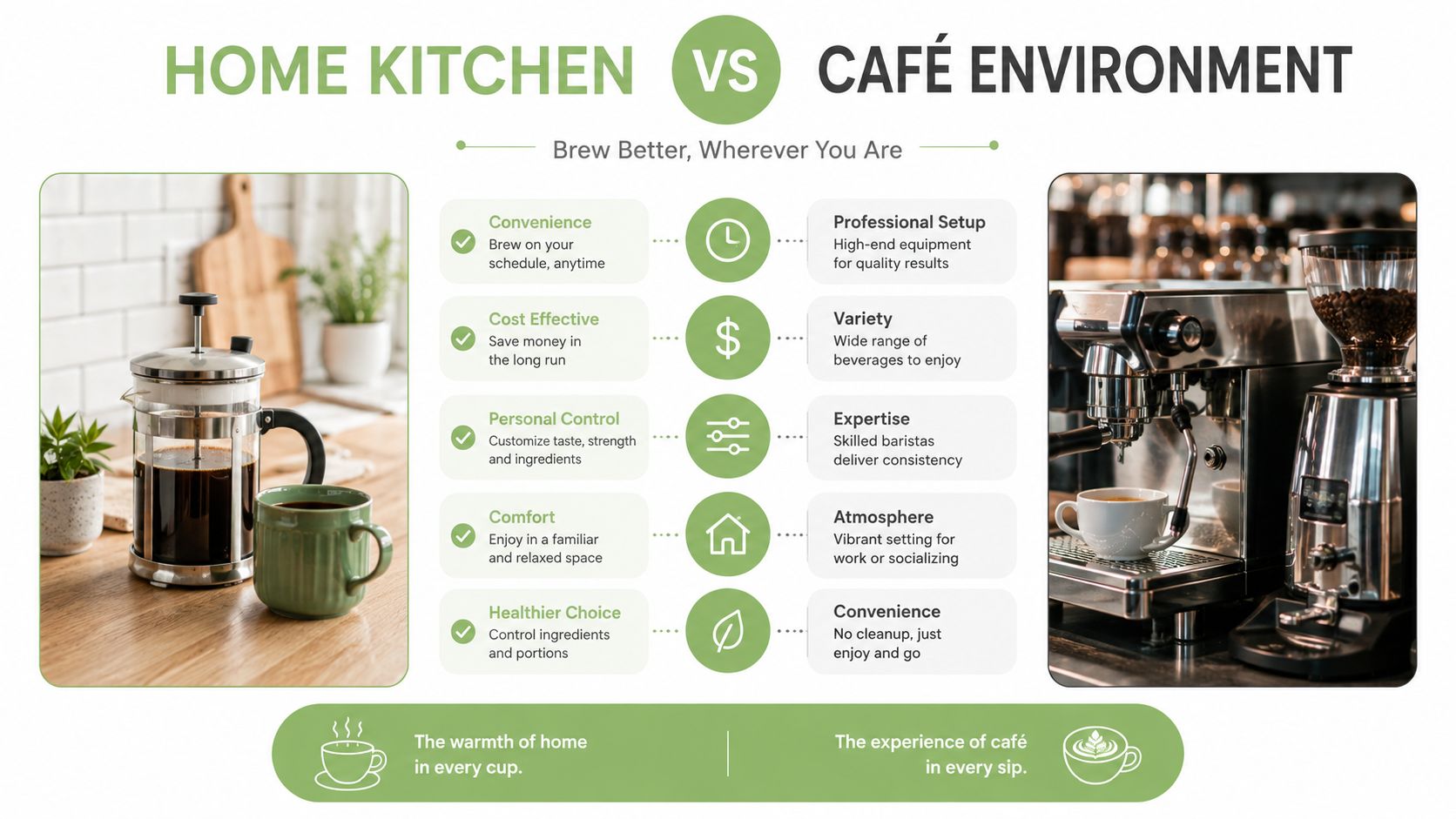
Key Features and Specifications to Evaluate
A good specification sheet should answer a simple question: will this machine protect the tea and fit the workflow? Capacity, wattage and digital controls matter, but they don't matter equally.
The Breville Tea Maker BTM800 offers a useful Australian benchmark. It has a 1.5 L capacity, five preset temperature settings, three tea-strength presets, an auto-lower and auto-lift basket, a temperature sensor, a 60-minute keep-warm function and 2000 W heating power. Breville's BTM800 product information shows the feature combination buyers should examine rather than judging the machine by wattage alone.
Temperature control comes first
Green tea and black tea don't share the same ideal brewing range. A machine that only boils water may be convenient, but it gives you less control over extraction. An Australian automatic tea-maker instruction booklet describes adjustment in 5°C increments from 70°C to 100°C, while also setting separate volume limits for heating and brewing. The Australian instruction booklet illustrates how small temperature steps can support different tea styles.
| Tea Type | Temperature Range | Key Consideration |
|---|---|---|
| Green tea | 80–85°C | Lower heat helps preserve delicate aroma and reduce harsh extraction. |
| Black tea | 90–95°C | Higher heat supports a fuller infusion. |
| Matcha preparation | Around 80°C | Heat water first, then whisk the powder separately. |
| Herbal or botanical blends | Follow the product guidance | Ingredients vary, so don't assume one preset suits every blend. |
Read beyond the headline features
- Basket movement: Auto-lift is useful because it ends contact between leaves and water. Confirm that the mechanism is easy to remove and rinse.
- Capacity: Choose enough volume for your normal service, not an imagined peak. A larger jug can also mean more water and tea left sitting warm.
- Keep-warm duration: This supports staggered serving, but it isn't a substitute for brewing fresh when flavour is the priority.
- Material and handling: Look for a clear jug, readable fill markings, stable controls and components that can be cleaned properly.
- Wattage: Treat power as a heating specification, not a quality score. Sensor accuracy and basket timing have a more direct relationship with extraction.
If you're mainly interested in controlled water temperature rather than automated steeping, an electric tea kettle with temperature control may deliver the simpler solution.
Integrating Automatic Tea Makers with Matcha and Kombucha
An automatic tea maker can support matcha and kombucha, but it shouldn't be used in exactly the same way for both.
Matcha is finely ground powder, not loose leaf. The machine can heat water to a suitable temperature, but you'll still need a bowl, whisk and proper mixing technique. For a delicate ceremonial-grade matcha, water around 80°C is a sensible starting point within the Australian green-tea guidance range. Pour the heated water over the powder and whisk until smooth rather than placing matcha directly into a basket designed for leaves.
A practical matcha workflow
- Heat fresh water using the machine's temperature setting.
- Sift matcha into a bowl to reduce clumps.
- Add a small amount of the heated water.
- Whisk briskly until the powder disperses.
- Add more water or chilled milk for a latte.
For an iced matcha latte, cool the prepared matcha over ice before adding milk. The appliance handles the temperature-controlled water, while you retain control over texture and strength.
Kombucha uses a different process. An automatic tea maker can produce a consistent green or black tea base, but the tea must cool before it meets a SCOBY and fermentation culture. Hot water is useful at the extraction stage. It's not suitable for live cultures.
Keep the stages separate
Brew the tea base, dissolve any recipe ingredients according to your method, then allow the liquid to cool before fermentation. Don't use the machine as a kombucha fermenter, and don't place a SCOBY or finished live kombucha in the jug. For broader functional beverage ideas, explore this immune-supporting drink guide while keeping health language realistic. Matcha may contribute antioxidants and naturally occurring L-theanine, and kombucha can provide a low-sugar fermented option, but neither drink replaces medical care or a balanced diet.
Maintenance Routines and Troubleshooting Common Issues
Tea leaves leave fine particles, tannins and aromatic oils behind. Australian tap water can also deposit minerals around the heating element and temperature sensor. Over time, that buildup may produce stale flavours, slower heating or inconsistent temperature readings. For cafés, these faults can appear first during busy service, when repeated cycles expose weak cleaning habits.
Follow the manufacturer's instructions for descaling products and dishwasher-safe parts. Keep daily rinsing separate from periodic scale removal, because a clean basket cannot remove deposits inside the heating area.
A workable cleaning rhythm
- After each use: Empty the basket, rinse away leaves and wash the jug if residue remains.
- Daily: Rinse removable components with clean water and leave them open to dry.
- Weekly: Inspect the heating area for scale. Descale only when the manufacturer permits it.
- Monthly: Deep-clean the basket, lid, jug and moving parts, then check that the auto-lift mechanism travels freely.

Fill lines are part of the machine's operating system, not decoration. Follow the manufacturer's fill-line instructions when heating and brewing. Filling beyond the permitted level can cause spills, obstruct basket movement and create a burn hazard.
Troubleshoot by symptom
The tea tastes bitter: Check water temperature, steep duration and leaf quantity. Green tea can become harsh when brewed too hot or held in water too long.
The machine heats slowly: Mineral deposits may be reducing heat transfer. In a hard-water home or café, compare the heating time with a freshly cleaned unit, then follow the approved descaling process. Avoid abrasive tools, which can damage surfaces or sensors.
The basket won't move: Switch off and unplug the unit before checking for leaves or residue around the mechanism. Never force the basket.
The jug leaks or overflows: Confirm that the water is below the correct fill line and that the lid and basket are seated properly.
The temperature seems wrong: Scale near the sensor can distort readings. Clean the area as directed, test with fresh water, and keep the machine out of service if the reading remains unreliable.
Buying Considerations and Australian Safety Standards
A buying decision should include more than presets and appearance. Check the warranty, replacement-part availability, bench footprint, power requirements and whether the jug and infuser are practical to wash. For a café, calculate cleaning time and staff training as part of the purchase. For a home, ask whether the extra appliance will simplify your morning or add another object to maintain.
Hot-water safety becomes critical when a machine connects to plumbing or serves customers, children, older people or people with disability. South Australian guidance limits heated water connected to plumbing fixtures used for personal hygiene to 50°C, with a 45°C maximum in specified public-building areas such as aged-care, patient-care, early-childhood and school settings. South Australian hot-water safety guidance explains why delivery temperature must be considered separately from tea-brewing temperature.
A NSW Health document defines hot water as heated water delivered or used above 45.0°C, and includes a thermal shut-off at 46.0°C in its temperature categories. The NSW scald-prevention document reinforces that small temperature differences can be safety-critical in facilities.
Queensland guidance uses a dual-temperature approach. Storage water must reach at least 60°C to help prevent Legionella, while delivery to taps is limited to 50°C through a temperature-control device. Queensland hot-water system guidance is particularly relevant to plumbed hospitality systems.
Choose a standalone unit unless your venue needs an integrated installation. If plumbing is involved, have the setup assessed by a qualified professional and keep brewing temperature controls separate from safe point-of-use delivery.
Pep Tea offers premium organic Japanese matcha and Australian-brewed, sugar-free organic kombucha from the Hunter Valley, NSW, giving homes and cafés quality ingredients to use with either manual brewing or an automatic tea maker. Visit Pep Tea to explore the organic matcha range, kombucha options and wholesale support for a more considered non-alcoholic drinks menu.
What Is Matcha Cake? a Practical Baker’s Guide

Matcha cake is a cake flavoured and coloured with finely ground matcha green-tea powder, while its texture comes mainly from flour, fat, eggs, sugar and the chosen cake style. In one Australian matcha cake bites recipe, the matcha is measured in teaspoons, while the structure comes from ingredients such as 225 g self-raising flour, 220 g sugar, 125 g plant milk and 125 g vegan butter.SBS Food's matcha cake bites recipe
So, what is matcha cake beyond a green slice on a café counter? It's a useful baking category rather than one fixed recipe. Matcha can tint a light sponge, deepen a creamy mousse, flavour a Swiss roll or add a vegetal note to a layered celebration cake. Two cakes may look almost identical from the outside, yet one may be airy and springy while another is dense, moist and rich.
The difference comes from how the powder is used, which grade you choose, and what surrounds it. This guide will help you recognise the style you want, choose a sensible matcha for baking and avoid the common assumption that more green powder automatically means a better cake.
What Matcha Cake Actually Is
Matcha cake is cake made with matcha powder, a finely ground form of green tea that contributes colour, flavour and tea-derived compounds. Matcha is not a green food colouring with a neutral taste. Pure powder brings a fresh, grassy character, gentle bitterness and, in some recipes, an umami-like depth.
For a practical introduction to the ingredient itself, PepTea's guide to what matcha powder is is a useful starting point. Once you understand the powder, the cake becomes easier to judge because you can separate the tea from the baking structure.
Why the same name covers different cakes
Imagine ordering matcha cake at a café. The display might include a pale-green chiffon, a compact Swiss roll and a chilled mousse cake. All three qualify because matcha describes the main flavour direction, not a mandatory crumb, filling or cooking method.
A sponge is usually the most familiar format, with a soft crumb that can carry buttercream or cream. Chiffon tends to feel lighter because its oil-based batter and aerated structure create an airy bite. Mousse cake may contain a baked base, but its main experience is creamy, chilled and layered. A Swiss roll offers a thin, flexible sheet wrapped around filling, while a layer cake makes the matcha flavour part of a more elaborate assembly.
Ordering clue: Ask whether the cake is baked or chilled, light or dense, and filled or plain. “Matcha cake” alone doesn't answer those questions.
How to recognise real matcha flavour
Look for a colour that sits somewhere between soft pistachio and deeper leafy green, although colour varies with the powder, recipe and heat exposure. The aroma should suggest tea, fresh leaves or mild grass rather than sweet vanilla.
A cake that is green but tastes only of sugar may contain very little matcha, or it may rely on colouring and flavouring. That doesn't make it automatically poor, but it creates a different product. In Australia, retail examples show matcha can appear at only 1% in a strawberry-matcha cake, demonstrating how a small amount can still influence colour and flavour.Australian matcha ingredient example
The most reliable definition is therefore simple: matcha cake is a cake in which matcha provides the tea identity, while the flour, eggs, fat, sugar, starches and method determine how the slice behaves.
How Matcha Shapes Flavour and Texture
Why can a cake contain only a little matcha yet taste unmistakably like tea? Matcha works like a concentrated seasoning within the formula. It colours the batter and adds a leafy, slightly bitter finish, while flour, eggs, fat and sugar build the cake's structure, softness and sweetness.
A modest amount can therefore influence the whole slice without carrying its weight. An Australian formula uses 2 teaspoons of matcha in the cake base and another 1 teaspoon in the white chocolate shell, while flour, sugar, vegan butter, plant milk and buttercream provide the main structure and texture.SBS Food's matcha cake bites formula
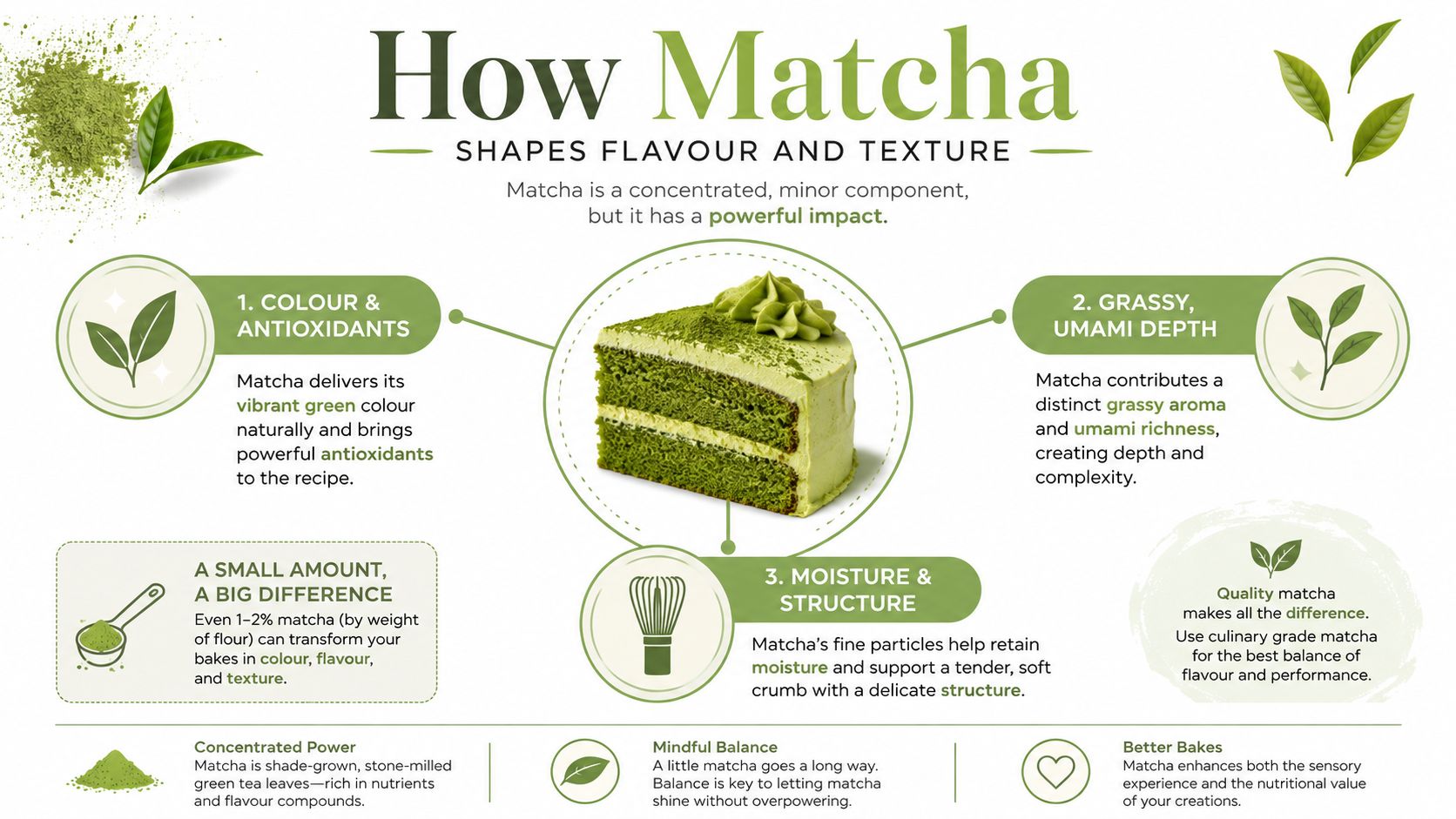
Read the cake as an ingredient map
| Component | Main role | Practical result |
|---|---|---|
| Matcha powder | Colour and concentrated tea flavour | Green hue, grassy aroma and gentle bitterness |
| Flour and starches | Framework and crumb formation | Sliceable structure and body |
| Eggs | Binding, lift and richness | Stability, aeration and tenderness |
| Fat | Tenderness and moisture perception | Softer mouthfeel and fuller flavour |
| Sugar | Sweetness, browning and moisture management | Balance against matcha's bitterness |
| Raising agents | Gas production and lift | More open or lighter crumb |
| Fillings and frostings | Contrast and moisture | Creaminess, sweetness and visual definition |
The surrounding ingredients determine whether matcha tastes smooth, sharp or subdued. Sugar balances bitterness, fat gives the flavour a rounder mouthfeel, and cream-based fillings provide a cool contrast. Sweetness should support the tea rather than conceal uneven mixing or old powder.
Distribution matters. Sift matcha with the dry ingredients, or blend it into a smooth paste with a small amount of liquid before adding it to the batter. Unmixed powder can leave bitter green flecks while the rest of the cake remains pale.
Colour offers a useful clue, not a final verdict. A vivid green cake may have a mild tea flavour if only a small amount of matcha is present. A darker cake can taste harsh when the powder is overused or the batter receives excessive heat.
Pure powder isn't the same as latte mix
Check the ingredient panel before replacing matcha with a latte product. Australian retail information shows that some latte mixes contain sugar, maltodextrin, vegetable oil or flavouring, and one listed product reports 6.8 g of sugars per 10 g serve.Australian matcha latte nutritional information
The blend may make the batter sweeter, dissolve differently and change the crumb. Pure culinary matcha gives more predictable results, while a sweetened premix suits a recipe formulated for its added ingredients.
Popular Matcha Cake Styles
The best matcha cake style depends on the texture you want, the time available and whether the dessert needs to travel or wait in the fridge. A light cake for afternoon tea has different requirements from a make-ahead centrepiece.
Australian mainstream recipe publishing already shows matcha in more than one home-baking format. SBS Food published matcha cake bites in 2023 and a matcha and almond layer cake in 2018, showing an established presence across at least a 5-year span in national food media.SBS Food's matcha and almond layer cake
| Cake style | Typical texture | Best suited to |
|---|---|---|
| Sponge | Soft, springy and straightforward | Birthdays, slicing and simple frosting |
| Chiffon | Airy, tender and light | Afternoon tea or a less heavy dessert |
| Mousse cake | Creamy, chilled and layered | Make-ahead entertaining |
| Swiss roll | Flexible sheet with a soft filling | Shareable slices and compact presentation |
| Layer cake | Moist sponge with filling and frosting | Celebrations and dramatic decoration |
Sponge and chiffon
A standard sponge gives you the clearest route into matcha baking. Its structure is familiar, and a thin layer of cream or buttercream can soften the tea's vegetal edge. It's a sensible choice when you want a dependable cake that can be cut into neat portions.
Chiffon feels lighter and more delicate. Oil helps maintain a tender mouthfeel, while whipped eggs provide lift. The trade-off is fragility. Overmixing or rough handling can reduce the air you worked to create, so chiffon rewards a gentle folding technique.
Mousse and Swiss roll
Mousse cake makes matcha feel more like a patisserie dessert. The baked base may be thin, with the main flavour carried by a creamy matcha layer. This style is ideal if you want a pronounced tea impression without putting a large amount of powder into a flour-based batter.
A Swiss roll uses a flexible sheet that's baked evenly, cooled appropriately and wrapped around cream, ganache, jam or red bean paste. Its thin format distributes matcha through every bite, but the sheet can crack if it loses too much moisture or if the filling is applied too thickly.
Layer cake
Layer cake is the most adaptable format. Matcha can appear in the sponge, the buttercream, a white chocolate filling or several components at once. Almond, raspberry and cream can make the cake feel refined, while red bean creates a more traditional Japanese-inspired pairing.
The same powder can therefore produce five very different desserts. Search by the structure you want first, then add “matcha” to narrow the flavour.
Choosing the Right Matcha Grade and Amount
Which matcha should go into a cake, and how much is enough? For most baking, culinary-grade matcha is the practical choice. It is formulated to work alongside flour, fat, sugar and fillings, so its flavour can remain noticeable after mixing. It also suits a full cake or regular baking better, because you are not paying for delicate qualities that frosting may partly hide.
Ceremonial-grade matcha is made for drinking and can have a smoother, more refined profile. That quality does not automatically make it better in cake. Once the powder is spread through batter, buttercream and filling, a dependable culinary grade may provide better value and a clearer baking flavour.
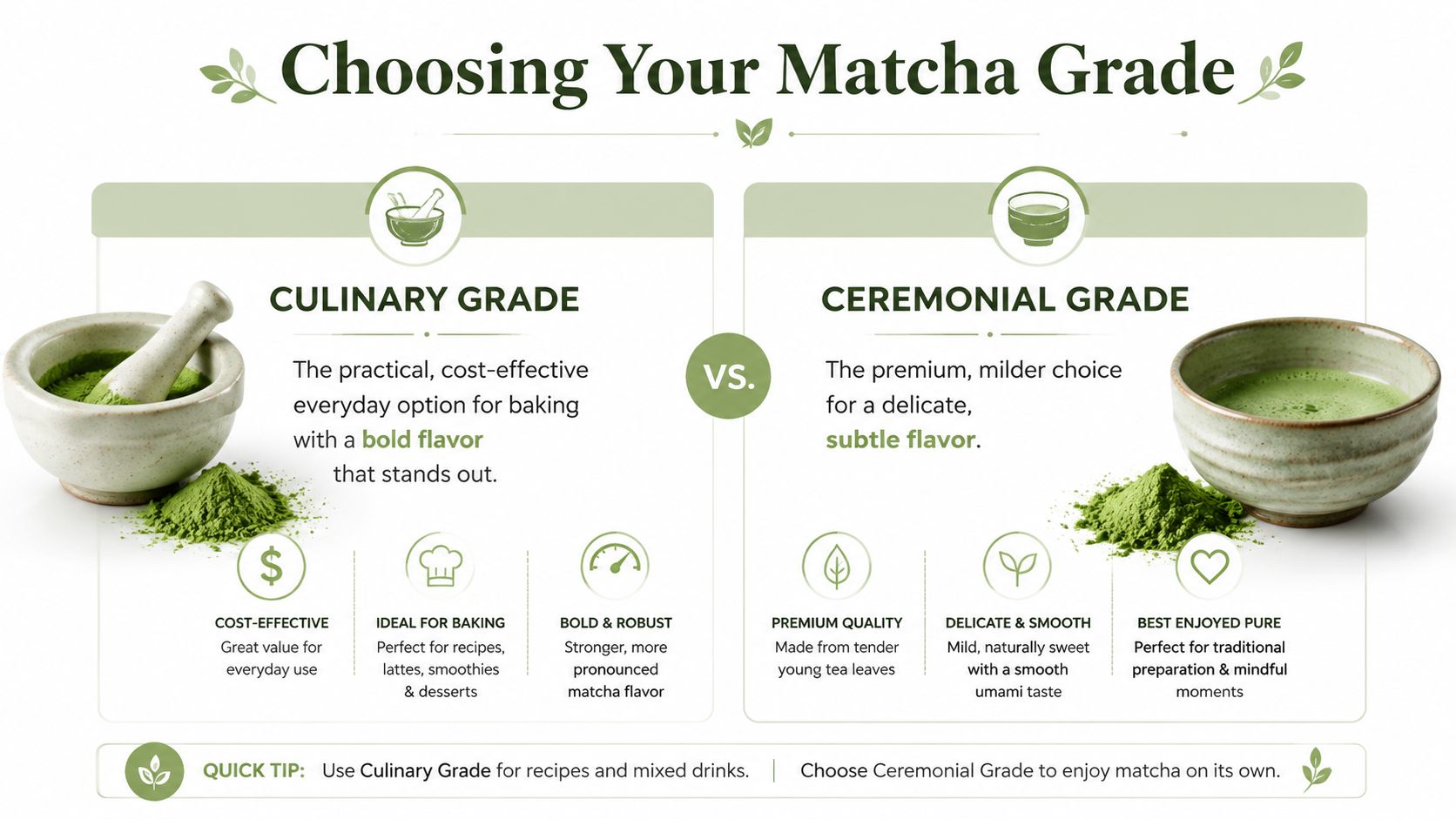
Use a measured starting point
Begin with a measured amount rather than adding powder until the batter looks green. Two teaspoons in the cake base is a useful starting point for recipe development, then you can assess the baked flavour. Treat it as a guide, not a universal rule. A small loaf, thin sheet and tall layer cake distribute matcha differently, much like spreading the same amount of cordial through glasses of different sizes.
For a gentler result, keep most of the matcha in the sponge and pair it with vanilla or cream. For a stronger tea profile, put some powder into the frosting or filling. Those components are less diluted by flour, giving you more control when the cake tastes balanced but not distinctive enough.
Cost-conscious approach: Use culinary matcha throughout the cake, or reserve a premium powder for buttercream, mousse or a finishing dust, where its aroma is easier to notice.
Matcha also contributes caffeine, so the amount matters beyond colour and flavour. A darker green cake is not necessarily better. Extra powder can bring a sharper, more bitter vegetal note, while sugar, dairy and white chocolate can soften that edge.
Scale the amount in the same proportion as the batter. If you double the mixture, double the matcha first, then taste and assess the balance rather than chasing a deeper colour. A larger pan may produce a thinner cake, while a smaller, taller cake can make the same quantity taste more concentrated.
PepTea's guide to different grades of matcha helps compare drinking and cooking purposes before you buy. The useful question is where the matcha will be tasted, how strongly it should register, and which parts of the dessert need to carry it.
Making Matcha Cake Successfully
Good matcha cake begins before the oven is switched on. Check whether the recipe uses pure matcha or a blend, gather the ingredients, and bring butter, eggs or other temperature-sensitive items to the condition the method requires. A chiffon, loaf and mousse each need different handling, but the sequence below provides a dependable starting point.
Prepare and disperse the powder
Sift the matcha. Pass it through a fine sieve with the flour or other dry ingredients. This breaks up compacted powder and distributes the colour through the batter.
Make a paste when needed. Stir the matcha with a small amount of warm liquid or another suitable wet ingredient. Aim for a smooth paste rather than a hot mixture. Clumps are difficult to remove after the powder is buried in the batter.
Taste for balance. A separate matcha-and-cream or frosting component can show whether the tea flavour is being softened too much by sugar or pushed towards bitterness. Avoid tasting raw batter containing egg.
Build the structure carefully
For a creamed cake, beat the butter and sugar as directed. If the recipe relies on aerated eggs, whisk them properly. With chiffon, fold the dry and wet ingredients gently so the mixture keeps the air that gives the cake its light crumb.
Overmixing can develop toughness and create a dense cake. Under-mixing leaves streaks of matcha and pockets of flour. Stop once the batter is combined, transfer it to the prepared tin, and follow the recipe's baking cues rather than judging doneness from colour alone.
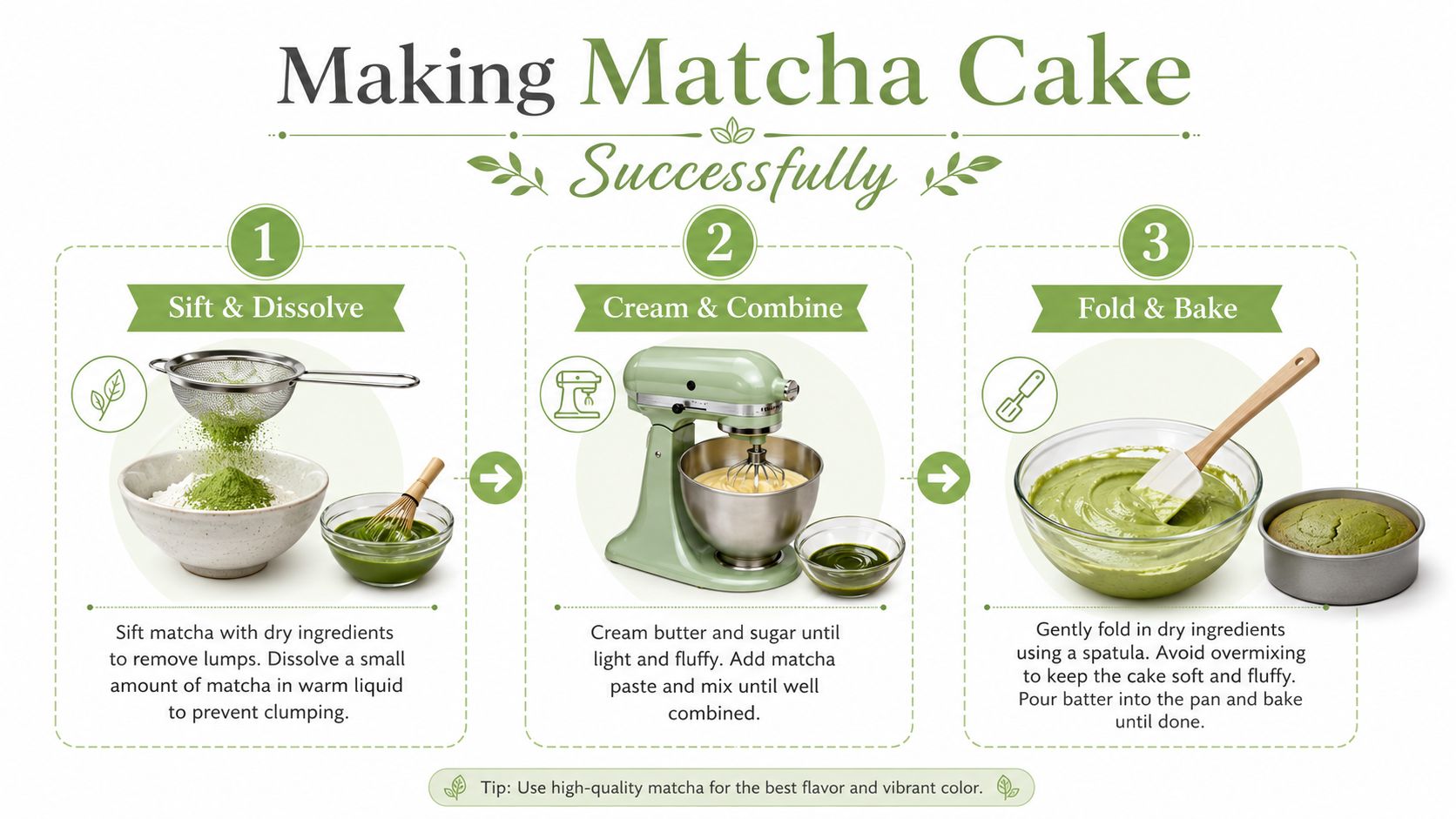
Coffee-baking guidance also helps explain how a concentrated flavour should be added without treating it as a bulk ingredient. These pro techniques for coffee baking offer a useful comparison for planning where matcha will have the greatest impact.
Diagnose one variable at a time
- Pale or streaky colour: The powder was not dispersed properly, or it was added late without enough mixing.
- Bitter edges: The formula may contain too much matcha for the cake's size, or the edges may have dried during baking.
- Dry crumb: Check for overbaking before changing the flour. Matcha cannot replace lost moisture.
- Collapsed mousse: The mixture may have been set too quickly, or its supporting structure was not stable enough.
- Cracked Swiss roll: The sheet may have been overbaked, cooled in the wrong shape or filled too heavily.
For Australian recipes, 1 teaspoon is 5 ml and 1 cup is 250 ml. Use the same measuring system when scaling a formula or comparing recipes, because small differences can alter a delicate batter.
PepTea's guide to baking with matcha and beyond provides further ideas for using the powder in cakes and other baked desserts.
Pairings and Dietary Variations
Matcha tastes best when a pairing supports its grassy profile instead of masking it. White chocolate adds creamy sweetness and softens bitterness, while raspberry supplies acidity and fruit brightness. Red bean brings an earthy sweetness that feels especially natural with green tea, and almond adds nuttiness without competing aggressively.
Citrus can lift a dense cake, particularly through zest in a glaze or cream. Plain whipped cream creates a clean contrast, while mascarpone or cream cheese gives a richer, slightly tangy finish. For a chiffon, keep the topping light. A sturdy layer cake can handle a thicker frosting and more elaborate filling.
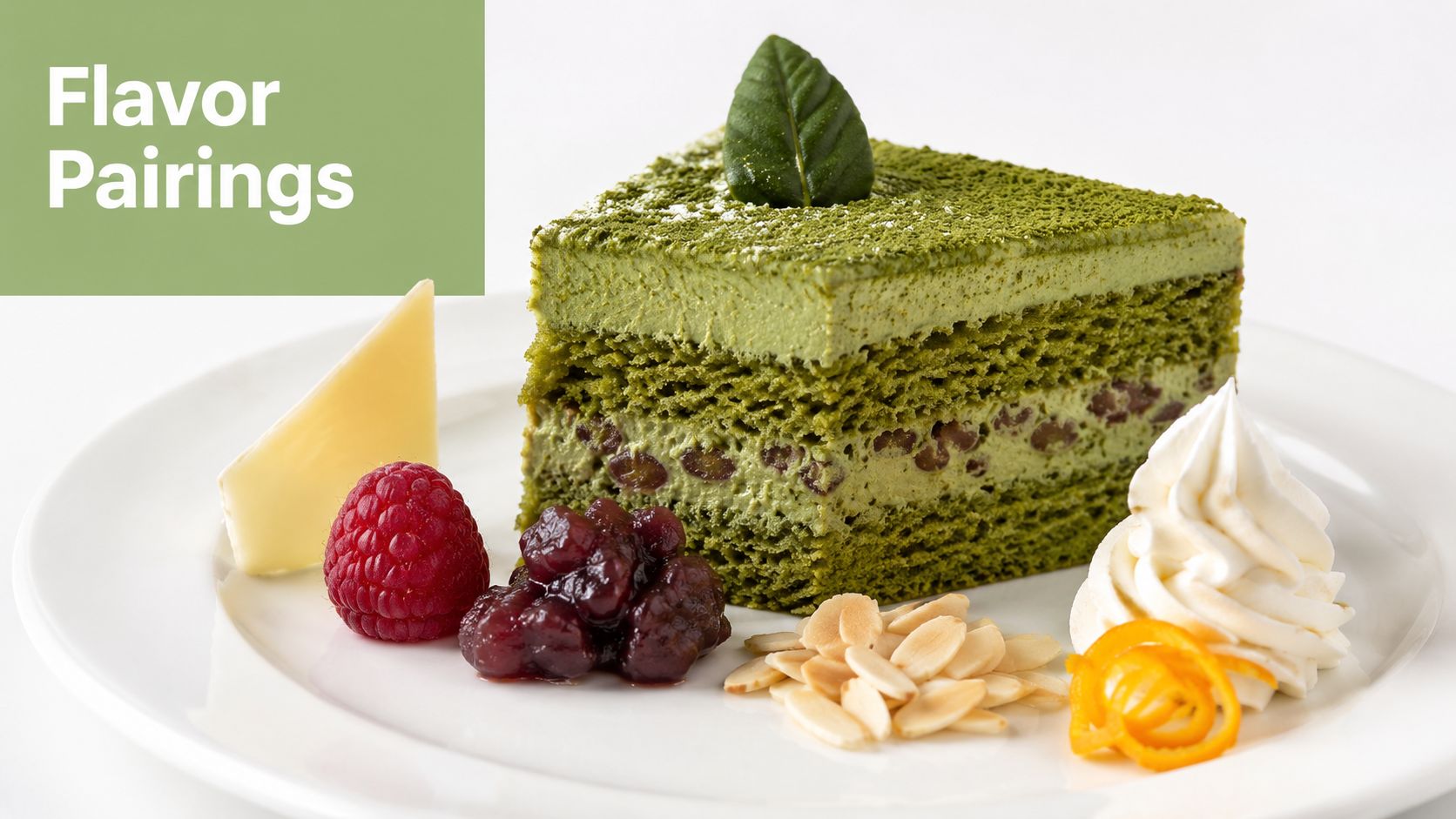
Choose the drink beside it
Unsweetened green tea keeps the tasting experience focused on the cake. Coffee brings roast and bitterness, which can make a sweet matcha dessert feel more intense. Kombucha adds acidity and refreshment, but choose a flavour that won't fight the filling. Ginger can cut through cream, while lime and ginger can sharpen a rich slice.
Caffeine deserves attention when the cake is served with another caffeinated drink. ABC News reports that a 250 ml cup of coffee contains about 100 mg of caffeine, compared with about 60 to 75 mg in a typical 250 ml cup of matcha.ABC News caffeine comparison The amount in a slice depends on the recipe and how many portions it makes, so sensitive customers should consider the whole café order.
Adapt the formula, not just the label
A vegan cake can use plant milk, plant butter and a suitable egg replacement, but each swap changes emulsification and structure. Gluten-free versions need a recognised gluten-free flour blend and, where necessary, a binder to prevent crumbling. A sugar-reduced cake may taste less sweet, but it isn't automatically sugar-free.
Read the full ingredient list, especially for premixed matcha products. Australian packaged-food rules generally require ingredients to be declared unless an exemption applies, making the panel important for identifying flour, dairy, eggs, soy, added sugar and blended matcha ingredients.Australian Food Standards Code ingredient requirements
Quick Matcha Cake Ideas
Start with the format that matches your confidence rather than attempting the most decorated cake immediately.
For a simple afternoon bake, make a matcha sponge or loaf using culinary-grade powder and finish it with vanilla buttercream, cream cheese frosting or a light glaze. Sift the matcha with the flour, keep the batter gently mixed and let the cake cool fully before decorating. This route suits a standard home oven and gives you a clear read on the powder's flavour.
For a make-ahead dessert, use matcha in a mousse or layered cake. Put the tea flavour into the cream or filling as well as the base, then allow enough time for the chilled layers to set. White chocolate, raspberry and almond are strong choices when you want contrast without losing the green-tea identity.
For sharing, turn one sheet cake into small bites or try a Swiss roll. Cake bites create more surface area for a white chocolate shell or dusting, while a roll gives you a clear spiral of matcha sponge and filling. Australian recipe coverage includes both bite-sized and layered formats, so you can choose between casual portions and a celebration-style centrepiece.SBS Food's Australian matcha cake coverage
For decoration inspiration beyond tea desserts, an illustrated Dubai gourmet honey cornflakes treat shows how texture and garnish can make a small sweet feel special. Use the same principle with toasted almonds, raspberries or a fine matcha finish.
Serving, Storage and Buying Advice
Matcha doesn't automatically make cake healthy. The overall profile is still shaped mainly by sugar, fat, portion size and the amount of powder used, while matcha contributes colour and tea character in a relatively small formulation role. Serve a slice as a dessert, not as a substitute for a balanced meal or a cup of plain tea.
Keep a plain sponge sealed so it doesn't dry out. Filled or frosted cakes may need refrigeration, particularly when they contain fresh cream, mousse or other perishable components, although chilling can firm the crumb and mute aroma. Let the cake stand briefly before serving if the recipe allows.
Remember that matcha contains caffeine, and chocolate or coffee served alongside it can add more. When buying, check the grade, ingredient list, cake style and desired intensity. If you want an organic powder for baking or drinking, explore PepTea's range with those practical criteria in mind.
Pep Tea offers Japanese organic matcha in ceremonial and culinary styles, along with Australian-brewed sugar-free organic kombucha from the Hunter Valley, NSW. Visit Pep Tea to compare matcha options for your next cake, latte or everyday tea ritual.
Best Matcha Cake How to Bake a Vibrant Fluffy Masterpiece

You've mixed the batter carefully, watched it rise, and still ended up with a sponge that's dull khaki rather than vivid green, or pleasantly earthy rather than sharply bitter. That familiar disappointment usually isn't caused by matcha alone. Grade, dosage, aeration, oven timing and storage all decide whether your cake tastes like a polished café dessert or a dry green tea experiment.
The best matcha cake for Australian bakers isn't necessarily the brightest cake on social media. It's the cake that keeps a clean tea aroma, soft crumb and balanced bitterness, while using a matcha grade that's available and sensible for the format. That matters as supply tightens. Australian reporting describes matcha demand outpacing supply, including pressure on commonly used latte grades, while the local market has already moved well beyond its niche beginnings (ABC News explains the Australian matcha shortage).
Café adoption has helped pull matcha desserts along with the latte trend. A 2025 survey reported that 40% of Australians aged 18 to 24 had ordered a matcha drink in the previous six months, and one in three Gen Z respondents named matcha their favourite café beverage (MarketersMedia's Australian matcha market commentary). A cake served with an iced matcha latte now feels familiar, not experimental.
This guide focuses on what works in an Australian kitchen: choosing ceremonial or culinary matcha for the job, protecting colour, building a fluffy foam-based batter, adapting the cake for sugar-free and gluten-free guests, and selecting formats that survive delivery. You'll also find practical fixes for bitterness, collapse and dry edges, plus pairings that suit PepTea matcha drinks and sugar-free organic kombucha.
Choosing the Right Matcha Grade and How Much to Use
The best matcha cake starts with the grade that suits the format, not the most expensive powder on the shelf. Ceremonial-grade matcha is intended for drinking, while culinary-grade matcha is selected to work with flour, eggs, dairy, fruit and chocolate. For most Australian cake batters, culinary matcha is the practical starting point.
| Baking consideration | Ceremonial-grade matcha | Culinary-grade matcha |
|---|---|---|
| Flavour | Delicate, fresh and rounded when whisked with water | More assertive, earthy and suited to mixing |
| Colour | Can be exceptionally bright, depending on freshness and storage | Often gives dependable colour in a full batter |
| Cost | Better reserved for drinking, dusting or finishing | More practical for cakes, loaves and cupcakes |
| Availability | May be harder to replace during supply pressure | Often the sensible choice for regular baking |
| Best use | Frosting, glaze, cream and final dusting | Sponge, chiffon, butter cake and muffin batter |
Grade should follow the cake's job. A delicate ceremonial powder can disappear beneath butter, vanilla and sugar, whereas a stronger culinary powder may keep its tea character after baking. A ceremonial powder can still make sense in frosting, glaze or a finishing dusting, where its fresh flavour and colour remain exposed. PepTea's guide to ceremonial versus culinary matcha explains the distinction before you buy.
PepTea supplies stone-ground Japanese organic matcha in ceremonial and culinary styles. For baking, choose a finely milled powder with no added ingredients and a fresh aroma. Sweet grass, fresh peas or a gentle marine note are useful signs. A dusty, stale or hay-like smell will usually remain noticeable after baking.
Dosage without the bitterness
Begin with a restrained amount and adjust for the cake style. A teaspoon suits a standard 9-inch round sponge when you want a gentle tea note, while a stronger layer cake may take more. An Australian layer-cake method uses 30 g of matcha in 22 cm tins, demonstrating how widely quantities can vary (an Australian matcha cake method from Zen Green Tea). Treat that amount as recipe-specific, not as a default for a light sponge. Flour quantity, frosting, matcha grade and the desired intensity all affect the balance.
Sift the matcha with the flour so it disperses evenly, rather than tipping it straight into wet ingredients. Keep opened powder sealed and away from heat, light and moisture. For vivid colour without a bitter sponge, reserve ceremonial matcha for buttercream or dust it over the finished cake.
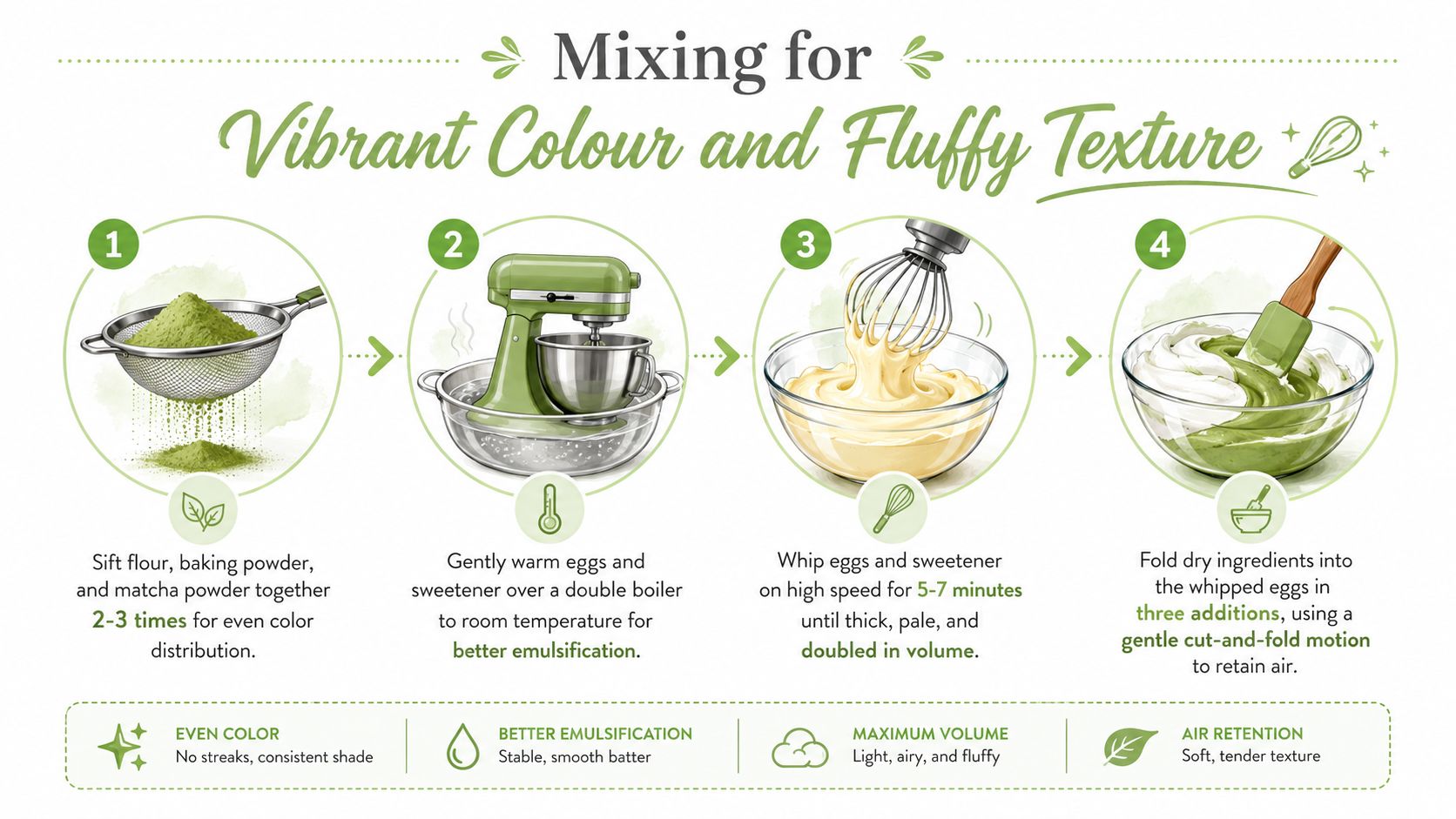
Mixing and Baking for Vibrant Colour and Fluffy Texture
A matcha sponge can lose its colour and lift before it reaches the oven. Aerated eggs provide most of the lift, so prepare the tin and heat the oven first. Fold, pan and bake promptly once the foam is ready.
Build the foam first
Sift the flour and matcha together several times. This breaks up clumps and spreads the powder through the batter, reducing the need for aggressive folding later. For a foam-based sponge, warm the eggs and sugar over gently simmering water until they no longer feel cold, then beat until the mixture is pale and roughly tripled in volume.
Use a heatproof bowl over water that is barely simmering, with the bowl's base kept above the waterline. Stir continuously so the eggs warm evenly. The mixture is ready when it looks thick and airy, and a lifted whisk leaves a ribbon that sits briefly on the surface. If the ribbon disappears immediately, continue beating.
Fold in three deliberate additions
Mix the sifted flour and matcha with a small portion of the foam first. Fold that lighter mixture into the remaining foam in three additions, using a broad spatula. Scrape from the base upwards while rotating the bowl, and stop as soon as the batter looks even.
Practical rule: A few small streaks of flour are easier to correct than a bowl of collapsed foam. Fold only until the batter is even.
Line the base of the tin with parchment and leave the sides mostly ungreased where possible, allowing the batter to grip as it rises. Pour steadily, level the surface, and place the tin straight into a fully heated oven. A moderate oven around 180°C for about 25 minutes suits many standard sponges, but batter depth and pan material can change the result.
For practical guidance on equipment, pan preparation and basic doneness checks, use this guide to baking a simple cake as a beginner.
Adapt the timing to the format
A standard round cake may finish in approximately 25 minutes. Layer cakes baked in 22 cm tins can take roughly 25 to 30 minutes, while cupcakes usually need checking earlier because their smaller volume sets faster. These are starting points, not fixed promises. Oven calibration, pan colour and batter depth all affect baking time.
The centre should spring back lightly when pressed. A skewer should emerge clean or with a few moist crumbs, never wet batter. Cool the cake briefly in its tin, then move it to a rack so trapped steam does not soften the base.
Bright green colour depends on more than oven timing. Excessive heat, overbaking and prolonged exposure to air can dull matcha, while too much powder can make the crumb bitter. For ideas beyond a single sponge, PepTea's guide to baking with matcha and beyond shows ways to use the ingredient across different baked formats.
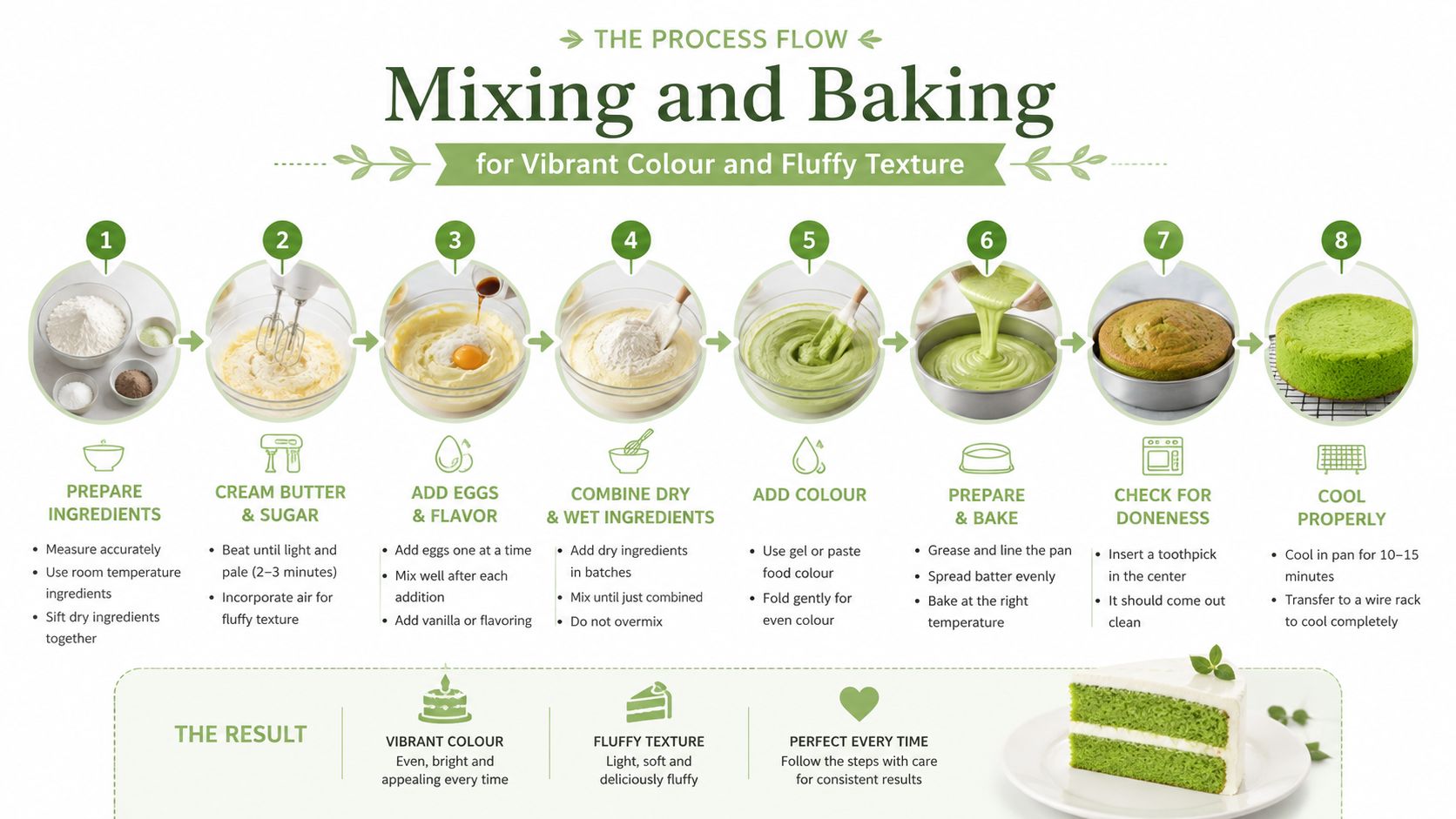
Smart Ingredient Swaps for Sugar Free and Gluten Free Baking
Removing sugar changes more than sweetness. Sugar adds moisture, tenderness, colour and bulk, so a matcha cake can turn firm, pale and more bitter when it disappears. Replace those functions deliberately rather than making a one-for-one swap.
Lower-sugar choices
For a reduced-sugar sponge, retain enough sweetener to soften matcha's bitterness and support the whipped structure. A granulated alternative that measures and behaves like sugar is generally easier to manage than a concentrated liquid sweetener. If you use an intensely sweet product, add suitable dry bulk and reassess the liquid balance.
A fully sugar-free sponge can taste thin. In practice, a lower-sugar cake with a lightly sweetened or unsweetened cream layer often gives better results. Berries, white chocolate or naturally sweet fruit can round out the flavour while keeping matcha noticeable. This approach also suits cakes prepared for delivery, because the topping can carry sweetness without weakening the sponge.
Matcha contains caffeine, so both the quantity of powder and the portion size affect the serving. FSANZ guidance on caffeine explains the food safety and consumer considerations in Australia and New Zealand. Take extra care when serving children, people sensitive to caffeine or guests who may already have consumed tea or coffee.
Gluten-free structure
A dependable gluten-free cake blend usually combines a mild flour with starch and a suitable binder. A commercial blend made for cakes can simplify this choice. Keep the base neutral, because strong nut or legume flours can cover the fresh tea character and make a delicate matcha batter taste heavy.
Some blends need a short rest to hydrate, but a foam-based batter should go into the oven soon after the eggs are whipped and the dry ingredients are folded in. Butter cakes can benefit from added moisture such as yoghurt or milk, which helps limit crumbling. Sponges need gentler handling. Gluten-free flour cannot restore structure after vigorous mixing has collapsed the foam.
Dairy-free bakers can use neutral plant milk and neutral oil. Egg-free cakes require a different structure, usually a chemically leavened batter instead of an egg-foam method. PepTea's gluten-free raspberry and white chocolate muffins offer a practical flavour pairing for this style of baking.
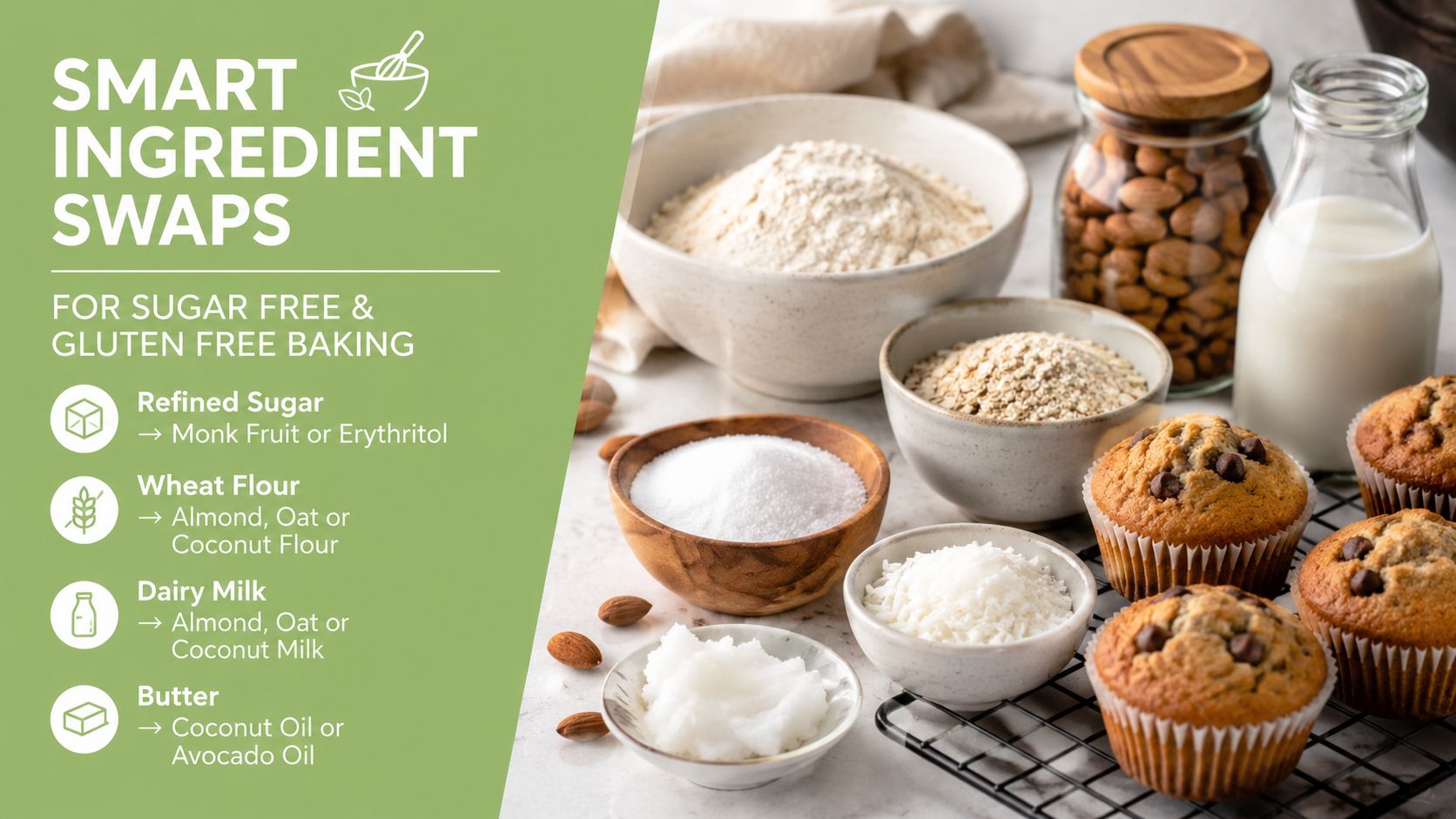
If a packet says “organic matcha”, check the claim rather than assuming certification. The ACCC explains that Australian businesses do not legally need organic certification to describe a product as organic, while AS 6000-2015 is a voluntary domestic standard for growers and manufacturers (ACCC guidance on organic claims). Treat organic status as a labelling and sourcing detail to verify, especially when choosing powder for a cake sold or delivered to customers.
Troubleshooting Common Matcha Cake Problems and Quick Fixes
Matcha cake failures usually leave clues. The colour, smell and crumb can tell you whether the problem started with the powder, the mixing or the oven.
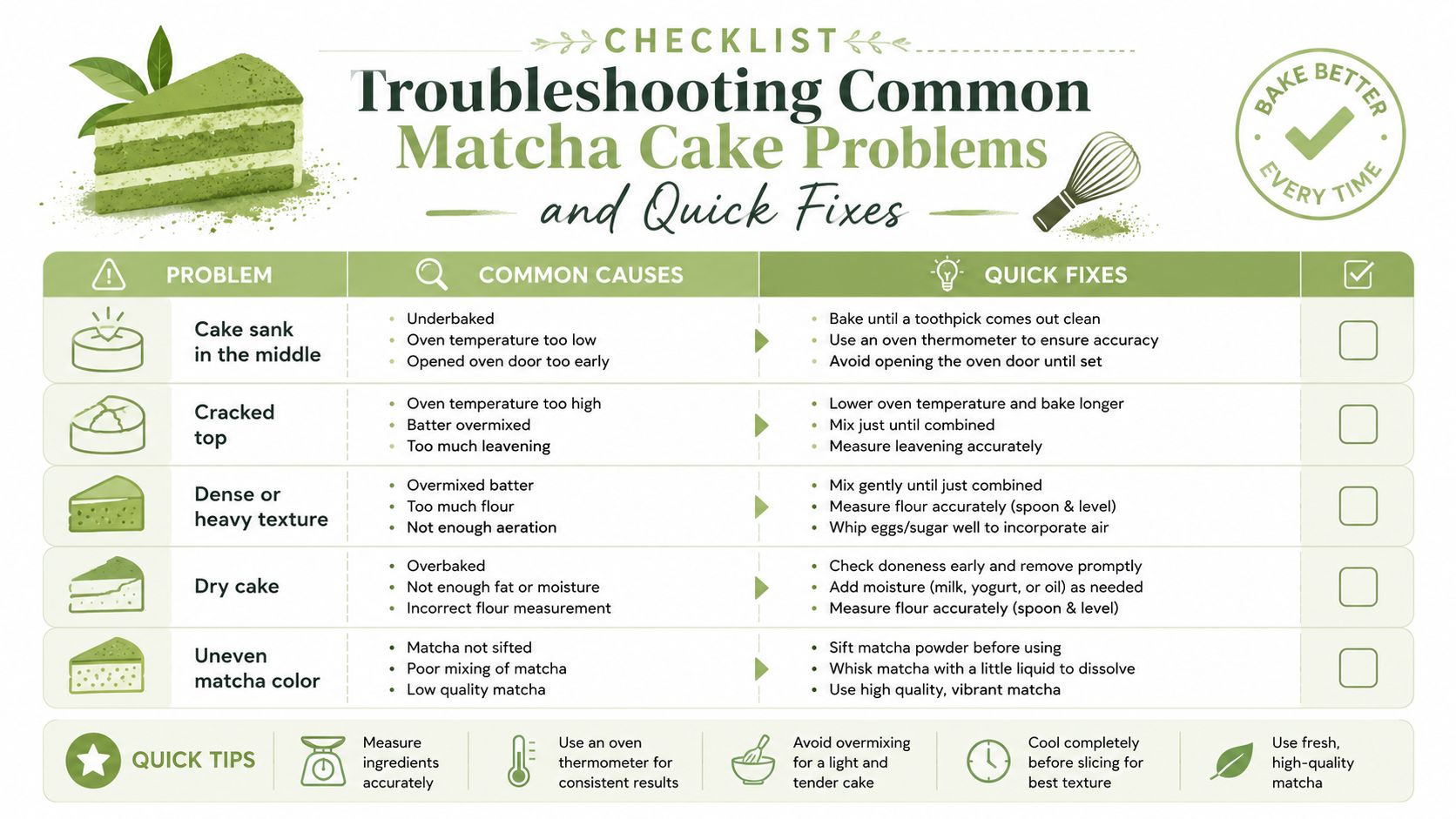
Dull colour
Cause: The matcha is old, the batter sat before baking, or the oven was too hot.
Fix: Use fresher powder, sift it thoroughly, bake immediately after folding and avoid excessive heat. A pale green sponge can still taste good. Brightness isn't the only measure of quality.
Bitter or grassy flavour
Cause: Too much matcha, a harsh grade, insufficient sweetness or overbaking.
Fix: Reduce the powder in the sponge and move the stronger tea character into the icing. White chocolate, vanilla, mascarpone and raspberry can soften the perception of bitterness without hiding the matcha entirely.
Dense or gummy crumb
Cause: The egg foam collapsed during folding, or the centre needed more baking.
Fix: Fold in smaller additions, scrape the bowl's base gently and put the batter into the oven straight away. Check the centre with a skewer rather than relying only on browned edges.
Sunken centre
Cause: The cake was removed too early, the oven door opened prematurely, or the batter lost too much air.
Fix: Wait for a light spring-back in the centre and a skewer carrying only moist crumbs. If the top has already sunk, trim it level and use a layer of cream or ganache rather than trying to inflate the baked structure.
A sunken sponge is often salvageable. A bitter sponge is harder to disguise, so measure matcha carefully before you start.
Dry edges and uneven rise
Cause: A dark tin, shallow batter, hot spots or overbaking.
Fix: Use parchment, check the oven with a reliable thermometer and rotate only if your oven allows it without disturbing the rise. Trim dry edges, brush layers lightly with milk or a mild syrup, and keep the filling generous but not wet.
Variations Storage and Pairings Worth Serving
The right format depends on where the cake is going. A tall layer cake looks impressive for a celebration, but a simple loaf is easier to slice, wrap and transport. Cupcakes are practical for cafés and shared gatherings because each portion can be finished separately without exposing a whole cake to handling.
For delivery, choose a firm butter cake, loaf or compact cupcake over a fragile high-rise sponge. A chiffon-style cake is airy and elegant, but it needs careful packaging and a stable filling. A layer cake with mascarpone, white chocolate or fruit should travel chilled and level, with enough support to stop the layers sliding.
A pistachio, raspberry and coconut direction can turn the cake into an Australian-inspired lamington-style dessert. For broader ideas on matching sweet flavours with drinks, the McLaren Vale Cellars dessert pairings guide is a useful source of inspiration, even when you're serving a non-alcoholic pairing.
Storage that protects the crumb
Keep an unfrosted cake airtight at room temperature when it will be served soon and the weather is mild. Refrigeration protects cream-based fillings, but it can firm the crumb and mute aroma, so bring the cake back towards serving temperature before eating.
Wrap unfrosted layers well before chilling or freezing. Freeze individual slices in airtight packaging, then thaw them while still wrapped to reduce condensation on the surface. Frosting should be added after thawing when possible, particularly if you want a clean jade colour and a fresh finish.
An iced matcha latte gives the cake a creamy, tea-forward companion. Sugar-free organic kombucha brewed in the Hunter Valley, NSW, brings acidity and lift beside a rich white chocolate or mascarpone topping. If you serve kombucha, check the product label rather than assuming every fermented drink is alcohol-free. FSANZ and NSW Health state that beverages containing more than 0.5% alcohol by volume need alcohol-content labelling, and NSW Health identifies products above 1.15% ABV as alcoholic drinks in NSW (NSW Health's fermented drinks guidance). FSANZ's coordinated survey also found sampled fermented soft drinks across several alcohol ranges, with labelling wording dependent on the measured level (FSANZ's fermented soft drinks survey).
Pep Tea offers organic Japanese matcha in ceremonial and culinary formats, along with sugar-free organic kombucha options such as Ginger, Lime & Ginger and Mango. Visit Pep Tea to choose a matcha suited to your cake, find a drink for serving, or discuss wholesale options for an Australian café menu.