
Tag: ceramic matcha bowl
Matcha Bowl Australia: How to Choose, Use and Care

You've sifted your matcha, heated the water and reached for the nearest cereal bowl. A few brisk wrist movements later, green powder is clinging to the sides, water has splashed across the bench and the drink looks flat rather than softly foamed. The problem usually isn't the matcha or the whisk. It's the bowl.
A purpose-built matcha bowl in Australia, traditionally called a chawan, gives the bamboo whisk enough room to move properly. Its shape, base and interior surface all influence how easily you dissolve the powder and create a fine foam. Whether you're making ceremonial matcha at home or building a visible matcha service for an Australian café, the right chawan is a practical brewing tool, not merely a decorative piece.
Why Your Kitchen Bowl Is Failing Your Matcha
The bowl looks harmless on the kitchen bench. It may even seem generous compared with a small teacup. Yet a standard cereal bowl often has a curved base, steep sides and an awkward depth that forces the whisk to work vertically rather than laterally.
That changes the movement. Instead of sweeping freely across the surface, the bamboo whisk catches against the sides or presses into the bottom. Matcha gathers in corners, clumps remain suspended in the water and the whisk can flick liquid over the rim. You end up stirring the powder rather than aerating it.
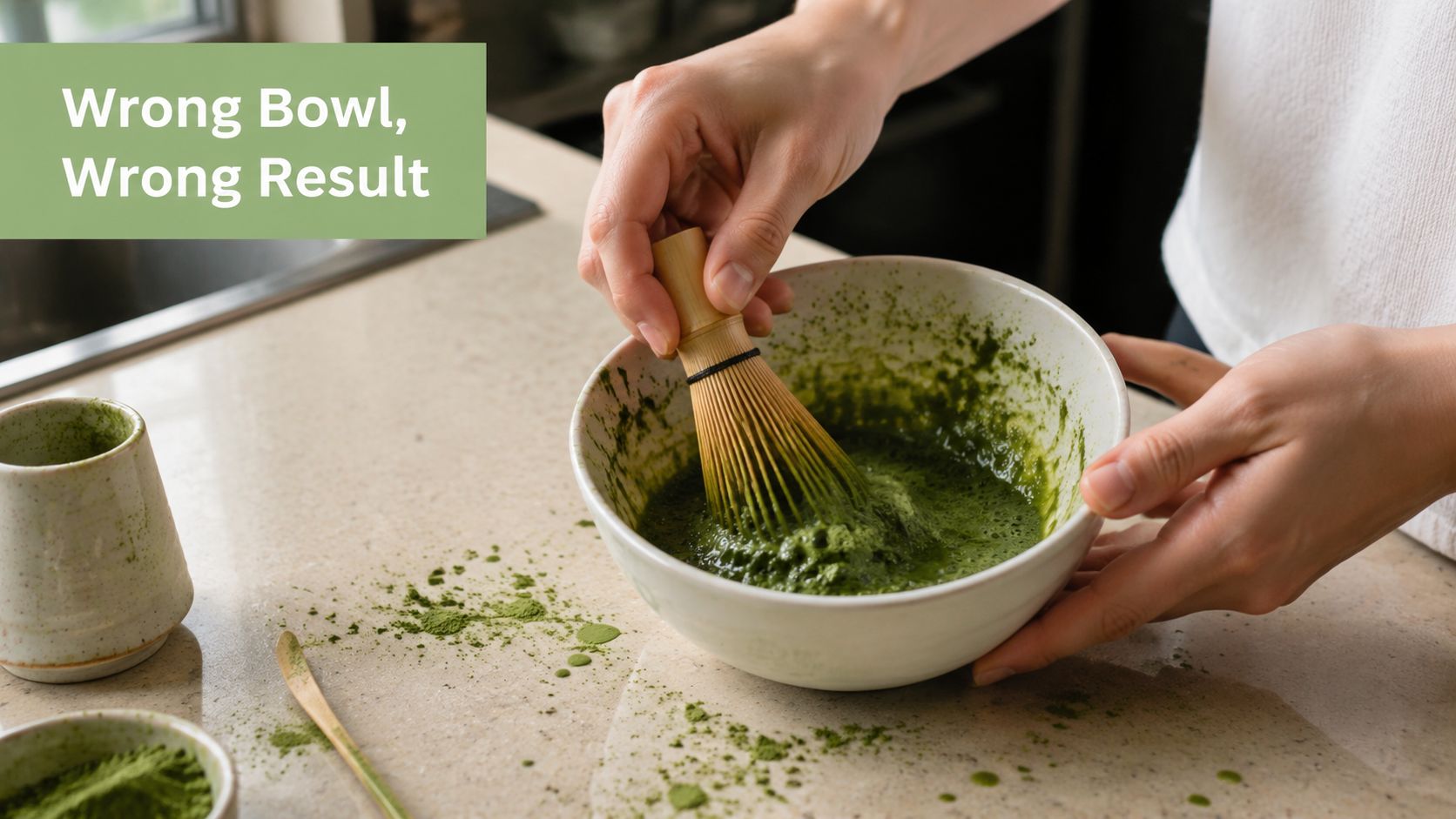
The bowl changes the wrist movement
A chawan is wider and lower, so your whisk can travel from side to side in a quick, controlled motion. Think of the difference between trying to sauté in a narrow saucepan and using a broad chef's pan. Both hold food, but only one gives the utensil enough working space.
The same principle applies to matcha. The bowl lets you keep the whisk near the surface, where the tines can break up powder and pull air through the tea. A stable base also means you can hold the chawan lightly with your non-dominant hand instead of chasing it around the bench.
Practical rule: If your whisk hits the sides before it can move freely, the bowl is working against your technique.
Australian specialty listings commonly describe matcha bowls as wide, shallow chawan forms because the larger diameter gives a bamboo whisk more lateral room. That extra space helps reduce clumping and supports a finer foam layer during rapid mixing, as shown by Australian matcha bowl specifications.
What a Chawan Is and Why Shape Matters
At an Australian café workshop, a chawan earns its place through function as much as tradition. It is the bowl used to prepare and drink matcha, shaped around the movement of a bamboo whisk and the hands holding it. Japanese tea practice gives the vessel cultural meaning, while its geometry solves a practical brewing problem: helping powder, water and air meet evenly.
Start with the rim. A broad opening gives the chasen room for quick, controlled strokes across the surface. A narrow cup restricts the tines, and a deep bowl encourages downward stirring, leaving powder beneath the whisk. The result is closer to mixing than aerating.
The low profile matters too. With a shorter distance between base and rim, you can see the liquid and keep the whisk close to the surface. A chawan works like a chef's pan: it provides useful working space and enough depth for movement. A plate lacks structure, while a cereal bowl often has too much depth for efficient whisk geometry.
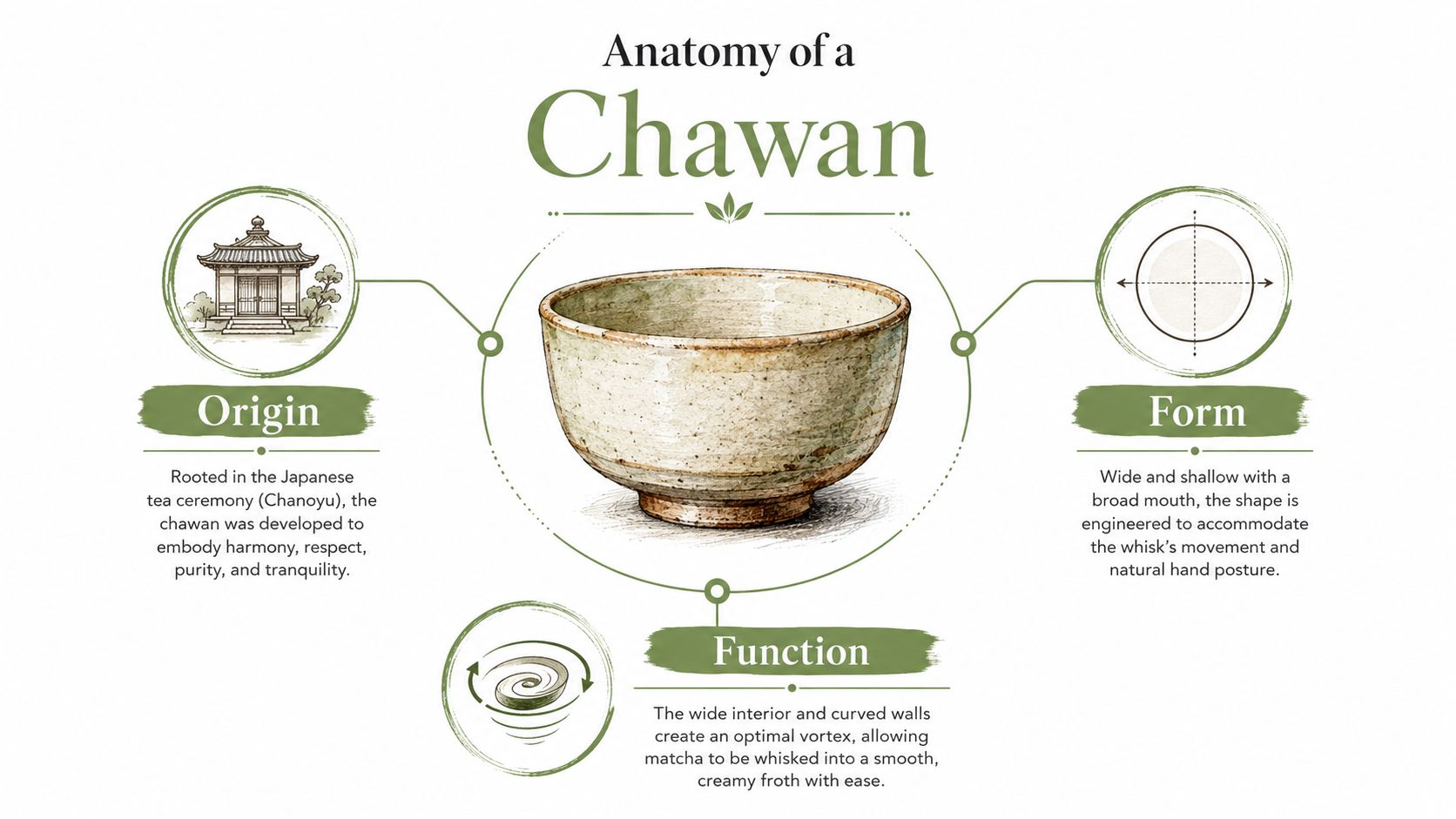
Read the bowl from the outside in
Assess four practical features before choosing a bowl:
- Rim width: The opening should let the whisk move freely without scraping the sides.
- Interior slope: A gently rounded interior guides the whisk from the base up the walls.
- Base stability: A foot or textured underside helps the bowl stay planted during rapid wrist movements.
- Surface character: A consistent ceramic surface gives the whisk predictable drag, making foam control easier.
A perfectly glossy interior is not required. Handcrafted bowls may show subtle glaze or texture variation, which changes how the bamboo tines travel. Excessive roughness can catch the whisk, while moderate resistance can support controlled aeration.
Material also affects café practicality. Ceramic usually feels grounded and durable, while porcelain may offer a smoother, lighter surface. Inspect the interior and base, not only the colour, especially when buying locally made pieces.
A practical chawan matcha bowl should sit comfortably in both hands. You should be able to support it without squeezing, rotate it when needed and drink from it after whisking. The right shape connects Japanese chawan tradition with the efficient workflow of an Australian café.
Comparing Materials, Sizes and Styles for Australian Buyers
In an Australian café, the right matcha bowl must handle quick whisking, repeated washing and steady service. Ceramic and porcelain are the two common choices at specialty retailers. Both tolerate hot water and give the bamboo whisk a dependable surface, while their weight, finish and grip create different working feels.
Ceramic suits buyers who value character and a grounded feel. Australian-made pieces are often individually crafted, so glaze, wall thickness and texture can vary. That variation can add personality, but inspect the foot and interior before buying. A bowl that looks attractive on a shelf may still feel awkward if it rocks or restricts the whisk.
Porcelain generally has a smoother, more even finish and often feels lighter in the hands. It works well for home brewers who want straightforward cleaning and a consistent whisking surface. Handmade ceramic can feel more substantial, and a textured raw base may give better control on a busy café bench.
Shape should match the whisk, not just the drink volume. A broad, gently curved interior gives the bamboo tines room to move from the base up the sides, helping create foam without striking the rim. A compact hand-sized bowl also supports the traditional chawan experience, while remaining practical for Australian café preparation.
Australian examples commonly use a compact format. One listing specifies 125 mm by 65 mm and 250 g, while another gives 140 mm by 75 mm and 490 ml, as shown in local matcha bowl product examples. These dimensions leave space for whisk movement without making the bowl feel like a large serving vessel.
Matcha bowl comparison for Australian buyers
| Type | Material | Typical Size | Best For | Price Tier |
|---|---|---|---|---|
| Simple chawan | Ceramic or porcelain | Compact, hand-sized | Occasional home matcha | Entry-level |
| Everyday handmade bowl | Ceramic with varied glaze | Around 10–14 cm top diameter | Daily home brewing and gifting | Mid-range |
| Artisan chawan | Handcrafted ceramic with distinctive texture | Compact, balanced form | Tea enthusiasts and presentation-led service | Premium |
| Service-focused bowl | Durable ceramic or porcelain | Wide opening with stable base | Café preparation and repeated use | Mid-range to premium |
Match the finish to the workload
For a home ritual, choose a bowl that feels secure in both hands and leaves the whisk unobstructed. Café buyers should give more weight to repeatability. A stable underside, durable body and easy-clean interior support faster service than delicate decoration alone.
Texture can improve grip, yet variation also changes whisk drag. A Sydney-made example describes natural differences in shape, glaze and texture, while another Australian product highlights a textured raw ceramic bottom for added control. These details help buyers assess whether a chawan will suit staff who need consistent whisking throughout service.
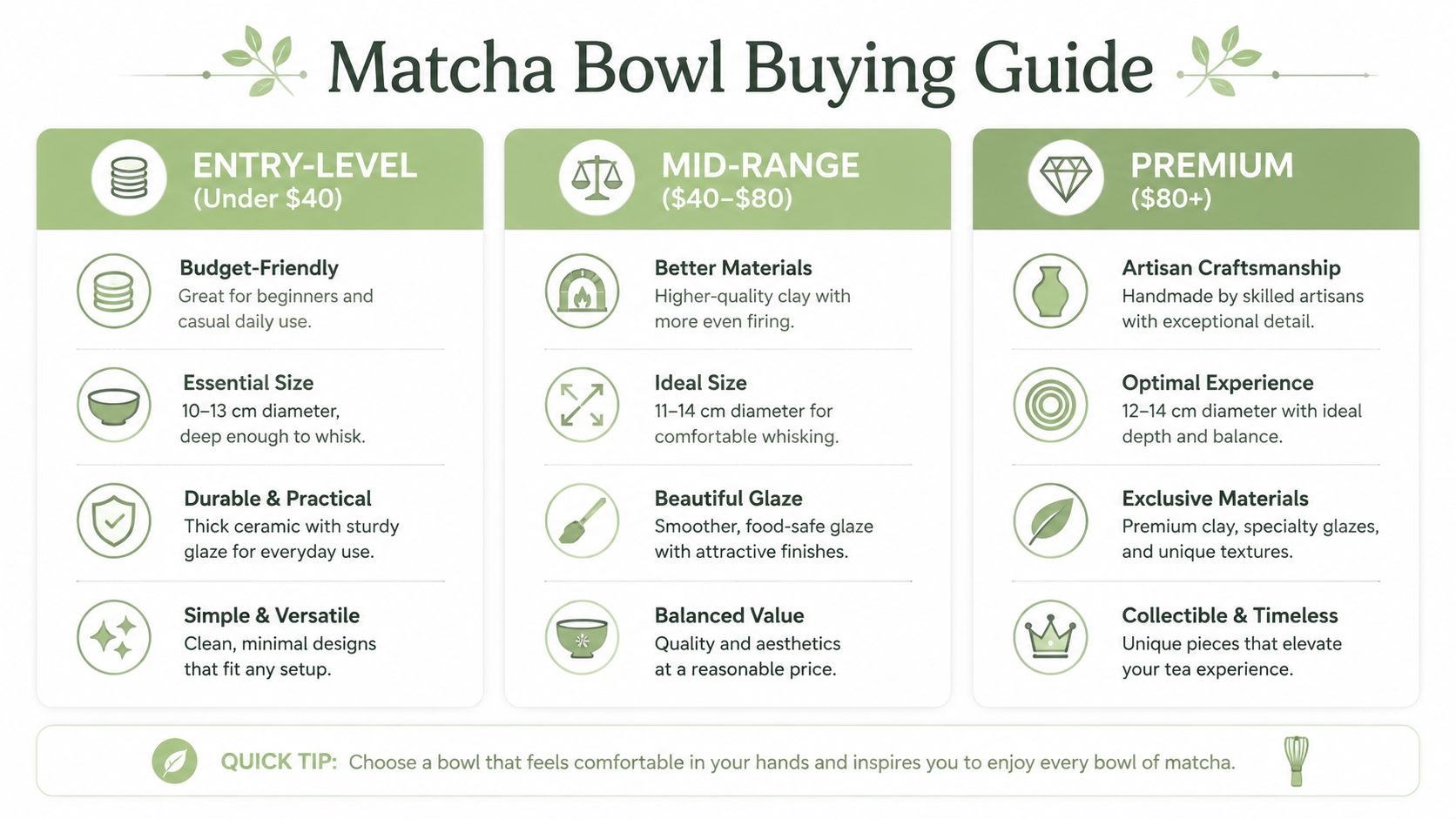
How to Choose the Right Matcha Bowl on Any Budget
Price helps narrow the field, but it shouldn't replace a functional check. A low-cost chawan can brew excellent matcha if its opening, base and interior work well. A costly bowl can still disappoint if it's too narrow, unstable or difficult to clean.
Entry-level under $40
Look for a stable base, a durable ceramic body and a top diameter that gives the whisk room. The bowl doesn't need elaborate glaze work. Check that it sits flat on the bench and that the rim won't catch the whisk during a quick sideways movement.
This tier suits someone beginning a morning matcha routine, buying a first bamboo whisk or setting up a simple home station. Spend less attention on decorative details and more on whether the chawan feels secure when you hold it with one hand.
Mid-range from $40 to $80
At this level, you can usually compare finishes more carefully. A 10–14 cm top diameter, comfortable weight and textured underside make a useful combination for regular preparation. Look for a glaze that feels even inside, without sharp points or rough patches that could damage the whisk.
A mid-range handmade bowl may show small differences in colour or shape. That isn't automatically a defect. Australian ceramic makers often treat variation as part of the piece's character, although you should still check that the bowl is stable and free from cracks.
Premium at $80 and above
Premium buying makes sense when the chawan forms part of a daily ritual, a gift or a café's visible preparation service. Consider the maker's materials, the bowl's balance and how confidently you can whisk in it. A premium piece should offer more than an attractive glaze. It should feel deliberate in the hand and remain practical after repeated use.
Inspect before you buy
At a pottery market or studio, place the bowl on a flat surface and gently rock it. Run your fingers around the rim, look for hairline cracks and check whether the interior feels suitable for a bamboo whisk. Hold it as though you're preparing tea, not displaying it.
Online, study the listed measurements, base photographs and care instructions. Ask whether the bowl is intended for hot beverages and whether handmade variations are expected. Ethical buying also means supporting makers who clearly describe their materials and production methods, rather than choosing a bowl solely because its styling resembles traditional Japanese pottery.
Whisking Technique and Getting the Perfect Bowl of Matcha
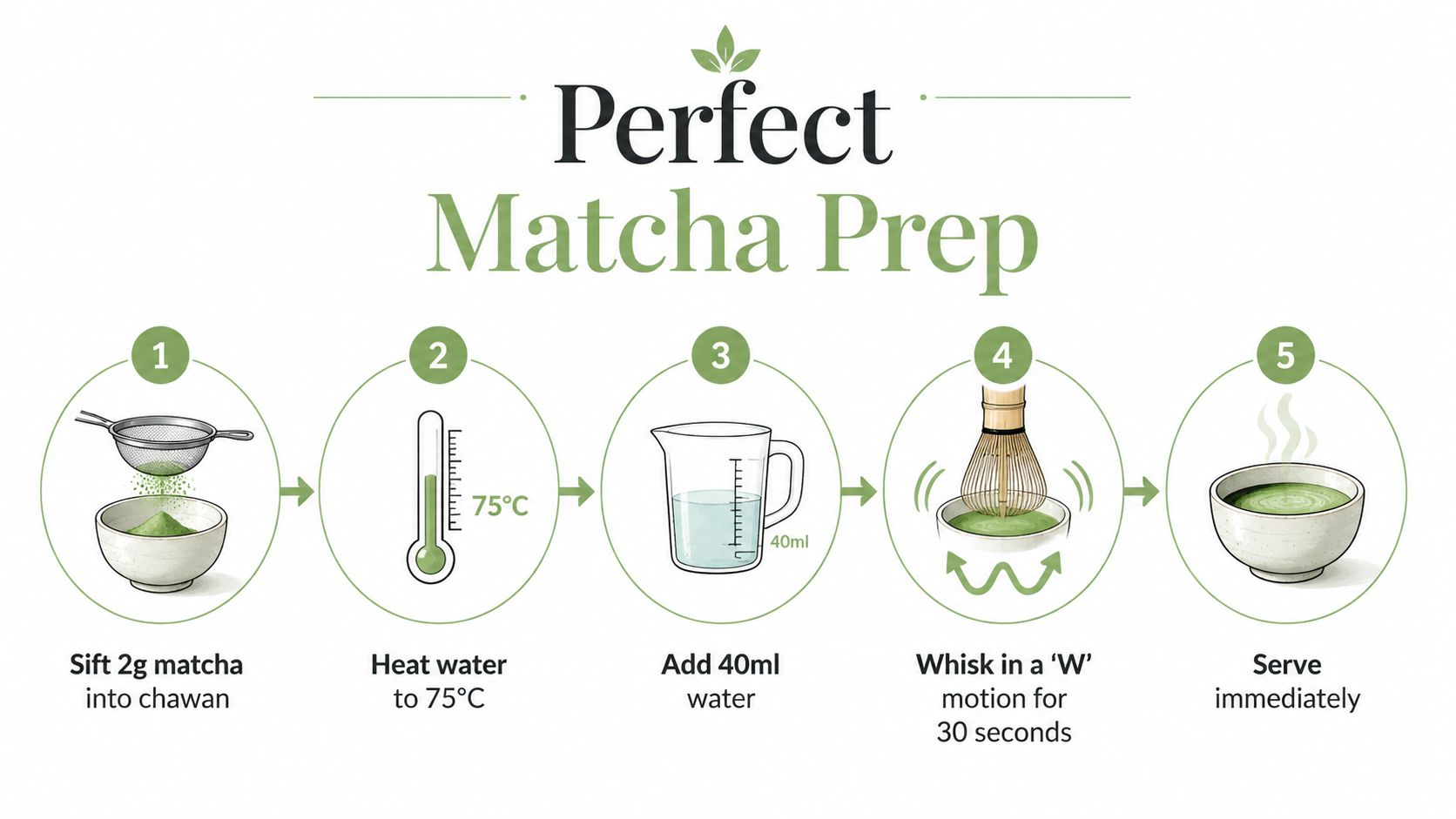
A good chawan gives you the room, but technique still determines the result. For ceremonial-grade matcha, use water at 70–80°C and a 2:1 water-to-matcha ratio. The preparation shown in the guide below uses 2 g of matcha and 40 ml of water, with a whisking time of 30 seconds. These quantities appear in the matcha preparation guide.
Begin by warming the bowl with hot water, then empty and dry it. Sift the matcha directly into the chawan. Sifting breaks apart compacted powder before water arrives, so the whisk has less work to do and the drink develops a smoother texture.
Build the drink in controlled stages
- Add the water gradually. Pour the measured water over the sifted matcha, aiming near the centre rather than against the side of the bowl.
- Start gently. Use the whisk to combine the powder and water without pressing the bamboo tines hard into the base.
- Increase the pace. Move from the wrist in a quick back-and-forth motion, similar to drawing a small W across the surface.
- Finish lightly. Lift the whisk towards the surface for the final moments, then remove it without scraping the bowl.
The wide, shallow shape lets the whisk create a small vortex across the liquid. You're looking for a fine, even foam with no large bubbles. Large bubbles, dry pockets or a gritty base usually point to incomplete mixing, restricted whisk movement or matcha that wasn't sifted.
The video below gives the movement a visual reference. Watch how the hand stays relaxed while the whisk travels quickly near the surface.
For usucha, the lighter traditional style, keep the drink relatively fluid and focus on fine foam. For a latte, prepare a more concentrated matcha base, then combine it with warm or chilled milk. The chawan remains useful because it lets you dissolve the powder first, avoiding green clumps in the finished glass.
Caring for Your Chawan So It Lasts for Years
Treat the chawan as a working ceramic, not an indestructible mixing bowl. Its function depends on an intact rim, a sound base and an interior surface that won't interfere with the whisk.
Before the first use, rinse the bowl with warm water and dry it thoroughly. Some owners like to warm the chawan before brewing, which also gives you a chance to check how it feels in use. Don't pour very hot water into a cold, delicate bowl if the maker's care instructions warn against thermal shock.
Clean the surface gently
After drinking, rinse away remaining matcha before it dries. Use warm water and a soft cloth or sponge. Avoid abrasive pads, which can dull glaze, scratch the surface or catch on textured ceramic.
Unglazed interiors need particular care. Unless the maker specifically recommends detergent, avoid soap on an unglazed surface because porous clay can retain flavours and scents. A glazed interior is generally easier to clean, but it still benefits from prompt rinsing rather than prolonged soaking.
A clean whisking surface is part of the bowl's performance. Care protects the tool you bought, not just its appearance.
Dry the bowl completely before storing it. Turn it upside down on a clean towel only if air can circulate around the rim and base. Moisture trapped beneath a foot ring or in a textured underside can create an unpleasant smell over time.
Prevent chips and stains
Store the chawan where it won't knock against mugs, tins or metal utensils. If you stack ceramics, place a soft separator between them. Matcha residue can leave green or brown marks, but scrubbing aggressively may cause more damage than the stain itself. Start with warm water and a soft cloth, then allow the surface to soak briefly before wiping again.
Inspect the bowl occasionally. Stop using it for hot drinks if you find a crack, a sharp chip on the rim or a base that has become unstable. Those faults can affect safety and make whisking uncomfortable.
Bringing Matcha and Kombucha Together on Australian Café Menus
A chawan can turn matcha preparation into part of the customer experience. Instead of hiding powder and water behind the coffee machine, a café can whisk the drink at the counter, showing the colour, movement and foam before serving it as a hot tea, iced latte or seasonal special.
That ritual pairs naturally with a broader non-alcoholic beverage menu. Ceremonial matcha can provide a calm, freshly prepared option, while sugar-free organic kombucha offers a chilled, fermented alternative for customers who want something bright and refreshing. PepTea's organic ceremonial matcha and Hunter Valley-brewed sugar-free organic kombucha illustrate the type of ingredient quality a venue can seek when building this menu.
Create a simple service pathway
A café might offer a ceremonial matcha served directly from the chawan, followed by a small kombucha tasting as a palate cleanser. Ginger, Lime & Ginger and Mango create different flavour directions, from warming spice to sharper citrus and fruit-led refreshment.
A more adventurous menu could pair matcha with kombucha in a layered or shaken drink. Staff should test the balance carefully, because matcha's savoury bitterness and kombucha's acidity can dominate one another if the proportions aren't considered.
Alcohol labelling also matters for Australian operators. Under FSANZ's Standard 2.6.2, brewed kombucha can contain up to 1.15% alcohol by volume before it is no longer classified as non-alcoholic, and drinks above 0.5% ABV require alcohol-content style labelling under the Food Standards Code, according to FSANZ's fermented soft drinks survey summary.
For venues considering a functional drinks menu, PepTea's immune booster drink offers a relevant point of reference for matcha and kombucha menu development. Operators should verify current product specifications, labelling and service procedures before making nutrition or wellness claims.
Where to Source Matcha Bowls and Premium Matcha in Australia
Australian shoppers have several useful places to begin. Visit local pottery studios and ceramic fairs if you want to hold a chawan, test its balance and inspect the base before buying. Farmers' markets can also connect you with makers who explain the clay, glaze and firing process in person.
Specialty tea retailers and online stores provide a broader selection of Japanese-style bowls, bamboo whisks and matcha grades. Compare measurements rather than relying on product photographs, since scale can be difficult to judge on a screen. For cafés, ask about replacement availability and whether the bowl is suitable for repeated service.
Australian-made ceramics support local makers and may reflect the handling needs of local home users and hospitality teams. Pair the bowl with premium organic Japanese matcha, choosing ceremonial grade for whisked drinking and culinary grade for smoothies, baking or blended recipes. If you're expanding a functional beverage offering, a Hunter Valley-brewed kombucha range can sit alongside matcha without turning the menu into a complicated drinks list.
Whether you choose a simple porcelain bowl or an expressive handmade chawan, prioritise whisk space, a stable base and a surface you can care for properly.
Pep Tea offers premium organic Japanese matcha for traditional whisking, lattes and recipes, along with Australian-brewed sugar-free organic kombucha from the Hunter Valley. Visit Pep Tea to explore the range and find ingredients to pair with your new matcha bowl.