
Tag: sugar free juice
No Sugar Added Juice Explained and Healthier Alternatives
“No sugar added” sounds like the easy answer when you're trying to choose a healthier drink. It isn't. A bottle can contain no added sucrose, syrup or sweetener and still deliver a substantial amount of naturally occurring fruit sugar. The useful question isn't only whether sugar was added. It's how much total sugar is in the drink, how much you'll pour, and what you're replacing.
That distinction matters at the supermarket, in a café and at home. Australian label rules define when a claim can appear, but the front-of-pack wording doesn't automatically tell you that a juice is low sugar or sugar free. Once you know where to look, you can make a faster decision and choose a drink that suits the occasion, whether that's a small juice serve, sparkling water, kombucha or matcha.
The Label That Sounds Healthier Than It Often Is
A 250 mL bottle marked “no sugar added” may still contain around 25 g of total sugar, because the drink can be made entirely from fruit without adding table sugar or syrup. That label describes a processing choice. It doesn't describe the drink's complete sugar load.
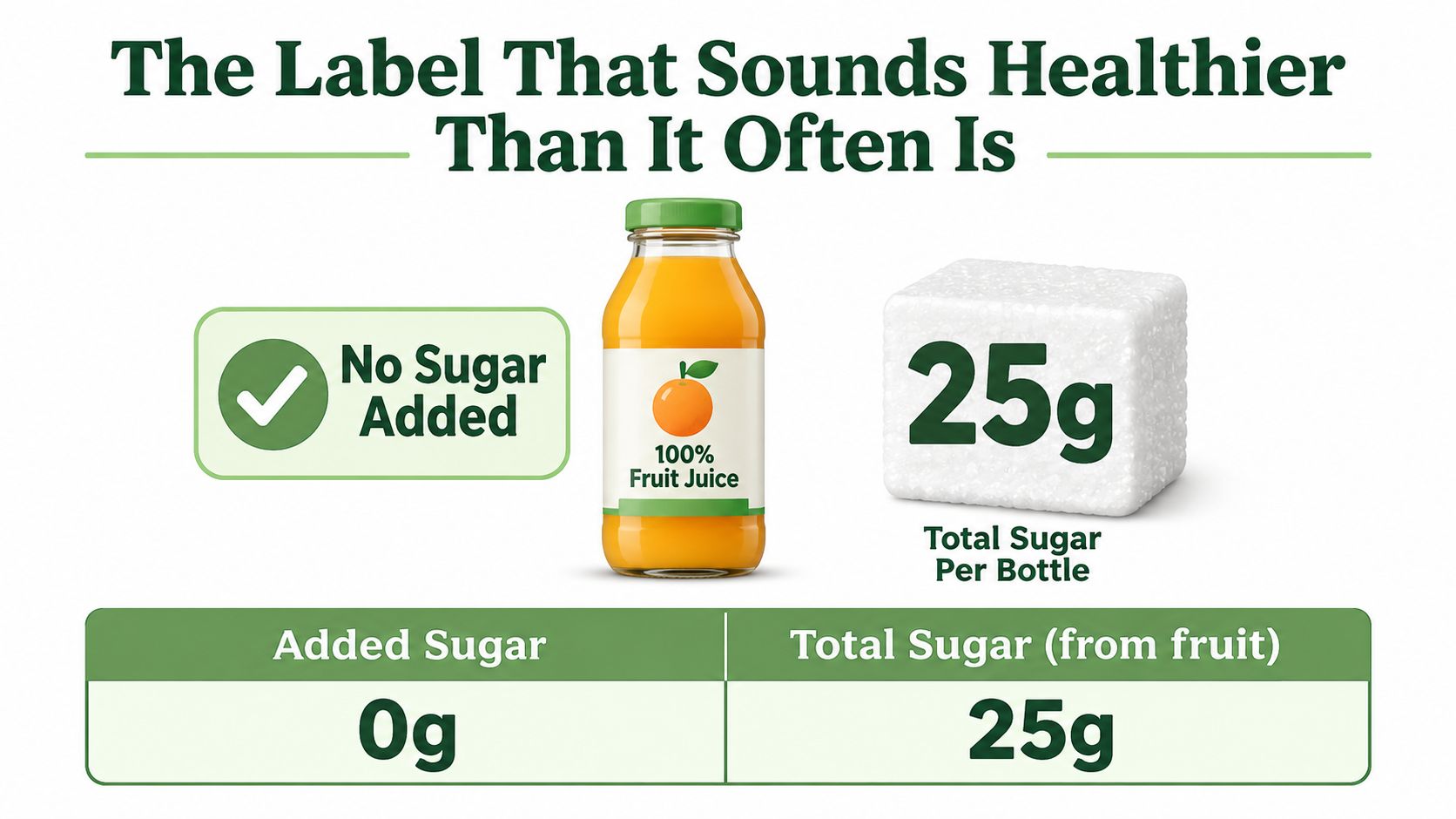
The front badge and the nutrition panel answer different questions
No sugar added juice can contain naturally occurring sugars from the fruit itself. The front claim answers, “Did the manufacturer add sugar as an ingredient?” The Nutrition Information Panel answers the more useful shopping question, “How much total sugar is in this drink?”
A standard Australian industry fact sheet gives an example of around 7 g of sugar in a 125 mL glass of orange juice, and notes that fruit-juice sugar content can vary from 0.5 g to 10 g per 100 g, depending on the fruit variety and harvest time. The Australian Beverages juice fact sheet also highlights that juice sugar is naturally occurring, rather than added during processing.
That still doesn't make the drink equivalent to whole fruit. Juice is easy to drink quickly and usually provides less of the fruit's original structure and chewing experience. A large glass can therefore become a much bigger sugar occasion than a deliberately measured serve.
Practical rule: Treat “no added sugar” as an ingredient claim, not a low-sugar promise.
Why “natural” doesn't mean low sugar
Fruit imagery, words such as “natural” and a clean ingredient list can create a strong wellness impression. Yet a juice may still taste sweet and contain meaningful carbohydrate from concentrated fruit sugars. If you're choosing a drink for everyday hydration, compare it with water or another low-sugar option rather than assuming the claim has settled the question.
The label is still useful if you want to avoid extra sweetness. Just pair it with the total sugars line, the serve size and the amount you're likely to pour.
What Added Sugar Actually Means in Australia
Added sugar is sugar or a sweetening ingredient introduced during production. Naturally occurring sugar was already present in the original food. In fruit juice, that generally means sugars naturally found in the fruit, while added ingredients might include sucrose, syrups, honey or other sweetening materials.
Australian rules make the wording more technical than everyday conversation suggests. A product can carry a no-added-sugar claim only when it contains no added sugars as defined by the Food Standards Code and meets the relevant compositional conditions. The Australian labelling consultation statement explains that the exact food category and ingredient source matter, including how certain concentrated fruit-juice ingredients are treated.
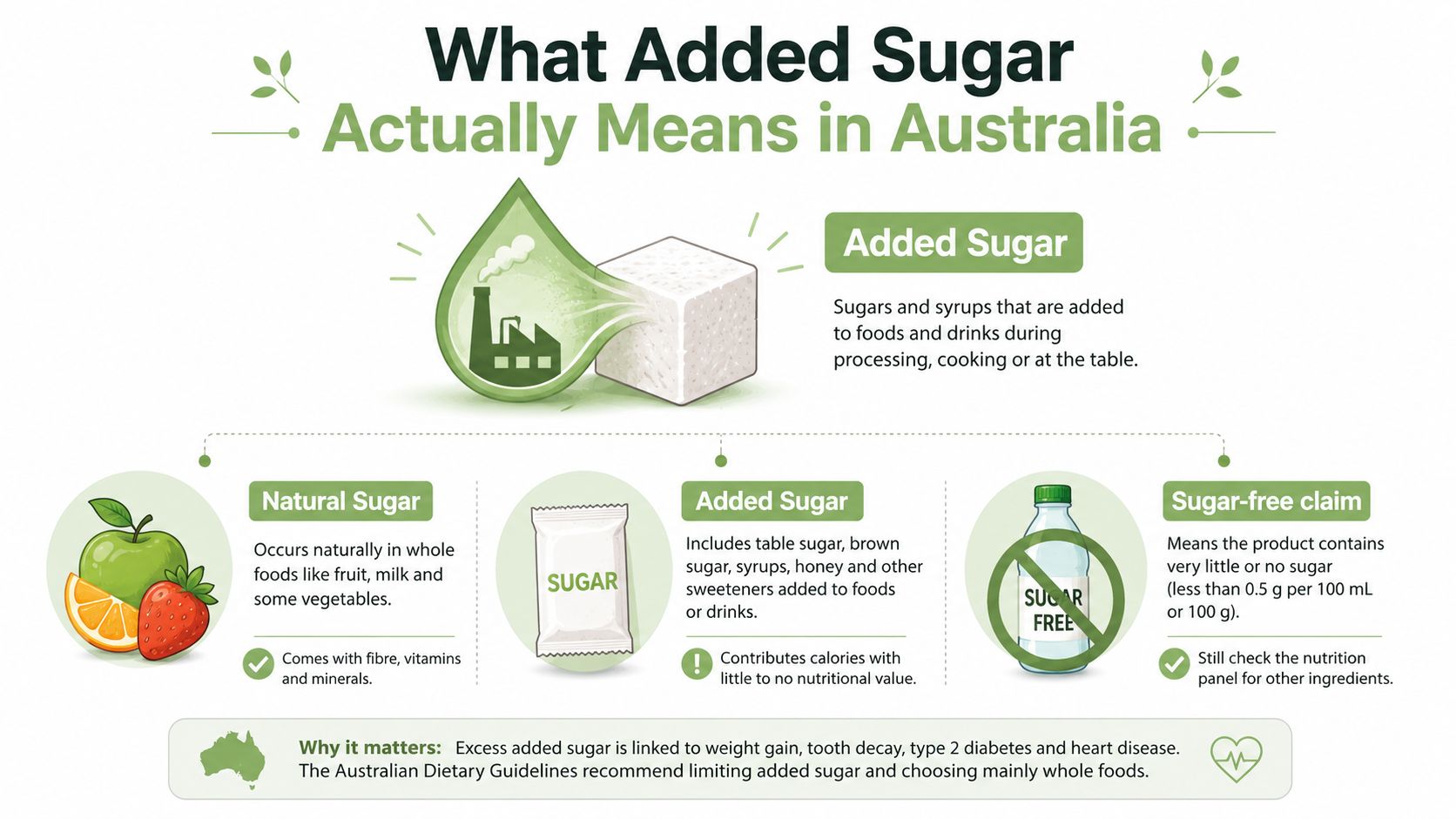
The three label ideas shoppers often mix up
No added sugar means the product meets the relevant rules for excluding added sugars and related sweetening ingredients. It does not mean the product contains no sugar.
Sugar free is a different claim with a much stricter sugar limit. It shouldn't be used as a casual synonym for no added sugar.
Unsweetened also needs careful reading. A drink can have no sweetener added and still contain naturally sweet fruit ingredients. The ingredient list and Nutrition Information Panel provide the context that the front label leaves out.
The Australian thresholds matter
For liquid foods, Australia's current compositional threshold for a low sugar or percentage sugar-free claim is no more than 2.5 g of sugars per 100 mL. Solid foods have a separate threshold of no more than 5 g per 100 g. These are the limits described in the Food Standards labelling regulation statement.
A no-added-sugar claim has its own backstop. Even without added sugar ingredients, a liquid food becomes ineligible when it exceeds 7.5 g of sugars per 100 mL, while a solid food becomes ineligible above 10 g per 100 g, as set out in FSANZ's approval report.pdf).
The practical lesson is simple. No added sugar juice can still contain sugar, and the product category, ingredient source and final concentration all affect what can appear on pack.
Why Shoppers Misread No Sugar Added Juice
The wording is narrow, but shoppers often read it broadly. FSANZ consumer evidence found that people can incorrectly conclude that a product with a no-added-sugar claim contains no sugar at all. In some tests, 17% to 29% of respondents believed such foods had no sugar when no disclaimer was present, according to the FSANZ social science summary.
Juice creates an especially awkward confusion. In one study, 22% to 65% of respondents perceived fruit juice as containing added sugar. That finding shows that people can make opposite mistakes, either assuming no-added-sugar juice contains no sugar or assuming naturally occurring fruit sugar must have been added.
The health halo changes the decision
The words “no” and “sugar” carry a positive emotional signal. Many shoppers then overlook the word “added” and treat the entire phrase as a general health rating. The same FSANZ evidence describes how label context can be insufficient for consumers to judge sugar content accurately.
This can affect behaviour. A shopper might choose juice over sparkling water, pour a larger serve or assume that fruit imagery confirms a low-sugar choice. The claim itself has a defined technical meaning, but the impression around it can be much wider.
Research cited by the Food For Health Alliance found that 92% of Australians surveyed agreed no-added-sugar claims suggest a product is “better for you”. The same source reported that 78.2% of 100% juices in a labelling study carried a no-added-sugar claim, even though the category's mean sugar content was among the highest in the beverage set, surpassed only by soda and energy drinks. The Food For Health Alliance summary explains why policy around these claims remains active.
A front-of-pack claim can be accurate and still be incomplete for the decision you're trying to make.
The correction is straightforward: use the badge to understand added ingredients, then use total sugars and serving volume to judge the drink itself.
How to Read a Juice Label Like a Pro
You don't need to study a carton for ages. A quick label check can tell you whether a no-added-sugar juice suits the moment.
Start with the Nutrition Information Panel
Look for total sugars per 100 mL first. The per-serve figure matters too, but products use different serving sizes, so the 100 mL line gives you a fairer comparison between cartons and bottles.
Then check the serving volume. A 350 mL bottle may list a modest-looking amount per serve while providing much more drink than the serve used for comparison. A 1 L apple juice carton can also encourage generous home pours, especially when the label's front claim attracts attention before anyone checks the panel.
Read the ingredients in order
Ingredients are listed by weight. Look for the fruit source, blends and concentrated fruit juice. Concentrates can contribute sweetness even when the manufacturer hasn't added table sugar.
A high Brix-style cue can also suggest a concentrated, sweet-tasting product, particularly in shelf-stable juice. It isn't a substitute for the Nutrition Information Panel, but it can prompt a closer look.
Use the front-of-pack information as context
Check the Health Star Rating where it appears, but don't let one badge replace the NIP. Product names such as “lightly sweet”, fruit illustrations and wellness language can all shape your first impression without telling you the total sugar in your actual glass.
For a broader explanation of serving sizes, ingredient lists and nutrition panels, PlateBird's guide to food labels is a useful companion resource.
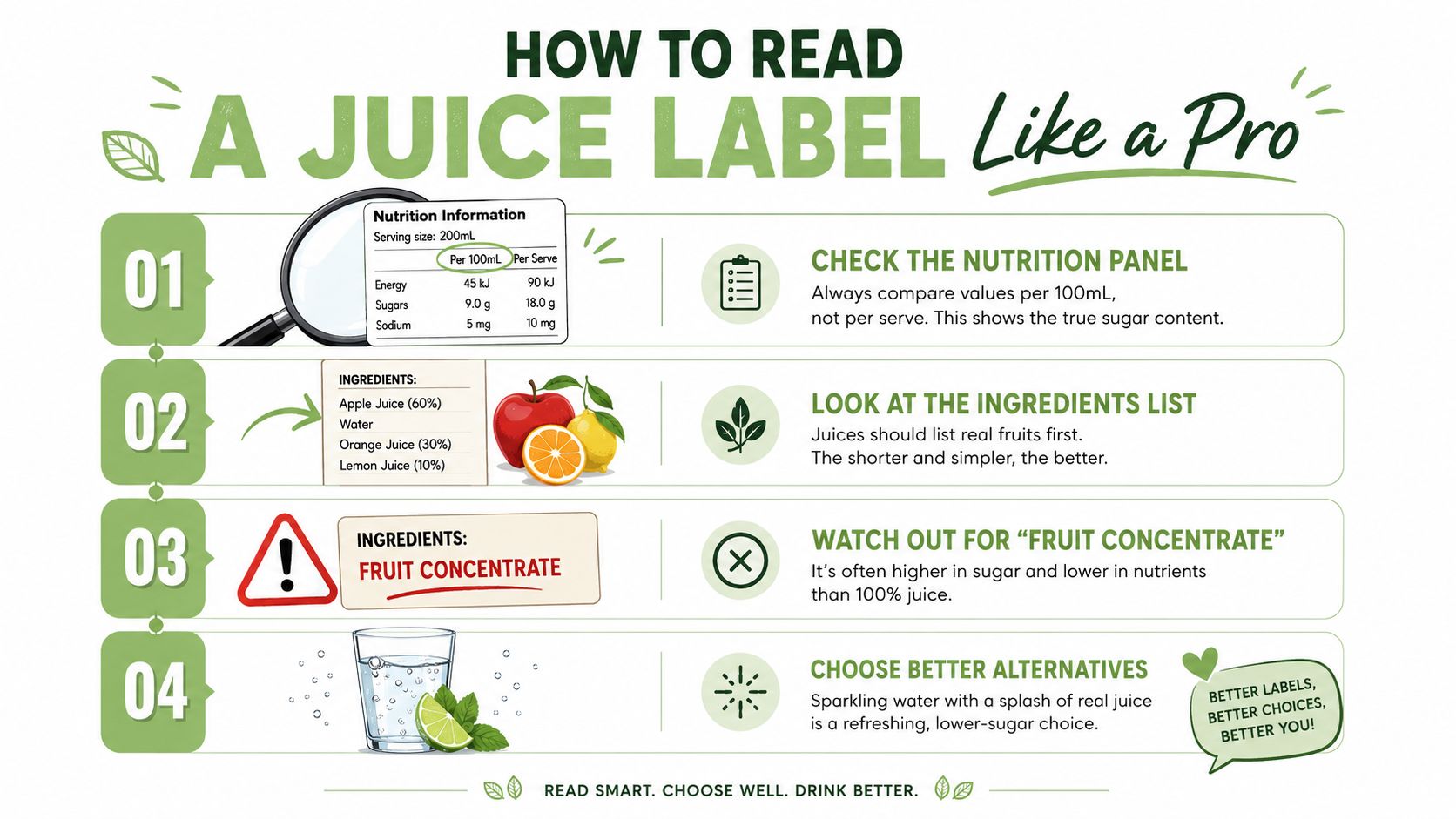
A 60-second habit works well: photograph the label if you're comparing products, read total sugars per 100 mL, scan the ingredient position of concentrated juice, then decide whether you want juice or a different drink. Cafés can use the same process when reviewing a new carton for the drinks fridge.
This sugar-free carbonated drinks range can also help cafés and households compare ready-to-pour alternatives with a juice option.
Juice Compared With Smarter Everyday Drinks
There isn't one universally “best” drink. Juice can be useful in a specific context, while water, kombucha or matcha may fit a different routine. The table below avoids pretending that every product has identical nutrition. Recipes, brands, milk choices and serve sizes vary, so check the individual label.
| Drink | Typical sugar per serve | Calories | Caffeine | Polyphenols | Best time to drink | Typical price per serve in AUD | Verdict |
|---|---|---|---|---|---|---|---|
| Standard orange juice, 250 mL | Check the NIP | Check the product label | Usually none | Present from fruit | With breakfast or when rapid carbohydrate is useful | Varies by venue and product | A measured serve can work when you specifically want fruit carbohydrate |
| No sugar added apple blend | Check the NIP | Check the product label | Usually none | Present from fruit | Occasional flavour-led drink | Varies by venue and product | The claim doesn't remove the need to check total sugars |
| Sparkling water with citrus | Usually no sugar when no sweetener or juice is added | Usually very low when unsweetened | None | Minimal unless herbs or tea are added | Mid-afternoon hydration | Varies by venue and product | A simple everyday swap for people who want fizz |
| Plain dry kombucha | Check the product label | Check the product label | May contain tea-derived caffeine | Tea-derived polyphenols may be present | With lunch or as a soft-drink alternative | Varies by venue and product | Choose a verified low-sugar or sugar-free product and check its label |
| Unsweetened ceremonial-grade matcha with water or unsweetened oat milk | Usually no sugar from matcha itself, milk choice matters | Depends on the serving liquid | Naturally contains caffeine | Rich in tea-derived polyphenols | Morning or an afternoon focus ritual | Varies by venue and product | A sugar-free option when prepared without sweetened milk or syrup |
A standard orange juice serve may make sense after exercise when someone needs readily available carbohydrate. It can also be a reasonable occasional lunchbox addition when the portion is deliberate. It doesn't become low sugar because the fruit is the only sweet source.
Sparkling water is the uncomplicated hydration choice. If you're considering a permanent home setup, this sparkling water tap buyer's guide offers practical buying context.
Kombucha brings acidity and flavour, while matcha creates a tea ritual with naturally occurring caffeine. For more ideas built around low-sugar alternatives, explore these healthy soda drinks. The right choice depends on whether you need hydration, flavour, carbohydrate or a focused morning beverage.
Where No Sugar Added Juice Still Makes Sense
A label-aware approach doesn't require you to ban juice. It means giving the drink a job instead of making it the automatic pour.
In Adelaide, a parent might pack a small 200 mL no-added-sugar grape juice alongside cheese and crackers for an active child. The juice provides fast carbohydrate, while the other foods make the snack more substantial. The parent knows the claim means no added sugar, not no sugar, and keeps the portion intentional.
That's a very different decision from filling a large bottle with juice every day because the front label sounds virtuous. Context and volume change the role of the same product.
A café menu can use juice without making it the default
A Brisbane café owner reworking a brunch menu might keep a 150 mL pressed juice shot as a clean-eating-style upsell. The menu can describe the drink plainly, staff can answer questions about total sugars, and the main beverage list can give customers other choices such as kombucha, a matcha spritzer or filtered coffee.
That approach respects customer preferences without suggesting that pressed fruit juice is sugar free. It also gives the venue a chance to make its wording defensible under Australian food labelling expectations.
Juice can suit athletes needing rapid glucose, older people with limited appetite or someone moving away from full-sugar soft drinks. For another customer, whole fruit, plain water or a sugar-free tea-based drink may be more appropriate.
Menu principle: Keep juice in the toolkit, but don't make “no added sugar” do more work than it can support.
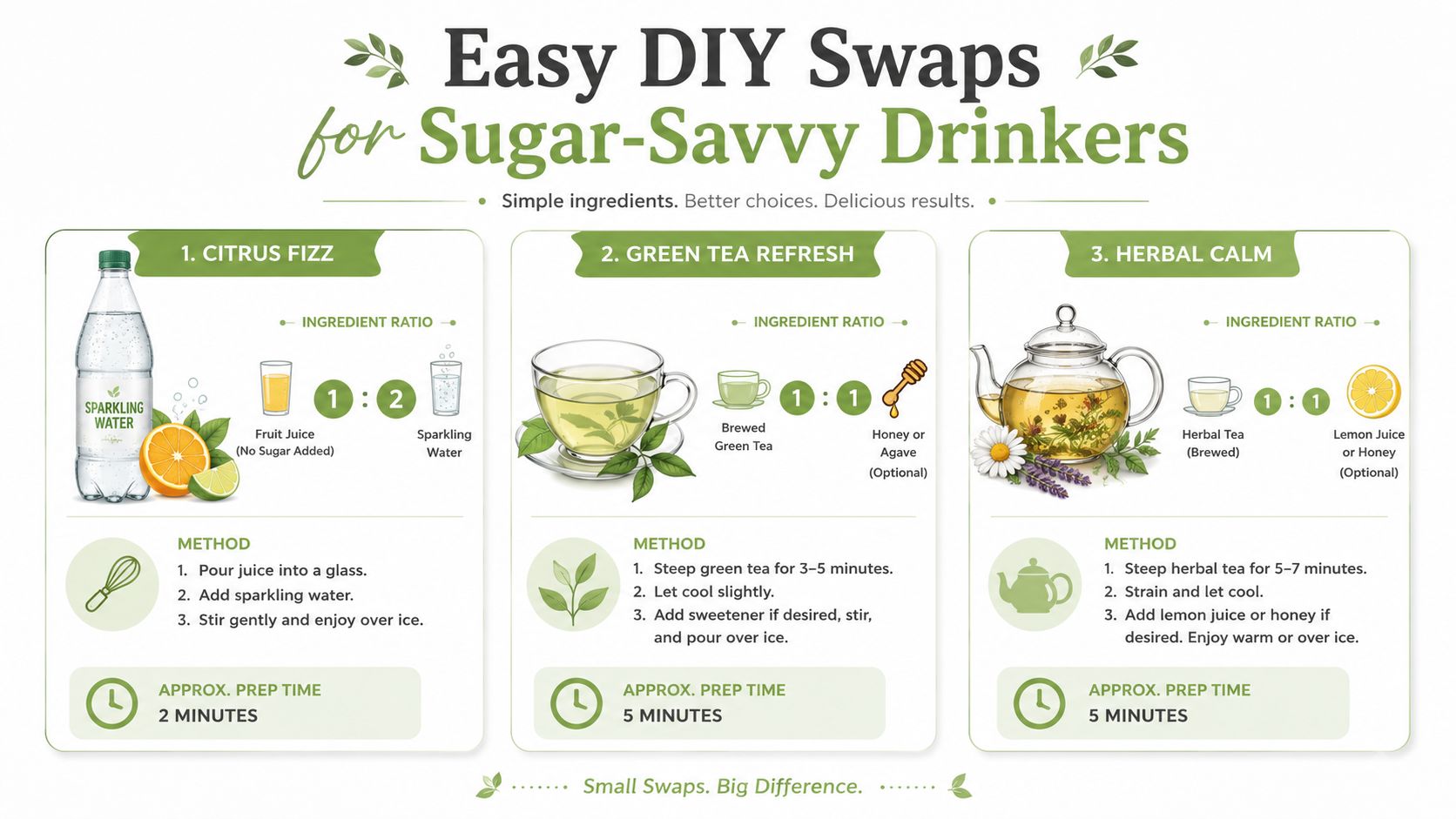
Easy DIY Swaps for Sugar-Savvy Drinkers
Replacing a juice habit works better when the alternative still offers flavour, colour and a small ritual. These three options use ingredients that are easy to find in Australia and can be prepared ahead.
Citrus and herb water
For a simple starting point, combine two parts sparkling or still water with one part sliced citrus and herbs by volume, then chill rather than sweeten. Use lemon, lime, berries and mint, or add finger lime pearls, lemon myrtle or bush mint for a distinctly Australian flavour.
Let the water infuse in the refrigerator, then pour over ice. You're getting aroma and brightness without turning the glass into a fruit-juice serve. If you want more intensity, bruise the herbs gently before adding them.
A controlled kombucha routine
Home fermentation requires care, clean equipment and a reliable recipe. A useful starting framework is a SCOBY with sweetened tea for the first fermentation, followed by a fruit infusion during the second fermentation to create gentle fizz.
The exact sugar consumption and finished sweetness depend on the tea, culture, temperature and fermentation time. Don't assume that “fermented” automatically means sugar free. Taste the finished drink and check a commercial product's nutrition information if you're buying rather than brewing.
Ginger, lime and ginger, or mango can add strong flavour without requiring a large amount of fruit. The result works well in a café-style glass with ice and a citrus garnish.
Whisked matcha, hot or iced
Sift ceremonial-grade matcha into a bowl, add a small amount of cool or warm water, whisk until smooth, then top with water or unsweetened oat milk. Serve over ice for a café-style drink, or keep it lightly warmed for a calmer morning routine.
Matcha contains naturally occurring caffeine and tea polyphenols. If you're avoiding fruit-derived sugar, skip sweetened syrups and flavoured milks. Culinary-grade matcha suits smoothies and baking, while ceremonial-grade matcha is designed for drinking.
For another flavour-led alternative, see this apple cider vinegar soda idea, and check the finished ingredients before serving.
Batch-prep citrus water on Sunday, chill tea for matcha, and keep a dependable ready-to-pour option available for busy days. Home brewing can be enjoyable, but it isn't compulsory.
Smarter Sipping Starts With the Label
A good drink decision can take less than a minute. Use this compact checklist before buying a bottle, stocking a café fridge or approving a menu description:
- Read total sugars: Check the NIP per 100 mL first, then look at the stated serving.
- Inspect the ingredients: Note the fruit source, blends and concentrated juice ingredients.
- Separate the claims: No added sugar, low sugar and sugar free have different meanings.
- Question the halo: Natural imagery and a clean front label don't replace nutrition information.
- Match the drink to the occasion: Juice may suit a measured carbohydrate serve, while water, matcha or kombucha may suit everyday sipping.
- Train the team: Café staff should know whether the product contains added sugar, naturally occurring sugar or both, and should avoid calling a no-added-sugar juice “sugar free”.
Venues should also review menu wording and point-of-sale signs. A description such as “fruit juice with no added sugar” is more precise than language that implies the drink is low sugar or suitable for every wellness goal.
The same discipline helps at home. You don't need to fear fruit juice, but you should stop allowing one front-of-pack phrase to make the entire decision. A measured serve, a clear purpose and a quick NIP check will usually tell you more than the badge.
PepTea offers sugar-free organic kombucha and organic matcha as ready-to-use alternatives for people who want the flavour and ritual of a functional drink without brewing, batching or storing a SCOBY. Options such as Ginger and Lime & Ginger can suit a non-alcoholic café menu or a home soft-drink swap, while matcha can be whisked with water or unsweetened milk.
Visit Pep Tea to explore organic Japanese matcha and Australian-brewed sugar-free organic kombucha for more considered alternatives to everyday juice. Choose the drink that fits your routine, check the label, and make your next pour an informed one.