
Tag: sugar free drink
How to Make a Sugar Free Matcha Latte (Complete Guide)

A proper sugar free matcha latte uses 4–5 g of ceremonial-grade matcha, sifted into 40–60 mL of 70–80 °C water, followed by 180–200 mL of frothed milk at around 65 °C. This workflow prevents clumps and bitterness while keeping the drink naturally sugar-free.
You order a matcha latte at your local café, expecting a clean, earthy drink, then notice the sweetness before you notice the tea. That's a common experience. Matcha powder is sometimes blended with sweetened ingredients, and milk products can also add sugar, so a drink that sounds wholesome may not match your intention to reduce sugar.
Australians consumed an average of 43 g of free sugars per person per day in 2023, with most coming from added sugars, according to the Australian Bureau of Statistics food and nutrients data. Sweetened beverages alone supplied an average of 11 g of free sugars per day, about 2.5 teaspoons, and contributed 25.4% of nationally consumed free sugars in 2023, as reported in the ABS sweetened beverages release.
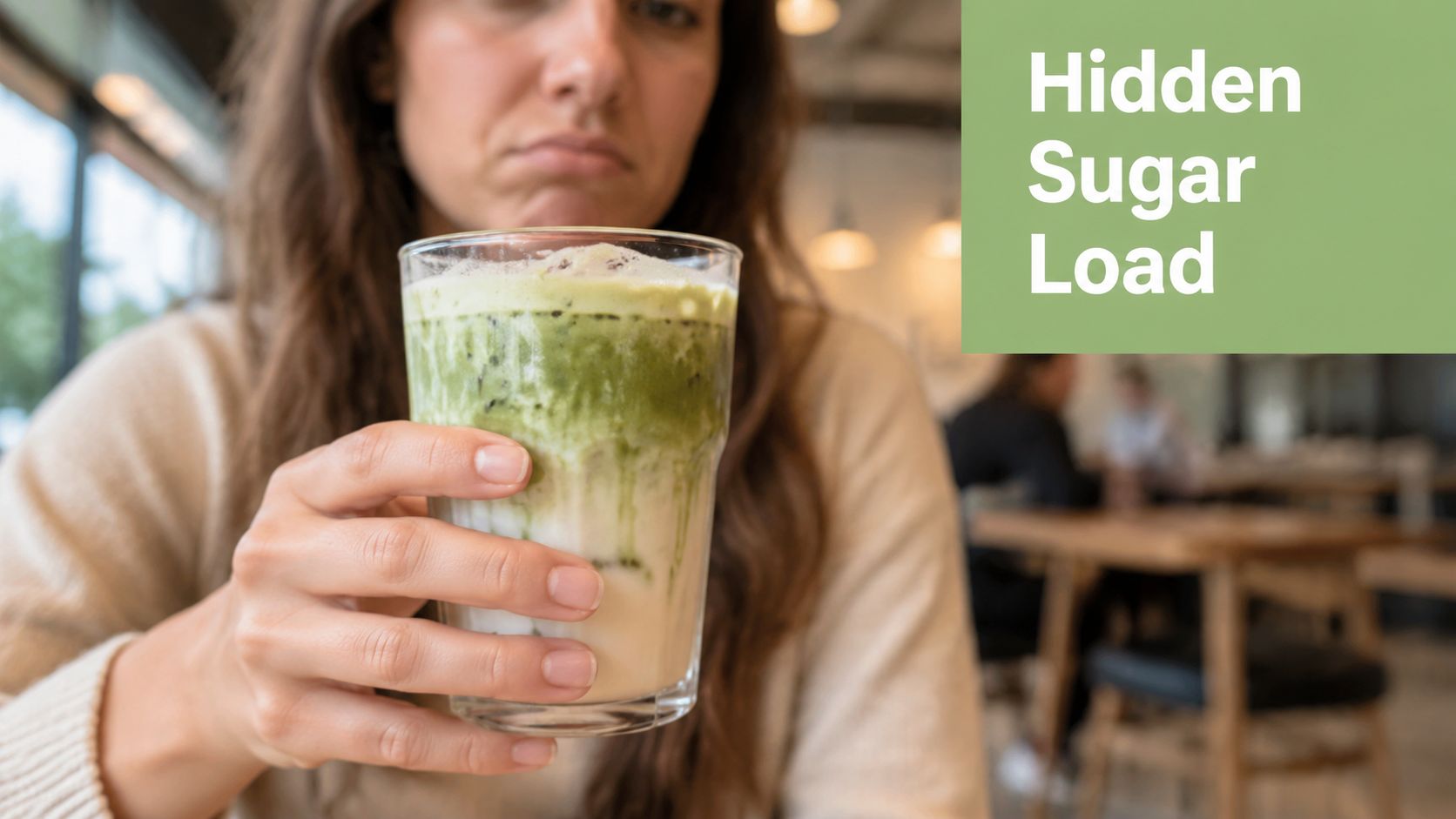
Introduction Why a Sugar Free Matcha Latte Is Worth the Effort
Removing added sugar is only half the job. A sugar free matcha latte still has to taste rounded, creamy and satisfying, otherwise you'll reach for the café version again. The usual failures are predictable: bitter powder, floating clumps, watery plant milk or a sweetness that masks the matcha completely.
The solution is a controlled preparation method rather than a complicated recipe. Use a matcha with enough natural umami to work with milk, disperse it in warm water before adding the milk, and treat temperature as part of the recipe. That gives you a drink with a fresh green flavour instead of a harsh, grassy finish.
Why sugar reduction makes sense
Australia's beverage market has already moved towards lower-sugar formulations. A national analysis found that total sugar content in non-alcoholic beverages fell from 7.5 g per 100 mL in 2015 to 6.2 g per 100 mL in 2019, a 17.1% decrease, while 56% of beverages contained added sugars in 2019. Ready-to-drink coffees were particularly relevant, with added sugar present in 85% of products examined in that study, published in this Australian beverage analysis.
That context gives the sugar free matcha latte a practical place on a home routine or café menu. It offers the ritual and texture of a café drink while allowing you to control the matcha, milk and sweetener instead of accepting a pre-sweetened formula.
The drink can also suit people exploring functional beverages, non-alcoholic café choices or a gentler alternative to heavily sweetened soft drinks. Matcha contains naturally occurring caffeine, so sugar-free preparation doesn't remove the need to think about strength and timing. Taste, sugar content and caffeine dose all deserve attention.
Choosing the Right Matcha for a Sugar Free Latte
The matcha powder determines the starting point for flavour. For a latte, choose ceremonial-grade matcha when you want a smoother, more balanced drink, particularly if you aren't adding sweetener. Culinary-grade matcha has a useful role in baking, smoothies and desserts, but its stronger, more assertive profile can taste rough when mixed with milk.
Look for a vibrant green colour, a fine texture and an aroma that suggests fresh, savoury umami rather than stale hay. Japanese stone-ground matcha is made from finely milled tea leaves, so freshness and storage matter. Keep the pouch sealed, away from heat, light and moisture, and use a clean, dry spoon each time.
For a single latte, measure 4–5 g of matcha. Measuring by weight gives more repeatable results than relying on an unlevel teaspoon, especially when you're serving customers or preparing the same drink every morning.
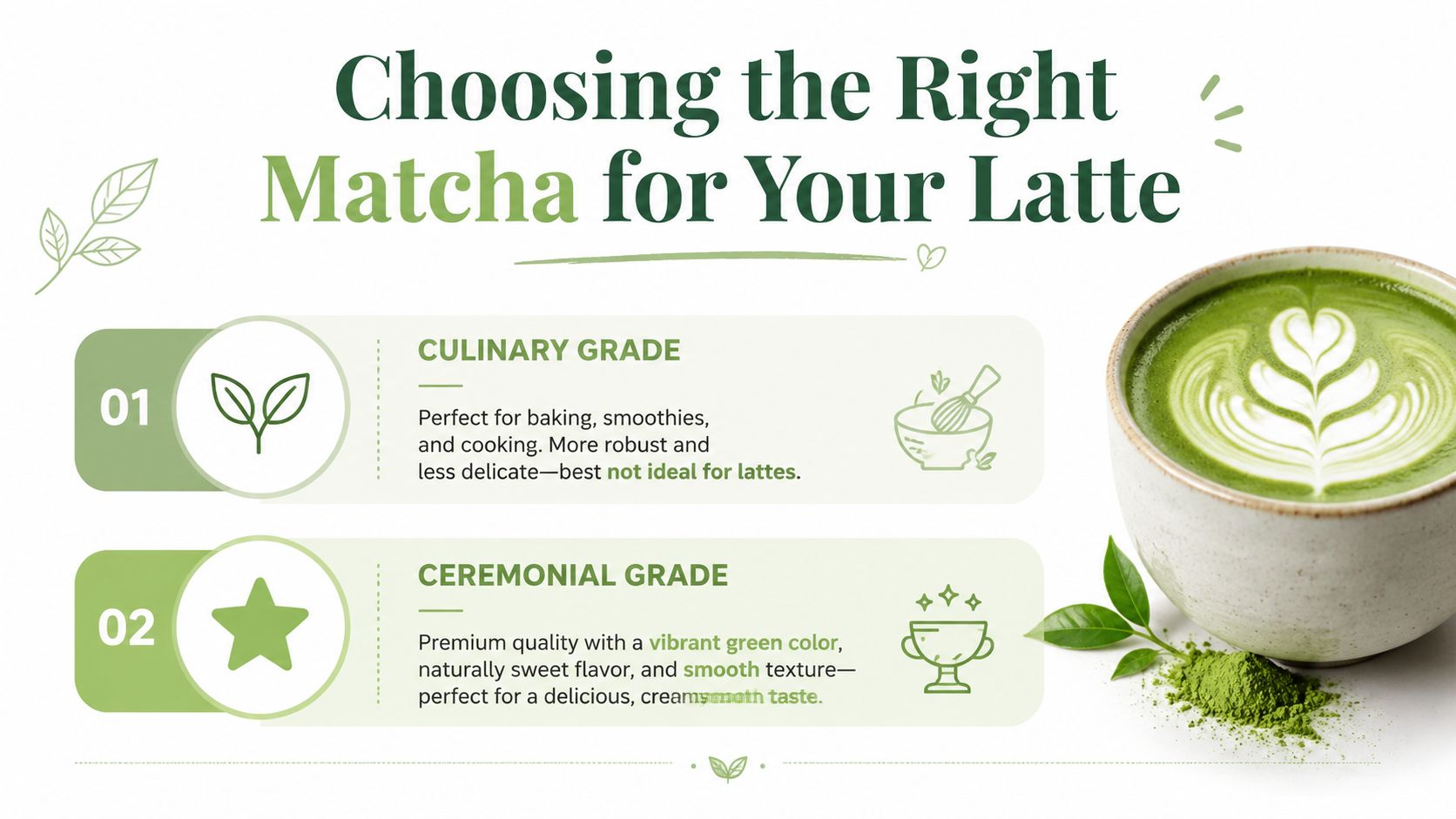
Sifting is part of the recipe
Matcha naturally forms small clumps because the powder is extremely fine and reacts to moisture and static. Put the powder through a fine tea sieve into a bowl before adding water. Skipping this step makes whisking harder and leaves undissolved pockets in the finished latte.
PepTea's guide to matcha grades is useful when deciding whether a powder suits drinking, cooking or both. Whatever brand you choose, don't assume a darker or more bitter powder will create a stronger, better latte. Strength should come from a controlled dose, not from forcing an unsuitable matcha to work.
Barista rule: If the matcha tastes aggressively bitter before milk is added, changing the water temperature and grade will help more than adding extra sweetener.
How to Make a Sugar Free Matcha Latte Hot and Iced Recipes
The hot and iced versions begin with the same matcha concentrate. That's important because milk should never be the first liquid to meet dry matcha. Water gives you the space and movement needed to disperse the powder properly.
Hot recipe
- Sift the matcha. Place 4–5 g of ceremonial-grade matcha in a warm bowl.
- Add warm water. Pour in 40–60 mL of water at 70–80 °C. Water that's boiling or close to boiling can push the flavour towards bitterness.
- Whisk thoroughly. Use a bamboo chasen, small electric frother or handheld whisk until the concentrate looks smooth, with a light foam across the surface.
- Prepare the milk. Heat and froth 180–200 mL of milk to about 65 °C. Aim for glossy microfoam rather than large bubbles.
- Combine slowly. Pour the milk into the matcha concentrate and stir gently. For a layered café appearance, hold back some foam with a spoon and place it on top at the end.
This formula is also a practical starting point for cafés because it creates a clear sequence that staff can repeat during a busy service.
Iced recipe
Prepare the matcha concentrate using the same sifting and whisking steps. Fill a glass with ice, add your chosen cold milk, then pour the matcha over the top and stir gently. Since ice dilutes the drink, keep the concentrate at the more concentrated end of the water range rather than adding extra powder immediately.
For another detailed iced method, follow PepTea's iced matcha latte recipe. It's particularly helpful if you're moving between a home hand frother and a café-style preparation.
A short visual demonstration can make the whisking motion easier to copy:
Sugar Free Sweetener Options That Actually Taste Good
A well-made ceremonial matcha latte may not need sweetener. Milk brings body and a mild natural sweetness, while good matcha contributes umami. If the drink tastes harsh, fix the grade, temperature or dispersion before assuming you need a large amount of sweetener.
If you do want sweetness, add it to the warm matcha concentrate so it dissolves fully. For an iced drink, dissolve the sweetener before adding ice. The right choice depends on whether you prefer a clean finish, a rounded mouthfeel or the closest possible substitute for sugar.
| Sweetener | Taste Profile | Best For |
|---|---|---|
| Stevia | Concentrated sweetness with a possible herbal or bitter finish when overused | Drinkers who want a small amount of plant-derived sweetness |
| Monk fruit extract | Generally clean and rounded, though blends vary | Matcha lattes where you want sweetness without a strong aftertaste |
| Erythritol | Mild sweetness with a cooling sensation | Iced lattes and recipes where easy dissolution matters |
| Allulose | Soft sweetness and a mouthfeel closer to sugar | Café-style formulations where texture is as important as sweetness |
Australian beverage development is increasingly using sweetener systems such as stevia and monk fruit in zero-sugar products, while consumer preference is moving towards lower-sugar drinks. Market reporting cited by the Australian Beverages Council notes that low- and no-sugar drinks represented 55.5% of sales volumes, with zero-sugar soft drink choice at 35% among consumers.
Those figures describe beverage purchasing, not the ideal recipe for every person. A sugar-free label shouldn't become a health halo. Some sweeteners create an aftertaste, and too much of any concentrated sweetener can flatten matcha's delicate aroma. Start with none, taste the finished latte, then adjust in small increments.
Milk and Frothing Techniques for Creamy Texture
Milk choice changes the drink's body, aroma and foam more than many home brewers expect. Whole dairy milk tends to produce rich texture, while oat barista blends are a dependable plant-based choice because they create creamy foam and complement matcha's earthy character. Soy can also perform well because its protein helps support a stable foam.
Coconut milk is less predictable. It can separate during heating and may bring a strong coconut flavour that competes with the tea. If you use it, choose a formulation designed for coffee or frothing rather than assuming every carton will behave the same way.
What good foam looks like
Heat the milk to about 65 °C, then froth until it becomes glossy and integrated. Australian matcha preparation guidance recommends avoiding boiling milk, and a commonly used frothing window is 30–40 seconds for building foam volume. The exact time depends on the tool and milk, so use texture and temperature as your final checks.
A steam wand should introduce air gently at the beginning, then roll the milk into a whirlpool. A handheld electric frother works well at home, while a French press can create foam by pumping warm milk. Neither method should leave a layer of coarse bubbles that collapses immediately.
Texture check: The milk should look like wet paint. If you see stiff bubbles or a skin forming, the milk has probably been overheated or over-aerated.
Pour the milk in a steady stream into the matcha base. Foam that sits separately on top usually means the milk wasn't rolled or the matcha concentrate wasn't mixed smoothly enough. PepTea's matcha whisking guide covers the movement needed to create a fine suspension before milk enters the cup.
Troubleshooting Common Sugar Free Matcha Latte Problems
A sugar free matcha latte can still be unbalanced. Removing sugar exposes preparation mistakes that a sweet syrup might otherwise hide. The most useful troubleshooting approach is to identify whether the problem started with the powder, the water, the milk or the final ratio.
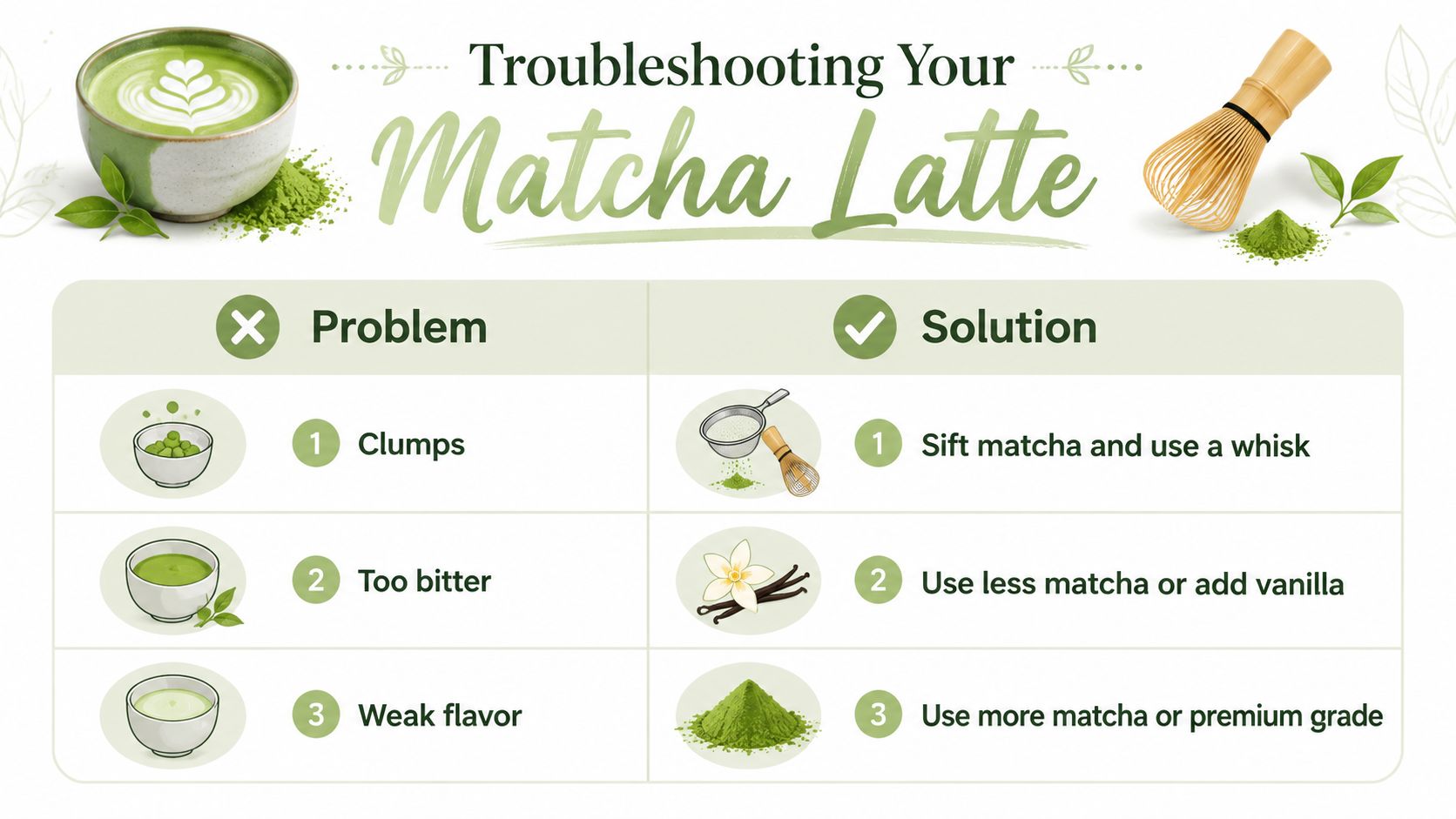
Clumps
Clumps form when dry matcha hits a larger volume of liquid without enough initial movement. Sift first, add the water in the recommended range, and whisk the concentrate before adding milk. If the drink is already made, pass it through a fine mesh sieve and whisk the recovered liquid gently.
Bitterness
Bitter flavour usually points to overheated water or a matcha grade that isn't suited to drinking. Keep the water between 70 and 80 °C, and don't compensate for harshness by adding more powder. A smaller amount of suitable matcha can taste more complete than a larger amount of an overly astringent powder.
Weak flavour and thin texture
A thin latte usually comes from under-frothed milk, a low-body plant milk or too much milk relative to the matcha concentrate. Use an oat barista blend, whole dairy milk or soy, then check whether the milk has a glossy texture before pouring.
There's another trade-off that sugar-free recipes often overlook: caffeine. Australian data puts average adult caffeine intake at about 175 mg per day, while at least 25% of adults consume more than 230 mg per day, according to the Australian caffeine reference. One Australian matcha caffeine reference lists approximately 35–70 mg per 1 teaspoon serve, so a strong latte may matter to people managing anxiety, replacing coffee or protecting sleep.
The important distinction: Sugar free doesn't automatically mean suitable for unlimited daily use. Strength, cup size and timing can make caffeine the main consideration.
Café and Hospitality Serving Tips for Sugar Free Matcha Lattes
A café that adds a sugar free matcha latte to its menu needs more than a good recipe. The drink must be easy for staff to reproduce, clear for customers to understand and consistent enough to earn a second order.
Menu wording should describe the experience without making medical promises. Phrases such as ceremonial-grade matcha, no added sugar and sweetened to your preference communicate the important choices. If the recipe includes milk with naturally occurring sugar, avoid implying that every version is chemically sugar-free. In Australia, the Food Standards Code uses 2.5 g of sugar or less per 100 mL as the threshold for describing a drink as low sugar, as explained by CHOICE's Food Standards Code guidance.
Build a repeatable service routine
Train staff to follow the same order every time:
- Sift and dose: Weigh the matcha rather than relying on an inconsistent scoop.
- Pre-dissolve: Use the small water volume first, then whisk until smooth.
- Control heat: Bring milk to approximately 65 °C and stop before it boils.
- Finish deliberately: Combine the liquids smoothly and check the foam before serving.
Clear recipes also help hospitality teams manage substitutions. Record the default dairy option, the preferred oat barista blend and the soy alternative, then note which milks need gentler heating. A customer asking for an iced version should receive the same matcha concentrate logic, not a powder shaken directly into cold milk.
Low- and no-sugar drinks now represent more than half of beverage sales, with 55.5% of sales volumes in the cited Australian market data, and zero-sugar soft drink choice was reported at 35% among consumers in the same market context. These figures support menu experimentation, but they don't replace sensory testing. Taste the drink without sweetener, with a small amount of monk fruit or stevia, and with different milk options before settling on the final menu version.
Make the presentation work
A clear takeaway cup can show the green colour and foam layers, but presentation shouldn't come at the expense of temperature or spill resistance. For iced service, a visible separation between milk and matcha can look attractive before the customer stirs it. For hot service, glossy foam and a clean pour signal care more effectively than excessive garnish.
Cafés can also place the drink beside other functional, non-alcoholic options. PepTea produces sugar-free organic kombucha brewed in the Hunter Valley, NSW, with flavours including Ginger, Lime & Ginger and Mango. Offering a fermented drink alongside matcha gives customers a choice between a creamy tea latte and a bright, refreshing alternative, without relying on high-sugar soft drinks.
For cafés selling beans, tea or recurring pantry products online, a RecurX coffee subscription solution can help organise subscription-style purchasing. The same recurring model can be relevant to cafés and retailers building regular matcha or beverage supply routines, provided the product, delivery schedule and customer expectations are clearly explained.
A successful sugar free matcha latte isn't successful because it carries a fashionable label. It succeeds when the matcha tastes smooth, the milk has proper body and the team can reproduce the result during a busy morning. Start with the measured workflow, taste before sweetening and keep caffeine awareness part of the customer conversation.
PepTea offers organic Japanese matcha for home brewers, matcha enthusiasts and Australian cafés, along with sugar-free organic kombucha brewed in the Hunter Valley, NSW. Visit Pep Tea to explore the matcha range, compare beverage options and find ingredients for a cleaner café-style routine.