
Tag: matcha history
Chawan Matcha Bowl Guide for Australian Tea Lovers

A common piece of matcha advice is that any bowl will do. Technically, you can mix powdered tea in a mug, but a chawan matcha bowl changes how easily you whisk, how evenly the powder suspends, and how comfortable the preparation feels in your hands. Its broad opening gives a bamboo chasen room to move, while its stable base helps you whisk briskly without chasing the bowl around the bench.
For Australian tea drinkers, that makes the chawan more than a decorative Japanese object. It's a practical preparation tool, a connection to an established ceramic tradition, and an easy way to make a home or café matcha routine feel more intentional. The right choice depends on shape, material, use, care, and the kind of matcha you enjoy.
Why a Chawan Is More Than a Pretty Bowl
A narrow mug restricts the whisk. Your chasen may catch against the sides, forcing a short stirring motion instead of the quick back-and-forth movement that aerates matcha. A cereal bowl solves the space problem, but its broad, shallow base may not offer the balance, wall angle, or comfortable rim you need for controlled whisking.
A purpose-made chawan matcha bowl usually combines a wide opening, a generous interior floor, and a deep rounded base. Australian retailers commonly describe this geometry as useful because it gives the whisk clearance for proper preparation and helps reduce spills during vigorous whisking, as shown by this Australian chawan product example.
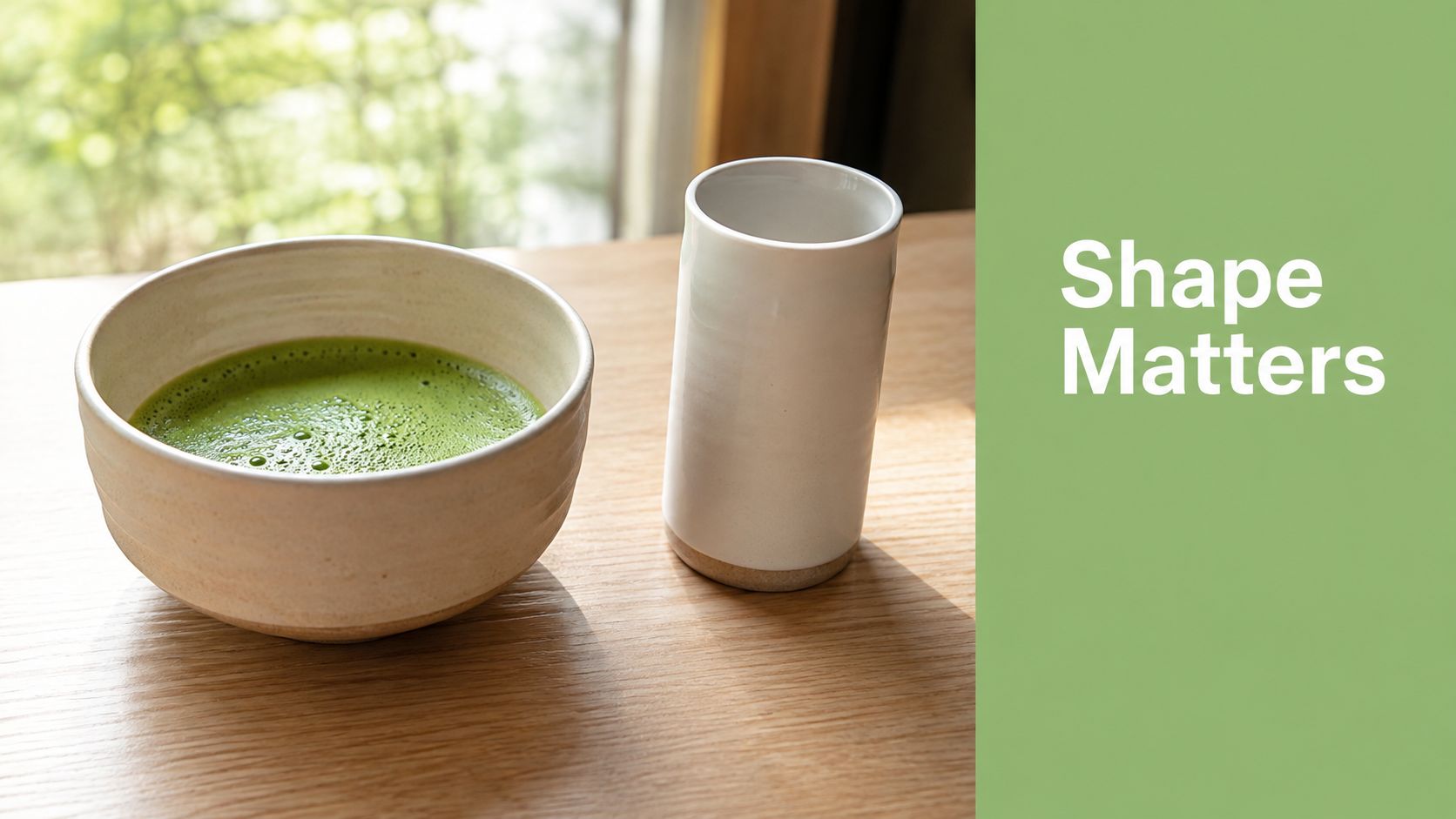
Shape affects the drink
The bowl won't alter the nutritional profile of your matcha. It can, however, affect the mixing experience and finished texture. When the chasen can travel across the base without hitting the wall, you've got a better chance of creating an even suspension and a surface of fine bubbles rather than leaving dry clumps at the bottom.
That distinction matters because matcha isn't steeped and removed like loose-leaf tea. The powdered leaf stays in the drink, so uneven mixing is immediately noticeable in the mouth.
Practical rule: Choose a bowl that lets your whisk move freely before choosing one purely for its colour or glaze.
The rest of your setup matters too. A bamboo whisk, scoop, and whisk holder are commonly sold alongside chawan bowls because the bowl forms part of a matcha preparation system, not an isolated cup, as illustrated by Australian matcha bowl and accessory sets. Once the bowl is roomy and stable, sifting and whisking become simpler, more repeatable tasks.
The History of the Chawan and Tea Ceremony
The chawan's story begins with Chinese tea vessels that reached Japan through Buddhist connections. Over time, Japanese tea drinkers adapted the bowl to local practices, and Zen communities gave tea preparation a more focused place in daily life. The vessel gradually moved from being a practical drinking object to becoming part of a carefully considered encounter between host, guest, tea, and setting.
Early Japanese tea culture valued refined imported ceramics, including glossy Tenmoku ware. The aesthetic later shifted towards bowls with more restrained surfaces and irregular forms. Korean-influenced ceramics, including Ido-style bowls, helped shape the appreciation of rough clay, uneven rims, muted colour, and marks left by the kiln or the maker.
Wabi-cha and the shared bowl
The Art Gallery of South Australia explains that the use of a shared bowl was central to wabi-cha, a tea approach associated with Murata Jukō in the 15th century and later refined by Sen no Rikyū in the 16th century. That history gives the chawan a meaning beyond individual serviceware. The bowl becomes a meeting point, with its imperfections and tactile surface encouraging attention rather than display alone.
For an Australian reader, the documented timeline is especially tangible. The Art Gallery of South Australia identifies “Morning Light” as the only known named historic tea bowl in Australian public collections and dates it to the 17th century, at the Shigaraki kilns near Kyoto. Its curator's insight on the tea bowl “Morning Light” places a specific historic chawan within Australia's public museum record.
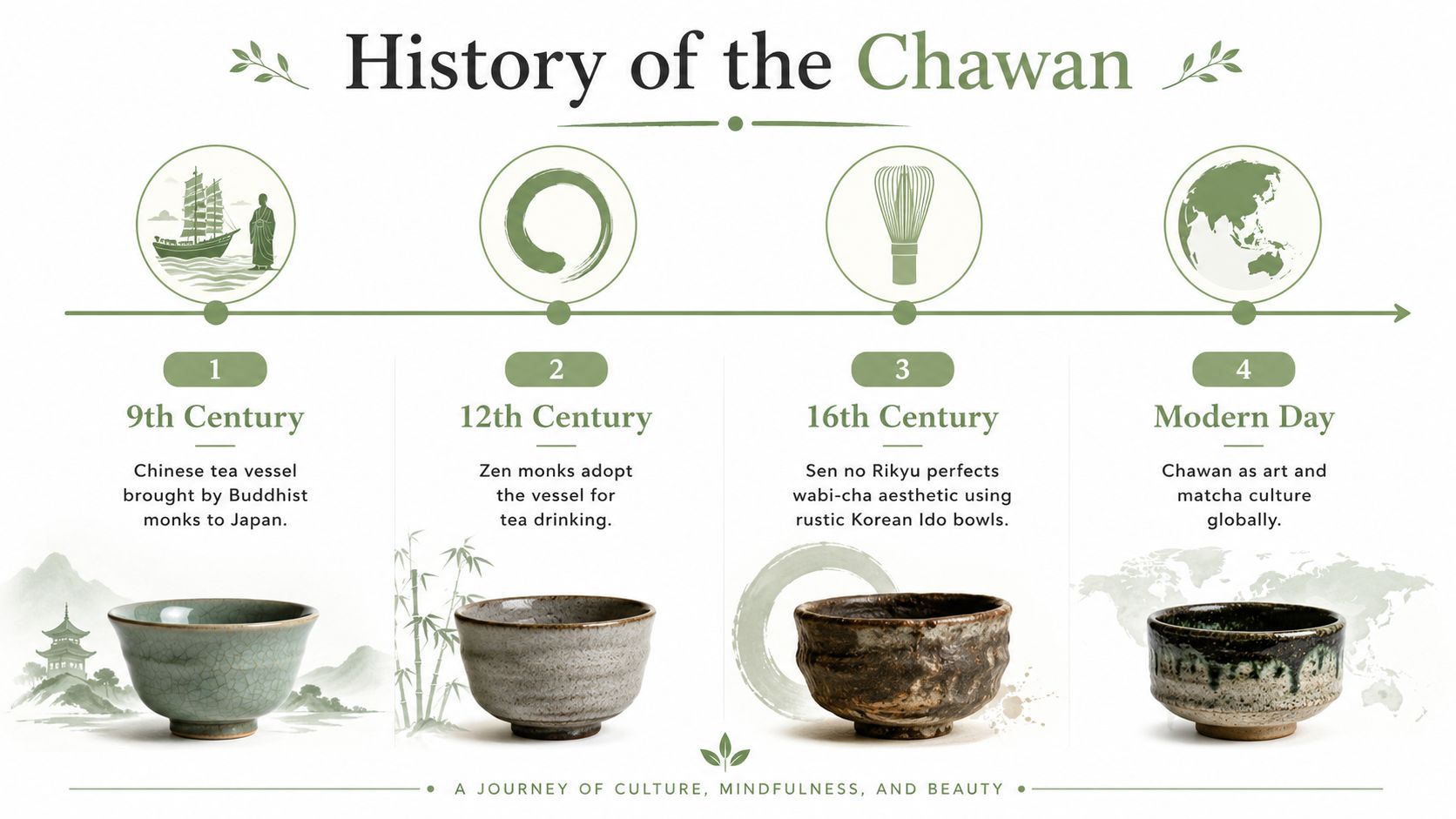
You don't need to perform a formal tea ceremony to appreciate that background. A bowl used for a quiet morning matcha still carries the influence of wabi-cha, where simplicity, presence, and the shared act of drinking matter as much as ornament.
Readers interested in the ritual side can explore Pep Tea's matcha tea ceremony guide for a broader introduction to the practice and its tools.
Styles and Materials You Will See in Australia
Australian buyers will encounter several Japanese ceramic traditions, each with a different balance of texture, weight, glaze, and visual character. Retail descriptions can make these styles sound interchangeable, but they feel quite different in the hand.
Raku bowls are associated with hand-shaped clay and low-fired construction. Their irregular silhouettes and crackled or varied glazes suit drinkers who enjoy a tactile, intimate bowl for slower preparation. Raku is often chosen for special use, although the care requirements depend on the individual piece.
Hagi ware generally has a pale, soft-looking glaze that can absorb small amounts of tea over time. That absorbency is part of its appeal. The bowl can develop a more personal appearance with use, but it also deserves careful rinsing and thorough drying.
Karatsu tends towards understated browns, earthy surfaces, and restrained painted decoration. It's a good fit for someone who wants a traditional feel without a highly dramatic glaze.
Comparing common styles
Mino ware covers a broad family of practical Japanese ceramics. Oribe's green glaze and Shino's creamy surface offer very different looks within the same wider tradition. An Australian source describes a contemporary Mino-ware matcha bowl as sourced from Gifu Prefecture, the origin of Mino ware, and links the tradition to 1,300 years of history in its Australian product description.
Shigaraki is recognised for coarse, earthy clay and natural ash effects created during firing. Its surfaces can look rugged, warm, and distinctly connected to the material itself. The historic Australian example mentioned earlier was made at the Shigaraki kilns, giving this style a direct place in the country's public collection record.
Australian prices vary according to maker, age, provenance, firing method, and whether a piece is imported or locally stocked. Rather than treating a price as proof of quality, inspect the foot, rim, glaze, balance, and care instructions.
| Style | Origin | Typical Price (AUD) | Best For |
|---|---|---|---|
| Raku | Kyoto tradition | Varies by maker and retailer | Special preparation and tactile ritual |
| Hagi | Yamaguchi tradition | Varies by maker and retailer | Drinkers who appreciate evolving glaze character |
| Karatsu | Kyushu tradition | Varies by maker and retailer | Understated everyday ceremony |
| Mino | Gifu Prefecture | Varies by maker and retailer | Practical daily bowls with broad glaze choices |
| Shigaraki | Shiga Prefecture | Varies by maker and retailer | Earthy surfaces and rustic visual character |
Shape, Size, and What Affects Your Matcha
A chawan's shape changes how matcha mixes, foams, and reaches your lips. It is a preparation tool, not just a decorative ceramic bowl. An Australian retail listing commonly shows a chawan close to 12 cm in diameter and 7.2 to 7.5 cm in height. That size offers room for the chasen to move while remaining practical to hold and store.
Capacity gives only part of the picture. A broad interior floor gives the whisk clearance, while the angle of the walls guides water and powder together. A stable base keeps the bowl planted as your other hand supports the body or steadies the rim.
Read the listing beyond millilitres
A thick, rounded rim can feel comfortable when drinking directly from the bowl and gives the pour a little more forgiveness. A sharper rim may appear cleaner but can feel less natural against the lips. Check the foot as well. It should sit securely on a kitchen bench, particularly while you are learning to whisk with a relaxed wrist.
A taller, narrower bowl helps contain splashes and can suit thicker koicha-style preparation, which is worked more slowly. A wider, flatter bowl usually gives more room for usucha, the lighter, frothy matcha commonly prepared at home. The difference is similar to using a narrow saucepan for controlled pouring and a broad pan for easy stirring. The shape changes how freely your tools can move.
| Shape | Diameter (cm) | Height (cm) | Best for |
|---|---|---|---|
| Wide daily chawan | Around 12 | Around 7.2–7.5 | Usucha and general home preparation |
| Taller, narrower bowl | Varies | Higher than a wide daily profile | Thicker matcha and contained whisking |
| Kata-style profile | Varies | Varies | Formal ceremony and traditional presentation |
| Naname-style profile | Varies | Varies | Daily use and easier access for whisking |
| Ōguro-style profile | Varies | Varies | Display or fast café preparation |
Retailers may use these labels differently, so treat them as a starting point. Compare the photographs with the measurements, foot, rim, and interior floor before choosing.
A beautiful bowl becomes inconvenient if your whisk strikes the walls or the base slides across the bench.
Australian kitchens often have limited cupboard space. Measure the shelf where you plan to keep the chawan, including the height needed to lift it out comfortably. A bowl that stays easy to reach is more likely to become part of your routine than one packed away in a high cupboard.
Choosing a Chawan for Ceremony, Daily Use, or Display
The most useful chawan isn't automatically the rarest or most expensive. It's the one that matches how often you'll use it, how carefully you're prepared to clean it, and whether you want the bowl to participate in drinking or sit on a shelf.
A ceremony bowl may be handcrafted, weighty, asymmetrical, and made in a style such as Raku or Hagi-yaki. Those features can make it feel meaningful during formal chado or chanoyu, but they may also require gentler handling. An everyday bowl is usually easier to replace, easier to clean, and less stressful to use for a morning matcha or latte base.
Four filters for a confident choice
- Frequency: Daily drinkers should prioritise balance, a comfortable rim, and manageable cleaning.
- Formality: Choose stronger visual character when the bowl is for guests, seasonal use, or a deliberate ritual.
- Cleaning tolerance: Porous or delicate surfaces need more attention than a sturdy glazed bowl.
- Budget: Australian retail pricing varies widely, so decide what you're comfortable spending before falling for a particular glaze.
Display pieces sit at the opposite end. An ornate bowl or a kintsugi-repaired object may be better appreciated as ceramic art than exposed to repeated hot-water washing. It can still inspire your tea corner without becoming the bowl you use twice a day.
| Use case | Weight | Glaze | Care level |
|---|---|---|---|
| Ceremony | Often weighty | Handcrafted or characterful | High, depending on the piece |
| Daily | Light to moderate | Usually practical and durable | Low to moderate |
| Display | Varies | Ornate, aged, or repaired | Protect from chips and moisture |
A simple starter setup only needs one reliable bowl, a bamboo whisk, a sifter, and matcha. A dedicated matcha bowl set from Pep Tea can suit someone who wants the core pieces together, while a standalone bowl makes more sense if you already own the other tools.
How to Whisk Matcha in a Chawan Like You Mean It
Good whisking starts before the water arrives. Sift 1 to 2 g of matcha into the bowl, then add 60 to 80 ml of hot water just off the boil. The Australian chawan guide linked here recommends a broad bowl because it gives the whisk space to create a fine, even texture, and its matcha whisking instructions provide a useful companion to the routine below.
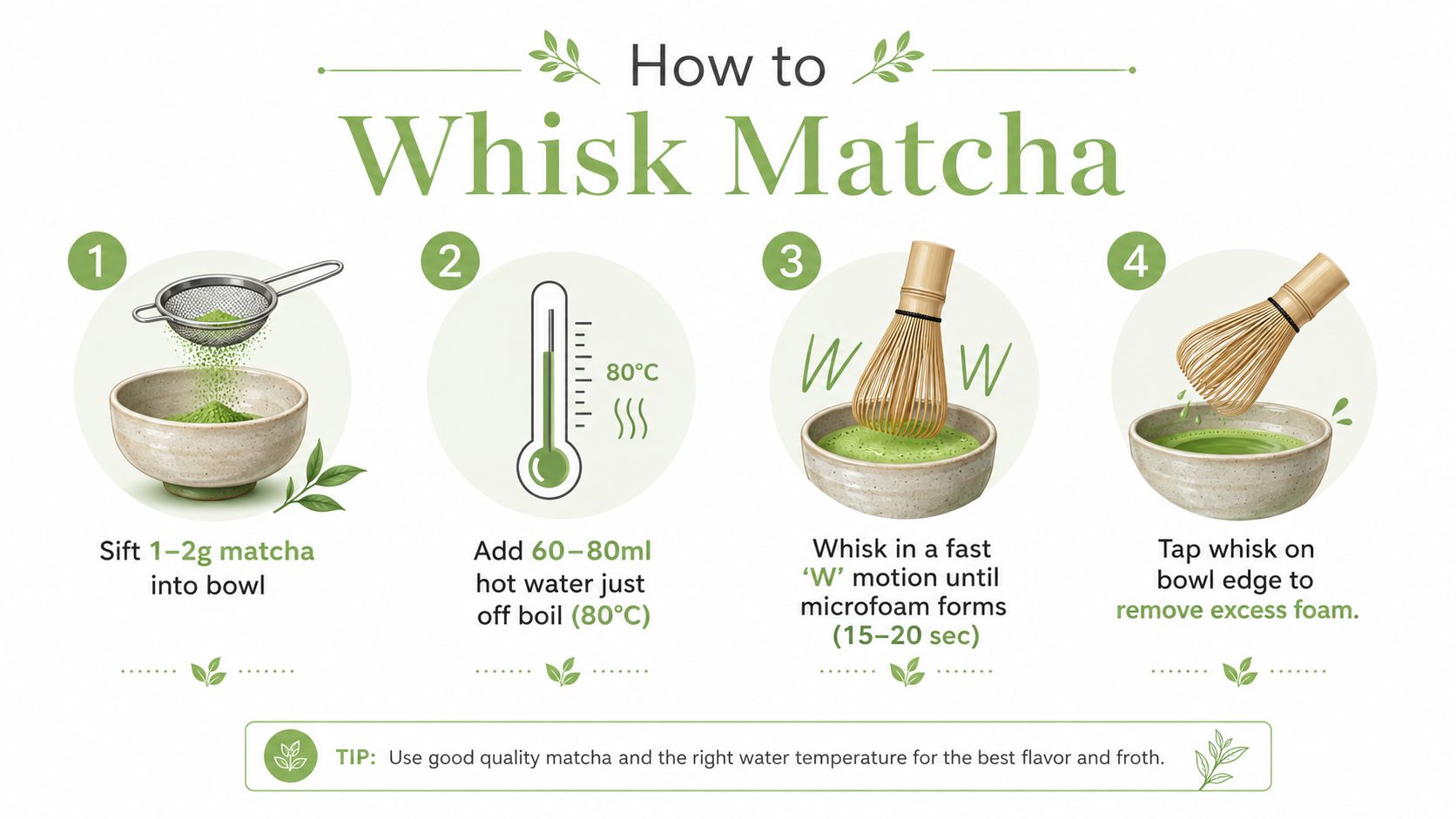
A repeatable whisking method
- Soften the chasen. Rinse the bamboo tips in warm water briefly so they flex rather than snap.
- Sift the powder. Break up clumps before water touches the matcha. This prevents dry pockets that the whisk can't easily dissolve.
- Add the water. Keep the bowl on a stable surface, or tilt it slightly away from you at roughly 45 degrees.
- Whisk briskly. Keep the tips near the base and use a quick W or M motion. As the surface aerates, let the whisk rise slightly without losing control.
- Stop at microfoam. Look for a fine, jade-coloured crema of tiny bubbles. You're not aiming for large latte-style froth.
Here's a visual demonstration of the motion:
Fix the common mistakes
- Pressing too hard: Let the flexible tines work. Force can damage the whisk and flatten your motion.
- Lifting too early: Keep contact near the base while the powder disperses, then lift gradually as bubbles form.
- Using boiling water: Very high heat can make matcha taste harsher and can dull its fresh green character.
- Skipping the sifter: If the powder starts clumped, more whisking won't always rescue the texture.
Before you begin, check three things: the powder is sifted, the water is hot but not boiling, and your wrist is loose enough to move quickly. That short checklist is more useful than chasing a perfect foam pattern.
Caring for Your Chawan So It Lasts for Decades
Rinse the bowl soon after drinking so matcha doesn't dry onto the glaze. Use lukewarm water and a soft cloth or sponge, then turn the bowl upside down to air-dry fully before storing it.
Avoid dishwashers and harsh detergents, particularly with traditional or porous surfaces. Strong cleaning products can affect the glaze, leave unwanted residue, or gradually change the finish that attracted you to the bowl.
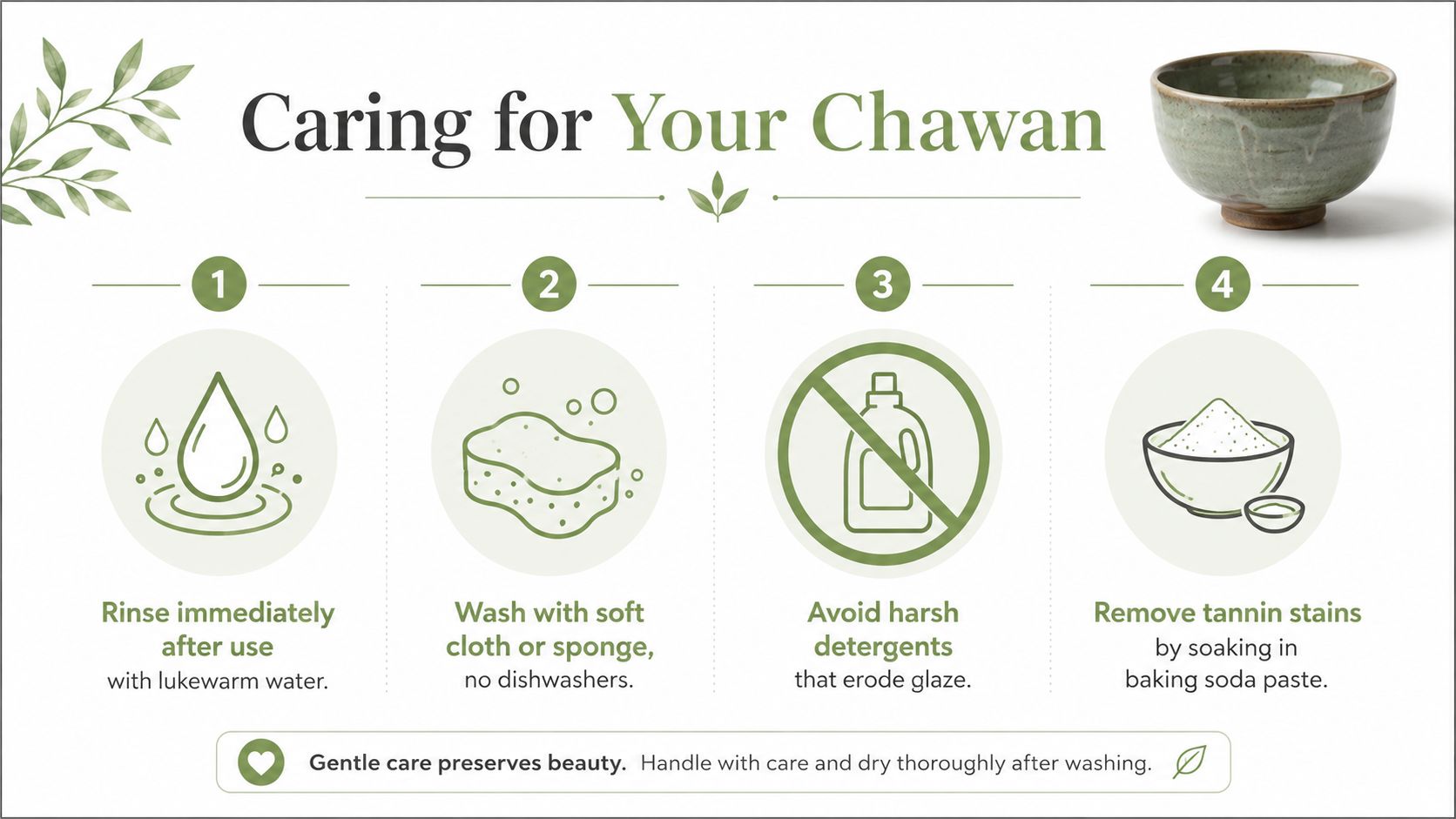
Treat stains and porous clay gently
Raku and unglazed bowls can show tannin marks. A mild paste made from baking soda and water can help lift surface staining, but don't scrub aggressively. Test gently and stop if the finish seems vulnerable.
Hagi-style surfaces need particular attention because their absorbency is part of the material's character. Rinse away residue, dry the bowl upside down, and give it airflow so moisture doesn't remain trapped inside.
Small crazing, kiln marks, and variations in glaze are often normal signs of ceramic making rather than damage. Cracks that affect stability, sharp chips, or leaking should be treated differently. If you're unsure, ask the retailer or maker before using the bowl for hot liquids.
Store a treasured chawan on an open wooden shelf where air can circulate. Felt liners and stacking pads can protect rims, and bowls shouldn't be forced together in a crowded cupboard. Rotating your bowls through the week also gives each piece time to dry completely and helps even out wear.
Bringing It All Together and Where to Go Next
A chawan earns its place through use. Once you have whisked in one regularly, you will notice which parts of the routine feel natural and which create friction. That practical feedback is more useful than choosing a bowl solely for its appearance or following a fixed idea of what a tea setup should look like.
Start with the matcha you want to drink. Pep Tea offers organic Japanese matcha products for a neat drink, a latte, or cooking, so your powder can guide the routine rather than sit apart from it. The bowl then becomes part of a repeatable habit: measure, add water, whisk, and drink while the matcha is fresh.
A good next step is to visit Pep Tea and explore its organic Japanese matcha and matcha accessories. Choose equipment that suits the way you prepare tea in an Australian kitchen, then practise often enough for whisking to become familiar. Confidence comes from repetition, not from owning a perfect collection.