
Tag: matcha baking
Matcha Cookies Recipe Easy: Perfect Bake
You're halfway through a batch of cookies when the matcha clumps into bitter green pockets, the dough spreads across the tray, and you realise nobody has measured the portions. This matcha cookies recipe easy approach avoids those problems with a controlled mixing process, sensible portioning, and a few Australian food-safety details that many recipes leave out.
The result is a fragrant biscuit with a soft centre and lightly set edges. Matcha adds colour and tea flavour, but it doesn't turn a flour, sugar, and fat-based cookie into a health food. Australian dietary guidance places sweet biscuits in the discretionary category, so the most useful approach is honest ingredient information, considered portions, and a recipe that works reliably.
Gathering Your Ingredients and Equipment
A smooth bake starts before the oven is switched on. Bring the butter to a soft, workable texture, weigh the dry ingredients, and clear enough bench space for a tray, cooling rack, and mixing bowl. A kitchen scale is more dependable than packed cups, particularly when flour and matcha are involved.
Ingredients for a practical batch
Use:
- Plain flour: Provides the main structure and chew.
- Culinary-grade matcha: Adds the characteristic tea flavour and green colour. Choose a fresh, aromatic powder rather than one that smells stale or looks dull.
- Unsalted butter: Controls richness, spread, and crispness. Softened butter should bend under pressure but not look oily.
- Caster sugar: Sweetens the dough and helps the edges set with a fine texture.
- Egg: Binds the mixture and contributes moisture.
- Baking powder: Supplies lift without making the cookie cakey.
- Fine salt: Sharpens the matcha and balances sweetness.
The exact quantity of matcha should reflect its flavour strength. A culinary powder intended for baking usually gives a more practical balance than using a prized drinking matcha in a strongly flavoured dough. The distinction between ceremonial and culinary products is explained clearly in PepTea's guide to ceremonial and culinary matcha.
Equipment that prevents avoidable errors
Set out a kitchen scale, measuring spoons, a large metal or glass bowl, a whisk, a spatula, baking trays, and parchment paper. A fine sieve is essential because matcha compresses into small lumps during storage. Sifting it with the flour distributes the powder before it reaches the wet ingredients.
Practical rule: Mix matcha into the dry ingredients, not directly into the butter. That single choice prevents concentrated green pockets and makes the flavour much more even.
Use a portion scoop or weigh each piece of dough. Consistent pieces bake at the same rate, while a tray containing small and large cookies forces you to choose between pale centres and overdone edges. Keep a cooling rack nearby, too, because cookies continue to firm as they leave the oven.
Mixing and Baking for the Perfect Texture
The best texture comes from controlling air, flour development, and fat temperature. Soft butter should combine smoothly with the sugar, but it doesn't need prolonged beating. Excessive aeration can encourage the cookies to rise and then collapse or spread unevenly.
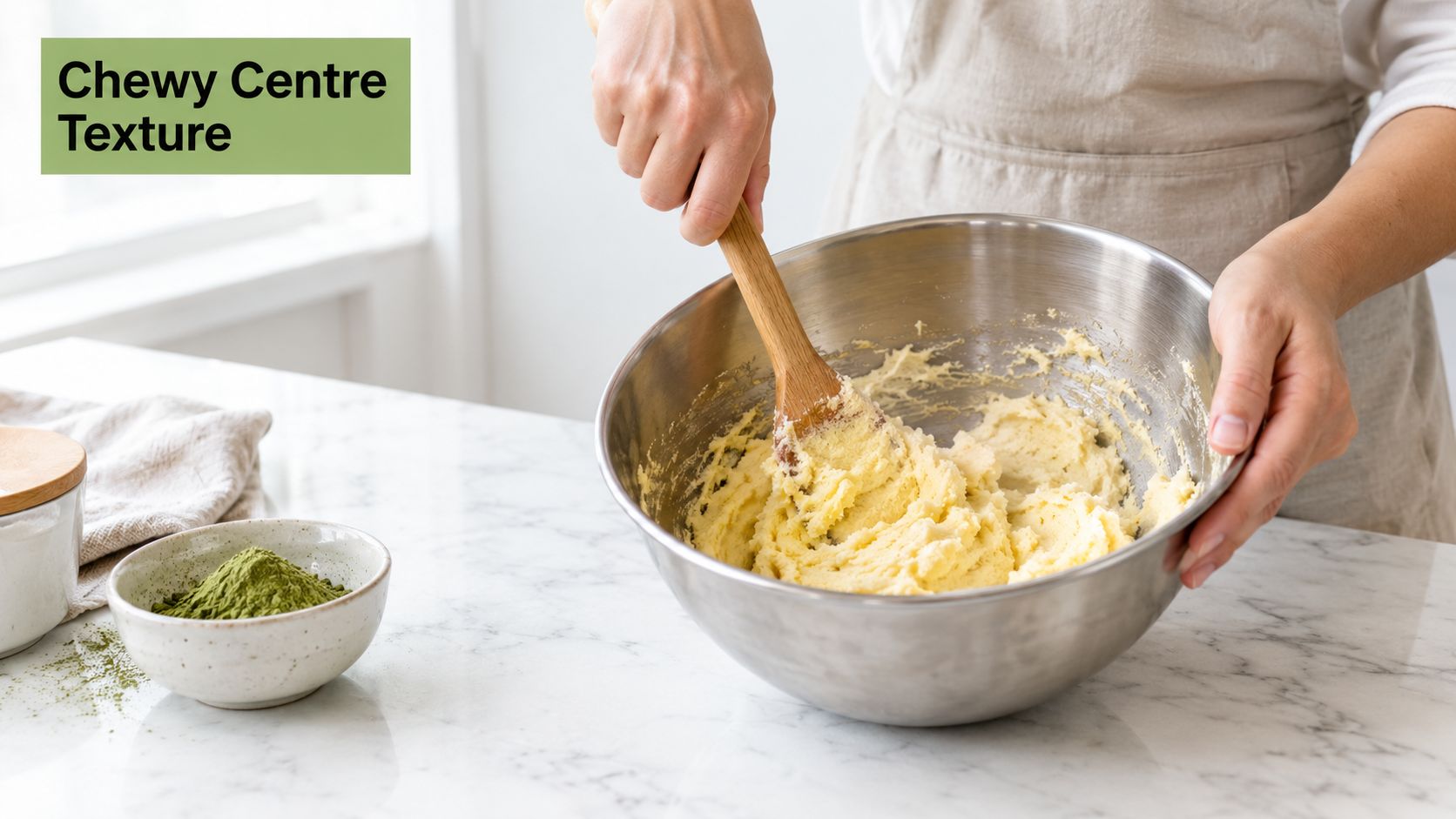
A controlled mixing sequence
- Prepare the dry mixture. Whisk the flour, matcha, baking powder, and salt, then sift them together.
- Combine butter and sugar. Cream softened butter with the sugar only until the mixture is uniform and smooth.
- Add the egg. Mix until combined, scraping the bowl so no buttery streaks remain.
- Add the dry ingredients. Fold or mix on low speed just until no dry flour is visible. Stop there. Continued mixing develops the flour and can make the finished biscuit tough.
- Portion the dough. Place evenly sized mounds on parchment, leaving room for spreading.
- Chill when necessary. If the dough feels glossy, loose, or warm, chill the portioned pieces before baking. Colder fat melts later, helping the cookies keep a thicker centre.
Preheat the oven fully rather than placing dough into a warming oven. An oven thermometer is useful because the displayed setting and the actual centre temperature can differ. Bake until the edges look set and the centres no longer look wet. Matcha can keep the surface visibly green, so colour alone isn't a reliable doneness test.
For an egg-containing biscuit, verify that the centre reaches approximately 71–72°C when food safety is critical, following the controlled-temperature method described by CSIRO's egg-quality guidance.
The tray still has a job after baking. Leave the cookies on it briefly before moving them to a rack, allowing the residual heat to finish setting the crumb. Transferring them immediately can cause soft centres to tear, while leaving them on a hot tray too long can darken the bases.
For more ideas on using matcha beyond a single batch of biscuits, see PepTea's matcha baking guide.
Understanding Portion Sizes and Caffeine Content
Matcha remains in the finished cookie. Baking changes texture and aroma, but you shouldn't assume it removes the powder's naturally occurring caffeine. The amount in each biscuit depends on the matcha quantity, the supplier's specification, and the final yield.
Calculate the approximate amount
Start with the total matcha used in the batch. Divide that amount by the number of cookies, then use the supplier's caffeine information to estimate the matcha-derived caffeine per cookie. This is more defensible than judging caffeine from colour or a teaspoon because matcha powders vary.
A café or home baker can record three details:
- Batch matcha: Weigh the complete quantity added to the dough.
- Final yield: Count the baked cookies, not the intended yield.
- Serving estimate: Divide the batch figure by the actual number produced.
The result is still approximate. It should be presented as an estimate, particularly for children, pregnant or breastfeeding people, and anyone sensitive to caffeine. Smaller cookies, less matcha, or replacing part of the matcha with a non-caffeinated culinary flavouring can make the recipe easier to manage for an evening or family menu. FSANZ's caffeine information explains the regulatory context for caffeine in food and why commercial labelling needs care.
Australian serving guidance gives sweet biscuits a recommended maximum retail serving size of 30 g and an approximate energy level of 600 kJ per serving. It reports a median amount consumed of 26 g, with observed amounts from 18 g for plain biscuits to 36 g for chocolate varieties. These benchmarks appear in the Australian serving-size rationale.
| Cookie size | Approx. weight | Estimated matcha per cookie | Energy benchmark |
|---|---|---|---|
| Small home portion | 18 g | Total batch matcha divided by final yield | Below the retail maximum benchmark |
| Typical portion | 26 g | Total batch matcha divided by final yield | Around the reported median biscuit amount |
| Retail maximum benchmark | 30 g | Total batch matcha divided by final yield | Approximately 600 kJ |
The energy column is a benchmark, not a nutrition calculation for this particular recipe. Butter, sugar, flour, chocolate, nuts, and the final yield all change the result. For a café, weigh the finished portions rather than relying on a scoop that may gradually become larger.
Readers who drink matcha as well as eating it can use PepTea's matcha serving guide to think about their total daily intake rather than treating the cookie as caffeine-free.
Adapting the Recipe for Dietary Needs
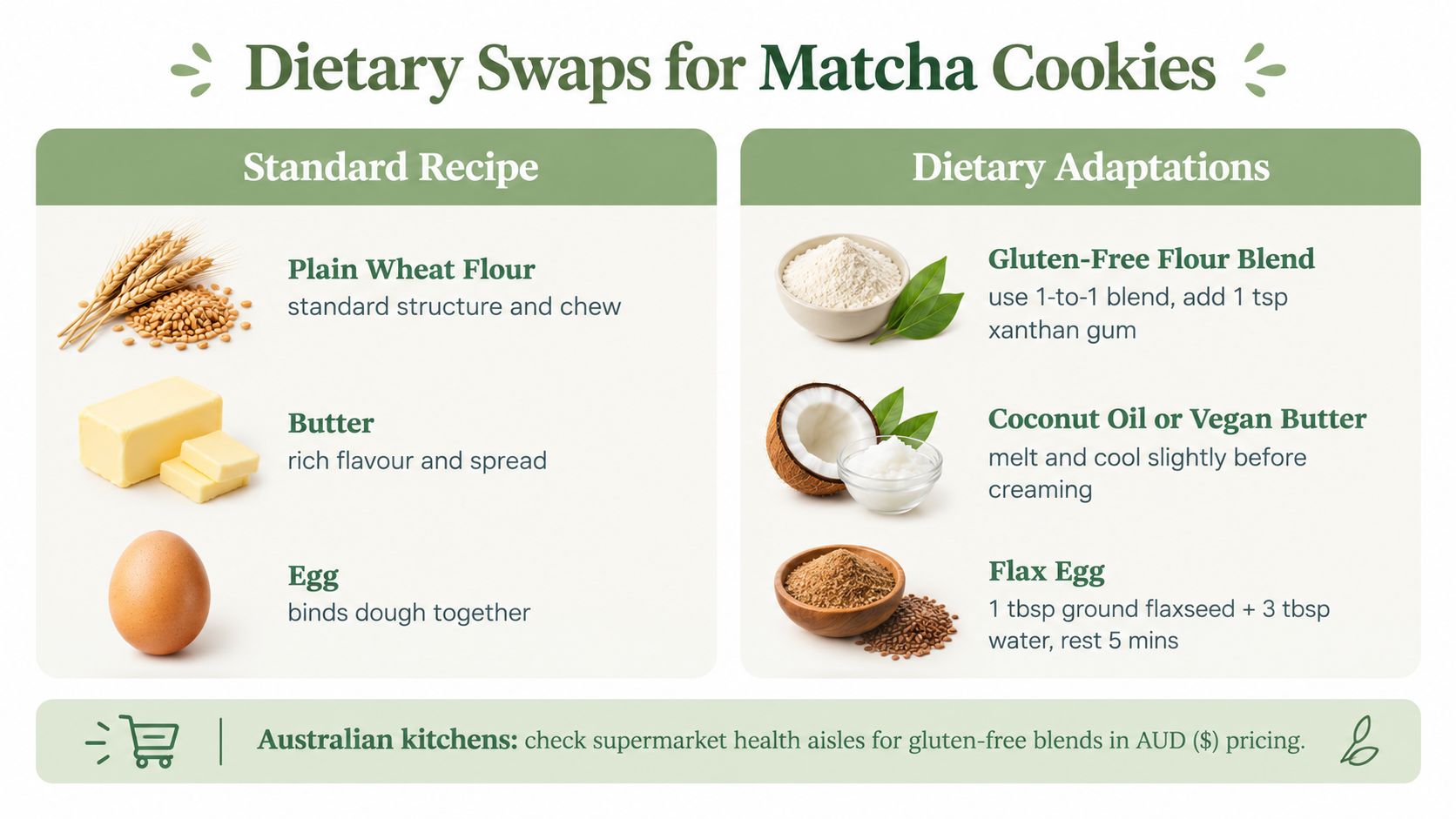
Dietary substitutions work best when you replace the function of an ingredient, not just its name. Wheat flour provides structure, butter brings water and fat, and egg binds the dough. Remove one of those elements without compensation and the cookie may crumble, spread excessively, or lose its chew.
Gluten-free structure
A one-to-one gluten-free flour blend is the most practical starting point, but blends behave differently. Choose one designed for baking and check whether it already contains a binding ingredient. If it doesn't, a small amount of xanthan gum may help hold the dough together, although too much can produce a gummy bite.
Resting the dough before baking can improve hydration because alternative flours often absorb liquid at a different rate from wheat flour. If the dough crumbles when pressed, add moisture cautiously rather than pouring in a large amount at once. If it spreads, chill the portions and check that the substitute fat hasn't been overheated.
Australian wording matters as much as texture. A food labelled “gluten-free” must contain no detectable gluten and must not contain oats or oat products, while gluten-containing cereals and relevant allergens must be declared, according to NSW food-allergen guidance. Use certified ingredients, clean equipment, fresh parchment, and separate utensils where cross-contact is a concern. “Made without wheat” isn't interchangeable with “gluten-free”.
Vegan alternatives
Vegan butter generally gives the closest spread and familiar biscuit flavour. Coconut oil can work, but it behaves differently as it warms and may create a more fragile cookie with a noticeable coconut character. Let melted fat cool before mixing, and expect to adjust chilling time.
A flax egg, made by combining 1 tablespoon of ground flaxseed with 3 tablespoons of water and resting for 5 minutes, adds binding but less richness than an egg. The resulting cookie may be slightly softer or darker, depending on the plant fat and flour blend. Aquafaba can bind some doughs, but it can also make the texture less predictable when used without testing.
The safest adaptation is to change one variable at a time. Test the flour first, then the fat, then the egg replacement. That makes it clear whether spreading, crumbling, or toughness comes from the ingredient or the mixing method.
Storing Your Cookies and Troubleshooting Mistakes
Cool the cookies completely before storage. Warm biscuits release steam into the container, softening edges and making the surface tacky. Once cool, place them in an airtight container with parchment between layers and keep them away from heat and sunlight.
Portioned unbaked dough can be chilled or frozen in individual pieces, then baked from cold with the timing checked visually. Label the container with the matcha quantity and date so you can calculate the approximate caffeine per cookie after the final yield is known.
Quick diagnosis
- Thin, wide cookies: The butter or dough was too warm, the tray was warm, or the portions needed chilling. Chill the next batch and bake on a cool lined tray.
- Tough cookies: The flour was mixed for too long after addition. Stop as soon as the dry streaks disappear.
- Dry centres: The cookies stayed in the oven too long or were portioned too small. Use edge-setting and centre appearance together.
- Uneven green flavour: Matcha was added directly to the wet mixture or wasn't sifted. Distribute it through the dry ingredients first.
- Soft bases: The cookies were moved before the crumb set or stored while warm. Rest them briefly on the tray, then cool fully on a rack.
A reliable batch record helps cafés and regular home bakers identify patterns. Note the dough weight, oven setting, portion weight, and whether chilling was needed.
Food Safety and Ingredient Sourcing Answers
Raw egg dough isn't a ready-to-eat snack. Food Standards Australia New Zealand identifies raw doughs and batters containing egg, including biscuit and cake batter, as higher-risk foods. Keep eggs refrigerated, wash hands after handling them, and bake the cookies fully rather than tasting the mixture, particularly when children, pregnant people, older adults, or immunocompromised people may eat them.
Reducing white sugar doesn't automatically support a “low sugar” claim. For solid foods, the Code's example threshold for such a claim is no more than 5 g of sugar per 100 g, and total sugars include naturally present and added sugars, as explained by FSANZ's sugar-labelling guidance. Chocolate, dried fruit, and other additions still contribute to the total.
For packaged sale, calculate nutrition from the final recipe and yield rather than presenting a homemade estimate as an official declaration. Quality culinary matcha should taste fresh and tea-like, with enough character to remain noticeable after baking. Pep Tea offers organic Japanese matcha and Australian-brewed sugar-free kombucha from its Hunter Valley, NSW operation, giving bakers and cafés options for both matcha recipes and non-alcoholic drinks.
Explore the organic Japanese matcha range at Pep Tea for a baking powder with clear flavour and dependable sourcing, then pair your cookies with sugar-free organic kombucha for a balanced café-style serving. Visit Pep Tea to find matcha education, recipe ideas, and Australian-made beverage options for home or hospitality use.
8 Matcha Recipes Baking Healthy Bakers Will Love

Healthy matcha baking doesn't have to mean dry muffins, bland biscuits or a complicated pantry overhaul. Culinary-grade organic matcha brings vivid colour, earthy umami and a gentle tea character to baked and no-bake treats, so you can often reduce some of the sugar used only to create flavour. The result can be a soft lunchbox muffin, a portable oat bar, a celebration dessert or a comforting loaf, provided you judge the whole recipe rather than one fashionable ingredient.
This roundup brings together eight matcha recipes for healthy-minded baking, including grain-free cookies, dark chocolate brownies, cheesecake, bliss balls and chia muffins. Each one includes a practical texture tip, realistic substitutions and a reminder that “healthy” depends on the complete ingredient list and serving size. Matcha contains caffeine, too, so it isn't automatically suitable for everyone or caffeine-free because it's baked.
Pep Tea's organic culinary-grade matcha is the natural choice for recipes where tea flavour needs to stand up to flour, chocolate, fruit or dairy. Ceremonial-grade matcha is generally better reserved for whisking and drinking, while culinary grade suits cooking. If you're comparing options, Saporia's Clearspring matcha selection provides another useful reference point. The notes below cover sifting, dissolving, lowering added sugar, gluten-free swaps and keeping portions realistic.
1. Matcha Almond Flour Cookies with Coconut Oil
These delicate cookies pair organic culinary-grade matcha with almond flour and coconut oil for a naturally grain-free bake. Almond flour gives the dough a tender, slightly nutty texture, while matcha supplies colour and depth so the recipe doesn't need to rely entirely on sweetness for interest.
They're a useful option for gluten-free households, although almond flour isn't suitable for people with nut allergies and “gluten-free” doesn't automatically mean low in energy or sugar. Keep the sweetener modest, and let a pinch of sea salt sharpen the matcha's earthy character.
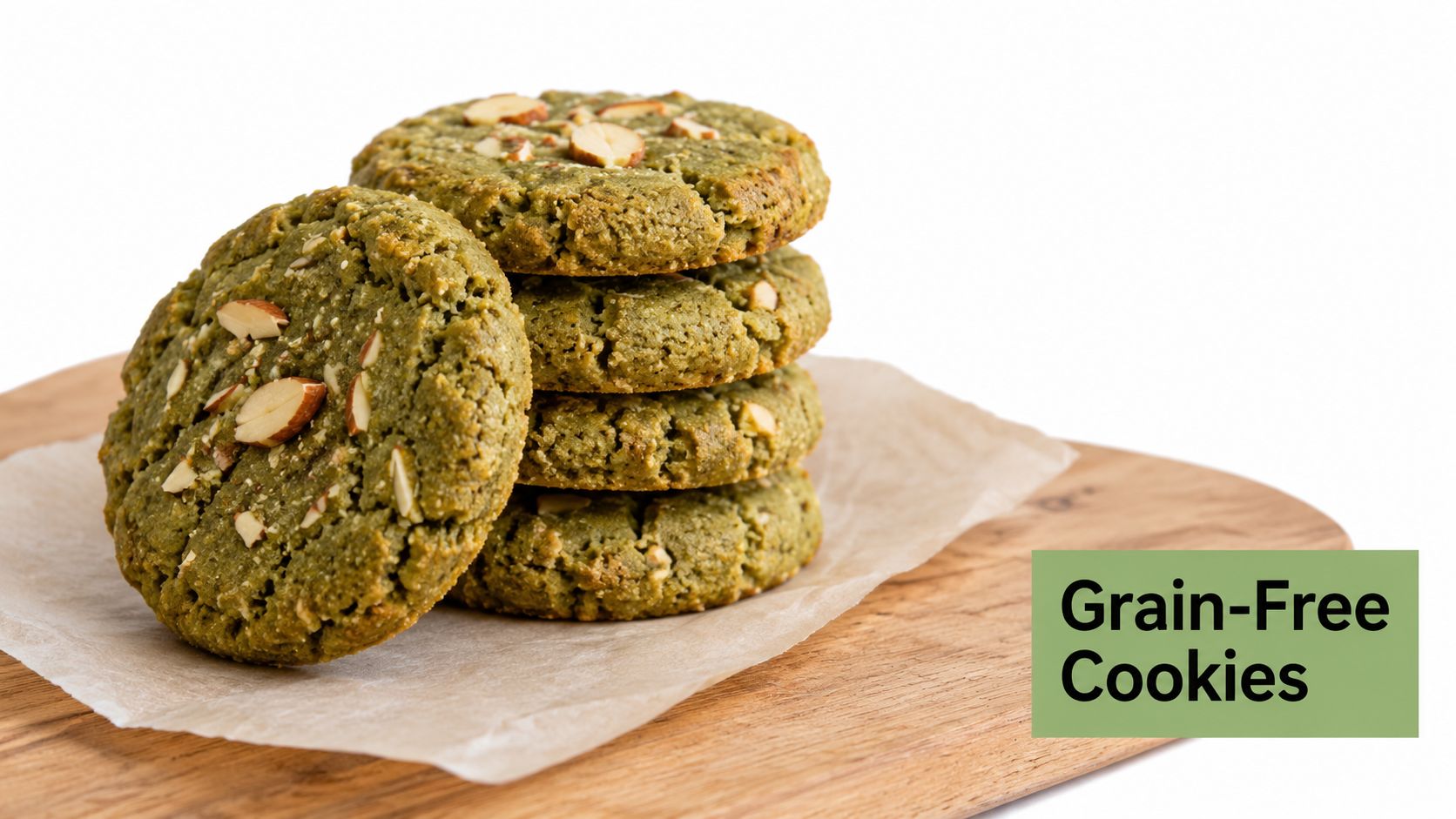
Recipe card
- Base: Almond flour, coconut oil, culinary-grade matcha, egg or suitable binder, a restrained sweetener and sea salt.
- Preparation: Sift the matcha before mixing it through the dough. Chill the dough for 30 minutes so the cookies hold their shape.
- Baking: Bake at 160–170°C, watching for set edges and soft centres.
- Finish: Add sliced almonds or a light dusting of matcha after cooling.
Practical rule: Sifting matters more with almond flour because small matcha pockets can taste sharply bitter in an otherwise mild cookie.
Serve one with an unsweetened matcha latte at home, or offer the cookies as a small café accompaniment. Coconut oil contributes fat, and almond flour contributes energy, so describe these as lower-sugar cookies, not unlimited snacks. For a nut-free version, use a tested seed-based flour blend rather than swapping ingredients by guesswork, because the dough's structure may change.
2. Matcha Green Tea Protein Brownies with Dark Chocolate
Matcha can make a dark chocolate brownie taste more layered, but more powder is not always better. Both ingredients bring bitterness and roasted depth, so the goal is balance. Dark chocolate supplies a rich base, while a modest amount of matcha adds a lingering tea note without turning the brownie harsh.
Protein powder changes the batter's structure. Plant-based varieties absorb liquid differently, much like adding extra flour, so check the mixture before baking. It should look thick and glossy, not stiff or crumbly. If the batter feels dry, a small adjustment to the liquid or oil may help, depending on the powder's instructions.
Recipe card
- Core ingredients: Dark chocolate, plant-based protein powder, flour or a suitable alternative, matcha, eggs or a plant-based binder, oil and a modest sweetener.
- Matcha paste: Whisk the powder with hot water at 60°C before mixing it into the batter. This helps distribute the colour and reduces dry pockets.
- Chocolate base: Melt the chocolate gently over a water bath so it does not seize.
- Mixing: Fold the ingredients together rather than beating them. Overmixing can make the brownies dense.
- Finish: Cool completely before slicing, then add a light matcha dusting if you want a brighter surface.
A gluten-free flour blend can replace standard flour, but choose one designed for baking and expect a slight texture change. If the dark chocolate tastes especially intense, a pinch of salt can sharpen its flavour without relying on extra sweetener.
The brownies firm as they rest. Warm slices may look underbaked and develop ragged edges, while cooled brownies cut more cleanly. For another practical combination of matcha and protein ingredients, try Pep Tea's matcha protein shake recipe.
Serve a small piece with water or an unsweetened drink. Matcha contains caffeine, and protein powder does not turn a brownie into automatic post-workout food. Consider the full recipe, portion and overall eating pattern when describing its wellness value.
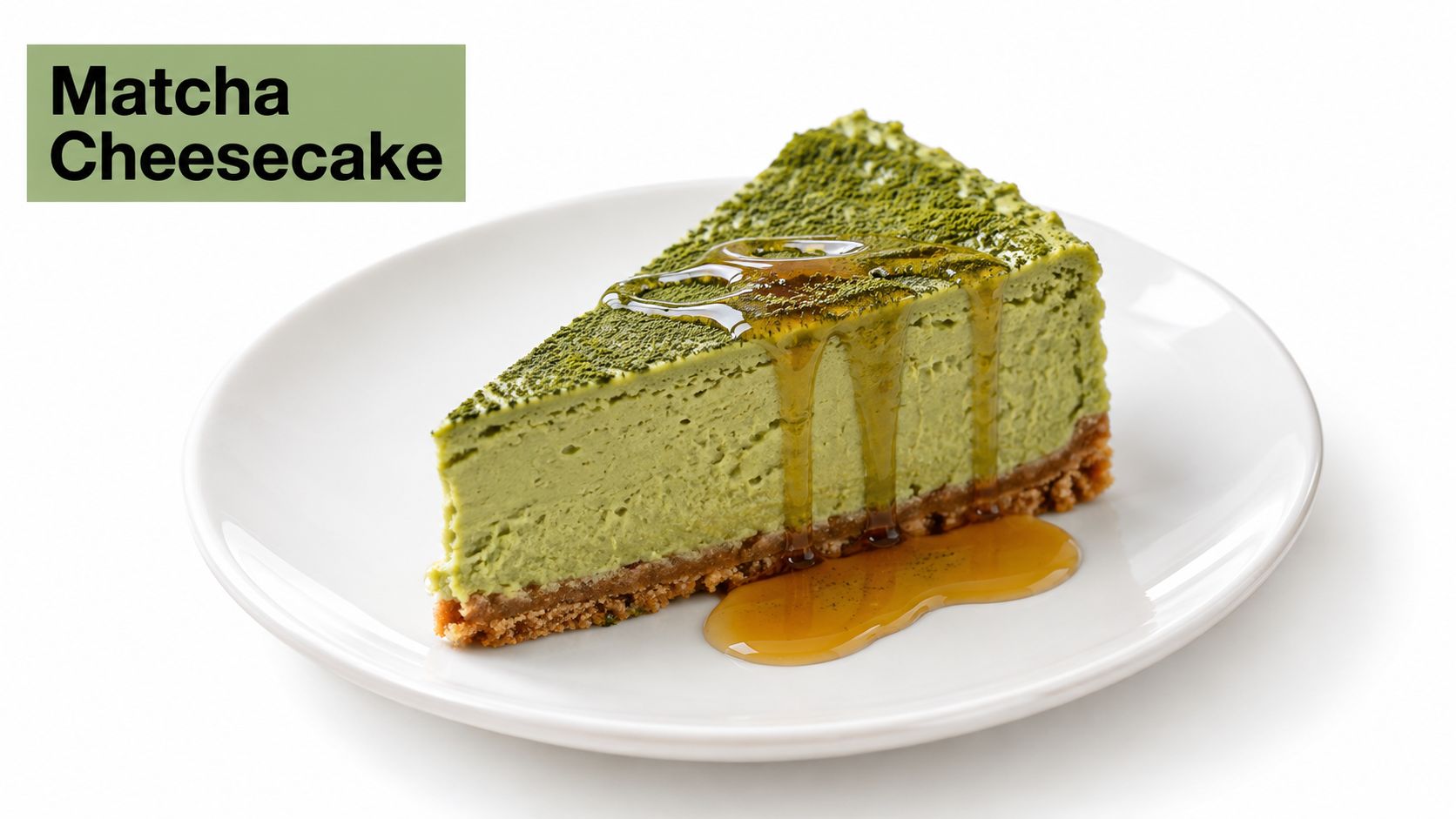
3. Matcha Cream Cheese Cheesecake with Ginger Kombucha Drizzle
Matcha cheesecake works best when the tea remains recognisable without dominating the filling. Cream cheese rounds off matcha's bitterness, while ginger kombucha adds acidity and a warm aromatic note to the drizzle. The result suits a dinner table or Japanese-inspired café menu, although fermentation does not make cheesecake a health food.
Start with the powder. Sift the matcha two or three times, then whisk it with a little warm water to make a smooth paste. This paste spreads colour and flavour through the dense cream cheese more reliably than dry powder, which can leave green specks or bitter pockets.
Build the cheesecake
Use cream cheese, eggs, matcha paste, vanilla and a measured sweetener for the filling. A conventional biscuit base gives familiar crunch, while an oat and nut base offers a different texture and may suit a gluten-free adaptation if every ingredient is checked.
Bake on a lower oven shelf with a water bath. The surrounding moisture supports gentler, more even cooking, which helps the filling stay soft rather than turning grainy. Cool the cake gradually at room temperature, then refrigerate it. Rapid cooling can encourage cracks, and overbaking can dry the centre.
For the topping, strain Pep Tea's Lemon & Ginger Kombucha and reduce it gently until concentrated. Use a thin drizzle, since it should sharpen the dessert rather than replace the sugar already calculated in the recipe.
Matcha supplies flavour and colour. It does not cancel the nutritional contribution of cream cheese, biscuits or sweeteners.
Serve smaller slices, with extra drizzle on the side for guests who prefer more acidity or sweetness. For café service, list allergens clearly and calculate nutrition from the exact ingredients used.
4. Matcha Oat Energy Bars with Dates and Chia Seeds
These no-bake bars are a practical pantry recipe, especially when you want a compact snack without turning on the oven. A food processor breaks down the dates into the sticky base, while oats provide chew, chia seeds add small bursts of texture, and nut butter holds everything together. Matcha brings a clear tea flavour, so you may need fewer chocolate chips or no coating at all.
“Energy bar” describes the format, not a guaranteed physiological effect. Dates and other dried fruit still contain sugar, which means a bar made without refined sugar is not sugar-free. That distinction matters for a walk, desk snack or lunchbox, particularly because oats, dates and nut butter create a dense serve.
Build the mixture
- Start with the dates: Pulse them until they become a tacky paste. If they are firm, soften them briefly before processing.
- Prepare the matcha: Whisk it with a small amount of warm water. This spreads the powder through the mixture and helps prevent bitter green pockets.
- Combine: Add rolled oats, chia seeds and nut butter, then stir through the matcha mixture until the ingredients hold together.
- Press and chill: Firmly pack the mixture into a lined tin. Refrigerate for at least two hours before slicing.
- Store: Keep the bars refrigerated for up to two weeks, or freeze them individually wrapped for up to two months.
A hot, wet knife gives cleaner edges. Crumbling means the mixture needs a little more nut butter or a splash of milk. If it feels oily, add oats gradually, then chill it again before assessing the texture.
For a lunchbox-friendly flavour, use less matcha and add orange zest, cinnamon or toasted coconut. Sunflower seed butter provides a nut-free alternative, but check packaged ingredients for allergen cross-contact. Smaller portions make sense when dates, nut butter and oats are pressed into a compact bar.
5. Matcha Lemon Pound Cake with Polenta and Olive Oil
A pound cake does not need butter to feel rich. Mild extra virgin olive oil keeps this version moist, while lemon lifts matcha's grassy, slightly savoury character. Fine polenta adds a delicate grain and lightly golden crumb, so the result has more texture than a plain sponge.
Choose the oil carefully. A peppery or strongly fruity variety can dominate the tea, whereas a mild one supports it. Culinary-grade matcha gives the clearest colour and flavour without turning the cake overly bitter.
A balanced formula
- Dry base: Fine polenta, flour or a tested gluten-free blend, baking powder and culinary-grade matcha.
- Aromatics: Lemon zest and vanilla, with a modest amount of sweetener.
- Liquid ingredients: Room-temperature eggs and mild extra virgin olive oil.
- Optional finish: Lemon juice mixed with icing sugar for a light glaze.
Sift the matcha, polenta and flour together. This distributes the powder evenly, much like spreading food colouring through a batter before it forms concentrated pockets. Rub freshly grated lemon zest gently into the dry mixture with your fingertips to release its aromatic oils. Room-temperature eggs also combine more smoothly with the oil, helping the batter emulsify.
Mix only until the ingredients come together.
Texture check: Stop stirring as soon as no dry patches remain. Extra mixing can make the crumb heavy, especially with a gluten-free flour blend.
For a gluten-free cake, verify the polenta, baking powder and flour blend against the needs of the person eating it. Polenta itself does not rule out gluten cross-contamination.
The glaze sharpens the citrus and improves presentation, but it increases sweetness. Leave it off for a less-sweet slice, then serve the cake with plain yoghurt and fresh berries. That combination keeps the lemon, matcha and olive oil in balance while adding a practical portion contrast for afternoon tea.
6. Matcha White Chocolate Macadamia Bliss Balls
Matcha bliss balls can taste like balanced tea or like sweetened white chocolate with green colouring. The difference comes from the matcha grade, amount and chilling time. Choose culinary-grade matcha for baking, then sift it so its grassy, umami flavour spreads evenly through the mixture.
Use macadamia butter for a smooth centre. Finely chopped macadamias create more texture and make the bites feel less like a truffle. White chocolate brings sweetness and fat, so a restrained version can use less of it and more macadamia, provided the mixture still binds.
Quick recipe guide
- Melt the white chocolate gently in a double boiler or in 30-second microwave bursts.
- Stir in macadamia butter or finely chopped nuts, vanilla and sifted matcha.
- Refrigerate the mixture for one hour before shaping. Chilling works like firming soft clay. It makes rolling cleaner and reduces sticking.
- Finish with desiccated coconut or a very light matcha dusting.
- Place the finished balls on parchment paper or a silicone mat for easier storage and serving.
If the mixture feels greasy, add a little more finely chopped macadamia rather than extra matcha. If it crumbles, it needs more binding from the chocolate or nut butter. Lemon zest can cut through excessive sweetness, although it changes the flavour toward a brighter citrus profile.
Pep Tea's matcha energy balls recipe provides another format for batch preparation. Treat these as confectionery-style bites rather than a sugar-free snack. Their compact size supports deliberate portions, while their sweetness can make several easy to eat unnoticed.
7. Matcha Banana Bread with Walnut and Kombucha Reduction
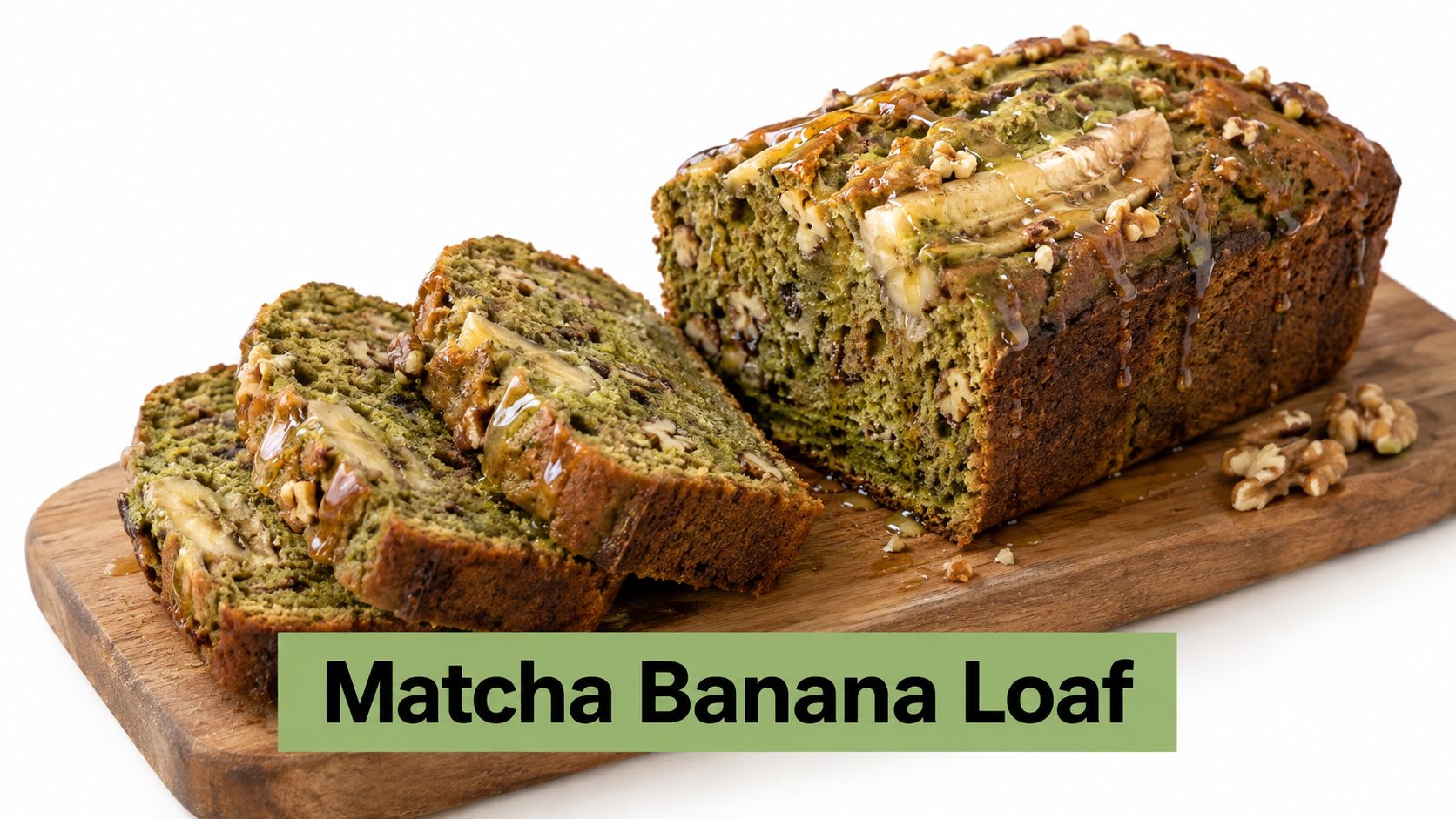
Matcha banana bread needs balance, not a heavy hand with the powder. Very ripe bananas supply moisture and fruit sweetness, while matcha adds a gentle green colour and savoury depth. Toasted walnuts bring aroma and crunch, giving the soft loaf a more interesting crumb.
For a pantry-conscious version, reduce the added sweetener when the bananas are heavily speckled with brown. Bananas still contribute naturally occurring sugars, and honey, maple syrup or a glaze adds more. Keep the liquid ingredients that support the loaf's structure, even when adjusting sweetness.
Recipe card
- Bananas: Mash overripe bananas with brown spots until mostly smooth.
- Matcha: Sift it with the flour and raising agents so the colour and flavour distribute evenly.
- Gluten-free option: Use a tested gluten-free flour blend designed for loaf cakes, rather than a single flour that may leave the crumb heavy.
- Walnuts: Toast them lightly, cool them, then fold them through the batter.
- Mixing: Combine wet and dry ingredients gently. Overmixing can make the loaf dense.
- Reduction: Simmer sugar-free kombucha over low heat until syrupy, strain any sediment, and brush a thin layer over the warm loaf.
A thin reduction acts like a finishing glaze, adding acidity without covering the matcha. If the loaf tastes bitter, use less matcha next time or pair it with riper bananas. If the centre stays wet, check that the loaf has cooled fully before slicing, since the crumb continues to set as it rests.
Serve a modest slice at brunch with plain tea. Sugar-free kombucha works as a separate drink, adding refreshment without making the bread probiotic or nutritionally complete.
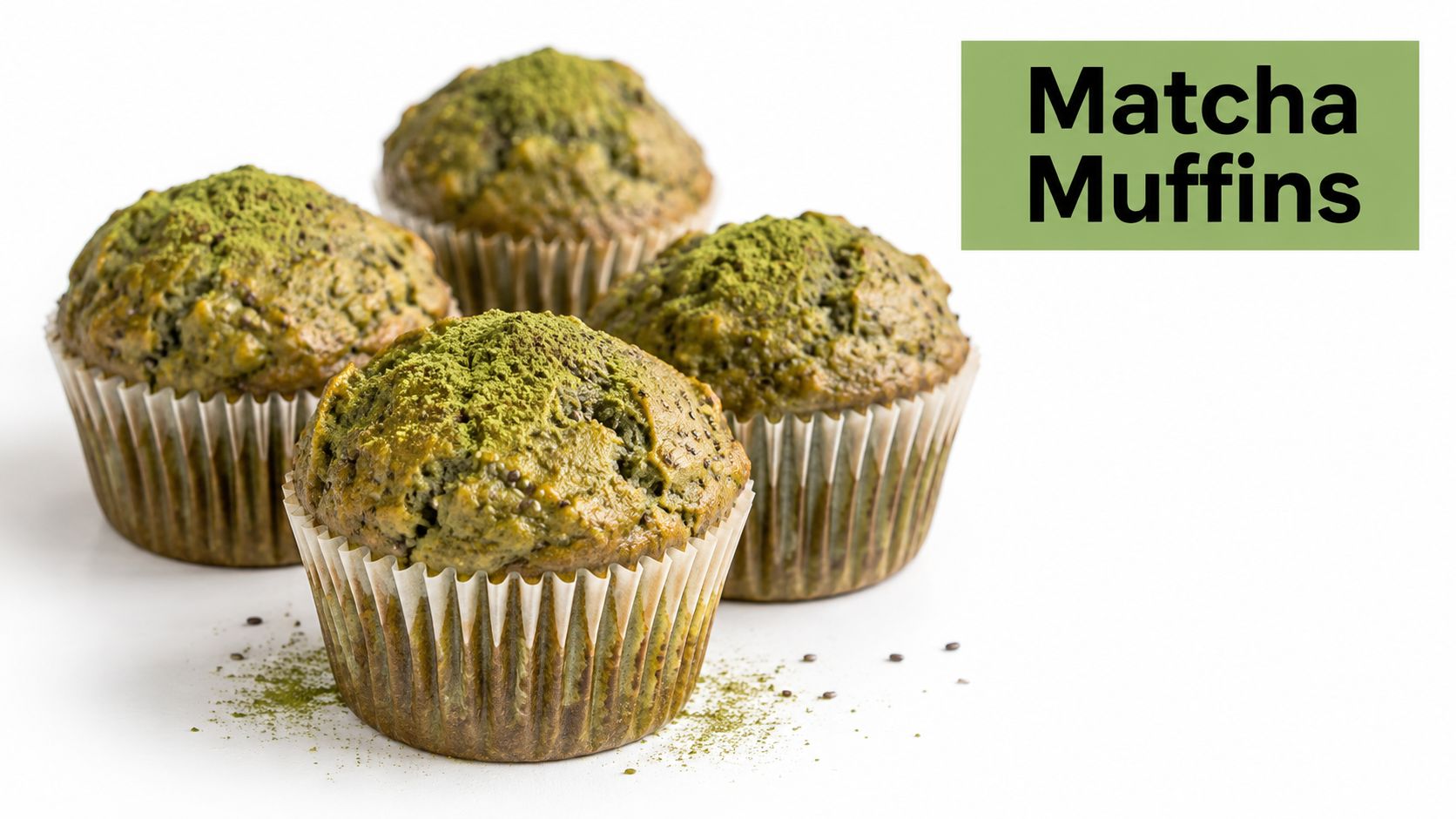
8. Matcha Chia Seed Muffins with Honey and Vanilla Bean
Matcha muffins do not need a heavy glaze to taste inviting. The better balance is a soft crumb, gentle sweetness and enough vanilla to round out the tea's grassy edge. Chia seeds bring small bursts of texture, while wholegrain flour makes the muffin more substantial.
Choose culinary-grade matcha with a fresh green colour and fine texture. Sift it with the flour and raising agents to prevent bitter pockets and uneven colour. Honey and maple syrup both sweeten the batter, but they still count as sugars in the finished muffins.
Start with the chia mixture. Stir the seeds into a little plant-based milk and leave them for 10 minutes. They absorb liquid, much like tiny sponges, so pre-hydration helps protect the crumb from becoming dry during baking.
Bake by texture, not colour
Scrape the vanilla bean seeds into the wet ingredients, then combine them with the hydrated chia. Sift the matcha and dry ingredients separately before folding everything together. Stop mixing as soon as no dry streaks remain, because overworking the batter can produce dense muffins.
Fill each muffin cup to three-quarters capacity. Add a small pinch of matcha on top before baking for colour and aroma.
For a brighter flavour, fold through berries or finely grated citrus zest. Their acidity can balance earthy matcha without adding a thick, highly sweet glaze. A dairy-free batch works with plant milk and a tested egg replacement. Choose a milk with enough body to support the chia mixture.
Caffeine note: Baking does not remove matcha's natural caffeine. The amount in each muffin depends on the powder used, the product and the number of portions.
For Australian readers who are pregnant, breastfeeding or caffeine-sensitive, the NSW pregnancy healthy-eating guidance recommends a maximum of 200 mg caffeine per day during pregnancy and breastfeeding. Check the supplier's information, divide the matcha used across the muffins and include other caffeine consumed that day.
Healthy Matcha Baking, 8-Recipe Comparison
| Title | Implementation Complexity 🔄 | Resources & Time ⚡ | Expected Outcomes 📊 | Ideal Use Cases 💡 | Key Advantages ⭐ |
|---|---|---|---|---|---|
| Matcha Almond Flour Cookies with Coconut Oil | 🔄 Low, simple mixing/baking; careful measurement needed | ⚡ Quick (15–20 min); moderate cost (almond flour, coconut oil) | 📊 Gluten-free, low‑sugar, sustained energy; ⭐⭐⭐⭐ | Health-conscious snacks, cafés, gifting | Nutritient-dense, low‑carb, MCTs + L‑theanine |
| Matcha Green Tea Protein Brownies with Dark Chocolate | 🔄 Medium, careful mixing; chocolate handling | ⚡ Moderate, melting chocolate, baking; protein powder needed | 📊 High‑protein, fudgy texture; ⭐⭐⭐⭐ | Post‑workout snack, fitness cafés, vegan desserts | Protein-rich, indulgent yet nutrient-dense |
| Matcha Cream Cheese Cheesecake with Ginger Kombucha Drizzle | 🔄 High, precision baking, water bath, long chill | ⚡ Longer prep + overnight chill; higher ingredient cost | 📊 Restaurant-quality, probiotic glaze; ⭐⭐⭐⭐⭐ | Special occasions, high‑end cafés, signature dessert | Functional (matcha + probiotics), visually impressive |
| Matcha Oat Energy Bars with Dates and Chia Seeds | 🔄 Low, no‑bake or light bake; very accessible | ⚡ Very quick (10–15 min hands‑on); budget‑friendly pantry staples | 📊 Portable, high‑fiber, sustained energy; ⭐⭐⭐⭐ | Meal prep, pre‑workout, hiking, lunchboxes | Cheap, batch‑friendly, gluten‑free option, omega‑3s |
| Matcha Lemon Pound Cake with Polenta and Olive Oil | 🔄 Medium, standard cake technique, gentle handling | ⚡ Moderate bake time; moderate ingredient cost (polenta, olive oil) | 📊 Moist, elegant crumb with citrus lift; ⭐⭐⭐⭐ | Afternoon tea, cafés, breakfast cake | Dairy‑free option, long shelf life, sophisticated flavour |
| Matcha White Chocolate Macadamia Bliss Balls (No‑Bake) | 🔄 Low, no‑bake, simple assembly and chill | ⚡ Quick to make (≈30 min incl. chilling); higher cost (macadamias, quality white chocolate) | 📊 Decadent, giftable bites; shelf‑stable refrigerated; ⭐⭐⭐⭐ | Gifting, events, café grab‑and‑go | Minimal skill, premium presentation, customizable |
| Matcha Banana Bread with Walnut and Kombucha Reduction | 🔄 Low, basic loaf technique + reduction step | ⚡ Moderate, bake time + 15–20 min reduction; uses common pantry items | 📊 Comfort loaf with probiotic glaze; ⭐⭐⭐⭐ | Brunch menus, cafés, bake sales | Uses overripe bananas, freezeable, crowd‑pleasing functional twist |
| Matcha Chia Seed Muffins with Honey and Vanilla Bean | 🔄 Medium, whole‑grain batter, chia prep affects texture | ⚡ Moderate bake time; ingredients like vanilla bean add cost | 📊 High‑fibre, photogenic breakfast item; ⭐⭐⭐⭐ | School lunches, cafés, meal prep | Versatile, omega‑3s from chia, naturally coloured and sweetened |
Make Matcha Baking Work for Your Kitchen
The best recipe depends on the occasion, the texture you want and how much preparation you can manage. Choose muffins or oat bars when you want a batch for breakfasts, lunchboxes or portable snacks. Choose cookies when you need individually portioned, gluten-free-friendly treats, remembering that almond flour creates a nut-based recipe rather than a universally suitable one.
For afternoon tea, banana bread and lemon polenta pound cake offer familiar formats with more interesting flavour. The banana loaf is soft and comforting, while the pound cake is brighter and more refined. Cheesecake and bliss balls suit entertaining because they can be prepared ahead and presented as deliberate, small serves rather than everyday grazing food.
A few technique rules will improve almost every matcha bake:
- Measure the matcha carefully: More powder doesn't always mean better flavour. Higher doses can increase bitterness.
- Sift before mixing: This prevents concentrated green pockets and improves colour consistency.
- Dissolve when the mixture allows: A smooth paste works especially well in dense batters, cheesecake fillings and chocolate mixtures.
- Avoid overmixing: Fold muffins, brownies and loaves until the ingredients have just combined.
- Judge sweetness with the whole recipe: Lemon, vanilla, ginger, berries, dark chocolate and salt can make a lower-sugar bake taste more complete.
- Record the yield: Divide the total matcha used by the number of portions if caffeine awareness matters.
Australia's food-consumption data provides useful context for taking sugar reduction seriously. In 2022–23, apparent free-sugar consumption was 67 grams per person per day, and 89% of that consumption came from discretionary foods, a category that includes cakes, biscuits and pastries, according to the Australian Bureau of Statistics. That doesn't prove matcha baking is healthy, but it does support a practical approach: reduce added sugar where you can, keep portions measured and don't let colour or wellness language disguise a rich recipe.
Natural sweeteners aren't sugar-free. Honey, maple syrup, dates, ripe bananas and kombucha reductions can all contribute sweetness, and the final nutrition depends on the exact quantities. Matcha also doesn't cancel out butter, cream cheese, chocolate, oil or refined flour, so describe these recipes as health-conscious adaptations or lower-sugar options only when the formulation supports that wording.
Matcha selection matters, too. Use culinary-grade organic matcha for baking and reserve ceremonial grade for whisking when you want to appreciate its finer drinking character. For safety, avoid isolated caffeine powder or concentrated performance products. Food Standards Australia New Zealand's guidance on caffeine powders states that pure or highly concentrated caffeine products are banned from retail sale, and foods containing 5% or more caffeine in solid or semi-solid form are banned from sale to the public. Ordinary tea products with naturally occurring caffeine aren't included in that ban, but food-grade matcha from a legitimate retail product remains the sensible choice.
Finally, think about the pairing. A lightly sweetened matcha muffin doesn't need to sit beside a sugary latte, syrup or sweetened mixer. Pep Tea's sugar-free organic kombucha can provide a refreshing Australian-made option alongside a bake, but the drink is a beverage pairing, not proof that the dessert supports gut health or immunity. Explore different matcha strengths, taste as you go and choose the recipe that fits your kitchen rather than chasing a perfect label.
Pep Tea offers organic Japanese matcha suited to whisking and culinary use, along with sugar-free organic kombucha brewed in the Hunter Valley, NSW. Visit Pep Tea to explore matcha for your next bake and find a refreshing kombucha pairing for the finished treat.
What Is Matcha Cake? a Practical Baker’s Guide
Matcha cake is a cake flavoured and coloured with finely ground matcha green-tea powder, while its texture comes mainly from flour, fat, eggs, sugar and the chosen cake style. In one Australian matcha cake bites recipe, the matcha is measured in teaspoons, while the structure comes from ingredients such as 225 g self-raising flour, 220 g sugar, 125 g plant milk and 125 g vegan butter.SBS Food's matcha cake bites recipe
So, what is matcha cake beyond a green slice on a café counter? It's a useful baking category rather than one fixed recipe. Matcha can tint a light sponge, deepen a creamy mousse, flavour a Swiss roll or add a vegetal note to a layered celebration cake. Two cakes may look almost identical from the outside, yet one may be airy and springy while another is dense, moist and rich.
The difference comes from how the powder is used, which grade you choose, and what surrounds it. This guide will help you recognise the style you want, choose a sensible matcha for baking and avoid the common assumption that more green powder automatically means a better cake.
What Matcha Cake Actually Is
Matcha cake is cake made with matcha powder, a finely ground form of green tea that contributes colour, flavour and tea-derived compounds. Matcha is not a green food colouring with a neutral taste. Pure powder brings a fresh, grassy character, gentle bitterness and, in some recipes, an umami-like depth.
For a practical introduction to the ingredient itself, PepTea's guide to what matcha powder is is a useful starting point. Once you understand the powder, the cake becomes easier to judge because you can separate the tea from the baking structure.
Why the same name covers different cakes
Imagine ordering matcha cake at a café. The display might include a pale-green chiffon, a compact Swiss roll and a chilled mousse cake. All three qualify because matcha describes the main flavour direction, not a mandatory crumb, filling or cooking method.
A sponge is usually the most familiar format, with a soft crumb that can carry buttercream or cream. Chiffon tends to feel lighter because its oil-based batter and aerated structure create an airy bite. Mousse cake may contain a baked base, but its main experience is creamy, chilled and layered. A Swiss roll offers a thin, flexible sheet wrapped around filling, while a layer cake makes the matcha flavour part of a more elaborate assembly.
Ordering clue: Ask whether the cake is baked or chilled, light or dense, and filled or plain. “Matcha cake” alone doesn't answer those questions.
How to recognise real matcha flavour
Look for a colour that sits somewhere between soft pistachio and deeper leafy green, although colour varies with the powder, recipe and heat exposure. The aroma should suggest tea, fresh leaves or mild grass rather than sweet vanilla.
A cake that is green but tastes only of sugar may contain very little matcha, or it may rely on colouring and flavouring. That doesn't make it automatically poor, but it creates a different product. In Australia, retail examples show matcha can appear at only 1% in a strawberry-matcha cake, demonstrating how a small amount can still influence colour and flavour.Australian matcha ingredient example
The most reliable definition is therefore simple: matcha cake is a cake in which matcha provides the tea identity, while the flour, eggs, fat, sugar, starches and method determine how the slice behaves.
How Matcha Shapes Flavour and Texture
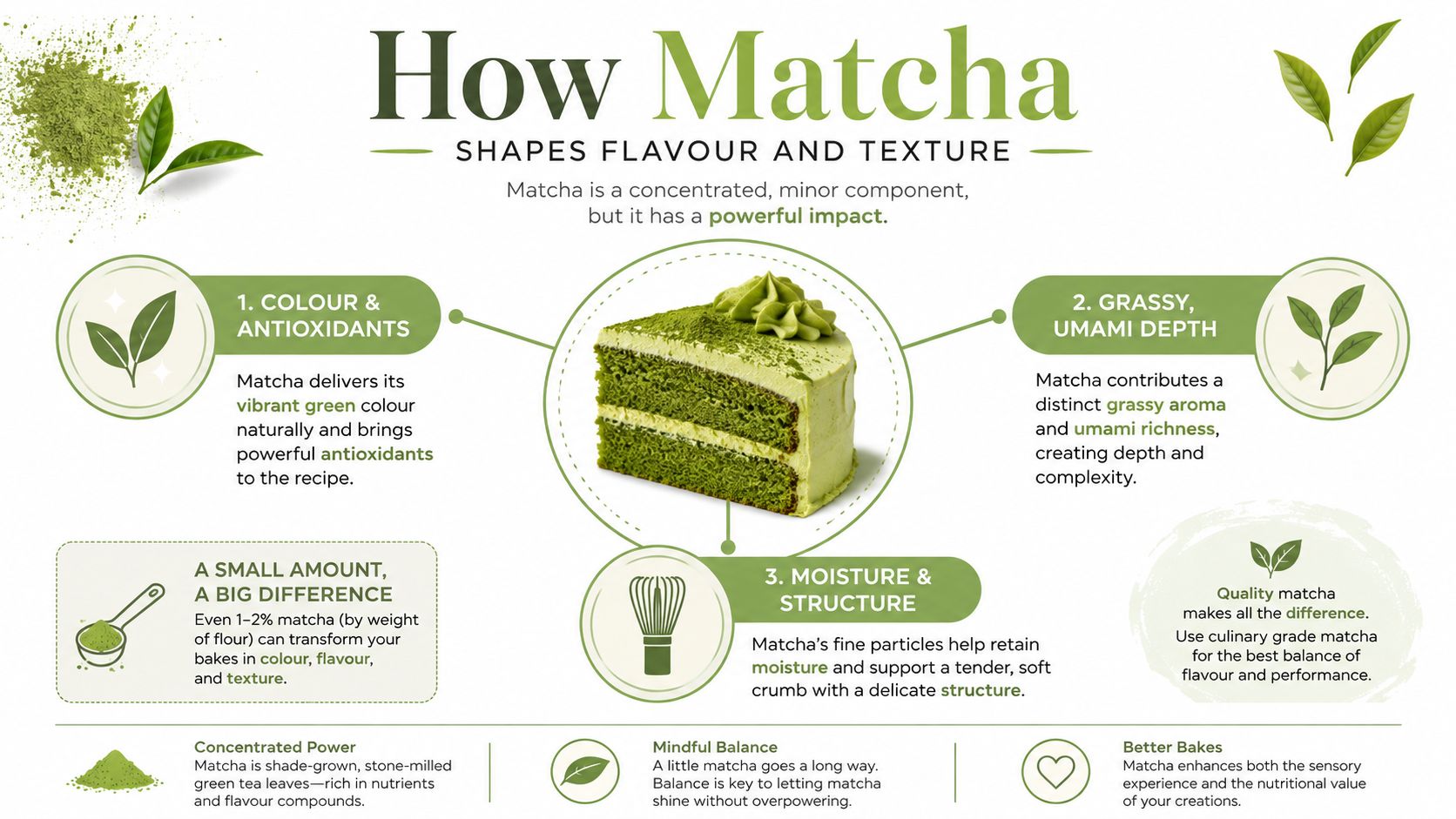
Why can a cake contain only a little matcha yet taste unmistakably like tea? Matcha works like a concentrated seasoning within the formula. It colours the batter and adds a leafy, slightly bitter finish, while flour, eggs, fat and sugar build the cake's structure, softness and sweetness.
A modest amount can therefore influence the whole slice without carrying its weight. An Australian formula uses 2 teaspoons of matcha in the cake base and another 1 teaspoon in the white chocolate shell, while flour, sugar, vegan butter, plant milk and buttercream provide the main structure and texture.SBS Food's matcha cake bites formula
Read the cake as an ingredient map
| Component | Main role | Practical result |
|---|---|---|
| Matcha powder | Colour and concentrated tea flavour | Green hue, grassy aroma and gentle bitterness |
| Flour and starches | Framework and crumb formation | Sliceable structure and body |
| Eggs | Binding, lift and richness | Stability, aeration and tenderness |
| Fat | Tenderness and moisture perception | Softer mouthfeel and fuller flavour |
| Sugar | Sweetness, browning and moisture management | Balance against matcha's bitterness |
| Raising agents | Gas production and lift | More open or lighter crumb |
| Fillings and frostings | Contrast and moisture | Creaminess, sweetness and visual definition |
The surrounding ingredients determine whether matcha tastes smooth, sharp or subdued. Sugar balances bitterness, fat gives the flavour a rounder mouthfeel, and cream-based fillings provide a cool contrast. Sweetness should support the tea rather than conceal uneven mixing or old powder.
Distribution matters. Sift matcha with the dry ingredients, or blend it into a smooth paste with a small amount of liquid before adding it to the batter. Unmixed powder can leave bitter green flecks while the rest of the cake remains pale.
Colour offers a useful clue, not a final verdict. A vivid green cake may have a mild tea flavour if only a small amount of matcha is present. A darker cake can taste harsh when the powder is overused or the batter receives excessive heat.
Pure powder isn't the same as latte mix
Check the ingredient panel before replacing matcha with a latte product. Australian retail information shows that some latte mixes contain sugar, maltodextrin, vegetable oil or flavouring, and one listed product reports 6.8 g of sugars per 10 g serve.Australian matcha latte nutritional information
The blend may make the batter sweeter, dissolve differently and change the crumb. Pure culinary matcha gives more predictable results, while a sweetened premix suits a recipe formulated for its added ingredients.
Popular Matcha Cake Styles
The best matcha cake style depends on the texture you want, the time available and whether the dessert needs to travel or wait in the fridge. A light cake for afternoon tea has different requirements from a make-ahead centrepiece.
Australian mainstream recipe publishing already shows matcha in more than one home-baking format. SBS Food published matcha cake bites in 2023 and a matcha and almond layer cake in 2018, showing an established presence across at least a 5-year span in national food media.SBS Food's matcha and almond layer cake
| Cake style | Typical texture | Best suited to |
|---|---|---|
| Sponge | Soft, springy and straightforward | Birthdays, slicing and simple frosting |
| Chiffon | Airy, tender and light | Afternoon tea or a less heavy dessert |
| Mousse cake | Creamy, chilled and layered | Make-ahead entertaining |
| Swiss roll | Flexible sheet with a soft filling | Shareable slices and compact presentation |
| Layer cake | Moist sponge with filling and frosting | Celebrations and dramatic decoration |
Sponge and chiffon
A standard sponge gives you the clearest route into matcha baking. Its structure is familiar, and a thin layer of cream or buttercream can soften the tea's vegetal edge. It's a sensible choice when you want a dependable cake that can be cut into neat portions.
Chiffon feels lighter and more delicate. Oil helps maintain a tender mouthfeel, while whipped eggs provide lift. The trade-off is fragility. Overmixing or rough handling can reduce the air you worked to create, so chiffon rewards a gentle folding technique.
Mousse and Swiss roll
Mousse cake makes matcha feel more like a patisserie dessert. The baked base may be thin, with the main flavour carried by a creamy matcha layer. This style is ideal if you want a pronounced tea impression without putting a large amount of powder into a flour-based batter.
A Swiss roll uses a flexible sheet that's baked evenly, cooled appropriately and wrapped around cream, ganache, jam or red bean paste. Its thin format distributes matcha through every bite, but the sheet can crack if it loses too much moisture or if the filling is applied too thickly.
Layer cake
Layer cake is the most adaptable format. Matcha can appear in the sponge, the buttercream, a white chocolate filling or several components at once. Almond, raspberry and cream can make the cake feel refined, while red bean creates a more traditional Japanese-inspired pairing.
The same powder can therefore produce five very different desserts. Search by the structure you want first, then add “matcha” to narrow the flavour.
Choosing the Right Matcha Grade and Amount
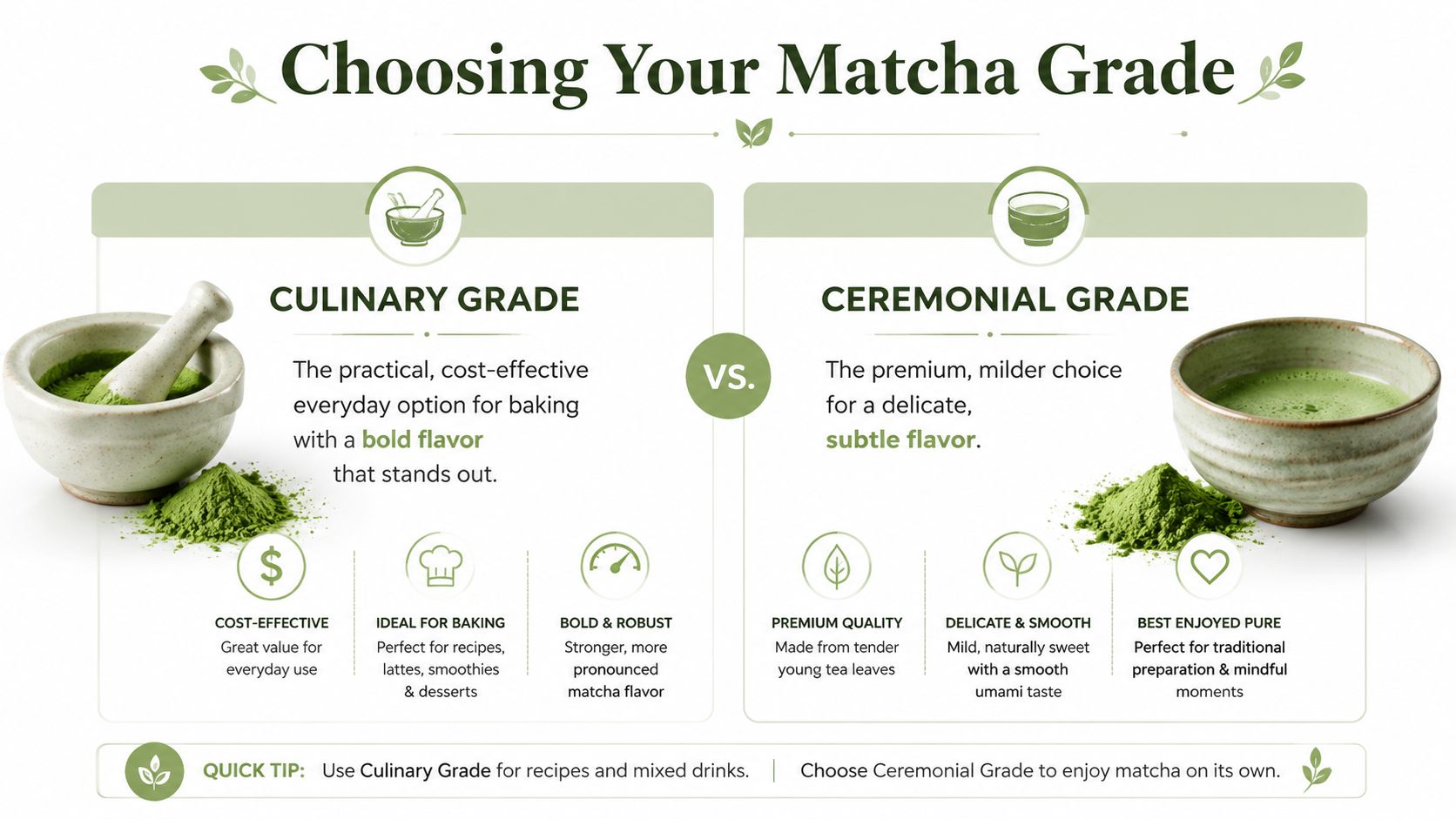
Which matcha should go into a cake, and how much is enough? For most baking, culinary-grade matcha is the practical choice. It is formulated to work alongside flour, fat, sugar and fillings, so its flavour can remain noticeable after mixing. It also suits a full cake or regular baking better, because you are not paying for delicate qualities that frosting may partly hide.
Ceremonial-grade matcha is made for drinking and can have a smoother, more refined profile. That quality does not automatically make it better in cake. Once the powder is spread through batter, buttercream and filling, a dependable culinary grade may provide better value and a clearer baking flavour.
Use a measured starting point
Begin with a measured amount rather than adding powder until the batter looks green. Two teaspoons in the cake base is a useful starting point for recipe development, then you can assess the baked flavour. Treat it as a guide, not a universal rule. A small loaf, thin sheet and tall layer cake distribute matcha differently, much like spreading the same amount of cordial through glasses of different sizes.
For a gentler result, keep most of the matcha in the sponge and pair it with vanilla or cream. For a stronger tea profile, put some powder into the frosting or filling. Those components are less diluted by flour, giving you more control when the cake tastes balanced but not distinctive enough.
Cost-conscious approach: Use culinary matcha throughout the cake, or reserve a premium powder for buttercream, mousse or a finishing dust, where its aroma is easier to notice.
Matcha also contributes caffeine, so the amount matters beyond colour and flavour. A darker green cake is not necessarily better. Extra powder can bring a sharper, more bitter vegetal note, while sugar, dairy and white chocolate can soften that edge.
Scale the amount in the same proportion as the batter. If you double the mixture, double the matcha first, then taste and assess the balance rather than chasing a deeper colour. A larger pan may produce a thinner cake, while a smaller, taller cake can make the same quantity taste more concentrated.
PepTea's guide to different grades of matcha helps compare drinking and cooking purposes before you buy. The useful question is where the matcha will be tasted, how strongly it should register, and which parts of the dessert need to carry it.
Making Matcha Cake Successfully
Good matcha cake begins before the oven is switched on. Check whether the recipe uses pure matcha or a blend, gather the ingredients, and bring butter, eggs or other temperature-sensitive items to the condition the method requires. A chiffon, loaf and mousse each need different handling, but the sequence below provides a dependable starting point.
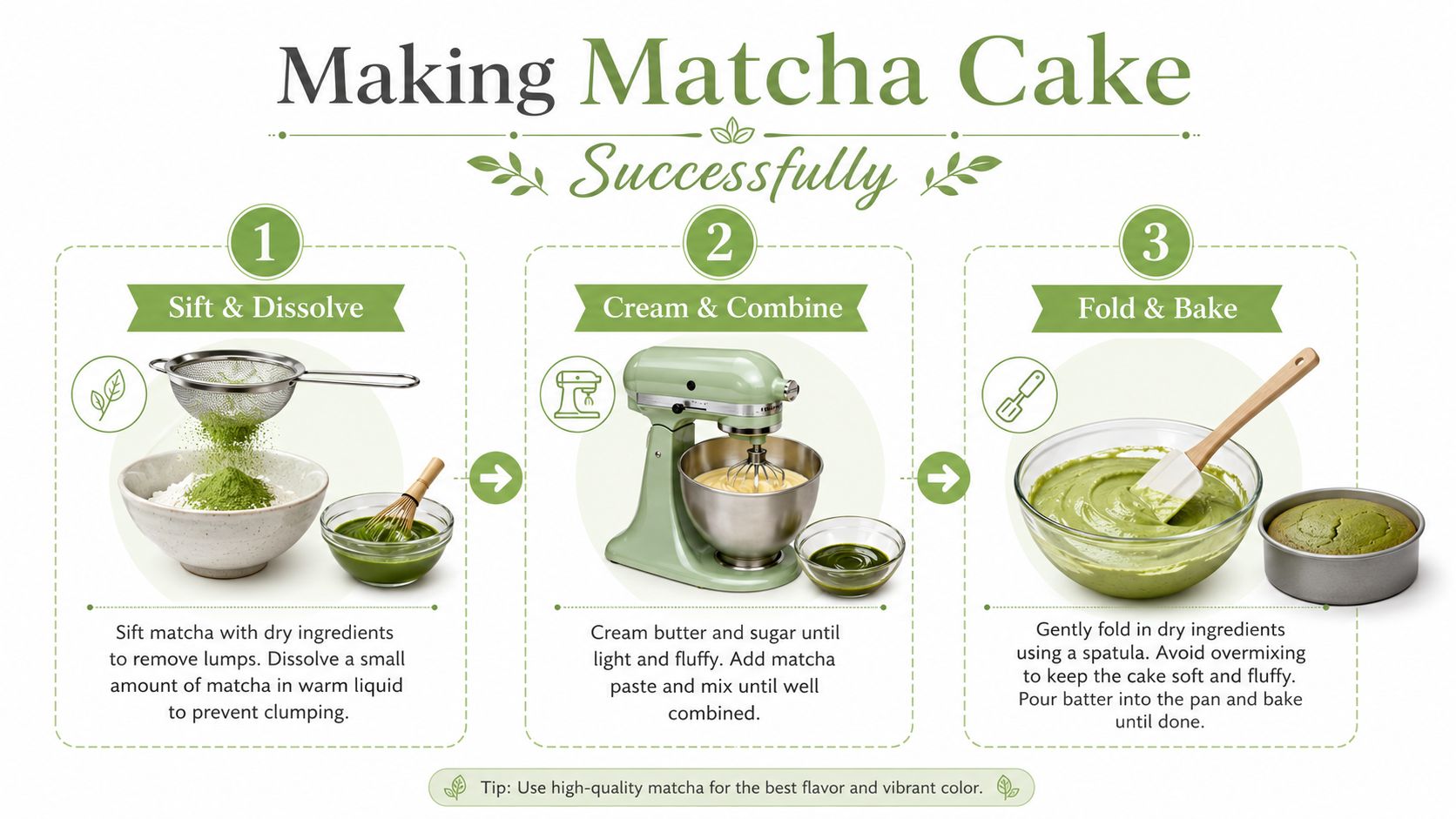
Prepare and disperse the powder
Sift the matcha. Pass it through a fine sieve with the flour or other dry ingredients. This breaks up compacted powder and distributes the colour through the batter.
Make a paste when needed. Stir the matcha with a small amount of warm liquid or another suitable wet ingredient. Aim for a smooth paste rather than a hot mixture. Clumps are difficult to remove after the powder is buried in the batter.
Taste for balance. A separate matcha-and-cream or frosting component can show whether the tea flavour is being softened too much by sugar or pushed towards bitterness. Avoid tasting raw batter containing egg.
Build the structure carefully
For a creamed cake, beat the butter and sugar as directed. If the recipe relies on aerated eggs, whisk them properly. With chiffon, fold the dry and wet ingredients gently so the mixture keeps the air that gives the cake its light crumb.
Overmixing can develop toughness and create a dense cake. Under-mixing leaves streaks of matcha and pockets of flour. Stop once the batter is combined, transfer it to the prepared tin, and follow the recipe's baking cues rather than judging doneness from colour alone.
Coffee-baking guidance also helps explain how a concentrated flavour should be added without treating it as a bulk ingredient. These pro techniques for coffee baking offer a useful comparison for planning where matcha will have the greatest impact.
Diagnose one variable at a time
- Pale or streaky colour: The powder was not dispersed properly, or it was added late without enough mixing.
- Bitter edges: The formula may contain too much matcha for the cake's size, or the edges may have dried during baking.
- Dry crumb: Check for overbaking before changing the flour. Matcha cannot replace lost moisture.
- Collapsed mousse: The mixture may have been set too quickly, or its supporting structure was not stable enough.
- Cracked Swiss roll: The sheet may have been overbaked, cooled in the wrong shape or filled too heavily.
For Australian recipes, 1 teaspoon is 5 ml and 1 cup is 250 ml. Use the same measuring system when scaling a formula or comparing recipes, because small differences can alter a delicate batter.
PepTea's guide to baking with matcha and beyond provides further ideas for using the powder in cakes and other baked desserts.
Pairings and Dietary Variations
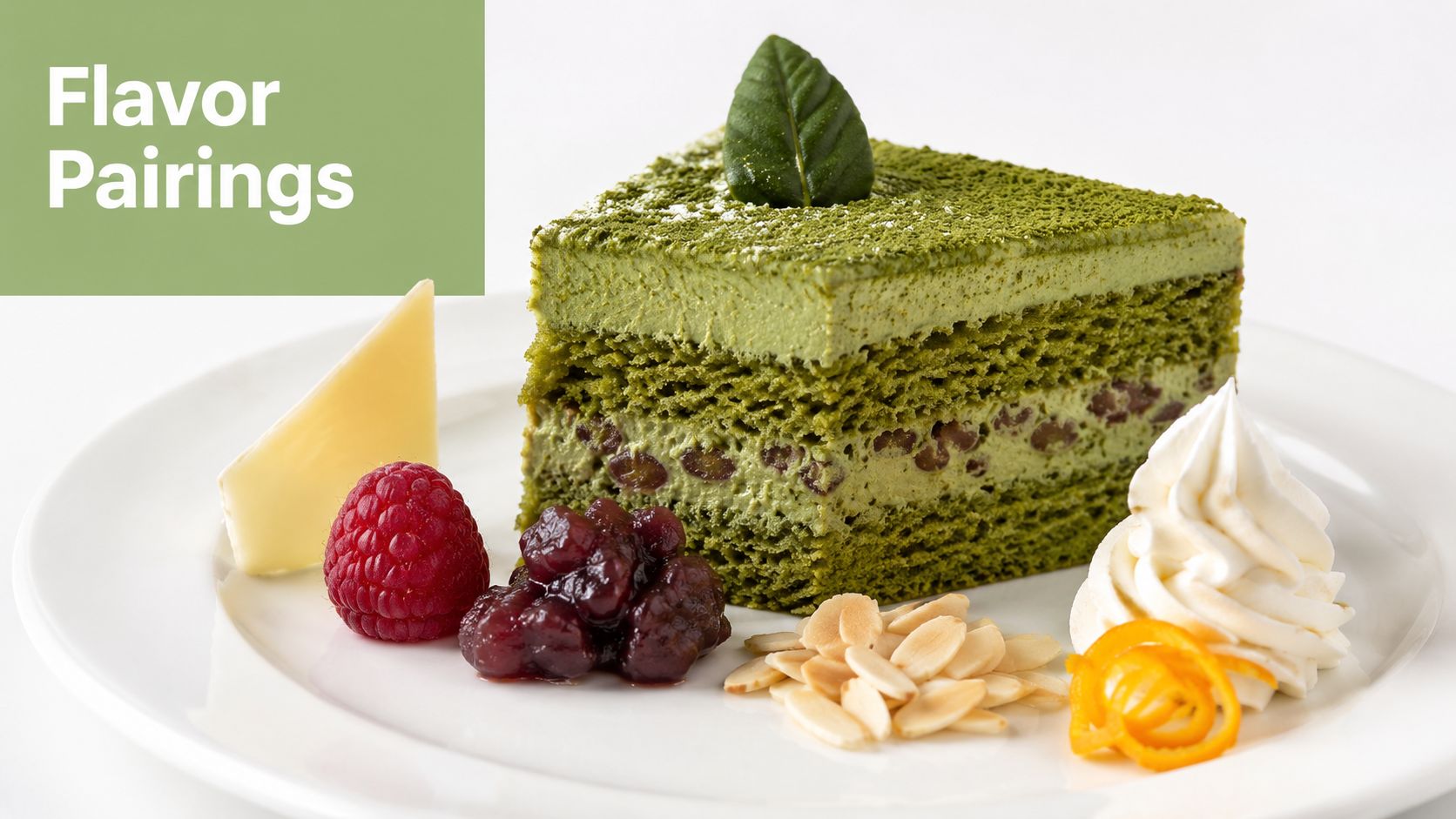
Matcha tastes best when a pairing supports its grassy profile instead of masking it. White chocolate adds creamy sweetness and softens bitterness, while raspberry supplies acidity and fruit brightness. Red bean brings an earthy sweetness that feels especially natural with green tea, and almond adds nuttiness without competing aggressively.
Citrus can lift a dense cake, particularly through zest in a glaze or cream. Plain whipped cream creates a clean contrast, while mascarpone or cream cheese gives a richer, slightly tangy finish. For a chiffon, keep the topping light. A sturdy layer cake can handle a thicker frosting and more elaborate filling.
Choose the drink beside it
Unsweetened green tea keeps the tasting experience focused on the cake. Coffee brings roast and bitterness, which can make a sweet matcha dessert feel more intense. Kombucha adds acidity and refreshment, but choose a flavour that won't fight the filling. Ginger can cut through cream, while lime and ginger can sharpen a rich slice.
Caffeine deserves attention when the cake is served with another caffeinated drink. ABC News reports that a 250 ml cup of coffee contains about 100 mg of caffeine, compared with about 60 to 75 mg in a typical 250 ml cup of matcha.ABC News caffeine comparison The amount in a slice depends on the recipe and how many portions it makes, so sensitive customers should consider the whole café order.
Adapt the formula, not just the label
A vegan cake can use plant milk, plant butter and a suitable egg replacement, but each swap changes emulsification and structure. Gluten-free versions need a recognised gluten-free flour blend and, where necessary, a binder to prevent crumbling. A sugar-reduced cake may taste less sweet, but it isn't automatically sugar-free.
Read the full ingredient list, especially for premixed matcha products. Australian packaged-food rules generally require ingredients to be declared unless an exemption applies, making the panel important for identifying flour, dairy, eggs, soy, added sugar and blended matcha ingredients.Australian Food Standards Code ingredient requirements
Quick Matcha Cake Ideas
Start with the format that matches your confidence rather than attempting the most decorated cake immediately.
For a simple afternoon bake, make a matcha sponge or loaf using culinary-grade powder and finish it with vanilla buttercream, cream cheese frosting or a light glaze. Sift the matcha with the flour, keep the batter gently mixed and let the cake cool fully before decorating. This route suits a standard home oven and gives you a clear read on the powder's flavour.
For a make-ahead dessert, use matcha in a mousse or layered cake. Put the tea flavour into the cream or filling as well as the base, then allow enough time for the chilled layers to set. White chocolate, raspberry and almond are strong choices when you want contrast without losing the green-tea identity.
For sharing, turn one sheet cake into small bites or try a Swiss roll. Cake bites create more surface area for a white chocolate shell or dusting, while a roll gives you a clear spiral of matcha sponge and filling. Australian recipe coverage includes both bite-sized and layered formats, so you can choose between casual portions and a celebration-style centrepiece.SBS Food's Australian matcha cake coverage
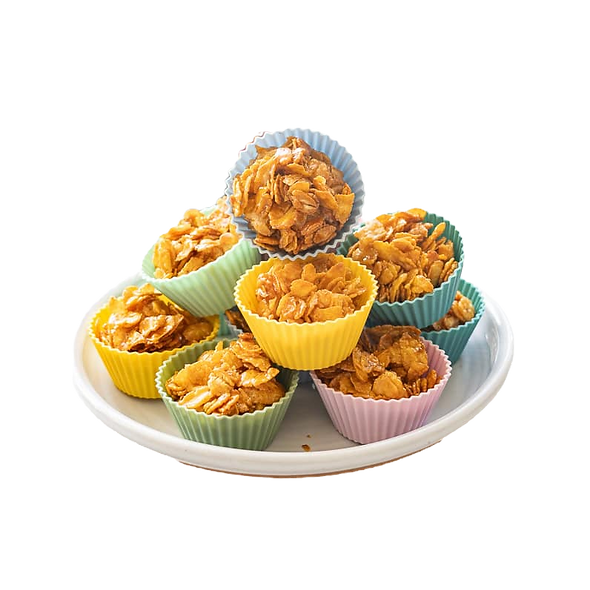
For decoration inspiration beyond tea desserts, an illustrated Dubai gourmet honey cornflakes treat shows how texture and garnish can make a small sweet feel special. Use the same principle with toasted almonds, raspberries or a fine matcha finish.
Serving, Storage and Buying Advice
Matcha doesn't automatically make cake healthy. The overall profile is still shaped mainly by sugar, fat, portion size and the amount of powder used, while matcha contributes colour and tea character in a relatively small formulation role. Serve a slice as a dessert, not as a substitute for a balanced meal or a cup of plain tea.
Keep a plain sponge sealed so it doesn't dry out. Filled or frosted cakes may need refrigeration, particularly when they contain fresh cream, mousse or other perishable components, although chilling can firm the crumb and mute aroma. Let the cake stand briefly before serving if the recipe allows.
Remember that matcha contains caffeine, and chocolate or coffee served alongside it can add more. When buying, check the grade, ingredient list, cake style and desired intensity. If you want an organic powder for baking or drinking, explore PepTea's range with those practical criteria in mind.
Pep Tea offers Japanese organic matcha in ceremonial and culinary styles, along with Australian-brewed sugar-free organic kombucha from the Hunter Valley, NSW. Visit Pep Tea to compare matcha options for your next cake, latte or everyday tea ritual.