
Tag: organic green tea caffeine
Organic Green Tea Caffeine: A 2026 Guide to Calm Energy

You're probably here because you've had that exact moment at the kettle. Coffee feels a bit too intense. Herbal tea feels too sleepy. Green tea seems like the sensible middle ground, but then the question kicks in. Does organic green tea have caffeine, and if it does, how much are you really drinking?
That uncertainty is completely fair. A lot of people choose green tea because they want a gentler kind of energy, then realise they're not quite sure whether they've picked a low-caffeine drink, a moderate one, or something stronger than expected. That's especially true once matcha enters the conversation, because not all green tea behaves the same way in the cup.
More Than Just a Morning Ritual
A friend might swap their second flat white for green tea and say they want a “cleaner buzz”. What they usually mean is simple. They want to feel awake without feeling rattled. They want focus without the sharp edge. They want energy that fits into a normal day, not a spike that sends them looking for another drink an hour later.
That's where organic green tea caffeine gets interesting.
The first thing to clear up is the myth that green tea is caffeine-free. It isn't. Green tea comes from Camellia sinensis, the same tea plant family that naturally contains caffeine. So when you choose organic green tea, you're not choosing a caffeine-free option. You're choosing a tea with naturally occurring caffeine, and the way that caffeine feels can be quite different from coffee.
For readers comparing products and labels, resources like Nutrition Geeks on Herbalife green tea can be useful for seeing how often people ask the same question in different forms: is it energising, is it mild, and how does it fit into a health-focused routine?
If you're newer to the category, our guide to what organic green tea is helps explain why farming method, leaf quality, and style all shape the final experience in your cup.
Green tea isn't something to fear. It's something to understand.
That's the key shift. Once you stop treating caffeine like a mystery ingredient and start seeing it as part of the tea's natural chemistry, your choices get easier. A light brewed cup, a concentrated bowl of matcha, and a fermented tea drink can all sit under the green tea umbrella, but they won't affect you in exactly the same way.
Some people want a gentle lift while they answer emails. Others want the calm concentration that helps with study, creative work, or a long morning without snacking. The useful question isn't only “how much caffeine is in it?” It's also “what kind of energy do I want?”
How Much Caffeine Is in Your Favourite Green Tea
Let's start with the clearest anchor point. A typical 8-ounce, or about 250 mL, cup of green tea contains roughly 20 to 50 mg of caffeine, according to this green tea caffeine reference. That same source notes that 2 cups may provide about 40 to 100 mg of caffeine.
That gives you a practical baseline for organic green tea caffeine in a standard brewed cup.
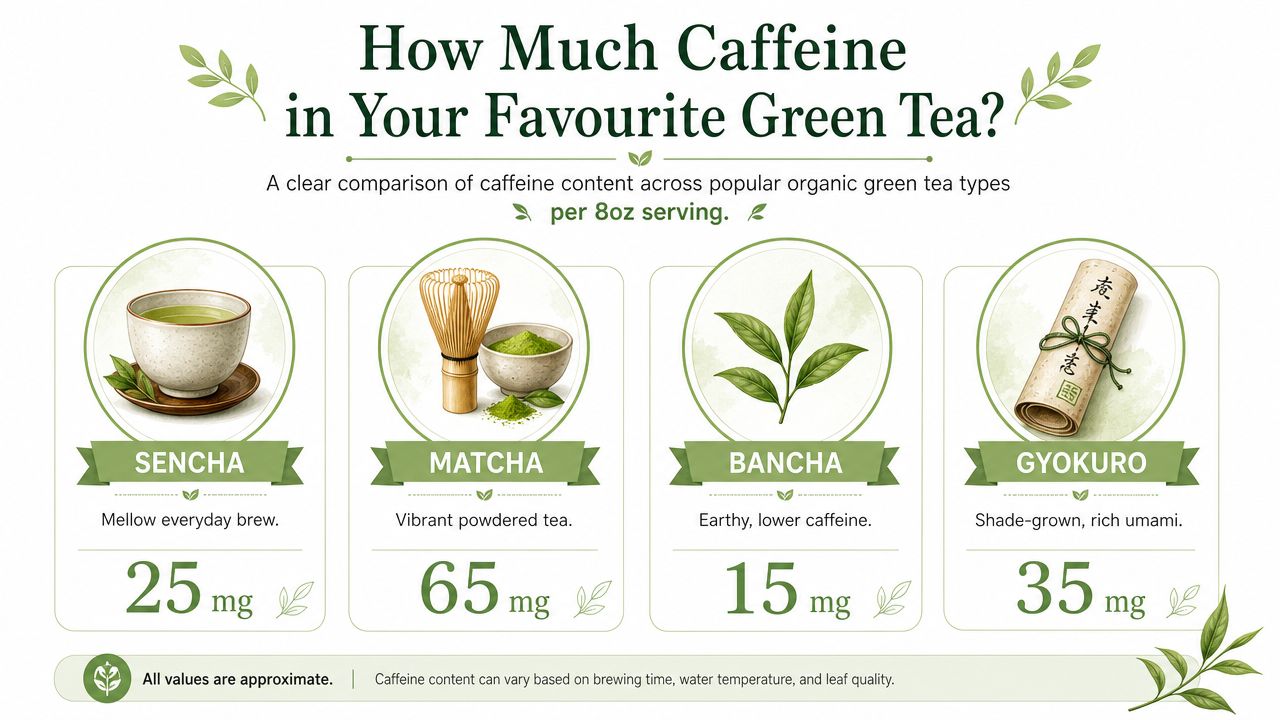
Caffeine content at a glance
| Beverage | Typical Serving Size | Average Caffeine (mg) |
|---|---|---|
| Brewed green tea | 250 mL | 20 to 50 |
| Two cups of brewed green tea | 500 mL total | 40 to 100 |
| Matcha | Varies by preparation | Often feels stronger than brewed green tea because you consume the whole leaf |
| Black tea | Typical cup | Usually stronger than many green teas qualitatively |
| Coffee | Typical cup | Usually higher than green tea qualitatively |
Why one green tea can feel stronger than another
The numbers above are only the start. Two drinks can both be called green tea and still deliver a very different experience.
Brewed loose leaf or tea bag green tea works by extraction. Water pulls caffeine out of the leaves. If the brew is short and gentle, less comes out. If it's hotter and longer, more comes out.
Matcha is different because you whisk powdered tea into water and drink the leaf itself. You're not steeping and discarding leaves. You're consuming the whole tea. That's why many people notice matcha feels more concentrated, especially in a latte or a traditional bowl.
If you want a more detailed breakdown of how matcha compares in everyday drinks, this article on caffeine in a matcha latte is a useful next read.
A simple way to think about it
Think of brewed green tea like making vegetable stock. You're pulling flavour and compounds out of the ingredient into water.
Matcha is more like blending the whole vegetable into the soup. Nothing gets left behind.
Quick takeaway: “Green tea” is one category, not one caffeine level.
That's where readers often get tripped up. They ask for one answer, but the answer depends on form. A light sencha, a strong gyokuro, and a matcha latte can all sit in the same family while feeling very different in your body.
The practical lesson is this. If you're trying to manage your daily intake, don't stop at the word green tea on the label. Ask what kind of green tea it is, how it's prepared, and how much leaf you're consuming.
Factors That Influence Caffeine Levels
Organic green tea caffeine is not one fixed number. It behaves more like the final strength of a soup. The leaves set the starting point, and your brewing choices decide how much ends up in the cup.

That matters because two cups of green tea can look similar and feel completely different. One may give you a calm, steady lift. Another may feel much stronger. The difference often starts long before the water touches the leaf.
Tea varietal and growing conditions
Some teas are naturally set up for a stronger effect. Shade-grown green teas are a classic example. When the plant grows with less sunlight, its chemistry shifts. The flavour often becomes sweeter and richer, and the stimulating effect can feel more noticeable too.
That helps explain why matcha and gyokuro often feel more intense than a lighter everyday sencha. The plant's environment shapes the cup from the very beginning. If you want a broader background on how green tea compounds vary across products, VitzAi's guide to green tea is a helpful reference.
Leaf age and processing
Young leaves usually create a brighter, more lively brew. Older leaves often taste softer and tend to feel gentler.
Processing changes things again. Whole leaves release compounds more gradually. Broken leaves and finely milled tea expose more surface area to water, so extraction happens faster. That is one reason powdered teas can feel stronger even before you change the amount you use.
Preparation method
Form matters.
A loose leaf green tea gives water access to the leaf for a limited time, then you remove the leaves. Powdered tea works differently because the tea stays in the bowl or cup. You drink what was whisked in.
That difference helps explain why one organic green tea feels light and easy, while another creates a deeper, more sustained lift. It is not only about caffeine on paper. It is about how much of the leaf ends up in your body and how quickly it gets there.
Brewing technique
This is the part you can control most easily at home.
Small brewing changes can noticeably change the character of your tea, including how strong the energy feels. Hotter water pulls compounds out faster. A longer steep gives the water more time to extract caffeine. A finer leaf also speeds things up because more of the leaf is exposed.
If you want a gentler cup, start here:
- Use slightly cooler water for a softer extraction
- Shorten the steep time if your tea feels too strong
- Use less leaf when you want lighter energy
- Choose whole leaf tea over powder when you want more control
If you want more lift without jumping straight to coffee, do the opposite in small steps. Increase the leaf a little. Steep a bit longer. Keep notes for a few days. Tea responds well to small adjustments, and your body usually does too.
If a café green tea feels punchier than the one you make at home, the water temperature, leaf quantity, and steep time are often the reason.
The useful takeaway is simple. Caffeine in green tea is partly built into the leaf, but a big part of your experience comes from preparation. That gives you room to shape not just how much energy you get, but the quality of that energy as well.
Why Green Tea Energy Feels Different
If coffee sometimes feels like someone switched the lights on too fast, green tea often feels more like opening the blinds.
That difference isn't just in your imagination. Green tea contains caffeine, but it also contains L-theanine, and the pairing matters. A scientific review of green tea notes that caffeine is one of its major bioactive compounds, typically making up about 2 to 5% of dry leaf weight, and that green tea's natural combination with L-theanine is known for a smoother, more sustained stimulant effect than coffee in tea science discussions, as outlined in this review on green tea chemistry and effects.
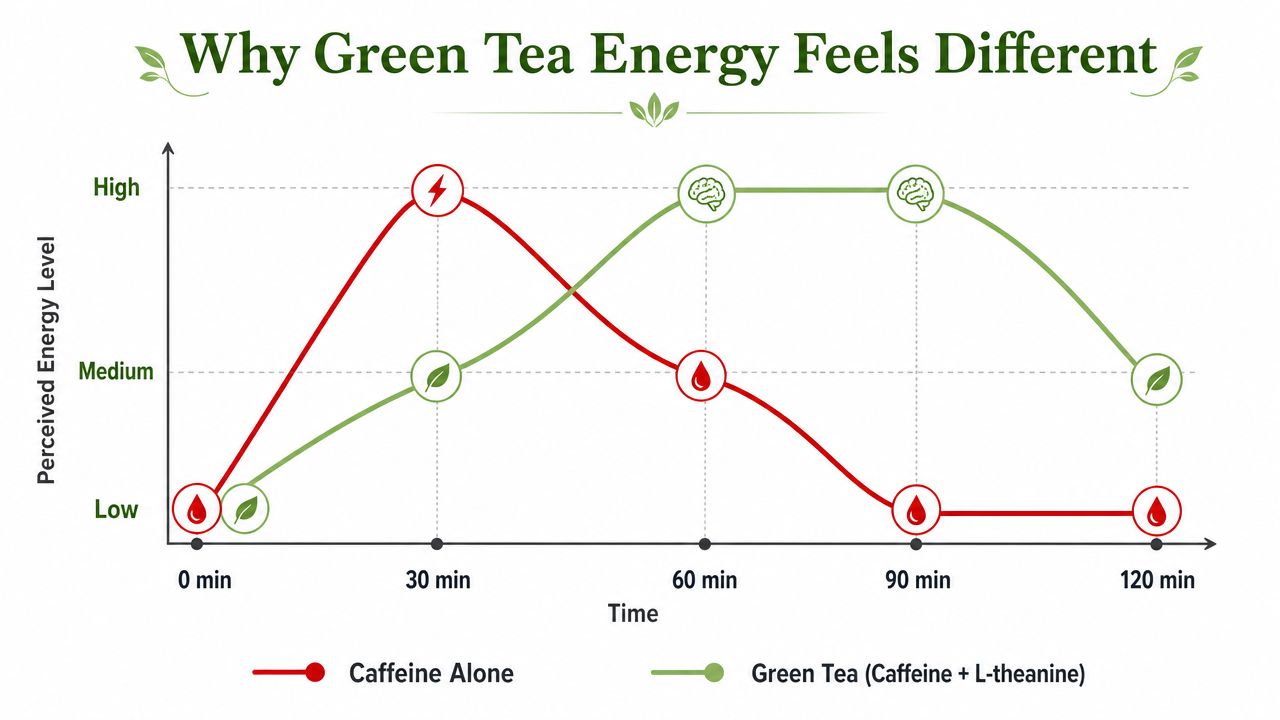
Caffeine with company
Caffeine on its own can feel abrupt for some people. Green tea rarely delivers it in isolation. L-theanine is an amino acid naturally found in tea, and it changes the character of the experience.
A simple way to picture it is this:
- Coffee-style stimulation: often feels fast and sharp
- Green tea stimulation: often feels steadier and more even
- Matcha in particular: can feel focused rather than frantic
That doesn't mean everyone reacts the same way. Bodies differ. Meals matter. Sleep matters. Your own sensitivity matters. But this pairing helps explain why many green tea drinkers describe the effect as calm alertness rather than a jolt.
Why matcha often stands out
Owing to their specific properties, shade-grown green teas earn their reputation. In high-quality matcha, you're not just getting caffeine. You're also getting the tea's broader chemistry in a concentrated form because the whole powdered leaf goes into the bowl.
For readers who want another plain-English overview, VitzAi's guide to green tea is a handy supplementary read on how people frame green tea's effects in wellness contexts.
What many people are chasing isn't more energy. It's steadier energy.
That's why green tea has become such a natural fit for workdays, study sessions, mindful routines, and afternoons when coffee feels like too much. The goal isn't to be overstimulated. It's to feel switched on and still like yourself.
The practical feeling in real life
You notice this most in ordinary moments.
A cup of coffee can be perfect before a rushed morning commute. Green tea often suits the kind of focus that asks for patience. Writing, reading, planning, designing, or working through a long list without feeling jagged.
That's also why people who once thought all caffeine was basically the same often end up surprised by tea. The quantity matters, yes. The quality of the experience matters just as much.
Brewing and Recipes to Customise Your Caffeine
You wake up wanting clarity, not a racing heart. On another day, you want a bit more lift to get through a long morning. Green tea can do both, because brewing changes the result in the cup.

A useful way to see it is this. Tea leaves are like ingredients in a slow release recipe. Water temperature, steep time, and leaf amount decide how much caffeine and flavour you pull out. Change those three levers, and you change the kind of energy you get.
Hotter water and longer steeping usually pull out more. Cooler water and shorter steeping usually keep things lighter and softer. Matcha sits in its own category because you drink the whole powdered leaf, so the experience is often fuller and more concentrated.
The main brewing levers
If you want more control, start here.
- For a gentler cup: use cooler water and steep for less time
- For more lift: use a little more leaf or let it steep longer
- For a stronger, steadier option: choose matcha instead of infused leaves
- For late afternoon: make a smaller serving or brew it lighter
That last point helps many caffeine-sensitive drinkers. You do not need to give up green tea. You often just need to change the extraction.
Low-caffeine cold brew green tea
Cold brew is one of the easiest ways to soften both flavour and stimulation. It works well when you want green tea's fresh character without a sharper edge.
- Add green tea leaves to cool water.
- Place it in the fridge.
- Strain once the flavour tastes right to you.
- Serve over ice with lemon, mint, or plain.
Why does this feel different? Cool water extracts more slowly, so the cup often tastes smoother and lighter than a hot, long steep. For many people, that makes it a smart afternoon option.
A low-caffeine tea routine comes from adjusting the brew, not settling for a dull cup.
Matcha latte for calm focus
A matcha latte solves a different problem. It suits mornings when you want stronger focus and a more sustained sense of energy. Because the whole leaf is whisked into the drink, the effect can feel more direct than standard brewed green tea.
Start small if you are still learning your tolerance. A modest scoop of matcha in milk can give you a more controlled experience than making it too strong and hoping for the best. Pep Tea's organic matcha range fits that approach well because you can easily scale the amount up or down.
A simple method looks like this:
- Sift matcha into a bowl or cup.
- Add a small amount of warm water.
- Whisk until smooth.
- Pour over warm or cold milk.
- Taste before adding any sweetener.
If you want a cold version, this guide on how to make an iced matcha latte shows the process clearly.
Here's a quick visual if you prefer to watch the process first.
The practical lesson is simple. Green tea is not one fixed caffeine experience. A cool, delicate brew can give you a lighter kind of alertness. A matcha latte can give you a fuller, steadier push. Once you know how to brew for the feeling you want, caffeine stops being a mystery and starts becoming a tool.
Finding Your Perfect Green Tea Moment
The most helpful way to think about organic green tea caffeine is not “is it high or low?” It's “when does this version fit my day?”
A brisk morning often suits a more concentrated green tea choice. If you want presence, focus, and a sense of momentum, matcha makes sense. It feels intentional. You prepare it, whisk it, and drink something that asks you to slow down just enough before the day speeds up.
Midday is usually where a standard brewed green tea shines. It can lift you without making lunch feel too heavy or the afternoon feel too wired. This is the point in the day where many people discover why green tea remains such a reliable habit. It's supportive rather than dramatic.
Later on, many drinkers prefer a lighter hand. That might mean a shorter steep, cooler preparation, or a smaller serve. If you're someone who notices caffeine easily, that adjustment matters.
A simple way to choose
- Need sharper focus for work or study: choose matcha
- Want a balanced daily cup: choose brewed green tea
- Feeling caffeine-sensitive today: brew lighter, cooler, or shorter
- Trying to build a sustainable routine: match the tea style to the moment, not just the mood
What matters most
You don't need to memorise every tea style to make a smart choice. You just need to remember three things.
First, green tea does contain caffeine. Second, the amount and feel depend on the leaf and the method. Third, the best tea is the one that gives you energy you enjoy living with.
That's why this conversation matters. Not because caffeine is something to obsess over, but because understanding it helps you choose with confidence. When you know how green tea works, you can use it more thoughtfully and get more out of every cup.
If you'd like to explore organic matcha and other functional tea options for your own routine, have a look at Pep Tea. We share practical guides, recipes, and product information to help you find a green tea rhythm that feels steady, enjoyable, and easy to keep.