
Tag: EGCG
Matcha Green Tea Powder Health Benefits: What Holds Up
The advice to swap coffee for matcha because it gives you calm energy without a crash leaves out the most important detail: how much powder goes into your cup. Matcha isn't automatically low in caffeine, and adding more doesn't necessarily make it healthier.
The strongest case for matcha green tea powder health benefits is straightforward. It contributes tea polyphenols to your diet and contains caffeine that can support alertness. Bigger promises about fat loss, immunity and disease prevention need a more cautious reading, especially when the evidence comes from ordinary green tea or concentrated extracts rather than matcha itself.
Matcha Health Benefits at a Glance
Matcha health claims rated by evidence strength
| Claim | Main compound | Evidence strength | Plain-English reading |
|---|---|---|---|
| Antioxidant intake | Catechins including EGCG | Supported as part of the diet | Adds tea polyphenols to a varied diet |
| Heart health | Catechins and nitric-oxide support | Associated, emerging | Linked in guidance, not proof of prevention |
| Alertness and calm focus | Caffeine with L-theanine | Plausible, limited human trials | Can support focus at moderate doses |
| Weight management | Catechins with caffeine | Small and inconsistent | Supportive at best, not a fat-loss product |
| Gut health and immunity | Not established for matcha | Mostly consumer demand | Treat as unproven |
The table separates what matcha contains from what drinking it has been shown to achieve. Those aren't interchangeable statements. Finding an antioxidant in tea doesn't establish that a particular latte prevents illness.
The Australian Dietary Guidelines discuss tea catechins in connection with cardiovascular health, including support for nitric-oxide production in the lining of blood vessels. Nitric oxide helps blood vessels relax, giving researchers a plausible explanation for beneficial effects on circulation. However, the guidance describes green-tea evidence as emerging and doesn't prove that matcha prevents cardiovascular disease or stroke.
How to judge a health claim
Start with the mechanism. A compound might affect a process in a laboratory, such as oxidation or blood-vessel signalling. That tells us something worth investigating, not what will happen after your morning drink.
Next, look for a human trial using a realistic preparation. A capsule containing concentrated green-tea extract isn't the same intervention as whisked matcha with breakfast.
Finally, ask about the meaningful outcome. Did people experience a useful improvement in health, or did researchers measure a small change in a laboratory marker?
A useful distinction: Evidence that a drink contains beneficial compounds is stronger than evidence that the drink treats a condition.
This doesn't make matcha disappointing. It gives it a sensible place in everyday eating: an enjoyable source of tea polyphenols alongside vegetables, fruit, legumes and other varied foods. Our certified-organic Japanese matcha fits that role without needing to be presented as a treatment.
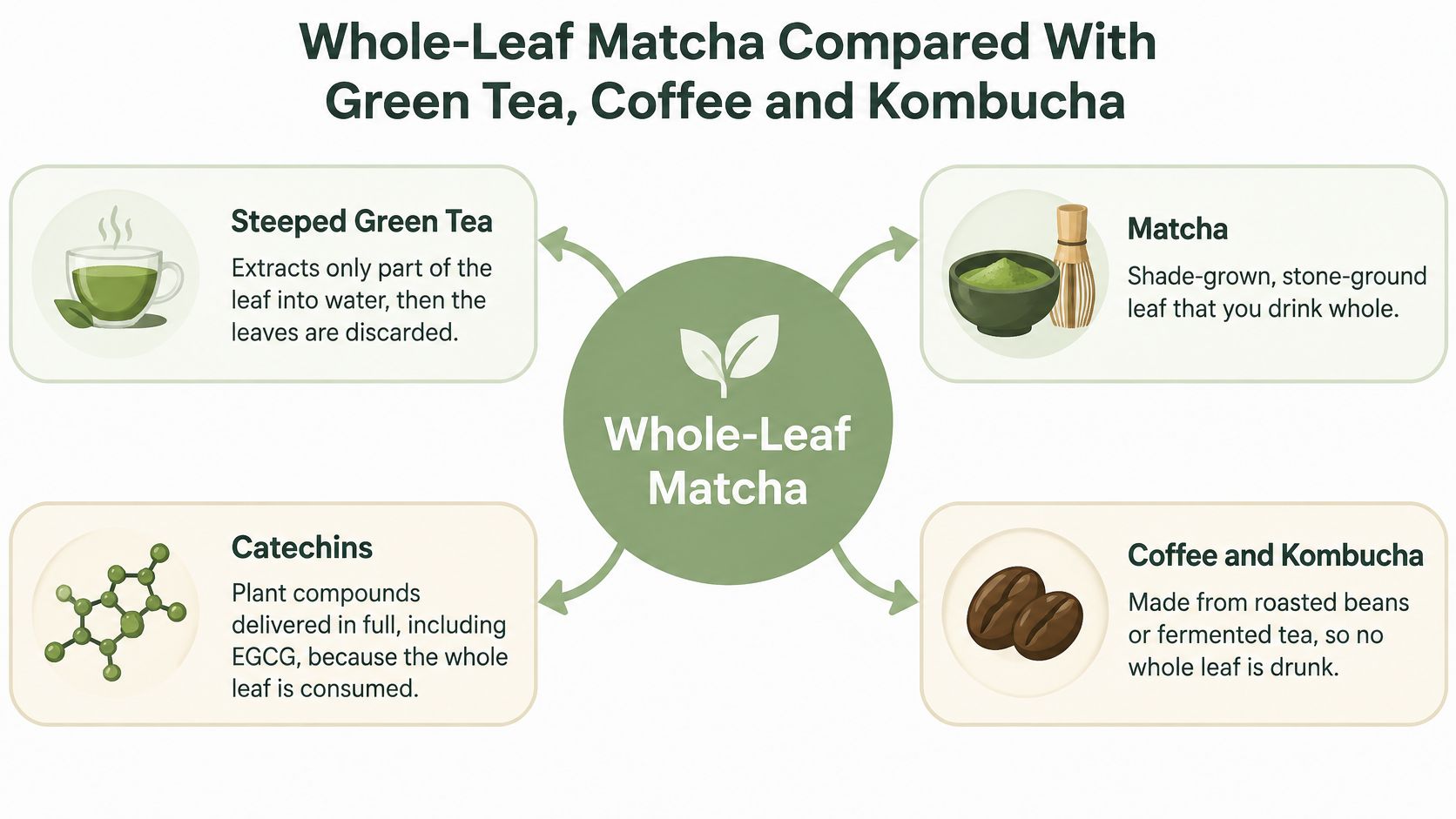
Whole-Leaf Matcha Compared With Green Tea, Coffee and Kombucha
Matcha is a whole-leaf powder, while brewed green tea is an infusion: water draws compounds from the leaves, which are then removed. With matcha, you whisk the powdered leaf into the drink and consume it. The difference is like making stock, where some compounds move into the liquid, versus blending herbs into soup, where you eat the plant material too.
That also means the amount of matcha matters. Each gram adds tea compounds, including epigallocatechin gallate, or EGCG, as well as caffeine and L-theanine, an amino acid associated with tea's characteristic experience. Whole-leaf preparation explains what goes into the cup, but it does not by itself prove a health benefit.
The visual below summarises how these drinks are made.
What the compounds actually do
A Western Sydney University review identifies catechins, caffeine and L-theanine as key matcha constituents, while noting that human clinical evidence remains limited compared with laboratory and animal research. EGCG can take part in oxidation-related reactions, caffeine blocks adenosine receptors involved in drowsiness, and L-theanine may cross the blood-brain barrier.
Together, these mechanisms make alertness with less subjective tension plausible. They do not guarantee that every drinker will feel focused or relaxed, or avoid a caffeine crash.
Shading helps shape matcha's amino-acid profile, including L-theanine. Cultivar, growing conditions and processing also affect the finished powder. Colour, grade and texture cannot reliably tell you its caffeine content, so the amount used remains important.
Tea is an important source of dietary polyphenols in Australia. A nationally representative analysis published in the Journal of Human Nutrition and Dietetics attributed 64.3% of energy-adjusted polyphenol intake to tea, compared with 29.3% to coffee and coffee substitutes. These figures describe tea and coffee consumption generally, not a specific health advantage from matcha.
Matcha, green tea, coffee and kombucha compared
| Drink | What you consume | Live cultures | Typical added sugar | Best fit |
|---|---|---|---|---|
| Matcha powder | Whole stone-ground leaf | No | None unless sweetened | Lattes, baking and smoothies |
| Brewed green tea | Leaf infusion, leaves discarded | No | None unless sweetened | Lighter caffeine and daily hydration |
| Brewed coffee | Bean extract | No | None black; check milk and syrups | A direct caffeine hit |
| Sugar-free kombucha | Fermented tea | Yes, in living, unpasteurised products | Low or none; check labels | Fizzy, low-sugar alternative to soft drinks |
Choose for the occasion
Brewed green tea suits a lighter tea ritual. Matcha works well whisked, in lattes or in recipes where you want the leaf's flavour and colour. The guide to the difference between matcha and green tea explains how their preparation differs.
Sugar-free organic kombucha brewed in NSW offers a sparkling alternative, while coffee suits those who prefer roasted flavours. Live cultures in fermented tea do not establish a guaranteed gut-health benefit, just as matcha's catechins do not establish an immunity benefit.
Matcha is a concentrated functional beverage, not an unlimited antioxidant supplement.
Syrups and sweetened milk change the nutritional profile of any finished drink.
Caffeine per Serving and Your Daily Limit
Caffeine per serving compared with daily limits
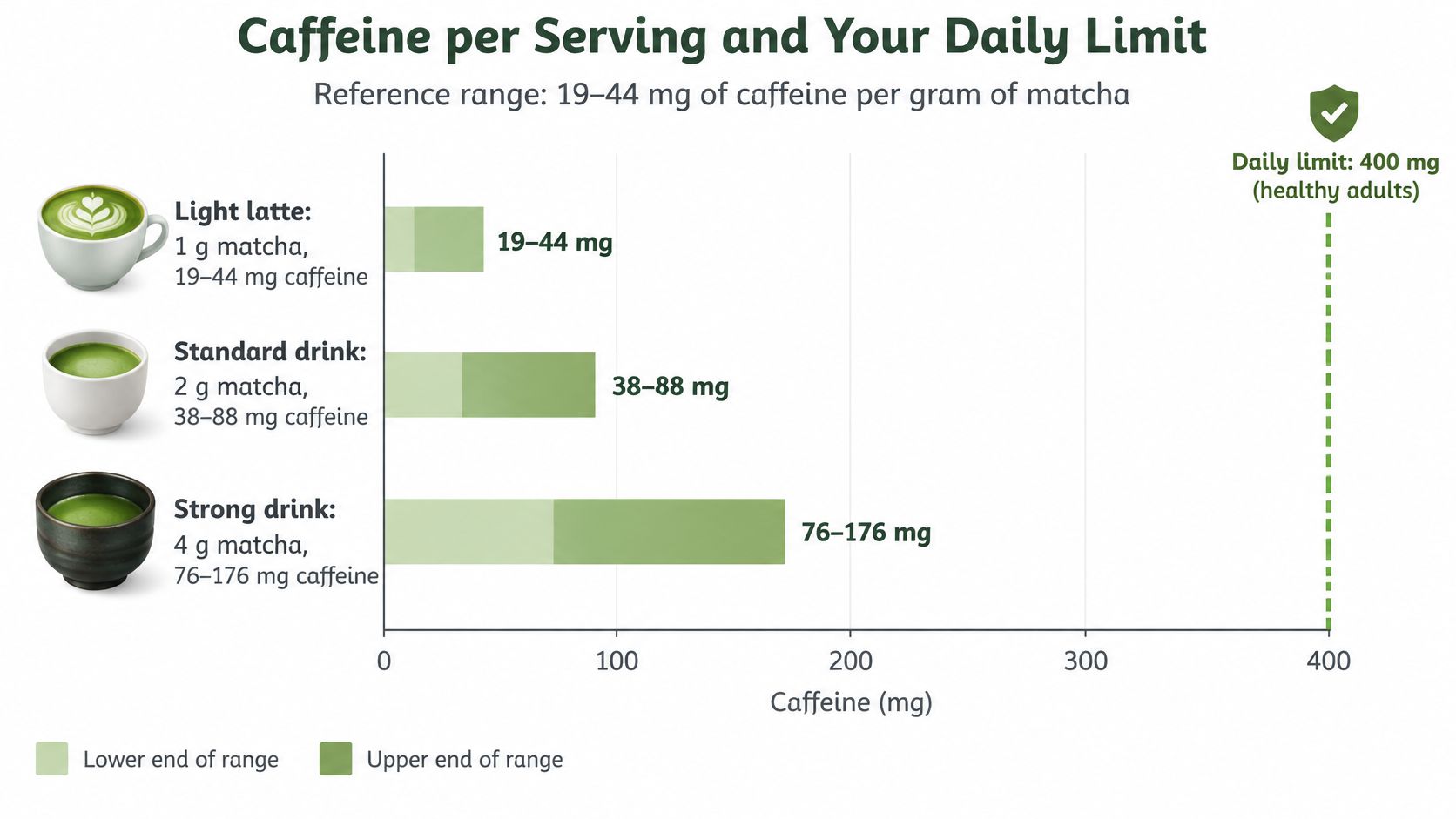
Matcha is a whole-leaf powder, so each extra gram adds more caffeine and other tea compounds to your drink. The estimates below use 19–44 mg of caffeine per gram, a range reported by Nine's matcha explainer, citing a scientific paper. They are estimates, not product-specific test results.
| Serving | Powder or volume | Estimated caffeine | Share of adult daily ceiling |
|---|---|---|---|
| Light matcha latte | 1 g powder | 19–44 mg | 5–11% |
| Standard matcha drink | 2 g powder | 38–88 mg | 10–22% |
| Strong or ceremonial serving | 4 g powder | 76–176 mg | 19–44% |
| Ordinary green tea | 250 mL cup | 30–50 mg | 8–13% |
Coffee's caffeine varies with brew strength and cup size, so this table compares matcha and green tea servings only.
The Australian Institute of Sport's caffeine guidance says up to 400 mg daily from all sources is generally safe for healthy adults, with a suggested maximum of 200 mg in a single serving. The percentage column compares each serving with the 400 mg daily ceiling and rounds to whole percentages.
The chart shows how the estimated caffeine amount rises with the matcha powder used.
Count the powder, not the cup
A tall iced latte is not necessarily stronger than a small bowl of matcha. Milk, ice and water increase the drink's volume, but they do not remove caffeine already present in the powder.
Ceremonial describes a product's intended use, not a fixed serving weight. Ask a café how much matcha it adds, and weigh your own portion with kitchen scales rather than relying on a heaped spoon. A few extra grams can shift the caffeine estimate substantially.
The Australian Institute of Sport's intake overview estimates that Australian adults average approximately 175 mg of caffeine daily, with at least 25% consuming more than 230 mg. It also lists ordinary green tea at approximately 30–50 mg per 250 mL cup. Those figures put one matcha in context: its contribution matters alongside the coffee, tea or other caffeine already in your routine.
Build a realistic daily total
A running list can make the total easier to judge:
- Record the recipe: Write down the powder weight, not just “matcha latte”.
- Include other drinks: Add coffee, tea, cola and energy drinks using labels or supplier information.
- Check overlooked sources: Include chocolate, pre-workout products and caffeinated supplements.
- Leave room for uncertainty: Café recipes and powders vary, so avoid planning right against the daily ceiling.
A morning matcha followed by afternoon coffee is not automatically excessive. Adding pre-workout before an evening gym session could change the total, so count that too.
For preparation context, this video can accompany a home-brewing routine.
Our guide to caffeine content in green tea compares tea types. Matcha may feel like calm focus, but that does not prevent dose effects: jitters, palpitations or disrupted sleep are reasons to reduce your intake.
Who Should Be Careful With Matcha
Matcha is whole-leaf powder, so the amount of caffeine and other compounds depends on how much powder goes into the cup. That makes the serving size especially relevant for children, pregnant or breastfeeding people, and anyone sensitive to caffeine or taking medicines. The table offers a starting point, not a personal prescription.
| Group | Caffeine guidance | What it means for matcha |
|---|---|---|
| Healthy adults | General adult ceiling, not a target | Count matcha alongside other caffeine sources |
| Single serving | Keep below the suggested single-dose maximum | Check the grams used in each drink |
| Pregnancy | No more than 200 mg daily | Count matcha with tea, coffee and chocolate |
| Children aged 9–13 | Anxiety has been reported at about 120 mg daily | Matcha is not automatically suitable |
| Breastfeeding | No single figure applied here | Ask a GP or midwife before regular use |
| Anxiety, sleep sensitivity or medicines | An individual, potentially lower limit | Discuss symptoms and medicines with a health professional |
During pregnancy, guidance recommends no more than 200 mg of caffeine daily, according to Better Health Channel's caffeine advice. That is a combined daily total from foods, drinks and other sources, not an allowance for matcha alone.
Natural doesn't mean suitable for children
The NSW Food Authority's summary of FSANZ advice says there is no universal health-based Acceptable Daily Intake for caffeine. It reports increased anxiety in children at approximately 3 mg per kilogram of body weight daily, or about 120 mg for children aged 9–13. For a child weighing 40 kg, that calculation also comes to 120 mg.
This is a marker of observed concern, not a target to reach. Because matcha is powdered whole leaf, using more powder increases the caffeine in the drink. A concentrated serving can contribute before chocolate, cola or other tea is counted.
Conditions and medicines change the decision
People who are breastfeeding, take relevant medicines or are sensitive to caffeine may need individual advice. The FSANZ caffeine safety assessment discusses how dose and sensitivity matter for anxiety, blood-pressure responses and sleep difficulties. If you have insomnia, palpitations, anxiety or reflux, switching from coffee to matcha may not resolve the problem.
Tea can also reduce absorption of non-haem iron, the form found in plant foods. If you're pregnant, iron deficient or taking iron supplements, discuss timing with your clinician.
Use these steps to make a cautious choice:
- Count everything: Include drinks, foods and supplements.
- Respond to symptoms: Reduce or stop caffeine if sleep, jitters or palpitations become a problem.
- Ask about interactions: Bring your medicine and supplement list to a GP or pharmacist.
- Review supplements separately: Vitamin safety with Pumpernickel Health Foods covers supplement considerations and kidney health, though your own medicines and caffeine intake call for advice from a health professional.
Weight Loss and Heart Health Claims Put to the Test
Matcha's fat-burning reputation rests on a plausible mechanism, not proven weight loss. Catechins may affect fat oxidation, while caffeine can raise energy expenditure, but neither effect establishes that an everyday matcha drink produces meaningful, lasting weight loss.
Trials of green-tea catechins and caffeine have generally shown little or no meaningful weight loss compared with placebo. The evidence on the FSANZ food-health relationship register should not be read as proof that matcha causes weight loss. A proposed relationship listed there does not establish that drinking matcha leads to a clinically useful result.
A mechanism isn't a result
A small or inconsistent change in energy expenditure may not add up to a useful difference in body weight. Studies of green-tea extracts also cannot be directly translated into cups of matcha. Matcha is a whole-leaf powder, so the amount of caffeine and other compounds rises with each gram you add. Increasing the serving to chase a metabolic effect can also mean more caffeine exposure.
Understanding what EGCG is helps distinguish a compound's properties from claims about a finished drink. A plausible effect in the body is only one step in the chain. It does not show that a typical serving changes weight.
Heart-health claims need the same caution
Tea compounds may affect blood-vessel function, a possible pathway for cardiovascular health. Yet associations between tea drinking and better health outcomes do not prove that matcha itself prevents disease. Tea drinkers may differ in other habits, and a measured change in vessel function is not the same as evidence of fewer heart attacks. Stronger conclusions would require longer human trials using measured matcha doses and meaningful clinical outcomes.
The practical verdict: Enjoy matcha as a drink, not as a fat-loss product or cardiovascular treatment.
Replacing a sugary drink with unsweetened matcha may be a useful change. Any benefit comes from the substitution and your wider routine, not a promise that tea will burn body fat.
Matcha Questions Readers Ask Most
Does matcha keep you awake?
It can, because it contains caffeine. L-theanine may soften subjective tension for some people, but it doesn't cancel caffeine or guarantee relaxed alertness.
When is the best time to drink it?
Morning or early afternoon is a sensible starting point. If you struggle to fall asleep, move your drink earlier or reduce the powder rather than assuming a milky latte is too gentle to matter.
Can I have matcha every day?
Many healthy adults can include it in a daily routine. Keep the serving consistent, account for other caffeine sources and let sleep and symptoms guide you rather than treating a general ceiling as a target.
Is matcha better than coffee for weight loss?
Neither deserves to be treated as a fat-loss product. An unsweetened drink may be a useful replacement for a sugary café order, but matcha doesn't have an established weight-loss advantage over coffee.
Is organic matcha worth it?
Organic certification reflects production standards, while freshness, storage and the intended grade help shape flavour and colour. Choose certified organic if those standards matter to you, but don't use the label to predict caffeine content or assume it proves superior clinical benefits.
For straight drinking, a smoother ceremonial-style powder may suit your palate. For cooking, a culinary powder offers a practical way to bring tea flavour into a recipe without paying for qualities that milk or baking may obscure.
Is there a caffeine-free matcha?
Conventional matcha naturally contains caffeine because it's powdered green tea leaf. A caffeine-free herbal infusion is a clearer choice if you need to avoid caffeine entirely.
Sugar-free kombucha may offer a different drinking experience, but fermented tea isn't automatically caffeine-free. Check the label rather than assuming fermentation removes it.
Start a Matcha Routine Within Safe Limits
Because matcha is powdered whole leaf, the amount you use shapes both its flavour and caffeine. A steady, measured serving makes it easier to enjoy the drink and notice how it affects you.
Build consistency before strength
Begin with a light, weighed serving. Use kitchen scales that measure small amounts accurately. Spoonfuls can vary, so weighing helps keep each drink consistent.
Check your usual caffeine sources. Write down your coffee, tea, chocolate and supplements. Matcha adds to that daily total, even when it is mixed into a latte.
Choose a grade for the recipe. Japanese ceremonial matcha suits whisking with water. Culinary matcha works well in lattes, smoothies and baking.
Keep preparation simple. Sift the powder into a bowl and whisk with a little hot, not boiling, water. Add more water or unsweetened milk to taste, so the tea's flavour comes through without unnecessary sweetness.
Notice how your body responds. Track sleep, restlessness and a racing heartbeat over time. Reduce the amount or stop if the drink does not agree with you.
Adjust only for a reason. If you want stronger flavour and tolerate your current serving, increase the measured amount gradually rather than adding a heaped spoon.
Make the drink suit your day
For an iced latte, whisk matcha into a smooth concentrate, then pour it over milk and ice. In a smoothie, blend it with plain yoghurt or an unsweetened alternative and taste before adding anything sweet.
Keep the powder tightly sealed and away from heat, moisture and light. Buy an amount you can use while its flavour remains fresh, rather than leaving a large bag open for occasional baking.
Pregnant or breastfeeding readers, children and people taking medicines should seek individual advice before making matcha a regular habit. If you need to avoid caffeine, choose a genuinely caffeine-free drink; extra milk does not remove matcha's caffeine.
Pep Tea offers organic Japanese matcha for whisking, lattes and cooking, as well as sugar-free organic kombucha. Visit Pep Tea to explore the matcha range or browse the kombucha range for a low-sugar option that suits your routine.