
Pure Matcha Green Tea Powder: How to Choose Real Quality
The most popular advice about matcha is also the least useful: “Choose pure matcha and you've chosen quality.” Purity matters, but it only tells you that nothing has been added. It doesn't automatically confirm the tea's origin, freshness, grade, growing practices, flavour, or tested composition.
That distinction matters in Australia, where demand is moving quickly. SBS News reported that Australia's matcha market generated more than AUD 54 million in 2024 and is forecast to grow at approximately 7.1% annually over the following five years, exceeding AUD 81 million by 2030 according to reporting based on industry data. More products can mean more choice, but it can also make a confident-looking label harder to evaluate.
What “Pure” Really Means on a Matcha Label
Pure matcha green tea powder answers a narrow question. Is the tin only matcha, or has something else been mixed in?
On an Australian label, that usually means the ingredient list shows 100% matcha or 100% powdered green tea, with no sugar, milk powder, flavouring, colouring, or filler. That is useful, but it is only the first checkpoint. “Pure” does not tell you whether the tea was selected for drinking, whether it is fresh, or whether it will taste smooth once you whisk it.
It also does not mean caffeine-free. Matcha is powdered green tea, so if it is pure, it still naturally contains caffeine. In other words, purity describes what has not been added. Quality describes what the product brings to the cup.
Purity and quality are different questions
Purity covers ingredients. Quality covers a wider set of buying decisions.
- Purity: Is anything else mixed into the powder?
- Origin: Where was the tea grown and processed?
- Freshness: When was it harvested, milled, packed, or opened?
- Grade: Was it chosen for straight drinking, lattes, or cooking?
- Composition: Are there credible test results or batch records?
- Use: Does the flavour fit how you plan to prepare it?
That distinction saves shoppers from a common mistake. A front label can say “pure” and still leave out the details that affect aroma, colour, bitterness, and value for money.
Practical rule: Treat “pure” as the starting point of your assessment, not the final verdict.
The same reading habit applies beyond tea. A clear pure aloe vera gel guide shows how a simple ingredient claim can be true while bigger questions about sourcing, processing, and suitability still remain. Matcha works the same way.
From Tea Leaf to Stone Ground Powder
Matcha starts with the same tea plant as other green tea, Camellia sinensis. The difference lies in how growers cultivate and process it before you ever open the tin.
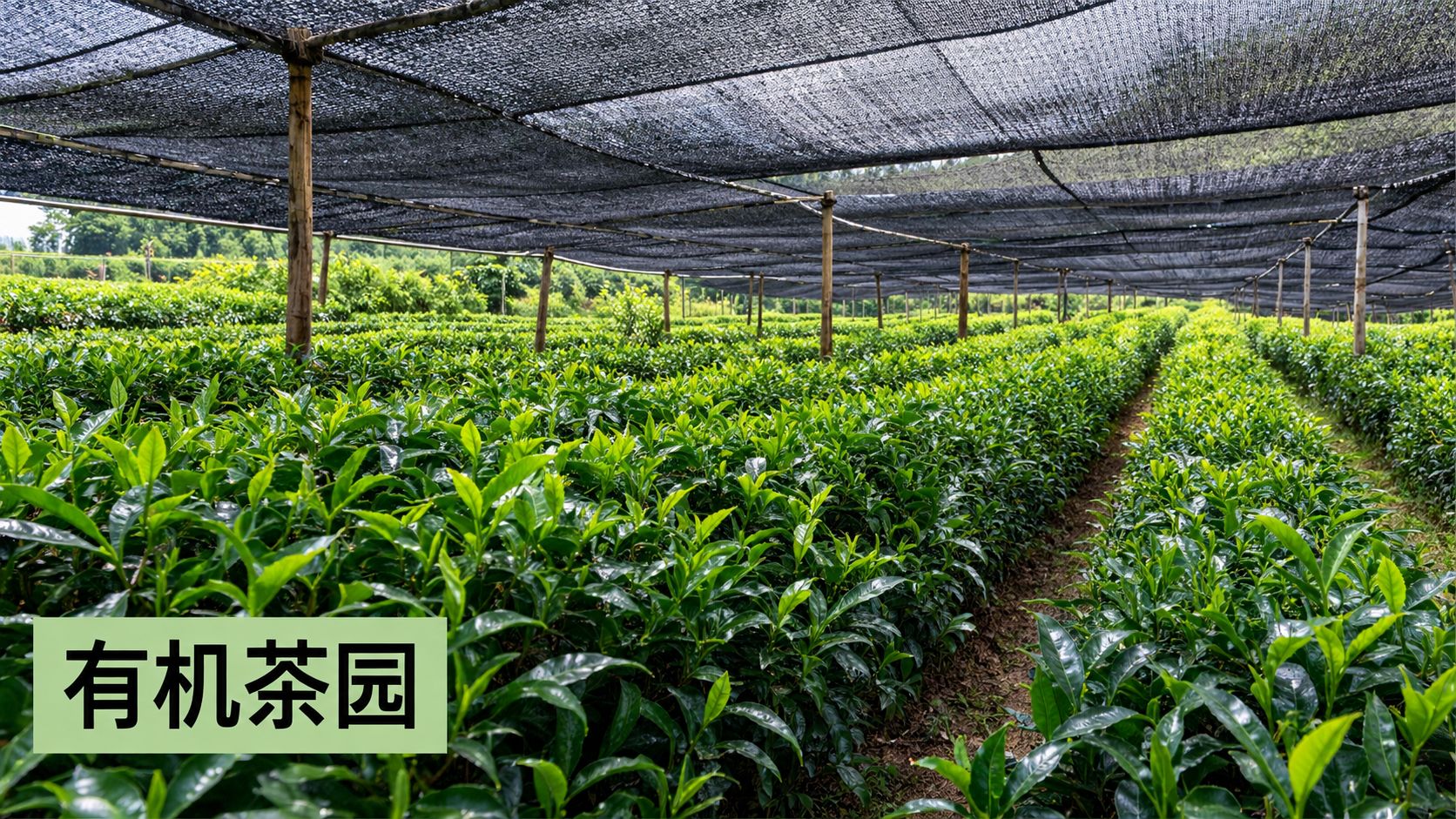
Several weeks before harvest, growers shade the tea plants from direct sunlight. This changes the leaf's growth conditions and contributes to matcha's deep green appearance, savoury umami character, and naturally occurring L-theanine. Farmers then harvest the leaves, steam them to limit oxidation, dry them, and remove stems and veins. The remaining leaf material is called tencha.
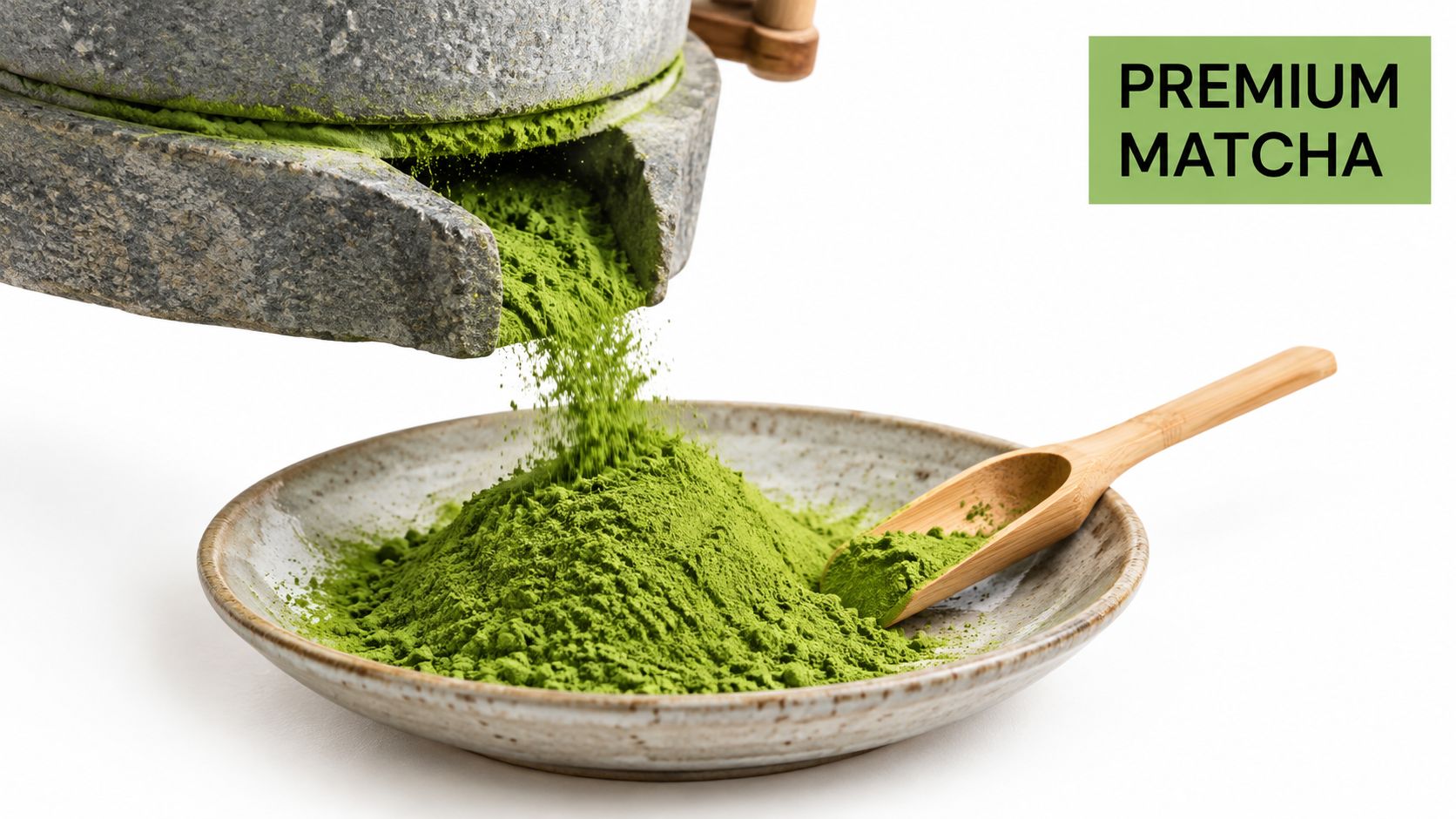
Tencha is slowly ground between stones, traditionally granite, until it becomes an exceptionally fine powder. That slow milling is why authentic matcha feels almost talc-like between your fingers rather than gritty like a coarsely ground green tea ingredient.
What your senses can tell you
A vibrant green colour can be a useful freshness and processing clue, but colour alone can't certify quality. Look for a powder that is fine, evenly coloured, and aromatic, with a fresh grassy or vegetal scent rather than a flat, dusty smell.
Taste gives you more information. Good matcha can have grassy notes, umami depth, gentle sweetness, and some bitterness. Harsh bitterness may come from the grade, preparation, age, or a powder intended for cooking rather than drinking.
The whole-leaf format also changes the way you consume the tea. With ordinary brewed green tea, water extracts compounds from the leaves and you discard the leaves. With matcha, you whisk the powder into water or milk, so the powdered leaf remains in the drink. For a visual explanation of the production stages, see how matcha tea is made.
Analytical testing of commercially available matcha found caffeine concentrations ranging from 17.11 to 35.01 milligrams per gram. Ceremonial matcha averaged 31.45 ± 1.08 mg/g, while culinary matcha averaged 26.29 ± 1.86 mg/g, compared with 23.08 ± 1.43 mg/g for bagged or gunpowder green tea in the reported testing. Those figures are useful context, but they aren't a guarantee for every product or serving.
Ceremonial, Culinary, and Everyday Grades Compared
Matcha grades aren't universal legal categories in the way some shoppers assume. Producers and sellers use them to communicate intended use, sensory character, and leaf selection. The label still needs supporting information, because “ceremonial” by itself doesn't prove a particular origin or laboratory profile.
The simplest decision is practical. If you'll drink the matcha with water, choose a powder that tastes smooth and balanced. If you'll combine it with milk, fruit, chocolate, or flour, a stronger culinary powder may provide better value and a more noticeable tea flavour.
Match the powder to the job
| Grade | Best for | Sensory cues | Typical price band |
|---|---|---|---|
| Ceremonial | Whisked tea and simple drinks | Bright colour, fine texture, softer bitterness, rounded umami | Higher |
| Premium culinary | Lattes, iced drinks, smoothies, and everyday use | Fresh green aroma, fuller flavour, enough strength for milk | Mid to high |
| Ingredient-grade culinary | Baking, ice cream, sauces, and savoury recipes | More robust, earthy, or bitter profile that stands up to other ingredients | Lower to mid |
A ceremonial powder can be wasted in a recipe where chocolate, dairy, or fruit dominates. Conversely, an inexpensive cooking powder may taste rough when whisked with water because there's nowhere for its bitterness to hide.
Choose by preparation, not prestige
For a traditional bowl of matcha, sensory refinement matters most. You're tasting the tea directly, so freshness, texture, sweetness, and umami carry the experience.
For a café latte, a bright premium culinary powder can be a sensible option. Milk softens bitterness, while the matcha needs enough flavour to remain present after dilution. For pancakes, biscuits, frosting, or ice cream, ingredient-grade culinary matcha often makes more sense because you're buying functional flavour rather than a delicate drinking experience.
Compare ceremonial and culinary matcha before buying. The right grade isn't the one with the most impressive name. It's the one that performs well in your favourite preparation.
Caffeine, EGCg, and L-Theanine Explained
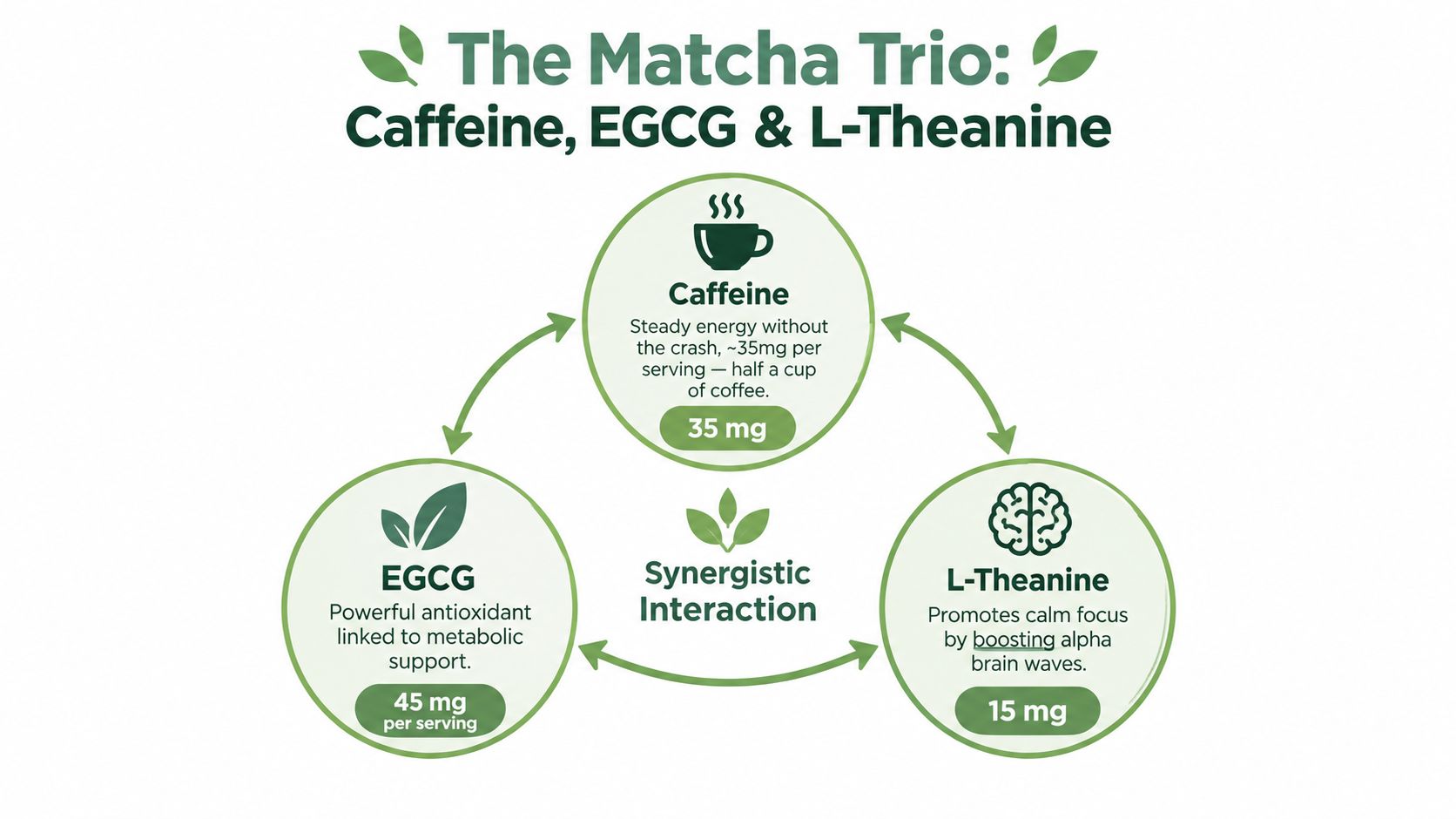
Matcha is often described as a calmer alternative to coffee. That description can be useful as a personal observation, but it shouldn't hide the fact that pure matcha contains caffeine. The powder brings several naturally occurring compounds into the same drink, including caffeine, EGCg, and L-theanine.
Caffeine contributes to alertness. EGCg, or epigallocatechin gallate, is one of the green-tea catechins commonly discussed in relation to antioxidant content. L-theanine is an amino acid associated with tea, and many people describe the combination of tea caffeine and L-theanine as feeling smoother than caffeine alone. That subjective experience varies, and L-theanine doesn't remove stimulant exposure or guarantee a performance effect.
The serving-size maths
Experimental literature reports approximate dry-weight concentrations of 4% caffeine and 6 to 7% EGCg in matcha. L-theanine commonly exceeds 1% and can exceed 3% in high-grade material in the cited experimental literature.
At a hypothetical 2 g serve, those benchmarks work out to roughly:
- 80 mg caffeine
- 120 to 140 mg EGCg
- At least 20 mg L-theanine
That calculation is illustrative, not a certificate of analysis. Cultivar, shading, harvest, processing, grade, serving size, and laboratory method can all change the result.
For a plain-language explanation of EGCg and its place in matcha, read what EGCg is. Cafés should use gram-weight recipes rather than “one scoop”, because a scoop can vary between staff members and tools.
A useful comparison is not matcha versus coffee in isolation. It's your whole day. If you drink matcha alongside coffee, cola, pre-workout products, or energy drinks, count the sources together. FSANZ identifies 400 mg per day as the maximum daily caffeine dose used in alignment with European Food Safety Authority recommendations in relevant regulatory work, and flags increased anxiety in children at approximately 3 mg per kilogram of body weight per day in its caffeine guidance. That isn't a universal personal allowance, so people who are pregnant, sensitive to caffeine, taking medication, or managing a health condition should seek individual advice.
For a broader look at audits and product information, a resource such as Grumspot Shopify Plus audits illustrates why clear product communication matters. A café menu should never imply that matcha is caffeine-free or automatically calming.
How to Read a Matcha Label Before You Buy
A good label answers practical questions without making you chase the seller for basic information. Start at the back of the pack, not the marketing headline.
Work through the ingredient and origin details
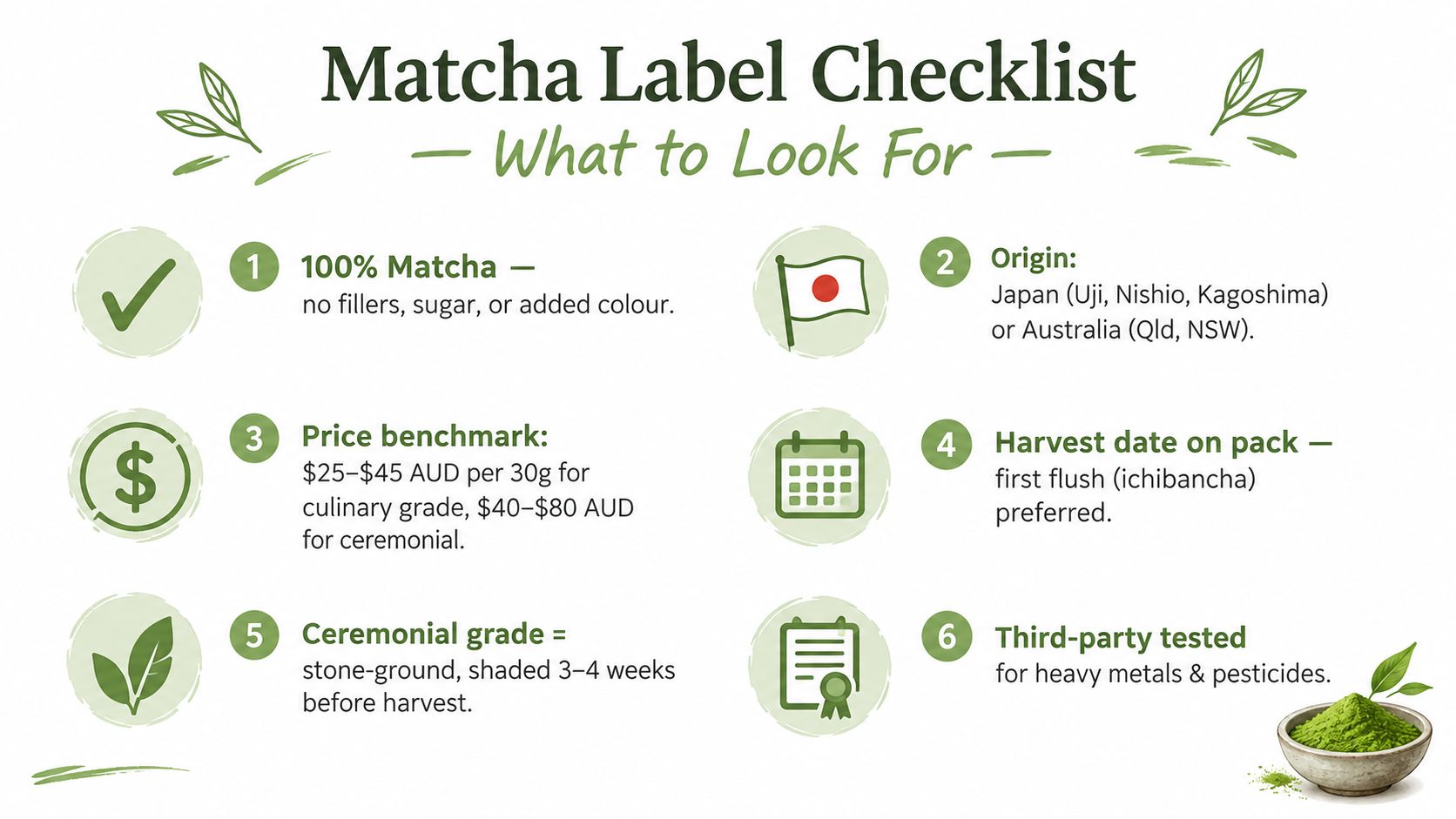
Look for an ingredient list that says 100% matcha or 100% powdered green tea. If you're buying a flavoured latte blend, the label should name every added ingredient so you can distinguish a pure powder from a prepared mix.
Then check the origin. A Japanese growing region such as Uji, Kagoshima, or Nishio can tell you more than a vague phrase such as “Japanese style”. If the pack names a cultivar, harvest, mill, or batch, that extra detail helps you ask better questions about flavour and consistency.
Organic claims deserve the same care. Look for the named certification body rather than assuming that “natural”, “clean”, or “chemical-free” means certified organic. A seller who can explain the certification and provide traceability is giving you stronger evidence than a decorative leaf on the front panel.
Look for evidence, not adjectives
Words such as “super”, “premium”, and “ceremonial” can help describe positioning, but they aren't enough on their own. Ask whether the seller provides storage guidance, batch information, a clear use recommendation, and testing relevant to the product.
For cafés and retailers, ask for documentation covering heavy metals and microbiological safety. For home buyers, a transparent ingredient list, origin statement, certification details where claimed, and sensible freshness guidance are useful signals. A step-by-step guide for DTC brands offers helpful context on why product descriptions should answer specific buyer questions rather than rely on vague promotional language.
Caffeine is another labelling consideration. FSANZ's guidance means the word “pure” doesn't make a powder caffeine-free, and it doesn't replace responsible serving advice. If you're combining matcha with other caffeinated drinks, choose a repeatable serving and keep a simple record of your total intake.
Brewing, Lattes, and Cooking with Pure Matcha
The same powder can taste elegant, creamy, bitter, or flat depending on how you prepare it. Water temperature and technique matter, but so does grade. Save delicate ceremonial matcha for preparations where you'll taste it directly, and use culinary powder where other ingredients need to share the stage.
Start with a whisked bowl
For a traditional drink, sift the powder into a bowl, add hot water around 80°C, and whisk briskly with a bamboo chasen until the liquid is smooth and lightly frothy. Water that's too hot can make the drink taste more bitter, while insufficient whisking leaves clumps.
For an iced matcha, shake sifted powder with a small amount of cool or lukewarm water in a sealed jar or shaker before adding ice and milk. This creates a smooth concentrate without requiring a full traditional setup.
A latte follows the same principle. Whisk the matcha with a little water first, then add textured milk. Keep the sweetener modest if you want the tea's umami and grassy character to remain noticeable.
Take it beyond the cup
Culinary matcha works well in:
- Baking: Add it to pancakes, biscuits, sponge mixtures, icing, or shortbread.
- Cold desserts: Blend it into ice cream, yoghurt, or a creamy frozen mixture.
- Smoothies: Combine it with banana, berries, milk, or yoghurt.
- Savoury dishes: Stir a small amount into salad dressing, a glaze, or a marinade.
Store opened matcha in an airtight tin away from light, heat, moisture, and strong kitchen odours. Refrigeration can help protect freshness, but allow the sealed container to come back towards room temperature before opening so condensation doesn't reach the powder.
Sourcing Matcha for Cafés and Retailers
For cafés and retailers, the first sourcing problem is rarely flavour. It is repeatability. If one staff member uses a rounded spoon, another uses a level scoop, and a third adds extra powder to rescue a weak drink, customers end up buying three different versions of the same matcha latte.
That is why pure and good should never be treated as the same buying standard. A powder can be pure because nothing has been added, yet still be a poor fit for direct drinking, inconsistent in colour, or difficult to trace by batch. For a business, quality means a stable supply, clear origin, freshness, and information your team can use on the floor.
Build consistency into purchasing
A good supplier relationship works like a recipe card for your whole business. It reduces guesswork before the tin is even opened. Ask an importer or distributor for:
- Origin records: Country and, where available, growing region.
- Certification evidence: Documentation supporting organic claims.
- Batch information: A way to trace stock and manage rotation.
- Safety testing: Certificates covering heavy metals and microbiological hazards.
- Preparation guidance: Recommended gram weight, water volume, and application.
- Caffeine communication: Accurate information for staff and customers.
Then standardise service by weight, not by eye. Record the gram dose, water volume, milk type, sweetener, and serving method for each menu item. Staff should also understand that ceremonial and culinary powders suit different jobs. Substituting one for the other can shift taste, colour, and margin.
A practical range usually stays tight. One drinking-focused option, one latte powder, and one baking or wholesale format is often enough. Clear purpose matters more than a long catalogue, because customers and staff both make better decisions when each product has an obvious role.
Menu context matters too. The Australian Bureau of Statistics reported in the National Nutrition and Physical Activity Survey release that sweetened beverages supplied 25.4% of all free sugars consumed in Australia in 2023, that Australians consumed an average of 159 mL of sweetened beverages per day, and that these drinks contributed about 11 g of free sugars daily. An unsweetened or lightly sweetened matcha option can meet that demand for lower-sugar choices, but the menu still needs to describe the product accurately. Pure matcha is not caffeine-free, and staff should be ready to explain that clearly.
Quick Answers and a Practical Checklist
A confident purchase doesn't require specialist vocabulary. It requires a few checks that connect the label to the way you'll use the powder.
The buyer's checklist
- Ingredient: Choose a powder that clearly states 100% matcha or powdered green tea.
- Origin: Look for a named country and, where available, a growing region.
- Quality evidence: Check certification details, batch information, storage advice, and relevant testing.
- Grade: Use ceremonial for direct drinking, premium culinary for lattes, and ingredient-grade culinary for recipes.
- Freshness: Buy an amount you can seal and use while the colour and aroma remain lively.
- Storage: Keep it airtight, cool, dry, and protected from light and odours.
Common questions
How much caffeine does matcha contain?
There isn't one universal amount. The tested products discussed earlier ranged from 17.11 to 35.01 mg per gram, so your exposure depends on the product, gram weight, and preparation. Count matcha alongside your other caffeine sources rather than treating it as a caffeine-free wellness drink.
Is matcha the same as green tea powder?
Not always. Matcha is a specific powdered tea made from specially cultivated and processed leaves, while “green tea powder” can describe a broader range of products. Check the production details and ingredient statement.
Is pure matcha safe during pregnancy?
Pure matcha contains caffeine, so pregnancy changes the question from “Is it pure?” to “How much caffeine does my total daily intake contain?” Ask your midwife, doctor, or qualified health professional for advice suited to you.
Why does my matcha taste bitter?
Possible causes include a naturally strong culinary grade, an older powder, too much powder, water that's too hot, or poor whisking. Milk can soften the flavour, but better preparation and a grade suited to drinking usually make the bigger difference.
Pep Tea offers certified organic Japanese matcha in drinking and culinary formats, with pack sizes suitable for home users and wholesale customers. If you're ready to compare pure matcha green tea powder by grade, origin, use, and supporting information, visit Pep Tea and explore the organic matcha range.