
Tag: green tea caffeine
Hojicha Tea Caffeine: A Guide for Sensitive Australians
Have you ever chosen hojicha for an evening drink, then wondered whether “low caffeine” really means caffeine-free? That distinction matters, especially if you're sensitive to stimulants, serving tea to children, or replacing coffee or matcha in an Australian café.
Hojocha is a roasted Japanese green tea with a warm, nutty flavour and a naturally lower caffeine level than many unroasted teas. But the amount in your cup depends on the tea, the format, the serving size and the way you brew it. The most useful question isn't just whether hojicha contains caffeine. It's how much caffeine your particular preparation delivers.
How Much Caffeine Is Actually in Hojicha
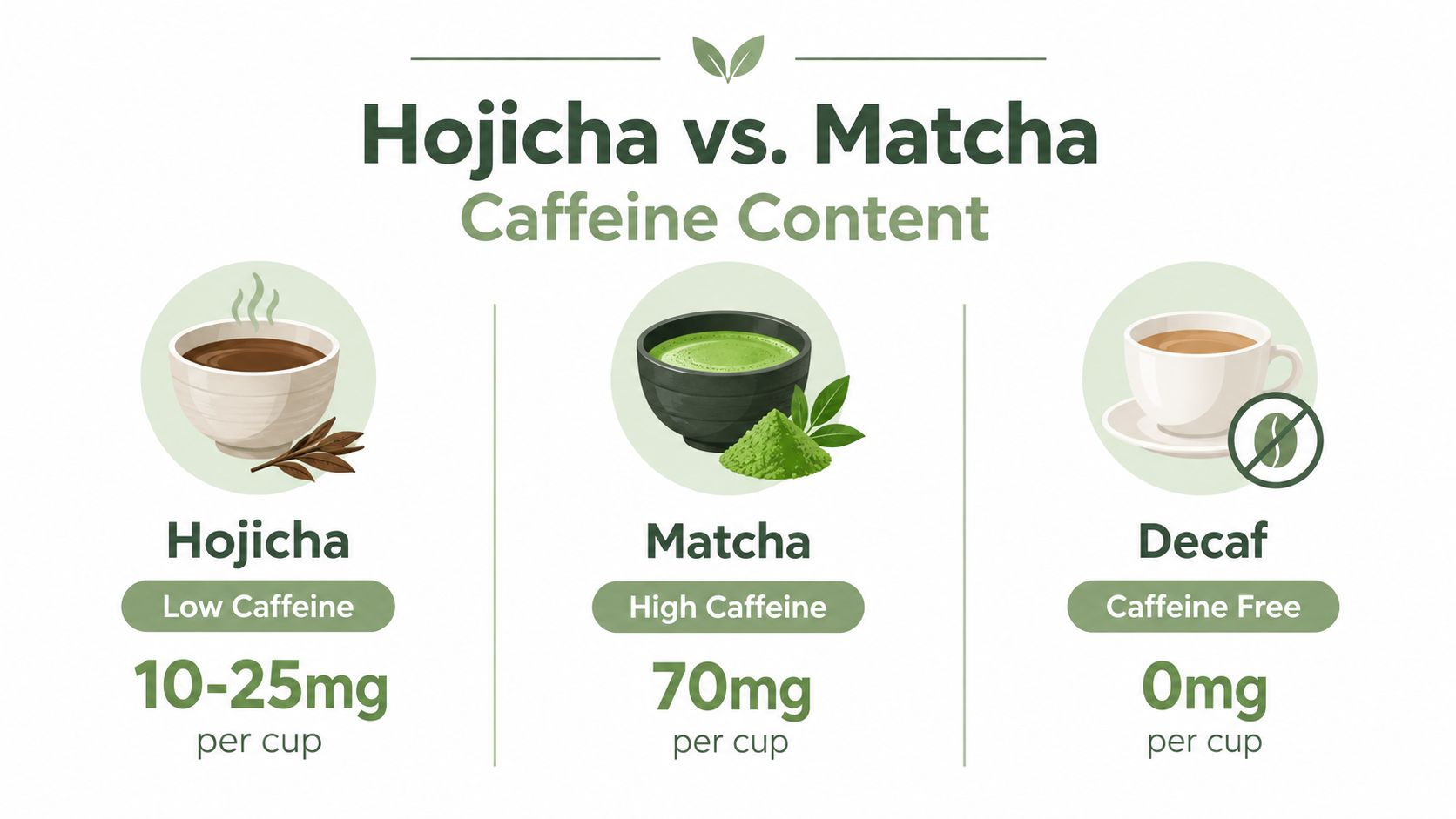
Could a roasted tea contain caffeine without delivering the same lift as green tea or matcha? Australian-facing tea information places hojicha at about 7.7 mg of caffeine per cup, compared with around 20 mg in regular green tea. That makes hojicha a lower-caffeine choice, rather than a caffeine-free one. Pep Tea's guide to caffeine content in green tea provides broader context on differences between green tea varieties.
Australian products show why the number on your own cup may vary. One canned hojicha drink lists 7 mg of caffeine per 750 ml bottle. An Australian tea reference also explains that caffeine depends on the tea type, the proportion of leaves to stems, and brew strength. A loose-leaf infusion and a powdered hojicha drink therefore should not be treated as identical servings.
A practical comparison
| Tea type | Average caffeine per cup |
|---|---|
| Hojicha | About 7.7 mg, Australian tea reference |
| Regular green tea | Around 20 mg |
| Tea benchmark | About 27 mg per 250 ml cup, Australian Sports Commission |
| Green tea benchmark | 30–50 mg |
| Matcha | Around 60–70 mg per serve, Australian comparison |
The table is a guide, not a guarantee for every packet or café preparation. Hojicha powder can provide around 20–25 mg per standard serve, according to an Australian tea product guide, because you consume the powdered leaf instead of steeping and discarding it. People who are sensitive to stimulants may also find decaf and sleep sensitivity relevant when choosing an evening drink.
Why Hojicha Contains Less Caffeine Than Matcha
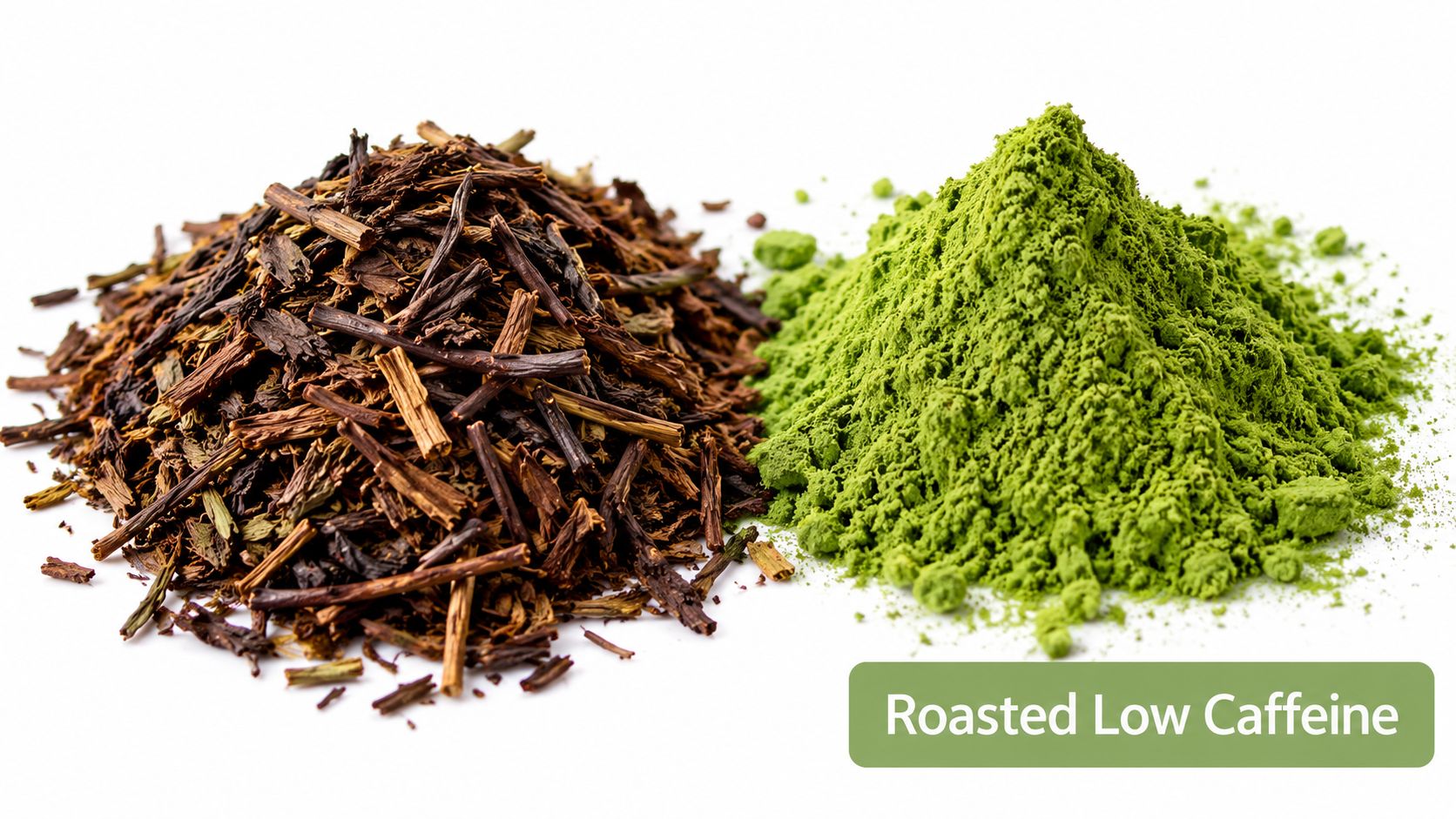
Why does hojicha usually feel gentler than matcha? The answer begins with how each tea is processed and consumed. Matcha is made from tea leaves that are processed and stone-ground into a fine powder, so you drink the whole leaf. Hojicha takes a different route: its leaves or stems are roasted, creating its brown colour, toasted aroma and mellow flavour.
Roasting reshapes the cup as well as the colour. Heat reduces some compounds linked with green tea's fresh, grassy character, while the roasted notes bring flavours closer to toasted grain, nuts and light caramel. This contributes to hojicha's lower stimulant load, although it remains a low-caffeine tea rather than a caffeine-free one.
One tea family, two distinct experiences
Matcha and hojicha can both suit lattes, yet they offer different flavour and caffeine profiles:
- Matcha: Fresh, grassy and umami-rich, with a more noticeable caffeine presence because the powdered leaf is consumed.
- Hojicha leaf: Smooth, roasted and lighter-bodied, with caffeine shaped by the plant material and brewing method.
- Hojicha powder: Creamier and more concentrated than a loose-leaf infusion, so it can contain more caffeine than a lightly brewed cup.
To compare matcha and coffee, it helps to remember that matcha is a whole-leaf drink. Hojicha has its own identity, built around roasting, toasted flavour and a gentler cup, rather than being merely weak matcha.
A morning matcha may suit focused work or a pre-activity routine. Roasted hojicha can feel more comfortable after lunch or alongside dessert, especially for people who find green tea too bitter or grassy. Its rounded flavour often needs less adjustment for drinkers who prefer mellow, nutty notes.
This distinction matters when choosing Japanese tea for home or a café menu. Pep Tea's guide to how matcha tea is made explains matcha's processing, while hojicha is defined by the later roasting stage. The result is low caffeine, not zero caffeine, with the final amount still shaped by the tea material and preparation.
The Science Behind Roasting and Caffeine Reduction
It's common to hear that roasting “burns off” the caffeine in hojicha. That wording is too simple. A 2025 peer-reviewed review explains that heat decomposes amino acids and catechins in hojicha, while caffeine is reduced only slightly through sublimation rather than being completely broken down. In plain language, some caffeine may be lost during roasting, but the roasting process doesn't guarantee a caffeine-free tea. Read the review's discussion of hojicha chemistry.
Sublimation describes a substance moving from a solid state directly into a gas under suitable conditions. In tea roasting, this helps explain why some caffeine can leave with the heat. It doesn't tell us that every batch loses the same amount, because the final cup also depends on the starting material and extraction.
Why the figures vary
Hojicha may be made from different parts of the tea plant, including leaves and stems. Producers also use different roast profiles, and consumers prepare the tea in different ways. A light loose-leaf infusion and a concentrated powder whisked into milk shouldn't be expected to deliver the same caffeine level.
The apparent contradiction between “roasting reduces caffeine” and “hojicha still contains caffeine” disappears once you separate reduction from elimination. Roasting lowers the amount compared with some unroasted green teas, but it doesn't create a guaranteed zero-caffeine beverage.
The useful label is low-caffeine, not caffeine-free.
This distinction matters in Australian hospitality. A menu can describe hojicha as a low-caffeine alternative, but staff shouldn't promise that it contains no caffeine unless a specific product has been tested and labelled accordingly. For sensitive customers, the responsible approach is to explain the format and preparation, then allow the customer to choose.
Factors That Influence Caffeine in Your Cup
Caffeine extraction isn't fixed from one hojicha preparation to the next. The tea's leaf or powder format, the amount used, water conditions and brewing time all influence what reaches the cup. Australian product information makes the same practical point by linking caffeine variation to tea type, leaf ratio and brew strength.
Leaf or powder makes the biggest practical difference
Loose-leaf hojicha is steeped and then removed. Powdered hojicha remains in the drink, so the full measured portion is consumed. An Australian product guide places a standard serve of hojicha powder at around 20–25 mg of caffeine, while an Australian tea reference gives an average cup of steeped hojicha at about 7.7 mg. Those values aren't contradictory. They describe different preparations.
If you're particularly sensitive, start with loose leaf rather than powder. A brewed infusion usually gives you more control over the tea quantity and the strength of the final drink.
Adjust the brew deliberately
Use these levers to make a gentler cup:
- Use less tea. Reducing the leaf-to-water ratio reduces the amount available for extraction. For powder, measure a smaller portion rather than treating a full latte serve as the default.
- Shorten the steep. A brief infusion generally extracts less caffeine than a long, concentrated brew. Taste the tea early and stop when the roast character is present but not heavy.
- Choose a lighter preparation. A large mug made with a modest amount of leaf can taste comforting without becoming intensely concentrated.
- Avoid assuming colour tells the whole story. Hojicha's brown liquor reflects roasting, not a precise caffeine reading. A dark-looking cup isn't automatically high in caffeine, and a pale cup isn't automatically caffeine-free.
- Read the product information. If a manufacturer provides a caffeine value for a bottle or powder serve, use that figure for the product you are drinking.
Water temperature also affects extraction, although the relationship isn't a simple home formula. Rather than chasing a precise caffeine calculation, keep your method consistent. Use the same tea amount, water volume and steeping approach whenever you want a repeatable result.
For cafés, record the recipe for each hojicha drink. A powder latte and a loose-leaf pot should have separate preparation notes, because customers may interpret “hojicha” as one standard beverage even when the café is serving very different formats.
Preparing Low-Caffeine Hojicha at Home
A lighter hojicha infusion is simple to make, and you don't need complicated equipment. The aim is to keep the roasted aroma while avoiding an unnecessarily concentrated serve.
A gentle loose-leaf method
- Measure a modest amount of loose-leaf hojicha. Use less tea than you would for a strong pot, particularly if you're drinking it late in the day.
- Warm your teapot or cup. This helps the infusion stay pleasant without relying on an oversized tea dose.
- Add hot water and steep briefly. Start with a short brewing time, then taste. If the flavour is too light, extend the next infusion slightly rather than making the first cup very strong.
- Remove the leaves promptly. Don't leave the tea sitting in the pot while you drink, as continued extraction changes the strength.
- Serve plain or with milk. Hojicha's toasted flavour can stand on its own, and a splash of milk turns it into a softer after-dinner drink without needing sugar.
Some tea drinkers use a quick first rinse, then discard that liquid before making the main infusion. This may remove some readily soluble material, but it isn't a guaranteed way to remove caffeine. Treat it as a flavour and preparation preference, not a caffeine-free shortcut.
Serving it for others
For a family gathering or café service, prepare a lighter pot rather than assuming everyone wants a concentrated cup. Keep the leaf amount modest, avoid extended holding time and tell guests that hojicha is low in caffeine, not caffeine-free. If you're using powder, offer a smaller portion for people who want a milder drink.
That transparency is especially helpful for children and caffeine-sensitive adults. It also makes the tea easier to enjoy as a warm alternative to coffee, without turning a comforting ritual into a precise calculation.
Hojicha in Your Daily Wellness Routine
Hojicha fits naturally into a balanced Australian wellness routine because it offers roasted comfort with less caffeine than many standard green tea preparations. The caffeine is still present, so people who are highly sensitive should consider their total intake and personal response.
Australian food guidance explains that naturally caffeinated foods such as tea are exempt from added-caffeine labelling rules. It also says there's no recognised health-based guidance value for caffeine, while noting that about 3 mg per kilogram of body weight per day in children has previously been linked by FSANZ with increased anxiety. See the Australian food authority's caffeine guidance.
For a broader look at flavour, preparation and everyday uses, explore Pep Tea's guide to hojicha tea benefits. Choose loose leaf when you want a lighter infusion, and treat powder as a more concentrated format. Pep Tea offers organic tea products alongside its Australian-brewed, sugar-free organic kombucha from the Hunter Valley, NSW, giving health-conscious drinkers options for warm and chilled routines.
Explore Pep Tea for organic tea options and Australian-brewed sugar-free kombucha, then choose a hojicha preparation that suits your flavour preferences and caffeine sensitivity. If you're a café or hospitality buyer, contact Pep Tea about practical beverage options for a thoughtful, low-sugar menu.
Safe Sipping: Understanding Organic Green Tea Side Effects

If you're someone who starts the day with a warm mug of organic green tea, swaps coffee for matcha, or reaches for a kombucha in the afternoon, you're not alone. It's a simple ritual that feels healthy, grounding and a bit more intentional than many other drink choices.
But a fair question often sits in the background. Can a “good” drink still cause problems if you overdo it?
That's where a lot of confusion begins. People hear about caffeine, liver concerns, stomach upset, or iron absorption and end up wondering whether organic green tea side effects are something they should worry about. The short answer is yes, side effects can happen, but the bigger answer is much more reassuring. Generally, brewed green tea is well tolerated, and risks usually come down to dose, timing, individual sensitivity, and whether you're drinking tea or taking a concentrated extract.
Green tea doesn't need fear-based headlines. It needs context.
A sensible way to look at it is this. Organic green tea can absolutely be part of a healthy Australian lifestyle. You just need to know what “organic” does and doesn't mean, how caffeine adds up across your day, and why a supplement capsule is not the same thing as a cup of tea. Once those pieces click, it becomes much easier to enjoy your cuppa with confidence.
The Truth About 'Organic' and Side Effects
A lot of people assume organic means side-effect free. That sounds logical, but it isn't quite right.
Organic certification speaks to how the tea is grown and produced. It doesn't erase the tea plant's natural compounds. Green tea still contains caffeine and catechins whether it's organic or conventional, and those naturally occurring compounds are what drive most common side effects.
According to the NCCIH overview of green tea, the main side effects from green tea come from its natural compounds like caffeine and catechins, not from the organic label itself. That's the most useful starting point if you've been trying to work out whether organic green tea is “safer” in the sense of being symptom-free.
What the organic label actually tells you
Organic matters. It can reflect farming standards and may appeal to shoppers who want to avoid synthetic pesticide use. That's a valid preference.
In Australia, tea is still part of a regulated food and agricultural system, and the practical health guidance people need usually focuses on managing intake, not assuming an organic label removes all possible effects. If you'd like a simple explainer on this distinction, this guide on what organic green tea means is a helpful place to start.
Practical rule: Organic can change how a product is produced. It doesn't make caffeine disappear.
Where people get mixed up
The confusion usually comes from blending two different ideas:
- Farming method. Organic refers to production standards.
- Body response. Side effects depend more on the tea's inherent compounds and your own tolerance.
That's why two people can drink the same organic green tea and have very different experiences. One feels calm and clear-headed. Another feels a bit shaky if they drink it late or on an empty stomach.
A more accurate way to think about safety
A better question than “Is organic green tea safe?” is this:
- How much am I having?
- How sensitive am I to caffeine?
- Am I drinking brewed tea or taking an extract?
- Am I having it with food or on an empty stomach?
Those questions tell you far more than the word “organic” alone.
Caffeine Concerns Your Guide to Safe Green Tea Intake
You have a couple of green teas during the day, sleep badly that night, and start wondering whether “organic” tea is somehow stronger or less safe. In practice, the question is usually much simpler. The main issue is your total caffeine intake, especially once tea is added to coffee, cola, energy drinks, pre-workout, or chocolate across the same day.
For healthy adults, Australian guidance focuses on keeping overall caffeine intake moderate. Brewed green tea is usually a fairly gentle source compared with coffee, but “gentle” does not mean caffeine-free. A cup here and there can feel fine. Several caffeinated drinks layered together can tip some people into feeling wired, restless, headachy, or short on sleep.
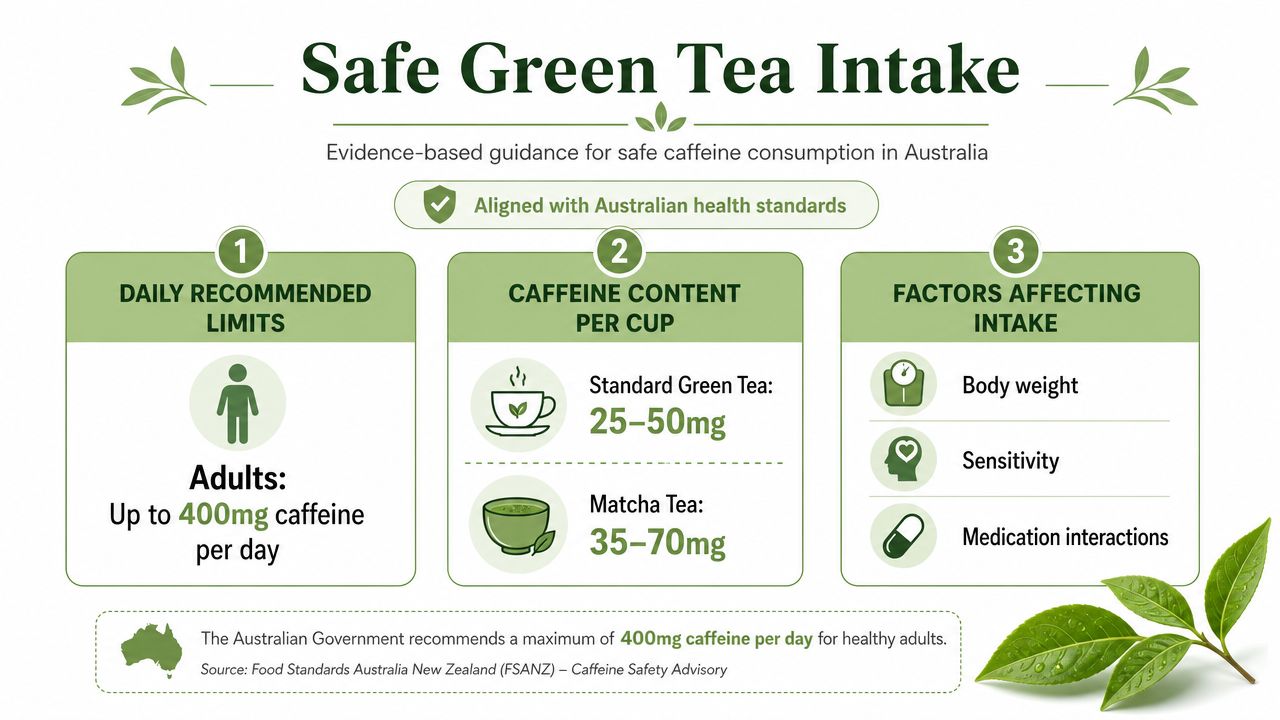
What that means in real life
A useful way to picture caffeine is as a running total, not a single drink judged in isolation. Green tea often plays a small part on its own, but the daily stack matters more than one cup.
A common pattern looks like this:
- coffee with breakfast
- green tea mid-morning
- matcha or kombucha in the afternoon
- pre-workout before exercise
- a cola later on
By the end of the day, symptoms may be blamed on the tea, even though the bigger issue is the combined stimulant load.
Caffeine content at a glance
| Beverage (approx. 250ml serving) | Typical caffeine (mg) |
|---|---|
| Standard green tea | 30 to 50 |
That range can still shift with brew time, water temperature, leaf amount, and whether you are drinking a delicate loose-leaf tea or a stronger style. If you want a clearer guide to how format and serving size change the numbers, this article on organic green tea caffeine is a helpful reference.
Who notices side effects sooner
Caffeine sensitivity is a bit like alcohol tolerance. Two people can have the same amount and get very different results. One feels pleasantly alert. Another gets a fluttery chest, sweaty palms, or the sense that their thoughts are racing.
You may notice side effects earlier if you:
- are sensitive to caffeine and feel “switched on” quickly
- drink green tea later in the day
- combine tea with coffee, energy drinks, or workout supplements
- have a smaller body size
- are pregnant, breastfeeding, or giving caffeinated drinks to children, where extra caution is sensible under Australian health advice
Some people also mistake a caffeine reaction for purely emotional stress. If your mind feels busy as well as your body, this guide on overthinking and anxiety may help you sort out what is stimulant-related and what is not.
A steady, sensible way to stay comfortable
You do not need to count every milligram to use green tea safely. Brewed green tea is suitable for many adults when it is part of a moderate day overall.
These habits help:
- Look at the full day. Tea may be the visible part, but coffee or pre-workout may be doing more of the heavy lifting.
- Keep caffeinated drinks earlier. Morning and early afternoon usually work better than evening.
- Adjust the brew. A lighter cup is often enough if you enjoy the ritual but want less stimulation.
- Pay attention to your own signs. Trouble sleeping, a jittery feeling, or palpitations are cues to cut back.
- Separate brewed tea from extracts. Ordinary cups are one thing. Concentrated products are a different risk category, which matters a lot in green tea conversations.
That last point is where many people get confused. A normal brewed tea and a high-dose extract may come from the same plant, but they do not behave the same way in the body.
Beyond Caffeine Gut Health Iron Absorption and Other Effects
Caffeine gets most of the headlines, but it isn't the only reason green tea can feel uncomfortable for some people.
A common example is the person who says, “Green tea makes me feel a bit queasy.” That doesn't always mean they need to avoid it completely. Often, it's more about timing, strength and stomach sensitivity than the tea itself.
Why it can upset your stomach
Green tea contains natural plant compounds that some people find a bit harsh, especially first thing in the morning or when they haven't eaten. The result can feel like nausea, mild cramping, reflux, or that hollow unsettled sensation that's hard to describe.
If that sounds familiar, try these adjustments:
- Have it after food rather than on an empty stomach
- Make it lighter by shortening the brew or using less tea
- Sip slowly instead of drinking it quickly
- Swap the timing from early morning to mid-morning
A lot of “tea intolerance” improves once people stop drinking it on an empty stomach.
If you're trying to settle your stomach more broadly, these natural ways to improve digestion are useful alongside simpler tea habits like eating first and choosing gentler serving times.
Iron absorption matters for some people more than others
Another point that's often missed is iron. Green tea can interfere with the absorption of non-haem iron, which is the kind found in plant foods.
This matters most if you:
- Follow a vegetarian or vegan diet
- Already have low iron
- Take iron supplements
- Are trying to be deliberate about iron-rich meals
That doesn't mean you need to give up tea. It usually means being smarter about when you drink it.
Easy ways to reduce the issue
A practical approach looks like this:
- drink tea between meals rather than with an iron-focused meal
- leave some time between tea and your iron supplement
- be extra mindful if your clinician has already told you your iron stores are low
This is one of those areas where timing does most of the work. People often assume side effects require major restriction, but a small adjustment in routine is often enough.
Other mild effects you may notice
Some drinkers also report things like:
- headaches when they overdo caffeine
- feeling a bit shaky
- mild reflux
- looser bowels if they're sensitive
None of these automatically mean green tea is a poor choice for you. They usually mean your body is giving feedback about dose, timing or tolerance.
Matcha Kombucha and Green Tea What's The Difference
These drinks are related, but they don't behave exactly the same way in the body. That's where confusion often starts.
Someone says green tea feels fine, then they try matcha and feel more stimulated. Another person finds kombucha gentler but notices bloating if they drink it quickly. Those are different experiences because the products themselves are different.
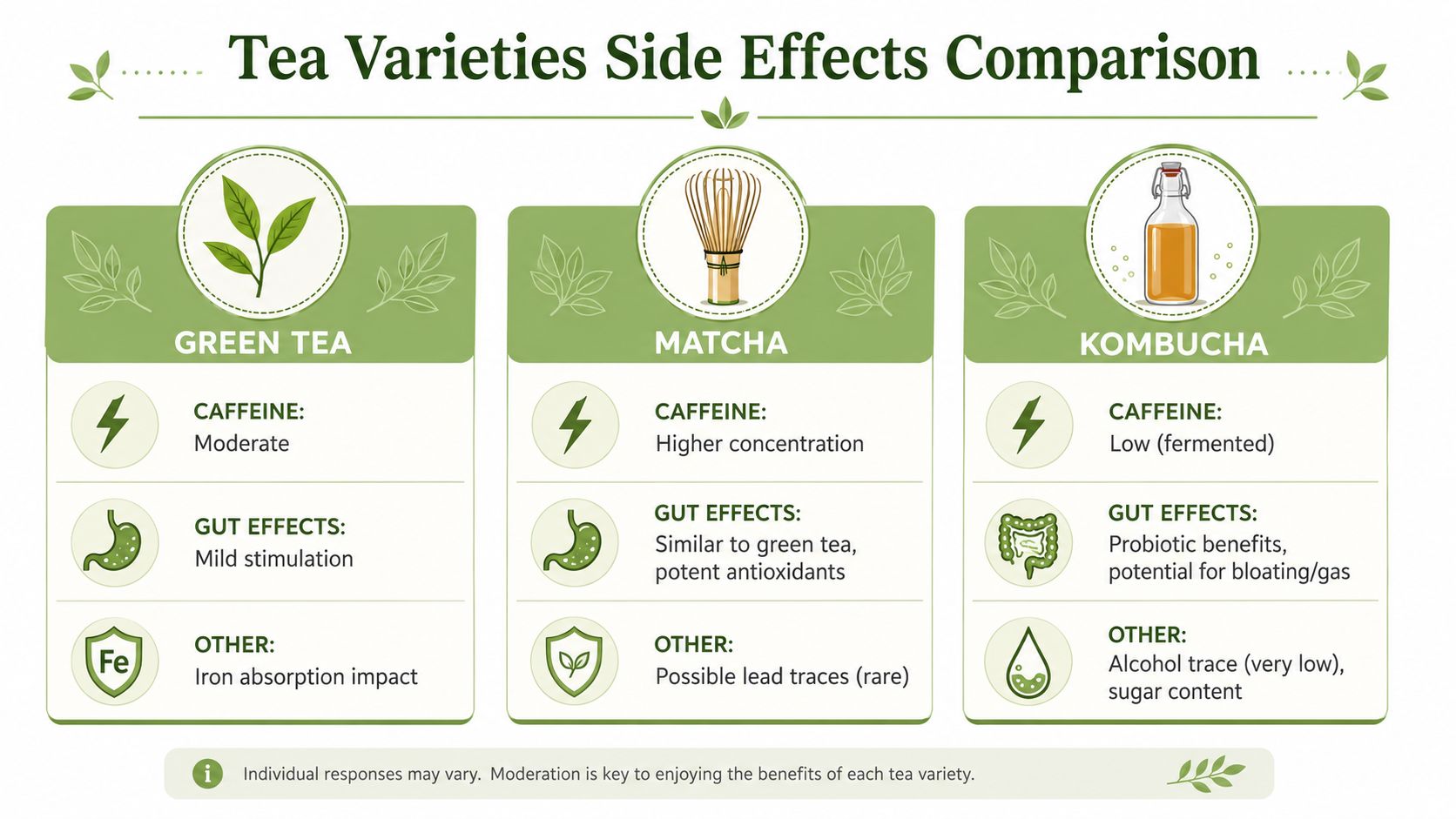
Brewed green tea
Traditional brewed green tea is the most familiar starting point. You steep the leaves, drink the infusion, and leave the leaf behind.
That usually means a gentler overall exposure than products where more of the leaf material ends up in the final drink. This format is often the easiest to tolerate and the simplest place to judge personal caffeine sensitivity.
Matcha
Matcha is different because you consume the whole stone-ground tea leaf suspended in the drink. That changes the experience.
People often notice:
- a stronger lift
- more intensity if they drink it quickly
- greater chance of feeling it on an empty stomach
- better focus for some, but overstimulation for others
Matcha enthusiasts often talk about a smoother type of alertness. That may be part of why some people find it more balanced than coffee. Even so, it's still smart to treat it as a more concentrated tea experience than a standard brewed cup.
If you want a deeper comparison of formats, this guide on the difference between matcha, green tea and green tea drinks lays out the practical distinctions well.
Kombucha
Kombucha starts with tea, but fermentation changes the final product. The result is usually a drink that feels quite different from hot green tea or matcha.
People may choose kombucha because it can feel:
- lighter in caffeine
- more refreshing
- easier as an afternoon option
- interesting from a gut-health perspective
The main caution here is different. Instead of caffeine being the obvious issue, some people notice bloating, fizz sensitivity, or digestive movement, especially if they're new to fermented drinks.
Which one is most likely to cause side effects
There isn't one universal answer. It depends on the person and the situation.
A simple rule of thumb helps:
| Drink | Side effect pattern |
|---|---|
| Brewed green tea | Often the gentlest starting point |
| Matcha | More likely to feel stronger or more stimulating |
| Kombucha | More likely to affect digestion than sleep |
If you're deciding what suits you best, start with the format that matches your goal. Calm daily sipping usually points to brewed tea. A focused lift may point to matcha. A chilled fermented option may suit someone who wants something different from a hot caffeinated drink.
Supplements vs Sips Why Green Tea Extract Is a Different Story
You buy green tea for the same reason many Australians do. It feels like a simple, healthy choice. Then you spot a headline about liver injury and wonder whether your afternoon cup is suddenly a problem.
Usually, the concern is not about brewed tea. It is about green tea extract, a concentrated ingredient found in capsules, powders, weight-loss products, and some detox-style supplements. That distinction matters because the body handles a strong dose in a pill very differently from tea sipped slowly in a mug.
A useful comparison is food versus concentrate. Eating an orange is not the same as swallowing a high-dose citrus compound on an empty stomach. Green tea works in a similar way. A brewed cup gives you smaller amounts mixed with water and taken over time. An extract can deliver a much larger hit all at once.
That is why health authorities pay closer attention to supplements than to ordinary tea drinking. Health Canada has reviewed reports of rare, unpredictable liver injury linked to products containing green tea extract. Reviews of concentrated green tea preparations have also described problems such as nausea, stomach pain, diarrhoea, indigestion, and raised liver enzymes, as summarised by Vanderbilt Poison Control's review of green tea extract adverse effects.
The practical risk factors are fairly consistent:
- taking green tea extract on an empty stomach
- using high-dose supplement products
- combining it with other stimulant ingredients
- assuming an organic or natural label means the product is gentle
That last point causes a lot of confusion. Organic refers to how ingredients were grown and processed. It does not mean a concentrated extract is automatically safer for your liver, stomach, or heart. In other words, organic may change pesticide exposure. It does not cancel out dose-related side effects.
For brewed green tea drinkers, this should feel reassuring. In Australia, the everyday question is usually whether your tea intake suits your caffeine tolerance, iron status, and stomach, not whether a standard cup is acting like a supplement.
If you are looking at a capsule or powdered extract, use a different level of caution. Check the label for green tea extract or EGCG, avoid taking it while fasting, and speak with a GP or pharmacist if you have liver disease, take regular medicines, or notice symptoms such as dark urine, unusual fatigue, nausea, or pain under the right ribs. A tea bag and a high-dose extract may start from the same plant, but they do not behave the same way in the body.
Enjoying Green Tea Safely Tips and When to See a Doctor
You make a cup of organic green tea in the afternoon because it feels like a healthy choice. Then you notice a queasy stomach, a restless night, or a fluttery heartbeat and wonder whether the tea is the problem. In practice, the answer usually comes down to dose, timing, and the form you are drinking, not the word organic on the packet.
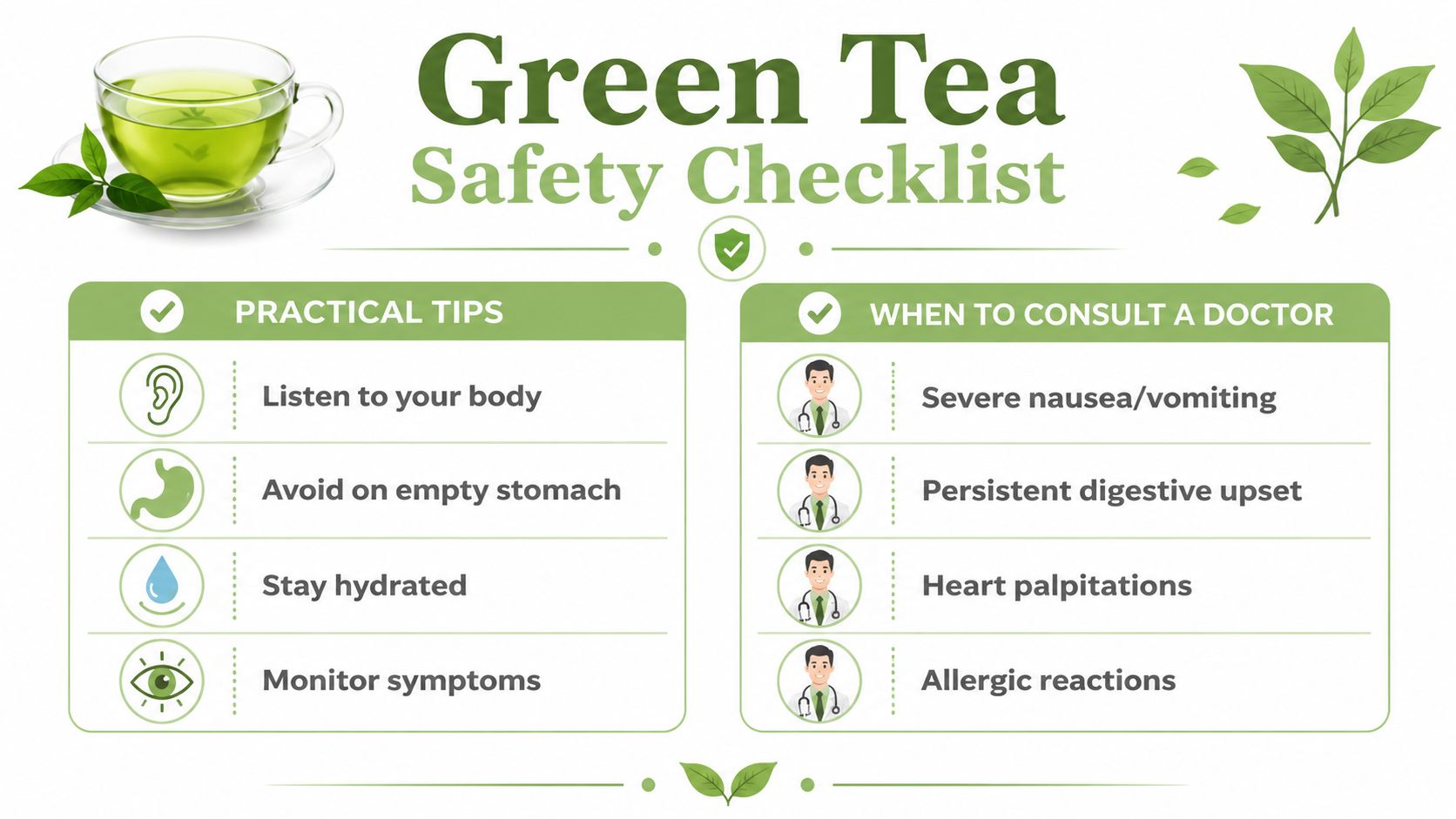
For brewed green tea, the safety basics are usually simple. Australian guidance on caffeine gives healthy adults a useful upper limit for total daily caffeine intake, and a regular cup of green tea is generally far below the caffeine hit of energy drinks or multiple coffees. That is why brewed green tea is a sensible everyday drink for many adults, as long as it agrees with your body.
Practical habits that make a difference
- Keep your total caffeine intake in view. Green tea still counts, especially if you also drink coffee, cola, pre-workout, or energy drinks.
- Have it with food if your stomach is sensitive. Tea can feel a bit harsh on an empty stomach, much like taking a vitamin when you have not eaten.
- Leave space around iron-rich meals or iron supplements. If low iron is a concern, timing matters.
- Notice which form you are having. A brewed cup, matcha, and kombucha can affect you differently.
- Pay attention to patterns. If the same symptoms show up each time, your body is giving you useful feedback.
If you get occasional fluttering, skipped beats, or a racing sensation and are unsure what deserves medical attention, these insights on heart rhythm concerns can help you judge when it is worth getting checked.
A quick visual summary can help if you want something easy to revisit later.
When it's worth checking with your doctor
Speak with a GP, pharmacist, or another qualified health professional if you have:
- persistent nausea or digestive upset
- heart palpitations
- trouble sleeping that clearly tracks with caffeine
- known iron deficiency
- a medical condition or medication that may interact with caffeine or supplements
- pregnancy-related questions about caffeine intake
- any reaction after using a green tea extract product
Symptoms that are strong, unusual, or keep returning deserve proper advice.
The main point is reassuring. Organic brewed green tea is safe for many people when used like a beverage, not a medicine. The higher-risk situation is concentrated extract products, especially if symptoms start after capsules, powders, or fasting use. If you know which form you are using and how your body responds, green tea can stay in your routine without unnecessary worry.
If you'd like to enjoy organic tea with more confidence, explore Pep Tea for premium organic matcha, Australian-brewed sugar-free kombucha, and practical education that helps you choose the right tea for your routine.
Organic Green Tea Caffeine: A 2026 Guide to Calm Energy

You're probably here because you've had that exact moment at the kettle. Coffee feels a bit too intense. Herbal tea feels too sleepy. Green tea seems like the sensible middle ground, but then the question kicks in. Does organic green tea have caffeine, and if it does, how much are you really drinking?
That uncertainty is completely fair. A lot of people choose green tea because they want a gentler kind of energy, then realise they're not quite sure whether they've picked a low-caffeine drink, a moderate one, or something stronger than expected. That's especially true once matcha enters the conversation, because not all green tea behaves the same way in the cup.
More Than Just a Morning Ritual
A friend might swap their second flat white for green tea and say they want a “cleaner buzz”. What they usually mean is simple. They want to feel awake without feeling rattled. They want focus without the sharp edge. They want energy that fits into a normal day, not a spike that sends them looking for another drink an hour later.
That's where organic green tea caffeine gets interesting.
The first thing to clear up is the myth that green tea is caffeine-free. It isn't. Green tea comes from Camellia sinensis, the same tea plant family that naturally contains caffeine. So when you choose organic green tea, you're not choosing a caffeine-free option. You're choosing a tea with naturally occurring caffeine, and the way that caffeine feels can be quite different from coffee.
For readers comparing products and labels, resources like Nutrition Geeks on Herbalife green tea can be useful for seeing how often people ask the same question in different forms: is it energising, is it mild, and how does it fit into a health-focused routine?
If you're newer to the category, our guide to what organic green tea is helps explain why farming method, leaf quality, and style all shape the final experience in your cup.
Green tea isn't something to fear. It's something to understand.
That's the key shift. Once you stop treating caffeine like a mystery ingredient and start seeing it as part of the tea's natural chemistry, your choices get easier. A light brewed cup, a concentrated bowl of matcha, and a fermented tea drink can all sit under the green tea umbrella, but they won't affect you in exactly the same way.
Some people want a gentle lift while they answer emails. Others want the calm concentration that helps with study, creative work, or a long morning without snacking. The useful question isn't only “how much caffeine is in it?” It's also “what kind of energy do I want?”
How Much Caffeine Is in Your Favourite Green Tea
Let's start with the clearest anchor point. A typical 8-ounce, or about 250 mL, cup of green tea contains roughly 20 to 50 mg of caffeine, according to this green tea caffeine reference. That same source notes that 2 cups may provide about 40 to 100 mg of caffeine.
That gives you a practical baseline for organic green tea caffeine in a standard brewed cup.
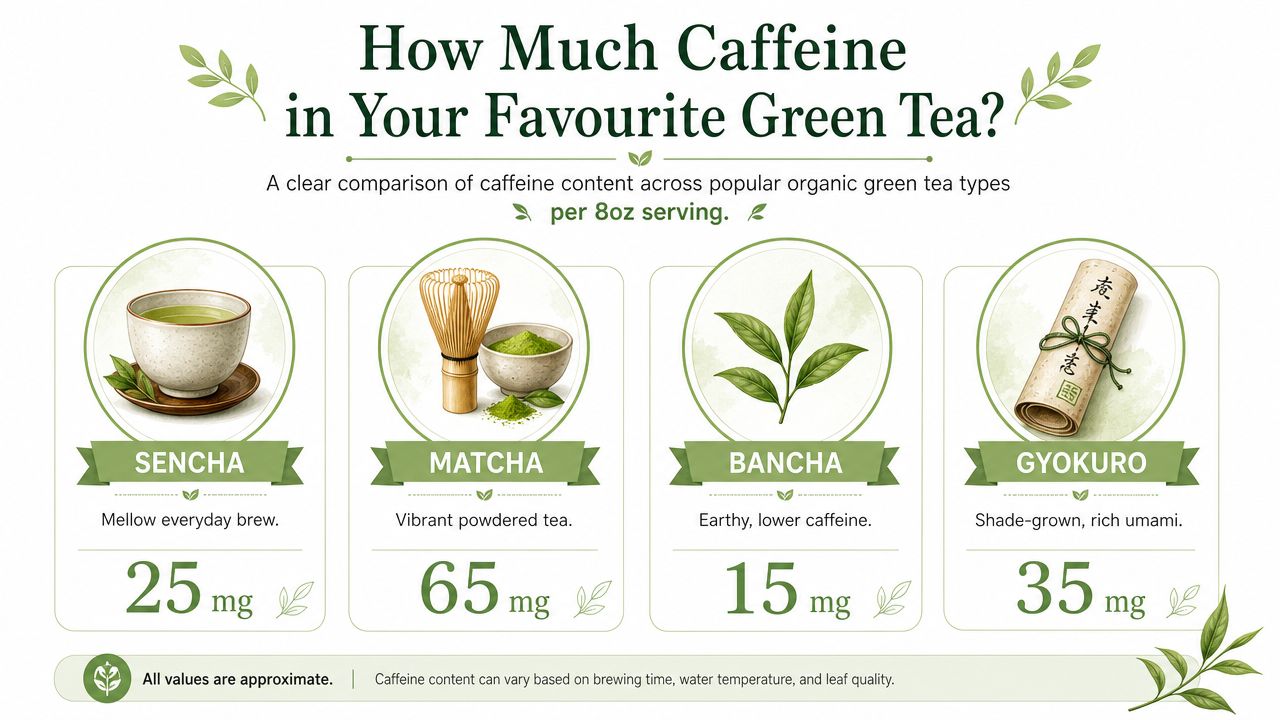
Caffeine content at a glance
| Beverage | Typical Serving Size | Average Caffeine (mg) |
|---|---|---|
| Brewed green tea | 250 mL | 20 to 50 |
| Two cups of brewed green tea | 500 mL total | 40 to 100 |
| Matcha | Varies by preparation | Often feels stronger than brewed green tea because you consume the whole leaf |
| Black tea | Typical cup | Usually stronger than many green teas qualitatively |
| Coffee | Typical cup | Usually higher than green tea qualitatively |
Why one green tea can feel stronger than another
The numbers above are only the start. Two drinks can both be called green tea and still deliver a very different experience.
Brewed loose leaf or tea bag green tea works by extraction. Water pulls caffeine out of the leaves. If the brew is short and gentle, less comes out. If it's hotter and longer, more comes out.
Matcha is different because you whisk powdered tea into water and drink the leaf itself. You're not steeping and discarding leaves. You're consuming the whole tea. That's why many people notice matcha feels more concentrated, especially in a latte or a traditional bowl.
If you want a more detailed breakdown of how matcha compares in everyday drinks, this article on caffeine in a matcha latte is a useful next read.
A simple way to think about it
Think of brewed green tea like making vegetable stock. You're pulling flavour and compounds out of the ingredient into water.
Matcha is more like blending the whole vegetable into the soup. Nothing gets left behind.
Quick takeaway: “Green tea” is one category, not one caffeine level.
That's where readers often get tripped up. They ask for one answer, but the answer depends on form. A light sencha, a strong gyokuro, and a matcha latte can all sit in the same family while feeling very different in your body.
The practical lesson is this. If you're trying to manage your daily intake, don't stop at the word green tea on the label. Ask what kind of green tea it is, how it's prepared, and how much leaf you're consuming.
Factors That Influence Caffeine Levels
Organic green tea caffeine is not one fixed number. It behaves more like the final strength of a soup. The leaves set the starting point, and your brewing choices decide how much ends up in the cup.

That matters because two cups of green tea can look similar and feel completely different. One may give you a calm, steady lift. Another may feel much stronger. The difference often starts long before the water touches the leaf.
Tea varietal and growing conditions
Some teas are naturally set up for a stronger effect. Shade-grown green teas are a classic example. When the plant grows with less sunlight, its chemistry shifts. The flavour often becomes sweeter and richer, and the stimulating effect can feel more noticeable too.
That helps explain why matcha and gyokuro often feel more intense than a lighter everyday sencha. The plant's environment shapes the cup from the very beginning. If you want a broader background on how green tea compounds vary across products, VitzAi's guide to green tea is a helpful reference.
Leaf age and processing
Young leaves usually create a brighter, more lively brew. Older leaves often taste softer and tend to feel gentler.
Processing changes things again. Whole leaves release compounds more gradually. Broken leaves and finely milled tea expose more surface area to water, so extraction happens faster. That is one reason powdered teas can feel stronger even before you change the amount you use.
Preparation method
Form matters.
A loose leaf green tea gives water access to the leaf for a limited time, then you remove the leaves. Powdered tea works differently because the tea stays in the bowl or cup. You drink what was whisked in.
That difference helps explain why one organic green tea feels light and easy, while another creates a deeper, more sustained lift. It is not only about caffeine on paper. It is about how much of the leaf ends up in your body and how quickly it gets there.
Brewing technique
This is the part you can control most easily at home.
Small brewing changes can noticeably change the character of your tea, including how strong the energy feels. Hotter water pulls compounds out faster. A longer steep gives the water more time to extract caffeine. A finer leaf also speeds things up because more of the leaf is exposed.
If you want a gentler cup, start here:
- Use slightly cooler water for a softer extraction
- Shorten the steep time if your tea feels too strong
- Use less leaf when you want lighter energy
- Choose whole leaf tea over powder when you want more control
If you want more lift without jumping straight to coffee, do the opposite in small steps. Increase the leaf a little. Steep a bit longer. Keep notes for a few days. Tea responds well to small adjustments, and your body usually does too.
If a café green tea feels punchier than the one you make at home, the water temperature, leaf quantity, and steep time are often the reason.
The useful takeaway is simple. Caffeine in green tea is partly built into the leaf, but a big part of your experience comes from preparation. That gives you room to shape not just how much energy you get, but the quality of that energy as well.
Why Green Tea Energy Feels Different
If coffee sometimes feels like someone switched the lights on too fast, green tea often feels more like opening the blinds.
That difference isn't just in your imagination. Green tea contains caffeine, but it also contains L-theanine, and the pairing matters. A scientific review of green tea notes that caffeine is one of its major bioactive compounds, typically making up about 2 to 5% of dry leaf weight, and that green tea's natural combination with L-theanine is known for a smoother, more sustained stimulant effect than coffee in tea science discussions, as outlined in this review on green tea chemistry and effects.
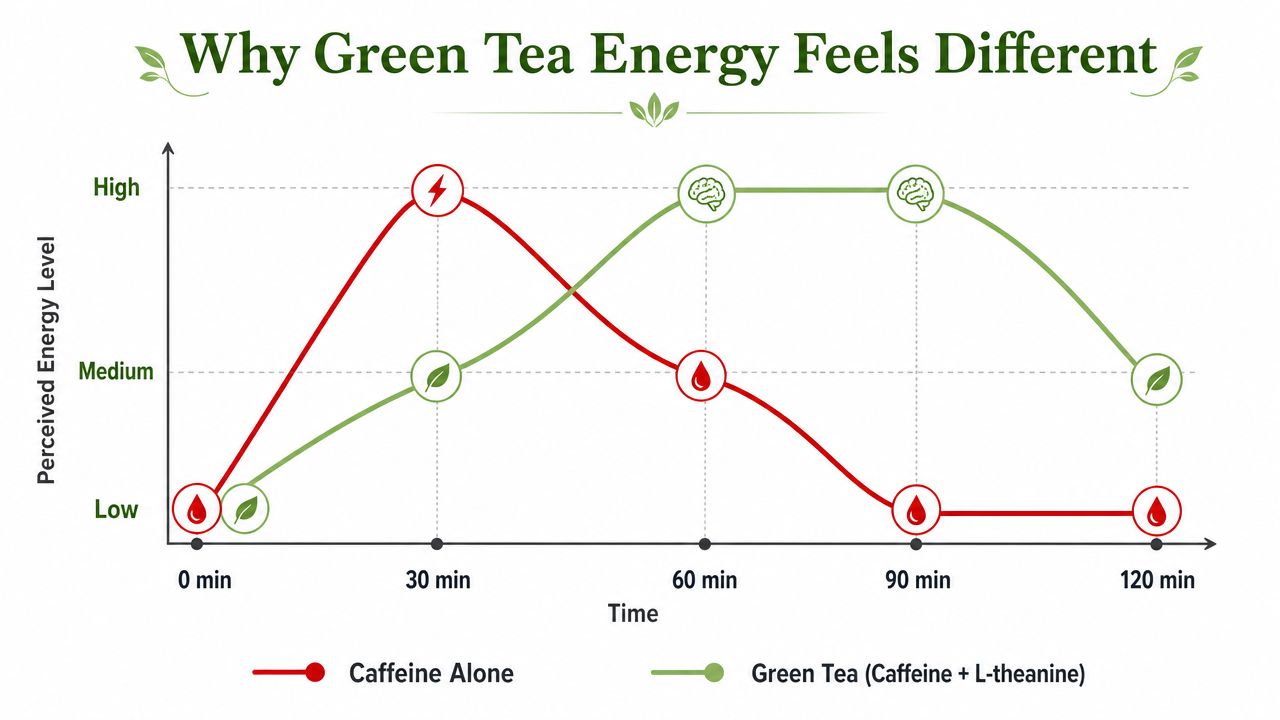
Caffeine with company
Caffeine on its own can feel abrupt for some people. Green tea rarely delivers it in isolation. L-theanine is an amino acid naturally found in tea, and it changes the character of the experience.
A simple way to picture it is this:
- Coffee-style stimulation: often feels fast and sharp
- Green tea stimulation: often feels steadier and more even
- Matcha in particular: can feel focused rather than frantic
That doesn't mean everyone reacts the same way. Bodies differ. Meals matter. Sleep matters. Your own sensitivity matters. But this pairing helps explain why many green tea drinkers describe the effect as calm alertness rather than a jolt.
Why matcha often stands out
Owing to their specific properties, shade-grown green teas earn their reputation. In high-quality matcha, you're not just getting caffeine. You're also getting the tea's broader chemistry in a concentrated form because the whole powdered leaf goes into the bowl.
For readers who want another plain-English overview, VitzAi's guide to green tea is a handy supplementary read on how people frame green tea's effects in wellness contexts.
What many people are chasing isn't more energy. It's steadier energy.
That's why green tea has become such a natural fit for workdays, study sessions, mindful routines, and afternoons when coffee feels like too much. The goal isn't to be overstimulated. It's to feel switched on and still like yourself.
The practical feeling in real life
You notice this most in ordinary moments.
A cup of coffee can be perfect before a rushed morning commute. Green tea often suits the kind of focus that asks for patience. Writing, reading, planning, designing, or working through a long list without feeling jagged.
That's also why people who once thought all caffeine was basically the same often end up surprised by tea. The quantity matters, yes. The quality of the experience matters just as much.
Brewing and Recipes to Customise Your Caffeine
You wake up wanting clarity, not a racing heart. On another day, you want a bit more lift to get through a long morning. Green tea can do both, because brewing changes the result in the cup.

A useful way to see it is this. Tea leaves are like ingredients in a slow release recipe. Water temperature, steep time, and leaf amount decide how much caffeine and flavour you pull out. Change those three levers, and you change the kind of energy you get.
Hotter water and longer steeping usually pull out more. Cooler water and shorter steeping usually keep things lighter and softer. Matcha sits in its own category because you drink the whole powdered leaf, so the experience is often fuller and more concentrated.
The main brewing levers
If you want more control, start here.
- For a gentler cup: use cooler water and steep for less time
- For more lift: use a little more leaf or let it steep longer
- For a stronger, steadier option: choose matcha instead of infused leaves
- For late afternoon: make a smaller serving or brew it lighter
That last point helps many caffeine-sensitive drinkers. You do not need to give up green tea. You often just need to change the extraction.
Low-caffeine cold brew green tea
Cold brew is one of the easiest ways to soften both flavour and stimulation. It works well when you want green tea's fresh character without a sharper edge.
- Add green tea leaves to cool water.
- Place it in the fridge.
- Strain once the flavour tastes right to you.
- Serve over ice with lemon, mint, or plain.
Why does this feel different? Cool water extracts more slowly, so the cup often tastes smoother and lighter than a hot, long steep. For many people, that makes it a smart afternoon option.
A low-caffeine tea routine comes from adjusting the brew, not settling for a dull cup.
Matcha latte for calm focus
A matcha latte solves a different problem. It suits mornings when you want stronger focus and a more sustained sense of energy. Because the whole leaf is whisked into the drink, the effect can feel more direct than standard brewed green tea.
Start small if you are still learning your tolerance. A modest scoop of matcha in milk can give you a more controlled experience than making it too strong and hoping for the best. Pep Tea's organic matcha range fits that approach well because you can easily scale the amount up or down.
A simple method looks like this:
- Sift matcha into a bowl or cup.
- Add a small amount of warm water.
- Whisk until smooth.
- Pour over warm or cold milk.
- Taste before adding any sweetener.
If you want a cold version, this guide on how to make an iced matcha latte shows the process clearly.
Here's a quick visual if you prefer to watch the process first.
The practical lesson is simple. Green tea is not one fixed caffeine experience. A cool, delicate brew can give you a lighter kind of alertness. A matcha latte can give you a fuller, steadier push. Once you know how to brew for the feeling you want, caffeine stops being a mystery and starts becoming a tool.
Finding Your Perfect Green Tea Moment
The most helpful way to think about organic green tea caffeine is not “is it high or low?” It's “when does this version fit my day?”
A brisk morning often suits a more concentrated green tea choice. If you want presence, focus, and a sense of momentum, matcha makes sense. It feels intentional. You prepare it, whisk it, and drink something that asks you to slow down just enough before the day speeds up.
Midday is usually where a standard brewed green tea shines. It can lift you without making lunch feel too heavy or the afternoon feel too wired. This is the point in the day where many people discover why green tea remains such a reliable habit. It's supportive rather than dramatic.
Later on, many drinkers prefer a lighter hand. That might mean a shorter steep, cooler preparation, or a smaller serve. If you're someone who notices caffeine easily, that adjustment matters.
A simple way to choose
- Need sharper focus for work or study: choose matcha
- Want a balanced daily cup: choose brewed green tea
- Feeling caffeine-sensitive today: brew lighter, cooler, or shorter
- Trying to build a sustainable routine: match the tea style to the moment, not just the mood
What matters most
You don't need to memorise every tea style to make a smart choice. You just need to remember three things.
First, green tea does contain caffeine. Second, the amount and feel depend on the leaf and the method. Third, the best tea is the one that gives you energy you enjoy living with.
That's why this conversation matters. Not because caffeine is something to obsess over, but because understanding it helps you choose with confidence. When you know how green tea works, you can use it more thoughtfully and get more out of every cup.
If you'd like to explore organic matcha and other functional tea options for your own routine, have a look at Pep Tea. We share practical guides, recipes, and product information to help you find a green tea rhythm that feels steady, enjoyable, and easy to keep.