
Tag: chasen
Mastering Your T2 Matcha Whisk

You’ve probably done it already. You bought good matcha, poured in hot water, gave it a quick stir with a spoon, and ended up with floating clumps, gritty sips, and a layer of foam that disappeared before you even sat down.
That’s usually the moment people decide matcha is fussy, overrated, or somehow only good when a café makes it.
It is simple. Matcha asks for the right tool. A t2 matcha whisk can change the whole experience because it’s designed for one specific job that a spoon, fork, or shaker can’t quite do in the same way. It doesn’t just mix powder into water. It helps suspend the tea evenly, bring air into the bowl, and create that smooth, creamy top that makes matcha taste fresh instead of flat.
That Perfect Matcha You Deserve is Within Reach
A good bowl of matcha should look lively and bright. It should feel smooth on the palate, not chalky. It should taste rounded, not harsh. If your homemade version keeps missing the mark, that doesn’t mean you’re bad at making tea. It usually means one of three things is off: the water is too hot, the powder wasn’t sifted, or the whisking tool isn’t doing enough.
That’s why the t2 matcha whisk matters. It brings you closer to the ideal result sought when buying premium matcha in the first place. Clean flavour. Fine froth. Fewer clumps. A ritual that feels calm rather than chaotic.
Why the whisk changes everything
The whisk is where technique meets texture. Matcha isn’t like instant drink powder that fully dissolves. It suspends in water. That means the goal isn’t just to stir it in. The goal is to break up tiny clumps and keep the particles moving evenly through the liquid.
When that happens, the bowl tastes softer and more balanced.
A proper whisk also turns preparation into a repeatable habit. Once your hands learn the movement, you stop guessing. You don’t have to overwork the bowl or keep adding more water to fix mistakes. You make a small, smooth concentrate first, then drink it as is or build from there for lattes and iced drinks.
Practical rule: If your matcha tastes bitter and looks lumpy, don’t blame the tea first. Check your whisking method and water temperature.
A traditional tool that still makes sense today
One reason bamboo whisks have lasted so long is that they work. They’re light, flexible, and responsive. You can feel immediately whether the mix is too thick, too dry, or ready. That feedback matters, especially when you’re using better-quality powder.
For many people, the first successful bowl is a surprise. The same matcha suddenly tastes greener, fresher, and more rounded because it was whisked properly.
That’s the skill worth learning. Not because it’s fancy, but because it lets the tea show what it can do.
What is a Matcha Whisk and Why is it Essential
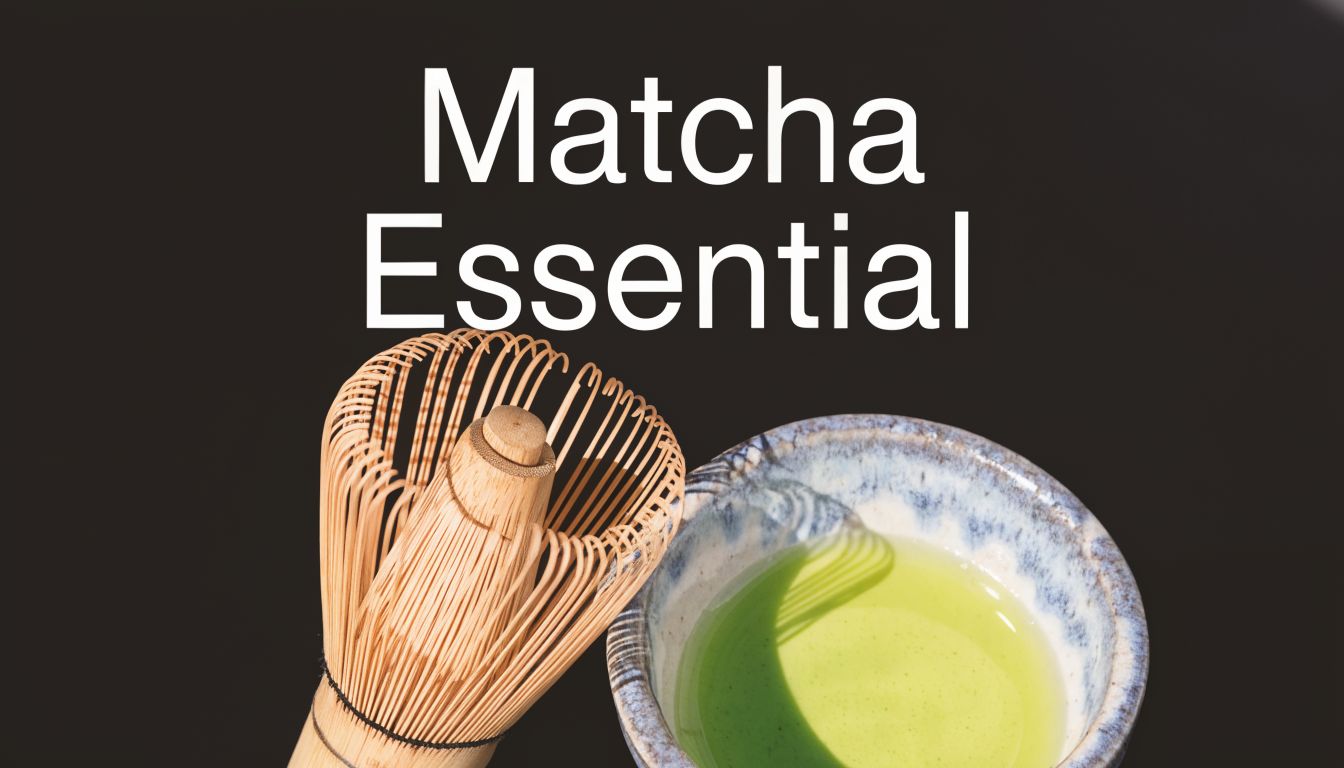
A matcha whisk is a small bamboo tool made specifically for preparing matcha. In Japanese tea culture, it’s called a chasen. It looks delicate, but its shape is highly practical. Those fine bamboo tines are designed to break apart clumps, suspend the powdered tea, and create a light froth across the surface.
The chasen has real history behind it
The whisk isn’t a trendy add-on. It belongs to a long tea tradition. The traditional matcha whisk, or chasen, dates back to the Muromachi period (1336–1573 AD), and the town of Takayama is still renowned for whisk-making, producing an estimated 90% of traditional chasen according to this history of matcha whisks.
That heritage matters because the design has been refined over centuries for one reason. It works exceptionally well.
You can think of a chasen like an artist’s brush. You could paint a wall with a kitchen sponge, but you wouldn’t expect fine detail. In the same way, you can stir matcha with a spoon, but you shouldn’t expect the texture or finish that a purpose-made whisk can create.
Stirring and whisking are not the same thing
Often, readers get confused, assuming that if the powder looks mostly combined, the job is done. But matcha preparation is less about simple mixing and more about suspension and aeration.
A spoon pushes liquid around the bowl. A bamboo whisk moves quickly through the liquid and creates a very different effect. It breaks apart pockets of powder and lifts air through the tea at the same time. That’s what gives matcha its soft foam and smoother mouthfeel.
Here’s the difference in simple terms:
| Tool | What it usually does | What the cup often feels like |
|---|---|---|
| Spoon | Stirs surface and edges | Clumpy or heavy |
| Fork | Breaks some clumps | Uneven texture |
| Shaker | Blends for convenience | Practical, but less refined |
| Bamboo chasen | Suspends powder and aerates | Smooth, creamy, lively |
Why a whisk matters for premium matcha
Good matcha deserves even preparation. If the powder sits in clumps, some sips taste too strong and others taste watery. That throws off flavour and feel. A whisk helps distribute the tea more evenly, so each sip tastes closer to the one before it.
That’s especially important when you’re working with a ceremonial-style bowl of matcha where there’s nowhere for texture flaws to hide.
A chasen also encourages the right movement. Instead of stirring in circles, you whisk lightly across the surface in quick strokes. That motion creates foam without smashing the whisk down into the bowl.
The whisk isn’t there to make matcha decorative. It’s there to make matcha drinkable in the way it was intended.
What makes the bamboo design so effective
Each tine flexes slightly as you whisk. That flexibility is the secret. Metal tools tend to feel rigid and blunt. Bamboo feels springy. It glides, catches powder, and releases it back into the liquid.
A well-made whisk helps with:
- Clump control by separating fine powder before it settles
- Surface froth by bringing air into the top layer
- Better consistency so the bowl tastes balanced from first sip to last
- A calmer ritual because the motion is quick and intuitive once learned
If you’ve ever wondered why café matcha can taste smoother than what you make at home, the answer often starts here. Not with more ingredients. With better preparation.
Choosing Your Perfect T2 Matcha Whisk
A good whisk choice changes the bowl before you even add water. If your matcha is premium, organic, and finely milled, the whisk you use affects more than froth. It shapes how evenly the powder disperses, how smooth the sip feels, and how consistently you take in the tea’s naturally occurring antioxidants and L-theanine from the first mouthful to the last.
Choose based on how you actually drink matcha
The easiest way to choose a t2 matcha whisk is to start with your routine, not the product name.
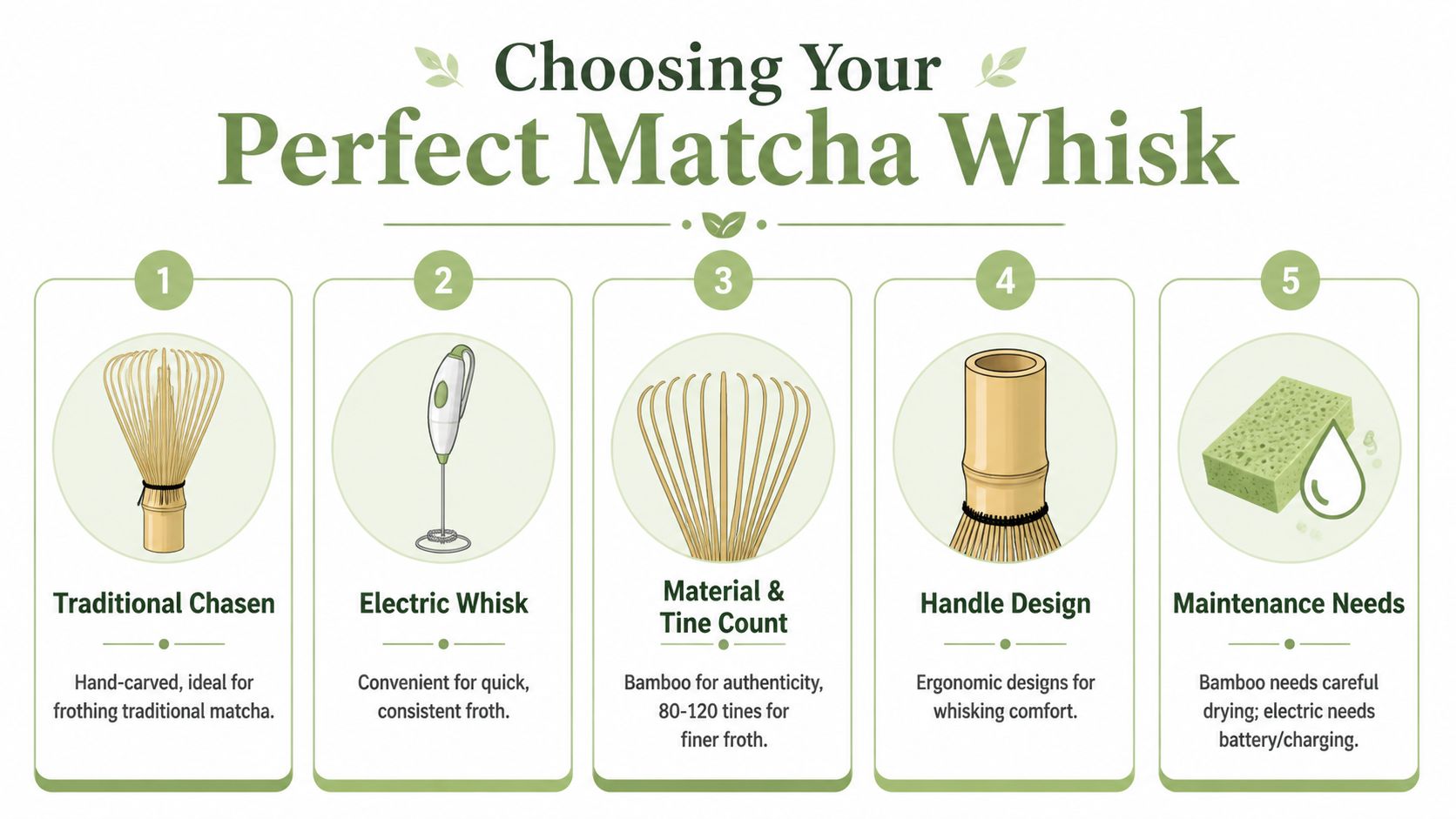
If you drink matcha straight from a bowl and care about a fine, creamy top layer, a traditional bamboo whisk makes the most sense. If you usually make a quick morning latte, you may still want bamboo, but you probably need something simple, durable, and easy to repeat half-awake before work.
That distinction matters because whisking is a physical process. Fine bamboo tines separate powder, move water through it, and break up tiny clumps before they become gritty sips. A denser, more delicate whisk usually gives you more control. A simpler everyday whisk often feels easier to live with.
The premium option for a more traditional bowl
The T2 Premium Matcha Whisk suits drinkers who want a closer connection to traditional preparation. More finely cut tines generally create a lighter froth and a more even suspension, which helps ceremonial or premium organic matcha taste softer and more rounded.
That even suspension is not just about texture. Matcha is different from steeped green tea because you consume the leaf itself. If powder settles at the bottom, your bowl becomes uneven. Early sips can taste thin, while the last few turn heavy and intense. A finer whisk helps keep the tea dispersed more consistently, so the compounds naturally present in matcha, including catechins and L-theanine, are carried through the bowl more evenly.
If that sounds technical, here is the practical version. A better whisk can help your good matcha taste more complete.
This style suits you if you enjoy slower preparation, drink matcha with little or no milk, and want the bowl to feel soft rather than bubbly.
The everyday option for regular use
The T2 Everyday Matcha Whisk is the practical middle ground. It gives you the feel of bamboo without asking for a highly ritualised setup each time.
For plenty of Australian households, that is the sweet spot. You can prepare a smooth matcha concentrate in a bowl, pour over milk, and still get better texture than you would from stirring with a spoon. You also keep more control over the first mixing stage, which is where many clumps start.
It is a strong fit for:
- Daily matcha drinkers who want one whisk they'll reach for
- Latte makers who prepare matcha before adding milk or ice
- Beginners who want proper bamboo technique without fuss
- Gift buyers putting together a starter set that feels thoughtful and useful
Where an electric whisk fits
An electric whisk is about convenience. It is handy for iced drinks, quick lattes, or anyone who prefers speed over ritual.
Still, it creates a different result. A bamboo chasen works more like a fine brush, moving through a small pool of water and tea with precision. An electric frother agitates more broadly. That can be useful, but it often makes a larger-bubbled foam rather than the finer top layer many matcha drinkers enjoy.
It is a bit like the difference between whisking sauce by hand and using a powered tool. Both can work, but the texture and feel are not quite the same. The same logic shows up in cooking techniques such as perfecting hollandaise at home, where controlled movement changes the final emulsion.
A simple comparison
| Option | Best for | What it does well |
|---|---|---|
| T2 Premium Matcha Whisk | Traditional bowls, premium matcha, slower rituals | Finer froth, more control, more even suspension |
| T2 Everyday Matcha Whisk | Regular home use, lattes, beginner-friendly prep | Reliable mixing, easy routine, practical daily use |
| Electric whisk | Fast milk drinks, iced matcha, convenience | Speed and minimal effort |
Match the whisk to the tea, then to your kitchen
If you buy high-grade organic matcha for its flavour and wellness benefits, it makes sense to pair it with a whisk that helps the powder disperse properly. If your mornings are rushed, choose the whisk you will reach for consistently. The best tool is the one that turns good intentions into a daily cup.
Australian climate plays a part too. In humid coastal areas, bamboo can soften and warp more easily if it is stored damp. In dry inland areas, tines can become brittle if the whisk is left near heat or direct sun. That means your ideal choice is not only about taste. It is also about whether you are happy to care for bamboo properly.
For readers comparing bowls, scoops, holders, and whisks as one setup, this collection of matcha tea accessories shows how the pieces work together.
Choose the whisk that suits your real routine and your real climate, because that is what helps great matcha stay smooth, balanced, and worth making again tomorrow.
A Step-by-Step Guide to Using Your Matcha Whisk
You’ve bought good matcha, boiled the kettle, and set aside a quiet minute. Then the bowl turns out clumpy, flat, or slightly bitter. That usually comes down to sequence, not effort.
A t2 matcha whisk works a bit like a fine kitchen tool for emulsifying. The quick, light motion breaks up powder evenly, suspends it through the water, and helps create the soft foam that makes matcha taste rounder and smoother. That even suspension also matters for the tea’s wellness appeal, because you are drinking the whole leaf, including the compounds premium organic matcha is prized for, such as antioxidants and L-theanine.
Start with the bowl, the powder, and the whisk
Begin by warming your bowl with hot water, then tip it out and dry it. A warm bowl helps keep the drinking temperature steady, so your matcha does not cool too quickly while you whisk.
Next, soak the whisk briefly in warm water. This softens the bamboo tines so they flex cleanly instead of scraping stiffly across the bowl.
Then sift your matcha into the bowl. This step catches tiny lumps before they become stubborn pockets of dry powder. If you have ever tried to stir flour into liquid after it has already clumped, the same idea applies here.
A reliable setup looks like this:
- Warm the bowl with hot water, then empty and dry it.
- Soak the whisk briefly in warm water.
- Sift the matcha into the bowl.
- Add a small splash of water first to make a smooth base.
- Pour in the remaining water once the paste looks even.
That small splash at the start is one of the biggest difference-makers. It gives you control.
Use warm water and a fast wrist motion
Matcha generally tastes best with warm rather than boiling water. Too much heat can make high-quality powder taste sharper and more bitter, while slightly cooler water keeps the sweetness, umami, and grassy freshness in better balance.
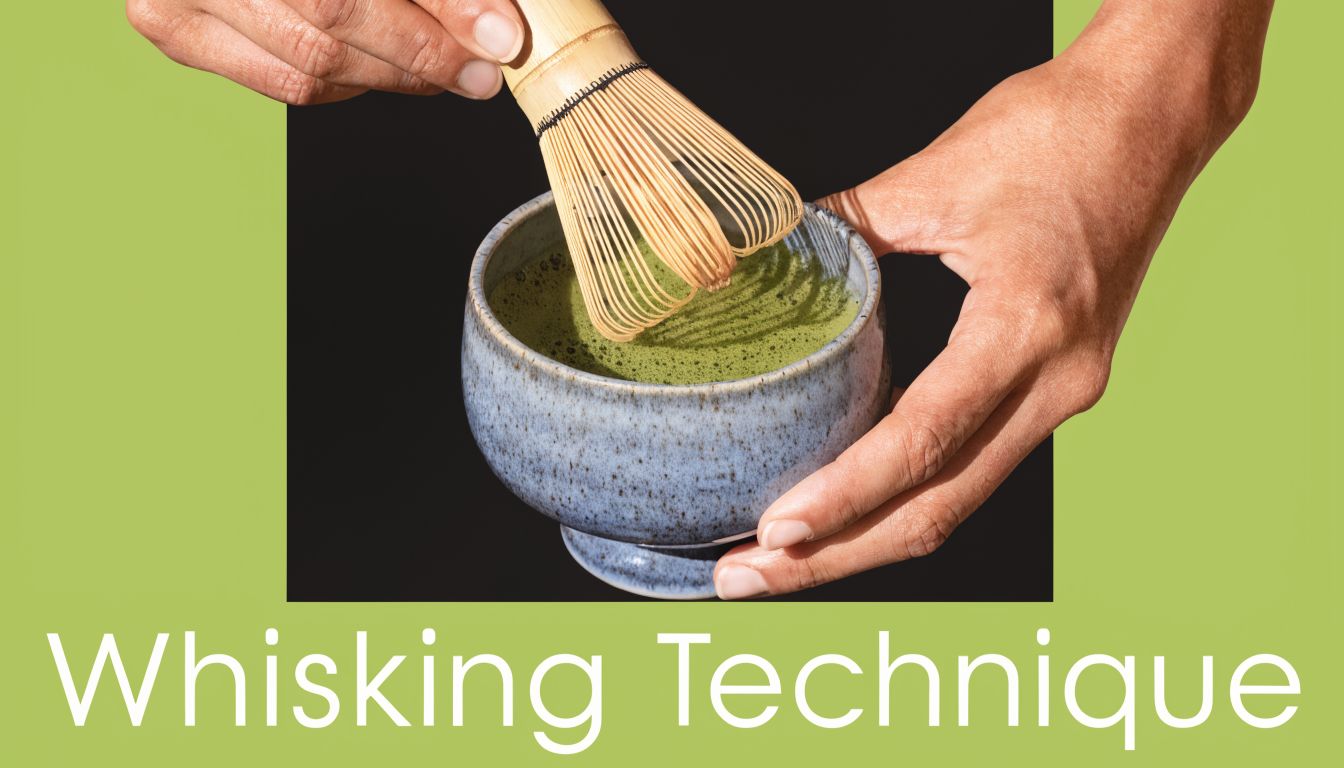
Once the water is in, whisk with your wrist in a quick W or M motion near the surface. Circular stirring tends to chase the powder around the bowl. The zigzag motion spreads it through the water and builds a finer foam.
Keep the whisk low enough to engage the tea, but light enough that the tips are not being pressed into the bottom of the bowl. You are aerating and dispersing, not grinding.
A short whisking session is often enough if your matcha was sifted well and your motion is quick and light. If you want to compare hand position and rhythm, this visual guide on how to whisk matcha is a helpful reference.
What good whisking should feel like
The movement should come mostly from the wrist, not the whole arm. Picture the difference between sketching with a pen and scrubbing a pan. Matcha needs the first kind of motion.
As the liquid smooths out, you can lift the whisk slightly toward the top layer to encourage a soft, creamy froth. The surface should look fine-bubbled rather than coarse and foamy. If the whisk is thudding against the bowl, you are pressing too hard.
This is the point many people miss. Better whisking does more than improve texture. It helps distribute the powder evenly through the water, so each sip is balanced rather than patchy. With premium organic matcha, that means a more consistent cup and a better chance of getting the full benefit of what is already in the leaf.
Watch the process in motion
If you learn best by seeing the hand movement, this demonstration helps make the rhythm much clearer.
Troubleshooting common matcha problems
A few small adjustments solve most issues.
Clumps keep appearing
Sift the powder first, then start with a small amount of water to form a smooth paste before adding the rest.There’s barely any froth
Use faster wrist movement and whisk near the surface once the matcha is fully combined.The matcha tastes bitter
Let the water cool slightly after boiling. Very hot water can flatten sweetness and push bitterness forward.The foam disappears quickly
Keep whisking until the tea is fully suspended. Large bubbles fade fast, but finer foam lasts longer.The texture feels thin or uneven
Check your ratio. Too much water for the amount of matcha can leave the bowl tasting weak and looking flat.
Good whisking is a lot like perfecting hollandaise at home. Small movements, temperature control, and patience matter more than brute force.
Caring For Your Bamboo Whisk in Australia
A bamboo whisk won’t stay springy and clean if it’s treated like an ordinary kitchen utensil. In Australia, that matters even more. Humidity can work against you, especially if your whisk sits damp in a drawer or on a bench with poor airflow.

The cleaning rule is simple
Rinse the whisk soon after use with warm water. Skip detergent. Soap can linger in bamboo and affect the next bowl’s flavour. Gently shake off excess water, then let the whisk dry thoroughly.
A lot of people rush this step. That’s where trouble starts.
Why drying matters more in Australia
In Australia’s humid climates, average relative humidity can exceed 75%, and bamboo kitchen tools are prone to mould. Standard advice to just “air dry” a matcha whisk is often insufficient. Proper care, including ensuring complete dryness before storage, is important for hygiene and can help prolong the whisk’s lifespan, as noted on the T2 Premium Matcha Whisk page.
That’s especially relevant in coastal and subtropical areas where kitchens can stay damp for long stretches.
Use a whisk holder properly
A whisk holder, often called a kusenaoshi, does more than make the setup look neat. It helps the tines keep their shape and improves airflow while the whisk dries. That means less warping, less crowding of the prongs, and a better chance of the whisk staying usable for longer.
If you’ve never used one before, this style of matcha whisk stand shows the kind of support bamboo whisks benefit from after every use.
A realistic care routine for humid homes
You don’t need a complicated system. You do need consistency.
- Rinse immediately so dried matcha doesn’t harden between the tines.
- Let it dry fully in the open rather than putting it away too soon.
- Store it upright on a holder instead of flat in a closed drawer.
- Keep it away from enclosed damp spaces near sinks or dish racks.
- Check it regularly for musty smell, dark spots, or misshapen tines
A bamboo whisk can last well when it’s dried properly. It breaks down much faster when moisture stays trapped inside the prongs.
What not to do
Avoid the dishwasher. Avoid soaking it for long periods. Avoid stuffing it into a cupboard while it’s still damp. And if the whisk starts smelling off or showing signs of mould, retire it.
That might sound strict, but it’s better than using compromised bamboo in your tea every morning. Good care protects flavour, hygiene, and the feel of the whisk in your hand.
Beyond the Bowl Creative Matcha Pairings and Recipes
Once you’ve learned how to whisk matcha properly, you’re not limited to a plain bowl of tea. The same technique can anchor a lot of modern drinks and kitchen rituals. A t2 matcha whisk is just as useful for building a smooth latte base as it is for a traditional bowl.
A better matcha latte starts with a concentrate
A common mistake with lattes is adding matcha straight into a full cup of milk. That usually leads to specks and uneven flavour.
Instead, whisk a small amount of matcha with warm water first until smooth and lightly frothy. Then pour that concentrate into your warm or cold milk. You’ll get cleaner flavour and a much more even colour.
A simple home method:
- Add sifted matcha to a bowl
- Pour in a little warm water
- Whisk until smooth and frothy
- Top with milk of your choice
- Sweeten only if needed
This works well whether you like a straight dairy latte, oat milk, or an iced version over plenty of ice.
The Matcha-bucha Sparkler
If you enjoy functional drinks with a fresh, lively feel, whisked matcha also pairs beautifully with kombucha. The key is to make the matcha base first and then combine it gently.
Try this approach for a Matcha-bucha Sparkler:
- Whisk matcha with a small amount of warm water until smooth.
- Let it cool slightly.
- Pour it over ice in a tall glass.
- Top with chilled kombucha.
- Finish with a citrus twist or a slice of fresh ginger if that suits the flavour.
The result tastes layered and modern. You get the grassy depth of matcha with the brightness and lift of a sparkling fermented drink.
Use a gentle hand when combining matcha and kombucha. The goal is integration, not knocking all the life out of the glass.
Matcha in snacks and simple food prep
Your whisk can also help when matcha heads into food rather than a mug. A quick whisked slurry prevents dry pockets when adding matcha to yoghurt bowls, smoothies, or baking mixes.
That’s particularly useful with culinary-grade matcha, where smooth dispersion matters for both flavour and colour.
A few easy uses:
- Smoothies with banana, spinach, yoghurt, and whisked matcha
- Bliss balls where whisked matcha is folded into the wet mixture first
- Pancake or muffin batter to avoid green streaks and lumps
- Yoghurt bowls with fruit and seeds for a simple afternoon snack
If you’re looking for flavour pairing inspiration outside the tea world, a matcha-flavoured plant-based protein snack can be a handy reference point for how well matcha plays with nuts, mild sweetness, and creamy textures.
Make the ritual fit real life
Not every bowl of matcha needs to be ceremonial. Some mornings, the ritual is the point. Other days, the whisk is just the fastest way to make your drink taste better.
That flexibility is part of the appeal.
One day, your whisk helps build a quiet bowl before work. Another day, it helps make a clean iced latte in two minutes. On the weekend, it might help blend matcha into pancake batter or a smoothie for the family.
Pairing ideas that usually work well
Here are some flavour directions that suit matcha nicely:
| Pairing | Why it works |
|---|---|
| Vanilla | Softens grassy notes |
| Citrus | Brightens the finish |
| Ginger | Adds warmth and lift |
| Oat milk | Supports a creamy body |
| Coconut | Brings roundness to iced drinks |
The point isn’t to cover matcha up. It’s to support what’s already there. A whisk helps you start from a smooth base, and that makes every pairing more successful.
Your Whisk is Your Partner in Wellness
It is 7 am, the house is quiet, and you want a drink that wakes you up without making your mind feel jagged. You scoop out premium organic matcha, add water, and reach for your whisk. That small bamboo tool does more than improve the look of the bowl. It helps the powder disperse properly, so each sip is smoother, more balanced, and more satisfying to drink.
That matters for wellness because matcha is different from steeped green tea. You are drinking the whole leaf in finely milled form, not just an infusion. A good whisking action spreads those tiny particles evenly through the water instead of leaving them clumped at the bottom or stuck in bitter lumps on the surface. In practical terms, that means a more consistent cup and a better experience of what quality matcha offers, including its naturally occurring antioxidants and L-theanine.
The whisk works a bit like a good kitchen tool that brings a sauce together. If the mixture stays uneven, the flavour feels patchy and the texture distracts you. If the mixture becomes fine and airy, everything tastes clearer. Matcha is similar. Proper whisking creates a light foam and an even suspension, which helps the tea feel creamy rather than gritty and lets the sweet, umami, and fresh green notes show up in balance.
There is a body effect here too.
Many tea drinkers choose matcha because it can feel calm and focused at the same time. That reputation is tied to the natural combination of caffeine and L-theanine in the tea. Your whisk does not create those compounds, of course, but it does help you prepare the bowl in a way that makes the whole serving pleasant and complete to consume. If your matcha is poorly mixed, you are more likely to leave sludge behind, rush the process, or cover the taste with too much sweetener. A well-whisked bowl makes it easier to enjoy the tea as it is.
That is one reason the physical ritual matters. The hand motion is quick, but the effect is settling. You warm the bowl, sift the powder, add water at the right temperature, then whisk with purpose. For many people, that sequence becomes a reliable cue to slow the mind for a minute while still making something functional for the day ahead.
In Australian conditions, the care side of wellness matters as much as the whisking side. Bamboo reacts to heat, dryness, and humidity. In a dry inland climate, tines can become brittle if the whisk is stored near a sunny window, a heater, or an air conditioner. In coastal humidity, a whisk put away damp can develop a musty smell or mould. Rinse it with plain water after use, never soap, shake off excess moisture, and let it dry on a whisk holder or stand upright where air can circulate well. A drawer is only suitable once it is fully dry.
A cared-for whisk performs better for longer. The tines stay more evenly spaced, the motion feels springy, and the foam forms with less effort. You can hear the difference sometimes. A healthy whisk glides with a soft brushy sound, while a dry or warped one drags and catches.
So yes, your whisk is a wellness tool. Not because it promises miracles, but because it helps turn premium matcha into a drink your body and senses can enjoy day after day. If your bowls have been tasting flat, gritty, or harsher than expected, the fix may be your technique and whisk care rather than the tea itself.
If you’re ready to upgrade your daily matcha ritual, explore Pep Tea for organic matcha, practical brewing guides, and thoughtfully selected accessories that help you get more from every bowl.
Matcha Tea Brush: Your Ultimate Guide to Whisking

You’ve probably done this before. You buy beautiful matcha, warm the bowl, add water, then stir with a spoon or attack it with a whisk that feels far too delicate for the job. The result looks dull, tastes flat, and leaves little green clumps hugging the side of the bowl.
That’s usually the moment the matcha tea brush starts to make sense.
A proper bamboo whisk, or chasen, isn’t decorative extra gear. It’s the tool that turns powdered tea and water into something silky, airy, and balanced. It helps with texture, helps with mixing, and it helps you slow down enough to do matcha properly. In Australian kitchens and cafés, that matters even more because our humidity, storage conditions, and hard water can be rough on bamboo tools if you treat them like ordinary utensils.
If you’ve ever wondered which whisk to buy, how to use it without breaking the prongs, or why your brush keeps going mouldy in a coastal cupboard, you’re in the right place.
More Than Just a Whisk The Soul of Your Matcha Ritual
The first time many people see a chasen, they hesitate. It looks fragile. The fine bamboo tines seem almost too delicate to touch, let alone move quickly through a bowl of tea. But once you use one properly, you realise it’s built for a very specific job.
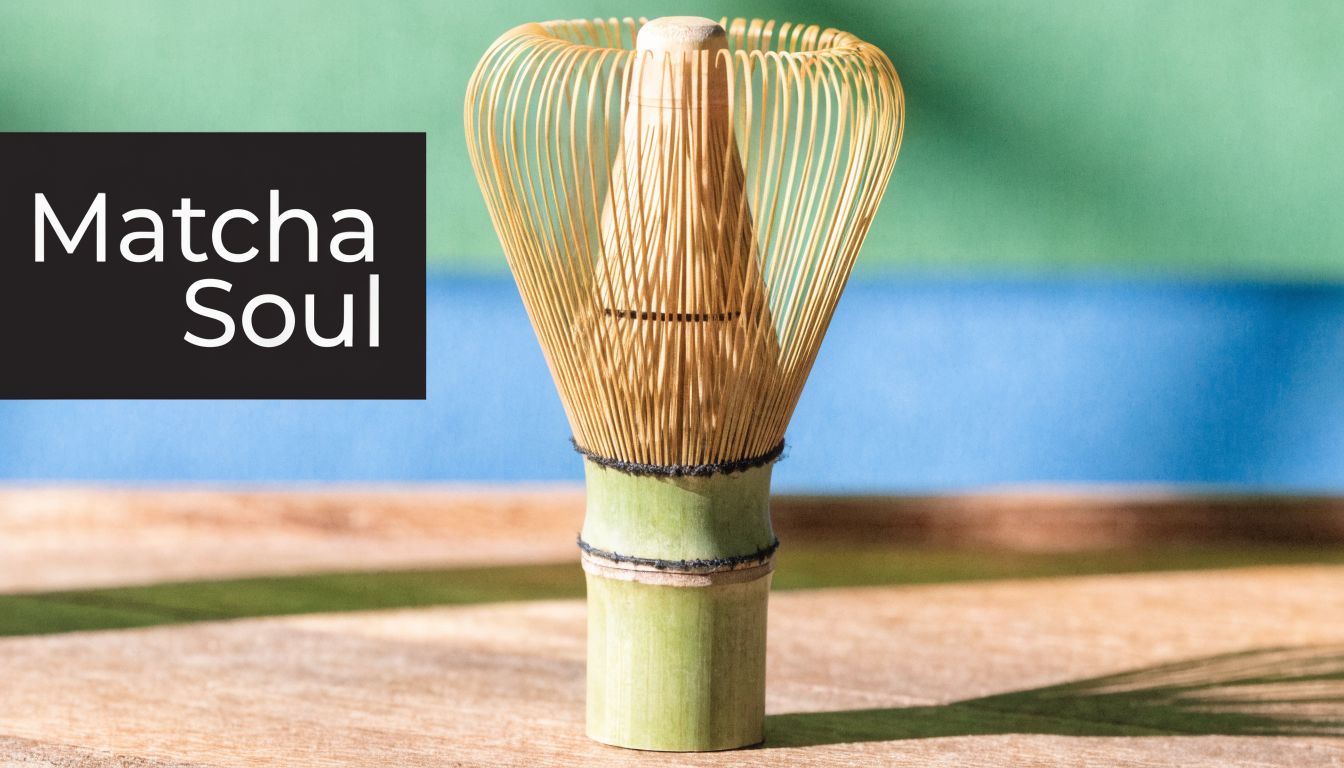
The matcha tea brush creates the desired texture of “good matcha”. Not just mixed. Properly suspended, lightly foamed, and smooth across the tongue. A spoon can combine powder and water. A bamboo whisk brings the bowl to life.
There’s also something practical hidden inside the ritual. When you pick up a chasen, you naturally pay attention to temperature, bowl shape, and movement. You stop rushing. That’s often the difference between a harsh, grassy cup and one that tastes creamy and rounded.
Why the tool changes the drink
A good chasen is hand-carved from a single bamboo stalk. In traditional crafting, the bamboo is split into fine tines, then shaped so the tips flex in water and move quickly through the bowl. That flexibility is the secret. The whisk doesn’t mash matcha against the bowl like a kitchen whisk might. It suspends the powder through fast, light movement.
A matcha tea brush works best when it barely skims the liquid, not when it grinds against the bowl.
For home drinkers, that means a smoother morning cup. For cafés, it means a more consistent base for straight matcha or lattes. In both cases, the whisk is doing more than mixing. It’s controlling mouthfeel.
Why Australians need a slightly different mindset
A lot of online matcha advice assumes stable storage conditions and softer water. Australian homes don’t always offer either. If you live in coastal NSW, your whisk may stay damp longer than expected. If you’re in a city with hard water, the bamboo can age faster than you think. So learning the ritual isn’t about being precious. It’s about helping the tool last and helping the tea taste right.
That’s where pleasure begins. Once the matcha tea brush stops feeling mysterious, it becomes one of the simplest and most satisfying tools in your kitchen.
How to Choose Your Perfect Matcha Tea Brush
You’re standing in an Australian kitchenware shop or scrolling late at night, and suddenly every whisk looks the same. One has 80 prongs. Another has 100. One looks pale and tidy. Another looks rustic and “handmade,” but the listing says almost nothing. That confusion is normal. A good choice gets easier once you know what changes the cup.
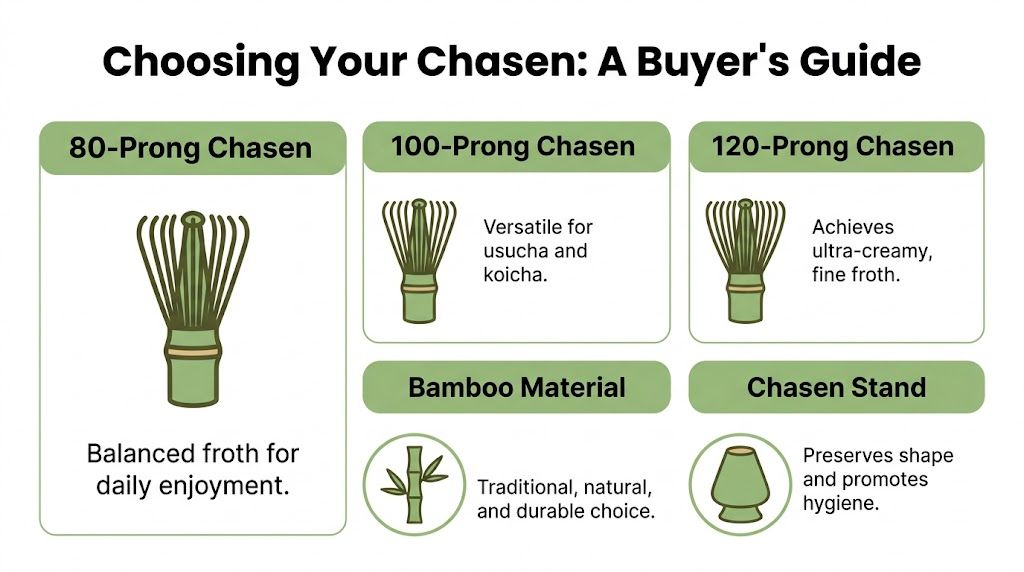
Three things matter most. Prong count, craftsmanship, and whether the seller gives clear information about care and sourcing.
Start with prong count
Prong count changes how the whisk moves through water and matcha. More prongs usually create finer foam with less effort. Fewer prongs often feel a little firmer in the hand and can suit thicker mixes or latte prep.
A simple way to read it is below.
| Matcha Tea Brush (Chasen) Comparison |
|---|
| Prong Count | Ideal For | Foam Level | Best Matcha Grade |
|---|---|---|---|
| 80-prong | Daily matcha and lattes | Balanced froth | Ceremonial or culinary depending on style |
| 100-prong | Usucha, or thin matcha tea | Fine, lively foam | Ceremonial grade |
| 120-prong | Very delicate whisking and ultra-fine froth | Creamier foam | High-quality ceremonial grade |
For many home drinkers, a 100-prong chasen is the easiest place to start. It gives you enough fine movement to make a proper bowl of usucha without feeling fussy. If your goal is that light foam on top and a smooth body underneath, this is usually the safest choice.
If you mainly make matcha lattes, an 80-prong whisk can be practical. It often feels a bit sturdier during everyday use, especially if you are whisking a slightly thicker base before adding milk.
A 120-prong whisk suits drinkers chasing a very fine foam and using high-grade matcha regularly. It can be lovely, but it is not the automatic “better” option for beginners. More delicate tines also demand gentler care, which matters in Australian homes where humidity can slow drying and shorten a whisk’s life if you store it carelessly.
Look closely at craftsmanship
A good chasen is carved from a single piece of bamboo. The tines should look even and neatly spaced. The tips should be slender and slightly curved rather than blunt or splintered.
The easiest comparison is a paintbrush. A brush with tidy, flexible bristles gives you control. One with rough, uneven bristles leaves streaks. A chasen behaves the same way in the bowl.
If the whisk looks ragged before you even use it, it will usually feel rough in the water too. That can mean weaker foam, more clumping, and more pressure against the bowl than you want.
Australian buying advice that generic guides skip
This part gets missed a lot.
A whisk that works beautifully in a dry showroom may behave differently in Brisbane humidity, a Sydney coastal kitchen, or a Melbourne café using mineral-heavy tap water. Australian conditions change what “good value” means. Sometimes the better buy is not the fanciest whisk. It is the one you can dry properly, store properly, and replace without guessing.
Hard water can leave bamboo looking tired sooner. High humidity can keep the inner tines damp long after the outside seems dry. If you live in a humid area, a whisk stand is not just a nice extra. It helps the shape hold while the whisk dries more evenly. If your local water is hard, you may also want to rinse the whisk briefly with filtered water after use to reduce mineral buildup.
Ask better sourcing questions
Many product pages say “natural bamboo” and stop there. That tells you very little.
A better retailer explains where the whisk is made, what style it suits, and how to care for it in real kitchens. The Tezumi guide to chasen is useful here because it shows how much variation exists in bamboo whisks and why details matter.
Use these checks before you buy:
- Purpose. Is it described for usucha, koicha, or general daily use?
- Construction. Does the listing say it is carved from one piece of bamboo?
- Photos. Can you clearly see the tine shape and centre coil?
- Care guidance. Does the seller explain soaking, drying, and storage?
- Australian practicality. Do they mention a whisk stand, humidity, or water conditions?
Buying rule: match the whisk to your routine, your water, and how often you drink matcha.
If you want to compare tools in one place, Pep Tea lists matcha tea accessories with the core preparation pieces Australians usually need.
A simple buyer profile guide
A home drinker making one bowl most mornings will usually do well with a 100-prong whisk.
A latte-focused café may prefer an 80-prong option for repeat service and slightly thicker mixes.
A gift buyer should look past decorative packaging. Clear care instructions and a well-shaped bamboo whisk are more useful than a flashy set with a weak tool inside.
The right matcha tea brush should feel suited to your habits, not just traditional on a product page.
How to Prepare and Season Your New Chasen
On a sticky Brisbane morning or in a Melbourne kitchen with hard tap water, a new chasen can feel confusing. The tines look tight. The bamboo feels stiff. Nothing about it resembles the soft, open whisk you see in matcha videos. That is normal. A new whisk needs a short preparation ritual before it touches tea.
The goal is simple. You are helping dry bamboo absorb a little warmth and moisture so the prongs can flex safely. Bamboo works like a wooden spoon before first use. Straight from storage, it is drier and less forgiving than it will be after a gentle soak.
The quick blooming ritual
Before your first bowl, fill your chawan or a small bowl with hot water that feels just below boiling. Warm, not furious. Place only the tine end of the chasen into the water and leave it there briefly, until the outer tines begin to open and relax. Then lift it out, shake off excess water, and empty the bowl.
A simple routine looks like this:
- Add hot water to your bowl.
- Lower in the prongs, not the handle.
- Soak briefly, just long enough for the tines to soften.
- Check that the outer tips have spread slightly.
- Empty the bowl and start preparing your matcha.
That short soak matters in Australia more than many overseas guides admit. Hard water can leave mineral residue on bamboo over time, and very humid homes can make storage conditions unpredictable. A quick pre-soak prepares the whisk for use without overloading the bamboo with water.
Common mistakes with a new whisk
The first mistake is over-soaking. Leaving a chasen in water for too long weakens the bamboo fibres and can warp the shape.
The second is using boiling water. Excess heat stresses fine tines, especially on a delicate 100-prong whisk.
The third is trying to fix clumpy matcha with force. If your powder has lumps, the whisk ends up doing heavy mixing work it was never meant to do. A fine matcha tea sifter helps here by breaking up clumps before the bamboo starts moving.
A good comparison is warming up a tendon before exercise. You want flexibility, not strain.
Practical rule: store your chasen dry, then soften the tines briefly right before use.
If your local water is very hard, use filtered water for the soak when you can. If your kitchen is humid, let the whisk dry fully after use instead of leaving it enclosed in a drawer or container while damp. Those two small habits make a noticeable difference in how evenly the tines open and how long the chasen keeps its shape.
A properly seasoned chasen feels less brittle, moves more freely, and gives you a much better start on the first whisk.
The Art of Whisking a Perfect Bowl of Matcha
You have the bowl ready, the matcha measured, and the whisk softened properly. Then comes the part that decides whether your tea tastes creamy and rounded or flat and rough. The difference usually comes down to motion, water, and restraint.
A chasen works like a small bamboo engine. Its job is to suspend fine powder evenly through the water and build a soft layer of foam near the surface. It does that best with a light wrist and quick movement through the upper part of the bowl, not by pressing into the ceramic.
The basic usucha method
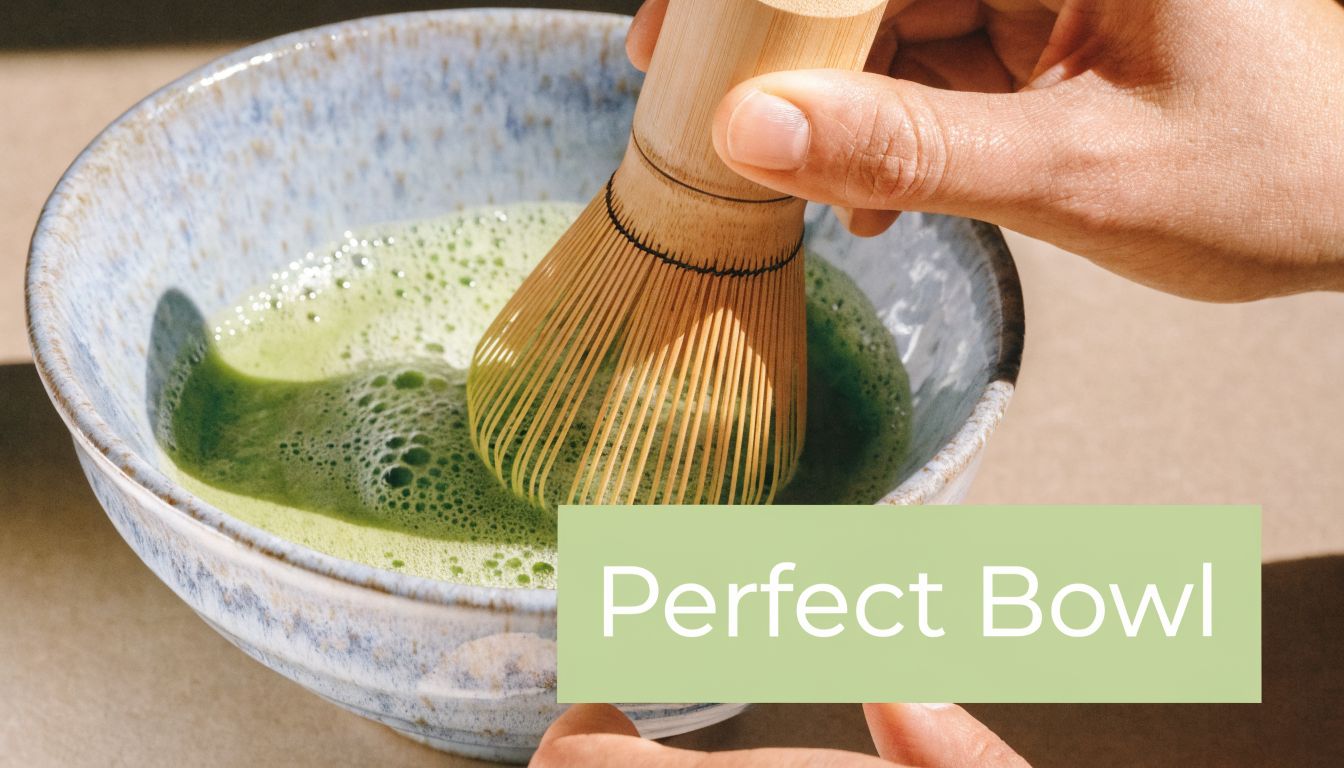
For a classic bowl of usucha, start with sifted matcha in a wide bowl, add a small amount of hot water, and whisk before topping up. A practical guide is 2g of matcha, 50ml of water at 75 to 80°C to start, then the remaining water once the paste has loosened and the surface begins to foam. Keep the whisk about 1 to 2cm above the base so the tines can flex freely instead of scraping.
If you are used to stirring tea, this feels different at first. The movement is compact and fast, mostly from the wrist. Your forearm stays fairly quiet.
A simple way to remember the technique
- Sift first so the whisk is not fighting lumps.
- Start with a small amount of water so the matcha disperses evenly.
- Whisk with the wrist for speed and control.
- Work near the surface zone where fine foam forms.
- Finish with a gentler pass to even out the top.
The motion that creates froth
The classic pattern is a fast W or M motion. That shape keeps the whisk moving across the bowl without grinding the tips into the bottom. Circular stirring tends to leave heavier liquid below and larger bubbles on top, a bit like stirring cocoa and wondering why the powder still sits in patches.
The bowl gives you useful feedback. A soft brushing sound usually means the whisk is floating where it should. A scratchy sound means the tines are hitting the base too often.
This matters in Australia because local conditions can affect texture. In hard-water areas, minerals can flatten flavour and make foam a little less fine. In humid kitchens, especially in coastal homes and busy cafés, matcha can clump faster once the tin is open. If your whisking feels correct but the bowl still looks uneven, the issue may be the powder or the water rather than your hand.
A matcha whisk stand for drying and shape retention also helps the whisk keep its open form between uses, which makes the next bowl easier to froth consistently.
What the foam should look like
Good usucha foam is fine-bubbled and even, with a soft sheen across the top. Velvety is the right target.
A few larger bubbles around the edge are not a disaster. They usually mean the movement was slightly uneven or the final whisking pass was too forceful. Lighter, quicker strokes often fix that faster than whisking longer.
A short demonstration helps if you’re more visual:
Water temperature matters more than people think
The whisk often gets blamed for bitterness, but overheated water is a common cause. Matcha prepared around 75 to 80°C usually tastes sweeter, fuller, and less sharp than matcha hit with freshly boiled water.
That point is especially useful in Australian homes where kettles boil fast and many people pour immediately. If you do not have a temperature-controlled kettle, let the water sit briefly after boiling, or pour it into another vessel first to drop the heat before it meets the tea.
Small technique changes that improve the bowl
A few adjustments make a noticeable difference:
- Keep the whisk lifted slightly so the tines glide instead of grind.
- Build speed in the middle of the whisking, where the foam forms fastest.
- Stop once the surface looks fine and even rather than chasing extra froth.
- Use a wider bowl for usucha so the whisk has room to move.
For café prep, the same rules apply. A latte still needs a smooth matcha base before milk goes in. Milk can soften the taste, but it cannot undo clumps or poor suspension.
Good whisking feels quick because it is precise. Light hand, loose wrist, correct water, and a bowl that sounds quiet while you work. That is what turns powdered tea into a smooth, balanced cup.
Proper Cleaning and Storage for Your Matcha Brush
You finish a bowl, set the whisk in the sink, answer a message, and come back later to bamboo that smells faintly damp and looks tighter than it did ten minutes ago. That is how many chasen problems start. The whisking part gets the attention, but the actual wear often happens in the few minutes after you drink the tea.
A chasen is carved from one piece of bamboo. It behaves more like a fine wooden kitchen tool than a metal whisk. Leave it wet, trap it in a drawer, or wash it like cutlery, and the tines lose flexibility fast.
In Australia, that risk goes up because local conditions are rarely neutral. Coastal humidity slows drying, and hard water in some suburbs can leave a mineral film on the bamboo. Generic care advice often skips both.
The correct cleaning routine
Clean the whisk as soon as you finish using it. Dried matcha sticks between the tines and pulls them inward as it hardens.
The routine is simple. Rinse the chasen in warm water. Use your fingers only if a little matcha is caught near the centre, and keep the touch light. Skip soap completely. Bamboo absorbs it, and the residue can dry the fibres and leave an odd scent that shows up in the next bowl.
After rinsing, shake off excess water and check the shape. If a few tines have curled together, ease them apart gently with wet fingers rather than forcing them dry later.
Why a stand matters in Australian homes
Drying shape matters almost as much as cleaning. A whisk left flat on the bench holds moisture where the tines meet, which is the slowest part to dry.
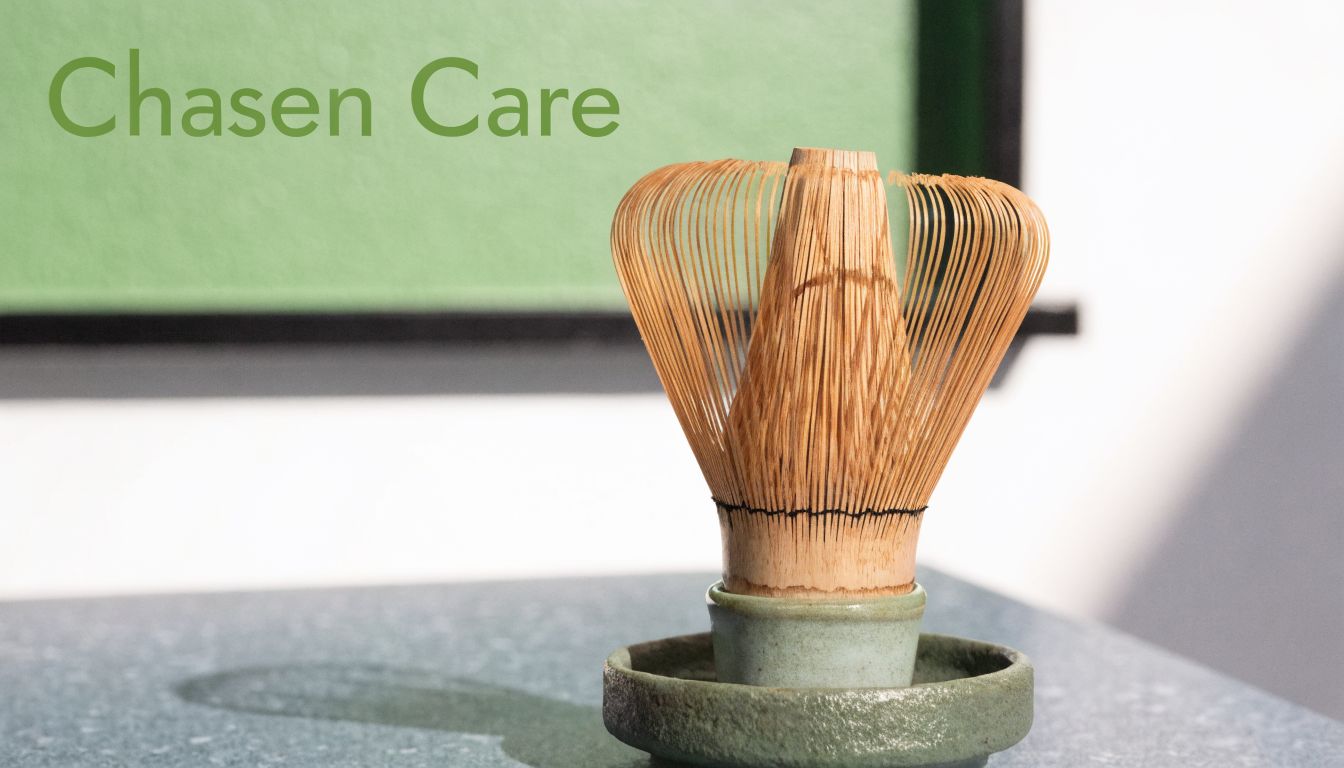
A holder supports the natural curve while air moves through the centre. That helps the whisk dry evenly and keeps the prongs from collapsing inward. If you want a practical example, a ceramic matcha whisk stand for drying and shaping a chasen gives the brush a dedicated place to rest between bowls.
Store it in the open, not in a closed cupboard straight after washing.
That point matters in Sydney, Brisbane, the Gold Coast, and other humid parts of the country where a kitchen can stay damp for hours. A whisk that seems dry on the outside may still be holding moisture at the base.
Hard water and humidity need a local fix
Hard water leaves clues. The bamboo starts to feel slightly rough, the tines look chalky, and the whisk loses some of its spring even when you are handling it well. If your kettle builds scale quickly, your chasen is dealing with the same minerals.
An occasional rinse with filtered water can help if your tap water is particularly mineral-heavy. If buildup is already visible, a very diluted vinegar rinse used sparingly can remove residue, but follow it with plain water so no smell remains. This is not an every-day step. It is a reset for mineral film.
Humidity needs a different approach. Keep the whisk away from the kettle plume, the dishwasher, and the splash zone beside the sink. Those spots look convenient, but they create a damp little climate around the bamboo.
A practical care routine for Australian kitchens
- Rinse straight after use so matcha does not dry between the tines.
- Use warm water only. No detergent, no soaking in cleaning products.
- Dry upright in open air so the centre of the whisk can dry.
- Use filtered water sometimes if your tap water is hard and leaves mineral marks.
- Keep the whisk away from steam and enclosed storage until fully dry.
What cafés should standardise
In cafés, the problem is usually inconsistency. One staff member rinses and stores the whisk properly. The next leaves it damp beside the machine during a rush.
Set one routine for everyone:
- Rinse immediately after each use.
- Use warm water only.
- Shake off excess water.
- Dry on a holder in a ventilated spot.
- Replace the whisk if it smells musty, shows mould, or has significant tine loss.
A good chasen does not need complicated care. It needs prompt rinsing, open airflow, and a bit of respect for bamboo in Australian conditions.
Troubleshooting Common Matcha Brush Issues
You whisk a bowl before work, and the chasen suddenly feels wrong. A few tines have snapped, the matcha looks flat, or there is a damp smell that was not there last week. In Australian kitchens, that usually comes back to a small mismatch between bamboo and its environment. Hard water, coastal humidity, and hot tap habits all show up quickly in a matcha brush.
My tines keep breaking
Broken tines usually point to stress on the bamboo, not bad luck. A chasen is carved from one piece of bamboo, so each tine is thin by design. That gives you speed and fine foam, but it also means rough contact shows up fast.
Check the common causes:
- The whisk is hitting or scraping the bottom of the bowl. The tines should flex through the water, not grind against ceramic.
- The water is too hot. Very hot water makes bamboo more brittle.
- The whisk went in dry. Dry tines are stiff, so they are more likely to snap under pressure.
- Mineral buildup is making the tines less flexible. This is more common in parts of Australia with hard tap water.
- The whisk was knocked around in storage. A drawer full of cutlery is a terrible place for a chasen.
A good test is to watch your whisk from the side while you prepare matcha. The tips should skim just above the base, like a brush sweeping over paper without digging in.
My matcha is still clumpy
Clumps often start before the whisk even touches the bowl. Matcha behaves a bit like cocoa powder. Once small lumps get wet on the outside, the dry centre can hide inside and resist whisking.
If your bowl stays grainy, work through the process in order:
- Sift the matcha first if the powder has compacted in the tin.
- Start with a small amount of water to make a smooth paste before adding more.
- Use quick wrist motion in a W or M pattern near the surface.
- Give the whisk room to move. A narrow mug makes proper whisking harder than a wide bowl.
Water quality can also play a part. In hard-water areas, matcha can feel slightly duller and less lively in the bowl. If your technique is sound but the texture still seems heavy, try filtered water for a few days and compare.
The prongs are bending outward
Some spreading is normal. A new whisk opens up with use, just like a new paintbrush softens once the bristles get wet. What you are looking for is uneven splaying, flattened tips, or a shape that looks twisted.
That usually happens for three reasons. The whisk is being pressed down too hard. It is drying in a cramped position. Or it is staying damp for too long, then drying unevenly.
Australian conditions matter more than many guides admit. In a humid Brisbane or Sydney summer, a whisk can stay slightly damp in the middle long after the outside feels dry. That trapped moisture can leave the shape sloppy over time.
The centre looks loose
The centre loop can worry new matcha drinkers because it rarely looks perfectly symmetrical after repeated use. Mild movement is normal. Bamboo softens, flexes, and settles.
Focus on performance instead of perfect appearance. If the whisk still creates a fine surface froth and feels stable in the bowl, the centre does not need to look pristine. If the inner tines are collapsing inward, catching on each other, or no longer springing back, the whisk is wearing out.
There’s a smell I don’t trust
A healthy chasen smells faintly woody, dry, or almost like nothing at all. Sour, musty, or stale smells usually mean moisture sat in the core too long.
In Australia, this often happens in two places. One is beside the kettle, where repeated steam keeps the bamboo damp. The other is in enclosed cupboards that feel tidy but hold humid air.
If the smell is light and there is no visible mould, let the whisk dry fully in a well-ventilated spot and reassess. If the odour is persistent, or you can see mould spotting, replace it. Bamboo is porous. Once contamination settles deep into the fibres, trying to save it is rarely worth the risk.
My whisk is leaving weak foam
This problem confuses a lot of people because the whisk gets blamed first. Sometimes the actual issue is old matcha, too much water, or a slow wrist.
A tired chasen can contribute, though. If many tine tips have broken off, or the whisk has lost its spring, it will struggle to introduce enough air into the bowl. Café teams see this often when one whisk gets pushed far past its useful life.
Ask three quick questions:
- Is the matcha fresh enough to foam well?
- Am I whisking briskly near the surface rather than stirring deep in the bowl?
- Has the chasen lost enough tines that it can no longer move the liquid cleanly?
Troubleshooting a chasen works best when you read it like a bamboo tool, not a kitchen gadget. Snapped tines usually mean friction or heat. A musty smell points to trapped moisture. Weak foam often traces back to technique, age, or worn tips. Once you match the symptom to the cause, the fix is usually straightforward.
Your Matcha Brush Questions Answered
A lot of confusion around the matcha tea brush comes from people trying to simplify it too much. It’s not a fussy object, but it is a specialised one. These are the questions that come up most often once people start using a chasen regularly.
Quick answers in one place
| Frequently Asked Questions |
|---|
| Question | Answer |
|---|---|
| Do I really need a bamboo whisk for matcha? | If you want traditional texture and a fine surface froth, yes. A spoon mixes, but it won’t create the same suspension or mouthfeel. |
| Is a 100-prong whisk a good starting point? | Yes, especially for usucha. It’s the most straightforward choice for home drinkers who want a foamy bowl. |
| Can I use an electric frother instead? | You can for convenience, especially in latte prep, but it won’t behave like a chasen in the bowl and it changes the ritual and texture. |
| Should I soak the whisk every time? | A short warm soak before use helps the tines soften and flex safely. |
| Can I wash it with dish soap? | No. Warm water is the safe choice for bamboo care. |
| Do I need a whisk stand? | It’s strongly recommended because it helps the whisk dry upright and keep its shape. |
| When should I replace my chasen? | Replace it when tine loss is heavy, the shape is badly compromised, or mould or persistent odour appears. |
| Can I make lattes with a matcha tea brush? | Yes. You can whisk a concentrated matcha base first, then add milk. |
Is the bamboo whisk only for traditional tea drinkers
Not at all. The chasen is useful whether you drink straight ceremonial matcha, iced matcha, or a latte. The key difference is the end texture you want.
For a straight bowl, the whisk creates a fine surface and more integrated texture. For a latte, it gives you a smoother concentrate before milk enters the cup. That first stage still matters.
What’s the difference between a matcha tea brush and a kitchen whisk
A kitchen whisk is built to beat, fold, and combine larger volumes. A chasen is built to move quickly through a small bowl with minimal friction. The bamboo tines are fine enough to lift the tea into suspension while staying gentle on the powder.
That’s why a metal whisk often feels too heavy-handed for traditional preparation. It can mix the drink, but it doesn’t create the same finesse.
Does prong count really matter
Yes, but not in a snobbish way. It changes the feel of the tool and the kind of foam you’re likely to get.
A higher-prong whisk usually helps newer drinkers create a more even froth with less effort. A lower-prong whisk may suit thicker tea styles or drinkers who prefer a different feel. The “best” option depends on what you make most often.
Why does my whisk look different after a few uses
Because it’s supposed to change a little. Dry bamboo looks tighter. Soaked and used bamboo opens up. The tines relax, the shape settles, and the brush becomes more responsive.
What you don’t want is severe splitting, snapped tips, mould, or deep distortion. Gentle visual change is normal. Rapid collapse isn’t.
Can I leave the whisk soaking while I drink my matcha
Better not. A short pre-use soak is helpful. Extended soaking isn’t. Bamboo likes brief moisture exposure followed by proper drying.
If you leave the whisk sitting in water while you chat, work, or clean the kitchen, the tines stay stressed and the drying cycle gets delayed. That’s not great in humid weather.
Is a darker bamboo whisk better than a lighter one
Not automatically. Colour can reflect the type of bamboo or finish, but it doesn’t guarantee quality. Pay more attention to even carving, tine shape, and whether the seller explains origin and care clearly.
Can I travel with a chasen
Yes, but protect it. Don’t throw it loose in a drawer or bag. If you’re taking matcha to the office or on holiday, keep the whisk in a breathable container and let it dry fully before packing.
Is mould always obvious
No. Sometimes you’ll see spots. Sometimes you’ll just notice a stale smell or a tacky feeling in the tines. If something seems off, trust your nose and your eyes.
In humid parts of Australia, mould prevention is mostly about routine. Rinse, shake off water, dry upright, and don’t trap the whisk in a closed damp space.
Should cafés keep one whisk per staff member
That depends on service style, but the more important issue is shared standards. Every person preparing matcha should use the same method for soaking, whisking, rinsing, and drying. A beautifully made whisk won’t survive a chaotic prep station.
What’s the smartest beginner setup
Keep it simple:
- A 100-prong chasen
- A bowl with enough width to whisk comfortably
- A sifter
- A whisk stand
- Fresh matcha and water that isn’t boiling
That’s enough to learn properly without cluttering the process.
A matcha tea brush seems niche until you use one well. Then it feels obvious. It’s the small bamboo tool that makes the whole bowl come together.
If you’re building a better matcha routine at home or in your café, Pep Tea offers organic matcha, preparation accessories, and practical guidance for Australian drinkers who want cleaner flavour, better texture, and tools that fit real daily use.