
Tag: low caffeine tea
Hojicha Tea Caffeine: A Guide for Sensitive Australians
Have you ever chosen hojicha for an evening drink, then wondered whether “low caffeine” really means caffeine-free? That distinction matters, especially if you're sensitive to stimulants, serving tea to children, or replacing coffee or matcha in an Australian café.
Hojocha is a roasted Japanese green tea with a warm, nutty flavour and a naturally lower caffeine level than many unroasted teas. But the amount in your cup depends on the tea, the format, the serving size and the way you brew it. The most useful question isn't just whether hojicha contains caffeine. It's how much caffeine your particular preparation delivers.
How Much Caffeine Is Actually in Hojicha
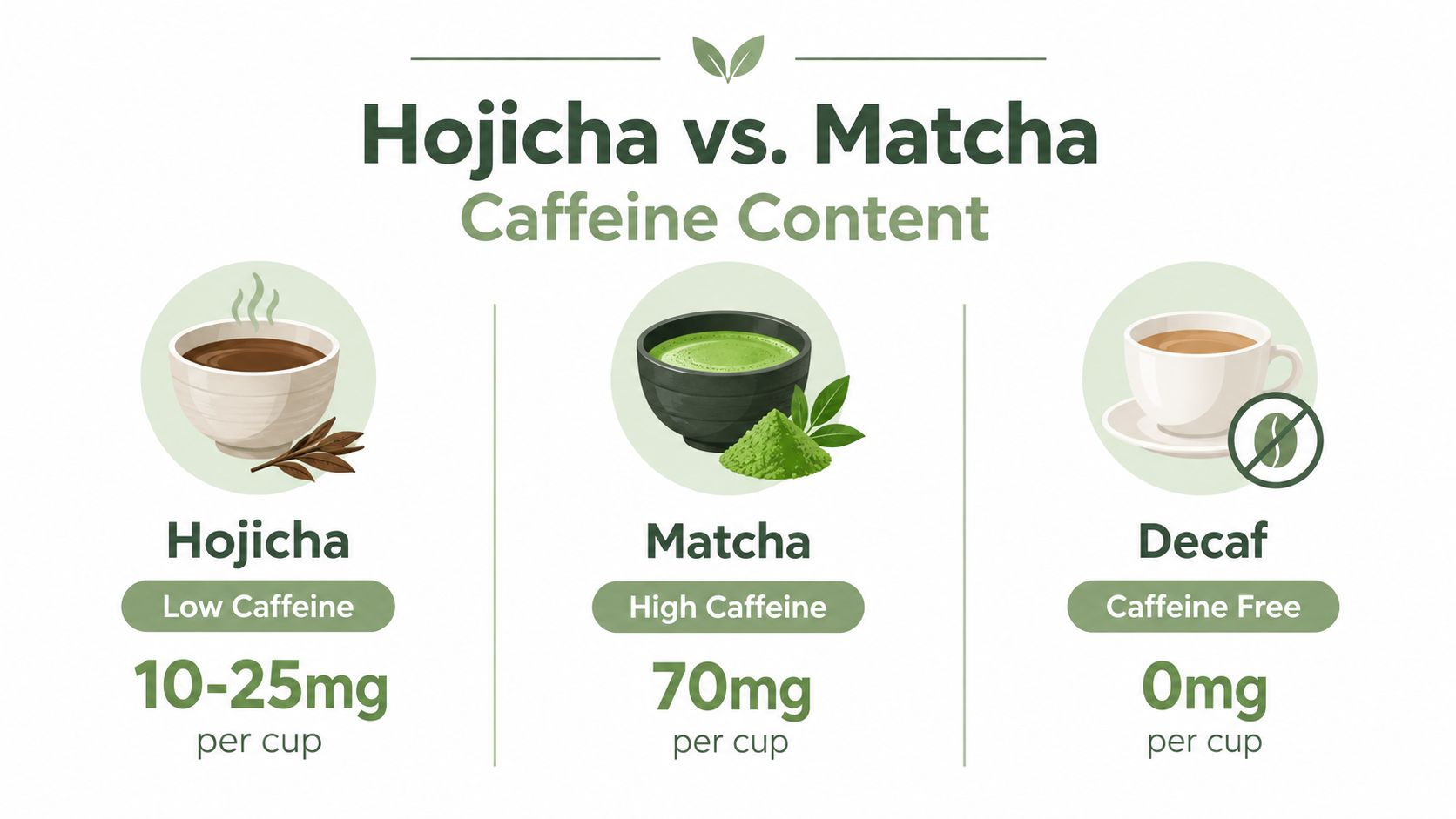
Could a roasted tea contain caffeine without delivering the same lift as green tea or matcha? Australian-facing tea information places hojicha at about 7.7 mg of caffeine per cup, compared with around 20 mg in regular green tea. That makes hojicha a lower-caffeine choice, rather than a caffeine-free one. Pep Tea's guide to caffeine content in green tea provides broader context on differences between green tea varieties.
Australian products show why the number on your own cup may vary. One canned hojicha drink lists 7 mg of caffeine per 750 ml bottle. An Australian tea reference also explains that caffeine depends on the tea type, the proportion of leaves to stems, and brew strength. A loose-leaf infusion and a powdered hojicha drink therefore should not be treated as identical servings.
A practical comparison
| Tea type | Average caffeine per cup |
|---|---|
| Hojicha | About 7.7 mg, Australian tea reference |
| Regular green tea | Around 20 mg |
| Tea benchmark | About 27 mg per 250 ml cup, Australian Sports Commission |
| Green tea benchmark | 30–50 mg |
| Matcha | Around 60–70 mg per serve, Australian comparison |
The table is a guide, not a guarantee for every packet or café preparation. Hojicha powder can provide around 20–25 mg per standard serve, according to an Australian tea product guide, because you consume the powdered leaf instead of steeping and discarding it. People who are sensitive to stimulants may also find decaf and sleep sensitivity relevant when choosing an evening drink.
Why Hojicha Contains Less Caffeine Than Matcha
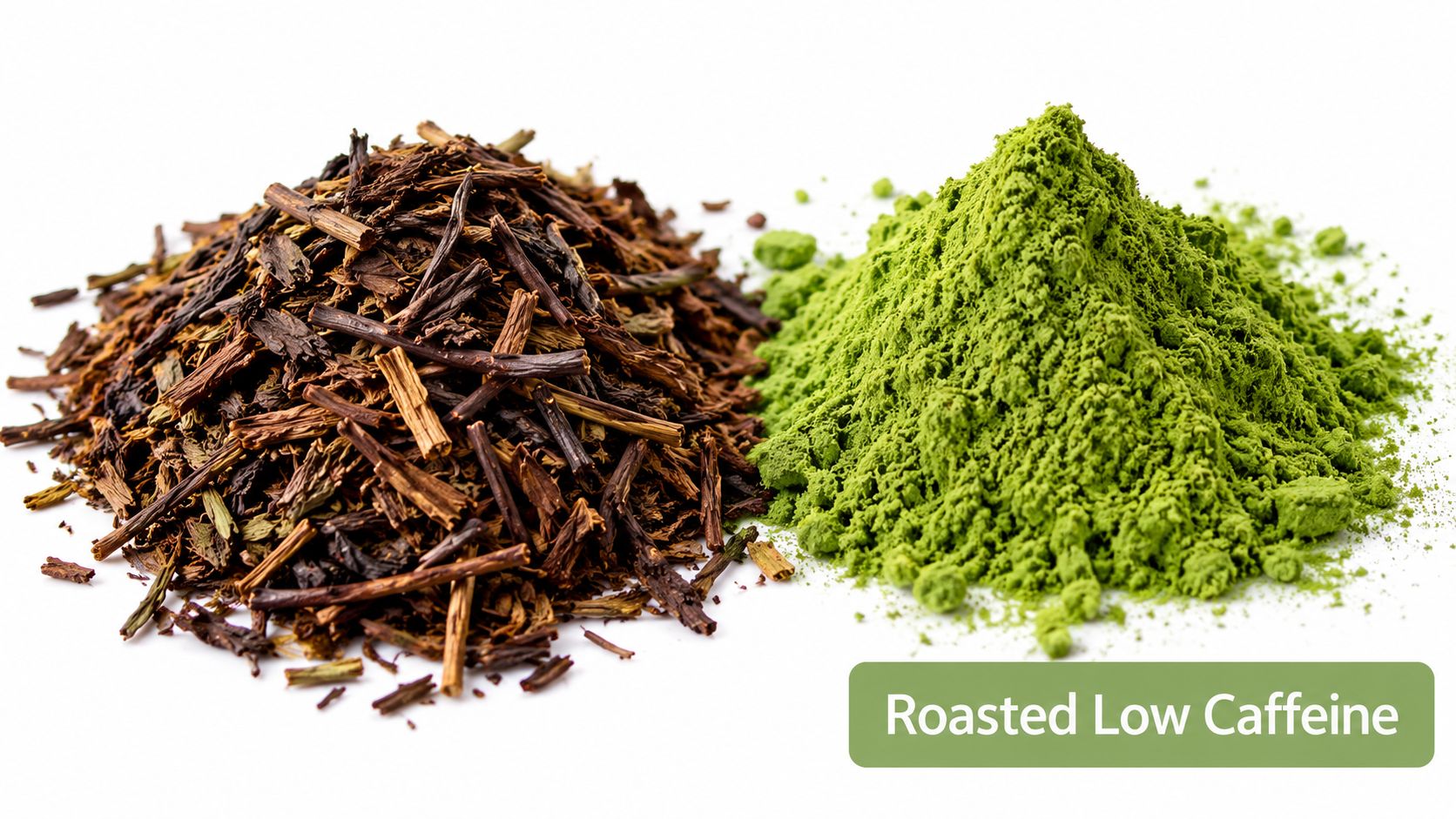
Why does hojicha usually feel gentler than matcha? The answer begins with how each tea is processed and consumed. Matcha is made from tea leaves that are processed and stone-ground into a fine powder, so you drink the whole leaf. Hojicha takes a different route: its leaves or stems are roasted, creating its brown colour, toasted aroma and mellow flavour.
Roasting reshapes the cup as well as the colour. Heat reduces some compounds linked with green tea's fresh, grassy character, while the roasted notes bring flavours closer to toasted grain, nuts and light caramel. This contributes to hojicha's lower stimulant load, although it remains a low-caffeine tea rather than a caffeine-free one.
One tea family, two distinct experiences
Matcha and hojicha can both suit lattes, yet they offer different flavour and caffeine profiles:
- Matcha: Fresh, grassy and umami-rich, with a more noticeable caffeine presence because the powdered leaf is consumed.
- Hojicha leaf: Smooth, roasted and lighter-bodied, with caffeine shaped by the plant material and brewing method.
- Hojicha powder: Creamier and more concentrated than a loose-leaf infusion, so it can contain more caffeine than a lightly brewed cup.
To compare matcha and coffee, it helps to remember that matcha is a whole-leaf drink. Hojicha has its own identity, built around roasting, toasted flavour and a gentler cup, rather than being merely weak matcha.
A morning matcha may suit focused work or a pre-activity routine. Roasted hojicha can feel more comfortable after lunch or alongside dessert, especially for people who find green tea too bitter or grassy. Its rounded flavour often needs less adjustment for drinkers who prefer mellow, nutty notes.
This distinction matters when choosing Japanese tea for home or a café menu. Pep Tea's guide to how matcha tea is made explains matcha's processing, while hojicha is defined by the later roasting stage. The result is low caffeine, not zero caffeine, with the final amount still shaped by the tea material and preparation.
The Science Behind Roasting and Caffeine Reduction
It's common to hear that roasting “burns off” the caffeine in hojicha. That wording is too simple. A 2025 peer-reviewed review explains that heat decomposes amino acids and catechins in hojicha, while caffeine is reduced only slightly through sublimation rather than being completely broken down. In plain language, some caffeine may be lost during roasting, but the roasting process doesn't guarantee a caffeine-free tea. Read the review's discussion of hojicha chemistry.
Sublimation describes a substance moving from a solid state directly into a gas under suitable conditions. In tea roasting, this helps explain why some caffeine can leave with the heat. It doesn't tell us that every batch loses the same amount, because the final cup also depends on the starting material and extraction.
Why the figures vary
Hojicha may be made from different parts of the tea plant, including leaves and stems. Producers also use different roast profiles, and consumers prepare the tea in different ways. A light loose-leaf infusion and a concentrated powder whisked into milk shouldn't be expected to deliver the same caffeine level.
The apparent contradiction between “roasting reduces caffeine” and “hojicha still contains caffeine” disappears once you separate reduction from elimination. Roasting lowers the amount compared with some unroasted green teas, but it doesn't create a guaranteed zero-caffeine beverage.
The useful label is low-caffeine, not caffeine-free.
This distinction matters in Australian hospitality. A menu can describe hojicha as a low-caffeine alternative, but staff shouldn't promise that it contains no caffeine unless a specific product has been tested and labelled accordingly. For sensitive customers, the responsible approach is to explain the format and preparation, then allow the customer to choose.
Factors That Influence Caffeine in Your Cup
Caffeine extraction isn't fixed from one hojicha preparation to the next. The tea's leaf or powder format, the amount used, water conditions and brewing time all influence what reaches the cup. Australian product information makes the same practical point by linking caffeine variation to tea type, leaf ratio and brew strength.
Leaf or powder makes the biggest practical difference
Loose-leaf hojicha is steeped and then removed. Powdered hojicha remains in the drink, so the full measured portion is consumed. An Australian product guide places a standard serve of hojicha powder at around 20–25 mg of caffeine, while an Australian tea reference gives an average cup of steeped hojicha at about 7.7 mg. Those values aren't contradictory. They describe different preparations.
If you're particularly sensitive, start with loose leaf rather than powder. A brewed infusion usually gives you more control over the tea quantity and the strength of the final drink.
Adjust the brew deliberately
Use these levers to make a gentler cup:
- Use less tea. Reducing the leaf-to-water ratio reduces the amount available for extraction. For powder, measure a smaller portion rather than treating a full latte serve as the default.
- Shorten the steep. A brief infusion generally extracts less caffeine than a long, concentrated brew. Taste the tea early and stop when the roast character is present but not heavy.
- Choose a lighter preparation. A large mug made with a modest amount of leaf can taste comforting without becoming intensely concentrated.
- Avoid assuming colour tells the whole story. Hojicha's brown liquor reflects roasting, not a precise caffeine reading. A dark-looking cup isn't automatically high in caffeine, and a pale cup isn't automatically caffeine-free.
- Read the product information. If a manufacturer provides a caffeine value for a bottle or powder serve, use that figure for the product you are drinking.
Water temperature also affects extraction, although the relationship isn't a simple home formula. Rather than chasing a precise caffeine calculation, keep your method consistent. Use the same tea amount, water volume and steeping approach whenever you want a repeatable result.
For cafés, record the recipe for each hojicha drink. A powder latte and a loose-leaf pot should have separate preparation notes, because customers may interpret “hojicha” as one standard beverage even when the café is serving very different formats.
Preparing Low-Caffeine Hojicha at Home
A lighter hojicha infusion is simple to make, and you don't need complicated equipment. The aim is to keep the roasted aroma while avoiding an unnecessarily concentrated serve.
A gentle loose-leaf method
- Measure a modest amount of loose-leaf hojicha. Use less tea than you would for a strong pot, particularly if you're drinking it late in the day.
- Warm your teapot or cup. This helps the infusion stay pleasant without relying on an oversized tea dose.
- Add hot water and steep briefly. Start with a short brewing time, then taste. If the flavour is too light, extend the next infusion slightly rather than making the first cup very strong.
- Remove the leaves promptly. Don't leave the tea sitting in the pot while you drink, as continued extraction changes the strength.
- Serve plain or with milk. Hojicha's toasted flavour can stand on its own, and a splash of milk turns it into a softer after-dinner drink without needing sugar.
Some tea drinkers use a quick first rinse, then discard that liquid before making the main infusion. This may remove some readily soluble material, but it isn't a guaranteed way to remove caffeine. Treat it as a flavour and preparation preference, not a caffeine-free shortcut.
Serving it for others
For a family gathering or café service, prepare a lighter pot rather than assuming everyone wants a concentrated cup. Keep the leaf amount modest, avoid extended holding time and tell guests that hojicha is low in caffeine, not caffeine-free. If you're using powder, offer a smaller portion for people who want a milder drink.
That transparency is especially helpful for children and caffeine-sensitive adults. It also makes the tea easier to enjoy as a warm alternative to coffee, without turning a comforting ritual into a precise calculation.
Hojicha in Your Daily Wellness Routine
Hojicha fits naturally into a balanced Australian wellness routine because it offers roasted comfort with less caffeine than many standard green tea preparations. The caffeine is still present, so people who are highly sensitive should consider their total intake and personal response.
Australian food guidance explains that naturally caffeinated foods such as tea are exempt from added-caffeine labelling rules. It also says there's no recognised health-based guidance value for caffeine, while noting that about 3 mg per kilogram of body weight per day in children has previously been linked by FSANZ with increased anxiety. See the Australian food authority's caffeine guidance.
For a broader look at flavour, preparation and everyday uses, explore Pep Tea's guide to hojicha tea benefits. Choose loose leaf when you want a lighter infusion, and treat powder as a more concentrated format. Pep Tea offers organic tea products alongside its Australian-brewed, sugar-free organic kombucha from the Hunter Valley, NSW, giving health-conscious drinkers options for warm and chilled routines.
Explore Pep Tea for organic tea options and Australian-brewed sugar-free kombucha, then choose a hojicha preparation that suits your flavour preferences and caffeine sensitivity. If you're a café or hospitality buyer, contact Pep Tea about practical beverage options for a thoughtful, low-sugar menu.
Caffeine Content in Green Tea: Your Complete Guide

Is your green tea giving you a light lift, or is it packing an almost coffee-like punch?
That's the question often overlooked. A common tendency is to hear one tidy number for caffeine and assume every green tea sits in the same lane. It doesn't. A basic tea bag, a smooth sencha, a shaded gyokuro, and a bowl of ceremonial matcha can feel completely different in the body, even though they all come from the same tea plant.
That's why understanding caffeine content in green tea matters. If you're choosing a morning drink, planning an afternoon cuppa, ordering a matcha latte at your local café, or trying to avoid feeling overstimulated at night, the details matter more than the label.
At Pep Tea, we spend a lot of time helping Australians make sense of tea without the fluff. Green tea isn't just “low caffeine”. Sometimes it is. Sometimes it isn't. Ultimately, the answer lies in the leaves, the growing method, and the way you brew it.
How Much Caffeine Is Really in Your Green Tea
The short answer is yes, green tea has caffeine. The more useful answer is that the amount can shift quite a bit from cup to cup.
It's understandable to want a single number. But with green tea, a single number can be misleading because “green tea” covers a huge range of styles, from supermarket tea bags to finely stone-ground Japanese matcha. If you've ever wondered why one cup feels soft and steady while another feels almost too energising, you're not imagining it.
A good starting point is to think of green tea as a category, not a fixed recipe. It's a bit like saying “bread”. A slice of sourdough and a sweet brioche are both bread, but they're not the same experience. Green tea works the same way. The plant may be the same, yet the final caffeine level depends on what part of the plant was used, how it was grown, and how it was prepared.
For a simple overview focused on calm energy, our guide to organic green tea caffeine is a handy companion. The key idea is this: the caffeine in your cup isn't random, but it also isn't universal.
Most confusion starts when people compare a standard brewed green tea with matcha as if they were the same drink. They're not.
That difference matters even more in Australia, where many cafés now serve premium Japanese teas alongside coffee. A customer who expects a gentle green tea may be surprised when a matcha latte feels much stronger. Once you know what changes the caffeine, the numbers start to make sense, and your daily tea choices become much easier.
The Standard Range and Why It Varies So Much
For a standard benchmark, a 240 ml cup of green tea contains approximately 25 to 45 mg of caffeine, which is about one-fourth to one-third of brewed coffee at 95 to 200 mg and roughly half the caffeine of black tea at 40 to 70 mg, according to Teapigs Australia's guide to caffeine in green tea.
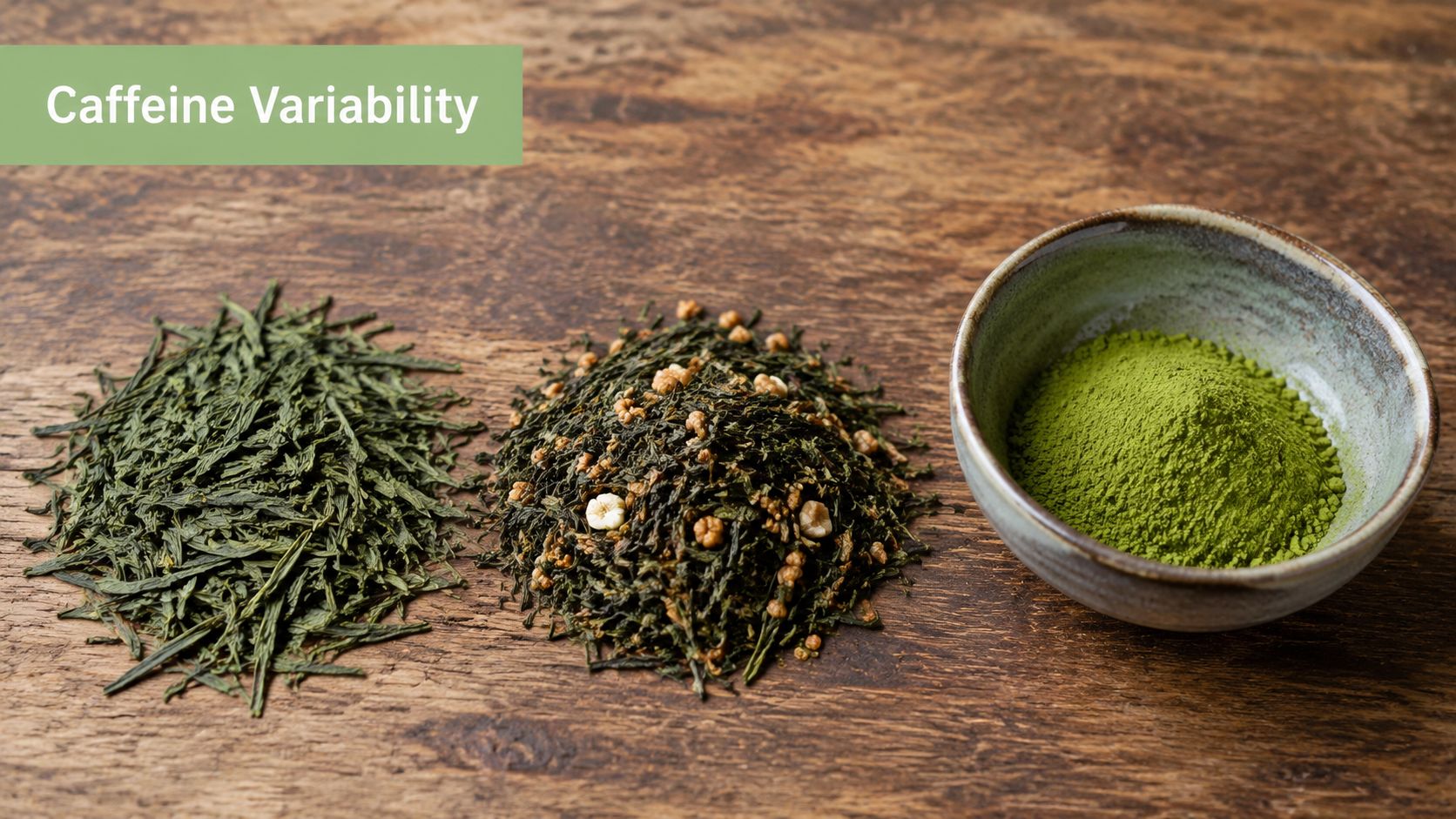
That range is useful, but it's only the front door. Variability is the key point. Green tea leaves naturally contain caffeine because the Camellia sinensis plant produces it in its leaves. What ends up in your mug depends on how much caffeine was in the leaf to begin with, and how much hot water pulls out during brewing.
The leaf matters
Tea is a bit like wine grapes. The same species can produce very different results depending on variety, growing conditions, and harvest style.
Younger, more delicate leaves tend to be associated with stronger, more refined teas, and they can also carry more caffeine. Older leaves usually brew a softer cup. That's one reason two green teas can taste different and energise you differently even before you touch the kettle.
Processing changes the outcome
Green tea isn't one uniform product. Some teas are grown in full sun. Others are shaded before harvest. Some are sold as whole leaves. Others are ground into powder.
These choices shape both flavour and caffeine. Shade-growing, in particular, is important for some Japanese teas because it changes the chemistry of the leaf before it's picked. That's one of the big reasons premium Japanese green teas often sit outside the “standard” range people expect.
Your brew is the final filter
Even if two people use the same tea, they can end up drinking different amounts of caffeine.
- More leaf means more potential caffeine in the cup.
- Hotter water extracts more quickly than cooler water.
- Longer steeping pulls out more from the same leaves.
- Powdered tea changes the equation because you consume the leaf itself rather than just infusing it.
Practical rule: Treat the printed tea name as the beginning of the caffeine story, not the end of it.
That's why broad averages help, but they can't tell you exactly what your own cuppa contains. For that, you need to know which green tea you're drinking and how it was made.
Caffeine in Sencha vs Gyokuro vs Matcha
If you want to understand caffeine content in green tea in a practical way, compare three familiar Japanese styles: sencha, gyokuro, and matcha. They all belong to the green tea family, but they don't sit anywhere near each other on the caffeine spectrum.
A quick comparison
| Tea Type | Typical Preparation | Estimated Caffeine (mg) |
|---|---|---|
| Sencha | Brewed leaf tea | Lower than shaded Japanese styles |
| Gyokuro | Brewed shade-grown leaf tea | 120 to 140 |
| Matcha | Whisked powdered tea | 136 in an 8 oz cup |
The sharp jump in the table isn't a typo. Gyokuro contains 120 to 140 mg per serving, while high-quality ceremonial matcha reaches 136 mg in an 8 oz cup, as noted in Nioteas' comparison of green tea and coffee caffeine.
For a broader look at what separates these styles, this guide on the difference between matcha green tea and green tea is useful reading.
Sencha feels familiar because it is
Sencha is what many tea drinkers picture when they hear “green tea”. It's brewed from leaves, usually with a fresh, grassy, lightly savoury character.
In everyday terms, sencha is the gentle middle ground. It's often what people mean when they quote a modest green tea caffeine figure. If you brew a normal loose-leaf green tea and get a smooth, manageable lift, you're probably experiencing something closer to this style than to the more intense Japanese teas below.
Gyokuro climbs because of shade
Gyokuro surprises people. It's still brewed like a leaf tea, yet its caffeine can rise dramatically.
The reason is cultivation. Gyokuro is shade-grown before harvest. You can think of shading like putting the plant on a different training program. The leaves respond by changing their internal chemistry, and one result is a much more concentrated tea. The cup often tastes deeper, sweeter, and more umami-rich, but the stimulation can be far stronger than people expect from something called “green tea”.
Gyokuro is one of the clearest examples of why a single caffeine number for green tea doesn't work.
This matters for Australian cafés as well. If a menu says “Japanese green tea”, the customer may assume a mild drink. If the tea is gyokuro, that assumption can be well off the mark.
Matcha is different because you drink the leaf
Matcha shifts the conversation again. With brewed tea, you steep the leaves and discard them. With matcha, the leaf is stone-ground into powder and whisked into water, so you consume the entire leaf.
That's why matcha often feels more substantial. You're not just drinking what water extracted. You're drinking the leaf material itself. If sencha is like simmering vegetables in broth, matcha is more like blending the vegetables into the soup.
A useful second benchmark comes from Australia as well. Kenko Tea's matcha caffeine page states that a cup of matcha contains 30 mg of caffeine per 1 gram serve, while brewed green tea averages about 15 mg per cup. The exact figure depends on how much powder you use, but the pattern is clear. Matcha usually sits above standard brewed green tea.
Why this matters in real life
If your goal is a softer afternoon drink, sencha makes sense. If you want a more powerful tea experience without switching to coffee, gyokuro and matcha enter the conversation quickly.
That's also why ceremonial matcha lattes can catch people off guard. They may taste creamy and soothing, but caffeine-wise they can be much closer to a deliberate energy drink than to a light green tea bag.
How Your Brewing Method Fine-Tunes Caffeine
Even after you choose the tea, you still have one big lever left. Brewing.
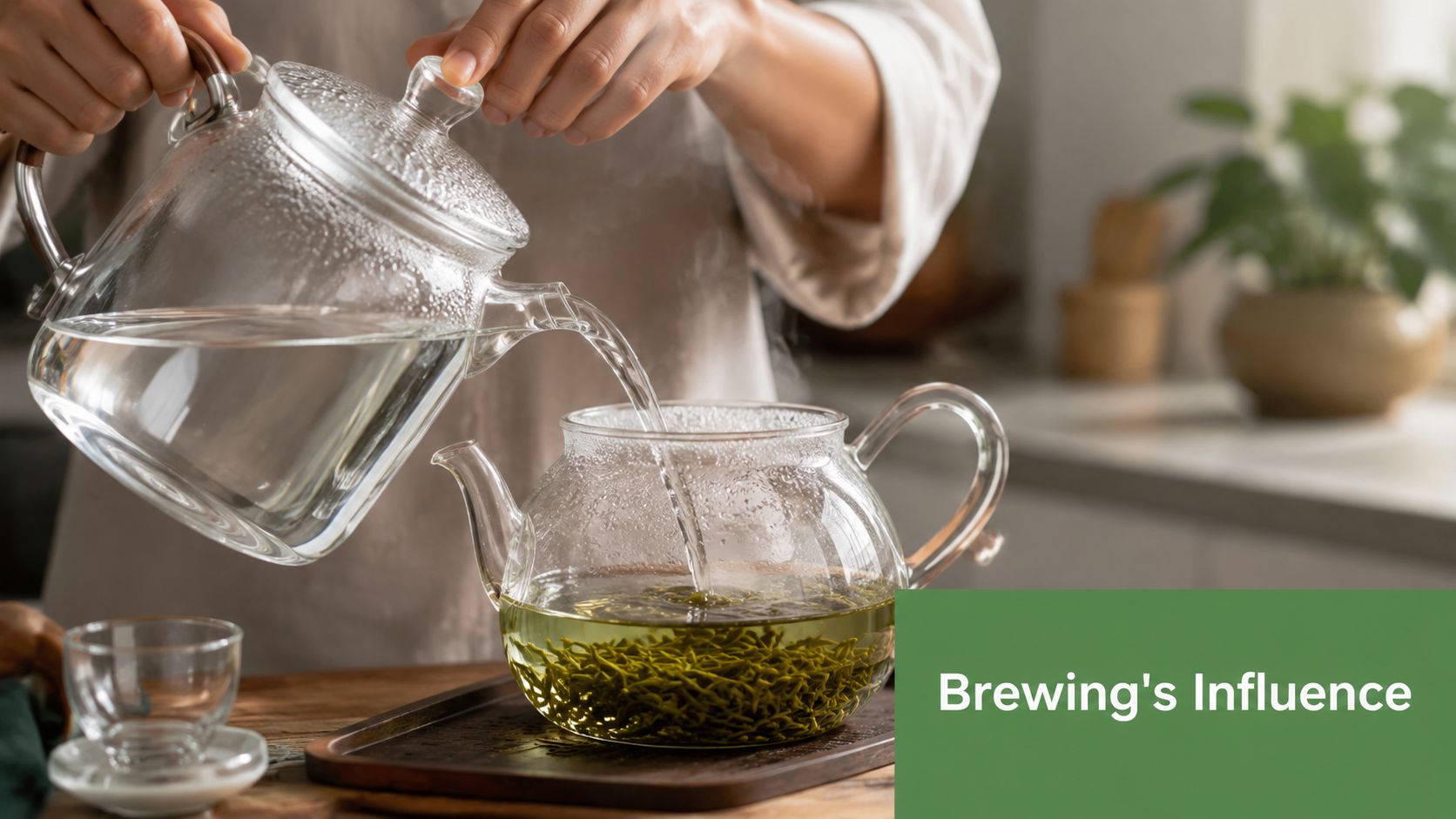
Caffeine is water-soluble, so brewing is basically an extraction exercise. Hotter water and longer contact usually pull more out of the leaf. Cooler water and shorter steeps usually pull less. That sounds simple, but it gives you real control over what lands in your cup.
Time and heat both matter
One of the clearest data points on this comes from Tavalon Australia's tea caffeine guide, which notes that brewing longer or with hotter water significantly increases caffeine, with Indian and Kenyan green teas yielding 59 mg and 58 mg respectively when steeped for 3 minutes, compared with a standard 20 to 30 mg average.
That's a useful reminder that the same category of tea can behave very differently depending on brewing style. If you've ever had one green tea that seemed mild and another that felt much punchier, the kettle may be part of the answer.
A simple home approach
You don't need lab gear to fine-tune caffeine. You just need to decide what kind of effect you want.
- For a gentler cup use cooler water and keep the steep short.
- For a stronger morning brew use warmer water and let the tea sit a little longer.
- For matcha remember that the serving size matters because adding more powder means drinking more leaf.
- For café drinks a larger matcha serve in a latte can change the feel of the drink even if the flavour still seems smooth.
If flavour is the song, brewing is the volume knob. Caffeine rises and falls with it.
A quick visual on technique can help if you're trying to improve consistency at home or in a café.
What about decaf and fermented tea
For people who are very sensitive to caffeine, decaf green tea is a separate category. In general, it still contains a trace amount rather than absolutely none.
Fermented tea drinks add another layer. Kombucha starts with tea, so it begins with some caffeine in the brew. During fermentation, the final drink can end up gentler than the tea it started from. That's one reason some people find kombucha feels lighter than a straight cup of tea, though the exact result depends on how it's made.
An easy rule for daily use
Try matching the brew to the time of day.
- Morning focus suits a fuller extraction.
- Mid-afternoon often works better with a moderate brew.
- Evening usually calls for shorter, cooler infusions or a lower-caffeine option altogether.
That one habit helps people enjoy green tea more without guessing why one cup feels completely different from the next.
Green Tea vs Coffee vs Kombucha A Comparison
Numbers are easier to understand when you can place them beside drinks you already know.
In Australia, green tea contains 24 to 45 mg of caffeine per 250 ml cup, compared with matcha at 60 to 75 mg per cup and black tea at 45 to 75 mg per cup, according to ABC News reporting cited here. That alone tells an important story. Standard green tea often sits at the lower end of the caffeinated drink spectrum, while matcha steps into a noticeably stronger zone.
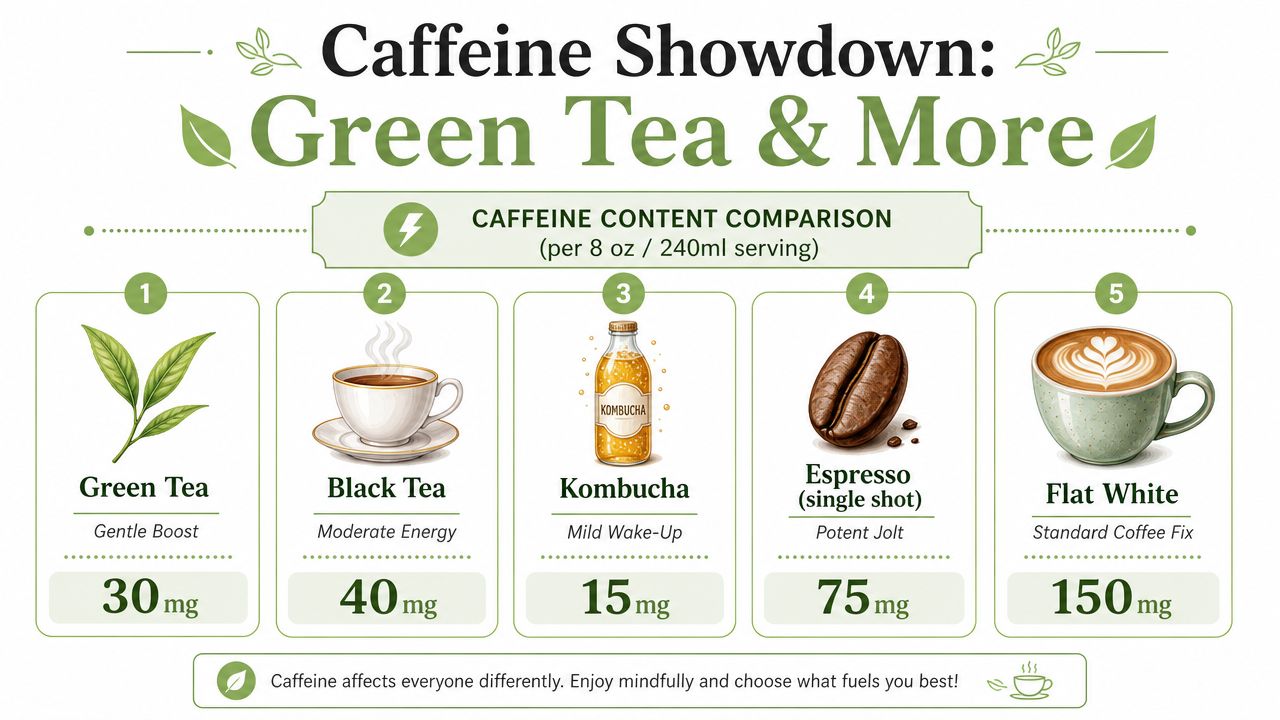
If you're curious about where fermented tea fits, our article on whether kombucha has caffeine adds more context.
It's not only about the number
Coffee tends to announce itself quickly. Green tea often arrives more gently. Many tea drinkers describe the effect as steadier and easier to live with.
That difference is one reason matcha has become so popular with people who want clean energy for work, study, or training. Tea naturally contains L-theanine alongside caffeine, and that pairing is widely valued for a calmer style of alertness.
A practical way to think about the line-up
- Green tea suits people who want a lighter lift.
- Black tea usually sits a step above standard green tea.
- Matcha can move much closer to coffee territory than many people expect.
- Kombucha is often the softer option when you want refreshment with less intensity.
- Coffee remains the obvious pick for those chasing a stronger jolt.
A flat white, a bowl of matcha, and a bottle of kombucha don't just taste different. They shape the pace of your day differently too.
For cafés, this comparison is useful on menus. “Green tea” and “matcha” shouldn't be treated as interchangeable. One is usually a mild brewed drink. The other can be a more functional, focus-oriented option.
Choosing the Right Green Tea for Your Day
Once you understand the range, the best tea becomes a timing question.
If you want a sharper start, organic matcha tea provides approximately double the caffeine content of a standard brewed green tea and half the caffeine of an espresso, while offering a more sustained lift due to L-Theanine, as noted on Pep Tea. That makes matcha a strong fit for morning concentration, a pre-work session, or the part of the day when coffee feels too abrupt.
Match your tea to the moment
- For focused mornings choose matcha when you want something more substantial than a standard leaf tea.
- For a balanced afternoon go with a classic brewed green tea such as sencha if you want a gentler rise.
- For evenings keep the brew light, shorten the steep, or switch to a lower-caffeine option.
- For café orders ask what kind of green tea is being used. That one question can save a surprise.
A note for café owners
This is one of the easiest menu education wins. Customers already understand coffee strength because cafés talk about single shots, double shots, and roast style. Tea deserves the same clarity.
A menu line like “ceremonial matcha latte” tells only part of the story. It helps to train staff to explain that matcha is different from standard brewed green tea because the whole leaf is consumed. That turns confusion into confidence, and it helps customers choose a drink that suits the time of day.
Keep the choice practical
You don't need to memorise every tea cultivar or brewing chart. A simple framework works well:
| Goal | Better fit | Why it helps |
|---|---|---|
| Morning energy | Matcha | Stronger, steadier feel |
| Midday reset | Sencha or standard green tea | Lighter lift |
| Late-day sipping | Lower-caffeine brew | Less chance of overdoing it |
If you want one product example, Pep Tea organic matcha is a relevant option for people specifically looking for a stronger green tea format rather than a mild brewed cup. The useful distinction isn't “good” versus “bad”. It's brewed leaf versus powdered leaf, and gentle lift versus more pronounced energy.
The best green tea for you isn't the strongest one. It's the one that fits your day, your sensitivity, and the kind of clarity you want from your cuppa.
If you're exploring cleaner ways to support focus, energy, and daily wellness, Pep Tea is a great place to start. You can browse our organic matcha range, learn more about sugar-free organic kombucha brewed in the Hunter Valley, NSW, and find practical guides for choosing the right tea for your routine.
Genmaicha Tea Benefits: Boost Your Health & Energy

Some teas fit a mood so perfectly that they feel less like a drink and more like a small reset. Genmaicha is one of those teas. If you're trying to cut back on coffee, looking for something softer than a brisk green tea, or want a warm cup that feels grounding in the middle of a busy day, genmaicha often lands in exactly the right place.
Its appeal is easy to understand once you taste it. You get the freshness of green tea, but also a gentle toasted note from roasted rice that makes the whole cup feel cosy and familiar. That balance is a big part of why people search for genmaicha tea benefits. They want something supportive, calming, and practical for everyday life, not another overhyped wellness promise.
An Introduction to Japans Comforting Popcorn Tea
A lot of people meet genmaicha by accident. They order tea at a Japanese café, notice a warm cereal-like aroma rising from the cup, and pause. It doesn't smell grassy like many green teas. It smells toasted, savoury, and inviting.
That first sip is usually what wins people over. The flavour is soft and nutty, with a clean green tea finish. Some cups even carry a light popcorn-like aroma, which is why genmaicha is often affectionately called “popcorn tea”.
For Australians who want a more mindful drink ritual, that matters. Genmaicha doesn't ask much of you. It isn't intense, overly bitter, or fussy to enjoy. It suits a slow morning, an afternoon break between meetings, or a gentle evening wind-down when coffee would feel like too much.
There's also something reassuring about its simplicity. It's just green tea and roasted rice, blended in a way that makes the tea feel rounder and easier to drink. If you've found some Japanese green teas a little sharp or too vegetal, genmaicha can feel like the friendlier doorway into the category.
A simple way to think about it: genmaicha is the comfort-food version of green tea.
It also sits nicely within the broader family of Japanese tea traditions. If you enjoy learning about different styles, origins, and flavour profiles, Pep Tea's guide to Japanese green tea is a useful next step.
Understanding the Blend of Green Tea and Roasted Rice
Genmaicha sounds unusual at first, but the blend is very easy to understand once you break it into its two parts.
What's actually in genmaicha
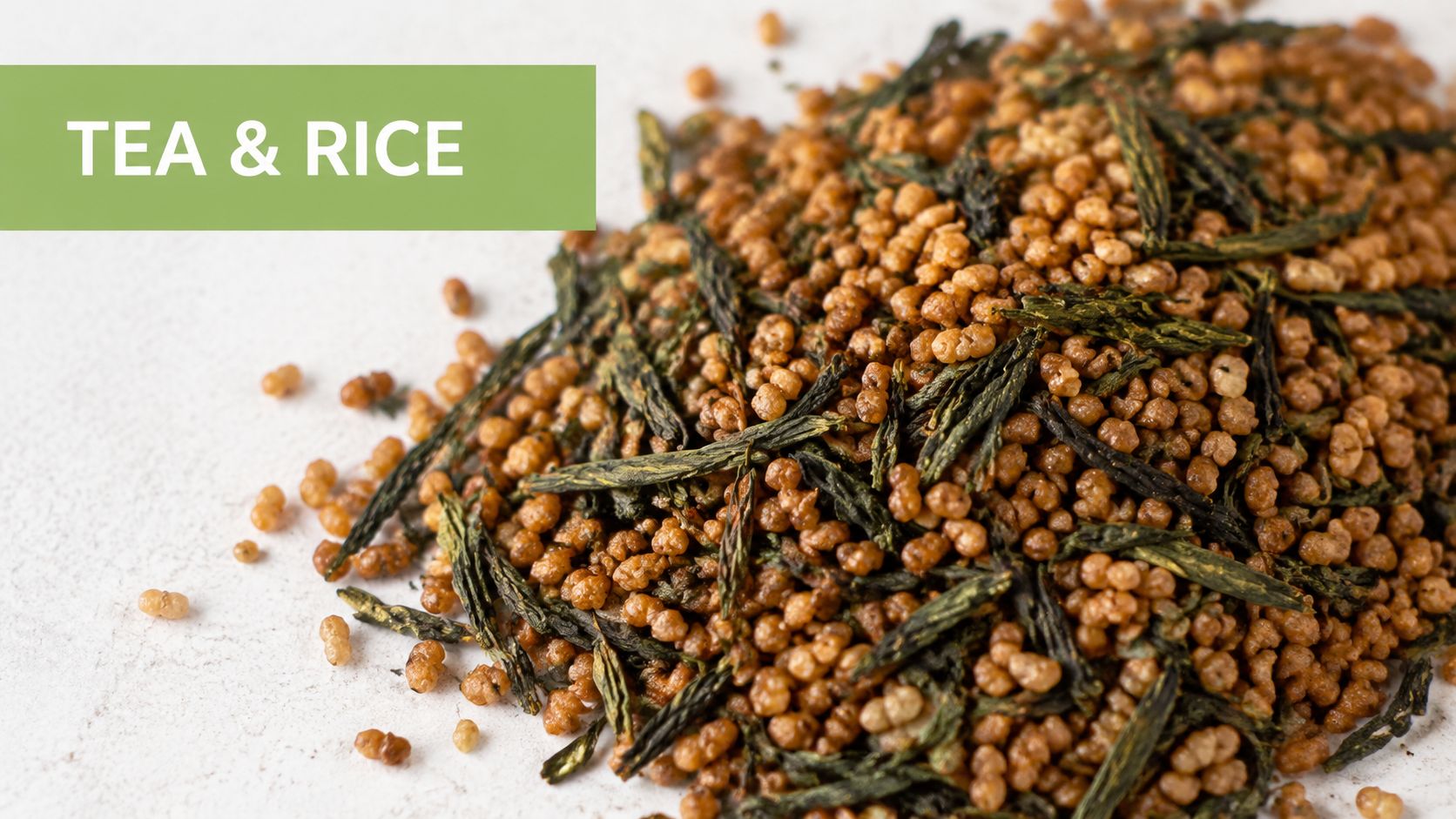
At its core, genmaicha combines:
- Green tea leaves such as bancha or sencha, which bring freshness, light bitterness, and the familiar green tea character
- Roasted rice, which adds toastiness, a nutty aroma, and a softer overall impression
Some of the rice grains pop during roasting. That's where the “popcorn tea” nickname comes from. The popped grains don't mean there's popcorn in the blend. They're rice that has expanded during heat exposure.
A common misconception among readers concerns the role of the rice. The rice isn't there to turn genmaicha into a sugary drink or a grain-based beverage. It's there for flavour, aroma, and balance. The roasted notes mellow the sharper edges of green tea and create a cup that feels warmer and more rounded.
Why the blend tastes so different from standard green tea
If plain green tea tastes brisk or grassy to you, genmaicha will probably feel much easier to approach. The roasted rice changes the whole experience.
Instead of a cup that leads with vegetal notes, genmaicha often tastes:
- Nutty, rather than grassy
- Toasty, rather than brisk
- Gentle, rather than sharp
- Comforting, rather than stimulating
That doesn't mean the green tea disappears. It's still there, giving the blend its freshness and many of the qualities people associate with green tea wellness. The rice changes the texture of the experience.
The roasted rice doesn't cancel the tea. It softens it.
Does the rice change the health story
Yes, but mostly in a practical way rather than a dramatic one.
The biggest real-world difference is that genmaicha is commonly described as a lower-caffeine option. One tea industry guide estimates a cup of genmaicha contains about 10–15 mg of caffeine, compared with roughly 30 mg in a cup of regular green tea, or about 50% less in that comparison, as described in this genmaicha caffeine overview.
That lower-caffeine profile is one reason it's often chosen by people who want a calmer tea experience. The same source also describes genmaicha as containing L-theanine, the amino acid linked with relaxation and focus.
For everyday drinkers, that means the rice component is important less because of its nutrition on its own, and more because it helps create the milder flavour and gentler energy profile people are often looking for.
Exploring the Key Genmaicha Tea Benefits
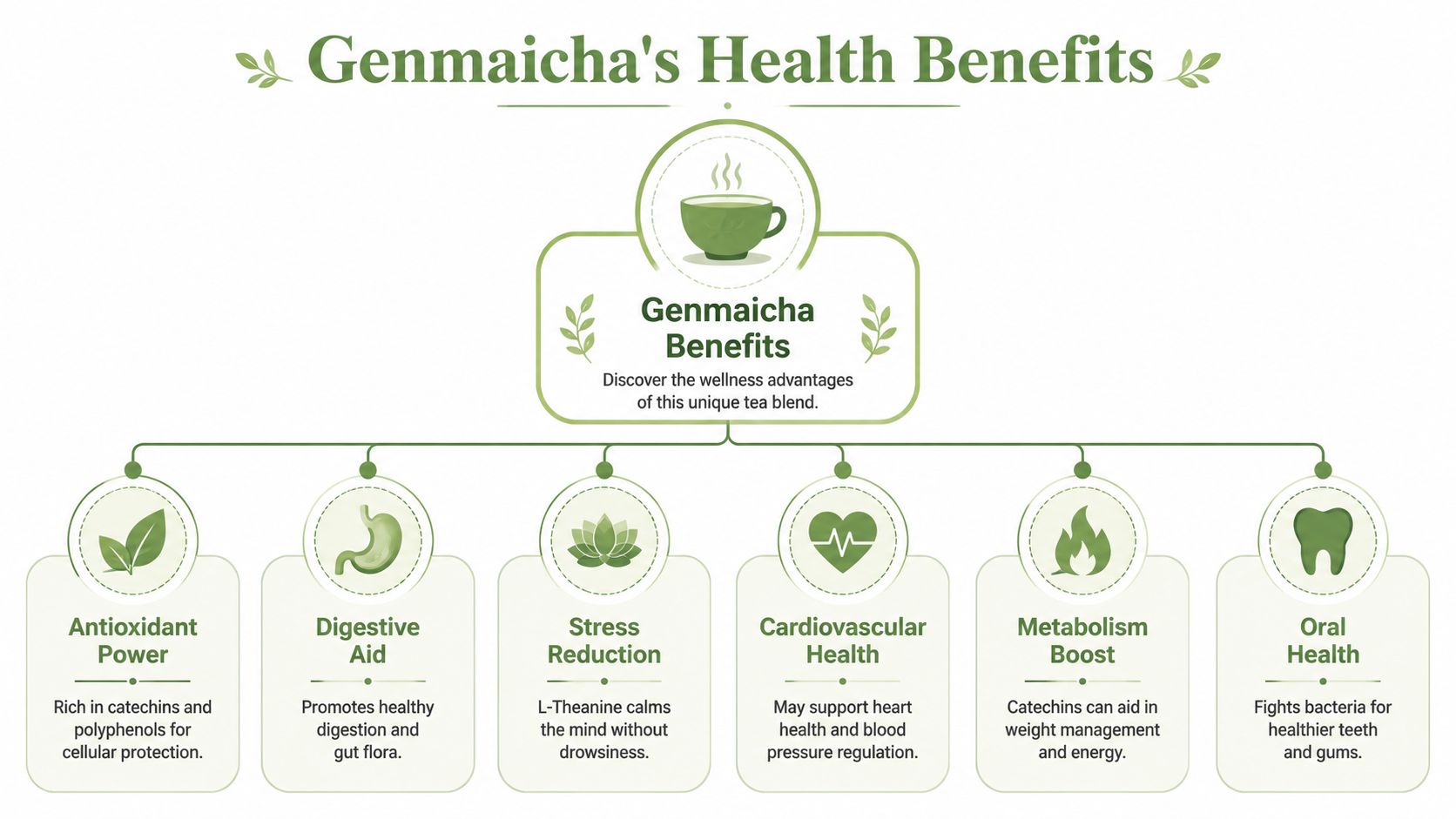
Many of the most meaningful genmaicha tea benefits come from its green tea base. That's an important distinction. Genmaicha has its own character, but much of the science sits within the broader green tea evidence base rather than genmaicha-only clinical trials.
Antioxidant support from green tea catechins
The strongest evidence-backed benefit comes from green tea's polyphenols, especially catechins such as EGCG. A peer-reviewed review of green tea research describes catechins as being linked to antioxidant, anti-inflammatory, lipid-lowering, and endothelial-function benefits, including associations with reduced LDL, improved blood pressure, and better glucose and lipid metabolism in people with metabolic syndrome, as outlined in this green tea catechin review.
In plain language, antioxidants help the body manage oxidative stress. That doesn't make genmaicha a miracle drink. It does mean it belongs in the wider green tea family known for useful plant compounds.
For a practical Australian reader, the takeaway is simple. If you want a gentler tea but still want the wellness identity of green tea, genmaicha makes sense.
Calm focus rather than a hard caffeine hit
Genmaicha is often appreciated for how it feels, not just what it contains. People who find coffee too intense or standard green tea a bit sharp often describe genmaicha as easier to work into a steady routine.
That's where lower caffeine and L-theanine matter together. Instead of chasing a big jolt, many drinkers use genmaicha when they want a softer lift that doesn't dominate the rest of the day.
Practical rule: if your goal is gentle alertness, genmaicha usually fits better than beverages chosen purely for stimulation.
This also explains why genmaicha often appeals as an afternoon tea. It can feel supportive without pushing the nervous system too hard.
A short visual guide can help if you want a quick summary before reading on.
A useful option for people who want a lighter daily ritual
A major gap in online discussion is that many articles blur together broad green tea claims and genmaicha-specific reality. A more careful view is better. As discussed in this practical genmaicha explainer, caffeine level, brewing method, tea-to-rice ratio, and leaf quality all shape the final cup.
That's helpful because it keeps expectations realistic. Genmaicha may support a healthier routine in several down-to-earth ways:
- Replacing sweeter drinks with an unsweetened tea option
- Offering a lower-stimulant choice for late afternoon or evening
- Giving green tea newcomers a softer flavour profile
- Pairing well with meals, which makes it easier to drink consistently
What human evidence tells us
Genmaicha-specific human data is limited, but there is one especially relevant signal. In Japan, one large prospective cohort analysis grouped Bancha/Genmaicha together. In that study, women who drank 10 or more cups per day had a hazard ratio of 0.86 compared with women who drank less than 1 cup per week, which indicates a 14% lower adjusted risk in that category, according to this prospective cohort analysis including Bancha and Genmaicha.
That figure needs careful interpretation. It reflects a very high intake category, and it doesn't mean people should start drinking huge amounts of genmaicha each day. What it does offer is research-backed context. Genmaicha isn't just a novelty blend. It sits inside a green tea pattern that has been studied in human populations.
How Genmaicha Compares to Other Japanese Green Teas
Choosing between genmaicha, matcha, and sencha usually comes down to one question. What kind of tea experience do you want?
Some people want intensity and depth. Others want clarity and freshness. Some want a cup they can drink in the late afternoon without feeling overcaffeinated. Genmaicha shines in that third category.
Flavour and feel
Genmaicha is usually the most comforting of the three. The roasted rice gives it a nutty, savoury softness that makes it feel almost food-friendly. Sencha leans greener and brighter. Matcha is richer, thicker, and more concentrated in flavour.
If you've ever thought, “I like the idea of green tea, but I don't love the grassy edge,” genmaicha is often the best place to start.
Sencha speaks clearly. Matcha sings loudly. Genmaicha speaks softly and stays with you.
The practical trade-offs
Here's the simplest way to compare them.
| Feature | Genmaicha | Matcha | Sencha |
|---|---|---|---|
| Flavour | Nutty, toasted, mellow | Rich, savoury, umami-led | Fresh, grassy, clean |
| Caffeine feel | Lower and gentler | Stronger and more concentrated | Moderate, more classic green tea feel |
| Texture | Light-bodied | Fuller and creamier | Light and crisp |
| Best time to drink | Afternoon, with meals, or when you want a calming cup | Morning or early day when you want focus | Morning or daytime sipping |
| Ease for beginners | Very approachable | Can be intense at first | Familiar for green tea drinkers |
| Preparation style | Infuse leaves in water | Whisk powder into water | Infuse leaves in water |
Where genmaicha sits best
Genmaicha is not trying to outdo matcha on concentration or sencha on pure leaf character. Its strength is balance.
That's why it often suits:
- Caffeine-sensitive drinkers who still want real tea
- People easing off coffee but not ready for herbal tea
- Cafés building broader tea menus with something distinctive and approachable
- Home drinkers who want a tea that pairs well with lunch or an afternoon pause
If you'd like a deeper side-by-side look at flavour, energy, and use cases, this comparison of genmaicha vs matcha is worth reading.
How to Brew and Enjoy Genmaicha at Home or in a Café
Genmaicha is one of the friendliest Japanese teas to brew. It doesn't demand a highly technical setup, and it rewards even simple preparation with a lovely cup.
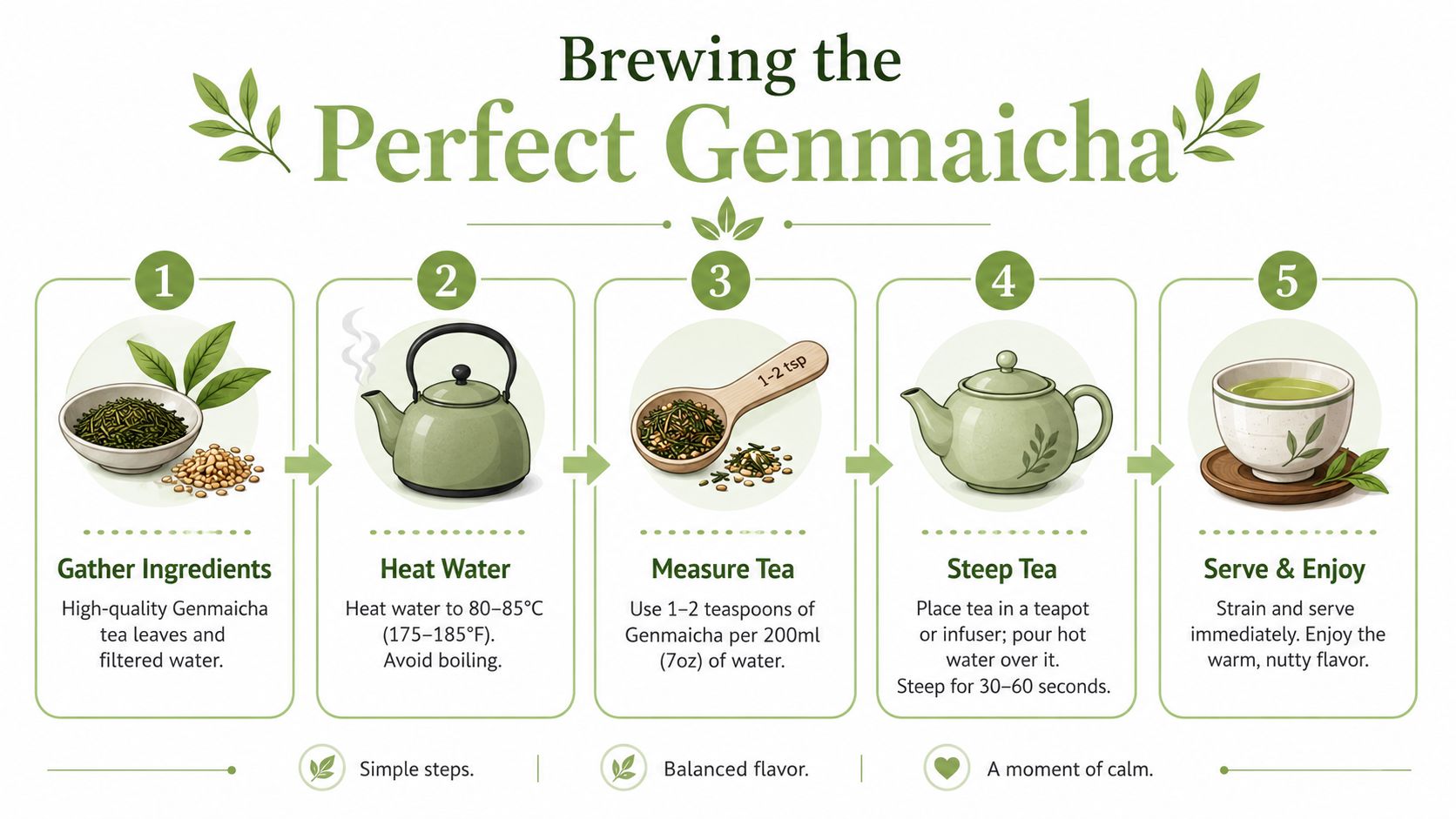
A simple brewing method
Use this as an easy starting point:
- Heat the water gently. Aim for 80 to 85°C. Boiling water can make green tea taste harsh.
- Measure your tea. Use a modest spoonful for a regular mug or small teapot.
- Steep briefly. Around 1 to 3 minutes usually gives a balanced cup.
- Taste and adjust. If it's too light, steep a little longer next time. If it's too strong, shorten the infusion.
- Pour straight away. Leaving the leaves sitting in water too long can make the cup less soft.
Why temperature matters
Many people go wrong with green tea. They use freshly boiled water, then assume the tea is meant to taste bitter.
Genmaicha is more forgiving than some Japanese green teas because of the roasted rice, but the leaf still benefits from a gentler brew. Lower water temperature helps preserve sweetness and keeps the flavour rounded.
If your genmaicha tastes rough, change the water temperature before changing the tea.
Easy ways to enjoy it
Genmaicha doesn't have to be limited to a hot mug at home. It works beautifully in different settings.
- Hot with meals for a warming, savoury pairing
- Iced on warm Australian days for a refreshing but mellow drink
- As a tea latte with milk or a plant-based alternative if you enjoy a creamier cup
- On a café menu as a low-caffeine Japanese tea option for customers who don't want coffee
For cafés, the strongest appeal is usually flavour plus accessibility. Customers may not know much about genmaicha, but they often respond quickly to a short description like “Japanese green tea with roasted rice, smooth and nutty.”
A few common mistakes to avoid
Not every disappointing cup means the tea is poor quality. Often it's just the method.
- Using boiling water can flatten the softer roasted notes
- Steeping too long can push the green tea side forward too aggressively
- Using too little leaf can make the cup feel thin
- Adding sweetener too quickly can cover the natural toasted flavour that makes genmaicha special
A plain brew first is always the best test. Once you know its natural profile, you can decide whether you prefer it neat, iced, or with milk.
Is Genmaicha the Right Tea for Your Wellness Routine
Genmaicha suits people who want wellness to feel sustainable, not extreme. It's a tea for everyday rhythm. You drink it because it tastes comforting, because it feels lighter than coffee, and because it gives you a simple ritual you can return to without much effort.
That makes it especially appealing if you're caffeine-sensitive, trying to reduce stimulant intake, or looking for a more grounded afternoon drink. It also works well for people who like the idea of green tea but want something softer and more approachable than stronger styles.
Who tends to enjoy it most
Genmaicha often fits best for:
- Busy professionals who want a calmer tea break
- Tea beginners who don't enjoy bitterness
- Mindful drinkers building a low-sugar, lower-caffeine routine
- Café customers looking beyond coffee and standard black tea
There are still a few sensible notes of caution. Because it contains caffeine, even at a lower level, some people will still want to be mindful. That includes those managing caffeine sensitivity, pregnancy concerns, or blood sugar questions in a broader health context. If you're also exploring other gentle ways to support steady energy through the day, these tips for natural energy boosts are a useful companion read.
A calm place in a broader tea routine
Genmaicha doesn't replace every tea. It fills a specific role. Matcha may suit mornings when you want more focus and intensity. Genmaicha suits the moments when you want warmth, balance, and a little less push.
If you enjoy rotating your drinks depending on time of day, tolerance, and mood, it can help to understand safe intake across stronger teas too. This guide on how many cups of matcha tea powder are safe per day adds useful context for anyone building a more intentional tea habit.
Genmaicha's real value is simple. It makes green tea easier to live with.
If you'd like to keep exploring functional tea in a thoughtful, everyday way, visit Pep Tea for premium organic Japanese matcha, Australian-brewed sugar-free kombucha, and practical guides that help you choose the right drink for calm focus, clean energy, and daily wellness.
Hojicha Tea Benefits: A Guide to Roasted Green Tea
Some evenings, you want a warm drink that feels comforting without turning bedtime into a staring-at-the-ceiling session. Coffee is out. Strong green tea can feel a bit too lively. Even some herbal blends miss that toasted, satisfying depth people crave in the evening.
That's where hojicha often surprises people.
If you've only really explored Japanese tea through matcha, hojicha can feel like a quiet revelation. It's still green tea, but it doesn't taste grassy or sharp. It tastes roasted, mellow, nutty, and softly sweet. The whole experience feels gentler.
Your New Favourite Evening Tea Ritual
A lot of Australians are already looking beyond basic supermarket tea bags and into more distinctive tea styles. The green tea category in Australia reached A$131.4 million in 2024 according to this Australian green tea market summary. That matters because hojicha sits inside that broader green tea world, but offers a completely different flavour and feel.
For many people, the turning point is simple. They want something cosy after dinner, but they don't want the buzz that can come with more stimulating drinks. They also don't want something bland. Hojicha fits neatly into that gap.
If you've been comparing relaxing drinks lately, it can help to look at a broader guide to restorative sleep teas so you can see where roasted teas sit beside herbal options. Hojicha stands out because it gives you that evening-friendly comfort while still feeling like a proper tea ritual.
Hojicha often appeals to people who enjoy green tea in theory, but don't enjoy bitterness in practice.
There's also a practical reason it keeps popping up in wellness conversations. People want drinks that support calmer routines, lower stimulation, and more mindful habits. Hojicha feels aligned with that shift, not because it's trendy for the sake of it, but because its character naturally suits slower parts of the day.
If caffeine is part of your decision, this guide to green tea caffeine gives useful context on how tea styles can differ. Hojicha's place in that conversation is one of the main reasons it's become such a favourite among people who want tea without the sharper edge.
What Exactly Is Hojicha Tea
Hojicha is roasted Japanese green tea. That's the key idea.
It isn't a separate plant. It isn't a flavoured tea. It's green tea that has been transformed by heat. Think of the difference between raw nuts and roasted nuts. Same starting point, completely different aroma, taste, and overall feel.
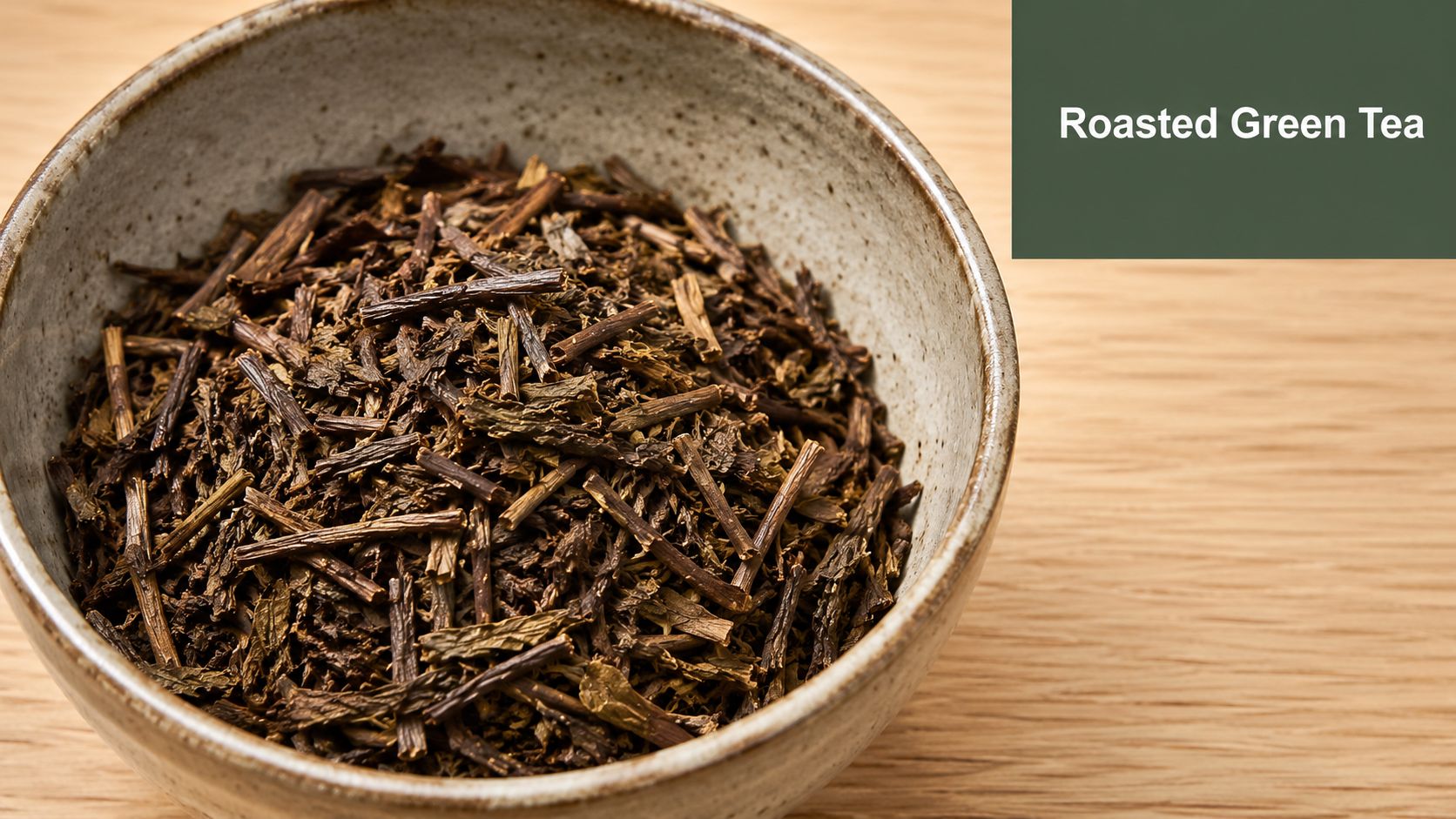
How roasting changes the tea
Most green teas are prized for fresh, vegetal notes. Hojicha goes in another direction. The leaves, and sometimes stems, are roasted. That roasting deepens the flavour and softens the greener, more astringent side of the tea.
The result is a cup with notes people often describe as toasty, nutty, woody, or gently caramel-like. If standard green tea can taste bright and brisk, hojicha tastes rounded and warm.
That's also why it can be a useful gateway tea. Someone who says, “I want the idea of green tea, but not the grassy taste,” often gets on very well with hojicha.
A tea with a relatively modern history
Hojicha isn't ancient in the way many people assume Japanese teas are. According to this overview of hojicha and its origins, it gained popularity in Kyoto around the 1920s. The same source notes that its roasting process leaves it with only about 8 mg per 250 ml.
That low-caffeine profile is a big part of its appeal. It makes hojicha a very practical choice for late afternoon, evening, or for anyone who's more sensitive to stimulating drinks.
What hojicha is not
It helps to clear up a few common points of confusion:
- It's not matcha. Matcha is a finely ground tea powder whisked into water. Hojicha is more commonly brewed like a loose-leaf tea, though powdered hojicha does exist.
- It's not black tea. The roasted flavour can make people assume it's fully oxidised like black tea, but it starts as green tea.
- It's not automatically smoky. Some people expect a campfire flavour. Good hojicha is roasted and aromatic, but usually smooth rather than harsh.
For a broader look at Japanese tea styles, this Japanese green tea guide can help place hojicha alongside sencha and matcha without mixing them up.
The Unique Health Benefits of Roasting
The most interesting hojicha tea benefits come from one simple fact. Roasting changes the chemistry of the tea.
That doesn't just alter flavour. It changes how the tea feels to drink, how intense it seems, and why many people experience it as steadier and softer than other green teas.
Why roasting matters
When tea leaves are roasted, the profile shifts away from the sharper, greener character many people associate with classic green tea. In practical terms, that usually means less bitterness and a more rounded cup.
That matters because plenty of people stop drinking green tea for one of two reasons. Either it feels too stimulating, or it tastes too astringent. Hojicha answers both issues through processing, not through added ingredients.
Practical rule: If a tea feels harsh, look at how it was processed, not just what plant it came from.
Roasting is the whole story here. It's the reason hojicha smells warm instead of grassy. It's the reason the cup feels softer. It's also the reason its benefits are best understood through the lens of transformation, not just nutrition.
The calm performance idea
One of the most useful ways to think about hojicha is as a calm performance tea.
A peer-reviewed human study on roasted Japanese tea found that hojicha, compared with green tea and water, improved refreshment and motivation, and produced an earlier peak in the EEG P300 response associated with attention and concentration. The same study notes that hojicha is rich in pyrazine, a compound expected to support blood circulation, reduce feelings of cold, and ease fatigue. You can read the study in full in this peer-reviewed article on roasted Japanese tea and pyrazine.
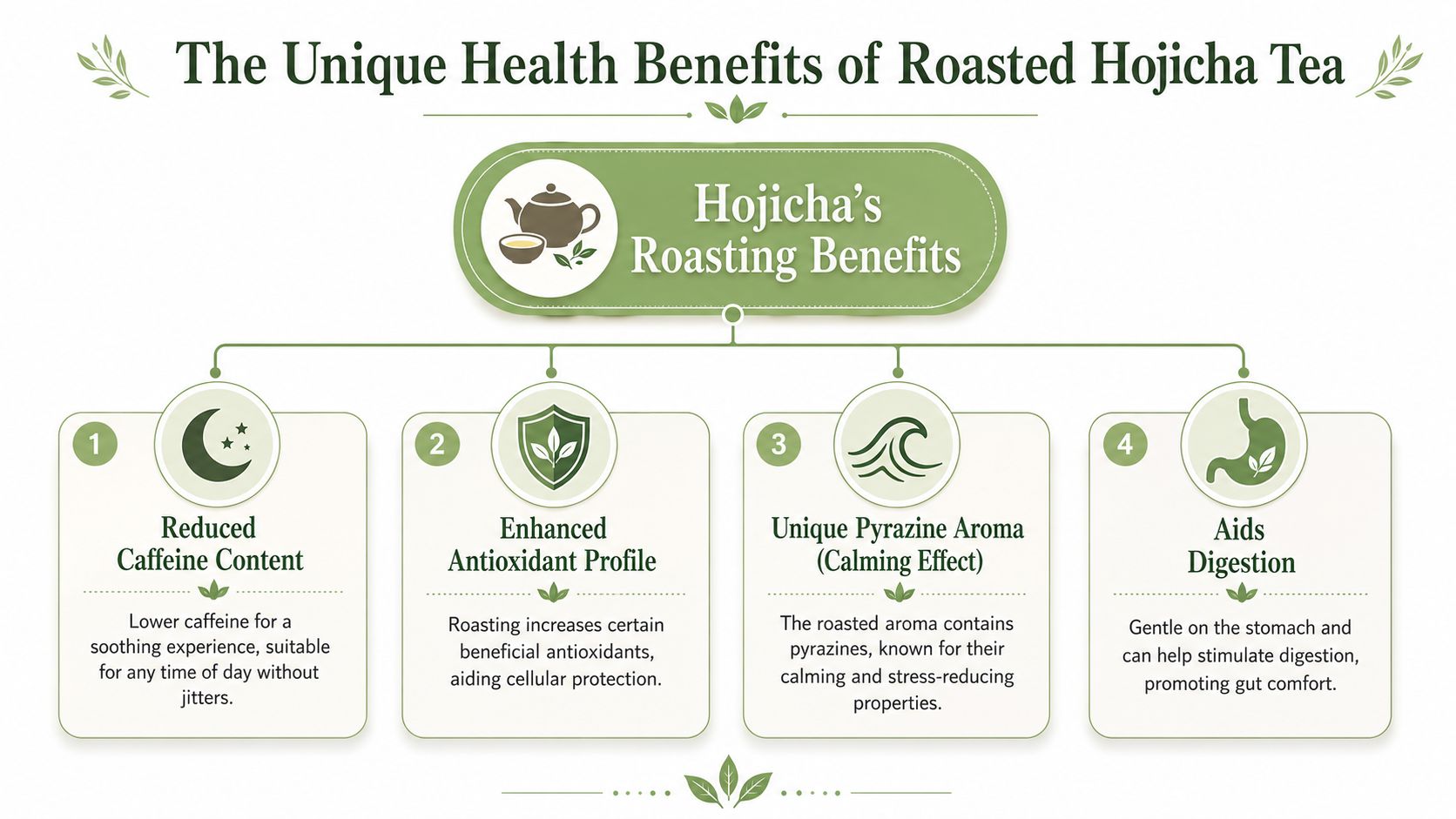
That's a helpful distinction. Hojicha doesn't have to make you feel revved up to be useful. For some people, its value is feeling more settled while still mentally present.
In everyday language, this is the tea you reach for when you want to read, finish a few notes, chat after dinner, or wind down without feeling flat.
What pyrazines actually do in the cup
Pyrazines are part of what gives roasted foods and drinks their warm, appealing aroma. In hojicha, they contribute to that comforting toasted smell people notice straight away.
That aroma isn't just pleasant. It helps explain why hojicha often feels so soothing before you even take a sip. Smell shapes expectation, and expectation shapes experience. With hojicha, the aroma already tells your body this drink is going to be softer, warmer, and less sharp.
A few practical takeaways flow from that:
- For sensitive drinkers: The roasted profile often feels easier to enjoy than bright, grassy green tea.
- For evening routines: The sensory experience itself suits slower rituals.
- For cafés: It offers something distinct from matcha without leaving the Japanese tea category.
Why people often find it gentler
Many drinkers describe hojicha as kinder on the stomach than more astringent teas. The simplest explanation is sensory. Because the roast softens the greener edge, the tea often feels less aggressive on the palate.
That doesn't make it a medical treatment, and everyone's tolerance is different. But as a daily drinking experience, hojicha often works well for people who've found standard green tea a bit too brisk.
Some teas wake you up by pushing. Hojicha tends to work by smoothing the edges.
This is one reason hojicha fits modern wellness habits so well. People aren't only chasing energy. They're also looking for drinks that support steadiness, comfort, and routines they can repeat every day.
Hojicha vs Matcha A Friendly Comparison
If matcha is your main point of reference, hojicha can seem unusual at first. Both come from Japanese green tea traditions, but they serve different moments.
Matcha is often the pick for energetic focus. Hojicha is more about warmth, softness, and ease. Neither is better. They just solve different problems.
Hojicha and matcha side by side
| Attribute | Hojicha | Matcha |
|---|---|---|
| Tea type | Roasted green tea, usually brewed from leaves or stems | Stone-ground green tea powder whisked into water |
| Processing | Defined by roasting | Defined by shading, steaming, drying and grinding |
| Colour | Brown to reddish-brown liquor | Bright green |
| Flavour | Toasty, nutty, mellow, less astringent | Grassy, umami-rich, fresh, more intense |
| Caffeine feel | Lower-stimulant and evening-friendly | More energising and vivid |
| Best time to drink | Late afternoon, evening, quiet work sessions | Morning, early afternoon, pre-work focus |
| Popular uses | Hot tea, iced tea, lattes, desserts | Traditional tea, lattes, smoothies, baking |
Which one suits your routine
If your morning starts with a whisked tea or a matcha latte, that makes sense. Matcha has a fuller, more assertive presence. Many people like it when they want alertness and a stronger flavour.
Hojicha works differently. It suits the part of the day when you want comfort without switching to something sugary or caffeine-heavy. It also tends to win over people who don't love the strong vegetal side of green tea.
That's why cafés often treat them as complementary rather than competing drinks. Matcha covers the bright, high-energy end of the menu. Hojicha brings in the roasted, cosy, low-stimulant option.
A taste comparison that helps
A simple food analogy can make this clearer.
- Hojicha is a bit like toasted sesame, roasted nuts, or light cocoa in mood.
- Matcha is more like baby spinach, sea breeze, and savoury sweetness.
Neither description is exact, but it helps explain why one feels grounding and the other feels vibrant.
For readers still sorting out the broader tea family, this guide to the difference between matcha, green tea and green tea powder makes the categories easier to separate.
How to Brew and Enjoy Hojicha
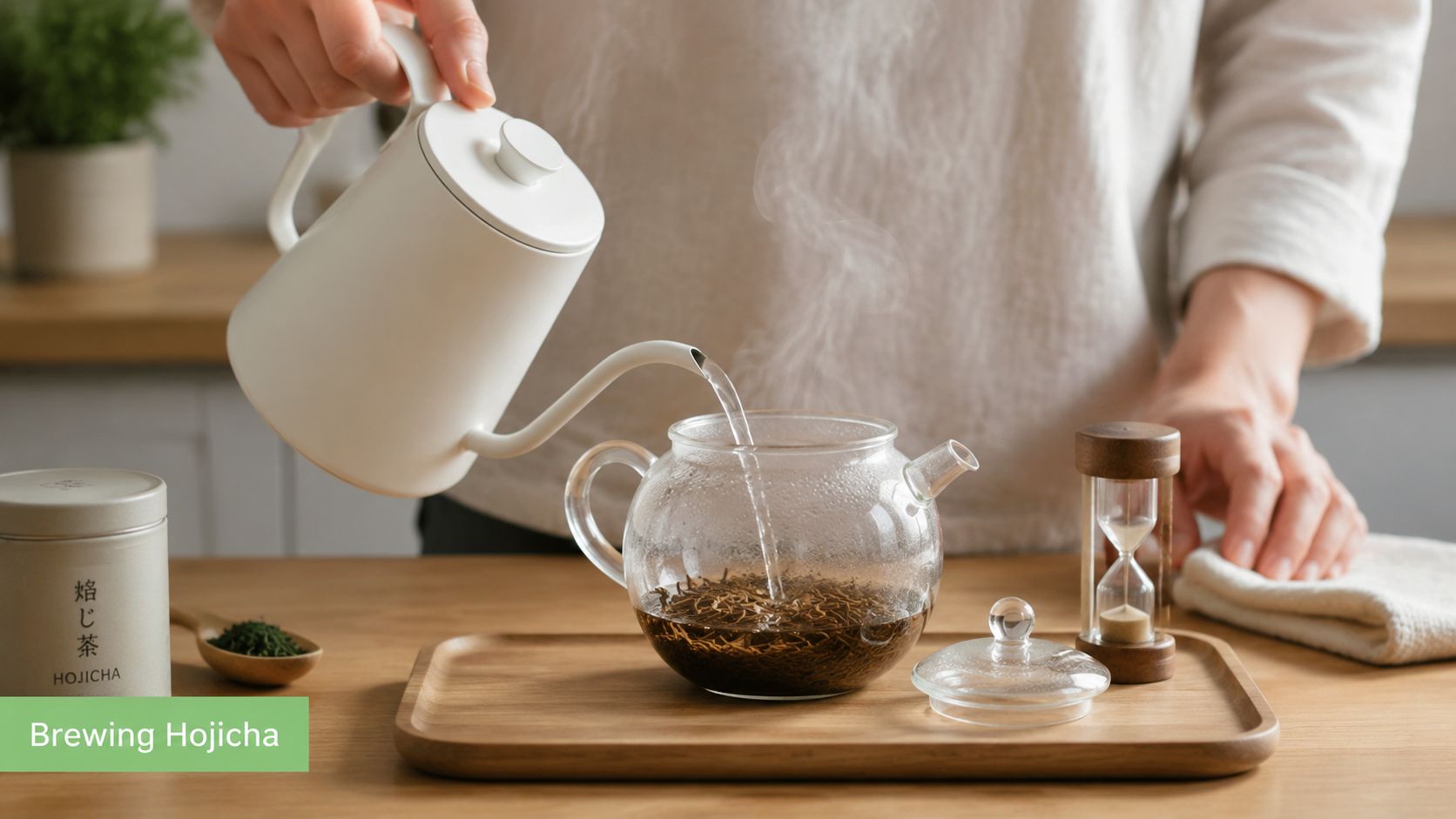
Hojicha is one of the easiest Japanese teas to brew well at home. You don't need a ceremonial setup. You just need decent tea, hot water, and a little restraint. Boiling water and very long steeps can flatten the nicer roasted notes.
A simple way to brew it
Start with loose-leaf hojicha in a teapot, infuser, or strainer. Use hot water rather than aggressively boiling water. The goal is to draw out the roasted aroma without making the cup taste dull.
A good first method looks like this:
- Warm your cup or teapot. This helps the tea stay stable and aromatic.
- Add the hojicha. Use enough leaf to give the cup some depth.
- Pour in hot water. Let the aroma rise before you even sip.
- Steep briefly. Hojicha usually doesn't need a long soak.
- Taste and adjust. If it feels too light, use a bit more leaf next time. If it tastes flat, shorten the infusion.
A good hojicha should smell inviting before it touches your lips. If the aroma feels warm and nutty, you're on the right track.
Make a hojicha latte
Hojicha also shines in milk-based drinks because the roasted flavour holds up beautifully. That's one reason it works so well on café menus.
For a simple hojicha latte at home:
- Brew a strong base: Make your hojicha a little stronger than you would for straight drinking.
- Heat your milk of choice: Dairy or plant milk can both work well.
- Sweeten lightly if you want: A small touch of sweetness can bring out the roasted notes.
- Combine and serve: Pour the milk over the tea and enjoy it hot.
If you're curious about the texture and flow of making hojicha into a latte-style drink, this video gives a useful visual reference:
Iced hojicha and beyond
Hojicha is just as good cold as it is hot. Brew it, let it cool, and pour it over ice. Because the flavour is already smooth and roasted, it usually stays pleasingly rounded even when chilled.
It also works beautifully in food. Think along these lines:
- Desserts: Ice cream, panna cotta, custard, or tiramisu-style layers.
- Baking: Shortbread, cakes, or muffins where you want a toasted tea note.
- Café specials: Iced hojicha latte, sparkling hojicha tonic, or a roasted tea float.
For hospitality venues, that versatility is a real advantage. Hojicha can act as a tea, a latte base, and a flavour ingredient without feeling gimmicky.
Is Hojicha the Right Tea for You
Hojicha tends to suit a specific kind of tea drinker, though that group is bigger than many people realise.
If you want something warm and flavourful at night, hojicha makes sense. If you're sensitive to stronger tea stimulation, it makes sense. If you like the idea of green tea but don't enjoy bitterness, it makes sense again.
It may be a great fit if you want
- An evening tea ritual: Something cosy that still feels refined.
- A softer Japanese tea experience: Roasted rather than grassy.
- A café alternative to standard chai or decaf coffee: Distinctive, but easy to understand.
- A calmer companion to matcha: One for energetic focus, the other for low-key clarity.
It's also a smart option for cafés and wellness retailers that want a non-alcoholic drink with a clear identity. Hojicha doesn't need much explanation once someone tastes it. The flavour usually does the work.
When another tea might suit you better
If you want vivid vegetal character, ceremonial ritual, or a more energising start to the day, matcha may still be your better fit. Hojicha isn't trying to replace that experience.
It offers something different. Softer edges. Toasted aroma. A gentler pace.
If matcha feels like a bright morning conversation, hojicha feels like a quiet evening exhale.
That difference is exactly why so many people keep both in the cupboard. One supports momentum. The other supports ease.
If you're exploring Japanese tea and want a trusted Australian source for premium organic options, have a look at Pep Tea. We're passionate about helping people find the right tea for the right moment, whether that's a vibrant matcha for clean daytime energy or a more mindful addition to your daily wellness routine.