
Tag: hojicha tea caffeine
Hojicha Tea Caffeine: A Guide for Sensitive Australians
Have you ever chosen hojicha for an evening drink, then wondered whether “low caffeine” really means caffeine-free? That distinction matters, especially if you're sensitive to stimulants, serving tea to children, or replacing coffee or matcha in an Australian café.
Hojocha is a roasted Japanese green tea with a warm, nutty flavour and a naturally lower caffeine level than many unroasted teas. But the amount in your cup depends on the tea, the format, the serving size and the way you brew it. The most useful question isn't just whether hojicha contains caffeine. It's how much caffeine your particular preparation delivers.
How Much Caffeine Is Actually in Hojicha
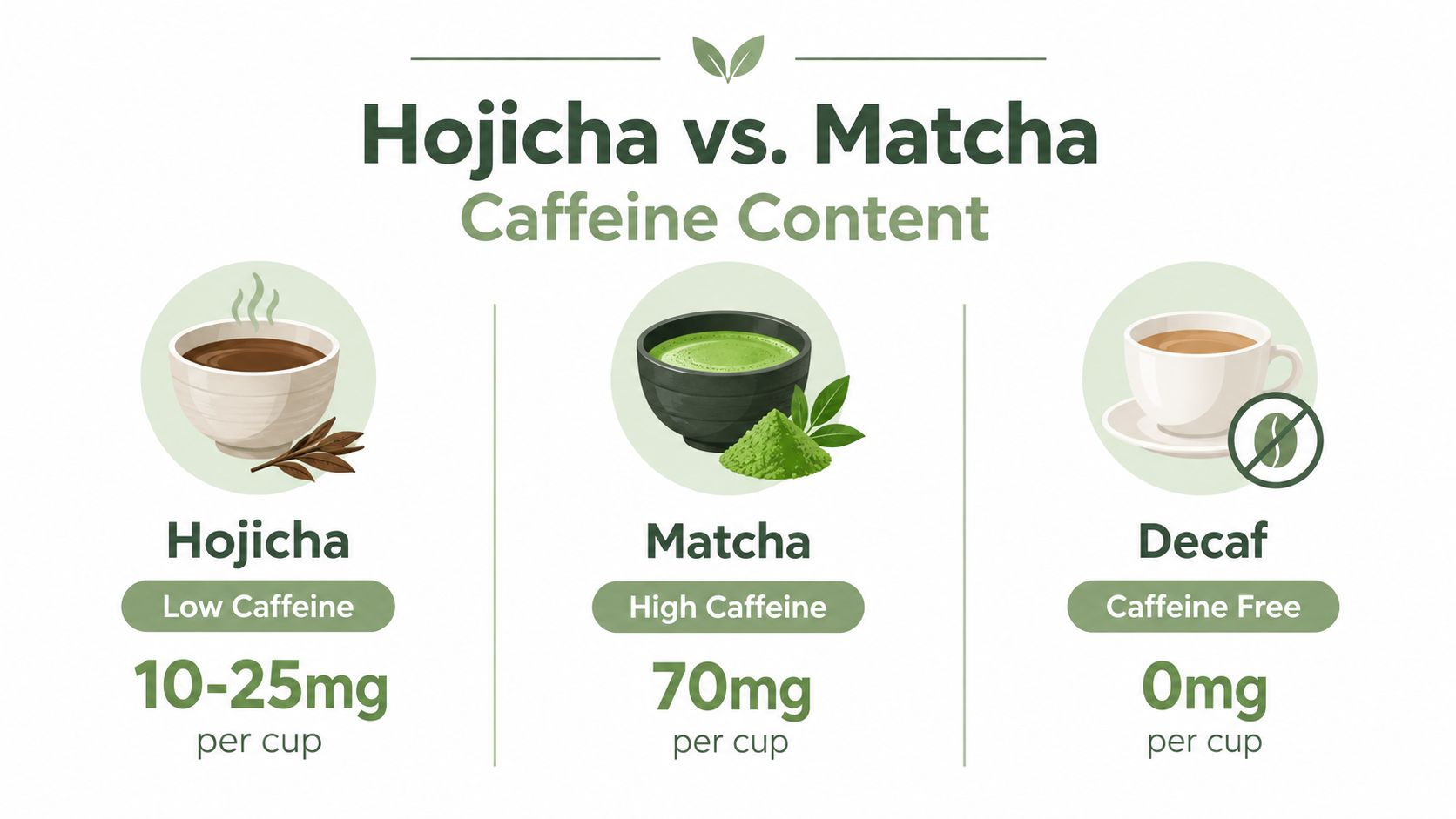
Could a roasted tea contain caffeine without delivering the same lift as green tea or matcha? Australian-facing tea information places hojicha at about 7.7 mg of caffeine per cup, compared with around 20 mg in regular green tea. That makes hojicha a lower-caffeine choice, rather than a caffeine-free one. Pep Tea's guide to caffeine content in green tea provides broader context on differences between green tea varieties.
Australian products show why the number on your own cup may vary. One canned hojicha drink lists 7 mg of caffeine per 750 ml bottle. An Australian tea reference also explains that caffeine depends on the tea type, the proportion of leaves to stems, and brew strength. A loose-leaf infusion and a powdered hojicha drink therefore should not be treated as identical servings.
A practical comparison
| Tea type | Average caffeine per cup |
|---|---|
| Hojicha | About 7.7 mg, Australian tea reference |
| Regular green tea | Around 20 mg |
| Tea benchmark | About 27 mg per 250 ml cup, Australian Sports Commission |
| Green tea benchmark | 30–50 mg |
| Matcha | Around 60–70 mg per serve, Australian comparison |
The table is a guide, not a guarantee for every packet or café preparation. Hojicha powder can provide around 20–25 mg per standard serve, according to an Australian tea product guide, because you consume the powdered leaf instead of steeping and discarding it. People who are sensitive to stimulants may also find decaf and sleep sensitivity relevant when choosing an evening drink.
Why Hojicha Contains Less Caffeine Than Matcha
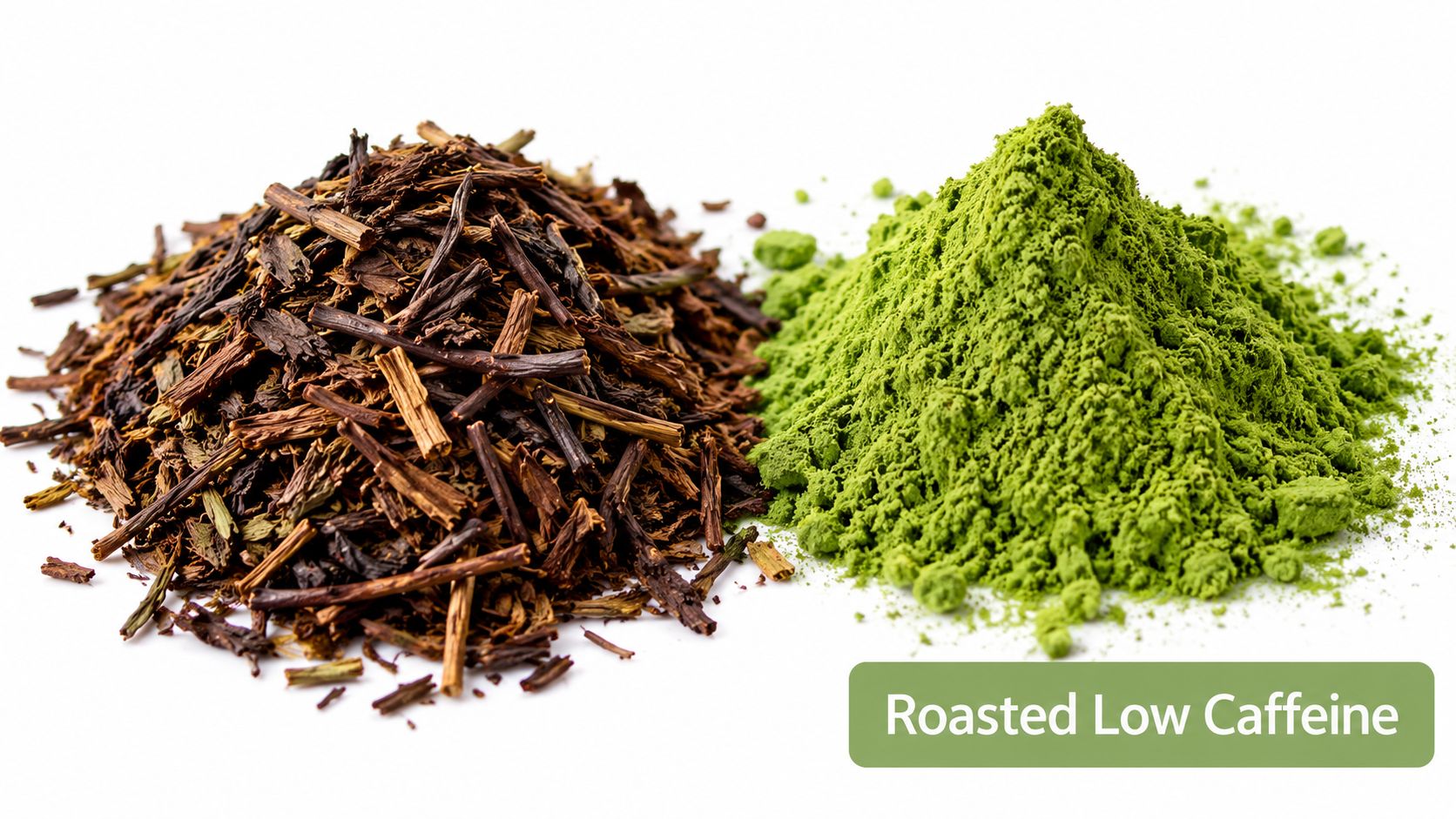
Why does hojicha usually feel gentler than matcha? The answer begins with how each tea is processed and consumed. Matcha is made from tea leaves that are processed and stone-ground into a fine powder, so you drink the whole leaf. Hojicha takes a different route: its leaves or stems are roasted, creating its brown colour, toasted aroma and mellow flavour.
Roasting reshapes the cup as well as the colour. Heat reduces some compounds linked with green tea's fresh, grassy character, while the roasted notes bring flavours closer to toasted grain, nuts and light caramel. This contributes to hojicha's lower stimulant load, although it remains a low-caffeine tea rather than a caffeine-free one.
One tea family, two distinct experiences
Matcha and hojicha can both suit lattes, yet they offer different flavour and caffeine profiles:
- Matcha: Fresh, grassy and umami-rich, with a more noticeable caffeine presence because the powdered leaf is consumed.
- Hojicha leaf: Smooth, roasted and lighter-bodied, with caffeine shaped by the plant material and brewing method.
- Hojicha powder: Creamier and more concentrated than a loose-leaf infusion, so it can contain more caffeine than a lightly brewed cup.
To compare matcha and coffee, it helps to remember that matcha is a whole-leaf drink. Hojicha has its own identity, built around roasting, toasted flavour and a gentler cup, rather than being merely weak matcha.
A morning matcha may suit focused work or a pre-activity routine. Roasted hojicha can feel more comfortable after lunch or alongside dessert, especially for people who find green tea too bitter or grassy. Its rounded flavour often needs less adjustment for drinkers who prefer mellow, nutty notes.
This distinction matters when choosing Japanese tea for home or a café menu. Pep Tea's guide to how matcha tea is made explains matcha's processing, while hojicha is defined by the later roasting stage. The result is low caffeine, not zero caffeine, with the final amount still shaped by the tea material and preparation.
The Science Behind Roasting and Caffeine Reduction
It's common to hear that roasting “burns off” the caffeine in hojicha. That wording is too simple. A 2025 peer-reviewed review explains that heat decomposes amino acids and catechins in hojicha, while caffeine is reduced only slightly through sublimation rather than being completely broken down. In plain language, some caffeine may be lost during roasting, but the roasting process doesn't guarantee a caffeine-free tea. Read the review's discussion of hojicha chemistry.
Sublimation describes a substance moving from a solid state directly into a gas under suitable conditions. In tea roasting, this helps explain why some caffeine can leave with the heat. It doesn't tell us that every batch loses the same amount, because the final cup also depends on the starting material and extraction.
Why the figures vary
Hojicha may be made from different parts of the tea plant, including leaves and stems. Producers also use different roast profiles, and consumers prepare the tea in different ways. A light loose-leaf infusion and a concentrated powder whisked into milk shouldn't be expected to deliver the same caffeine level.
The apparent contradiction between “roasting reduces caffeine” and “hojicha still contains caffeine” disappears once you separate reduction from elimination. Roasting lowers the amount compared with some unroasted green teas, but it doesn't create a guaranteed zero-caffeine beverage.
The useful label is low-caffeine, not caffeine-free.
This distinction matters in Australian hospitality. A menu can describe hojicha as a low-caffeine alternative, but staff shouldn't promise that it contains no caffeine unless a specific product has been tested and labelled accordingly. For sensitive customers, the responsible approach is to explain the format and preparation, then allow the customer to choose.
Factors That Influence Caffeine in Your Cup
Caffeine extraction isn't fixed from one hojicha preparation to the next. The tea's leaf or powder format, the amount used, water conditions and brewing time all influence what reaches the cup. Australian product information makes the same practical point by linking caffeine variation to tea type, leaf ratio and brew strength.
Leaf or powder makes the biggest practical difference
Loose-leaf hojicha is steeped and then removed. Powdered hojicha remains in the drink, so the full measured portion is consumed. An Australian product guide places a standard serve of hojicha powder at around 20–25 mg of caffeine, while an Australian tea reference gives an average cup of steeped hojicha at about 7.7 mg. Those values aren't contradictory. They describe different preparations.
If you're particularly sensitive, start with loose leaf rather than powder. A brewed infusion usually gives you more control over the tea quantity and the strength of the final drink.
Adjust the brew deliberately
Use these levers to make a gentler cup:
- Use less tea. Reducing the leaf-to-water ratio reduces the amount available for extraction. For powder, measure a smaller portion rather than treating a full latte serve as the default.
- Shorten the steep. A brief infusion generally extracts less caffeine than a long, concentrated brew. Taste the tea early and stop when the roast character is present but not heavy.
- Choose a lighter preparation. A large mug made with a modest amount of leaf can taste comforting without becoming intensely concentrated.
- Avoid assuming colour tells the whole story. Hojicha's brown liquor reflects roasting, not a precise caffeine reading. A dark-looking cup isn't automatically high in caffeine, and a pale cup isn't automatically caffeine-free.
- Read the product information. If a manufacturer provides a caffeine value for a bottle or powder serve, use that figure for the product you are drinking.
Water temperature also affects extraction, although the relationship isn't a simple home formula. Rather than chasing a precise caffeine calculation, keep your method consistent. Use the same tea amount, water volume and steeping approach whenever you want a repeatable result.
For cafés, record the recipe for each hojicha drink. A powder latte and a loose-leaf pot should have separate preparation notes, because customers may interpret “hojicha” as one standard beverage even when the café is serving very different formats.
Preparing Low-Caffeine Hojicha at Home
A lighter hojicha infusion is simple to make, and you don't need complicated equipment. The aim is to keep the roasted aroma while avoiding an unnecessarily concentrated serve.
A gentle loose-leaf method
- Measure a modest amount of loose-leaf hojicha. Use less tea than you would for a strong pot, particularly if you're drinking it late in the day.
- Warm your teapot or cup. This helps the infusion stay pleasant without relying on an oversized tea dose.
- Add hot water and steep briefly. Start with a short brewing time, then taste. If the flavour is too light, extend the next infusion slightly rather than making the first cup very strong.
- Remove the leaves promptly. Don't leave the tea sitting in the pot while you drink, as continued extraction changes the strength.
- Serve plain or with milk. Hojicha's toasted flavour can stand on its own, and a splash of milk turns it into a softer after-dinner drink without needing sugar.
Some tea drinkers use a quick first rinse, then discard that liquid before making the main infusion. This may remove some readily soluble material, but it isn't a guaranteed way to remove caffeine. Treat it as a flavour and preparation preference, not a caffeine-free shortcut.
Serving it for others
For a family gathering or café service, prepare a lighter pot rather than assuming everyone wants a concentrated cup. Keep the leaf amount modest, avoid extended holding time and tell guests that hojicha is low in caffeine, not caffeine-free. If you're using powder, offer a smaller portion for people who want a milder drink.
That transparency is especially helpful for children and caffeine-sensitive adults. It also makes the tea easier to enjoy as a warm alternative to coffee, without turning a comforting ritual into a precise calculation.
Hojicha in Your Daily Wellness Routine
Hojicha fits naturally into a balanced Australian wellness routine because it offers roasted comfort with less caffeine than many standard green tea preparations. The caffeine is still present, so people who are highly sensitive should consider their total intake and personal response.
Australian food guidance explains that naturally caffeinated foods such as tea are exempt from added-caffeine labelling rules. It also says there's no recognised health-based guidance value for caffeine, while noting that about 3 mg per kilogram of body weight per day in children has previously been linked by FSANZ with increased anxiety. See the Australian food authority's caffeine guidance.
For a broader look at flavour, preparation and everyday uses, explore Pep Tea's guide to hojicha tea benefits. Choose loose leaf when you want a lighter infusion, and treat powder as a more concentrated format. Pep Tea offers organic tea products alongside its Australian-brewed, sugar-free organic kombucha from the Hunter Valley, NSW, giving health-conscious drinkers options for warm and chilled routines.
Explore Pep Tea for organic tea options and Australian-brewed sugar-free kombucha, then choose a hojicha preparation that suits your flavour preferences and caffeine sensitivity. If you're a café or hospitality buyer, contact Pep Tea about practical beverage options for a thoughtful, low-sugar menu.