
Tag: functional beverages
Probiotic Strains Explained: A Practical Guide
Shop for a probiotic the way you'd shop for a bottle of sparkling water, looking for the word itself and assuming the rest is detail. That's the part worth challenging, because “probiotic” is not one thing, and the same label can hide very different organisms, doses, storage needs, and outcomes. If you've ever stood at a market stall or café fridge wondering why one ferment feels steady and another feels like marketing noise, the answer usually lives at strain level, not species level.
In Australia, that distinction matters even more because probiotic effects are strain-specific rather than species-specific, and listed medicines must hold evidence for every indication made on label under the TGA framework (NIH Probiotics Health Professional Fact Sheet). That's the difference between a vague wellness promise and a product that's been framed around evidence. For a plain-English overview of the basics, PepTea's guide to What are Prebiotics and Probiotics? is a useful starting point.
If you want a deeper rabbit hole, the long-form Dr. Stephen Langer probiotic review is a handy reminder that even multi-strain formulas still need to be read carefully, not just admired for a big label. The point here is simple. Once you understand strains, you stop asking, “Is this probiotic good?” and start asking, “Which organism is this, what does it do, and is it the right fit for me?”
Why Strain Matters More Than the Word Probiotic
A probiotic label can look reassuring without telling you much at all. The word probiotic is a broad category, while the behaviour sits at the strain level, the individual microbe with its own evidence, survival quirks, and effects. A jar that says “Lactobacillus” alone is like a market stall saying “apple” without telling you whether you're holding a Granny Smith, Pink Lady, or something else entirely.
That distinction matters in Australia because the TGA expects evidence to line up with the claims on the label. A probiotic product is not just a generic wellness bucket, it is a specific product with specific evidence requirements, and the NIH Probiotics Health Professional Fact Sheet makes the same point about strain-specific effects. Two products can both wear the probiotic badge and still behave very differently in the body.
Why the label can't do all the work
The same species can produce different outcomes depending on the strain. That is why consumers get confused when one product is praised for gut support and another, with a similar-sounding name, does not have the same backing. The evidence base does not treat all probiotic names as equal, and that matters whether you are reading a capsule label or checking a fermented drink in a café fridge.
For a plain-English starting point on the basic terms, PepTea's guide to What are Prebiotics and Probiotics? gives a useful overview before you start comparing products on the shelf.
A long-form Dr. Stephen Langer probiotic review is a good reminder that even multi-strain formulas still need careful reading, not just a glance at the front of the packet. The point is simple. Once you understand strains, you stop asking whether a probiotic is good in the abstract and start asking which organism it is, what it is meant to do, and whether it is the right fit for you.
Practical rule: if the strain is not named, you are not really evaluating a probiotic, you are evaluating a vague claim.
The Taxonomy Ladder From Genus to Strain
Think of probiotic naming like a family tree at a community market. Genus is the surname, species is the given name, and strain is the exact person you mean. If you only know the surname, you've narrowed things down a bit. If you know the full name and the unique identifier, you can start matching it to a real evidence trail.
Genus, species, strain in plain English
Take a label such as Lactobacillus rhamnosus GG. Lactobacillus is the genus, the broad family. rhamnosus is the species, the narrower grouping. GG is the strain designation, the part that links the product to specific research and product performance.
That little suffix is not decorative. It tells you the microbe isn't just “a Lactobacillus”, it's a particular version with its own documented characteristics. On Australian shelves, labels may shorten or stylise the name, but the useful version is the one that keeps the strain visible. If you can't see the strain, you can't match the product to the evidence.

What to look for on the pack
A good label usually gives you a clear chain of identity. Look for:
- Full name: genus, species, and strain where possible.
- Exact strain code: letters or numbers after the species name.
- Matching documentation: the same strain name should appear in product literature or supplier material.
- Realistic wording: claims that sound broad and universal should make you pause.
The name on the pack should be specific enough that someone else could identify the same organism.
That's the simplest way to separate a serious probiotic from a loose marketing label. Once you learn to read the naming ladder, the rest of the bottle starts making much more sense.
The Four Groups You Will Meet
On Australian shelves, in yoghurt cabinets, and in kombucha brewing rooms, you keep meeting the same broad cast of characters. They are not all bacteria, and they do not all behave the same way. What matters is what they do, how they survive, and whether the label tells you enough to judge them properly.

The familiar bacterial groups
Lactobacillus is the name many people recognise first. It is widely used in fermented foods and often turns up in products pitched around digestive or general wellness support. Bifidobacterium is another common group, often associated with the gut environment and seen in some dairy-based ferments. Both groups matter because they are among the names shoppers encounter, not just the names researchers talk about.
The important part is that these are broad groups, not single answers. A label that says one genus without a strain still leaves you guessing about the actual organism. That is why the naming ladder from the previous section matters so much in real life.
Yeast, not bacteria
Saccharomyces boulardii gets its own mention because it is a yeast, not a bacterium. That sounds like a technicality, but it changes how you think about the product. It reminds you that “probiotic” is a functional category, not a single microbial species family.
Kombucha cultures are a mixed crew
Kombucha is different again. A well-made brew usually involves a mixed culture of yeasts and acetic acid bacteria, working together through fermentation. That is part of why kombucha behaves differently from a capsule or a yoghurt pot, and why storage, acidity, and process control matter so much in a bottled drink.
For a broader take on how fermented products are described in PepTea's education content, the article on postbiotics and beneficial bacteria is a useful companion piece. For a closer look at how web teams handle linked content without sending people into broken paths, the Speculation Rules API docs offer a practical reference point. The takeaway here is simple. The group tells you the rough family, but the strain and the process tell you how the product is likely to behave.
What the Evidence Shows by Condition
Probiotics rarely give the same answer across every use case. The evidence shifts by condition, by strain, and by whether the product was tested in a real human trial. A serious label should prompt a simpler question, “What has this exact strain been studied for?” rather than “Is probiotic good for everything?”
Some areas have stronger support than others. The clinical review cited in the brief notes evidence for preventing or treating necrotizing enterocolitis, infantile colic, Helicobacter pylori infection, and irritable bowel syndrome, while also saying further studies are needed to identify which strain or strains are most effective (PubMed review on probiotic evidence). That is a sensible way to set expectations. Useful in some cases, still uncertain in others.
Evidence is not evenly spread
A strain can perform differently from a close cousin, and that is where shoppers get tripped up. A review of 228 trials found strong preventive evidence in many tested probiotic types and significant treatment evidence in many others, but the effect still varied by strain and condition (PMC review). One example from that review showed recurrent antibiotic-associated diarrhoea was much lower for one L. casei strain than another, which is a good reminder that the strain label can change the story.
| Condition | Typical strain type | Evidence strength | Australian consumer note |
|---|---|---|---|
| Infant gut conditions | Specific tested strains | Some evidence | Don't assume every baby product works the same way |
| IBS | Specific tested strains | Some evidence | Look for strain names, not just “digestive support” |
| H. pylori support | Specific tested strains | Some evidence | This is not a general gut-health claim |
| General immunity | Mixed strains | Less consistent | Broad marketing often runs ahead of the data |
Read claims as carefully as ingredients
A product can make biological sense and still be the wrong pick for your needs. A label that promises immunity in broad terms deserves more caution than one that names the organism and the condition it was tested against.
For anyone who likes a useful technical sidebar, the Speculation Rules API docs show how structured systems depend on precise rules, not loose assumptions. Probiotic reading works the same way. Specific claim, specific strain, specific evidence.
For a closer look at how fermented products are described in PepTea's education content, the article on postbiotics and beneficial bacteria is a useful companion piece.
How to Read a Probiotic or Kombucha Label
A credible label should answer four basic questions straight away. If it doesn't, you're doing the guessing for the brand, and that's not a fair deal.

The four things to check first
- Full strain name: genus, species, and strain code should be visible.
- Dose at end of shelf life: the label should tell you whether the count is meant to last to the best-before date, not just at manufacture.
- Storage instructions: refrigeration, light protection, or other handling notes should be clear.
- Sugar or carbohydrate content: especially important for kombucha and other fermented drinks.
If a bottle leans on a phrase like “billions of cultures” without naming the strain, that's not enough. A big number sounds impressive, but it doesn't tell you whether the microbe survives, whether it matches any evidence, or whether it's suitable for your needs.
What “naturally fermented” can hide
“Live cultures” is another phrase that needs context. In a kombucha, live microbes may be present, but the mix, viability, and final balance depend on the brew, the storage, and the bottle's age. That's where transparent producers stand out, because they show their work instead of hiding behind a wellness adjective.
PepTea's Australian-brewed sugar-free kombucha is a practical example of the kind of label clarity I trust, because the focus is on documented fermentation rather than fuzzy “health halo” language. That doesn't make it magical. It just makes it easier to read.
Shopping test: if you can't tell what the organism is, how much is there, and how it's been kept alive, keep looking.
That's the label literacy habit worth building. Once you have it, a fridge door full of fermented drinks starts looking a lot less mysterious.
Dosing, Storage and the Kombucha Question
Dosing in probiotic products isn't a “more is better” game. The right amount depends on the strain, the condition, and whether the product has stayed viable long enough to reach you in useful shape. That's why storage isn't a side note, it's part of the product.
Why storage changes the result
Heat, light, and time all work against living cultures. A drink that's been sitting warm in transit may still taste fine, but that doesn't tell you much about whether the microbes remain at an efficacious dose. For fermented drinks, refrigeration and shelf-life handling become part of the purchase decision, not just part of the back-label fine print.
The kombucha question comes up a lot at markets. Are the cultures still alive when you drink it? Sometimes yes, sometimes less so, and sometimes the point is less about a huge live count and more about the overall fermentation profile. A bottle with gentle sediment isn't automatically faulty, it often just signals that the drink has kept some of its living character.
Reading the bottle like a brewer
A few practical habits help:
- Check the best-before date and ask whether the product is intended to stay potent to that point.
- Look for storage guidance that makes sense for a live fermented drink.
- Watch the sugar story, because kombucha can range from very dry to quite sweet depending on the process.
- Ask how the product is brewed, especially if the label uses broad phrases like “raw” or “live”.
For home storage questions, PepTea's guide on how to store kombucha covers the practical handling side in a way that matches what brewers worry about, not just what labels say.
The short version is this. If you're buying kombucha for the living cultures, the bottle, the fridge, and the date all matter together. If those three don't line up, the microbes may not either.
Safety, Contraindications and Who Should Be Cautious
Most probiotics are generally regarded as safe for healthy people, but “natural” does not mean universal. That is where many quick explainers stop too soon, because they talk about possible benefits and leave out the people who should pause and get advice first.
When caution matters
The literature warns that immunocompromised patients and other medically vulnerable groups need extra care, along with people who have certain severe underlying conditions and some central venous catheters (PMC safety review). Premature infants also belong in a group where product choice should be clinician-led, not kitchen-counterled. The point is not fear, it is matching the organism to the person.
Life stage changes the conversation
Pregnancy, older age, and medically complex situations deserve a slower read of the label. A strain that seems sensible for a healthy adult may not suit someone with a fragile immune system or a specific clinical situation. A five-minute conversation with a GP can be smarter than a month of guesswork.
Practical rule: if you are managing a health condition, treating a child, or taking a probiotic after a hospital stay, ask before you assume.
Shelf stability and clinical evidence also matter together. The same review notes gaps in long-term validation, industrial stability data, and commercial evidence for newer probiotic categories, which means not every product on sale has the same level of backing. A product can sound gentle and still be poorly matched to your situation.
That is the mature way to think about probiotics. Respect the promise, but respect the person using it even more.
Choosing and Using Probiotic Drinks in Real Life
For home drinkers, the best filter is simple. Look for the full strain name, a clear storage cue, and a label that doesn't hide behind vague language. Ignore the packaging noise if it can't tell you what organism is inside, how it's meant to stay viable, and how much sugar you're drinking.
Three ways to decide faster
- Home drinkers: choose products you can store properly and use consistently, instead of buying whatever has the loudest wellness claim.
- Cafés and hospitality buyers: talk about refreshment, fermentation, and sugar content with care, because that's honest and useful without overclaiming health effects.
- Retailers: keep an eye on cold chain, stock rotation, and supplier documentation so you're not asking customers to trust a label you haven't checked yourself.
For cafés, kombucha also works well as a menu category because it gives guests a non-alcoholic, lower-sugar option with a clear point of difference. For specialty retail, the big win is transparency. The better the supplier documentation, the easier it is to stock a product with confidence.
PepTea's organic kombucha range fits that practical standard because it's brewed in Australia, sugar-free, and built around fermentation you can discuss without leaning on hype. If you want a clean example of how this topic looks in real life, start there.
PepTea makes Australian-brewed, sugar-free organic kombucha and premium organic matcha for people who want flavour, transparency, and a more thoughtful daily ritual. If you're comparing probiotic drinks or building a café menu with honest fermentation stories, take a look at Pep Tea and explore what clear labelling and careful brewing look like in practice.
Mate Drink Australia: Sourcing, Brewing, and Serving

You're standing in a café queue in Melbourne or Newcastle, and the person ahead of you orders a mate drink instead of another flat white. At home, it might be the same feeling when you've got a pantry full of tea, coffee, and sparkling water, but you still want something with a cleaner lift and a bit of ritual. That's where mate drink Australia has started to feel less like a niche import and more like a practical everyday choice.
For a lot of Australians, mate sits in an interesting middle ground. It keeps the social warmth of tea, the alertness people want from caffeine, and the lower-sugar, functional appeal that fits modern café menus and home routines. Australia's mate market is still small, but it's moving quickly, with projections from Future Market Insights showing USD 13.2 million in 2025 and USD 37.7 million by 2035, alongside forecast growth of 11.1% CAGR over the period and 10.5% in H1 2025 and 11.9% in H2 2025 (Future Market Insights).
That matters because Australia is already shifting towards drinks that do more than just quench thirst. The ABS reported 191.2 million litres of pure alcohol were available for consumption in 2017–18, equal to 9.51 litres per person (ABS). DrinkWise also found that, comparing 2007 vs 2017, Australians were generally drinking less frequently, with just under two thirds of drinkers having no more than two standard drinks on a typical drinking day (ABS). In that kind of market, a caffeine drink that can show up in cafés, fridges, and lunch breaks makes sense.
Why Mate Is Capturing Australian Attention
A barista pours a sample into a takeaway cup, and the customer asks the same question that comes up everywhere from inner-city cafés to suburban kitchens, “Is this like tea, or is it going to hit me like coffee?” That question explains why mate drink Australia is getting attention. People want something familiar enough to trust, but different enough to feel useful.
The drink fits a changing occasion
Mate fits a space Australians already recognise. It can replace a morning coffee, sit beside a pastry in a café, or take the place of a sugary energy drink when someone wants focus without heavy sweetness. Future Market Insights' projection for the Australian market suggests that demand is moving beyond curiosity and into repeat purchase territory, especially in wellness-led food and beverage settings (Future Market Insights).
That shift also lines up with a broader preference for lower-alcohol and non-alcoholic options. When people want a social drink that still feels adult and functional, mate can fill part of that gap. It is not pretending to be wine or beer, it gives cafés and households another option that feels more purposeful than soft drink.
Practical rule: if the customer wants ritual, caffeine, and less sugar, mate is an easy beverage to explain without overselling it.
It's familiar, but not boring
Australian drinkers already know tea. They already know caffeine. Mate appeals because it sits between those worlds and still feels a little different. That novelty matters, especially in cafés where the menu needs to offer something customers will remember and mention to a friend.
For business owners, that same novelty can work as a low-friction way to broaden a drinks list. A mate option does not need to replace coffee or kombucha. It can give the menu another lane for people who want a warm, energising, less sugary drink. If you are comparing how mate fits into modern beverage ranges, our functional beverage trends page is a useful place to look at the broader category.
Australian taste is moving toward practical wellness
The best mate conversations in Australia rarely start with tradition alone. They start with questions about how it tastes, when to drink it, and whether it suits a workday. That is the right frame. Mate has staying power here because it is useful, not because it is fashionable for a week. Temperature and dose are key safety levers, especially for people who are trying mate for the first time and want a steady, comfortable experience rather than a sharp caffeine spike.
Understanding Mate Origins and Health Benefits
Yerba mate comes from Ilex paraguariensis, a South American plant whose dried leaves are brewed and shared in a gourd with a metal straw called a bombilla. SBS Food describes that traditional preparation clearly. The method matters because mate is not just another flavoured tea, it carries a social ritual with it (SBS Food).
What Australian drinkers need to know first
The first thing many people in Australia want to know is simple, mate is naturally caffeinated. Product guidance from Tea Tonic places brewed yerba mate at around 70-85 mg per 240 mL cup or about 78 mg per 150 mL cup (Tea Tonic). National Geographic also notes that mate contains roughly 80 mg caffeine per cup, which puts it in the same general conversation as coffee, not herbal tea (National Geographic).
That is where confusion often starts. Mate is often described as “smoother” than coffee, but smoother does not mean weak. It means the experience can feel less sharp to some drinkers, especially when brewed well and served at a sensible strength. For people who want alertness without the feel of a heavy espresso hit, mate deserves proper attention.
The bioactive profile is part of the appeal
National Geographic also notes that yerba mate contains caffeine, theobromine, and theophylline (National Geographic). That combination helps explain why some people experience it as a steadier functional drink rather than a purely jarring stimulant. In plain terms, there is more going on than just “tea with caffeine”.
The practical value in Australia is easy to see. Office workers replacing multiple coffees, café customers avoiding sugary energy drinks, and people who want a gentler afternoon option all ask the same thing in different words. They want a drink that supports alertness without becoming a habit they regret later in the day. For that reason, mate fits the gap between cultural authenticity and the convenience people now expect in Australian homes and cafés.
Temperature and dose are the real safety levers
Mayo Clinic warns that the dose and temperature matter more than the label itself. Long-term intake of about 1-2 L/day has been associated with higher risks of several cancers, and hot mate above 65 °C has been classified by IARC as probably carcinogenic because very hot beverages can damage the esophagus (Mayo Clinic). In Australian cafés, the practical response is straightforward, keep serving temperatures sensible and avoid treating mate as an all-day litre-by-litre drink.
Serve it warm, not scalding, and keep the serving size sensible. That is the easy hospitality rule.
Brewing Methods for Australian Kitchens and Cafés
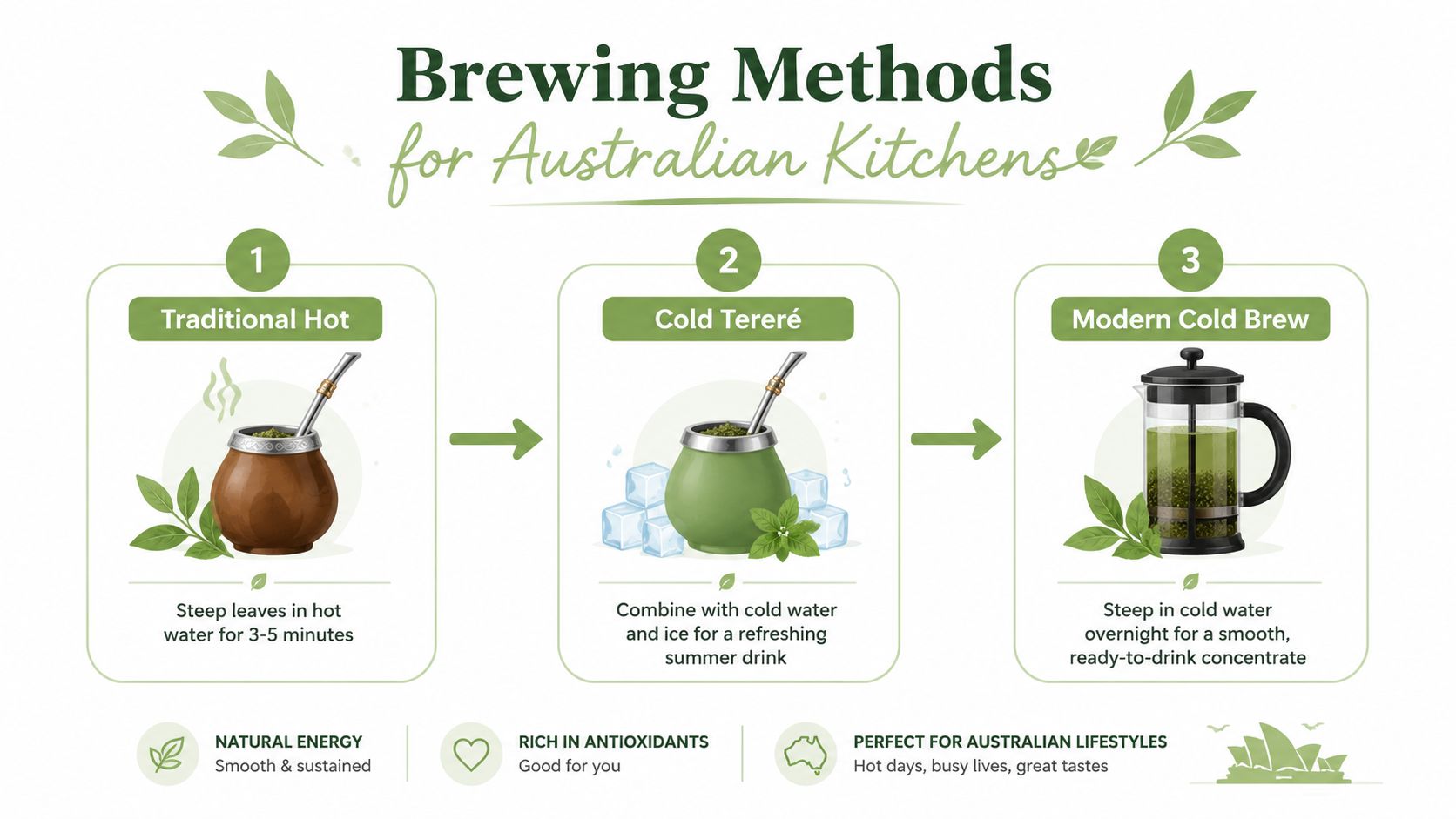
Australian kitchens don't all look the same. Some people have a kettle, a mug, and five quiet minutes before work. Others are running a busy café and need a drink that can be explained, made consistently, and served without fuss. Mate can work in both settings if the brewing method suits the occasion.
Traditional hot mate for slower moments
Traditional hot mate is the best place to start if someone wants the full ritual. Use a gourd, add the leaves, and pour in hot water that's hot but not harsh. If the water is too aggressive, the drink turns bitter and the first sip can scare people off.
For home drinkers, that means paying attention to the pour rather than rushing it. A well-made cup should feel balanced, not burnt. If you've ever oversteeped green tea, the same mistake applies here.
Cold tereré for summer
Cold tereré suits Australian heat better than many people expect. It's the summer version of mate, especially useful when a customer wants refreshment instead of a hot cup. Cold water, ice, and a clean mate blend are enough to make it feel crisp rather than heavy.
This format works well in coastal cafés and anywhere customers ask for something lighter in the afternoon. It's also easier to explain to people who don't want a strong hot drink in January. The cold version keeps the flavour, but the experience becomes more like a refreshing iced tea.
Modern cold brew for cafés and busy households
Cold brew mate is the most flexible option for modern service. Steep it overnight in cold water, then serve it as a concentrate, over ice, or as a base for a latte-style drink. That approach gives cafés more consistency and helps households batch-prep a couple of servings for the next day.
For busy operators, a cold-brew format reduces pressure during rush periods. It also gives staff a simple way to answer the customer who wants something new, but not complicated. If you're building a menu with ready-to-serve formats in mind, our cold brew tea concentrate page is a useful reference point.
Keep the technique clean
Bitterness usually comes from sloppy technique, not from the drink itself. Too much heat, too much leaf, or too long a steep will flatten the flavour. Clean water, reasonable timing, and a calm pour do more for the cup than fancy equipment ever will.
Finding Quality Organic Mate Suppliers in Australia
Australia's mate shelves can look busy, but not every packet tells you much. A good supplier should make it easy to see where the leaves come from, how they're handled, and whether the product suits home brewing or café use. That's the true test, not a flashy label.
Start with certification and origin
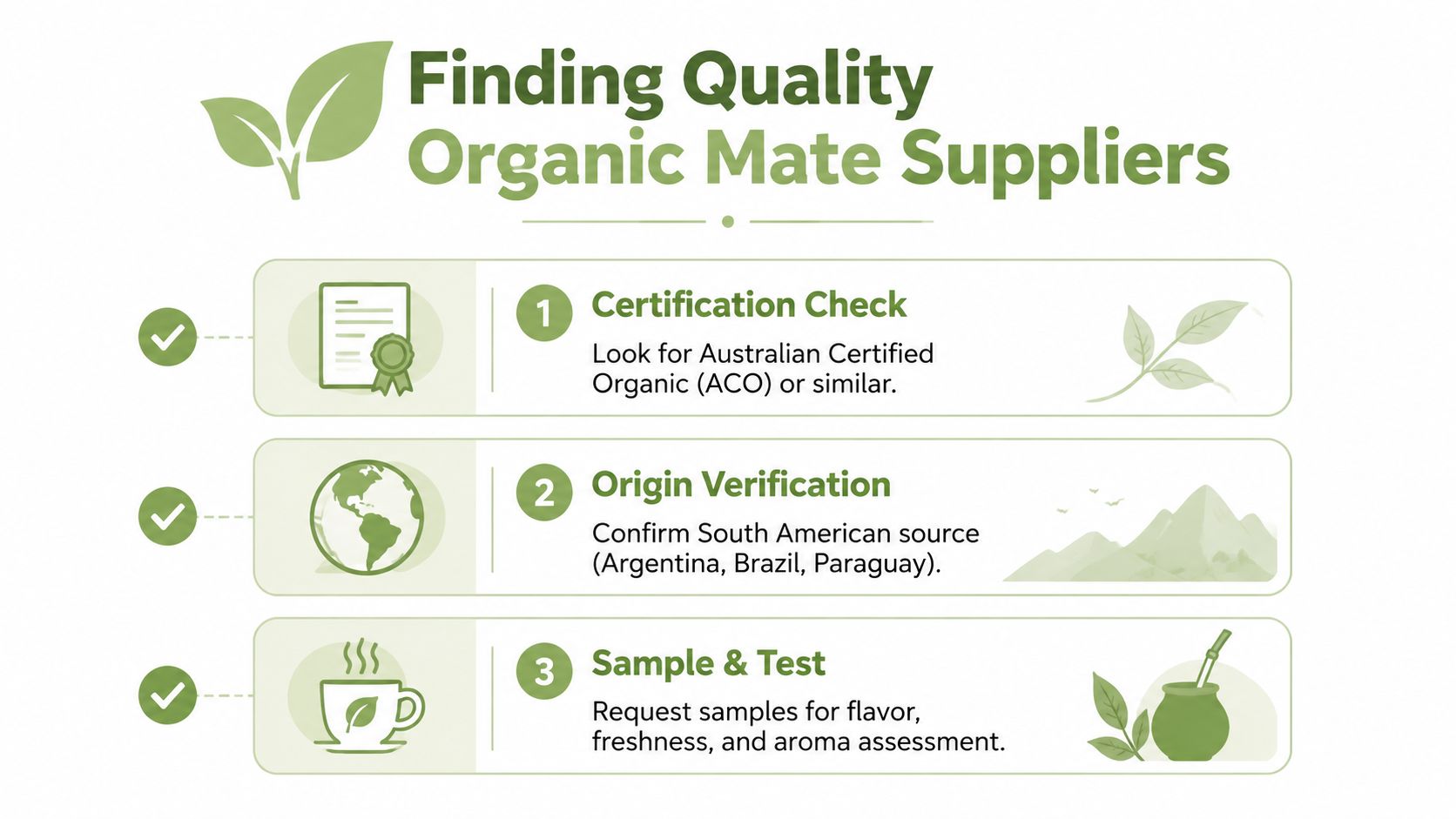
Organic certification is the first filter. If a supplier can't clearly show how the mate is certified, that's a sign to keep looking. For businesses, certification matters even more because customers increasingly expect transparency around what they're drinking.
Origin matters too. South American mate traditions are rooted in Argentina, Brazil, and Paraguay, so suppliers should be able to tell you where their product comes from and how it's sourced. If that information is vague, freshness and consistency are harder to trust.
A supplier should also explain whether the mate is designed for traditional brewing, café service, or cold-brew applications. That difference affects flavour and performance. A home buyer wants something forgiving. A café needs something that behaves the same way every day.
Ask for a sample before you commit to bulk. Fresh aroma and clean flavour tell you more than a polished product page.
Read the product description like a buyer, not a browser
Descriptive words are not enough. “Premium” and “authentic” don't tell you much unless the supplier backs them with handling details, freshness indicators, and clear ingredient information. The better brands usually answer questions before you ask them.
Watch for these practical signs:
- Clear source information, so you know the mate isn't being sold as something generic.
- Fresh packaging cues, because stale mate can taste flat and dusty.
- Usage guidance, since good suppliers explain whether the blend suits hot cups, cold brew, or café service.
- Responsive sample access, which is especially useful for hospitality buyers making a menu decision.
Local buyers should think beyond the packet
If you're buying for a household, the question is whether the flavour matches how often you'll drink it. If you're buying for a venue, the question is whether the supplier can support repeat orders and stable stock. Those are different decisions, and the best supplier will understand both.
For businesses comparing certified organic options and wanting a deeper compliance lens, our organic certification Australia page is a sensible place to start.
Integrating Mate Into Australian Café and Bar Menus
Mate belongs on modern Australian menus for the same reason cold brew coffee and kombucha do. Customers want drinks that feel considered, not generic. A mate line can sit neatly between coffee, tea, and non-alcoholic specials without forcing the venue into a full category rethink.
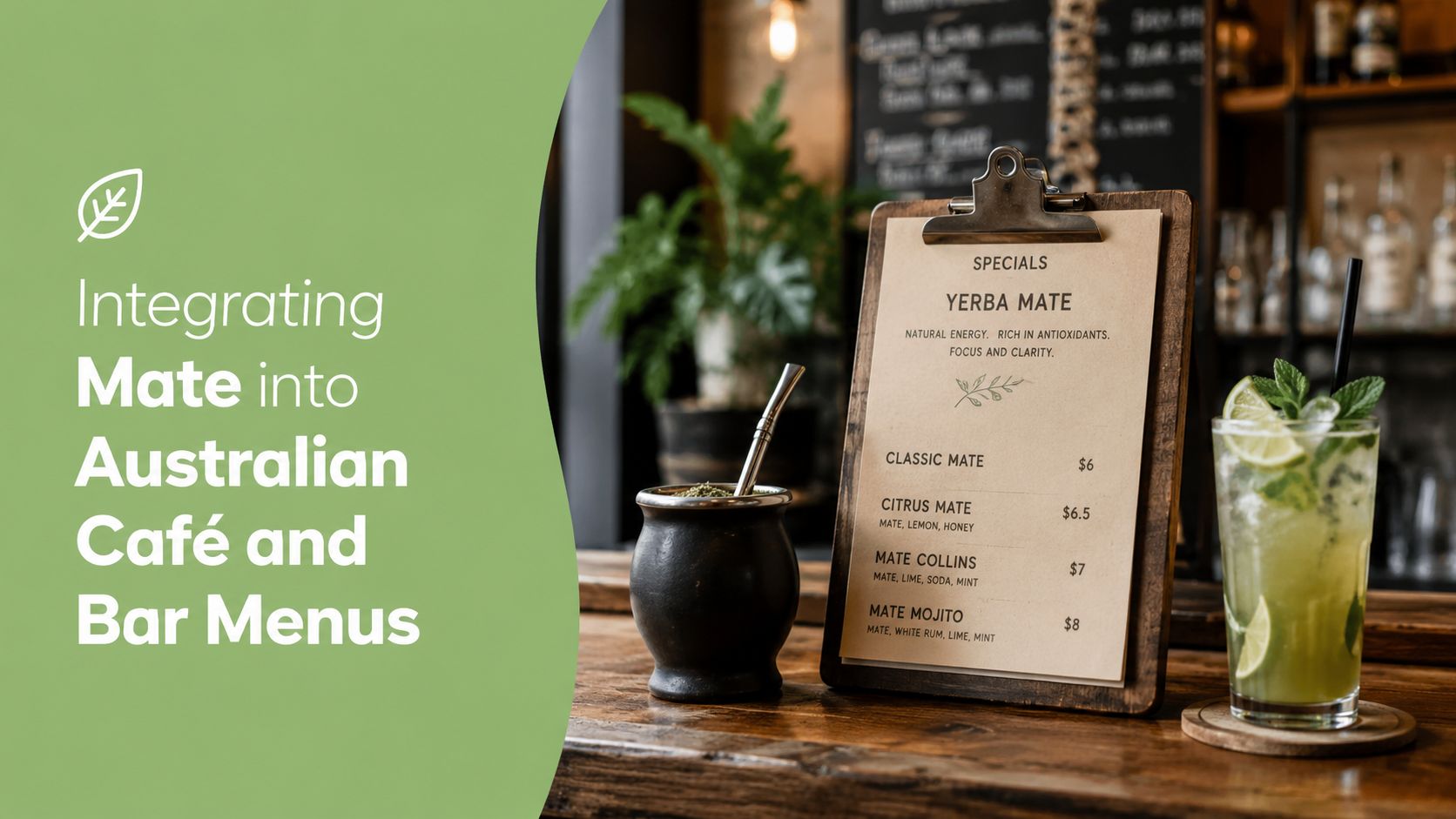
Start with three menu formats
The easiest way to introduce mate is to keep the menu short and clear. A mate latte gives regular coffee drinkers a familiar format. A sparkling mate cooler suits afternoon service and non-alcoholic requests. A mate mocktail can sit in the same section as premium zero-proof drinks, especially in venues that already sell premium soft drinks.
Each format solves a different customer need. The latte is for comfort and routine, the cooler is for refreshment, and the mocktail is for occasion. That makes mate much easier to sell than a beverage that tries to do everything at once.
Staff language matters more than fancy garnish
A drink only sells if staff can describe it without hesitation. “It's a caffeinated South American leaf drink with a smooth, tea-like flavour” is more useful than a vague wellness pitch. Customers in Australia usually respond better to concrete language than to claims that sound borrowed from a supplement ad.
Keep the explanation simple. People buy the drink they can understand in one sentence.
That also helps when customers are deciding between mate and coffee. If they know mate is a functional option with a distinct flavour, they can place it in their own routine. Café staff don't need to over-educate. They just need to be clear.
Position it where the customer already looks
Mate works well beside iced teas, speciality sodas, and alcohol-free drinks. In a bar setting, it can be framed as a composed, adult beverage rather than a health drink in disguise. In a café, it can sit near lattes or seasonal specials, depending on whether the house style is more classic or more experimental.
Pep Tea also supplies a mate tea blend made from yerba mate, which can be used in the same sort of menu thinking as other functional beverages. The point isn't to force one format. It's to give customers a clean, repeatable option that fits your service style.
Presentation should match the promise
If a menu item is meant to feel fresh, serve it that way. Clear glass, ice, citrus, and restrained garnish often work better than overbuilding the drink. Mate already has an identity, so the presentation should support it rather than bury it under extras.
Purchasing and Storage Best Practices
Australian heat can flatten flavours fast, especially if mate is left in flimsy packaging or opened and forgotten in a cupboard. Buying well is only half the job. Storing it properly is what keeps the drink bright enough to be worth making again tomorrow.
Buy for your actual drinking pattern
Households often overbuy. A café can do the same thing if it gets caught up in the idea of a new menu item before checking turnover. Mate is a product you want to move at a pace that matches its freshness and your service rhythm.
Choose a quantity that suits how often you'll brew it. If you drink it a couple of times a week, a modest bag makes more sense than a large bulk order. If you're serving it commercially, establish a rotation system so older stock gets used first.
Packaging and storage should protect aroma
Look for packaging that keeps out light, air, and moisture. Once mate is opened, reseal it tightly and keep it away from the stove, dishwasher heat, or any warm shelf above a kettle. Those are the places where Australian kitchens ruin good tea.
A dry pantry is better than a sunny counter every time. If the mate smells dull, dusty, or flat, it's usually telling you it has lost some of its character. Fresh mate should still smell alive when you open the bag.
Fresh and aged are not the same experience
Some mate is intended to taste more full-bodied and earthy, while fresher lots can feel greener and brighter. Neither is automatically wrong. The key is matching the style to your own taste, or to what your café customers expect when they order.
For commercial buyers, consistency matters more than chasing novelty. A regular house style makes staff training easier and reduces customer confusion. That's why storing and rotating stock carefully pays off, even for a small venue.
Navigating Australian Regulatory and Labeling Requirements
Mate sits inside a broader Australian drinks market that takes labeling seriously. Caffeine disclosure, ingredient transparency, and responsible marketing all matter because customers deserve to know what they're buying. For businesses, that's not just a legal issue, it's a trust issue.
What to look for on the label
If a mate product is being sold in Australia, the label should tell you enough to understand the contents, origin, and intended use. The more clearly a brand explains serving size, ingredient list, and caffeine-related information, the easier it is for customers to make a sensible choice. That's especially important for people who are sensitive to stimulants.
Health claims need care. A product can be positioned as functional or traditional without slipping into medical promises. That line matters for anyone selling mate in a café, retail shelf, or online store.
Certification and compliance go together
Organic claims should be backed by a credible certification pathway, not just a green design and a leafy logo. If a supplier says the mate is organic, ask how that status is verified and whether the paperwork matches the label. You don't need a compliance degree to ask good questions.
For a broader plain-English breakdown of packaging and label rules, AUSFF's complete labeling guide is a useful reference. It's especially handy for small business owners who want a quick overview before printing menus or product tags.
Venues need simple service rules
Hospitality teams should also think about responsible service in practical terms. That means staff know what the drink contains, whether it's served hot or cold, and how to answer a customer who asks about caffeine. Allergen disclosure still matters if a mate drink is blended with milk, syrups, or other menu ingredients.
Compliance feels less intimidating when it's built into the workflow. A good label, a clear menu description, and a consistent recipe are often enough to keep things simple for staff and reassuring for customers.
Where to Buy Mate Across Australia
Finding mate in Australia is much easier now than it used to be, but the best place to buy depends on what you need. Home drinkers often want convenience and a fair price. Café owners need reliability, wholesale access, and equipment that won't become a headache after the first order.
Start with the channel that suits your purpose
Online specialty retailers are the easiest option if you want variety and delivery. Health food stores and specialty grocers can be handy if you want to see the pack before you buy, though stock can be patchy. For traditional equipment like a bombilla and gourd, specialist tea stores and imported beverage sections are usually the better bet than mainstream supermarkets.
If you're buying for a venue, direct-from-supplier relationships often make more sense. That's where you can ask about repeat supply, menu support, and order minimums without having to work around retail packaging. It also helps if you want a consistent product for cold brew, café service, or a drink list built around non-alcoholic options.
Regional buyers need a bit more planning
City customers usually have more choice. Regional and remote buyers often need to plan around shipping times and stock rotation, especially in hotter months. That makes it worth buying from a supplier that clearly explains dispatch, packaging, and how the product holds up in transit.
If you're outside a major city, don't settle for the first listing you find. Look for suppliers that answer product questions clearly and ship regularly across Australia. That usually tells you more about reliability than the prettiest online storefront.
Match the shop to the drink style
Traditional mate drinkers may prefer a loose-leaf product and the right brewing gear. Café owners may want a format that's easier to portion and explain to staff. Retail buyers might want a compact pack they can store properly and use without special equipment.
The right choice is usually the one that fits your routine, not the one that looks the most authentic in a photo. If you want to explore premium organic tea and functional drink options in one place, Pep Tea has a range built for Australian homes and hospitality settings.
If you're ready to bring mate into your kitchen, café, or menu, Pep Tea can help with practical, organic options that suit Australian routines. Explore our range at Pep Tea, and choose the format that fits the way you drink and serve mate.
Matcha Collagen Powder: Your 2026 Australian Guide
You're probably here because your routine already feels crowded. Maybe you've got a tin of matcha in the pantry, a collagen tub on the bench, a half-finished smoothie plan in your head, and a genuine desire to feel better without turning breakfast into a chemistry set.
That's exactly why matcha collagen powder has caught on with health-conscious Australians. It brings together two habits people were already building separately. One for steady, cleaner-feeling energy. One for skin, joints, and everyday support. Put them together in one scoop, and the ritual gets simpler.
The appeal isn't just convenience. It's also about choosing functional ingredients that still feel like food and drink, not a chore. For people juggling work, training, family life, café catch-ups, and a growing interest in low-sugar wellness, matcha collagen powder lands in a sweet spot.
The New Centrepiece of Your Wellness Routine
A lot of people don't need more supplements. They need fewer moving parts.
Think about a typical weekday. You wake up wanting focus, but not the shaky edge that can come from overdoing coffee. By lunchtime, you're also thinking about bigger picture goals like supporting your skin, keeping joints comfortable, or building a routine you'll stick to. Matcha collagen powder fits neatly into that moment because it turns two separate intentions into one daily habit.
For some people, that habit looks like a warm morning latte before work. For others, it's a smoothie after a walk, a gym session, or the school drop-off. The format is flexible, and that matters. Wellness routines only work when they can survive real life.
Why this blend feels different
Matcha already has a strong following in Australia because it offers a more mindful kind of lift. Collagen has become popular for similar reasons. It feels practical, easy to add, and connected to long-term wellbeing rather than quick-fix energy. Together, they create a modern ritual that suits people who want both focus and support in the same cup.
Matcha collagen powder works best when it replaces friction, not when it adds another complicated step to your day.
It also suits the way many people now shop and ask questions. They want cleaner labels, fewer fillers, and straightforward explanations. Brands in wellness are paying more attention to that demand, and tools like a Shopify chatbot for wellness brands show how much education matters when customers are choosing between ingredients, formats, and claims.
Who usually loves it most
A matcha collagen routine often appeals to:
- Busy professionals: They want a calm, organised start rather than a harsh caffeine spike.
- Active adults: They like a product that feels supportive without becoming a full supplement stack.
- Café regulars and home baristas: They enjoy the ritual of whisking, blending, and sipping something that feels premium.
- People cutting back on sugar: They're looking for functional drinks that don't taste like dessert disguised as wellness.
That blend of practicality and ritual is why matcha collagen powder has become more than a trend. For many people, it becomes the thing they actually use consistently.
How Matcha and Collagen Work Better Together
The simplest way to understand matcha collagen powder is to think of it as a team effort.
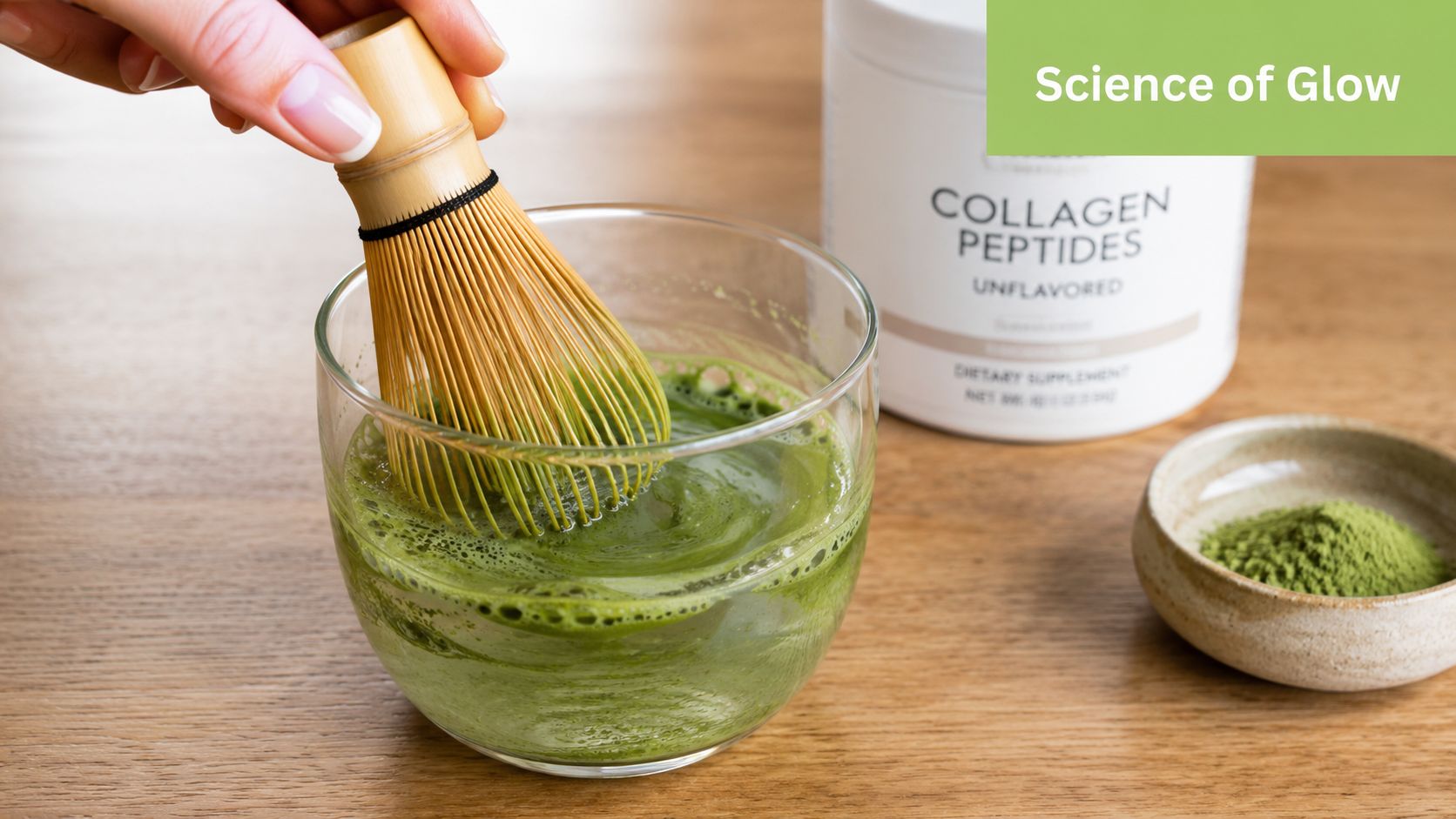
Collagen peptides do the rebuilding work. They provide amino acids such as glycine, lysine, and proline, which the body uses for structural repair. Matcha brings the protective side. Its catechins, especially EGCG, help defend against oxidative stress that can damage collagen before the body can make good use of it. According to NIH technical data, oral collagen supplementation increased skin elasticity by 13.6% within 8 weeks, and matcha collagen powder is described as leveraging a synergistic mechanism where matcha's catechins inhibit oxidative degradation of collagen peptides while the peptides supply those structural amino acids.
The construction crew analogy
Picture a building site.
The collagen peptides are the construction crew. They arrive with the raw materials needed for repair and maintenance. The matcha antioxidants are the security team around the site. They protect the crew and the materials from damage while the work is happening. Without that protection, the environment is tougher. With it, the repair job has a better chance of staying on track.
That's the key idea behind the blend. It isn't just two fashionable ingredients sharing a label. Each one does a different job.
Why the pairing makes sense in real life
The science offers practical benefits. People usually notice matcha first because of how it feels. Smoother focus. A cleaner ritual. Less of the wired feeling some get from stronger stimulant drinks. Collagen is less noticeable in the moment, but people choose it because they want ongoing support, not just a quick lift.
When those two needs come together, the product becomes easier to use consistently.
A few quality factors also shape how effective and pleasant it feels:
- Japanese matcha matters: Higher-quality matcha tends to bring a cleaner taste and a better everyday drinking experience.
- Hydrolysed collagen matters: This form is processed for easier mixing and absorption.
- Low-clump solubility matters: If a powder blends smoothly, people keep using it.
Practical rule: If your matcha collagen powder tastes grassy in a harsh way, forms stubborn lumps, or leaves you avoiding it after a week, the formula probably isn't doing the ritual side of wellness any favours.
If you want a stronger grounding in the tea side of the equation, this guide on what matcha powder is helps explain why shade-growing, stone-grinding, and grade all influence flavour and function.
Matcha Collagen Versus The Alternatives
A fair question comes up all the time. Why not just drink matcha on its own and take collagen separately?
You can. For some people, that's the right setup. But a combined powder changes the experience in a few useful ways. It reduces prep, keeps the flavour profile in one place, and gives you a more efficient habit to repeat each day.
The other important point is ingredient quality. Organic Japanese Matcha contains 137 times the concentration of antioxidants compared to standard brewed green tea, according to this matcha and collagen overview. That's one reason matcha isn't interchangeable with every green tea-flavoured powder on the shelf.
The side-by-side view
| Factor | Matcha Collagen Powder | Matcha Only | Collagen Only |
|---|---|---|---|
| Convenience | One scoop, one routine | Simple drink, but no collagen built in | Easy to add, but usually needs a separate drink |
| Functional range | Combines focus ritual with collagen support | Best if your priority is tea ritual and antioxidants | Best if your priority is collagen alone |
| Taste experience | Can be balanced into one formula | Pure tea flavour, often more vibrant | Usually neutral, but not especially enjoyable on its own |
| Daily consistency | Easier for many people to repeat | Strong if you already love preparing matcha | Strong if you already use collagen every day |
| Flexibility | Good for lattes, smoothies, and recipes | Excellent for traditional tea and café-style drinks | Easy to hide in foods and drinks |
| Who it suits | People who want fewer steps | Matcha purists | People who don't care about tea flavour or ritual |
Where separate products still make sense
Separate products can work well if you're very particular about both ingredients.
A traditional matcha drinker might want ceremonial matcha on its own, prepared carefully with water only. Someone else may prefer an unflavoured collagen they can stir into oats, soups, or baking. That approach offers control, especially if you like adjusting flavour and dosage independently.
Still, there's a reason combined formulas appeal to busy households and cafés. One product often means less mess, fewer decisions, and a clearer habit loop.
The real decision point
This usually comes down to your main goal.
Choose a combined powder if you want:
- Less friction: One product is easier to remember than two.
- A built-in ritual: It turns support ingredients into something enjoyable to drink.
- A café-friendly format: It works well in lattes and smoothies without extra steps.
Choose separate products if you want:
- Maximum customisation: You can change your tea and collagen independently.
- Pure matcha sessions: Useful if you care a lot about traditional preparation.
- Different use cases: You may want collagen in food and matcha only as tea.
People who are also reviewing broader protein options may find this guide to protein powder substitutes useful when thinking about how collagen blends compare with other pantry staples.
In short, matcha collagen powder isn't automatically better than separate products. It's better for the person who values ease, consistency, and a two-in-one routine they'll maintain.
A Buyer's Guide to Quality Powder
The label on the front rarely tells the full story.
Matcha collagen powder can look premium and still disappoint once you open it. Some blends taste flat. Some hide sweeteners or fillers. Some use vague sourcing language that sounds reassuring without telling you where the matcha came from, how it was processed, or what kind of collagen is present.
That's why quality matters more here than in many other wellness powders. You're paying for both the tea and the collagen. If either side is weak, the blend won't earn a place in your routine.
What to check before you buy
A good formula should answer basic questions clearly.
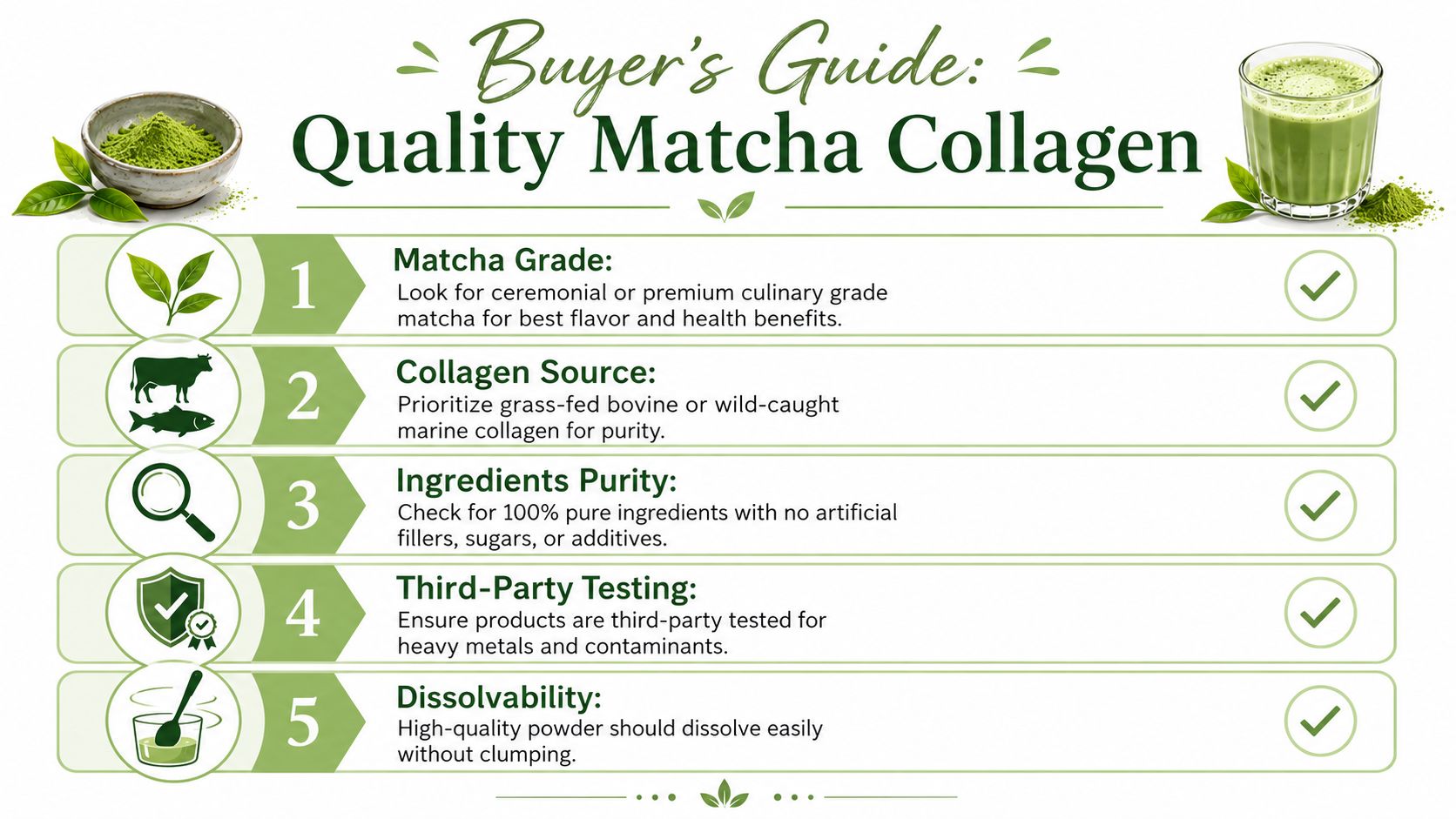
- Matcha grade: Look for ceremonial or premium culinary grade if you want better flavour and a smoother drinking experience.
- Collagen source: The label should identify whether the collagen is bovine or marine, not leave it vague.
- Hydrolysed form: Hydrolysed collagen generally dissolves more easily and suits drinks better.
- Ingredient purity: A shorter ingredient list is usually easier to trust.
- Testing and transparency: If a brand talks about purity, it should be willing to show how it checks for it.
The Australian quality issue many people miss
One of the least discussed parts of this category is authenticity versus appearance. A powder can look bright green and still fail the deeper quality test.
According to Australian Food Standards Authority data, 34% of imported “ceremonial grade” matcha powders in the Australian market exceed heavy metal thresholds, while many Australian organic matcha brands meet strict EGCg retention standards above 120mg/g. That's a serious reminder to look for origin details, processing transparency, and testing, not just attractive packaging.
If a brand won't tell you where the matcha was grown or how the powder was processed, that silence is part of the product.
Processing affects what you're drinking. Overheated or poorly handled matcha can lose the qualities buyers assume they're getting. The same goes for collagen. If the source isn't identified, you can't make an informed choice about allergens, flavour, or personal preference.
A simple checklist for shoppers
Use this quick filter when you compare products:
- Can you identify the matcha origin clearly?
- Does the brand specify marine or bovine collagen?
- Is the powder free from obvious fillers, sugars, and unnecessary additives?
- Is there any sign of third-party testing or contaminant screening?
- Will it dissolve cleanly in hot or cold drinks?
If you want a stronger understanding of how tea grades affect quality, colour, flavour, and value, this guide to grade and quality matcha tea is worth bookmarking.
A smart buyer doesn't just ask whether a powder contains matcha and collagen. They ask whether the matcha is authentic, whether the collagen is clear and traceable, and whether the product is transparent enough to trust.
How to Use Matcha Collagen Every Day
The easiest routine is usually the one that sticks.
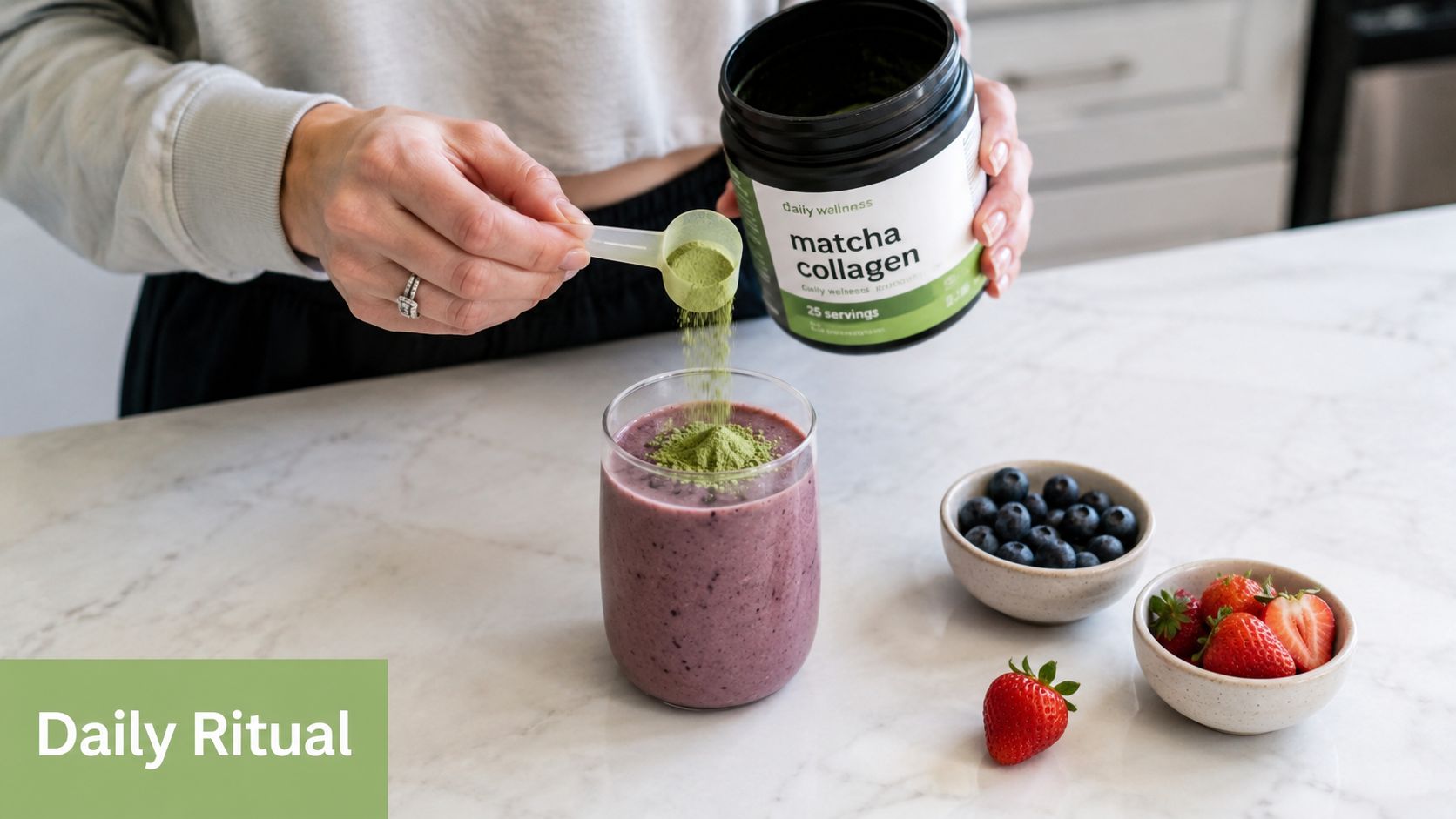
For matcha collagen powder, that means keeping preparation simple and using it in drinks or foods you already enjoy. In Australia, the standard daily dosage is 10 to 15 grams, delivering roughly 8 to 10 grams of hydrolysed collagen peptides and around 50mg of caffeine per serving, which is described as the industry benchmark for efficacy in TGA-linked guidance.
Best times to have it
There isn't one perfect time for everyone, but a few patterns work well.
- Morning: Great if you want a gentle start with calm focus.
- Late morning: Useful as a bridge between breakfast and lunch.
- Early afternoon: Handy when you want something lighter than another coffee.
If you're sensitive to caffeine, earlier is usually better. Even though matcha often feels smoother than coffee, it still contains caffeine.
Three easy ways to use it
Warm matcha collagen latte
This is the most natural starting point.
- Add your serve of matcha collagen powder to a cup.
- Mix with a small amount of warm water first to form a smooth paste.
- Top with warm milk or your preferred dairy-free option.
- Whisk or froth until silky.
A paste-first method helps prevent lumps and gives a more café-style finish.
Smoothie upgrade
A smoothie makes sense if you already have a blender routine.
Try blending:
- Your matcha collagen serve
- A banana or mild fruit
- Milk or a dairy-free base
- Ice
- Optional extras like spinach or nut butter if they suit your taste
For more ideas around this format, see this matcha protein shake guide, which can spark flavour combinations and prep shortcuts.
No-bake snacks or baking
Matcha collagen powder doesn't have to stay in a mug.
It can work in:
- Energy balls: Mix with oats, nut butter, and seeds.
- Muffins: Add to dry ingredients for a subtle green tea note.
- Yoghurt bowls: Stir in for a quick breakfast upgrade.
Kitchen tip: Start with less than you think you need in recipes. Matcha's flavour can become too assertive if the rest of the ingredients are mild.
A quick visual can help if you're still figuring out technique:
Storage and prep habits that help
Keep the powder sealed, dry, and out of direct heat. Matcha is delicate, and poor storage can dull both flavour and freshness.
A few practical habits make a noticeable difference:
- Use a dry scoop: Moisture encourages clumping.
- Whisk with a small amount first: This gives a smoother texture.
- Don't overcomplicate it: If your weekday method is too fussy, simplify it.
The best daily use isn't the most elaborate one. It's the version you can repeat on a Monday morning when you're short on time and still want something that feels good to drink.
For Australian Cafés and Retailers
For cafés, matcha collagen powder works best when it's treated as a menu idea, not just an ingredient. Customers already understand matcha. Many also recognise collagen. Bringing the two together gives staff a simple story to tell and gives customers an easy reason to try something new.
That's especially useful on menus built around low-sugar, functional, non-alcoholic options. A well-made matcha collagen drink can sit comfortably beside kombucha, smoothies, and specialty tea lattes without feeling gimmicky.

Menu ideas that are easy to sell
A few formats are especially approachable:
- Glow latte: A warm matcha collagen latte with a silky finish and simple wellness positioning.
- Smoothie booster: Offer it as an add-on for green smoothies or fruit blends.
- Wellness shot: A small-format functional serve for customers who want convenience.
- Retail shelf add-on: Place packaged powder near takeaway counters or fridge displays.
- Recipe cards: Give customers an idea for using it at home, not just in-store.
What makes it work commercially
Staff education matters more than long menu descriptions. If the team can explain taste, texture, and use in plain language, customers are far more likely to trust the recommendation.
Retailers can also benefit by merchandising it near adjacent categories. Matcha drinkers often browse tea tools, latte ingredients, and wellness pantry items. Shoppers interested in functional beverages may also be exploring kombucha, low-sugar café options, and home smoothie upgrades.
A product sells more easily when customers can picture tomorrow morning, not just admire the label today.
For Australian venues, the category also fits broader menu shifts toward mindful drinking and premium non-alcoholic choices. It gives cafés something fresh to offer without leaving the comfort zone of drinks customers already understand.
Frequently Asked Questions
Some of the most useful questions about matcha collagen powder aren't about flavour. They're about compatibility, expectations, and the details many brands skip.
Can I mix matcha collagen with kombucha
This is one of the most overlooked questions in the category.
A growing query on Australian wellness forums asks, “Can I mix matcha collagen with my daily kombucha without killing the probiotics?” According to IBISWorld Australia-linked discussion of the category, it's a key unanswered question, and heat plus preparation method can be a factor. In plain terms, collagen peptides are generally stable, but probiotic drinks are more delicate. If you want to combine them, avoid high heat and use a properly fermented kombucha rather than treating every fizzy fermented drink as equal.
Will I notice results quickly
Some people notice the ritual benefits first. Better routine. Easier mornings. A more satisfying alternative to another sugary or overly strong drink.
Physical changes are usually a consistency game. If you're using the product sporadically, it's harder to judge anything fairly. A daily habit gives you the clearest read.
Is marine or bovine collagen better
Neither is universally “better”. It depends on your preferences.
Marine collagen may appeal to people who avoid bovine products. Bovine collagen may appeal to people looking for a different sourcing option or flavour profile. The key is that the source should be named clearly on the label so you can choose deliberately.
Are there any downsides
There can be. Some people don't enjoy the taste of low-quality matcha blends. Others may be sensitive to caffeine, even in a gentler format. And some products contain too many extras.
That's why the smartest approach is to start with a transparent formula, use the recommended serve, and pay attention to how it fits your own routine.
Why do so many product pages feel vague
Because this category often gets marketed around broad ideas like glow, energy, and clean living while skipping practical detail. That's exactly why readers spend time in frequently asked questions sections across wellness brands. People want straight answers on mixing, taste, sourcing, and what a product does in daily life.
The best matcha collagen powder isn't the one with the most polished label. It's the one that tells you what's in it, where it came from, how to use it, and why that should matter to you.
If you're ready to bring more clarity to your daily ritual, explore Pep Tea for premium organic matcha, Australian-brewed sugar-free kombucha, and practical guidance that makes functional drinks feel simple, trustworthy, and enjoyable.
Qi Organic Green Tea Detox Coles: Benefits, Price &
You're probably standing in the tea aisle, phone in hand, typing Qi Organic Green Tea Detox Coles because the box sounds promising but the wording is a bit slippery. “Detox” can mean anything from a simple herbal tea to a product that implies far more than it can reasonably deliver.
That confusion is fair. A tea can be pleasant, useful, and worth buying without being a miracle reset for your body. The trick is knowing what you're getting, what the ingredients are there for, and how it compares with other wellness drinks Australians reach for when they want something functional and low-fuss.
Your Guide to Qi Organic Green Tea Detox
You are in the supermarket tea aisle after work, looking for something that feels a bit kinder than another coffee and more purposeful than plain tea. A box labelled organic, green tea, and detox naturally catches your eye because it suggests a simple health habit, not a full lifestyle overhaul.
That appeal makes sense. Australian shoppers often use teas like this as a small daily ritual. The organic label can signal cleaner sourcing, while the word detox hints at support for a lighter, fresher routine. The catch is that those two ideas are not the same thing, and many people blur them together.
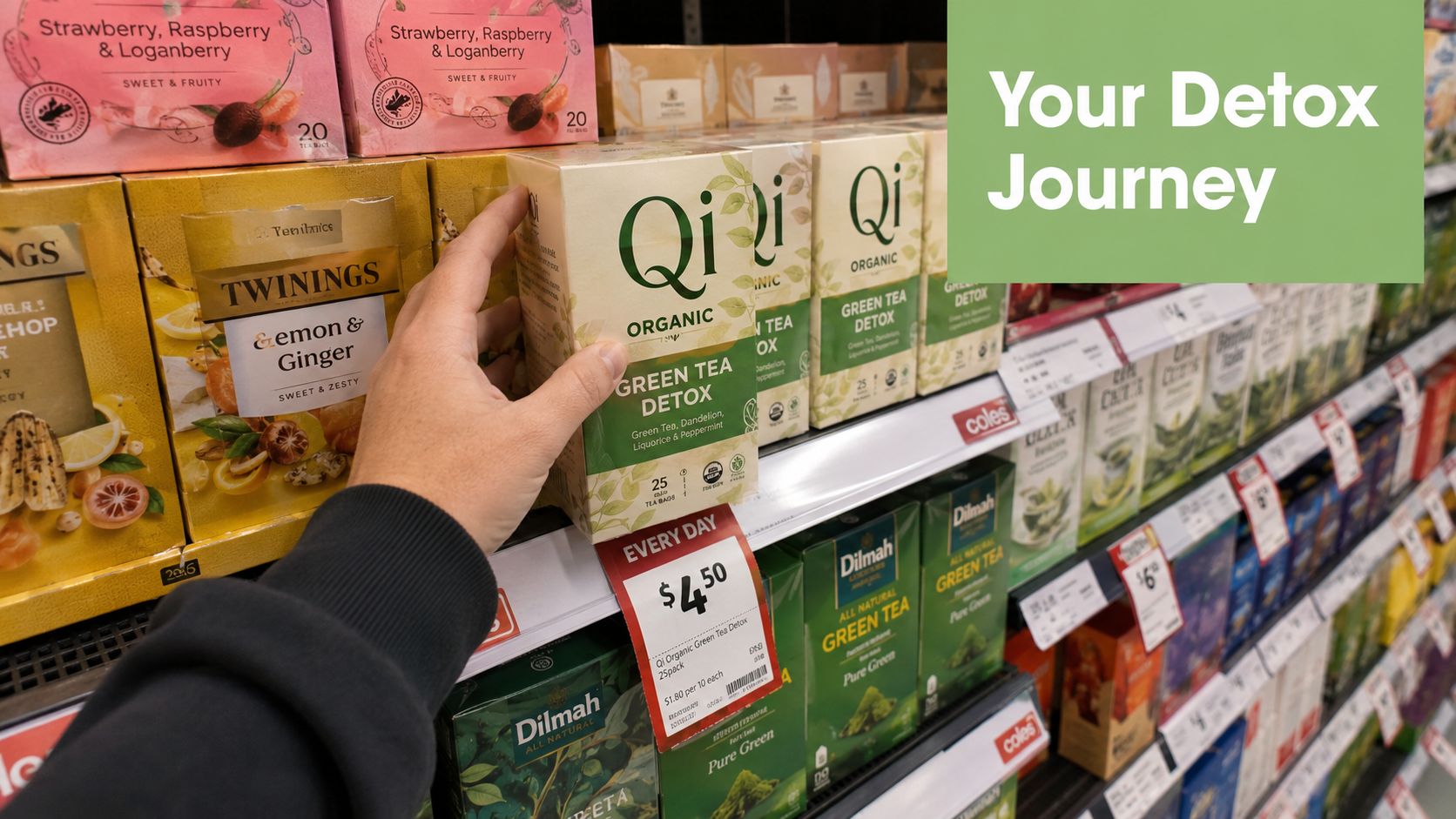
Why this tea gets attention
Qi Organic Green Tea Detox sits in a familiar wellness category. It offers a convenient tea-bag format, an organic positioning, and a name that suggests more function than a standard green tea. For plenty of shoppers, that is enough to earn a place in the trolley.
The better question is what kind of function you are buying.
A detox-style tea usually works best as a supportive beverage category. It can be part of a routine that feels calm, warm, and a little more intentional. It does not replace sleep, hydration, balanced meals, movement, or the normal work your liver and kidneys already do.
That distinction matters because it helps you shop more clearly. If you want a pleasant organic green tea blend, Qi may suit that role well. If you want stronger functional value, it helps to compare it with other wellness options Australians are choosing, especially high-quality Matcha for concentrated antioxidants and Kombucha for live probiotics.
If you want a clearer foundation before judging any product in this category, this guide to organic green tea basics explains what the label does, and does not, tell you.
What to expect from the product
Keep the product in the right mental category and it becomes easier to assess.
- An easy daily habit. Tea bags are convenient, familiar, and low effort.
- A flavoured green tea experience. You are choosing a wellness blend, not a pure ceremonial tea.
- A gentle sense of support. The benefit is usually about routine, taste, and light functional ingredients rather than a dramatic result.
That is also where this article takes a wider view. Qi is a useful case study because it shows how many wellness teas are marketed in Australia. Some are built around comfort and broad wellness language. Others, such as Matcha and Kombucha, tend to offer a more defined functional profile. Understanding that spectrum helps you choose a tea for what it does, not just what the front of the box suggests.
What Is Inside a Bag of Qi Detox Tea
The Australian version of Qi Detox Green Tea is sold as an organic blend with ingredients such as green tea, dandelion root, milk thistle, ginger, and peppermint, according to the Qi Tea Australia product listing. Read that list as a clue to the product's real identity. It's a herbal green tea blend first, and a “detox” tea second.
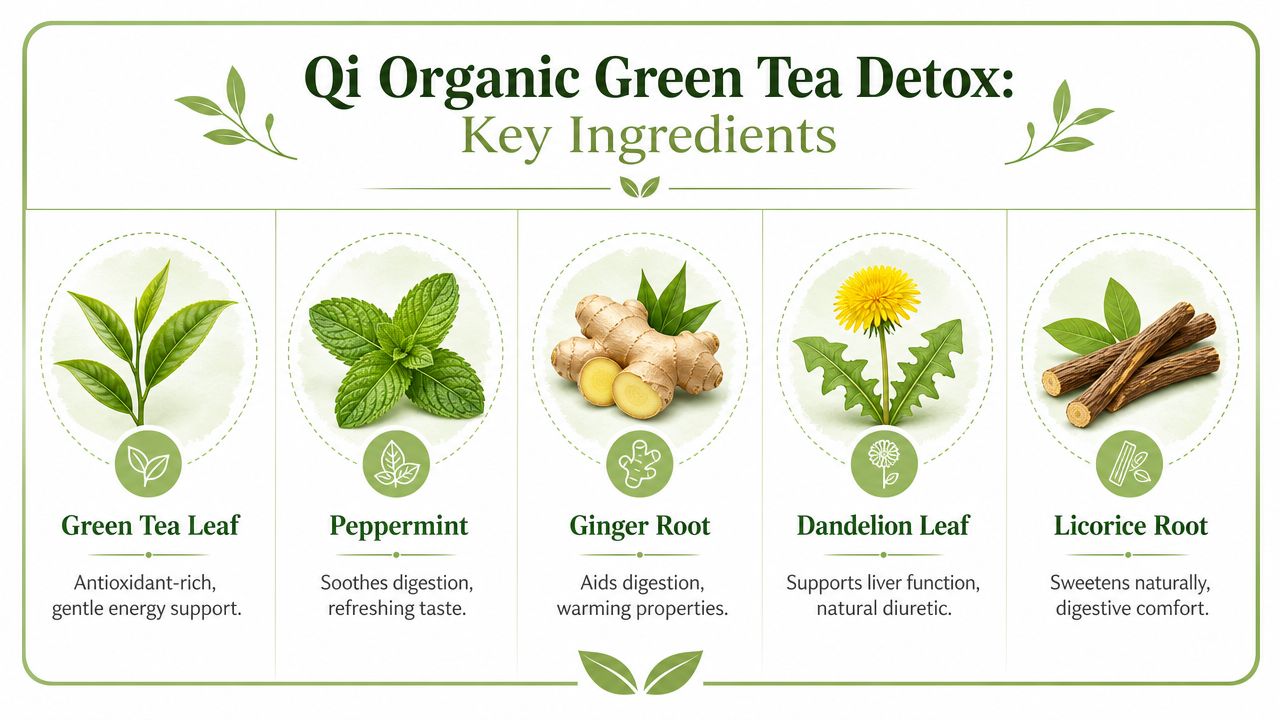
The ingredient lineup in plain English
Each ingredient contributes something different to the cup.
- Green tea: This is the caffeinated base. It gives the blend its tea character and a lighter lift than coffee.
- Peppermint: Often what makes a blend feel fresh and easier to drink, especially if plain green tea tastes grassy to you.
- Ginger: Adds warmth and a bit of spice. Many people choose ginger-forward teas when they want something settling after meals.
- Dandelion root: Frequently included in detox-style products because it has a long wellness tradition in herbal blends.
- Milk thistle: Another herb commonly associated with liver-support language in wellness marketing.
Where readers often get confused
The ingredients sound impressive, so it's easy to assume the tea must “detox” the body in a direct, measurable way. That leap is where marketing often outruns clarity.
Australian dietary guidance takes a more grounded view. The Australian Dietary Guidelines emphasise eating patterns built around whole foods and water rather than “detox” products as a health reset, which is why it's more accurate to see this tea as part of a wellness routine, not a physiological clean-out.
Practical rule: If a tea says “detox”, ask what you can clearly point to in the cup. Flavour? A bit of caffeine? Herbs traditionally used in wellness blends? Those are fair answers. Grand body-reset promises aren't.
What the tea can realistically offer
A fair way to think about Qi Detox Tea is this:
| What it likely does | What it doesn't automatically mean |
|---|---|
| Gives you a warm, low-sugar drink option | That your body needs a special tea to detox |
| Adds herbal flavour beyond plain green tea | That the herbs create a dramatic measurable result |
| May suit a mindful daily routine | That it replaces healthy food, water, or rest |
That's not a criticism. It's just a clearer framing. For plenty of people, a pleasant organic herbal green tea is exactly what they want.
Finding Qi Tea at Coles A Shoppers Checklist
You are in Coles, trying to spot a wellness tea before the trolley keeps moving. The easiest mistake is looking in the wrong place. Qi Organic Green Tea Detox is usually stocked with standard tea products, not with refrigerated health drinks or vitamin-style supplements.
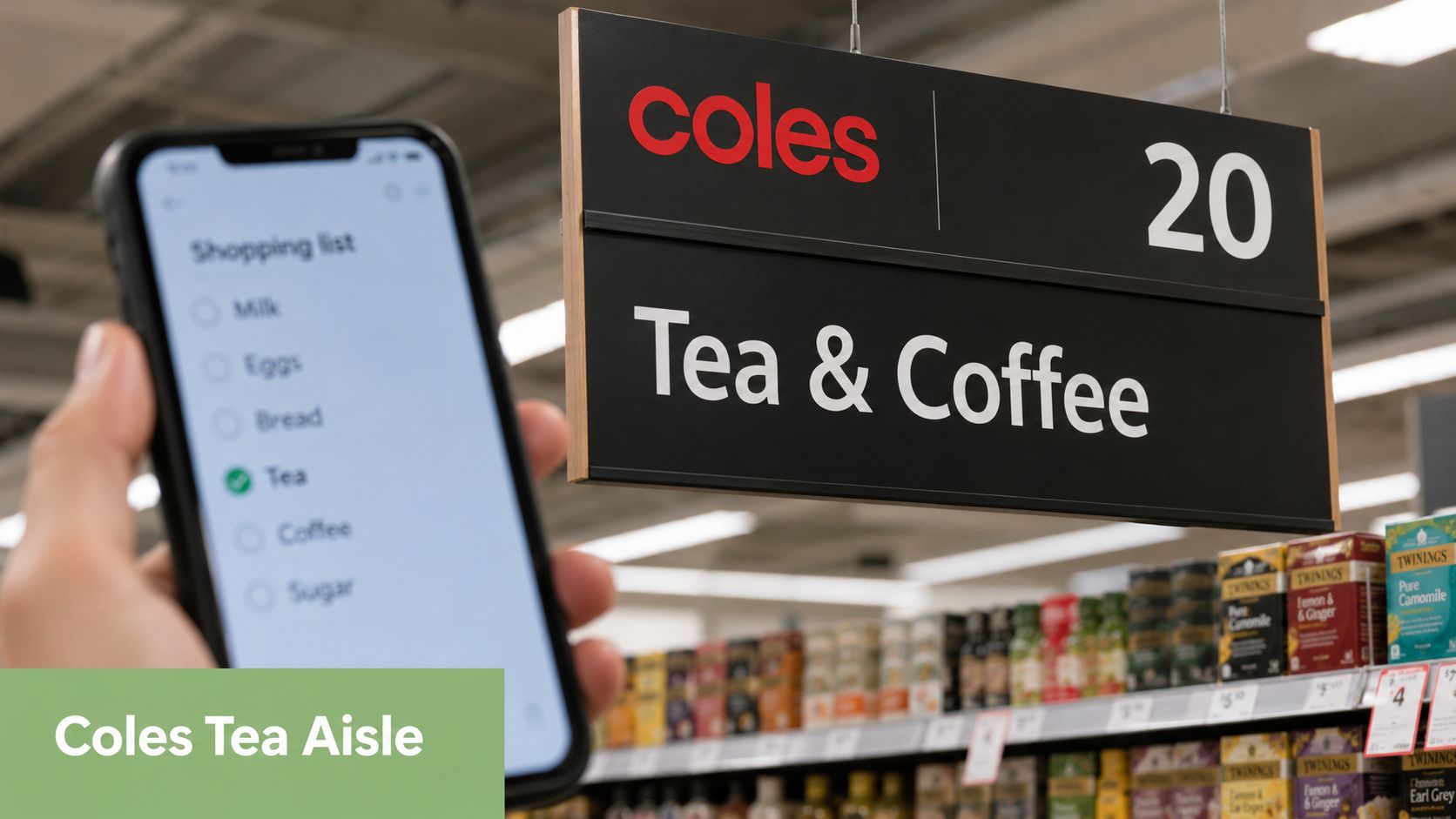
What to check on the shelf
Start with the green tea and herbal blend area. Qi is generally sold in a boxed tea-bag format, so you are looking for a pantry tea, not a ready-to-drink product.
A practical shelf check helps:
- Pack format: Look for a 25 tea bag, 40 g box.
- Aisle placement: Check beside green tea, peppermint, and other wellness blends.
- Price benchmark: Expect a mid-range supermarket tea price rather than a premium speciality-tea price.
- Label wording: Scan for “detox”, “organic”, and the Qi brand name on the front of the box.
That price position matters because it tells you what kind of product you are buying. A grocery-shelf detox tea is usually built for convenience and everyday sipping. More concentrated wellness formats, such as quality matcha powder or live kombucha, often aim for a different functional role. Matcha gives you the whole tea leaf in powdered form, which changes the antioxidant story. Kombucha brings fermentation into the picture, which is a different category again.
If you are trying to trim the grocery budget, Cashback Australia's Coles gift card tips can be handy for routine pantry buys.
How to brew it so it tastes better
A harsh cup can make any tea seem worse than it is. Green tea works a bit like spinach in a frypan. Too much heat for too long, and the pleasant notes get lost.
Use a gentler method:
- Boil the kettle, then let the water cool slightly before pouring.
- Steep for a shorter time first and taste early.
- Remove the bag once the flavour is clean and light, rather than pushing for maximum strength.
- Add lemon or mint if you want a fresher finish.
That approach gives you a fairer read on the tea itself.
If you end up enjoying lighter tea flavours, it can also help to use them in food and cold drinks rather than forcing a very strong hot brew every time. Something simple like these easy matcha muffins for a tea-time snack shows how wellness teas can fit into everyday routines in a more useful way than detox marketing alone.
If the first cup tastes bitter, adjust the water temperature and steep time before you judge the blend.
Creative Recipes Beyond the Hot Cup
Qi Detox Tea works best for many people when it stops feeling like a “health task” and starts acting like a flexible base for drinks you enjoy. A box in the pantry goes further when you use it cold as well as hot.
Qi detox iced tea
Brew a strong cup, let it cool, then pour it over ice with lemon and mint. The peppermint and ginger notes usually come forward more clearly when it's chilled.
A simple method:
- Brew stronger than usual: Use less water so the flavour doesn't disappear over ice.
- Cool fully: Warm tea melts the ice and waters itself down.
- Finish fresh: Add lemon slices and a few mint leaves.
This is a nice afternoon option if you want something cleaner-tasting than cordial or juice.
Easy wellness spritzer
For a lighter mocktail feel, use cooled tea as the base and top it with sparkling water. Add cucumber for a crisp finish or a slice of ginger if you want more bite.
You can also pair a tea-based drink with something simple from the kitchen if you enjoy wellness-style recipes. For example, these matcha muffins make an easy snack alongside an iced tea or spritzer.
Cold tea drinks work well because they shift the experience from “herbal remedy” to “refreshing everyday beverage”.
Qi Detox Tea vs Matcha and Kombucha
The best way to judge Qi Detox Tea is to place it on a broader wellness spectrum. It isn't trying to be everything. It's a gentle herbal green tea blend. The more useful question is whether that matches your goal.
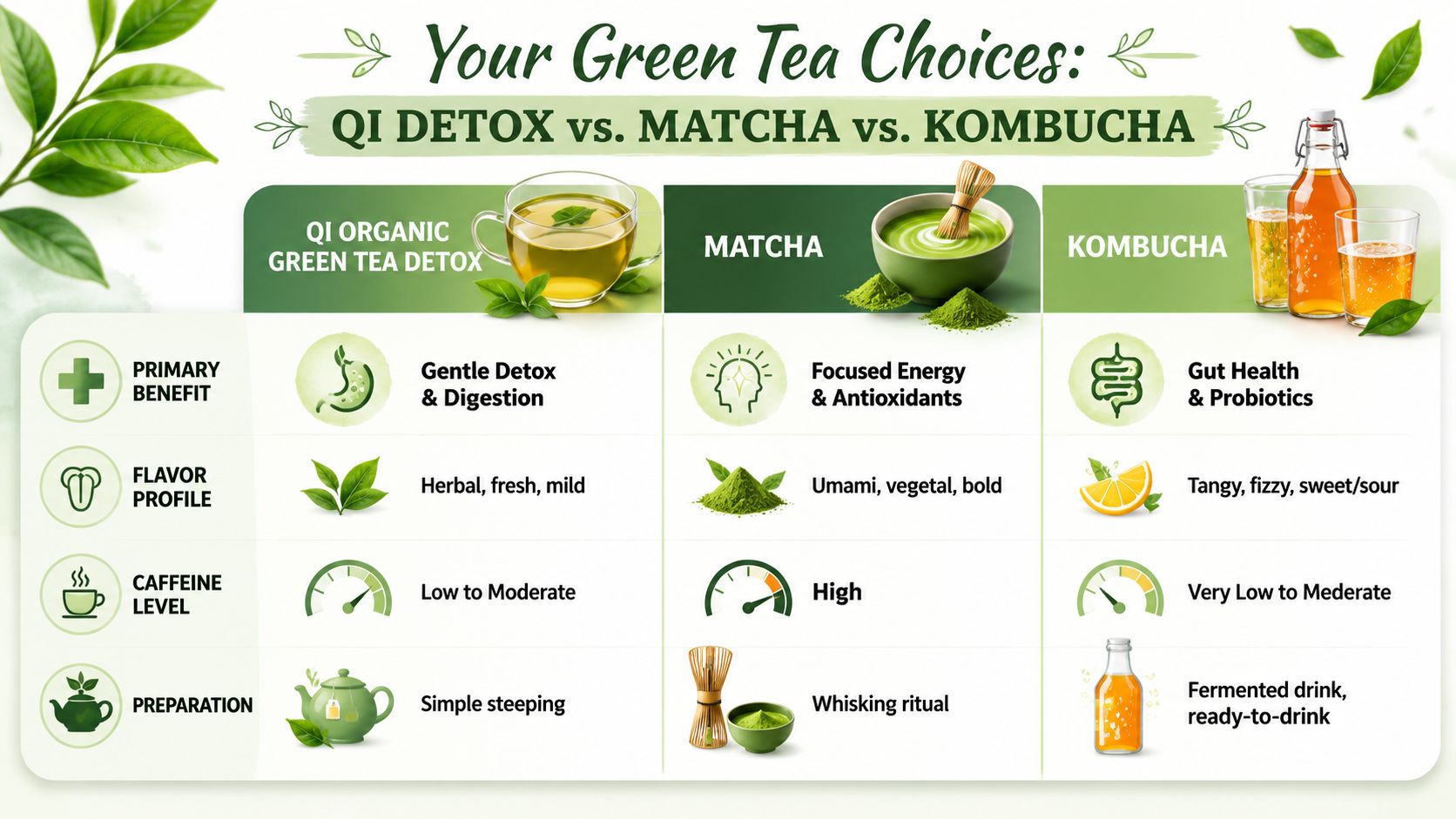
Qi Detox Tea as the entry point
Qi sits in the category of approachable supermarket wellness teas. It's easy to brew, easy to understand, and easy to fit into a routine. If you want a warm cup with herbal character and a lighter tea feel, it makes sense.
Its limitation is also clear. The “detox” part is more marketing language than precise functional language.
The product discussion around Qi Detox Tea raises this exact issue. The measurable outcome of detox claims is less clear, while high-quality organic matcha delivers a verifiable high dose of EGCg antioxidants, and properly brewed kombucha provides live probiotics for gut health, as noted in the Qi product comparison discussion from Qi Teas UK.
Where matcha differs
Matcha is still green tea, but it's a very different experience from a tea bag blend. You whisk the powder into water, so you consume the tea rather than just steeping leaves and removing them.
That matters because people who choose matcha are usually after something more specific:
- A fuller green tea profile
- A more focused ritual
- A clear antioxidant story
If you want a sharper explanation of how these green tea formats differ, this guide on the difference between matcha, green tea and green tea blends is worth reading.
Here's a helpful visual explainer on matcha preparation and use:
Where kombucha differs
Kombucha isn't a tea bag at all. It's a ready-to-drink fermented tea. People usually choose it for a different reason entirely. They want a cold, refreshing drink with a more distinct functional identity than a “detox” blend offers.
That makes kombucha appealing if your main aim is:
| Beverage | Best fit for |
|---|---|
| Qi Detox Tea | A warm herbal green tea routine |
| Matcha | A stronger antioxidant-focused tea ritual |
| Kombucha | A fizzy, probiotic-oriented alternative to soft drinks |
A useful way to choose is to ask what benefit feels most concrete to you. Gentle herbal tea enjoyment, antioxidant-rich green tea, or a probiotic drink for gut-focused routines.
None of these is automatically “better” in every situation. They solve different beverage needs.
The Final Sip Which Wellness Tea Is Right for You
You came here for a practical answer about Qi Organic Green Tea Detox Coles. Here it is.
The best choice depends on the job you want the drink to do. A tea can be pleasant without offering a sharply defined functional benefit, and that distinction helps cut through a lot of wellness marketing.
Qi Organic Green Tea Detox suits people who want an easy supermarket option for a warm daily cup. The appeal is convenience and flavour balance. You get a familiar tea ritual with a mix of green tea and herbs, without needing special preparation or a bigger budget.
Matcha makes more sense if you want your green tea to feel purposeful, not just comforting. Because you consume the whole tea leaf in powdered form, the experience is usually chosen for its stronger antioxidant story and more intentional ritual. It is a bit like the difference between adding herbs to a meal and eating the main ingredient itself. Both have a place, but they do not do the same job.
Kombucha is often the better fit for people who are not really after a hot tea at all. They want a cold, refreshing option with a clearer gut-health identity, especially if they are trying to swap out soft drinks for something with a probiotic angle.
So the question is not, “Which tea is best?” It is, “Which benefit do I want every day?” If the answer is a simple herbal green tea habit, Qi is a fair pick. If the answer is antioxidants with more intensity, or probiotics in a ready-to-drink format, high-quality matcha and kombucha usually offer a more defined functional direction.
If you'd like to explore wellness drinks with a more defined functional focus, have a look at Pep Tea for organic matcha and Australian-brewed organic kombucha.