
Tag: organic mate
Mate Drink Australia: Sourcing, Brewing, and Serving
You're standing in a café queue in Melbourne or Newcastle, and the person ahead of you orders a mate drink instead of another flat white. At home, it might be the same feeling when you've got a pantry full of tea, coffee, and sparkling water, but you still want something with a cleaner lift and a bit of ritual. That's where mate drink Australia has started to feel less like a niche import and more like a practical everyday choice.
For a lot of Australians, mate sits in an interesting middle ground. It keeps the social warmth of tea, the alertness people want from caffeine, and the lower-sugar, functional appeal that fits modern café menus and home routines. Australia's mate market is still small, but it's moving quickly, with projections from Future Market Insights showing USD 13.2 million in 2025 and USD 37.7 million by 2035, alongside forecast growth of 11.1% CAGR over the period and 10.5% in H1 2025 and 11.9% in H2 2025 (Future Market Insights).
That matters because Australia is already shifting towards drinks that do more than just quench thirst. The ABS reported 191.2 million litres of pure alcohol were available for consumption in 2017–18, equal to 9.51 litres per person (ABS). DrinkWise also found that, comparing 2007 vs 2017, Australians were generally drinking less frequently, with just under two thirds of drinkers having no more than two standard drinks on a typical drinking day (ABS). In that kind of market, a caffeine drink that can show up in cafés, fridges, and lunch breaks makes sense.
Why Mate Is Capturing Australian Attention
A barista pours a sample into a takeaway cup, and the customer asks the same question that comes up everywhere from inner-city cafés to suburban kitchens, “Is this like tea, or is it going to hit me like coffee?” That question explains why mate drink Australia is getting attention. People want something familiar enough to trust, but different enough to feel useful.
The drink fits a changing occasion
Mate fits a space Australians already recognise. It can replace a morning coffee, sit beside a pastry in a café, or take the place of a sugary energy drink when someone wants focus without heavy sweetness. Future Market Insights' projection for the Australian market suggests that demand is moving beyond curiosity and into repeat purchase territory, especially in wellness-led food and beverage settings (Future Market Insights).
That shift also lines up with a broader preference for lower-alcohol and non-alcoholic options. When people want a social drink that still feels adult and functional, mate can fill part of that gap. It is not pretending to be wine or beer, it gives cafés and households another option that feels more purposeful than soft drink.
Practical rule: if the customer wants ritual, caffeine, and less sugar, mate is an easy beverage to explain without overselling it.
It's familiar, but not boring
Australian drinkers already know tea. They already know caffeine. Mate appeals because it sits between those worlds and still feels a little different. That novelty matters, especially in cafés where the menu needs to offer something customers will remember and mention to a friend.
For business owners, that same novelty can work as a low-friction way to broaden a drinks list. A mate option does not need to replace coffee or kombucha. It can give the menu another lane for people who want a warm, energising, less sugary drink. If you are comparing how mate fits into modern beverage ranges, our functional beverage trends page is a useful place to look at the broader category.
Australian taste is moving toward practical wellness
The best mate conversations in Australia rarely start with tradition alone. They start with questions about how it tastes, when to drink it, and whether it suits a workday. That is the right frame. Mate has staying power here because it is useful, not because it is fashionable for a week. Temperature and dose are key safety levers, especially for people who are trying mate for the first time and want a steady, comfortable experience rather than a sharp caffeine spike.
Understanding Mate Origins and Health Benefits
Yerba mate comes from Ilex paraguariensis, a South American plant whose dried leaves are brewed and shared in a gourd with a metal straw called a bombilla. SBS Food describes that traditional preparation clearly. The method matters because mate is not just another flavoured tea, it carries a social ritual with it (SBS Food).
What Australian drinkers need to know first
The first thing many people in Australia want to know is simple, mate is naturally caffeinated. Product guidance from Tea Tonic places brewed yerba mate at around 70-85 mg per 240 mL cup or about 78 mg per 150 mL cup (Tea Tonic). National Geographic also notes that mate contains roughly 80 mg caffeine per cup, which puts it in the same general conversation as coffee, not herbal tea (National Geographic).
That is where confusion often starts. Mate is often described as “smoother” than coffee, but smoother does not mean weak. It means the experience can feel less sharp to some drinkers, especially when brewed well and served at a sensible strength. For people who want alertness without the feel of a heavy espresso hit, mate deserves proper attention.
The bioactive profile is part of the appeal
National Geographic also notes that yerba mate contains caffeine, theobromine, and theophylline (National Geographic). That combination helps explain why some people experience it as a steadier functional drink rather than a purely jarring stimulant. In plain terms, there is more going on than just “tea with caffeine”.
The practical value in Australia is easy to see. Office workers replacing multiple coffees, café customers avoiding sugary energy drinks, and people who want a gentler afternoon option all ask the same thing in different words. They want a drink that supports alertness without becoming a habit they regret later in the day. For that reason, mate fits the gap between cultural authenticity and the convenience people now expect in Australian homes and cafés.
Temperature and dose are the real safety levers
Mayo Clinic warns that the dose and temperature matter more than the label itself. Long-term intake of about 1-2 L/day has been associated with higher risks of several cancers, and hot mate above 65 °C has been classified by IARC as probably carcinogenic because very hot beverages can damage the esophagus (Mayo Clinic). In Australian cafés, the practical response is straightforward, keep serving temperatures sensible and avoid treating mate as an all-day litre-by-litre drink.
Serve it warm, not scalding, and keep the serving size sensible. That is the easy hospitality rule.
Brewing Methods for Australian Kitchens and Cafés
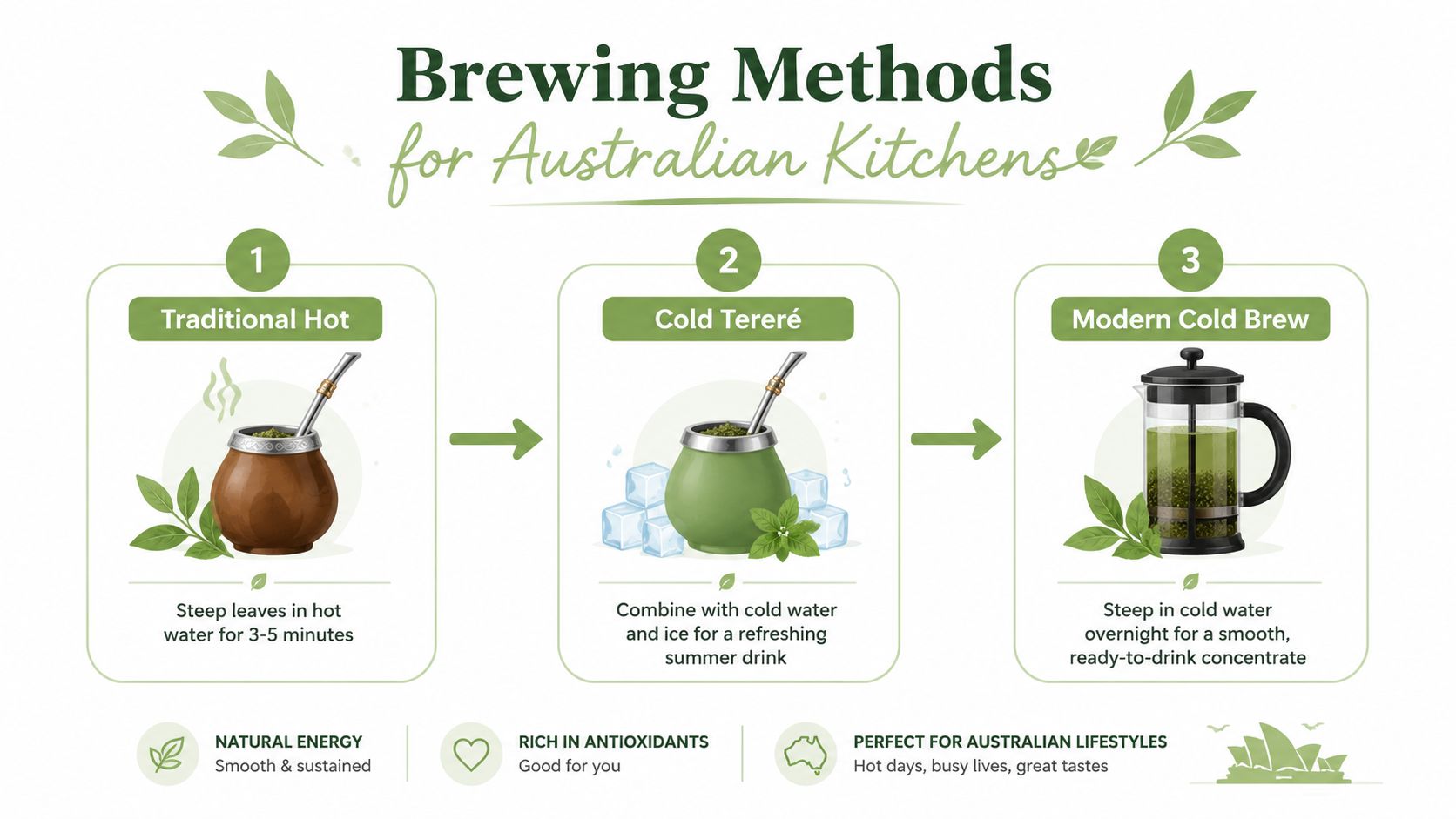
Australian kitchens don't all look the same. Some people have a kettle, a mug, and five quiet minutes before work. Others are running a busy café and need a drink that can be explained, made consistently, and served without fuss. Mate can work in both settings if the brewing method suits the occasion.
Traditional hot mate for slower moments
Traditional hot mate is the best place to start if someone wants the full ritual. Use a gourd, add the leaves, and pour in hot water that's hot but not harsh. If the water is too aggressive, the drink turns bitter and the first sip can scare people off.
For home drinkers, that means paying attention to the pour rather than rushing it. A well-made cup should feel balanced, not burnt. If you've ever oversteeped green tea, the same mistake applies here.
Cold tereré for summer
Cold tereré suits Australian heat better than many people expect. It's the summer version of mate, especially useful when a customer wants refreshment instead of a hot cup. Cold water, ice, and a clean mate blend are enough to make it feel crisp rather than heavy.
This format works well in coastal cafés and anywhere customers ask for something lighter in the afternoon. It's also easier to explain to people who don't want a strong hot drink in January. The cold version keeps the flavour, but the experience becomes more like a refreshing iced tea.
Modern cold brew for cafés and busy households
Cold brew mate is the most flexible option for modern service. Steep it overnight in cold water, then serve it as a concentrate, over ice, or as a base for a latte-style drink. That approach gives cafés more consistency and helps households batch-prep a couple of servings for the next day.
For busy operators, a cold-brew format reduces pressure during rush periods. It also gives staff a simple way to answer the customer who wants something new, but not complicated. If you're building a menu with ready-to-serve formats in mind, our cold brew tea concentrate page is a useful reference point.
Keep the technique clean
Bitterness usually comes from sloppy technique, not from the drink itself. Too much heat, too much leaf, or too long a steep will flatten the flavour. Clean water, reasonable timing, and a calm pour do more for the cup than fancy equipment ever will.
Finding Quality Organic Mate Suppliers in Australia
Australia's mate shelves can look busy, but not every packet tells you much. A good supplier should make it easy to see where the leaves come from, how they're handled, and whether the product suits home brewing or café use. That's the true test, not a flashy label.
Start with certification and origin
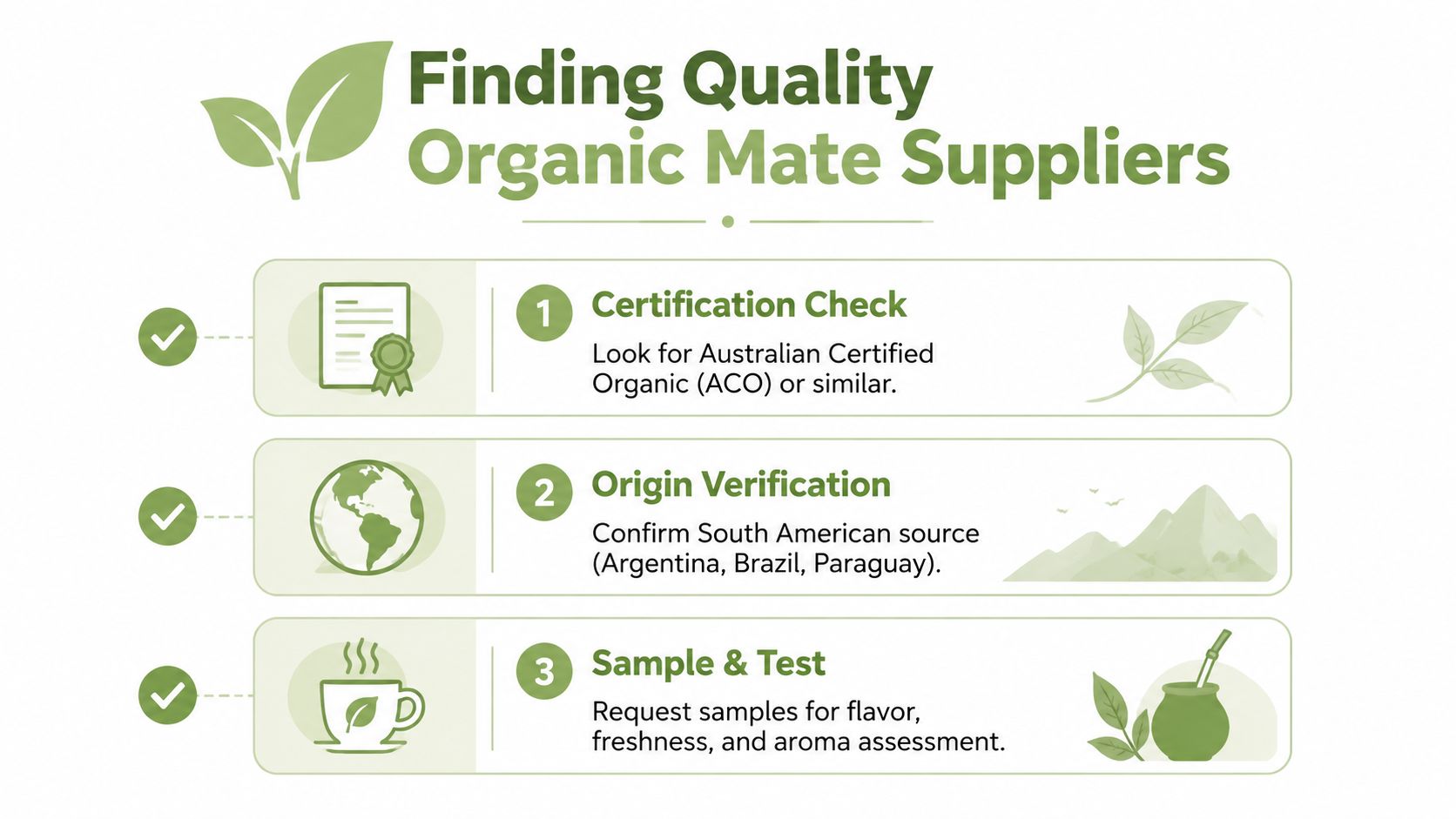
Organic certification is the first filter. If a supplier can't clearly show how the mate is certified, that's a sign to keep looking. For businesses, certification matters even more because customers increasingly expect transparency around what they're drinking.
Origin matters too. South American mate traditions are rooted in Argentina, Brazil, and Paraguay, so suppliers should be able to tell you where their product comes from and how it's sourced. If that information is vague, freshness and consistency are harder to trust.
A supplier should also explain whether the mate is designed for traditional brewing, café service, or cold-brew applications. That difference affects flavour and performance. A home buyer wants something forgiving. A café needs something that behaves the same way every day.
Ask for a sample before you commit to bulk. Fresh aroma and clean flavour tell you more than a polished product page.
Read the product description like a buyer, not a browser
Descriptive words are not enough. “Premium” and “authentic” don't tell you much unless the supplier backs them with handling details, freshness indicators, and clear ingredient information. The better brands usually answer questions before you ask them.
Watch for these practical signs:
- Clear source information, so you know the mate isn't being sold as something generic.
- Fresh packaging cues, because stale mate can taste flat and dusty.
- Usage guidance, since good suppliers explain whether the blend suits hot cups, cold brew, or café service.
- Responsive sample access, which is especially useful for hospitality buyers making a menu decision.
Local buyers should think beyond the packet
If you're buying for a household, the question is whether the flavour matches how often you'll drink it. If you're buying for a venue, the question is whether the supplier can support repeat orders and stable stock. Those are different decisions, and the best supplier will understand both.
For businesses comparing certified organic options and wanting a deeper compliance lens, our organic certification Australia page is a sensible place to start.
Integrating Mate Into Australian Café and Bar Menus
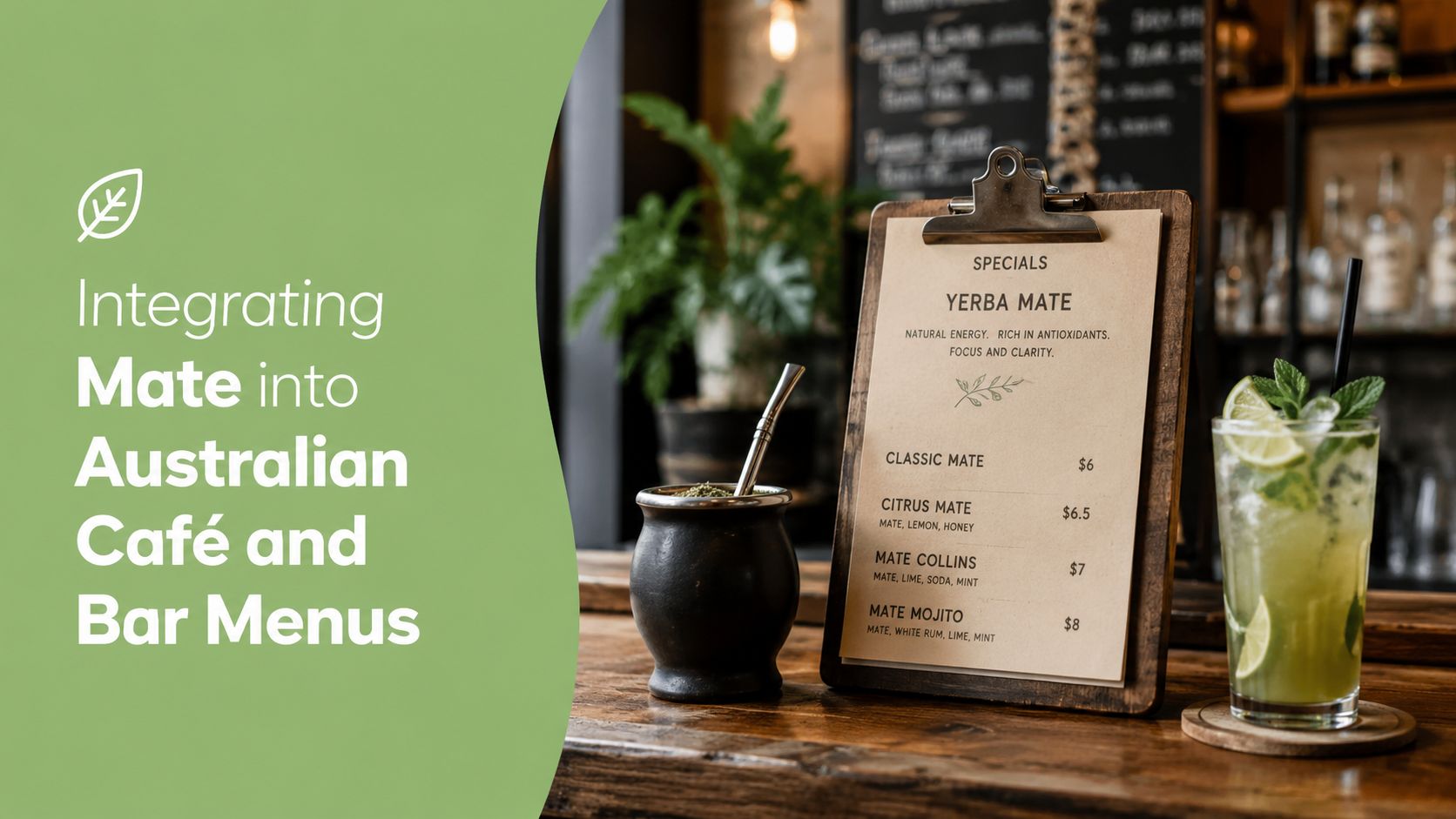
Mate belongs on modern Australian menus for the same reason cold brew coffee and kombucha do. Customers want drinks that feel considered, not generic. A mate line can sit neatly between coffee, tea, and non-alcoholic specials without forcing the venue into a full category rethink.
Start with three menu formats
The easiest way to introduce mate is to keep the menu short and clear. A mate latte gives regular coffee drinkers a familiar format. A sparkling mate cooler suits afternoon service and non-alcoholic requests. A mate mocktail can sit in the same section as premium zero-proof drinks, especially in venues that already sell premium soft drinks.
Each format solves a different customer need. The latte is for comfort and routine, the cooler is for refreshment, and the mocktail is for occasion. That makes mate much easier to sell than a beverage that tries to do everything at once.
Staff language matters more than fancy garnish
A drink only sells if staff can describe it without hesitation. “It's a caffeinated South American leaf drink with a smooth, tea-like flavour” is more useful than a vague wellness pitch. Customers in Australia usually respond better to concrete language than to claims that sound borrowed from a supplement ad.
Keep the explanation simple. People buy the drink they can understand in one sentence.
That also helps when customers are deciding between mate and coffee. If they know mate is a functional option with a distinct flavour, they can place it in their own routine. Café staff don't need to over-educate. They just need to be clear.
Position it where the customer already looks
Mate works well beside iced teas, speciality sodas, and alcohol-free drinks. In a bar setting, it can be framed as a composed, adult beverage rather than a health drink in disguise. In a café, it can sit near lattes or seasonal specials, depending on whether the house style is more classic or more experimental.
Pep Tea also supplies a mate tea blend made from yerba mate, which can be used in the same sort of menu thinking as other functional beverages. The point isn't to force one format. It's to give customers a clean, repeatable option that fits your service style.
Presentation should match the promise
If a menu item is meant to feel fresh, serve it that way. Clear glass, ice, citrus, and restrained garnish often work better than overbuilding the drink. Mate already has an identity, so the presentation should support it rather than bury it under extras.
Purchasing and Storage Best Practices
Australian heat can flatten flavours fast, especially if mate is left in flimsy packaging or opened and forgotten in a cupboard. Buying well is only half the job. Storing it properly is what keeps the drink bright enough to be worth making again tomorrow.
Buy for your actual drinking pattern
Households often overbuy. A café can do the same thing if it gets caught up in the idea of a new menu item before checking turnover. Mate is a product you want to move at a pace that matches its freshness and your service rhythm.
Choose a quantity that suits how often you'll brew it. If you drink it a couple of times a week, a modest bag makes more sense than a large bulk order. If you're serving it commercially, establish a rotation system so older stock gets used first.
Packaging and storage should protect aroma
Look for packaging that keeps out light, air, and moisture. Once mate is opened, reseal it tightly and keep it away from the stove, dishwasher heat, or any warm shelf above a kettle. Those are the places where Australian kitchens ruin good tea.
A dry pantry is better than a sunny counter every time. If the mate smells dull, dusty, or flat, it's usually telling you it has lost some of its character. Fresh mate should still smell alive when you open the bag.
Fresh and aged are not the same experience
Some mate is intended to taste more full-bodied and earthy, while fresher lots can feel greener and brighter. Neither is automatically wrong. The key is matching the style to your own taste, or to what your café customers expect when they order.
For commercial buyers, consistency matters more than chasing novelty. A regular house style makes staff training easier and reduces customer confusion. That's why storing and rotating stock carefully pays off, even for a small venue.
Navigating Australian Regulatory and Labeling Requirements
Mate sits inside a broader Australian drinks market that takes labeling seriously. Caffeine disclosure, ingredient transparency, and responsible marketing all matter because customers deserve to know what they're buying. For businesses, that's not just a legal issue, it's a trust issue.
What to look for on the label
If a mate product is being sold in Australia, the label should tell you enough to understand the contents, origin, and intended use. The more clearly a brand explains serving size, ingredient list, and caffeine-related information, the easier it is for customers to make a sensible choice. That's especially important for people who are sensitive to stimulants.
Health claims need care. A product can be positioned as functional or traditional without slipping into medical promises. That line matters for anyone selling mate in a café, retail shelf, or online store.
Certification and compliance go together
Organic claims should be backed by a credible certification pathway, not just a green design and a leafy logo. If a supplier says the mate is organic, ask how that status is verified and whether the paperwork matches the label. You don't need a compliance degree to ask good questions.
For a broader plain-English breakdown of packaging and label rules, AUSFF's complete labeling guide is a useful reference. It's especially handy for small business owners who want a quick overview before printing menus or product tags.
Venues need simple service rules
Hospitality teams should also think about responsible service in practical terms. That means staff know what the drink contains, whether it's served hot or cold, and how to answer a customer who asks about caffeine. Allergen disclosure still matters if a mate drink is blended with milk, syrups, or other menu ingredients.
Compliance feels less intimidating when it's built into the workflow. A good label, a clear menu description, and a consistent recipe are often enough to keep things simple for staff and reassuring for customers.
Where to Buy Mate Across Australia
Finding mate in Australia is much easier now than it used to be, but the best place to buy depends on what you need. Home drinkers often want convenience and a fair price. Café owners need reliability, wholesale access, and equipment that won't become a headache after the first order.
Start with the channel that suits your purpose
Online specialty retailers are the easiest option if you want variety and delivery. Health food stores and specialty grocers can be handy if you want to see the pack before you buy, though stock can be patchy. For traditional equipment like a bombilla and gourd, specialist tea stores and imported beverage sections are usually the better bet than mainstream supermarkets.
If you're buying for a venue, direct-from-supplier relationships often make more sense. That's where you can ask about repeat supply, menu support, and order minimums without having to work around retail packaging. It also helps if you want a consistent product for cold brew, café service, or a drink list built around non-alcoholic options.
Regional buyers need a bit more planning
City customers usually have more choice. Regional and remote buyers often need to plan around shipping times and stock rotation, especially in hotter months. That makes it worth buying from a supplier that clearly explains dispatch, packaging, and how the product holds up in transit.
If you're outside a major city, don't settle for the first listing you find. Look for suppliers that answer product questions clearly and ship regularly across Australia. That usually tells you more about reliability than the prettiest online storefront.
Match the shop to the drink style
Traditional mate drinkers may prefer a loose-leaf product and the right brewing gear. Café owners may want a format that's easier to portion and explain to staff. Retail buyers might want a compact pack they can store properly and use without special equipment.
The right choice is usually the one that fits your routine, not the one that looks the most authentic in a photo. If you want to explore premium organic tea and functional drink options in one place, Pep Tea has a range built for Australian homes and hospitality settings.
If you're ready to bring mate into your kitchen, café, or menu, Pep Tea can help with practical, organic options that suit Australian routines. Explore our range at Pep Tea, and choose the format that fits the way you drink and serve mate.