
Tag: japanese green tea
What Is Ceremonial Matcha? the Real Difference
Most advice about matcha starts with colour: if the powder is bright green, it must be ceremonial. That's a useful first clue, but it isn't enough. In Australia, products carrying similar “ceremonial” language can vary in origin, processing, flavour and price, while the term itself doesn't provide a universal grading standard.
So, what is ceremonial matcha? It's the highest-grade form of matcha, traditionally made from the youngest tea leaves picked during the first harvest. Those leaves are shaded before picking, processed into tencha, stripped of stems and veins, and stone-milled into an exceptionally fine powder. The result is designed to be whisked with water and enjoyed on its own, not hidden in sugar, milk or flour.
Understanding that journey makes it easier to judge a product by what's behind the label, rather than by packaging alone.
Defining Ceremonial Matcha Beyond the Label
Not every green tea powder is matcha, and not every product called ceremonial matcha offers the same experience. The word has become common in Australian cafés and online shops, but the useful question isn't just, "Does the tin say ceremonial?" It's, "What leaves were used, how were they grown, and how were they processed?"
Ceremonial matcha is made from the youngest leaves of the first harvest, often called ichibancha. These leaves are valued for their bright colour, fine texture and naturally rounded flavour. Producers shade the plants before harvest, then turn the leaves into tencha before grinding them into powder. Because you consume the whole leaf rather than steeping it and discarding it, the raw material and processing have a direct effect on what ends up in your bowl.
Historical accounts trace powdered tea practices from China to Japan in the 12th century, while the Japanese tea ceremony was fully established by the late 15th century. That gives ceremonial matcha a place within over 500 years of ritualised use in Japan, as described in this history of Japanese matcha in Australia.
What you're paying for
A premium price should reflect more than a vivid label. You're paying for careful cultivation, selective harvesting, refined processing, stone milling and appropriate handling. Those choices influence whether the powder tastes creamy and umami-rich or harsh, dusty and bitter.
Ceremonial matcha is traditionally intended for straight preparation with water. That doesn't mean you can't use it in a latte, smoothie or dessert. It means the powder should be pleasant enough to drink without needing other ingredients to cover flaws.
The simplest quality test is also the most revealing: can you enjoy it with water alone?
The term “ceremonial” can help shoppers find the style of matcha they want, but it shouldn't replace checking the product details. Look for a clear Japanese origin, first-harvest information, shade-growing details, tencha processing and sensible storage guidance. These details tell you much more than the front of the pouch.
The Cultivation and Processing of Premium Tencha
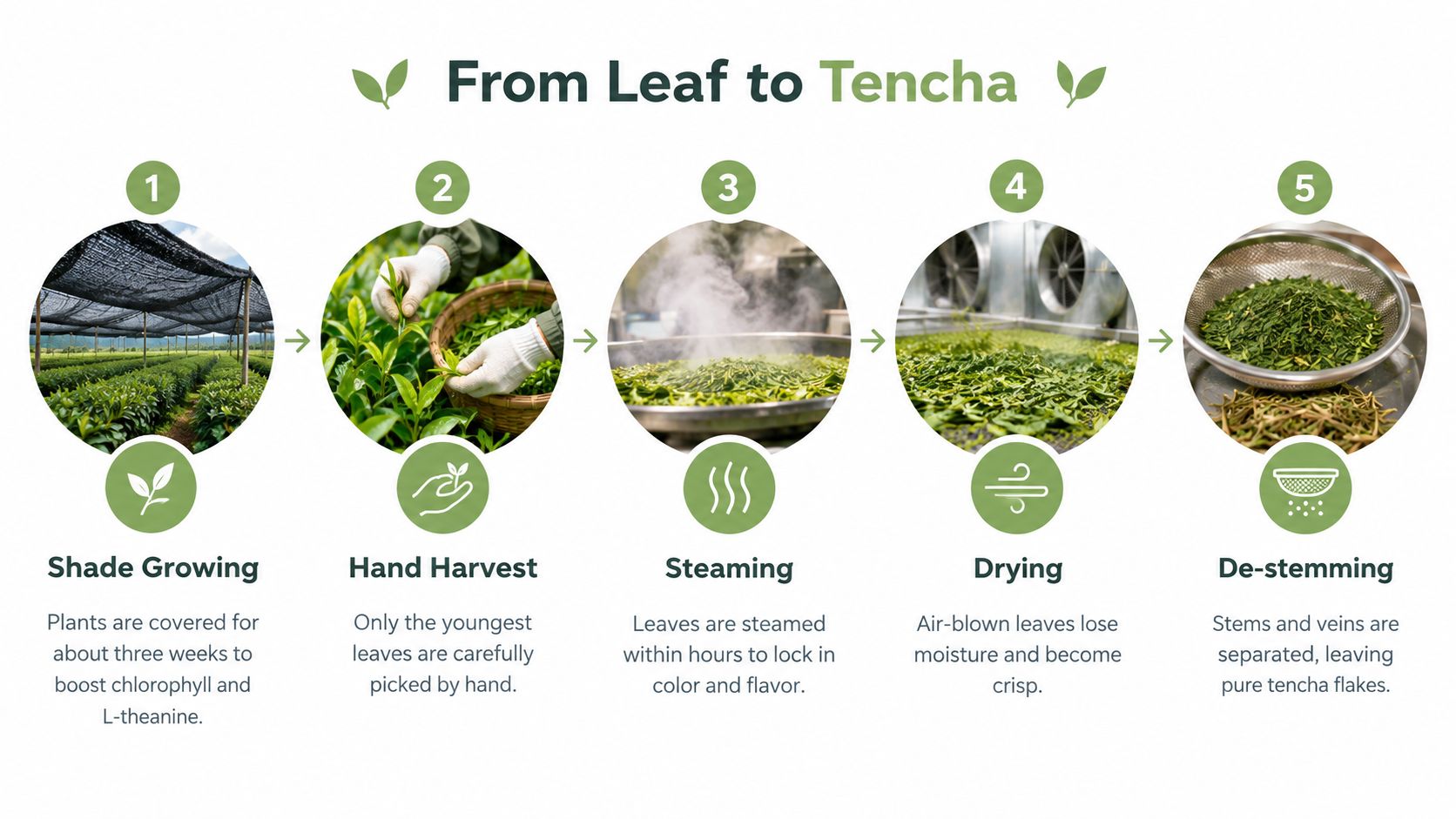
A ceremonial bowl begins in a tea field long before anyone reaches for a bamboo whisk. Farmers first prepare the plants for a controlled period of shade, then harvest the youngest leaves and process them quickly to protect their colour and flavour.
Shade changes the leaf
Producers commonly shade tea plants for about 20 to 40 days before harvest. This limited sunlight encourages the plant to retain more chlorophyll and preserve L-theanine, an amino acid associated with sweeter flavour and reduced bitterness. The result is the deep green colour and savoury-sweet umami that people expect from well-made matcha. See this explanation of matcha grades and shading for more detail.
The plants are then harvested for their youngest leaves, usually during the first spring picking. Timing matters because older leaves tend to produce a more assertive, astringent cup, while tender first-harvest leaves are better suited to drinking straight.
From fresh leaf to tencha
After harvest, the leaves are steamed to halt oxidation and help retain their green character. They're then dried, creating the material that will be refined into matcha. Unlike many other tea styles, the leaves aren't rolled into familiar needle shapes.
The stems and veins are removed next, since these tougher parts can add coarseness and unwanted bitterness. The remaining leaf material is called tencha, the raw material used for authentic matcha. This guide to how matcha tea is made provides a practical look at the stages involved.
Finally, producers stone-mill the tencha into a very fine powder. Slow milling helps create the silky mouthfeel associated with ceremonial matcha, although it also makes production careful and labour-intensive. The finished powder is more than dried green tea ground up at random. It's the product of shade management, selective harvesting and specialised processing.
That craftsmanship also explains why fresh ceremonial matcha can taste so different from ordinary green tea powder. The leaf has been cultivated for a particular flavour profile, prepared for suspension in water and milled finely enough to become part of the drink's texture.
The Biochemical Profile and Health Benefits
Matcha's distinctive appeal comes partly from the fact that you drink the powdered leaf. With ordinary green tea, you steep the leaves and remove them. With matcha, the prepared powder remains in the bowl, so the drink contains the compounds present in the leaf material.
One Australian analytical report for a ceremonial matcha product lists total catechins at 65,200 micrograms per gram, including 56,000 micrograms per gram of EGCG, with L-theanine at 21,300 micrograms per gram and caffeine at 33,300 micrograms per gram. These figures come from the product's published analysis, not from a universal value for every ceremonial matcha, so they're best understood as an example of the biochemical profile that can occur in a carefully produced product. The published ceremonial matcha analysis shows why laboratory information can be more useful than broad wellness language.
Antioxidants and EGCG
Catechins are naturally occurring compounds in tea. EGCG, or epigallocatechin gallate, is one of the best-known tea catechins and is often discussed for its antioxidant activity. Antioxidants help protect cells from oxidative stress, but matcha shouldn't be treated as a medicine or a substitute for a varied diet.
If you'd like a plain-language explanation of the compound itself, Pep Tea's guide to what EGCG is is a useful place to start. The practical takeaway is simple: a high-quality matcha can contribute tea polyphenols to your daily routine, but the product's actual composition depends on cultivar, harvest, cultivation, processing and storage.
L-theanine and caffeine
L-theanine gives matcha much of its character, both in flavour and in how the drink feels. Paired with caffeine, it may support a state of calm alertness, which many people experience as focused energy rather than the sharper lift associated with coffee.
That doesn't mean matcha can never feel stimulating or that everyone will respond in the same way. Caffeine sensitivity varies, and serving size, timing and whether you've eaten all matter. People who are pregnant, managing a medical condition or taking medication should seek individual advice from a qualified health professional.
Matcha is also sometimes described as immune-supporting because tea compounds and a balanced diet may contribute to general wellbeing. Keep the claim proportionate. Ceremonial matcha can be a nutrient-rich, enjoyable beverage, but it isn't an immunity cure.
Ceremonial Grade Versus Culinary Grade Matcha
Ceremonial and culinary matcha aren't rival products where one is automatically good and the other is automatically poor. They're made for different jobs.
Ceremonial matcha is selected for drinking with water. Culinary matcha is generally chosen for recipes where the powder needs to hold its flavour against milk, sugar, flour, fruit or other strong ingredients. It may come from later harvests or use leaf material with a more pronounced bitterness, which can be useful in baking and blended drinks.
| Feature | Ceremonial Grade | Culinary Grade |
|---|---|---|
| Primary use | Whisked with water and enjoyed straight | Lattes, smoothies, baking, sauces and desserts |
| Leaf selection | Young first-harvest leaves | Often later-harvest or more robust leaf material |
| Flavour | Smooth, umami-rich and naturally rounded | More assertive, grassy or astringent |
| Colour | Usually vivid green | Can be green but often less luminous |
| Texture | Very fine and silky | Fine powder, though texture can vary |
| Best buying question | Is it enjoyable without added flavour? | Will it remain noticeable in the finished recipe? |
Choose for the way you'll drink it
If your morning ritual is a small bowl of matcha and water, ceremonial grade makes sense because its delicate sweetness and umami are exposed. Poor-quality powder has nowhere to hide in that preparation.
For a matcha latte, the choice is more personal. A good culinary powder can be practical, especially if you're adding milk and a sweetener. A ceremonial powder can also make an excellent latte, particularly when you want a softer flavour and a cleaner finish. The important point is not to buy the most expensive product automatically. Buy the grade that suits your actual use.
Where the confusion begins
Some Australian listings describe ceremonial matcha as water-only, while others promote the same style for lattes. That isn't necessarily a contradiction. “Ceremonial” describes the intended quality and drinking style, not a rule that forbids every other recipe.
The distinction becomes clearer when you think about flavour. Use ceremonial matcha when the tea itself is the centre of attention. Use culinary matcha when it's one ingredient among several.
How to Identify Authentic Ceremonial Matcha in Australia
Australian shoppers have plenty of choice, but the variety can make comparison difficult. Similar products may use the same words, while prices for comparable-sounding listings can range from about A$35 to A$69.99, as shown in this Australian ceremonial matcha product listing. Price alone can't prove quality, but it should encourage you to inspect the details.
Use a practical checklist
Read the harvest description. Look for first harvest or ichibancha language, rather than relying only on “premium” or “ceremonial”.
Check the colour. Fresh ceremonial matcha is generally a vibrant green. A dull, yellowish or brownish appearance can indicate older material, oxidation or poor storage, although colour should always be judged alongside taste and provenance.
Inspect the texture. The powder should feel exceptionally fine and silky. Grittiness suggests that the product hasn't been milled or refined to the standard expected of a whisked tea.
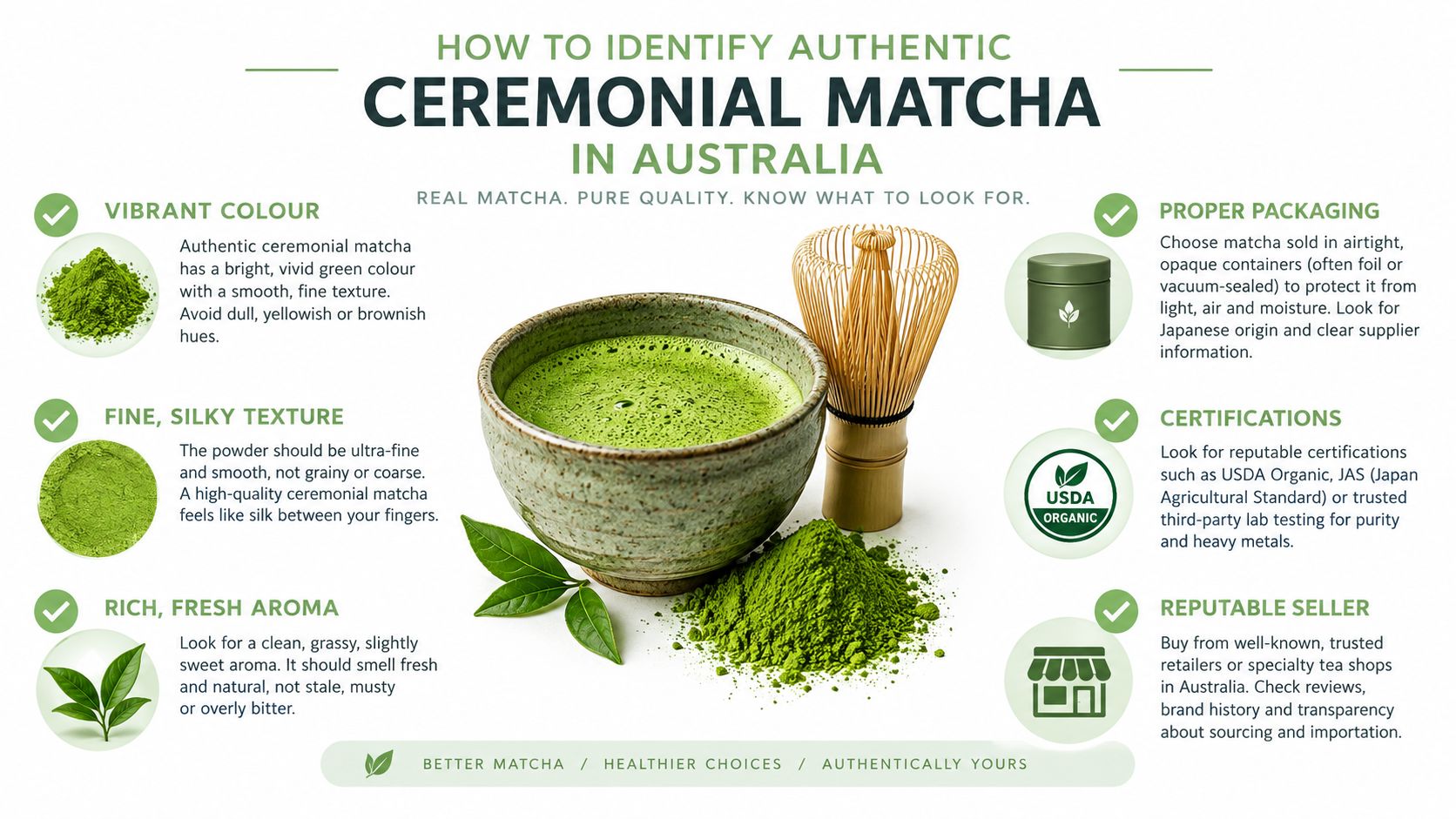
Look for tencha processing. A credible product description should explain that the leaves were de-stemmed and de-veined before stone milling. This overview of ceremonial matcha processing explains why those steps affect texture.
Ask where it was grown and packed. Japanese origin should be clear, not buried under vague language such as “Japanese-style”.
Treat pricing as context, not proof. First-harvest tea, careful shading and stone milling require more work, so an unusually low price deserves closer inspection. A high price doesn't guarantee authenticity either.
Ask for evidence, not adjectives
Look for batch information, organic certification where relevant, storage guidance and analytical information. A supplier that can explain the leaf, harvest and processing gives you something concrete to evaluate.
The most reliable buyer doesn't chase the brightest green pouch. They compare the agricultural and processing story with the sensory result in the cup.
Traditional Preparation and Tasting Notes
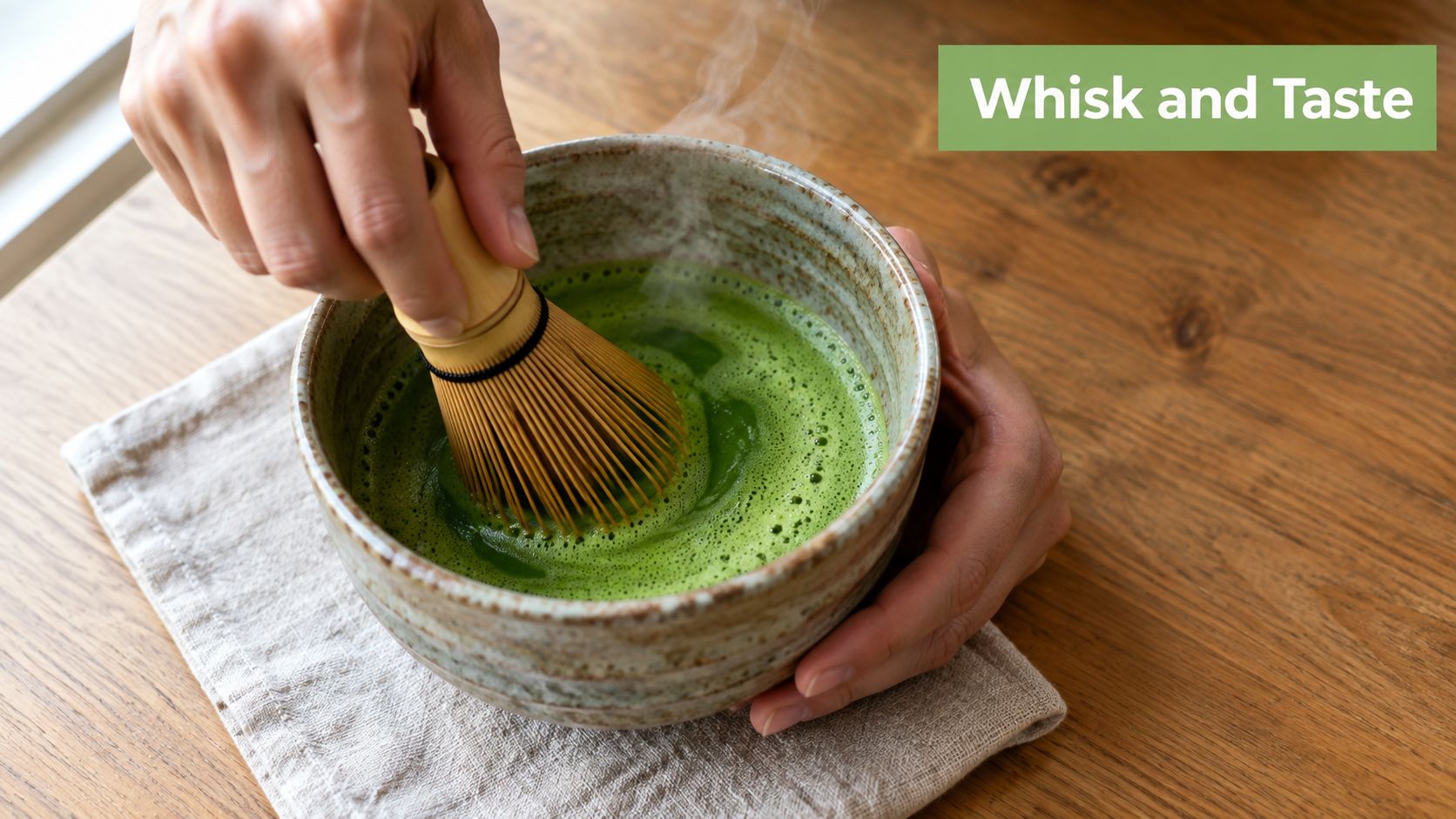
Premium matcha is forgiving once you understand the basics, but it isn't prepared like a teabag. The traditional setup uses a chawan, or bowl, and a chasen, the fine bamboo whisk. A small sieve is also helpful because it breaks up clumps before they become difficult to disperse.
A simple bowl method
Warm the bowl, then discard the warming water.
Sift the matcha into the bowl. Sifting isn't ceremonial theatre. It helps the fine powder combine with water smoothly.
Add a small amount of hot water that has cooled below boiling. Water that's too hot can push delicate flavours towards harshness and flatten the tea's sweeter notes.
Whisk briskly using a light W or M motion, keeping the whisk near the surface rather than stirring slowly around the edges.
Add more water to reach your preferred strength, then drink soon after whisking so the powder stays evenly suspended.
The bowl should feel creamy rather than sandy. Expect fresh vegetal notes, gentle sweetness and a savoury umami finish. A little bitterness can be part of tea's character, but pronounced harshness often points to water that's too hot, too much powder, an older product or unsuitable raw material.
For a closer look at the ritual, explore Pep Tea's guide to the matcha tea ceremony.
Here's a visual demonstration of the whisking rhythm and bowl preparation:
If your first bowl tastes strong, adjust one variable at a time. Try cooler water before reducing the powder, then experiment with a little more water. Matcha rewards attention, but it doesn't require perfection.
Integrating Premium Matcha Into Your Daily Routine
Ceremonial matcha can fit neatly into an Australian morning without turning every cup into a formal tea ceremony. Prepare it traditionally when you have a quiet moment, or whisk it into a small latte when you're heading into work. The quality still matters because a smooth powder gives you more flexibility, especially when you sometimes drink it with water and sometimes with milk.
Many people prefer matcha earlier in the day, when its caffeine and L-theanine profile suits focused work, study or a calm start. If you're sensitive to caffeine, drink a smaller serving, have it with food and pay attention to how your body responds.
Keep the ritual realistic
A useful routine might look like this:
- Morning focus: whisk matcha with water before opening your phone or starting your commute.
- Café-style break: make a simple latte without heavy syrups so you can taste the tea.
- Recipe use: reserve culinary grade for smoothies, baking, ice cream and other recipes where stronger ingredients are involved.
- Thoughtful storage: protect the powder from heat, moisture, light and air, and follow the supplier's storage instructions.
Australia's interest in matcha has accelerated sharply. One market source reports that Australian matcha imports rose 62.91% from 2023 to 2024, while another report says Australia imported 195,319 kilograms of Japanese green tea between January and August 2025, a 131% year-on-year increase, ranking Australia as the eighth-largest export destination for Japanese green tea. These figures are reported in the Australia matcha tea market data, and they help explain why shoppers need clearer quality guidance as more products appear.
The best choice is the matcha you'll prepare and enjoy regularly. For some people, that means a delicate bowl of ceremonial powder. For others, it means keeping ceremonial grade for water preparation and using culinary grade for creative recipes.
Pep Tea offers organic Japanese matcha, including ceremonial-grade powder, alongside Australian-brewed sugar-free organic kombucha from the Hunter Valley, NSW. Visit Pep Tea to explore the matcha range, learn more about preparation and find functional drinks suited to everyday routines.
Matcha Tea Kyoto: A Guide to Japan’s Green Gold
I still remember standing in Kyoto with a bowl of fresh matcha in hand, then walking a few streets over and seeing tins sold as if every green powder were the same. That's the trap with Kyoto matcha. The place is famous for a reason, but the labels don't always teach you how to buy well.
Your Guide to True Kyoto Matcha
Kyoto has a pull on tea lovers that's hard to overstate. You feel it in old tea shops, in the quiet rhythm of whisking, and in the way locals speak about Uji as if it's not just a region but a standard.
That romance is real, but so is the pressure on supply. The average price for first flush Tencha, the leaf used for matcha, in Kyoto rose from JPY 5,500 per kilogram in 2024 to JPY 14,333 in 2025, a 265% increase driven by declining harvests in this premium region, according to reporting on Kyoto Tencha pricing and supply. If you're buying for a home ritual, a café menu, or wholesale use in Australia, that matters.
It matters because scarcity makes surface-level buying riskier. A beautiful tin, a Kyoto reference, or a ceremonial label doesn't automatically mean the matcha suits what you want to make. Some powders are made to be whisked with water and enjoyed on their own. Others are better in lattes, smoothies, or baking where milk, sweetness, or heat change the flavour.
Practical rule: In a tight market, knowing the right grade matters almost as much as knowing the right origin.
That's where a lot of travel guides fall short. They'll tell you where to drink matcha in Kyoto, but not how to tell true Kyoto matcha from a product that borrows the city's reputation. They also rarely explain the difference between a bowl made for quiet sipping and a powder meant for a busy Australian café service.
If you're planning a tea-focused trip, thoughtfully built personalized Japan itineraries can help you experience Kyoto's tea culture with more context than a quick souvenir stop. If you're buying from home, the same principle applies. Slow down, ask better questions, and match the powder to the purpose.
The Ancient Roots of Matcha in Kyoto
Kyoto didn't become the spiritual home of matcha by accident. Its reputation was built over centuries, through monks, growers, tea makers, and ceremony practitioners who kept refining what powdered tea could be.
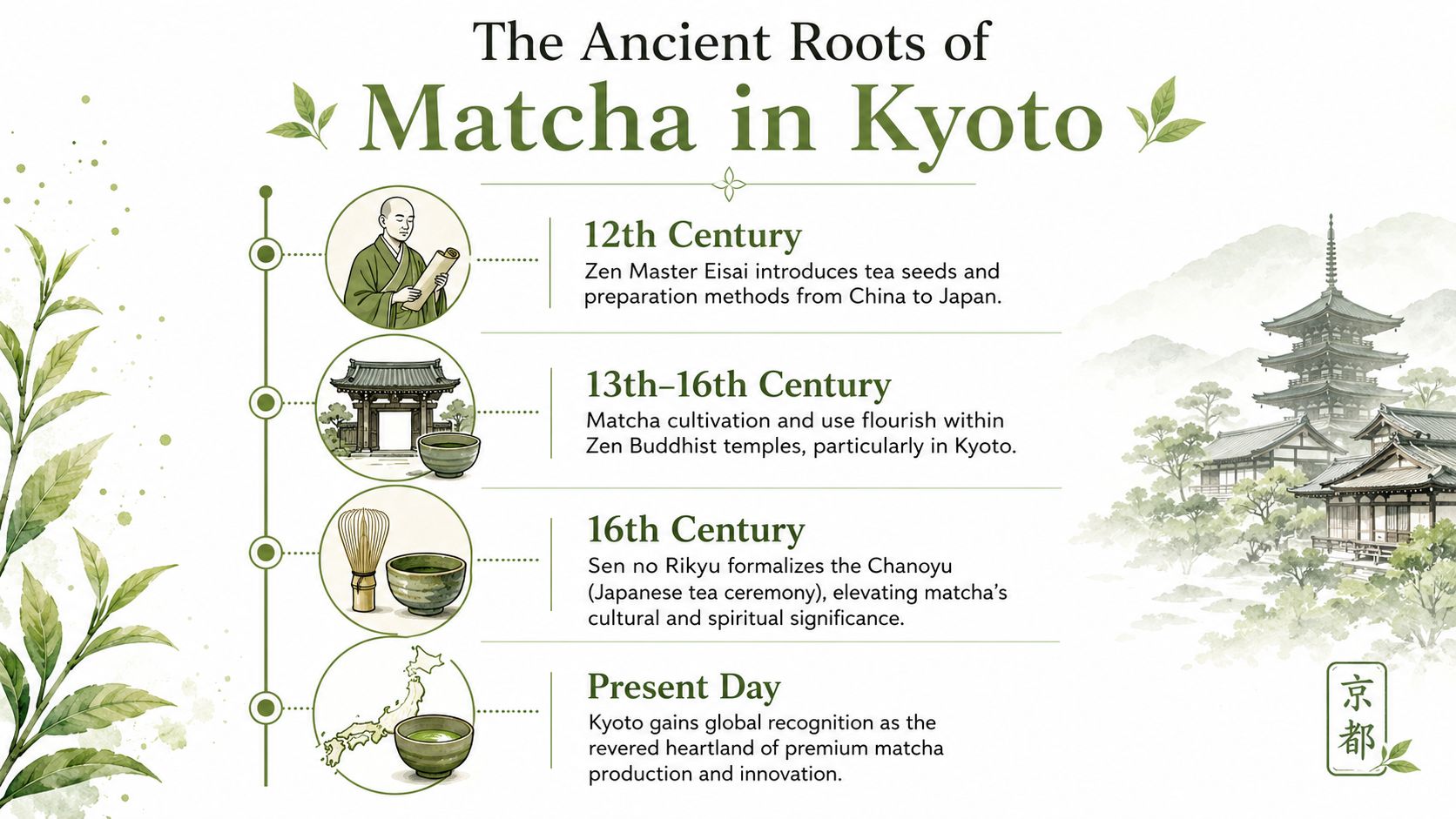
Zen Master Eisai introduced tea seeds and powdered tea methods to Japan in 1191, and tea production formally began in Uji, Kyoto, in the early 12th century, establishing the region's legacy for high-umami tea, as outlined in this history of Kyoto matcha culture. That's the moment many tea historians point to as the beginning of the Japanese matcha tradition we recognise today.
How Uji became the heart of the craft
Uji matters because tea culture in Japan didn't just need a starting point. It needed a place where technique and taste could mature together. Under the teachings of Myoe Shonin, tea production took root in Uji, and over time that local identity became known as Uji tea.
People often hear “Kyoto matcha” and think of a broad map label. Tea people usually hear “Uji” and think of a deeper marker of tradition, flavour, and handling. That distinction still matters now.
A few turning points shaped that identity:
- Tea methods arrived with Zen influence. Matcha wasn't only a drink. It was tied to focus, ritual, and temple culture.
- Stone milling changed the texture. By the 14th century, Japan had developed specialised stone mills for tea, producing a much finer powder than rough grinders.
- Shaded cultivation transformed the leaf. In the 16th-century Azuchi-Momoyama period, growers refined shading methods that became essential to premium Tencha and matcha.
Why the history still affects your cup
When you whisk a good Kyoto matcha today, you're tasting old decisions that never disappeared. Shading before harvest, careful grinding, and the idea that tea can express both flavour and calm all come from that historical line.
Matcha in Kyoto isn't famous just because it's old. It's famous because generations kept improving the same craft without losing the spirit behind it.
If you'd like a local Australian reference point for that story, our own brief history of matcha tea is a helpful companion read.
Understanding Kyoto's Terroir The Uji Difference
When tea people talk about terroir, they mean the way place shapes flavour. Soil, climate, water, air movement, and farming practice all leave a mark. Wine drinkers know the idea well. Matcha deserves the same respect.
In Kyoto, the most prized expression of terroir is often linked to Uji. That doesn't mean every tea from the broader prefecture tastes identical, or that every green powder with a Kyoto label belongs in the same class. The details matter.
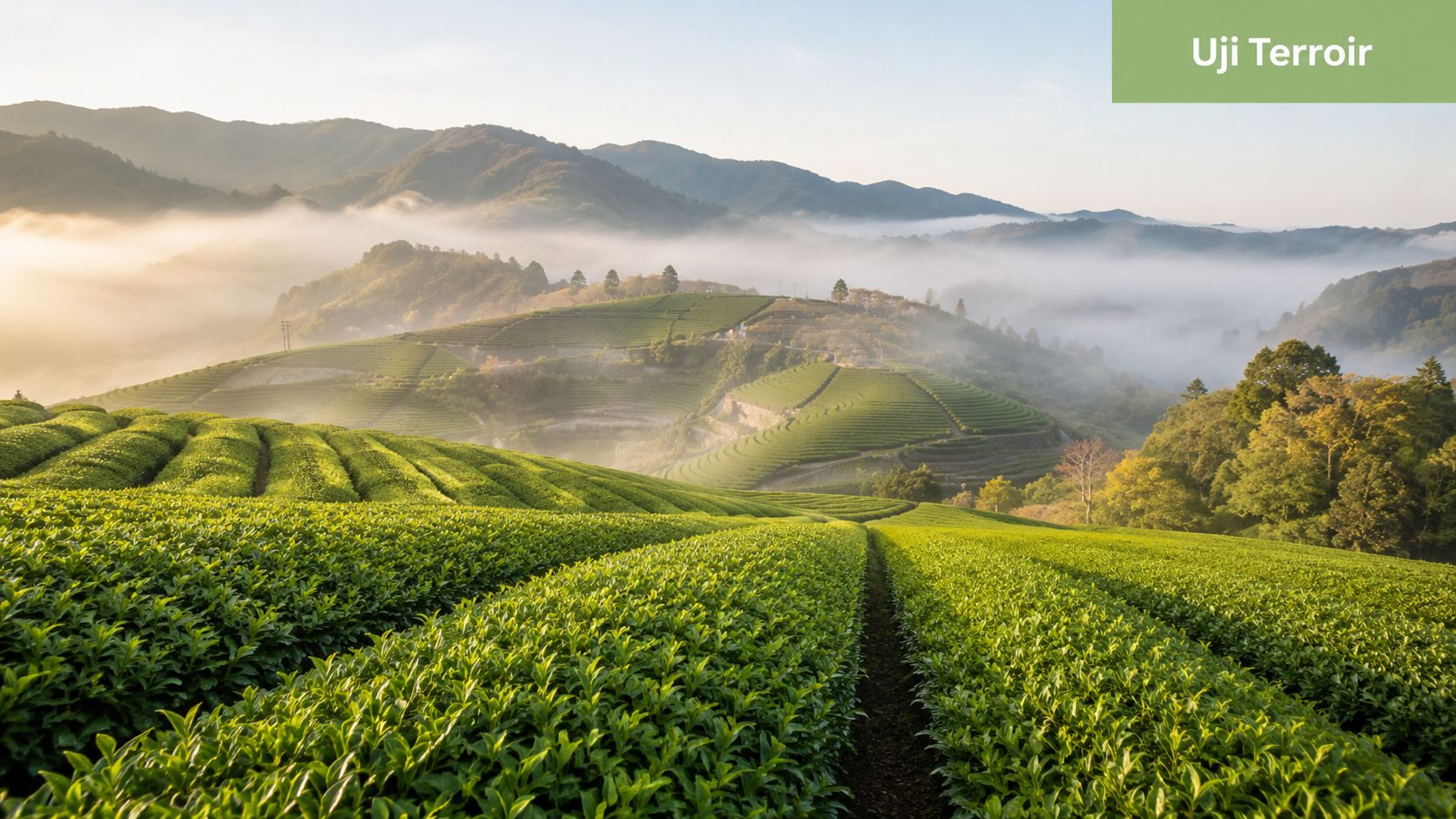
According to this overview of Uji matcha terroir and processing, the terroir of Uji, Kyoto creates a creamy texture and a sweet ooi-ka aroma, and authentic ceremonial grade matcha is stone-ground to a particle size finer than 20 microns, about as fine as cornstarch. That's a technical detail, but you can feel it immediately in the bowl. Fine grinding helps the tea suspend smoothly, foam more evenly, and avoid the sandy mouthfeel you get from poorer powders.
What terroir means in plain language
If you're new to the term, think of terroir as the reason one matcha feels rounded and soft while another tastes sharp, flat, or overly grassy.
Here's how that shows up in the cup:
- Texture. Uji matcha often feels creamy rather than coarse.
- Aroma. The sweet, marine-leaning ooi-ka note is one of the clearest sensory clues.
- Sweetness and finish. Better terroir often gives a cleaner sweetness and less harsh bitterness.
That's especially useful for Australian buyers shopping online. If a seller says “Kyoto” but gives no clue about cultivation, milling, or flavour markers, you don't have enough information yet.
Kyoto is broad. Uji is specific
“Kyoto-grown” can be meaningful. “Uji” is usually more specific in the minds of serious matcha drinkers because it points to a historic tea area with a very strong quality identity.
That doesn't mean every Uji matcha will suit every use. It means the origin gives you a stronger starting point when you're looking for a ceremonial-style tea with a softer umami profile.
For a closer look at how origin fits into buying decisions, this Uji matcha powder guide is useful if you're comparing labels in the Australian market.
A short visual look at tea-growing conditions can make that difference easier to grasp:
What to notice before you drink
You don't need to be a tea judge to assess terroir cues. Start with a small checklist.
- Look at the powder. It should appear vivid and alive rather than dull.
- Smell it before whisking. A sweet, creamy scent is a good sign. A flat grassy smell can indicate a different style or lower refinement.
- Feel the finish. Good matcha lingers cleanly. Poorer matcha often leaves a rough, drying edge.
Decoding Matcha Grades Ceremonial vs Culinary
The first time I watched an Australian café make a matcha latte with an expensive Kyoto ceremonial powder, I knew what was about to happen. Beautiful colour, lovely aroma, and then milk, vanilla, and ice buried the tea's finer notes. The matcha was excellent. It was doing the wrong job.
That mix-up happens because grade names sound like rankings. In practice, they work more like choosing the right coffee roast for espresso versus filter, or the right olive oil for finishing versus cooking. A higher grade is not automatically better for every use. It is better for a specific style of drinking.
The simplest way to read matcha grades
Start with the cup you want to make.
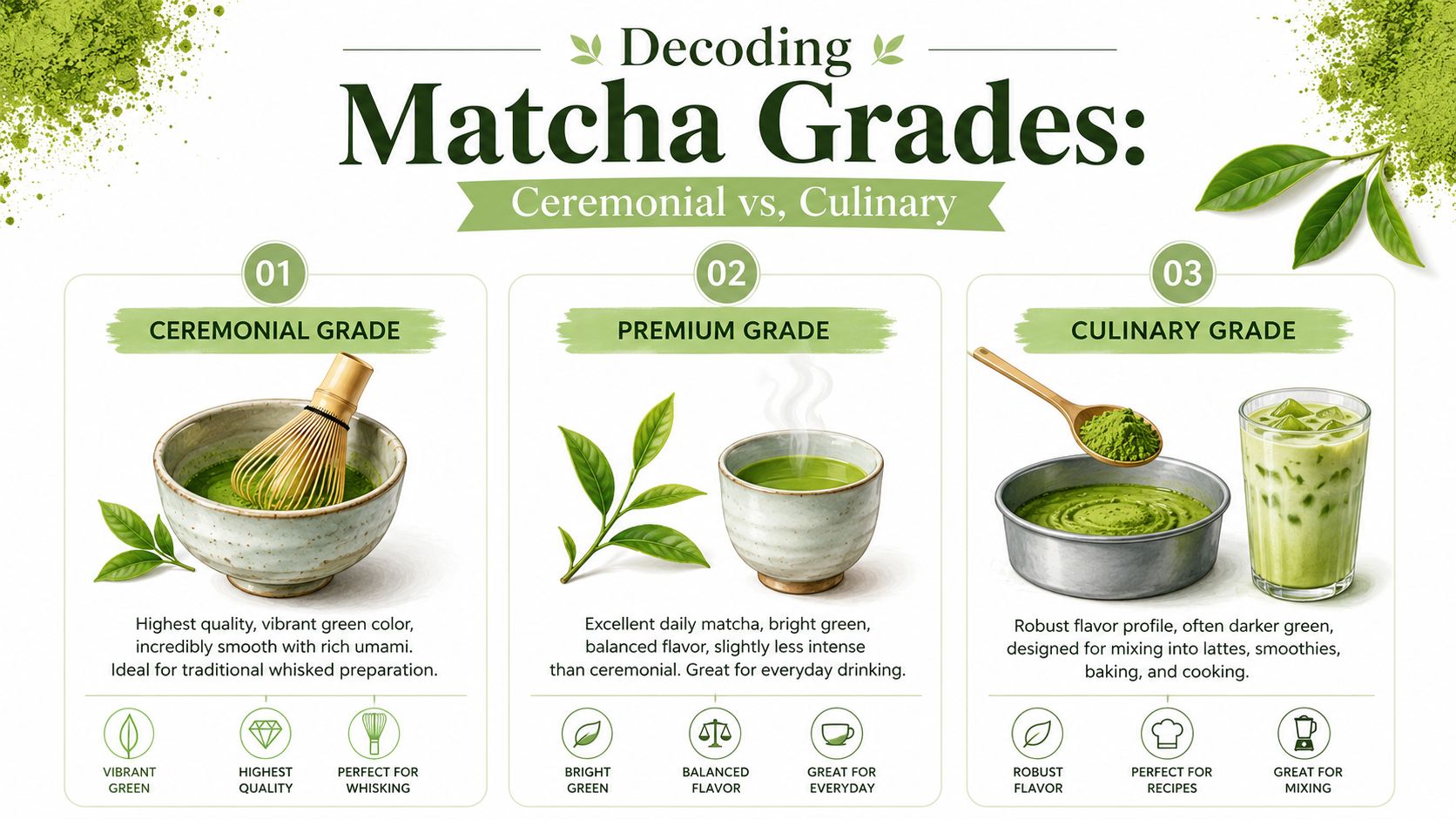
If you plan to whisk matcha with water and drink it on its own, ceremonial grade is the right place to look. Good ceremonial Kyoto matcha is usually made from carefully shaded tencha and processed to highlight sweetness, umami, and a smooth finish. The point is clarity. You are tasting the tea itself, with nothing to hide behind.
Premium grade sits in the middle. It often suits daily drinking, lighter lattes, and home use where you want a pleasing balance between softness, freshness, and value.
Culinary grade is chosen for strength of flavour in recipes. Milk, sugar, chocolate, banana, or heat all compete with the tea. A powder for baking or café lattes needs enough presence to still taste like matcha after everything else goes in.
That is why grade is really a use guide.
Why ceremonial matcha can disappoint in a latte
Ceremonial matcha is prized for delicacy. In a straight bowl, that delicacy shows up as sweetness, creamy texture, gentle marine notes, and a rounded umami finish. In a latte, many of those subtleties fade.
Australian drinkers often run into this problem because café matcha culture and traditional tea culture ask for different things. A whisked bowl rewards finesse. A latte rewards presence. If your regular order is oat milk with a little sweetness, a premium or culinary Kyoto matcha will often give you a clearer tea flavour than a more delicate ceremonial powder.
The best matcha for your kitchen or café is the one that suits the drink in front of you.
Matcha Grades At a Glance
| Grade | Best For | Flavour Profile | Colour | Price Point |
|---|---|---|---|---|
| Ceremonial | Traditional whisked tea, slow morning ritual, tasting straight with water | Smooth, umami-forward, low bitterness | Vibrant green | Higher |
| Premium | Daily drinking, lighter lattes, flexible home use | Balanced, fresh, approachable | Bright green | Mid-range |
| Culinary | Lattes, smoothies, baking, desserts | Stronger, more assertive, designed to cut through other ingredients | Usually deeper or less luminous green | Lower |
A practical guide for Australian homes and cafés
For cafés, this choice affects both flavour and cost. Using ceremonial matcha in a heavily flavoured latte can be like pouring a delicate pinot into sangria. You can do it, but you lose what made it special in the first place.
For home drinkers, the same rule helps:
- Straight whisked bowl with water. Choose ceremonial.
- Daily latte or iced matcha. Choose premium, or culinary if you want a bolder tea taste.
- Baking, desserts, and smoothies. Choose culinary.
If you want another reference point, this comprehensive guide for Japanese matcha shows how different matcha styles are presented for different uses. For an Australia-focused buying breakdown, our ceremonial vs culinary matcha guide for everyday use explains what to choose for whisking, lattes, and recipes.
What to check on the label
Grade terms are not perfectly regulated, so the front of the tin never tells the whole story. Look for clues that match your purpose.
- For ceremonial use, look for wording around whisking, smoothness, umami, shading, or first harvest style.
- For lattes, trust sellers who clearly say the powder suits milk drinks.
- For baking, choose flavour intensity over delicacy.
A simple question helps cut through the marketing. Are you trying to taste the tea alone, or are you asking it to stand up inside a recipe? Once you answer that, Kyoto matcha grades start to make much more sense.
How to Brew and Enjoy Kyoto Matcha
Once you've chosen the right grade, matcha becomes much easier and more enjoyable. Most brewing problems come from one of three things. The wrong powder for the job, water that's too hot, or a rushed mixing method.
How to whisk a traditional bowl at home
For a simple bowl of usucha, you don't need a formal tea room. You just need a few basic tools and a little care.
You'll want:
- A chawan. That's the bowl.
- A chasen. A bamboo whisk.
- A fine sifter. This helps prevent clumps.
- A scoop or spoon. Keep it consistent each time.
A beginner-friendly method looks like this:
- Warm the bowl with hot water, then tip it out and dry it.
- Sift the matcha into the bowl so the powder loosens.
- Add warm water, not boiling. Overheated water can make matcha taste harsh.
- Whisk briskly in a quick zig-zag motion until you get a light foam.
- Drink straight away while the aroma is fresh.
What a good bowl should taste like
A well-made ceremonial bowl shouldn't taste like lawn clippings. It should feel rounded, smooth, and lively, with a pleasant vegetal depth rather than rough bitterness.
If your bowl tastes overly sharp, check these factors:
- The water may be too hot
- The powder may be too old
- The matcha may be better suited to lattes than straight whisking
Good matcha rewards small adjustments. A slight change in water temperature or whisking can transform the cup.
A simple organic matcha latte
Australian homes and cafés often meet matcha through the latte first, and that's perfectly fine. The key is using a powder that can handle milk without disappearing.
Try this easy version:
- Sift your matcha into a cup or bowl
- Add a small splash of warm water and whisk into a smooth paste
- Top with hot or cold milk of your choice
- Sweeten lightly if you want, but keep it subtle so the tea still shows through
If you're making iced matcha, dissolve the powder well first. Dumping it straight onto cold milk almost guarantees clumps.
For recipes like bliss balls, pancakes, smoothies, or cakes, use culinary grade. It gives you the green tea character you want without paying for delicate notes that won't survive heat and other ingredients anyway.
Everyday ways Australians can use matcha
You don't have to keep matcha locked in one ritual style. It fits easily into daily life.
- Morning whisked bowl for a slower start
- Iced latte before work or after the gym
- Smoothie addition with banana and yoghurt
- Baking ingredient for muffins, slices, or cheesecakes
One practical option in Australia is Pep Tea's organic matcha green tea, which is offered for broad use across drinking and recipe applications. What matters most is matching the grade and flavour style to how you'll prepare it.
Finding Authentic Matcha Experiences in Kyoto
Kyoto has no shortage of matcha stops, but not all of them will teach you much. Some are beautiful and memorable. Others are mostly packaging, queues, and gift tins.
A useful starting point is to look beyond “famous” and look for signs of care. Tea houses with a long local relationship to tea tend to explain origin, harvest timing, preparation style, and flavour more clearly than shops built around quick tourist turnover.
What to ask when buying matcha in Kyoto
Many travellers overspend due to a critical gap for tourists: 78% of matcha sold in Kyoto souvenir shops is ceremonial grade, while culinary uses like lattes are often better suited to more affordable, heat-stable premium culinary grades, according to this Kyoto matcha shopping guide.
That means you should ask direct questions before buying:
- What is this best used for. Whisking, latte, or baking?
- Is it from Uji or another area of Kyoto.
- Is this intended for first flush ceremonial use.
- How would you prepare it at home.
The answers matter more than the display.
What a worthwhile tea experience looks like
The best tea experiences in Kyoto usually share a few qualities:
- They teach, not just serve. Someone explains the bowl, the whisk, or the origin.
- They distinguish grades clearly. You're not pushed toward the priciest tin by default.
- They respect the ritual. Even a casual tasting can still feel deliberate.
If you're planning a broader Kyoto trip around food, culture, and neighbourhoods, a thoughtful local guide for Kyoto travelers can help you build a better itinerary around genuine tea stops rather than random souvenir rows.
Buy the tea you'll actually use. The wrong expensive tin is less authentic to your life than the right everyday one.
Small signs of authenticity
When you're standing in a shop, trust your senses and the conversation.
A good seller can usually tell you how the tea should smell, whether it's better straight or with milk, and why one tin costs more than another. If they can't explain those basics, keep walking.
Sourcing Authentic Organic Matcha in Australia
You don't need to fly to Japan to buy carefully. In Australia, the challenge is different. You're not navigating Kyoto side streets. You're reading product pages, labels, and importer claims from your phone or laptop.
That means your buying checklist needs to be sharper.
What to check before you buy
Start with the core markers of authenticity and fit.
- Origin clarity. Look for a clear statement of Japanese origin, and ideally more detail than just “Japan”.
- Grade clarity. The seller should tell you whether the matcha is meant for whisking, lattes, or cooking.
- Organic credentials. If organic matters to you, the label should say so plainly.
- Usage guidance. Good retailers explain how to prepare the product, not just how pretty the tin is.
If a listing is vague on all four points, it's hard to know what you're paying for.
Why this matters more for Australian cafés
For cafés, buying matcha isn't only about romance or provenance. It's about menu design, consistency, and staff confidence. Your team needs to know which powder belongs in a straight matcha, which one stands up in a latte, and how to describe the difference to customers.
That education piece matters. It helps a customer move from “I want something green and healthy” to “I want a smooth whisked bowl” or “I want a bold iced latte.”

How we think about matcha at home in Australia
At Pep Tea, we focus on helping Australians understand what they're buying, not just selling them a tea term they've heard on social media. That means being clear about Japanese origin, practical use, and the difference between ceremonial-style drinking and culinary application.
For many households, matcha sits alongside other daily wellness drinks rather than in a separate ceremonial category. One day it's a morning bowl. The next it's part of a smoothie or an afternoon latte. For cafés, it may sit naturally beside a non-alcoholic menu that also includes low-sugar and fermented options such as kombucha.
The most reliable way to buy matcha tea Kyoto-style in Australia is simple:
- Check where it's from
- Check what it's for
- Check how it's milled and described
- Buy from a seller who can explain the difference without jargon
That's how you avoid paying ceremonial prices for a baking ingredient, or buying a latte powder when you wanted a quiet, silky bowl.
If you're ready to put this into practice, explore Pep Tea for organic matcha options and practical guidance on choosing the right style for whisking, lattes, recipes, or café service in Australia.
Genmaicha Tea Benefits: Boost Your Health & Energy

Some teas fit a mood so perfectly that they feel less like a drink and more like a small reset. Genmaicha is one of those teas. If you're trying to cut back on coffee, looking for something softer than a brisk green tea, or want a warm cup that feels grounding in the middle of a busy day, genmaicha often lands in exactly the right place.
Its appeal is easy to understand once you taste it. You get the freshness of green tea, but also a gentle toasted note from roasted rice that makes the whole cup feel cosy and familiar. That balance is a big part of why people search for genmaicha tea benefits. They want something supportive, calming, and practical for everyday life, not another overhyped wellness promise.
An Introduction to Japans Comforting Popcorn Tea
A lot of people meet genmaicha by accident. They order tea at a Japanese café, notice a warm cereal-like aroma rising from the cup, and pause. It doesn't smell grassy like many green teas. It smells toasted, savoury, and inviting.
That first sip is usually what wins people over. The flavour is soft and nutty, with a clean green tea finish. Some cups even carry a light popcorn-like aroma, which is why genmaicha is often affectionately called “popcorn tea”.
For Australians who want a more mindful drink ritual, that matters. Genmaicha doesn't ask much of you. It isn't intense, overly bitter, or fussy to enjoy. It suits a slow morning, an afternoon break between meetings, or a gentle evening wind-down when coffee would feel like too much.
There's also something reassuring about its simplicity. It's just green tea and roasted rice, blended in a way that makes the tea feel rounder and easier to drink. If you've found some Japanese green teas a little sharp or too vegetal, genmaicha can feel like the friendlier doorway into the category.
A simple way to think about it: genmaicha is the comfort-food version of green tea.
It also sits nicely within the broader family of Japanese tea traditions. If you enjoy learning about different styles, origins, and flavour profiles, Pep Tea's guide to Japanese green tea is a useful next step.
Understanding the Blend of Green Tea and Roasted Rice
Genmaicha sounds unusual at first, but the blend is very easy to understand once you break it into its two parts.
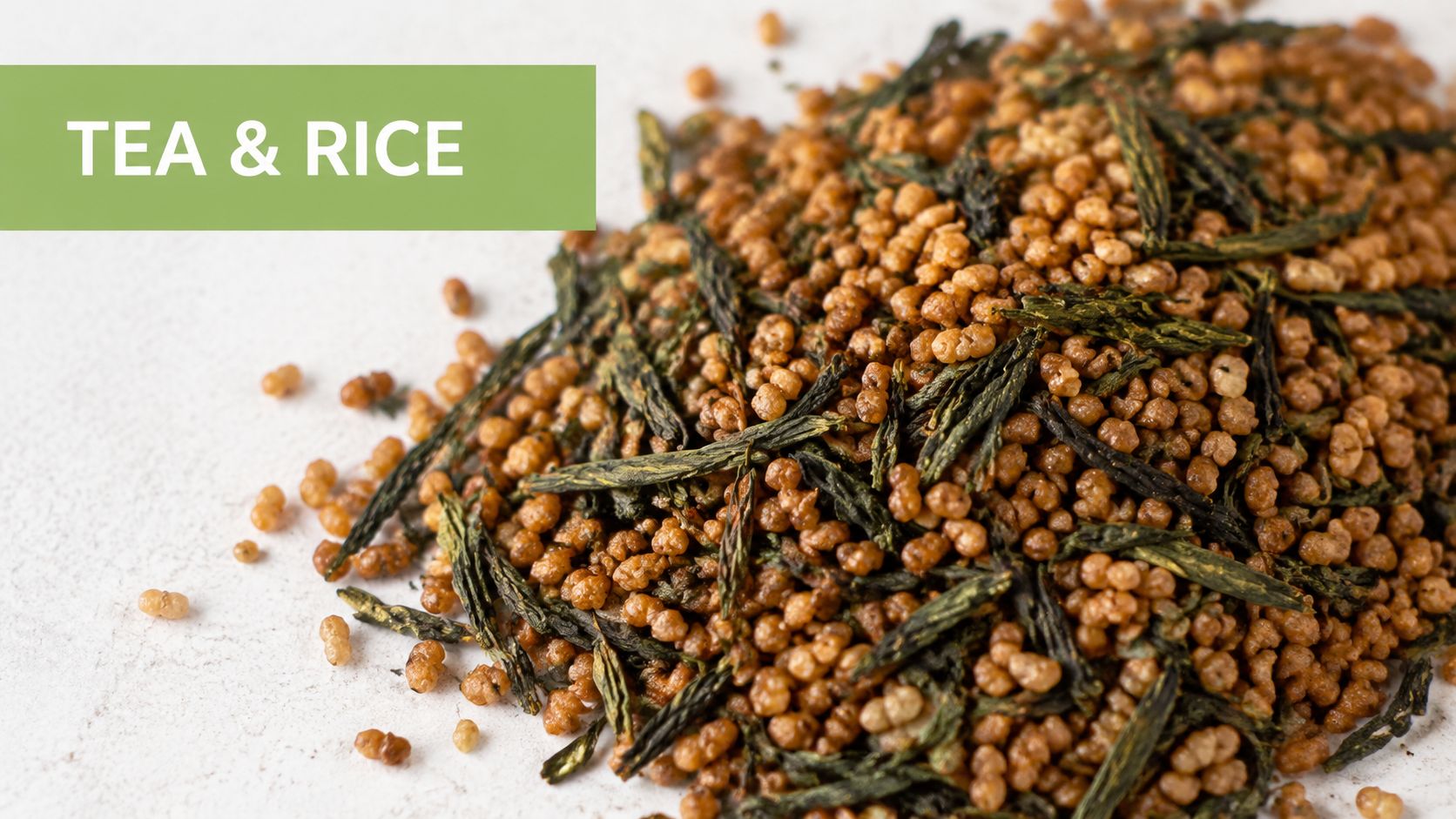
What's actually in genmaicha
At its core, genmaicha combines:
- Green tea leaves such as bancha or sencha, which bring freshness, light bitterness, and the familiar green tea character
- Roasted rice, which adds toastiness, a nutty aroma, and a softer overall impression
Some of the rice grains pop during roasting. That's where the “popcorn tea” nickname comes from. The popped grains don't mean there's popcorn in the blend. They're rice that has expanded during heat exposure.
A common misconception among readers concerns the role of the rice. The rice isn't there to turn genmaicha into a sugary drink or a grain-based beverage. It's there for flavour, aroma, and balance. The roasted notes mellow the sharper edges of green tea and create a cup that feels warmer and more rounded.
Why the blend tastes so different from standard green tea
If plain green tea tastes brisk or grassy to you, genmaicha will probably feel much easier to approach. The roasted rice changes the whole experience.
Instead of a cup that leads with vegetal notes, genmaicha often tastes:
- Nutty, rather than grassy
- Toasty, rather than brisk
- Gentle, rather than sharp
- Comforting, rather than stimulating
That doesn't mean the green tea disappears. It's still there, giving the blend its freshness and many of the qualities people associate with green tea wellness. The rice changes the texture of the experience.
The roasted rice doesn't cancel the tea. It softens it.
Does the rice change the health story
Yes, but mostly in a practical way rather than a dramatic one.
The biggest real-world difference is that genmaicha is commonly described as a lower-caffeine option. One tea industry guide estimates a cup of genmaicha contains about 10–15 mg of caffeine, compared with roughly 30 mg in a cup of regular green tea, or about 50% less in that comparison, as described in this genmaicha caffeine overview.
That lower-caffeine profile is one reason it's often chosen by people who want a calmer tea experience. The same source also describes genmaicha as containing L-theanine, the amino acid linked with relaxation and focus.
For everyday drinkers, that means the rice component is important less because of its nutrition on its own, and more because it helps create the milder flavour and gentler energy profile people are often looking for.
Exploring the Key Genmaicha Tea Benefits
Many of the most meaningful genmaicha tea benefits come from its green tea base. That's an important distinction. Genmaicha has its own character, but much of the science sits within the broader green tea evidence base rather than genmaicha-only clinical trials.
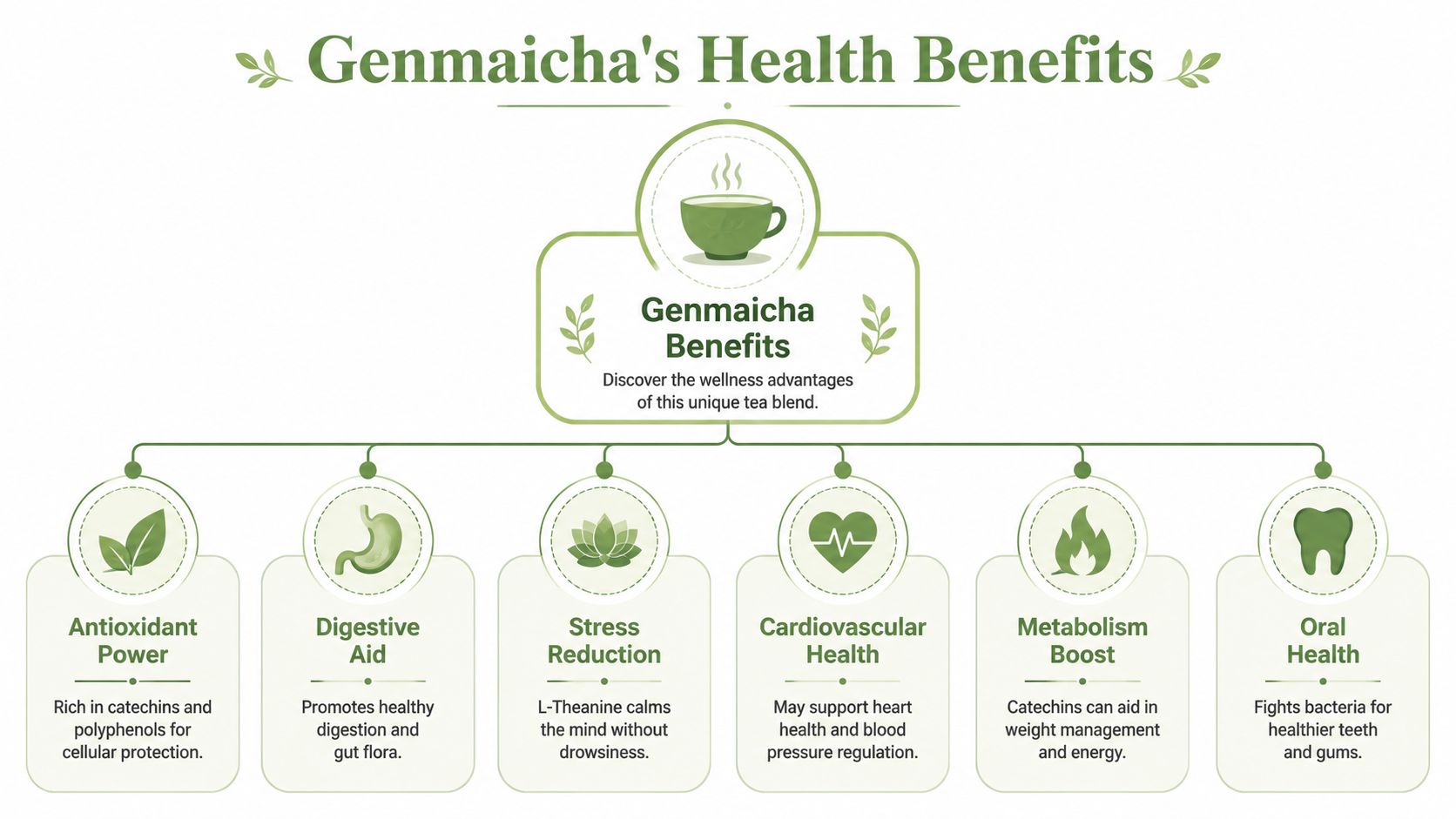
Antioxidant support from green tea catechins
The strongest evidence-backed benefit comes from green tea's polyphenols, especially catechins such as EGCG. A peer-reviewed review of green tea research describes catechins as being linked to antioxidant, anti-inflammatory, lipid-lowering, and endothelial-function benefits, including associations with reduced LDL, improved blood pressure, and better glucose and lipid metabolism in people with metabolic syndrome, as outlined in this green tea catechin review.
In plain language, antioxidants help the body manage oxidative stress. That doesn't make genmaicha a miracle drink. It does mean it belongs in the wider green tea family known for useful plant compounds.
For a practical Australian reader, the takeaway is simple. If you want a gentler tea but still want the wellness identity of green tea, genmaicha makes sense.
Calm focus rather than a hard caffeine hit
Genmaicha is often appreciated for how it feels, not just what it contains. People who find coffee too intense or standard green tea a bit sharp often describe genmaicha as easier to work into a steady routine.
That's where lower caffeine and L-theanine matter together. Instead of chasing a big jolt, many drinkers use genmaicha when they want a softer lift that doesn't dominate the rest of the day.
Practical rule: if your goal is gentle alertness, genmaicha usually fits better than beverages chosen purely for stimulation.
This also explains why genmaicha often appeals as an afternoon tea. It can feel supportive without pushing the nervous system too hard.
A short visual guide can help if you want a quick summary before reading on.
A useful option for people who want a lighter daily ritual
A major gap in online discussion is that many articles blur together broad green tea claims and genmaicha-specific reality. A more careful view is better. As discussed in this practical genmaicha explainer, caffeine level, brewing method, tea-to-rice ratio, and leaf quality all shape the final cup.
That's helpful because it keeps expectations realistic. Genmaicha may support a healthier routine in several down-to-earth ways:
- Replacing sweeter drinks with an unsweetened tea option
- Offering a lower-stimulant choice for late afternoon or evening
- Giving green tea newcomers a softer flavour profile
- Pairing well with meals, which makes it easier to drink consistently
What human evidence tells us
Genmaicha-specific human data is limited, but there is one especially relevant signal. In Japan, one large prospective cohort analysis grouped Bancha/Genmaicha together. In that study, women who drank 10 or more cups per day had a hazard ratio of 0.86 compared with women who drank less than 1 cup per week, which indicates a 14% lower adjusted risk in that category, according to this prospective cohort analysis including Bancha and Genmaicha.
That figure needs careful interpretation. It reflects a very high intake category, and it doesn't mean people should start drinking huge amounts of genmaicha each day. What it does offer is research-backed context. Genmaicha isn't just a novelty blend. It sits inside a green tea pattern that has been studied in human populations.
How Genmaicha Compares to Other Japanese Green Teas
Choosing between genmaicha, matcha, and sencha usually comes down to one question. What kind of tea experience do you want?
Some people want intensity and depth. Others want clarity and freshness. Some want a cup they can drink in the late afternoon without feeling overcaffeinated. Genmaicha shines in that third category.
Flavour and feel
Genmaicha is usually the most comforting of the three. The roasted rice gives it a nutty, savoury softness that makes it feel almost food-friendly. Sencha leans greener and brighter. Matcha is richer, thicker, and more concentrated in flavour.
If you've ever thought, “I like the idea of green tea, but I don't love the grassy edge,” genmaicha is often the best place to start.
Sencha speaks clearly. Matcha sings loudly. Genmaicha speaks softly and stays with you.
The practical trade-offs
Here's the simplest way to compare them.
| Feature | Genmaicha | Matcha | Sencha |
|---|---|---|---|
| Flavour | Nutty, toasted, mellow | Rich, savoury, umami-led | Fresh, grassy, clean |
| Caffeine feel | Lower and gentler | Stronger and more concentrated | Moderate, more classic green tea feel |
| Texture | Light-bodied | Fuller and creamier | Light and crisp |
| Best time to drink | Afternoon, with meals, or when you want a calming cup | Morning or early day when you want focus | Morning or daytime sipping |
| Ease for beginners | Very approachable | Can be intense at first | Familiar for green tea drinkers |
| Preparation style | Infuse leaves in water | Whisk powder into water | Infuse leaves in water |
Where genmaicha sits best
Genmaicha is not trying to outdo matcha on concentration or sencha on pure leaf character. Its strength is balance.
That's why it often suits:
- Caffeine-sensitive drinkers who still want real tea
- People easing off coffee but not ready for herbal tea
- Cafés building broader tea menus with something distinctive and approachable
- Home drinkers who want a tea that pairs well with lunch or an afternoon pause
If you'd like a deeper side-by-side look at flavour, energy, and use cases, this comparison of genmaicha vs matcha is worth reading.
How to Brew and Enjoy Genmaicha at Home or in a Café
Genmaicha is one of the friendliest Japanese teas to brew. It doesn't demand a highly technical setup, and it rewards even simple preparation with a lovely cup.
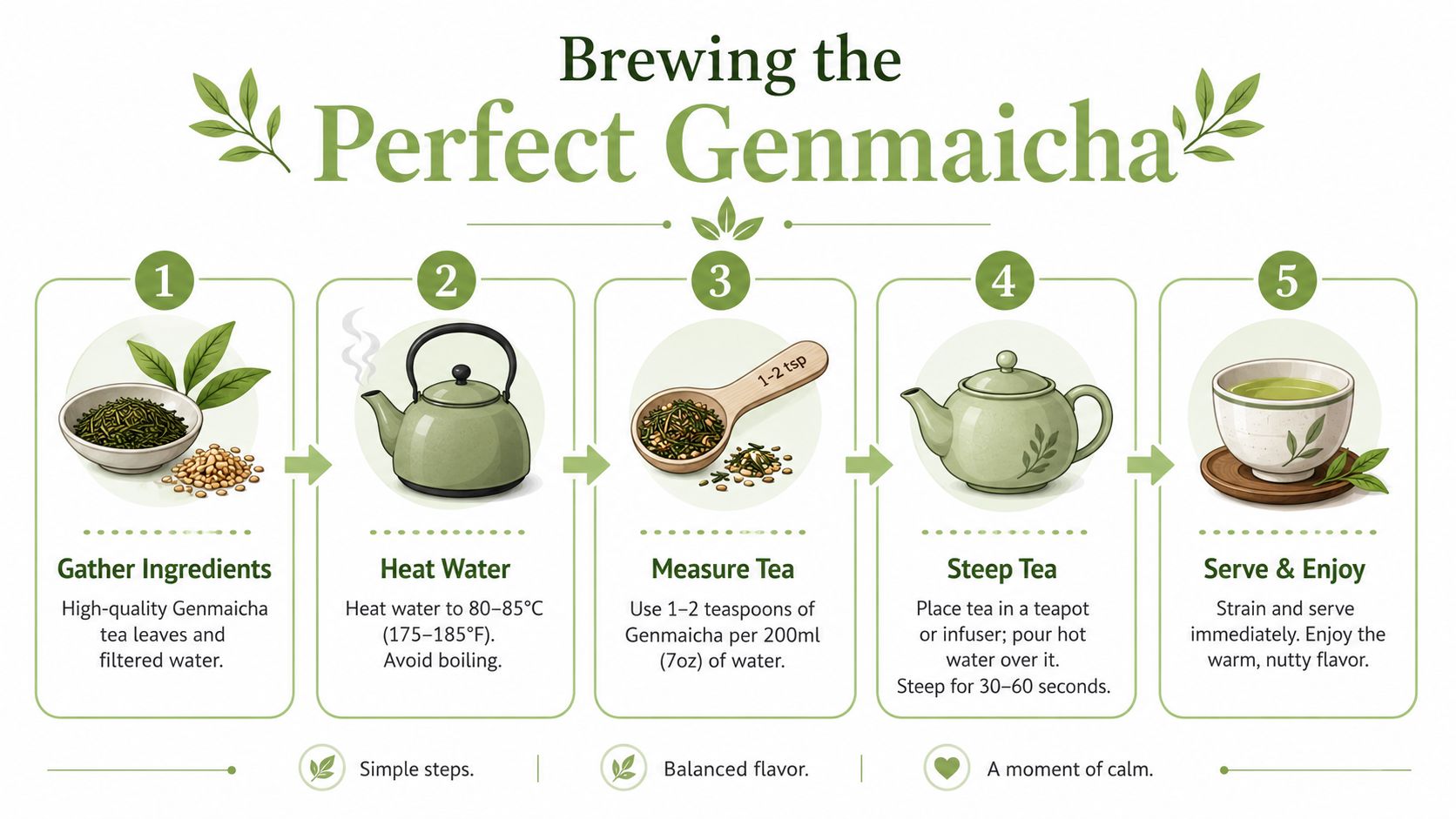
A simple brewing method
Use this as an easy starting point:
- Heat the water gently. Aim for 80 to 85°C. Boiling water can make green tea taste harsh.
- Measure your tea. Use a modest spoonful for a regular mug or small teapot.
- Steep briefly. Around 1 to 3 minutes usually gives a balanced cup.
- Taste and adjust. If it's too light, steep a little longer next time. If it's too strong, shorten the infusion.
- Pour straight away. Leaving the leaves sitting in water too long can make the cup less soft.
Why temperature matters
Many people go wrong with green tea. They use freshly boiled water, then assume the tea is meant to taste bitter.
Genmaicha is more forgiving than some Japanese green teas because of the roasted rice, but the leaf still benefits from a gentler brew. Lower water temperature helps preserve sweetness and keeps the flavour rounded.
If your genmaicha tastes rough, change the water temperature before changing the tea.
Easy ways to enjoy it
Genmaicha doesn't have to be limited to a hot mug at home. It works beautifully in different settings.
- Hot with meals for a warming, savoury pairing
- Iced on warm Australian days for a refreshing but mellow drink
- As a tea latte with milk or a plant-based alternative if you enjoy a creamier cup
- On a café menu as a low-caffeine Japanese tea option for customers who don't want coffee
For cafés, the strongest appeal is usually flavour plus accessibility. Customers may not know much about genmaicha, but they often respond quickly to a short description like “Japanese green tea with roasted rice, smooth and nutty.”
A few common mistakes to avoid
Not every disappointing cup means the tea is poor quality. Often it's just the method.
- Using boiling water can flatten the softer roasted notes
- Steeping too long can push the green tea side forward too aggressively
- Using too little leaf can make the cup feel thin
- Adding sweetener too quickly can cover the natural toasted flavour that makes genmaicha special
A plain brew first is always the best test. Once you know its natural profile, you can decide whether you prefer it neat, iced, or with milk.
Is Genmaicha the Right Tea for Your Wellness Routine
Genmaicha suits people who want wellness to feel sustainable, not extreme. It's a tea for everyday rhythm. You drink it because it tastes comforting, because it feels lighter than coffee, and because it gives you a simple ritual you can return to without much effort.
That makes it especially appealing if you're caffeine-sensitive, trying to reduce stimulant intake, or looking for a more grounded afternoon drink. It also works well for people who like the idea of green tea but want something softer and more approachable than stronger styles.
Who tends to enjoy it most
Genmaicha often fits best for:
- Busy professionals who want a calmer tea break
- Tea beginners who don't enjoy bitterness
- Mindful drinkers building a low-sugar, lower-caffeine routine
- Café customers looking beyond coffee and standard black tea
There are still a few sensible notes of caution. Because it contains caffeine, even at a lower level, some people will still want to be mindful. That includes those managing caffeine sensitivity, pregnancy concerns, or blood sugar questions in a broader health context. If you're also exploring other gentle ways to support steady energy through the day, these tips for natural energy boosts are a useful companion read.
A calm place in a broader tea routine
Genmaicha doesn't replace every tea. It fills a specific role. Matcha may suit mornings when you want more focus and intensity. Genmaicha suits the moments when you want warmth, balance, and a little less push.
If you enjoy rotating your drinks depending on time of day, tolerance, and mood, it can help to understand safe intake across stronger teas too. This guide on how many cups of matcha tea powder are safe per day adds useful context for anyone building a more intentional tea habit.
Genmaicha's real value is simple. It makes green tea easier to live with.
If you'd like to keep exploring functional tea in a thoughtful, everyday way, visit Pep Tea for premium organic Japanese matcha, Australian-brewed sugar-free kombucha, and practical guides that help you choose the right drink for calm focus, clean energy, and daily wellness.
Genmaicha vs Matcha: A Complete Guide to Choosing Your Tea
You're standing at a café counter in Newcastle, Melbourne, or somewhere in between. The menu offers a matcha latte, a pot of genmaicha, and maybe a few other green teas. Both names sound healthy. Both are Japanese. Both are green.
But they're not the same drink at all.
One is vivid, creamy, and built for a focused lift. The other is mellow, toasty, and feels like the tea version of a warm jumper. If you've ever wondered about Genmaicha vs Matcha, the most useful question isn't which one is better. It's which one suits this moment.
That's where people often get stuck. They hear “green tea” and assume the difference is minor. In practice, these teas behave differently in the cup, in your body, and in your daily routine. One works beautifully for a morning reset or a pre-work ritual. The other shines beside lunch, during a quiet afternoon, or when you want something gentler.
The Green Tea Dilemma Genmaicha or Matcha
A lot of Australians first meet matcha through a latte. Bright green, a bit earthy, maybe slightly sweet if the café has done it well. Genmaicha usually arrives differently. It might be tucked away on a loose-leaf shelf, or listed on a tea menu without much explanation.
That's why the confusion is so common.
You look at the two and think, “Both are Japanese green teas. Surely they'll taste pretty similar.” Then you try them. Matcha feels dense and vivid. Genmaicha smells like toasted rice and tastes soft, savoury, and calm. Same family, completely different personality.
The simplest explanation is this:
| Tea | What it is | What it feels like | Best moment |
|---|---|---|---|
| Genmaicha | Green tea blended with roasted brown rice | Comforting, light, toasty | Afternoon, with food, winding down |
| Matcha | Shade-grown green tea ground into a fine powder | Rich, creamy, vibrant | Morning, focused work, coffee alternative |
What's needed isn't a tea lecture, but a practical answer. If you're trying to cut back on coffee, matcha might be the one that makes sense. If you want a gentler cup that won't dominate your palate, genmaicha often feels easier to live with day to day.
The right tea isn't the fanciest one. It's the one that fits what you need right now.
That could be energy. It could be comfort. It could be something that works with lunch instead of fighting it. Once you understand how each tea is made and what that means in the cup, the choice gets much easier.
Genmaicha Explained The Soul of Toasted Rice Tea
Genmaicha is one of the most approachable Japanese teas you can drink. It's a blend, not a powder. The classic version combines green tea with roasted brown rice, and that rice is what gives genmaicha its signature aroma and gentle, cereal-like warmth.
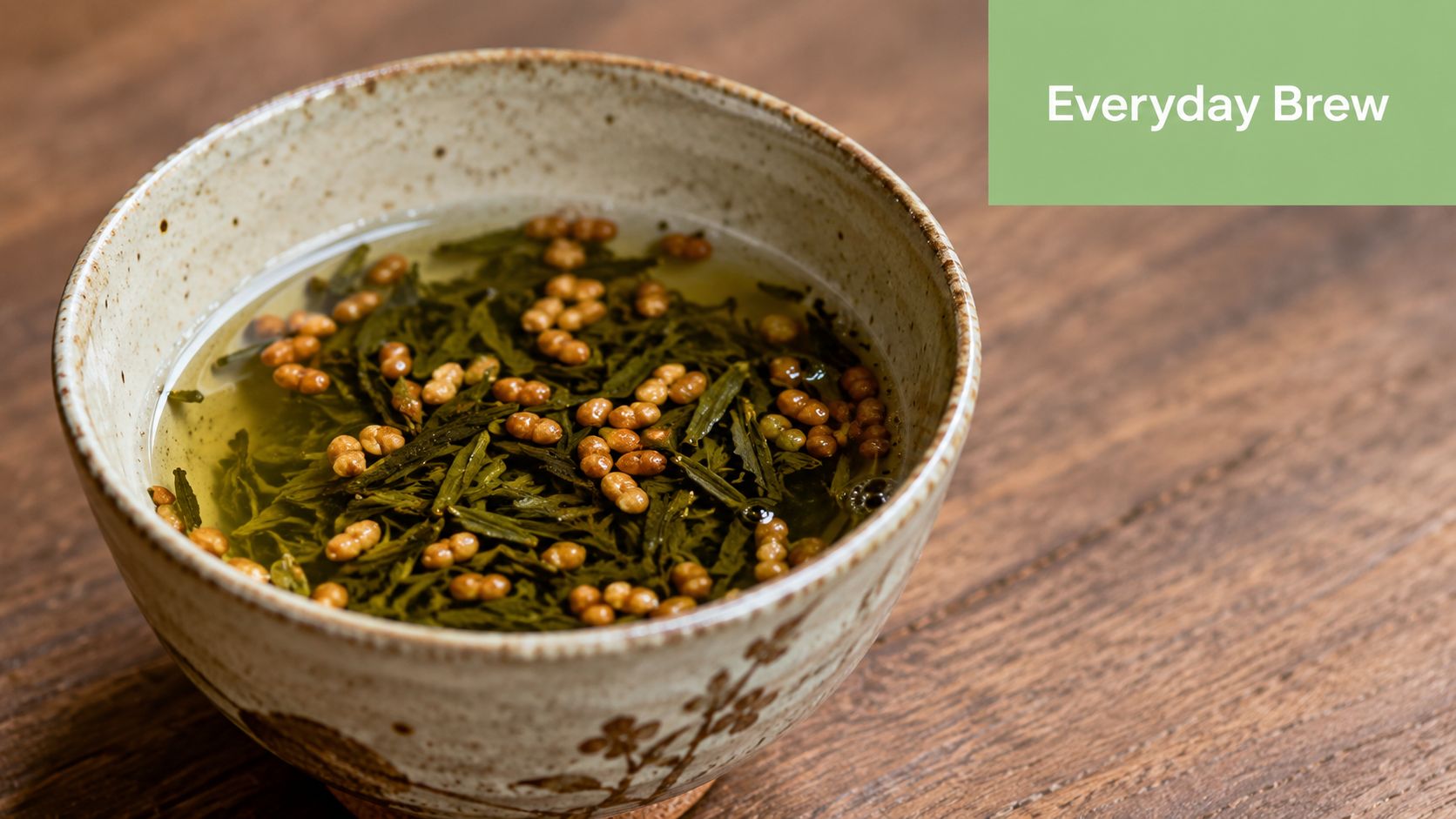
What's actually in genmaicha
The clearest historical distinction between genmaicha and matcha comes down to processing. Genmaicha is a blended tea made from green tea plus roasted brown rice, while matcha is made from shade-grown tea leaves that are ground into powder. Genmaicha typically contains about 50% to 75% brown rice and 25% to 50% green tea, which helps explain why the brewed liquor tends to look more yellow-gold than bright green, as outlined in this comparison of matcha, hojicha, and genmaicha.
That rice-heavy blend shapes the whole drinking experience. Less tea leaf in the cup usually means a softer profile and less intensity.
If you browse a range of Japanese green tea options, genmaicha often stands out as the one people choose when they want something easy-going rather than dramatic.
Why it feels so comforting
Genmaicha has a very particular charm. The roasted rice brings a nutty, savoury scent that many people compare to popcorn, toasted grain, or warm rice crackers. The green tea side keeps it fresh, but the overall cup is mild, round, and friendly.
That's why it works so well for people who find some green teas too grassy or sharp.
A few moments where genmaicha makes immediate sense:
- With meals: Its savoury edge pairs naturally with rice dishes, grilled fish, simple lunches, and lighter snacks.
- In the afternoon: It feels restorative without demanding your full attention.
- For new tea drinkers: It's often easier to enjoy from the first sip than a more intense green tea.
Market-stall rule: If someone says, “I want something soothing, not too strong,” genmaicha is usually where I'd start.
The everyday tea character
Historically, genmaicha has been associated with thrift, practicality, and daily use. It's the kind of tea built around home drinking, not ceremony. That humble background is part of its appeal. It doesn't ask you to perform tea appreciation. It just tastes good and feels grounding.
If matcha is the lively, polished performer, genmaicha is the dependable cup you reach for when you want warmth, ease, and a little toasted comfort.
Matcha Unveiled The Essence of Powdered Green Tea
Matcha is green tea in a very different form. Instead of steeping leaves and discarding them, you whisk a fine powder into water and drink the whole thing. That changes the texture, the flavour, the look, and the overall impact of the cup.
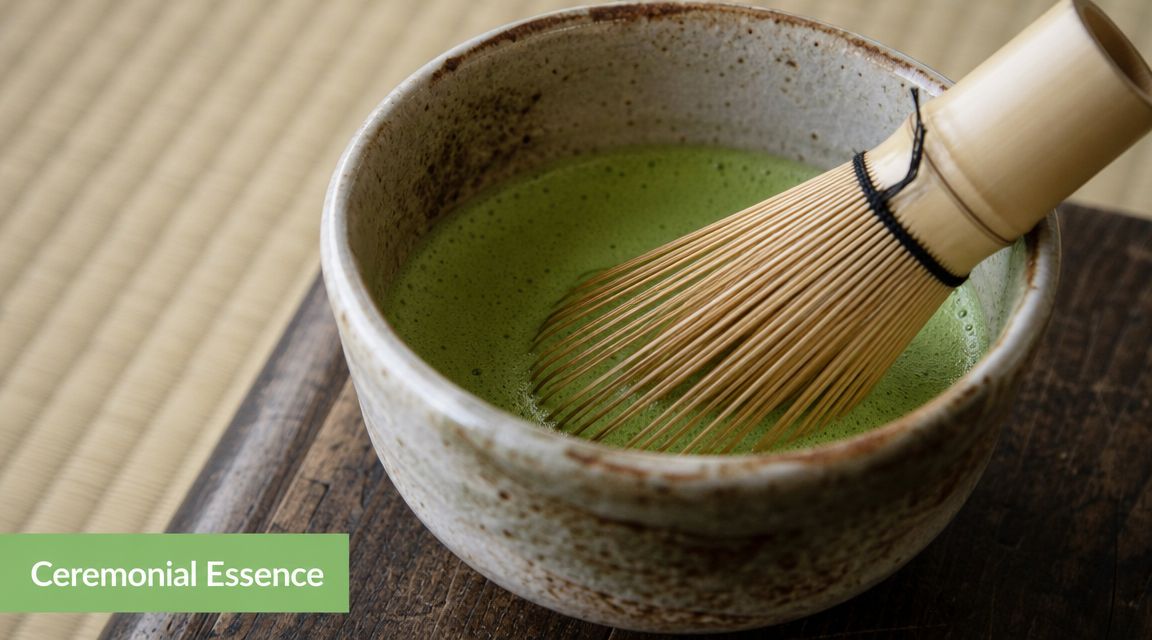
What makes matcha different
Matcha is made from shade-grown tea leaves called tencha that are stone-ground into a fine powder. That production method is central to its identity and part of what separates it so clearly from genmaicha, as described in this guide on how matcha tea is made.
Because the powder suspends in liquid rather than being strained out, matcha produces a cup that looks vivid green and feels fuller on the palate. You're not drinking an infusion. You're drinking the leaf itself in powdered form.
That's why matcha often feels more concentrated in both flavour and effect.
How it tastes and why people love it
Good matcha usually brings a mix of vegetal freshness, savoury depth, natural sweetness, and a pleasant bitterness that gives structure rather than harshness. The texture matters too. When whisked well, it's smooth and creamy, with fine froth on top.
For many people, the “aha” moment with matcha is realising it's not meant to taste like ordinary green tea.
It has more presence. More body. More colour. More of that deep umami note that lingers after the sip.
A short visual demo helps if you've never seen proper preparation in action:
Why matcha suits a functional routine
Matcha has become popular well beyond traditional tea circles because it fits modern habits so neatly. It works as a straight tea, a latte, a smoothie ingredient, or a café staple. It also lends itself to more standardised preparation because the powder disperses through the drink instead of relying on steep time alone.
That matters if you want consistency.
- For a morning ritual: Matcha can replace the “grab a coffee and go” habit with something more deliberate.
- For focused work: Many drinkers like it before study, desk work, or creative tasks.
- For recipes: Its colour and flavour carry through beautifully in food and drinks.
Matcha isn't just another green tea. It behaves more like an ingredient, a ritual, and a beverage all at once.
If genmaicha is easy comfort, matcha is purposeful energy with a strong visual and sensory identity.
A Detailed Comparison Flavour Health and Energy
When people compare Genmaicha vs Matcha, they often jump straight to caffeine. That matters, but it isn't the whole story. The bigger difference starts with structure. One is a brewed blend of tea and roasted rice. The other is a powdered tea that stays suspended in the liquid.
That one difference changes nearly everything else.
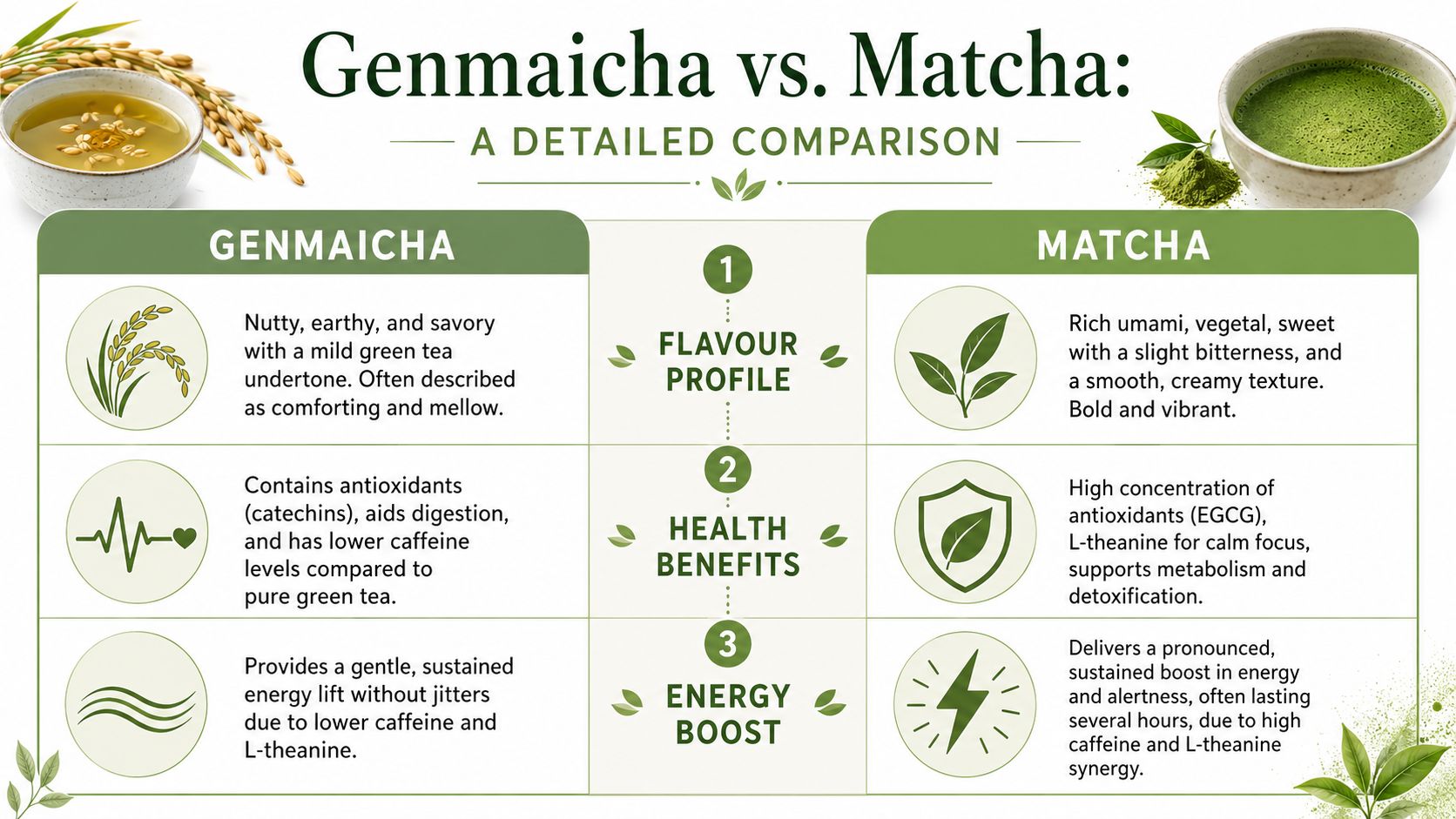
Flavour profile
Genmaicha leans toasty, savoury, and mellow. The roasted rice softens the greener notes and gives the tea a snack-like aroma that feels familiar even to people new to Japanese tea.
Matcha goes in the opposite direction. It's thicker, greener, and more umami-forward. Because it's a fine powder that fully suspends in liquid, it delivers a creamier body and more concentrated green flavour.
According to Tea Vision's comparison of genmaicha, matcha, and hojicha, matcha's particle structure helps create a thick, creamy, high-umami cup with pronounced green colour, while genmaicha typically offers a lighter body, toasted-nut aroma, and a cleaner, more diluted green tea profile.
Key takeaway: If you want bold and vivid, choose matcha. If you want light and cosy, choose genmaicha.
Health and functional character
It's tempting to turn this into a “superfood showdown”, but that usually creates more confusion than clarity.
A more practical way to frame it is this:
- Matcha suits people who want intensity, consistency, and a tea that can anchor a functional beverage routine.
- Genmaicha suits people who want a gentler cup with less bitterness and a softer overall feel.
Tea Vision also notes that matcha is technically better suited to standardised dosed beverages where solubility, colour intensity, and functional consistency matter, while genmaicha works well as a milder, lower-cost tea base with reduced bitterness.
That's useful whether you're choosing for home or for a café menu.
Energy and caffeine feel
Most shoppers pause; they want to know which tea will wake them up, which one is less likely to interfere with sleep, and whether “green tea” automatically means low caffeine.
The answer is more nuanced than a simple yes or no.
Because genmaicha includes roasted rice and less tea leaf, it's generally the lower-caffeine option. Matcha is usually the stronger choice in this comparison. If you want a broader explanation of how matcha compares with other caffeinated drinks, Maximum Health Products' caffeine guide is a handy starting point.
For many people, genmaicha feels like a quiet lift. Matcha feels like a clear signal that the day has started.
Which matters more in real life
Most tea decisions aren't made in a tasting lab. They're made at 7 am, 3 pm, or after dinner.
Use this shortcut:
| If you want… | Often the better fit |
|---|---|
| Toasty comfort with food | Genmaicha |
| A creamy tea or latte base | Matcha |
| A milder cup with less bitterness | Genmaicha |
| A vivid, concentrated green tea experience | Matcha |
If you stop treating them as substitutes and start treating them as tools for different moments, the comparison gets much more helpful.
The Art of Preparation Brewing vs Whisking
Genmaicha and matcha ask for different handling. That's not tea snobbery. It's just the reality of leaf tea versus powder. If you prepare them the same way, one of them will disappoint you.
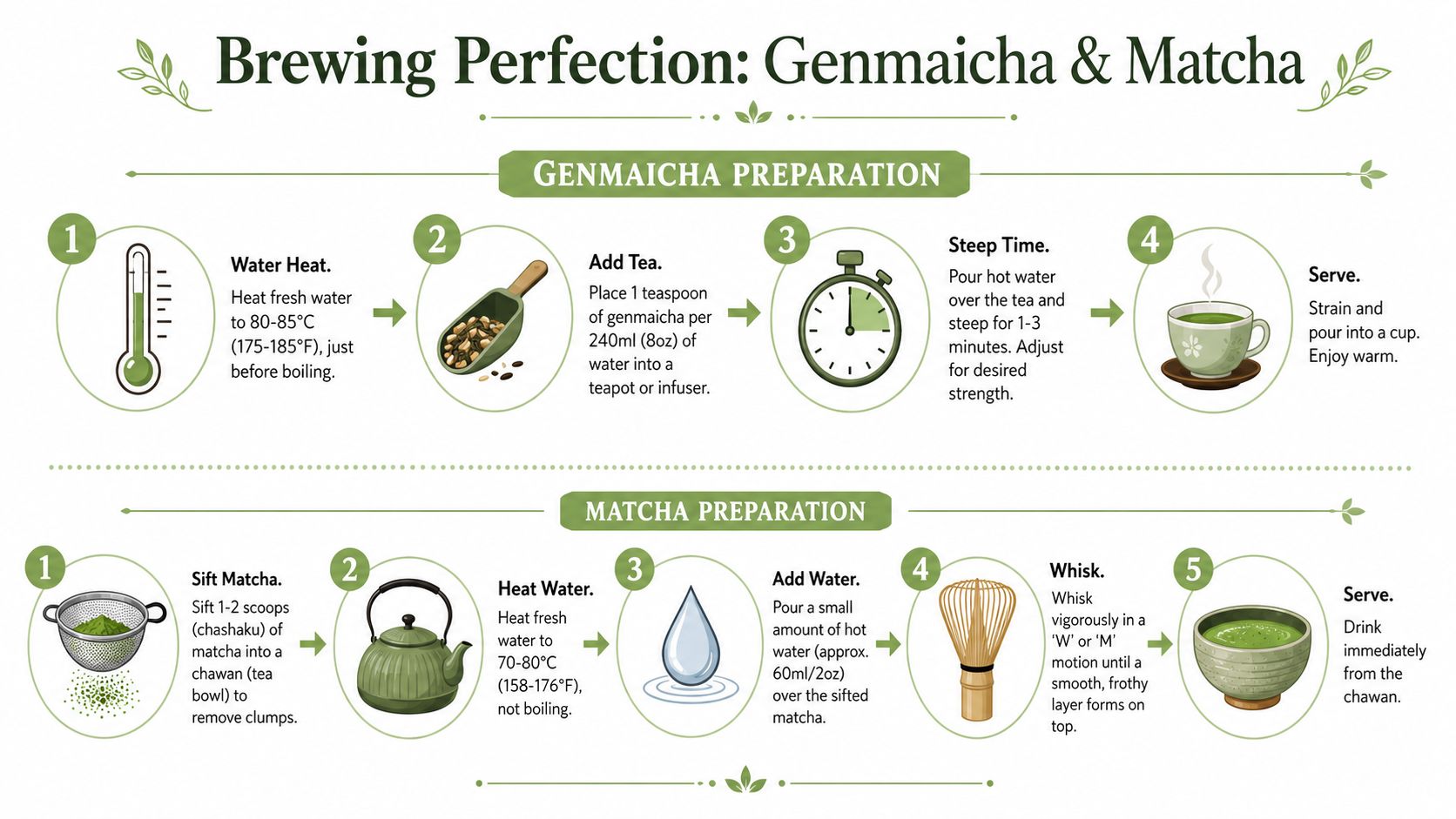
Brewing genmaicha well
Genmaicha is forgiving, but it still benefits from a little care. The key is not scorching the green tea component. Water that's too hot can flatten the toastiness and bring out more bitterness than you want.
A simple home method works beautifully:
- Heat fresh water to 80 to 85°C.
- Use 1 teaspoon of genmaicha per 240ml of water.
- Steep for 1 to 3 minutes.
- Strain and drink warm.
If you prefer your tea softer and sweeter, shorten the steep. If you want a little more backbone with food, let it go a bit longer.
Whisking matcha without overthinking it
Matcha sounds fussy until you do it once or twice. After that, it's quick.
For a traditional bowl:
- Sift first: This helps remove clumps and gives you a smoother drink.
- Use hot, not boiling water: Around 70 to 80°C is the usual sweet spot.
- Add a small amount of water first: Enough to form the base for whisking.
- Whisk briskly: A bamboo whisk in a loose W or M motion helps create a fine froth.
If you'd like a visual walkthrough, this guide on how to whisk matcha makes the process easy to follow.
Practical tip: If your matcha tastes flat or overly bitter, the water is often too hot, or the powder wasn't whisked thoroughly.
For busy mornings and lattes
You don't need to go fully ceremonial every day. A milk frother, shaker bottle, or small whisk can get the job done for a home latte. What matters most is breaking up the powder properly before adding more liquid.
That's a common mistake. They pour everything in at once, then blame the tea for the lumps.
Try this instead:
- Start small: Mix the powder with a little water first.
- Build gradually: Add the rest once you've made a smooth base.
- Choose your texture: More water for a lighter cup, milk for a fuller latte.
Genmaicha rewards brewing. Matcha rewards whisking. Once you respect that difference, both teas get much better.
When to Choose Which A Guide for Your Daily Ritual
The comparison becomes useful in practical terms. Not in theory. In real life.
The best tea for your morning isn't always the best tea for your late afternoon. The best tea before a workout may not be the one you want after dinner. For many Australians, that's the key decision point.
A thoughtful piece on choosing between genmaicha and matcha for caffeine-sensitive users makes this point well. Australia's TGA requires listed medicines containing caffeine to declare it and notes that caffeine effects depend heavily on total dose and timing, while FSANZ notes that tea and caffeine exposure can vary widely with preparation. In plain English, the better question isn't “Which tea is healthier?” It's “Which one fits my afternoon, sleep, or training routine?”
Choose genmaicha when
Genmaicha makes sense when you want tea to support the moment rather than dominate it.
- You want something gentler: If you're caffeine-sensitive or don't want a strong push, genmaicha is often the easier pick.
- You're drinking tea with food: Its toasted rice character pairs naturally with savoury meals and snacks.
- You want an afternoon or evening cup: Many people find it better suited to slower parts of the day.
- You're easing into green tea: It can be friendlier for people who find stronger green teas too intense.
A good example is the 3 pm slump. You don't want another coffee. You still want something warm and restorative. Genmaicha fits that slot beautifully.
Choose matcha when
Matcha earns its place when you want your drink to do more heavy lifting.
- You want a coffee alternative: Matcha can anchor a stronger morning routine.
- You need focus: Before work, study, or a training session, it often feels more purposeful.
- You enjoy ritual: Whisking a bowl or making a proper latte can become a steady daily habit.
- You want flavour presence: Matcha won't disappear into milk, smoothies, or baking.
If genmaicha says “settle in”, matcha says “let's get moving”.
The easiest way to decide
Ask yourself three quick questions:
- What time of day is it?
- Do I want comfort or momentum?
- Am I drinking this on its own or with food?
If the answers point to calm, warmth, and ease, go genmaicha. If they point to alertness, routine, and concentration, go matcha.
That's the whole game. Not better or worse. Just better for this moment.
From Lattes to Loaves Culinary Creativity with Both Teas
These teas don't have to stay in the cup.
Matcha is the obvious kitchen favourite because it brings strong colour, a recognisable flavour, and enough structure to hold up in milk, batter, and dessert. It works beautifully in lattes, smoothies, chia puddings, pancakes, icing, and simple bakes like shortbread or loaf cake. If you've ever had a green cheesecake slice or a soft matcha muffin at a café, you already know how well it performs.
Genmaicha is quieter, but that's part of the fun. Brew it strong and use it as a liquid base for rice dishes or light broths. Steep it for a syrup that can be brushed over sponge or stirred into poached fruit. The toasted rice note also plays nicely in savoury cooking, especially in dishes where you want a gentle grain-like warmth rather than a loud tea flavour.
A few easy ideas to try:
- Matcha latte: Hot or iced, plain or lightly sweetened.
- Matcha baking: Loaves, biscuits, pancakes, or overnight oats.
- Genmaicha broth: Use the brewed tea in a simple savoury bowl.
- Genmaicha syrup: Add to desserts where a nutty, toasted note makes sense.
That's why the best Genmaicha vs Matcha conversation always comes back to use, not status. Matcha is vivid, focused, and versatile in drinks and recipes. Genmaicha is soothing, food-friendly, and subtly brilliant when you want comfort without heaviness.
Both deserve a place in a well-stocked tea cupboard. You just won't reach for them for the same reason.
If you'd like to explore premium organic Japanese tea for your own daily ritual, Pep Tea is a great place to start. Browse the range for quality matcha, practical brewing guides, and everyday inspiration for building a tea habit that feels good and fits real Australian life.
Is matcha different from Japanese green tea?
Most of us are by now familiar with green tea powder but there is more to Japanese green tea than just matcha.
Like most things in Japan, tea growing is done with careful consideration. An art form that honours tradition and spares no attention to detail.
Types of Japanese green tea
Whilst there are many types of Japanese green tea, they can be sorted into two main categories. Tea that is grown in the shade and tea that is grown in full sun. Matcha may be a powder, but it begins life as all tea does; the green leaves of the tea plant.
Matcha and gyokuro green teas
Matcha belongs to the group of teas that are grown in the shade. As we saw in our article on the different grades of matcha, some green tea in Japan is grown in the shade for around the last month before the harvest. This reduces the rate of photosynthesis, concentrating chlorophyll and increasing levels of theanine. A process that results in sweet mellow flavours, with less bitter undertones, and deep green colour.
Both matcha and gyokuro green teas are grown in this way. After processing, matcha ends up as a fine green powder whereas gyokuro is a leaf tea. The leaves are steamed and dried, then kneaded before sorting. Kneading breaks down the fibres so that flavour and nutrients are more readily extracted during brewing. Gyokuro karigane is a less expensive version of the tea made from the stems rather than the leaves.
Sencha green tea
Other teas are grown in full sunlight right up until harvest. This results in a concentration of catechins rather than theanine and these give tea its characteristic bitter flavour. With less chlorophyll than shade grown tea, the leaves are a golden green colour.
Sencha and genmaicha teas are both grown in full sunlight. The most popular green leaf tea in Japan, sencha is a bright energising everyday tea. It has a mellow and refreshing flavour with a balanced bitterness. There are many different types of sencha available.
Genmaicha is a blend of Japanese green tea made from sencha leaves mixed with toasted brown rice. Originally a cost effective way of making expensive green tea leaves go further, genmaicha is prized for its rich roasted flavour reminiscent of coffee that makes it ideal at breakfast time.
Hojicha is sencha that has been roasted. It is more similar to black tea but has a fresher flavour profile.
The difference between black and green tea
Tea all looks the same when it is harvested. It is the processing that makes the difference between green and black tea.
Once harvested, tea leaves destined to be black tea are left to wither and ferment. The process of fermentation allows the leaves to oxidise, changing the colour from green to brown then black. But it is not just the colour that changes. The deep earthy flavour of black tea is all down to careful control of this oxidation process.
On the other hand, leaves for green tea are exposed to heat as soon as they are picked. Usually steaming, this process halts oxidation and results in not only the green colour but the fresh grassy herbal tones of green tea.
Is matcha different from green tea?
Matcha is just one of many varieties of Japanese green tea, yet it is unique in that it takes the form of a powder. The entire leaf is processed and ground, with the resulting powder brewed and drunk. This is different from most teas, where the leaf is brewed and then thrown away.
Does Japanese green tea contain caffeine?
Japanese green teas are often higher in caffeine due to the gentle steaming process. The caffeine in tea is bound to antioxidants which slow the rate of absorption. This makes for a more gradual caffeine hit with none of the jitters associated with coffee. Gyokuro and matcha, the shade grown teas, have the most caffeine. Hojicha has very little caffeine, whilst sencha comes somewhere in between.
Making Japanese green tea
The subtle nuances of Japanese green tea can be lost if not brewed with consideration. Temperature and brew time are both of importance.
To brew sencha tea, boil water and let it stand for a few minutes to come down to 80C. Brew for 1 minute before lifting out the leaves.
Matcha tea is whisked into water of between 70 and 85C.
Genmaicha tea is brewed in freshly boiled water for 1 minute.
Hojicha tea is brewed in freshly boiled water for 30 seconds.
Health benefits matcha vs green tea
Matcha and other varieties of green tea share potent antioxidant benefits but it is thought that matcha is more beneficial to health as the whole leaf is ingested.
Why not explore our range of matcha green tea or buy online from our gourmet grocery store?