
Tag: health benefits of tea
Genmaicha vs Matcha: A Complete Guide to Choosing Your Tea
You're standing at a café counter in Newcastle, Melbourne, or somewhere in between. The menu offers a matcha latte, a pot of genmaicha, and maybe a few other green teas. Both names sound healthy. Both are Japanese. Both are green.
But they're not the same drink at all.
One is vivid, creamy, and built for a focused lift. The other is mellow, toasty, and feels like the tea version of a warm jumper. If you've ever wondered about Genmaicha vs Matcha, the most useful question isn't which one is better. It's which one suits this moment.
That's where people often get stuck. They hear “green tea” and assume the difference is minor. In practice, these teas behave differently in the cup, in your body, and in your daily routine. One works beautifully for a morning reset or a pre-work ritual. The other shines beside lunch, during a quiet afternoon, or when you want something gentler.
The Green Tea Dilemma Genmaicha or Matcha
A lot of Australians first meet matcha through a latte. Bright green, a bit earthy, maybe slightly sweet if the café has done it well. Genmaicha usually arrives differently. It might be tucked away on a loose-leaf shelf, or listed on a tea menu without much explanation.
That's why the confusion is so common.
You look at the two and think, “Both are Japanese green teas. Surely they'll taste pretty similar.” Then you try them. Matcha feels dense and vivid. Genmaicha smells like toasted rice and tastes soft, savoury, and calm. Same family, completely different personality.
The simplest explanation is this:
| Tea | What it is | What it feels like | Best moment |
|---|---|---|---|
| Genmaicha | Green tea blended with roasted brown rice | Comforting, light, toasty | Afternoon, with food, winding down |
| Matcha | Shade-grown green tea ground into a fine powder | Rich, creamy, vibrant | Morning, focused work, coffee alternative |
What's needed isn't a tea lecture, but a practical answer. If you're trying to cut back on coffee, matcha might be the one that makes sense. If you want a gentler cup that won't dominate your palate, genmaicha often feels easier to live with day to day.
The right tea isn't the fanciest one. It's the one that fits what you need right now.
That could be energy. It could be comfort. It could be something that works with lunch instead of fighting it. Once you understand how each tea is made and what that means in the cup, the choice gets much easier.
Genmaicha Explained The Soul of Toasted Rice Tea
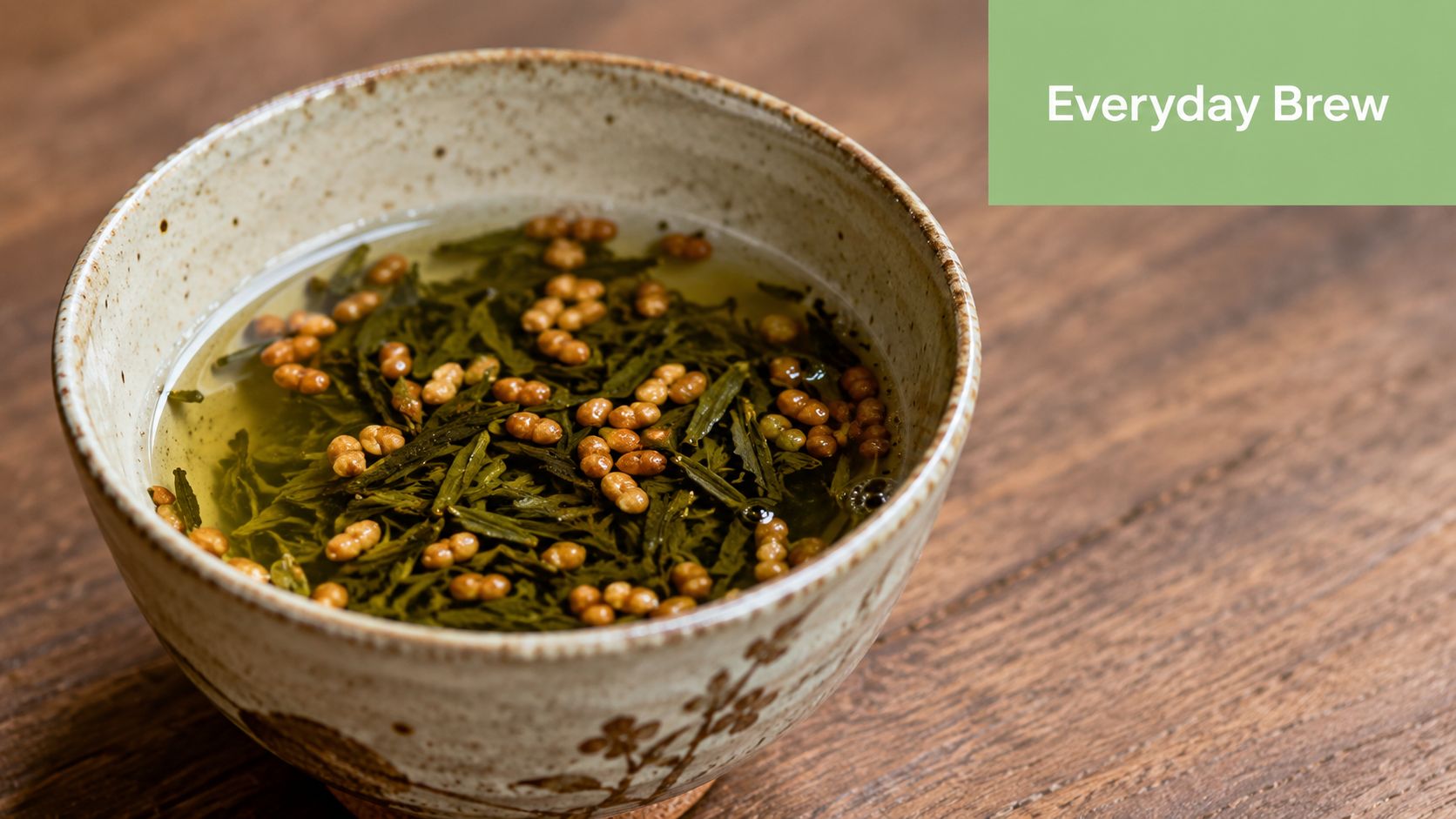
Genmaicha is one of the most approachable Japanese teas you can drink. It's a blend, not a powder. The classic version combines green tea with roasted brown rice, and that rice is what gives genmaicha its signature aroma and gentle, cereal-like warmth.
What's actually in genmaicha
The clearest historical distinction between genmaicha and matcha comes down to processing. Genmaicha is a blended tea made from green tea plus roasted brown rice, while matcha is made from shade-grown tea leaves that are ground into powder. Genmaicha typically contains about 50% to 75% brown rice and 25% to 50% green tea, which helps explain why the brewed liquor tends to look more yellow-gold than bright green, as outlined in this comparison of matcha, hojicha, and genmaicha.
That rice-heavy blend shapes the whole drinking experience. Less tea leaf in the cup usually means a softer profile and less intensity.
If you browse a range of Japanese green tea options, genmaicha often stands out as the one people choose when they want something easy-going rather than dramatic.
Why it feels so comforting
Genmaicha has a very particular charm. The roasted rice brings a nutty, savoury scent that many people compare to popcorn, toasted grain, or warm rice crackers. The green tea side keeps it fresh, but the overall cup is mild, round, and friendly.
That's why it works so well for people who find some green teas too grassy or sharp.
A few moments where genmaicha makes immediate sense:
- With meals: Its savoury edge pairs naturally with rice dishes, grilled fish, simple lunches, and lighter snacks.
- In the afternoon: It feels restorative without demanding your full attention.
- For new tea drinkers: It's often easier to enjoy from the first sip than a more intense green tea.
Market-stall rule: If someone says, “I want something soothing, not too strong,” genmaicha is usually where I'd start.
The everyday tea character
Historically, genmaicha has been associated with thrift, practicality, and daily use. It's the kind of tea built around home drinking, not ceremony. That humble background is part of its appeal. It doesn't ask you to perform tea appreciation. It just tastes good and feels grounding.
If matcha is the lively, polished performer, genmaicha is the dependable cup you reach for when you want warmth, ease, and a little toasted comfort.
Matcha Unveiled The Essence of Powdered Green Tea
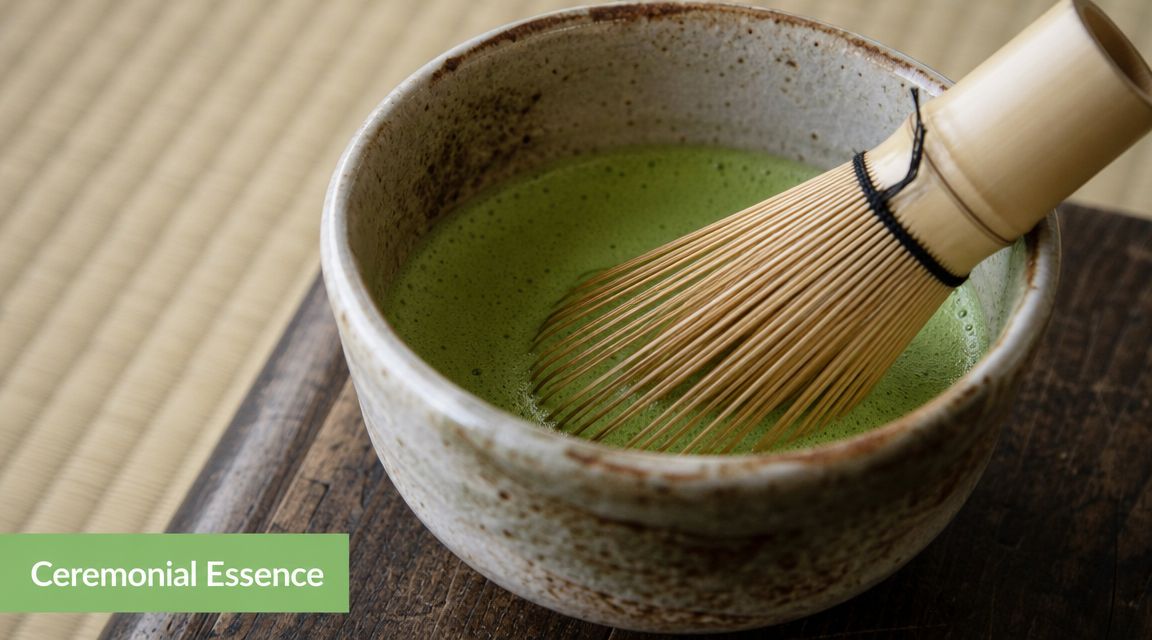
Matcha is green tea in a very different form. Instead of steeping leaves and discarding them, you whisk a fine powder into water and drink the whole thing. That changes the texture, the flavour, the look, and the overall impact of the cup.
What makes matcha different
Matcha is made from shade-grown tea leaves called tencha that are stone-ground into a fine powder. That production method is central to its identity and part of what separates it so clearly from genmaicha, as described in this guide on how matcha tea is made.
Because the powder suspends in liquid rather than being strained out, matcha produces a cup that looks vivid green and feels fuller on the palate. You're not drinking an infusion. You're drinking the leaf itself in powdered form.
That's why matcha often feels more concentrated in both flavour and effect.
How it tastes and why people love it
Good matcha usually brings a mix of vegetal freshness, savoury depth, natural sweetness, and a pleasant bitterness that gives structure rather than harshness. The texture matters too. When whisked well, it's smooth and creamy, with fine froth on top.
For many people, the “aha” moment with matcha is realising it's not meant to taste like ordinary green tea.
It has more presence. More body. More colour. More of that deep umami note that lingers after the sip.
A short visual demo helps if you've never seen proper preparation in action:
Why matcha suits a functional routine
Matcha has become popular well beyond traditional tea circles because it fits modern habits so neatly. It works as a straight tea, a latte, a smoothie ingredient, or a café staple. It also lends itself to more standardised preparation because the powder disperses through the drink instead of relying on steep time alone.
That matters if you want consistency.
- For a morning ritual: Matcha can replace the “grab a coffee and go” habit with something more deliberate.
- For focused work: Many drinkers like it before study, desk work, or creative tasks.
- For recipes: Its colour and flavour carry through beautifully in food and drinks.
Matcha isn't just another green tea. It behaves more like an ingredient, a ritual, and a beverage all at once.
If genmaicha is easy comfort, matcha is purposeful energy with a strong visual and sensory identity.
A Detailed Comparison Flavour Health and Energy
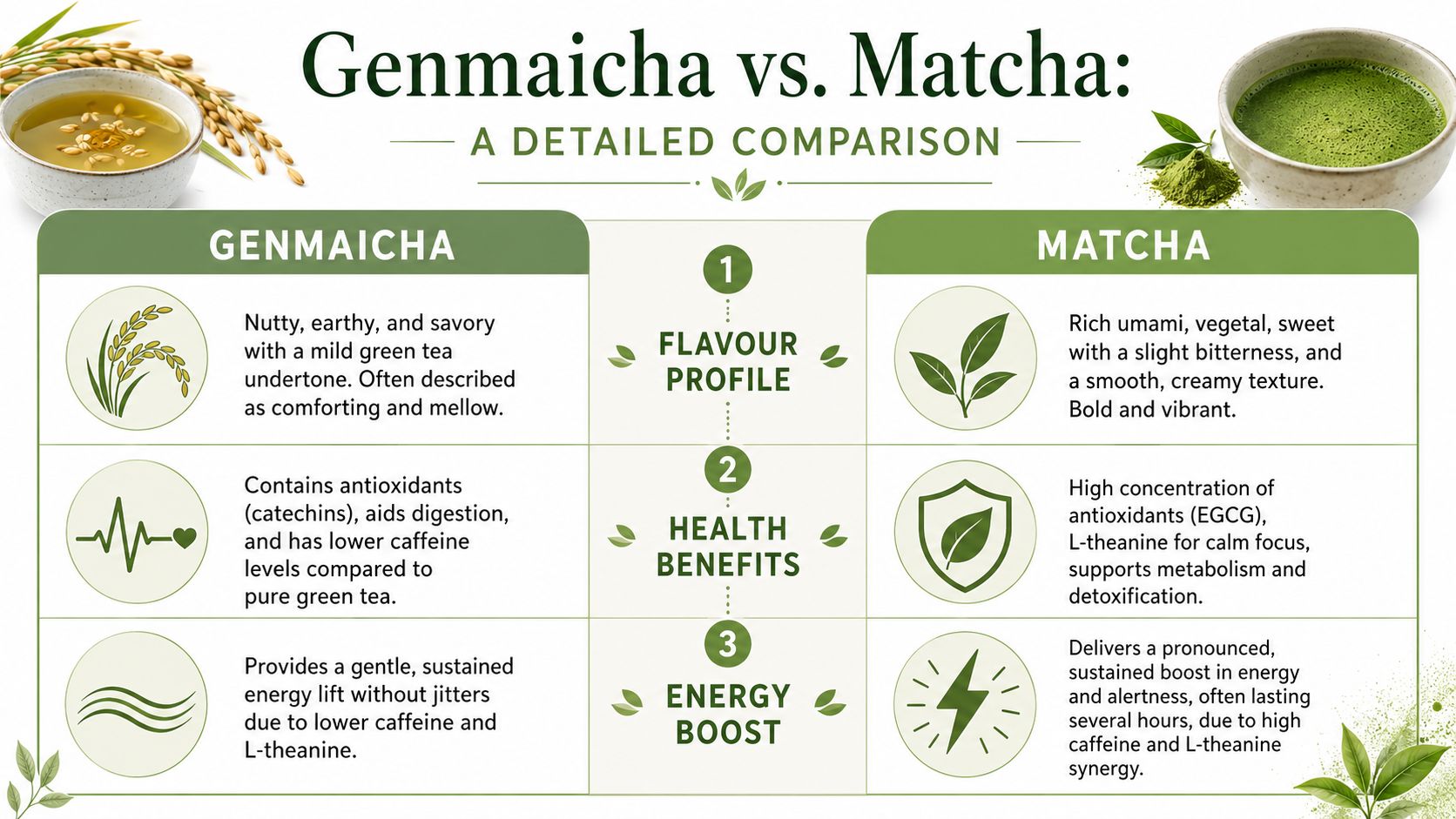
When people compare Genmaicha vs Matcha, they often jump straight to caffeine. That matters, but it isn't the whole story. The bigger difference starts with structure. One is a brewed blend of tea and roasted rice. The other is a powdered tea that stays suspended in the liquid.
That one difference changes nearly everything else.
Flavour profile
Genmaicha leans toasty, savoury, and mellow. The roasted rice softens the greener notes and gives the tea a snack-like aroma that feels familiar even to people new to Japanese tea.
Matcha goes in the opposite direction. It's thicker, greener, and more umami-forward. Because it's a fine powder that fully suspends in liquid, it delivers a creamier body and more concentrated green flavour.
According to Tea Vision's comparison of genmaicha, matcha, and hojicha, matcha's particle structure helps create a thick, creamy, high-umami cup with pronounced green colour, while genmaicha typically offers a lighter body, toasted-nut aroma, and a cleaner, more diluted green tea profile.
Key takeaway: If you want bold and vivid, choose matcha. If you want light and cosy, choose genmaicha.
Health and functional character
It's tempting to turn this into a “superfood showdown”, but that usually creates more confusion than clarity.
A more practical way to frame it is this:
- Matcha suits people who want intensity, consistency, and a tea that can anchor a functional beverage routine.
- Genmaicha suits people who want a gentler cup with less bitterness and a softer overall feel.
Tea Vision also notes that matcha is technically better suited to standardised dosed beverages where solubility, colour intensity, and functional consistency matter, while genmaicha works well as a milder, lower-cost tea base with reduced bitterness.
That's useful whether you're choosing for home or for a café menu.
Energy and caffeine feel
Most shoppers pause; they want to know which tea will wake them up, which one is less likely to interfere with sleep, and whether “green tea” automatically means low caffeine.
The answer is more nuanced than a simple yes or no.
Because genmaicha includes roasted rice and less tea leaf, it's generally the lower-caffeine option. Matcha is usually the stronger choice in this comparison. If you want a broader explanation of how matcha compares with other caffeinated drinks, Maximum Health Products' caffeine guide is a handy starting point.
For many people, genmaicha feels like a quiet lift. Matcha feels like a clear signal that the day has started.
Which matters more in real life
Most tea decisions aren't made in a tasting lab. They're made at 7 am, 3 pm, or after dinner.
Use this shortcut:
| If you want… | Often the better fit |
|---|---|
| Toasty comfort with food | Genmaicha |
| A creamy tea or latte base | Matcha |
| A milder cup with less bitterness | Genmaicha |
| A vivid, concentrated green tea experience | Matcha |
If you stop treating them as substitutes and start treating them as tools for different moments, the comparison gets much more helpful.
The Art of Preparation Brewing vs Whisking
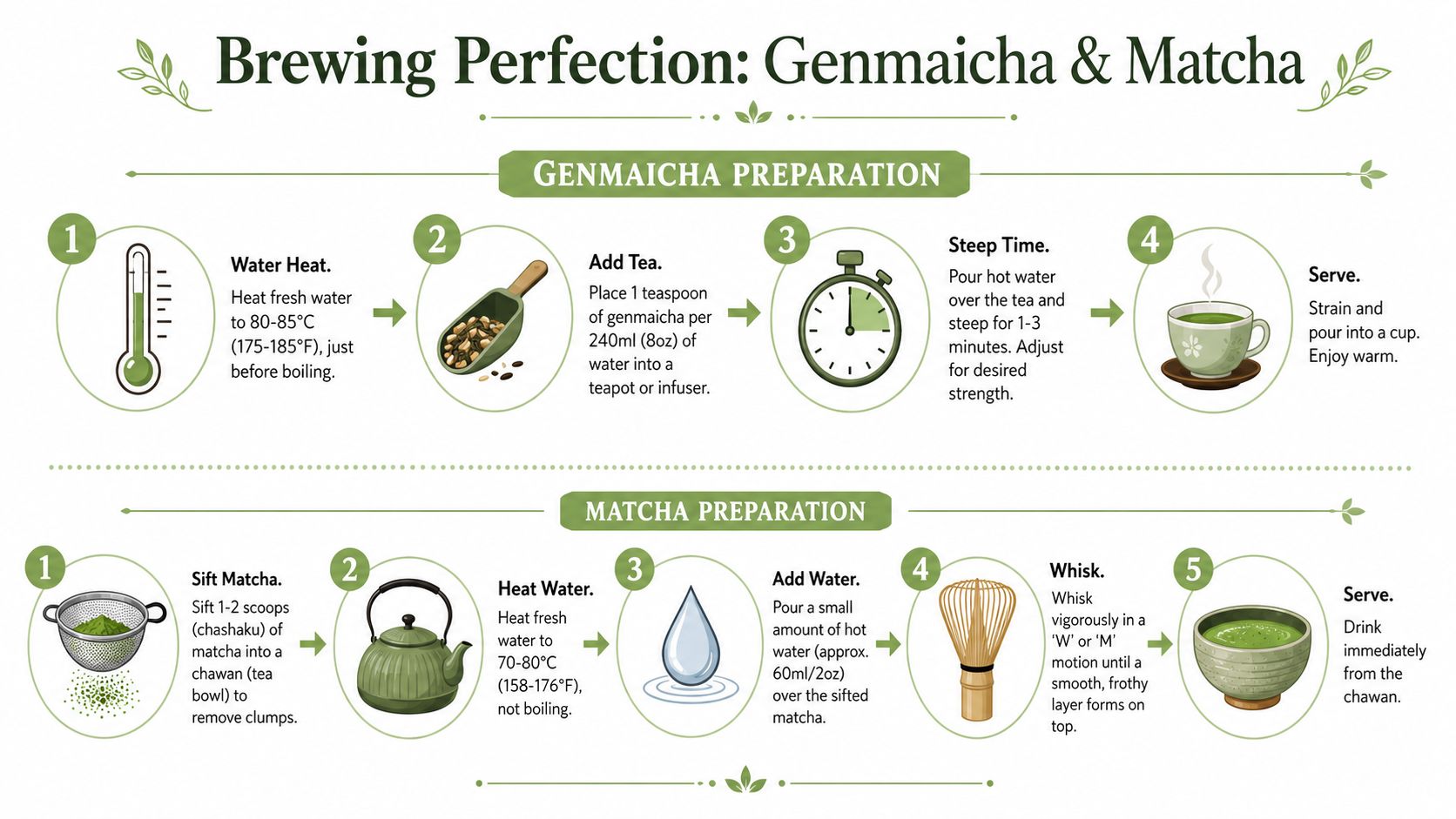
Genmaicha and matcha ask for different handling. That's not tea snobbery. It's just the reality of leaf tea versus powder. If you prepare them the same way, one of them will disappoint you.
Brewing genmaicha well
Genmaicha is forgiving, but it still benefits from a little care. The key is not scorching the green tea component. Water that's too hot can flatten the toastiness and bring out more bitterness than you want.
A simple home method works beautifully:
- Heat fresh water to 80 to 85°C.
- Use 1 teaspoon of genmaicha per 240ml of water.
- Steep for 1 to 3 minutes.
- Strain and drink warm.
If you prefer your tea softer and sweeter, shorten the steep. If you want a little more backbone with food, let it go a bit longer.
Whisking matcha without overthinking it
Matcha sounds fussy until you do it once or twice. After that, it's quick.
For a traditional bowl:
- Sift first: This helps remove clumps and gives you a smoother drink.
- Use hot, not boiling water: Around 70 to 80°C is the usual sweet spot.
- Add a small amount of water first: Enough to form the base for whisking.
- Whisk briskly: A bamboo whisk in a loose W or M motion helps create a fine froth.
If you'd like a visual walkthrough, this guide on how to whisk matcha makes the process easy to follow.
Practical tip: If your matcha tastes flat or overly bitter, the water is often too hot, or the powder wasn't whisked thoroughly.
For busy mornings and lattes
You don't need to go fully ceremonial every day. A milk frother, shaker bottle, or small whisk can get the job done for a home latte. What matters most is breaking up the powder properly before adding more liquid.
That's a common mistake. They pour everything in at once, then blame the tea for the lumps.
Try this instead:
- Start small: Mix the powder with a little water first.
- Build gradually: Add the rest once you've made a smooth base.
- Choose your texture: More water for a lighter cup, milk for a fuller latte.
Genmaicha rewards brewing. Matcha rewards whisking. Once you respect that difference, both teas get much better.
When to Choose Which A Guide for Your Daily Ritual
The comparison becomes useful in practical terms. Not in theory. In real life.
The best tea for your morning isn't always the best tea for your late afternoon. The best tea before a workout may not be the one you want after dinner. For many Australians, that's the key decision point.
A thoughtful piece on choosing between genmaicha and matcha for caffeine-sensitive users makes this point well. Australia's TGA requires listed medicines containing caffeine to declare it and notes that caffeine effects depend heavily on total dose and timing, while FSANZ notes that tea and caffeine exposure can vary widely with preparation. In plain English, the better question isn't “Which tea is healthier?” It's “Which one fits my afternoon, sleep, or training routine?”
Choose genmaicha when
Genmaicha makes sense when you want tea to support the moment rather than dominate it.
- You want something gentler: If you're caffeine-sensitive or don't want a strong push, genmaicha is often the easier pick.
- You're drinking tea with food: Its toasted rice character pairs naturally with savoury meals and snacks.
- You want an afternoon or evening cup: Many people find it better suited to slower parts of the day.
- You're easing into green tea: It can be friendlier for people who find stronger green teas too intense.
A good example is the 3 pm slump. You don't want another coffee. You still want something warm and restorative. Genmaicha fits that slot beautifully.
Choose matcha when
Matcha earns its place when you want your drink to do more heavy lifting.
- You want a coffee alternative: Matcha can anchor a stronger morning routine.
- You need focus: Before work, study, or a training session, it often feels more purposeful.
- You enjoy ritual: Whisking a bowl or making a proper latte can become a steady daily habit.
- You want flavour presence: Matcha won't disappear into milk, smoothies, or baking.
If genmaicha says “settle in”, matcha says “let's get moving”.
The easiest way to decide
Ask yourself three quick questions:
- What time of day is it?
- Do I want comfort or momentum?
- Am I drinking this on its own or with food?
If the answers point to calm, warmth, and ease, go genmaicha. If they point to alertness, routine, and concentration, go matcha.
That's the whole game. Not better or worse. Just better for this moment.
From Lattes to Loaves Culinary Creativity with Both Teas
These teas don't have to stay in the cup.
Matcha is the obvious kitchen favourite because it brings strong colour, a recognisable flavour, and enough structure to hold up in milk, batter, and dessert. It works beautifully in lattes, smoothies, chia puddings, pancakes, icing, and simple bakes like shortbread or loaf cake. If you've ever had a green cheesecake slice or a soft matcha muffin at a café, you already know how well it performs.
Genmaicha is quieter, but that's part of the fun. Brew it strong and use it as a liquid base for rice dishes or light broths. Steep it for a syrup that can be brushed over sponge or stirred into poached fruit. The toasted rice note also plays nicely in savoury cooking, especially in dishes where you want a gentle grain-like warmth rather than a loud tea flavour.
A few easy ideas to try:
- Matcha latte: Hot or iced, plain or lightly sweetened.
- Matcha baking: Loaves, biscuits, pancakes, or overnight oats.
- Genmaicha broth: Use the brewed tea in a simple savoury bowl.
- Genmaicha syrup: Add to desserts where a nutty, toasted note makes sense.
That's why the best Genmaicha vs Matcha conversation always comes back to use, not status. Matcha is vivid, focused, and versatile in drinks and recipes. Genmaicha is soothing, food-friendly, and subtly brilliant when you want comfort without heaviness.
Both deserve a place in a well-stocked tea cupboard. You just won't reach for them for the same reason.
If you'd like to explore premium organic Japanese tea for your own daily ritual, Pep Tea is a great place to start. Browse the range for quality matcha, practical brewing guides, and everyday inspiration for building a tea habit that feels good and fits real Australian life.