
Matcha Tea Kyoto: A Guide to Japan’s Green Gold
I still remember standing in Kyoto with a bowl of fresh matcha in hand, then walking a few streets over and seeing tins sold as if every green powder were the same. That's the trap with Kyoto matcha. The place is famous for a reason, but the labels don't always teach you how to buy well.
Your Guide to True Kyoto Matcha
Kyoto has a pull on tea lovers that's hard to overstate. You feel it in old tea shops, in the quiet rhythm of whisking, and in the way locals speak about Uji as if it's not just a region but a standard.
That romance is real, but so is the pressure on supply. The average price for first flush Tencha, the leaf used for matcha, in Kyoto rose from JPY 5,500 per kilogram in 2024 to JPY 14,333 in 2025, a 265% increase driven by declining harvests in this premium region, according to reporting on Kyoto Tencha pricing and supply. If you're buying for a home ritual, a café menu, or wholesale use in Australia, that matters.
It matters because scarcity makes surface-level buying riskier. A beautiful tin, a Kyoto reference, or a ceremonial label doesn't automatically mean the matcha suits what you want to make. Some powders are made to be whisked with water and enjoyed on their own. Others are better in lattes, smoothies, or baking where milk, sweetness, or heat change the flavour.
Practical rule: In a tight market, knowing the right grade matters almost as much as knowing the right origin.
That's where a lot of travel guides fall short. They'll tell you where to drink matcha in Kyoto, but not how to tell true Kyoto matcha from a product that borrows the city's reputation. They also rarely explain the difference between a bowl made for quiet sipping and a powder meant for a busy Australian café service.
If you're planning a tea-focused trip, thoughtfully built personalized Japan itineraries can help you experience Kyoto's tea culture with more context than a quick souvenir stop. If you're buying from home, the same principle applies. Slow down, ask better questions, and match the powder to the purpose.
The Ancient Roots of Matcha in Kyoto
Kyoto didn't become the spiritual home of matcha by accident. Its reputation was built over centuries, through monks, growers, tea makers, and ceremony practitioners who kept refining what powdered tea could be.
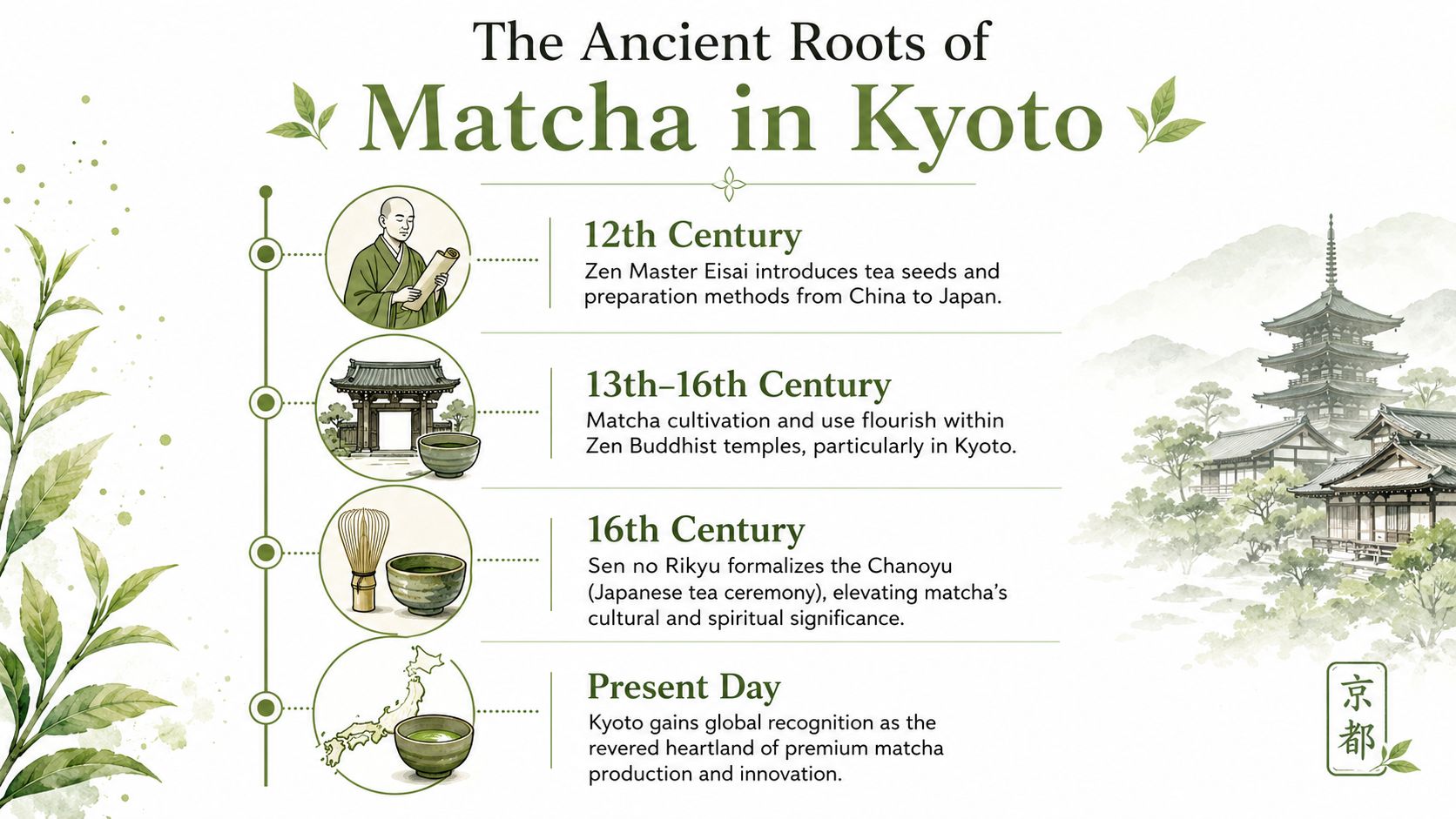
Zen Master Eisai introduced tea seeds and powdered tea methods to Japan in 1191, and tea production formally began in Uji, Kyoto, in the early 12th century, establishing the region's legacy for high-umami tea, as outlined in this history of Kyoto matcha culture. That's the moment many tea historians point to as the beginning of the Japanese matcha tradition we recognise today.
How Uji became the heart of the craft
Uji matters because tea culture in Japan didn't just need a starting point. It needed a place where technique and taste could mature together. Under the teachings of Myoe Shonin, tea production took root in Uji, and over time that local identity became known as Uji tea.
People often hear “Kyoto matcha” and think of a broad map label. Tea people usually hear “Uji” and think of a deeper marker of tradition, flavour, and handling. That distinction still matters now.
A few turning points shaped that identity:
- Tea methods arrived with Zen influence. Matcha wasn't only a drink. It was tied to focus, ritual, and temple culture.
- Stone milling changed the texture. By the 14th century, Japan had developed specialised stone mills for tea, producing a much finer powder than rough grinders.
- Shaded cultivation transformed the leaf. In the 16th-century Azuchi-Momoyama period, growers refined shading methods that became essential to premium Tencha and matcha.
Why the history still affects your cup
When you whisk a good Kyoto matcha today, you're tasting old decisions that never disappeared. Shading before harvest, careful grinding, and the idea that tea can express both flavour and calm all come from that historical line.
Matcha in Kyoto isn't famous just because it's old. It's famous because generations kept improving the same craft without losing the spirit behind it.
If you'd like a local Australian reference point for that story, our own brief history of matcha tea is a helpful companion read.
Understanding Kyoto's Terroir The Uji Difference
When tea people talk about terroir, they mean the way place shapes flavour. Soil, climate, water, air movement, and farming practice all leave a mark. Wine drinkers know the idea well. Matcha deserves the same respect.
In Kyoto, the most prized expression of terroir is often linked to Uji. That doesn't mean every tea from the broader prefecture tastes identical, or that every green powder with a Kyoto label belongs in the same class. The details matter.
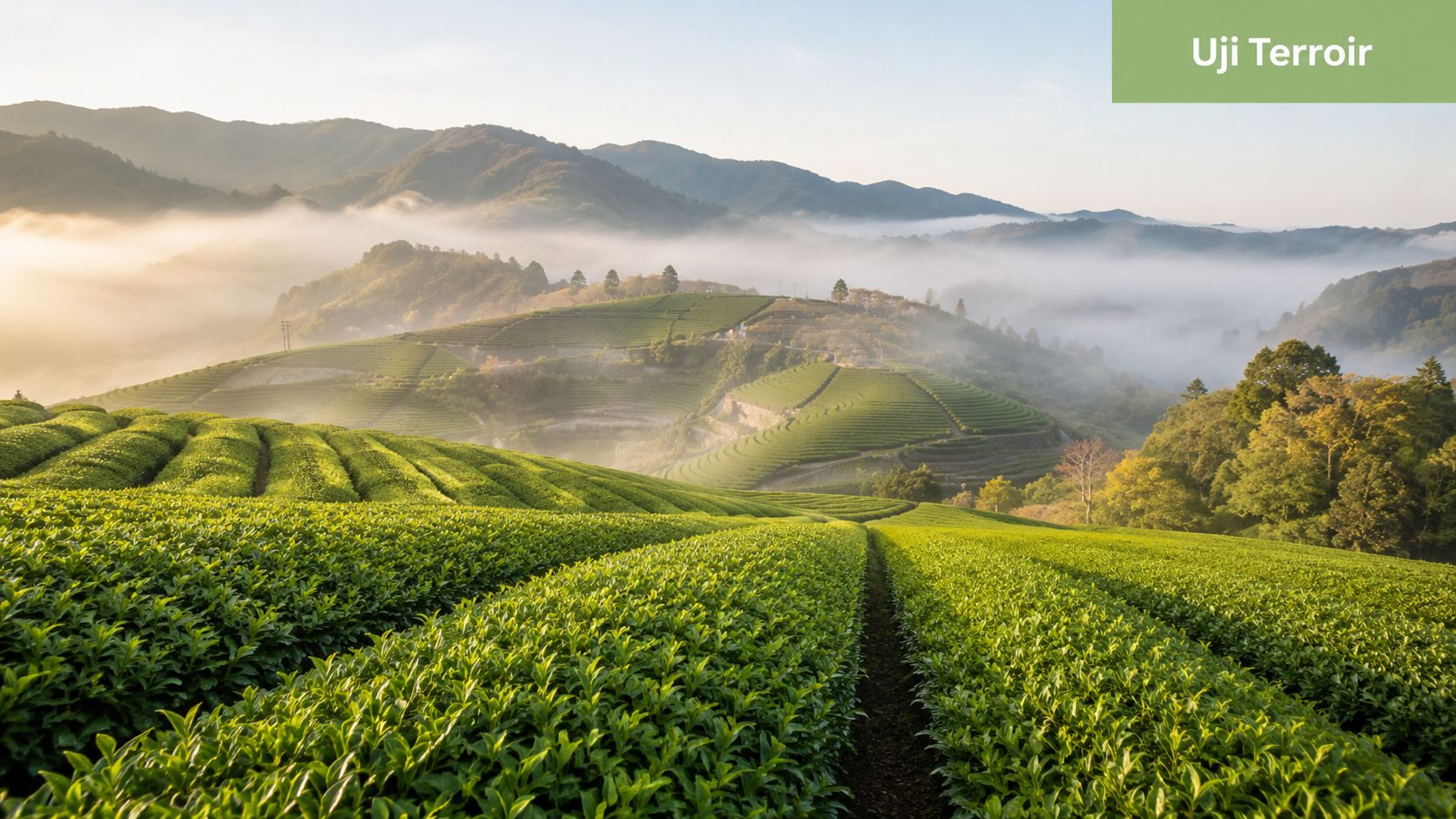
According to this overview of Uji matcha terroir and processing, the terroir of Uji, Kyoto creates a creamy texture and a sweet ooi-ka aroma, and authentic ceremonial grade matcha is stone-ground to a particle size finer than 20 microns, about as fine as cornstarch. That's a technical detail, but you can feel it immediately in the bowl. Fine grinding helps the tea suspend smoothly, foam more evenly, and avoid the sandy mouthfeel you get from poorer powders.
What terroir means in plain language
If you're new to the term, think of terroir as the reason one matcha feels rounded and soft while another tastes sharp, flat, or overly grassy.
Here's how that shows up in the cup:
- Texture. Uji matcha often feels creamy rather than coarse.
- Aroma. The sweet, marine-leaning ooi-ka note is one of the clearest sensory clues.
- Sweetness and finish. Better terroir often gives a cleaner sweetness and less harsh bitterness.
That's especially useful for Australian buyers shopping online. If a seller says “Kyoto” but gives no clue about cultivation, milling, or flavour markers, you don't have enough information yet.
Kyoto is broad. Uji is specific
“Kyoto-grown” can be meaningful. “Uji” is usually more specific in the minds of serious matcha drinkers because it points to a historic tea area with a very strong quality identity.
That doesn't mean every Uji matcha will suit every use. It means the origin gives you a stronger starting point when you're looking for a ceremonial-style tea with a softer umami profile.
For a closer look at how origin fits into buying decisions, this Uji matcha powder guide is useful if you're comparing labels in the Australian market.
A short visual look at tea-growing conditions can make that difference easier to grasp:
What to notice before you drink
You don't need to be a tea judge to assess terroir cues. Start with a small checklist.
- Look at the powder. It should appear vivid and alive rather than dull.
- Smell it before whisking. A sweet, creamy scent is a good sign. A flat grassy smell can indicate a different style or lower refinement.
- Feel the finish. Good matcha lingers cleanly. Poorer matcha often leaves a rough, drying edge.
Decoding Matcha Grades Ceremonial vs Culinary
The first time I watched an Australian café make a matcha latte with an expensive Kyoto ceremonial powder, I knew what was about to happen. Beautiful colour, lovely aroma, and then milk, vanilla, and ice buried the tea's finer notes. The matcha was excellent. It was doing the wrong job.
That mix-up happens because grade names sound like rankings. In practice, they work more like choosing the right coffee roast for espresso versus filter, or the right olive oil for finishing versus cooking. A higher grade is not automatically better for every use. It is better for a specific style of drinking.
The simplest way to read matcha grades
Start with the cup you want to make.
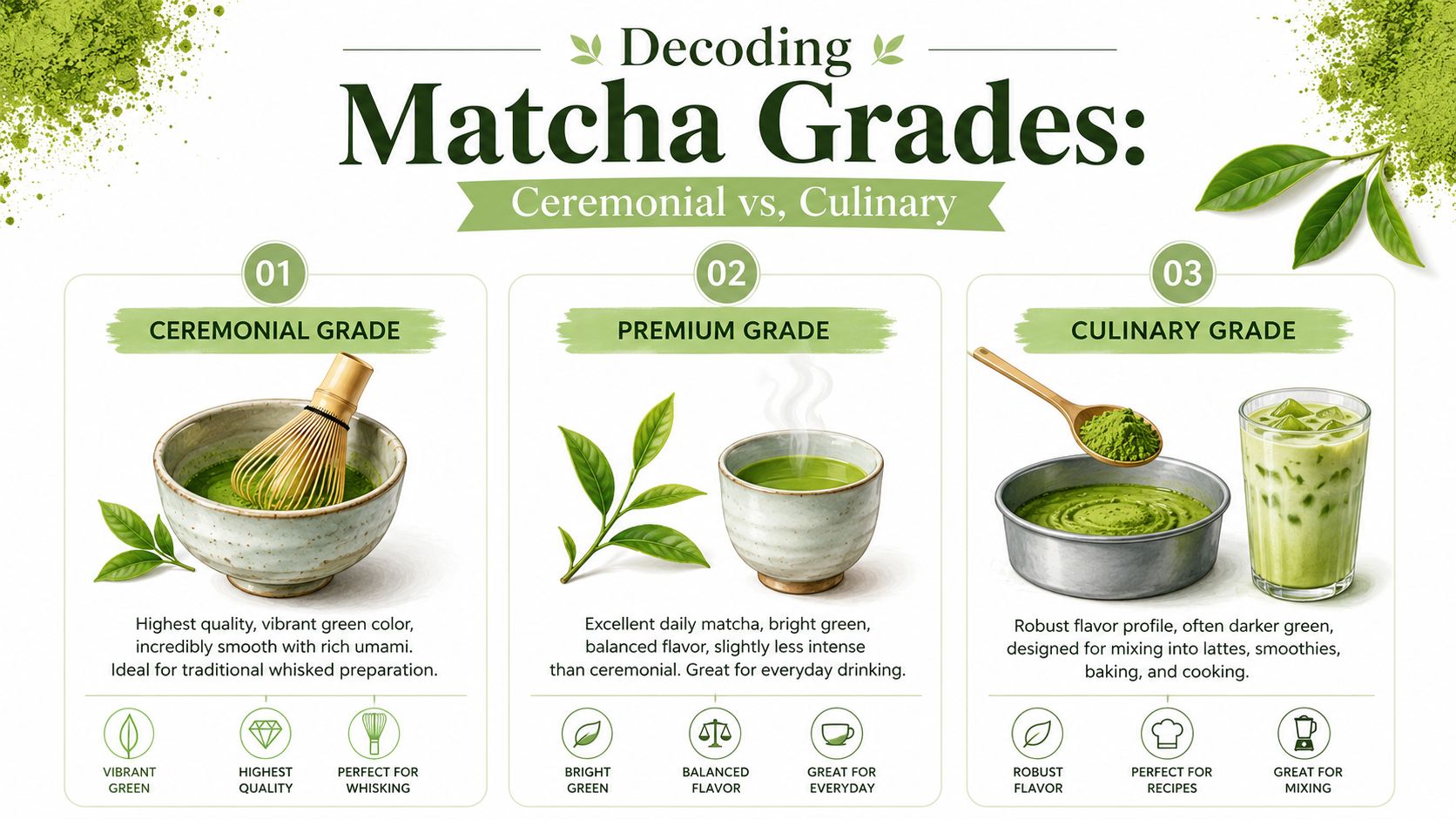
If you plan to whisk matcha with water and drink it on its own, ceremonial grade is the right place to look. Good ceremonial Kyoto matcha is usually made from carefully shaded tencha and processed to highlight sweetness, umami, and a smooth finish. The point is clarity. You are tasting the tea itself, with nothing to hide behind.
Premium grade sits in the middle. It often suits daily drinking, lighter lattes, and home use where you want a pleasing balance between softness, freshness, and value.
Culinary grade is chosen for strength of flavour in recipes. Milk, sugar, chocolate, banana, or heat all compete with the tea. A powder for baking or café lattes needs enough presence to still taste like matcha after everything else goes in.
That is why grade is really a use guide.
Why ceremonial matcha can disappoint in a latte
Ceremonial matcha is prized for delicacy. In a straight bowl, that delicacy shows up as sweetness, creamy texture, gentle marine notes, and a rounded umami finish. In a latte, many of those subtleties fade.
Australian drinkers often run into this problem because café matcha culture and traditional tea culture ask for different things. A whisked bowl rewards finesse. A latte rewards presence. If your regular order is oat milk with a little sweetness, a premium or culinary Kyoto matcha will often give you a clearer tea flavour than a more delicate ceremonial powder.
The best matcha for your kitchen or café is the one that suits the drink in front of you.
Matcha Grades At a Glance
| Grade | Best For | Flavour Profile | Colour | Price Point |
|---|---|---|---|---|
| Ceremonial | Traditional whisked tea, slow morning ritual, tasting straight with water | Smooth, umami-forward, low bitterness | Vibrant green | Higher |
| Premium | Daily drinking, lighter lattes, flexible home use | Balanced, fresh, approachable | Bright green | Mid-range |
| Culinary | Lattes, smoothies, baking, desserts | Stronger, more assertive, designed to cut through other ingredients | Usually deeper or less luminous green | Lower |
A practical guide for Australian homes and cafés
For cafés, this choice affects both flavour and cost. Using ceremonial matcha in a heavily flavoured latte can be like pouring a delicate pinot into sangria. You can do it, but you lose what made it special in the first place.
For home drinkers, the same rule helps:
- Straight whisked bowl with water. Choose ceremonial.
- Daily latte or iced matcha. Choose premium, or culinary if you want a bolder tea taste.
- Baking, desserts, and smoothies. Choose culinary.
If you want another reference point, this comprehensive guide for Japanese matcha shows how different matcha styles are presented for different uses. For an Australia-focused buying breakdown, our ceremonial vs culinary matcha guide for everyday use explains what to choose for whisking, lattes, and recipes.
What to check on the label
Grade terms are not perfectly regulated, so the front of the tin never tells the whole story. Look for clues that match your purpose.
- For ceremonial use, look for wording around whisking, smoothness, umami, shading, or first harvest style.
- For lattes, trust sellers who clearly say the powder suits milk drinks.
- For baking, choose flavour intensity over delicacy.
A simple question helps cut through the marketing. Are you trying to taste the tea alone, or are you asking it to stand up inside a recipe? Once you answer that, Kyoto matcha grades start to make much more sense.
How to Brew and Enjoy Kyoto Matcha
Once you've chosen the right grade, matcha becomes much easier and more enjoyable. Most brewing problems come from one of three things. The wrong powder for the job, water that's too hot, or a rushed mixing method.
How to whisk a traditional bowl at home
For a simple bowl of usucha, you don't need a formal tea room. You just need a few basic tools and a little care.
You'll want:
- A chawan. That's the bowl.
- A chasen. A bamboo whisk.
- A fine sifter. This helps prevent clumps.
- A scoop or spoon. Keep it consistent each time.
A beginner-friendly method looks like this:
- Warm the bowl with hot water, then tip it out and dry it.
- Sift the matcha into the bowl so the powder loosens.
- Add warm water, not boiling. Overheated water can make matcha taste harsh.
- Whisk briskly in a quick zig-zag motion until you get a light foam.
- Drink straight away while the aroma is fresh.
What a good bowl should taste like
A well-made ceremonial bowl shouldn't taste like lawn clippings. It should feel rounded, smooth, and lively, with a pleasant vegetal depth rather than rough bitterness.
If your bowl tastes overly sharp, check these factors:
- The water may be too hot
- The powder may be too old
- The matcha may be better suited to lattes than straight whisking
Good matcha rewards small adjustments. A slight change in water temperature or whisking can transform the cup.
A simple organic matcha latte
Australian homes and cafés often meet matcha through the latte first, and that's perfectly fine. The key is using a powder that can handle milk without disappearing.
Try this easy version:
- Sift your matcha into a cup or bowl
- Add a small splash of warm water and whisk into a smooth paste
- Top with hot or cold milk of your choice
- Sweeten lightly if you want, but keep it subtle so the tea still shows through
If you're making iced matcha, dissolve the powder well first. Dumping it straight onto cold milk almost guarantees clumps.
For recipes like bliss balls, pancakes, smoothies, or cakes, use culinary grade. It gives you the green tea character you want without paying for delicate notes that won't survive heat and other ingredients anyway.
Everyday ways Australians can use matcha
You don't have to keep matcha locked in one ritual style. It fits easily into daily life.
- Morning whisked bowl for a slower start
- Iced latte before work or after the gym
- Smoothie addition with banana and yoghurt
- Baking ingredient for muffins, slices, or cheesecakes
One practical option in Australia is Pep Tea's organic matcha green tea, which is offered for broad use across drinking and recipe applications. What matters most is matching the grade and flavour style to how you'll prepare it.
Finding Authentic Matcha Experiences in Kyoto
Kyoto has no shortage of matcha stops, but not all of them will teach you much. Some are beautiful and memorable. Others are mostly packaging, queues, and gift tins.
A useful starting point is to look beyond “famous” and look for signs of care. Tea houses with a long local relationship to tea tend to explain origin, harvest timing, preparation style, and flavour more clearly than shops built around quick tourist turnover.
What to ask when buying matcha in Kyoto
Many travellers overspend due to a critical gap for tourists: 78% of matcha sold in Kyoto souvenir shops is ceremonial grade, while culinary uses like lattes are often better suited to more affordable, heat-stable premium culinary grades, according to this Kyoto matcha shopping guide.
That means you should ask direct questions before buying:
- What is this best used for. Whisking, latte, or baking?
- Is it from Uji or another area of Kyoto.
- Is this intended for first flush ceremonial use.
- How would you prepare it at home.
The answers matter more than the display.
What a worthwhile tea experience looks like
The best tea experiences in Kyoto usually share a few qualities:
- They teach, not just serve. Someone explains the bowl, the whisk, or the origin.
- They distinguish grades clearly. You're not pushed toward the priciest tin by default.
- They respect the ritual. Even a casual tasting can still feel deliberate.
If you're planning a broader Kyoto trip around food, culture, and neighbourhoods, a thoughtful local guide for Kyoto travelers can help you build a better itinerary around genuine tea stops rather than random souvenir rows.
Buy the tea you'll actually use. The wrong expensive tin is less authentic to your life than the right everyday one.
Small signs of authenticity
When you're standing in a shop, trust your senses and the conversation.
A good seller can usually tell you how the tea should smell, whether it's better straight or with milk, and why one tin costs more than another. If they can't explain those basics, keep walking.
Sourcing Authentic Organic Matcha in Australia
You don't need to fly to Japan to buy carefully. In Australia, the challenge is different. You're not navigating Kyoto side streets. You're reading product pages, labels, and importer claims from your phone or laptop.
That means your buying checklist needs to be sharper.
What to check before you buy
Start with the core markers of authenticity and fit.
- Origin clarity. Look for a clear statement of Japanese origin, and ideally more detail than just “Japan”.
- Grade clarity. The seller should tell you whether the matcha is meant for whisking, lattes, or cooking.
- Organic credentials. If organic matters to you, the label should say so plainly.
- Usage guidance. Good retailers explain how to prepare the product, not just how pretty the tin is.
If a listing is vague on all four points, it's hard to know what you're paying for.
Why this matters more for Australian cafés
For cafés, buying matcha isn't only about romance or provenance. It's about menu design, consistency, and staff confidence. Your team needs to know which powder belongs in a straight matcha, which one stands up in a latte, and how to describe the difference to customers.
That education piece matters. It helps a customer move from “I want something green and healthy” to “I want a smooth whisked bowl” or “I want a bold iced latte.”

How we think about matcha at home in Australia
At Pep Tea, we focus on helping Australians understand what they're buying, not just selling them a tea term they've heard on social media. That means being clear about Japanese origin, practical use, and the difference between ceremonial-style drinking and culinary application.
For many households, matcha sits alongside other daily wellness drinks rather than in a separate ceremonial category. One day it's a morning bowl. The next it's part of a smoothie or an afternoon latte. For cafés, it may sit naturally beside a non-alcoholic menu that also includes low-sugar and fermented options such as kombucha.
The most reliable way to buy matcha tea Kyoto-style in Australia is simple:
- Check where it's from
- Check what it's for
- Check how it's milled and described
- Buy from a seller who can explain the difference without jargon
That's how you avoid paying ceremonial prices for a baking ingredient, or buying a latte powder when you wanted a quiet, silky bowl.
If you're ready to put this into practice, explore Pep Tea for organic matcha options and practical guidance on choosing the right style for whisking, lattes, recipes, or café service in Australia.