
Tag: peptea australia
Genmaicha Tea Benefits: Boost Your Health & Energy

Some teas fit a mood so perfectly that they feel less like a drink and more like a small reset. Genmaicha is one of those teas. If you're trying to cut back on coffee, looking for something softer than a brisk green tea, or want a warm cup that feels grounding in the middle of a busy day, genmaicha often lands in exactly the right place.
Its appeal is easy to understand once you taste it. You get the freshness of green tea, but also a gentle toasted note from roasted rice that makes the whole cup feel cosy and familiar. That balance is a big part of why people search for genmaicha tea benefits. They want something supportive, calming, and practical for everyday life, not another overhyped wellness promise.
An Introduction to Japans Comforting Popcorn Tea
A lot of people meet genmaicha by accident. They order tea at a Japanese café, notice a warm cereal-like aroma rising from the cup, and pause. It doesn't smell grassy like many green teas. It smells toasted, savoury, and inviting.
That first sip is usually what wins people over. The flavour is soft and nutty, with a clean green tea finish. Some cups even carry a light popcorn-like aroma, which is why genmaicha is often affectionately called “popcorn tea”.
For Australians who want a more mindful drink ritual, that matters. Genmaicha doesn't ask much of you. It isn't intense, overly bitter, or fussy to enjoy. It suits a slow morning, an afternoon break between meetings, or a gentle evening wind-down when coffee would feel like too much.
There's also something reassuring about its simplicity. It's just green tea and roasted rice, blended in a way that makes the tea feel rounder and easier to drink. If you've found some Japanese green teas a little sharp or too vegetal, genmaicha can feel like the friendlier doorway into the category.
A simple way to think about it: genmaicha is the comfort-food version of green tea.
It also sits nicely within the broader family of Japanese tea traditions. If you enjoy learning about different styles, origins, and flavour profiles, Pep Tea's guide to Japanese green tea is a useful next step.
Understanding the Blend of Green Tea and Roasted Rice
Genmaicha sounds unusual at first, but the blend is very easy to understand once you break it into its two parts.
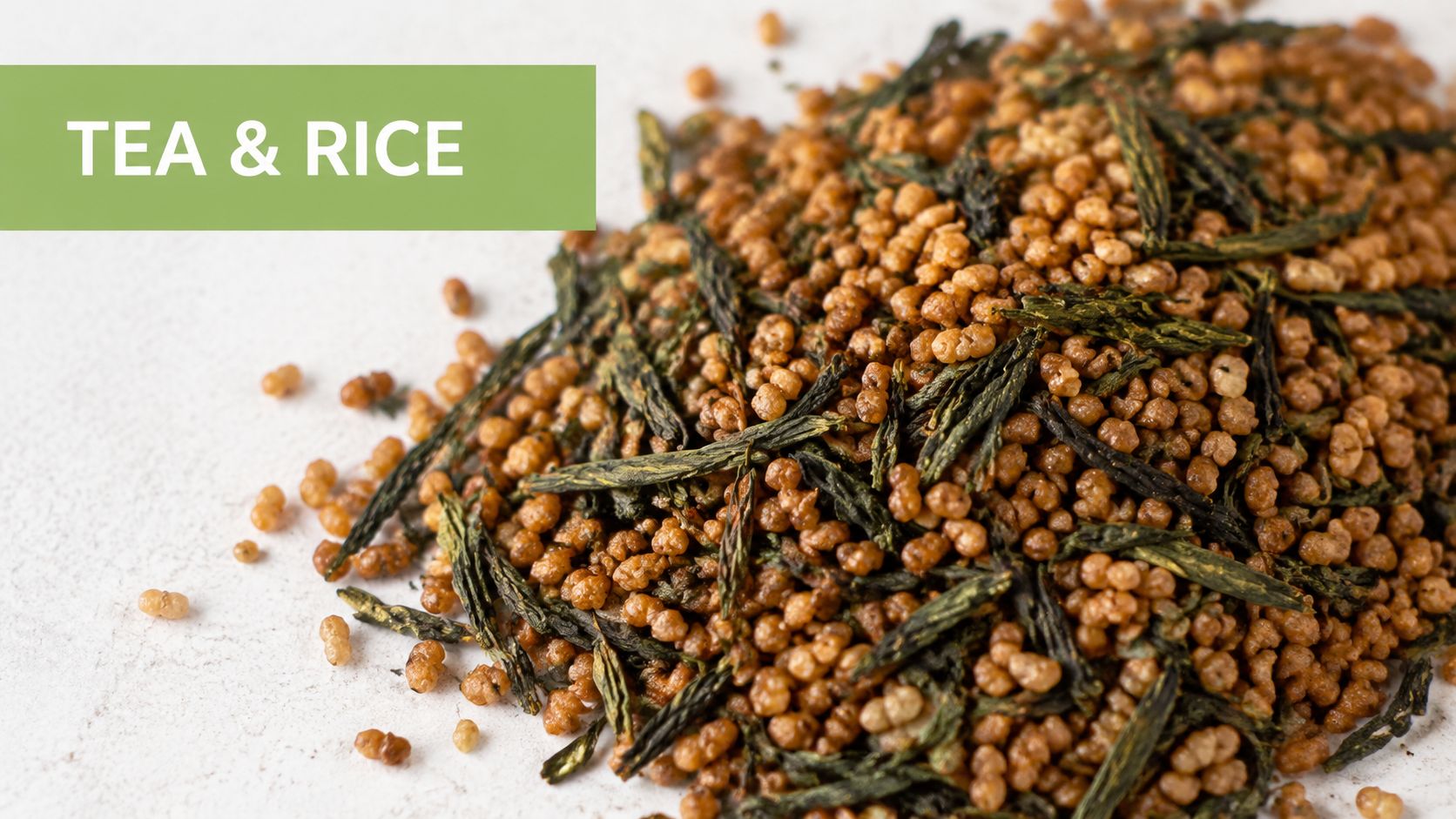
What's actually in genmaicha
At its core, genmaicha combines:
- Green tea leaves such as bancha or sencha, which bring freshness, light bitterness, and the familiar green tea character
- Roasted rice, which adds toastiness, a nutty aroma, and a softer overall impression
Some of the rice grains pop during roasting. That's where the “popcorn tea” nickname comes from. The popped grains don't mean there's popcorn in the blend. They're rice that has expanded during heat exposure.
A common misconception among readers concerns the role of the rice. The rice isn't there to turn genmaicha into a sugary drink or a grain-based beverage. It's there for flavour, aroma, and balance. The roasted notes mellow the sharper edges of green tea and create a cup that feels warmer and more rounded.
Why the blend tastes so different from standard green tea
If plain green tea tastes brisk or grassy to you, genmaicha will probably feel much easier to approach. The roasted rice changes the whole experience.
Instead of a cup that leads with vegetal notes, genmaicha often tastes:
- Nutty, rather than grassy
- Toasty, rather than brisk
- Gentle, rather than sharp
- Comforting, rather than stimulating
That doesn't mean the green tea disappears. It's still there, giving the blend its freshness and many of the qualities people associate with green tea wellness. The rice changes the texture of the experience.
The roasted rice doesn't cancel the tea. It softens it.
Does the rice change the health story
Yes, but mostly in a practical way rather than a dramatic one.
The biggest real-world difference is that genmaicha is commonly described as a lower-caffeine option. One tea industry guide estimates a cup of genmaicha contains about 10–15 mg of caffeine, compared with roughly 30 mg in a cup of regular green tea, or about 50% less in that comparison, as described in this genmaicha caffeine overview.
That lower-caffeine profile is one reason it's often chosen by people who want a calmer tea experience. The same source also describes genmaicha as containing L-theanine, the amino acid linked with relaxation and focus.
For everyday drinkers, that means the rice component is important less because of its nutrition on its own, and more because it helps create the milder flavour and gentler energy profile people are often looking for.
Exploring the Key Genmaicha Tea Benefits
Many of the most meaningful genmaicha tea benefits come from its green tea base. That's an important distinction. Genmaicha has its own character, but much of the science sits within the broader green tea evidence base rather than genmaicha-only clinical trials.
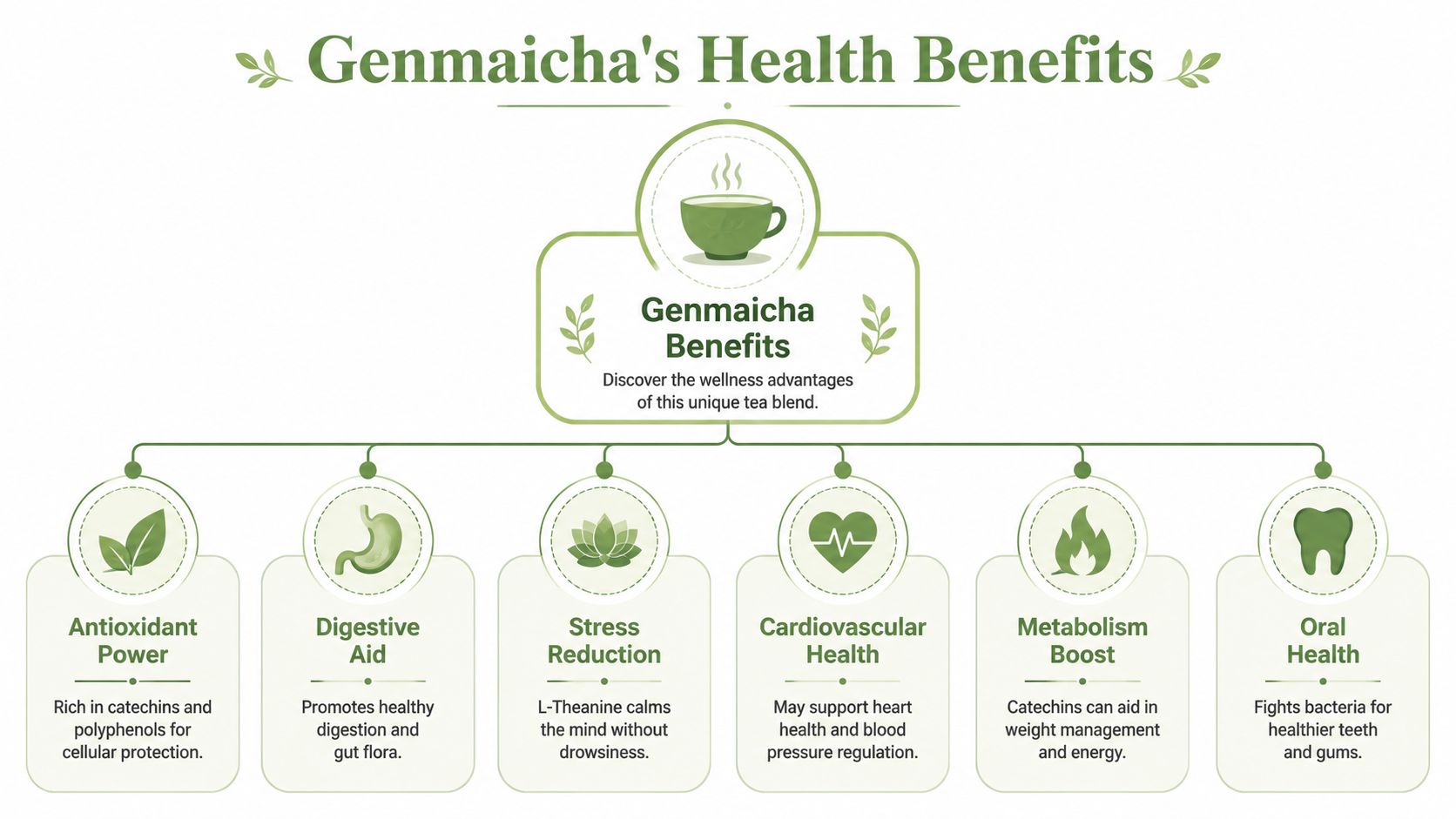
Antioxidant support from green tea catechins
The strongest evidence-backed benefit comes from green tea's polyphenols, especially catechins such as EGCG. A peer-reviewed review of green tea research describes catechins as being linked to antioxidant, anti-inflammatory, lipid-lowering, and endothelial-function benefits, including associations with reduced LDL, improved blood pressure, and better glucose and lipid metabolism in people with metabolic syndrome, as outlined in this green tea catechin review.
In plain language, antioxidants help the body manage oxidative stress. That doesn't make genmaicha a miracle drink. It does mean it belongs in the wider green tea family known for useful plant compounds.
For a practical Australian reader, the takeaway is simple. If you want a gentler tea but still want the wellness identity of green tea, genmaicha makes sense.
Calm focus rather than a hard caffeine hit
Genmaicha is often appreciated for how it feels, not just what it contains. People who find coffee too intense or standard green tea a bit sharp often describe genmaicha as easier to work into a steady routine.
That's where lower caffeine and L-theanine matter together. Instead of chasing a big jolt, many drinkers use genmaicha when they want a softer lift that doesn't dominate the rest of the day.
Practical rule: if your goal is gentle alertness, genmaicha usually fits better than beverages chosen purely for stimulation.
This also explains why genmaicha often appeals as an afternoon tea. It can feel supportive without pushing the nervous system too hard.
A short visual guide can help if you want a quick summary before reading on.
A useful option for people who want a lighter daily ritual
A major gap in online discussion is that many articles blur together broad green tea claims and genmaicha-specific reality. A more careful view is better. As discussed in this practical genmaicha explainer, caffeine level, brewing method, tea-to-rice ratio, and leaf quality all shape the final cup.
That's helpful because it keeps expectations realistic. Genmaicha may support a healthier routine in several down-to-earth ways:
- Replacing sweeter drinks with an unsweetened tea option
- Offering a lower-stimulant choice for late afternoon or evening
- Giving green tea newcomers a softer flavour profile
- Pairing well with meals, which makes it easier to drink consistently
What human evidence tells us
Genmaicha-specific human data is limited, but there is one especially relevant signal. In Japan, one large prospective cohort analysis grouped Bancha/Genmaicha together. In that study, women who drank 10 or more cups per day had a hazard ratio of 0.86 compared with women who drank less than 1 cup per week, which indicates a 14% lower adjusted risk in that category, according to this prospective cohort analysis including Bancha and Genmaicha.
That figure needs careful interpretation. It reflects a very high intake category, and it doesn't mean people should start drinking huge amounts of genmaicha each day. What it does offer is research-backed context. Genmaicha isn't just a novelty blend. It sits inside a green tea pattern that has been studied in human populations.
How Genmaicha Compares to Other Japanese Green Teas
Choosing between genmaicha, matcha, and sencha usually comes down to one question. What kind of tea experience do you want?
Some people want intensity and depth. Others want clarity and freshness. Some want a cup they can drink in the late afternoon without feeling overcaffeinated. Genmaicha shines in that third category.
Flavour and feel
Genmaicha is usually the most comforting of the three. The roasted rice gives it a nutty, savoury softness that makes it feel almost food-friendly. Sencha leans greener and brighter. Matcha is richer, thicker, and more concentrated in flavour.
If you've ever thought, “I like the idea of green tea, but I don't love the grassy edge,” genmaicha is often the best place to start.
Sencha speaks clearly. Matcha sings loudly. Genmaicha speaks softly and stays with you.
The practical trade-offs
Here's the simplest way to compare them.
| Feature | Genmaicha | Matcha | Sencha |
|---|---|---|---|
| Flavour | Nutty, toasted, mellow | Rich, savoury, umami-led | Fresh, grassy, clean |
| Caffeine feel | Lower and gentler | Stronger and more concentrated | Moderate, more classic green tea feel |
| Texture | Light-bodied | Fuller and creamier | Light and crisp |
| Best time to drink | Afternoon, with meals, or when you want a calming cup | Morning or early day when you want focus | Morning or daytime sipping |
| Ease for beginners | Very approachable | Can be intense at first | Familiar for green tea drinkers |
| Preparation style | Infuse leaves in water | Whisk powder into water | Infuse leaves in water |
Where genmaicha sits best
Genmaicha is not trying to outdo matcha on concentration or sencha on pure leaf character. Its strength is balance.
That's why it often suits:
- Caffeine-sensitive drinkers who still want real tea
- People easing off coffee but not ready for herbal tea
- Cafés building broader tea menus with something distinctive and approachable
- Home drinkers who want a tea that pairs well with lunch or an afternoon pause
If you'd like a deeper side-by-side look at flavour, energy, and use cases, this comparison of genmaicha vs matcha is worth reading.
How to Brew and Enjoy Genmaicha at Home or in a Café
Genmaicha is one of the friendliest Japanese teas to brew. It doesn't demand a highly technical setup, and it rewards even simple preparation with a lovely cup.
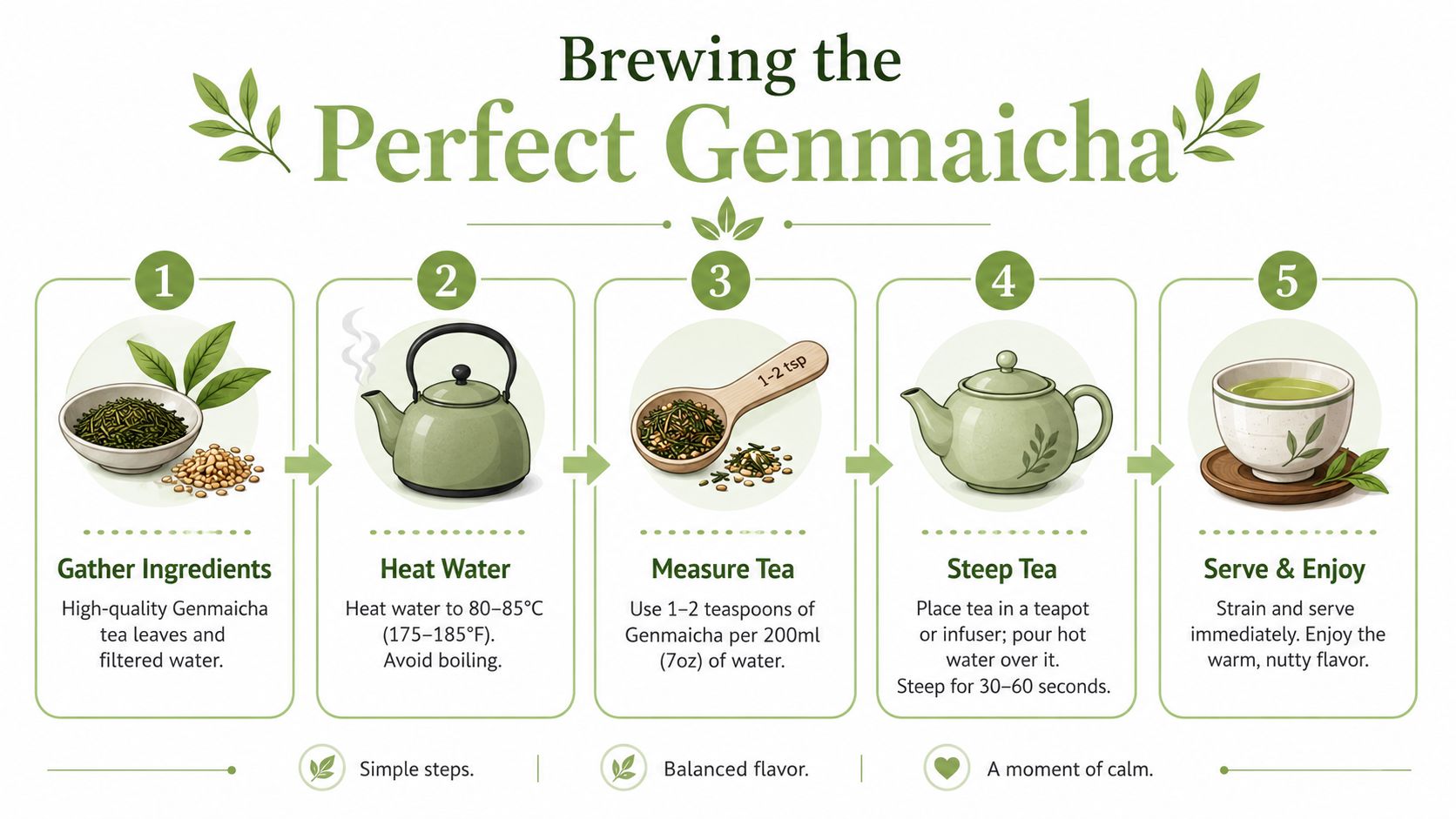
A simple brewing method
Use this as an easy starting point:
- Heat the water gently. Aim for 80 to 85°C. Boiling water can make green tea taste harsh.
- Measure your tea. Use a modest spoonful for a regular mug or small teapot.
- Steep briefly. Around 1 to 3 minutes usually gives a balanced cup.
- Taste and adjust. If it's too light, steep a little longer next time. If it's too strong, shorten the infusion.
- Pour straight away. Leaving the leaves sitting in water too long can make the cup less soft.
Why temperature matters
Many people go wrong with green tea. They use freshly boiled water, then assume the tea is meant to taste bitter.
Genmaicha is more forgiving than some Japanese green teas because of the roasted rice, but the leaf still benefits from a gentler brew. Lower water temperature helps preserve sweetness and keeps the flavour rounded.
If your genmaicha tastes rough, change the water temperature before changing the tea.
Easy ways to enjoy it
Genmaicha doesn't have to be limited to a hot mug at home. It works beautifully in different settings.
- Hot with meals for a warming, savoury pairing
- Iced on warm Australian days for a refreshing but mellow drink
- As a tea latte with milk or a plant-based alternative if you enjoy a creamier cup
- On a café menu as a low-caffeine Japanese tea option for customers who don't want coffee
For cafés, the strongest appeal is usually flavour plus accessibility. Customers may not know much about genmaicha, but they often respond quickly to a short description like “Japanese green tea with roasted rice, smooth and nutty.”
A few common mistakes to avoid
Not every disappointing cup means the tea is poor quality. Often it's just the method.
- Using boiling water can flatten the softer roasted notes
- Steeping too long can push the green tea side forward too aggressively
- Using too little leaf can make the cup feel thin
- Adding sweetener too quickly can cover the natural toasted flavour that makes genmaicha special
A plain brew first is always the best test. Once you know its natural profile, you can decide whether you prefer it neat, iced, or with milk.
Is Genmaicha the Right Tea for Your Wellness Routine
Genmaicha suits people who want wellness to feel sustainable, not extreme. It's a tea for everyday rhythm. You drink it because it tastes comforting, because it feels lighter than coffee, and because it gives you a simple ritual you can return to without much effort.
That makes it especially appealing if you're caffeine-sensitive, trying to reduce stimulant intake, or looking for a more grounded afternoon drink. It also works well for people who like the idea of green tea but want something softer and more approachable than stronger styles.
Who tends to enjoy it most
Genmaicha often fits best for:
- Busy professionals who want a calmer tea break
- Tea beginners who don't enjoy bitterness
- Mindful drinkers building a low-sugar, lower-caffeine routine
- Café customers looking beyond coffee and standard black tea
There are still a few sensible notes of caution. Because it contains caffeine, even at a lower level, some people will still want to be mindful. That includes those managing caffeine sensitivity, pregnancy concerns, or blood sugar questions in a broader health context. If you're also exploring other gentle ways to support steady energy through the day, these tips for natural energy boosts are a useful companion read.
A calm place in a broader tea routine
Genmaicha doesn't replace every tea. It fills a specific role. Matcha may suit mornings when you want more focus and intensity. Genmaicha suits the moments when you want warmth, balance, and a little less push.
If you enjoy rotating your drinks depending on time of day, tolerance, and mood, it can help to understand safe intake across stronger teas too. This guide on how many cups of matcha tea powder are safe per day adds useful context for anyone building a more intentional tea habit.
Genmaicha's real value is simple. It makes green tea easier to live with.
If you'd like to keep exploring functional tea in a thoughtful, everyday way, visit Pep Tea for premium organic Japanese matcha, Australian-brewed sugar-free kombucha, and practical guides that help you choose the right drink for calm focus, clean energy, and daily wellness.
Hojicha Tea Benefits: A Guide to Roasted Green Tea
Some evenings, you want a warm drink that feels comforting without turning bedtime into a staring-at-the-ceiling session. Coffee is out. Strong green tea can feel a bit too lively. Even some herbal blends miss that toasted, satisfying depth people crave in the evening.
That's where hojicha often surprises people.
If you've only really explored Japanese tea through matcha, hojicha can feel like a quiet revelation. It's still green tea, but it doesn't taste grassy or sharp. It tastes roasted, mellow, nutty, and softly sweet. The whole experience feels gentler.
Your New Favourite Evening Tea Ritual
A lot of Australians are already looking beyond basic supermarket tea bags and into more distinctive tea styles. The green tea category in Australia reached A$131.4 million in 2024 according to this Australian green tea market summary. That matters because hojicha sits inside that broader green tea world, but offers a completely different flavour and feel.
For many people, the turning point is simple. They want something cosy after dinner, but they don't want the buzz that can come with more stimulating drinks. They also don't want something bland. Hojicha fits neatly into that gap.
If you've been comparing relaxing drinks lately, it can help to look at a broader guide to restorative sleep teas so you can see where roasted teas sit beside herbal options. Hojicha stands out because it gives you that evening-friendly comfort while still feeling like a proper tea ritual.
Hojicha often appeals to people who enjoy green tea in theory, but don't enjoy bitterness in practice.
There's also a practical reason it keeps popping up in wellness conversations. People want drinks that support calmer routines, lower stimulation, and more mindful habits. Hojicha feels aligned with that shift, not because it's trendy for the sake of it, but because its character naturally suits slower parts of the day.
If caffeine is part of your decision, this guide to green tea caffeine gives useful context on how tea styles can differ. Hojicha's place in that conversation is one of the main reasons it's become such a favourite among people who want tea without the sharper edge.
What Exactly Is Hojicha Tea
Hojicha is roasted Japanese green tea. That's the key idea.
It isn't a separate plant. It isn't a flavoured tea. It's green tea that has been transformed by heat. Think of the difference between raw nuts and roasted nuts. Same starting point, completely different aroma, taste, and overall feel.
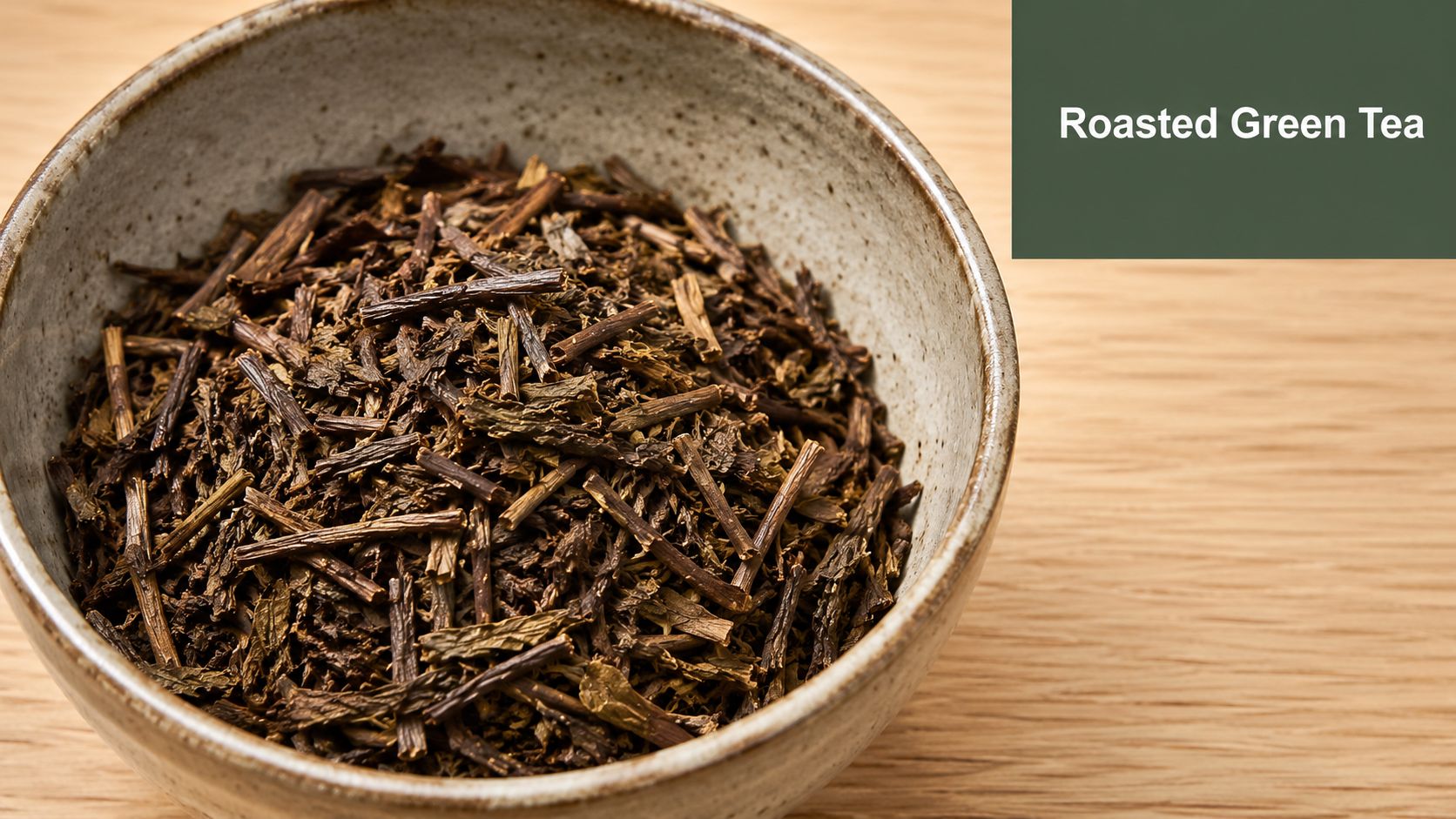
How roasting changes the tea
Most green teas are prized for fresh, vegetal notes. Hojicha goes in another direction. The leaves, and sometimes stems, are roasted. That roasting deepens the flavour and softens the greener, more astringent side of the tea.
The result is a cup with notes people often describe as toasty, nutty, woody, or gently caramel-like. If standard green tea can taste bright and brisk, hojicha tastes rounded and warm.
That's also why it can be a useful gateway tea. Someone who says, “I want the idea of green tea, but not the grassy taste,” often gets on very well with hojicha.
A tea with a relatively modern history
Hojicha isn't ancient in the way many people assume Japanese teas are. According to this overview of hojicha and its origins, it gained popularity in Kyoto around the 1920s. The same source notes that its roasting process leaves it with only about 8 mg per 250 ml.
That low-caffeine profile is a big part of its appeal. It makes hojicha a very practical choice for late afternoon, evening, or for anyone who's more sensitive to stimulating drinks.
What hojicha is not
It helps to clear up a few common points of confusion:
- It's not matcha. Matcha is a finely ground tea powder whisked into water. Hojicha is more commonly brewed like a loose-leaf tea, though powdered hojicha does exist.
- It's not black tea. The roasted flavour can make people assume it's fully oxidised like black tea, but it starts as green tea.
- It's not automatically smoky. Some people expect a campfire flavour. Good hojicha is roasted and aromatic, but usually smooth rather than harsh.
For a broader look at Japanese tea styles, this Japanese green tea guide can help place hojicha alongside sencha and matcha without mixing them up.
The Unique Health Benefits of Roasting
The most interesting hojicha tea benefits come from one simple fact. Roasting changes the chemistry of the tea.
That doesn't just alter flavour. It changes how the tea feels to drink, how intense it seems, and why many people experience it as steadier and softer than other green teas.
Why roasting matters
When tea leaves are roasted, the profile shifts away from the sharper, greener character many people associate with classic green tea. In practical terms, that usually means less bitterness and a more rounded cup.
That matters because plenty of people stop drinking green tea for one of two reasons. Either it feels too stimulating, or it tastes too astringent. Hojicha answers both issues through processing, not through added ingredients.
Practical rule: If a tea feels harsh, look at how it was processed, not just what plant it came from.
Roasting is the whole story here. It's the reason hojicha smells warm instead of grassy. It's the reason the cup feels softer. It's also the reason its benefits are best understood through the lens of transformation, not just nutrition.
The calm performance idea
One of the most useful ways to think about hojicha is as a calm performance tea.
A peer-reviewed human study on roasted Japanese tea found that hojicha, compared with green tea and water, improved refreshment and motivation, and produced an earlier peak in the EEG P300 response associated with attention and concentration. The same study notes that hojicha is rich in pyrazine, a compound expected to support blood circulation, reduce feelings of cold, and ease fatigue. You can read the study in full in this peer-reviewed article on roasted Japanese tea and pyrazine.
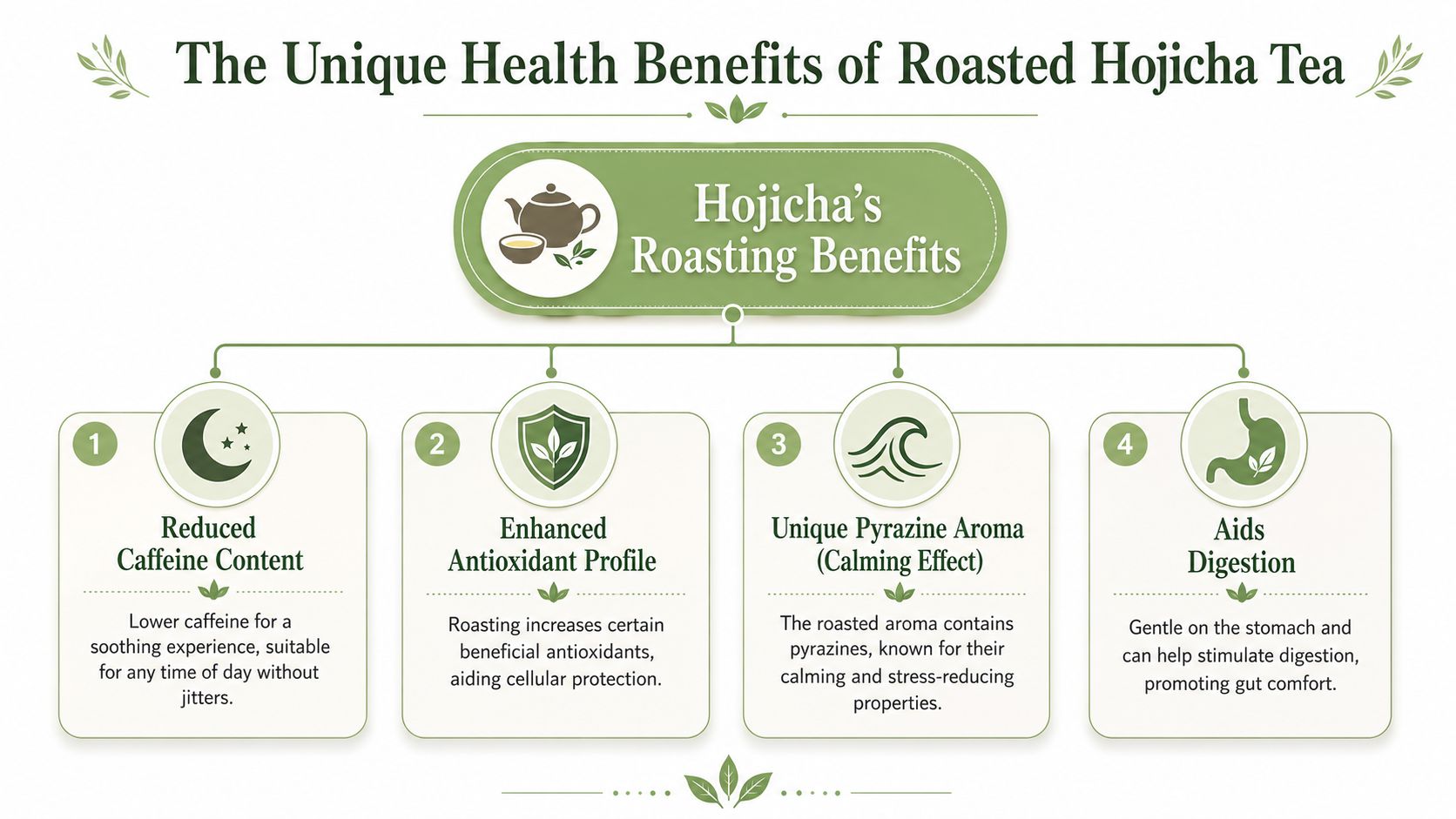
That's a helpful distinction. Hojicha doesn't have to make you feel revved up to be useful. For some people, its value is feeling more settled while still mentally present.
In everyday language, this is the tea you reach for when you want to read, finish a few notes, chat after dinner, or wind down without feeling flat.
What pyrazines actually do in the cup
Pyrazines are part of what gives roasted foods and drinks their warm, appealing aroma. In hojicha, they contribute to that comforting toasted smell people notice straight away.
That aroma isn't just pleasant. It helps explain why hojicha often feels so soothing before you even take a sip. Smell shapes expectation, and expectation shapes experience. With hojicha, the aroma already tells your body this drink is going to be softer, warmer, and less sharp.
A few practical takeaways flow from that:
- For sensitive drinkers: The roasted profile often feels easier to enjoy than bright, grassy green tea.
- For evening routines: The sensory experience itself suits slower rituals.
- For cafés: It offers something distinct from matcha without leaving the Japanese tea category.
Why people often find it gentler
Many drinkers describe hojicha as kinder on the stomach than more astringent teas. The simplest explanation is sensory. Because the roast softens the greener edge, the tea often feels less aggressive on the palate.
That doesn't make it a medical treatment, and everyone's tolerance is different. But as a daily drinking experience, hojicha often works well for people who've found standard green tea a bit too brisk.
Some teas wake you up by pushing. Hojicha tends to work by smoothing the edges.
This is one reason hojicha fits modern wellness habits so well. People aren't only chasing energy. They're also looking for drinks that support steadiness, comfort, and routines they can repeat every day.
Hojicha vs Matcha A Friendly Comparison
If matcha is your main point of reference, hojicha can seem unusual at first. Both come from Japanese green tea traditions, but they serve different moments.
Matcha is often the pick for energetic focus. Hojicha is more about warmth, softness, and ease. Neither is better. They just solve different problems.
Hojicha and matcha side by side
| Attribute | Hojicha | Matcha |
|---|---|---|
| Tea type | Roasted green tea, usually brewed from leaves or stems | Stone-ground green tea powder whisked into water |
| Processing | Defined by roasting | Defined by shading, steaming, drying and grinding |
| Colour | Brown to reddish-brown liquor | Bright green |
| Flavour | Toasty, nutty, mellow, less astringent | Grassy, umami-rich, fresh, more intense |
| Caffeine feel | Lower-stimulant and evening-friendly | More energising and vivid |
| Best time to drink | Late afternoon, evening, quiet work sessions | Morning, early afternoon, pre-work focus |
| Popular uses | Hot tea, iced tea, lattes, desserts | Traditional tea, lattes, smoothies, baking |
Which one suits your routine
If your morning starts with a whisked tea or a matcha latte, that makes sense. Matcha has a fuller, more assertive presence. Many people like it when they want alertness and a stronger flavour.
Hojicha works differently. It suits the part of the day when you want comfort without switching to something sugary or caffeine-heavy. It also tends to win over people who don't love the strong vegetal side of green tea.
That's why cafés often treat them as complementary rather than competing drinks. Matcha covers the bright, high-energy end of the menu. Hojicha brings in the roasted, cosy, low-stimulant option.
A taste comparison that helps
A simple food analogy can make this clearer.
- Hojicha is a bit like toasted sesame, roasted nuts, or light cocoa in mood.
- Matcha is more like baby spinach, sea breeze, and savoury sweetness.
Neither description is exact, but it helps explain why one feels grounding and the other feels vibrant.
For readers still sorting out the broader tea family, this guide to the difference between matcha, green tea and green tea powder makes the categories easier to separate.
How to Brew and Enjoy Hojicha
Hojicha is one of the easiest Japanese teas to brew well at home. You don't need a ceremonial setup. You just need decent tea, hot water, and a little restraint. Boiling water and very long steeps can flatten the nicer roasted notes.
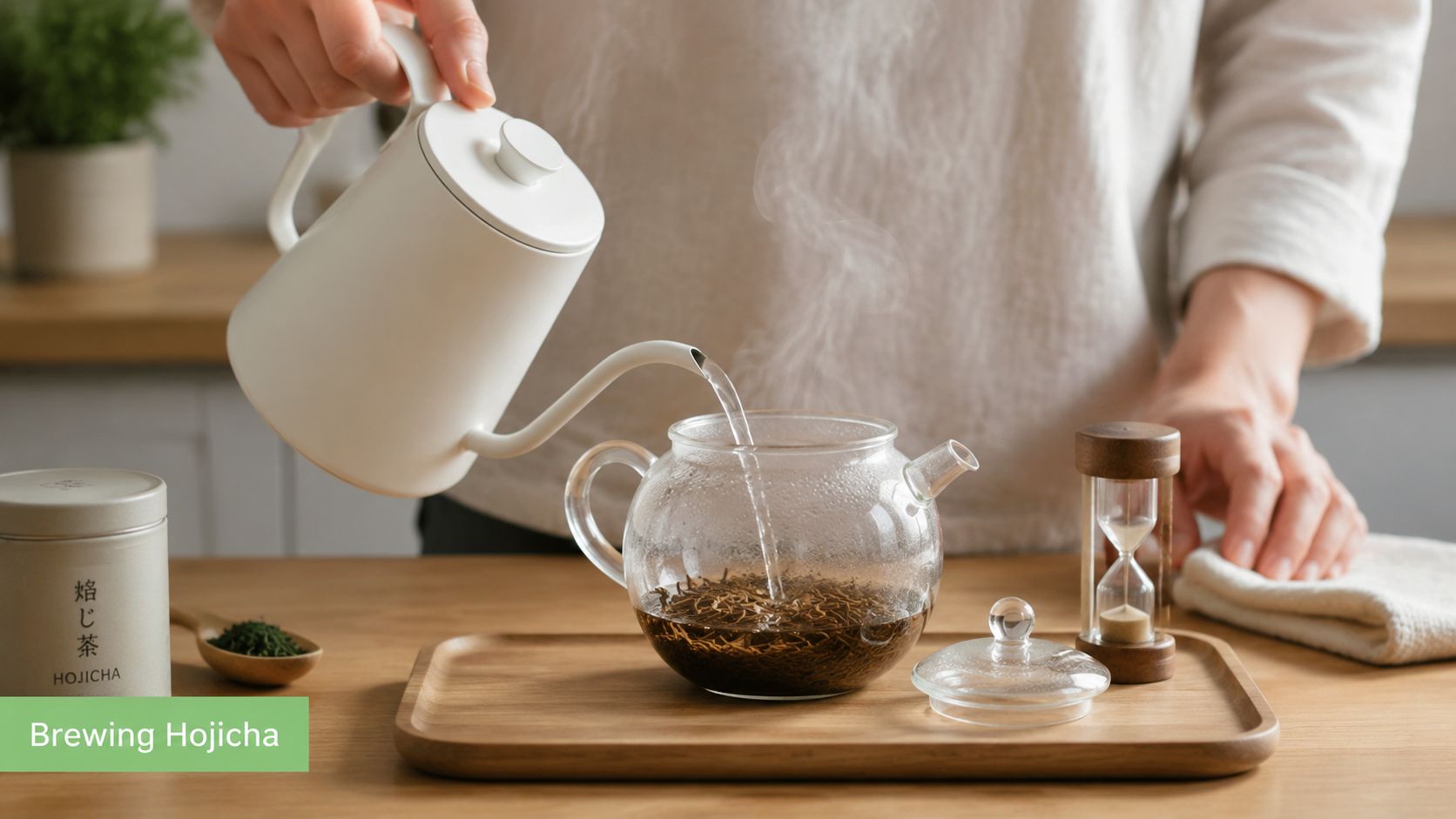
A simple way to brew it
Start with loose-leaf hojicha in a teapot, infuser, or strainer. Use hot water rather than aggressively boiling water. The goal is to draw out the roasted aroma without making the cup taste dull.
A good first method looks like this:
- Warm your cup or teapot. This helps the tea stay stable and aromatic.
- Add the hojicha. Use enough leaf to give the cup some depth.
- Pour in hot water. Let the aroma rise before you even sip.
- Steep briefly. Hojicha usually doesn't need a long soak.
- Taste and adjust. If it feels too light, use a bit more leaf next time. If it tastes flat, shorten the infusion.
A good hojicha should smell inviting before it touches your lips. If the aroma feels warm and nutty, you're on the right track.
Make a hojicha latte
Hojicha also shines in milk-based drinks because the roasted flavour holds up beautifully. That's one reason it works so well on café menus.
For a simple hojicha latte at home:
- Brew a strong base: Make your hojicha a little stronger than you would for straight drinking.
- Heat your milk of choice: Dairy or plant milk can both work well.
- Sweeten lightly if you want: A small touch of sweetness can bring out the roasted notes.
- Combine and serve: Pour the milk over the tea and enjoy it hot.
If you're curious about the texture and flow of making hojicha into a latte-style drink, this video gives a useful visual reference:
Iced hojicha and beyond
Hojicha is just as good cold as it is hot. Brew it, let it cool, and pour it over ice. Because the flavour is already smooth and roasted, it usually stays pleasingly rounded even when chilled.
It also works beautifully in food. Think along these lines:
- Desserts: Ice cream, panna cotta, custard, or tiramisu-style layers.
- Baking: Shortbread, cakes, or muffins where you want a toasted tea note.
- Café specials: Iced hojicha latte, sparkling hojicha tonic, or a roasted tea float.
For hospitality venues, that versatility is a real advantage. Hojicha can act as a tea, a latte base, and a flavour ingredient without feeling gimmicky.
Is Hojicha the Right Tea for You
Hojicha tends to suit a specific kind of tea drinker, though that group is bigger than many people realise.
If you want something warm and flavourful at night, hojicha makes sense. If you're sensitive to stronger tea stimulation, it makes sense. If you like the idea of green tea but don't enjoy bitterness, it makes sense again.
It may be a great fit if you want
- An evening tea ritual: Something cosy that still feels refined.
- A softer Japanese tea experience: Roasted rather than grassy.
- A café alternative to standard chai or decaf coffee: Distinctive, but easy to understand.
- A calmer companion to matcha: One for energetic focus, the other for low-key clarity.
It's also a smart option for cafés and wellness retailers that want a non-alcoholic drink with a clear identity. Hojicha doesn't need much explanation once someone tastes it. The flavour usually does the work.
When another tea might suit you better
If you want vivid vegetal character, ceremonial ritual, or a more energising start to the day, matcha may still be your better fit. Hojicha isn't trying to replace that experience.
It offers something different. Softer edges. Toasted aroma. A gentler pace.
If matcha feels like a bright morning conversation, hojicha feels like a quiet evening exhale.
That difference is exactly why so many people keep both in the cupboard. One supports momentum. The other supports ease.
If you're exploring Japanese tea and want a trusted Australian source for premium organic options, have a look at Pep Tea. We're passionate about helping people find the right tea for the right moment, whether that's a vibrant matcha for clean daytime energy or a more mindful addition to your daily wellness routine.
Organic Green Tea with Lemon: A Guide to Wellness for 2026

When you think of a daily wellness ritual, it's easy to picture complicated routines or expensive fads. But what if one of the simplest, most enjoyable upgrades to your day is already in your kitchen? We’re talking about organic green tea with lemon—a flavourful, straightforward way to support your wellbeing, one delicious cup at a time.
Your New Everyday Wellness Ritual
For many Australians, a cup of tea is a cherished daily habit, a moment of pause in a busy schedule. This isn’t some niche health trend; it’s a delightful enhancement to a ritual you already know and love.
Tea is a cornerstone of daily life down under. The Australian Bureau of Statistics’ National Health Survey found that 1 in 4 people aged 15 and over had a cup of tea the day before their interview, cementing its place as a true Aussie staple.
This familiarity is what makes organic green tea with lemon so approachable. It isn't a radical overhaul of your routine, just a simple, powerful adjustment.
More Than Just a Drink
At PepTea, our passion is for premium organic ingredients because we know that true quality is the foundation of wellness. This simple combination of high-quality organic green tea and zesty lemon aligns perfectly with a modern, health-conscious lifestyle—without ever giving up on flavour or enjoyment.
It’s all about celebrating the synergy between two of nature's best ingredients:
- The Clean Energy of Green Tea: We source premium organic teas, like our Japanese Matcha, known for their antioxidants and ability to provide a calm, sustained energy boost.
- The Zesty Boost of Lemon: A splash of fresh lemon doesn't just brighten the flavour; it works in tandem with the tea to enhance its natural benefits.
This drink is incredibly versatile. It fits seamlessly into your day, whether you prefer it as a steaming mug to start your morning or as a refreshing iced tea on a warm afternoon. It’s a simple pleasure that carries profound benefits, making it an ideal cornerstone for anyone looking to add a little more wellness into their routine.
You can explore even more options in our guide to healthy green tea drinks for 2026.
The Nutritional Synergy of Green Tea and Lemon
Think of organic green tea and lemon as a classic partnership where each one makes the other better. Green tea on its own is a powerhouse, rightly celebrated for its high concentration of antioxidants. But when you add a squeeze of fresh lemon, something remarkable happens.
The key players in green tea are a group of natural antioxidants called catechins. The most well-known of these is epigallocatechin gallate (EGCG), the compound behind many of the health-supportive qualities that have made green tea a daily ritual for centuries.
Then you have lemon, which brings its own star ingredient to the table: Vitamin C. While most of us know it for its role in supporting the immune system, Vitamin C plays another vital part here—it acts as both a protector and an enhancer for the catechins in your tea.
How Lemon Unlocks More From Your Green Tea
The real magic is in how they work together. The catechins in green tea are quite delicate and can degrade during digestion, meaning your body might not get the full benefit. This is where the Vitamin C from lemon steps in.
Research has shown that the acidity and Vitamin C from lemon help to stabilise these fragile compounds, making them more resilient as they pass through your digestive system.
This simple act means your body can absorb significantly more of the beneficial EGCG from your brew. It’s a classic example of nutritional synergy.
The Power of Synergy: Adding lemon to your organic green tea can increase the amount of catechins your body absorbs by several times. It's a perfect illustration of how combining two simple, natural ingredients creates an effect far greater than the sum of its parts.
Let's break down exactly what's happening when these two ingredients meet.
Green Tea & Lemon Nutritional Synergy
| Component | Found In | Primary Role | Synergistic Benefit |
|---|---|---|---|
| Catechins (EGCG) | Green Tea | Powerful plant-based antioxidant. | Stabilised by Vitamin C, leading to much higher absorption in the body. |
| Vitamin C | Lemon | Immune support and antioxidant. | Protects catechins from degrading during digestion, boosting their bioavailability. |
| L-Theanine | Green Tea | An amino acid known for promoting calm focus. | Lemon's bright, acidic flavour complements the tea, making for a more enjoyable ritual. |
| Citric Acid | Lemon | Provides the signature tart flavour. | Creates an acidic environment that helps preserve the catechins. |
This table shows it's not just a flavour pairing; it's a functional one. The components in lemon actively work to make the beneficial compounds in green tea more available to your body.
This enhanced absorption makes the combination a brilliant choice for supporting your daily wellness goals. It’s an easy, delicious way to hydrate while giving your body that little bit extra. This infographic shows just how this simple drink can become part of a healthy lifestyle.
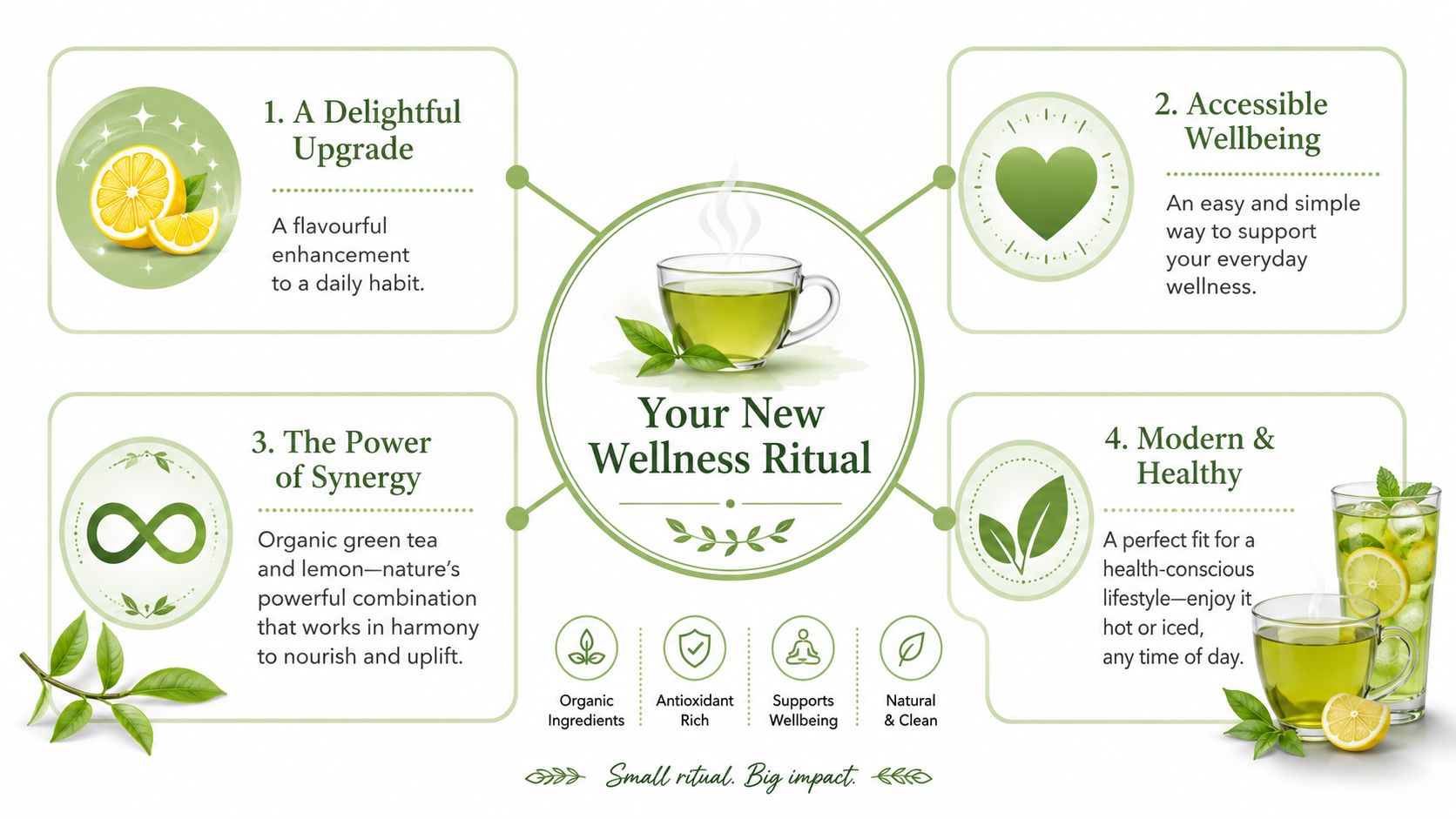
As the graphic illustrates, this isn't just a drink; it's a simple upgrade to your daily routine, powered by the natural intelligence of its ingredients. By pairing high-quality organic green tea with fresh lemon, you’re creating a simple ritual that may support:
- Immune Function: A double-act from Vitamin C and the tea’s antioxidants.
- Metabolic Health: Green tea has long been associated with supporting a healthy metabolism.
- Smarter Hydration: It's a flavourful, virtually zero-calorie alternative to plain water or sugary drinks.
Ultimately, adding a slice of lemon transforms a simple cup of tea into a more effective wellness tool, making it a perfect fit for a health-conscious Australian lifestyle.
How to Choose a Quality Organic Green Tea
Knowing the benefits of organic green tea with lemon is one thing, but actually choosing the right ingredients is where the real work begins. The quality of your final cup is decided the moment you choose your tea leaves and your lemon—not all are created equal.
This is especially true in Australia, where "organic" has become more than just a label. It's now a central part of a clean-food movement that has seen consumer demand skyrocket, turning the organic food and beverage sector into a multi-billion dollar industry. This shift isn't just a trend; it's driven by people who genuinely care about where their food comes from and how it's grown. As this insightful study from PMC shows, this makes high-quality organic ingredients a sought-after choice for everyone from home brewers to professional café owners.
Making the right choice here means you're not just making tea; you're creating a beverage that’s pure, flavourful, and packed with everything you want and nothing you don't.
Look for Certified Organic
The first thing to look for is a "certified organic" label. This isn't just marketing fluff. In Australia, it’s a legally protected term, guaranteeing the tea has been grown without any synthetic pesticides, herbicides, or fertilisers.
This matters immensely for tea. Unlike a piece of fruit that you can peel, the leaves are steeped directly in your water. Choosing organic is your assurance that you’re brewing pure leaf, not a chemical cocktail of unwanted residues.
Loose Leaf vs. Tea Bags
Tea bags are convenient, there's no denying it. But loose-leaf tea almost always delivers a superior experience.
- Flavour and Aroma: Loose-leaf teas are made from whole or larger pieces of leaves, which hold onto their natural oils and aromatic compounds. The result is a richer, more complex, and more satisfying flavour.
- Potency: Because the leaves are larger, water can circulate more freely around them. This allows for a better extraction of the tea’s beneficial antioxidants and nutrients, like the calming L-theanine you'll find in our premium organic Matcha range.
- Purity: A surprising number of conventional tea bags contain microplastics. They’re also often filled with "dust" and "fannings"—the small, broken scraps left over after higher-quality leaves have been sorted.
Choosing loose-leaf is an investment in a purer, more potent, and more flavourful cup. It's a small adjustment to your routine that makes a world of difference to the final drink.
Natural Lemon vs. Artificial Flavouring
Lastly, always reach for a fresh, real lemon instead of a product with "lemon flavouring." Artificial flavours simply can't mimic the bright, authentic taste or nutritional punch of fresh lemon juice. That vibrant zest and hit of Vitamin C are essential for the synergistic effect we talked about earlier, helping your body absorb all the goodness the tea has to offer. A simple squeeze is all it takes.
Brewing the Perfect Cup Every Time
Making an exceptional cup of organic green tea with lemon isn't about complicated steps; it's an art of paying attention to the small details. It’s what separates a decent brew from a truly memorable one, ensuring you get all the flavour and goodness without a trace of bitterness. When you have high-quality ingredients, you want to treat them with the care they deserve.
The process has a lot in common with any precise brewing method. It’s about gently coaxing out the tea’s delicate notes, much like how different techniques can choose your ideal coffee brewer to achieve the perfect extraction. Your goal is a smooth, balanced infusion, not a harsh one.
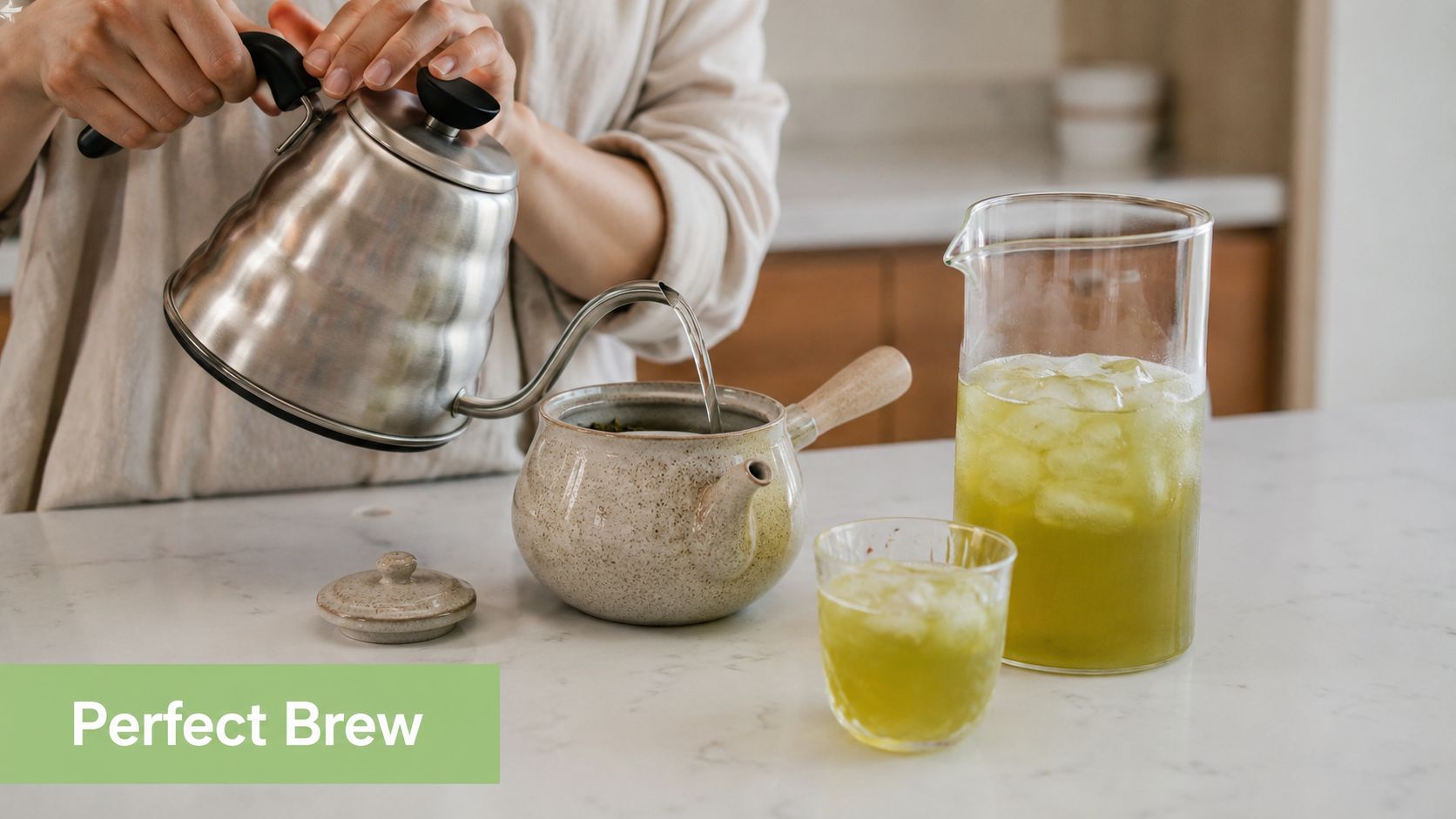
The Perfect Hot Brew
The single biggest secret to a smooth, sweet cup of green tea is water temperature. Boiling water, at 100°C, is simply too aggressive for delicate green tea leaves. It scorches them, releasing bitter-tasting tannins that completely overwhelm the tea’s natural sweetness.
For the best results, just follow these simple steps:
- Heat Your Water: Aim for water that’s around 80°C. If you don’t have a temperature-controlled kettle, it’s easy—just boil the water and let it stand for two to three minutes before pouring. Precision here is key, and you can learn more about why in our guide to using an electric tea kettle with temperature control.
- Steep the Tea: Pour the hot water over your loose-leaf organic green tea and let it steep for 1–3 minutes. A shorter steep time will give you a lighter, more delicate flavour, while a longer one creates a stronger brew.
- Add Lemon Last: This is a non-negotiable step. Squeeze fresh lemon juice into your cup after the tea has finished steeping and you’ve removed the leaves. If you add lemon during the brewing process, the acidity can interfere with extraction, dulling the tea’s vibrant green colour and stopping its sweet, umami notes from coming through properly.
Refreshing Iced Green Tea with Lemon
For those warm Australian days, nothing quite hits the spot like a crisp glass of iced tea. This simple recipe is a perfect thirst-quencher.
- Brew a Stronger Batch: Follow the same steps as you would for hot tea, but double the amount of tea leaves. This creates a stronger concentrate that won’t taste watered down once you add ice.
- Cool It Down: Let the brewed tea cool to room temperature on the counter before moving it to the fridge to chill completely.
- Serve and Enjoy: Fill a glass with ice, pour over the chilled tea, and finish with a generous squeeze of fresh lemon. A slice of lemon for garnish makes it look as good as it tastes.
Creative Tip: Matcha Lemonade
For a vibrant, energising twist, try making a Matcha Lemonade. Whisk a teaspoon of premium organic Matcha powder into a small amount of cold water until you have a smooth paste. Top it up with more cold water, ice, and a good squeeze of fresh lemon juice. It’s a bright, modern, and powerfully refreshing way to enjoy the benefits of organic green tea.
Creative Uses in Your Café and Kitchen
A simple, hot cup of organic green tea with lemon is a ritual worth keeping. But thinking of it only as a finished drink is missing its real potential. For our innovative café partners and adventurous home cooks, this classic pairing is a versatile flavour ingredient, ready to be pulled apart and used in ways that can redefine a menu.
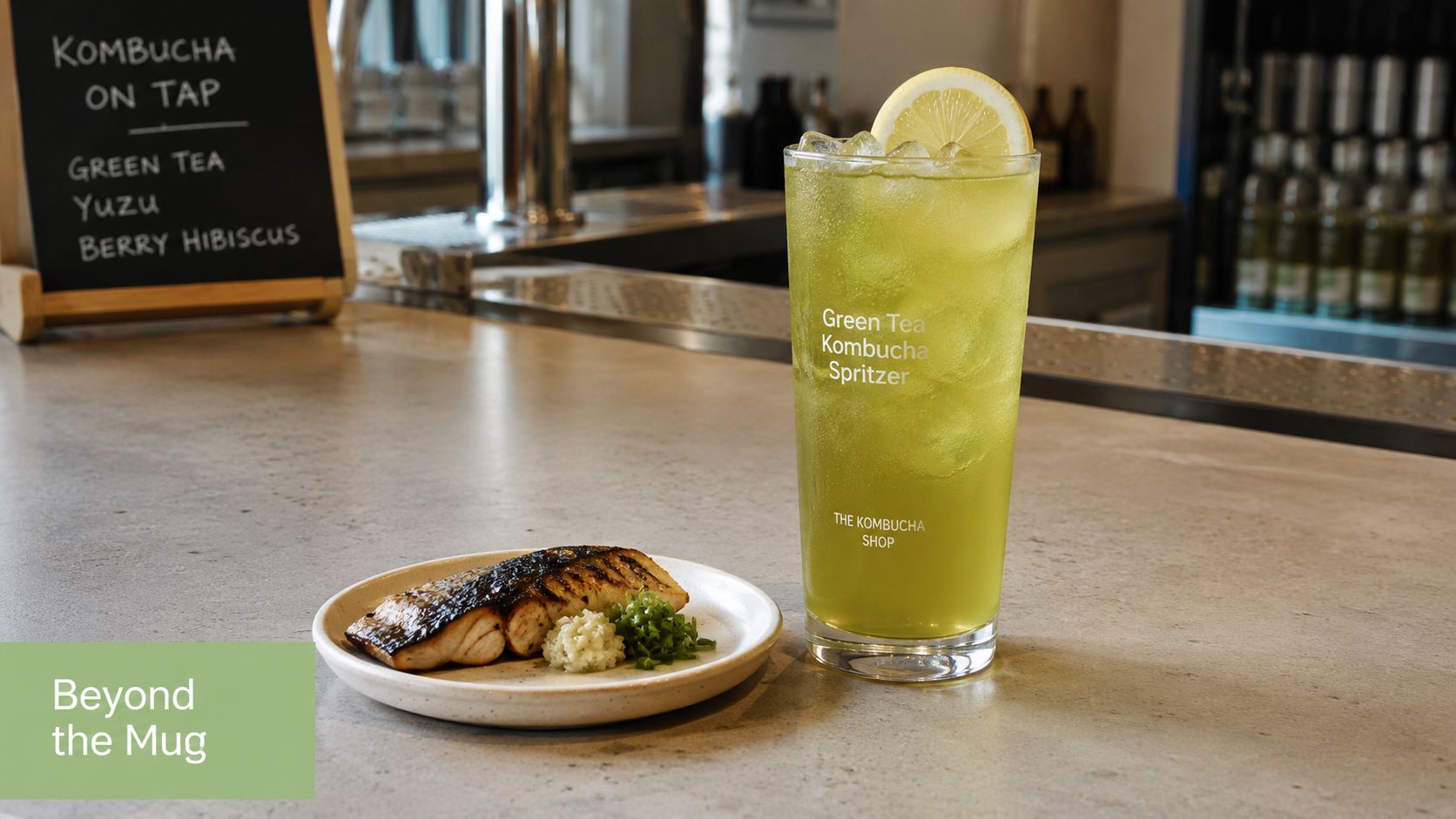
When you start treating your tea as a functional component, a whole world of culinary possibilities opens up. It’s a move that aligns perfectly with what modern customers want: clean, flavour-forward ingredients with a story.
For the Modern Australian Café
Café owners are constantly hunting for unique, healthy, and profitable menu items. Organic green tea with lemon is a fantastic, sugar-free base for sophisticated non-alcoholic drinks that genuinely appeal to health-conscious patrons.
- Elevated Mocktails: Use a strongly brewed, chilled organic green tea as the foundation for vibrant mocktails. Its earthy, slightly astringent character is the perfect counterpoint to muddled herbs like mint, a splash of sparkling water, and just a hint of natural sweetener if needed.
- Wellness Lattes: Move beyond the standard flat white by creating a Lemon Green Tea Latte. Simply froth your milk of choice (or a dairy-free alternative) with a dash of lemon-infused syrup and pour it over a shot of strong green tea. The result is creamy, zesty, and deeply comforting.
Mastering any beverage comes down to understanding the fundamentals of extraction and brewing. Digging into resources like Everti's coffee tea bag recommendations can offer valuable insights that apply just as well to tea as they do to coffee.
Our Signature Green Tea Kombucha Spritzer
One of our favourite creations is a functional ‘super-drink’ that brings together two of our passions: exceptional organic tea and authentic, living kombucha. It’s incredibly simple to make but delivers on complexity and refreshment.
Recipe: PepTea Green Tea Kombucha Spritzer
- Brew a strong batch of organic green tea and let it cool completely.
- Fill a glass with ice and pour it halfway with the chilled green tea.
- Top it up with PepTea’s sugar-free Organic Kombucha—our Ginger or Lime & Ginger flavours work beautifully here.
- Finish with a generous squeeze of fresh lemon juice and garnish with a lemon wheel.
This spritzer is more than just a drink; it's a probiotic-rich, antioxidant-packed beverage that hits the mark on both health and flavour. It’s the kind of signature offering that gets people talking.
In Your Home Kitchen
The culinary applications don't stop at drinks. The clean, bright notes of organic green tea and lemon make it an excellent secret ingredient in both savoury and sweet dishes.
- Flavourful Marinades: Use cooled green tea with lemon as a light marinade for fish or chicken. The tea’s natural tannins help to tenderise the protein, while the citrus adds a fresh zing that cuts beautifully through any richness.
- Dessert Syrups: Create an elegant finishing syrup by gently simmering equal parts water and sugar with a few green tea bags and some lemon peel. Once infused and cooled, this syrup is incredible drizzled over panna cotta, fresh fruit salads, or even a scoop of vanilla bean ice cream.
Understanding Safe and Healthy Consumption
Adding organic green tea with lemon to your daily routine is a brilliant little wellness habit. But like any good thing, the real secret to enjoying it long-term is finding the right balance. For most of us, this drink is overwhelmingly beneficial, but knowing a few general guidelines helps you build a healthy practice that actually sticks.
One of the first questions that always comes up is about caffeine. Yes, green tea has caffeine, but usually far less than your standard flat white. More importantly, the caffeine in green tea comes paired with L-theanine, an amino acid that encourages a sense of calm focus. It’s what helps you sidestep the jittery highs and crashing lows that often come with other caffeinated drinks.
General Guidelines for Daily Enjoyment
Honestly, listening to your own body is always the best advice you'll get. But general recommendations can be a great place to start. Most of the research into green tea’s benefits points towards consistent, moderate consumption as the key.
Studies have linked it to things like reduced LDL cholesterol and lower cardiovascular risk, with some finding that three or more cups a day delivered the best results. You can read more about how green tea supports wellness in this guide from WebMD.
The aim is to build a consistent daily ritual, not to overdo it. A gentle, steady intake is almost always more powerful than drinking a huge amount every now and then.
For most healthy adults, enjoying 1 to 3 cups of organic green tea with lemon per day is the perfect range. This amount lets you tap into all those antioxidant and hydration benefits without going overboard on caffeine.
Of course, your personal situation always matters most. If you have specific health conditions, an iron deficiency, or you're pregnant, it’s smart to be a little more mindful. For more context on this, you might find our article on matcha in pregnancy helpful.
Ultimately, just pay attention to how you feel. Your body is the best guide you have for finding the perfect, healthy balance that works for you.
Your Organic Green Tea Questions Answered
When you start making organic green tea with lemon a regular part of your day, a few questions always come up. We've got the straightforward answers you're looking for, based on what really matters for flavour, nutrition, and getting the most out of every cup.
Can I Drink Organic Green Tea With Lemon Every Day?
Yes, absolutely. For most people, enjoying one to three cups a day is a simple, sustainable wellness habit. It’s a great, low-calorie way to stay hydrated and get a gentle antioxidant boost without overdoing it.
Of course, it’s always wise to listen to your own body, particularly when it comes to caffeine. While green tea has less caffeine than coffee, its real magic lies in the L-theanine, which promotes that unique feeling of calm alertness. This makes it an ideal daily drink.
Is It Better to Use Fresh Lemon or Lemon-Flavoured Tea?
There’s no contest here: fresh lemon is always the better choice. Squeezing a wedge of fresh lemon into your brewed organic green tea delivers a bright, zesty flavour that pre-flavoured teas just can't replicate.
More importantly, fresh lemon juice provides a real dose of Vitamin C. This isn't just about flavour; the Vitamin C is crucial for helping your body actually absorb the tea’s catechins. Pre-flavoured teas rely on oils or powders that offer convenience but miss the nutritional synergy that makes this combination so powerful.
Does Adding Lemon Destroy Green Tea's Nutrients?
This is a common misconception, but the reality is the exact opposite. Adding lemon doesn’t just protect the nutrients in your green tea; it actually makes them more available to your body.
The Vitamin C in lemon juice acts as a preserver for the delicate antioxidants in green tea, like EGCG. Studies have shown it significantly increases the amount of these compounds your body can absorb. It’s a perfect case of nutritional synergy, where the two ingredients together are far more effective than either one on its own.
What Is the Best Time of Day to Drink Green Tea With Lemon?
The best time really comes down to what you want to get out of it. There are a few excellent windows:
- In the Morning: It’s a great way to start your day with a gentle, focused energy boost, setting a calm tone.
- After Meals: Having a cup 30–60 minutes after eating is a popular choice for those who find it aids digestion.
- In the Afternoon: It’s the perfect antidote to a midday slump, offering a lift without the jittery intensity of coffee.
Because of its caffeine content, anyone particularly sensitive might want to avoid it late in the evening. However, most people find its lower caffeine and high L-theanine levels don’t interfere with sleep. The only way to know for sure is to experiment and see what works for your body’s rhythm.
At PepTea, we're passionate about providing premium, certified organic ingredients to support your wellness journey.
Explore our full range of organic teas and sugar-free kombucha online.
The Best Way to Drink Green Tea for Weight Loss

You've probably done this already. Swapped a sugary drink for green tea, felt quite virtuous for a week, then wondered why nothing much changed.
That's where most advice falls over. It tells you to drink green tea, but not which kind, how to prepare it, or when to drink it if your goal is fat loss support rather than just having a nice warm cuppa.
The best way to drink green tea for weight loss isn't random. It works better as a system. You choose the right tea, prepare it properly so you don't wreck the useful compounds, and time it in a way that fits your day, your training, and your appetite patterns. Done well, it becomes a practical routine that supports a balanced diet and regular movement. Done poorly, it's just flavoured hot water.
If you're already trying to eat a bit better, move more, and stay consistent, even small habits matter. A handy tool like a recipe calorie checker can help you spot where “healthy” meals are surprisingly heavier than expected, which makes your tea routine far more useful in the bigger picture.
More Than Just a Cuppa The Role of Green Tea in a Wellness Journey
Green tea sits in a sweet spot for a lot of Australians. It feels simple, natural, and easy to stick with. No complicated program. No expensive gimmick. Just a daily habit that can support the work you're already doing.
But there's a catch. Not all green tea habits are equally helpful.
Some people drink it with breakfast, some sip it late at night, some brew it with boiling water until it turns bitter, and others load it with sweeteners that work against their goal. Then they say green tea “didn't do anything”. Fair enough. If the routine isn't set up well, the results won't be either.
Why the details matter
Green tea contains compounds people often talk about for metabolism and fat oxidation support. What matters in real life is whether you're getting enough of them, preserving them during preparation, and using the drink at times that match your body's rhythms and your daily habits.
That's why the best way to drink green tea for weight loss isn't just “have more cups”. It's closer to this:
- Choose the strongest format for your goal: Matcha gives you the whole leaf, not just an infusion.
- Use the right water temperature: Too hot, and you can reduce the useful catechins you were trying to get.
- Build a timing rhythm: Morning, pre-exercise, and afternoon can all play different roles.
- Keep expectations realistic: Green tea can support progress, but it won't replace calorie awareness, decent sleep, or movement.
Green tea works best as a quiet helper. It's not a shortcut, but it can make a solid routine easier to maintain.
Think support, not magic
A better way to frame it is this. Green tea may help you stay more organised with energy, routine, and snacking patterns. That alone makes it useful. Then, when you match that with smart preparation and timing, it becomes more than a wellness trend.
For many people, that's the difference between dabbling and building a habit that lasts.
Choosing Your Champion Why Matcha is Your Weight Loss Powerhouse
If you're serious about getting the most from green tea, matcha is the clear standout.
Regular green tea is brewed, then the leaves are removed. Matcha is different. The leaf is stone-ground into a fine powder and whisked into water, so you're drinking the whole thing. That one difference changes the whole conversation.
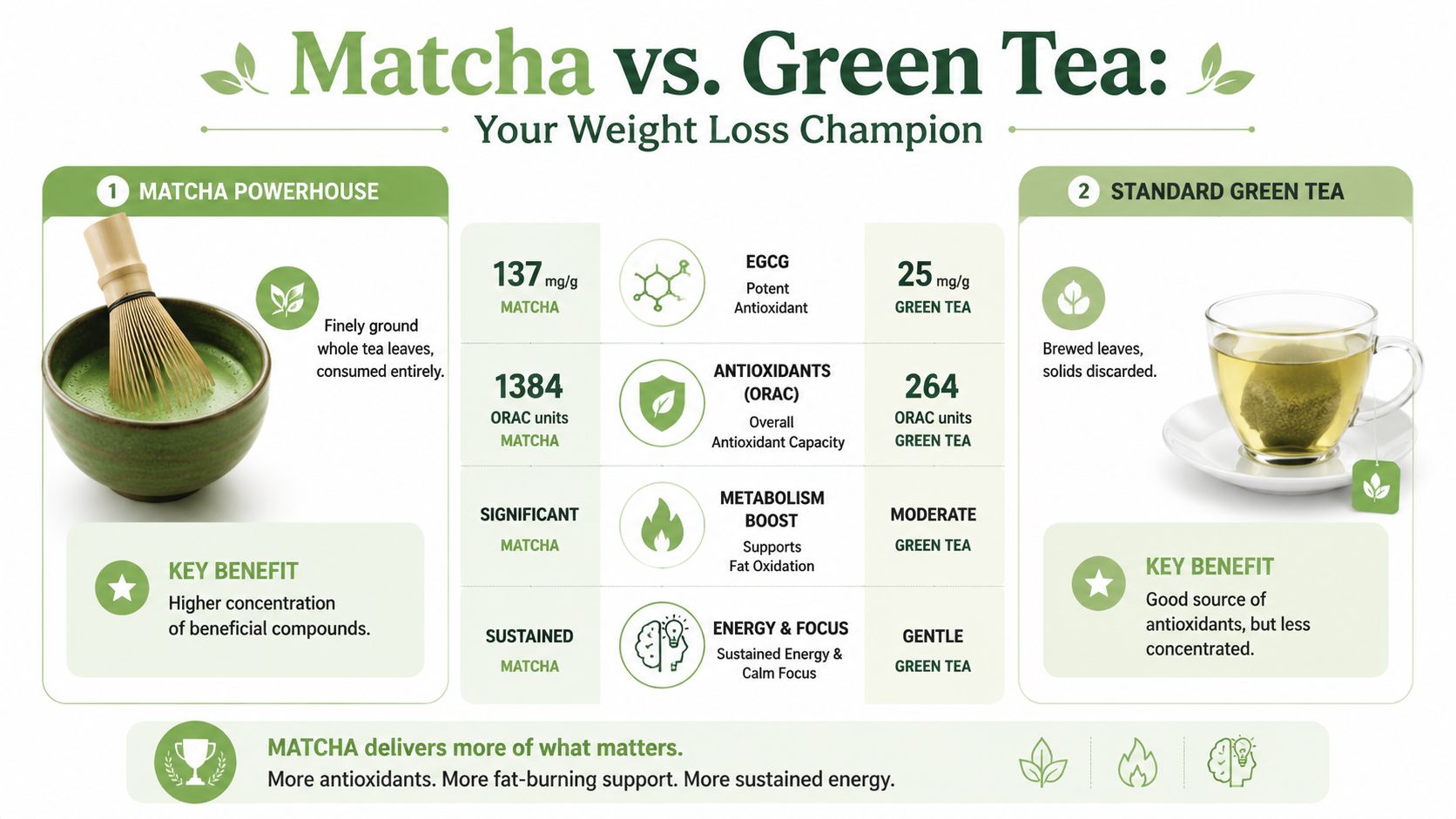
Whole-leaf drinking changes the payoff
When you drink standard brewed green tea, you're getting an extract from the leaf. Helpful, yes. But you're still leaving a lot behind.
With matcha, you consume the entire leaf. That means a more concentrated intake of the compounds that make green tea so interesting for weight loss support. This is the practical reason matcha often feels like the more strategic choice, not just the more fashionable one.
An Australian clinical study found that daily high-EGCg matcha led to an average weight loss of 2.9 kg over 12 weeks, and it outperformed regular green tea by 28% because full-leaf matcha delivered significantly more catechins per serving, according to this study summary on HealthyWomen.
Why matcha often fits real life better
The science matters, but so does the lived experience. Matcha is easy to build into a routine because it's flexible. You can drink it straight, iced, or as part of a lighter latte. It works before a walk, before a gym session, or mid-morning when you'd otherwise reach for another coffee and a snack.
Here's the simple comparison:
| Drink | How you consume it | Practical effect |
|---|---|---|
| Brewed green tea | Steeped leaves, then discarded | Lighter, gentler, less concentrated |
| Matcha | Whole powdered leaf whisked into water | More concentrated and better suited to a deliberate routine |
What to look for in a matcha
Not every green powder deserves your money. For everyday weight loss support, quality matters because taste affects consistency. If it tastes harsh, fishy, or overly bitter, it won't be consistently consumed.
Use these filters:
- Colour matters: A vibrant green usually signals fresher, better-handled tea.
- Texture matters too: Fine powder whisks more smoothly and feels better to drink.
- Start simple: If you're new, drink it with water before turning it into dessert in a mug.
- Choose a reliable source: Quality ceremonial-grade options, such as Uji matcha powder, make it easier to enjoy the ritual consistently.
Bottom line: If your goal is the best way to drink green tea for weight loss, matcha gives you the strongest starting point because it delivers the whole leaf.
That doesn't mean regular green tea is useless. It just means matcha is the sharper tool.
The Ritual of Preparation Unlocking Green Tea's Potential
Preparation can quietly make or break your results.
A lot of people buy good tea, then pour boiling water over it and wonder why it tastes bitter. That same mistake can also reduce the compounds they were hoping to keep. If you want the best way to drink green tea for weight loss, your brewing method needs to be part of the plan, not an afterthought.

The non-negotiable rule
To maximise EGCG bioavailability by 40%, green tea should be prepared at 75 to 85°C for 2 to 3 minutes, and hotter temperatures can degrade up to 25% of the beneficial catechins, as outlined in Healthline's review of green tea and weight loss.
That sounds technical, but the practical message is dead simple. Don't use boiling water.
If you want a more controlled setup at home, especially if you drink tea often, this guide to instant boiling water taps is useful for thinking through hot water convenience and temperature control.
How to make brewed green tea properly
If you're using loose-leaf green tea or tea bags, keep it clean and restrained.
- Heat water, then let it cool slightly if it has reached a full boil.
- Aim for 75 to 85°C rather than a rolling boil.
- Steep for 2 to 3 minutes.
- Remove the leaves or bag promptly so it doesn't turn sharp and over-extracted.
A lighter, cleaner cup is usually the sign you've done it right.
Practical rule: If your green tea tastes aggressively bitter, your water was probably too hot, your steep was too long, or both.
How to prepare matcha for the best result
Matcha is less about steeping and more about suspension. You're whisking powder into water so you drink the leaf.
A reliable basic method looks like this:
- Sift the powder first: This helps avoid lumps.
- Use a small amount of warm water: Start with a splash to make a paste.
- Whisk briskly: A zig-zag motion gives a smoother finish.
- Top up with more water: Keep it pleasant and easy to drink, not overly thick.
For a visual walkthrough, this short guide on how to whisk matcha is handy if you want better texture without guesswork.
A quick demonstration helps too:
Don't turn a good drink into a milkshake
If weight loss is your focus, keep additions modest. A heavily sweetened café-style matcha can drift far from the point. A small amount of milk is one thing. A syrupy, oversized drink is another.
The ritual works best when it's simple, repeatable, and pleasant enough to become automatic.
Strategic Timing When to Drink Green Tea for a Metabolic Boost
A smart tea routine isn't only about what's in the cup. Timing changes the job the cup can do.
Drink it at the right time and green tea can support training, appetite control, and steady energy. Drink it randomly and you lose much of that structure. For many people, timing is the missing piece that makes the habit finally feel useful.
A simple daily blueprint
Research shows that consuming EGCG and caffeine from green tea 90 minutes before exercise produces a statistically significant increase in fat oxidation during the workout, and 2 to 3 cups daily appears to be the sweet spot for both benefits and long-term adherence, according to this timing guide on Simple Loose Leaf.
That gives us a practical rhythm rather than random sipping.

The three moments that make the most sense
Mid-morning after breakfast
This is a great slot if you don't love caffeine on an empty stomach. You've eaten, your day is underway, and a cup of green tea or matcha can help create a clean break between breakfast and mindless snacking.
It also suits people who otherwise chain coffees through the morning.
Before exercise
This is the most strategic slot if fat oxidation support is your main goal. If your training is planned, try having your green tea well before the session rather than chugging it in the car park outside the gym.
Walking, cycling, strength work, and even a solid beach walk all count. The point is to pair the tea with movement, not to treat it like a substitute for movement.
Mid-afternoon between meals
Green tea excels for people who get the 3 pm wobble. You're not necessarily hungry, but you want something. A well-timed iced green tea or matcha can help keep the day steady without pushing you toward biscuits, vending machine snacks, or a second dessert-coffee.
For many people, the best cup isn't the earliest one. It's the one that stops the next unnecessary snack.
What a practical day can look like
| Time | Best use | Why it works |
|---|---|---|
| Mid-morning | First cup after breakfast | Supports a steadier start |
| Before training | Matcha or green tea ahead of exercise | Best fit for fat oxidation support |
| Afternoon | Light cup between meals | Helps maintain routine and energy |
If you're also working on movement, this resource on fitness for metabolic well-being gives useful broader context on how exercise supports the same goal from another angle.
Keep it doable
The best schedule is the one you'll repeat. If you hate early mornings, don't force dawn matcha. If you train after work, place your tea around that. A useful routine should feel organised, not exhausting.
Beyond the Brew Creative Recipes to Keep You Motivated
Even the best routine can go stale if every cup feels like homework.
That's why enjoyment matters. If you like the taste and the ritual, you'll stick with it. If every drink feels medicinal, you'll drift back to whatever's easiest. The best way to drink green tea for weight loss has to be sustainable enough for real life, including hot Australian afternoons and busy workdays.
Iced matcha for warm days
A cold matcha is one of the easiest ways to keep the habit going through summer.
Shake or whisk matcha with a little warm water first so it dissolves properly. Then pour it over ice and top with cold water. If you like a softer flavour, add a splash of unsweetened milk.
The result is clean, grassy, refreshing, and far lighter than many takeaway drinks.
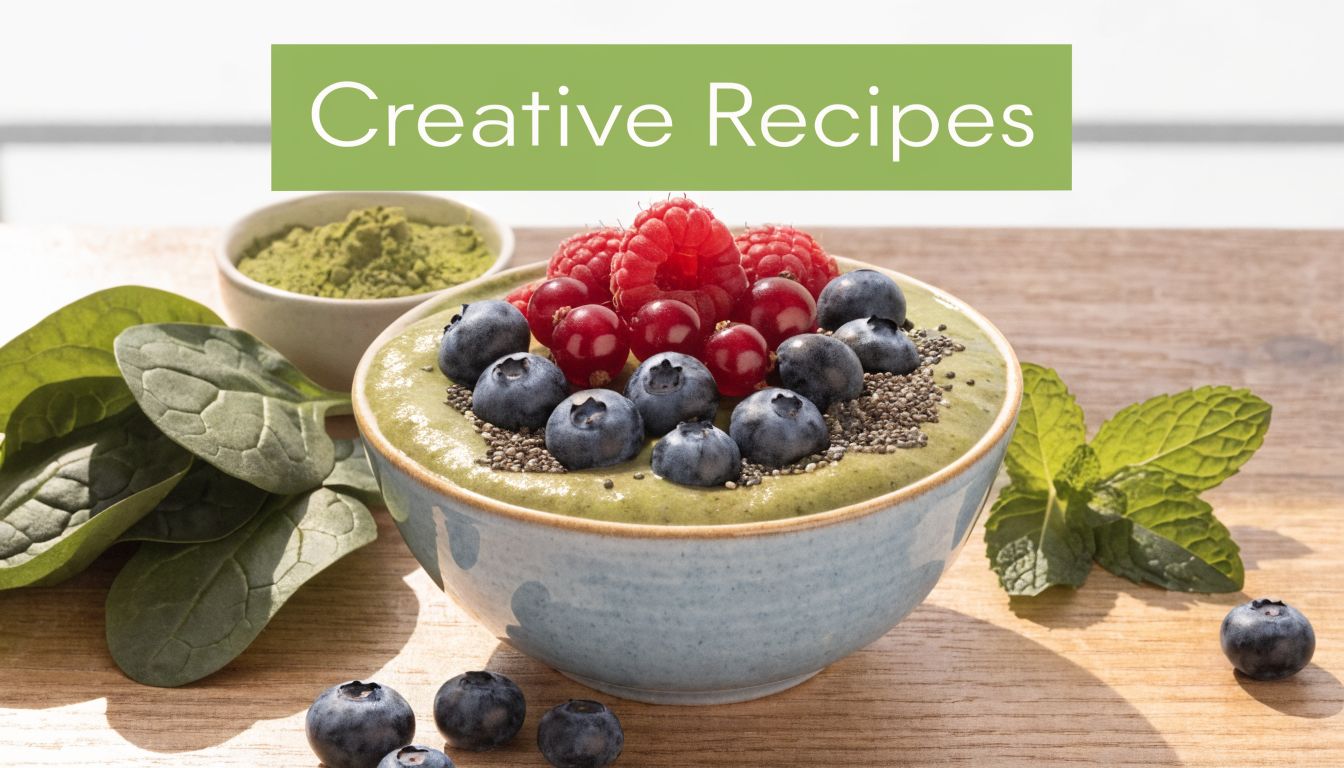
A lighter matcha latte that still feels comforting
A matcha latte doesn't have to become a dessert.
Try this approach:
- Start with whisked matcha: Smooth it with a small amount of warm water first.
- Use unsweetened milk or a dairy-free option: Oat, almond, or regular milk can all work.
- Keep sweetness optional: If you use anything, use a small amount.
- Watch the portion: Bigger isn't automatically better.
This version works well when you want something cosy without turning your tea habit into a sugar delivery system.
A smoothie option for busy mornings
If breakfast is rushed, a matcha smoothie can be practical. Blend matcha with yoghurt or a dairy-free base, some fruit, and ice. Keep the ingredient list short. The goal is convenience and routine, not building a café menu in your blender.
A simple flavour combo often works best. Banana softens matcha's grassy edge. Berries add brightness. The tea stays noticeable without becoming overwhelming.
A good recipe should make consistency easier. If it takes too long or uses half the pantry, most people won't repeat it.
One recipe doesn't suit every day
Some days call for a straight whisked matcha. Some days you want iced. Some days you want it folded into a snack or smoothie. That variation can keep the routine enjoyable without changing the core habit.
If you want more ideas that stay aligned with your goal, these matcha drink recipes for weight loss give you a few practical options to rotate through.
Smart Sipping Dosage Safety and Realistic Expectations
At this stage, a lot of people either overdo it or give up too early.
Green tea can support weight loss, but it's still caffeinated, and more isn't automatically better. Chasing extreme intake usually leads to one of two outcomes. You feel rubbish, or you get sick of the whole routine and stop.
How much is sensible
A good working range is 2 to 3 cups a day, or the matcha equivalent. That's enough to build a meaningful habit without making your day revolve around tea.
If you're caffeine-sensitive, start lower. One properly made cup at the right time is better than several cups that leave you feeling edgy, hungry, or flat later on.
Here are the signs your dose probably suits you:
- You feel steady, not wired: Calm alertness is the aim.
- Sleep remains solid: If sleep drops off, your timing or amount needs adjusting.
- You can stay consistent: The best routine is the one you can repeat for weeks, not days.
- Your appetite stays manageable: Tea should support your routine, not replace proper meals.
The evening tea question
The old rule says no caffeine after 3 pm. Real life is a bit more nuanced.
Emerging research suggests the L-theanine in premium matcha at 20 to 40 mg per cup may help mitigate cortisol spikes, and one study reported 12% higher nocturnal fat oxidation without disrupting sleep, as discussed in this Holland & Barrett article on green tea for weight loss.
That doesn't mean everyone should start drinking matcha at night. It means the blanket rule isn't perfect for every person.
A sensible way to test your tolerance
| If you're this kind of drinker | Better approach |
|---|---|
| Very caffeine-sensitive | Keep green tea earlier in the day |
| Moderately tolerant | Trial a lighter afternoon serve |
| Generally fine with caffeine | You may tolerate later matcha, but test it honestly |
Sleep still matters more than squeezing in one extra cup. If a later serve leaves you restless, it isn't helping your weight loss effort.
Keep your expectations grounded
Green tea isn't a magic fix. It won't cancel out oversized portions, regular takeaway meals, poor sleep, or zero movement. What it can do is support a well-run routine. It may help with structure, better drink choices, pre-workout rhythm, and consistency.
That's plenty. Sustainable progress usually comes from habits like these.
If you'd like to put this into practice with high-quality organic options, explore Pep Tea for premium matcha and sugar-free organic kombucha made for everyday Australian wellness routines.
Best Decaf Green Tea for Weight Loss: A 2026 AU Guide

Most advice on the best decaf green tea for weight loss starts in the wrong place. It treats caffeine as the star, then assumes decaf must be a watered-down compromise.
That misses the actual story.
Green tea's weight management potential isn't only about stimulation. The bigger players are catechins, especially EGCG, which are natural plant compounds found in the leaf itself. If those compounds are preserved during decaffeination, decaf green tea can still be a useful part of a sensible routine built around eating well, moving regularly, and sleeping properly.
That matters for a lot of Australians. Some people want a warm evening drink without the buzz. Others love green tea but don't love feeling wired. And many are looking for something more realistic than another “fat-burning” product with flashy promises.
A better approach is to treat decaf green tea as a supportive tool, not a miracle. It can fit neatly alongside a solid eating pattern, daily activity, and smarter habits like replacing sugary drinks. If you're building those foundations, practical resources such as Zing Coach's nutrition advice can help you think beyond single ingredients and focus on the bigger picture. If you'd like a broader look at tea options, this guide to green tea for weight loss is also useful.
Rethinking Decaf Green Tea for Your Wellness Goals

If you've ever thought, “Surely decaf green tea can't do much,” you're not alone. People often connect green tea with energy, and energy with caffeine. So once the caffeine goes, they assume the useful part has gone too.
That's where a lot of confusion starts.
Why decaf isn't automatically “less useful”
A high-quality decaf green tea still contains catechins, the antioxidant compounds that researchers keep studying in relation to metabolism and fat use during activity. In plain English, that means decaf may still help your body use fuel well, especially when your routine already includes exercise.
The key phrase is high-quality. Not every decaf green tea is processed the same way, and not every product keeps the same amount of those beneficial compounds.
Decaf works best when you stop asking, “Is it as strong as coffee?” and start asking, “Does it still keep the useful tea compounds?”
Who often benefits most from decaf
Decaf green tea makes particular sense for people who:
- Feel shaky with caffeine: Some people tolerate coffee poorly but still enjoy the ritual of tea.
- Want an evening option: A calming cup after dinner is easier to stick with than a drink that disrupts sleep.
- Prefer steady habits over extremes: Weight management usually responds better to routines than to all-or-nothing products.
This is why the best decaf green tea for weight loss isn't the strongest-tasting tea or the one with the flashiest packaging. It's the one that keeps the leaf's useful compounds intact and fits your life well enough that you'll drink it consistently.
How Catechins in Decaf Green Tea Aid Weight Management
The simplest way to understand green tea is this. Caffeine can contribute, but catechins do a lot of the heavy lifting. That's especially important when we're talking about decaf.
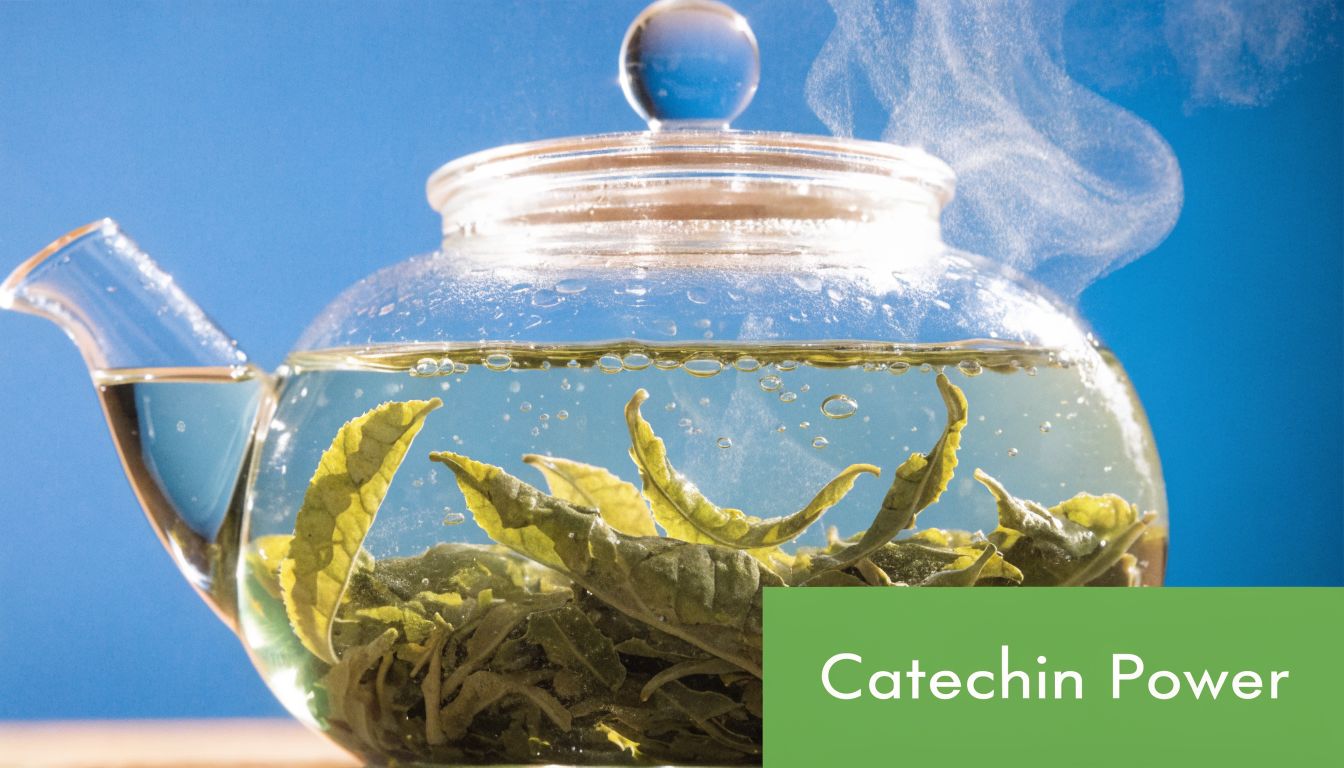
Catechins are natural polyphenols in green tea. EGCG is the one people talk about most because it's closely tied to green tea's metabolic effects. When people say green tea may support weight management, this is usually the part they mean.
What the research actually suggests
One of the clearest findings comes from a Penn State research summary. In a 16-week study, mice on a high-fat diet that consumed decaffeinated green tea extract combined with regular exercise had an average body mass reduction of 27.1 percent and an average abdominal fat mass reduction of 36.6 percent. The same report notes a 17 percent reduction in fasting blood glucose and a 65 percent decrease in plasma insulin levels.
That doesn't mean a cup of decaf green tea will create the same result in humans. It does mean the idea that decaf is “inactive” doesn't hold up well. In that study, decaffeinated green tea extract looked particularly effective when paired with exercise.
That pairing matters more than is generally understood.
What “fat oxidation” means in normal language
You'll sometimes see researchers talk about substrate utilisation or fat oxidation. Those phrases sound technical, but the idea is straightforward. Your body can draw energy from different sources. During activity, green tea catechins may help shift some of that energy use more towards fat.
Let's frame it this way:
- At rest and in movement, your body chooses fuel
- Training influences that choice
- Catechins may support a more efficient fuel mix during exercise
That's why decaf green tea isn't best viewed as a stand-alone slimming drink. It's better understood as a beverage that may support the work you're already doing.
Practical rule: If your routine includes walking, gym sessions, cycling, or strength training, decaf green tea makes more sense than if you expect it to do the whole job alone.
Why this matters in real life
For a health-conscious Australian trying to lose weight without overloading on stimulants, this is good news. You don't need to choose between “useful” and “decaf”. You need to choose a decaf green tea that still contains the compounds you want.
A lot of readers also care about the broader wellness picture, especially in life stages where hormones, stress, sleep, and appetite all interact. If that's relevant to you, this article on best probiotic for menopause weight loss offers another angle on supportive habits beyond caffeine-heavy products. Some people also compare brewed tea with concentrated formats, and this overview of green tea capsules for weight loss can help clarify the difference.
The takeaway from the science
Here's the useful interpretation, without hype:
| What people assume | What the evidence suggests |
|---|---|
| Decaf means no metabolic value | Decaf can still retain meaningful catechins |
| Caffeine is the whole reason green tea helps | Catechins remain central, especially with activity |
| Tea alone should drive visible weight loss | Results are more plausible when tea supports exercise and diet |
If you remember one thing, make it this. The best decaf green tea for weight loss is the one that preserves catechins and fits into an active lifestyle.
A Buyer's Guide to High-Quality Decaf Green Tea
Walking into a supermarket or browsing online can make decaf green tea look simple. It isn't. Two products can both say “decaf green tea” and still be very different in quality.
The biggest difference often sits behind the label. It's the decaffeination method.
Why the decaffeination method matters
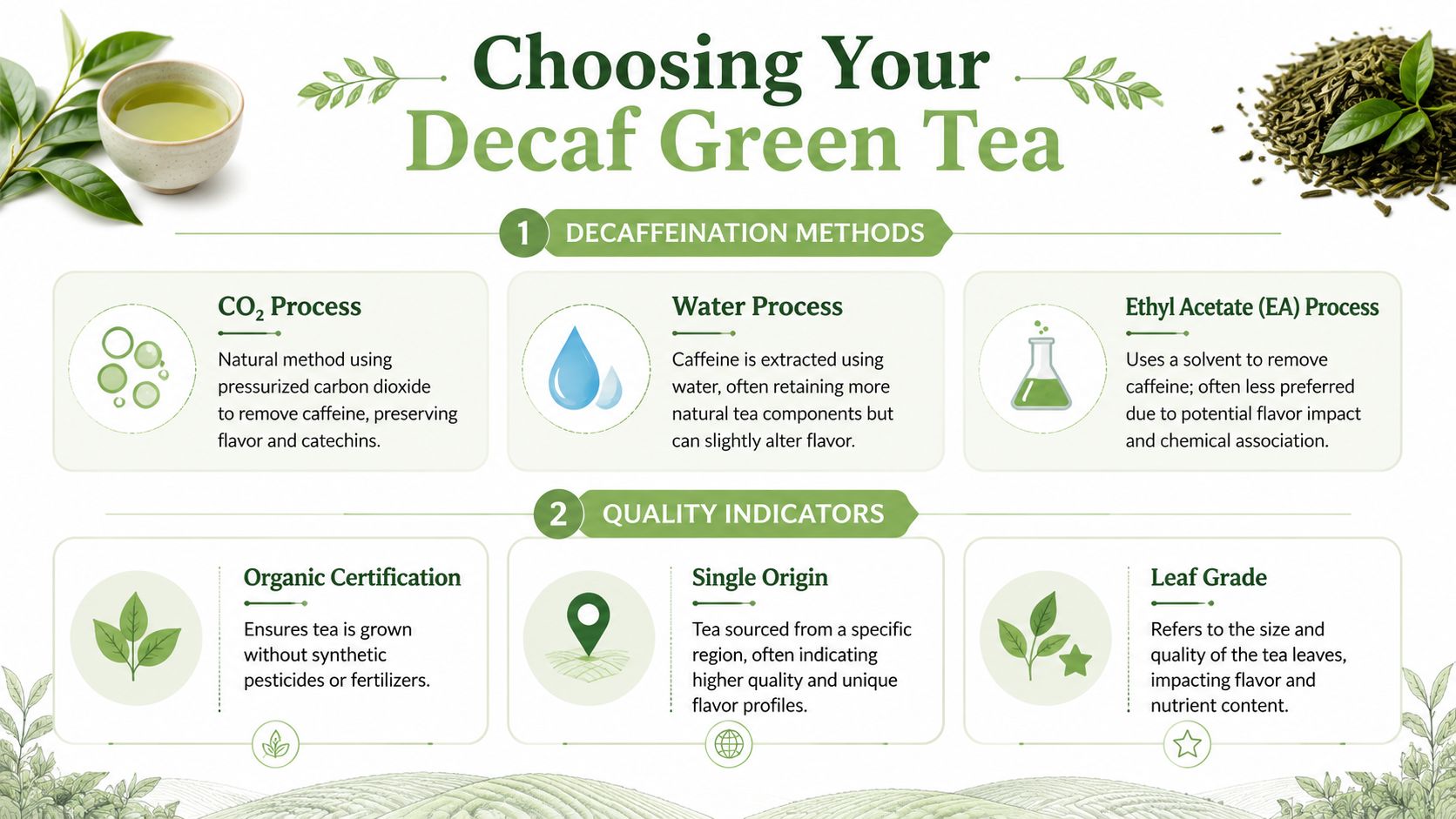
A decaf tea can only support your goals if the useful compounds survive processing. According to this decaf green tea analysis, the CO2 decaffeination process preserves 30 to 50 mg of EGCG per serving, while alternative methods have significantly lower retention. The same source notes that daily consumption of tea with high catechin levels, at around 690 mg, can measurably reduce body fat within 12 weeks, and that supplementation with 400 mg of EGCG from decaf extract significantly improves fat oxidation during exercise.
You don't need to become a lab technician to use that information well. You just need to know what to look for.
A simple comparison when you shop
| Method | What to know | Why it matters |
|---|---|---|
| CO2 decaffeination | Often preferred for preserving catechins | Better fit if you care about EGCG retention |
| Water process | Can be gentler than some alternatives | May still be a reasonable option, depending on the tea |
| Ethyl acetate process | Often less appealing to careful shoppers | People may avoid it because of flavour changes and processing concerns |
What to check on the label
Some brands tell you a lot. Others tell you almost nothing. If a product is vague about everything, be cautious.
Look for these quality signals:
- Decaffeination method listed: If the brand proudly says CO2 decaf, that's a good sign.
- Organic certification: This helps if you want a cleaner product and a more transparent supply chain.
- Leaf quality: Whole leaf or better leaf grade usually signals more care than dusty, flat-tasting tea bags.
- Origin information: Single-origin or clearly named growing region can indicate stronger quality control.
- Catechin or EGCG details: Not every label provides this, but if it does, that transparency is useful.
Cheap decaf green tea often tastes flat for a reason. It may have lost much of what made the original leaf special.
What “best” really means
The best decaf green tea for weight loss usually isn't the most aggressively marketed product. It's the one that gets four basics right:
- Preserves catechins well
- Tastes pleasant enough to drink regularly
- Comes from a transparent producer
- Fits the way you live
That last point matters. A beautiful loose-leaf tea isn't “best” if you'll never brew it. A practical tea bag option isn't “worse” if it helps you build a daily habit.
A fast buying checklist
If you want a quick shortcut, use this:
- Choose CO2 decaf when possible
- Pick organic if purity matters to you
- Prefer brands that explain their sourcing
- Don't confuse “decaf” with “benefit-free”
- Avoid products that hide every meaningful detail
Your Daily Ritual for Decaf Green Tea Wellness
A good tea routine should feel easy. If it's fussy, expensive, or hard to repeat, it is often abandoned within a week.
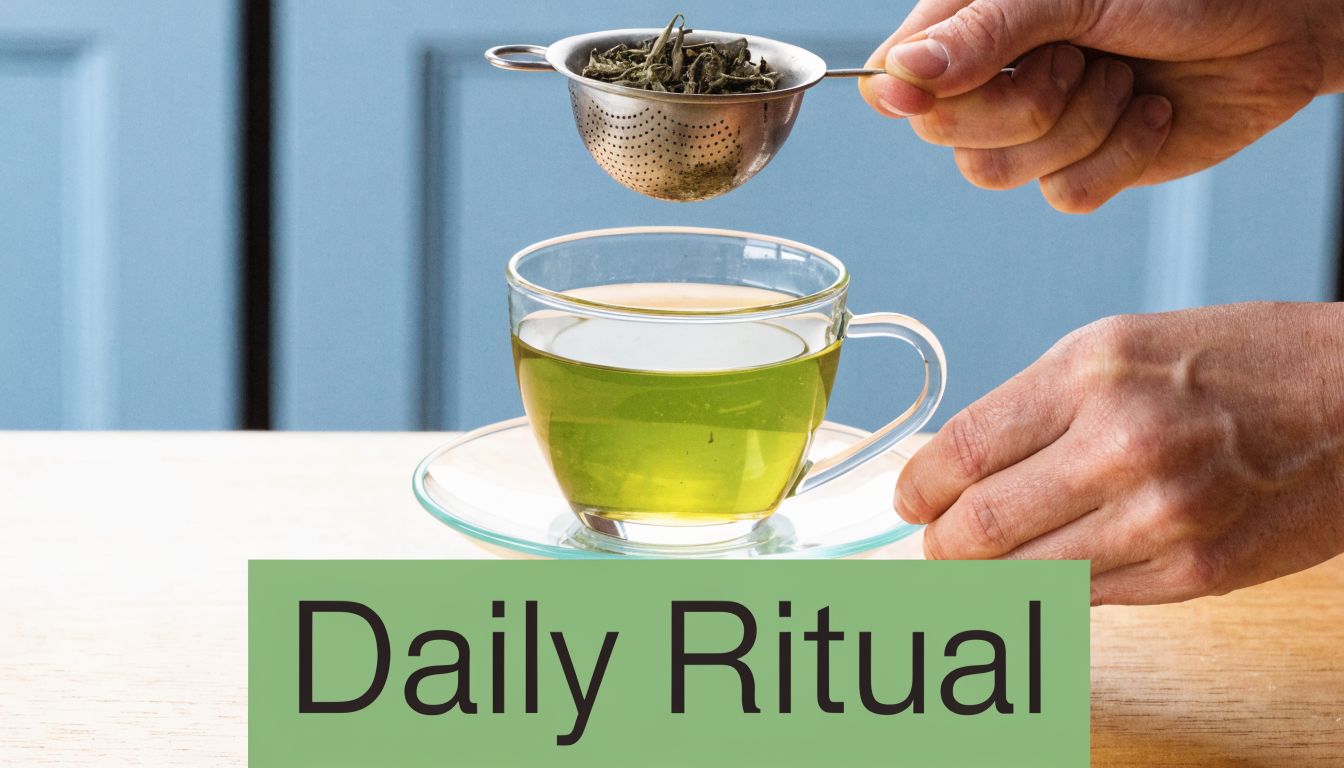
The most effective decaf green tea habit is the one you can keep. For many people, that means one cup earlier in the day and another later on, especially if they want the comfort of tea without a late caffeine hit.
Why timing matters for some Australians
For the 28% of Australians following low-carb diets, zero-calorie decaf green tea can fit neatly into that style of eating, and it's especially useful in the evening because caffeine sensitivity affects up to 35% of the Australian population, according to this overview on decaf green tea and low-carb eating. The same source notes that decaf green tea tends to show minimal results alone, but its catechins work better alongside diet and exercise.
That gives us a helpful framework. Don't treat tea as the plan. Treat it as the drink that supports the plan.
How to brew it so it actually tastes good
A lot of people think they dislike green tea when they've really just had it brewed badly. Water that's too hot can make it bitter and harsh.
Try this instead:
- For loose-leaf decaf green tea: Use hot water, not boiling. Steep until the flavour is fresh and grassy, not overly sharp.
- For tea bags: Give the leaves room if you can. A cramped bag in scalding water often tastes dull.
- For a smoother cup: Let the kettle cool slightly before pouring.
A practical daily rhythm
Different people prefer different timings, but this pattern works well:
| Time | How it can fit |
|---|---|
| Morning | Replace a sugary breakfast drink or pair it with a balanced meal |
| Before activity | Use it as part of your pre-walk or pre-gym ritual |
| Afternoon | Swap it in when you'd usually reach for biscuits and another coffee |
| Evening | Keep the tea ritual without the stimulant effect |
If you're trying to lose weight, consistency beats intensity. A simple cup you enjoy every day is more useful than a “perfect” routine you follow twice.
Two easy ways to use it beyond a plain cup
You don't need to drink decaf green tea the same way every day.
1. Iced citrus decaf green tea
Brew your tea, cool it, pour over ice, and add lemon. Keep it unsweetened if your goal is weight management.
2. Warm decaf matcha-style latte
Whisk decaf green tea powder or a decaf matcha-style option with warm milk or an unsweetened milk alternative. This works well after dinner when you want something comforting.
For a quick brewing visual, this simple walkthrough can help:
Small habits that make tea more useful
The best decaf green tea for weight loss becomes more helpful when it replaces less helpful choices.
Some examples:
- Swap soft drink for tea at lunch: That change can reduce unnecessary sugar in a very practical way.
- Pair tea with movement: A cup before a walk creates a habit loop that's easy to repeat.
- Use tea to close the kitchen at night: Many people snack less once they've made a warm drink and settled in.
None of that is magic. It's habit design. And habit design is often what turns a nice idea into visible progress.
Expanding Your Routine with Matcha and Kombucha
If you enjoy green tea but want more variety, it helps to think in terms of a wellness routine, not a single “weight loss tea”.
Matcha belongs in that conversation because it gives you the whole leaf in powdered form. That matters when you care about the compounds inside the tea rather than just the ritual of sipping it. Research discussed in this paper on decaffeinated green tea extract and exercise metabolism notes that the catechins in green tea work together with L-theanine to support cognitive focus while maintaining metabolic function. The same source describes enhanced fat-burning efficiency over 8 to 12 weeks when combined with fitness routines, without the jitteriness associated with high-caffeine stimulants.
Why matcha feels different
Matcha often feels smoother and more rounded than standard green tea because you're getting a more concentrated tea experience. It also tends to attract people who want focus and ritual in the same cup.
That doesn't mean everyone needs matcha. It does mean matcha can be a smart extension of your tea routine if you want something a bit more substantial than a bagged decaf brew.
Where kombucha fits
Kombucha serves a different role. It's not a substitute for decaf green tea, and it's best not to force it into the same box. Instead, kombucha can complement a tea-based routine as a refreshing, lower-sugar functional drink that many people enjoy as an alternative to soft drink or alcohol.
If you're curious about that side of the wellness picture, this guide to kombucha benefits is a helpful place to start.
A thoughtful routine can include more than one drink. Tea may support your active lifestyle, while kombucha can help make healthier drink choices easier to stick with.
A sensible way to combine them
A simple pattern could look like this:
- Morning or early day: Matcha when you want a richer tea ritual
- Afternoon or evening: Decaf green tea when you want calm and consistency
- Social or meal moments: Kombucha as a flavourful alternative to sugary drinks
That kind of setup feels balanced. It also keeps you away from the trap of chasing one product to solve everything.
Your Questions Answered and Path Forward
A few practical questions come up again and again.
Is it better before or after exercise
Before often makes more sense if tea helps cue your workout or walk. The bigger idea is consistency. If drinking it after exercise helps you stick to the habit, that's still useful.
Do tea bags work as well as loose leaf
They can, but quality varies a lot. A good tea bag is more practical than loose leaf you never use. If the brand shares details about sourcing and decaffeination, that's a better sign than packaging alone.
Can I drink it at night
For many people, yes. That's one of decaf's biggest advantages. If you're sensitive to caffeine, decaf green tea can let you keep the ritual without the wired feeling that spoils sleep.
Should I build my whole weight loss plan around tea
No. Tea is supportive, not central. Your eating pattern, activity, recovery, and sleep still do the main work. If you want help organising meals around those basics, a tool like AI Meal Planner can be useful for turning good intentions into something more structured.
Here's the honest conclusion. The best decaf green tea for weight loss is high-quality decaf green tea that preserves catechins, tastes good enough to drink regularly, and supports a healthy routine you can maintain. It isn't a shortcut. It is a smart option for people who want green tea's benefits without relying on caffeine.
If you'd like to explore premium organic tea options for your own routine, Pep Tea offers Australian access to high-quality matcha and sugar-free organic kombucha that fit naturally into a thoughtful, everyday wellness lifestyle.
Electric Tea Kettle with Temperature Control: Elevate Your

You make a cup that should taste fresh and lively. Instead, the liquor turns sharp, dull, or strangely bitter after the first sip. In many Australian kitchens, the tea gets blamed when the culprit is much simpler. Water that was far too hot for the leaves or powder in the cup.
A standard kettle gives you boiling water. An electric tea kettle with temperature control gives you choice. That sounds like a small upgrade, but it changes the result in a very practical way. Delicate green teas stay softer and sweeter. Matcha keeps more of its creamy, rounded character instead of turning harsh. Even the aroma is clearer, much like cooking vegetables gently instead of blasting them until their colour and freshness disappear.
That precision matters for more than taste. Heat changes how flavour compounds show up in the cup, and it also affects the qualities people often seek from premium organic drinks. With matcha, the wrong temperature can make a beautiful powder taste aggressive before you have a chance to enjoy its natural sweetness. With kombucha, careful heating matters when you want to serve it warm without being careless with the living culture.
A useful way to picture it is as the difference between using a toaster and using an oven with a proper dial. One gives you the highest setting every time. The other lets you match the heat to the job. Tea is much the same. If you are whisking matcha before breakfast or warming water for an afternoon kombucha serve, precision gives you repeatable results instead of guesswork.
That is why temperature control kettles have become so popular with home tea drinkers. They suit the way many of us brew now. One person wants a clean, sweet sencha. Another is making ceremonial-style matcha. Someone else wants warm, not scalding, water ready in seconds. The right kettle makes those small decisions easier, and the drinks in your cup taste better for it.
The End of Burnt Tea Your Introduction to Precision Brewing
The biggest mistake home tea drinkers make is simple. They use boiling water for everything.
That works well enough for some black teas and many herbal infusions, but it can ruin more delicate styles. Green tea, white tea, and matcha respond very differently to heat. Too much, and you draw out harshness before you get the sweetness and aroma you were hoping for.
A temperature control kettle removes the guesswork. Instead of waiting for boiled water to cool down and hoping you’ve judged it right, you press a button or dial in a setting and let the kettle stop at the right point. That means fewer disappointing cups and a lot more consistency.
Practical rule: If your tea tastes bitter, dry, or overly grassy, the water may be too hot rather than the tea being poor quality.
For many people, this is the first tool that makes premium tea feel easier rather than fussier. You don’t need to memorise complex brewing rituals. You just need water at the right temperature.
That matters even more when you’re working with drinks where heat affects both flavour and useful compounds. Matcha is the clearest example. Precision helps preserve the character you paid for, instead of scorching it away in the first pour.
What Exactly Is a Temperature Control Kettle
You fill the kettle, choose a temperature, and the water stops there instead of rolling all the way to a boil. That simple change gives you far more control over what ends up in your cup.
A standard kettle has one job. Heat until boiling. A temperature control kettle adds a small layer of judgment. It monitors the heat as the water warms and cuts off at the point you selected, whether that is a gentler setting for organic matcha or a hotter one for black tea.
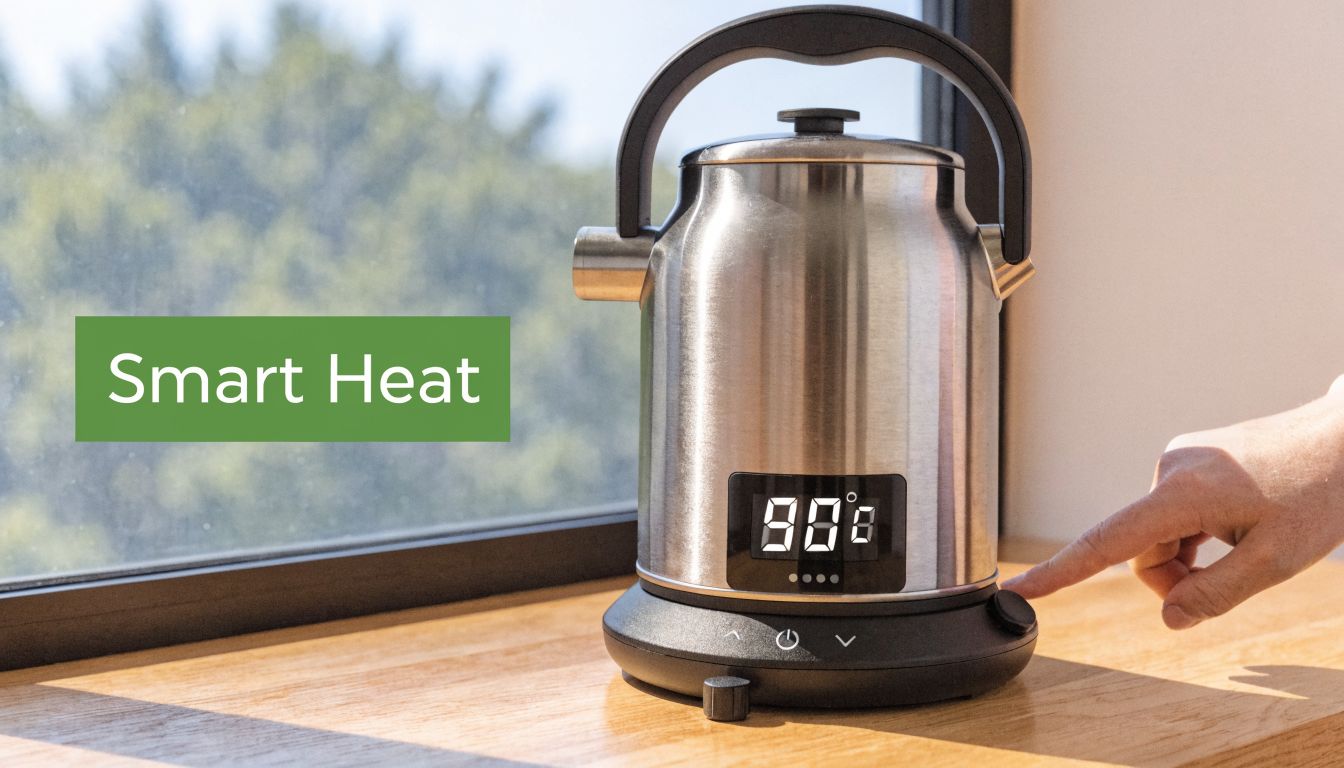
How the kettle knows when to stop
Inside the kettle or its base, a temperature sensor measures the water as it heats. Many models use a thermistor. As the reading rises, the control system compares it with your chosen setting and switches the heating element off at the right moment.
The better ones do more than just stop. They hold the water close to that temperature for a set time, which is handy if you are whisking matcha for two people, pausing between pours, or serving tea alongside breakfast. In a practical Australian kitchen, that means less waiting around for boiled water to cool and less guesswork with every second cup.
Local compatibility matters too. Kettles sold for Australian homes should match our 220 to 240V, 50Hz power supply. The wattage varies by model, but the goal is the same. Fast, stable heating that behaves predictably on your bench.
What makes it different from an ordinary kettle
The easiest way to understand the difference is to compare it to cooking. Boiling all tea water is a bit like cooking every vegetable on high heat until it is soft. You will get something drinkable, but you lose nuance.
A temperature control kettle lets you match the water to the drink. Lower temperatures suit delicate teas and matcha, where too much heat can push the flavour toward bitterness and flatten the creamy, sweet notes people look for in premium powders. Higher temperatures suit sturdier teas and many herbals, where more heat helps draw out body and aroma.
That precision also matters for what you are trying to keep, not just what you are trying to taste. With premium matcha, gentler water helps protect the smooth character and useful plant compounds that make people choose it in the first place. With kombucha, careful heating is useful in a different way. You can prepare tea for brewing without accidentally treating every step as if it needs boiling water.
Common features you’ll see
Some electric tea kettles with temperature control keep things simple. Others give you fine control down to a specific degree. The most useful features are the ones that make good results repeatable.
- Preset temperatures for drinks like green tea, black tea, or coffee
- Variable temperature selection if you want to choose the exact setting
- Keep warm mode for multiple pours or slower mornings
- Auto shut-off for safety
- Boil-dry protection so the kettle does not keep heating when empty
If you are new to precision brewing, start with one idea. The kettle is not there to make tea feel complicated. It is there to make good tea easier to repeat, especially when you care about getting the best flavour and benefits from drinks like organic matcha and kombucha.
Why Temperature Unlocks Flavour and Health Benefits
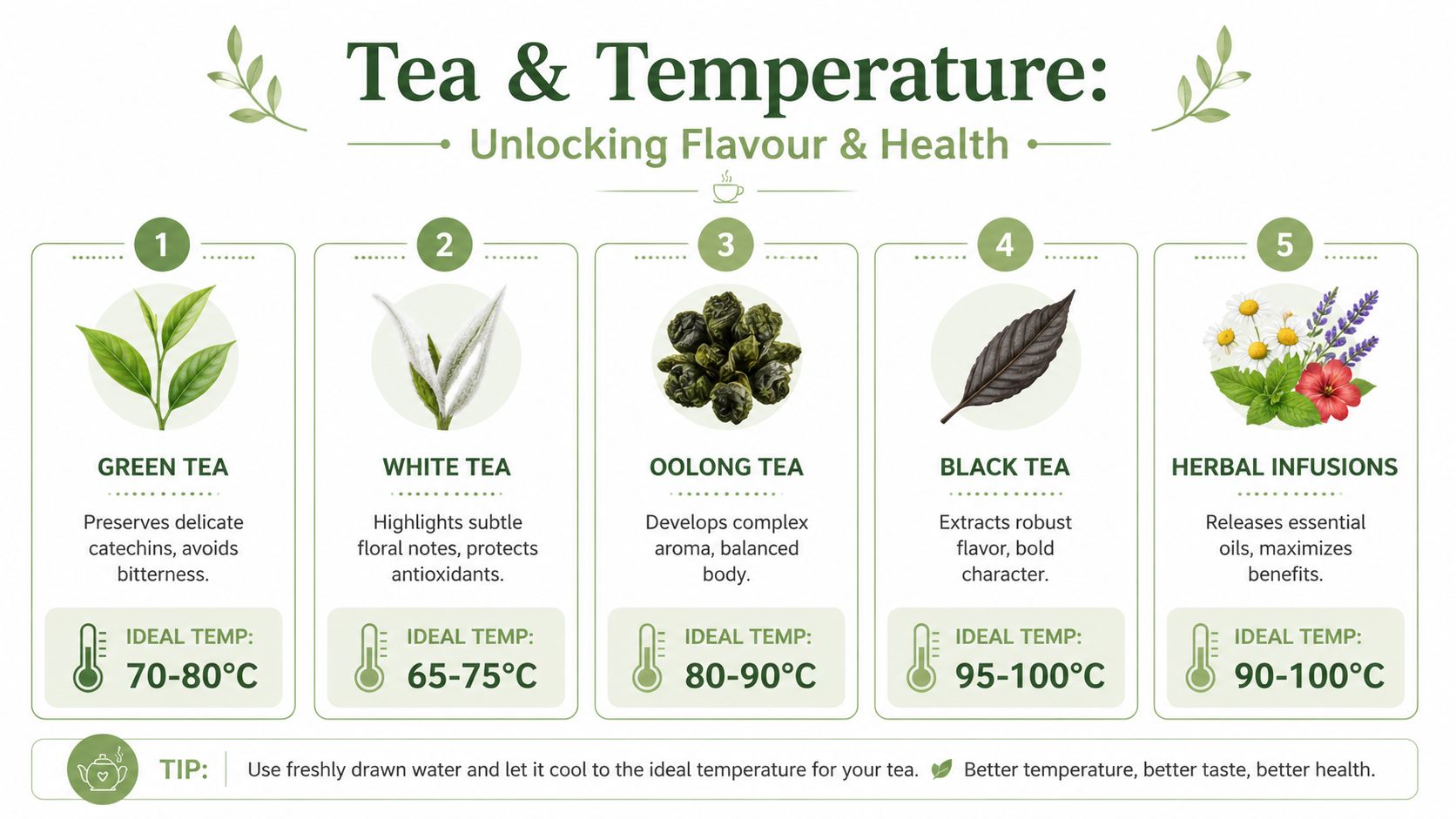
You fill the kettle, scoop out a premium matcha, and do everything right except one small step. The water is a bit too hot. Suddenly the bowl tastes sharper than expected, the sweetness fades, and that soft, creamy finish never quite shows up.
That one detail changes more than flavour. Water temperature affects how quickly tea compounds move into the cup, how balanced they taste, and how gentle the brewing process is on the elements people value in drinks like organic matcha and kombucha.
What hot water actually changes
Tea leaves and tea powders contain many different compounds. Some bring sweetness, umami, floral aroma, or briskness. Others can taste harsh if they come out too fast. Temperature acts a bit like the flame under a frying pan. Low heat coaxes flavour out gently. High heat can push things too hard and throw the balance off.
With delicate teas, that balance matters a lot. Matcha is a clear example because you are consuming the whole powdered leaf, not just an infusion poured off the leaves. If the water is too hot, the result can taste bitter, rough, and slightly flat rather than smooth and rounded.
The same idea matters for kombucha in a different way. If you are brewing the base tea for fermentation, careful heating helps you prepare a clean, pleasant tea without treating every style as if it needs a rolling boil. If you are serving finished kombucha warm, gentler heat is also kinder to its fresh, lively character.
Water temperature shapes both taste and what you keep in the cup.
A practical temperature guide for everyday brewing
You do not need to memorise chemistry to brew well at home. A simple temperature map is enough for most Australian kitchens.
| Tea Type | Ideal Temperature (°C) | Steeping Time | Notes |
|---|---|---|---|
| Green Tea | 70 to 80 | Short infusion | Helps preserve delicate character and reduce bitterness |
| Matcha | 70 to 80 | Whisk briefly, don’t steep | Best for smooth texture and rounded umami |
| White Tea | 65 to 75 | Gentle infusion | Supports subtle floral notes |
| Oolong | 80 to 90 | Moderate infusion | Brings out aroma and body |
| Black Tea | 95 to 100 | Full infusion | Suits bold flavour extraction |
| Herbal Infusions | 90 to 100 | Full infusion | Useful for drawing flavour from herbs and spices |
Use this chart as a starting point, not a strict rulebook. A grassy Japanese green, a roasted oolong, and a spice-heavy herbal blend all respond a little differently. The value of a temperature control kettle is that you can repeat what tastes good, then adjust one variable at a time.
Why this matters for health-focused brewing
People often choose premium organic matcha for more than taste. They also care about plant compounds such as catechins, along with the calm, steady feel that makes matcha different from a standard cuppa. Gentler brewing supports a more pleasant drinking experience and avoids the scorched taste that can make a quality powder seem ordinary.
Kombucha drinkers often have a similar goal. They want a drink that feels fresh, bright, and easy to enjoy. Good temperature habits help there too, whether you are preparing tea for fermentation or warming a serve without stripping away its appealing character.
If you are still learning the basics, a clear matcha whisking guide for home preparation pairs well with controlled water temperature, because technique and heat work together.
Why stronger teas behave differently
Black tea usually handles hotter water better because its processing changes how the leaves respond during brewing. More heat helps draw out body, colour, and deeper maltier notes. Delicate teas are less forgiving. Treat them the same way, and the cup can lose finesse very quickly.
That is why precision is so useful. It gives each tea the kind of heat that suits its structure, flavour, and purpose, whether you are chasing the savoury sweetness of matcha or the clean, lively profile of kombucha.
A Practical Guide to Perfect Matcha Every Time
You boil the kettle, pour the water, whisk with good intentions, and your premium matcha still comes out harsh. That moment catches plenty of home brewers off guard, especially when the powder itself is fresh, organic, and beautifully made. In many Australian kitchens, the problem is simpler than people expect. The water is too hot.
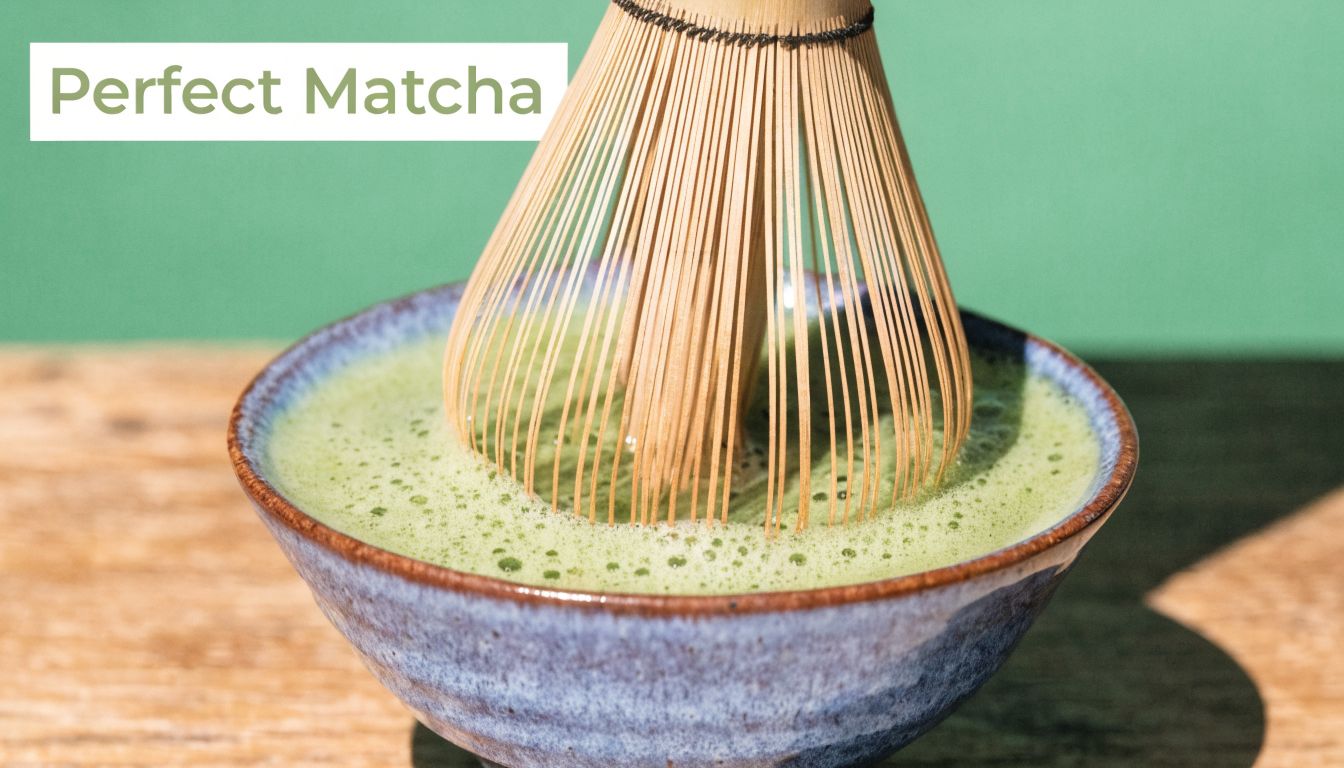
A home method that gives you a smoother bowl
Matcha is a fine powder, so it reacts to heat quickly. Leaves steep more gradually. Powdered tea gives up flavour almost at once, which is why a few degrees can change the whole bowl. Gentler heat helps the sweet, creamy, savoury side show up before bitterness takes over.
For everyday preparation, aim for water around 70 to 80°C. A setting near 75°C is a practical starting point for many ceremonial-style matchas. Then keep the rest of the method simple and repeatable:
- Sift the matcha into the bowl to break up clumps
- Add a small amount of water first
- Whisk into a smooth paste
- Pour in the remaining water
- Whisk briskly until a light foam forms
A common home ratio is 2g of matcha with 60ml of water, whisked for about 15 seconds. You can then adjust from there. If the bowl tastes too intense, add a little more water. If it feels thin, increase the matcha slightly next time rather than overheating the water.
If you want help with the whisking motion itself, this step-by-step matcha whisking guide for home preparation is a handy reference.
Why this matters for flavour and the good stuff in the cup
Premium organic matcha is often chosen for more than colour and taste. People also want the plant compounds that make it feel satisfying and steady, along with the fresh, clean character that sets a good matcha apart from a dull one.
Heat affects both experience and enjoyment. Water that is too hot can flatten sweetness, push bitterness forward, and make a vibrant powder taste tired. It is a bit like overcooking good greens. The ingredients are still there, but the pleasure drops off fast.
That is why precision matters so much with matcha. You are not chasing perfection for its own sake. You are giving a high-quality tea a fair chance to show its flavour and character.
Straight matcha and matcha lattes need slightly different handling
A straight bowl of matcha usually benefits from the lower to middle part of the range. That helps preserve softness, umami, and a cleaner finish.
A latte still needs the matcha base prepared with care. Hot milk cannot hide scorched powder. If the base is rough, the whole drink tastes muddy, no matter how creamy the milk is.
A reliable latte routine looks like this:
- Whisk the matcha with water in the correct temperature range.
- Make sure the base is smooth before adding anything else.
- Pour in warmed milk or your preferred milk alternative.
- Taste before sweetening.
That small order of operations makes a big difference.
Common mistakes that make matcha harder than it needs to be
A few habits cause most home matcha problems:
- Using boiling water, which makes bitterness harder to avoid
- Skipping the sift, which leaves dry lumps that resist whisking
- Adding all the water at once, which makes a smooth paste harder to form
- Guessing the temperature, especially after letting boiled water sit and hoping for the best
A quick visual can help if you prefer to watch the process before trying it yourself.
Matcha responds best to controlled heat and a routine you can repeat with confidence.
Good matcha is worth treating gently. Once your kettle is set correctly, the rest of the ritual becomes much easier, and the bowl in your hands tastes more like the tea you paid for.
Using Your Kettle for Kombucha Brewing and Serving
You brew a beautiful tea base, add your SCOBY, then wonder why the finished kombucha tastes flat or the culture seems sluggish. In many home kitchens, the problem starts with heat. A temperature control kettle helps you treat kombucha more like a living food and less like a standard hot drink.
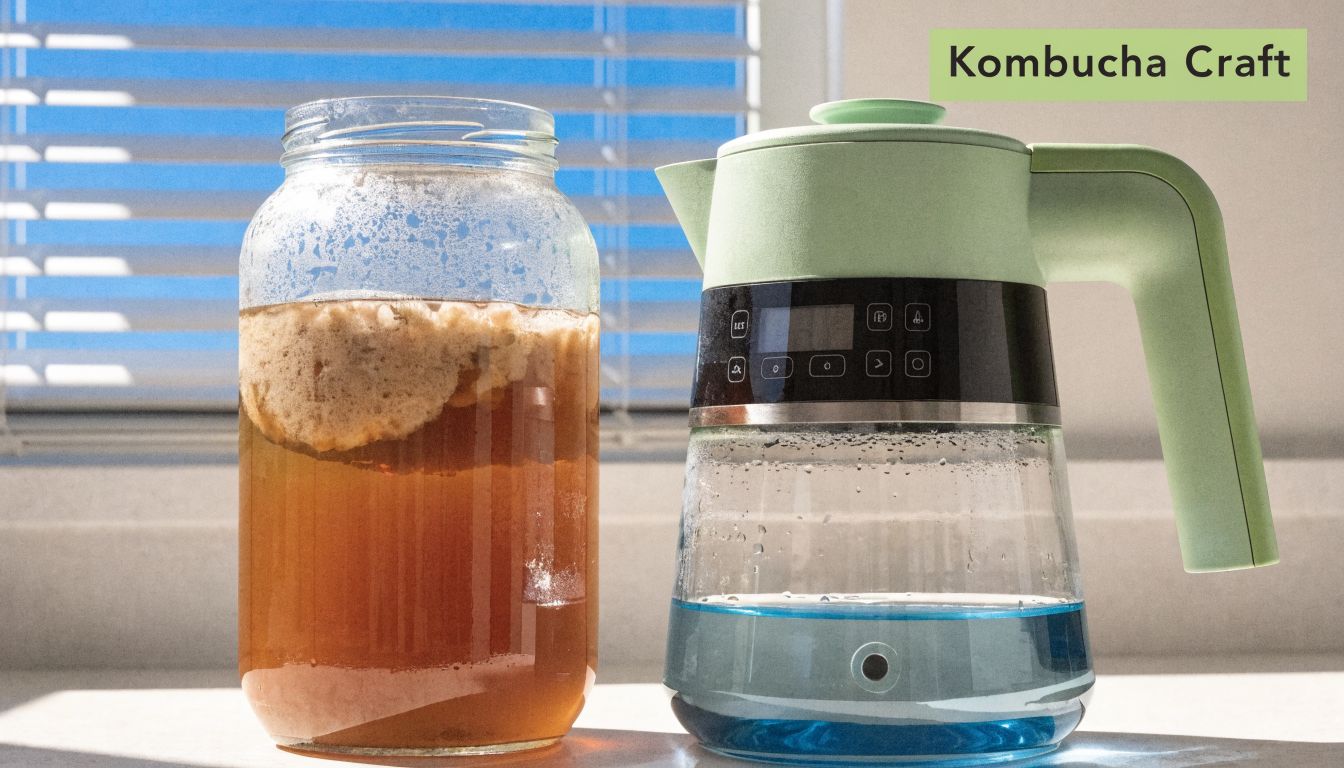
For brewing the tea base
Kombucha begins as tea, so the same temperature choices that shape flavour in a cup of green tea also shape the character of your ferment. If the base is harsh, overly tannic, or muddy, fermentation will not magically tidy it up. You often taste those early decisions all the way through to the bottle.
That matters if you use premium organic tea. Green tea bases can become bitter with water that is too hot, while black tea usually handles higher heat more comfortably. A variable-temperature kettle gives you a repeatable starting point, which is handy when you want brighter, cleaner flavours rather than a rough edge.
The next heat decision matters even more. Once live culture is involved, very hot water can damage the bacteria and yeast that make kombucha distinctive. The safe habit is simple. Brew the tea first, let it cool to an appropriate temperature, then add the starter liquid and SCOBY. If you are learning the process, a kombucha tea kit makes that order much easier to follow in a real Australian kitchen.
A kettle with precise settings also helps with consistency between batches. If your first brew tastes lively and balanced, you can repeat the same tea, the same steep, and the same temperature instead of guessing your way back.
For serving a warm kombucha-style drink
Some people enjoy kombucha cold all year. Others want something gentler in winter, especially at night. You can warm the experience without treating the kombucha like boiling tea.
The easiest method is to heat water separately, then use that warm water with spices, citrus, or a little honey before adding a smaller amount of kombucha. It works a bit like protecting delicate matcha. Gentle heat keeps more of the drink’s character intact, while aggressive heat strips out the freshness that made you reach for kombucha in the first place.
If preserving live cultures is your priority, keep the final drink only mildly warm. Once kombucha is in the cup, high heat works against the probiotics many people are trying to enjoy.
A practical kombucha workflow
A simple routine keeps both flavour and culture in better shape:
- Heat water to suit the tea you are using.
- Brew the tea base with attention to strength and steep time.
- Cool the sweetened tea before adding starter liquid and SCOBY.
- Ferment as directed for your recipe.
- For serving, warm water or flavourings first, then add kombucha last if you want a softer drink.
That order removes a lot of confusion.
Which kettle features help most
For kombucha drinkers, the best kettle is usually the one that gives you control without fuss.
Variable temperature control
This is the feature that matters most. It lets you brew green, black, or herbal tea bases with more accuracy and helps you avoid overheating ingredients that benefit from a gentler approach.
Keep warm function
Useful while you prepare sugar, jars, or flavourings. It is most helpful before live kombucha enters the process.
Clear controls
You want settings you can read at a glance, especially if you brew early in the morning or while juggling other kitchen tasks.
Safe shut-off and practical design
A stable base, comfortable handle, and dependable shut-off make daily use easier. If you are planning a kitchen that supports regular brewing, this broader guide to Templeton Built kitchen renovation advice can help you choose appliances that suit the way you cook and serve at home.
For kombucha, precision is less about gadget appeal and more about respecting a live ferment. A good kettle helps you get cleaner flavour, steadier batches, and a serving routine that makes sense.
How to Choose the Right Kettle for Your Kitchen
You fill the kettle for a quick morning matcha, press boil out of habit, and end up with water that is too hot before the whisk even touches the bowl. The result is familiar. Sharper bitterness, less sweetness, and a cup that hides the clean, grassy character you paid for.
That is why choosing the right kettle matters. In a tea-focused kitchen, the kettle is less like a basic appliance and more like the thermostat for flavour. A few degrees can change how your matcha tastes, how gently you warm ingredients for kombucha service, and how consistent your routine feels on a busy Australian weekday.
Start with fit for an Australian kitchen
Before you compare colours, spouts, or presets, check that the kettle is designed for Australian power and local safety requirements. Imported appliances can look appealing online, but compatibility should be confirmed through the manufacturer, retailer listing, product documentation, or local certification details rather than relying on a video discussion.
If you’re planning a bigger kitchen update rather than just replacing one appliance, this broader guide to Templeton Built kitchen renovation advice is a practical read. It helps you think about how your bench appliances should fit the way you cook and serve at home.
Match the kettle to your brewing habits
The best kettle depends on what happens on your bench most often.
If organic matcha is part of your daily ritual, fine temperature control should sit near the top of your list. Matcha is delicate. Water that is even a little too hot can push tannic, harsh notes forward and cover the softer umami character many drinkers want. Gentler heat also supports a more careful approach to compounds like catechins, which is part of why temperature matters for both flavour and the wellness side of tea.
If your household brews several styles, presets can save time. Green tea, black tea, herbal infusions, and warm water for serving all ask for slightly different treatment. Good presets remove guesswork without forcing you to memorise numbers before your first cup.
If you also make pour-over coffee, spout shape deserves more attention than many buyers expect. A gooseneck gives slower, steadier flow. A standard spout pours faster and usually suits everyday tea drinking better.
Presets versus manual control
Both can work well.
Presets are handy for households that want speed and consistency. Press one button, get close to the right range, and move on with your morning.
Manual control suits people who like precision. That includes anyone making matcha regularly, because small temperature differences show up clearly in the bowl. If you want a kettle built around that level of control, the Fellow Stagg EKG electric kettle for precision brewing is a well-known example.
Material, shape, and size
Material changes how the kettle feels to use and how easy it is to live with over time.
- Stainless steel is durable, simple to maintain, and a strong all-round choice for frequent use.
- Glass lets you see the water level clearly, though mineral marks are more visible.
- Plastic components vary by model. Many tea drinkers prefer as little plastic as possible in areas that contact hot water.
Capacity matters too. A compact kettle often makes more sense for one or two careful brews than a large model that feels heavy and takes up extra bench space. A bigger kettle suits family breakfast service or households that make several drinks back to back.
Small design details matter every day
Look closely at the parts you will touch and clean, not just the headline features.
A comfortable handle helps when you are pouring slowly into a matcha bowl or teapot. Clear buttons matter at 6 am. A wide opening makes it easier to check for mineral buildup before it affects taste. A removable filter is useful if your local water leaves residue behind.
These details sound minor, but they shape the daily workflow. A kettle that is simple to read, simple to pour, and simple to clean tends to get used properly. That usually means better flavour in the cup and fewer moments of frustration on the bench.
Choose the model that suits your real routine, not the one with the longest feature list. That is how you get cleaner flavour, steadier results, and a kettle that earns its place in the kitchen.
Kettle Care and Safety Tips for Lasting Performance
A temperature control kettle doesn’t ask for much, but it does need some care. If you ignore scale buildup, even a very good kettle can become less accurate and less pleasant to use.
That’s especially relevant in parts of Australia with harder water. A 2024 Choice Australia review reported high user satisfaction with temperature-control kettles, but also noted limescale as a common issue in coastal NSW and QLD, and that buildup can affect temperature accuracy by up to 40% if it isn’t managed, according to this review summary on kettle performance and limescale.
What scale looks like
You don’t need special tools to spot it. Check inside the kettle when it’s empty and cool.
Common signs include:
- White or chalky marks on the base or walls
- Cloudy patches that don’t rinse away
- A rough mineral ring near the waterline
- Water tasting flat or slightly minerally when the kettle is overdue for cleaning
A simple descaling routine
For many households, a gentle food-safe approach is enough.
- Fill the kettle with a mix of water and a natural descaling agent such as white vinegar or lemon juice.
- Let it sit for a short period.
- Empty and rinse thoroughly.
- Boil fresh water and discard it.
- Repeat if needed for stubborn buildup.
If you prefer a ready-made product designed for appliance cleaning, a purpose-made option like this My Nivona cleaning accessory can be a useful alternative.
Small habit, big payoff: Check the inside of your kettle weekly if you live in a hard-water area. It’s much easier to remove light scale than heavy buildup.
Basic safety that’s easy to forget
Most accidents with kettles come from rushing.
Keep these habits in mind:
- Don’t overfill above the marked line
- Don’t run it empty
- Watch for steam when opening the lid after heating
- Keep the base dry and the cord tidy
- Place it on a stable surface away from the sink edge or clutter
Material-specific care
Glass kettles usually need more frequent cosmetic cleaning because scale shows quickly. Stainless steel hides marks better but still needs interior descaling. Exterior fingerprints can usually be wiped away with a soft damp cloth once the kettle is cool.
If the kettle has a removable mesh filter near the spout, rinse that regularly too. It’s a small part, but it can collect residue that affects flow and cleanliness.
A well-maintained kettle stays more accurate, tastes cleaner, and gives you fewer reasons to second-guess your brew.
Brew with Confidence and Taste the Difference
Good tea isn’t only about the leaf. It’s also about the water that meets it.
An electric tea kettle with temperature control gives you something a basic kettle can’t. It gives you intention. You stop treating every tea the same and start brewing each one in a way that suits its character. That means smoother matcha, more expressive leaf tea, and smarter handling when kombucha is part of your routine.
Once you’ve used one for a while, the difference feels obvious. You waste fewer good ingredients. You get more consistent flavour. You build a home brewing rhythm that’s simple enough for weekdays and satisfying enough for slower weekends.
If you care about flavour and want to be gentler with delicate teas, precision is worth it. Not because it’s fancy, but because it works.
If you’re ready to put that knowledge into practice, explore Pep Tea for premium organic matcha, sugar-free organic kombucha, and practical brewing inspiration suited to Australian kitchens.
Matcha Tea Sifter: Smooth, Clump-Free Brews

You whisk. You pour. You take a sip. And instead of a smooth, vivid bowl of matcha, you get little green lumps, a sandy finish, and a drink that feels far less special than the powder you started with.
That’s one of the most common matcha frustrations I see. It happens to beginners, and it happens to café teams too. People often blame the whisk, the water, or their technique. Usually, the underlying issue started a few seconds earlier.
The fix is simple. Use a matcha tea sifter.
This tiny tool looks modest, but it changes almost everything about the cup in front of you. It helps your powder fall light and fluffy into the bowl, makes whisking easier, and gives your matcha a better chance to taste smooth, creamy, and balanced. If you’ve invested in quality powder, whether you drink it straight, make lattes, or build it into a café menu, sifting is one of the easiest ways to respect the tea.
The Secret to Lump-Free Matcha Begins Here
A lot of people have the same first matcha experience. They buy a beautiful tin of green powder, maybe inspired by a café latte they loved, and they expect the home version to feel calm, rich, and silky. Instead, the powder sticks together, floats in clumps, and turns the whole ritual into a small annoyance.
That moment matters because matcha is personal. You’re not just making a drink. You’re preparing something you’ve chosen for flavour, focus, and a better daily rhythm. When the texture is gritty, it’s disappointing in a way that feels bigger than it should.
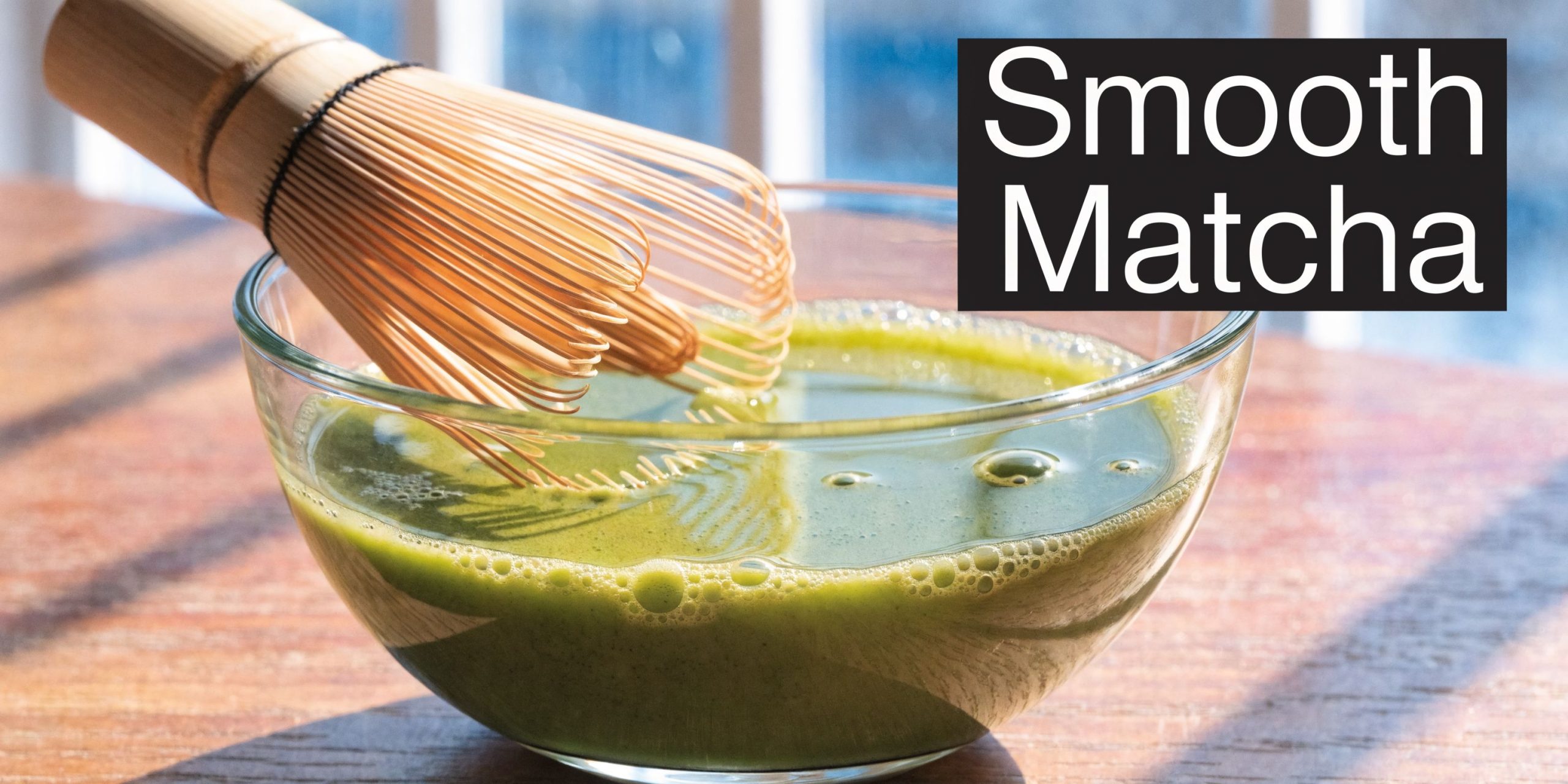
The small tool that changes the whole bowl
A matcha tea sifter is the quiet hero here. Before any water touches the powder, the sifter breaks up tiny compacted bits so the matcha lands in the bowl as a soft, even layer. That gives your whisk a fair chance to do its job.
If you’ve been exploring different grades and styles, it also helps to compare how preparation changes the experience across different powders. Looking at options such as high-quality matcha tea from Key West Coffee Company can be useful because it reminds you that quality and technique work together. Good powder still needs good handling.
A great whisk can’t fully rescue matcha that went into the bowl already clumped.
For beginners, that’s encouraging. It means you probably don’t need stronger wrists or a more complicated ritual. You just need one extra step that takes only moments and makes the rest of the process easier.
For café owners, the same lesson applies at scale. If the base isn’t smooth, the final drink won’t be either, no matter how polished your service is.
Why Sifting Matcha Powder Is Non-Negotiable
The first thing to know is that clumps don’t mean your matcha is poor quality. In fact, fine matcha often clumps precisely because it’s so delicate. The powder is extremely light, and it reacts quickly to moisture in the air and to static.
In Australian preparation settings, that matters even more. Humidity and storage conditions can make a fresh tin behave very differently from one day to the next.
What a matcha tea sifter does
The Japanese name for this tool is chakoshi. In practical terms, it’s a fine-mesh strainer designed to turn compressed powder back into a loose, airy mound before whisking begins.
According to this reference on a matcha tea sifter and tea strainer, a chakoshi in premium matcha preparation commonly uses mesh apertures finer than 10 microns, and matcha clumps formed by static and moisture can reach 50 to 100 microns. The same source notes that unsifted matcha can lead to a grainy texture with 20 to 30% reduced froth volume, because clumps reduce powder-water contact area by 40%. It also states that sifting can increase effective surface area by 3 to 5x, lifting extraction efficiency from 65% to 95% in a 2g/60ml brew.
Those numbers sound technical, but the takeaway is simple. When the powder is evenly dispersed, water can reach more of it quickly and consistently.
Why clumps create bigger problems than you think
A clump isn’t just a lump sitting in your bowl. It acts like a barrier.
Instead of each fine particle meeting water and whisk movement, parts of the powder stay trapped inside little packed pockets. That leads to a few familiar issues:
- Uneven mixing means some sips taste dull while others taste sharp or bitter.
- Poor suspension means sediment drops faster to the bottom.
- Weaker froth means the top of the bowl looks flat rather than lively.
- Less control means you keep whisking harder, which often makes the ritual feel frustrating.
Why this matters for premium matcha
The better the matcha, the more you want to protect what makes it special. If you’re working with a fine ceremonial powder, proper prep helps you taste the softness, sweetness, and savoury depth the producer intended. If you want to understand how grade affects preparation, our guide to https://peptea.com.au/different-grades-of-matcha/ is a helpful place to start.
It’s also useful to compare sift-friendly powders when learning. Browsing products such as Ceremonial Grade Matcha from AQEEK Coffee can help you notice how very fine powders benefit from careful handling.
Practical rule: If your matcha is worth buying, it’s worth sifting.
Improve Flavour, Texture, and Crema
People often think the matcha tea sifter is only about removing lumps. That’s true, but it’s only the beginning. Sifting changes how the drink feels, how it tastes, and how the foam forms on top.
Those three things are closely linked. Better particle distribution gives you better contact with water. Better contact gives you smoother whisking. Smoother whisking gives you a more balanced cup.
Texture starts before the whisk
Texture is often where the difference is first noticed.
When matcha falls through a fine mesh, it becomes light and even. That means your whisk meets a fluffy powder bed instead of stubborn little pebbles. The result is a bowl that feels softer across the tongue, with less graininess and less sludge left behind.
If your goal is a velvety usucha or a café-style latte base, this matters. A smooth base carries milk better, blends more cleanly, and leaves less sediment at the bottom of the cup.
Flavour becomes more balanced
Unsifted matcha doesn’t dissolve evenly. Some parts stay trapped in little clumps while others overexpose to water and agitation. That’s one reason a bowl can taste oddly bitter in one sip and flat in the next.
A more even powder bed supports a more even extraction. In plain language, the bowl tastes more coherent. You’re more likely to notice sweetness, savoury depth, and the gentle grassy freshness people chase in good matcha.
Foam and crema improve in a visible way
Here, the change becomes obvious, especially for café service. According to this reference on a matcha hand strainer, sifted matcha froths to 2 to 3x higher foam height, reaching 15 to 20mm, with microbubble stability lasting 4 to 6 minutes. The same source links that improvement to 30% improved L-theanine-caffeine synergy (1:2 ratio) and notes that unsifted matcha can produce a thinner, more bitter brew due to a 15% increase in polyphenol oxidation.
That sounds scientific, but the visual cue is easy to recognise. Sifted matcha tends to produce a finer, more even top layer. It looks creamy rather than bubbly and rough.
If you’re still working on your whisking motion, our guide to https://peptea.com.au/how-to-whisk-matcha/ pairs well with this step, because sifting and whisking work best together.
What this means in the cup
Here’s a simple perspective:
- Better texture makes the bowl feel luxurious, not chalky.
- Better flavour makes the tea feel composed, not scattered.
- Better crema makes the drink look alive and drink beautifully from the first sip.
Smooth matcha isn’t only a visual win. It changes the whole drinking experience.
For home drinkers, that means a more enjoyable ritual. For cafés, it means a more consistent product that looks good, tastes right, and holds up better on the pass.
How to Choose the Right Matcha Sifter
Not every sifter feels the same in use. Some are made for a single bowl on a quiet morning. Others are more practical for a busy café bench. The right choice depends on how much matcha you prepare, how often you make it, and whether hygiene and workflow need to meet commercial standards.
There’s also a growing Australian angle here. According to this video reference discussing the local market and tool selection, there has been a 35% rise in Australian searches for “organic matcha tools” since Q1 2025, alongside growing interest in sifters that align with FSANZ Code requirements for premium organic handling in hospitality settings: organic matcha tools in Australia.
The two common sifter styles
Many choose between a small handle-style strainer and a larger canister-style sifter.
The handle-style version is the classic choice for making one bowl at a time. You rest it over the chawan, add the powder, and press it through with a scoop or small spatula.
The canister style is built for batching. It’s more useful when you want to pre-sift a larger amount for service, recipe prep, or repeated drinks across a shift.
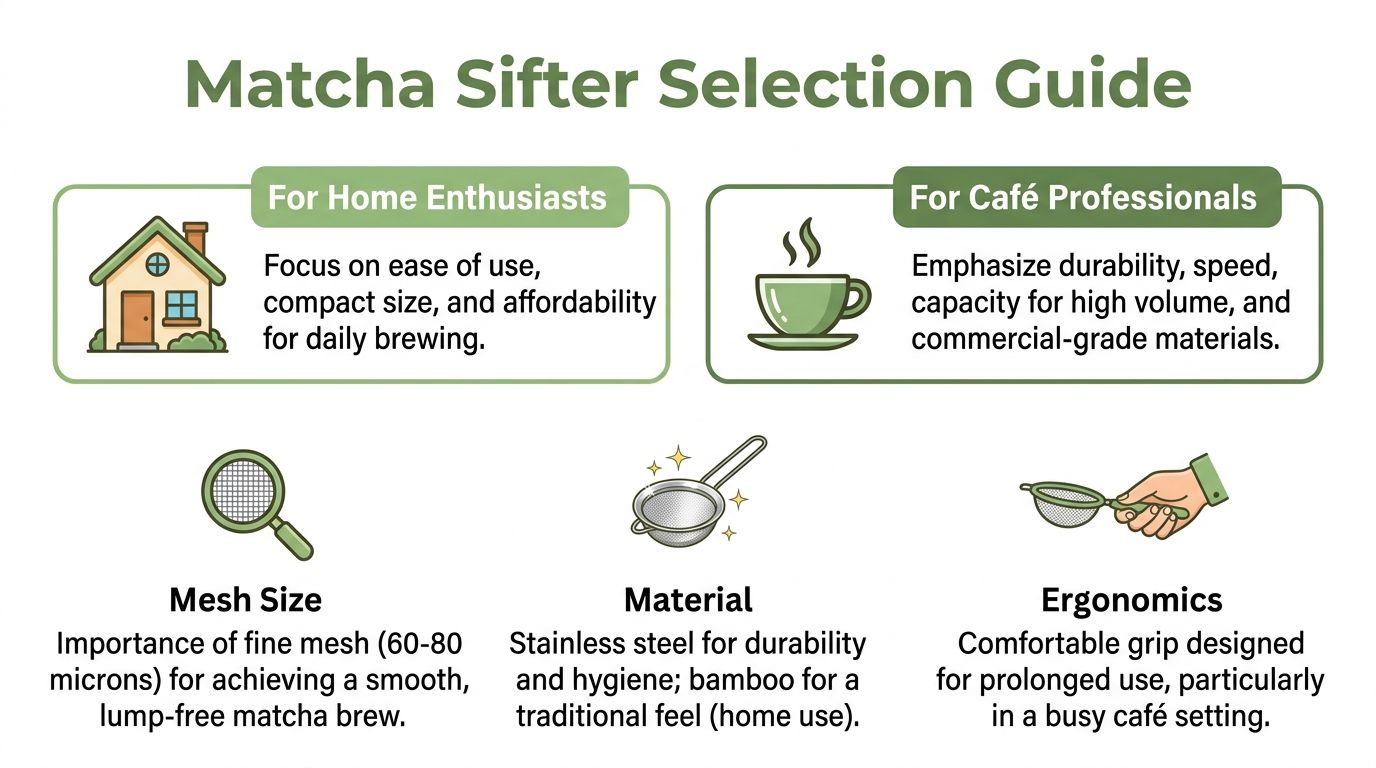
What to look for in the material and mesh
Food-grade stainless steel is usually the safest practical choice. It’s easy to clean, durable, and better suited to repeated use in a home kitchen or commercial setting.
A very fine mesh matters too. A generic kitchen sieve might work in a pinch, but it often isn’t designed for such fine powder. That’s why dedicated matcha tools feel easier and more predictable.
If you’re shopping as a beginner and want an all-in-one setup, the https://peptea.com.au/matcha-tea-set-australia/ page shows a full set format that includes the key preparation tools, including a sifter.
Matcha Sifter Comparison
| Sifter Type | Best For | Material | Pros | Cons |
|---|---|---|---|---|
| Handle-style strainer | Daily home use, single bowls, small latte prep | Usually stainless steel | Easy to store, simple to use, precise for one serve | Slower for batch work |
| Canister-style sifter | Café prep, repeated service, recipe batching | Usually stainless steel | Better for volume, tidier for larger prep | Takes more space, less nimble for one bowl |
| Bamboo-style traditional option | Home enthusiasts who value ritual and aesthetics | Bamboo or mixed materials | Traditional feel, visually appealing | Harder to sanitise well, less practical for commercial use |
| Generic kitchen sieve | Emergency substitute only | Varies | Easy to find | Mesh may be too coarse, less control, less tidy |
A simple buying checklist
- Choose stainless steel if you want durability and easier cleaning.
- Check the mesh and avoid anything that looks obviously coarse.
- Think about volume. One bowl at a time and café prep are different jobs.
- Consider ergonomics if you’ll use it repeatedly during service.
- Keep compliance in mind if you run a venue and need cleaner, more controlled tool choices.
One mention worth making here is practical rather than promotional. Pep Tea’s Japanese Matcha Set includes a sifter, which is useful for people who want the core tools together in one setup.
Your Step-by-Step Sifting Method
Sifting looks refined, but it’s very straightforward once you’ve done it once or twice. Many learn it in minutes.
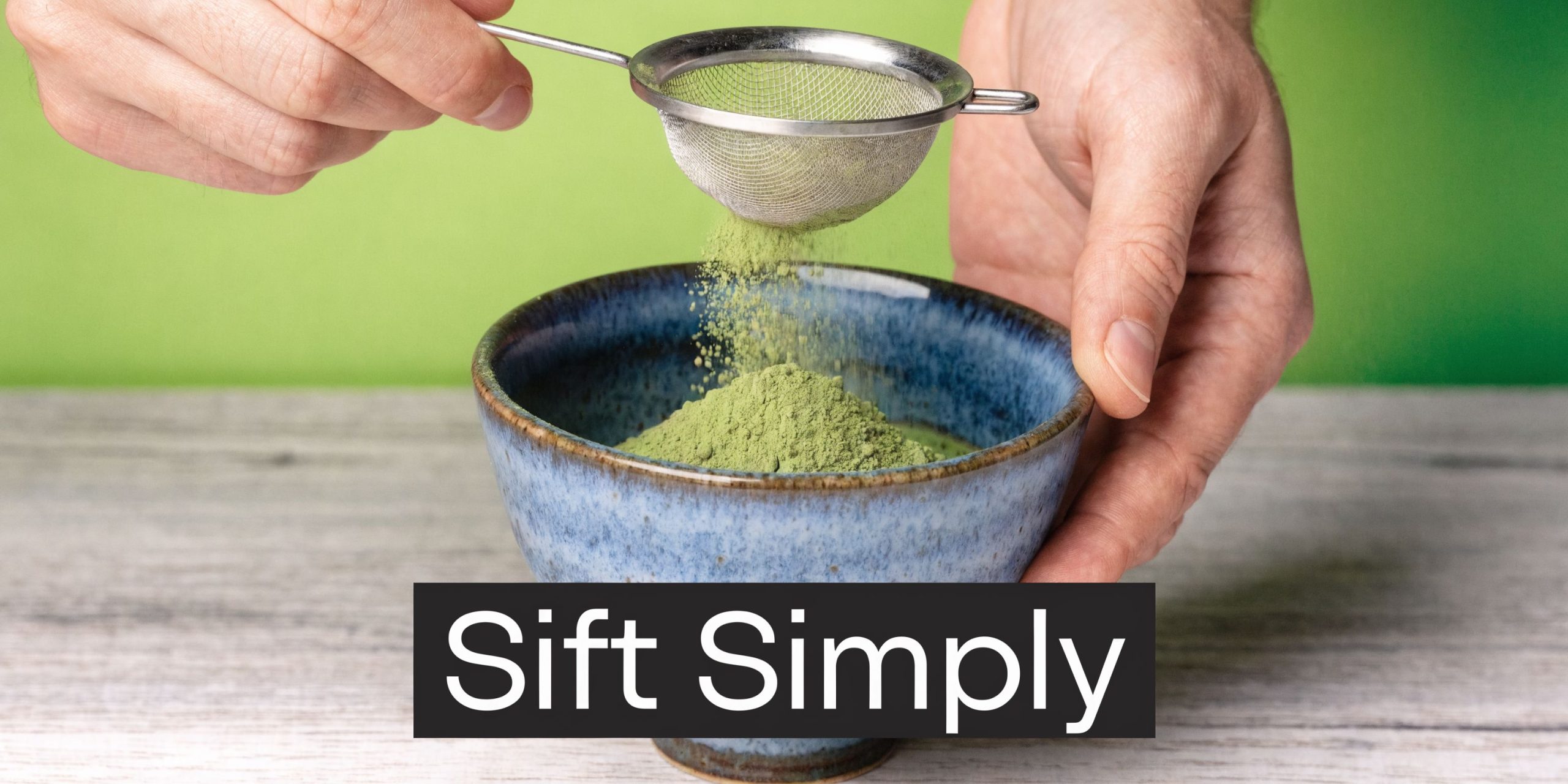
The easiest way to do it
Start with a completely dry bowl and a dry sifter. Moisture is the enemy at this stage, so even a few drops can make the powder catch.
Then follow this sequence:
Set the sifter over the bowl
Make sure it sits securely. You don’t want it wobbling while you work.Measure your matcha into the sifter
Use your bamboo scoop or measuring spoon and place the powder gently into the centre.Press lightly, don’t mash
Use the scoop, a small spoon, or a spatula to coax the powder through the mesh. Gentle circular movements work well.Tap only if needed
If a little powder clings to the mesh, a light tap can help. Don’t smack the sifter hard or you’ll create a puff of green dust.Whisk straight after sifting
Once the matcha is airy and loose in the bowl, add your water and whisk while it’s at its freshest.
Common beginner mistakes
A few tiny habits make the process much easier:
- Using a damp tool causes immediate sticking.
- Forcing the powder through too aggressively can compact it again.
- Sifting too far ahead can expose the powder to more air than necessary.
- Overfilling the sifter makes the process messier than it needs to be.
Keep the motion light. You’re fluffing the powder, not grinding it.
If seeing the movement helps, this short video shows the rhythm clearly:
How long should it take
Not long. Once your tools are within reach, sifting becomes one of the quickest parts of the ritual. It often saves time overall because whisking becomes easier and more predictable afterward.
For a café team, that’s good news. For a beginner, it’s even better. One small habit removes a lot of unnecessary frustration.
Troubleshooting and Advanced Tips for Cafés
Sometimes the problem isn’t your technique. It’s the room.
In parts of Australia, especially through humid periods in NSW and QLD, matcha can start clumping much faster than people expect. That’s why a method that worked perfectly on a cool dry day suddenly feels messy and stubborn in summer.
When humidity keeps ruining your prep
This Australian matcha reference notes that searches for matcha spike 42% in summer, and that matcha agglomeration can happen 3x faster in humidity above 70%. It also reports that home users can pre-chill sifters to -5°C for 10 minutes to cut clumping by 50%, while cafés handling larger amounts may use electric vibrating sieves for 100g batches: sifting matcha powder in humid conditions.
That’s useful because it gives us two practical paths. One for the home kitchen, and one for service.
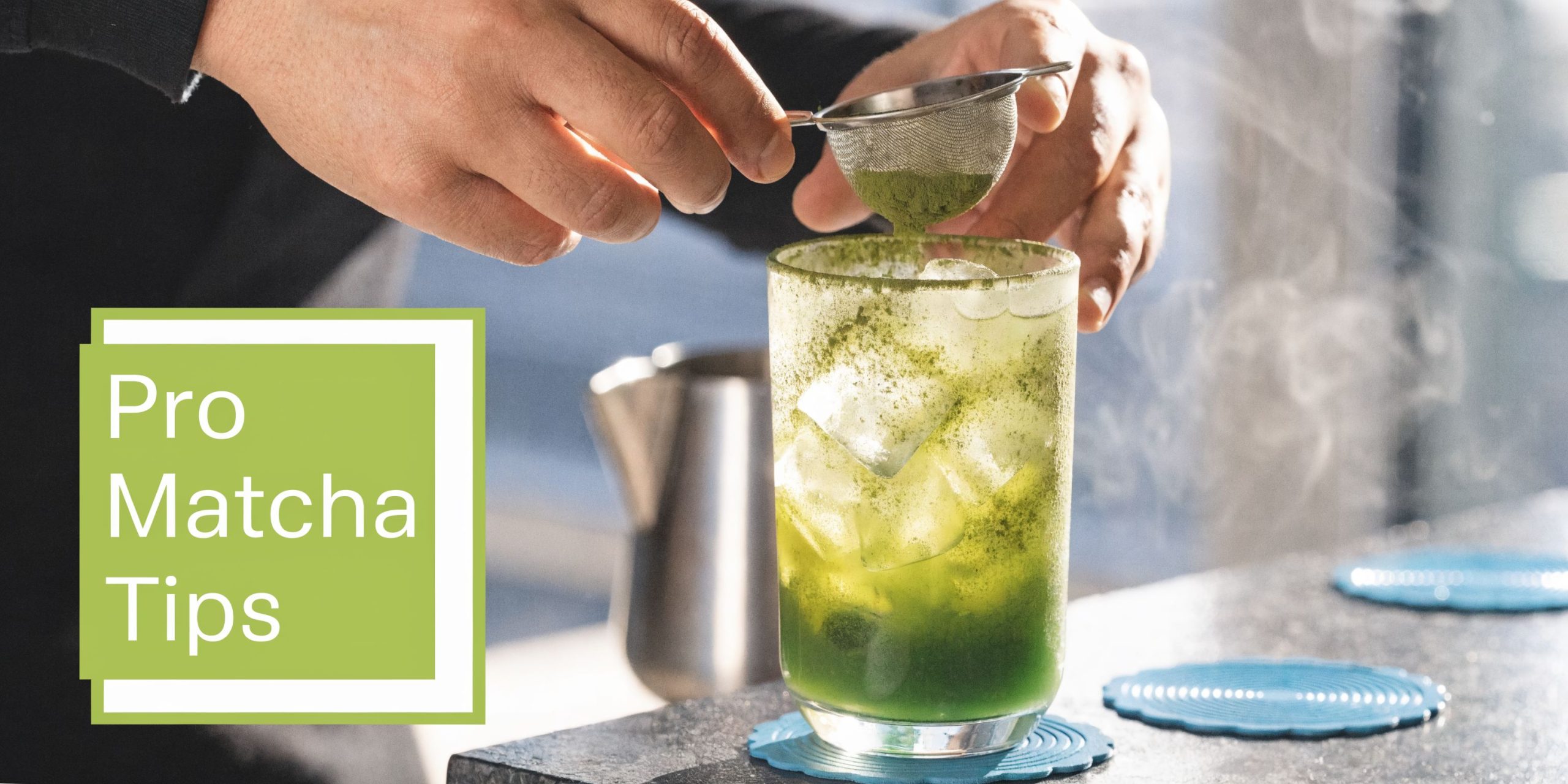
Quick fixes at home
If your matcha keeps clumping, try these:
- Sift just before use rather than preparing it well in advance.
- Keep tools dry and cool so moisture doesn’t catch on the mesh.
- Use a fine tea strainer temporarily if you don’t own a dedicated matcha tea sifter yet.
- Store your matcha tightly sealed and away from steam, sunlight, and heat.
A regular fine tea strainer can work as a stopgap, but it usually feels less tidy and less precise. It’s a practical substitute, not a long-term matcha ritual tool.
Workflow tips for cafés
For hospitality teams, speed matters, but consistency matters more. A rushed bowl with lumps isn’t saving time if the drink comes back or pours poorly into milk.
Try a workflow like this:
- Assign one dry prep zone for matcha only.
- Pre-portion small service amounts instead of exposing a larger container repeatedly.
- Use batch sifting tools only when turnover justifies it.
- Train every staff member the same way so texture stays consistent across shifts.
In a café, the best sifting method is the one staff will repeat accurately during a busy service.
That’s true whether you’re serving straight matcha, iced lattes, or using matcha as part of a non-alcoholic menu.
Caring for Your Tools and Your Tea
A good matcha tea sifter doesn’t need complicated care. It needs clean, gentle care.
Rinse metal sifters with warm water after use if powder has caught in the mesh, then dry them thoroughly before putting them away. Avoid leaving them damp in a drawer or on a crowded sink. If you can brush out dry powder first, that’s often even easier.
Soap can be useful for a deeper clean when needed, but residue is the thing to avoid. You don’t want cleaning smells lingering on a tool that sits close to a delicate tea.
Good habits that protect flavour
A few small habits make a real difference:
- Keep the sifter dry before the next use.
- Store matcha airtight so moisture and kitchen odours stay out.
- Avoid heat and light because they dull freshness.
- Clean promptly so powder doesn’t cake into the mesh.
The bigger point is simple. Sifting is an act of care. It respects the work that went into growing, grinding, packing, and preparing matcha.
If you’ve been skipping this step, don’t feel bad. Many do at first. Once you make it part of your routine, it quickly feels natural, and the bowl in front of you reflects that care straight away.
If you’d like to put this into practice, explore Pep Tea for organic matcha, tea education, and tools that support a smoother everyday ritual at home or in hospitality.
Japanese Matcha Set: Your 2026 Buyer’s Guide

You’ve probably seen it happen. A beautiful bowl of vivid green matcha appears in your feed, sitting beside a bamboo whisk and a handmade bowl, and suddenly the whole ritual looks equal parts calming and confusing.
A japanese matcha set can seem like something meant for experts only. In reality, it’s a practical group of tools that helps you make smoother, better-tasting matcha with less fuss. Once you know what each piece does, the set stops feeling formal and starts feeling useful.
For many Australians, matcha now sits at the meeting point of wellness, café culture, and everyday routine. It can be your quiet morning drink, your afternoon reset, or a thoughtful addition to a non-alcoholic menu. The ritual matters, but it does not need to feel intimidating.
An Invitation to the Matcha Ritual
A lot of people begin in the same place. They buy a tin of matcha, stir it with a spoon, end up with lumps, then wonder whether the traditional tools are more about looks than function.
They are not just decorative. They help turn powdered tea into a drink that feels rounded, smooth, and intentional.
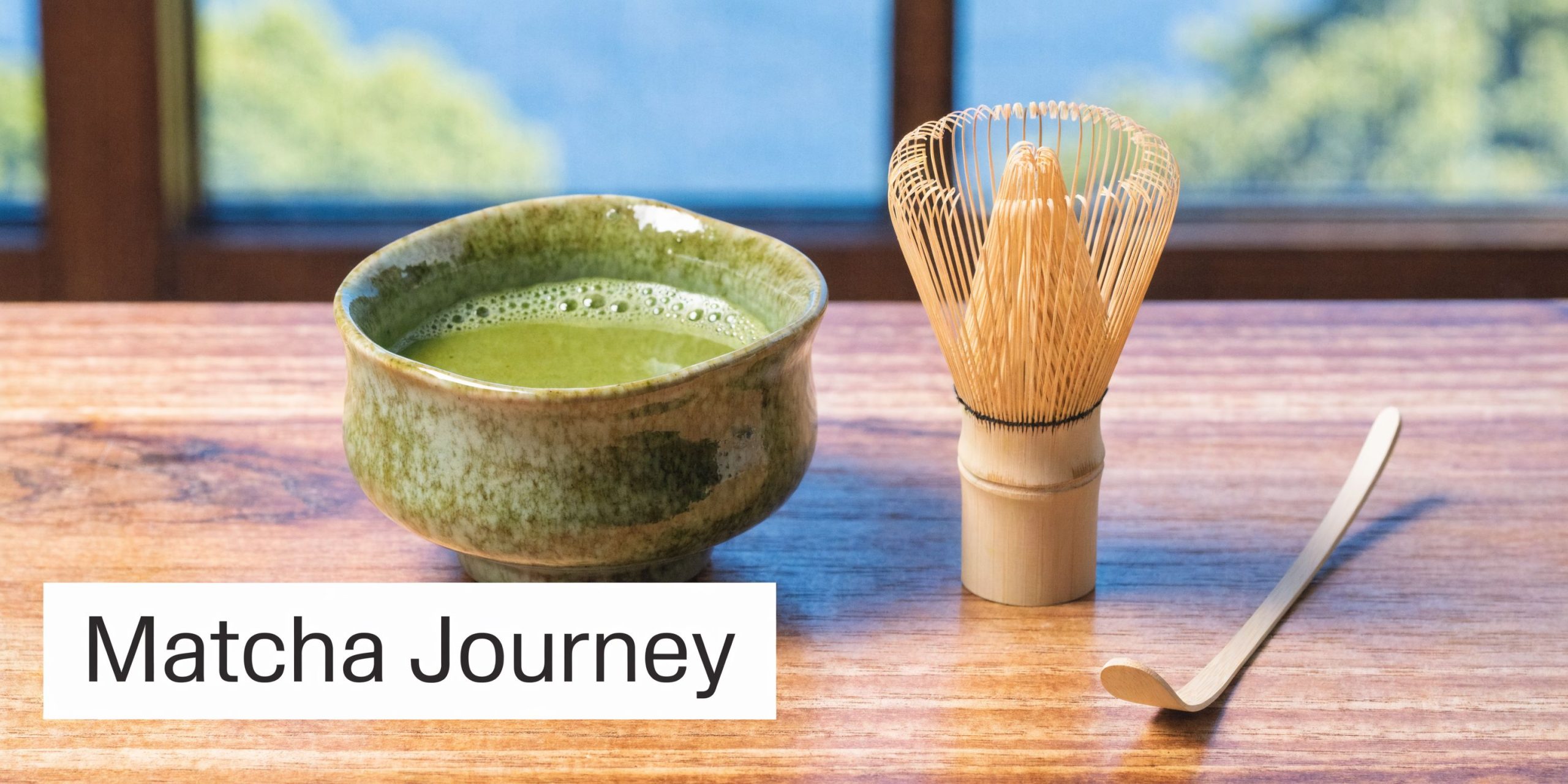
The appeal of matcha today goes far beyond trendiness. People want rituals that slow them down for a minute. They want drinks that feel clean, grounding, and a little bit special. A japanese matcha set fits that beautifully because it gives shape to the moment. Bowl, scoop, sift, whisk, sip.
That interest is part of a much bigger movement. In 2024, Japan’s tea exports reached a record ¥36.4 billion, up 24.7% from the previous year, with powdered teas such as matcha making up 58% of export volume, according to Nippon’s report on Japan’s tea export record. For Australian drinkers, that matters because it points to strong global demand and continuing access to authentic matcha and traditional tools.
Why the ritual feels so different
When you make matcha this way, you are not only preparing a drink. You are giving yourself a repeatable pause in the day.
That can look like:
- A quick morning reset before emails and school drop-off
- A café-quality afternoon cup without leaving home
- A hospitality moment that feels more thoughtful than another standard hot drink
A good ritual does not need to be complicated. It just needs a few reliable tools and a little attention.
Deconstructing Your Japanese Matcha Set
Open a japanese matcha set and you’ll usually find a small group of tools with very specific jobs. Each one solves a common matcha problem.
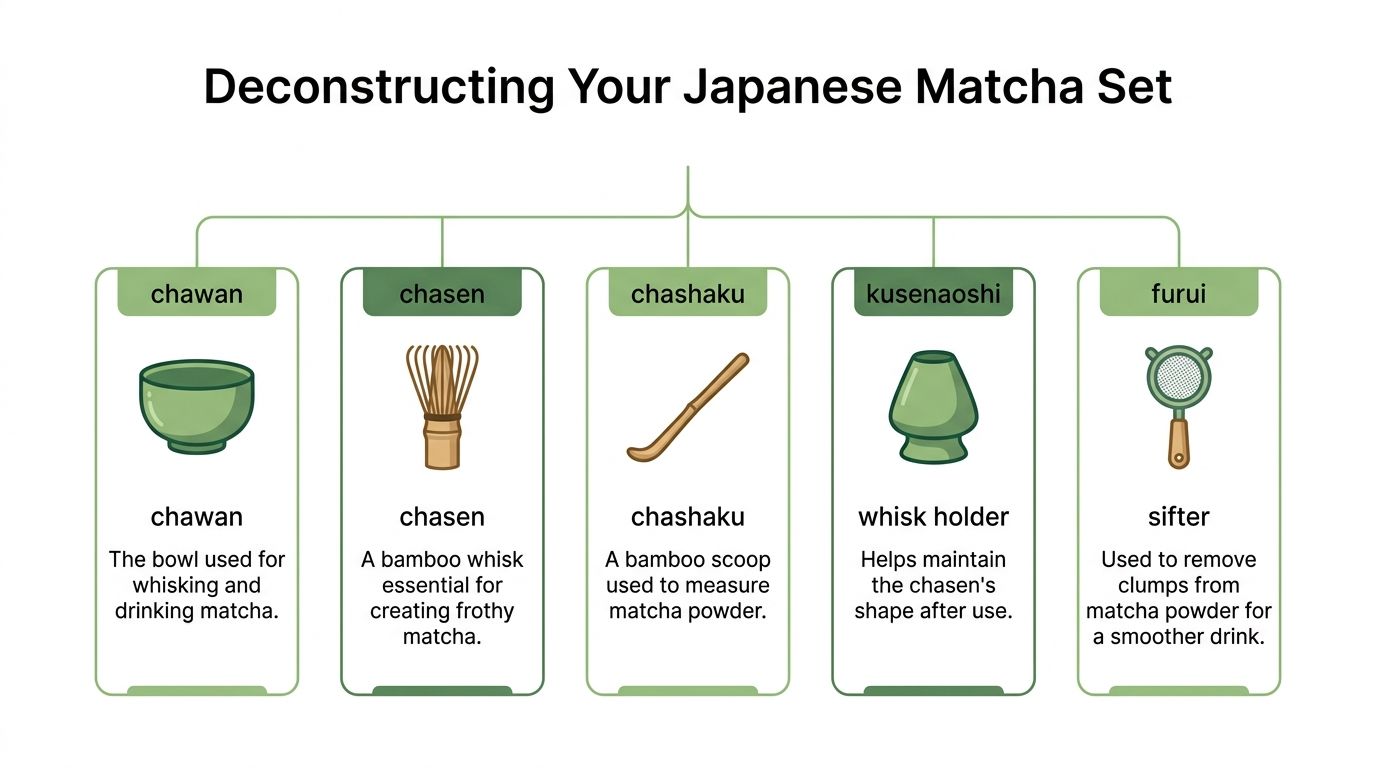
The core pieces
The chawan is the bowl. It is wide enough to whisk in comfortably and deep enough to keep the liquid from splashing everywhere. You drink from it too, which is part of the charm. It keeps the process simple.
The chasen is the bamboo whisk. This is the heart of the set. Its fine tines break up powder, lift air into the tea, and create the light froth people associate with properly prepared matcha.
The chashaku is the bamboo scoop. It helps you measure powder consistently without guessing. That matters more than many beginners realise. Too much matcha can taste heavy. Too little can taste thin.
The kuse naoshi, or whisk holder, helps the chasen keep its shape after use. Without it, the tines can dry unevenly and lose the form needed for good whisking.
Many sets also include a sifter. This step is easy to skip, but it makes a real difference because matcha powder naturally clumps.
Why each piece matters in practice
If you’ve ever stirred matcha in a mug and wondered why it felt gritty, the answer is usually a mix of clumps, uneven suspension, and the wrong vessel.
A proper set improves all three.
- The bowl gives you room to whisk quickly and evenly
- The whisk creates suspension so the tea feels smoother to drink
- The scoop improves consistency from one cup to the next
- The holder protects the whisk after you finish
- The sifter removes lumps before they become a texture problem
The set is traditional, but not precious
Some readers worry they need to follow a strict tea ceremony to “use it properly”. You don’t.
You can honour the tradition while still making matcha in a modern Australian kitchen before work. You can use a handmade bowl on a quiet Sunday, or prep several bowls in a café service window. The tools stay the same. The context changes.
If a tool helps you make better matcha more easily, it belongs in your routine.
How to Choose the Right Matcha Set
Not every japanese matcha set suits every drinker. A beginner at home needs something different from a café team serving matcha all day.
The best way to choose is to match the set to your actual habits, not your ideal self.
Start with the whisk, not the bowl
People often focus on the bowl because it is the most visible piece. The better starting point is the chasen.
A proper whisk with 80 to 96 prongs works especially well for ceremonial-style preparation. According to Japanese Taste’s product guide for an organic ceremonial set, using a proper chasen with sifted ceremonial-grade matcha can increase the bioavailability of EGCg antioxidants by up to 30% compared with stirring without a whisk. The reason is practical. Fine froth keeps the powdered leaf evenly suspended, so you drink the whole bowl more evenly.
That does not mean the bowl is unimportant. It means function should lead the decision.
Materials and fit matter
A good set should feel easy to use, clean, and store.
Look for:
- A bowl with enough width for whisking without knocking the sides
- A whisk with fine, even tines rather than thick, rough ones
- A scoop that feels balanced in the hand
- A whisk holder included if you want the set to last
If you enjoy traditional preparation, a ceramic bowl such as Mino-yaki can feel lovely in the hand. If you are buying for a café, durability and consistency matter more than visual romance alone.
Matcha Set Comparison Home Use vs. Café Use
| Feature | Ideal for Home Baristas | Essential for Cafés & Hospitality |
|---|---|---|
| Bowl | Comfortable to hold and wide enough for easy whisking | Durable, stackable, and consistent in shape |
| Whisk | Fine bamboo chasen for daily use | Multiple chasen on hand for service continuity |
| Scoop | Traditional chashaku for measured ritual | Consistent portioning method staff can repeat |
| Sifter | Helpful for smoother texture | Important for speed and consistency across orders |
| Holder | Strongly recommended | Necessary if you want to protect tool life |
| Matcha choice | Ceremonial grade for straight drinking | Ceremonial for premium service, culinary for recipes and lattes |
Buy for the way you drink
If you mostly drink straight matcha, choose a set that supports slower preparation. If you make lattes, smoothies, or recipe bases, you still benefit from proper tools, but you may not need the most delicate ceremonial setup.
If you’re still sorting out powder styles, Pep Tea’s guide to different grades of matcha is useful for deciding what belongs in the bowl and what belongs in recipes.
Your First Matcha A Simple Preparation Guide
The first bowl does not need to be perfect. It just needs to be pleasant enough that you want to make a second one.
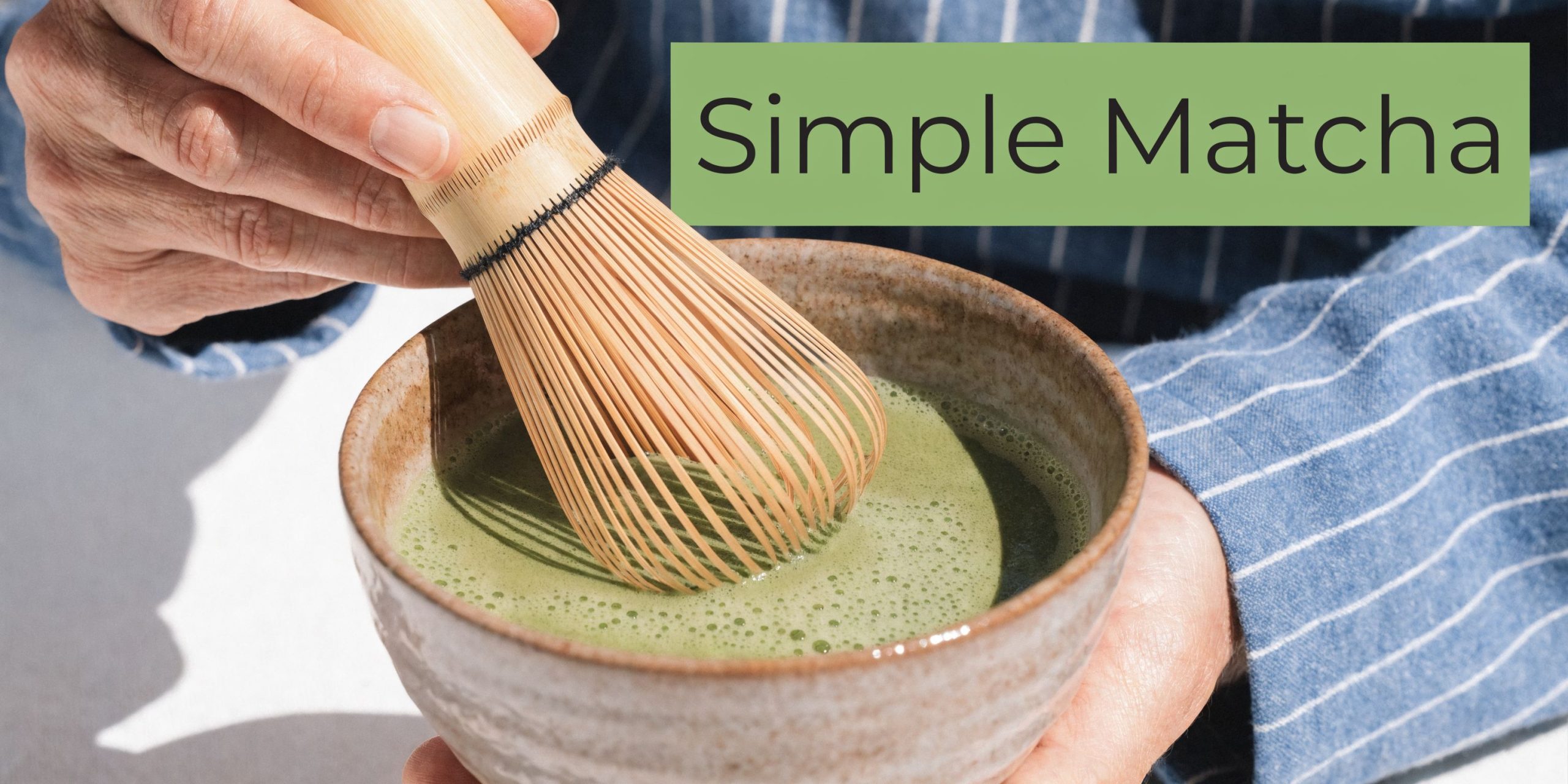
A simple method that works
Use 2g of matcha, which is about 3 scoops with a chashaku, and 60ml of water at 70 to 80°C, based on the preparation details in the verified product data for ceremonial matcha sets. Start by sifting the powder into your bowl. This step removes lumps before you add water.
Add a small splash of warm water first and make a loose paste. Then pour in the rest.
Now whisk briskly using a quick W motion across the surface rather than stirring in circles. Aim for a fine froth on top.
What beginners usually get wrong
Boiling water is the most common mistake. It flattens the flavour and can make matcha taste harsher than it should.
The second mistake is pressing the whisk against the bottom of the bowl. The whisk should move lightly and quickly, almost skimming the tea.
- Too many clumps usually means the powder was not sifted
- Flat texture usually means the whisking motion was too slow
- Bitterness often points to water that was too hot
- Weak flavour usually means too much water for the amount of matcha
For a visual walkthrough, Pep Tea’s guide on how to whisk matcha can help if the hand motion feels awkward at first.
Watch the hand movement
A short demo often makes the process click faster than written instructions alone.
Stop whisking once the surface looks fine and lively. You are aiming for smoothness and lift, not a giant foam cap.
Cleaning and Caring for Your Matcha Tools
A japanese matcha set lasts longer when you treat it as kitchenware with a rhythm, not as something you toss in the sink and deal with later.
The most important tool to protect is the chasen. Bamboo is strong, but the fine tines are delicate.
The care habit that saves money
According to Matcha.com’s starter kit guide, high-quality bamboo whisks stored on a ceramic holder can withstand over 500 uses before significant deformation, reducing replacement costs by up to 60% compared with whisks left to dry on their side.
That is a practical reason to care for your whisk properly. Better shape means better froth. Better froth means better matcha.
Simple cleaning steps
Rinse the bowl with warm water soon after use. Matcha dries fast and can cling to ceramic if left sitting.
For the whisk, use warm water only. Swirl it gently in clean water to release any trapped matcha. Avoid soap, which can linger in bamboo and interfere with flavour.
Then place the whisk on a kuse naoshi so the tines dry evenly.
- Do rinse straight away after each use
- Do let tools air dry fully before storing them
- Do use the holder to help maintain whisk shape
- Don’t scrub the bamboo
- Don’t leave the whisk flat on the bench
- Don’t store damp tools in a closed drawer
The small ritual after the ritual
These few seconds of care are part of the experience. They also protect the investment you made when choosing a quality set.
A whisk that keeps its form performs better, looks better, and asks less of your wallet over time.
Beyond the Bowl Creative Matcha Recipes
Once you’re comfortable using your japanese matcha set, you can move beyond the traditional bowl without abandoning the tools that got you there.
The whisk, bowl, and sifter are just as helpful for modern drinks as they are for classic preparation.
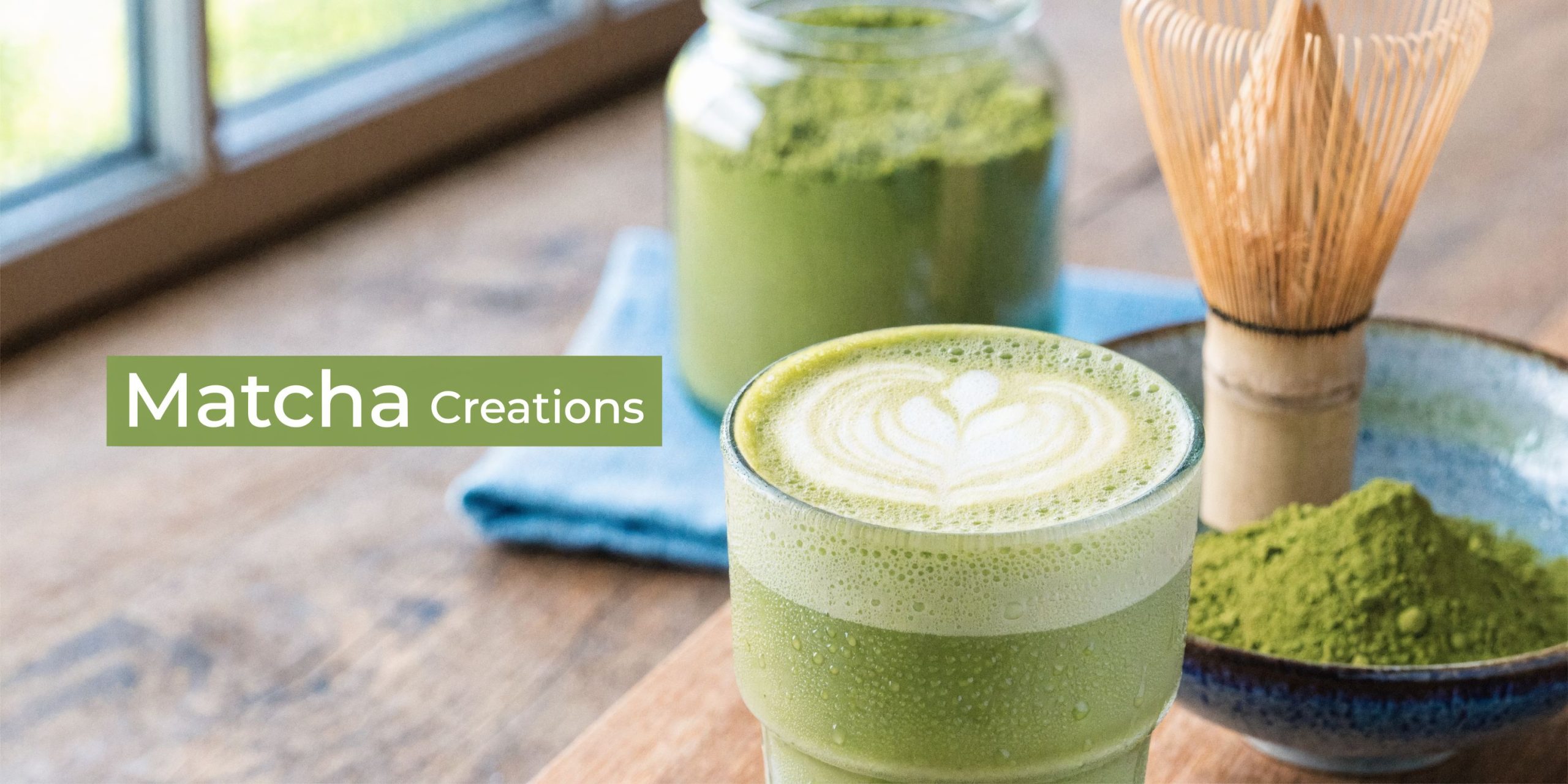
Everyday drinks you can make with the same set
A hot matcha latte starts with whisked matcha in the bowl. Once smooth, pour it over warmed milk or your preferred plant milk.
An iced matcha latte works best when the matcha is fully whisked first, then poured over ice and cold milk. This avoids dry specks floating on top.
A matcha smoothie is easy too. Whisk the matcha with a little water before blending it with banana, yoghurt, oats, or mango. Pre-whisking helps it distribute more evenly.
A Pep Tea inspired pairing
Matcha also plays well with modern non-alcoholic drinks. One of the most refreshing combinations is a simple Matcha Kombucha Fizz.
Try this at home:
- Whisk a small bowl of matcha until smooth.
- Let it cool slightly.
- Pour it over ice.
- Top with chilled kombucha.
- Add a slice of citrus if you like a brighter finish.
The result is layered and lively. You get the earthy depth of matcha with the sparkling lift of kombucha. For cafés, it’s a smart way to create a more interesting alcohol-free option using functional ingredients already familiar to wellness-minded customers.
Baking and kitchen use
You can also use the set for recipe prep. The bowl is handy for making a lump-free matcha paste before adding it to:
- Pancake batter
- Yoghurt bowls
- Chia pudding
- Icing or glaze
- Simple desserts
Ceremonial matcha suits straight drinking. Culinary matcha usually makes more sense in recipes where milk, fruit, or sweetness share the spotlight.
A Guide for Australian Cafés and Retailers
For hospitality businesses, a japanese matcha set is not only a retail item or a styling prop. It is part of service design.
If you plan to offer traditional matcha, premium lattes, or wellness-led specials, the tools and sourcing process need to support consistency.
What cafés should prioritise first
Start with repeatable preparation. Staff should know the portion, water temperature, sifting step, and whisking motion expected for every serve.
That matters whether you are preparing a straight bowl of matcha or building a latte base.
A practical setup often includes:
- Dedicated bowls and sifters for prep speed
- More than one whisk so service does not stop during cleaning or drying
- Clear staff training on texture and presentation
- The right powder for the menu item, whether ceremonial or culinary
For venues serving larger volumes or building recipe programs, Pep Tea offers bulk buy culinary grade organic matcha for recipe and café use.
The importing issue many guides skip
Australian businesses importing Japanese matcha tools need to think beyond aesthetics.
According to the verified compliance data tied to this retailer background page, the Biosecurity Act 2015 scrutinises untreated bamboo items such as whisks, and ceramics must meet FSANZ standards for lead and cadmium. The same verified data notes that 2025 DAFF data shows tea-related imports are frequently flagged, which can create costly delays for cafés that are not prepared.
That means a set can be beautiful and still be a poor buying decision if paperwork, treatment status, or food-safety documentation are unclear.
Questions worth asking suppliers
Before placing an order, ask:
- Are the bamboo tools treated and documented for Australian import requirements
- Do the ceramics have food-contact compliance information
- Is the matcha organic certified in a way that aligns with your purchasing needs
- Can the supplier support repeat orders, not just one-off sets
For retailers, this also shapes customer trust. Shoppers increasingly want authenticity, but they also want clarity. A thoughtful product page should explain what the tools are made from, how they are used, and what standards matter in Australia.
Embrace Your Daily Matcha Moment
A japanese matcha set is more than a bowl and whisk. It is a simple way to make your tea smoother, your routine calmer, and your daily drink a little more intentional.
You do not need to master a formal ceremony to enjoy it. You only need a few good tools, a little practice, and the willingness to slow down for a minute. That is where the pleasure begins, at home, in the café, or anywhere you want a steadier kind of energy.
If you’re ready to begin, explore Pep Tea for premium organic matcha and practical guidance on bringing matcha into everyday Australian life.