
Tag: what is genmaicha
Genmaicha Tea Benefits: Boost Your Health & Energy

Some teas fit a mood so perfectly that they feel less like a drink and more like a small reset. Genmaicha is one of those teas. If you're trying to cut back on coffee, looking for something softer than a brisk green tea, or want a warm cup that feels grounding in the middle of a busy day, genmaicha often lands in exactly the right place.
Its appeal is easy to understand once you taste it. You get the freshness of green tea, but also a gentle toasted note from roasted rice that makes the whole cup feel cosy and familiar. That balance is a big part of why people search for genmaicha tea benefits. They want something supportive, calming, and practical for everyday life, not another overhyped wellness promise.
An Introduction to Japans Comforting Popcorn Tea
A lot of people meet genmaicha by accident. They order tea at a Japanese café, notice a warm cereal-like aroma rising from the cup, and pause. It doesn't smell grassy like many green teas. It smells toasted, savoury, and inviting.
That first sip is usually what wins people over. The flavour is soft and nutty, with a clean green tea finish. Some cups even carry a light popcorn-like aroma, which is why genmaicha is often affectionately called “popcorn tea”.
For Australians who want a more mindful drink ritual, that matters. Genmaicha doesn't ask much of you. It isn't intense, overly bitter, or fussy to enjoy. It suits a slow morning, an afternoon break between meetings, or a gentle evening wind-down when coffee would feel like too much.
There's also something reassuring about its simplicity. It's just green tea and roasted rice, blended in a way that makes the tea feel rounder and easier to drink. If you've found some Japanese green teas a little sharp or too vegetal, genmaicha can feel like the friendlier doorway into the category.
A simple way to think about it: genmaicha is the comfort-food version of green tea.
It also sits nicely within the broader family of Japanese tea traditions. If you enjoy learning about different styles, origins, and flavour profiles, Pep Tea's guide to Japanese green tea is a useful next step.
Understanding the Blend of Green Tea and Roasted Rice
Genmaicha sounds unusual at first, but the blend is very easy to understand once you break it into its two parts.
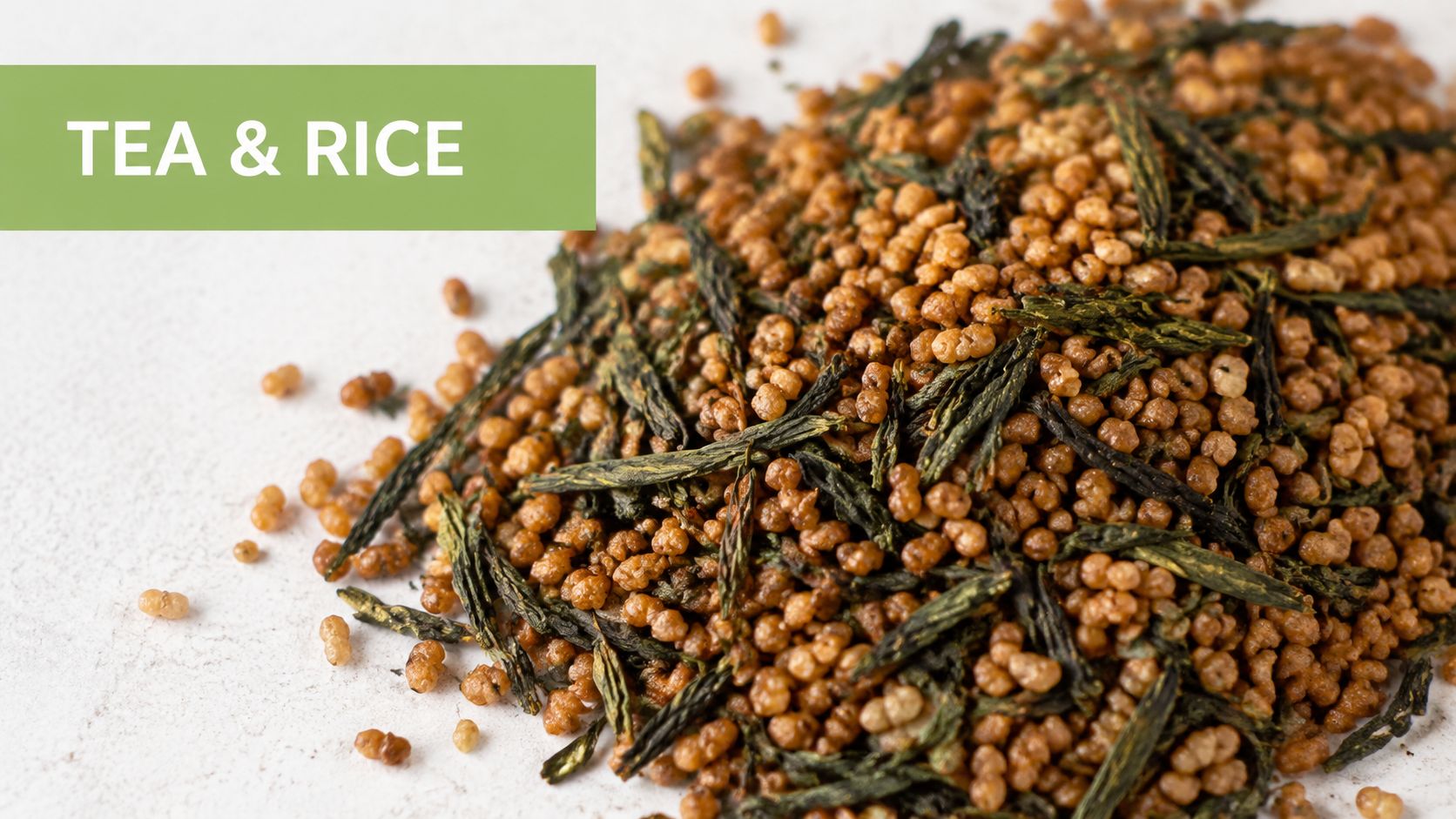
What's actually in genmaicha
At its core, genmaicha combines:
- Green tea leaves such as bancha or sencha, which bring freshness, light bitterness, and the familiar green tea character
- Roasted rice, which adds toastiness, a nutty aroma, and a softer overall impression
Some of the rice grains pop during roasting. That's where the “popcorn tea” nickname comes from. The popped grains don't mean there's popcorn in the blend. They're rice that has expanded during heat exposure.
A common misconception among readers concerns the role of the rice. The rice isn't there to turn genmaicha into a sugary drink or a grain-based beverage. It's there for flavour, aroma, and balance. The roasted notes mellow the sharper edges of green tea and create a cup that feels warmer and more rounded.
Why the blend tastes so different from standard green tea
If plain green tea tastes brisk or grassy to you, genmaicha will probably feel much easier to approach. The roasted rice changes the whole experience.
Instead of a cup that leads with vegetal notes, genmaicha often tastes:
- Nutty, rather than grassy
- Toasty, rather than brisk
- Gentle, rather than sharp
- Comforting, rather than stimulating
That doesn't mean the green tea disappears. It's still there, giving the blend its freshness and many of the qualities people associate with green tea wellness. The rice changes the texture of the experience.
The roasted rice doesn't cancel the tea. It softens it.
Does the rice change the health story
Yes, but mostly in a practical way rather than a dramatic one.
The biggest real-world difference is that genmaicha is commonly described as a lower-caffeine option. One tea industry guide estimates a cup of genmaicha contains about 10–15 mg of caffeine, compared with roughly 30 mg in a cup of regular green tea, or about 50% less in that comparison, as described in this genmaicha caffeine overview.
That lower-caffeine profile is one reason it's often chosen by people who want a calmer tea experience. The same source also describes genmaicha as containing L-theanine, the amino acid linked with relaxation and focus.
For everyday drinkers, that means the rice component is important less because of its nutrition on its own, and more because it helps create the milder flavour and gentler energy profile people are often looking for.
Exploring the Key Genmaicha Tea Benefits
Many of the most meaningful genmaicha tea benefits come from its green tea base. That's an important distinction. Genmaicha has its own character, but much of the science sits within the broader green tea evidence base rather than genmaicha-only clinical trials.
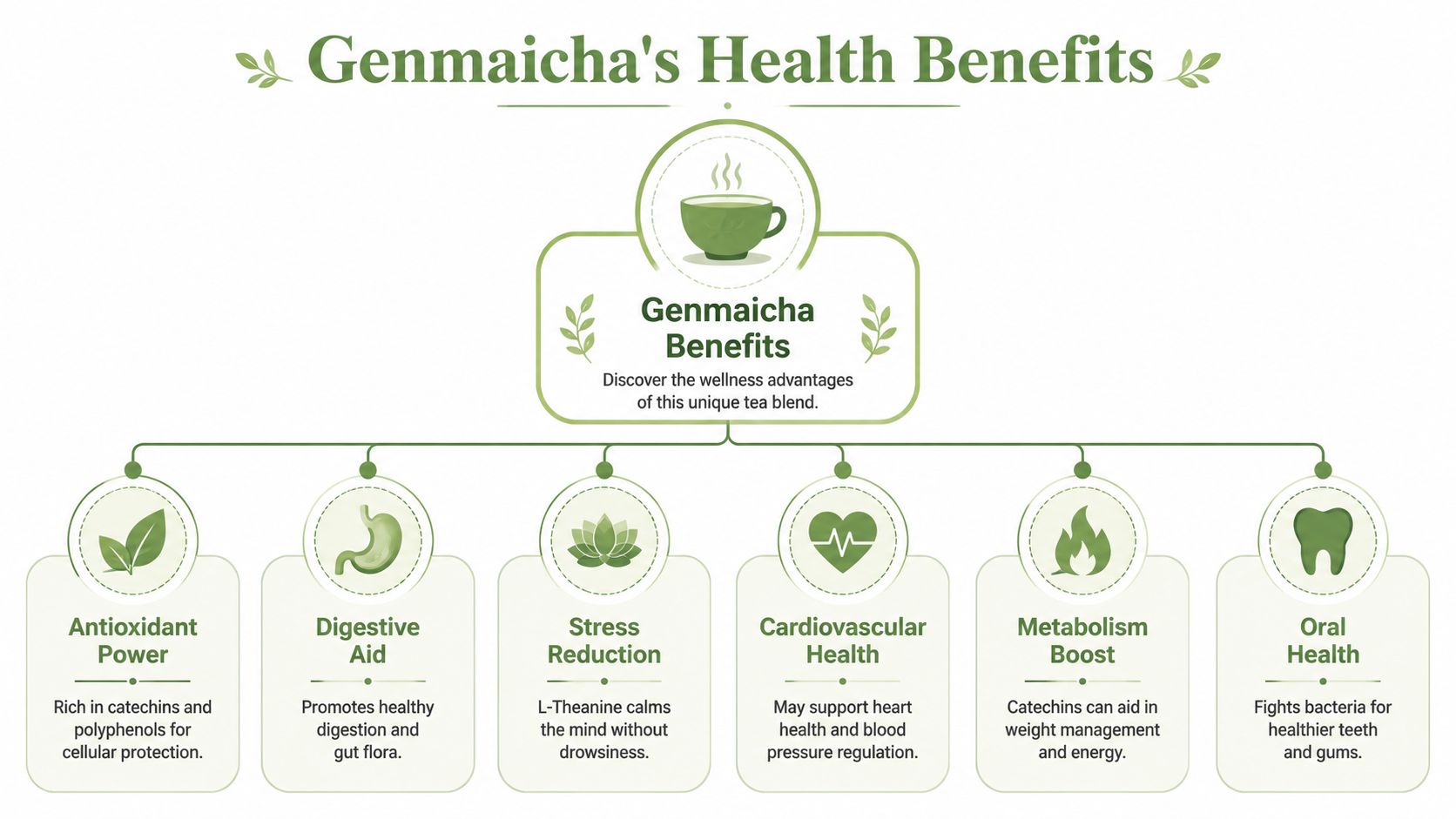
Antioxidant support from green tea catechins
The strongest evidence-backed benefit comes from green tea's polyphenols, especially catechins such as EGCG. A peer-reviewed review of green tea research describes catechins as being linked to antioxidant, anti-inflammatory, lipid-lowering, and endothelial-function benefits, including associations with reduced LDL, improved blood pressure, and better glucose and lipid metabolism in people with metabolic syndrome, as outlined in this green tea catechin review.
In plain language, antioxidants help the body manage oxidative stress. That doesn't make genmaicha a miracle drink. It does mean it belongs in the wider green tea family known for useful plant compounds.
For a practical Australian reader, the takeaway is simple. If you want a gentler tea but still want the wellness identity of green tea, genmaicha makes sense.
Calm focus rather than a hard caffeine hit
Genmaicha is often appreciated for how it feels, not just what it contains. People who find coffee too intense or standard green tea a bit sharp often describe genmaicha as easier to work into a steady routine.
That's where lower caffeine and L-theanine matter together. Instead of chasing a big jolt, many drinkers use genmaicha when they want a softer lift that doesn't dominate the rest of the day.
Practical rule: if your goal is gentle alertness, genmaicha usually fits better than beverages chosen purely for stimulation.
This also explains why genmaicha often appeals as an afternoon tea. It can feel supportive without pushing the nervous system too hard.
A short visual guide can help if you want a quick summary before reading on.
A useful option for people who want a lighter daily ritual
A major gap in online discussion is that many articles blur together broad green tea claims and genmaicha-specific reality. A more careful view is better. As discussed in this practical genmaicha explainer, caffeine level, brewing method, tea-to-rice ratio, and leaf quality all shape the final cup.
That's helpful because it keeps expectations realistic. Genmaicha may support a healthier routine in several down-to-earth ways:
- Replacing sweeter drinks with an unsweetened tea option
- Offering a lower-stimulant choice for late afternoon or evening
- Giving green tea newcomers a softer flavour profile
- Pairing well with meals, which makes it easier to drink consistently
What human evidence tells us
Genmaicha-specific human data is limited, but there is one especially relevant signal. In Japan, one large prospective cohort analysis grouped Bancha/Genmaicha together. In that study, women who drank 10 or more cups per day had a hazard ratio of 0.86 compared with women who drank less than 1 cup per week, which indicates a 14% lower adjusted risk in that category, according to this prospective cohort analysis including Bancha and Genmaicha.
That figure needs careful interpretation. It reflects a very high intake category, and it doesn't mean people should start drinking huge amounts of genmaicha each day. What it does offer is research-backed context. Genmaicha isn't just a novelty blend. It sits inside a green tea pattern that has been studied in human populations.
How Genmaicha Compares to Other Japanese Green Teas
Choosing between genmaicha, matcha, and sencha usually comes down to one question. What kind of tea experience do you want?
Some people want intensity and depth. Others want clarity and freshness. Some want a cup they can drink in the late afternoon without feeling overcaffeinated. Genmaicha shines in that third category.
Flavour and feel
Genmaicha is usually the most comforting of the three. The roasted rice gives it a nutty, savoury softness that makes it feel almost food-friendly. Sencha leans greener and brighter. Matcha is richer, thicker, and more concentrated in flavour.
If you've ever thought, “I like the idea of green tea, but I don't love the grassy edge,” genmaicha is often the best place to start.
Sencha speaks clearly. Matcha sings loudly. Genmaicha speaks softly and stays with you.
The practical trade-offs
Here's the simplest way to compare them.
| Feature | Genmaicha | Matcha | Sencha |
|---|---|---|---|
| Flavour | Nutty, toasted, mellow | Rich, savoury, umami-led | Fresh, grassy, clean |
| Caffeine feel | Lower and gentler | Stronger and more concentrated | Moderate, more classic green tea feel |
| Texture | Light-bodied | Fuller and creamier | Light and crisp |
| Best time to drink | Afternoon, with meals, or when you want a calming cup | Morning or early day when you want focus | Morning or daytime sipping |
| Ease for beginners | Very approachable | Can be intense at first | Familiar for green tea drinkers |
| Preparation style | Infuse leaves in water | Whisk powder into water | Infuse leaves in water |
Where genmaicha sits best
Genmaicha is not trying to outdo matcha on concentration or sencha on pure leaf character. Its strength is balance.
That's why it often suits:
- Caffeine-sensitive drinkers who still want real tea
- People easing off coffee but not ready for herbal tea
- Cafés building broader tea menus with something distinctive and approachable
- Home drinkers who want a tea that pairs well with lunch or an afternoon pause
If you'd like a deeper side-by-side look at flavour, energy, and use cases, this comparison of genmaicha vs matcha is worth reading.
How to Brew and Enjoy Genmaicha at Home or in a Café
Genmaicha is one of the friendliest Japanese teas to brew. It doesn't demand a highly technical setup, and it rewards even simple preparation with a lovely cup.
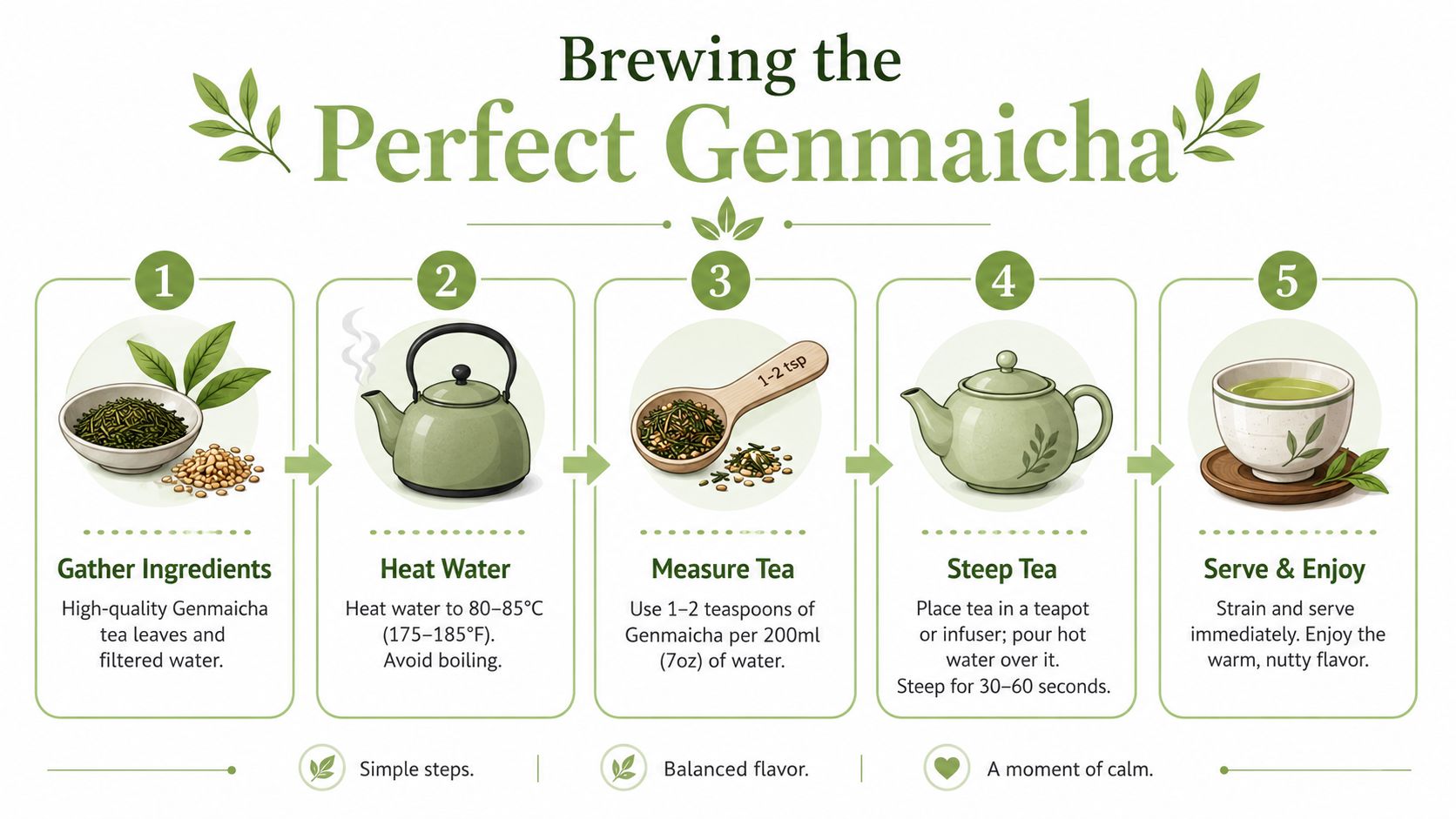
A simple brewing method
Use this as an easy starting point:
- Heat the water gently. Aim for 80 to 85°C. Boiling water can make green tea taste harsh.
- Measure your tea. Use a modest spoonful for a regular mug or small teapot.
- Steep briefly. Around 1 to 3 minutes usually gives a balanced cup.
- Taste and adjust. If it's too light, steep a little longer next time. If it's too strong, shorten the infusion.
- Pour straight away. Leaving the leaves sitting in water too long can make the cup less soft.
Why temperature matters
Many people go wrong with green tea. They use freshly boiled water, then assume the tea is meant to taste bitter.
Genmaicha is more forgiving than some Japanese green teas because of the roasted rice, but the leaf still benefits from a gentler brew. Lower water temperature helps preserve sweetness and keeps the flavour rounded.
If your genmaicha tastes rough, change the water temperature before changing the tea.
Easy ways to enjoy it
Genmaicha doesn't have to be limited to a hot mug at home. It works beautifully in different settings.
- Hot with meals for a warming, savoury pairing
- Iced on warm Australian days for a refreshing but mellow drink
- As a tea latte with milk or a plant-based alternative if you enjoy a creamier cup
- On a café menu as a low-caffeine Japanese tea option for customers who don't want coffee
For cafés, the strongest appeal is usually flavour plus accessibility. Customers may not know much about genmaicha, but they often respond quickly to a short description like “Japanese green tea with roasted rice, smooth and nutty.”
A few common mistakes to avoid
Not every disappointing cup means the tea is poor quality. Often it's just the method.
- Using boiling water can flatten the softer roasted notes
- Steeping too long can push the green tea side forward too aggressively
- Using too little leaf can make the cup feel thin
- Adding sweetener too quickly can cover the natural toasted flavour that makes genmaicha special
A plain brew first is always the best test. Once you know its natural profile, you can decide whether you prefer it neat, iced, or with milk.
Is Genmaicha the Right Tea for Your Wellness Routine
Genmaicha suits people who want wellness to feel sustainable, not extreme. It's a tea for everyday rhythm. You drink it because it tastes comforting, because it feels lighter than coffee, and because it gives you a simple ritual you can return to without much effort.
That makes it especially appealing if you're caffeine-sensitive, trying to reduce stimulant intake, or looking for a more grounded afternoon drink. It also works well for people who like the idea of green tea but want something softer and more approachable than stronger styles.
Who tends to enjoy it most
Genmaicha often fits best for:
- Busy professionals who want a calmer tea break
- Tea beginners who don't enjoy bitterness
- Mindful drinkers building a low-sugar, lower-caffeine routine
- Café customers looking beyond coffee and standard black tea
There are still a few sensible notes of caution. Because it contains caffeine, even at a lower level, some people will still want to be mindful. That includes those managing caffeine sensitivity, pregnancy concerns, or blood sugar questions in a broader health context. If you're also exploring other gentle ways to support steady energy through the day, these tips for natural energy boosts are a useful companion read.
A calm place in a broader tea routine
Genmaicha doesn't replace every tea. It fills a specific role. Matcha may suit mornings when you want more focus and intensity. Genmaicha suits the moments when you want warmth, balance, and a little less push.
If you enjoy rotating your drinks depending on time of day, tolerance, and mood, it can help to understand safe intake across stronger teas too. This guide on how many cups of matcha tea powder are safe per day adds useful context for anyone building a more intentional tea habit.
Genmaicha's real value is simple. It makes green tea easier to live with.
If you'd like to keep exploring functional tea in a thoughtful, everyday way, visit Pep Tea for premium organic Japanese matcha, Australian-brewed sugar-free kombucha, and practical guides that help you choose the right drink for calm focus, clean energy, and daily wellness.