
Tag: sugar free drinks
No Sugar Soft Drinks: A Practical Guide for Australians
Most advice treats no sugar soft drinks like the automatic upgrade from regular soft drink. That's too simple for Australian shoppers, and it misses the core decision, which is whether you want a cola-style swap, a lighter refreshment, or a functional drink that fits a café run, a workday, or a night out.
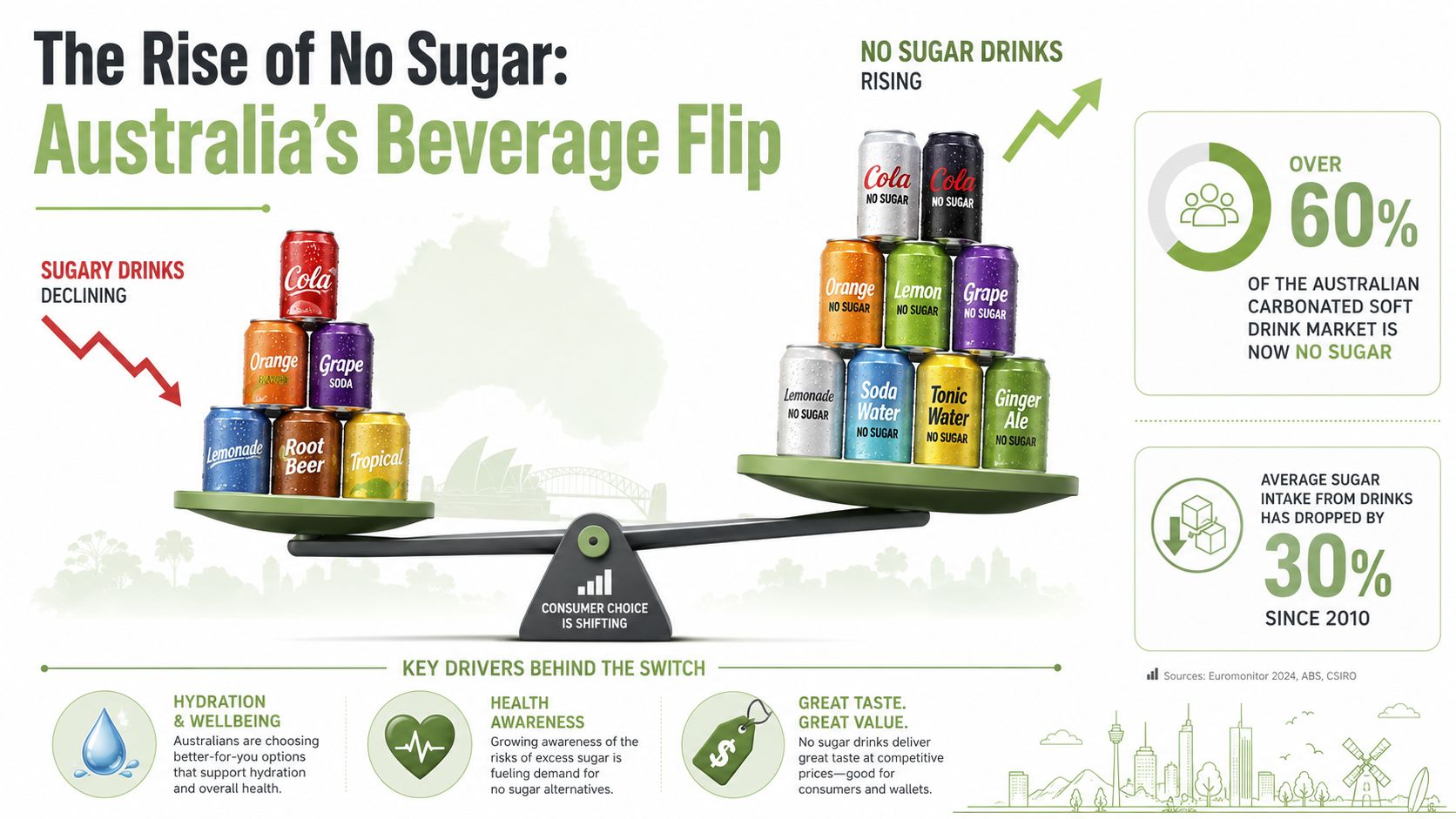
The category has also changed in a big way. In Australia's water-based non-alcoholic beverage market, low- and no-sugar drinks held 30% of market share in 1997 and 65% in 2024, while sugar-sweetened drinks fell from 70% to 35%. Sales of no-sugar water-based beverages rose from 30.4 litres per capita to 105.8 litres per capita over the same period, so these drinks are no longer a fringe option, they're a mainstream one (Australian beverage trends factsheet).
That shift matters because a drink's label doesn't tell you the whole story. No sugar can mean a diet cola, a sparkling water, a fermented kombucha, or a tea-based drink, and each one plays a different role in everyday Australian habits. Used well, they're practical substitutions. Used carelessly, they can crowd out better options like water or unsweetened tea.
Why No Sugar Soft Drinks Became the Australian Default
The surprising part is not that no sugar soft drinks exist. It is that they now sit beside water, kombucha, matcha, and tea as ordinary choices in Australian fridges and café menus. That changes the question. The useful comparison is no longer just “better than a sugary cola”, it is which drink fits the moment, the label, and the habit.
The market has already moved
Australia's water-based beverage market has flipped. Low- and no-sugar drinks have gone from 30% of market share in 1997 to 65% in 2024, while sugar-sweetened drinks moved the other way, from 70% down to 35% (Australian beverage trends factsheet). That means the fridge door, the servo shelf, and the café display are all reflecting the same shift.
No-sugar sales also climbed from 30.4 litres per capita to 105.8 litres per capita in that period, and the factsheet points to the category becoming part of everyday purchase behaviour rather than a side option. The same source also shows how broadly the category now reaches across water-based drinks, which helps explain why shoppers meet it everywhere from a corner store cooler to a chain café display (Australian beverage trends factsheet).
Practical rule: once a drink becomes the default shelf choice, judge it by label, ingredients, and use case, not by the word “zero” alone.
Why the default matters for shoppers
When a category becomes common, it can start to feel invisible. That is why label reading matters more now. A no-sugar cola can work as a tidy swap for a sugary cola, but it is still a processed beverage with a defined sweetener profile and flavour structure. It is not the same as water, and it is not the same as plain tea.
That distinction matters in Australia because shoppers now have several everyday options that solve different problems. A no-sugar soft drink can suit a convenience buy. A sugar-free kombucha can fill the role of a café-style pick. Matcha or plain tea can suit someone who wants a slower, more functional drink. The category makes more sense once you stop treating it as the only sensible alternative and start seeing how it fits alongside other choices.
For brands and venues, that same shift is why functional beverage trends now sit beside mainstream soft drinks, not off to the side.
What Counts as a No Sugar Soft Drink in Australia
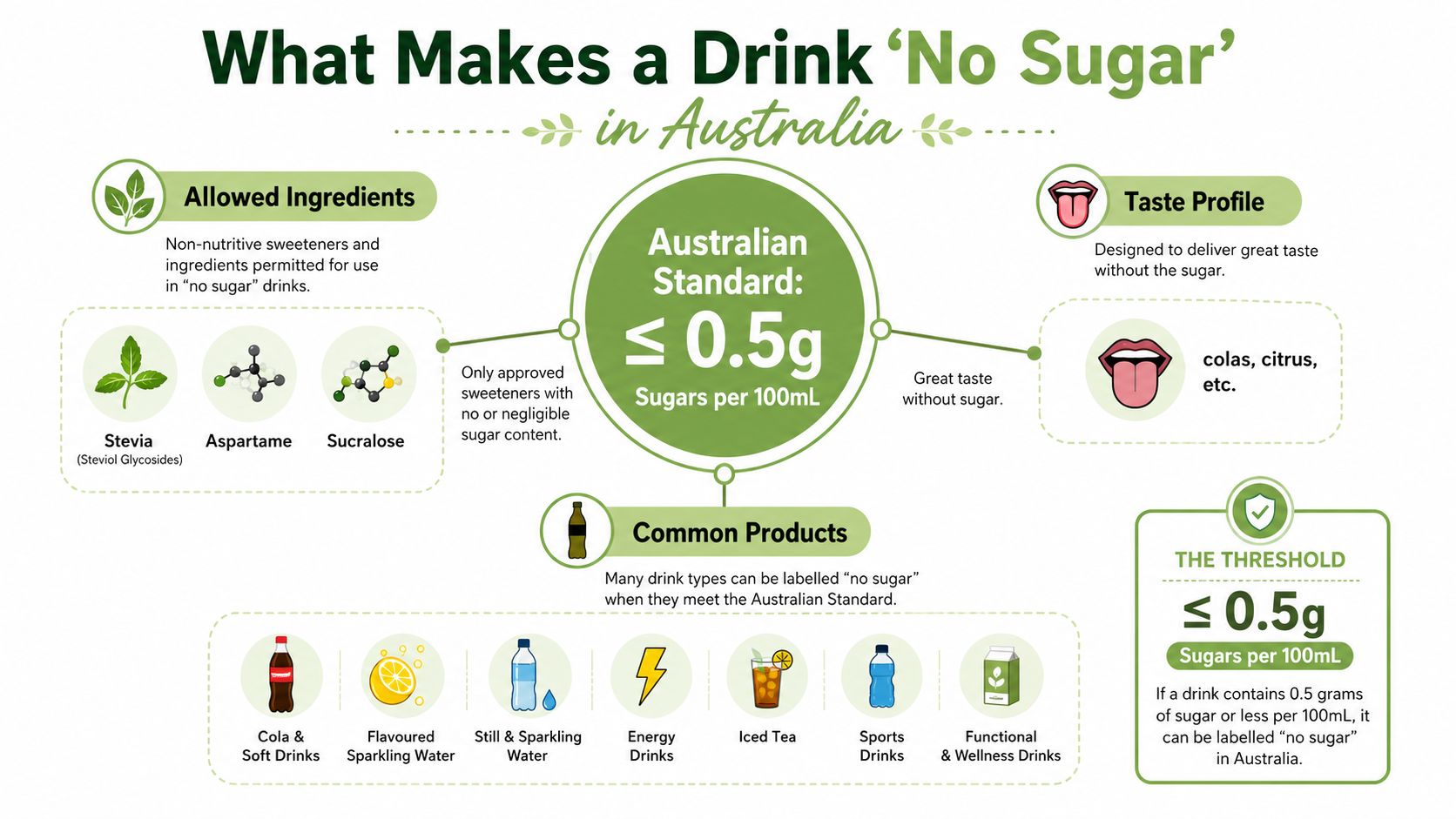
A label can look simple and still hide a lot of formulation work. In Australia, a no sugar soft drink must contain no more than 0.5 g of sugars per 100 mL. That threshold is what turns “no sugar” into a regulated claim, not a loose marketing phrase. Australian label guidance on “no sugar” uses that sugar limit as the benchmark, and the wording on pack needs to match it.
The sweetness comes from a system, not just one ingredient
These drinks usually keep the familiar soft-drink taste by replacing sucrose with high-intensity sweeteners such as aspartame and acesulfame potassium. The drink still needs sweetness, sharpness, body, and finish, so the formula has to do several jobs at once.
That formulation approach is common across the category. A product overview from UNESDA product and ingredients overview describes no- and low-calorie soft drinks as mostly water, often around 98% to 99%, which helps explain why they feel light on the palate even when the flavour is bold. The energy contribution stays effectively negligible because there is very little sugar in the first place.
Acid and sweetener work together
The easiest way to understand a cola-style no-sugar drink is to treat the acid-sweetener system as a matched pair. One part supplies the sparkle and edge, the other supplies the sweetness cue, and together they make up for the missing sugar. That is why a well-made no-sugar cola can still taste round and familiar.
Food acids matter here as much as sweeteners do. They provide the bite, brightness, and stability that sugar would normally help support. Without that balance, a zero-sugar drink can taste thin or flat. With it, the drink can feel cohesive even without the bulk of sugar.
Australian label rules for “no sugar” are also easy to miss if you only glance at the front of pack. An infographic explaining that Australian regulations require drinks to have 0.5g of sugar or less to be labeled no sugar.
A no-sugar label tells you the sugar level, not whether the drink is a good everyday choice for your routine.
The main takeaway is simple. No sugar is a legal and formulation category. It does not automatically mean healthy, nourishing, or better than every other alternative. It means the drink meets a sugar threshold and uses a sweetness system designed to replace the flavour of sugar.
Reading a No Sugar Label Like a Local
A front label can be neat and reassuring, while the ingredient list tells the story. Once you know what each part is doing, a supermarket shelf becomes much easier to read. That matters in Australia, where no sugar can cover anything from a classic cola to a lighter café-style swap.
A real Coke No Sugar label, translated
Australian product labelling for Coke No Sugar lists carbonated water, colour (150d), food acids (338, 331), sweeteners (951, 950), flavour, caffeine (Foodwatch product snapshot). That is a standard no-sugar cola structure, and each ingredient has a clear job.
- Carbonated water: This is the base. It gives the drink its fizz and light body.
- Colour 150d: This is the caramel colouring that gives cola its dark look.
- Food acids 338 and 331: These help with sharpness, balance, and stability.
- Sweeteners 951 and 950: These are aspartame and acesulfame potassium, the main sweetness system.
- Flavour and caffeine: These round out the drink's sensory profile and familiar cola character.
That same sweetener pairing also shows up across other Coke variants in Australia, which is useful when you are comparing cans that look different on the shelf but share a similar formula.
A quick mental checklist for any can
Practical shortcut: if the front says no sugar, check the ingredient list for the sweetener blend, the acid system, and any extras like caffeine.
A fast scan works well in store. Start with the base liquid, usually water or carbonated water, then look for the sweeteners, then check whether acids and flavourings suit the drink style. If caffeine matters to you, it will usually be listed too. For a broader example of how sugar-free carbonation fits into everyday buying, the Pep Tea guide to sugar-free carbonated drinks is a handy reference point.
The aim is not to memorise code numbers forever. It is to stop treating ingredient labels like secret text. Once you know that 951 and 950 are sweeteners and 338 and 331 are part of the acidity system, you can compare drinks in under a minute.
That same habit also helps when you are choosing outside the supermarket. A Low sugar mood trio sampler can make sense on a café shelf beside kombucha, matcha, and other everyday drinks that are not trying to copy cola at all.
Diet Sodas, Sparkling Water, Kombucha, and Tea Compared
Not every drink that skips sugar is trying to do the same job. Some are built for a cola hit, some for clean refreshment, and some for a more functional role in the day. That's where a side-by-side comparison helps.
| Category | Sweetener approach | Functional extras | Best for |
|---|---|---|---|
| Diet soda | High-intensity sweeteners and acids | Familiar cola-style flavour, caffeine in some products | People who want the closest swap for regular soft drink |
| Flavoured sparkling water | Usually no sweetener, or a very light sweetening approach | Minimal additives, light refreshment | Anyone who wants fizz without a heavy flavour load |
| Sugar-free kombucha | Fermentation-based, usually low sugar rather than sweet | Live cultures and organic acids from fermentation | Café menus, food pairing, and people wanting a tangier option |
| Unsweetened tea or matcha | No sweetener needed | Antioxidants, and in matcha, naturally occurring caffeine with L-theanine | Calm focus, morning routines, and less sugary everyday drinking |
Where each option fits
Diet soda wins on nostalgia. It's the most obvious substitute when someone wants the exact cola experience without the sugar load. The trade-off is that it still depends on a tight sweetener-and-acid structure, so it's not the same as a naturally unsweetened drink.
Flavoured sparkling water gives you a cleaner finish. It's the least intrusive option if you just want bubbles and hydration-style refreshment. That makes it a good bridge drink for people who're trying to move away from sweeter cans but don't want to jump straight to tea or kombucha.
Sugar-free kombucha sits in a different lane. It brings fermentation character, a more complex taste, and a better café or meal pairing role than plain soft drink. If you want a practical example of a ready-made option in that space, Low sugar mood trio sampler shows how brands are building mixed packs around function and flavour rather than just sweetness.
Tea and matcha are the quiet achievers. They don't try to imitate soft drink at all. They give you a different kind of drink moment, one that's slower, more deliberate, and often better suited to a workday or café setting.
For Australian shoppers, that's where Pep Tea's sugar-free carbonated drinks sit naturally alongside the rest of the category. The right choice depends on whether you want familiarity, light refreshment, fermented complexity, or a tea-led functional drink.
How Cafés and Retailers Can Stock Sugar Free with Confidence
A café owner in Brisbane or Newcastle doesn't need a wall of identical cans. They need a short menu of drinks that cover different moods, price points, and storage realities. A smart non-alcoholic list works like a ladder, not a single bucket.
A simple stocking mix that actually works
The easiest model is to cover three roles. First, a familiar diet cola for people who want the classic fallback. Second, a premium sparkling water for the clean, neutral option. Third, a brewed, sugar-free functional drink for customers who want something with more character.
That tiering helps because not every customer wants “the healthiest drink”. Some want a familiar taste with no sugar, some want a refreshment drink, and some want something they can sip with lunch. A menu that acknowledges all three sells better than a menu that tries to force everyone into one category.
For venues that also run loyalty or repeat-purchase programs, retail loyalty program inspiration can be useful when you're thinking about how to nudge regular drink buyers back into the fridge or onto the menu again. The point isn't to gamify everything. It's to give people an easy reason to come back for the same drink they already liked.
Storage, serving, and pairing matter
Diet cola cans are easy on fridge space and simple to serve. Sparkling water can go straight into glassware with ice and citrus if the venue wants a cleaner look. Sugar-free kombucha and chilled matcha sit better when staff can explain them briefly, because they're more flavour-led and often sit in the premium part of the menu.
A café menu gets stronger when each drink has a clear job, a clear serve, and a clear reason to exist.
Retailers should think in shelves, not just cartons. Put familiar no-sugar sodas where customers expect them, and keep functional drinks close enough that shoppers notice them without having to hunt. That reduces friction and helps people compare a standard no-sugar option with a more functional one in the same visit.
If you stock kombucha locally, Pep Tea's guide to where to buy organic kombucha in Australia fits naturally beside this thinking. It's especially relevant when you want to position a brewed option as a separate choice from canned soft drinks, not as a replacement for every drink on the shelf.
A Smart Shopper Checklist for the Aisle and the Menu
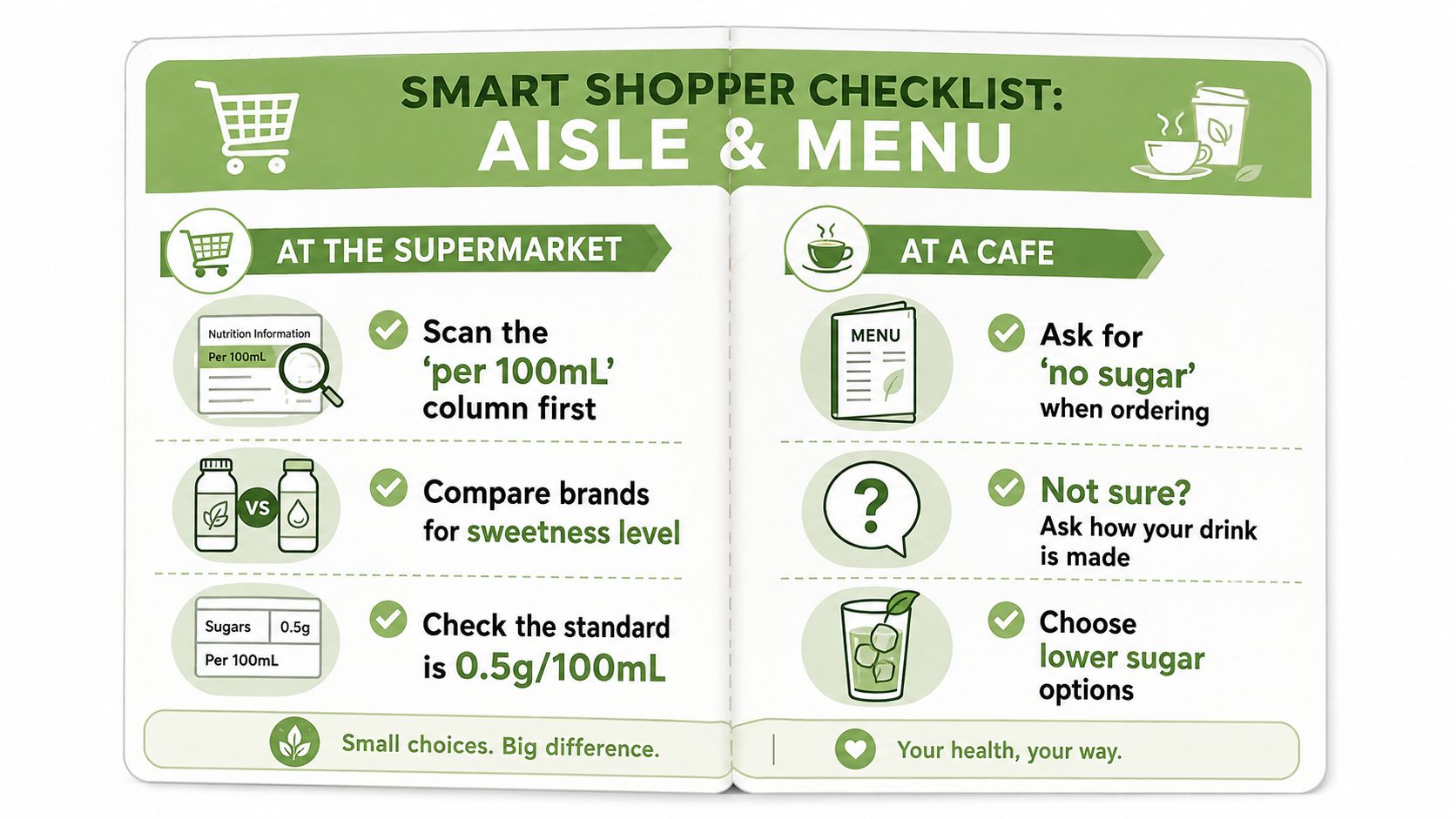
The front of the can is marketing. The back of the can is where the useful information lives. If you want to make better choices without overthinking it, use the same five checks every time.
Five checks that actually help
- Scan the per-100 mL figure first. That's where the sugar claim lives, not in the headline wording on the pack.
- Check the sweetener list. If you care about specific ingredients, look for the code numbers and names, not just “no sugar”.
- Look for functional extras. Live cultures, organic acids, antioxidants, caffeine, or tea compounds each point to a different drinking experience.
- Match the drink to the occasion. A desk drink, a post-lunch refreshment, and an evening social serve don't need the same product.
- Ask whether the price matches the role. A premium drink should do a premium job, not just sit there looking healthy.
The substitution pattern matters too. Swapping a sugary soft drink for a no-sugar version is a different choice from swapping water or unsweetened tea for the same bottle. The first move reduces sugar exposure. The second move might just change taste preference, without adding much benefit.
That distinction is why some shoppers feel better with a no-sugar cola for a party but still prefer water or tea during the workday. Both can be sensible. They just serve different purposes.
If you're standing in the aisle with three good options in hand, choose the one that fits the moment. A no-sugar cola can replace a regular cola. Sparkling water can cover the refreshing gap. Sugar-free kombucha can add flavour and café-style variety when you want something more distinctive.
Building Everyday Habits Around Sugar Free Drinks
Habits change faster when the choice feels normal. If you keep the right drinks on hand for the right times of day, you won't need to negotiate with yourself every afternoon. The pattern becomes automatic.
For a work-from-home desk routine, a chilled unsweetened tea or matcha suits the slow-focus part of the day. For a lunch-on-the-go routine, a no-sugar soft drink or a sugar-free kombucha can be the easier grab-and-go choice. For an evening social routine, sparkling water or a lightly flavoured functional drink often fits better than a heavy sweetener hit.
Pep Tea's Australian-brewed sugar-free organic kombucha and Japanese organic matcha both fit that functional middle ground, where the drink is doing more than quenching thirst. They're useful examples of how Australians can shift away from sugary defaults without pretending every drink has to be the same.
The best long-term swap is usually the one you'll keep choosing. That might be a diet soda on some days, kombucha on others, and plain water when that's what you want. A healthier routine usually comes from a few consistent swaps, not from trying to make one drink solve everything.
If you're building a better drink routine, start with the swap that feels easiest and keep going from there. Explore Pep Tea for Australian-brewed sugar-free kombucha and organic matcha, then choose the option that fits your day, your café run, or your shelf at home.
Wild Berry Kombucha: A Guide to Flavour & Benefits

You're probably standing in front of a fridge at the supermarket or café, wanting something cold and satisfying that doesn't feel like a sugar bomb. Water feels a bit flat. Soft drink feels like a step backwards. Juice can be heavier than you want. Then you spot a bottle labelled wild berry kombucha and pause.
It sounds healthy. It looks lively. But the questions come quickly. Is it low in sugar? Is it just flavoured fizz with a wellness label? Why does it taste tart instead of sweet? And what does “naturally fermented” really mean?
Those are fair questions. Around the Hunter Valley, where we are serious about proper brewing, this is the sort of drink that gets misunderstood all the time. A well-made wild berry kombucha isn't trying to be a lolly-water soft drink with a fancy label. It's a fermented tea drink with fruit character, bright acidity, and a much cleaner drinking experience.
The Australian market has also made this category more interesting. Brands are positioning wild berry kombucha as a low-sugar functional beverage, not a dessert-style indulgence. If you follow how food and beverage teams build products and bring them to market, these kinds of category shifts are also visible in broader industry examples such as Beacon Recruitment food and beverage success stories, where product positioning and consumer expectations shape what ends up on shelves and menus.
An Introduction to Your New Favourite Drink
You grab a chilled bottle on a warm afternoon, hoping for something with flavour that still feels light. That is the moment wild berry kombucha starts to make sense.
For Australian drinkers, especially anyone trying to cut back on sugary soft drinks, wild berry kombucha sits in a very useful middle ground. It has the lift of a sparkling drink, the fruit character people enjoy, and the sharper, cleaner finish that comes from real fermentation. Around the Hunter Valley, that difference matters. A properly brewed kombucha is built from tea first, then shaped by culture, time, and fruit notes. It is not berry-flavoured soda wearing a health halo.
The point that causes the most confusion is sugar.
Many bottles on the shelf use similar words, but they are not made in the same way. In authentically brewed kombucha, sugar is added at the start because the culture needs fuel, much like yeast needs sugar to turn grape juice into wine. During fermentation, much of that sugar is transformed into acids and other compounds that give kombucha its tart, brisk character. That is why some lower-sugar Australian options, including brands such as PepTea, drink drier and less sweet than juice-heavy alternatives.
This is also why a “no sugar” or low-sugar promise can be true in a brewed kombucha and still sound odd at first glance. The sugar goes in as part of the process, not as a promise that the final drink will taste sweet. If a product leans heavily on fruit juice, concentrates, or sweeteners for its final flavour, you are often getting a very different drink from one that has been fermented properly and finished with restraint.
That distinction shapes the whole category. Product teams across food and drink spend a lot of time working out how to meet changing expectations around flavour, health, and convenience, which you can also see in Beacon Recruitment food and beverage success stories.
Why people get confused
Two bottles can both say kombucha and deliver completely different experiences.
One will taste crisp, tangy, and light because fermentation still leads the flavour. Another will come across more like sparkling berry juice because sweetness leads instead. The label may look similar, but the drinking experience is not.
A simple way to judge it is this. Authentic wild berry kombucha should taste like brewed tea and fermentation with berry notes layered over the top. If it tastes like cordial with bubbles, the fruit is probably doing more work than the ferment.
What makes it appealing
People usually come to wild berry kombucha for a few clear reasons:
- They want a soft drink alternative that feels more refreshing than syrupy.
- They want a lower-sugar option without giving up flavour.
- They want an alcohol-free drink that still feels interesting and grown-up.
A good bottle delivers on all three. It is lively without being cloying, fruity without becoming confectionery-sweet, and better suited to everyday drinking than many standard berry beverages.
Defining the Flavour of Wild Berry Kombucha
You crack open a chilled bottle on a hot Hunter Valley afternoon, expecting something like berry soft drink. The first sip usually says otherwise. Wild berry kombucha is lighter, drier, and more layered, with fruit on the nose and a brewed tang underneath.

What it usually tastes like
A good wild berry kombucha tends to arrive in three stages rather than one big sugary hit.
| Layer | What you notice | Why it matters |
|---|---|---|
| Fermented tea base | Tart, crisp, lightly acidic | This gives kombucha structure and keeps it refreshing |
| Berry aroma | Notes that suggest raspberry, blueberry, blackberry, or strawberry | This makes the drink smell inviting before it tastes sweet |
| Natural fizz | Fine bubbles and a dry finish | This keeps the palate clean instead of sticky |
That order matters. In a properly brewed kombucha, the tea and fermentation set the frame, and the berries colour it in. It works a bit like adding fresh fruit to sparkling water instead of pouring cordial into soda. You still get berry character, but the drink stays bright and adult rather than lolly-like.
Why "wild berry" can taste very different from one bottle to another
Many Australian shoppers get tripped up on this point. "Wild berry" sounds clear enough, yet one brand may taste close to a lightly tart fermented tea, while another drinks more like sparkling juice with a kombucha badge on it.
The difference usually comes down to what is doing the heavy lifting. If fermentation leads, you notice tang, dryness, and a clean finish. If fruit juice or added sweeteners lead, the berry flavour becomes rounder, fuller, and more obviously sweet.
That is also why a "no sugar" claim can seem confusing at first. Kombucha starts life with sweet tea because the culture needs fuel. After fermentation, a well-brewed bottle can finish much lower in sugar than a juice-heavy alternative. So the flavour cue to watch for is not intense sweetness. It is balance.
The flavour profile to look for
If you want authentic wild berry kombucha, look for these signs in the glass:
- A tart opening, not a syrupy one
- Berry aroma that smells fresh or jammy without tasting sugary
- A tea-like backbone that gives the drink shape
- A clean, dry finish that invites another sip
A sweeter product can still be enjoyable, of course. It is a different style. For readers comparing berry-led options, Pep Tea's Raspberry Lemonade Kombucha is a useful example of how fruit character can stay lively while the fermented profile still shows through.
What the ingredient list can tell you
Labels often reveal the drinking experience before you open the bottle. A shorter, tea-first ingredient list usually points to a more traditional kombucha profile. A formula built around fruit concentrates, sweeteners, or flavour-heavy additions often pushes the drink closer to soft drink territory.
For Australian buyers, this matters because "better-for-you" claims can sit on both styles. One bottle may be authentically brewed and low in sugar because fermentation has done the work. Another may rely more heavily on flavour additions to create a berry impression while still tasting sweet.
A simple test helps. If you can picture the drink alongside a meal, in a wine glass, or as an afternoon refresher without palate fatigue, it is probably a true kombucha-style flavour. If it reads more like dessert in a bottle, the berry is likely overpowering the brew.
The best wild berry kombucha tastes like fermented tea first, berry second, and sweetness a distant third.
The Magic of Fermentation and Its Health Benefits
Much of the confusion surrounding wild berry kombucha begins with a single fair question. If brewers use sugar at the start of the process, how can some bottles end up very low in sugar, or even make a "no sugar" claim?
The answer sits in the ferment, not the flavouring.

What fermentation actually does
Kombucha starts as sweet tea because the culture needs fuel. Yeast and bacteria use that sugar during fermentation, much like a sourdough starter uses flour. The starting ingredient matters, but what the microbes do with it matters more.
A review on kombucha fermentation and bioactive compounds explains the basic sequence. Yeast split sucrose into simpler sugars and convert them into ethanol. Acetic acid bacteria then turn that ethanol into organic acids, including acetic acid, which lowers the pH and creates kombucha's bright, tangy edge.
That is why properly brewed kombucha tastes dry, tart, and tea-led rather than like cordial.
Why the sugar question trips people up
Shoppers often look at kombucha the way they look at soft drink. They assume sweetness in the recipe means sweetness in the bottle. Fermentation changes that equation.
In a genuine brew, sugar is part of the process first and part of the flavour second. If fermentation is allowed to do its work, much of that starting sugar is transformed. If a product relies heavily on juice, concentrates, or added sweeteners after brewing, the final drink can taste fuller, softer, and much sweeter, even if it still sits in the kombucha section.
That distinction matters in Australia, where "better-for-you" messaging appears on both traditional and fruit-heavy styles. An authentically brewed, low-sugar kombucha such as PepTea's approach is built around fermentation doing the heavy lifting. A sweeter, juice-led option may still be pleasant, but it is offering a different drinking experience.
What fermentation adds beyond lower sugar
Fermentation does more than trim sweetness. It builds the structure of the drink.
You can taste that in a good wild berry kombucha. The berry notes sit on top, while the ferment gives shape underneath. It works like the frame of a house. You may notice the paint first, but the frame is what holds everything together.
That ferment-driven structure usually shows up as:
- Organic acids that bring tang, freshness, and a cleaner finish
- Live cultures that make kombucha part of the broader functional beverage category
- Tea-derived compounds that remain in the brew when real black or green tea is used as the base
For a practical overview of these ideas, Pep Tea's guide to the benefits of kombucha is a useful companion.
Brewer's note: In a well-made wild berry kombucha, fruit gives the first impression. Fermentation gives the drink its identity.
What about caffeine
Wild berry kombucha usually suits people who want a lighter lift than coffee. Because it is brewed from tea, it still contains some caffeine, but the effect is generally gentler than a full cup of coffee or a sugary energy drink.
Remedy notes the caffeine content of its Wild Berry Kombucha on the brand's product page, which helps explain why many drinkers find kombucha better suited to an afternoon refreshment than a hard caffeine hit.
Health benefits in plain language
Kombucha is not a cure-all, and it should not be sold that way. Its value is much more practical.
For many Australian drinkers, the primary benefit is that a properly fermented kombucha can replace sweeter drinks without feeling like a compromise. You still get flavour, acidity, aroma, and a bit of ceremony in the glass. You are not just giving something up. You are choosing a drink with more character and, in many cases, less sugar.
That is the true magic of fermentation. It turns sweet tea into something sharper, drier, and more interesting, which is exactly why wild berry kombucha can feel both indulgent and sensible at the same time.
How to Serve and Pair Wild Berry Kombucha

You pull a cold bottle from the fridge on a hot Hunter Valley afternoon, pour it over ice, and suddenly the whole drink makes more sense. The berry aroma rises first. Then the tart, dry finish comes through, which is exactly why a properly brewed wild berry kombucha behaves more like a food-friendly spritz than a soft drink.
The easiest way to enjoy it
Start simple. Chill the bottle well, pour into a glass, and add ice only if you want a lighter, longer serve.
A glass does more than make it look nicer. It lets the aroma open up, softens the first hit of acidity, and shows you the bubble size. Fine bubbles usually feel more elegant on the palate, while a straight-from-the-bottle sip can hide some of the drink's detail.
If you are trying to understand the "no sugar" promise that appears on some Australian kombuchas, tasting it this way helps. An authentically fermented, low-sugar kombucha often finishes drier and cleaner. A sweeter, juice-heavy version usually lands more like a sparkling berry drink. Both can taste good, but they are not doing the same job at the table.
Why it works so well with food
Wild berry kombucha pairs well with food for the same reason a squeeze of lemon improves grilled fish. Acidity sharpens flavour and resets the palate between bites.
That makes it especially handy with foods that are creamy, salty, or a little rich. The berry note adds fragrance, while the fermented edge keeps the drink from feeling sticky or heavy. In a well-brewed bottle, the fruit is the welcome. The fermentation is the structure.
Try it with:
- Goat's cheese salad, where the tartness cuts through the creaminess.
- Grilled chicken or fish, where the berry note adds freshness without extra sweetness.
- Charcuterie or savoury nibbles, because each sip cleans the palate.
- A creamy dessert, if you want contrast instead of matching sweetness.
This is also where label reading matters in real life. A lower-sugar kombucha can sit beside food much like a dry cider or a light spritz. A kombucha with more added juice tends to behave more like a soft drink, which can crowd the food rather than refresh the palate.
A simple mocktail idea
One of my favourite warm-weather serves is built for balance, not sugar:
- Wild berry kombucha
- Sparkling mineral water
- Fresh lime
- Mint
Build it in a tall glass with ice and keep the garnish restrained. Too many extras can bury the fermented berry character that makes the drink interesting in the first place.
If you want more ideas, Pep Tea's guide to fruity and non-alcoholic kombucha cocktails shows how kombucha can work as a mixer without turning into a syrupy mocktail.
For visual inspiration, this short video is a handy starting point.
Serve it cold, keep the extras light, and let the tart berry profile do the work.
Café and entertaining use
For cafés and hospitality venues, wild berry kombucha earns its place beside sparkling water, tonic, and alcohol-free spritzes. It feels grown-up in the glass and does not need much dressing up.
At home, it fills the same gap. You get something social, flavourful, and satisfying without reaching straight for a sweet soft drink. That is a big part of its appeal in Australia, where plenty of drinkers want refreshment with a bit more craft behind it.
How to Choose and Store the Best Kombucha
You are standing in the drinks aisle, looking at two bottles that both say wild berry kombucha. One is sharply brewed, light, and low in sugar. The other drinks more like diluted berry juice with a kombucha label on the front. The difference usually shows up on the back of the bottle.

Read the nutrition panel first
Start with sugar. In Australia, “no sugar” can sound too good to be true until you understand how kombucha is made. Sugar goes into the brew at the start as food for the culture. During fermentation, the yeast and bacteria use much of that sugar and turn it into acids and other compounds that give kombucha its tang and structure.
That is why two berry kombuchas can taste similar at first sip but have very different nutrition panels. One may be fully fermented and left relatively dry. Another may have fruit juice or other sweet ingredients added later to build a softer, sweeter profile.
A front label can tell a nice story. The panel tells you what ended up in the bottle.
Then check the ingredient list
The ingredient list helps you answer a simple question. Are you buying fermented tea with berry flavour, or a berry drink with a little kombucha added?
A good label-reading habit is to look for the base first, then the extras. Tea, culture, and natural flavouring or fruit components suggest a brew-led product. If juice concentrates or sweeteners play a large role, the drink may still be pleasant, but it sits closer to a soft drink style.
Pep Tea is one Australian option in this category. The brand describes its kombucha as Australian made, organic, and sugar-free. That makes it a useful reference point when you compare bottles side by side with sweeter, juice-heavier alternatives.
Shopping rule: Buy the ingredient panel first, then decide whether the marketing matches it.
Storage matters more than people think
Kombucha is a living, acidic drink. It behaves more like a fresh fermented food than a shelf-stable fizzy drink.
Cold storage slows change. Heat speeds it up. Leave a bottle warm for too long and the flavour can drift, with berry notes fading while sharper vinegary notes become more obvious. If a bottle has been shaken around in the car or stored poorly, open it slowly over the sink or outdoors. You may get more fizz than expected.
Keep these habits in mind:
- Keep it refrigerated to protect flavour and keep fermentation activity steadier.
- Avoid long periods in the heat especially in an Australian summer, where a hot boot or pantry can change the drink quickly.
- Open with care if the bottle feels very firm or has been jostled.
- Drink it within the best-before period for the cleanest balance of fruit aroma, acidity, and sparkle.
A quick buying checklist
| Check | What you want |
|---|---|
| Sugar result | A genuinely low-sugar or sugar-free outcome, not just a healthy-sounding front label |
| Base ingredients | Tea, kombucha culture, and a clear flavouring approach |
| Sweetness source | Minimal added juice or sweeteners if you want a truer fermented style |
| Storage advice | Clear refrigerated handling |
The best wild berry kombucha tastes honest. You should get fermented tea first, berry character second, and sweetness kept in check rather than used as a disguise.
Start Your Wild Berry Kombucha Journey Today
Wild berry kombucha makes sense once you stop judging it like a soft drink. It isn't supposed to be syrupy, simple, or one-note. It's supposed to be crisp, tart, fruity, and refreshing in a way that comes from fermentation rather than a heavy hand with sugar.
That's also why the Australian context matters. “No sugar” can sound suspicious until you understand the brew itself. The sugar starts as fuel for the culture. In a properly fermented kombucha, that fuel is transformed. What's left is a drink with structure, sparkle, and a much lighter feel than many berry beverages on the shelf.
The takeaway worth remembering
If you remember only a few things, make them these:
- Fermentation explains the flavour
- The label explains the honesty
- Cold storage protects the quality
- Berry aroma should support the brew, not hide it
For brands, cafés, and educators, presentation matters too. If you ever create visual content around drinks, recipes, or product storytelling, tools like the cinematic AI video generator by LunaBloom can be useful for turning flavour ideas into clear visual content without losing that artisanal feel.
Wild berry kombucha is one of the easiest ways to move toward a better-for-you beverage habit without giving up enjoyment. It has enough personality to feel special and enough restraint to fit everyday life. That's a rare balance, and it's a big part of why so many Australians keep coming back to it.
If you'd like to explore Australian-made organic kombucha and premium tea with a wellness focus, visit Pep Tea. You'll find sugar-free kombucha, matcha, and practical guidance to help you choose drinks that fit everyday life without the sugar overload.
Top 7 Australian Healthy Non Alcoholic Drinks 2026

What do you want your drink to do for you?
That question cuts through a lot of the noise around healthy non alcoholic drinks. “Alcohol-free” or “low sugar” is a start, but it does not tell you whether a drink will give you steady energy for a busy morning, sit comfortably after lunch, support hydration after training, or feel polished enough to pour at dinner instead of another sweet mocktail.
That functional lens matters in Australia, where drink choices are getting more intentional. Shoppers are checking sugar, ingredients, caffeine source, and whether a product earns a repeat buy. Café owners are weighing that same balance from the other side of the counter. Shelf life, consistency, margin, and whether a drink fits breakfast service, the 3 pm slump, or an alcohol-free evening crowd all matter.
So this guide is built around benefit first, brand second.
You’ll see options grouped by what they help with, such as gut health, clean energy, relaxation, and smarter hydration, along with simple ways to serve them at home or in a café. That makes it easier to choose well. A matcha for focus plays a different role from a kombucha with lunch, and a quality sparkling mixer belongs in a different conversation again.
Pep Tea is a good example of that benefit-led approach. Its range sits neatly in two useful lanes: matcha for calm, steady energy, and kombucha for a lighter, gut-friendly option. If you want a clearer sense of why kombucha has become part of that conversation, this guide to kombucha as a natural and organic health drink is a helpful place to start.
There’s also room for context. A clean electrolyte drink can be the smarter pick after heat, travel, or training, while a fermented tea, nootropic-style brew, or unsweetened sparkling option may suit the rest of the day better.
The seven brands below are worth knowing because each fills a different job well, and that is what makes a healthy drink useful.
1. Pep Tea
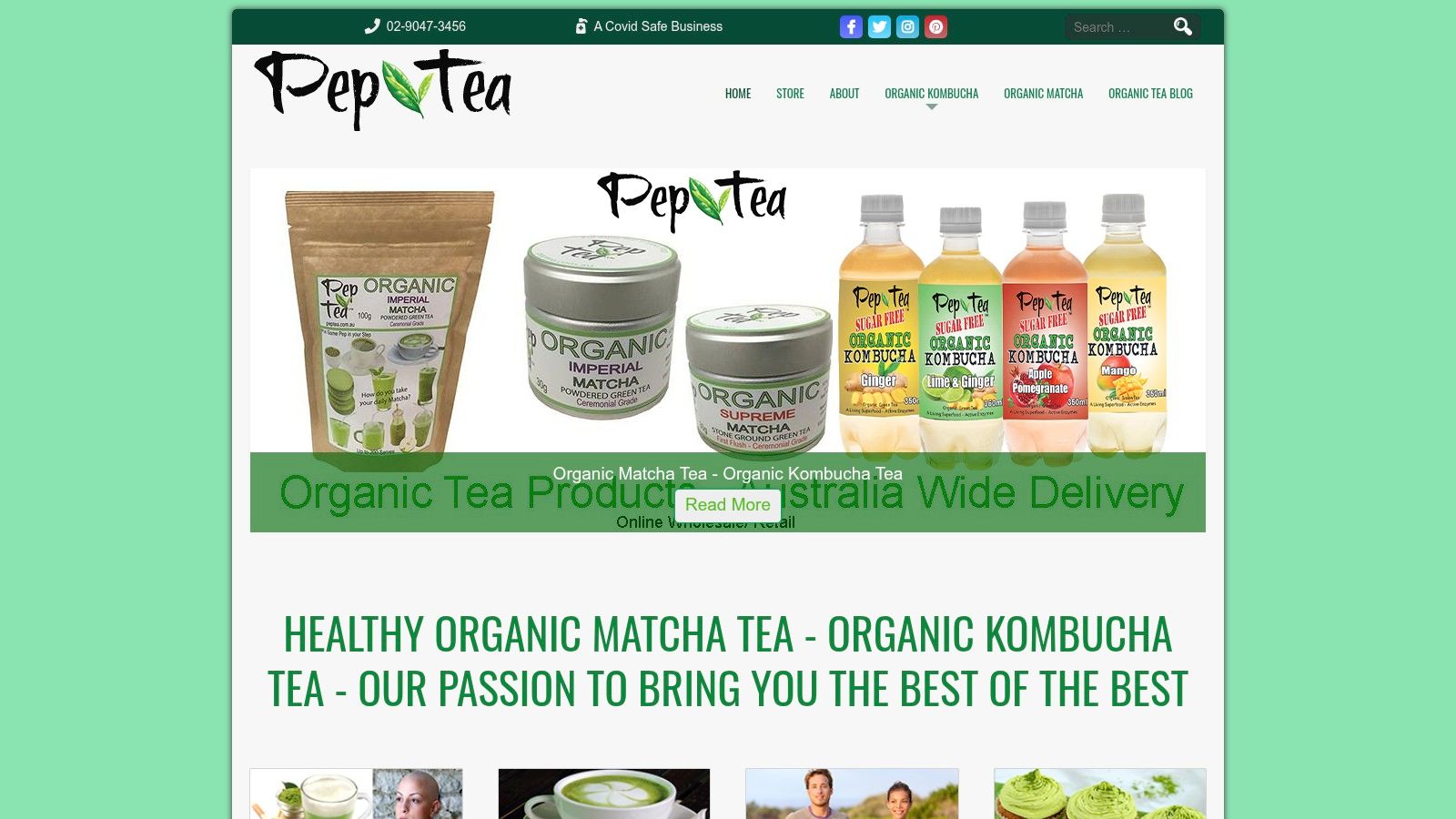
What do you need from a healthy non-alcoholic drink. Steady energy, better gut support, or something a café can serve without fuss? Pep Tea stands out because it answers those jobs clearly instead of padding the range with products that do not add much.
Pep Tea focuses on two functional lanes that matter in real life. Organic matcha for clean, sustained energy. Sugar-free organic kombucha for a lighter fermented drink that suits lunch, afternoon refreshment, or an alcohol-free evening option.
Best for energy and gut support
The matcha side is useful if coffee hits too hard or drops off too fast. Good organic Japanese matcha usually gives a smoother flavour, a finer texture, and a more stable drinking experience than lower-grade powders. That matters at home, where poor matcha can turn bitter fast, and in cafés, where it needs to whisk cleanly, hold up in milk, and still taste good iced.
The appeal is not just the caffeine. Matcha also contains naturally occurring L-theanine, which is why many people reach for it when they want focus without the edgy feeling that can come with strong coffee.
Pep Tea’s kombucha solves a different problem.
It is brewed in a HACCP-accredited, purpose-built brewery in NSW, and that production standard matters. Kombucha is one of those categories where quality control shows up in the glass. If a batch is too vinegary, too sweet, or too yeasty, it stops being an easy daily choice and starts feeling like a gamble. For regular drinkers, and especially for venues, consistency makes it easier to build a genuine habit around the product.
Pep Tea keeps the style clean and approachable. The kombucha is raw, living, sugar-free, and made with a lighter finish and low sediment, so it pours well and drinks neatly straight from the bottle. That gives it broader use than many funkier small-batch kombuchas, which can be interesting once but harder to serve every day.
For anyone choosing by function first, Pep Tea covers three practical roles well:
- Clean energy: Organic matcha for straight prep, iced drinks, smoothies, and baking
- Gut-friendly refreshment: Raw organic kombucha with live cultures and a drier, lighter profile
- Hospitality service: A format that works for cafés, bars, and fridges without feeling too niche
Simple ways to use it
At home, matcha earns its place because it is flexible. Whisk it hot for a morning ritual, shake it over ice with milk for the afternoon, or add a small amount to yoghurt, oats, or smoothie blends when you want flavour and lift without extra sweetness.
A simple café-friendly matcha build is 1 teaspoon matcha, a splash of 70 to 80 degree water, whisked smooth, then topped with your milk of choice. Serve it hot, or pour it over ice. If you run a venue, keep the recipe tight and train staff on water temperature. Burnt matcha tastes flat and grassy, and customers notice.
Kombucha works well with food and in low-effort alcohol-free serves. Pour it into a wine glass with a strip of grapefruit peel and a sprig of mint, or serve it long over ice with cucumber for a sharper lunch pairing. If you want more background on the category, Pep Tea’s article on kombucha as a natural and organic health drink is a practical starting point.
Why café owners rate it
Pep Tea is easy to slot into a menu because each product has a clear job. Matcha covers hot drinks, iced drinks, smoothie add-ons, and occasional dessert use. Kombucha gives you a sugar-free fridge option that feels more considered than standard soft drink and more accessible than heavily functional wellness products.
There are trade-offs. Pep Tea is not the cheapest option on the shelf, and a specialist range gives you less category breadth than a brand that also sells sodas, shots, or mixers. But that narrower focus is part of the strength. The products feel built for repeat use, not just first-try curiosity.
For Australian homes and venues that want one brand to cover calm energy in the morning and a polished fermented option later in the day, Pep Tea makes a strong case.
2. Remedy Drinks
Remedy Drinks suits people who want a healthier fridge without turning the whole shop into a research project. The range is wide, but it still feels coherent. Kombucha for gut-friendly fizz, wellness shots for quick intensity, prebiotic soft drinks for an easy soft-drink swap, plus ginger beer and switchel for people who want more bite.
That breadth matters because this article is not just a brand roundup. It is a practical guide to what each drink is good for. Remedy is the brand I’d place in the “variety across functions” category. It gives you options for different moments of the day and different drinkers in the same home or venue.
Best for broad range and convenience
Remedy has done a smart job of bringing functional drinks into the everyday Australian fridge. Its kombucha is long fermented, and the brand is clear about keeping the final product non-alcoholic. For anyone cutting back on booze, that clarity helps. For café owners, it also makes staff training simpler because the product story is easy to explain at the counter.
The practical win is choice without clutter. You can offer a kombucha to customers who want something tangy and food-friendly, a prebiotic soda to customers who want a sweeter, softer serve, and a shot for the grab-and-go crowd. One supplier can cover several use cases.
At home, that same range makes it easier to match the drink to the benefit you want.
Use Remedy kombucha when the goal is a sharper, fermented option with lunch. Serve it cold in a wine glass with ice and a wedge of lime if you want it to feel more considered than a standard can from the fridge. Use the prebiotic sodas when you want a lower-sugar social drink that still feels familiar. Wellness shots fit a different job entirely. They are about convenience and intensity, not slow sipping.
Remedy works well for people who want function without fuss. You can choose by mood, flavour, or occasion and still stay inside one brand.
Where it shines and where it doesn’t
For cafés, Remedy is handy because it gives you several menu roles in one range. Kombucha can sit beside salads, toasties, and lighter brunch dishes. Prebiotic sodas suit customers who do not want the acidity of kombucha. Shots can live in the fridge near the till for a simple upsell.
A few trade-offs matter:
- Strong point: The range covers multiple functional categories, so it is easier to test what your customers reorder.
- Good for mixed households and venues: One person can want kombucha, another can want a soda-style drink, and both can find something suitable.
- Possible downside: Sweetener choices are polarising. If you are sensitive to stevia or erythritol, you may notice the finish.
- Operational issue: Popular flavours can disappear from shelves, which makes menu consistency harder if you rely on one or two specific SKUs.
If you run a venue, start with one fermented option and one softer soda-style option rather than bringing in the full range at once. That gives you cleaner sales data and less fridge sprawl. If your menu already leans premium tea and a more focused wellness angle, Pep Tea will still feel tighter. If you want broader functional coverage with easy retail familiarity, Remedy earns its place.
3. Nexba

Want a healthy non alcoholic drink that keeps sugar at zero without dropping back to plain water? Nexba has carved out that niche well.
This brand is less about tea ritual or fermentation character and more about solving a practical problem. You want something cold, sweet, easy to grab, and lighter nutritionally than standard soft drink. For that job, Nexba makes sense.
Best for strict sugar-free shopping
Nexba’s sweetener profile is the whole story. It uses erythritol and stevia, which gives the drinks sweetness without sugar, but also creates a flavour finish that people tend to either accept quickly or notice straight away. I always tell people to decide with their palate, not the front label.
Its kombucha line includes added probiotics, which puts it in the gut-health conversation, although the drinking experience is still closer to a modern functional soft drink than a small-batch fermented brew. If gut support is your main goal, it helps to understand what actually supports good gut health day to day rather than assuming every kombucha serves the same purpose.
For home use, Nexba is handy in the fridge when you want a sweet drink without the sugar hit. For cafés, it suits venues that get clear demand for no-sugar options, especially in gyms, wellness studios, hospital kiosks, and grab-and-go cabinets where customers are making quick decisions.
Key trade-offs to consider
Nexba is strongest when sugar reduction is the first priority. It is less convincing if you care most about layered flavour, food pairing, or a more natural finish in the glass.
A simple way to use it:
- Choose Nexba if your main goal is cutting sugar while keeping a familiar soft-drink style experience.
- Leave it out if you dislike stevia or want drinks with more fermentation character, tea tannin, or subtlety.
- Stock it in cafés if customers regularly ask for sugar-free cans and you need a reliable retail-style option.
- Pair it carefully on menus. It works better with fast, casual items than with a refined tea program or produce-led brunch menu.
If you want to serve the same functional benefit in a more crafted format, a house-made iced herbal tea can do a better job at the table. A simple example is chilled peppermint and lemongrass tea with fresh lime and soda. It gives customers refreshment and complexity without relying on sweeteners. That is the sort of gap Pep Tea can fill more naturally in a café setting.
Nexba works best when the brief is specific. Reduce sugar. Keep flavour familiar. Make the choice easy. On those terms, it does the job well.
4. Lo Bros
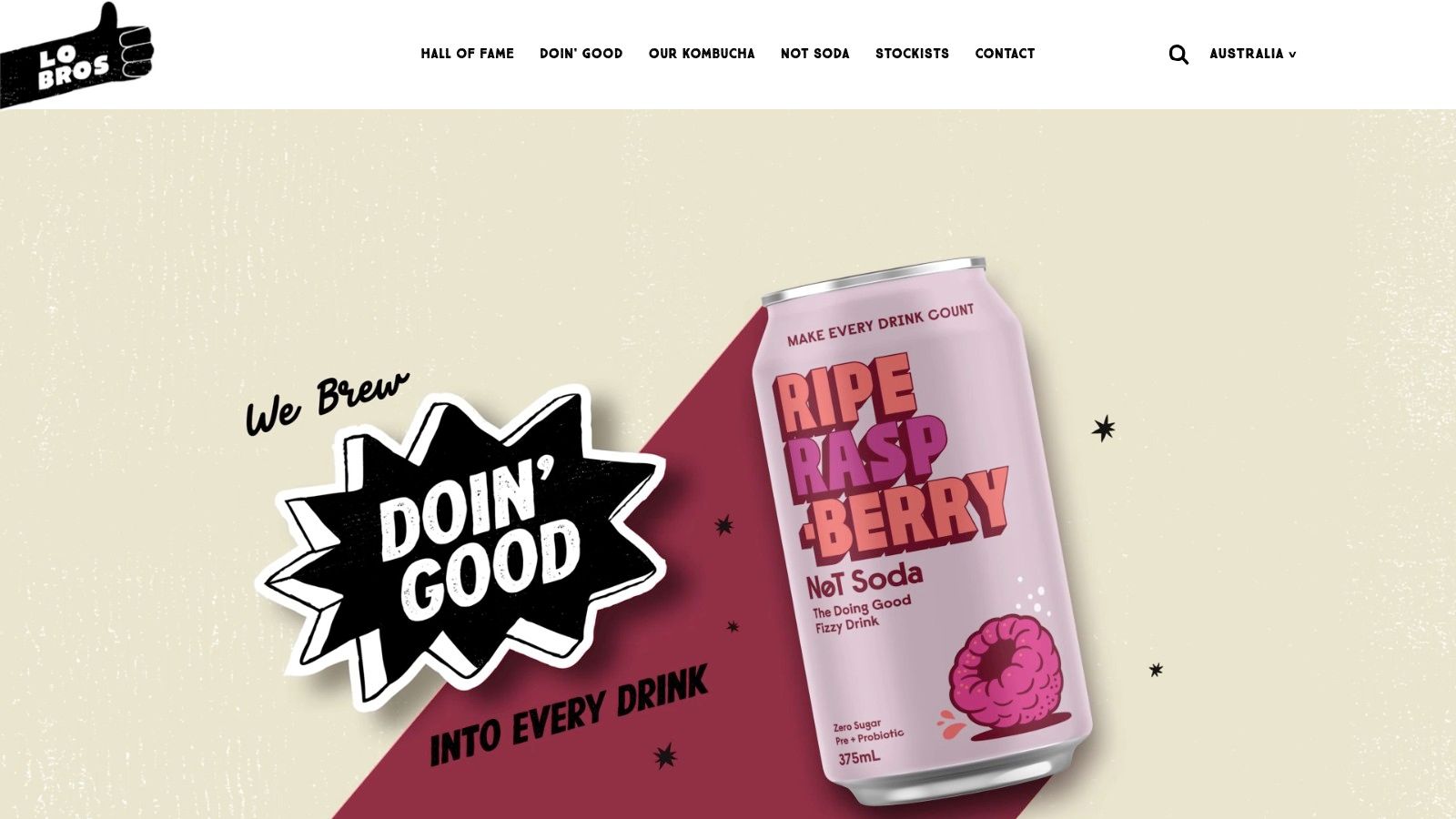
Want a healthier drink that still feels familiar in the hand? Lo Bros does that job well. It sits in the middle ground between kombucha drinkers who want a bit of function and soft-drink drinkers who still want easy, recognisable flavour.
That middle category matters. Plenty of people are happy to try healthier non alcoholic drinks, but they do not want to jump straight from cola or lemonade to plain soda water or a sharply sour ferment. Lo Bros makes that transition easier because the range covers both kombucha and soda-style options.
Best for the transition from soft drink to functional drinks
Lo Bros is a useful pick for households, shared office fridges, and cafés serving mixed crowds. One customer wants kombucha with a bit of tang and live-culture appeal. Another wants a raspberry or cola-style can that feels lighter than mainstream soft drink. This brand can serve both without forcing a venue into one health angle.
For café owners, that split is practical. The kombucha line can sit with salads, grain bowls, and lighter brunch items. The soda-style line is easier to sell with toasties, burgers, or kids' menu add-ons when someone wants a better fridge choice without too much explanation.
If gut health is part of the brief, keep expectations realistic. Fermented drinks can be one useful piece of the puzzle, but they are not a shortcut. Pep Tea’s guide to building good gut health habits gives the wider context, which matters more than treating any single bottle as a fix.
What the flavour trade-off looks like
Lo Bros works best for drinkers who want a softer entry point into the category. The kombucha is generally more approachable than highly vinegary styles, and the soda range keeps flavours accessible for people who still enjoy a treat.
There is a trade-off. Some lower-sugar products rely on sweeteners such as stevia or erythritol, and that finish is not for everyone. If you are sensitive to that cooling note or lingering sweetness, taste before you commit to a full case for home or retail.
A simple way to use Lo Bros:
- Choose it if you want an organic-leaning drink with familiar flavour cues and lower sugar than mainstream soft drink.
- Skip it if sweetener aftertaste bothers you more than sugar content does.
- Stock it in cafés if your fridge has to serve both wellness-minded regulars and customers who just want an easy cold drink.
- Use it as a bridge product. It helps customers move toward kombucha, tea, or other functional drinks without too much flavour shock.
For people making drinks at home, the same benefit can be recreated in a more whole-food way. Try chilled hibiscus tea with blood orange, a squeeze of lemon, and sparkling water. You get bright flavour, gentle tartness, and a more café-style finish without relying on a packaged soda profile.
Lo Bros earns its place because it solves a real problem. It helps people shift their habits gradually, which is often how healthier drinking routines stick.
5. StrangeLove
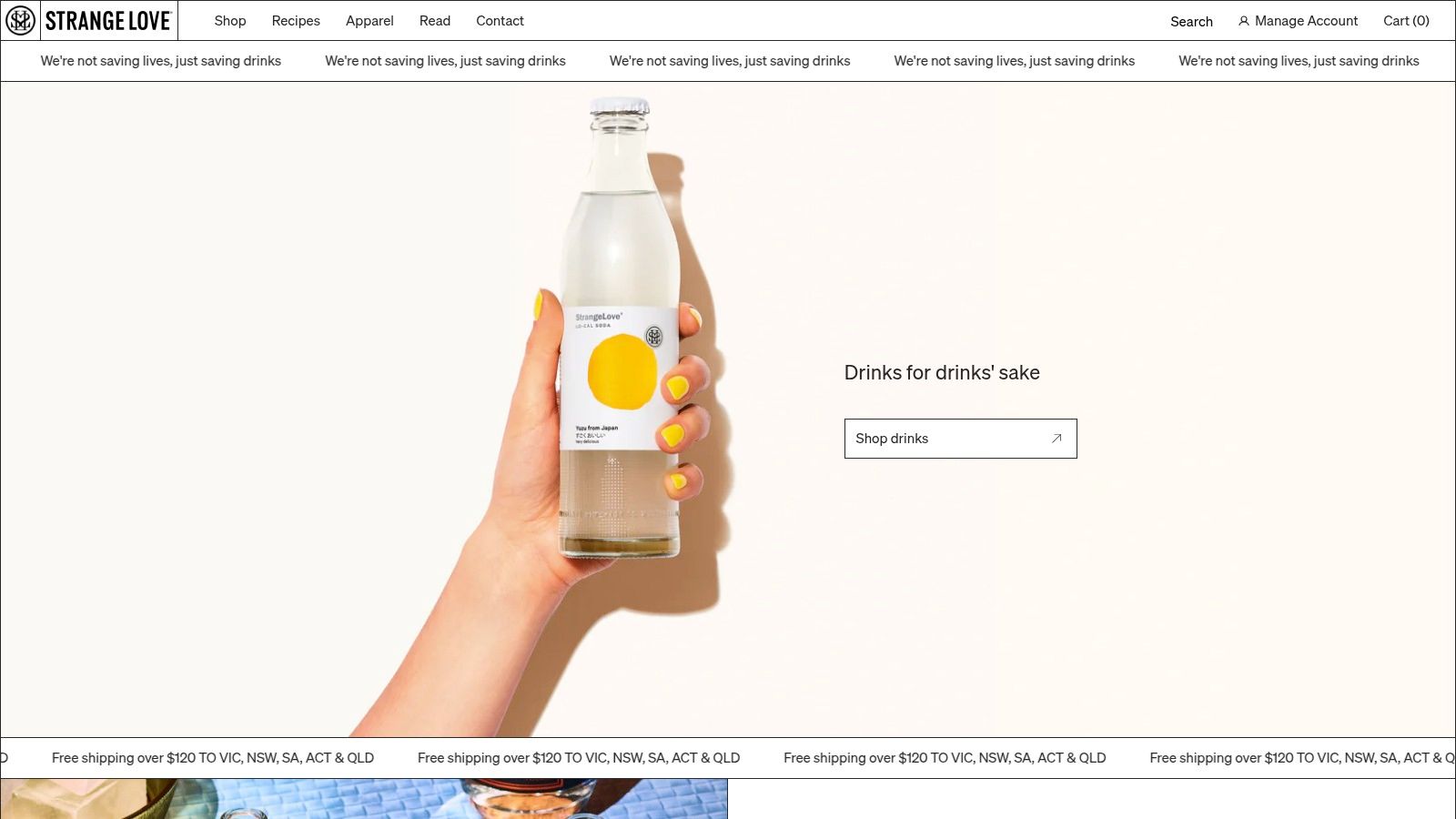
If your priority is sophistication rather than probiotics or tea ceremony, StrangeLove deserves a look. This is one of the strongest Australian options for people who want an adult-style soda with proper flavour structure.
It’s especially handy for dinner tables, zero-proof serves, and cafés that want something a bit more polished than standard fridge drinks. Yuzu, Lime & Jalapeño, Very Mandarin, Lemon Squash. These are flavour ideas built more like mixers than wellness tonics.
Best for premium zero-proof serves
StrangeLove’s Lo-Cal line aims for lower sugar without leaning on artificial sweeteners. That’s a meaningful difference. Plenty of people want less sugar, but they don’t want the taste profile that often comes with stevia or sugar alcohols.
In practical terms, this makes StrangeLove easier to use in food settings. It works with snacks, lunch dishes, cheese boards, and alcohol-free cocktails because the flavours stay crisp and culinary rather than candy-like.
A good zero-proof drink should still feel intentional in a wine glass or highball. StrangeLove gets that part right.
Where it fits in a healthy rotation
I wouldn’t call StrangeLove the most functional option on this list if your main goal is gut health or steady energy. It’s not trying to be matcha or kombucha. It’s a premium soft-drink and mixer brand with a cleaner feel than mainstream alternatives.
That’s still valuable. Healthy non alcoholic drinks aren’t only about probiotics or antioxidants. Sometimes the healthiest choice is picking a lower-sugar, better-made drink that helps you skip alcohol or a heavy soft drink.
A few real-world trade-offs:
- Best use case: Restaurants, entertaining, and alcohol-free mixed drinks.
- Flavour advantage: More complex and food-friendly than many low-calorie sodas.
- Limitation: Some cane sugar remains, so it won’t suit shoppers chasing strict no-sugar options.
- Budget note: It sits at a more premium price point than mainstream supermarket soft drinks.
If you want your fridge stocked for hosting, StrangeLove earns its place. If you want a daily gut-health staple, another brand will be more relevant.
6. CAPI
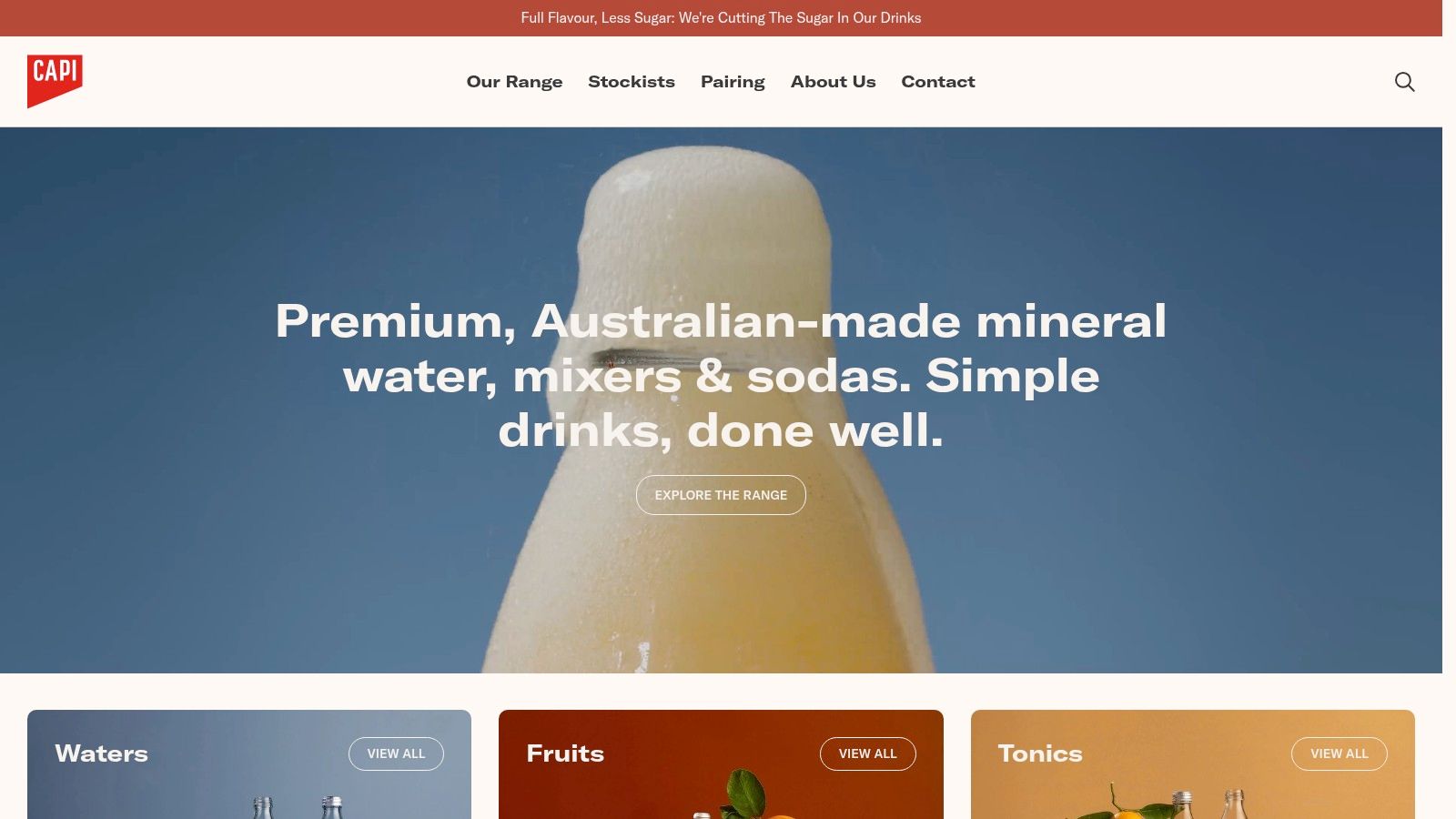
CAPI is the practical operator’s pick. It may not get the same wellness buzz as matcha or kombucha brands, but it solves a very real need. Clean, easy, widely available drinks that don’t overcomplicate things.
That matters more than people admit. Not every café, office, or household wants fermentation, added sweeteners, or niche flavour profiles. Sometimes you just want sparkling mineral water, a quality mixer, or a lightly flavoured soda that feels better than the average servo option.
Best for simple, clean hydration
CAPI’s portfolio covers mineral waters, tonics, fruit sodas, and lower-sugar options. It’s one of the easiest Australian brands to source nationally, which makes life simpler for hospitality teams. Reordering is easier. Guests recognise it. Staff already know how to use it.
For healthy non alcoholic drinks, CAPI’s value is less about “function” and more about restraint. It doesn’t try to turn every drink into a wellness statement. That can be refreshing.
A venue owner can use CAPI to build out:
- Straight hydration options for people who want fizz without sugar.
- Premium mixers for alcohol-free spritzes and classic-style serves.
- Low-fuss fridge stock that doesn’t need explanation from staff.
The trade-off with broad distribution
The downside of a broad, mainstream-adjacent range is that not every product sits in the same health lane. Some flavoured sodas still contain sugar, so label checking matters. The brand site also doesn’t function like a detailed direct-to-consumer wellness store, which means pricing and availability usually depend on retailers or wholesalers.
Still, CAPI does an important job. It gives you a reliable floor. If your goal is to upgrade from sugary soft drink or cheap mixer without entering specialist territory, it’s a sensible choice.
For cafés and bars, that reliability is often more useful than novelty. A product that’s easy to source and easy to pour can outperform a more fashionable bottle that’s inconsistent or hard to restock.
7. DASH Water
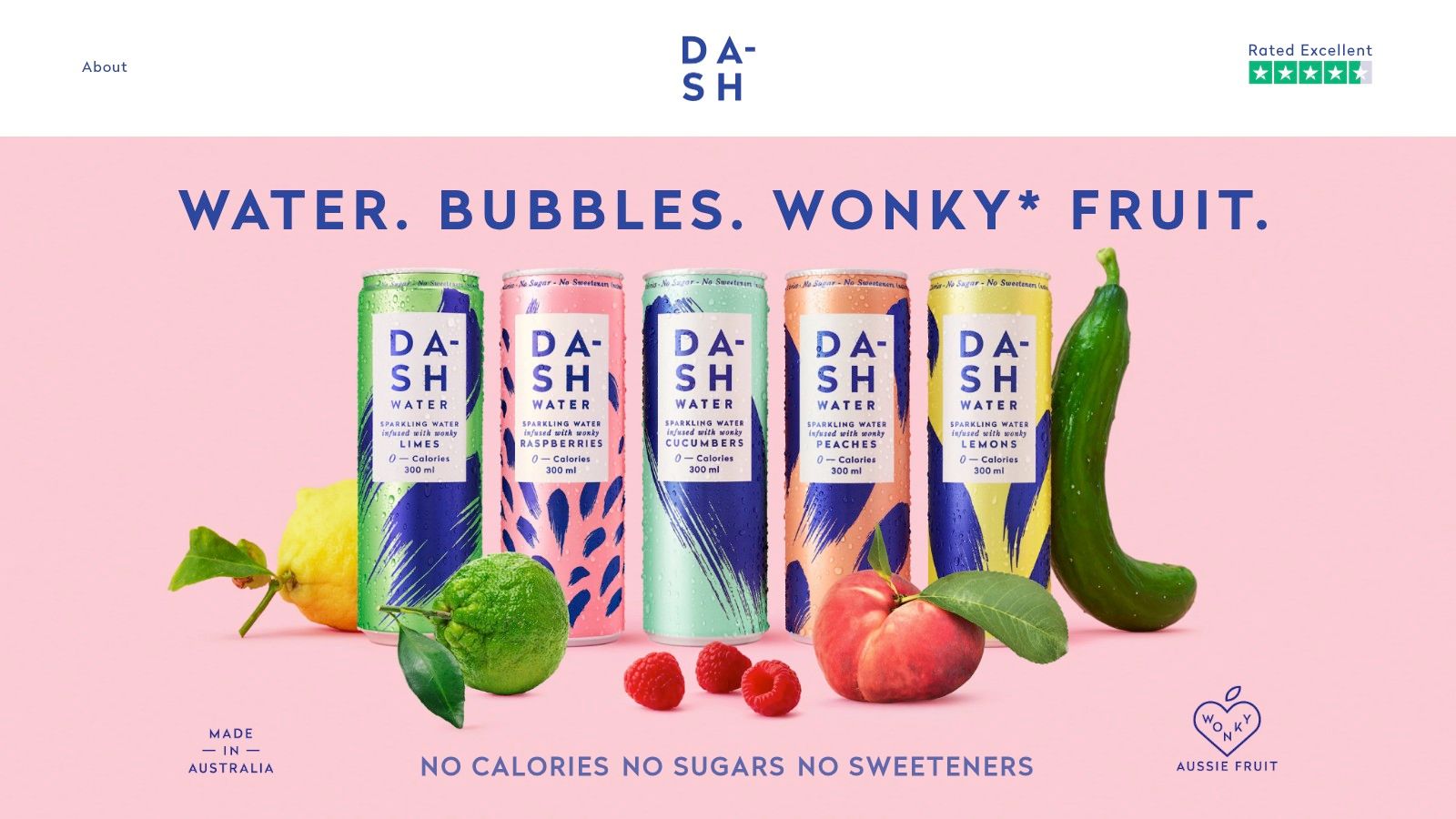
DASH Water is the minimalist’s option. No sugar, no sweeteners, no calories, and no attempt to taste like a soft drink. If most flavoured beverages feel too loud or too fake to you, DASH is probably your style.
The flavour profile is subtle. That’s either the whole appeal or the reason you’ll move on quickly. There isn’t much middle ground.
Best for people who want the cleanest possible profile
DASH uses infused sparkling water and leans into a sustainability angle through its use of imperfect fruit. That story gives it more personality than a generic sparkling water brand, but the main reason to buy it is the ingredient simplicity.
For guests who are strict about avoiding sweeteners, that matters. So does the fact that DASH can work as a very light mixer without loading a serve with sugar or syrupy flavour.
There’s also a useful overlap here with people trying to move away from conventional soft drinks altogether. Pep Tea’s piece on healthy soda drinks is relevant if you’re weighing up sparkling water against lower-sugar sodas and fermented alternatives.
Less flavour isn’t a flaw when the job is refreshment. DASH works best ice-cold, with food, or in a simple alcohol-free mixed drink.
Who will love it and who won’t
DASH shines in hot weather, at desks, with lunch, or as a clean base in a zero-proof highball. It’s less convincing when someone wants indulgence, sweetness, or a stronger flavour hit.
That makes the trade-off simple:
- Great for: Sweetener avoiders, light drinkers, and minimalist fridges.
- Not ideal for: Anyone expecting the impact of soda, kombucha, or juice-style drinks.
- Best use: Everyday sparkling hydration and clean alcohol-free mixing.
As a category, lightly flavoured sparkling waters have helped broaden the healthy non alcoholic drinks conversation. They prove that “healthy” doesn’t always have to mean functional ingredients or fermentation. Sometimes it just means a cleaner habit.
Top 7 Healthy Non-Alcoholic Drinks Comparison
| Product | Implementation complexity 🔄 | Resource requirements ⚡ | Expected outcomes ⭐📊 | Ideal use cases 💡 | Key advantages ⭐ |
|---|---|---|---|---|---|
| Pep Tea | 🔄 Medium, refrigerated kombucha + matcha prep training | ⚡ Medium, cold storage, barista equipment, AUS supply chain | ⭐📊 Premium health positioning; repeat sales and cross‑use across menus | 💡 Specialty cafés, health retailers, NA cocktail/mocktail programs | ⭐ Certified‑organic + HACCP kombucha, high‑EGCg matcha, educational content |
| Remedy Drinks | 🔄 Low, ready SKUs with some refrigerated SKUs | ⚡ Low, flexible pack formats, nationwide shipping & subscriptions | ⭐📊 Reliable fermented offering with alcohol testing assurance | 💡 Cafés, retailers, direct‑to‑consumer subscriptions | ⭐ Long fermentation + batch alcohol testing; broad functional range |
| Nexba | 🔄 Low, shelf SKUs, simple stocking | ⚡ Low, widely available (Amazon AU) and shelf‑stable options | ⭐📊 Strong zero‑sugar performance; diabetic‑friendly menu fit | 💡 Low‑sugar menus, supermarkets, online retail | ⭐ Clear nutrition/CFU disclosure; consistent sugar‑free lineup |
| Lo Bros | 🔄 Medium, living kombucha handling + soda SKUs | ⚡ Medium, organic sourcing and refrigerated storage for kombucha | ⭐📊 Organic positioning attracts health‑focused shoppers | 💡 Organic grocers, NA bars, cafés seeking organic options | ⭐ Certified‑organic kombucha + lower‑sugar 'Not Soda' range |
| StrangeLove | 🔄 Low, standard soda stocking and service | ⚡ Low, no special handling; premium price point | ⭐📊 Enhances premium/culinary NA cocktail menus | 💡 Upscale bars, zero‑proof cocktail programs, premium retail | ⭐ Culinary‑driven flavours; avoids artificial sweeteners |
| CAPI | 🔄 Low, simple distribution and restocking | ⚡ Low, broad retail availability, minimal handling | ⭐📊 Reliable hydration/mixer option with high availability | 💡 Hospitality mixers, supermarkets, convenience retailers | ⭐ Wide national distribution; clean‑label mineral waters & mixers |
| DASH Water | 🔄 Low, sparkling water stocking | ⚡ Low, shelf/refrigerated as standard; strong sustainability story | ⭐📊 Clean‑label zero‑calorie option appealing to eco‑conscious guests | 💡 Low‑calorie mixers, sustainable venues, health‑focused retail | ⭐ Zero sugar/sweeteners/calories; uses 'wonky' fruit to reduce waste |
Find Your Perfect Healthy Sip
Healthy non alcoholic drinks have become much more interesting because they now solve different jobs. Some support a calm, focused morning. Some help replace the sugary afternoon pick-me-up. Some give you a proper grown-up drink when you don’t feel like alcohol. That’s a much better way to shop than lumping everything into one vague “better-for-you” bucket.
If your main goal is clean energy, matcha stands out. It has ritual, versatility, and a more measured feel than coffee for a lot of people. Premium organic matcha also tends to reward good preparation. You can whisk it traditionally, shake it over ice, blend it into smoothies, or build it into café menus without losing what makes it appealing in the first place.
If gut-friendly refreshment matters more, kombucha is still one of the most useful categories to explore. In Australia, safety and quality matter here. One of the more overlooked issues with fermented drinks is that home-brewed kombucha can drift beyond non-alcoholic expectations if it isn’t properly monitored. A 2025 FSANZ-related summary noted concerns around alcohol levels in some kombuchas and highlighted the importance of pH and fermentation control in the Australian context, particularly for home brews and secondary fermentation, as outlined in this discussion of kombucha regulation and safety in Australia. That’s one reason properly produced commercial kombucha can be the better everyday choice for many people.
For hosting and cafés, premium sodas and sparkling waters deserve more respect than they usually get. A well-made lower-sugar soda or subtle sparkling water can be exactly right when you want something clean, social, and easy to pair with food. Not every healthy choice has to carry a probiotic story or a wellness buzzword.
There’s also a wider culture shift behind all of this. Australians are clearly paying more attention to what they drink, not only what they eat. The move away from heavy soft drink habits and automatic alcohol consumption has created room for drinks that are more thoughtful, more functional, and more enjoyable.
My practical advice is simple. Pick one drink for each part of your week. A matcha for mornings. A kombucha for afternoons or light meals. A sparkling water or premium soda for hosting. That’s a realistic way to build better habits without expecting one miracle product to do everything.
If you run a café or food business, think the same way. Don’t just add a random non-alcoholic option and hope it sells. Stock by occasion. Give customers a clean energy drink, a gut-friendly fermented option, and a polished social serve. That’s how a menu starts to feel current rather than token.
Pep Tea is a strong place to start because the range is grounded in quality, clarity, and practical use. The organic matcha covers energy and ritual. The sugar-free kombucha covers refreshment, function, and menu versatility. Both feel at home in a wellness routine, but neither is so niche that they’re hard to enjoy.
Ready to lift your drinks rotation? Explore our premium organic Pep Tea Matcha and sugar-free Kombucha to see how much difference good ingredients and careful production can make.
If you’re after healthy non alcoholic drinks that taste good and fit real life, explore Pep Tea. You’ll find premium organic matcha for calm, sustained energy and sugar-free organic kombucha brewed in NSW for a crisp, gut-friendly alternative to soft drink or alcohol.
Top Healthy Soda Drinks in Australia 2026

The drinks fridge can feel like a quiz you did not study for.
You want something fizzy, refreshing, and a bit more exciting than plain water. But every can seems to promise something different. Low sugar. Natural. Gut-friendly. Botanical. Functional. Clean. Better-for-you. It is no wonder so many Australians stand there reading labels for far longer than they planned.
That confusion is why healthy soda drinks have become such a big topic. People are not just trying to cut back. They are trying to find drinks that fit how they want to live, whether that means less sugar, more natural ingredients, support for digestion, or a smarter alcohol-free option for home and café menus.
Some healthy soda drinks do live up to the name. Others are just regular soft drinks wearing wellness language. Knowing the difference matters.
The Search for Healthy Soda Drinks in Australia
A common scene goes like this. You pop into the supermarket for a few basics, wander past the beverage aisle, and spot a full shelf of colourful cans calling themselves healthier choices. One says it has botanicals. Another says it contains live cultures. A third shouts sugar-free in giant letters. You pick one up, turn it over, squint at the ingredients, and wonder if any of these drinks are good choices.
That moment says a lot about how Australian drinking habits are changing.
Sugary soft drinks are losing ground. In Australia, per capita sugary soft drink consumption has significantly declined over the past decade. At the same time, the healthy soda category grew 28% year-on-year in 2024 and captured 15% of the non-alcoholic beverage market, according to Mintel’s referenced market summary.
That shift makes sense. Australians still enjoy fizz. They just want more from it.
What people usually mean by healthy soda drinks
Most shoppers are not looking for a miracle drink. They are looking for a better swap.
They usually mean a fizzy drink that is:
- Lower in sugar than traditional soft drink
- Made with ingredients they recognise
- Less artificial in flavour and colour
- Possibly functional, with things like probiotics, tea compounds, herbs, or fruit-based ingredients
That sounds straightforward, but the category is broad. Kombucha sits in it. So do sparkling waters, modern low-sugar sodas, and newer tea-based sparkling drinks.
A healthy soda drink is not just “less bad”. The stronger options are built with a clear purpose, such as lower sugar, cleaner ingredients, or a functional benefit that makes sense.
Why the category feels so messy
The word “healthy” is not a regulated shortcut for quality. One brand may use it to mean low sugar. Another may use it to mean natural flavours. Another may use it to mean it contains a functional ingredient in small amounts.
That is where many people get stuck. Fizzy water with lemon essence is one thing. A live kombucha is another. A sweetened “better-for-you” cola is another again.
The good news is that once you know what to look for, the shelf gets much easier to read.
What Makes a Soda Drink Healthy
A healthy soda drink does not need to be perfect. It does need to be honest.
If you want a straightforward way to judge a drink, three markers help most. Start with sugar. Then check the ingredients. Then ask whether the drink offers any function beyond taste.
Start with sugar
Sugar is where the biggest difference usually sits between traditional soft drinks and better choices.
The Australian Dietary Guidelines recommend limiting free sugars, yet traditional soft drinks can contribute a significant number of calories daily. In contrast, a University of Sydney trial found that daily consumption of a low-sugar kombucha lowered fasting blood sugar by 12% over 8 weeks in prediabetic participants, according to the referenced source provided for this claim here.
That does not mean every low-sugar fizzy drink is automatically healthy. It does mean sugar deserves to be the first thing you check.
A drink can look fresh and modern on the front, but if it still relies on a heavy sugar load, it is not much of a step forward.
Look for clean, understandable ingredients
The second test is the ingredient list.
A stronger healthy soda drink tends to keep things relatively straightforward. Think brewed tea, fruit extracts, botanicals, juice in modest amounts, live cultures, or natural acids used for flavour and balance.
A weaker one often leans on a long list of flavour systems, colourings, and vague claims that sound wholesome without telling you much.
Ask what the drink is doing
Readers often get confused about this.
Not every healthy soda drink needs to deliver a functional benefit. Plain sparkling water can still be a good choice. But if a product presents itself as a wellness drink, it should give you a clear reason why.
That “why” usually falls into one of these buckets:
Supports sugar reduction
Some drinks help replace a regular soft drink habit with something lighter and less sweet.Offers a food-based function
Fermented drinks may contain live cultures. Tea-based drinks may bring plant compounds naturally found in tea.Fits a broader routine
A good healthy soda can work as an afternoon pick-me-up, an alcohol alternative, or a café option that feels grown-up rather than childish.
If the benefit is hard to explain in one plain sentence, the claim is probably doing more work than the drink itself.
A quick mental checklist
When you pick up a can or bottle, ask:
- Is the sugar level clearly lower than regular soft drink?
- Can I recognise most of the ingredients?
- Does the product make one clear, believable promise?
- Would I still drink it if the label design were less flashy?
Healthy does not have to mean joyless
This is worth saying because many people assume a “healthy” option must taste thin, medicinal, or disappointing.
It does not.
The best healthy soda drinks keep the pleasure of fizz. They just move away from the old formula of high sugar and artificial flavour. That can mean tart fermented notes, crisp citrus, ginger heat, herbal freshness, or the grassy brightness of green tea.
A healthy soda should feel like an upgrade, not a punishment.
Exploring the Best Healthy Soda Categories
Not all healthy soda drinks are trying to do the same job. Some are for hydration. Some are for flavour. Some are chosen for gut health interest. Others are there to replace a sweet soft drink habit without feeling boring.
That is why categories matter more than hype.
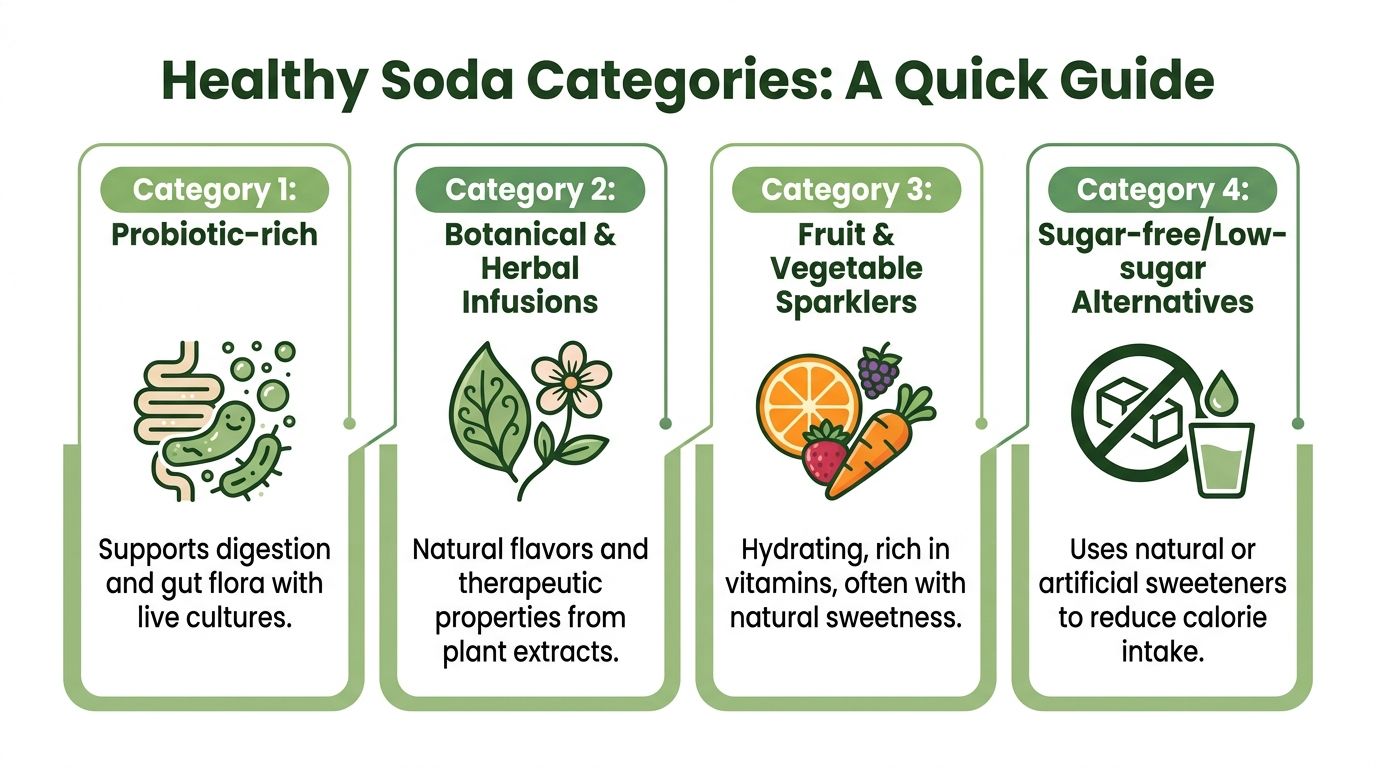
Kombucha
Kombucha sits closest to the “functional fizz” idea many people have in mind.
It is a fermented tea drink, usually lightly tart, lightly sparkling, and more layered in flavour than standard soft drink. Depending on how it is brewed, it can lean gingery, citrusy, appley, floral, or tea-forward.
People often get tripped up by one question. Is all kombucha the same? Not at all.
Some are clean and dry. Some are sweet and juicy. Some are raw and alive. Some are more like soft drink with a kombucha label attached.
Best for: people who want a grown-up soft drink alternative, an alcohol-free option with character, or a fermented drink with live culture interest.
Sparkling water and naturally infused sparkling water
This category is the most basic.
Plain sparkling water gives you fizz without sweetness. Naturally infused sparkling waters add a hint of citrus, berry, cucumber, or botanical flavour. They work well for people who mostly want refreshment and a break from sugary drinks.
The main thing to remember is that these drinks are often the least complex. That is not a flaw. It is the point.
They are ideal when you want:
- Clean refreshment
- No heavy sweetness
- A mixer for meals or mocktails
- An easy fridge staple
Modern low-sugar sodas
This category tries to recreate the fun of classic soft drink with a lighter nutritional profile.
You will often see flavours inspired by cola, lemon squash, ginger beer, orange, or creamy soda styles. Some use alternative sweeteners. Some use fruit and botanicals. Some sit somewhere in the middle.
This is often the easiest entry point for people who still want a familiar soft drink feel.
The challenge is quality variation. One low-sugar soda may taste balanced and clean. Another may have a strange aftertaste or rely too heavily on sweetener technology rather than ingredients.
If you enjoy ginger-led flavours, this no sugar ginger beer style option shows how a classic soft drink profile can be reworked in a lighter direction without losing personality.
Matcha and tea-based sparklers
This is still a smaller corner of the category, but it is one of the most interesting.
Tea-based sparkling drinks can offer:
- More adult flavour profiles
- Natural bitterness or tannin for structure
- A more refined alternative to sweet soft drink
- A bridge between café culture and functional beverages
Matcha sparklers, in particular, appeal to people who want something energising but not heavy. The flavour is fresh, grassy, and slightly creamy when prepared well. For some people, it is an instant favourite. For others, it takes a sip or two to understand.
A side-by-side view
| Category | What it tastes like | Why people choose it | Best moment |
|---|---|---|---|
| Kombucha | Tart, layered, lightly fermented | Interested in live cultures and complex flavour | Lunch, mocktails, alcohol-free evening drink |
| Sparkling water | Crisp, clean, minimal | Wants fizz without sweetness | All day, hydration, meal pairing |
| Low-sugar soda | Familiar soft drink style | Cutting back without giving up classic soda feel | Afternoon treat, family fridge |
| Tea-based sparkler | Botanical, bright, more adult | Wants flavour plus a tea-based identity | Morning, café menu, mindful energy |
Which category suits you best
If you love traditional soft drink and want the easiest swap, start with low-sugar soda.
If you are over sweet drinks altogether, sparkling water may suit you better.
If you enjoy bolder flavour and are curious about fermentation, kombucha is often the most rewarding category.
If you already love green tea, iced tea, or café-style drinks, tea-based sparklers can feel like a natural next step.
The best healthy soda drink is the one you will enjoy often enough to replace the habit you are trying to move away from.
Health Benefits of Probiotics and Antioxidants
Two words come up constantly in this space: probiotics and antioxidants. They sound scientific, and they are, but the basic ideas are straightforward.
One is about the living ecosystem in your gut. The other is about plant compounds that help protect cells from everyday stress.
Probiotics and gut health
Your digestive system is home to a huge community of microbes. People often call it the gut microbiome.
A clear way to think about it is as a garden. Different microbes play different roles. Some help maintain balance. Some help break down parts of food. Some are associated with a healthier gut environment when they are present in the right mix.
A 2023 CSIRO study on Australian adults found that daily consumption of organic kombucha with more than 10^8 CFU/ml probiotics led to a 28% increase in beneficial Bifidobacterium in the gut and improved markers of colonic barrier integrity after four weeks, compared to regular soda, according to the source provided here.
That is useful because it moves kombucha beyond vague wellness language. It points to a measurable difference in the gut environment when a properly brewed product is used instead of a regular soft drink.
People often mix up probiotics and prebiotics, so if you want a plain-English explainer, this guide on what are prebiotics and probiotics is a handy starting point.
Why “live cultures” is not just marketing language
A live fermented drink is different from a flavoured fizzy drink that borrows the kombucha aesthetic.
What matters is whether the product still contains viable cultures in a meaningful way. That depends on how it was brewed, handled, and packaged.
For everyday drinkers, the practical takeaway is clear. If you want probiotic interest, choose drinks that take fermentation seriously and are clear about what is in the bottle.
A fermented drink is not automatically useful just because it tastes tangy. The brewing and culture quality matter.
Antioxidants and matcha
Antioxidants are compounds found in many plant foods and drinks. Tea is one of the best-known examples.
Their job is often described as helping the body deal with oxidative stress. If that phrase sounds abstract, think of it as everyday wear and tear that happens as part of normal life. Plant compounds can help your body manage that background load.
Matcha is especially interesting because you consume the whole powdered tea leaf rather than just drinking an infusion and discarding the leaves. That gives matcha its dense flavour, vivid green colour, and strong identity compared with many other tea drinks.
Why matcha feels different from many energy drinks
People often ask whether tea-based fizzy drinks are meant to “wake you up” the way a standard energy drink does.
Usually, that is not the appeal.
Matcha-based drinks are often chosen because they feel steadier and more grounded. The experience is less about a jolt and more about alertness with a smoother edge. The taste also tends to signal something very different from mainstream energy drinks. It feels cleaner, less syrupy, and more connected to actual tea.
The antioxidant side of matcha adds to that appeal. It gives the drink a genuine food-based identity rather than just a laboratory-style formula.
Where these benefits fit in real life
For many, healthy soda drinks are not the whole answer to wellness. They are one small lever.
They can help when you want to:
- Replace a daily soft drink habit
- Choose a more interesting alcohol-free option
- Build a café or home fridge around smarter choices
- Pick drinks with ingredients that make sense
That is the value of probiotics and antioxidants in this category. They turn fizz from an empty extra into something with a clearer role.
How to Read Drink Labels Like an Expert
Front-of-pack wording is designed to catch your eye, not to answer your questions.
If you want to judge healthy soda drinks properly, the back of the can does the talking. The ingredient list and nutrition panel tell you far more than words like natural, wellness, functional, or guilt-free ever will.
What to look for first
Start with the shortest route to clarity.
Sugar position on the panel
Look at the sugar content early, before you read the brand story. If a product is pitched as a healthy swap, the sugar number should support that claim.Recognisable ingredients
Brewed tea, fruit juice, herbs, spices, botanical extracts, live cultures, and sparkling water are easier to understand than a long chain of additives.Specificity
Clear wording is a good sign. If a drink says fermented tea, matcha, ginger juice, or live cultures, you know more than if it hides behind broad flavour language.
Ingredients that deserve a second look
Some ingredients are not automatically bad. They deserve attention.
Traditional colas contain phosphoric acid at 300 to 400mg/L, and a long-term University of Sydney study linked higher intake to 14% lower bone mineral density in adolescents. The same study noted 9% higher bone density in consumers of matcha-based drinks, which contain EGCg, according to the provided source here.
That does not mean one occasional cola is a crisis. It does mean ingredient type matters, especially if a drink is part of your regular routine.
A simple label-reading checklist
Look for these signs
Low sugar intent
The product should clearly fit a lower-sugar approach, not just a smaller serve trick.A believable product identity
If it is a kombucha, you should see signs of fermentation and culture. If it is a tea sparkler, tea should feel central.Less clutter
A shorter, cleaner list often makes it easier to understand what you are drinking.
Be cautious about these
Halo words without detail
“Natural flavours” is common, but on its own it does not tell you much.Health language doing all the work
If every claim sits on the front and very little substance appears on the back, be sceptical.Products that imitate wellness branding
Pastel cans and botanical illustrations can make a drink look cleaner than it really is.
The best label readers do one thing differently. They ignore the front until the back has earned their trust.
What about certifications and compliance
For shoppers, certifications can help signal manufacturing standards or ingredient choices, but they are not a replacement for reading the panel.
For businesses launching their own beverage, label compliance gets much more technical. If that side interests you, this guide on mastering supplement label requirements is useful for understanding how detailed product labelling can become in adjacent wellness categories.
A quick aisle test you can use today
Pick up two drinks that both call themselves healthy. Compare only three things:
- The sugar panel
- The first five ingredients
- Whether the product benefit is clear and believable
That comparison usually tells you enough to make a smarter choice without overthinking it.
Easy DIY Healthy Sodas and Mixers to Make at Home
Making your own healthy soda drinks at home is one of the easiest ways to understand the category properly.
You start noticing what each ingredient contributes. Fizz gives lift. Citrus adds brightness. Tea brings structure. Kombucha adds tang and complexity. Once you play with that balance, ready-to-drink labels make much more sense too.
For a quick visual guide and a bit of inspiration, this video is a good place to start.
Matcha sparkler
This one is clean, lively, and ideal when plain sparkling water feels too plain.
You’ll need
- Culinary-grade matcha
- Cold water
- Sparkling water
- Fresh lime
- Ice
- Optional mint leaves
How to make it
- Sift a small spoonful of matcha into a glass or shaker.
- Add a little cold water and mix until smooth.
- Fill a glass with ice.
- Pour in the matcha mixture.
- Top with sparkling water.
- Finish with a squeeze of lime.
The flavour should be brisk and refreshing, not overly bitter. If it tastes sharp, use a bit more water next time. If it feels too plain, add extra lime or a bruised mint leaf.
Kombucha mocktail
A good kombucha makes an excellent mixer because it already brings acidity, fizz, and depth.
You’ll need
- A ginger-forward or citrusy kombucha
- Lots of ice
- Fresh cucumber or lime
- A sprig of rosemary or mint
- Optional splash of chilled soda water
How to make it
- Fill a tall glass with ice.
- Add a few slices of cucumber or a wedge of lime.
- Pour in the kombucha slowly.
- Add soda water if you want a lighter finish.
- Garnish with rosemary or mint.
If you enjoy vinegar-based flavour profiles in this category, apple cider vinegar soda ideas can give you another direction to explore.
Homemade healthy soda drinks work best when you keep them straightforward. One fizz element, one hero flavour, one fresh accent.
Small tweaks that make a big difference
If you like sweeter drinks
Use naturally sweeter ingredients such as ripe citrus, a little fruit purée, or a softer kombucha flavour. Avoid throwing everything in at once.
If you want more complexity
Add herbs. Mint, basil, and rosemary all change the drink without making it heavy.
If you are serving guests
Use proper glassware and plenty of ice. Healthy soda drinks feel more satisfying when they look intentional.
A Guide for Australian Cafés and Retailers
Healthy soda drinks are not just a home-fridge trend. They make strong commercial sense for cafés, delis, health food stores, and hospitality venues building out non-alcoholic options.
Customers now expect more than one token alcohol-free drink and a fridge full of standard soft drinks. They want options that feel current, thoughtful, and worth paying for.
Why careful sourcing matters
This category rewards quality, but it also punishments shortcuts.
With Australian kombucha sales up 28% in 2025, buyers have more options to choose from. At the same time, a 2025 Choice Australia test found 60% of supermarket kombuchas fail to meet probiotic claims, according to the provided source here.
That matters for cafés and retailers because your staff may describe a product as “good for gut health” because the packaging suggests it. If the live culture side is weak, the product can disappoint informed customers.
Strong menu fits for healthy soda drinks
Healthy soda drinks work especially well in venues that already care about coffee, tea, brunch, or wellness-led food.
Good placements include:
- Fridge retail near takeaway coffee
- Non-alcoholic pairing menus
- Mocktail lists
- Afternoon café pick-me-ups
- Health food and premium grocer shelves
What staff should be able to explain
Your team does not need to sound like food scientists. They do need to explain the difference between categories in plain language.
A staff member should be comfortable saying:
- This one is fermented and more tart
- This one is tea-based
- This one is low sugar and refreshing
- This one works well as a mixer
That kind of clarity builds trust.
The fastest way to lose credibility in this category is to treat every fizzy wellness drink as interchangeable.
Building the range with intention
A smart range usually balances three roles:
- Easy entry products for mainstream customers
- Functional options for ingredient-conscious shoppers
- Premium adult flavours for hospitality and gifting
If you are reviewing your broader merchandising and menu growth approach, these strategies for growing retail sales offer useful retail thinking that can be applied beyond beverages too.
For Australian businesses, local supply, consistent quality, and clear product education often matter as much as flavour. A healthy soda drink sells best when the person stocking it understands what makes it different.
Your Next Sip Can Be a Healthy One
Healthy soda drinks are easier to choose once you stop listening to front-label buzzwords and start looking for substance. Lower sugar matters. Clear ingredients matter. Function matters when a brand claims it.
The best option is not the trendiest can. It is the drink that fits your taste, supports your routine, and makes replacing old habits feel easy. Whether you lean towards kombucha, sparkling water, low-sugar soda, or a matcha-based sparkler, a better fizzy drink is absolutely possible.
If you want a good place to start, explore Pep Tea for Australian-made organic kombucha and premium matcha. We focus on clean flavour, low-sugar choices, and real tea craft, so your next fizzy ritual can feel both enjoyable and well chosen.
A Guide to Passion Fruit Kombucha in Australia

If you could bottle the taste of an Australian summer, this would be it. That’s passion fruit kombucha: a vibrant, naturally sparkling drink that perfectly captures the tropical sweetness of real passion fruit and the signature tangy finish of authentic kombucha.
Sunshine in a Bottle: The Rise of Passion Fruit Kombucha
What was once a niche health drink has firmly hit the mainstream, winning over health-conscious Aussies everywhere. Passion fruit kombucha delivers that perfect sweet spot between taste and function—a bubbly, refreshing drink that feels like an indulgence but still aligns with a wellness-focused lifestyle.
The flavour is what sets it apart. It’s both complex and incredibly easy to drink; the sweet, aromatic notes of passion fruit cut through the fermented tang of the kombucha base beautifully. Each sip is like a burst of tropical sunshine, making it the go-to healthy swap for sugary soft drinks and juices. It’s a choice that feels both satisfying and genuinely beneficial.
A Flavour That Captured Australia
The growth of kombucha in Australia has been nothing short of remarkable, and the passion fruit flavour has consistently led the charge. This isn't just a fleeting trend. We've seen passion fruit varieties quickly become top sellers in major supermarkets, pointing to a clear shift in what people want from their drinks: something functional that doesn't compromise on taste.
To give you a quick snapshot, here are the key attributes of this fantastic drink.
Passion Fruit Kombucha At a Glance
| Attribute | Description |
|---|---|
| Taste Profile | A balance of sweet, tropical passion fruit and a bright, tangy finish. |
| Aroma | Fresh, aromatic, and unmistakably like ripe passion fruit. |
| Texture | Lightly carbonated with a natural, gentle fizz from fermentation. |
| Key Ingredients | Fermented tea (black or green), SCOBY, and real passion fruit. |
This combination of features is exactly why it has become such a beloved, health-forward choice for any time of day.
At its core, passion fruit kombucha is a fermented beverage crafted from sweetened tea and a SCOBY (Symbiotic Culture of Bacteria and Yeast). The real magic happens when real, organic passion fruit is infused during the brewing process, creating a drink that's not just delicious but also full of character. If you want to understand the fundamentals better, check out our guide on what kombucha is.
The final result is a beverage celebrated for its:
- Vibrant Taste: A perfect harmony of sweet tropical notes and a refreshing tang.
- Natural Sparkle: Lightly carbonated through the fermentation process, not forced.
- Pleasing Aroma: The distinct, delightful scent of fresh, ripe passion fruit.
The Probiotic Power of Passion Fruit Kombucha
There’s more to our passion fruit kombucha than just its incredible taste. It's what's known as a functional beverage, meaning it does more than just quench your thirst. Its real strength comes from two places: the gut-friendly probiotics from our authentic fermentation and the genuine nutritional kick from real, organic passion fruit.
At the core of every PepTea kombucha are live, active cultures. These are the good bacteria—the probiotics—that are a natural result of our SCOBY doing its work. It helps to think of your gut as a garden. These probiotics act like tiny gardeners, tending to the soil and helping everything in your internal ecosystem stay balanced.
More Than Just Probiotics
While probiotics get a lot of attention, the real passion fruit we use takes this drink to another level. This isn't just a flavouring; the fruit brings its own unique health-supporting compounds to the party.
This synergy creates a drink that works on multiple levels. You’re not just getting the benefits of a classic fermented tea, but you're also getting a genuine nutritional boost from the fruit itself.
When you choose passion fruit kombucha, you're getting a two-for-one wellness boost. The fermentation provides the live cultures for your gut, while the passion fruit adds its own distinct vitamins and antioxidants.
A Nutritional Powerhouse in Every Sip
When you combine authentic kombucha with real fruit, the results are genuinely impressive. Recent findings, for example, show that passion fruit-infused varieties often contain an enhanced nutritional profile.
A 2026 analysis of commercial kombuchas found those infused with passion fruit had, on average, 15% higher antioxidant levels than plain green tea versions. What's more, consumer data shows that 28% of Australian health enthusiasts now specifically seek out passion fruit kombucha for its dual benefits. A single serve of an authentically brewed kombucha can pack up to 2 billion CFUs (Colony Forming Units) and a serious dose of Vitamin C—around 45mg per 100ml, which is about 50% of your daily needs.
This combination of gut support and nutrient density is exactly why it's become such a popular choice. It's a beautiful marriage of the health properties from our organic green tea base and the vibrant goodness of real passion fruit.
To get a clearer picture of how these elements may support your body, consider the following:
- Live Probiotics: Generated during fermentation, these may help support a healthy gut microbiome, which is linked to everything from digestion to overall wellbeing.
- Antioxidants: Both our organic green tea base and the passion fruit itself are loaded with antioxidants, which help your body combat free radicals.
- Vitamin C: Passion fruit is a fantastic natural source of Vitamin C, a crucial nutrient known for its role in supporting healthy immune function.
This unique combination makes our authentically brewed, organic passion fruit kombucha a truly functional beverage. It’s a delicious, natural way to support your wellness goals. For a deeper dive into this topic, you can learn more about prebiotics and probiotics in our detailed guide.
How We Brew Our Authentic Passion Fruit Kombucha
There’s a world of difference between a mass-produced, shelf-stable drink and a truly authentic, living kombucha. Here at PepTea, we’re brewers first. Our entire process, honed in our dedicated Hunter Valley brewery, is designed to create a sugar-free, probiotic-rich drink that’s alive with both flavour and goodness.
It all comes down to the process. We start with just two premium ingredients: certified organic green tea and raw sugar. The sugar isn’t there for sweetness in the final drink; it's essential food for our SCOBY (Symbiotic Culture of Bacteria and Yeast). Think of the SCOBY as the engine of our brewery. It’s a living culture that metabolises the sweetened tea, transforming it into a complex, tangy beverage brimming with beneficial organic acids and live probiotics.
The Art of Authentic Fermentation
This is where patience comes in. Unlike drinks that are quickly produced and pasteurised for a long shelf life, our method is traditional and unhurried. We give the SCOBY the time it needs to work its magic, allowing it to consume virtually all of the sugar. This is the single most important step in making a genuinely sugar-free kombucha that’s rich in the good stuff.
The secret to real kombucha isn’t just in the ingredients, but in the process. We brew a raw, unpasteurised drink, which means we never heat-treat it. This preserves the delicate, living probiotic cultures that are the entire point of drinking kombucha for wellness.
It's a delicate dance between science and nature. We monitor this transformation closely, making sure the brew hits the perfect balance of flavour and acidity before we move to the next step. For anyone curious about the craft of brewing, getting this right is everything, and knowing how to use a digital pH meter is a key part of the process.
Infusing Pure Passion Fruit Flavour
Only when the primary fermentation is absolutely complete do we introduce the star of the show: real, organic passion fruit. We add the pure fruit pulp after the main brew, and we do this for a very specific reason. This method lets us capture the bright, tropical aroma and authentic taste of the fruit without interfering with the living cultures or adding any processed sugars or syrups.
This infographic shows the journey of key benefits from the bottle to your body, starting with gut support, then antioxidant action, and finally a boost of Vitamin C.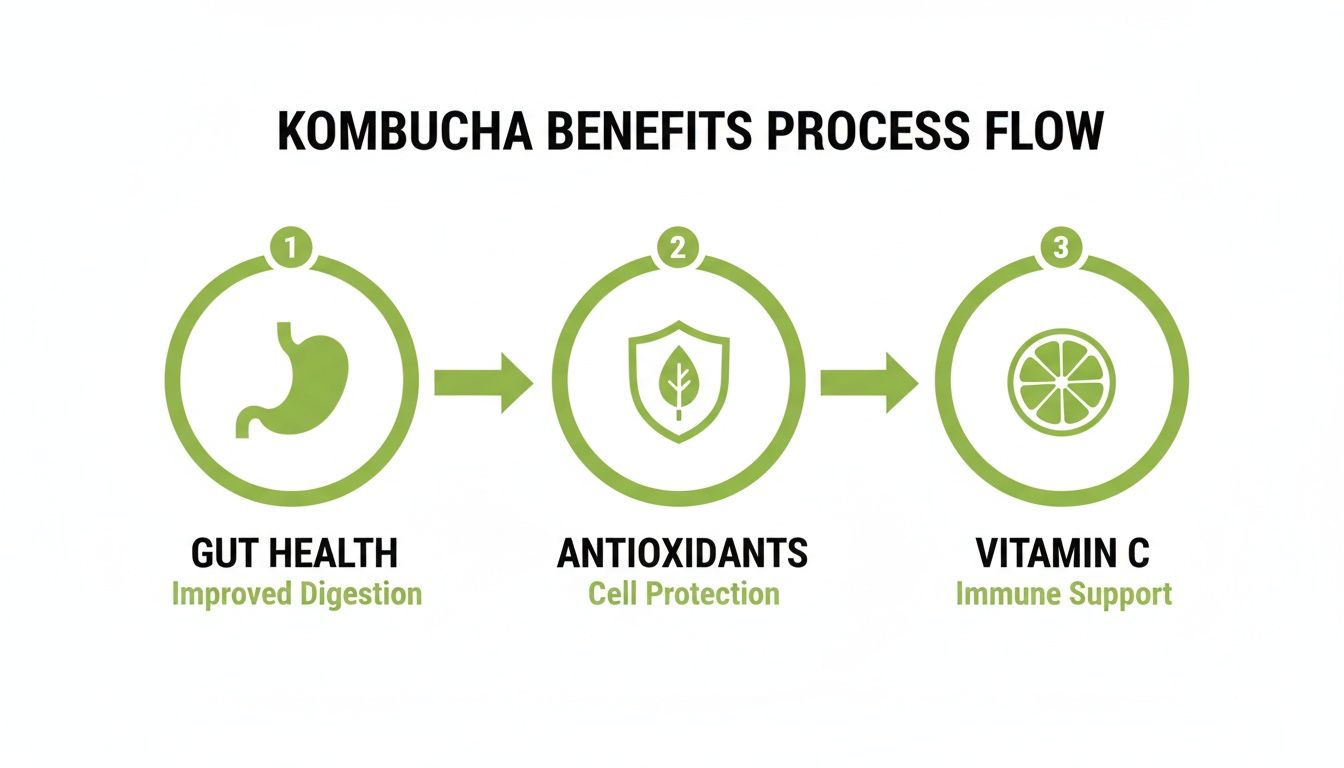
It’s a simple visual that shows how the combined elements in our passion fruit kombucha work together to support overall wellbeing. This commitment to real ingredients and an authentic, unhurried brewing method is what sets PepTea apart. It’s not a shortcut—it’s the right way to make a living drink that truly delivers.
Beyond the Bottle: How to Use Your Passion Fruit Kombucha
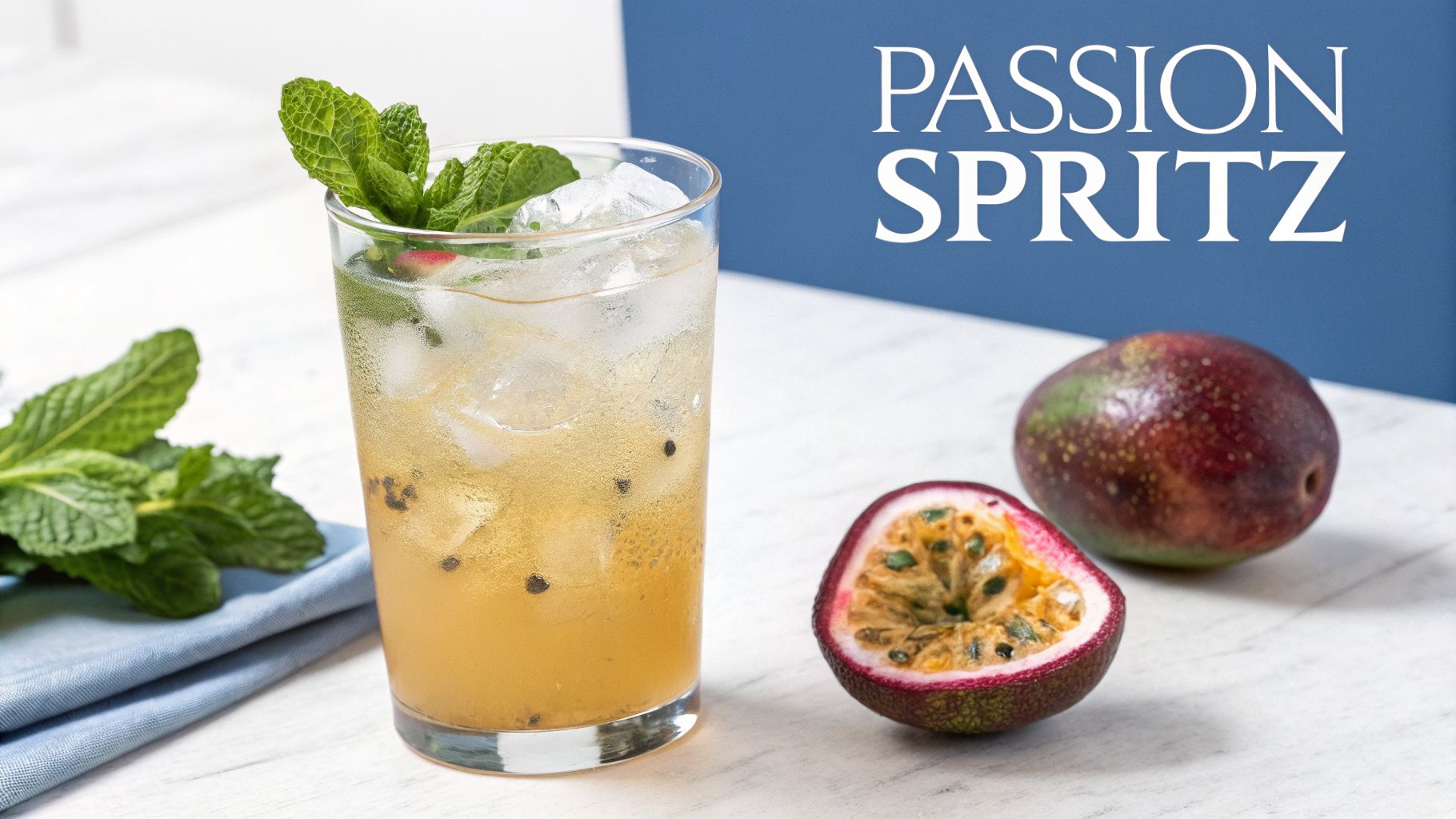
While our passion fruit kombucha is fantastic straight from the bottle, that's really just the beginning. Its true character—that balance of tropical tang and natural fizz—makes it an incredible starting point for all kinds of drinks and even a few surprising kitchen creations.
The simplest upgrade? Treat it like a proper drink. Pour it over a generous glass of ice, then add a sprig of fresh mint or a wedge of lime. It’s a small step that turns a daily wellness habit into a sophisticated ritual, perfect for a warm afternoon.
From Simple Sips to Café-Worthy Mocktails
One of the best things about our authentically brewed kombucha is its exceptionally clean finish and low sediment. This is no accident. It’s designed to be a brilliant mixer that doesn't cloud or fight with other ingredients, which is exactly why it’s found a home in so many Australian cafés and bars.
Since its rise, passion fruit kombucha has become a hospitality hero. Non-alcoholic beverage menus have grown by 48% in Australian cafés and bars, according to a 2026 industry survey. Our NSW-brewed organic kombucha is leading that charge, with our passion fruit flavour now accounting for 31% of all kombucha mixer sales in NSW venues this year. You can get a deeper insight into kombucha's journey in the beverage world and its origins as a living drink.
That professional-grade quality makes it incredibly easy to create impressive drinks at home. You can build a stunning non-alcoholic spritz, blend it into a vibrant smoothie, or even use its acidity as the base for a zesty salad dressing.
Simple Recipe: The Passion Spritz
For an instant crowd-pleaser, fill a tall glass with ice and a generous scoop of fresh passion fruit pulp. Squeeze in the juice of half a lime, top with a splash of sparkling water, and then pour over your PepTea passion fruit kombucha. A twist of lime to garnish, and you have a beautiful, bubbly mocktail that’s ready in seconds.
Get Creative in the Kitchen
To really get a feel for its versatility, it helps to start thinking of your kombucha as an ingredient. Its natural acidity and bright, tangy flavour make it a fantastic tool for cutting through richness in marinades or dressings. Here are a few ideas to get you started.
Zesty Vinaigrette: Whisk together ¼ cup of passion fruit kombucha, a tablespoon of good olive oil, a teaspoon of Dijon mustard, and a pinch of salt and pepper. It’s perfect for drizzling over a fresh garden salad, especially one with grilled chicken or prawns.
Smoothie Booster: Add a generous splash of kombucha to your morning smoothie. It pairs beautifully with mango, pineapple, and spinach for a probiotic and vitamin-packed start to your day.
Summer Popsicles: For a healthy, family-friendly treat, simply pour the kombucha into popsicle moulds with some diced fruit and freeze. The kids will love them.
Serving and Pairing Ideas
Here’s a quick-reference guide to help you get creative with your passion fruit kombucha, offering simple pairings for different occasions.
| Occasion | Serving Suggestion | Food Pairing |
|---|---|---|
| Afternoon Refresher | Poured over ice with a sprig of fresh mint. | Light snacks like rice paper rolls or a fresh fruit platter. |
| Weekend Brunch | Mixed into a Passion Spritz (see recipe above). | Smashed avocado on toast, or a goat's cheese and spinach tart. |
| Pre-Dinner Drink | Served neat in a champagne flute. | Salty nibbles like olives, salted nuts, or a cheese board. |
| Healthy Breakfast | As a liquid base for a tropical fruit smoothie. | A bowl of granola with yoghurt and berries. |
This table is just a starting point. The best way to discover what works is to experiment and see what you enjoy most.
Whether you’re looking for an effortless, refreshing drink or an innovative new idea for your café menu, our passion fruit kombucha offers a whole world of delicious possibilities.
How to Choose and Store High-Quality Kombucha
Walking down the kombucha aisle can feel like a test. With so many bottles claiming to be the real deal, how do you sort the genuinely healthy, living drinks from the impostors—the "cowboy kombuchas"?
It’s actually simpler than it looks. A few quick checks on the label are all it takes to make sure you’re bringing home something truly good for you.
First, look for two essential words: “raw” and “unpasteurised.” These are non-negotiable. They tell you the kombucha hasn't been heat-treated, which means the beneficial, living probiotics are still active. A pasteurised kombucha is really just a fancy, flavoured tea, not the functional beverage you're after.
What to Look for on the Ingredients List
Next, flip the bottle around. A quality passion fruit kombucha will have a refreshingly short and clean ingredients list: filtered water, organic tea, a SCOBY (or live cultures), and real, organic passion fruit.
Be sceptical of anything listing "natural flavours," "fruit concentrates," or extra sugars. These are often shortcuts used in mass-produced drinks that compromise the integrity of the brew.
At PepTea, we’re committed to authenticity. That means we only use certified organic ingredients, and our kombucha is genuinely sugar-free. We let the fermentation run its full course, allowing the SCOBY to consume the sugar naturally. What’s left is a pure, crisp taste without the sugary hit.
See a few cloudy wisps or a bit of sediment at the bottom? Don’t worry. That’s a great sign. Those are tiny strands of the SCOBY and yeast, proving your kombucha is raw, alive, and packed with the goodness you want. It’s the hallmark of an authentic brew.
Storing Your Kombucha to Keep it at Its Best
Once you’ve made your choice, proper storage is everything. The rule is simple: always keep your kombucha in the fridge.
Keeping it chilled is crucial for a few reasons:
- It Protects the Probiotics: The living cultures in raw kombucha are delicate. Cold temperatures keep them dormant and healthy, preserving their potency right up until you drink them.
- It Stops Over-Fermentation: If you leave a raw kombucha at room temperature, the fermentation will kick back into gear. This can create excess carbonation (think fizz explosions) and make the drink taste overly sour or vinegary.
- It Maintains Flavour: Refrigeration locks in that crisp, balanced flavour profile the brewer intended. It ensures every sip is as refreshing as the first.
By choosing a raw, organic, and genuinely low-sugar option and storing it correctly, you can be confident that you’re getting all the incredible flavour and wellness benefits your passion fruit kombucha has to offer.
Why Choose PepTea's Australian-Made Kombucha
Not all kombucha is created equal. When you look past the clever marketing, the difference often comes down to one simple thing: how it’s made, and who’s making it. At PepTea, we brew a kombucha that’s a world away from the mass-produced stuff, and it all starts with where we’re from.
We're a 100% Australian-owned family business, and every batch of our kombucha is brewed right here in the beautiful Hunter Valley, NSW. This isn't just a label on a bottle; it’s our guarantee of freshness and our connection to the local community. Choosing PepTea means you’re backing a family that’s genuinely passionate about making real, functional drinks.
Our Commitment to What's Real
Our approach is straightforward: real ingredients, real fermentation, and real health benefits. We don't cut corners. That’s why we insist on using only certified organic ingredients, from the premium green tea that forms our base to the real passion fruit pulp that gives our kombucha its authentic tropical character.
When you pick up a bottle of PepTea, you’re holding our promise. It’s our commitment to a genuinely sugar-free, probiotic-rich drink that’s raw, living, and unpasteurised. This is what sets us apart—a truly authentic kombucha, made with your wellbeing in mind.
This dedication to quality is visible in every part of our brand. For a company like PepTea, standing out requires that our values are clearly communicated, right down to our food and beverage printing needs to make sure our labels tell the full story.
Experience the PepTea Difference
Our traditional brewing process ensures our passion fruit kombucha is not just bursting with flavour but also genuinely packed with live, active cultures. We let our SCOBY do its thing, naturally fermenting away all the sugar to leave a crisp, clean refreshment you can feel good about.
Ready to taste what authentic kombucha is all about? We invite you to experience the vibrant, real flavour of a drink brewed with passion and purpose.
A Few Common Questions
Still have a few questions floating around about passion fruit kombucha? Let's clear them up. Here are the answers to some of the most common things we get asked.
Is Passion Fruit Kombucha Okay for a Low-Sugar Diet?
It absolutely can be, but you have to know what you’re looking for. Some brands will add sugar back in after fermentation for extra sweetness, but an authentically brewed kombucha like ours at PepTea is completely sugar-free.
We let our SCOBY do its job properly, allowing it to consume all the organic raw sugar during fermentation. This process is what creates the beneficial acids and probiotics, not a sweet, sugary drink. This makes our passion fruit kombucha a great choice for anyone watching their sugar intake. Always check the nutritional panel to be sure.
Does Passion Fruit Kombucha Contain Alcohol?
Because it’s a naturally fermented product, all kombucha contains trace amounts of alcohol—it's just a normal byproduct of the brewing process. The amount is tiny, typically less than 0.5% ABV.
That’s a similar level to what you might find in a very ripe piece of fruit or even a loaf of sourdough bread. In Australia, any drink with this little alcohol is legally classified as non-alcoholic.
Can I Drink Passion Fruit Kombucha Every Day?
For most people, yes. Having a daily serve of passion fruit kombucha is a fantastic way to support your gut health as part of a balanced diet.
If you’re new to fermented foods, though, we suggest starting with a smaller amount—maybe half a bottle. See how your body feels before you make it a daily habit.
What Are the Floating Bits in My Kombucha?
Those little cloudy strands you might see in the bottle are actually a great sign. They're tiny, harmless strands from the SCOBY or yeast culture, and they're proof that your kombucha is raw, living, and unpasteurised.
Think of them as a mark of authenticity. They're perfectly safe to drink and a real hallmark of a quality, craft-brewed kombucha.
Sometimes, a fermenting drink can attract fruit flies, especially for home brewers or cafés serving kombucha on tap. Learning what attracts fruit flies and how to stop them is a good way to keep your brewing environment clean.
Ready to taste what an authentic, Australian-made kombucha is all about? PepTea brews our entire range of organic, sugar-free kombucha with passion right here in the Hunter Valley.
Natural Energy Drinks: Your Guide to a Jitter-Free Boost in 2026

When you hear the term ‘natural energy drink’, what comes to mind? It’s not just another buzzword. We're talking about beverages that get their kick from whole-food ingredients like tea leaves, fruits, and fermented cultures, steering clear of the synthetic caffeine and sugar dumps that define conventional options.
The goal here is a gentler, more sustained kind of energy—one that works with your body, not against it. It’s the difference between a steady climb and a spike followed by a crash. As an Australian brand passionate about wellness, we at PepTea believe in harnessing the power of nature for vitality.
The Rise of Natural Energy Drinks in Australia

Have you ever glanced at the ingredient list on a typical energy drink and felt a bit uneasy? You’re not alone. A growing number of health-conscious Australians are walking away from the synthetic jolts and sugar-loaded formulas that once dominated the market. They're looking for a cleaner, more wholesome way to boost their vitality, and this shift is fundamentally reshaping what we choose to drink.
This movement isn't just about avoiding the bad stuff; it's about actively choosing the good. It’s about picking ingredients you can actually recognise—things sourced from nature that support your body's rhythm. Think of it like swapping highly processed fast food for a nourishing, thoughtfully prepared meal. Both might fill you up, but only one genuinely contributes to your long-term well-being.
A Growing Appetite For Wellness
The numbers tell the same story. In Australia, the market for healthy, functional drinks is seeing serious growth. Projections show the market value is set to climb from USD 70.11 million in 2026 to an estimated USD 130.89 million by 2033. Low-sugar and sugar-free options are driving this charge, which is a clear signal that Aussies are demanding smarter choices. You can explore the full market analysis of these trends to see just how deep this shift runs.
At the heart of this wellness wave are two standout beverages that have been around for centuries, long before the first neon-coloured can hit the shelves:
- Organic Matcha: A vibrant, stone-ground green tea from Japan, prized for its ability to deliver a unique state of calm alertness.
- Authentic Kombucha: A bubbly, fermented tea—like the ones we brew in our own Hunter Valley, NSW—packed with probiotics to support gut health.
We believe that what you drink should be a source of nourishment, not just a quick fix. As a family-owned Australian brand, we’re passionate about creating transparent, organic drinks that genuinely support an active and healthy lifestyle.
To understand the difference, it helps to see the two categories side-by-side. One relies on a blunt-force approach, the other on a more nuanced, whole-body effect.
Natural Energy Drinks vs Conventional Energy Drinks At A Glance
Here’s a simple breakdown of what sets these two beverage types apart.
| Feature | Natural Energy Drinks (e.g., Matcha, Kombucha) | Conventional Energy Drinks |
|---|---|---|
| Energy Source | Naturally occurring caffeine from tea leaves, plus other beneficial compounds. | Synthetic caffeine, often in high doses. |
| Sweeteners | Minimal raw cane sugar (for fermentation), fruit juices, or natural sweeteners like monk fruit. Many, like our kombucha, are completely sugar-free. | High-fructose corn syrup, sucrose, or artificial sweeteners (aspartame, sucralose). |
| Energy Delivery | Sustained release; compounds like L-Theanine in matcha create a calm, focused energy without a crash. | Rapid spike and crash; the combination of high sugar and synthetic caffeine causes a sharp jolt followed by a steep drop. |
| Additional Benefits | Rich in antioxidants, probiotics (in kombucha), vitamins, and minerals from whole-food sources. | Generally offer little to no nutritional value beyond the energy spike. Often contain artificial colours and flavours. |
| Ingredient Transparency | Simple, recognisable ingredient lists (e.g., water, organic tea, SCOBY, real fruit). | Long, complex lists with synthetic vitamins, taurine, glucuronolactone, and various preservatives. |
| Health Impact | May support gut health, provide antioxidant benefits, and promote sustained mental focus. | Linked to heart palpitations, anxiety, insomnia, and digestive issues due to high caffeine and sugar content. |
As you can see, the difference isn't just about flavour—it's about the fundamental mechanism. Natural energy drinks provide a gentle lift that helps you power through your day without the dreaded ‘crash and burn’ cycle.
Throughout this guide, we'll unpack exactly how these clean, functional beverages work and show you what to look for when choosing the best one for your needs.
The Science of Clean Energy With Organic Matcha
When we talk about natural energy drinks, one name keeps coming up for its unique, balanced power: Japanese organic Matcha. It’s not tea in the way you might think of it. Matcha isn’t an infusion from a tea bag; it’s the entire tea leaf, meticulously shade-grown, harvested, and stone-ground into a powder so vibrant it’s almost electric.
This process is what separates Matcha from everything else. Because you consume the whole leaf, you get 100% of its nutritional payload—a full spectrum of vitamins, minerals, and of course, its famous antioxidants. It’s the difference between drinking the juice from a squeezed orange and eating the whole fruit.
The Magic of Caffeine and L-Theanine
What truly defines Matcha as a source of 'clean energy' is the way its caffeine works with an amino acid called L-theanine. This is the secret. Coffee gives you a sharp, hard hit of energy from caffeine alone, but Matcha delivers something far more sophisticated.
L-theanine is known for promoting a feeling of relaxation and cutting through stress without making you tired. When it partners with caffeine, you get a remarkable synergy: a state often described as ‘calm alertness’. The result is a sustained lift in energy and focus, but completely without the jitters, anxiety, or the inevitable crash that follows coffee and conventional energy drinks.
Think of it like this: coffee is a sprinter, all explosive speed and a quick finish. Matcha is a marathon runner, providing steady, consistent energy that keeps you focused and enduring for the long haul.
This unique biochemical partnership is precisely why Zen monks have used Matcha for centuries to stay sharp during long periods of meditation. It just works.
The Antioxidant Superstar EGCg
Beyond the clean energy, Matcha is loaded with a specific class of antioxidants called catechins. The most powerful and plentiful of these is epigallocatechin gallate (EGCg).
This is the compound celebrated for its role in supporting a healthy metabolism and defending cells against oxidative stress. And because you’re drinking the entire leaf, the concentration of EGCg you get from Matcha is off the charts—up to 137 times more than what you'd find in a standard cup of brewed green tea. You can learn more about how Matcha tea powder is a powerhouse of antioxidants in our detailed article. This incredible antioxidant density is a huge part of what makes Matcha one of the ultimate natural energy drinks.
Choosing The Right Matcha For You
Not all Matcha is created equal. Understanding the grades is the key to getting the experience you’re after. You'll mainly see two types: Ceremonial and Culinary.
Ceremonial Grade: This is the absolute best, made from the youngest, most tender tea leaves. It has a brilliant green colour, a silky-fine texture, and a smooth, slightly sweet flavour with zero bitterness. It’s made to be prepared traditionally—just whisked with hot water—for a pure, unadulterated Matcha experience.
Culinary Grade: Still a high-quality product, culinary Matcha is produced from leaves that are a little older. This gives it a stronger, more robust flavour that can be slightly bitter. That boldness is exactly what makes it perfect for mixing into other ingredients; its flavour holds its own in lattes, smoothies, baking, and even savoury recipes.
At PepTea, our focus is on sourcing only the finest certified organic Matcha from Japan. We make sure that whether you’re whisking up a traditional tea or adding a powerful boost to your morning smoothie, you’re using a pure, authentic product. This commitment to quality is what unlocks the true science of clean energy found in every single scoop.
The Gut-Energy Connection with Authentic Kombucha
If matcha is all about clean, focused energy for the mind, kombucha is its counterpart for the body, working its magic from the inside out.
Many of us don’t realise just how closely our gut health is tied to our daily vitality. When your digestive system is balanced and happy, it becomes far more efficient at absorbing nutrients and even producing certain vitamins. The result? Better, more sustained energy levels throughout the day.
This is precisely where authentic kombucha shines. It's so much more than a fizzy, refreshing drink; it’s a living beverage, teeming with beneficial microorganisms. Think of it as actively tending to your body's internal garden. By introducing a diverse range of probiotics, you’re helping create a thriving gut environment that underpins your overall well-being.
The Art and Science of Fermentation
So, what is kombucha, really? At its heart, the process is beautifully simple. It all begins with sweetened organic tea. To this, a special culture of bacteria and yeast—known as a SCOBY (Symbiotic Culture Of Bacteria and Yeast)—is added.
The SCOBY is the engine room of the whole operation. It gets to work consuming most of the sugar in the tea, transforming the liquid through fermentation.
This transformation is what creates a host of beneficial compounds:
- Live Probiotics: These are the "good" bacteria that help bring balance to your gut microbiome.
- Organic Acids: Compounds like acetic acid and gluconic acid give kombucha its signature tangy flavour and may support various bodily functions.
- B Vitamins: The fermentation process naturally produces B vitamins, which are crucial for converting the food we eat into energy.
At PepTea, we brew our kombucha the traditional way in the scenic Hunter Valley, NSW. We stick to real, organic ingredients and allow the fermentation to complete naturally. This patience results in a genuine, sugar-free organic kombucha that’s truly alive with goodness.
The following diagram shows the traditional process behind another of our favourite natural energy sources, matcha, from leaf to powder.

It’s this simple, careful process of transforming whole tea leaves into a fine powder that ensures you get all of matcha’s potent benefits.
Avoiding "Cowboy Kombucha"
As kombucha’s popularity has exploded, the market has been flooded with products that simply don’t live up to the promise. We call these "cowboy kombuchas." They’re often mass-produced, pasteurised (which kills the all-important live probiotics), or loaded with sugar and artificial flavours to hide a poor-quality brew.
A true, living kombucha needs to be handled with care. That’s why we operate from a purpose-built, HACCP-accredited brewery. This international standard for food safety guarantees every bottle of PepTea Kombucha is not only effective but also completely safe.
This stands in stark contrast to the broader soft drink manufacturing scene in Australia, which saw a 1.9% CAGR from 2021-2026. While this growth included a pivot towards so-called functional beverages, it’s crucial for people to know what separates a genuinely healthy option from a cleverly marketed one.
With non-alcoholic drinks surging, it’s clear that consumers, particularly urban millennials, are actively seeking out authentic products with real benefits.
Choosing a properly brewed kombucha means you’re getting a drink that actively supports the gut-energy connection. It’s a delicious, bubbly way to nourish your body and boost your vitality, turning the simple act of hydration into a meaningful step toward better health.
You can learn more about the benefits of kombucha and what really makes an authentic brew in our dedicated guide.
How to Choose a High-Quality Natural Energy Drink
Navigating the wellness aisle can feel like a minefield. With so many drinks shouting 'natural' or 'healthy' from their labels, how do you tell the genuinely good stuff from the clever marketing?
The secret is to ignore the flashy promises on the front and become an expert at reading the fine print on the back. A truly clean, high-quality natural energy drink becomes obvious once you know the few key things to look for.
Your Label-Reading Checklist
When you pick up a bottle, flip it over. The best options will tick all these boxes, giving you confidence that you’re buying something that actually supports your health.
Look for 'Certified Organic': This isn't just a buzzword. A certification from a trusted body like Australian Certified Organic (ACO) is your guarantee the ingredients were grown without synthetic pesticides or fertilisers. It’s a non-negotiable sign of purity and quality.
Check the Sugar Content: Be ruthless here. You want to see explicit claims like "no added sugar" or "sugar-free". Many drinks use fruit juice concentrates to sweeten their products, which can still pack a surprising sugar punch. A genuinely low-sugar option won't hide its numbers.
Scan for Real Ingredients: Is the list full of things like "organic tea leaves," "fresh ginger," or "mango puree"? Or does it hide behind "natural flavours"? That term is often a smokescreen for a whole host of processed additives. Always prioritise drinks that get their flavour and function from whole, recognisable foods.
Red Flags to Watch Out For
Just as important as knowing what to look for is knowing what to run from. Certain ingredients and label tricks can completely undermine the health benefits you’re after.
A high-quality natural energy drink should energise you through nourishment, not by tricking your body with synthetic inputs or hidden sugars. If the ingredient list is long and complicated, it's usually a warning sign.
Be wary of artificial preservatives. A living drink like kombucha belongs in the fridge, not sitting on a warm shelf for months. The need for refrigeration is often the best sign you’re getting an authentic, unpasteurised product that’s teeming with live cultures. To get a better handle on how this works, it’s worth understanding prebiotics and probiotics for gut health.
The Non-Negotiable Standard of Safety
Finally, a top-tier brand doesn't mess around with safety. Look for mentions of quality control standards like HACCP accreditation. This internationally recognised system (Hazard Analysis Critical Control Point) ensures food safety from the farm to the finished bottle.
For us at PepTea, these aren’t just guidelines; they are our founding principles. Our kombucha is proudly brewed in our HACCP-accredited, purpose-built facility right here in the Hunter Valley. It’s Australian-made, certified organic, and authentically fermented to be completely sugar-free.
The same rigour applies to our other products. When it comes to matcha, for instance, understanding the difference between grades is everything. You can discover more about Matcha grade and quality over on our blog. By holding ourselves to these benchmarks, we hope to give you the tools to make better choices for your own health.
Integrating Natural Energy Into Your Daily Routine

Bringing natural energy drinks into your daily rhythm isn't about overhauling your life. It's about making small, deliberate upgrades that feel good.
Think of it as a simple swap. Whether you’re at home looking to start your morning right, or a café owner wanting to give your customers something genuinely better, drinks like authentic kombucha and organic matcha slot right into your existing habits. This isn't about forcing down a "health drink." It's about finding clean, vibrant energy in a form you actually look forward to.
Here’s how to make it work.
For Your Morning Ritual at Home
Trading your standard coffee or sugary juice for a natural alternative can set the tone for your whole day. It's a simple change with a noticeable impact. Here are two remarkably easy ways to begin.
1. The 2-Minute Matcha Latte
This is the perfect introduction to matcha's unique 'calm-alert' energy. It’s creamy, satisfying, and quick. All you need is our PepTea Culinary Grade Organic Matcha, your milk of choice, and a sweetener if you like.
- Step 1: Sift 1 teaspoon of matcha into a mug. This simple step prevents clumps and ensures a smooth finish.
- Step 2: Pour in about 60ml of hot (not boiling) water. Whisk it hard until it's frothy and combined. A bamboo whisk is traditional, but a small milk frother does the job beautifully.
- Step 3: Heat and froth 180ml of your preferred milk—oat and almond work particularly well—and pour it into the matcha. Sweeten to your taste.
2. The Green Energy Smoothie
When you need nutrients and energy on the go, a matcha smoothie is your answer. It's a breakfast and a boost in one glass.
- Step 1: In your blender, toss 1 frozen banana, a big handful of spinach, 1 teaspoon of culinary matcha, and 250ml of water or coconut water.
- Step 2: For more staying power, add a scoop of protein powder or a tablespoon of chia seeds.
- Step 3: Blend until it's completely smooth. Drink it right away.
For the Forward-Thinking Australian Café
If you're in the hospitality game, the shift towards natural energy drinks is an opportunity you can’t ignore. The demand for healthier, functional options is no longer a niche—it’s a mainstream movement.
Australia’s consumption of sports and energy drinks is set to hit 232.0 million litres by 2034. The real story is where that growth is coming from: Aussies are actively looking for clean, sustainable alternatives. You can read more on the expanding Australian sports and energy drinks market here.
Upgrading your menu is about offering smarter choices that meet modern customer values. A well-crafted non-alcoholic drink isn't just a placeholder; it's a profitable, sophisticated beverage that people will come back for.
Here are a few ways to bring this to your menu:
The Elevated Non-Alcoholic: Use a crisp, sugar-free PepTea Organic Kombucha as a base for premium mixers. A "Kombucha Spritz"—a splash of our Ginger or Mango kombucha with fresh mint and a lime wedge—feels special, looks great, and is incredibly simple to execute.
A Better Post-Mix Alternative: Ditch the sugary soft drinks. Offering bottled kombucha is a straightforward, high-margin swap that speaks directly to health-aware customers seeking low-sugar, gut-friendly options. It’s a premium experience they will pay for.
Functional Lattes & Smoothies: A classic Matcha Latte made with high-quality culinary matcha is a must-have for any serious coffee menu. Go one step further and design a signature "Energy Smoothie" with matcha, fruit, and seeds. Market it for what it is: a clean vitality boost.
These aren't just new drinks. They are a way to offer a genuine wellness experience, giving your customers another reason to choose you.
Answering Your Questions About Natural Energy Drinks
When it comes to clean energy, the details matter. The shift toward natural alternatives like matcha and kombucha is exciting, but it naturally comes with questions. We’ve heard them all, and we've put together some straight answers to the most common ones.
Think of this as a no-nonsense guide. We want you to feel completely confident about what you’re putting in your body and why it’s a smarter choice. Let’s get into it.
How Much Caffeine Is in Matcha and Kombucha Compared to Coffee?
This is the big one, and the answer is more interesting than just a simple number. It’s not just about how much caffeine, but how it works with other compounds.
Matcha: A standard serve of matcha (about one teaspoon) has roughly 30–70mg of caffeine. That’s quite a bit less than your average cup of coffee, which often clocks in at over 100mg. But the real story is L-theanine, an amino acid unique to matcha that works with caffeine to create a state of calm focus. It's the reason you get a smooth, sustained lift without the jitters or the dreaded afternoon crash.
Kombucha: Our kombucha, on the other hand, is a genuinely low-caffeine drink, with less than 10mg per serving. The SCOBY (the culture of bacteria and yeast) actually consumes most of the tea’s original caffeine during fermentation. This makes it a perfect choice for a gentle, anytime boost.
Are Natural Energy Drinks Safe to Drink Every Day?
For most people, absolutely. When we talk about high-quality, certified organic matcha or our authentic, sugar-free kombucha, we’re talking about simple, whole-food ingredients. This is a world away from the synthetic chemicals and sugars found in conventional energy drinks.
As with anything, it’s about listening to your body and finding a balance that works for you. A daily matcha latte or a refreshing kombucha can be a fantastic part of a healthy routine, giving you a natural way to support your energy levels.
Is Matcha Really Better Than Green Tea Bags?
Yes, and the difference is huge. It all comes down to what you’re actually consuming.
When you drink matcha, you are consuming the entire stone-ground tea leaf, which has been dissolved into the water. This means you get 100% of its antioxidants, vitamins, and minerals. Nothing is left behind.
Brewed green tea is just an infusion. You’re only drinking the compounds that leach out of the leaf into the water. Most of the good stuff, including a huge portion of the powerful antioxidant EGCg, never makes it out of the tea bag. Matcha is, without question, a more potent and beneficial experience.
Embrace Clean Energy For a Healthier Lifestyle
Making the shift to natural energy drinks is about more than just swapping one can for another. It’s a conscious decision to move away from the synthetic jolts and inevitable sugar crashes that leave you feeling worse than when you started. It’s about choosing beverages that work with your body, not against it.
We’ve seen how the calm, focused alertness from organic matcha and the gut-friendly power of authentic kombucha offer a different kind of energy. These drinks teach us that a real lift doesn’t come from a lab, but from nature. Once you understand that, you can see past the marketing hype and pick drinks that genuinely contribute to your wellbeing.
From a Quick Fix to a Daily Ritual
Embracing this change is simpler than it sounds. It’s about building small, positive habits that stack up over time, creating a foundation for a more vibrant, energetic life.
- Start Your Day Clean: Swap your usual morning coffee for a matcha latte or a vibrant green smoothie. That one small change can set a different, more positive tone for the rest of your day.
- Rethink Your Afternoon Boost: When the 3 pm slump hits, instead of reaching for another coffee or a sugary snack, try a cold, refreshing kombucha. It offers a gentle lift while also doing some good for your gut.
- Focus on Whole Foods: Truly clean energy is part of a bigger picture. To get the most out of this shift, it's worth exploring the broader context by understanding clean eating principles.
We hope this guide has inspired you to move beyond temporary fixes and embrace beverages that genuinely nourish your body. This isn't just about a drink; it's about a healthier and more mindful way of living.
This is your invitation to explore a world of energy that’s better for your body and mind, one delicious sip at a time.
We invite you to explore this healthier world of energy, starting with PepTea’s premium organic matcha and Australian-brewed sugar-free kombucha.
Ginger Beer No Sugar: The Ultimate Guide to Finding the Best in 2026

Craving that fiery ginger kick without the sugar overload? You're not alone. The best ginger beer no sugar options deliver all that bold, refreshing flavour, making them a brilliant swap for sugary soft drinks. But the healthiest versions are often the ones that are naturally fermented, like ginger kombucha, which brings gut-health benefits to the table too.
Here at PepTea, we're passionate about drinks that are both delicious and genuinely good for you. Let's explore why so many Aussies are making the switch and how to find a truly healthy, sugar-free ginger beverage.
Why No-Sugar Ginger Beer Is a Top Australian Wellness Trend
Take a look inside Australian fridges and on local café menus, and you'll see a quiet revolution happening. Health-conscious Aussies are trading their traditional, high-sugar drinks for cleaner, more functional options, and ginger beer no sugar is right at the front of the pack. This is more than just a diet trend; it’s a fundamental part of a bigger wellness movement.
People are looking for drinks that do more than just quench thirst. They want real ingredients, authentic flavour, and benefits they can actually feel. The sharp, invigorating taste of ginger has always been a favourite, but its powerful properties are too often drowned in sugar. The no-sugar versions finally let the ginger itself shine.
This search for healthier choices has completely reshaped the beverage market. One recent piece of research really puts this into perspective, showing the Australian ginger beer market has hit a value of USD 97.28 million, with non-alcoholic versions accounting for a massive 80% of sales. That surge is tied directly to the wellness wave, with a huge number of us now deliberately choosing drinks with natural ingredients like ginger over standard fizzy drinks. You can dig into the specifics of this market shift in the full research about the Australian ginger beer market.
At its core, this movement is driven by a desire for:
- Clean Ingredients: A clear move away from artificial additives and mountains of sugar.
- Functional Benefits: Drinks that may support digestion, inflammation, or gut health.
- Mindful Consumption: Picking drinks that fit a healthier lifestyle without having to give up on great taste.
As a proudly Australian company with our roots in the Hunter Valley, we’ve watched this unfold first-hand. It's all about making smarter choices that feel good and taste even better. But here’s the thing: not all "no-sugar" drinks are the same. To make the best choice, you really need to understand what’s in your bottle.
Understanding What ‘No Sugar’ Really Means On The Label
When you see ‘no sugar’ on a ginger beer bottle, it’s easy to take that promise at face value. But the reality is a little more complicated. Not all no-sugar drinks are created equal.
Think of it like comparing different types of bread. You have your sugary white loaf, an artificially sweetened ‘diet’ bread, and then you have a naturally fermented sourdough. Each is fundamentally different, and the same thinking applies to ginger beer.
Many of the big-name "no sugar" or "diet" ginger beers are, for all intents and purposes, just soft drinks. They swap out sugar for artificial sweeteners to mimic the taste of traditional ginger beer, but without the calories. What you end up with is often just ginger-flavoured fizzy water, completely missing the depth and complexity of a properly brewed beverage.
To see past the marketing spin, it helps to know how to read nutrition labels effectively. This is where you can look past the big promises on the front of the bottle and get to the truth in the ingredients list on the back.
Decoding Sweeteners and Fermentation
So, if there's no sugar, what are these drinks using to get that sweet kick? The answer usually falls into one of two camps.
- Natural Sweeteners: Stevia and erythritol are the most common. These are plant-derived options that deliver a sweet taste without the actual sugar or calories.
- Artificial Sweeteners: Aspartame, sucralose, and acesulfame potassium (Ace-K) are sweeteners created in a lab. You'll find them in most commercial 'diet' drinks.
This is all part of a much bigger wellness trend, where the desire for natural ingredients is driving the demand for no-sugar drinks.

As you can see, the path from prioritising general wellness to choosing a specific no-sugar drink is a straight line. Consumers are more aware than ever.
But there’s a third category that stands completely apart: naturally brewed beverages.
True fermentation offers a path to a low-sugar drink without relying on added sweeteners. The sugar isn't replaced; it's consumed by living cultures during the brewing process.
This is where a drink like our own ginger kombucha comes into the picture. Here at our brewery in the Hunter Valley, we use a live SCOBY (a Symbiotic Culture of Bacteria and Yeast) that literally feeds on organic sugar.
This natural process is a transformation. The SCOBY consumes the sugar and, in its place, creates beneficial organic acids, vitamins, and probiotics. What’s left is a drink that is not only naturally low in sugar but has a wonderfully complex flavour that you just can't replicate with additives.
The distinction is critical. One is a flavoured soft drink with sugar substitutes. The other is a living, functional beverage crafted through a traditional, natural process. Once you understand that difference, you can make a choice that actually aligns with your health goals and your desire for authentic, real flavour.
The Real Health Benefits Of Sugar-Free Ginger Drinks
Choosing a sugar-free ginger drink isn’t just about cutting calories. It’s about letting the ginger actually do its job. When a drink is loaded with sugar, it triggers that familiar blood glucose spike, leading to the inevitable afternoon crash and quietly working against any wellness goals you might have.
A ginger beer no sugar option helps you sidestep that whole cycle. What you get is a clean, fiery flavour that leaves you feeling balanced and genuinely energised, not just wired.
By taking out the sugar, you’re clearing the stage for ginger’s powerful, natural properties. This incredible root has been used for centuries for a reason, and a no-sugar format lets those qualities shine without interference.
Letting Ginger's Natural Goodness Shine
The real star of any ginger drink should always be the ginger itself. Without heaps of sugar clouding the picture, your body can properly access what makes this root so special. The main upsides are pretty well-known:
- Digestive Support: Ginger is famous for its ability to soothe the stomach and support smooth digestion.
- Anti-inflammatory Properties: The active compound in ginger, gingerol, has natural anti-inflammatory effects that may help with everyday aches and post-exercise muscle soreness.
- Stable Energy Levels: When you avoid the sugar rush, you get to enjoy more consistent energy throughout the day. No peaks, no troughs.
Aussies are catching on fast. Many of us now actively look for natural ingredients, and ginger consistently ranks as a top choice for everything from easing nausea to supporting immunity. When these drinks are made without sugar, they can slash calories by up to 90% compared to their full-sugar counterparts. It's a significant part of the wellness-driven shift you can see in the Australian market, where ginger's popularity continues to grow.
Beyond No Sugar To Probiotic Power
But what if your ginger drink could do more than just not have sugar in it? This is where the line between a simple sweetened drink and a properly fermented one becomes critical. An artificially sweetened ginger beer avoids sugar, sure, but it doesn't really add anything functional.
A naturally brewed ginger kombucha takes health a step further. It's not just 'no sugar'—it's actively good for your gut.
During our fermentation process here at PepTea, the live cultures in our SCOBY get to work consuming nearly all the sugar. This natural transformation doesn’t just get rid of the sugar; it creates something new—a drink packed with probiotics.
These beneficial bacteria are the foundation of a healthy gut microbiome, which we now know is linked to everything from digestion to immune function. For a deeper look at this, you might be interested in the benefits of kombucha and how it supports overall wellbeing.
So, while a diet ginger beer is a step in the right direction, a fermented ginger kombucha offers a far more holistic health advantage. It’s the difference between simply removing a negative and adding a powerful positive.
How To Choose The Best No-Sugar Ginger Beer In The Aisle

Walking down the drinks aisle can feel like a test. But finding a genuinely healthy ginger beer no sugar option is simple once you know what to look for.
Think of yourself as a detective. Your first move should always be to flip the bottle over and read the nutrition panel. Learning to spot the good, the bad, and the genuinely beneficial is the key to telling a real functional beverage from a glorified soft drink.
Your first clue is the ingredient list. Shorter is almost always better. If you see a long string of numbers, artificial sweeteners like aspartame (951) or sucralose (955), and preservatives like sodium benzoate (211), put it back on the shelf. These are the hallmarks of a highly processed drink, not a wellness beverage.
Green Flags To Look For
When you’re trying to find a high-quality product, certain phrases on the label are green flags that signal you’re on the right track. These are the markers of authenticity and quality.
- Naturally Brewed or Fermented: This is the big one. It tells you the drink’s flavour and fizz were created through a natural process, not by just adding flavouring to carbonated water.
- Certified Organic Ingredients: This certification is your guarantee that the ginger, tea, and other ingredients were grown without synthetic pesticides or fertilisers. It’s a promise of a cleaner final product.
- Live Cultures or Probiotics: If you see this, you’ve found a drink that offers functional gut health benefits. This is a feature unique to properly fermented beverages like kombucha.
- No Artificial Flavours or Colours: The taste and colour should come from real ginger and other natural ingredients, not from a laboratory.
The Gold Standard Benchmark
At PepTea, these green flags aren’t just a checklist; they’re our entire brewing philosophy. Our Australian-made, organic Kombucha is a perfect example of this benchmark in action.
The gold standard is a beverage that is not only free from sugar and artificial additives but is also actively beneficial. This is achieved through real fermentation with organic ingredients, resulting in a drink rich in probiotics and organic acids.
Take our Ginger Kombucha, for example. It's brewed right here in the Hunter Valley using a live SCOBY that naturally consumes the organic sugar during fermentation.
What's left is a complex, spicy ginger drink that’s buzzing with gut-friendly probiotics. It’s the difference between a simple fizzy drink and a truly functional beverage that supports your wellbeing. Once you know what to look for, making the best choice becomes second nature.
Delicious Ways To Serve No-Sugar Ginger Beer

A quality no-sugar ginger beer is brilliant on its own, but its real potential is unlocked when you start playing with it. That vibrant, spicy character makes it an incredibly versatile ingredient for crafting drinks that are genuinely interesting, moving far beyond just pouring it over ice.
Whether you're planning a backyard barbecue, looking for a sophisticated alcohol-free option, or designing a modern café menu, here are a few ideas for serving up that ginger goodness.
Create Refreshing Mocktails With A Kick
Forget bland soft drinks and overly sweet fruit juices. A ginger beer no sugar option is the ideal foundation for mocktails that actually have some personality. It brings the complexity and bite that so many non-alcoholic drinks are missing.
Here are a couple of simple recipes to get you thinking:
- Spicy Ginger No-jito: Muddle a few fresh mint leaves and a couple of lime wedges in the bottom of a tall glass. Fill it with ice, top with your no-sugar ginger beer, and give it a gentle stir. The fiery ginger cuts through the cool mint and zesty lime perfectly.
- Sunrise Zinger: Pour a splash of orange juice and a dash of grenadine into a glass, then top it all off with chilled ginger beer. The grenadine will sink, creating that classic sunrise effect. It's a vibrant, flavour-packed drink that feels like a proper treat.
The secret to a great mocktail is always balance. The spicy, dry profile of a no-sugar ginger beer provides a perfect counterpoint to sweet or sour elements, creating a drink with real character and depth.
A Sophisticated Mixer For Mindful Drinking
The shift toward mindful drinking and low-alcohol cocktails is more than just a trend in Australia; it’s now mainstream. People want to enjoy a social drink without the heavy hit of high-proof spirits, and a no-sugar ginger beer is the perfect partner for this.
Its robust flavour means you can use less alcohol without the drink feeling weak or watered down. A splash of vodka or gin with a quality ginger beer creates a crisp, clean-tasting low-alcohol drink that’s miles ahead of a standard sugary mixer.
For a more adventurous twist, you can explore our guide to creating delicious kombucha cocktails that can be fruity and non-alcoholic for even more inspiration.
Ideas For Cafés And Hospitality
For our friends running cafés and other venues, offering premium, health-conscious beverages is no longer a "nice to have"—it's an expectation. A high-quality ginger drink can be a genuine standout on your menu.
Consider using a naturally fermented option, like our PepTea Ginger Kombucha, as a base for signature non-alcoholic creations. It’s Australian-made, organic, and delivers that authentic, brewed-in flavour your customers will notice.
Use it to build unique mocktails, serve it straight as a premium alternative to commercial soft drinks, or even list it as a sophisticated mixer. It’s a simple way to signal a commitment to quality and wellness that modern consumers are actively looking for.
Why Ginger Kombucha Is The Ultimate No-Sugar Choice
We’ve talked about sugary drinks, artificially sweetened pretenders, and the search for something genuinely natural. The conversation about a ginger beer no sugar option often gets stuck on what’s been taken out. But the real story is about what gets put in—or more accurately, what’s created during the process.
Think of it this way. A "diet" ginger beer is like a mass-produced white bread with artificial sweeteners added. It might hit the low-calorie mark, but it’s fundamentally empty. A traditionally brewed ginger kombucha is the authentic sourdough from a local baker: crafted with care, alive with culture, and full of complex flavour.
The Magic Of Natural Fermentation
The difference comes down to our traditional brewing method. Here in our Hunter Valley, NSW brewery, we don’t just carbonate water and add ginger flavouring. We start with organic tea, a small amount of organic sugar, and introduce a living SCOBY (Symbiotic Culture of Bacteria and Yeast).
This is where the real work happens. The SCOBY gets to work metabolising the sugar, using it as fuel for fermentation. The sugar isn’t replaced with a substitute; it’s consumed and transformed by a living culture.
This natural consumption of sugar is what sets kombucha apart. The process creates a beverage that is not only naturally low in sugar but is also rich in the beneficial probiotics, organic acids, and vitamins that support gut health.
A Superior Choice For Flavour And Function
An artificially sweetened ginger drink often lands with a thin, one-note taste and a lingering chemical aftertaste. You can’t fake depth. A properly fermented ginger kombucha, on the other hand, has a layered flavour profile that’s impossible to replicate with additives.
You get the genuine, fiery warmth of real organic ginger, balanced by the subtle tang from the fermentation itself. It’s a complex, adult flavour experience.
By choosing a properly brewed ginger kombucha, you’re getting:
- Authentic Ginger Spice: We use real, organic ginger for a genuine kick, not a synthetic flavouring.
- Gut Health Support: The drink is alive with naturally occurring probiotics that may help your gut microbiome flourish.
- Naturally Low Sugar: Achieved through a living fermentation process, not by adding a chemical replacement.
- Australian-Made Quality: Brewed with passion by our family-owned company, right here in NSW.
When you want a no-sugar drink that offers both an interesting flavour profile and genuine function, a brewed ginger kombucha is simply in a different class. If you'd like to see what this looks like in practice, have a look at our PepTea’s sugar-free and gluten-free organic Ginger Kombucha.
Common Questions About No-Sugar Ginger Beer
When you start looking into sugar-free drinks, a few questions always pop up. It’s a space full of confusing labels and big claims. To cut through the noise, here are some straight answers to the questions we hear most often about no-sugar ginger beer.
Is No-Sugar Ginger Beer Actually Healthy?
It can be, but you have to know what you’re looking for. The quality varies wildly.
A genuinely healthy ginger beer is brewed from real ingredients, not cobbled together from artificial sweeteners, lab-made “natural” flavours, and preservatives. The only way to be sure is to read the ingredient list. If it reads like a soft drink with ginger flavouring, that’s exactly what it is.
The best options, like a properly brewed ginger kombucha, take it a step further. They’re not just missing the sugar; they’re full of gut-friendly probiotics and organic acids that are created during a real, natural fermentation.
Can I Use It In A Moscow Mule?
Absolutely. A quality ginger beer no sugar is a brilliant way to make a cleaner, crisper Moscow Mule. You get all of that essential spicy kick from the ginger without the syrupy sweetness, which lets the other ingredients shine.
If you want to create a more sophisticated, interesting version of the classic, try using a well-brewed ginger kombucha. The natural tang and complexity from the fermentation process add a depth of flavour that a standard mixer simply can’t replicate.
Using a naturally fermented ginger kombucha not only cuts the sugar but also introduces a more interesting, craft flavour to your favourite drinks. It transforms a simple mixed drink into a more thoughtful creation.
What’s The Difference Between Ginger Ale and Ginger Beer?
The real difference comes down to how they’re made, which has a massive impact on how they taste.
- Ginger Beer: Traditionally, this is a brewed and fermented drink. That natural process is what gives it a much spicier, more robust ginger flavour and a finer, more natural carbonation.
- Ginger Ale: This is usually just carbonated water mixed with a sweet ginger-flavoured syrup. As a result, it’s almost always milder, much sweeter, and lacks the fiery character of a true ginger beer.
So, when you’re looking for a "no sugar" option with a powerful, authentic ginger kick, a brewed ginger beer or a fermented ginger kombucha will always deliver a far better flavour experience than a diet ginger ale.
At PepTea, we believe the best drinks are both delicious and genuinely good for you. Our Australian-brewed organic kombucha is crafted to deliver authentic flavour and real functional benefits, making it the perfect choice for anyone seeking a premium, no-sugar beverage.
Explore our range of organic kombucha at https://peptea.com.au.
A Guide to Making Apple Cider Vinegar Soda at Home

An apple cider vinegar soda is a remarkably simple, healthy swap for sugary soft drinks. It’s little more than raw apple cider vinegar (ACV) mixed with sparkling water, but this refreshing, gut-friendly drink is taking off across Australia as people look for functional beverages that deliver on both flavour and wellness.
The Rise of Healthier Homemade Sodas

The days of sugary soft drinks dominating the fridge are numbered. Health-conscious Aussies are actively searching for better-for-you alternatives that don't sacrifice flavour, and an apple cider vinegar soda fits the brief perfectly. It's a fantastic way to turn a pantry wellness staple into a delicious daily ritual.
The real beauty is in its simplicity and how well it aligns with modern health values. You’re just combining a few core ingredients—good quality ACV, sparkling water, and maybe a natural sweetener—to create something that feels like a treat but actually supports your health goals.
This isn't a surprise. It mirrors the huge shift towards functional drinks we’ve seen firsthand with our own PepTea organic kombucha. People want their drinks to do more than just quench thirst; they want real, tangible benefits.
Here's a quick look at the core components and a simple ratio to get you started on your first delicious apple cider vinegar soda.
Your First ACV Soda Quick Guide
| Component | Recommended Amount | Why It's Important |
|---|---|---|
| Raw Apple Cider Vinegar | 1-2 tablespoons | The hero ingredient. Choose an organic, unfiltered ACV "with the mother" for the most probiotic goodness and a robust flavour. |
| Sparkling Water | 250-350 ml | Provides the fizz and refreshing base. Plain sparkling or mineral water works best to let the ACV and other flavours shine. |
| Natural Sweetener | To taste (optional) | Balances the tartness of the vinegar. Monk fruit, stevia, or a dash of raw honey are great sugar-free or natural options. |
This table gives you a solid starting point. From here, you can start experimenting with different flavours and carbonation methods to find what you love.
A Shift in Australian Tastes
It's interesting to see how the rise of drinks like ACV soda is happening alongside a big change in the traditional cider market. While many Aussies love the crisp taste of apple-based drinks, there’s a noticeable move away from alcoholic options.
In fact, the Australian cider production industry has seen a real decline, which points to a shift where consumers are swapping boozy ciders for functional, non-alcoholic beverages. This has created the perfect opening for innovative drinks like apple cider vinegar soda to really shine.
This move toward mindful drinking is all about making conscious choices that support your wellbeing. Whether it’s enjoying a living, probiotic-rich kombucha or a homemade ACV soda, the goal is the same: to find joy in drinks that are both delicious and genuinely good for you. If you're curious about other gut-friendly options, our guide to kombucha as a natural and organic health drink is a great place to start.
Choosing the Right Ingredients for Your Soda
A great apple cider vinegar soda comes down to just three things, and getting them right is what separates a decent drink from a genuinely brilliant one. The quality of what you choose here dictates both the flavour and the health perks you're after.
The non-negotiable starting point is the apple cider vinegar itself. You need a bottle that is raw, unfiltered, and organic. Most importantly, it must contain "the mother".
That cloudy, stringy stuff you see at the bottom of the bottle? That’s the good stuff. It's a living culture of beneficial bacteria and enzymes from the fermentation process. This is what delivers the probiotic potential you want for supporting a healthy gut. If you use a filtered or pasteurised ACV, you’re missing the entire point.
Selecting Your Vinegar and Water
Sourcing high-quality ACV in Australia has become remarkably easy. As more people have embraced wellness, the demand for premium organic ACV has grown, and thankfully, that has made it more affordable for everyone. You can see how affordability has improved for consumers and get a sense of the market trends.
With your vinegar sorted, the next choice is your fizz. You have two solid options for the water base:
- Sparkling Mineral Water: This is a fantastic choice because it brings its own naturally occurring minerals, like calcium and magnesium. It adds a subtle depth of flavour and a small nutritional bonus to your soda.
- Soda Water: This is simply carbonated water. It provides a crisp, clean canvas, which really lets the flavour of your ACV and any other additions shine.
Honestly, both are excellent. It usually just comes down to what you prefer or happen to have in the fridge.
Sweetening the Smart Way
Finally, you’ll likely want something to balance the vinegar's sharp tang. At PepTea, we’re firm believers in avoiding refined sugar, and this is where natural, sugar-free sweeteners are perfect.
For a clean, healthy apple cider vinegar soda, stick to sweeteners that won’t spike your blood sugar. Options like liquid stevia or monk fruit drops are ideal because they are potent, dissolve easily in cold liquids, and have a neutral taste.
Making these choices ensures your soda is genuinely refreshing and aligns with your wellness goals, especially if you’re focusing on gut health. For a deeper dive into that topic, you might find our our guide to good gut health useful.
By being intentional with these three simple ingredients, you set yourself up to make the perfect, healthy soda every single time.
How to Make a Classic Apple Cider Vinegar Soda
Ready to make your first batch? An ACV soda is one of the simplest and most refreshing drinks you can make at home. It’s a fantastic way to work apple cider vinegar into your day without the harshness of taking it straight.
The secret is all in the balance and the order you add things. Get that right, and you have a genuinely delicious, healthy alternative to sugary soft drinks. We’ll walk you through a foolproof starting point, but the real fun begins when you start tweaking it to find the ratio that’s perfect for you.
The Classic Recipe
At its heart, this drink is just three things: a quality apple cider vinegar, chilled sparkling water, and maybe a touch of sugar-free sweetener. The whole process takes less than a minute and is designed to keep as much of that lovely fizz as possible.
Here's our go-to method for a single glass:
Start with the Vinegar: First, pour 1 to 2 tablespoons of raw, unfiltered apple cider vinegar into a tall glass. If you're new to the flavour, we’d suggest starting with just 1 tablespoon and seeing how you go. You can always add more next time.
Add Your Sweetener: If you want to cut through the vinegar's tang, now’s the time to add your sweetener. A few drops of liquid stevia or monk fruit are perfect because they dissolve instantly without needing a lot of stirring, which would kill the bubbles.
Top with Sparkling Water: Gently pour 250-300ml of chilled sparkling water into the glass. The trick is to pour it slowly down the side of the glass. This helps keep the carbonation intact.
Garnish and Serve: Give it one, very gentle stir. Add a good amount of ice, and maybe a thin slice of fresh apple or a twist of lemon peel for that café-style finish. Drink it straight away while the bubbles are at their most lively.
This simple flow of ingredients is all it takes to create a refreshing, healthy drink.

As you can see, it's a straightforward path from basic ingredients to a finished soda. The key is starting with the ACV, adding the sweetener, and then gently topping with sparkling water to preserve the fizz.
Finding Your Perfect Ratio
Think of that recipe as a starting point, not a rule. The best part of making ACV soda at home is the freedom to get it exactly how you like it.
Don't hesitate to experiment. If you find the vinegar taste too strong, simply use less ACV or add a little more sweetener. Conversely, if you love that zesty kick, feel free to add a bit more.
This is what makes ACV soda so brilliant. It's completely customisable and takes less time to whip up than boiling the kettle, making it an easy and enjoyable habit to stick with.
Creative Flavour Ideas to Elevate Your Soda

Alright, this is where the real fun begins. Once you’ve got the basic ACV soda down, you can start treating that glass like a blank canvas. The sharp, slightly sweet foundation is incredibly versatile, making it the perfect base for all kinds of flavour infusions.
This is your chance to get creative and craft something that feels truly special. The trick is to use fresh, good-quality ingredients and prepare them in a way that lets their natural oils and juices shine. It’s what turns a simple drink into something you’d be happy to find on a café menu.
Simple Infusions for Every Palate
Here are a few of our go-to combinations to get you started. They’re dead simple, take almost no effort, and pack a serious flavour punch. For each of these, you'll want to get the fresh ingredients ready in the glass before adding the ACV and sparkling water.
Zesty Refresher: Gently muddle a few fresh mint leaves with a slice of lime in the bottom of your glass. The key word here is gently—you’re just bruising the leaves to release their fragrant oils, not pulverising them into a bitter mess. Top it off with your ACV and sparkling water for an instant classic.
Warming Spice: Finely grate about a teaspoon of fresh ginger and drop it into your glass with a single cinnamon stick. The sharp heat from the ginger combined with the sweet spice of cinnamon creates a wonderfully warming and invigorating soda, perfect for a cooler afternoon.
Berry Boost: Take a small handful of fresh or frozen raspberries and gently press them against the side of the glass with the back of a spoon. Add a sprig of fresh rosemary. It might sound unusual, but its subtle, piney note is a surprisingly brilliant match for the tartness of the berries.
These simple methods are a fantastic way to introduce a bit of complexity and fresh, natural flavour into your daily soda habit.
Pro Tip: For an extra wellness kick, try adding a splash of your favourite kombucha. A shot of our PepTea Organic Ginger Kombucha, for instance, would be a perfect match for the Warming Spice variation, adding extra probiotics and a deeper, fermented complexity.
ACV Soda Flavour Pairing Inspiration
To help spark a few more ideas, have a look at this quick-reference table. Think about what’s in season and what flavours naturally complement each other.
| Primary Flavour | Complementary Herbs/Spices | Best Sweetener Pairing |
|---|---|---|
| Fresh Strawberries | Basil, Black Pepper | A few drops of monk fruit to enhance sweetness. |
| Sliced Cucumber | Dill, Mint | Often needs no sweetener, but a tiny bit of stevia works. |
| Orange Slices | Cloves, Star Anise | A dash of maple syrup (if not strictly sugar-free). |
| Peach Slices | Thyme, Lavender | Pairs well with the floral notes of raw honey. |
Exploring these pairings is all part of the fun of making your own healthy drinks. You might even find inspiration for creating your own unique blends, much like you would when building out a menu of delicious and fruity kombucha cocktails.
Don't be afraid to experiment with what’s fresh and available—the possibilities really are endless.
Serving Tips and Storage Best Practices
To really get the most out of your homemade apple cider vinegar soda, knowing how to serve and store it makes all the difference. This simple drink is at its absolute best when it's fresh, fizzy, and cold, so the number one rule is to drink it immediately after making it. The carbonation is lively and the flavours are crispest in those first few minutes.
But let’s be realistic—planning ahead is often a necessity, especially if you're prepping for a gathering or streamlining service for your café. The best approach here is to get your flavour base sorted in advance.
Prepping for Easy Serving
You can create a delicious and potent syrup base that's ready to go whenever you are. This is a genuine game-changer for busy households and commercial settings alike.
Simply combine your core flavour elements in a sealable glass jar or bottle:
- The Apple Cider Vinegar: Your standard 1-2 tablespoons per serving.
- Your Sweetener: Add your chosen sugar-free sweetener, like stevia or monk fruit.
- The Flavour Infusions: This is where you can add things like grated ginger, muddled berries, or fresh herbs.
Give this mixture a good shake and store it in the fridge. This concentrated flavour base will keep well for a few days, and the flavours will actually infuse more deeply over time. When you're ready for a drink, just pour a serving of the syrup into a glass with ice and top it with chilled sparkling water. It’s an efficient way to offer fresh, high-quality apple cider vinegar soda on demand.
For serving your homemade soda, especially on a warm Aussie day, you might be interested in practical tips on how to keep drinks cold without ice.
Responsible and Enjoyable Consumption
While ACV is a fantastic wellness ingredient, it's important to enjoy it responsibly. The natural acidity of vinegar can be harsh on tooth enamel over time. To minimise any potential damage, it’s a great idea to enjoy your soda with a meal.
A simple and effective habit is to drink your apple cider vinegar soda through a reusable straw. This helps the liquid bypass direct contact with your teeth, protecting your enamel while you enjoy your refreshing drink.
It’s also smart to always start with a smaller amount of ACV. Beginning with just one tablespoon (15ml) per glass allows your digestive system to get accustomed to it. You can slowly increase the amount as you see fit, listening to your body along the way.
This mindful approach ensures your experience with this healthy soda is always a positive one, turning it into a sustainable part of your daily wellness routine rather than a short-lived experiment.
Your Apple Cider Vinegar Soda Questions Answered
Once you start making your own apple cider vinegar soda, a few questions almost always come up. We’ve heard them all, so let’s get straight to the answers you need to feel confident about adding this fantastic drink to your routine.
Can I drink apple cider vinegar soda every day?
For most people, a daily ACV soda fits perfectly into a healthy lifestyle. It’s a brilliant way to stay hydrated while getting a dose of beneficial compounds.
The key is sticking to a sensible amount. We suggest a maximum of 1-2 tablespoons (15-30ml) of apple cider vinegar per day, always diluted. It’s also a good idea to have it with a meal. This not only may help with digestion but also protects your tooth enamel from the acid.
Like anything new, start small and listen to your body. See how you feel and adjust from there.
Will it help with weight management?
This is a really common question. When you swap out sugary soft drinks, juices, or even alcohol for a sugar-free ACV soda, you’re naturally cutting your daily calorie intake. That simple change can absolutely support weight management over time.
Some studies also suggest that acetic acid, the main component in ACV, may help increase feelings of fullness, which could lead to eating fewer calories throughout the day.
It's important to see this for what it is: a supportive tool, not a magic bullet. Real results always come from using it as one piece of a bigger puzzle that includes a balanced diet and an active lifestyle.
What is the difference between ACV Soda and Kombucha?
That’s an excellent question, especially since both are fantastic, gut-friendly drinks that we love. The main difference is in how they’re made and their complexity.
Kombucha: This is a living, fermented tea. It starts with a base of sweetened organic tea, which is then fermented by a SCOBY (Symbiotic Culture Of Bacteria and Yeast). This process, which we use for our own PepTea organic kombucha, creates a diverse culture of beneficial bacteria and yeasts, plus organic acids and enzymes.
ACV Soda: This is a simple, unfermented mix. You are just combining pre-fermented apple cider vinegar with sparkling water.
So, while the raw ACV in your soda does contain probiotics from "the mother," the drink itself isn't a living, fermented beverage in the same way kombucha is. They actually work beautifully together in a healthy beverage rotation!
Does the ACV need to have the Mother?
For the full range of health benefits, absolutely yes. "The mother" is that cloudy, web-like stuff you see floating in a bottle of good-quality, raw ACV. It’s a powerhouse of beneficial bacteria, yeasts, and enzymes created during the natural fermentation process.
Filtered or pasteurised apple cider vinegar has had "the mother" removed, and with it, most of its valuable probiotic properties. For the best flavour and the biggest wellness boost, always choose a raw, unfiltered, and organic ACV that still has "the mother" intact.
At PepTea, we are passionate about delicious, functional beverages that support your wellbeing. From our authentic, Australian-brewed kombucha to our premium organic Matcha, we believe in the power of quality ingredients. Explore our range and discover your new favourite healthy drink today.
Explore the PepTea range now