
Tag: australian drinks
Sugar Free Carbonated Drinks: A Guide to Healthier Fizz
You're in the supermarket, staring at a fridge full of cans and bottles. One says zero sugar. Another says diet. Another leans hard on words like “natural”, “clean”, or “better for you”. Then there's sparkling water, kombucha, flavoured soda water, and a few bright-coloured drinks that look suspiciously like soft drink wearing a wellness costume.
It's no wonder people get confused.
For a lot of Australians, cutting back on sugary soft drink feels like an obvious good move. Cancer Council South Australia notes that a typical 600 mL bottle of soft drink contains 16 teaspoons of sugar in its discussion of diet drinks and alternatives, which helps explain why lower-sugar options keep getting attention in the drinks aisle Cancer Council SA on diet drinks and sugar. But once sugar comes out, a new question appears. What exactly has replaced it, and does that make the drink healthy, or less sugary?
That question matters because these drinks aren't fringe products anymore. In the same Cancer Council South Australia article, almost 1 in 4 teenagers aged 15 to 17 years (24.2%) said they drank sugar-free soft drink, sports drinks and energy drinks every day, based on the South Australian Population Health Survey Cancer Council SA on youth consumption patterns.
Navigating the World of Sugar Free Carbonated Drinks
If you've ever picked up three different fizzy drinks and flipped each one over to compare labels, you've already realised the category is messy.
Some sugar free carbonated drinks are basically water plus bubbles. Some are classic soft drinks rebuilt with high-intensity sweeteners. Some aim for a “healthy soda” identity. Others come from fermentation, where sugar is used in the brewing process and then reduced rather than swapped for an additive.
That's why the label on the front rarely tells the full story.
Why the category feels so confusing
A drink can be sugar free and still be very different from the one next to it. One bottle might contain only carbonated water and natural flavour. Another might rely on a blend of aspartame and acesulfame potassium. Another might be acidic, sweet, colourful, and heavily processed, even though the sugar line reads zero.
Practical rule: “Sugar free” tells you one thing. It doesn't tell you the whole nutritional story.
The confusion gets bigger because shoppers often compare the wrong drinks. They compare zero sugar cola with regular cola, and stop there. In real life, the more useful comparison is often zero sugar cola versus sparkling water, or kombucha versus artificially sweetened soda, or a flavoured fizzy drink versus unsweetened tea.
The real question isn't just sugar
The more helpful question is this: what is this drink made from, and what role do I want it to play?
A few simple examples make that clearer:
- If you want hydration first, plain water or unsweetened sparkling water usually makes the most sense.
- If you want a soft drink flavour without sugar, a diet or zero sugar soda may suit that job.
- If you want fizz with a more food-like ingredient story, a naturally fermented option can be worth a closer look.
- If you drink it every day, ingredient quality matters much more than marketing language.
There's also a broader market shift behind all of this. Data Intelligence estimates the global sugar-free carbonated drinks market reached USD 147.0 billion in 2025 and is projected to reach USD 262.2 billion by 2033, with a projected 7.5% CAGR from 2026 to 2033 Data Intelligence market projection for sugar-free carbonated drinks.
So yes, there's more choice than ever. That's useful. It also means you need a better filter than “zero sugar = healthy”.
The Spectrum of Sugar-Free Fizz Explained
Not all fizzy drinks belong in the same basket. Once you split them into a few simple families, the aisle gets much easier to read.
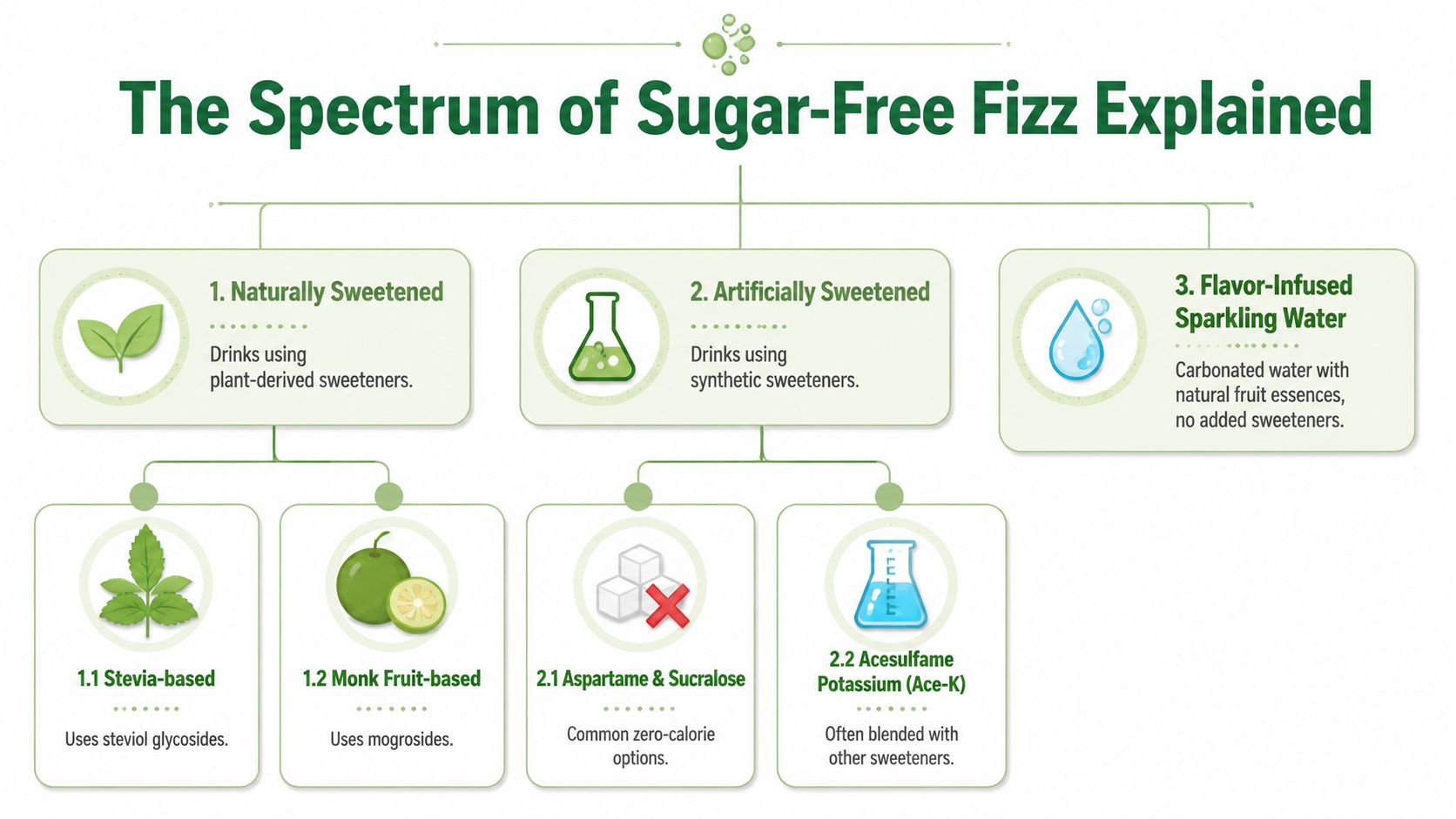
Sparkling water and mineral water
This is the simplest end of the spectrum.
These drinks are mostly just water with carbonation. Some are naturally mineral-rich. Others are filtered water with bubbles added later. If they're unflavoured and unsweetened, they're usually the most straightforward choice in the whole category.
They suit people who like fizz but don't want sweetness.
A flavoured sparkling water can still fit here if it contains only carbonated water and flavour essence, without added sweeteners, leading many people to discover they don't need a drink to taste like soft drink to enjoy it.
Diet soda and zero sugar soft drink
This is the familiar soft drink lane. Cola, lemon, orange, energy-style drinks, and other sweet fizzy beverages often fall into this group when sugar is removed and replaced with non-nutritive sweeteners.
The aim is simple. Keep the sweetness, keep the fizz, keep the recognisable flavour profile, and cut the sugar and calories.
That makes these drinks useful for people moving away from full-sugar soft drinks. But they're still best understood as soft drinks with a different sweetening system, not the same thing as water.
If you browse healthy soda drink options, this is the point where it helps to compare ingredient lists rather than front-label claims.
Naturally fermented fizzy drinks
Then there's a different path. Fermented drinks use a brewing process to create flavour, tang, and bubbles. Kombucha is the clearest example.
This category often feels less obvious because it doesn't fit the old “soft drink vs diet drink” logic. Fermentation can create a drier, more layered taste. It can also change how sweetness appears on the palate. Instead of trying to mimic a sugary soft drink exactly, these drinks often offer a different drinking experience altogether.
Some people switch to kombucha not because it tastes like cola, but because it gives them fizz without the same “liquid lolly” feel.
A simple mental map
Here's a quick way to sort the fridge in your head:
| Drink type | Main idea | Usually sweet? | Best thought of as |
|---|---|---|---|
| Sparkling water | Water plus bubbles | No | Hydration with fizz |
| Flavoured sparkling water | Water, bubbles, flavour | Usually no | Light flavoured hydration |
| Diet or zero sugar soda | Soft drink rebuilt without sugar | Yes | Sugar-free soft drink |
| Fermented fizzy drink | Brewed and carbonated through fermentation | Sometimes lightly, sometimes not | A functional or food-like alternative |
If you remember one thing, make it this. Sugar free carbonated drinks range from plain water with bubbles to highly engineered soft drinks. The label category is broad. The ingredients decide where a drink really sits.
Decoding the Sweeteners Behind the Zero Sugar Promise
Once sugar disappears from a fizzy drink, sweetness usually has to come from somewhere else. That “somewhere else” is where many people get stuck.
Some drinks use artificial sweeteners. Some use plant-derived sweeteners. Some lean on flavour and acidity more than sweetness. Others reduce sugar through fermentation rather than replacing it outright.
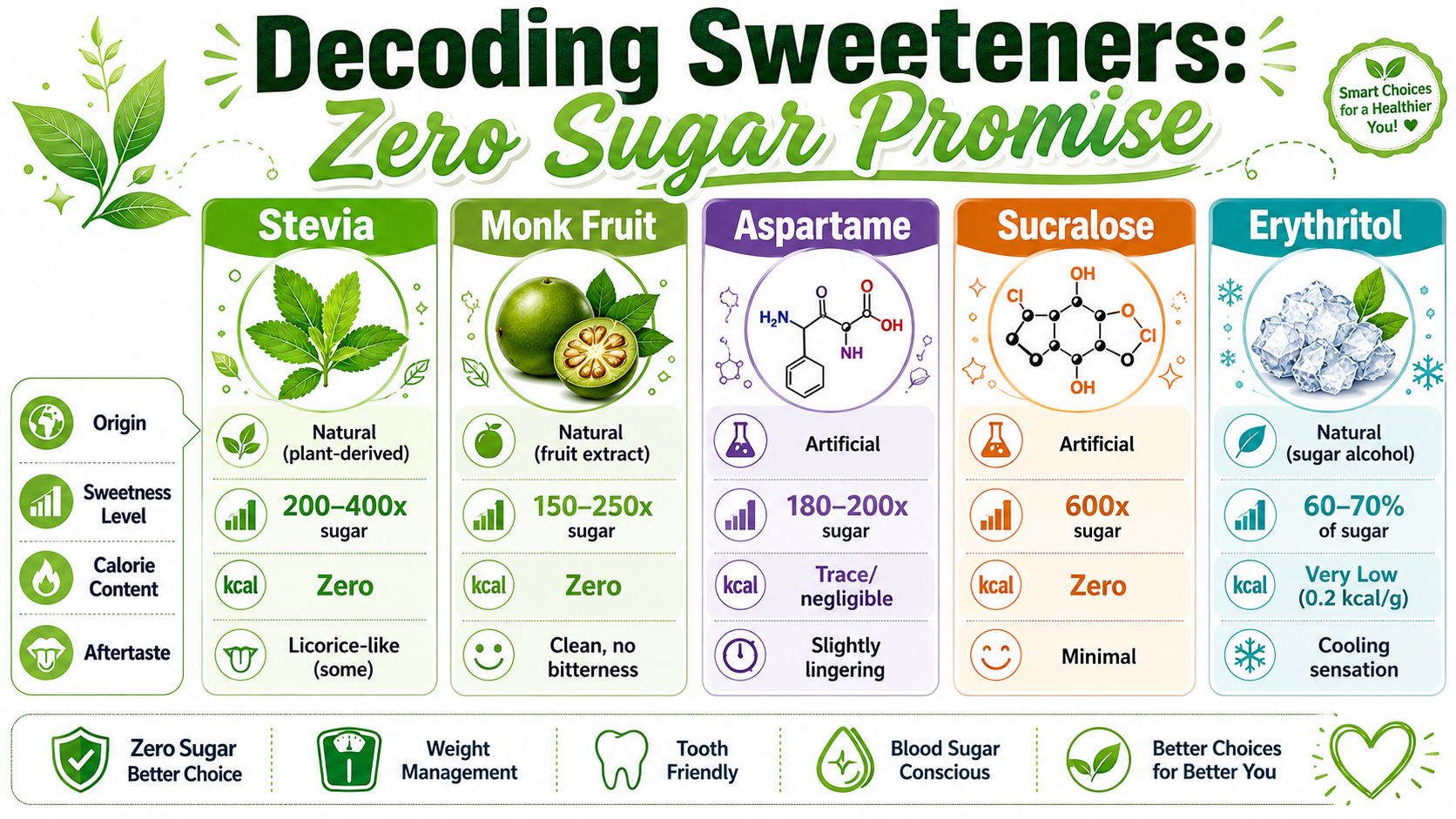
The common sweeteners you'll see on labels
Coca-Cola's ingredient information explains that reduced-, low-, and no-sugar beverages commonly use sweeteners such as aspartame, sucralose, acesulfame potassium, saccharin, cyclamates, or stevia Coca-Cola ingredient FAQ on sweeteners.
That matters because these aren't all the same.
Some are used because they're extremely sweet in tiny amounts. Some are blended together to smooth out aftertaste. Some can taste cleaner to one person and harsher to another. If you've ever said, “I can always tell when a drink is diet,” you were probably noticing that sweetener profile.
Why drinks often use a blend
Sugar doesn't just make a drink sweet. It also affects body, mouthfeel, and the way flavour lands and fades.
When formulators remove sugar, they have to rebuild that experience in a different way. That's why many sugar free carbonated drinks use more than one sweetener. One sweetener may bring the upfront sweetness, while another fills out the middle or helps the finish feel less thin.
Here's the simple version:
- Aspartame often appears in classic diet-style soft drinks.
- Sucralose can deliver a strong sweetness with a different finish.
- Acesulfame potassium is often used in blends.
- Stevia appeals to shoppers looking for a plant-derived option.
- Saccharin and cyclamates still appear in some formulations.
None of that automatically tells you whether a drink is right or wrong for you. It tells you what kind of sweetness experience the brand is trying to create.
Fermentation is a different route
Some drinks don't aim to copy soft drink sweetness at all. Fermentation creates a tart, lively profile that can reduce the need for added sweeteners.
That's one reason kombucha sits in its own lane. The result can be fizzy and refreshing without chasing the exact flavour arc of a conventional zero sugar cola. For people who are tired of artificial sweetener aftertaste, that can be a meaningful difference.
A short explainer can help if you want the basics visually.
What to notice as a drinker
You don't need a chemistry degree. You need a few useful questions:
- Does the sweetness taste clean or lingering?
- Is the drink trying to mimic soft drink, or offer a different style?
- Do you feel good drinking it regularly, or only occasionally?
- Can you recognise and accept the ingredient list?
A sugar-free label answers the calorie question. The ingredient list answers the quality question.
If you start there, labels become much less mysterious.
Beyond Zero Sugar Health and Wellness Considerations
A drink can be sugar free and still not be the best choice for everyday drinking.
That's the part many labels leave out. They focus on what's missing, not what's still present. Acidity, sweeteners, flavouring systems, and the overall level of processing still matter.
Zero sugar doesn't equal a health drink
Independent review material highlights an important gap in the conversation. Artificially sweetened beverages avoid sugar, but their broader health effects are still debated and may include associations with metabolic risk, with the evidence described as controversial and not fully settled review discussion on artificially sweetened beverages and unresolved health questions.
That means “better than regular soft drink” and “good as an everyday staple” are not the same claim.
Water still sits in a category of its own. Unsweetened sparkling water also plays a very different role from sweetened zero sugar soft drink. One is basically hydration with bubbles. The other is closer to a treat, even if it contains no sugar.
Think about what the drink contributes
A useful way to compare drinks is to ask what they bring to the table.
- Plain water brings hydration, with no sweetness to maintain.
- Unsweetened sparkling water adds texture and enjoyment, but stays simple.
- Diet soft drink removes sugar, yet often remains acidic and nutritionally non-contributory.
- Fermented tea drinks may offer a more ingredient-led alternative, depending on the product and formulation.
UNC Health Appalachian makes the broader point clearly: removing sugar alone doesn't automatically make a carbonated drink “healthy”, because zero-sugar beverages can still be highly processed and their long-term effects remain uncertain UNC Health Appalachian on zero-sugar soda and health context.
That's why many people now compare drinks by ingredient quality, not just calories.
Everyday use versus occasional use
Context matters here.
If someone is replacing full-sugar cola with zero sugar cola, that can be a practical sugar-reduction step. But if someone is deciding what to drink with lunch every day, the comparison should probably widen to water, sparkling water, unsweetened tea, or a more thoughtful functional option.
For workplaces, schools, and shared fridges, that same logic applies. A guide to healthy vending choices for Oklahoma offices is useful because it frames beverages as part of an environment people use repeatedly, not as a one-off purchase. The principle translates well to Australia. Daily choices shape habits.
If you enjoy sweeter fizzy drinks but want options with a different ingredient profile, some people also look at sugar-free energy drink alternatives to compare caffeine, sweetness style, and overall formulation.
The best “healthy fizz” question is often not “Does it have sugar?” It's “Would I feel good choosing this often?”
That one question cuts through a lot of marketing.
How to Read Drink Labels Like an Expert
Front-of-pack claims are designed to sell the drink. The back label tells you what you're holding.
If you want to get better at choosing sugar free carbonated drinks, start with the ingredient list and nutrition panel before you look at buzzwords.
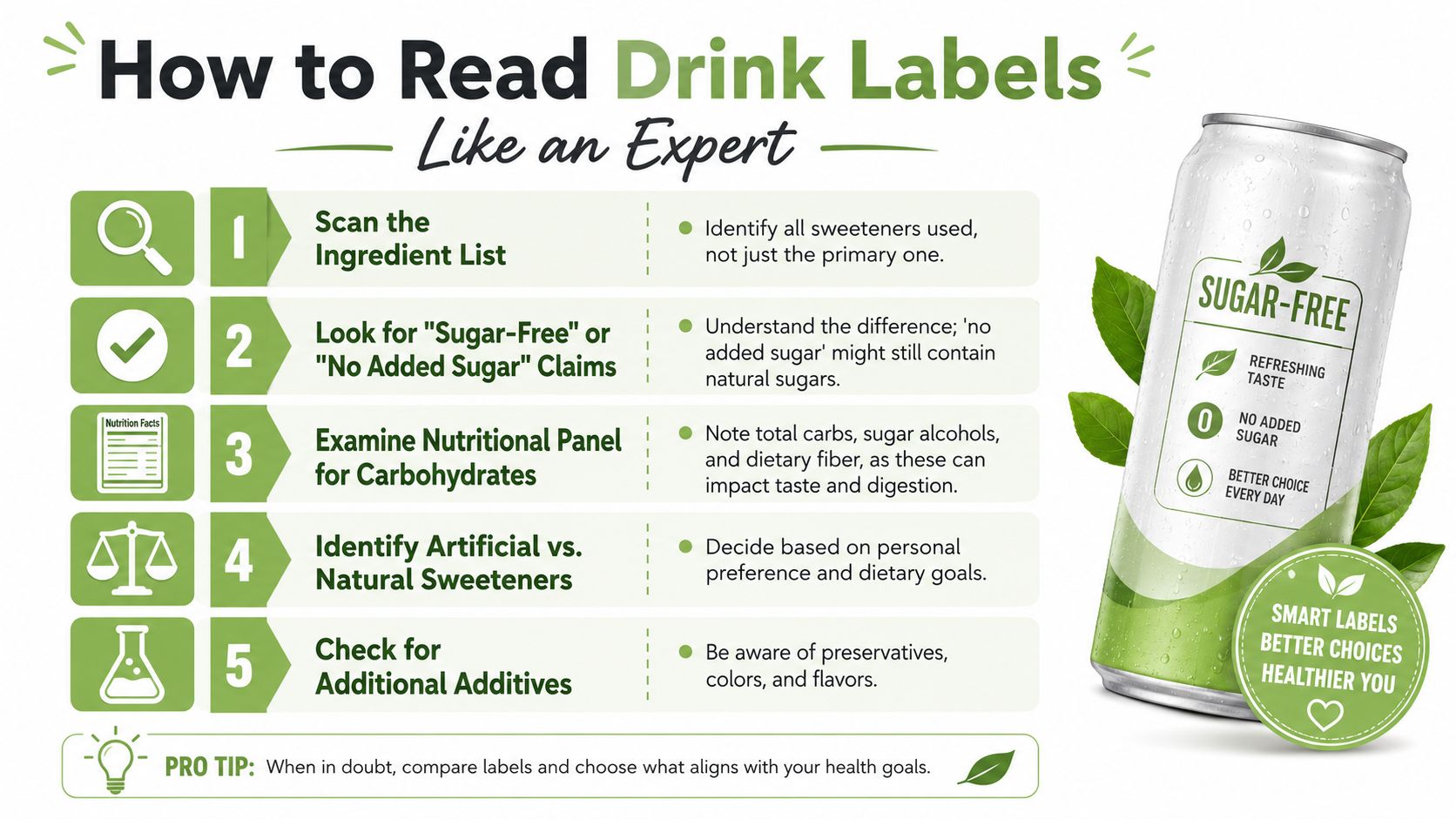
The five-part label check
- Find the sweetener first. Look for names such as aspartame, sucralose, acesulfame potassium, stevia, saccharin, or cyclamates. This tells you how the “zero sugar” promise is being delivered.
- Check whether it's sweetened at all. Some sparkling waters have no sweetener and rely only on flavour essence. That's very different from a diet-style soft drink.
- Read the ingredient list length. A shorter list isn't always perfect, but it often tells you the drink is simpler.
- Look for extra additives. Colours, preservatives, acids, and flavour enhancers can change how processed the drink feels overall.
- Use the nutrition panel as a backup, not the whole story. Zero sugar and low calories can still sit alongside a heavily engineered formula.
A fast side-by-side mindset
Here's a practical way to compare two bottles in under a minute:
| What to check | Simpler fizzy drink | More processed zero sugar drink |
|---|---|---|
| Ingredient list | Short and easy to follow | Long and technical |
| Sweetness source | None, or minimal | One or more high-intensity sweeteners |
| Drinking role | Hydration or light refreshment | Treat-style soft drink replacement |
| Overall feel | Cleaner and less sweet | Stronger flavour and sweeter finish |
A few label traps people miss
“No added sugar” and “sugar free” don't always mean the same thing in practice. A drink can also sound natural on the front while still using a complex formula inside.
That's why the healthier choice often isn't the loudest one.
If you're shopping for a more traditional soft-drink-style option, no sugar ginger beer choices can be a good example of why label reading matters. Two products may both say “no sugar”, yet taste and read very differently once you flip the can around.
Read the first three ingredients, then the sweetener system. That gives you the quickest picture of what kind of drink you're buying.
Once you start doing this regularly, the aisle stops feeling random. You can spot the difference between simple fizz, sweetened soda, and a functional drink at a glance.
Serving Ideas for Home and Hospitality Venues
Good sugar free carbonated drinks don't have to be treated like a compromise. Served well, they can feel just as considered as wine, beer, or a cocktail.
For home drinkers, the easiest upgrade is presentation. A proper glass, citrus peel, fresh herbs, chilled temperature, and the right pairing can make a simple fizzy drink feel much more satisfying.
At home
Try a few low-fuss combinations:
- With lunch pair unsweetened sparkling water with lemon or cucumber for something crisp.
- For an afternoon pick-me-up pour a fermented fizzy drink over plenty of cold glassware and garnish with fresh mint.
- For a no-alcohol evening serve use kombucha as a base, then add citrus, ice alternatives, and a herb garnish.
If you want to keep drinks cold without diluting flavour, guides on alternative ways to keep drinks refreshing can be surprisingly handy, especially for sparkling drinks that lose character when watered down.
In cafés and hospitality venues
Customers don't just want “something with no sugar”. They often want a drink that still feels adult, intentional, and menu-worthy.
That opens the door for:
- A premium non-alcoholic list with sparkling water, unsweetened options, and fermented drinks.
- Food pairing suggestions so the drink feels selected, not apologetic.
- Signature house serves built around tea, citrus, ginger, or herb notes.
One factual example in this space is Pep Tea's sugar-free organic kombucha, brewed in the Hunter Valley, NSW. In a venue, a product like that can sit as a bottled serve, a cocktail alternative, or part of a zero-proof menu, depending on the style of service.
Cold temperature, proper glassware, and garnish can completely change how people perceive a healthier fizzy option.
That matters at home, and it matters even more across a café counter.
Frequently Asked Questions About Sugar Free Drinks
Are sugar-free carbonated drinks okay for children
It depends on the drink and how often it's consumed. A sugar-free soft drink is still a soft drink in style, especially if it's sweet, acidic, and heavily flavoured. Water and simpler drinks generally make more sense as everyday options.
Can sugar-free drinks help with weight management
They can help some people reduce sugar intake if they replace full-sugar soft drinks. But they aren't a magic solution. A drink being sugar free doesn't automatically improve overall diet quality.
Are they better than water
Usually not for everyday hydration. Water and unsweetened sparkling water remain the simpler benchmark. Sugar-free fizzy drinks are often better understood as alternatives to soft drink, not upgrades on water.
How much is too much
There isn't one universal answer. The better question is how often you rely on very sweet, highly processed drinks. If it's a daily habit, it's worth looking at simpler options and rotating in drinks with a cleaner ingredient profile.
What's a good option when entertaining
Offer a mix. Include plain sparkling water, a more flavourful sugar-free option, and a naturally fermented drink for guests who want something different. If you're planning a larger event, examples of a polished mobile bar setup, like ABC Hire's top-tier bar experience, can spark ideas for presenting alcohol-free drinks with the same care as cocktails.
If you're looking for fizz with a more thoughtful ingredient story, explore Pep Tea for Australian organic kombucha, matcha, and other functional drink options that fit a lower-sugar lifestyle without leaning on the usual soft drink formula.
Ginger Beer No Sugar: The Ultimate Guide to Finding the Best in 2026

Craving that fiery ginger kick without the sugar overload? You're not alone. The best ginger beer no sugar options deliver all that bold, refreshing flavour, making them a brilliant swap for sugary soft drinks. But the healthiest versions are often the ones that are naturally fermented, like ginger kombucha, which brings gut-health benefits to the table too.
Here at PepTea, we're passionate about drinks that are both delicious and genuinely good for you. Let's explore why so many Aussies are making the switch and how to find a truly healthy, sugar-free ginger beverage.
Why No-Sugar Ginger Beer Is a Top Australian Wellness Trend
Take a look inside Australian fridges and on local café menus, and you'll see a quiet revolution happening. Health-conscious Aussies are trading their traditional, high-sugar drinks for cleaner, more functional options, and ginger beer no sugar is right at the front of the pack. This is more than just a diet trend; it’s a fundamental part of a bigger wellness movement.
People are looking for drinks that do more than just quench thirst. They want real ingredients, authentic flavour, and benefits they can actually feel. The sharp, invigorating taste of ginger has always been a favourite, but its powerful properties are too often drowned in sugar. The no-sugar versions finally let the ginger itself shine.
This search for healthier choices has completely reshaped the beverage market. One recent piece of research really puts this into perspective, showing the Australian ginger beer market has hit a value of USD 97.28 million, with non-alcoholic versions accounting for a massive 80% of sales. That surge is tied directly to the wellness wave, with a huge number of us now deliberately choosing drinks with natural ingredients like ginger over standard fizzy drinks. You can dig into the specifics of this market shift in the full research about the Australian ginger beer market.
At its core, this movement is driven by a desire for:
- Clean Ingredients: A clear move away from artificial additives and mountains of sugar.
- Functional Benefits: Drinks that may support digestion, inflammation, or gut health.
- Mindful Consumption: Picking drinks that fit a healthier lifestyle without having to give up on great taste.
As a proudly Australian company with our roots in the Hunter Valley, we’ve watched this unfold first-hand. It's all about making smarter choices that feel good and taste even better. But here’s the thing: not all "no-sugar" drinks are the same. To make the best choice, you really need to understand what’s in your bottle.
Understanding What ‘No Sugar’ Really Means On The Label
When you see ‘no sugar’ on a ginger beer bottle, it’s easy to take that promise at face value. But the reality is a little more complicated. Not all no-sugar drinks are created equal.
Think of it like comparing different types of bread. You have your sugary white loaf, an artificially sweetened ‘diet’ bread, and then you have a naturally fermented sourdough. Each is fundamentally different, and the same thinking applies to ginger beer.
Many of the big-name "no sugar" or "diet" ginger beers are, for all intents and purposes, just soft drinks. They swap out sugar for artificial sweeteners to mimic the taste of traditional ginger beer, but without the calories. What you end up with is often just ginger-flavoured fizzy water, completely missing the depth and complexity of a properly brewed beverage.
To see past the marketing spin, it helps to know how to read nutrition labels effectively. This is where you can look past the big promises on the front of the bottle and get to the truth in the ingredients list on the back.
Decoding Sweeteners and Fermentation
So, if there's no sugar, what are these drinks using to get that sweet kick? The answer usually falls into one of two camps.
- Natural Sweeteners: Stevia and erythritol are the most common. These are plant-derived options that deliver a sweet taste without the actual sugar or calories.
- Artificial Sweeteners: Aspartame, sucralose, and acesulfame potassium (Ace-K) are sweeteners created in a lab. You'll find them in most commercial 'diet' drinks.
This is all part of a much bigger wellness trend, where the desire for natural ingredients is driving the demand for no-sugar drinks.

As you can see, the path from prioritising general wellness to choosing a specific no-sugar drink is a straight line. Consumers are more aware than ever.
But there’s a third category that stands completely apart: naturally brewed beverages.
True fermentation offers a path to a low-sugar drink without relying on added sweeteners. The sugar isn't replaced; it's consumed by living cultures during the brewing process.
This is where a drink like our own ginger kombucha comes into the picture. Here at our brewery in the Hunter Valley, we use a live SCOBY (a Symbiotic Culture of Bacteria and Yeast) that literally feeds on organic sugar.
This natural process is a transformation. The SCOBY consumes the sugar and, in its place, creates beneficial organic acids, vitamins, and probiotics. What’s left is a drink that is not only naturally low in sugar but has a wonderfully complex flavour that you just can't replicate with additives.
The distinction is critical. One is a flavoured soft drink with sugar substitutes. The other is a living, functional beverage crafted through a traditional, natural process. Once you understand that difference, you can make a choice that actually aligns with your health goals and your desire for authentic, real flavour.
The Real Health Benefits Of Sugar-Free Ginger Drinks
Choosing a sugar-free ginger drink isn’t just about cutting calories. It’s about letting the ginger actually do its job. When a drink is loaded with sugar, it triggers that familiar blood glucose spike, leading to the inevitable afternoon crash and quietly working against any wellness goals you might have.
A ginger beer no sugar option helps you sidestep that whole cycle. What you get is a clean, fiery flavour that leaves you feeling balanced and genuinely energised, not just wired.
By taking out the sugar, you’re clearing the stage for ginger’s powerful, natural properties. This incredible root has been used for centuries for a reason, and a no-sugar format lets those qualities shine without interference.
Letting Ginger's Natural Goodness Shine
The real star of any ginger drink should always be the ginger itself. Without heaps of sugar clouding the picture, your body can properly access what makes this root so special. The main upsides are pretty well-known:
- Digestive Support: Ginger is famous for its ability to soothe the stomach and support smooth digestion.
- Anti-inflammatory Properties: The active compound in ginger, gingerol, has natural anti-inflammatory effects that may help with everyday aches and post-exercise muscle soreness.
- Stable Energy Levels: When you avoid the sugar rush, you get to enjoy more consistent energy throughout the day. No peaks, no troughs.
Aussies are catching on fast. Many of us now actively look for natural ingredients, and ginger consistently ranks as a top choice for everything from easing nausea to supporting immunity. When these drinks are made without sugar, they can slash calories by up to 90% compared to their full-sugar counterparts. It's a significant part of the wellness-driven shift you can see in the Australian market, where ginger's popularity continues to grow.
Beyond No Sugar To Probiotic Power
But what if your ginger drink could do more than just not have sugar in it? This is where the line between a simple sweetened drink and a properly fermented one becomes critical. An artificially sweetened ginger beer avoids sugar, sure, but it doesn't really add anything functional.
A naturally brewed ginger kombucha takes health a step further. It's not just 'no sugar'—it's actively good for your gut.
During our fermentation process here at PepTea, the live cultures in our SCOBY get to work consuming nearly all the sugar. This natural transformation doesn’t just get rid of the sugar; it creates something new—a drink packed with probiotics.
These beneficial bacteria are the foundation of a healthy gut microbiome, which we now know is linked to everything from digestion to immune function. For a deeper look at this, you might be interested in the benefits of kombucha and how it supports overall wellbeing.
So, while a diet ginger beer is a step in the right direction, a fermented ginger kombucha offers a far more holistic health advantage. It’s the difference between simply removing a negative and adding a powerful positive.
How To Choose The Best No-Sugar Ginger Beer In The Aisle

Walking down the drinks aisle can feel like a test. But finding a genuinely healthy ginger beer no sugar option is simple once you know what to look for.
Think of yourself as a detective. Your first move should always be to flip the bottle over and read the nutrition panel. Learning to spot the good, the bad, and the genuinely beneficial is the key to telling a real functional beverage from a glorified soft drink.
Your first clue is the ingredient list. Shorter is almost always better. If you see a long string of numbers, artificial sweeteners like aspartame (951) or sucralose (955), and preservatives like sodium benzoate (211), put it back on the shelf. These are the hallmarks of a highly processed drink, not a wellness beverage.
Green Flags To Look For
When you’re trying to find a high-quality product, certain phrases on the label are green flags that signal you’re on the right track. These are the markers of authenticity and quality.
- Naturally Brewed or Fermented: This is the big one. It tells you the drink’s flavour and fizz were created through a natural process, not by just adding flavouring to carbonated water.
- Certified Organic Ingredients: This certification is your guarantee that the ginger, tea, and other ingredients were grown without synthetic pesticides or fertilisers. It’s a promise of a cleaner final product.
- Live Cultures or Probiotics: If you see this, you’ve found a drink that offers functional gut health benefits. This is a feature unique to properly fermented beverages like kombucha.
- No Artificial Flavours or Colours: The taste and colour should come from real ginger and other natural ingredients, not from a laboratory.
The Gold Standard Benchmark
At PepTea, these green flags aren’t just a checklist; they’re our entire brewing philosophy. Our Australian-made, organic Kombucha is a perfect example of this benchmark in action.
The gold standard is a beverage that is not only free from sugar and artificial additives but is also actively beneficial. This is achieved through real fermentation with organic ingredients, resulting in a drink rich in probiotics and organic acids.
Take our Ginger Kombucha, for example. It's brewed right here in the Hunter Valley using a live SCOBY that naturally consumes the organic sugar during fermentation.
What's left is a complex, spicy ginger drink that’s buzzing with gut-friendly probiotics. It’s the difference between a simple fizzy drink and a truly functional beverage that supports your wellbeing. Once you know what to look for, making the best choice becomes second nature.
Delicious Ways To Serve No-Sugar Ginger Beer

A quality no-sugar ginger beer is brilliant on its own, but its real potential is unlocked when you start playing with it. That vibrant, spicy character makes it an incredibly versatile ingredient for crafting drinks that are genuinely interesting, moving far beyond just pouring it over ice.
Whether you're planning a backyard barbecue, looking for a sophisticated alcohol-free option, or designing a modern café menu, here are a few ideas for serving up that ginger goodness.
Create Refreshing Mocktails With A Kick
Forget bland soft drinks and overly sweet fruit juices. A ginger beer no sugar option is the ideal foundation for mocktails that actually have some personality. It brings the complexity and bite that so many non-alcoholic drinks are missing.
Here are a couple of simple recipes to get you thinking:
- Spicy Ginger No-jito: Muddle a few fresh mint leaves and a couple of lime wedges in the bottom of a tall glass. Fill it with ice, top with your no-sugar ginger beer, and give it a gentle stir. The fiery ginger cuts through the cool mint and zesty lime perfectly.
- Sunrise Zinger: Pour a splash of orange juice and a dash of grenadine into a glass, then top it all off with chilled ginger beer. The grenadine will sink, creating that classic sunrise effect. It's a vibrant, flavour-packed drink that feels like a proper treat.
The secret to a great mocktail is always balance. The spicy, dry profile of a no-sugar ginger beer provides a perfect counterpoint to sweet or sour elements, creating a drink with real character and depth.
A Sophisticated Mixer For Mindful Drinking
The shift toward mindful drinking and low-alcohol cocktails is more than just a trend in Australia; it’s now mainstream. People want to enjoy a social drink without the heavy hit of high-proof spirits, and a no-sugar ginger beer is the perfect partner for this.
Its robust flavour means you can use less alcohol without the drink feeling weak or watered down. A splash of vodka or gin with a quality ginger beer creates a crisp, clean-tasting low-alcohol drink that’s miles ahead of a standard sugary mixer.
For a more adventurous twist, you can explore our guide to creating delicious kombucha cocktails that can be fruity and non-alcoholic for even more inspiration.
Ideas For Cafés And Hospitality
For our friends running cafés and other venues, offering premium, health-conscious beverages is no longer a "nice to have"—it's an expectation. A high-quality ginger drink can be a genuine standout on your menu.
Consider using a naturally fermented option, like our PepTea Ginger Kombucha, as a base for signature non-alcoholic creations. It’s Australian-made, organic, and delivers that authentic, brewed-in flavour your customers will notice.
Use it to build unique mocktails, serve it straight as a premium alternative to commercial soft drinks, or even list it as a sophisticated mixer. It’s a simple way to signal a commitment to quality and wellness that modern consumers are actively looking for.
Why Ginger Kombucha Is The Ultimate No-Sugar Choice
We’ve talked about sugary drinks, artificially sweetened pretenders, and the search for something genuinely natural. The conversation about a ginger beer no sugar option often gets stuck on what’s been taken out. But the real story is about what gets put in—or more accurately, what’s created during the process.
Think of it this way. A "diet" ginger beer is like a mass-produced white bread with artificial sweeteners added. It might hit the low-calorie mark, but it’s fundamentally empty. A traditionally brewed ginger kombucha is the authentic sourdough from a local baker: crafted with care, alive with culture, and full of complex flavour.
The Magic Of Natural Fermentation
The difference comes down to our traditional brewing method. Here in our Hunter Valley, NSW brewery, we don’t just carbonate water and add ginger flavouring. We start with organic tea, a small amount of organic sugar, and introduce a living SCOBY (Symbiotic Culture of Bacteria and Yeast).
This is where the real work happens. The SCOBY gets to work metabolising the sugar, using it as fuel for fermentation. The sugar isn’t replaced with a substitute; it’s consumed and transformed by a living culture.
This natural consumption of sugar is what sets kombucha apart. The process creates a beverage that is not only naturally low in sugar but is also rich in the beneficial probiotics, organic acids, and vitamins that support gut health.
A Superior Choice For Flavour And Function
An artificially sweetened ginger drink often lands with a thin, one-note taste and a lingering chemical aftertaste. You can’t fake depth. A properly fermented ginger kombucha, on the other hand, has a layered flavour profile that’s impossible to replicate with additives.
You get the genuine, fiery warmth of real organic ginger, balanced by the subtle tang from the fermentation itself. It’s a complex, adult flavour experience.
By choosing a properly brewed ginger kombucha, you’re getting:
- Authentic Ginger Spice: We use real, organic ginger for a genuine kick, not a synthetic flavouring.
- Gut Health Support: The drink is alive with naturally occurring probiotics that may help your gut microbiome flourish.
- Naturally Low Sugar: Achieved through a living fermentation process, not by adding a chemical replacement.
- Australian-Made Quality: Brewed with passion by our family-owned company, right here in NSW.
When you want a no-sugar drink that offers both an interesting flavour profile and genuine function, a brewed ginger kombucha is simply in a different class. If you'd like to see what this looks like in practice, have a look at our PepTea’s sugar-free and gluten-free organic Ginger Kombucha.
Common Questions About No-Sugar Ginger Beer
When you start looking into sugar-free drinks, a few questions always pop up. It’s a space full of confusing labels and big claims. To cut through the noise, here are some straight answers to the questions we hear most often about no-sugar ginger beer.
Is No-Sugar Ginger Beer Actually Healthy?
It can be, but you have to know what you’re looking for. The quality varies wildly.
A genuinely healthy ginger beer is brewed from real ingredients, not cobbled together from artificial sweeteners, lab-made “natural” flavours, and preservatives. The only way to be sure is to read the ingredient list. If it reads like a soft drink with ginger flavouring, that’s exactly what it is.
The best options, like a properly brewed ginger kombucha, take it a step further. They’re not just missing the sugar; they’re full of gut-friendly probiotics and organic acids that are created during a real, natural fermentation.
Can I Use It In A Moscow Mule?
Absolutely. A quality ginger beer no sugar is a brilliant way to make a cleaner, crisper Moscow Mule. You get all of that essential spicy kick from the ginger without the syrupy sweetness, which lets the other ingredients shine.
If you want to create a more sophisticated, interesting version of the classic, try using a well-brewed ginger kombucha. The natural tang and complexity from the fermentation process add a depth of flavour that a standard mixer simply can’t replicate.
Using a naturally fermented ginger kombucha not only cuts the sugar but also introduces a more interesting, craft flavour to your favourite drinks. It transforms a simple mixed drink into a more thoughtful creation.
What’s The Difference Between Ginger Ale and Ginger Beer?
The real difference comes down to how they’re made, which has a massive impact on how they taste.
- Ginger Beer: Traditionally, this is a brewed and fermented drink. That natural process is what gives it a much spicier, more robust ginger flavour and a finer, more natural carbonation.
- Ginger Ale: This is usually just carbonated water mixed with a sweet ginger-flavoured syrup. As a result, it’s almost always milder, much sweeter, and lacks the fiery character of a true ginger beer.
So, when you’re looking for a "no sugar" option with a powerful, authentic ginger kick, a brewed ginger beer or a fermented ginger kombucha will always deliver a far better flavour experience than a diet ginger ale.
At PepTea, we believe the best drinks are both delicious and genuinely good for you. Our Australian-brewed organic kombucha is crafted to deliver authentic flavour and real functional benefits, making it the perfect choice for anyone seeking a premium, no-sugar beverage.
Explore our range of organic kombucha at https://peptea.com.au.