
Tag: healthy energy drinks
Zero Sugar Energy Drinks: Natural Boosts for 2026
A drink can be zero sugar and still be a poor energy choice.
That sounds backwards, because most marketing trains us to think sugar is the whole problem. In reality, removing sugar only answers one question. It doesn't tell you how much caffeine is inside, what sweeteners create the flavour, how acidic the drink is, or whether the “boost” comes from a harsh stimulant hit rather than a steadier source of focus.
Australians are right in the middle of this shift. Shelves are packed with bright cans promising clean energy, better performance and no guilt. But if you want a drink that supports wellbeing, it helps to look past the front of the can and ask a better question. What kind of energy are you buying?
The Rise of the Zero Sugar Promise
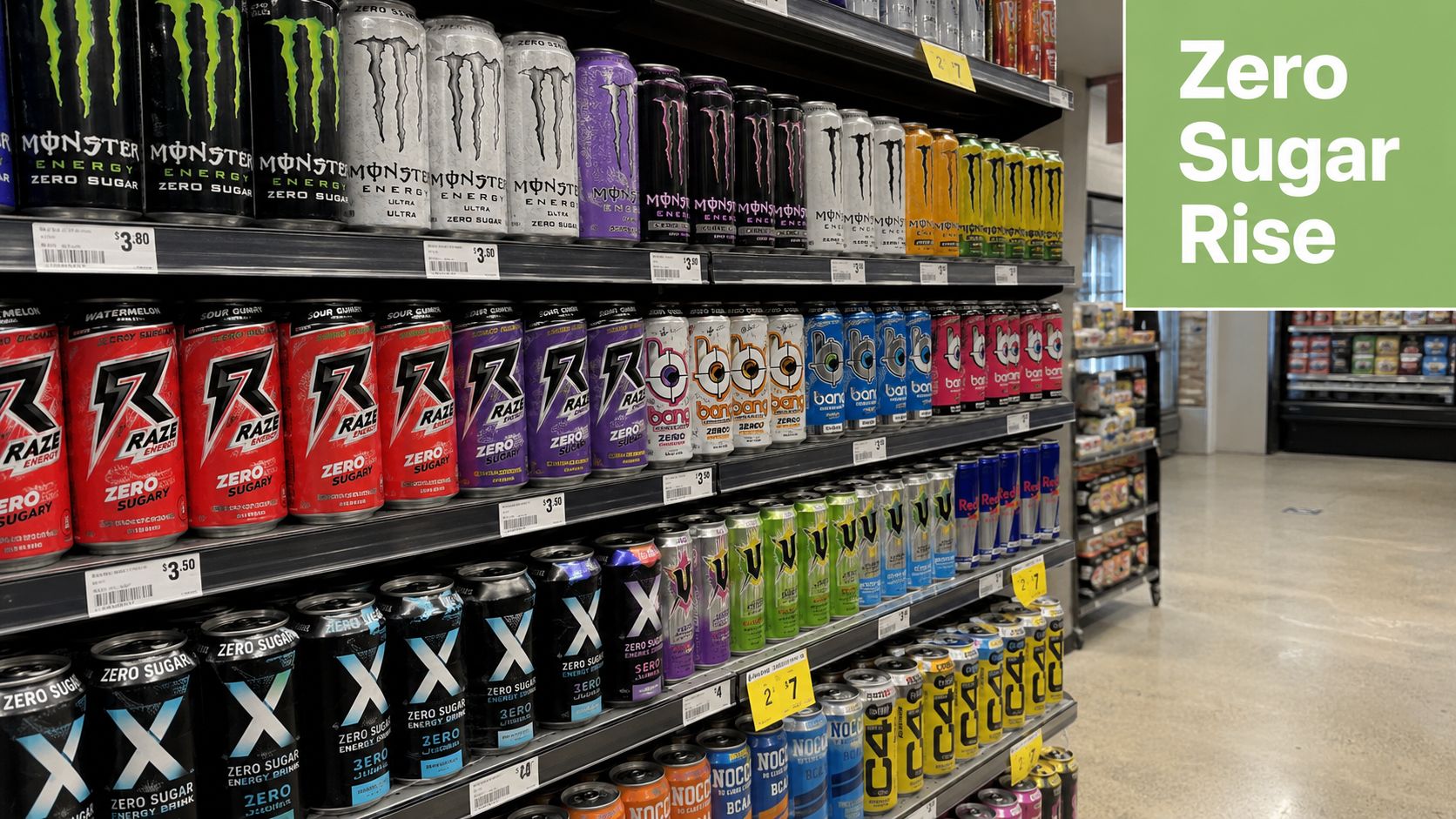
Walk into a servo, supermarket or gym fridge and you'll see how normal zero sugar energy drinks have become. They're aimed at students, tradies, office workers, parents, drivers and just about anyone who feels tired at 3 pm. The message is simple. You can keep the buzz and skip the sugar.
That message has landed because the category is huge and still growing. The global zero-sugar beverages market was valued at USD 79.48 billion in 2026 and is projected to reach USD 199.68 billion by 2034, while Asia Pacific held a 38.14% share in 2025. Australia sits inside that regional demand, which shows how central local consumers are to the trend.
Why the promise is so attractive
Zero sugar energy drinks solve an obvious concern. Many people want alertness without the sugar crash that can follow a sweet soft drink or a standard energy drink. For busy Australians trying to cut back on sugar, that sounds like an upgrade.
The trouble is that “zero sugar” has become a health shortcut. People often read it as low-risk, light, or somehow naturally better. It isn't that simple.
What the label doesn't tell you at a glance
A can may be free from sugar and still rely on a mix of caffeine, acids, flavour systems and non-nutritive sweeteners to deliver the same big taste and punchy effect. That doesn't automatically make it dangerous, but it does mean the health story is incomplete if all you look at is the sugar line.
A useful rule: “Zero sugar” describes what has been removed. It doesn't describe the overall quality of the drink.
If you've noticed more cafés, retailers and wellness brands talking about alternatives to mainstream energy drinks, that's part of the same conversation. We've written more about that broader shift in functional beverage trends in Australia, where people are looking for drinks that do more than just stimulate.
The real question
The issue isn't whether individuals need energy. They do. The issue is whether the drink delivers energy in a way that fits their body, routine and long-term health goals.
That's where the label needs a closer look.
Unpacking the Can What Is Really Inside
The design on the outside usually says “performance”, “focus” or “no crash”. The ingredient list tells the full story.
The main building blocks
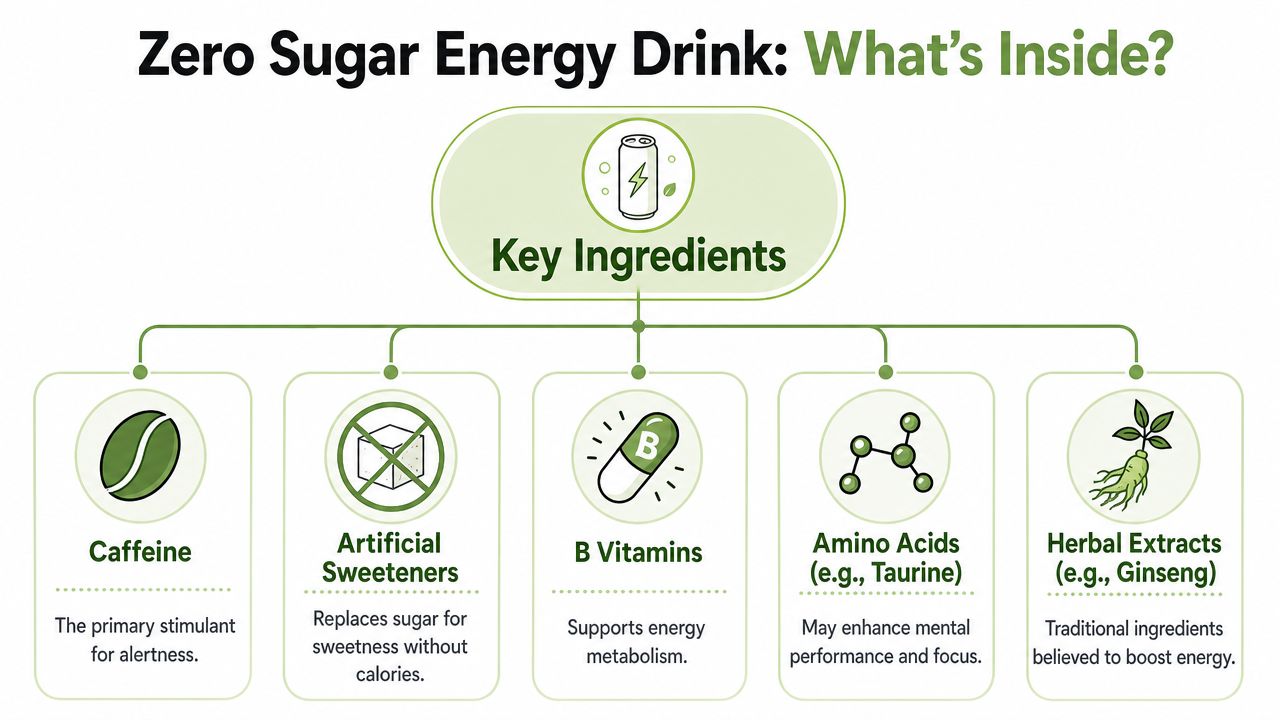
Most zero sugar energy drinks sold in Australia are built from a familiar formula:
- Caffeine for stimulation. This is the main active ingredient people feel. In Australia, zero-sugar energy drinks commonly sit around 32 mg of caffeine per 100 mL, which works out to about 80 mg in a 250 mL can.
- Sweeteners instead of sugar. These create the sweet taste without adding meaningful calories.
- Acids and flavours. These sharpen the taste and preserve the product.
- B vitamins and added compounds. These often include B6, B12, taurine or herbal extracts such as guarana or ginseng.
A quick visual breakdown can help if you're new to label reading:
Why sweeteners matter
The most common sweeteners in these drinks include sucralose and acesulfame-K. They're used because they deliver intense sweetness in tiny amounts. In fact, they can be up to 600 times more potent than sugar, which is why manufacturers can keep products under <5 kcal per 100 mL under FSANZ criteria.
That sounds efficient, and commercially it is. But it also means the drink is relying on a highly engineered flavour system rather than whole-food ingredients.
The key difference isn't only sugar versus no sugar. It's often ultra-processed stimulation versus food-based function.
What each ingredient is doing
Here's a plain-English view of the usual formula:
| Ingredient type | What it does in the drink | What you should know |
|---|---|---|
| Caffeine | Increases alertness | The boost may feel fast, but some people also get jitters or sleep disruption |
| Artificial sweeteners | Replace sugar while keeping sweetness | They change taste without adding sugar, but they don't make the drink whole or natural |
| B vitamins | Support normal energy metabolism | Their presence doesn't cancel out the rest of the formulation |
| Taurine and amino acids | Added for performance positioning | Common in energy drink formulas, though consumers often assume they're more natural than they are |
| Acids and flavours | Create the sharp, punchy flavour | They affect taste and shelf stability, and acidity matters for teeth |
The part that confuses most shoppers
Many readers assume “sugar-free” means the can is basically flavoured sparkling water with caffeine. It usually isn't. It's a carefully balanced product designed to mimic sweetness, intensity and instant lift without using sugar.
That's why reading the ingredient list matters more than reading the front label.
The Hidden Health Risks Behind the Hype
The strongest marketing line for zero sugar energy drinks is also the most misleading. It suggests that once sugar is gone, the major health risk is gone too.
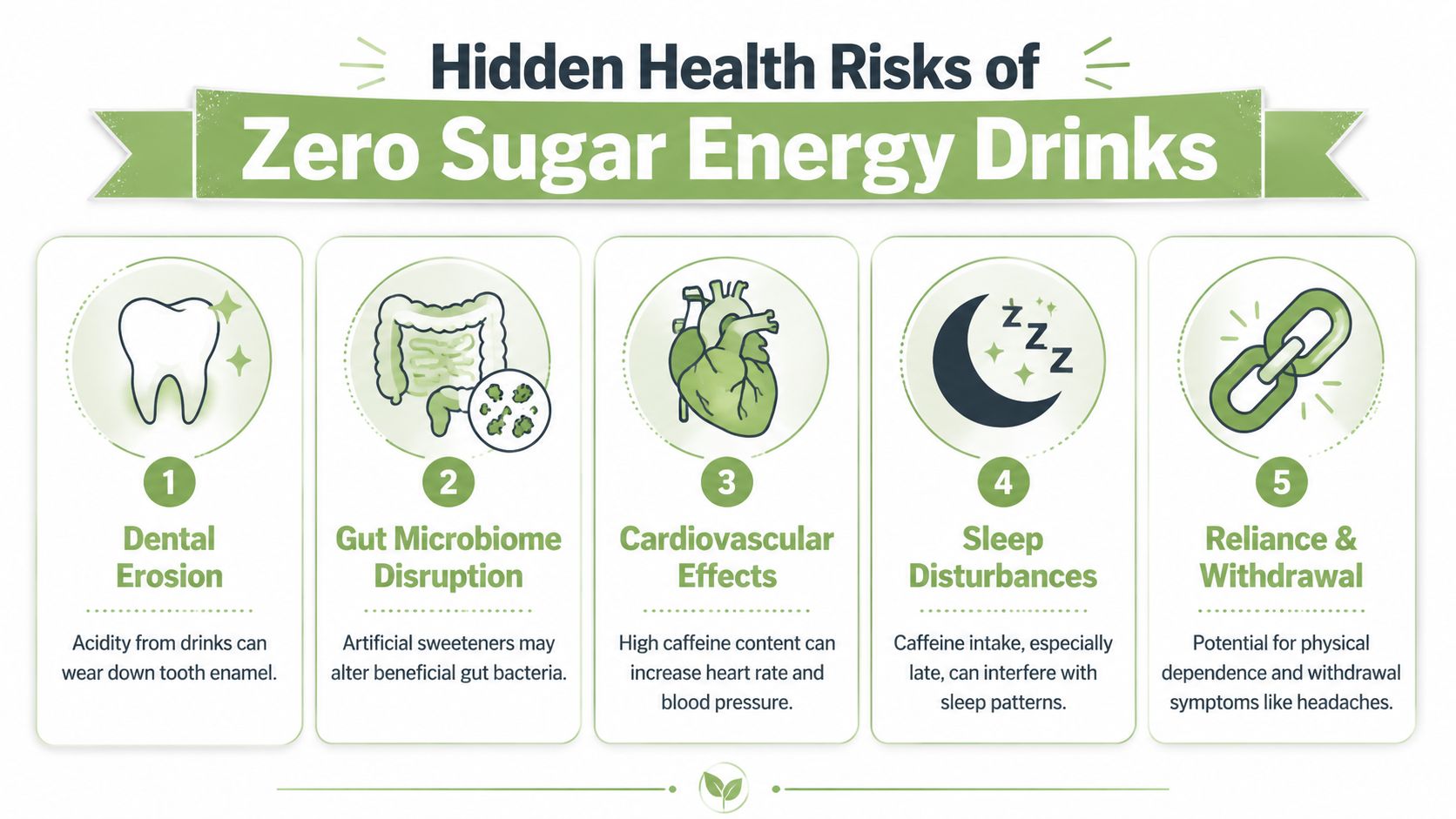
That leaves out several important trade-offs.
Metabolic concerns are not just about sugar
One of the most important findings in this space comes from Australia. Curtin University reported in 2025 that sugar-free energy drinks induced metabolic syndrome and insulin resistance in mice to nearly the same extent as high-fat diets, raising concerns that artificial sweeteners may dysregulate blood sugar and affect the gut microbiome. You can read the university summary in Curtin University's report on sugar-free energy drinks and metabolic harm.
This doesn't mean every person who drinks one can will develop a metabolic problem. It does mean the “metabolically neutral” idea deserves more caution than the branding suggests.
The heart still feels the stimulant load
Sugar-free doesn't mean stimulant-free. That matters because the Australian Heart Foundation reports that energy drinks, including sugar-free versions, are linked to transient rises in blood pressure and abnormal electrical activity in the heart.
For some healthy adults, that may mean a racing feeling, palpitations, or an uncomfortable post-drink buzz. For people with existing sensitivity to caffeine, poor sleep, anxiety, or underlying heart concerns, it can matter more.
The NHMRC recommends that adults limit caffeine intake to 400 mg a day and adolescents stay below 100 mg a day. Since some sugar-free energy drinks can contain 80–200 mg of caffeine per serving, a single can may already take a teen to or beyond that threshold.
Worth remembering: removing sugar does nothing to reduce the core stimulant effect of the can.
Dental damage can still happen
A lot of people switch to zero sugar products for their teeth. That's understandable, but it's only half the picture.
Under the Australian Food Standards Code, a beverage claiming to be sugar-free must contain less than 0.5 grams of sugar per 100 mL. Yet acidity still matters. Some zero sugar drinks rely on acids and preservatives that push pH low enough to contribute to enamel wear. A NSW dental health survey in 2023 found that 32% of adults who regularly consume sugar-free acidic beverages reported early enamel loss.
Why the “healthy” halo is risky
A standard sugary energy drink often looks unhealthy. A sleek zero sugar can often looks disciplined, sporty and modern. That image can lead people to drink them more often, drink them faster, or assume they're a routine wellness product rather than an occasional stimulant beverage.
Here's the balanced view:
- Lower sugar is a real benefit. If someone is choosing between a high-sugar can and a zero sugar version, reducing sugar intake can be sensible.
- It's not the same as choosing a nourishing drink. Artificial sweeteners, high caffeine, acidity and ultra-processed flavour systems still deserve attention.
- Frequency matters. An occasional drink is a different pattern from relying on them every day to get through work, study or training.
The main problem isn't that the label is false. It's that the label is incomplete.
Searching for a Smarter Way to Get Energised
Consumers don't reach for an energy drink because they're reckless. They're tired, flat, under pressure, underslept, or trying to stay sharp through a long day. That need is real.
The better question is whether you want stimulation or support.
Synthetic buzz versus functional energy
Synthetic stimulation is designed to feel immediate. It pushes alertness hard and fast. For some people that's useful in the moment, but it can also feel edgy, abrupt or draining later.
Functional energy is different. It aims to support focus, steadier alertness and a more manageable experience in the body. That's why more Australians are paying attention to ingredient quality, not just calorie count.
Australian market reporting has highlighted a shift toward drinks with natural ingredients and functional benefits, including L-Theanine from matcha, for stress management and focus, as discussed in Coherent Market Insights' report on sugar-free energy drinks.
A more useful way to judge an energy drink
Instead of asking, “How strong is it?”, try asking:
- How does it make me feel an hour later
- Can I still concentrate without feeling wired
- Will it interfere with sleep if I have it in the afternoon
- Does it rely on a short ingredient list or a lab-style formula
- Would I feel comfortable drinking this regularly
The smartest energy source isn't always the strongest one. It's the one you can live with well.
That shift matters in cafés, workplaces and homes. People don't just want a jolt anymore. They want drinks that suit a healthier routine.
Natural Alternatives Organic Matcha and Kombucha
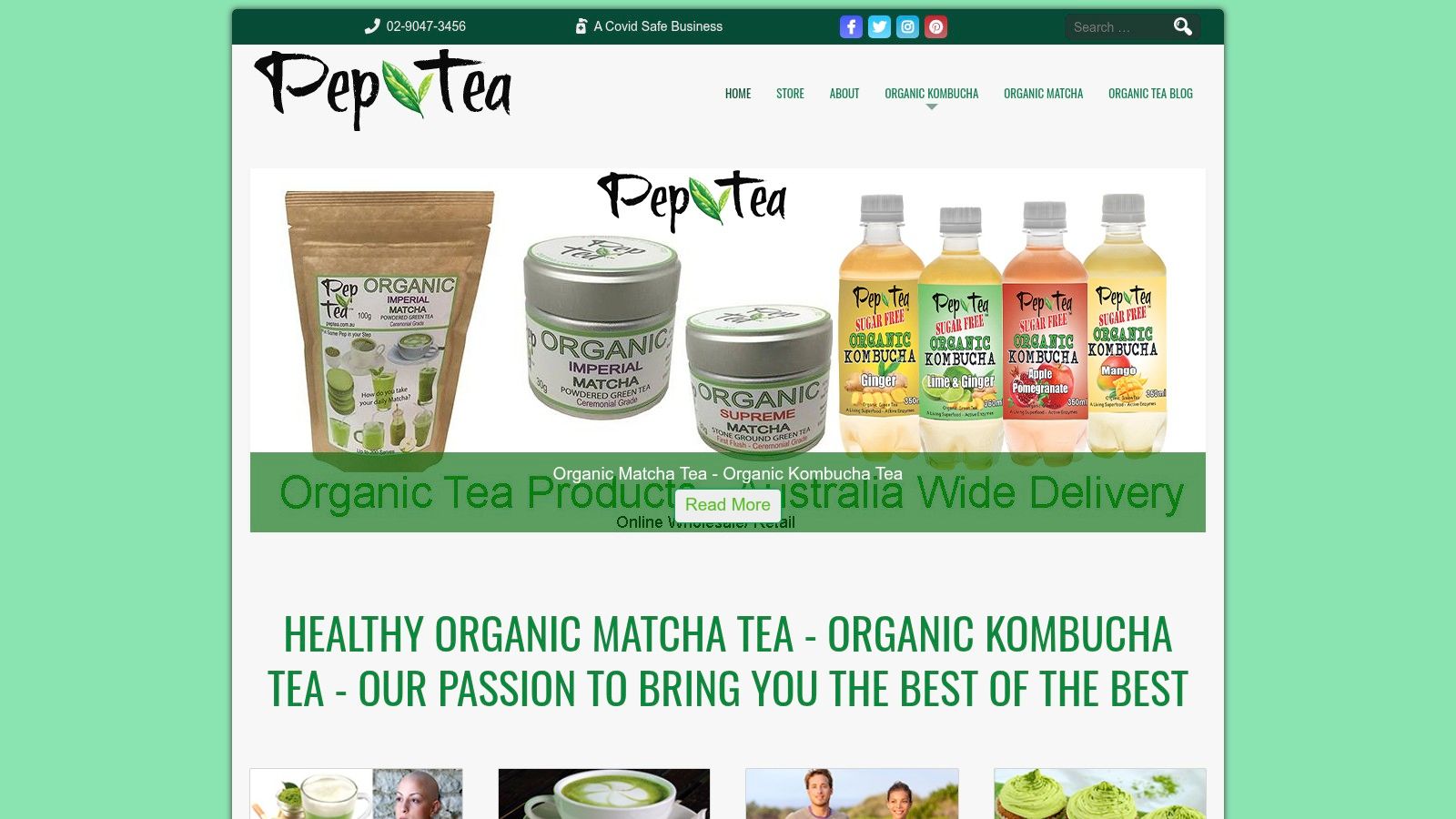
If you want energy without leaning on the usual can formula, two options stand out. Organic matcha offers focused, tea-based stimulation. Properly brewed kombucha offers a lighter, refreshing alternative that fits people trying to move away from ultra-processed drinks.
Why matcha feels different
Matcha isn't marketed as a shock-to-the-system drink. Its appeal is the combination of naturally occurring caffeine and L-Theanine, which many people experience as calmer, smoother focus.
That difference matters because, as noted earlier, the Australian Heart Foundation has linked energy drinks, including sugar-free forms, to temporary increases in blood pressure and abnormal electrical activity in the heart. Matcha sits in a different category of experience. Rather than trying to overpower fatigue with a synthetic-style buzz, it offers a more measured lift.
A simple matcha routine can look like this:
- Morning focus drink. Whisk ceremonial-grade matcha with water for a clean start to the day.
- Mid-morning latte. Add your preferred milk for something more filling.
- Workday reset. Choose matcha when you need concentration but don't want the abrupt feel some canned drinks produce.
Where kombucha fits
Kombucha isn't a direct one-for-one substitute for every energy drink. It's better understood as a refreshing, functional swap for people who want something lively, low in sugar and easier to integrate into everyday life.
When kombucha is properly fermented, it brings a very different profile from a mainstream energy can. The focus isn't maximum stimulation. It's a lighter drinking experience with live cultures and a brewed character that feels more like a real beverage and less like a flavour-engineered product.
At Pep Tea, we make Australian-brewed sugar-free organic kombucha in the Hunter Valley, NSW, which is one practical option for people moving away from artificial energy drinks. If you want a deeper look at what fermentation changes in the final drink, our guide to the benefits of kombucha is a useful starting point.
Which alternative suits which person
| If you want | A better fit may be | Why |
|---|---|---|
| Calm focus for work or study | Matcha | Natural caffeine plus L-Theanine can feel smoother |
| A fizzy afternoon swap | Kombucha | Refreshing and lower in sugar than many soft drinks |
| A café-friendly non-alcoholic option | Matcha or kombucha | Both work well in hospitality settings |
| Less reliance on synthetic formulas | Either | Both move you away from the typical can model |
For readers comparing broader clean energy options for professionals, it's useful to think in terms of routine, not just ingredients. The best alternative is the one you'll enjoy using consistently.
How to Choose a Genuinely Healthy Energy Drink
A healthy-looking label can hide a lot. The safest way to shop is to read the back, not the front.
Start with the ingredient list
The shorter and more recognisable the list, the easier it is to judge. That doesn't mean every unfamiliar ingredient is harmful. It means you can spot whether the product is built from brewed or whole-food inputs, or whether it depends on a long processing chain.
Look closely for:
- Artificial sweeteners. Names such as sucralose and acesulfame-K matter. On some labels, people also watch for additive numbers linked to sweeteners.
- Synthetic flavour systems. “Natural flavour” and “artificial flavour” can both mask a lot of formulation complexity.
- Acids and preservatives. These affect the drink's sharpness and shelf life, but they also matter for teeth and overall product style.
Check how the energy is created
Not all energy drinks deliver the same kind of effect. Ask yourself where the lift is coming from.
A quick checklist helps:
- Is the main effect just a caffeine hit? If yes, think about how it fits your day and sleep.
- Is it brewed or blended? Brewed drinks such as tea and kombucha usually signal a different product philosophy from highly formulated cans.
- Does it mention organic certification? That can help if you're trying to reduce exposure to unnecessary additives.
- Would you call the ingredients food-like? If not, it may still be legal and popular, but it may not match your health goals.
Label-reading shortcut: if the front says “clean” but the back reads like a chemistry set, trust the back.
What to choose in a café or supermarket
In practice, the healthiest option often looks less dramatic than the flashiest one in the fridge.
Choose drinks that lean toward:
- Brewed ingredients
- Organic tea bases
- Naturally fermented products
- Low or no added sugar
- No artificial colours when possible
If you're comparing options for everyday use, our article on natural energy drinks in Australia may help you narrow down what suits your routine.
The aim isn't perfection. It's making one better decision at a time.
Simple Swaps for a Better Boost
You don't need to overhaul your entire routine to move away from zero sugar energy drinks. A single swap can change how your day feels.
Try these examples:
- Morning can to morning matcha. If your first drink is a zero sugar energy can, swap it for a hot or iced matcha. You still get a lift, but many people find the focus feels steadier.
- Afternoon slump to chilled kombucha. If you usually want something fizzy at 3 pm, a sugar-free kombucha can scratch that same refreshment itch without turning the moment into a stimulant event.
- Second caffeine hit to caffeine-free support. Some afternoons call for less stimulation, not more. If that's you, this guide to caffeine-free drinks from Maximum Health Products gives practical ideas for lower-stimulation options.
A better energy ritual can also be more enjoyable:
- Whisk matcha with cold water and ice for a quick pre-work drink.
- Serve kombucha in a proper glass with citrus or mint if you want a café-style non-alcoholic option at home.
- Keep the decision simple. Ask whether the drink is supporting your body or just forcing it onward.
The big shift is mental. You're not giving something up. You're upgrading from a manufactured buzz to a more thoughtful source of energy.
If you're exploring cleaner ways to stay focused and refreshed, Pep Tea offers organic matcha and Australian-brewed sugar-free kombucha designed for everyday rituals, café menus and mindful low-sugar living.
Natural Energy Drinks Australia: The Ultimate 2026 Guide
It’s 3 pm. You’ve already had a coffee, lunch has worn off, and your brain is doing that foggy little shuffle between “push through” and “find something cold and fizzy.”
A lot of Australians know that cycle well. You grab a sugary drink or another strong caffeine hit, feel a quick lift, then cop the flat feeling later. That’s usually the moment people start looking into natural energy drinks australia shoppers are reaching for, not because they want hype, but because they want energy that feels steadier and easier on the body.
For some, that means matcha instead of a second flat white. For others, it’s kombucha, yerba maté, or a botanical drink with ingredients they can recognise on the label. Café owners are seeing the same shift from the other side of the counter, with more customers asking for low-sugar, functional drinks that fit a wellness routine.
The End of the 3 PM Slump
A bloke working from home in Newcastle opens the fridge and stares at his options. Leftover soft drink. Another coffee. Sparkling water. Maybe something with a bit more life in it.
That moment says a lot about why natural energy drinks are having a real moment in Australia. People still want energy, focus, and something convenient. They just don’t want the old trade-off of a sharp spike followed by a rough slide.

That shift isn’t imaginary. The Australian energy drinks market, including a rising segment of natural and organic variants, was valued at AUD 131.52 million in 2025 and is projected to reach AUD 226.58 million by 2034, growing at a CAGR of 5.5%, according to Research and Markets’ Australia energy drink market analysis.
What matters in everyday life is what that trend looks like in practice. It looks like:
- Parents swapping high-sugar options for drinks with tea-based caffeine
- Office workers looking for focus without feeling overcooked
- Gym-goers wanting something lighter than a syrupy can
- Cafés adding non-alcoholic functional drinks to the menu
Natural energy isn’t about chasing a massive buzz. It’s about finding a drink that helps you stay switched on without feeling rattled.
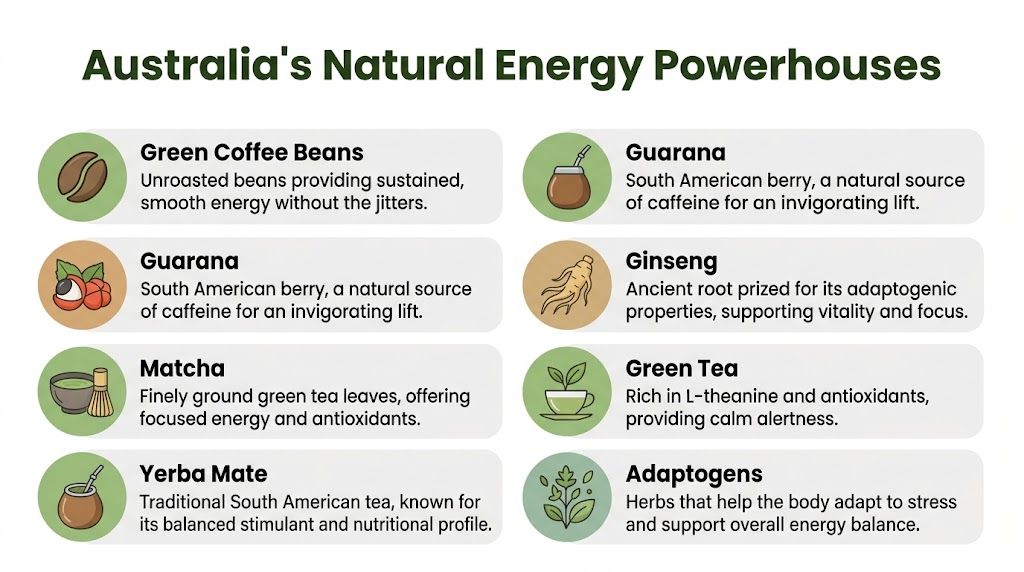
That’s where this category gets interesting. “Energy drink” used to mean one very specific thing. In Australia now, it can also mean matcha, kombucha, yerba maté, green tea blends, or other plant-based options that support a more even kind of lift.
What Makes an Energy Drink Natural Anyway
A lot of people still hear “energy drink” and think of neon cans, intense sweetness, and an ingredients panel that reads like a chemistry worksheet. That’s old thinking.
Natural energy drinks sit in a different lane. They usually lean on plant-based caffeine sources, lower sugar, and ingredients people already know from tea, herbs, or whole-food style formulations.
The ingredient shift people are looking for
Australian shoppers are reading labels more closely. They’re paying attention to where the caffeine comes from, how sweet the drink is, and whether the formula looks more like food or more like a science experiment.
That change shows up in market behaviour too. As TechSci Research’s Australia energy drinks report notes, consumers are moving away from artificial additives toward natural caffeine sources for steadier energy. The same source says health-centric soft drinks like fruit and vegetable juices captured 57.1% of consumer spending in the soft drink category as of 2023.
That doesn’t mean every “natural” drink is automatically a smart choice. It means the category has widened, and you’ve got better options than the old sugar-heavy model.
Natural versus synthetic in plain language
Here’s the simplest way to think about it.
| Type | Common feel | What to look for |
|---|---|---|
| Traditional energy drink | Fast hit, often very sweet, can feel abrupt | Artificial flavours, added sugar, synthetic-style stimulant blends |
| Natural energy drink | Gentler lift, often more balanced | Tea, maté, botanical caffeine, low sugar, simpler label |
A natural energy drink often gets its lift from ingredients such as:
- Matcha or green tea for calm alertness
- Yerba maté for a more rounded stimulant feel
- Guarana when used in a cleaner formulation
- Botanicals and functional ingredients that support focus or refreshment
Why people get confused
The word “natural” isn’t magic. A drink can still be highly processed, overly sweet, or full of things you don’t want. That’s why the label matters more than the front of the can.
A useful rule is to ask three questions:
- Where does the energy come from
- How much sugar is riding along with it
- Can you recognise most of the ingredient list
Practical rule: If the energy source is clearly named and the ingredient list looks like something a real person would understand, you’re usually starting in a better place.
For many Australians, the appeal is simple. They want energy that fits a health-conscious routine, not something that fights against it.
The Power Players of Natural Energy in Australia
You can feel the difference within a sip or two.
A matcha latte on a busy Tuesday morning tends to suit a very different moment from a sparkling yerba maté after school pickup, or a kombucha pulled from the café fridge on a warm afternoon. For households, that means choosing a drink that matches the job. For café owners, it means building a menu with clear roles instead of stocking three products that all do the same thing.
Matcha for calm focus
Matcha often suits people who want their brain switched on without feeling pushed around by their drink.
The reason is fairly simple. You are drinking the whole powdered green tea leaf, so the experience is not identical to a fast, isolated caffeine hit. Many Australians describe it as steadier and more organised, which helps explain why it keeps showing up in home kitchens, studio fridges, and café menus.
A lot of the curiosity around matcha centres on L-theanine. That pairing is one reason matcha has become such a favourite among professionals, students, and shift workers who want cleaner-feeling focus. If you want the practical safety side explained clearly, Pep Tea’s guide on how many cups of matcha tea powder are safe per day is a useful place to start.
For households, matcha is one of the easiest natural energy ingredients to work with. Hot, iced, blended into smoothies, or folded into yoghurt and oats, it adapts well.
For cafés, it also earns its shelf space because one ingredient can become several menu items:
- Hot matcha latte for regulars who want a coffee alternative
- Iced flavoured matcha for wellness-focused customers
- Sparkling matcha tonic for a lighter, sharper serve
- Smoothie add-on for gym and recovery traffic
Kombucha for a lighter daily option
Kombucha plays a different role.
People usually reach for it when they want refreshment with a bit of lift, not when they are chasing the strongest stimulant on the shelf. Tea-based fermentation, lighter flavour profiles, and lower-sugar options make it a comfortable fit for people trying to clean up their everyday drinking habits.
That gives kombucha a practical edge in Australia. It works at home as a soft drink replacement, and it works in hospitality as a chilled grab-and-go, a non-alcoholic pairing, or a mocktail base that still feels grown-up.
If matcha is the focused study drink, kombucha is often the easy afternoon reset.
Yerba maté for a brisk, sparkling lift
Yerba maté sits in the middle ground between tea culture and energy-drink convenience.
That middle ground matters. Some customers want something canned, cold, and ready to go, but they are also trying to move away from syrupy mainstream energy products. A well-made yerba maté drink answers that need neatly. It often feels brighter and cleaner, especially in sparkling formats.
For households, it can be a handy fridge option for active days or long drives. For cafés and venues, it works as a bridge item. It still speaks to the customer who normally buys an energy can, while giving health-conscious regulars a product with a more ingredient-led story.
Green tea and botanical blends for a softer profile
Some of the strongest products in this category do not rely on one headline ingredient.
Green tea, citrus, native botanicals, and herbs can work together like a good café blend. No single note has to dominate for the drink to do its job well. The result is often gentler and more rounded, which suits people who care about how they feel an hour later, not just the first 15 minutes.
In the Australian market, these blends often include:
- Green tea for a familiar tea-based caffeine source
- Matcha with citrus for freshness and a cleaner finish
- Botanicals such as lemon myrtle for flavour and local character
- Electrolyte support for hot weather, training days, or long shifts
This is also where café owners can stand out. A botanical sparkling tea or house matcha-citrus serve can feel more thoughtful than adding another canned product to the fridge.
Hydration-support drinks for flat, drained days
Some energy slumps have less to do with stimulation and more to do with fluid, food, and recovery.
That is why hydration-friendly drinks deserve a place in this conversation, even if they are not the highest-caffeine option. After a workout, a humid day, or a long hospitality shift on your feet, a drink with fluid support can make more sense than reaching straight for another stimulant.
For households, that can mean keeping a few lighter recovery-style options on hand. For cafés, it can mean offering a post-Pilates or post-beach drink that suits the customer who wants to feel better, not buzzier.
If someone is tired because they are dehydrated or under-fuelled, more caffeine may miss the real problem.
Which one suits which person
A simple matching exercise usually clears up the confusion.
| Drink type | Best suited to | Common appeal |
|---|---|---|
| Matcha | Desk work, study, morning focus | Calm alertness, flexible hot or cold |
| Kombucha | Everyday refreshment, low-sugar swaps | Light, fermented, tea-based |
| Yerba maté | Ready-to-drink energy seekers | Brighter lift, sparkling formats |
| Hydration-support drinks | Active days, recovery-minded drinkers | Fluid support, useful after heat or exercise |
| Green tea botanical blends | Gentle caffeine drinkers | Softer profile, layered flavour |
Australian buyers are getting more specific, and smart café menus are doing the same. The better question is no longer “Which drink gives energy?” It is “Which kind of energy fits this person, this moment, and this setting?”
Understanding the Health and Safety Evidence
Most confusion around natural energy drinks comes down to one word. Caffeine.
People often treat caffeine as if it always behaves the same way, no matter where it comes from. In real life, the source and the company it keeps can change the experience a fair bit.
Why natural caffeine can feel different
A tea-based drink doesn’t always land like a synthetic-style energy product. The same goes for yerba maté.
In Australian clean energy drinks, yerba maté is used for that reason. Perla’s guide to clean energy drinks describes yerba maté with natural caffeine at 30-50mg/100ml and theobromine, with a sustained release and a half-life extended 2-3x versus synthetic caffeine due to xanthine synergies.
You don’t need to memorise the chemistry. The practical takeaway is easier than that. Some plant-based caffeine sources feel smoother because they arrive with other naturally occurring compounds, not as a blunt isolated hit.
Matcha and calm alertness
Matcha notably stands out.
People don’t just drink matcha because it’s green and pretty in a bowl. They drink it because the experience often feels more organised. You’re awake, but not necessarily buzzing. Focused, but not edgy.
That’s the reason so many people use it during work, study, or long afternoons when they need their brain online without tipping into over-caffeinated territory.
If you’re wondering about sensible intake, Pep Tea has a practical guide on how many cups of matcha tea powder are safe per day.
A good natural energy drink should help you feel more like yourself, not less.
The kombucha question
Readers often ask whether kombucha “counts” as an energy drink.
It can, depending on how you use it. Kombucha made from tea can offer a mild lift, but the bigger reason many people keep it in rotation is that it feels lighter, less sugary, and easier to drink regularly than conventional soft drinks or heavy energy products.
There’s also a broader wellness link people care about. When digestion feels settled and meals aren’t swinging all over the place, daily energy often feels steadier too. That’s not a miracle claim. It’s just the practical reason many people pair low-sugar fermented drinks with a more balanced routine.
A few safety points worth keeping in mind
Natural doesn’t mean unlimited. It means you still need to pay attention.
- Check caffeine source: Tea, maté, and guarana all contribute differently to the feel of a drink.
- Watch serving size: A small bottle and a large can won’t hit the same.
- Notice timing: Late afternoon caffeine can still affect sleep, even when it feels smoother.
- Read the full label: “Natural” on the front doesn’t excuse a messy formula on the back.
For cafés, this matters too. Staff should be able to explain what’s in a matcha, kombucha, or maté-based serve in simple language. Customers appreciate that clarity.
How to Choose and Read Labels Like a Pro
You are standing at the fridge in a Newcastle café or your local health shop. Two cans both say “natural energy”. One will give you a clean, steady lift. The other is basically a soft drink in activewear.
The difference usually sits on the back label.
For everyday drinkers, that label helps you choose something you will feel good drinking again tomorrow. For café owners, it does another job too. It helps your staff explain the product in plain English, which is often the difference between a curious glance and a confident sale.
Read the back before the front
Front-of-pack words are there to catch your eye. The ingredient list tells you what is really in the bottle.
Start with the first few ingredients. They usually reveal the base of the drink, much like the first ingredients in a stock tell you whether a soup was built on vegetables or salt. If the energy source is genuine, it should be easy to spot. Look for clear names such as matcha, green tea, yerba maté, kombucha, or chia.
A shorter list can help, but length is not the whole story. Clarity matters more. If you can see what the drink is made from and why those ingredients are there, you are already ahead.
A strong label often shows four things:
- A named plant source of energy. Matcha, green tea, yerba maté, or another clearly identified ingredient
- A sensible sugar profile. Helpful if you want steadier energy rather than a quick spike
- Ingredients with a clear job. Cultures, botanicals, or hydration-supporting additions that make sense in the formula
- Plain flavour cues. Fruit, herbs, spices, and tea are easier to assess than vague flavour claims
Learn to spot the “why” behind the formula
Some drinks are built for more than stimulation. That is where label reading gets interesting.
A chia-based drink, for example, may also support hydration and make the drink feel more filling. A kombucha product may be chosen by customers who want something lighter and less syrupy. A matcha drink often appeals to people chasing focus without the heavy coffee edge. If you run a café, these distinctions matter because they shape how you place the drink on your menu and how your team describes it at the counter.
The simplest question is this: what job is this drink trying to do?
If the answer is clear, the label is doing its job.
Red flags worth slowing down for
You do not need a chemistry degree to read a label well. You just need a few filters.
Pause when you see:
- Big natural claims without a clear source of energy
- Long ingredient lists that hide the main ingredient
- Sweetness doing most of the heavy lifting
- Intense marketing words with very little explanation of formulation
- Serving sizes that make the numbers look smaller than the actual intake
That last one catches plenty of people. A bottle can look light and “better for you”, then turn out to contain more than one serve. For a household shopper, that changes what you are drinking. For a café buyer, it changes cost, portion planning, and how transparently you can present the product.
Quick test: If you cannot tell where the energy comes from and how sweet the drink is within ten seconds, put it back.
A practical label check for home and hospitality
Here is a simple way to assess a drink without overthinking it:
| Check | Why it matters |
|---|---|
| What is the actual energy ingredient? | Helps you predict whether the lift will feel tea-like, botanical, or sugar-driven |
| How sweet is the formula? | Affects flavour, repeat purchase, and how steady the experience feels |
| Is the serving size realistic? | Gives you a truer read on what one bottle or can delivers |
| Can a staff member explain it simply? | Important for cafés, delis, and wellness venues selling to curious customers |
If you are choosing for home, ask whether the drink fits your real routine. Can you have it mid-morning, pre-gym, or instead of a second coffee without regretting it later?
If you are choosing for a café, go one step further. Ask whether it fits service. Ready-to-drink options need to be easy to chill, easy to explain, and aligned with the kind of customer who already orders your matcha, kombucha, or low-sugar specials. If matcha is part of your offer, it also helps to understand the flavour profile customers expect from a well-made serve. Pep Tea’s guide to making an iced matcha latte with a smooth café-style balance is a useful reference point.
Good label reading is really pattern recognition. After a while, you stop being swayed by earthy colours and wellness buzzwords. You start seeing what is in the drink, who it suits, and whether it deserves a place in your fridge or on your menu.
Practical Uses From Your Kitchen to Your Café
A good natural energy drink shouldn’t live only in theory. It should fit into the way you eat, work, train, and socialise.
At home, that usually means speed. In a café, it means flexibility and menu appeal.
At home with minimal fuss
Matcha is one of the easiest places to start because it works in more than one format.
A few simple ways to use it:
Morning iced matcha latte
Good when you want something cooling and focused rather than another hot coffee. If you want a simple method, Pep Tea has a step-by-step guide on how to make an iced matcha latte.Smoothie boost
A small amount of culinary matcha can add a gentle tea-based lift to a banana, oat, or mango smoothie.Kombucha over ice with citrus
This works as an afternoon swap for soft drink and feels a bit more grown-up than a standard sugary mixer.Sparkling botanical serve
If you keep a yerba maté or green tea drink in the fridge, pour it into a nice glass with fresh mint or a wedge of lime. It turns a functional drink into something you look forward to.
For cafés building a better non-alc menu
Customers aren’t only asking for less alcohol. They’re also asking for more thoughtful alcohol-free options.
Natural energy drinks fit beautifully into that shift because they can sit across breakfast, lunch, and afternoon trade. They’re useful for people who want something purposeful but still café-friendly.
A practical menu mix might include:
- Hot ceremonial-style matcha latte for coffee alternators
- Iced flavoured matcha latte for warm weather and younger customers
- Kombucha by the bottle or poured serve for grab-and-go fridges
- Maté-based spritzes for premium non-alcoholic menus
- Botanical energy mocktails using tea, herbs, and citrus
This short demo gives a feel for how visual and approachable these drinks can be in service.
Why these drinks work so well in hospitality
They solve more than one problem at once.
They give cafés and casual venues a way to serve customers who want:
- Less sugar
- Less heaviness
- Less sameness than coffee or soft drink
- More interest in the fridge and on the menu
For a venue, natural energy drinks aren’t just products. They’re a way to meet morning regulars, wellness customers, and non-alc drinkers with one smarter category.
A Sourcing Guide for Households and Hospitality
Where you buy natural energy drinks shapes what you get. Range, freshness, product knowledge, and consistency all vary depending on the channel.
That matters whether you’re stocking your home fridge or planning a café drinks list.
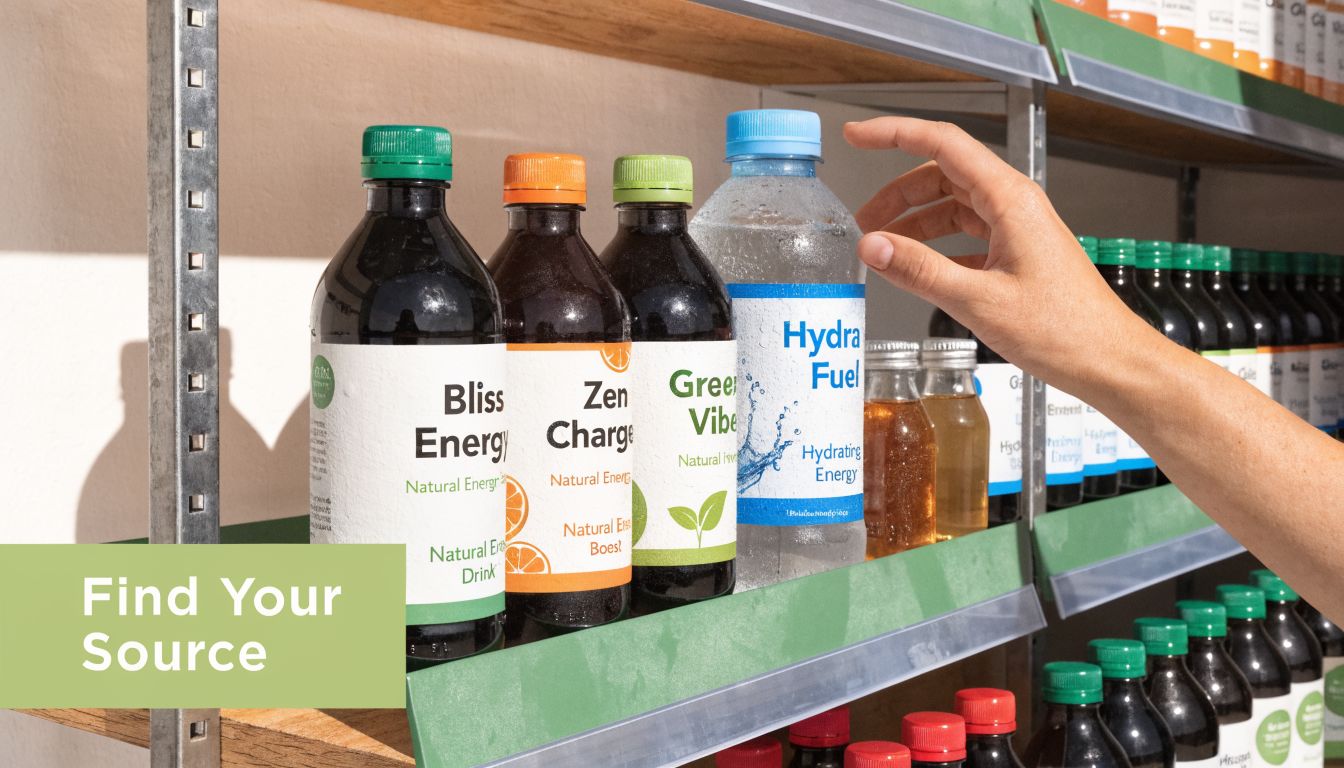
Supermarkets and major retail shelves
This is the most convenient path.
You can compare formats quickly, spot new launches, and grab a drink with the rest of your shop. The trade-off is that range can be patchy, and the better-for-you category often sits beside mainstream products that look similar at a glance.
Retail shelves are useful when you want speed and convenience. They’re less useful when you want depth or specialist guidance.
Health food stores and independent grocers
These shops often curate more carefully.
You’re more likely to find products that lean organic, low sugar, fermented, or tea-based. Staff may also understand the category better, which helps if you’re deciding between kombucha, maté, or a matcha-based option for the first time.
This route suits shoppers who want a more thoughtful selection.
Buying direct online
Direct buying gives households access to the full range, product details, and educational content that usually doesn’t fit on a shelf tag.
If kombucha is your starting point, this guide on where to buy organic kombucha in Australia is a handy place to compare your options.
For repeat buyers, direct ordering is often the easiest way to stay consistent. You know what you like, and you don’t have to hope the local fridge is stocked.
Wholesale for cafés and hospitality venues
Wholesale is its own decision.
A venue needs more than a nice product. It needs reliable supply, a format that works in service, and a supplier who understands that drinks have to perform both on the shelf and in the glass.
For cafés, bars, and health-focused venues, the best supplier relationship usually offers:
- Consistent product quality
- Clear ingredient information for staff
- A drink story customers can understand
- Local relevance and dependable ordering
For Australian venues, local sourcing can also make the menu feel more grounded. That matters more than many businesses realise.
Your Next Step Towards Cleaner Energy
The best natural energy drinks don’t try to flatten your body into one speed. They support the way real days work. Sometimes you need focus. Sometimes you need refreshment. Sometimes you just want something that won’t leave you feeling ordinary an hour later.
That’s why this category makes sense for both households and hospitality. Matcha offers a calm, steady style of energy that suits work, study, and café menus. Kombucha brings a lighter, low-sugar option that fits daily drinking and non-alcoholic serves. Yerba maté, green tea blends, and hydration-focused drinks fill out the rest of the picture.
Cleaner energy isn’t about perfection. It’s about making better swaps, one fridge and one menu at a time.
If you’d like to explore cleaner everyday options, have a look at Pep Tea for organic matcha and Australian-made kombucha, along with practical guides for home drinkers and hospitality venues.
Natural Energy Drinks: Your Guide to a Jitter-Free Boost in 2026

When you hear the term ‘natural energy drink’, what comes to mind? It’s not just another buzzword. We're talking about beverages that get their kick from whole-food ingredients like tea leaves, fruits, and fermented cultures, steering clear of the synthetic caffeine and sugar dumps that define conventional options.
The goal here is a gentler, more sustained kind of energy—one that works with your body, not against it. It’s the difference between a steady climb and a spike followed by a crash. As an Australian brand passionate about wellness, we at PepTea believe in harnessing the power of nature for vitality.
The Rise of Natural Energy Drinks in Australia

Have you ever glanced at the ingredient list on a typical energy drink and felt a bit uneasy? You’re not alone. A growing number of health-conscious Australians are walking away from the synthetic jolts and sugar-loaded formulas that once dominated the market. They're looking for a cleaner, more wholesome way to boost their vitality, and this shift is fundamentally reshaping what we choose to drink.
This movement isn't just about avoiding the bad stuff; it's about actively choosing the good. It’s about picking ingredients you can actually recognise—things sourced from nature that support your body's rhythm. Think of it like swapping highly processed fast food for a nourishing, thoughtfully prepared meal. Both might fill you up, but only one genuinely contributes to your long-term well-being.
A Growing Appetite For Wellness
The numbers tell the same story. In Australia, the market for healthy, functional drinks is seeing serious growth. Projections show the market value is set to climb from USD 70.11 million in 2026 to an estimated USD 130.89 million by 2033. Low-sugar and sugar-free options are driving this charge, which is a clear signal that Aussies are demanding smarter choices. You can explore the full market analysis of these trends to see just how deep this shift runs.
At the heart of this wellness wave are two standout beverages that have been around for centuries, long before the first neon-coloured can hit the shelves:
- Organic Matcha: A vibrant, stone-ground green tea from Japan, prized for its ability to deliver a unique state of calm alertness.
- Authentic Kombucha: A bubbly, fermented tea—like the ones we brew in our own Hunter Valley, NSW—packed with probiotics to support gut health.
We believe that what you drink should be a source of nourishment, not just a quick fix. As a family-owned Australian brand, we’re passionate about creating transparent, organic drinks that genuinely support an active and healthy lifestyle.
To understand the difference, it helps to see the two categories side-by-side. One relies on a blunt-force approach, the other on a more nuanced, whole-body effect.
Natural Energy Drinks vs Conventional Energy Drinks At A Glance
Here’s a simple breakdown of what sets these two beverage types apart.
| Feature | Natural Energy Drinks (e.g., Matcha, Kombucha) | Conventional Energy Drinks |
|---|---|---|
| Energy Source | Naturally occurring caffeine from tea leaves, plus other beneficial compounds. | Synthetic caffeine, often in high doses. |
| Sweeteners | Minimal raw cane sugar (for fermentation), fruit juices, or natural sweeteners like monk fruit. Many, like our kombucha, are completely sugar-free. | High-fructose corn syrup, sucrose, or artificial sweeteners (aspartame, sucralose). |
| Energy Delivery | Sustained release; compounds like L-Theanine in matcha create a calm, focused energy without a crash. | Rapid spike and crash; the combination of high sugar and synthetic caffeine causes a sharp jolt followed by a steep drop. |
| Additional Benefits | Rich in antioxidants, probiotics (in kombucha), vitamins, and minerals from whole-food sources. | Generally offer little to no nutritional value beyond the energy spike. Often contain artificial colours and flavours. |
| Ingredient Transparency | Simple, recognisable ingredient lists (e.g., water, organic tea, SCOBY, real fruit). | Long, complex lists with synthetic vitamins, taurine, glucuronolactone, and various preservatives. |
| Health Impact | May support gut health, provide antioxidant benefits, and promote sustained mental focus. | Linked to heart palpitations, anxiety, insomnia, and digestive issues due to high caffeine and sugar content. |
As you can see, the difference isn't just about flavour—it's about the fundamental mechanism. Natural energy drinks provide a gentle lift that helps you power through your day without the dreaded ‘crash and burn’ cycle.
Throughout this guide, we'll unpack exactly how these clean, functional beverages work and show you what to look for when choosing the best one for your needs.
The Science of Clean Energy With Organic Matcha
When we talk about natural energy drinks, one name keeps coming up for its unique, balanced power: Japanese organic Matcha. It’s not tea in the way you might think of it. Matcha isn’t an infusion from a tea bag; it’s the entire tea leaf, meticulously shade-grown, harvested, and stone-ground into a powder so vibrant it’s almost electric.
This process is what separates Matcha from everything else. Because you consume the whole leaf, you get 100% of its nutritional payload—a full spectrum of vitamins, minerals, and of course, its famous antioxidants. It’s the difference between drinking the juice from a squeezed orange and eating the whole fruit.
The Magic of Caffeine and L-Theanine
What truly defines Matcha as a source of 'clean energy' is the way its caffeine works with an amino acid called L-theanine. This is the secret. Coffee gives you a sharp, hard hit of energy from caffeine alone, but Matcha delivers something far more sophisticated.
L-theanine is known for promoting a feeling of relaxation and cutting through stress without making you tired. When it partners with caffeine, you get a remarkable synergy: a state often described as ‘calm alertness’. The result is a sustained lift in energy and focus, but completely without the jitters, anxiety, or the inevitable crash that follows coffee and conventional energy drinks.
Think of it like this: coffee is a sprinter, all explosive speed and a quick finish. Matcha is a marathon runner, providing steady, consistent energy that keeps you focused and enduring for the long haul.
This unique biochemical partnership is precisely why Zen monks have used Matcha for centuries to stay sharp during long periods of meditation. It just works.
The Antioxidant Superstar EGCg
Beyond the clean energy, Matcha is loaded with a specific class of antioxidants called catechins. The most powerful and plentiful of these is epigallocatechin gallate (EGCg).
This is the compound celebrated for its role in supporting a healthy metabolism and defending cells against oxidative stress. And because you’re drinking the entire leaf, the concentration of EGCg you get from Matcha is off the charts—up to 137 times more than what you'd find in a standard cup of brewed green tea. You can learn more about how Matcha tea powder is a powerhouse of antioxidants in our detailed article. This incredible antioxidant density is a huge part of what makes Matcha one of the ultimate natural energy drinks.
Choosing The Right Matcha For You
Not all Matcha is created equal. Understanding the grades is the key to getting the experience you’re after. You'll mainly see two types: Ceremonial and Culinary.
Ceremonial Grade: This is the absolute best, made from the youngest, most tender tea leaves. It has a brilliant green colour, a silky-fine texture, and a smooth, slightly sweet flavour with zero bitterness. It’s made to be prepared traditionally—just whisked with hot water—for a pure, unadulterated Matcha experience.
Culinary Grade: Still a high-quality product, culinary Matcha is produced from leaves that are a little older. This gives it a stronger, more robust flavour that can be slightly bitter. That boldness is exactly what makes it perfect for mixing into other ingredients; its flavour holds its own in lattes, smoothies, baking, and even savoury recipes.
At PepTea, our focus is on sourcing only the finest certified organic Matcha from Japan. We make sure that whether you’re whisking up a traditional tea or adding a powerful boost to your morning smoothie, you’re using a pure, authentic product. This commitment to quality is what unlocks the true science of clean energy found in every single scoop.
The Gut-Energy Connection with Authentic Kombucha
If matcha is all about clean, focused energy for the mind, kombucha is its counterpart for the body, working its magic from the inside out.
Many of us don’t realise just how closely our gut health is tied to our daily vitality. When your digestive system is balanced and happy, it becomes far more efficient at absorbing nutrients and even producing certain vitamins. The result? Better, more sustained energy levels throughout the day.
This is precisely where authentic kombucha shines. It's so much more than a fizzy, refreshing drink; it’s a living beverage, teeming with beneficial microorganisms. Think of it as actively tending to your body's internal garden. By introducing a diverse range of probiotics, you’re helping create a thriving gut environment that underpins your overall well-being.
The Art and Science of Fermentation
So, what is kombucha, really? At its heart, the process is beautifully simple. It all begins with sweetened organic tea. To this, a special culture of bacteria and yeast—known as a SCOBY (Symbiotic Culture Of Bacteria and Yeast)—is added.
The SCOBY is the engine room of the whole operation. It gets to work consuming most of the sugar in the tea, transforming the liquid through fermentation.
This transformation is what creates a host of beneficial compounds:
- Live Probiotics: These are the "good" bacteria that help bring balance to your gut microbiome.
- Organic Acids: Compounds like acetic acid and gluconic acid give kombucha its signature tangy flavour and may support various bodily functions.
- B Vitamins: The fermentation process naturally produces B vitamins, which are crucial for converting the food we eat into energy.
At PepTea, we brew our kombucha the traditional way in the scenic Hunter Valley, NSW. We stick to real, organic ingredients and allow the fermentation to complete naturally. This patience results in a genuine, sugar-free organic kombucha that’s truly alive with goodness.
The following diagram shows the traditional process behind another of our favourite natural energy sources, matcha, from leaf to powder.

It’s this simple, careful process of transforming whole tea leaves into a fine powder that ensures you get all of matcha’s potent benefits.
Avoiding "Cowboy Kombucha"
As kombucha’s popularity has exploded, the market has been flooded with products that simply don’t live up to the promise. We call these "cowboy kombuchas." They’re often mass-produced, pasteurised (which kills the all-important live probiotics), or loaded with sugar and artificial flavours to hide a poor-quality brew.
A true, living kombucha needs to be handled with care. That’s why we operate from a purpose-built, HACCP-accredited brewery. This international standard for food safety guarantees every bottle of PepTea Kombucha is not only effective but also completely safe.
This stands in stark contrast to the broader soft drink manufacturing scene in Australia, which saw a 1.9% CAGR from 2021-2026. While this growth included a pivot towards so-called functional beverages, it’s crucial for people to know what separates a genuinely healthy option from a cleverly marketed one.
With non-alcoholic drinks surging, it’s clear that consumers, particularly urban millennials, are actively seeking out authentic products with real benefits.
Choosing a properly brewed kombucha means you’re getting a drink that actively supports the gut-energy connection. It’s a delicious, bubbly way to nourish your body and boost your vitality, turning the simple act of hydration into a meaningful step toward better health.
You can learn more about the benefits of kombucha and what really makes an authentic brew in our dedicated guide.
How to Choose a High-Quality Natural Energy Drink
Navigating the wellness aisle can feel like a minefield. With so many drinks shouting 'natural' or 'healthy' from their labels, how do you tell the genuinely good stuff from the clever marketing?
The secret is to ignore the flashy promises on the front and become an expert at reading the fine print on the back. A truly clean, high-quality natural energy drink becomes obvious once you know the few key things to look for.
Your Label-Reading Checklist
When you pick up a bottle, flip it over. The best options will tick all these boxes, giving you confidence that you’re buying something that actually supports your health.
Look for 'Certified Organic': This isn't just a buzzword. A certification from a trusted body like Australian Certified Organic (ACO) is your guarantee the ingredients were grown without synthetic pesticides or fertilisers. It’s a non-negotiable sign of purity and quality.
Check the Sugar Content: Be ruthless here. You want to see explicit claims like "no added sugar" or "sugar-free". Many drinks use fruit juice concentrates to sweeten their products, which can still pack a surprising sugar punch. A genuinely low-sugar option won't hide its numbers.
Scan for Real Ingredients: Is the list full of things like "organic tea leaves," "fresh ginger," or "mango puree"? Or does it hide behind "natural flavours"? That term is often a smokescreen for a whole host of processed additives. Always prioritise drinks that get their flavour and function from whole, recognisable foods.
Red Flags to Watch Out For
Just as important as knowing what to look for is knowing what to run from. Certain ingredients and label tricks can completely undermine the health benefits you’re after.
A high-quality natural energy drink should energise you through nourishment, not by tricking your body with synthetic inputs or hidden sugars. If the ingredient list is long and complicated, it's usually a warning sign.
Be wary of artificial preservatives. A living drink like kombucha belongs in the fridge, not sitting on a warm shelf for months. The need for refrigeration is often the best sign you’re getting an authentic, unpasteurised product that’s teeming with live cultures. To get a better handle on how this works, it’s worth understanding prebiotics and probiotics for gut health.
The Non-Negotiable Standard of Safety
Finally, a top-tier brand doesn't mess around with safety. Look for mentions of quality control standards like HACCP accreditation. This internationally recognised system (Hazard Analysis Critical Control Point) ensures food safety from the farm to the finished bottle.
For us at PepTea, these aren’t just guidelines; they are our founding principles. Our kombucha is proudly brewed in our HACCP-accredited, purpose-built facility right here in the Hunter Valley. It’s Australian-made, certified organic, and authentically fermented to be completely sugar-free.
The same rigour applies to our other products. When it comes to matcha, for instance, understanding the difference between grades is everything. You can discover more about Matcha grade and quality over on our blog. By holding ourselves to these benchmarks, we hope to give you the tools to make better choices for your own health.
Integrating Natural Energy Into Your Daily Routine

Bringing natural energy drinks into your daily rhythm isn't about overhauling your life. It's about making small, deliberate upgrades that feel good.
Think of it as a simple swap. Whether you’re at home looking to start your morning right, or a café owner wanting to give your customers something genuinely better, drinks like authentic kombucha and organic matcha slot right into your existing habits. This isn't about forcing down a "health drink." It's about finding clean, vibrant energy in a form you actually look forward to.
Here’s how to make it work.
For Your Morning Ritual at Home
Trading your standard coffee or sugary juice for a natural alternative can set the tone for your whole day. It's a simple change with a noticeable impact. Here are two remarkably easy ways to begin.
1. The 2-Minute Matcha Latte
This is the perfect introduction to matcha's unique 'calm-alert' energy. It’s creamy, satisfying, and quick. All you need is our PepTea Culinary Grade Organic Matcha, your milk of choice, and a sweetener if you like.
- Step 1: Sift 1 teaspoon of matcha into a mug. This simple step prevents clumps and ensures a smooth finish.
- Step 2: Pour in about 60ml of hot (not boiling) water. Whisk it hard until it's frothy and combined. A bamboo whisk is traditional, but a small milk frother does the job beautifully.
- Step 3: Heat and froth 180ml of your preferred milk—oat and almond work particularly well—and pour it into the matcha. Sweeten to your taste.
2. The Green Energy Smoothie
When you need nutrients and energy on the go, a matcha smoothie is your answer. It's a breakfast and a boost in one glass.
- Step 1: In your blender, toss 1 frozen banana, a big handful of spinach, 1 teaspoon of culinary matcha, and 250ml of water or coconut water.
- Step 2: For more staying power, add a scoop of protein powder or a tablespoon of chia seeds.
- Step 3: Blend until it's completely smooth. Drink it right away.
For the Forward-Thinking Australian Café
If you're in the hospitality game, the shift towards natural energy drinks is an opportunity you can’t ignore. The demand for healthier, functional options is no longer a niche—it’s a mainstream movement.
Australia’s consumption of sports and energy drinks is set to hit 232.0 million litres by 2034. The real story is where that growth is coming from: Aussies are actively looking for clean, sustainable alternatives. You can read more on the expanding Australian sports and energy drinks market here.
Upgrading your menu is about offering smarter choices that meet modern customer values. A well-crafted non-alcoholic drink isn't just a placeholder; it's a profitable, sophisticated beverage that people will come back for.
Here are a few ways to bring this to your menu:
The Elevated Non-Alcoholic: Use a crisp, sugar-free PepTea Organic Kombucha as a base for premium mixers. A "Kombucha Spritz"—a splash of our Ginger or Mango kombucha with fresh mint and a lime wedge—feels special, looks great, and is incredibly simple to execute.
A Better Post-Mix Alternative: Ditch the sugary soft drinks. Offering bottled kombucha is a straightforward, high-margin swap that speaks directly to health-aware customers seeking low-sugar, gut-friendly options. It’s a premium experience they will pay for.
Functional Lattes & Smoothies: A classic Matcha Latte made with high-quality culinary matcha is a must-have for any serious coffee menu. Go one step further and design a signature "Energy Smoothie" with matcha, fruit, and seeds. Market it for what it is: a clean vitality boost.
These aren't just new drinks. They are a way to offer a genuine wellness experience, giving your customers another reason to choose you.
Answering Your Questions About Natural Energy Drinks
When it comes to clean energy, the details matter. The shift toward natural alternatives like matcha and kombucha is exciting, but it naturally comes with questions. We’ve heard them all, and we've put together some straight answers to the most common ones.
Think of this as a no-nonsense guide. We want you to feel completely confident about what you’re putting in your body and why it’s a smarter choice. Let’s get into it.
How Much Caffeine Is in Matcha and Kombucha Compared to Coffee?
This is the big one, and the answer is more interesting than just a simple number. It’s not just about how much caffeine, but how it works with other compounds.
Matcha: A standard serve of matcha (about one teaspoon) has roughly 30–70mg of caffeine. That’s quite a bit less than your average cup of coffee, which often clocks in at over 100mg. But the real story is L-theanine, an amino acid unique to matcha that works with caffeine to create a state of calm focus. It's the reason you get a smooth, sustained lift without the jitters or the dreaded afternoon crash.
Kombucha: Our kombucha, on the other hand, is a genuinely low-caffeine drink, with less than 10mg per serving. The SCOBY (the culture of bacteria and yeast) actually consumes most of the tea’s original caffeine during fermentation. This makes it a perfect choice for a gentle, anytime boost.
Are Natural Energy Drinks Safe to Drink Every Day?
For most people, absolutely. When we talk about high-quality, certified organic matcha or our authentic, sugar-free kombucha, we’re talking about simple, whole-food ingredients. This is a world away from the synthetic chemicals and sugars found in conventional energy drinks.
As with anything, it’s about listening to your body and finding a balance that works for you. A daily matcha latte or a refreshing kombucha can be a fantastic part of a healthy routine, giving you a natural way to support your energy levels.
Is Matcha Really Better Than Green Tea Bags?
Yes, and the difference is huge. It all comes down to what you’re actually consuming.
When you drink matcha, you are consuming the entire stone-ground tea leaf, which has been dissolved into the water. This means you get 100% of its antioxidants, vitamins, and minerals. Nothing is left behind.
Brewed green tea is just an infusion. You’re only drinking the compounds that leach out of the leaf into the water. Most of the good stuff, including a huge portion of the powerful antioxidant EGCg, never makes it out of the tea bag. Matcha is, without question, a more potent and beneficial experience.
Embrace Clean Energy For a Healthier Lifestyle
Making the shift to natural energy drinks is about more than just swapping one can for another. It’s a conscious decision to move away from the synthetic jolts and inevitable sugar crashes that leave you feeling worse than when you started. It’s about choosing beverages that work with your body, not against it.
We’ve seen how the calm, focused alertness from organic matcha and the gut-friendly power of authentic kombucha offer a different kind of energy. These drinks teach us that a real lift doesn’t come from a lab, but from nature. Once you understand that, you can see past the marketing hype and pick drinks that genuinely contribute to your wellbeing.
From a Quick Fix to a Daily Ritual
Embracing this change is simpler than it sounds. It’s about building small, positive habits that stack up over time, creating a foundation for a more vibrant, energetic life.
- Start Your Day Clean: Swap your usual morning coffee for a matcha latte or a vibrant green smoothie. That one small change can set a different, more positive tone for the rest of your day.
- Rethink Your Afternoon Boost: When the 3 pm slump hits, instead of reaching for another coffee or a sugary snack, try a cold, refreshing kombucha. It offers a gentle lift while also doing some good for your gut.
- Focus on Whole Foods: Truly clean energy is part of a bigger picture. To get the most out of this shift, it's worth exploring the broader context by understanding clean eating principles.
We hope this guide has inspired you to move beyond temporary fixes and embrace beverages that genuinely nourish your body. This isn't just about a drink; it's about a healthier and more mindful way of living.
This is your invitation to explore a world of energy that’s better for your body and mind, one delicious sip at a time.
We invite you to explore this healthier world of energy, starting with PepTea’s premium organic matcha and Australian-brewed sugar-free kombucha.