
Tag: matcha drinks
No Sugar Soft Drinks: A Practical Guide for Australians
Most advice treats no sugar soft drinks like the automatic upgrade from regular soft drink. That's too simple for Australian shoppers, and it misses the core decision, which is whether you want a cola-style swap, a lighter refreshment, or a functional drink that fits a café run, a workday, or a night out.
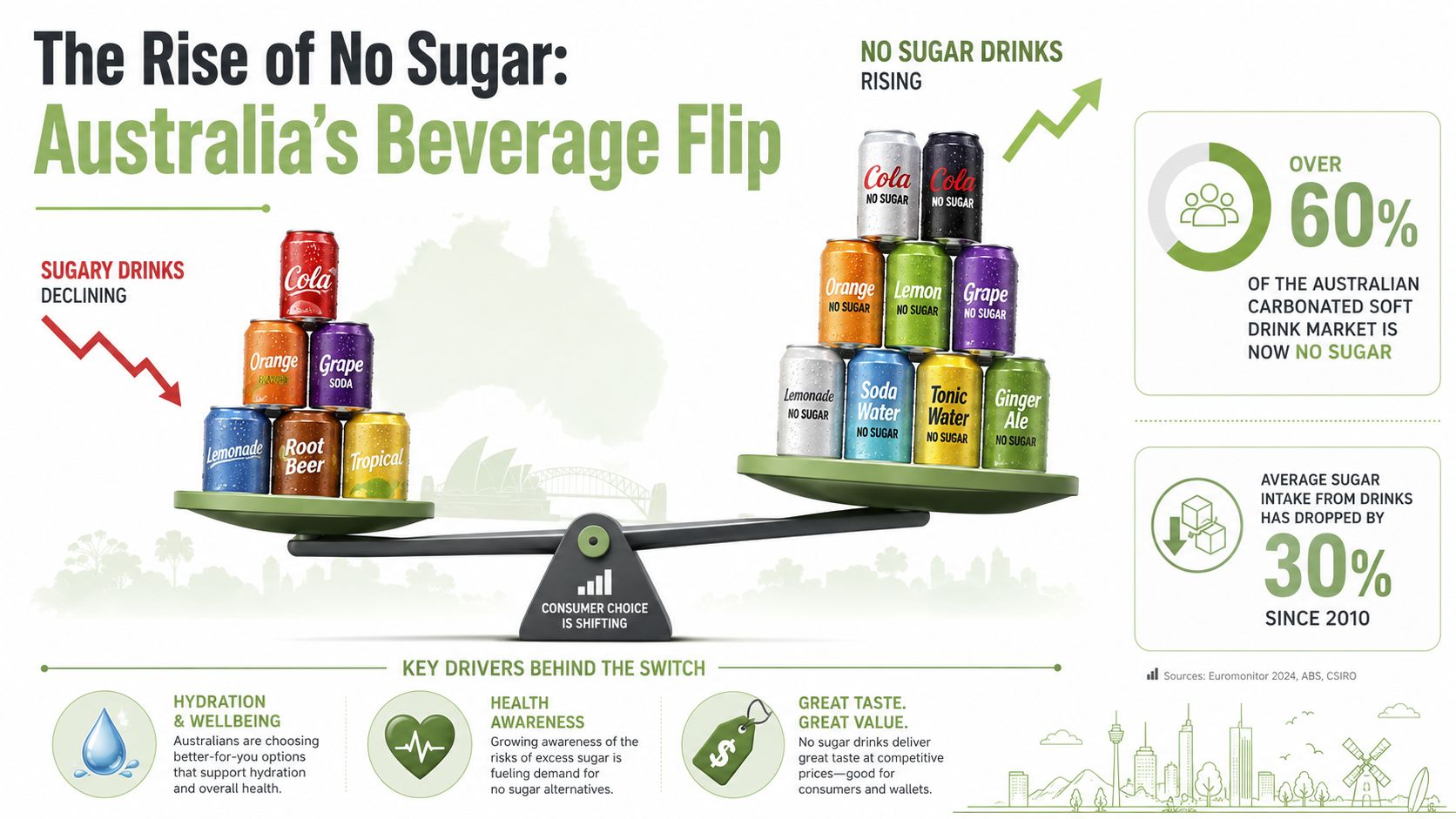
The category has also changed in a big way. In Australia's water-based non-alcoholic beverage market, low- and no-sugar drinks held 30% of market share in 1997 and 65% in 2024, while sugar-sweetened drinks fell from 70% to 35%. Sales of no-sugar water-based beverages rose from 30.4 litres per capita to 105.8 litres per capita over the same period, so these drinks are no longer a fringe option, they're a mainstream one (Australian beverage trends factsheet).
That shift matters because a drink's label doesn't tell you the whole story. No sugar can mean a diet cola, a sparkling water, a fermented kombucha, or a tea-based drink, and each one plays a different role in everyday Australian habits. Used well, they're practical substitutions. Used carelessly, they can crowd out better options like water or unsweetened tea.
Why No Sugar Soft Drinks Became the Australian Default
The surprising part is not that no sugar soft drinks exist. It is that they now sit beside water, kombucha, matcha, and tea as ordinary choices in Australian fridges and café menus. That changes the question. The useful comparison is no longer just “better than a sugary cola”, it is which drink fits the moment, the label, and the habit.
The market has already moved
Australia's water-based beverage market has flipped. Low- and no-sugar drinks have gone from 30% of market share in 1997 to 65% in 2024, while sugar-sweetened drinks moved the other way, from 70% down to 35% (Australian beverage trends factsheet). That means the fridge door, the servo shelf, and the café display are all reflecting the same shift.
No-sugar sales also climbed from 30.4 litres per capita to 105.8 litres per capita in that period, and the factsheet points to the category becoming part of everyday purchase behaviour rather than a side option. The same source also shows how broadly the category now reaches across water-based drinks, which helps explain why shoppers meet it everywhere from a corner store cooler to a chain café display (Australian beverage trends factsheet).
Practical rule: once a drink becomes the default shelf choice, judge it by label, ingredients, and use case, not by the word “zero” alone.
Why the default matters for shoppers
When a category becomes common, it can start to feel invisible. That is why label reading matters more now. A no-sugar cola can work as a tidy swap for a sugary cola, but it is still a processed beverage with a defined sweetener profile and flavour structure. It is not the same as water, and it is not the same as plain tea.
That distinction matters in Australia because shoppers now have several everyday options that solve different problems. A no-sugar soft drink can suit a convenience buy. A sugar-free kombucha can fill the role of a café-style pick. Matcha or plain tea can suit someone who wants a slower, more functional drink. The category makes more sense once you stop treating it as the only sensible alternative and start seeing how it fits alongside other choices.
For brands and venues, that same shift is why functional beverage trends now sit beside mainstream soft drinks, not off to the side.
What Counts as a No Sugar Soft Drink in Australia
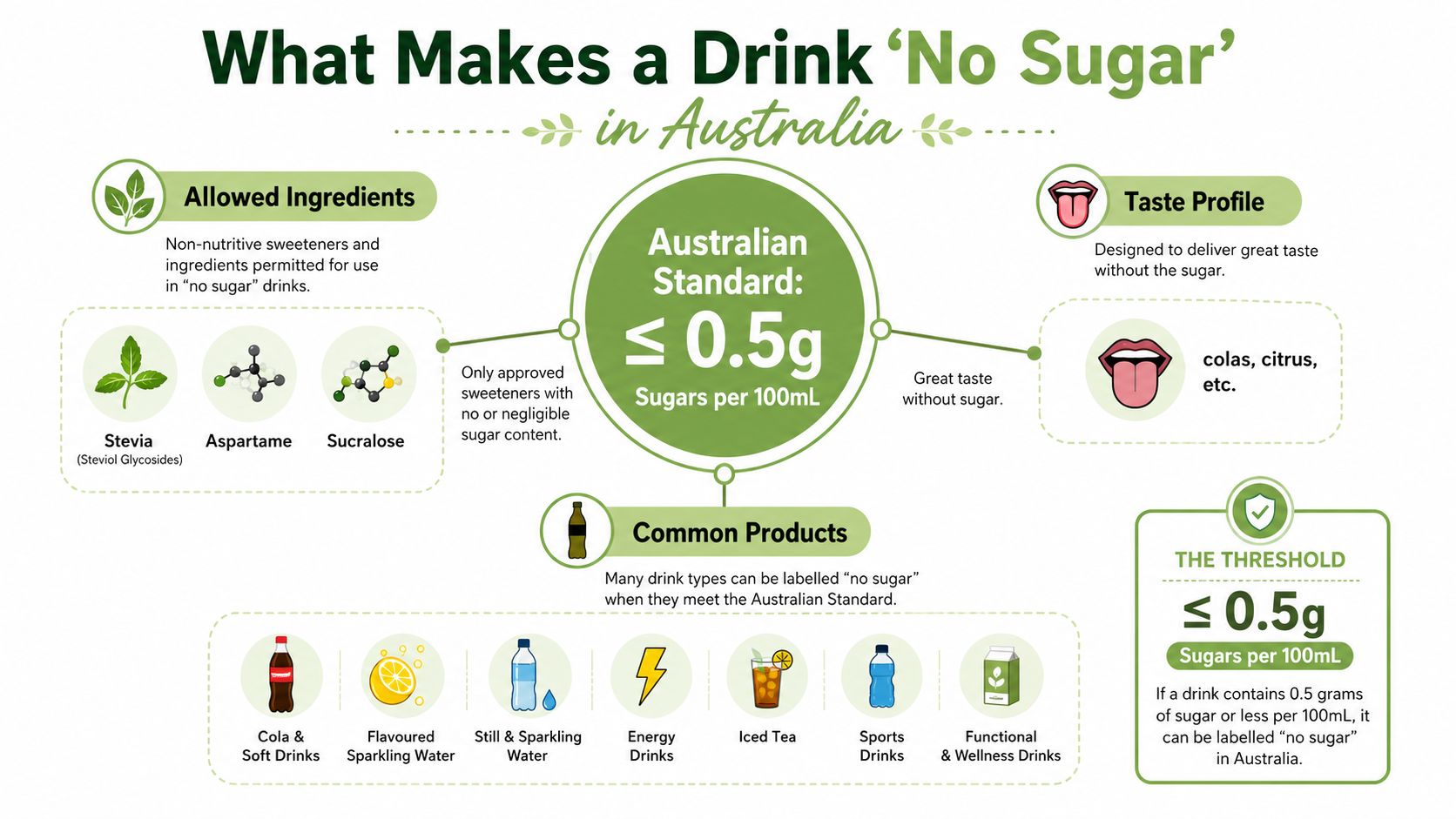
A label can look simple and still hide a lot of formulation work. In Australia, a no sugar soft drink must contain no more than 0.5 g of sugars per 100 mL. That threshold is what turns “no sugar” into a regulated claim, not a loose marketing phrase. Australian label guidance on “no sugar” uses that sugar limit as the benchmark, and the wording on pack needs to match it.
The sweetness comes from a system, not just one ingredient
These drinks usually keep the familiar soft-drink taste by replacing sucrose with high-intensity sweeteners such as aspartame and acesulfame potassium. The drink still needs sweetness, sharpness, body, and finish, so the formula has to do several jobs at once.
That formulation approach is common across the category. A product overview from UNESDA product and ingredients overview describes no- and low-calorie soft drinks as mostly water, often around 98% to 99%, which helps explain why they feel light on the palate even when the flavour is bold. The energy contribution stays effectively negligible because there is very little sugar in the first place.
Acid and sweetener work together
The easiest way to understand a cola-style no-sugar drink is to treat the acid-sweetener system as a matched pair. One part supplies the sparkle and edge, the other supplies the sweetness cue, and together they make up for the missing sugar. That is why a well-made no-sugar cola can still taste round and familiar.
Food acids matter here as much as sweeteners do. They provide the bite, brightness, and stability that sugar would normally help support. Without that balance, a zero-sugar drink can taste thin or flat. With it, the drink can feel cohesive even without the bulk of sugar.
Australian label rules for “no sugar” are also easy to miss if you only glance at the front of pack. An infographic explaining that Australian regulations require drinks to have 0.5g of sugar or less to be labeled no sugar.
A no-sugar label tells you the sugar level, not whether the drink is a good everyday choice for your routine.
The main takeaway is simple. No sugar is a legal and formulation category. It does not automatically mean healthy, nourishing, or better than every other alternative. It means the drink meets a sugar threshold and uses a sweetness system designed to replace the flavour of sugar.
Reading a No Sugar Label Like a Local
A front label can be neat and reassuring, while the ingredient list tells the story. Once you know what each part is doing, a supermarket shelf becomes much easier to read. That matters in Australia, where no sugar can cover anything from a classic cola to a lighter café-style swap.
A real Coke No Sugar label, translated
Australian product labelling for Coke No Sugar lists carbonated water, colour (150d), food acids (338, 331), sweeteners (951, 950), flavour, caffeine (Foodwatch product snapshot). That is a standard no-sugar cola structure, and each ingredient has a clear job.
- Carbonated water: This is the base. It gives the drink its fizz and light body.
- Colour 150d: This is the caramel colouring that gives cola its dark look.
- Food acids 338 and 331: These help with sharpness, balance, and stability.
- Sweeteners 951 and 950: These are aspartame and acesulfame potassium, the main sweetness system.
- Flavour and caffeine: These round out the drink's sensory profile and familiar cola character.
That same sweetener pairing also shows up across other Coke variants in Australia, which is useful when you are comparing cans that look different on the shelf but share a similar formula.
A quick mental checklist for any can
Practical shortcut: if the front says no sugar, check the ingredient list for the sweetener blend, the acid system, and any extras like caffeine.
A fast scan works well in store. Start with the base liquid, usually water or carbonated water, then look for the sweeteners, then check whether acids and flavourings suit the drink style. If caffeine matters to you, it will usually be listed too. For a broader example of how sugar-free carbonation fits into everyday buying, the Pep Tea guide to sugar-free carbonated drinks is a handy reference point.
The aim is not to memorise code numbers forever. It is to stop treating ingredient labels like secret text. Once you know that 951 and 950 are sweeteners and 338 and 331 are part of the acidity system, you can compare drinks in under a minute.
That same habit also helps when you are choosing outside the supermarket. A Low sugar mood trio sampler can make sense on a café shelf beside kombucha, matcha, and other everyday drinks that are not trying to copy cola at all.
Diet Sodas, Sparkling Water, Kombucha, and Tea Compared
Not every drink that skips sugar is trying to do the same job. Some are built for a cola hit, some for clean refreshment, and some for a more functional role in the day. That's where a side-by-side comparison helps.
| Category | Sweetener approach | Functional extras | Best for |
|---|---|---|---|
| Diet soda | High-intensity sweeteners and acids | Familiar cola-style flavour, caffeine in some products | People who want the closest swap for regular soft drink |
| Flavoured sparkling water | Usually no sweetener, or a very light sweetening approach | Minimal additives, light refreshment | Anyone who wants fizz without a heavy flavour load |
| Sugar-free kombucha | Fermentation-based, usually low sugar rather than sweet | Live cultures and organic acids from fermentation | Café menus, food pairing, and people wanting a tangier option |
| Unsweetened tea or matcha | No sweetener needed | Antioxidants, and in matcha, naturally occurring caffeine with L-theanine | Calm focus, morning routines, and less sugary everyday drinking |
Where each option fits
Diet soda wins on nostalgia. It's the most obvious substitute when someone wants the exact cola experience without the sugar load. The trade-off is that it still depends on a tight sweetener-and-acid structure, so it's not the same as a naturally unsweetened drink.
Flavoured sparkling water gives you a cleaner finish. It's the least intrusive option if you just want bubbles and hydration-style refreshment. That makes it a good bridge drink for people who're trying to move away from sweeter cans but don't want to jump straight to tea or kombucha.
Sugar-free kombucha sits in a different lane. It brings fermentation character, a more complex taste, and a better café or meal pairing role than plain soft drink. If you want a practical example of a ready-made option in that space, Low sugar mood trio sampler shows how brands are building mixed packs around function and flavour rather than just sweetness.
Tea and matcha are the quiet achievers. They don't try to imitate soft drink at all. They give you a different kind of drink moment, one that's slower, more deliberate, and often better suited to a workday or café setting.
For Australian shoppers, that's where Pep Tea's sugar-free carbonated drinks sit naturally alongside the rest of the category. The right choice depends on whether you want familiarity, light refreshment, fermented complexity, or a tea-led functional drink.
How Cafés and Retailers Can Stock Sugar Free with Confidence
A café owner in Brisbane or Newcastle doesn't need a wall of identical cans. They need a short menu of drinks that cover different moods, price points, and storage realities. A smart non-alcoholic list works like a ladder, not a single bucket.
A simple stocking mix that actually works
The easiest model is to cover three roles. First, a familiar diet cola for people who want the classic fallback. Second, a premium sparkling water for the clean, neutral option. Third, a brewed, sugar-free functional drink for customers who want something with more character.
That tiering helps because not every customer wants “the healthiest drink”. Some want a familiar taste with no sugar, some want a refreshment drink, and some want something they can sip with lunch. A menu that acknowledges all three sells better than a menu that tries to force everyone into one category.
For venues that also run loyalty or repeat-purchase programs, retail loyalty program inspiration can be useful when you're thinking about how to nudge regular drink buyers back into the fridge or onto the menu again. The point isn't to gamify everything. It's to give people an easy reason to come back for the same drink they already liked.
Storage, serving, and pairing matter
Diet cola cans are easy on fridge space and simple to serve. Sparkling water can go straight into glassware with ice and citrus if the venue wants a cleaner look. Sugar-free kombucha and chilled matcha sit better when staff can explain them briefly, because they're more flavour-led and often sit in the premium part of the menu.
A café menu gets stronger when each drink has a clear job, a clear serve, and a clear reason to exist.
Retailers should think in shelves, not just cartons. Put familiar no-sugar sodas where customers expect them, and keep functional drinks close enough that shoppers notice them without having to hunt. That reduces friction and helps people compare a standard no-sugar option with a more functional one in the same visit.
If you stock kombucha locally, Pep Tea's guide to where to buy organic kombucha in Australia fits naturally beside this thinking. It's especially relevant when you want to position a brewed option as a separate choice from canned soft drinks, not as a replacement for every drink on the shelf.
A Smart Shopper Checklist for the Aisle and the Menu
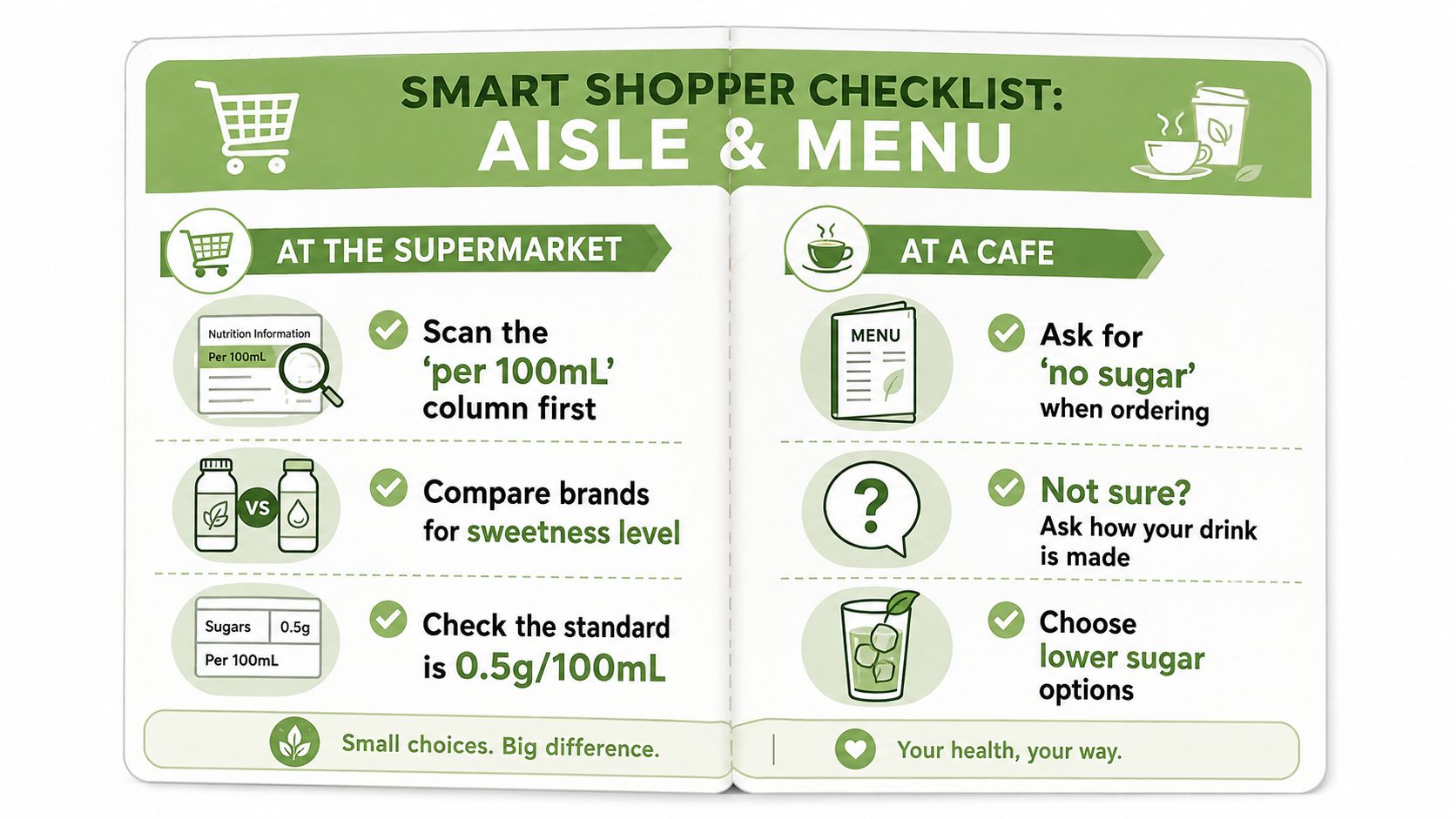
The front of the can is marketing. The back of the can is where the useful information lives. If you want to make better choices without overthinking it, use the same five checks every time.
Five checks that actually help
- Scan the per-100 mL figure first. That's where the sugar claim lives, not in the headline wording on the pack.
- Check the sweetener list. If you care about specific ingredients, look for the code numbers and names, not just “no sugar”.
- Look for functional extras. Live cultures, organic acids, antioxidants, caffeine, or tea compounds each point to a different drinking experience.
- Match the drink to the occasion. A desk drink, a post-lunch refreshment, and an evening social serve don't need the same product.
- Ask whether the price matches the role. A premium drink should do a premium job, not just sit there looking healthy.
The substitution pattern matters too. Swapping a sugary soft drink for a no-sugar version is a different choice from swapping water or unsweetened tea for the same bottle. The first move reduces sugar exposure. The second move might just change taste preference, without adding much benefit.
That distinction is why some shoppers feel better with a no-sugar cola for a party but still prefer water or tea during the workday. Both can be sensible. They just serve different purposes.
If you're standing in the aisle with three good options in hand, choose the one that fits the moment. A no-sugar cola can replace a regular cola. Sparkling water can cover the refreshing gap. Sugar-free kombucha can add flavour and café-style variety when you want something more distinctive.
Building Everyday Habits Around Sugar Free Drinks
Habits change faster when the choice feels normal. If you keep the right drinks on hand for the right times of day, you won't need to negotiate with yourself every afternoon. The pattern becomes automatic.
For a work-from-home desk routine, a chilled unsweetened tea or matcha suits the slow-focus part of the day. For a lunch-on-the-go routine, a no-sugar soft drink or a sugar-free kombucha can be the easier grab-and-go choice. For an evening social routine, sparkling water or a lightly flavoured functional drink often fits better than a heavy sweetener hit.
Pep Tea's Australian-brewed sugar-free organic kombucha and Japanese organic matcha both fit that functional middle ground, where the drink is doing more than quenching thirst. They're useful examples of how Australians can shift away from sugary defaults without pretending every drink has to be the same.
The best long-term swap is usually the one you'll keep choosing. That might be a diet soda on some days, kombucha on others, and plain water when that's what you want. A healthier routine usually comes from a few consistent swaps, not from trying to make one drink solve everything.
If you're building a better drink routine, start with the swap that feels easiest and keep going from there. Explore Pep Tea for Australian-brewed sugar-free kombucha and organic matcha, then choose the option that fits your day, your café run, or your shelf at home.