
Tag: gut health australia
Tea for Digestion: A Guide to Soothing Your Gut Naturally

Lunch was lovely. Then half an hour later, you're unbuttoning your jeans, wondering why a normal meal has left you feeling heavy, puffy, and weirdly tired.
I hear this all the time. Sometimes it's the long café lunch with something rich and delicious. Sometimes it's a rushed desk meal wolfed down between emails. Sometimes it's not even a “bad” meal at all. It's just your body saying, “I need a bit of support here.”
That's why so many of us reach for tea for digestion. Not because tea is a magic fix. It isn't. But a well-chosen tea can be a gentle, comforting ritual that helps your body settle after food, especially when you feel bloated, crampy, or just off.
As someone who lives and breathes tea in Australia, I love this part of tea culture most. It's practical. It's calming. And it makes sense. You boil the kettle, slow down for a minute, and give your gut something warm and easy to work with.
Some teas are soothing and soft. Some feel bright and lifting. Some are better after a heavy meal, while others suit a sensitive stomach or a stressful day. And then there are the modern stars, like high-quality Matcha and properly brewed kombucha, which bring a different kind of digestive support to the table.
That Post-Meal Slump Is Not Your Fault
A lot of people assume digestive discomfort means they ate “wrong”. That's usually too simple.
You can feel ordinary one minute, then sluggish and bloated the next, even after a meal that looked perfectly sensible. A quick sandwich eaten standing up. Fish and chips by the water. A rich pasta at dinner because it's Friday and you felt like it. Your digestive system doesn't only respond to food. It also responds to pace, stress, temperature, caffeine, sleep, and how much your body is juggling that day.
I think that matters, because shame is a terrible wellness strategy. If you're searching for tea for digestion, you probably don't need more discipline. You probably need something gentler.
A warm cup of tea works well here because it invites you to pause. You sit down. You sip slowly. You breathe. For plenty of people, that little shift alone can help the stomach feel less clenched and the whole body feel more settled.
Tea for digestion works best when you treat it as support, not punishment.
I've seen this with customers, family, and in my own routine. After a big lunch, peppermint can feel like a reset. If dinner was rich, green tea can feel cleaner and lighter afterwards. If the day has been frantic, chamomile sometimes helps because the stomach often mirrors the nervous system.
The best approach isn't to memorise a giant list of “good” and “bad” foods. It's to learn the feel of different teas and keep a few dependable options nearby. Once you know which tea suits which kind of discomfort, your cupboard becomes a pretty handy little toolkit.
How Tea Actually Helps Your Digestion
Tea helps digestion in a few different ways, and it's easier to understand when you stop thinking of “digestive tea” as one single category. Different teas do different jobs.
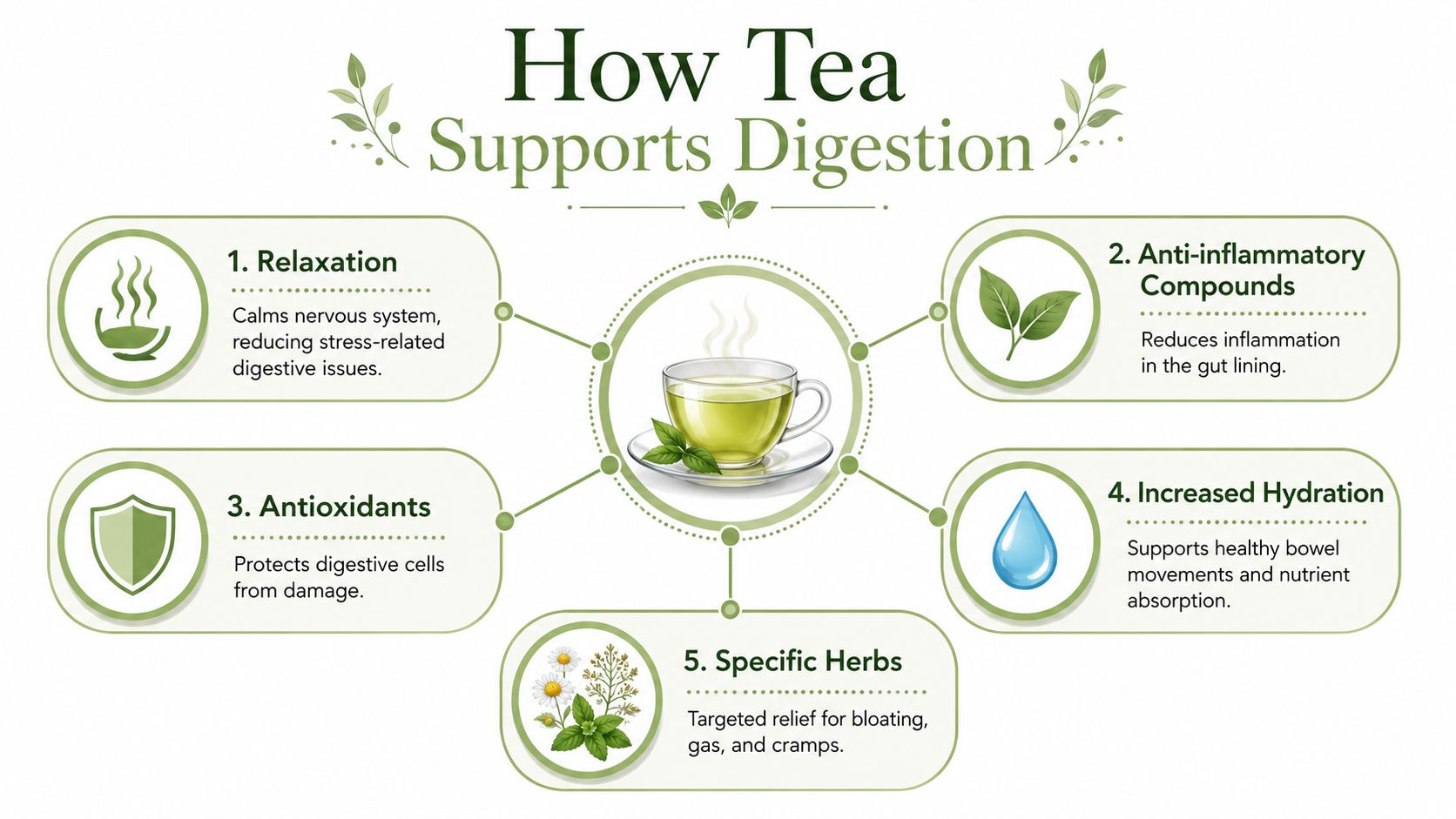
Four simple ways tea can support the gut
Here's the plain-English version:
- Carminative support helps move trapped gas along. This action is similar to gently releasing pressure in a distended abdomen.
- Antispasmodic support helps calm tight, twitchy digestive muscles. That's useful when your belly feels crampy or unsettled.
- Prokinetic support means encouraging movement through the digestive tract. Not in a harsh way. More like helping things keep flowing.
- Probiotic support comes from fermented drinks such as kombucha, which can contribute live cultures to the gut environment.
Hydration matters too. Warm fluids can feel easier on the stomach than icy drinks, especially after a rich meal.
Why green tea feels different after food
Green tea has its own digestive personality. Experimental work summarised in a tea-and-digestion review suggests that green tea extracts can reduce intestinal digestion and absorption of fats and starch, while also increasing gastric secretion through local action on the stomach lining, which helps explain why many people like green tea after heavier meals instead of using it as a treatment for illness (tea and digestion review).
That's a useful distinction. Tea for digestion isn't a medicine replacement. It's more like choosing the right tool for the moment. If lunch was oily, creamy, or generally a bit much, green tea may feel more balancing than a sweet drink or another coffee.
Practical rule: Ask what your stomach needs right now. Less pressure, less cramping, more calm, or better overall gut support.
If you're fuzzy on the difference between feeding good bacteria and adding live cultures, Pep Tea has a helpful explainer on prebiotics and probiotics that breaks down the concepts.
Why the ritual matters as much as the leaves
People often get confused here and assume the benefit comes only from chemistry in the cup. That's only part of the story.
Tea slows the whole moment down. You sip instead of gulping. You warm the stomach instead of shocking it with something freezing. You often step away from whatever was stressing you out. That combination is one reason tea for digestion has stuck around in so many food cultures for so long.
A Guide to Classic Digestive Herbal Teas
When someone asks me where to start, I usually begin with the old favourites. They've stayed popular for a reason. Each one suits a slightly different kind of digestive complaint.
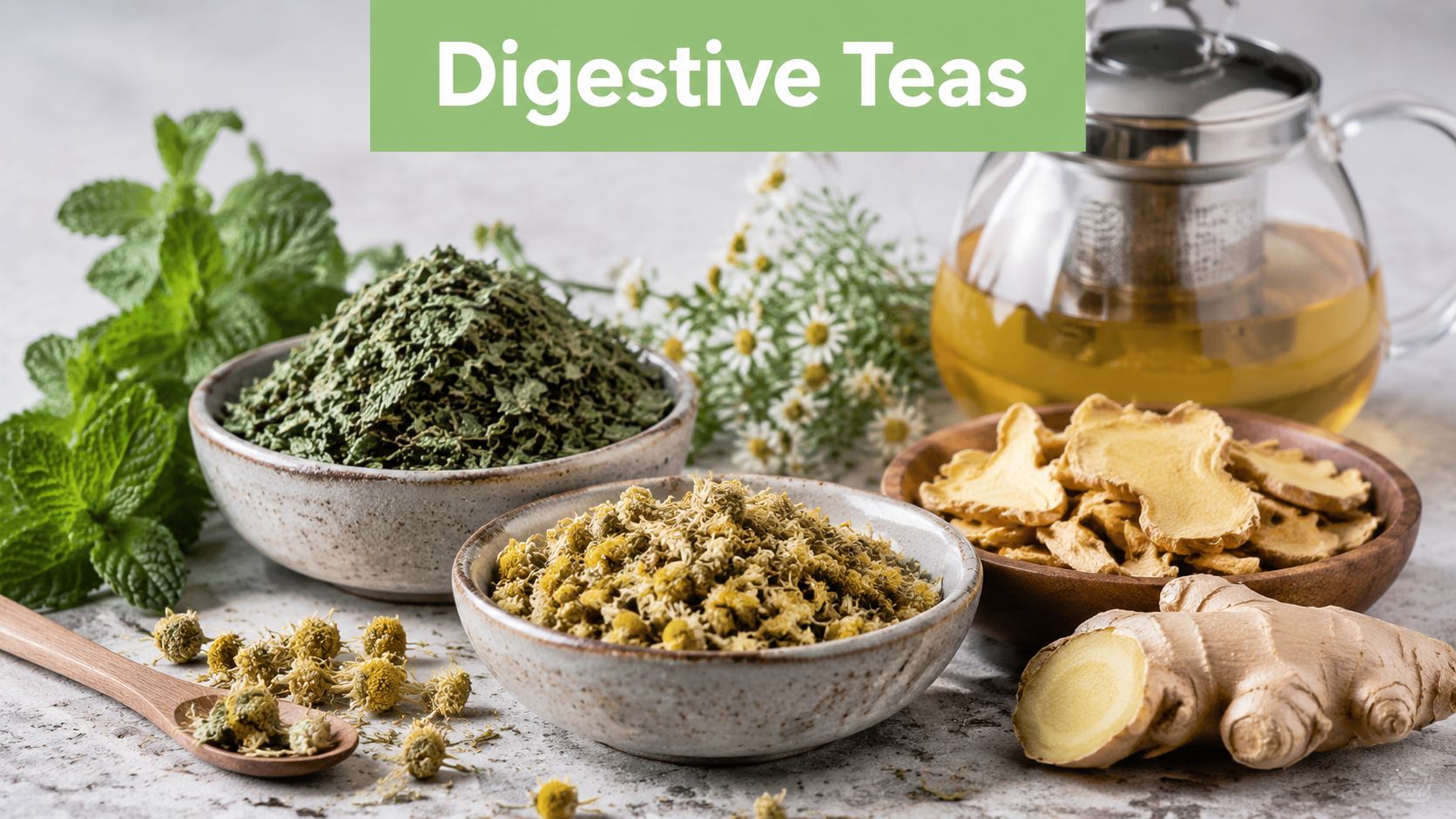
Which herbal tea suits which feeling
| Tea | Often chosen for | What it feels like | Taste |
|---|---|---|---|
| Peppermint | Bloating and heaviness | Cooling and clearing | Fresh, minty, brisk |
| Ginger | Queasiness and sluggish digestion | Warming and stimulating | Spicy, zesty, bright |
| Chamomile | Tension-related digestive discomfort | Soft and calming | Floral, gentle, slightly apple-like |
| Fennel | Gas and post-meal fullness | Light and easing | Sweet, aniseed-like |
Peppermint for bloating
Peppermint is the classic “I ate too much and now I regret it” tea. It's often the first thing people think of for bloating, and for good reason. It tends to feel fresh, cooling, and relieving after a heavy lunch or a meal that's sitting a bit too firmly.
If your tummy feels tight and gassy, peppermint is usually the first cupboard check.
Ginger for nausea and slow, heavy digestion
Ginger has more warmth to it. I think of it as the tea you choose when your stomach feels cold, sluggish, or slightly queasy. It has that clear, active feeling that can be very welcome after travelling, eating too quickly, or overdoing rich food.
It's also one of the easiest herbal teas to pair with food because the flavour is so lively.
If peppermint feels like opening a window, ginger feels like switching the lights back on.
Chamomile and fennel for a gentler approach
Chamomile is the one I reach for when stress is clearly part of the picture. Your gut and your mood are often tangled together. If the whole system feels tight, unsettled, or over-alert, chamomile can be a softer option than stronger-tasting herbs.
Fennel is underrated. It has that sweet, slightly liquorice-like note that people either love immediately or need a cup or two to appreciate. But for post-meal fullness and gas, it's a lovely traditional option.
A simple trick is to match the tea to the sensation:
- Tight and bloated: peppermint
- Heavy and queasy: ginger
- Nervous and crampy: chamomile
- Gassy and full: fennel
Food choices matter too. If you're building a digestion-friendly routine more broadly, it's worth reading about olive oil's digestive benefits, especially if you enjoy simple meals built around vegetables, grains, and good fats.
Why Matcha Is Your Gut Health Ally
Matcha deserves its own conversation because it isn't just “green tea in powder form”. It behaves differently in the cup and in your routine.
With Matcha, you're whisking finely ground tea leaf into water, so you consume the whole leaf rather than steeping it and removing it. That creates a fuller flavour, a richer texture, and a more immersive tea experience. When the Matcha is high quality, the difference is obvious. The colour is vivid, the aroma is clean and green, and the taste has that savoury sweetness that cheap powders just don't deliver.
As a tea person, I tend to get a bit excited. Real Matcha, especially organic Japanese Matcha that's been carefully stone-ground, has a depth and softness that makes it easy to drink regularly. That matters, because tea for digestion only becomes useful when you enjoy it enough to make it part of your day.
What the research says about green tea and the gut
A 2019 systematic review found that 24 publications met the inclusion criteria, including 6 human trials and 18 mechanistic studies, and reported that the strongest evidence was for green tea. In those green-tea studies, intake of up to 1,000 mL per day, roughly 4–5 cups, was associated with higher proportions of Bifidobacterium, and some studies also noted reductions in Firmicutes with improvements in Bacteroidetes (systematic review on tea and gut health).
That doesn't mean Matcha is a cure for digestive problems. It does mean green tea has a meaningful place in the gut-health conversation.
If you want a broader rundown of how green tea powder fits into energy, focus, and daily wellness, our guide to the benefits of Matcha green tea is a good next read.
Why quality matters more than people realise
Low-grade Matcha can taste harsh, dusty, or bitter enough that people drown it in sugar. That defeats the whole point if you're trying to support digestion and feel lighter after meals.
High-quality Matcha is different. It's smoother. It mixes better. It feels more like a ritual and less like a chore.
Here's a quick visual if you'd like to see how Matcha is prepared and used in everyday life:
If you're also dealing with food triggers, tea works best alongside practical eating choices. For readers who want a food-focused companion resource, it's useful to discover IBS fruit options on OrganizEat and build from there rather than expecting one drink to do everything.
Kombucha The Living Drink for Your Microbiome
Kombucha sits in a different category from herbal tea and Matcha. It's a fermented tea, which means it brings the conversation into microbiome territory.
I like to explain the microbiome as your gut garden. You've got a whole community living there. When that garden is well looked after, digestion tends to feel steadier. When it's out of balance, things can feel noisy, reactive, or unpredictable.
Kombucha appeals to people because it's a living drink. Properly fermented kombucha contains live cultures, and that makes it very different from a standard soft drink.
Not all kombucha helps in the same way
Many shoppers get caught out. A lot of products use kombucha-style branding, but they drink more like sweet fizzy beverages than genuine fermented tea. If a kombucha is heavily sweetened, the whole “gut health” message gets murky fast.
That's why I always tell people to think less about hype and more about what's in the bottle. Live culture. Real fermentation. A flavour profile that doesn't rely on sweetness to carry the drink.
A good kombucha should taste alive, not like soft drink wearing a wellness costume.
For people trying to move away from sugary beverages, it can help to discover better drink choices and compare what different options are really offering.
Why properly brewed kombucha stands out
At home or in cafés, kombucha works well when you want something cold, refreshing, and digestion-friendly without reaching for another juice or soft drink. Ginger-based flavours are especially popular after meals because they combine the bright lift of ginger with the tang of fermentation.
Pep Tea's guide to the benefits of kombucha covers the basics if you want to understand the drink more completely.
From a practical point of view, this is why I get enthusiastic about properly brewed, sugar-free kombucha. When fermentation is handled well, the drink tastes crisp, clean, and grown-up. It has structure. It has life. And in an Australian café setting, it gives people a smart non-alcoholic option that still feels interesting.
For home drinkers, the biggest win is simplicity. Keep a bottle chilled, pour a glass with lunch, and you've got a digestive ritual that feels more like a treat than a health task.
Your Daily Ritual for Better Digestion
Tea for digestion works best when it's matched to the moment. You don't need a complicated regime. You need a few reliable habits.
A simple sip plan
- Morning after a rough start: ginger tea if your stomach feels unsettled or heavy.
- After lunch: peppermint if you're bloated, or green tea if the meal was especially rich.
- Mid-afternoon: Matcha if you want steady energy without the hard edge some people get from coffee.
- Evening: chamomile when stress and digestion seem to be feeding each other.
A large evidence summary from Harvard notes that drinking 2–3 cups daily is associated with positive health outcomes, and it also highlights that tea consumed hotter than 55–60°C has been associated with higher health risks, so your tea for digestion is better warm, not scalding (Harvard Nutrition Source on tea).
Brewing tips that make a difference
Small details matter more than people think:
- Peppermint and chamomile: steep until the aroma opens up and the flavour tastes rounded, not watery.
- Ginger: slice it fresh if you want a bolder, more warming cup.
- Matcha: whisk with warm water rather than boiling water if you want a smoother, less harsh bowl.
- Kombucha: serve chilled, straight or over ice, especially with lunch or as an alcohol alternative.
For cafés and hospitality
This is such an easy win for modern menus.
A café can offer a small digestive tea list after meals, build a clean Matcha latte for customers who want calm focus, or pour kombucha as a grown-up non-alcoholic option. A ginger kombucha, a peppermint tea, and a proper Matcha can cover a surprising range of customer moods without making the menu feel crowded.
Frequently Asked Questions About Digestive Teas
Can I drink digestive teas if I have IBS or reflux
Generic advice often falls short. One common gap in Australian consumer content is clear guidance for people with existing conditions like reflux or IBS. Much of the advice stays broad, but the evidence is mixed and people need clearer help deciding which teas to try and which to avoid (Australian digestion tea guidance gap).
A sensible starting point is to go one tea at a time and pay attention to your own response. If reflux is your main issue, minty teas may not suit you. If stress and cramping are more your pattern, a gentler option may feel better.
Is Matcha okay if I'm sensitive to caffeine
Sometimes yes, sometimes no. It depends on your sensitivity, the serving size, and whether you drink it with food.
If coffee leaves you jittery, Matcha can feel smoother for some people as part of a meal or morning routine. But if you already know caffeine doesn't agree with you, start small and be honest with yourself. Digestive support shouldn't come at the cost of feeling wired.
Start with the mildest option that matches your symptoms, then adjust slowly.
Are digestive teas safe in pregnancy
This is one of those situations where “natural” doesn't automatically mean “fine for everyone”. If you're pregnant, managing a medical condition, or taking regular medication, it's smart to check with your health professional before making any tea or herbal drink a daily habit.
What's the safest way to use tea for digestion
Keep it simple:
- Match the tea to the symptom.
- Drink it warm, not piping hot.
- Choose quality over gimmicks.
- Treat tea as support, not a substitute for medical care.
If symptoms are frequent, severe, or changing, it's worth getting proper advice instead of trying to solve everything with your teapot.
If you'd like to build a simple digestive tea routine at home or add better functional drinks to your café menu, have a look at Pep Tea. We stock organic Matcha and sugar-free kombucha, and we share practical guides to help you choose, brew, and enjoy tea with a bit more confidence.
A Guide to Passion Fruit Kombucha in Australia

If you could bottle the taste of an Australian summer, this would be it. That’s passion fruit kombucha: a vibrant, naturally sparkling drink that perfectly captures the tropical sweetness of real passion fruit and the signature tangy finish of authentic kombucha.
Sunshine in a Bottle: The Rise of Passion Fruit Kombucha

What was once a niche health drink has firmly hit the mainstream, winning over health-conscious Aussies everywhere. Passion fruit kombucha delivers that perfect sweet spot between taste and function—a bubbly, refreshing drink that feels like an indulgence but still aligns with a wellness-focused lifestyle.
The flavour is what sets it apart. It’s both complex and incredibly easy to drink; the sweet, aromatic notes of passion fruit cut through the fermented tang of the kombucha base beautifully. Each sip is like a burst of tropical sunshine, making it the go-to healthy swap for sugary soft drinks and juices. It’s a choice that feels both satisfying and genuinely beneficial.
A Flavour That Captured Australia
The growth of kombucha in Australia has been nothing short of remarkable, and the passion fruit flavour has consistently led the charge. This isn't just a fleeting trend. We've seen passion fruit varieties quickly become top sellers in major supermarkets, pointing to a clear shift in what people want from their drinks: something functional that doesn't compromise on taste.
To give you a quick snapshot, here are the key attributes of this fantastic drink.
Passion Fruit Kombucha At a Glance
| Attribute | Description |
|---|---|
| Taste Profile | A balance of sweet, tropical passion fruit and a bright, tangy finish. |
| Aroma | Fresh, aromatic, and unmistakably like ripe passion fruit. |
| Texture | Lightly carbonated with a natural, gentle fizz from fermentation. |
| Key Ingredients | Fermented tea (black or green), SCOBY, and real passion fruit. |
This combination of features is exactly why it has become such a beloved, health-forward choice for any time of day.
At its core, passion fruit kombucha is a fermented beverage crafted from sweetened tea and a SCOBY (Symbiotic Culture of Bacteria and Yeast). The real magic happens when real, organic passion fruit is infused during the brewing process, creating a drink that's not just delicious but also full of character. If you want to understand the fundamentals better, check out our guide on what kombucha is.
The final result is a beverage celebrated for its:
- Vibrant Taste: A perfect harmony of sweet tropical notes and a refreshing tang.
- Natural Sparkle: Lightly carbonated through the fermentation process, not forced.
- Pleasing Aroma: The distinct, delightful scent of fresh, ripe passion fruit.
The Probiotic Power of Passion Fruit Kombucha
There’s more to our passion fruit kombucha than just its incredible taste. It's what's known as a functional beverage, meaning it does more than just quench your thirst. Its real strength comes from two places: the gut-friendly probiotics from our authentic fermentation and the genuine nutritional kick from real, organic passion fruit.
At the core of every PepTea kombucha are live, active cultures. These are the good bacteria—the probiotics—that are a natural result of our SCOBY doing its work. It helps to think of your gut as a garden. These probiotics act like tiny gardeners, tending to the soil and helping everything in your internal ecosystem stay balanced.
More Than Just Probiotics
While probiotics get a lot of attention, the real passion fruit we use takes this drink to another level. This isn't just a flavouring; the fruit brings its own unique health-supporting compounds to the party.
This synergy creates a drink that works on multiple levels. You’re not just getting the benefits of a classic fermented tea, but you're also getting a genuine nutritional boost from the fruit itself.
When you choose passion fruit kombucha, you're getting a two-for-one wellness boost. The fermentation provides the live cultures for your gut, while the passion fruit adds its own distinct vitamins and antioxidants.
A Nutritional Powerhouse in Every Sip
When you combine authentic kombucha with real fruit, the results are genuinely impressive. Recent findings, for example, show that passion fruit-infused varieties often contain an enhanced nutritional profile.
A 2026 analysis of commercial kombuchas found those infused with passion fruit had, on average, 15% higher antioxidant levels than plain green tea versions. What's more, consumer data shows that 28% of Australian health enthusiasts now specifically seek out passion fruit kombucha for its dual benefits. A single serve of an authentically brewed kombucha can pack up to 2 billion CFUs (Colony Forming Units) and a serious dose of Vitamin C—around 45mg per 100ml, which is about 50% of your daily needs.
This combination of gut support and nutrient density is exactly why it's become such a popular choice. It's a beautiful marriage of the health properties from our organic green tea base and the vibrant goodness of real passion fruit.
To get a clearer picture of how these elements may support your body, consider the following:
- Live Probiotics: Generated during fermentation, these may help support a healthy gut microbiome, which is linked to everything from digestion to overall wellbeing.
- Antioxidants: Both our organic green tea base and the passion fruit itself are loaded with antioxidants, which help your body combat free radicals.
- Vitamin C: Passion fruit is a fantastic natural source of Vitamin C, a crucial nutrient known for its role in supporting healthy immune function.
This unique combination makes our authentically brewed, organic passion fruit kombucha a truly functional beverage. It’s a delicious, natural way to support your wellness goals. For a deeper dive into this topic, you can learn more about prebiotics and probiotics in our detailed guide.
How We Brew Our Authentic Passion Fruit Kombucha
There’s a world of difference between a mass-produced, shelf-stable drink and a truly authentic, living kombucha. Here at PepTea, we’re brewers first. Our entire process, honed in our dedicated Hunter Valley brewery, is designed to create a sugar-free, probiotic-rich drink that’s alive with both flavour and goodness.
It all comes down to the process. We start with just two premium ingredients: certified organic green tea and raw sugar. The sugar isn’t there for sweetness in the final drink; it's essential food for our SCOBY (Symbiotic Culture of Bacteria and Yeast). Think of the SCOBY as the engine of our brewery. It’s a living culture that metabolises the sweetened tea, transforming it into a complex, tangy beverage brimming with beneficial organic acids and live probiotics.
The Art of Authentic Fermentation
This is where patience comes in. Unlike drinks that are quickly produced and pasteurised for a long shelf life, our method is traditional and unhurried. We give the SCOBY the time it needs to work its magic, allowing it to consume virtually all of the sugar. This is the single most important step in making a genuinely sugar-free kombucha that’s rich in the good stuff.
The secret to real kombucha isn’t just in the ingredients, but in the process. We brew a raw, unpasteurised drink, which means we never heat-treat it. This preserves the delicate, living probiotic cultures that are the entire point of drinking kombucha for wellness.
It's a delicate dance between science and nature. We monitor this transformation closely, making sure the brew hits the perfect balance of flavour and acidity before we move to the next step. For anyone curious about the craft of brewing, getting this right is everything, and knowing how to use a digital pH meter is a key part of the process.
Infusing Pure Passion Fruit Flavour
Only when the primary fermentation is absolutely complete do we introduce the star of the show: real, organic passion fruit. We add the pure fruit pulp after the main brew, and we do this for a very specific reason. This method lets us capture the bright, tropical aroma and authentic taste of the fruit without interfering with the living cultures or adding any processed sugars or syrups.
This infographic shows the journey of key benefits from the bottle to your body, starting with gut support, then antioxidant action, and finally a boost of Vitamin C.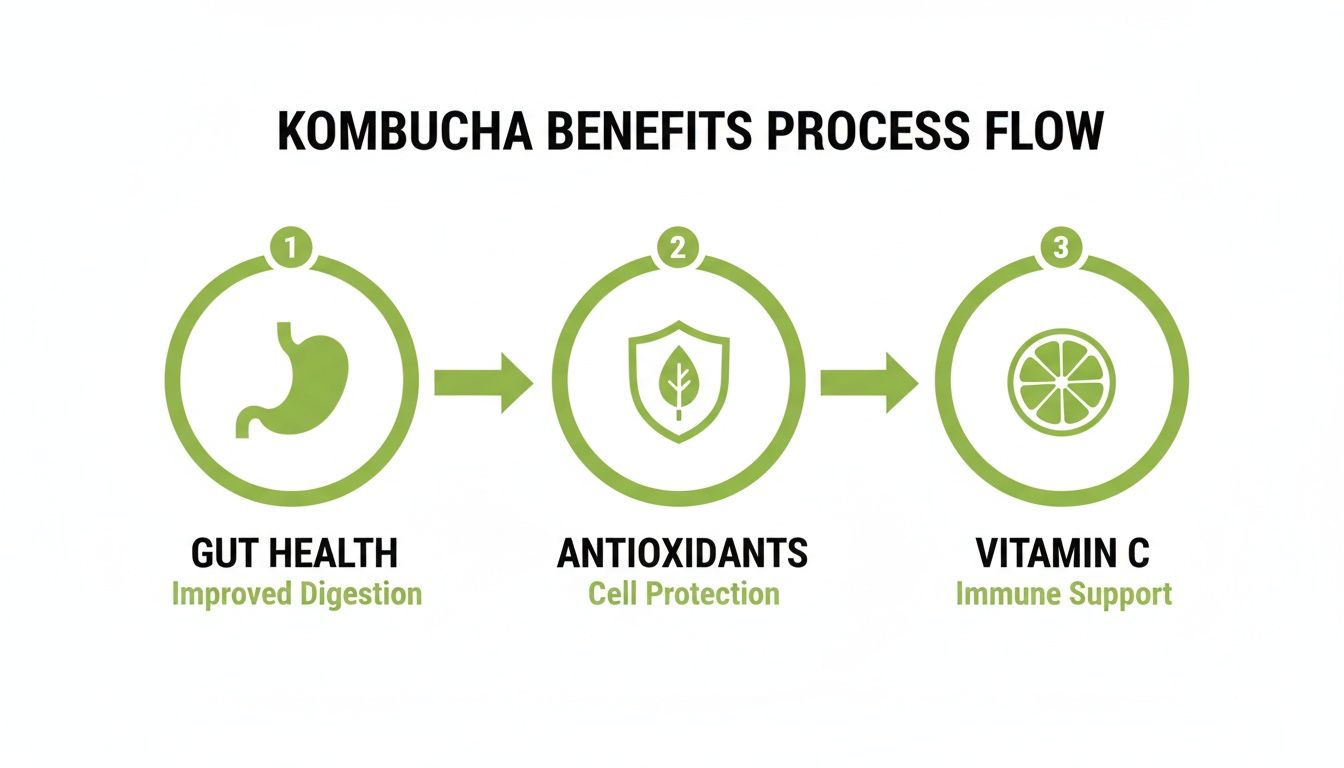
It’s a simple visual that shows how the combined elements in our passion fruit kombucha work together to support overall wellbeing. This commitment to real ingredients and an authentic, unhurried brewing method is what sets PepTea apart. It’s not a shortcut—it’s the right way to make a living drink that truly delivers.
Beyond the Bottle: How to Use Your Passion Fruit Kombucha
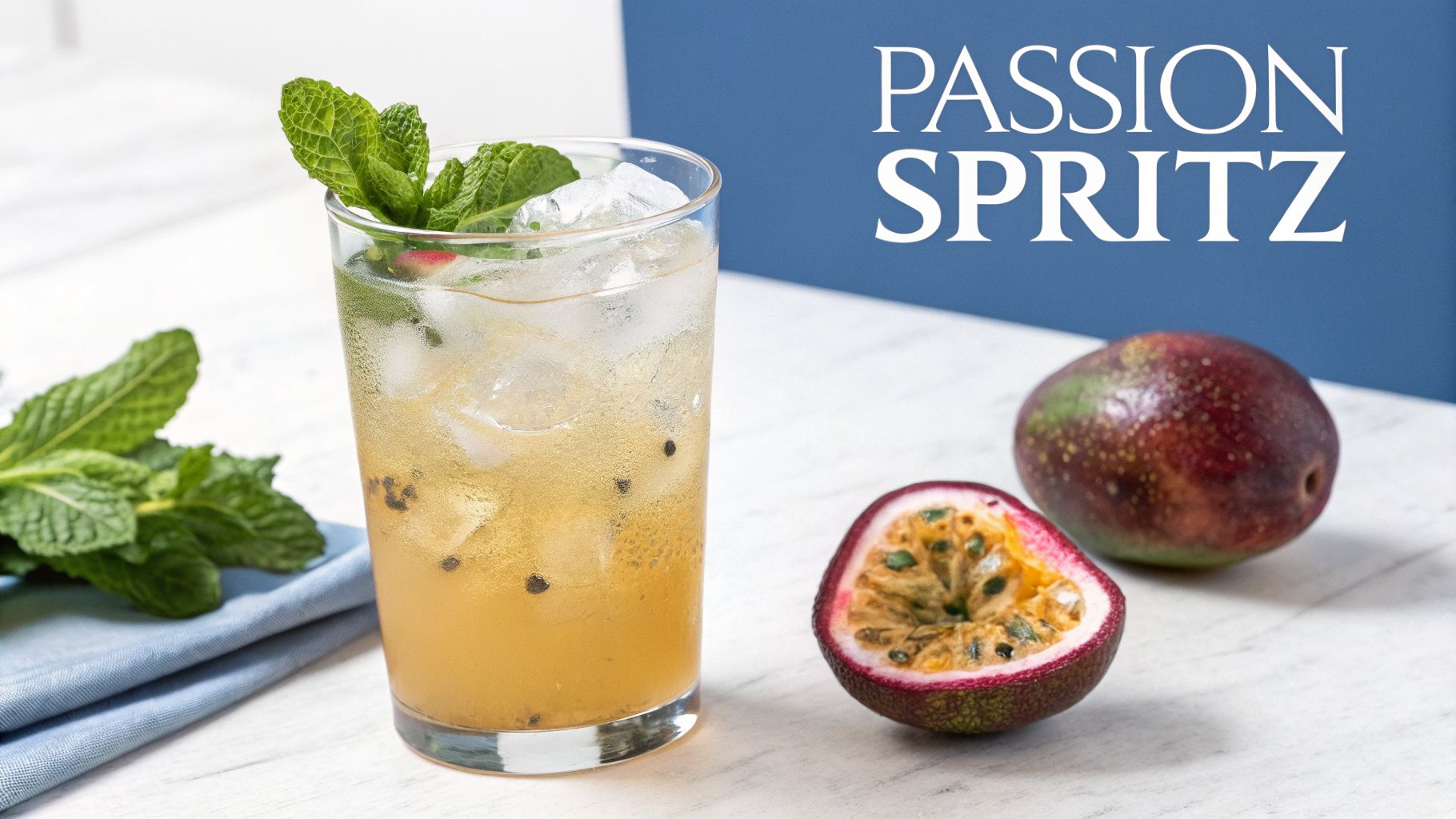
While our passion fruit kombucha is fantastic straight from the bottle, that's really just the beginning. Its true character—that balance of tropical tang and natural fizz—makes it an incredible starting point for all kinds of drinks and even a few surprising kitchen creations.
The simplest upgrade? Treat it like a proper drink. Pour it over a generous glass of ice, then add a sprig of fresh mint or a wedge of lime. It’s a small step that turns a daily wellness habit into a sophisticated ritual, perfect for a warm afternoon.
From Simple Sips to Café-Worthy Mocktails
One of the best things about our authentically brewed kombucha is its exceptionally clean finish and low sediment. This is no accident. It’s designed to be a brilliant mixer that doesn't cloud or fight with other ingredients, which is exactly why it’s found a home in so many Australian cafés and bars.
Since its rise, passion fruit kombucha has become a hospitality hero. Non-alcoholic beverage menus have grown by 48% in Australian cafés and bars, according to a 2026 industry survey. Our NSW-brewed organic kombucha is leading that charge, with our passion fruit flavour now accounting for 31% of all kombucha mixer sales in NSW venues this year. You can get a deeper insight into kombucha's journey in the beverage world and its origins as a living drink.
That professional-grade quality makes it incredibly easy to create impressive drinks at home. You can build a stunning non-alcoholic spritz, blend it into a vibrant smoothie, or even use its acidity as the base for a zesty salad dressing.
Simple Recipe: The Passion Spritz
For an instant crowd-pleaser, fill a tall glass with ice and a generous scoop of fresh passion fruit pulp. Squeeze in the juice of half a lime, top with a splash of sparkling water, and then pour over your PepTea passion fruit kombucha. A twist of lime to garnish, and you have a beautiful, bubbly mocktail that’s ready in seconds.
Get Creative in the Kitchen
To really get a feel for its versatility, it helps to start thinking of your kombucha as an ingredient. Its natural acidity and bright, tangy flavour make it a fantastic tool for cutting through richness in marinades or dressings. Here are a few ideas to get you started.
Zesty Vinaigrette: Whisk together ¼ cup of passion fruit kombucha, a tablespoon of good olive oil, a teaspoon of Dijon mustard, and a pinch of salt and pepper. It’s perfect for drizzling over a fresh garden salad, especially one with grilled chicken or prawns.
Smoothie Booster: Add a generous splash of kombucha to your morning smoothie. It pairs beautifully with mango, pineapple, and spinach for a probiotic and vitamin-packed start to your day.
Summer Popsicles: For a healthy, family-friendly treat, simply pour the kombucha into popsicle moulds with some diced fruit and freeze. The kids will love them.
Serving and Pairing Ideas
Here’s a quick-reference guide to help you get creative with your passion fruit kombucha, offering simple pairings for different occasions.
| Occasion | Serving Suggestion | Food Pairing |
|---|---|---|
| Afternoon Refresher | Poured over ice with a sprig of fresh mint. | Light snacks like rice paper rolls or a fresh fruit platter. |
| Weekend Brunch | Mixed into a Passion Spritz (see recipe above). | Smashed avocado on toast, or a goat's cheese and spinach tart. |
| Pre-Dinner Drink | Served neat in a champagne flute. | Salty nibbles like olives, salted nuts, or a cheese board. |
| Healthy Breakfast | As a liquid base for a tropical fruit smoothie. | A bowl of granola with yoghurt and berries. |
This table is just a starting point. The best way to discover what works is to experiment and see what you enjoy most.
Whether you’re looking for an effortless, refreshing drink or an innovative new idea for your café menu, our passion fruit kombucha offers a whole world of delicious possibilities.
How to Choose and Store High-Quality Kombucha
Walking down the kombucha aisle can feel like a test. With so many bottles claiming to be the real deal, how do you sort the genuinely healthy, living drinks from the impostors—the "cowboy kombuchas"?
It’s actually simpler than it looks. A few quick checks on the label are all it takes to make sure you’re bringing home something truly good for you.
First, look for two essential words: “raw” and “unpasteurised.” These are non-negotiable. They tell you the kombucha hasn't been heat-treated, which means the beneficial, living probiotics are still active. A pasteurised kombucha is really just a fancy, flavoured tea, not the functional beverage you're after.
What to Look for on the Ingredients List
Next, flip the bottle around. A quality passion fruit kombucha will have a refreshingly short and clean ingredients list: filtered water, organic tea, a SCOBY (or live cultures), and real, organic passion fruit.
Be sceptical of anything listing "natural flavours," "fruit concentrates," or extra sugars. These are often shortcuts used in mass-produced drinks that compromise the integrity of the brew.
At PepTea, we’re committed to authenticity. That means we only use certified organic ingredients, and our kombucha is genuinely sugar-free. We let the fermentation run its full course, allowing the SCOBY to consume the sugar naturally. What’s left is a pure, crisp taste without the sugary hit.
See a few cloudy wisps or a bit of sediment at the bottom? Don’t worry. That’s a great sign. Those are tiny strands of the SCOBY and yeast, proving your kombucha is raw, alive, and packed with the goodness you want. It’s the hallmark of an authentic brew.
Storing Your Kombucha to Keep it at Its Best
Once you’ve made your choice, proper storage is everything. The rule is simple: always keep your kombucha in the fridge.
Keeping it chilled is crucial for a few reasons:
- It Protects the Probiotics: The living cultures in raw kombucha are delicate. Cold temperatures keep them dormant and healthy, preserving their potency right up until you drink them.
- It Stops Over-Fermentation: If you leave a raw kombucha at room temperature, the fermentation will kick back into gear. This can create excess carbonation (think fizz explosions) and make the drink taste overly sour or vinegary.
- It Maintains Flavour: Refrigeration locks in that crisp, balanced flavour profile the brewer intended. It ensures every sip is as refreshing as the first.
By choosing a raw, organic, and genuinely low-sugar option and storing it correctly, you can be confident that you’re getting all the incredible flavour and wellness benefits your passion fruit kombucha has to offer.
Why Choose PepTea's Australian-Made Kombucha
Not all kombucha is created equal. When you look past the clever marketing, the difference often comes down to one simple thing: how it’s made, and who’s making it. At PepTea, we brew a kombucha that’s a world away from the mass-produced stuff, and it all starts with where we’re from.
We're a 100% Australian-owned family business, and every batch of our kombucha is brewed right here in the beautiful Hunter Valley, NSW. This isn't just a label on a bottle; it’s our guarantee of freshness and our connection to the local community. Choosing PepTea means you’re backing a family that’s genuinely passionate about making real, functional drinks.
Our Commitment to What's Real
Our approach is straightforward: real ingredients, real fermentation, and real health benefits. We don't cut corners. That’s why we insist on using only certified organic ingredients, from the premium green tea that forms our base to the real passion fruit pulp that gives our kombucha its authentic tropical character.
When you pick up a bottle of PepTea, you’re holding our promise. It’s our commitment to a genuinely sugar-free, probiotic-rich drink that’s raw, living, and unpasteurised. This is what sets us apart—a truly authentic kombucha, made with your wellbeing in mind.
This dedication to quality is visible in every part of our brand. For a company like PepTea, standing out requires that our values are clearly communicated, right down to our food and beverage printing needs to make sure our labels tell the full story.
Experience the PepTea Difference
Our traditional brewing process ensures our passion fruit kombucha is not just bursting with flavour but also genuinely packed with live, active cultures. We let our SCOBY do its thing, naturally fermenting away all the sugar to leave a crisp, clean refreshment you can feel good about.
Ready to taste what authentic kombucha is all about? We invite you to experience the vibrant, real flavour of a drink brewed with passion and purpose.
A Few Common Questions
Still have a few questions floating around about passion fruit kombucha? Let's clear them up. Here are the answers to some of the most common things we get asked.
Is Passion Fruit Kombucha Okay for a Low-Sugar Diet?
It absolutely can be, but you have to know what you’re looking for. Some brands will add sugar back in after fermentation for extra sweetness, but an authentically brewed kombucha like ours at PepTea is completely sugar-free.
We let our SCOBY do its job properly, allowing it to consume all the organic raw sugar during fermentation. This process is what creates the beneficial acids and probiotics, not a sweet, sugary drink. This makes our passion fruit kombucha a great choice for anyone watching their sugar intake. Always check the nutritional panel to be sure.
Does Passion Fruit Kombucha Contain Alcohol?
Because it’s a naturally fermented product, all kombucha contains trace amounts of alcohol—it's just a normal byproduct of the brewing process. The amount is tiny, typically less than 0.5% ABV.
That’s a similar level to what you might find in a very ripe piece of fruit or even a loaf of sourdough bread. In Australia, any drink with this little alcohol is legally classified as non-alcoholic.
Can I Drink Passion Fruit Kombucha Every Day?
For most people, yes. Having a daily serve of passion fruit kombucha is a fantastic way to support your gut health as part of a balanced diet.
If you’re new to fermented foods, though, we suggest starting with a smaller amount—maybe half a bottle. See how your body feels before you make it a daily habit.
What Are the Floating Bits in My Kombucha?
Those little cloudy strands you might see in the bottle are actually a great sign. They're tiny, harmless strands from the SCOBY or yeast culture, and they're proof that your kombucha is raw, living, and unpasteurised.
Think of them as a mark of authenticity. They're perfectly safe to drink and a real hallmark of a quality, craft-brewed kombucha.
Sometimes, a fermenting drink can attract fruit flies, especially for home brewers or cafés serving kombucha on tap. Learning what attracts fruit flies and how to stop them is a good way to keep your brewing environment clean.
Ready to taste what an authentic, Australian-made kombucha is all about? PepTea brews our entire range of organic, sugar-free kombucha with passion right here in the Hunter Valley.
A Guide to Making Apple Cider Vinegar Soda at Home

An apple cider vinegar soda is a remarkably simple, healthy swap for sugary soft drinks. It’s little more than raw apple cider vinegar (ACV) mixed with sparkling water, but this refreshing, gut-friendly drink is taking off across Australia as people look for functional beverages that deliver on both flavour and wellness.
The Rise of Healthier Homemade Sodas

The days of sugary soft drinks dominating the fridge are numbered. Health-conscious Aussies are actively searching for better-for-you alternatives that don't sacrifice flavour, and an apple cider vinegar soda fits the brief perfectly. It's a fantastic way to turn a pantry wellness staple into a delicious daily ritual.
The real beauty is in its simplicity and how well it aligns with modern health values. You’re just combining a few core ingredients—good quality ACV, sparkling water, and maybe a natural sweetener—to create something that feels like a treat but actually supports your health goals.
This isn't a surprise. It mirrors the huge shift towards functional drinks we’ve seen firsthand with our own PepTea organic kombucha. People want their drinks to do more than just quench thirst; they want real, tangible benefits.
Here's a quick look at the core components and a simple ratio to get you started on your first delicious apple cider vinegar soda.
Your First ACV Soda Quick Guide
| Component | Recommended Amount | Why It's Important |
|---|---|---|
| Raw Apple Cider Vinegar | 1-2 tablespoons | The hero ingredient. Choose an organic, unfiltered ACV "with the mother" for the most probiotic goodness and a robust flavour. |
| Sparkling Water | 250-350 ml | Provides the fizz and refreshing base. Plain sparkling or mineral water works best to let the ACV and other flavours shine. |
| Natural Sweetener | To taste (optional) | Balances the tartness of the vinegar. Monk fruit, stevia, or a dash of raw honey are great sugar-free or natural options. |
This table gives you a solid starting point. From here, you can start experimenting with different flavours and carbonation methods to find what you love.
A Shift in Australian Tastes
It's interesting to see how the rise of drinks like ACV soda is happening alongside a big change in the traditional cider market. While many Aussies love the crisp taste of apple-based drinks, there’s a noticeable move away from alcoholic options.
In fact, the Australian cider production industry has seen a real decline, which points to a shift where consumers are swapping boozy ciders for functional, non-alcoholic beverages. This has created the perfect opening for innovative drinks like apple cider vinegar soda to really shine.
This move toward mindful drinking is all about making conscious choices that support your wellbeing. Whether it’s enjoying a living, probiotic-rich kombucha or a homemade ACV soda, the goal is the same: to find joy in drinks that are both delicious and genuinely good for you. If you're curious about other gut-friendly options, our guide to kombucha as a natural and organic health drink is a great place to start.
Choosing the Right Ingredients for Your Soda
A great apple cider vinegar soda comes down to just three things, and getting them right is what separates a decent drink from a genuinely brilliant one. The quality of what you choose here dictates both the flavour and the health perks you're after.
The non-negotiable starting point is the apple cider vinegar itself. You need a bottle that is raw, unfiltered, and organic. Most importantly, it must contain "the mother".
That cloudy, stringy stuff you see at the bottom of the bottle? That’s the good stuff. It's a living culture of beneficial bacteria and enzymes from the fermentation process. This is what delivers the probiotic potential you want for supporting a healthy gut. If you use a filtered or pasteurised ACV, you’re missing the entire point.
Selecting Your Vinegar and Water
Sourcing high-quality ACV in Australia has become remarkably easy. As more people have embraced wellness, the demand for premium organic ACV has grown, and thankfully, that has made it more affordable for everyone. You can see how affordability has improved for consumers and get a sense of the market trends.
With your vinegar sorted, the next choice is your fizz. You have two solid options for the water base:
- Sparkling Mineral Water: This is a fantastic choice because it brings its own naturally occurring minerals, like calcium and magnesium. It adds a subtle depth of flavour and a small nutritional bonus to your soda.
- Soda Water: This is simply carbonated water. It provides a crisp, clean canvas, which really lets the flavour of your ACV and any other additions shine.
Honestly, both are excellent. It usually just comes down to what you prefer or happen to have in the fridge.
Sweetening the Smart Way
Finally, you’ll likely want something to balance the vinegar's sharp tang. At PepTea, we’re firm believers in avoiding refined sugar, and this is where natural, sugar-free sweeteners are perfect.
For a clean, healthy apple cider vinegar soda, stick to sweeteners that won’t spike your blood sugar. Options like liquid stevia or monk fruit drops are ideal because they are potent, dissolve easily in cold liquids, and have a neutral taste.
Making these choices ensures your soda is genuinely refreshing and aligns with your wellness goals, especially if you’re focusing on gut health. For a deeper dive into that topic, you might find our our guide to good gut health useful.
By being intentional with these three simple ingredients, you set yourself up to make the perfect, healthy soda every single time.
How to Make a Classic Apple Cider Vinegar Soda
Ready to make your first batch? An ACV soda is one of the simplest and most refreshing drinks you can make at home. It’s a fantastic way to work apple cider vinegar into your day without the harshness of taking it straight.
The secret is all in the balance and the order you add things. Get that right, and you have a genuinely delicious, healthy alternative to sugary soft drinks. We’ll walk you through a foolproof starting point, but the real fun begins when you start tweaking it to find the ratio that’s perfect for you.
The Classic Recipe
At its heart, this drink is just three things: a quality apple cider vinegar, chilled sparkling water, and maybe a touch of sugar-free sweetener. The whole process takes less than a minute and is designed to keep as much of that lovely fizz as possible.
Here's our go-to method for a single glass:
Start with the Vinegar: First, pour 1 to 2 tablespoons of raw, unfiltered apple cider vinegar into a tall glass. If you're new to the flavour, we’d suggest starting with just 1 tablespoon and seeing how you go. You can always add more next time.
Add Your Sweetener: If you want to cut through the vinegar's tang, now’s the time to add your sweetener. A few drops of liquid stevia or monk fruit are perfect because they dissolve instantly without needing a lot of stirring, which would kill the bubbles.
Top with Sparkling Water: Gently pour 250-300ml of chilled sparkling water into the glass. The trick is to pour it slowly down the side of the glass. This helps keep the carbonation intact.
Garnish and Serve: Give it one, very gentle stir. Add a good amount of ice, and maybe a thin slice of fresh apple or a twist of lemon peel for that café-style finish. Drink it straight away while the bubbles are at their most lively.
This simple flow of ingredients is all it takes to create a refreshing, healthy drink.

As you can see, it's a straightforward path from basic ingredients to a finished soda. The key is starting with the ACV, adding the sweetener, and then gently topping with sparkling water to preserve the fizz.
Finding Your Perfect Ratio
Think of that recipe as a starting point, not a rule. The best part of making ACV soda at home is the freedom to get it exactly how you like it.
Don't hesitate to experiment. If you find the vinegar taste too strong, simply use less ACV or add a little more sweetener. Conversely, if you love that zesty kick, feel free to add a bit more.
This is what makes ACV soda so brilliant. It's completely customisable and takes less time to whip up than boiling the kettle, making it an easy and enjoyable habit to stick with.
Creative Flavour Ideas to Elevate Your Soda

Alright, this is where the real fun begins. Once you’ve got the basic ACV soda down, you can start treating that glass like a blank canvas. The sharp, slightly sweet foundation is incredibly versatile, making it the perfect base for all kinds of flavour infusions.
This is your chance to get creative and craft something that feels truly special. The trick is to use fresh, good-quality ingredients and prepare them in a way that lets their natural oils and juices shine. It’s what turns a simple drink into something you’d be happy to find on a café menu.
Simple Infusions for Every Palate
Here are a few of our go-to combinations to get you started. They’re dead simple, take almost no effort, and pack a serious flavour punch. For each of these, you'll want to get the fresh ingredients ready in the glass before adding the ACV and sparkling water.
Zesty Refresher: Gently muddle a few fresh mint leaves with a slice of lime in the bottom of your glass. The key word here is gently—you’re just bruising the leaves to release their fragrant oils, not pulverising them into a bitter mess. Top it off with your ACV and sparkling water for an instant classic.
Warming Spice: Finely grate about a teaspoon of fresh ginger and drop it into your glass with a single cinnamon stick. The sharp heat from the ginger combined with the sweet spice of cinnamon creates a wonderfully warming and invigorating soda, perfect for a cooler afternoon.
Berry Boost: Take a small handful of fresh or frozen raspberries and gently press them against the side of the glass with the back of a spoon. Add a sprig of fresh rosemary. It might sound unusual, but its subtle, piney note is a surprisingly brilliant match for the tartness of the berries.
These simple methods are a fantastic way to introduce a bit of complexity and fresh, natural flavour into your daily soda habit.
Pro Tip: For an extra wellness kick, try adding a splash of your favourite kombucha. A shot of our PepTea Organic Ginger Kombucha, for instance, would be a perfect match for the Warming Spice variation, adding extra probiotics and a deeper, fermented complexity.
ACV Soda Flavour Pairing Inspiration
To help spark a few more ideas, have a look at this quick-reference table. Think about what’s in season and what flavours naturally complement each other.
| Primary Flavour | Complementary Herbs/Spices | Best Sweetener Pairing |
|---|---|---|
| Fresh Strawberries | Basil, Black Pepper | A few drops of monk fruit to enhance sweetness. |
| Sliced Cucumber | Dill, Mint | Often needs no sweetener, but a tiny bit of stevia works. |
| Orange Slices | Cloves, Star Anise | A dash of maple syrup (if not strictly sugar-free). |
| Peach Slices | Thyme, Lavender | Pairs well with the floral notes of raw honey. |
Exploring these pairings is all part of the fun of making your own healthy drinks. You might even find inspiration for creating your own unique blends, much like you would when building out a menu of delicious and fruity kombucha cocktails.
Don't be afraid to experiment with what’s fresh and available—the possibilities really are endless.
Serving Tips and Storage Best Practices
To really get the most out of your homemade apple cider vinegar soda, knowing how to serve and store it makes all the difference. This simple drink is at its absolute best when it's fresh, fizzy, and cold, so the number one rule is to drink it immediately after making it. The carbonation is lively and the flavours are crispest in those first few minutes.
But let’s be realistic—planning ahead is often a necessity, especially if you're prepping for a gathering or streamlining service for your café. The best approach here is to get your flavour base sorted in advance.
Prepping for Easy Serving
You can create a delicious and potent syrup base that's ready to go whenever you are. This is a genuine game-changer for busy households and commercial settings alike.
Simply combine your core flavour elements in a sealable glass jar or bottle:
- The Apple Cider Vinegar: Your standard 1-2 tablespoons per serving.
- Your Sweetener: Add your chosen sugar-free sweetener, like stevia or monk fruit.
- The Flavour Infusions: This is where you can add things like grated ginger, muddled berries, or fresh herbs.
Give this mixture a good shake and store it in the fridge. This concentrated flavour base will keep well for a few days, and the flavours will actually infuse more deeply over time. When you're ready for a drink, just pour a serving of the syrup into a glass with ice and top it with chilled sparkling water. It’s an efficient way to offer fresh, high-quality apple cider vinegar soda on demand.
For serving your homemade soda, especially on a warm Aussie day, you might be interested in practical tips on how to keep drinks cold without ice.
Responsible and Enjoyable Consumption
While ACV is a fantastic wellness ingredient, it's important to enjoy it responsibly. The natural acidity of vinegar can be harsh on tooth enamel over time. To minimise any potential damage, it’s a great idea to enjoy your soda with a meal.
A simple and effective habit is to drink your apple cider vinegar soda through a reusable straw. This helps the liquid bypass direct contact with your teeth, protecting your enamel while you enjoy your refreshing drink.
It’s also smart to always start with a smaller amount of ACV. Beginning with just one tablespoon (15ml) per glass allows your digestive system to get accustomed to it. You can slowly increase the amount as you see fit, listening to your body along the way.
This mindful approach ensures your experience with this healthy soda is always a positive one, turning it into a sustainable part of your daily wellness routine rather than a short-lived experiment.
Your Apple Cider Vinegar Soda Questions Answered
Once you start making your own apple cider vinegar soda, a few questions almost always come up. We’ve heard them all, so let’s get straight to the answers you need to feel confident about adding this fantastic drink to your routine.
Can I drink apple cider vinegar soda every day?
For most people, a daily ACV soda fits perfectly into a healthy lifestyle. It’s a brilliant way to stay hydrated while getting a dose of beneficial compounds.
The key is sticking to a sensible amount. We suggest a maximum of 1-2 tablespoons (15-30ml) of apple cider vinegar per day, always diluted. It’s also a good idea to have it with a meal. This not only may help with digestion but also protects your tooth enamel from the acid.
Like anything new, start small and listen to your body. See how you feel and adjust from there.
Will it help with weight management?
This is a really common question. When you swap out sugary soft drinks, juices, or even alcohol for a sugar-free ACV soda, you’re naturally cutting your daily calorie intake. That simple change can absolutely support weight management over time.
Some studies also suggest that acetic acid, the main component in ACV, may help increase feelings of fullness, which could lead to eating fewer calories throughout the day.
It's important to see this for what it is: a supportive tool, not a magic bullet. Real results always come from using it as one piece of a bigger puzzle that includes a balanced diet and an active lifestyle.
What is the difference between ACV Soda and Kombucha?
That’s an excellent question, especially since both are fantastic, gut-friendly drinks that we love. The main difference is in how they’re made and their complexity.
Kombucha: This is a living, fermented tea. It starts with a base of sweetened organic tea, which is then fermented by a SCOBY (Symbiotic Culture Of Bacteria and Yeast). This process, which we use for our own PepTea organic kombucha, creates a diverse culture of beneficial bacteria and yeasts, plus organic acids and enzymes.
ACV Soda: This is a simple, unfermented mix. You are just combining pre-fermented apple cider vinegar with sparkling water.
So, while the raw ACV in your soda does contain probiotics from "the mother," the drink itself isn't a living, fermented beverage in the same way kombucha is. They actually work beautifully together in a healthy beverage rotation!
Does the ACV need to have the Mother?
For the full range of health benefits, absolutely yes. "The mother" is that cloudy, web-like stuff you see floating in a bottle of good-quality, raw ACV. It’s a powerhouse of beneficial bacteria, yeasts, and enzymes created during the natural fermentation process.
Filtered or pasteurised apple cider vinegar has had "the mother" removed, and with it, most of its valuable probiotic properties. For the best flavour and the biggest wellness boost, always choose a raw, unfiltered, and organic ACV that still has "the mother" intact.
At PepTea, we are passionate about delicious, functional beverages that support your wellbeing. From our authentic, Australian-brewed kombucha to our premium organic Matcha, we believe in the power of quality ingredients. Explore our range and discover your new favourite healthy drink today.
Explore the PepTea range now