
Tag: matcha australia
Matcha Tea Powder Australia: The Complete Buyer’s Guide
Australia's matcha imports jumped 62.91% from 2023 to 2024, showing how quickly local demand for Japanese-style matcha powder is rising. If you're buying matcha tea powder in Australia, the important question isn't which packet looks greenest, but whether the grade, origin, testing and supply chain match the way you'll use it.
Matcha now sits at the intersection of café culture, mindful caffeine and practical food preparation. You'll find it whisked with water, blended into iced lattes, folded through baking mixtures and stocked by cafés that need a dependable alternative to coffee. Yet supply shortages and vague grading terms mean Australian buyers need more than a fashionable label.
This guide explains what genuine matcha is, how to compare grades, which technical details matter and how to choose a product that performs consistently at home or in a commercial kitchen.
Why Matcha Is Surging in Australian Pantries
Australia's matcha market was estimated to grow at a 14.94% compound annual growth rate from 2020 to 2024. That rise reflects a shift from occasional café orders to a pantry ingredient used in lattes, baking, iced drinks and home tea routines. (Australian matcha market and import data)
Matcha is entering a market that already has a strong tea habit. Roy Morgan found that, in the 12 months to March 2015, 42% of Australians aged 14 and over bought tea in an average four-week period, compared with 45% who bought coffee. Within tea, 11% bought green tea, while 35% bought regular tea and 8% bought herb or fruit tea. More recent commentary puts green tea at 25% of Australian tea sales in 2023, giving many shoppers a familiar starting point for matcha's flavour and preparation. (Australian tea and matcha consumption context)
Why supply matters to your buying decision
Growing demand does not guarantee steady stock. Australian coverage of the matcha shortage described one venue facing wholesale prices that had tripled, while ordering almost three months ahead was needed to secure supply. Japanese green tea imports into Australia reached 195,319 kilograms between January and August 2025, up 131% year on year, making Australia the eighth-largest export destination for Japanese green tea. (Australian matcha shortage and supply pressures)
Japan remains a major source of premium matcha, especially from areas associated with Kyoto and Uji. Australian buyers therefore depend on harvest conditions, tencha availability, shipping schedules and demand from other countries. The supply chain works like a queue. When harvests are tight or overseas orders rise, a smaller market may wait longer or pay more.
For a home drinker, that pressure may mean a favourite tin disappears from the shelf. For a café, it can require a menu change, a price increase or an explanation to regular customers. Check the powder's origin, the grade suited to your use, whether testing information is available and how quickly the supplier can replenish it.
Practical rule: Choose matcha for the drink you will actually make, then confirm that the supplier can keep providing that grade.
How Shade-Grown Matcha Differs From Regular Green Tea
Matcha and regular green tea both come from Camellia sinensis, but they aren't prepared in the same way. With ordinary green tea, you steep the leaves and discard them. With matcha, specially prepared tea leaves are ground into powder, so you consume the leaf rather than only the water-soluble compounds released during steeping.
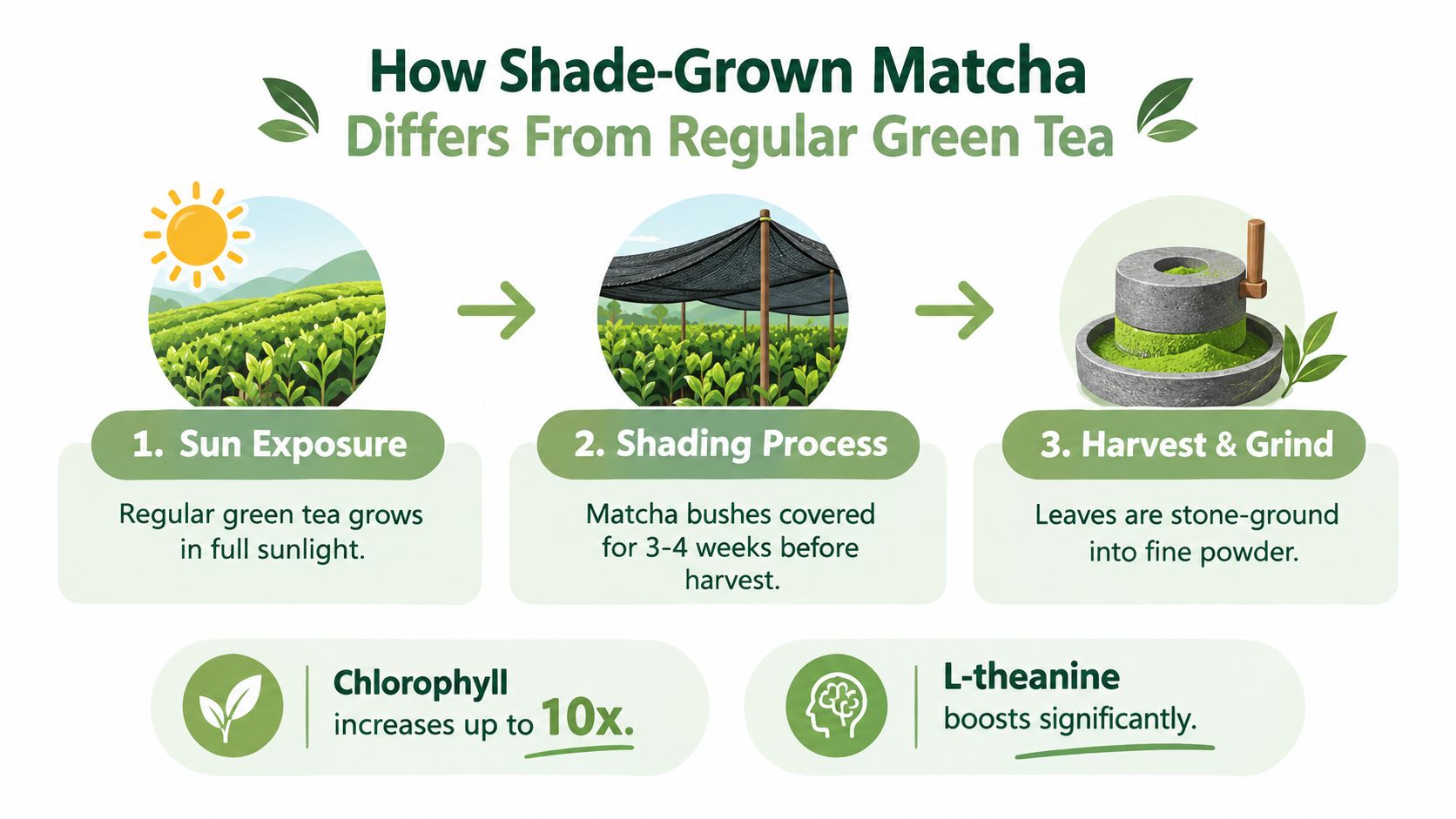
The key difference begins before harvest. Matcha bushes are shaded for three to four weeks before the leaves are picked. Think of the covering as a curtain that changes the plant's growing conditions. With less direct sunlight, the leaves develop more chlorophyll and L-theanine, which contributes to matcha's vivid colour, savoury umami character and gentler feeling of alertness. (Shade-grown matcha production and serving information)
From leaf to powder
After harvesting, producers process the leaves into tencha, removing stems and veins before milling the leaf material into a fine powder. Traditional stone milling is slow and careful because excessive heat can affect the powder's colour and aroma.
That process explains why matcha behaves differently in a cup:
- Regular green tea gives you a brewed liquid with a lighter body and a flavour shaped by steeping time and water temperature.
- Matcha gives you a suspended powder with a fuller texture, stronger vegetal notes and more direct contact with the leaf.
- Shade-grown matcha often has a rounded umami taste, while poorly prepared or low-quality powder can taste harsh, stale or overly bitter.
Matcha still contains caffeine. An Australian product specification lists approximately 30 to 40 milligrams per 2-gram serving, which is a useful practical reference for cafés and home recipes. (Australian matcha product specification)
The presence of L-theanine doesn't mean matcha is caffeine-free or suitable for everyone. It means matcha offers a different combination of caffeine and amino acids from a standard cup of coffee. If you're sensitive to caffeine, start with a modest serving and pay attention to how your body responds.
For a clearer side-by-side explanation, see how matcha differs from green tea.
Ceremonial Grade Versus Culinary Grade Matcha
The words ceremonial grade and culinary grade are useful shopping shorthand, but they shouldn't be treated as a universal legal or industry grading system. A seller can use these terms differently, so the label should be considered alongside colour, aroma, texture, origin and intended use.
| Feature | Ceremonial Grade | Culinary Grade |
|---|---|---|
| Typical texture | Very fine and smooth | Fine, but selected for mixing into food and drinks |
| Colour | Usually vivid green | Green, with variation depending on origin and processing |
| Flavour | Softer, rounded umami for drinking with water | More assertive flavour that can stand up to milk and other ingredients |
| Caffeine | Contains caffeine, with the amount depending on the product and serving | Contains caffeine, with the amount depending on the product and serving |
| Best use | Straight matcha, thin tea or thick tea | Lattes, smoothies, baking, sauces and desserts |
Choose ceremonial for the plain-water ritual
Ceremonial-style matcha makes sense when you want the powder itself to lead the experience. Whisk it with water and you'll notice its aroma, mouthfeel, sweetness and bitterness without milk or fruit masking the details.
A good example is a quiet morning ritual. Sift the powder into a bowl, add a small amount of warm water, whisk until smooth and then adjust the consistency. At this stage, freshness and fine milling matter most because there are no other ingredients to hide roughness.
Choose culinary for recipes and café drinks
Culinary matcha is often the more practical choice for a latte, smoothie or baked recipe. Milk, fruit, vanilla, chocolate and sweeteners all change the balance of a drink, so a powder selected for blending doesn't need to perform exactly like one intended for sipping on its own.
Use culinary grade for:
- Matcha lattes: Its flavour can remain present after adding milk.
- Smoothies: It combines easily with fruit, yoghurt or plant-based ingredients.
- Baking: It adds colour and tea flavour to biscuits, cakes and slices.
- Desserts: It works in ice cream, icing and custards where other ingredients share the spotlight.
Buying shortcut: If your main drink is straight matcha, prioritise refinement and flavour. If you're making lattes or recipes, prioritise reliable blending, a clean taste and consistent supply.
Ask the seller what the powder is designed for rather than assuming the most expensive option will be the best fit. A ceremonial label won't improve a latte if the product is old or difficult to dissolve, and culinary matcha may be wasted if your favourite preparation is a simple bowl of whisked tea.
Reading Quality Markers on Matcha Packaging
A bright packet and an attractive origin story can't tell you everything. For Australian buyers, a technical specification or certificate of analysis can reveal whether a supplier understands commercial quality control.
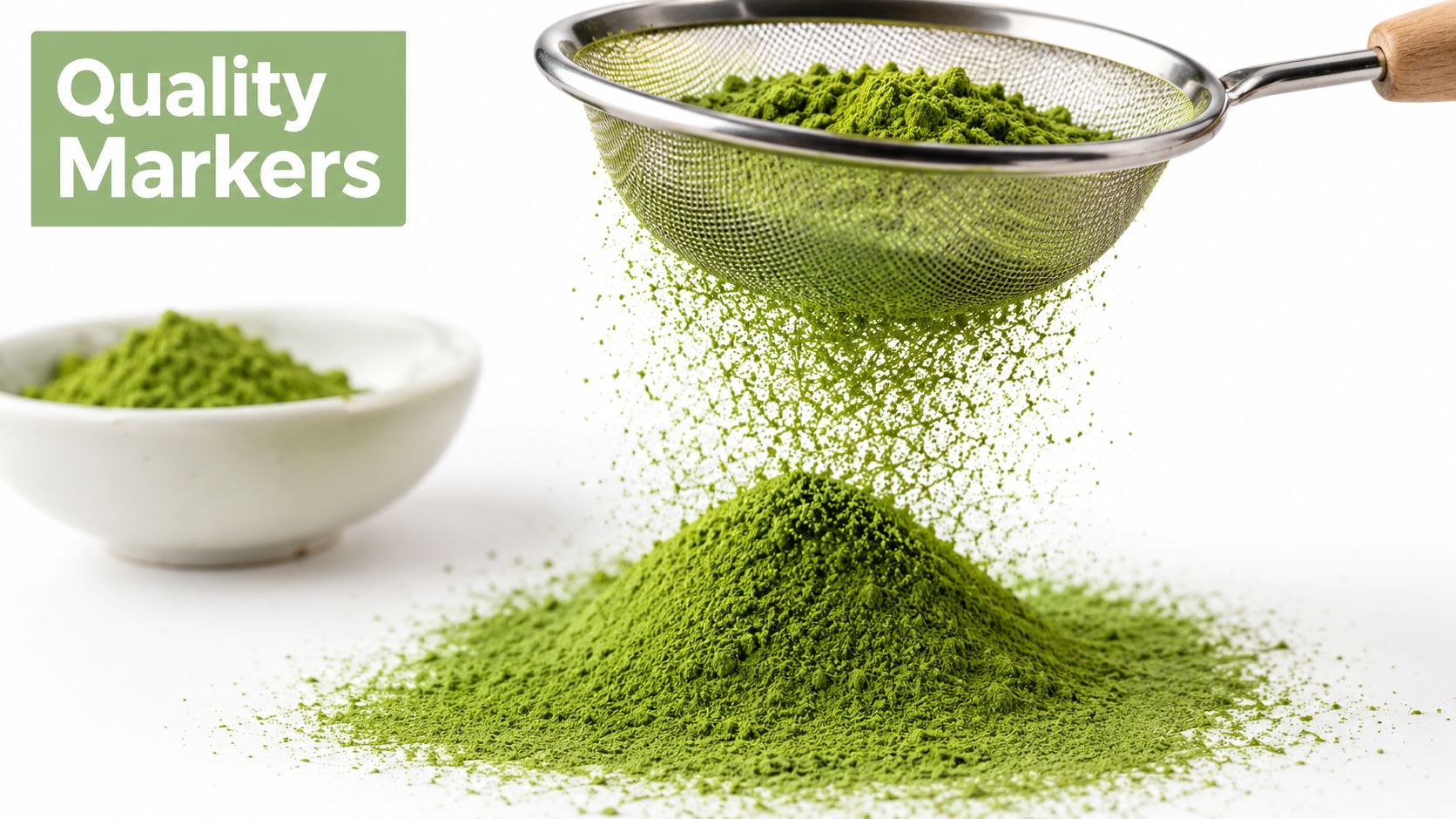
Start with particle size. One Australia-supplied technical specification reports 95% passing through 200 mesh. In plain language, that indicates a very fine powder. Fine particles suspend more evenly, which can improve the mouthfeel of a latte and reduce the gritty sensation that appears when matcha hasn't been milled or sifted well. (Australian matcha technical specification)
What the technical numbers tell you
The same specification reports loss on drying of no more than 8.0%, total heavy metals below 10 parts per million, a total plate count below 10,000 colony-forming units per gram, and yeast and mould below 300 colony-forming units per gram. These markers don't describe flavour on their own, but they help buyers assess moisture control, contamination limits and batch hygiene. (Australian matcha technical specification)
Moisture matters because matcha has a large surface area. A powder exposed to humidity can clump, lose freshness and become harder to whisk. Microbiological results provide additional reassurance, particularly for cafés, retailers and businesses storing larger quantities.
Look for packaging that identifies:
- Origin: The country and, where available, the region or producer.
- Grade or intended use: Straight drinking, lattes, baking or foodservice.
- Batch information: A lot or batch reference helps with traceability.
- Testing: Ask whether heavy metal, microbiological or other laboratory results are available.
- Storage guidance: Good suppliers explain how to protect the powder after opening.
A lab result isn't a substitute for tasting the tea, but it's more useful than an unsupported phrase such as “ultra premium”. This video can also help you visualise the preparation and handling of matcha powder.
What Organic Certification Really Means for Matcha Buyers
"Organic" should describe a verifiable production and certification pathway, not just a natural-looking package. When you're comparing matcha tea powder in Australia, check whether the product is certified, who holds or verifies that certification and whether the claim applies to the matcha itself rather than only to another ingredient in a blend.
A practical check involves four steps:
- Find the certification mark or controller details. Look for an Accredited Controller of Organics label or another recognised certification reference.
- Match the name to the product. The certificate, brand and product description should clearly relate to the powder you're buying.
- Check the ingredient list. Pure matcha should be identified plainly. A latte mix may contain sugar, milk ingredients or flavourings, so don't assume every green powder is pure tea.
- Ask for evidence if the wording is vague. A supplier should be able to explain the certification basis rather than relying on a green leaf graphic.
Certified organic and organic ingredients aren't identical
“Certified organic matcha” points to a certification claim for the tea. “Made with organic ingredients” can describe a broader product containing a mixture of ingredients, and it may not communicate the same thing about the matcha powder itself.
That distinction matters if you're trying to reduce unnecessary additives, control sugar or choose a product that aligns with your household values. It also matters for cafés that need clear answers when customers ask where an ingredient came from.
Organic status won't automatically tell you whether the powder is fresh, smooth or suitable for a latte. You still need to assess origin, packaging, testing and storage. Use this guide to organic certification in Australia to understand the language before you compare products.
A transparent supplier should make the certification information easy to find and explain what it covers. If the claim is difficult to verify, treat that uncertainty as part of the buying decision.
Where to Buy Matcha in Australia
Australian buyers can find matcha through specialist online tea retailers, cafés, natural food stores, supermarkets and foodservice distributors. The right source depends on whether you need a small tin for personal use, a steady supply for a café or a larger pack for a bakery or hospitality business.
Start with provenance and purpose
A specialist retailer may provide more information about Japanese origin, harvest style, grade and preparation. A supermarket can be convenient, but the label may offer less detail about milling, laboratory testing or supply continuity. A wholesale distributor can be suitable for cafés, although you'll want to ask about lead times, minimum order quantities and what happens when a particular batch sells out.
Kyoto and Uji are familiar names in Japanese tea, but a famous region alone doesn't guarantee that a powder suits your menu. Match the origin information with the intended use:
- For straight drinking: Look for a refined powder, fresh aroma and a flavour that isn't dominated by bitterness.
- For café lattes: Ask about suspension, consistency between batches and foodservice pack sizes.
- For baking: Focus on clean flavour, dependable colour and a cost that works across repeated recipes.
- For retail shelves: Prioritise clear labelling, organic evidence, a useful best-before date and replenishment options.
Ask the supplier practical questions
The recent shortage has made supply reliability part of product quality. A cheap product that disappears during a busy period may cost a café more than a slightly higher-priced product with dependable availability.
Before ordering, ask:
- Where was the matcha grown and processed?
- Is the powder intended for drinking, lattes or culinary use?
- Are laboratory results available?
- How is it packed and stored before dispatch?
- Can the supplier support wholesale volumes?
- What lead time should a café allow for its next order?
Price comparison also needs context. A small retail tin, a larger hospitality pack and a product with documented testing aren't directly interchangeable. Compare the amount of usable powder, not just the ticket price, and avoid paying a premium for a vague grade label without supporting information.
For Australian hospitality buyers, a local supplier can simplify communication, delivery and replenishment. That doesn't remove Japan's role in the supply chain, but it can make the final purchasing relationship more responsive.
Storing Matcha and Using It at Home
Matcha is finely ground, so air, light, heat and moisture can affect it quickly once the package is open. Keep it in an airtight container, away from sunlight and strong-smelling foods. A cool, dark cupboard may work for short-term use, while refrigeration can help preserve freshness when the container is sealed carefully and protected from condensation.
Don't leave the lid open while you prepare breakfast. Scoop what you need, close the container promptly and use a dry spoon. If powder has been chilled, let the sealed container come towards room temperature before opening it, so humid air doesn't settle on the matcha.
For more detailed storage guidance, follow these matcha storage recommendations.
Three easy ways to start
Classic whisked matcha
Sift matcha into a bowl, add a small splash of warm water and whisk briskly in a zigzag motion until the powder is dispersed. Add more water to reach your preferred strength. The aim isn't perfect technique. It's a smooth drink without dry clumps.
Café-style matcha latte
Dissolve the powder in a small amount of warm water first. Add warmed milk or a plant-based alternative and sweeten only if you want to. This two-stage method prevents dry powder from floating across the surface of the latte.
Matcha smoothie bowl
Blend matcha with banana, yoghurt or your preferred milk, then pour the mixture into a bowl. Add fruit, seeds or toasted grains for texture. Culinary-grade powder is a sensible choice here because the recipe already contains several strong flavours.
A sieve is useful for all three preparations. It breaks up compacted powder before water or milk is added, giving your whisk a much easier job.
Common Matcha Mistakes Australian Buyers Make
Mistake one, treating all green powder as matcha. Matcha is made from prepared tea leaves that are shade-grown and ground into powder. A product labelled only “green tea powder” may be processed differently and may not offer the same colour, texture or umami flavour.
Mistake two, assuming the brightest green packet must be the best. Colour is a useful clue, but it isn't a complete quality test. Fresh aroma, fine texture, transparent origin, suitable packaging and a clean flavour matter too.
Mistake three, choosing ceremonial grade for every recipe. If you mostly make iced lattes, smoothies or baked goods, culinary grade may be the more sensible fit. Save a refined drinking matcha for preparations where you taste its subtle character.
Mistake four, ignoring supply continuity. Australian cafés have already faced shortages, price pressure and long ordering lead times. A supplier's ability to provide the same product consistently deserves as much attention as the first sample.
Mistake five, storing an opened pouch beside the kettle. Heat and steam are a poor combination for delicate powder. Seal it, keep it cool and dark, and avoid opening the container in a humid kitchen.
A quick buyer checklist
- Authenticity: Is it clearly identified as matcha made from Camellia sinensis?
- Fit: Is the grade suited to water, milk, baking or foodservice?
- Evidence: Can the supplier provide certification or testing information?
- Freshness: Is the packaging protective, sealed and clearly dated?
- Supply: Can you reorder without facing uncertain lead times?
Pep Tea offers organic Japanese matcha tea powder in Supreme, Imperial and Premium grades, with retail and wholesale pack options for Australian buyers. Explore the range, compare the intended uses and choose the powder that fits your daily ritual or café menu through Pep Tea.
A Guide to Australian Tea Brands for 2026
You're probably here because you've stood in a supermarket aisle, scanned a café menu, or opened an online tea store and thought, when did tea get this complicated?
It used to feel simple. Black tea bags for the morning, maybe peppermint at night, and that was about it. Now the Australian shelf is full of loose-leaf blends, organic herbal infusions, ceremonial matcha, sparkling kombucha, wellness teas, local brands, imported brands, and products that call themselves Australian without making it obvious what that means.
That mix is exciting, but it can also be a bit murky. If you care about flavour, ingredients, where a product comes from, and how it fits into a healthier routine, you need more than a list of brand names. You need a way to judge quality for yourself.
Welcome to the New World of Australian Tea
Australian tea brands aren't one neat category anymore. They sit across a few different worlds at once.
Some brands still focus on the everyday cuppa. Think supermarket black tea bags, familiar blends, fast brewing, low fuss. Others lean into loose-leaf tea, premium botanicals, or small-batch blending. Then there's the newer functional side of the market, where matcha, herbal wellness blends, and kombucha have become part of how people think about energy, digestion, sugar reduction, and mindful drinking.
That's where many people get confused. They compare products that aren't really trying to do the same job.
A plain breakfast teabag is built for convenience. A ceremonial matcha is built for whisking and drinking on its own. A culinary matcha is meant for lattes, smoothies, and baking. A properly fermented kombucha belongs in a different conversation again, because it's a brewed drink rather than a leaf you steep in a mug.
Why tea shopping feels harder now
The challenge isn't just choice. It's language.
You'll see words like organic, premium, Australian-owned, Australian-made, stone-ground, live cultures, and functional. Some of these terms matter a lot. Some are useful only if the brand explains them properly.
A good tea label should answer basic questions clearly. What is it, where is it from, and why is it made this way?
If a tea brand can't explain those points in plain English, it becomes hard to know whether you're paying for actual quality or just attractive packaging.
A better way to think about Australian tea brands
Instead of asking, “Which brand is best?”, ask these questions:
- What am I buying it for: daily convenience, calm focus, a café-style drink at home, a soft drink alternative, or something to serve guests?
- What does the label tell me: ingredients, origin, certifications, sugar level, brewing style?
- Is the product honest about what it is: Australian-owned, Australian-brewed, imported leaf, local packing, or all of the above?
That mindset makes the tea world much easier to understand. Once you know how to read the category, you can choose what suits your taste, routine, and budget without getting lost in the marketing.
The Modern Australian Tea Landscape
Tea in Australia still has a strong everyday base, but the category is changing shape. The easiest way to understand Australian tea brands today is to stop thinking of tea as one thing.
Three big parts of the market
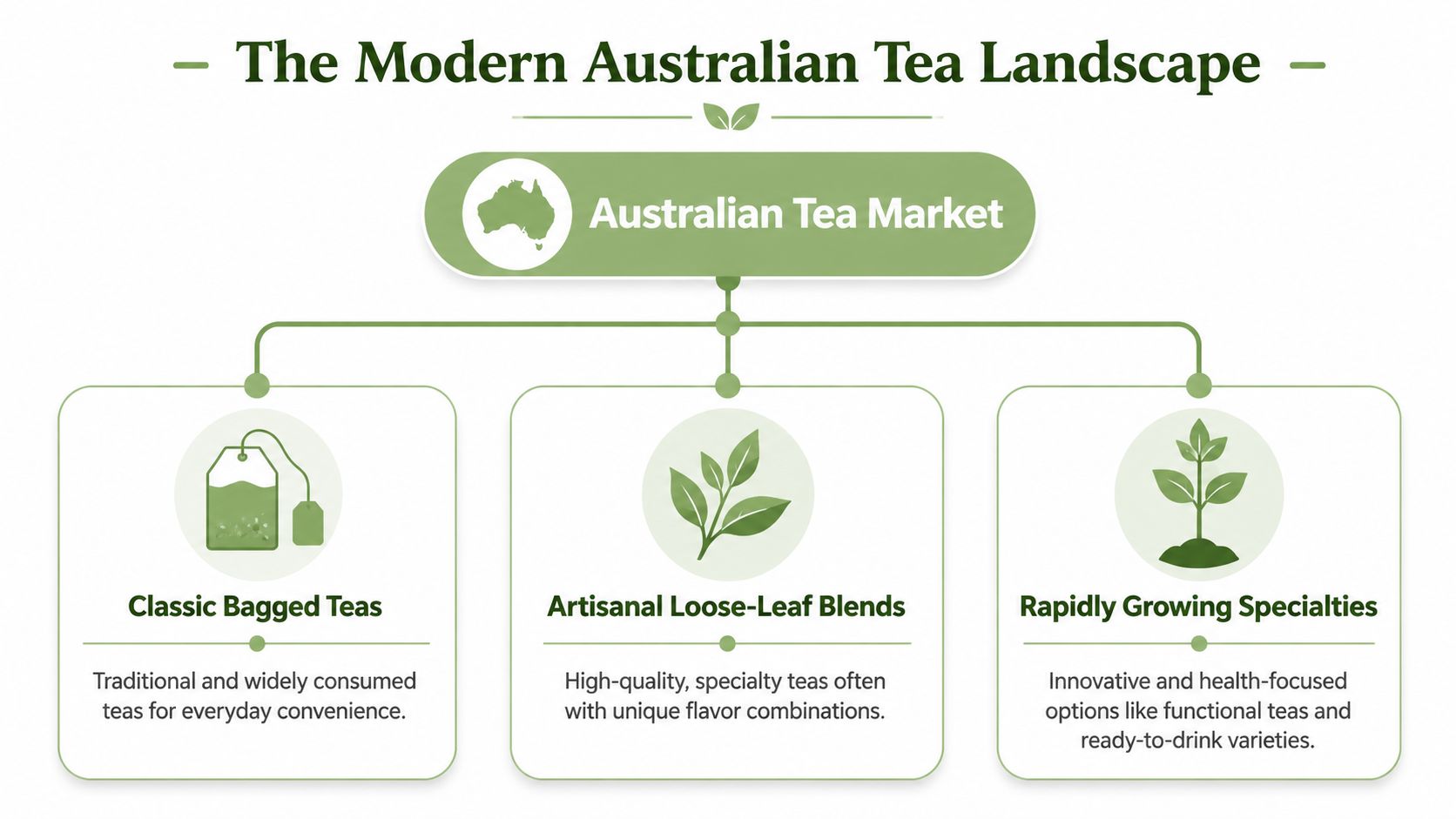
You can picture the market in three broad groups:
| Category | What it usually includes | What buyers tend to want |
|---|---|---|
| Classic bagged teas | Black tea, English Breakfast, Earl Grey, common herbal bags | Convenience, price, consistency |
| Artisanal loose-leaf blends | Loose-leaf black, green, oolong, floral and botanical blends | Flavour, ritual, freshness |
| Rapidly growing specialties | Matcha, functional teas, ready-to-drink kombucha | Wellness, low sugar choices, café-style experience |
These groups overlap, but they solve different needs. That's why comparing a commodity teabag to a ceremonial matcha powder usually leads nowhere. They aren't competing on the same terms.
Why specialty tea keeps gaining attention
Australia's tea market was estimated at USD 535.1 million in 2025 and is forecast to reach USD 780.6 million by 2034, with growth tied to stronger demand for health-focused beverages such as organic and specialty teas, according to IMARC's Australia tea market outlook. That matters because it shows the shift isn't just about novelty. Buyers are moving toward products that feel more purposeful.
Some people want tea with a cleaner ingredient story. Others want premium café drinks at home. Many are trying to cut back on sugary drinks, or they want an afternoon option that feels lighter than coffee.
The old centre and the new edge
The traditional market hasn't disappeared. It still shapes how tea is sold, especially in supermarkets. But newer categories are changing expectations around flavour, origin, and quality cues.
A shopper who once bought one box of standard tea bags may now keep several products at home:
- A black tea for routine
- An evening herbal for winding down
- A matcha for lattes or focused work sessions
- A kombucha in the fridge as a low-sugar alternative to soft drink
That's also why content around functional beverage trends in Australia has become more useful for tea drinkers. Tea now sits inside a wider wellness and café culture conversation, not just the old “hot drink” category.
Australian tea brands now compete on purpose as much as flavour. Buyers want to know what a product fits into, not just what it tastes like.
A Closer Look at Matcha and Kombucha
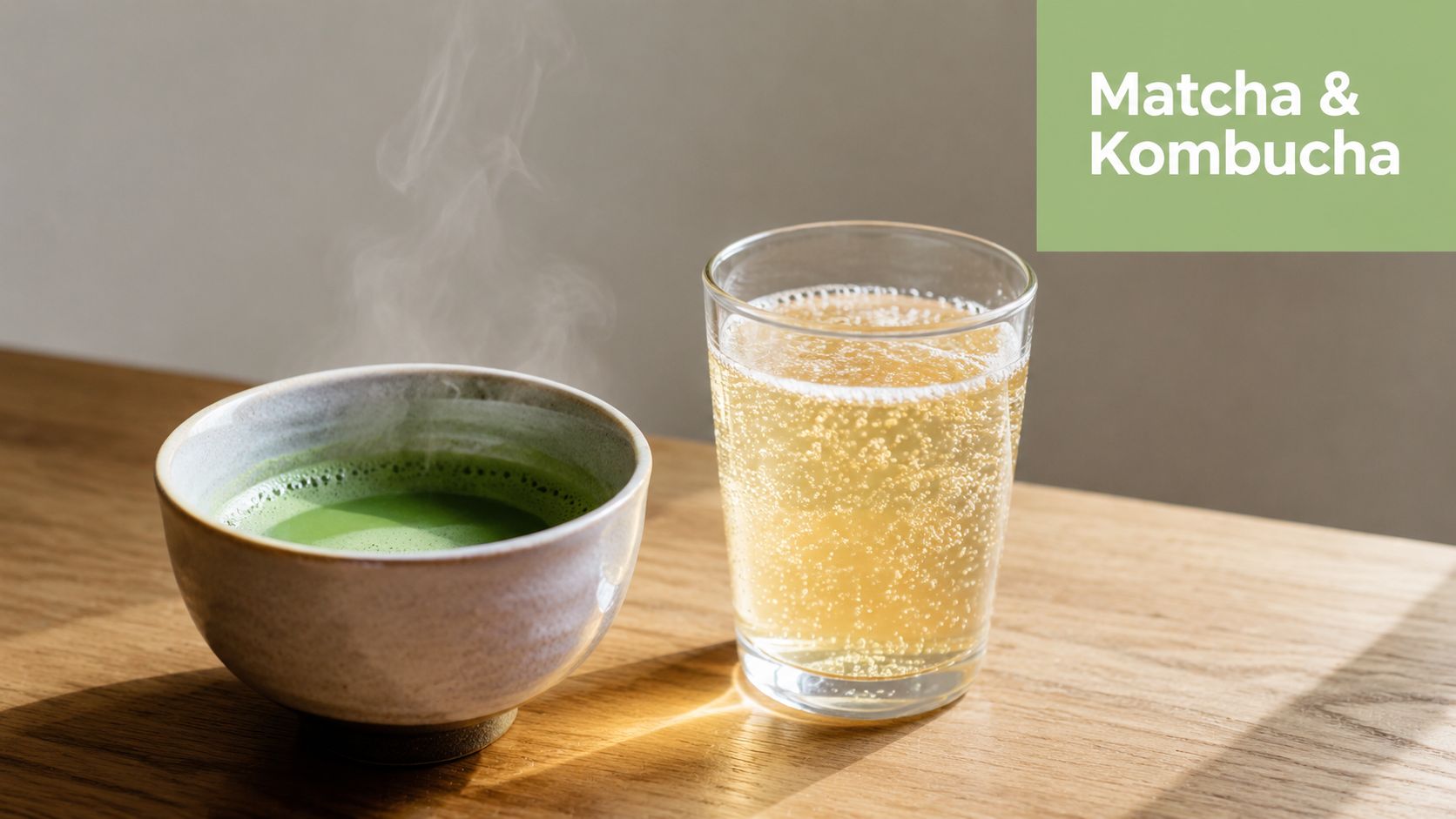
Two products confuse people more than almost anything else in tea. Matcha and kombucha both sit inside the modern tea scene, but they work in completely different ways.
Matcha is not just powdered green tea
Matcha is made from green tea leaves that are processed into a very fine powder. Instead of steeping leaves and throwing them away, you whisk the powder into water and drink the whole leaf. That changes both the texture and the experience.
Good matcha usually looks bright and fresh rather than dull and khaki. It should smell clean, vegetal, and lively. When whisked well, it forms a smooth layer of foam.
Two terms matter most when you shop:
- Ceremonial grade means a matcha intended for drinking directly, often with water.
- Culinary grade means a matcha intended for recipes like lattes, smoothies, baking, or desserts.
Neither grade is “better” in every situation. They're just suited to different jobs.
How to choose the right matcha
If you're new to it, use this simple guide:
- For straight matcha: choose ceremonial grade. You'll notice flavour and texture more clearly.
- For lattes: culinary grade often gives you better value and enough strength to stand up to milk.
- For baking: use culinary grade, because subtle flavour notes get lost once you add other ingredients.
If you'd like a practical look at processing and what affects the final powder, Pep Tea has a useful guide on how matcha tea is made.
Practical rule: Buy matcha based on how you'll use it, not on which label sounds fancier.
Kombucha is tea transformed by fermentation
Kombucha starts as brewed tea, then goes through fermentation with a culture of yeast and bacteria. That's why it tastes different from iced tea. It's lightly tangy, often gently sparkling, and can range from crisp to complex depending on ingredients and brewing style.
People often hear the word fermentation and assume it's mysterious. It isn't. In simple terms, fermentation is a controlled process where the culture interacts with the brewed tea and sugars over time, changing the flavour and producing the tart, lively character kombucha is known for.
Quality matters here because not every kombucha on shelf gives the same experience. Some products lean heavily on sweetness or flavouring. Others put the brewing process at the centre.
What to look for in real kombucha
A well-made kombucha should be clear about a few things:
- Whether it's properly fermented
- Whether it contains artificial additives
- Whether the sugar level suits your preference
- Whether the ingredients list is simple and recognisable
If you want to see kombucha explained visually, this short video is a handy starting point.
Why these two products matter in Australian tea brands
Matcha and kombucha show how broad the tea category has become. One is rooted in traditional tea craft. The other is a modern fermented drink built from tea. Both appeal to people looking for something more intentional than a standard teabag.
They also teach an important buying lesson. A premium tea product should be able to explain its process plainly. If a brand can't clearly tell you what grade of matcha you're buying or how its kombucha is brewed, that's a sign to slow down and look closer.
Beyond the Label What Quality Really Looks Like
A lot of Australian tea brands look polished. That doesn't mean they're all equally transparent.
The tricky part is that “Australian” can mean several different things. A brand might be Australian-owned. It might be blended here. It might be packed here. It might brew here. Or it might use imported tea leaf and rely on Australian branding to do most of the talking.
The question many shoppers don't ask
A useful industry reminder is this: local tea production in Australia is limited and expensive, so an Australian tea brand may not be using Australian-grown leaf at all. The more practical test is whether the brand gives clear information about country of origin, leaf grade, and traceability, because “organic” or “Australian” branding on its own doesn't guarantee quality, as discussed in this sourcing-focused review on Australian tea origin.
That's not a criticism of imported tea. Some of the world's finest tea comes from overseas, and certain products should come from their place of origin. Japanese matcha is the obvious example. The point is honesty.
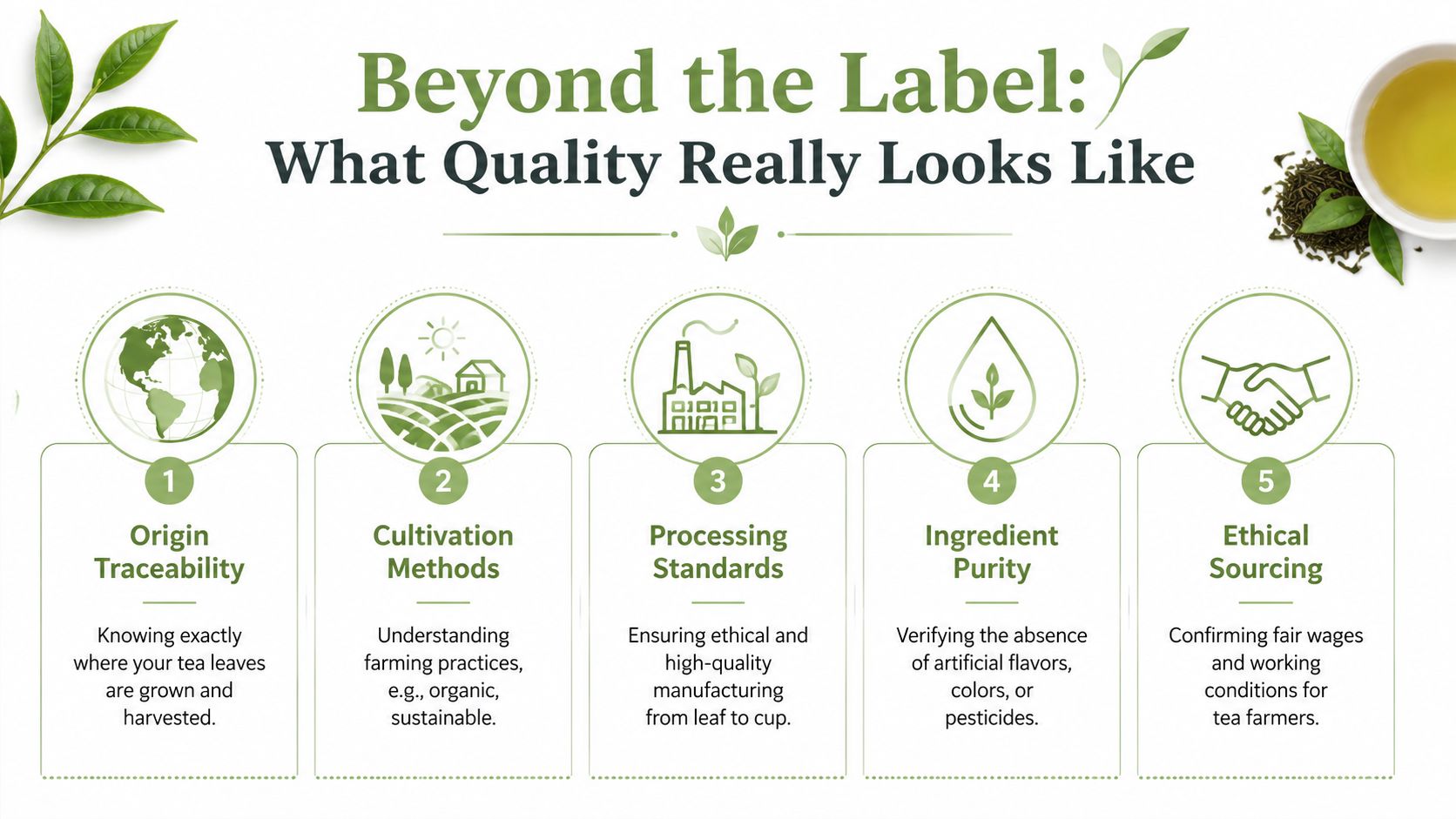
Five signs a tea brand is taking quality seriously
Here's a checklist worth using whenever you compare products.
- Origin is stated clearly. You should be able to tell where the tea leaf was grown, not just where the packet was designed or filled.
- The ingredient list is clean. If it's a tea, you want to recognise what's in it. If it's kombucha, you want the ingredients to make sense for a fermented tea drink.
- The product tells you what kind of tea it is. Matcha grade, loose-leaf style, herbal blend ingredients, and processing details all help.
- Certification has context. Organic certification is useful, but it tells you about standards, not flavour. Pep Tea's overview of organic certification standards is a good example of the sort of clarity shoppers should expect from any tea brand.
- The brand explains processing, not just branding. Stone-ground. Blended. Brewed. Fermented. Packed. Those words should mean something concrete.
Australian-made versus Australian-grown
Readers often get tripped up here, so let's make it plain.
| Label claim | What it may mean | What to ask next |
|---|---|---|
| Australian-owned | The business is local | Where is the tea leaf from? |
| Australian-made | The product was made or brewed here | Are the ingredients local or imported? |
| Packed in Australia | Final packaging happened here | Where was it grown and processed? |
| Australian-grown | The leaf itself was grown here | Which region and what variety? |
Don't stop at the front label. The back panel usually tells you whether the brand is being genuinely transparent.
Quality is about fit, not snobbery
It's easy to think “premium” just means expensive. In tea, real quality is more practical than that. It means the product is suitable for its purpose, handled carefully, and described accurately.
A humble everyday teabag can still be decent if it's fresh and balanced. A ceremonial matcha can be poor if it tastes flat and muddy. An organic claim can be meaningful, but it isn't a shortcut around bad sourcing or weak processing.
That's why smart buyers learn to separate branding cues from quality cues. One looks nice on the shelf. The other tells you what's in the cup.
Choosing Australian Tea Brands for Your Home
Home shopping is where all of this becomes real. Consumers aren't standing in a specialty tea studio asking about harvest style. They're in a supermarket, browsing online, or adding one or two products to a grocery order.
That context matters. Australia's tea market is valued at $1.2 billion, and most spending on packaged tea happens in supermarkets, where major brands dominate and some products cost about 5 cents per teabag, according to World Tea News on Australian tea trends. That creates a very clear split between cheap everyday tea and the more specialised products people buy for flavour, quality, or a specific routine.
Shop by purpose, not by hype
If you want your tea cupboard to be more useful, buy for real situations.
- For a simple daily cuppa: choose a tea you'll make every day. There's no point buying precious leaf if you only want speed before work.
- For clean, focused energy: an organic matcha can make more sense than another ordinary green tea bag, especially if you enjoy lattes or a morning whisking ritual.
- For a fridge staple: kombucha suits people who want something cold, crisp, and less sweet than soft drink.
- For evenings: keep a calming herbal option separate from your caffeinated teas so you're not reaching for the wrong thing at night.
A quick home-buyer checklist
Use this before you click add to cart.
- Read the product type first. Is it loose leaf, bagged tea, matcha powder, or fermented ready-to-drink tea?
- Check origin and ingredients. If a brand hides them, move on.
- Match the product to your habit. Don't buy ceremonial matcha if you only bake. Don't buy a sweet fizzy drink if you wanted a cleaner kombucha.
- Start small. One quality product you'll use beats a cupboard full of “wellness” purchases you forget about.
If you're comparing matcha options specifically, this guide on best matcha powder in Australia is helpful because it focuses on how buyers can judge colour, use case, and label detail rather than chasing trend language.
One practical example
If your goal is a better afternoon drink at home, you might keep one matcha for lattes and one kombucha in the fridge for days when you want something cold instead. That's a more realistic setup than trying to make one product do everything.
Pep Tea, for example, offers Japanese organic matcha and Australian-brewed sugar-free organic kombucha, which makes it a straightforward option for households that want one powdered tea for whisking or recipes and one ready-to-drink fermented tea for the fridge.
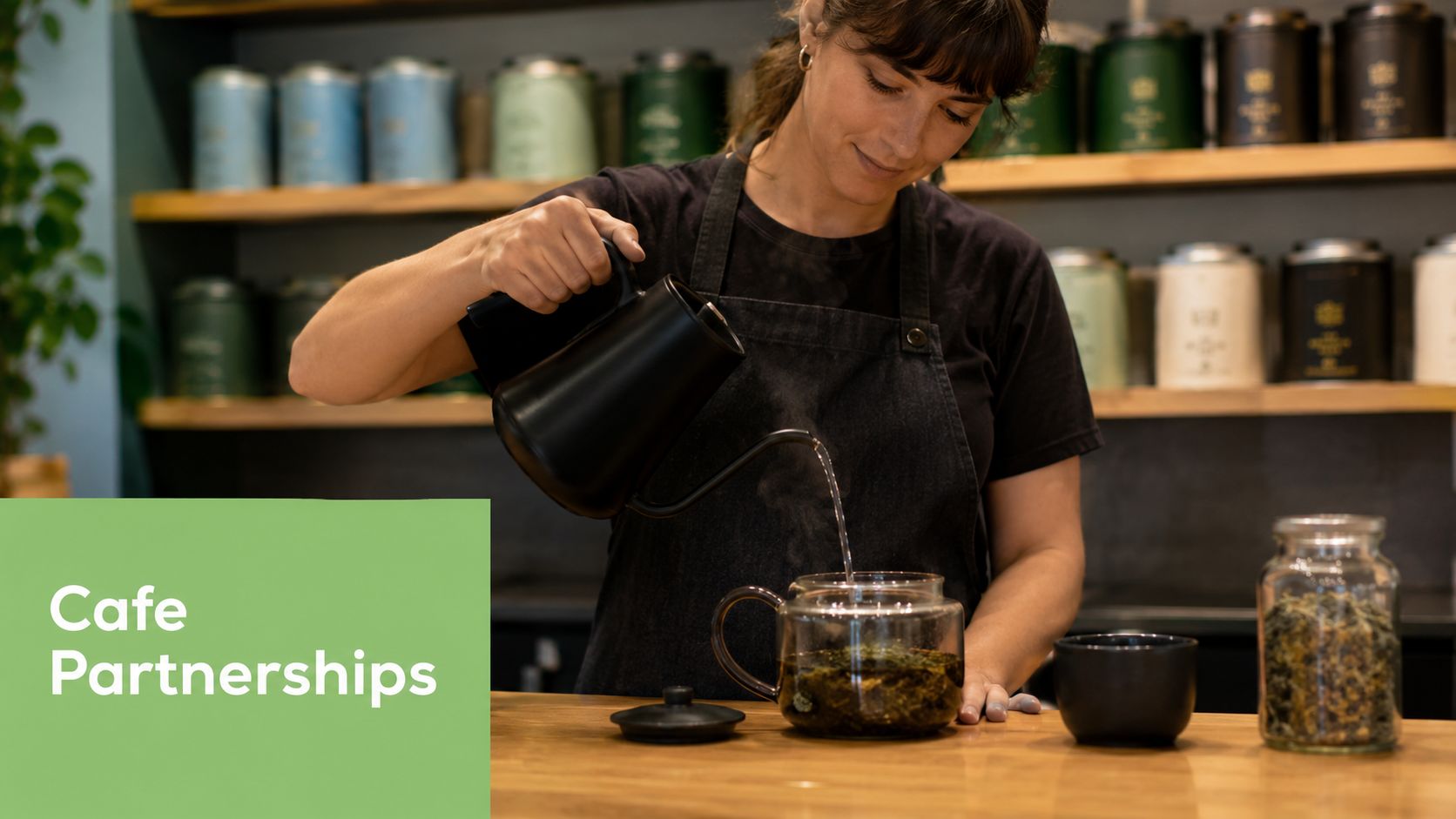
Partnering with Tea Suppliers for Your Café
Cafés don't buy tea the same way households do. A home buyer can forgive inconsistency. A venue can't.
Staff need products that are easy to prepare correctly, stable on the menu, and clear enough to explain in one sentence to a customer who's deciding between an oat flat white, an iced matcha, and a non-alcoholic afternoon drink.
Why tea now deserves menu attention
The hospitality opportunity is bigger than the old tea pot on the side of the menu. Australia's tea market is seeing strong growth in functional and organic segments, with a projected 5.1% CAGR, driven by demand for low-sugar, additive-free, and health-supportive teas, according to Research and Markets on the Australian tea market.
For cafés, that translates into a simple commercial question. Are you giving customers better non-coffee choices, or only the bare minimum?
What café owners should look for in a tea supplier
A strong supplier relationship usually comes down to four things.
- Consistency in the cup. Your matcha should whisk the same way each shift. Your kombucha should pour and taste as expected.
- Clear product positioning. Staff should know whether a matcha is best for straight service or lattes, and how to describe a kombucha without confusion.
- Menu relevance. Organic, low-sugar, and additive-free cues matter more when customers are actively looking for lighter or more functional drinks.
- Operational ease. Products need to fit service speed, storage, and training reality.
Menu ideas that fit the current market
A tea program doesn't have to be huge to be effective.
| Drink style | Why it works in a café |
|---|---|
| Matcha latte | Familiar enough for broad appeal, distinct enough to feel premium |
| Iced matcha | Visual, refreshing, and easy to position as a coffee alternative |
| Kombucha by the bottle or glass | Gives customers a cold, alcohol-free option with personality |
| Loose-leaf pot service | Lifts the perception of tea beyond the standard tea bag |
A café doesn't need dozens of tea SKUs. It needs a small range that staff can serve confidently and customers can understand quickly.
Tea suppliers should make your menu clearer
The best supplier isn't just selling product. They're making your menu easier to execute.
If a supplier can't explain sourcing, preparation, flavour profile, and the right use case for each tea, your team ends up doing the guesswork. That usually leads to uneven drinks and weak menu language. In a café setting, clarity is part of quality.
Your Journey into Australian Tea Starts Here
The Australian tea scene is broader, more interesting, and more demanding than it used to be. That's a good thing. It means you've got more ways to find a tea that suits your taste, routine, and values.
It also means labels need a closer look.
The most useful way to judge Australian tea brands isn't by logo, trendiness, or whether the packet feels expensive. It's by asking clear questions. Where is it from? What kind of tea is it? How is it processed? Does the product fit the way you drink tea?
That's especially important now that tea includes more than the old familiar box of black bags. Matcha asks you to think about grade and preparation. Kombucha asks you to think about fermentation and ingredients. “Australian” asks you to think about ownership, brewing, packing, and origin as separate ideas.
Once you understand those distinctions, the category becomes much easier to enjoy. You stop buying vague promises and start choosing with confidence.
And that's the true pleasure of tea. Not just drinking it, but recognising what makes one product thoughtful, honest, and worth bringing into your daily life.
If you'd like to put that knowledge into practice, explore Pep Tea for organic matcha and Australian-brewed sugar-free kombucha, along with practical guides that help you choose, prepare, and enjoy tea with more confidence.
Top 7 Australian Healthy Non Alcoholic Drinks 2026

What do you want your drink to do for you?
That question cuts through a lot of the noise around healthy non alcoholic drinks. “Alcohol-free” or “low sugar” is a start, but it does not tell you whether a drink will give you steady energy for a busy morning, sit comfortably after lunch, support hydration after training, or feel polished enough to pour at dinner instead of another sweet mocktail.
That functional lens matters in Australia, where drink choices are getting more intentional. Shoppers are checking sugar, ingredients, caffeine source, and whether a product earns a repeat buy. Café owners are weighing that same balance from the other side of the counter. Shelf life, consistency, margin, and whether a drink fits breakfast service, the 3 pm slump, or an alcohol-free evening crowd all matter.
So this guide is built around benefit first, brand second.
You’ll see options grouped by what they help with, such as gut health, clean energy, relaxation, and smarter hydration, along with simple ways to serve them at home or in a café. That makes it easier to choose well. A matcha for focus plays a different role from a kombucha with lunch, and a quality sparkling mixer belongs in a different conversation again.
Pep Tea is a good example of that benefit-led approach. Its range sits neatly in two useful lanes: matcha for calm, steady energy, and kombucha for a lighter, gut-friendly option. If you want a clearer sense of why kombucha has become part of that conversation, this guide to kombucha as a natural and organic health drink is a helpful place to start.
There’s also room for context. A clean electrolyte drink can be the smarter pick after heat, travel, or training, while a fermented tea, nootropic-style brew, or unsweetened sparkling option may suit the rest of the day better.
The seven brands below are worth knowing because each fills a different job well, and that is what makes a healthy drink useful.
1. Pep Tea
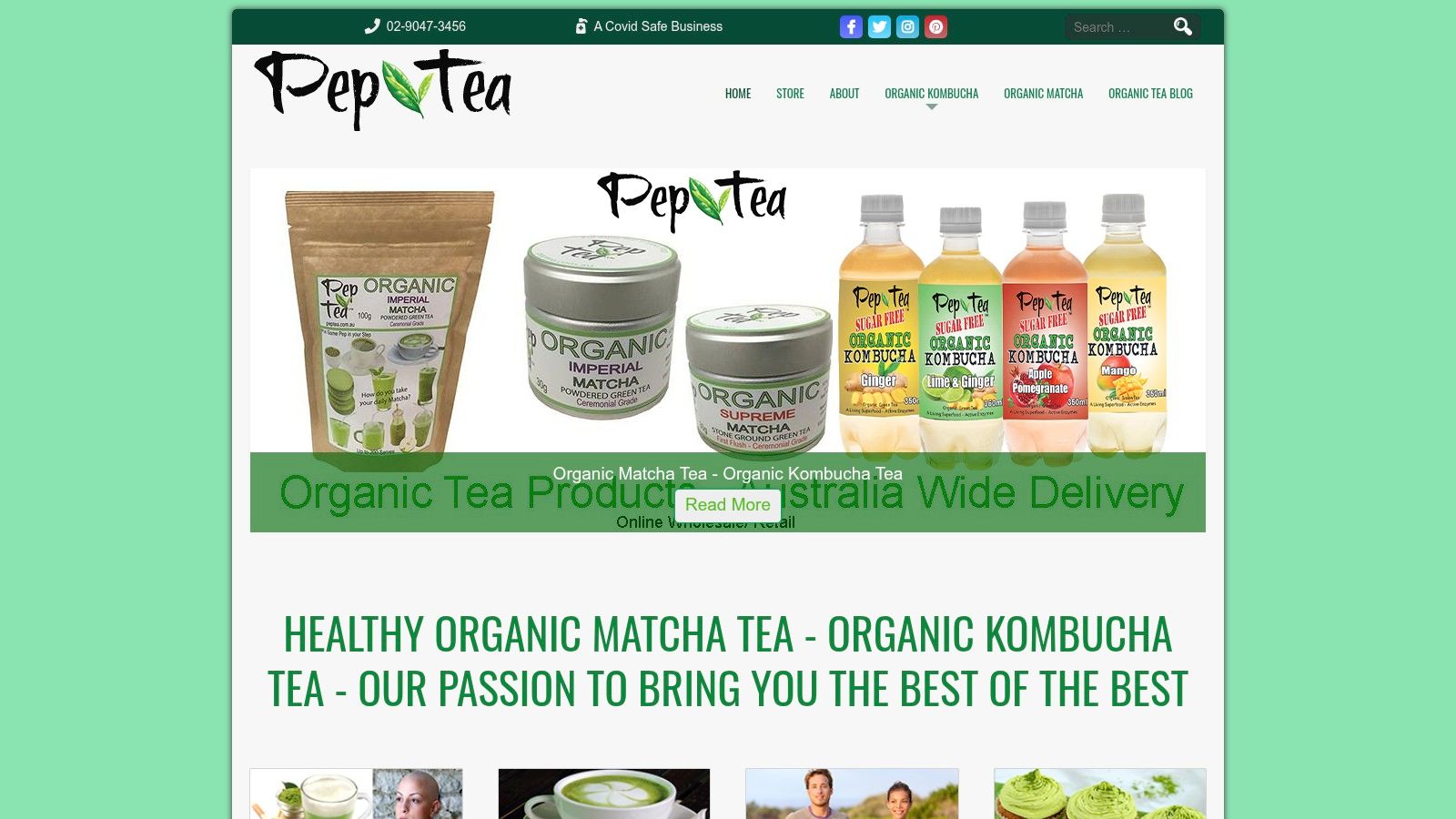
What do you need from a healthy non-alcoholic drink. Steady energy, better gut support, or something a café can serve without fuss? Pep Tea stands out because it answers those jobs clearly instead of padding the range with products that do not add much.
Pep Tea focuses on two functional lanes that matter in real life. Organic matcha for clean, sustained energy. Sugar-free organic kombucha for a lighter fermented drink that suits lunch, afternoon refreshment, or an alcohol-free evening option.
Best for energy and gut support
The matcha side is useful if coffee hits too hard or drops off too fast. Good organic Japanese matcha usually gives a smoother flavour, a finer texture, and a more stable drinking experience than lower-grade powders. That matters at home, where poor matcha can turn bitter fast, and in cafés, where it needs to whisk cleanly, hold up in milk, and still taste good iced.
The appeal is not just the caffeine. Matcha also contains naturally occurring L-theanine, which is why many people reach for it when they want focus without the edgy feeling that can come with strong coffee.
Pep Tea’s kombucha solves a different problem.
It is brewed in a HACCP-accredited, purpose-built brewery in NSW, and that production standard matters. Kombucha is one of those categories where quality control shows up in the glass. If a batch is too vinegary, too sweet, or too yeasty, it stops being an easy daily choice and starts feeling like a gamble. For regular drinkers, and especially for venues, consistency makes it easier to build a genuine habit around the product.
Pep Tea keeps the style clean and approachable. The kombucha is raw, living, sugar-free, and made with a lighter finish and low sediment, so it pours well and drinks neatly straight from the bottle. That gives it broader use than many funkier small-batch kombuchas, which can be interesting once but harder to serve every day.
For anyone choosing by function first, Pep Tea covers three practical roles well:
- Clean energy: Organic matcha for straight prep, iced drinks, smoothies, and baking
- Gut-friendly refreshment: Raw organic kombucha with live cultures and a drier, lighter profile
- Hospitality service: A format that works for cafés, bars, and fridges without feeling too niche
Simple ways to use it
At home, matcha earns its place because it is flexible. Whisk it hot for a morning ritual, shake it over ice with milk for the afternoon, or add a small amount to yoghurt, oats, or smoothie blends when you want flavour and lift without extra sweetness.
A simple café-friendly matcha build is 1 teaspoon matcha, a splash of 70 to 80 degree water, whisked smooth, then topped with your milk of choice. Serve it hot, or pour it over ice. If you run a venue, keep the recipe tight and train staff on water temperature. Burnt matcha tastes flat and grassy, and customers notice.
Kombucha works well with food and in low-effort alcohol-free serves. Pour it into a wine glass with a strip of grapefruit peel and a sprig of mint, or serve it long over ice with cucumber for a sharper lunch pairing. If you want more background on the category, Pep Tea’s article on kombucha as a natural and organic health drink is a practical starting point.
Why café owners rate it
Pep Tea is easy to slot into a menu because each product has a clear job. Matcha covers hot drinks, iced drinks, smoothie add-ons, and occasional dessert use. Kombucha gives you a sugar-free fridge option that feels more considered than standard soft drink and more accessible than heavily functional wellness products.
There are trade-offs. Pep Tea is not the cheapest option on the shelf, and a specialist range gives you less category breadth than a brand that also sells sodas, shots, or mixers. But that narrower focus is part of the strength. The products feel built for repeat use, not just first-try curiosity.
For Australian homes and venues that want one brand to cover calm energy in the morning and a polished fermented option later in the day, Pep Tea makes a strong case.
2. Remedy Drinks
Remedy Drinks suits people who want a healthier fridge without turning the whole shop into a research project. The range is wide, but it still feels coherent. Kombucha for gut-friendly fizz, wellness shots for quick intensity, prebiotic soft drinks for an easy soft-drink swap, plus ginger beer and switchel for people who want more bite.
That breadth matters because this article is not just a brand roundup. It is a practical guide to what each drink is good for. Remedy is the brand I’d place in the “variety across functions” category. It gives you options for different moments of the day and different drinkers in the same home or venue.
Best for broad range and convenience
Remedy has done a smart job of bringing functional drinks into the everyday Australian fridge. Its kombucha is long fermented, and the brand is clear about keeping the final product non-alcoholic. For anyone cutting back on booze, that clarity helps. For café owners, it also makes staff training simpler because the product story is easy to explain at the counter.
The practical win is choice without clutter. You can offer a kombucha to customers who want something tangy and food-friendly, a prebiotic soda to customers who want a sweeter, softer serve, and a shot for the grab-and-go crowd. One supplier can cover several use cases.
At home, that same range makes it easier to match the drink to the benefit you want.
Use Remedy kombucha when the goal is a sharper, fermented option with lunch. Serve it cold in a wine glass with ice and a wedge of lime if you want it to feel more considered than a standard can from the fridge. Use the prebiotic sodas when you want a lower-sugar social drink that still feels familiar. Wellness shots fit a different job entirely. They are about convenience and intensity, not slow sipping.
Remedy works well for people who want function without fuss. You can choose by mood, flavour, or occasion and still stay inside one brand.
Where it shines and where it doesn’t
For cafés, Remedy is handy because it gives you several menu roles in one range. Kombucha can sit beside salads, toasties, and lighter brunch dishes. Prebiotic sodas suit customers who do not want the acidity of kombucha. Shots can live in the fridge near the till for a simple upsell.
A few trade-offs matter:
- Strong point: The range covers multiple functional categories, so it is easier to test what your customers reorder.
- Good for mixed households and venues: One person can want kombucha, another can want a soda-style drink, and both can find something suitable.
- Possible downside: Sweetener choices are polarising. If you are sensitive to stevia or erythritol, you may notice the finish.
- Operational issue: Popular flavours can disappear from shelves, which makes menu consistency harder if you rely on one or two specific SKUs.
If you run a venue, start with one fermented option and one softer soda-style option rather than bringing in the full range at once. That gives you cleaner sales data and less fridge sprawl. If your menu already leans premium tea and a more focused wellness angle, Pep Tea will still feel tighter. If you want broader functional coverage with easy retail familiarity, Remedy earns its place.
3. Nexba
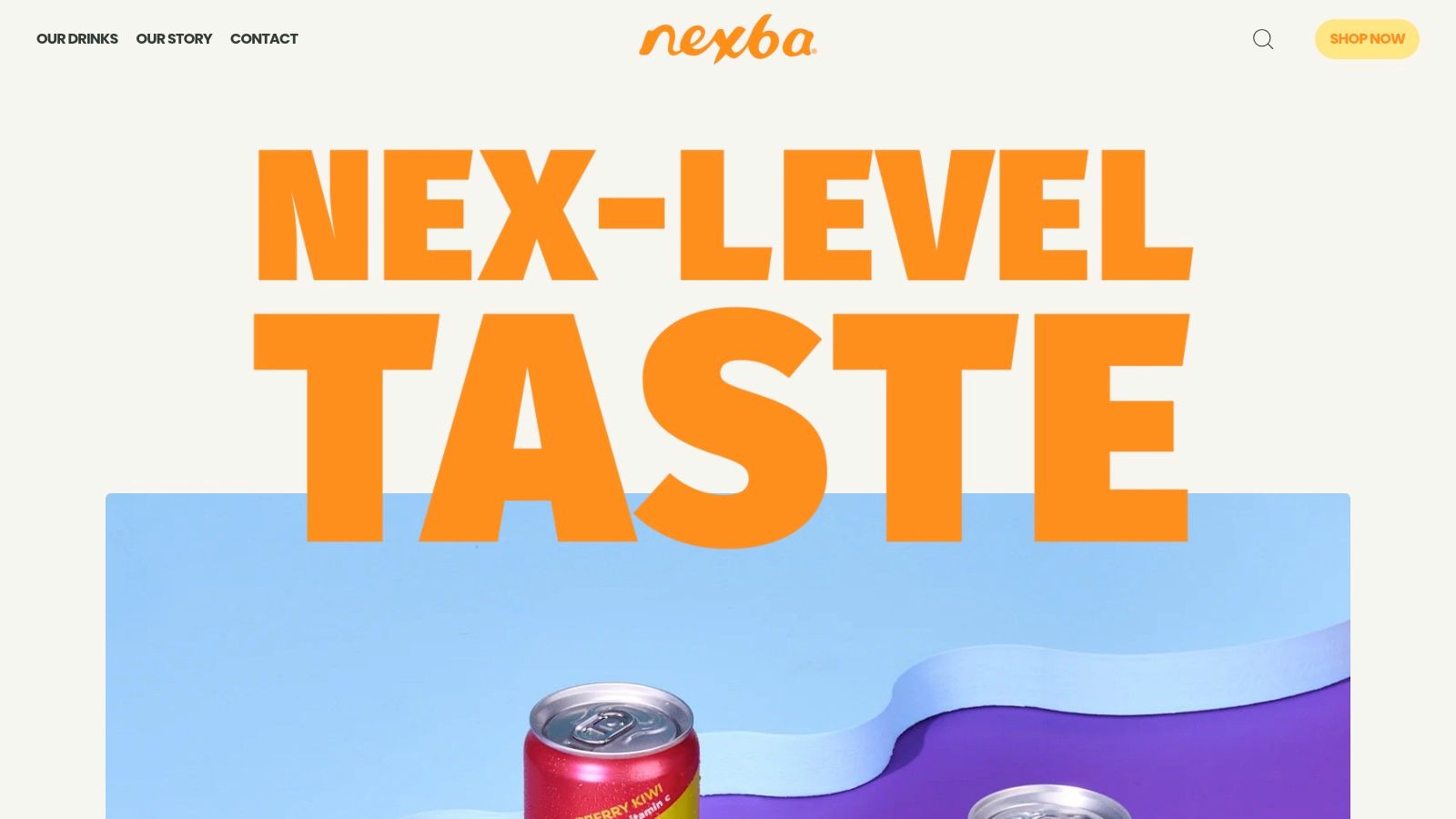
Want a healthy non alcoholic drink that keeps sugar at zero without dropping back to plain water? Nexba has carved out that niche well.
This brand is less about tea ritual or fermentation character and more about solving a practical problem. You want something cold, sweet, easy to grab, and lighter nutritionally than standard soft drink. For that job, Nexba makes sense.
Best for strict sugar-free shopping
Nexba’s sweetener profile is the whole story. It uses erythritol and stevia, which gives the drinks sweetness without sugar, but also creates a flavour finish that people tend to either accept quickly or notice straight away. I always tell people to decide with their palate, not the front label.
Its kombucha line includes added probiotics, which puts it in the gut-health conversation, although the drinking experience is still closer to a modern functional soft drink than a small-batch fermented brew. If gut support is your main goal, it helps to understand what actually supports good gut health day to day rather than assuming every kombucha serves the same purpose.
For home use, Nexba is handy in the fridge when you want a sweet drink without the sugar hit. For cafés, it suits venues that get clear demand for no-sugar options, especially in gyms, wellness studios, hospital kiosks, and grab-and-go cabinets where customers are making quick decisions.
Key trade-offs to consider
Nexba is strongest when sugar reduction is the first priority. It is less convincing if you care most about layered flavour, food pairing, or a more natural finish in the glass.
A simple way to use it:
- Choose Nexba if your main goal is cutting sugar while keeping a familiar soft-drink style experience.
- Leave it out if you dislike stevia or want drinks with more fermentation character, tea tannin, or subtlety.
- Stock it in cafés if customers regularly ask for sugar-free cans and you need a reliable retail-style option.
- Pair it carefully on menus. It works better with fast, casual items than with a refined tea program or produce-led brunch menu.
If you want to serve the same functional benefit in a more crafted format, a house-made iced herbal tea can do a better job at the table. A simple example is chilled peppermint and lemongrass tea with fresh lime and soda. It gives customers refreshment and complexity without relying on sweeteners. That is the sort of gap Pep Tea can fill more naturally in a café setting.
Nexba works best when the brief is specific. Reduce sugar. Keep flavour familiar. Make the choice easy. On those terms, it does the job well.
4. Lo Bros
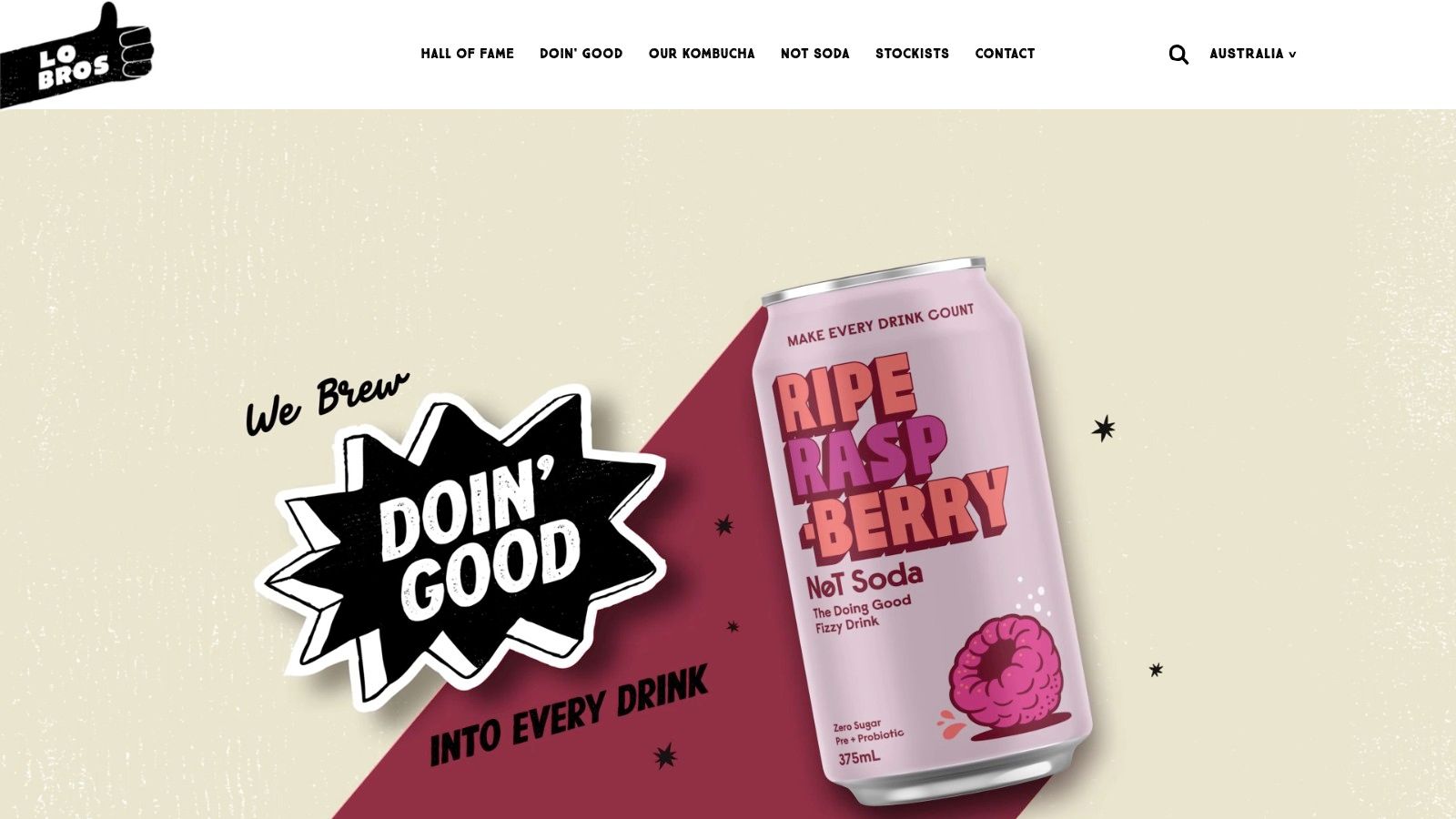
Want a healthier drink that still feels familiar in the hand? Lo Bros does that job well. It sits in the middle ground between kombucha drinkers who want a bit of function and soft-drink drinkers who still want easy, recognisable flavour.
That middle category matters. Plenty of people are happy to try healthier non alcoholic drinks, but they do not want to jump straight from cola or lemonade to plain soda water or a sharply sour ferment. Lo Bros makes that transition easier because the range covers both kombucha and soda-style options.
Best for the transition from soft drink to functional drinks
Lo Bros is a useful pick for households, shared office fridges, and cafés serving mixed crowds. One customer wants kombucha with a bit of tang and live-culture appeal. Another wants a raspberry or cola-style can that feels lighter than mainstream soft drink. This brand can serve both without forcing a venue into one health angle.
For café owners, that split is practical. The kombucha line can sit with salads, grain bowls, and lighter brunch items. The soda-style line is easier to sell with toasties, burgers, or kids' menu add-ons when someone wants a better fridge choice without too much explanation.
If gut health is part of the brief, keep expectations realistic. Fermented drinks can be one useful piece of the puzzle, but they are not a shortcut. Pep Tea’s guide to building good gut health habits gives the wider context, which matters more than treating any single bottle as a fix.
What the flavour trade-off looks like
Lo Bros works best for drinkers who want a softer entry point into the category. The kombucha is generally more approachable than highly vinegary styles, and the soda range keeps flavours accessible for people who still enjoy a treat.
There is a trade-off. Some lower-sugar products rely on sweeteners such as stevia or erythritol, and that finish is not for everyone. If you are sensitive to that cooling note or lingering sweetness, taste before you commit to a full case for home or retail.
A simple way to use Lo Bros:
- Choose it if you want an organic-leaning drink with familiar flavour cues and lower sugar than mainstream soft drink.
- Skip it if sweetener aftertaste bothers you more than sugar content does.
- Stock it in cafés if your fridge has to serve both wellness-minded regulars and customers who just want an easy cold drink.
- Use it as a bridge product. It helps customers move toward kombucha, tea, or other functional drinks without too much flavour shock.
For people making drinks at home, the same benefit can be recreated in a more whole-food way. Try chilled hibiscus tea with blood orange, a squeeze of lemon, and sparkling water. You get bright flavour, gentle tartness, and a more café-style finish without relying on a packaged soda profile.
Lo Bros earns its place because it solves a real problem. It helps people shift their habits gradually, which is often how healthier drinking routines stick.
5. StrangeLove
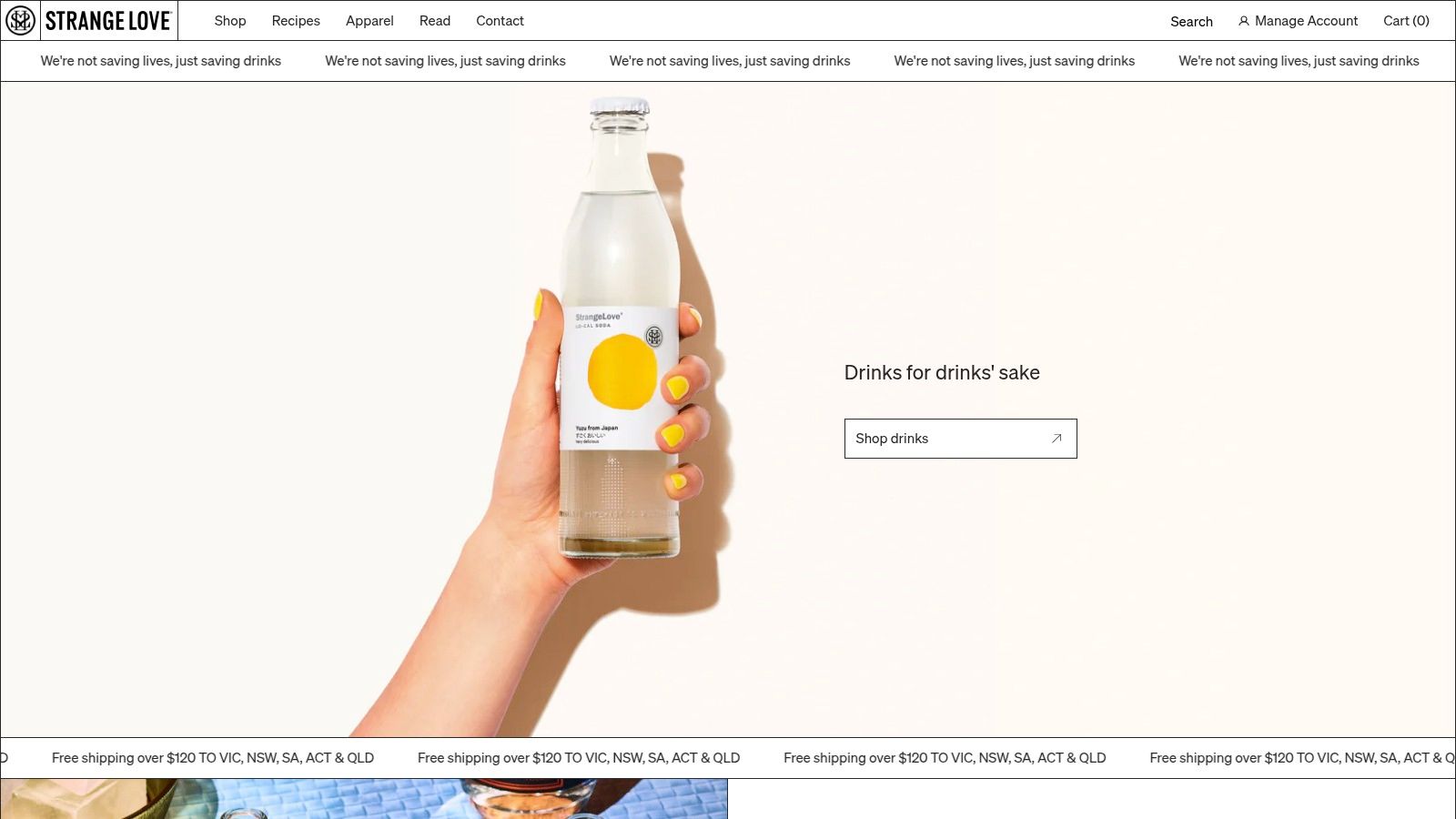
If your priority is sophistication rather than probiotics or tea ceremony, StrangeLove deserves a look. This is one of the strongest Australian options for people who want an adult-style soda with proper flavour structure.
It’s especially handy for dinner tables, zero-proof serves, and cafés that want something a bit more polished than standard fridge drinks. Yuzu, Lime & Jalapeño, Very Mandarin, Lemon Squash. These are flavour ideas built more like mixers than wellness tonics.
Best for premium zero-proof serves
StrangeLove’s Lo-Cal line aims for lower sugar without leaning on artificial sweeteners. That’s a meaningful difference. Plenty of people want less sugar, but they don’t want the taste profile that often comes with stevia or sugar alcohols.
In practical terms, this makes StrangeLove easier to use in food settings. It works with snacks, lunch dishes, cheese boards, and alcohol-free cocktails because the flavours stay crisp and culinary rather than candy-like.
A good zero-proof drink should still feel intentional in a wine glass or highball. StrangeLove gets that part right.
Where it fits in a healthy rotation
I wouldn’t call StrangeLove the most functional option on this list if your main goal is gut health or steady energy. It’s not trying to be matcha or kombucha. It’s a premium soft-drink and mixer brand with a cleaner feel than mainstream alternatives.
That’s still valuable. Healthy non alcoholic drinks aren’t only about probiotics or antioxidants. Sometimes the healthiest choice is picking a lower-sugar, better-made drink that helps you skip alcohol or a heavy soft drink.
A few real-world trade-offs:
- Best use case: Restaurants, entertaining, and alcohol-free mixed drinks.
- Flavour advantage: More complex and food-friendly than many low-calorie sodas.
- Limitation: Some cane sugar remains, so it won’t suit shoppers chasing strict no-sugar options.
- Budget note: It sits at a more premium price point than mainstream supermarket soft drinks.
If you want your fridge stocked for hosting, StrangeLove earns its place. If you want a daily gut-health staple, another brand will be more relevant.
6. CAPI
CAPI is the practical operator’s pick. It may not get the same wellness buzz as matcha or kombucha brands, but it solves a very real need. Clean, easy, widely available drinks that don’t overcomplicate things.
That matters more than people admit. Not every café, office, or household wants fermentation, added sweeteners, or niche flavour profiles. Sometimes you just want sparkling mineral water, a quality mixer, or a lightly flavoured soda that feels better than the average servo option.
Best for simple, clean hydration
CAPI’s portfolio covers mineral waters, tonics, fruit sodas, and lower-sugar options. It’s one of the easiest Australian brands to source nationally, which makes life simpler for hospitality teams. Reordering is easier. Guests recognise it. Staff already know how to use it.
For healthy non alcoholic drinks, CAPI’s value is less about “function” and more about restraint. It doesn’t try to turn every drink into a wellness statement. That can be refreshing.
A venue owner can use CAPI to build out:
- Straight hydration options for people who want fizz without sugar.
- Premium mixers for alcohol-free spritzes and classic-style serves.
- Low-fuss fridge stock that doesn’t need explanation from staff.
The trade-off with broad distribution
The downside of a broad, mainstream-adjacent range is that not every product sits in the same health lane. Some flavoured sodas still contain sugar, so label checking matters. The brand site also doesn’t function like a detailed direct-to-consumer wellness store, which means pricing and availability usually depend on retailers or wholesalers.
Still, CAPI does an important job. It gives you a reliable floor. If your goal is to upgrade from sugary soft drink or cheap mixer without entering specialist territory, it’s a sensible choice.
For cafés and bars, that reliability is often more useful than novelty. A product that’s easy to source and easy to pour can outperform a more fashionable bottle that’s inconsistent or hard to restock.
7. DASH Water
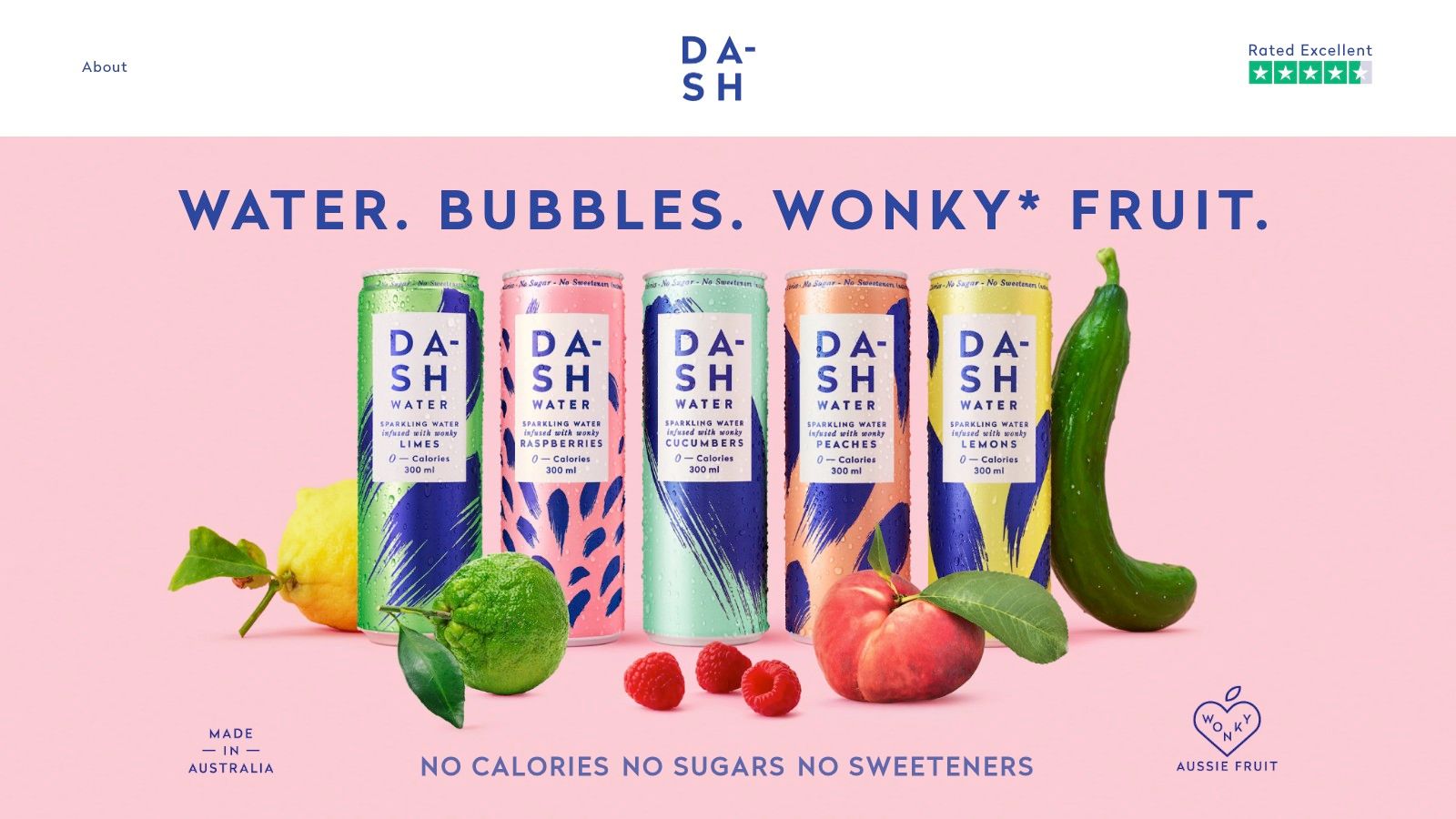
DASH Water is the minimalist’s option. No sugar, no sweeteners, no calories, and no attempt to taste like a soft drink. If most flavoured beverages feel too loud or too fake to you, DASH is probably your style.
The flavour profile is subtle. That’s either the whole appeal or the reason you’ll move on quickly. There isn’t much middle ground.
Best for people who want the cleanest possible profile
DASH uses infused sparkling water and leans into a sustainability angle through its use of imperfect fruit. That story gives it more personality than a generic sparkling water brand, but the main reason to buy it is the ingredient simplicity.
For guests who are strict about avoiding sweeteners, that matters. So does the fact that DASH can work as a very light mixer without loading a serve with sugar or syrupy flavour.
There’s also a useful overlap here with people trying to move away from conventional soft drinks altogether. Pep Tea’s piece on healthy soda drinks is relevant if you’re weighing up sparkling water against lower-sugar sodas and fermented alternatives.
Less flavour isn’t a flaw when the job is refreshment. DASH works best ice-cold, with food, or in a simple alcohol-free mixed drink.
Who will love it and who won’t
DASH shines in hot weather, at desks, with lunch, or as a clean base in a zero-proof highball. It’s less convincing when someone wants indulgence, sweetness, or a stronger flavour hit.
That makes the trade-off simple:
- Great for: Sweetener avoiders, light drinkers, and minimalist fridges.
- Not ideal for: Anyone expecting the impact of soda, kombucha, or juice-style drinks.
- Best use: Everyday sparkling hydration and clean alcohol-free mixing.
As a category, lightly flavoured sparkling waters have helped broaden the healthy non alcoholic drinks conversation. They prove that “healthy” doesn’t always have to mean functional ingredients or fermentation. Sometimes it just means a cleaner habit.
Top 7 Healthy Non-Alcoholic Drinks Comparison
| Product | Implementation complexity 🔄 | Resource requirements ⚡ | Expected outcomes ⭐📊 | Ideal use cases 💡 | Key advantages ⭐ |
|---|---|---|---|---|---|
| Pep Tea | 🔄 Medium, refrigerated kombucha + matcha prep training | ⚡ Medium, cold storage, barista equipment, AUS supply chain | ⭐📊 Premium health positioning; repeat sales and cross‑use across menus | 💡 Specialty cafés, health retailers, NA cocktail/mocktail programs | ⭐ Certified‑organic + HACCP kombucha, high‑EGCg matcha, educational content |
| Remedy Drinks | 🔄 Low, ready SKUs with some refrigerated SKUs | ⚡ Low, flexible pack formats, nationwide shipping & subscriptions | ⭐📊 Reliable fermented offering with alcohol testing assurance | 💡 Cafés, retailers, direct‑to‑consumer subscriptions | ⭐ Long fermentation + batch alcohol testing; broad functional range |
| Nexba | 🔄 Low, shelf SKUs, simple stocking | ⚡ Low, widely available (Amazon AU) and shelf‑stable options | ⭐📊 Strong zero‑sugar performance; diabetic‑friendly menu fit | 💡 Low‑sugar menus, supermarkets, online retail | ⭐ Clear nutrition/CFU disclosure; consistent sugar‑free lineup |
| Lo Bros | 🔄 Medium, living kombucha handling + soda SKUs | ⚡ Medium, organic sourcing and refrigerated storage for kombucha | ⭐📊 Organic positioning attracts health‑focused shoppers | 💡 Organic grocers, NA bars, cafés seeking organic options | ⭐ Certified‑organic kombucha + lower‑sugar 'Not Soda' range |
| StrangeLove | 🔄 Low, standard soda stocking and service | ⚡ Low, no special handling; premium price point | ⭐📊 Enhances premium/culinary NA cocktail menus | 💡 Upscale bars, zero‑proof cocktail programs, premium retail | ⭐ Culinary‑driven flavours; avoids artificial sweeteners |
| CAPI | 🔄 Low, simple distribution and restocking | ⚡ Low, broad retail availability, minimal handling | ⭐📊 Reliable hydration/mixer option with high availability | 💡 Hospitality mixers, supermarkets, convenience retailers | ⭐ Wide national distribution; clean‑label mineral waters & mixers |
| DASH Water | 🔄 Low, sparkling water stocking | ⚡ Low, shelf/refrigerated as standard; strong sustainability story | ⭐📊 Clean‑label zero‑calorie option appealing to eco‑conscious guests | 💡 Low‑calorie mixers, sustainable venues, health‑focused retail | ⭐ Zero sugar/sweeteners/calories; uses 'wonky' fruit to reduce waste |
Find Your Perfect Healthy Sip
Healthy non alcoholic drinks have become much more interesting because they now solve different jobs. Some support a calm, focused morning. Some help replace the sugary afternoon pick-me-up. Some give you a proper grown-up drink when you don’t feel like alcohol. That’s a much better way to shop than lumping everything into one vague “better-for-you” bucket.
If your main goal is clean energy, matcha stands out. It has ritual, versatility, and a more measured feel than coffee for a lot of people. Premium organic matcha also tends to reward good preparation. You can whisk it traditionally, shake it over ice, blend it into smoothies, or build it into café menus without losing what makes it appealing in the first place.
If gut-friendly refreshment matters more, kombucha is still one of the most useful categories to explore. In Australia, safety and quality matter here. One of the more overlooked issues with fermented drinks is that home-brewed kombucha can drift beyond non-alcoholic expectations if it isn’t properly monitored. A 2025 FSANZ-related summary noted concerns around alcohol levels in some kombuchas and highlighted the importance of pH and fermentation control in the Australian context, particularly for home brews and secondary fermentation, as outlined in this discussion of kombucha regulation and safety in Australia. That’s one reason properly produced commercial kombucha can be the better everyday choice for many people.
For hosting and cafés, premium sodas and sparkling waters deserve more respect than they usually get. A well-made lower-sugar soda or subtle sparkling water can be exactly right when you want something clean, social, and easy to pair with food. Not every healthy choice has to carry a probiotic story or a wellness buzzword.
There’s also a wider culture shift behind all of this. Australians are clearly paying more attention to what they drink, not only what they eat. The move away from heavy soft drink habits and automatic alcohol consumption has created room for drinks that are more thoughtful, more functional, and more enjoyable.
My practical advice is simple. Pick one drink for each part of your week. A matcha for mornings. A kombucha for afternoons or light meals. A sparkling water or premium soda for hosting. That’s a realistic way to build better habits without expecting one miracle product to do everything.
If you run a café or food business, think the same way. Don’t just add a random non-alcoholic option and hope it sells. Stock by occasion. Give customers a clean energy drink, a gut-friendly fermented option, and a polished social serve. That’s how a menu starts to feel current rather than token.
Pep Tea is a strong place to start because the range is grounded in quality, clarity, and practical use. The organic matcha covers energy and ritual. The sugar-free kombucha covers refreshment, function, and menu versatility. Both feel at home in a wellness routine, but neither is so niche that they’re hard to enjoy.
Ready to lift your drinks rotation? Explore our premium organic Pep Tea Matcha and sugar-free Kombucha to see how much difference good ingredients and careful production can make.
If you’re after healthy non alcoholic drinks that taste good and fit real life, explore Pep Tea. You’ll find premium organic matcha for calm, sustained energy and sugar-free organic kombucha brewed in NSW for a crisp, gut-friendly alternative to soft drink or alcohol.