
Tag: matcha collagen powder
Matcha Collagen Powder: Your 2026 Australian Guide

You're probably here because your routine already feels crowded. Maybe you've got a tin of matcha in the pantry, a collagen tub on the bench, a half-finished smoothie plan in your head, and a genuine desire to feel better without turning breakfast into a chemistry set.
That's exactly why matcha collagen powder has caught on with health-conscious Australians. It brings together two habits people were already building separately. One for steady, cleaner-feeling energy. One for skin, joints, and everyday support. Put them together in one scoop, and the ritual gets simpler.
The appeal isn't just convenience. It's also about choosing functional ingredients that still feel like food and drink, not a chore. For people juggling work, training, family life, café catch-ups, and a growing interest in low-sugar wellness, matcha collagen powder lands in a sweet spot.
The New Centrepiece of Your Wellness Routine
A lot of people don't need more supplements. They need fewer moving parts.
Think about a typical weekday. You wake up wanting focus, but not the shaky edge that can come from overdoing coffee. By lunchtime, you're also thinking about bigger picture goals like supporting your skin, keeping joints comfortable, or building a routine you'll stick to. Matcha collagen powder fits neatly into that moment because it turns two separate intentions into one daily habit.
For some people, that habit looks like a warm morning latte before work. For others, it's a smoothie after a walk, a gym session, or the school drop-off. The format is flexible, and that matters. Wellness routines only work when they can survive real life.
Why this blend feels different
Matcha already has a strong following in Australia because it offers a more mindful kind of lift. Collagen has become popular for similar reasons. It feels practical, easy to add, and connected to long-term wellbeing rather than quick-fix energy. Together, they create a modern ritual that suits people who want both focus and support in the same cup.
Matcha collagen powder works best when it replaces friction, not when it adds another complicated step to your day.
It also suits the way many people now shop and ask questions. They want cleaner labels, fewer fillers, and straightforward explanations. Brands in wellness are paying more attention to that demand, and tools like a Shopify chatbot for wellness brands show how much education matters when customers are choosing between ingredients, formats, and claims.
Who usually loves it most
A matcha collagen routine often appeals to:
- Busy professionals: They want a calm, organised start rather than a harsh caffeine spike.
- Active adults: They like a product that feels supportive without becoming a full supplement stack.
- Café regulars and home baristas: They enjoy the ritual of whisking, blending, and sipping something that feels premium.
- People cutting back on sugar: They're looking for functional drinks that don't taste like dessert disguised as wellness.
That blend of practicality and ritual is why matcha collagen powder has become more than a trend. For many people, it becomes the thing they actually use consistently.
How Matcha and Collagen Work Better Together
The simplest way to understand matcha collagen powder is to think of it as a team effort.
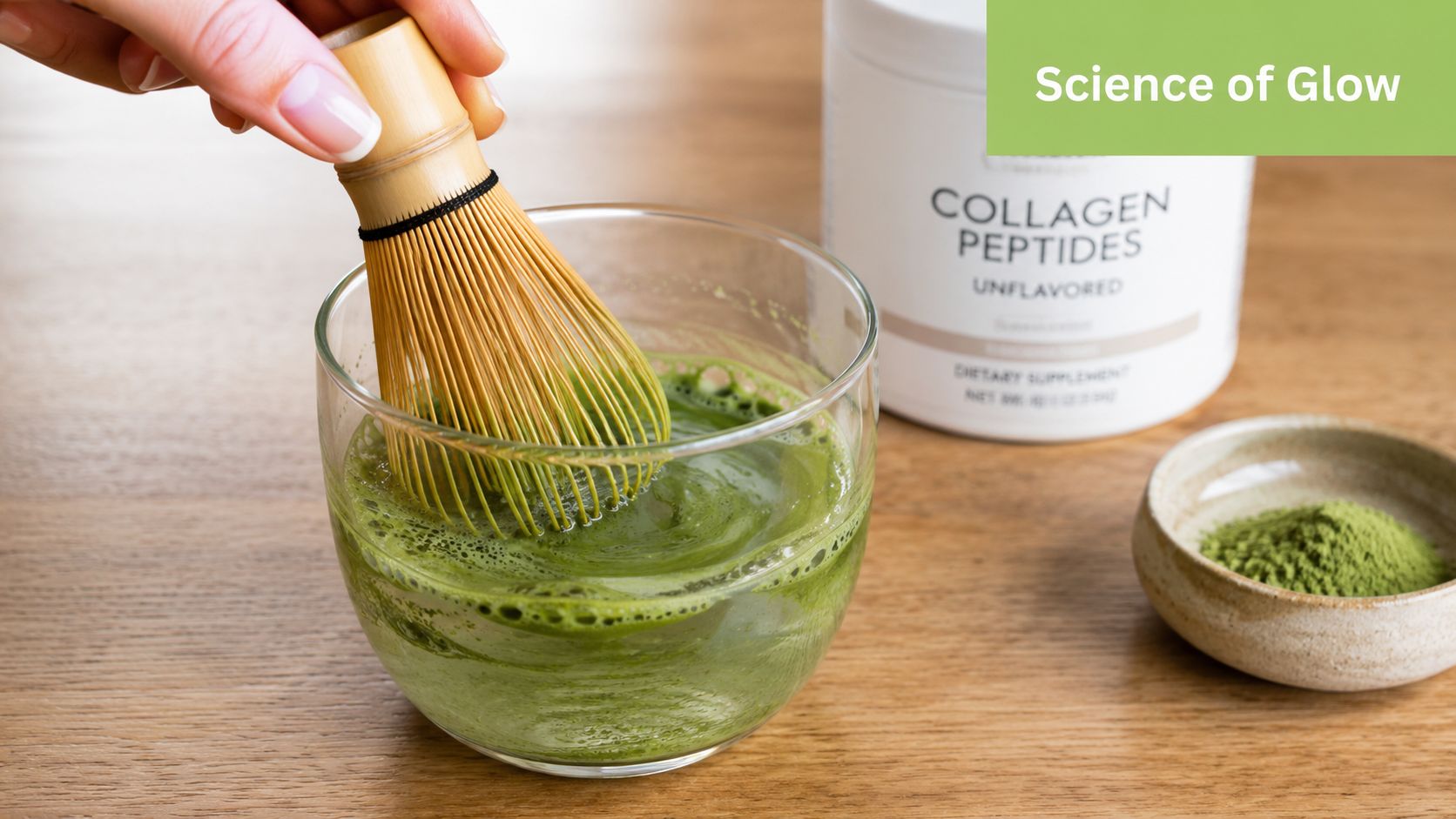
Collagen peptides do the rebuilding work. They provide amino acids such as glycine, lysine, and proline, which the body uses for structural repair. Matcha brings the protective side. Its catechins, especially EGCG, help defend against oxidative stress that can damage collagen before the body can make good use of it. According to NIH technical data, oral collagen supplementation increased skin elasticity by 13.6% within 8 weeks, and matcha collagen powder is described as leveraging a synergistic mechanism where matcha's catechins inhibit oxidative degradation of collagen peptides while the peptides supply those structural amino acids.
The construction crew analogy
Picture a building site.
The collagen peptides are the construction crew. They arrive with the raw materials needed for repair and maintenance. The matcha antioxidants are the security team around the site. They protect the crew and the materials from damage while the work is happening. Without that protection, the environment is tougher. With it, the repair job has a better chance of staying on track.
That's the key idea behind the blend. It isn't just two fashionable ingredients sharing a label. Each one does a different job.
Why the pairing makes sense in real life
The science offers practical benefits. People usually notice matcha first because of how it feels. Smoother focus. A cleaner ritual. Less of the wired feeling some get from stronger stimulant drinks. Collagen is less noticeable in the moment, but people choose it because they want ongoing support, not just a quick lift.
When those two needs come together, the product becomes easier to use consistently.
A few quality factors also shape how effective and pleasant it feels:
- Japanese matcha matters: Higher-quality matcha tends to bring a cleaner taste and a better everyday drinking experience.
- Hydrolysed collagen matters: This form is processed for easier mixing and absorption.
- Low-clump solubility matters: If a powder blends smoothly, people keep using it.
Practical rule: If your matcha collagen powder tastes grassy in a harsh way, forms stubborn lumps, or leaves you avoiding it after a week, the formula probably isn't doing the ritual side of wellness any favours.
If you want a stronger grounding in the tea side of the equation, this guide on what matcha powder is helps explain why shade-growing, stone-grinding, and grade all influence flavour and function.
Matcha Collagen Versus The Alternatives
A fair question comes up all the time. Why not just drink matcha on its own and take collagen separately?
You can. For some people, that's the right setup. But a combined powder changes the experience in a few useful ways. It reduces prep, keeps the flavour profile in one place, and gives you a more efficient habit to repeat each day.
The other important point is ingredient quality. Organic Japanese Matcha contains 137 times the concentration of antioxidants compared to standard brewed green tea, according to this matcha and collagen overview. That's one reason matcha isn't interchangeable with every green tea-flavoured powder on the shelf.
The side-by-side view
| Factor | Matcha Collagen Powder | Matcha Only | Collagen Only |
|---|---|---|---|
| Convenience | One scoop, one routine | Simple drink, but no collagen built in | Easy to add, but usually needs a separate drink |
| Functional range | Combines focus ritual with collagen support | Best if your priority is tea ritual and antioxidants | Best if your priority is collagen alone |
| Taste experience | Can be balanced into one formula | Pure tea flavour, often more vibrant | Usually neutral, but not especially enjoyable on its own |
| Daily consistency | Easier for many people to repeat | Strong if you already love preparing matcha | Strong if you already use collagen every day |
| Flexibility | Good for lattes, smoothies, and recipes | Excellent for traditional tea and café-style drinks | Easy to hide in foods and drinks |
| Who it suits | People who want fewer steps | Matcha purists | People who don't care about tea flavour or ritual |
Where separate products still make sense
Separate products can work well if you're very particular about both ingredients.
A traditional matcha drinker might want ceremonial matcha on its own, prepared carefully with water only. Someone else may prefer an unflavoured collagen they can stir into oats, soups, or baking. That approach offers control, especially if you like adjusting flavour and dosage independently.
Still, there's a reason combined formulas appeal to busy households and cafés. One product often means less mess, fewer decisions, and a clearer habit loop.
The real decision point
This usually comes down to your main goal.
Choose a combined powder if you want:
- Less friction: One product is easier to remember than two.
- A built-in ritual: It turns support ingredients into something enjoyable to drink.
- A café-friendly format: It works well in lattes and smoothies without extra steps.
Choose separate products if you want:
- Maximum customisation: You can change your tea and collagen independently.
- Pure matcha sessions: Useful if you care a lot about traditional preparation.
- Different use cases: You may want collagen in food and matcha only as tea.
People who are also reviewing broader protein options may find this guide to protein powder substitutes useful when thinking about how collagen blends compare with other pantry staples.
In short, matcha collagen powder isn't automatically better than separate products. It's better for the person who values ease, consistency, and a two-in-one routine they'll maintain.
A Buyer's Guide to Quality Powder
The label on the front rarely tells the full story.
Matcha collagen powder can look premium and still disappoint once you open it. Some blends taste flat. Some hide sweeteners or fillers. Some use vague sourcing language that sounds reassuring without telling you where the matcha came from, how it was processed, or what kind of collagen is present.
That's why quality matters more here than in many other wellness powders. You're paying for both the tea and the collagen. If either side is weak, the blend won't earn a place in your routine.
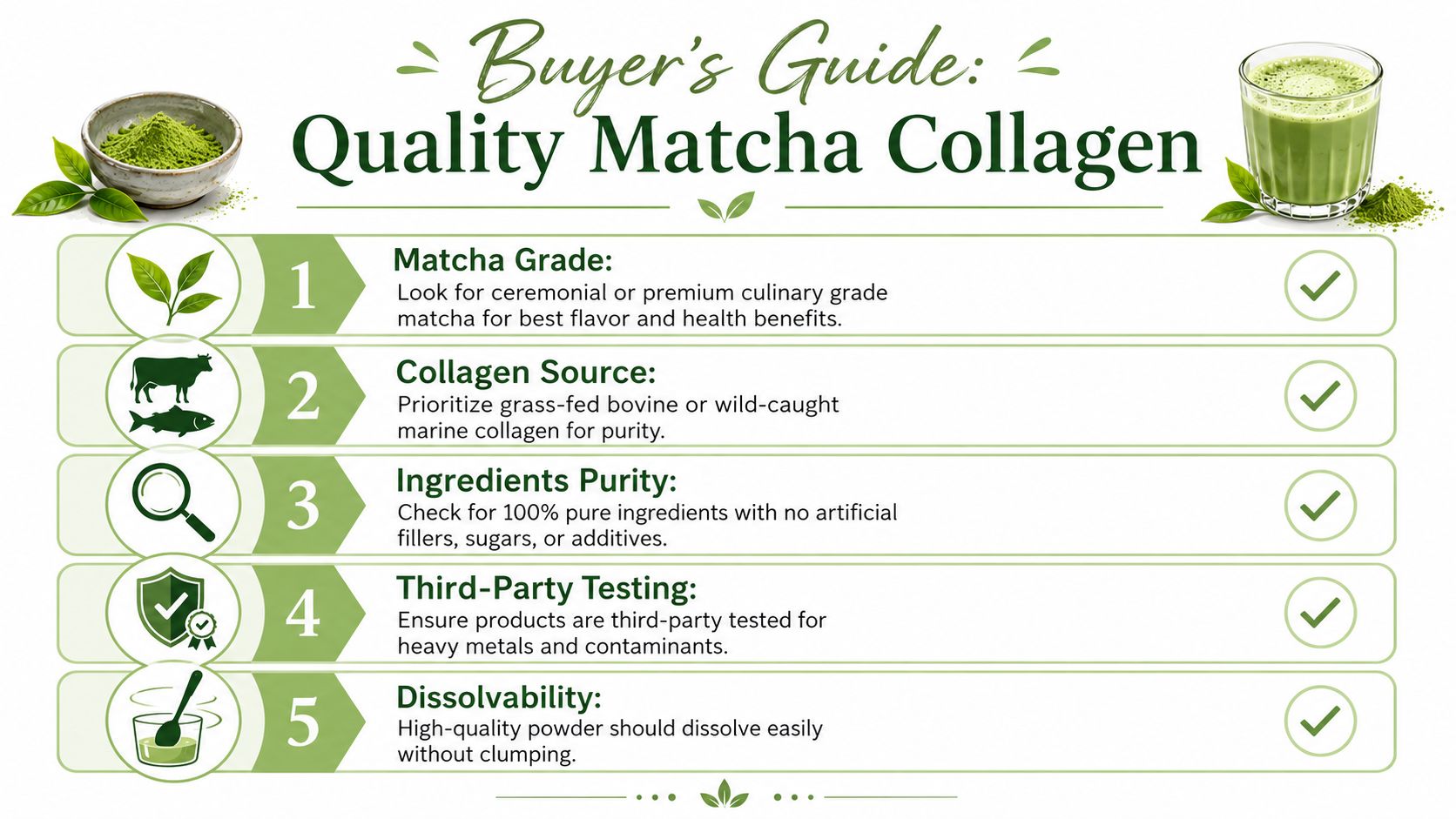
What to check before you buy
A good formula should answer basic questions clearly.
- Matcha grade: Look for ceremonial or premium culinary grade if you want better flavour and a smoother drinking experience.
- Collagen source: The label should identify whether the collagen is bovine or marine, not leave it vague.
- Hydrolysed form: Hydrolysed collagen generally dissolves more easily and suits drinks better.
- Ingredient purity: A shorter ingredient list is usually easier to trust.
- Testing and transparency: If a brand talks about purity, it should be willing to show how it checks for it.
The Australian quality issue many people miss
One of the least discussed parts of this category is authenticity versus appearance. A powder can look bright green and still fail the deeper quality test.
According to Australian Food Standards Authority data, 34% of imported “ceremonial grade” matcha powders in the Australian market exceed heavy metal thresholds, while many Australian organic matcha brands meet strict EGCg retention standards above 120mg/g. That's a serious reminder to look for origin details, processing transparency, and testing, not just attractive packaging.
If a brand won't tell you where the matcha was grown or how the powder was processed, that silence is part of the product.
Processing affects what you're drinking. Overheated or poorly handled matcha can lose the qualities buyers assume they're getting. The same goes for collagen. If the source isn't identified, you can't make an informed choice about allergens, flavour, or personal preference.
A simple checklist for shoppers
Use this quick filter when you compare products:
- Can you identify the matcha origin clearly?
- Does the brand specify marine or bovine collagen?
- Is the powder free from obvious fillers, sugars, and unnecessary additives?
- Is there any sign of third-party testing or contaminant screening?
- Will it dissolve cleanly in hot or cold drinks?
If you want a stronger understanding of how tea grades affect quality, colour, flavour, and value, this guide to grade and quality matcha tea is worth bookmarking.
A smart buyer doesn't just ask whether a powder contains matcha and collagen. They ask whether the matcha is authentic, whether the collagen is clear and traceable, and whether the product is transparent enough to trust.
How to Use Matcha Collagen Every Day
The easiest routine is usually the one that sticks.
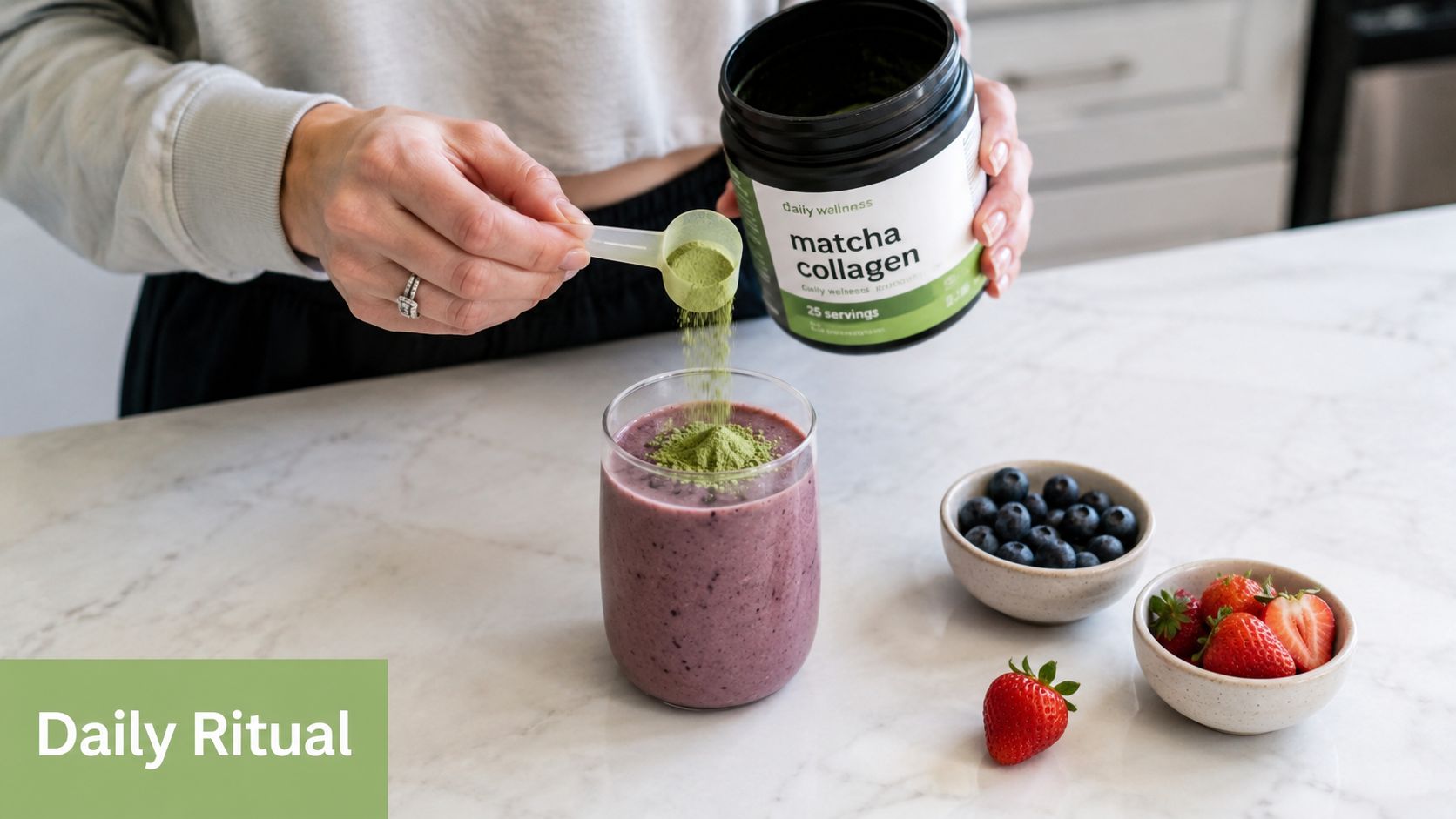
For matcha collagen powder, that means keeping preparation simple and using it in drinks or foods you already enjoy. In Australia, the standard daily dosage is 10 to 15 grams, delivering roughly 8 to 10 grams of hydrolysed collagen peptides and around 50mg of caffeine per serving, which is described as the industry benchmark for efficacy in TGA-linked guidance.
Best times to have it
There isn't one perfect time for everyone, but a few patterns work well.
- Morning: Great if you want a gentle start with calm focus.
- Late morning: Useful as a bridge between breakfast and lunch.
- Early afternoon: Handy when you want something lighter than another coffee.
If you're sensitive to caffeine, earlier is usually better. Even though matcha often feels smoother than coffee, it still contains caffeine.
Three easy ways to use it
Warm matcha collagen latte
This is the most natural starting point.
- Add your serve of matcha collagen powder to a cup.
- Mix with a small amount of warm water first to form a smooth paste.
- Top with warm milk or your preferred dairy-free option.
- Whisk or froth until silky.
A paste-first method helps prevent lumps and gives a more café-style finish.
Smoothie upgrade
A smoothie makes sense if you already have a blender routine.
Try blending:
- Your matcha collagen serve
- A banana or mild fruit
- Milk or a dairy-free base
- Ice
- Optional extras like spinach or nut butter if they suit your taste
For more ideas around this format, see this matcha protein shake guide, which can spark flavour combinations and prep shortcuts.
No-bake snacks or baking
Matcha collagen powder doesn't have to stay in a mug.
It can work in:
- Energy balls: Mix with oats, nut butter, and seeds.
- Muffins: Add to dry ingredients for a subtle green tea note.
- Yoghurt bowls: Stir in for a quick breakfast upgrade.
Kitchen tip: Start with less than you think you need in recipes. Matcha's flavour can become too assertive if the rest of the ingredients are mild.
A quick visual can help if you're still figuring out technique:
Storage and prep habits that help
Keep the powder sealed, dry, and out of direct heat. Matcha is delicate, and poor storage can dull both flavour and freshness.
A few practical habits make a noticeable difference:
- Use a dry scoop: Moisture encourages clumping.
- Whisk with a small amount first: This gives a smoother texture.
- Don't overcomplicate it: If your weekday method is too fussy, simplify it.
The best daily use isn't the most elaborate one. It's the version you can repeat on a Monday morning when you're short on time and still want something that feels good to drink.
For Australian Cafés and Retailers
For cafés, matcha collagen powder works best when it's treated as a menu idea, not just an ingredient. Customers already understand matcha. Many also recognise collagen. Bringing the two together gives staff a simple story to tell and gives customers an easy reason to try something new.
That's especially useful on menus built around low-sugar, functional, non-alcoholic options. A well-made matcha collagen drink can sit comfortably beside kombucha, smoothies, and specialty tea lattes without feeling gimmicky.

Menu ideas that are easy to sell
A few formats are especially approachable:
- Glow latte: A warm matcha collagen latte with a silky finish and simple wellness positioning.
- Smoothie booster: Offer it as an add-on for green smoothies or fruit blends.
- Wellness shot: A small-format functional serve for customers who want convenience.
- Retail shelf add-on: Place packaged powder near takeaway counters or fridge displays.
- Recipe cards: Give customers an idea for using it at home, not just in-store.
What makes it work commercially
Staff education matters more than long menu descriptions. If the team can explain taste, texture, and use in plain language, customers are far more likely to trust the recommendation.
Retailers can also benefit by merchandising it near adjacent categories. Matcha drinkers often browse tea tools, latte ingredients, and wellness pantry items. Shoppers interested in functional beverages may also be exploring kombucha, low-sugar café options, and home smoothie upgrades.
A product sells more easily when customers can picture tomorrow morning, not just admire the label today.
For Australian venues, the category also fits broader menu shifts toward mindful drinking and premium non-alcoholic choices. It gives cafés something fresh to offer without leaving the comfort zone of drinks customers already understand.
Frequently Asked Questions
Some of the most useful questions about matcha collagen powder aren't about flavour. They're about compatibility, expectations, and the details many brands skip.
Can I mix matcha collagen with kombucha
This is one of the most overlooked questions in the category.
A growing query on Australian wellness forums asks, “Can I mix matcha collagen with my daily kombucha without killing the probiotics?” According to IBISWorld Australia-linked discussion of the category, it's a key unanswered question, and heat plus preparation method can be a factor. In plain terms, collagen peptides are generally stable, but probiotic drinks are more delicate. If you want to combine them, avoid high heat and use a properly fermented kombucha rather than treating every fizzy fermented drink as equal.
Will I notice results quickly
Some people notice the ritual benefits first. Better routine. Easier mornings. A more satisfying alternative to another sugary or overly strong drink.
Physical changes are usually a consistency game. If you're using the product sporadically, it's harder to judge anything fairly. A daily habit gives you the clearest read.
Is marine or bovine collagen better
Neither is universally “better”. It depends on your preferences.
Marine collagen may appeal to people who avoid bovine products. Bovine collagen may appeal to people looking for a different sourcing option or flavour profile. The key is that the source should be named clearly on the label so you can choose deliberately.
Are there any downsides
There can be. Some people don't enjoy the taste of low-quality matcha blends. Others may be sensitive to caffeine, even in a gentler format. And some products contain too many extras.
That's why the smartest approach is to start with a transparent formula, use the recommended serve, and pay attention to how it fits your own routine.
Why do so many product pages feel vague
Because this category often gets marketed around broad ideas like glow, energy, and clean living while skipping practical detail. That's exactly why readers spend time in frequently asked questions sections across wellness brands. People want straight answers on mixing, taste, sourcing, and what a product does in daily life.
The best matcha collagen powder isn't the one with the most polished label. It's the one that tells you what's in it, where it came from, how to use it, and why that should matter to you.
If you're ready to bring more clarity to your daily ritual, explore Pep Tea for premium organic matcha, Australian-brewed sugar-free kombucha, and practical guidance that makes functional drinks feel simple, trustworthy, and enjoyable.