
Matcha Protein Shake: Healthy Blends for 2026 Energy
Some mornings call for more than a flat white and good intentions. You want something cold, fast, satisfying, and steady enough to carry you through a workout, a commute, or a packed morning of meetings without feeling like you've had dessert for breakfast.
That's where a good Matcha protein shake earns its keep. Done well, it isn't just green powder plus protein. It's a balanced drink with clean flavour, real texture, and a practical job to do. It can sit comfortably between breakfast and café ritual, between recovery drink and daily wellness habit.
The problem is that most recipes stop at “blend and enjoy”. That's not enough if you've ever ended up with a gritty mouthfeel, a bitter finish, or a shake so thick it barely moves through the straw. The better approach is to understand what each ingredient is doing, especially the protein source, because whey, pea, and collagen all behave differently once matcha enters the mix.
Why a Matcha Protein Shake is Your New Morning Ritual
There's a reason this style of drink keeps showing up in home kitchens, gym bags, and café fridges. It suits the way many Australians eat and drink now. People want convenience, but they also want something that feels purposeful.
Australian beverage market data from Mintel shows that half of non-alcoholic beverage buyers seek products with added health benefits, and matcha fits neatly into that demand because it brings protein for satiety together with matcha's natural caffeine at around 70 mg per serve as reported in this functional beverage overview.

It solves two common morning problems
Coffee can be brilliant, but it isn't always enough on its own. If you're hungry an hour later, or you feel like your energy spikes and then falls away, a shake with both matcha and protein can be a more useful first drink.
Protein changes the feel of the morning. It adds staying power. Matcha changes the mood of it. Instead of reading like a treat or a random smoothie, the drink starts to function like a proper part of your routine.
For anyone trying to build a more reliable breakfast habit, practical nutrition matters more than novelty. If you're also trying to lift your daily protein intake without overcomplicating meals, PlateBird's protein intake guide is a handy companion resource because it helps frame where a shake fits into the bigger picture.
Practical rule: A Matcha protein shake works best when you treat it like a functional breakfast or recovery drink, not a milkshake with wellness branding.
Matcha brings more than flavour
A lot of people first come to matcha for the taste and colour, then stay for the ritual. In a shake, though, matcha does something slightly different. It lifts the whole drink. Vanilla protein tastes cleaner with it. Banana tastes less heavy. Even richer bases like oat milk or yoghurt can feel brighter.
Nutritionally, matcha contributes some protein and fibre, but it's still a modest protein contributor on its own. A peer-reviewed analysis found matcha powder contains about 17.3 g of protein per 100 g, and one tablespoon, about 12 g, provides roughly 2 g of protein and 6.73 g of dietary fibre, equal to 26.92% of an adult's recommended daily fibre allowance, according to the peer-reviewed analysis of matcha composition. That same analysis also noted that the fibre is predominantly insoluble.
That matters because matcha isn't replacing your protein powder. It's improving the drink's functional profile, flavour complexity, and satiety appeal.
Why it fits modern café and home routines
At home, a Matcha protein shake is easy to scale up or down. In cafés, it gives staff a drink that can sit between smoothie, iced latte, and wellness menu item. It also speaks to customers who want low-sugar options without giving up flavour or ritual.
If you're curious about the broader wellness appeal of matcha itself, this guide to the amazing benefits of matcha green tea is a helpful read.
Choosing Your Ingredients for the Perfect Shake
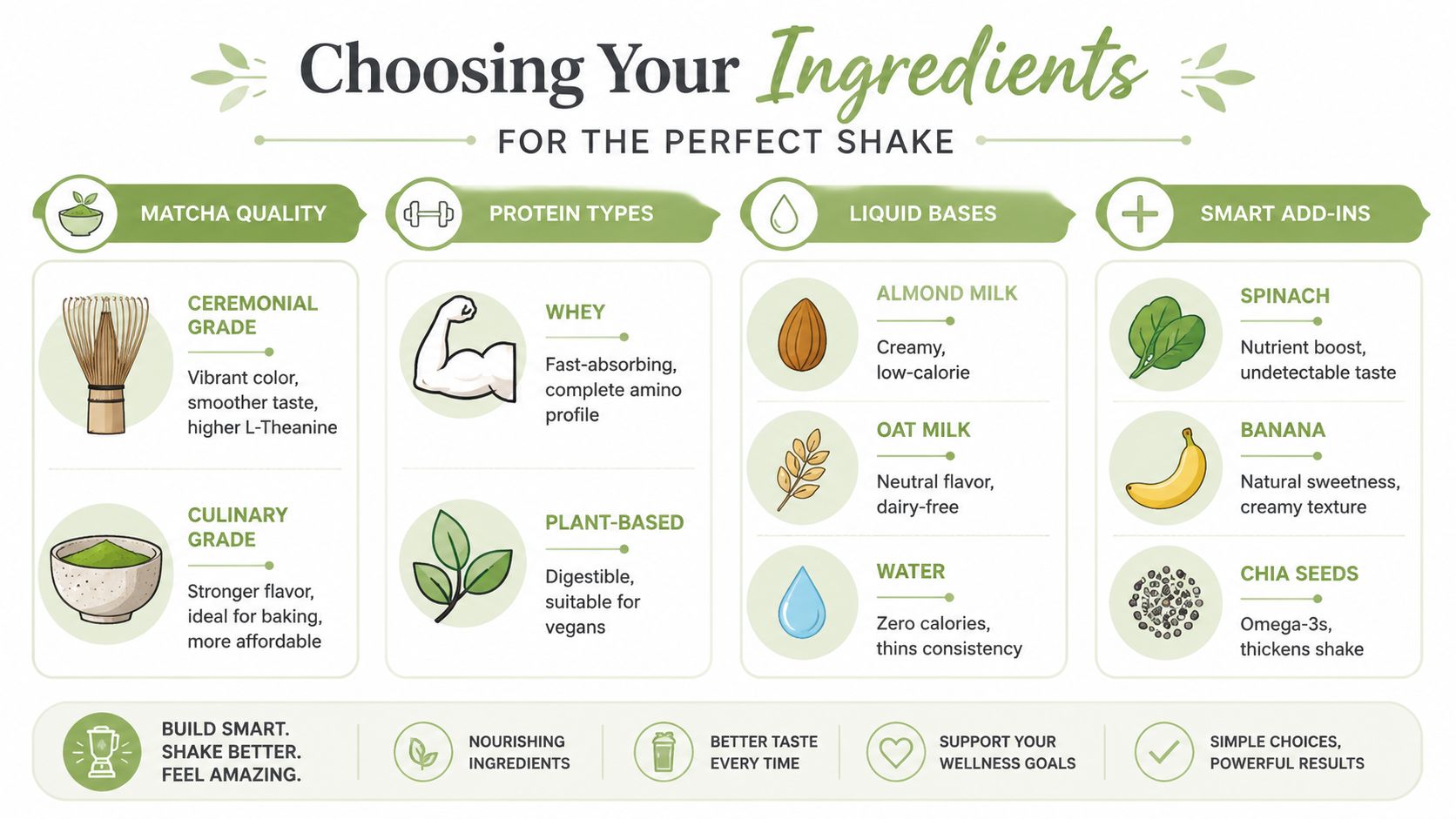
A great shake starts before the blender turns on. Ingredient choice decides whether the final drink is silky and fresh, or grassy, lumpy, and strangely sweet.
Pick the right matcha for blending
For shakes, culinary-grade matcha usually makes more sense than ceremonial. Ceremonial grade is lovely for whisking with water, where its finer flavour can shine on its own. In a shake, that subtlety often gets buried under milk, protein, fruit, or ice.
A strong culinary matcha stands up better in the blender. It gives you a clearer tea flavour and usually offers better value if you're making shakes regularly at home or serving them in a café setting.
If you want a clearer sense of what separates one grade from another, this matcha grade and quality guide breaks down the key differences.
Your protein choice changes everything
Most weak recipes treat protein powder as interchangeable. It isn't. Texture, sweetness, thickness, and how the shake sits on the palate all depend on the protein base.
The broad rule is simple. Plant-based proteins often need more liquid, while whey isolate tends to blend more cleanly, a point noted in this recipe discussion on protein texture and blending behaviour.
Here's how the common options behave in practice:
| Protein type | What usually works | What often goes wrong |
|---|---|---|
| Whey isolate | Smooth, light texture, easy to blend, lets matcha stay bright | Can taste overly sweet if flavoured strongly |
| Pea protein | More filling, good for dairy-free drinkers, sturdy in thicker shakes | Can turn chalky or earthy without enough liquid |
| Collagen | Dissolves easily, keeps the drink lighter | Doesn't create the same creamy body as whey or pea |
| Soy protein | Better emulsifying than some plant blends, fuller body | Can dominate the flavour if the powder is strong |
| Mixed plant blends | Useful for vegan formats and menu flexibility | Texture can vary wildly from silky to sandy |
Matcha is delicate, but it isn't shy. The best protein powder supports it instead of fighting for attention.
Liquid bases matter more than people think
The liquid decides body and finish. Water gives you the cleanest tea flavour, but the thinnest result. Unsweetened almond milk keeps things light. Oat milk adds roundness and makes the shake feel more café-style. Dairy milk creates a fuller, sweeter profile naturally.
For training-focused shakes, some people prefer a simpler base so the drink feels cleaner after exercise. For breakfast shakes, a creamier liquid often makes the drink feel complete enough to replace a meal.
A few reliable pairings:
- Unsweetened almond milk brings a lighter body and lets grassy notes stay crisp.
- Oat milk softens sharper matcha edges and makes vanilla proteins taste more rounded.
- Dairy milk adds natural richness and can balance stronger matcha doses.
- Water plus yoghurt can work well if you want body without too much sweetness.
Smart add-ins that actually improve the drink
Not every “healthy” add-in helps. Some just muddy the flavour.
The useful ones tend to do one of three jobs:
- Creaminess: banana, avocado, Greek yoghurt
- Sweetness: banana, dates, a small amount of honey or maple if needed
- Satiety: chia seeds, nut butter, extra fibre-rich ingredients
If the goal is a clean, vibrant Matcha protein shake, restraint usually wins. One creamy ingredient and one sweetness adjustment are often enough. Once you add too many boosters, the tea disappears.
Four Essential Matcha Protein Shake Recipes
A Matcha protein shake can be light and brisk, thick and filling, or somewhere in the middle. The best recipe depends on what you want the drink to do.
Independent recipe and product references note that a well-built matcha-protein drink can land in the range of 20 g to 41 g of protein per serve and roughly 92 to 100 mg of caffeine per serve when formulated with more concentrated matcha servings, as outlined in this matcha protein shake recipe reference.
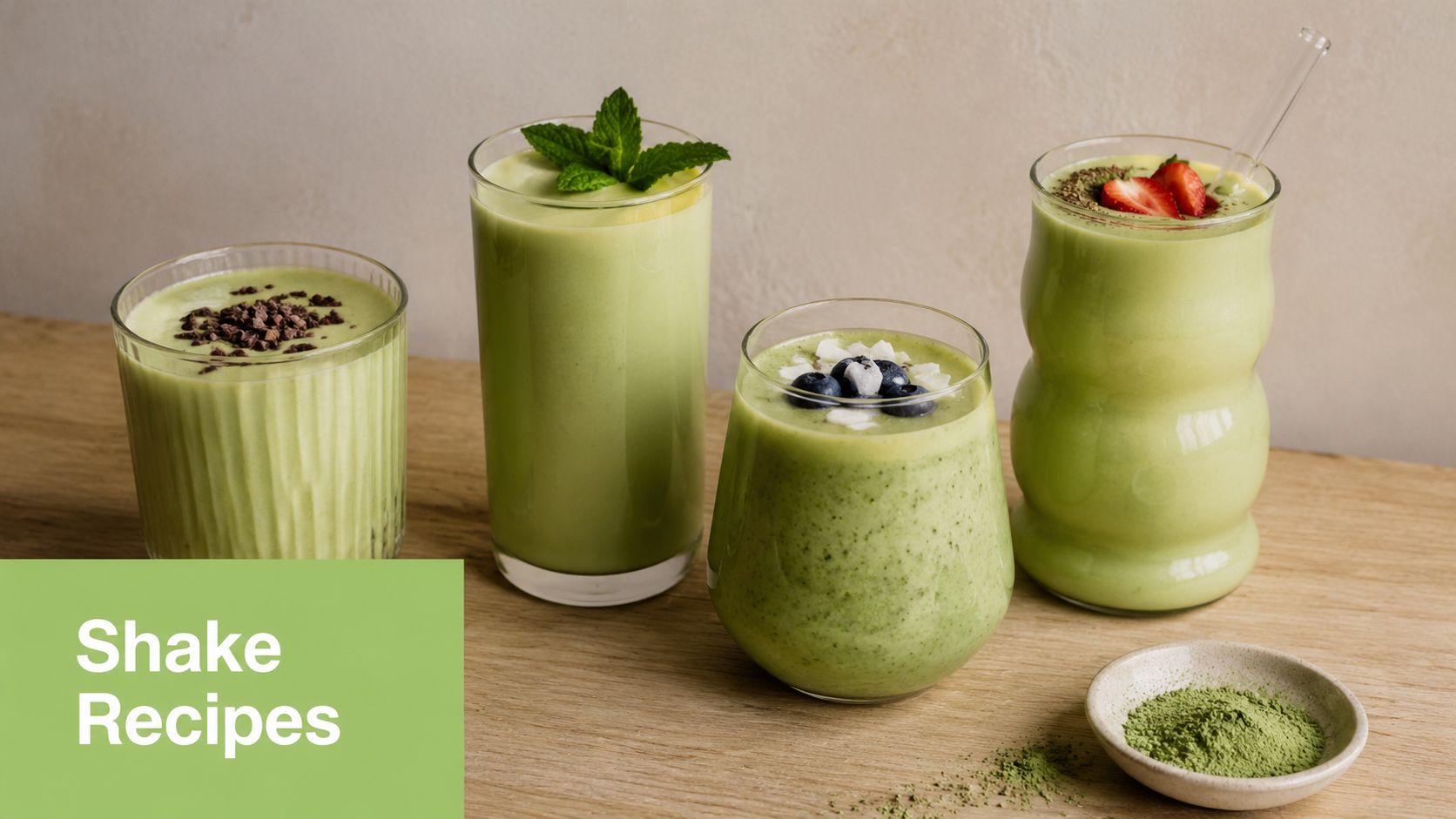
The Classic Energiser
This is the one to make when you want a dependable daily blend. It's balanced, not too heavy, and easy to repeat on busy mornings.
You'll need
- 1 teaspoon matcha
- 1 scoop vanilla whey isolate
- 1 cup unsweetened almond milk
- 1/2 frozen banana
- A small handful of ice
Start with the almond milk in the blender, then add the matcha and whey. Finish with banana and ice. Blend until the colour turns evenly green and the texture looks glossy.
The banana rounds out the edges without making the shake taste like dessert. Whey isolate keeps the body smooth and lets the tea stay centre stage.
The Creamy Vegan Powerhouse
Plant-based protein can be excellent with matcha, but it needs more care. This version leans into richness so the shake feels intentional rather than compromise-driven.
You'll need
- 1 teaspoon matcha
- 1 scoop pea or mixed plant protein
- 1 cup oat milk
- 1/2 frozen banana
- 1 tablespoon chia seeds
- A few ice cubes
Blend the oat milk and matcha first if you can, then add the plant protein. Once that's incorporated, add banana, chia, and ice. Give it a little extra blending time.
Pea protein can pull the drink towards chalkiness if the liquid is too low. Oat milk and banana solve much of that. Chia thickens the shake and gives it a more complete breakfast feel.
The Iced Post-Workout Refresher
After training, some people don't want a thick smoothie. They want something cold, brisk, and easy to drink. This one is lighter on the palate.
You'll need
- 1 teaspoon matcha
- 1 scoop unflavoured or lightly flavoured whey isolate
- 3/4 cup cold water
- 1/4 cup unsweetened almond milk
- Ice
Keep the flavour profile clean. Blend just until smooth and drink it straight away. The water lifts the freshness, while a smaller amount of almond milk stops it feeling thin.
This is a good format if heavy dairy or a thick vegan blend doesn't sit well after exercise.
A quick visual can help if you like seeing the process before trying your own variations.
The Ultimate Meal Replacement
This is the version for long mornings, late breakfasts, or anyone who wants one glass to do more work.
You'll need
- 1 teaspoon matcha
- 1 scoop protein powder of choice
- 1 cup milk of choice
- 1/2 avocado
- 1 tablespoon nut butter
- 1 tablespoon chia seeds
- Ice as needed
This one should be blended until fully velvety. Avocado creates body without adding obvious flavour. Nut butter gives the shake more substance. Chia helps it stay satisfying for longer.
Use collagen if you want this version to stay lighter. Use whey if you want the smoothest body. Use pea protein if you want the biggest breakfast feel.
Mastering the Blend for a Smooth Clump-Free Shake
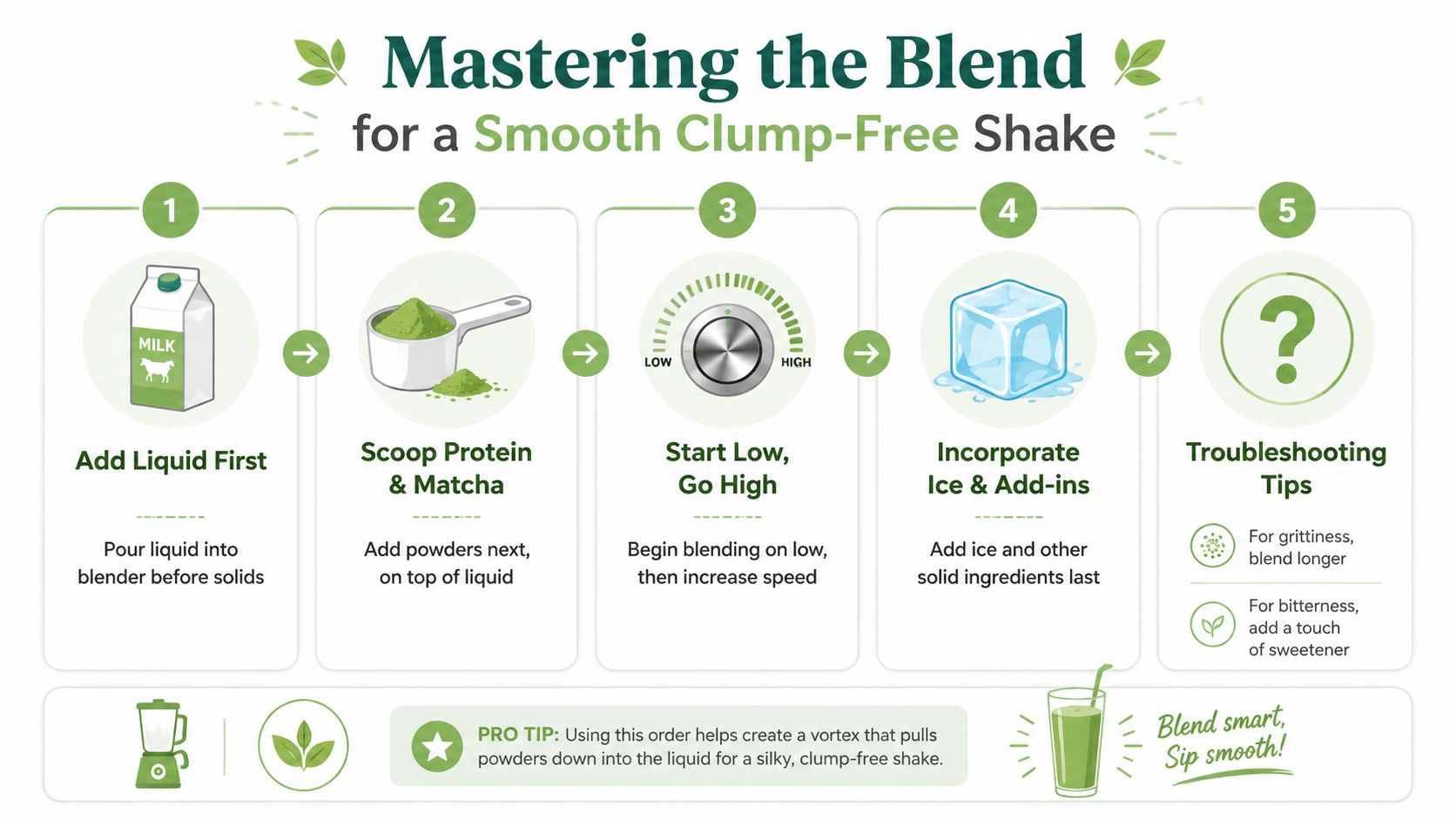
If your shake is gritty, the problem usually isn't the blender. It's the order. People often throw everything in together, then wonder why matcha sticks to the sides and protein forms damp little pockets that never fully dissolve.
Recipe testing points to a simple fix. Add wet ingredients first, then powders like matcha and protein, which helps stop powder sticking and improves emulsion, as noted in this blending method guide.
The order that works
Use this sequence every time:
- Pour in your liquid first so the blades have immediate movement.
- Add matcha and protein next so they disperse into liquid instead of compacting under frozen ingredients.
- Add soft ingredients like banana, yoghurt, or avocado.
- Finish with ice or frozen fruit so the heavier solids don't trap dry powder underneath.
This one adjustment fixes most beginner mistakes.
Pre-mix if you want café-level texture
Matcha behaves best when it's given a little attention before blending. If you've got thirty extra seconds, whisk it with a small amount of liquid into a loose slurry first. That prevents dry tea particles from lingering in the finished shake.
A fine sifter helps too, especially if your matcha has compacted in the tin. A dedicated matcha tea sifter makes it easier to break up small clumps before they ever hit the blender.
A silky Matcha protein shake usually comes from preparation, not power. Even a strong blender can't fully rescue badly layered ingredients.
How to fix common problems fast
A few small adjustments can save a disappointing shake:
- Too thick means add a splash more liquid, then re-blend.
- Too thin means add a little more ice, chia, or frozen banana.
- Too bitter usually means too much matcha, or a matcha that's too harsh for cold drinks.
- Too chalky often points to plant protein needing more liquid and more blending time.
If the flavour feels flat, don't automatically add sweetener. A pinch more vanilla, a creamier milk, or a little banana often improves the drink without pushing it into sugary territory.
Serving Storage and Cafe Menu Inspiration
A Matcha protein shake is best fresh, when the top is still lightly frothy and the colour is brightest. That said, real life isn't always fresh-blended and leisurely. Sometimes you need to make it ahead, cap it, and get out the door.
At home, the easiest make-ahead approach is to blend the shake, refrigerate it in a sealed bottle, and give it a hard shake before drinking. Separation is normal, especially with lighter liquids or collagen-based blends. A quick stir usually brings it back.
Small serving touches make it feel better
The drink tastes the same either way, but presentation changes the experience. A simple garnish can make a weekday shake feel less utilitarian.
A few good finishing touches:
- Dusting of matcha for aroma and colour
- Hemp seeds for a subtle nutty top note
- Mint leaf if you want it to read fresh and café-like
- Clear glass to show off the vivid green
Why cafés should pay attention
For cafés, this drink fills an increasingly useful gap. It sits comfortably beside smoothies and iced drinks, but it carries a more premium, wellness-led identity. It also gives staff room to customise.
One café-friendly approach is to prep a house matcha base in advance, then build to order with different protein options. That lets customers choose what suits them best, whether that's whey for smoother texture, pea for dairy-free service, or collagen for a lighter feel.
A compact menu could offer:
- An everyday Matcha protein shake with vanilla protein and almond milk
- A vegan version with oat milk and plant protein
- An upgrade option with greens, chia, or collagen
- A lower-sweetness format for customers who don't want banana in every blend
That kind of flexibility works well in Australian cafés where people often want something quick, functional, and not overloaded with sugar.
Storage without disappointment
If you're storing one overnight, keep expectations sensible. The flavour will still be good, but the texture is rarely as lively as it is straight from the blender. Thicker shakes hold better than very icy ones, and banana-heavy versions often need a good re-blend or extra shake in the morning.
The best compromise is often prep-ahead rather than fully blend-ahead. Measure the dry ingredients, portion the frozen ingredients, and keep the liquid ready in the fridge. In the morning, it takes only moments to finish.
Embrace Your New Favourite Healthy Habit
A good Matcha protein shake earns a permanent place in the routine because it solves practical problems. It gives you a more satisfying start than a plain caffeinated drink, a more interesting flavour than many standard protein shakes, and enough flexibility to suit breakfast, post-workout recovery, or an afternoon reset.
The key difference comes from making it properly. Use a matcha that can stand up in a cold drink. Choose a protein that suits your goal and your digestion. Blend in the right order. Adjust the liquid before you blame the recipe.
That's when the drink shifts from trend to habit.
There's plenty of room to make it your own. Keep it lean and brisk with water and whey. Build it creamy and filling with oat milk, chia, and plant protein. Go lighter with collagen. Go fuller with avocado. Once you understand how the ingredients behave, you can shape the shake around your day instead of forcing yourself to drink a version that never quite works.
If you're ready to make your own Matcha protein shake with better flavour and cleaner ingredients, explore Pep Tea for premium organic matcha suited to daily blending, lattes, and wellness recipes.