
Tag: organic tea
Roasted Green Tea Guide: Flavour, Brewing, and Uses
You order a hojicha latte at an Australian café, expecting something green, and the barista hands you a warm brown drink with a toasted aroma. Nothing has gone wrong. Hojicha is roasted green tea, and roasting changes the leaf's colour, fragrance, bitterness, and best uses without removing its identity as green tea.
That difference makes roasted green tea an appealing choice for home brewers, matcha drinkers, café owners, and anyone who enjoys coffee-adjacent flavours but wants another option. It also creates confusion, particularly around caffeine and antioxidants. A satisfying cup depends less on a simple label such as “low caffeine” and more on the tea format, serving size, water, and brewing time.
What Roasted Green Tea Is and Why It Matters
The café customer looks at the brown latte and asks, “Is this coffee?” The barista explains that it's hojicha, a Japanese green tea that has been roasted until the leaves develop a warm, nutty aroma and a brown appearance. The drink may contain milk, foam, or a little sweetness, but its foundation is still tea.
Hojicha sits within the broad green-tea family alongside sencha, bancha, genmaicha, and matcha. The important distinction is what happens after the tea leaf is made into green tea. Instead of keeping the fresh, vegetal character associated with unroasted green tea, the producer applies dry heat to create a toasted profile. Similar roasted green teas may use leaves, stems, or a blend of both, so the final cup can range from delicate and cereal-like to deep and coffee-adjacent.

Why the brown colour matters
Unroasted green tea often appeals to people who enjoy fresh, grassy, marine, or slightly astringent flavours. Hojicha offers a different entry point. Roasting softens the sharper impression of the leaf and brings forward aromas that many Australians already recognise from toasted muesli, roasted nuts, cocoa, or a flat white.
That sensory shift makes hojicha useful in formats where bright green tea can feel difficult to balance. It works naturally in a warm infusion, a milk-based latte, an iced drink, and selected desserts. It can also be brewed as an everyday tea without requiring the whisking technique associated with matcha.
A useful distinction: matcha is powdered unroasted green tea, while hojicha is roasted green tea. They're related, but they don't tell the same flavour story.
A helpful introduction to the style is this guide to Hojicha Tea, particularly if you're deciding whether the roasted profile suits your routine. Once you understand the processing, you can choose a leaf or powder, adjust the brew, and use hojicha according to the occasion rather than treating it as a brown version of matcha.
How Roasting Transforms Green Tea
Roasting doesn't just add a flavouring to green tea. It changes the way the leaf smells, looks, and behaves in the cup. Think of the difference between soft bread and toast. The ingredients remain related, but heat creates a new sensory experience.
The production sequence
Steaming or pan-firing stops oxidation. Producers heat fresh leaves soon after harvest to preserve the green-tea character. Japanese teas are commonly steamed, while other green teas may be pan-fired.
Rolling and kneading shape the leaf. This step helps form the finished appearance and influences how water reaches the leaf during brewing.
Drying reduces moisture. A dry leaf stores more reliably and becomes ready for the final roasting stage.
Roasting builds aroma. Dry heat turns the leaf brown and develops toasted, nutty, caramel-like, grainy, or cocoa-like notes. Roast intensity matters. A gentler roast can leave a lighter cereal character, while a deeper roast can move towards coffee and dark toast.
Sorting and packing protect consistency. Producers separate material by size and quality before packing the finished tea.
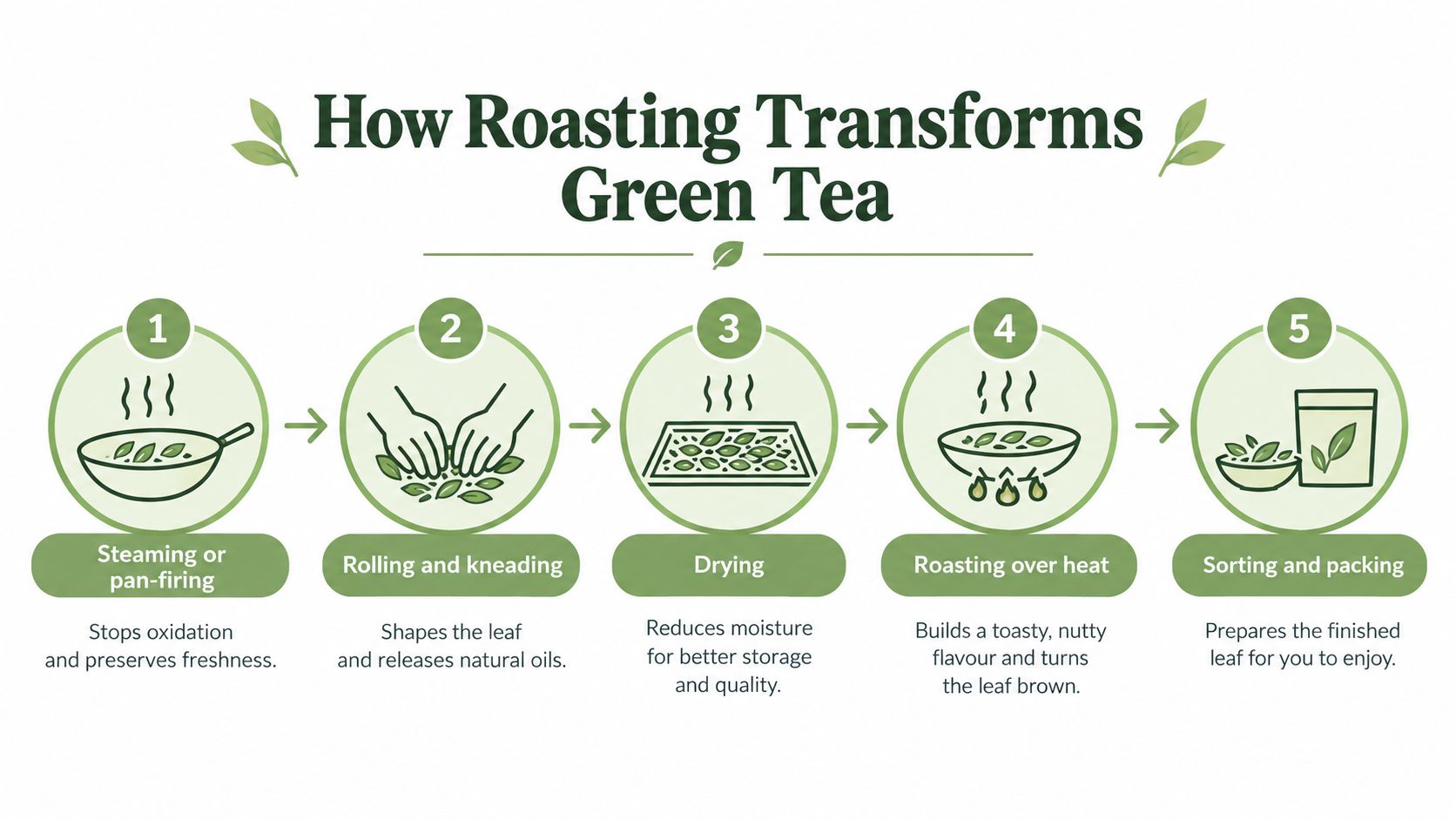
The roasting decision matters because heat affects more than aroma. Australian green-tea research measured theanine, caffeine, and five catechins, including EC, EGC, EGCG, GCG, and ECG, using high-performance liquid chromatography. The researchers assessed quality through measures such as total catechins and theanine-to-catechin and theanine-to-caffeine ratios. Higher theanine-to-catechin and theanine-to-caffeine ratios correlated with better retail-market quality, while total catechin concentration showed an inverse relationship with quality. The Australian research report also recorded seasonal shifts in catechin composition, with EGCG dominant early in harvest and EGC dominant later after peak temperatures.
That's why sensory quality shouldn't be judged by colour alone. A producer or buyer who wants repeatable roasted green tea should consider the original material, harvest timing, roast profile, aroma, taste, and, where relevant, laboratory testing before and after roasting.
Flavour and Aroma Profile Explained
A well-made cup of roasted green tea announces itself before you taste it. The dry leaves may smell like toasted grain, warm wood, roasted nuts, or a lightly browned biscuit. Once infused, the liquor usually appears amber to brown rather than vivid green.
The first sip tends to feel rounded. Instead of sencha's fresh, grassy lift, you might notice toasted rice, caramel, cocoa, or a mild coffee-like note. The finish can be gentle and dry, but it shouldn't dominate the palate with sharp bitterness. That makes hojicha approachable for people who've tried green tea and decided they dislike “vegetal” flavours.
A café-friendly sensory comparison
A useful comparison is toast rather than coffee. Hojicha can share coffee's warmth and roasted aroma, but the body is often lighter and the finish more tea-like. With milk, the leaf's nutty character can resemble a soft flat white or a toasted-muesli drink, while an unsweetened cup may remind you of a campfire without the smoke becoming the main flavour.
The roast also influences what you should expect:
- Light roast: toasted grain, dry cereal, gentle sweetness, and a lighter body.
- Medium roast: roasted nuts, caramel, biscuit, and a balanced aroma.
- Deep roast: dark toast, cocoa, wood, and a stronger coffee-adjacent impression.
These are tasting directions, not guarantees. Leaf size, stems, cultivar, harvest, roast temperature, and brewing all affect the final cup. A tea that tastes smooth in a café latte may taste more direct when brewed without milk.
If you're comparing styles or looking for Japanese tea terminology, a specialist overview of Hojicha Tea can help you understand how roasted tea sits alongside other Japanese green teas. Use the language of aroma when ordering. Ask for something toasty, nutty, mellow, or suitable for milk, rather than assuming every hojicha tastes the same.
Caffeine and Antioxidant Content in Real Servings
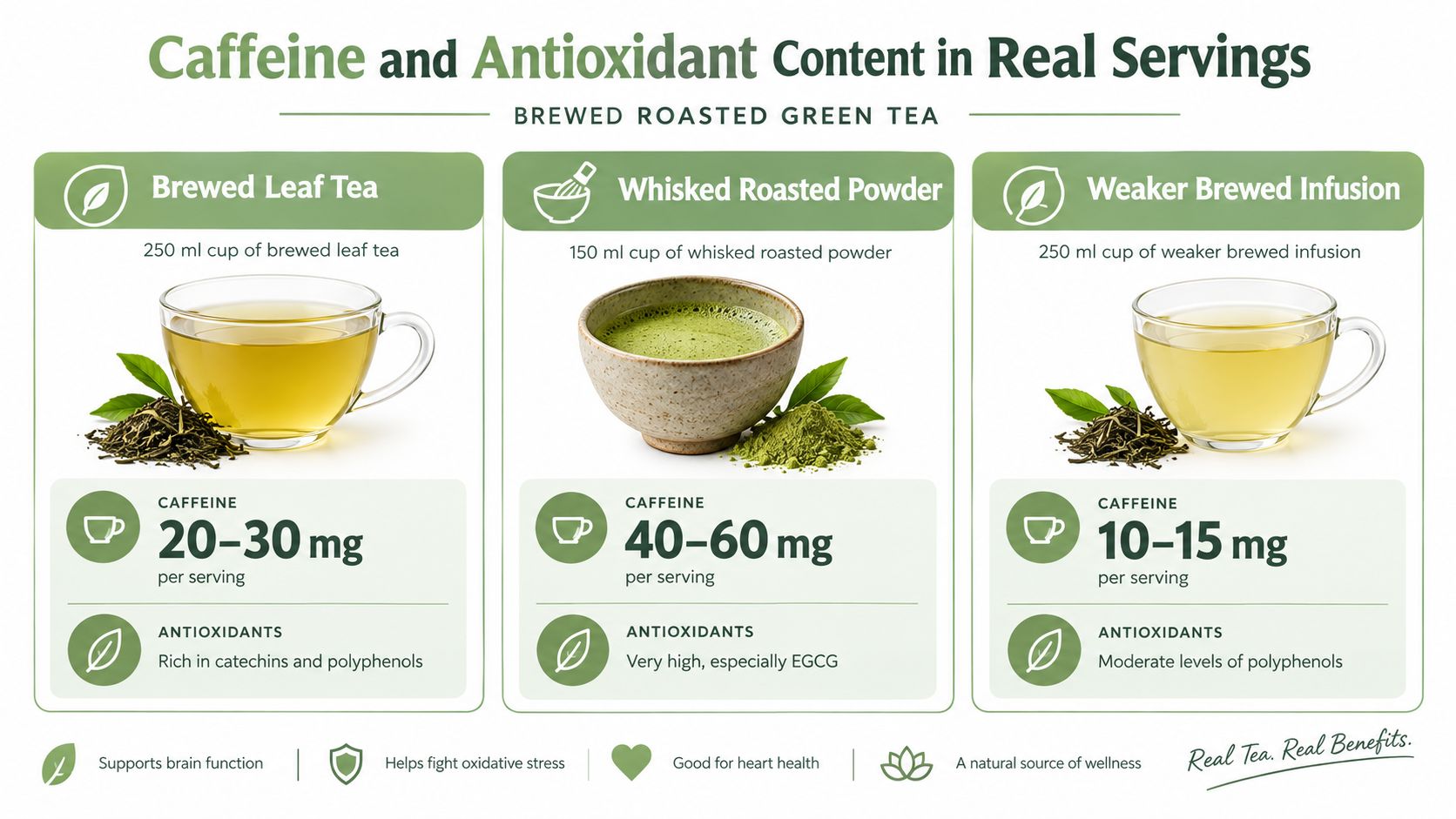
“Low caffeine” is too vague to guide a real drink. Roasting can change perceived bitterness and extraction behaviour, but roasted green tea isn't caffeine-free. The amount in your cup depends on the leaf mass, water volume, temperature, contact time, particle size, and whether you're drinking an infusion or consuming powdered tea.
The Australian Institute of Sport lists approximately 30–50 mg of caffeine in a 250 mL cup of green tea. Food Standards Australia New Zealand also gives a broad tea concentration range of 0–90 mg per serving, reflecting variation in tea type, preparation, and strength. These references are useful for planning, but they aren't a batch-specific result for every hojicha product. Food Standards Australia New Zealand's caffeine material explains why preparation and food composition data need careful interpretation.
Leaf, powder, and the cup you actually drink
A brewed leaf infusion leaves most of the plant material behind. Whisked hojicha powder is different because you consume the finely milled leaf, and a concentrated café preparation may use more tea in less liquid. You shouldn't transfer a caffeine expectation from one format to another without checking the recipe.
Antioxidant language needs similar care. Green tea contains catechins and theanine, but roasting and brewing influence the compounds that reach the cup. Australian field research found that quality relationships were more informative than total catechin concentration alone, so “more antioxidants” isn't a complete measure of a better tea.
Practical rule: standardise the grams of tea, water volume, temperature, and steep time before comparing cups.
For people managing sleep, pregnancy-related caffeine limits, children's intake, or caffeine from coffee, chocolate, energy drinks, and other tea, a prepared serving is more useful than a product category. The Australian Institute of Sport reports average adult caffeine intake at about 175 mg per day, with at least 25% of people consuming more than 230 mg daily. Those figures appear in its Australian caffeine guidance, alongside the green-tea reference.
For a deeper explanation of preparation and serving questions, see hojicha tea caffeine. If you're exploring Japanese caffeine-free or naturally low-caffeine traditions more broadly, this guide on where to buy Japanese herbal tea is a useful place to compare categories, while remembering that hojicha itself is tea and can contain caffeine.
Brewing Roasted Green Tea at Home
Hojicha is forgiving, but a repeatable recipe helps you understand what the leaf can do. Start with 3 grams of roasted green tea leaf, 250 mL of water at 90°C, and a 30–45 second steep. This produces an aromatic cup with enough body for drinking plain or adding milk.
Boiling water poured directly over the leaf can flatten delicate aromatics and draw out a rougher finish. Steeping for several minutes can make even a gentle roast taste dry or over-extracted. Use a kettle with a temperature setting, or let freshly boiled water cool briefly before brewing.
Adjusting the base recipe
For a stronger cup, try 3 grams in 150 mL for 60 seconds. This concentrated brew suits a small serving or a latte. For a softer everyday pot, use 2 grams in 300 mL and keep the steep brief enough to preserve the toasted aroma.
Hojicha powder needs a different method. Sift the powder into a bowl, add a small amount of warm water, whisk until smooth, then add more water or steamed milk. Because the powder is consumed rather than strained, treat it as a separate format when thinking about flavour and caffeine.
| Format | Leaf or powder | Water or milk | Temperature | Time |
|---|---|---|---|---|
| Everyday hot cup | 3 g leaf | 250 mL water | 90°C | 30–45 seconds |
| Strong latte base | 3 g leaf | 150 mL water | 90°C | 60 seconds |
| Light pot | 2 g leaf | 300 mL water | 90°C | Short steep |
| Powdered latte | Hojicha powder | Warm water, then milk | Warm, not boiling | Whisk until smooth |
| Iced infusion | Leaf | Cold water | Refrigerated | Longer, according to taste |
| Syrup or dessert base | Leaf or powder | Small concentrated liquid | Controlled heat | Taste and strain |
For an iced summer drink, cold brewing gives the tea time to release aroma gradually. For a syrup, make a concentrated infusion, strain it carefully, and combine it with your chosen sweetener while warm. You can then use the syrup in a latte, over vanilla ice cream, or in a zero-alcohol drink.
Pin this checklist near the kettle:
- Weigh the tea: Start with the recipe rather than guessing.
- Measure the water: Volume changes strength as much as leaf quantity does.
- Control temperature: Avoid pouring boiling water straight onto delicate material.
- Time the steep: Taste at the lower end of the range before extending it.
- Adjust one variable: Change leaf, water, or time, not everything at once.
Comparing Roasted Green Tea With Other Drinks
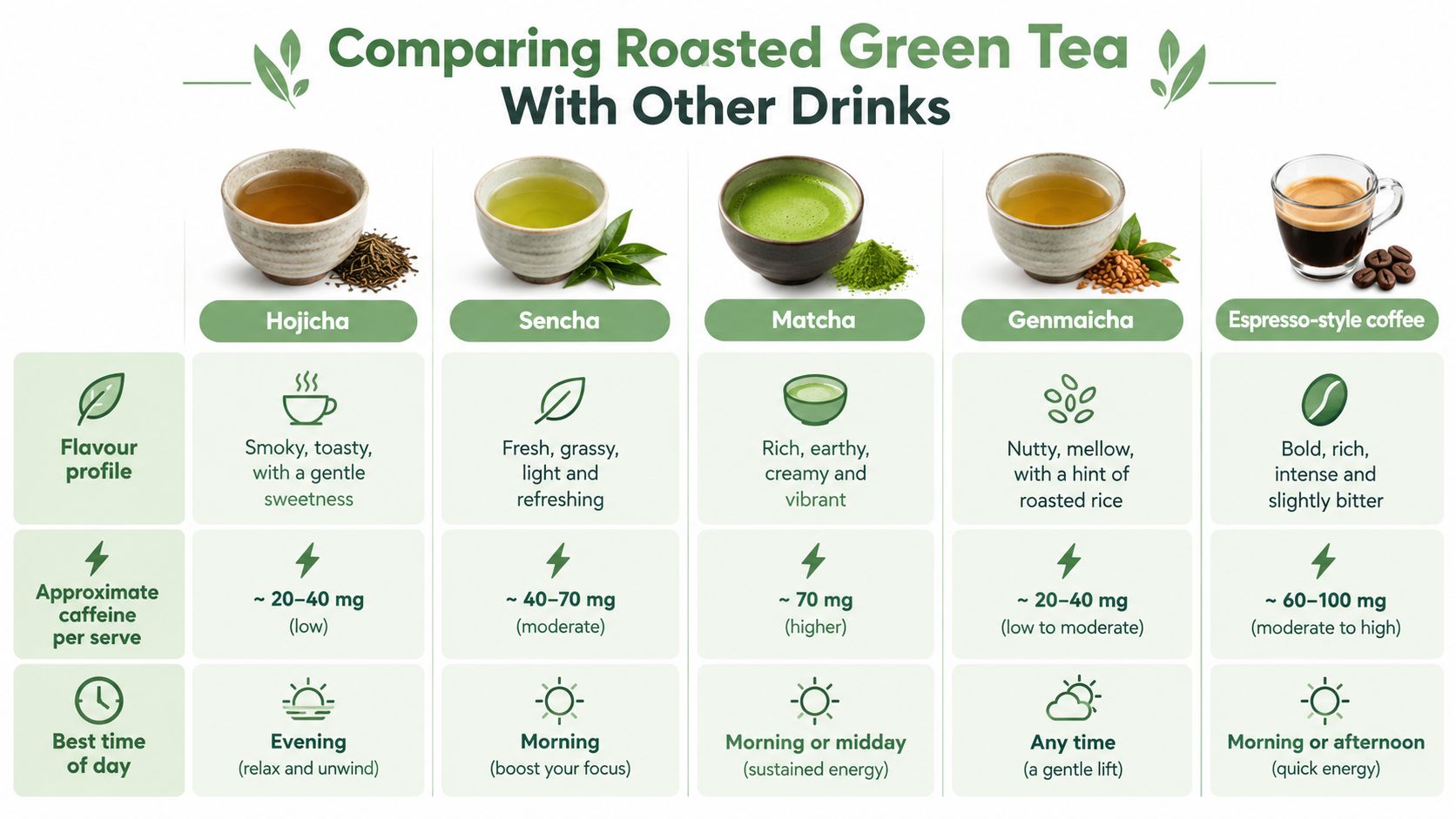
Hojicha earns its place by being different, not by replacing every other drink. Sencha is bright and fresh, matcha is concentrated and vivid, genmaicha combines green tea with toasted brown rice, and espresso-style coffee brings a denser roasted intensity. Roasted green tea sits between these experiences, with a lighter body than coffee and a deeper toastiness than many unroasted green teas.
Choose by taste and occasion
| Drink | Flavour direction | Caffeine approach | Useful format |
|---|---|---|---|
| Hojicha | Toasted, nutty, mellow, cocoa-like | Variable by serving | Hot brew, latte, dessert |
| Sencha | Fresh, grassy, lightly marine, brisk | Variable by serving | Straight hot tea |
| Matcha | Dense, vegetal, umami-rich | Depends on powder quantity | Whisked drink, latte, baking |
| Genmaicha | Green tea with toasted rice | Variable by serving | Food-friendly hot infusion |
| Espresso-style coffee | Roasted, dense, bitter, aromatic | Depends on preparation | Flat white, long black, dessert |
An espresso-style drink may suit the first part of a busy morning, while hojicha can work when you want a roasted flavour without the weight of coffee. Sencha is a better choice when you're seeking freshness and a clean, brisk finish. Matcha makes sense when you want the texture and intensity of powdered tea. Genmaicha offers toastiness through rice, with a recognisable green-tea foundation.
The common mistake is to describe hojicha as “matcha minus the caffeine”. That comparison misses the point. Hojicha's strongest difference is sensory. Its roasted character appeals to people who find matcha too grassy, and its aroma works naturally with oat, soy, dairy, chocolate, vanilla, and lightly sweetened café recipes.
Choose the drink that matches the moment. A plain hojicha infusion suits quiet sipping, a concentrated brew suits a latte, and hojicha powder suits cooking where you want the roasted flavour distributed through the recipe.
Culinary and Café Uses Beyond the Cup
Hojicha shouldn't be positioned only as a healthier matcha. Its most practical advantage in a café or home kitchen is flavour. Toasted, nutty notes can make a dessert feel deeper without relying on a large amount of sweetness, and the profile sits comfortably beside ingredients Australians already order and bake with.
Sweet applications
Hojicha powder works well in cookies, financiers, sponge cakes, ice cream, custards, and chocolate desserts because it disperses through the mixture. A leaf infusion is better when you want a lighter aroma in cream, milk, or syrup and plan to strain the solids before serving.
Try these combinations:
- Chocolate and cocoa: Roasting complements cocoa's bitterness and gives brownies or ganache a warmer finish.
- Vanilla and ice cream: Hojicha syrup adds toastiness to an affogato-style dessert without copying espresso.
- Nuts and grains: Almond, sesame, hazelnut, oat, and toasted rice reinforce the tea's cereal character.
- Fruit: Pear, stone fruit, and banana can work with a gentle roasted base when the sweetness is controlled.
You can also use concentrated hojicha in café drinks that aren't lattes. Build a zero-proof spritz with hojicha syrup, soda, citrus, and ice. Pair a cooled infusion with kombucha for a tea-forward refreshment, or use a small amount in a dessert sauce.
Savoury and seasonal formats
A light hojicha infusion can contribute depth to a broth, while powder can be blended into a finishing spice mix for roasted vegetables. Use it carefully. The aim is aroma, not a heavy tea flavour.
A simple seasonal framework helps café teams keep the idea repeatable:
- Cool weather: Hot hojicha, steamed milk, chocolate, and baked desserts.
- Warm weather: Iced hojicha, citrus, soda, cold brew, and spritz-style drinks.
- All year: Cookies, soft serve, affogato-style desserts, and a short unsweetened tea option.
For bakers comparing formats and applications, you can browse toasty hojicha for baking. For broader low-sugar drink ideas that can sit beside tea on a café menu, Pep Tea's healthy drinks to make offers further inspiration.
Putting It All Together
Roasting determines the aroma. The aroma determines whether hojicha suits a plain infusion, a latte, a dessert, or a savoury experiment. Brewing then decides how much of that character reaches the cup, which is why serving size and timing matter more than a blanket claim about caffeine or antioxidants.
Treat roasted green tea as its own category. It isn't a failed matcha, a brown sencha, or a coffee substitute. It's a flexible Japanese tea style with a toasted profile that can feel familiar in an Australian café and practical in a home kitchen.
Start with three actions:
- Choose the format: Use leaf for clear infusions and concentrated bases, or powder when you want the tea distributed through milk and food.
- Repeat one recipe: Begin with the measured hot-brew method, then change one variable at a time.
- Try one kitchen use: Add hojicha to a syrup, cookie, chocolate dessert, iced drink, or savoury finishing blend.
Check the label for organic sourcing, origin, roast style, and preparation guidance. Australia's tea supply is predominantly import-dependent. In 2021, Australia produced approximately 1,500 tonnes of tea and imported more than 20,000 tonnes, according to market reporting that cites Australian agricultural reporting, including ABARES and the Department of Agriculture, Water, and the Environment. The Australian tea market overview explains why provenance, import controls, certification, and reliable distribution matter.
Australia's tea habit also gives roasted green tea a familiar place to grow. The Australian Bureau of Statistics reports that tea accounted for an average of 153 g of daily consumption within the non-alcoholic-beverage category in 2023, and 32.4% of people consumed tea. Hojicha doesn't need to create a new ritual. It can give an existing one a warmer, more versatile flavour.
Pep Tea offers organic Japanese tea alongside Australian-brewed sugar-free organic Kombucha from the Hunter Valley, NSW, giving home drinkers and cafés practical options for low-sugar, non-alcoholic beverage menus. Visit Pep Tea to explore the range, find recipes, or enquire about wholesale supply for roasted green tea-inspired drinks.
Organic Matcha Green Tea Powder Australia: A Full Guide 2026
Certified organic matcha sold in Australia is generally imported from Japan rather than grown locally at commercial scale. Australia's certified organic agricultural land increased by 48.9% between 2021 and 2022, while the country has more than 53 million hectares of certified organic farmland, about 12.4% of its agricultural land. IndexBox's Australian matcha market overview provides the market context, but those figures describe organic agriculture overall, not domestic matcha production.
You may be standing at a café counter with a new matcha latte on the menu, or comparing tins online after deciding that your usual green tea doesn't deliver the colour or flavour you want. The search for organic matcha green tea powder Australia often creates one immediate confusion: Australian availability doesn't mean Australian origin. The tea may be imported, while the business selling, testing, distributing and educating customers operates locally.
That distinction matters because matcha is a whole-leaf powder. Unlike a brewed infusion, the leaf isn't removed after steeping. Organic certification can help verify how the tea was grown and handled, but it doesn't automatically tell you whether the powder is fresh, potent, well processed or suitable for your recipe. The useful question isn't only whether a tin says “organic”. It's whether the product has a traceable origin, credible certification, suitable grade and testing that matches the risks you need to manage.
Finding Quality Organic Matcha in Australia
A café owner in Newcastle may need a vivid green latte that dissolves cleanly. A home baker in Melbourne may want a stronger powder that remains noticeable in oats, icing or banana bread. Searching for organic matcha green tea powder Australia brings up products with different origins, grades, certification records and handling practices.
For Australian buyers, the local part of the supply chain usually involves importing, distribution and hospitality, rather than cultivation. Matcha is generally imported from overseas tea-growing regions, particularly Japan, where shaded tea leaves are processed into tencha and stone-ground into powder. National organic farmland data can show that Australia has established certification systems and traceability practices, but it does not prove that a product is Australian-grown matcha. The Australian matcha market context helps clarify the difference between local availability and domestic production.
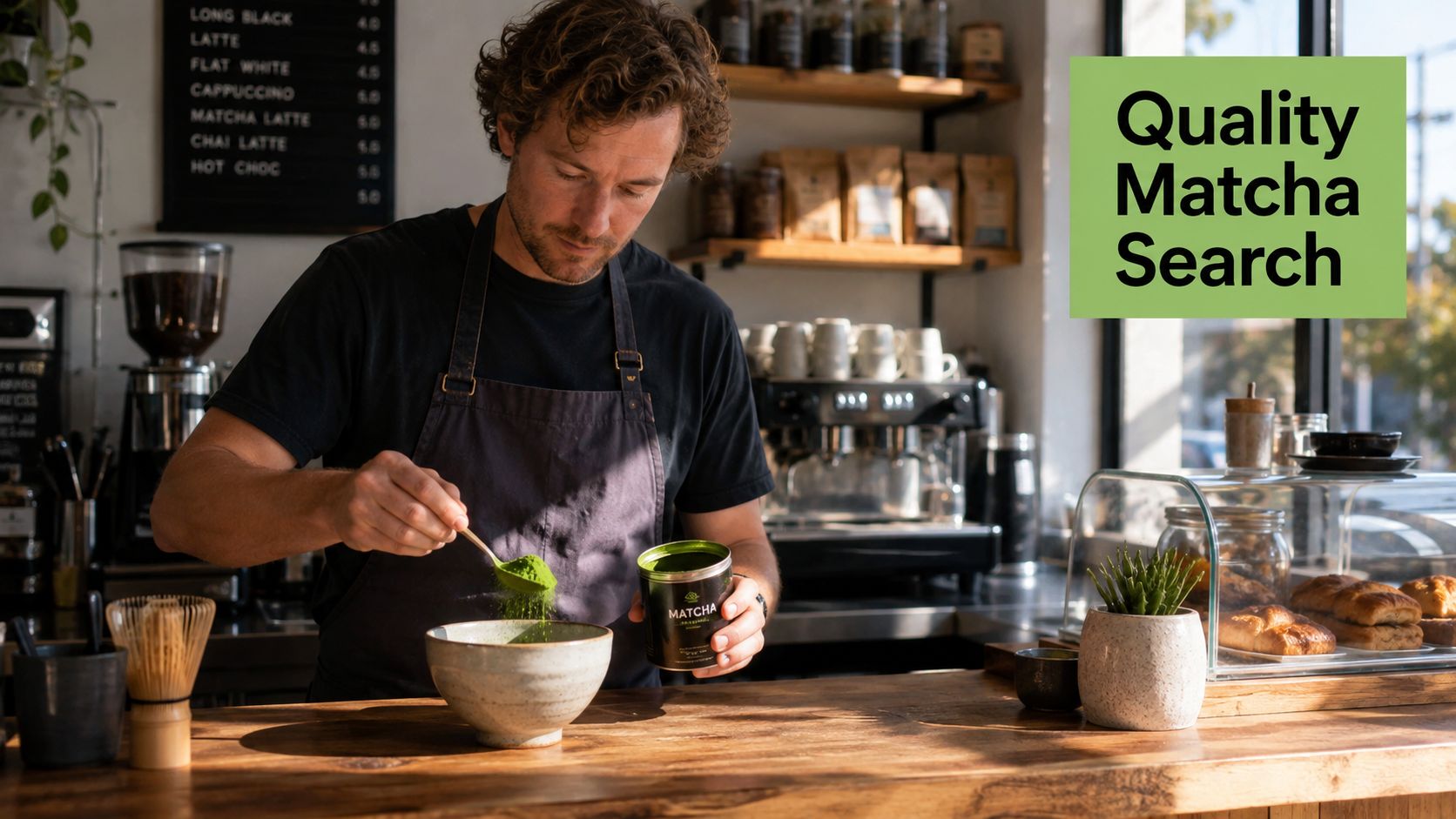
What Australian buyers should look for
A reliable product description gives you several points to check instead of relying on one premium-sounding claim.
- Country and region of origin: “Japan” identifies the country, while a named region gives more supply-chain detail.
- Certification identity: Check the certifier, certificate number and certification scope. Ask the importer for its ACO or JAS certificate number, then verify it through the certifier's public database before purchasing.
- Grade and intended use: Powder for whisking may not suit a café producing large volumes of lattes.
- Lot traceability: A lot number should connect the retail pack with supplier records and relevant testing.
- Storage information: Light, heat, air and moisture can affect matcha, so packaging and handling influence the final cup.
“Ceremonial grade” can indicate intended use, but it is not a universal government-controlled matcha grade. Assess colour, aroma, texture and flavour alongside the label. Fresh matcha should smell clean and vegetal, disperse finely and avoid a harsh, stale or dusty finish.
For an Australian supplier presenting its range and product details, compare the Pep Tea matcha tea powder collection with the documentation supplied by other sellers. The practical goal is a powder with an identifiable origin, verifiable certification, suitable handling information and a flavour profile you can explain to customers.
Ceremonial vs Culinary Matcha Grades Explained
“Ceremonial” and “culinary” are practical buying terms, not a complete quality-control system. In Japan and internationally, “ceremonial grade” doesn't have one universal regulated definition, so a buyer should still examine origin, harvest information, processing, freshness and test documentation.
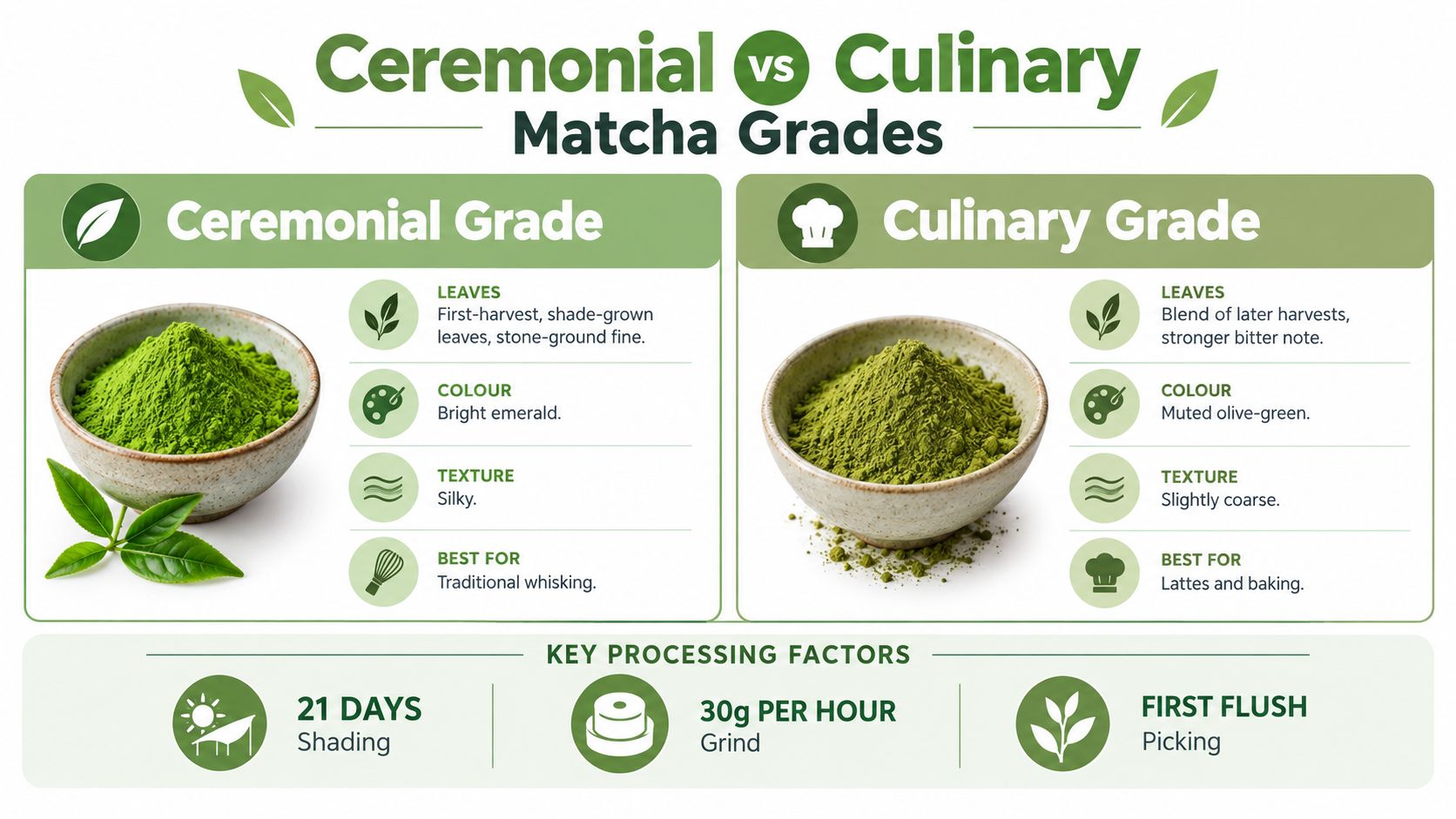
Ceremonial-style matcha is usually selected for drinking directly with water. It tends to be brighter in colour, finer in texture and more rounded in flavour, with an umami character that can stand on its own. Culinary matcha is usually chosen for recipes where the powder must remain noticeable beside milk, fruit, oats, flour or sweetener. It can have a more assertive bitterness and a less delicate finish, which may be an advantage rather than a defect.
How processing changes the cup
Tea plants used for matcha are shaded before harvest, then processed into tencha, with stems and veins removed before grinding. Shading can influence the leaf's colour and flavour, while cultivar, harvest timing and processing also affect the powder's chemical composition. The Western Sydney University review of matcha's bioactive compounds reports that matcha generally contains catechins, L-theanine and caffeine, but concentrations vary substantially between products.
Stone-grinding is associated with a fine powder and a smooth mouthfeel. However, the phrase “stone-ground” isn't enough to prove that a matcha will taste good. A powder may have been well processed and still be old, poorly stored or unsuitable for the drink you're making.
Try the following comparison:
| Matcha grade | Best for | Key characteristics |
|---|---|---|
| Ceremonial-style | Traditional whisking, thin tea and direct drinking | Brighter colour, fine texture, softer bitterness and a flavour designed to be enjoyed with water |
| Culinary-style | Lattes, smoothies, baking, desserts and sauces | More robust flavour, stronger bitterness and enough presence to work with other ingredients |
Choose by application, not status
A delicate ceremonial-style powder can taste excellent in a bowl but become wasteful in a strongly flavoured latte. Milk, ice and sweeteners can mute subtle notes, so a practical culinary powder may perform better while keeping the menu cost under control.
The reverse problem appears in direct drinking. A coarse or bitter culinary powder whisked with water can leave astringency on the tongue, especially if the water is too hot or the powder is poorly stored. That doesn't mean culinary matcha is inferior. It means the product has been selected for a different job.
Organic status addresses farming and handling standards, not whether a powder is ceremonial-style, culinary-style, mild, strong, fresh or compositionally consistent. For serious café purchasing, ask for the supplier's intended use, batch information and preparation recommendation. The Pep Tea guide to ceremonial and culinary matcha can sit alongside a sensory trial, where staff prepare both powders using the same recipe and taste them in the actual menu format.
One final caution concerns caffeine. Matcha is powdered tea, so the amount consumed depends on powder mass, cultivar, processing and preparation. A supplier shouldn't present a single caffeine number as universal for every tin or serve.
Understanding Organic Certification and Standards
A café can receive a bag labelled “organic” without knowing how that claim was verified. Organic claim and certified-organic status are different. Australian domestic organic sales do not always require mandatory certification, while a business using a certified-organic label must ensure the product meets the stated arrangement. The Australian Government describes AS 6000-2015, the Australian Standard for organic and biodynamic products, as covering production, processing, storage, transport, labelling and importation. The government's organic and biodynamic factsheet explains why checks need to extend through the supply chain, not stop at the farm.
Certification answers one set of questions
Certification verifies the production system, permitted inputs and relevant handling practices. It can support claims about how tea was grown, processed and represented, provided the finished imported product falls within the applicable certification arrangement. For an Australian buyer, the certifier, certificate holder, product scope and import documentation all matter.
See how certification is verified locally in the Pep Tea guide to organic certification in Australia.
Certified status does not establish that every powder has the same caffeine level, catechin profile, moisture content, colour or flavour. The Western Sydney University review found variable bioactive profiles in commercially marketed matcha from different countries. Organic certification is therefore a baseline for production claims, not a guarantee of potency or consistency.
For a café, use separate checks for separate decisions:
- Certification: Was the product produced and handled under the stated organic standard?
- Composition testing: What does this batch contain in terms of caffeine and selected compounds?
- Contaminant testing: Has this batch been assessed for hazards such as heavy metals, pesticides or microbes?
- Sensory evaluation: Does the powder meet the flavour, colour and texture required for the menu?
Certification verifies the production system; laboratory testing verifies what is in this specific lot. Sensory evaluation then shows whether the powder performs in the intended drink. A certificate cannot tell you whether a matcha is too bitter for a latte, while a taste test cannot establish organic status.
Read labels with appropriate caution
The word “natural” offers less verification than a named certification system. A credible pack should identify the product, importer or responsible business, origin and relevant certification information so those details can be checked against supplier records.
Matcha uses the whole leaf, so it is consumed as a powder rather than brewed and discarded. The Food Standards Australia New Zealand caffeine advice distinguishes naturally occurring caffeine in tea from concentrated caffeine products. Organic certification does not make matcha caffeine-free or establish a particular physiological effect.
Businesses should keep certification separate from health marketing. Matcha may contribute naturally occurring tea compounds to the diet, but claims about immunity, detoxification, metabolism or disease prevention require evidence and careful regulatory review. A clear description of origin, grade and preparation gives customers more useful information than benefits a supplier cannot substantiate.
How to Verify Quality and Sourcing
A responsible matcha purchase starts with paperwork, then moves to the powder itself. This approach works for a home buyer comparing tins and for a café owner assessing a wholesale supplier.
Ask for the documents that connect product to batch
Request the following information before committing to a large order:
- A current certificate of conformity. Check the certifier, certificate holder, product scope and validity.
- Country and region of origin. A named Japanese region is more informative than an unexplained “imported” claim.
- Lot number. Confirm that the lot on the pack matches the supplier's documentation.
- Testing date. Recent testing is more useful when it clearly identifies the tested lot.
- Laboratory scope. Find out whether the report covers heavy metals, pesticide residues, microbiological quality and other relevant parameters.
- Product specification. Ask for storage conditions, recommended serving mass, grade, packaging and expected shelf life.
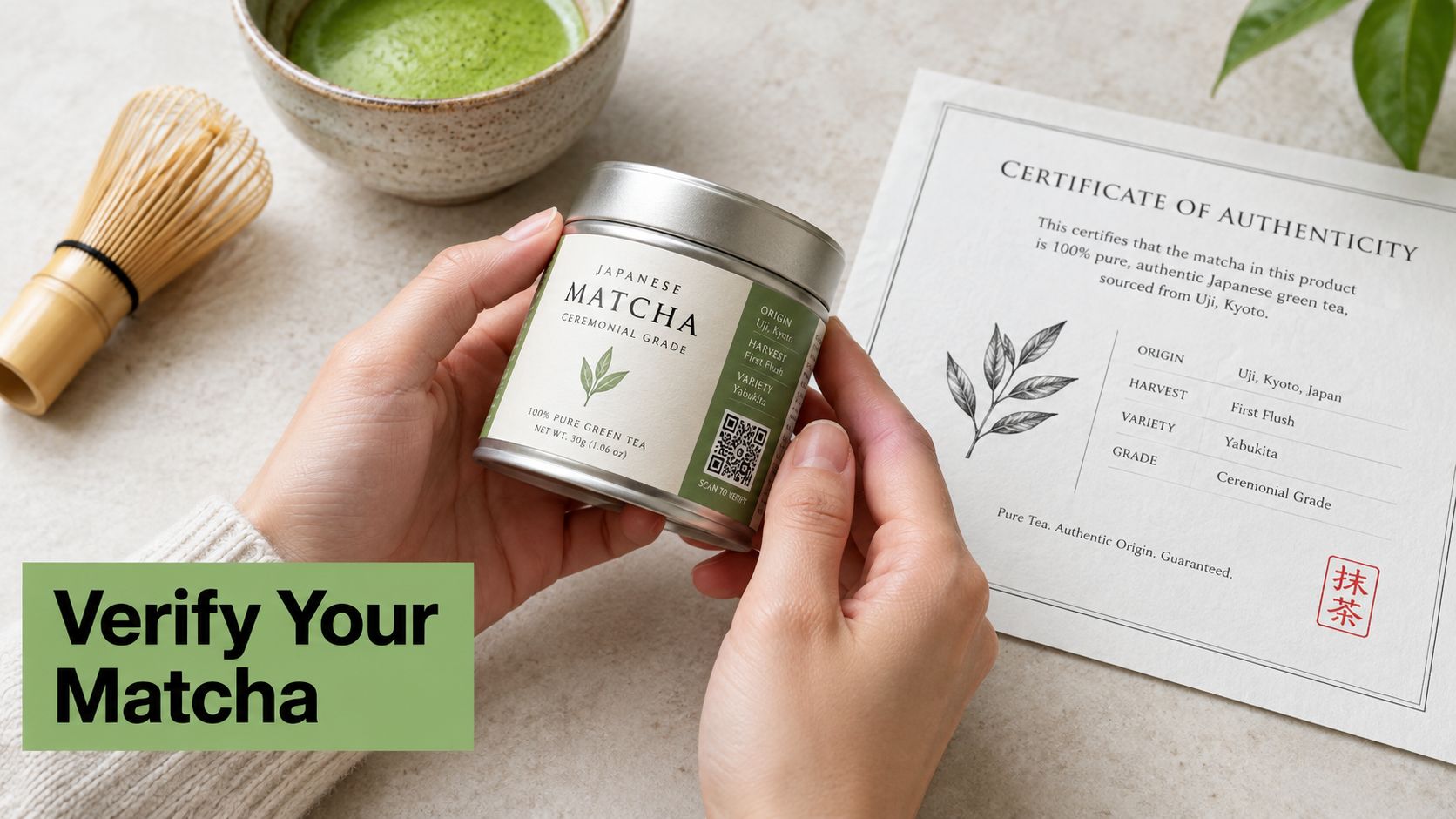
A certificate of conformity is valuable, but it shouldn't be treated as a complete safety report. Organic certification and laboratory testing answer different questions. The certification concerns the production system. Laboratory analysis tests selected hazards or compositional features in a particular sample.
Interpret testing without overclaiming
The available Australian regulatory material doesn't establish one simple matcha-specific consumer threshold for every concern a shopper may have, including lead, cadmium, pesticides and microbial hazards. That's why suppliers should be precise about what was tested, by which method, on what date and for which lot, rather than writing “fully tested” without detail.
For cafés and retailers, the Western Sydney University review recommends batch-level testing where possible, ideally using validated HPLC or UPLC methods for caffeine and major catechins such as EGCG, alongside checks for moisture, microbiological quality and heavy metals. The practical reason is straightforward: colour and sensory grade can't reliably predict functional composition.
Practical rule: Certification tells you how the product was produced. A laboratory report tells you what a particular test found. Keep both records.
Taste and storage remain part of verification
Open the pack and inspect the powder. A lively green colour, fresh aroma and fine texture are useful signs, while dull colour, stale odour, visible moisture or persistent clumping deserve questions. These observations don't replace laboratory testing, but they can reveal poor storage or age.
Keep the powder sealed, away from heat, light, air and moisture. A café should also record when a pack was opened and use a consistent recipe. If one barista uses a light spoonful and another uses a heavily packed scoop, customers won't receive a consistent drink, even if the underlying matcha is sound.
Australian Use Cases and Product Selection
Australian matcha works best when the grade matches the service format. A home user drinking a small bowl with water has different needs from a café building an iced latte, and a food manufacturer needs documentation that a casual buyer may never request.
Matcha preparation at home and in cafés
For direct drinking, sift the powder into a bowl, add warm water and whisk until the surface becomes lightly foamy. Water that's too hot can exaggerate bitterness, so use comfortably hot rather than boiling water. The right technique won't rescue stale matcha, but it can prevent avoidable clumping and harshness.
For a latte, dissolve the powder in a small amount of warm water first, then add milk or a plant-based alternative. Culinary-style matcha usually makes economic and sensory sense here because its stronger flavour can hold up against milk, ice and optional sweetener. Keep the drink unsweetened if the aim is to provide a low-sugar menu option, and let customers choose additions separately.
This video demonstrates a practical preparation approach for customers and café teams:
The same powder can be used in a smoothie with banana and oats, folded into yoghurt, blended into ice cream or added to baking. Heat and strong ingredients change the final flavour, so a powder that tastes slightly assertive on its own may be the better recipe ingredient.
| Matcha grade | Best for | Key characteristics |
|---|---|---|
| Ceremonial-style | Bowl preparation and simple iced matcha | Fine texture, vivid colour and a balanced flavour that remains exposed |
| Culinary-style | Café lattes, smoothies and baking | More pronounced tea flavour and better compatibility with milk or food |
Matcha alongside kombucha
Matcha and kombucha serve different roles. Matcha is a powdered tea ingredient that contributes tea flavour and naturally occurring caffeine. Kombucha is a fermented beverage requiring controlled acidity, clean equipment, reliable cultures and documented process monitoring.
FSANZ identifies kombucha as a beverage requiring careful control. The initial tea infusion is typically around pH 5, and it should be cooled from 60°C to 20°C within two hours. During fermentation, acidity should reduce the drink to pH 4.2 or below, while the finished beverage should generally remain at pH 2.5 or above and below 1% alcohol. These controls are set out in FSANZ's kombucha guidance.
That difference matters for cafés. A properly fermented sugar-free kombucha can provide an alcohol-free, low-sugar menu option, but “fermented” alone doesn't prove that the drink was made safely or contains no residual sugar. Read the nutrition information and ask how the producer manages acidity, alcohol and hygiene. Pep Tea offers organic Japanese matcha and Australian-brewed organic kombucha from the Hunter Valley, NSW, as separate beverage options rather than treating them as interchangeable products.
Australian beverage menus can also use matcha and kombucha in different dayparts. A matcha latte suits a morning or afternoon service, while chilled kombucha can work as a refreshing alternative to soft drinks or alcohol. For venues managing customer questions at scale, drink industry chatbot examples can help inspire ways to organise menu information, ingredient answers and service workflows without replacing staff knowledge.
Your Organic Matcha Shopping Checklist
Use this checklist before buying organic matcha green tea powder in Australia:
- Confirm the origin: Look for Japan and, where available, a named region.
- Verify the certification: Ask which certifier issued it and whether the finished imported powder is covered.
- Match grade to use: Choose ceremonial-style powder for direct whisking and culinary-style powder for lattes, smoothies and baking.
- Request batch details: Certificate, lot number, testing date and product specification should connect to the pack.
- Separate certification from testing: Organic status doesn't replace independent checks for heavy metals, pesticide residues or microbiological quality.
- Ask about caffeine: A serving's caffeine depends on powder mass, cultivar, processing and preparation. Healthdirect Australia's caffeine guidance gives healthy adults a general daily upper guideline of around 400 mg, but that isn't a target and doesn't suit every person.
- Inspect the powder: Fresh aroma, fine texture and lively colour support a better drinking experience.
- Check storage: Heat, light, air and moisture can reduce freshness after importation.
If you're presenting products online or building a café menu, strong photography should show the powder, colour, preparation and serving context accurately. A practical food product photography workflow from MerchLoom can help teams organise those visual assets without making unsupported claims about the product.
Pep Tea offers organic Japanese matcha in grades suited to direct drinking, café lattes and culinary use, alongside Australian-brewed organic kombucha from the Hunter Valley, NSW. Visit Pep Tea to compare the range, review product details and enquire about options for your home, café or wholesale menu.
Organic Farming Practices: Healthy Tea & Environment
You taste it before you know the reason. A bright matcha with a clean, grassy sweetness or a kombucha that finishes crisp rather than harsh usually starts with what happened in the paddock long before it reached your cup.
That's why organic farming practices matter. They don't just shape the environment around a farm. They shape flavour, purity, resilience, and the quality of the ingredients we drink every day.
What Organic Farming Really Looks Like
Early on an organic farm, the work doesn't begin with a spray rig. It starts with observation. Someone checks the soil underfoot, looks at the cover between rows, watches which insects are moving, and decides what the land needs next.
On a conventional farm, the quickest answer to a weed, pest, or nutrient issue can be an external input. On an organic farm, the question is different. The farmer asks how to strengthen the whole system so the problem is less likely to take hold in the first place.
That difference is bigger than the phrase “no chemicals” can capture. Organic farming practices exclude synthetic pesticides, herbicides, fertilisers, and genetically modified organisms, but they also rely on compost, crop rotation, biological pest control, and other natural methods that build soil health and biodiversity. In Australia, that approach isn't niche. The organic industry is valued at over $2.6 billion, and industrywide revenue was projected to reach $3.8 billion in 2024-25, growing at a compound annual rate of 10.1% over the preceding five years, according to research on Australia's organic sector.
What that looks like on the ground
- Soil gets fed first. Farmers add composts, plant green manures, and keep living roots in the ground where possible.
- Pests are managed as part of an ecosystem. Habitat, timing, and plant diversity matter just as much as any direct intervention.
- Fertility is planned over seasons. If you want a useful primer on the difference in approach, this guide on compare fertilizer types is a practical starting point.
Organic farming is less about withholding inputs and more about replacing shortcuts with stewardship.
That's why “organic” is more than a label. It reflects a whole way of growing food and drink ingredients, from vegetables and grains to the tea leaves used in a daily brew.
The Heart of the Farm Why Soil Health Is Everything
If plants had a digestive system, it would look a lot like soil.
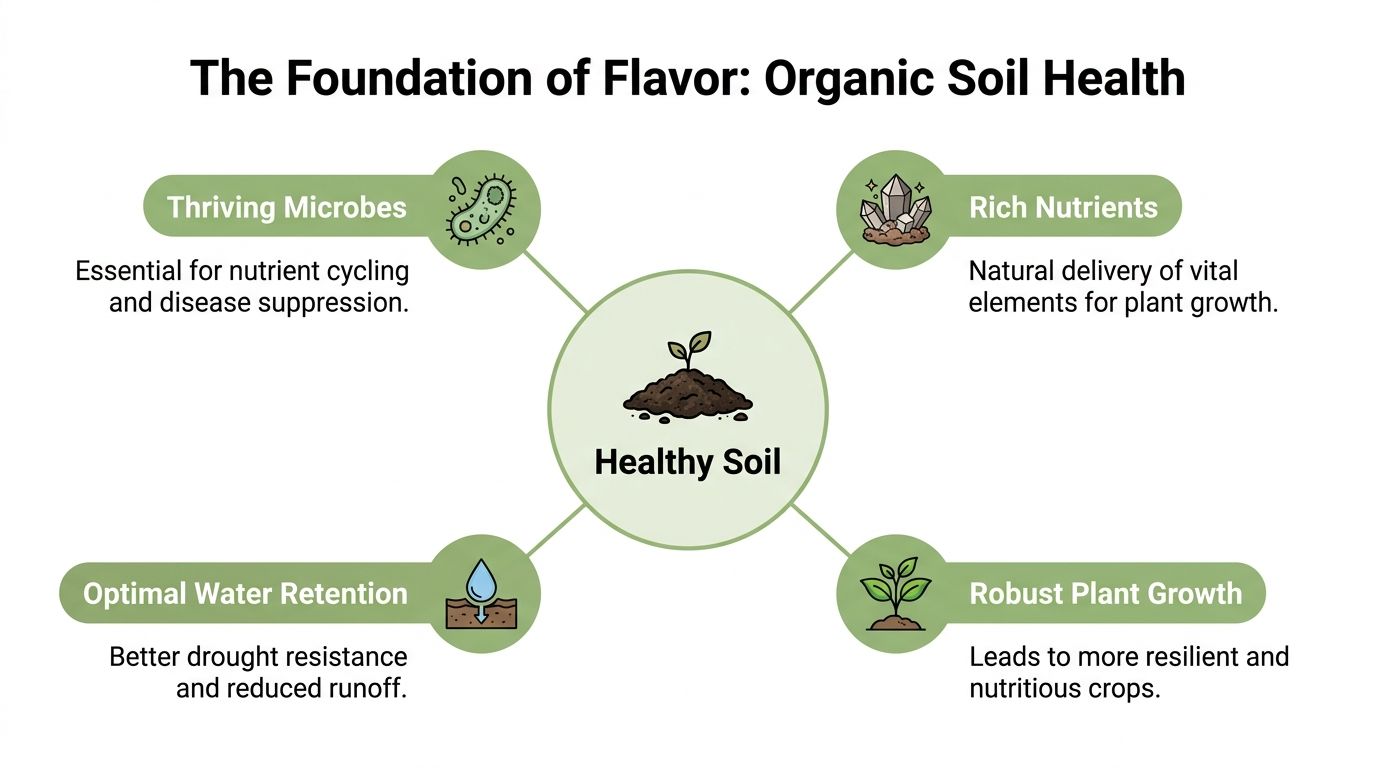
Healthy soil isn't just dirt holding roots upright. It's a living community made up of fungi, bacteria, worms, decaying plant matter, air pockets, minerals, and moisture. When organic farmers talk about feeding the soil, they mean feeding that entire underground community so plants can access nutrients steadily and naturally.
Soil works like a farm's gut
A healthy gut helps a person absorb nutrients well. Healthy soil does the same for plants. Microbes break down organic matter, help roots access minerals, and support stronger plant growth.
That microbial life is one reason organic systems matter so much. Charles Sturt University's overview of organic farming in Australia notes that organic farms support a 30% increase in species biodiversity and a 50% increase in beneficial microorganisms compared to conventional farms.
When readers get confused here, it's usually because “fertility” sounds like a bag of nutrients. In organic farming, fertility is also structure, biology, and timing. A plant can sit in nutrient-rich ground and still struggle if the soil is compacted, lifeless, or poor at holding water.
What builds living soil
Organic farmers usually combine several practices rather than relying on one silver bullet.
- Compost and organic matter improve structure and feed microbial life.
- Cover crops protect bare ground, reduce erosion, and return biomass to the soil.
- Minimal disturbance helps preserve fungal networks and soil structure.
- Diverse planting supports a more varied underground ecosystem.
For readers who want a broader view, these regenerative farming techniques are useful because they show how soil-building practices work together rather than as isolated tasks.
Practical rule: If a farming method only feeds the plant for the short term but weakens the soil over time, organic growers usually see it as the wrong trade-off.
Why synthetic fertilisers are avoided
Synthetic fertilisers can deliver nutrients quickly, but organic farming takes a longer view. The aim is to avoid replacing a living system with a chemical feeding schedule.
A simple comparison helps:
| Approach | Main focus | Likely long-term goal |
|---|---|---|
| Organic soil building | Feed the soil community | Resilient plants and stable fertility |
| Synthetic input model | Feed the plant directly | Fast correction of deficiencies |
That's why so much of the flavour story begins underground. A stronger root environment usually means stronger, steadier plant growth above ground.
Working with Nature Through Crop Rotation and Biodiversity
A good crop rotation works a bit like a varied diet. If you ate the same thing every day, your body would eventually struggle. Soil does too.
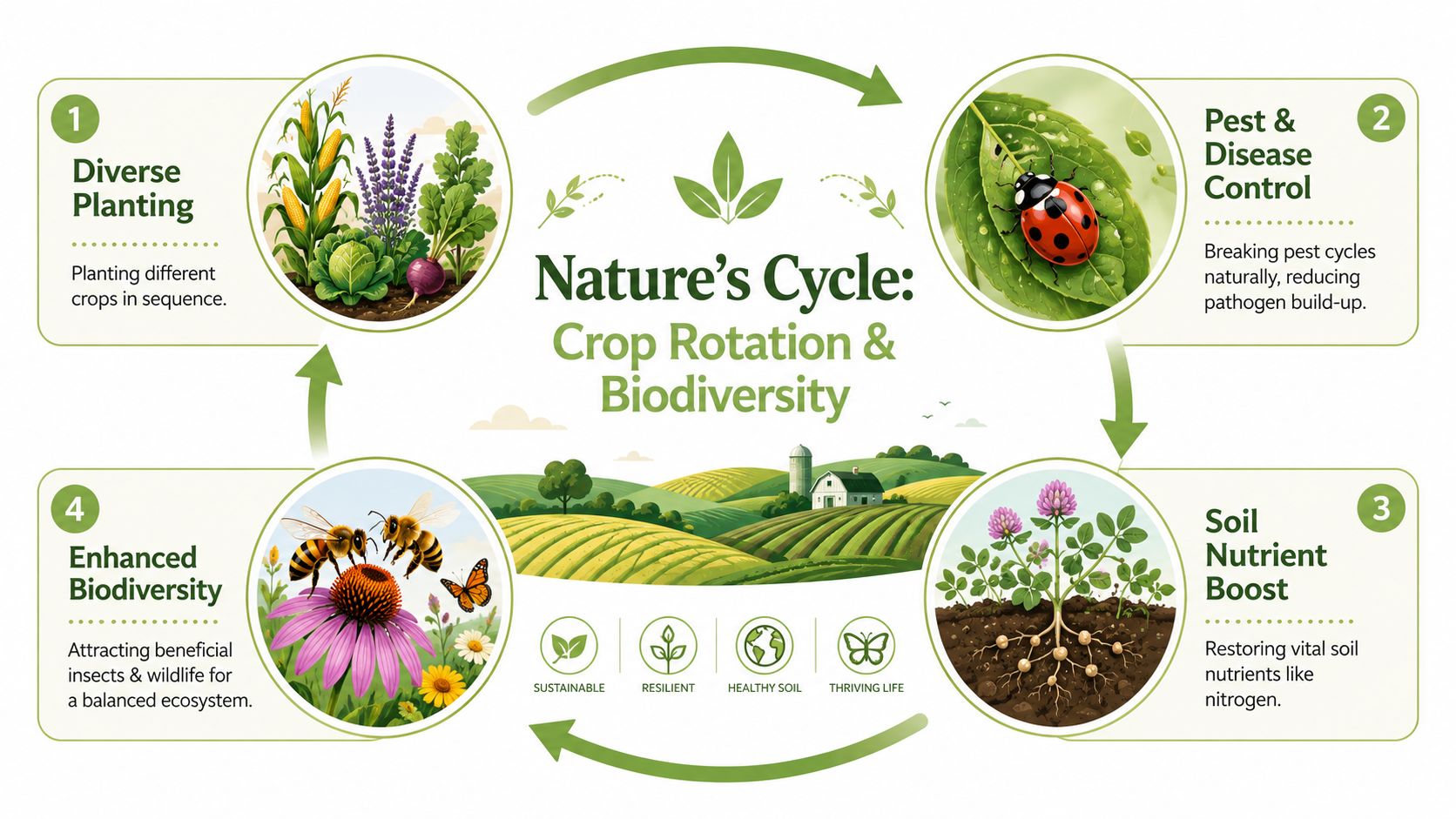
Growing the same crop in the same place year after year tends to pull on the same nutrients, attract the same pests, and encourage the same diseases. Organic farmers break that pattern by changing what grows where and when.
Rotation feeds the next crop
Some plants are heavy feeders. Others help restore balance. Legumes are especially important because they work with soil biology to support nitrogen availability.
Industry reporting on the Australian organic farming market notes that Australian organic farmers use legume-based crop rotation cycles to naturally inoculate soil with 40–60 kg of nitrogen per hectare annually, eliminating the need for synthetic nitrogen fertilisers and enhancing soil microbiome diversity.
That sounds technical, but the everyday version is simple. One crop prepares the ground for the next.
Rotation also interrupts pest pressure
Pests and diseases often depend on predictability. If a field keeps offering the same host plant, the problem can settle in. Rotation breaks that routine.
Consider this short comparison:
| If a farmer repeats one crop | If a farmer rotates crops |
|---|---|
| Pests find the same host again | Pest life cycles get interrupted |
| Nutrient drawdown stays narrow | Nutrient use becomes more balanced |
| Disease pressure can build in place | Disease carryover is reduced |
This is one reason organic systems often look more planned than people expect. The farmer isn't just deciding what to grow this season. They're deciding what condition they want the land to be in next season too.
Biodiversity isn't decoration
Biodiversity on an organic farm might include flowering borders, mixed planting, shelter for beneficial insects, or areas left specifically to support habitat. These features are practical, not ornamental.
- Pollinators need food and shelter. Flowering plants help bring them in.
- Beneficial insects need a home. If the farm supports predators, pest outbreaks are easier to keep in check.
- The whole farm becomes more stable. A diverse system tends to be less brittle than a simplified one.
A farm with biodiversity has more built-in helpers. A farm without it usually has to buy more solutions.
That logic matters all the way down the supply chain. Ingredients grown in a balanced system often arrive with a cleaner, less stressed origin story than ingredients produced through repeated chemical correction.
Natural Pest and Weed Management Strategies
Organic farmers don't ignore weeds or hope pests disappear. They manage both, but they use an integrated approach rather than a single broad chemical fix.
That's an important distinction. “Natural” doesn't mean passive. It means the response is usually more targeted, more observant, and often more labour-intensive.
How organic pest control works in practice
One method on its own rarely does the full job. Farmers combine strategies so each one supports the others.
- Beneficial insects can help keep pest populations in check. Ladybirds, lacewings, and other predators become part of the farm's working system.
- Companion planting can confuse, deter, or distract pests while supporting a more varied ecosystem.
- Physical barriers such as nets, row covers, or guards can protect vulnerable plants during key stages.
- Timing and monitoring matter. A farmer who spots an issue early usually has more non-synthetic options available.
Aphids are a good example. On a conventional system, the first move might be a spray. On an organic system, the response could involve habitat for predator insects, plant diversity, airflow, and close monitoring so the issue doesn't escalate.
Weed control takes planning and effort
Weeds are one of the clearest places where people underestimate organic farming practices. Without synthetic herbicides, weed control often depends on manual labour, mulching, mechanical cultivation, and tighter crop planning.
That has real consequences.
Organic weed management asks more from the farmer because it asks them to replace chemistry with attention, timing, and physical work.
Some growers suppress weeds by shading soil with cover crops. Others use stale seedbed techniques, mulch layers, or strategic cultivation before weeds become established. None of that is lazy farming. It's detailed farming.
Why this matters for food and drink quality
Pest and weed management affects more than yield. It affects plant stress, soil disturbance, and the amount of residue risk consumers want to avoid. For products people drink regularly, that cleaner production logic matters. You may not see it on the label, but it shows up in trust, flavour clarity, and how confidently a producer can stand behind what's in the final product.
Australian Organic Standards and Certification
Organic farming only builds trust if the claim means something.
In Australia, that's where certification becomes useful. It gives buyers a way to tell the difference between a product that sounds natural and one that has met a documented standard across production, handling, and processing.
What certification is actually checking
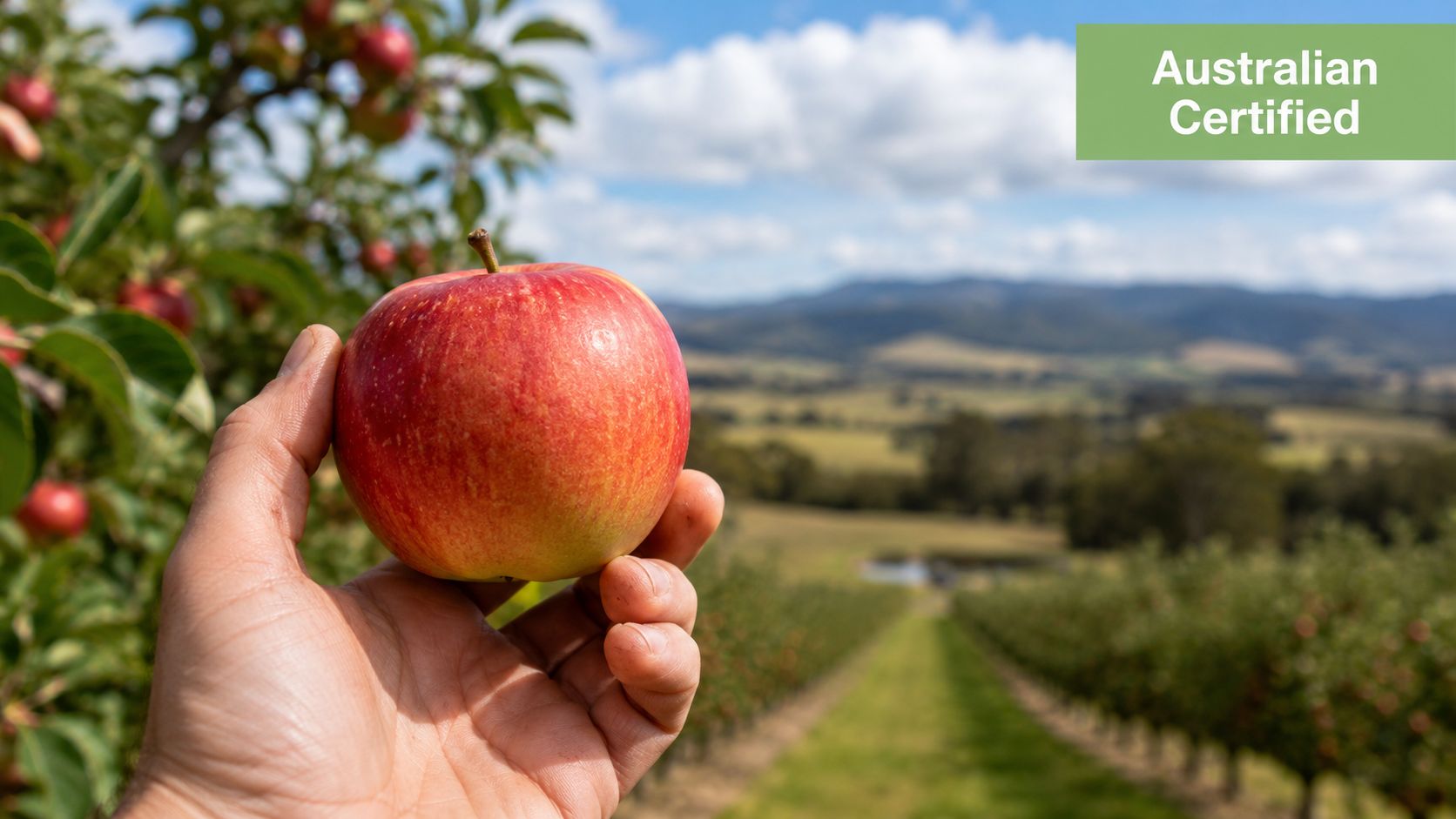
Organic certification is not just a quick farm visit. It's about integrity across the chain. That includes how crops are grown, how inputs are managed, how contamination is avoided, and how products are handled after harvest.
Consumers often assume “organic” only refers to the paddock. In practice, the claim is stronger when it follows the product from cultivation through to packing and delivery. If you'd like a plain-English overview of that process in an Australian context, this guide to organic certification in Australia is a helpful reference.
Why Australia's scale matters
Australia holds the world's largest area of certified organic farmland, with over 35.6 million hectares, representing approximately 51% of the global total, as noted in the earlier source on Australia's organic sector. That scale matters because it shows organic production here isn't a fringe experiment. It's part of a serious agricultural system with real infrastructure and experience behind it.
For buyers, that leadership matters in practical ways:
- It supports confidence. There's a well-established base of certified production.
- It improves market understanding. More producers, processors, and operators means a more mature supply environment.
- It raises expectations. Serious certification makes lazy greenwashing easier to spot.
What to look for on pack
A useful label should answer three questions.
| Question | Why it matters |
|---|---|
| Is there recognised certification? | It gives the organic claim substance |
| Is handling separated from non-organic product? | It helps prevent cross-contamination |
| Does the brand explain origin clearly? | Transparency usually signals stronger standards |
Certification matters most when it protects the whole chain, not just the field where the crop began.
That's especially relevant for products that are milled, brewed, fermented, packed, and shipped. The more steps involved, the more valuable a credible system becomes.
The Organic Difference in Your Matcha and Kombucha
When people talk about organic beverages, they often jump straight to health language. The more useful place to start is raw material quality.
Tea leaves absorb the conditions they're grown in. Fermentation responds to the quality of the ingredients it begins with. If the farming system is cleaner and more stable, the final drink usually has a better foundation.
Why organic standards matter for matcha
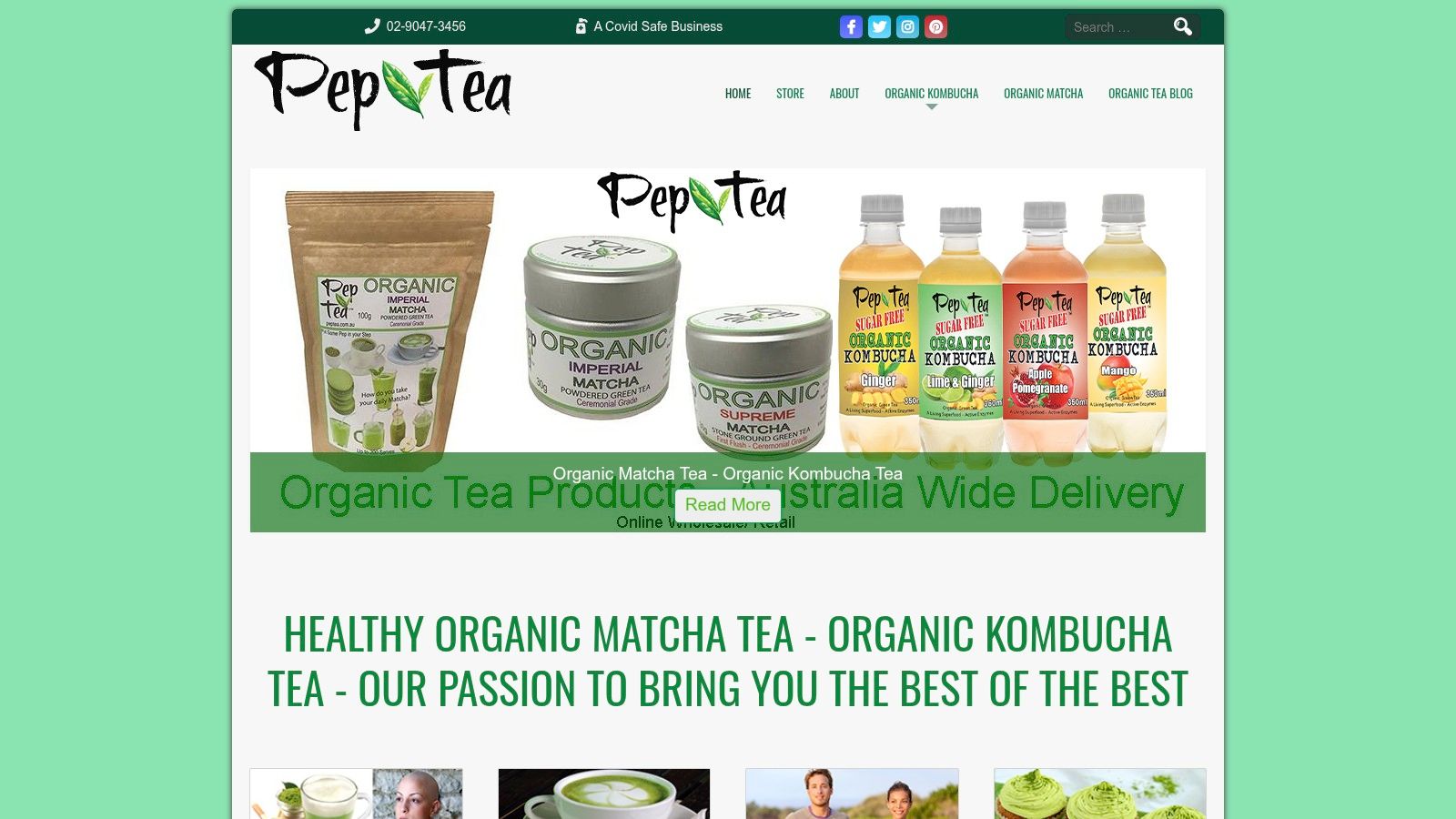
Matcha is unusually intimate as a tea. You're consuming the whole leaf in powdered form, not just an infusion. That's one reason growing standards matter so much.
Guidance on organic matcha production under JAS explains that organic matcha must be produced under Japan Agricultural Standard (JAS) Organic Certification, which requires tea leaves to be grown without synthetic pesticides, herbicides, or chemical fertilisers, and that farms maintain chemical-free soil for several years prior to certification.
That doesn't automatically tell you whether a matcha is vibrant, smooth, or suited to whisking straight versus blending into a latte. Grade, harvest timing, and processing still matter. For a practical consumer-focused breakdown, this guide on the difference between regular and ultimate Matcha tea powder helps explain what to look for beyond the word organic.
Why a clean tea base matters in kombucha
Kombucha starts with tea, water, and culture. Fermentation can develop lovely acidity and complexity, but it can't rescue poor starting ingredients.
A cleaner organic tea base gives the brew a simpler starting point. That matters for taste, but also for consistency. If you care about probiotic-rich drinks, low-sugar options, and the difference between properly fermented kombucha and overly sweet imitations, understanding the agricultural side helps you buy more wisely.
Here's a visual look at the broader connection between organic ingredients and tea culture:
Cleaner farming doesn't guarantee a better beverage on its own. It gives the maker a better starting point, and that's where quality usually begins.
What you can notice in the cup
- Matcha drinkers often look for colour and freshness. Bright green usually signals better handling than dull or yellowing powder.
- Kombucha drinkers often notice finish. A well-brewed organic kombucha tends to taste clean and deliberate rather than muddy or syrupy.
- Both reward ingredient integrity. The less the producer has to hide, the more the base ingredient can speak for itself.
A Buyer's Guide to Sourcing and Supporting Organic
Buying organic well is less about chasing marketing words and more about asking better questions.
For everyday shoppers, that starts with the pack. For cafés, retailers, and hospitality buyers, it also includes supplier transparency, consistency, and how clearly the product's story can be passed on to customers.
What consumers should check first
A quick label scan can tell you a lot.
- Look for recognised certification. If the organic claim is serious, there should be clear evidence behind it.
- Check the ingredient list. Simpler lists are easier to understand and compare.
- Notice product type. Matcha for straight whisking and matcha for baking or lattes may both be organic, but they're not interchangeable.
- Read beyond buzzwords. Terms like “natural” can sound reassuring without meaning much on their own.
If you're shopping for tea specifically, browsing a specialist range of organic green tea online can help you compare product descriptions, origins, and intended uses side by side.
What cafés and hospitality buyers should ask suppliers
A café menu has limited space. Every drink needs a reason to be there.
Ask practical questions such as:
- Is the product certified organic through the supply chain?
- Is the matcha intended for ceremonial use, lattes, or kitchen prep?
- Is the kombucha properly fermented, and how is flavour balance handled?
- Can the supplier explain origin, processing, and storage clearly?
Why the higher price can make sense
Organic products can cost more because the farming often requires more labour, more planning, and more careful handling. That price difference isn't just about a badge on the front. It reflects slower fertility building, non-synthetic pest control, and tighter product integrity.
Buy organic because you understand the system behind it, not because the label sounds fashionable.
Support for organic farming is also support for growers who choose to work with soil biology, biodiversity, and long-term land health rather than short-term extraction.
If you'd like to put these ideas into practice, explore Pep Tea for certified organic options across premium matcha and Australian-brewed kombucha. It's a simple way to choose beverages that align with cleaner farming, careful sourcing, and everyday wellness.
Antioxidant Tea Benefits: Boost Wellness with PepTea
That 3 pm moment is familiar. You've had lunch, your focus has drifted, and you want something that feels better than another coffee or a sugary drink. You're not chasing a miracle. You just want a daily habit that tastes good, supports your health, and fits real life in Australia.
Tea often enters that conversation because people know it contains antioxidants. The problem is that most advice stops there. It says tea is “good for you” without explaining what antioxidants do, why Matcha keeps coming up in wellness circles, or why your brewing method can change what ends up in your cup.
That's where antioxidant tea benefits become much more practical than they first sound. Its value isn't just that tea contains protective compounds. It's that some teas deliver them more reliably, some preparation methods protect them better, and some compounds work together in ways that help you feel the difference day to day.
For many people, that means two standout options. Matcha gives you a concentrated whole-leaf green tea experience, while Kombucha offers a different path, combining tea's natural compounds with fermentation and live cultures. They're not the same drink, and they don't play the same role. That's exactly why understanding both can help you build a smarter routine.
Your Daily Wellness Upgrade Starts Here
A lot of healthy habits fail because they ask too much. Complicated meal plans, expensive powders, rigid routines are often abandoned. A cup of tea is different because it's already part of everyday life. You're not adding a whole new identity. You're making a better choice inside a habit you already have.
That's why antioxidant tea benefits matter in such a practical way. If you already reach for something warm in the morning or something refreshing in the afternoon, tea can turn that moment into a small act of support for your body. Not with hype, and not with extreme promises. Just with compounds that help protect your cells from everyday stress.
Why people start looking for better drinks
Usually it begins with one of these moments:
- The coffee crash: You want energy, but not the shaky feeling that can come with overdoing caffeine.
- The sugar rethink: Soft drinks and sweet café options don't feel great when you're trying to clean up your routine.
- The wellness upgrade: You want something simple that may support immunity, focus, and long-term health.
That's where tea earns its place. Green tea, Matcha, and Kombucha all bring something useful to the table, but they don't all work in the same way.
Some drinks give you a quick hit. Tea tends to reward consistency instead.
A more useful way to think about tea
Instead of asking, “Is tea healthy?”, ask better questions:
- Which tea gives me the most antioxidants in a normal serve?
- How much does preparation affect the result?
- Do I want calm focus, gut support, or both at different times of day?
Those questions lead to better choices than generic wellness claims ever will. They also clear up a lot of confusion. Matcha isn't just green tea with better marketing. Kombucha isn't just fizzy tea in a pretty bottle. Each has a different role, and once you understand that, it becomes much easier to use them well.
Understanding Antioxidants and Free Radicals
Your body is constantly dealing with wear and tear. Pollution, UV exposure, stress, and normal metabolism all create unstable molecules called free radicals. When too many of them build up, they can damage cells. That process is called oxidative stress.
A simple way to picture it is a car left out in the weather. Over time, metal starts to rust. Your cells don't rust, of course, but oxidative stress creates a similar kind of gradual damage. That's why people often connect antioxidants with healthy ageing and general resilience.

What antioxidants actually do
Antioxidants help neutralise free radicals before they can cause as much damage. You can think of them as part of your body's defence team. They don't make you invincible, and they don't replace the basics like sleep, food, and exercise, but they can support the system.
Tea is especially known for a group of antioxidants called polyphenols. In green tea and Matcha, one of the best-known is EGCG, short for epigallocatechin gallate. It's the compound that gets a lot of attention because it's strongly associated with many of tea's protective qualities.
Why EGCG gets so much attention
EGCG matters because it's one of the standout catechins in green tea. In organic Matcha green tea, EGCG accounts for 60% of all catechins, which is part of what gives Matcha its unusually concentrated antioxidant profile, as noted by Pep Tea's explanation of Matcha catechins.
That's also why people often get confused when they compare “green tea” as a broad category with Matcha specifically. Not all green tea experiences are equal. The type of tea, the grade, and the way you prepare it all affect what you consume.
Practical rule: Antioxidants are only useful if they survive the trip from the leaf into your cup.
Where this matters in daily life
Antioxidants aren't just an abstract science topic. They're part of why people choose tea when they want to support:
- Cell protection: helpful when everyday life includes stress, sun, and pollution
- Skin support: especially relevant in Australia, where UV exposure is part of life
- General wellness: a daily drink can become one small, repeatable habit that supports the bigger picture
Once you understand the free radical versus antioxidant story, tea starts making more sense. The next step is looking at why Matcha sits in a category of its own.
Matcha The Ultimate Antioxidant Powerhouse
Most green tea is brewed, then the leaves are discarded. Matcha works differently. The leaf is ground into a fine powder, whisked into water, and consumed whole. That single difference changes everything.
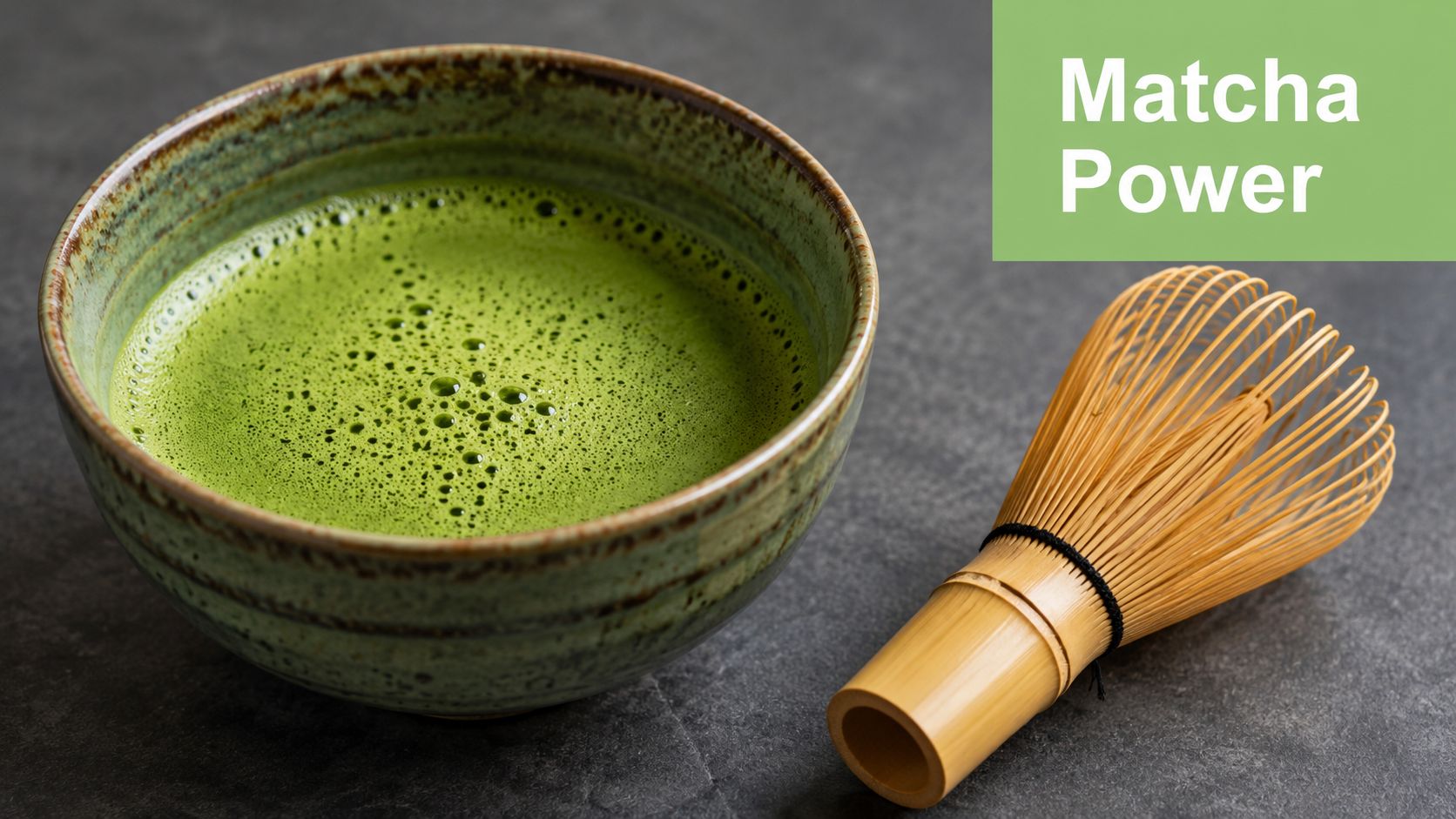
Because you're drinking the whole leaf, Matcha delivers a far more concentrated intake of tea compounds than a standard infusion. That's why it has such a strong reputation among people looking for antioxidant tea benefits that feel substantial rather than token.
Why Matcha delivers more per serve
The most direct comparison is this. Matcha tea powder possesses 137 times more antioxidant catechins than regularly brewed green tea, due to whole-leaf consumption, according to this Cleveland Clinic-cited social post on Matcha catechins.
That doesn't mean every cup of steeped green tea is worthless. It means Matcha is a much more concentrated delivery system.
Here's the practical difference:
- Steeped green tea: some compounds move from the leaf into the water
- Matcha: you consume the leaf itself
- Result: less is left behind, and more reaches you
The antioxidant profile people are really chasing
One reason Matcha is so popular is its high EGCG concentration. Beyond general antioxidant support, the verified data around Matcha points to several areas people care about in real life, including immune support, protection from oxidative stress, and support for metabolism.
A related detail helps make that more concrete. One gram of premium stone-ground organic Matcha contains approximately 30–35 mg of EGCG, according to Matcha.com's overview of catechins and EGCG. That gives you a sense of why even a small serve can feel meaningful within a daily routine.
For a deeper look at the whole antioxidant story, this overview of Matcha as an antioxidant powerhouse is a useful reference.
Why quality and preparation still matter
Not all Matcha is used the same way. Ceremonial styles are usually chosen for straight drinking, while culinary styles suit lattes, smoothies, and baking. Both can be antioxidant-rich, but flavour and texture shape how you will enjoy them.
This quick visual guide is helpful if you're still learning the ritual side of Matcha preparation.
Good Matcha should make healthy habits easier to repeat. If it's unpleasant, most people won't stick with it.
That's the hidden reason Matcha works so well for many Australians. It can slot into a morning ritual, an afternoon reset, or a café order without needing a full lifestyle overhaul.
Kombucha A Fermented Twist on Antioxidant Benefits
Kombucha starts in a very different place. Instead of offering the concentrated whole-leaf intensity of Matcha, it begins as brewed tea and then goes through fermentation. That process changes the drink's character completely.
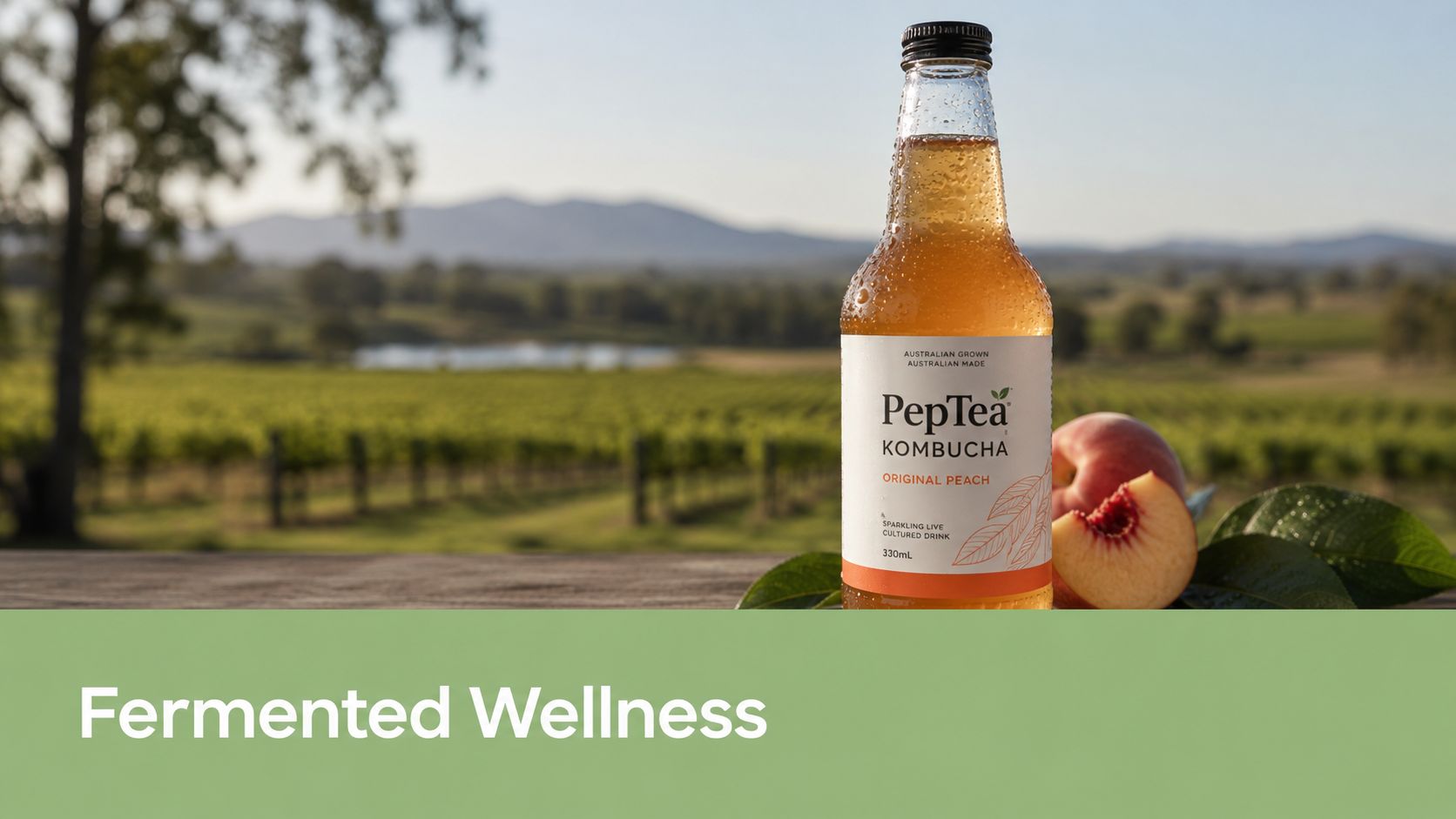
What you get at the end is less about delivering the biggest possible antioxidant hit and more about creating a functional drink with a different set of strengths. For people trying to move away from sugary soft drinks or alcohol-heavy routines, that matters.
Matcha and Kombucha serve different jobs
The easiest way to compare them is by role.
| Drink | Best known for | Practical use |
|---|---|---|
| Matcha | Concentrated tea antioxidants and calm energy | Morning focus, lattes, smoothies, mindful rituals |
| Kombucha | Fermented tea with live cultures and refreshing acidity | Soft drink swap, alcohol alternative, gut-friendly refreshment |
Kombucha still starts with tea, so it carries some of tea's original antioxidant heritage. Fermentation then adds another layer through live cultures and the tangy, complex flavour people either fall in love with immediately or learn to appreciate over time.
Why Kombucha appeals to health-conscious drinkers
Many people don't need every drink to be a super-concentrated wellness tool. Sometimes they need a better replacement for what they'd otherwise drink.
That's where Kombucha shines:
- It feels social: served cold, fizzy, and satisfying
- It can support gut-friendly routines: because live fermentation is part of the appeal
- It helps with sugar reduction: especially for people trying to replace sweet beverages with something cleaner
For Australian households and cafés, that makes Kombucha practical. It works in the fridge at home, on a café menu, or as a non-alcoholic option that still feels grown-up.
Kombucha isn't trying to be Matcha. Its strength is that it solves a different problem.
If you want a deeper look at fermentation, live cultures, and what separates properly brewed Kombucha from gimmicky versions, this guide to the benefits of Kombucha is worth reading.
How to Maximise Your Antioxidant Intake from Tea
A common assumption trips people up. If tea contains antioxidants, then any green tea, brewed any old way, should deliver roughly the same benefit. It doesn't work like that.
With steeped tea, the result in your mug depends on preparation. Water that's too hot, steeping that runs too long, or inconsistent home brewing can change how much of those delicate compounds you get. That's one reason there's often a gap between tea's potential on paper and the cup people drink every day.
Brewing method changes the outcome
One of the most useful reminders comes from population-level data. A PeerJ analysis of 410,000 people found tea reduces dementia risk by up to 29%, but only when consumed optimally, at 2–4 cups per day and the correct temperature, as summarised in Tea Esk's discussion of antioxidant-rich teas.
The big lesson isn't just the dementia finding. It's that how you drink tea matters.
Matcha vs Steeped Green Tea Antioxidant Delivery
| Attribute | Matcha (e.g., PepTea Organic Matcha) | Standard Steeped Green Tea |
|---|---|---|
| How you consume it | Whole leaf in powdered form | Water infused with leaves |
| Antioxidant delivery | More direct and consistent | More dependent on brewing variables |
| Preparation risk | Lower loss from leaf disposal | Greater chance of reduced catechin retention if brewed poorly |
| Best use case | Reliable daily antioxidant intake | Lighter tea ritual with more variation cup to cup |
How to get more from your tea routine
If your goal is antioxidant tea benefits, a few habits help:
- Choose the right tea for the job. Matcha is the more reliable option when you want concentrated delivery.
- Respect temperature. Very hot water can work against delicate compounds in steeped green tea.
- Don't overbrew. Stronger doesn't always mean better.
- Build repeatable habits. The best tea routine is the one you can maintain.
That reliability is part of Matcha's appeal. Because the powder stays in the bowl and then in the drink, you remove much of the guesswork that comes with brewing leaves.
The hidden gap most people miss
People often read about the benefits of green tea and assume they're automatically getting them. In reality, there can be a big difference between “contains antioxidants” and “delivers antioxidants well in everyday use”.
That's why a carefully prepared Matcha can be such a smart choice for home baristas, busy professionals, and café drinkers who want fewer variables and more consistency.
The Secret Synergy of L-Theanine and Clean Energy
Matcha's appeal isn't only about antioxidants. The experience people love most is often the way it helps them feel. Alert, but not frantic. Focused, but not edgy. That's where L-theanine enters the picture.
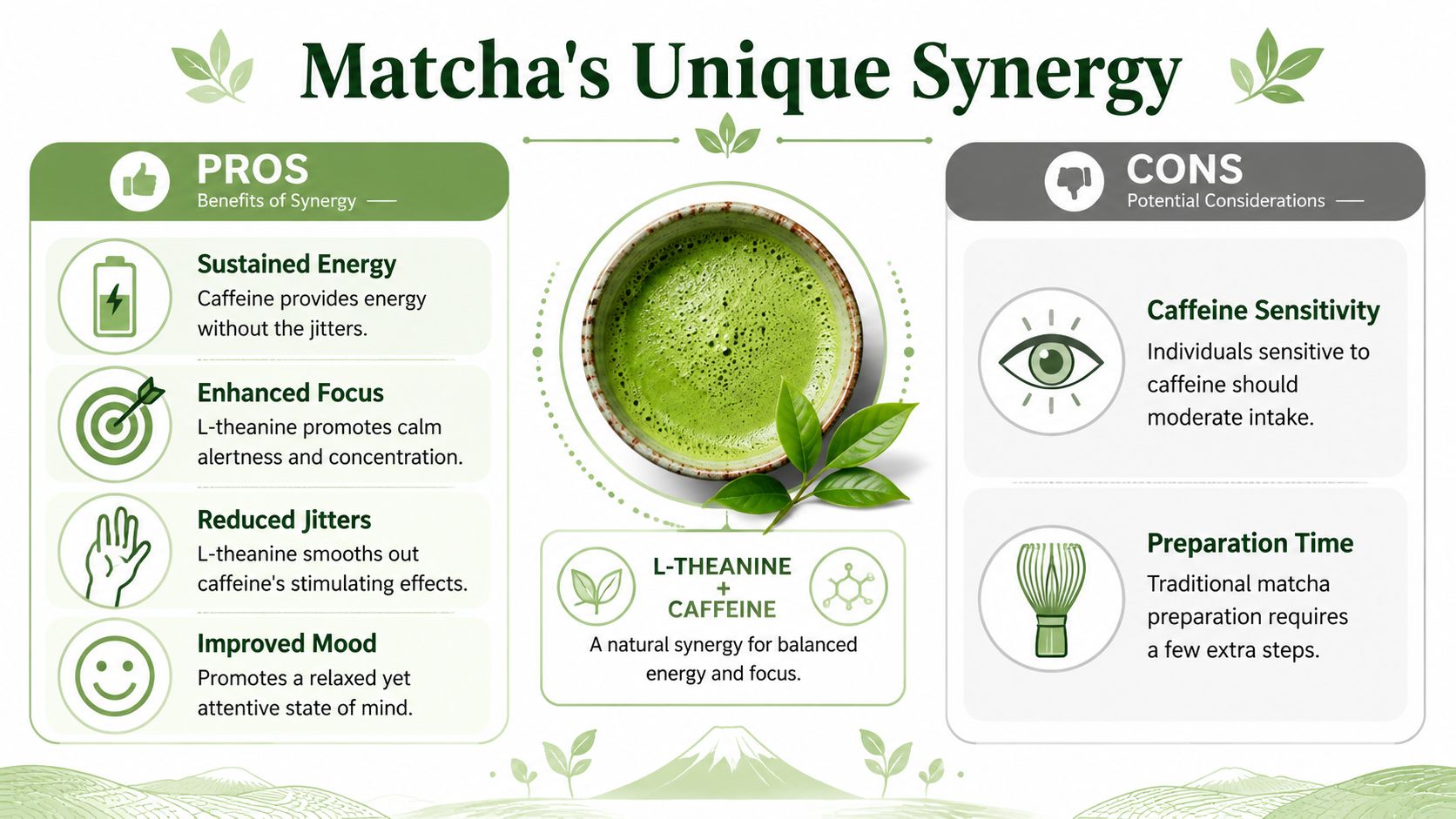
L-theanine is a naturally occurring compound in tea. In Matcha, it works alongside caffeine in a way that many people find smoother than coffee. Instead of a sharp spike, the effect is often described as calm alertness.
What L-theanine contributes
According to Australian Tea Masters' discussion of tea's health benefits, research shows L-theanine boosts GABA, serotonin, and dopamine, reducing anxiety and improving concentration, and its neuroprotective effects complement catechins to protect against cognitive decline.
That sentence explains a lot of the Matcha experience in one go. You're not only getting tea antioxidants. You're also getting a compound that helps smooth the mental side of stimulation.
For many people, that means:
- Steadier focus for desk work or study
- A calmer energy curve than they get from coffee
- A more balanced drink for busy mornings
Why this synergy matters more than caffeine alone
Caffeine on its own can be useful, but it isn't always kind. Some people get the jitters, some get a fast rise and crash, and others feel tense rather than productive. Matcha has a different reputation because of the way its compounds work together.
That synergy is one reason many people prefer a bowl of Matcha before:
- work that needs sustained concentration
- a slower start to the morning
- an afternoon reset that doesn't wreck sleep as badly as a late coffee might
If you're curious about a high-quality option designed for this kind of everyday ritual, Uji Matcha powder is a relevant place to explore.
The most interesting thing about Matcha isn't just that it contains caffeine. It's that the rest of the leaf changes how that caffeine feels.
A smarter way to think about energy
Plenty of drinks promise energy. Fewer help you stay organised, settled, and mentally clear. That's the difference people often notice when they switch from quick-fix beverages to Matcha.
It turns “energy” from a buzzword into something more useful. You can still get a lift, but it's paired with compounds that support composure and attention, which is exactly what many health-conscious Australians are after.
Your Daily Guide to Antioxidant-Rich Teas
The best antioxidant routine is one you'll keep. It doesn't need to be elaborate. It needs to suit your schedule, your taste, and the kind of support you want from a drink.
Simple ways to use Matcha across the day
If you enjoy a slower morning, whisk Matcha with warm water and drink it plain. If you prefer something creamier, use it in a latte. If you're making smoothies or baking, a stronger culinary style usually makes more sense than using your nicest ceremonial powder.
That distinction is practical, not precious. Culinary-grade organic Matcha contains an average EGCG concentration of 50.53 ± 2.41 mg/g, while ceremonial-grade organic Matcha contains 56.57 ± 2.19 mg/g, according to this published comparison of organic Matcha grades. Both are potent. The right choice depends more on how you'll use it than on chasing tiny differences.
A realistic routine for home and café life
Try this approach:
- Morning: plain Matcha for a focused start
- Midday: iced Matcha latte if you want something more substantial
- Afternoon: Kombucha instead of a soft drink or overly sweet café option
- Weekend: use culinary Matcha in smoothies, pancakes, or yoghurt bowls
For cafés, the same logic applies. Keep straight Matcha for customers who enjoy the ritual, use culinary Matcha for lattes and recipes, and offer Kombucha as a polished non-alcoholic fridge or menu option.
Keep it easy enough to repeat
You don't need to optimise every sip. You just need to avoid the obvious mistakes and choose drinks that fit your actual life. Matcha is ideal when you want concentrated antioxidant support and cleaner focus. Kombucha makes sense when you want something cold, fermented, and more social.
Both can help replace habits that don't serve you well.
A healthy drink earns its place when it becomes the option you reach for without having to think twice.
Tea works best this way. Not as a miracle cure, but as a steady, enjoyable part of a better routine.
If you're ready to turn these ideas into something practical, explore Pep Tea for premium organic Japanese Matcha and Australian-brewed sugar-free organic Kombucha. It's a great place to compare ceremonial and culinary Matcha, discover Kombucha flavours for everyday drinking, and find options suited to home routines, cafés, and wholesale needs.
Organic Certification Standards a Guide for AU Brands
You're probably here because you've seen an organic logo on a tea tin, kombucha label, or wholesale product sheet and thought, “We should understand this properly before we make any claims ourselves.”
That's a smart instinct.
For Australian business owners, organic certification can look simple from the outside and surprisingly technical once you get into the details. That's especially true if you're buying imported ingredients like Japanese matcha, blending multiple ingredients into a finished product, or brewing something processed like kombucha. At that point, the question isn't just “Is this ingredient organic?” It's “Can we prove the whole chain is compliant?”
That distinction matters. A lot.
Why Organic Certification Is More Than Just a Logo
A café owner starts stocking premium matcha. A small beverage brand begins trialling a kombucha line. A retailer compares two tea suppliers and notices one carries a recognised organic certification mark while the other just says “organic” on the pack. The product may look similar on the shelf, but the business risk behind those labels is very different.
That's where many owners feel torn. They want the trust that comes with certification, but they also worry it means paperwork, audits, and rules that seem built for farms rather than finished drinks.
In practice, organic certification is less about bureaucracy and more about credibility you can demonstrate.
Health-conscious customers don't just want attractive packaging or wellness language. They want to know how a product was grown, handled, packed, and transported. Certification gives you a structured way to answer those questions. Instead of asking buyers to accept your claims, you're showing that an independent system has checked them.
Why the logo carries weight
The organic logo matters because it acts like a shortcut for trust. It tells the customer that the product isn't relying on vague words like “clean”, “natural”, or “pure”. It's tied to documented standards, supplier controls, and auditing.
That's particularly useful in categories like tea and kombucha, where buyers often care about origin, processing, and ingredient integrity. Someone choosing ceremonial matcha or a low-sugar fermented drink usually reads labels closely. They want more than a nice story.
Organic certification works best when you treat it as part of your operations, not just your marketing.
For Australian brands, that can become a real commercial advantage. It helps with wholesale conversations, supports retailer confidence, and makes your internal systems sharper. Teams usually become more organised because certification forces clarity around sourcing, storage, and records.
Why it feels harder than it first appears
Organic certification sounds simple until your business has to manage real-world details.
For example:
- Imported ingredients: Your tea may come from Japan, but your finished pack is sold in Australia.
- Shared facilities: You may handle both certified and non-certified products in the same site.
- Processed products: A kombucha recipe includes tea, sugar, cultures, flavourings, cleaning controls, and batch records.
- Customer expectations: Buyers often assume “organic” is a single government-run label, when it isn't.
That's why educational content matters. If you want a useful starting point on certified tea and what buyers often look for, Pep Tea's guide to organic green tea online is a practical example of how certification connects to product quality, not just branding.
What Organic Certification Really Guarantees
Many people assume organic certification means someone tests the finished product and confirms it's “clean”. That's not really how organic certification standards work.
A better way to think about it is a verified cookbook. The certifier doesn't only inspect the final cake sitting on the bench. They check the recipe, the ingredients, the kitchen procedures, the storage, and whether the baker kept the organic flour separate from everything else. The guarantee is about the system being followed from start to finish.
It's a process guarantee
The most important idea to understand is this: certification verifies process integrity.
The operational implication of organic certification is that a brand must maintain a documented organic system, approved inputs, and traceability across farming, processing, and handling to satisfy audits. The system is designed to verify process control, including field history, input approval, segregation, and records, so any break in the chain of custody can invalidate status, as explained in this overview of organic certification process control.
That's why a finished product can lose organic status even if it still looks identical to the customer. If a non-approved cleaning input was used, if records don't match, or if organic and non-organic stock were mixed without proper controls, the issue is procedural and still serious.
What that looks like in plain language
Organic certification standards generally ask a business to prove that it can control the full path of the product.
That usually means:
- Knowing your inputs: Every ingredient, processing aid, and relevant material needs to be assessed for compliance.
- Maintaining separation: Organic goods can't just sit anywhere and hope for the best. They need clear segregation in receiving, storage, production, and packing.
- Keeping records: Purchase records, batch sheets, labels, cleaning logs, and dispatch documents all help prove what happened.
- Protecting traceability: You should be able to follow a product backward to suppliers and forward to customers.
If you're also reviewing packaging choices alongside certification, it can help to look at broader operational resources like these sustainable food packaging options UK, especially if your team is trying to align environmental decisions across product, pack, and presentation.
A certified organic product isn't simply “made from good ingredients”. It comes from a controlled, documented system.
That's why the difference between “organic” and “natural” is so important. “Natural” can mean almost anything in consumer marketing. Certified organic means a certifier can inspect the process behind the claim.
For a consumer-friendly explanation of what this means in tea, Pep Tea's article on what organic green tea is gives a useful product-level example.
The Core Requirements for Australian Businesses
In Australia, organic certification is governed by a private standards-and-audit system. A 2023 Senate inquiry noted that the sector operates through multiple approved certifiers, 11 at the time, with standards such as the National Standard for Organic and Bio-Dynamic Produce forming the core compliance framework, especially for exports, as noted in this summary of the Australian organic certification framework.
That surprises a lot of business owners. They expect a single government logo and a single public agency. Instead, you're usually working with a private certifier that audits your operation against recognised standards.
Approved inputs
The first pillar is simple in theory and detailed in practice. You need to know what comes into your business and whether it's permitted.
For a tea or kombucha operation, that may include ingredients such as tea, matcha, sugar, fruit components, flavourings, and processing aids. It can also extend to cleaning and sanitation products, depending on how they're used in the operation.
Questions certifiers usually want answered include:
- What is it? Ingredient, aid, additive, or other material.
- Who supplied it? Supplier identity and supporting documentation.
- Is it approved? Evidence that it fits your certifier's requirements.
- Where is it used? Receiving, blending, brewing, bottling, or packing.
A common mistake is assuming a supplier's marketing statement is enough. It usually isn't. You need documentation that fits the certifier's expectations.
Organic management practices
This pillar is about how your site runs.
A business may have compliant ingredients and still fail if the day-to-day handling isn't controlled. Organic management practices usually focus on physical separation, prevention of contamination, handling procedures, and clear staff routines.
A processor often needs workable rules such as:
- Segregated storage: Organic stock is clearly identified and separated.
- Controlled production runs: Staff know when and how organic products are made.
- Cleaning verification: The team can show how equipment is cleaned before an organic run.
- Label control: Packaging and finished labels are checked so the wrong claim isn't applied.
Audits and recordkeeping
Organic certification standards become very real at this point. If the first two pillars are what you do, this third one is how you prove it.
Many owners worry about “paperwork”, but it helps to think of records as your protection. Good records let you show that your claim matches your operation.
A useful basic set includes:
| Record type | Why it matters |
|---|---|
| Supplier certificates | Shows the origin and status of ingredients |
| Invoices and goods received | Connects what you bought to what you used |
| Batch sheets | Links ingredients to finished product |
| Cleaning logs | Supports process control before production |
| Label approvals | Helps prevent incorrect organic claims |
| Dispatch records | Maintains traceability to customers |
If an auditor can't follow your product from supplier to finished batch, your organic claim becomes hard to defend.
The practical takeaway is reassuring. You don't need a perfect enterprise system from day one. You do need a clear, repeatable one.
Navigating Global Organic Certification Schemes
Australian tea and beverage businesses rarely operate in a purely local bubble. You might buy matcha from Japan, import packaged ingredients from another region, pack in Australia, and sell to cafés, retailers, or export customers. That's why it helps to recognise the major certification schemes your suppliers may hold.
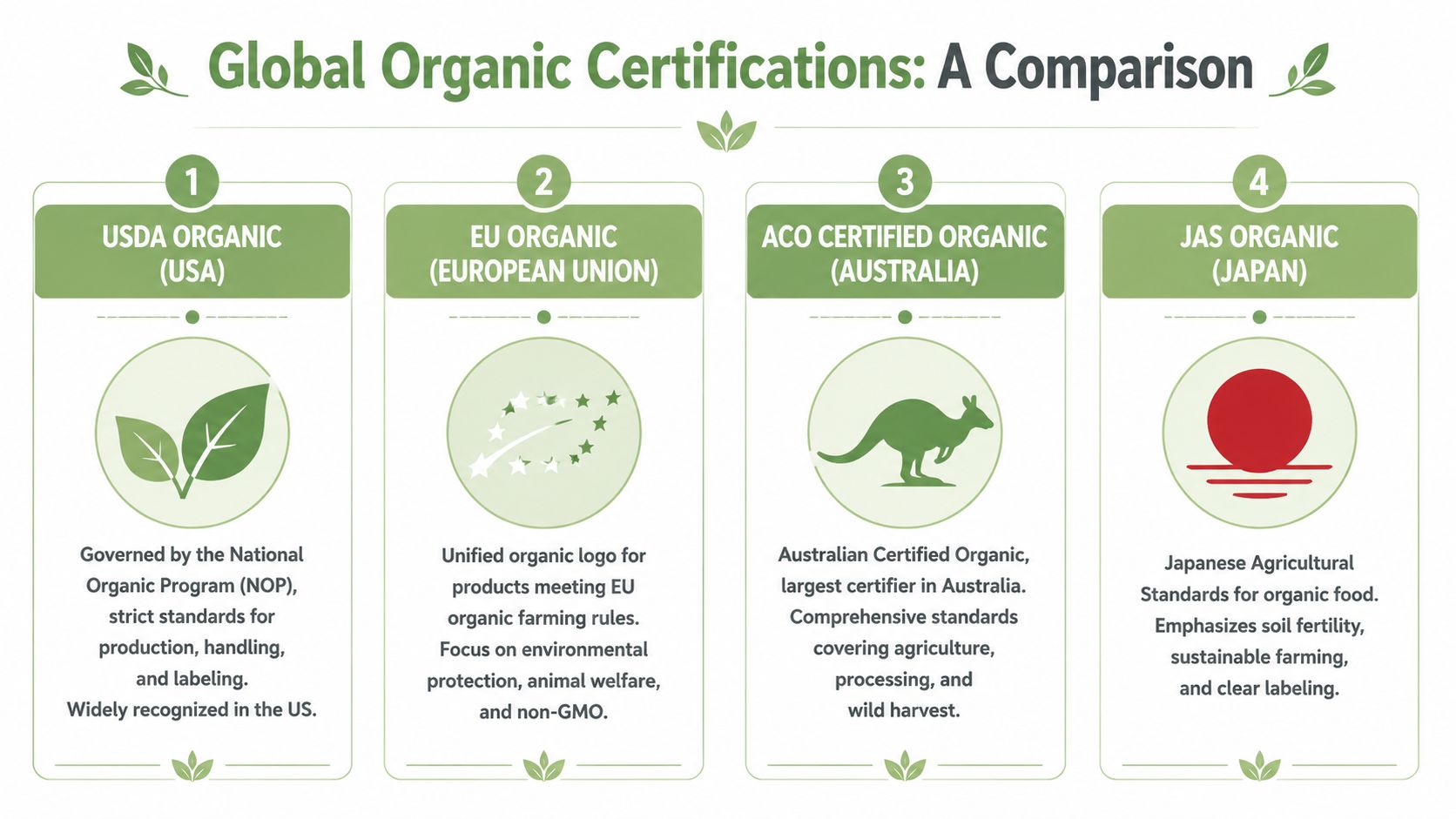
Four schemes you'll see often
Here's a plain-English comparison of the logos and systems many Australian buyers encounter.
| Scheme | Region | What it usually signals |
|---|---|---|
| USDA Organic | United States | Organic compliance for production, handling, and labelling under the US system |
| EU Organic | European Union | A unified EU organic framework with its own rules for eligible products |
| ACO Certified Organic | Australia | Certification through an Australian private certifier operating within the local framework |
| JAS Organic | Japan | Organic certification under Japanese Agricultural Standards |
The important point isn't memorising every rule difference. It's knowing that each scheme belongs to a regulatory context, and your Australian business can't assume one certificate automatically answers every local compliance question.
Why imported products create confusion
Readers often get stuck at this point.
A supplier may send you a perfectly legitimate overseas organic certificate. That's helpful, but it doesn't automatically settle how your certifier will view the ingredient inside your own certified system. You still need to confirm whether the documentation, chain of custody, and product description line up with your certifier's requirements.
That matters even more for processed ingredients. Whole leaf tea is one thing. A flavoured blend, extract, premix, or finished beverage has more moving parts.
Imported organic ingredients should be treated as verified inputs to assess, not assumptions to accept.
Where equivalency comes in
Business owners often hear about “equivalency” and assume it means easy acceptance across borders. In practice, equivalency is best understood as a pathway that may reduce duplication, not a licence to stop checking.
If you source globally or sell internationally, your team still needs to ask practical questions:
- Which scheme certified the ingredient?
- Does the certificate match the exact product?
- Who held certification during packing and export?
- Will your Australian certifier accept that evidence as sufficient?
- Will your destination market require anything additional?
For teams building a wider compliance framework beyond organic alone, this guide to a universal key for international operations can be a useful companion resource because it highlights how cross-border compliance often depends on documentation discipline, not assumptions.
A sensible sourcing mindset
The safest approach is to compare schemes with curiosity, not suspicion. Overseas certification isn't a red flag. It just needs interpretation in the context of your Australian operation.
For businesses importing Japanese matcha, that means reviewing the supplier certificate, product scope, packing details, and traceability documents before the ingredient enters your certified production stream. The same mindset applies if you're sourcing botanicals, flavourings, or bulk tea from overseas.
Your Roadmap to Becoming Certified Organic
The first certification application usually feels bigger in your head than it is on paper. Once you break it into stages, it becomes a project you can manage.
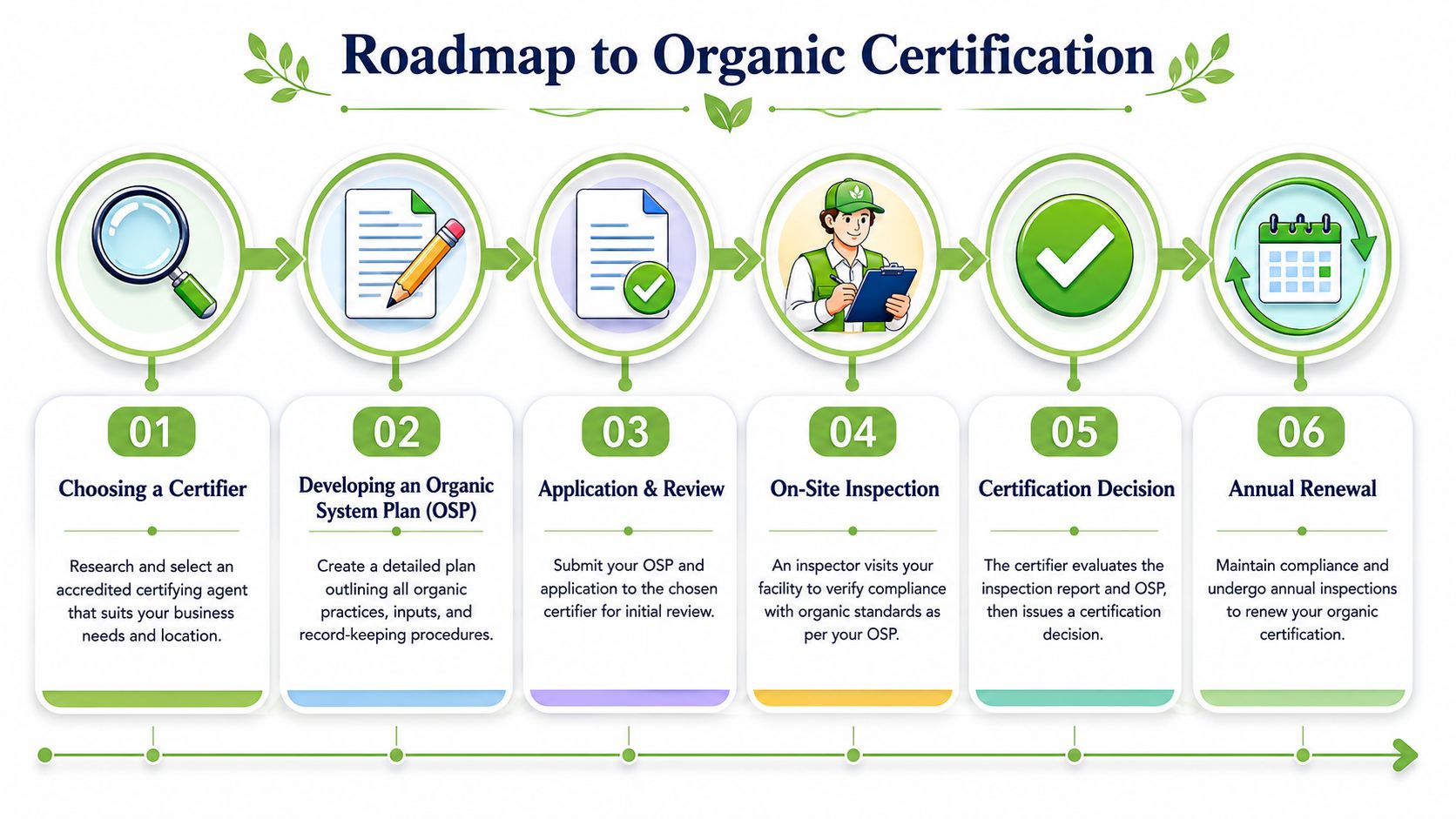
Step 1 and Step 2
Start by choosing a certifier whose scope matches your business. A farm, a tea importer, and a kombucha manufacturer won't all ask the same operational questions, so industry fit matters.
Then build your Organic System Plan or equivalent documented system. In it, you explain how ingredients are approved, how organic stock is handled, how records are maintained, and how labels are controlled.
Good plans are practical. They describe what your team does.
Step 3 and Step 4
Next comes application review and the on-site audit.
The certifier reviews your documents, then an inspector visits to compare paperwork with reality. They want to see that your documented system matches your premises, equipment flow, storage, production steps, and records.
Before the audit, it helps to run your own mini-check:
- Walk the site: Can staff clearly identify organic stock and materials?
- Trace one batch: Can you follow it from supplier invoice to finished label?
- Review inputs: Are all ingredients and relevant materials approved and current?
- Check your labels: Do your claims match what certification allows?
- Train the team: Can staff explain the process consistently?
A visual summary often makes the path feel more manageable:
Step 5 and Step 6
After inspection, the certifier makes a certification decision. If corrective actions are required, you address them. If approved, certification doesn't end the process. It becomes part of your annual operating rhythm through renewals, inspections, updates, and ongoing compliance.
Common pitfalls are usually ordinary operational mistakes, not dramatic failures:
- Unapproved substitutions: Someone buys a replacement ingredient or cleaner without checking.
- Weak traceability: Records exist, but they don't connect cleanly.
- Shared storage confusion: Organic and non-organic stock are present without clear separation.
- Label drift: Marketing wording changes before compliance review catches it.
The easiest time to fix an organic compliance issue is before the product is made, labelled, and sold.
One note on timing and cost: these vary by certifier, business type, product scope, and complexity. It's better to ask directly for a specific quote and document checklist than rely on broad online guesses.
Organic Standards for Tea and Kombucha Producers
Tea and kombucha businesses face a version of organic certification that's more layered than many farm-based examples suggest. You're often dealing with imported ingredients, processing steps, multi-ingredient recipes, sanitation controls, and final labels that need to hold up under audit.
A major blind spot in Australian content is how organic rules apply to imported and processed products, not just farms. That matters because the Australian organic sector was estimated at A$2.6 billion in 2021, and import-heavy supply chains make certification, traceability, and equivalency especially relevant for products like tea and fermented beverages, as noted in this discussion of organic requirements for imported and processed products.
For tea importers and packers
If you source Japanese matcha or other imported teas, the main challenge is proving that the ingredient's organic status survives the trip from origin to your finished Australian product.
That usually means checking:
- Supplier certification documents
- Product-level identification
- Packing and export traceability
- Handling records once stock arrives in Australia
The key question isn't just whether the tea garden was organic. It's whether the chain of custody is clear enough for your certifier to accept.
For kombucha brewers
Kombucha brings another layer because it's a processed product. You're managing tea, sugar, cultures, flavour inputs, brewing, cleaning, filling, and labelling.
That creates three practical pressure points:
Input compliance
Your tea base, sugar, flavourings, and any other relevant ingredients need to fit the standard.Process control
Organic handling needs to sit neatly beside your existing food safety systems. If you already work with HACCP discipline, that mindset helps because both systems value consistency, records, and controlled procedures.Labelling accuracy
Multi-ingredient products need careful claim review. It's not enough for one input to be organic if the final label suggests more than the certified composition allows.
What this looks like in a real Australian product category
For a business selling both imported organic matcha and locally brewed kombucha, the operational challenge is to connect two very different supply stories into one compliant system. One ingredient may begin overseas under another scheme. The finished fermented product may be produced domestically with its own controls and records.
That's why tea and kombucha brands need practical product pages and education, not just broad farm-level explanations. Pep Tea's organic kombucha range is one example of a product category where buyers often want to understand both certification and processing, especially when low sugar, live cultures, and ingredient integrity all matter at once.
Your Business Checklist and Frequently Asked Questions
If you're preparing for certification, the fastest way to reduce stress is to get organised before you contact a certifier. You don't need every answer on day one, but you do need a workable foundation.
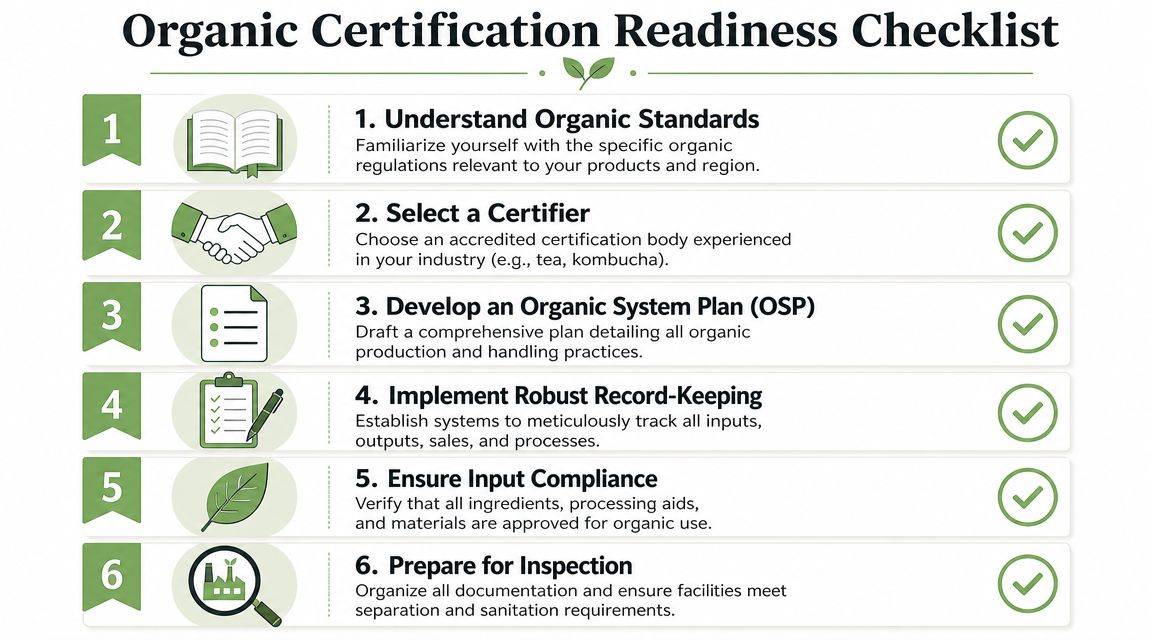
A practical readiness checklist
- Map your products: List each product, ingredient, and supplier clearly.
- Identify your risk points: Note where mixing, relabelling, repacking, or substitutions could happen.
- Gather supplier documents: Keep certificates, specifications, and invoices in one system.
- Write your operating rules: Storage, cleaning, production flow, and label approval should be documented.
- Train staff early: The team handling receiving, production, and dispatch should know the basics.
- Check imported ingredients carefully: Don't assume overseas certification will answer every local question.
Frequently asked questions
How can a café owner verify that a supplier's organic claim is legitimate
Ask for current certification details and product documentation that matches what you're buying. The key is consistency between the supplier, the product, and the claim on the pack or menu material.
What's the difference between “100% organic”, “organic”, and “made with organic ingredients”
These phrases are governed by certification and labelling rules, not just marketing preference. The exact threshold and permitted wording depend on the applicable standard and certifier. If you're selling or repacking a product, don't guess. Confirm the permitted claim before printing menus or labels.
Do imported ingredients need extra checking
Yes. Imported ingredients often create the biggest confusion because certification, traceability, and equivalency need to be reviewed together. The overseas certificate is part of the answer, not always the whole answer.
Is certification only relevant for farmers
No. It also matters for processors, packers, importers, wholesalers, retailers, and hospitality businesses that want confidence in the claims attached to what they buy or sell.
The businesses that handle certification well usually make it part of procurement and operations, not a last-minute label exercise.
If you'd like a practical product-level view of certified organic tea and kombucha in Australia, explore Pep Tea for organic matcha, Australian-brewed kombucha, and educational guides that make the standards easier to understand before you buy, stock, or develop your own range.