
Tag: soil health
Organic Farming Practices: Healthy Tea & Environment
You taste it before you know the reason. A bright matcha with a clean, grassy sweetness or a kombucha that finishes crisp rather than harsh usually starts with what happened in the paddock long before it reached your cup.
That's why organic farming practices matter. They don't just shape the environment around a farm. They shape flavour, purity, resilience, and the quality of the ingredients we drink every day.
What Organic Farming Really Looks Like
Early on an organic farm, the work doesn't begin with a spray rig. It starts with observation. Someone checks the soil underfoot, looks at the cover between rows, watches which insects are moving, and decides what the land needs next.
On a conventional farm, the quickest answer to a weed, pest, or nutrient issue can be an external input. On an organic farm, the question is different. The farmer asks how to strengthen the whole system so the problem is less likely to take hold in the first place.
That difference is bigger than the phrase “no chemicals” can capture. Organic farming practices exclude synthetic pesticides, herbicides, fertilisers, and genetically modified organisms, but they also rely on compost, crop rotation, biological pest control, and other natural methods that build soil health and biodiversity. In Australia, that approach isn't niche. The organic industry is valued at over $2.6 billion, and industrywide revenue was projected to reach $3.8 billion in 2024-25, growing at a compound annual rate of 10.1% over the preceding five years, according to research on Australia's organic sector.
What that looks like on the ground
- Soil gets fed first. Farmers add composts, plant green manures, and keep living roots in the ground where possible.
- Pests are managed as part of an ecosystem. Habitat, timing, and plant diversity matter just as much as any direct intervention.
- Fertility is planned over seasons. If you want a useful primer on the difference in approach, this guide on compare fertilizer types is a practical starting point.
Organic farming is less about withholding inputs and more about replacing shortcuts with stewardship.
That's why “organic” is more than a label. It reflects a whole way of growing food and drink ingredients, from vegetables and grains to the tea leaves used in a daily brew.
The Heart of the Farm Why Soil Health Is Everything
If plants had a digestive system, it would look a lot like soil.
Healthy soil isn't just dirt holding roots upright. It's a living community made up of fungi, bacteria, worms, decaying plant matter, air pockets, minerals, and moisture. When organic farmers talk about feeding the soil, they mean feeding that entire underground community so plants can access nutrients steadily and naturally.
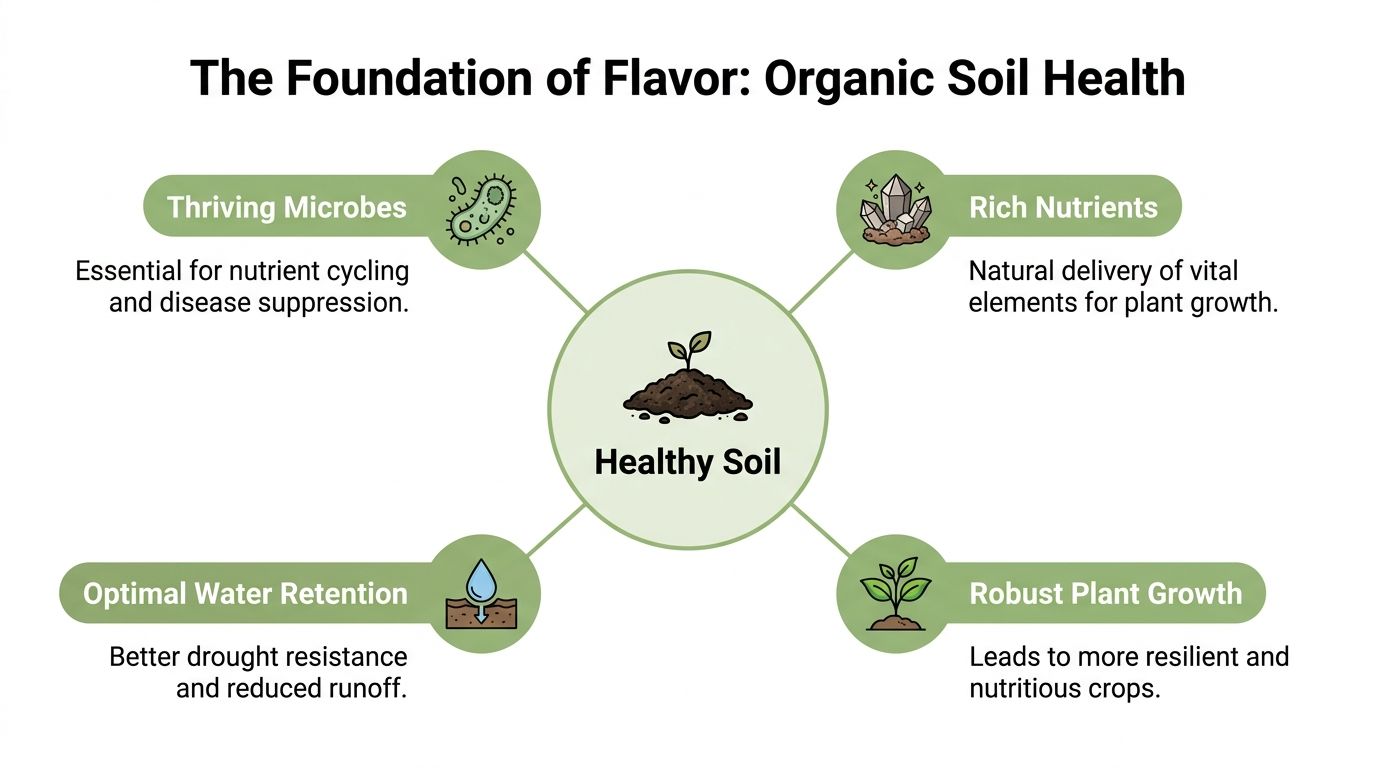
Soil works like a farm's gut
A healthy gut helps a person absorb nutrients well. Healthy soil does the same for plants. Microbes break down organic matter, help roots access minerals, and support stronger plant growth.
That microbial life is one reason organic systems matter so much. Charles Sturt University's overview of organic farming in Australia notes that organic farms support a 30% increase in species biodiversity and a 50% increase in beneficial microorganisms compared to conventional farms.
When readers get confused here, it's usually because “fertility” sounds like a bag of nutrients. In organic farming, fertility is also structure, biology, and timing. A plant can sit in nutrient-rich ground and still struggle if the soil is compacted, lifeless, or poor at holding water.
What builds living soil
Organic farmers usually combine several practices rather than relying on one silver bullet.
- Compost and organic matter improve structure and feed microbial life.
- Cover crops protect bare ground, reduce erosion, and return biomass to the soil.
- Minimal disturbance helps preserve fungal networks and soil structure.
- Diverse planting supports a more varied underground ecosystem.
For readers who want a broader view, these regenerative farming techniques are useful because they show how soil-building practices work together rather than as isolated tasks.
Practical rule: If a farming method only feeds the plant for the short term but weakens the soil over time, organic growers usually see it as the wrong trade-off.
Why synthetic fertilisers are avoided
Synthetic fertilisers can deliver nutrients quickly, but organic farming takes a longer view. The aim is to avoid replacing a living system with a chemical feeding schedule.
A simple comparison helps:
| Approach | Main focus | Likely long-term goal |
|---|---|---|
| Organic soil building | Feed the soil community | Resilient plants and stable fertility |
| Synthetic input model | Feed the plant directly | Fast correction of deficiencies |
That's why so much of the flavour story begins underground. A stronger root environment usually means stronger, steadier plant growth above ground.
Working with Nature Through Crop Rotation and Biodiversity
A good crop rotation works a bit like a varied diet. If you ate the same thing every day, your body would eventually struggle. Soil does too.
Growing the same crop in the same place year after year tends to pull on the same nutrients, attract the same pests, and encourage the same diseases. Organic farmers break that pattern by changing what grows where and when.
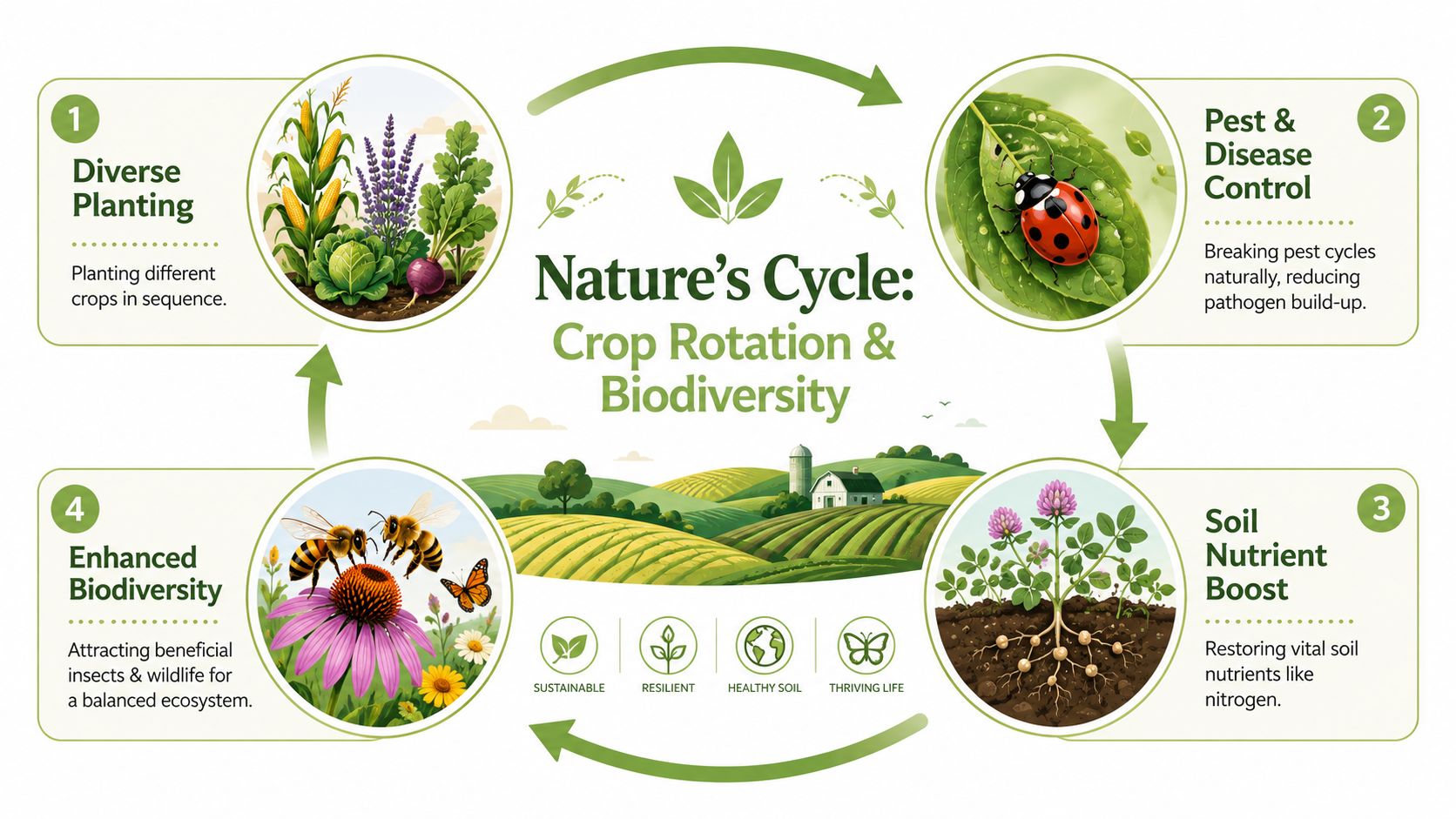
Rotation feeds the next crop
Some plants are heavy feeders. Others help restore balance. Legumes are especially important because they work with soil biology to support nitrogen availability.
Industry reporting on the Australian organic farming market notes that Australian organic farmers use legume-based crop rotation cycles to naturally inoculate soil with 40–60 kg of nitrogen per hectare annually, eliminating the need for synthetic nitrogen fertilisers and enhancing soil microbiome diversity.
That sounds technical, but the everyday version is simple. One crop prepares the ground for the next.
Rotation also interrupts pest pressure
Pests and diseases often depend on predictability. If a field keeps offering the same host plant, the problem can settle in. Rotation breaks that routine.
Consider this short comparison:
| If a farmer repeats one crop | If a farmer rotates crops |
|---|---|
| Pests find the same host again | Pest life cycles get interrupted |
| Nutrient drawdown stays narrow | Nutrient use becomes more balanced |
| Disease pressure can build in place | Disease carryover is reduced |
This is one reason organic systems often look more planned than people expect. The farmer isn't just deciding what to grow this season. They're deciding what condition they want the land to be in next season too.
Biodiversity isn't decoration
Biodiversity on an organic farm might include flowering borders, mixed planting, shelter for beneficial insects, or areas left specifically to support habitat. These features are practical, not ornamental.
- Pollinators need food and shelter. Flowering plants help bring them in.
- Beneficial insects need a home. If the farm supports predators, pest outbreaks are easier to keep in check.
- The whole farm becomes more stable. A diverse system tends to be less brittle than a simplified one.
A farm with biodiversity has more built-in helpers. A farm without it usually has to buy more solutions.
That logic matters all the way down the supply chain. Ingredients grown in a balanced system often arrive with a cleaner, less stressed origin story than ingredients produced through repeated chemical correction.
Natural Pest and Weed Management Strategies
Organic farmers don't ignore weeds or hope pests disappear. They manage both, but they use an integrated approach rather than a single broad chemical fix.
That's an important distinction. “Natural” doesn't mean passive. It means the response is usually more targeted, more observant, and often more labour-intensive.
How organic pest control works in practice
One method on its own rarely does the full job. Farmers combine strategies so each one supports the others.
- Beneficial insects can help keep pest populations in check. Ladybirds, lacewings, and other predators become part of the farm's working system.
- Companion planting can confuse, deter, or distract pests while supporting a more varied ecosystem.
- Physical barriers such as nets, row covers, or guards can protect vulnerable plants during key stages.
- Timing and monitoring matter. A farmer who spots an issue early usually has more non-synthetic options available.
Aphids are a good example. On a conventional system, the first move might be a spray. On an organic system, the response could involve habitat for predator insects, plant diversity, airflow, and close monitoring so the issue doesn't escalate.
Weed control takes planning and effort
Weeds are one of the clearest places where people underestimate organic farming practices. Without synthetic herbicides, weed control often depends on manual labour, mulching, mechanical cultivation, and tighter crop planning.
That has real consequences.
Organic weed management asks more from the farmer because it asks them to replace chemistry with attention, timing, and physical work.
Some growers suppress weeds by shading soil with cover crops. Others use stale seedbed techniques, mulch layers, or strategic cultivation before weeds become established. None of that is lazy farming. It's detailed farming.
Why this matters for food and drink quality
Pest and weed management affects more than yield. It affects plant stress, soil disturbance, and the amount of residue risk consumers want to avoid. For products people drink regularly, that cleaner production logic matters. You may not see it on the label, but it shows up in trust, flavour clarity, and how confidently a producer can stand behind what's in the final product.
Australian Organic Standards and Certification
Organic farming only builds trust if the claim means something.
In Australia, that's where certification becomes useful. It gives buyers a way to tell the difference between a product that sounds natural and one that has met a documented standard across production, handling, and processing.
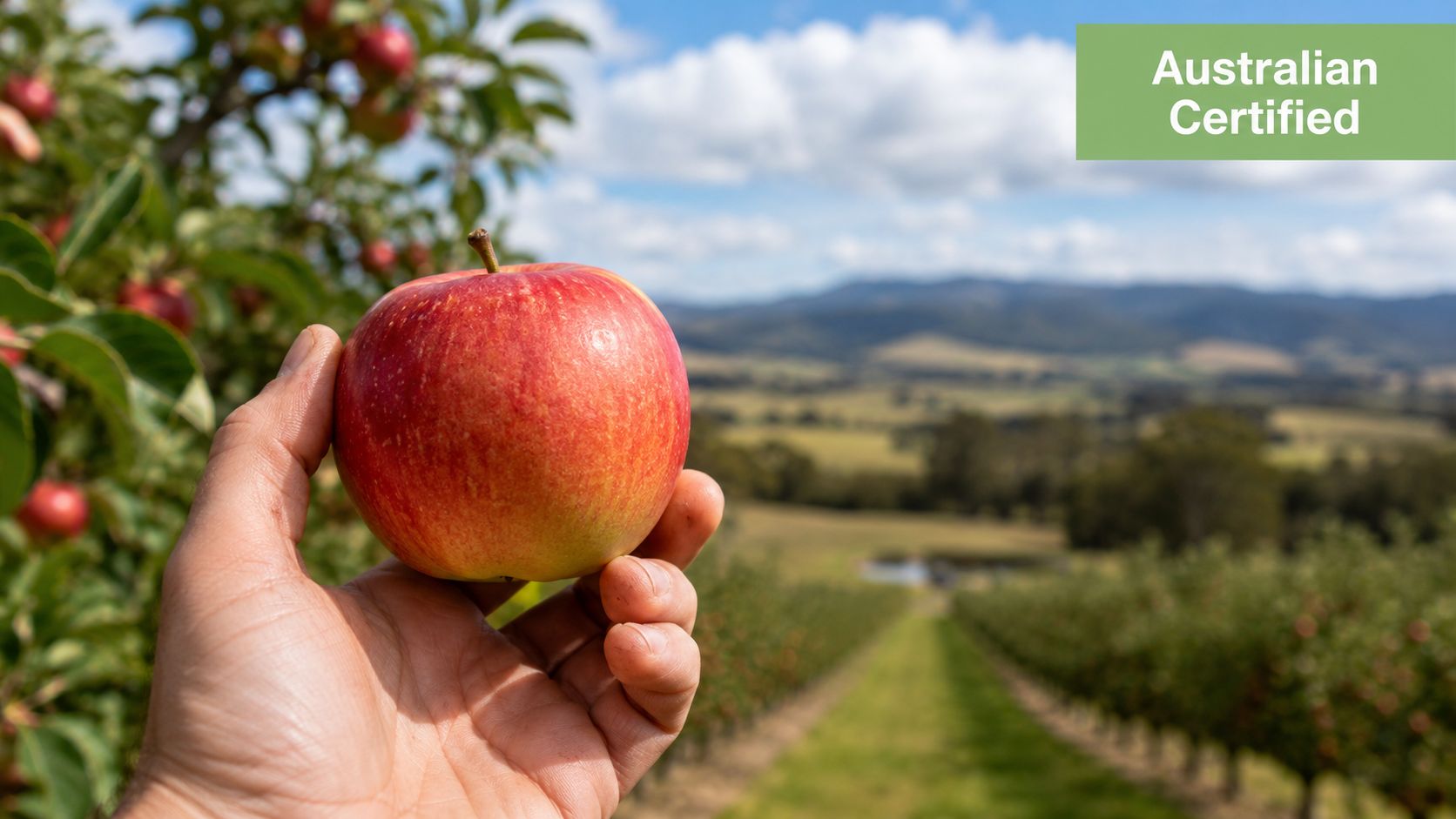
What certification is actually checking
Organic certification is not just a quick farm visit. It's about integrity across the chain. That includes how crops are grown, how inputs are managed, how contamination is avoided, and how products are handled after harvest.
Consumers often assume “organic” only refers to the paddock. In practice, the claim is stronger when it follows the product from cultivation through to packing and delivery. If you'd like a plain-English overview of that process in an Australian context, this guide to organic certification in Australia is a helpful reference.
Why Australia's scale matters
Australia holds the world's largest area of certified organic farmland, with over 35.6 million hectares, representing approximately 51% of the global total, as noted in the earlier source on Australia's organic sector. That scale matters because it shows organic production here isn't a fringe experiment. It's part of a serious agricultural system with real infrastructure and experience behind it.
For buyers, that leadership matters in practical ways:
- It supports confidence. There's a well-established base of certified production.
- It improves market understanding. More producers, processors, and operators means a more mature supply environment.
- It raises expectations. Serious certification makes lazy greenwashing easier to spot.
What to look for on pack
A useful label should answer three questions.
| Question | Why it matters |
|---|---|
| Is there recognised certification? | It gives the organic claim substance |
| Is handling separated from non-organic product? | It helps prevent cross-contamination |
| Does the brand explain origin clearly? | Transparency usually signals stronger standards |
Certification matters most when it protects the whole chain, not just the field where the crop began.
That's especially relevant for products that are milled, brewed, fermented, packed, and shipped. The more steps involved, the more valuable a credible system becomes.
The Organic Difference in Your Matcha and Kombucha
When people talk about organic beverages, they often jump straight to health language. The more useful place to start is raw material quality.
Tea leaves absorb the conditions they're grown in. Fermentation responds to the quality of the ingredients it begins with. If the farming system is cleaner and more stable, the final drink usually has a better foundation.
Why organic standards matter for matcha
Matcha is unusually intimate as a tea. You're consuming the whole leaf in powdered form, not just an infusion. That's one reason growing standards matter so much.
Guidance on organic matcha production under JAS explains that organic matcha must be produced under Japan Agricultural Standard (JAS) Organic Certification, which requires tea leaves to be grown without synthetic pesticides, herbicides, or chemical fertilisers, and that farms maintain chemical-free soil for several years prior to certification.
That doesn't automatically tell you whether a matcha is vibrant, smooth, or suited to whisking straight versus blending into a latte. Grade, harvest timing, and processing still matter. For a practical consumer-focused breakdown, this guide on the difference between regular and ultimate Matcha tea powder helps explain what to look for beyond the word organic.
Why a clean tea base matters in kombucha
Kombucha starts with tea, water, and culture. Fermentation can develop lovely acidity and complexity, but it can't rescue poor starting ingredients.
A cleaner organic tea base gives the brew a simpler starting point. That matters for taste, but also for consistency. If you care about probiotic-rich drinks, low-sugar options, and the difference between properly fermented kombucha and overly sweet imitations, understanding the agricultural side helps you buy more wisely.
Here's a visual look at the broader connection between organic ingredients and tea culture:
Cleaner farming doesn't guarantee a better beverage on its own. It gives the maker a better starting point, and that's where quality usually begins.
What you can notice in the cup
- Matcha drinkers often look for colour and freshness. Bright green usually signals better handling than dull or yellowing powder.
- Kombucha drinkers often notice finish. A well-brewed organic kombucha tends to taste clean and deliberate rather than muddy or syrupy.
- Both reward ingredient integrity. The less the producer has to hide, the more the base ingredient can speak for itself.
A Buyer's Guide to Sourcing and Supporting Organic
Buying organic well is less about chasing marketing words and more about asking better questions.
For everyday shoppers, that starts with the pack. For cafés, retailers, and hospitality buyers, it also includes supplier transparency, consistency, and how clearly the product's story can be passed on to customers.
What consumers should check first
A quick label scan can tell you a lot.
- Look for recognised certification. If the organic claim is serious, there should be clear evidence behind it.
- Check the ingredient list. Simpler lists are easier to understand and compare.
- Notice product type. Matcha for straight whisking and matcha for baking or lattes may both be organic, but they're not interchangeable.
- Read beyond buzzwords. Terms like “natural” can sound reassuring without meaning much on their own.
If you're shopping for tea specifically, browsing a specialist range of organic green tea online can help you compare product descriptions, origins, and intended uses side by side.
What cafés and hospitality buyers should ask suppliers
A café menu has limited space. Every drink needs a reason to be there.
Ask practical questions such as:
- Is the product certified organic through the supply chain?
- Is the matcha intended for ceremonial use, lattes, or kitchen prep?
- Is the kombucha properly fermented, and how is flavour balance handled?
- Can the supplier explain origin, processing, and storage clearly?
Why the higher price can make sense
Organic products can cost more because the farming often requires more labour, more planning, and more careful handling. That price difference isn't just about a badge on the front. It reflects slower fertility building, non-synthetic pest control, and tighter product integrity.
Buy organic because you understand the system behind it, not because the label sounds fashionable.
Support for organic farming is also support for growers who choose to work with soil biology, biodiversity, and long-term land health rather than short-term extraction.
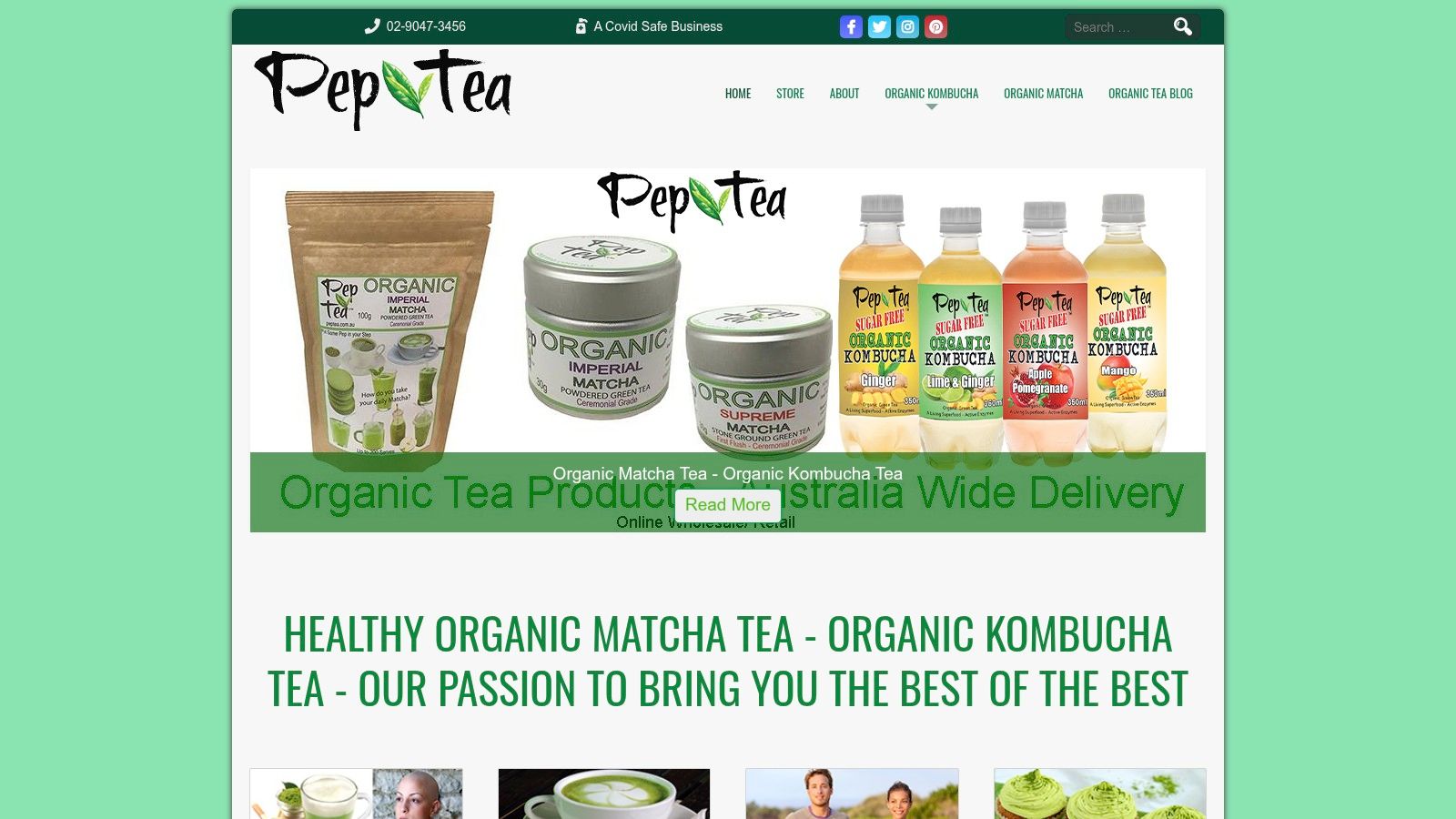
If you'd like to put these ideas into practice, explore Pep Tea for certified organic options across premium matcha and Australian-brewed kombucha. It's a simple way to choose beverages that align with cleaner farming, careful sourcing, and everyday wellness.