
Tag: EGCG benefits
What Is EGCG and Why It Matters for Your Daily Tea

EGCG, short for epigallocatechin gallate, is the most abundant catechin in green tea, and it can make up more than 50% of total green-tea catechins. That's why EGCG is the compound most closely tied to matcha's celebrated health reputation, not just “antioxidants” in general.
Hearing the word antioxidant is a start, but that's too broad to be useful. If you run a café, sell tea, or want a smarter daily cup, the key question is what's in the glass, how much of it you're getting, and whether the format matters.
Why EGCG Deserves Your Attention Beyond Generic Antioxidants
“All antioxidants are the same” sounds neat, but tea does not work that way. Green tea gets much of its reputation from catechins, and EGCG stands out because it is the dominant one in the leaf and one of the most studied in tea nutrition in PepTea's antioxidant tea guide.
That matters in Australia because people are asking more exact questions now. They do not just want to know whether a drink is “healthy”, they want to know which active compounds are present, how much they are likely to get, and whether a tea, matcha, or extract behaves in the same way.
Why specificity matters in real beverage choices
EGCG matters because it gives green tea, especially matcha, a measurable profile rather than a loose wellness story. Independent review data places it at more than half of total green-tea catechins and notes that brewed tea commonly contains about 200–300 mg of EGCG per cup in some contexts (PMC review). For café owners, that kind of detail shifts the conversation from general claims to formulation choices.
A product that says “antioxidants” leaves too much unsaid. The useful question is which compound is doing the work, and what serving size delivers it.
The difference shows up in everyday use. A ceremonial matcha latte, a plain brewed green tea, and a capsule extract all contain EGCG, but they do not deliver it in the same way or at the same dose. That is why EGCG is more than a chemistry term, it affects purchasing, menu design, and how a beverage is described to customers.
EGCG also sits at the point where wellness language meets careful label reading. For tea drinkers, that helps make sense of what is in the cup. For operators, it helps explain why a green tea beverage is not just another hot drink, but a distinct option with a different nutritional profile.
The Chemistry and Mechanism Behind EGCG
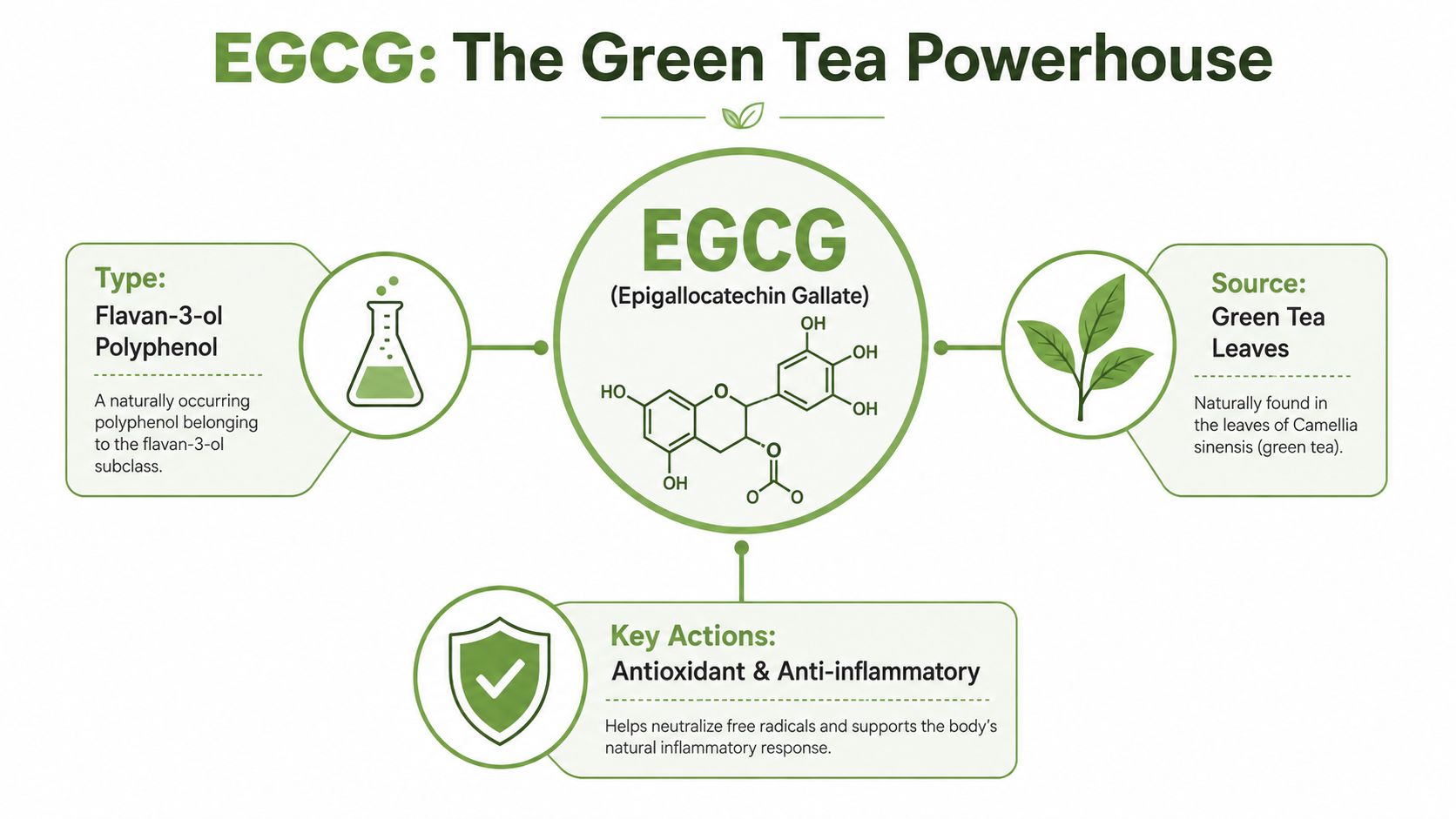
EGCG is a catechin, a subclass of polyphenols, and scientific reviews describe it as the principal bioactive compound in Camellia sinensis (Molecules review). In practical terms, it is one of the plant compounds that gives green tea its sharp, fresh, slightly astringent edge.
Why its structure matters
EGCG stands for epigallocatechin-3-gallate, with a formula of C22H18O11 and a molecular weight of about 458.4 g/mol. That structure gives it strong redox activity, which means it can interact with unstable molecules and support the body's antioxidant defences (technical source).
The molecule has multiple reactive sites, so it can engage with its surroundings in several ways at once. That is part of why tea scientists pay close attention to it, and also why it is more fragile than some other catechins. It is useful chemistry, but not indestructible chemistry.
Why freshness and preparation matter
EGCG is water soluble, so hot-water extraction can pull it into a drink efficiently (technical source). It is also sensitive to storage, pH, oxygen exposure, and heat, so processing and preparation change how much reaches the cup.
Tea is a chemistry system, and EGCG is one of the parts that changes most readily.
That explains why matcha quality can vary so much. Freshness, shading, grinding, and storage all affect how much of the plant's chemistry survives to the finished drink. A bright, clean matcha and a flat, dull one often differ before the whisk even hits the bowl, because the leaf material itself has already been handled differently.
For café owners, that makes product quality a practical issue. A well-stored matcha can support a cleaner flavour and a more consistent beverage experience, while a poorly handled product loses the very compounds people are buying it for, as shown in PepTea's Uji matcha range.
What the Scientific Evidence Shows About Health Benefits
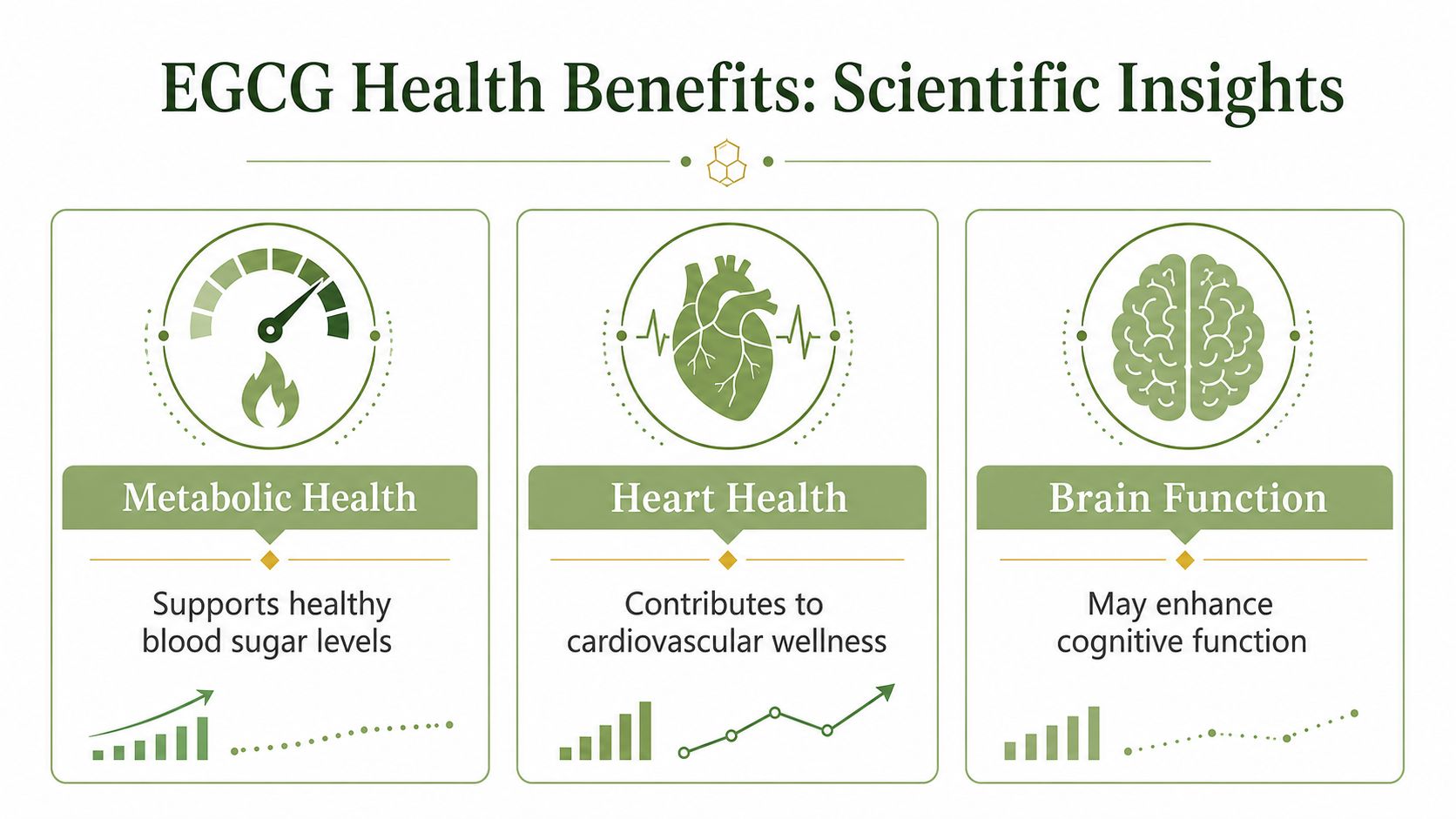
EGCG gets attention because the research does not treat tea as a vague wellness habit. It looks at a specific plant compound and asks what it may be associated with in human studies. For café owners and health-conscious consumers, that distinction matters, because it keeps the conversation grounded in what the evidence can support.
A recent meta-analysis reported that green tea was associated with a 9% lower cancer risk overall (RR 0.91), while EGCG specifically was associated with a 28% lower risk (RR 0.72) versus controls (PubMed). Those findings are part of why EGCG has moved from a tea chemistry topic into broader nutrition conversations.
What that means, and what it doesn't
The numbers are useful, but they are not a promise. They show associations in the research literature, not proof that drinking more tea prevents disease. That difference matters on a menu board, in a wellness shop, or in any setting where EGCG might be described as part of a healthy routine.
The same analysis reported stronger associations for some cancers, including prostate cancer (RR 0.43), oral cancer (RR 0.44), gallbladder cancer (RR 0.72), and hematological cancers (RR 0.72) (PubMed). Separate physiological research also found that EGCG supplementation changed energy metabolism in adults, with a mean reduction in respiratory quotient of 0.02 and an increase in energy expenditure of 158.05 kJ/day compared with placebo. That helps explain why EGCG appears in conversations about metabolic support and functional beverages.
How to read the evidence responsibly
A practical reading of the evidence is straightforward. EGCG has enough human data behind it to deserve attention, but not enough to justify exaggerated claims. Its strongest place is within an overall tea pattern, not as a stand-alone cure or a miracle ingredient.
For café operators, that means you can speak about tea catechins, metabolic support, and plant-based bioactives without making medical promises. For consumers, it means a daily matcha or green tea can fit a sensible routine, while still sitting alongside the rest of a healthy diet and lifestyle.
Where to Find EGCG in Your Diet and Daily Drinks
Green tea is still the main practical source. EGCG also appears in smaller amounts in white tea, black tea, and oolong tea, and trace amounts show up in some fruits, nuts, and beans such as berries, plums, apples, hazelnuts, and peanuts (PMC review). For everyday drinking, tea remains the clearest way to obtain it.
If you like tracking what ends up in the cup, log teas with Drinkist can help you notice how leaf quality, water temperature, and steeping style change the drink from day to day.
Approximate EGCG content by source
| Source | Typical Serving | Approximate EGCG |
|---|---|---|
| Brewed green tea | 1 cup | About 50–150 mg (technical source) |
| Matcha | 1 serving | Higher than a typical infusion because you consume the whole leaf, not just the water (technical source) |
| Concentrated supplement | 1 serving | About 100–800 mg/day in common supplement formats (technical source) |
| Brewed tea in a conservative safety benchmark | 1 cup per day | About 100 mg EGCG/day |
| Conservative higher tea intake | 3 cups per day | About 300 mg EGCG/day |
Why matcha feels stronger than brewed tea
Matcha changes the serving picture because you consume the powdered leaf rather than an infusion. That usually means more catechins per cup than a standard steeped tea, even though the exact amount still depends on grade, dose, and how it is prepared.
Kombucha sits in a different category. If it is brewed on a green tea base, it may carry some EGCG from the tea used in fermentation, but the final amount depends on the starting brew and the process, so it should not be treated as equal to matcha or a strong green tea infusion.
For cafés, menu language matters. “Green tea based” and “matcha” are not interchangeable, and customers who care about function will notice the difference.
Safe Intake Levels and Understanding the Supplement Gap
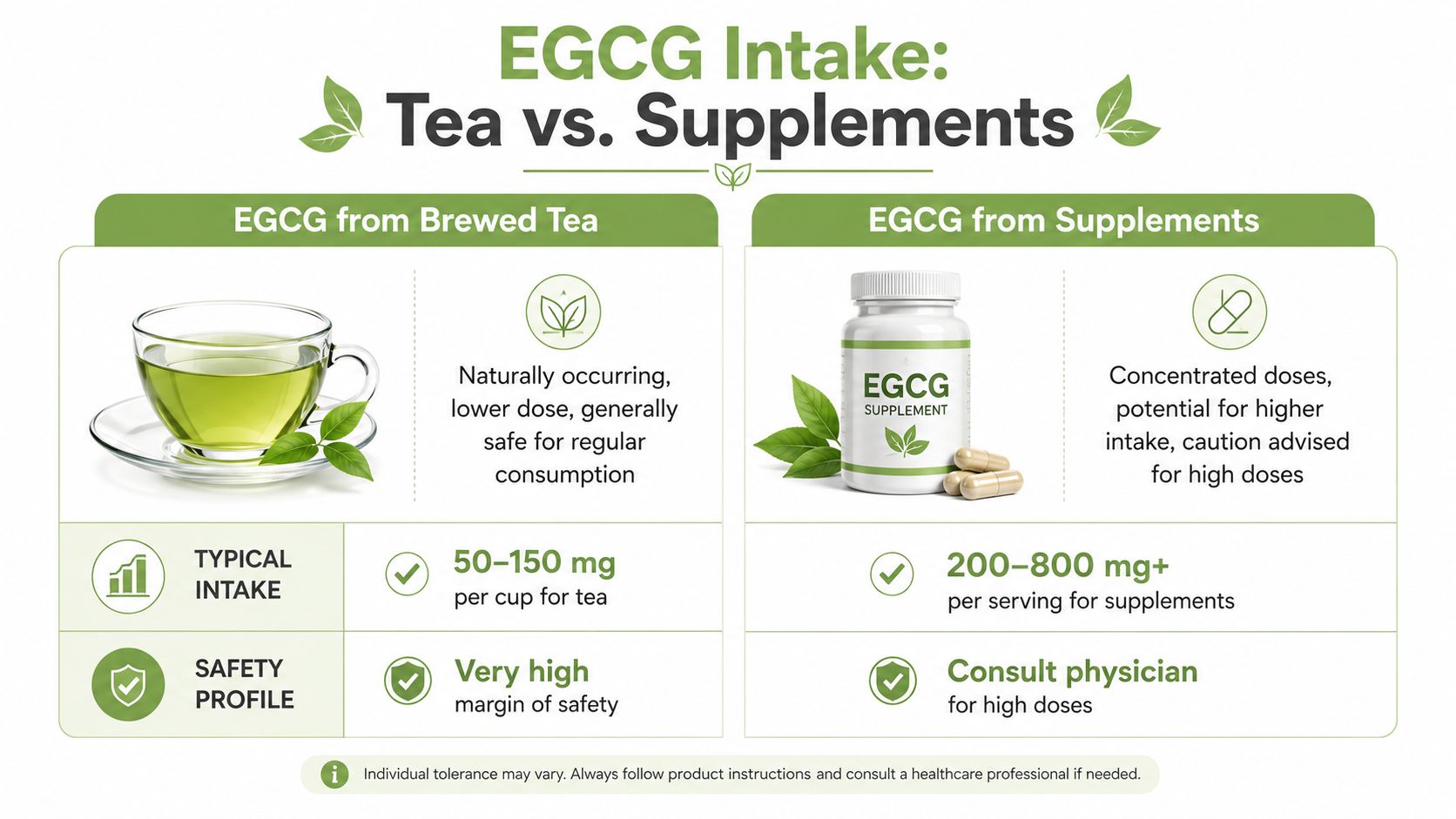
The main mistake with EGCG is treating tea and supplements as if they deliver the same thing in the body. They do not. In a PMC safety review, analysts used a conservative benchmark that places a typical background intake at about 1 cup of green tea per day, or ~100 mg EGCG/day, while a higher conservative intake was 3 cups per day, or ~300 mg EGCG/day.
Tea is not the same as an extract
That same safety literature also discusses a proposed adult safe intake level of 338 mg EGCG per day for EGCG in solid bolus supplement form. That detail matters because it shows why brewed tea and concentrated extracts should not be grouped together.
A simple way to read the difference is this. Tea delivers EGCG inside a food matrix, while a capsule delivers a concentrated dose in a form that behaves differently in the body. A cup of tea sits inside normal food and drink habits, but a supplement can push someone much closer to the upper range without them noticing.
Practical rule: if the label focuses on milligrams of EGCG, treat it like a supplement, not like a tea.
How to read labels without getting lost
If you compare products, check whether the figure refers to per serve, per capsule, or per daily dose. Then read the rest of the ingredient panel, because a product that combines catechins with other concentrated extracts needs closer attention.
That caution matters most for people with liver conditions, pregnant individuals, and anyone taking medicines that may interact with green tea or caffeine. For those readers, regular brewed tea is a very different decision from capsules or high-dose wellness blends. If you are comparing formats, this green tea capsule guide helps separate tea-based intake from supplement-style products.
For cafés and beverage brands, the safest language is straightforward. Describe tea as a traditional drink with plant compounds, not as a treatment. That keeps the message accurate and keeps the menu honest.
Practical Applications for Consumers and Hospitality Professionals
A good matcha routine doesn't need to be complicated. For home drinkers, a whisked bowl in the morning gives a clean way to use the plant whole, while a latte can make the flavour more accessible if you keep the sugar low. If caffeine sensitivity matters, start with a smaller serve and see how it fits your day.
What to do in a café setting
For hospitality teams, EGCG knowledge is useful because it gives you a clearer way to position drinks. A properly made matcha, a brewed green tea, and a kombucha built on tea are different menu items, and each should be described that way. That helps customers make better choices without crossing into medical claims.
A smart menu can highlight organic matcha, sugar-free kombucha, and clean, functional beverage options alongside coffee. If you're building a drinks program, a tea-focused beverage line can give people a lower-sugar alternative without pushing them into overly sweet soft drinks.
Good menu language tells the truth about the drink first, then the experience second.
Operations also matter. If you're selling a beverage with tea-based functional framing, it helps to keep ingredient communication tight and allergen processes organised. A restaurant allergen compliance checklist is a practical reference for tightening that side of service.
For home use, keep the approach simple. Use fresh water, respect the leaf, and choose a format that matches your goal, whether that's a calm morning cup or a more versatile ingredient for lattes and baking. We also see interest in organic matcha because it works across both café service and kitchen use, which is one reason Pep Tea's Australian-brewed kombucha and matcha range fits so naturally into functional drinks menus.
Common Questions About EGCG Answered
EGCG can survive tea brewing well, but preparation matters. In kombucha, some of the tea's catechins may carry through the process, yet the final amount depends on the tea base and fermentation style, so it's best to think of kombucha as a tea-derived drink rather than a concentrated EGCG source.
Matcha pairs naturally with caffeine and L-theanine, which is why many people describe the lift as smoother than coffee. Cooking or baking with matcha can still leave you with useful tea compounds, but the more heat and air exposure you introduce, the less you should expect the finished dish to behave like a fresh whisked cup.
Individuals won't “feel” EGCG in the dramatic way a stimulant works. If anything, its value is cumulative and routine-based, which is why consistency matters more than chasing a huge dose.
Pep Tea makes organic matcha and sugar-free organic kombucha for people who want tea-based drinks with clear ingredients and real-world use cases. If you're comparing matcha for your home routine or building a café menu around functional beverages, visit Pep Tea to explore options that fit a daily tea habit rather than a supplement-style shortcut.
Antioxidant Tea Benefits: Boost Wellness with PepTea
That 3 pm moment is familiar. You've had lunch, your focus has drifted, and you want something that feels better than another coffee or a sugary drink. You're not chasing a miracle. You just want a daily habit that tastes good, supports your health, and fits real life in Australia.
Tea often enters that conversation because people know it contains antioxidants. The problem is that most advice stops there. It says tea is “good for you” without explaining what antioxidants do, why Matcha keeps coming up in wellness circles, or why your brewing method can change what ends up in your cup.
That's where antioxidant tea benefits become much more practical than they first sound. Its value isn't just that tea contains protective compounds. It's that some teas deliver them more reliably, some preparation methods protect them better, and some compounds work together in ways that help you feel the difference day to day.
For many people, that means two standout options. Matcha gives you a concentrated whole-leaf green tea experience, while Kombucha offers a different path, combining tea's natural compounds with fermentation and live cultures. They're not the same drink, and they don't play the same role. That's exactly why understanding both can help you build a smarter routine.
Your Daily Wellness Upgrade Starts Here
A lot of healthy habits fail because they ask too much. Complicated meal plans, expensive powders, rigid routines are often abandoned. A cup of tea is different because it's already part of everyday life. You're not adding a whole new identity. You're making a better choice inside a habit you already have.
That's why antioxidant tea benefits matter in such a practical way. If you already reach for something warm in the morning or something refreshing in the afternoon, tea can turn that moment into a small act of support for your body. Not with hype, and not with extreme promises. Just with compounds that help protect your cells from everyday stress.
Why people start looking for better drinks
Usually it begins with one of these moments:
- The coffee crash: You want energy, but not the shaky feeling that can come with overdoing caffeine.
- The sugar rethink: Soft drinks and sweet café options don't feel great when you're trying to clean up your routine.
- The wellness upgrade: You want something simple that may support immunity, focus, and long-term health.
That's where tea earns its place. Green tea, Matcha, and Kombucha all bring something useful to the table, but they don't all work in the same way.
Some drinks give you a quick hit. Tea tends to reward consistency instead.
A more useful way to think about tea
Instead of asking, “Is tea healthy?”, ask better questions:
- Which tea gives me the most antioxidants in a normal serve?
- How much does preparation affect the result?
- Do I want calm focus, gut support, or both at different times of day?
Those questions lead to better choices than generic wellness claims ever will. They also clear up a lot of confusion. Matcha isn't just green tea with better marketing. Kombucha isn't just fizzy tea in a pretty bottle. Each has a different role, and once you understand that, it becomes much easier to use them well.
Understanding Antioxidants and Free Radicals
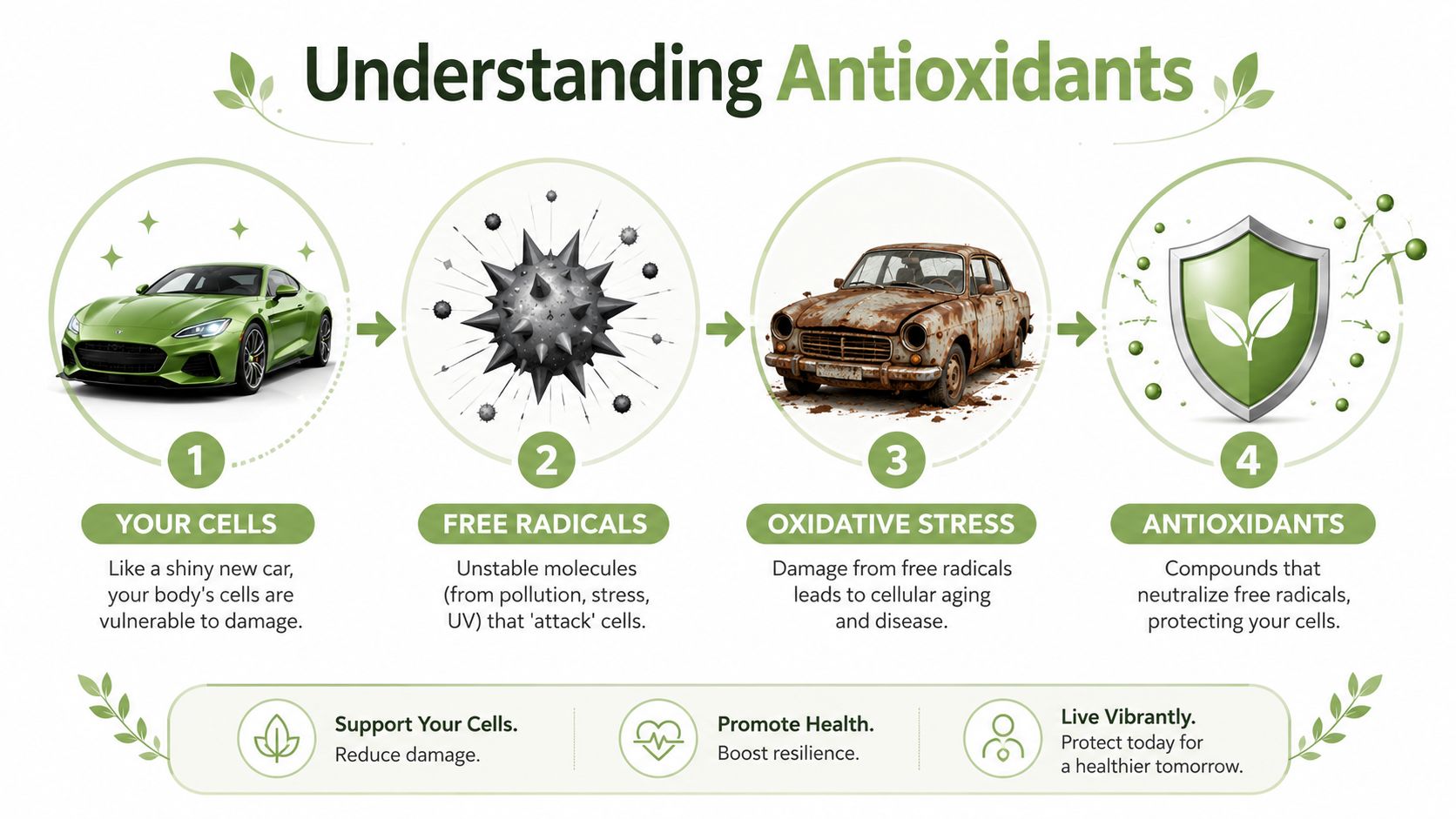
Your body is constantly dealing with wear and tear. Pollution, UV exposure, stress, and normal metabolism all create unstable molecules called free radicals. When too many of them build up, they can damage cells. That process is called oxidative stress.
A simple way to picture it is a car left out in the weather. Over time, metal starts to rust. Your cells don't rust, of course, but oxidative stress creates a similar kind of gradual damage. That's why people often connect antioxidants with healthy ageing and general resilience.
What antioxidants actually do
Antioxidants help neutralise free radicals before they can cause as much damage. You can think of them as part of your body's defence team. They don't make you invincible, and they don't replace the basics like sleep, food, and exercise, but they can support the system.
Tea is especially known for a group of antioxidants called polyphenols. In green tea and Matcha, one of the best-known is EGCG, short for epigallocatechin gallate. It's the compound that gets a lot of attention because it's strongly associated with many of tea's protective qualities.
Why EGCG gets so much attention
EGCG matters because it's one of the standout catechins in green tea. In organic Matcha green tea, EGCG accounts for 60% of all catechins, which is part of what gives Matcha its unusually concentrated antioxidant profile, as noted by Pep Tea's explanation of Matcha catechins.
That's also why people often get confused when they compare “green tea” as a broad category with Matcha specifically. Not all green tea experiences are equal. The type of tea, the grade, and the way you prepare it all affect what you consume.
Practical rule: Antioxidants are only useful if they survive the trip from the leaf into your cup.
Where this matters in daily life
Antioxidants aren't just an abstract science topic. They're part of why people choose tea when they want to support:
- Cell protection: helpful when everyday life includes stress, sun, and pollution
- Skin support: especially relevant in Australia, where UV exposure is part of life
- General wellness: a daily drink can become one small, repeatable habit that supports the bigger picture
Once you understand the free radical versus antioxidant story, tea starts making more sense. The next step is looking at why Matcha sits in a category of its own.
Matcha The Ultimate Antioxidant Powerhouse
Most green tea is brewed, then the leaves are discarded. Matcha works differently. The leaf is ground into a fine powder, whisked into water, and consumed whole. That single difference changes everything.
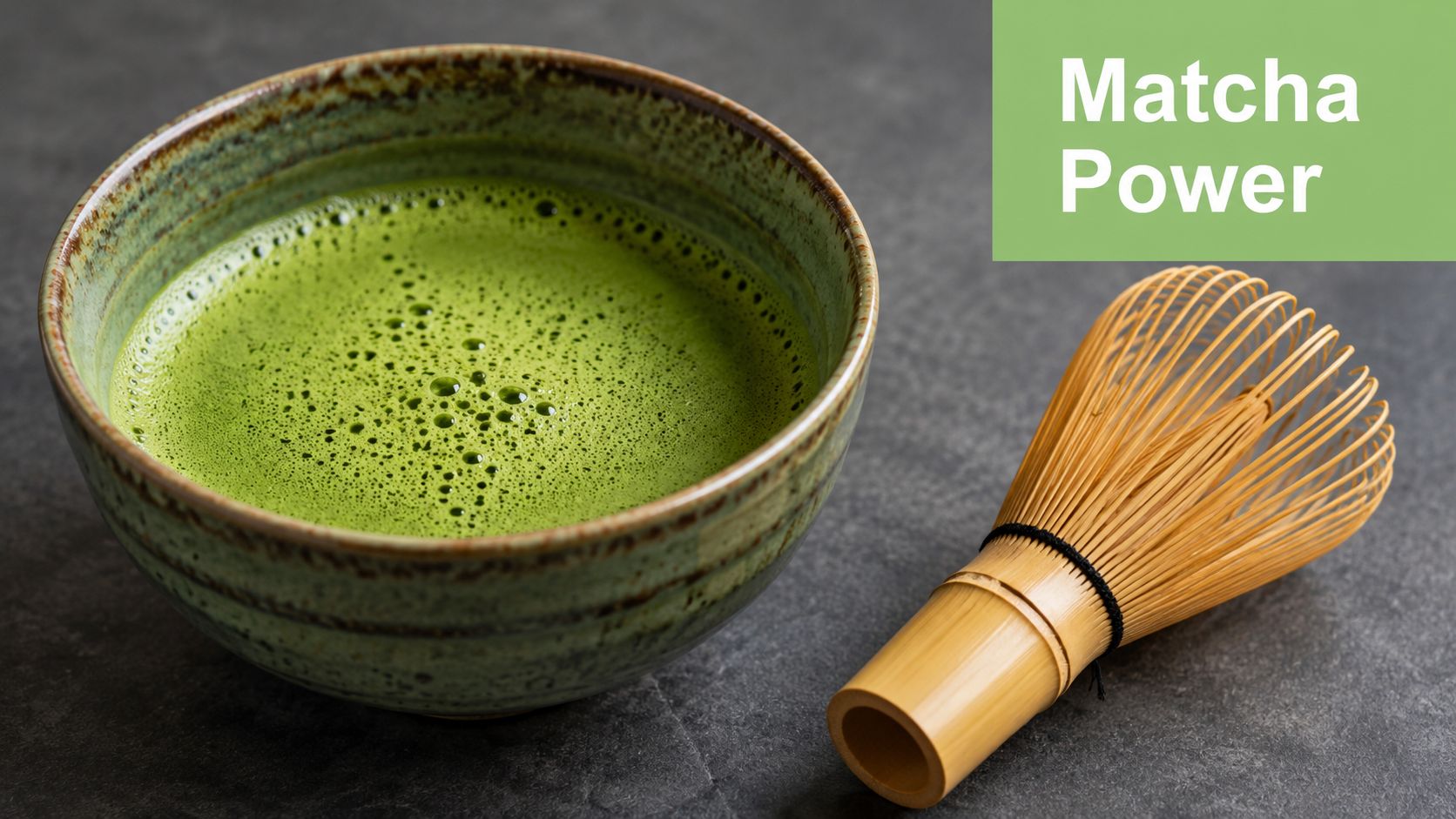
Because you're drinking the whole leaf, Matcha delivers a far more concentrated intake of tea compounds than a standard infusion. That's why it has such a strong reputation among people looking for antioxidant tea benefits that feel substantial rather than token.
Why Matcha delivers more per serve
The most direct comparison is this. Matcha tea powder possesses 137 times more antioxidant catechins than regularly brewed green tea, due to whole-leaf consumption, according to this Cleveland Clinic-cited social post on Matcha catechins.
That doesn't mean every cup of steeped green tea is worthless. It means Matcha is a much more concentrated delivery system.
Here's the practical difference:
- Steeped green tea: some compounds move from the leaf into the water
- Matcha: you consume the leaf itself
- Result: less is left behind, and more reaches you
The antioxidant profile people are really chasing
One reason Matcha is so popular is its high EGCG concentration. Beyond general antioxidant support, the verified data around Matcha points to several areas people care about in real life, including immune support, protection from oxidative stress, and support for metabolism.
A related detail helps make that more concrete. One gram of premium stone-ground organic Matcha contains approximately 30–35 mg of EGCG, according to Matcha.com's overview of catechins and EGCG. That gives you a sense of why even a small serve can feel meaningful within a daily routine.
For a deeper look at the whole antioxidant story, this overview of Matcha as an antioxidant powerhouse is a useful reference.
Why quality and preparation still matter
Not all Matcha is used the same way. Ceremonial styles are usually chosen for straight drinking, while culinary styles suit lattes, smoothies, and baking. Both can be antioxidant-rich, but flavour and texture shape how you will enjoy them.
This quick visual guide is helpful if you're still learning the ritual side of Matcha preparation.
Good Matcha should make healthy habits easier to repeat. If it's unpleasant, most people won't stick with it.
That's the hidden reason Matcha works so well for many Australians. It can slot into a morning ritual, an afternoon reset, or a café order without needing a full lifestyle overhaul.
Kombucha A Fermented Twist on Antioxidant Benefits
Kombucha starts in a very different place. Instead of offering the concentrated whole-leaf intensity of Matcha, it begins as brewed tea and then goes through fermentation. That process changes the drink's character completely.

What you get at the end is less about delivering the biggest possible antioxidant hit and more about creating a functional drink with a different set of strengths. For people trying to move away from sugary soft drinks or alcohol-heavy routines, that matters.
Matcha and Kombucha serve different jobs
The easiest way to compare them is by role.
| Drink | Best known for | Practical use |
|---|---|---|
| Matcha | Concentrated tea antioxidants and calm energy | Morning focus, lattes, smoothies, mindful rituals |
| Kombucha | Fermented tea with live cultures and refreshing acidity | Soft drink swap, alcohol alternative, gut-friendly refreshment |
Kombucha still starts with tea, so it carries some of tea's original antioxidant heritage. Fermentation then adds another layer through live cultures and the tangy, complex flavour people either fall in love with immediately or learn to appreciate over time.
Why Kombucha appeals to health-conscious drinkers
Many people don't need every drink to be a super-concentrated wellness tool. Sometimes they need a better replacement for what they'd otherwise drink.
That's where Kombucha shines:
- It feels social: served cold, fizzy, and satisfying
- It can support gut-friendly routines: because live fermentation is part of the appeal
- It helps with sugar reduction: especially for people trying to replace sweet beverages with something cleaner
For Australian households and cafés, that makes Kombucha practical. It works in the fridge at home, on a café menu, or as a non-alcoholic option that still feels grown-up.
Kombucha isn't trying to be Matcha. Its strength is that it solves a different problem.
If you want a deeper look at fermentation, live cultures, and what separates properly brewed Kombucha from gimmicky versions, this guide to the benefits of Kombucha is worth reading.
How to Maximise Your Antioxidant Intake from Tea
A common assumption trips people up. If tea contains antioxidants, then any green tea, brewed any old way, should deliver roughly the same benefit. It doesn't work like that.
With steeped tea, the result in your mug depends on preparation. Water that's too hot, steeping that runs too long, or inconsistent home brewing can change how much of those delicate compounds you get. That's one reason there's often a gap between tea's potential on paper and the cup people drink every day.
Brewing method changes the outcome
One of the most useful reminders comes from population-level data. A PeerJ analysis of 410,000 people found tea reduces dementia risk by up to 29%, but only when consumed optimally, at 2–4 cups per day and the correct temperature, as summarised in Tea Esk's discussion of antioxidant-rich teas.
The big lesson isn't just the dementia finding. It's that how you drink tea matters.
Matcha vs Steeped Green Tea Antioxidant Delivery
| Attribute | Matcha (e.g., PepTea Organic Matcha) | Standard Steeped Green Tea |
|---|---|---|
| How you consume it | Whole leaf in powdered form | Water infused with leaves |
| Antioxidant delivery | More direct and consistent | More dependent on brewing variables |
| Preparation risk | Lower loss from leaf disposal | Greater chance of reduced catechin retention if brewed poorly |
| Best use case | Reliable daily antioxidant intake | Lighter tea ritual with more variation cup to cup |
How to get more from your tea routine
If your goal is antioxidant tea benefits, a few habits help:
- Choose the right tea for the job. Matcha is the more reliable option when you want concentrated delivery.
- Respect temperature. Very hot water can work against delicate compounds in steeped green tea.
- Don't overbrew. Stronger doesn't always mean better.
- Build repeatable habits. The best tea routine is the one you can maintain.
That reliability is part of Matcha's appeal. Because the powder stays in the bowl and then in the drink, you remove much of the guesswork that comes with brewing leaves.
The hidden gap most people miss
People often read about the benefits of green tea and assume they're automatically getting them. In reality, there can be a big difference between “contains antioxidants” and “delivers antioxidants well in everyday use”.
That's why a carefully prepared Matcha can be such a smart choice for home baristas, busy professionals, and café drinkers who want fewer variables and more consistency.
The Secret Synergy of L-Theanine and Clean Energy
Matcha's appeal isn't only about antioxidants. The experience people love most is often the way it helps them feel. Alert, but not frantic. Focused, but not edgy. That's where L-theanine enters the picture.
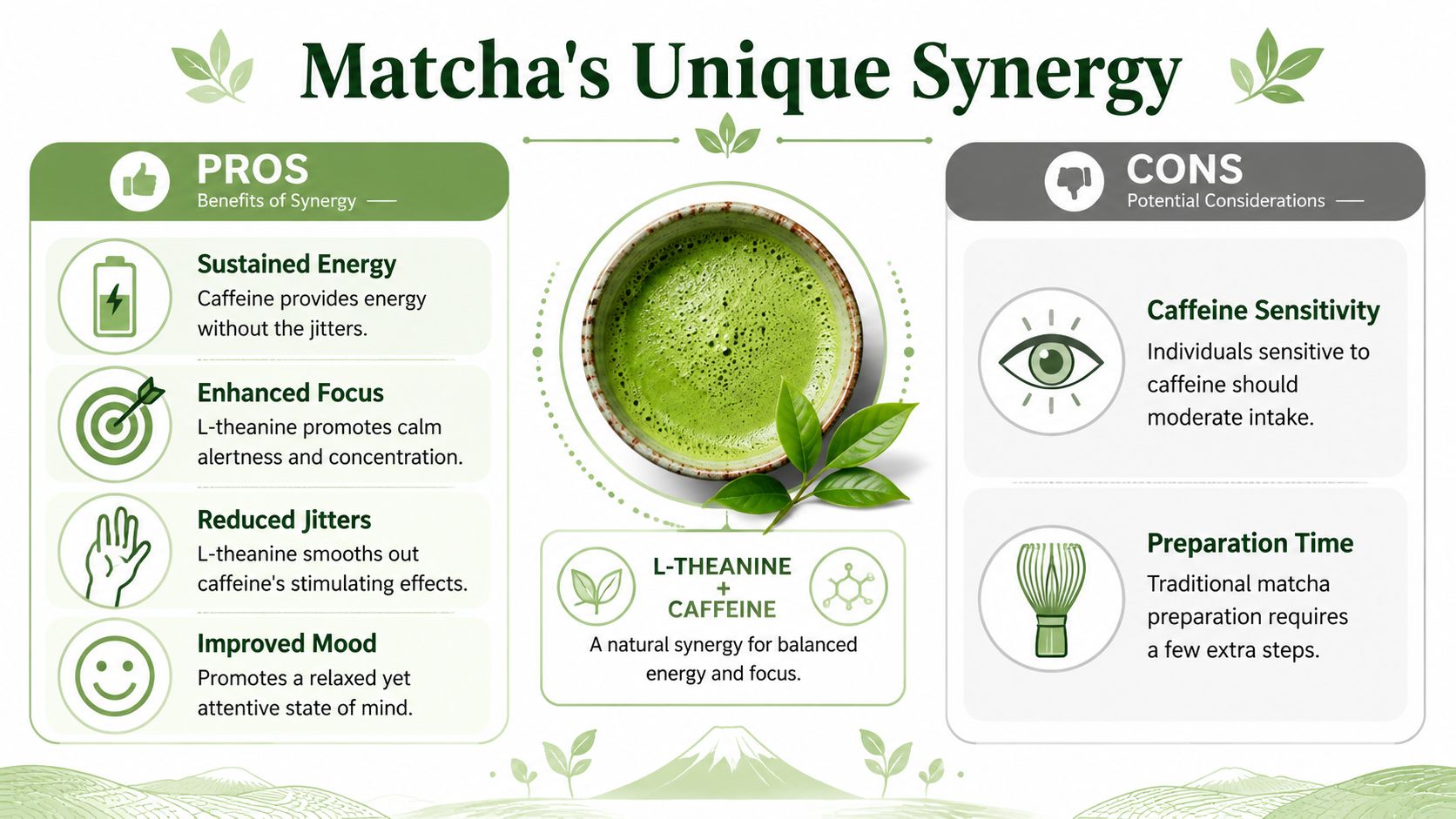
L-theanine is a naturally occurring compound in tea. In Matcha, it works alongside caffeine in a way that many people find smoother than coffee. Instead of a sharp spike, the effect is often described as calm alertness.
What L-theanine contributes
According to Australian Tea Masters' discussion of tea's health benefits, research shows L-theanine boosts GABA, serotonin, and dopamine, reducing anxiety and improving concentration, and its neuroprotective effects complement catechins to protect against cognitive decline.
That sentence explains a lot of the Matcha experience in one go. You're not only getting tea antioxidants. You're also getting a compound that helps smooth the mental side of stimulation.
For many people, that means:
- Steadier focus for desk work or study
- A calmer energy curve than they get from coffee
- A more balanced drink for busy mornings
Why this synergy matters more than caffeine alone
Caffeine on its own can be useful, but it isn't always kind. Some people get the jitters, some get a fast rise and crash, and others feel tense rather than productive. Matcha has a different reputation because of the way its compounds work together.
That synergy is one reason many people prefer a bowl of Matcha before:
- work that needs sustained concentration
- a slower start to the morning
- an afternoon reset that doesn't wreck sleep as badly as a late coffee might
If you're curious about a high-quality option designed for this kind of everyday ritual, Uji Matcha powder is a relevant place to explore.
The most interesting thing about Matcha isn't just that it contains caffeine. It's that the rest of the leaf changes how that caffeine feels.
A smarter way to think about energy
Plenty of drinks promise energy. Fewer help you stay organised, settled, and mentally clear. That's the difference people often notice when they switch from quick-fix beverages to Matcha.
It turns “energy” from a buzzword into something more useful. You can still get a lift, but it's paired with compounds that support composure and attention, which is exactly what many health-conscious Australians are after.
Your Daily Guide to Antioxidant-Rich Teas
The best antioxidant routine is one you'll keep. It doesn't need to be elaborate. It needs to suit your schedule, your taste, and the kind of support you want from a drink.
Simple ways to use Matcha across the day
If you enjoy a slower morning, whisk Matcha with warm water and drink it plain. If you prefer something creamier, use it in a latte. If you're making smoothies or baking, a stronger culinary style usually makes more sense than using your nicest ceremonial powder.
That distinction is practical, not precious. Culinary-grade organic Matcha contains an average EGCG concentration of 50.53 ± 2.41 mg/g, while ceremonial-grade organic Matcha contains 56.57 ± 2.19 mg/g, according to this published comparison of organic Matcha grades. Both are potent. The right choice depends more on how you'll use it than on chasing tiny differences.
A realistic routine for home and café life
Try this approach:
- Morning: plain Matcha for a focused start
- Midday: iced Matcha latte if you want something more substantial
- Afternoon: Kombucha instead of a soft drink or overly sweet café option
- Weekend: use culinary Matcha in smoothies, pancakes, or yoghurt bowls
For cafés, the same logic applies. Keep straight Matcha for customers who enjoy the ritual, use culinary Matcha for lattes and recipes, and offer Kombucha as a polished non-alcoholic fridge or menu option.
Keep it easy enough to repeat
You don't need to optimise every sip. You just need to avoid the obvious mistakes and choose drinks that fit your actual life. Matcha is ideal when you want concentrated antioxidant support and cleaner focus. Kombucha makes sense when you want something cold, fermented, and more social.
Both can help replace habits that don't serve you well.
A healthy drink earns its place when it becomes the option you reach for without having to think twice.
Tea works best this way. Not as a miracle cure, but as a steady, enjoyable part of a better routine.
If you're ready to turn these ideas into something practical, explore Pep Tea for premium organic Japanese Matcha and Australian-brewed sugar-free organic Kombucha. It's a great place to compare ceremonial and culinary Matcha, discover Kombucha flavours for everyday drinking, and find options suited to home routines, cafés, and wholesale needs.
Best Decaf Green Tea for Weight Loss: A 2026 AU Guide
Most advice on the best decaf green tea for weight loss starts in the wrong place. It treats caffeine as the star, then assumes decaf must be a watered-down compromise.
That misses the actual story.
Green tea's weight management potential isn't only about stimulation. The bigger players are catechins, especially EGCG, which are natural plant compounds found in the leaf itself. If those compounds are preserved during decaffeination, decaf green tea can still be a useful part of a sensible routine built around eating well, moving regularly, and sleeping properly.
That matters for a lot of Australians. Some people want a warm evening drink without the buzz. Others love green tea but don't love feeling wired. And many are looking for something more realistic than another “fat-burning” product with flashy promises.
A better approach is to treat decaf green tea as a supportive tool, not a miracle. It can fit neatly alongside a solid eating pattern, daily activity, and smarter habits like replacing sugary drinks. If you're building those foundations, practical resources such as Zing Coach's nutrition advice can help you think beyond single ingredients and focus on the bigger picture. If you'd like a broader look at tea options, this guide to green tea for weight loss is also useful.
Rethinking Decaf Green Tea for Your Wellness Goals

If you've ever thought, “Surely decaf green tea can't do much,” you're not alone. People often connect green tea with energy, and energy with caffeine. So once the caffeine goes, they assume the useful part has gone too.
That's where a lot of confusion starts.
Why decaf isn't automatically “less useful”
A high-quality decaf green tea still contains catechins, the antioxidant compounds that researchers keep studying in relation to metabolism and fat use during activity. In plain English, that means decaf may still help your body use fuel well, especially when your routine already includes exercise.
The key phrase is high-quality. Not every decaf green tea is processed the same way, and not every product keeps the same amount of those beneficial compounds.
Decaf works best when you stop asking, “Is it as strong as coffee?” and start asking, “Does it still keep the useful tea compounds?”
Who often benefits most from decaf
Decaf green tea makes particular sense for people who:
- Feel shaky with caffeine: Some people tolerate coffee poorly but still enjoy the ritual of tea.
- Want an evening option: A calming cup after dinner is easier to stick with than a drink that disrupts sleep.
- Prefer steady habits over extremes: Weight management usually responds better to routines than to all-or-nothing products.
This is why the best decaf green tea for weight loss isn't the strongest-tasting tea or the one with the flashiest packaging. It's the one that keeps the leaf's useful compounds intact and fits your life well enough that you'll drink it consistently.
How Catechins in Decaf Green Tea Aid Weight Management
The simplest way to understand green tea is this. Caffeine can contribute, but catechins do a lot of the heavy lifting. That's especially important when we're talking about decaf.
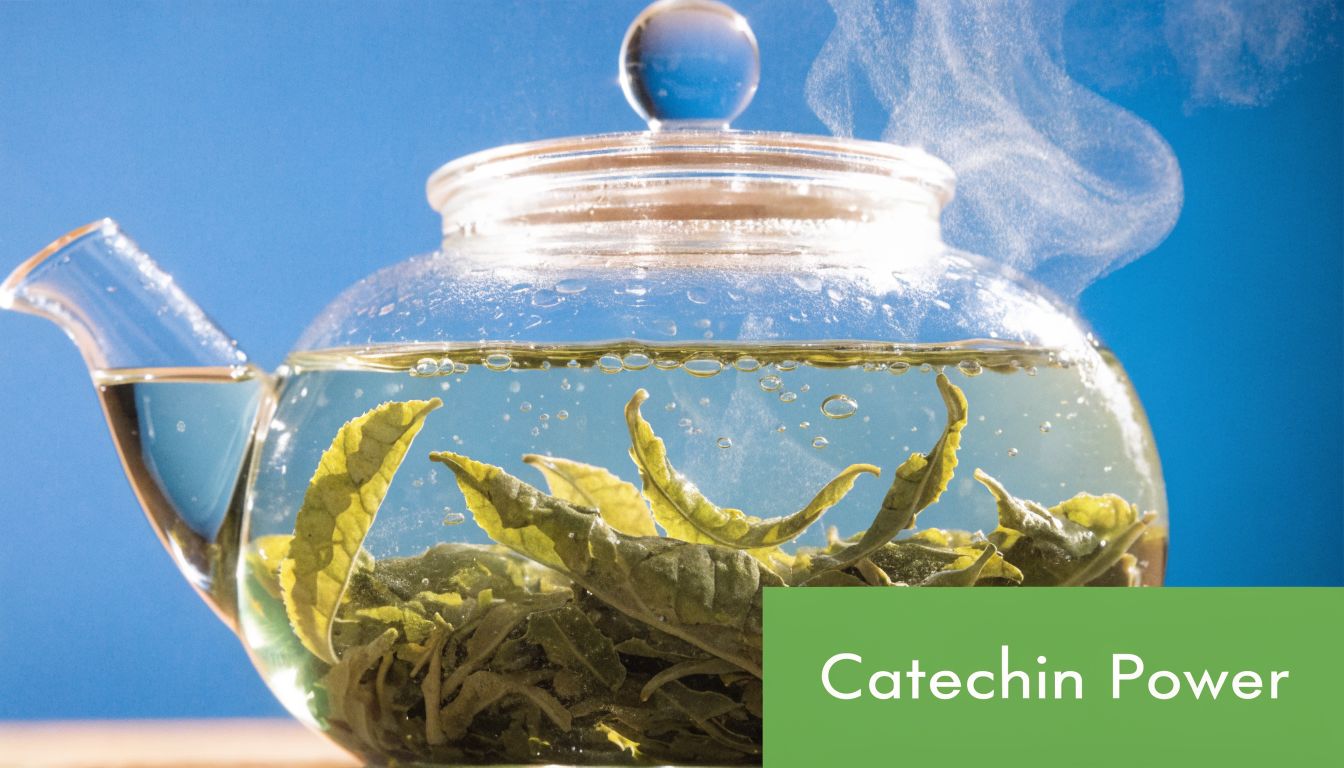
Catechins are natural polyphenols in green tea. EGCG is the one people talk about most because it's closely tied to green tea's metabolic effects. When people say green tea may support weight management, this is usually the part they mean.
What the research actually suggests
One of the clearest findings comes from a Penn State research summary. In a 16-week study, mice on a high-fat diet that consumed decaffeinated green tea extract combined with regular exercise had an average body mass reduction of 27.1 percent and an average abdominal fat mass reduction of 36.6 percent. The same report notes a 17 percent reduction in fasting blood glucose and a 65 percent decrease in plasma insulin levels.
That doesn't mean a cup of decaf green tea will create the same result in humans. It does mean the idea that decaf is “inactive” doesn't hold up well. In that study, decaffeinated green tea extract looked particularly effective when paired with exercise.
That pairing matters more than is generally understood.
What “fat oxidation” means in normal language
You'll sometimes see researchers talk about substrate utilisation or fat oxidation. Those phrases sound technical, but the idea is straightforward. Your body can draw energy from different sources. During activity, green tea catechins may help shift some of that energy use more towards fat.
Let's frame it this way:
- At rest and in movement, your body chooses fuel
- Training influences that choice
- Catechins may support a more efficient fuel mix during exercise
That's why decaf green tea isn't best viewed as a stand-alone slimming drink. It's better understood as a beverage that may support the work you're already doing.
Practical rule: If your routine includes walking, gym sessions, cycling, or strength training, decaf green tea makes more sense than if you expect it to do the whole job alone.
Why this matters in real life
For a health-conscious Australian trying to lose weight without overloading on stimulants, this is good news. You don't need to choose between “useful” and “decaf”. You need to choose a decaf green tea that still contains the compounds you want.
A lot of readers also care about the broader wellness picture, especially in life stages where hormones, stress, sleep, and appetite all interact. If that's relevant to you, this article on best probiotic for menopause weight loss offers another angle on supportive habits beyond caffeine-heavy products. Some people also compare brewed tea with concentrated formats, and this overview of green tea capsules for weight loss can help clarify the difference.
The takeaway from the science
Here's the useful interpretation, without hype:
| What people assume | What the evidence suggests |
|---|---|
| Decaf means no metabolic value | Decaf can still retain meaningful catechins |
| Caffeine is the whole reason green tea helps | Catechins remain central, especially with activity |
| Tea alone should drive visible weight loss | Results are more plausible when tea supports exercise and diet |
If you remember one thing, make it this. The best decaf green tea for weight loss is the one that preserves catechins and fits into an active lifestyle.
A Buyer's Guide to High-Quality Decaf Green Tea
Walking into a supermarket or browsing online can make decaf green tea look simple. It isn't. Two products can both say “decaf green tea” and still be very different in quality.
The biggest difference often sits behind the label. It's the decaffeination method.
Why the decaffeination method matters
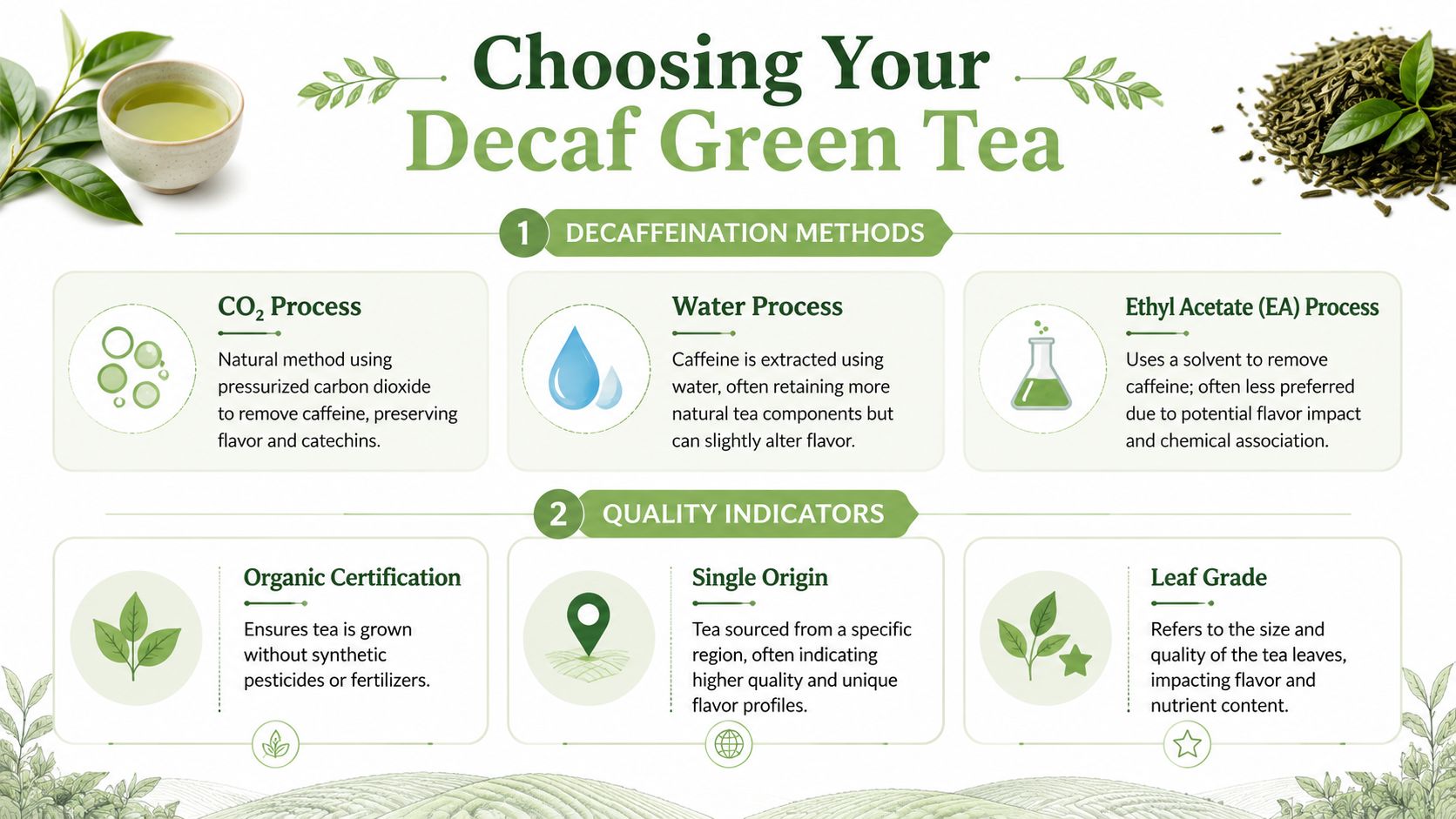
A decaf tea can only support your goals if the useful compounds survive processing. According to this decaf green tea analysis, the CO2 decaffeination process preserves 30 to 50 mg of EGCG per serving, while alternative methods have significantly lower retention. The same source notes that daily consumption of tea with high catechin levels, at around 690 mg, can measurably reduce body fat within 12 weeks, and that supplementation with 400 mg of EGCG from decaf extract significantly improves fat oxidation during exercise.
You don't need to become a lab technician to use that information well. You just need to know what to look for.
A simple comparison when you shop
| Method | What to know | Why it matters |
|---|---|---|
| CO2 decaffeination | Often preferred for preserving catechins | Better fit if you care about EGCG retention |
| Water process | Can be gentler than some alternatives | May still be a reasonable option, depending on the tea |
| Ethyl acetate process | Often less appealing to careful shoppers | People may avoid it because of flavour changes and processing concerns |
What to check on the label
Some brands tell you a lot. Others tell you almost nothing. If a product is vague about everything, be cautious.
Look for these quality signals:
- Decaffeination method listed: If the brand proudly says CO2 decaf, that's a good sign.
- Organic certification: This helps if you want a cleaner product and a more transparent supply chain.
- Leaf quality: Whole leaf or better leaf grade usually signals more care than dusty, flat-tasting tea bags.
- Origin information: Single-origin or clearly named growing region can indicate stronger quality control.
- Catechin or EGCG details: Not every label provides this, but if it does, that transparency is useful.
Cheap decaf green tea often tastes flat for a reason. It may have lost much of what made the original leaf special.
What “best” really means
The best decaf green tea for weight loss usually isn't the most aggressively marketed product. It's the one that gets four basics right:
- Preserves catechins well
- Tastes pleasant enough to drink regularly
- Comes from a transparent producer
- Fits the way you live
That last point matters. A beautiful loose-leaf tea isn't “best” if you'll never brew it. A practical tea bag option isn't “worse” if it helps you build a daily habit.
A fast buying checklist
If you want a quick shortcut, use this:
- Choose CO2 decaf when possible
- Pick organic if purity matters to you
- Prefer brands that explain their sourcing
- Don't confuse “decaf” with “benefit-free”
- Avoid products that hide every meaningful detail
Your Daily Ritual for Decaf Green Tea Wellness
A good tea routine should feel easy. If it's fussy, expensive, or hard to repeat, it is often abandoned within a week.
The most effective decaf green tea habit is the one you can keep. For many people, that means one cup earlier in the day and another later on, especially if they want the comfort of tea without a late caffeine hit.

Why timing matters for some Australians
For the 28% of Australians following low-carb diets, zero-calorie decaf green tea can fit neatly into that style of eating, and it's especially useful in the evening because caffeine sensitivity affects up to 35% of the Australian population, according to this overview on decaf green tea and low-carb eating. The same source notes that decaf green tea tends to show minimal results alone, but its catechins work better alongside diet and exercise.
That gives us a helpful framework. Don't treat tea as the plan. Treat it as the drink that supports the plan.
How to brew it so it actually tastes good
A lot of people think they dislike green tea when they've really just had it brewed badly. Water that's too hot can make it bitter and harsh.
Try this instead:
- For loose-leaf decaf green tea: Use hot water, not boiling. Steep until the flavour is fresh and grassy, not overly sharp.
- For tea bags: Give the leaves room if you can. A cramped bag in scalding water often tastes dull.
- For a smoother cup: Let the kettle cool slightly before pouring.
A practical daily rhythm
Different people prefer different timings, but this pattern works well:
| Time | How it can fit |
|---|---|
| Morning | Replace a sugary breakfast drink or pair it with a balanced meal |
| Before activity | Use it as part of your pre-walk or pre-gym ritual |
| Afternoon | Swap it in when you'd usually reach for biscuits and another coffee |
| Evening | Keep the tea ritual without the stimulant effect |
If you're trying to lose weight, consistency beats intensity. A simple cup you enjoy every day is more useful than a “perfect” routine you follow twice.
Two easy ways to use it beyond a plain cup
You don't need to drink decaf green tea the same way every day.
1. Iced citrus decaf green tea
Brew your tea, cool it, pour over ice, and add lemon. Keep it unsweetened if your goal is weight management.
2. Warm decaf matcha-style latte
Whisk decaf green tea powder or a decaf matcha-style option with warm milk or an unsweetened milk alternative. This works well after dinner when you want something comforting.
For a quick brewing visual, this simple walkthrough can help:
Small habits that make tea more useful
The best decaf green tea for weight loss becomes more helpful when it replaces less helpful choices.
Some examples:
- Swap soft drink for tea at lunch: That change can reduce unnecessary sugar in a very practical way.
- Pair tea with movement: A cup before a walk creates a habit loop that's easy to repeat.
- Use tea to close the kitchen at night: Many people snack less once they've made a warm drink and settled in.
None of that is magic. It's habit design. And habit design is often what turns a nice idea into visible progress.
Expanding Your Routine with Matcha and Kombucha
If you enjoy green tea but want more variety, it helps to think in terms of a wellness routine, not a single “weight loss tea”.
Matcha belongs in that conversation because it gives you the whole leaf in powdered form. That matters when you care about the compounds inside the tea rather than just the ritual of sipping it. Research discussed in this paper on decaffeinated green tea extract and exercise metabolism notes that the catechins in green tea work together with L-theanine to support cognitive focus while maintaining metabolic function. The same source describes enhanced fat-burning efficiency over 8 to 12 weeks when combined with fitness routines, without the jitteriness associated with high-caffeine stimulants.
Why matcha feels different
Matcha often feels smoother and more rounded than standard green tea because you're getting a more concentrated tea experience. It also tends to attract people who want focus and ritual in the same cup.
That doesn't mean everyone needs matcha. It does mean matcha can be a smart extension of your tea routine if you want something a bit more substantial than a bagged decaf brew.
Where kombucha fits
Kombucha serves a different role. It's not a substitute for decaf green tea, and it's best not to force it into the same box. Instead, kombucha can complement a tea-based routine as a refreshing, lower-sugar functional drink that many people enjoy as an alternative to soft drink or alcohol.
If you're curious about that side of the wellness picture, this guide to kombucha benefits is a helpful place to start.
A thoughtful routine can include more than one drink. Tea may support your active lifestyle, while kombucha can help make healthier drink choices easier to stick with.
A sensible way to combine them
A simple pattern could look like this:
- Morning or early day: Matcha when you want a richer tea ritual
- Afternoon or evening: Decaf green tea when you want calm and consistency
- Social or meal moments: Kombucha as a flavourful alternative to sugary drinks
That kind of setup feels balanced. It also keeps you away from the trap of chasing one product to solve everything.
Your Questions Answered and Path Forward
A few practical questions come up again and again.
Is it better before or after exercise
Before often makes more sense if tea helps cue your workout or walk. The bigger idea is consistency. If drinking it after exercise helps you stick to the habit, that's still useful.
Do tea bags work as well as loose leaf
They can, but quality varies a lot. A good tea bag is more practical than loose leaf you never use. If the brand shares details about sourcing and decaffeination, that's a better sign than packaging alone.
Can I drink it at night
For many people, yes. That's one of decaf's biggest advantages. If you're sensitive to caffeine, decaf green tea can let you keep the ritual without the wired feeling that spoils sleep.
Should I build my whole weight loss plan around tea
No. Tea is supportive, not central. Your eating pattern, activity, recovery, and sleep still do the main work. If you want help organising meals around those basics, a tool like AI Meal Planner can be useful for turning good intentions into something more structured.
Here's the honest conclusion. The best decaf green tea for weight loss is high-quality decaf green tea that preserves catechins, tastes good enough to drink regularly, and supports a healthy routine you can maintain. It isn't a shortcut. It is a smart option for people who want green tea's benefits without relying on caffeine.
If you'd like to explore premium organic tea options for your own routine, Pep Tea offers Australian access to high-quality matcha and sugar-free organic kombucha that fit naturally into a thoughtful, everyday wellness lifestyle.
The Best Green Tea For Weight Loss in Australia for 2026

If you're looking for a natural way to support your weight management goals, the world of green tea can feel overwhelming. But the search for the best green tea for weight loss in Australia often leads back to one standout: premium organic Matcha.
The reason is simple. With Matcha, you consume the entire stone-ground leaf, not just a watery infusion. This means you get a far higher concentration of the metabolism-supporting compounds that make green tea so effective.
Finding the Best Green Tea for Your Weight Loss Journey
Welcome to a practical guide for using green tea to support your health goals. As more and more Aussies look for natural, effective ways to enhance their wellness routines, it's important to cut through the noise and focus on what actually works.
We'll get into the science behind key compounds like EGCG and caffeine, and how they can genuinely assist with metabolism and fat oxidation. Of course, tea alone isn't a silver bullet. A sustainable approach to weight management starts with the fundamentals, like understanding how to count calories for sustainable weight loss. Think of the right tea as a powerful tool to complement your efforts, not a replacement for them.

Why the Right Tea Matters
Not all green teas are created equal, especially when it comes to supporting your body. The concentration of active ingredients varies dramatically between a high-quality powder and a generic teabag, which is why your choice of product is critical for seeing any real results.
Here in Australia, where wellness is a growing priority for many, people are turning to organic green teas for that extra edge. It’s not just wishful thinking; the science backs it up. One notable study found that daily consumption of high-EGCG matcha—very similar to our premium organic blend at PepTea—led to noticeable weight loss over 12 weeks when combined with moderate exercise.
The secret is Matcha’s superior catechin profile. At up to 137mg of EGCG per gram, it can outperform standard steeped green tea by as much as three times. This makes it a clear standout for anyone serious about their weight management goals.
To make things clearer, here’s a quick rundown of the main players in the green tea world and how they stack up for supporting a wellness journey.
Quick Comparison of Teas for Weight Management
| Tea Type | Key Compound (EGCG) | Best For | PepTea Option |
|---|---|---|---|
| Organic Matcha | Very High | Maximising metabolism and focused energy. | Ceremonial Grade Matcha |
| Sencha (Steeped) | Moderate | A daily antioxidant-rich beverage. | Green tea base in our kombucha. |
| Standard Teabags | Low to Moderate | Convenience and a gentle introduction. | N/A |
| Sugar-Free Kombucha | Low (from tea base) | Supporting gut health and reducing sugar intake. | Organic Sugar-Free Kombucha |
This table shows exactly why our focus at PepTea is on premium Japanese organic Matcha and authentic, Australian-brewed sugar-free Kombucha. They offer distinct and powerful benefits that fit perfectly into a modern, holistic approach to health. It's all about making an informed choice that works for your lifestyle.
Why Organic Matcha Is a Metabolic Powerhouse
When weight management is the goal, the kind of green tea you reach for genuinely matters. While most teas come with benefits, organic matcha operates in a different league entirely for supporting your metabolism. It all comes down to a simple, powerful difference in how you drink it.
With regular green tea, you steep the leaves and then toss them out. With matcha, you’re consuming the entire stone-ground leaf. This means you get 100% of the nutritional firepower, including a far more concentrated dose of the compounds that count.
The Power of EGCG and Caffeine Synergy
The star player in green tea is a catechin called Epigallocatechin gallate (EGCG). It's a powerhouse antioxidant that’s been strongly linked to firing up your metabolism and increasing fat oxidation. Because you’re drinking the whole leaf, a single serve of matcha can deliver up to ten times the EGCG of a standard cup of steeped green tea.
But EGCG doesn’t work in isolation. Matcha’s real magic lies in its unique synergy of EGCG and caffeine. This combination gives you a clean, sustained energy boost without the jittery highs and crashing lows that coffee can bring on. It’s the perfect fuel for powering through a workout or just an active day.
This isn’t just about feeling more energetic. It translates into a real metabolic edge. The pairing helps increase thermogenesis—your body's rate of burning calories to create heat—effectively turning your system into a more efficient fat-burning engine.
This metabolic advantage is particularly relevant for many Australians. Studies have shown that daily consumption of organic matcha, mirroring the antioxidant levels in PepTea's products, may lead to a reduction in waist circumference and weight drop over several weeks. You can explore the full research on green tea catechins and their effects.
Why Organic and Ceremonial Grade Matter
Not all matcha is created equal. The quality and origin of the powder have a direct impact on its potency and, by extension, its effectiveness for managing weight.
- Vibrant Colour: High-quality, ceremonial-grade matcha has a brilliant, almost electric green colour. If it looks dull, murky, or yellowish, it’s likely a lower-grade product with fewer antioxidants.
- Purity: Choosing a certified organic product is non-negotiable. It’s your guarantee that the matcha is free from pesticides and other contaminants, so you’re only putting clean, pure goodness into your body.
- Authenticity: Sourcing from its traditional home in Japan, like our premium selection at PepTea, ensures you're getting an authentic product grown and processed for maximum potency.
By opting for a premium, ceremonial-grade organic matcha, you’re making sure you get the highest possible concentration of EGCG and L-theanine. This purity turns it from just a tea into a reliable tool in your wellness arsenal. You can learn more about the amazing benefits of Matcha green tea in our detailed guide.
Ultimately, bringing a daily matcha ritual into your life is more than just enjoying a delicious drink. It's a strategic move to support your body's natural fat-burning processes. Whether you have it as a pre-workout shot or a morning latté, you’re fuelling your body with the best nature has to offer.
Matcha vs. Sencha vs. Bagged Tea: A Nuanced Comparison
To find the best green tea for weight loss, you need to look past the packaging and understand what's really happening inside your cup. While all green tea comes from the same plant, Camellia sinensis, the way it's grown, processed, and prepared creates a world of difference in its potency. Let’s break down the three main players: matcha, sencha, and standard bagged tea.
Sencha is what most people picture when they think of green tea. It’s made by steeping whole or partial leaves in hot water, which infuses the water with flavour and some of the tea's antioxidants. It’s a fantastic, healthy beverage. No argument there.
The catch is that steeping is an inefficient delivery system. You’re essentially making a light broth, and the vast majority of the valuable compounds—including much of the fat-fighting EGCG—remain locked inside the leaves, which you then discard.
From Good, to Better, to Best
Standard bagged green tea is a step down from loose-leaf sencha. It often uses the dust and fannings—smaller, broken leaf particles—left over from processing higher-grade teas. This can lead to a more bitter flavour and a lower concentration of key nutrients. While it's convenient, it’s the least potent option if you're looking for real wellness benefits.
This is where organic matcha completely changes the game.
With matcha, you aren't steeping anything. You are consuming the entire, stone-ground leaf, whisked into a suspension. Think of it as the difference between boiling a carrot and drinking the water versus eating the whole carrot. This whole-leaf consumption is precisely what makes matcha such a powerhouse for weight management.
This decision tree helps visualise how matcha’s unique properties deliver on specific goals like weight management and energy.

As you can see, the path to both sustainable weight management and clean, focused energy leads directly to matcha, highlighting its powerful dual-action benefits.
The L-theanine Advantage for Weight Management
Another crucial differentiator is L-theanine, an amino acid that is especially abundant in high-quality, shade-grown matcha. L-theanine is the compound responsible for that feeling of calm, focused alertness—the very opposite of the jitters you get from coffee. It works in perfect harmony with caffeine to provide a smooth, sustained energy lift without the eventual crash.
This has very practical implications for weight loss. The calm focus it promotes can be a massive help in managing stress-related or emotional eating. When you feel balanced and centered, you're far less likely to reach for unhealthy snacks. While other green teas contain L-theanine, the concentration in premium matcha is significantly higher, making this benefit far more pronounced.
When you choose a premium organic matcha, you're not just buying a tea; you're investing in a more concentrated and effective tool for your wellness journey. The superior EGCG and L-theanine content delivers value that steeped teas simply cannot match.
To put this all into perspective, a side-by-side comparison makes the differences impossible to ignore.
Detailed Nutrient and Benefit Breakdown Matcha vs Other Green Teas
The table below breaks down exactly what you're getting—and what you're missing—with each type of green tea. The numbers reveal a clear winner for anyone focused on metabolic support.
| Feature | Organic Matcha (e.g., PepTea Ceremonial) | Sencha (Loose Leaf) | Standard Bagged Green Tea |
|---|---|---|---|
| EGCG Content | Very High (up to 137x more than some green teas) | Moderate | Low to Moderate |
| Antioxidant Access | 100% (whole leaf consumed) | 10-20% (from infusion only) | 5-10% (from infusion only) |
| Caffeine Level | Higher (35-70mg per serving) | Lower (20-30mg per cup) | Low (15-25mg per cup) |
| L-theanine Effect | Strong (calm, focused energy) | Mild | Minimal |
| Preparation | Whisked into water or milk | Steeped in hot water | Steeped in hot water |
| Primary Benefit | Maximising metabolism, focus, and fat oxidation support. | Daily antioxidant intake and hydration. | Convenience for a mild green tea flavour. |
The data speaks for itself. For anyone serious about using green tea to support their weight loss goals, the evidence points overwhelmingly towards a high-quality, organic matcha. It delivers the highest possible concentration of the active compounds needed to support your metabolism, energy, and focus in a way no steeped tea ever could.
The Role of Sugar-Free Kombucha in Weight Management
While matcha often gets the spotlight for its metabolism-supporting credentials, a smart weight management plan runs much deeper than a single ingredient. One of the most overlooked pieces of the puzzle is gut health, and this is where an authentically fermented drink like kombucha becomes a powerful ally. It offers a different, yet complementary, approach to supporting your wellness goals.
Many people don’t realise our own proudly Australian-brewed PepTea Kombucha starts with the very same high-quality organic green tea you’d find in a premium blend. Through a careful fermentation process right here in the Hunter Valley, NSW, we culture billions of beneficial live probiotics, creating a living drink that still holds onto some of the tea’s natural antioxidant properties.
Gut Health and Its Link to Weight
Your gut microbiome—that community of trillions of bacteria in your digestive tract—plays a surprisingly big role in how your body handles weight. A balanced microbiome is linked to better digestion, less inflammation, and even more efficient metabolic function. When your gut is happy, the whole system just runs better.
The live probiotics in a properly brewed kombucha help to nourish and diversify these good bacteria. This is crucial for optimising how you absorb nutrients and maintaining the delicate internal balance a healthy metabolism depends on.
Choosing a truly fermented, sugar-free kombucha is vital. Many commercial brands are little more than fizzy soft drinks loaded with sugar, which actively works against your weight management efforts by causing blood sugar spikes and adding empty calories.
Kombucha as a Smart Swap
One of the most practical ways sugar-free kombucha supports weight management is simply by being a satisfying, healthy substitute for other drinks. Its natural fizz and complex flavour make it a fantastic alternative to sugary soft drinks, juices, and even that evening glass of wine.
Think about these moments:
- The 3 PM Slump: Instead of reaching for a sugary energy drink, a chilled glass of our Ginger Kombucha gives you a refreshing lift without the inevitable sugar crash.
- The Evening Unwind: Swapping a glass of wine or beer for a sophisticated, bubbly kombucha can save you hundreds of calories over a week, all without feeling like you’re missing out.
- A Healthy Mixer: Our Lime & Ginger flavour is brilliant on its own or as a zesty, sugar-free base for non-alcoholic cocktails at your next get-together.
Each of these is a small, easy decision that chips away at your overall calorie and sugar intake—the cornerstone of any sustainable weight management plan. By making these smarter choices consistently, you can make significant progress without feeling deprived.
The Perfect Complement to Matcha
Think of matcha and kombucha as two sides of the same wellness coin. While matcha works directly on your metabolism with its high EGCG and caffeine content, sugar-free kombucha works indirectly by fostering a healthy gut and helping you cut down on sugar. As you'll see when you read more about our move to zero-sugar kombucha, this dual approach creates a far more robust foundation for reaching your goals.
By bringing both into your daily routine, you get a powerful, two-pronged strategy. You have the direct metabolic support from your morning matcha, and the gut-friendly, sugar-slashing benefits of kombucha throughout the day. It’s a balanced and delicious way to support your body from the inside out.
Integrating Green Tea into Your Daily Routine for Success
Knowing the science behind green tea is one thing. Turning that knowledge into real, lasting results is another. The key is consistency.
The real progress happens when you build small, enjoyable rituals into your day. This isn’t about a complete life overhaul. It's about smart adjustments that feel natural, not like another chore on your to-do list. Let's look at a few practical ways to make it happen.
Your Morning Matcha Ritual
The morning sets the tone for the entire day, which makes it the perfect time to bring in matcha. A simple morning ritual can easily replace less healthy habits, like a sugary café latté, giving you a clean, focused start.
Here are a few ways to get started:
- The Pre-Workout Shot: For a clean energy surge before exercise, nothing beats a quick shot of ceremonial matcha. Just whisk half a teaspoon of our Organic Ceremonial Grade Matcha with a bit of hot (not boiling) water. That blend of caffeine and L-theanine gives you focused energy and can enhance fat oxidation during your workout.
- The Creamy Morning Latté: Ditch the expensive, sugar-loaded café lattés and make your own at home. Whisk one teaspoon of matcha into a paste with a splash of hot water, then pour over steamed milk. It’s a comforting, powerful way to start your day.
- The Smoothie Boost: Just add a teaspoon of culinary-grade matcha to your morning smoothie. It works beautifully with ingredients like banana, spinach, and a scoop of protein powder for a breakfast that's packed with nutrients and keeps you feeling full for hours.
For a truly holistic approach, pairing your green tea routine with consistent physical activity—supported by a personalized strength training app—helps you build sustainable habits and see real progress.
Beating the Afternoon Slump and Cravings
That 3 p.m. slump is when cravings for sugary snacks and drinks tend to hit hardest. This is exactly where our Australian-brewed, sugar-free kombucha comes in.
It offers that satisfyingly fizzy and flavourful lift, but without the sugar that can completely derail your goals.
Swapping just one sugary soft drink or juice for a bottle of PepTea Kombucha each day is a simple but powerful change. It significantly cuts your weekly sugar and calorie intake, supports a healthy gut, and helps you get a handle on cravings.
An ice-cold glass of our Ginger or Lime & Ginger Kombucha can crush those afternoon sugar urges while delivering a dose of beneficial probiotics. It’s a smart swap that feels like a treat.
Simple Tips for the Perfect Bowl of Matcha
Brewing a great bowl of matcha is a mindful ritual in itself. It’s much simpler than it looks and is the secret to getting that smooth, lump-free cup every single time.
- Sift the Powder: Always use a small sifter to break up any clumps in the matcha. This one step is the key to a silky-smooth texture.
- Add Hot Water: Pour a small amount of hot water—around 80°C, never boiling—over the sifted powder. Water that's too hot will make the matcha taste bitter.
- Whisk Vigorously: Using a bamboo whisk (a chasen), whisk quickly in a 'W' or 'M' pattern until a fine, delicate foam appears on the surface.
Creating these small habits is what makes all the difference. Whether it’s that morning matcha or an afternoon kombucha, finding what you genuinely enjoy is what makes a wellness journey sustainable.
How to Choose a High-Quality Green Tea Product
The real-world benefits you expect from green tea are entirely dependent on its quality. To find the best green tea for your weight management goals, you have to know how to spot a premium product and, just as importantly, how to sidestep a poor one. This is about becoming a savvy buyer, making sure the product you choose actually delivers.

When it comes to matcha, what you see—and taste—tells you everything. Low-grade matcha is often a dull, yellowish-green and carries a bitter taste, a dead giveaway that it lacks the rich concentration of antioxidants and L-theanine you’re after.
What to Look for in a Premium Matcha
A truly high-quality matcha has distinct characteristics that are easy to spot once you know what to look for. Use your senses; they are the best guide to a product that will genuinely support your health journey.
- Vibrant Green Colour: Authentic, high-grade matcha should have a brilliant, almost electric green hue. This isn't just for show; it's a direct result of the shade-growing process, which boosts chlorophyll and antioxidant levels.
- Fine, Silky Texture: Rub a pinch of premium matcha between your fingers. It should feel incredibly fine and silky, almost like eyeshadow. A gritty or coarse texture is a red flag, signalling a lower-quality powder made from older leaves or even stems.
- Sweet, Umami Flavour: Top-tier matcha has a complex flavour profile that's slightly sweet with a rich, savoury "umami" finish. It should be smooth and pleasant, never overwhelmingly bitter or astringent. You can discover more about telling different grades apart in our detailed guide.
A 'Certified Organic' label is your most important guarantee of purity. It ensures your tea is free from harmful pesticides and chemicals, allowing you to enjoy its benefits without any unwanted additives. At PepTea, all our products are certified organic for this very reason.
How to Select a Quality Kombucha
Choosing the right kombucha is just as critical, especially when weight management is a priority. The market is flooded with options, but many are closer to sugary soft drinks than the healthy fermented beverage they claim to be.
For kombucha, the label is your best friend. Look for these key phrases to ensure you're getting an authentic, beneficial product:
- "Sugar-Free" or "Zero Sugar": This is non-negotiable. Many brands add sugar after fermentation, which just adds empty calories and can completely negate the health benefits.
- "Brewed in Australia": Supporting local is great, but this often means a fresher product that hasn't spent weeks in transit. Our PepTea Kombucha is proudly brewed right here in the Hunter Valley, NSW.
- "Contains Live Cultures" or "Raw & Unpasteurised": Pasteurisation kills the beneficial live probiotics that support gut health. An authentic kombucha should be a living drink, period.
By using these simple checks, you can confidently select products like our authentic Japanese Matcha and HACCP-accredited kombucha. You’ll be choosing quality that empowers your wellness journey from the inside out.
Frequently Asked Questions About Green Tea and Weight Management
Once you start looking seriously at green tea for weight management, a few practical questions always come up. It's one thing to know the science, but it’s another to fit it into your daily life. Let's clear up some of the most common queries we hear from our community.
How Much Green Tea Should I Drink for Weight Loss?
There isn't a single magic number, but the research points to a consistent range. Most studies showing real benefits used an amount equal to about 2–4 cups of standard green tea per day.
If you're using a more concentrated source like matcha, this translates to roughly 1–2 servings (or 1-2 teaspoons of powder). The key here is consistency, not sheer volume. Choosing a high-EGCG option, like our organic Matcha, means you can get meaningful support from smaller, regular amounts. We usually suggest starting with one serving a day and seeing how your body feels.
Is It Okay to Drink Green Tea on an Empty Stomach?
This really comes down to your personal sensitivity. Green tea contains compounds called tannins, and in a potent form like matcha, they can sometimes cause a bit of stomach upset if there's nothing else in there.
Our general advice is to have it with or after a meal, especially when you’re just starting. A matcha latté, made with your milk of choice, is often much gentler than straight tea on an empty stomach. The best rule is simple: listen to your body. If you feel perfectly fine, it’s generally considered safe.
Will Green Tea Interfere With My Sleep?
Green tea does have caffeine, but usually less than you’d find in a standard cup of coffee. One of the standout features of matcha is its high level of L-theanine, an amino acid that encourages a state of calm focus and can buffer some of caffeine's less desirable, jittery side effects.
That said, everyone’s caffeine sensitivity is different. To play it safe, we recommend enjoying your caffeinated green teas (like matcha) before 2 PM. This gives your body plenty of time to process the caffeine so it doesn't disrupt your sleep. For a satisfying and healthy evening drink, our sugar-free PepTea Kombucha is an excellent caffeine-free choice.
Is Hot or Cold Green Tea Better for Weight Loss?
Both hot and cold preparations will deliver the weight management support you're looking for. The key compounds, especially EGCG, are stable and effective regardless of whether the water is hot or cold.
Some evidence hints that hot water might slightly improve the absorption of catechins, but the difference is pretty minor in the grand scheme of things. The most important factor is simply drinking it consistently. The best green tea for weight loss is the one you'll actually enjoy and drink every single day, so choose whichever method you prefer.
Ready to discover the power of premium organic tea? Explore the PepTea difference and find the perfect addition to your wellness routine by visiting our online store.