
Tag: culinary matcha
Savoury Matcha Recipes: 6 Dishes Worth Cooking in 2026
It's Tuesday night. You've got a salmon fillet, a jar of miso and a tin of matcha left over from your last latte phase. Dinner doesn't need to become a project, but that green powder could do more than sit behind the coffee.
Savoury matcha recipes work best when you treat matcha as a seasoning, not the main event. Its vegetal flavour and umami can deepen a dressing or glaze, while a little bitterness cuts through rich fish, butter and cheese. Too much, though, makes dinner taste like overbrewed tea.
Culinary-grade matcha is the sensible choice for these dishes. Its assertive flavour stands up to miso, sesame and cheddar. Save ceremonial grade for drinking, where you can appreciate its finer character without competing ingredients.
- For tonight: Choose glazed salmon, chilled soba or a ginger chicken stir-fry.
- For everyday finishing: Make a jar of matcha sesame seasoning.
- For slower cooking: Try pea risotto or cheddar scones.
The useful distinction isn't whether matcha can turn something green. It's whether the tea makes that food taste better. Start lightly, taste the whole dish and stop before bitterness takes over.
1. Miso-Matcha Glazed Salmon
Kitchen role: glaze. Grade choice: culinary. Salmon's richness gives matcha somewhere useful to land, while white miso connects the tea's earthy flavour with the fish. Mirin rounds out the glaze, and a restrained splash of soy adds savouriness without drowning everything in salt.
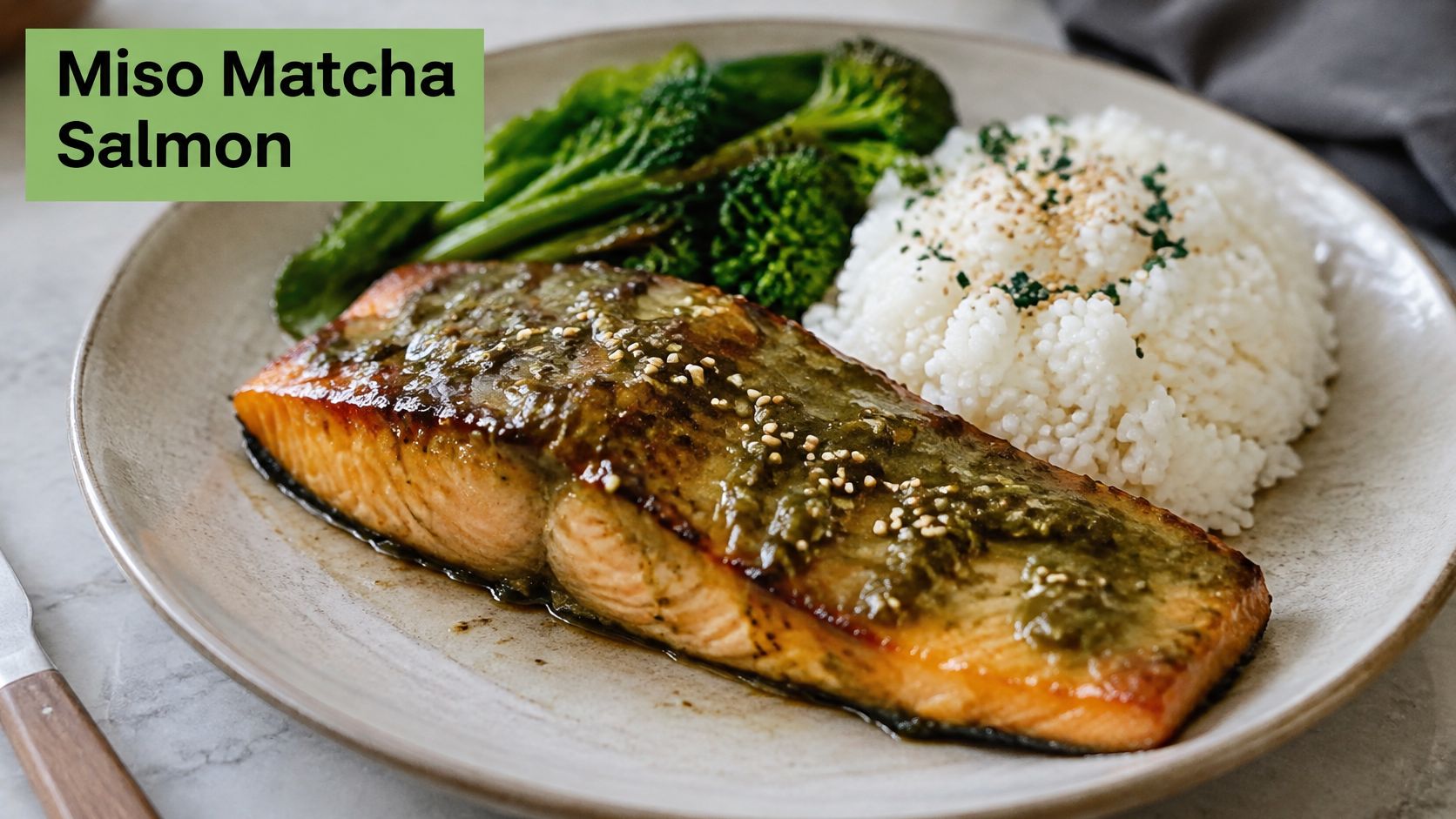
Build a thin glaze, not a heavy crust
Whisk white miso with mirin and a little soy in a small saucepan. Warm gently until smooth, then take it off the heat before whisking in sifted matcha. Start with ½ teaspoon, taste, and increase towards 1 teaspoon only if the glaze still tastes balanced.
Pat the salmon dry and cook it most of the way through before brushing the glaze over the exposed flesh. Finish briefly under the grill, watching closely as the miso browns. A thin coating turns glossy; a thick layer can scorch before the fish is ready.
- Keep some glaze separate: Reserve a clean portion before your brush touches raw fish.
- Balance the plate: Serve with brown rice, edamame and pickled cucumber, or white rice and broccoli.
- Choose the right powder: PepTea's guide to cooking with organic matcha powder is a useful starting point for using culinary matcha beyond drinks.
Practical rule: Judge the matcha in a bite of salmon, not just from the mixing bowl. The fish's fat changes how strongly you perceive the tea.
For a café special, use the same glaze on roasted pumpkin or eggplant, brushing it on near the end rather than throughout roasting. Ceremonial grade adds little value here because the fermented miso and grill browning dominate its subtler qualities.
A small cup of hot PepTea culinary-grade matcha makes an optional tea pairing, although water keeps the meal simpler. If you're planning a wine pairing instead, the McLaren Vale Cellars seafood pairing guide offers seafood-focused ideas.
2. Matcha and Sesame Furikake Salt
A bowl of plain rice, buttered popcorn or avocado toast can taste finished with one pinch. This furikake-inspired seasoning brings toasted crunch, a little seaweed and a clean earthy finish, and once the sesame is toasted there is no pan work left.
Kitchen role: dry seasoning. Grade choice: culinary. Ceremonial matcha earns little here because toasted sesame and nori carry the aroma; a well-sifted culinary grade gives colour and a gentle tea edge without pushing cost into a garnish.
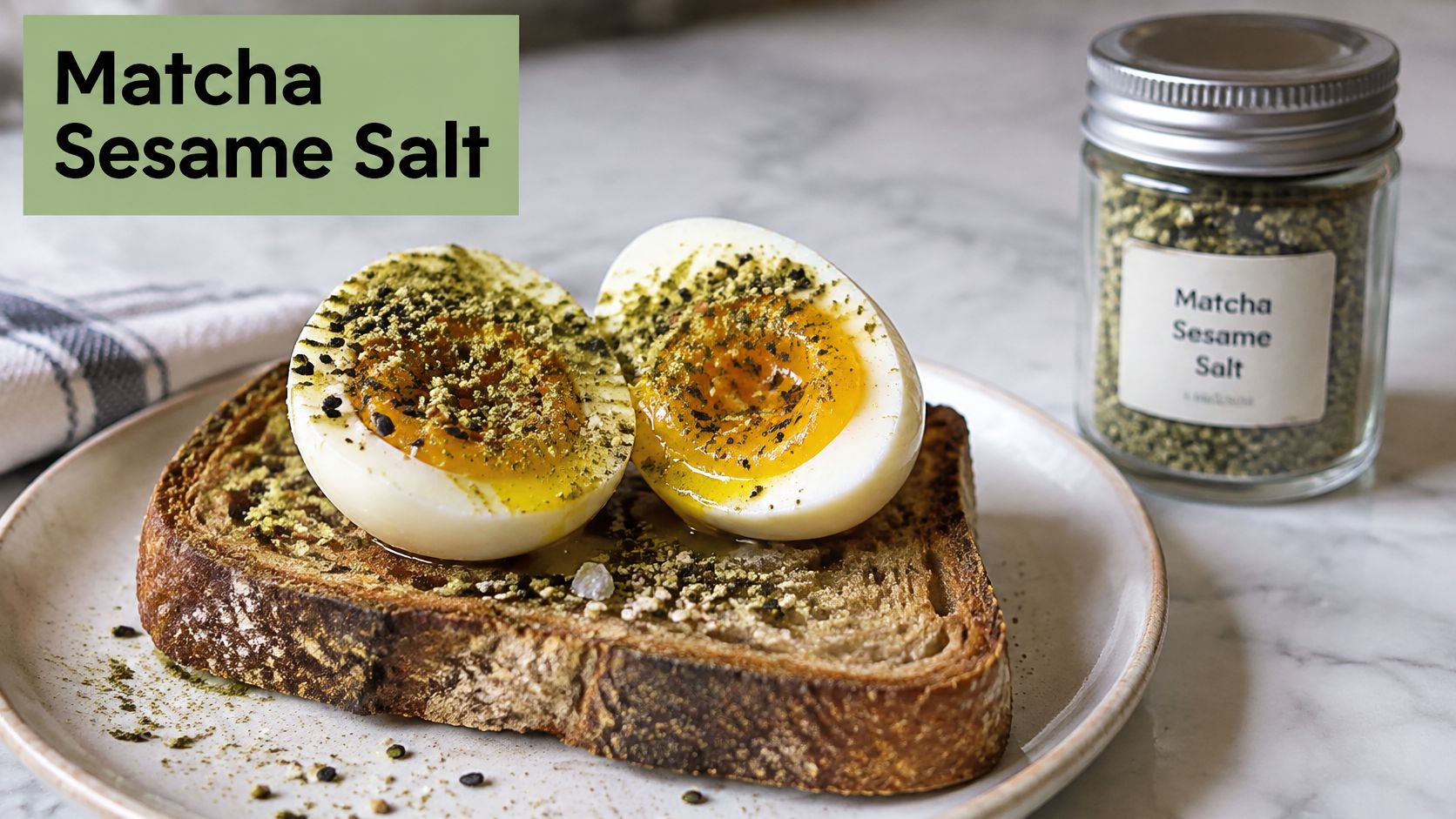
Let sesame lead
Toast sesame seeds in a dry frying pan, keeping them moving until fragrant, then tip them onto a plate to cool completely. Warm seeds can carry a faint steam, so give them time before they meet the powder. Crumble crisp nori finely with scissors or your fingers. Combine cooled sesame and nori with sifted matcha, then crush in flaky sea salt sparingly.
Build the jar in that order: sesame as the bulk, nori as support, matcha as a light coating, salt last. Taste on plain rice before adding more salt; a blend that seems quiet from the spoon can turn assertive on eggs, popcorn or already-salted vegetables.
- For brunch: Sprinkle over avocado toast or cooked eggs just before serving.
- For snacks: Toss through warm buttered popcorn so the powder adheres.
- For vegetables: Finish roasted cauliflower after it leaves the oven rather than roasting the seasoning.
Keep moisture out of the jar. Steam from a saucepan can turn a loose seasoning into clumps surprisingly quickly.
Store the blend in a tightly sealed dark glass jar in a cool pantry, away from the stove. Make modest batches rather than assuming the flavour will stay fresh indefinitely.
Salt deserves restraint. Table salt, stocks and seasonings are major sources of sodium in most diets, so let this blend add sesame and tea character first, with salt doing only the sharpening. If a dish is already seasoned, use less; on plain rice or a soft egg, the same pinch will read brighter.
3. Matcha Miso Soba Noodle Salad
The main challenge here is water, not matcha. Poorly drained noodles dilute the dressing, leaving you tempted to add more miso, vinegar and tea when the bowl really needs better preparation.
Kitchen role: cold dressing and lunch main. Grade choice: culinary. A restrained culinary matcha works well with sesame oil and white miso; ceremonial grade won't offer much advantage once those flavours are combined.
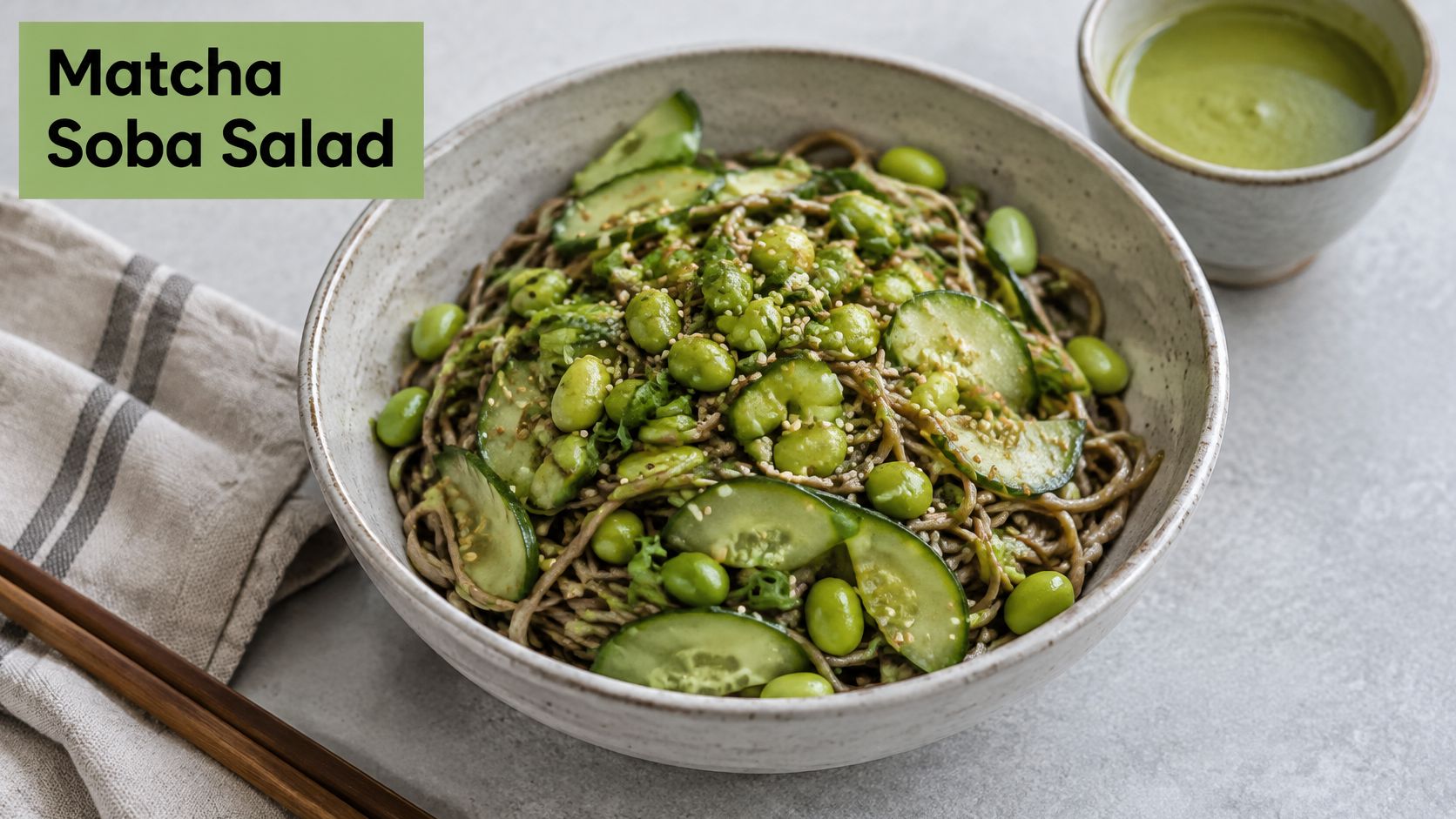
Dress just before eating
Cook buckwheat soba according to the packet, then rinse thoroughly under cold running water until chilled. Drain well, lifting and shaking the noodles gently rather than leaving water trapped beneath them. Slice cucumber, prepare edamame and toast sesame seeds while the noodles drain.
Whisk a small spoon of sifted matcha into rice vinegar until smooth, then work in white miso and sesame oil. Loosen with cold water until the dressing coats a noodle without sitting on it like paste. Taste with cucumber and soba before adjusting, because straight dressing should taste more concentrated than the finished bowl.
Australian culinary supplier Iki Matcha recommends sifting or dispersing matcha to reduce clumps and adding it late where possible. A cold dressing makes both techniques easy.
- For a lunch box: Pack noodles, vegetables and dressing separately, then toss when you're ready to eat.
- For a café bowl: Add tofu or cooked chicken and keep the vegetable toppings crisp.
- For a tangy variation: Stir a splash of PepTea Ginger kombucha into the finished cold dressing, reducing the vinegar first.
The kombucha belongs at the end, without heating, but it's primarily a flavour choice here rather than a promised health benefit. Its acidity varies from rice vinegar, so taste instead of swapping them blindly.
If the dressing becomes harsh, don't keep adding matcha to chase a greener colour. Dilute it with more noodles and vegetables, then reassess the balance.
4. Pea, Lemon and Matcha Risotto
Sweet peas are the bridge between creamy risotto and matcha's vegetal edge. Lemon zest lifts the aroma without making the rice sharply acidic, while parmesan gives enough savoury depth that the tea can remain subtle.
Kitchen role: main or small starter. Grade choice: culinary. This isn't a reason to use stale powder, but it is a reason to leave ceremonial matcha for your cup.
Finish with matcha off the heat
Soften finely chopped shallot in olive oil and butter without browning it. Stir in arborio or carnaroli rice until coated, then add warm stock gradually, stirring regularly and allowing each addition to absorb before adding more.
Add peas as the rice approaches tenderness. In a small bowl, whisk a pinch of sifted matcha with a spoonful of warm stock until completely smooth. Remove the risotto from the heat, stir in that mixture, then finish with butter, parmesan and finely grated lemon zest.
For a visual companion to the rice-cooking stage, use the video below alongside the matcha finishing method described here.
Texture first: Good risotto should spread gently in a warm shallow bowl. If it stands in a stiff mound, loosen it with warm stock before serving.
The trade-off is colour versus flavour. More matcha makes a greener bowl, but it can obscure the sweetness of the peas and leave a drying finish. Add lemon juice only after tasting; zest often gives enough freshness without adding another sharp element.
- For a weeknight dinner: Serve immediately with a leafy salad and lemon sparkling water.
- For guests: Prepare the chopped shallot, grated cheese and matcha slurry components ahead, but finish the rice close to serving.
- For a café starter: Use a smaller portion and let the peas remain the main green flavour.
Fully finished risotto isn't an ideal make-ahead dish because the rice keeps absorbing liquid. Reheating can make dinner service easier, but it won't give quite the same flowing texture.
5. Ginger and Matcha Chicken Stir-Fry with Kombucha Glaze
Kombucha gives this sauce tang, not the sticky sweetness of a conventional sweet-and-sour glaze. That difference is useful, provided you don't expect a sugar-free drink to caramelise like honey or sweet chilli sauce.
Kitchen role: light coating and pan glaze. Grade choice: culinary. Ginger, garlic and soy are too assertive to justify ceremonial matcha.
Keep the coating light and the pan uncrowded
Slice chicken evenly, pat it dry and toss with cornflour and a light dusting of matcha. Around 1 teaspoon per 500 g of protein is a sensible ceiling for this version, not a target you have to reach. Firm tofu also works, provided you drain and dry it well.
Brown the protein in a hot pan with neutral oil, working in batches so it fries rather than steams. Remove it, briefly cook grated ginger and garlic, then add a restrained splash of soy and water. Return the chicken and cook it thoroughly before finishing the sauce.
The dry rub tips for stir fry offer another perspective on seasoning the protein before it reaches the pan. Keep this coating especially thin, since scorched matcha tastes more bitter than browned cornflour.
- Choose the drink: PepTea's sugar-free organic Ginger kombucha suits ginger-forward sauces; Lime & Ginger gives another option.
- Finish carefully: Take the pan off the heat before adding kombucha, then toss to combine.
- Serve plainly: Spoon over jasmine rice with steamed greens and pickled vegetables.
Adding kombucha off the heat reduces its exposure to cooking, but a hot stir-fry isn't a reliable way to preserve live cultures. For that purpose, serve the drink chilled alongside instead.
This makes a useful family dinner or meal-prep alternative to a heavily sweetened sauce, although the finished dish isn't automatically low in sodium or sugar-free. Check the soy sauce and other condiments rather than assuming the kombucha determines the whole meal's nutrition.
6. Matcha and Cheddar Savoury Scones
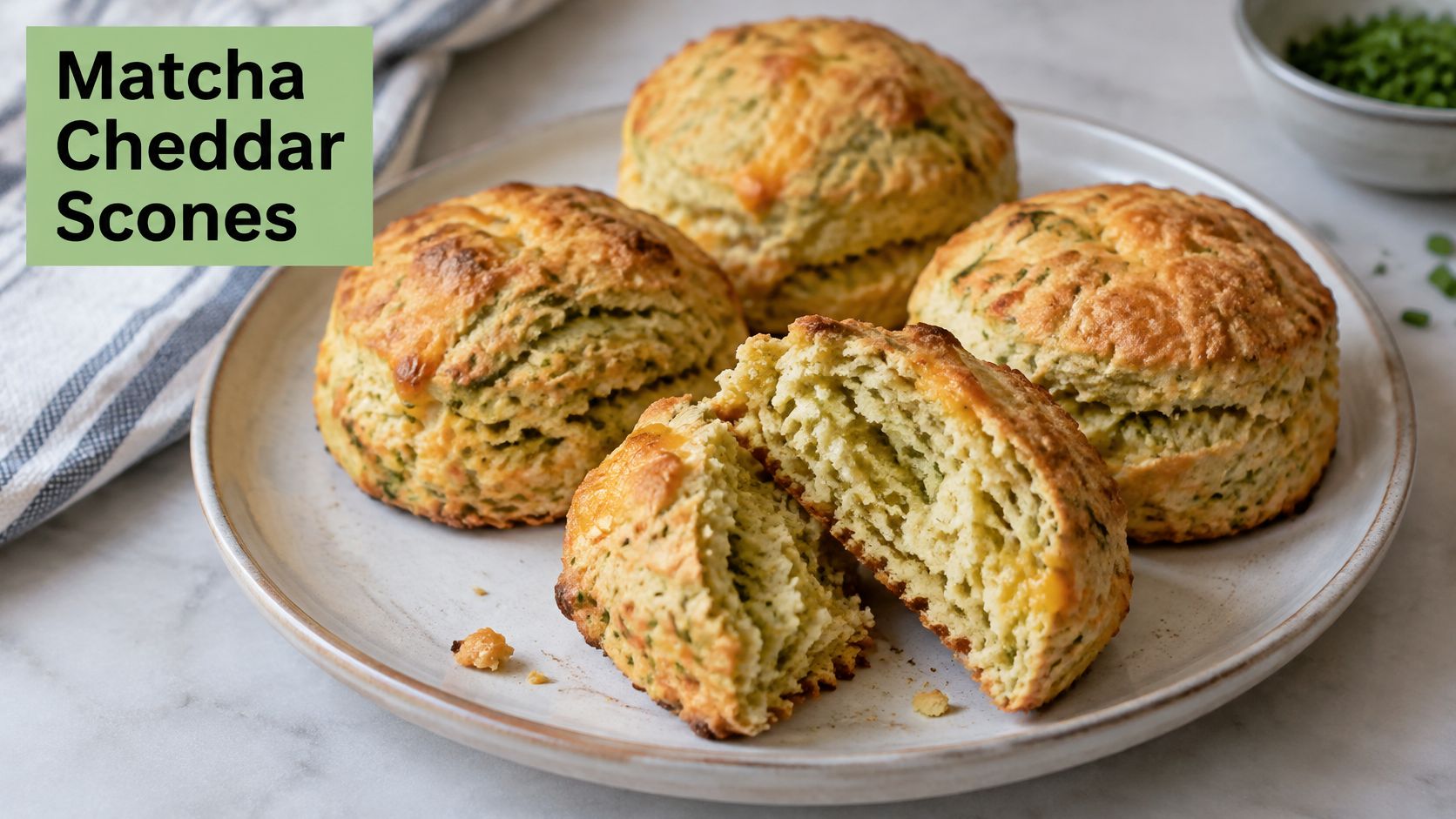
Warm cheddar scones are a forgiving introduction to savoury matcha baking. Mature cheese softens the tea's bitterness, chives keep the flavour fresh, and the crumb only needs a pale green tint.
Kitchen role: bake. Grade choice: culinary. Ceremonial matcha doesn't earn its place in a dough full of cheese and butter.
Adapt your usual cheese scone dough
Use a trusted self-raising-flour cheese scone recipe, adding a teaspoon of sifted matcha to the dry ingredients. Rub very cold diced butter into the flour quickly, then fold through grated mature cheddar and chopped chives. Add milk gradually until the dough just holds together.
Pat it out gently on a lightly floured bench and cut cleanly without twisting the cutter. Brush the tops with milk or beaten egg and bake according to your base recipe until risen, golden and cooked through. Extra kneading won't make them neater inside; it tends to make them tougher.
PepTea's baking with matcha and beyond guide offers further ways to move between tea drinks and baking. For this version, resist the temptation to keep adding powder until the raw dough looks vividly green.
- For brunch: Split and fill with cream cheese and smoked salmon.
- For a picnic: Let them cool before packing, then serve with chutney.
- For afternoon tea: Serve warm with butter and a glass of sugar-free kombucha or a small matcha latte.
Café operators can explore farmers' market bakery menus for ideas about presenting a savoury bake alongside familiar favourites. Keep the menu description clear: cheddar and chive should lead, with matcha identified rather than hidden.
Baking doesn't make matcha caffeine-free, as PepTea's matcha baking guidance explains. That matters if you're serving the scones with another matcha drink, or offering them to someone who limits caffeine.
Savoury Matcha Recipes at a Glance
| Item | Matcha Grade | Key Detail | Best Use |
|---|---|---|---|
| Miso-Matcha Glazed Salmon | Culinary grade | Sweet-savoury miso glaze balances matcha's bitterness | Weeknight dinner with rice and greens |
| Matcha and Sesame Furikake Salt | Culinary grade | Quick seasoning blend with sesame, sea salt and nori | Finishing eggs, rice, popcorn or vegetables |
| Matcha Miso Soba Noodle Salad | Culinary grade | Chilled soba with a tangy matcha-miso dressing | Summer lunches and meal prep |
| Pea, Lemon and Matcha Risotto | Culinary grade | Creamy risotto with peas, parmesan and lemon | Dinner parties or a special weeknight meal |
| Ginger and Matcha Chicken Stir-Fry with Kombucha Glaze | Culinary grade | Quick stir-fry with ginger kombucha glaze | Lower-sugar weeknight dinner |
| Matcha and Cheddar Savoury Scones | Culinary grade | Flaky cheddar and chive scones with an earthy matcha note | Brunch or afternoon tea |
Start Cooking With Matcha This Week
Choose the recipe that fits the food you already cook. The furikake salt is the lowest-effort introduction, because you can taste it on a bowl of rice before committing it to dinner. The miso-glazed salmon is the stronger choice when you want a complete meal built from familiar ingredients.
Use culinary-grade matcha for cooking and keep ceremonial grade for drinking. That is a buying decision, plain and simple. Ceremonial matcha can go into food, but you are unlikely to notice its finer qualities beneath cheddar, soy sauce or toasted sesame, so the extra cost earns you nothing on the plate.
Adjust the dish, not just the powder
If the result tastes bitter, pause before reaching for sugar or more salt. Try a smaller amount of dressing, more plain noodles, a little extra butter or a less acidic accompaniment, depending on the dish. Sometimes the right fix is just less matcha next time.
- Keep it smooth: Sift into dry mixtures or whisk into a little liquid before combining.
- Protect the flavour: Add matcha late when the cooking method allows it.
- Taste a complete bite: Judge sauces with the food they will accompany, not only from a spoon.
Caffeine deserves the same thought as seasoning. Food Standards Australia New Zealand identifies tea as a natural source of caffeine, so a savoury meal containing matcha is not stimulant-free. Ask your supplier for product-specific information if you need to estimate the caffeine in a portion.
For cafés, standardise the amount of powder and the finished portion before putting a dish on the menu. For home cooks, jot down what worked, especially the matcha amount and when you added it. Two lines in a notebook beat chasing the brightest possible green.
When you are ready to stock the pantry, pick an organic culinary-grade matcha you will use each week, and keep it tightly sealed away from heat and light. Pair the cooking with sugar-free organic kombucha if you enjoy its tang, without expecting either ingredient to turn dinner into a health treatment.
Pep Tea offers organic matcha for drinking and cooking, alongside sugar-free organic kombucha brewed in NSW. Visit Pep Tea to explore culinary-grade matcha for your next glaze, dressing or savoury bake, and choose a kombucha to serve alongside.
Organic Matcha Green Tea Powder Australia: A Full Guide 2026
Certified organic matcha sold in Australia is generally imported from Japan rather than grown locally at commercial scale. Australia's certified organic agricultural land increased by 48.9% between 2021 and 2022, while the country has more than 53 million hectares of certified organic farmland, about 12.4% of its agricultural land. IndexBox's Australian matcha market overview provides the market context, but those figures describe organic agriculture overall, not domestic matcha production.
You may be standing at a café counter with a new matcha latte on the menu, or comparing tins online after deciding that your usual green tea doesn't deliver the colour or flavour you want. The search for organic matcha green tea powder Australia often creates one immediate confusion: Australian availability doesn't mean Australian origin. The tea may be imported, while the business selling, testing, distributing and educating customers operates locally.
That distinction matters because matcha is a whole-leaf powder. Unlike a brewed infusion, the leaf isn't removed after steeping. Organic certification can help verify how the tea was grown and handled, but it doesn't automatically tell you whether the powder is fresh, potent, well processed or suitable for your recipe. The useful question isn't only whether a tin says “organic”. It's whether the product has a traceable origin, credible certification, suitable grade and testing that matches the risks you need to manage.
Finding Quality Organic Matcha in Australia
A café owner in Newcastle may need a vivid green latte that dissolves cleanly. A home baker in Melbourne may want a stronger powder that remains noticeable in oats, icing or banana bread. Searching for organic matcha green tea powder Australia brings up products with different origins, grades, certification records and handling practices.
For Australian buyers, the local part of the supply chain usually involves importing, distribution and hospitality, rather than cultivation. Matcha is generally imported from overseas tea-growing regions, particularly Japan, where shaded tea leaves are processed into tencha and stone-ground into powder. National organic farmland data can show that Australia has established certification systems and traceability practices, but it does not prove that a product is Australian-grown matcha. The Australian matcha market context helps clarify the difference between local availability and domestic production.

What Australian buyers should look for
A reliable product description gives you several points to check instead of relying on one premium-sounding claim.
- Country and region of origin: “Japan” identifies the country, while a named region gives more supply-chain detail.
- Certification identity: Check the certifier, certificate number and certification scope. Ask the importer for its ACO or JAS certificate number, then verify it through the certifier's public database before purchasing.
- Grade and intended use: Powder for whisking may not suit a café producing large volumes of lattes.
- Lot traceability: A lot number should connect the retail pack with supplier records and relevant testing.
- Storage information: Light, heat, air and moisture can affect matcha, so packaging and handling influence the final cup.
“Ceremonial grade” can indicate intended use, but it is not a universal government-controlled matcha grade. Assess colour, aroma, texture and flavour alongside the label. Fresh matcha should smell clean and vegetal, disperse finely and avoid a harsh, stale or dusty finish.
For an Australian supplier presenting its range and product details, compare the Pep Tea matcha tea powder collection with the documentation supplied by other sellers. The practical goal is a powder with an identifiable origin, verifiable certification, suitable handling information and a flavour profile you can explain to customers.
Ceremonial vs Culinary Matcha Grades Explained
“Ceremonial” and “culinary” are practical buying terms, not a complete quality-control system. In Japan and internationally, “ceremonial grade” doesn't have one universal regulated definition, so a buyer should still examine origin, harvest information, processing, freshness and test documentation.
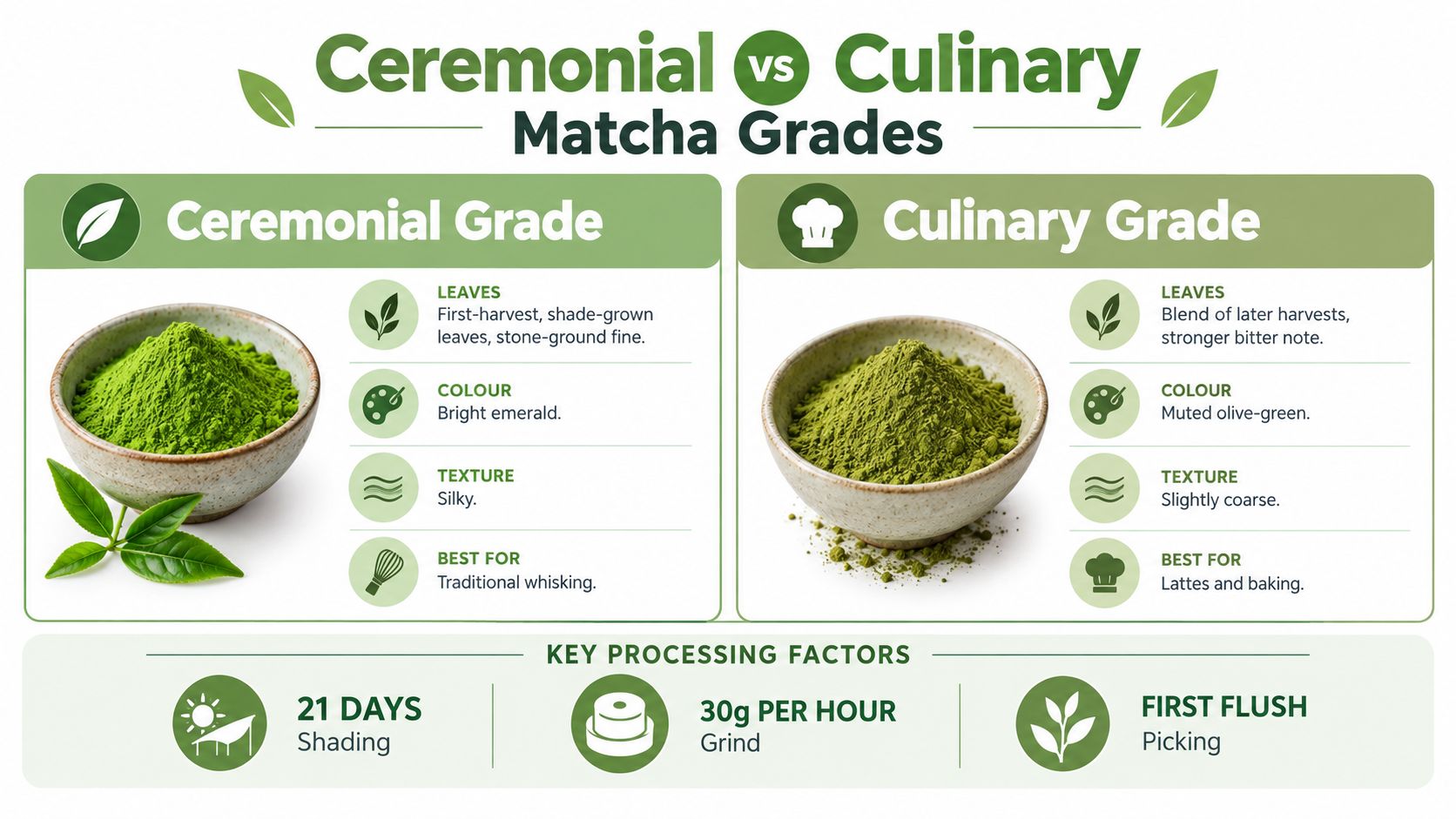
Ceremonial-style matcha is usually selected for drinking directly with water. It tends to be brighter in colour, finer in texture and more rounded in flavour, with an umami character that can stand on its own. Culinary matcha is usually chosen for recipes where the powder must remain noticeable beside milk, fruit, oats, flour or sweetener. It can have a more assertive bitterness and a less delicate finish, which may be an advantage rather than a defect.
How processing changes the cup
Tea plants used for matcha are shaded before harvest, then processed into tencha, with stems and veins removed before grinding. Shading can influence the leaf's colour and flavour, while cultivar, harvest timing and processing also affect the powder's chemical composition. The Western Sydney University review of matcha's bioactive compounds reports that matcha generally contains catechins, L-theanine and caffeine, but concentrations vary substantially between products.
Stone-grinding is associated with a fine powder and a smooth mouthfeel. However, the phrase “stone-ground” isn't enough to prove that a matcha will taste good. A powder may have been well processed and still be old, poorly stored or unsuitable for the drink you're making.
Try the following comparison:
| Matcha grade | Best for | Key characteristics |
|---|---|---|
| Ceremonial-style | Traditional whisking, thin tea and direct drinking | Brighter colour, fine texture, softer bitterness and a flavour designed to be enjoyed with water |
| Culinary-style | Lattes, smoothies, baking, desserts and sauces | More robust flavour, stronger bitterness and enough presence to work with other ingredients |
Choose by application, not status
A delicate ceremonial-style powder can taste excellent in a bowl but become wasteful in a strongly flavoured latte. Milk, ice and sweeteners can mute subtle notes, so a practical culinary powder may perform better while keeping the menu cost under control.
The reverse problem appears in direct drinking. A coarse or bitter culinary powder whisked with water can leave astringency on the tongue, especially if the water is too hot or the powder is poorly stored. That doesn't mean culinary matcha is inferior. It means the product has been selected for a different job.
Organic status addresses farming and handling standards, not whether a powder is ceremonial-style, culinary-style, mild, strong, fresh or compositionally consistent. For serious café purchasing, ask for the supplier's intended use, batch information and preparation recommendation. The Pep Tea guide to ceremonial and culinary matcha can sit alongside a sensory trial, where staff prepare both powders using the same recipe and taste them in the actual menu format.
One final caution concerns caffeine. Matcha is powdered tea, so the amount consumed depends on powder mass, cultivar, processing and preparation. A supplier shouldn't present a single caffeine number as universal for every tin or serve.
Understanding Organic Certification and Standards
A café can receive a bag labelled “organic” without knowing how that claim was verified. Organic claim and certified-organic status are different. Australian domestic organic sales do not always require mandatory certification, while a business using a certified-organic label must ensure the product meets the stated arrangement. The Australian Government describes AS 6000-2015, the Australian Standard for organic and biodynamic products, as covering production, processing, storage, transport, labelling and importation. The government's organic and biodynamic factsheet explains why checks need to extend through the supply chain, not stop at the farm.
Certification answers one set of questions
Certification verifies the production system, permitted inputs and relevant handling practices. It can support claims about how tea was grown, processed and represented, provided the finished imported product falls within the applicable certification arrangement. For an Australian buyer, the certifier, certificate holder, product scope and import documentation all matter.
See how certification is verified locally in the Pep Tea guide to organic certification in Australia.
Certified status does not establish that every powder has the same caffeine level, catechin profile, moisture content, colour or flavour. The Western Sydney University review found variable bioactive profiles in commercially marketed matcha from different countries. Organic certification is therefore a baseline for production claims, not a guarantee of potency or consistency.
For a café, use separate checks for separate decisions:
- Certification: Was the product produced and handled under the stated organic standard?
- Composition testing: What does this batch contain in terms of caffeine and selected compounds?
- Contaminant testing: Has this batch been assessed for hazards such as heavy metals, pesticides or microbes?
- Sensory evaluation: Does the powder meet the flavour, colour and texture required for the menu?
Certification verifies the production system; laboratory testing verifies what is in this specific lot. Sensory evaluation then shows whether the powder performs in the intended drink. A certificate cannot tell you whether a matcha is too bitter for a latte, while a taste test cannot establish organic status.
Read labels with appropriate caution
The word “natural” offers less verification than a named certification system. A credible pack should identify the product, importer or responsible business, origin and relevant certification information so those details can be checked against supplier records.
Matcha uses the whole leaf, so it is consumed as a powder rather than brewed and discarded. The Food Standards Australia New Zealand caffeine advice distinguishes naturally occurring caffeine in tea from concentrated caffeine products. Organic certification does not make matcha caffeine-free or establish a particular physiological effect.
Businesses should keep certification separate from health marketing. Matcha may contribute naturally occurring tea compounds to the diet, but claims about immunity, detoxification, metabolism or disease prevention require evidence and careful regulatory review. A clear description of origin, grade and preparation gives customers more useful information than benefits a supplier cannot substantiate.
How to Verify Quality and Sourcing
A responsible matcha purchase starts with paperwork, then moves to the powder itself. This approach works for a home buyer comparing tins and for a café owner assessing a wholesale supplier.
Ask for the documents that connect product to batch
Request the following information before committing to a large order:
- A current certificate of conformity. Check the certifier, certificate holder, product scope and validity.
- Country and region of origin. A named Japanese region is more informative than an unexplained “imported” claim.
- Lot number. Confirm that the lot on the pack matches the supplier's documentation.
- Testing date. Recent testing is more useful when it clearly identifies the tested lot.
- Laboratory scope. Find out whether the report covers heavy metals, pesticide residues, microbiological quality and other relevant parameters.
- Product specification. Ask for storage conditions, recommended serving mass, grade, packaging and expected shelf life.
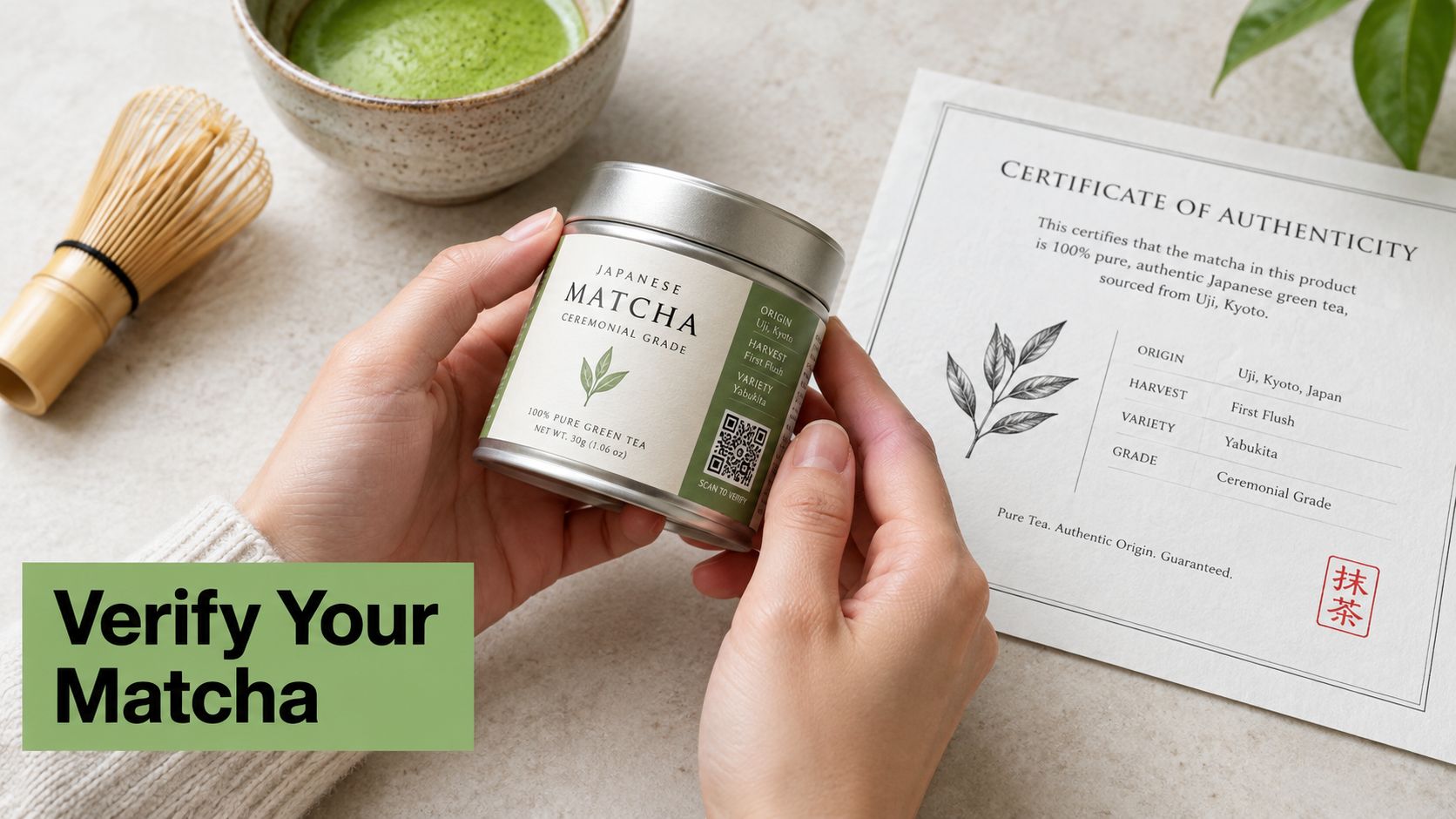
A certificate of conformity is valuable, but it shouldn't be treated as a complete safety report. Organic certification and laboratory testing answer different questions. The certification concerns the production system. Laboratory analysis tests selected hazards or compositional features in a particular sample.
Interpret testing without overclaiming
The available Australian regulatory material doesn't establish one simple matcha-specific consumer threshold for every concern a shopper may have, including lead, cadmium, pesticides and microbial hazards. That's why suppliers should be precise about what was tested, by which method, on what date and for which lot, rather than writing “fully tested” without detail.
For cafés and retailers, the Western Sydney University review recommends batch-level testing where possible, ideally using validated HPLC or UPLC methods for caffeine and major catechins such as EGCG, alongside checks for moisture, microbiological quality and heavy metals. The practical reason is straightforward: colour and sensory grade can't reliably predict functional composition.
Practical rule: Certification tells you how the product was produced. A laboratory report tells you what a particular test found. Keep both records.
Taste and storage remain part of verification
Open the pack and inspect the powder. A lively green colour, fresh aroma and fine texture are useful signs, while dull colour, stale odour, visible moisture or persistent clumping deserve questions. These observations don't replace laboratory testing, but they can reveal poor storage or age.
Keep the powder sealed, away from heat, light, air and moisture. A café should also record when a pack was opened and use a consistent recipe. If one barista uses a light spoonful and another uses a heavily packed scoop, customers won't receive a consistent drink, even if the underlying matcha is sound.
Australian Use Cases and Product Selection
Australian matcha works best when the grade matches the service format. A home user drinking a small bowl with water has different needs from a café building an iced latte, and a food manufacturer needs documentation that a casual buyer may never request.
Matcha preparation at home and in cafés
For direct drinking, sift the powder into a bowl, add warm water and whisk until the surface becomes lightly foamy. Water that's too hot can exaggerate bitterness, so use comfortably hot rather than boiling water. The right technique won't rescue stale matcha, but it can prevent avoidable clumping and harshness.
For a latte, dissolve the powder in a small amount of warm water first, then add milk or a plant-based alternative. Culinary-style matcha usually makes economic and sensory sense here because its stronger flavour can hold up against milk, ice and optional sweetener. Keep the drink unsweetened if the aim is to provide a low-sugar menu option, and let customers choose additions separately.
This video demonstrates a practical preparation approach for customers and café teams:
The same powder can be used in a smoothie with banana and oats, folded into yoghurt, blended into ice cream or added to baking. Heat and strong ingredients change the final flavour, so a powder that tastes slightly assertive on its own may be the better recipe ingredient.
| Matcha grade | Best for | Key characteristics |
|---|---|---|
| Ceremonial-style | Bowl preparation and simple iced matcha | Fine texture, vivid colour and a balanced flavour that remains exposed |
| Culinary-style | Café lattes, smoothies and baking | More pronounced tea flavour and better compatibility with milk or food |
Matcha alongside kombucha
Matcha and kombucha serve different roles. Matcha is a powdered tea ingredient that contributes tea flavour and naturally occurring caffeine. Kombucha is a fermented beverage requiring controlled acidity, clean equipment, reliable cultures and documented process monitoring.
FSANZ identifies kombucha as a beverage requiring careful control. The initial tea infusion is typically around pH 5, and it should be cooled from 60°C to 20°C within two hours. During fermentation, acidity should reduce the drink to pH 4.2 or below, while the finished beverage should generally remain at pH 2.5 or above and below 1% alcohol. These controls are set out in FSANZ's kombucha guidance.
That difference matters for cafés. A properly fermented sugar-free kombucha can provide an alcohol-free, low-sugar menu option, but “fermented” alone doesn't prove that the drink was made safely or contains no residual sugar. Read the nutrition information and ask how the producer manages acidity, alcohol and hygiene. Pep Tea offers organic Japanese matcha and Australian-brewed organic kombucha from the Hunter Valley, NSW, as separate beverage options rather than treating them as interchangeable products.
Australian beverage menus can also use matcha and kombucha in different dayparts. A matcha latte suits a morning or afternoon service, while chilled kombucha can work as a refreshing alternative to soft drinks or alcohol. For venues managing customer questions at scale, drink industry chatbot examples can help inspire ways to organise menu information, ingredient answers and service workflows without replacing staff knowledge.
Your Organic Matcha Shopping Checklist
Use this checklist before buying organic matcha green tea powder in Australia:
- Confirm the origin: Look for Japan and, where available, a named region.
- Verify the certification: Ask which certifier issued it and whether the finished imported powder is covered.
- Match grade to use: Choose ceremonial-style powder for direct whisking and culinary-style powder for lattes, smoothies and baking.
- Request batch details: Certificate, lot number, testing date and product specification should connect to the pack.
- Separate certification from testing: Organic status doesn't replace independent checks for heavy metals, pesticide residues or microbiological quality.
- Ask about caffeine: A serving's caffeine depends on powder mass, cultivar, processing and preparation. Healthdirect Australia's caffeine guidance gives healthy adults a general daily upper guideline of around 400 mg, but that isn't a target and doesn't suit every person.
- Inspect the powder: Fresh aroma, fine texture and lively colour support a better drinking experience.
- Check storage: Heat, light, air and moisture can reduce freshness after importation.
If you're presenting products online or building a café menu, strong photography should show the powder, colour, preparation and serving context accurately. A practical food product photography workflow from MerchLoom can help teams organise those visual assets without making unsupported claims about the product.
Pep Tea offers organic Japanese matcha in grades suited to direct drinking, café lattes and culinary use, alongside Australian-brewed organic kombucha from the Hunter Valley, NSW. Visit Pep Tea to compare the range, review product details and enquire about options for your home, café or wholesale menu.